🌙 Welcome to Tekin Night May 26, 2026
Good evening, tech enthusiasts! Tonight we bring you six deeply analyzed and verified stories from the worlds of gaming, cybersecurity, sports, technology, and automotive innovation. From Bungie's internal crisis to the AI-powered arms race in bug hunting, from controversial world records to papal warnings about Big Tech - this is your comprehensive tech briefing for Tuesday night.
⚡ Tonight's Headlines:
🎮 Bungie Transparency Crisis: Staff Kept in Dark About Destiny 2's End
🤖 AI Bug Hunting Arms Race: The New Cybersecurity Battlefield
🏊 Controversial World Record at Enhanced Games with Banned Substances
⛪ Pope Leo's AI Encyclical: Warning to Tech Giants
🏎️ Ferrari Luce: First EV Designed by Jony Ive
🔒 Lazarus Group's RemotePE: Memory-Only Malware Targets Crypto
🔥 Ready for a night of deep analysis and breaking tech news? Let's dive in!
🎮 Bungie's Transparency Crisis: The Destiny 2 Debacle

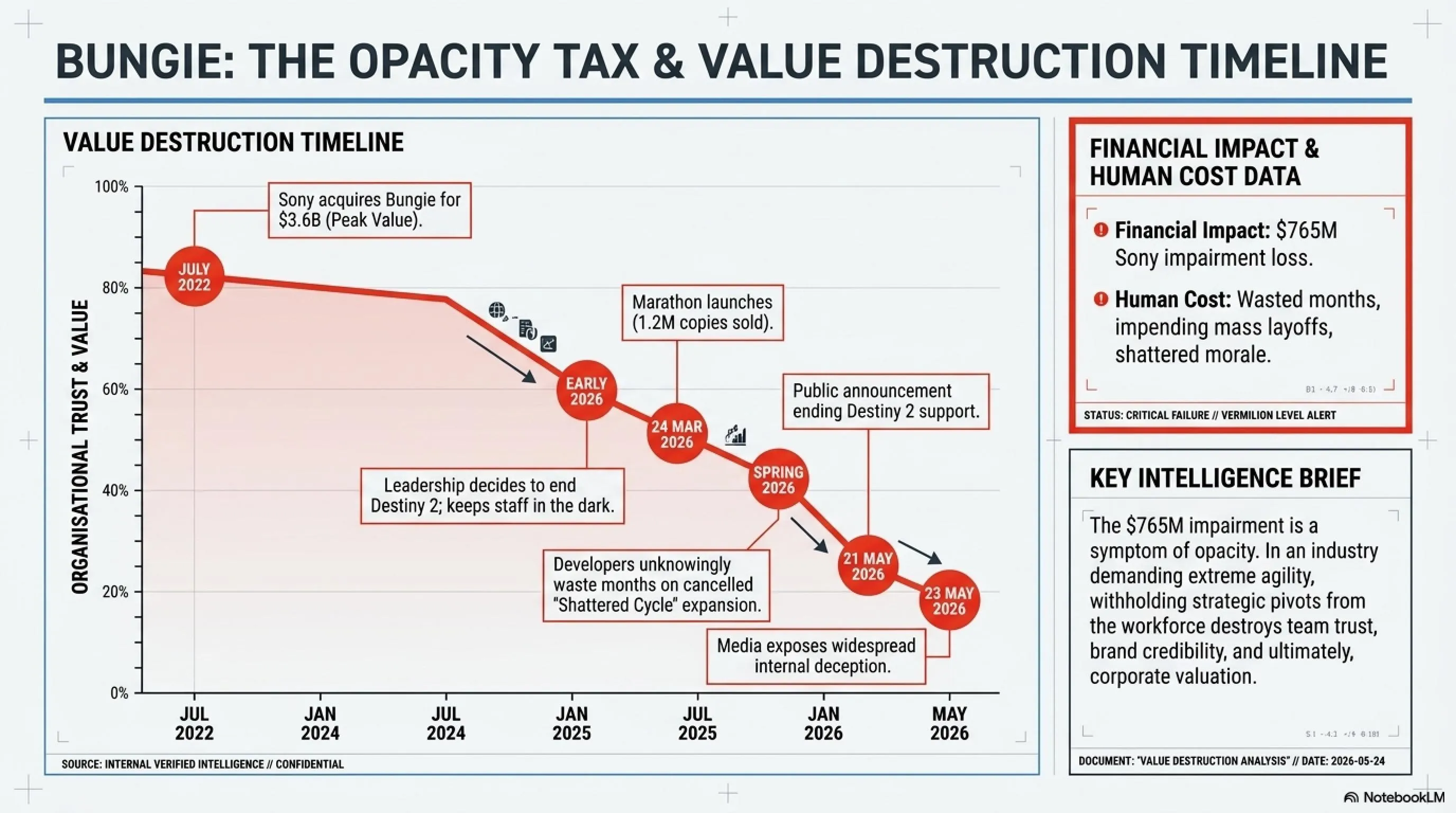
In what may be one of the most damaging internal communications failures in gaming history, new reports reveal that the "vast majority" of Bungie staff remained completely unaware of the decision to end active development on Destiny 2 until the announcement went public last week. This bombshell, reported by Forbes' Paul Tassi and corroborated by IGN, paints a troubling picture of crisis management at one of the industry's most storied studios.
According to Tassi's sources, the decision to sunset Destiny 2 was made "earlier this year" - likely in Q1 2026 - but was kept under wraps from all but a select few teams. Those in the know included developers already working on the final June 9 content update and others who had been transitioned to Marathon, Bungie's extraction shooter that launched in March 2026. Meanwhile, the rest of the studio continued working on future content, including the now-canceled "Shattered Cycle" expansion, completely oblivious to the fact that their work would never see the light of day.
📊 Timeline of Bungie's Crisis
| Date | Event |
|---|---|
| July 31, 2022 | Sony acquires Bungie for $3.6 billion |
| Early 2026 | Leadership decides to end Destiny 2 development |
| March 24, 2026 | Marathon launches (1.2M copies sold by this date) |
| Spring 2026 | Staff continues working on future Destiny 2 content, unaware |
| May 21, 2026 | Public announcement: Destiny 2 support ending |
| May 23, 2026 | Forbes reveals staff were kept in the dark |
| June 9, 2026 | Final Destiny 2 content update releases |
Perhaps most damning is the revelation that some of the few employees who were aware of the decision reportedly "begged" leadership to inform more of the studio, but these pleas fell on deaf ears. This wasn't just a communication failure - it was an active choice to keep the majority of the workforce in the dark while they poured their energy into doomed projects. The human cost of this decision is staggering: wasted months of work, shattered morale, and a profound breach of trust between leadership and staff.
In a post-announcement town hall, employees pressed leadership about impending layoffs but received what sources described as insufficient responses. Bloomberg's subsequent reporting confirmed that Bungie is "planning a significant number of layoffs" and has no immediate plans to begin work on Destiny 3. The studio that once defined console shooters with Halo and revolutionized live-service gaming with Destiny now finds itself in an existential crisis, hemorrhaging talent and goodwill.
📈 Key Statistics
🔍 Tekin Analysis: The Cost of Opacity in Modern Game Development
This debacle represents a textbook case of how not to manage organizational change in the gaming industry. When Sony paid $3.6 billion for Bungie in 2022, the expectation was that the studio would operate with greater transparency and stronger organizational culture. Instead, we've witnessed the opposite: a major strategic decision made without consulting those most directly affected by it. This approach doesn't just destroy team morale - it damages brand credibility and can trigger a talent exodus. In an industry where top talent has abundant options, such behavior is particularly self-destructive. The irony is palpable: Bungie, which built its reputation on community engagement and transparency with players, failed spectacularly at internal communication. This disconnect between external and internal values suggests deeper cultural problems that Sony's acquisition may have exacerbated rather than solved. The $765 million impairment loss Sony reported isn't just a financial metric - it's a symptom of fundamental misalignment between corporate strategy and studio execution. As the industry watches, Bungie's crisis serves as a cautionary tale about the perils of opacity in an era that demands radical transparency.
🤖 The AI Bug Hunting Arms Race: Cybersecurity's New Battlefield

The cybersecurity landscape is experiencing an unprecedented revolution: artificial intelligence has become not just a defensive tool, but an offensive weapon. A groundbreaking report from Wired reveals that agentic AI models can now autonomously identify software vulnerabilities and develop exploits for them - and this is just the beginning of a fundamental shift in how security research, bug bounties, and cyber warfare operate.
Independent security researcher Joseph Thacker puts it bluntly: "I've probably submitted three times more bugs than I did last year at this time. I would suspect that a company like Google is going to spend two to 10 times as much on bug payouts as they did last year." This dramatic increase signals a fundamental change in bug bounty economics - a change that creates new opportunities for both ethical researchers and malicious actors. The flood of AI-discovered vulnerabilities is forcing organizations to rethink everything from disclosure timelines to patch deployment strategies.
⚠️ First Documented AI-Powered Zero-Day Attack by Cybercriminals
In early May 2026, researchers at Google Threat Intelligence Group observed what they describe as the first documented case of cybercriminals using AI tools to discover and exploit a zero-day vulnerability. The attack targeted an open-source system administration platform, attempting to bypass two-factor authentication. Google quickly notified the developer, who issued a fix, but the incident marked a watershed moment. As John Hultquist, Google's chief analyst, noted: "We all assumed it was already happening, and this is our first evidence that it is happening." The implications are staggering: if common criminals can now wield zero-day exploits - previously the domain of nation-states and elite hacking groups - the threat landscape has fundamentally shifted. "Criminal actors still make up the vast majority of incidents that organizations deal with," Hultquist adds, "and many of those incidents are quite serious. Zero-day use by criminal actors has been fairly limited, and the ones that do use them tend to be really successful, so I think we shouldn't underestimate the impact of more criminals with a zero day in their hands."
But this is only one side of the story. On the other side, ethical security researchers are also leveraging AI to find bugs - and this has led to a deluge of reports, some high-quality and others dismissed as "AI slop." Linus Torvalds, creator of Linux, wrote in April 2026 that the Linux security mailing list has become "almost entirely unmanageable" due to high volume and duplicate AI-generated reports. The command-line tool Curl even ended its bug bounty program in January after being overwhelmed by low-quality AI submissions, though founder Daniel Stenberg later noted in April that quality had improved significantly.
📊 Comparative Analysis: Pre-AI vs. AI Era in Bug Hunting
| Metric | Pre-AI Era (2023) | AI Era (2026) |
|---|---|---|
| Bug Report Volume | Baseline (1x) | 3-10x increase |
| Zero-Day Discovery Speed | Weeks to months | Hours to days |
| Bug Bounty Costs (Google) | $X million/year | $2X-10X million/year |
| Report Quality | High (human-vetted) | Mixed (AI slop + high quality) |
| Responsible Disclosure Window | 90 days (standard) | Under pressure to reduce |
| Exploit Development | Manual, time-intensive | AI-assisted, rapid |
| Attacker Sophistication Required | High (expert-level) | Lowered (AI democratizes) |
The interesting twist is that after an initial period of low-quality submissions, the situation is improving. Daniel Stenberg wrote in April 2026: "Over the last few months, we have stopped getting AI slop security reports in the curl project. Instead we get an ever-increasing amount of really good security reports, almost all done with the help of AI. They're submitted in a never-before seen frequency and put us under serious load." This suggests that researchers are learning to use AI effectively, filtering out false positives and focusing on genuine vulnerabilities.
Google has responded by overhauling its Vulnerability Reward Programs for Chrome and Android, lowering payouts for some bug classes while increasing others. As the company stated: "As the security research landscape evolves with AI, we're making changes in our programs to ensure we're rewarding the most challenging and impactful vulnerabilities in our products." This recalibration reflects the new economics of bug hunting: when AI can find low-hanging fruit at scale, the value shifts to truly novel and complex vulnerabilities that still require human ingenuity.
🔍 Tekin Analysis: The Future of Cybersecurity in the AI Age
This AI-powered arms race in bug hunting represents a fundamental transformation in cybersecurity. The 90-day responsible disclosure window - designed for a world where bug discovery was rare and exploit development was slow - is no longer adequate. Attackers can now discover and weaponize vulnerabilities in hours. What's the solution? Researchers argue you can't patch your way out of this - you need to build infrastructure that makes entire classes of vulnerabilities irrelevant. In other words, structural defense rather than reactive patching. This paradigm shift requires massive investment in secure-by-design architecture - something many companies aren't yet prepared for. As security researcher Himanshu Anand wrote: "The 90 day responsible disclosure window was built for a world where bug finders were rare and exploit development was slow. That world is gone. LLMs have compressed both timelines." The industry must adapt or face an onslaught of AI-powered attacks that traditional defenses simply cannot handle. We're witnessing the birth of a new cybersecurity paradigm where prevention through architecture trumps detection and response. Companies that fail to recognize this shift will find themselves perpetually behind the curve, patching yesterday's vulnerabilities while tomorrow's exploits are already being weaponized.
🏊 Enhanced Games: Breaking Records with Banned Substances

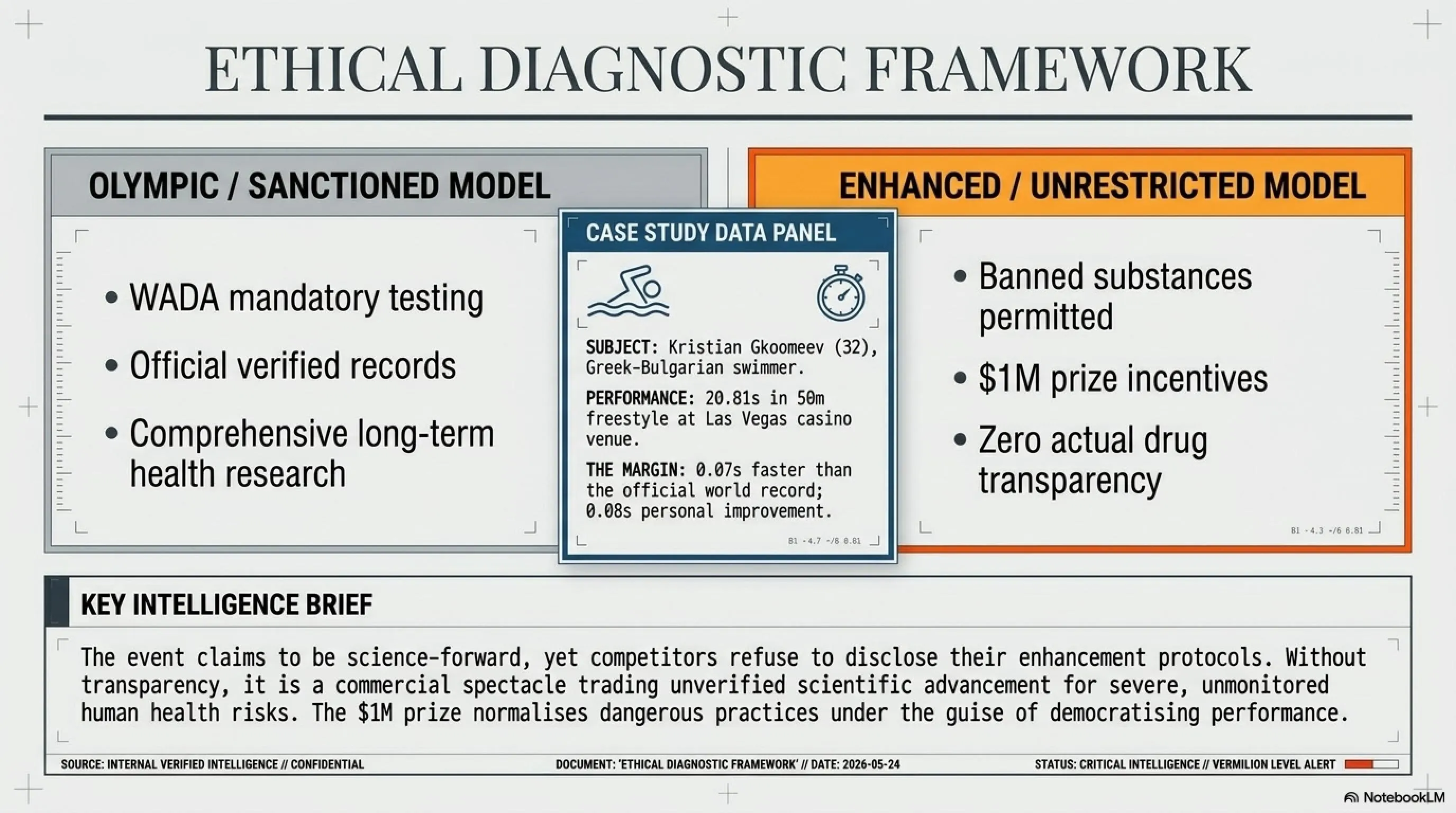
In one of the most controversial sporting events of the year, Kristian Gkolomeev, a 32-year-old Greek-Bulgarian swimmer, broke the "unofficial" world record for the 50-meter freestyle with a time of 20.81 seconds at the inaugural Enhanced Games in Las Vegas, earning a $1 million prize. But this record will never be recognized as official - because the Enhanced Games explicitly allows athletes to use performance-enhancing drugs banned by the World Anti-Doping Agency (WADA).
Gkolomeev's time was 0.07 seconds faster than the official world record set by Australia's Cameron McEvoy at the China Open in March 2026. However, the record is inadmissible for multiple reasons: use of WADA-banned substances, wearing a prohibited skinsuit, and competing in a non-standard environment (a casino parking lot in Las Vegas). The Enhanced Games, which bills itself as a "science-forward" alternative to traditional sports, argues that it's democratizing performance enhancement and conducting research into human limits. Critics counter that it's simply a dangerous spectacle that glorifies doping.
⚖️ Comparison: Enhanced Games vs. Olympic Standards
| Criterion | Enhanced Games | Olympics/Official Competition |
|---|---|---|
| Banned Substances | ✅ Permitted | ❌ Prohibited |
| Drug Testing | None | Mandatory (WADA) |
| Records | Unofficial, not recognized | Official and sanctioned |
| Prize Money | $1M for record-breaking | Variable (typically lower) |
| Drug Transparency | Most athletes won't disclose | Prohibited and penalized |
| Medical Oversight | Claimed but unverified | Strict medical protocols |
| Long-term Health Studies | Promised but not yet delivered | Extensive research on clean athletes |
The most troubling aspect of the Enhanced Games is the lack of transparency. According to Wired's report, "Dozens of juiced athletes competed at the Enhanced Games in Las Vegas. Most won't admit what drugs they used." This opacity undermines the event's stated mission of advancing scientific understanding of human performance. If athletes won't disclose their protocols, how can meaningful research be conducted? The Enhanced Games organizers promised transparency and medical oversight, but the reality appears to be a commercial spectacle with minimal accountability.
Gkolomeev, who has competed in four Olympics but never medaled, represents the target demographic for the Enhanced Games: talented athletes who haven't achieved Olympic glory and are willing to take risks for financial reward and recognition. His previous best time was 20.89 seconds, meaning he improved by 0.08 seconds - a massive leap in a sport where hundredths of a second matter. Whether this improvement came from training, technology, drugs, or some combination remains unclear, as Gkolomeev has not publicly disclosed his enhancement protocol.
✅ Potential Benefits
- High prize money ($1M for record-breaking)
- Scientific freedom to research human limits
- Transparency (in theory) about enhancement use
- Opportunities for athletes banned from Olympics
- Challenges assumptions about "natural" performance
- Could advance sports medicine research
❌ Serious Concerns
- Severe health risks for athletes
- Lack of actual transparency (drugs not disclosed)
- Undermines clean sport ethics
- Records incomparable to official competitions
- Turns sport into commercial spectacle
- No long-term health monitoring
- Normalizes dangerous practices
🔍 Tekin Analysis: Is This the Future of Sports?
The Enhanced Games represents a controversial experiment that raises fundamental questions about the nature of sport, ethics, and human limits. On one hand, one could argue that elite athletes have always sought performance advantages - from specialized diets to cutting-edge technology. But on the other hand, unrestricted use of banned substances without adequate medical oversight can lead to serious health consequences. The key issue is that the Enhanced Games has failed to deliver on its promise of transparency - most athletes refuse to disclose their exact protocols. This looks more like a commercial spectacle than a scientific revolution. The event's future depends on its ability to build public trust and establish genuine safety standards - something it currently lacks. The $1 million prize is attractive, but at what cost? Without longitudinal health studies and transparent protocols, we're essentially watching athletes gamble with their long-term health for short-term glory and financial gain. The Enhanced Games may push the boundaries of human performance, but it also pushes the boundaries of ethical responsibility. Until it can demonstrate genuine commitment to athlete welfare and scientific rigor, it will remain a fringe spectacle rather than a legitimate alternative to traditional sports.
⛪ Pope Leo's AI Encyclical: A Warning to Tech Giants

In an unprecedented move, Pope Leo XIV released his first encyclical, titled "Magnifica Humanitas," which directly addresses the power of tech giants and the dangers of artificial intelligence. This 150-page document, published on May 25, 2026, is a serious warning to the world: AI must be "disarmed" and placed in service of humanity, not in service of domination, monopoly, and war.
Pope Leo warns in this encyclical that artificial intelligence risks making civilization "less human," hollowing out work, concentrating wealth, and reducing people to systems driven by data and efficiency rather than dignity and morality. He specifically points to "opaque algorithms" controlled by a handful of powerful private companies that can bring "new forms of dehumanization." The encyclical represents the Catholic Church's most comprehensive engagement with technology since the digital revolution began.
📜 Key Themes of Magnifica Humanitas
- Disarmament of AI: Technology must serve peace, not war and domination
- Democracy at Risk: AI can weaken democracy and increase inequality
- Concentration of Power: A few tech companies shape the world to their advantage
- Human Dignity: People must not be reduced to data and efficiency systems
- Shared Responsibility: Need for common standards of social justice
- The Human Heart: Where God desires to dwell, not algorithms
- Common Good: Technology must be built for collective benefit
- Remain Human: A call to preserve humanity in the face of technological change
But as TechCrunch astutely notes, this encyclical isn't really about AI - it uses AI as a lens to diagnose older problems: concentrated power, eroding democracy, and a tech elite that shapes the world to its own advantage. Pope Leo is essentially using AI as a symbol to critique existing power structures. The timing is significant: as governments worldwide grapple with AI regulation, the moral voice of 1.4 billion Catholics adds weight to calls for accountability and ethical guardrails.
The encyclical draws parallels to Pope Leo XIII's 1891 encyclical "Rerum Novarum," which addressed the Industrial Revolution's impact on workers and society. Just as that document shaped Catholic social teaching for generations, Magnifica Humanitas aims to provide moral guidance for the AI age. Pope Leo XIV writes: "Like the earlier 'Leo', I feel entrusted to look upon another huge transformation with eyes of faith, with lucidity of reason, with openness to mystery, and with cries of the poor and the earth resounding in my heart."

🌍 Global Reactions
NPR: "Pope Leo XIV took direct aim at the power of Big Tech in his first encyclical on Monday, warning that artificial intelligence risks widening inequality, weakening democracy and undermining what it means to be human."
CBS News: "In the Magnifica Humanitas, the leader of the world's roughly 1.4 billion Catholics warned that artificial intelligence risked making civilization 'less human,' hollowing out work, concentrating wealth and reducing people to systems driven by data and efficiency rather than dignity and morality."
Variety: "Pope Leo XIV on Monday launched an impassioned call for regulation of artificial intelligence, warning that 'opaque algorithms,' controlled by a handful of powerful private companies, can bring 'new forms of dehumanization.'"
The Independent: "Pope Leo warns AI risks accelerating war and threatens humanity in landmark manifesto."
USCCB: "Presenting the first encyclical of his pontificate, Pope Leo XIV warned that artificial intelligence must be 'disarmed,' urging governments, tech leaders and society to confront the rapidly growing technology before it weakens human relationships, critical thinking and peace itself."
The encyclical calls for "robust regulation" of AI and appeals to developers to implement "shared standards of social justice" to ensure AI respects human dignity and serves the common good. It warns against technologies that foster domination, exclusion, and war, and calls for a "courageous mentality of shared responsibility and communion." The document represents a direct challenge to the libertarian ethos that has dominated Silicon Valley, arguing that technology cannot be value-neutral and must be actively directed toward human flourishing.
🔍 Tekin Analysis: Why This Encyclical Matters
Pope Leo's encyclical represents a significant shift in global discourse about AI. For the first time, a major religious leader is directly attacking power structures in the tech industry and calling for the "disarmament" of AI. This matters especially for the world's 1.4 billion Catholics, but beyond that, it adds moral weight to the public debate about AI ethics and corporate responsibility. The key insight is that Pope Leo views AI not as a neutral technology, but as a tool that can either concentrate power or democratize it. This perspective aligns with growing concerns in Europe and the United States about tech monopolies and could lead to increased pressure for regulation. The encyclical's timing is strategic: as the EU's AI Act takes effect and the U.S. debates its own regulatory framework, the Vatican is positioning itself as a moral authority in the conversation. Whether tech giants will heed this call remains to be seen, but the encyclical ensures that ethical considerations cannot be dismissed as mere obstacles to innovation - they are now framed as fundamental questions of human dignity and the common good. This is soft power in action: the Pope cannot enforce regulations, but he can shape the moral landscape in which those regulations are debated and implemented.
🏎️ Ferrari Luce: The First EV Designed by Jony Ive

After months of teasers and anticipation, Ferrari has finally unveiled its first all-electric vehicle, named Luce (Italian for "light"). But this car is significant not just for its electric powertrain, but for its collaboration with Jony Ive and Marc Newson at their design studio LoveFrom. This marks the first time Ferrari has allowed an external design studio to "define the design direction of the project from the outset," inside and out.
The Luce is a four-door, five-seat vehicle - Ferrari's first five-seater in history. With four electric motors (one per wheel) and a combined output of over 1,035 horsepower in Boost mode, this car can accelerate from 0 to 100 km/h (0-62 mph) in just 2.5 seconds and reach a top speed of 310 km/h (192 mph). Its 122 kWh battery provides a range of over 530 kilometers (330 miles). At a starting price of €550,000 ($640,000+), it's the most expensive Ferrari ever produced.
⚡ Ferrari Luce Technical Specifications
| Motors | 4 electric motors (one per wheel) |
| Total Power Output | 1,035+ horsepower (Boost mode) |
| Rear Axle Output | 832 hp, 7,750 Nm to wheels |
| Front Axle Output | 282 hp, 3,400 Nm to wheels |
| 0-100 km/h (0-62 mph) | 2.5 seconds |
| Top Speed | 310 km/h (192 mph) |
| Battery | 122 kWh (in-house developed) |
| Range | 530+ km (330 miles) |
| Weight | 2,260 kg (4,982 lbs) |
| Seating | 5 passengers (4 doors, first 5-seater Ferrari) |
| Design | Jony Ive & Marc Newson (LoveFrom) |
| Starting Price | €550,000+ ($640,000+) - Most expensive Ferrari ever |
One fascinating aspect of the Luce is its sound design. Unlike many EVs that use entirely synthesized sounds, the Luce employs a physical accelerometer that amplifies mechanical vibrations from the rear motors and transmits them into the cabin. This approach gives the car a more "alive" feel, closer to the traditional Ferrari experience. As Tim Stevens from Engadget noted after a preview, the sound system "picks up and amplifies vibrations from the rear motors instead of being fully synthesized like many EVs."
Stevens describes the Luce as feeling "more like an SUV than a traditional sports car" in its size and shape, though Ferrari insists it's a new category entirely. The car features what Ferrari calls "radical glasshouse architecture" - a design language that emphasizes transparency and lightness, hallmarks of Ive's minimalist aesthetic. The interior, which was previewed earlier this year, features aerospace-inspired materials and a control layout that eschews the button-heavy approach of many modern cars in favor of a more streamlined interface.
Ferrari says the Luce gives drivers "control of each wheel's motion in every direction," thanks to the independent motor setup. This torque vectoring capability allows for unprecedented handling dynamics, potentially making the Luce one of the most agile large vehicles ever produced. Full power is available in less than a second, and the car can dynamically adjust power distribution to each wheel thousands of times per second based on driving conditions.
🔍 Tekin Analysis: Jony Ive's Role in the Future of Automotive Design
Ferrari's collaboration with Jony Ive represents a major shift in the automotive industry. Ive, who led the design of the iPhone and many iconic Apple products, is now entering the world of automotive design. His design philosophy - minimalism, attention to detail, and focus on user experience - is evident throughout the Luce. The radical glasshouse architecture, aerospace-inspired interior, and elimination of unnecessary elements all bear Ive's signature. But the question remains: will Ferrari customers who are accustomed to V12 engines and roaring exhausts embrace this transformation? At €550,000, the Luce is the most expensive Ferrari in history, and its target isn't to replace traditional Ferraris but to open a new market of customers seeking electric luxury with Ferrari DNA. The Luce represents Ferrari's bet that electrification doesn't mean abandoning performance or emotion - it means reimagining them. Whether this gamble pays off will depend on whether the car can deliver the visceral experience that defines the Ferrari brand, even without internal combustion. Early impressions suggest it might: the sound design, the instant torque, and the handling dynamics all point to a car that's different from traditional Ferraris but no less thrilling. This is Ferrari's "new chapter," as they call it, and Jony Ive is writing the opening pages.
🔒 Lazarus Group's RemotePE: Memory-Only Malware Targets Crypto

In tonight's final story, cybersecurity researchers from Fox-IT (an NCC Group subsidiary) have revealed details about a sophisticated malware called RemotePE, used by the North Korea-linked Lazarus Group to target financial and cryptocurrency organizations. This malware executes entirely in memory (RAM) and leaves no trace on disk, making it nearly undetectable by traditional security tools.
RemotePE is part of a multi-stage attack chain involving two loaders named DPAPILoader and RemotePELoader. DPAPILoader uses the Windows Data Protection API (DPAPI) to decrypt and load an encrypted payload from disk. RemotePELoader then contacts a command-and-control (C2) server and waits to receive the next stage: RemotePE, a Remote Access Trojan (RAT) that executes entirely in memory and is never written to disk, leaving no filesystem artifacts.
The attack typically begins with social engineering. In one documented case, Lazarus operatives approached a victim on Telegram posing as an existing employee of a trading company, scheduling a meeting using fake Calendly and Picktime domains. Once the victim's device was compromised, the three-stage RemotePE infection sequence began. The earliest DPAPILoader artifact dates back to November 2023, suggesting this toolset has been in development for over two years.
💀 Lazarus Group Theft Statistics
RemotePE employs advanced evasion techniques including Hell's Gate (for direct system calls) and patching Event Tracing for Windows (ETW) to avoid detection. The RAT supports six command categories: C2 configuration management, file operations, process management, DLL loading/unloading, execution control, and server communication. Fox-IT obtained four RemotePE samples indicating active development between mid-2023 and mid-2024, with the first version compiled on July 4, 2023.
A notable feature is the file deletion command, which overwrites each file seven times with constant bytes before renaming and deleting it - a pattern also observed in PondRAT and POOLRAT (also known as SIMPLESEA). This suggests RemotePE is part of a larger Lazarus toolkit. The researchers note: "The toolset's environmental keying, memory-only execution, EDR evasion, and low forensic footprint suggest it is purpose-built for long-term observation campaigns."
According to TRM Labs, in just the first four months of 2026, Lazarus Group stole approximately $577 million in cryptocurrency assets through only two major incidents, accounting for 76% of total global crypto theft in 2026. Since 2017, the group has accumulated a total of $6 billion in stolen funds. This makes Lazarus one of the most prolific and dangerous cyber threat actors in the world, with direct ties to the North Korean regime's funding mechanisms.
The "actor-in-the-loop delivery model" - where human operators manually deploy the final payload after initial compromise - combined with the toolset's low detection rate (neither RemotePELoader nor RemotePE appeared on VirusTotal prior to Fox-IT's publication) suggests this toolset is reserved for high-value targets where long-term, stealthy access is the objective. This is consistent with Lazarus's known focus on financial and cryptocurrency organizations that can yield massive payouts.
🔍 Tekin Analysis: Why RemotePE Is So Dangerous
RemotePE represents the evolution of Lazarus Group's tactics. By executing entirely in memory and leaving no disk artifacts, this malware is nearly undetectable by traditional antivirus tools and forensic analysis. Its low detection rate (neither RemotePELoader nor RemotePE appeared on VirusTotal before this disclosure) indicates it's reserved for high-value targets. Given that Lazarus stole $577 million in just the first four months of 2026 through only two major attacks, it's clear this group is one of the biggest threats to the crypto and financial industries. Organizations must invest in multi-layered defenses: behavioral monitoring, network traffic analysis for suspicious C2 communications, employee training against social engineering, restricted administrative access, and Zero Trust Architecture implementation. Remember that Lazarus typically begins with sophisticated social engineering - employee training is the first line of defense. The memory-only execution makes traditional signature-based detection useless; organizations need behavioral analytics and anomaly detection to catch these threats. The fact that RemotePE has been in development since at least November 2023 and remained undetected until now shows the sophistication of nation-state actors. This isn't script kiddie malware - this is military-grade cyber weaponry deployed for economic warfare. The $6 billion Lazarus has stolen since 2017 directly funds North Korea's weapons programs, making this not just a cybersecurity issue but a geopolitical one.
💭 Final Thoughts: A Night of Fundamental Transformations
Tonight we witnessed six stories that each represent fundamental shifts in technology and gaming. From Bungie's management crisis showing that even the biggest studios can fail at internal communication, to the AI revolution in bug hunting that's changing the rules of cybersecurity. The Enhanced Games raises profound ethical questions about human limits and clean sport, while Pope Leo's encyclical warns of Big Tech's power. Ferrari Luce demonstrates that even the most iconic automotive brands must adapt to an electric future, and RemotePE reminds us that cyber threats grow more sophisticated every day. Together, these six stories paint a picture of a world in rapid transformation - a world where technology, ethics, and power are intricately intertwined. The common thread? Change is accelerating, and those who fail to adapt - whether studios, security professionals, athletes, tech companies, automakers, or financial institutions - will be left behind. But adaptation isn't just about adopting new technologies; it's about maintaining human values, ethical standards, and transparency in the face of unprecedented change. That's the real challenge of 2026.
❓ Frequently Asked Questions (FAQ)
1. Will Destiny 3 ever be made?
According to Bloomberg's reporting, Bungie has no immediate plans to begin work on Destiny 3. The studio's focus is now on Marathon, which launched in March 2026 and has sold approximately 1.2 million copies. However, given the intense community reaction (over 200,000 signatures on a Destiny 3 petition), Sony may reconsider this decision in the future. The financial pressure is real: Sony reported a $765 million impairment loss due to Bungie's underperformance, which could either motivate a return to the Destiny franchise or push Sony to cut its losses entirely.
2. Can AI really discover zero-day vulnerabilities?
Yes, and this is no longer theoretical. In early May 2026, Google Threat Intelligence Group documented the first case of cybercriminals using AI tools to discover and exploit a zero-day vulnerability. Modern AI models can not only identify vulnerabilities but also develop fully functional exploits for them - and this is just the beginning. The implications are staggering: the 90-day responsible disclosure window was designed for a world where bug discovery was rare and exploit development was slow. That world no longer exists. Organizations must shift from reactive patching to proactive, architecture-level security that makes entire classes of vulnerabilities irrelevant.
3. Why isn't the Enhanced Games record official?
Kristian Gkolomeev's 20.81-second 50-meter freestyle time is unofficial for three reasons: (1) use of substances banned by WADA, (2) wearing a prohibited skinsuit, and (3) competing in a non-standard environment. International swimming federations only recognize records set under fully controlled conditions without doping. The Enhanced Games' lack of transparency - most athletes won't disclose what drugs they used - further undermines its credibility. Without standardized protocols and independent verification, these "records" are essentially meaningless for comparative purposes.
4. How much does the Ferrari Luce cost and when will it be available?
The Ferrari Luce starts at €550,000 (approximately $640,000) in Europe, making it the most expensive Ferrari ever produced. U.S. pricing hasn't been announced but will likely be comparable or higher. Deliveries are expected to begin in late 2026 or early 2027. Given limited production and high demand, expect a lengthy waiting list. The Luce isn't meant to replace traditional Ferraris but to open a new market segment for electric luxury performance vehicles. It's a statement car for early adopters willing to pay a premium for Ferrari's first EV designed in collaboration with Jony Ive.
5. How can organizations protect against Lazarus Group attacks?
Protection against RemotePE and similar threats requires a multi-layered approach: (1) Employee training to recognize social engineering tactics - Lazarus typically begins with sophisticated phishing or impersonation, (2) EDR (Endpoint Detection and Response) with behavioral analysis capabilities, not just signature-based detection, (3) Network monitoring for suspicious C2 communications, (4) Restricted administrative access and privilege management, (5) Zero Trust Architecture implementation, and (6) Regular security audits and penetration testing. Remember: RemotePE executes entirely in memory, making traditional antivirus useless. You need behavioral analytics and anomaly detection. The fact that Lazarus stole $577 million in just four months through two attacks shows the stakes are incredibly high for financial and crypto organizations.
📚 Sources
IGN, Forbes, Bloomberg, Wired, The Hacker News, TechCrunch, The Verge, Vatican News, NPR, CBS News, USA Today, The Guardian, MacRumors, Electrek, Fox-IT (NCC Group), Google Threat Intelligence Group, TRM Labs, Rock Paper Shotgun, Destructoid, The Game Post, Engadget, Road & Track, Independent, Variety, USCCB
Research and Analysis: Tekin Editorial Team
🌐 Stay Connected With Us 🎮✨
For the latest tech, gaming, and gadget news, follow us on our official social media channels:
Additional Gallery: 🌙 Tekin Night May 26: Bungie's Transparency Crisis & Ferrari Luce EV