🌙 TEKIN NIGHT Monday, June 22, 2026 Late-Night Tech & Gaming Pulse
Good evening! When the clock strikes midnight, the real stories break.
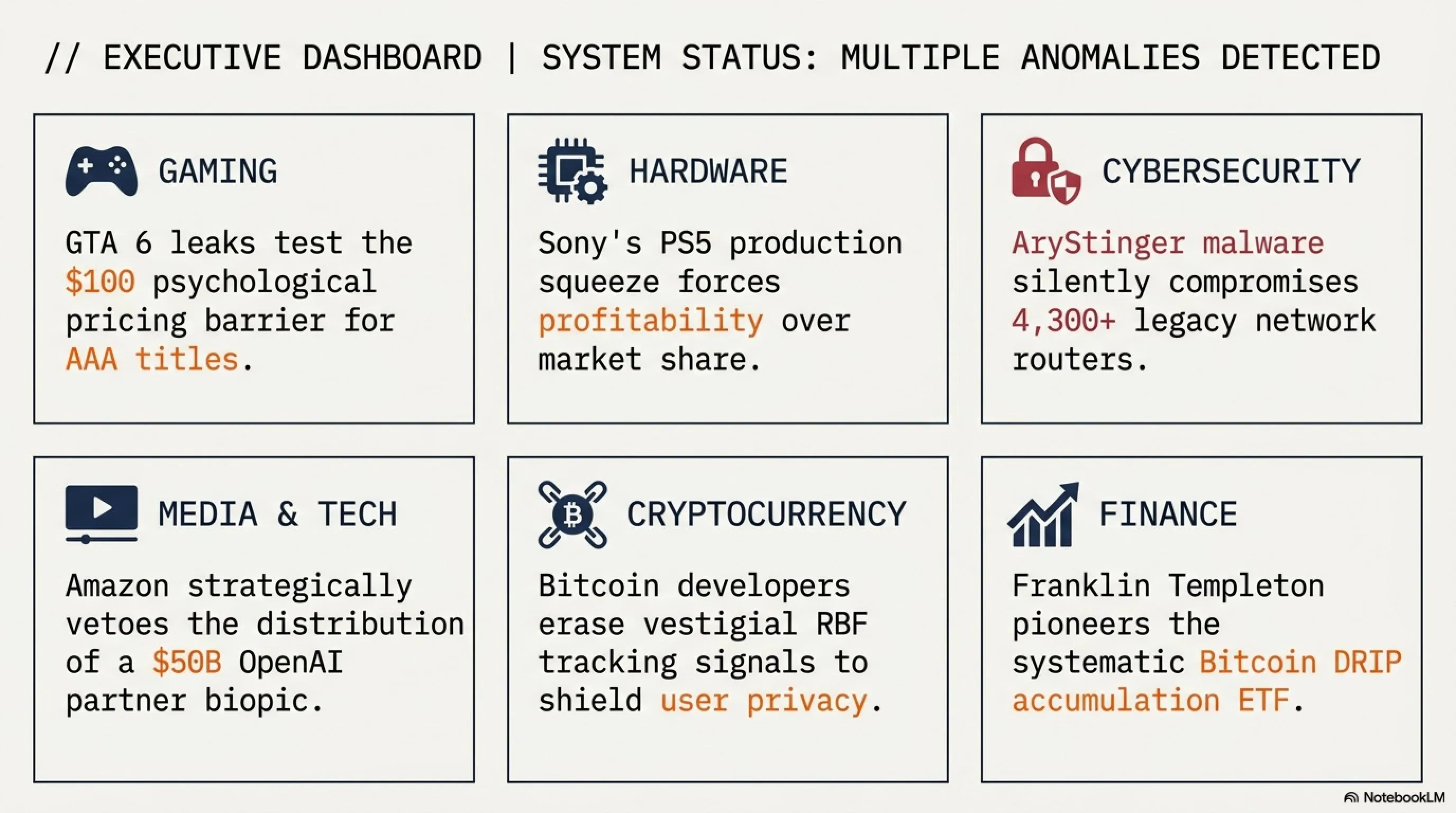
- 🎮GTA 6 Price Leaked- Collector's Edition hits $229
- 🎧Sony's PS5 Pricing Crisis- May cut production instead of prices
- 🚀Amazon Drops Altman Film- 4 months after $50B OpenAI deal
- 🗡️Franklin Bitcoin DRIP ETF- Stock dividends auto-convert to BTC
When the rest of the world is asleep, the tech industry keeps moving. Monday, June 22, 2026 brought a wave of stories that will shape the landscape for months to come. From GTA 6's leaked pricing structure to Amazon's controversial decision to drop a nearly-finished film about Sam Altman, from a sophisticated malware campaign targeting legacy routers to a groundbreaking Bitcoin ETF innovation — tonight's digest has it all. Grab your coffee, settle in, and welcome to TEKIN NIGHT.
At a Glance: Tonight's 6 Major Stories
- GTA 6 prices leaked via Portuguese retailer FNAC — standard edition ~$100, collector's ~$229
- Sony may reduce PS5 production instead of cutting prices amid memory chip crisis
- AryStinger malware infected 4,300+ legacy D-Link routers — building reconnaissance proxy network
- Amazon drops 'Artificial' biopic about Sam Altman 4 months after $50B OpenAI partnership
- Bitcoin developers propose removing redundant RBF signal to improve user privacy
- Franklin Templeton files innovative Bitcoin DRIP ETFs that auto-convert stock dividends to BTC
GTA 6 Pricing Leak: Collector's Edition Could Hit $229
One week before Rockstar's official pre-order launch, a European retailer may have accidentally revealed the pricing structure for the most anticipated game of the decade. The headline: GTA 6's standard edition is likely to cost around $100 (€90), with the collector's edition potentially reaching $229.
FNAC Portugal — a reputable physical retail chain — briefly listed five physical PS5 SKUs for GTA 6 ahead of the official June 25 pre-order date. The listings, labeled RS1, RS4, and RS5, carried price tags of €89.99, €119.99, and €199.99, which convert to approximately $103, $138, and $229 USD. Online communities quickly interpreted these as the standard, deluxe, and collector's editions respectively.
Rockstar has not officially confirmed pricing, but if this leak proves accurate, GTA 6 will become the first mainstream AAA title to break the $100 psychological barrier for a standard edition. The listings have since been removed from FNAC's website, but screenshots have circulated widely across gaming forums and social media.
Why $100 Matters: The Economics of AAA Game Pricing
The official pre-order date is set for June 25, 2026, with the game scheduled to launch on November 19, 2026 — just five months away from what is expected to be the biggest entertainment launch of the decade.
What Could the Different Editions Include?
While Rockstar hasn't released official details, we can make educated guesses based on their previous release patterns, particularly Red Dead Redemption 2:
- Standard Edition (~€90 / $103): Physical disc, full access to single-player campaign and GTA Online multiplayer
- Deluxe/Special Edition (~€120 / $138): In-game bonus content including exclusive vehicles, character outfits, GTA Online currency, and possibly early access to a story DLC
- Collector's Edition (~€200 / $229): Physical collectibles such as a statue, art book, world map, steelbook case, plus premium digital bundles
Historically, Rockstar's collector's editions have been highly sought after. The Red Dead Redemption 2 Ultimate Edition, which retailed for $99.99, sold out within days of pre-orders opening. Given GTA's larger fanbase, the GTA 6 collector's edition could become one of the most valuable gaming collectibles of the generation.
Community Reaction: Is $100 Justified for GTA 6?
The gaming community's reaction has been predictably divided. On Reddit's r/GTA6 and r/gaming, opinions split into several camps. One faction argues that given GTA 6's reported development budget — rumored to exceed $1 billion — and the unprecedented scope of the game, a $100 price tag is defensible. These supporters point to inflation, rising development costs, and the fact that game prices remained largely stagnant at $60 for over a decade before the current-gen $70 standard.
The opposing camp worries about setting a dangerous precedent. If GTA 6 — which is guaranteed to be a commercial success regardless of price — establishes $100 as acceptable, other publishers with less ambitious projects may follow suit. This could price out younger gamers and those in developing markets, fundamentally changing who has access to mainstream gaming.
One particularly insightful comment from industry analyst Mat Piscatella noted: "GTA 6 is uniquely positioned to test this price point. No other franchise has the brand power to pull this off. The question is whether publishers misread the situation and assume all AAA games can command this premium."
Regional Pricing Concerns: What About Emerging Markets?
One aspect not yet addressed by Rockstar is regional pricing. A $100 USD price tag in the United States translates very differently across global markets. In countries like Brazil, India, and Turkey — where gaming is rapidly growing but purchasing power is lower — this price point could be prohibitively expensive without regional adjustments.
Steam has pioneered regional pricing strategies that account for local economic conditions. Whether Rockstar adopts similar approaches for physical and digital console releases remains to be seen. If they don't, we may see a surge in gray market imports and account region-switching to access lower prices.
Sony's PS5 Crisis: The Strategy of Selling Less to Avoid Selling Cheap
Sony Interactive Entertainment is navigating one of the most challenging periods in PlayStation history. Facing a severe hardware pricing crisis driven by component shortages, the company appears to be considering an unconventional solution: produce fewer consoles rather than compete on price.
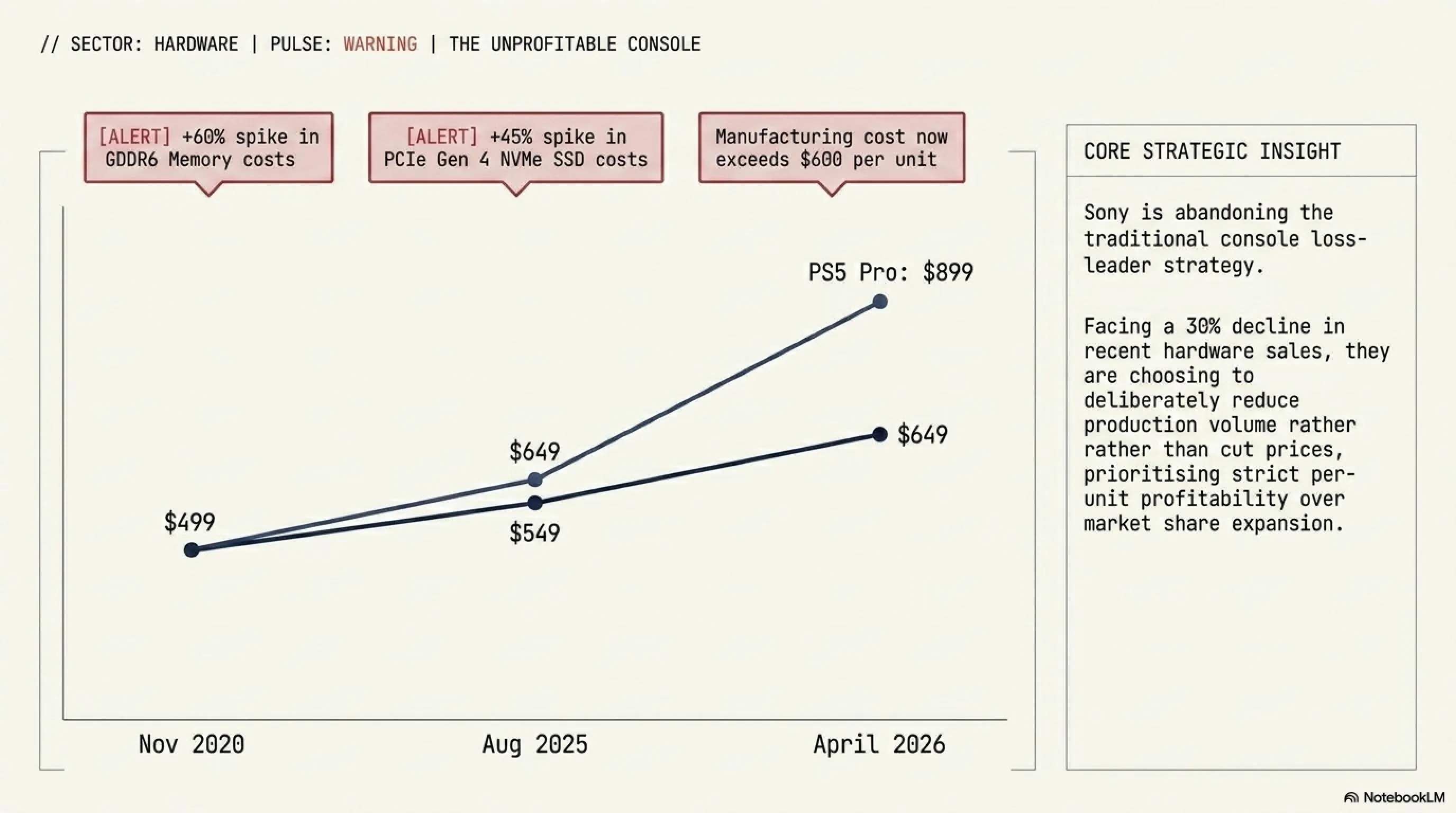
This strategy represents a fundamental shift in console economics. Traditionally, console manufacturers accepted hardware losses (selling consoles below manufacturing cost) to build installed base, then recouped through software sales, online services, and licensing fees. But with component costs soaring and no immediate relief in sight, Sony may be prioritizing profitability per unit over market share expansion.
The Timeline of PS5 Price Increases
Understanding Sony's current predicament requires examining the pricing history. The PS5 launched in November 2020 at $499 (disc edition) and $399 (digital edition). These prices held relatively stable until August 2025, when Sony implemented its first price increase to $549. At the time, this was positioned as a temporary measure to offset supply chain disruptions.
PS5 Price Evolution Timeline
November 2020
Launch pricing — PS5 Disc $499, Digital $399
August 2025
First increase (+$50) — PS5 Disc $549
April 2026
Second increase (+$100) — PS5 Disc $649, Digital $599
PS5 Pro pricing
Increased from $749 to $899 (+$150)
Net result
In under one year, PS5 standard edition increased 30% from original MSRP
However, in April 2026, Sony implemented a more dramatic increase, raising the standard disc edition to $649 and the digital edition to $599 — a full $100 jump. The PS5 Pro saw an even steeper $150 increase to $899. Sony attributed these hikes to "continued pressures in the global economic landscape," specifically citing memory component costs in SEC filings.
The Memory Chip Crisis: Why PS5 Got So Expensive
The root cause of Sony's pricing crisis lies in the global semiconductor shortage, specifically GDDR6 and high-speed NAND flash memory. Unlike previous chip shortages that primarily affected processors, this shortage targets the high-bandwidth memory essential for modern gaming consoles.
GDDR6 memory — used for the PS5's GPU — has seen spot market prices increase by over 60% since late 2025. Similarly, PCIe Gen 4 NVMe SSDs, which provide the PS5's signature fast load times, have increased in cost by approximately 45%. When you combine these with already-expensive custom AMD APUs, the manufacturing cost of a PS5 now exceeds $600 per unit according to industry analysts.
This puts Sony in an impossible position: sell at current prices and accept deeper per-unit losses, raise prices further and risk collapsing demand, or reduce production to minimize overall losses. Current indications suggest they're leaning toward option three.
Sales Impact: PS5 Hardware Down 30% in Recent Months
The market has already spoken. According to NPD/Circana data, PS5 hardware sales in the United States declined approximately 30% in April and May 2026 compared to the same period in 2025. Similar trends are visible in Europe and Japan, though specific numbers vary by region.
This decline isn't due to lack of interest or software lineup weakness. Major releases like Final Fantasy VII Rebirth and Stellar Blade drove strong software sales. The issue is purely price resistance — consumers simply aren't willing to pay $650 for a console that's already mid-lifecycle, especially with PS6 rumors circulating for a 2028-2029 release.
Mat Piscatella, video game industry analyst at Circana, warned that component shortages will likely persist through 2027, affecting not just Sony but also Microsoft and Nintendo. The Nintendo Switch 2, rumored for late 2026 or early 2027, may face similar pricing pressures.
Why Can't Sony Just Cut Prices?
The simple answer: because they'd lose even more money. Console manufacturers traditionally sell hardware at a loss, expecting to recoup through software licensing, PlayStation Plus subscriptions, and digital storefront commissions. Sony's strategy has always been predicated on building a large installed base quickly, then monetizing that base over the console's 7-8 year lifecycle.
But when hardware costs exceed retail prices by such a wide margin, this model breaks down. If Sony cut prices to stimulate demand, they'd increase per-unit losses while simultaneously dealing with higher production volumes — a recipe for unsustainable losses that could impact the company's overall financial health.
- Preserves profitability per unit sold
- Reduces risk of excess inventory accumulation
- Allows focus on high-margin software and services
- Positions PS5 Pro as premium alternative for enthusiasts
- Cedes market share to Xbox and upcoming Switch 2
- Risks alienating the core fanbase and weakening brand loyalty
- Smaller install base means reduced software sales potential
- May shorten PS5 lifecycle and force earlier PS6 launch
What This Means for PS6 and the Future of Console Gaming
Sony's production strategy has broader implications. If PS5 supply remains constrained and prices high through 2027, Sony may be forced to accelerate PS6 development and launch earlier than originally planned. Recent supply chain reports suggest Sony has pushed PS6 internal targets to late 2028 or early 2029, precisely because they can't afford another memory shortage at launch.
This also raises existential questions about the console business model. If hardware remains unprofitable and market conditions prevent the traditional loss-leader strategy, console makers may need to fundamentally rethink their approach. This could mean higher base prices, subscription-required models (similar to mobile carriers), or increased focus on cloud gaming to sidestep hardware economics entirely.
AryStinger Malware: 4,300+ Legacy Routers Turned Into Spy Network
Cybersecurity researchers at QiAnXin XLab have discovered a sophisticated new malware campaign called AryStinger that has infected over 4,300 end-of-life routers, transforming them into a distributed reconnaissance and proxy network. Unlike typical DDoS botnets, AryStinger is designed for the pre-attack phase — quietly mapping the internet, identifying vulnerabilities, and establishing persistent access points.
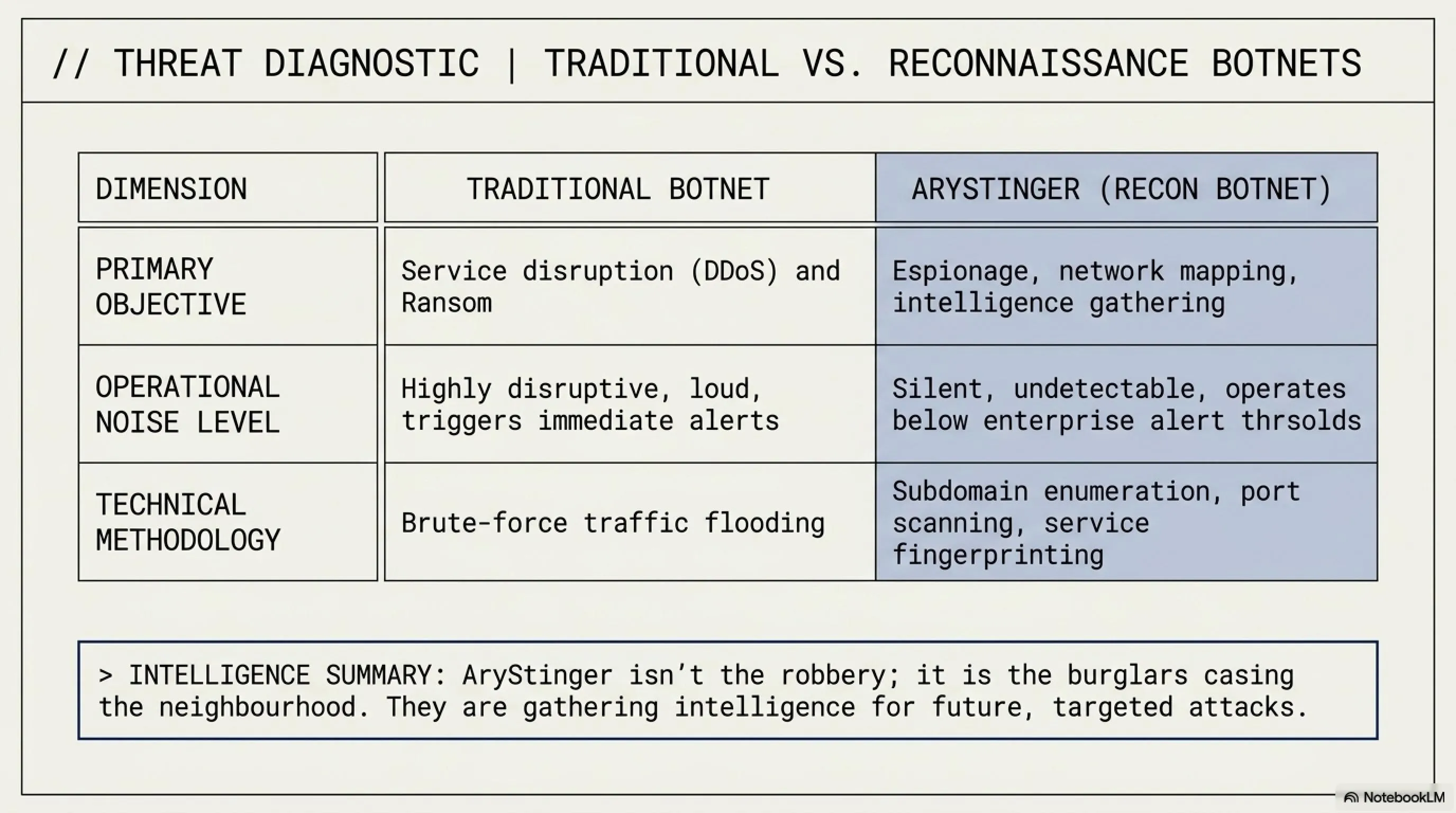
What makes AryStinger particularly concerning is its operational focus. Rather than launching noisy distributed denial-of-service attacks that generate alerts and media attention, this botnet operates silently in the background, scanning networks, fingerprinting services, enumerating subdomains, and tunneling traffic for its operators. It's the digital equivalent of casing potential targets before a heist.
Technical Analysis: How AryStinger Compromises Routers
AryStinger exploits vulnerabilities in legacy Realtek RTL819X chipsets that were mainstream from approximately 2012 to 2015. Specifically, it leverages CVE-2013-3307 (affecting certain Linksys models) and CVE-2016-5681 (affecting D-Link routers), both of which allow remote code execution with elevated privileges.
The primary targets are D-Link DIR-850L and DIR-818LW routers, though other models using similar chipsets are vulnerable. These routers reached end-of-life status years ago, meaning D-Link no longer provides security updates or firmware patches. For attackers, this creates a stable, persistent platform that won't suddenly be patched out from under them.
Once compromised, AryStinger establishes several capabilities:
- Port Scanning: Systematically probes internet-facing services to identify open ports and services
- Service Fingerprinting: Determines specific software versions running on discovered services
- Subdomain Enumeration: Discovers hidden or non-indexed subdomains of target organizations
- Traffic Tunneling: Routes malicious traffic through infected routers to obfuscate true origin
- DNS Hijacking: Redirects DNS queries to malicious servers (though this capability appears underutilized)
- Command Execution: Accepts and executes arbitrary commands from command-and-control servers
Jargon Buster: Reconnaissance Botnets vs. DDoS Botnets
Geographic Distribution and Target Selection
QiAnXin's analysis reveals that infected routers are concentrated in South Korea, China, and Southeast Asia, though infections have been detected globally. The geographic distribution suggests the operators are likely based in or targeting the Asia-Pacific region, though the proxy network could be used for operations anywhere in the world.
The botnet appears to be in an intelligence-gathering phase, systematically cataloging internet-facing infrastructure. Researchers have observed infected routers scanning entire IP ranges, probing for specific vulnerability patterns associated with enterprise VPNs, cloud services, and IoT devices.
Who Is at Risk and How to Protect Yourself
If you own a router purchased between 2012 and 2015, particularly these models, you should take immediate action:
- D-Link DIR-850L
- D-Link DIR-818LW
- Any router based on RTL8196C or RTL8197D chipsets
- Certain Linksys models from the same era
These devices no longer receive security updates from manufacturers. D-Link has officially declared them End-of-Life (EOL), meaning no patches will ever be released to fix these vulnerabilities.
Mitigation Strategies: A Technical Playbook
If you suspect your router may be infected or vulnerable, follow this remediation protocol:
- Immediate: Perform a factory reset. This will remove the malware temporarily, but the router remains vulnerable to reinfection. Access your router's admin panel (typically 192.168.1.1 or 192.168.0.1), navigate to system settings, and select "Factory Reset" or "Restore Defaults."
- Check for firmware updates. If no updates have been released in the past 3+ years, your router is EOL and should be replaced immediately.
- Replace legacy hardware. This is the only permanent solution. Modern routers from 2022 onwards typically receive security updates for 4-5 years and have better built-in security features.
- Network segmentation. If you cannot immediately replace the router, place it behind a more secure network device or enable guest network isolation to limit potential damage.
- Monitor network traffic. Use tools like Wireshark or your router's built-in traffic logs to watch for unusual scanning activity or unexpected connections to foreign IP addresses.
The Broader IoT Security Crisis
AryStinger is a symptom of a larger problem: the internet is filled with legacy devices that will never be patched. Routers, IP cameras, network-attached storage devices, and smart home gadgets from the early-to-mid 2010s are reaching EOL status in massive numbers. Manufacturers have moved on to new product lines, leaving millions of devices permanently vulnerable.
This creates an ever-expanding attack surface for sophisticated threat actors. As security researcher Bruce Schneier has noted, we're building an internet where significant portions of the infrastructure are permanently compromised by design — not through active exploitation, but through planned obsolescence and abandoned support.
The policy implications are profound. Should manufacturers be legally required to provide minimum support lifespans? Should EOL devices be automatically blocked from ISP networks? These questions will become more urgent as the installed base of vulnerable devices continues to grow.
Amazon Drops OpenAI Biopic Four Months After $50B Partnership
In one of the more controversial Hollywood decisions of 2026, Amazon MGM Studios confirmed Friday that it will not release "Artificial," a nearly completed biographical film about OpenAI CEO Sam Altman. The timing is particularly striking: this decision comes just four months after Amazon announced a $50 billion strategic partnership with OpenAI.
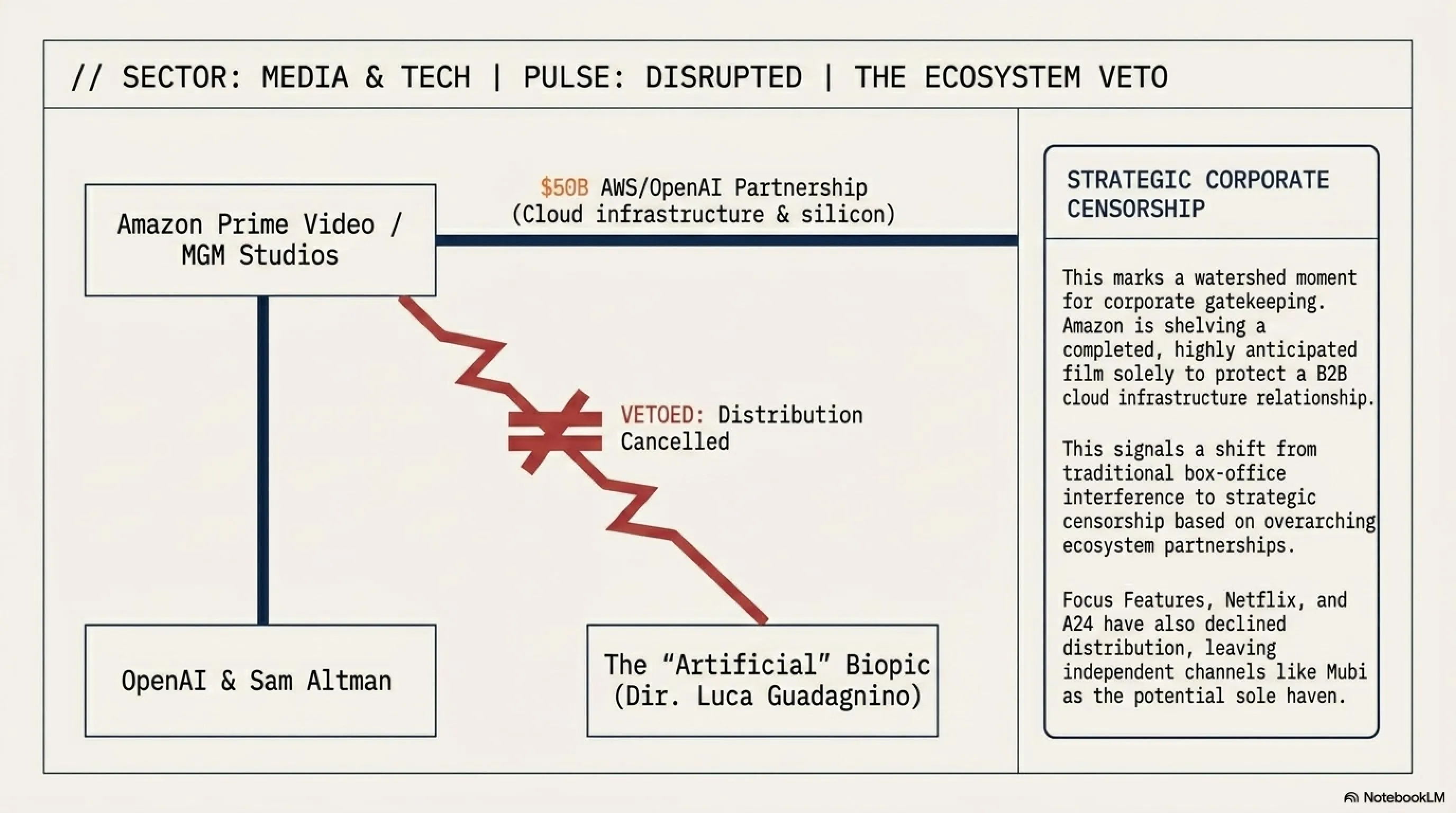
The film, directed by acclaimed filmmaker Luca Guadagnino (Call Me by Your Name, Challengers) and starring Andrew Garfield as Altman and Ike Barinholtz as Elon Musk, was slated for early 2027 release. Written by SNL alumnus Simon Rich, the film focuses on the chaotic 72-hour period in November 2023 when Altman was fired from OpenAI by the board, only to be reinstated after employee revolt and investor pressure.
The $50 Billion Question: Why Did Amazon Walk Away?
Amazon has not provided an official explanation for dropping the film. However, the timing and circumstances tell a story. In February 2026, Amazon and OpenAI announced a massive multi-year partnership that included:
- $50 billion in Amazon investment into OpenAI
- OpenAI committing to use AWS as its primary cloud infrastructure provider
- Joint development of AI models optimized for AWS silicon
- Preferential API access and pricing for Amazon services
Releasing a film that portrays Altman during arguably his most vulnerable moment — depicting internal OpenAI chaos, board conflicts, and leadership instability — could jeopardize this lucrative partnership. Multiple industry sources speaking to Variety suggested the decision came directly from Prime Video and Amazon MGM Studios chief Mike Hopkins, who reportedly made the call after consulting with Amazon's corporate leadership.
When Big Tech Shapes Hollywood Narratives
Netflix, Focus Features, and A24 Also Passed
After Amazon's withdrawal, the film's producers — including representatives from Guadagnino's production company — immediately began shopping "Artificial" to other distributors. According to Variety and The Hollywood Reporter, Netflix, Focus Features, and A24 all declined to acquire the project.
The reasons vary by company. Netflix reportedly felt the film was "too niche" and unlikely to generate significant viewership outside tech industry circles. Focus Features cited budget concerns — the film would require substantial marketing spend to reach broad audiences. A24, known for taking risks on unconventional projects, apparently felt the subject matter was "too close to ongoing business realities" and could complicate their own tech partnerships.
As of this writing, European indie distributor Mubi is reportedly circling the project, though no deal has been finalized. If Mubi acquires the film, it would likely receive limited theatrical release in select markets followed by streaming on Mubi's platform — a far cry from the wide Amazon Prime Video release originally planned.
The Film That Tech Doesn't Want You to See
What makes this situation particularly noteworthy is that "Artificial" is, by all accounts, a completed film. Guadagnino completed principal photography in late 2025, and post-production wrapped in early 2026. Test screenings reportedly went well, with audiences praising Garfield's performance and the film's darkly comedic tone.
This isn't a case of a studio pulling the plug mid-production due to budget overruns or creative differences. This is a finished film being shelved for purely strategic business reasons. The precedent is concerning: if tech companies can effectively bury unflattering but accurate portrayals, what other stories might be suppressed?
What This Means for Hollywood's Independence
The "Artificial" situation is a test case for a larger trend. As tech companies deepen their involvement in entertainment — not just as distribution platforms but as producers and studios — conflicts of interest will inevitably arise. The concern is that business considerations will increasingly trump creative freedom.
Compare this to historical studio interference, which typically focused on commercial appeal or avoiding controversial subjects. What's different here is that the interference is tied directly to B2B corporate relationships. Amazon isn't worried about audience backlash or box office performance — they're worried about a $50 billion partnership.
If this becomes the norm, it could have chilling effects across the industry. Filmmakers may self-censor, avoiding subjects connected to their studio's corporate partners. Stories about tech industry controversies, AI ethics debates, or corporate misconduct may become increasingly difficult to fund and distribute through major platforms.
Bitcoin Privacy Upgrade: Developers Target Redundant RBF Signaling
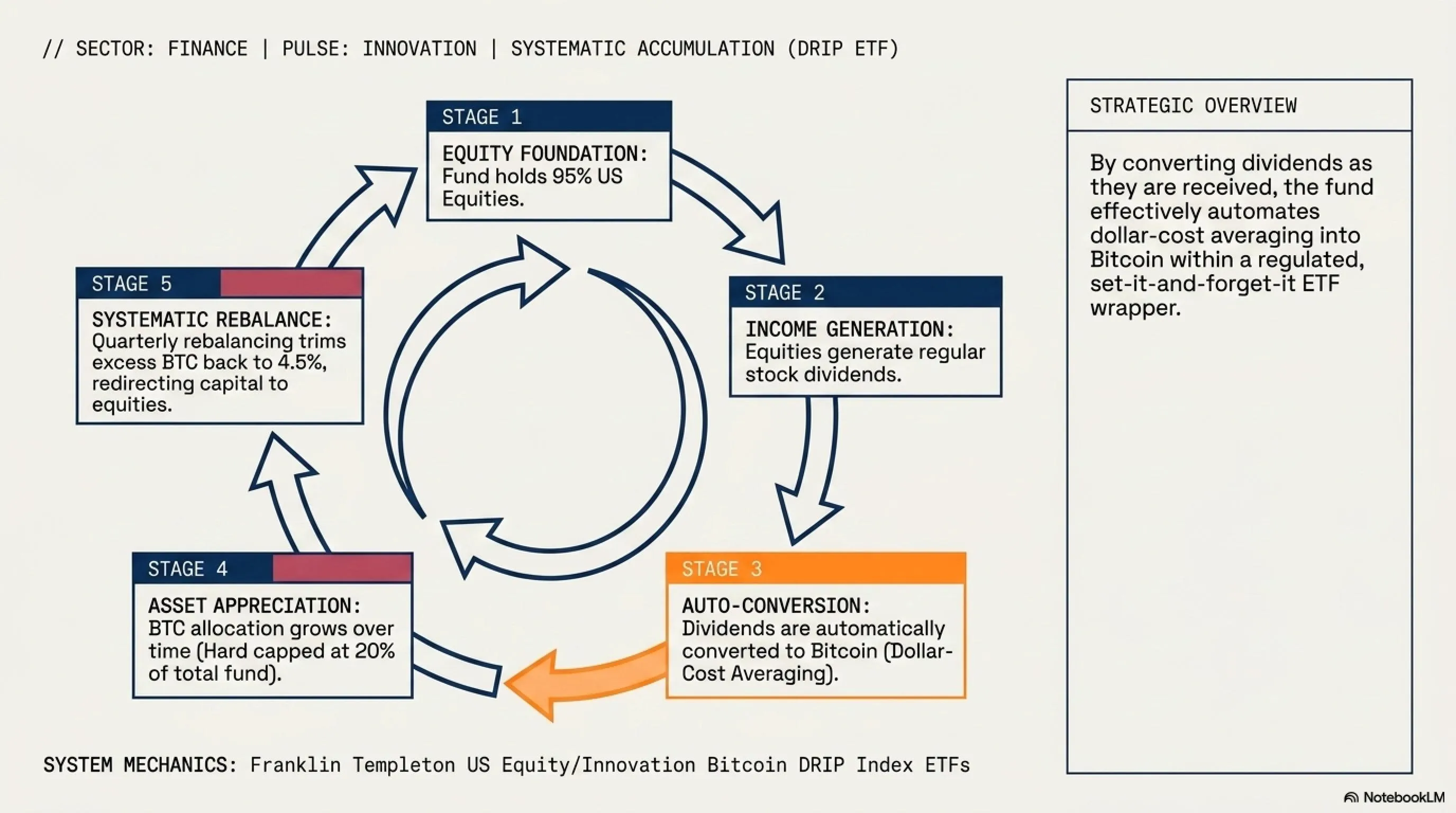
Bitcoin Core developers are working on a significant privacy improvement that could reduce on-chain fingerprinting. The proposal: remove explicit Replace-by-Fee (RBF) signaling from Bitcoin wallet software, eliminating a vestigial feature that now serves primarily as a privacy vulnerability.
Understanding RBF and Why It Matters
Replace-by-Fee is a mechanism that allows users to replace an unconfirmed Bitcoin transaction with a new version that pays a higher fee, incentivizing miners to prioritize it. When Bitcoin transaction fees spike during network congestion, RBF becomes essential for ensuring timely confirmation.
Historically, Bitcoin used "opt-in RBF" — users had to explicitly signal in their transaction that they might want to replace it later. This was implemented through BIP 125, which defined how wallets should set sequence numbers in transactions to indicate RBF support. The idea was to give receiving parties warning that a transaction might be replaced before confirmation.
However, Bitcoin Core version 28.0, released in October 2024, made "full-RBF" the default mempool policy. Under full-RBF, all unconfirmed transactions can potentially be replaced regardless of whether they signal opt-in RBF. This made the explicit signaling mechanism technically redundant.
The Privacy Problem: On-Chain Fingerprinting
The issue is that wallet software still includes the old opt-in RBF signal out of habit and backward compatibility concerns. But because this signal is now unnecessary, it serves only to create a unique "fingerprint" that analysts can use to identify which wallet software created a transaction.
Different wallets implement RBF signaling in slightly different ways. Some always signal RBF, some never do, and others let users choose. By analyzing these patterns across the blockchain, chain analysis firms can probabilistically determine which wallet was used for specific transactions — compromising user privacy.
Bitcoin Core contributor rkrux explained the problem in a developer mailing list post: "Since full-RBF became standard policy, this signaling has become redundant. Worse, it creates unnecessary on-chain fingerprints that can be used for wallet tracking. From a privacy perspective, we should remove this vestigial feature."
Why Privacy Matters in Bitcoin
Technical Complexity: Why Removal Isn't Simple
You might think removing a signal would be straightforward, but the reality is more complex. The RBF signal is encoded in transaction sequence numbers, which are also used for other purposes including timelocks and relative timelocks (BIP 68). Changing how wallets set sequence numbers could inadvertently break these other features.
Bitcoin Core developer Murch (Mark Erhardt) noted in the discussion: "Removing the BIP 125 signaling is technically involved because sequence numbers serve multiple purposes. We need to carefully ensure that removing RBF signaling doesn't interfere with timelock functionality or other protocol features. This requires thorough testing and potentially coordination across multiple wallet implementations."
The proposal under consideration would have wallets set sequence numbers in a way that doesn't explicitly signal RBF but also doesn't interfere with existing protocol features. This would make all transactions look more uniform from a privacy perspective, reducing the ability to fingerprint wallet software.
Impact on Users: Transparent but Important
For most Bitcoin users, this change would be completely transparent. You'll still be able to bump transaction fees when needed — the functionality remains, only the signaling mechanism changes. Your wallet will simply stop broadcasting information that was useful for privacy-invasive chain analysis.
For users particularly concerned about privacy — activists, journalists, people in repressive regimes — this represents a meaningful improvement. Every reduction in on-chain metadata makes it harder to track and identify users. Combined with other privacy techniques like CoinJoin, proper coin control, and running your own node, removing RBF signaling contributes to a more privacy-preserving Bitcoin ecosystem.
Franklin Templeton's Bitcoin DRIP ETF: Dividends That Buy Bitcoin
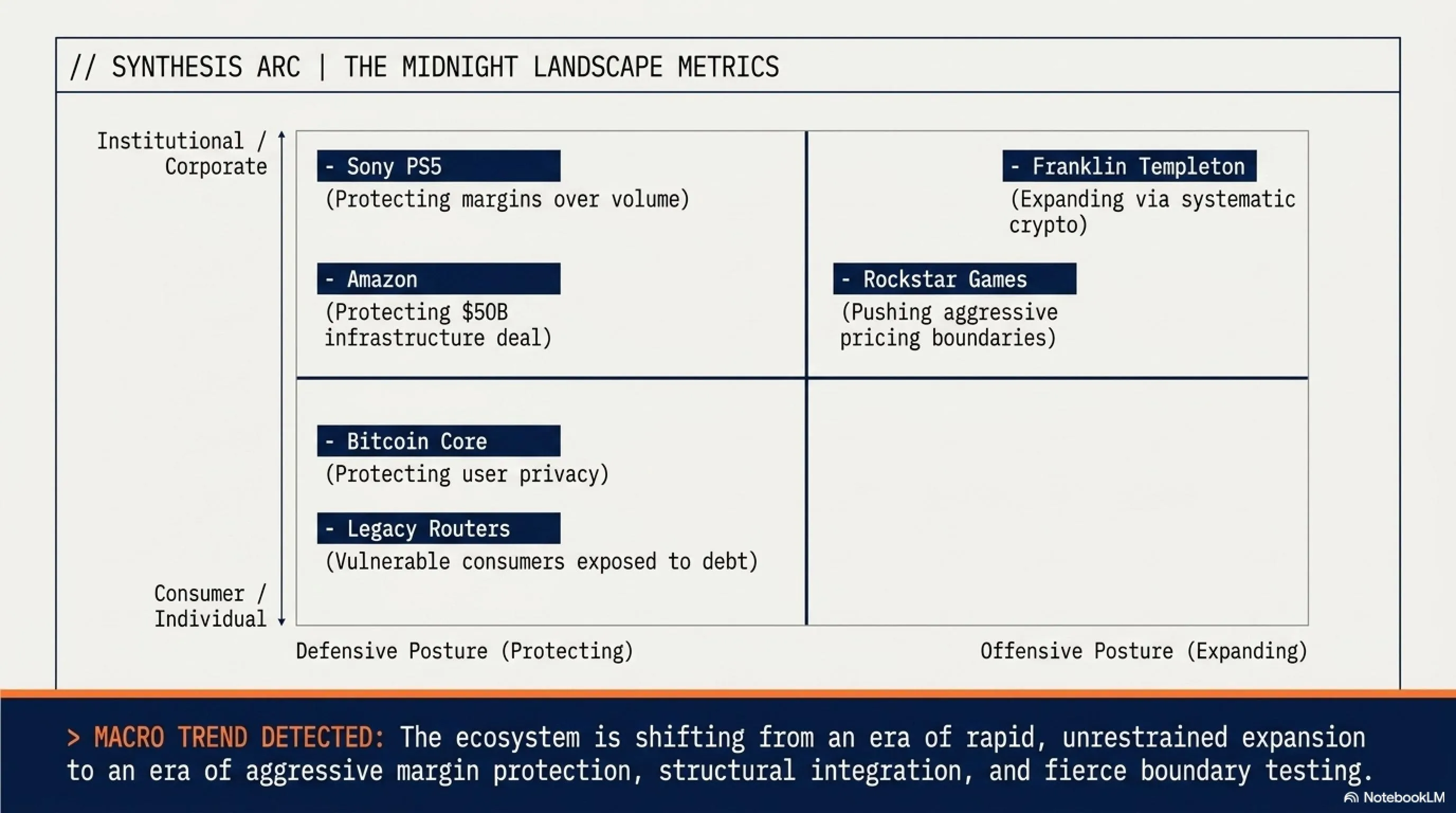
Franklin Templeton, one of the world's largest asset managers with over $1.5 trillion in assets under management, has filed with the SEC for two innovative exchange-traded funds that could reshape how mainstream investors approach Bitcoin exposure. These "DRIP-style" ETFs would automatically convert stock dividends into Bitcoin, creating a mechanism for passive, systematic BTC accumulation within a traditional equity framework.
How the Bitcoin DRIP ETFs Work
Franklin Templeton filed for two products on June 18, 2026:
- Franklin US Equity Bitcoin DRIP Index ETF: Tracks a VettaFi index of large-cap U.S. stocks with dividend reinvestment into Bitcoin
- Franklin US Innovation Bitcoin DRIP Index ETF: Tracks an innovation-focused index including tech and disruptive companies, also with Bitcoin reinvestment
Both funds launch with an initial allocation of approximately 95% U.S. equities and 5% Bitcoin exposure. The innovative mechanic is what happens to dividends. In a traditional DRIP (Dividend Reinvestment Plan), dividends are automatically used to purchase more shares of the dividend-paying stocks. In these Bitcoin DRIP ETFs, dividend proceeds are instead automatically allocated to Bitcoin purchases.
Over time, as dividends accumulate and are converted to BTC, the Bitcoin allocation gradually increases. However, there's a ceiling: Bitcoin exposure is capped at 20% of fund assets. When Bitcoin allocation approaches or exceeds this cap, quarterly rebalancing trims it back to approximately 4.5%, with proceeds redirected to equities.
Understanding DRIP: From Stocks to Bitcoin
Why This Structure Matters: The Case for Systematic BTC Accumulation
This ETF structure addresses several pain points for traditional investors interested in Bitcoin exposure:
Tax efficiency: Dividends are automatically reinvested within the fund structure, potentially offering more favorable tax treatment than receiving dividends as cash and separately purchasing Bitcoin.
Dollar-cost averaging: By converting dividends as they're received throughout the year, the fund effectively implements a dollar-cost averaging strategy into Bitcoin, reducing timing risk.
Regulatory comfort: Everything happens within an SEC-registered ETF wrapper, providing institutional-grade custody and regulatory oversight that many traditional investors require.
Portfolio integration: Instead of separate equity and crypto holdings, investors get both in a single ticker, simplifying portfolio management and rebalancing.
Potential Market Impact: Systematic Bid for Bitcoin
If these ETFs attract significant assets, they could create consistent buying pressure for Bitcoin. Unlike discretionary allocation where investors make one-time decisions to buy BTC, dividend reinvestment creates an ongoing, predictable bid.
Consider the mechanics: if the Franklin US Equity Bitcoin DRIP ETF grows to $10 billion in assets with a portfolio yielding an average 2% dividend, that's $200 million in annual dividend income being systematically allocated to Bitcoin. Multiply this across multiple similar products from different asset managers, and you could see billions in annual systematic BTC demand.
This is fundamentally different from speculative Bitcoin ETF buying, which tends to be momentum-driven and volatile. Dividend reinvestment is structural and persistent, continuing regardless of Bitcoin's price action.
Timeline and Regulatory Outlook
The Form 485APOS filing indicates a potential effective date of September 1, 2026, though this remains subject to SEC review and approval. Franklin Templeton has not yet disclosed ticker symbols, expense ratios, or specific index methodologies, though these details typically emerge closer to launch.
The regulatory path is relatively clear. Bitcoin spot ETFs have been approved since early 2024, and hybrid equity-crypto products have precedent. The main regulatory question is whether the DRIP mechanism creates any novel concerns around market manipulation or liquidity. Given that dividend reinvestment happens at predetermined intervals using standard Bitcoin spot ETF holdings, approval seems likely.
- Automated, systematic Bitcoin accumulation without active management
- Tax-efficient dividend reinvestment within fund structure
- Combines equity dividend income with Bitcoin growth potential
- Solves custody and security concerns for traditional investors
- 20% Bitcoin cap may be too restrictive for crypto bulls
- Quarterly rebalancing means selling BTC if it appreciates significantly
- Expense ratio not yet disclosed — could erode returns
- Dividend yield determines BTC accumulation rate — low-yield portfolios accumulate slowly
Who Should Consider This ETF?
Franklin Templeton's Bitcoin DRIP ETFs are designed for a specific investor profile:
- Long-term investors who want passive Bitcoin exposure without active trading
- Traditional equity investors curious about Bitcoin but uncomfortable with direct crypto ownership
- Dividend-focused portfolios looking to diversify income reinvestment strategies
- Tax-conscious investors seeking efficient ways to allocate dividend income
This product is not ideal for:
- Active traders seeking to time Bitcoin entries and exits
- Crypto maximalists who want pure Bitcoin exposure without equity dilution
- Investors who need liquidity — the quarterly rebalancing and 20% cap limit flexibility
Closing Thoughts: A Night of Inflection Points
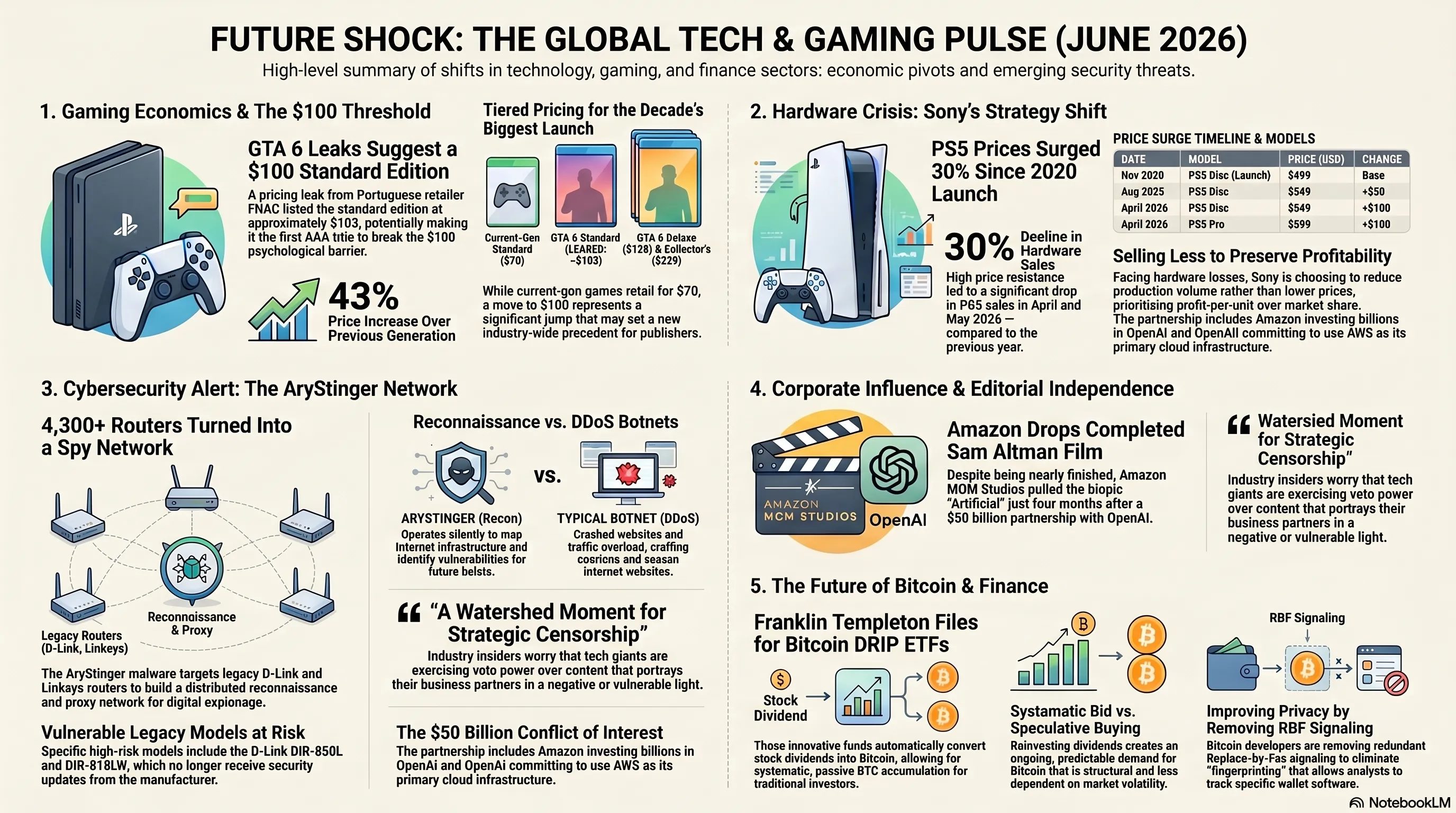
Monday, June 22, 2026 delivered a collection of stories that, individually, would headline any tech or gaming news site. Taken together, they paint a picture of an industry at several critical inflection points.
GTA 6's leaked pricing tests whether the gaming market will accept a new $100+ standard for premium titles. Sony's PS5 production strategy may redefine console economics in an era of persistent component shortages. AryStinger reminds us that the internet's foundational infrastructure includes millions of permanently vulnerable devices. Amazon's decision to drop "Artificial" raises uncomfortable questions about tech companies' growing power to shape narratives. Bitcoin's RBF proposal shows the ongoing tension between usability and privacy in cryptocurrency design. And Franklin Templeton's DRIP ETF demonstrates how traditional finance is finding increasingly creative ways to integrate digital assets.
Each story deserves deep analysis on its own. Together, they illustrate an accelerating pace of change across gaming, cybersecurity, entertainment, and finance. The decisions made in these next few months — pricing strategies, security investments, editorial policies, and product innovations — will echo for years.
That's it for tonight's TEKIN NIGHT. Stay tuned for tomorrow morning's TEKIN MORNING, where we'll dive into new developments and continue tracking these evolving stories. Until then, stay curious, stay critical, and stay ahead.
Frequently Asked Questions
Will GTA 6 really cost $100?
We don't have official confirmation from Rockstar yet. The leak came from Portuguese retailer FNAC, which listed the standard edition at €89.99 (~$103 USD). We'll know for certain when official pre-orders open on June 25, 2026.
Why can't Sony just lower PS5 prices to increase sales?
Sony is already losing money on each console sold at current prices due to high memory component costs. Lowering prices would increase per-unit losses to unsustainable levels. Their strategy appears to be reducing production volume instead, focusing on profitability per unit rather than market share.
How do I know if my router is infected with AryStinger?
If you own a D-Link DIR-850L, DIR-818LW, or similar router from 2012-2015, you're at risk. Signs of infection include unusually high network activity, slow performance, or unexpected outbound connections. The safest approach is to replace any router that no longer receives security updates.
When will Franklin Templeton's Bitcoin DRIP ETF launch?
The SEC filing indicates a potential effective date of September 1, 2026, but this is subject to regulatory approval. Ticker symbols and expense ratios have not yet been disclosed.
Will removing the RBF signal affect my ability to increase Bitcoin transaction fees?
No. You'll still be able to replace unconfirmed transactions with higher-fee versions — the functionality remains unchanged. The only difference is that your transactions won't include a specific signal that can be used to fingerprint your wallet software.
Why did Amazon really drop the Sam Altman film?
Amazon hasn't provided an official reason, but the timing — just four months after a $50 billion OpenAI partnership — strongly suggests business considerations. Releasing a film depicting Altman's chaotic 2023 firing could strain that relationship.