
🌙 Welcome to Tekin Night — June 12, 2026
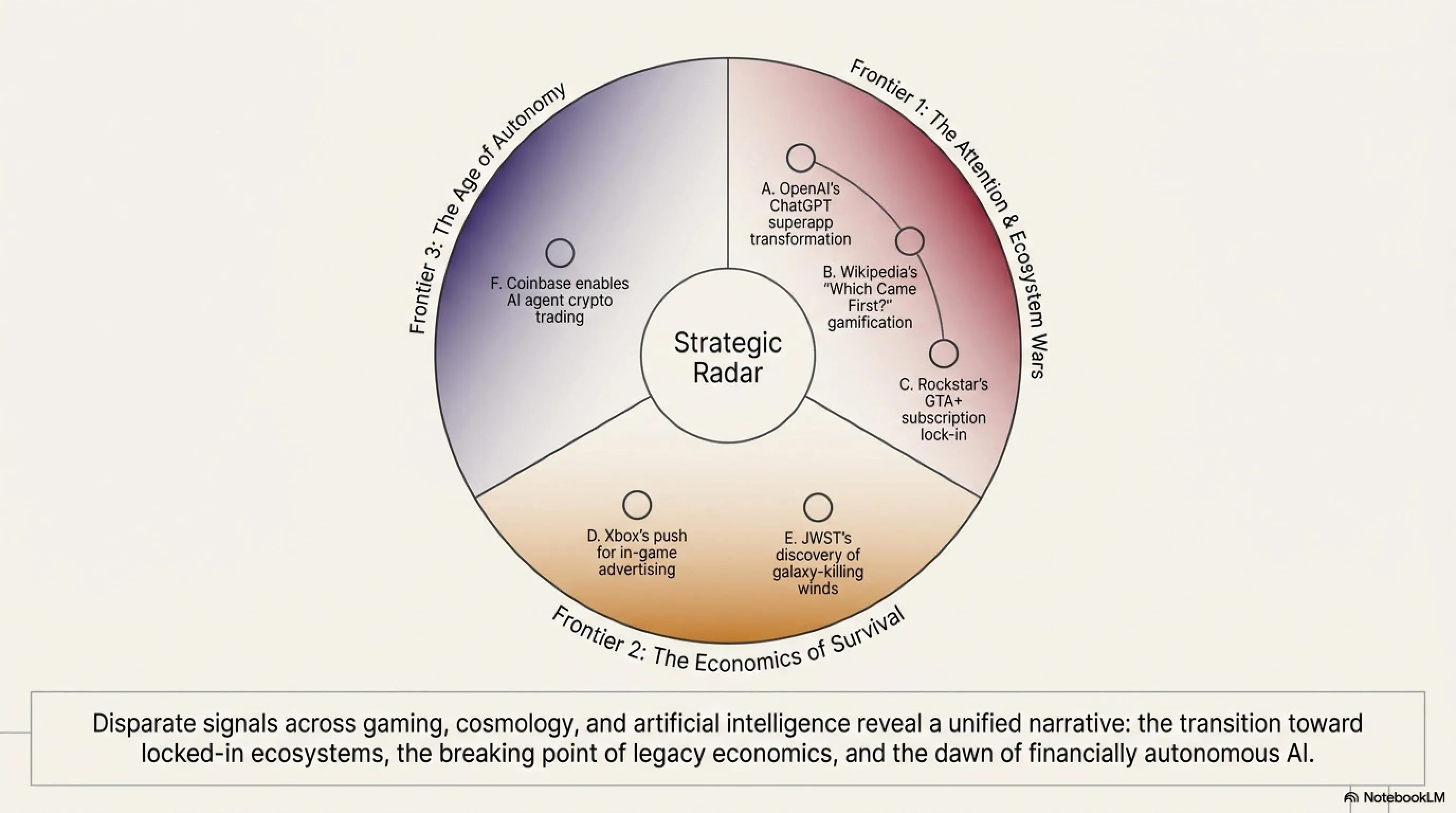
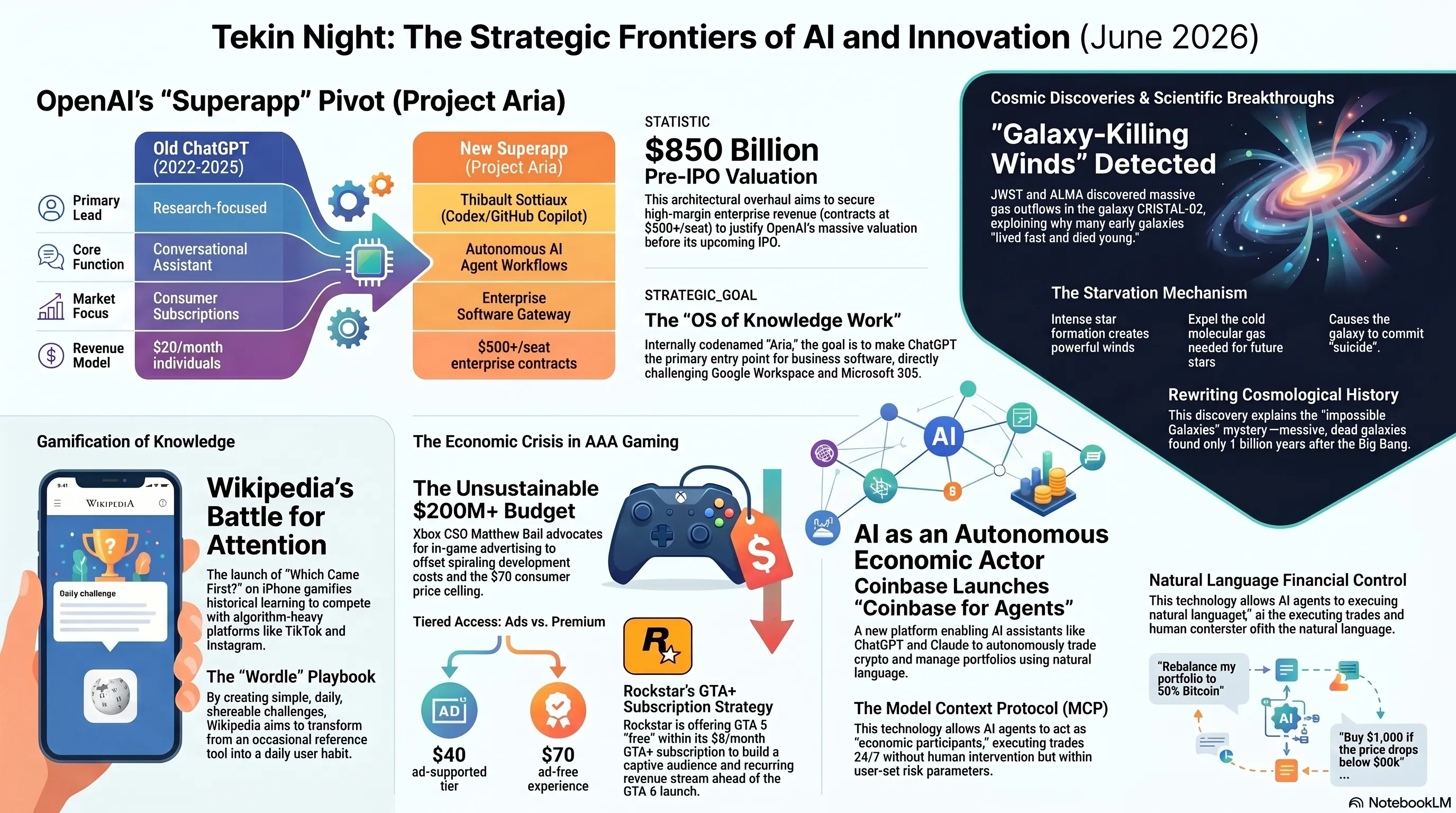
Happy Friday night, tech enthusiasts! It's time to fuel your evening with six high-octane stories spanning AI transformation, gaming economics, cosmic mysteries, and the financial future of artificial intelligence. Tonight we're covering strategic pivots that will define the next decade of technology. Grab your favorite beverage and let's dive into the stories shaping our digital world.
✨ Tonight's Headlines:
🤖 OpenAI transforms ChatGPT into "superapp" with Codex lead Thibault Sottiaux
🎮 Xbox CSO advocates in-game advertising to "save gaming"
🌌 James Webb discovers galaxy-killing wind in early universe
📱 Wikipedia launches "Which Came First?" historical game for iPhone
🚗 GTA 5 joins GTA+ subscription ahead of GTA 6 launch
💰 Coinbase enables AI agents to autonomously trade crypto
🚀 Ready? Let's explore the strategic moves and discoveries defining our tech future!
1. OpenAI's ChatGPT Superapp: Thibault Sottiaux Leads Biggest Transformation Yet 🤖
Imagine ChatGPT no longer as just a chatbot, but as an all-encompassing "superapp" handling every facet of your personal and professional life: coding assistance, task automation, third-party integrations, and autonomous AI agents executing complex workflows. This isn't speculation—it's the reality OpenAI is building through the most significant ChatGPT overhaul since its November 2022 launch.
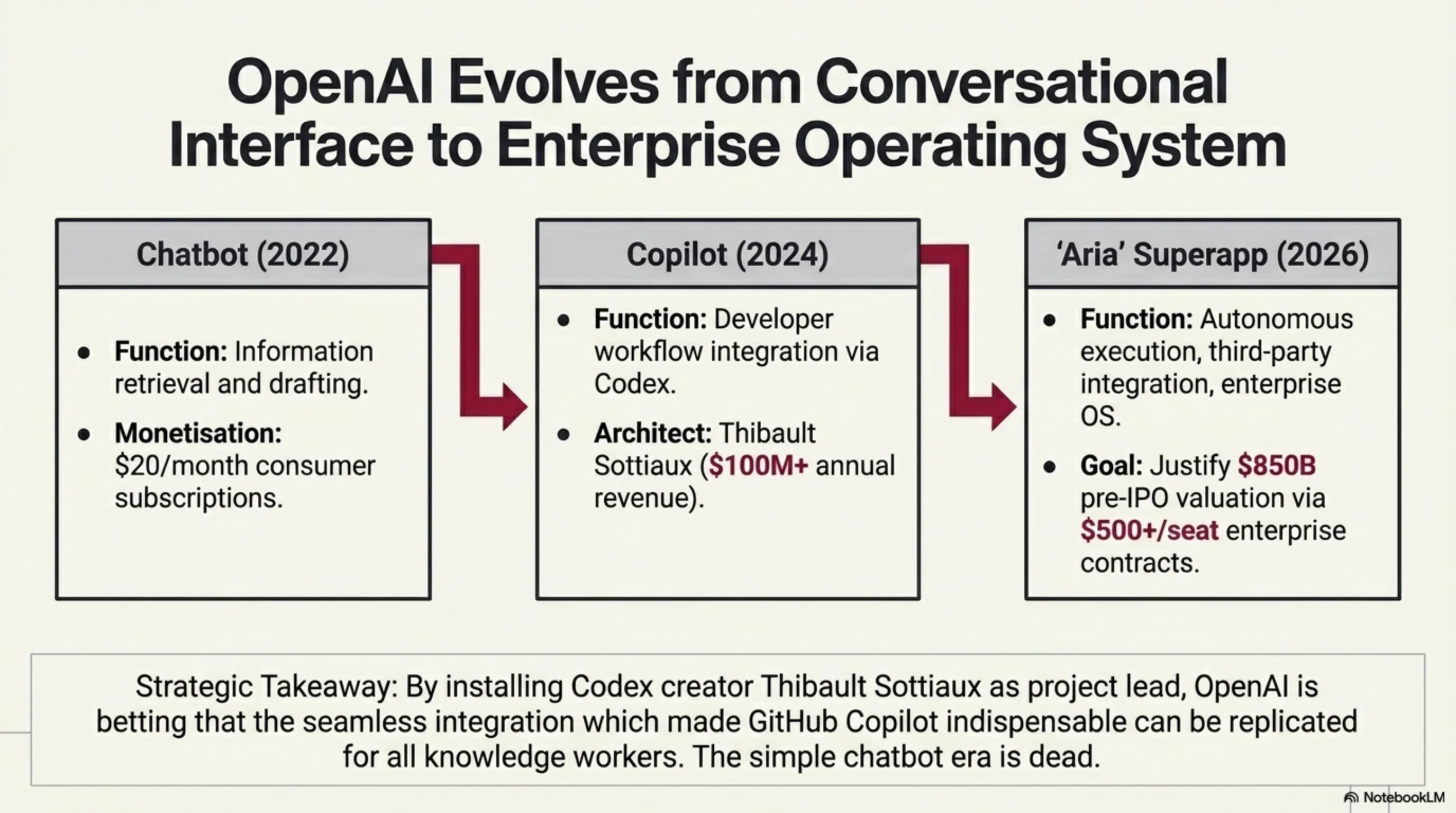
According to WIRED, OpenAI has tapped Thibault Sottiaux—the engineering mind behind Codex (the AI system powering GitHub Copilot)—to lead this transformation. Sottiaux now wields enormous influence over whether OpenAI's biggest bet pays off: transforming ChatGPT from a conversational interface into what the company privately and publicly calls a "superapp."
📊 ChatGPT Superapp Transformation: Key Details
| Project Lead | Thibault Sottiaux (Codex Creator, GitHub Copilot Architect) |
| Strategic Goal | Transform ChatGPT into all-in-one platform with coding tools, AI agents, third-party integrations |
| OpenAI Valuation | ~$850 billion (pre-IPO) |
| Launch Timeline | Coming weeks (Internal codename: "Aria") |
| Primary Competitors | Google Workspace, Microsoft 365, Notion, Slack, Anthropic Claude |
| Revenue Target | Higher-margin enterprise subscriptions + business software gateway |
Why This Matters: OpenAI's $850B Pre-IPO Bet
OpenAI is making a calculated gamble: that ChatGPT can become the primary entry point for business software, automated task completion, coding work, and enterprise revenue before a potential IPO later this year. TechCrunch reports that the revamped ChatGPT will roll out "in the coming weeks," combining coding tools, AI agents, and third-party services into a single platform internally codenamed "Aria."
This isn't incremental improvement—it's architectural transformation. The goal is to make ChatGPT as indispensable as email or web browsers, a platform where users begin their workday and accomplish complex tasks without leaving the interface. Think: "ChatGPT, write this code, test it, deploy it, email the team, and schedule a meeting to discuss results"—all executed autonomously.
Why Thibault Sottiaux? Codex Lessons Applied to Consumer AI
Sottiaux isn't a random choice. He architected Codex, the AI system that transformed how millions of developers write code through GitHub Copilot. That experience in building developer-beloved tools is now being leveraged to reshape consumer interactions with AI. As TechBuzz.AI notes, "The move signals OpenAI's bet that lessons learned from building tools for developers can reshape how millions of consumers interact with AI."
Codex succeeded because it integrated seamlessly into developers' workflows without disrupting them. The challenge: can ChatGPT maintain its signature simplicity while adding enterprise-grade capabilities? This is the tightrope Sottiaux must walk—delivering power without complexity, depth without confusion.
🔍 Tekin Analysis: Why This Is OpenAI's Highest-Stakes Gambit Yet
1. Direct Competition with Software Giants: OpenAI is challenging Google Workspace, Microsoft 365, and Notion head-on. The goal: make ChatGPT the default starting point for knowledge work, not just an AI assistant.
2. Enterprise Revenue Imperative: At $850B valuation ahead of IPO, OpenAI needs higher-margin enterprise revenue. Consumer subscriptions ($20/month) won't justify that valuation—enterprise contracts at $500+/seat will.
3. The Codex Playbook: Sottiaux proved that AI tools can become indispensable when they integrate seamlessly into workflows. GitHub Copilot generates ~$100M+ annually because developers can't imagine working without it. Can ChatGPT achieve similar indispensability for general knowledge workers?
4. Simplicity vs. Power Paradox: ChatGPT became ubiquitous because anyone could use it. Adding enterprise features risks alienating casual users. If the interface becomes too complex, users might defect to Claude, Gemini, or other simpler alternatives.
5. The "Super App" Graveyard: History is littered with failed super app attempts (remember Facebook's ambitions?). Success requires not just features, but seamless UX that makes complexity feel effortless—exactly what Codex achieved for developers.
According to Financial Times (via PYMNTS), the redesign is weeks away and represents OpenAI's race toward a potential IPO. The company has been burning cash on model training and infrastructure; transforming ChatGPT into a revenue-generating platform is existential, not optional. As Ars Technica succinctly put it: "Chat is dead"—meaning the simple chatbot era is ending, replaced by agentic, task-completing AI platforms.
The stakes couldn't be higher. If Sottiaux succeeds in making ChatGPT indispensable for enterprises while maintaining usability for consumers, OpenAI's $850B valuation looks conservative. If the platform becomes bloated and users flee to simpler alternatives, the IPO could stumble. This transformation will define whether OpenAI becomes the next Google—or the next overhyped unicorn that couldn't scale.
💡 Key Takeaway: OpenAI is betting that the lessons from Codex—build indispensable tools that seamlessly integrate into workflows—can revolutionize consumer AI. If successful, ChatGPT becomes the OS of knowledge work. If it fails, competitors like Anthropic's Claude and Google's Gemini are ready to capture defectors. With an $850B valuation and IPO looming, this isn't just a product launch—it's an existential transformation.
2. Xbox In-Game Ads: Can Matthew Ball Save Gaming? 🎮
Now for tonight's most controversial story: Matthew Ball, Xbox's newly appointed Chief Strategy Officer, has publicly advocated for in-game advertising as a potential salvation for the gaming industry. Yes, you read that correctly—advertising, the thing gamers universally despise, is being positioned as gaming's financial savior.
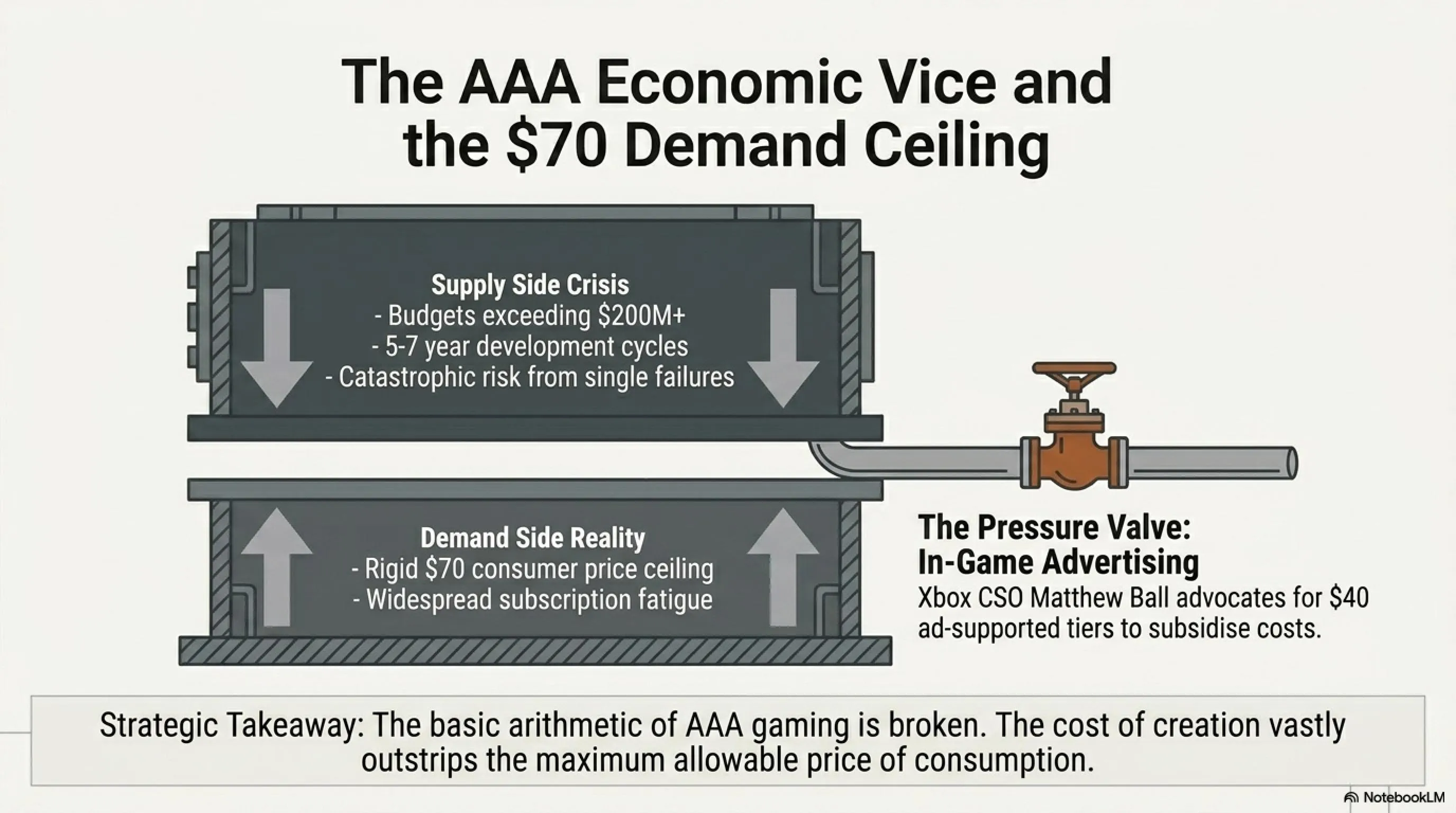
[IMAGE_PLACEHOLDER_3]In an interview with The Game Business, Ball articulated what he calls a "two-sided problem" plaguing modern gaming: development costs for AAA titles have spiraled "way too high," yet consumers adamantly resist paying more than the $70 standard established in 2020. Something must give, and Ball sees advertising as one potential pressure release valve.
⚠️ Gaming's Two-Sided Economic Crisis
🔴 Supply Side Crisis
• AAA development: $200M+ budgets
• Development cycles: 5-7 years
• Team sizes: 500+ employees
• Marketing: $50-100M additional
• Financial risk: catastrophic if game fails
🔴 Demand Side Resistance
• Price ceiling: $70 (since 2020)
• Strong resistance to increases
• Expectation: more free content
• Competition: F2P titles (Fortnite, Warzone)
• Subscription fatigue: Game Pass, PS Plus
Ball's proposal: advertising could enable "more affordable alternatives" for gaming experiences. Imagine a tiered system: play with ads for $40, or pay full $70 for ad-free premium. It's the Spotify/YouTube model applied to premium gaming. But Ball was quick to add a crucial caveat: "The question is not 'Can we cram ads in everything?'"—suggesting even he recognizes the minefield he's navigating.
Community Backlash: Gaming's Ad Allergic Reaction
The gaming community's reaction was swift and overwhelmingly negative. PC Gamer captured the sentiment: gamers fear immersion-destroying interruptions. Imagine this scenario: you're in a critical firefight in Call of Duty's climactic mission, bullets flying, heart pounding—and suddenly a 30-second Coca-Cola ad freezes your screen. The immersion shatters. The tension evaporates. Your $70 premium experience feels cheapened.
Ball himself acknowledged the delicate balance required, telling The Game Business that Xbox's approach would focus on "offering more affordable alternatives" rather than forcing ads into existing premium experiences. But trust is fragile, especially after Xbox's recent missteps: the disastrous Game Pass price hikes that cost "millions of subscribers" (per Windows Central), the confusing messaging around exclusivity, and the $70 billion Activision acquisition that has yet to deliver obvious consumer benefits.
✅ PROS vs ❌ CONS: In-Game Advertising Battlefield
| ✅ Potential Benefits (Industry View) | ❌ Critical Risks (Gamer View) |
|---|---|
|
• Lower entry price for budget-conscious gamers • Additional revenue stream offsets dev costs • Sustainability for live-service games • Consumer choice: ads vs premium • Proven model in mobile gaming ($100B+ market) |
• Destroys immersion in narrative-driven games • "Product" feeling vs. "customer" treatment • Slippery slope: ads in $70 games too? • UI/UX complexity and clutter • Publisher abuse potential (excessive ads) • Data privacy concerns (ad targeting) |
Here's the strategic irony: Xbox already possesses one of gaming's most sophisticated adtech platforms through King (the Candy Crush developer acquired via Activision Blizzard King for $70B). King generates billions annually through mobile advertising. Xbox has the infrastructure—the question is whether console and PC gamers will tolerate what mobile gamers have accepted as normal.
Ball's January 2026 "State of Videogaming" report predicted that in-game ad placements would become more common in PC and console games precisely because they represent "a largely untapped source of revenue" that the struggling industry desperately needs. His appointment as Xbox CSO in June suggests Microsoft is seriously exploring this revenue frontier—whether gamers like it or not.
🔍 Tekin Analysis: The High-Wire Act Xbox Must Walk
1. The Economic Reality Is Real: AAA budgets have indeed become unsustainable. Spider-Man 2 cost $300M+, Skull and Bones reportedly exceeded $200M, and many studios can't afford single failures. Ball isn't wrong about the crisis—he's just proposing a solution gamers hate.
2. The Trust Deficit Problem: Xbox has burned significant goodwill. Game Pass lost millions of subscribers after price hikes. Exclusivity messaging has been confusing. The Activision acquisition hasn't delivered obvious wins for Xbox gamers. In this environment, proposing ads feels tone-deaf.
3. Implementation Will Define Success: Optional ad-supported tiers ($40 with ads vs $70 premium) could work—if executed transparently. But forced ads in $70 games would trigger mass exodus to PlayStation or PC-only gaming.
4. Mobile ≠ Console Psychology: Mobile gamers tolerate ads because games are free. Console gamers paying $70 expect premium, uninterrupted experiences. Transplanting mobile economics to premium gaming requires cultural shift Xbox may not be able to engineer.
5. The Alternative: Sony's Strategy: PlayStation is doubling down on premium single-player experiences (Spider-Man, God of War, Horizon) at $70 with zero ads. If Xbox pursues ads aggressively, Sony's "pure premium" positioning becomes even more attractive.
💡 Key Takeaway: Matthew Ball is a brilliant industry analyst, but his in-game advertising advocacy is Xbox's riskiest strategic proposal in years. The economic logic is sound—AAA costs are unsustainable. But execution will determine whether this becomes industry-saving innovation or trust-destroying disaster. Optional ad-supported tiers could work if transparently implemented and genuinely cheaper. Forced ads in premium games would be catastrophic. Xbox's challenge: solve an economic crisis without alienating the community that's already skeptical after recent missteps.
3. James Webb Discovers "Galaxy-Killing" Wind in Early Universe 🌌
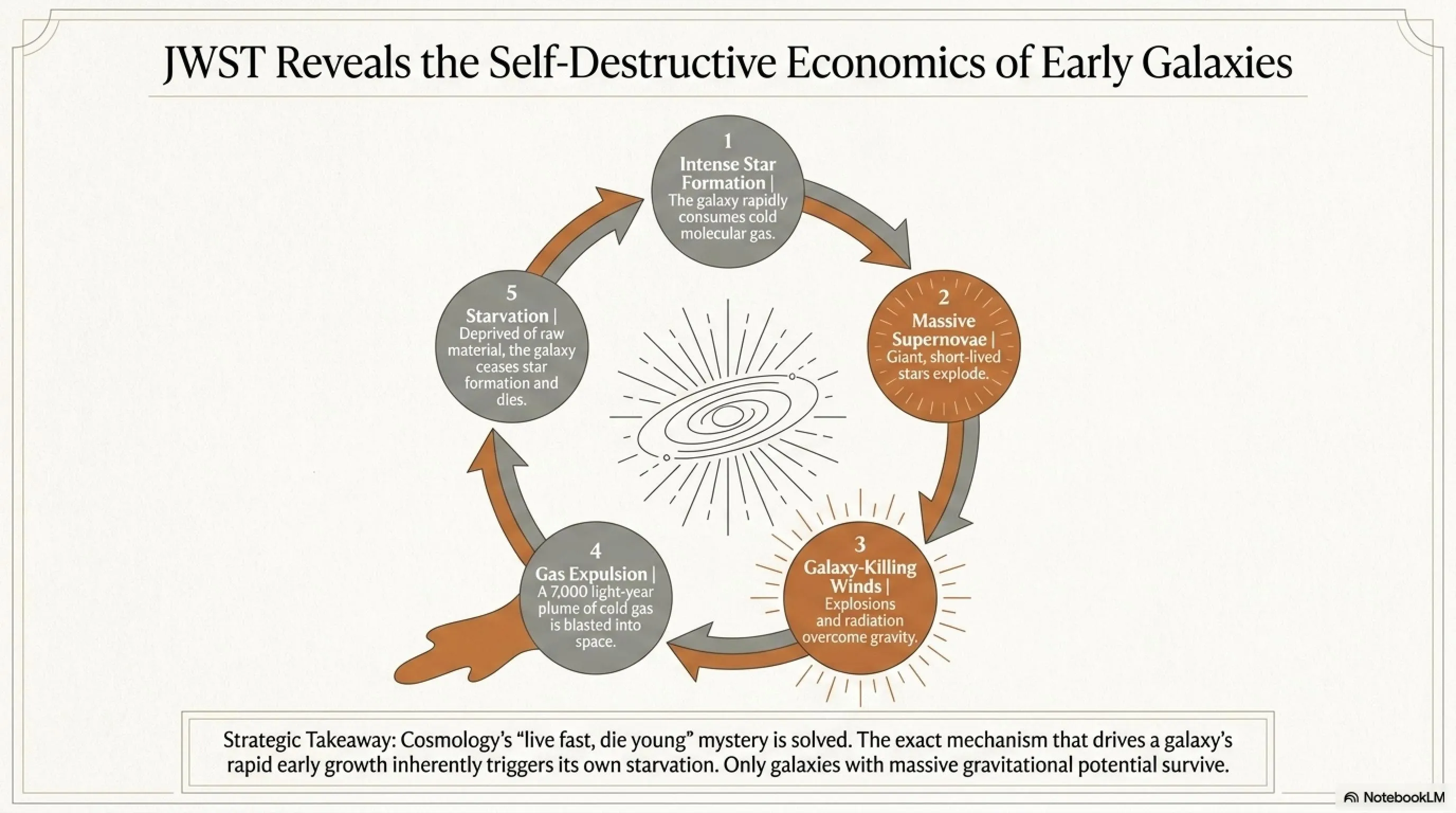
From gaming economics to cosmic mysteries: the James Webb Space Telescope (JWST), in collaboration with the Atacama Large Millimeter/submillimeter Array (ALMA), has made a breakthrough discovery that explains one of cosmology's persistent puzzles. Astronomers have detected a "galaxy-killing wind"—a massive, high-velocity outflow of gas stripping a young galaxy of the raw material needed to form new stars.
Published today (June 10) in Monthly Notices of the Royal Astronomical Society, this discovery provides direct observational evidence for why some early galaxies "lived fast and died young"—bursting with intense star formation before suddenly going dark. The answer: they're being killed by winds generated by their own star formation activity.
🔭 JWST Galaxy-Killing Wind Discovery: Technical Specifications
| Target Galaxy | CRISTAL-02 |
| Cosmic Age | ~1 billion years after Big Bang (redshift z~6) |
| Wind Plume Extent | ~7,000 light-years from galaxy center |
| Observational Instruments | James Webb Space Telescope (JWST) + ALMA |
| Gas Type Detected | Cold molecular gas (star-forming fuel) |
| Mechanism | Intense star formation → powerful winds → gas expulsion → star formation shutdown |
| Publication | Monthly Notices of the Royal Astronomical Society (June 10, 2026) |
| Program | CRISTAL (JWST + ALMA collaboration studying early galaxies) |
How Does a Galaxy "Die"? The Starvation Mechanism
Think of a galaxy as a star-making factory. To manufacture new stars, galaxies need cold molecular gas—the raw material that collapses under gravity to ignite nuclear fusion. Now imagine a powerful wind starts blowing this gas out of the galaxy faster than it can be replenished. Eventually, the factory runs out of raw materials. Star formation halts. The galaxy "dies"—meaning it becomes quiescent, no longer actively forming stars.
Using JWST's infrared capabilities and ALMA's ability to detect cold gas, researchers observed CRISTAL-02—a galaxy in the throes of this death process. They detected a massive plume of cold gas extending approximately 7,000 light-years from the galaxy, being expelled at velocities powerful enough to overcome the galaxy's gravitational pull. This is the smoking gun: direct evidence of a galaxy being stripped of its star-forming fuel in real-time.
According to Phys.org, the research demonstrates that galaxy-killing winds can be powered by the same intense star formation that causes galaxies to grow rapidly. It's cosmic irony: the very process that makes galaxies shine brightest also triggers their demise. Young, massive stars produce tremendous energy through radiation and supernovae, generating winds powerful enough to blow away the gas reservoir needed for future star formation.
The "Live Fast, Die Young" Mystery Solved
JWST has revealed far more "dead" massive galaxies in the early universe than cosmological models predicted—galaxies that somehow formed enormous numbers of stars in the first billion years after the Big Bang, then abruptly stopped. How could galaxies exhaust their fuel so quickly in a young, gas-rich universe? This discovery provides the answer.
The mechanism is elegantly destructive: intense star formation creates massive stars that live only millions of years before exploding as supernovae. These explosions, combined with radiation pressure from young stars, generate galactic winds. In early-universe galaxies with shallow gravitational potential wells (smaller, less massive galaxies), these winds can overcome gravity and expel gas into intergalactic space. The galaxy then starves, unable to form new stars.
🔍 Tekin Analysis: Why This Discovery Revolutionizes Galactic Evolution Models
1. Direct Observational Confirmation: Astronomers have theorized about galactic winds for decades, but JWST + ALMA provide the first direct observation of cold gas—actual star-forming material—being expelled from an early galaxy. This transforms hypothesis into confirmed mechanism.
2. Explains JWST's "Impossible" Galaxies: JWST has discovered numerous massive, dead galaxies in the first billion years after the Big Bang—populations that shouldn't exist according to previous models. Now we understand why: intense star formation triggered self-destructive winds.
3. Star Formation = Galactic Suicide: The discovery reveals a tragic cosmic trade-off: the same star formation that makes galaxies luminous also seeds their destruction. It's galactic cannibalism—galaxies eating themselves through their own stellar productivity.
4. Why the Milky Way Survived: Our galaxy continued forming stars for billions of years. This research helps explain why: the Milky Way's deeper gravitational potential well allowed it to retain gas despite winds. Smaller early galaxies couldn't hold onto their fuel.
5. CRISTAL Program's Broader Impact: This is just one galaxy from the CRISTAL program. If galaxy-killing winds are common (and initial evidence suggests they are), this mechanism fundamentally reshapes our understanding of how galaxies evolve in the early universe.
6. Future Predictions: Expect JWST to discover many more examples. The telescope's sensitivity to distant, faint galaxies means we're likely seeing the tip of the iceberg. Galaxy evolution models will need major revisions to incorporate this self-limiting feedback mechanism.
As reported by Space.com, the research team used ALMA's ability to detect cold gas (which JWST cannot see) combined with JWST's infrared observations to create a complete picture of CRISTAL-02's death throes. This multi-wavelength approach—combining different telescopes' strengths—represents the future of astronomy: comprehensive observations revealing processes invisible to any single instrument.
The Evening Report quotes lead researchers: "Our new study reveals an early massive galaxy in the throes of death: its gas is being rapidly blasted into space by a powerful 'galaxy wind,' and it may very soon run out of gas." This isn't theoretical modeling—it's direct observation of galactic death in progress, frozen in cosmic time 13 billion years ago but only now visible through JWST's unprecedented capabilities.
💡 Key Takeaway: JWST is solving cosmology's biggest mysteries at breathtaking pace. The "galaxy-killing wind" discovery explains why so many early galaxies died young: their intense star formation generated self-destructive winds that expelled star-forming fuel. This isn't just pretty space pictures—it's fundamental science revealing how the universe's first galaxies evolved, why most died young, and why rare survivors like the Milky Way's progenitors managed to keep forming stars. Every JWST observation rewrites textbooks. This one just explained why most early galaxies lived fast, shined bright, and died young—cosmic shooting stars that burned out in their prime.
4. Wikipedia Launches "Which Came First?" Historical Game for iPhone 📱
After heavyweight stories about AI transformation, gaming economics, and cosmic mysteries, let's shift to something lighter but strategically significant: Wikipedia has launched "Which Came First?"—a daily historical trivia game—for iPhone users, one year after its Android debut. This isn't just a fun diversion; it's Wikipedia's gamification strategy competing for attention in the TikTok era.
[IMAGE_PLACEHOLDER_5]Available through the Wikipedia app's Explore section, the game challenges players to arrange historical events in chronological order. Think Wordle meets world history: simple, daily, shareable, and designed to become a habit. It's Wikipedia's answer to a fundamental question: how does a knowledge platform compete for attention when entertainment platforms dominate screen time?
How It Works: Daily Historical Sorting Challenge
The concept is elegantly simple: players receive several historical events and must arrange them chronologically. For example: "Which came first? The invention of the telephone or the construction of the Eiffel Tower?" (Answer: Alexander Graham Bell's telephone in 1876; Eiffel Tower completed in 1889.) Get it right, feel smart, share your streak. Get it wrong, learn something new, try again tomorrow.
📊 Wikipedia "Which Came First?" Game Specifications
| Game Name | Which Came First? |
| Platforms | iOS (iPhone) + Android |
| Access Point | Wikipedia app's Explore section |
| Game Type | Daily historical chronology quiz |
| Launch History | Android (June 2025) → iPhone (June 2026) |
| Strategic Goal | Daily engagement + knowledge retention through gamification |
| Inspiration Model | Wordle (daily habit formation) |
According to 9to5Mac, the game "looks like a fun way to engage with historical facts, test your knowledge of world history, and likely learn a thing or two about things that happened on this day hundreds of years ago." That undersells the strategic sophistication. This is Wikipedia competing with TikTok, Instagram, and YouTube for daily attention by making learning feel like entertainment rather than homework.
🔍 Tekin Analysis: Wikipedia's Battle for Attention in the Entertainment Era
1. The Attention Economy Crisis: Wikipedia is an encyclopedia in an era where 30-second TikTok videos dominate. Reading 5,000-word articles about historical events doesn't compete with algorithm-optimized entertainment. Gamification transforms passive reading into active engagement.
2. The Wordle Playbook: Wordle proved that simple, daily games with social sharing mechanics can become cultural phenomena. "Which Came First?" follows this blueprint: simple rules, daily cadence, shareable results, streak mechanics that encourage habit formation.
3. Learning Through Play: Research consistently shows that gamified learning improves retention compared to passive reading. By making historical knowledge feel like a puzzle to solve rather than facts to memorize, Wikipedia increases both engagement and educational outcomes.
4. Daily Return Driver: The game gives users a reason to open Wikipedia daily, not just when they need to look something up. This transforms Wikipedia from a reference tool into a habit—the holy grail of digital platforms.
5. Nonprofit Innovation: Wikipedia operates as a nonprofit funded by donations. By investing in engagement features like games, they're demonstrating that educational platforms must evolve to survive in the attention economy—even without profit motives.
6. The Long Game: If Wikipedia can establish daily gaming habits, they create a generation that associates learning with entertainment. This is brand building disguised as a simple trivia game—teaching young users that Wikipedia is fun, not just a homework tool.
The one-year delay between Android and iOS launches (Android June 2025, iPhone June 2026) suggests Wikipedia took time to refine the experience based on Android user feedback before expanding to iOS's larger US audience. This cautious, iterative approach is classic Wikipedia: methodical, user-focused, non-commercial.
💡 Key Takeaway: "Which Came First?" is Wikipedia's strategic answer to the attention economy. In an era where TikTok and Instagram dominate screen time, educational platforms must make learning feel like entertainment. If Wikipedia succeeds in building daily gaming habits, they transform from a reference tool (used occasionally) into a daily habit (opened routinely). That's the difference between surviving and thriving in the modern attention economy. The game is simple, but the strategy is sophisticated: compete for attention by making knowledge acquisition feel like play, not work.
5. GTA 5 Joins GTA+ Subscription Ahead of GTA 6 Launch 🚗
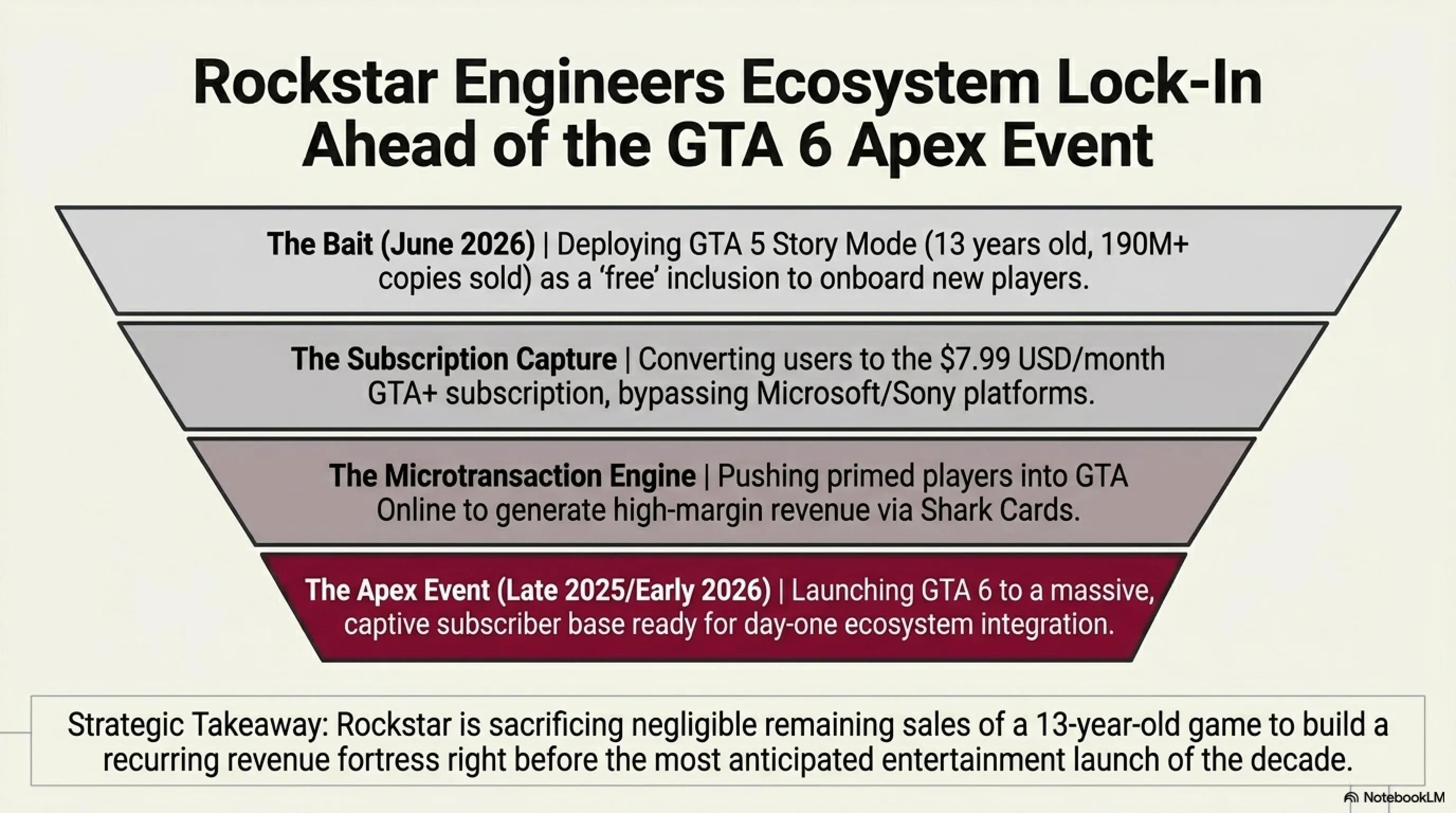
Rockstar Games has made a strategic pre-GTA 6 move: GTA 5 Story Mode is now included in GTA+ subscription ($8/month on PS5, Xbox Series X|S, and PC). Anyone with an active GTA+ membership can now play GTA 5's complete single-player campaign without purchasing the base game. This isn't charity—it's calculated strategy.
[IMAGE_PLACEHOLDER_6]Timing is everything: GTA 6 is slated for late 2025/early 2026 release, making this the perfect moment to onboard millions of new players into the GTA universe. By offering GTA 5 "free" (with subscription), Rockstar is building audience familiarity before launching gaming's most anticipated title in a decade. It's the Netflix strategy: offer back catalog to prime audiences for new releases.
🎮 GTA+ Games Library (Month 51 - June 2026)
| Game Title | Status |
| GTA V Story Mode | ✅ Newly Added (June 2026) |
| GTA Online | ✅ Full Access + Exclusive Bonuses |
| Red Dead Redemption | ✅ Available |
| Bully (Canis Canem Edit) | ✅ Available |
| L.A. Noire | ✅ Available |
| Monthly Price | $7.99 USD (originally $5.99, increased April 2024) |
| Additional Perks | Monthly GTA$ bonus, free vehicles, exclusive discounts |
Why This Matters: Rockstar's Pre-Launch Strategy
GTA 5 is one of history's best-selling games with 190+ million copies sold since 2013. Why give it away now? Several strategic reasons converge:
🎯 Rockstar's Strategic Calculus: Why "Free" GTA 5 Makes Business Sense
1. GTA 6 Audience Priming: New players who've never experienced GTA 5 can now explore Los Santos, understand the series' tone, gameplay mechanics, and storytelling style. When GTA 6 launches, they're already familiar with what makes GTA special—and ready to buy day one.
2. GTA+ Subscriber Growth: By adding GTA 5, GTA+ becomes significantly more attractive. $8/month for GTA 5, GTA Online perks, Red Dead Redemption, Bully, and L.A. Noire is compelling value. This drives subscriptions immediately before GTA 6 hype peaks.
3. Recurring Revenue Model: GTA 5 sales are declining naturally (it's 13 years old!). But subscription revenue is predictable and ongoing. Converting one-time purchases into monthly subscriptions creates sustainable income—music to Take-Two's investors' ears.
4. Exclusive Positioning: GTA 5 is no longer available on Xbox Game Pass or PlayStation Plus. GTA+ is now the only "free" way to play without purchasing. This drives users to Rockstar's ecosystem, not Microsoft's or Sony's.
5. GTA Online Funnel: GTA 5's story mode serves as a gateway drug to GTA Online—where Rockstar generates billions through microtransactions. Every new GTA+ subscriber is a potential GTA Online whale spending on Shark Cards.
6. Data Collection: GTA+ subscribers provide valuable behavioral data: play patterns, engagement metrics, spending habits. This intelligence informs GTA 6's monetization strategy and live-service design.
According to GameSpot, GTA+ launched March 2022 at $5.99/month, increasing to $7.99 in April 2024. Despite the price hike, Rockstar is betting that adding GTA 5 Story Mode will drive subscriber growth that offsets any churn from the increase. Screen Rant reports that this move makes GTA 5 "free for millions"—technically true if you ignore the $8 monthly fee, but the framing is strategic: perception of value matters more than accounting reality.
The timing is exquisite. GTA 6 is gaming's most anticipated release, potentially the biggest entertainment launch in history (GTA 5 generated $1 billion in three days—GTA 6 could shatter that). By building GTA+'s subscriber base now, Rockstar creates a captive audience already invested in the ecosystem before GTA 6 even launches. When GTA 6 inevitably offers its own GTA+ perks, these subscribers will already be paying—and likely to continue.
The Subscription Gaming Future: Netflix Meets Rockstar
GTA+ represents Rockstar's acknowledgment that gaming's business model is shifting from one-time purchases to ongoing subscriptions. Xbox Game Pass, PlayStation Plus, Nintendo Switch Online, EA Play, Ubisoft+—subscriptions are proliferating. Rather than let platform holders (Microsoft, Sony) control access to Rockstar's games, GTA+ asserts direct relationships with customers.
This mirrors Hollywood's streaming wars: studios like Disney, Warner Bros., and Paramount pulled content from Netflix to launch their own platforms (Disney+, HBO Max, Paramount+). Rockstar is doing the same—establishing a direct subscription service before GTA 6 launches, when their negotiating leverage peaks. Why let Microsoft or Sony take a 30% cut when Rockstar can own the customer relationship?
🔍 Tekin Analysis: Rockstar's Subscription Gambit Ahead of GTA 6
Risk: Cannibalizing Sales: Offering GTA 5 "free" could reduce remaining full-price purchases. But at 13 years old with 190M+ copies sold, incremental sales are negligible. Subscription revenue likely exceeds marginal sales at this lifecycle stage.
Reward: Ecosystem Lock-In: If GTA+ succeeds, Rockstar has millions of subscribers paying monthly before GTA 6 launches. When GTA 6 inevitably offers GTA+ exclusive content, these subscribers have sunk-cost motivation to continue.
Competition with Game Pass: By offering GTA+ at $8/month versus Game Pass at $17/month (Ultimate tier), Rockstar provides a cheaper alternative for GTA-focused players. This could fragment subscription spending—players choosing GTA+ over broader catalogs.
The GTA 6 Endgame: This is preparation for GTA 6's live-service monetization. If Rockstar can establish GTA+ as essential before GTA 6 launches, they control the monetization environment—not platform holders. That's worth sacrificing GTA 5's declining sales.
💡 Key Takeaway: Rockstar is priming audiences for GTA 6 while establishing subscription dominance before their biggest release in over a decade. By offering GTA 5 through GTA+, they onboard new players, build recurring revenue, and create ecosystem lock-in—all before GTA 6's inevitable record-breaking launch. This is strategic brilliance disguised as a simple library addition. When GTA 6 arrives and offers its own GTA+ perks, millions of subscribers will already be paying monthly, deeply invested in Rockstar's ecosystem. That's not just smart—it's the future of AAA gaming monetization.
6. Coinbase Launches AI Agents for Autonomous Crypto Trading 💰
Our final story tonight bridges artificial intelligence and financial markets: Coinbase has launched "Coinbase for Agents," a groundbreaking platform enabling AI assistants like ChatGPT and Claude to autonomously trade cryptocurrencies, execute payments, and purchase online services—all within user-defined spending and risk parameters. This isn't AI giving advice; this is AI with purchasing power.
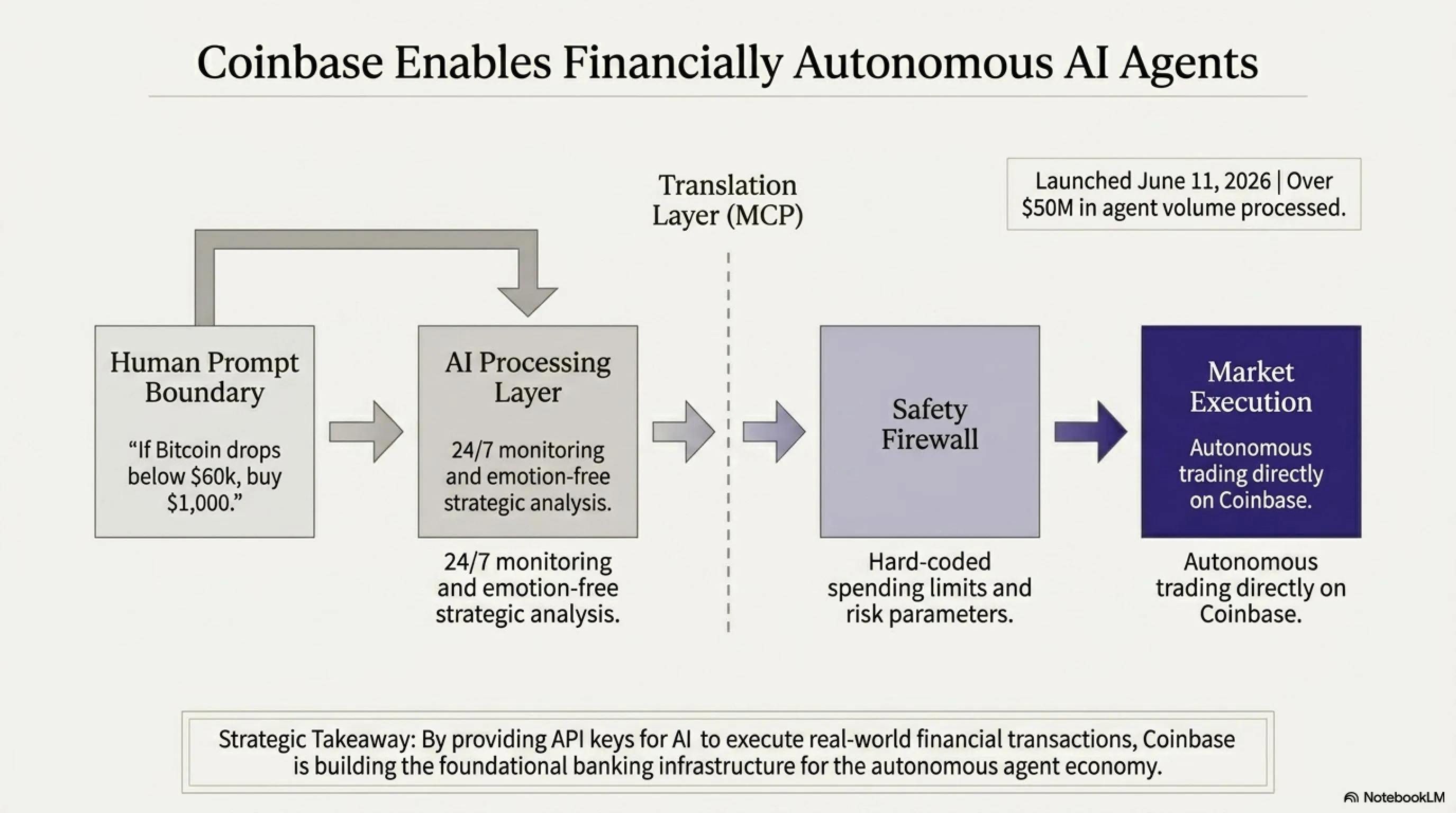
[IMAGE_PLACEHOLDER_7]Launched Wednesday (June 11), this product represents AI's evolution from information processor to autonomous economic actor. Users can now instruct AI agents with natural language commands like "Rebalance my portfolio to 50% Bitcoin, 30% Ethereum, 20% Solana" or "If Bitcoin drops below $60,000, buy $1,000"—and the AI executes these strategies without further human intervention.
🤖 Coinbase for Agents: Technical Specifications
| Product Name | Coinbase for Agents |
| Launch Date | June 11, 2026 |
| Supported AI Agents | ChatGPT, Claude, and other AI assistants (via MCP) |
| Core Capabilities | Crypto trading, payments, online service purchases, portfolio management |
| Safety Features | User-defined spending limits, risk parameters, transaction approvals |
| Initial Markets | Crypto spot + derivatives (equities & prediction markets planned) |
| Access Methods | MCP (Model Context Protocol) for web agents + CLI for terminal-based |
| Strategic Vision | Enable financial autonomy for AI agents within controlled parameters |
How It Works: Natural Language Financial Autonomy
Imagine telling ChatGPT: "Monitor Bitcoin. If it drops 10% from current price, allocate $500 to buy. If it rises 20%, sell 25% of holdings to take profits." With Coinbase for Agents, ChatGPT can execute this strategy autonomously, monitoring markets 24/7 and executing trades when conditions are met—all while respecting your spending limits and risk parameters.
According to CNBC, the initial launch allows agents to execute crypto spot and derivatives trades using natural language instructions. Users can prompt agents to "rebalance portfolios, identify trading opportunities, execute strategies and manage positions over time." CoinDesk reports that future expansions will include equities trading and prediction markets, transforming this from a crypto-specific tool into a full financial autonomy platform.
The technical implementation uses the Model Context Protocol (MCP) for web-based AI agents and a CLI tool for terminal-based environments, as noted by CryptoTimes. This dual-access approach ensures compatibility with various AI agent architectures while maintaining security through Coinbase's authentication systems.
🔍 Tekin Analysis: The Promise and Peril of Financially Autonomous AI
✅ Revolutionary Opportunities:
• 24/7 Market Monitoring: AI never sleeps, enabling round-the-clock strategy execution across global markets
• Emotion-Free Trading: AI doesn't panic sell or FOMO buy—decisions based purely on defined parameters
• Complex Strategy Automation: Multi-leg trades, rebalancing algorithms, and DCA strategies executed flawlessly
• Accessibility Democratization: Sophisticated trading strategies previously requiring expensive software now available through natural language
⚠️ Critical Risks and Concerns:
• AI Decision Errors: Language models can hallucinate or misinterpret instructions, potentially executing costly mistakes
• Security Vulnerabilities: Compromised AI agents = direct access to financial assets. Prompt injection attacks could manipulate trading behavior
• Flash Crash Amplification: If thousands of AI agents react similarly to market events, they could amplify volatility catastrophically
• Regulatory Ambiguity: Who's liable when AI makes a bad trade? The user who set parameters? The AI developer? Coinbase?
• Black Box Decisions: Complex AI reasoning might execute trades users don't fully understand, leading to unintended consequences
TechCrunch reports that users can ask agents to "rebalance their portfolio, ask it to follow an investment thesis and trade on their behalf, or provide advice on a one-time crypto trade." This flexibility is powerful but potentially dangerous. An AI following a "high-risk, high-reward" thesis might execute trades its user wouldn't approve if they fully understood the implications.
Coinbase's approach includes spending limits and risk parameters, but these are only as effective as users' ability to define them correctly. A user setting a $10,000 spending limit might not realize their AI agent could execute 100 volatile trades within that limit, each amplifying risk beyond their comfort level.
The Broader Trend: AI as Economic Actor
Coinbase for Agents represents a watershed moment: AI transitioning from advisor to autonomous economic participant. We're witnessing the emergence of "agentic AI"—systems that don't just provide information but take actions in the real world with financial consequences.
AInvest notes that Coinbase has already processed "$50M of agent volume," suggesting early adoption despite obvious risks. If users begin routinely delegating portfolio management, recurring trades, and research purchases to AI agents within Coinbase's ecosystem, the company isn't just offering crypto market access—it's building the financial infrastructure layer for AI agents. That's strategically brilliant and potentially terrifying in equal measure.
💡 Key Takeaway: Coinbase for Agents isn't just a crypto trading tool—it's the beginning of financially autonomous AI. This could revolutionize investing (24/7 automated strategies, emotion-free decisions) or create catastrophic risks (AI errors, security breaches, amplified volatility). The question isn't whether AI will manage finances—it's whether we're ready for the consequences. Start with small limits, monitor closely, and remember: when AI controls your money, you're trusting algorithms with real-world financial consequences. That trust must be earned through cautious experimentation, not blind adoption.
🎯 Tekin Night Recap: June 12, 2026
Tonight we've witnessed six stories that collectively illustrate technology's transformation across multiple domains:
1. OpenAI is transforming ChatGPT into a "superapp" with Thibault Sottiaux (Codex creator) leading the charge—an $850B pre-IPO bet that lessons from developer tools can revolutionize consumer AI.
2. Xbox CSO Matthew Ball advocates in-game advertising to offset unsustainable AAA development costs—a proposal gamers hate but economics might demand.
3. James Webb discovered "galaxy-killing winds" that explain why early galaxies lived fast and died young—solving a cosmological mystery through direct observation.
4. Wikipedia launched "Which Came First?" for iPhone—gamifying knowledge to compete for attention in the TikTok era.
5. Rockstar added GTA 5 to GTA+—priming audiences and building subscription revenue before GTA 6's record-breaking launch.
6. Coinbase enabled AI agents to autonomously trade crypto—crossing the threshold from AI advisor to AI economic actor.
These stories collectively illustrate a singular truth: we're witnessing fundamental transformations in how humans interact with technology, how businesses monetize digital experiences, and how artificial intelligence integrates into economic systems. The future isn't coming—it arrived tonight.
❓ Can OpenAI successfully transform ChatGPT into a superapp without alienating users?
Success hinges on execution. ChatGPT's appeal lies in simplicity—anyone can use it. Adding enterprise features risks complexity that drives casual users to simpler alternatives like Claude. However, Thibault Sottiaux's Codex experience suggests he understands how to integrate power without sacrificing usability. If OpenAI can deliver Codex-level seamlessness for general users, the superapp succeeds. If complexity creeps in, competitors capture defectors. With $850B valuation and IPO looming, stakes couldn't be higher.
❓ Will gamers accept in-game advertising, or is Xbox's proposal doomed?
It depends entirely on implementation. Optional ad-supported tiers ($40 with ads vs $70 premium) could work if transparently executed and genuinely cheaper. But forced ads in $70 games would trigger exodus to PlayStation or PC. The economic crisis Ball describes is real—AAA budgets are unsustainable. But Xbox's trust deficit after Game Pass price hikes and confusing exclusivity messaging means they have minimal goodwill. Success requires transparency, genuine value, and restraint—qualities Xbox hasn't consistently demonstrated recently.
❓ What does the galaxy-killing wind discovery mean for our understanding of the universe?
This discovery solves one of cosmology's biggest puzzles: why JWST finds so many "dead" massive galaxies in the early universe. The answer: intense star formation generates self-destructive winds that expel star-forming gas. This fundamentally reshapes our understanding of galaxy evolution—revealing that galaxies can commit "suicide" through their own stellar productivity. It explains why most early galaxies died young while rare survivors like the Milky Way's progenitors kept forming stars. This is textbook-rewriting science demonstrating JWST's transformative impact on cosmology.
❓ Is trusting AI agents with crypto trading safe or reckless?
It's both—depends on implementation. With strict spending limits, risk parameters, and close monitoring, AI agents can execute strategies more consistently than emotional humans. But risks are real: AI errors, security breaches, prompt injection attacks, and amplified market volatility. Start with small amounts, define tight parameters, monitor constantly, and remember that you're liable for AI decisions executed on your behalf. This technology is powerful but immature. Cautious experimentation beats blind trust. Treat AI agents like junior analysts—review their recommendations before execution until they've earned your confidence through consistent performance.
📚 Sources & References
• WIRED: "Meet the OpenAI Engineer Leading ChatGPT's Biggest Transformation Yet"
• GameSpot: "New Xbox Exec Advocates For Something Everyone Hates To Help Save Gaming"
• Space.com: "James Webb Space Telescope Discovers Galaxy-Killing Wind"
• 9to5Mac: "Wikipedia Just Launched Its Daily Historical Facts Game on iPhone"
• GameSpot: "GTA 5 Joins A Subscription Ahead Of GTA 6 Launch"
• CNBC: "Coinbase Launches Tool to Let AI Agents Manage Trading and Payments"
• Monthly Notices of the Royal Astronomical Society: Galaxy-killing wind research (June 10, 2026)
🌐 Stay Connected With Us 🎮✨
For the latest tech, gaming, and gadget news, follow us on our official social media channels: