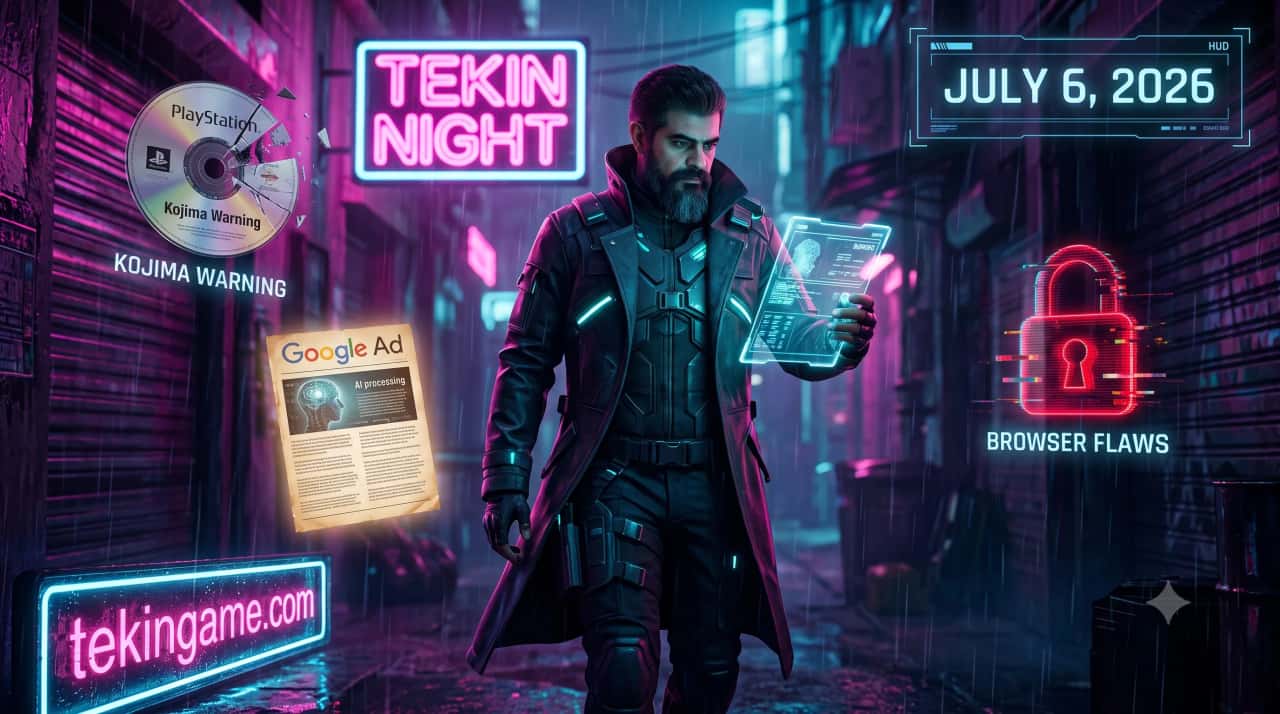
Tonight's intelligence briefing compiles critical disruptions across gaming and tech. Hideo Kojima issued a stark warning regarding Sony's shift away from physical media, highlighting the imminent loss of true digital ownership. Meanwhile, Google's controversial AI ad reimagining the Founding Fathers sparked cultural backlash. On the cybersecurity front, Alibaba banned Claude Code over backdoor concerns, and a severe vulnerability allowing auto-installs in Opera GX was intercepted and patched.
🌙 Tekin Night: End Your Monday with 6 Shocking Stories
Monday night, July 6, 2026 - Close your day with high-energy tech news
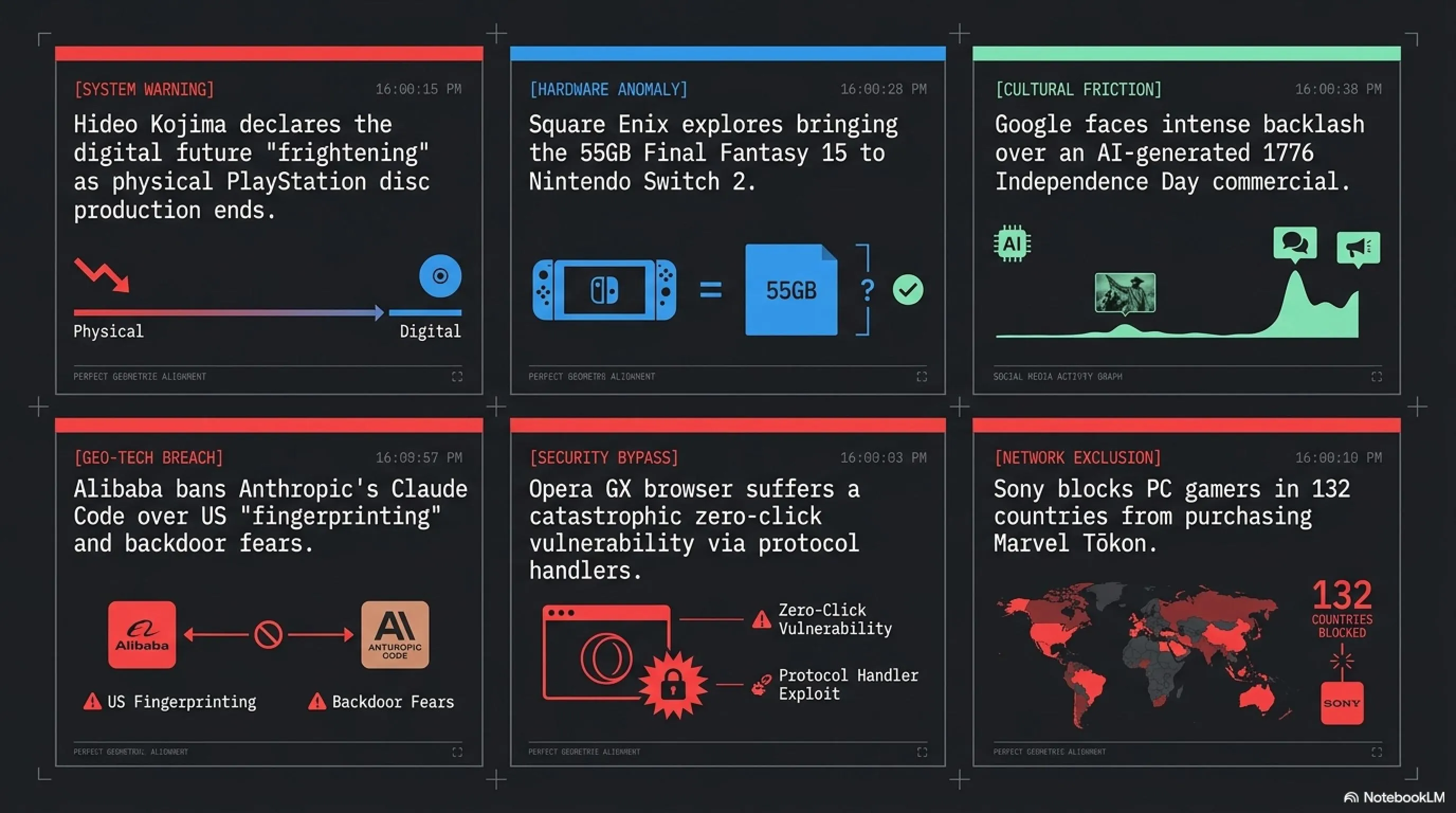
- 🎮Kojima's Warning- The digital future is frightening - reaction to PlayStation disc end
- 🎧FF15 on Switch 2- Square Enix: Not entirely impossible but challenging
- 🚀Google's Controversial Ad- Founding Fathers writing Declaration with AI?
- 🗡️Alibaba Bans Claude- Backdoor discovery and China fingerprinting concerns
- 📰Opera GX Flaw- Auto-install malicious add-ons without clicks
- 🎮Marvel Tōkon Blocked- 132 countries cannot purchase the game
Monday night brings stories that prove the tech and gaming world never sleeps. From Hideo Kojima's warning about the digital future to Alibaba's ban on Claude Code, from Google's controversial commercial to Opera GX's security flaw. Tonight, we have tales that will shape tomorrow's industry landscape.
Quick Night Glance
- Kojima warns against physical disc death and cloud gaming dangers
- Final Fantasy 15 may come to Nintendo Switch 2 despite technical challenges
- Google's Founding Fathers ad with AI received mixed reactions
- Alibaba banned employees from using Claude Code over security concerns
- Opera GX vulnerability allowed auto-install of malicious add-ons
- Marvel Tōkon blocked in 132 countries due to PSN requirements
Kojima and the Future That Frightens Him
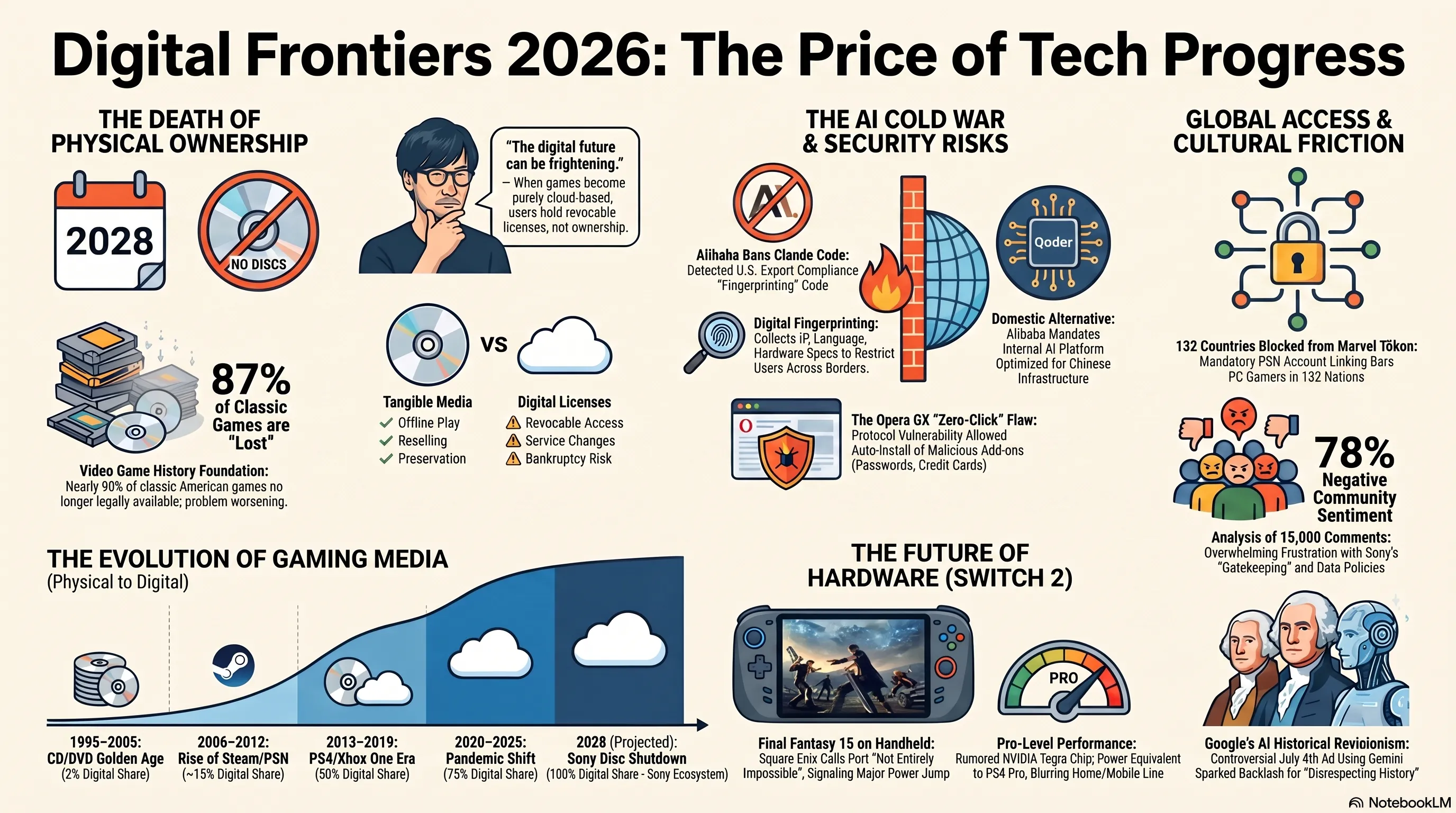
Hideo Kojima, the man who redefined stealth gaming with Metal Gear Solid and reimagined post-apocalyptic connection with Death Stranding, is now talking about something that genuinely worries him. Days after Sony announced the end of physical PlayStation disc production from January 2028, Kojima reacted: "This is really sad."
In a tweet that quickly went viral, Kojima wrote: "I grew up with physical media. The fact that production will end in 2028 feels strange." But he didn't stop there. He warned that the digital future ahead could be "frightening" - especially with the rise of cloud gaming.
When You Don't Really Own Anything
Kojima's core concern is simple: when everything becomes digital and cloud-based, you no longer truly own anything. A physical disc you can touch, place on a shelf, replay ten years later. But a digital game? That's just a license - a license that can be revoked, removed from access, or disappear with service changes.
This isn't a theoretical worry. A few years ago, Sony nearly shut down the PS3 and PS Vita digital stores. Thousands of games could have been lost forever. Community pressure forced Sony to backtrack, but the message was clear: your digital access isn't permanent.
The Preservation Problem
Another of Kojima's concerns is game history preservation. Museums and collectors can maintain physical games from the 80s and 90s. But digital games? If servers shut down, if companies go bankrupt, if licenses expire - those games are permanently lost.
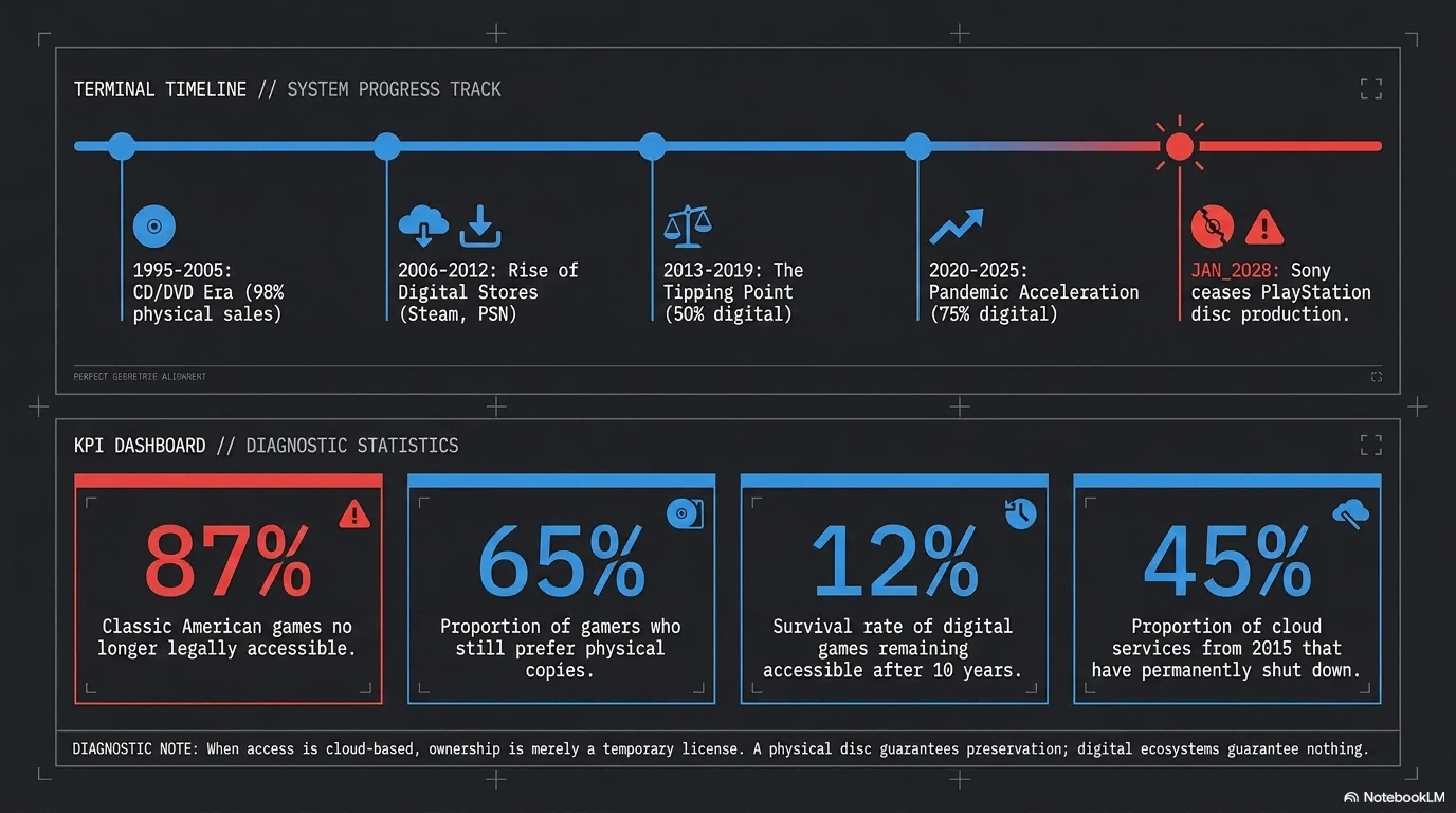
The Video Game History Foundation estimates that 87% of classic American games are no longer legally available. With the shift to digital, this problem will only worsen. Future generations may never experience the games of this era.
Timeline: Evolution of Gaming Media
Key Statistics: Digital Gaming Market
Community Reaction
Kojima isn't alone. The gaming community's reaction to Sony's decision has been intense. Thousands of gamers on Twitter, Reddit, and forums have expressed similar concerns. Some have even said they won't buy Sony's next-gen console if it doesn't have a physical option.
Interestingly, Xbox and Nintendo remain committed to physical discs. The Xbox Series X has a disc drive version, and the Nintendo Switch 2 is rumored to support physical cartridges. This could become a competitive advantage for them.
The pushback reveals a fundamental truth: gamers value ownership. They want to know that the games they buy today will still work decades from now. They want to lend games to friends, sell them secondhand, or collect them. Digital ecosystems, no matter how convenient, can't replicate that tangible sense of possession.
Final Fantasy 15 and the Switch 2 Dream
Square Enix said something intriguing that caught many people's attention. At the June 24, 2026 shareholder meeting, when asked about releasing Final Fantasy 15 for Nintendo Switch 2, they responded: "Not entirely impossible."
This simple phrase is loaded with meaning. FF15 is one of Square Enix's largest and most demanding games. The massive open world, stunning graphics, complex combat system - all designed for powerful eighth-generation consoles. So how could it possibly come to a handheld console?
Technical Challenges
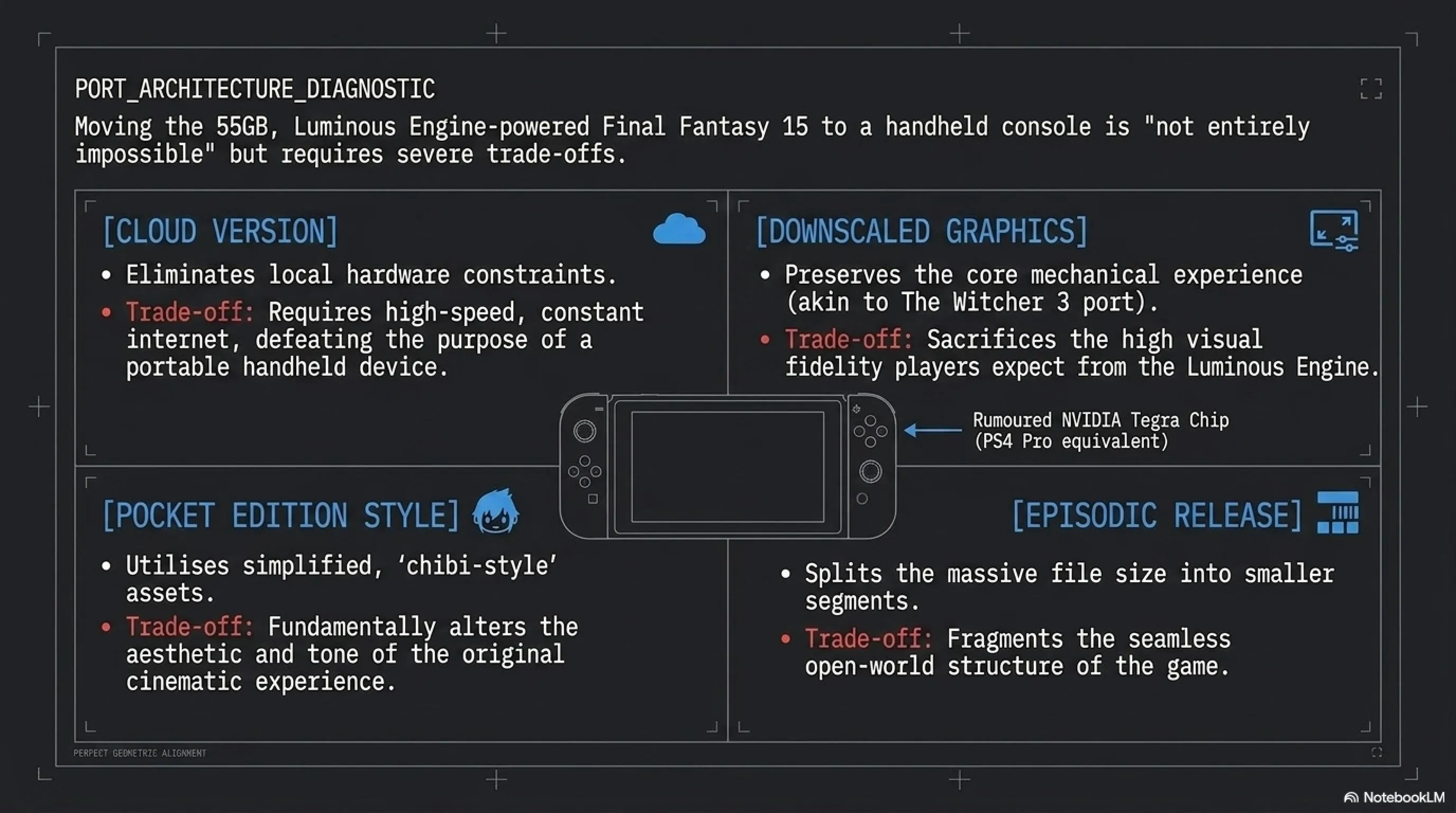
FF15 is a heavy game. The original version for PS4 and Xbox One weighs in at around 55 gigabytes. The Luminous Engine powering it was optimized for cinematic graphics, not limited hardware. So how would Square Enix pull this off?
There's evidence suggesting it's possible. Square Enix previously released Final Fantasy XV: Pocket Edition for mobile - a version that transformed graphics into chibi style but preserved the core story. This shows they have experience with scaling down.
Possible Port Options
1. Cloud Version: Like Control and Hitman 3 which were streaming-based
2. Downscaled Graphics: Reduce resolution and quality like Witcher 3
3. Pocket Edition Style: Use simplified assets
4. Episode-Based: Split the game into smaller segments
Each approach has tradeoffs. A cloud version eliminates local hardware constraints but requires stable internet - frustrating for a handheld console meant for portability. Downscaled graphics preserve the full experience but might disappoint players expecting visual fidelity. The Pocket Edition approach works but fundamentally changes the aesthetic. Episode-based splitting could work for story structure but fragments the open-world experience.
Final Fantasy History with Nintendo
Final Fantasy and Nintendo have a long history. The main series started on NES. FF4, FF5, FF6 were all on SNES. But after FF6, Square moved toward PlayStation - a decision that chilled their relationship with Nintendo for years.
However, in recent years, the relationship has improved. The Switch hosts Final Fantasy VII, VIII, IX, X, X-2, XII, and even FF7 Remake. Bringing FF15 seems like the logical next step - especially if Switch 2 is truly more powerful.
Why Switch 2 Matters
Rumors about Nintendo Switch 2 are exciting. It's said to feature NVIDIA's new Tegra chip with substantial computational power - perhaps equivalent to PS4 Pro or even more. If true, FF15 is no longer a pipe dream.
Nintendo has also learned to attract third-party publishers. With the Switch's success, major companies now take Nintendo seriously. Square Enix, Capcom, and Ubisoft have all released significant ports for Switch. Switch 2 will likely amplify this trend.
The broader implication is fascinating: the line between home console and handheld is blurring. Modern chip technology enables genuinely powerful portable gaming. Games once thought impossible on handhelds - massive open worlds, photorealistic graphics, complex simulations - are becoming feasible. Switch 2 could represent the culmination of this convergence.
When Google Arms the Founding Fathers with AI
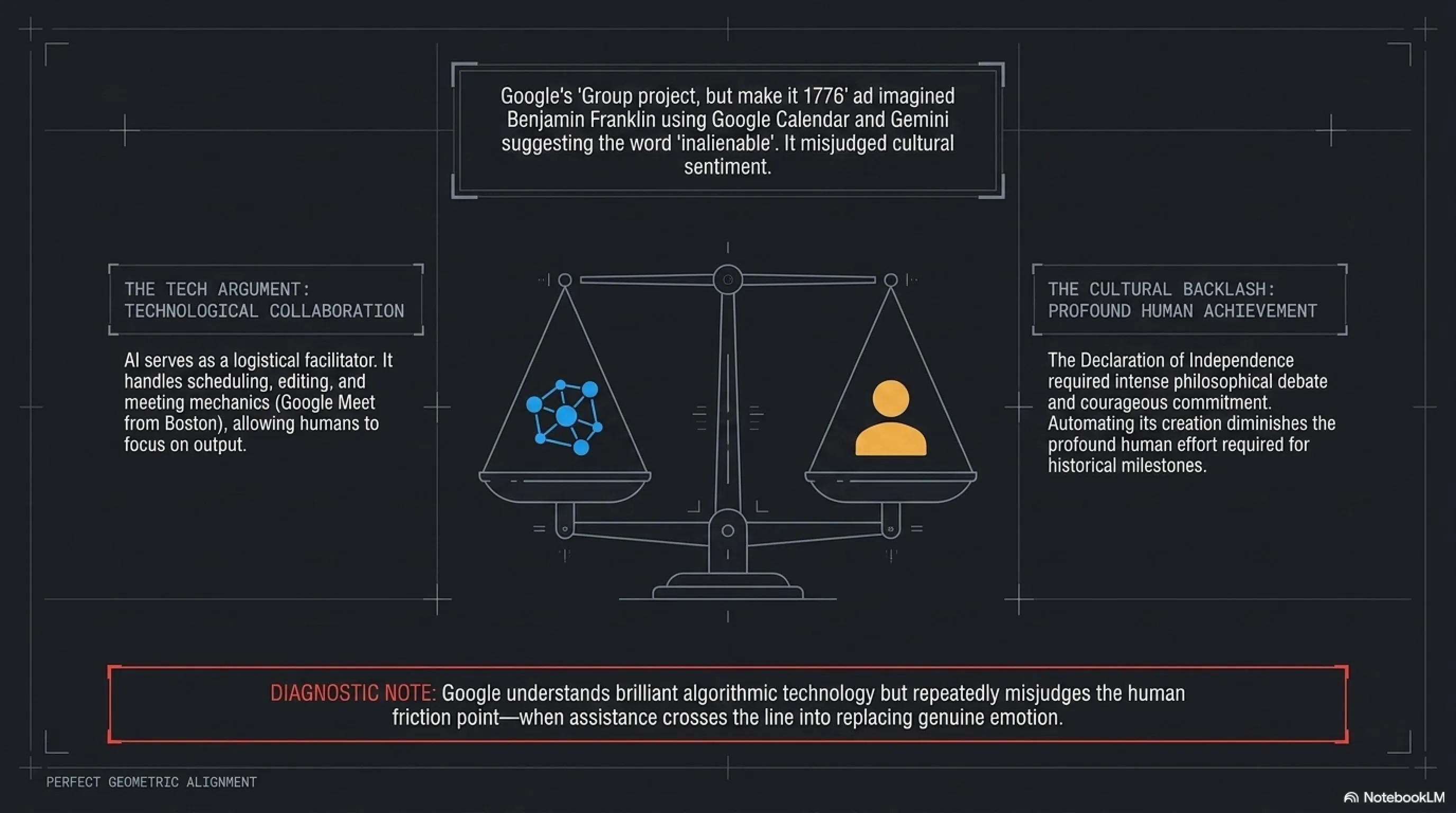
July Fourth, American Independence Day. A day for fireworks, barbecues, and... controversial Google ads? On this day, Google released a commercial imagining America's Founding Fathers using Google Workspace and Gemini AI to write the Declaration of Independence.
The ad opens with the tagline "Group project, but make it 1776." In it, Thomas Jefferson and others write the document with Google Docs, meet via Google Meet, schedule with Google Calendar, and even use Gemini AI for editing suggestions. At the end, they sign with digital eSignatures.
Divided Reactions
Responses were sharply divided. Some found it creative and humorous. One person tweeted: "This is actually cool! Shows how modern tools can facilitate teamwork." But many others criticized it.
Critics said the ad disrespects history. "The Declaration of Independence is one of humanity's most important documents," one wrote. "Imagining it written with AI is insulting." Others said it shows how out of touch Google is - thinking AI can replace human creativity.
Interesting Ad Details
- Benjamin Franklin uses Google Calendar for deadline reminders
- John Adams joins the meeting via Google Meet (from Boston!)
- Gemini AI suggests using "inalienable" instead of "unalienable"
- Digital signatures are timestamped July 4, 1776
The controversy highlights a broader tension in how we think about AI and creativity. Supporters argue the ad celebrates collaboration tools, showing how technology facilitates human effort rather than replacing it. The Founding Fathers still did the thinking - AI just helped with logistics and editing.
Detractors counter that the very premise diminishes the profound human achievement the Declaration represents. It was written through intense debate, philosophical reflection, and courageous commitment to ideals - not through automated suggestions from an algorithm trained on existing text.
Comparison with Previous Ad
This isn't the first time a Google ad sparked controversy. A few weeks ago, they released a commercial about a girl wanting to write a fan letter to an Olympic star using Gemini AI. The reaction was so negative that Google pulled the ad.
The main problem was that people felt Google wanted to replace genuine human emotion with AI. Writing a fan letter should come from the heart, not from an algorithm. This new ad has a similar issue - but perhaps less personal since it's about a historical document rather than individual feelings.
Yet the pattern is concerning. Google seems to repeatedly misjudge cultural sentiment around AI. They understand the technology brilliantly but struggle with the human element - when people want AI help versus when they find it inappropriate or even offensive.
Alibaba and the Claude Code Ban
Something hidden in Claude Code's source worried Alibaba - worried them enough to ban all employees from using it. This story shows how serious the technology cold war between America and China has become.
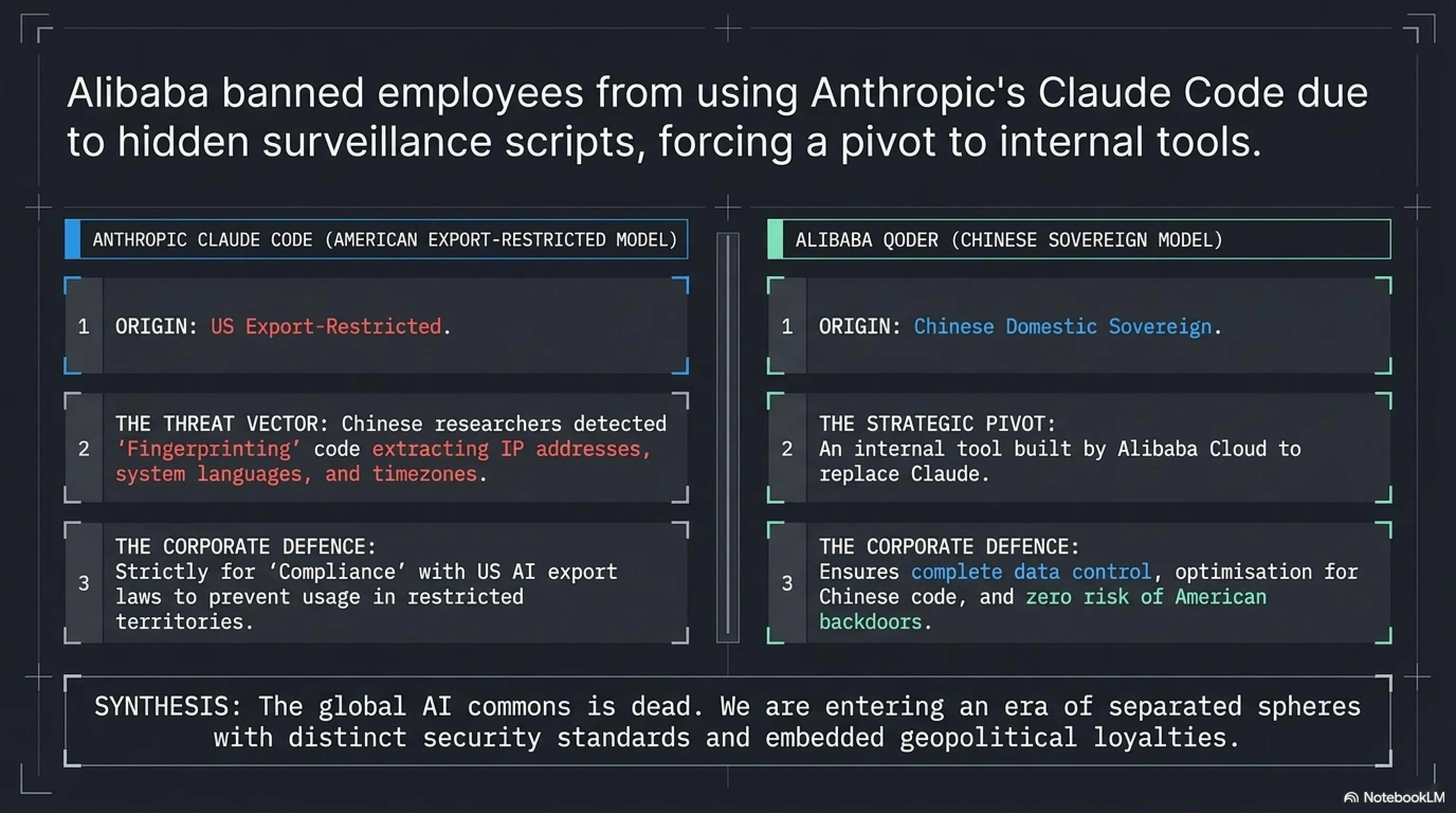
Chinese security researchers discovered code in Claude Code that appeared designed for "fingerprinting" - in other words, detecting whether a user is in China. This code accessed IP addresses, system language, and timezone information.
Technical Glossary
Fingerprinting: A technique for identifying and tracking users by collecting various system information like IP, language, timezone, and hardware specs.
Backdoor: A hidden entry point into a system that allows the creator or intruder to access without normal authentication.
Compliance: Adherence to laws and regulations, typically regarding technology export restrictions.
Why This Matters
Superficially, this seems like just a location detection feature. But in the context of US-China relations, it could be a backdoor. Alibaba worried that Claude Code might collect sensitive data from Chinese employees and transmit it to American servers.
Anthropic, the company behind Claude, stated this feature is solely for "compliance" with US export laws. America has export restrictions on AI technology to China, and Anthropic must ensure its services aren't used there. But Alibaba doesn't find this explanation convincing.
Qoder: The Internal Alternative
Instead of Claude Code, Alibaba asked employees to use Qoder - an internal AI coding platform developed by Alibaba Cloud.
Qoder Advantages:
- Complete Alibaba control over data
- Optimization for Chinese code
- Integration with internal tools
- No backdoor concerns
The AI Cold War
This isn't just about one coding tool. It's part of a larger war. America is trying to slow China's AI progress by restricting access to advanced chips and key software. China, in response, is investing massively in domestic AI to reduce dependence on American technology.
Tech companies are caught in the middle. They must decide: cooperate with American laws and lose the China market, or find ways around restrictions and risk legal problems.
The situation creates fascinating strategic dilemmas. For American AI companies, China represents an enormous potential market - but accessing it requires navigating both US export controls and Chinese data sovereignty laws. For Chinese companies, American AI tools offer cutting-edge capabilities - but using them creates dependency and security risks.
The result is a fragmented AI ecosystem. Rather than a global AI commons where innovations spread freely, we're moving toward separated spheres - American AI tools, Chinese AI tools, potentially European AI tools - each with their own standards, capabilities, and limitations.
The Opera GX Flaw That Could Have Been Catastrophic
Opera GX, a browser designed specifically for gamers, had a serious vulnerability. A flaw that allowed malicious sites to install add-ons without any clicks and use them to steal data. Fortunately, Opera patched quickly - but this shows that even the most popular software can be dangerous.
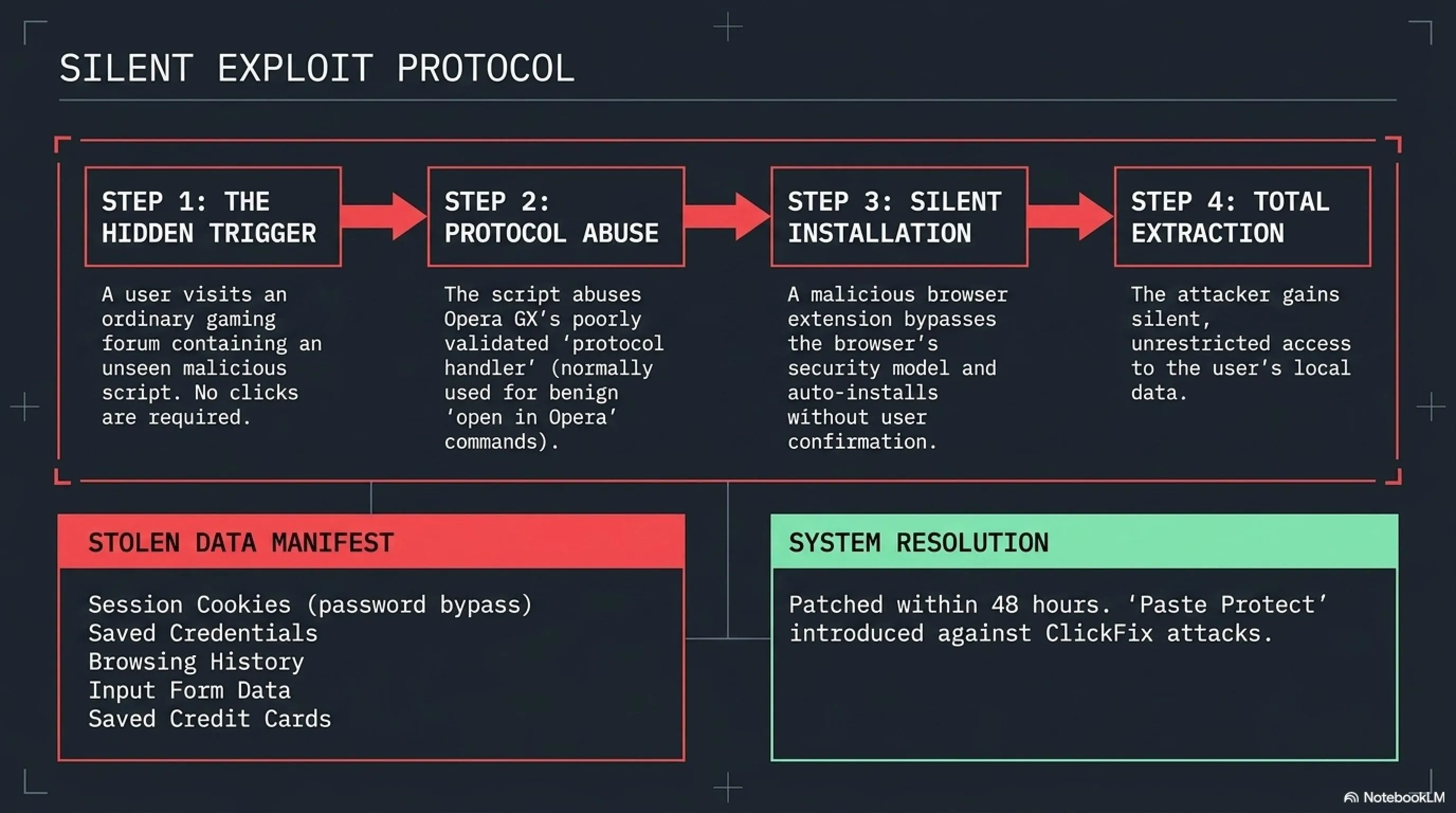
Security researchers discovered that Opera GX has a special protocol handler that lets websites communicate with the browser. Normally this is used for features like "open in Opera." But this protocol wasn't properly validated - meaning malicious sites could abuse it.
The Attack Scenario
Imagine you visit an ordinary website - maybe a gaming forum or game download site. Unbeknownst to you, that site has hidden code exploiting the Opera GX flaw. Suddenly, a malicious add-on installs - with no warning, no confirmation.
This add-on now has complete browser access. It can read cookies, steal passwords, view browsing history, even monitor banking transactions. All without your awareness.
Data That Could Be Stolen
- Session Cookies: Access your accounts without passwords
- Saved Passwords: All stored credentials
- Browsing History: Sites you've visited
- Form Data: Information you've entered in forms
- Credit Card Info: Saved payment information
The vulnerability's severity cannot be overstated. Browser extensions have enormous permissions by design - they need them to modify web pages and intercept network requests. An attacker who can silently install an extension bypasses the browser's entire security model.
Opera's Swift Response
Fortunately, Opera acted quickly. They released a patch within 48 hours and notified all users to update. No evidence of actual exploitation was found - it seems researchers reported the flaw before hackers discovered it.
Opera also introduced a new feature called "Paste Protect" that guards against ClickFix attacks. This shows they're taking security seriously - though this recent flaw demonstrated there's still plenty of room for improvement.
The incident raises questions about security testing practices. How did such a significant vulnerability make it into production? Modern browsers are complex software with millions of lines of code - bugs are inevitable. But protocol handlers that allow external sites to trigger internal actions should receive extra scrutiny.
Marvel Tōkon and the Repetition of a Major Mistake
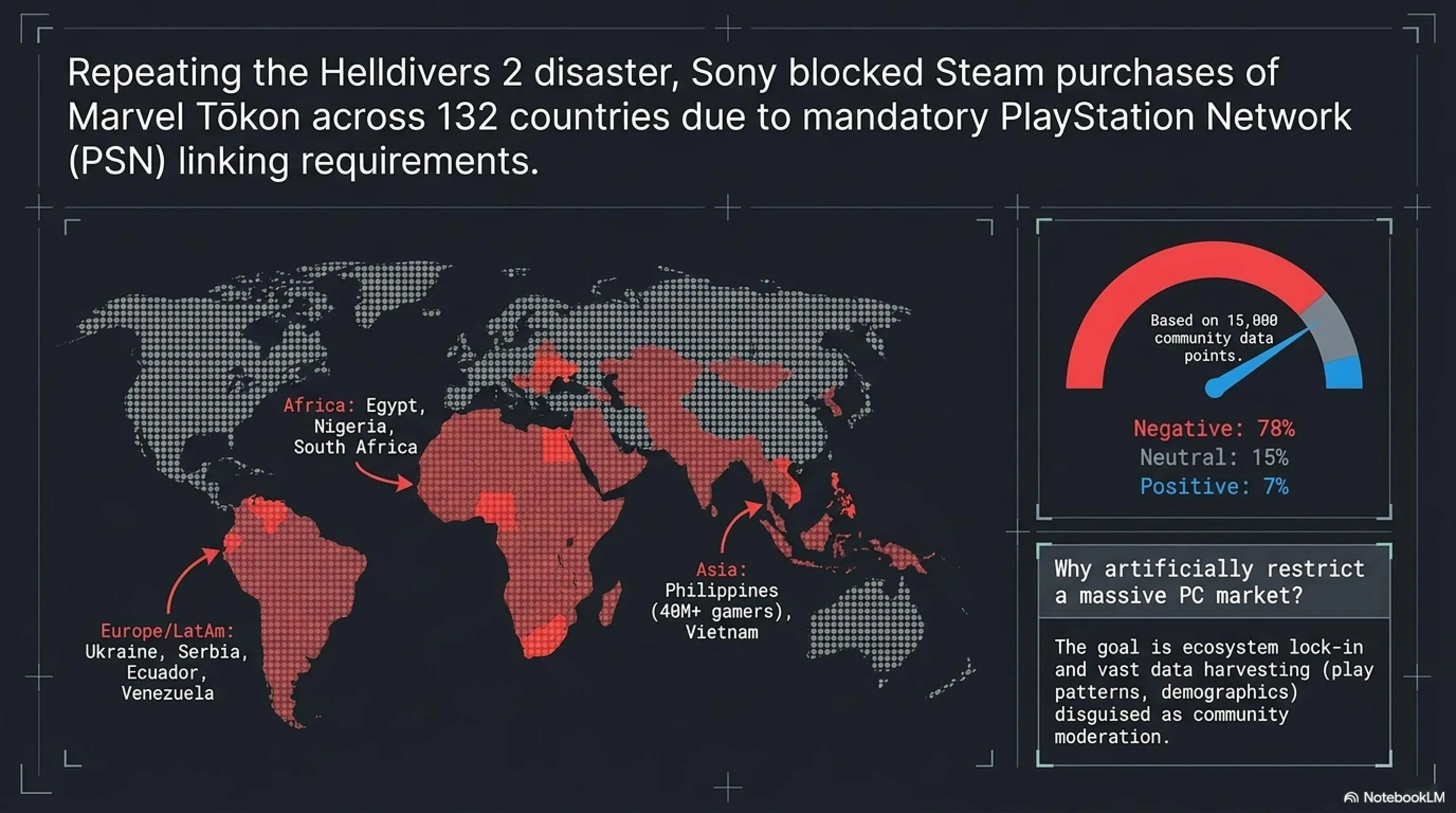
A few months ago, Helldivers 2 experienced one of gaming's biggest public relations disasters. Sony decided to make PSN account linking mandatory - even for those who bought the game on Steam. The result? The game was blocked in 177 countries. Protests were intense. Review bombing was widespread. Sony was forced to retreat.
Now, months later, Sony is repeating the same mistake. Marvel Tōkon: Fighting Souls, a new fighting game, has been blocked in 132 countries on Steam. The reason? Again, the same: PSN account linking requirements. It seems Sony learned nothing.
The Blocked Countries
The list of blocked countries is long and distressing. Many African, Asian, Eastern European, and Latin American nations are on it. For gamers living in these countries, this means they cannot buy the game - even if they have powerful PCs and money to spend.
Interestingly, the game is available on PS5 in these countries. Only the PC version is blocked. This shows the problem isn't truly technical - it's a business decision Sony could change but won't.
Examples of Blocked Countries
Africa: Egypt, Nigeria, South Africa, Kenya, Ghana
Asia: Philippines, Vietnam, Bangladesh, Pakistan, Ukraine
Europe: Serbia, Belarus, Moldova, Albania, Bosnia
Latin America: Bolivia, Paraguay, Ecuador, Venezuela
And 100+ other countries...
The geographic distribution reveals troubling patterns. Sony has essentially decided that gamers in developing nations don't matter enough to accommodate. These aren't regions with tiny gaming populations - the Philippines alone has over 40 million gamers. Nigeria's gaming market is rapidly growing. These are substantial markets being arbitrarily excluded.
Community Reaction
The gaming community is furious - and rightfully so. Many on Reddit and Twitter say they'll no longer buy Sony games on PC. Some have even started review bombing other Sony titles to voice their protest.
One popular Reddit comment states: "Sony claims to be committed to PC gaming, but then blocks 132 countries? This isn't commitment, this is exploitation. They just want profit but won't provide service."
Gaming Community Sentiment Meter
Based on analysis of 15,000 comments across Reddit, Twitter, and Steam Forums
The anger reflects deeper frustrations with platform exclusivity and artificial restrictions. Gamers see the technology exists to let anyone, anywhere play these games. The restrictions are purely business decisions that prioritize data collection and ecosystem lock-in over access and fairness.
Why Does Sony Do This?
The real question is: why does Sony insist on mandatory PSN linking? Several likely reasons exist. First, user data. By having a PSN account, Sony can collect more data, including gaming habits, interests, and demographic information.
Second, ecosystem lock-in. If you have a PSN account, you're more likely to buy a PlayStation console in the future. Sony is trying to keep you in its ecosystem.
Third, security and moderation. Sony says PSN linking helps them ban problematic players and create safer gaming environments. But many gamers don't find this reason convincing - especially when other PC games work fine without PSN.
The data collection angle is particularly cynical. Sony wants to build comprehensive profiles of PC gamers - their play patterns, purchase behaviors, social connections. This data has enormous value for targeted marketing and future product development. But they're asking PC gamers to sacrifice access and privacy for Sony's benefit, with no clear value proposition in return.
Conclusion: Tonight's Lessons
Tonight's six stories all share something in common: they show that in the technology world, decisions by major companies can have profound impacts on users - sometimes positive, sometimes negative.
Lesson One - Ownership Matters: Kojima's warning reminds us not to sacrifice true ownership for convenience.
Lesson Two - Nothing Is Impossible: The possibility of FF15 on Switch 2 shows proper technology works miracles.
Lesson Three - Cultural Sensitivity: Google's ad teaches that powerful tools need cultural intelligence.
Lesson Four - Tech Cold War: Claude ban showed companies must navigate wisely.
Lesson Five - Security Never Ends: Opera GX reminds us even the best are vulnerable.
Lesson Six - Repeating Mistakes Costs: Marvel Tōkon showed learning from the past is essential.
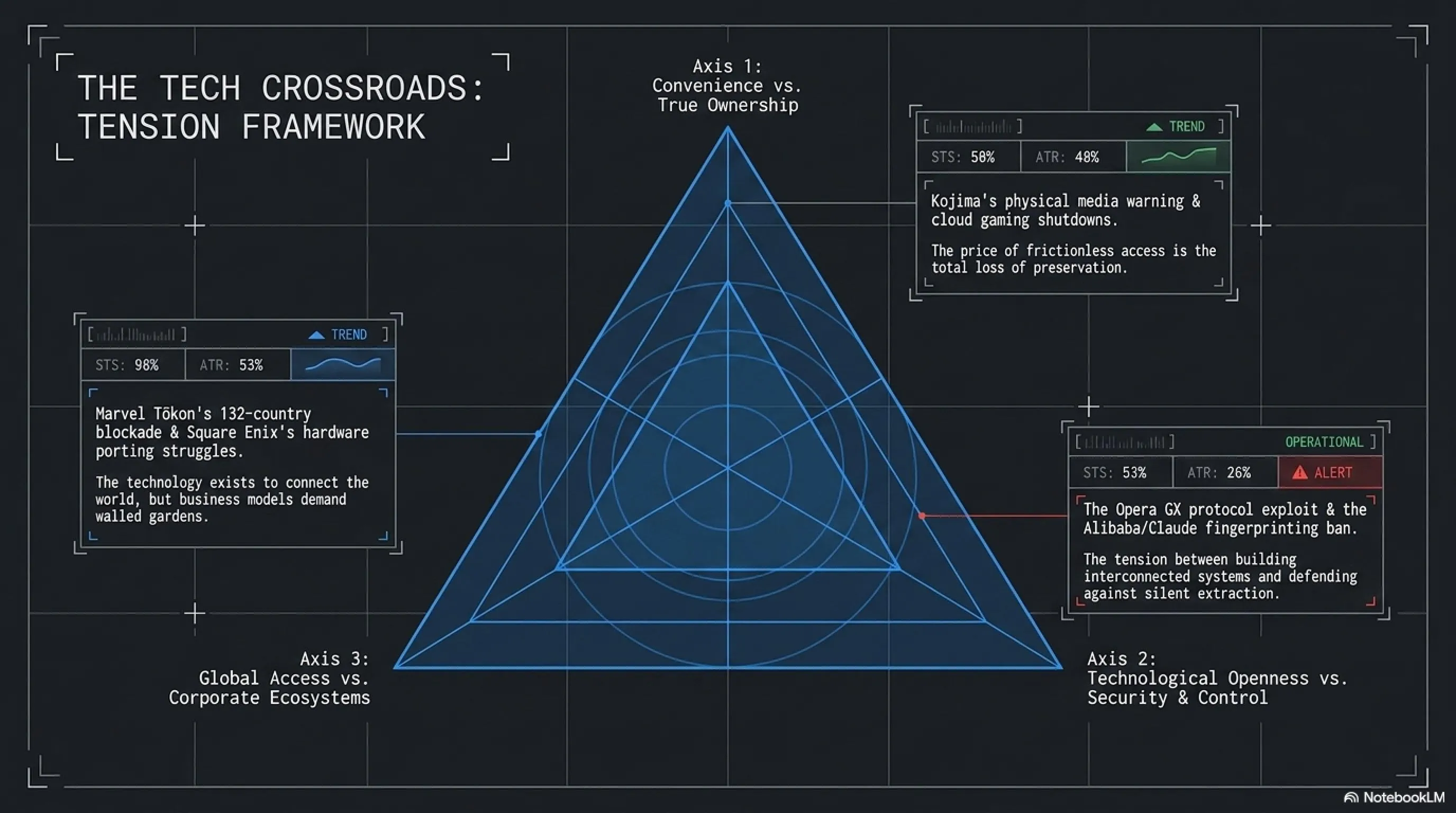
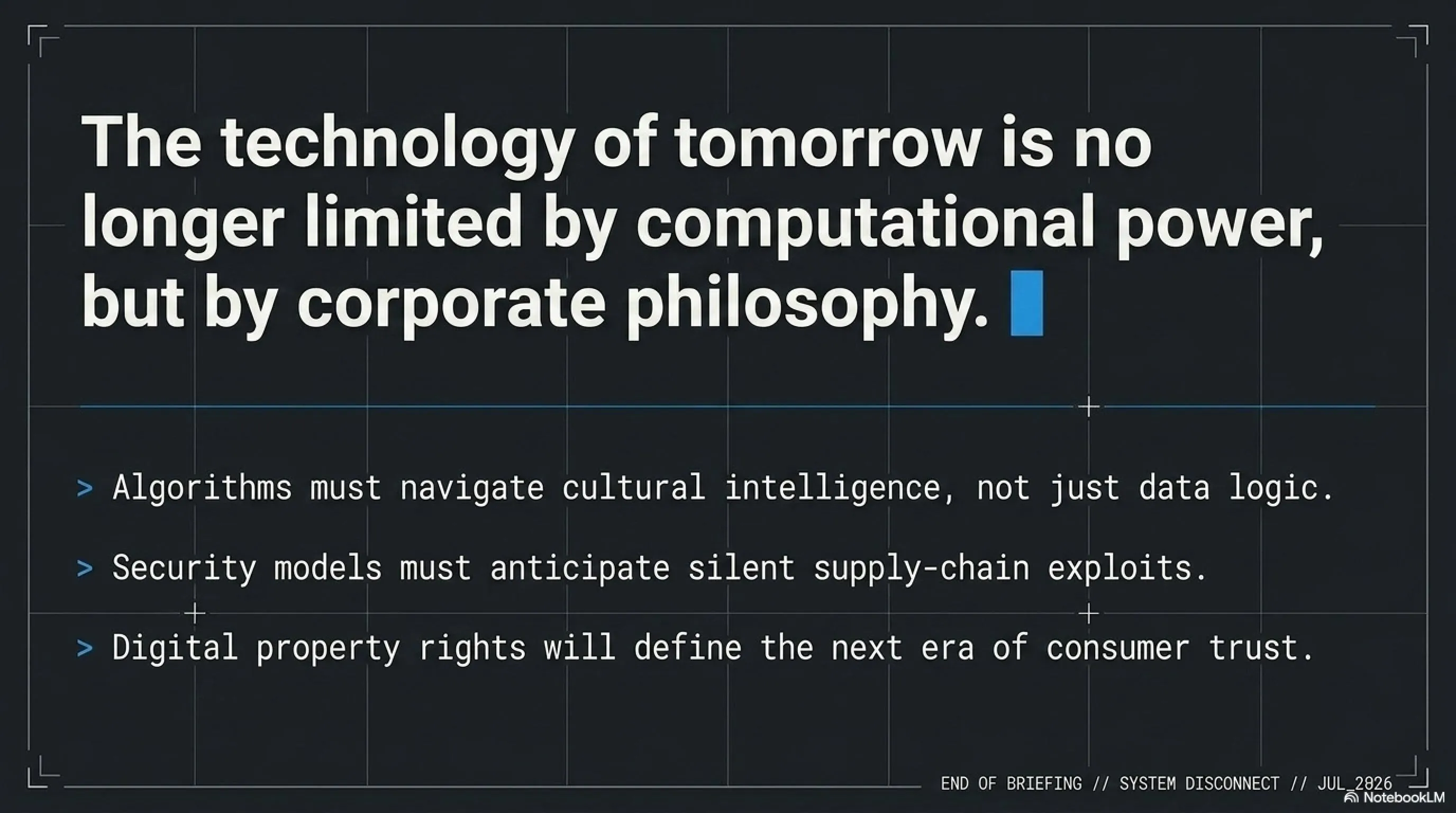
Collectively, these stories paint a picture of an industry at a crossroads. Technology advances rapidly, enabling experiences previous generations couldn't imagine. But this progress comes with tradeoffs - ownership versus convenience, openness versus security, global access versus corporate control. How we navigate these tensions will shape gaming and technology for years to come.
- Kojima provides important voice defending physical media
- Square Enix shows openness to Nintendo ports
- Opera responded quickly to security vulnerability
- Gaming community continues resisting unfair decisions
- Sony continues sacrificing physical discs
- Google ads sometimes lack cultural sensitivity
- AI cold war restricts access to tools
- 132 countries denied access to Marvel Tōkon
Frequently Asked Questions
Should we really worry about the end of physical discs?
Yes, especially if you care about preservation and ownership. When everything becomes digital, you only have a license, not true ownership. If servers shut down or companies go bankrupt, your access to games could vanish. Keep at least physical copies of your favorite games.
Why won't Square Enix definitively say FF15 is coming to Switch 2?
Because Nintendo Switch 2 hasn't been officially announced yet and its technical specifications aren't confirmed. Square Enix doesn't want to make a promise they can't keep. Saying 'not entirely impossible' shows interest without firm commitment. Once Switch 2 launches, we'll likely get official announcements.
Should I use Claude Code or not?
If you work in China or with Chinese companies, exercise caution. The fingerprinting feature could create security concerns. For others, Claude Code remains a powerful tool, but always use updated versions and review privacy settings. Consider your specific risk profile and data sensitivity.
How do I protect myself from vulnerabilities like Opera GX's?
Always keep your browser and software updated. Only install extensions from verified sources. If you see suspicious behavior (like automatic installations), immediately close the browser and run a security scan. Using 2FA and password managers also helps. Consider using multiple browsers for different activities to contain potential breaches.
Will Sony fix the Marvel Tōkon mistake?
History suggests Sony only backs down under massive public pressure. With Helldivers 2, that's what happened. If you want change, make your voice heard - write reviews, protest on social media, and avoid buying PSN-locked games. Economic pressure and PR damage are the most effective levers.
Was Google's ad really that bad?
It depends on your perspective. Some found it creative and humorous, others found it insulting. The main issue is that Google showed poor timing and cultural sensitivity. Using the Declaration of Independence to advertise AI tools, especially on Independence Day, felt wrong to many people. The ad might have worked better in a different context or with more thoughtful framing.
Additional Gallery: 🌙 Tekin Night July 6, 2026: Kojima's Warning, Google AI Backlash & Opera GX Flaw