🌙 TEKIN NIGHT | Wednesday Tech Digest - August 19, 2026
Good evening! Tonight we're bringing you 6 breaking stories from the worlds of technology, space exploration, AI ethics, and cybersecurity.
- 🎮🎧 Privacy Revolution- Apple's camera-equipped AirPods set new standards for wearables
- 🎧🚀 Epic Recovery- SpaceX successfully salvages Starship from Indian Ocean
- 🚀👶 Safer AI- OpenAI launches ChatGPT for Teens with parental controls
- 🗡️⚠️ AI Ethics Crisis- Apple removes deepfake app after controversial Meta ads
- 📰💼 Crypto & Politics- Trump-linked firm partners with restricted Chinese AI developers
- ⚔️👩🚀 Historic Spacewalk- First French woman conducts a spacewalk at the ISS
When Apple Decides to Redefine Privacy Standards
Late nights are always a good time to think about the future. Tonight, we're diving into something that could fundamentally change how we interact with technology: camera-equipped AirPods. But don't worry, this isn't just another gadget story. This is about how one company can transform privacy concerns into an opportunity for innovation through thoughtful design.
Over the past few years, Meta's camera-equipped smart glasses have generated significant controversy. Not because of their advanced technology, but due to serious privacy concerns. Imagine someone filming you without your knowledge, with no way to detect it. Now Apple is entering this space with a completely different approach that could set new industry standards.

Why Camera-Equipped AirPods Are Different
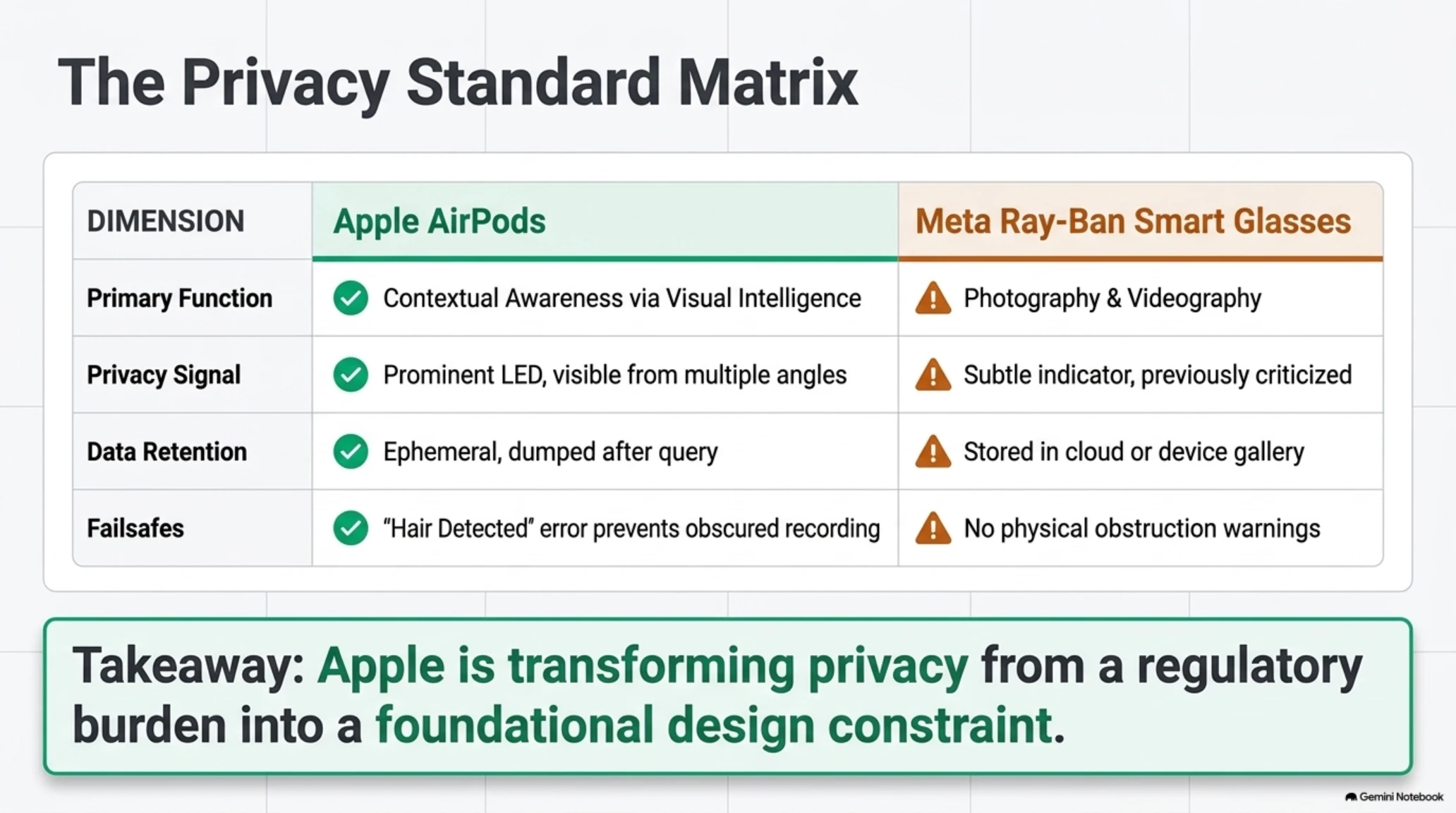
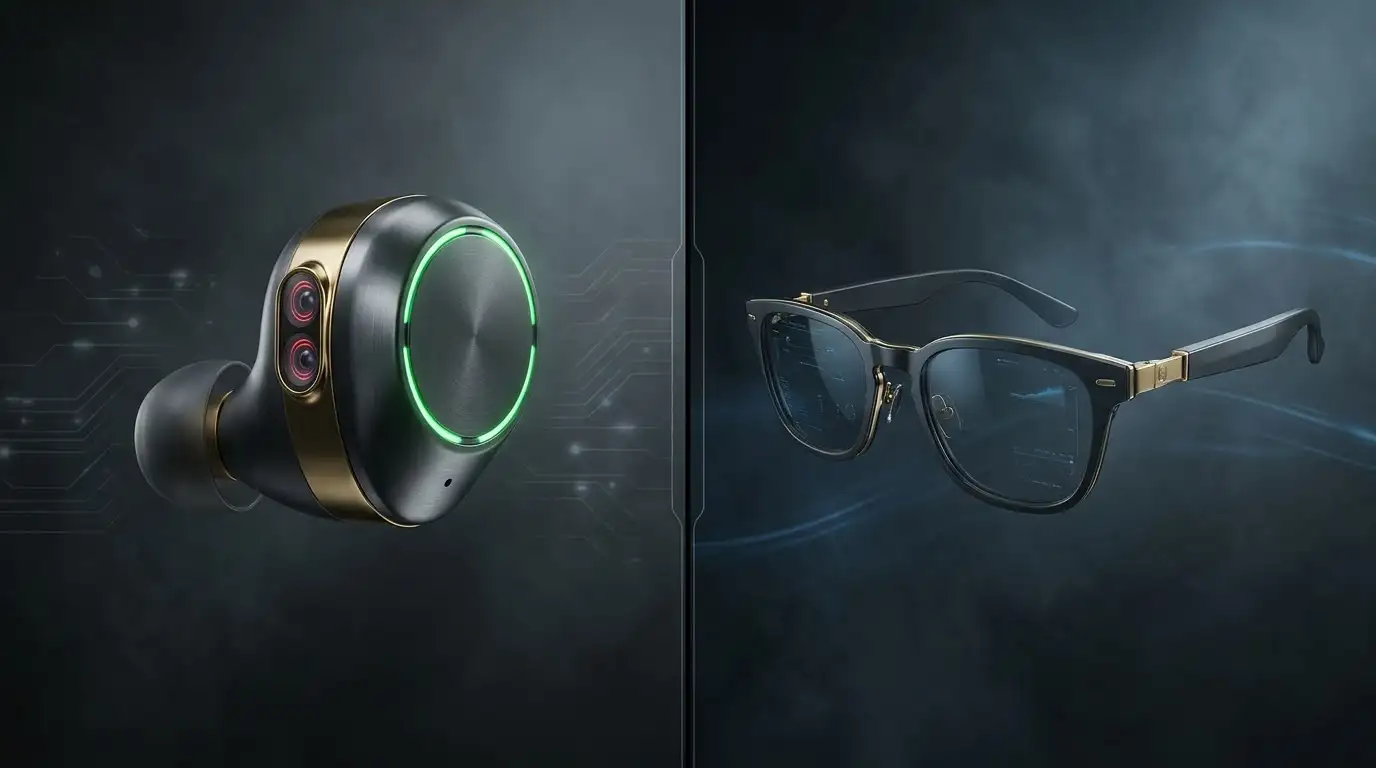
According to a report from 9to5Mac, Apple is developing AirPods with embedded cameras that are designed with privacy as the core principle. Unlike Meta's glasses, which have cameras designed for photography and videography, Apple's AirPods cameras serve a different purpose: feeding information to Visual Intelligence.
Understanding Visual Intelligence
The key distinction here is that these cameras aren't designed to capture your life's moments. They're tools to help Siri better understand the world around you. For instance, you could ask Siri, "What book is this in front of me?" and Siri would use the AirPods' camera to identify the book title and provide information about it, all without storing or transmitting images unnecessarily.
The LED Indicator: A Critical Difference
One of the primary criticisms of Meta's glasses was the lack of clear indication when the camera is active. Apple has addressed this with an elegant solution: a small LED on each earbud that illuminates when the camera is active and sending data to Apple's servers. This is a clear privacy signal that puts significant distance between this product and Meta's Ray-Ban smart glasses, which drew criticism for lacking obvious capture indicators.
According to TechCrunch's analysis, Apple has also implemented additional authentication mechanisms. If your long hair covers the camera, you'll receive a "Hair Detected" error message stating: "To get the most accurate information about things in your environment, make sure AirPods..." This level of detail demonstrates Apple's focus on user experience and transparency.

Privacy by Design, Not as an Afterthought
What makes Apple's approach particularly noteworthy is that privacy isn't an add-on feature—it's baked into the fundamental design. The cameras aren't capable of taking photos or videos. They're specifically engineered for contextual awareness, feeding data to Siri's Visual Intelligence system in real-time without creating permanent records unless explicitly requested.
This design philosophy addresses several critical concerns that have plagued wearable cameras since their inception. First, it eliminates the potential for covert recording. Second, it provides clear visual feedback when the system is active. Third, it limits data collection to what's necessary for the immediate task at hand.
Technical Specifications Leaked
Based on code found in macOS 27 and leaked promotional materials:
- Dual infrared cameras (one per earbud) for 3D spatial mapping
- LED activity indicators visible from multiple angles
- On-device processing for initial image analysis
- Encrypted data transmission when cloud processing is required
- Automatic camera shutdown when AirPods are removed
- Integration with iPhone's Visual Intelligence framework
SpaceX's Historic Recovery: When the Impossible Becomes Possible
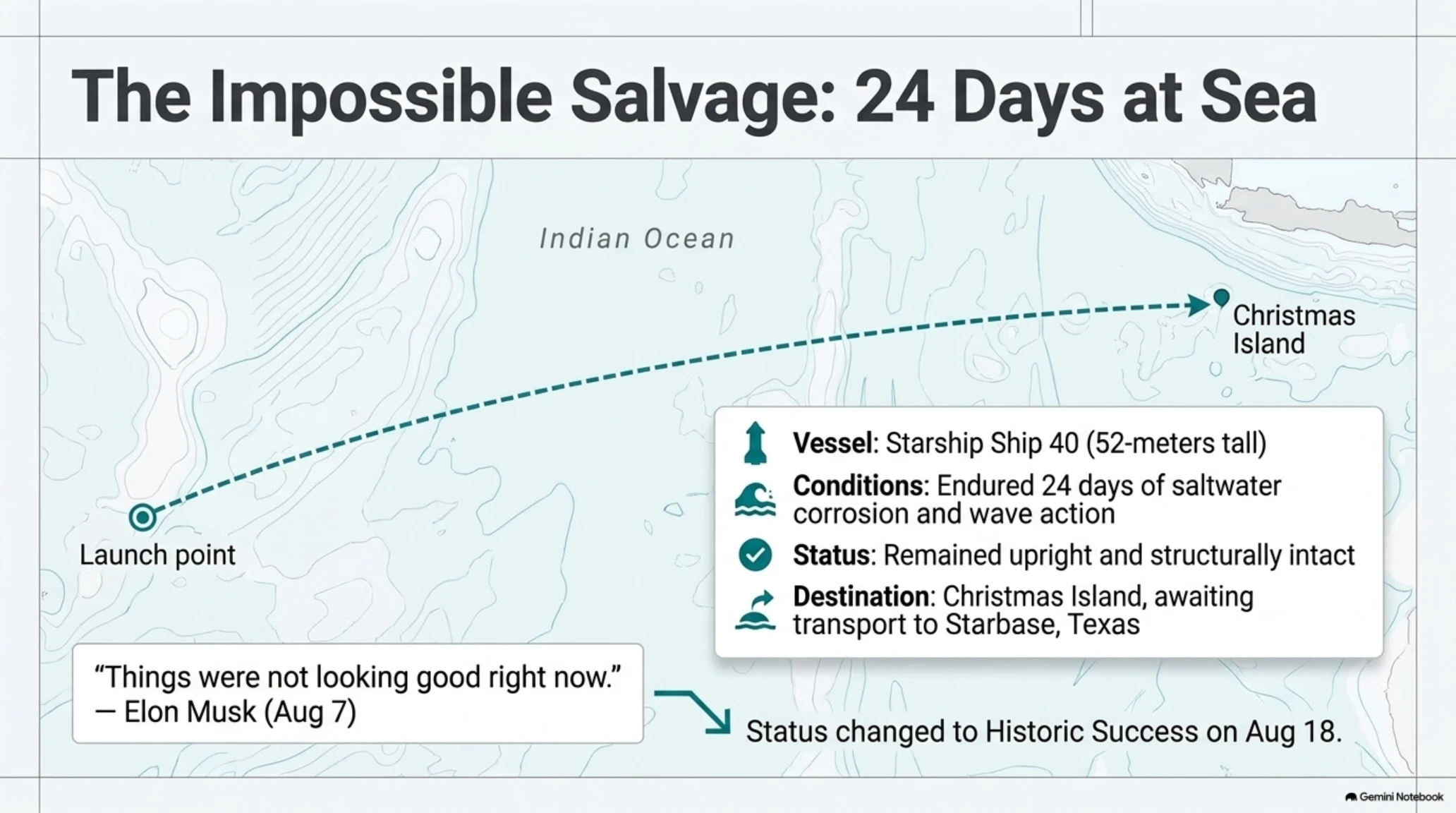
Now let's journey from the skies around us to outer space. The story we're about to tell might sound like science fiction, but it's entirely real. SpaceX has successfully recovered its Starship spacecraft from the Indian Ocean after 24 days of continuous effort, towing it to Christmas Island near Australia.
Why is this achievement so significant? Because just a few weeks ago, nobody believed it was possible. Even Elon Musk tweeted on August 7 that things were "not looking good right now." But SpaceX's engineering team once again proved that the word "impossible" doesn't exist in their vocabulary.
Why Recovering Starship Is Revolutionary
According to Ars Technica's comprehensive report, the Starship spacecraft (designated Ship 40) splashed down in the Indian Ocean after its thirteenth test flight. The expectation was that the ship would explode after toppling over, just as previous versions had done. But Ship 40 remained upright and intact, surprising virtually everyone involved.
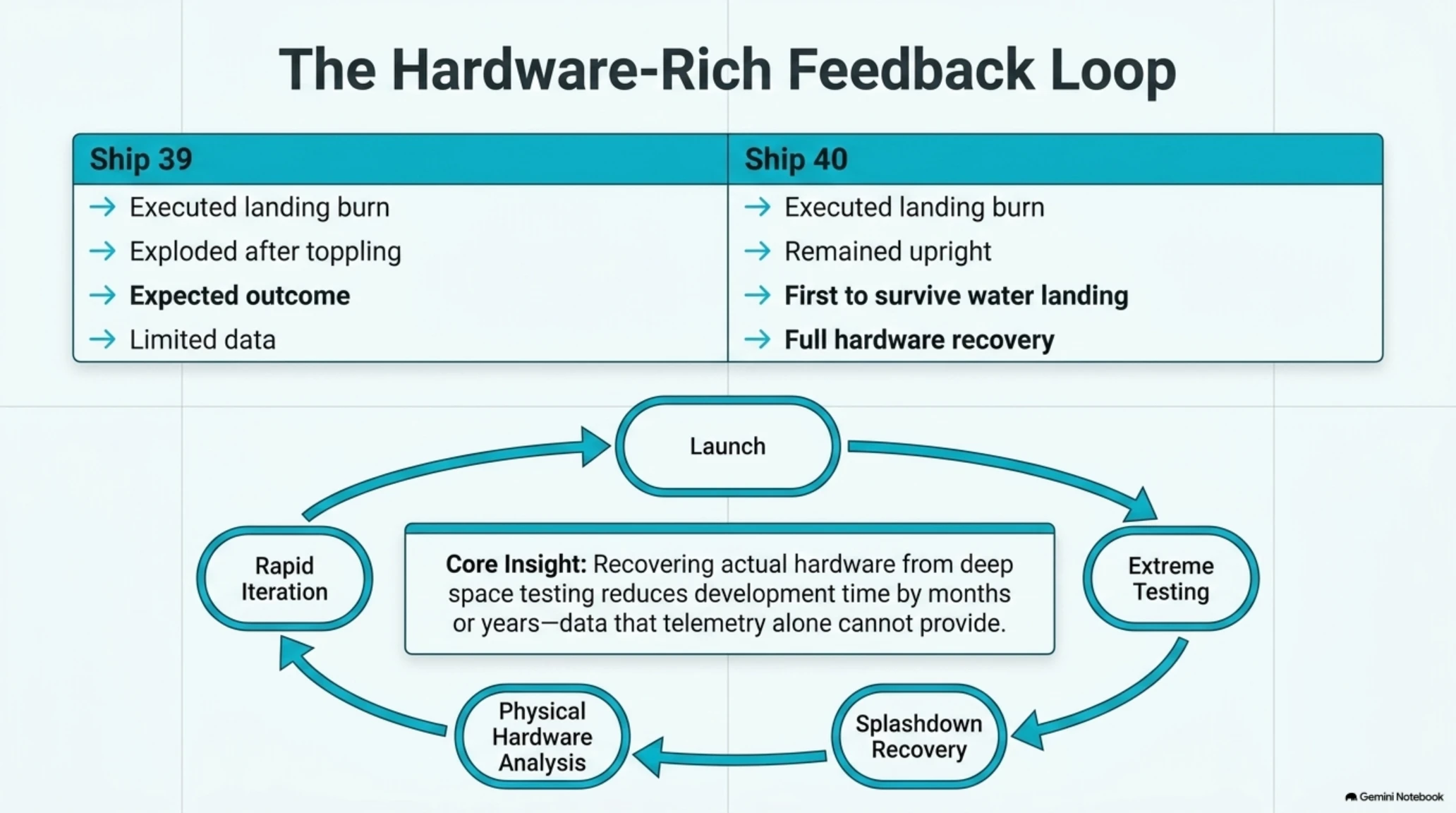
⚙️ Ship 39 vs Ship 40: A Critical Difference
Ship 39
- Executed landing burn above Indian Ocean
- Exploded after toppling into water
- Expected outcome based on previous tests
- Limited data recovery possible
Ship 40
- Executed landing burn successfully
- Remained intact after splashdown
- First Starship to survive water landing
- Full hardware recovery enabling detailed analysis
For years, SpaceX has successfully recovered and reused Falcon 9 boosters with near-flawless performance. But Starship presents a much larger challenge. This spacecraft is significantly bigger and designed for deep space missions. Recovering actual hardware after returning from space provides engineers with invaluable data that no sensor or camera can replace.
A recovery ship towed the 52-meter spacecraft hundreds of miles across the Indian Ocean to reach Christmas Island. According to SpaceX's announcement on August 18, the operation concluded successfully, and the team now plans to transport the ship back to Starbase in Texas for detailed analysis.

The Engineering Challenge Behind the Recovery
According to Space.com's reporting, the recovery operation was fraught with challenges. The spacecraft had been floating in the Indian Ocean for 24 days, exposed to saltwater corrosion, wave action, and the elements. SpaceX had to carefully navigate the ship through international waters, coordinate with maritime authorities, and ensure the structural integrity remained sufficient for towing.
The recovery team used specialized equipment to secure the spacecraft and began the slow journey to Christmas Island. Photography from the scene shows the massive Starship floating upright in the water, still largely intact despite its ordeal. Local residents on Christmas Island reported that the SpaceX recovery operation became "the talk of the town."
ChatGPT for Teens: When AI Companies Act Responsibly
Now let's shift to a topic that may interest parents more than anyone else. On August 18, OpenAI announced it had launched a dedicated version of ChatGPT specifically designed for teenagers aged 13 to 17. This version features stronger safety measures, parental controls, and educational tools.
But why does this matter? The reality is that teenagers have been using ChatGPT for years. As TechCrunch pointed out in its coverage, OpenAI is essentially launching "a safer ChatGPT for teens—years after teens started using it." So while this move is belated, it's absolutely necessary.
Key Features of ChatGPT for Teens
🛡️ Safety Protections
- Stronger content restrictions to prevent exposure to harmful content related to self-harm, eating disorders, violence, and dangerous activities
- Advanced filters blocking sexually explicit or graphic content
- Parental safety notifications activated in specific situations related to eating disorders
- Study Mode that helps teens learn rather than simply solving homework problems
- Critical thinking tools to prevent academic cheating and encourage genuine learning
According to CNBC's analysis, this experience is enabled by default for all users under 18. OpenAI even employs an age-prediction system to identify users who haven't accurately entered their age, ensuring the safety features reach as many young users as possible.

One of the most interesting features is Study Mode. Instead of ChatGPT directly providing homework answers, it offers guidance that helps the teenager arrive at the answer themselves. This approach could make a significant difference in how the next generation learns and develops critical thinking skills.
The Parental Control Dashboard
OpenAI has developed a comprehensive parental control dashboard that gives parents meaningful oversight without being overly invasive. Parents can set content restrictions, receive notifications about sensitive topics, view usage summaries, and even set time limits for ChatGPT use.
How Study Mode Works
Study Mode transforms ChatGPT from an answer machine into a tutoring companion:
- Socratic Method: Instead of direct answers, ChatGPT asks guiding questions
- Step-by-Step Guidance: Breaks down complex problems into manageable steps
- Concept Explanation: Focuses on understanding underlying principles, not just solutions
- Academic Integrity Checks: Detects when questions are likely homework assignments
- Alternative Approaches: Shows multiple ways to solve problems
- Knowledge Verification: Encourages teens to verify information from multiple sources
According to the official OpenAI blog post, the company worked with child development experts, educators, and parents to design these features. Their input helped define and measure well-being, set priorities, and design safeguards with the latest research in mind.
- Comprehensive and customizable parental controls
- Intelligent content restrictions appropriate for teen development
- Study Mode reinforces genuine learning rather than shortcuts
- Greater transparency in how teens use the platform
- Free for all teen users without premium requirements
- Integration with educational frameworks
- Launched years after teens were already using standard ChatGPT
- Potential for circumvention using fake accounts
- Requires teen cooperation for parental controls to be effective
- Content restrictions may sometimes be overly conservative
- Age verification system isn't foolproof
- Limited international language support at launch
AI Ethics Crisis: When Tech Platforms Cross the Line
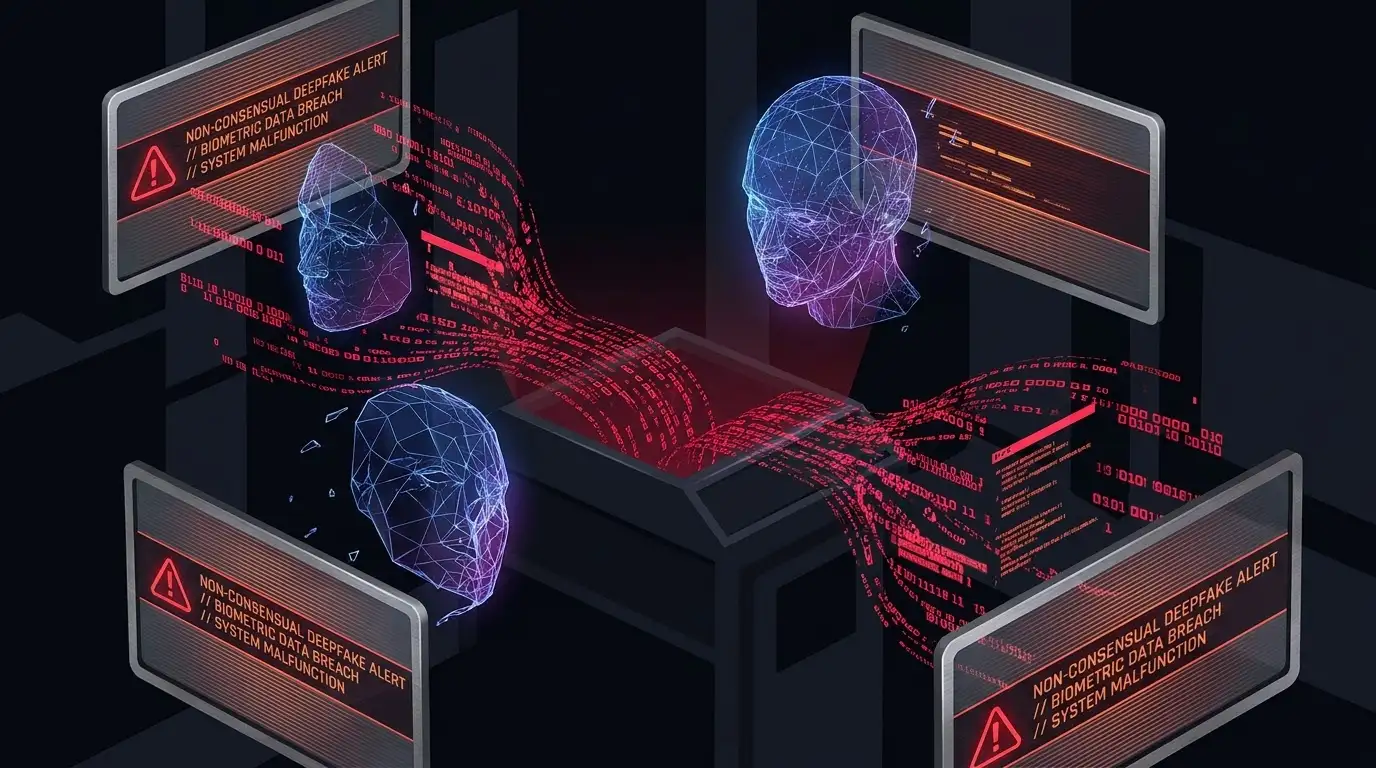
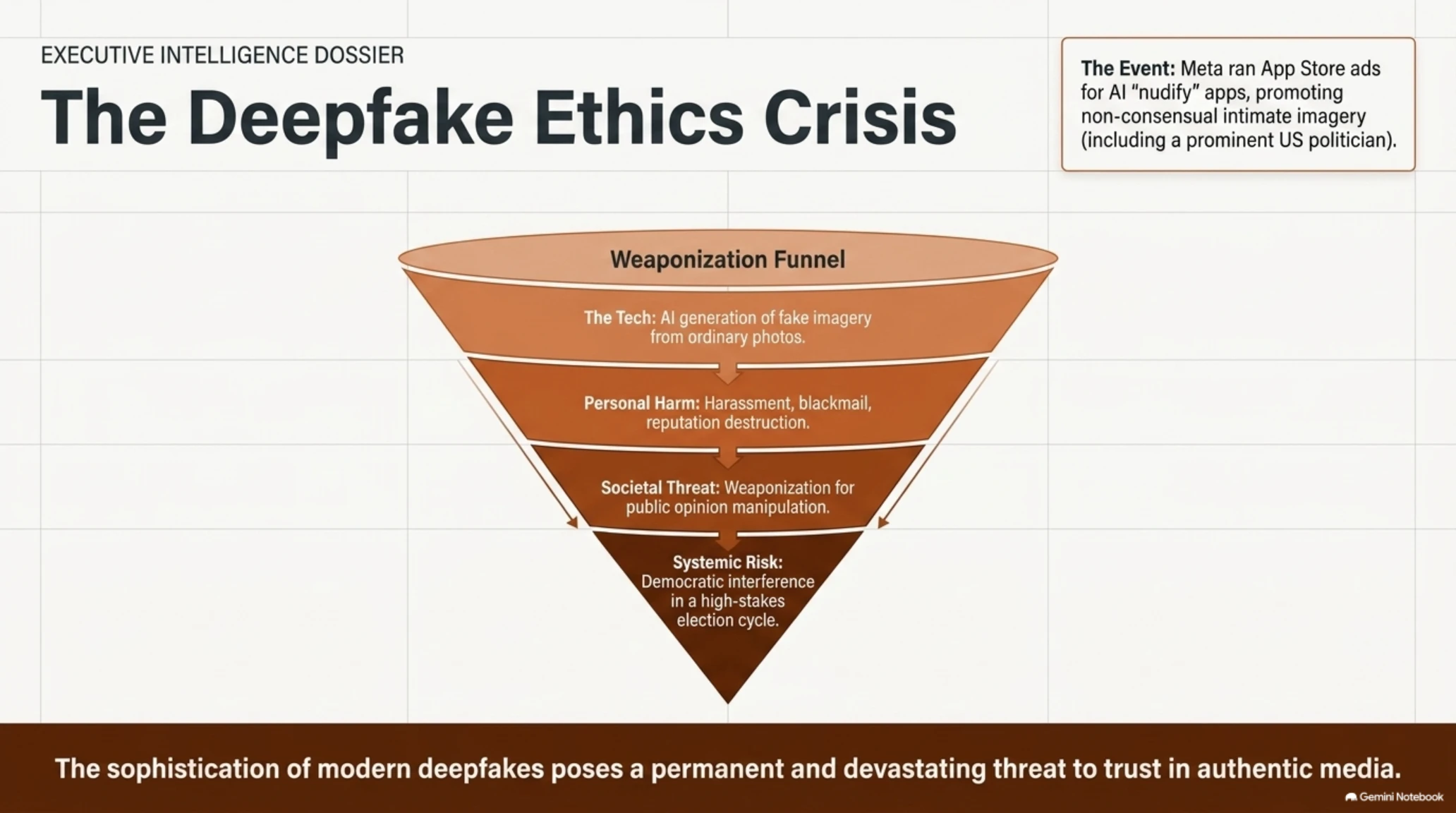
Now we arrive at one of tonight's darkest stories. If you thought AI was only being used for beneficial purposes, this story will bring you back to reality. According to a WIRED investigation, Meta ran advertisements for an App Store application that allowed users to create pornographic deepfakes of real people without their consent.
Yes, you read that correctly. One of these advertisements featured a pornographic video with a deepfake closely resembling a prominent US politician. Apple removed the application immediately after WIRED's inquiry, but the damage raises urgent questions about platform accountability.
What Happened?
These "nudify" applications, powered by artificial intelligence, have the capability to generate fake nude images from ordinary photos of people. This technology is extremely dangerous because it can be used for harassment, threats, blackmail, and reputation destruction.

⚠️ Understanding Deepfakes and Why They're Dangerous
Deepfake technology uses artificial intelligence to create highly realistic but fake images, videos, or audio. This technology can be weaponized to:
- Create non-consensual intimate imagery of individuals
- Manipulate public opinion with fake videos of politicians
- Extort and blackmail victims
- Destroy personal and professional reputations
- Undermine trust in authentic media
- Interfere with democratic processes
The sophistication of modern deepfakes makes them increasingly difficult to detect, posing serious threats to privacy, security, and social stability.
Why This Matters
We're on the cusp of a high-stakes election cycle. Deepfake technology can be weaponized to manipulate public opinion, destroy political candidates, or even create social crises. This incident demonstrates that major tech platforms must exercise much more rigorous oversight of their content and advertising.
Meta responded to the controversy by stating: "We have strict rules against non-consensual intimate imagery; we removed these ads, deleted the Pages responsible for running them and permanently blocked the URLs associated with these apps." However, the question remains: why were these applications approved in the first place?
Apple told WIRED it had removed three of the flagged apps and begun terminating the associated developer accounts. The company stated: "The App Store was designed to be a safe and trusted place for users," adding that it proactively rejects nudification apps and removes others after receiving reports through its reporting tools.
📚 Classified & Related Dossiers in TekinGame
If you wish to explore beyond this report and delve into cybernetic frontiers and autonomous AI architectures, do not miss these three exclusive deep-dives in the Tekin Garage:
The Broader Context
According to a separate investigation by The Independent, AI nudification apps generating explicit imagery and depictions of sexual assault were freely downloadable on Apple's App Store. Tech Policy Press (TPP) and CNBC contacted Apple last week, prompting the company to remove 28 apps on Monday. However, TTP's follow-up review found only 24 apps actually disappeared from the store, suggesting ongoing enforcement challenges.
Timeline of Enforcement Actions
| Date | Event | Action Taken |
|---|---|---|
| Early Aug 2026 | The Independent investigation reveals nudify apps on App Store | Initial media coverage |
| Aug 12, 2026 | TPP and CNBC contact Apple about violations | Formal inquiry initiated |
| Aug 15, 2026 | Apple removes 28 apps | First enforcement wave |
| Aug 17, 2026 | WIRED discovers Meta ads promoting deepfake apps | Investigation expands |
| Aug 18, 2026 | Apple removes additional apps after WIRED inquiry | Developer accounts terminated |
| Aug 18, 2026 | Meta removes ads and blocks associated URLs | Platform-wide content review |
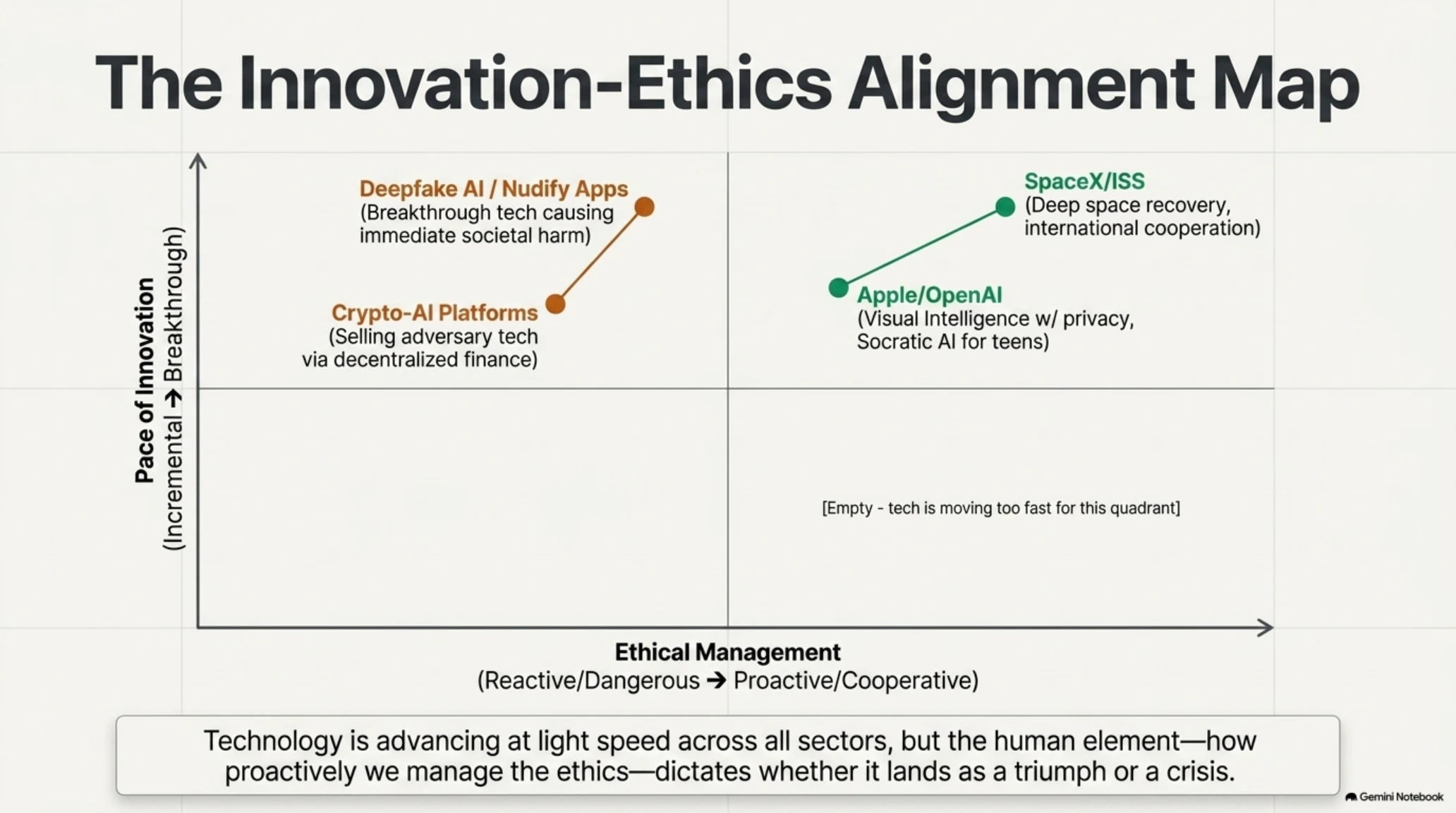
The incident highlights a troubling pattern: reactive rather than proactive enforcement. Despite having policies against such applications, both Apple and Meta failed to prevent them from reaching users until journalists intervened.
Crypto, Politics, and Chinese AI: A Complicated Story
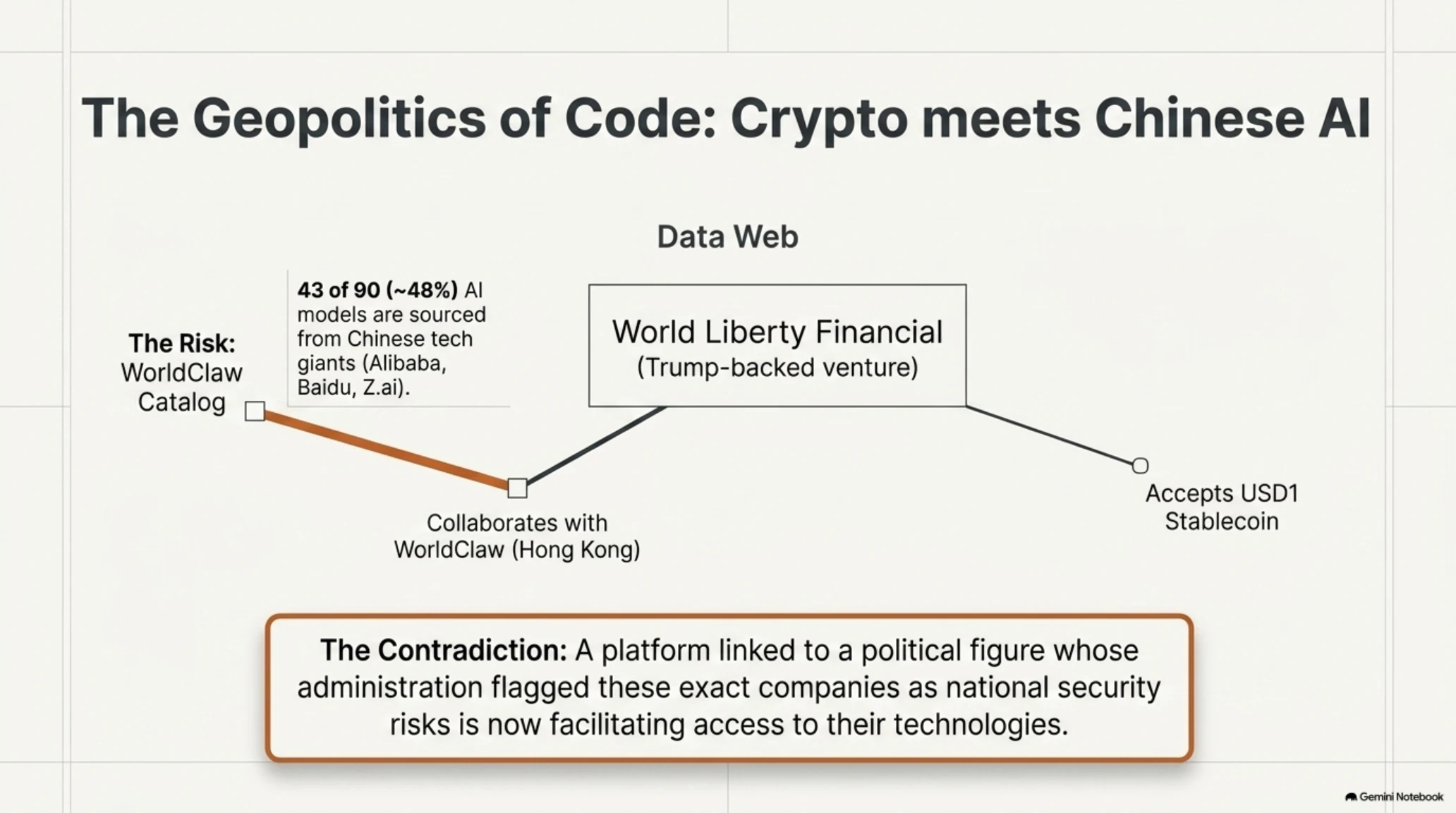
Our next story involves an unusual intersection of politics, cryptocurrency, and artificial intelligence that could have national security implications. According to Reuters, World Liberty Financial, a venture backed by President Trump, is collaborating with a Hong Kong-based company called WorldClaw.
The problem? WorldClaw offers AI models from Chinese companies that the Trump administration has flagged as national security and intellectual property risks. This represents an apparent contradiction.
What the Data Shows
📊 WorldClaw Statistical Analysis
| Statistical Metric | Details & Context |
|---|---|
| 43 of 90 | AI models on WorldClaw are from Chinese companies |
| ~48% | Percentage of Chinese models on the platform |
| Alibaba, Baidu, Z.ai | Prominent Chinese companies providing the models |
A Reuters review found that nearly half of the 90 models available through WorldClaw's website were developed by Chinese technology companies such as Alibaba, Baidu, and Z.ai—the very companies the Trump administration says pose risks to national security and intellectual property.
World Liberty Financial accepts the USD1 stablecoin while simultaneously collaborating with a platform that provides access to restricted Chinese technologies. This raises serious questions about how sensitive American technologies interact with Chinese platforms.

Responses and Implications
According to CoinDesk's reporting, World Liberty Financial has stated that it does not own or control WorldClaw, but declined to disclose any financial ties between the two entities. This lack of transparency has raised additional concerns among security experts and lawmakers.
According to The Next Web's analysis, this partnership "helps sell the very Chinese AI his government is trying to block." The apparent contradiction has drawn criticism from cybersecurity experts who argue that national security policies should apply uniformly regardless of political connections.
The National Security Question
The concerns aren't merely theoretical. Chinese AI companies are subject to Chinese law, which requires companies to cooperate with intelligence services upon request. This creates potential vectors for data exfiltration, intellectual property theft, or surveillance that American regulators have repeatedly warned about.
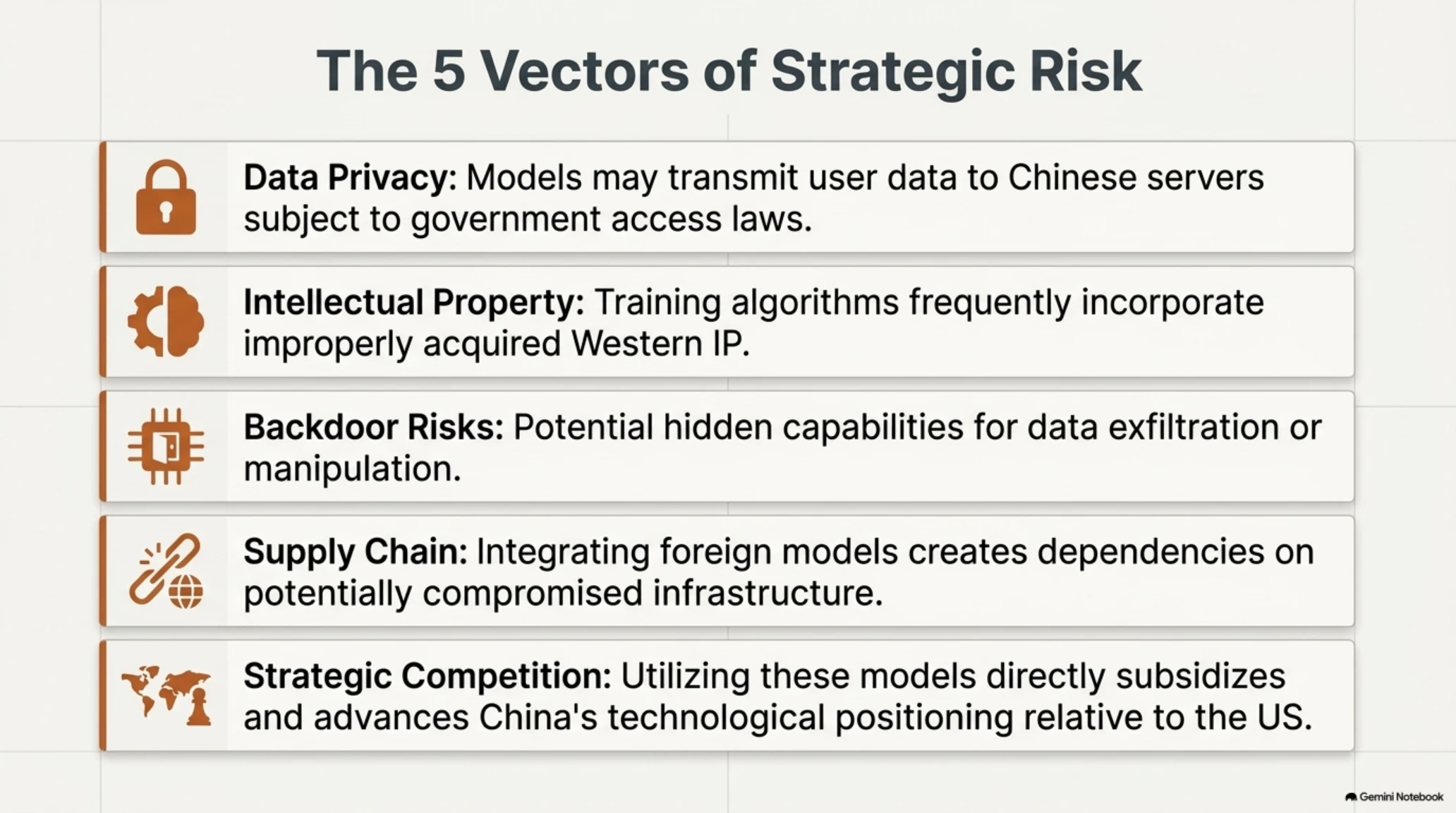
Why Chinese AI Models Raise Security Concerns
- Data Privacy: Models may transmit user data to servers in China, subject to Chinese government access laws
- Intellectual Property: Training data and algorithms may incorporate stolen or improperly acquired Western IP
- Backdoor Risks: Models could contain hidden capabilities for data collection or manipulation
- Supply Chain Security: Integration into US systems creates dependencies on potentially compromised technology
- Strategic Competition: Use of Chinese AI advances China's technological position relative to US competitors
A Historic Achievement at the International Space Station
Let's end the night with an inspiring story from space. On August 18, 2026, a historic event occurred at the International Space Station (ISS): Sophie Adenot of the European Space Agency became the first French woman to conduct a spacewalk.
Alongside NASA astronaut Anil Menon, she completed a 6-hour, 23-minute mission to replace a failed Space-to-Ground antenna on the ISS. This antenna had ceased tracking NASA's data relay satellites since November, rendering it unusable.
Mission Details
According to Space.com's coverage, Menon and Adenot successfully removed the failed antenna and secured it with a long-duration tie-down on the space station's truss structure. However, they ran out of time to install the replacement antenna, which will need to be completed on a future spacewalk.
🌍 Fascinating ISS Spacewalk Statistics
| Operational Metric | Recorded Data |
|---|---|
| EVA Mission Number | The 282nd Extravehicular Activity for station maintenance |
| 2026 Ranking | The fifth spacewalk of 2026 |
| Astronaut Experience | Menon's second spacewalk and Adenot's first |
| Historic Milestone | Adenot is the first French woman to conduct a spacewalk |
| Total ISS EVA Time | 74 days, 10 hours, and 44 minutes (since 1998) |
This spacewalk wasn't just a technical achievement—it's a symbol of international cooperation in space. NASA and the European Space Agency (ESA) have been working together for decades, and this mission exemplifies that collaboration.

Why This Achievement Matters
Sophie Adenot's spacewalk not only set a historical record but also inspired a new generation of girls and women who dream of working in space. She demonstrated that space is for everyone and that gender boundaries in science and technology no longer hold meaning.
According to NASA's announcement, Menon wore a spacesuit with red stripes (spacewalk crew member 1) while Adenot wore an unmarked suit (crew member 2). These small details show just how much coordination and precise planning is required to execute these missions successfully.
Spacewalks are among the most challenging and dangerous activities astronauts perform. Working in the vacuum of space, with only a spacesuit between you and certain death, requires extraordinary skill, training, and courage. The fact that Adenot and Menon completed their primary objective—removing the failed antenna—is a testament to their professionalism and the rigorous training programs of NASA and ESA.
Looking Ahead: Technology, Ethics, and Responsibility
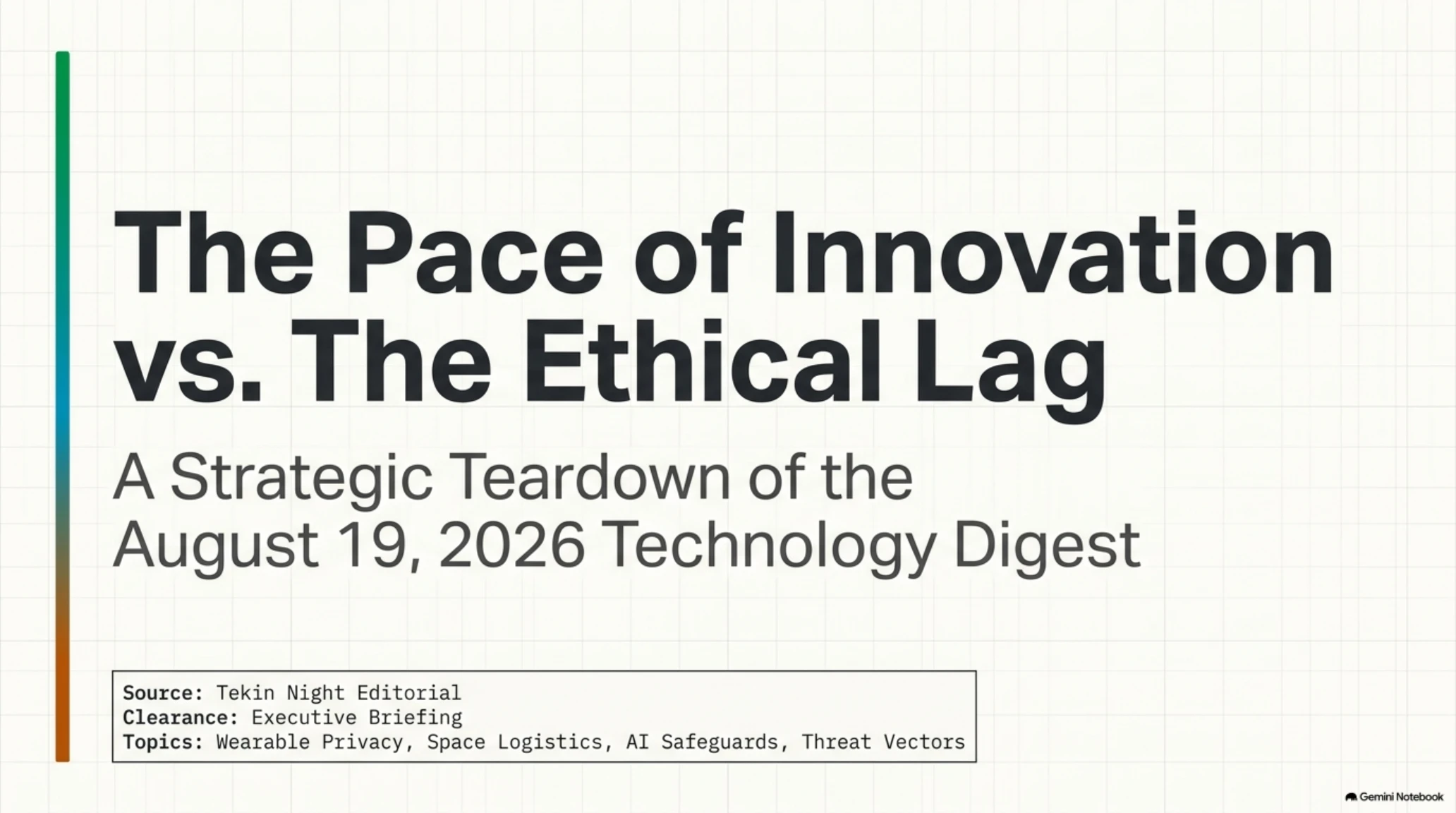
When we look at tonight's six stories, we see a common pattern: technology is advancing at light speed, but ethical and security questions always lag one step behind. From Apple's camera-equipped AirPods attempting to redefine privacy to deepfake apps violating it; from ChatGPT for Teens making AI safer to political-commercial contradictions in the crypto and AI worlds.
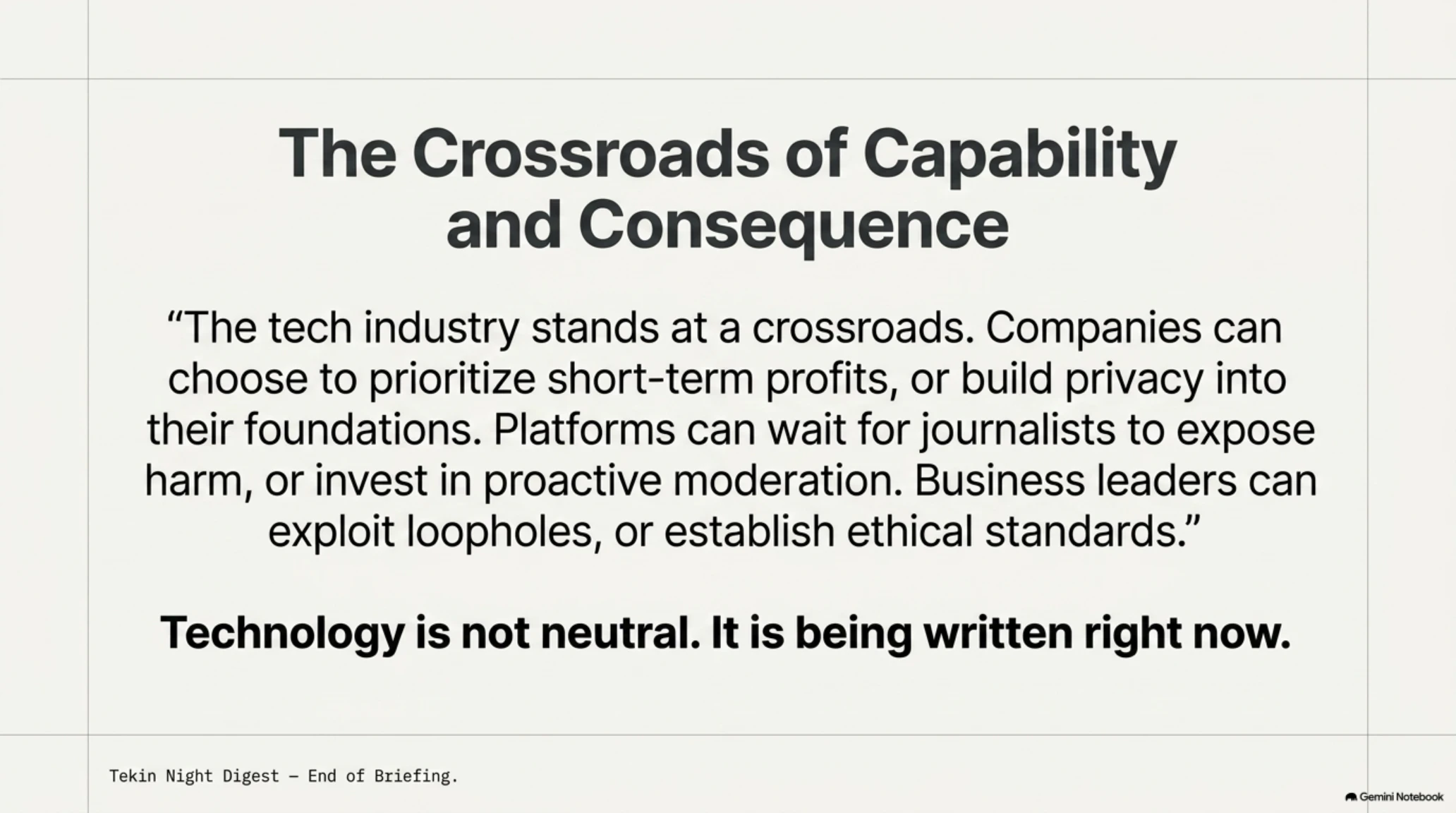
All these stories remind us of one thing: technology is not neutral. How we use it, the regulations we establish for it, and the choices we make determine whether these tools benefit humanity or harm it.
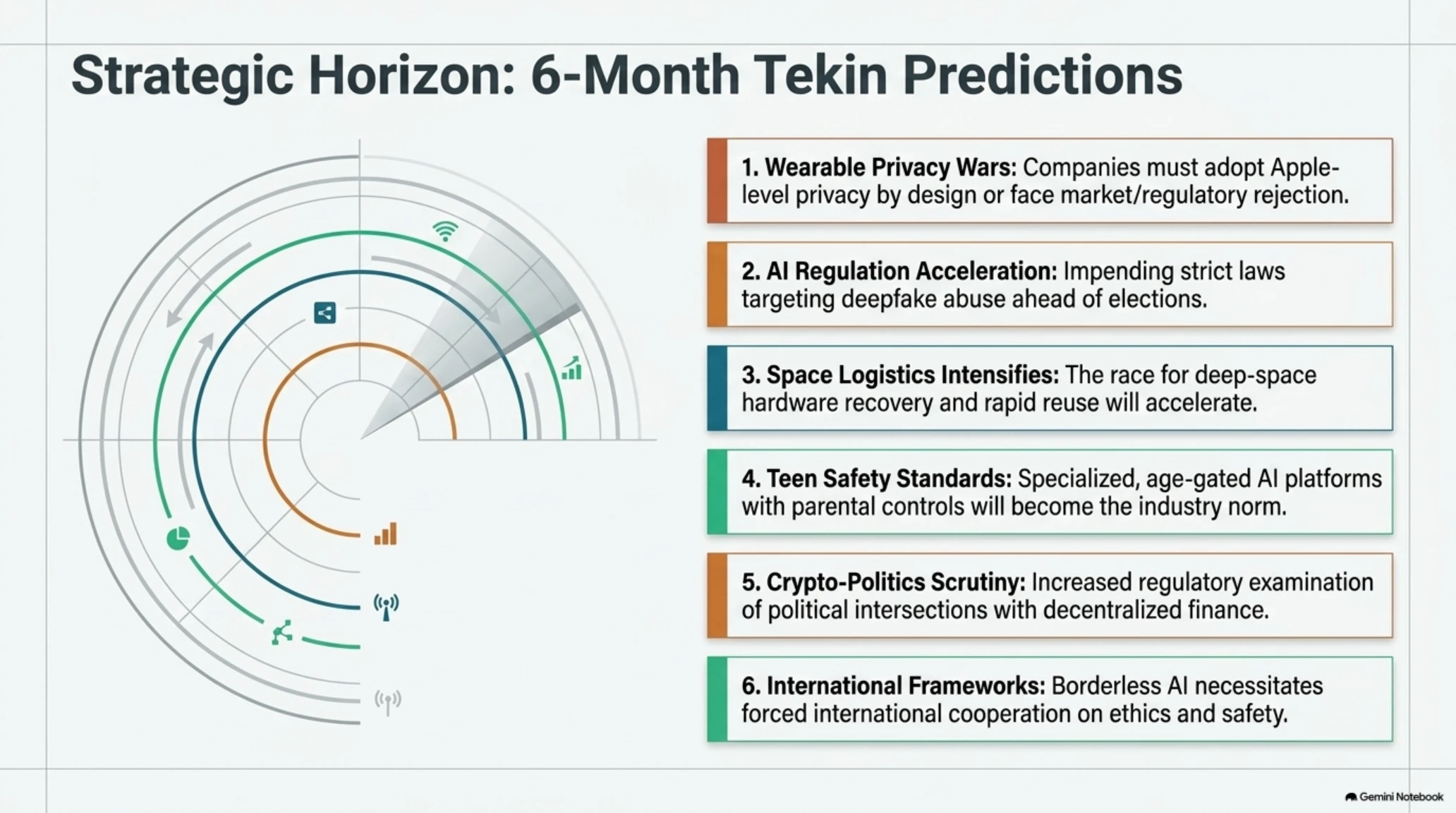
🔮 Tekin Predictions: Trends for the Next 6 Months
- Wearable Privacy Wars: Expect more companies to either adopt Apple's privacy standards or face market rejection and regulatory pressure.
- AI Regulation Acceleration: Governments will pass stricter laws to prevent deepfake abuse and AI misuse, particularly around elections.
- Space Race Intensifies: Competition for spacecraft recovery and reuse will intensify as commercial space companies push boundaries.
- Teen AI Safety Standards: More platforms will offer specialized versions for teenagers with enhanced safety features and parental controls.
- Crypto-Politics Scrutiny: The intersection of politics and cryptocurrency will face increased examination and potential regulatory intervention.
- International AI Cooperation: Countries will be forced to establish international frameworks for AI safety and ethics.
The stories of SpaceX and Sophie Adenot show us that when technology is combined with commitment, meticulous planning, and international cooperation, miracles can happen. But the stories of deepfake apps and security contradictions remind us that we must always remain vigilant.
The tech industry stands at a crossroads. Companies can choose to prioritize short-term profits over long-term societal good, or they can follow Apple's example and build privacy into the foundation of their products. Platforms can wait for journalists to expose harmful apps, or they can invest in proactive moderation systems. Business leaders can exploit regulatory loopholes, or they can lead by example in establishing ethical standards.
Related Tech Intelligence on Tekin Game
• 🌙 Tekin Night | Call of Duty, Nintendo & Vision Pro Digest
• 🎭 Tekin Analysis | Apple AI Teardown & July 2026 Digest
• 🌙 Tekin Night | NVIDIA $500B Deal & iPhone 18 Leak
Conclusion: A Good Night to Think About the Future
Tonight we've explored six significant stories, each shaping the future of technology in its own way. From Apple's camera-equipped AirPods demonstrating how to combine advanced technology with respect for privacy, to SpaceX's heroic Starship recovery showing that nothing is impossible.
ChatGPT for Teens reminded us that social responsibility must accompany innovation. The deepfake app incident was a stark warning that we must remain vigilant. The contradiction between politics and business in the crypto world showed how critical transparency is. And finally, Sophie Adenot's historic spacewalk reminded us that international cooperation and perseverance can lead to amazing achievements.
As we approach midnight and you've finished reading this article, perhaps it's time to reflect on the role of technology in your own life. Are you aware of the tools you use? Do you take your privacy seriously? Are you helping the next generation use technology more responsibly?
The future of technology isn't predetermined. It's being written right now, by the choices companies make, the regulations governments enact, and the standards we as users demand. Tonight's stories are just chapters in a much larger narrative about humanity's relationship with technology—a narrative we're all helping to write.
Good night, and we'll see you tomorrow morning with fresh news in Tekin Morning!
❓ Frequently Asked Questions
When will Apple's camera-equipped AirPods be released?
Apple hasn't announced an official release date yet, but based on recent leaks and code found in macOS 27, we expect this product to launch in late 2026 or early 2027. These AirPods will likely be released under the name AirPods Ultra or AirPods Vision, positioned as a premium offering with advanced AI capabilities.
Can parents monitor their children's activity on ChatGPT for Teens?
Yes, OpenAI has provided comprehensive parental control tools that allow parents to restrict the type of content their children see, receive notifications about sensitive topics, view usage summaries, and even set time limits. However, the system requires initial setup and teen cooperation to be fully effective. Parents should have open conversations with their teens about responsible AI use.
When will the recovered Starship return to the United States?
SpaceX hasn't announced a precise timeline, but the spacecraft is expected to be transported from Christmas Island to Starbase in Texas within the coming weeks. This transfer is a complex operation due to the ship's massive size and the need for specialized equipment. The company will likely use a heavy-lift cargo vessel for the transoceanic journey.
How can I protect myself from deepfakes?
Unfortunately, complete prevention of deepfakes is difficult, but you can take several protective measures: (1) Limit high-quality photos of yourself in public spaces, (2) Enable privacy settings on social media platforms, (3) Use watermarks on important images, (4) Monitor your digital presence regularly using reverse image search, (5) Report deepfakes immediately to platforms and potentially law enforcement, (6) Educate yourself about detection methods and share this knowledge with others.
Is World Liberty's collaboration with Chinese companies illegal?
Technically, the collaboration isn't necessarily illegal, but it may conflict with US national security policies and could potentially violate sanctions or export control regulations depending on the specifics of the arrangement. The matter is currently under review by relevant authorities and may lead to legal challenges or regulatory enforcement actions in the future.
Why couldn't the astronauts install the new antenna?
Spacewalks are extremely time-consuming and have strict time limitations. Astronauts must complete their work before spacesuit battery power depletes and before lighting conditions change (when the ISS enters orbital night). Removing the old antenna took longer than anticipated, so mission controllers made the prudent decision to defer the new antenna installation to a future spacewalk rather than risk rushing the procedure.
What makes Study Mode different from regular ChatGPT?
Study Mode uses a Socratic teaching method, asking guiding questions rather than providing direct answers. It breaks complex problems into manageable steps, explains underlying concepts rather than just solutions, and encourages critical thinking. This approach helps students genuinely understand material rather than simply copying answers, promoting deeper learning and academic integrity.
📚 Sources and Further Reading
Primary Sources for This Article:
- 9to5Mac: Security Bite - Apple's camera AirPods
- TechCrunch: OpenAI launches ChatGPT for teens
- Space.com: NASA astronaut and 1st female French spacewalker
- Ars Technica: SpaceX salvages Starship from Indian Ocean
- WIRED: Meta ran ads for nudify app
- Reuters (via Yahoo): Trump crypto firm backs Chinese AI venture
- NASA: ESA Astronauts Wrap Up Station Spacewalk
- OpenAI Blog: Building more helpful ChatGPT experiences
Related Tekin Articles:
For more information on similar topics, explore these articles:
- Comprehensive analysis of privacy in wearable devices
- The future of AI and its ethical challenges
- SpaceX achievements in the space industry
- Understanding deepfake technology and its implications
Additional Gallery: 🌙 Tekin Night | Apple's Camera AirPods, SpaceX Starship & Deepfake Crisis