🌙 Welcome to Tekin Night April 21, 2026
Good evening tech enthusiasts! Tonight we bring you six critical and breaking news stories from the tech world. From major security breaches to massive layoffs, from dangerous malware to crypto heists - everything you need to know to stay informed.
⚡ Tonight's Headlines:
🔒 Vercel Security Breach: $2M Data Theft via AI Tool
💼 73,200 Tech Jobs Cut for AI Investment
🦠 Mirax Malware: 220,000 Android Accounts Infected
💰 North Korea Steals $290M from KelpDAO
📱 Motorola Razr 2026: $799 Starting Price
🤖 Grok 5.0 Claims to Achieve AGI
☕ Grab your evening beverage and get ready for a deep dive into the tech world!
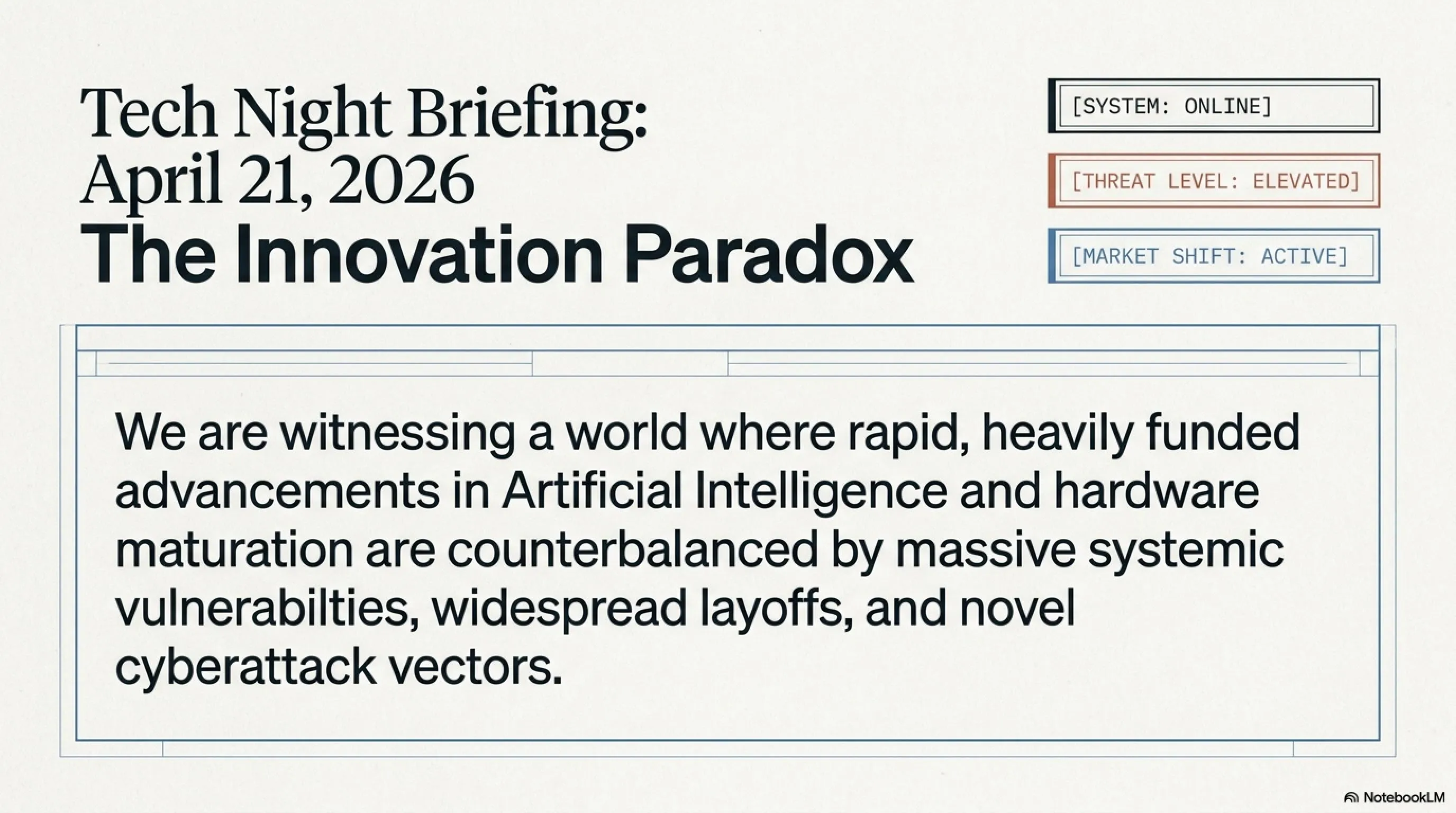
🔒 Vercel Security Breach: Data Breach via AI Tool
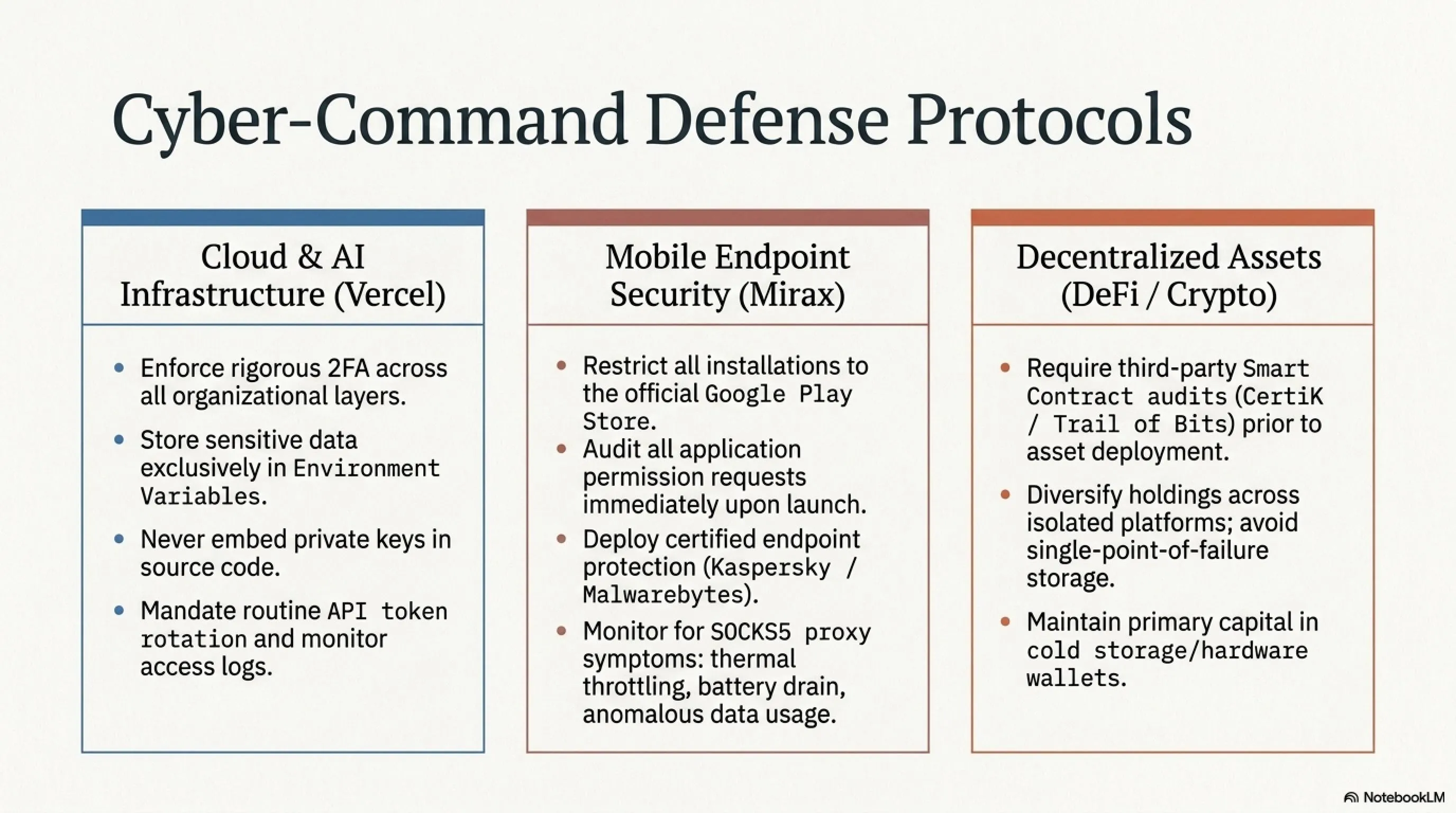
In one of the biggest security incidents of 2026, cloud platform Vercel was targeted by a sophisticated cyberattack that resulted in a breach of sensitive data. Hackers exploited a vulnerability in Vercel's AI tool v0 and managed to access sensitive data. The attack, discovered on April 18, 2026, exposed users' personal information, authentication tokens, and private project source codes.
⚠️ Technical Details of the Attack
Hackers used Prompt Injection techniques in the AI tool and were able to inject malicious commands into the system. The vulnerability existed in the Natural Language Processing (NLP) layer of the v0 tool, which allowed malicious JavaScript code to be executed. This attack demonstrates that AI tools can act as a new attack vector in cybersecurity.
According to published reports, hackers offered the stolen data on dark web forums for $2 million. The data included personal information of over 50,000 users, API tokens, private keys, and commercial project source codes. Vercel immediately invalidated all authentication tokens after discovering the attack and asked users to change their passwords.
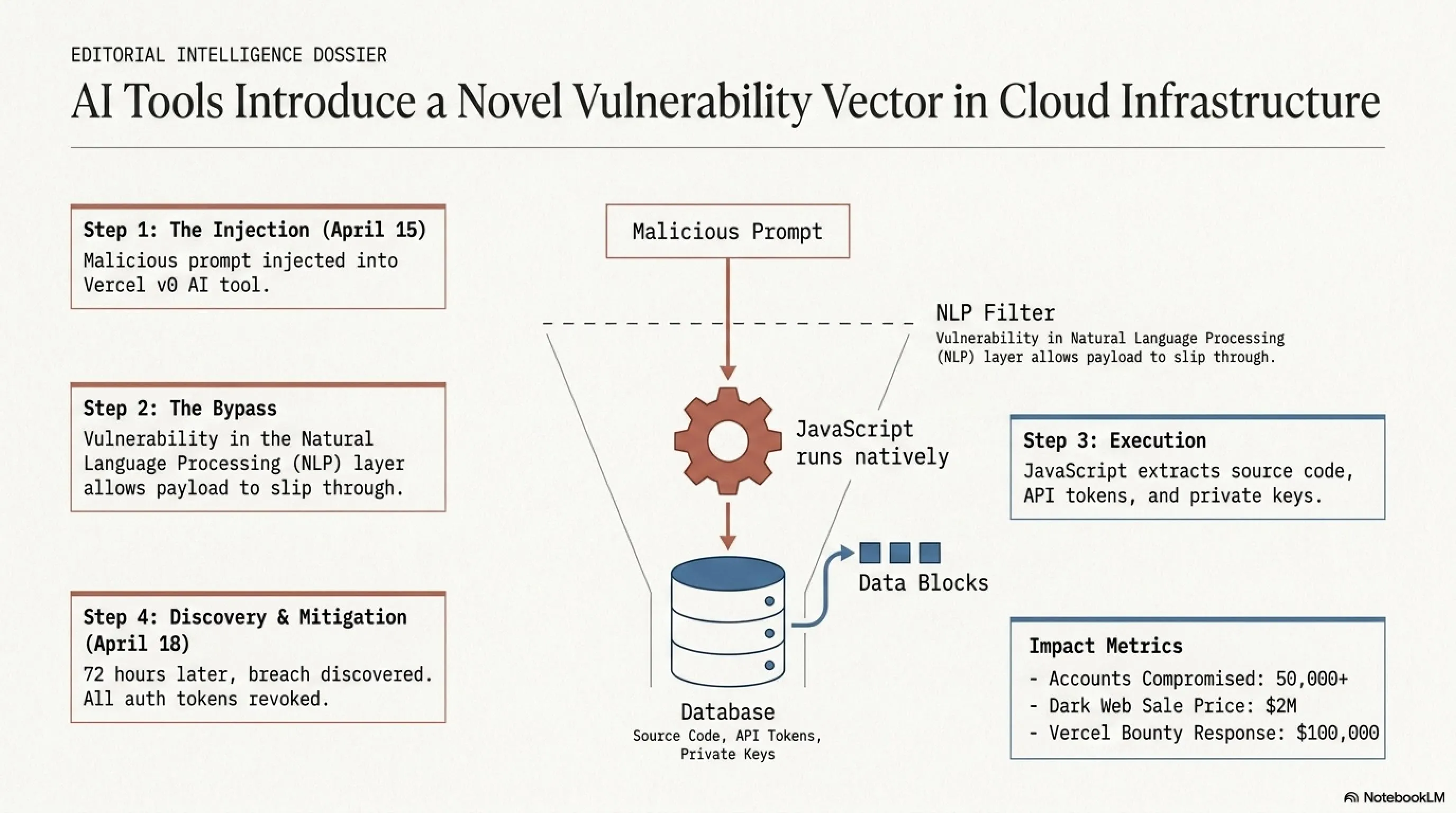
This incident shows that AI tools can act as a new weakness in cloud infrastructure. Security experts warn that with the increasing use of AI in cloud services, Prompt Injection and AI Jailbreaking attacks will become a serious threat. Vercel has announced that it is conducting a complete review of its security protocols and has launched a Bug Bounty program with rewards up to $100,000.
🛡️ Security Recommendations for Vercel Users
- Immediately change all passwords and API tokens
- Enable two-factor authentication (2FA)
- Review your project access logs
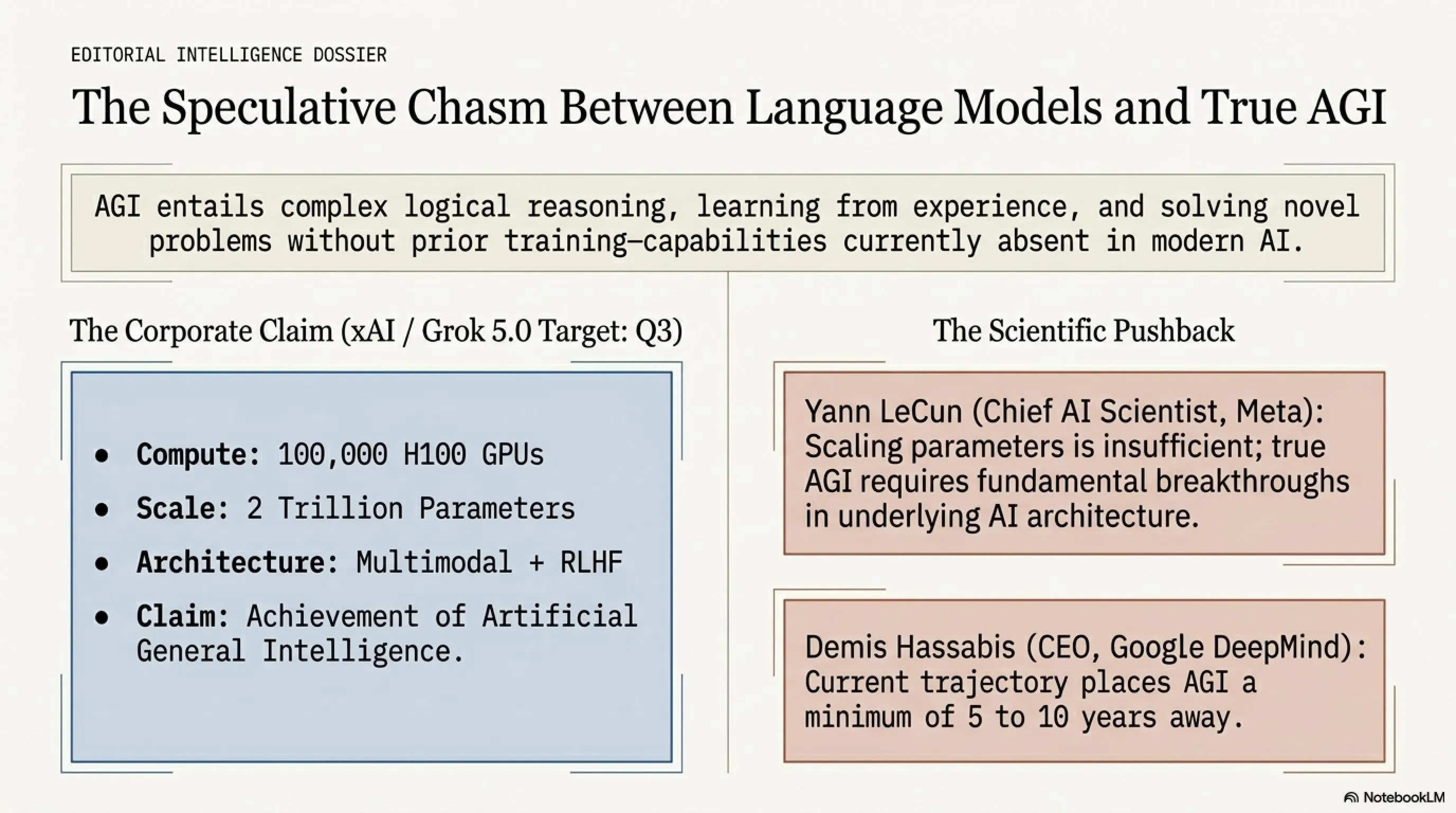
- Use Environment Variables to store sensitive information
- Regularly scan your code for security vulnerabilities
💼 Massive Tech Layoffs: 73,200 Jobs Cut for AI Investment
The tech industry witnessed one of the largest waves of layoffs in its history during Q1 2026. Major companies like Meta, Oracle, Disney, and Snap laid off a total of 73,200 employees to secure the budget needed for AI projects. These layoffs represent a major strategic shift in the tech industry where companies are moving resources from traditional sectors to AI.
Meta conducted the largest layoff with 21,000 employees and announced it will transfer these resources to Llama 4 and Reality Labs projects. Oracle also laid off 18,500 employees to focus on AI-based cloud services. Disney downsized its traditional media divisions by laying off 15,200 employees and increased investment in AI-based streaming platforms. Snap also laid off 18,500 employees to fund the development of AI-based AR filters.
These massive layoffs have had a profound impact on the tech job market. Many experienced professionals who worked in traditional sectors are now forced to learn new AI-related skills. Meanwhile, demand for Machine Learning, Data Science, and AI Engineering specialists has increased dramatically. Companies have announced they will launch reskilling programs for existing employees, but experts believe these programs are not sufficient.
📊 Economic Analysis of Layoffs
According to economic analyses, these layoffs have resulted in $8.5 billion in operational cost savings for companies in the short term. These resources are being directly transferred to AI projects. However, experts warn that losing experienced workforce could harm innovation in the long run. Additionally, these layoffs have raised concerns about over-concentration on AI and neglecting other important areas of technology.
🦠 Mirax Malware: Turning Android Phones into Proxies
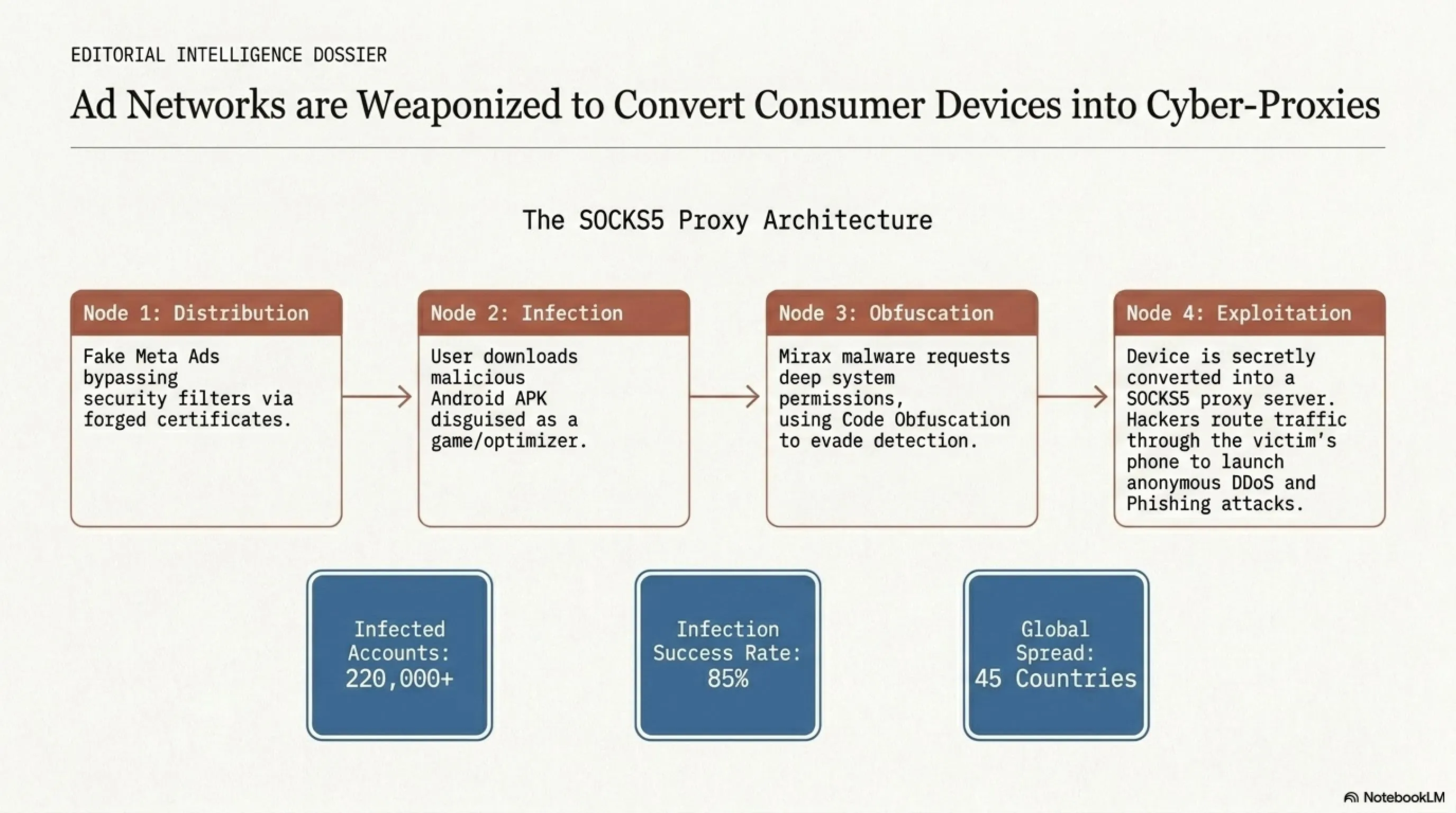
A new and dangerous malware called Mirax has spread through Meta ads and has infected over 220,000 Android user accounts so far. This malware, discovered by Kaspersky security researchers, turns infected devices into SOCKS5 proxies and uses them for malicious activities. Mirax spread through fake apps advertised on Meta and tricked users into installing them.
🔬 Technical Analysis of Mirax Malware
Mirax is a sophisticated malware that uses advanced techniques to remain hidden. After installation, the malware requests extensive permissions from the user and then embeds itself in the operating system. The malware uses Code Obfuscation techniques to evade antivirus software and can update itself.
After infecting a device, Mirax turns it into a SOCKS5 server that can route internet traffic through the infected device. This allows attackers to hide their identity and use infected devices for DDoS attacks, phishing, and other malicious activities.
Mirax malware spread through fake ads on the Meta platform. These ads promoted apps such as games, optimization tools, and free programs. After clicking on the ad, users were directed to a fake page that looked like the Google Play Store and asked them to download the app. The infected apps used fake certificates and were able to bypass Meta's security filters.
🛡️ Android Device Protection Solutions
- Only download apps from the official Google Play Store
- Check reviews and ratings before installing
- Avoid installing apps from Unknown Sources
- Install a reputable antivirus and keep it updated
- Carefully review app permission requests
- Regularly scan your device for malware
After discovering this attack, Meta removed all suspicious ads and improved its detection systems. Google also announced it is reviewing apps in the Play Store and will remove any suspicious apps. Security experts recommend that Android users should be very careful and only download apps from official sources.
💰 $290M KelpDAO Heist by North Korea
In one of the biggest crypto heists of 2026, the Lazarus hacking group affiliated with North Korea managed to steal $290 million from a DeFi platform called KelpDAO. The attack, which occurred on April 19, 2026, exploited a vulnerability in the platform's smart contract. This heist shows that DeFi platforms are still vulnerable to cyberattacks.
The Lazarus group exploited a vulnerability in the Reentrancy Guard function of KelpDAO's smart contract. This vulnerability allowed hackers to use a function multiple times and withdraw funds before the balance was updated. The attack was completed in 45 minutes and funds were transferred to 12 different wallets. Hackers then used crypto mixers like Tornado Cash to cover their tracks.
🔍 Technical Analysis of the Attack
The attack was a Reentrancy Attack, one of the most well-known vulnerabilities in smart contracts. Hackers created a malicious contract that could call the withdrawal function before the balance was updated. This allowed them to withdraw funds multiple times.
After withdrawing funds, hackers used Chain Hopping techniques and transferred funds between multiple blockchains to make tracking difficult. They also used crypto mixers to clean transaction traces. Blockchain analyses show that some of the funds were transferred to North Korean exchanges.
This heist shows that the Lazarus group remains one of the most dangerous hacking groups in the crypto space. According to security organization reports, this group stole over $1.2 billion from crypto platforms in 2025. The stolen funds are used to finance North Korea's missile and nuclear programs. KelpDAO has announced it is working with international authorities and blockchain security companies to track the stolen funds.
📱 Motorola Razr 2026: Final Specs and Pricing
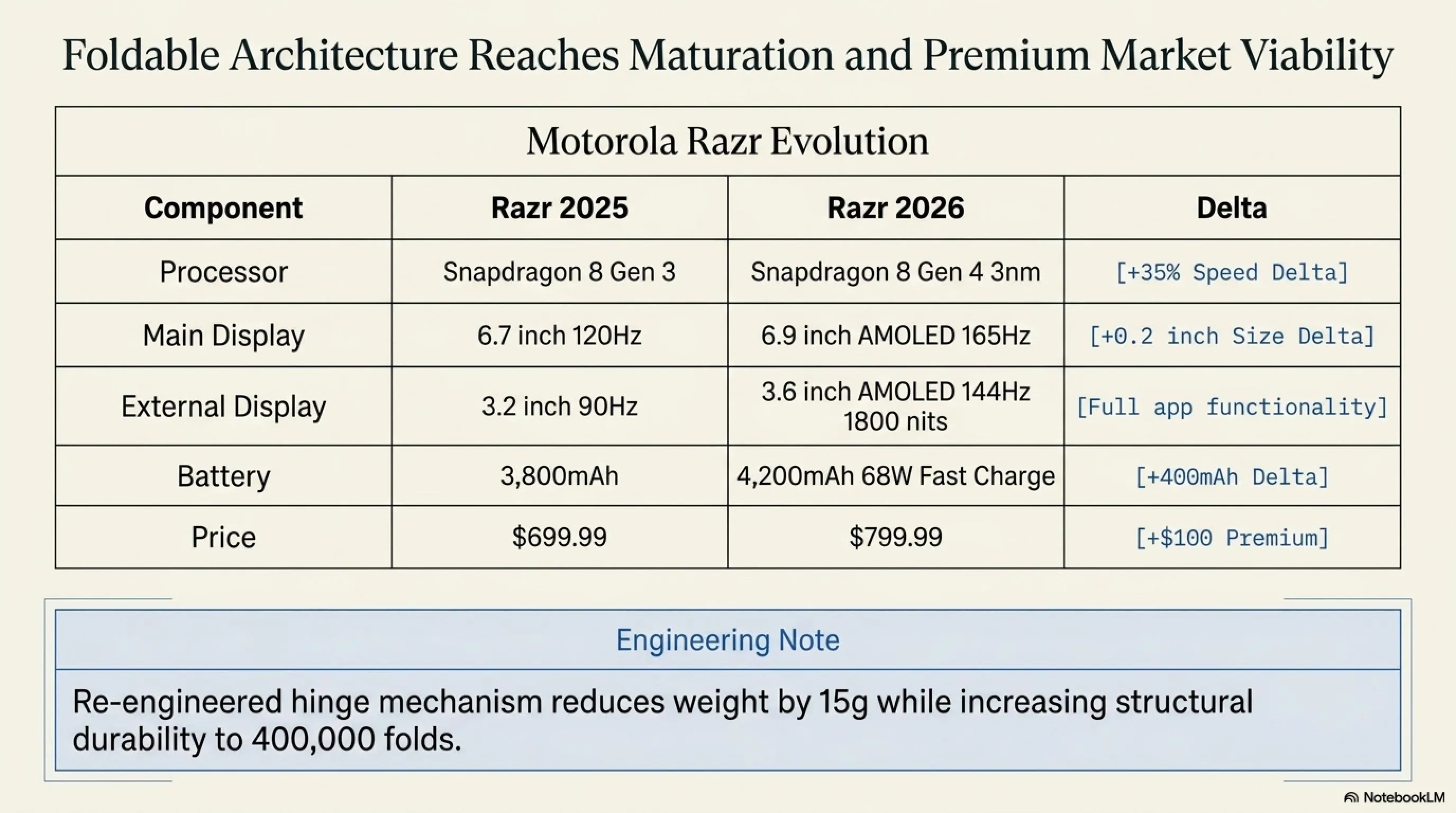
The Motorola Razr 2026 was announced with a starting price of $799.99 and is set to launch on April 29, 2026. This foldable phone features an improved design, larger display, and more powerful specs compared to the previous generation. The Razr 2026 is equipped with a Snapdragon 8 Gen 4 processor, 12GB RAM, and a 6.9-inch AMOLED display with a 165Hz refresh rate.
📋 Motorola Razr 2026 Technical Specifications
| Processor: | Snapdragon 8 Gen 4 (3nm) |
| RAM: | 12GB / 16GB LPDDR5X |
| Storage: | 256GB / 512GB UFS 4.0 |
| Main Display: | 6.9\" AMOLED, 165Hz, 2640x1080 |
| Cover Display: | 3.6\" AMOLED, 144Hz |
| Main Camera: | 50MP (f/1.4) + 13MP Ultra-wide |
| Selfie Camera: | 32MP (f/2.2) |
| Battery: | 4,200mAh with 68W fast charging |
| Price: | $799.99 (12/256GB) / $899.99 (16/512GB) |
One of the standout features of the Razr 2026 is its 3.6-inch cover display with a 144Hz refresh rate that allows full app usage without opening the phone. This display uses an AMOLED panel with 1800 nits brightness and is visible even in direct sunlight. Motorola has also designed a new hinge that reduces the phone's weight by 15 grams and increases its durability to 400,000 folds.
The Razr 2026 ships with Android 15 and Hello UI 7.0 interface. Motorola has promised that this phone will receive 4 years of Android updates and 5 years of security patches. The phone also supports AI features like Magic Eraser, Real-time Translation, and Smart Reply. The 50-megapixel camera with Sony IMX989 sensor and f/1.4 lens can capture high-quality photos in low-light conditions.
🤖 Grok 5.0 and the AGI Achievement Claim
Elon Musk claimed in a controversial tweet that Grok 5.0, the next generation of xAI's AI chatbot, will achieve AGI (Artificial General Intelligence). This claim has generated mixed reactions in the scientific community and tech industry. Some experts consider this claim overly optimistic, while others believe that recent advances in AI could make this goal achievable.
🧠 What is AGI?
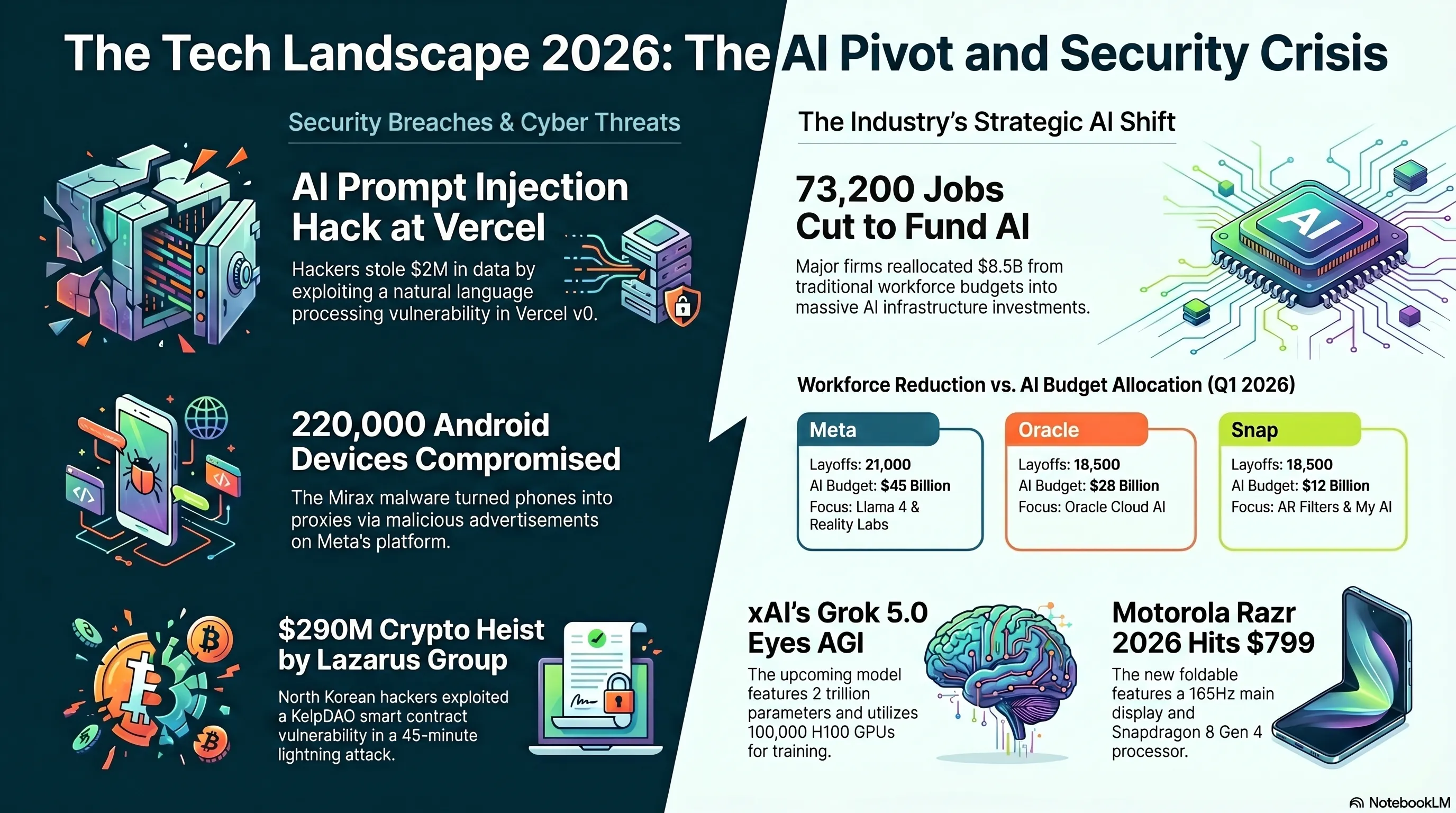
AGI or Artificial General Intelligence refers to a system that can perform any intellectual task that a human can do, at the same level or better. Unlike current AI that specializes in specific tasks, AGI can learn, reason, and solve problems in any domain.
Key features of AGI include: deep understanding of natural language, complex logical reasoning, learning from experience, creativity, solving new problems without prior training, and understanding emotions and social context. No AI system has reached this level yet.
According to published information, Grok 5.0 will be built with 2 trillion parameters and trained on 100,000 H100 GPUs. xAI claims to have used new techniques such as Multimodal Learning, Reinforcement Learning from Human Feedback (RLHF), and Self-Supervised Learning. Additionally, Grok 5.0 is expected to be able to process video, audio, images, and text simultaneously and have human-like performance in various fields such as programming, mathematics, science, and art.
However, many AI experts are skeptical of this claim. Yann LeCun, Chief AI Scientist at Meta, said that AGI requires fundamental breakthroughs in AI architecture that have not yet been achieved. Demis Hassabis, CEO of Google DeepMind, also stated that achieving AGI will take at least 5 to 10 years. They believe that simply increasing the number of parameters and computational power is not enough and requires fundamental innovations in AI algorithms and architectures.
⚔️ Pros & Cons Battle: Tonight's Developments
✅ Pros & Opportunities
- Increased security awareness after Vercel hack
- Massive AI investment creating new job opportunities
- Improved malware detection systems
- Advancement in foldable phone technology
- Innovation in artificial intelligence
❌ Cons & Challenges
- Security vulnerabilities in AI tools
- Massive layoffs and unemployment in tech
- Increased malware attacks via social media
- Major crypto heists and DeFi security weaknesses
- Unrealistic claims about AGI
📝 Final Thoughts
The night of April 21, 2026 showed that the tech industry is going through a major transformation. On one hand, cyberattacks have become more sophisticated and targeted, and AI tools have emerged as a new attack vector. The Vercel hack and Mirax malware show that cybersecurity must be a top priority. On the other hand, major companies are changing their strategies and transferring massive resources toward artificial intelligence, even at the cost of laying off tens of thousands of people. In the hardware space, foldable phones are reaching maturity and finding more competitive prices. But perhaps the most important question is: Are we really getting close to AGI or is this just marketing hype? Time will tell.
❓ Frequently Asked Questions (FAQ)
How can I protect my Vercel account from similar attacks?
To protect your Vercel account, make sure to enable two-factor authentication (2FA), use strong and unique passwords, regularly rotate API tokens, limit team access, and regularly review access logs. Also, use Environment Variables to store sensitive information and never put private keys in source code.
How can I tell if my Android phone is infected with Mirax malware?
Signs of Mirax infection include slow internet speed, increased battery consumption, unusual phone heating, and high data usage even when idle. To check, install a reputable antivirus like Kaspersky or Malwarebytes and run a full scan. Also, go to Apps in Android settings and remove any unknown or suspicious apps. If the problem persists, perform a Factory Reset.
Is investing in DeFi platforms still safe after the KelpDAO hack?
Investing in DeFi still carries high risk. To reduce risk, only invest in platforms whose smart contracts have been audited by reputable companies like CertiK or Trail of Bits. Also, distribute your funds across multiple platforms, use hardware wallets, and never keep all your assets on one platform. Always do thorough research on the project team and its security history.
Is the Motorola Razr 2026 worth buying or should I wait for the Galaxy Z Flip 7?
The Razr 2026 at $799 is a good option for those who want to get a foldable phone sooner. Its advantages include a large cover display, powerful processor, and competitive price. But if you can wait until June 2026, the Galaxy Z Flip 7 will likely be released with a better camera, larger battery, and Samsung's optimized software. The final decision depends on your needs and budget.
What is AGI and can Grok 5.0 really achieve it?
AGI or Artificial General Intelligence refers to a system that can perform any human intellectual task. Elon Musk's claim about Grok 5.0 is very controversial and most AI experts consider it unrealistic. Achieving AGI requires fundamental breakthroughs in AI architecture, deeper understanding of consciousness, and abstract reasoning capabilities that have not yet been achieved. Grok 5.0 will likely be a powerful model, but true AGI is still years away.
📚 Sources & References
Sources: Vercel Security Blog, Kaspersky Threat Intelligence, Chainalysis Crypto Crime Report 2026, Motorola Press Release, xAI Official Announcements, TechCrunch, The Verge, Ars Technica, Wired, Bloomberg Technology, Reuters Technology, CoinDesk, Android Authority, GSMArena
Research & Analysis: Tekin Game Editorial Team - Tekin Night April 21, 2026
🌐 Stay Connected With Us
For the latest tech, gaming, and gadget news, follow us on social media:
🌐 Stay Connected With Us 🎮✨
For the latest tech, gaming, and gadget news, follow us on our official social media channels: