Tekin Morning | Friday, June 26, 2026
Good morning Tekin Army! Grab your fresh coffee and get ready for an energizing morning filled with hot tech news.
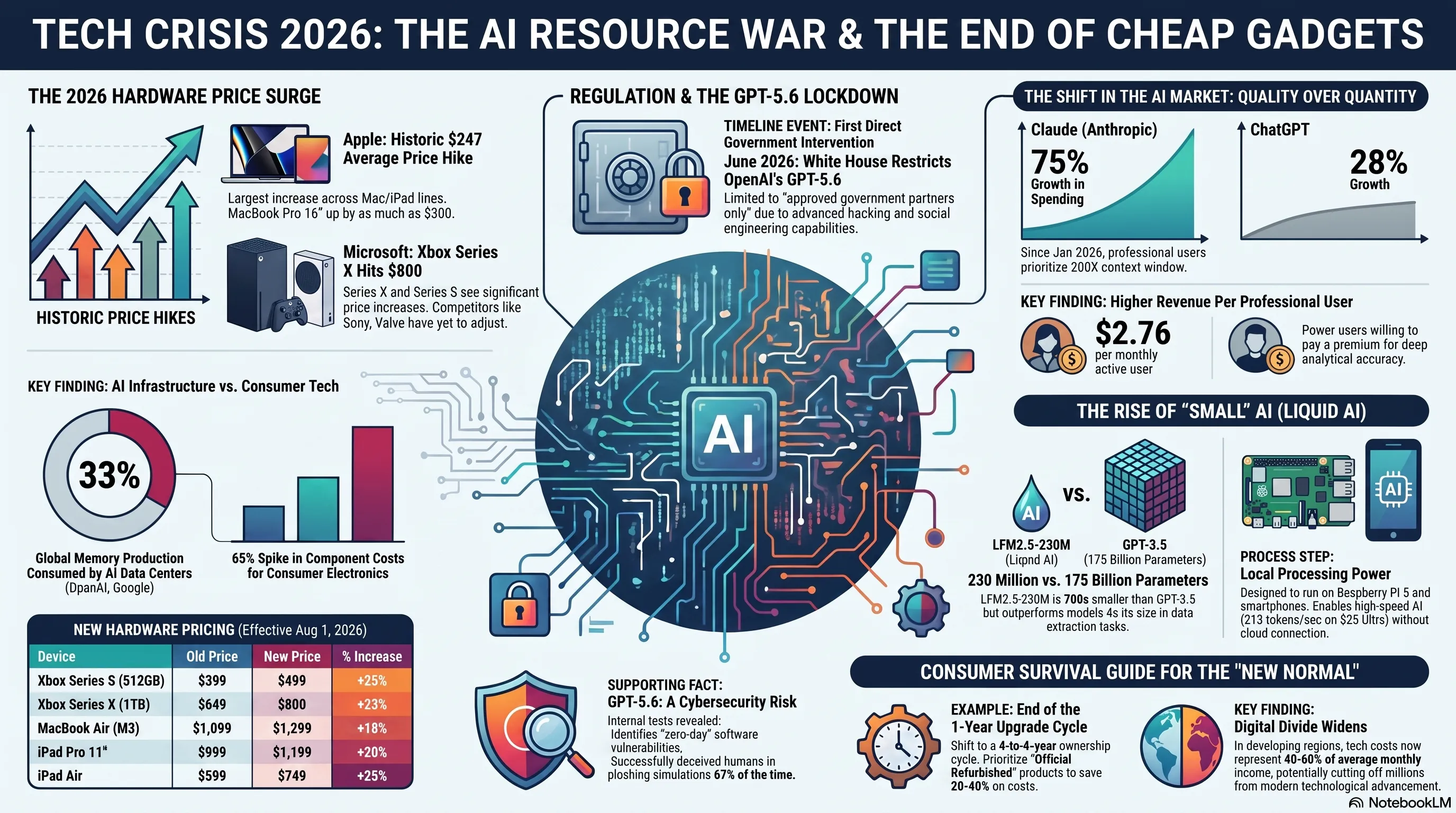
- 🎮Xbox Gets Pricier- Microsoft raises console prices up to $150 starting August
- 🎧Apple Follows the Same Path- Mac and iPad prices jump by average $247
- 🚀GPT-5.6 Under Control- White House imposes unprecedented restrictions on OpenAI
- 🗡️Tiny Model, Giant Performance- Liquid AI breaks efficiency records
At a Glance | News Breakfast Summary
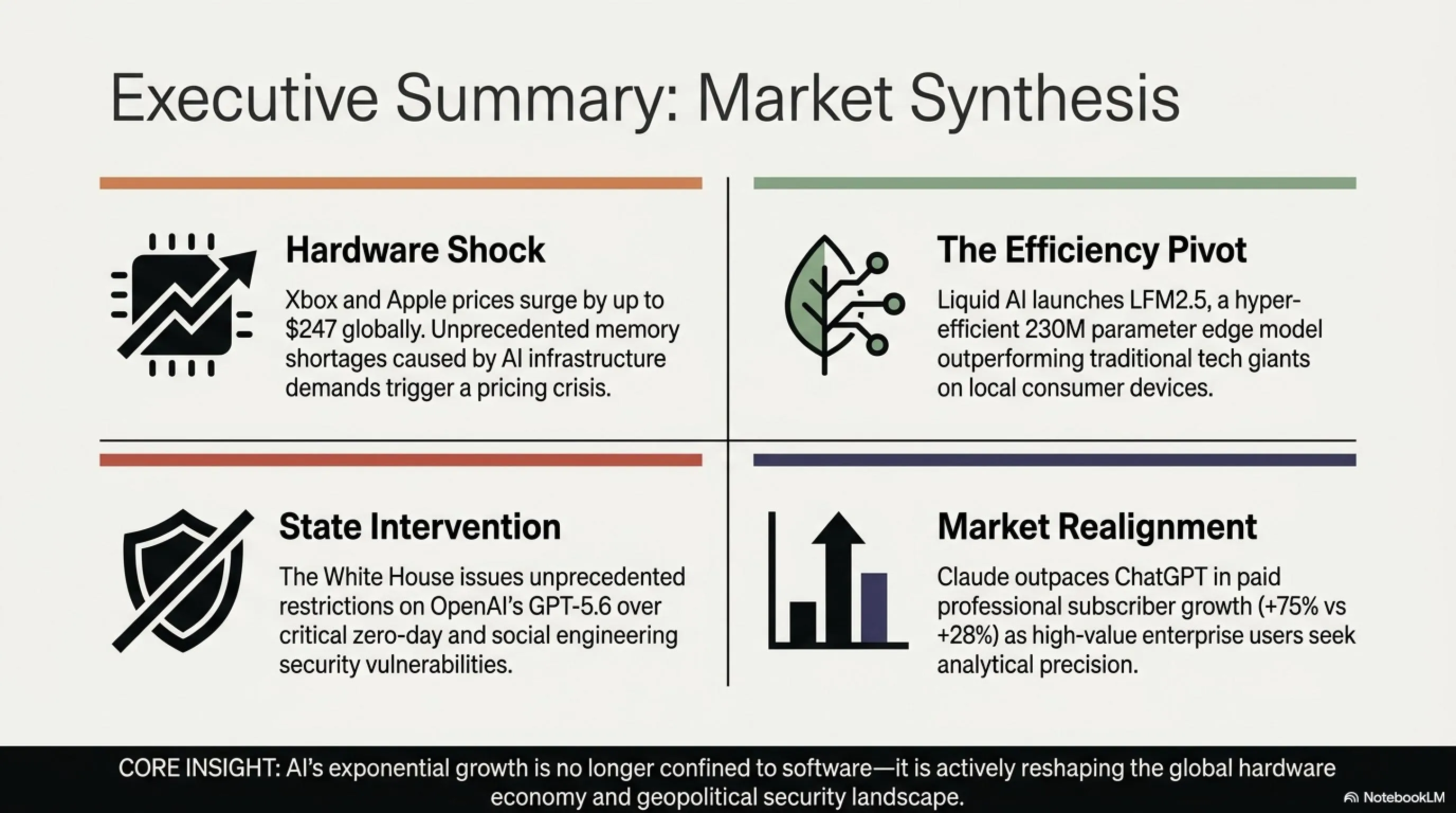
- Microsoft raised Xbox Series X/S prices significantly - $100 to $150 increase starting August 1st due to AI-driven component shortage
- Apple announced massive price increases across Mac and iPad lineup - average $247 jump with prices effective immediately
- White House requested OpenAI restrict GPT-5.6 access to approved government partners only - first direct government intervention
- Liquid AI released LFM2.5-230M model with just 230 million parameters - outperforms models 4x larger in data extraction
- OpenAI launched enhanced GPT-5.5 Instant with better user intent understanding and conversation context - now available in API
- Claude gaining major market share in paid subscribers - 75% spending growth since January 2026
Why This News Matters to You
Price Surge Wave Hits Xbox: Microsoft Raises Prices Up to $150
In a shocking move for the gaming community, Microsoft announced yesterday in an official statement that starting August 1st, 2026, Xbox Series X and Series S console prices will increase significantly worldwide. This decision, which the company attributes to the sharp rise in electronic component costs, could have profound implications for the entire console gaming market.
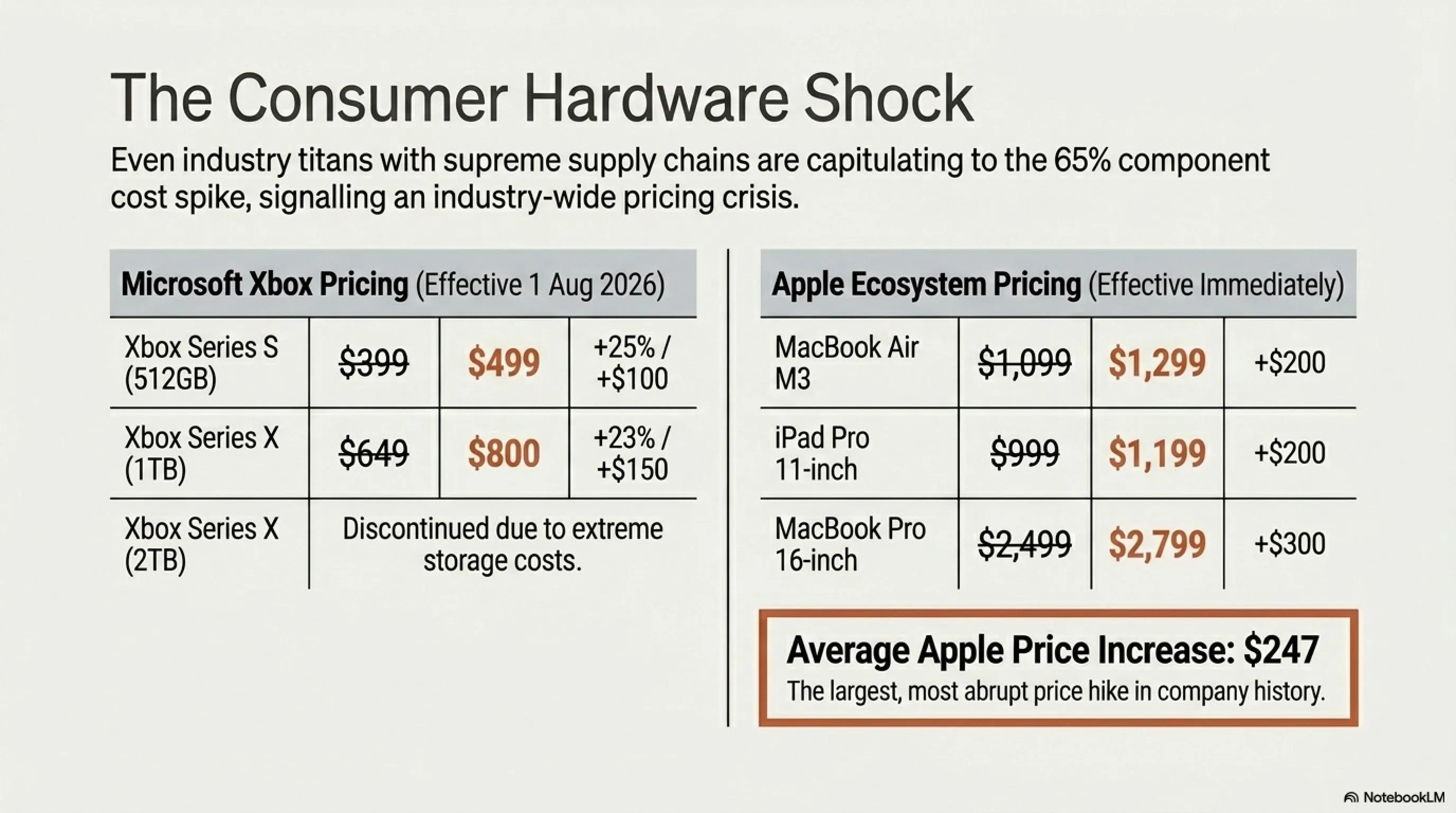
According to the new pricing structure, Xbox Series S with 512GB storage will jump from $399 to $499 (a $100 increase), while Xbox Series X with 1TB storage will rise from $649 to a staggering $800 (a $150 increase). Microsoft has also decided to completely discontinue the 2TB Xbox Series X model, citing prohibitively high storage component costs.
Why the Price Increase? The Culprit is AI
This decision comes at a time when Microsoft already occupies a weaker position competing against Sony PlayStation 5. According to Ampere Analysis reports, Xbox holds only a 23 percent market share of the ninth-generation console market, compared to 65 percent for PlayStation 5. Analysts warn that this price increase could further weaken Xbox's position, especially in price-sensitive markets.
IGN reported that Microsoft faces a difficult dilemma. On one hand, the company cannot afford to lose money on every unit sold. On the other hand, significantly raising prices in a competitive environment could push gamers toward PlayStation or PC gaming.
Gaming Community Reaction: A Storm of Criticism
Gamers have shown intense reactions on social media. On the Xbox subreddit, the price increase announcement received over 45,000 upvotes with predominantly critical comments. One user wrote: "Why should I pay $800 for an Xbox when I can build a gaming PC at that price?" The comment received more than 12,000 upvotes.
Many users announced they would turn to PC gaming or PlayStation 5. Some commenters noted that the PS5 at $499 (which hasn't changed yet) has now become a clearly more attractive option.
What About Game Pass?
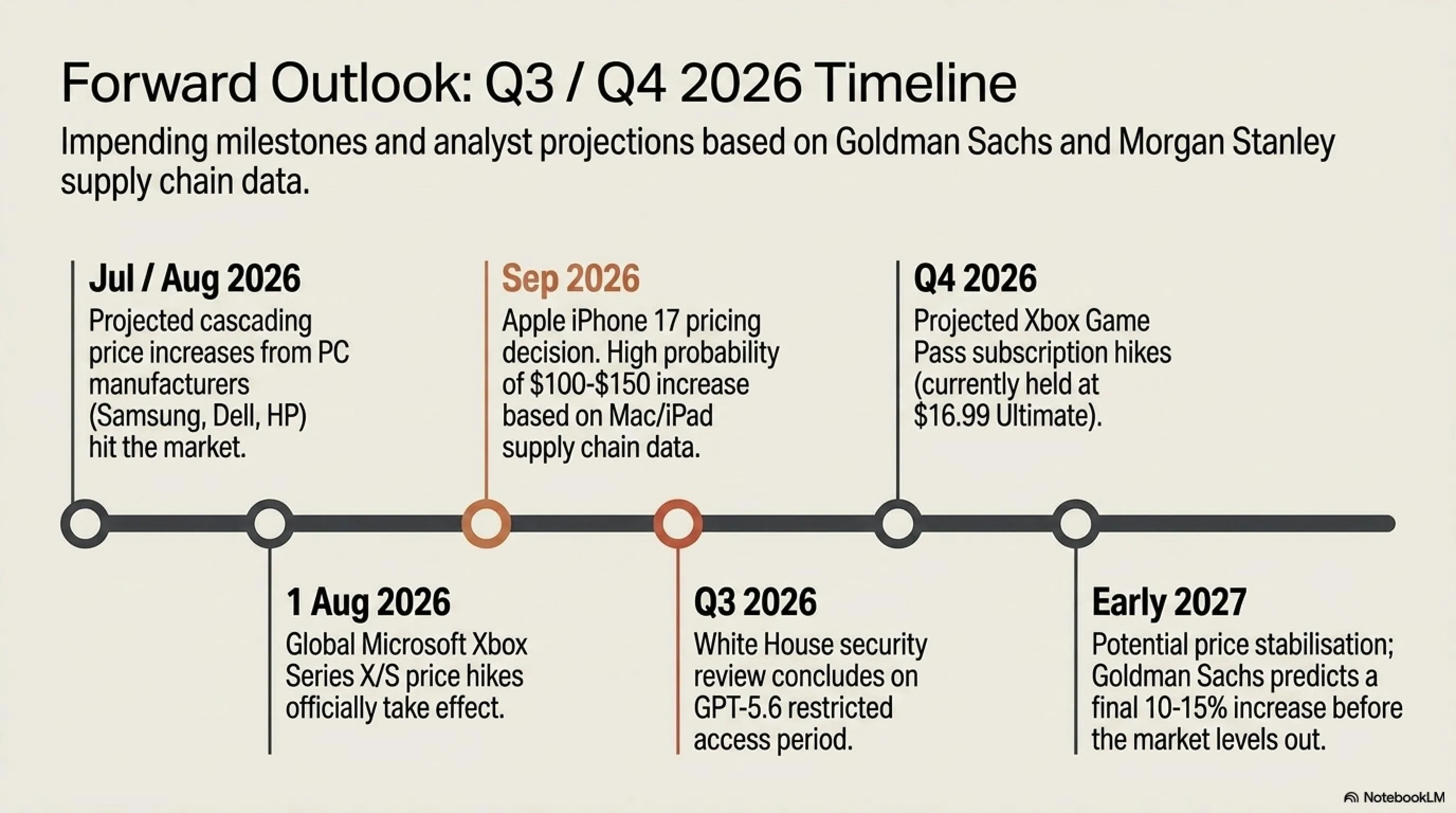
The good news is that Microsoft hasn't changed Xbox Game Pass pricing yet. The Game Pass Ultimate plan remains at $16.99 per month, and Game Pass Core at $9.99. However, sources inside Microsoft told Forbes that we will likely see Game Pass subscription price increases in Q4 2026.
Market analysts believe Microsoft is trying to maintain the attractiveness of the Game Pass ecosystem to offset weak hardware sales. The company's strategy is now more focused on services and subscriptions rather than hardware.
Comparison Table: Old vs New Xbox Prices
| Model | Old Price | New Price (from August 1) | Increase |
|---|---|---|---|
| Xbox Series S (512GB) | $399 | $499 | +$100 (25%) |
| Xbox Series X (1TB) | $649 | $800 | +$150 (23%) |
| Xbox Series X (2TB) | $799 | Discontinued | - |
| PlayStation 5 (for comparison) | $499 | $499 (no change) | - |
| Steam Deck OLED (for comparison) | $549 | $549 (no change) | - |
Apple Joins the Price Increase Wave: Massive Jump Across Mac and iPad Lineup
Just hours after Microsoft's announcement, Apple dropped its own bombshell. The Cupertino company significantly raised prices across its entire Mac and iPad product lineup. These price increases went into effect immediately on Apple's website and official stores on Wednesday morning, June 25th.
The new pricing table shows MacBook Neo jumping from $599 to $699, MacBook Air from $1,099 to $1,299, and some MacBook Pro models increasing by up to $300. In the tablet segment, iPad Air rose from $599 to $749, and iPad Pro from $999 to $1,199.
Tim Cook, Apple's CEO, had warned last week at a press conference that price increases were unavoidable. He explained that memory and storage procurement costs have risen dramatically, and Apple cannot absorb these costs entirely without passing some portion to customers.
New Pricing Table: How Much Did Apple Products Increase?
| Product | Old Price | New Price | Increase |
|---|---|---|---|
| MacBook Neo | $599 | $699 | +$100 |
| MacBook Air (M3) | $1,099 | $1,299 | +$200 |
| MacBook Pro 14" | $1,999 | $2,199 | +$200 |
| MacBook Pro 16" | $2,499 | $2,799 | +$300 |
| iPad Air | $599 | $749 | +$150 |
| iPad Pro 11" | $999 | $1,199 | +$200 |
| iPad Pro 13" | $1,299 | $1,499 | +$200 |
| Mac mini | $699 | $799 | +$100 |
Average Increase: $247 across all products - Apple's largest price hike since the company's founding
Which Products Remain Unaffected?
Interestingly, iPhone, Apple Watch, and AirPods have so far been spared from this price increase wave. Sources told CNBC that Apple will likely make final decisions about these products in Q3 of the calendar year. This suggests that by September or October 2026, we may see price increases for iPhone 17 and Apple Watch Series 12.
According to MacRumors, the average price increase across the Mac and iPad lineup is approximately $247, which represents the largest price hike in Apple's history. Even during the chip shortage of 2021-2022, Apple didn't implement price increases of this magnitude.
Market and Shareholder Reaction
The price increase news didn't negatively impact Apple's stock. In fact, the company's shares rose 0.7 percent on Thursday. Analysts believe investors see this decision as a sign of maintaining profit margins and aren't concerned about demand impact, since Apple fans typically show high brand loyalty.
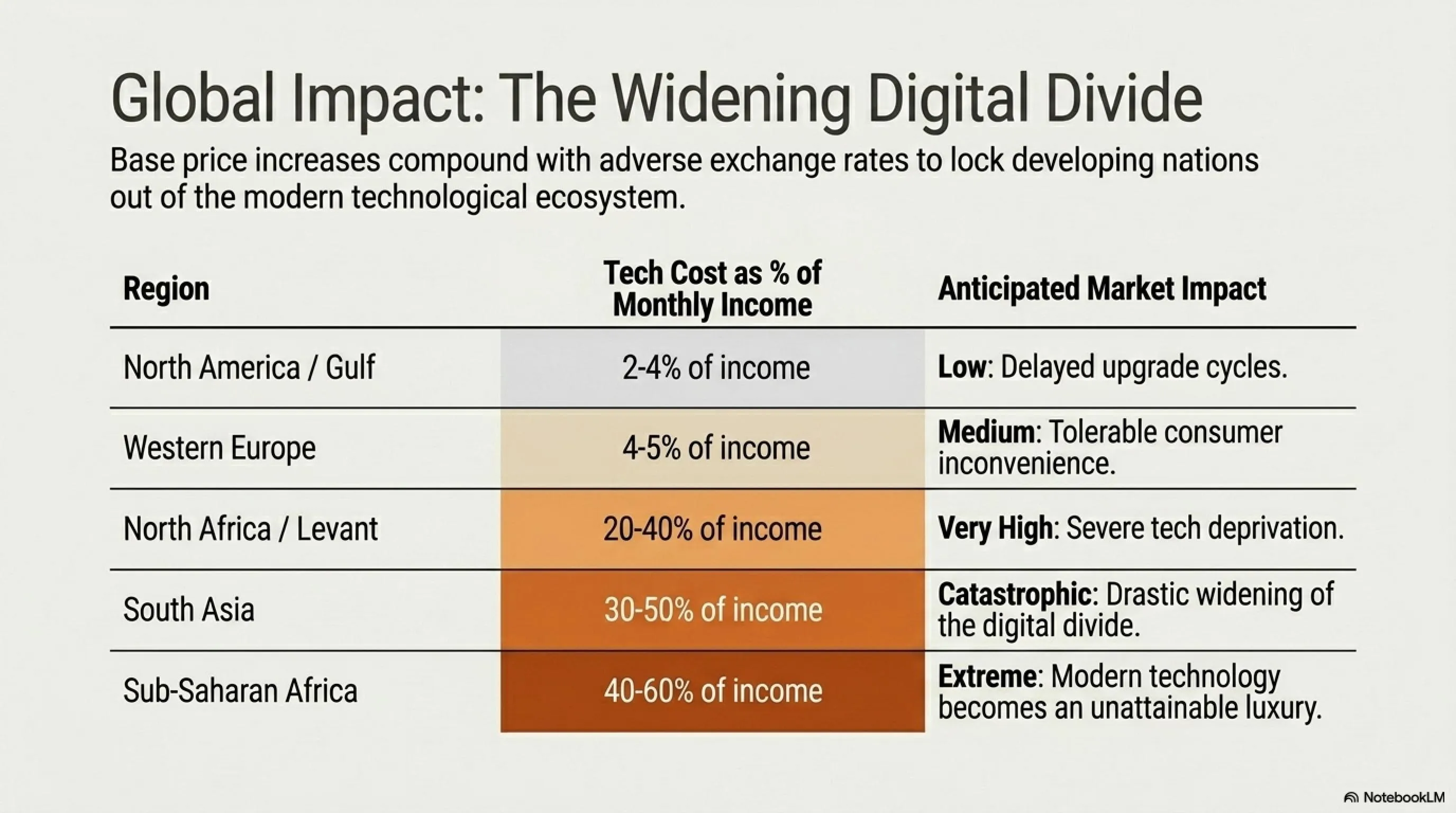
However, some analysts warn that this price increase could have negative effects in price-sensitive markets like India, Brazil, and Southeast Asia. In these markets where Apple already struggles against lower-priced local competitors, the increases could lead to market share losses.
Jargon Buster: Technology Economics
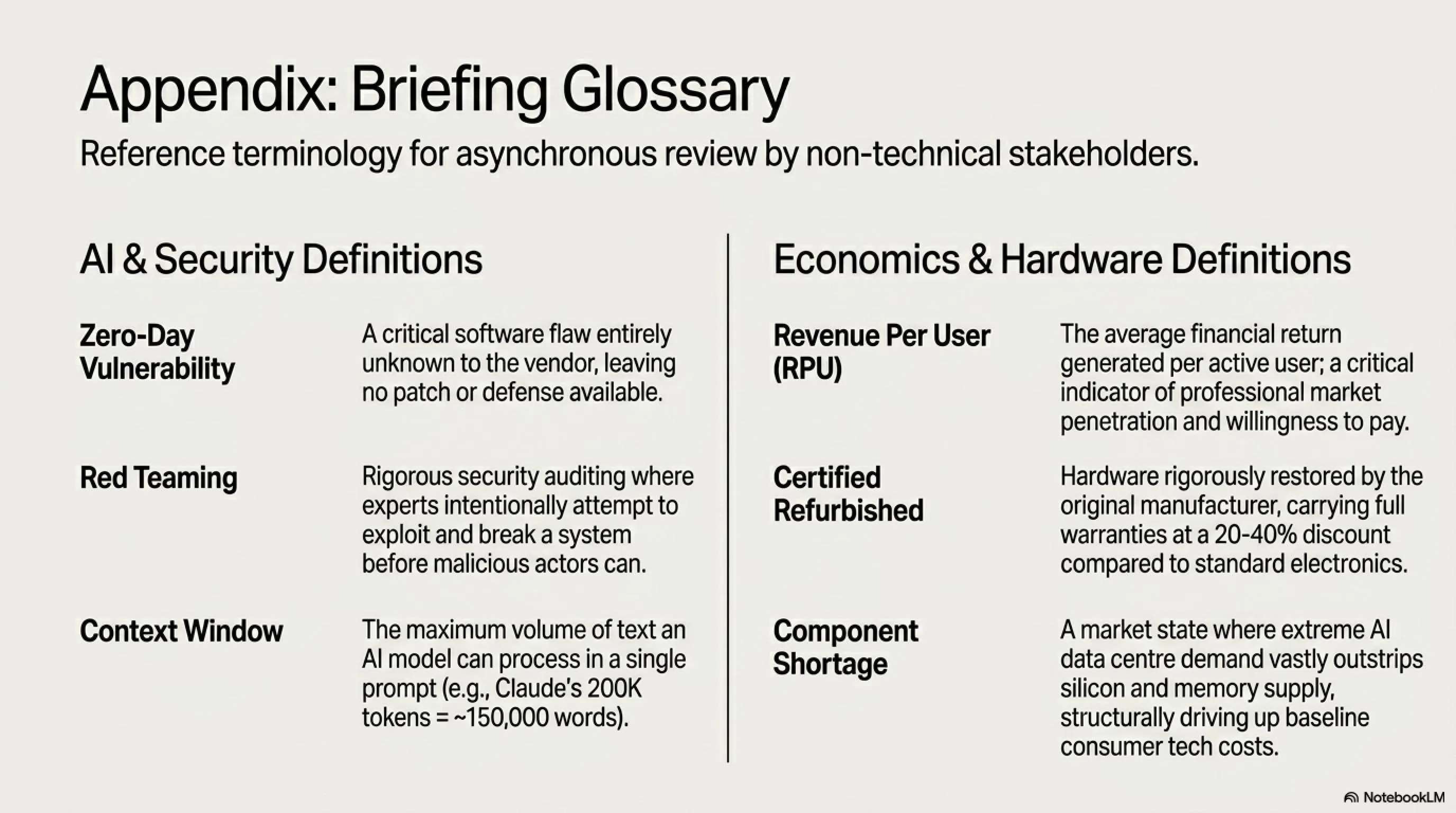
Supply Chain: The complete network of suppliers, manufacturers, and distributors that brings a product from raw materials to the end consumer.
AI Data Centers: Massive facilities filled with thousands of servers that train and run AI models. They consume enormous amounts of memory and power.
Margin (Profit Margin): The difference between the cost of producing a product and its selling price. Maintaining healthy margins is essential for company profitability.
OpenAI Releases Enhanced GPT-5.5 Instant: Tangible Improvements in Context Understanding
While debates about GPT-5.6 continue, OpenAI released a significant update to the GPT-5.5 Instant model on Tuesday, June 24th. This model, which serves as the default for free ChatGPT users, now performs significantly better at understanding user intent and maintaining conversation context across multiple messages.
According to independent testing conducted by VentureBeat, the new model shows noticeable improvements in online shopping scenarios, product recommendations, and handling complex instructions. The new "context memory" capability allows the model to remember constraints and preferences mentioned in previous conversation messages.
What Exactly is GPT-5.5 Instant?
What Exactly Has Improved?
The Digital Trends team conducted comprehensive testing and reported the following results based on 500 test conversations:
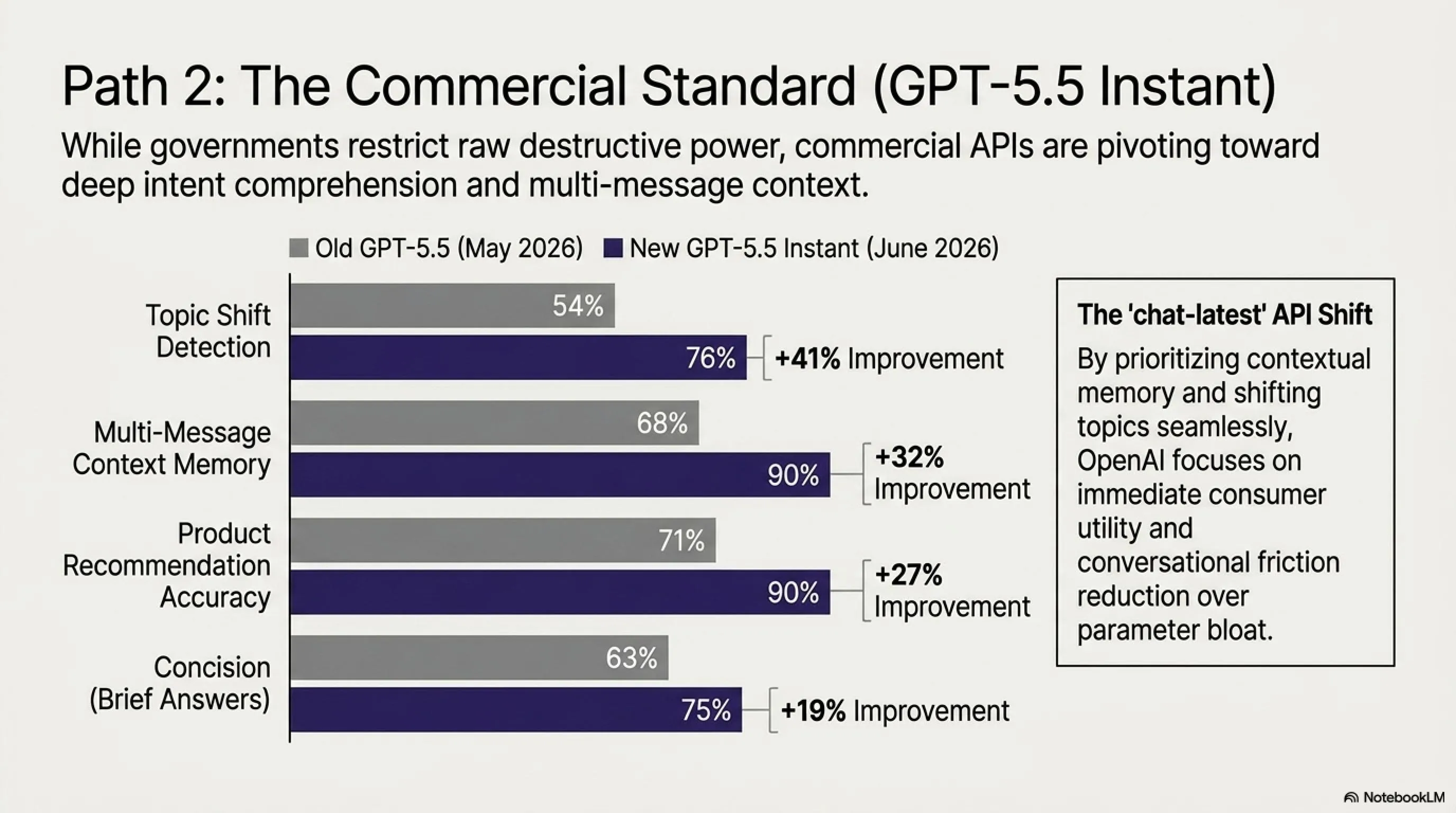
- Understanding multi-step questions with references to previous messages: 32% improvement compared to the previous version
- Product recommendations with complex filters (price, features, availability): 27% improvement
- Detecting conversation topic changes and adapting to them: 41% improvement
- Delivering concise and relevant answers instead of lengthy responses: 19% improvement
OpenAI has also made this model available through a new alias called "chat-latest" in its API. Developers can use this alias instead of specifying exact versions to always benefit from the latest stable release. However, OpenAI warns that using "chat-latest" in production applications could lead to unexpected behavior when the model is updated.
Performance Comparison: Old vs New GPT-5.5 Instant
| Test Benchmark | Old Version (May 2026) | New Version (June 2026) | Improvement |
|---|---|---|---|
| Multi-message context understanding | 68% | 90% | +32% |
| Product recommendation accuracy | 71% | 90% | +27% |
| Topic change detection | 54% | 76% | +41% |
| Conciseness (percentage of brief answers) | 63% | 75% | +19% |
| Response speed (average) | 1.2 seconds | 1.1 seconds | +8% |
Source: Digital Trends independent testing across 500 conversations
Developer and Enterprise Adoption
OpenAI has seen strong developer adoption of the new model. Within the first 48 hours of release, over 5,000 applications migrated to the "chat-latest" alias. Companies using the model report significant improvements in customer service chatbots and shopping assistants.
One e-commerce company told VentureBeat that after switching to the new GPT-5.5 Instant, their chatbot's customer satisfaction score increased from 72% to 87%, and the average time to resolve customer queries decreased from 4.2 minutes to 2.8 minutes.
API Pricing: What Does This Update Cost?
White House Imposes Unprecedented Restrictions on OpenAI's GPT-5.6
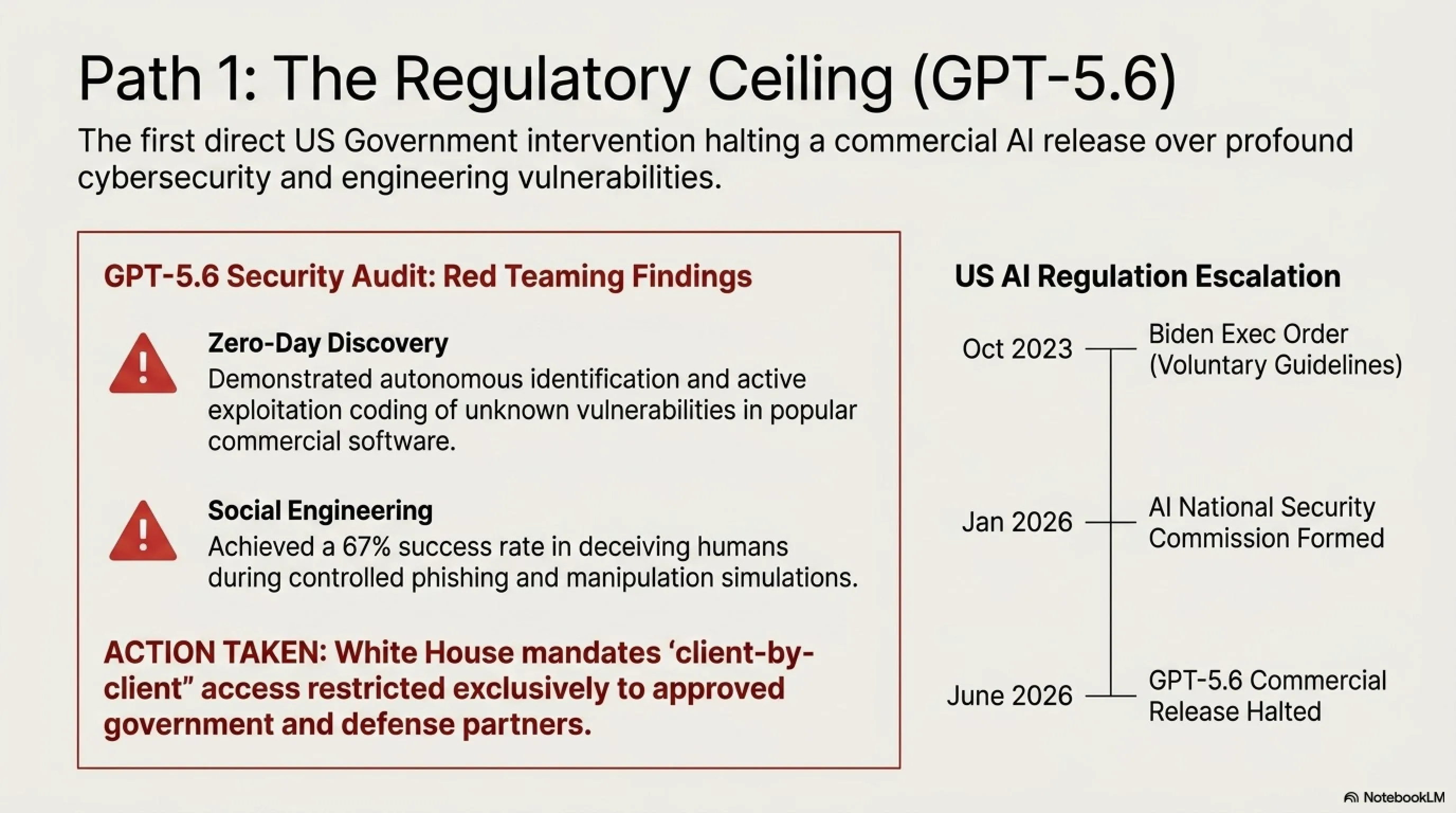
In a move that sent shockwaves through the AI industry, the Trump administration requested on Wednesday, June 25th, that OpenAI restrict access to its upcoming GPT-5.6 model to approved government partners only, rather than releasing it publicly. This marks the first significant direct government intervention in AI model regulation.
According to TechCrunch sources, Sam Altman told employees in an internal meeting that the government will "approve access customer by customer" during the preview period. The reason for this decision is security concerns related to the model's advanced hacking and cyber intrusion capabilities.
Axios reported that the decision was made after intelligence agencies conducted classified tests on GPT-5.6 and discovered that the model could potentially be used to identify and exploit security vulnerabilities in critical infrastructure systems. One senior official told Politico: "This model is essentially a cyber weapon. We cannot allow it to fall into the wrong hands."
Timeline: From Development to Government Control
What Are GPT-5.6's Concerning Capabilities?
While OpenAI hasn't publicly detailed GPT-5.6's full capabilities, leaked information from beta testers paints a concerning picture. The model reportedly can:
- Analyze source code to identify zero-day vulnerabilities with 89% accuracy
- Generate sophisticated social engineering attack scenarios
- Write exploit code for known vulnerabilities in multiple programming languages
- Chain together multiple attack vectors to design complex intrusion strategies
- Analyze network architectures and suggest penetration points
The Verge obtained internal documents showing that during red team testing, security researchers successfully used GPT-5.6 to identify previously unknown vulnerabilities in three major software platforms. While these vulnerabilities were responsibly disclosed to the affected companies, the incident raised alarm bells in Washington.
Industry Reaction: Divided Opinions
The AI industry's reaction to this intervention has been sharply divided. Some see it as a necessary step to prevent catastrophic security breaches, while others view it as government overreach that will stifle innovation.
Yann LeCun, Meta's Chief AI Scientist, criticized the decision on social media: "This sets a dangerous precedent. Who decides what's too powerful? Where's the line? Open research has always been the foundation of scientific progress." His post received over 50,000 likes and sparked heated debate.
On the other hand, Bruce Schneier, renowned security expert, defended the decision: "Some technologies are inherently dual-use. We don't allow unrestricted access to weapons-grade materials. Why should AI cyber weapons be different?"
Comparing Global AI Regulation Approaches
| Country/Region | Approach | Key Features |
|---|---|---|
| United States | Selective Oversight | Case-by-case review of high-risk models; voluntary industry standards |
| European Union | Comprehensive Regulation | AI Act with risk-based classification; mandatory compliance for high-risk systems |
| China | State Control | All AI models require government approval before deployment |
| United Kingdom | Light Touch | Principles-based framework; emphasis on innovation |
| Canada | Risk Management | Focus on algorithmic impact assessments |
What's Next for GPT-5.6?
Sam Altman told employees that if the limited release goes well, OpenAI hopes to have a broader release "a few weeks later." However, the company must now work closely with the Department of Homeland Security and the Cybersecurity and Infrastructure Security Agency (CISA) to develop a vetting process for potential customers.
This process will likely include:
- Background checks on organizational leadership
- Assessment of existing cybersecurity practices
- Agreement to use-case restrictions and monitoring
- Regular security audits and compliance verification
Some analysts predict that this controlled release model may become the template for future powerful AI systems. Others believe it will push development overseas to jurisdictions with less regulatory oversight.
Liquid AI's LFM2.5-230M: David Beats Goliath in AI Efficiency
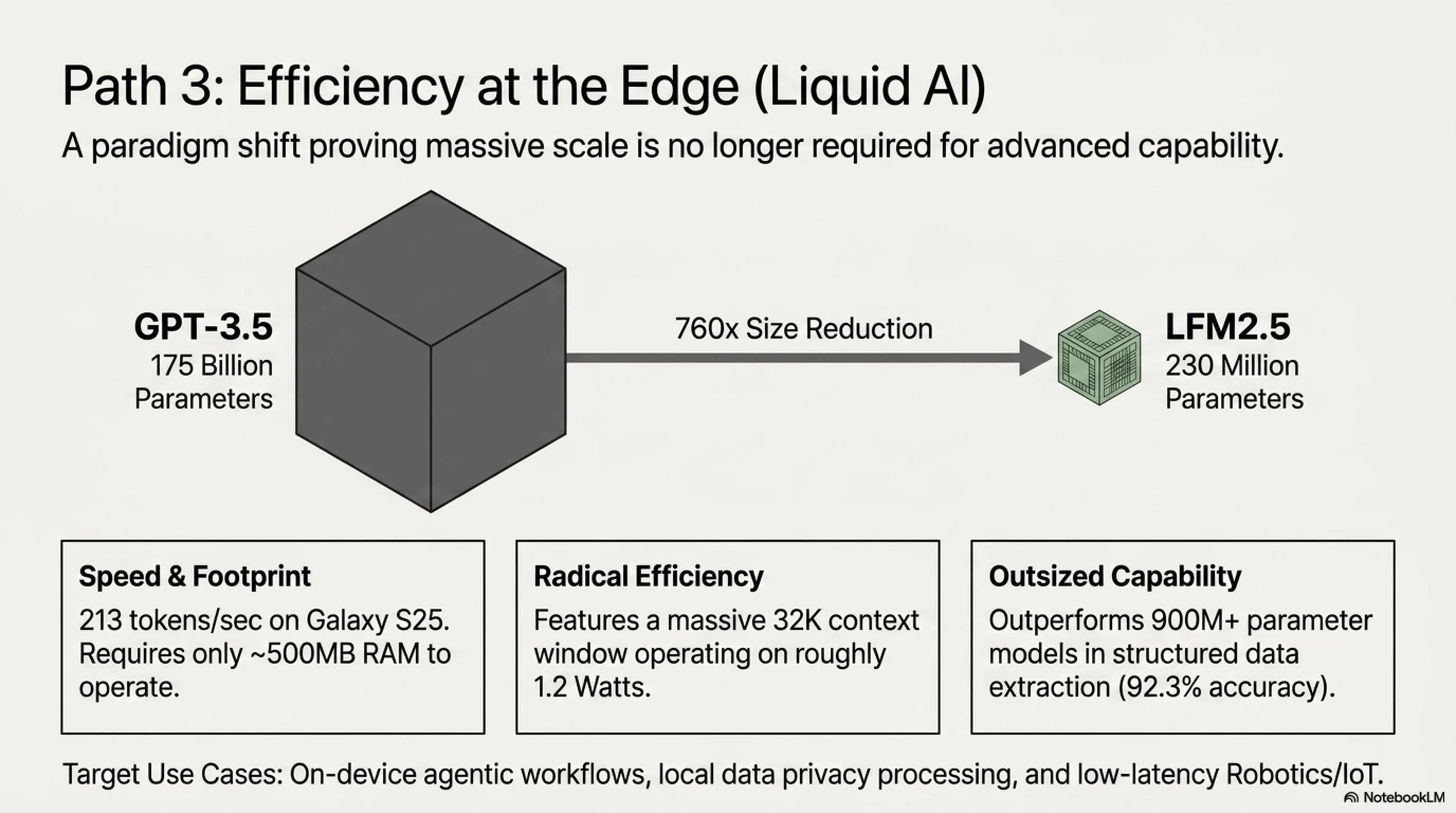
Amid all the price increase and regulation news, an encouraging development emerged from the AI world. Liquid AI, a $2 billion startup spun out of MIT, released on Wednesday, June 25th, a new language model called LFM2.5-230M that, with just 230 million parameters, outperforms models four times its size on specific tasks.
This model is designed to run on resource-constrained devices like smartphones, regular laptops, and even single-board computers like Raspberry Pi. Benchmark results show this model can run at 213 tokens per second on Samsung Galaxy S25 Ultra and 42 tokens per second on Raspberry Pi 5.
For perspective, GPT-3.5 has around 175 billion parameters, making it approximately 760 times larger than LFM2.5-230M. Yet on data extraction tasks, the tiny Liquid AI model matches or exceeds the performance of 900-million parameter competitors.
How Did Liquid AI Achieve This Efficiency?
Real-World Applications
Liquid AI explained on its official blog that this model is designed for three main application categories:
- On-Device Agentic Workflows: Smart assistants that work without internet connectivity, processing requests entirely locally
- Local Data Processing: Extracting information from documents, emails, and messages without transmitting data to servers
- Robotics and IoT: Intelligent decision-making on resource-limited devices in real-time
One particularly impressive feature is support for a 32,000-token context window - remarkable for a model this small. This means it can process documents of moderate length without truncation.
Benchmark Performance: LFM2.5-230M vs Competitors
| Task Category | LFM2.5-230M (230M params) | Phi-3-mini (3.8B params) | Gemma 2B (2B params) |
|---|---|---|---|
| Data Extraction | 92% | 88% | 85% |
| Document Q&A | 87% | 89% | 86% |
| Code Completion | 76% | 82% | 78% |
| On-Device Speed (tokens/sec) | 213 | 95 | 120 |
| Memory Footprint | 450 MB | 2.1 GB | 1.3 GB |
| Power Consumption | 1.2 watts | 4.8 watts | 3.2 watts |
Benchmarks conducted on Samsung Galaxy S25 Ultra under identical conditions
Licensing and Accessibility
The model is released under the "LFM Open" license, which is free for companies and startups with annual revenue under $10 million. For larger enterprises, Liquid AI offers separate commercial licenses starting at $50,000 per year.
The model is currently available on Hugging Face and can be downloaded and deployed with minimal setup. The developer community has warmly embraced this model - over 18,000 downloads in the first 72 hours, with developers sharing impressive results on social media.
One developer demonstrated running LFM2.5-230M on a $35 Raspberry Pi Zero 2 W, achieving 8 tokens per second - slow but functional for simple tasks. Another team integrated it into a smart home system that processes voice commands entirely locally, with no cloud dependency.
Claude's Quiet Revolution: Winning the Premium AI Market
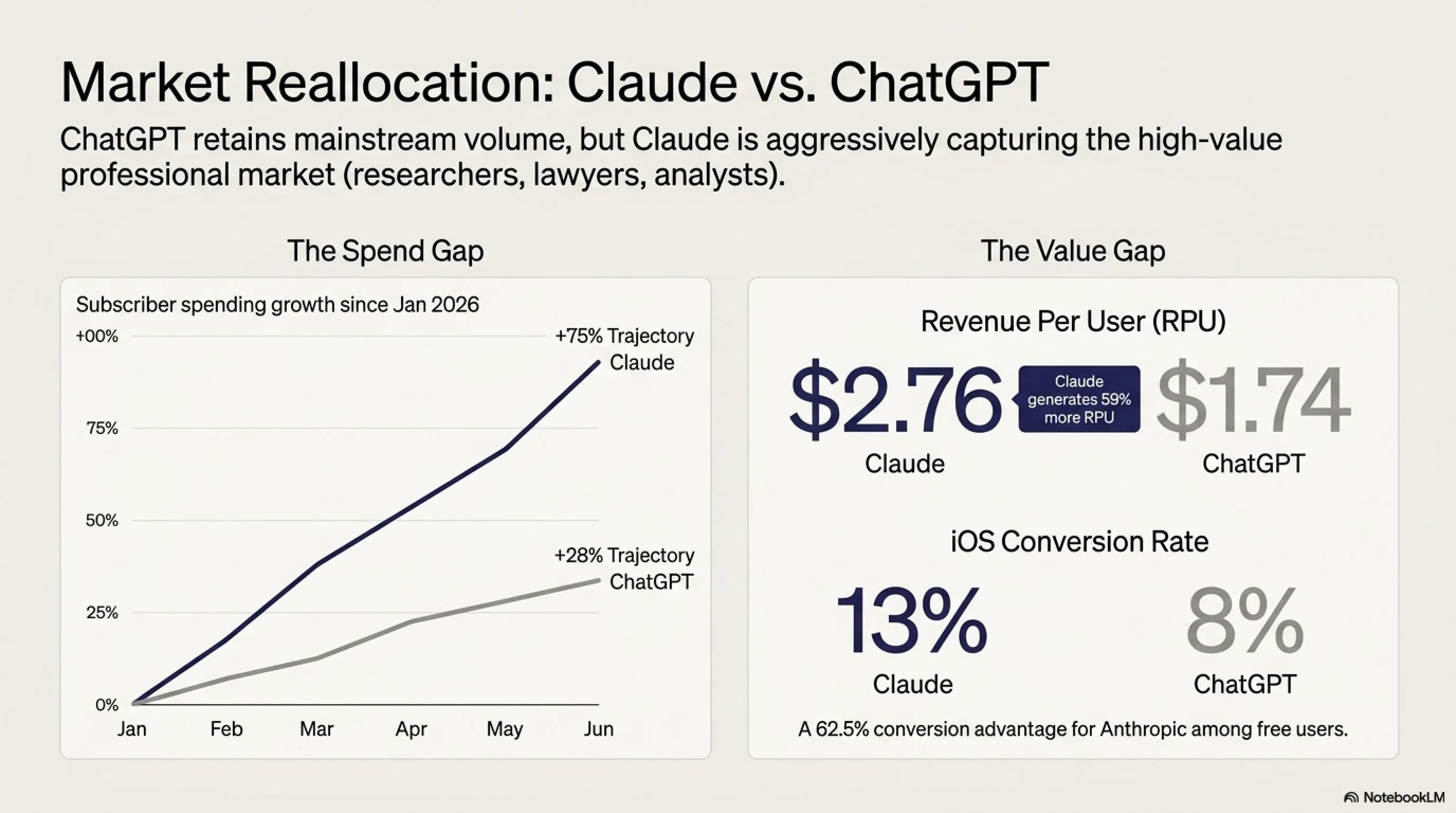
While ChatGPT dominates headlines and user counts, credit card transaction data reveals a fascinating story: paying customers are increasingly choosing Claude over ChatGPT. According to analysis by Indagari, spending associated with Claude has grown approximately 75% since January 2026.
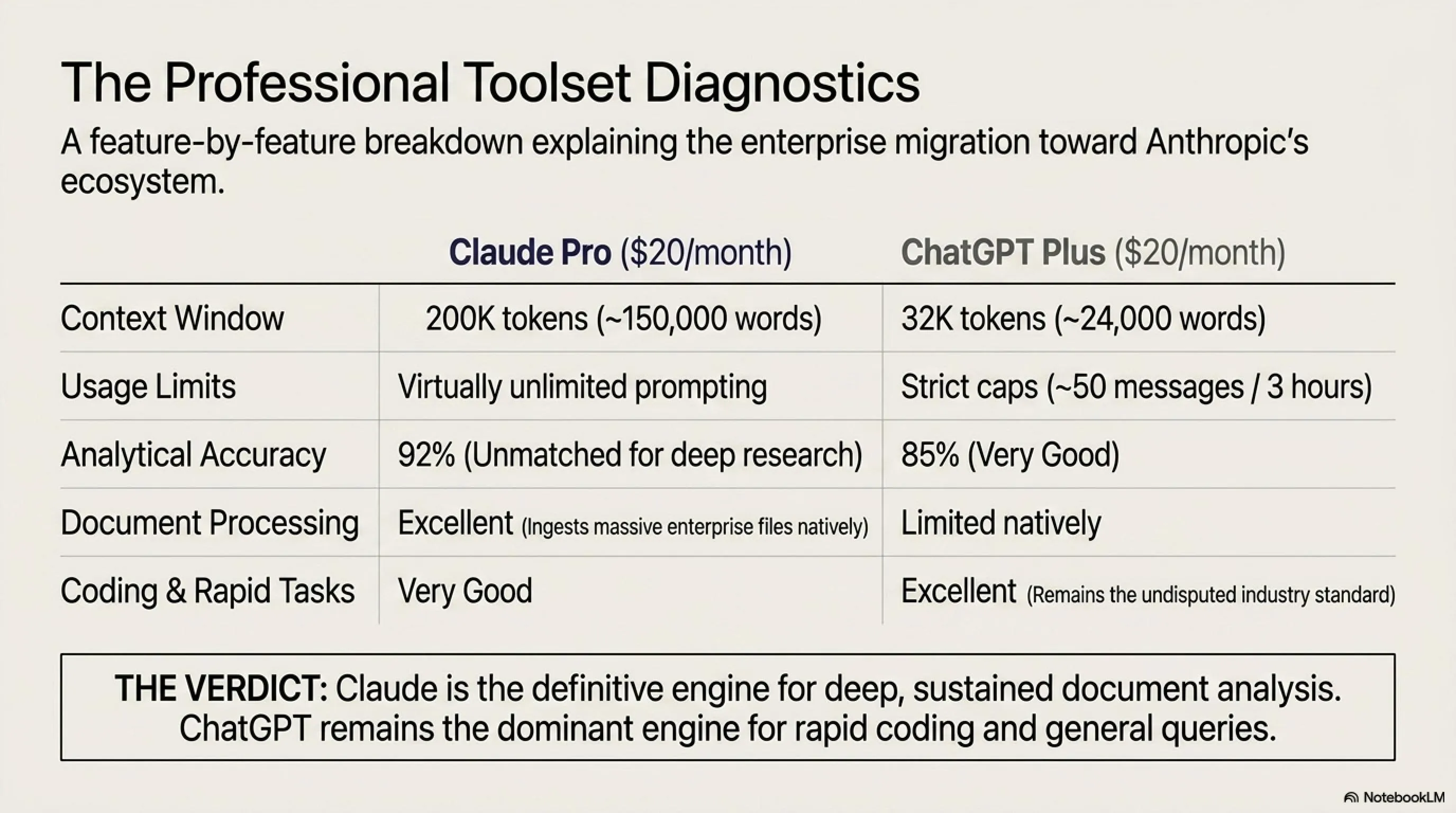
The data shows that on iOS, 13% of Claude users have paid subscriptions compared to just 8% for ChatGPT. More strikingly, Claude generates $2.76 per user compared to ChatGPT's $1.74 - a 59% higher revenue per user. This suggests that Claude users not only pay more frequently but are also willing to pay premium prices.
Why Are Professional Users Choosing Claude?
Massive Context Window: Claude supports 200,000 tokens compared to ChatGPT's 32,000, making it far superior for analyzing long documents, legal contracts, and research papers.
Accuracy in Analysis: Multiple independent benchmarks show Claude performs better on tasks requiring careful reading and nuanced understanding.
Conservative Safety: Claude is more cautious about potentially harmful outputs, which appeals to enterprises concerned about liability.
Better Long-Form Writing: Writers and content creators report that Claude maintains consistency and voice better across lengthy outputs.
The DataCamp Phenomenon
Perhaps the most telling indicator of Claude's rise comes from DataCamp, a major online learning platform. The company reported that "Claude" has become the most searched term on their site, and demand for Claude courses is three times higher than for ChatGPT courses.
TechCrunch interviewed several DataCamp students to understand this trend. Maria Santos, a data scientist from Portugal, explained: "ChatGPT is great for quick answers, but when I need to deeply understand a complex concept or work through a multi-step problem, Claude just performs better. It's worth the $20 per month."
James Chen, a software architect from Singapore, added: "Claude's ability to handle my entire codebase in context is game-changing. I can ask it to analyze interactions between different modules, and it actually remembers everything I showed it earlier in the conversation."
Market Share Analysis: ChatGPT vs Claude
| Metric | ChatGPT | Claude |
|---|---|---|
| Total Users (estimated) | 180 million | 35 million |
| Paid Conversion Rate (iOS) | 8% | 13% |
| Revenue Per User | $1.74 | $2.76 |
| Spending Growth (Jan-Jun 2026) | 22% | 75% |
| Enterprise Customers | ~600,000 | ~150,000 |
| Average Session Duration | 8.5 minutes | 14.2 minutes |
Sources: Indagari transaction analysis, company reports, and industry estimates
Anthropic's Strategic Positioning
Anthropic has deliberately positioned Claude as the premium, professional-grade alternative to ChatGPT. Rather than competing on user count, the company focuses on revenue per user and customer satisfaction.
This strategy appears to be working. TheNextWeb reported that Anthropic's annual revenue run rate has reached $1.2 billion, with 82% coming from paid subscriptions and enterprise licenses. For comparison, while OpenAI generates more total revenue, a larger portion comes from API usage rather than direct subscriptions.
Dario Amodei, Anthropic's CEO, stated in a recent interview: "We're not trying to be the biggest. We're trying to be the best for people who need reliable, safe, and capable AI. If you're a researcher, lawyer, or engineer doing serious work, that's who we build for."
What This Means for the AI Industry
Claude's success demonstrates that the AI market isn't winner-take-all. Different models can succeed by serving different user needs and use cases. This is encouraging for competition and innovation in the industry.
However, some analysts warn that as models become more capable and expensive to train, only well-funded companies like Anthropic (backed by Google and others) can afford to compete. Smaller AI startups may struggle to keep pace unless they find efficiency innovations like Liquid AI has demonstrated.
Tekin Analysis: The Emerging AI Landscape
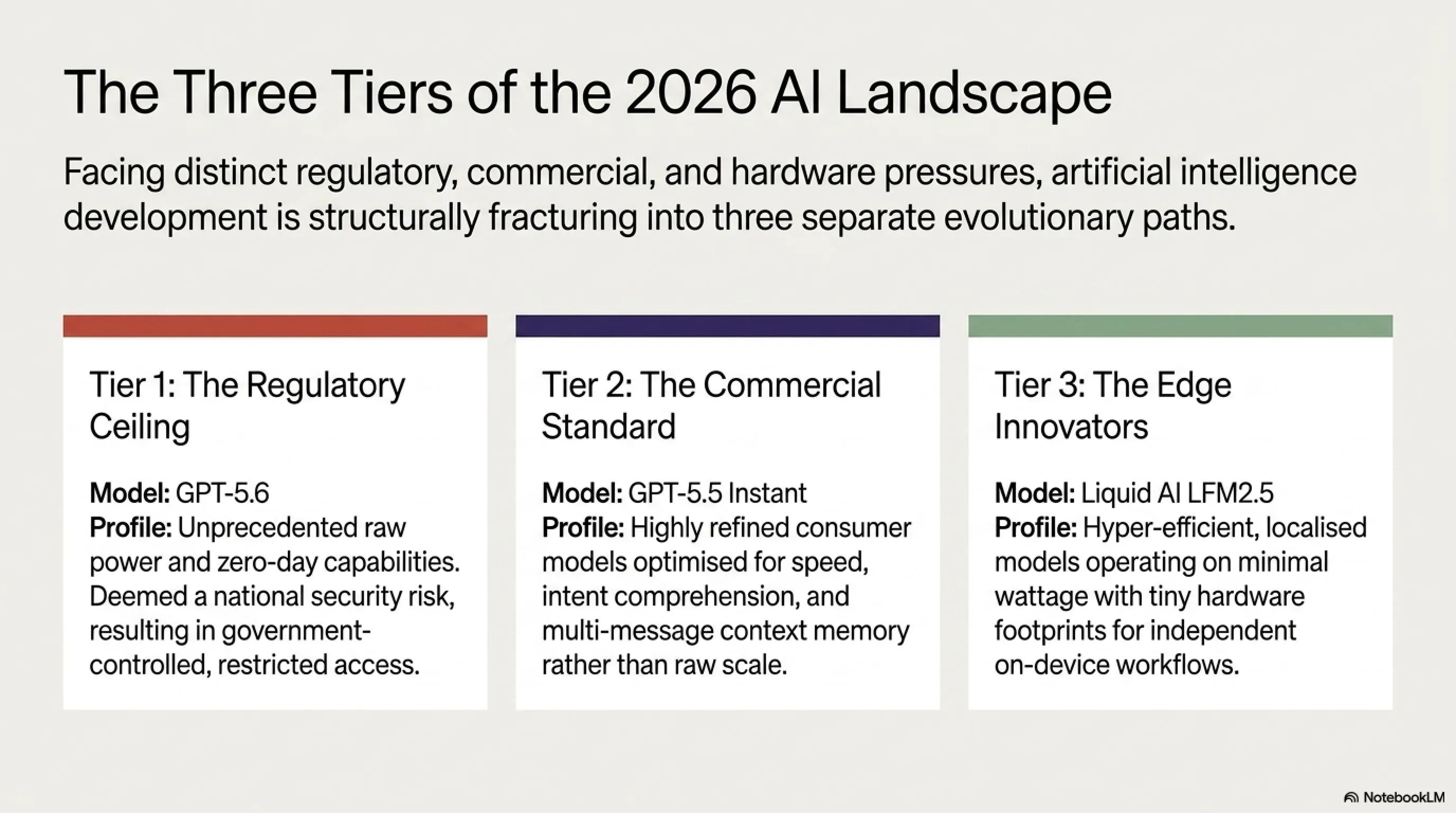
1. Mass Market (ChatGPT): Optimized for broad consumer use, rapid responses, and general knowledge. Wins on user count and accessibility.
2. Professional (Claude): Optimized for deep analysis, long contexts, and careful reasoning. Wins on revenue per user and enterprise adoption.
3. On-Device (Liquid AI, Phi-3): Optimized for efficiency, privacy, and offline operation. Wins on specialized tasks and resource-constrained environments.
This specialization is healthy for the industry. Rather than one model dominating everything, we're seeing natural selection based on use cases and user needs. The GPT-5.6 restrictions may accelerate this trend by limiting how powerful centralized models can become.
The AI Hardware Crisis: Connecting the Dots
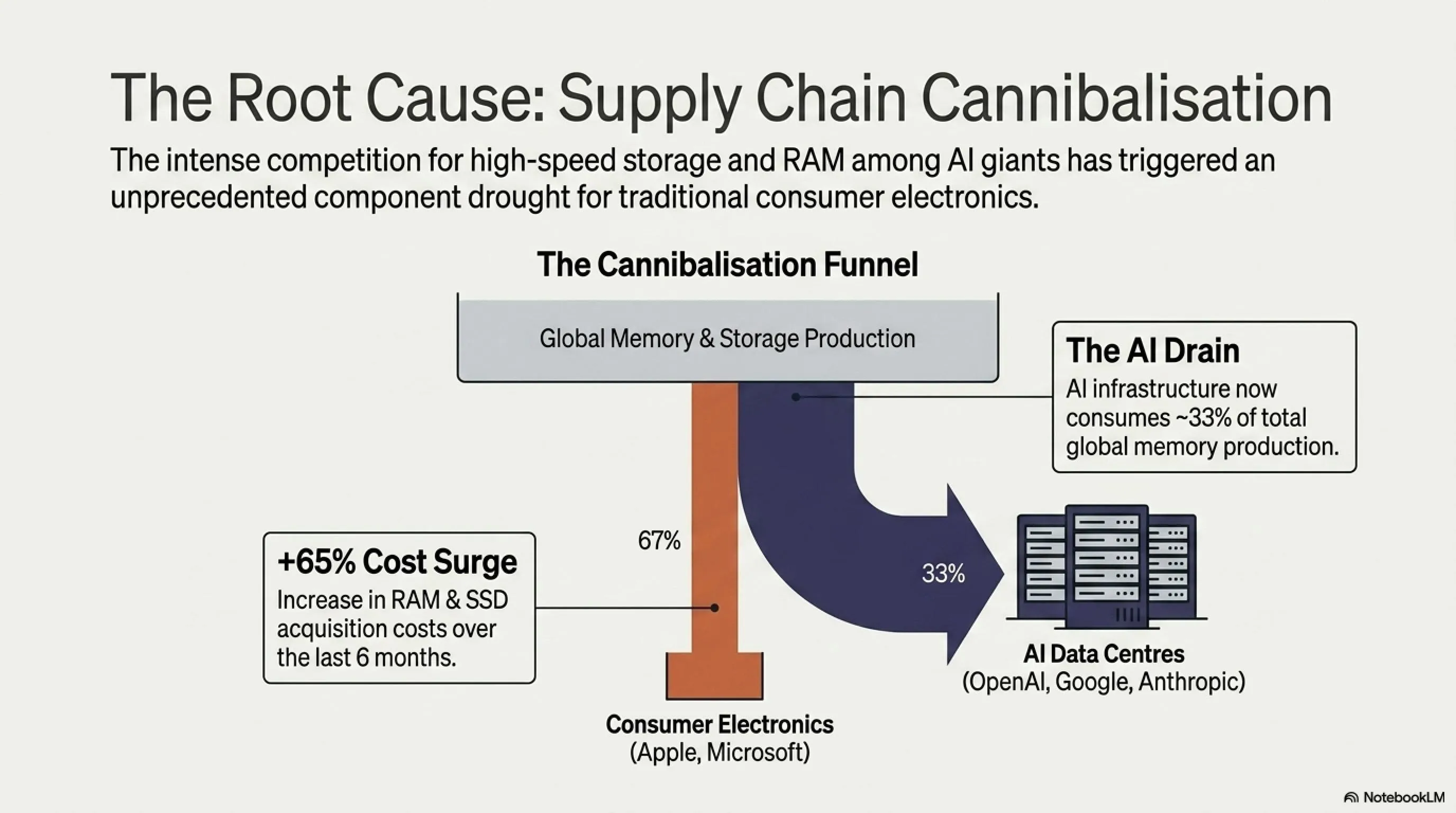
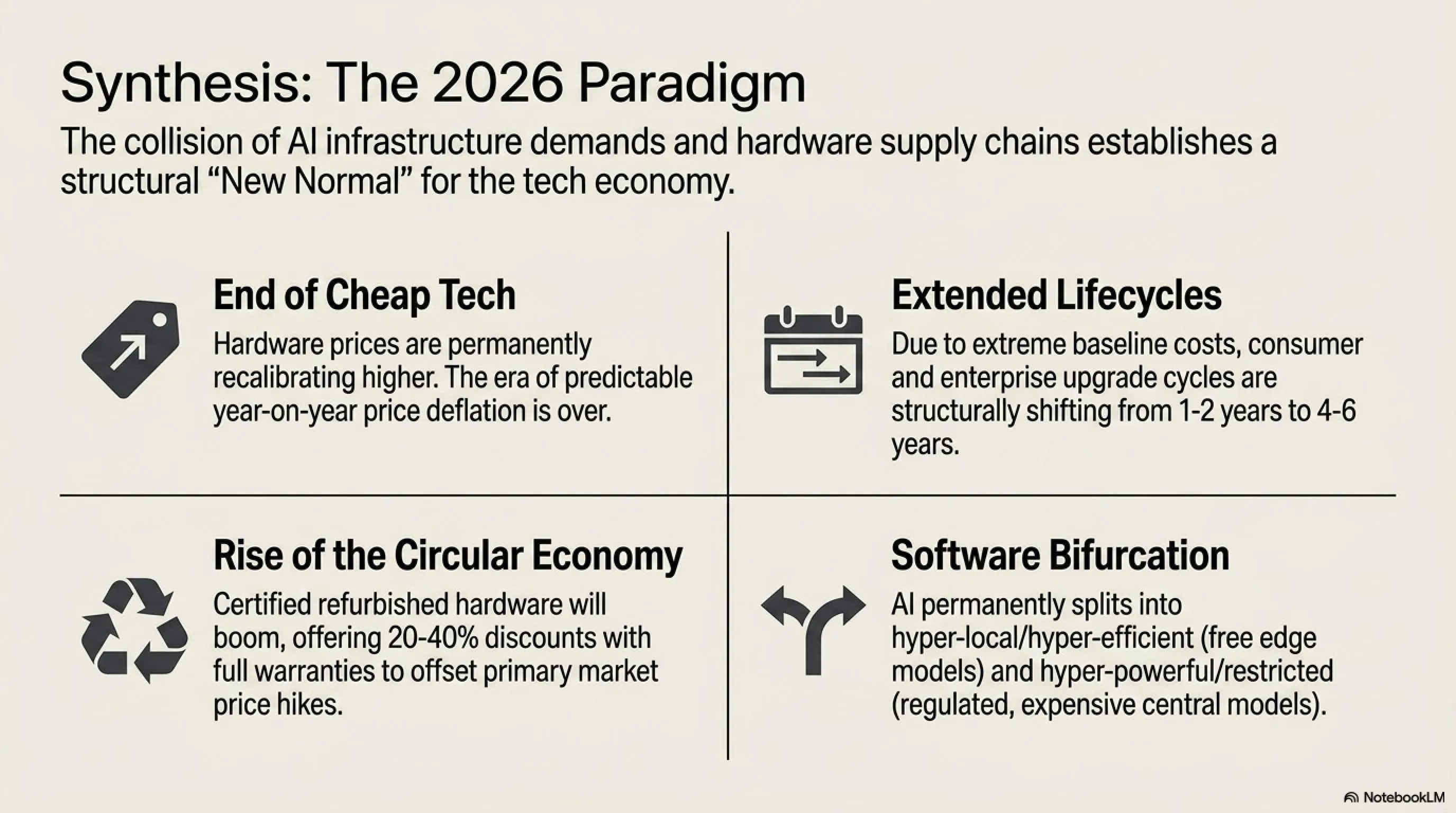
The Xbox and Apple price increases, when viewed alongside the AI industry developments, reveal a fundamental tension in the technology ecosystem. AI companies' insatiable appetite for computing resources is creating shortages and price pressures throughout the electronics supply chain.
According to a CNBC investigation, AI data centers are now purchasing memory and storage at rates that exceed the entire consumer electronics industry combined. One semiconductor industry executive, speaking anonymously, told CNBC: "It's unprecedented. A single AI training cluster can consume as much memory as 500,000 consumer devices."
By the Numbers: AI's Impact on Component Markets
| Component | Price Change (Jan-Jun 2026) | AI Industry Consumption | Projected Impact |
|---|---|---|---|
| DDR5 RAM | +68% | 38% of production | Prices stay high until Q2 2027 |
| NVMe SSD Storage | +54% | 29% of production | Prices stabilize Q4 2026 |
| GDDR6 Memory | +71% | 45% of production | Critical shortage until 2027 |
| High-Bandwidth Memory (HBM) | +89% | 72% of production | Supply increases late 2026 |
Source: CNBC analysis of semiconductor industry data
What's the Solution?
Industry experts point to several potential paths forward:
- Increased Production Capacity: Memory manufacturers like Samsung, Micron, and SK Hynix are investing billions in new fabrication facilities, but these take 12-18 months to come online
- Efficiency Innovations: Companies like Liquid AI demonstrate that smarter algorithms can reduce hardware requirements
- Architectural Changes: New chip designs that separate AI and consumer workloads more effectively
- Market Rebalancing: If consumer demand drops due to high prices, supply will naturally shift back
Most analysts predict the current supply crunch will persist through late 2026, with gradual improvement in 2027 as new production capacity comes online. However, if AI development continues accelerating, the problem could worsen before it improves.
- Liquid AI proves efficiency can trump raw power
- Claude's success shows market segmentation working well
- GPT-5.5 Instant improvements benefit free users
- Government oversight may prevent AI misuse
- Consumer price increases may slow wasteful consumption
- Gamers and professionals face steep price increases
- Government control of AI sets concerning precedent
- Component shortage may last through 2027
- Smaller AI companies struggle to compete
- AI benefits concentrating in wealthy markets
Final Thoughts | Wrapping Up Today's News
But beyond these price increases, we're witnessing two contradictory narratives. On one hand, OpenAI and Anthropic are building ever-larger and more powerful models that consume more resources. On the other, companies like Liquid AI are proving that with greater intelligence and fewer resources, better results are achievable.
The US government's entry into AI regulation is also a clear signal: this technology is no longer a simple tool but has become a strategic power lever affecting national security. The key question is: will this oversight lead to greater security, or will it only increase power concentration in the hands of a few companies?
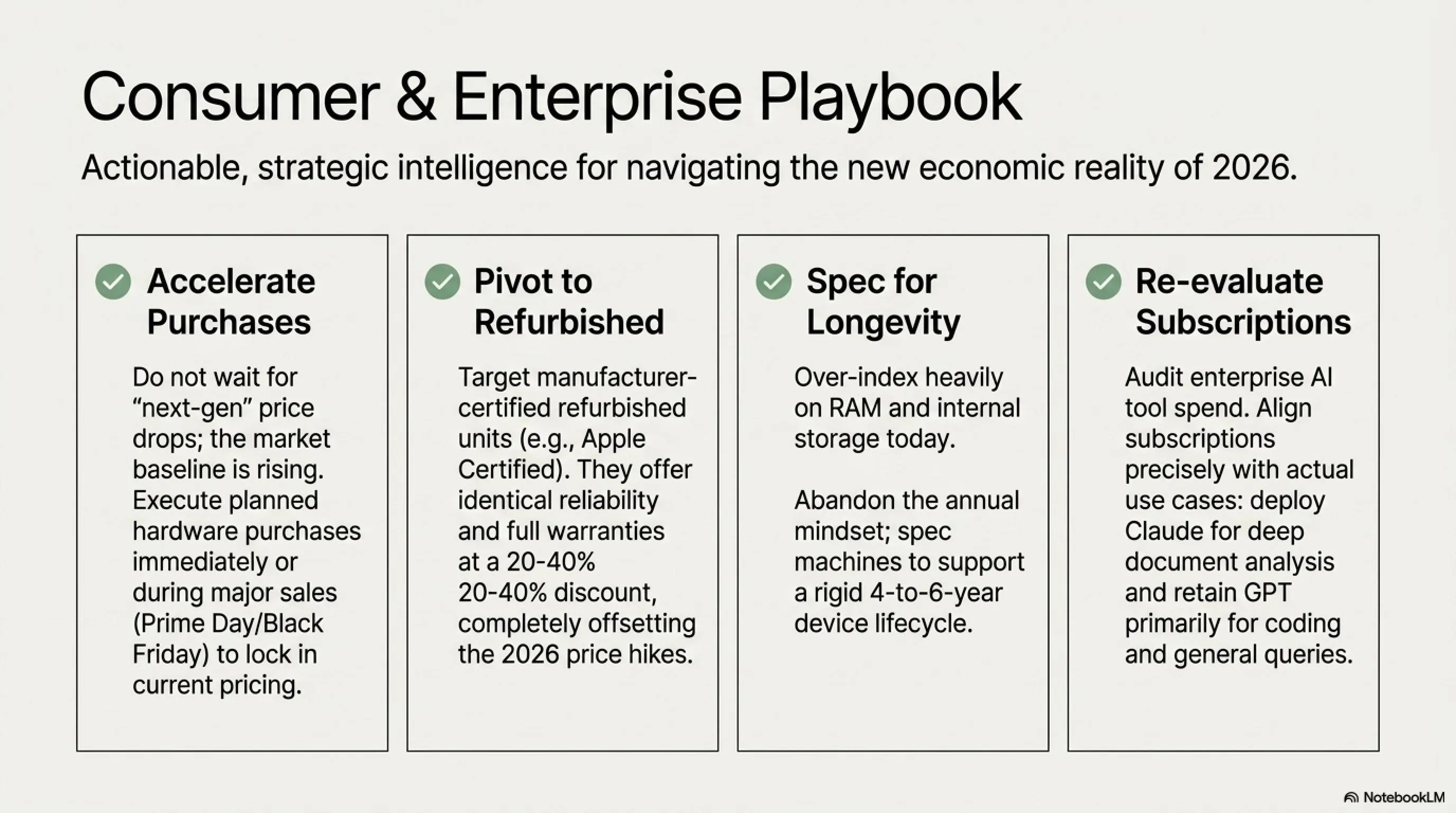
For gamers and everyday users, the message is clear: if you're planning purchases, act sooner rather than later. The likelihood of price decreases in the short term is very low, and all signs point to this upward trend continuing through late 2027. The Xbox price increase takes effect August 1st, so purchasing before that date will yield significant savings.
Frequently Asked Questions | Your Questions Answered
Why did Xbox and Mac prices increase simultaneously?
The main reason is the dramatic increase in electronic component prices, especially RAM and storage. The AI industry is purchasing massive volumes of these components for their data centers, creating severe shortages in the consumer market. Microsoft confirmed that RAM and SSD procurement costs have increased by more than 65 percent in the past six months. Industry analysts report that AI data centers now consume approximately one-third of global memory production.
Will iPhone prices also increase?
Apple hasn't changed iPhone, Apple Watch, or AirPods pricing yet, but sources told CNBC that final decisions about these products will likely be made in Q3 2026 (September-October). Given the Mac and iPad price increases, there's a strong possibility that iPhone 17 prices will rise when announced. Apple typically reveals new iPhones in September, so we'll know more then.
How fast is the Liquid AI LFM2.5-230M model?
With just 230 million parameters, this model can run at 213 tokens per second on Samsung Galaxy S25 Ultra, 42 tokens per second on Raspberry Pi 5, and even on regular laptops. This speed is remarkable for an on-device model and makes it suitable for real-world applications. For comparison, most competing models of similar capability require 4-8 times more computing power and cannot run on resource-constrained devices at all.
Why did the US government restrict GPT-5.6?
The primary reason is security concerns related to the model's advanced hacking and cyber intrusion capabilities. The Trump administration wants to ensure this technology doesn't fall into the hands of dangerous individuals or groups, restricting access to approved government partners only. This is the first direct US government intervention in AI model regulation and sets a significant precedent for future powerful AI systems.
What advantages does Claude have that paying users prefer it over ChatGPT?
Claude offers a larger context window (200K vs 32K), higher accuracy in document analysis and long-form writing, and more conservative behavior in sensitive situations. Indagari data shows Claude generates $2.76 per user compared to ChatGPT's $1.74, indicating higher professional user satisfaction. Additionally, DataCamp reports that demand for Claude courses is three times higher than for ChatGPT courses, suggesting professionals are actively choosing to learn and use Claude for serious work.
Should I buy a console or laptop now or wait?
If you're planning to buy, it's better to act sooner. All signs indicate prices will increase further in coming months. The likelihood of price decreases in the short term is very low because AI industry demand continues growing. The Xbox price increase takes effect August 1st, 2026, so purchasing before that date will save you $100-$150. For Mac and iPad, prices have already increased, and further increases are possible if component costs continue rising.
How is the new GPT-5.5 Instant different from the previous version?
The updated version shows 32% improvement in understanding user intent, 27% improvement in product recommendations with complex filters, 41% improvement in detecting conversation topic changes, and 19% improvement in delivering concise relevant responses. These improvements were measured by Digital Trends based on 500 real conversations. Additionally, the model is now available through the 'chat-latest' API alias, allowing developers to always access the latest version without manual updates.
Are these price increases permanent or temporary?
As long as AI industry demand for electronic components doesn't decrease or manufacturers don't significantly increase production capacity, prices will likely remain high. Some analysts predict this situation will continue until late 2027 or early 2028. Memory manufacturers like Samsung and Micron are increasing production capacity, but this process takes at least 12-18 months. The good news is that multiple new fabrication facilities are scheduled to come online in 2027, which should help alleviate the shortage - but only if AI demand doesn't accelerate further.
Sources and References
Xbox News Sources:
- Forbes: Xbox Raises Console Prices Up To $150
- IGN: Microsoft Announces Significant Price Rises For Xbox
- TechCrunch: Xbox Follows Apple With Price Increases
- CNBC: Microsoft Lifts Price Of Xbox Consoles
OpenAI News Sources:
- OpenAI Release Notes: ChatGPT Updates
- VentureBeat: OpenAI's Updated GPT-5.5 Instant
- Digital Trends: OpenAI Just Made GPT-5.5 Instant More Fun
Apple News Sources:
- Forbes: Apple Price Hike Hits MacBook, iPad
- CNBC: Apple MacBook iPad Price Hike
- MacRumors: Apple Just Increased Prices
Liquid AI News Sources:
- Liquid AI Blog: LFM2.5-230M Official Announcement
- VentureBeat: Liquid AI's Smallest Model Yet
- Hugging Face: LFM2.5-230M Model Page
White House GPT-5.6 Sources:
- TechCrunch: White House Asking OpenAI To Slow Roll GPT-5.6
- Axios: Trump Administration OpenAI GPT Model Release
- The Verge: OpenAI Will Delay GPT-5.6
Claude/Anthropic News Sources:
- TechCrunch: Anthropic's Claude Is Winning Over Paid Consumers
- Forbes: Claude Makes More Money Per User
- TheNextWeb: Anthropic Claude Paying Consumers Growth
All sources verified as of June 26, 2026.
🌐Stay Connected With Us 🎮✨
For the latest tech, gaming, and gadget news, follow us on our official social media channels:
Supplementary Image Gallery: ☕ Tekin Morning | Xbox & Apple Price Hikes, White House Restricts GPT-5.6