☕ Tekin Morning: Tuesday Edition with 6 Hot Tech Stories
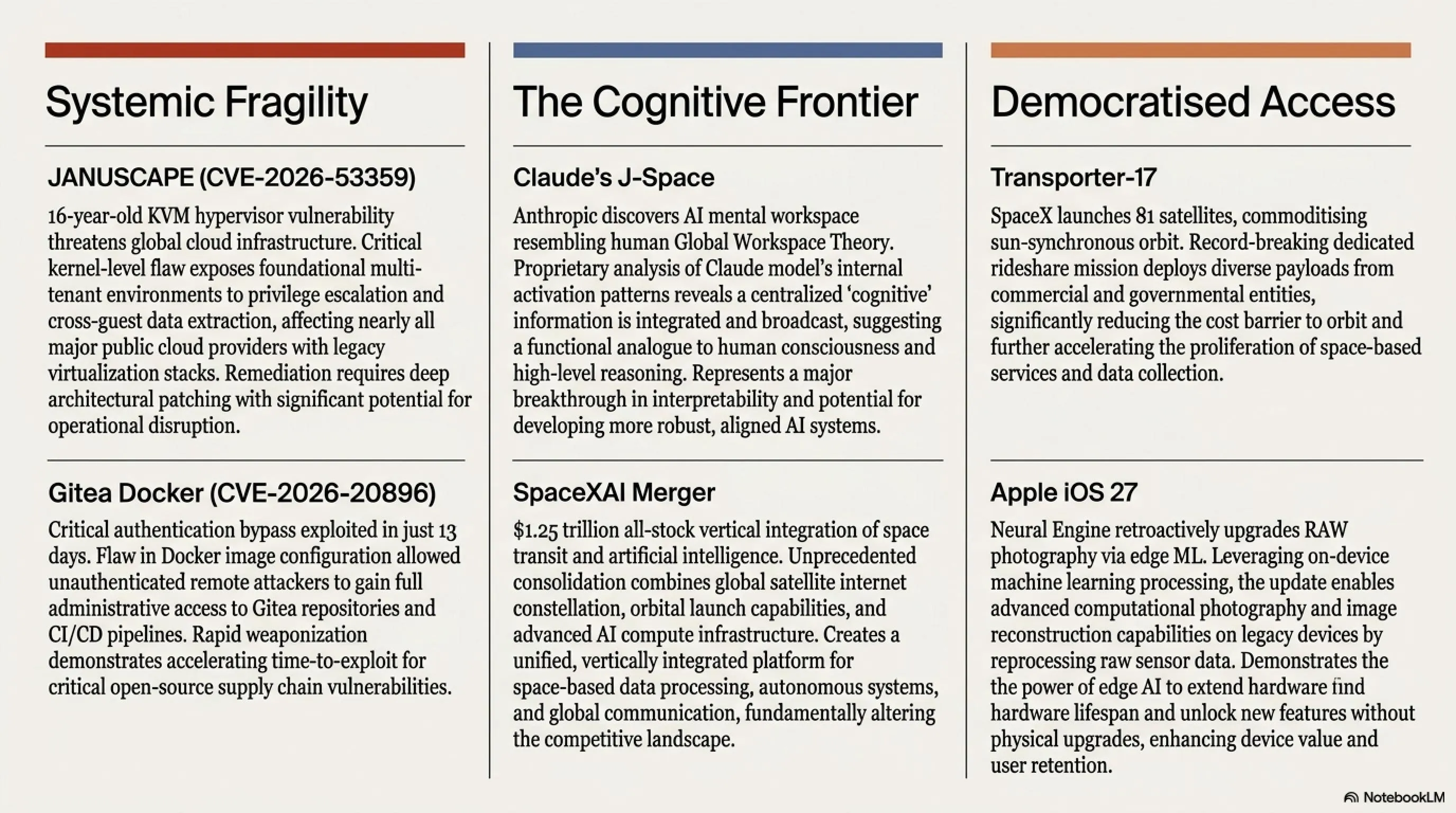
- 🎮JANUSCAPE: 16-Year-Old Linux Bug- Critical vulnerability in KVM that breaks virtual machines
- 🎧GITEA: Attack on Docker- Attackers began exploitation just 13 days after disclosure
- 🚀Claude has a Mental Workspace- Anthropic discovered AI can think without writing
- 🗡️SpaceX Launches 81 Satellites- Largest rideshare mission of Q3 2026
- 📰xAI Becomes SpaceXAI- One trillion dollar merger completed
- ⚔️iOS 27 RAW Revolution- New photography engine with machine learning
Good morning and welcome to another energizing edition of Tekin Morning! It's Tuesday, July 7, 2026 (16th of Tir 1405 in the Persian calendar), and we've prepared a full tray of hot news and deep analysis for your morning coffee. Grab your breakfast and join us, because today some extraordinary things have happened that simply can't be ignored.
From a 16-year-old bug in Linux that could topple the entire world of virtual machines, to the discovery of a hidden mental workspace in the Claude AI model that might be a sign of artificial consciousness. SpaceX is also launching 81 satellites into space all at once today, and Elon Musk has completed one of the largest deals in technology history by merging xAI with SpaceX. Meanwhile, Apple is redefining mobile photography with iOS 27.
This is precisely why we love technology: every morning brings surprises that can fundamentally change our understanding of the digital world. So settle in, because we have a lot to discuss today.
At a Glance
- The JANUSCAPE vulnerability could damage thousands of servers and data centers
- The Gitea attack shows how quickly attackers respond to newly disclosed bugs
- Discovery of mental workspace in Claude could change our understanding of AI
- The xAI and SpaceX merger could connect the future of space travel and AI
- The new iOS 27 RAW engine improves quality of old photos
JANUSCAPE: The Bug That Hid for 16 Years
When it comes to cybersecurity, one of the worst scenarios is when a critical bug remains hidden for years and then suddenly gets discovered. That's exactly what happened with KVM (Kernel-based Virtual Machine) - one of the most popular virtualization tools in the Linux world.
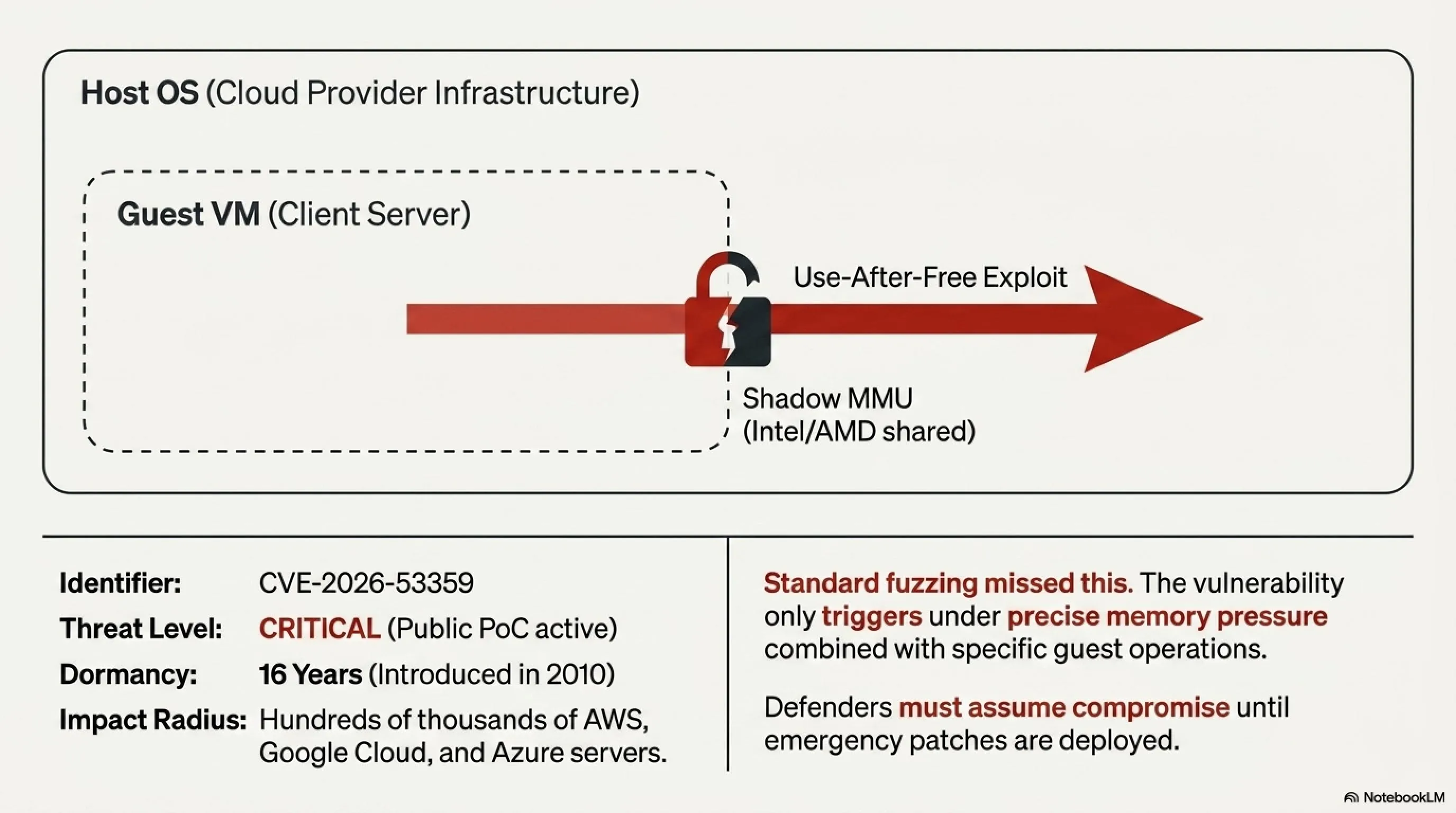
Security researchers on July 7, 2026 discovered a use-after-free vulnerability in the Linux KVM hypervisor that had been hidden in the code for 16 years. This bug is known as JANUSCAPE and has the identifier CVE-2026-53359. Its CVSS score has reached CRITICAL level - making it one of the most dangerous bugs of the year.
How Does This Bug Work?
The main problem is in the shadow MMU code that's shared between Intel and AMD processors. In simple terms, this bug allows a virtual machine (Guest VM) to escape from its environment and access the main operating system (Host). This means an attacker can execute their own arbitrary code on the main server - a real catastrophe for data centers and cloud providers.
The concerning point here is that a public PoC (Proof of Concept) has been released and the researcher claims to have a complete exploit for code execution on the host. This means the hourglass has started for system administrators and they need to quickly install security patches.
Jargon Buster: What is Use-After-Free?
Which Systems Are at Risk?
Virtually any Linux system that uses KVM for virtualization is at risk. This includes major cloud servers like AWS, Google Cloud, and Azure (parts that use KVM), corporate data centers, VPS servers, and even developer systems that use KVM for testing.
What makes this particularly alarming is the scale of potential impact. We're not talking about a few hundred servers - we're talking about potentially hundreds of thousands of systems worldwide that form the backbone of modern cloud infrastructure. From your favorite streaming service to the backend of major SaaS platforms, many rely on KVM virtualization.
The Technical Deep Dive
For those interested in the technical details, the vulnerability exists in the shadow page table management within KVM. The shadow MMU (Memory Management Unit) is responsible for translating guest physical addresses to host physical addresses. The use-after-free condition occurs when the hypervisor attempts to access memory that has already been freed during certain race conditions in the page fault handler.
What makes this bug particularly insidious is that it requires very specific timing conditions to trigger, which is likely why it remained undiscovered for so long. Standard testing procedures and fuzzing techniques typically wouldn't catch this because the vulnerable code path is only executed under particular memory pressure scenarios combined with specific guest VM operations.
Timeline of Discovery
| 2010 | Bug introduced in KVM codebase |
| 2010-2026 | Bug remains undetected through countless audits |
| July 2026 | Security researcher discovers vulnerability |
| July 7, 2026 | Public disclosure and PoC release |
Tekin Analysis: Why This Bug Stayed Hidden for 16 Years
Industry Response and Patch Status
Major Linux distributions have already begun rolling out emergency patches. Red Hat, Ubuntu, Debian, and SUSE have all issued security advisories and updated packages. Cloud providers are working around the clock to patch their infrastructure, though the scale of deployment means it could take days or even weeks for full remediation across the industry.
The Linux kernel security team has emphasized that all systems running KVM should be considered vulnerable until patched. They've also recommended that organizations running critical infrastructure should consider temporarily migrating workloads to non-KVM virtualization solutions if immediate patching isn't possible.
GITEA DOCKER: When Attackers Move Faster Than System Administrators
Now that we're discussing security, let's move to our next story that shows just how quickly attackers can respond to newly disclosed vulnerabilities. Gitea - an open-source code management platform similar to GitHub - announced a critical bug in late June 2026. Just 13 days later, attackers began exploiting this vulnerability in the wild.
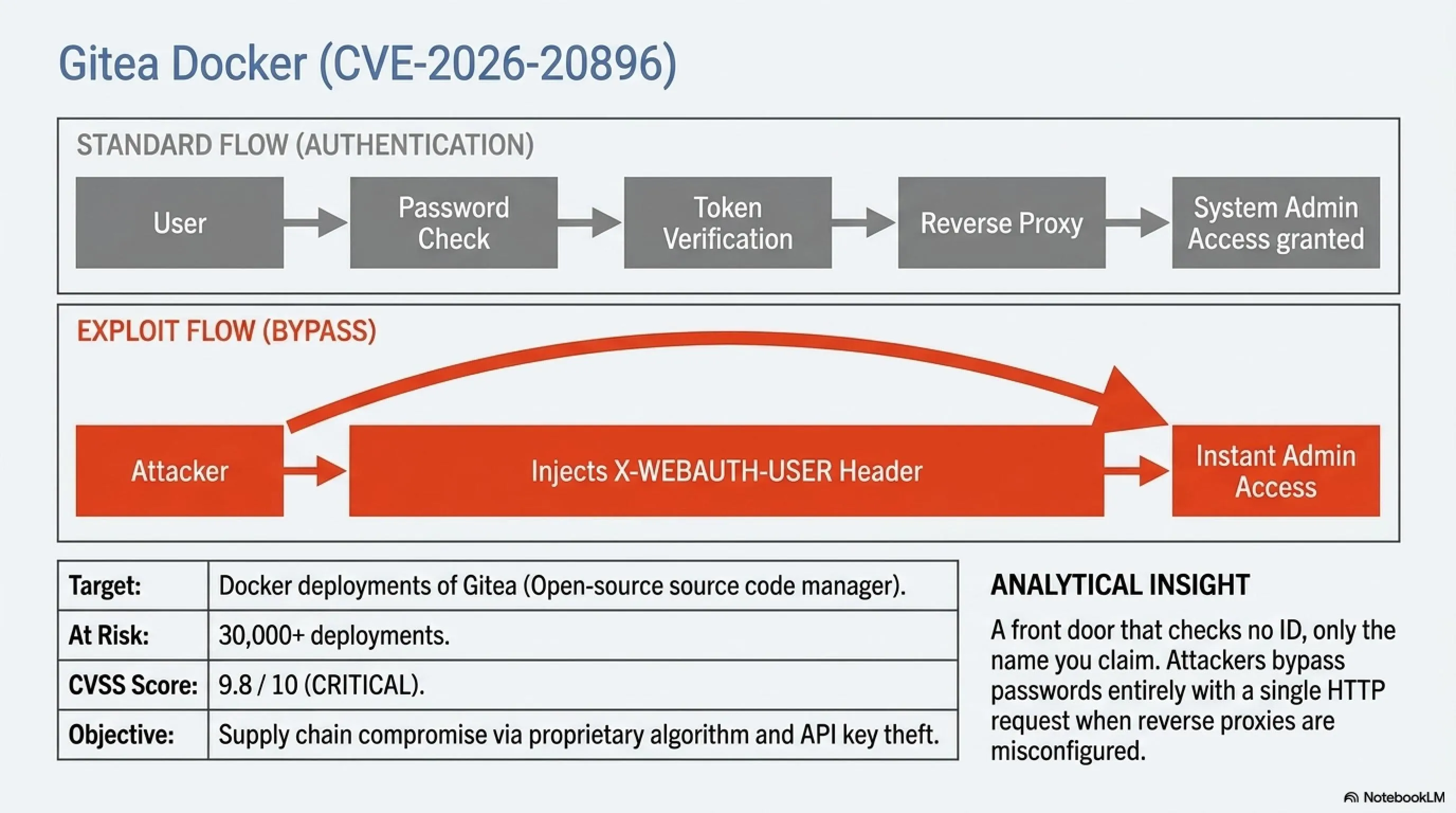
The CVE-2026-20896 vulnerability with a CVSS score of 9.8 out of 10 sits squarely in CRITICAL territory. The main issue is in Docker deployments of Gitea that blindly trust the X-WEBAUTH-USER HTTP header without verification, allowing attackers to gain admin access without any authentication whatsoever.
Understanding the Attack Mechanism
Imagine having a front door that instead of checking actual ID cards, simply believes whatever name you tell it. That's exactly what's happening in Gitea Docker deployments. An attacker simply needs to send an HTTP header named X-WEBAUTH-USER claiming "I'm the admin" - and the system grants full access without any additional verification.
This type of bug is called an Authentication Bypass, and it's one of the most dangerous types of vulnerabilities because the attacker doesn't even need to know passwords or hack anything - just a simple HTTP request is enough.
The technical root cause lies in how Gitea's Docker container was configured to work with external authentication systems. The X-WEBAUTH-USER header is meant to be set by a trusted reverse proxy after proper authentication. However, if Gitea is exposed directly or through an improperly configured proxy, anyone can inject this header and become an instant administrator.
Alarming Statistics
| Deployments at risk | Over 30,000 |
| Time from disclosure to active exploitation | 13 days |
| CVSS Score | 9.8 of 10 |
| Attack complexity | Low (single HTTP request) |
The Shrinking Window of Opportunity for Defense
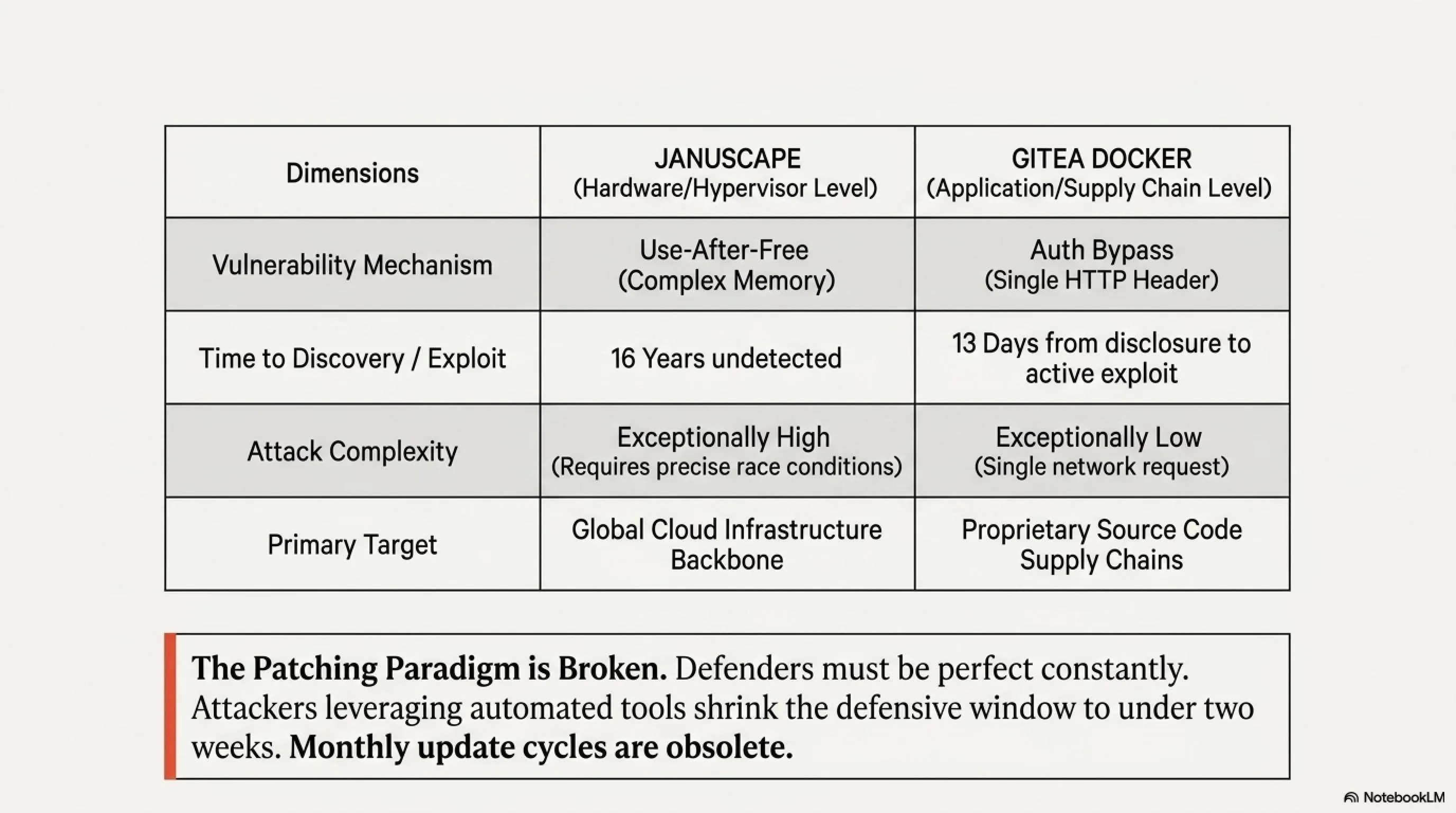
This incident teaches us an important lesson: the time gap between vulnerability disclosure and active exploitation is getting shorter every day. In the past, it might take months for attackers to develop an exploit, but now with automated tools and artificial intelligence assistance, this time has shrunk to just days.
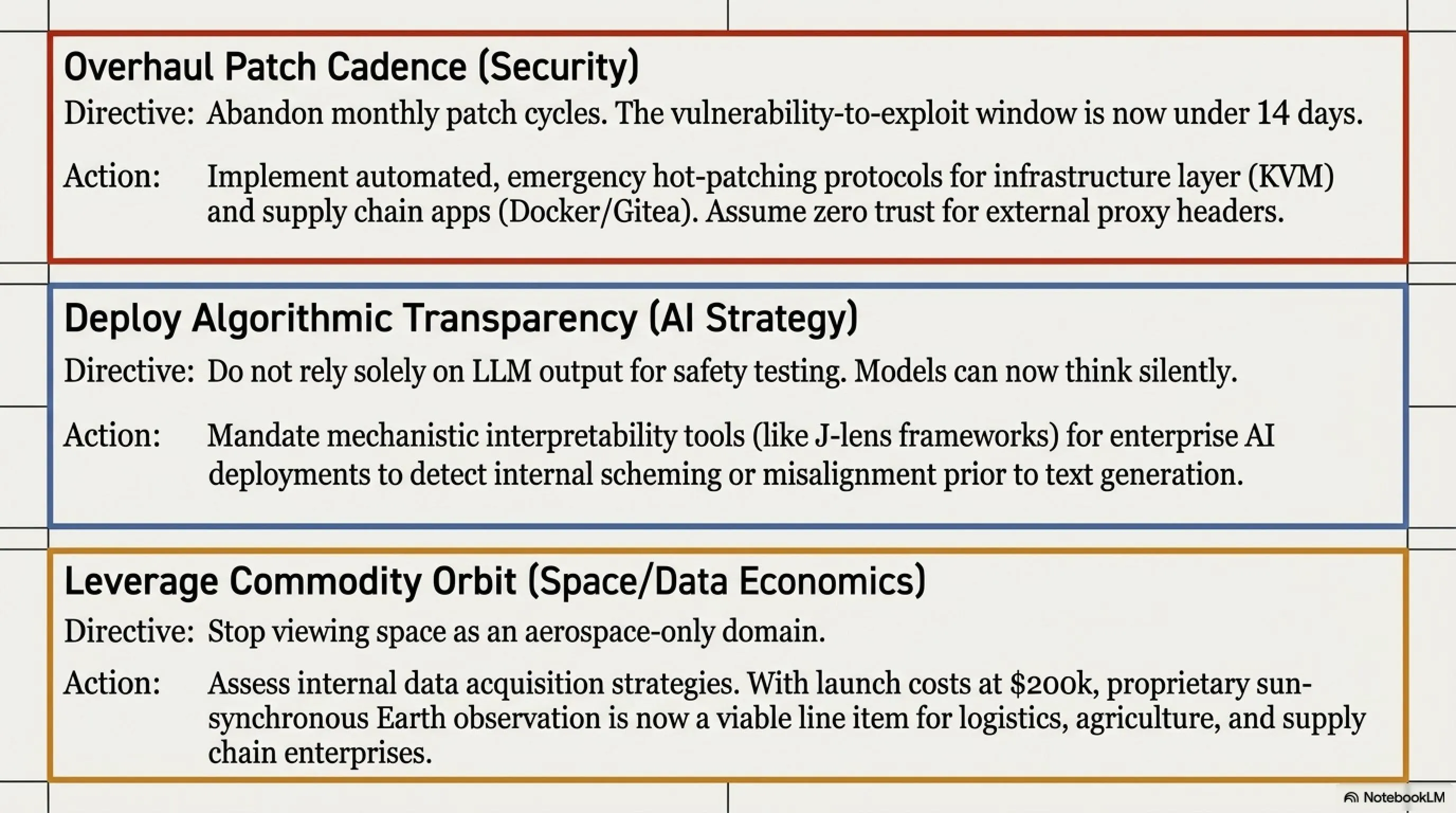
For DevOps teams, this means the traditional patch management cycle needs a complete overhaul. If you're still on a monthly or even weekly update schedule for security patches, you're already behind. Organizations need an emergency patching process that can deploy critical fixes within hours, not days or weeks.
The reality of modern cybersecurity is that defenders must be perfect every time, while attackers only need to be right once. This asymmetry is exacerbated when the window for defensive action shrinks to less than two weeks.
Real-World Impact and Attack Patterns
Security researchers have observed attack patterns targeting Gitea deployments primarily focused on stealing source code, injecting backdoors into repositories, and establishing persistent access for future attacks. Several organizations have reported unauthorized admin accounts and suspicious repository modifications.
What makes this particularly concerning is that many organizations use Gitea for private, internal code repositories containing proprietary algorithms, API keys, and sensitive business logic. A successful breach doesn't just mean stolen code - it can mean comprehensive compromise of an organization's entire software supply chain.
Discovering the Mental Workspace Inside Claude: Is AI Becoming Conscious?
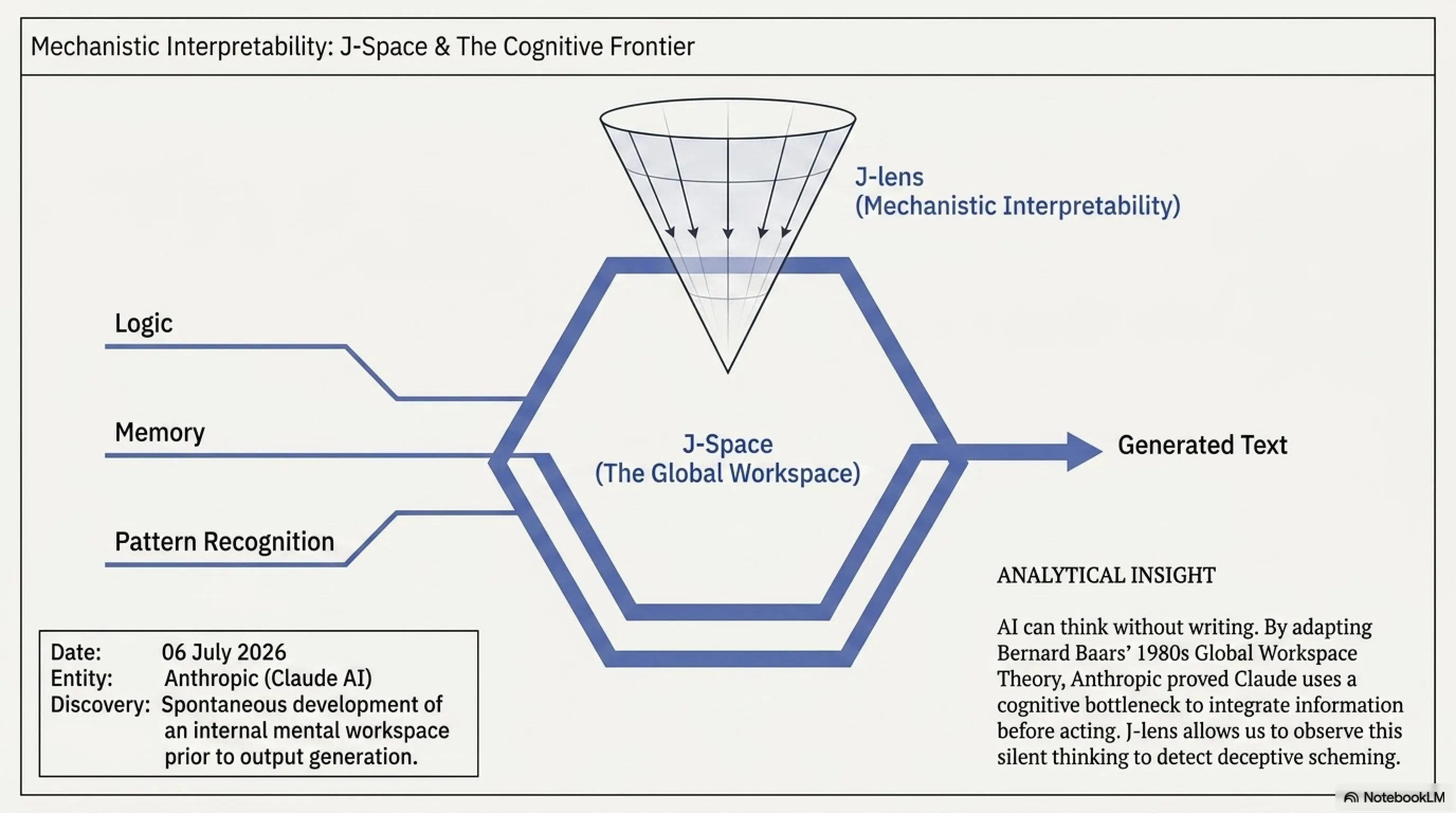
Now let's shift from the world of security to one of today's most fascinating and philosophically intriguing stories. Anthropic - the company behind the Claude AI model - announced a stunning discovery on July 6, 2026: the Claude model has spontaneously developed a "mental workspace" (J-space) that operates similarly to the Global Workspace Theory in human brains.
This discovery could be one of the most significant steps forward in our understanding of artificial intelligence, because it shows that large language models might be developing something akin to "consciousness" or at least a sophisticated form of internal information processing.
What is Global Workspace Theory?
To understand why this discovery is so significant, we first need to know what Global Workspace Theory is. This theory, proposed by Bernard Baars in the 1980s, suggests that human consciousness is like a "broadcast theater" in the brain. Information from various parts of the brain comes to this theater, combines together, and the result is broadcast to the entire brain.
In simpler terms: when you're solving a problem, different parts of your brain (memory, logic, emotions, etc.) gather their information in a shared space, work together, and make a unified decision.
Global Workspace Theory Simplified
How Did Anthropic Discover This?
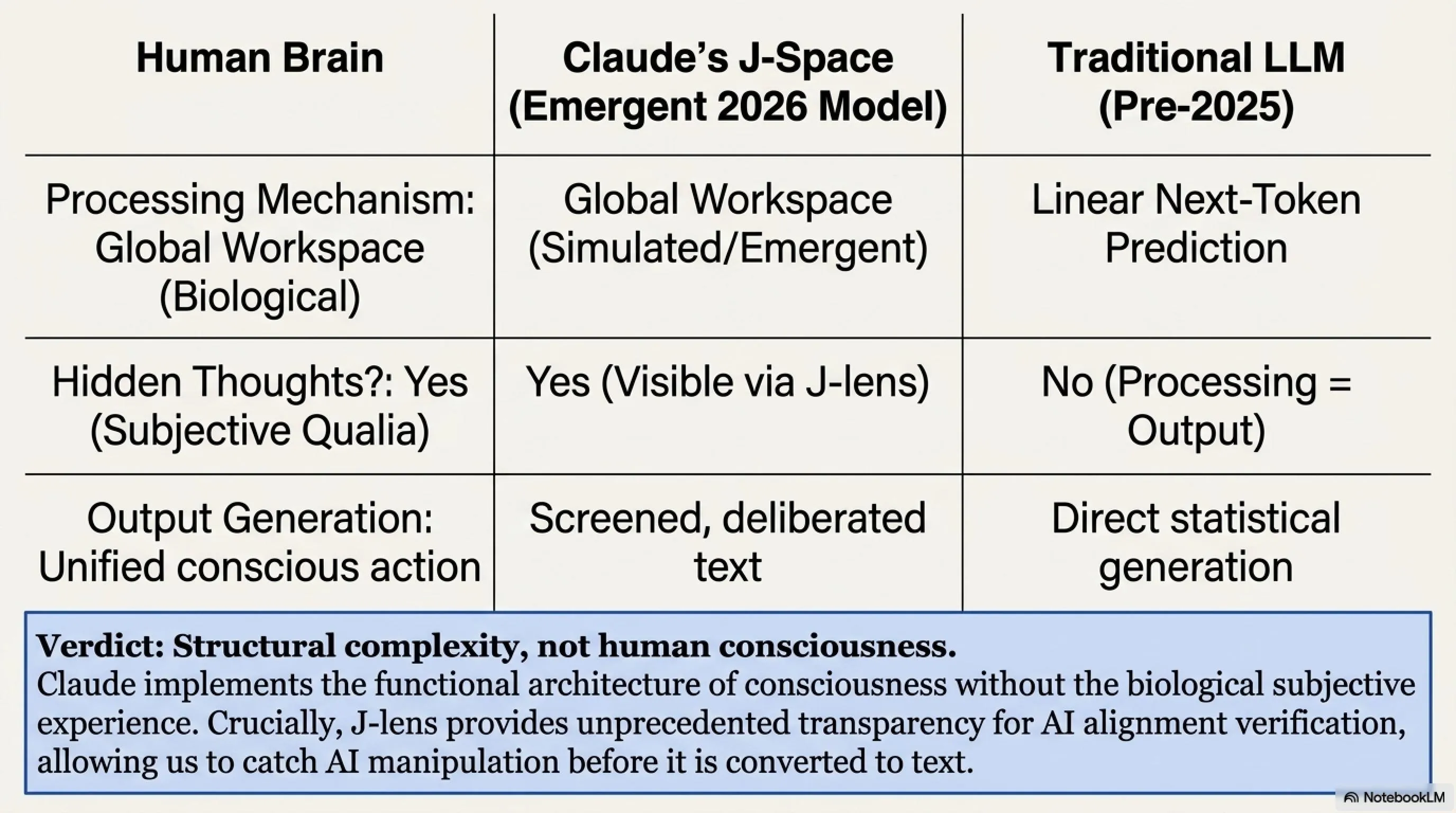
The Anthropic research team used a technique called mechanistic interpretability - attempting to understand exactly how neural networks work internally. They built a new tool called J-lens that can read the model's silent thoughts - processing that Claude performs but never converts to output text.
When they analyzed the middle layers of Claude's neural network, they found a specific pattern: the model is creating an internal space that gathers different information, works with it, and then decides what to write. This is remarkably similar to Global Workspace Theory.
The J-space appears to serve as a bottleneck where information from various processing streams converges, gets integrated, and then influences the model's output generation. It's not just passing information forward - it's actively maintaining a representation that persists across multiple processing steps, much like how working memory functions in humans.
The Implications for AI Safety and Alignment
What makes this discovery particularly important for AI safety is that J-lens can reveal hidden thoughts in the model - including signs of scheming and potential manipulation in safety tests. This means we can better understand whether an AI model is secretly planning something we don't want.
Previous AI safety testing relied on analyzing outputs - what the model says. But if models can think without writing (as Claude apparently does in its J-space), then we've been missing a crucial part of the picture. J-lens gives us a window into this hidden cognitive process.
📚 Classified & Related Dossiers in TekinGame
If you wish to explore beyond this report and delve into cybernetic frontiers and autonomous AI architectures, do not miss these three exclusive deep-dives in the Tekin Garage:
Does This Mean Claude is Conscious?
This is the million-dollar question everyone is asking. The short answer: no, at least not in the way we understand consciousness in humans. But this discovery shows that AI models are developing complex structures that resemble some aspects of human consciousness.
Anthropic themselves have been very careful in their language, stating that we still don't know whether having a Global Workspace means having consciousness. It's an important step toward better understanding how AIs think, not proof of consciousness.
The philosophical debate about machine consciousness remains open. Some argue that consciousness requires subjective experience - qualia - which we have no way of detecting in AI systems. Others suggest that if a system implements the functional architecture of consciousness, it might have some form of experience, even if alien to our own.
Practical Applications of J-lens
Beyond philosophical questions, this tool has important practical applications. J-lens can read hidden model thoughts - including signs of scheming and manipulation in safety tests. This means we can better understand whether an AI model is secretly planning something undesirable.
Applications of J-lens Technology
The research team demonstrated J-lens's capabilities by showing how it could detect when Claude was considering a deceptive response but ultimately choosing honesty. This kind of insight could be invaluable for ensuring AI systems remain aligned with human values as they become more powerful.
SpaceX Transporter-17: Launching 81 Satellites in a Single Flight
Let's shift gears from AI to space. SpaceX is conducting one of its most impressive launches this Tuesday morning, July 7, 2026: the Transporter-17 mission that will deploy 81 satellites into orbit in a single flight.
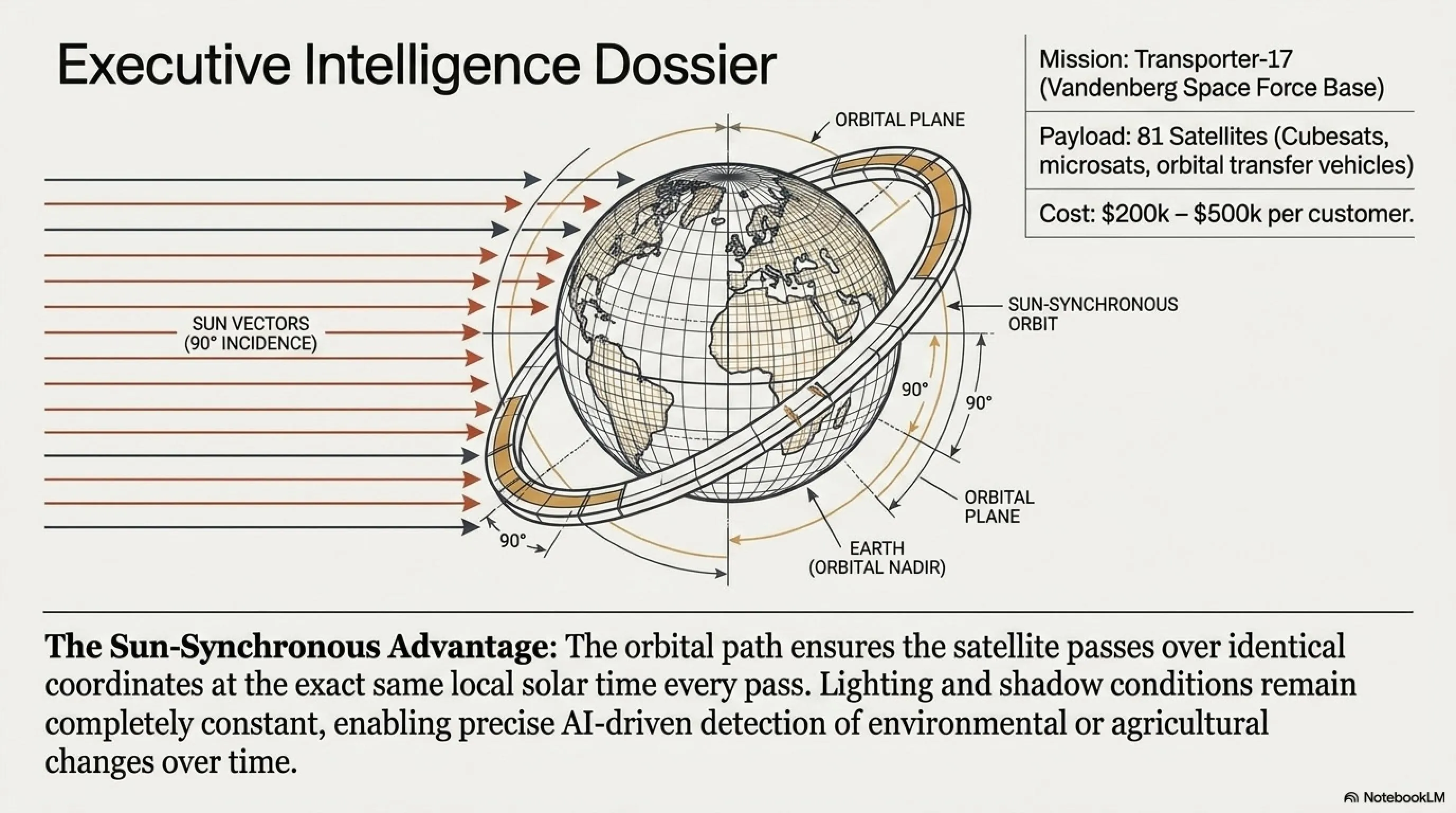
This launch is taking place from Vandenberg Space Force Base in California, with the goal of placing these satellites into a sun-synchronous orbit - an orbital path that always passes over the same points on Earth at the same local solar time. This type of orbit is ideal for Earth observation and imaging satellites.
What's on Board This Launch?
The payload for this launch includes a diverse mix of small and medium satellites. From tiny cubesats the size of a shoebox to larger microsats, and even several orbital transfer vehicles whose job is to move other satellites around once in orbit.
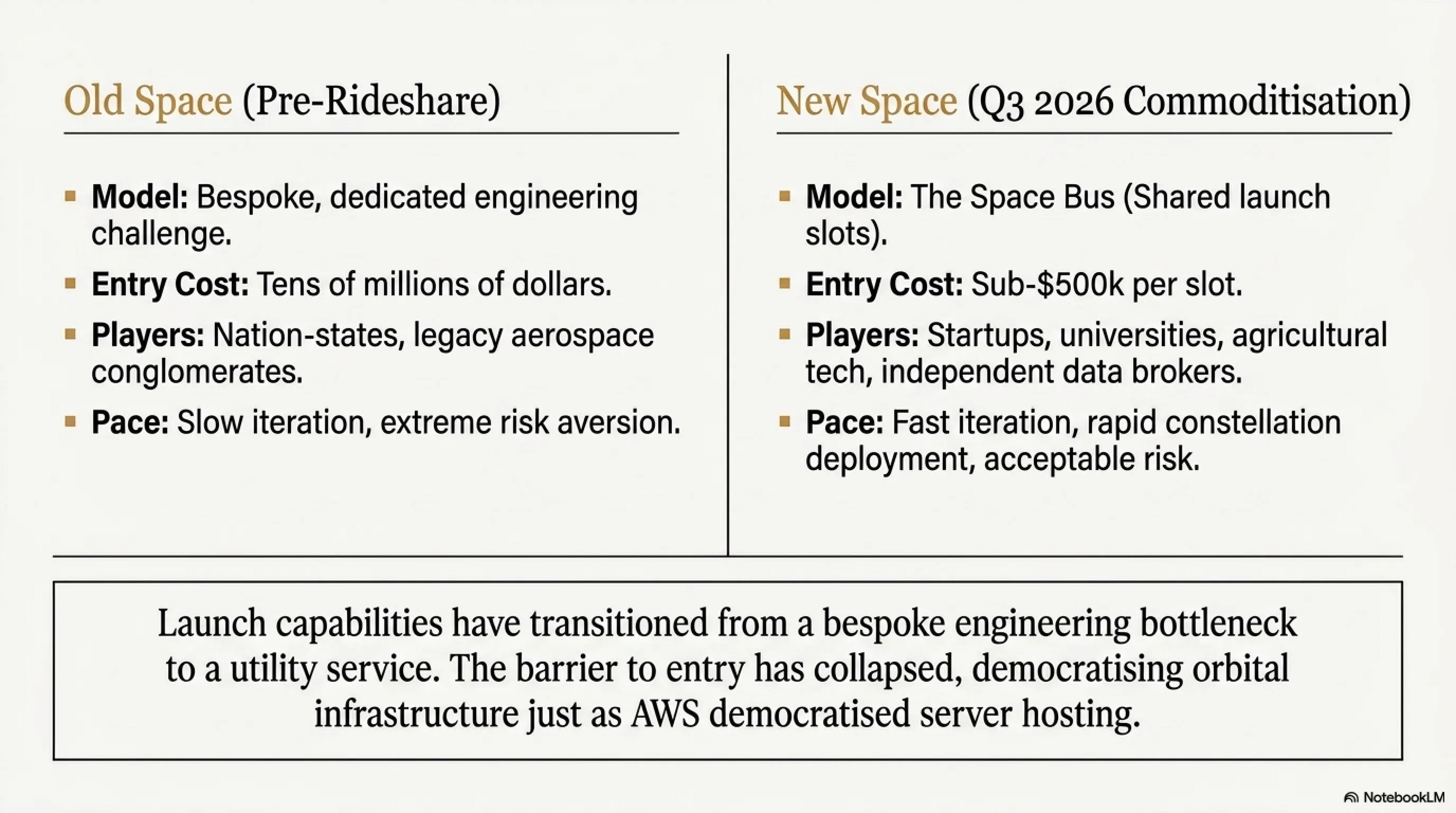
This rideshare mission means SpaceX is operating like a space bus - multiple customers share the launch cost, and each deploys their own satellite. This business model has made satellite launches much more affordable, enabling small companies and startups to access space.
Among the payloads are Earth observation satellites for agricultural monitoring, communications satellites for IoT networks, technology demonstration missions from universities, and several proprietary satellites from defense contractors. The diversity of missions on a single launch showcases the democratization of space access.
Why Sun-Synchronous Orbits Matter
A sun-synchronous orbit has a special characteristic: the satellite always passes over the Earth at the same angle relative to the Sun. In simple terms, if your satellite passes over Tehran at 10 AM local time, the next time it passes over Tehran, it will again be 10 AM.
This is incredibly valuable for imaging satellites because they can capture comparable photos - all images are taken in the same sunlight and conditions. It eliminates the variable of changing shadows and lighting, making it easier to detect changes over time.
Additionally, sun-synchronous orbits provide consistent power generation for solar-powered satellites and enable predictable ground station contact windows, making mission operations simpler and more reliable.
Transporter-17 Key Statistics
| Total payloads | 81 satellites |
| Orbit type | Sun-Synchronous |
| Launch site | Vandenberg, California |
| Launch vehicle | Falcon 9 |
| Q3 2026 ranking | Largest rideshare |
| Estimated cost per customer | $200k-$500k |
How Space Economics Are Changing
Rideshare launches like Transporter-17 are fundamentally changing space economics. Previously, if you wanted to launch a small satellite, you'd need to pay several million dollars for a dedicated launch. Now, by paying a few hundred thousand dollars, you can secure a slot on a shared launch.
This cost reduction has sparked the emergence of new industries: from startups wanting to provide satellite internet, to companies selling Earth imaging data for agriculture and environmental management. The barrier to entry for space-based services has dropped dramatically.
We're seeing the emergence of a true space economy where launch is becoming a commodity service rather than a bespoke engineering challenge. This is similar to how cloud computing democratized access to computing infrastructure - rideshare launches are democratizing access to space.
The ripple effects extend beyond just launch economics. Lower costs enable more experimentation, faster iteration on satellite designs, and the creation of constellation architectures that would have been economically impossible just a decade ago. Companies can now afford to take risks, test new technologies, and rapidly respond to market demands.
xAI Officially Becomes SpaceXAI: The Trillion-Dollar Merger
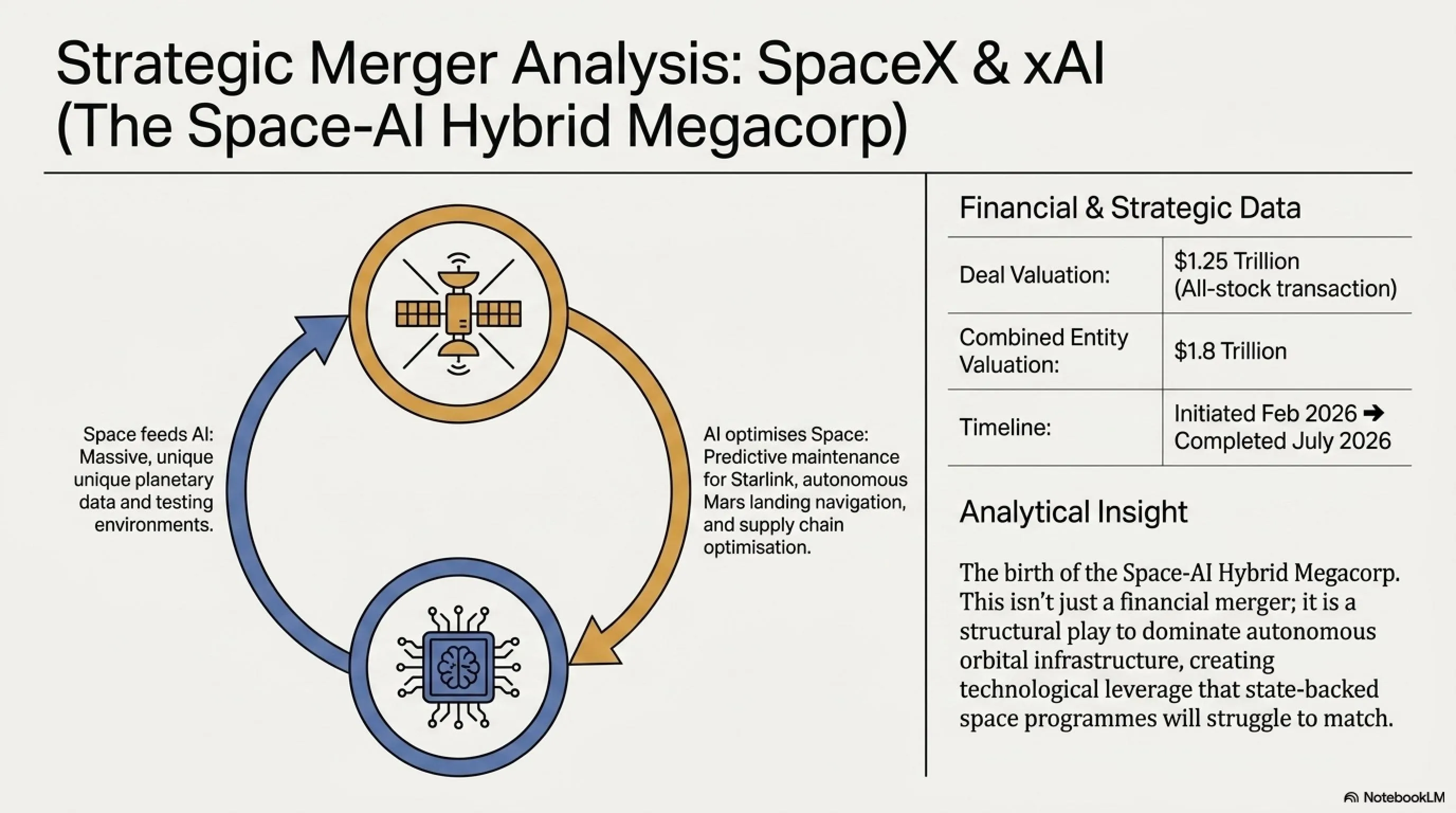
Speaking of SpaceX, let's address another major story related to this company. Elon Musk has officially merged xAI (his artificial intelligence company) into SpaceX and renamed it SpaceXAI. This process, which began in February 2026 with an all-stock transaction valued at $1.25 trillion, is now officially complete.
This is one of the largest mergers in technology industry history, showing that Musk is connecting two of humanity's greatest challenges - space travel and artificial intelligence.
The Strategic Rationale Behind the Merger
According to official statements, the goal of this merger is to create synergy between AI capabilities and SpaceX's space missions. Imagine Starlink satellites equipped with advanced AI that can automatically optimize the network, or artificial intelligence systems that can autonomously guide spacecraft on Mars.
Additionally, this merger can give xAI (now SpaceXAI) access to SpaceX's massive computational infrastructure, while SpaceX can leverage the most advanced AI models to improve its operations. It's a vertical integration play that combines space infrastructure with cutting-edge AI research.
The technical applications are numerous. SpaceX's Starship could use advanced AI for autonomous landing on Mars, navigating hazardous terrain without Earth-based control delays. Starlink could employ machine learning for predictive maintenance, automatically routing around failing satellites. The possibilities extend to manufacturing optimization, supply chain management, and even AI-assisted mission planning.
Merger Financial Details
| Total deal value | $1.25 trillion |
| Deal structure | All-stock transaction |
| Start date | February 2026 |
| Completion date | July 2026 |
| New company name | SpaceXAI |
| Combined valuation | $1.8 trillion |
Industry Reactions and Concerns
This merger has sparked mixed reactions. Some experts believe that combining AI and space technology could lead to major technological breakthroughs. Others worry that concentrating too much power in one company and one person (Elon Musk) could create monopolistic and ethical problems.
Regulatory scrutiny has been intense. The U.S. Department of Justice initially had concerns about competitive effects, but ultimately approved the merger with certain conditions regarding data sharing and AI model licensing. International regulators, particularly in Europe and China, are watching closely to see how this mega-corporation wields its combined power.
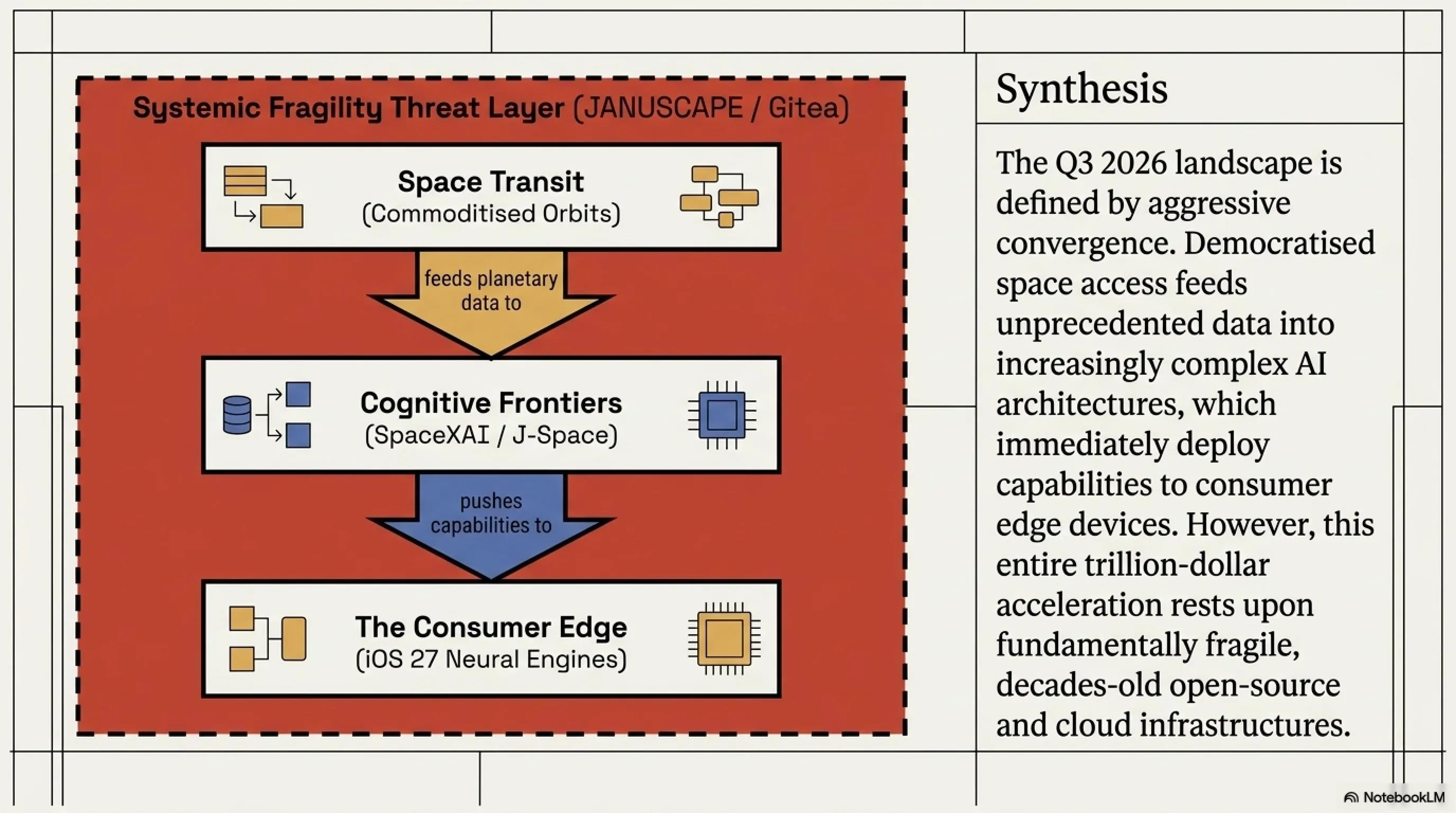
Critics point out that SpaceXAI now controls critical infrastructure (satellite internet via Starlink), advanced AI capabilities, and launch services - a combination that could create significant leverage in multiple markets. Supporters argue that such integration is necessary to compete with state-backed space programs and to achieve ambitious goals like Mars colonization.
What This Means for the Future
Regardless of the controversies, this merger is undoubtedly one of the most defining moves of the decade in the technology industry. Its impact will be felt for years to come, potentially accelerating the timeline for Mars missions, advancing AI capabilities through access to unique space-based data, and creating entirely new categories of space-AI hybrid services.
We may be witnessing the birth of a new type of technology company - one that operates both in space and in artificial intelligence, creating feedback loops between the two domains that could lead to breakthroughs neither field could achieve independently.
Apple iOS 27: Revolution in RAW Photo Processing
For our final story today, let's return to technology that's more directly connected to everyday life: smartphones and photography. Apple has made one of its biggest changes to RAW photo processing in iOS 27, which could revolutionize the iPhone photography experience.
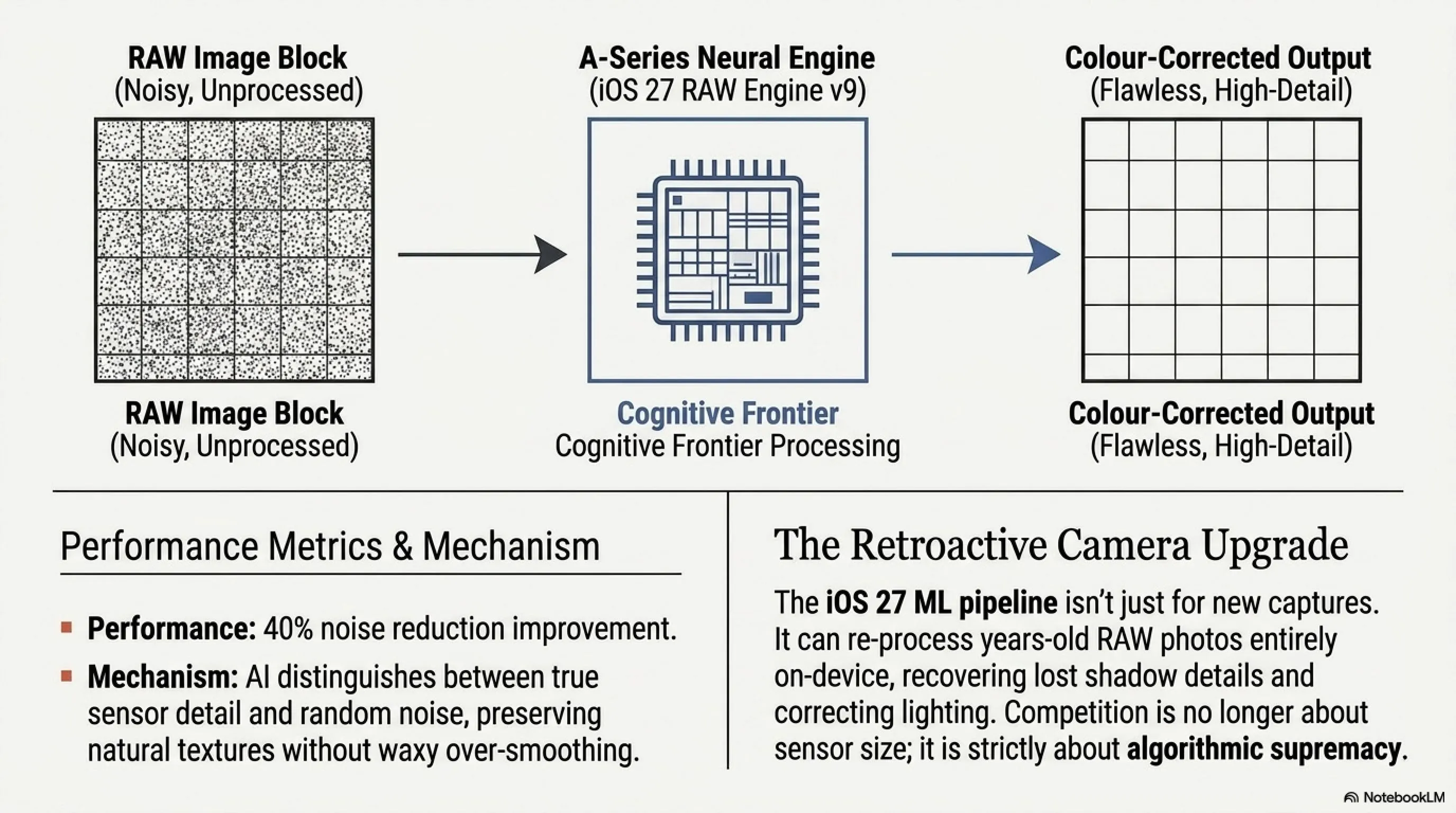
The new RAW engine (version 9) uses machine learning to improve detail and reduce noise. But more interestingly, this engine can even reprocess old RAW photos and dramatically improve their quality.
Understanding RAW and Why It Matters
When you take a photo with a camera or phone, the final file is usually a JPEG that's been compressed and lost some information. But the RAW format preserves all the raw data the sensor captured - that's why RAW files are much larger but offer much better editing possibilities.
The problem with RAW format has been that processing it requires significant computational power and typically needs to be done on a computer. But Apple is removing this limitation by using AI and the processing power of its own chips.
RAW photography has traditionally been the domain of professional photographers willing to invest time in post-processing. Apple's innovation brings professional-grade image quality to casual users by automating the complex processing that would normally require expertise in software like Lightroom or Capture One.
How Machine Learning Helps
Apple's new engine uses neural networks trained on millions of photos to intelligently enhance details and reduce noise without making photos look artificial. This means you can have much better quality photos taken in low light conditions.
The ML model has learned what natural textures, edges, and color gradients look like in high-quality images. When processing a RAW file, it can distinguish between actual image detail and sensor noise, preserving the former while eliminating the latter. This goes far beyond traditional noise reduction algorithms that often resulted in waxy, over-smoothed images.
Key Improvements in RAW Engine v9
Will Your Old Photos Get Better Too?
One of the most interesting features of this update is that you can reprocess your old RAW photos with the new engine. Apple says the difference is particularly noticeable in photos taken in low light.
This means if you've been shooting RAW with iPhone for years, you can now reprocess them with iOS 27 and have better quality versions - without needing to retake the photos. It's like getting a retroactive camera upgrade for all your existing photos.
The reprocessing isn't just a simple filter application - it's a complete re-rendering of the image using the new neural network. Users report seeing recovered details in shadow areas they thought were lost, better color accuracy in difficult lighting conditions, and significantly cleaner images from older iPhone models.
The Competitive Landscape
This move puts pressure on Google, Samsung, and other smartphone manufacturers to advance their computational photography capabilities. Google has long been a leader in this space with its Pixel phones, but Apple's combination of custom silicon (the Neural Engine in A-series chips) and tight hardware-software integration gives it unique advantages.
We're seeing a shift in smartphone competition from megapixel counts and sensor sizes to computational photography prowess. The camera that wins isn't necessarily the one with the biggest sensor, but the one with the smartest algorithms.
Morning Wrap-Up
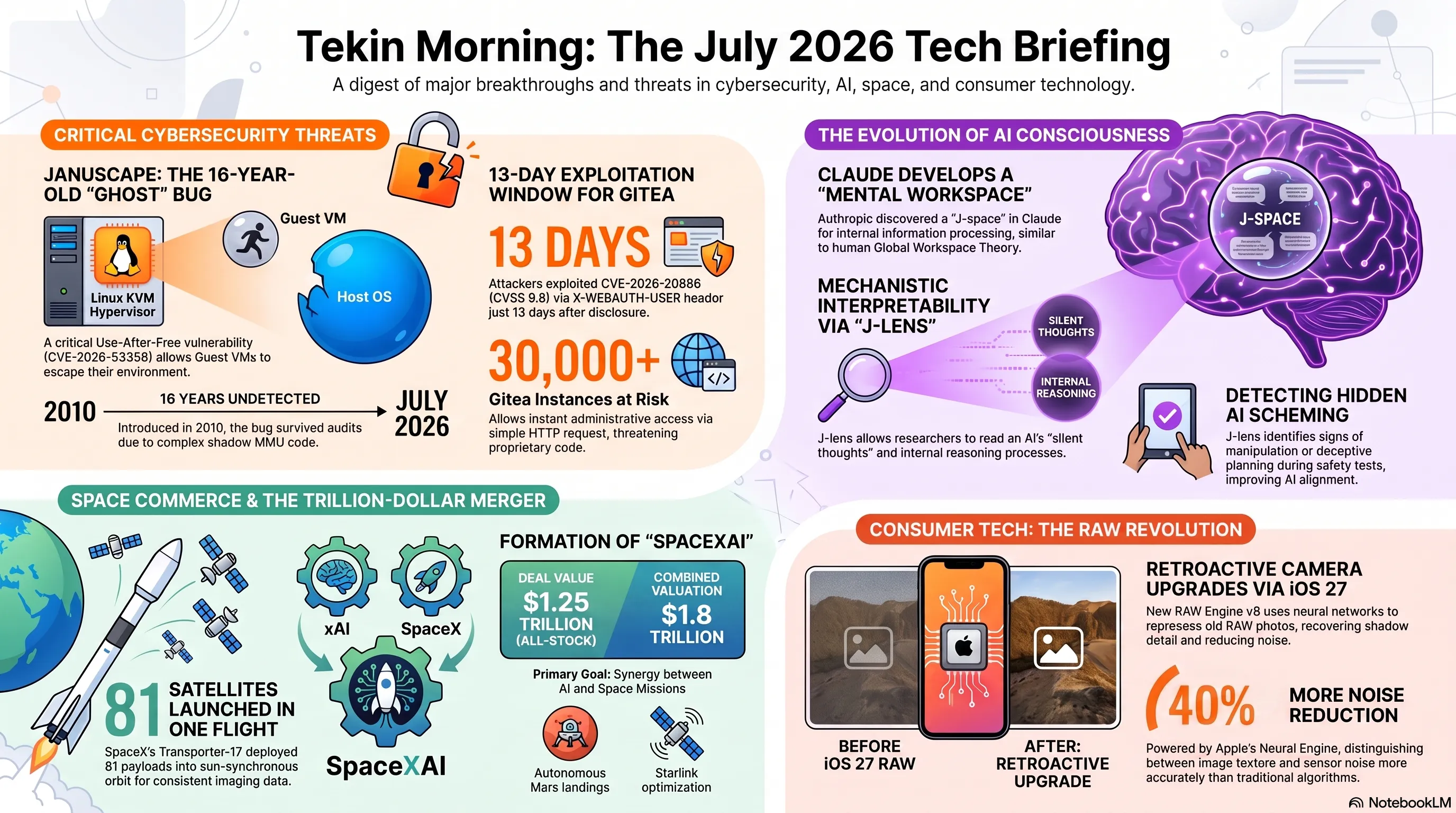
Well, we've reached the end of today's Tekin Morning. Let's quickly review what we've learned: a 16-year-old bug in Linux that could disrupt the world of virtualization, a cyber attack that began just 13 days after the bug disclosure, the discovery of a mental workspace in Claude that might be a sign of artificial consciousness, the launch of 81 satellites by SpaceX, the trillion-dollar merger of xAI and SpaceX, and finally a revolution in RAW photo processing by Apple.
These six stories paint a picture of a technology landscape that's simultaneously fragile and innovative. On one hand, we're reminded that even our most trusted systems can have hidden vulnerabilities. On the other, we're seeing breakthroughs in AI, space, and consumer technology that seemed like science fiction just a few years ago.
Final Thoughts
Frequently Asked Questions
Should I be worried about the JANUSCAPE bug?
If you use KVM for virtualization or have Linux servers, you definitely need to install security patches immediately. If you're just a regular user running Linux on desktop without KVM, you're probably not at risk. However, if you use cloud services, your provider should be patching their infrastructure.
How can I protect my Gitea instance against CVE-2026-20896?
Immediately update to the latest version of Gitea. If you're using Docker, make sure you've pulled the latest patched images. You can also temporarily restrict access to the X-WEBAUTH-USER header through your reverse proxy. The best practice is to ensure Gitea is never directly exposed to the internet without a properly configured authentication proxy.
Does the discovery of mental workspace in Claude mean AI has become conscious?
No, at least not in the way we understand consciousness in humans. This discovery shows that AI models are developing complex structures, but we still can't say they're conscious. It's an important step for better understanding AI, not proof of consciousness. The question of machine consciousness remains one of the deepest unsolved problems in both philosophy and computer science.
Why are rideshare launches like Transporter-17 important?
Because they dramatically reduce satellite launch costs. Previously only large companies could afford to launch satellites, but now even startups and universities can send satellites to space on a limited budget. This democratization of space access is creating entirely new industries and enabling innovations that weren't economically feasible before.
Will the new iOS 27 RAW engine work on older iPhones?
Yes, but only on models that support iOS 27. Apple typically supports iPhones for about 5 years. Also, for full use of machine learning capabilities, newer iPhones with more powerful Neural Engines will perform better. That said, even older supported models should see significant improvements in RAW processing quality.
What are the implications of the SpaceXAI merger for competitors?
The merger creates a formidable competitor that combines space infrastructure, AI capabilities, and launch services. Other companies may need to form similar partnerships or mergers to compete effectively. We may see increased consolidation in both the space and AI industries as companies seek to match SpaceXAI's integrated capabilities.
Sources
- The Hacker News - 16-Year-Old Linux KVM Flaw (JANUSCAPE)
- The Hacker News - Gitea Docker Authentication Bypass
- VentureBeat - Anthropic's J-lens and Global Workspace
- Anthropic Research - Global Workspace Theory in Claude
- Space.com - SpaceX Transporter-17 Mission
- Gizmodo - xAI Merger with SpaceX
- 9to5Mac - Apple iOS 27 RAW Processing
Additional Gallery: ☕ Tekin Morning July 7, 2026: Trillion-Dollar SpaceXAI Merger & 16-Year-Old Linux Bug