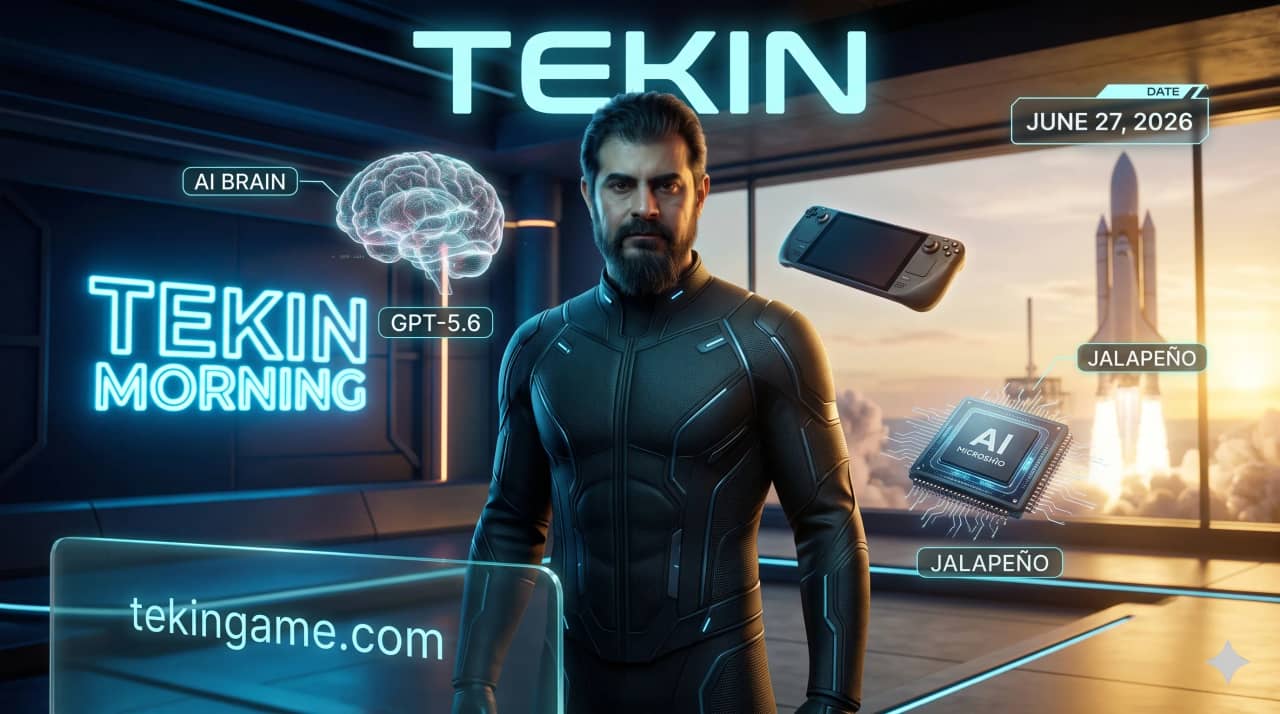
☀️ Tekin Morning: Energize Your Saturday with 6 Hot Tech Stories
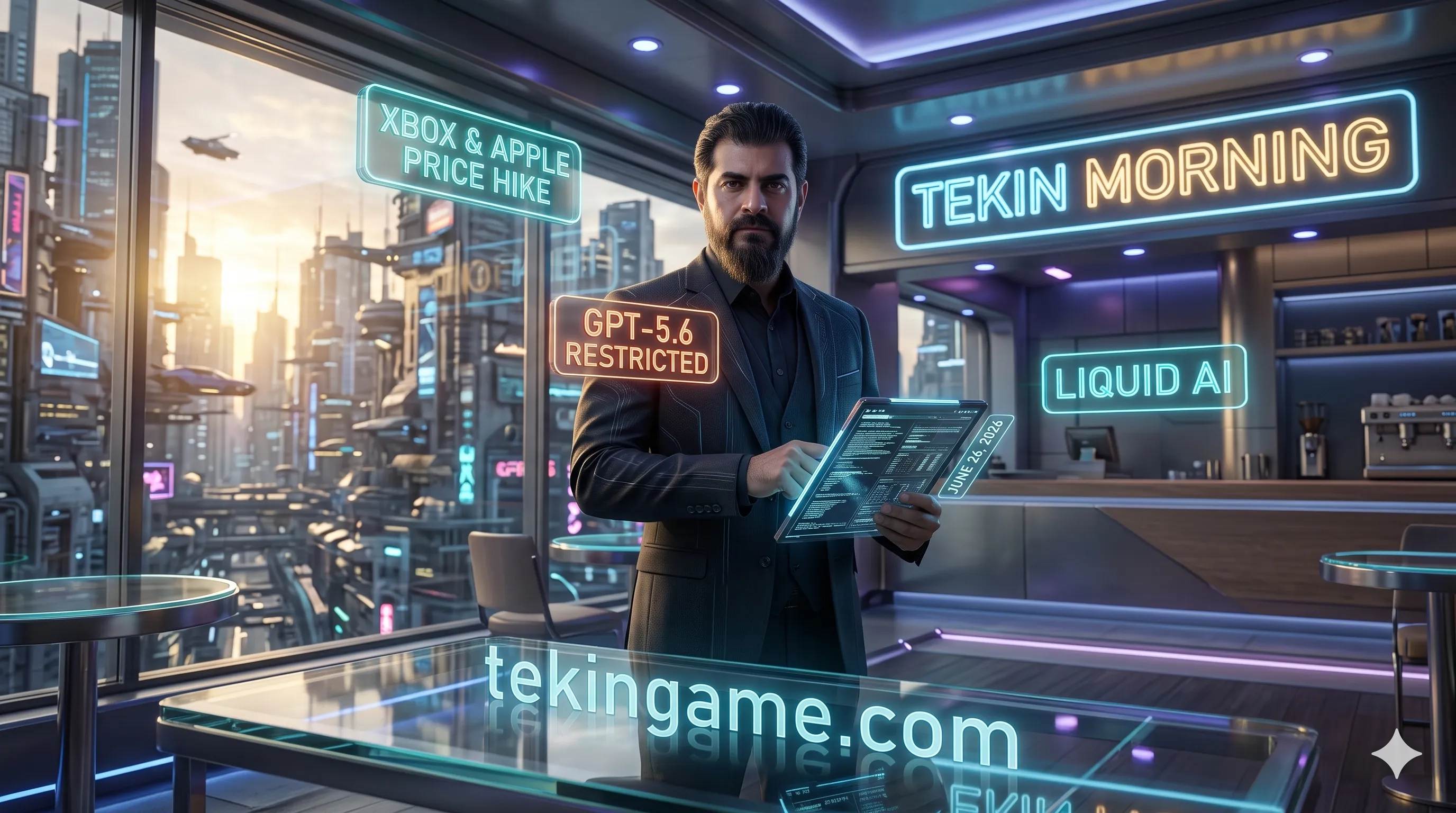
Good morning! Welcome to Tekin Morning. Today, Saturday June 27, 2026, we have an exciting lineup of tech news to kickstart your weekend.
- 🎮🤖 GPT-5.6 Unveiled- OpenAI launches three models: Sol, Terra, and Luna
- 🎧🎮 Switch 2 Breaks Records- Second fastest-selling console in US history
- 🚀💼 Apple's Brain Drain- Vision Pro chief jumps ship to OpenAI hardware team
- 🗡️🚀 Starship Ready to Fly- SpaceX tests Version 3 engines successfully
- 📰🔥 The Chip Wars Heat Up- OpenAI unveils first custom Jalapeño chip
- 🎮💰 Crypto Rebounds- Aave and Solana lead market recovery
There's something magical about Saturday mornings when you wake up to discover the tech world has reshuffled overnight. Today is one of those mornings where you'll want your coffee strong and your mind sharp. OpenAI has surprised everyone again, Nintendo just made history, and Apple is hemorrhaging top talent to its competitors. Let's dive into these six breaking stories that are about to make your weekend a whole lot more interesting.
OpenAI's New Family: When GPT-5.6 Arrives with Three Faces
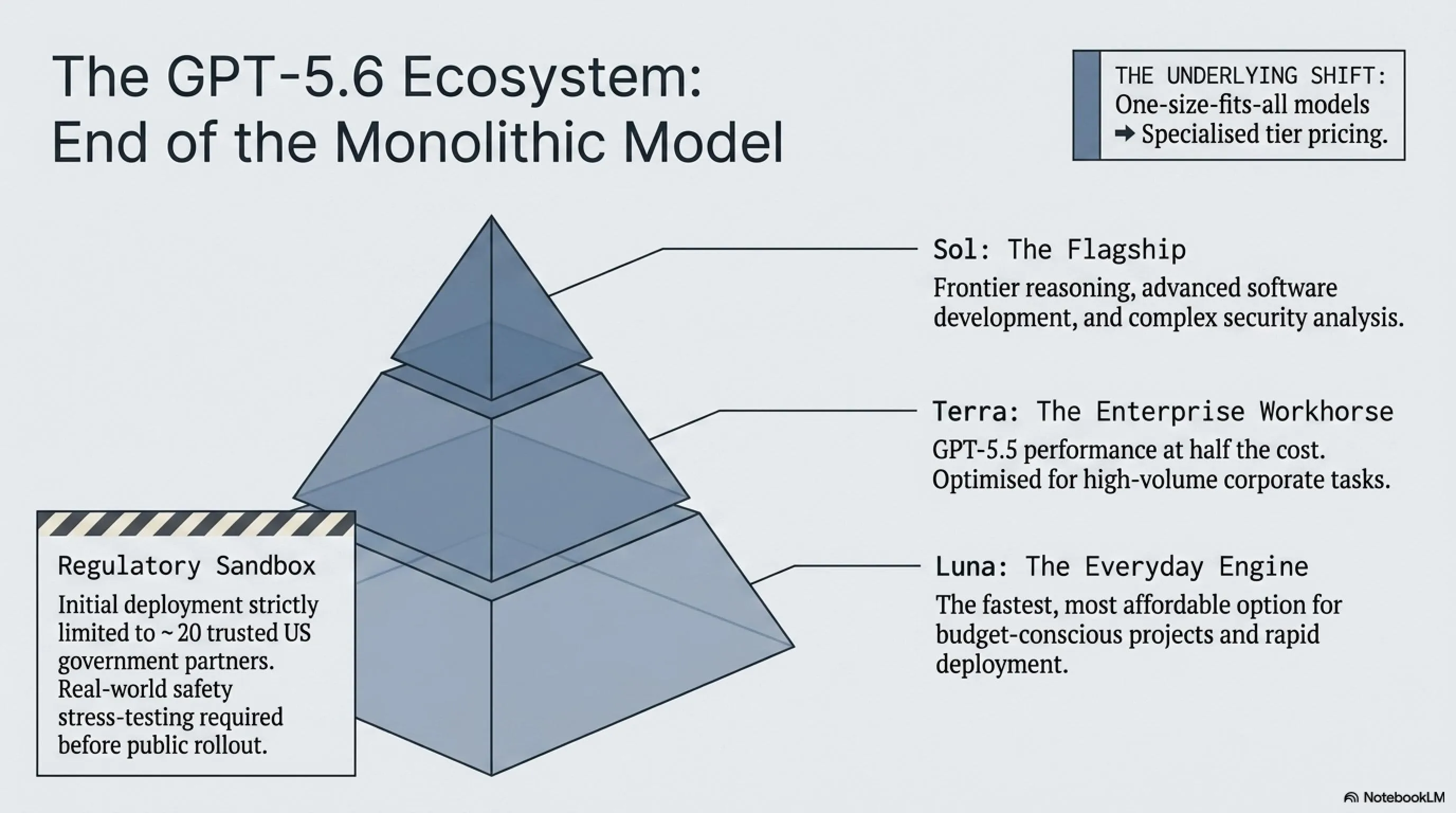
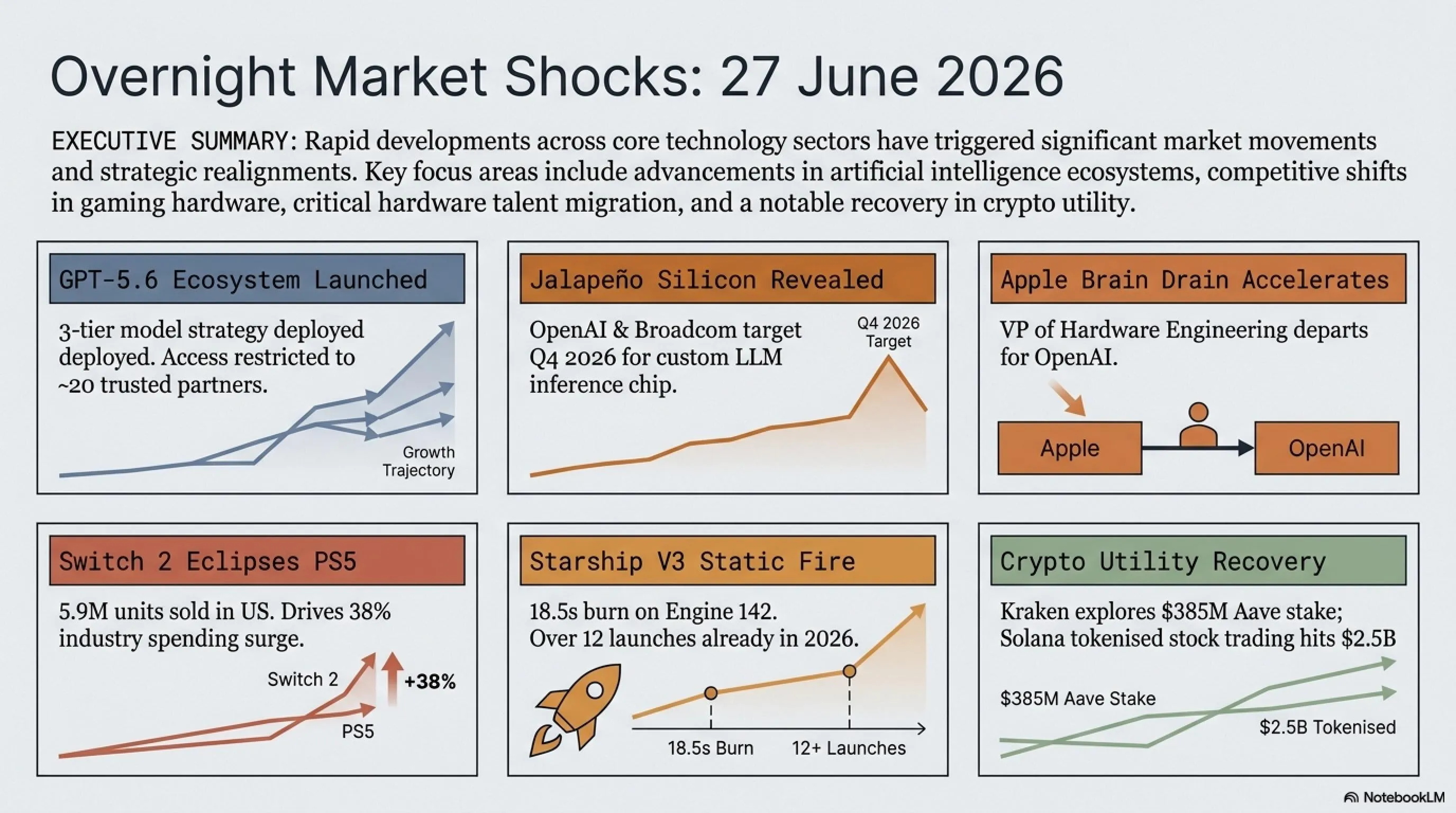
Imagine a company deciding not to release just one new AI model, but three distinct models with different personalities and capabilities. That's exactly what OpenAI did on Friday, June 26th. The GPT-5.6 family was introduced with three members: Sol, the flagship model designed for the hardest problems like complex coding and cybersecurity; Terra, a balanced model for high-volume business tasks at half the cost of GPT-5.5; and Luna, the fastest and most affordable option for everyday work.
But the story doesn't end there. The U.S. government requested that OpenAI limit initial access to approximately 20 trusted partners before rolling out to the general public in the coming weeks. What does this mean? These models are so powerful that the government is concerned about national security implications. Sol achieves new state-of-the-art benchmarks while Terra delivers GPT-5.5-level performance at half the price. This multi-tiered strategy from OpenAI signals that the era of one-size-fits-all models is over, and now every user needs their own specialized model.
🔍 What Makes Sol, Terra, and Luna Different?
Terra: Balanced model with GPT-5.5 performance at half the cost. Ideal for enterprises and developers with high-volume workloads.
Luna: Fastest and most affordable option for everyday tasks and budget-conscious projects.
What's fascinating here is that OpenAI is pioneering a tiered pricing model in the AI industry. Just a few months ago, everyone had to work with a single model. Now you can choose based on your specific needs. This means startups can begin with Luna, medium-sized companies can work with Terra, and tech giants can leverage Sol. OpenAI's new business model mirrors what AWS did with cloud services: democratizing access through flexible pricing. The company is essentially creating market segmentation similar to what we see in traditional SaaS products, where different customer tiers get different feature sets and pricing.
The restricted release is particularly intriguing. By limiting access to vetted partners first, OpenAI is conducting a real-world safety assessment before general availability. This approach addresses concerns raised by AI safety researchers who have long argued for more cautious deployment of frontier models. The partners reportedly include major tech companies, research institutions, and government agencies who will stress-test the models under various conditions. Their feedback will help OpenAI identify potential risks or misuse cases before millions of users gain access.
📊 GPT-5.6 Key Stats
Sol, Terra, Luna
Than GPT-5.5 (Terra)
Limited preview access
Public rollout timeline
Nintendo Switch 2 Makes History: The Success Story That Eclipsed PS5
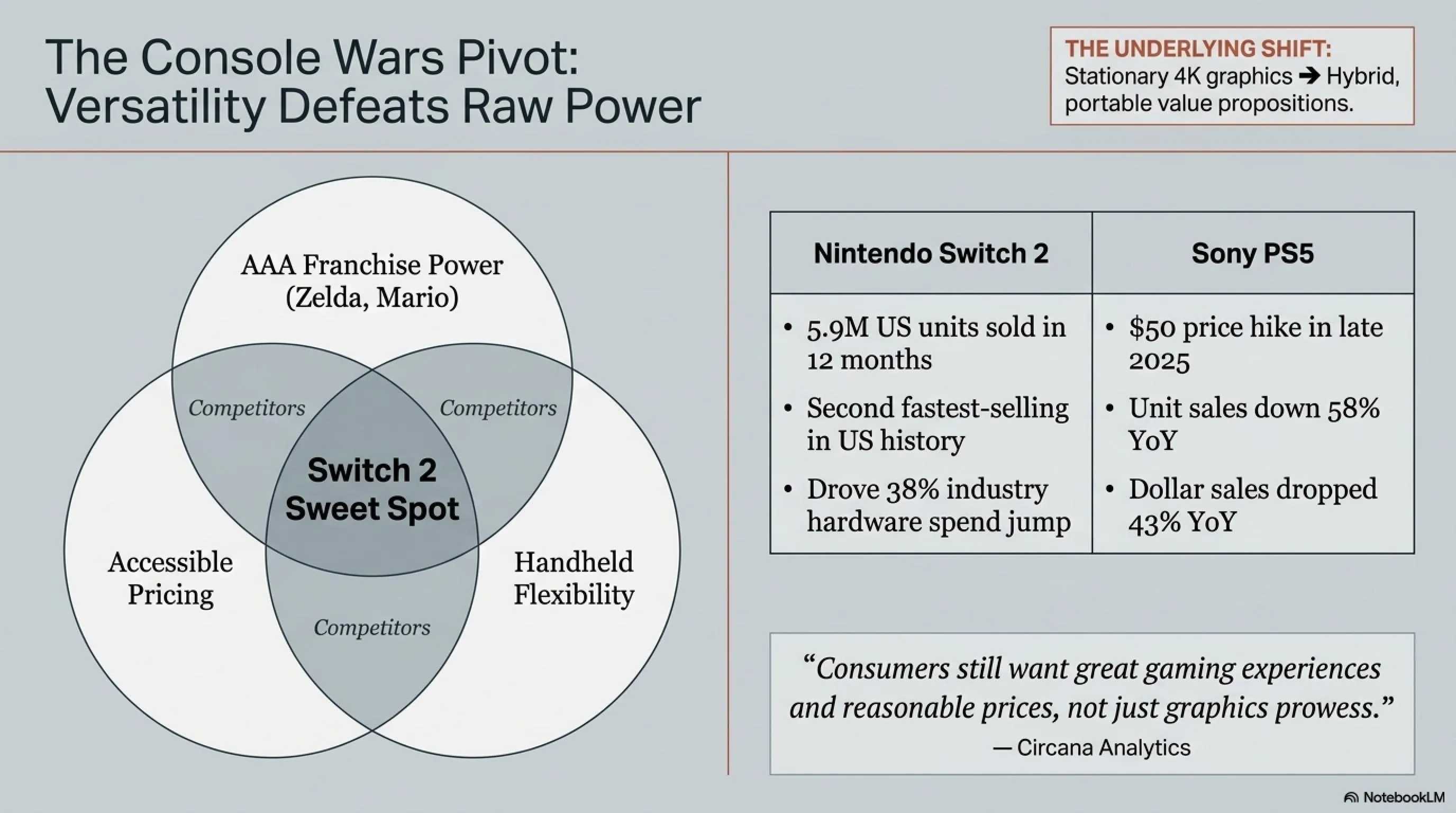
Sometimes numbers tell a success story better than any words could. The Nintendo Switch 2 sold 5.9 million units in the United States during its first 12 months, officially becoming the second fastest-selling console in recorded U.S. history. Only the Game Boy Advance, with 6.5 million units sold, stands ahead of it. This achievement becomes even more significant when you consider that PS5 saw a 58% drop in unit sales during the same period, and Xbox isn't faring much better.
Even more impressive is that Switch 2 managed to boost overall industry hardware spending in May 2026 by 38% year-over-year to $249 million. This means a single console is essentially carrying the entire market on its shoulders. What's driving this success? First, Nintendo maintained smart pricing strategy while Sony and Microsoft raised their prices. Second, Nintendo's exclusive game library has always been its strongest asset. The company understands that people buy consoles for games, not just raw specs.
But the story goes beyond mere sales figures. Switch 2 is proving that portable gaming hasn't lost its appeal. In a world where everyone is moving toward cloud gaming and game streaming, Nintendo is demonstrating that people still want to hold their console and play anywhere. This design philosophy, which started with the original Switch, has now reached its peak with the second generation. Better processing power, longer battery life, and a larger display have transformed Switch 2 from a mere upgrade into a revolution.
The contrast with Sony's struggles is particularly stark. After raising PS5 prices by $50 across most models in late 2025, Sony saw consumer backlash translate directly into plummeting sales. The May 2026 data showed PS5 unit sales down 58% year-over-year, with dollar sales dropping 43%. This represents one of the steepest declines for a mid-generation console in modern gaming history. Meanwhile, Xbox faces its own challenges as Microsoft continues shifting focus toward Game Pass subscriptions and cloud gaming rather than hardware sales.
Breaking Down Nintendo's Winning Formula
Nintendo's success with Switch 2 isn't accidental—it's the result of carefully calibrated decisions across hardware, software, and market positioning. The company learned from the Wii U's failures and the original Switch's triumphs. They recognized that modern gamers want flexibility: the ability to play AAA titles on their TV at home, then seamlessly continue the same game on their morning commute. Switch 2 perfected this hybrid concept with an OLED screen that rivals dedicated handhelds, processing power that approaches base PS5 performance in portable mode, and backward compatibility that instantly gave it a massive game library at launch.
The software strategy is equally important. Nintendo launched Switch 2 with new entries in their strongest franchises: a new Mario Kart, a Zelda game that pushed the hardware to its limits, and a Pokemon title that finally delivered the performance fans had been demanding. Third-party support has also been stronger than ever, with major publishers like EA, Ubisoft, and Activision committing to day-and-date releases for their biggest titles. The combination of Nintendo's first-party excellence and robust third-party support created an irresistible value proposition.

The Great Talent Migration: When Apple's Crown Jewels Move to OpenAI
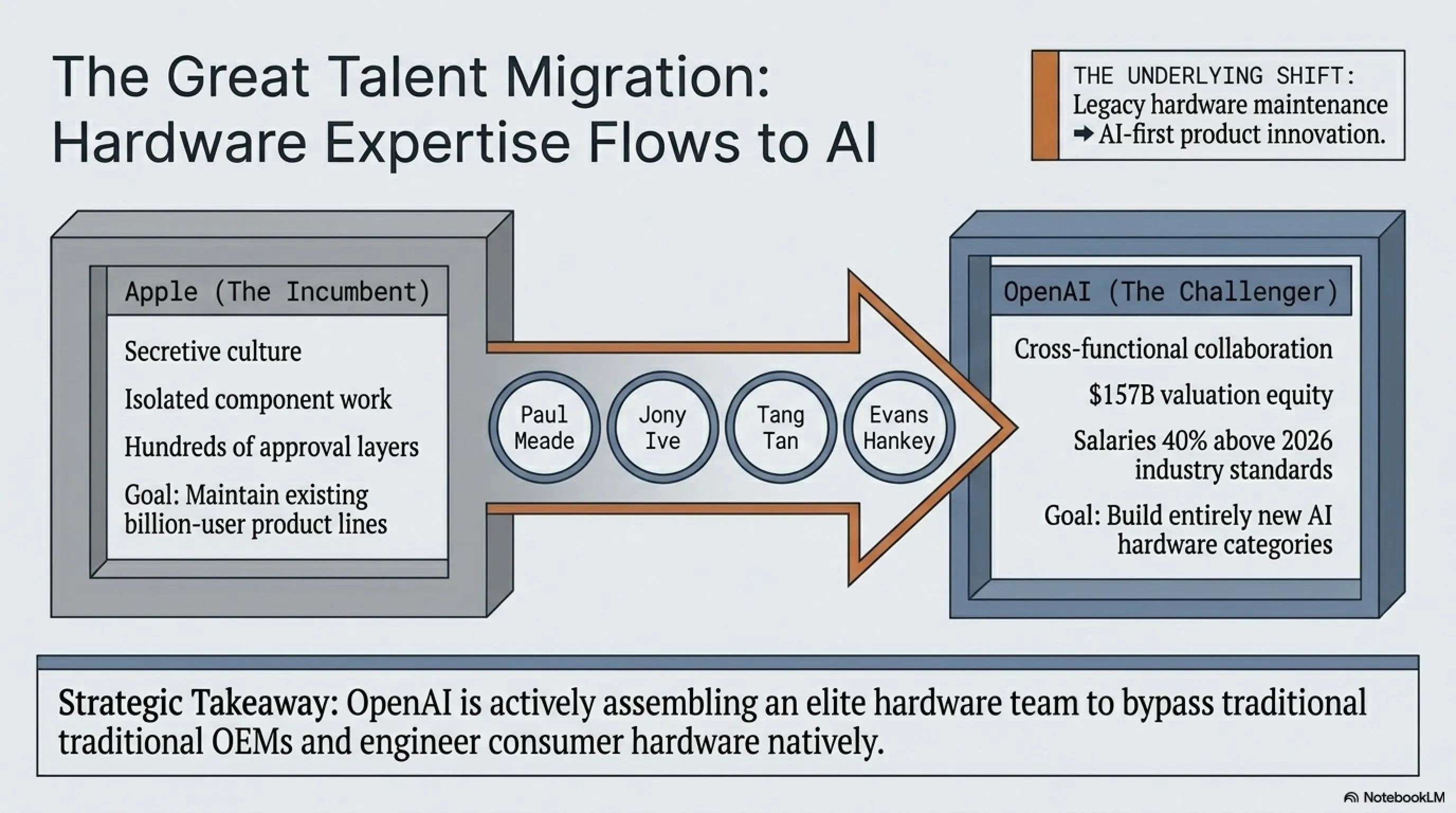
If we're being honest, one of any tech company's greatest assets is its human capital. Now imagine one of Apple's most crucial executives, the person who led Vision Pro and smart glasses initiatives, decides to leave and join a competitor. Paul Meade, Apple's VP of hardware engineering with 15 years at the company, is set to depart by next week and join OpenAI's hardware division. This news gains even more weight when you realize Meade previously managed key iPhone and iPad programs.
This isn't the first time OpenAI has recruited a senior Apple executive. Jony Ive, Tang Tan, and Evans Hankey all made similar moves previously. This signals that OpenAI is seriously entering the consumer hardware market and will likely compete directly with Apple. The question is: what does OpenAI have that Apple doesn't? The answer is simple: freedom to innovate and virtually unlimited budget. At Apple, every project must pass through hundreds of approval layers, but at OpenAI, backed by Microsoft's financial support and major investors, the work environment is more flexible and experimental.
📊 Why Has OpenAI Become More Attractive to Engineers?
Fletcher Rothkopf, who heads product design for Vision Pro and smart glasses, will take over Meade's responsibilities at Apple. But the question remains: can one person fill the void left by a 15-year veteran with iPhone, iPad, and Vision Pro experience? Probably not. These successive departures indicate that Apple is losing the talent war. Perhaps it's time for Tim Cook to focus more on retaining key personnel rather than just launching new products.
The implications go beyond just one executive departure. Meade's move represents a broader shift in Silicon Valley's power dynamics. For decades, Apple has been the dream destination for hardware engineers—the company where you work on products used by billions. But OpenAI is changing that calculus. The promise of building entirely new product categories, working with cutting-edge AI technology, and having the resources to pursue moonshot projects is proving more compelling than maintaining existing product lines, no matter how successful.
Apple's challenge is compounded by its traditionally secretive culture. Engineers often work on isolated components without understanding the full product vision, which can feel limiting for those who want to see the bigger picture. OpenAI, by contrast, emphasizes cross-functional collaboration and gives hardware engineers direct input into AI model development. This integrated approach appeals to engineers who want to work at the intersection of hardware and software, building products where AI is fundamental rather than a feature.
The Chip Wars Enter a New Phase: Jalapeño vs. Nvidia's Empire
Let's be realistic—Nvidia has been the undisputed king of AI chips for years. But now tech giants are saying "enough is enough, we're building our own chips." OpenAI unveiled Jalapeño on Thursday, its first custom chip built in partnership with Broadcom. This chip is specifically designed for large language model inference workloads and will deploy in data centers by the end of 2026.
Jalapeño isn't just a side project. It's the first generation of a multi-generation compute platform that OpenAI is building. Why does this matter? Because the costs of running large models like GPT on Nvidia chips are astronomical. By having a dedicated chip, OpenAI can reduce costs while gaining greater control over hardware architecture. Engineering samples of Jalapeño are currently running ML workloads in the lab at production target frequency and power, including GPT-5.3-Codex-Spark.
⚡ Quick Comparison: Nvidia vs. Custom Chips
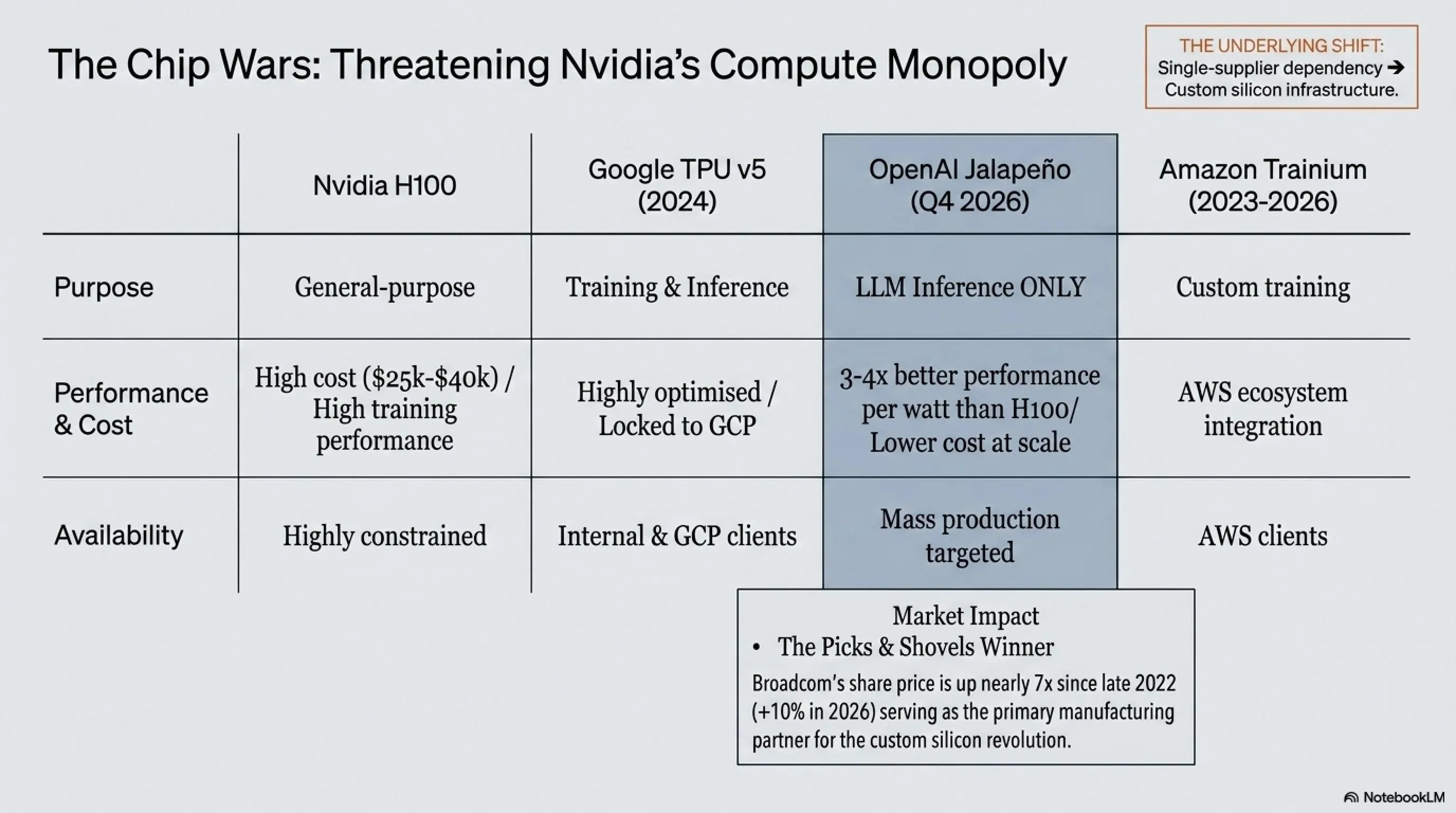
Google TPU v5: Optimized for TensorFlow, high performance for Google-specific tasks, GCP customers only
OpenAI Jalapeño: Optimized for LLM inference, lower energy consumption, lower cost at scale, mass production Q4 2026
Amazon Trainium: Custom training chip, AWS ecosystem integration, competitive pricing for AWS customers
But OpenAI isn't alone. Google, Apple, SpaceX, and Amazon are all building their own custom chips. Broadcom, as the primary partner for these projects, has become the biggest winner. Broadcom's stock has increased nearly sevenfold since the end of 2022 and gained another 10% in 2026. This trend sends a clear message to Nvidia: the monopoly is over. Large companies no longer want to depend on a single supplier, especially when chip supply is limited and prices are high.
What's more interesting is that these chips aren't just for their creators. Jalapeño is designed with flexibility to work with all LLMs, not just OpenAI's models. This means OpenAI might eventually sell these chips to other companies, creating a new revenue stream. Imagine an AI startup wanting to run its large model; instead of paying millions for Nvidia chips, it could use Jalapeño at lower cost with better efficiency. This could democratize access to AI infrastructure in ways we haven't seen before.
The technical specifications of Jalapeño reveal OpenAI's priorities. Unlike Nvidia's GPUs, which excel at both training and inference, Jalapeño is purpose-built exclusively for inference. This specialization allows for dramatic efficiency gains. Early benchmarks suggest Jalapeño delivers 3-4x better performance per watt than H100 for transformer-based models. For a company like OpenAI running millions of inference queries daily, these efficiency gains translate directly to hundreds of millions in annual cost savings.
⏱️ Timeline of Custom AI Chips
| Company | Chip | Launch Date | Purpose |
|---|---|---|---|
| TPU v5 | 2024 | Training & Inference | |
| Apple | M-series Neural Engine | 2020-2026 | On-device AI |
| OpenAI | Jalapeño | Q4 2026 | LLM Inference |
| Amazon | Trainium/Inferentia | 2023-2026 | AWS Cloud AI |
| Meta | MTIA v2 | 2026 | Recommendation Systems |
SpaceX and the Next Step to Mars: When Starship V3 Breathes Fire
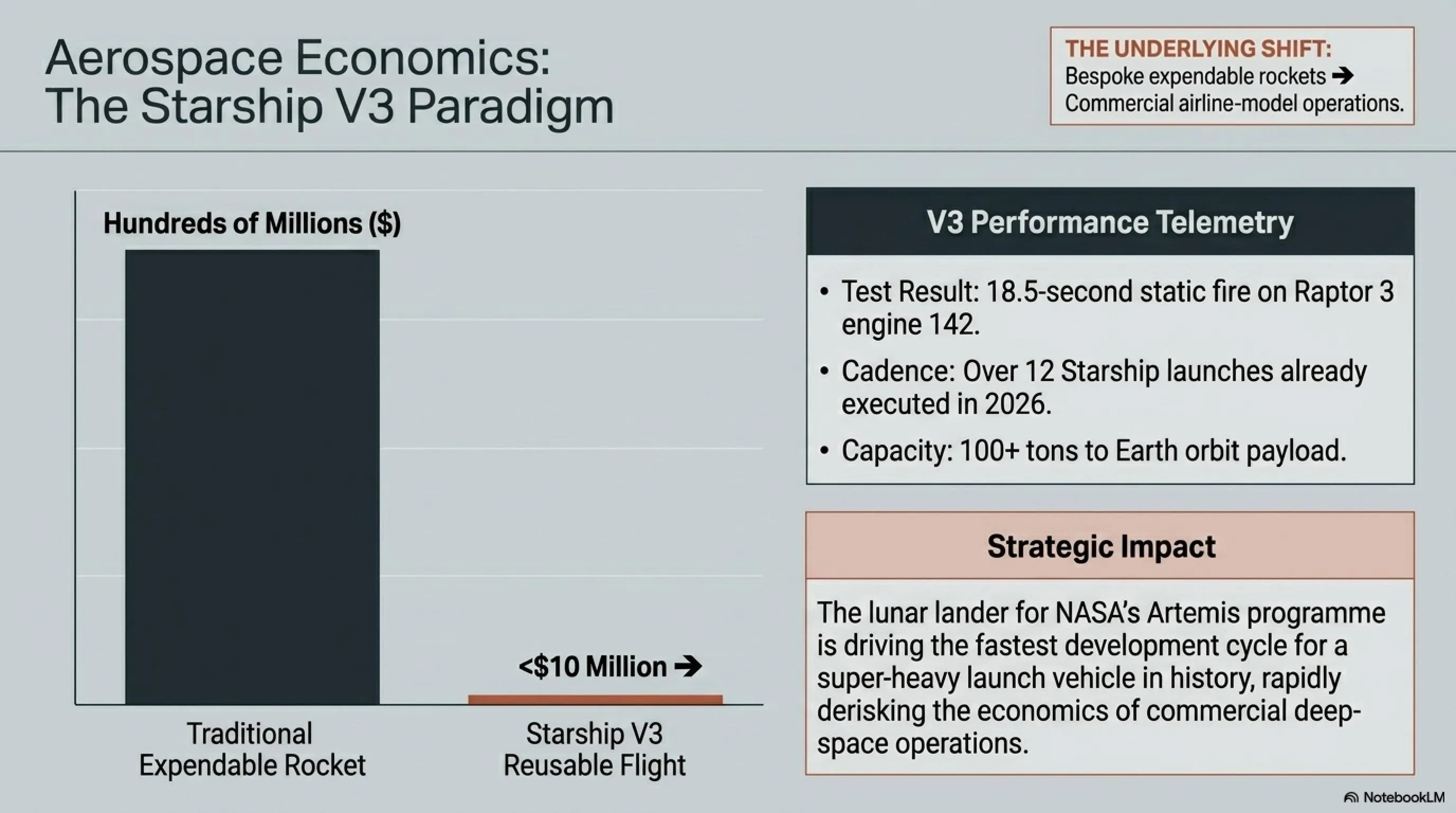
If you think SpaceX takes a break after each successful launch, think again. Approximately one month after the first Version 3 Starship launch, SpaceX conducted initial engine tests on the next rocket. This test, called a "static fire," confirms that the spacecraft's engines are working properly before an actual launch. SpaceX posted a video of the test on X (formerly Twitter) and once again demonstrated how rapid its project iteration pace has become.
Starship Version 3 is the latest evolution of SpaceX's fully reusable super-heavy launch system designed for Mars missions and satellite deployment. This rocket is the most powerful launch system ever built and can carry over 100 tons of payload to Earth orbit. Now imagine how powerful it must be to carry that volume. The Raptor 3 engines installed on this version have a simpler structure than previous versions and offer greater efficiency. These engines represent a masterclass in iterative engineering, where SpaceX took lessons from thousands of test fires and incorporated improvements in manufacturing, reliability, and performance.
The recent static fire test showed that engine number 142 fired for its planned 18.5 seconds and performed successfully. This wasn't just a test—it's evidence that SpaceX is moving toward frequent and regular launches. Elon Musk's strategy has always been to build fast, test fast, fail fast, and learn fast. This approach has kept SpaceX ahead of all its government and private competitors. The company's willingness to accept failures as learning opportunities stands in stark contrast to traditional aerospace's risk-averse culture.
What's more important is that these launches are no longer just for testing. SpaceX is preparing Starship for real missions, including NASA's Artemis program to return humans to the Moon. Starship is planned to serve as the lunar lander in this program. This means every successful test is a step toward returning humans to the Moon and eventually reaching Mars. The stakes couldn't be higher, and SpaceX's rapid progress suggests these ambitious goals might be closer than many expect.
The Economics of Reusability
What truly sets Starship apart isn't just its size or power—it's the economics of full reusability. Traditional rockets are expendable, meaning each launch requires building an entirely new vehicle. Starship aims to change that paradigm completely. Both the Super Heavy booster and the Starship upper stage are designed to land and be rapidly refurbished for the next flight. SpaceX's goal is to achieve airline-like operations, where the same vehicle flies multiple times per day with minimal maintenance between flights.
If successful, this would reduce launch costs from hundreds of millions of dollars to potentially under $10 million per flight. Such cost reductions would revolutionize space access, making everything from satellite deployment to space tourism to planetary exploration dramatically more feasible. We're watching the potential birth of a true spacefaring civilization, where access to orbit becomes routine rather than exceptional.
Crypto Market Comeback: When Aave and Solana Revive Hope
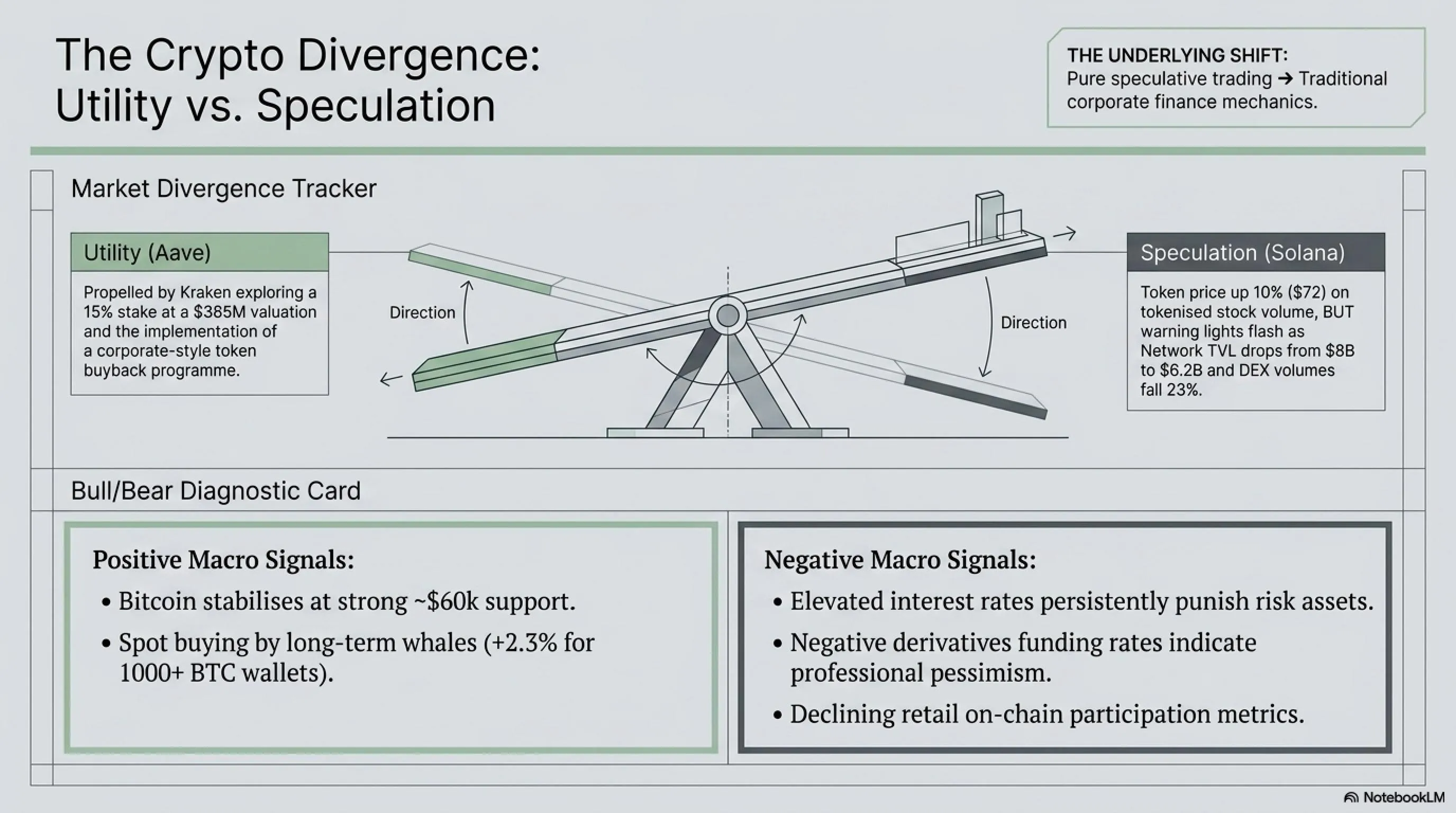
The crypto market sometimes feels like a wild rollercoaster: up one moment, down the next. But Friday, June 26th, we finally got to breathe easy. Bitcoin, which had fallen below $60,000 in previous days, stabilized near that level again, and tokens from the Solana ecosystem and Aave led the market recovery. Aave surged 19% in 24 hours, catching everyone's attention. The catalyst was CoinDesk reporting that crypto exchange Kraken is exploring a strategic investment in the Aave lending protocol, looking to acquire a 15% stake at a $385 million valuation.
Solana also had an interesting story. SOL price rose from $64.56 to $72, gaining approximately 10%. The driver behind this surge was tokenized stock trading on the Solana network, with weekly volume reaching around $2.5 billion. This means users are trading digital versions of company stocks on Solana. This new trend boosted infrastructure tokens like JTO, RAY, MET, and KMNO as well. But not everything was roses.
📉 Warning: What Do On-Chain Metrics Say?
Aave's founder also hinted at a token buyback program under a new framework, which attracted more investors to the project. Token buyback means the company wants to buy its own tokens from the market and remove them from circulation, which typically increases price by reducing supply. This strategy is very common in traditional stock markets but is still relatively new in crypto. The proposed buyback would use a portion of protocol revenues, demonstrating that DeFi projects are maturing and adopting traditional corporate finance strategies.
Bitcoin also had a unique situation. While it stabilized near $60,000, heavy selling pressure still exists on the market. Derivatives data shows that professional traders remain pessimistic about the short-term market outlook. The funding rate, which indicates trader preference for long or short positions, has remained negative. This means most traders expect further price declines. However, spot buying from long-term holders has increased, suggesting a divergence between speculative traders and conviction investors.
Is This Recovery Sustainable?
The important question is whether these gains truly signal a market recovery or just temporary upward movement. Crypto market history has taught us never to fully trust short-term rallies. But we have some positive signs: first, trading volumes on centralized exchanges are increasing; second, DeFi projects are announcing good news; and third, crypto whales (large investors) are accumulating again. Wallet analysis shows addresses holding over 1,000 BTC increased their positions by 2.3% over the past week.
On the other hand, macroeconomic factors remain concerning. High interest rates, regulatory uncertainty around crypto in the United States, and geopolitical pressures can all negatively impact the market. The Federal Reserve's recent statements suggest interest rates will remain elevated longer than previously expected, which traditionally hurts risk assets like cryptocurrencies. Additionally, ongoing regulatory battles between the SEC and various crypto companies create uncertainty that dampens institutional investment.
- Aave surged 19% on Kraken investment news
- Increased tokenized stock trading volume on Solana
- Bitcoin stabilized near $60,000 support level
- Aave announced token buyback program
- Whale accumulation pattern strengthening
- DeFi protocol revenues hitting new highs
- Declining TVL on Solana network
- DEX volume decreasing significantly
- Negative funding rates in derivatives markets
- Macroeconomic and regulatory uncertainty
- Reduced retail participation metrics
- High correlation with risk-off equity markets
Ultimately, the crypto market is always full of surprises. Today everything might be green; tomorrow it might turn red again. The key to success in this market is patience, research, and emotional management. If you can't sleep peacefully at night, you've probably taken on too much risk. Smart investors set clear entry and exit points, use dollar-cost averaging to smooth volatility, and never invest more than they can afford to lose completely.
Looking at specific protocols, the divergence between Aave and Solana tells an interesting story. Aave's gains were driven by fundamental news—an actual investment proposal from a major exchange. This represents real value creation and business development. Solana's gains, while impressive, appear more speculative, driven by trading activity that may not be sustainable. The on-chain metrics warn that unless fundamental usage increases, the price gains could reverse quickly.
Tekin Analysis: What's the Week Ahead Looking Like?
Now that we've reviewed today's six major stories, let's take a broad look at the outlook for the coming week. First, OpenAI's unveiling of the GPT-5.6 family will likely trigger a new wave of competition in the AI industry. We expect Anthropic, Google, and Meta to respond very soon with their own new model announcements. This competition is good news for users because it will drive prices down and quality up. The AI arms race is accelerating, and we're the beneficiaries.
Second, Nintendo Switch 2's success will likely force Sony and Microsoft to reconsider their strategies. We might see PS5 prices drop again or Microsoft focus more heavily on Game Pass. The gaming market is changing, and companies that can't adapt to these changes will fall behind. Sony's challenge is particularly acute—they've positioned PS5 as a premium product, but the market is rejecting premium pricing in favor of value and versatility.
Third, Paul Meade's departure from Apple to OpenAI might be the first drop of a bigger storm. If this trend continues and more key executives move from major companies to AI startups, we might witness a power shift in the tech industry. Traditional companies must learn how to create more attractive work environments to retain their talent. The competition for engineering talent is becoming as fierce as the competition for market share.
Key Points for the Week Ahead
- Intensified competition in large language model market
- Potential PS5 price cuts due to Switch 2 competitive pressure
- Increased investment by major companies in custom chips
- Continued crypto market volatility with focus on DeFi projects
- More Starship launches by SpaceX
- Possible new hardware product announcements from OpenAI
- Nvidia's strategic response to custom chip trend
- Apple's talent retention initiatives
Fourth, the chip wars are just heating up. With OpenAI unveiling Jalapeño, other companies will likely announce their own chips very soon. This is a major challenge for Nvidia, but it can also be an opportunity for them to adapt to the new market and offer more diverse products. Nvidia won't go down without a fight—expect announcements of new product lines, pricing adjustments, and potentially strategic partnerships to maintain market position.
Fifth, SpaceX's progress in the Starship program shows that the private space industry is reaching maturity. We might very soon witness the first commercial mission to the Moon or even Mars. This means new opportunities for businesses, including space resource extraction, space tourism, and scientific research. The business case for space is becoming clearer, and venture capital is flowing into space startups at record levels.
Sixth, the crypto market recovery shows this space is still alive and has growth potential. But smart investing is required, avoiding momentary excitement. Projects with strong foundations and active development teams have the best survival chances. The key differentiator will be real utility—projects that solve actual problems will thrive, while purely speculative tokens will continue to struggle.

Conclusion: A Morning That Started With Hope
This Saturday morning of June 27, 2026, was one of those days when tech news was genuinely exciting. From OpenAI unveiling the GPT-5.6 family to Nintendo Switch 2's historic success, from Apple executives departing to SpaceX's Starship progress, and from Jalapeño chip introduction to crypto market recovery—all of it demonstrates that the tech world never stops moving.
These stories share a common message: innovation, competition, and change. Companies that can't keep pace with these rapid changes are doomed to fail. But for us as users, this competition means better products, lower prices, and more capabilities. So let's embrace these changes with positive energy and make the most of the opportunities that come our way.
💭 Remember This
We hope this morning article has been useful and helps you start your day with more energy. At Tekin, we always strive to bring you the latest and most accurate news with deep analysis. Make sure to visit us regularly so you don't miss any important developments.
The Bigger Picture: What These Stories Tell Us
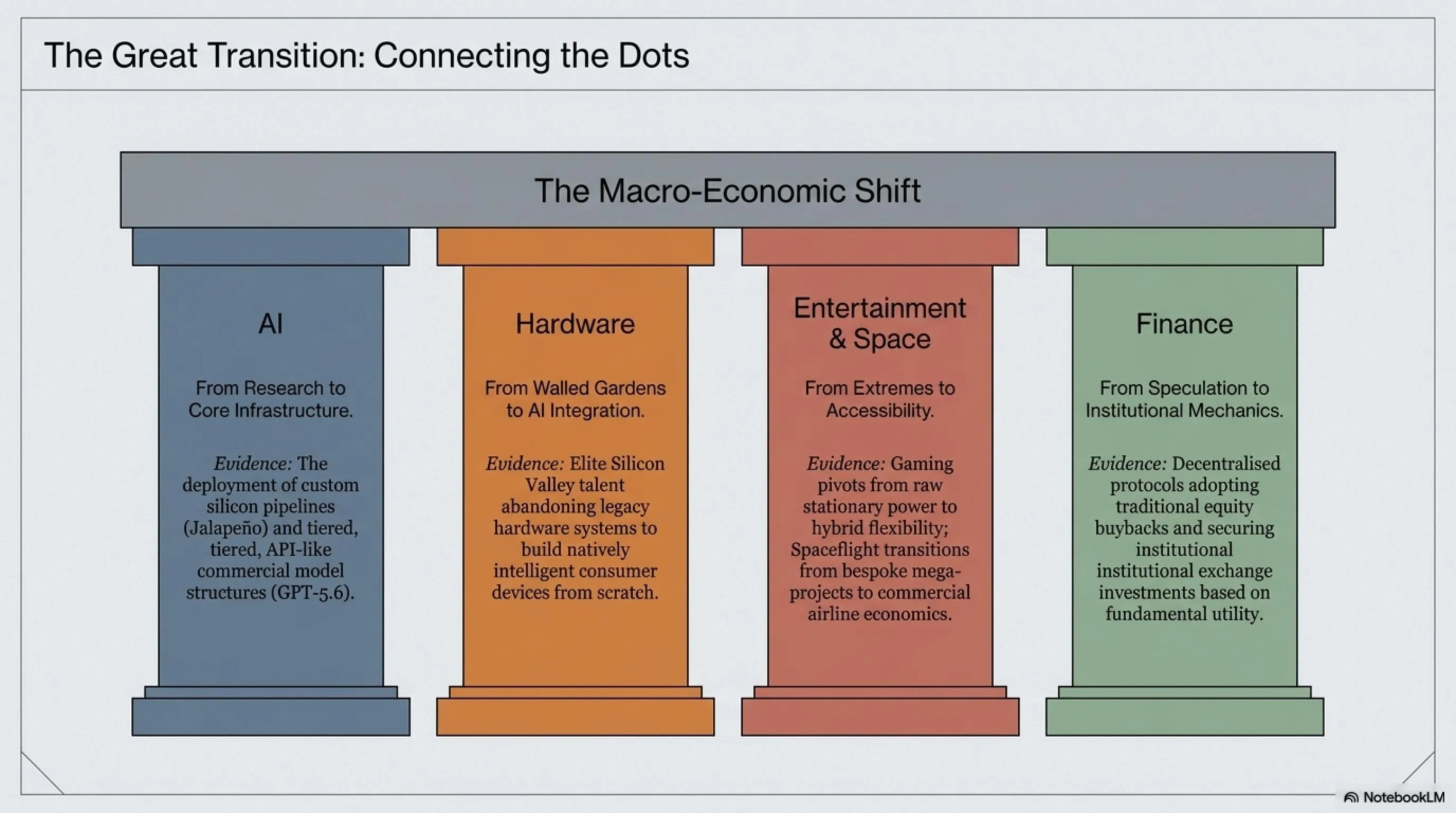
When you step back and look at these six stories together, a clear pattern emerges: we're in the middle of a massive technological transition. AI is moving from research labs to production infrastructure. Gaming is evolving from stationary experiences to hybrid portable-console systems. Space access is transitioning from government monopoly to commercial competition. And finance is experimenting with decentralized alternatives to traditional banking.
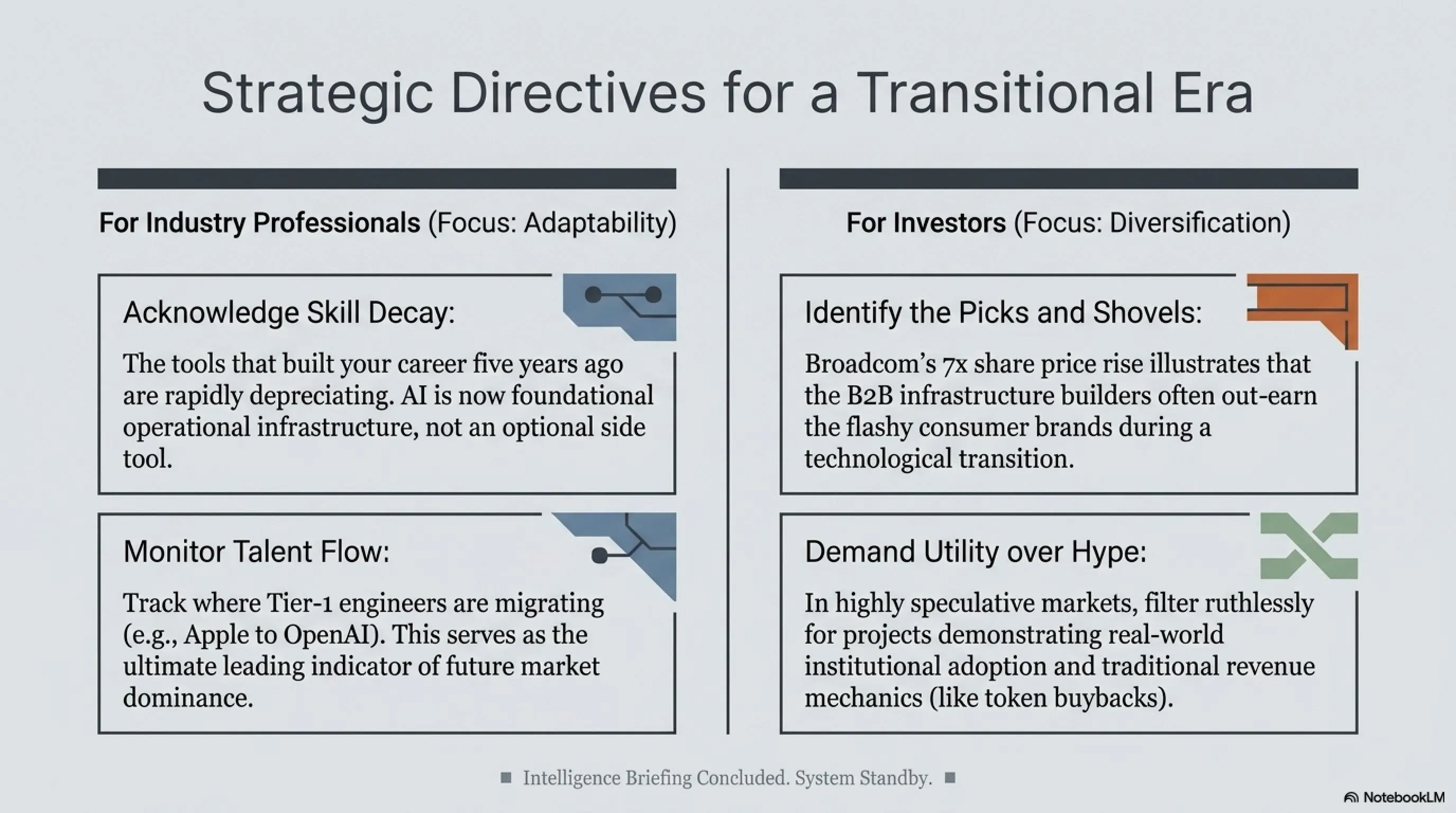
Each of these transitions creates winners and losers. Companies that recognize the shift early and adapt aggressively will thrive. Those that cling to old business models will struggle. For professionals, this means continuous learning is no longer optional—it's survival. The skills that made you valuable five years ago might be obsolete today. The key is maintaining curiosity and adaptability.
For investors, these transitions create both opportunity and risk. Early movers can capture enormous value, but timing is everything. Too early and you might run out of capital before the market matures. Too late and you've missed the best returns. The smart approach is portfolio diversification across different technology trends, combined with patience to let long-term trends play out.
Frequently Asked Questions
Is GPT-5.6 available to everyone right now?
No, currently OpenAI has restricted access to GPT-5.6 (Sol, Terra, Luna) to approximately 20 trusted partners at the U.S. government's request. These models are expected to be released to the general public in the coming weeks after this preview period concludes.
Why has Nintendo Switch 2 been more successful than PS5 and Xbox?
Multiple factors contribute: more reasonable pricing, portable gaming capability, Nintendo's strong exclusive game library, and smart pricing strategy while competitors raised prices. Additionally, Switch 2 addresses a real market need (gaming anywhere) that resonates with modern lifestyles where people want flexibility rather than just raw power.
How is Jalapeño chip different from Nvidia GPUs?
Jalapeño is an ASIC (Application-Specific Integrated Circuit) designed specifically for large language model inference workloads. Unlike Nvidia GPUs which are general-purpose, Jalapeño is optimized for just one task, resulting in lower energy consumption and lower costs at scale. It trades versatility for efficiency in its specific domain.
Is now a good time to invest in crypto?
This depends on your investment strategy and risk tolerance. The market currently shows signs of recovery, but significant macroeconomic and regulatory risks remain. If you plan to invest, conduct thorough research, practice proper risk management, and only invest money you can afford to lose completely. Consider dollar-cost averaging rather than lump-sum investment to smooth out volatility.
Why are senior Apple executives joining OpenAI?
Probable reasons include greater freedom to innovate, more attractive compensation packages, opportunity to work on cutting-edge technology, and startup culture. OpenAI, with strong financial backing and long-term vision, has become attractive to many engineers who want to work at the forefront of AI development rather than maintaining existing product lines.
When will Starship be able to take humans to Mars?
Elon Musk has stated the goal of sending the first human mission to Mars by the late 2020s, but this is an ambitious target that depends on successful additional testing, obtaining necessary approvals, and solving technical challenges. Most analysts believe the early 2030s is a more realistic timeline for crewed Mars missions.
Sources & References
- VentureBeat: OpenAI unveils GPT-5.6 Sol, Terra and Luna models
- TechCrunch: Why everyone from OpenAI to SpaceX is building their own chips
- 9to5Mac: OpenAI poaches Apple Vision Pro and smart glasses chief
- Nintendo Life: Switch 2's first year hardware sales for the US have been revealed
- Space.com: SpaceX's next Starship breathes fire for 1st time in prelaunch test
- CoinDesk: Aave, Solana tokens lead crypto rebound as Bitcoin steadies near $60,000
- Forbes: Meet Jalapeño - OpenAI's First Custom AI Chip, Built With Broadcom
- IGN: Nintendo Switch 2 finishes first 12 months on sale as second fastest-selling hardware in U.S. history
- OpenAI Official: OpenAI and Broadcom unveil Jalapeño inference chip
- OpenAI Community: Introducing GPT-5.6 series announcement
🌐Stay Connected With Us 🎮✨
For the latest tech, gaming, and gadget news, follow us on our official social media channels:
Supplementary Image Gallery: ☀️ Tekin Morning June 27, 2026: GPT-5.6 Unveiled, Switch 2 Records & OpenAI's Jalapeño Chip