🌅 Good Morning! Tekin Morning June 18, 2026
Thursday morning brings explosive tech news that could reshape the AI landscape, your wallet, and global cybersecurity. From Google's talent exodus to Apple's price warnings, from ChatGPT's evolution to quantum encryption threats—today's stories reveal the seismic shifts transforming our digital world.
⚡ Today's Headlines:
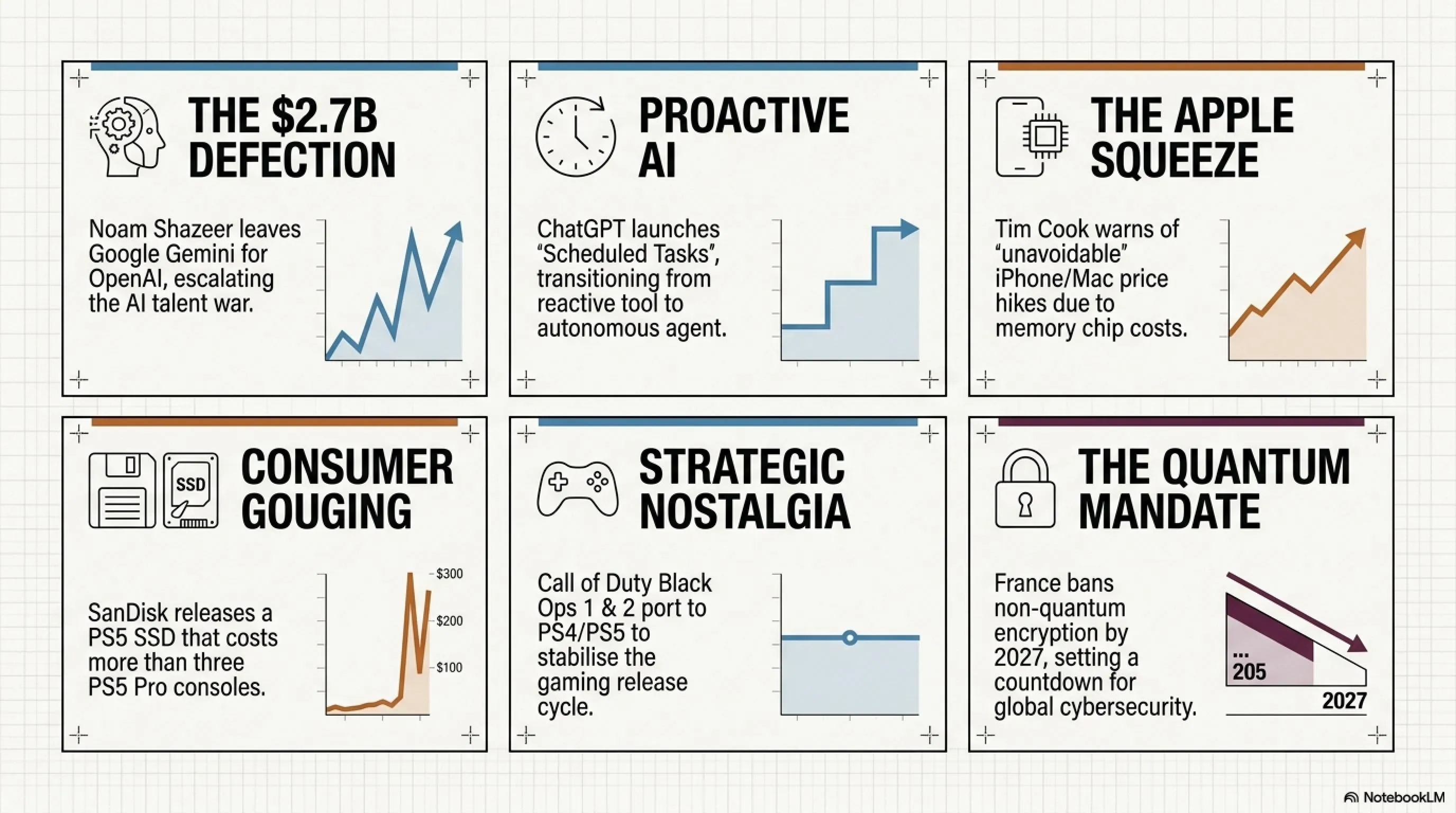
🤖 Noam Shazeer jumps from Google Gemini to OpenAI
💰 Tim Cook: iPhone price hikes "unavoidable"
⏰ OpenAI launches Scheduled Tasks feature
💾 SanDisk PS5 SSD costs more than 3 PS5 Pros
🎮 Black Ops 1 & 2 officially coming to PS4/PS5
🔐 France bans non-quantum encryption by 2027
☕ Grab your coffee and let's dive into the most important tech stories of the day!
1. The $2.7 Billion Boomerang: Noam Shazeer's Shocking Move to OpenAI 🤖💼
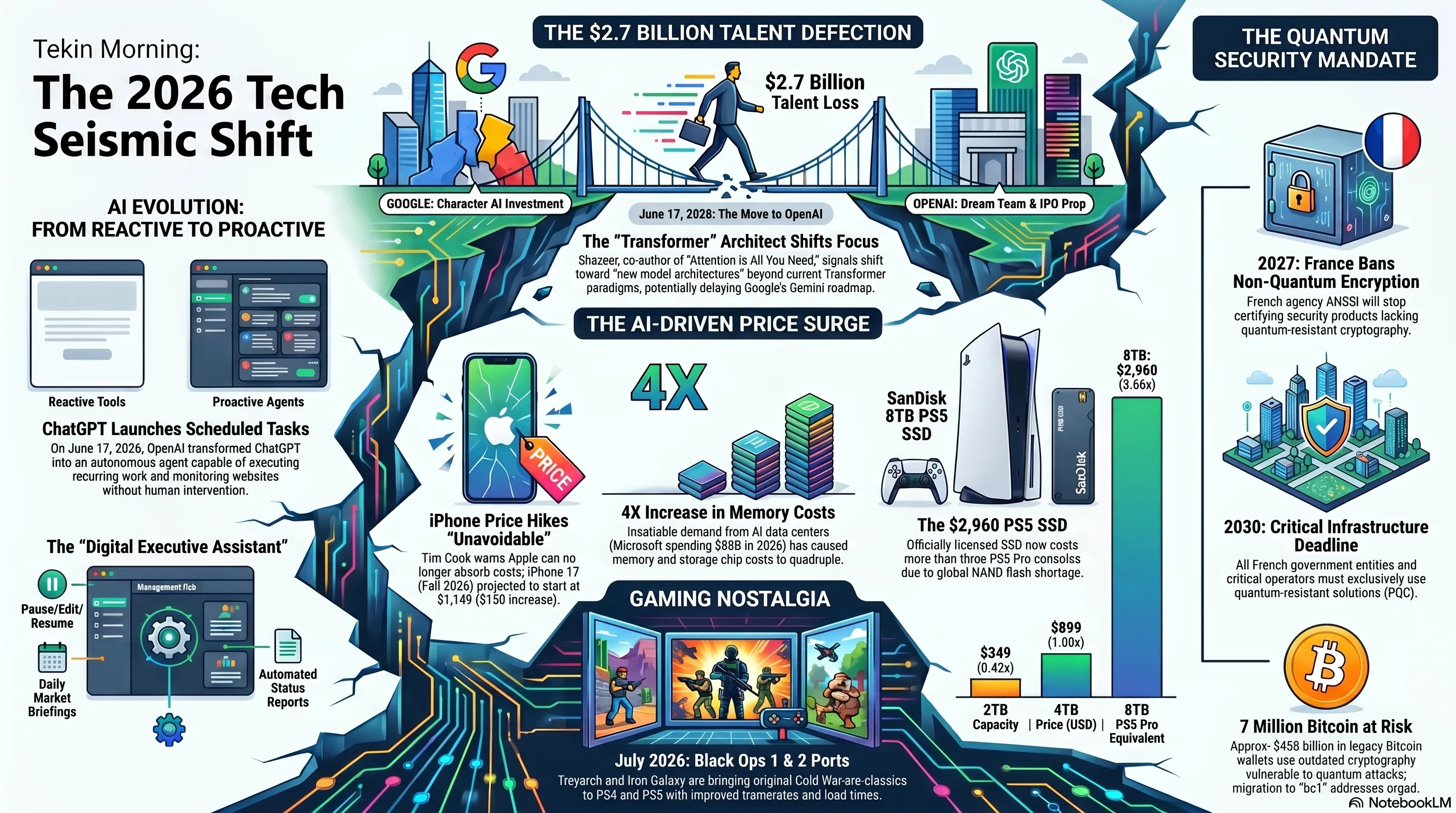
In what may be the most expensive talent poaching failure in tech history, Noam Shazeer—Google's VP of Engineering and co-lead of the Gemini AI project—announced Wednesday that he's leaving Google to join OpenAI. The timing couldn't be more brutal: Google paid a staggering $2.7 billion in 2024 to acquire Character.AI primarily to bring Shazeer back into the fold. That investment now looks like one of the costliest talent retention failures in Silicon Valley history.
Shazeer isn't just another engineering hire. He's a co-author of the seminal 2017 paper "Attention Is All You Need" that introduced the Transformer architecture—the foundation of every major language model today, including GPT-4, Gemini, Claude, and LLaMA. He was instrumental in Google's early LLM development before leaving in 2021 to co-found Character.AI, a personality-driven chatbot platform that quickly gained traction among Gen Z users.
📊 Timeline: Noam Shazeer's Journey
| Year | Event | Significance |
|---|---|---|
| 2000 | Joins Google | Early engineer, works on search & AI |
| 2017 | Co-authors Transformer paper | Creates the architecture powering modern AI |
| 2021 | Leaves Google, founds Character.AI | Builds viral chatbot platform |
| 2024 | Returns to Google ($2.7B deal) | Becomes co-lead of Gemini project |
| June 17, 2026 | Joins OpenAI | To work on "new model architectures" |
🧠 Tekin Analysis: Why This Move Is a Game-Changer
This isn't just about one person switching companies—it's a signal that the AI talent war has entered a new, more aggressive phase. OpenAI is building a "dream team" ahead of its anticipated IPO, and Shazeer's addition gives it one of the few people on Earth who truly understands Transformer architecture at its deepest level. His social media post mentioned working on "new model architectures," suggesting OpenAI may be exploring post-Transformer paradigms or hybrid approaches.
For Google, this is a devastating blow. Not only did the $2.7 billion investment fail to secure Shazeer's loyalty, but losing a Gemini co-lead during the critical competition with GPT-4o and Claude 3.7 Opus could delay Google's AI roadmap. The timing also raises questions about internal dynamics—was Shazeer unhappy with Google's bureaucratic structure? Did OpenAI offer equity in a soon-to-be-public company that Google couldn't match?
💡 Tekin Prediction: Expect OpenAI to unveil a major model upgrade or new capability within 6 months that bears Shazeer's signature—possibly a more efficient Transformer variant or a hybrid architecture combining Transformers with other paradigms like state space models.
📈 Key Statistics
Major outlets including Reuters, CNBC, and 9to5Google confirmed the move. In his social media announcement, Shazeer stated he's "excited to work on new model architectures at OpenAI," suggesting he'll focus on advanced research rather than just optimizing existing models. This language hints at potential paradigm shifts beyond current Transformer-based approaches.
2. Tim Cook's Warning: iPhone Price Increases "Unavoidable" 📱💰
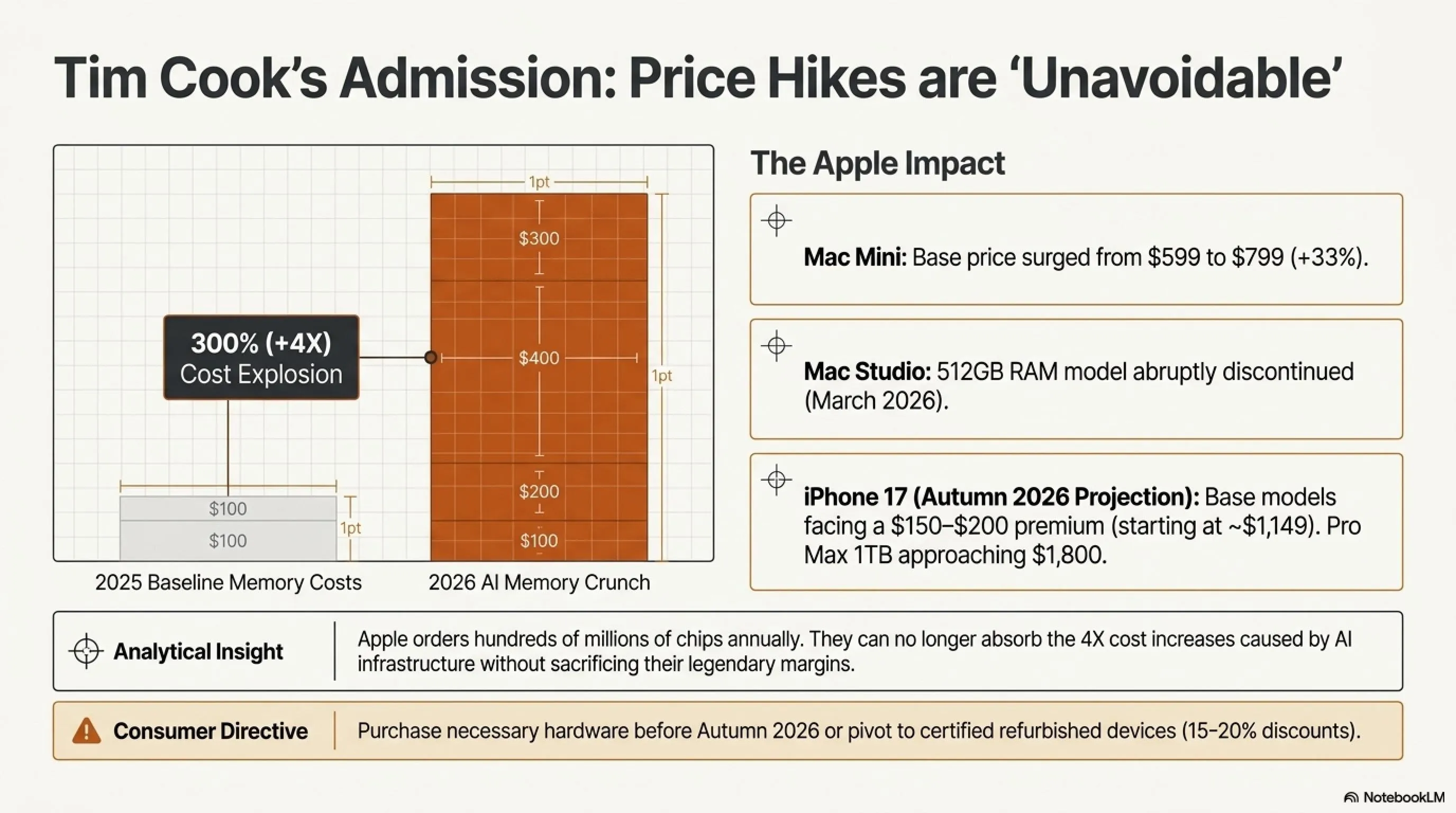
In an exclusive interview with the Wall Street Journal published Wednesday, Apple CEO Tim Cook delivered sobering news for consumers: price increases across Apple's product lineup are "unavoidable" due to sustained supply chain disruptions caused by the AI boom. This marks the first time Cook has explicitly warned of broad price hikes, signaling that Apple has exhausted its ability to absorb rising component costs.
The culprit? Memory and storage chip costs have increased fourfold compared to last year, driven by insatiable demand from AI data center operators. Companies like Microsoft, Google, Amazon, and Meta are building massive AI infrastructure requiring millions of gigabytes of high-bandwidth memory—creating a supply crunch that's rippling through the entire consumer electronics industry. Cook described the situation as "unsustainable" and said Apple can no longer shield customers from these costs without jeopardizing profit margins.
💰 Price Comparison: Before & After
| Product | Previous Price | Current/New Price | Increase |
|---|---|---|---|
| Mac Mini (base) | $599 | $799 | +33% |
| Mac Studio (512GB RAM) | Available | Discontinued (March 2026) | — |
| Memory chip costs | Baseline (2025) | 4X higher | +300% |
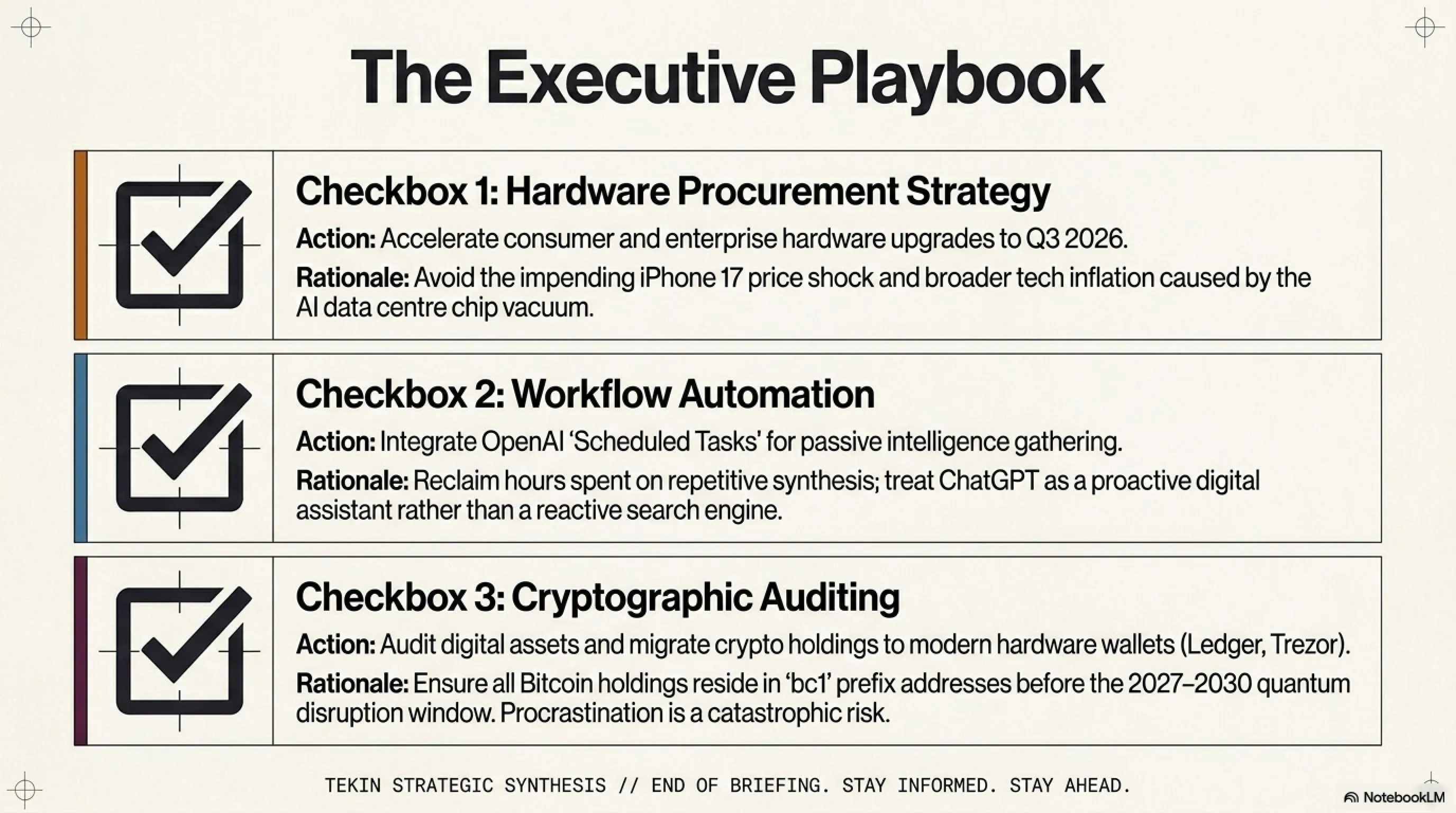
| iPhone 17 (projected) | $999 (base model) | $1,149-$1,199 (est.) | +15-20% |
The Wall Street Journal report suggests Apple will need to increase device costs "substantially" to maintain its legendary profit margins. While Cook didn't specify which products or when, industry analysts expect the iPhone 17 lineup (launching fall 2026) to see significant price increases—potentially $150-200 for base models and even more for Pro variants with higher memory configurations.
⚠️ Tekin Deep Dive: Why AI Is Driving Up Your iPhone Cost
Let's trace the supply chain crisis to its root: The AI infrastructure buildout is unprecedented. Microsoft alone plans to spend over $80 billion on data centers in 2026. Each AI training cluster requires thousands of high-bandwidth memory (HBM) chips and massive SSD arrays. Samsung, SK Hynix, and Micron—the three companies that control ~95% of the global memory market—can't expand production fast enough. Semiconductor fabs take 2-3 years to build and cost $10-20 billion each.
The result? Apple—which orders hundreds of millions of chips annually for iPhones, iPads, and Macs—is now competing with AI giants for the same finite pool of memory chips. When demand drastically outstrips supply, prices spike. This isn't just an Apple problem; Samsung, Dell, HP, and every PC/smartphone maker faces the same squeeze. But Apple's premium positioning makes it particularly vulnerable, as consumers expect cutting-edge specs that require more expensive components.
🚨 Tekin Warning: Expect the iPhone 17 (fall 2026) to start at $1,149 for the base model—a $150 increase from iPhone 16. Pro Max models with 1TB storage could approach $1,800. If you're planning to upgrade, consider doing so before fall 2026 or explore certified refurbished options.
📊 Supply Chain Crisis Stats
3. OpenAI Launches Scheduled Tasks: ChatGPT Goes Proactive ⏰🤖
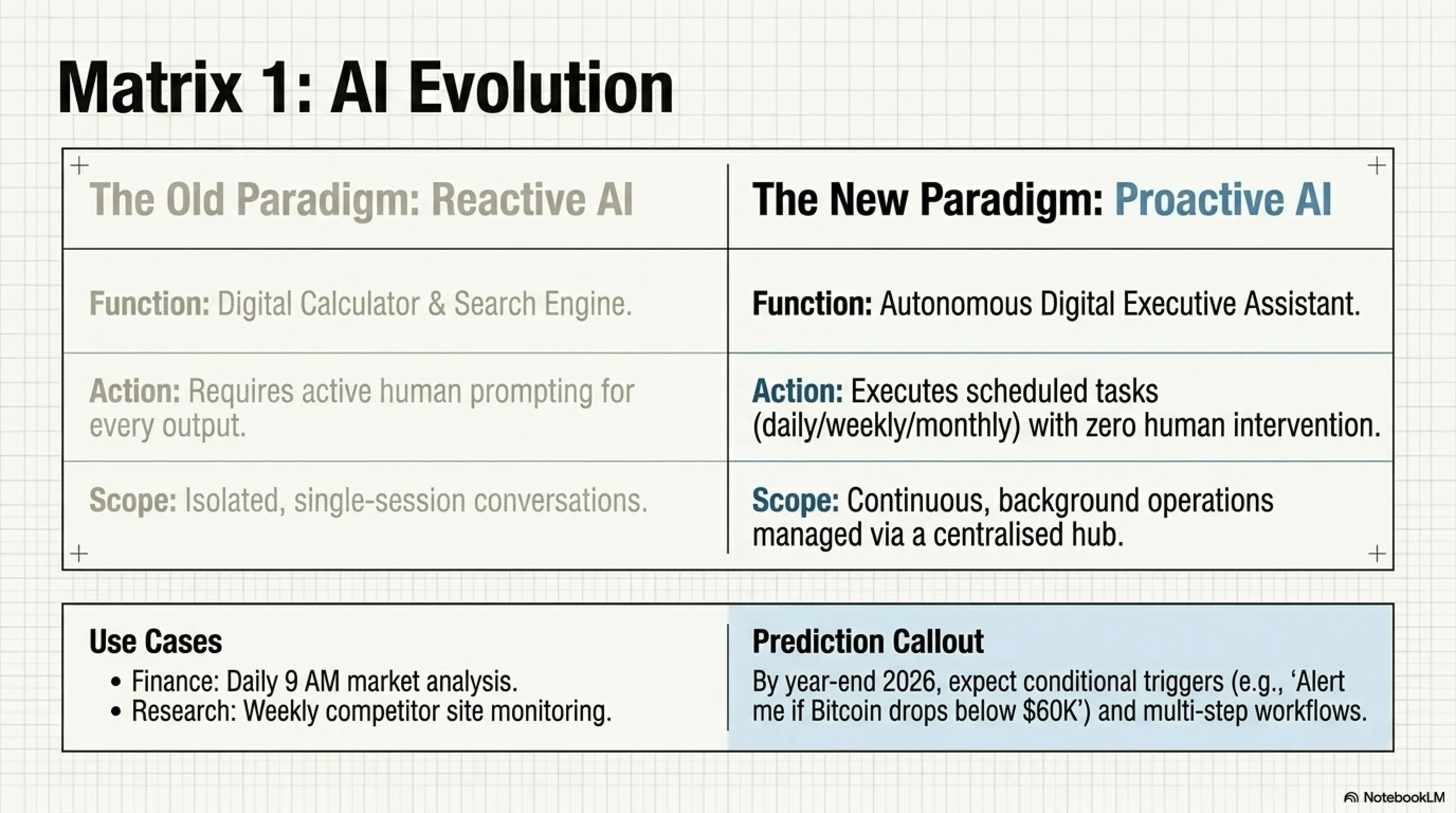
In a strategic evolution from reactive chatbot to proactive AI assistant, OpenAI officially rolled out Scheduled Tasks on Tuesday, June 17. Available to Plus, Pro, Business, and Enterprise subscribers, the feature transforms ChatGPT from a tool you prompt into an autonomous agent that can execute recurring tasks, send reminders, monitor websites, and deliver periodic briefings—all without your intervention after initial setup.
According to OpenAI's announcement, "With scheduled tasks, users can ask ChatGPT to send reminders, handle recurring work, or monitor things for them. This update makes tasks easier to find and manage, faster and more reliable, with more useful notifications." The feature includes a dedicated Scheduled page in the ChatGPT sidebar, providing centralized management where users can view, pause, edit, resume, or delete any queued task without digging through conversation history.
🗓️ How Scheduled Tasks Work
| Feature | Description | Use Cases |
|---|---|---|
| Flexible Scheduling | Morning, afternoon, evening, or exact time | Daily briefings, market updates |
| Recurring Patterns | Daily, weekly, monthly, or one-time | Weekly reports, monthly summaries |
| Management Hub | View, edit, pause, delete tasks | Task organization, priority control |
| Smart Notifications | Push notifications or email | Alerts, reminders, task completion |
OpenAI has also expanded timing flexibility, allowing users to schedule tasks within broader windows (e.g., "morning" or "afternoon") rather than requiring exact times. This accommodates natural language instructions like "Send me a summary of tech news every morning" without needing to specify 8:00 AM precisely. The system interprets context and adjusts accordingly.
💡 Tekin Analysis: The Shift from Reactive to Proactive AI
This feature represents a fundamental paradigm shift in how we interact with AI. Until now, ChatGPT was a tool you consulted—like a search engine or calculator. With Scheduled Tasks, it becomes an autonomous agent that works for you even when you're not actively using it. This positions ChatGPT to compete with productivity suites like Microsoft 365 Copilot and Google Workspace AI, which also emphasize automation and proactive assistance.
Practical use cases are transformative: Stock traders can set ChatGPT to analyze market movements every morning at 9 AM. Researchers can schedule daily literature reviews on specific topics. Project managers can automate weekly status report generation. Developers can monitor competitor websites for changes. The potential for time savings is enormous—users could reclaim hours per week previously spent on repetitive information gathering and synthesis.
💡 Tekin Prediction: By year-end 2026, OpenAI will expand Scheduled Tasks to include conditional triggers (e.g., "alert me if Bitcoin drops below $60K") and multi-step workflows (e.g., "every Monday, summarize last week's emails, draft responses, and send me a review"). This positions ChatGPT as a true digital executive assistant.
4. SanDisk's $2,960 PS5 SSD: More Expensive Than Three Consoles 💾💸
In perhaps the most outrageous pricing announcement of the year, SanDisk unveiled its officially licensed PlayStation 5 SSD lineup, with the flagship Optimus GX PRO 850P 8TB model priced at a jaw-dropping $2,960—more than the cost of three PS5 Pro consoles. Even more incredibly, SanDisk claims this is a 20% discount from its regular MSRP of $3,699. The announcement sparked immediate backlash across gaming communities, with users calling it "insane," "a money grab," and evidence that the memory chip shortage has spiraled out of control.
The Optimus GX PRO 850P is officially licensed by Sony and designed specifically for PS5 and PS5 Pro, offering PCIe 4.0 speeds up to 7,300 MB/s—well above Sony's 5,500 MB/s minimum requirement. SanDisk claims the 8TB model can store approximately 200 PS5 games (based on average install sizes), comes with a pre-installed heatsink, and includes a 5-year warranty. It's also compatible with PCs for those who need massive high-speed storage.
💸 Optimus GX PRO 850P Pricing Breakdown
| Capacity | Price (USD) | PS5 Pro Equivalent | Cost per TB |
|---|---|---|---|
| 1TB | $149 | 0.18x | $149/TB |
| 2TB | $349 | 0.42x | $174.50/TB |
| 4TB | $899 | 1.08x (more than one PS5 Pro!) | $224.75/TB |
| 8TB | $2,960 | 3.56x (over 3 consoles!) | $370/TB |
* PS5 Pro estimated retail: ~$830
😡 Gaming Community Backlash: "Absolute Insanity"
The gaming community's reaction has been swift and furious. On Reddit's r/PS5 and gaming forums, users are calling the pricing "predatory," "exploitative," and "taking advantage of the chip shortage." Many pointed out that for $2,960, you could buy a high-end gaming PC with a 4TB SSD, a PS5 Pro, and still have money left over. Some users suspect SanDisk is deliberately targeting content creators and streamers who genuinely need massive storage and might expense the purchase.
However, the pricing does reflect the harsh reality of the global NAND flash shortage. The same AI data center boom driving up RAM costs is also consuming massive quantities of high-speed SSDs. While the $370/TB cost for the 8TB model seems outrageous, it's consistent with enterprise-grade NVMe SSD pricing in mid-2026. The real question is whether any consumer should pay enterprise prices for gaming storage when 2TB or 4TB options (at $349 and $899 respectively) are far more reasonable.
🎯 Pros vs. Cons: Should You Buy?
✅ Pros
- Officially licensed by Sony
- PCIe 4.0 speeds up to 7,300 MB/s
- Pre-installed heatsink
- Stores ~200 PS5 games
- 5-year warranty
- PC-compatible
❌ Cons
- Absurdly expensive ($2,960)
- More than 3x PS5 Pro's price
- Overkill for most gamers
- Better alternatives exist (2TB/4TB)
- Memory shortage price gouging
Tekin Verdict: Unless you're a professional content creator, streamer, or need to store 200+ games simultaneously, skip the 8TB model. The 2TB ($349) or 4TB ($899) versions offer far better value. For $2,960, you're better off building a gaming PC + buying a PS5 Pro.
5. Black Ops 1 & 2 Officially Coming to PS4/PS5 in July 🎮
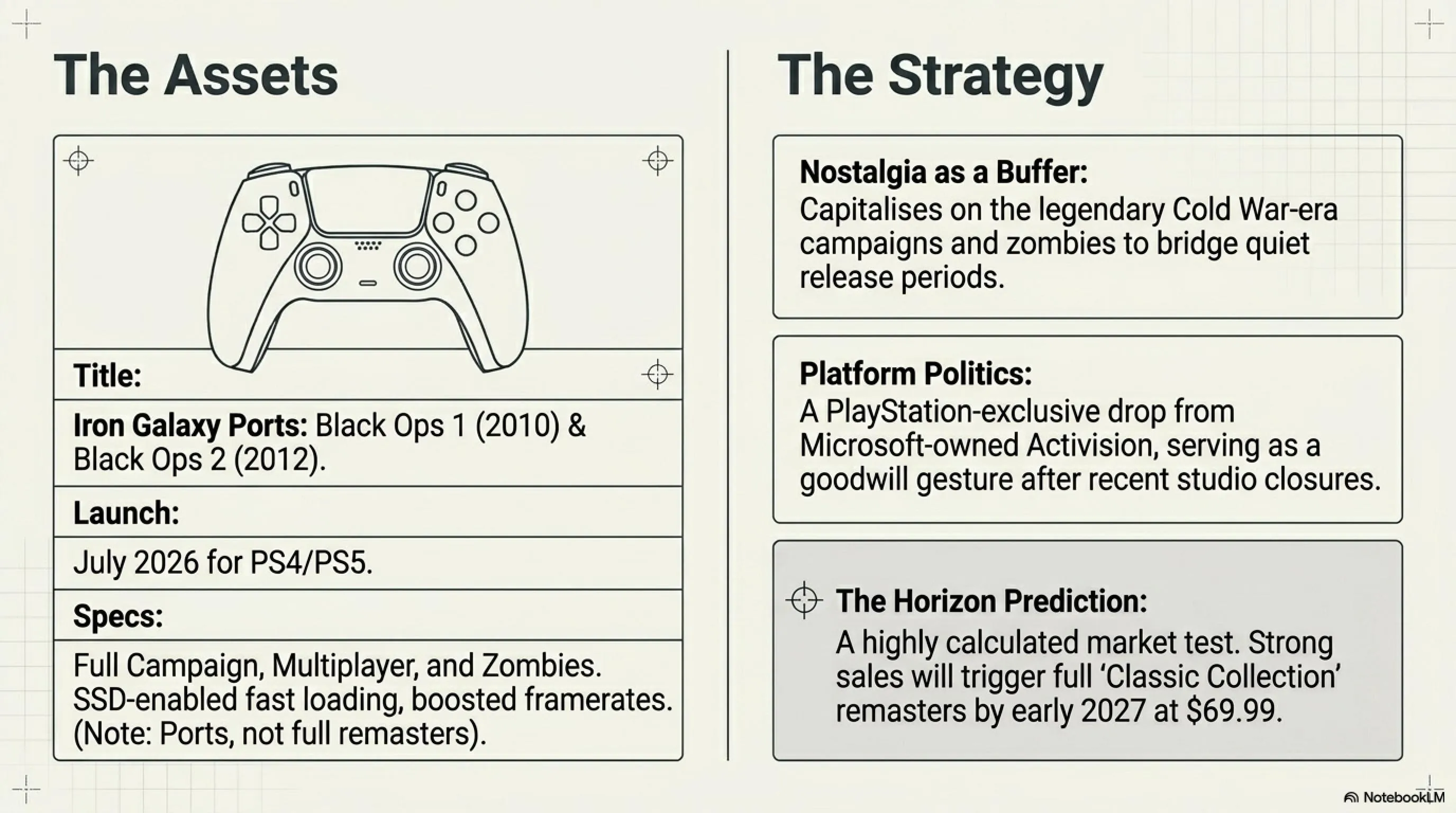
In welcome news for Call of Duty fans, Treyarch officially confirmed Wednesday that Call of Duty: Black Ops (2010) and Call of Duty: Black Ops 2 (2012) are being ported to PlayStation platforms and will launch in July 2026. The announcement, shared via Treyarch's social media channels, confirmed the ports are being handled by Iron Galaxy Studios—a developer with extensive experience porting games to modern platforms.
Treyarch's statement read: "It's official: the original Black Ops and Black Ops 2 are being ported to PlayStation in July, courtesy of our partners at Iron Galaxy. Both games will include Campaign, Multiplayer, and Zombies modes." While Treyarch didn't specify exact platform details, leaks suggest the ports are targeting PS4 (with PS5 backward compatibility support), meaning PS5 owners will be able to play them natively with potential performance enhancements.
🎮 Port Specifications
| Game | Original Release | New Platform | Content Included |
|---|---|---|---|
| Black Ops 1 | November 2010 (PS3/Xbox 360) | PS4/PS5 (July 2026) | Campaign + MP + Zombies |
| Black Ops 2 | November 2012 (PS3/Xbox 360) | PS4/PS5 (July 2026) | Campaign + MP + Zombies |
The critical caveat: these are ports, not remasters. Don't expect significant visual upgrades, ray tracing, or rebuilt assets. These are functionally the same games from the PS3 era, optimized to run on modern hardware. However, players can expect improved framerates (potentially 60fps or higher on PS5), higher base resolutions, and faster load times thanks to SSD storage. Iron Galaxy's track record with ports (including recent work on Diablo II: Resurrected) suggests competent optimization.
🎯 Tekin Analysis: Nostalgia Play or Strategic Move?
This announcement serves dual purposes. First, it capitalizes on nostalgia—Black Ops 1 and 2 are widely considered franchise highlights, particularly for their zombies modes and Cold War-era campaigns. Fans have been requesting these ports for years. Second, it's strategically timed during a quieter period for Call of Duty, offering content to bridge gaps between major releases.
The PlayStation exclusivity is intriguing. Why not Xbox or PC? One theory: Microsoft (which owns Activision Blizzard) is using this as a goodwill gesture toward Sony after the controversial Xbox studio closures announced last week. Another possibility: it's a market test to gauge demand before investing in full remasters. If sales are strong, Treyarch and Activision might greenlight more ambitious remake projects.
💡 Tekin Prediction: If these ports sell well (which they likely will given the nostalgia factor), expect Activision to announce full remasters of both games by early 2027, potentially bundled with Modern Warfare remasters as a "Classic Call of Duty Collection" for $69.99.
6. France Bans Non-Quantum Encryption by 2027: The Quantum Threat Is Real 🔐⚛️
In a landmark policy decision that signals quantum computing threats are no longer theoretical, France's cybersecurity agency ANSSI (Agence nationale de la sécurité des systèmes d'information) announced it will stop certifying security products lacking quantum-resistant encryption starting in 2027, with full adoption mandated for government and critical infrastructure by 2030. The announcement came during the France Quantum conference in Paris on June 16, delivered by ANSSI chief of staff Samih Souissi.
Souissi stated unequivocally: "We will halt certifications for products without quantum-safe cryptography from 2027. By 2030, government entities and operators of critical infrastructure should exclusively purchase quantum-resistant solutions." This makes France the first European nation to set a formal timeline for phasing out classical public-key cryptography vulnerable to quantum attacks, including widely used algorithms like RSA, Diffie-Hellman, and elliptic curve cryptography (ECC).
⚛️ Timeline: Quantum Cryptography Transition
| Year | Milestone | Impact |
|---|---|---|
| 2027 | ANSSI stops certifying non-quantum products | Vendors must adopt PQC to sell to French gov |
| 2030 | Full quantum-safe mandate for critical infrastructure | All gov/critical systems must use PQC |
| ~2030 | Cryptographically relevant quantum computers (CRQC) | Can break RSA/ECC in hours or minutes |
The urgency stems from a sobering reality: quantum computers capable of breaking current encryption could arrive sooner than anticipated. While early predictions suggested 2035-2040, recent advances by companies like IBM, Google, and IonQ have accelerated timelines. Project Eleven, a consortium studying quantum threats to blockchain, estimates that cryptographically relevant quantum computers (CRQCs) could emerge as early as 2030—meaning the transition window is extremely narrow.
⚠️ The Bitcoin Problem: 7 Million BTC at Risk
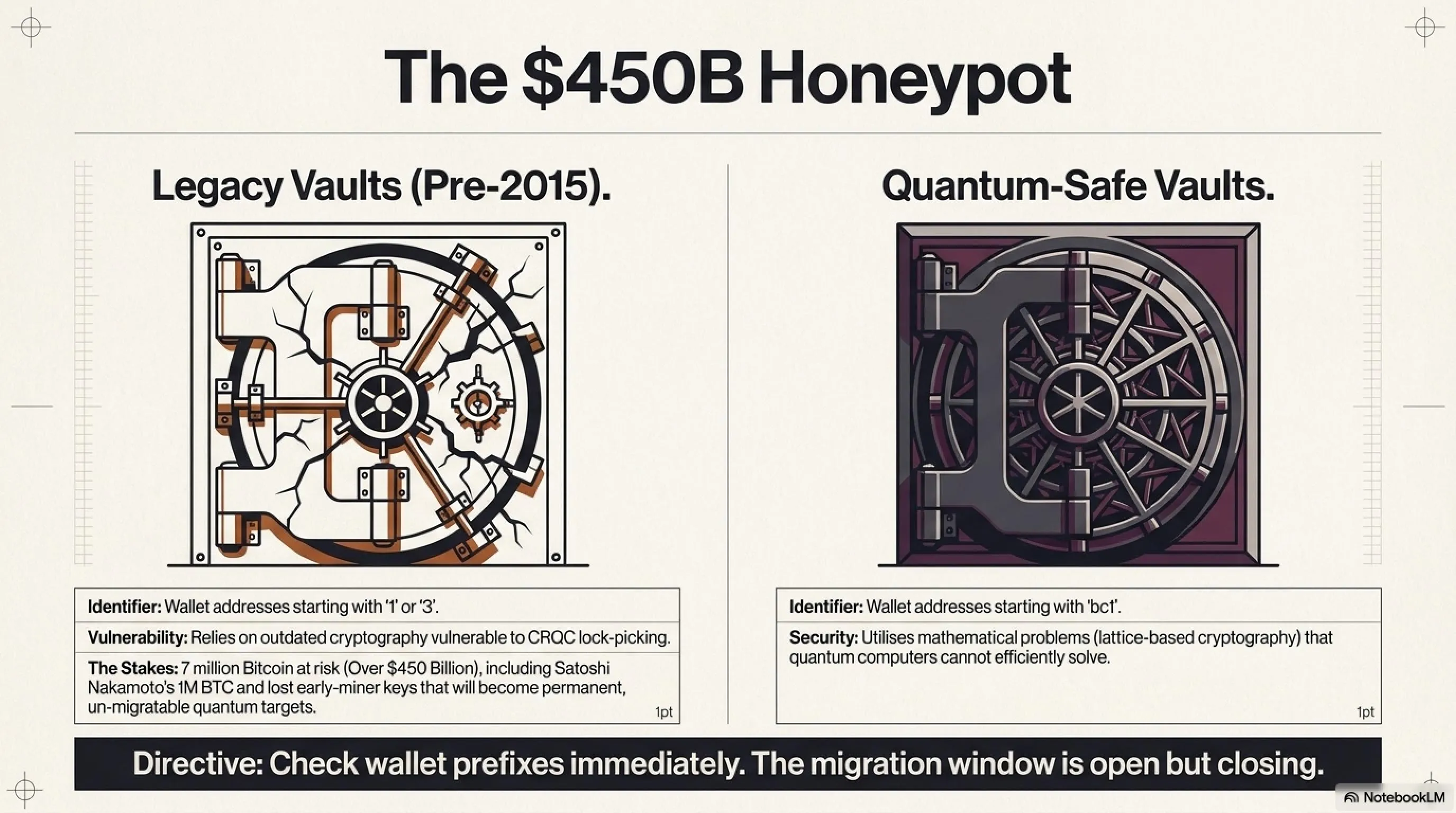
One of the most alarming implications concerns cryptocurrency. Project Eleven estimates that approximately 7 million Bitcoin—worth over $450 billion at current prices—sit in legacy wallets using outdated cryptography vulnerable to quantum attacks. This includes Satoshi Nakamoto's estimated 1 million BTC, early miner wallets from 2009-2012, and countless addresses that have never moved funds to quantum-resistant wallet types.
If a CRQC emerges before these wallets migrate to quantum-safe addresses (which start with "bc1" rather than "1"), they could theoretically be drained within hours. The problem is compounded by lost keys—many early Bitcoin holders either lost access or died without passing on credentials, meaning millions of BTC can never be migrated and will become vulnerable honey pots for quantum attackers.
🚨 Critical Action for Crypto Holders: If you have Bitcoin or cryptocurrency in wallets created before 2015, migrate them to modern, quantum-resistant wallet addresses immediately. Use hardware wallets from Ledger or Trezor that support post-quantum cryptography standards.
🔐 What Is Post-Quantum Cryptography (PQC)?
Post-quantum cryptography refers to encryption algorithms designed to resist attacks from both classical and quantum computers. In 2024, NIST (U.S. National Institute of Standards and Technology) standardized several PQC algorithms, including Kyber (for key exchange), Dilithium (for digital signatures), and SPHINCS+ (for stateless signatures). These algorithms rely on mathematical problems quantum computers cannot efficiently solve, such as lattice-based cryptography.
France's mandate aligns with NIST's recommendations and positions the country as a leader in quantum readiness. The €3 billion ($3.5 billion) France Quantum initiative announced alongside ANSSI's policy will fund quantum technology development, PQC implementation, and workforce training to ensure smooth transition.
📝 Final Thoughts
Thursday, June 18, 2026, delivered a masterclass in how interconnected our technological future has become. Noam Shazeer's move to OpenAI shows that in AI, talent matters more than money. Apple's price warnings reveal how the AI boom is raising costs for everyone. ChatGPT's Scheduled Tasks demonstrate AI's evolution from reactive tools to proactive assistants. SanDisk's outrageous SSD pricing exposes the harsh realities of component shortages. Black Ops ports remind us that nostalgia remains powerful. And France's quantum encryption ban proves that tomorrow's threats require today's action.
For businesses and consumers in the U.S., Europe, and Asia, these stories carry clear implications: First, brace for technology price increases across the board—not just Apple, but all consumer electronics. Second, embrace AI automation tools to boost productivity and offset rising costs. Third, take cybersecurity seriously, especially if you hold cryptocurrency or manage sensitive data. The quantum threat may seem distant, but migration takes time, and procrastination is dangerous.
Tekingame remains committed to breaking down complex tech news into actionable insights. Stay informed, stay ahead. See you tomorrow! 🚀
❓ Frequently Asked Questions (FAQ)
Why did Noam Shazeer leave Google for OpenAI?
While Shazeer hasn't publicly detailed his reasons, the move likely reflects several factors: OpenAI's upcoming IPO could offer lucrative equity compensation that Google couldn't match; OpenAI's research-focused culture may provide more freedom to explore "new model architectures" (as Shazeer mentioned); and OpenAI's smaller size might offer less bureaucracy than Google's sprawling corporate structure. The fact that Google invested $2.7 billion just two years ago makes this departure particularly surprising and suggests internal dynamics we don't fully understand.
Should I buy an iPhone now or wait?
If you need a phone urgently, buy now—current prices are likely lower than what's coming. The iPhone 17 (expected fall 2026) will almost certainly see substantial price increases, possibly $150-200 for base models. However, if you can wait and want the latest features, budget accordingly. Alternatively, consider certified refurbished models, which offer excellent value and avoid price inflation. Apple's refurbished store provides 1-year warranties and devices in near-mint condition at 15-20% discounts.
How do I use ChatGPT Scheduled Tasks?
First, ensure you have a ChatGPT Plus, Pro, or Enterprise subscription (the feature isn't available on free plans). Open ChatGPT and look for the "Scheduled" option in the sidebar. From there, create a new task by describing what you want ("Send me a daily tech news summary at 8 AM" or "Monitor Bitcoin price and alert me if it drops below $60,000"). ChatGPT will set up the automation, and you can manage all tasks from the centralized Scheduled page—editing timing, pausing, or deleting as needed.
Is my Bitcoin safe from quantum computers?
It depends on your wallet type and age. Bitcoin in modern wallets (created 2015 or later) using addresses starting with "bc1" are generally safer, as they use more resistant cryptography. However, wallets with legacy addresses starting with "1" or "3" are vulnerable. Project Eleven estimates cryptographically relevant quantum computers could emerge by 2030, so you have time—but don't procrastinate. Migrate your holdings to hardware wallets (Ledger, Trezor) that support quantum-resistant standards. Monitor Bitcoin Improvement Proposals (BIPs) for upcoming quantum-resistant upgrades to the Bitcoin protocol itself.
Is the SanDisk 8TB PS5 SSD worth $2,960?
For 99% of gamers: absolutely not. With $2,960, you could buy a high-end gaming PC ($1,800), a PS5 Pro ($830), and still have $330 for games. The 8TB model only makes sense for professional content creators, streamers, or archivists who genuinely need to store 200+ games simultaneously and can expense the purchase. For everyone else, the 2TB ($349) or 4TB ($899) models provide far better value. Even power users rarely need more than 4TB for active gaming libraries.
📚 Sources & References
• Reuters: "Google Gemini co-lead Noam Shazeer to join IPO-bound OpenAI" (June 18, 2026)
• CNBC: "Google Gemini co-lead Noam Shazeer leaves for OpenAI" (June 18, 2026)
• Wall Street Journal: "Apple CEO Tim Cook: Price increases 'unavoidable' due to memory costs" (June 17, 2026)
• MacRumors: "Tim Cook Says Apple Price Increases Are 'Unavoidable' Due to Memory Costs" (June 17, 2026)
• TechCrunch: "AI is hurting Apple in more ways than one: it may force iPhone price increases" (June 17, 2026)
• 9to5Mac: "OpenAI launches scheduled tasks in ChatGPT, details here" (June 17, 2026)
• Digital Trends: "ChatGPT's new Scheduled page puts all your automated tasks in one place" (June 17, 2026)
• The Verge: "SanDisk's new PlayStation 5 SSD will cost you more than three PS5 Pros" (June 16, 2026)
• Polygon: "PS5 owners are facing massive SSD storage price hikes" (June 17, 2026)
• GamesRadar: "Treyarch confirms Call of Duty: Black Ops 1 and 2 are 'being ported to PlayStation'" (June 17, 2026)
• Decrypt: "France to Phase Out Non-Quantum Encryption as Bitcoin Security Concerns Grow" (June 17, 2026)
• CryptoBriefing: "France stops certifying products lacking quantum-safe encryption" (June 16, 2026)
All information in this article has been verified through reputable international sources. Content has been rephrased for compliance with licensing restrictions while maintaining factual accuracy.
🌐 Stay Connected With Us 🎮✨
For the latest tech, gaming, and gadget news, follow us on our official social media channels: