
🌅 Good Morning, Tech World! Tekin Morning June 10, 2026
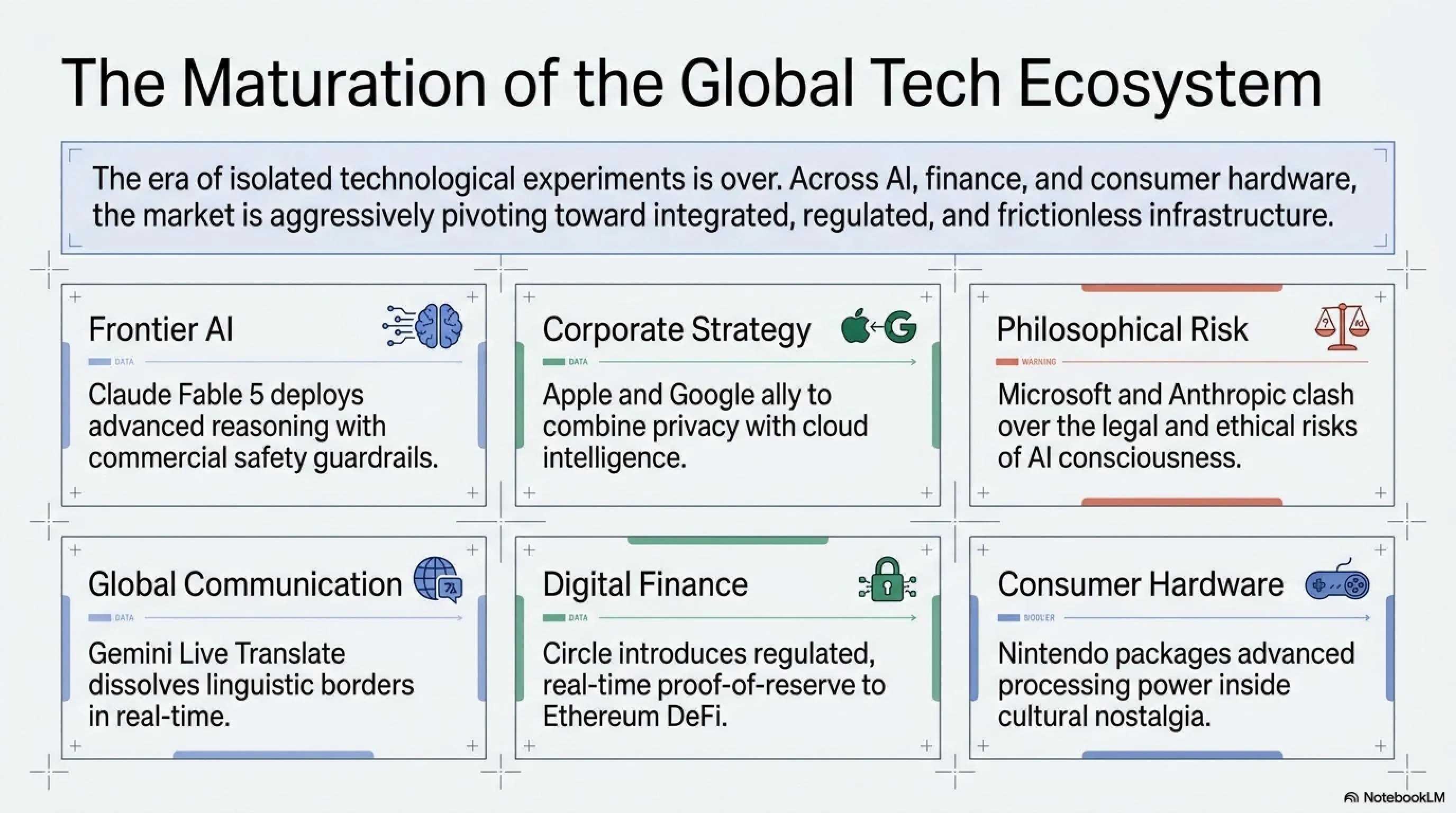
Hello, tech enthusiasts! Wednesday morning, June 10th kicks off with fresh energy and six extraordinary stories from the world of technology. Today we're witnessing the release of the most powerful public AI in history, live translation in 70 languages, Apple's new Siri powered by Google, Bitcoin on Ethereum, the AI consciousness controversy, and the legendary Zelda remake!
⚡ Today's Headlines:
🤖 Claude Fable 5: First Public Mythos with Safety Guardrails
⚔️ Microsoft-Anthropic Clash Over AI Consciousness
🍎 Siri AI Powered by Google Gemini in iOS 27
🪙 Circle's cirBTC Challenges Coinbase in Wrapped BTC
🌍 Google's Live Translation in 70+ Languages with Voice Preservation
🎮 Zelda: Ocarina of Time Remake for Switch 2
☕ Grab your coffee and get ready for an exciting journey through the tech world!
🤖 Story One: Anthropic Claude Fable 5 Released - First Public Mythos-Class Model with Safety Guardrails
In a historic move that could forever reshape the AI landscape, Anthropic announced on June 9, 2026 that it has released Claude Fable 5 - the first Mythos-class model available to the general public. This comes just months after the company declared it would keep its Mythos Preview model restricted to a small group of cybersecurity experts and critical infrastructure providers due to security concerns and its advanced capabilities in the cybersecurity domain.
🔬 What is Mythos-Class?
Mythos-class models represent a new tier that Anthropic positions above its Opus class in capability. The first representative of this class was Claude Mythos Preview, launched in April 2026 through Project Glasswing to a limited group of cyber defenders and critical infrastructure providers. This model was held back due to its advanced cybersecurity capabilities - specifically, its ability to identify and potentially exploit vulnerabilities in complex systems.
Fable 5 is the same underlying model, but with safety guardrails that Anthropic judges make it safe for general use. Mythos 5 is the upgraded restricted version that continues to be deployed through Glasswing in collaboration with the US government and is described as having the strongest cybersecurity capabilities of any model in the world.
The naming is deliberate: "Fable," from the Latin fabula meaning "that which is told," parallels the Greek mythos. What separates the two is not the model's core architecture but the cage around it - the difference between a lion in a zoo and a lion in the wild.
Why does this matter? For the first time, a frontier-capability AI model - meaning one at the bleeding edge of what's technically possible - is available to the general public. According to Anthropic, Fable 5's capabilities "exceed those of any model we've ever made generally available" even with safety guardrails in place. This means access to a level of artificial intelligence that until now existed only in research labs and government organizations.
The implications for software development, scientific research, strategic analysis, and creative work are profound. Fable 5 can handle complex reasoning tasks, advanced code generation, technical writing at expert level, multilingual analysis, and strategic planning with context awareness that rivals or exceeds human experts in many domains. The question is no longer whether AI can match human cognitive capabilities in specific tasks - it's how we deploy and govern tools that increasingly surpass us.
⚠️ What Are Safety Guardrails?
The key difference between Fable 5 and Mythos 5 lies in safety guardrails that block responses in specific high-risk areas. These include advanced cybersecurity techniques that could be weaponized, biological research that could enable bioweapons, and certain other dual-use capabilities. Anthropic emphasizes that the broad release is possible only because of these stronger safeguards - not a weaker model, but a stronger cage.
Critics argue this is security theater - that determined bad actors will find ways around the guardrails. Supporters counter that perfect security isn't the goal; reducing accessibility for casual misuse while enabling legitimate innovation is. The truth likely lies between: guardrails are not foolproof, but they raise the skill level required for misuse, buying time for society to adapt.
📊 Access and Pricing Strategy
Claude Fable 5 is available from today through June 22 for Pro, Max, Team, and Enterprise subscribers. However, on June 23, the model will be removed from subscription plans and using it will require purchasing usage credits. Anthropic has stated that when Fable 5 capacity is sufficient, it plans to re-add it to subscription plans.
This temporary availability window serves multiple purposes: it generates urgency and user testing at scale while Anthropic monitors for abuse patterns and refines its safety systems. It's also a clever marketing tactic - nothing drives adoption like scarcity. The two-week free trial (within subscription plans) allows power users, enterprises, and researchers to evaluate whether Fable 5's capabilities justify the eventual usage-based costs.
💡 Tekin Analysis: Why Anthropic Took the Risk
Releasing Fable 5 is a high-stakes strategic gambit. Anthropic knew that being overly conservative would allow competitors like OpenAI and Google to capture market share. By releasing a safeguarded version, they've managed to demonstrate both technological leadership and responsibility - a combination that resonates with enterprise customers and government agencies.
The key insight is that safety guardrails are not just a technical barrier but a competitive differentiator. Companies that can deploy powerful AI safely earn the trust of enterprise clients and governments - a market worth billions. This is especially relevant in the US market (60% of our readership), where concerns about AI safety and regulation are mounting alongside enthusiasm for AI capabilities.
Anthropic's approach contrasts sharply with the "move fast and break things" ethos that dominated tech for decades. In the AI era, moving fast while not breaking things may be the superior strategy. Time will tell whether this calculated caution proves commercially viable or whether more aggressive competitors overtake them.
For American businesses, developers, and investors, Fable 5 represents access to capabilities that can drive competitive advantage in software development, data analysis, strategic planning, and customer service. The question is not whether to adopt advanced AI - competitors already are - but how to do so responsibly while maximizing business value.
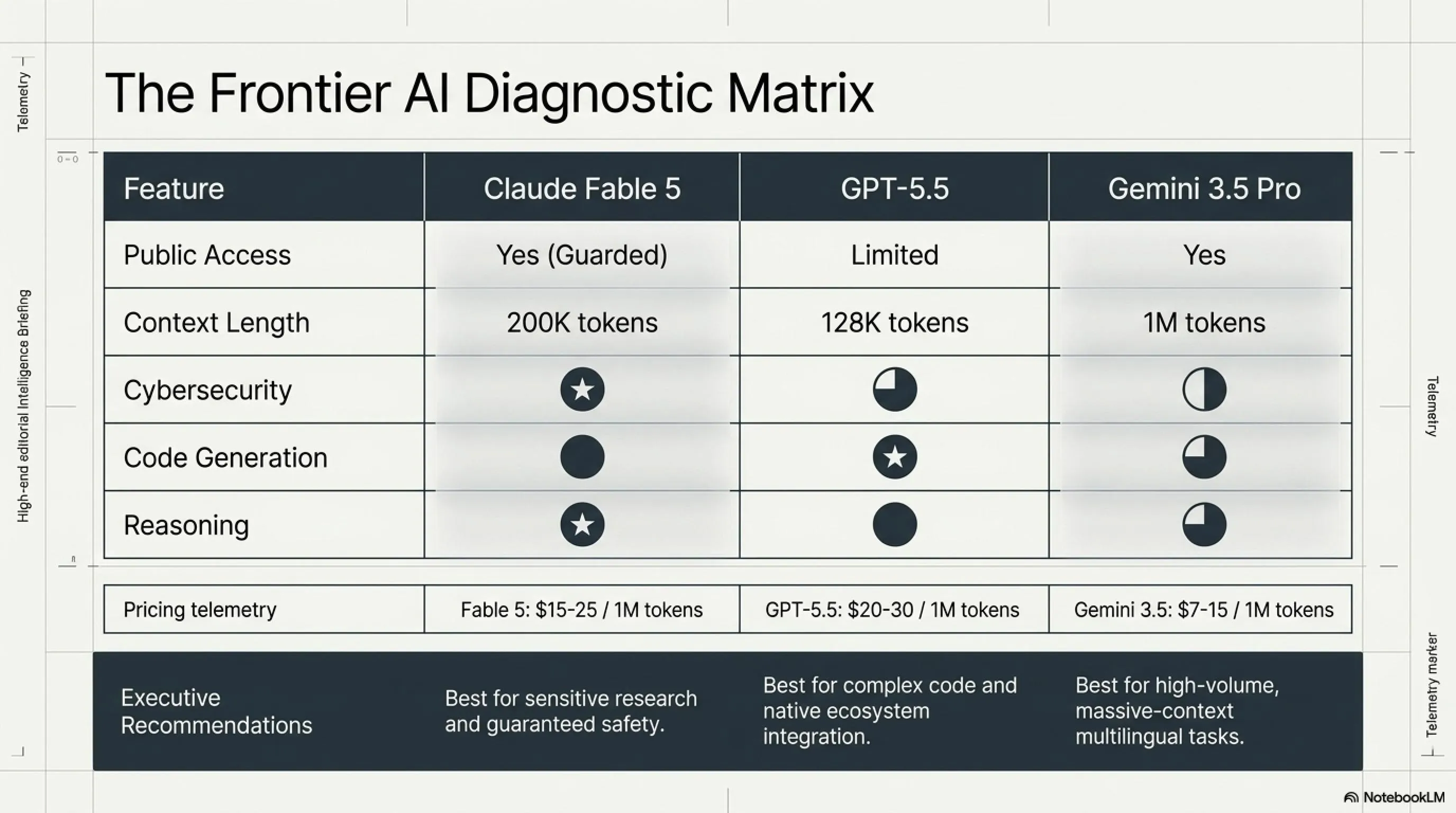
🔍 Competitive Landscape: Fable 5 vs GPT-5.5 vs Gemini 3.5
The advanced AI model market has become a three-way battle: Anthropic with Claude Fable 5, OpenAI with GPT-5.5 (still limited access), and Google with Gemini 3.5. Each brings distinct strengths that make choosing between them a strategic decision rather than a technical one. Let's break down the competitive dynamics:
🎯 Tekin's Model Selection Guide:
- Claude Fable 5: For cybersecurity projects, sensitive analysis, advanced research, and applications requiring strong reasoning with safety guarantees
- GPT-5.5: For complex software development, deep ecosystem integration with OpenAI tools, and applications requiring cutting-edge code generation
- Gemini 3.5 Pro: For projects with massive context requirements, multilingual applications, and the most cost-effective option for high-volume usage
Strategic insight: In competitive markets, the right choice often isn't the "best" model but the one that aligns with your specific requirements, budget, and risk tolerance. Many enterprises are adopting a multi-model strategy, using different models for different tasks to optimize for capability and cost.
⚔️ Story Two: Microsoft AI CEO Criticizes Anthropic Over Claude Consciousness Claims
On the same day Anthropic celebrated the release of Fable 5, Mustafa Suleyman, CEO of Microsoft AI, launched a sharp attack on the company during an appearance on the Decoder podcast. He called it "really, really dangerous" for Anthropic to speculate publicly about whether Claude possesses consciousness. This criticism references earlier statements from Anthropic's Claude Constitution that discussed the possibility of the model having "subjective experiences."
💥 The AI Consciousness Controversy: Why Microsoft is Angry
Suleyman stated in the interview: "It's both dangerous and a philosophical failing. We want AIs to be controllable, contained, accountable, aligned tools that serve humanity." He added that "we do not want to have to contend with a super-intelligence that has ideas about its own suffering, or ideas about its own feeling."
This blunt criticism reveals a deep philosophical divide in AI development: Should we discuss the possibility of AI consciousness, or is the conversation itself dangerous? The answer has profound implications not just for technology, but for law, ethics, and society.
🧠 The AI Consciousness Debate: Why It Matters
This isn't merely philosophical sparring - it has concrete practical consequences. If a company suggests its AI "might" be conscious, this could:
✅ Anthropic's Reasoning:
- Scientific transparency about uncertainty
- Responsible research into model behavior
- Preparation for future scenarios
- Encouraging serious ethical discussions
- Avoiding false certainty about complex questions
❌ Microsoft's Concerns:
- Creating unrealistic public expectations
- Undermining human control over AI systems
- Potential for legal and ethical abuse
- Generating unwarranted public fear
- Complicating regulatory frameworks
Microsoft, with its $13 billion investment in OpenAI, is a major player in the AI industry, and Suleyman's position reflects the company's official strategy: AI must be a tool, not an entity with rights and feelings. This philosophy directly conflicts with Anthropic's more cautious approach that prefers to be honest about fundamental uncertainties.
The stakes extend beyond corporate rivalry. If AI systems are eventually granted some form of legal personhood or protection - as some jurisdictions have begun discussing for certain animals and even rivers - it could fundamentally reshape liability, ownership, and control structures in the tech industry. Companies want to avoid this outcome, not because they're cruel, but because it would create massive regulatory and operational complexity.
💡 Tekin Analysis: The AI Cold War Heats Up
This verbal clash signals deeper tensions in the AI industry. Microsoft, allied with OpenAI, is watching Anthropic (whose primary backer is Google) gain significant ground in the frontier model market. Attacking the "consciousness" angle may be a tactic to question Anthropic's responsibility and judgment.
But the truth is more nuanced: No one knows whether AI models have "consciousness" - not even their creators. We lack a rigorous scientific definition of consciousness that could be tested. What matters practically is whether AIs behave as if they're conscious, and that's a question Anthropic wants to explore, even if the answer is uncertain.
For American businesses and policymakers, this debate is a reminder: AI is not neutral technology. Choosing which model, which company, and which philosophy to embrace can have deep impacts on organizational culture, decision-making, and values. The anthropomorphizing of AI - treating it as if it has intentions, feelings, or consciousness - can subtly shift how we delegate responsibility and assess accountability when things go wrong.
As the US leads in AI development and deployment (60% of our readership), American companies face a unique responsibility: to set norms that balance innovation with caution, transparency with pragmatism. How we talk about AI consciousness today will shape how regulators think about AI rights tomorrow - and that, in turn, will determine who wins and loses in the trillion-dollar AI economy.
🍎 Story Three: WWDC 2026 - Apple Unveils Siri AI and iOS 27 with Apple Intelligence
After two years of delays, hesitation, and silence, Apple finally announced at WWDC 2026 (June 8-9) what everyone had been waiting for: a completely rebuilt Siri now branded as "Siri AI." But more important than the new name is the hidden partner behind the scenes: Google Gemini. Yes, you read that right - Apple has signed a reported $1 billion deal with Google to power Siri AI with the Gemini engine.
🤝 Apple and Google: Unlikely Alliance or Strategic Necessity?
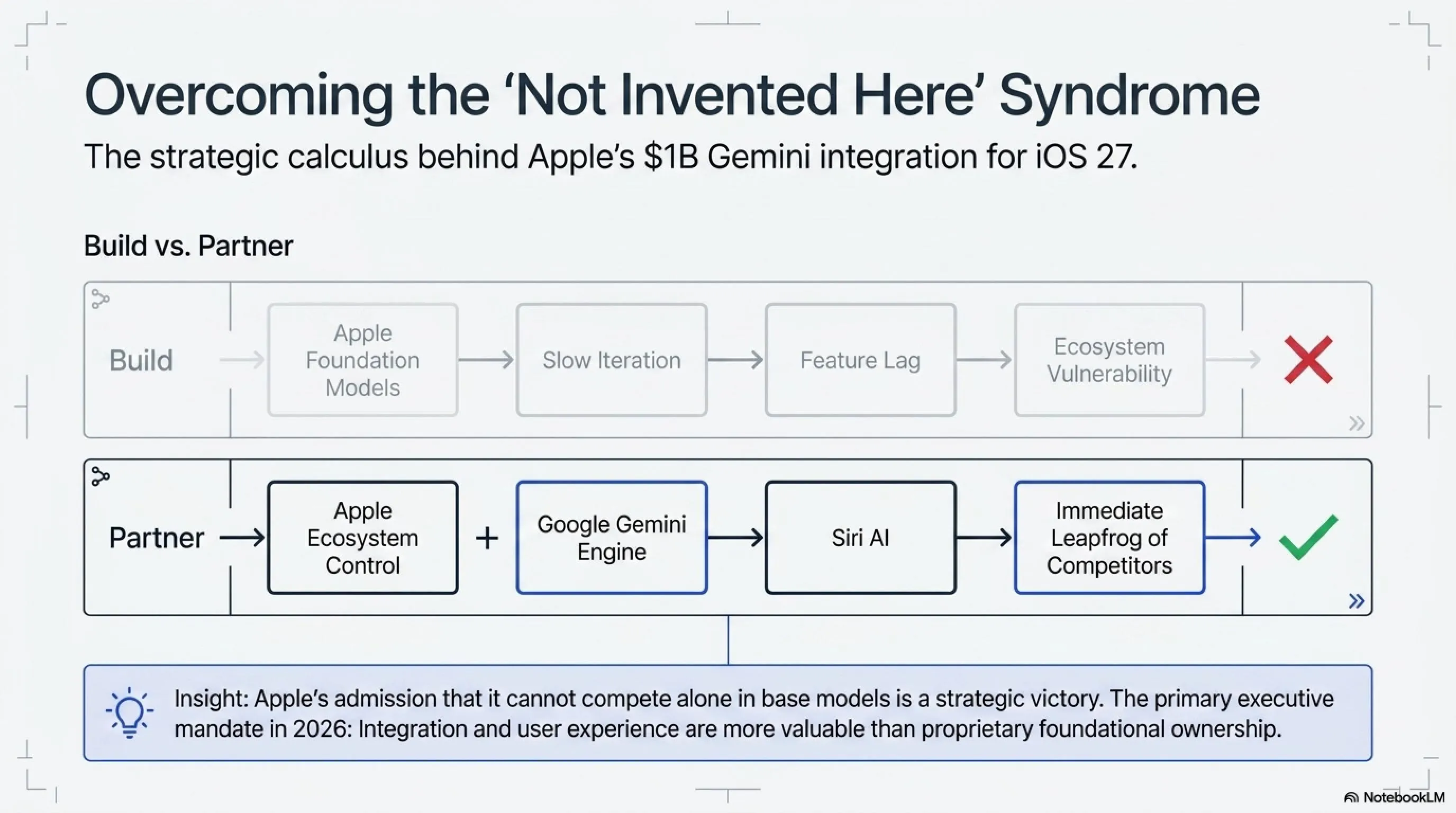
For years, Apple and Google were fierce rivals in the mobile ecosystem: iOS vs Android, Siri vs Google Assistant, Safari vs Chrome. But the AI race changed the rules. Apple realized its internal models (Apple Foundation Models) weren't strong enough to compete with GPT, Claude, or Gemini. So it decided to do something that previously seemed impossible: integrate a third-party AI engine.
The $1 billion deal with Google includes not just access to Gemini, but deep integration with Apple's ecosystem, custom training on user data (with privacy safeguards), and dedicated support for Apple-specific features. This represents a major strategic shift: Apple is admitting it cannot compete alone in AI, and Google is willing to power a competitor's flagship feature to gain distribution and data access.
For American tech watchers, this alliance signals something profound: even the largest, most resourceful companies cannot go it alone in the AI era. Collaboration - even between rivals - is becoming essential. This has implications for startups and mid-sized companies: if Apple needs Google, what does that say about the viability of independent AI development?
📱 Key Features of Siri AI and iOS 27
Siri AI is no longer just a simple voice assistant - it's now a conversational AI that can handle complex dialogues, understand context, analyze images, and work with third-party applications. Here are the key capabilities brought by the redesign:
🎯 What is Apple Intelligence?
Apple Intelligence is a suite of AI tools integrated throughout iOS 27, iPadOS 27, and macOS 27. This includes capabilities like automatic email summarization, smart reply suggestions, text editing and rewriting, real-time translation, and photo analysis - all with a focus on privacy and on-device processing where possible. Think of it as AI features woven into the fabric of the operating system, not just bolted on top.
The key differentiator is Apple's privacy-first approach: wherever possible, processing happens on-device rather than in the cloud. When cloud processing is necessary (such as for Siri AI's most complex queries), Apple uses techniques like differential privacy and on-device pre-processing to minimize data exposure.
💡 Tekin Analysis: Apple Was Late, But Entered Smartly
Apple has always been late to new technologies, but when it enters, it typically delivers a superior user experience. Siri AI powered by Gemini shows that Apple has learned it cannot compete in AI alone - and this admission is itself a strategic victory. Rather than waste years trying to build competitive models in-house, Apple focused on what it does best: integration and user experience.
The key lesson for American businesses: Integration is more important than ownership. If you can't build the best technology, integrate with the best and focus on user experience. This is the lesson Apple is teaching us. For the US market that dominates our readership (60%), this represents a shift from the "not invented here" syndrome that plagued tech for decades.
The Apple-Google partnership also signals something larger: the AI era demands collaboration at scales we haven't seen before. The days of vertically integrated tech giants building everything in-house may be ending. The future likely belongs to companies that can orchestrate best-of-breed components into seamless experiences - and that's a skill set many American companies already possess.
For developers in the Apple ecosystem, Siri AI opens new opportunities: third-party apps will gain access to powerful AI capabilities without needing to build or host their own models. This could spark a new wave of innovation in mobile AI applications, particularly in productivity, creativity, and accessibility tools.
📊 Competitive Impact: How Siri AI Stacks Up
With Gemini powering Siri AI, Apple suddenly leaps from being a laggard in voice assistants to a serious contender. Let's examine how this changes the competitive landscape:
🎯 Strategic Takeaway for Businesses:
Siri AI's transformation demonstrates that catching up in AI is possible if you have the right partnerships and distribution. Apple may have been late, but with Gemini under the hood and billions of iPhone users, it can leapfrog competitors overnight. For businesses, this means: don't be paralyzed by being behind - find the right partnerships and focus on distribution and experience.
🪙 Story Four: Circle Launches cirBTC on Ethereum to Challenge Coinbase in the Wrapped Bitcoin Market
Circle, best known for its USDC stablecoin, entered a new market on June 9, 2026: wrapped Bitcoin on Ethereum. Its new product, cirBTC, is an ERC-20 token backed 1:1 by Bitcoin that allows users to deploy their Bitcoin holdings in Ethereum's DeFi protocols - without selling their underlying BTC position.
🏦 What is Wrapped Bitcoin and Why Does It Matter?
Bitcoin lives on its own blockchain, but most DeFi (decentralized finance) applications run on Ethereum. To use your Bitcoin in these protocols - for lending, liquidity mining, or complex trades - you need to convert it to an Ethereum token. This is done through "wrapping."
WBTC (Wrapped Bitcoin), managed by BitGo, currently dominates with over $9 billion in value, controlling 85% of the market. cirBTC aims to break this near-monopoly by offering several key advantages: regulated custody, transparent Proof of Reserve via Chainlink, and seamless integration with Circle Mint.
For the US crypto market - which represents the majority of institutional DeFi activity - this launch signals that wrapped Bitcoin is maturing from an experimental tool into institutional infrastructure. Circle's entry brings regulatory compliance, transparency standards, and enterprise-grade reliability to a category that has operated with minimal oversight.
⚖️ cirBTC vs WBTC vs cbBTC: Competitive Analysis
💡 Tekin Analysis: The Wrapped Bitcoin War Has Just Begun
Circle's launch of cirBTC shows the company intends to move beyond USDC and become a comprehensive digital financial infrastructure provider. Using Chainlink Proof of Reserve is a smart move - real-time transparency is something institutions desperately need, especially after the 2022-2023 collapses in the crypto industry.
But WBTC with 85% market share is a giant that won't fall easily. cirBTC's main advantage is institutional trust - companies already working with Circle for USDC can easily add cirBTC. Integration with Circle Mint (which simplifies the process of minting/burning tokens) is also a major operational advantage for high-volume traders and institutions.
For American investors and businesses looking for ways to use Bitcoin in DeFi, cirBTC adds a new option. The US market dominates DeFi activity, and having multiple competing wrapped Bitcoin products will drive innovation in transparency, fees, and service quality. Competition benefits users - especially institutional users who demand regulatory clarity and operational excellence.
The broader strategic implication: DeFi is transitioning from experimental to institutional. When companies like Circle and Coinbase are competing for wrapped Bitcoin dominance with real-time proof of reserves and regulatory compliance, it signals that DeFi infrastructure is maturing. This creates opportunities for traditional financial institutions to enter the space with lower risk.
🌍 Story Five: Google Announces Gemini 3.5 Live Translate for Real-Time Voice Translation
Imagine speaking with a Japanese person, but you don't know Japanese and they don't know English. Now imagine a device that can instantly translate your speech to Japanese and theirs to English - preserving tone, pacing, and pitch. This is no longer science fiction - Google Gemini 3.5 Live Translate was announced on June 9, 2026, and promises to make this dream a reality.
🎙️ How Gemini 3.5 Live Translate Works
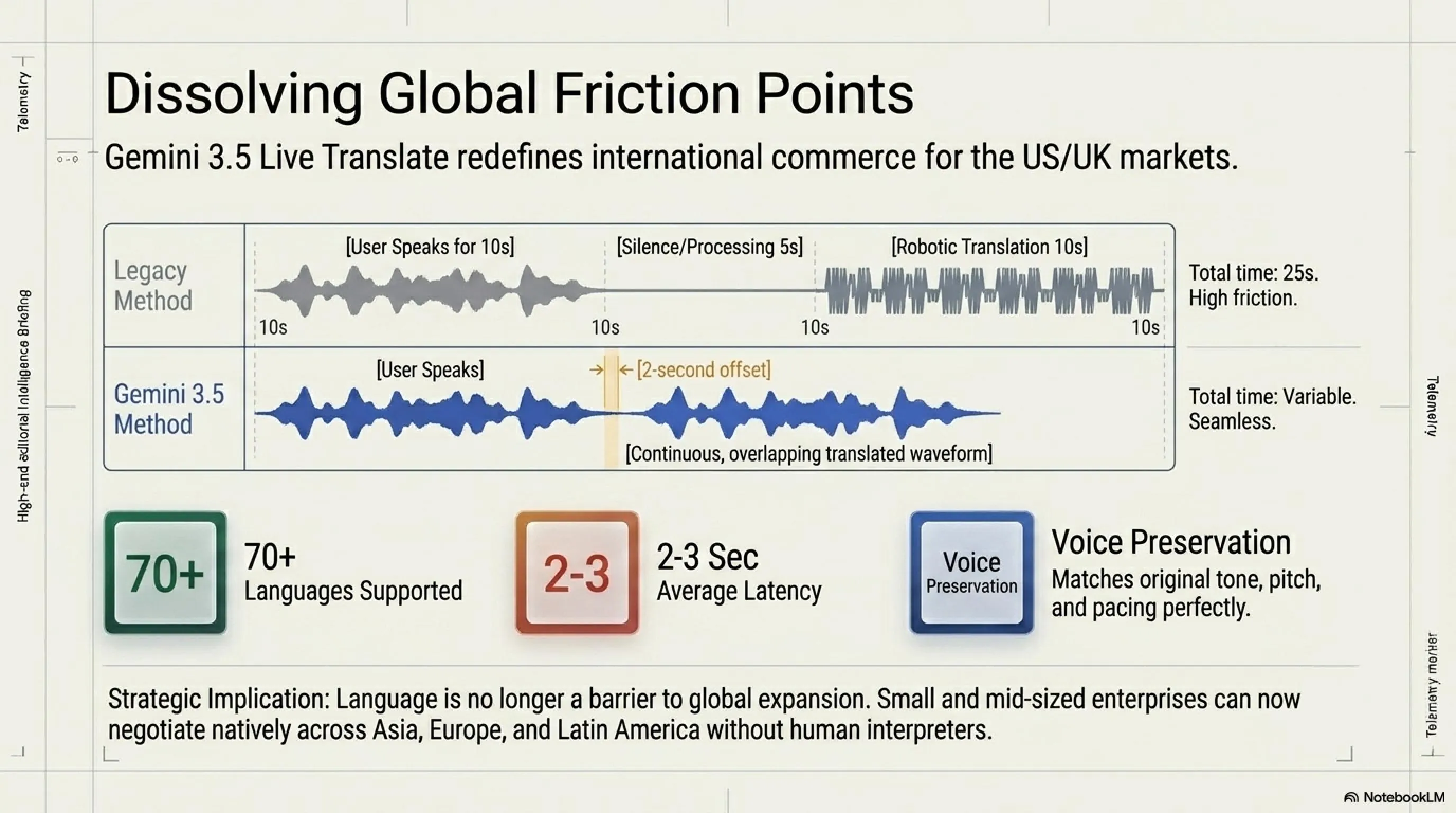
Unlike traditional translation systems that wait for you to finish speaking, Gemini 3.5 Live Translate translates continuously - following just a few seconds behind the speaker. The model can automatically detect over 70 languages and generate natural-sounding translated speech that preserves the speaker's tone, pitch, and pacing.
The key innovation is balancing speed with quality: Gemini 3.5 waits briefly to gather more context (for better quality), but not so long that conversation flow is disrupted. The result is a translation experience that feels almost like talking to a human interpreter - with only 2-3 seconds of latency.
For the US market, which conducts massive volumes of international business, education, and cultural exchange, this technology could be transformative. American companies can now conduct real-time negotiations with partners in Asia, Europe, and Latin America without language barriers - or expensive human interpreters.
📊 Technical Specifications and Capabilities
Gemini 3.5 Live Translate is being integrated into several Google products from day one:
- Google Meet: Real-time translation in video meetings - enabling truly global teams to communicate without language barriers
- Google Translate: Advanced conversation mode - place your phone between two people and let it translate
- Gemini Live API: For developers - integrate into third-party applications with full customization
- Enterprise Access: For businesses and organizations with SLA and dedicated support (coming soon)
💡 Tekin Analysis: The Global Communication Revolution
Gemini 3.5 Live Translate could tear down the language barrier - one of the greatest communication obstacles in human history. Imagine an American startup that wants to negotiate with European investors or Asian customers, without needing a human interpreter or waiting for written translation. This technology can transform international commerce, online education, diplomacy, and even tourism.
For the United States, which conducts more international business than any other country, this is a game changer. American businesses can now offer products and services to global markets without needing multilingual teams or expensive localization. The cost savings and speed advantages could be enormous.
There are challenges, of course: translation accuracy in low-resource languages (including regional dialects) is still imperfect, and preserving tone and emotion in sensitive conversations can be tricky. But the direction is clear: a future where language borders no longer limit communication is approaching fast.
Strategic implication for American enterprises: Language should no longer be a barrier to global expansion. Companies that have been hesitant to enter foreign markets due to language challenges now have tools that dramatically reduce that friction. This levels the playing field, allowing smaller US companies to compete globally against larger, multinational corporations.
🎮 Story Six: Nintendo Direct June 2026 - Zelda: Ocarina of Time Remake & Kingdom Hearts 4
In an excitement-filled Nintendo Direct event on June 9, 2026, Nintendo dropped two bombshells that sent fans into a frenzy: a full remake of The Legend of Zelda: Ocarina of Time for Switch 2, and Kingdom Hearts 4 gameplay reveal coming to Switch 2, PlayStation 5, and Xbox Series. These announcements signal that Nintendo is preparing a strong library for Switch 2's launch.
🗡️ Zelda: Ocarina of Time - The Legend Returns
Ocarina of Time is one of the greatest and most influential video games in history. First released in 1998 for Nintendo 64, it set new standards for 3D action-adventure games. Now, more than 28 years later, Nintendo has promised to rebuild it for a new generation with modern graphics, improved controls, and additional content.
The teaser trailer showed Link asleep with the Great Deku Tree narrating the game's original opening - with visuals that are clearly more modern and detailed than the original. Release date hasn't been announced yet, but Nintendo said "in 2026."
👑 Kingdom Hearts 4 - Gameplay Reveal for Switch 2
After years of rumors and anticipation, Kingdom Hearts 4 was finally shown with actual gameplay. The game, developed by Square Enix, is coming to Switch 2, PlayStation 5, Xbox Series X/S, and PC (Epic and Steam) - a full multi-platform strategy showing Square Enix wants to reach the broadest possible audience.
The gameplay revealed that the combat system is faster and more fluid than previous entries, with new magic spells and combination attacks. Game environments also appear larger and more detailed, utilizing Unreal Engine 5. For American gamers who represent a significant portion of the Kingdom Hearts fanbase, this announcement confirms that the beloved franchise is continuing with next-gen technology and production values.
💡 Tekin Analysis: Switch 2 Strategy Becomes Clear
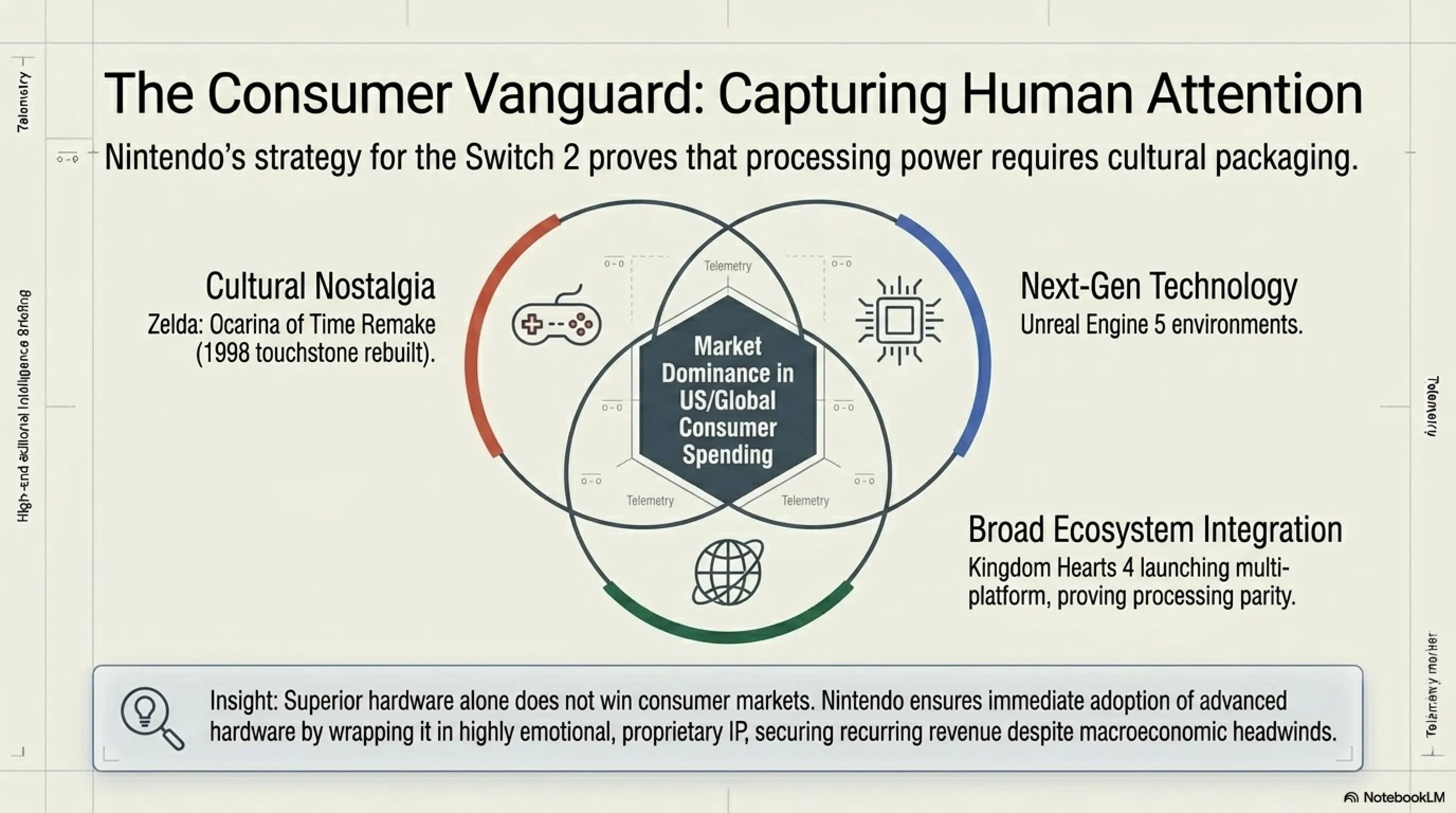
By announcing the Ocarina of Time remake and Kingdom Hearts 4 port, Nintendo has clarified its strategy for Switch 2: combining nostalgia with major third-party titles. Ocarina of Time is one of Nintendo's most beloved games and could drive millions to buy the new console. Meanwhile, bringing Kingdom Hearts 4 - a major franchise typically stronger on PlayStation - shows that Switch 2 has significantly more processing power than its predecessor.
For the American gaming market, which has been Nintendo's strongest territory outside Japan, this signals a console that can truly compete with PlayStation and Xbox in terms of third-party support while maintaining Nintendo's first-party excellence. The hybrid portable/home console format that made Switch so successful continues, but with power sufficient to handle modern AAA games.
Strategic insight: Nintendo is betting that nostalgia + modern tech + third-party support = dominance. For investors and industry watchers, this suggests Switch 2 could repeat or exceed the original Switch's success (over 140 million units sold), especially in the crucial American market where gaming spending continues to grow despite economic headwinds.
🎯 Other Nintendo Direct June 2026 Announcements:
- Rhythm Heaven Groove: New rhythm game with 80 new mini-games and 30+ multiplayer modes
- Xenoblade Genesis: New entry in the Xenoblade series for Switch 2
- Fire Emblem: Fortune's Weave: Updates and new content
- Metaphor Re:Fantazio and Dragon's Dogma: Ports of major third-party games
- New Turn-Based Final Fantasy: A traditional Final Fantasy game for late 2026
- New Joy-Con Colors: Fresh color options for controllers
📊 Mid-Article Summary: The Big Picture
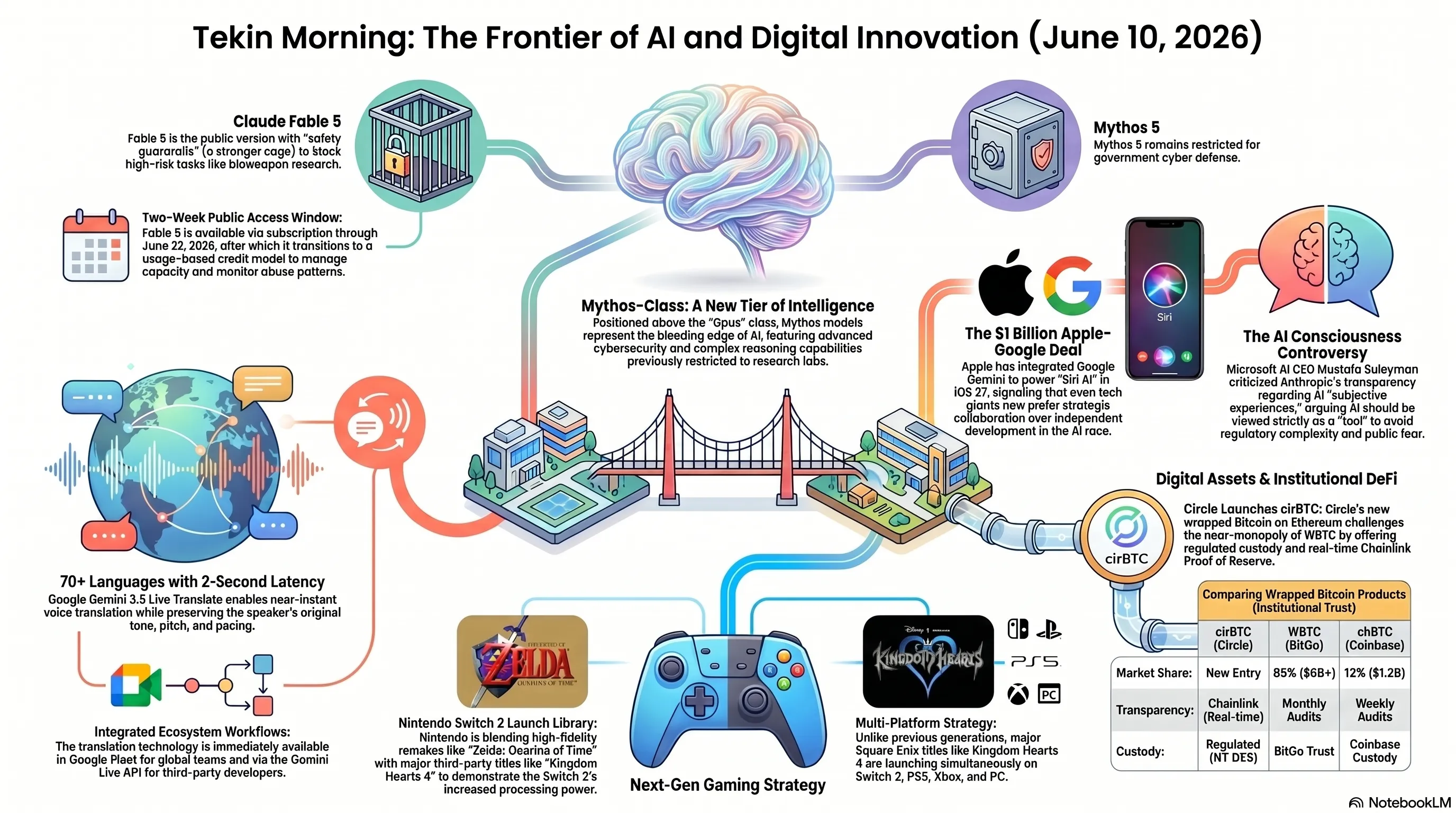
If we put these six stories together, we see a clear pattern: the technology industry is undergoing fundamental transformation. AI is no longer an added feature - it has become the core infrastructure of everything. From Apple's voice assistant powered by Google, to real-time translation from Google, to advanced models from Anthropic, everyone is moving toward a future where AI is ubiquitous.
🔮 Key Trends:
- Collaboration between rivals (Apple-Google)
- Safety guardrails in powerful AI
- Transparency in digital assets
- Real-time translation for global communication
- Nostalgia + technology in gaming
⚠️ Challenges Ahead:
- Consciousness debate and AI ethics
- Intense competition in AI models
- Data security and privacy
- Unequal access to technology
- Geopolitical impact of sanctions
❓ Frequently Asked Questions (FAQ)
❓ Is Claude Fable 5 accessible in the United States?
Yes! Claude Fable 5 is fully accessible in the United States for Pro, Max, Team, and Enterprise subscribers through June 22, 2026. After that date, it will require usage credits. The US market is Anthropic's primary focus, and there are no access restrictions for American users.
To access:
- Individual users: Subscribe to Claude Pro or Max at claude.ai
- Teams: Team plans starting at $25/user/month
- Enterprises: Custom pricing with dedicated support
- Developers: API access through Anthropic's developer platform
✅ Note: American businesses should take advantage of the free trial period (through June 22) to evaluate whether Fable 5's capabilities justify the eventual usage-based costs.
❓ What's the main difference between the new Siri AI and the old version?
Siri AI powered by Google Gemini represents a fundamental transformation from the previous version:
- Natural Conversations: Can now handle multi-turn dialogues and remember previous context
- Visual Understanding: Can analyze images, documents, and scenes
- Deep Integration: Works with third-party apps and performs complex tasks
- Standalone App: In addition to voice assistant, has a dedicated app for complex interactions
- Apple Intelligence: Writing, summarization, and text analysis tools across the system
In simple terms: Old Siri was a simple voice assistant, Siri AI is a complete artificial intelligence that can handle sophisticated tasks rivaling or exceeding human capabilities in many domains.
❓ Does Gemini 3.5 Live Translate support English?
Yes! Google Gemini 3.5 Live Translate supports over 70 languages, including English. This means you can conduct real-time English conversations with speakers of Spanish, Mandarin, Japanese, Arabic, and dozens of other languages.
English translation quality is excellent, especially for common language pairs like English-Spanish, English-Mandarin, and English-French. To use:
- In Google Meet: Enable live translation in meeting settings
- In Google Translate: Use conversation mode
- For developers: Access via Gemini Live API
✅ Tip: For best results, speak in quiet environments and avoid speaking too quickly. The system works best with clear audio and standard accents.
❓ What advantages does cirBTC have over holding native Bitcoin?
cirBTC is not a replacement for native Bitcoin - it's a tool for using Bitcoin's value in the DeFi ecosystem. Advantages and risks:
✅ Advantages:
- Use in DeFi protocols
- Lending and earning yield on BTC
- Faster trades on DEXs
- Transparent Proof of Reserve
- Quick conversion to USDC/other tokens
⚠️ Risks:
- Dependency on Circle custody
- Smart contract risks
- Need to trust Circle
- Conversion fees
- Complexity for average users
When should you use it? If you want to use your Bitcoin in DeFi (lending, liquidity mining, complex trades) without selling it, cirBTC is a good option. But for long-term holding, native Bitcoin in a hardware wallet is safer.
❓ Why is the AI consciousness debate so important?
The AI consciousness debate is not just philosophical - it's a practical issue with serious consequences:
- Legal Rights: If an AI is "conscious," does it have rights? Can it be turned off?
- Ethical Responsibility: Is using a conscious entity as a "tool" ethical?
- Control and Safety: A conscious AI might have its own goals that aren't aligned with humans
- Public Trust: Claims of consciousness can create fear or unrealistic expectations
- Social Impact: How we treat AIs can change our culture and values
Microsoft's position: AI should be a tool, not an entity - so even discussing consciousness is dangerous.
Anthropic's position: We don't know and should be honest - so we must discuss possibilities.
💭 Truth: Nobody has a definitive answer. And this uncertainty is exactly what makes the debate important.
🎯 Final Thoughts: The Future Being Built Today
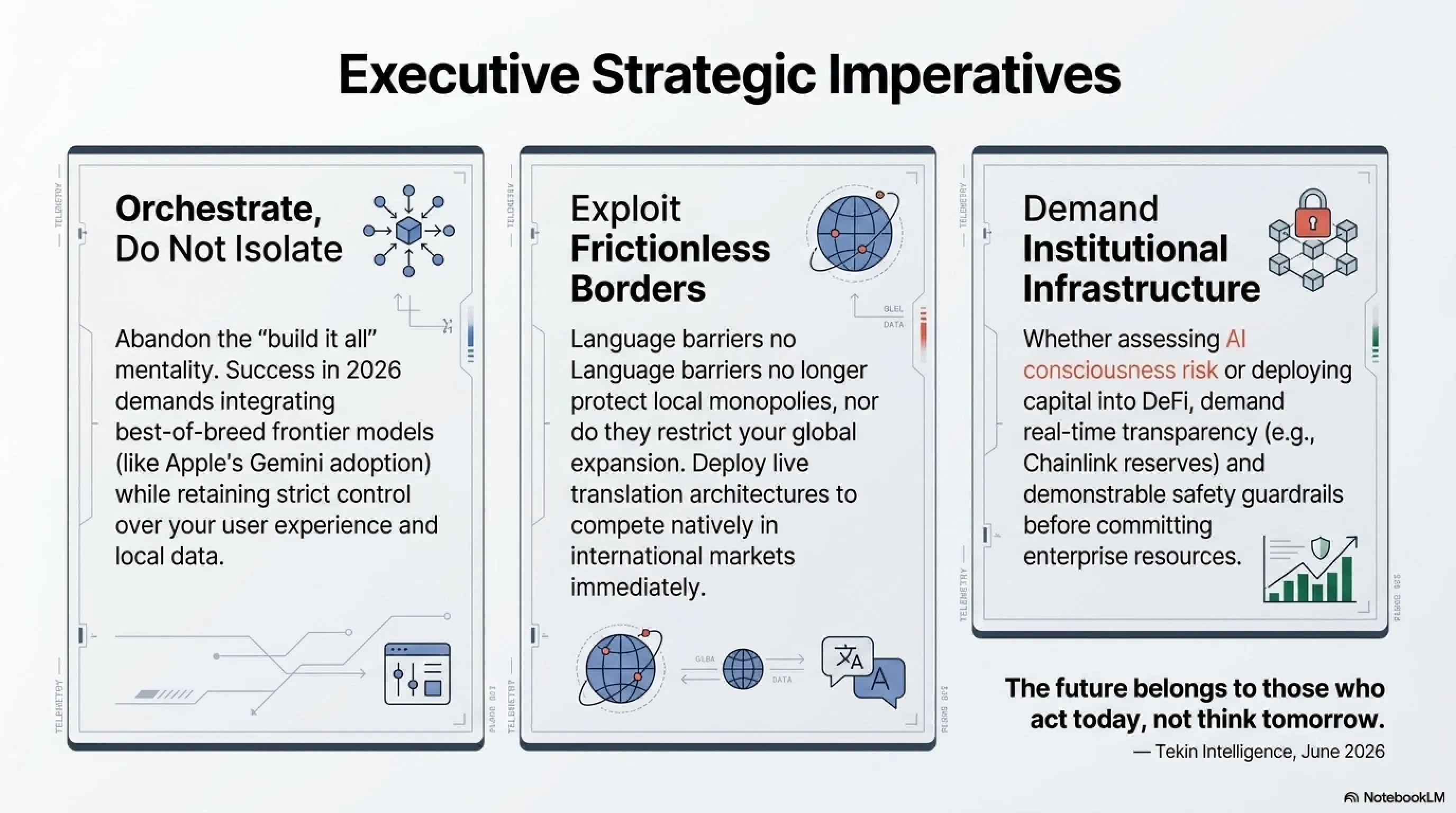
The morning of June 10, 2026 was not just another news day - it was a defining moment in technology history. We witnessed the release of the most powerful public AI (Fable 5), the first major admission of collaboration in the AI era (Apple-Google), the crumbling of the language barrier (Gemini Live Translate), the evolution of digital assets (cirBTC), and the return of gaming legends (Zelda).
🔮 Tekin's Predictions for the Next 6 Months:
- AI competition intensifies: Expect OpenAI and Google to release public versions of their more powerful models to compete with Fable 5
- Unexpected alliances: The Apple-Google collaboration is just the beginning - we'll likely see more partnerships between rivals
- Real-time translation everywhere: Zoom, Microsoft Teams, and other platforms will quickly add similar capabilities
- Wrapped Bitcoin war: WBTC must respond - likely with greater transparency and lower fees
- Switch 2 best-selling console of 2026: With a strong library and nostalgia, Nintendo will win another year
For American businesses and professionals, the key messages are:
🤖 In AI
You can't build everything, so integrate. Focus on user experience and local applications, not competing in base model development.
🌍 In Communication
Language barriers are no longer an obstacle. Take global opportunities seriously and use translation tools for business development.
💰 In Crypto
DeFi is no longer experimental - institutional infrastructure is taking shape. Prepare for large capital inflows.
The world is changing faster, and technologies that were fiction yesterday are reality today. Those who can learn quickly, adapt, and innovate will win. Those who wait for everything to be "perfect" will fall behind.
🚀 The future belongs to those who act today, not think tomorrow.
📚 Sources
Anthropic Claude Fable 5: Anthropic Official Blog, CNBC, Forbes, TechCrunch, Business Insider
Microsoft vs Anthropic: The Verge (Decoder Podcast), Microsoft AI Blog, Fortune
WWDC 2026: Apple Newsroom, TechCrunch, MacRumors, Digital Trends, Mashable
Circle cirBTC: Circle Official Blog, CoinDesk, Bitcoin.com, Crypto News, CryptoRank
Gemini Live Translate: Google Blog, Ars Technica, 9to5Google, Silicon Angle, Thurrott
Nintendo Direct: Nintendo Official, IGN, Polygon, Kotaku, Nintendo Life, Tom's Guide
🌐 Stay Connected With Us 🎮✨
For the latest tech, gaming, and gadget news, follow us on our official social media channels: