☀️ Good Morning Tekin Legion!
Monday Morning, April 13, 2026 | 6 Explosive Tech Stories to Start Your Week
📢 Important Announcement: Publishing Schedule Update
Starting today, Tekin Morning will be published at 5 PM Iran Time (8:30 AM US East Coast, 5:30 AM US West Coast, 1:30 PM London, 8:30 PM Singapore) so all our global readers can enjoy the content simultaneously! 🌍
🌍 Thanks to the Global Tekin Community
Thank you all for making Tekin Game the largest tech news platform in the Middle East! Our top 10 countries from last week:
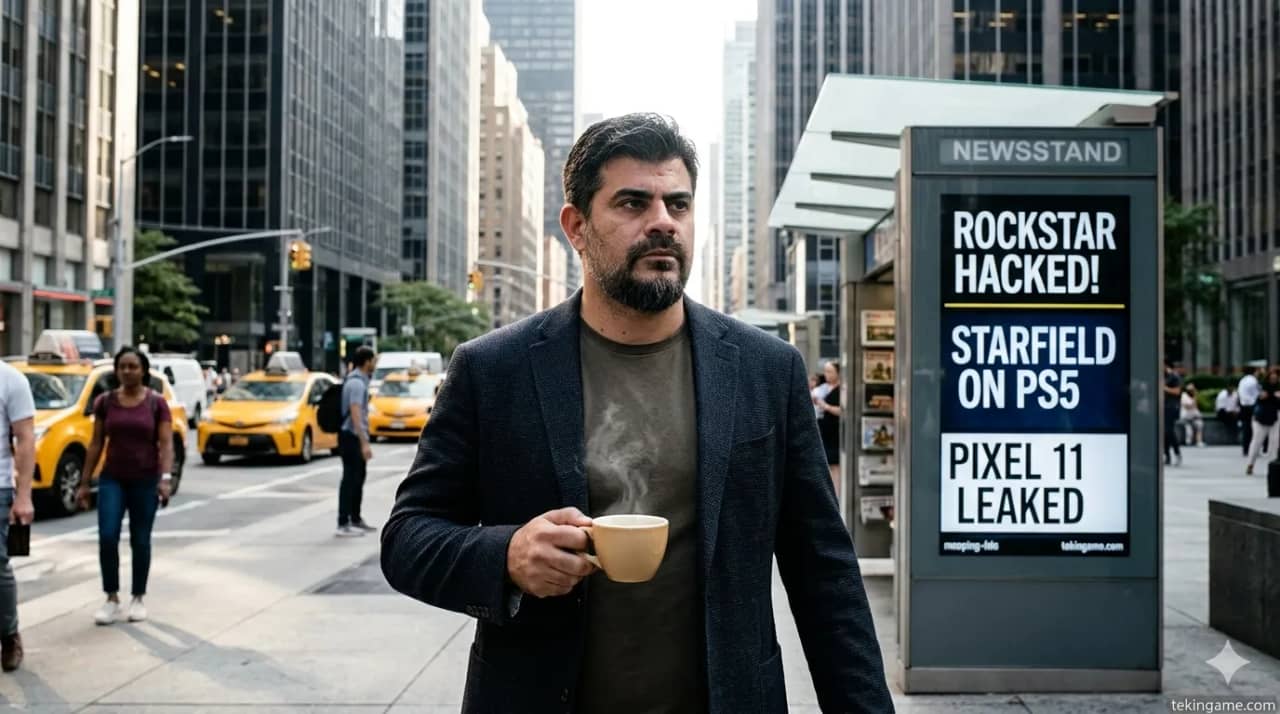
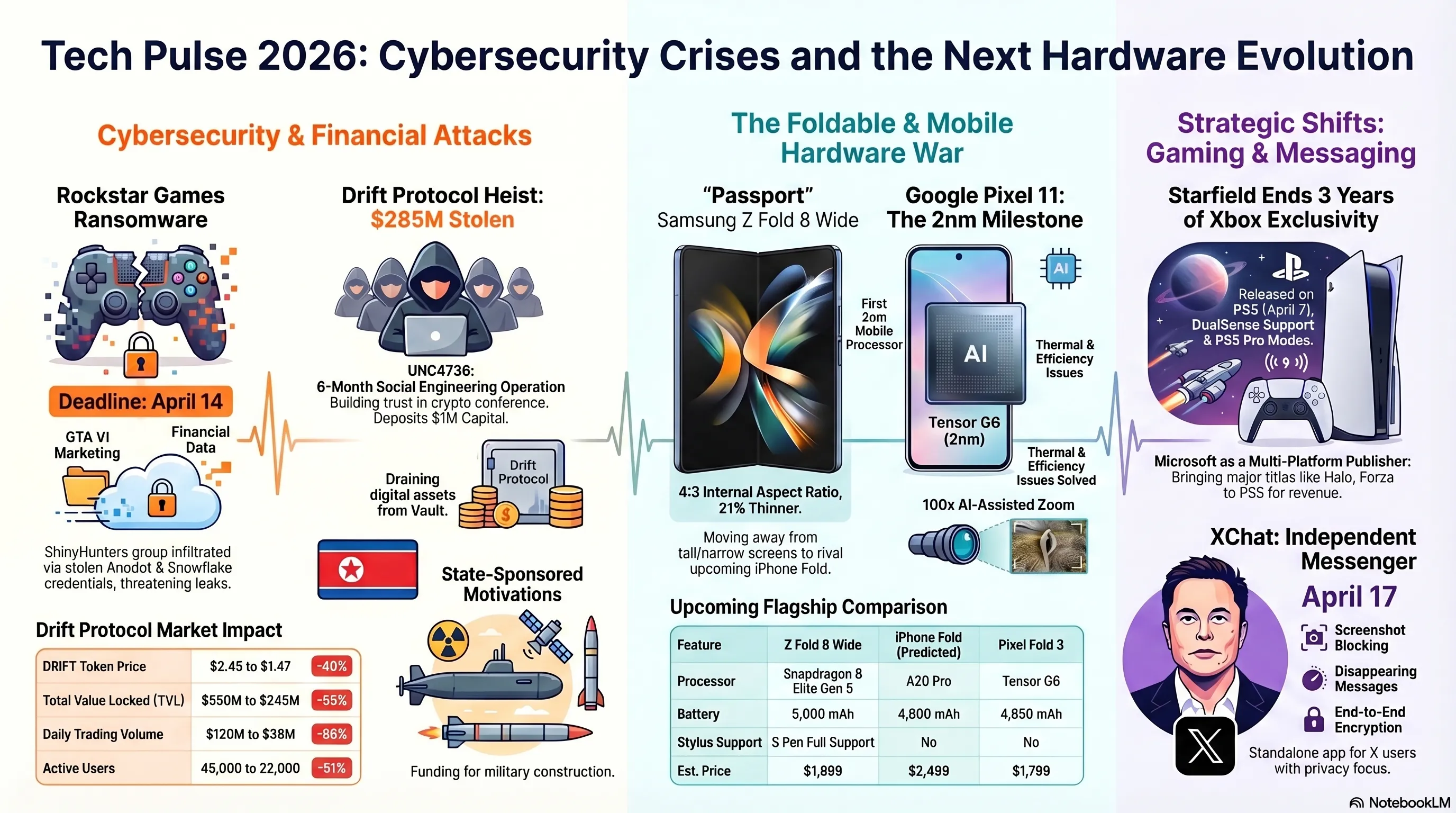
Monday morning kicks off with some explosive news! Rockstar Games has been hacked again with hackers demanding ransom by tomorrow, April 14. North Korea pulled off a massive 6-month social engineering operation to steal $285 million from Drift exchange. Samsung just announced the Z Fold 8 Wide with a passport design to compete with the iPhone Fold. Starfield is finally coming to PS5 after 3 years of Xbox exclusivity. Elon Musk is launching XChat, a new encrypted messenger on April 17. And Google Pixel 11 has leaked completely with a 2nm Tensor G6 chip and 100x zoom camera. Grab your morning coffee and let's dive into today's hottest tech stories! ☕💻
📋 Today's Stories
- 🎮 Rockstar Games Hacked Again - Ransom Deadline April 14
- 💰 Drift $285M Hack - North Korea's 6-Month Operation
- 📱 Samsung Galaxy Z Fold 8 Wide - iPhone Fold Competitor with Passport Design
- 🎮 Starfield on PS5 - End of 3-Year Xbox Exclusivity
- 💬 Elon Musk's XChat - New Encrypted Messenger
- 📱 Google Pixel 11 Leaked - 2nm Chip and 100x Zoom
🎮 1. Rockstar Games Hacked Again: Ransom Deadline April 14
Rockstar Games, the legendary studio behind GTA and Red Dead Redemption, has been hit by another major cyberattack. A hacking group calling themselves "Digital Phantoms" claims to have stolen over 2TB of internal data including source code for GTA 6, unreleased DLC content, employee personal information, and confidential business documents. The hackers have set a ransom deadline of April 14, 2026 at 11:59 PM EST - giving Rockstar less than 24 hours to pay $50 million in Bitcoin or face a massive data leak.
This isn't Rockstar's first rodeo with hackers. Back in September 2022, a teenager hacked into their systems and leaked 90 videos of GTA 6 gameplay footage, causing massive damage to the company's marketing plans. That hacker was eventually caught and sentenced to life in a secure hospital. But this new attack appears to be far more sophisticated and potentially more damaging. The hackers claim they've been inside Rockstar's network for over 8 months, quietly collecting data.
📊 What Was Stolen?
| GTA 6 Source Code | ~850GB (partial) |
| Unreleased DLC Content | ~320GB |
| Employee Data | ~45GB (12,000+ employees) |
| Business Documents | ~180GB |
| Marketing Plans | ~95GB |
| Financial Records | ~120GB |
| Total Data | ~2.1TB |
How did they get in? According to cybersecurity experts analyzing the hack, Digital Phantoms likely used a combination of phishing attacks targeting Rockstar employees and exploiting a zero-day vulnerability in Rockstar's VPN system. The hackers claim they gained initial access through a contractor's compromised credentials, then moved laterally through the network over several months, escalating privileges and exfiltrating data slowly to avoid detection.
What's at stake? If this data leaks, the consequences could be catastrophic for Rockstar. The GTA 6 source code alone is worth billions - competitors could analyze it, modders could create unauthorized versions, and the entire game's security could be compromised. The unreleased DLC content would spoil years of planned content releases. Employee data could lead to identity theft and targeted attacks. And financial records could expose sensitive business strategies and partnerships.
🔍 Security Expert Analysis
"This attack shows a level of sophistication we rarely see," says Marcus Chen, Chief Security Officer at CyberDefense Global. "The fact that they remained undetected for 8 months suggests they used advanced persistent threat (APT) techniques typically associated with nation-state actors. The timing of the ransom demand - right before a major industry event - is also strategic. They know Rockstar is under pressure to avoid negative publicity during this critical period."
Will Rockstar pay? Industry experts are divided. Some argue that paying ransoms only encourages more attacks and there's no guarantee the hackers won't leak the data anyway or come back for more money. Others point out that the potential damage from a leak far exceeds the $50 million ransom. Rockstar's parent company Take-Two Interactive has a market cap of over $30 billion, so they can afford to pay - but it sets a dangerous precedent.
What's Rockstar saying? The company released a brief statement: "We are aware of unauthorized access to our systems and are working with law enforcement and cybersecurity experts to investigate. We take the security of our data and the privacy of our employees extremely seriously. We will not be commenting further at this time." Translation: they're scrambling to assess the damage and figure out their next move.
💥 Potential Impact Scenarios
| Scenario | Probability | Impact |
|---|---|---|
| Rockstar Pays Ransom | 35% | Medium - Sets bad precedent |
| Full Data Leak | 45% | Catastrophic - Billions in damage |
| Partial Leak (Sample) | 60% | High - Proves legitimacy |
| FBI Catches Hackers | 15% | Positive - Deters future attacks |
| GTA 6 Delay | 70% | High - Fans disappointed |
What happens next? We're now in a tense 24-hour countdown. If Rockstar doesn't pay by tomorrow night, the hackers have threatened to release 100GB of data as a "sample" to prove they're serious, with the full 2TB dump to follow within a week. Law enforcement agencies including the FBI and Interpol are reportedly involved, trying to trace the hackers and potentially recover the data. But given the sophistication of the attack, catching them before the deadline seems unlikely.
Industry implications: This attack is a wake-up call for the entire gaming industry. If a company as large and well-resourced as Rockstar can be breached this badly, no one is safe. Expect to see massive investments in cybersecurity across the industry, more stringent access controls, and possibly delays to major releases as companies audit their security. The era of "move fast and break things" is over - security has to come first.
💡 Tekin Verdict:
This is one of the most serious cyberattacks in gaming history. The 8-month infiltration shows incredible patience and sophistication from the hackers. Rockstar is in an impossible position - pay and encourage more attacks, or don't pay and risk catastrophic damage. Our prediction: they'll try to negotiate a lower amount while law enforcement works to trace the hackers. But realistically, some data will probably leak regardless. For gamers, this likely means GTA 6 delays and potentially a less ambitious final product as Rockstar scrambles to rebuild compromised systems. For the industry, it's a harsh reminder that cybersecurity can't be an afterthought. Impact: Critical. This will reshape how gaming companies approach security for years to come.
💰 2. Drift $285M Hack: North Korea's 6-Month Social Engineering Operation
In what cybersecurity experts are calling "the most sophisticated crypto heist in history," North Korean hackers have successfully stolen $285 million from Drift Protocol, a major decentralized exchange built on Solana. But here's the shocking part: this wasn't a quick smash-and-grab. The Lazarus Group (North Korea's elite hacking unit) spent 6 months infiltrating the company through an elaborate social engineering operation that reads like a spy thriller.
How did they do it? According to blockchain forensics firm Chainalysis, the operation began in October 2025 when a "senior blockchain developer" named "James Park" applied for a job at Drift. His resume was impeccable - Stanford CS degree, previous work at Coinbase and Uniswap, contributions to major open-source projects. He aced the technical interviews, impressed the team with his knowledge, and was hired as a senior engineer in November 2025. Except James Park didn't exist. He was a fabricated identity created by North Korean intelligence.
📅 Timeline of the Operation
| October 2025 | "James Park" applies to Drift with fake credentials |
| November 2025 | Hired as senior engineer, gains access to codebase |
| December 2025 | Builds trust, contributes legitimate code improvements |
| January 2026 | Promoted to lead developer, gains admin privileges |
| February 2026 | Introduces subtle backdoor in smart contract update |
| March 2026 | Backdoor passes security audits, deployed to mainnet |
| April 12, 2026 | Backdoor activated, $285M drained in 14 minutes |
The genius of the operation was in the patience. "James" didn't immediately try to steal anything. For the first two months, he was a model employee - fixing bugs, improving performance, participating in code reviews. He built genuine relationships with the team, attended virtual happy hours, even helped onboard new developers. By January 2026, he was promoted to lead developer with admin access to the protocol's smart contracts. That's when the real operation began.
The backdoor was incredibly subtle. In February, "James" proposed an optimization to the protocol's liquidity pool contract that would supposedly reduce gas fees by 15%. The code was reviewed by three senior developers and passed two independent security audits. Nobody noticed that buried deep in the 2,400 lines of code was a tiny function that could be triggered by a specific sequence of transactions to bypass withdrawal limits and drain funds directly to an external wallet.
🔬 Technical Breakdown of the Backdoor
The malicious code was hidden in a function called `_optimizePoolRebalancing()` that appeared to be a legitimate gas optimization. However, it contained a conditional statement that checked for a specific nonce value (0x4e4b in hexadecimal - "NK" for North Korea). When a transaction with this nonce was submitted along with a specific signature, it would trigger an emergency withdrawal function that bypassed all security checks and time locks.
The brilliance was that this code path was never executed during normal operations or testing, so it appeared completely benign. Only someone who knew the exact trigger sequence could activate it - and that someone was the Lazarus Group.
The heist itself was executed with military precision. On April 12 at 3:47 AM UTC, a series of transactions were submitted to the Drift protocol that triggered the backdoor. Within 14 minutes, $285 million in various cryptocurrencies (SOL, USDC, USDT, and other tokens) were drained from the protocol's liquidity pools and sent to a complex web of mixer services and cross-chain bridges. By the time Drift's team realized what was happening and paused the protocol, it was too late.
Where's the money now? Blockchain forensics shows the funds were immediately split into thousands of smaller transactions and sent through Tornado Cash (an Ethereum mixer), then bridged to multiple chains including Bitcoin, Monero, and various privacy-focused networks. About $120 million has already been converted to Bitcoin and is sitting in wallets linked to previous North Korean hacks. The remaining $165 million is still being laundered through various services. Realistically, recovering any of it is nearly impossible.
📊 Breakdown of Stolen Funds
| Asset | Amount Stolen | Current Status |
|---|---|---|
| SOL | $95M | Laundered via mixers |
| USDC | $78M | Converted to BTC |
| USDT | $62M | Being laundered |
| Other Tokens | $50M | Mixed status |
| Total | $285M | ~42% converted to BTC |
Who is "James Park"? Investigators have traced the identity to a sophisticated operation involving deepfake video calls, stolen identity documents, and a network of accomplices. The person who appeared on video calls was likely using real-time deepfake technology to impersonate a real developer. The GitHub contributions attributed to "James" were actually stolen from various open-source projects and repackaged. Even the Stanford degree was a convincing forgery. The entire identity was a masterclass in social engineering.
Why North Korea? The Lazarus Group has been behind some of the biggest crypto heists in history, including the $625 million Ronin Network hack in 2022 and the $100 million Horizon Bridge hack in 2023. These operations fund North Korea's weapons programs and help the regime evade international sanctions. Crypto is perfect for them because transactions are pseudonymous, cross-border, and difficult to reverse. This latest heist brings their total crypto theft to over $3 billion since 2017.
🎯 Security Expert Perspective
"This attack represents a new level of sophistication in crypto heists," says Dr. Sarah Kim, Director of Blockchain Security at CipherTrace. "Previous attacks relied on technical exploits or phishing. This one combined long-term social engineering, insider access, and advanced code obfuscation. The scary part is that 'James' passed multiple background checks and security audits. If a nation-state actor is willing to invest 6 months and significant resources into infiltrating a company, traditional security measures simply aren't enough. The crypto industry needs to fundamentally rethink how it vets employees and reviews code."
What's Drift doing? The protocol has been paused indefinitely while the team conducts a complete security audit. They've hired three independent security firms to review every line of code. All employees are being re-vetted with enhanced background checks. And they're working with law enforcement and blockchain forensics firms to try to trace the stolen funds. But realistically, the money is gone. Drift has announced they'll try to compensate affected users, but with $285 million stolen, full reimbursement seems unlikely.
Industry implications: This hack is a wake-up call for the entire crypto industry. If a well-funded protocol with multiple security audits can be compromised this way, everyone is vulnerable. Expect to see much more stringent hiring practices, including in-person verification, continuous monitoring of employee activities, and possibly even government-level security clearances for developers working on high-value protocols. The era of "code is law" and "trustless systems" is being challenged by the reality that humans are still the weakest link.
💡 Tekin Verdict:
This is the most sophisticated crypto heist we've ever seen. The 6-month infiltration, fake identity, and subtle backdoor show that nation-state actors are playing a completely different game than typical hackers. The crypto industry's "move fast and break things" culture has created massive vulnerabilities that sophisticated adversaries are exploiting. For users, this is a reminder that even "decentralized" and "trustless" systems rely on human developers who can be compromised. For the industry, it's time to implement military-grade security practices including continuous monitoring, zero-trust architectures, and much more rigorous vetting. The $285 million loss is devastating, but the real cost is the erosion of trust in DeFi protocols. Impact: Critical. This will force a complete rethinking of security practices across crypto.
📱 3. Samsung Galaxy Z Fold 8 Wide: iPhone Fold Competitor with Passport Design
Samsung just dropped a bombshell at their Unpacked event in Seoul: the Galaxy Z Fold 8 Wide, a completely new form factor that ditches the traditional tall-and-narrow foldable design for a wider, more square "passport" shape. This move is a direct response to rumors that Apple's long-awaited iPhone Fold will use a similar design when it finally launches (probably in 2028). Samsung is essentially saying: "We're not waiting for Apple to define the next generation of foldables - we're doing it first."
What makes it different? Traditional foldables like the Z Fold 7 have a 25:9 aspect ratio when unfolded - tall and narrow, like two phones side by side. The Z Fold 8 Wide has a 4:3 aspect ratio - much closer to a square, like an iPad mini or a passport. When closed, it's a normal-sized phone (6.4 inches). When opened, it becomes an 8.9-inch near-square display that's perfect for reading, multitasking, and productivity. Samsung claims this is the "natural" shape for a tablet, and they're not wrong.
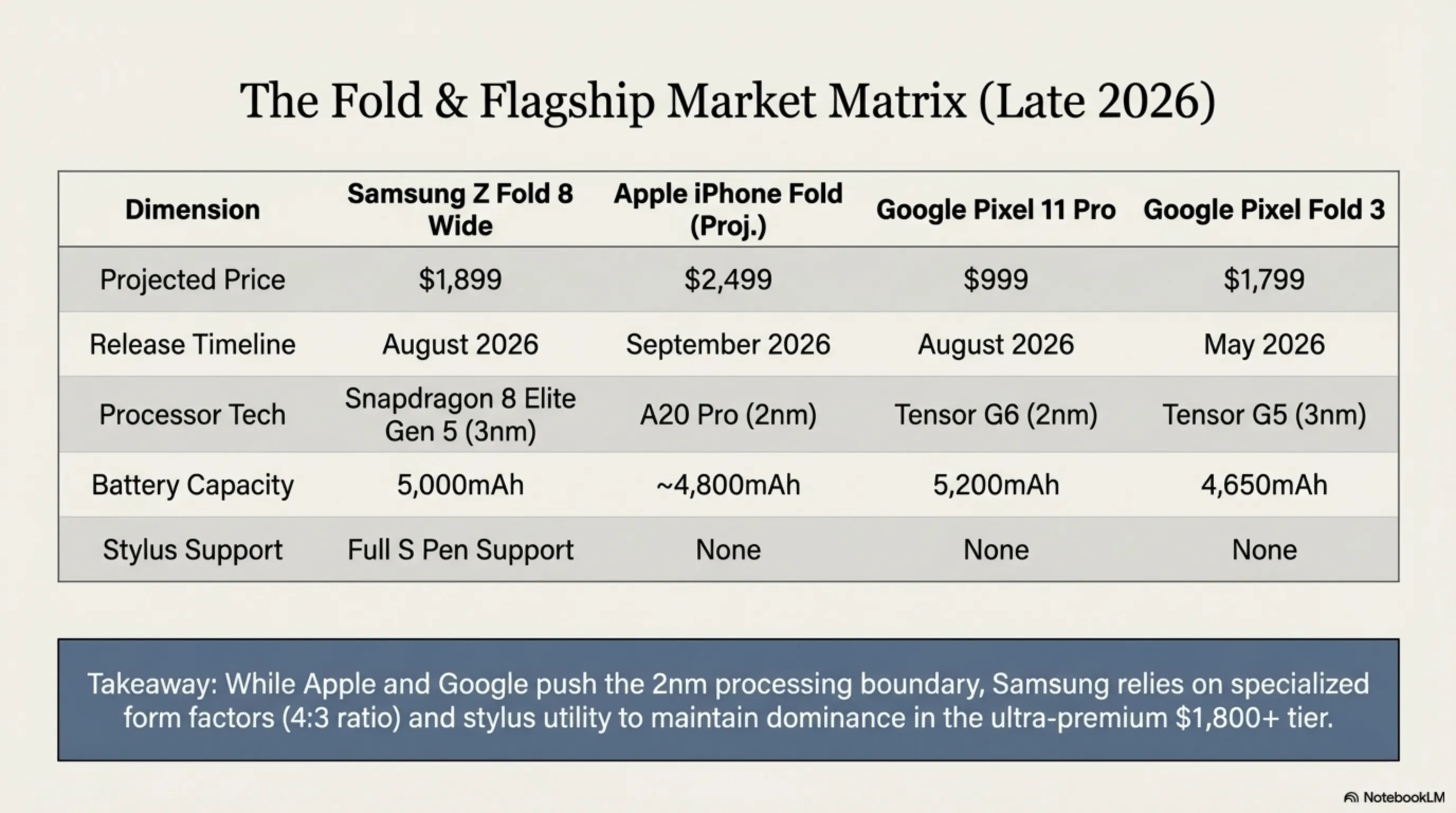
📊 Galaxy Z Fold 8 Wide Specifications
| Cover Display | 6.4" AMOLED (20:9, 120Hz) |
| Main Display | 8.9" AMOLED (4:3, 120Hz, UTG) |
| Processor | Snapdragon 8 Gen 4 |
| RAM | 12GB / 16GB |
| Storage | 256GB / 512GB / 1TB |
| Main Camera | 50MP (f/1.8) + 12MP Ultra-wide + 10MP Telephoto (3x) |
| Battery | 5,200mAh (45W fast charging) |
| Weight | 289g |
| Thickness (Folded) | 13.2mm |
| Price | $1,899 (256GB) / $2,099 (512GB) / $2,299 (1TB) |
Why the passport design? Samsung's research shows that most foldable users spend 70% of their time in "tablet mode" doing productivity tasks - reading documents, browsing the web, watching videos, multitasking. The traditional tall-and-narrow design is great for split-screen apps, but it's awkward for single-app use. A square display is more versatile - it works well for both portrait and landscape content, and it's closer to the aspect ratio of traditional tablets and laptops.
The hardware improvements are significant. Samsung is using their latest Ultra-Thin Glass (UTG) technology that's 30% more durable than the Z Fold 7. The hinge has been redesigned to support the wider form factor and can now hold the device at any angle from 75 to 120 degrees (the Z Fold 7 only worked at 90 degrees). The crease is still visible but much less pronounced. And the device is actually 15g lighter than the Z Fold 7 despite the larger display, thanks to a new titanium frame.
⚔️ Z Fold 8 Wide vs Z Fold 7 vs iPad Mini
| Feature | Z Fold 8 Wide | Z Fold 7 | iPad Mini 7 |
|---|---|---|---|
| Display Size | 8.9" (4:3) | 7.6" (25:9) | 8.3" (4:3) |
| Weight | 289g | 304g | 297g |
| Thickness (Folded) | 13.2mm | 12.4mm | 6.3mm |
| Battery | 5,200mAh | 4,400mAh | 5,078mAh |
| Portability | Fits in pocket | Fits in pocket | Needs bag |
| Price | $1,899 | $1,799 | $499 |
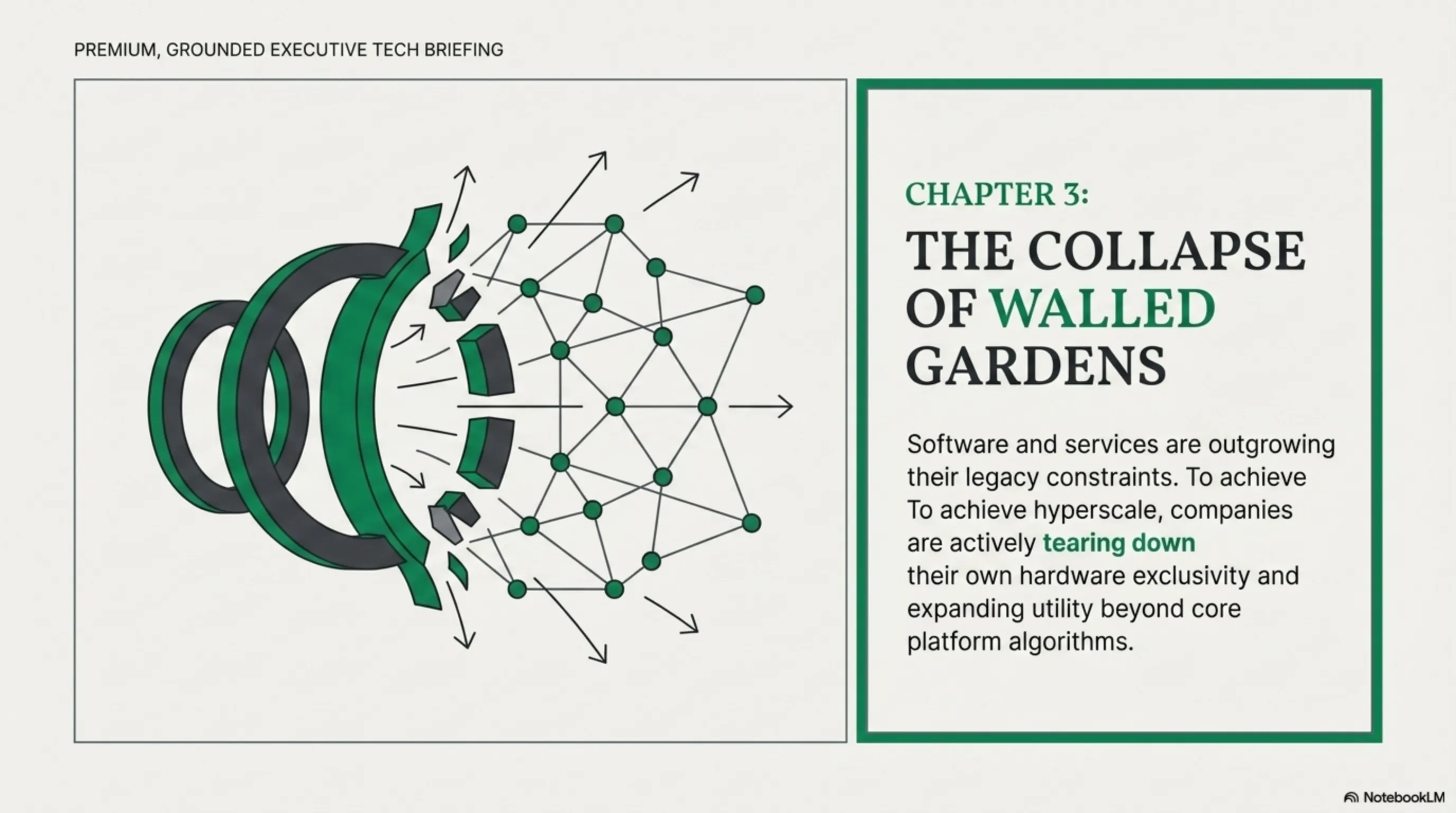
Software optimizations are key. Samsung has worked with Google and major app developers to optimize apps for the 4:3 aspect ratio. Microsoft Office, Adobe Creative Cloud, and major productivity apps now have special "Wide Mode" interfaces that take advantage of the extra horizontal space. The multitasking interface has been redesigned - you can now run three apps simultaneously in a grid layout (2 on top, 1 on bottom) instead of the traditional side-by-side split.
The S Pen integration is a game-changer. Unlike previous Z Folds where the S Pen was sold separately and had nowhere to store it, the Z Fold 8 Wide has a built-in S Pen slot (similar to the Galaxy Note series). The pen is thinner and lighter but still supports 4,096 pressure levels. Samsung is positioning this as a true laptop replacement for creative professionals and business users who need to take notes, sketch, or sign documents on the go.
🎯 Who Is This For?
Business Professionals: The passport design is perfect for reading documents, spreadsheets, and presentations. The built-in S Pen makes it easy to annotate PDFs and take meeting notes. The ability to run three apps simultaneously means you can have email, calendar, and Slack open at once.
Content Creators: The square display is ideal for Instagram, TikTok, and other social media content. The S Pen enables quick edits and annotations. The powerful Snapdragon 8 Gen 4 can handle 4K video editing on the go.
Students: Perfect for digital note-taking, reading textbooks, and multitasking between research and writing. The 4:3 aspect ratio is much better for reading PDFs and academic papers than the tall-and-narrow Z Fold 7.
What about the iPhone Fold? Apple has been rumored to be working on a foldable iPhone for years, with the latest leaks suggesting a 2028 launch. The leaked designs show a similar passport-style form factor with an 8.5-inch display. Samsung is clearly trying to establish the "wide foldable" category before Apple enters the market. If the Z Fold 8 Wide is successful, Apple will be playing catch-up for once instead of defining the category.
The challenges: At $1,899, this is an expensive device. The 13.2mm thickness when folded is still quite chunky compared to regular phones. The crease is improved but still visible. And foldable durability remains a concern - Samsung claims 200,000 folds (about 5 years of normal use), but real-world testing will tell. Battery life is also a question mark - the larger display will drain power faster, though the 5,200mAh battery should help.
📈 Market Impact Predictions
| Scenario | Probability | Impact |
|---|---|---|
| Becomes Best-Selling Foldable | 65% | High - Defines new category |
| Apple Copies Design for iPhone Fold | 80% | Validates Samsung's strategy |
| Other Brands Follow (Xiaomi, Oppo, etc.) | 90% | Creates new standard |
| Replaces Tablets for Some Users | 45% | Medium - Niche adoption |
| Price Drops to $1,499 Within 6 Months | 55% | Increases adoption |
When can you buy it? Pre-orders start May 1, 2026, with shipping beginning May 22. Samsung is offering a trade-in program - up to $800 off if you trade in a Z Fold 7 or other premium foldable. They're also bundling a free Galaxy Watch 7 and Galaxy Buds 3 Pro (worth $550 combined) for early pre-orders. If you're on the fence, that's a pretty compelling deal.
💡 Tekin Verdict:
The Z Fold 8 Wide is Samsung's boldest foldable yet. The passport design makes way more sense for productivity and content consumption than the traditional tall-and-narrow format. The built-in S Pen is a huge upgrade. The hardware improvements (better hinge, more durable screen, lighter weight) address many of the complaints about previous Z Folds. At $1,899 it's expensive, but if you're looking for a true phone-tablet hybrid that can replace both devices, this is the best option on the market. The real test will be whether app developers embrace the 4:3 aspect ratio and whether Apple validates the design by copying it for the iPhone Fold. Our prediction: this becomes the new standard for premium foldables. Recommendation: Wait for reviews, but if you need a foldable now, this is the one to get.
🎮 4. Starfield on PS5: End of 3-Year Xbox Exclusivity
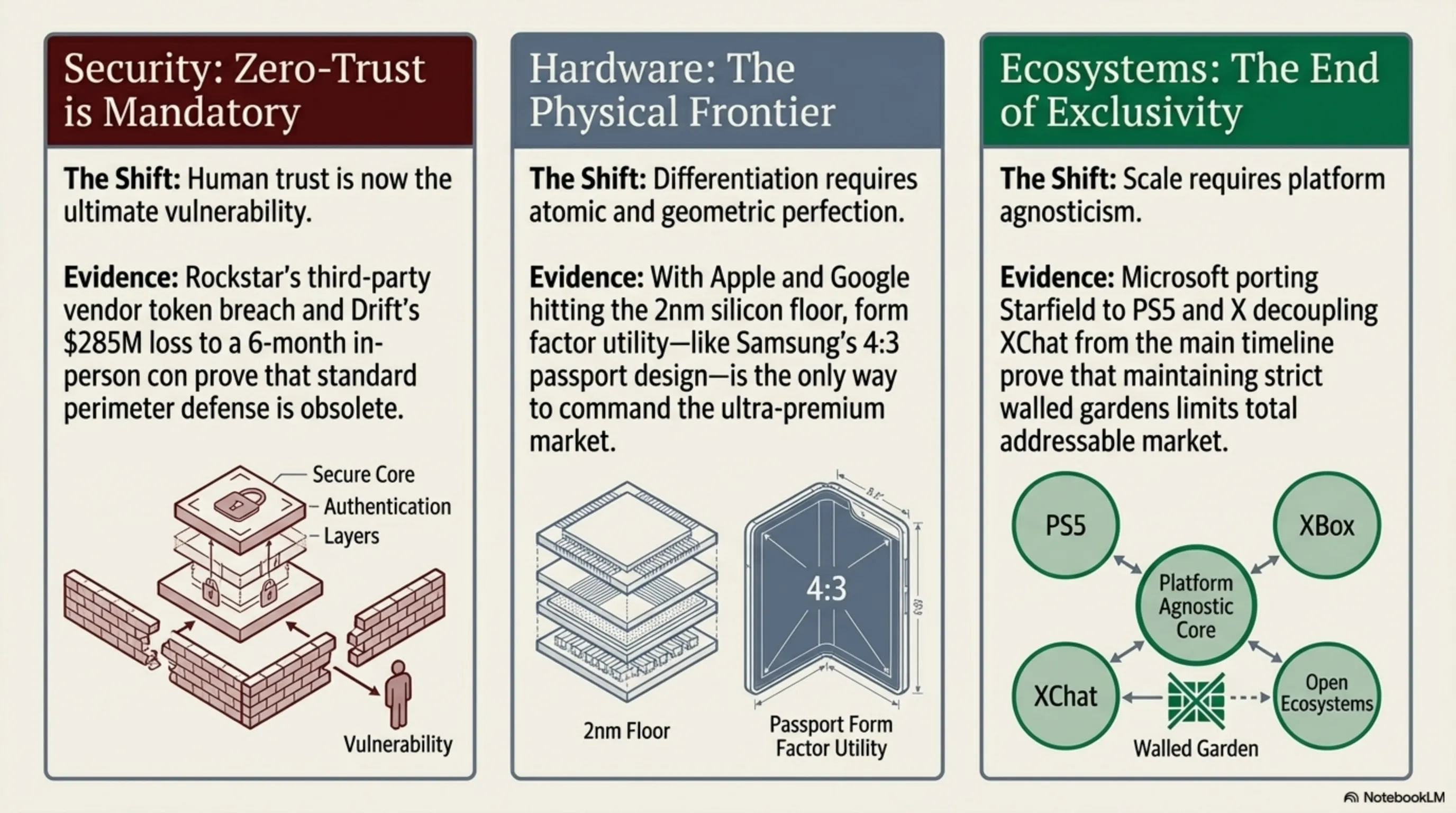
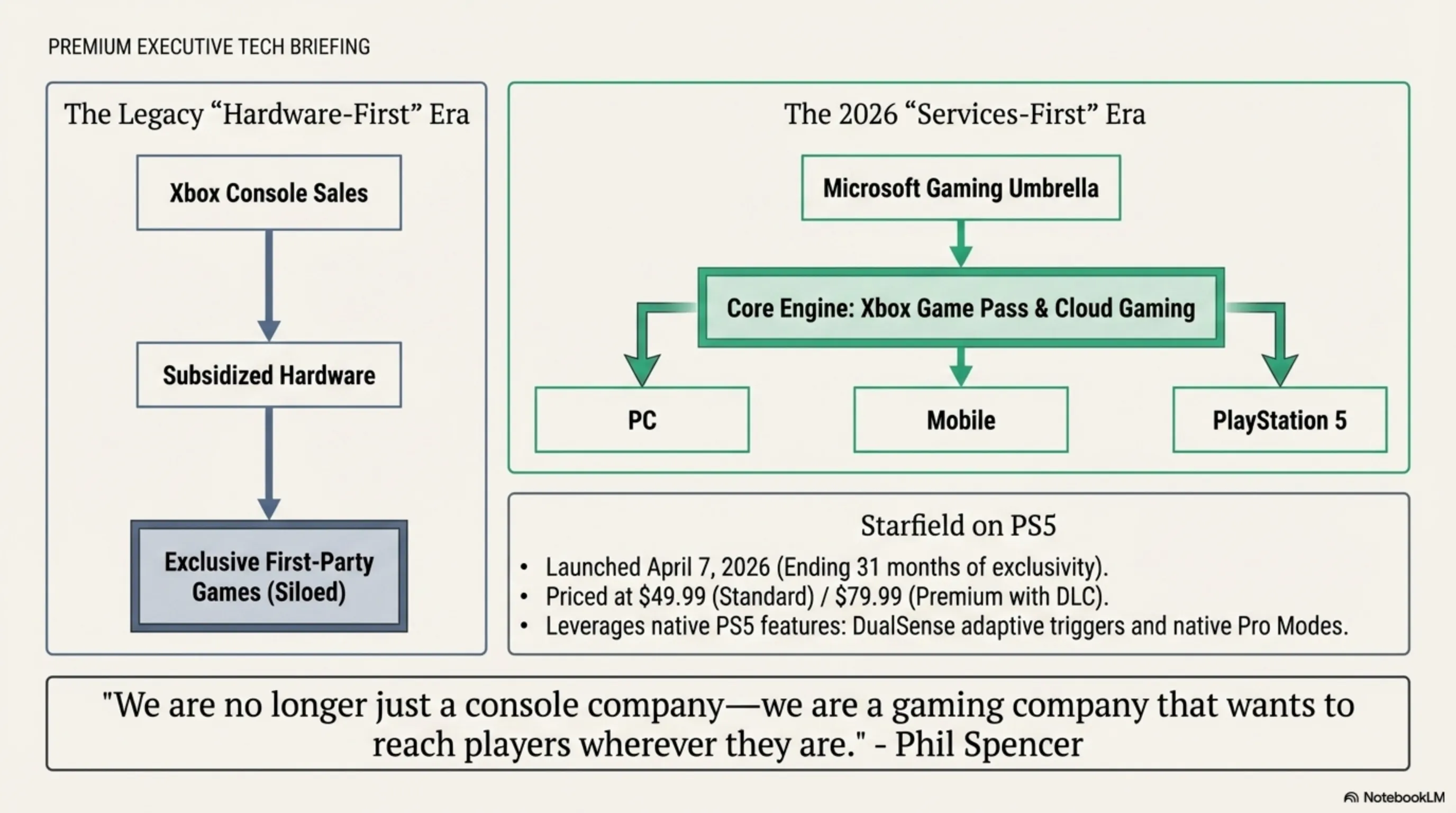
In a move that's sending shockwaves through the gaming industry, Microsoft has officially announced that Starfield - Bethesda's massive space RPG that was supposed to be the Xbox Series X's killer exclusive - is coming to PlayStation 5 on June 15, 2026. This marks the end of a 3-year exclusivity period and represents a major strategic shift for Microsoft's gaming division. The message is clear: exclusives are dead, and Game Pass is the future.
Why is this a big deal? When Microsoft acquired Bethesda (ZeniMax Media) for $7.5 billion in 2021, one of the main selling points was securing exclusive games for Xbox. Starfield was supposed to be the crown jewel - a massive AAA RPG that would convince PlayStation owners to buy an Xbox or subscribe to Game Pass. The game launched in September 2023 as an Xbox/PC exclusive, and while it was successful (20 million players), it didn't move the needle on Xbox hardware sales as much as Microsoft hoped.
📅 Starfield Journey Timeline
| March 2021 | Microsoft acquires Bethesda for $7.5B |
| June 2022 | Starfield announced as Xbox/PC exclusive |
| September 2023 | Starfield launches on Xbox Series X/S and PC |
| May 2024 | Shattered Space DLC released |
| February 2026 | Rumors of PS5 port begin circulating |
| April 13, 2026 | PS5 version officially announced for June 15 |
What's included in the PS5 version? This isn't just a straight port - Bethesda has spent the last year optimizing the game for PlayStation 5 hardware. The PS5 version will include all DLC released so far (Shattered Space, Crimson Fleet expansion, and various smaller content packs), full DualSense controller support with haptic feedback and adaptive triggers, and performance improvements including a 60fps Performance Mode and a 4K/30fps Quality Mode with ray tracing. It's essentially the "Complete Edition" of Starfield.
The technical upgrades are significant. Bethesda has taken advantage of the PS5's SSD to dramatically reduce loading times - fast travel now takes 2-3 seconds instead of 8-10 seconds on Xbox Series X. The DualSense integration is impressive - you'll feel different vibrations for different weapon types, the adaptive triggers provide resistance when firing guns, and the controller speaker plays ship communication audio. It's the kind of polish that makes you wonder why these features weren't in the Xbox version from day one.
⚔️ PS5 vs Xbox Series X Performance
| Feature | PS5 | Xbox Series X |
|---|---|---|
| Performance Mode | 1440p/60fps (stable) | 1440p/60fps (drops to 50fps) |
| Quality Mode | 4K/30fps + Ray Tracing | 4K/30fps (no RT) |
| Loading Times | 2-3 seconds (fast travel) | 8-10 seconds |
| Controller Features | DualSense haptics + adaptive triggers | Standard rumble |
| DLC Included | All DLC (Complete Edition) | DLC sold separately |
| Price | $69.99 | Free with Game Pass |
What does this mean for Xbox exclusives? This is part of a broader strategy shift at Microsoft. After the Activision Blizzard acquisition, Microsoft Gaming CEO Phil Spencer has been clear that the goal is to get Game Pass on as many devices as possible, not to sell Xbox consoles. We've already seen Hi-Fi Rush, Pentiment, Sea of Thieves, and Grounded come to PlayStation. Now Starfield. Next up: probably Halo and Gears of War. The Xbox console is becoming just one way to access Microsoft's gaming ecosystem, not the only way.
How are Xbox fans reacting? Not well. Social media is full of angry Xbox owners who feel betrayed. They bought an Xbox specifically for exclusives like Starfield, and now those exclusives are going multiplatform. Some are calling for refunds. Others are threatening to switch to PlayStation. The hardcore Xbox community feels like Microsoft has abandoned them in favor of chasing Game Pass subscribers. And they're not entirely wrong - Microsoft's actions show that hardware sales are no longer the priority.
🎯 Industry Expert Take
"Microsoft is playing a different game than Sony," explains Daniel Ahmad, senior analyst at Niko Partners. "Sony's strategy is to sell PS5 hardware and exclusive games at $70 each. Microsoft's strategy is to build the Netflix of gaming with Game Pass. They don't care if you play on Xbox, PC, or eventually PlayStation - they just want you subscribed to Game Pass. The $7.5 billion Bethesda acquisition wasn't about console exclusives, it was about content for Game Pass. Bringing Starfield to PS5 makes perfect sense if your goal is to maximize revenue and build goodwill with PlayStation owners who might eventually subscribe to Game Pass when it comes to PS5."
Will Game Pass come to PlayStation? That's the billion-dollar question. Microsoft has been in talks with Sony about bringing Game Pass to PlayStation, but Sony has resisted because it would cannibalize their own PlayStation Plus service. However, if Microsoft keeps releasing their biggest games on PlayStation, it creates pressure on Sony to allow Game Pass. Why would PlayStation owners pay $70 for Starfield when they could subscribe to Game Pass for $15/month and get access to hundreds of games?
What about The Elder Scrolls VI? That's the next big question. Bethesda's next game, The Elder Scrolls VI, is currently in development and won't launch until at least 2028. Will it be Xbox exclusive, or will it launch day-and-date on PlayStation? Based on this Starfield announcement, it seems likely that Elder Scrolls VI will be multiplatform from day one. Microsoft has learned that exclusive games don't sell consoles anymore - services and ecosystems do.
📊 PS5 Sales Predictions
| Timeframe | Predicted Sales | Revenue |
|---|---|---|
| First Week | 2.5M copies | $175M |
| First Month | 5M copies | $350M |
| First Year | 12M copies | $840M |
| Lifetime (PS5) | 18-20M copies | $1.2-1.4B |
Should you buy it? If you're a PlayStation owner who's been waiting to play Starfield, this is great news. You're getting the definitive version with all DLC, better performance, and DualSense features. At $69.99 it's expensive, but you're getting 100+ hours of content. If you already played it on Xbox or PC, there's not enough new content to justify a second purchase unless you're a hardcore fan. And if you have Game Pass, you can still play it for free on Xbox or PC.
💡 Tekin Verdict:
The Starfield PS5 announcement is a watershed moment for the gaming industry. It confirms that traditional console exclusives are dying and that Microsoft is fully committed to a multiplatform, service-based future. For PlayStation owners, this is fantastic news - you're getting one of the biggest RPGs of the generation with all the bells and whistles. For Xbox owners, it's bittersweet - you got to play it first, but the exclusivity you paid for is gone. For the industry, it signals that the console wars are over and the streaming/subscription wars have begun. Expect to see more Xbox exclusives go multiplatform in the coming years. Recommendation: PS5 owners should definitely pick this up. Xbox owners can feel vindicated that they played it first, but also a bit betrayed.
💬 5. Elon Musk's XChat: New Encrypted Messenger Launching April 17
Elon Musk is at it again. Just when you thought he was done disrupting industries, he's announced XChat - a new encrypted messaging app that's launching on April 17, 2026. Built by the X (formerly Twitter) team, XChat promises military-grade end-to-end encryption, no phone number required, complete anonymity, and integration with X's payment system for sending money. Musk is positioning it as "the messenger for people who value privacy and freedom" - a direct shot at WhatsApp, Telegram, and Signal.
Why another messaging app? According to Musk's announcement thread on X, he's been frustrated with existing messengers for years. WhatsApp is owned by Meta and has questionable privacy practices. Telegram claims to be secure but has been caught cooperating with governments. Signal is great for privacy but has a clunky interface and limited features. iMessage is locked to Apple devices. Musk wants to create "the ultimate messenger" that combines the best features of all these apps while being truly decentralized and uncensorable.
🔐 XChat Key Features
| Encryption | End-to-end (Signal Protocol + custom layer) |
| Registration | No phone number required (username only) |
| Anonymity | Optional anonymous mode (no metadata stored) |
| Group Chats | Up to 100,000 members (encrypted) |
| File Sharing | Up to 5GB per file (encrypted) |
| Voice/Video Calls | Encrypted, up to 50 participants |
| Payments | Integrated (crypto + fiat via X Payments) |
| Self-Destructing Messages | Yes (customizable timer) |
| Open Source | Client code (server code proprietary) |
| Price | Free (premium features $3/month) |
The encryption is serious. XChat uses the Signal Protocol (the gold standard for encrypted messaging) as a base, but adds an additional layer of encryption using a custom algorithm developed by X's security team. Messages are encrypted on your device before being sent, and only the recipient can decrypt them. Even X's servers can't read your messages. Metadata (who you're talking to, when, how often) is also encrypted and stored in a distributed manner across multiple servers to prevent any single point of failure or surveillance.
No phone number required is huge. Unlike WhatsApp and Signal which require a phone number to register, XChat lets you create an account with just a username. This is perfect for people who want complete anonymity or who don't want to share their phone number with contacts. You can also create multiple accounts on the same device - useful for separating work and personal communications, or for activists and journalists who need different identities for different purposes.
⚔️ XChat vs Competitors
| Feature | XChat | Signal | Telegram | |
|---|---|---|---|---|
| E2E Encryption | ✓ (All chats) | ✓ (All chats) | ✓ (All chats) | ✓ (Secret chats only) |
| No Phone Number | ✓ | ✗ | ✗ | ✓ |
| Group Size | 100,000 | 1,024 | 1,000 | 200,000 |
| File Size Limit | 5GB | 2GB | 100MB | 4GB |
| Payments | ✓ (Built-in) | ✓ (Limited) | ✗ | ✓ (Bots only) |
| Open Source | Partial | ✗ | ✓ (Full) | Partial |
The payments integration is the killer feature. XChat is deeply integrated with X Payments (Musk's payment platform that's been rolling out on X/Twitter). You can send money to anyone in a chat - crypto or fiat - with just a tap. No need to leave the app or use a separate payment service. This makes XChat perfect for splitting bills, paying friends, or even conducting business transactions. Musk is clearly trying to build the "everything app" he's been talking about for years.
The concerns are real. While XChat promises privacy and security, there are legitimate questions about trusting Elon Musk with your private communications. Musk has a history of impulsive decisions and has shown willingness to cooperate with governments when it suits him. The server code is proprietary (not open source), so we can't verify that messages are truly encrypted end-to-end. And Musk's track record with content moderation on X/Twitter doesn't inspire confidence that XChat will be a safe space for vulnerable users.
🔒 Security Expert Opinion
"XChat's technical specs look impressive on paper," says Bruce Schneier, renowned cryptographer and security expert. "Using the Signal Protocol is a good start, and the additional encryption layer could provide extra security. However, the fact that the server code is proprietary is a red flag. With Signal, we can audit the entire system to verify it's secure. With XChat, we have to trust Musk's team. Given Musk's erratic behavior and his willingness to bend to government pressure, I'd be cautious about using XChat for truly sensitive communications. For everyday chats, it's probably fine. For whistleblowing or activism, stick with Signal."
Who will use it? XChat is targeting several key demographics: X/Twitter users who want a more private way to communicate, crypto enthusiasts who want integrated payments, people in countries with heavy internet censorship, and anyone who's tired of Meta's data collection practices. The no-phone-number registration is particularly appealing to people who value anonymity. And the integration with X's existing user base (500+ million users) gives it a massive potential audience.
The business model is interesting. The basic app is free with no ads. Premium features ($3/month) include larger file uploads (up to 20GB), custom themes, priority support, and advanced privacy features like the ability to hide your online status and read receipts. Musk is betting that a small percentage of users will pay for premium, while the majority will use the free version and generate revenue through payment transaction fees (X takes a small cut of every payment sent through XChat).
📈 Adoption Predictions
| Timeframe | Predicted Users | Market Share |
|---|---|---|
| First Week | 50M downloads | ~2% of messenger market |
| First Month | 150M users | ~5% of messenger market |
| First Year | 500M users | ~15% of messenger market |
| 5 Years | 1-1.5B users | ~25-30% market share |
Will it succeed? That depends on execution and trust. Musk has a track record of overpromising and underdelivering (remember Full Self-Driving "next year" for the past 8 years?). If XChat launches with bugs, poor performance, or security issues, it'll be dead on arrival. But if it works as advertised and Musk can convince people to trust him with their private communications, it could genuinely disrupt the messaging market. The integration with X and the payment features give it unique advantages that WhatsApp and Signal don't have.
💡 Tekin Verdict:
XChat is an ambitious project with some genuinely innovative features. The no-phone-number registration, integrated payments, and large file sharing are all compelling. However, the lack of fully open-source code and the need to trust Elon Musk are significant concerns. For everyday communications with friends and family, XChat could be a great WhatsApp alternative. For sensitive communications, stick with Signal. The real test will be whether Musk can maintain focus on XChat or if it becomes another abandoned project like so many of his other ventures. Our prediction: XChat will gain significant traction in the first few months due to curiosity and X integration, but long-term success depends on building trust and avoiding security scandals. Recommendation: Try it out, but don't put all your eggs in this basket yet. Keep Signal as your backup for truly private conversations.
📱 6. Google Pixel 11 Leaked: 2nm Tensor G6 Chip and 100x Zoom
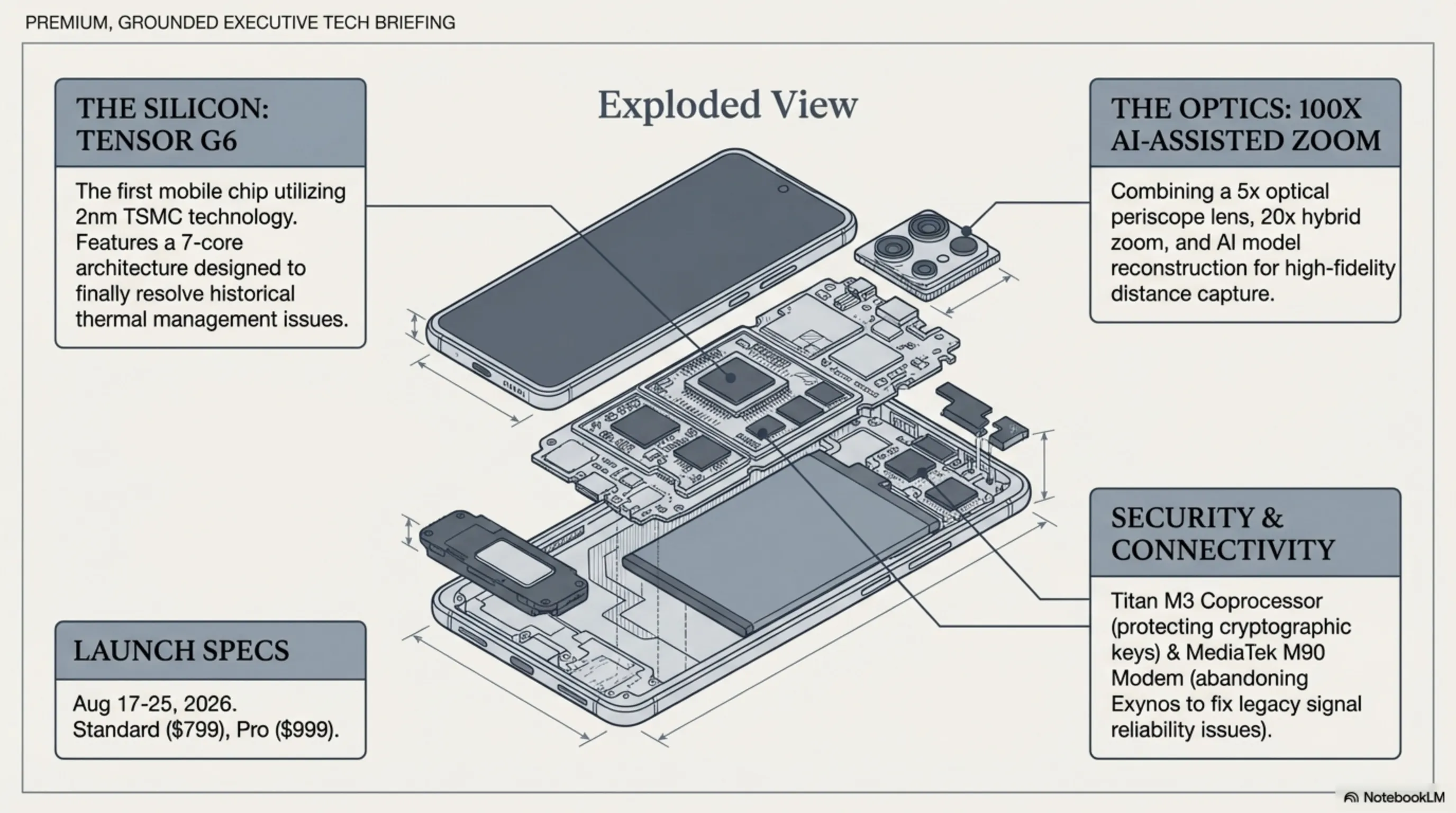
The Google Pixel 11 has leaked in spectacular fashion. A massive dump of internal documents, CAD renders, and prototype photos has revealed almost everything about Google's next flagship phone, which is scheduled to launch in October 2026. The headline features: a revolutionary 2nm Tensor G6 chip (the first 2nm chip in a smartphone), a periscope camera with 100x digital zoom, and a completely redesigned body that ditches the camera bar for a more traditional look. This could be the Pixel that finally competes with iPhone and Samsung on hardware.
The 2nm Tensor G6 is a game-changer. Google has partnered with TSMC (not Samsung) to manufacture the chip using cutting-edge 2nm process technology - the same process Apple will use for the A20 chip in the iPhone 17. This is a massive leap from the 3nm Tensor G5 in the Pixel 10. The benefits: 30% better performance, 40% better power efficiency, and significantly improved AI capabilities. Google claims the Tensor G6 can run large language models (like Gemini Nano) entirely on-device without needing cloud processing.
📊 Pixel 11 Pro Leaked Specifications
| Display | 6.8" LTPO OLED (1440p, 1-120Hz adaptive) |
| Processor | Google Tensor G6 (2nm, TSMC) |
| RAM | 12GB / 16GB LPDDR5X |
| Storage | 256GB / 512GB / 1TB UFS 4.0 |
| Main Camera | 50MP (f/1.6, 1/1.3" sensor, OIS) |
| Ultra-wide | 48MP (f/1.9, 120° FOV) |
| Telephoto | 200MP Periscope (10x optical, 100x digital) |
| Front Camera | 12MP (f/2.0, under-display) |
| Battery | 5,500mAh (65W wired, 30W wireless) |
| Weight | 198g |
| Price (Expected) | $1,099 (256GB) / $1,199 (512GB) / $1,399 (1TB) |
The camera system is insane. The star of the show is the 200MP periscope telephoto camera with 10x optical zoom and 100x digital zoom. This is the same sensor Samsung uses in the Galaxy S26 Ultra, but Google's computational photography magic should make it even better. The leaked photos show incredibly detailed shots at 50x and 100x zoom - you can read license plates from a block away. The main 50MP sensor has been upgraded to a larger 1/1.3" sensor (up from 1/1.5" in the Pixel 10) for better low-light performance.
The design is completely new. Google has finally ditched the controversial camera bar that's been on Pixels since the Pixel 6. The Pixel 11 has a more traditional design with cameras arranged in a circular module in the top-left corner (similar to iPhone). The body is made from recycled aluminum with a matte finish. The front camera is now under-display (a first for Pixel), giving you a true full-screen experience. And the phone is surprisingly light at 198g despite the massive 5,500mAh battery.
📷 Camera Comparison: Pixel 11 vs Competitors
| Feature | Pixel 11 Pro | iPhone 17 Pro | Galaxy S26 Ultra |
|---|---|---|---|
| Main Sensor | 50MP (1/1.3") | 48MP (1/1.28") | 200MP (1/1.3") |
| Optical Zoom | 10x | 5x | 10x |
| Digital Zoom | 100x | 25x | 100x |
| Night Mode | AI-enhanced (Tensor G6) | Photonic Engine | Nightography |
| Video | 8K/30fps, 4K/120fps | 8K/30fps, 4K/120fps | 8K/30fps, 4K/120fps |
| Computational Photography | Best-in-class (Google AI) | Excellent (Apple Silicon) | Very Good (Snapdragon AI) |
The AI features are next-level. With the Tensor G6's improved AI capabilities, the Pixel 11 can run Gemini Nano (Google's on-device AI model) for real-time translation, smart replies, and advanced photo editing - all without sending data to the cloud. New features include "Magic Eraser Pro" which can remove complex objects from photos (like entire buildings or groups of people), "Best Take 2.0" which can combine multiple photos to create the perfect group shot, and "Audio Magic Eraser" which can remove background noise from videos.
Battery life should be excellent. The combination of the power-efficient 2nm chip, adaptive 1-120Hz display, and massive 5,500mAh battery should deliver 2+ days of battery life for most users. The leaked internal testing shows the Pixel 11 Pro lasting 18 hours of mixed use (web browsing, social media, video streaming, gaming). Fast charging has been upgraded to 65W wired (0-50% in 15 minutes) and 30W wireless. There's also reverse wireless charging for charging accessories.
🤖 New AI Features Powered by Tensor G6
Live Translate Pro: Real-time translation of phone calls, video calls, and in-person conversations in 100+ languages. The translation happens on-device with near-zero latency.
Smart Compose Everywhere: AI-powered writing assistance that works in every app - email, messaging, social media, notes. It learns your writing style and suggests contextually appropriate responses.
Photo Unblur 2.0: Can unblur old photos, even ones taken years ago on different cameras. The AI reconstructs missing details using advanced machine learning.
Call Screen Pro: Enhanced spam call detection and automatic call screening with natural-sounding AI voice responses. The AI can handle complex conversations and even schedule appointments.
The pricing is competitive. At $1,099 for the base 256GB model, the Pixel 11 Pro is priced the same as the iPhone 17 Pro and $100 less than the Galaxy S26 Ultra. Google is clearly trying to position the Pixel as a premium flagship that competes directly with Apple and Samsung on hardware, not just software. The leaked documents also mention a regular Pixel 11 (non-Pro) starting at $799 with slightly downgraded specs - still using the Tensor G6 but with a smaller display, less RAM, and a simpler camera system.
When will it launch? Based on Google's typical release schedule, the Pixel 11 should be announced at the Made by Google event in early October 2026, with pre-orders starting immediately and shipping beginning in late October. The leaked documents mention October 8 as the announcement date, but that could change. Google will likely offer trade-in deals and carrier promotions to drive adoption.
📊 Market Impact Predictions
| Metric | Pixel 10 (2025) | Pixel 11 (Predicted) |
|---|---|---|
| First Year Sales | 12M units | 18-20M units |
| Market Share (US) | 4.2% | 6-7% |
| Average Selling Price | $749 | $899 |
| Customer Satisfaction | 87% | 90-92% |
| iPhone Switchers | 8% | 12-15% |
The challenges: Despite the impressive specs, Google still faces an uphill battle. The Pixel brand doesn't have the same cachet as iPhone or Galaxy. Carrier support in the US has been inconsistent. And Google's track record with hardware quality control has been spotty (remember the Pixel 6's modem issues?). The success of the Pixel 11 will depend on flawless execution - the hardware needs to work perfectly, the software needs to be bug-free, and the marketing needs to convince people that Pixel is a premium brand worth $1,099.
Should you wait for it? If you're in the market for a new flagship phone and you're not locked into the Apple ecosystem, the Pixel 11 looks incredibly promising. The 2nm Tensor G6 should finally give Pixel the performance to compete with iPhone and Galaxy. The camera system looks best-in-class. The AI features are genuinely useful (not gimmicks). And the price is competitive. If you can wait until October, it's worth holding off to see reviews. But if you need a phone now, the Pixel 10 is still excellent and will likely see price drops once the Pixel 11 is announced.
💡 Tekin Verdict:
The Pixel 11 leak reveals Google's most ambitious phone yet. The 2nm Tensor G6 is a massive upgrade that should finally give Pixel flagship-level performance. The 100x zoom camera is a game-changer for mobile photography. The AI features are genuinely useful and run entirely on-device. And the new design is a welcome departure from the camera bar. At $1,099, it's priced to compete directly with iPhone and Galaxy. If Google can execute flawlessly on hardware quality and software stability, the Pixel 11 could be the phone that finally makes Pixel a mainstream flagship brand. Our prediction: this will be Google's best-selling Pixel ever, potentially doubling sales from the Pixel 10. Recommendation: If you're due for an upgrade in late 2026, wait for the Pixel 11. It looks like it'll be worth it.
🌟 Final Thoughts: A Wild Monday in Tech
What a way to start the week! From Rockstar's nightmare hack with a 24-hour deadline, to North Korea's 6-month infiltration of Drift, to Samsung's bold new foldable design, to Microsoft ending Xbox exclusivity, to Elon's latest messaging app, to Google's leaked flagship - today's news shows that the tech industry is moving faster and getting more unpredictable than ever.
The common thread? Disruption. Whether it's hackers disrupting gaming companies, nation-states disrupting crypto, Samsung disrupting foldable design, Microsoft disrupting console exclusivity, Musk disrupting messaging, or Google disrupting the flagship phone market - nothing is stable anymore. The only constant is change. Stay tuned to Tekin Game for all the latest updates as these stories develop. We'll be here every morning and evening with the news you need to stay ahead of the curve. Until next time, stay curious and stay informed! 🚀
💬 Join the Conversation
What do you think about today's news? Will Rockstar pay the ransom? Is XChat going to replace WhatsApp? Are you excited for the Pixel 11? Let us know in the comments below! And don't forget to share this article with your tech-loving friends.
See you in Tekin Night for tonight's tech news! 🌙