Tekin Radar | The Fall of the 16-Year-Old Dark Web Emperor
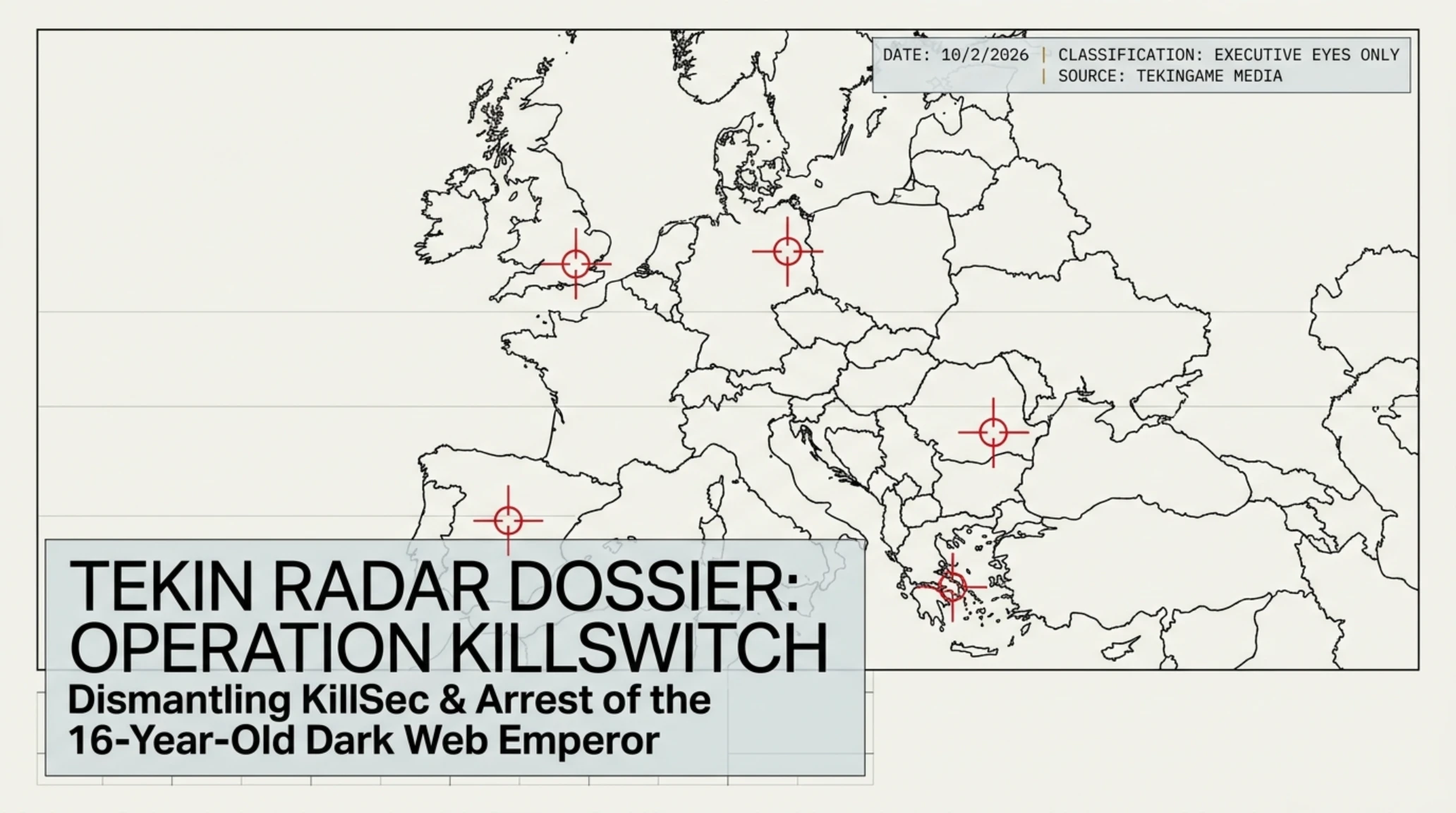
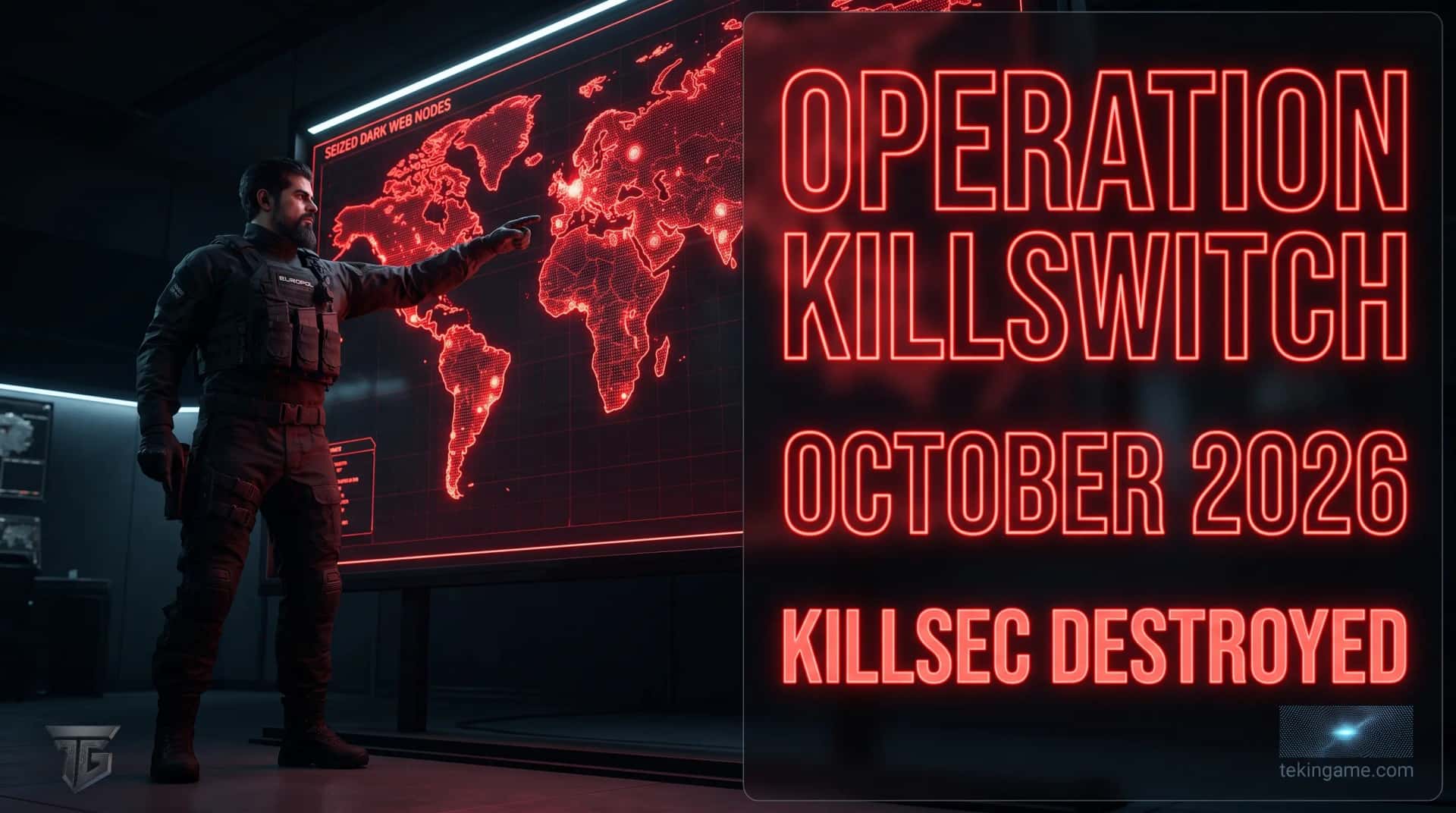
An exhaustive investigative teardown into Operation KillSwitch: how a multinational law enforcement coalition dismantled the feared KillSec ransomware cartel and arrested a 16-year-old student running enterprise extortion from his bedroom.
- 🎮Multinational Law Enforcement Strike- Simultaneous raids across Spain, the UK, Germany, Romania, and Greece dismantle KillSec infrastructure.
- 🎧The Mastermind in Alicante- A 16-year-old Romanian national arrested as the group's chief administrator and lead negotiator.
- 🚀110 Terabytes of Stolen Data Rescued- Law enforcement seizes five central C2 servers and neutralizes the Tor dark web leak portal.
- 🗡️The Weaponization of Autonomous Tooling- How modern Gen-Z cybercriminals leverage uncensored LLMs and automated scripts to bypass enterprise defenses.
- 📰High-Velocity Rust Malware- Utilization of Rust-based encryptors and BYOVD techniques to blind endpoint security sensors.
- ⚔️The Zero Trust Imperative- Why legacy firewalls are obsolete and enterprise perimeters must adapt to machine-speed threats.
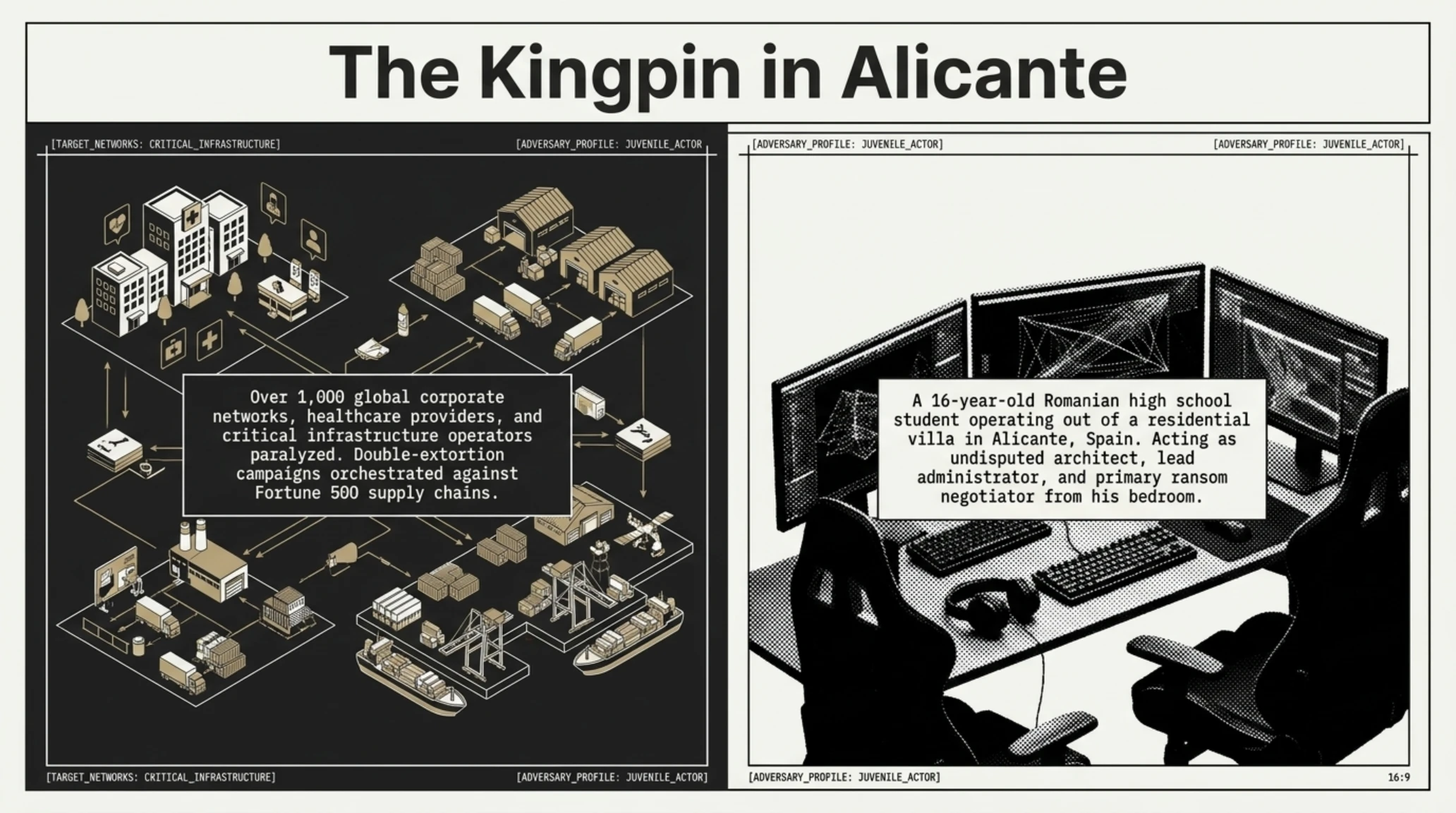
In the closing hours of September 2026, an unprecedented, cross-border law enforcement initiative codenamed Operation KillSwitch delivered a devastating blow to one of the most aggressive cybercrime syndicates of the decade. The notorious ransomware-as-a-service (RaaS) syndicate known as KillSec (Kill Security)—responsible for terrorizing over 1,000 corporate networks, healthcare providers, municipalities, and critical infrastructure operators across Europe and North America over the past two years—was comprehensively dismantled. Yet what stunned forensic investigators, intelligence agencies, and global chief information security officers (CISOs) was not the sophistication of a state-sponsored advanced persistent threat (APT) group, but the revelation that this multi-million-dollar extortion empire was spearheaded by a 16-year-old Romanian high school student operating out of a quiet residential villa in Alicante, Spain.
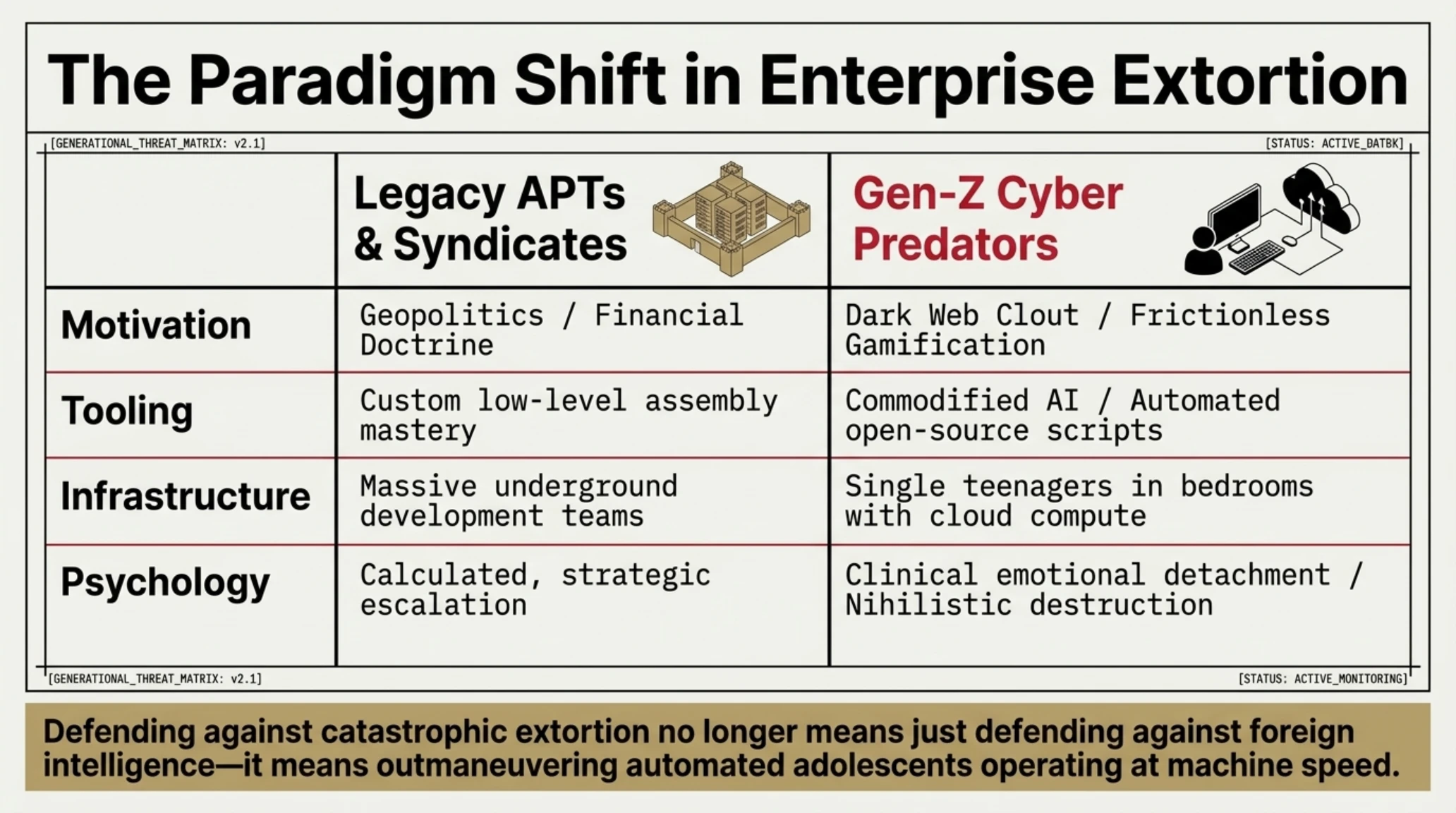
The collapse of KillSec marks an indelible turning point in the history of international cybercrime. For years, digital forensics dogma dictated that enterprise-grade intrusions capable of exfiltrating dozens of terabytes required decades of low-level assembly mastery, massive underground development teams, and state-backed financial backing. Operation KillSwitch obliterated that assumption. By harnessing commodified offensive tooling, uncensored local large language models (LLMs), automated credential-stuffing pipelines, and off-the-shelf exploit chains, a single teenager was able to orchestrate double-extortion campaigns against Fortune 500 supply chains without ever leaving his gaming chair.
In this comprehensive investigative dossier, Tekin Radar provides an exhaustive, multi-dimensional teardown of the entire KillSec operation. Drawing upon official court filings from the Hamburg Public Prosecutor's Office, operational disclosures from Spain's Guardia Civil and Mossos d'Esquadra, technical intelligence from Europol's European Cybercrime Centre (EC3), and proprietary telemetry from cybersecurity leaders Bitdefender and Group-IB, we dissect the architecture of the gang's command-and-control (C2) network, reconstruct the operational timeline of the raid, examine the forensic missteps that unmasked the teenage kingpin, and establish the imperative defensive blueprints required to neutralize this new breed of automated extortion.
Key Strategic Takeaways from Operation KillSwitch
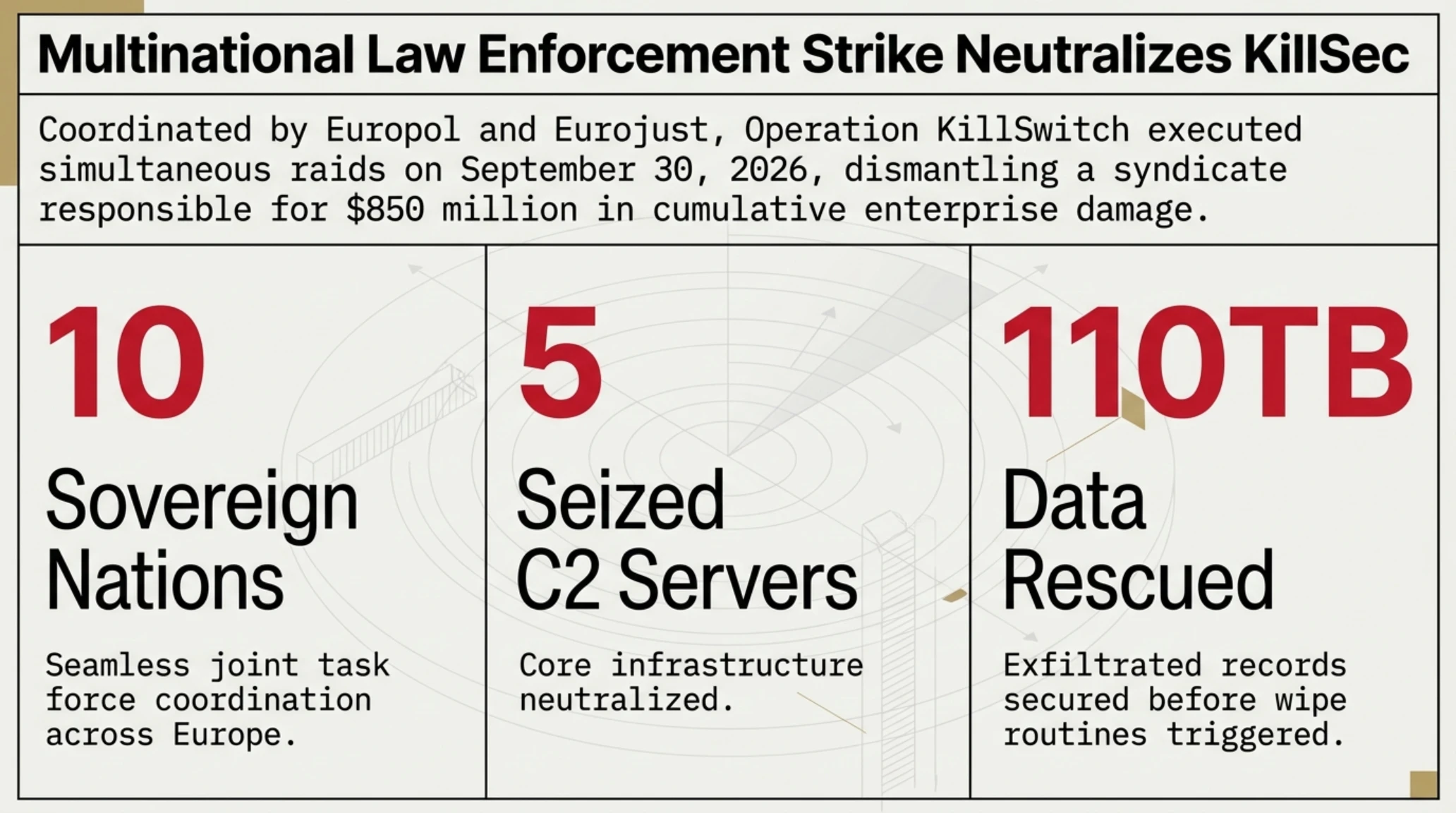
- Coordinated by Europol and Eurojust, Operation KillSwitch executed simultaneous raids across Spain, the United Kingdom, Romania, and Greece on September 30, 2026.
- The primary administrator, infrastructure manager, and ransom negotiator was confirmed to be a 16-year-old Romanian national residing in Alicante, Spain.
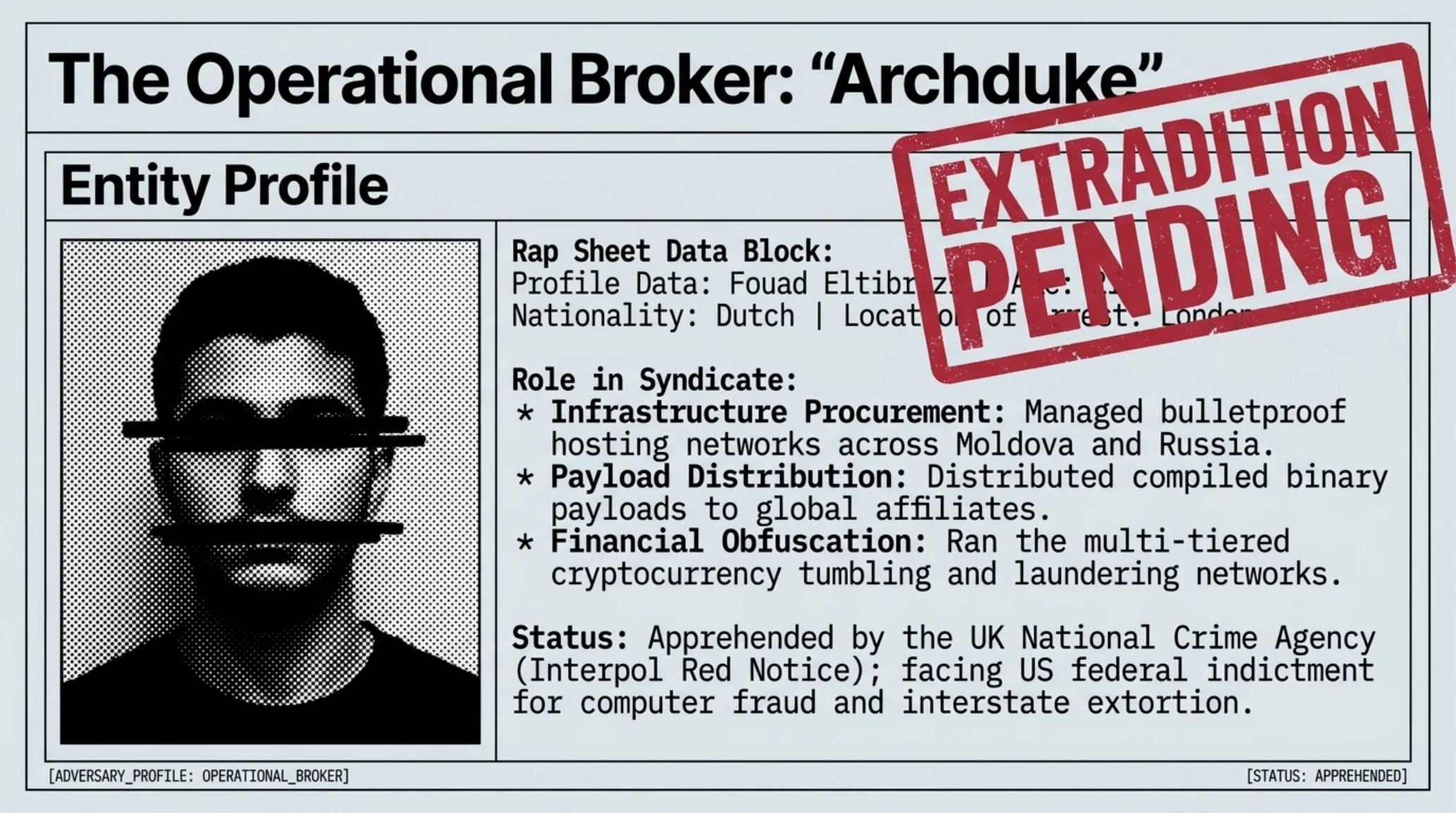
- A key conspirator, 21-year-old Dutch national Fouad Eltibrizi (alias 'Archduke'), was apprehended in London and faces extradition to the United States on federal cybercrime charges.
- Investigators seized five core C2 servers and secured over 110 terabytes of exfiltrated corporate records, financial ledgers, and patient databases before wiping routines could execute.
- KillSec relied heavily on automated misconfiguration scanning in AWS S3 and Azure Blob storage, coupled with unpatched edge-device VPN zero-days and Rust-based encryption payloads.
- The case underscores an alarming democratization of offensive cyber capabilities, where teenage threat actors leverage generative AI to operate at the velocity of tier-one state actors.

The Global Takedown; Inside the Multi-Jurisdictional Raid That Seized the Dark Web's Deadliest Leak Site
On the morning of September 30, 2026, visitors attempting to navigate to KillSec's .onion leak portal on the Tor network were greeted not by corporate extortion countdown clocks or auctions of exfiltrated proprietary source code, but by an ominous digital seizure splash banner. Emblazoned with the official seals of the Hamburg State Criminal Police Office (LKA), Europol, the FBI, the UK National Crime Agency (NCA), and Spain's Guardia Civil, the notice confirmed that the syndicate's operational domains, communication nodes, and backend infrastructure had been seized pursuant to European Investigation Orders.
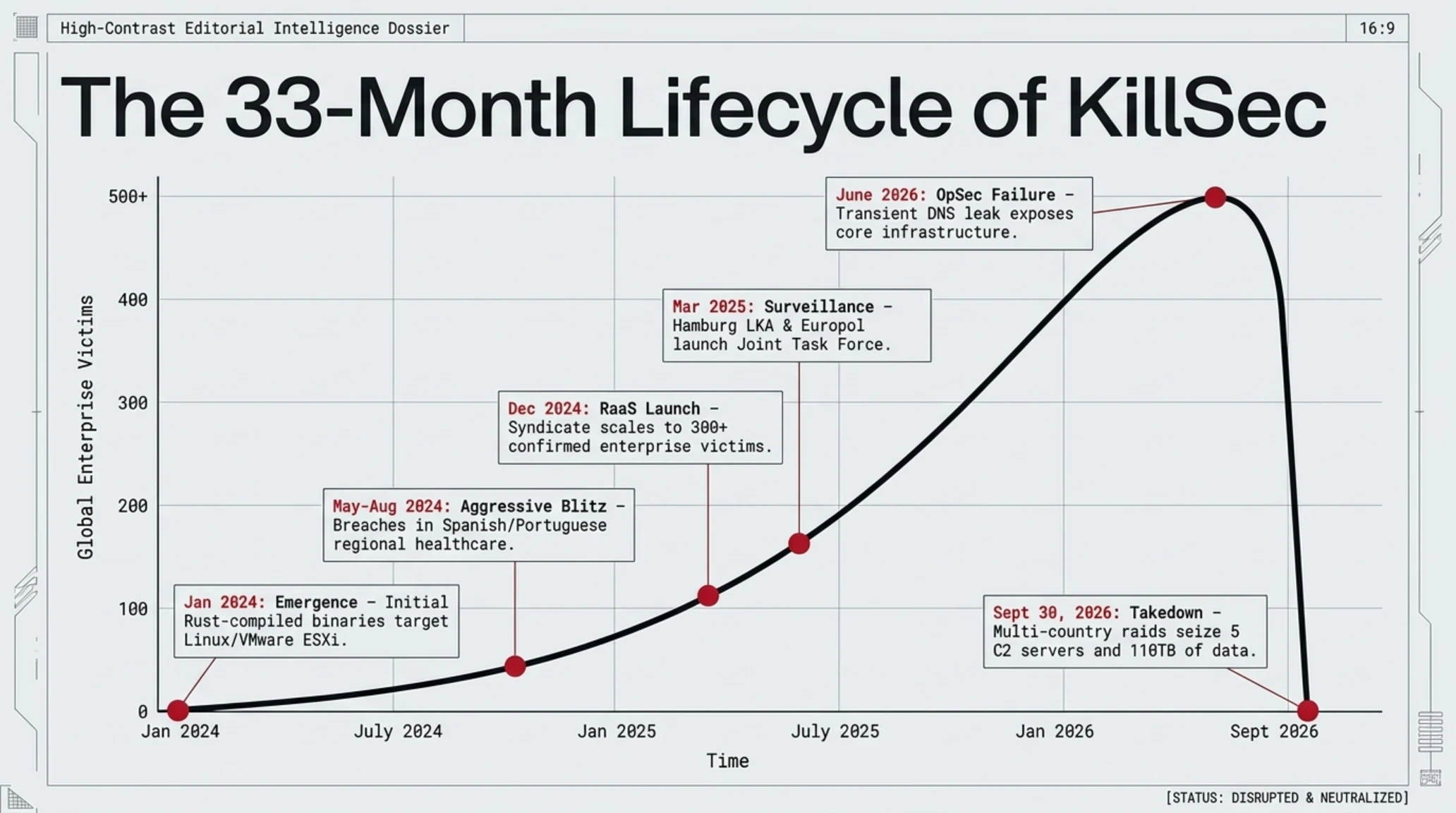
Operation KillSwitch was the culmination of more than 14 months of painstaking forensic surveillance, covert channel infiltration, and cross-chain cryptocurrency tracking. While the public only witnessed the sudden takedown of the Tor leak portal, law enforcement operatives had been quietly monitoring KillSec's encrypted command-and-control relays since mid-2025. The operation brought together ten sovereign nations—including Germany, Spain, the United States, the United Kingdom, Romania, Greece, Belgium, Finland, Switzerland, and the Netherlands—working in seamless concert through Europol's Operational Taskforce (OTF).
KillSec burst onto the cyber threat landscape in early 2024, distinguishing itself through an unusually rapid tempo of operations. Unlike legacy syndicates such as LockBit or BlackCat, which often spent weeks meticulously conducting reconnaissance within compromised active directory environments, KillSec favored an aggressive, high-velocity methodology termed "smash-and-exfiltrate." The group specialized in weaponizing freshly disclosed edge-device vulnerabilities, scanning public IPv4 ranges for exposed administrative ports, dumping corporate data stores, and deploying destructive ransomware within hours of initial entry.
The geographic blast radius of KillSec's incursions spanned key industrial hubs across the Mediterranean and Northern Europe. In Greece, the syndicate breached the logistics network of a major maritime container terminal in Piraeus, encrypting vessel manifest databases and freezing port loading schedules for four consecutive days. In the United Kingdom, the group paralyzed the online matriculation and student housing portals of two major polytechnic universities during peak enrollment week, while in Romania, municipal billing databases and transit dispatch systems across three regional counties were held hostage. This ruthless prioritization of time-sensitive operational bottlenecks ensured that victims faced immediate public paralysis, maximizing extortion leverage before defensive incident response retainers could mobilize.
According to German federal prosecutors, KillSec demanded ransoms ranging from $500,000 to upwards of $5 million per victim, paid predominantly in Bitcoin and Monero. When corporate risk committees hesitated or declined payment, KillSec unleashed automated denial-of-service (DDoS) bombardments against the victims' public customer-facing web services while concurrently leaking tranches of sensitive employee records to financial journalists and competitors. For a deeper perspective on how coordinated zero-day syndicates execute industrial-scale extortion, explore our landmark analysis of the European banking system breaches and enterprise SAP zero-day exploits in the TekinGame archives.
The macroeconomic fallout of KillSec's two-year rampage extended far beyond direct ransom proceeds. Actuarial assessments compiled by global reinsurance consortiums indicate that cumulative downtime, forensic investigation retainers, class-action litigation reserves, and supply-chain interruption claims attributable to KillSec exceeded $850 million. In several critical instances across the European manufacturing sector, Tier-2 automotive component suppliers were forced to halt automated assembly lines for up to twelve consecutive business days, creating cascading inventory bottlenecks that rippled into major assembly plants across Germany, France, and northern Italy.
This systematic devastation profoundly altered the cyber insurance underwriting landscape. In response to KillSec's aggressive exploitation of unauthenticated remote access and cloud storage misconfigurations, major underwriters instituted punitive warranty clauses. Enterprises failing to demonstrate cryptographically enforced hardware MFA across all administrative ingress points or lacking isolated, immutable backup repositories saw their policy premiums surge by up to 140 percent, while co-insurance deductibles for ransomware extortion events doubled. The realization that an adolescent operator could systematically trigger policy limits forced global insurers to fundamentally re-evaluate their systemic risk exposure models.
Jargon Buster | Ransomware-as-a-Service (RaaS) and Double Extortion
The 16-Year-Old Prodigy in Alicante; Deconstructing the Identity, Psychology, and Tactics of KillSec's Lead Admin
The most shocking theater of Operation KillSwitch unfolded inside an affluent suburban residential complex in Alicante, a coastal enclave in southeastern Spain. When tactical operators from Spain's Guardia Civil and specialized digital detectives from Catalonia's Mossos d'Esquadra breached the villa's premises, they prepared to confront a hardened cyber warlord with a decade of underworld pedigree. Instead, seated behind a battle-station array of three curved OLED gaming displays, surrounded by custom mechanical keyboards, high-end streaming peripherals, and half-eaten snacks, sat a 16-year-old Romanian youth who was actively typing in an encrypted customer support channel.
According to sworn Spanish court affidavits, this juvenile was not merely a low-level forum moderator or script-kiddie accomplice; he was the undisputed architect, lead administrator, and primary ransom negotiator for the KillSec syndicate. Operating under rotating handles across Telegram, Session, and SimpleX, he conducted high-stakes negotiations with corporate incident response teams, legal counsels, and cyber insurance underwriters. His communications exhibited a chillingly clinical demeanor, replete with precise corporate law terminology, calculated escalations, and total indifference to the humanitarian fallout of disabling regional healthcare systems.
Criminological profilers specializing in underground economies note that the KillSec ringleader epitomizes the emergent demographic of Gen-Z Cyber Predators. Unlike Cold War-era state hackers driven by geopolitical doctrine, or Eastern European cyber syndicates motivated by traditional organized crime syndicates, these young operators are propelled by a combustible mixture of dark web clout, online forum nihilism, and the frictionless gamification of cyber intrusions. Compromising a municipal emergency dispatch center or extracting the medical history of cancer patients was treated with the exact same emotional detachment as securing an achievement trophy in an online multiplayer game.

Simultaneously in London, the UK National Crime Agency, acting on an emergency red notice from Interpol, apprehended 21-year-old Dutch national Fouad Eltibrizi, notorious in underground circles under the moniker Archduke. Eltibrizi served as KillSec's operational broker: managing infrastructure procurement across bulletproof hosting providers in Moldova and Russia, distributing compiled binary payloads to affiliates, and running multi-tiered cryptocurrency tumbling networks. The United States Department of Justice unsealed a sweeping federal indictment against Eltibrizi, initiating formal extradition proceedings on charges of computer fraud, intentional damage to protected computers, and interstate extortion.
Analytical Operational Timeline | The Rise and Disruption of the KillSec Syndicate
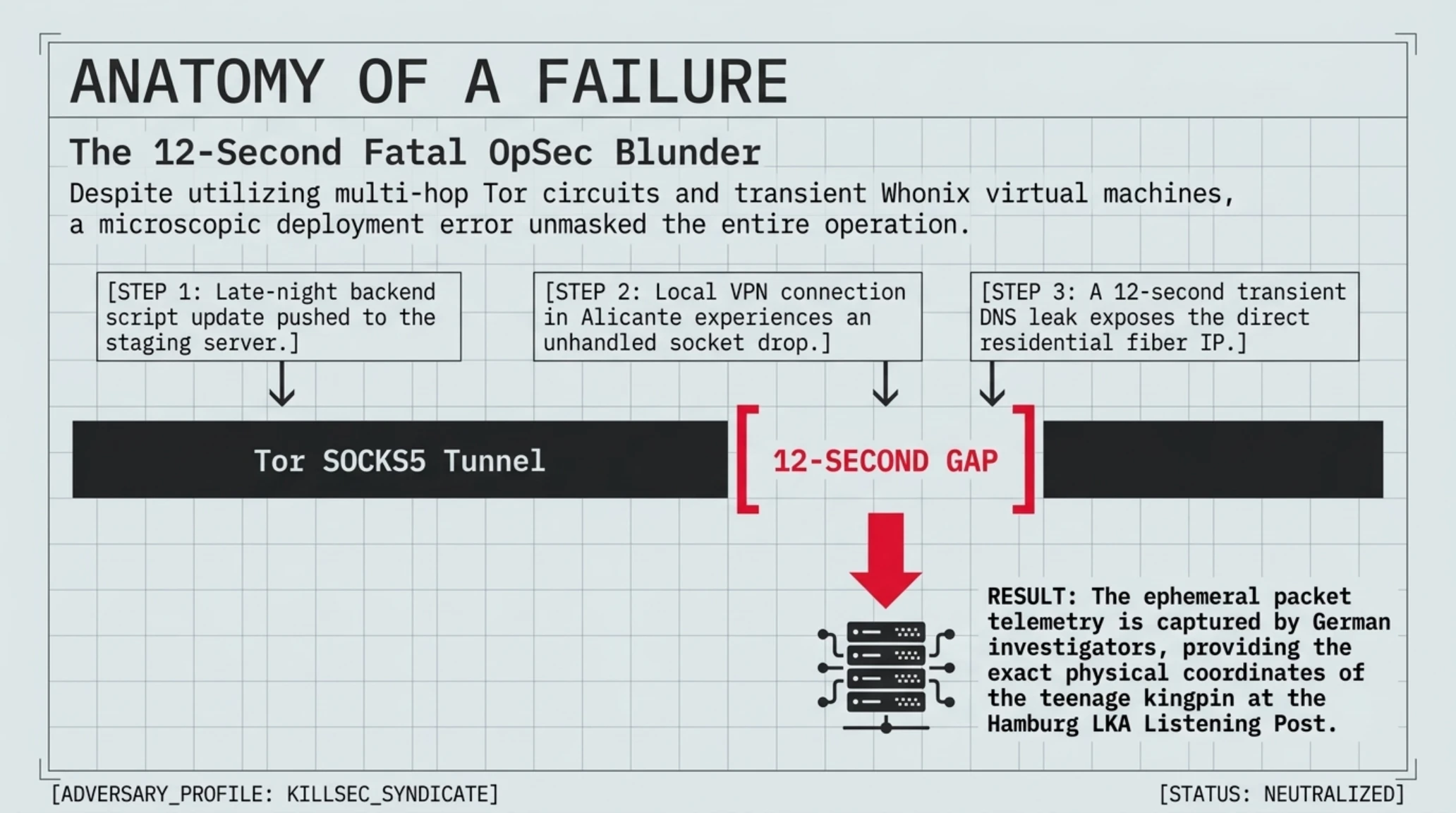
The forensic breakthrough that brought down the teenage kingpin stemmed from a microscopic operational security (OpSec) blunder. Despite routing communications through multi-hop Tor circuits, custom SOCKS5 chaining, and transient Whonix virtual machines, the youth made a fatal error during a late-night backend deployment to KillSec's leak site. While pushing an administrative script update to his staging server, his local VPN connection experienced an unhandled socket drop. For a brief window of under 12 seconds, direct packets originating from his residential fiber connection in Alicante communicated with the C2 infrastructure. That ephemeral DNS leak was captured by automated listening posts maintained by the Hamburg LKA, handing investigators the golden thread they needed.
Why the KillSec Arrest Constitutes an Existential Inflection Point for Enterprise Defense
📚 Classified & Related Dossiers in TekinGame
If you wish to explore beyond this report and delve into cybernetic frontiers and autonomous AI architectures, do not miss these three exclusive deep-dives in the Tekin Garage:
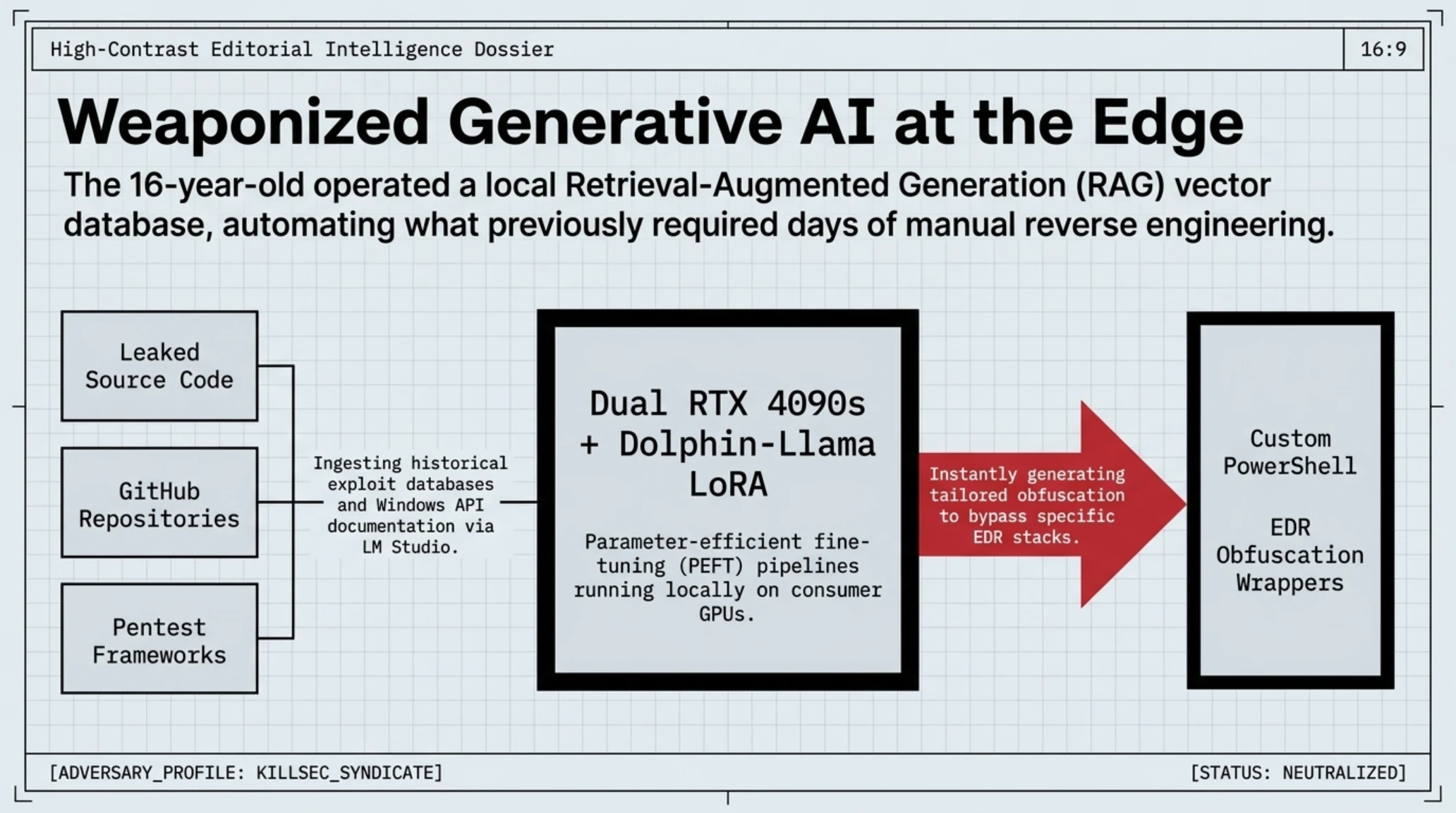
Forensic examination of the seized hardware revealed that the 16-year-old made extensive use of locally hosted, uncensored large language models operating via Ollama and LM Studio. By fine-tuning open-source models such as Dolphin-Llama on historical exploit databases, GitHub repositories, and leaked penetration testing frameworks, the teenager automated the generation of hyper-realistic spear-phishing lures, streamlined the triage of compromised Active Directory forests, and generated customized PowerShell and Bash lateral movement scripts tailored specifically to the endpoint security tools discovered on victim networks. To understand how autonomous AI agents are systematically infiltrating software repositories and developer environments, examine our detailed study on offensive AI agents infiltrating ChatGPT and enterprise code repositories.
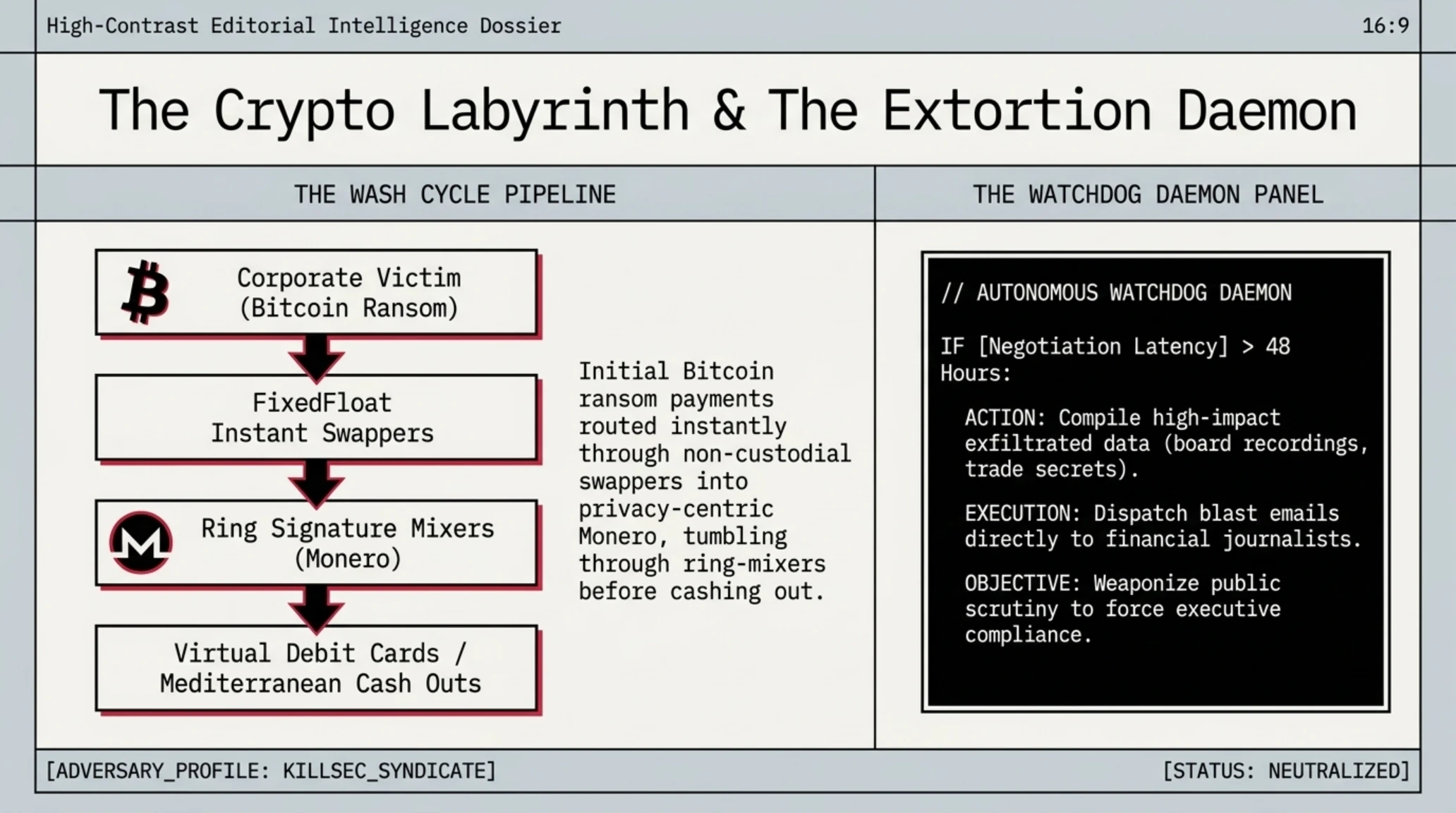
On the financial front, blockchain intelligence specialists at Group-IB and Bitdefender, working in tandem with the FBI's Virtual Assets Unit, unraveled the gang's laundering labyrinth. KillSec mandated that initial ransom payments be transferred to single-use Bitcoin addresses. Within blocks of confirmation, the funds were routed through non-custodial, no-KYC instant swappers such as FixedFloat and decentralized bridges, converting the volatile assets into the privacy-centric cryptocurrency Monero (XMR). These funds were then passed through decentralized ring-signature mixers before being incrementally cashed out via prepaid virtual debit cards, cryptocurrency ATMs across Mediterranean resort towns, and high-end consumer electronics purchases.
Perhaps most chilling was Bitdefender's discovery of an automated "extortion watchdog daemon" written by the youth. This script continuously polled the gang's Tor communication channels, calculating victim response latency. If an enterprise negotiation team failed to respond to a ransom demand within a pre-programmed threshold (typically 48 hours), the daemon autonomously selected high-impact tranches of exfiltrated data—such as confidential executive correspondence, board meeting recordings, or proprietary trade secrets—and dispatched blast emails directly to financial beat reporters at leading business publications, utilizing public scrutiny as a coercive weapon to force executive compliance.
A closer inspection of the forensic disk images extracted from the youth's custom liquid-cooled workstation revealed dual NVIDIA GeForce RTX 4090 GPUs, which were continuously utilized to run parameter-efficient fine-tuning (PEFT) pipelines using Low-Rank Adaptation (LoRA). The adolescent had systematically ingested leaked source code repositories, Windows API documentation, and antivirus bypass tutorials into a local retrieval-augmented generation (RAG) vector database. Whenever a newly compromised corporate host returned an unfamiliar endpoint security stack, the local model generated tailored obfuscation wrappers and shellcode injectors within seconds, effectively automating what previously required days of manual reverse engineering.
The Mossos d'Esquadra Cyber Crimes Division highlighted that the suspect demonstrated an extraordinary grasp of psychological coercion during active incident negotiations. By analyzing victim communications through automated sentiment analysis scripts, the youth assessed whether an enterprise was truly preparing to pay or merely stalling to complete forensic disk images and offline restore procedures. If stalling was detected, the adolescent accelerated psychological pressure by uploading targeted employee credential dumps to public paste sites, triggering immediate internal panic among executive leadership and forcing boards of directors to intervene directly over the objections of external incident responders.
Furthermore, investigators uncovered extensive integration between the youth's infrastructure and commodity infostealer marketplaces like Russian Market and Genesis Market. The 16-year-old operated automated scraping bots that matched newly uploaded browser SQLite session databases and master authentication cookies against target enterprise domains. By extracting valid Okta, Microsoft 365, and AWS SSO session tokens directly from compromised personal laptops of remote employees, the syndicate routinely bypassed multi-factor authentication (MFA) altogether, stepping directly into authenticated cloud management consoles without generating a single failed login telemetry event.
110 Terabytes Salvaged and 5 C2 Servers Seized; Forensic Architecture of the Attack Chain and Infiltration Pipeline
One of the most consequential tactical victories of Operation KillSwitch was the rapid seizure and preservation of the syndicate's primary staging repositories before automated anti-forensic kill-switches could execute. Under Europol's tactical direction, cyber units executed synchronized physical and cloud-level seizures across five central command-and-control (C2) servers hosted in bulletproof facilities across eastern and southern Europe. Stored within these encrypted partitions was an astronomical haul: over 110 terabytes of exfiltrated enterprise data, spanning hundreds of millions of confidential documents, proprietary CAD blueprints, SQL customer databases, intellectual property portfolios, and highly sensitive patient healthcare records.
A rigorous demographic triage of the seized data conducted by forensic teams revealed that KillSec's victimology clustered into four primary verticals. First, regional healthcare networks and private medical laboratories, targeted specifically because their legacy infrastructure frequently lacked immutable, air-gapped backups and their life-critical operations left them intensely vulnerable to extortion. Second, mid-tier industrial manufacturing and supply-chain logistics providers, whose razor-thin operational margins made prolonged plant stoppages catastrophic. Third, boutique financial advisory firms and wealth management practices terrified of regulatory penalties from data protection authorities. Fourth, municipal utility districts and educational boards across Western Europe and the United States.

The operational mechanics of KillSec's data exfiltration pipeline reflected a mastery of legitimate network utilities. Rather than deploying conspicuous custom exfiltration tools that triggered signature-based network intrusion detection systems (NIDS), the group utilized weaponized builds of Rclone, custom Golang transport scripts, and established cloud sync protocols to siphon data directly into ephemeral AWS S3 buckets and Mega.nz cloud storage. By throttling outbound bandwidth and fragmenting file archives across encrypted SOCKS5 proxy chains during off-peak business hours, KillSec regularly siphoned multi-terabyte datasets over weeks without tripping a single perimeter alarm.
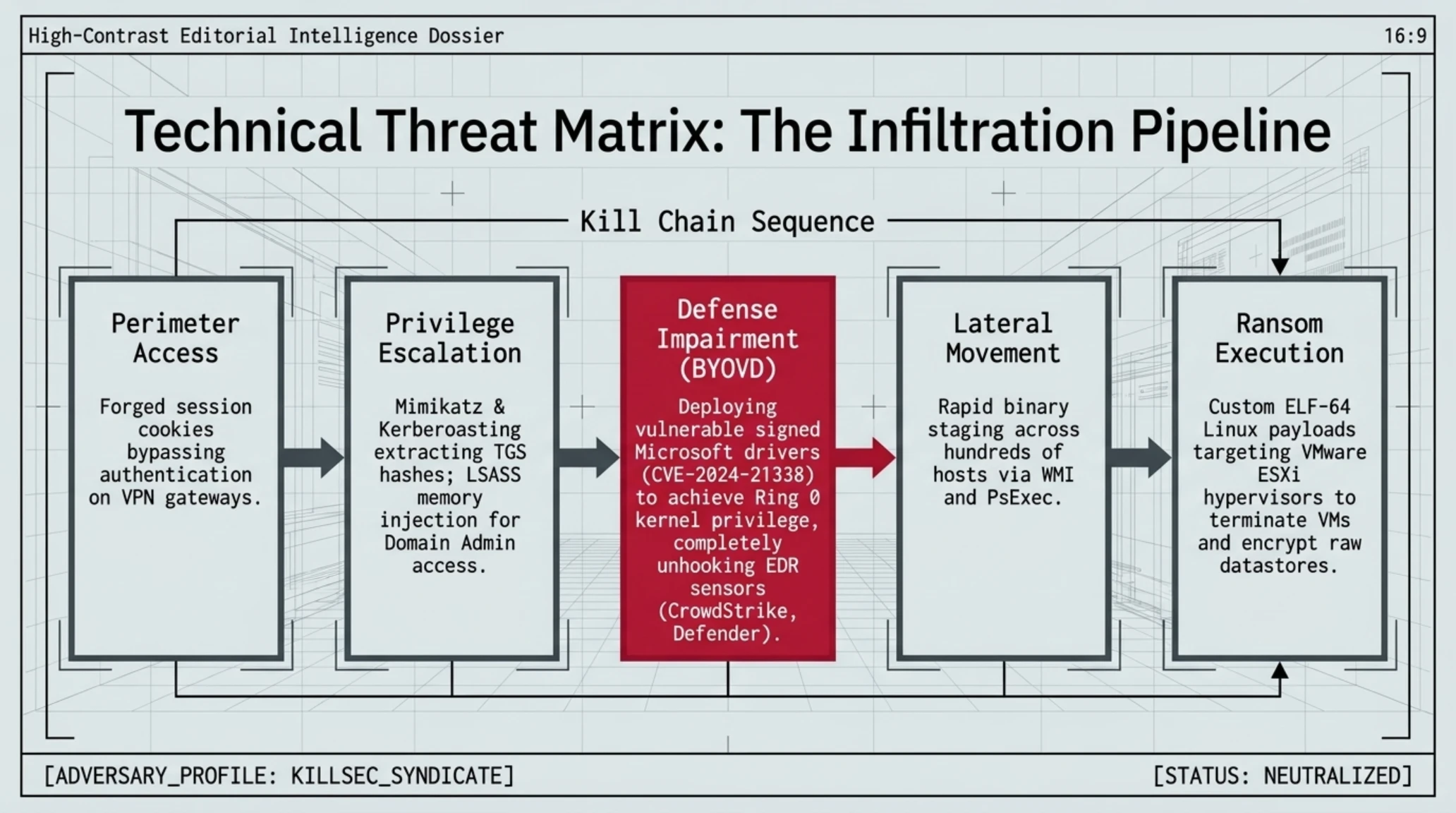
Technical Threat Matrix | Forensic Deconstruction of KillSec Attack Vectors
| Kill Chain Stage | Primary Weapon / Technique | Defense Evasion Methodology | Severity and Impact |
|---|---|---|---|
| Initial Perimeter Access | Exploitation of edge VPN gateways and exposed RDP | Forged session cookies and pre-authentication bypass flaws | Unauthenticated footholds into internal subnets |
| Privilege Escalation | Mimikatz, Kerberoasting, and token impersonation | LSASS memory injection executed directly via in-memory reflection | Total Active Directory Domain Admin compromise |
| Defense Impairment (BYOVD) | Deployment of vulnerable signed Microsoft drivers | Ring 0 kernel privilege abuse to unhook EDR sensors | Blinds endpoint telemetry and audit logging systems |
| Data Exfiltration | Hardened Rclone binaries with encrypted config files | Channeled outbound traffic through legitimate APIs and SOCKS5 | Silent extraction of multi-terabyte corporate data troves |
| Ransom Execution | Custom multi-threaded Rust ransomware (ChaCha20) | Deletes volume shadow copies; overwrites sector headers instantly | Complete operational paralysis across all target workstations |
Among the most sophisticated technical tactics observed was KillSec's reliance on Bring Your Own Vulnerable Driver (BYOVD) attacks. Prior to executing their cryptographic payloads, the group staged an older, legitimately signed Windows hardware driver harboring a known kernel-level vulnerability (such as CVE-2024-21338). By leveraging this driver to achieve Ring 0 kernel execution privileges, the malware systematically stripped memory hooks, terminated monitoring threads, and disabled kernel callbacks utilized by enterprise Endpoint Detection and Response (EDR) agents—including CrowdStrike Falcon, Microsoft Defender for Endpoint, and SentinelOne. With the organization's digital sentinels blinded at the kernel level, the ransomware encryptor operated completely unchallenged.
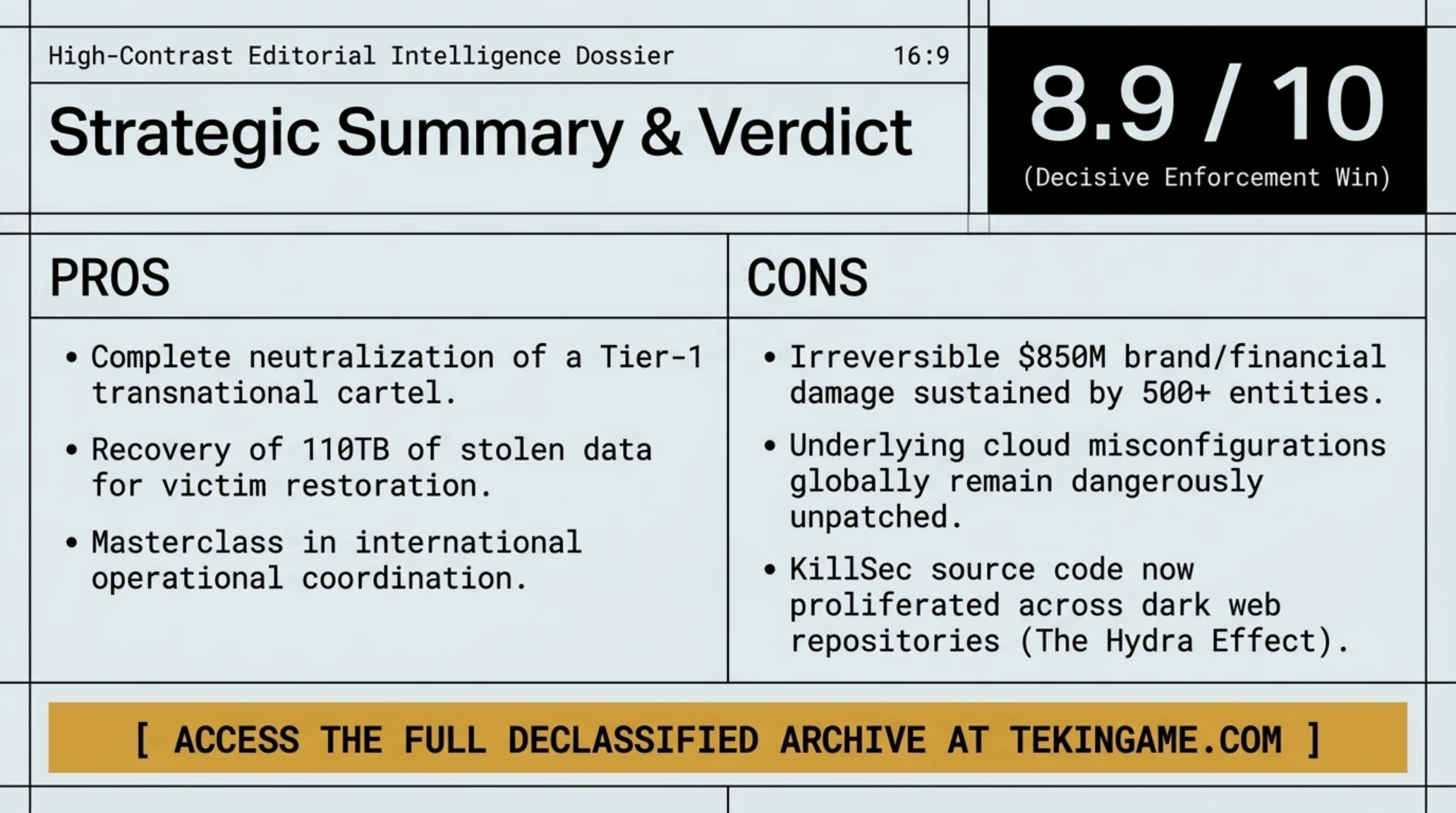
- Complete neutralization of a Tier-1 transnational ransomware cartel
- Recovery of 110 TB of stolen data for victim restoration and breach mitigation
- Masterclass in international law enforcement coordination across 10 sovereign nations
- Detailed forensic telemetry acquired to update global endpoint detection rules against adolescent cyber actors
- KillSec source code remains widely proliferated across dark web repositories
- Irreversible brand damage and financial losses sustained by 500+ compromised entities
- Severe legal and procedural constraints governing the prosecution of juvenile defendants in European courts
- Underlying systemic weaknesses in enterprise cloud configurations remain dangerously unpatched globally

The Toolchain of Destruction; Cloud Storage Misconfigurations, Edge VPN Zero-Days, and Rust Cryptors
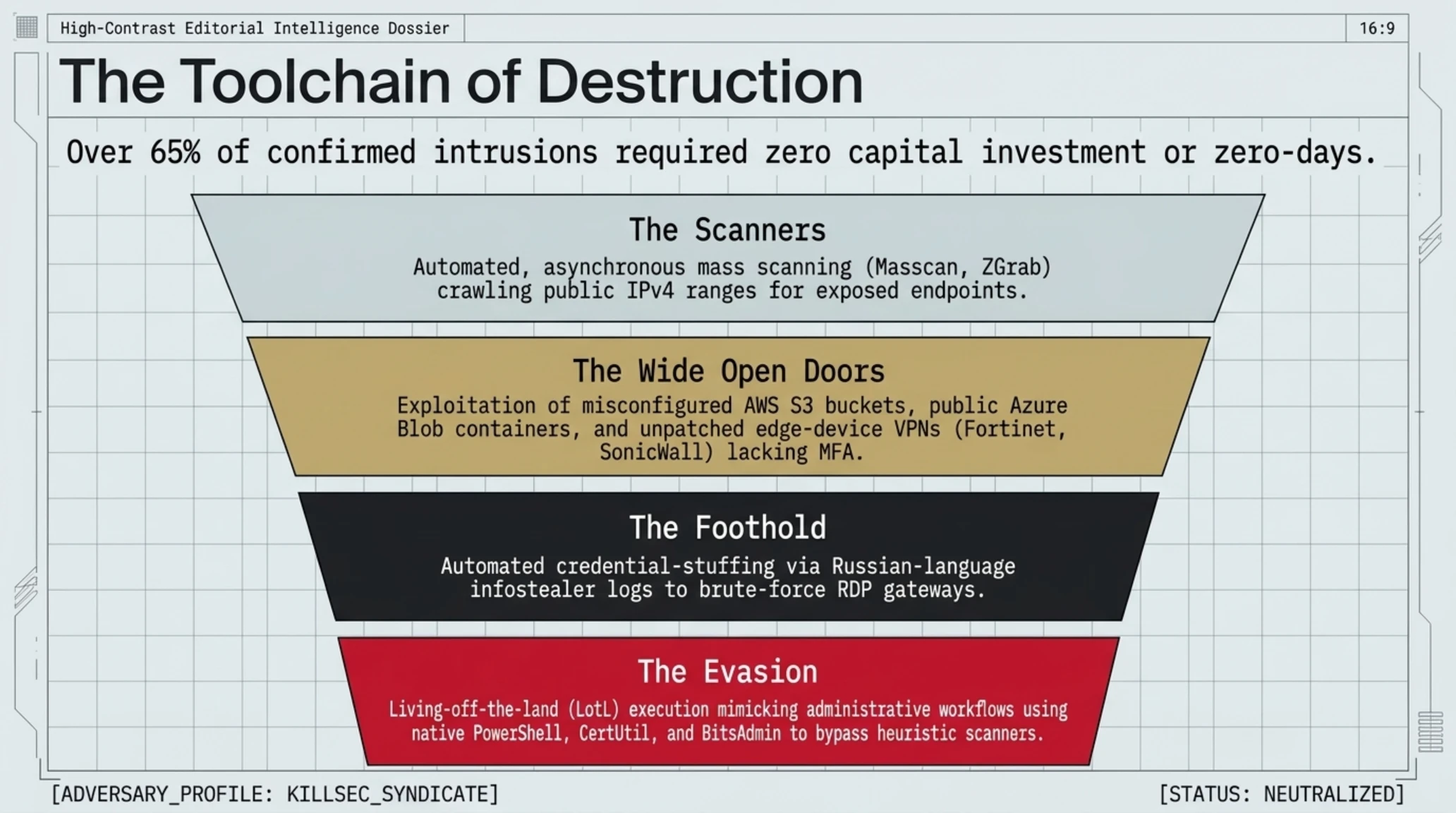
A granular technical post-mortem conducted by Bitdefender and Group-IB underscores an unsettling truth: KillSec's catastrophic success was overwhelmingly enabled not by million-dollar zero-day vulnerabilities, but by basic hygiene failures across corporate cloud perimeters. Operating automated, asynchronous port scanners such as Masscan and ZGrab on disposable cloud compute instances, the 16-year-old threat actor continuously crawled public IPv4 address spaces to pinpoint misconfigured Amazon Web Services (AWS) S3 buckets and exposed Azure Blob containers with public read/write permissions.
In over 65 percent of confirmed intrusions, entry was secured through exposed Remote Desktop Protocol (RDP) endpoints or perimeter Virtual Private Network (VPN) appliances lacking multi-factor authentication (MFA). Armed with credential databases harvested from commodity infostealer logs circulating on Russian-language underground channels, the youth utilized automated credential-stuffing tools to brute-force administrative gateways. Once initial access was established, the threat actor deployed living-off-the-land (LotL) techniques—relying on native Windows binaries like PowerShell, CertUtil, and BitsAdmin—to evade heuristic file scanners.
Upon securing an initial unprivileged foothold on an internal corporate workstation, KillSec’s automated intrusion scripts initiated targeted Kerberoasting attacks against the enterprise Active Directory (AD) infrastructure. The script queried domain controllers for user accounts registered with Service Principal Names (SPNs), requesting valid Ticket Granting Service (TGS) Kerberos tickets. Because many legacy services still supported outdated RC4_HMAC encryption algorithms, the extracted ticket hashes were exfiltrated back to the youth's dual RTX 4090 setup in Alicante. Utilizing GPU-accelerated hashcat clusters, the adolescent cracked administrative service account passwords within minutes, escalating privileges to Enterprise Admin without generating suspicious LSASS memory-access alerts.
Furthermore, KillSec demonstrated devastating efficacy against virtualized data center infrastructure by weaponizing dedicated ELF-64 Linux payloads tailored for VMware ESXi hypervisors. After acquiring administrative credentials or exploiting unauthenticated remote code execution flaws in VMware vCenter Server (such as CVE-2024-38812), the payload executed shell commands via esxcli vm process list, gracefully terminating all running virtual machines. The Linux encryptor then directly targeted the datastore directories, encrypting flat VMDK virtual disks and VMX configuration files at raw disk speed. This hypervisor-level decapitation paralyzed entire corporate server clusters in a single stroke, neutralizing disaster recovery virtual machines running on the same hardware.
To inspect the catastrophic mechanics of automated exploitation moving from enterprise edge networks down to physical industrial control layers, review our exhaustive investigation into the ThreatsDay industrial breaches and Siemens S7 controller sandbox escapes in the TekinGame cybersecurity archive.
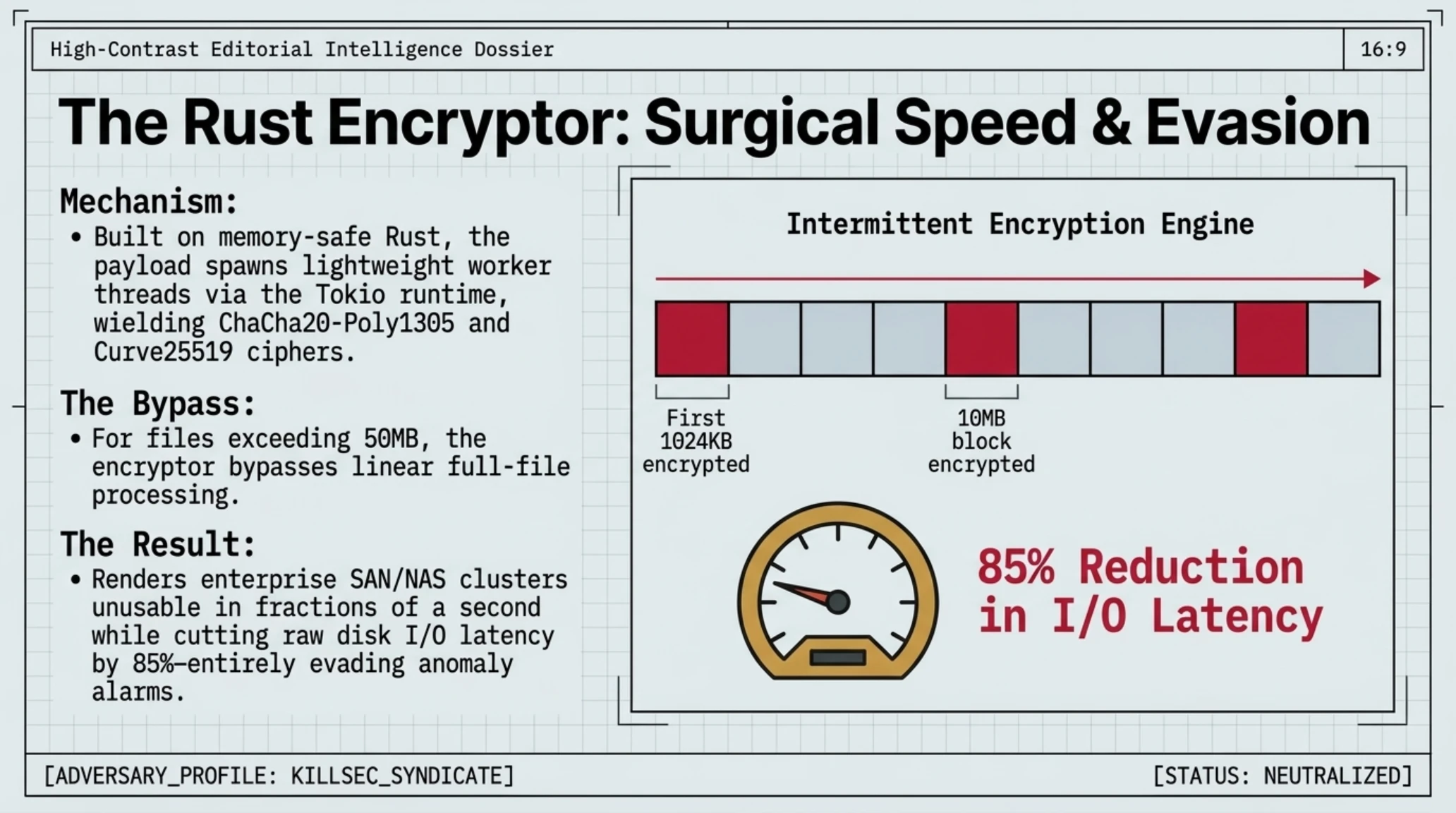
The weaponization of the Rust programming language for KillSec's final payload represented an intentional architectural choice. Unlike legacy malware compiled in C or C++, Rust binaries compile down to highly optimized, memory-safe machine code that lacks a traditional runtime environment and garbage collector. This enabled the encryptor to traverse enterprise storage arrays with breathtaking speed, encrypting gigabytes of data per minute using modern ChaCha20-Poly1305 symmetric ciphers. Furthermore, the structural density and aggressive inlining characteristic of Rust compilation severely hindered static analysis and reverse engineering by corporate defense teams.
Cryptographic decompilation performed by Bitdefender revealed that KillSec implemented a hybrid asymmetric-symmetric encryption hierarchy. The threat actor hardcoded a master Curve25519 public key within each unique affiliate binary. Upon execution, the payload invoked the Tokio asynchronous runtime to spawn lightweight worker threads across all available CPU cores. For every discovered file matching a target extension list (prioritizing .sql, .mdf, .vmx, .vmdk, .docx, and .pdf), the binary generated an ephemeral 256-bit symmetric session key via hardware-accelerated CSPRNG, executed authenticated encryption with ChaCha20-Poly1305, and sealed the ephemeral key using the Curve25519 public key before appending it as an 80-byte encrypted footer at the tail of each file.
To maximize operational velocity against large enterprise storage area networks (SAN) and network-attached storage (NAS) clusters, KillSec weaponized an adaptive intermittent encryption algorithm. For files exceeding 50 megabytes, the encryptor bypassed linear full-file processing. Instead, it systematically encrypted only the initial 1024 kilobytes containing critical magic bytes and structural headers, followed by alternating 10-megabyte blocks throughout the body, and the terminal index tables. This surgical corruption rendered complex enterprise databases, virtual machine disks, and archive files completely unusable within fractions of a second, while cutting total disk write latency by over 85 percent and easily evading threshold-based I/O anomaly detection alarms.
This potent convergence—exploiting simple administrative negligence, utilizing local AI for adaptive scripting, and executing blindingly fast Rust payloads—demanded virtually zero capital investment. For an operational overhead of less than $400 a month in cloud server rentals and VPN subscriptions, a solitary adolescent inflicted hundreds of millions of dollars in cascading economic harm across advanced Western economies.

Strategic Implications for Enterprise C-Suites; Operational Blueprints from the KillSwitch Aftermath
The dismantling of KillSec forces an urgent reckoning across corporate boardrooms, challenging foundational tenets of enterprise risk governance. For years, executive leadership and risk committees operated under the comforting delusion that existential digital threats originated strictly from sovereign state intelligence services or seasoned transnational syndicates with institutional overheads. The Alicante arrest permanently detonated that complacency. The modern threat landscape has decentralized so radically that the enterprise perimeter is now vulnerable to any disaffected teenager equipped with commodity computing hardware, open-source penetration scripts, and an unmonitored home internet pipeline.
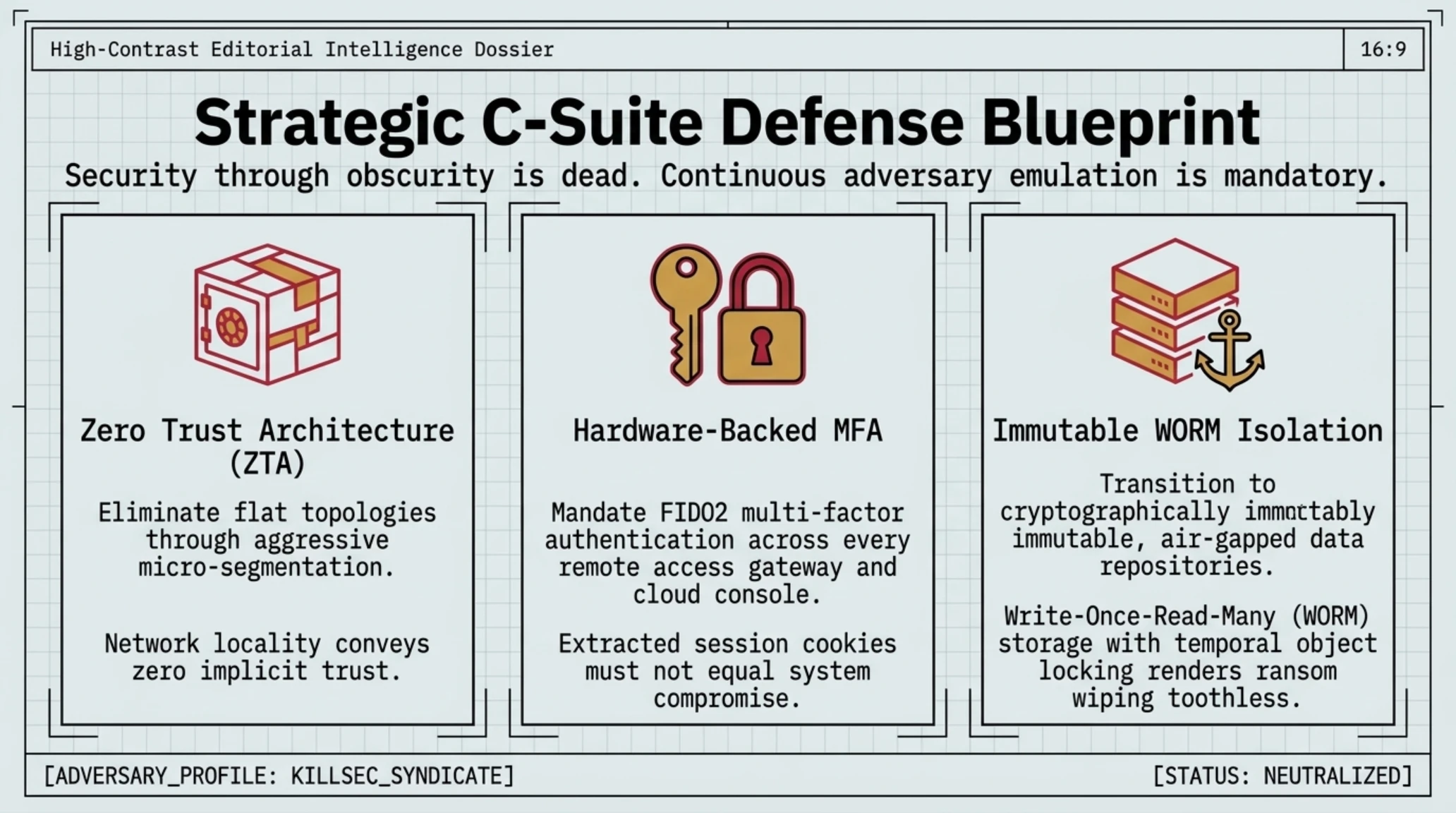
The foremost imperative for Chief Information Officers (CIOs) and security architects is the immediate, non-negotiable operationalization of Zero Trust Architecture (ZTA). Under true Zero Trust principles, network locality conveys zero implicit trust. Organizations must eliminate flat network topologies through aggressive micro-segmentation, enforce strict identity-aware proxying for all internal application access, and mandate hardware-backed FIDO2 multi-factor authentication across every remote access gateway. Restricting lateral movement protocols—such as disabling unconstrained delegation in Active Directory, blocking inbound SMB on workstations, and isolating administrative endpoints—ensures that an initial perimeter breach does not metastasize into an enterprise-wide catastrophe.
Equally critical is the transition from conventional network-attached storage (NAS) backup solutions to Cryptographically Immutable, Air-Gapped Data Repositories. In the KillSec campaigns, over 80 percent of victims who ultimately capitulated to ransom extortion did so because their online backup snapshots, hypervisor replicas, and volume shadow copies were connected directly to the primary domain architecture. Once the teenage administrator acquired Domain Admin privileges, his automated scripts systematically pruned and wiped all discoverable backup shares before triggering file encryption. Enforcing write-once-read-many (WORM) storage policies with temporal object locking renders exfiltration-driven ransom demands toothless against operational continuity.
From a regulatory and fiduciary standpoint, the takedown of KillSec coincides with the aggressive enforcement of the European Union's NIS2 Directive and the Digital Operational Resilience Act (DORA), alongside the United States SEC's stringent four-day material cyber incident disclosure mandates. Under these emerging legal frameworks, corporate officers who fail to implement baseline controls—such as basic cloud posture auditing or multi-factor authentication—face personal administrative liability and corporate fines scaling up to €10 million or 2 percent of total worldwide annual turnover. No regulatory audit board will accept the defense of "advanced persistent threat complexity" when the intrusion was executed by an adolescent running publicly available GitHub scanners.
Simultaneously, the Spanish judiciary confronts an extraordinary legal dilemma: how to adjudicate an adolescent responsible for hundreds of millions of dollars in economic devastation under the Spanish Juvenile Justice Act (Ley de Responsabilidad Penal del Menor). Under standard juvenile statutes, custodial sentences in specialized reformatory centers are strictly capped at five to eight years. Yet the scope of KillSec's destruction—paralyzing hospital operating theaters, exposing intimate patient records, and extorting critical infrastructure—transcends conventional juvenile delinquency, triggering fierce debates across European legal institutions regarding the necessity of statutory reforms for digital offenses in the age of autonomous cyber warfare.

The 2027 Threat Horizon; Decentralized Swarms, Autonomous Offensive Agents, and the Hydra Effect
While the seizure of KillSec's infrastructure neutralizes the specific brand, senior cyber intelligence strategists caution against celebrating an enduring victory. History demonstrates that whenever a preeminent cybercrime syndicate is decapitated, the resulting power vacuum triggers the Hydra Effect. Displaced affiliates, armed with leaked builder scripts, staging playbooks, and redundant dark web communication nodes, rapidly splinter to spawn dozens of agile, decentralized splinter cells. Thousands of adolescent observers who tracked KillSec's multi-million-dollar monetization on dark forums and Telegram now possess both the blueprint and the motivation to replicate the model.
Looking toward 2027, the primary vector of escalation will be the full operational transition from human-guided RaaS operations to Autonomous Offensive Swarm Intelligence. Threat actors are already actively re-architecting their pipelines to integrate fully autonomous AI agents that operate round-the-clock: scanning global IP ranges, synthesizing exploit payloads in real time, orchestrating credential harvesting, and managing multi-channel extortion campaigns with minimal human supervision. For an in-depth strategic analysis of how autonomous agents are reshaping enterprise vulnerabilities and cloud governance, review our flagship research report on AgentForger, AI agent exploits, and modern cloud workspace security.
This evolutionary leap intersects precariously with the European Union's newly enacted EU Artificial Intelligence Act (EU AI Act), which establishes stringent compliance regimes for high-risk and general-purpose AI models with systemic risk. However, forensic analysis of the KillSec incident exposes an intractable regulatory blind spot: while Western frontier AI laboratories operate within rigid safety alignment frameworks, open-weight foundational models leaked onto peer-to-peer torrent trackers and hosting mirrors in non-extradition jurisdictions can be stripped of safety guardrails in minutes. When quantized and executed on consumer-grade hardware, these models function as autonomous cyber weapons beyond the reach of any territorial regulatory mandate.
Moreover, the fragmentation of global law enforcement cooperation creates fertile sanctuary zones for emergent splinter syndicates. Following the precedent set by previous takedowns of LockBit and ALPHV/BlackCat, core affiliates rarely abandon cybercrime; instead, they migrate toward jurisdictional safe harbors where local authorities turn a blind eye to Western enterprise extortion. The convergence of decentralized autonomous organizations (DAOs), zero-knowledge payment rails, and autonomous agentic malware ensures that the defensive perimeter of 2027 must be fundamentally cryptographic, self-healing, and resilient by design.

Executive Summary and the Tekin Plus Preemptive Defense Doctrine
Operation KillSwitch stands as a monumental operational triumph for international law enforcement, proving that the cross-border digital panopticon maintained by Europol, the FBI, and European judicial bodies can penetrate the deepest enclaves of the dark web. Yet for the private sector, the operation serves as an urgent wake-up call. Security through obscurity is dead; the moat of corporate complexity has been utterly leveled by commodified automation.
Tekin Plus advises all enterprise leadership teams, IT directors, and infrastructure architects to discard compliance complacency and immediately institute continuous adversary emulation. Organizations must subject their cloud infrastructure, edge appliances, and identity directories to relentless automated penetration tests modeled on the high-velocity, opportunistic tactics of Gen-Z cyber cartels. As long as publicly accessible S3 buckets, exposed RDP ports, and unmonitored VPN gateways remain unpatched, another teenager in another bedroom will inevitably step forward to claim the mantle of the dark web's next emperor.
Frequently Asked Questions Regarding Operation KillSwitch and KillSec
What was the KillSec ransomware syndicate, and how long was it active?
KillSec (Kill Security) was a prominent ransomware-as-a-service (RaaS) syndicate active from early 2024 until its comprehensive takedown on September 30, 2026. The gang was linked to approximately 1,000 targeted attacks worldwide, with over 500 confirmed enterprise victims across healthcare, municipal government, industrial manufacturing, and education.
How was a 16-year-old student capable of directing a multi-million-dollar cyber syndicate?
The adolescent did not write complex exploits from scratch. Instead, he weaponized commodified dark web offensive tools, automated cloud scanning scripts, and uncensored local large language models (such as Dolphin-Llama). This autonomous toolchain handled vulnerability detection, spear-phishing synthesis, and lateral movement scripting, lowering the barrier to entry to basic operational management.
Did law enforcement successfully recover the stolen victim data?
Yes. A critical victory of Operation KillSwitch was the seizure of five central command-and-control (C2) servers hosting over 110 terabytes of exfiltrated victim data. The physical and cloud assets were secured before the syndicate's automated anti-forensic wiping scripts could execute, allowing investigators to remediate affected organizations.
Who was Fouad Eltibrizi, and what role did he play in the organization?
Fouad Eltibrizi (online moniker 'Archduke') was a 21-year-old Dutch national based in London who acted as KillSec's operational broker. He was responsible for procuring bulletproof hosting infrastructure, distributing compiled payloads to affiliates, and laundering ransom payments through non-custodial crypto mixers. He was arrested by UK authorities and faces extradition to the United States.
Why did KillSec utilize the Rust programming language for its ransomware payload?
Rust is increasingly favored by modern threat actors due to its extraordinary execution speed, absence of a garbage collection overhead, and native cross-platform compilation capabilities. This allowed KillSec's payload to encrypt massive corporate file repositories using ChaCha20 within minutes, while generating dense machine code that easily evaded signature-based antivirus engines.
What immediate technical measures should enterprise CISOs implement in response?
Organizations must immediately implement strict Zero Trust Architecture, enforce hardware-backed FIDO2 multi-factor authentication across all remote access portals, eliminate publicly exposed cloud storage buckets (AWS S3 and Azure Blob), deploy immutable air-gapped backups with WORM object locking, and configure aggressive EDR kernel-level tamper protection against BYOVD driver exploits.
Official Verified Sources and Regulatory References
This comprehensive investigative report was validated and compiled utilizing official court filings, operational disclosures, and forensic telemetry from the following verified authorities:
- Europol Official Press Release: International Operation KillSwitch Dismantles KillSec
- The Record Media: Spanish Police Dismantle Syndicate, Arrest 16-Year-Old Admin
- BleepingComputer: International Operation KillSwitch Seizes Leak Site and Servers
- Bitdefender: Comprehensive Forensic Analysis of KillSec RaaS Toolchain
- DarkReading: Alleged KillSec Ransomware Mastermind a 16-Year-Old
- Group-IB: Infrastructure Tracking, C2 Telemetry, and Crypto Laundering
Additional Gallery: Tekin Radar | The Fall of the 16-Year-Old Dark Web Emperor: Operation KillSwitch and the Dismantling of KillSec