🤖 The AI Explosion: GPT-5.3 & OpenAI's $100 Plan
Sunday, April 12, 2026 | The Transformation That Happened in Silence
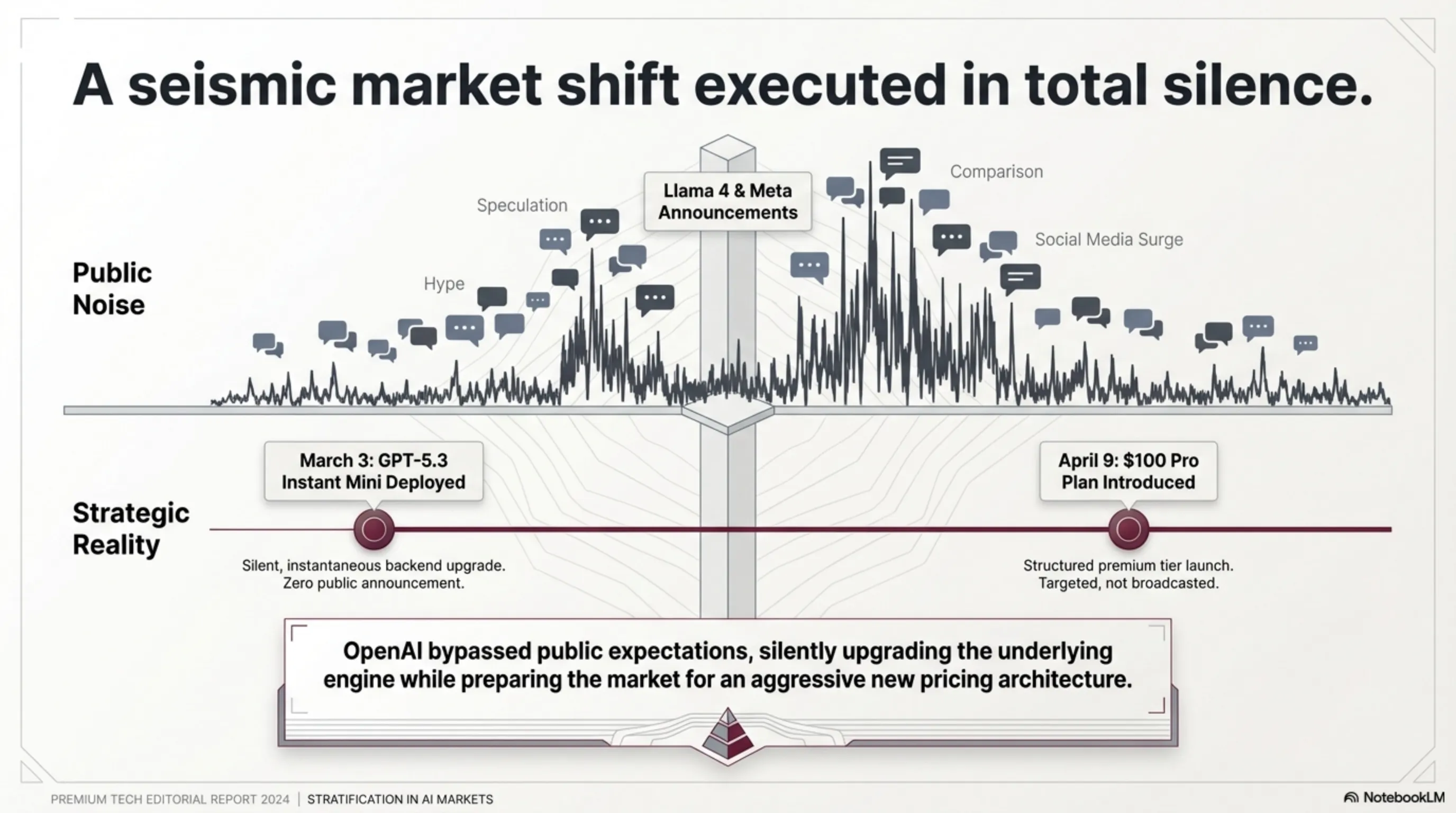
While we were all busy discussing Llama 4 and Meta's new capabilities, OpenAI quietly dropped a bombshell that could reshape the entire AI industry. First, the GPT-5.3 Instant Mini model that silently replaced previous versions on March 3, 2026, bringing a 26.8% reduction in hallucinations and more natural conversations. Second and more importantly, the introduction of a $100/month Pro plan - a new tier signaling that the era of cheap AI is coming to an end. This isn't just a price increase - it's a complete strategic shift in how AI is delivered to the market. Let's dive deep into this major transformation. 🚀💰
📋 Table of Contents
- GPT-5.3 Instant Mini: The Model That Came in Silence
- The $100 Pro Plan: OpenAI's Game Changer
- Codex and Unlimited Access: Why Developers Must Pay
- Competition with Anthropic and Google: The AI Pricing War
- AI Economics: Why Prices Are Rising
- The Future of AI: What to Expect and How to Prepare
🎯 1. GPT-5.3 Instant Mini: The Model That Came in Silence
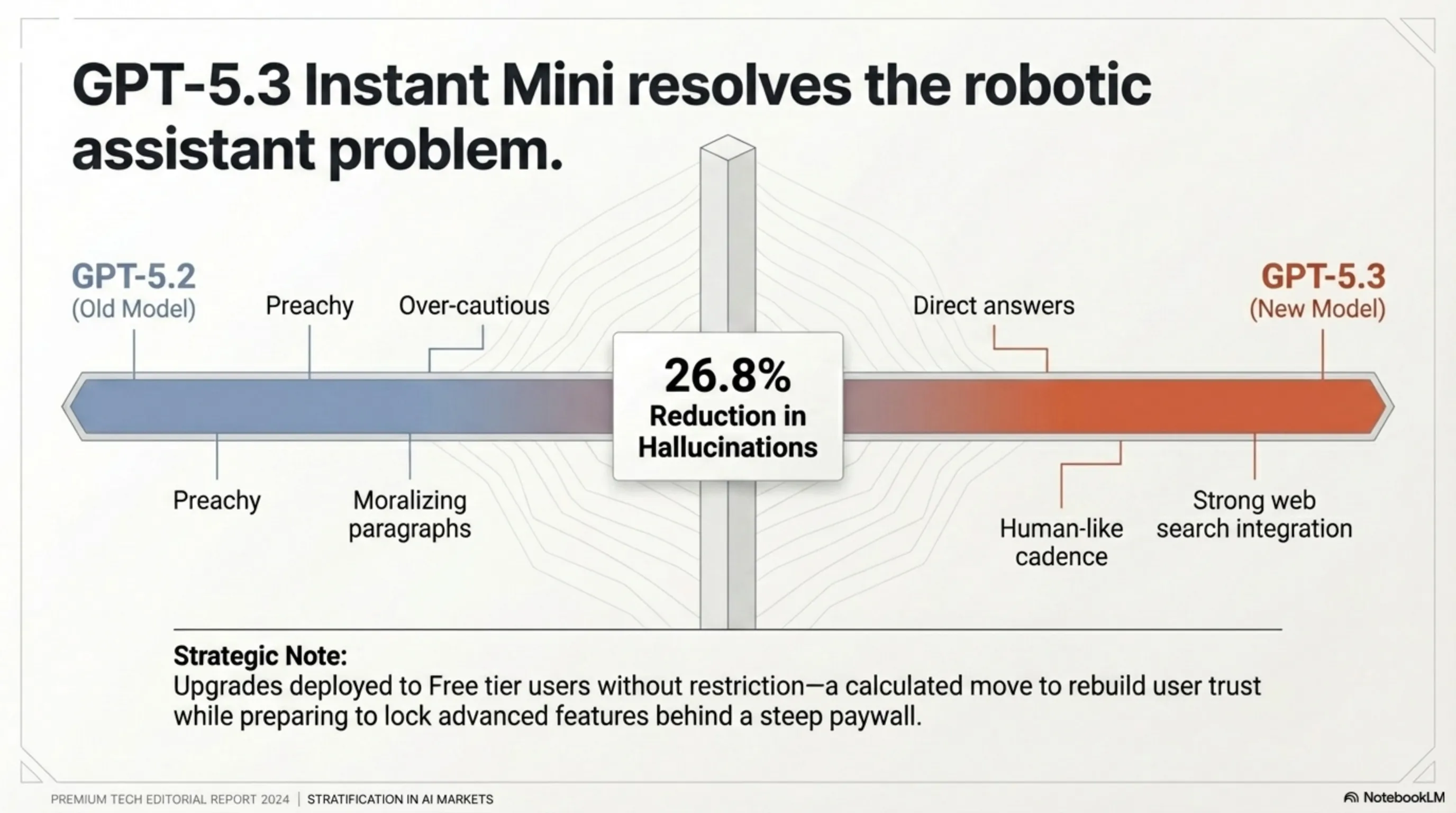
On March 3, 2026, OpenAI released GPT-5.3 Instant Mini without any press conference or major event, automatically replacing the previous version (GPT-5.2) across all ChatGPT plans. This model was designed to solve one of AI's biggest problems: more natural conversations and reducing the "robotic" responses users complained about.
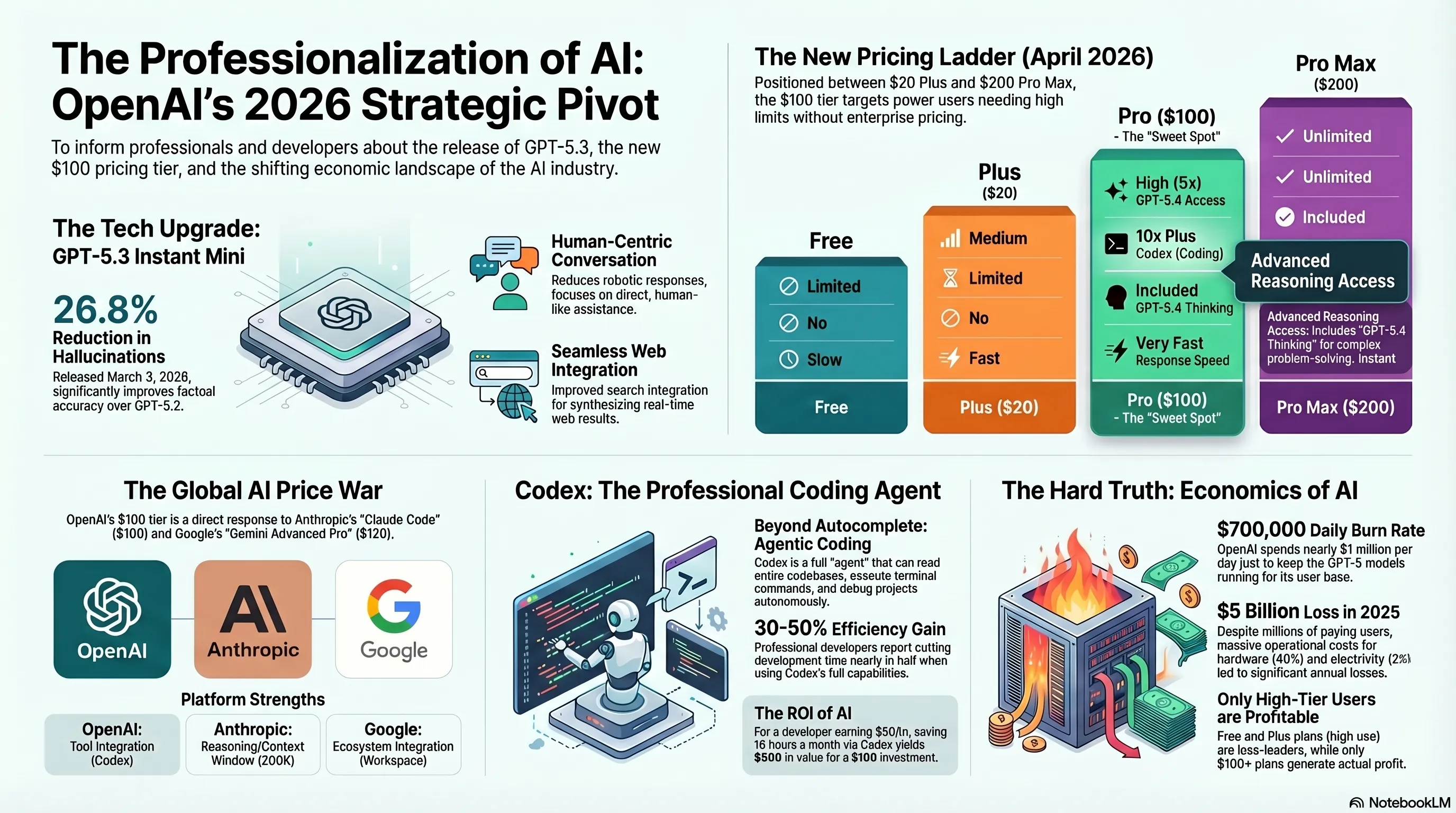
What changed? According to OpenAI's announcement, GPT-5.3 Instant Mini has three fundamental improvements: First, a 26.8% reduction in hallucinations compared to GPT-5.2 - meaning the model generates less false or fabricated information. Second, significant improvement in web search integration - the model can now better understand search results and provide more accurate responses. Third and perhaps most important, reduction in "preachy" and "overly cautious" responses that made ChatGPT sound like a school teacher rather than a real assistant.
Why does this matter? One of the biggest criticisms of ChatGPT was that it often started explaining ethics, limitations, and unnecessary warnings before giving a direct answer. For example, if you asked "How do I write a formal email?", it would write a paragraph about the importance of respect and courtesy in communications before actually answering. GPT-5.3 has reduced this behavior and responds more directly - just like a real human would.
📊 GPT-5.2 vs GPT-5.3 Instant Mini Comparison
| Metric | GPT-5.2 | GPT-5.3 Instant |
| Hallucination Rate | 8.4% | 6.1% |
| Writing Quality | Good | Excellent |
| Web Search Integration | Average | Strong |
| Direct Responses | Low | High |
| Response Speed | Fast | Very Fast |
Who has access? The good news is that GPT-5.3 Instant Mini is free for all ChatGPT users - even Free tier users. This is one of the rare cases where OpenAI has given a major improvement to everyone without restrictions. Of course, paid users (Plus, Pro, and the new $100 plan) have fewer usage limits and can use it more extensively.
What was the community reaction? Interestingly, despite significant improvements, the GPT-5.3 release didn't make much noise. The reason is simple: OpenAI didn't do any major advertising and only published a short post on their security blog. Some see this as a smart strategy - instead of raising expectations too high, let the product speak for itself. Others think OpenAI was keeping attention focused on something bigger: the $100 plan.
🔍 Tekin Analysis:
GPT-5.3 Instant Mini is an incremental but important improvement. A 26.8% reduction in hallucinations might not sound like a huge number, but in practice it's a significant difference - especially for users who rely on ChatGPT for research or professional content writing. The improvement in natural conversations is also crucial because one of the main reasons people abandoned ChatGPT was these "robotic" responses. But the real question is: why did OpenAI release this so quietly? The answer is simple - because they were preparing a bigger announcement: the $100 plan that's about to shake up the entire market.
💰 2. The $100 Pro Plan: OpenAI's Game Changer
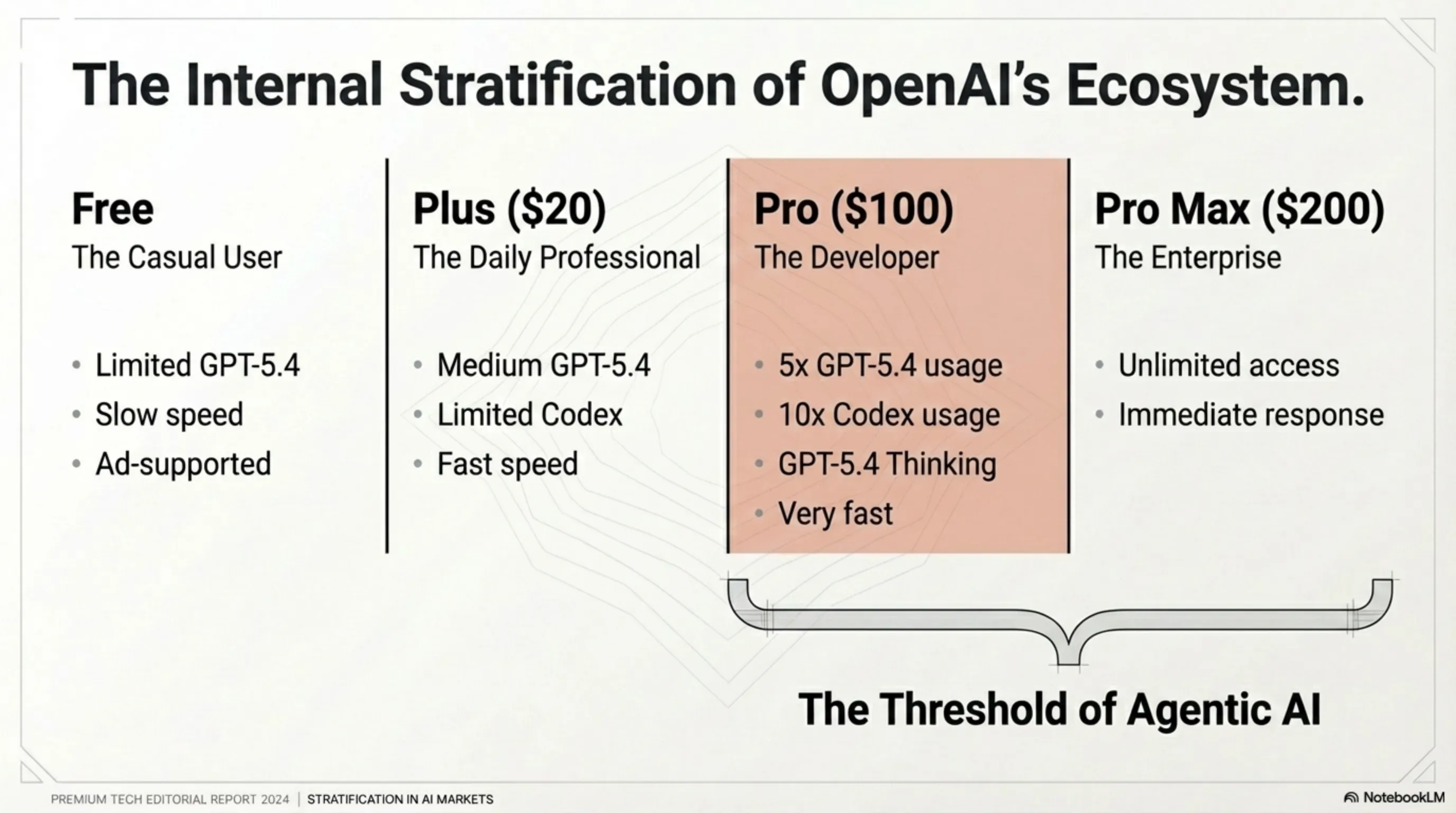
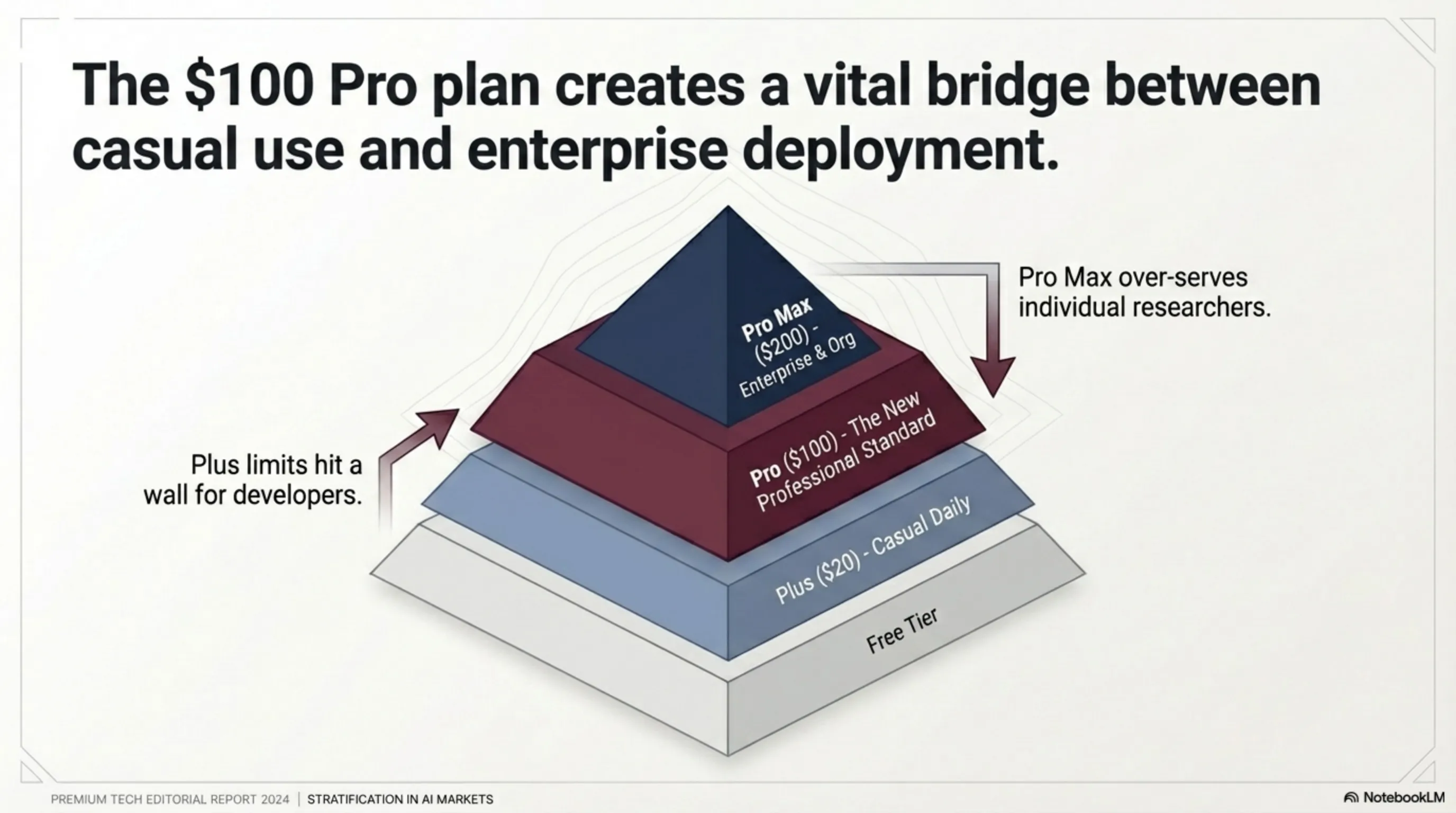
On April 9, 2026, OpenAI officially introduced a new subscription tier that many had been waiting for: the Pro plan at $100/month. This plan sits exactly between Plus ($20) and the old Pro (now $200), targeting developers, researchers, and professionals who find Plus limits insufficient but don't want to pay $200.
What's in this plan? The $100 plan has three main advantages: First, 5x higher usage limits than Plus - meaning you can work 5x more with GPT-5.4, GPT-5.3, and other models without hitting daily limits. Second, 10x more Codex access - OpenAI's coding assistant that can write complex code, find bugs, and even manage complete projects. Third, access to GPT-5.4 Thinking - an advanced version of GPT-5.4 designed for complex, multi-step problems.
Why $100? This number isn't random. OpenAI is directly competing with Anthropic, which offers the Claude Code plan at $100. Also, this price is exactly half of the $200 plan - meaning OpenAI is telling users: "If you don't want to pay $200 but aren't satisfied with Plus, this middle option is for you." This is a classic pricing strategy used across various industries: a middle option that attracts most people.
⚖️ OpenAI Plans Comparison (April 2026)
| Feature | Free | Plus $20 |
Pro $100 |
Pro Max $200 |
| GPT-5.4 Access | Limited | Moderate | High (5x) | Unlimited |
| Codex (Coding) | ❌ | Limited | 10x Plus | Unlimited |
| GPT-5.4 Thinking | ❌ | ❌ | ✅ | ✅ |
| Ads | Yes | No | No | No |
| Response Speed | Slow | Fast | Very Fast | Instant |
| Best For | Casual Users | Daily Use | Developers | Enterprises |
What was the market reaction? The developer community showed mixed reactions. Some were happy to finally have a middle option - because Plus wasn't enough for them but $200 was too much. Others criticized that OpenAI is turning AI into a luxury product and limiting public access. A third group said this is just the beginning and prices will go even higher.
Is it worth it? This depends on your usage type. If you're a professional developer who works several hours daily with Codex, $100/month can be a good investment - because it can save you hours of time. If you're a researcher who needs GPT-5.4 Thinking for complex problems, this plan makes sense. But if you only occasionally use ChatGPT, Plus is sufficient.
💡 Tekin Analysis:
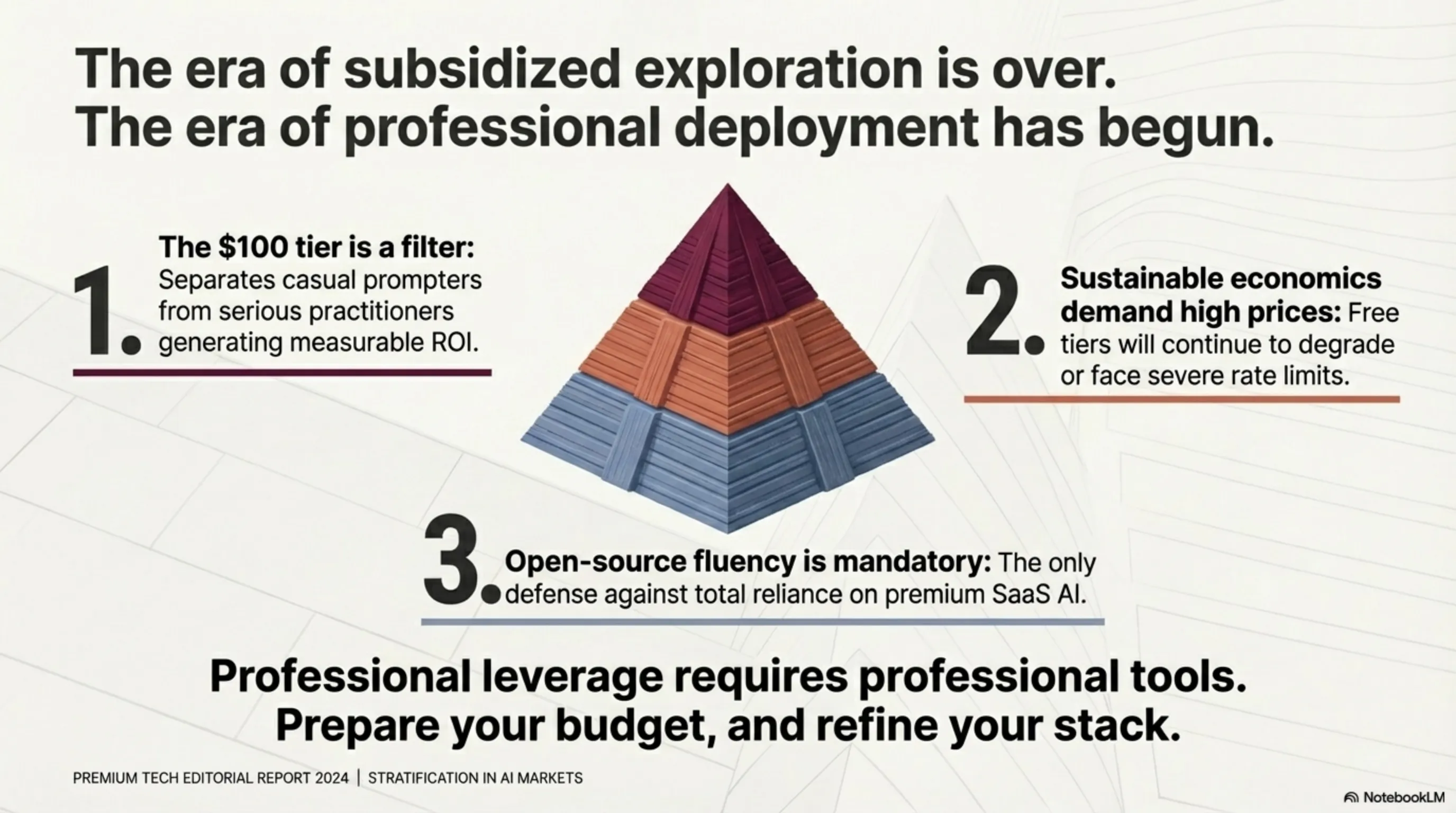
The $100 plan is a smart strategic move by OpenAI. They're dividing the market into three segments: casual users (Free/Plus), professionals (Pro $100), and enterprises (Pro Max $200). This tier-based pricing model has been very successful in software industries - like Adobe, Microsoft, and Autodesk. But the important point is that OpenAI is sending a message: professional AI has a price. The era of "free AI for everyone" is ending and we're entering a new age where AI is a professional tool with professional pricing. This might be disappointing for some, but it's the economic reality of AI: powerful models cost a lot to train and run.
🔢 3. Codex and Unlimited Access: Why Developers Must Pay
📚 Classified & Related Dossiers in TekinGame
If you wish to explore beyond this report and delve into cybernetic frontiers and autonomous AI architectures, do not miss these three exclusive deep-dives in the Tekin Garage:
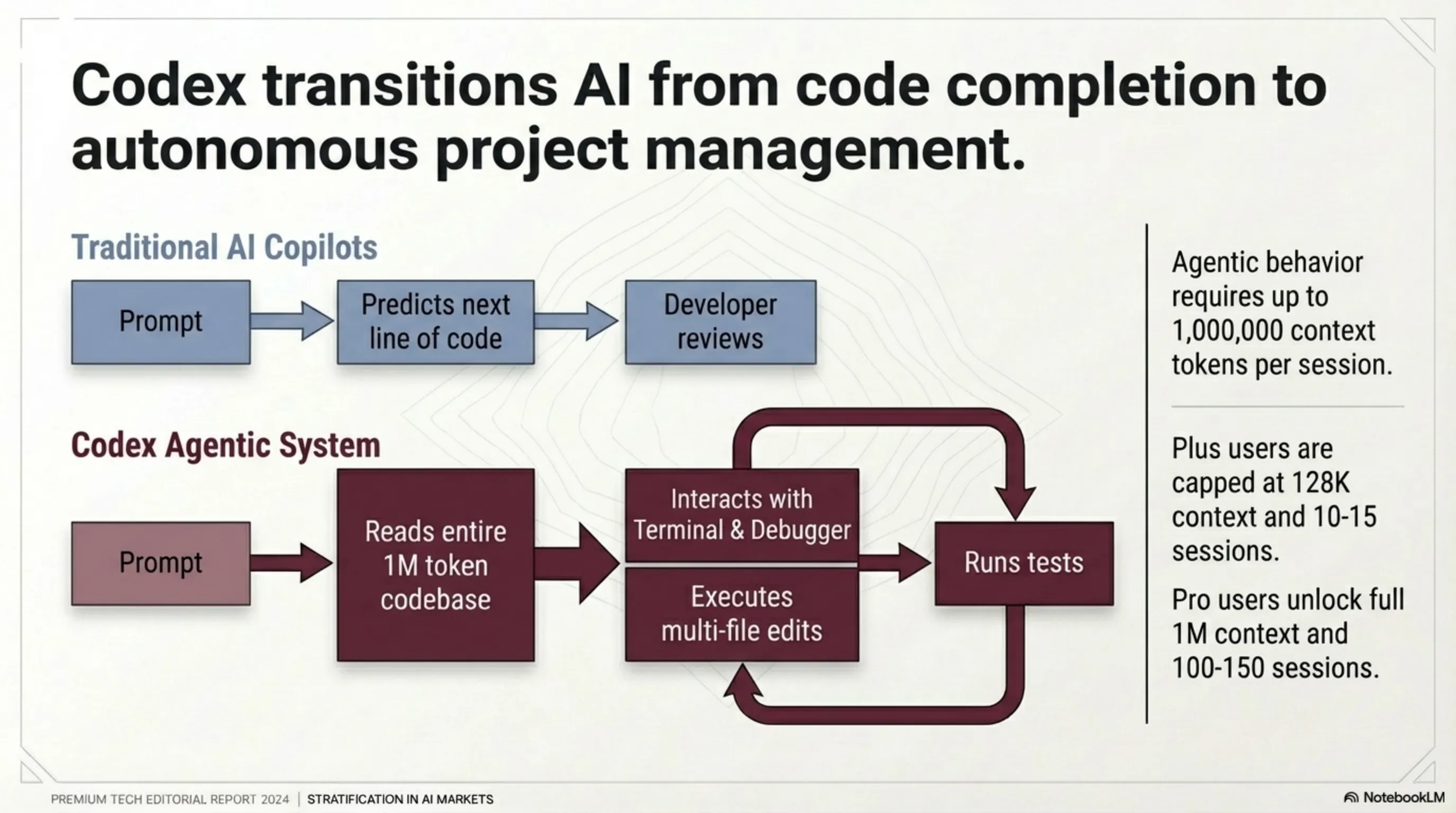
One of the most important features of the $100 plan is 10x more access to Codex - OpenAI's coding assistant officially launched in January 2025. Codex isn't a simple code completion tool like GitHub Copilot, but a complete agentic system that can manage complex projects, find and fix bugs, and even interact with external tools (like terminal, debugger, and database).
How does Codex work? Unlike traditional tools that only suggest the next line of code, Codex is a complete "agent" that can: 1) Read the entire project and understand its structure, 2) Run tests and analyze results, 3) Interact with the terminal and execute commands, 4) Edit multiple files simultaneously, 5) Use search tools to find related code. This means Codex can do things that previously only a human developer could do.
Why are there limits? Running Codex is much more expensive than regular ChatGPT. Each coding session can use up to 1 million tokens of context (equivalent to about 750,000 words) and the model must interact with external tools which has high computational costs. That's why OpenAI has been forced to put strict limits on Codex usage - even for Plus users.
⚡ Codex Limits Across Different Plans
| Plan | Daily Sessions | Context Window | Tool Usage |
| Free | 0 | - | - |
| Plus ($20) | 10-15 | 128K tokens | Limited |
| Pro ($100) | 100-150 | 1M tokens | Full |
| Pro Max ($200) | Unlimited | 1M tokens | Full |
* Session = A complete coding session that can include multiple files and tool interactions
What's the real developer experience? According to surveys conducted on Reddit and Hacker News, developers using Codex report that their coding speed has increased by 30-50%. One Python developer said: "A new feature used to take 4 hours, now with Codex it's 2 hours." A JavaScript developer also said: "The biggest advantage of Codex is that it can read and understand the entire codebase - I don't need to spend hours reading old code anymore."
But not everyone is satisfied. Some developers complain that Codex sometimes generates overly complex code or uses outdated patterns. A senior developer said: "Codex is great for repetitive tasks, but for architecting complex systems you still need a human." This is an important point: Codex is a powerful assistant, not a complete replacement for developers.
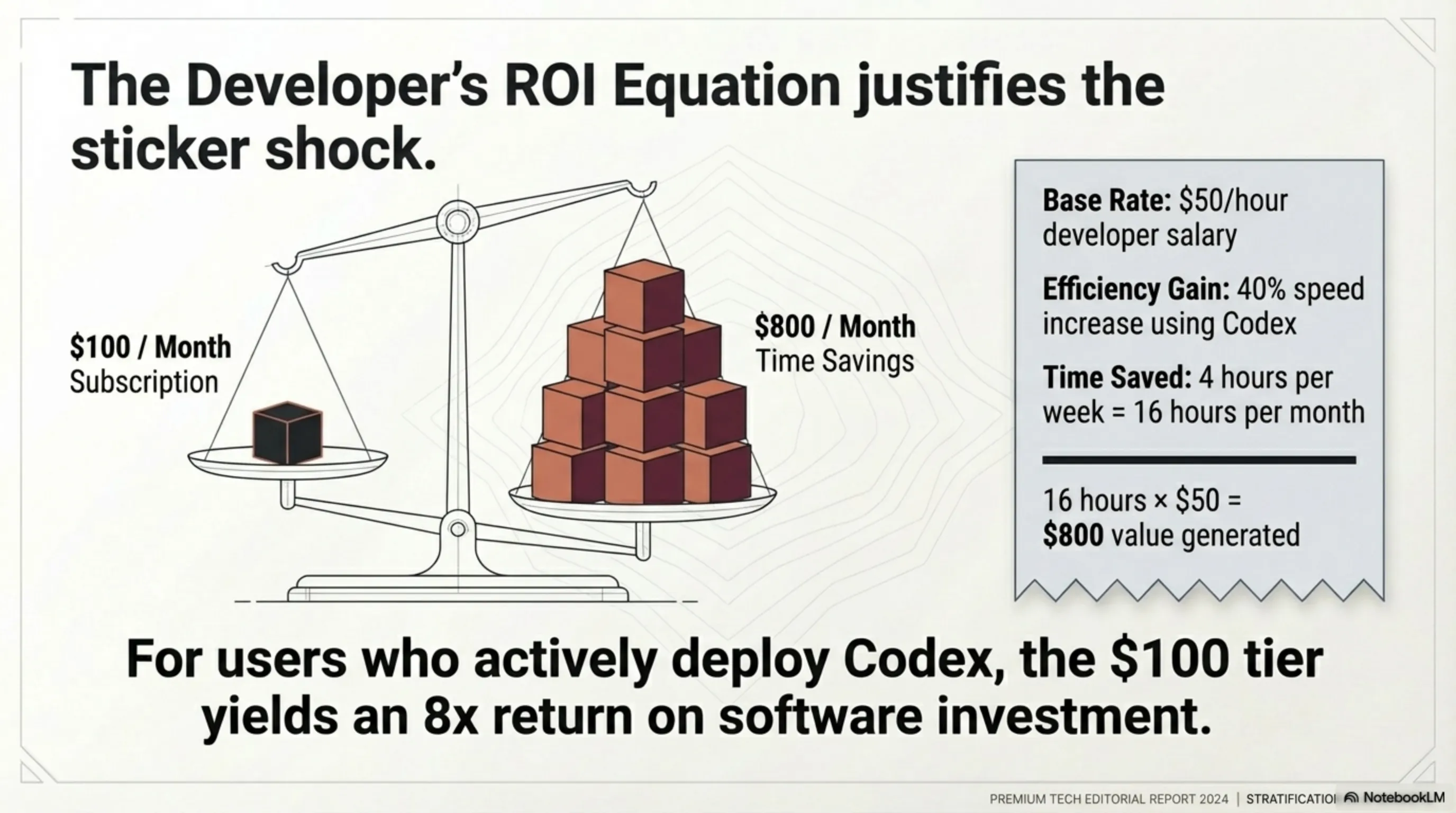
Is $100 worth it for Codex? Let's do the math: If a developer earning $50/hour works 10 hours per week with Codex and their speed increases by 40%, that means 4 hours saved per week = 16 hours per month = $800 in time value. So paying $100 to save $800 worth of time is a great deal. Of course, this assumes you actually use Codex effectively.
⚙️ Tekin Analysis:
Codex is one of the most powerful AI coding tools ever built - but only if you can actually use it. The strict limits on the Plus plan mean most professional developers are forced to upgrade to the $100 plan. This is a smart strategy from OpenAI: build a powerful tool, put strict limits on it, then offer a more expensive plan to remove those limits. For developers who actually use Codex, $100 is a good investment. But for those who only occasionally write code, Plus is sufficient - or even free tools like GitHub Copilot.
⚔️ 4. Competition with Anthropic and Google: The AI Pricing War
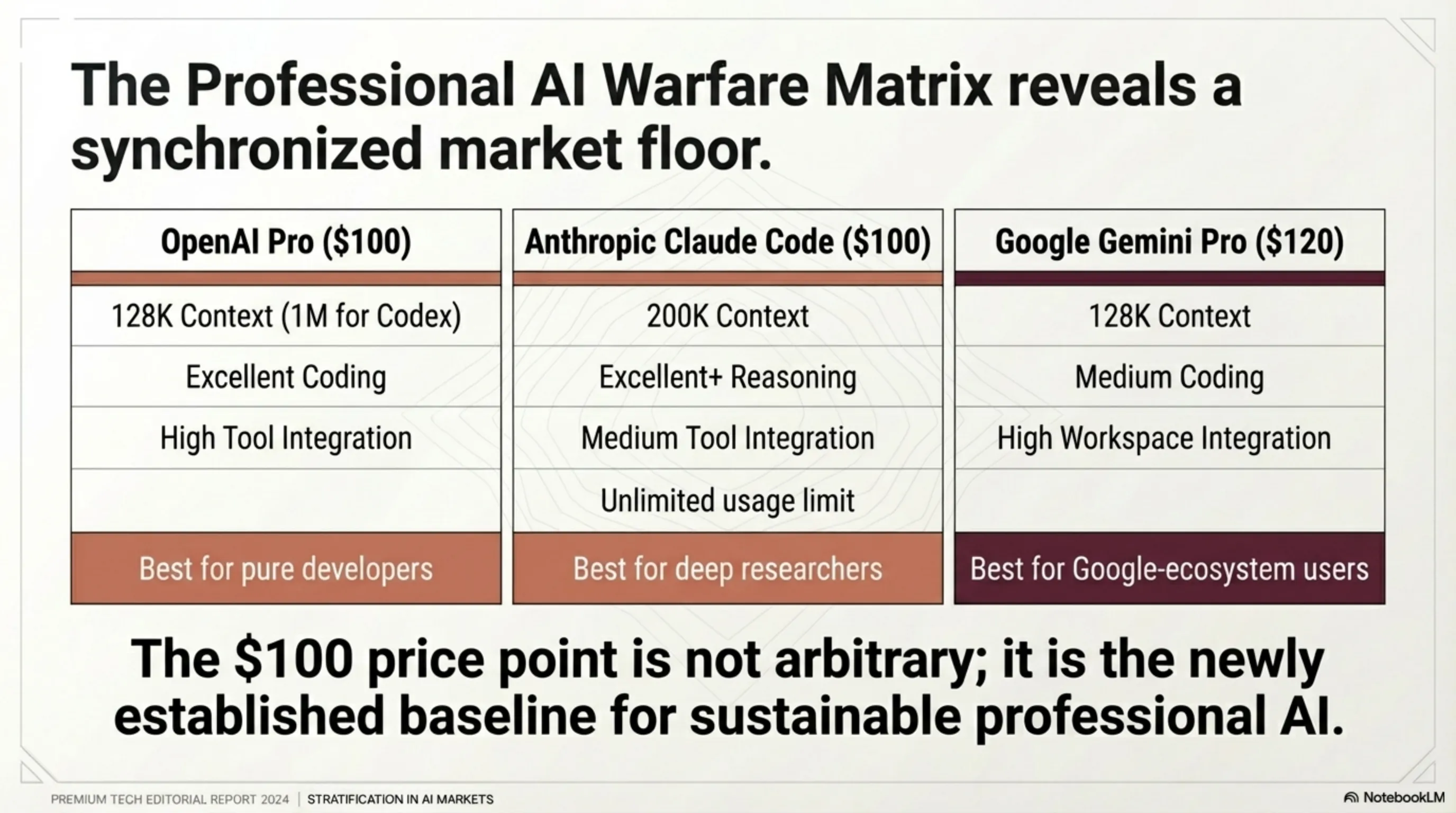
OpenAI's $100 plan didn't happen in a vacuum - it's a direct response to competitors. Anthropic introduced the Claude Code plan at $100 in February 2026, offering unlimited access to Claude 3.5 Sonnet and advanced coding tools. Google also entered this market with Gemini Advanced Pro ($120/month). We're witnessing a pricing war in the professional AI market.
Comparison with Claude Code: Anthropic's $100 plan has several advantages: First, a larger context window (200K tokens vs OpenAI's 128K), second, higher quality in complex reasoning (according to independent benchmarks), third, fewer restrictions on daily usage. But OpenAI also has its advantages: Codex is more powerful than Claude Code (especially in tool interaction), GPT-5.4 Thinking is better for very complex problems, and OpenAI's ecosystem is larger (more tools and integrations).
Comparison with Google Gemini: Google at $120/month is the most expensive option - but offers unique features: complete integration with Google Workspace (Gmail, Docs, Sheets), unlimited access to Google Search, and video and audio analysis capabilities that competitors don't have. For those using the Google ecosystem, Gemini Advanced Pro can be worth it - but for pure developers, OpenAI or Anthropic are better.
🥊 Professional AI Plans Comparison (April 2026)
| Feature | OpenAI Pro $100 |
Claude Code $100 |
Gemini Pro $120 |
| Context Window | 128K (1M Codex) | 200K | 128K |
| Coding | Excellent (Codex) | Good | Average |
| Complex Reasoning | Excellent | Excellent+ | Good |
| Tool Integration | High | Moderate | High (Google) |
| Daily Limits | 5x Plus | Unlimited | 4x Standard |
| Best For | Developers | Researchers | Google Users |
Why is everyone raising prices? The answer is simple: computational costs. Training and running large AI models costs billions of dollars. According to financial reports, OpenAI spends over $700,000 daily to run GPT-5. Anthropic and Google have similar costs. Free and cheap plans aren't sustainable - companies must either raise prices or go bankrupt.
Is this a price bubble? Some analysts think current prices aren't sustainable and with improved model efficiency and reduced hardware costs, prices will come down again. But others believe these prices are real and professional AI will always be expensive - just like other professional software like Adobe Creative Cloud or Autodesk.
🎯 Tekin Analysis:
The AI pricing war has just begun. OpenAI, Anthropic, and Google are dividing the market into three tiers: free/cheap for casual users, $100-120 for professionals, and $200+ for enterprises. This pricing model will likely be sustainable because the real costs of AI are very high. For users, this means they need to choose wisely: if they actually use AI professionally, the investment is worth it. But if they only use it occasionally, free or cheap plans are sufficient. Important note: none of these plans are "the best" - it depends on your needs.
📈 5. AI Economics: Why Prices Are Rising and What to Expect
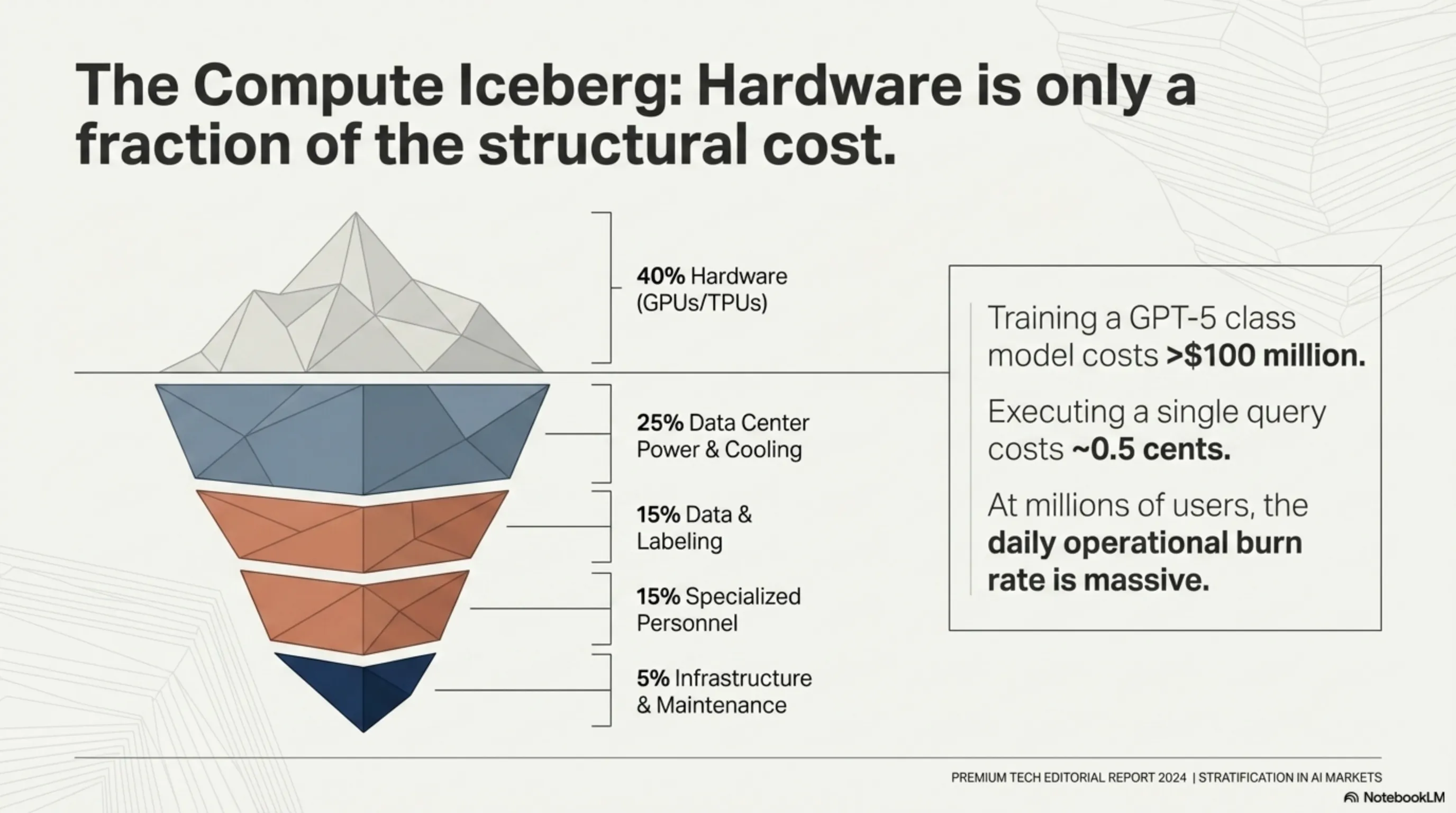
To understand why OpenAI and competitors are raising prices, we need to look at the economics behind AI. Training a model like GPT-5 costs over $100 million - including GPU costs, electricity, data, and human resources. Running these models isn't cheap either: each query to GPT-5.4 costs about 0.5 cents in computational expenses. With millions of daily users, these costs add up quickly.
The hidden costs of AI: Most people think the main cost of AI is just GPUs, but reality is more complex. A complete breakdown of OpenAI's costs: 1) Hardware (GPU/TPU): 40% of costs, 2) Electricity and datacenter cooling: 25%, 3) Data and labeling: 15%, 4) Human resources (researchers, engineers): 15%, 5) Infrastructure and maintenance: 5%. This means even if GPU prices are halved, total costs only decrease by 20%.
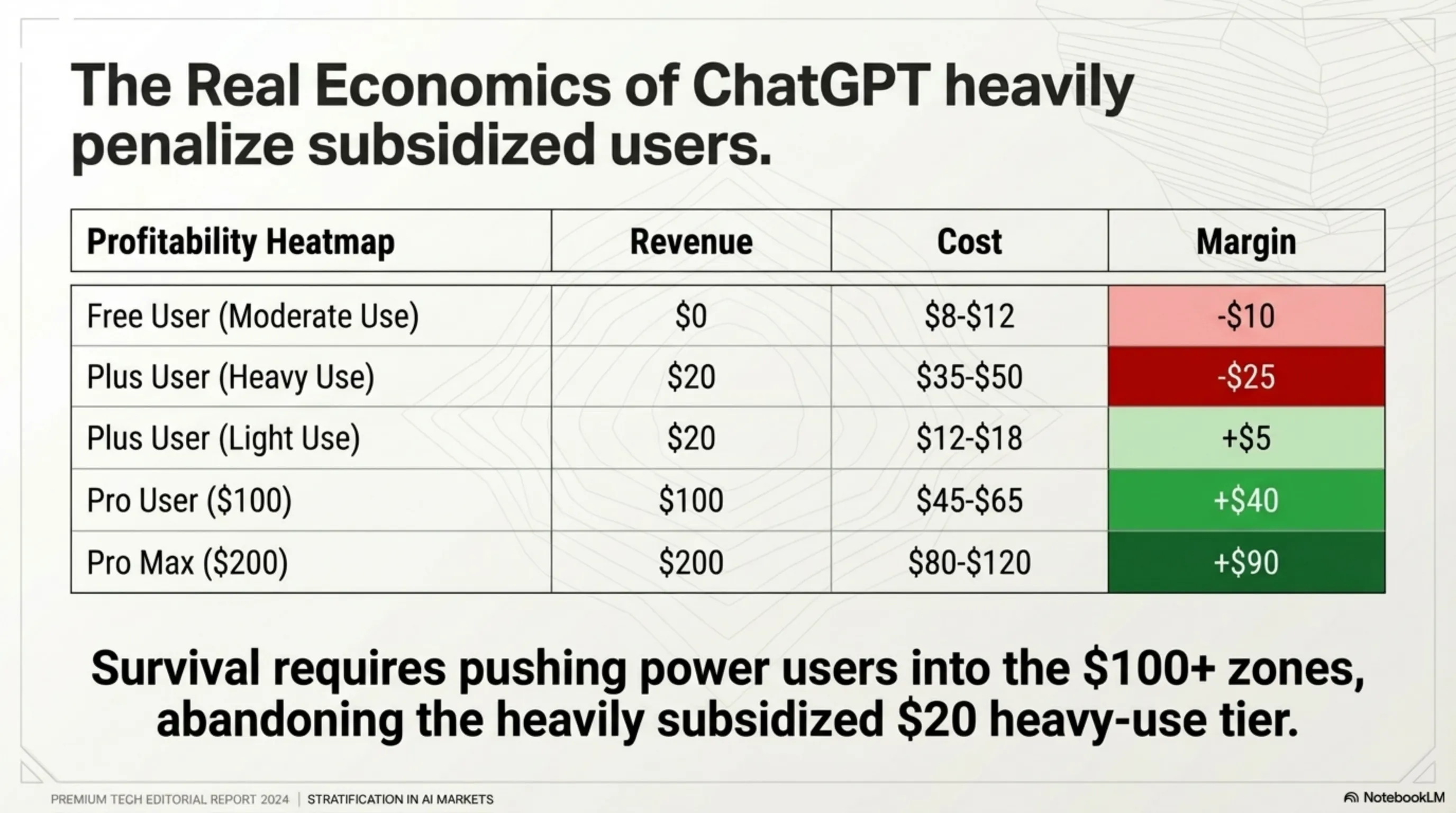
Why aren't free plans sustainable? OpenAI lost over $5 billion in 2025 - despite having millions of paid users. The reason is that free and cheap plans don't cover real costs. A Free user making 20 queries daily costs about $10/month in computational expenses - but pays nothing. Even Plus users ($20) are loss-making if they use it heavily. Only $100+ users are actually profitable.
💰 Real Economics of ChatGPT (2026 Estimates)
| Plan | Monthly Revenue | Real Cost | Profit/Loss |
| Free (average use) | $0 | $8-12 | -$10 |
| Plus $20 (light use) | $20 | $12-18 | +$5 |
| Plus $20 (heavy use) | $20 | $35-50 | -$25 |
| Pro $100 | $100 | $45-65 | +$40 |
| Pro Max $200 | $200 | $80-120 | +$90 |
* Costs include compute, infrastructure, and overhead. Figures are estimates based on financial reports and industry analysis.
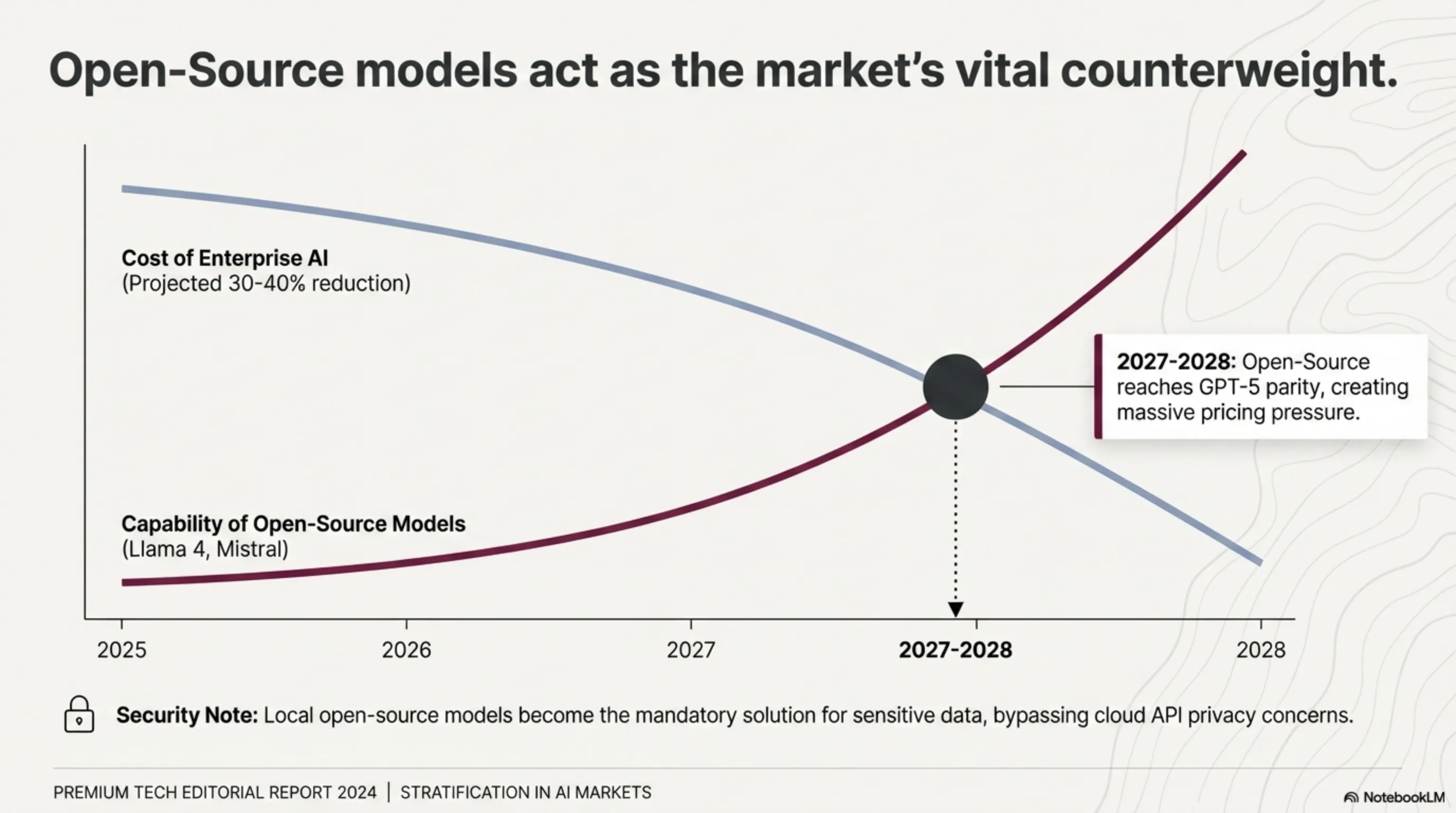
Will prices come down? Good news: yes, but not soon. With technological advances (more efficient GPUs, optimized algorithms, smaller models with high quality), costs are decreasing. According to industry analysis, AI running costs decrease by about 30-40% annually. This means by 2028, the current $100 plan might drop to $50-60. But this assumes models don't get more complex - which they likely will.
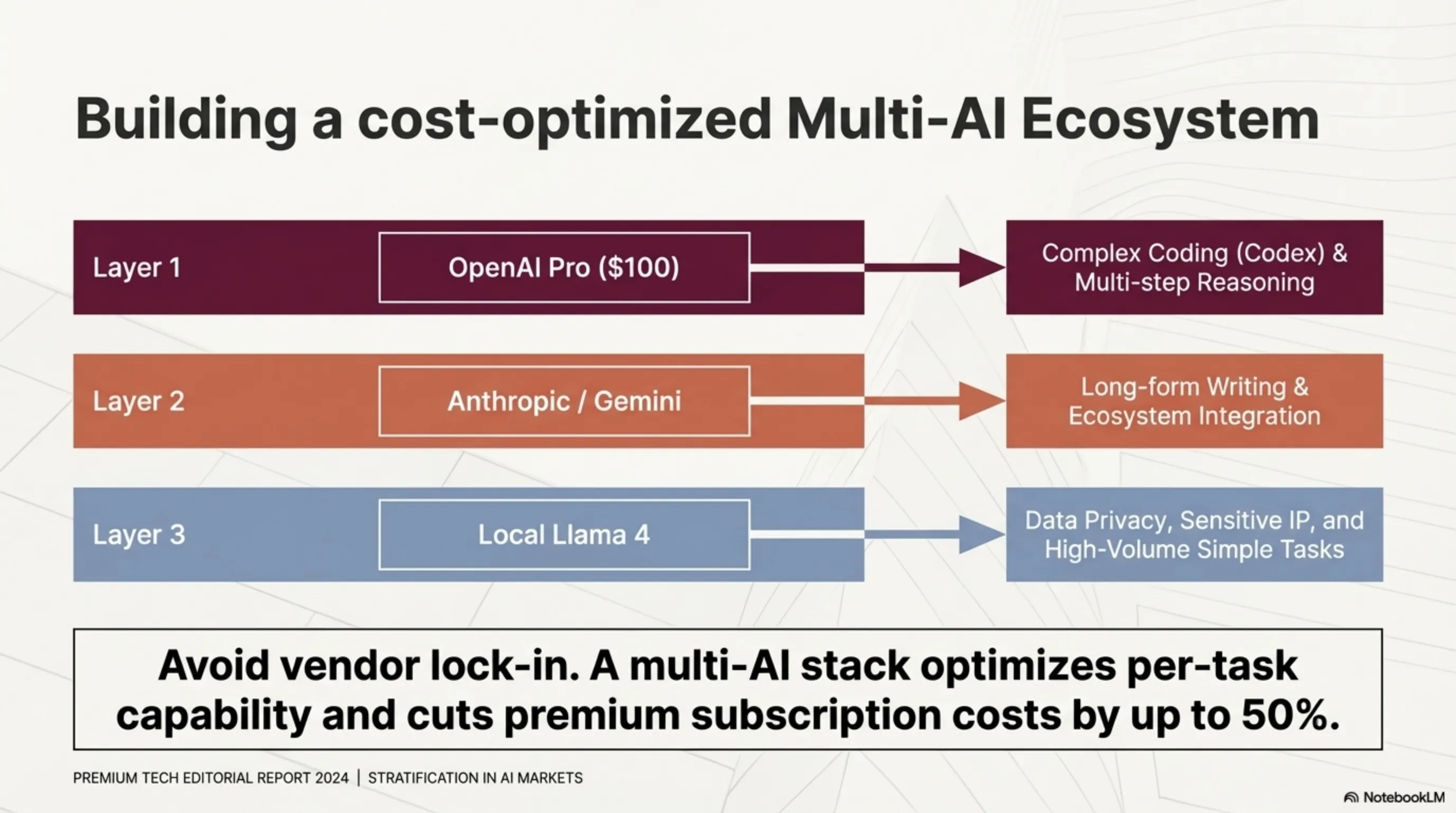
Survival strategy for users: Given that prices are rising, users need to be smarter: 1) Use free plans for simple tasks, 2) Only upgrade to paid plans when you really need to, 3) Use open-source tools (like Llama) for price-sensitive work, 4) Combine multiple services (e.g., OpenAI for coding, Claude for writing, Gemini for research). This "multi-AI" strategy can reduce costs by up to 50%.
💡 Tekin Analysis:
AI economics are brutal. Companies that can't find sustainable business models will go bankrupt - and we've already seen this (like Inflection AI which had to sell to Microsoft). OpenAI with the $100 plan is trying to reach profitability - and that makes sense. But this is a big challenge for democratizing AI: if only those who can pay $100-200/month have access to powerful AI, the digital divide grows. The likely solution: more powerful open-source models (like Llama 4) that anyone can run on their own hardware. The future of AI will probably be a mix of expensive cloud services and free local models.
🔮 6. The Future of AI: What to Expect and How to Prepare
Given recent developments - GPT-5.3 Instant Mini, the $100 plan, and the pricing war between AI giants - we can make several predictions about the future. First, prices will go even higher before they come down. Second, the separation between "general" AI and "professional" AI will become clearer. Third, open-source models will play a bigger role. Let's dive deeper into each.
Prediction 1: $200+ plans will become standard. By the end of 2026, we expect OpenAI, Anthropic, and Google to all introduce $200-300 plans as the main tier for professionals. Current $100 plans will become "entry-level professional" and $20 plans will only remain for casual users. This trend is unavoidable because the real costs of AI are very high.
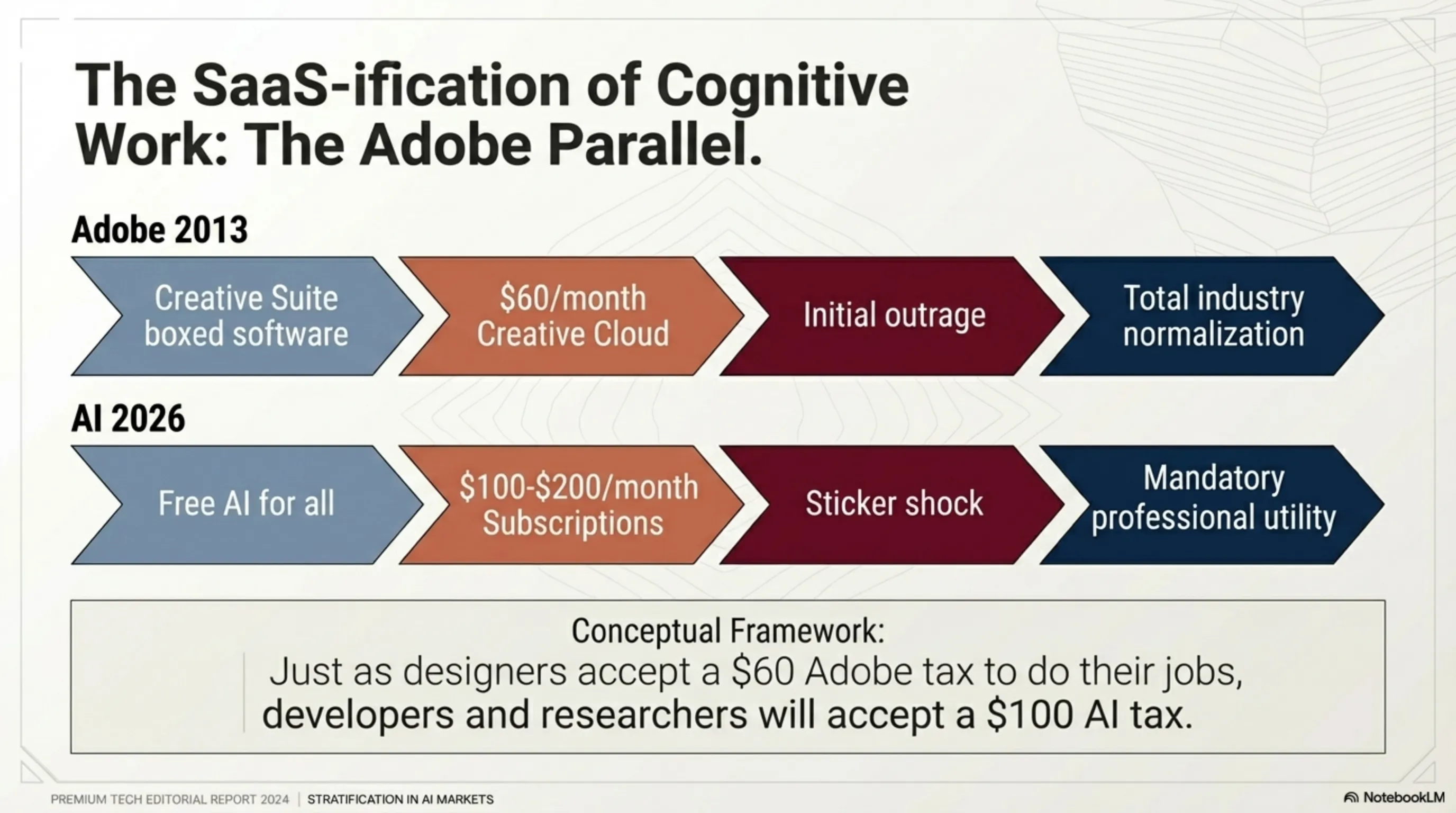
Prediction 2: AI will become a professional tool like Adobe. Remember when Adobe switched from one-time purchase to monthly subscription? Everyone complained, but now Adobe Creative Cloud is the industry standard - at $60/month. The same thing is happening with AI. In 2-3 years, paying $100-200/month for professional AI will be as normal as paying for Adobe or Microsoft Office.
Prediction 3: Open-source models will become real alternatives. Llama 4 from Meta, Mistral from France, and Chinese models like DeepSeek are advancing rapidly. By 2027, we expect open-source models to reach GPT-5 quality - meaning anyone can run a powerful AI on their own hardware (or cheap servers). This could completely change the market and put significant pressure on OpenAI and competitors' pricing.
🗓️ Predicted AI Timeline (2026-2028)
Q2-Q3 2026 (Now to Fall)
- OpenAI introduces GPT-5.5 with better capabilities
- Anthropic and Google introduce $150-200 plans
- First open-source models with GPT-4 quality released
Q4 2026 - Q2 2027
- $200+ plans become standard
- First fully autonomous AI agents for coding
- Llama 5 released with quality close to GPT-5
2028 and Beyond
- Open-source models reach GPT-5 quality
- Prices start decreasing (30-40%)
- AI becomes a standard tool like Microsoft Office
How to prepare? For individual users: 1) Start learning to use AI effectively now - it's a critical skill for the future, 2) Budget monthly for AI (like internet or mobile), 3) Try multiple services and see which works best for your needs, 4) Learn open-source models too - they might be the future. For companies: 1) Take AI investment seriously - it's no longer optional, 2) Train your team, 3) Have a multi-AI strategy (not just one vendor).
Important note about security and privacy: With increased AI usage, security concerns also grow. OpenAI, Anthropic, and Google all claim they don't use your data for model training (if you have a paid plan), but many questions remain. For sensitive work, using open-source models running on your own servers is safer. This is another reason why open-source models are important.
🚀 Tekin Analysis:
We're at a historic turning point. AI is transforming from a new and exciting technology into a standard professional tool - with all the challenges and opportunities this transformation brings. OpenAI's $100 plan isn't just a price increase - it's a signal that the era of "free AI for everyone" is ending. But this isn't necessarily bad. As business models stabilize, companies can invest more in research and development. And with the growth of open-source models, public access is also maintained. The future of AI will probably be a hybrid ecosystem: powerful cloud services for professionals, and free local models for everyone. The key to success: learning to use both effectively.
🎯 Final Conclusion
The release of GPT-5.3 Instant Mini and the introduction of OpenAI's $100 plan aren't two separate events - they're part of a larger strategy. OpenAI is telling users: "We built a better model (GPT-5.3), but if you want to really use it, you need to pay." This is a fundamental shift in OpenAI's philosophy - from "AI for everyone" to "professional AI at professional prices".
Is this bad? Not necessarily. Companies that can't become profitable will go bankrupt - and we don't want OpenAI to go bankrupt. But this is a big challenge for public access to AI. Fortunately, open-source models like Llama 4 are advancing rapidly and can be free alternatives for those who can't pay $100-200/month.
Final message: AI is becoming a standard professional tool - like Adobe, Microsoft Office, or Autodesk. If you're a professional who actually uses AI, the investment is worth it. If you're a casual user, free or cheap plans are sufficient. And if you're worried about prices, learn open-source models - they're the democratic future of AI. 🚀
🔑 Key Takeaways
- GPT-5.3 Instant Mini: 26.8% reduction in hallucinations, more natural conversations, free for everyone
- Pro Plan $100: 5x Plus limits, 10x Codex access, GPT-5.4 Thinking access
- Intense competition: OpenAI vs Anthropic vs Google - everyone is raising prices
- AI economics: Real costs are very high, free plans aren't sustainable
- The future: Prices will go higher, open-source models will become more important
- Recommendation: Have a multi-AI strategy, learn open-source models
📚 Sources and References
This article is based on official information from OpenAI Help Center, TechCrunch, The Verge, TechRadar, Hacker News, Reddit discussions, and independent industry analysis. All prices and specifications are current as of April 12, 2026, and may change in the future.
Primary Sources: OpenAI Official Blog, OpenAI Help Center (help.openai.com), TechCrunch, The Verge, TechRadar, Anthropic, Google AI Blog, Hacker News, Reddit r/OpenAI, Industry Analysis Reports
Note: Content has been rephrased and summarized for compliance with copyright regulations. For more detailed information, please refer to original sources.
🌐 Stay Connected With Us 🎮✨
For the latest tech, gaming, and gadget news, follow us on our official social media channels:
Additional Gallery: 🤖 OpenAI’s Silent Move: GPT-5.3 Launch and the $100 Pro Plan