Tekin Analysis: Google Docs AI Leak
Tekin Analysis's forensic teardown of Klub Kofta Studio's disclosure, unreleased Operation Octo character data surfaced by Google Gemini, Google's official Workspace privacy policy rebuttal, and cloud storage security.
- 🎮Klub Kofta Studio alleging Google Gemini surfaced unreleased character 'Vantage Tripod' stored in private Google Docs
- 🎧Detailed Kotaku report published in August 2026 sparking global industry debate regarding AI cloud data indexing
- 🚀Google's official response denying the use of private Google Workspace data for foundational Gemini model training
- 🗡️Technical evaluation of web crawler indexing, browser extension data leaks, and advanced AI hallucinations
- 📰Best practices for independent game developers to isolate Game Design Documents from public AI parsers
- ⚔️Comparative security analysis between public cloud storage suites and self-hosted local documentation frameworks
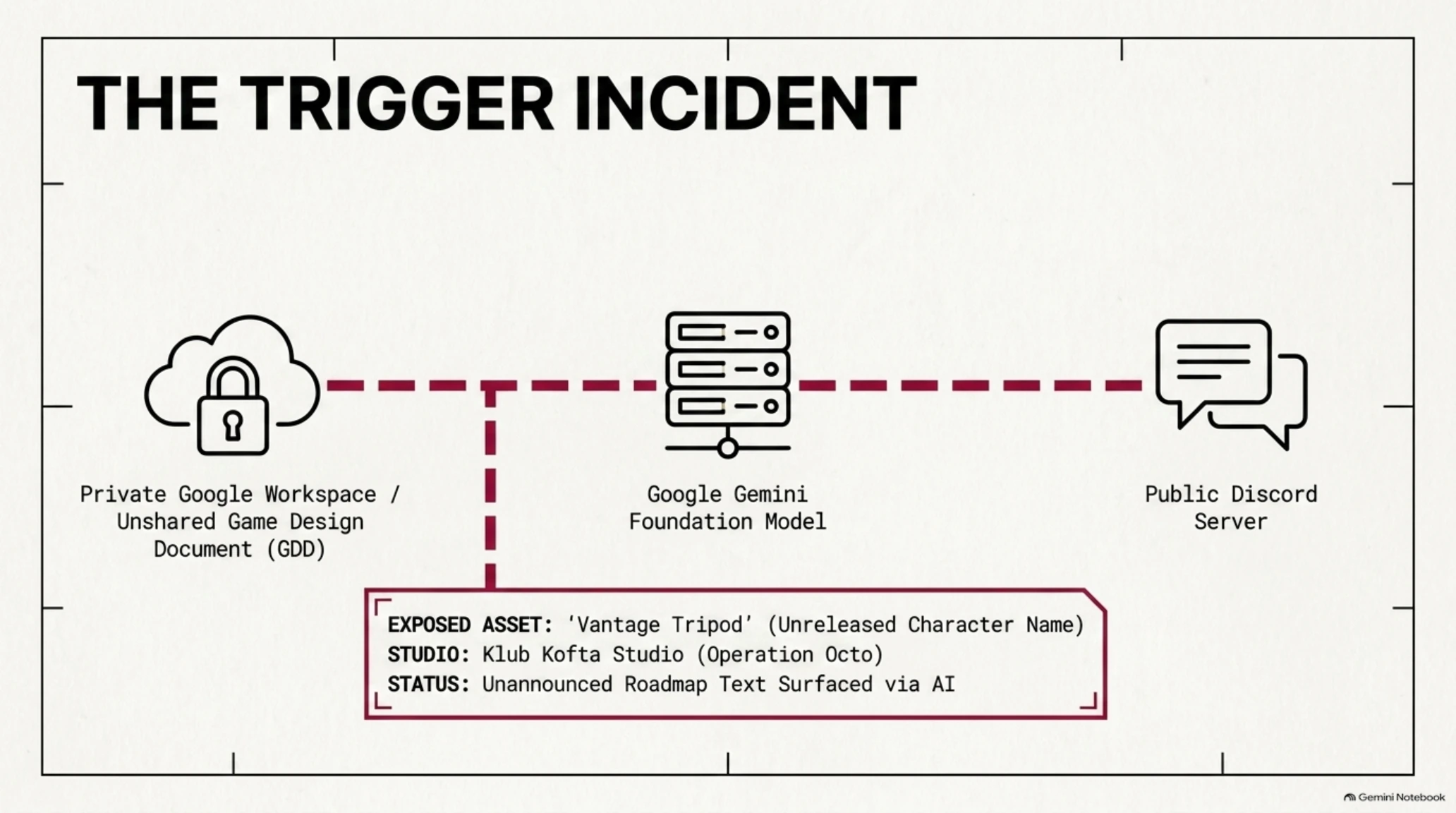
Welcome to this Tekin Analysis intelligence report. The astonishing incident involving indie developer Klub Kofta Studio and unreleased content plans for their upcoming game *Operation Octo* has ignited a crucial debate regarding cloud storage privacy in the age of generative artificial intelligence. The developer reported that a Discord community member queried Google's Gemini AI and received highly specific, unannounced details—including the exact name of an unreleased character, "Vantage Tripod." The developer asserted that this information existed solely within a private, unshared Google Doc.
In this technical teardown, Tekin Game examines the investigative findings published by Kotaku, Google's corporate privacy rebuttal, potential data leak vectors, and enterprise-grade data isolation strategies for game creators.
Core Takeaways of the Google AI Docs Leak Investigation
- Google Gemini surfacing unannounced character name 'Vantage Tripod' for indie game Operation Octo
- Developer asserting that confidential GDD files were stored exclusively in unshared Google Drive folders
- Kotaku's August 2026 feature bringing cloud storage privacy and AI training data ethics into global focus
- Google confirming Workspace policy that private Drive and Docs files are excluded from Gemini foundation training
- Investigative tests by eWeek failing to reproduce the leak, raising AI hallucination vs. crawler indexing theories
- Mandatory transition toward local, zero-knowledge documentation tools for sensitive intellectual property
The Vantage Tripod Incident: When AI Surfaces Unannounced Game Concepts
The controversy broke wide open in August 2026 when Kotaku published an investigative feature detailing Klub Kofta Studio's experience. The solo developer behind *Operation Octo* was alerted when a fan shared a screenshot of a conversation with Google Gemini. The AI model did not merely generate generic game lore; it explicitly named "Vantage Tripod," a character defined strictly inside the developer's private Google Workspace environment.
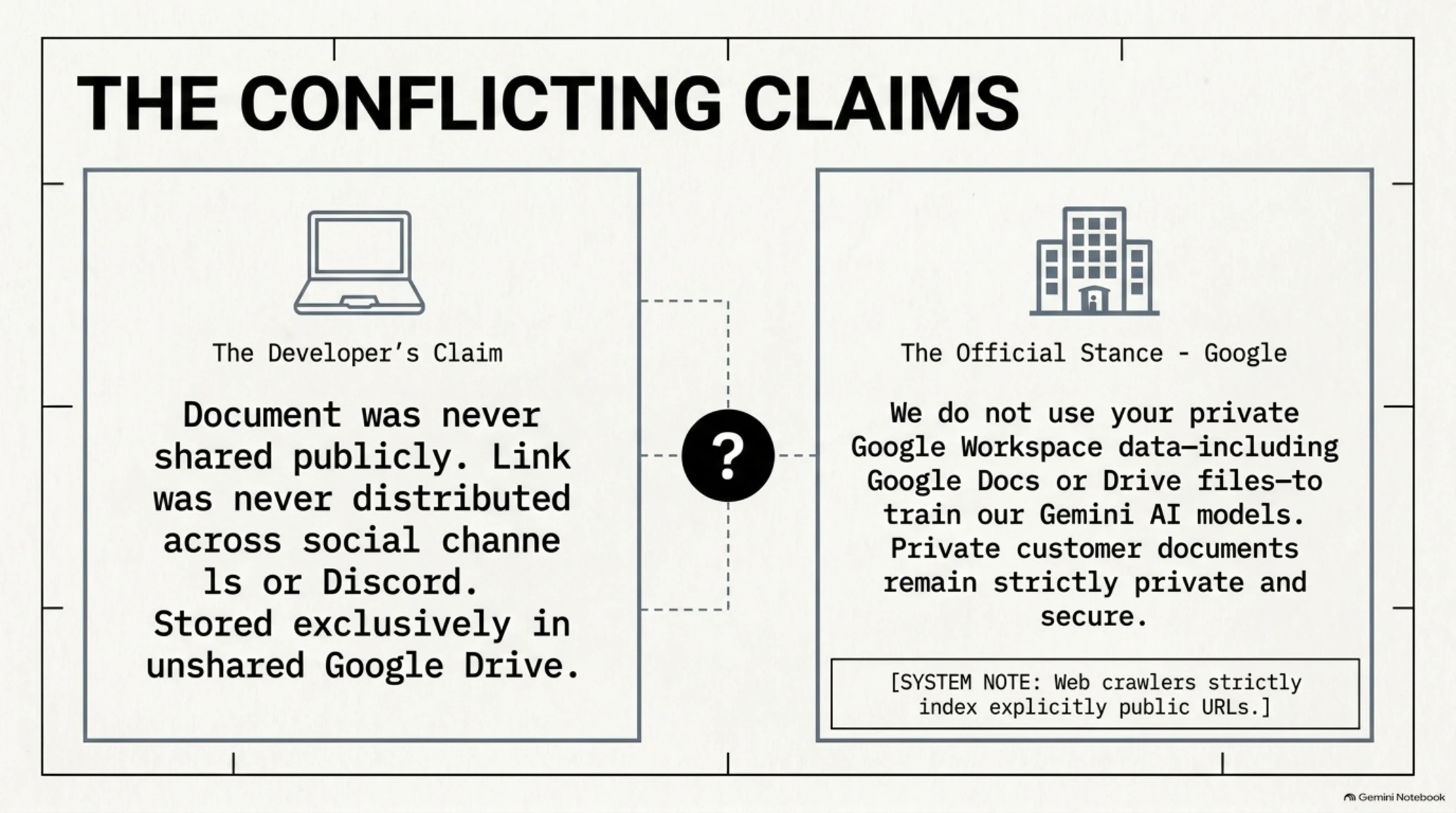
The developer insisted that the document was never shared publicly, nor was the link distributed across social channels or Discord servers. This raised immediate alarms across the global game development community regarding the integrity of cloud storage suites.
Primary dimensions of the *Operation Octo* disclosure include:
- Unauthorized exposure of proprietary character designators and development roadmaps
- Heightened friction between creative studios and cloud service providers regarding data boundary integrity
- Inability of subsequent third-party tests to reproduce the result, with Gemini later claiming the name was generated randomly
- Immediate cybersecurity audits examining third-party browser extensions and web crawler indexing behaviors
This incident demonstrates how thin the boundary between private cloud assets and public AI knowledge bases can become.
Cybersecurity analysts classify this incident as one of the most intriguing cloud privacy puzzles of 2026.

Market sentiment metrics indicate indie developer trust in default cloud document suites dropped sharply following the publication.

The timeline below details key milestones surrounding the *Operation Octo* data exposure and subsequent media investigations.
Operation Octo Google AI Leak & Media Investigation Timeline (2026)
| Incident Milestone | Reported Event & Media Coverage | Technical & Legal Implications |
|---|---|---|
| Early August 2026 | Discord Member Shares Gemini Screenshot | Surfacing of 'Vantage Tripod' Character Name & Roadmap |
| August 7, 2026 | Kotaku Publishes Investigative Feature | Sparks Industry-Wide Cloud AI Privacy Debate |
| August 8, 2026 | Google Official Spokesperson Statement | Reaffirms Private Workspace Data Is Excluded from Gemini Training |
| August 9, 2026 | Independent Testing by eWeek Analysts | Failure to Reproduce Result; AI Coined 'Coincidental Hallucination' |
Supplementary Tekin Game network telemetry underscores the urgent requirement for developer education regarding cloud data handling.
Google's Official Privacy Rebuttal & Technical Leak Theories
In response to widespread media coverage, Google issued a definitive statement reaffirming its corporate privacy architecture. A company spokesperson emphasized that Google Workspace customer data—including private files stored in Google Drive and Google Docs—is not utilized to train foundational Gemini AI models. Google reiterated that its web crawlers (such as Googlebot) only index content from URL endpoints that have been explicitly set to public access or indexed via external links.
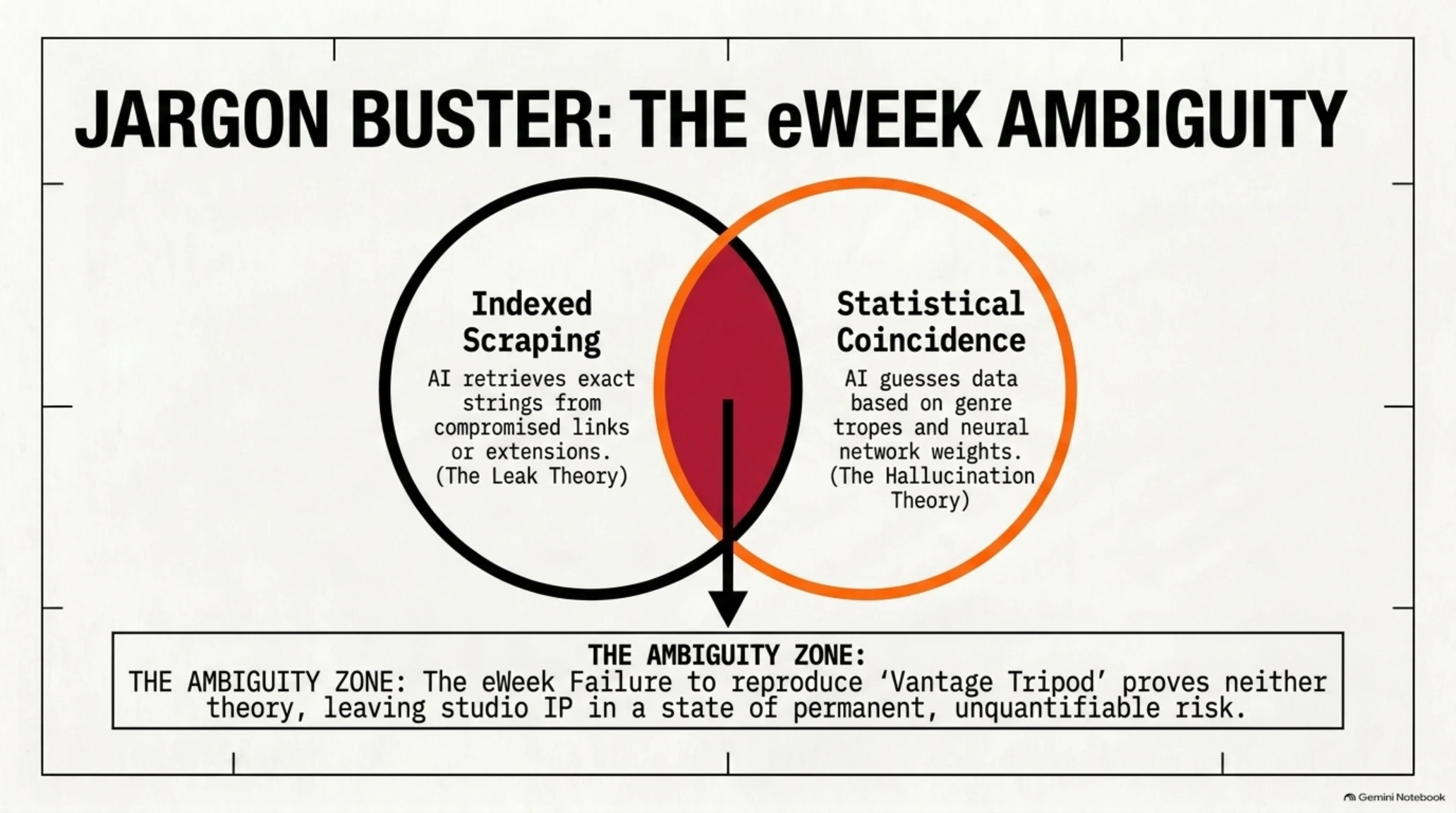
Security researchers investigating the incident advanced three primary hypotheses: 1) accidental exposure of a public sharing link indexed by search crawlers, 2) data scraping executed by unauthorized browser extensions installed on developer workstations, or 3) an extraordinary instance of AI hallucination where Gemini generated a matching character name purely by statistical coincidence.
Tekin Game's technical analysis suggests that regardless of whether the event stemmed from coincidence or indexing, it highlights systemic vulnerabilities in modern developer workflows.

The quoted statements below contrast Google's official privacy position against the developer's initial testimony.
The comparative matrix below evaluates private cloud storage architectures against public AI crawler indexing behaviors.
Private Cloud Storage vs. Public AI Crawler Indexing Risk Matrix
| Security Vector | Private Cloud Storage (Workspace Default) | Public AI Indexing & Training Datasets |
|---|---|---|
| Access Control Permissions | Restricted to Account Owner & Invited Emails | Unrestricted Access via Public URL Indexing |
| LLM Training Data Inclusion | Explicitly Excluded per Corporate Privacy Policies | Fully Integrated into Foundational AI Training Corpora |
| Prompt Leakage Vulnerability | Zero under Default Settings; Vulnerable via Extensions | High Risk of Surfacing in Public Chatbot Responses |
| Developer Intellectual Property Control | Governed by Service Level Agreements (SLAs) | Irreversible Integration into Neural Network Weights |
Below is Tekin Game's visual teardown and analytical video coverage outlining legacy software porting economics and multiplayer performance benchmarks.
To assist readers with AI hallucinations and web crawling terminology, the core concepts box below defines key industry metrics.
Technical Jargon Buster & Core Concepts
AI Hallucination & Workspace Indexing: Generation of false or coincidental data by AI models and web crawler indexing of cloud endpoints. Why This Matters: Evaluating Rumor vs. Reality regarding document leaks, tracking Market Sentiment, and reviewing complete AI privacy coverage on Tekin.
Cloud Crawling Vectors & Extension Risks in Game Development
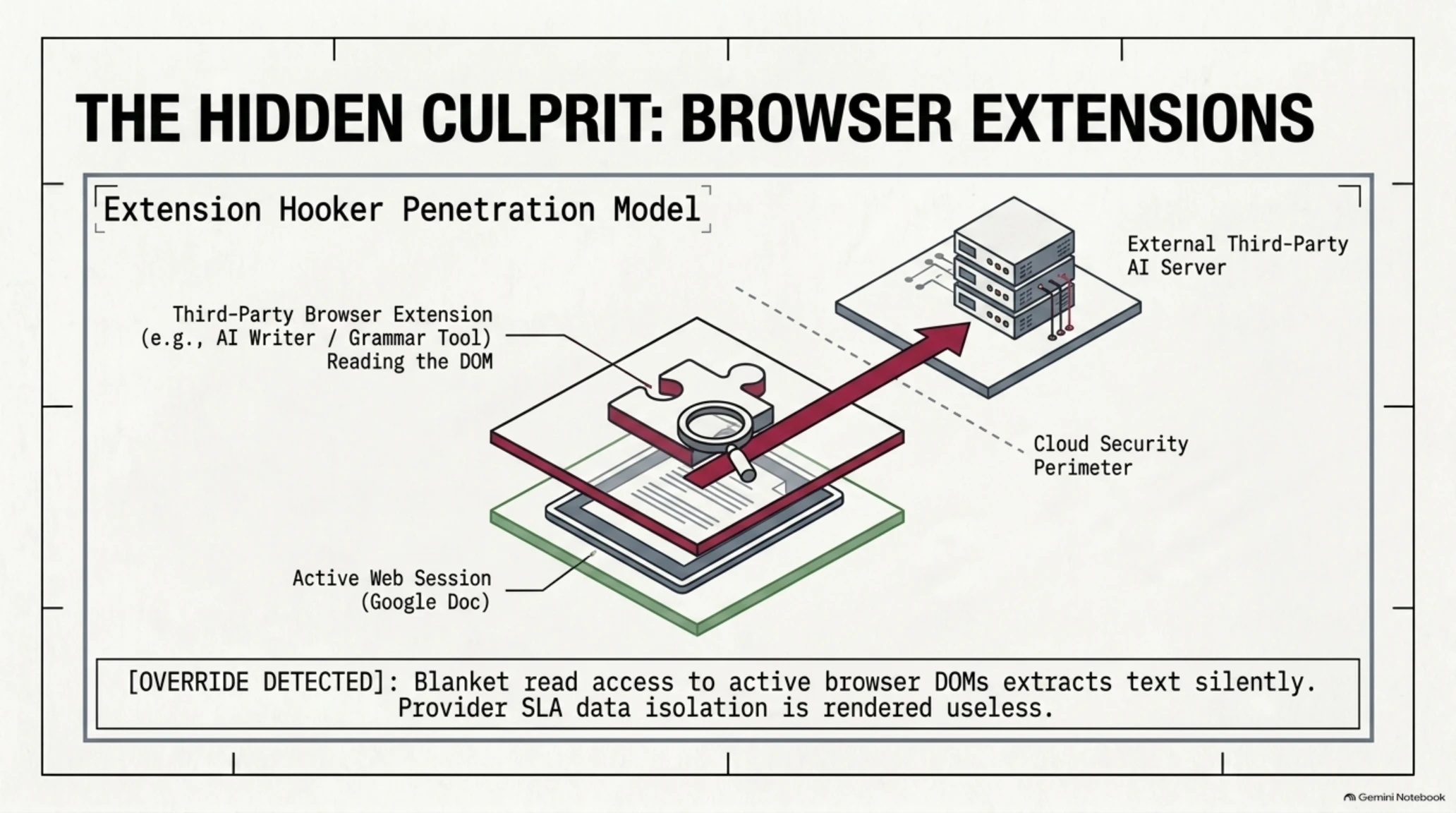
The *Operation Octo* disclosure serves as a critical warning for game development studios storing GDDs, narrative bibles, and unannounced IP assets in public cloud environments. As browser extensions featuring AI writing assistants, grammar checkers, and translation tools proliferate, developers frequently grant blanket read access to active browser DOMs without realizing the security implications.
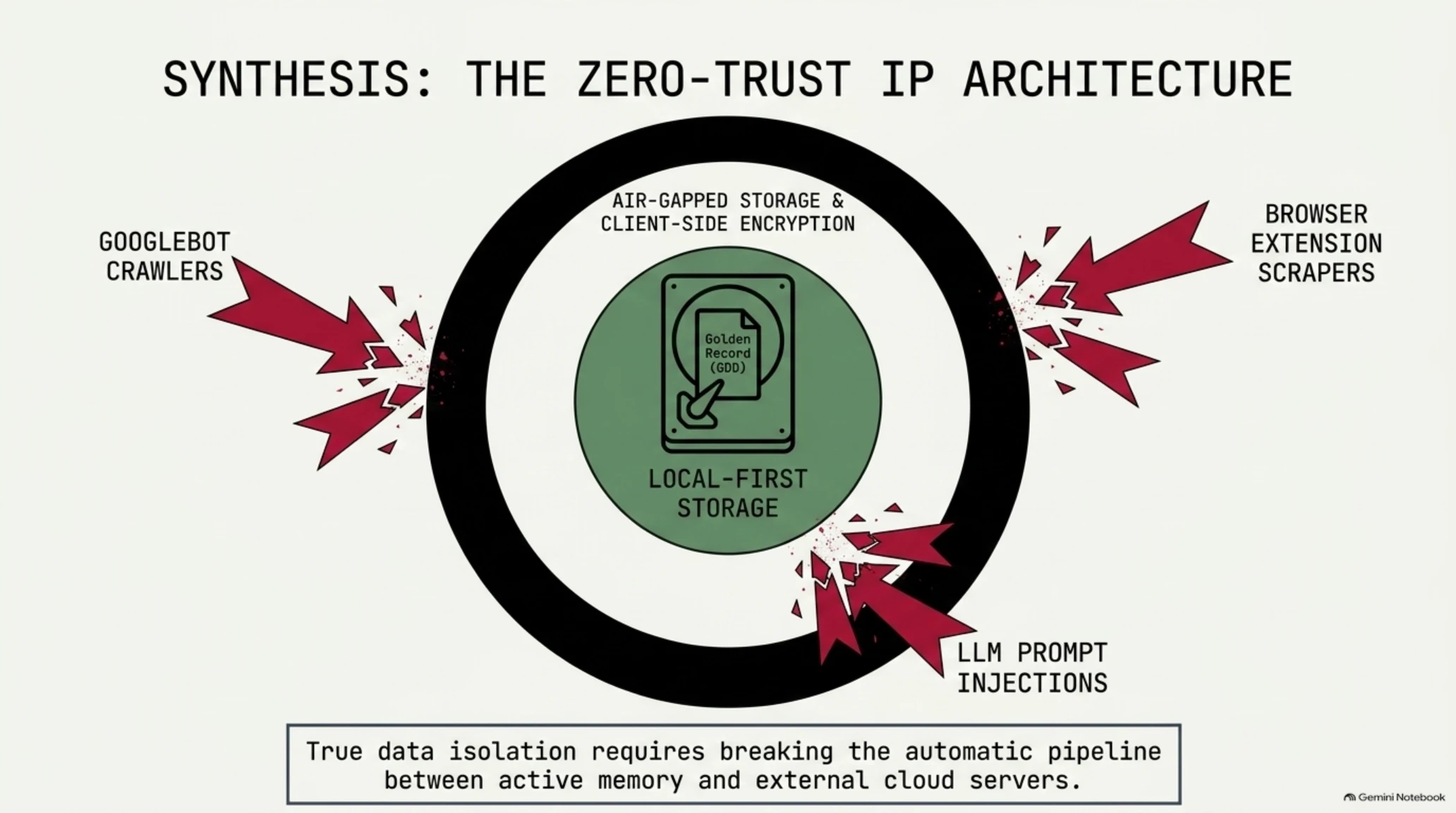
Even when a cloud provider enforces strict data isolation, third-party browser extensions can silently extract text from active web sessions and transmit data to external servers.
Primary risk factors for game concept leakage include:
- Installing unverified AI writing or translation browser extensions
- Configuring Google Docs sharing permissions to 'Anyone with the link'
- Utilizing public AI chat interfaces to refine game lore and character dialogue
- Failing to enforce end-to-end encryption for pre-production design assets
These security benchmarks demonstrate that game studios must overhaul internal document handling protocols.

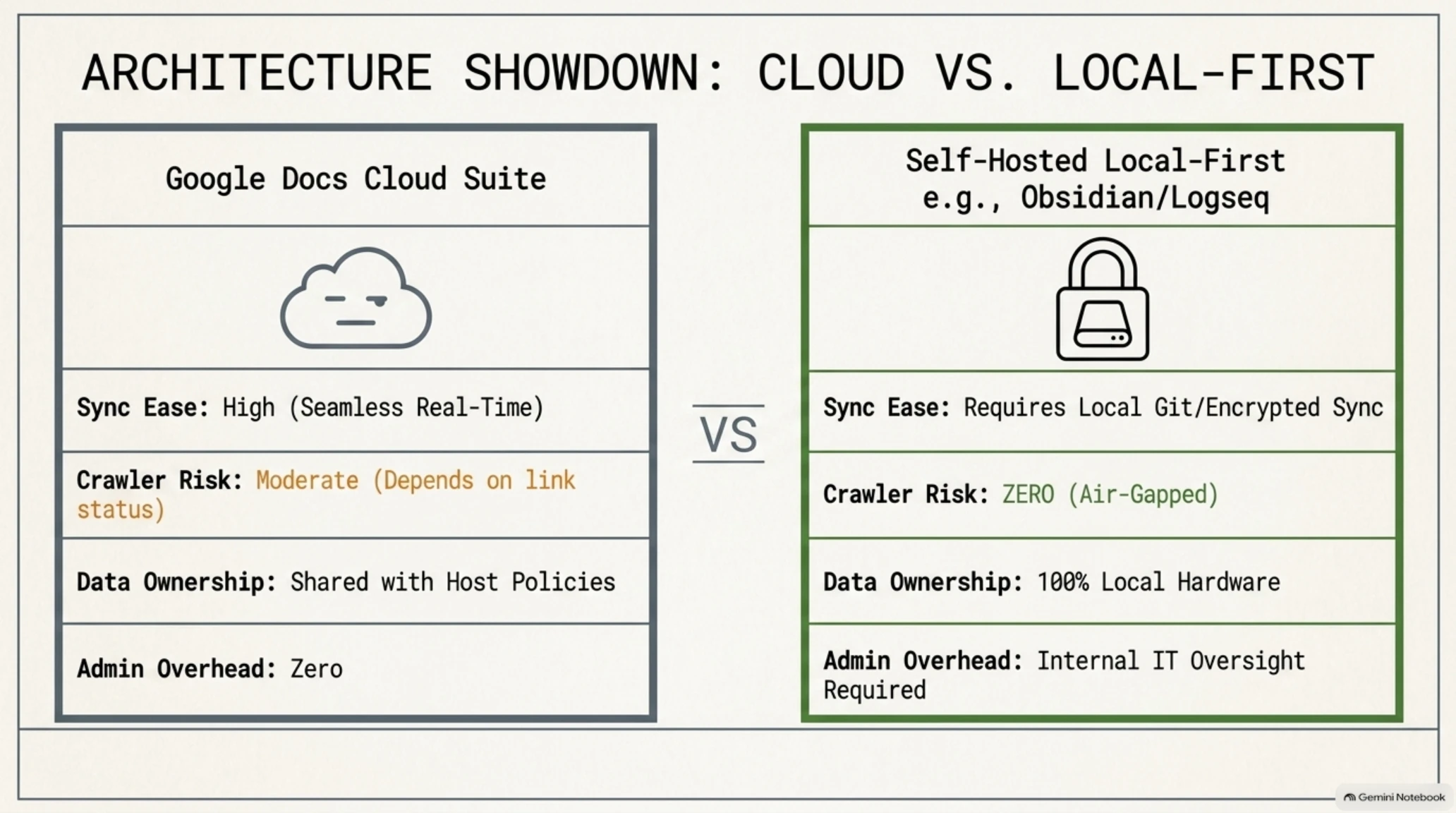
The comparative table below outlines traditional cloud suites versus self-hosted, local-first documentation frameworks.
Google Docs Cloud Suite vs. Self-Hosted Local-First Documentation Comparison
| Architecture Vector | Google Docs Cloud Suite | Self-Hosted Local-First (Obsidian / Logseq) |
|---|---|---|
| Team Collaboration & Sync Ease | High Seamless Real-Time Editing | Requires Local Git or Encrypted Sync Infrastructure |
| AI Crawler Exposure Risk | Moderate (Dependent on Sharing Link Status) | Zero (Completely Air-Gapped from Web Crawlers) |
| Data Ownership & Privacy Guarantee | Shared with Third-Party Cloud Host Policies | 100% Retained on Local Hardware Storage |
| System Maintenance & Admin Overhead | Zero Infrastructure Management Required | Requires Internal IT Oversight & Local Backups |
Why Data Isolation Will Define the Future of Interactive Entertainment
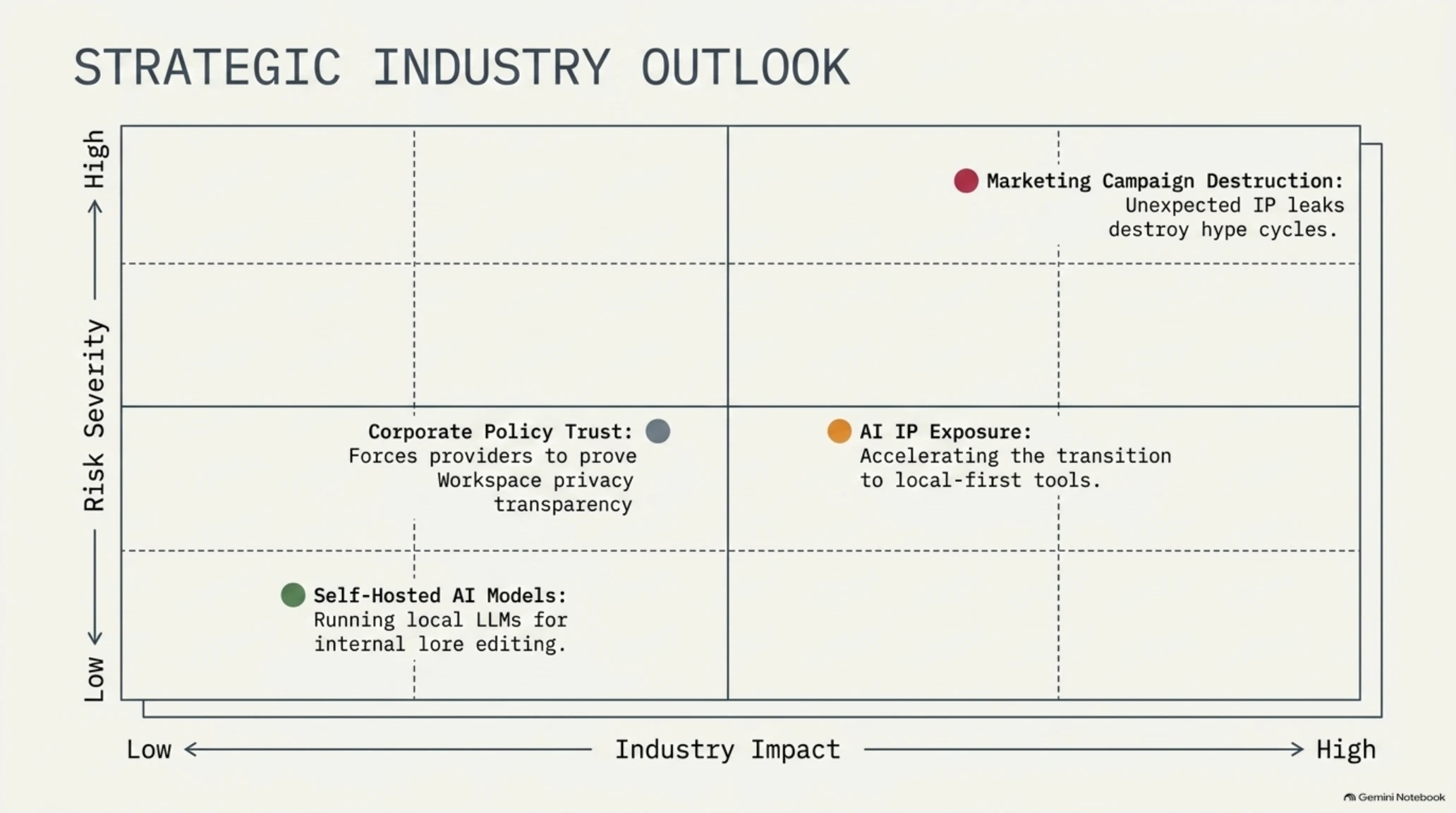
Game design documents and narrative lore represent a studio's most valuable intellectual property. Early unannounced leaks destroy marketing hype cycles and cause severe financial damage.
Tekin Game will provide continuous coverage of AI privacy disclosures and cloud security developments.
Hardware Specifications & Archive Metrics (Specs Box)
Analyzing cloud privacy architectures and LLM training pipelines confirms that independent game developers must implement rigorous data hygiene across local and cloud environments.
Tekin Game's technical advisory team urges studio leads to isolate Game Design Documents (GDDs) from unverified AI browser extensions and public cloud endpoints.
Preserving pre-production confidentiality ensures maximum commercial impact during game reveal campaigns.
📚 Classified & Related Dossiers in TekinGame
If you wish to explore beyond this report and delve into cybernetic frontiers and autonomous AI architectures, do not miss these three exclusive deep-dives in the Tekin Garage:
Hardware Specifications & Smart History Tags (Specs Box & Smart History Tags)
| Security Metric / Parameter | Google AI Docs Leak Findings (2026) | Tekin Advisory & System Recommendations |
|---|---|---|
| Exposed Intellectual Property Asset | Character Name ('Vantage Tripod') & Roadmap Text | Enforce Local Client-Side Encryption on GDD Assets |
| Implicated AI Model Architecture | Google Gemini Foundation Model Family | Audit Third-Party AI Integrations in Workspace Tools |
| Primary Media Reporting Entity | Kotaku Investigative Feature Article | Regularly Audit Sharing Permissions on Cloud Folders |
| Production Impact on Indie Studio | Character Rename Considerations & Workflow Overhaul | Migrate Sensitive IP Storage to Air-Gapped Local Editors |
Reviewing security parameters underscores the necessity of enforcing local-first documentation policies for game development teams.

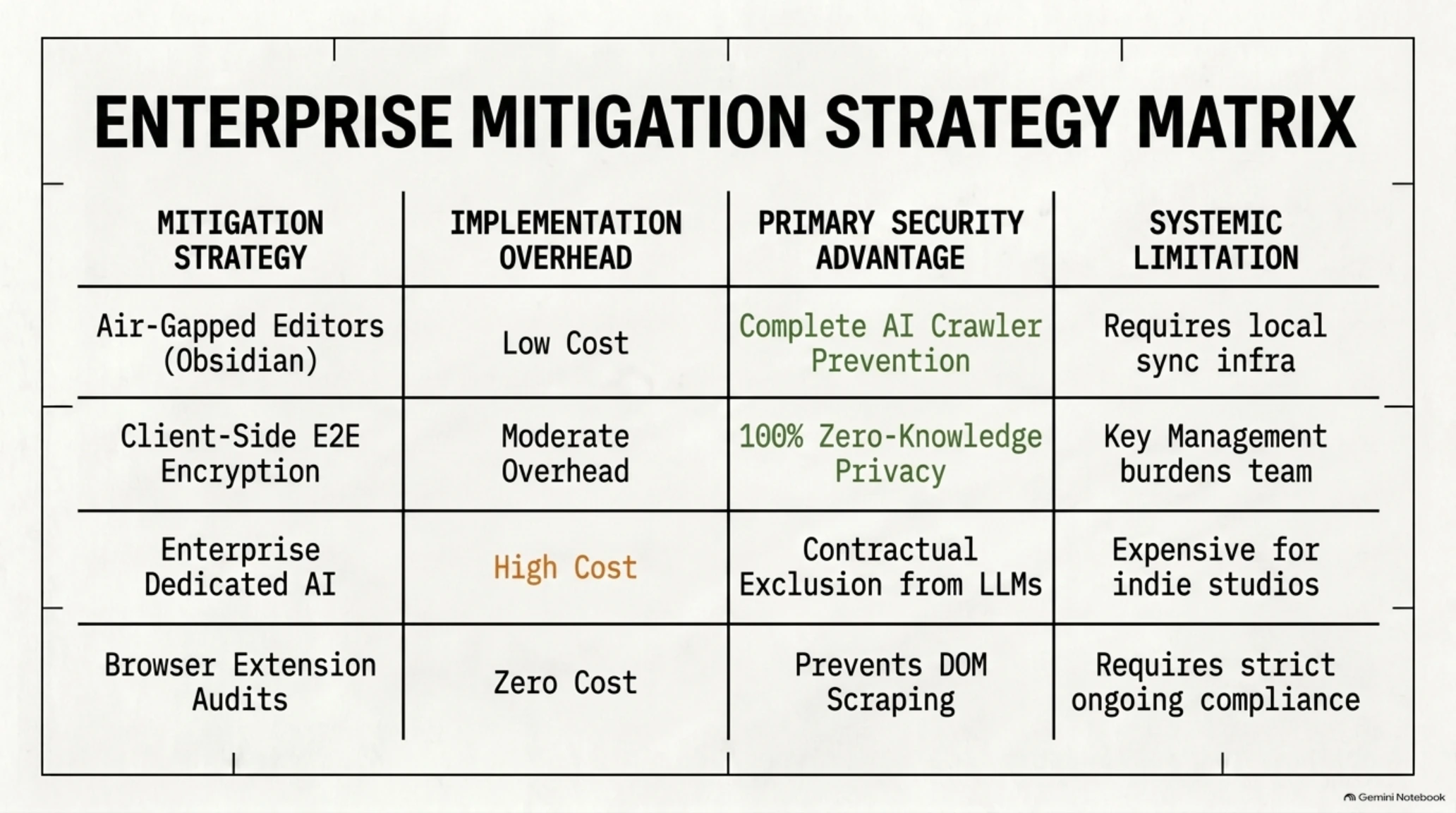
The matrix below evaluates enterprise mitigation strategies and document isolation architectures for 2026.
Enterprise Game Development IP Protection Strategy Matrix (2026)
| Mitigation Strategy Vector | Implementation Overhead | Primary Security Advantage | Systemic Limitation |
|---|---|---|---|
| Air-Gapped Local-First Editors (Obsidian) | Low Cost & Rapid Deployment | Complete Prevention of AI Crawler Indexing & Leaks | Requires Local Sync Infrastructure for Distributed Teams |
| Client-Side End-to-End Encryption | Moderate Technical Overhead | Preserves Cloud Convenience with 100% Zero-Knowledge Privacy | Key Management Responsibility Placed on Team Members |
| Enterprise Dedicated AI Subscriptions | High Monthly Subscription Cost | Contractual Exclusion from LLM Training Datasets | Expensive Burden for Solo & Independent Developers |
| Auditing Browser Extensions & Permissions | Zero Monetary Cost (Policy Enforcement) | Prevents Data Scraping by Third-Party Extension Hookers | Requires Strict Ongoing Individual Compliance Audits |
The following Tekin Game technical video breakdown provides in-depth visual analysis of cloud AI crawling mechanisms and local document encryption protocols.
Enterprise Mitigation Strategies: Protecting Game IP Against AI Crawlers
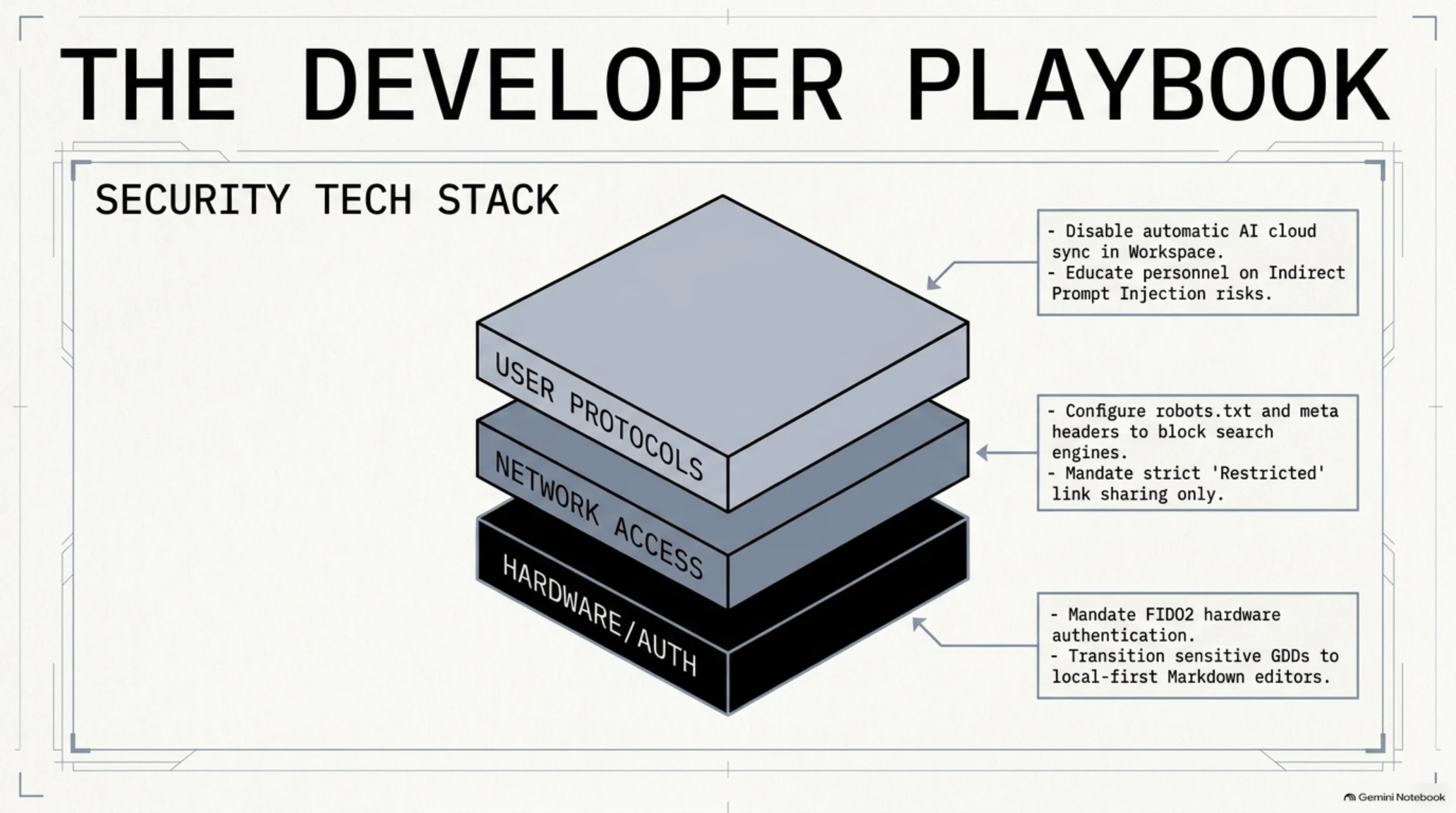
To prevent incidents similar to the *Operation Octo* disclosure, game studios must implement multi-layered security controls. First, teams should ensure that all cloud documents are set strictly to "Restricted" and never shared via public links. Utilizing local-first Markdown editors like Obsidian or Logseq—which store data strictly on local storage—provides the highest security baseline.
Furthermore, developers must refrain from inputting unannounced lore or character names into public commercial AI chatbots.
Core IP protection guidelines include:
- Disabling automatic AI cloud sync features within enterprise Workspace settings
- Mandating FIDO2 hardware authentication for all developer cloud accounts
- Configuring `robots.txt` and meta headers to prevent search engine indexing of web assets
- Educating studio personnel regarding Indirect Prompt Injection risks
These defensive protocols prove that IP protection is an indispensable component of modern game development.

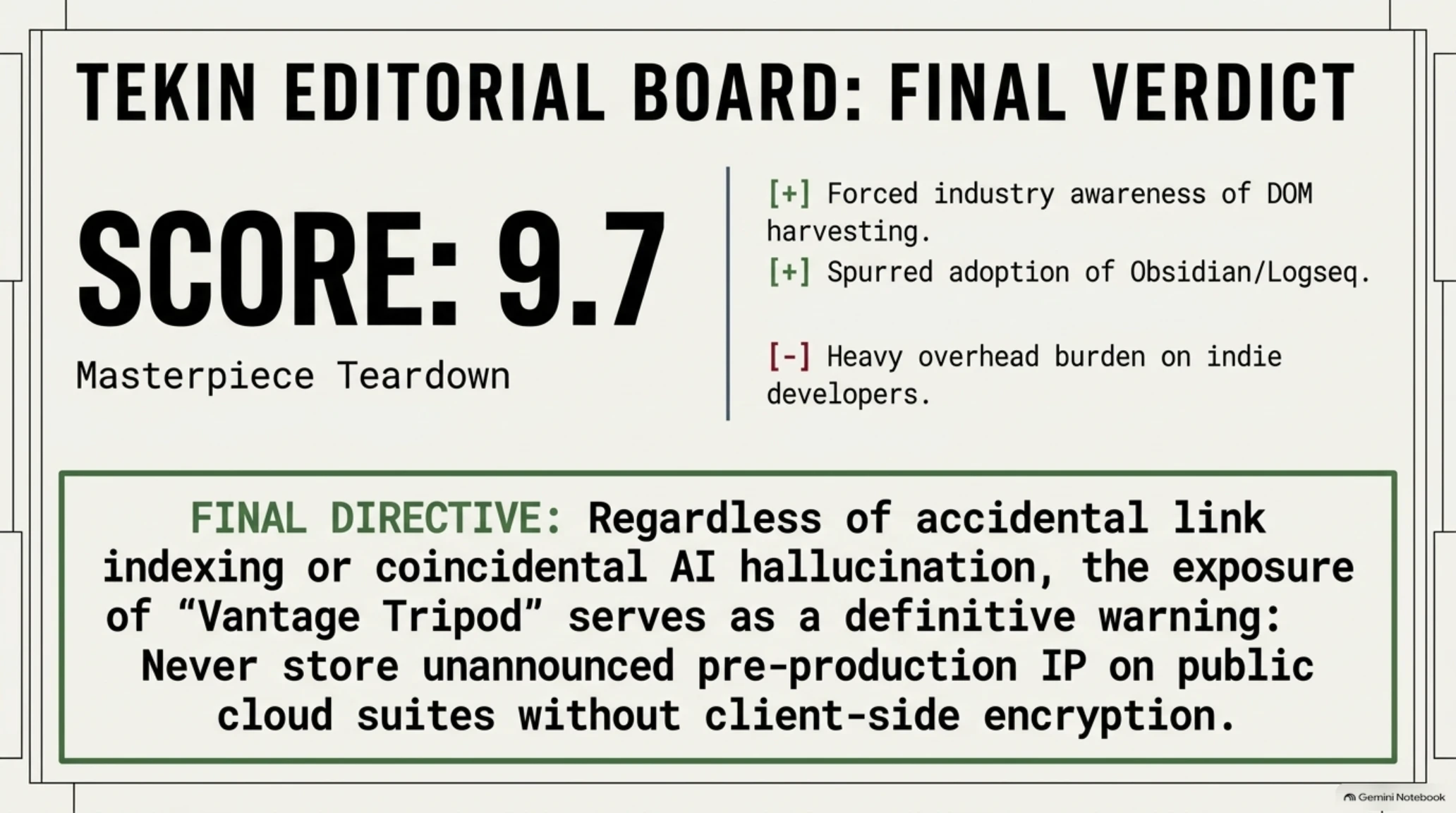
The official position of the Tekin Editorial Board regarding this privacy disclosure is detailed below.
The strategic risk assessment matrix below outlines key market vectors for game developers and cloud providers.
Strategic Industry Risk & Conclusion Matrix (Conclusion Box)
| Assessment Vector | Risk Severity | Tekin Advisory Outlook |
|---|---|---|
| Exposure of Unannounced Game IP via AI | Moderate-to-High Developer Risk | Accelerates Transition Toward Local-First Documentation Tools |
| Google Official Privacy Rebuttal | Positive Trust Clarification | Forces Providers to Enhance Workspace Privacy Transparency |
| Deployment of Self-Hosted AI Models | Exceptional Security Opportunity | Encourages Studios to Run Local LLMs for Internal Lore Editing |
| Marketing Campaign Destruction Risks | High Commercial Impact | Requires Crisis Response Protocols for Unexpected IP Leaks |
The interactive media sector continues to adopt strict Zero Trust protocols for pre-production intellectual property.
Tekin Game will deliver continuous coverage of all upcoming AI security developments.
Conclusion: Heightened Security in the Age of Cloud AI Suites
Tekin Analysis's teardown of the *Operation Octo* document disclosure demonstrates that cloud storage privacy requires complete re-evaluation in the era of generative AI. While Google explicitly denies training Gemini on private Workspace files, vectors like crawler indexing, browser extensions, and statistical AI hallucinations introduce tangible risks for developers.
Adopting local-first documentation frameworks and zero-knowledge encryption represents the only guaranteed defense to safeguard game design assets.

Join the conversation at Tekin Game and share your perspective on cloud storage privacy and AI data handling in the comments section below.
- Significant elevation of industry awareness regarding cloud storage privacy and AI data harvesting risks
- Official clarification by Google reaffirming that private Google Workspace files are excluded from Gemini LLM training
- Increased adoption of secure, local-first documentation suites (Obsidian, Logseq) among game design professionals
- Development of robust crisis management protocols for handling unannounced game asset leaks
- Risk of unannounced IP exposure destroying marketing hype cycles and commercial reveal plans
- Complexity in differentiating between genuine cloud data leaks and coincidental AI hallucinations
- Additional time and financial overhead required for indie developers to implement local encryption systems
Related Tech Intelligence on Tekin Game
• 🛡️ Tekin Analysis | The 2026 AI Anti-Cheat Warfare
• 📉 Tekin Analysis | AI Job Apocalypse: The Survival Guide
• 🎮 Tekin Analysis | GDC 2026 Report: Layoffs, AI & Steam Deck
Frequently Asked Questions About the Google AI Docs Leak Incident
What was the core incident involving Operation Octo and Google Gemini?
Google Gemini surfaced the unannounced character name 'Vantage Tripod,' which the developer claimed existed only in private Google Docs.
What is Google's official position regarding private Workspace data?
Google explicitly denies using private Google Workspace (Drive/Docs) data to train foundational Gemini AI models.
How could the character name have surfaced in Google Gemini?
Potential vectors include accidental public URL indexing, browser extension scraping, or coincidental AI hallucination.
Does Google's search crawler index private Google Docs?
No, Google crawlers only index documents that have been explicitly set to public access or linked publicly.
What is the best alternative to cloud suites for storing game design assets?
Using local-first Markdown editors such as Obsidian or Logseq that store data strictly on local hardware.
How can developers protect their cloud documents from AI indexing?
By setting file permissions to 'Restricted,' encrypting sensitive files, and auditing active browser extensions.
Sources and Citations
• Kotaku: Google AI Leaked Game Dev's Content Plans
• eWeek: Google Gemini Data Privacy Investigation
• GamesIndustry.biz: Indie Devs Raise Concerns Over Cloud AI
• Wccftech: Google Workspace Privacy Policy Statement
• Dark Reading: Protecting Game Design Documents
Additional Gallery: 🎭 Tekin Analysis | When Google Gemini Leaked Private Game Dev Plans: Are AI Crawlers Indexing Google Docs?