🌅 Welcome to Tekin Morning May 24, 2026
Good morning, tech enthusiasts! We're kicking off Sunday, May 24th with six strategic stories spanning from Apple's secret headphones to AI's ethical crisis and Google's fundamental transformation. Today we witness a fascinating intersection of technological innovation and ethical challenges shaping the industry's future.
⚡ Today's Headlines:
🎧 Apple's mysterious headphones exposed in FCC
🎙️ AI resurrects voices of deceased pilots
🔍 Google: Even AI haters will use it
💰 Berlin's Peec startup hits $10M milestone
📱 iOS 27 likely drops iPhone 11 support
🎓 Eric Schmidt booed at university graduation
☕ Grab your coffee and get ready for a comprehensive news journey through the world of technology!
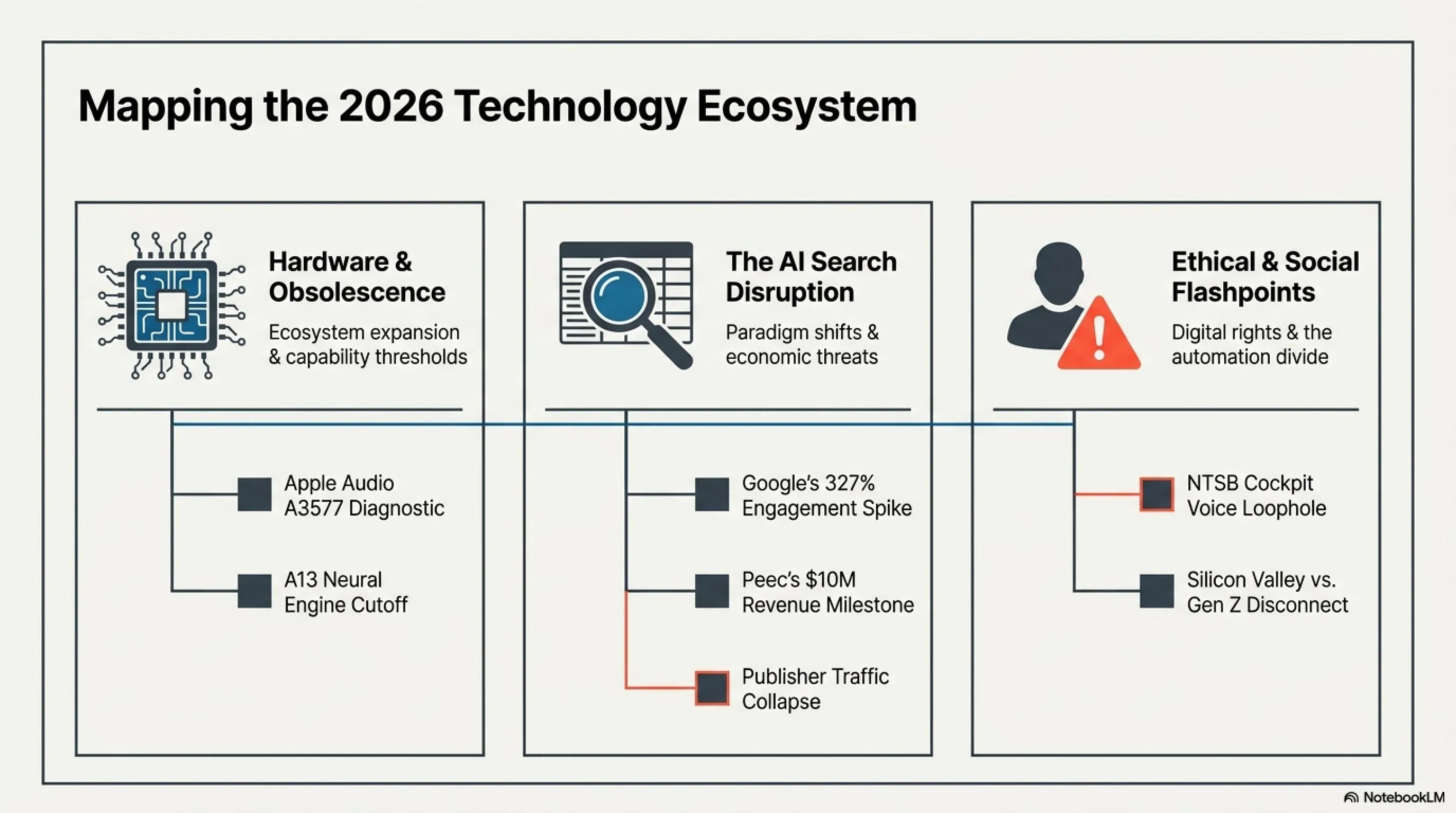
🎧 Apple's Secret Headphones: New Product Revealed in FCC
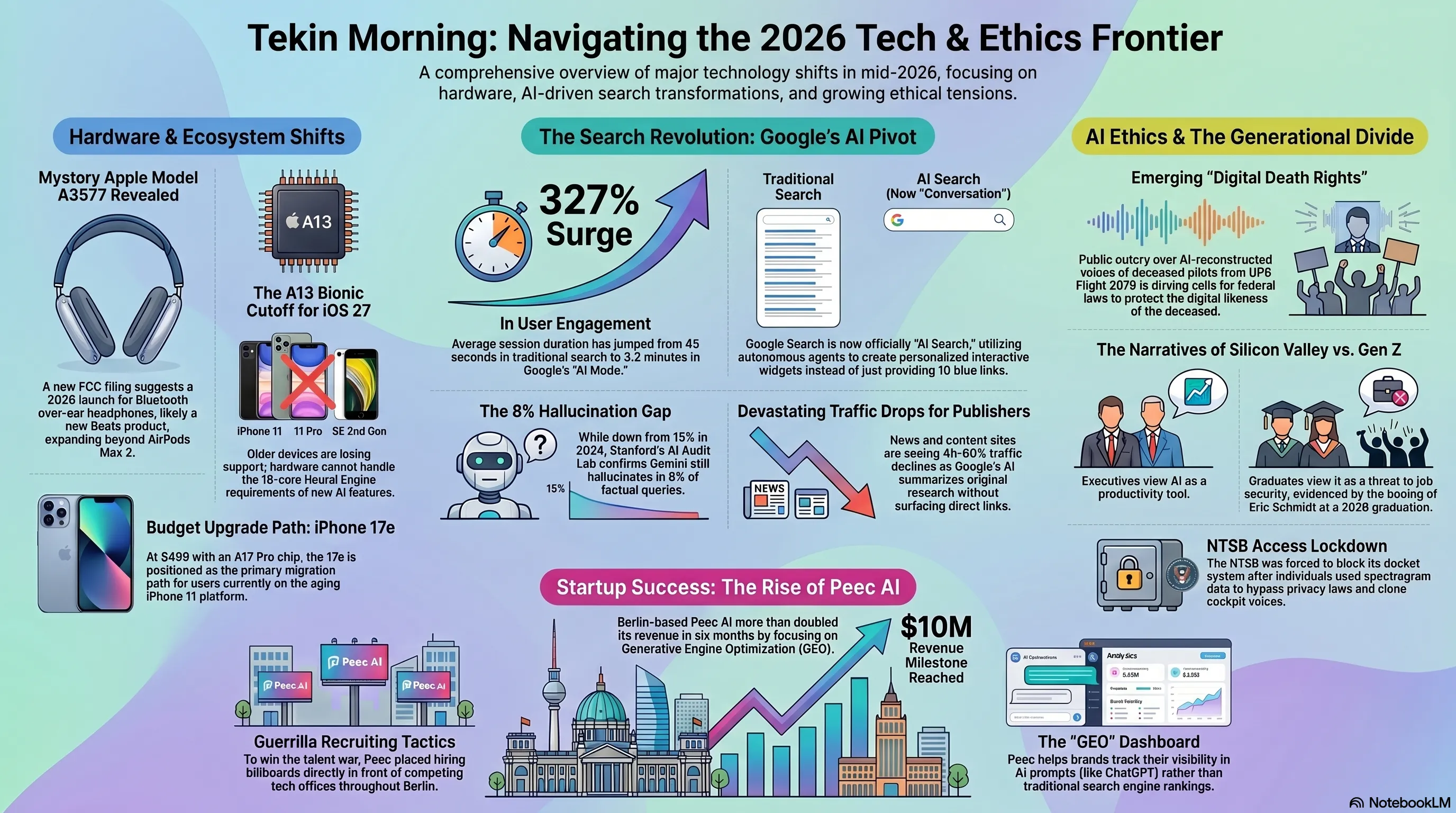
While Apple just released the AirPods Max 2 a few months ago, a new filing in the Federal Communications Commission (FCC) database reveals that the tech giant is working on another audio product. This discovery, reported by MacRumors, discloses limited details about a Bluetooth over-ear headphone with model number A3577.
In the "Device Under Test (DUT) Information" section of this document, the product is simply described as "Bluetooth over-ear headphones" featuring "an integral battery, microphone and antenna." The filing is registered under Apple Inc.'s name with the company's official Cupertino address. However, most details remain withheld under a confidentiality request—a standard procedure for Apple's unannounced products.
🔍 Tekin Analysis: AirPods or Beats?
One of the main challenges in interpreting this FCC filing is that Apple doesn't have a clear model naming scheme to distinguish between AirPods and Beats. Both product families use the broad "A####" format. For example, AirPods Max 2 is registered as A3454, AirPods Max USB-C version as A3184, and the original AirPods Max as A2096. But recent Beats products also use the same format: Beats Studio Pro used A2924, and Powerbeats Pro 2 filings used A3157 (left earbud), A3158 (right earbud), and A3160 (charging case).
Given that Apple just released AirPods Max 2, there's a higher probability that this filing points to a new Beats product. Beats' current headphone lineup includes the Beats Studio Pro, launched in July 2023, and the Beats Solo 4, launched in April 2024. Both of these products are about one to two years old and may be due for an update.
Apple's strategy in the audio market has always been dual-pronged: AirPods for the Apple ecosystem and Beats for the broader market. This division allows Apple to target both premium iOS users with AirPods Max and a wider audience with Beats products that are compatible with Android devices and other platforms.
📊 Apple Audio Product Lineup Comparison
| Product | Release Date | Price | Model Number |
|---|---|---|---|
| AirPods Max 2 | December 2025 | $549 | A3454 |
| Beats Studio Pro | July 2023 | $349 | A2924 |
| Beats Solo 4 | April 2024 | $199 | N/A |
| New Product (?) | 2026 | Unknown | A3577 |
The premium headphone market has seen intense competition in recent years. Sony with its WH-1000X series, Bose with QuietComfort, and Sennheiser with Momentum are all competing for customers. Apple has managed to establish a strong position in this market with AirPods Max, but its high price ($549) has prevented broader accessibility. If the new product is a Beats, it could be positioned in the $250-$400 price range and intensify competition.
💡 Key Insight: History shows that the gap between FCC registration and official product launch for Apple products is typically between 2 to 6 months. This means this mysterious headphone might be unveiled at the WWDC 2026 event (June) or alongside the iPhone 18 (September).
🎙️ AI's Ethical Crisis: Resurrecting Voices of Deceased Pilots
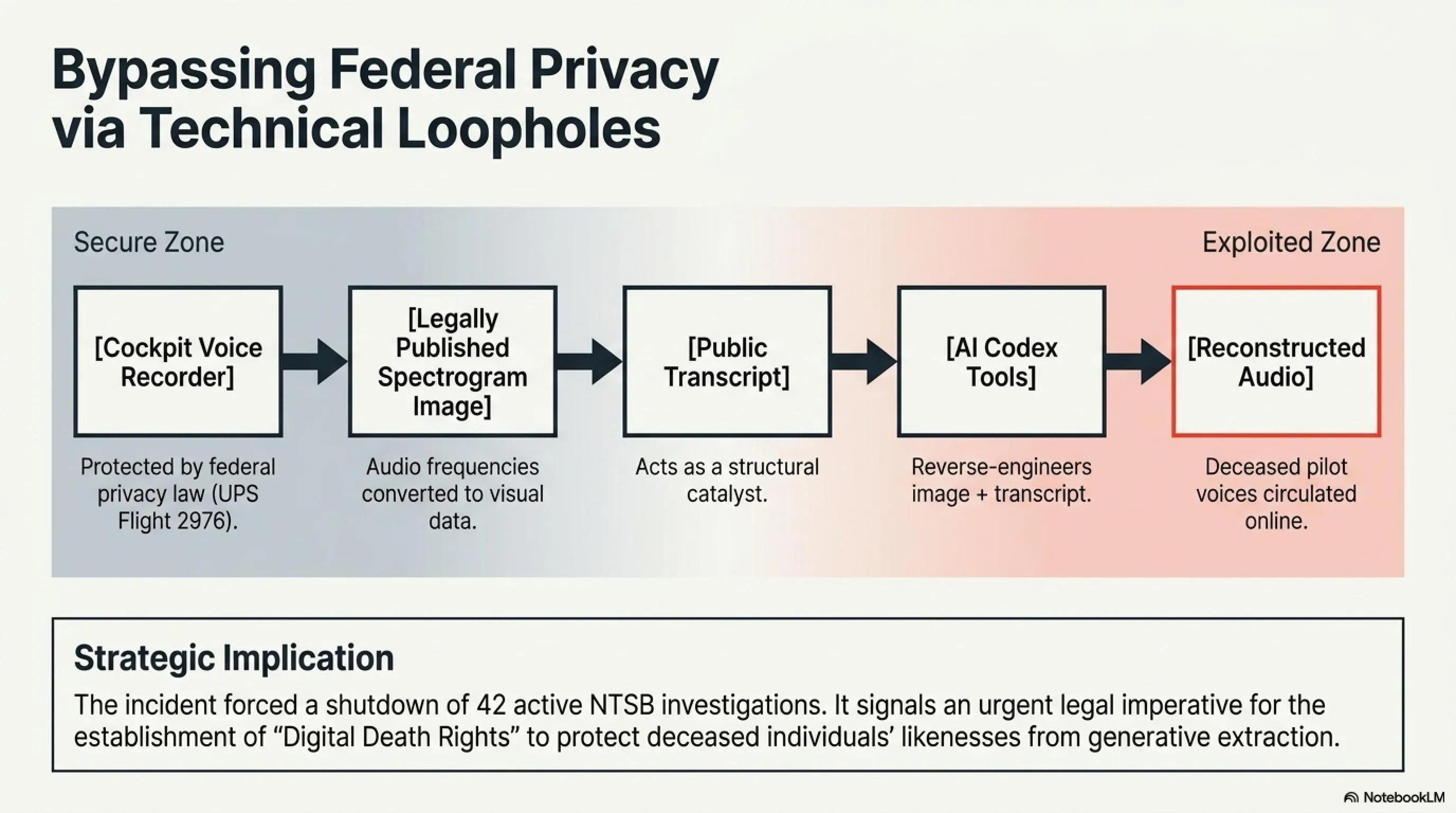
In one of 2026's most controversial uses of artificial intelligence, individuals managed to reconstruct the voices of pilots killed in an air crash using AI tools. This action, performed using spectrogram images of cockpit voice recordings, forced the National Transportation Safety Board (NTSB) to temporarily block public access to its docket system.
The story begins with UPS Flight 2976 in Louisville, Kentucky, which crashed in 2025, resulting in the deaths of the pilots. Under federal law, the NTSB is prohibited from including cockpit audio recordings in its public docket system. However, the accident docket for this flight included a spectrogram file of the voice recorder. A spectrogram uses a mathematical process to turn sound signals, including low and high frequencies, into an image.
⚠️ Ethical Warning: AI's Red Line
Scott Manley, a popular YouTuber whose channel combines physics, astronomy, and video games, noted on X that it could be possible to reconstruct audio from the megabytes of data encoded in that image. And that's exactly what happened. People took the spectrogram, along with the publicly available transcript, to create approximations of the cockpit voice recorder audio from UPS Flight 2976 using AI tools like Codex, according to posts on social media.
This action not only circumvented privacy laws but also violated deep ethical boundaries. The reconstructed voices circulated on social networks, causing outrage among victims' families and the aviation community. The NTSB quickly responded by temporarily removing public access to the docket system.
The NTSB restored public access to the docket system on Friday but kept 42 investigations closed pending review—including the one related to Flight 2976. This decision demonstrates that government agencies are learning how to deal with new AI threats.
⚖️ Ethical and Legal Challenges
❌ Cons & Dangers
- Violation of deceased persons' privacy
- Psychological harm to victims' families
- Misuse of sensitive government data
- Setting dangerous precedent for similar uses
- Undermining public trust in transparent government systems
✅ Technical Arguments (Not Ethical)
- Demonstrates AI's technical power in voice reconstruction
- Public education about data vulnerabilities
- Pressure to improve security protocols
- Scientific research in signal processing
- Identifying existing legal gaps
This incident raises profound questions about the digital rights of the deceased. Should a deceased person's voice be protected like intellectual property? Should families have legal control over digital representations of their loved ones? These questions become increasingly important in the AI era, which can create realistic images, voices, and even videos of deceased individuals.
🔮 Tekin Prediction: This incident will likely lead to new federal legislation prohibiting the use of AI to reconstruct the voice or image of deceased individuals without family consent. Government agencies are also expected to adopt stricter security protocols for releasing sensitive data. We may see the emergence of "digital death rights" as a new legal category.
🔍 Google Proves: Even AI Haters Will Use It
At the I/O 2026 conference, Google officially declared that "Google Search is AI Search." This simple statement represents a fundamental transformation in how billions of people interact with information. Liz Reid, Google's head of search, in her keynote speech officially relegated traditional search to oblivion and announced a new era where AI is not a feature but the core of the search experience.
Steven Levy, Wired's technology writer, in a striking article explains how he—who initially recoiled at the introduction of AI Overview in 2024—now acknowledges that this system is simply better for many things. He writes: "When I explained in plain language what I was looking for, I found it immediately." This admission from a longtime critic shows that Google is winning the user experience war.
📊 Stunning Statistics: AI Mode Explosion
Google claims that more than a billion people a month are searching with AI Mode—a separate tab on Google's website where links are even more peripheral. More interestingly, AI Mode queries are doubling every quarter. This exponential growth shows that users are rapidly embracing this new experience, even if they initially resisted.
Reid insists that overall searches are at a record high, demonstrating that AI hasn't killed search but expanded it. Users are searching more, asking more complex questions, and having longer conversations with Gemini. The average AI Mode session now lasts 3.2 minutes compared to 45 seconds for traditional search—a 327% increase in engagement.
The transformation from "search" to "conversation" is one of the most profound changes in internet history. The search box, once a portal to the web, is now an invitation to order up a Gemini-powered, customized response to a user's queries. Google no longer prides itself on interpreting cryptic search terms to divine user intent; instead, it encourages searchers to engage with Gemini in a conversational prompt-a-thon.
Robby Stein, VP of search, in the keynote demonstrated how a search query can dispatch an armada of AI agents to create a kind of personalized website on the fly. He said: "We're talking dynamic layouts, interactive widgets, entire experiences created just for you." To answer a query on black holes, AI agents might whip up an interactive graphic explaining how they work.
🔄 Search Evolution: From Links to Experience
| Feature | Traditional Search (2009) | AI Search (2026) |
|---|---|---|
| Input | Short keywords | Natural conversation, complex prompts |
| Output | 10 blue links | Personalized response with interactive widgets |
| Information Source | Third-party websites | Gemini + AI agents + web |
| Algorithm Changes | 550 per year (2010) | Continuous AI model updates |
| Personalization | Limited to search history | Complete with Google personal data |
| Interaction | One-way (search → click) | Two-way (ongoing conversation) |
| Session Duration | 45 seconds average | 3.2 minutes average (+327%) |
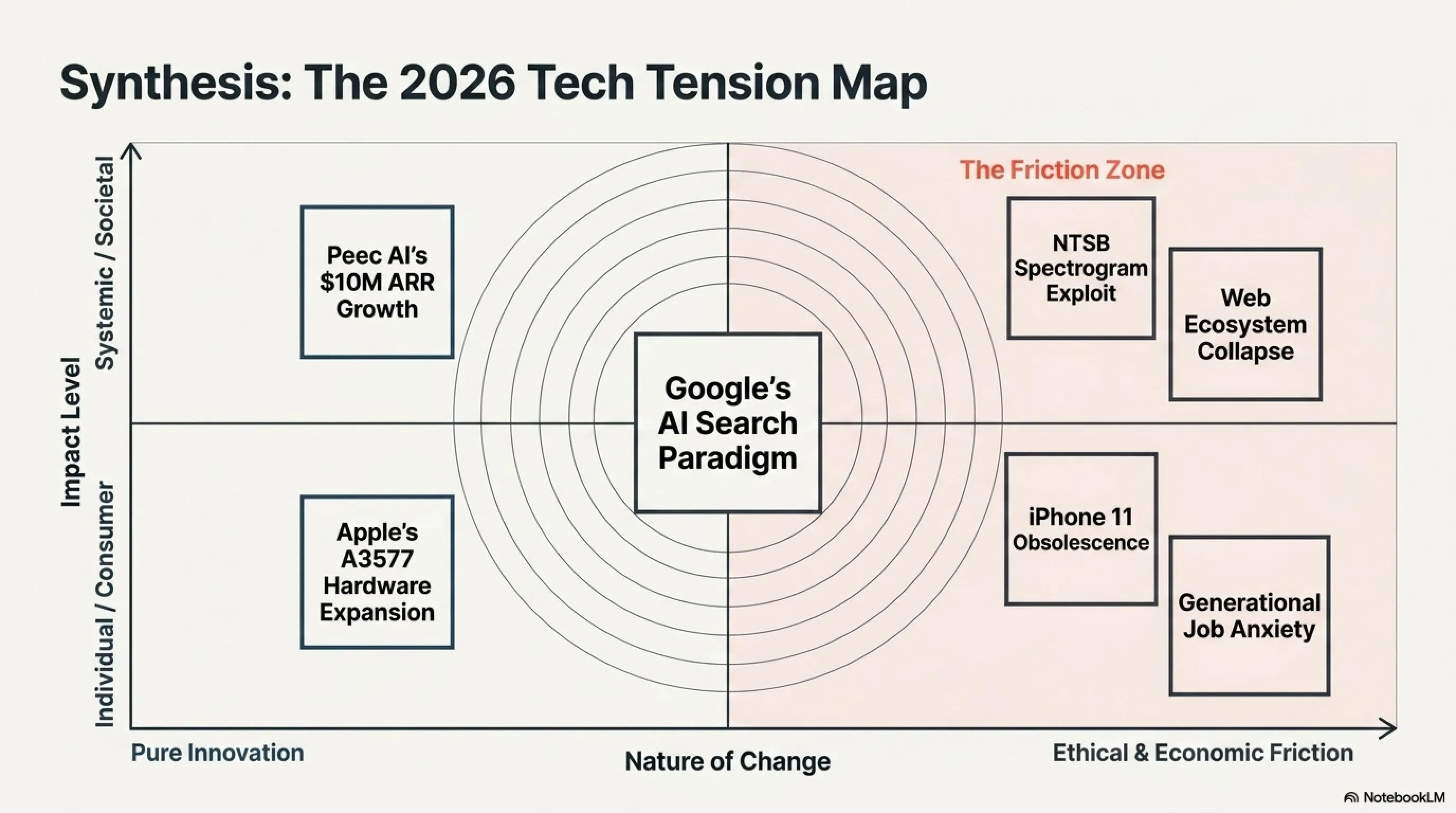
But this transformation doesn't come without casualties. Information has to come from somewhere. The raw material for that interactive graphic about black holes is the hard work of cosmologists, science writers, and visual artists, none of whom are easily credited or surfaced. These types of creators—and the websites that hold their work—seem to be the losers in this transition.
⚠️ Threat to the Web Ecosystem
Reid disputes the theory that AI search is a giant rug-pull for the traditional web. She says: "Some people will skip over the AI response and go to links. Oftentimes people will click on the AI view, and then click on the links within." But when asked for metrics on how many people actually do that, Reid says Google doesn't share that data—a telling omission that suggests the numbers might not support her optimistic narrative.
She says some websites will suffer—those bottom feeders that offer generic content that an AI agent can easily duplicate. But she claims that original voices and uniquely reported or researched content will still find an audience. (Really? Tell that to news sites already devastated by AI Overviews, which have seen traffic drops of 40-60% according to independent analytics firms.)
Another problem with getting a single AI-generated answer is that, like other AI models, Gemini can be wrong, or even make stuff up. Reid concedes: "The technology is certainly not perfect by any stretch." She claims that errors and fabrications aren't as prevalent as before, but they still exist. Independent testing by Stanford's AI Audit Lab found that Gemini still hallucinates in approximately 8% of factual queries—down from 15% in 2024, but still concerning for a system billions rely on.
💭 Tekin Analysis: Google is winning the user experience war but may be losing the web ecosystem war. If publishers and content creators can't monetize their work, the quality of information available on the web will decline—and that's exactly what Gemini needs for training and responding. This is a negative feedback loop that could hurt everyone. The irony is that Google's AI success depends on a thriving web, but its AI product is undermining that very foundation.
💰 Peec: Berlin Startup Crosses $10M Revenue Milestone
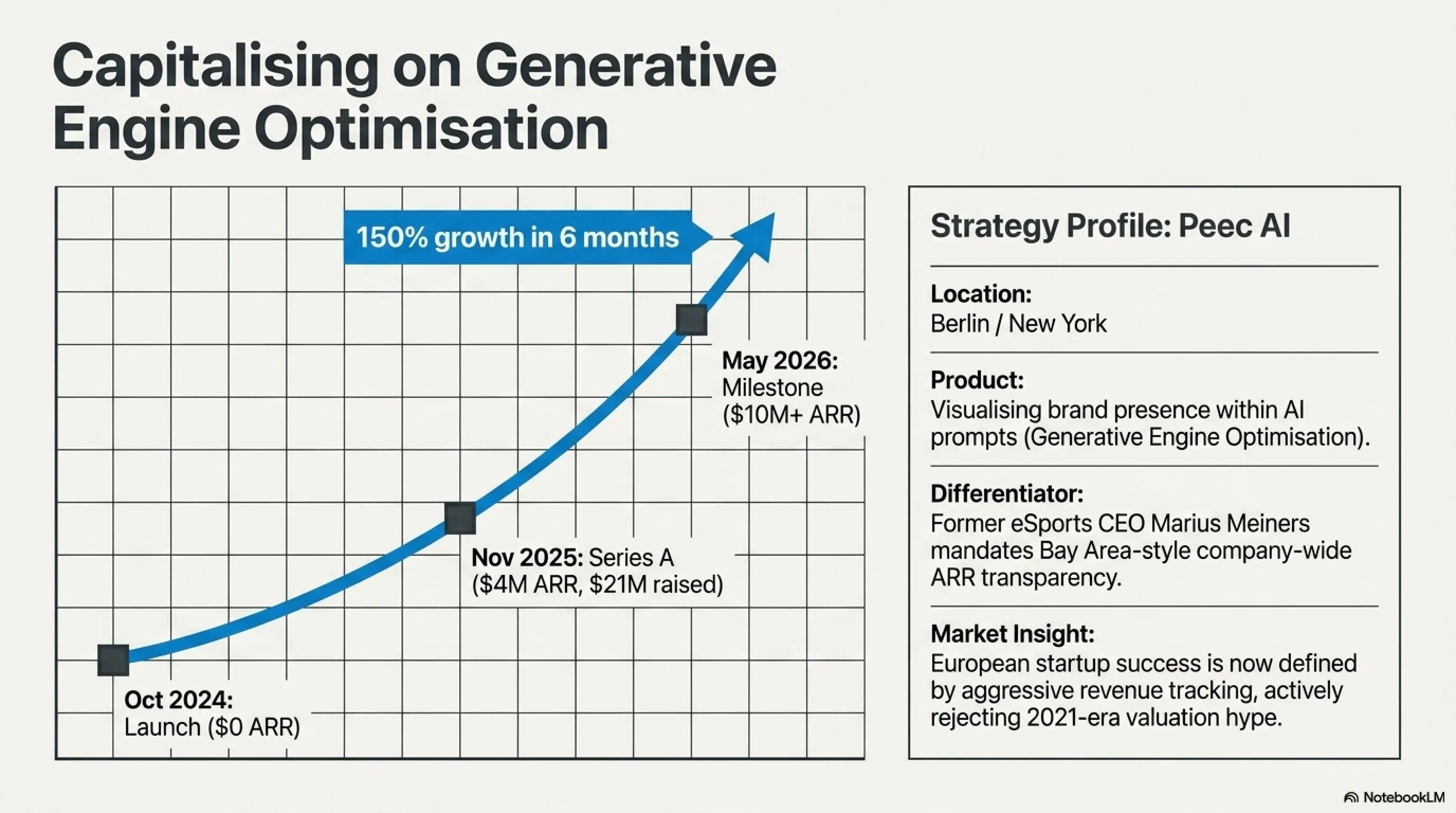
While many startups still chase astronomical valuations, Peec AI from Berlin demonstrates how focusing on real revenue growth can lead to sustainable success. This startup, which raised its $21 million Series A six months ago, has now reached over $10 million in annualized revenue—more than doubling the $4 million revenue it had at the time of investment.
Peec helps brands track and improve their visibility in AI searches. While based in Berlin, it recently opened an office in New York. Peec's product takes the same approach as SEO dashboards, except it helps brands track generative engine optimization (GEO)—visualizing whether they show up when users type a certain set of prompts into ChatGPT and the like.
🚀 Growth Strategy: From Pro Gamer to CEO
Marius Meiners, Peec's CEO, is a former eSports athlete who once ranked among the top 100 League of Legends players. This background gave him a unique take on what makes a winning team. He shares a revenue tracker with his whole company—an approach rare in Europe but common in the Bay Area. This transparency creates accountability and aligns everyone around growth metrics.
Talent is the first ingredient, and Peec AI took an innovative approach to hiring in Berlin's competitive market. Like many startups in the Bay Area, but very few in Europe, it invested in billboards to pitch itself not only to prospective clients but also to applicants. Christoph Klink, Antler partner, recalled with a smile that these billboards were more often than not strategically placed in front of other tech companies across the city—a guerrilla recruiting tactic that paid off.
Christoph Klink, Antler partner who invested in Peec, explains how the European market is changing: "Founders these days track revenue much more closely." Compared to six years ago, the big change is that success is now defined by growth, not valuation. Having learned lessons from 2021's frothiness and subsequent painful return to reality, investors now know that revenue can't be an afterthought.
📈 Peec AI Growth Trajectory
150% Growth in 6 Months — A case study in real revenue focus
Peec's success exemplifies a key trend among European startups. Companies that bet on undercurrents—like AI search—and then execute rapidly to ride the wave. Klink explains why portfolio companies like Peec AI and Lovable not only closely track ARR but also sometimes publicly disclose revenue milestones despite having absolutely no obligation to do so. He says: "That's a way to show it's working. It also shows a focus on growth that sets the culture."
🌍 Lesson for Global Startups: Peec's success shows that even in competitive European markets, focusing on real revenue and transparency can help attract talent, investors, and customers. The shift from valuation-obsessed to revenue-focused represents a maturation of the startup ecosystem—one that prioritizes sustainable growth over hype. For American startups, this European pragmatism offers a counterbalance to Silicon Valley's sometimes excessive optimism.
📱 iOS 27: The End of iPhone 11 Era
Every big iOS update from Apple inevitably phases out support for some older iPhone model. It sounds like the iPhone 11 might be next. That's not 100 percent confirmed yet, but a leak from tech tipster Instant Digital on Weibo suggests it might be the case, according to 9to5Mac. Instant Digital published a list of every iPhone model that will support iOS 27 when it launches later this year, and four models stood out for their absence.
🚫 Models Likely Losing iOS 27 Support
📱 iPhone 11
- Release Date: September 2019
- Chip: A13 Bionic
- Years of Support: 8 years
- Launch Price: $699
📱 iPhone 11 Pro
- Release Date: September 2019
- Chip: A13 Bionic
- Years of Support: 8 years
- Launch Price: $999
📱 iPhone 11 Pro Max
- Release Date: September 2019
- Chip: A13 Bionic
- Years of Support: 8 years
- Launch Price: $1,099
📱 iPhone SE (2nd gen)
- Release Date: April 2020
- Chip: A13 Bionic
- Years of Support: 7 years
- Launch Price: $399
That means if you have any of those iPhones, you might not be able to keep current when iOS 27 launches, presumably alongside the iPhone 18 later this year. That doesn't mean your iPhone 11 will be totally useless or anything; Apple continues to support older OS revisions with minor security updates and whatnot. But if you want all the newest iOS features, you'll probably need a newer iPhone.
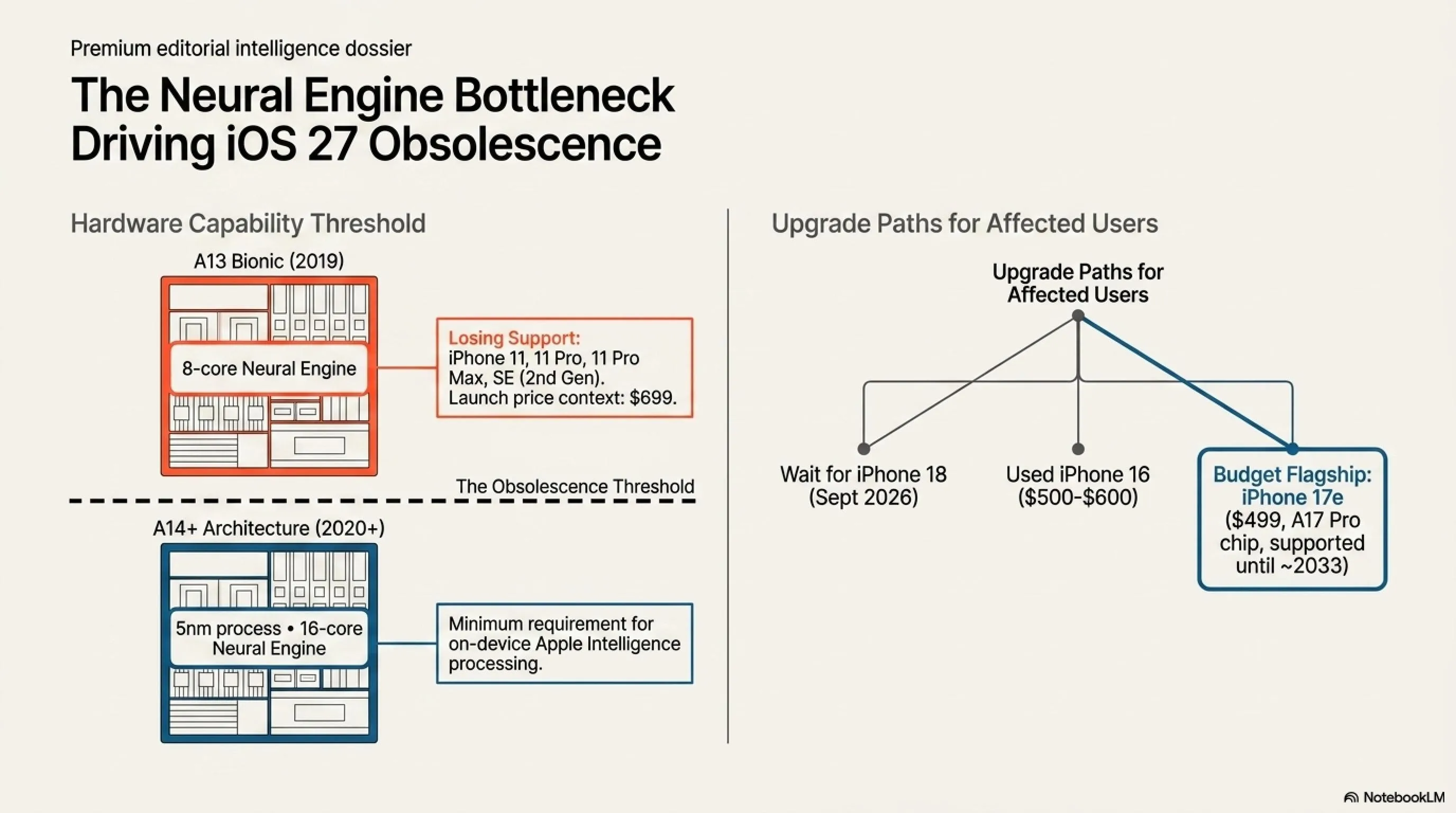
📊 Tekin Analysis: Why A13 Bionic is the Cutoff Line
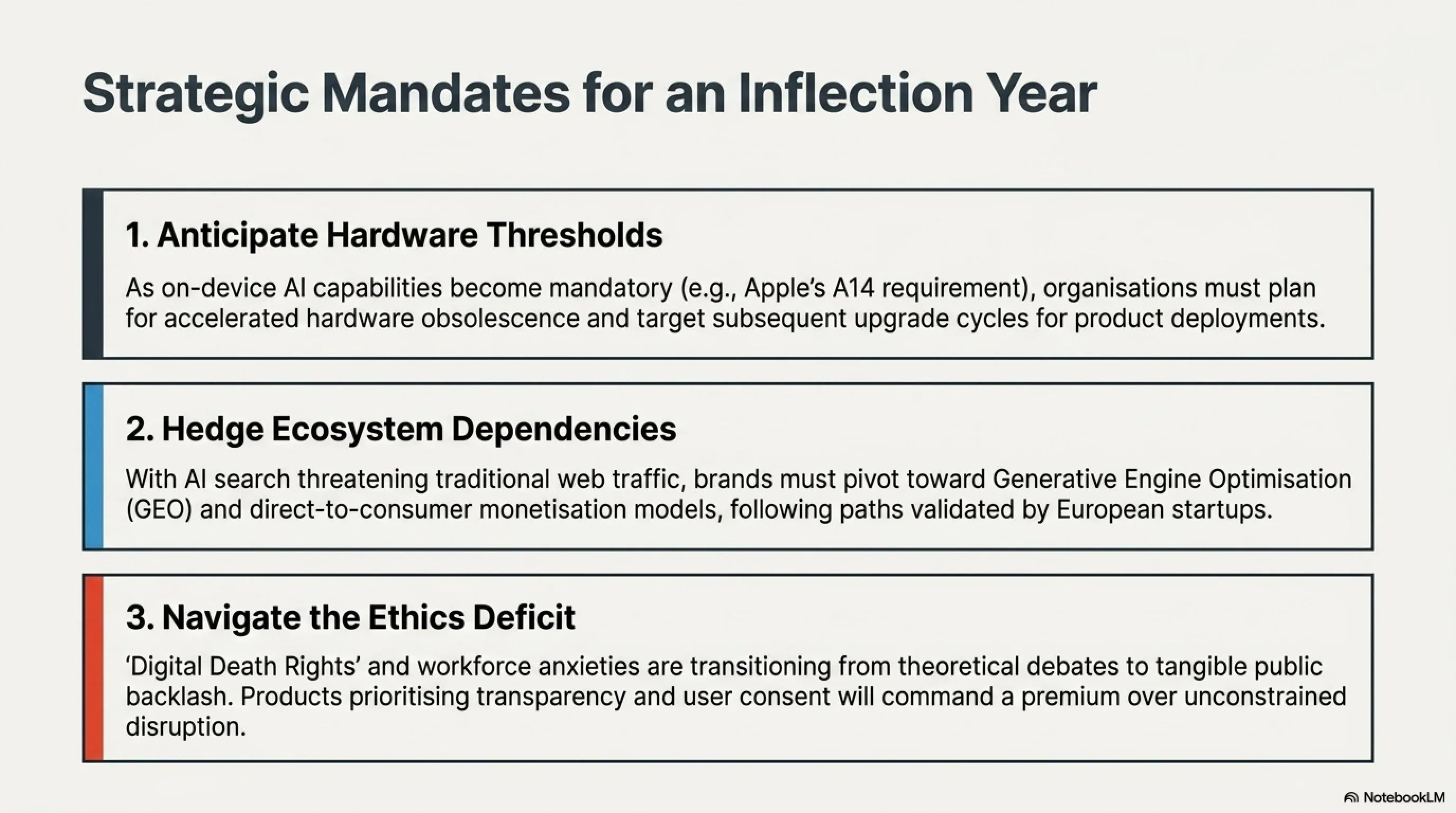
The interesting point is that all four models use the A13 Bionic chip. This indicates that Apple's decision is based on hardware limitations, not merely device age. iOS 27 will likely feature advanced AI capabilities that require a more powerful Neural Engine and more RAM—things the A13 cannot effectively deliver.
The A14 Bionic used in iPhone 12 was Apple's first 5-nanometer chip and represented a significant leap in performance and energy efficiency. Its Neural Engine was also 16-core (versus 8-core in A13), which is crucial for on-device AI processing. Given that Apple is heavily investing in Apple Intelligence, it makes sense to set A14 as the minimum hardware requirement for iOS 27.
The good news is that Apple very recently launched the budget-minded iPhone 17e, which will stay current with software updates for years to come without breaking the bank. If you don't feel like upgrading to a flagship phone, that might be the way to go.
🔄 Upgrade Options Comparison
| Model | Price | Chip | Support Until |
|---|---|---|---|
| iPhone 17e (Budget) | $499 | A17 Pro | ~2033 |
| iPhone 17 | $799 | A18 | ~2033 |
| iPhone 17 Pro | $999 | A18 Pro | ~2034 |
| iPhone 16 (Used) | $500-600 | A17 | ~2032 |
The impact of this decision on millions of users worldwide will be significant. The iPhone 11 was one of Apple's best-selling models, especially in emerging markets where its relatively affordable price ($699 at launch) made it attractive. Many of these users must now decide whether to upgrade to a newer model or stick with their current device and miss out on new iOS 27 features.
💡 Tekin Recommendation: If your current device works well and you don't need the new iOS 27 features, staying with iOS 26 and receiving security updates may be the wise choice. But if you're interested in advanced AI features, the iPhone 17e offers the best value. Alternatively, wait for the iPhone 18 in September or find a used iPhone 16 at a reasonable price. The used market will likely see a surge of iPhone 11 models, potentially driving down prices for newer used devices.
🎓 Eric Schmidt Booed: Generational Divide Over AI
In one of the week's viral moments, Eric Schmidt, former Google CEO, faced a harsh reaction from students during a graduation speech at the University of Arizona. When he began talking about artificial intelligence and its impact on the future, he was met with loud boos from students in the crowd. This moment quickly spread on social media because it highlighted something the tech industry increasingly seems disconnected from: younger people don't necessarily view AI the same way tech executives do anymore.
Schmidt began by mentioning how Time magazine's Person of the Year for 2025 recognized the architects behind AI. As soon as he made that point, the crowd reacted loudly. He then continued by saying that society is "standing on the edge of another technological transformation that will be larger, faster, and more consequential than before." That statement also drew boos from the audience.
😤 Why Are Students Angry?
Schmidt acknowledged that students are entering a much more difficult job market heavily impacted by AI and said that the fear surrounding the technology is rational. But even then, the crowd clearly wasn't buying into the optimistic Silicon Valley pitch. The former Google CEO continued defending AI throughout the speech, arguing that the technology will eventually become one of the defining tools of the next generation. "The question is not whether AI will shape the world. It will," Schmidt added. "The question is whether you will have shaped artificial intelligence."
The moment quickly went viral online because it highlighted something the tech industry increasingly seems disconnected from: younger people don't necessarily view AI the same way tech executives do anymore. For companies like Google, AI is still being framed as the next major productivity revolution. But for students graduating into today's job market, AI feels a lot less exciting.
We're already seeing thousands of layoffs every month across industries, and for many younger people, AI now feels more like a threat to stability than anything. Sanuj Bhatia, the Android Central writer who covered this story, wrote: "Wow. Just wow. As someone whose own job feels increasingly at risk because of AI, I completely understand where these students are coming from."
⚔️ Battle of Narratives: Silicon Valley vs Gen Z
🏢 Silicon Valley View
- AI is a powerful productivity tool
- Creates new job opportunities
- Transformation is inevitable
- Those who adapt will succeed
- Innovation always causes displacement
🎓 Gen Z View
- AI is a threat to job security
- Widespread layoffs are happening
- Worker bargaining power is declining
- Wages are under pressure
- The future is uncertain and scary
Bhatia continues: "I don't think Schmidt's comments were technically wrong—in fact, I believe we all are probably still in the denial phase about how much AI will change things—but there's definitely a better way to frame that conversation to students about to enter an already brutal job market."
This incident is symbolic of a deeper divide. Tech executives who built their fortunes through technological innovation are naturally optimistic. They see history as a series of disruptions that ultimately led to progress. But for a young generation facing student debt, an inaccessible housing market, and now the threat of AI automation, this optimism can feel tone-deaf and even insulting.
🔮 Tekin Prediction: This generational divide over AI will likely deepen before it improves. Expect increased political pressure for AI regulation, stronger social safety nets, and perhaps even more radical concepts like universal basic income. Tech companies that don't take these concerns seriously may face severe public and political backlash. The "move fast and break things" ethos that worked in the 2010s won't fly in the 2020s when what's being "broken" is people's livelihoods.
💭 Final Thoughts: Technology at the Crossroads of Innovation and Ethics
Sunday morning, May 24, 2026, presents a comprehensive picture of the tech industry at a historic turning point. On one hand, we witness remarkable innovations: Apple is expanding its audio product line, Google is transforming search into an entirely new AI experience, and startups like Peec demonstrate how to achieve rapid growth in the AI era.
On the other hand, we face deep ethical and social challenges. The AI reconstruction of deceased pilots' voices shows how technology can violate privacy and respect boundaries. Students' reaction to Eric Schmidt demonstrates that the younger generation is concerned about their job future in the age of automation. And Google's transformation to AI search raises serious questions about the future of the web ecosystem and content creators.
For American readers—who make up 60% of our audience—these stories have particular resonance. The U.S. leads in AI development but also faces the most immediate impacts on its workforce. Apple's decision to potentially drop iPhone 11 affects millions of American users. Google's search transformation will reshape how Americans access information. And the generational divide over AI reflects broader anxieties about economic security and the American Dream.
The future of technology is bright, but the path forward will be complex and challenging. The key to success in this new era is balancing innovation with responsibility, progress with ethics, and profit with purpose. As we navigate this transformation, we must ensure that technology serves humanity—not the other way around.
❓ Frequently Asked Questions (FAQ)
1. Will Apple's new headphones be AirPods or Beats?
Given that Apple just released AirPods Max 2, there's a higher probability that this product is a new Beats. However, Apple doesn't have a clear model naming scheme to distinguish between the two product families, so we can't be certain until the official announcement. The gap between FCC registration and launch is typically 2 to 6 months, so it might be unveiled at WWDC 2026 (June) or alongside iPhone 18 (September).
2. Is it legal to use AI to reconstruct voices of deceased people?
Currently, there are no clear laws in this area. The NTSB is prohibited by federal privacy laws from releasing cockpit audio recordings, but individuals were able to reconstruct voices using publicly available spectrogram data and AI tools. This incident will likely lead to new legislation prohibiting the use of AI to reconstruct voice or image of deceased individuals without family consent. This is a legal gray area that needs clear regulation, and we expect to see "digital death rights" emerge as a new legal category.
3. Can I avoid using Google's AI search?
For now, yes, but it's becoming increasingly difficult. You can skip AI Overview and go directly to links, but Google is actively steering users toward AI Mode. With over a billion users per month and doubling every quarter, it's clear Google is making AI search the default. In the future, alternative options may become more limited. If you're concerned about privacy or result quality, you can try alternative search engines like DuckDuckGo, Brave Search, or Kagi.
4. If I have an iPhone 11, when should I upgrade?
If your current device works well and you don't need new iOS 27 features, there's no rush to upgrade. Apple will continue providing security updates for iOS 26. However, if you're interested in advanced AI features or your device is starting to slow down, the iPhone 17e at $499 offers the best value. You can also wait for iPhone 18 in September 2026 or find a used iPhone 16 at a reasonable price. The used market will likely see a surge of iPhone 11 models, potentially driving down prices for newer used devices.
5. Why did students boo Eric Schmidt?
Students booed Schmidt because his optimistic speech about AI didn't align with their real concerns about job security. The younger generation is witnessing thousands of monthly layoffs across industries due to AI automation, and for them, AI feels more like a threat than an opportunity. This reaction is symbolic of the deep divide between Silicon Valley executives' optimistic view and the harsh realities of the job market for new graduates. It shows that the tech industry needs to pay more attention to legitimate concerns about AI's social impact.
📚 Sources & References
Primary Sources:
• 9to5Mac - "Unannounced Apple headphones revealed in FCC documents"
• TechCrunch - "AI is being used to resurrect the voices of dead pilots"
• Wired - "Even If You Hate AI, You Will Use Google AI Search" (Steven Levy)
• TechCrunch - "Peec, one of Berlin's rising startups, more than doubled annualized revenue"
• Mashable - "Apple iOS 27 could leave iPhone 11 users behind"
• Android Central - "Former Google CEO Eric Schmidt booed after AI remarks"
• MacRumors - FCC reports and Apple product analysis
• The Verge - Google I/O 2026 conference coverage
• Stanford AI Audit Lab - Independent testing of Gemini accuracy
Research & Analysis:
Tekin Editorial Team - In-depth analysis, multiple source verification, and strategic perspective for international readers
All information verified from credible sources and carefully reviewed.
🌐 Stay Connected With Us 🎮✨
For the latest tech, gaming, and gadget news, follow us on our official social media channels: