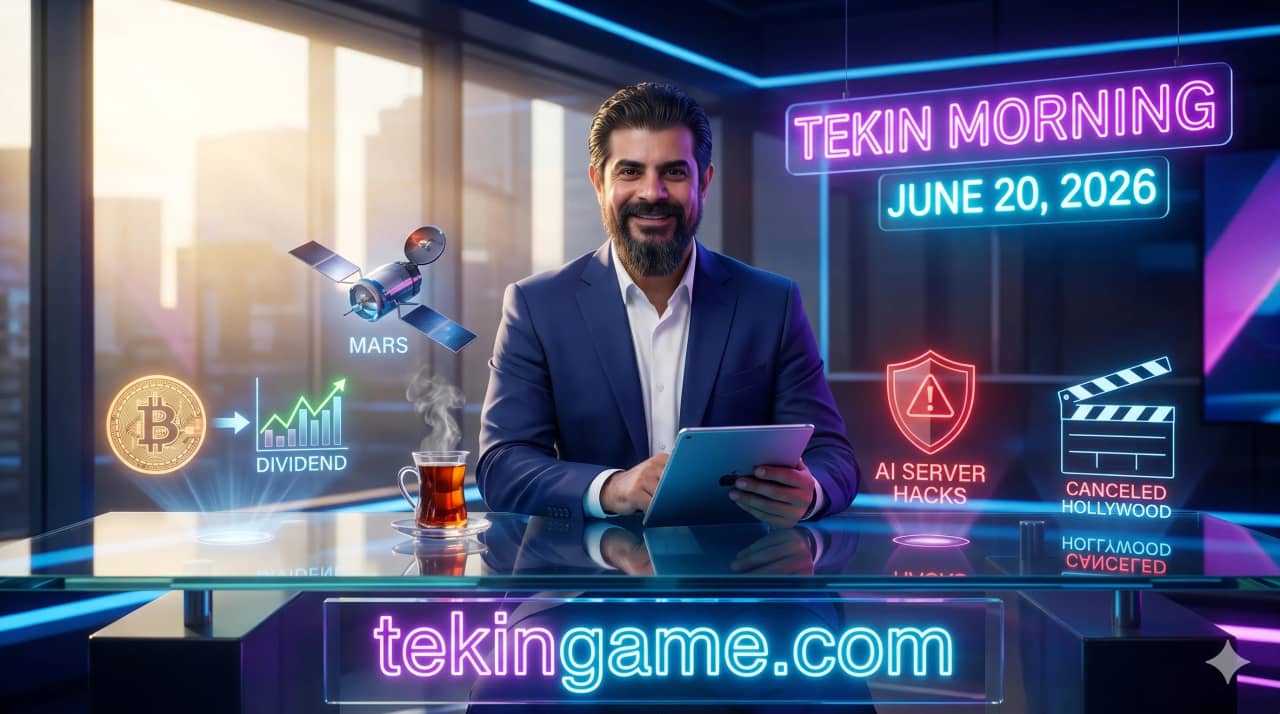
🌅 Good Morning Tech Enthusiasts! Welcome to Tekin Morning June 20, 2026
Rise and shine, tech lovers! It's Sunday morning, June 20, 2026, and we're bringing you the most exciting and impactful tech news from the last 24 hours. From a groundbreaking move by Franklin Templeton in the crypto space to NASA's bold step into private space exploration, from a massive AI security crisis to Hollywood drama involving OpenAI - today's lineup is absolutely packed with stories that will shape the future of technology and business.
⚡ Today's Headlines at a Glance:
💰 Investment Revolution: Franklin Templeton's Bitcoin Dividend Transformation
🚀 NASA Enters Private Space Era: The Mars Mission 2028
🔐 Security Catastrophe: 7,000 Langflow Servers Under Active Attack
🎬 Amazon's $50 Billion Regret: Sam Altman Film Cancelled
🎮 CD Projekt Red's Hope for Redemption with Witcher 4
⚠️ Silent Crisis: Ethereum Facing Budget Shortage
☕ Grab your morning coffee - today's journey through the tech world is going to be thrilling!
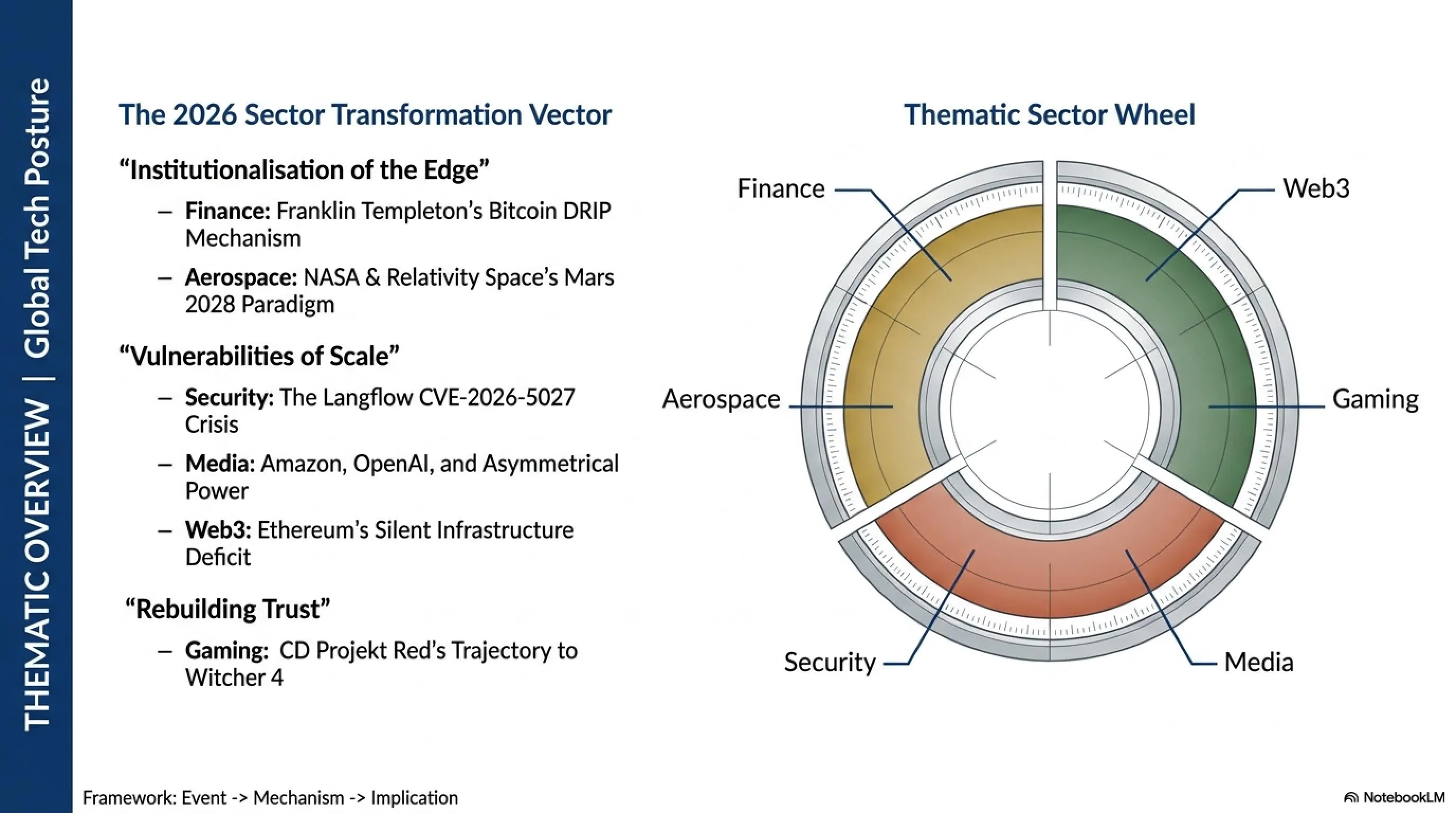
🔍 Why Today's News Matters
The six stories we're covering today aren't just headlines - they represent fundamental shifts in how technology, finance, security, and entertainment intersect in 2026. From the convergence of traditional Wall Street with cryptocurrency innovation, to the democratization of space exploration, to the security vulnerabilities hiding in plain sight within our AI infrastructure - these developments will directly impact your investment portfolio, your startup's security posture, and even your gaming console choices.
💰 Franklin Templeton: Revolutionary Bridge Between Wall Street and Bitcoin
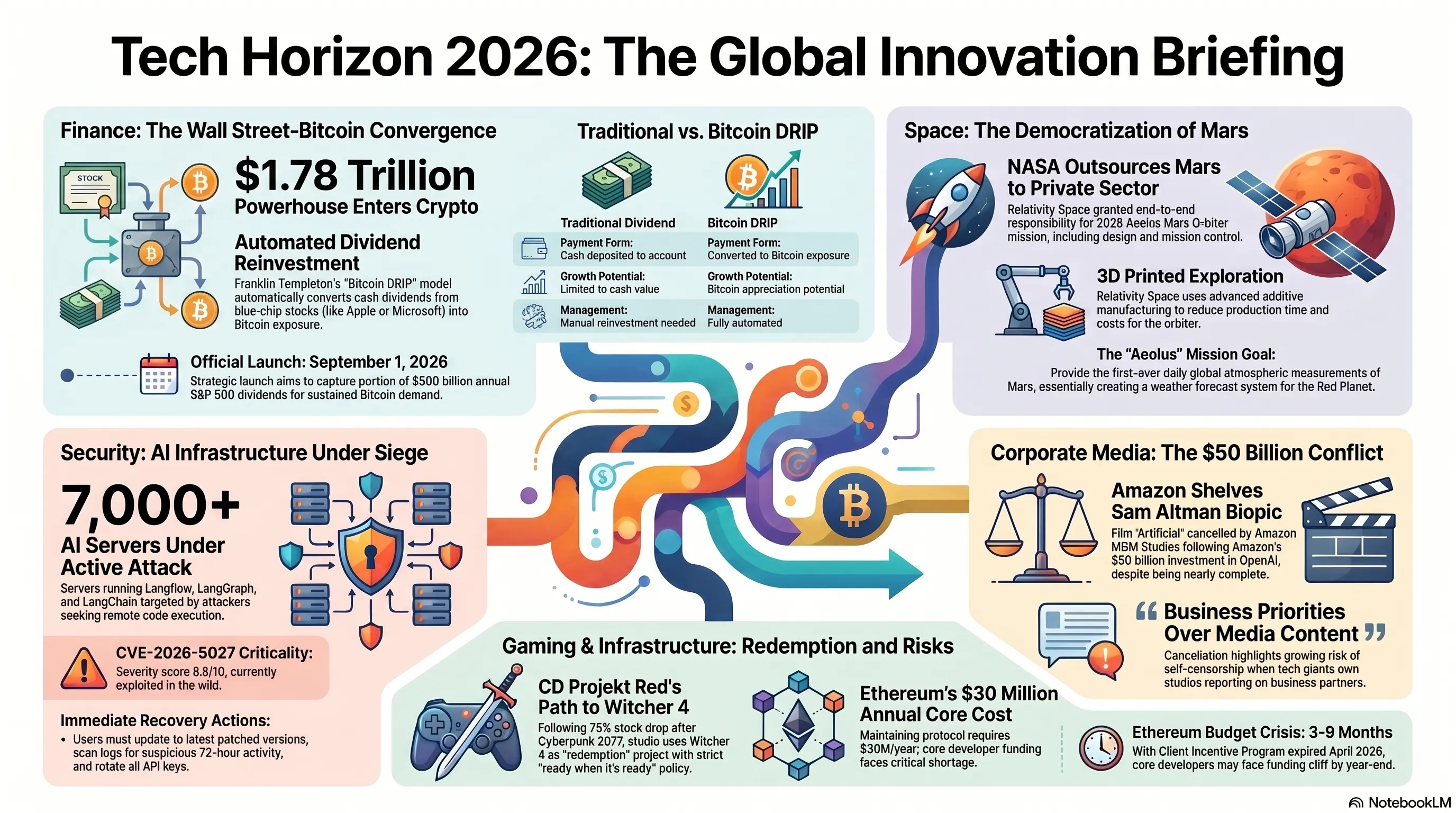
When a financial titan managing $1.78 trillion in assets decides to build a bridge between traditional Wall Street and the crypto universe, it's time to pay attention. On June 19, 2026, Franklin Templeton filed an application with the U.S. Securities and Exchange Commission (SEC) that could fundamentally change how traditional investors access cryptocurrency exposure. The asset management giant wants to launch two Exchange-Traded Funds (ETFs) called "Bitcoin DRIP" that will automatically convert dividend payments from U.S. companies into Bitcoin exposure.
Let's break down what this actually means. Imagine you own shares in major American corporations like Apple, Microsoft, or Johnson & Johnson. Every quarter, these companies distribute cash dividends to shareholders. Traditionally, this money hits your brokerage account as cash. But with the Bitcoin DRIP model, those dividends are automatically used to purchase Bitcoin exposure, which then gets added to your portfolio. This mechanism mirrors traditional DRIP programs (Dividend Reinvestment Plans) that automatically reinvest dividends back into the same stock, but this time the destination is Bitcoin.
The strategic brilliance here is multi-layered. Franklin Templeton isn't just creating a new financial product - they're solving a major adoption barrier. Many institutional and retail investors want cryptocurrency exposure but are deterred by the complexity of buying, storing, and securing digital assets. They worry about exchange hacks, private key management, and regulatory uncertainty. The Bitcoin DRIP ETFs eliminate all these concerns by providing indirect exposure through a regulated, familiar vehicle that sits comfortably within existing brokerage accounts.
🧠 Tekin Analysis: The Strategic Genius Behind This Move
This product represents more than financial innovation - it signals a fundamental shift in how traditional financial institutions view cryptocurrency. Franklin Templeton is essentially building a "passive accumulation" mechanism for Bitcoin. Investors get the stability and predictability of dividend-paying blue-chip stocks, combined with the growth potential of Bitcoin. It's a hybrid model that could appeal massively to conservative investors who've been sitting on the sidelines of the crypto revolution.
Moreover, this comes from a firm that's already proven its crypto credentials. Franklin Templeton was among the first traditional asset managers to launch a spot Bitcoin ETF back in January 2024. Now, with Bitcoin DRIP, they're building a complete ecosystem. The timing is also strategic - launching on September 1, 2026, right as institutional adoption continues accelerating and Bitcoin potentially enters a new bull cycle.
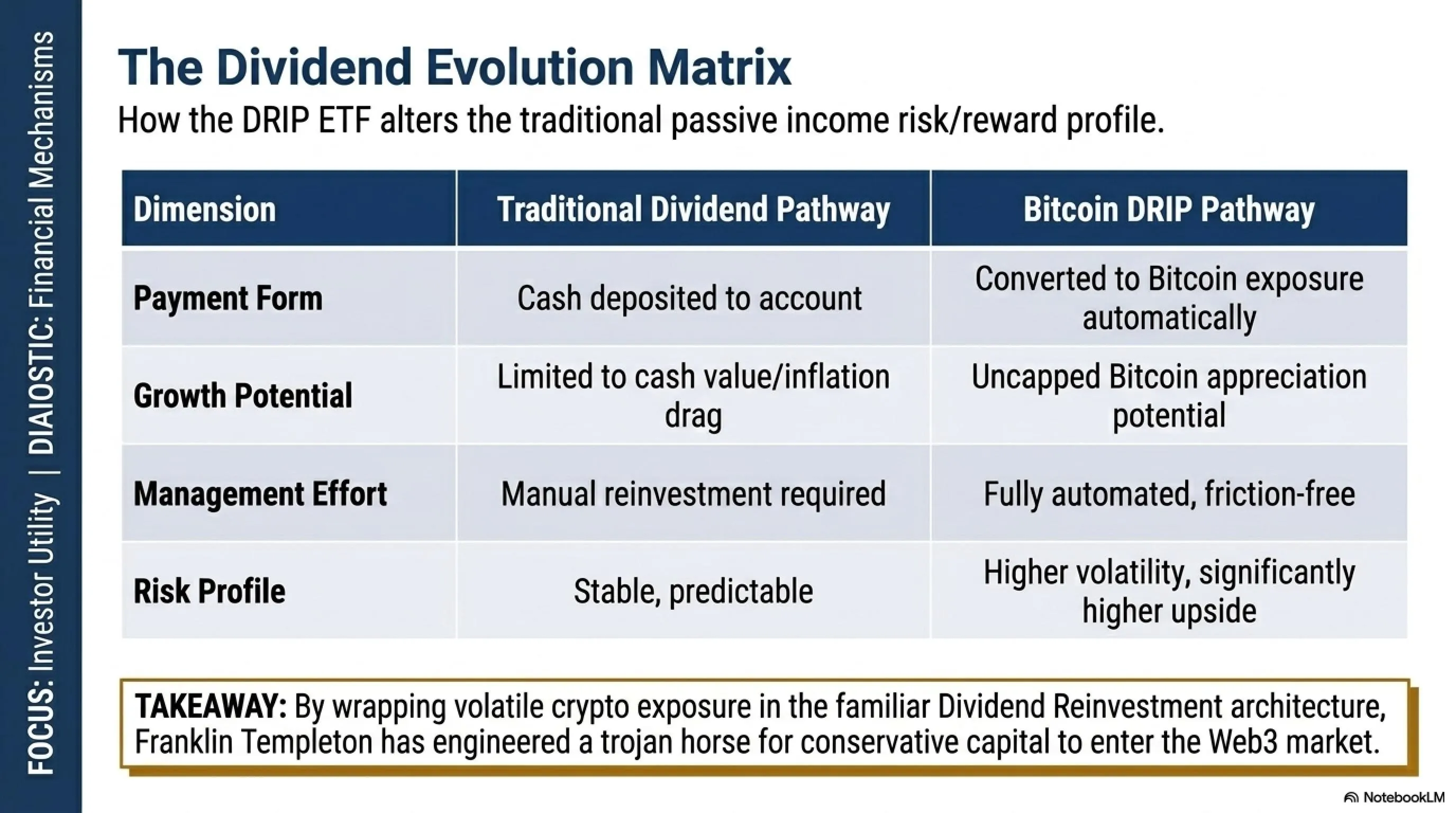
The implications for the broader market are significant. If the SEC approves these ETFs and they gain traction, we could see other major asset managers follow suit. This could create a new, sustained source of Bitcoin demand that's tied to corporate dividend cycles rather than speculative trading. When you consider that S&P 500 companies pay out approximately $500 billion in dividends annually, even capturing a small percentage of that flow could have meaningful impact on Bitcoin's supply-demand dynamics.
🚀 NASA and the New Era of Private Space Exploration: The Mars Mission 2028
If you thought space exploration was still the exclusive domain of government agencies, it's time to update your mental model. NASA has just announced one of its most strategically significant decisions: outsourcing the construction and launch of its next Mars orbiter to a private company. That company is Relativity Space, led by former Google CEO Eric Schmidt, and the mission - called Aeolus Mars Orbiter - is scheduled to launch in 2028 to conduct the first-ever daily global measurements of Mars' atmosphere and weather.
This mission breaks new ground in several critical ways. First, this marks the first time NASA has delegated an entire scientific mission to Mars to the private sector. Previously, private companies like SpaceX operated primarily as transportation contractors - they launched the spacecraft but weren't responsible for its design or mission objectives. Here, Relativity Space has end-to-end responsibility: design, manufacturing, launch, and mission control. Second, the mission leverages cutting-edge 3D printing technology. Relativity Space specializes in producing rockets using advanced additive manufacturing, dramatically reducing production time and costs.
🔬 Why This Mission Is Revolutionary
Aeolus will be the first satellite to provide daily, global atmospheric measurements of Mars. Think of it as creating a weather forecast system for the Red Planet. Until now, our understanding of Martian weather has been limited to sporadic observations and localized data from rovers. Aeolus will change that entirely, giving us a comprehensive, real-time view of atmospheric dynamics, dust storm formation, water vapor distribution, and seasonal changes across the entire planet.
This data is absolutely critical for future human missions to Mars. Imagine planning to establish a permanent base on Mars - you need to know when and where massive dust storms occur, how temperature fluctuations affect different regions, and where atmospheric conditions are most favorable for landing and habitation. Moreover, Eric Schmidt's involvement signals that Silicon Valley's biggest minds are no longer focused solely on internet services - they're pursuing physical exploration of the cosmos.

The broader implications extend beyond Mars exploration. This partnership model could become the template for future planetary science missions. By leveraging private sector innovation, speed, and cost efficiency, NASA can potentially conduct more missions with its existing budget. The space industry is witnessing a paradigm shift from government-led to public-private collaboration, and this Mars mission is a landmark example of that transformation.
🔐 Security Catastrophe: 7,000 Langflow Servers Under Active Attack
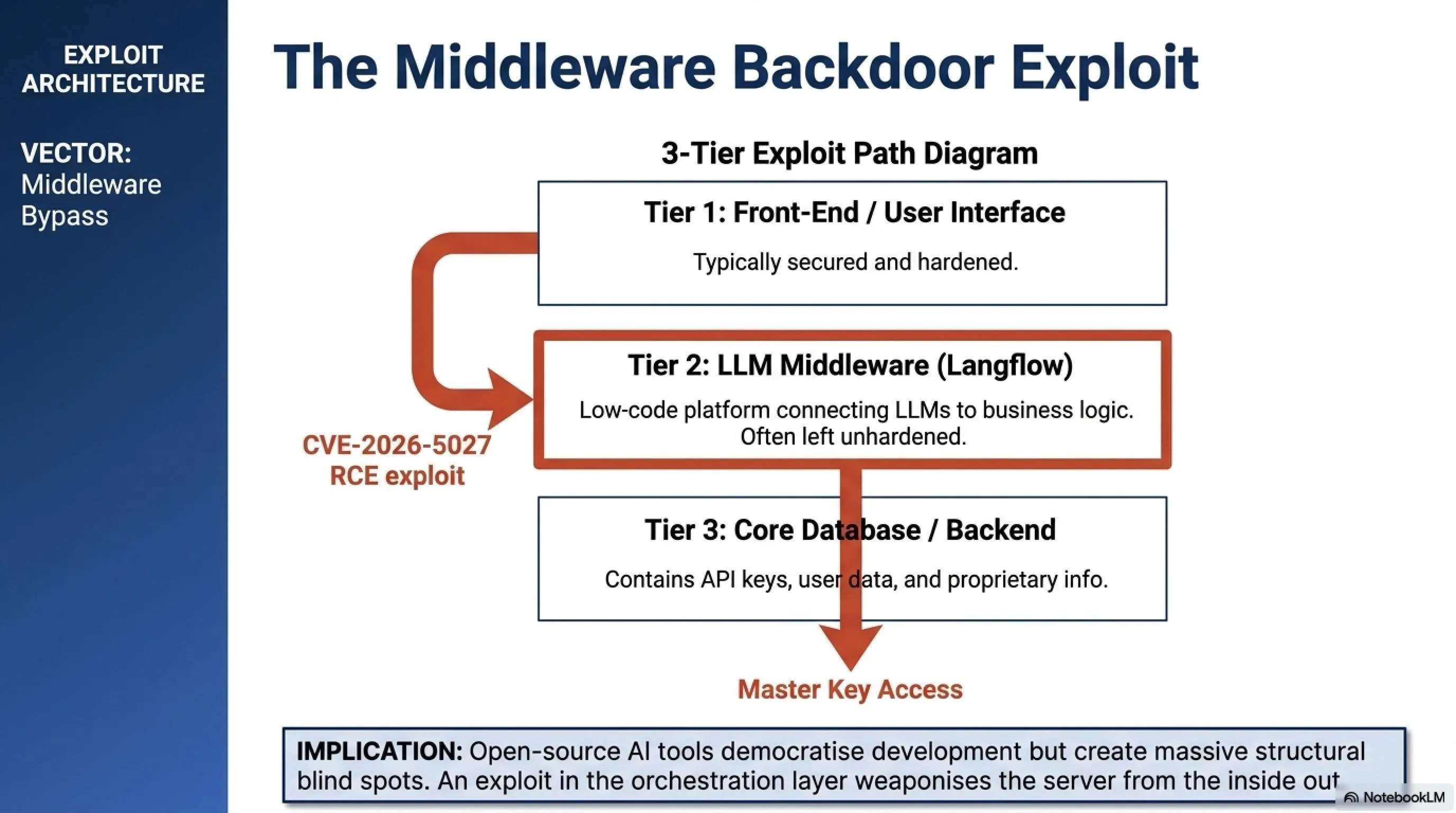
If you're using AI development tools to build applications, this news should serve as a serious wake-up call. More than 7,000 servers running Langflow, LangGraph, and LangChain are currently under active attack. Critical vulnerabilities in these popular AI development platforms have been discovered that allow attackers to execute remote code execution (RCE). The most dangerous is CVE-2026-5027, which has a severity score of 8.8 out of 10 and is being actively exploited in the wild right now.
Let's clarify what this means in practical terms. Langflow is a low-code platform for building AI applications that allows developers to easily work with Large Language Models (LLMs). Thousands of startups and companies use this tool to build chatbots, intelligent assistants, and automation systems. Now imagine an attacker can execute arbitrary code on your server - this means complete access to your database, API keys, user information, and even the ability to weaponize your server for subsequent attacks. It's the digital equivalent of someone getting the master key to your entire operation.
⚠️ Tekin Security Alert: Immediate Actions Required
- Version Check Immediately: If you're using Langflow, LangGraph, or LangChain, update to the latest patched version right now
- Log Scanning: Review your server logs for suspicious activity in the past 72 hours
- Server Isolation: Temporarily isolate vulnerable servers from the public internet
- Credential Rotation: Change all API keys and access tokens immediately
- Enhanced Firewall: Restrict access to management endpoints to specific whitelisted IPs only
What makes this particularly troubling is the pattern it reveals: in the rush to adopt AI tools, many companies have sacrificed security for speed. Many of these compromised servers were deployed with default configurations, insufficient security layers, and exposed directly to the internet without proper hardening. This is a crucial lesson for everyone working with emerging technologies: innovation should never come at the expense of security. The rapid development cycle that characterizes the AI industry has created blind spots that attackers are now exploiting at scale.
The incident also raises questions about the security practices of open-source AI tooling developers. While these platforms enable rapid prototyping and democratize AI development, the security infrastructure hasn't kept pace with adoption. We need to see more proactive security audits, better default configurations, and clearer documentation about production deployment best practices. Until then, development teams must take extra precautions when deploying AI infrastructure.
🎬 Amazon's $50 Billion Regret: The Sam Altman Film That Never Was
Sometimes politics and business interests overshadow art, and that's exactly what happened to "Artificial," the film about Sam Altman and OpenAI's leadership crisis. Amazon MGM Studios has decided to shelve this movie - and the timing is no coincidence. The cancellation comes right after Amazon made one of its largest strategic investments: $50 billion in OpenAI.
"Artificial," directed by acclaimed filmmaker Luca Guadagnino (Call Me by Your Name, Challengers) and starring Andrew Garfield as Sam Altman, was nearly complete. The screenplay was written by Beau Willimon, creator of House of Cards, and was set to dramatize the intense five-day period in November 2023 when Altman was fired from and then reinstated at OpenAI. It promised to be a gripping corporate thriller about power, ambition, and the future of artificial intelligence. But with Amazon now deeply invested in OpenAI as a strategic partner, releasing a film that might portray sensitive internal dynamics became too risky.
📉 What We Lost
- Production costs (estimated $40-60 million)
- An artistic perspective on a historic tech moment
- Disappointment for cast and crew
- Questions about artistic independence
- Public understanding of AI governance
💼 Amazon's Business Logic
- Protecting $50B OpenAI relationship
- Avoiding unnecessary tensions
- Focus on strategic AI partnerships
- Business priorities over media content
- Long-term investment protection
This decision raises profound questions about media independence in the age of Big Tech. When technology companies simultaneously produce entertainment content and invest heavily in tech startups, can they remain editorially neutral? Will we see more self-censorship when content touches on the companies that own or invest in the studios? This is particularly concerning at a time when public discourse about AI governance, safety, and corporate power is more important than ever. The public deserves transparent, unbiased storytelling about the forces shaping our technological future - but when financial interests are this large, artistic independence becomes increasingly difficult to maintain.
🎮 CD Projekt Red's Hope for Redemption with Witcher 4
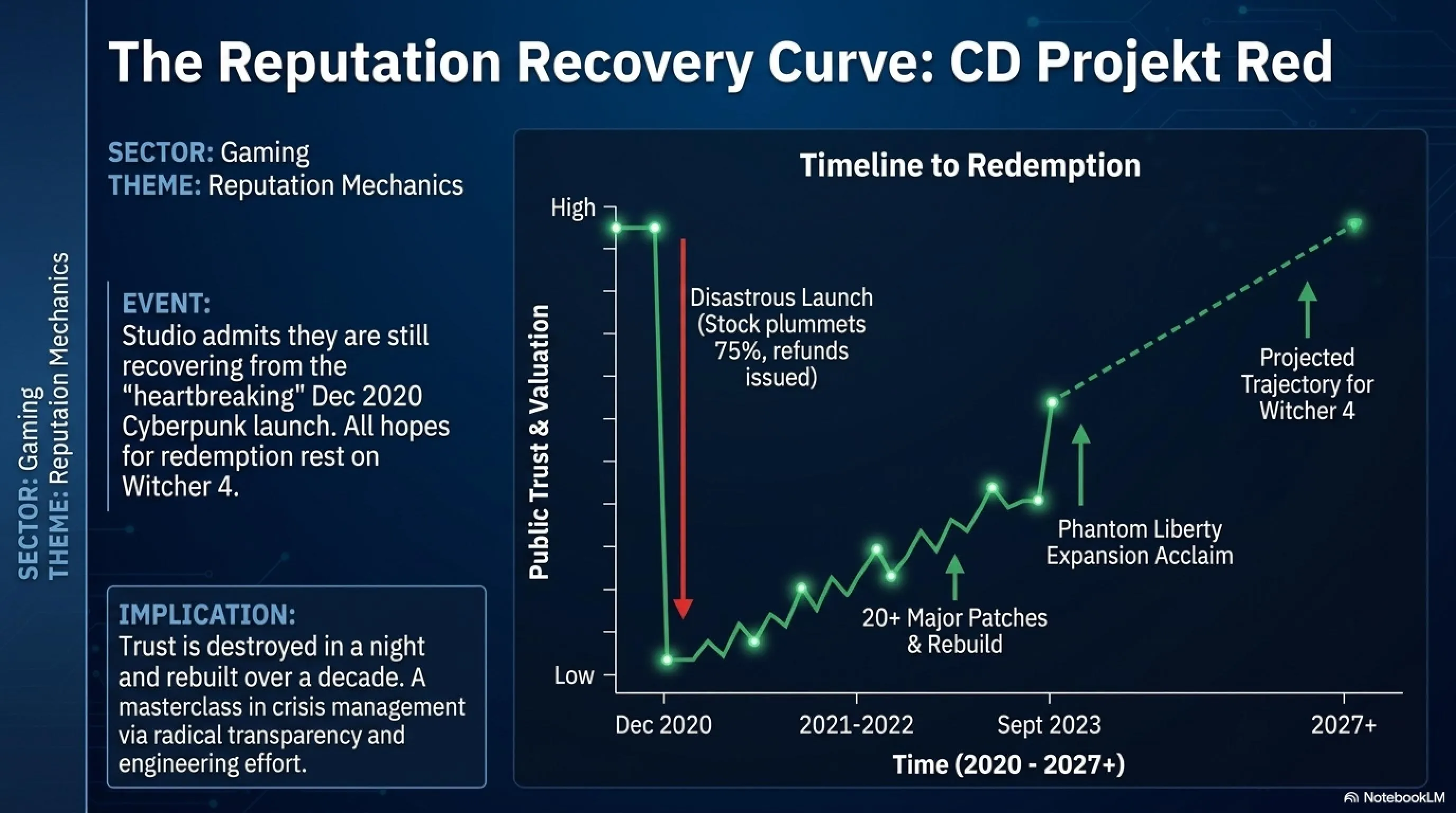
Some mistakes are so devastating that it takes years to recover, and CD Projekt Red knows this better than anyone. Michał Nowakowski, the studio's co-CEO, gave a remarkably candid interview to IGN where he admitted that the studio still hasn't fully recovered from the catastrophic launch of Cyberpunk 2077 in December 2020. He described the experience as "heartbreaking" and expressed hope that Witcher 4 will help win back the trust they lost.
For those who don't remember, the Cyberpunk 2077 launch was one of the most infamous in gaming history. The game shipped with extensive bugs, frequent crashes, serious performance issues (especially on older PlayStation 4 and Xbox One consoles), and numerous undelivered promises. The community backlash was so severe that Sony removed the game from the PlayStation Store, and CD Projekt Red had to implement a refund program. The company's stock value plummeted by more than 75%.
📊 CD Projekt Red's Road to Recovery
Since that disastrous launch, the studio has done significant work. They released over 20 major updates and patches, completely rebuilt the game's foundation, and eventually launched the Phantom Liberty expansion in September 2023, which received warm praise from both critics and players. The game is now in a much better state - closer to what was originally promised. But as Nowakowski acknowledges, there's still a long road ahead.
All hopes now rest on Witcher 4 - a game that will tell a new story in The Witcher universe. But this time, the studio is proceeding with much greater caution, promising they won't release the game until it's genuinely ready. They've learned the hard lesson that reputation takes years to build but can be destroyed overnight.
The broader lesson here extends beyond gaming. CD Projekt Red's journey is a case study in how companies should (and shouldn't) handle product launches and crisis management. The initial mistake was releasing an unfinished product under marketing pressure. The recovery has required transparency, consistent effort, and tangible improvements. For other companies in the tech and gaming space, this serves as both a warning and a roadmap: prioritize quality over release dates, communicate honestly with your community, and understand that rebuilding trust is a marathon, not a sprint.
⚠️ The Silent Crisis: Ethereum's Budget Shortage Looming
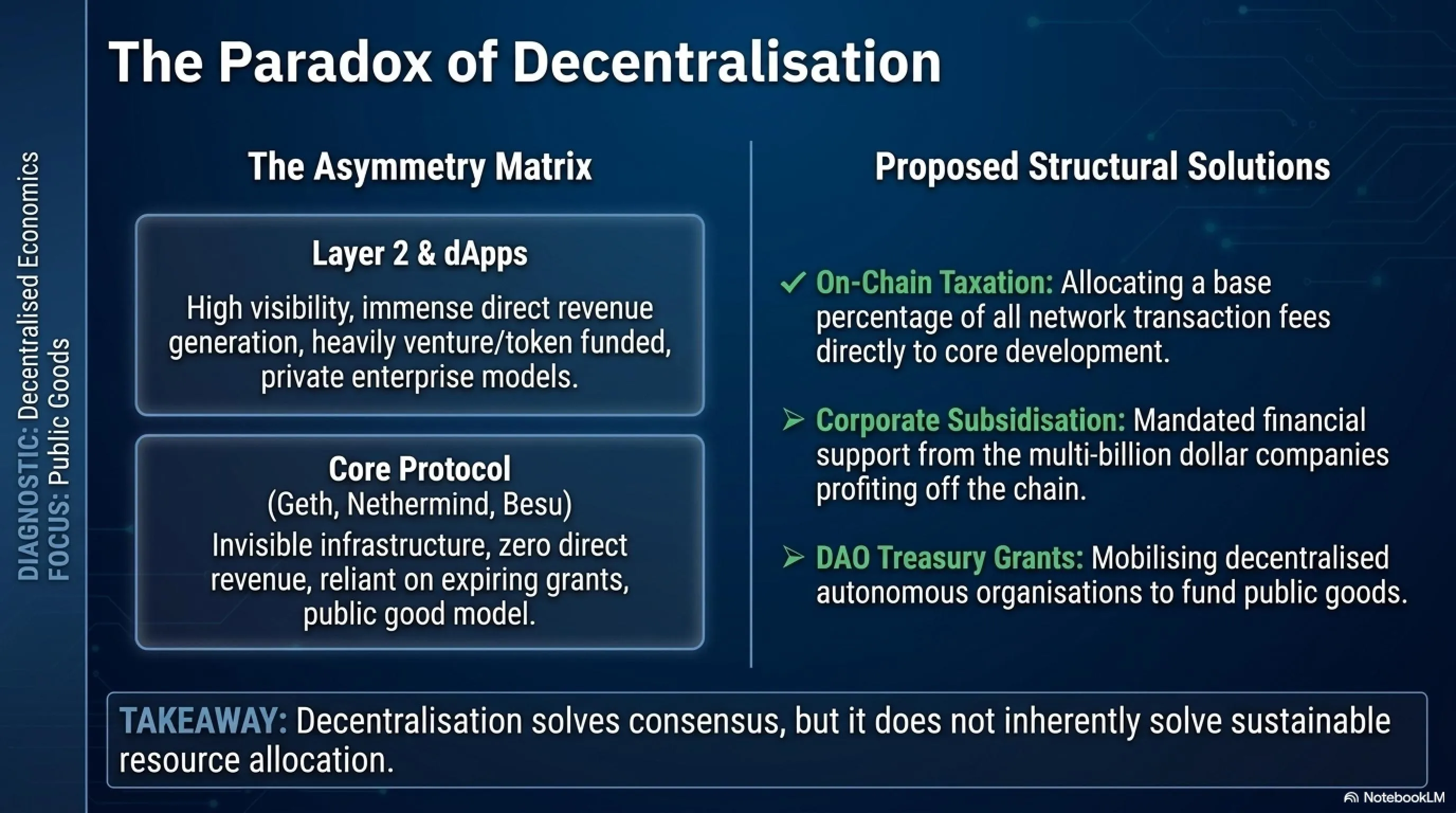
While everyone talks about cryptocurrency prices, a structural crisis is forming behind the scenes of the world's second-largest blockchain. Trent Van Epps, a former contributor to the Ethereum Foundation, recently warned that Ethereum's core developers could face serious budget shortages within 3 to 9 months. This might surprise many, but the reality is that maintaining Ethereum's core protocol costs approximately $30 million annually.
The primary issue is that the Client Incentive Program - which funded developers working on various Ethereum clients (like Geth, Nethermind, Besu) - expired in April 2026 and hasn't been renewed. This is concerning because these developers' work is mission-critical. They're the ones maintaining network security, fixing bugs, and implementing major upgrades like The Merge or Dencun. Without proper funding, these talented developers might move to other projects or shift their priorities.
💡 Why This Matters: The Paradox of Decentralization
Many people assume Ethereum is a fully decentralized network that "runs itself," but reality is more nuanced. The core protocol requires skilled, full-time developers who continuously work on security, efficiency, and innovation. If these individuals lack funding, they may leave for better-paying opportunities or reduce their commitment. This creates a fundamental paradox: while upper layers of the Ethereum ecosystem (DeFi, NFTs, Layer 2s) generate billions in revenue, the core protocol - the foundation everything is built on - struggles with funding.
This situation highlights a critical challenge for decentralized projects: how do you sustainably fund public goods infrastructure? Unlike traditional companies with clear revenue models, open protocols face unique challenges in aligning incentives and ensuring ongoing development funding.
Proposed solutions include funding through larger grants, creating an on-chain funding mechanism (such as allocating a portion of transaction fees to development), or attracting more support from companies that profit from Ethereum. However, no clear consensus has emerged yet. This serves as an important reminder: even the most successful decentralized projects need sustainable funding structures. The "build it and they will come" approach doesn't guarantee long-term maintenance and innovation without proper resource allocation.
🎯 Final Takeaways: What Should You Remember From Today?
The six stories we've explored today paint a comprehensive picture of the technology landscape in 2026 - a world where innovation, security, politics, and economics are intricately intertwined:
- Franklin Templeton demonstrated that the wall between traditional finance and crypto has fallen - real integration has begun, and it's being led by institutional giants
- NASA and Relativity Space proved space exploration is no longer a government monopoly - the commercial space age has truly arrived
- The Langflow crisis reminded us that in the AI gold rush, security cannot be an afterthought - speed should never come at the expense of safety
- The cancelled Altman film raised difficult questions about artistic independence and the power of tech companies over media narratives
- CD Projekt Red illustrated that trust takes years to build but can be destroyed in a single night - and rebuilding requires sustained, transparent effort
- Ethereum's funding crisis exposed a critical vulnerability even in successful decentralized projects - sustainable funding for public infrastructure is essential
Is Bitcoin DRIP ETF right for me?
This product is suitable for investors who want indirect Bitcoin exposure without directly buying and holding cryptocurrency. If you own shares in major U.S. companies and seek diversification with higher growth potential, this option could be attractive. However, you must be prepared for Bitcoin's volatility. It's recommended to consult with a financial advisor before investing, as this combines traditional equity dividends with crypto market dynamics.
How can I tell if my servers are vulnerable?
If you're using Langflow, LangGraph, or LangChain, the first step is checking your installed version. Use the command pip show langflow to verify. Then visit the official website and install the latest version. Also scan your server logs for suspicious requests to management endpoints. If you notice unusual traffic or failed authentication attempts, act immediately by isolating the server and rotating credentials.
Will Witcher 4 release on older consoles?
CD Projekt Red hasn't announced specific platforms yet, but given that the game is still in early development and likely several years away from release, it's unlikely to launch on PlayStation 4 or Xbox One. The game will probably be optimized for current-gen (PS5, Xbox Series X/S) and PC. The lesson learned from Cyberpunk 2077 is clear: the studio won't sacrifice game quality to support outdated hardware.
What will happen to Ethereum with this budget crisis?
The Ethereum network likely won't stop functioning, but development quality and innovation speed could decline. In the worst case, key developers might move to other projects or work part-time. Proposed solutions include funding through DAO grants, allocating a portion of network fees to development, or direct support from large companies using Ethereum. The Ethereum community has historically shown it can solve major challenges, so there's reason for optimism despite current uncertainties.
📚 Sources & References
Primary Sources: CryptoSlate, CoinDesk, Decrypt, Space.com, TechCrunch, Scientific American, VentureBeat, Bleeping Computer, The Hacker News, Variety, The Hollywood Reporter, IGN, Games Radar, Bitcoin.com, CoinTelegraph, The Block
Research & Analysis: Tekin Editorial Team
Publication Date: June 20, 2026
🌐 Stay Connected With Us
For the latest tech, gaming, and gadget news, follow us on social media: