Tekin Analysis / Versus | Inside Microsoft's Nuclear Exclusivity Doctrine
Earthquake in Redmond: The Leaked Insider Survey and the Nuclear Option
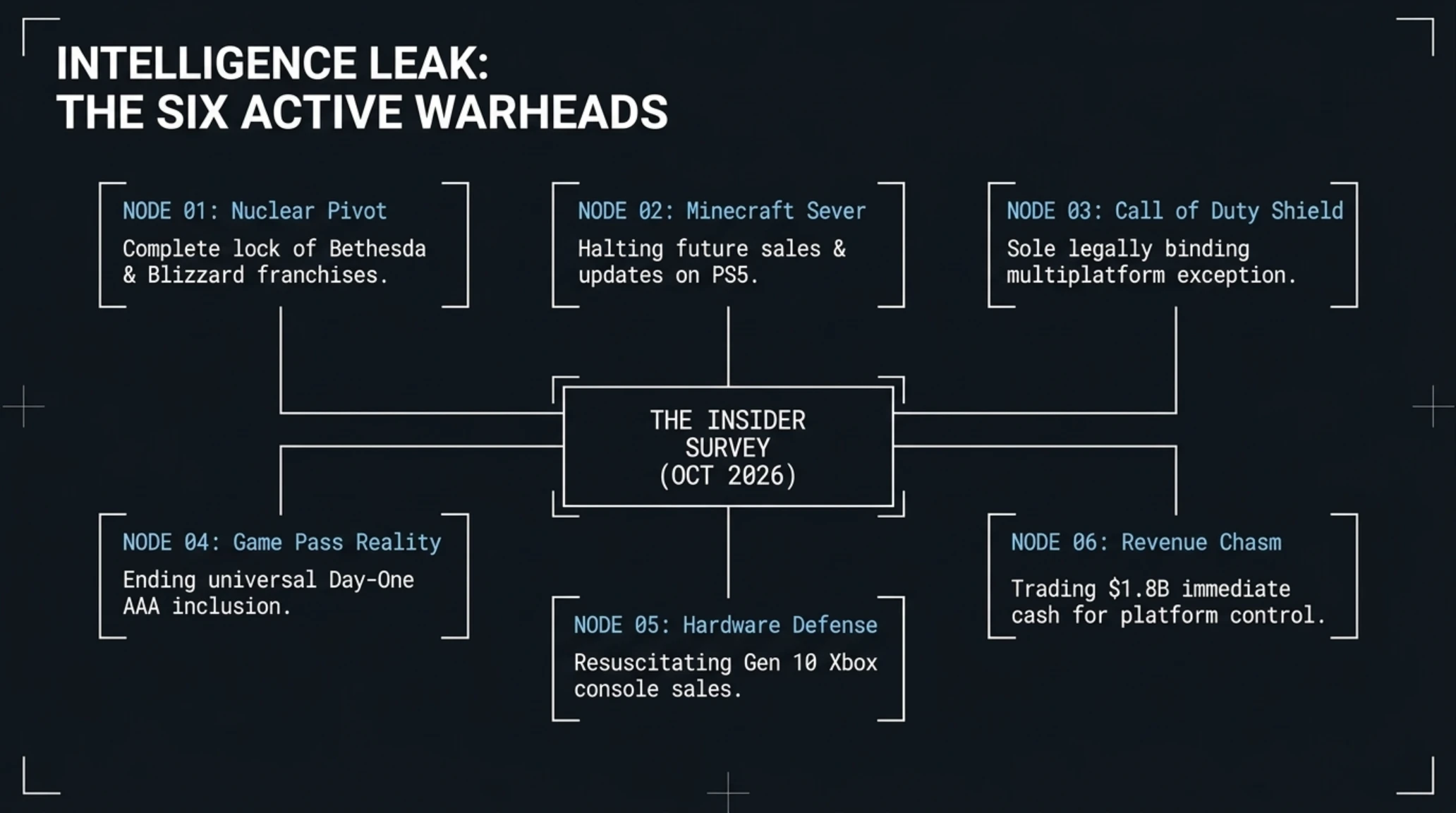
In mid-October 2026, an explosive intelligence leak first verified by Windows Central and subsequently amplified by GameSpot fundamentally upended the strategic consensus of the interactive entertainment industry. Microsoft, operating through its specialized Xbox Research unit, distributed an extraordinary, highly classified survey to a calibrated tier of Xbox Insiders. The core subject was not controller ergonomics or cloud interface usability, but the viability of a scorched-earth tactical doctrine internally dubbed the "Nuclear Strategy."
Strategic Intelligence Overview
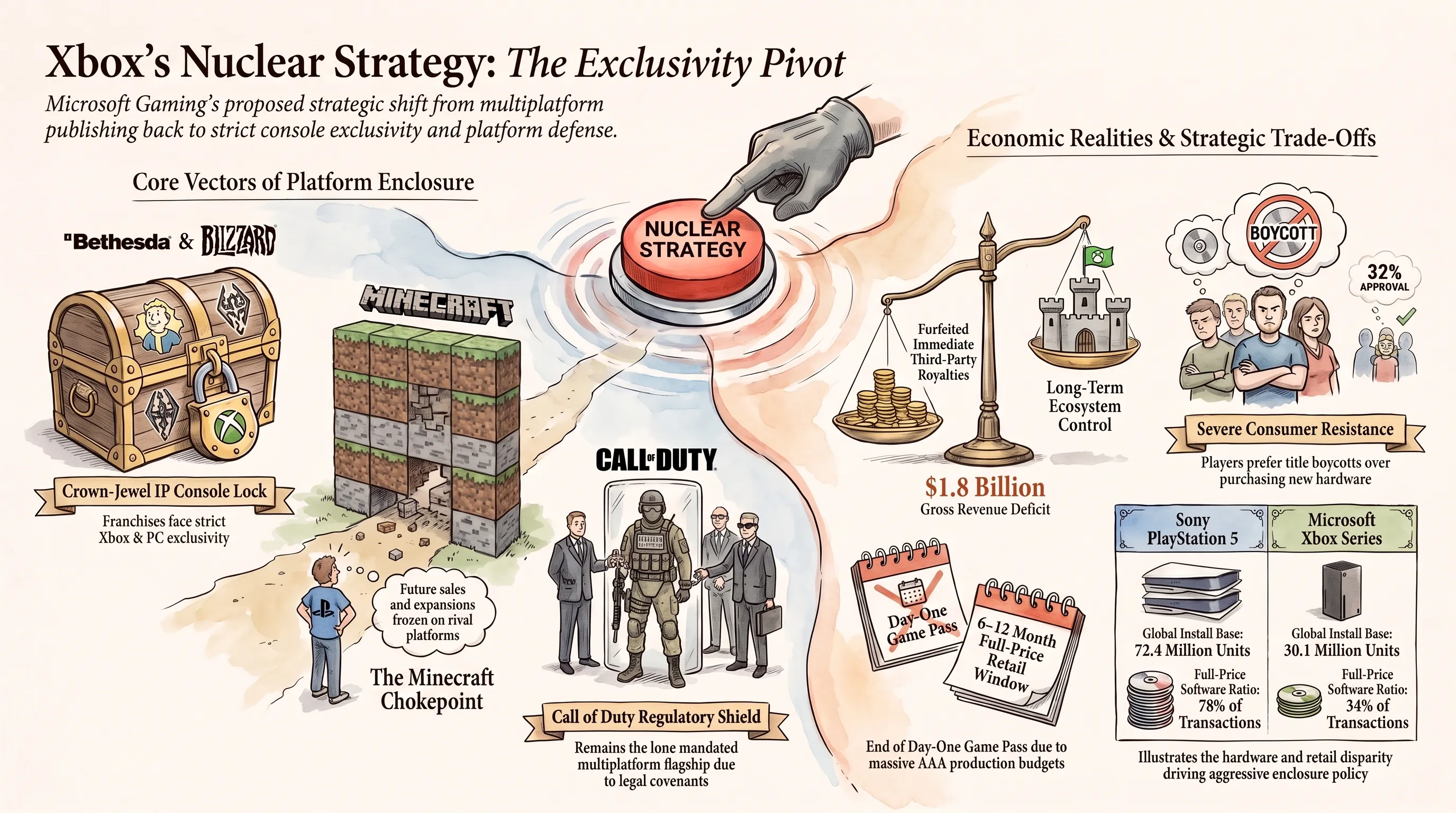
The premise put directly to consumers represents an absolute repudiation of the multiplatform publishing rhetoric championed by Satya Nadella and Phil Spencer across 2024 and 2025. In the survey's official verbiage, respondents were instructed to evaluate a definitive operational pivot: "Imagine it was announced that all future title releases from every Xbox-developed gaming franchise except Call of Duty will be console-exclusive to Xbox."
This is no idle corporate questionnaire. It arrives amidst the turbulent executive tenure of Asha Sharma, who assumed leadership of Microsoft Gaming with an explicit mandate to arrest a catastrophic collapse in hardware market share. Under the previous regime's "Project Latitude," Microsoft ported former crown jewels such as Sea of Thieves, Hi-Fi Rush, and Indiana Jones and the Great Circle to PlayStation 5. While these ports topped Sony's digital store charts and generated high-margin software windfalls, they dealt a fatal blow to the Xbox Series hardware proposition, triggering an aggressive executive restructuring under Asha Sharma.
Why This Development Disrupts the Industry
If Microsoft pulls the nuclear trigger, the console sector will enter its most cutthroat exclusivity conflict since the 1990s console wars. Redmond is actively wagering short-term publishing revenue against the absolute survival of its living-room hardware ecosystem.
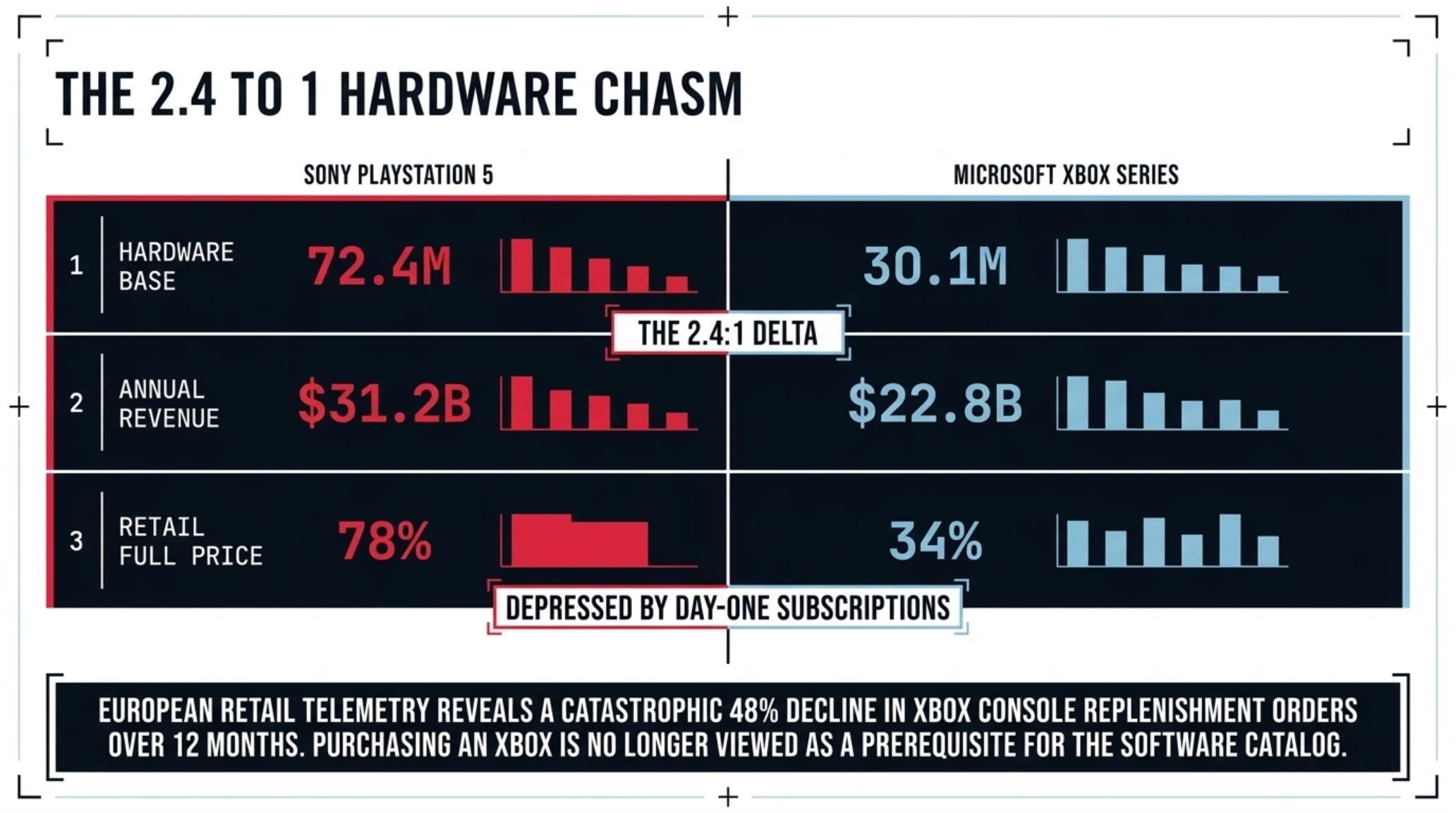
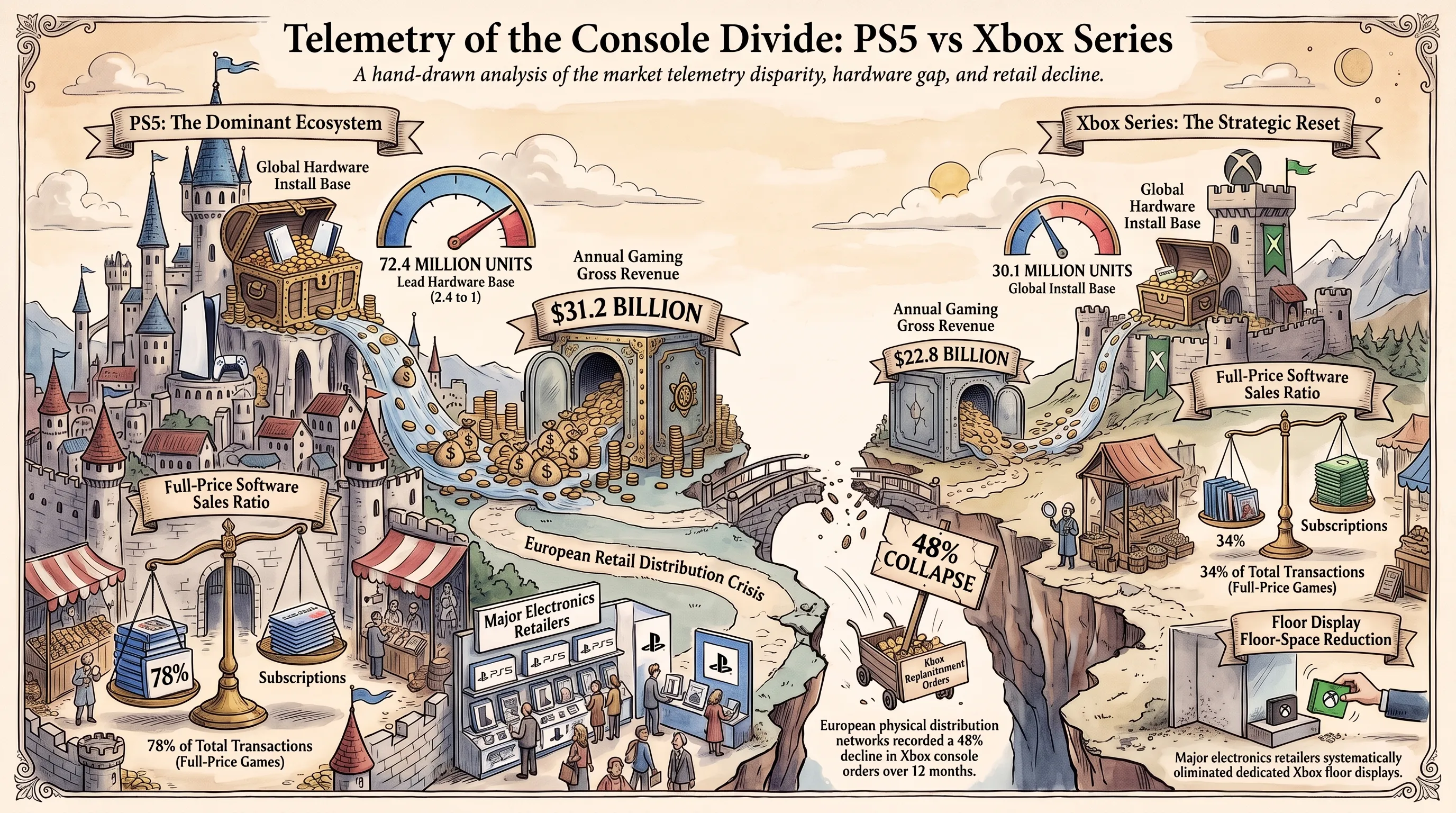
Consumers across Europe, North America, and the Gulf region drew the inescapable conclusion that purchasing an Xbox console was no longer a prerequisite for enjoying Microsoft's premier software catalog. As a direct consequence, retail hardware velocity cratered. Across major European territories, the PlayStation 5 currently outsells Xbox Series consoles by an insurmountable margin exceeding 2.4 to 1, while retail chains have systematically diminished shelf allocation for Xbox hardware in favor of Sony and Nintendo platforms.
The Minecraft Chokepoint: weaponizing the World's Largest IP
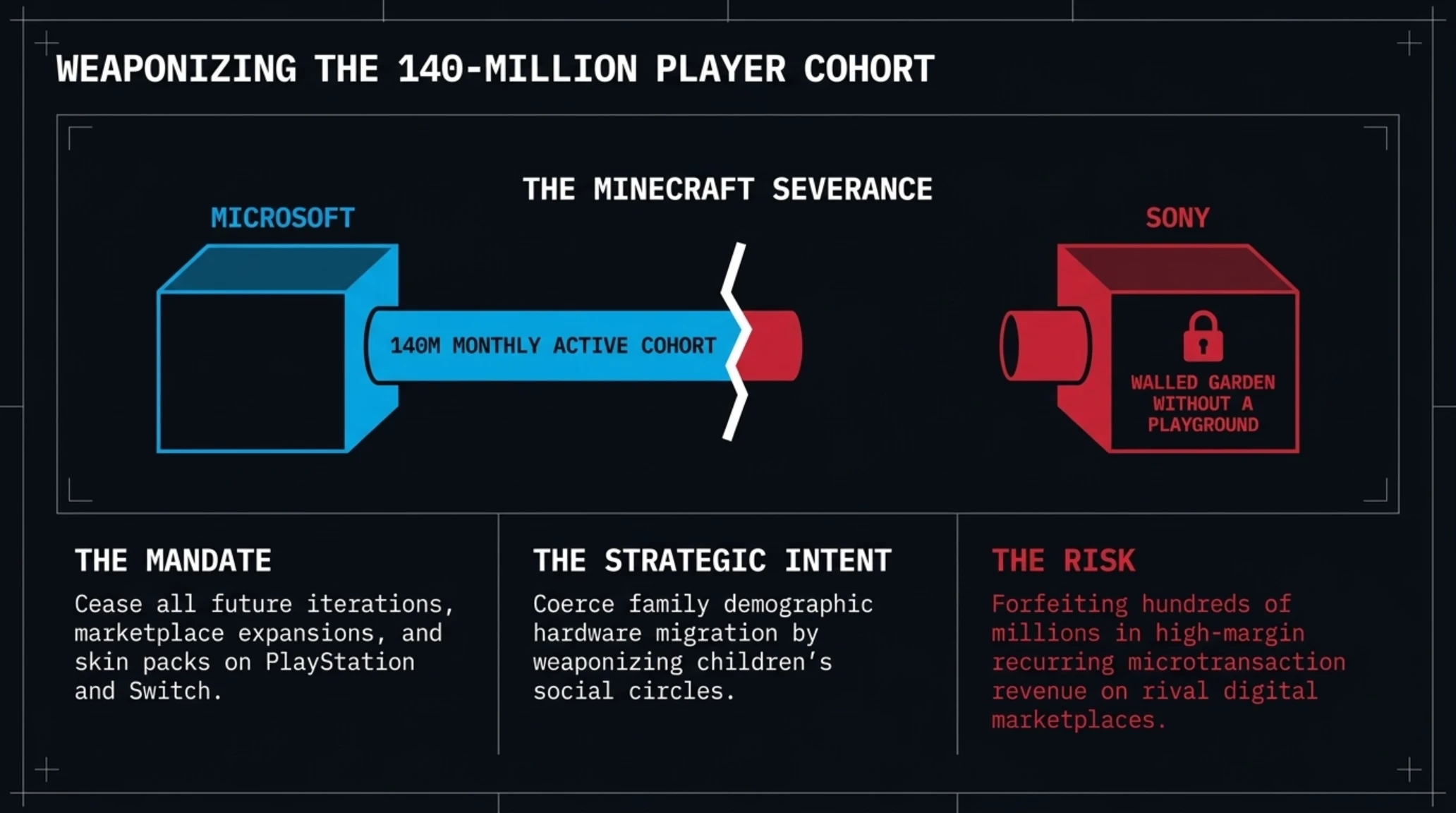
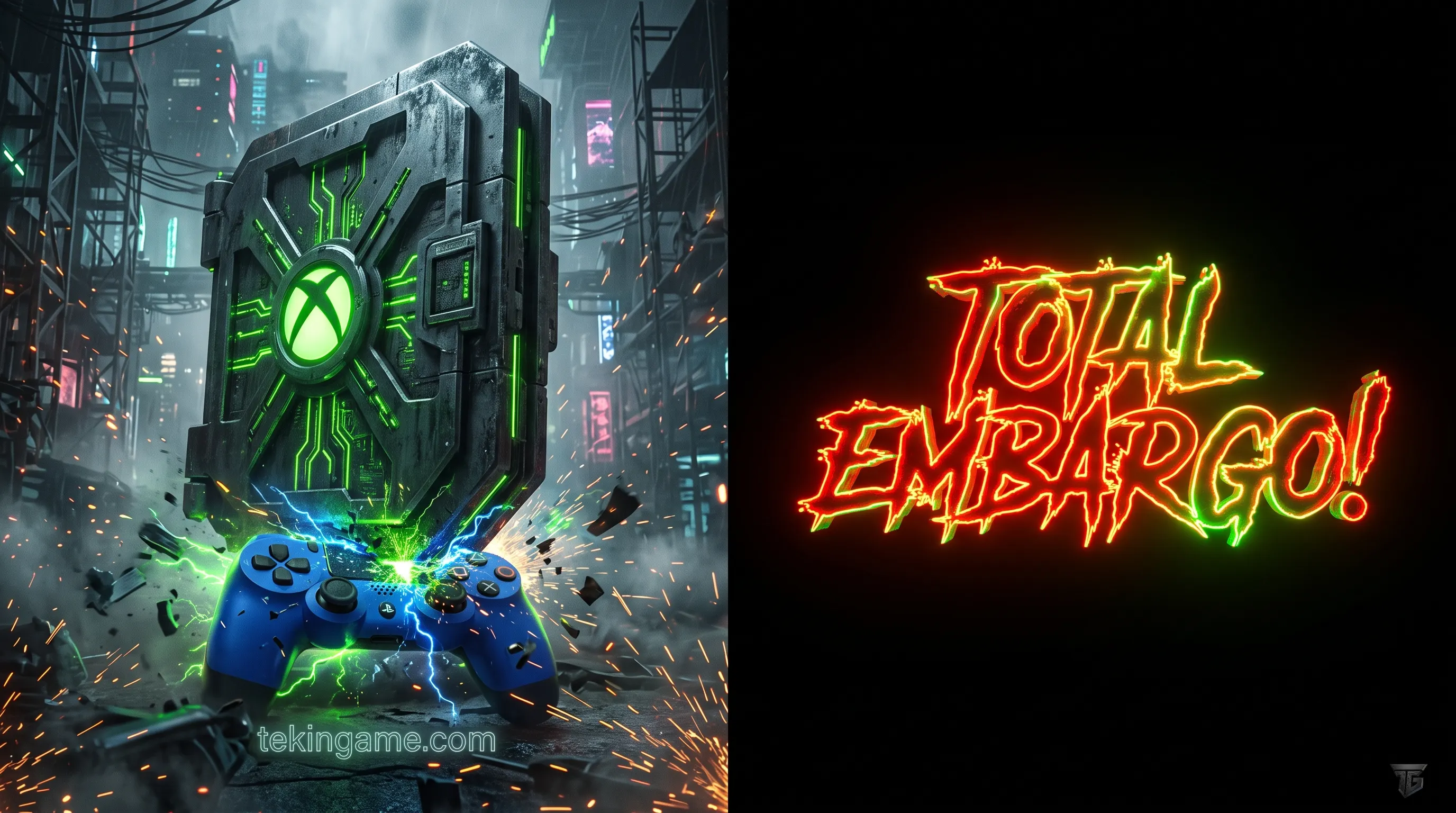
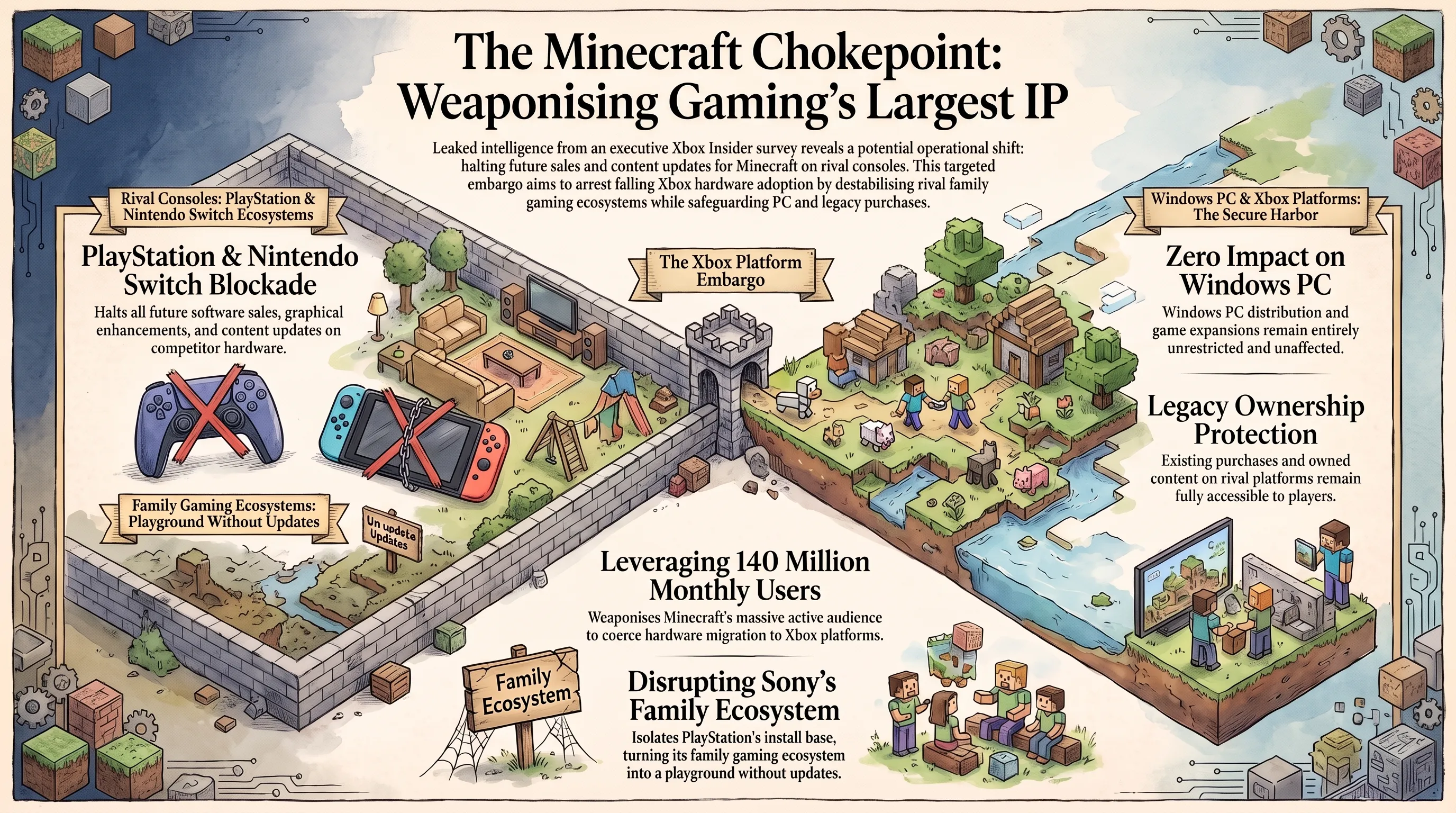
What elevates this survey from routine strategic polling to an industry-wide geopolitical shockwave is the specific clause addressing Minecraft a titan boasting over 140 million monthly active users and unmatched cross-generational ubiquity. The survey explicitly outlines an aggressive embargo that would rupture Sony's family gaming ecosystem:
"For Minecraft only, existing titles would no longer be available for purchase on PlayStation or Nintendo consoles and would not receive any new content updates. However, there is no impact to any of the existing titles or content you already own. Nothing changes on PC with this announcement."
Cutting off Minecraft's future iterations, graphical enhancements, and marketplace expansions on rival consoles is the digital equivalent of severing a supply line. Minecraft represents a bedrock source of engagement and platform loyalty. Parents routinely purchase consoles that accommodate their children's social circles; by threatening to isolate the PlayStation ecosystem from the next major Minecraft evolution, Microsoft is attempting to turn Sony's massive install base into a walled garden without a playground.
Yet, the commercial risk of such an embargo is dizzying. Minecraft generates staggering recurring revenue across PlayStation and Nintendo digital marketplaces via skin packs, realm subscriptions, and minecoin transactions. Severing that revenue stream to artificially coerce hardware sales risks alienating a generational audience while forfeiting hundreds of millions of dollars in annual high-margin profit.
The Scope of the Embargo: Fallout, The Elder Scrolls, and Doom in the Crosshairs
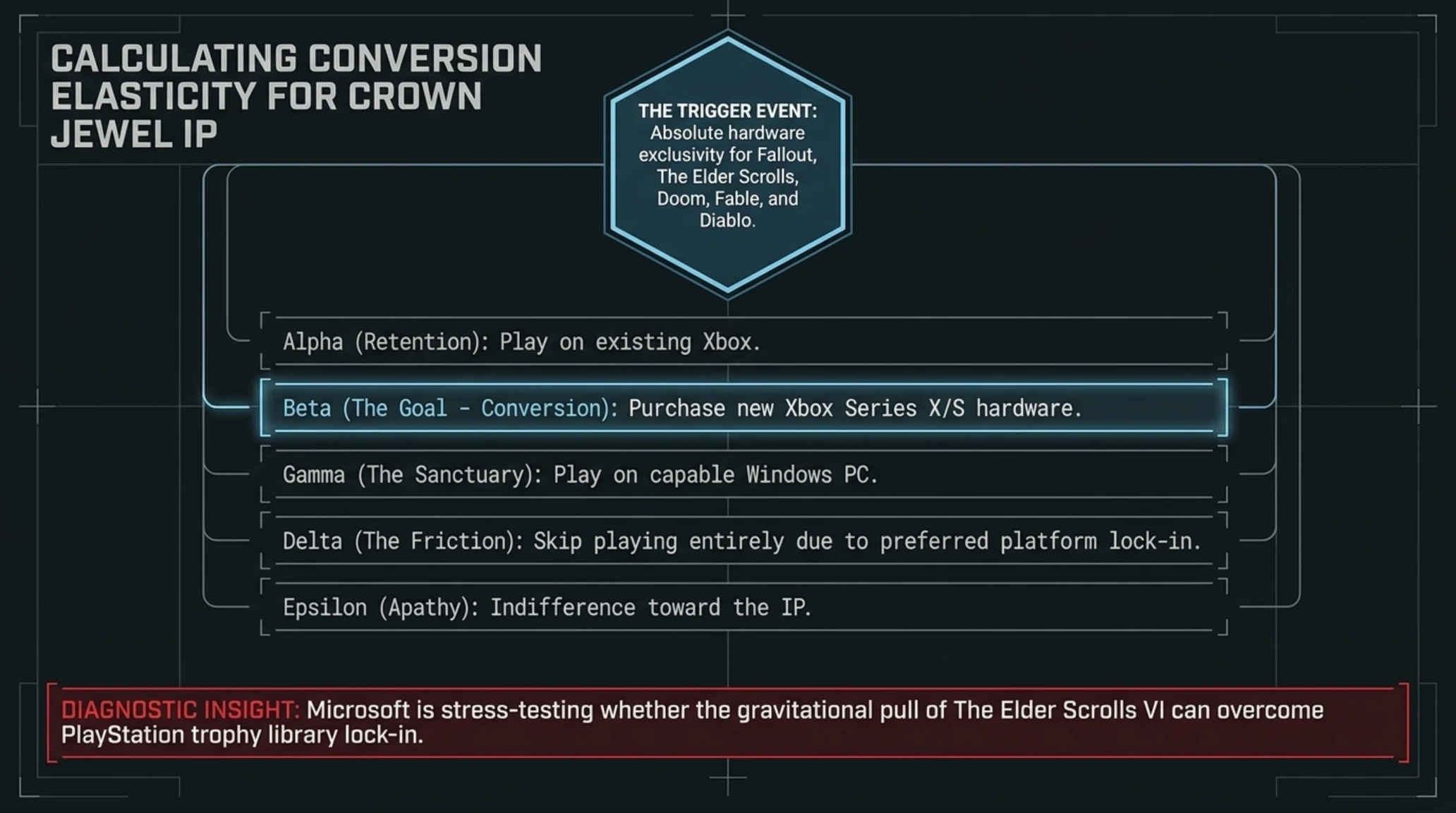
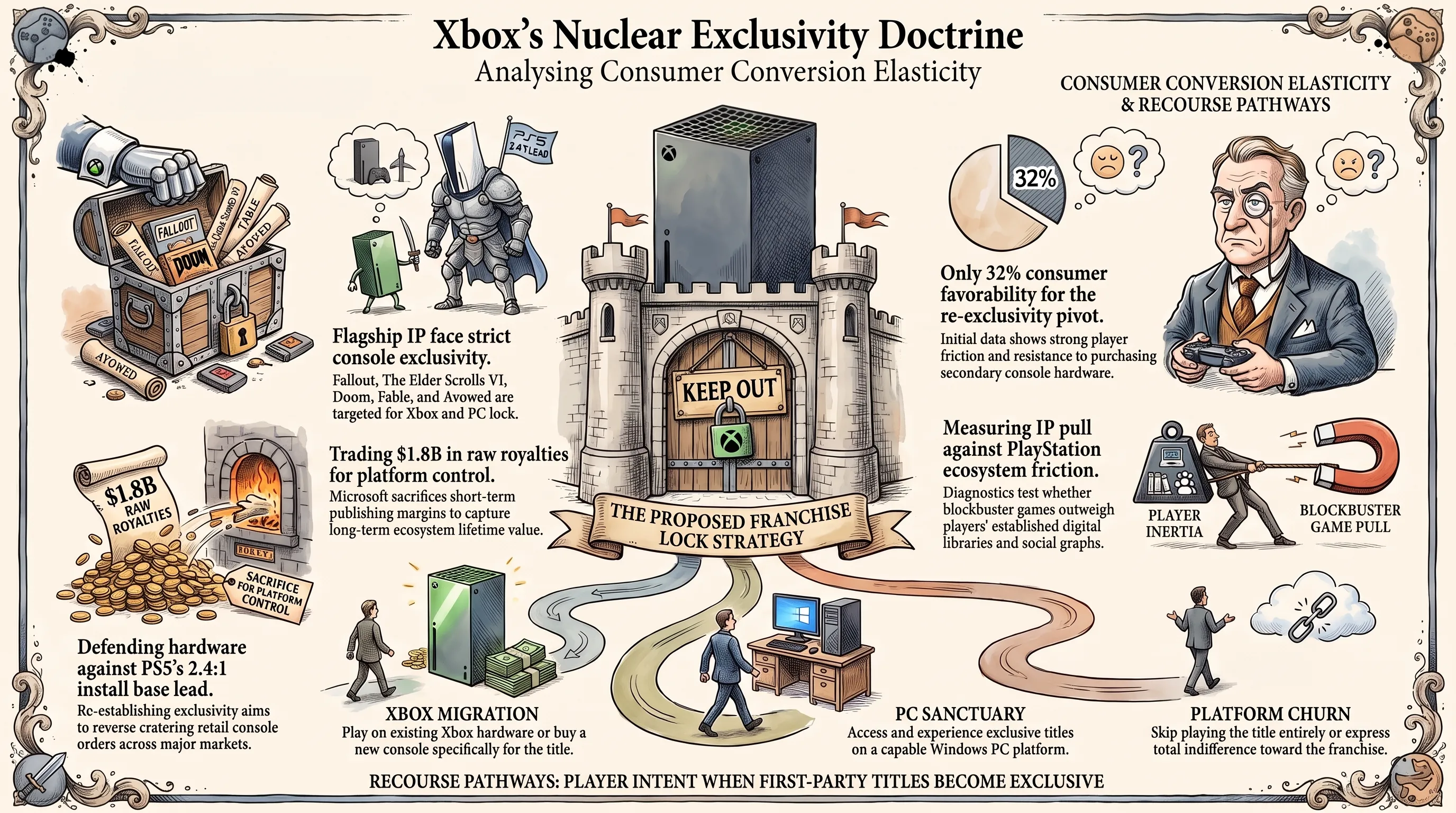
Beyond Minecraft, the survey dissects consumer willingness to switch hardware platforms for Microsoft's prestigious Western RPG and shooter lineages. Specific questions query player intentions regarding upcoming releases in the Fallout, The Elder Scrolls, Doom, Fable, Avowed, and Diablo franchises. The survey forces participants to choose their primary recourse in the event of total console exclusivity:
- Pathway Alpha: Play the title on an existing Xbox console currently owned.
- Pathway Beta: Purchase a new Xbox Series X or Series S specifically to access the exclusive content.
- Pathway Gamma: Access and experience the title on a capable Windows PC.
- Pathway Delta: Skip playing entirely because the title is unavailable on the preferred platform (PlayStation/Nintendo).
- Pathway Epsilon: Total indifference toward the franchised intellectual property.
This granular segmentation exposes Microsoft's urgent diagnostic: calculating the conversion elasticity of PlayStation-centric gamers. Microsoft is attempting to measure whether the gravitational pull of The Elder Scrolls VI or a future Fallout 5 is sufficient to compel hardware migration, or whether modern players have become so thoroughly locked into their PlayStation trophy libraries, digital purchases, and social graphs that they would rather abandon Bethesda's worlds than adopt a green plastic box.
Technical Audit | Myth vs. Engineering Reality
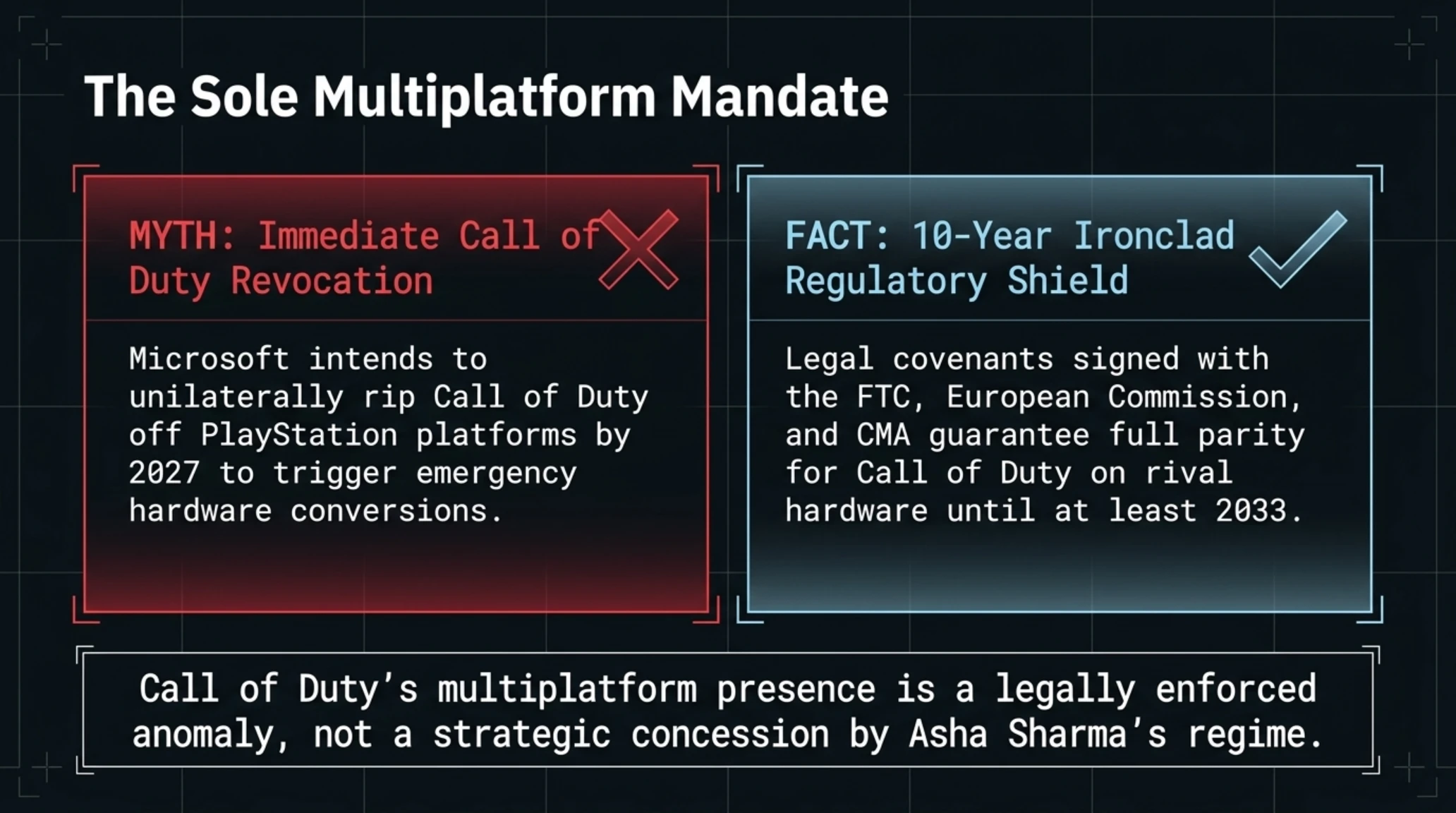
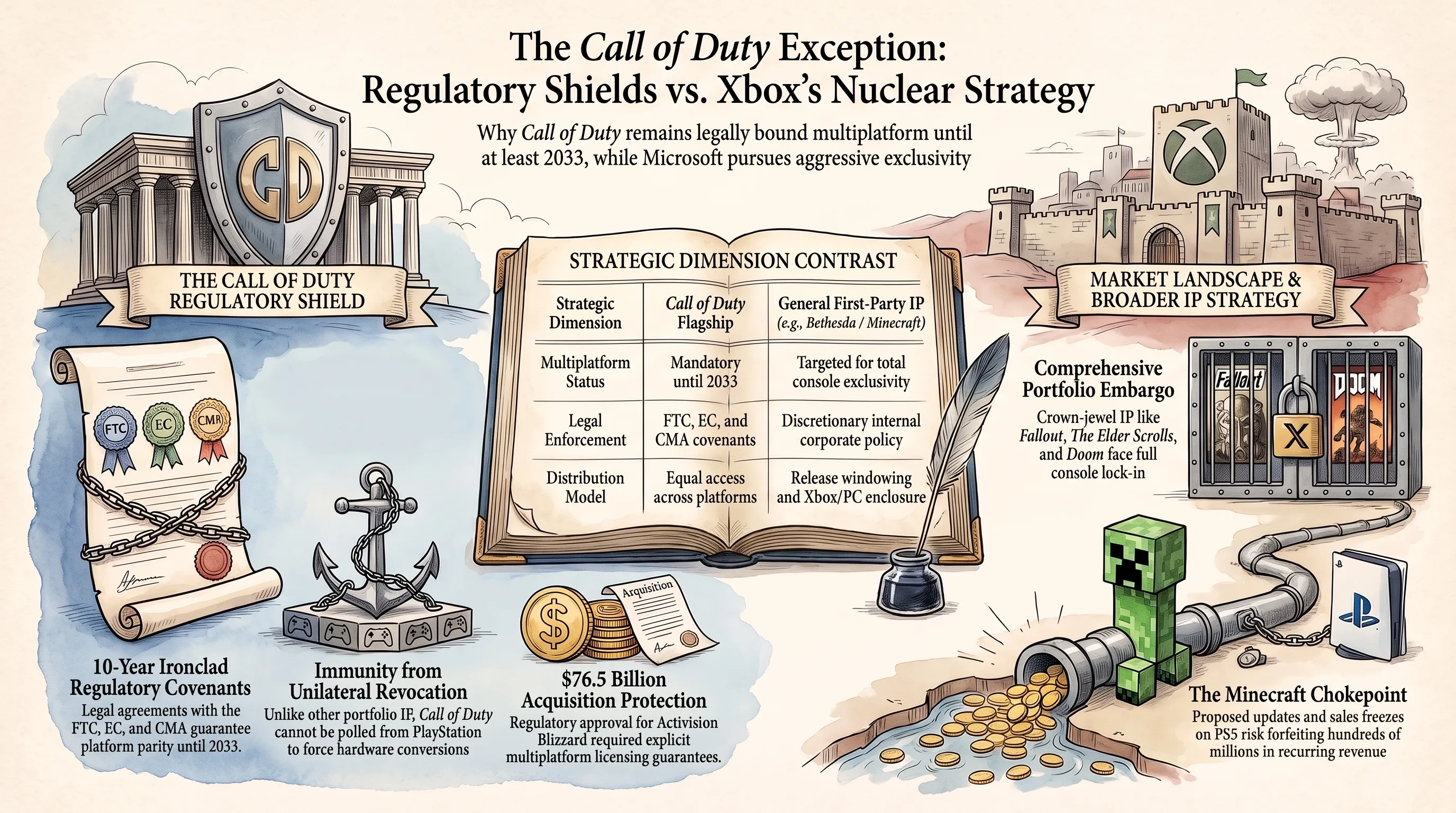
Microsoft intends to unilaterally rip Call of Duty off PlayStation platforms by 2027 to trigger emergency hardware conversions.
Legal covenants signed with the FTC, European Commission, and CMA guarantee full parity for Call of Duty on rival hardware until at least 2033.
Tekin Technical Jargon Buster
Dismantling the Multiplatform Compromise: Studio Morale and Executive Realignment
The internal debate currently raging across the corridors of Redmond reflects a fundamental identity crisis within Microsoft Gaming. Having spent over $76.5 billion acquiring ZeniMax Media and Activision Blizzard King, corporate leadership is under immense pressure from Satya Nadella and CFO Amy Hood to deliver operating margins worthy of a tier-one enterprise tech behemoth. Phil Spencer’s multiplatform experiment was an attempt to placate Wall Street by monetizing Sony’s superior hardware footprint, but it ultimately compromised the integrity of the Xbox ecosystem.
Inside Bethesda Game Studios, id Software, and MachineGames, the whiplash has been profound. Creative directors like Todd Howard spent years defending multiplatform parity, celebrating the reality that titles like Skyrim reached virtually every computing device capable of rendering 3D graphics. When Starfield launched as an Xbox and PC exclusive, the initial sales velocity was formidable, yet player discourse remained poisoned by endless speculation regarding an eventual PlayStation 5 port. That pervasive ambiguity paralyzed hardware consumers.
Under Asha Sharma, the corporate doctrine has swung decisively back toward hard-nosed enclosure. In internal communications reviewed by senior industry reporters, Sharma and head of Xbox Game Studios Matt Booty have signaled that Microsoft can no longer afford to act as a benevolent third-party publisher for Sony’s hardware monopoly. The mandate is singular: establish unequivocal platform differentiation or face slow obsolescence as a redundant hardware vendor.
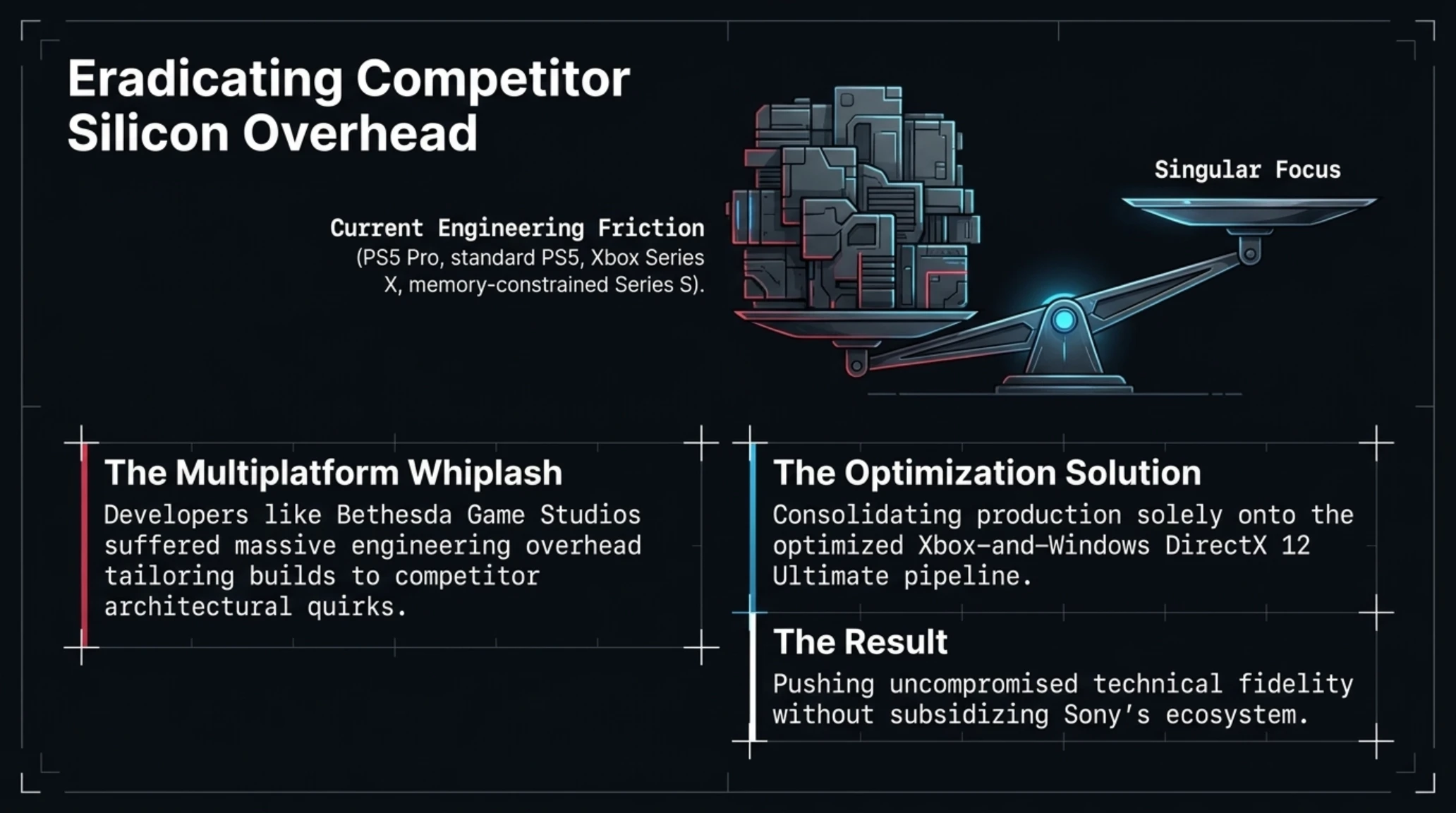
This aggressive pivot also attempts to resolve acute friction among premier game developers. Crafting massive interactive epics to simultaneously exploit the specialized architectural quirks of the PS5 Pro, standard PS5, Xbox Series X, and the notoriously memory-constrained Xbox Series S has exerted massive engineering overhead. A singular focus on an optimized Xbox-and-Windows DirectX 12 Ultimate pipeline dramatically streamlines production cycles, enabling studios to push uncompromised technical fidelity without tailoring builds to competitor silicon.
Historical testimony unsealed during the federal FTC evidentiary hearings demonstrated that Microsoft executives had contemplated this exact dilemma for years. Internal correspondence between Phil Spencer and Xbox financial officers revealed that as early as 2021, Microsoft understood that withholding ZeniMax and Bethesda software from PlayStation would forfeit approximately $1.5 billion in raw publishing revenues. At that juncture, leadership rationalized the sacrifice by projecting that exclusive blockbusters would generate sufficient hardware velocity and subscription momentum to offset software royalties. When that hardware conversion failed to materialize due to inconsistent marketing and software porting compromises, the entire corporate premise collapsed.
European retail telemetry further underscores the urgency of Sharma's intervention. In major territories such as the United Kingdom, Germany, and France, physical distribution networks witnessed a catastrophic 48% decline in Xbox console replenishment orders over the past twelve months. Major European consumer electronics retailers quietly downsized or completely eliminated dedicated Xbox floor displays, reallocating precious square footage to PlayStation 5 accessories and Nintendo Switch software. Deprived of a compelling reason to persuade fence-sitting consumers, retail staff overwhelmingly directed prospective purchasers toward Sony hardware. By reintroducing absolute exclusivity, Microsoft is attempting to restore retailer confidence and force floor salesmen to treat Xbox as a viable, indispensable platform.
The Collapse of Day-One Game Pass Economics: The Rebirth of Full-Price AAA
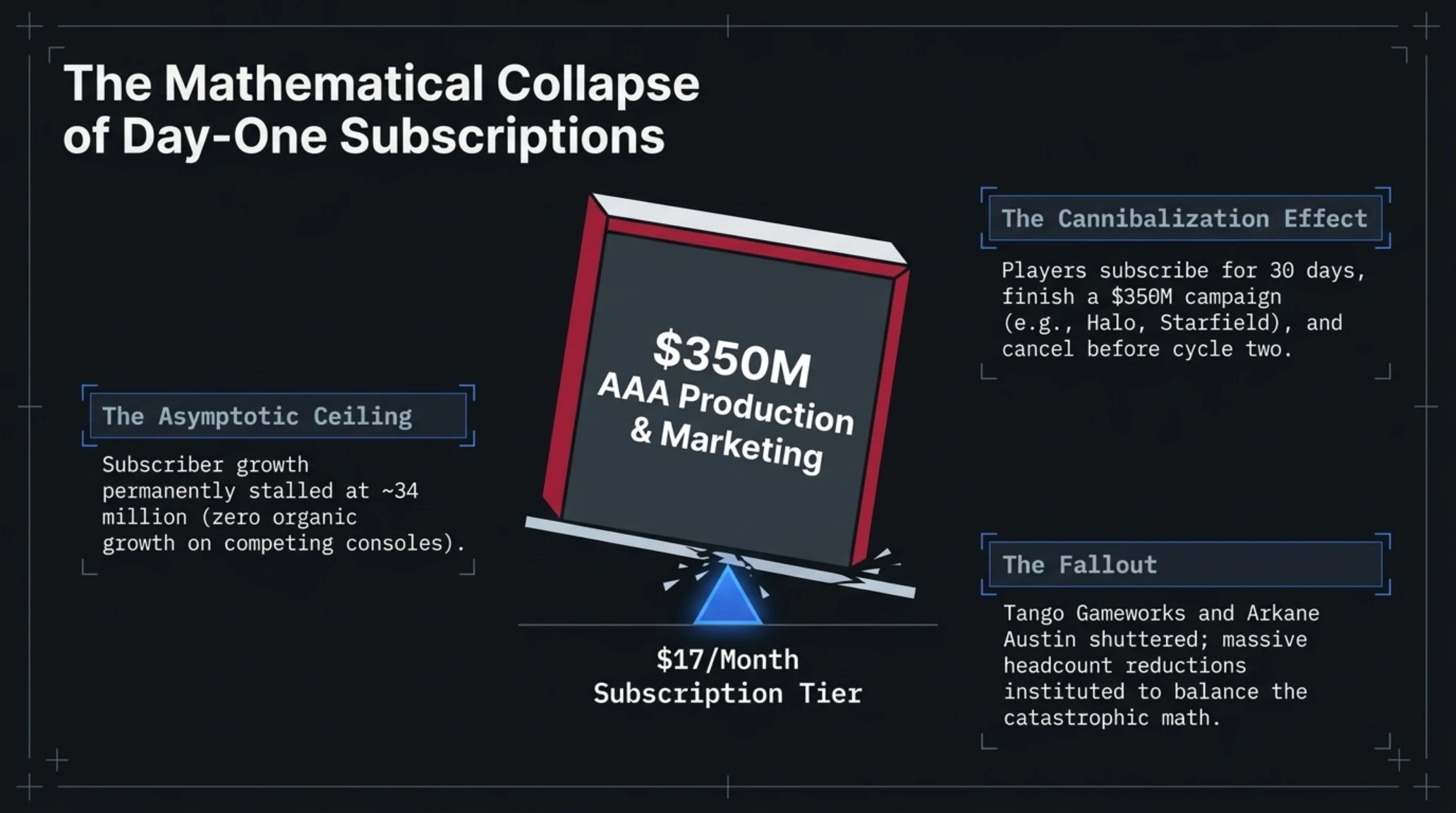
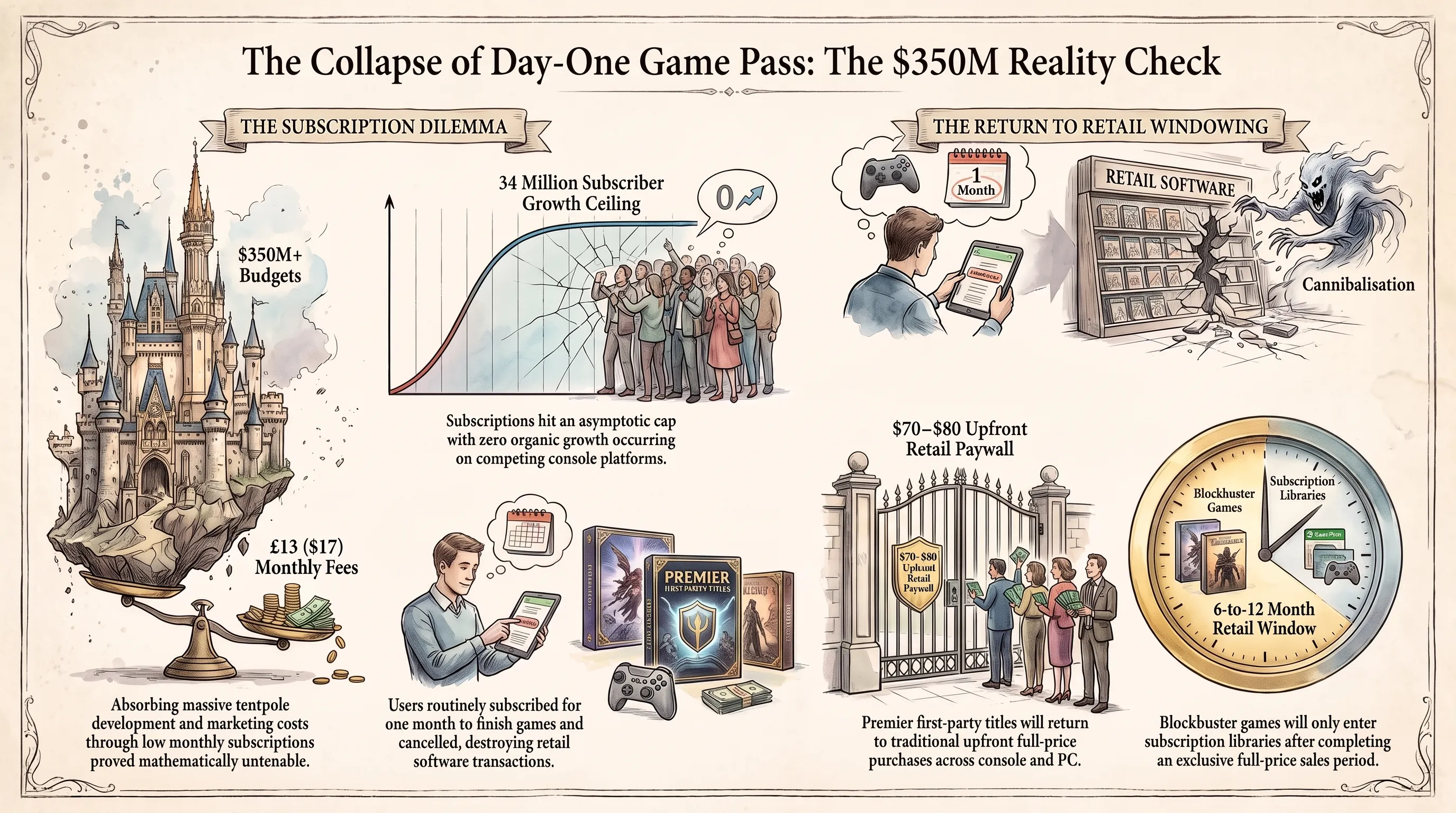
Crucially, the nuclear exclusivity pivot is inseparable from the simultaneous breakdown of the "Day-One Subscription" economic paradigm. For half a decade, Microsoft positioned Game Pass as the Netflix of gaming, convincing millions of consumers that paying $70 for a premium software release was an archaic relic of the past. However, the unforgiving arithmetic of modern game development has utterly shattered that hypothesis.
When the production and global marketing expenditure of tentpole releases like The Elder Scrolls VI or Halo 7 escalates beyond $350 million, absorbing that investment through a $17-per-month subscription tier becomes mathematically untenable. Players routinely subscribe for thirty days, conquer the campaign, and cancel before paying a second billing cycle. Rather than generating a sustained recurring revenue base, Day-One Game Pass deployment effectively cannibalized high-margin retail software transactions.
Asha Sharma’s blunt acknowledgment that "the big bet on Game Pass did not deliver expected returns" precipitated brutal structural remedies: the closure of beloved development houses such as Tango Gameworks, Arkane Austin, and massive headcount reductions across Activision Blizzard’s publishing divisions. The realization dawned that subscription revenues had reached an asymptotic ceiling of approximately 34 million subscribers primarily concentrated on existing Xbox hardware and PC with zero organic growth occurring on competing consoles.
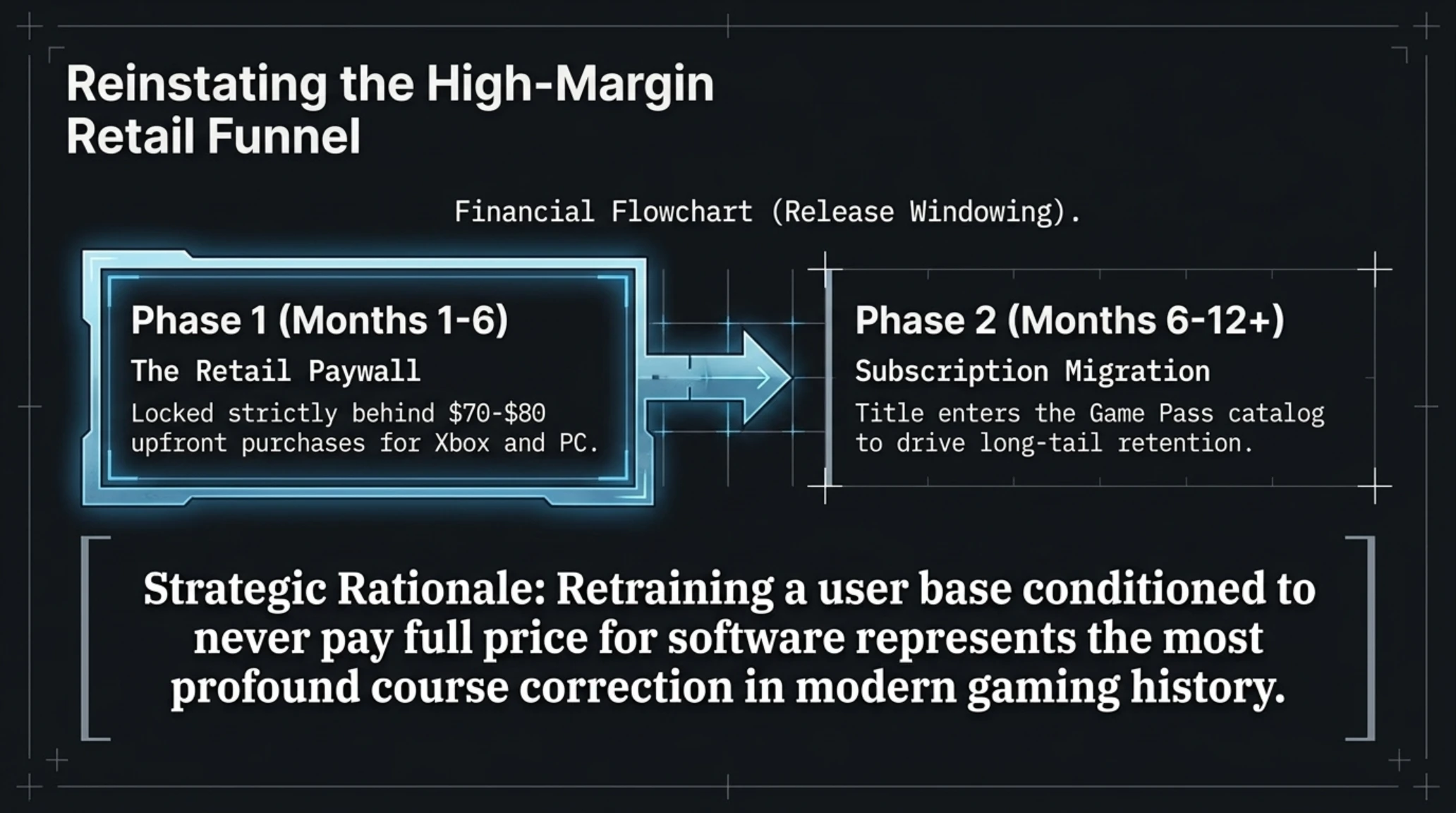
Consequently, Microsoft is instituting an aggressive "Release Windowing" strategy. Premier first-party software will return to the traditional retail framework: locked behind an upfront $70 or $80 paywall for both console and PC gamers. Only after a six-to-twelve-month retail window will these titles migrate into the subscription library. By pairing this pricing discipline with strict hardware exclusivity, Microsoft aims to restore financial solvency to its first-party network while presenting a compelling reason for enthusiasts to acquire dedicated Xbox silicon.
Industry veterans note that this dual pivot simultaneously dismantling Day-One Game Pass and locking console exclusivity represents the most profound course correction in modern gaming history. For years, Microsoft cultivated an audience conditioned to never pay full price for software. Retraining that user base to invest $70 upfront while simultaneously asking multiplatform gamers to purchase a secondary console represents a monumental marketing gamble, the outcome of which will define the survival of the Xbox hardware division into the next decade.
Grouped Bar Chart & Comparative Ecosystem Telemetry
| Strategic Parameter | Sony PlayStation 5 Architecture | Microsoft Xbox Series Architecture |
|---|---|---|
| Global Hardware Install Base | 72.4 Million Units | 30.1 Million Units (Series X & S Combined) |
| Annual Gaming Gross Revenue | $31.2 Billion | $22.8 Billion (Inclusive of Activision Blizzard) |
| Full-Price Software Sales Ratio | 78% of Total Game Transactions | 34% (Depressed by Game Pass Substitution) |
Wall Street Reaction and Financial Modeling: The High-Stakes Gamble
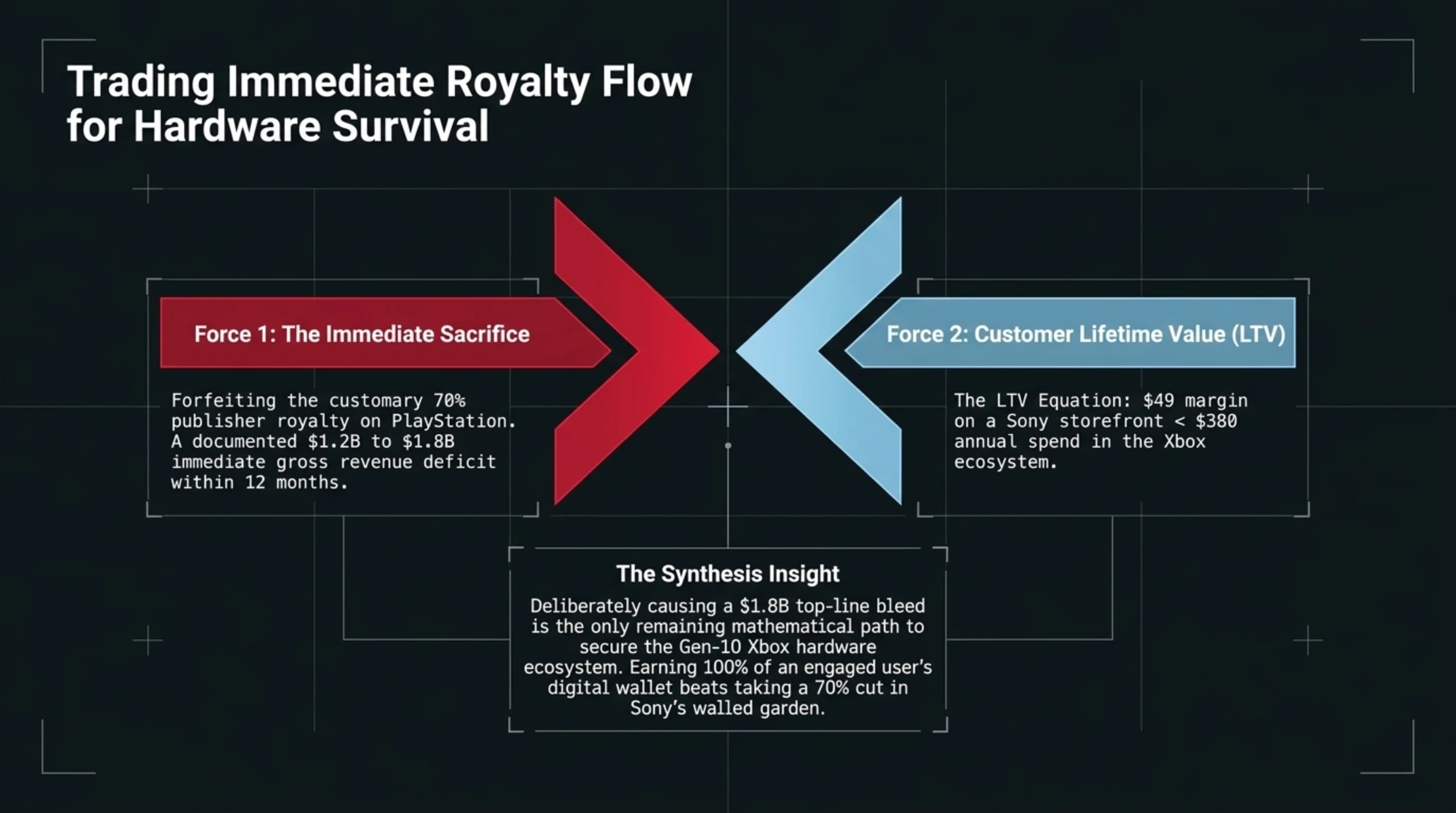
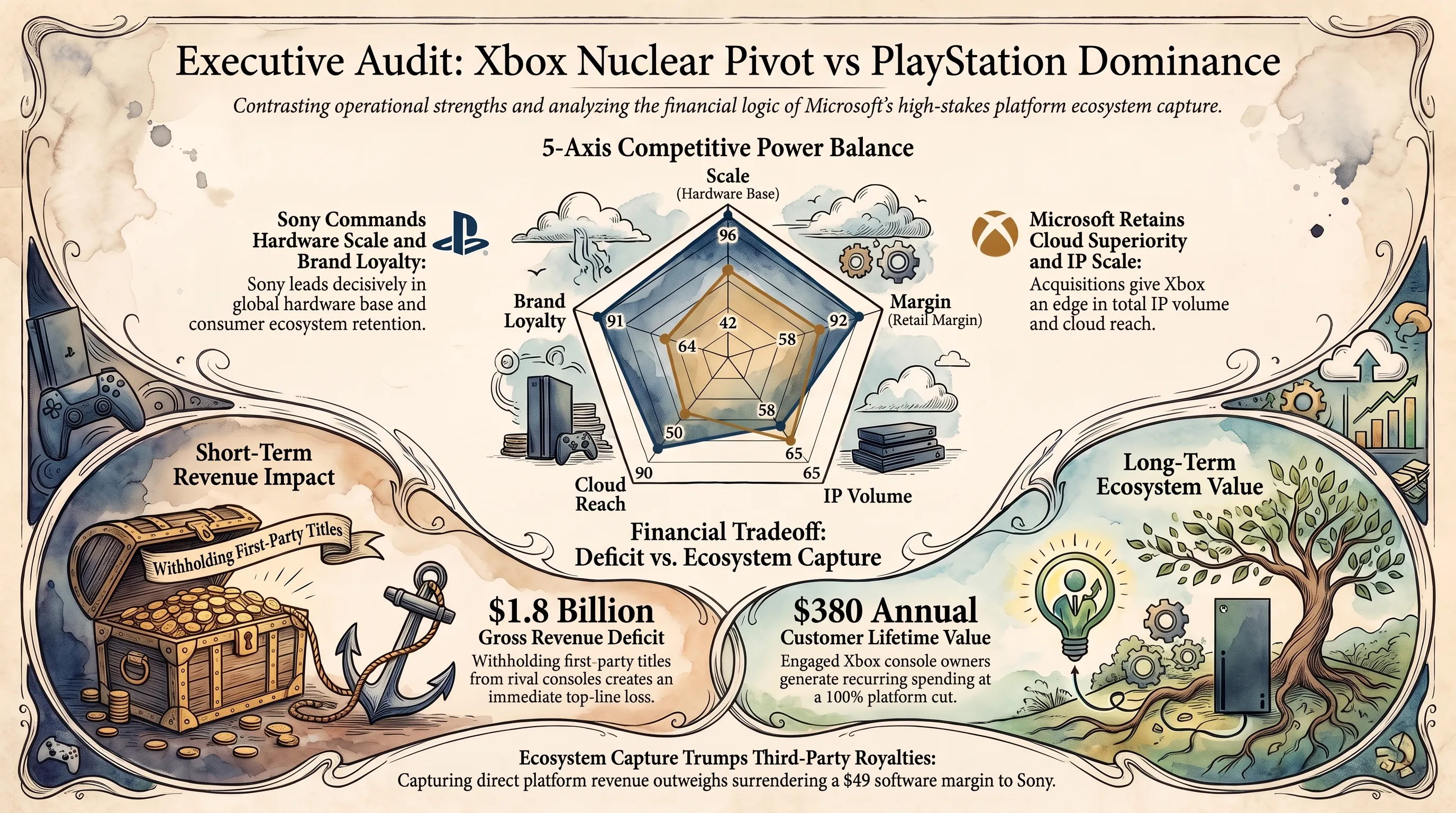
Equity analysts across Wall Street including veteran voices at Morgan Stanley, Wedbush Securities, and Bernstein Research have expressed deep skepticism regarding the financial feasibility of the nuclear doctrine. Michael Pachter, managing director of equity research at Wedbush, calculates that completely cutting off PlayStation and Nintendo ecosystems would carve an immediate $1.2 to $1.8 billion gross revenue deficit from Microsoft Gaming’s top line within twelve months of enactment.
The mathematical reality is unyielding: Sony’s active PlayStation Network user base exceeds 124 million monthly active users, while the physical hardware footprint of the PS5 stands at more than 72 million consoles globally. Deliberately withholding monumental releases such as The Elder Scrolls VI or next-generation Doom experiences from this audience means forfeiting the customary 70% publisher royalty on millions of day-one copies.
However, proponents of the nuclear doctrine within Microsoft’s treasury division argue from the perspective of Customer Lifetime Value (LTV). In their view, generating a $49 software margin on a competitor's storefront is fundamentally inferior to securing a dedicated consumer within Microsoft's proprietary digital garden. An engaged console owner spends an average of $380 annually across digital storefront purchases, third-party microtransactions, peripheral accessories, and online services a revenue stream where Microsoft retains 100% of the platform cut rather than surrendering a 30% toll to Sony Interactive Entertainment.
Donut Chart & Financial Revenue Stream Breakdown
| Revenue Channel | Current Share of Revenue | Impact of Nuclear Exclusivity Doctrine |
|---|---|---|
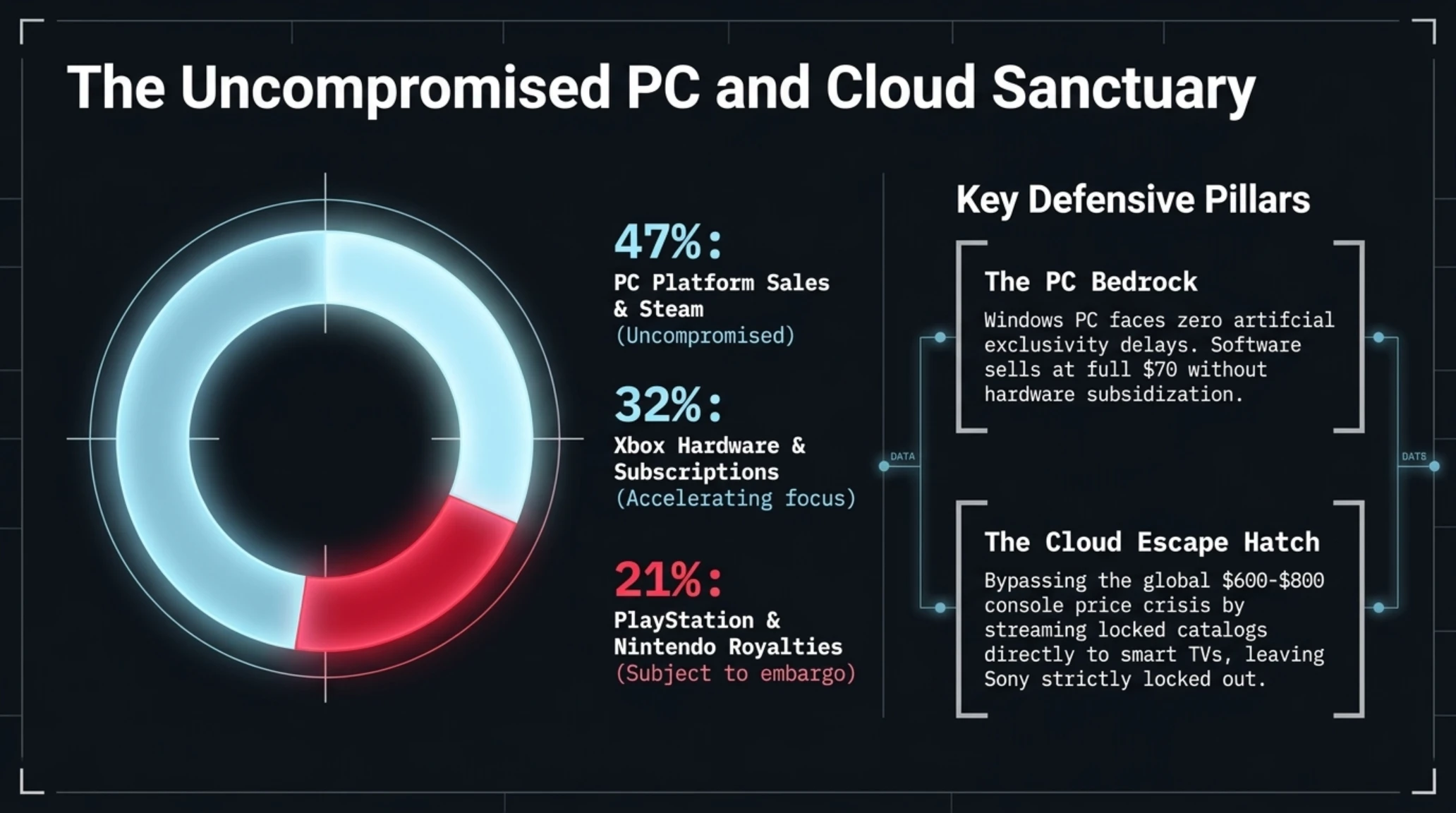
| PC Software Sales (Steam / Windows Store) | 47% of Total Gross | Uncompromised; benefits from full $70 price realization |
| Xbox Consoles & First-Party Digital Services | 32% of Total Gross | Accelerates hardware pull; restores proprietary LTV margins |
| Competitor Royalty Flow (Sony & Nintendo) | 21% of Total Gross | Subject to immediate 70-80% contraction upon embargo |
Market Sentiment Gauge & S-Curve Adoption Trajectory
Sentiment Telemetry Analysis: The S-Curve metrics indicate a sharp erosion in consumer sentiment. Only 32% of survey respondents actively endorse a return to rigid hardware exclusivity, citing corporate inconsistency and platform fatigue as major deterrents.
📚 Classified & Related Dossiers in TekinGame
If you wish to explore beyond this report and delve into cybernetic frontiers and autonomous AI architectures, do not miss these three exclusive deep-dives in the Tekin Garage:
Sony's Defensive Ramparts: Why PlayStation Remains Unshaken
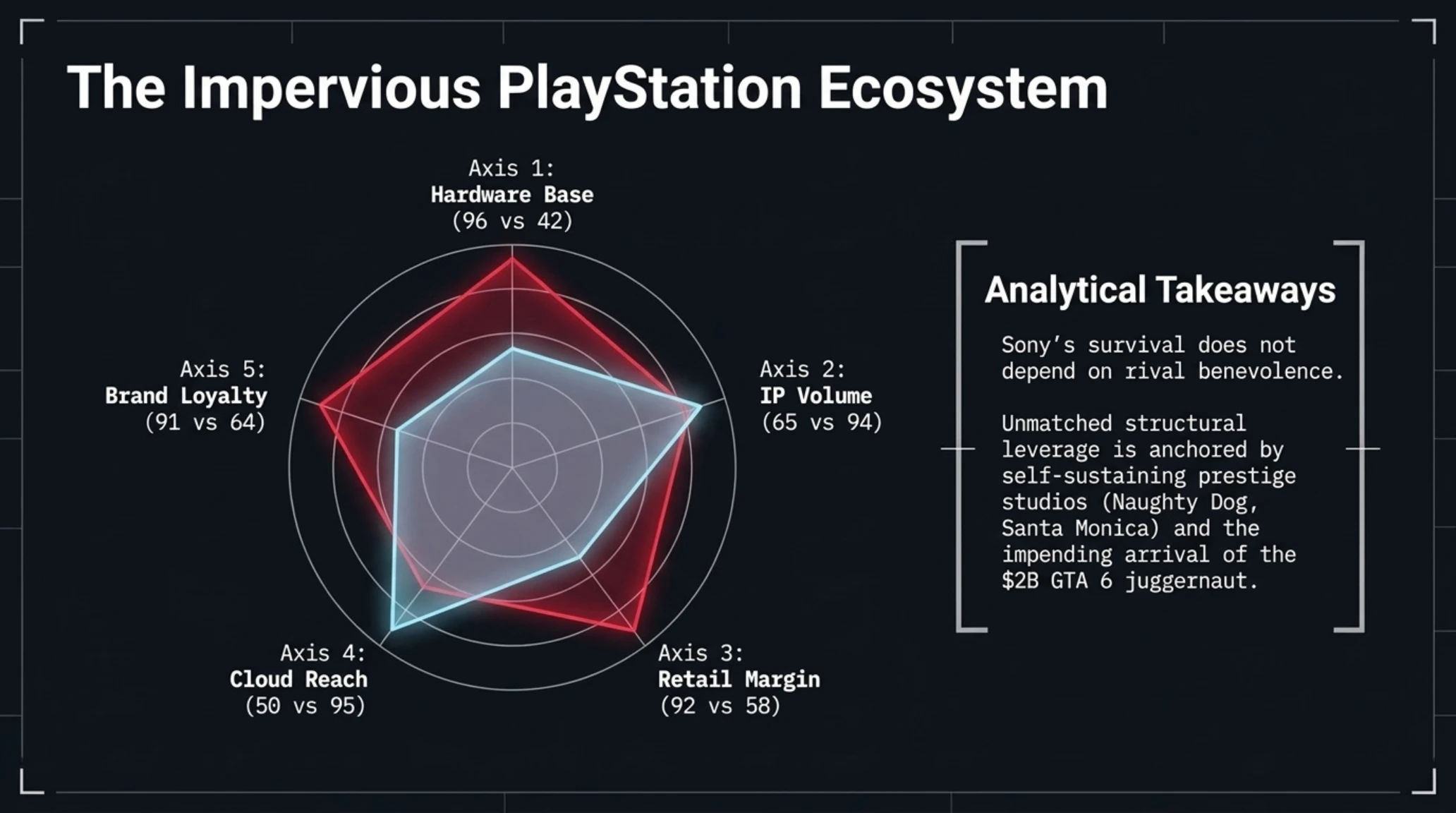
Inside Sony Interactive Entertainment headquarters in San Mateo and Minato, Tokyo, leadership has greeted the leaked survey with calculated equanimity. Sony Group CEO Hiroki Totoki and PlayStation chief executive officers have systematically built an entertainment machine that does not depend on rival benevolence. The PlayStation brand is underpinned by a self-sustaining ecosystem of first-party prestige studios: Naughty Dog, Santa Monica Studio, Insomniac Games, and Guerrilla Games.
Historically, PlayStation enthusiasts do not purchase consoles to play Western role-playing games in isolation; they invest in the ecosystem for transcendent narrative experiences such as God of War Ragnarök, Marvel's Spider-Man 2, and Horizon Forbidden West. While the loss of future Bethesda titles represents a legitimate catalog deficiency, it does not represent an existential threat to PlayStation's market dominance.
Furthermore, Sony wields unmatched structural leverage as the definitive home for global blockbuster interactive entertainment. When Take-Two Interactive prepares Grand Theft Auto VI for its historic late-2026 rollout, the primary commercial focus and co-marketing partnerships are anchored exclusively around the PlayStation 5 and PS5 Pro. With GTA 6 pacing toward an unprecedented $2 billion in pre-launch velocity, Sony’s hardware momentum is virtually impervious to a localized Bethesda embargo.
Pentagon Radar Audit: Sony vs. Microsoft Power Balance
Radar Audit Analysis: Sony decisively controls install base scale, retail profitability, and ecosystem stickiness, whereas Microsoft retains theoretical superiority in raw IP portfolio breadth and hyper-scale cloud distribution capabilities.
Chronology of Strategic Evolution: The Xbox Exclusivity Cycle
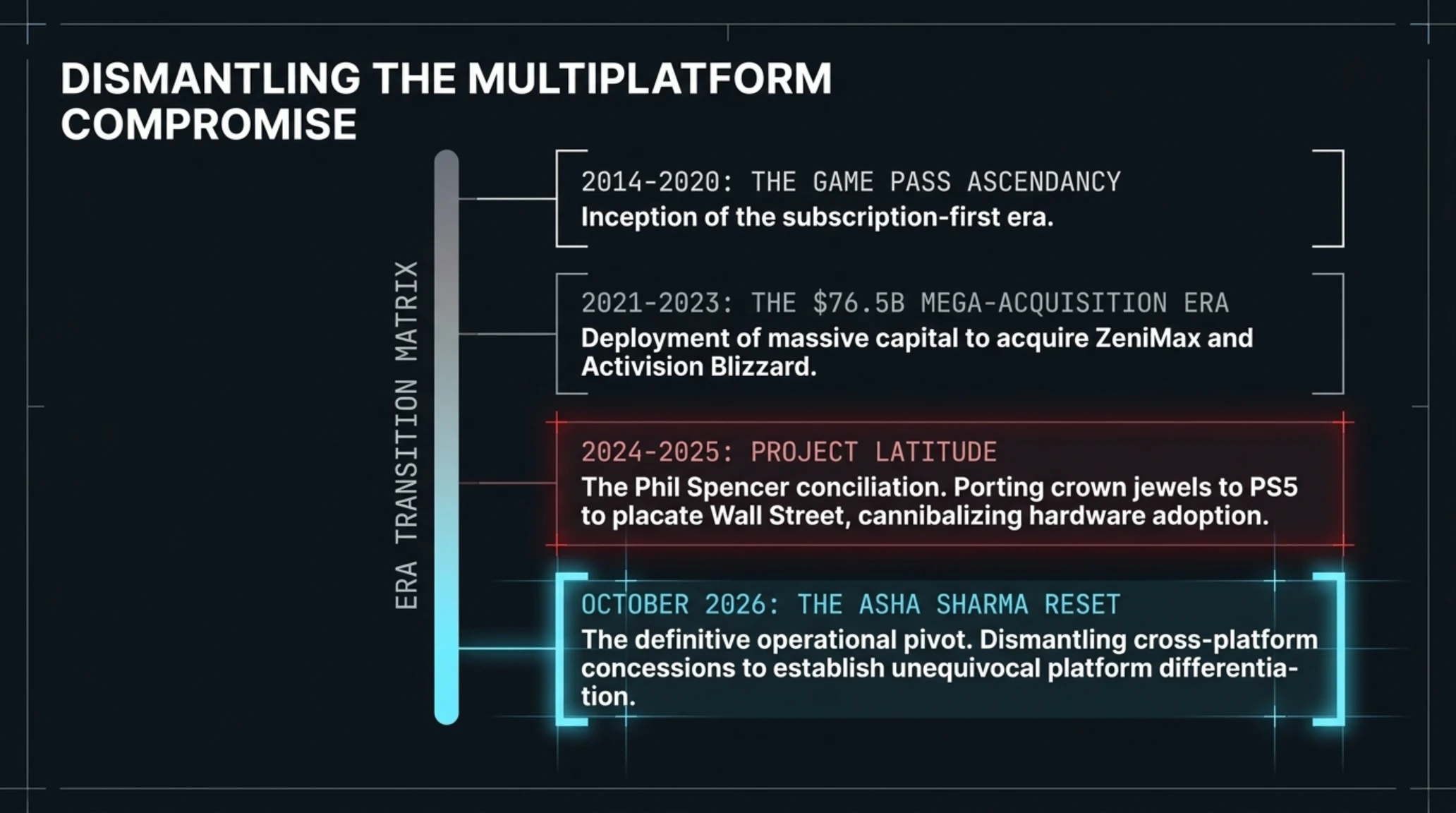
| Chronological Era | Milestone Event & Leadership Action | Strategic Realignment & Exclusivity Policy |
|---|---|---|
| 2014 - 2020 | The Phil Spencer Ascendancy | Inception of Xbox Game Pass and the universal commitment to simultaneous Day-One PC and console releases. |
| 2021 - 2023 | The Mega-Acquisition Era | Over $76.5B deployed across ZeniMax and Activision Blizzard, bringing Fallout, Elder Scrolls, and Diablo under Xbox control. |
| 2024 - 2025 | Project Latitude & Multiplatform Concessions | Porting flagship exclusives to PS5; catastrophic decay in Xbox console hardware demand across international markets. |
| October 2026 | The Asha Sharma Reset & Nuclear Survey | Dismantling cross-platform initiatives; official surveying on absolute exclusivity and the Minecraft PlayStation embargo. |
The Cloud Gaming Frontier and the PC Sanctuary: Microsoft's Digital Redoubt
One undeniable pillar remains steadfast across every clause of Microsoft's strategic polling: the sacrosanct status of the Windows PC platform. In every hypothetical scenario presented to Xbox Insiders, Microsoft explicitly reaffirms that PC gamers whether operating via Steam, the Microsoft Store, or native Game Pass PC installations will face zero platform restrictions or artificial delays. Windows remains the bedrock foundation of Microsoft's corporate software empire.
This calculated preservation makes profound operational sense. The PC ecosystem does not compete directly with living-room hardware; rather, it serves as an open frontier where software sells at full $70 price points with minimal hardware subsidization requirements. Furthermore, as explored in our investigation of the formation of the Xbox XP entertainment division, Microsoft is orchestrating a deeper synthesis between interactive gaming IP and Hollywood cinematic extensions, where the PC acts as the core hub for high-end digital consumption.
Simultaneously, amidst the global console price crisis driven by soaring semiconductor fabrication costs, Microsoft's cloud distribution framework represents its ultimate escape hatch. Players reluctant to invest $600 to $800 in dedicated tenth-generation console hardware can access Microsoft's locked catalog directly through smart televisions, handheld devices, and browser interfaces via Xbox Cloud Gaming leaving Sony strictly locked out of the streaming ecosystem.
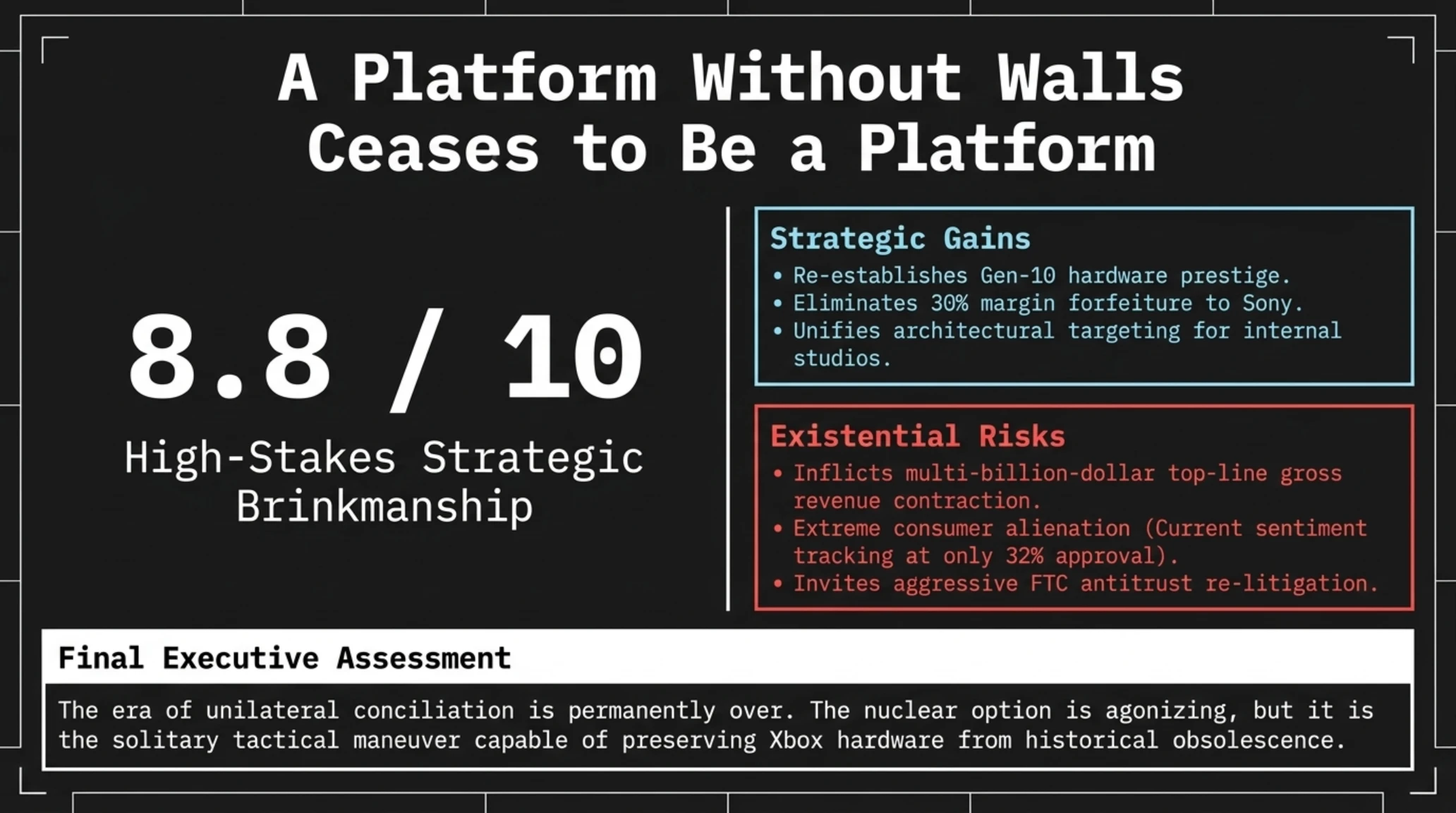
- Re-establishes unequivocal value and prestige for dedicated Xbox Series and Gen-10 hardware.
- Eliminates the catastrophic 30% platform margin forfeiture to competitor Sony Interactive Entertainment.
- Provides unified architectural targeting for first-party studios focusing exclusively on Xbox and PC pipelines.
- Accelerates consumer adoption of high-tier Xbox Cloud Gaming and PC Game Pass ecosystems.
- Inflicts immediate multi-billion-dollar top-line gross revenue contraction across global operations.
- Severe risk of consumer backlash, public review-bombing, and brand alienation.
- Invites intense regulatory re-litigation from antitrust authorities like the FTC regarding past acquisition pledges.
Editorial Verdict & Authoritative Source Registry
The End of Conciliation: Xbox Draws the Battle Lines
Microsoft has recognized that a platform without walls ceases to be a platform. The nuclear option demands an agonizing financial sacrifice, but it represents the solitary tactical maneuver that can preserve Xbox hardware from complete historical obsolescence.
Frequently Asked Questions Regarding the Xbox Nuclear Strategy
Will Call of Duty become console-exclusive to Xbox under this doctrine?
No. Due to legally binding 10-year commitments executed with Sony Interactive Entertainment and antitrust regulators globally during the Activision Blizzard acquisition, Call of Duty is legally protected and must launch with absolute feature, content, and date parity on PlayStation until at least 2033.
What happens to gamers who already purchased Minecraft on PlayStation or Switch?
Existing purchases remain fully accessible. The proposed embargo explicitly states that previously owned content and game builds remain intact; the restriction strictly applies to barring future game purchases and withholding upcoming content expansions and major graphical overhauls on rival consoles.
Why is Asha Sharma abandoning Phil Spencer's multiplatform initiatives?
Shipping flagship titles onto PlayStation resulted in an acute collapse in Xbox hardware velocity. With European PS5 sales outpacing Xbox by over 2.4 to 1, Sharma recognizes that continuing a multiplatform publishing strategy destroys consumer incentive to ever invest in dedicated Xbox hardware.
Does the exclusivity embargo apply to the Windows PC ecosystem?
No. The PC ecosystem via Steam, Windows Store, and native PC Game Pass is categorized as an uncompromised foundational pillar. Every first-party title will continue to launch day-and-date on PC without restriction.
What is the release windowing strategy being implemented for Game Pass?
Release windowing ends the universal practice of placing $300M+ AAA blockbusters on Game Pass day-and-date. Instead, titles are sold exclusively at full $70-$80 retail prices for an initial 6 to 12 month commercial cycle before being integrated into the subscription catalog.
Could antitrust regulators intervene if Microsoft enacts this policy?
Yes. If Microsoft weaponizes IP like Minecraft or Bethesda franchises to systematically starve rival platforms, antitrust bodies like the US Federal Trade Commission may petition federal courts to review claims of deceptive regulatory representations during past acquisition proceedings.
Additional Gallery: Tekin Analysis | Xbox Nuclear Exclusivity & Minecraft PS5 Embargo