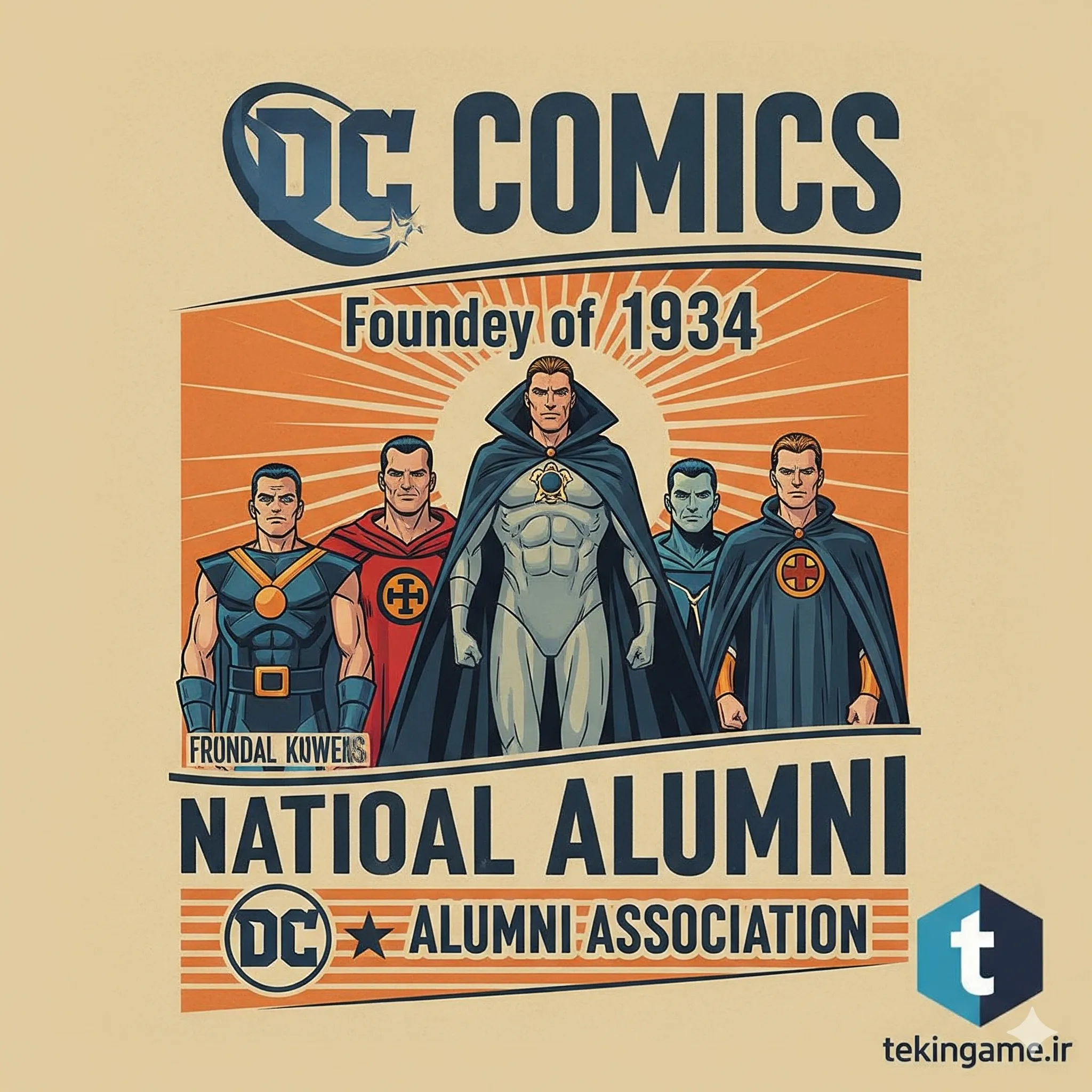
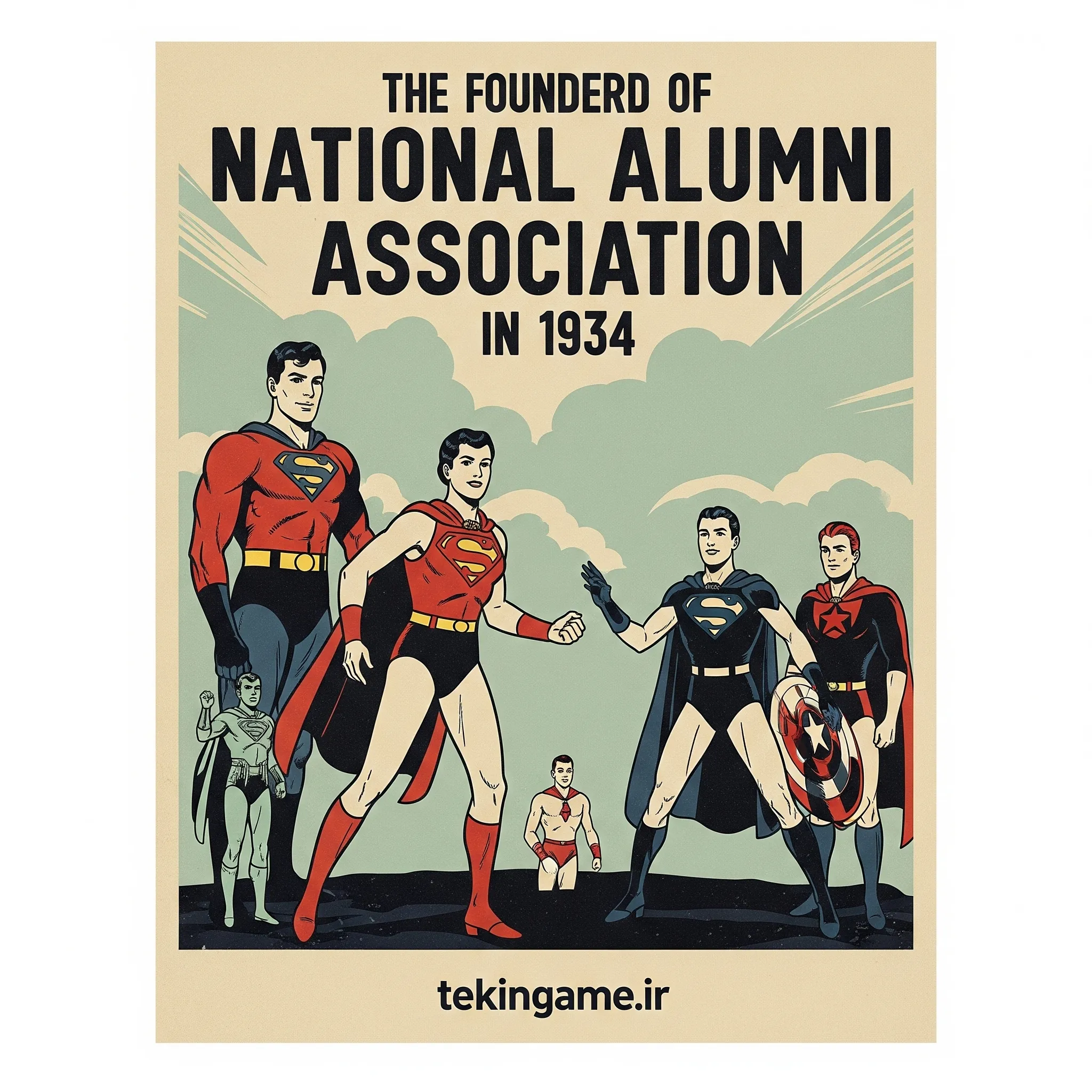
To billions of individuals across multiple generations, two solitary letters—'DC'—instantly evoke towering archetypes of modern mythology: caped saviors soaring through solar skies, grim gargoyles brooding over rain-slicked Gothic megalopolises, and an unyielding crusade for cosmic justice. From the gleaming glass towers of Metropolis to the shadowy alleyways of Gotham City, DC Comics laid the foundational granite upon which twentieth and twenty-first-century popular culture was erected. Yet, beneath this omnipresent commercial heraldry lies an intriguing linguistic and historical paradox that even lifelong comic book enthusiasts frequently overlook: what does 'DC' actually stand for, and how did a company named after an obscure crime-fiction anthology endure the brutal economic headwinds of the Great Depression to blossom into a multi-billion-dollar multimedia empire? In this exhaustive historical, semiotic, and architectural treatise conducted at the
TekinGame Technical Media Laboratory, we chronicle the epic trajectory of the Detective Comics imprint from 1930s newsstand pulp magazines to modern cinematic universes, Rocksteady's revolutionary Arkhamverse, and the visionary dawn of James Gunn's DC Studios.
⚡DC Comics Brand Heritage & Etymological Blueprint
TEKIN HUD◈ Foundational Etymology
Acronym for 'Detective Comics' (originally launched as a monthly anthology in March 1937)
◈ Linguistic Tautology
The commercial brand 'DC Comics' translates literally to 'Detective Comics Comics'
◈ Original Corporate Pioneer
Major Malcolm Wheeler-Nicholson (National Allied Publications, 1934)
◈ Pivotal Golden Age Milestones
Action Comics #1 (June 1938 - Superman) & Detective Comics #27 (May 1939 - Batman)
TekinGame Historical Intelligence recognizes DC Comics as the primordial crucible of twenty-first-century secular mythmaking.
## Section 1: Major Malcolm Wheeler-Nicholson and the Advent of Original Content
To authentically decode the origins of DC, one must travel backward into the turbulent landscape of early 1930s America. During this era, the modern comic book format simply did not exist. Newsstands were inundated with cheap, oversized reprint pamphlets that merely compiled recycled black-and-white newspaper comic strips such as Mutt and Jeff or Famous Funnies. Into this stagnant publishing environment stepped an eccentric, visionary retired United States Cavalry officer named Major Malcolm Wheeler-Nicholson. A prolific pulp fiction writer who had served on the Mexican border and fought in World War I, Wheeler-Nicholson envisioned something radically audacious: a dedicated periodical format containing completely original characters, scripts, and artwork never before syndicated in daily broadsheets.
Wheeler-Nicholson recognized that daily newspapers held monopolistic syndication contracts that prevented regional publishers from republishing top-tier comic strips without ruinous royalty fees. By hiring starving young art students and eager pulp writers desperate for work during the Great Depression, he created a self-sustaining creative stable that could author twelve to sixteen original comic features every month. This structural decision to commission bespoke, work-for-hire sequential art was the single most important institutional catalyst in American comic book history, directly laying the groundwork for the superhero genre that would explode half a decade later.
In autumn 1934, Wheeler-Nicholson established National Allied Publications and published 'New Fun: The Big Comic Magazine' #1 in February 1935. Sold for ten cents, New Fun was a revolutionary publishing milestone that presented brand-new western, aviation, and comedic strips. However, the Major was a brilliant creative visionary but a disastrous financial administrator. Hamstrung by exorbitant printing debts, chronic cash-flow deficits, and aggressive press creditors during the darkest nadir of the Great Depression, he was forced into a desperate financial alliance with a ruthless printing magnate and distribution heavyweight named Harry Donenfeld, alongside accountant Jack Liebowitz.
"
Comic books were never disposable children's distractions; they were vibrant democratic tapestries of courage, crafted when ordinary human beings were desperate for moral clarity amidst economic collapse and the rising specter of totalitarianism.
Tekin Plus Department of Semiotic Narrative Studies & Cultural Historiography
## Section 2: The Genesis of Detective Comics and the Accidental Moniker
In 1937, Wheeler-Nicholson's crushing indebtedness compelled him to form a separate corporate entity with Donenfeld and Liebowitz: Detective Comics, Inc. The singular commercial objective of this new venture was to launch a sleek monthly anthology exclusively dedicated to hardboiled pulp crime, mystery, and hard-edged urban investigation. Detective Comics #1 hit American newsstands with a cover date of March 1937. Featuring gritty private eyes like Slam Bradley—conceived by two ambitious young Cleveland teenagers named Jerry Siegel and Joe Shuster—the publication captured public imagination.
Shortly after the launch, unable to satisfy his debts, Wheeler-Nicholson was systematically forced out of the company by Donenfeld, who took total ownership of both National Allied Publications and Detective Comics, Inc. As subsequent titles rolled off Donenfeld's presses, an organic shorthand developed among young readers crowding city newsstands. Customers seeking Donenfeld's books began pointing toward the small circular seal stamped on the covers, casually referring to them as 'the DC books.' When the corporate umbrella formally unified decades later, the imprint embraced the universal vernacular, giving birth to the beloved linguistic tautology 'DC Comics'—which literally reads as 'Detective Comics Comics.'
⚙️Chronological Corporate Metamorphosis of DC Comics
TEKIN HUD◈ 1934: National Allied Publications
Founded by Major Wheeler-Nicholson; introduces all-original comic content in New Fun
◈ 1937: Detective Comics, Inc.
Joint venture with Donenfeld; institutionalizes hardboiled crime anthology format
◈ 1946: National Comics Publications
Formal corporate consolidation of National Allied, Detective Comics, and All-American
◈ 1977: DC Comics Inc.
Official legal re-incorporation adopting the iconic colloquial acronym universally recognized by the public
The DC moniker was not manufactured in Madison Avenue marketing boardrooms; it was baptized by millions of eager adolescent readers on city street corners.
## Section 3: Detective Comics #27 and the Ascension of the Dark Knight
In May 1939, an epochal cultural event transpired within the pages of Detective Comics #27: the premiere appearance of 'The Bat-Man,' conceptualized by artist Bob Kane and relentlessly forged into narrative gold by uncredited writer Bill Finger. In stark opposition to the extraterrestrial omnipotence of Superman, Batman emerged as a deeply psychological, mortals-bound creature of vengeance. Stripped of mystical powers, Bruce Wayne commanded human perfection—sharpening his intellect, mastering martial disciplines, and deploying an inventive technological arsenal to wage an uncompromising war against underworld corruption.
The arrival of Batman permanently cemented Detective Comics as the undisputed crown jewel of the company's catalog. The series sustained an unbroken monthly publication run spanning more than eight consecutive decades, ultimately achieving the historic milestone of 1,000 continuous issues. Batman immortalized the titular detective heritage of DC; crowned 'The World's Greatest Detective,' he ensured that deductive forensic analysis, atmospheric shadows, and moral ambiguity remained permanently woven into the DNA of the DC brand.
🎧
شورای نظارت فنی و محتوایی تکین گیم // TekinGame Sovereign Council
نکته تحریریه تکین پلاس // Tekin Plus Editorial Note
Archival Market Valuation Note: A pristine CGC 9.2 graded copy of Detective Comics #27 represents one of the most astronomically valuable secular artifacts in existence, commanding upwards of $3.2 million in elite international auctions—surpassing the market value of numerous Renaissance masterworks.
## Section 4: Action Comics vs. Detective Comics: The Dual Pillars of Secular Myth
Just eleven months prior to the arrival of the Bat-Man, in June 1938, Donenfeld's publishing imprint had introduced Action Comics #1, debuting Jerry Siegel and Joe Shuster's Clark Kent—the champion of the oppressed known as Superman. Superman single-handedly inaugurated the modern superhero genre, whereas Batman in Detective Comics provided its philosophical counterweight. Together, Action Comics and Detective Comics established the twin ideological bastions of the DC universe: celestial hope versus grounded forensic reality, Metropolis's blinding solar skyline versus Gotham's rain-soaked gothic cathedrals.
During the Golden Age (1938–1956), National Comics achieved another conceptual triumph by engineering the world's first serialized shared continuity. In All Star Comics #3 (Winter 1940), characters from distinct titles convened as the Justice Society of America (JSA). Long before Marvel transformed from Timely Publications into a coherent universe, DC had pioneered multi-character crossover storytelling, establishing persistent fictional universes that would govern twentieth-century narrative architecture.
💎Philosophical Synthesis: The Dual Pillars of DC
TEKIN HUD◈ Action Comics (The Superman Archetype)
Embodied solar optimism, unassailable moral absolutism, celestial science fiction, and the immigrant experience
◈ Detective Comics (The Batman Archetype)
Embodied terrestrial darkness, human vulnerability, psychoanalytic trauma, and methodical deduction
◈ Publishing Architecture
Action Comics drove unprecedented volume circulation; Detective Comics supplied the definitive corporate moniker
◈ Cross-Media Legacy
Action birthed Richard Donner's cinematic template; Detective inspired Nolan's cinema and Rocksteady's Arkhamverse
The perpetual dialectic between radiant solar hope and nocturnal analytical grit is the architectural foundation of the DC mythos.
## Section 5: The Ages of Comics: Engineering Multiversal Crises and the Vertigo Renaissance
Comic book scholarship categorizes the medium's evolution into distinct eras, within each of which DC operated as an indispensable pioneer. During the Silver Age (1956–1970), DC revitalized the stagnant superhero genre through brilliant science-fiction reimagining—introducing Barry Allen as the Flash in Showcase #4 (1956) and Hal Jordan as Green Lantern. In 1961's seminal 'Flash of Two Worlds' (The Flash #123), writer Gardner Fox formalized the concept of the Multiverse, establishing Earth-One and Earth-Two to mathematically rationalize generational continuity discrepancies.
By the mid-1980s, decades of compounding parallel worlds had produced bewildering continuity bloat. In response, DC unleashed 'Crisis on Infinite Earths' (1985–1986), crafted by Marv Wolfman and George Pérez. This monumental twelve-issue cosmic apocalypse systematically annihilated the sprawling multiverse, collapsing disparate realities into a unified timeline. Crisis proved that comic book continuity was a living, breathing ecosystem capable of bold structural surgery. This golden era of narrative maturation immediately paved the way for profound masterpieces like Alan Moore's Watchmen and Frank Miller's The Dark Knight Returns—literary landmarks that elevated graphic storytelling into the upper echelons of modern art.
Furthermore, in 1993, DC executive editor Karen Berger spearheaded the creation of the Vertigo imprint, an avant-garde publishing sanctuary for mature, boundary-pushing literary horror and surreal fantasy. Under Vertigo, legendary masterworks such as Neil Gaiman's The Sandman, Garth Ennis's Preacher, and Grant Morrison's Doom Patrol flourished without the stifling restrictions of the Comics Code Authority. Vertigo demonstrated that graphic sequential art could rival the greatest achievements of twentieth-century world literature, attracting intellectual readerships that had previously dismissed superhero comics as juvenile trivia.
"
Worlds will live, worlds will die, and the universe will never be the same. Crisis on Infinite Earths proved that serialized superhero mythology could confront its own mortality, prune its narrative rot, and resurrect itself with majestic cosmic coherence.
Marv Wolfman - Architect of Crisis on Infinite Earths (1985)
## Section 6: Video Game Mastery: From Superman 64 to Rocksteady's Arkham Renaissance
The historical translation of DC's intellectual property into interactive entertainment was marked by decades of agonizing creative failure. For years, the catastrophic 1999 Nintendo 64 release Superman: The New Superman Adventures (infamously dubbed 'Superman 64') was widely considered an industry benchmark for unplayable software, characterized by horrific collision detection, arbitrary ring-flying trials, and suffocating draw distances. However, in August 2009, London-based developer Rocksteady Studios shattered all historical precedent with the release of Batman: Arkham Asylum.
From an engineering perspective, Arkham Asylum fundamentally redefined third-person kinetic combat. Rocksteady designed the revolutionary FreeFlow combat engine as a deterministic rhythm game masquerading as an action brawler. By utilizing magnetic targeting interpolation, priority interrupt frames, and smooth animation blending trees, Batman could fluidly pivot between dozens of surrounding armed adversaries without requiring awkward lock-on cameras. Layered beneath this kinetic brilliance was the 'Invisible Predator' stealth framework—a masterclass in AI state-machine architecture where terrified enemy thugs reacted dynamically to acoustic reverberations, severed gargoyles, and psychological panic.
Arkham Asylum fundamentally revolutionized third-person action gaming. By pioneering the rhythmic, counter-based FreeFlow combat system, integrating forensic Detective Vision crime-scene investigations, and securing the peerless voice talents of Kevin Conroy and Mark Hamill, Rocksteady created the definitive superhero gaming template. Sequels Arkham City and Arkham Knight expanded this triumph into open-world perfection. Concurrently, NetherRealm Studios' Injustice: Gods Among Us established a premier fighting game franchise that dared to deconstruct the moral fragility of the DC pantheon. Gamers were no longer passive spectators; they were inhabiting the analytical intellect of the World's Greatest Detective.
9.5
Empirical Assessment of DC's Interactive Gaming HeritagePROS
- Pioneered the golden standard of modern melee action through Rocksteady's FreeFlow combat engine
- Masterful forensic detective gameplay mechanics authentically celebrating the Detective Comics legacy
- Injustice series redefined fighting game storytelling through cinematic alternate-reality multiverses
- Peerless voice acting legacies spearheaded by Kevin Conroy, Mark Hamill, and Arleen Sorkin
CONS
- Chronic technical inability across four decades to engineer a satisfying open-world Superman flight simulator
- Catastrophic critical and commercial collapse of live-service pivots, exemplified by Suicide Squad: Kill the Justice League
## Section 7: Multimedia Convergence and the Dawn of James Gunn's DC Studios
In the modern landscape, DC is far more than a purveyor of serialized print publications; it serves as the crown-jewel intellectual property engine of Warner Bros. Discovery. Following a tumultuous decade of corporate restructuring and uneven tonal shifts within the DC Extended Universe (DCEU), the franchise underwent radical centralized restructuring with the formation of DC Studios under the joint leadership of writer-director James Gunn and producer Peter Safran. Gunn's architectural blueprint, designated 'Chapter 1: Gods and Monsters,' initiates a sweeping, unified multimedia continuum commencing with 2025's Superman.
Crucially, Gunn's sovereign vision mandates that video games are no longer treated as peripheral, throwaway marketing licensing deals. Under this new doctrine, high-budget interactive releases will share direct canonical continuity with live-action cinematic releases, featuring synchronized casting where actors portray their respective characters across both physical cinema screens and high-fidelity video game engines. This daring cross-media convergence mirrors the bold shared-universe experiments of 1940s National Comics, redefining interactive entertainment in the ninth console generation.
From an engineering and asset pipeline standpoint, DC Studios is exploring unified digital double assets authored within Unreal Engine 5.4. By utilizing high-resolution 3D volumetric scanning and Metahuman facial rigs during cinematic principal photography, production teams can cross-license authentic digital likenesses directly to internal interactive game studios like Monolith Productions (creators of the forthcoming Wonder Woman title) and Warner Bros. Games Montreal. This shared digital infrastructure drastically compresses pre-production schedules, ensuring that character models across cinema, television, and AAA video games achieve unified photorealistic fidelity while preserving narrative continuity.
🎧
شورای نظارت فنی و محتوایی تکین گیم // TekinGame Sovereign Council
نکته تحریریه تکین پلاس // Tekin Plus Editorial Note
Transmedia Convergence Analysis: Unifying cinematic live-action casts with AAA interactive game engines represents one of the highest-stakes experiments in entertainment history. TekinGame Media Analysts note that while this presents immense narrative synergy, rigorous development lead times (4–6 years per game) must be meticulously insulated from rapid cinematic release schedules.
📚 Classified & Related Dossiers in TekinGame
If you wish to explore beyond this report and delve into cybernetic frontiers and autonomous AI architectures, do not miss these three exclusive deep-dives in the Tekin Garage:
## Section 8: Visual Semiotics: The Evolution of the DC Insignia
The corporate visual branding of DC has functioned as a cultural mirror reflecting the shifting graphic design sensibilities of Western commercial art. From the utilitarian 1940 circular badge reading 'A DC Publication' to the bold 1949 iteration integrating Superman's likeness, each logo marked an era of expansion. In 1977, legendary graphic designer Milton Glaser—famed creator of the 'I Love NY' motif—crafted the immortal 'DC Bullet.' Featuring a central tilted monogram encircled by four minimalist stars, the Bullet remained the iconic face of the brand for nearly three decades. In 2024, DC Studios made the momentous decision to resurrect Glaser's iconic Bullet, reaffirming historical reverence as the cornerstone of future innovation.
"
A truly transcendent corporate logo is not merely a trademark; it is an emotional container storing decades of collective human nostalgia. Touching a comic embossed with Milton Glaser's bullet instantly summons the tactile wonder of childhood discovery.
Jim Lee - Legendary Comic Artist, President and Chief Creative Officer of DC Comics
⭐Evolutionary Matrix of the Iconic DC Corporate Insignia
TEKIN HUD◈ 1940: The Circular Proclamation
Utilitarian seal establishing publisher legitimacy across wartime newsstand displays
◈ 1949: The Superman Synergist
Direct integration of the Man of Steel's name to drive commercial retail sales
◈ 1977: The Milton Glaser 'DC Bullet'
Minimalist graphic masterpiece utilizing four stars; the defining emblem of three decades
◈ 2024: The Heritage Bullet Restoration
Triumphant return of the Glaser legacy mark orchestrated by James Gunn and Jim Lee
The semiotic evolution of the DC mark illustrates how enduring brands honor their ancestral roots while advancing forward.
## Section 9: The Blue-Chip Economics of Golden Age Ephemera
In the contemporary alternative asset marketplace, original Golden and Silver Age DC comic books have transcended their status as pulp paper printings to become peerless blue-chip financial investments. Certified Guaranty Company (CGC) population reports and auction indices reveal that pristine copies of Action Comics #1 and Detective Comics #27 have outperformed conventional investment assets, including the S&P 500 and physical gold bullion over rolling fifty-year windows. The acute physical scarcity of wartime newsprint—caused by historical pulp drives, paper deterioration, and maternal disposal—has transformed surviving high-grade copies into ultra-rare secular relics coveted by institutional funds and billionaire collectors.
⚡Historic Record-Setting Auction Sales in DC Comics History
TEKIN HUD◈ Action Comics #1 (CGC 8.5)
Sold for a staggering $6.0 million in April 2024; the most valuable comic book in human history
◈ Detective Comics #27 (CGC 9.2)
Realized over $3.2 million at Heritage Auctions; the ancestral genesis of the Dark Knight
◈ Batman #1 (Spring 1940, CGC 9.4)
Hammered down at $2.22 million; featuring the dual debuts of the Joker and Catwoman
◈ All Star Comics #8 (CGC 9.4)
Sold for $936,000; historical record for the premiere appearance of Wonder Woman
The monumental economic valuation of these historical issues reflects their profound cultural immortality.
## Section 10: Cultural Transmutation: Middle Eastern and Iranian Reception
The introduction of DC's iconic mythos into Iranian society dates back to the early 1960s and 1970s, when localized translations of Superman (Mard-e Parandeh / 'The Flying Man') and Batman (Mard-e Khafashi / 'The Bat Man') were enthusiastically consumed across Tehran newsstands. Decades of Iranian youth grew up mesmerized by Persian dubbing of Batman: The Animated Series, brought to life through the legendary voice talents of Jalal Maghami and Bahram Zand. Today, the Iranian comic book and gaming community represents one of the most intellectually passionate, analytical epicenters of DC scholarship in the MENA region.
🎧
شورای نظارت فنی و محتوایی تکین گیم // TekinGame Sovereign Council
نکته تحریریه تکین پلاس // Tekin Plus Editorial Note
Sovereign Cultural Analysis: The profound resonance of Batman within Iranian cultural consciousness stems directly from the ancient archetypes of the 'Pahlavan'—the chivalric, mortal warrior who relies on discipline, martial mastery, and moral fortitude rather than celestial sorcery to defend the vulnerable.
## Section 11: The Rivalry of the Century: DC versus Marvel
No comprehensive analysis of DC's historical architecture is complete without examining its century-long symbiotic rivalry with Marvel Comics. Far from a destructive corporate war, this fierce competition continuously forced both publishers to innovate. When Stan Lee and Jack Kirby co-created the Fantastic Four in 1961, their immediate creative catalyst was a casual golf conversation between publisher Martin Goodman and DC head Jack Liebowitz, who boasted about the soaring sales of Justice League of America. Conversely, Marvel's introduction of neurotic, socially flawed characters compelled DC to inject psychological vulnerability and existential dread into its godlike pantheon.
Furthermore, the structural divergence between Warner Bros.' acquisition of DC (via Kinney National Company in 1969) and Disney's purchase of Marvel in 2009 cemented two fundamentally different creative philosophies. While Marvel perfected the serialized cinematic assembly line, DC continually championed auteur-driven, standalone masterworks—yielding cultural touchstones like Christopher Nolan's The Dark Knight trilogy, Todd Phillips' Joker, and Matt Reeves' The Batman. This artistic courage to embrace idiosyncratic darkness over sanitizing corporate uniformity remains DC's most formidable creative advantage.
🛡️Comparative Matrix: DC Archetypes vs. Marvel Realism
TEKIN HUD◈ Core Mythological Paradigm
DC: Gods striving to understand human vulnerability; Marvel: Flawed humans burdened with unwanted godhood
◈ Fictional Cartography
DC: Elevated symbolic dreamscapes (Gotham, Metropolis, Themyscira); Marvel: Grounded realism (Manhattan, Queens)
◈ Narrative Tone & Scale
DC: Cosmic, operatic, mythic, and philosophical; Marvel: Street-level, neurotic, scientific, and melodramatic
◈ Cross-Media Legacy
DC: Pioneers of auteur cinema (The Dark Knight) and interactive mastery; Marvel: Pioneers of mass-market connected cinematic universes
The century-long dialectic between DC and Marvel remains the dual engine propelling graphic literature across global pop culture.
## Section 12: Definitive Sovereign Verdict: The Immortal Vigil of the Caped Sleuth
The acronym 'DC' no longer belongs to a debt-ridden publishing outfit navigating the grim alleys of 1930s Manhattan; it belongs to the permanent cultural treasury of the human species. The detectives who began by unraveling extortion rings in smoky speakeasies have ascended into immortal celestial guardians, teaching generations the enduring virtues of resilience, selfless sacrifice, and the relentless pursuit of justice across a morally fractured cosmos. Just as ancient civilizations gathered around campfires to recite Homeric hymns of Achilles and Odysseus, modern humanity gathers before screens and printed pages to chronicle the eternal deeds of the Man of Steel and the Dark Knight.
As the medium transitions into next-generation cloud streaming, neural AI rendering pipelines, and photorealistic virtual reality, the timeless ethical compass established by Detective Comics #27 and Action Comics #1 remains as urgent and illuminating as ever. Superhero mythology endures not because humanity craves gods of destruction, but because we desperately need reminders that moral courage and analytical intellect can triumph over arbitrary brutality.
At TekinGame, we honor this colossal creative lineage. As we look ahead to a new golden epoch of interactive entertainment and cinematic storytelling, we stand vigilant alongside millions of passionate fans worldwide. For as long as humanity yearns for justice in the darkness, the signal will illuminate the clouds, and the caped detectives of DC will answer the call.
9.5
Ninety-Year Historical Synthesis: The Architectural Legacy of DC ComicsPROS
- Engineered the foundational lexicon of twentieth-century superhero storytelling
- Immortalized the world's most enduring psychological archetypes (Batman, Joker, Superman)
- Irreversible transformative influence across auteur cinema, pop-art aesthetics, and AAA gaming
CONS
- Intimidating, convoluted eighty-year continuity frameworks necessitating recurring cosmic reboots
- Turbulent corporate transmedia governance throughout the past decade impacting cinematic coherence
What does DC Comics officially stand for?
The initials 'DC' stand for 'Detective Comics,' derived from the title of the company's historic monthly pulp anthology series launched in March 1937.
Why is the word 'Comics' redundant in the company's official name?
Because the public affectionately dubbed the publisher 'DC,' the company formally adopted 'DC Comics' as its official corporate trademark in 1977, resulting in the famous linguistic tautology 'Detective Comics Comics.'
Who was the very first superhero ever introduced by DC?
Superman was the first true superhero with superhuman abilities, debuting in Action Comics #1 (cover date June 1938), created by Jerry Siegel and Joe Shuster.
🛡️Tekin Plus Forthcoming Editorial Dossiers on DC Entertainment
TEKIN HUD◈ Next-Gen DC Interactive Pipeline
Investigating Monolith Productions' Wonder Woman and James Gunn's unified AAA game strategy
◈ The Multiverse Continuity Manual
A comprehensive navigational roadmap to reading every major Crisis event from 1985 to Dark Crisis
◈ Arkham Game Systems Post-Mortem
Reverse-engineering Rocksteady's predator AI, spatial acoustics, and FreeFlow combat state machines
◈ Superman 2025 Cinematic Telemetry
Comprehensive technical and critical analysis of James Gunn's DC Studios cinematic launchpad
TekinGame is the premier regional authority for forensic gaming analysis, comic historiography, and speculative transmedia studies.
Did Jerry Siegel and Joe Shuster achieve financial prosperity from creating Superman?
Tragically, Siegel and Shuster initially sold all publishing rights to Superman for a mere $130 in 1938. Decades of protracted legal battles ensued before Warner Communications finally granted them lifetime annual stipends and health insurance in 1975.
What are the longest-running continuously numbered American comic books?
Action Comics and Detective Comics both surpassed the historic milestone of 1,000 individually numbered issues, standing as the longest-running serialized periodicals in American literary history.