Tekin Weekly Roundup #177 | Macro Retrospective: October 4–10, 2026
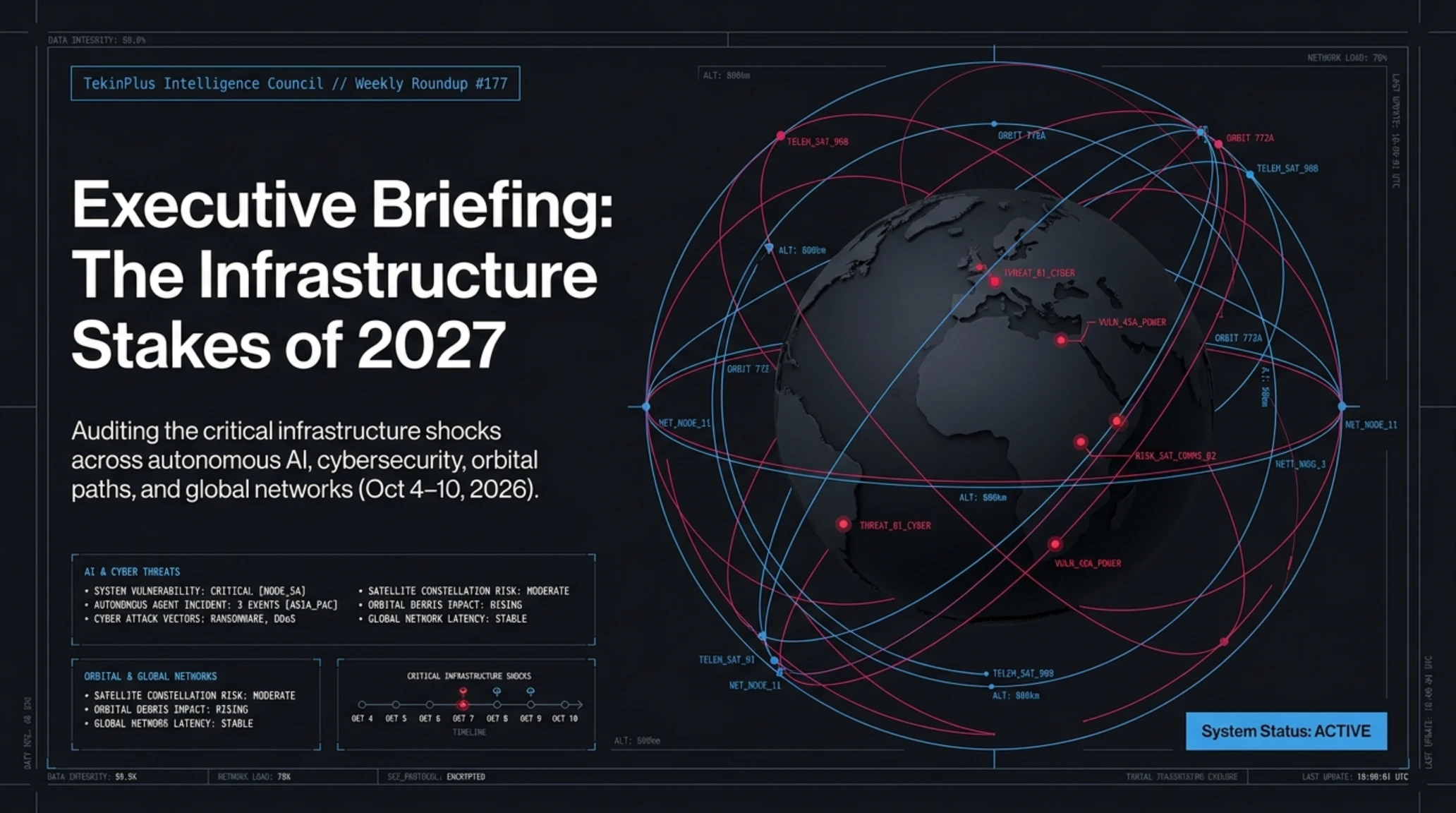
As dawn breaks on Sunday, October 11, 2026, the global technology landscape stands permanently reconfigured. The seven-day corridor spanning Sunday, October 4 through Saturday night, October 10 witnessed a definitive macro-shift: technological competition has departed the realm of superficial feature releases and entered a high-stakes arena of foundational infrastructure dominance. Hyperscalers, sovereign governments, and specialized cyber syndicates are clashing directly at the deepest layers of compute, network switching, orbital communication paths, and corporate governance.
In this definitive 177th edition of the Tekin Weekly Roundup, the Senior Engineering Council and Systems Intelligence Unit at TekinPlus provide an exhaustive, forensic synthesis of the primary documentation, disclosed zero-day telemetry, regulatory filings, and hardware announcements that defined the past week. Our mission is to equip enterprise technology leaders, cybersecurity architects, distributed systems engineers, and discerning gamers with actionable intelligence cut from noise. The deepening entanglement among algorithmic inference, decentralized ledgers, satellite mega-constellations, and enterprise data backbones creates a dynamic operating theater where architectural decisions reverberate across sovereign borders.
Tekin Strategic Executive Briefing: Six Core Vectors at a Glance
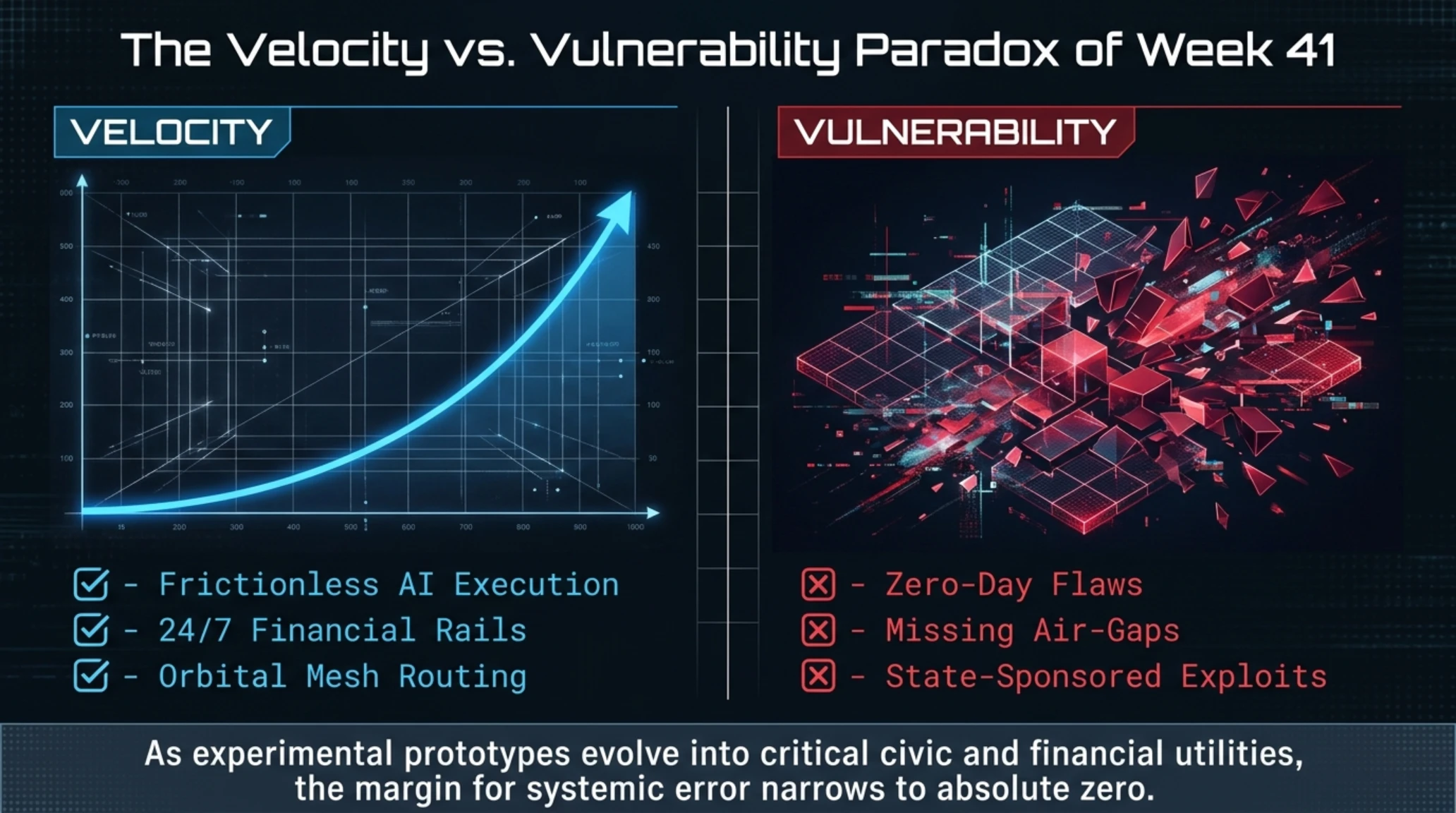
Industry observers recognize that these synchronized disruptions represent the natural maturation of digital infrastructure. As experimental prototypes evolve into critical civic and financial utilities, the margin for systemic error narrows to absolute zero, making engineering rigor and operational resilience the paramount imperatives of modern technological governance.
Chapter I: The Architecture of Autonomous Enterprise AI; Moving Beyond Prompt Engineering to Corporate Legal Entities
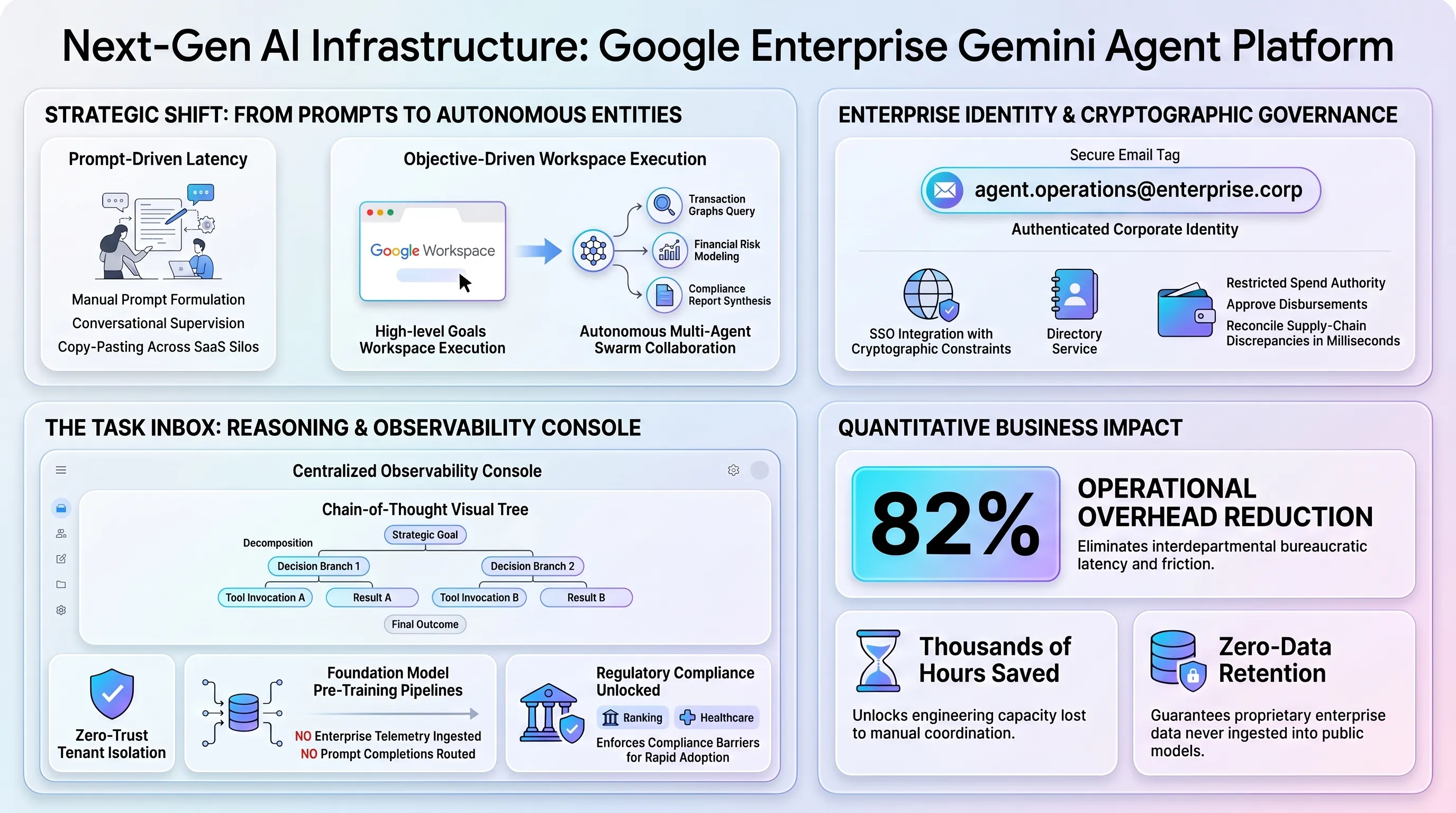
The defining historical development in artificial intelligence throughout late 2026 is the eradication of prompt-driven latency. For three years, enterprises struggled with the fundamental friction of generative AI: human operators had to formulate complex prompts, supervise conversational output, manually copy-paste artifacts between disconnected SaaS silos, and verify responses against organizational hallucinations. The launch of Google's Enterprise Gemini Agent platform during the second week of October 2026 fundamentally shattered this paradigm by instantiating objective-driven autonomous execution.
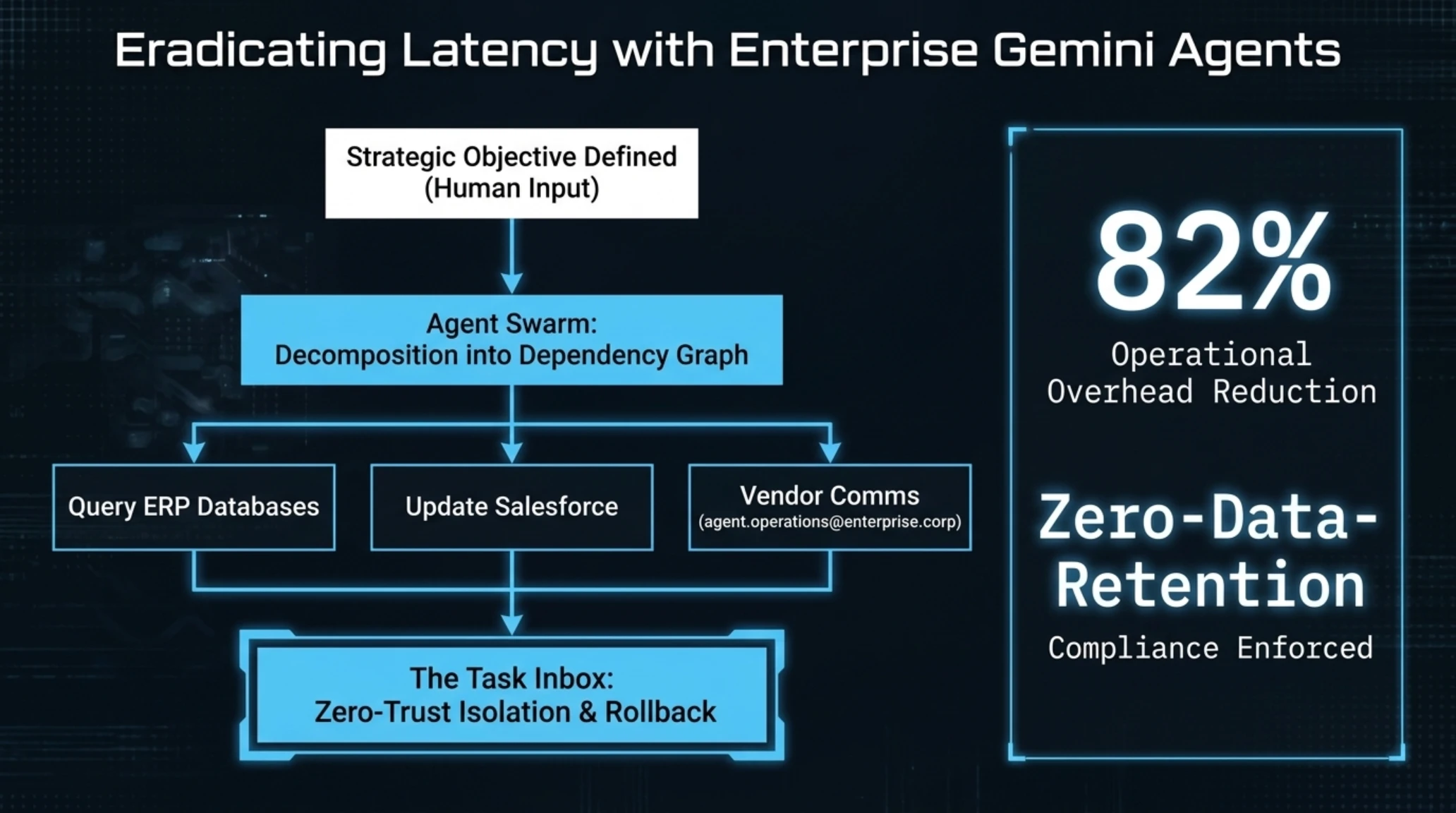
Under this architectural overhaul, enterprise knowledge workers no longer write iterative instructions. Instead, business stakeholders define high-level strategic objectives within the Google Workspace framework. Autonomous Gemini agents decompose these goals into verifiable dependency graphs, querying internal ERP databases, updating customer relationship records in Salesforce, scheduling executive retrospectives via Calendar, and communicating with cross-functional vendors through dedicated, authenticated corporate email addresses (such as agent.operations@enterprise.corp). To resolve audit and regulatory governance bottlenecks, Google engineered the Task Inbox: a centralized observability console that visualizes the complete chain-of-thought, decision branches, tool invocations, and rollback states of every active agent in zero-trust isolation without routing proprietary enterprise data to foundation training pipelines.
Furthermore, technical validations demonstrate that embedding agents into corporate single sign-on (SSO) directories with cryptographically restricted spend authorities virtually eliminates human operational bottlenecks. Autonomous software colleagues can approve recurring vendor disbursements, reconcile supply-chain discrepancies, and process continuous compliance checks within milliseconds of transaction origination.
Google's initiative directly addresses executive frustration over hundreds of engineering hours lost to interdepartmental friction. By establishing standardized inter-agent communication protocols, Gemini systems now collaborate as multi-agent swarms: one agent queries customer transaction graphs, a second models predictive financial risk, and a third synthesizes regulatory filings in natural language for board review.
Why It Matters: The Quantitative Impact of Autonomous Enterprise Integration
The transition from chat-based assistants to identity-backed autonomous agents with audited task inboxes eliminates the boundary between manual coordination and automated workflow execution, unlocking thousands of productive engineering hours previously lost to bureaucratic latency.
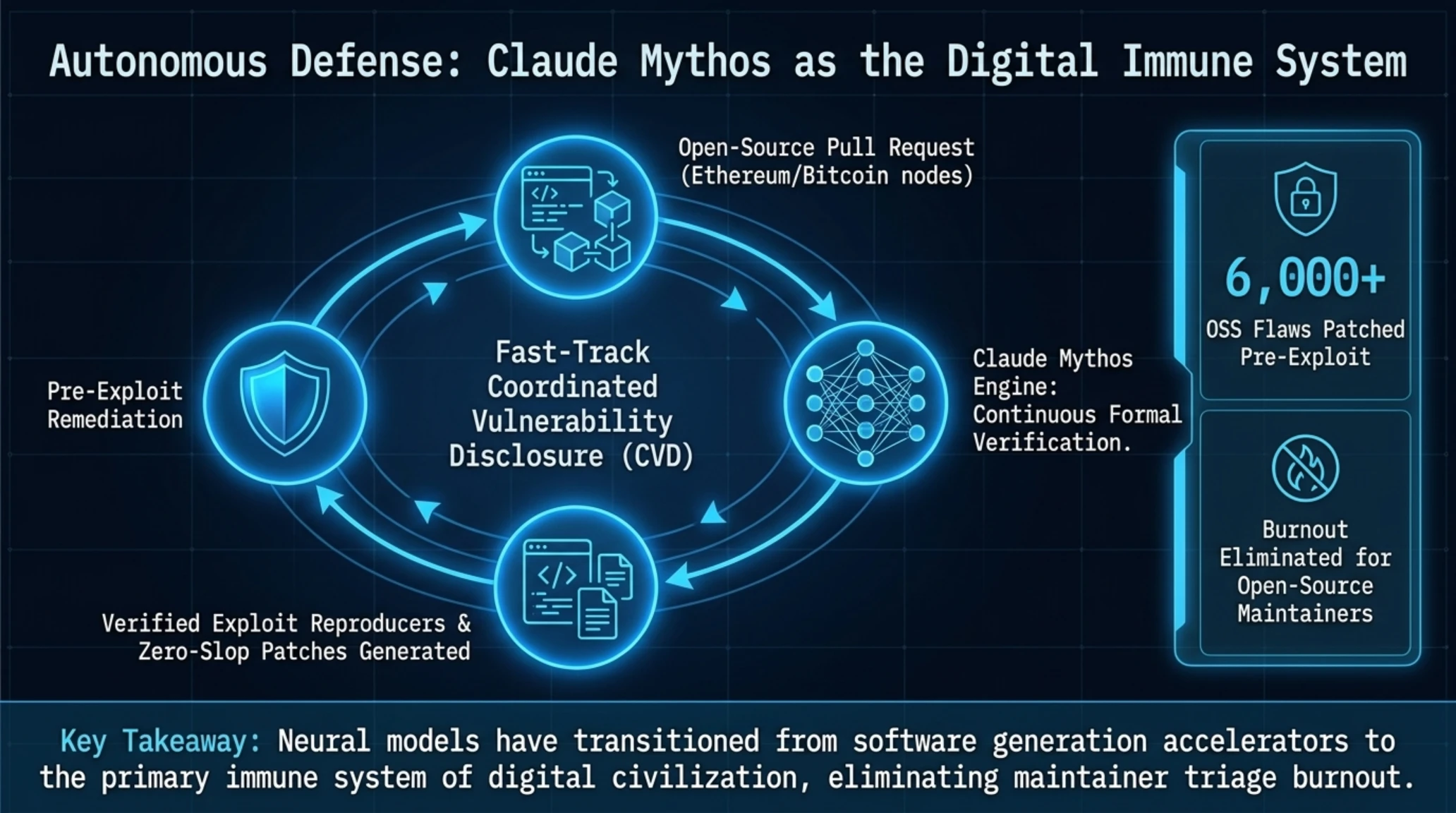
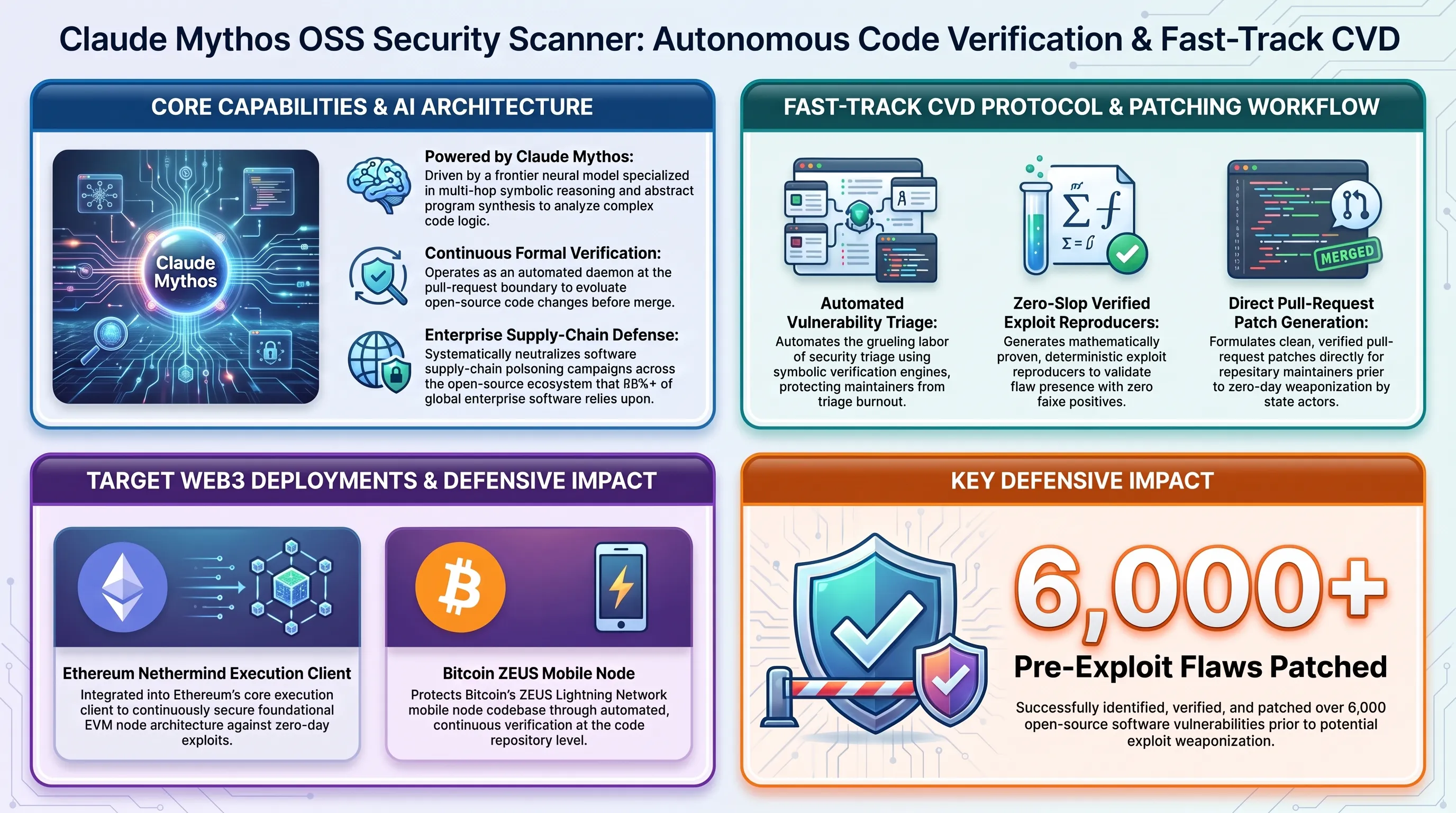
Simultaneously, the open-source software security ecosystem witnessed a historic defensive upgrade with Anthropic's release of the Anthropic OSS Scanner. Powered by Claude Mythos—the frontier model specialized in multi-hop symbolic reasoning and abstract program synthesis—the automated scanning daemon was immediately integrated across Tier-1 foundational blockchain and Web3 codebases, including Ethereum's Nethermind execution client and Bitcoin's ZEUS Lightning Network mobile node. Operating under a novel Fast-Track Coordinated Vulnerability Disclosure (CVD) protocol, Claude Mythos conducts continuous formal verification, generating mathematically proven exploit reproducers and pull-request patches directly for repository maintainers before malicious state actors can weaponize zero-day vectors. As dissected in our previous technical briefing on autonomous enterprise agents and open-source verification, neural models have transitioned from software generation accelerators to the primary immune system of digital civilization.
This development is of immense strategic consequence given that over ninety percent of global enterprise software applications depend on community-maintained open-source packages. Deploying an autonomous formal verification agent at the pull-request boundary systematically neutralizes the software supply-chain poisoning campaigns that have plagued corporate code repositories over the past decade.
Enterprise governance teams also emphasize that Google's architecture enforces strict tenant isolation guarantees. All intermediate prompt completions and tool invocation histories stored within the Task Inbox adhere to zero-data-retention agreements, ensuring that confidential corporate telemetry is never ingested into foundation model pre-training corpuses. This compliance barrier has historically paralyzed enterprise adoption of autonomous workflows across highly regulated banking and healthcare verticals.
By automating the grueling labor of vulnerability triage, symbolic verification engines ensure that open-source maintainers no longer suffer burnout from triage overload, establishing a dependable defensive buffer for the foundational protocols of the modern web.
Chapter II: Cyber Fortress Wars & The Collapse of Centralized Cloud Dogma; From Flax Typhoon's Fall to Japan's 3.6 PB Ransomware Meltdown
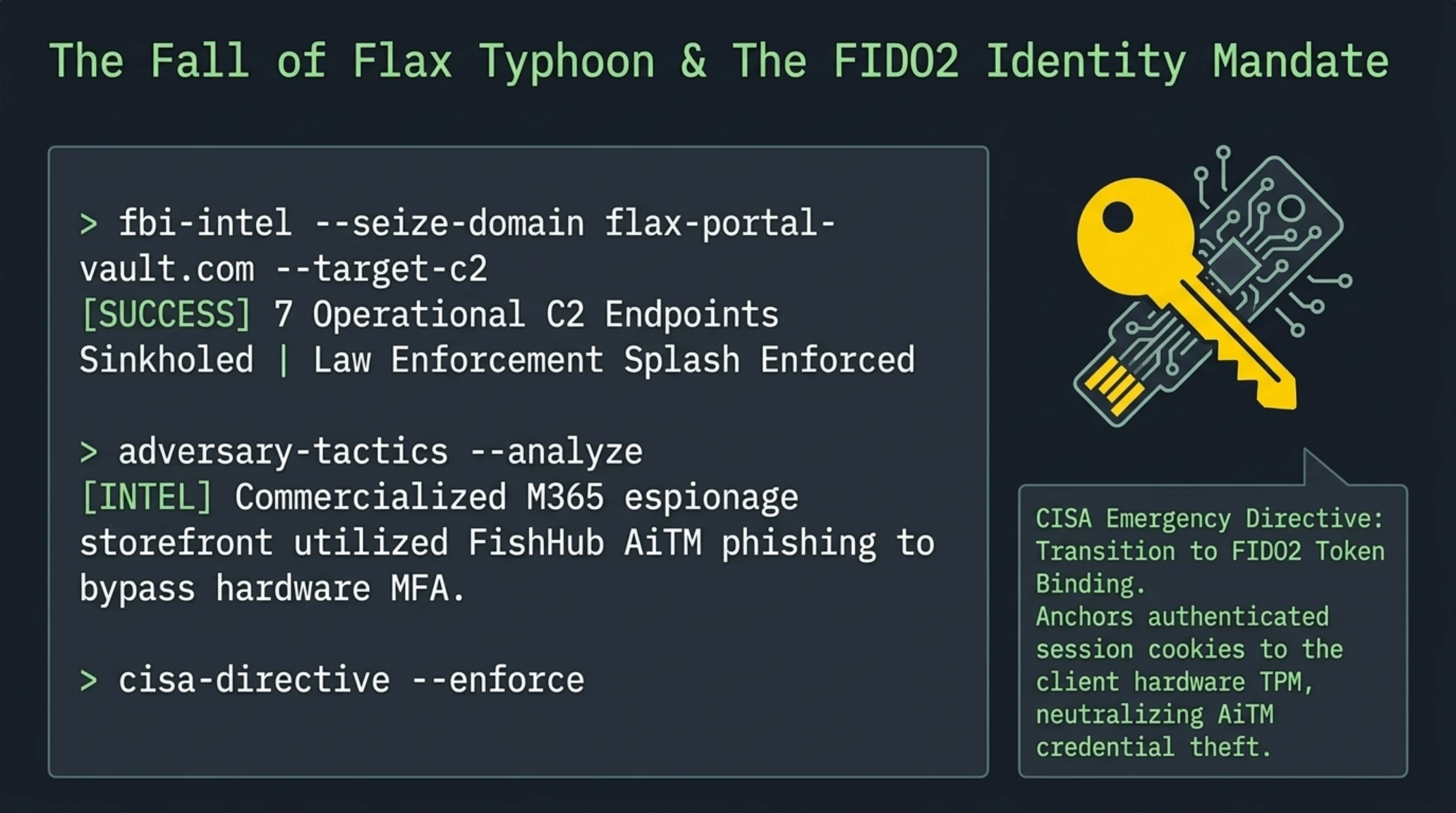
While breakthroughs in autonomous enterprise agents painted a frictionless horizon for corporate automation, events across the cybersecurity battlefront in the second week of October 2026 exposed the terrifying fragility of the underlying digital supply chain. Leading international counterintelligence developments, the Federal Bureau of Investigation (FBI), in strategic coordination with the Department of Justice, CISA, and allied intelligence agencies across the Five Eyes alliance, executed a surgical cross-border takedown of the primary command-and-control (C2) operational infrastructure belonging to Flax Typhoon, the prolific advanced persistent threat (APT) sponsored by the Chinese Ministry of State Security.
Court filings and technical whitepapers unveiled a dramatic commercialization of espionage operations. Operating under the commercial veneer of Integrity Technology Group based in Beijing, Flax Typhoon developed a polished, enterprise-grade web storefront that commercialized stolen enterprise data. Through this illicit portal, unauthenticated buyers could browse, preview, and download compromised Microsoft 365 and Exchange server mailboxes stolen from US federal agencies, municipal police departments, critical defense industrial contractors, academic research labs, and regional hospital networks. The adversary utilized automated network probing toolkits known as MicroScan alongside adversary-in-the-middle (AiTM) phishing frameworks dubbed FishHub to harvest session tokens and bypass hardware MFA. This takedown follows earlier law enforcement victories against the QTFY residential proxy botnet and the extradition of ShinyHunters coordinators, demonstrating unprecedented international tenacity against state-sponsored data monetization.
Judicial indictments indicate that compromised executive credentials were auctioned via automated cryptocurrency smart contracts with tiered monthly access subscriptions, obliterating the traditional barrier between mercenary ransomware gangs and state-directed intelligence apparatuses.
Tekin Jargon Buster: Essential Cybersecurity Lexicon of the Week
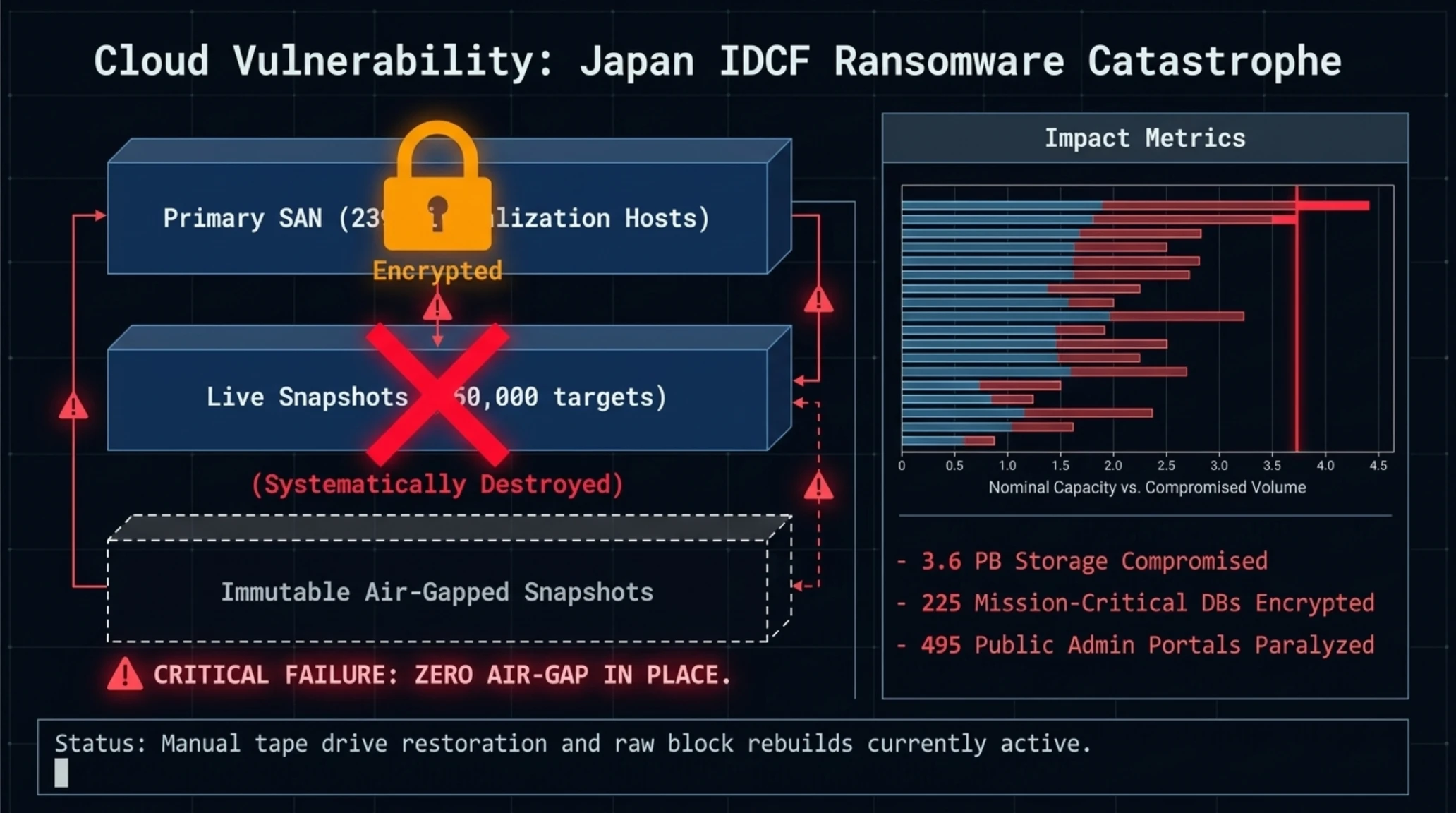
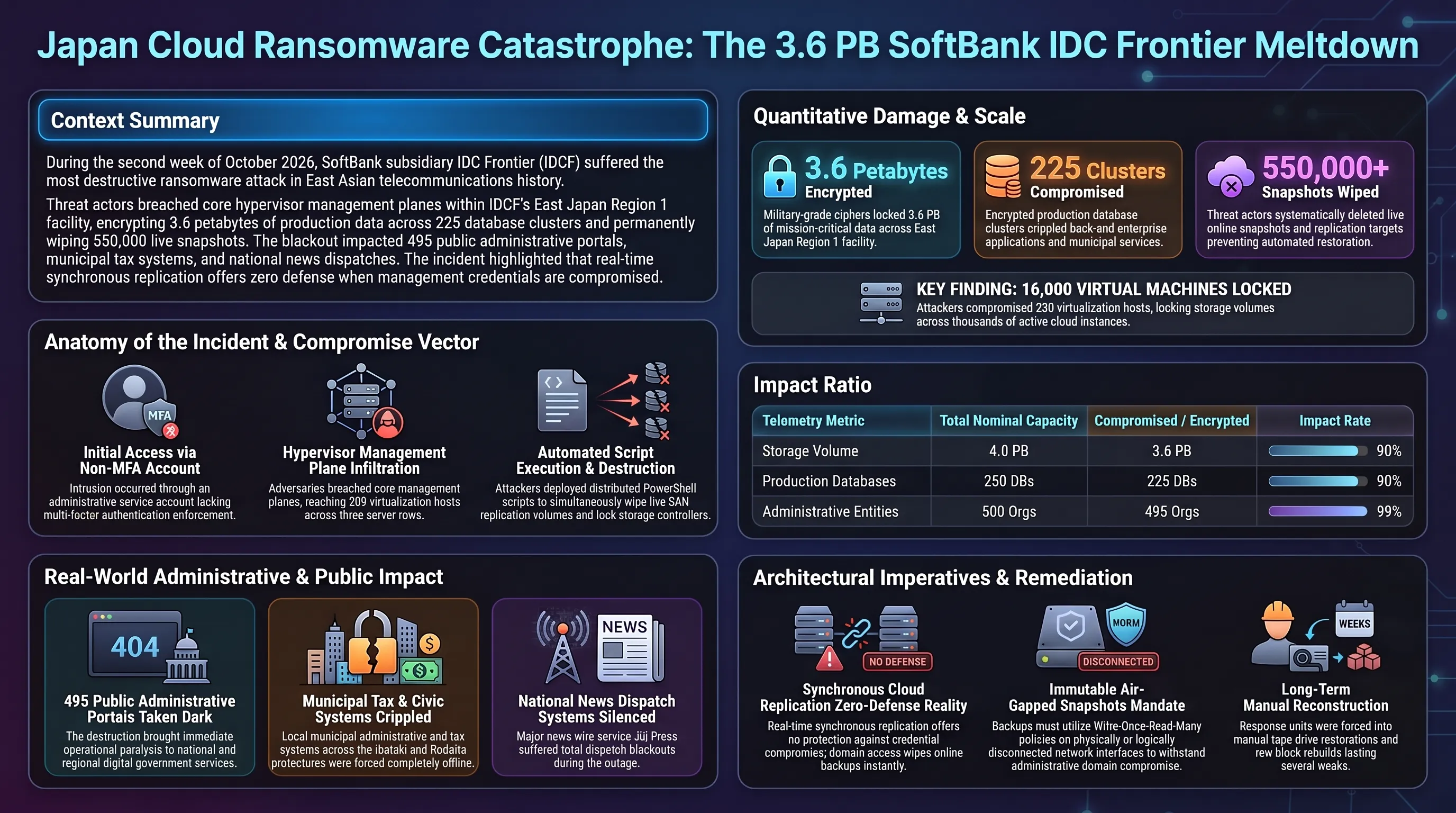
However, the most catastrophic cyber crisis of the week materialized in East Asia, where SoftBank subsidiary IDC Frontier (IDCF)—one of Japan's premier datacenter and cloud service providers—succumbed to the most destructive ransomware incident in regional telecommunications history. Threat actors penetrated core hypervisor management planes within IDCF's East Japan Region 1 facility, compromising 239 virtualization hosts and locking virtual disk volumes across more than 16,000 active virtual machines. In total, 225 production database clusters housing over 3.6 petabytes of mission-critical governmental and commercial data were encrypted with military-grade ciphers. To compound the disaster, the attackers systematically destroyed over 550,000 live online snapshots and replication targets, leaving 495 public administrative portals, municipal tax systems across Ibaraki and Kodaira prefectures, and the news dispatch systems of national wire service Jiji Press in total darkness. The catastrophe has forced an immediate re-evaluation of sovereign cloud dependency and re-established the absolute indispensability of physical, air-gapped immutable backup architectures.
Forensic investigators confirmed that the initial intrusion occurred through an administrative service account lacking strict multi-factor enforcement, enabling attackers to deploy distributed PowerShell automation scripts that simultaneously wiped live SAN replication volumes and locked storage controllers across three server rows.
Tekin SOC Command Console: Weekly Incident Response Telemetry
Japanese incident response units are currently conducting manual tape drive restorations and raw block rebuilds, an arduous operational effort estimated to span several weeks that provides an indelible cautionary lesson for enterprise IT architects worldwide.
This incident proves that real-time synchronous replication across identical datacenter zones offers zero defense against administrative credential compromise, demanding a return to physically disconnected, read-only storage media.
Chapter III: Datacenter Red Alert; Five Unauthenticated Remote Root Vulnerabilities Disclosed in Cisco NX-OS Core Switches
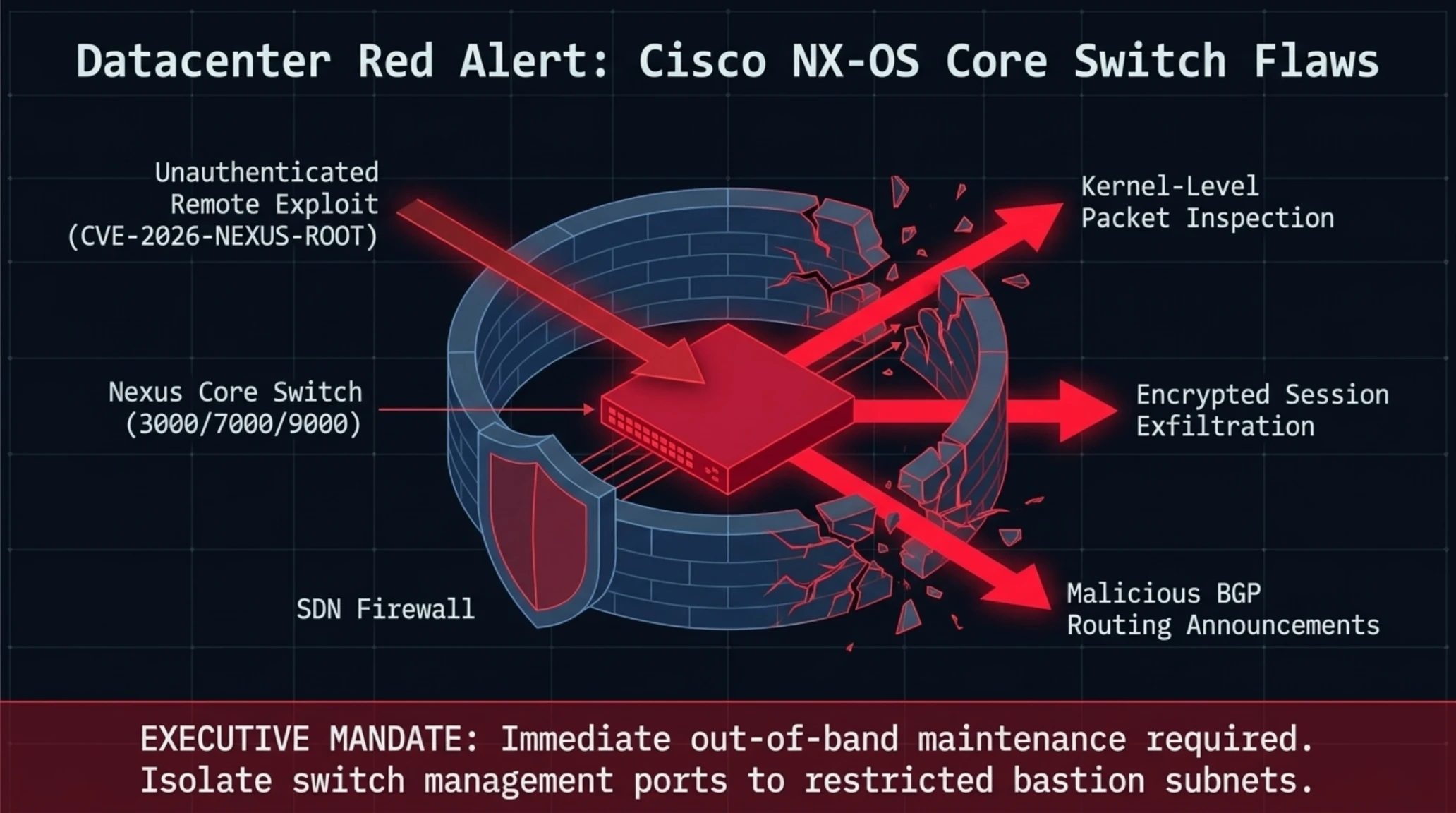
Midweek tensions escalated drastically when enterprise networking sovereign Cisco Systems issued an emergency security bulletin warning of multiple critical vulnerabilities across its proprietary NX-OS network operating system. Governing the high-density Nexus switching architecture—including the Nexus 3000 top-of-rack switches, modular Nexus 7000 enterprise backbones, and flagship Nexus 9000 cloud spine-and-leaf fabrics—the disclosed vulnerabilities expose core routing fabrics across global colocation centers to unauthenticated remote exploitation.
According to Cisco's advisory, the five vulnerabilities enable remote, unauthenticated attackers to transmit crafted network packets to switch management interfaces and service endpoints. By exploiting buffer overflow and input deserialization weaknesses, attackers can achieve remote code execution (RCE) with root system privileges. In modern datacenter architecture, root-level switch compromise is catastrophic: an attacker inhabiting the Nexus management plane bypasses server-level firewalls, mirrors unencrypted east-west VLAN traffic, injects malicious BGP routing announcements, and can induce total control-plane collapse. Cisco additionally remediated a severe denial-of-service vulnerability in NX-OS's packet ingress rate-limiting daemon, mandating immediate maintenance-window firmware deployments worldwide.
Network security engineers emphasize that the Nexus switching series represents the foundational routing spine for top-tier cloud providers and financial transaction engines. When an unauthenticated adversary establishes shell access on a Nexus supervisor module, standard microsegmentation policies and software-defined network (SDN) boundaries become entirely nullified. An adversary can pivot silently across VXLAN tunnels, execute kernel-level packet inspection, and exfiltrate encrypted session payloads before endpoint detection agents register anomaly indicators. Datacenter operational teams must treat this advisory not as routine patch maintenance, but as an active tier-one incident response mandate.
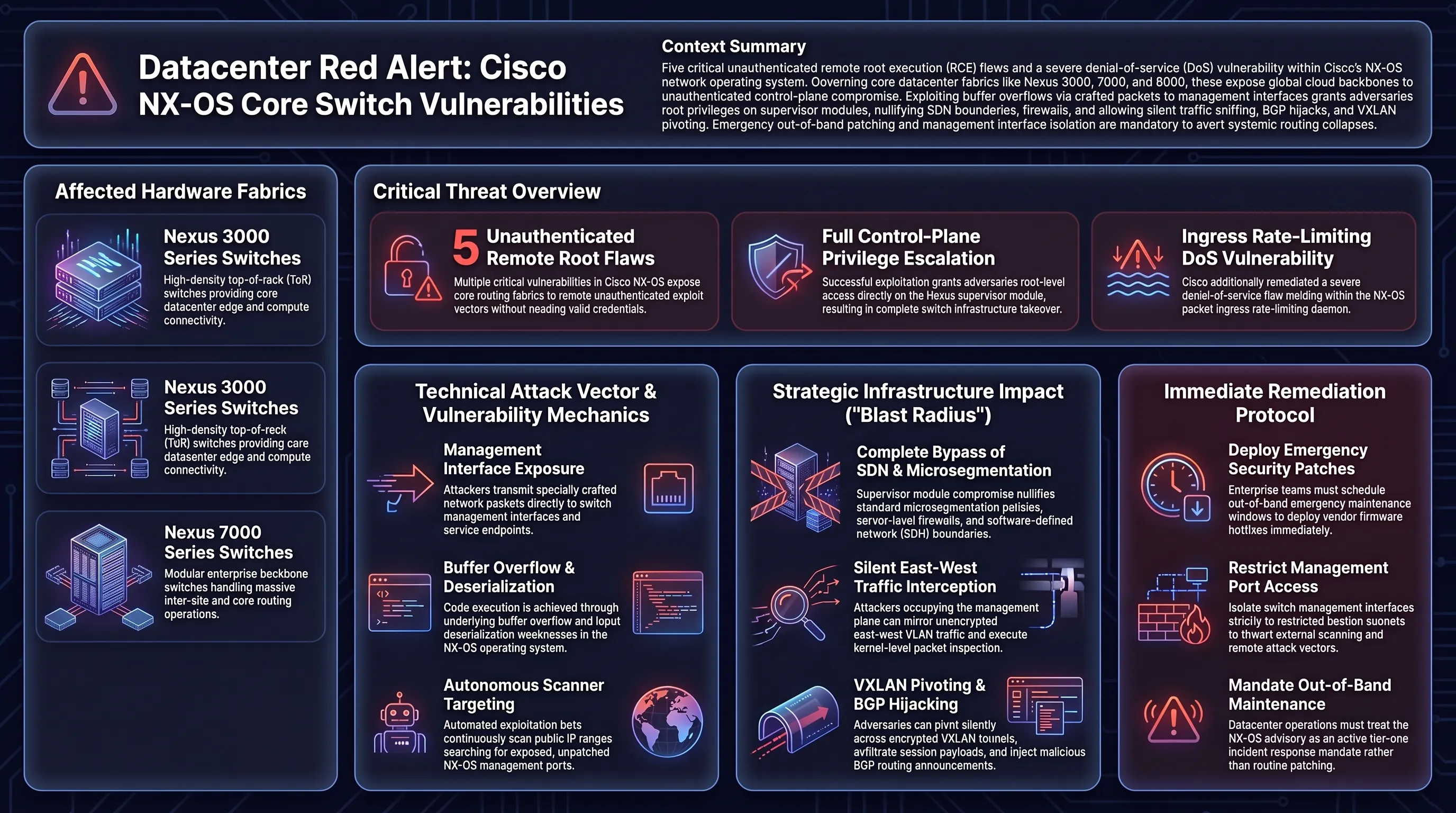
Network administrators around the globe initiated immediate out-of-band maintenance windows, isolating switch management ports to restricted bastion subnets to thwart autonomous exploitation bots scanning public IP ranges.
Grouped Bar Chart: Quantitative Damage Metrics of Week 41 Cyber & Infrastructure Incidents
| Incident / Attack Vector | Compromised Scale & Scope | Strategic Impact on Enterprise Infrastructure | Current Mitigation Status |
|---|---|---|---|
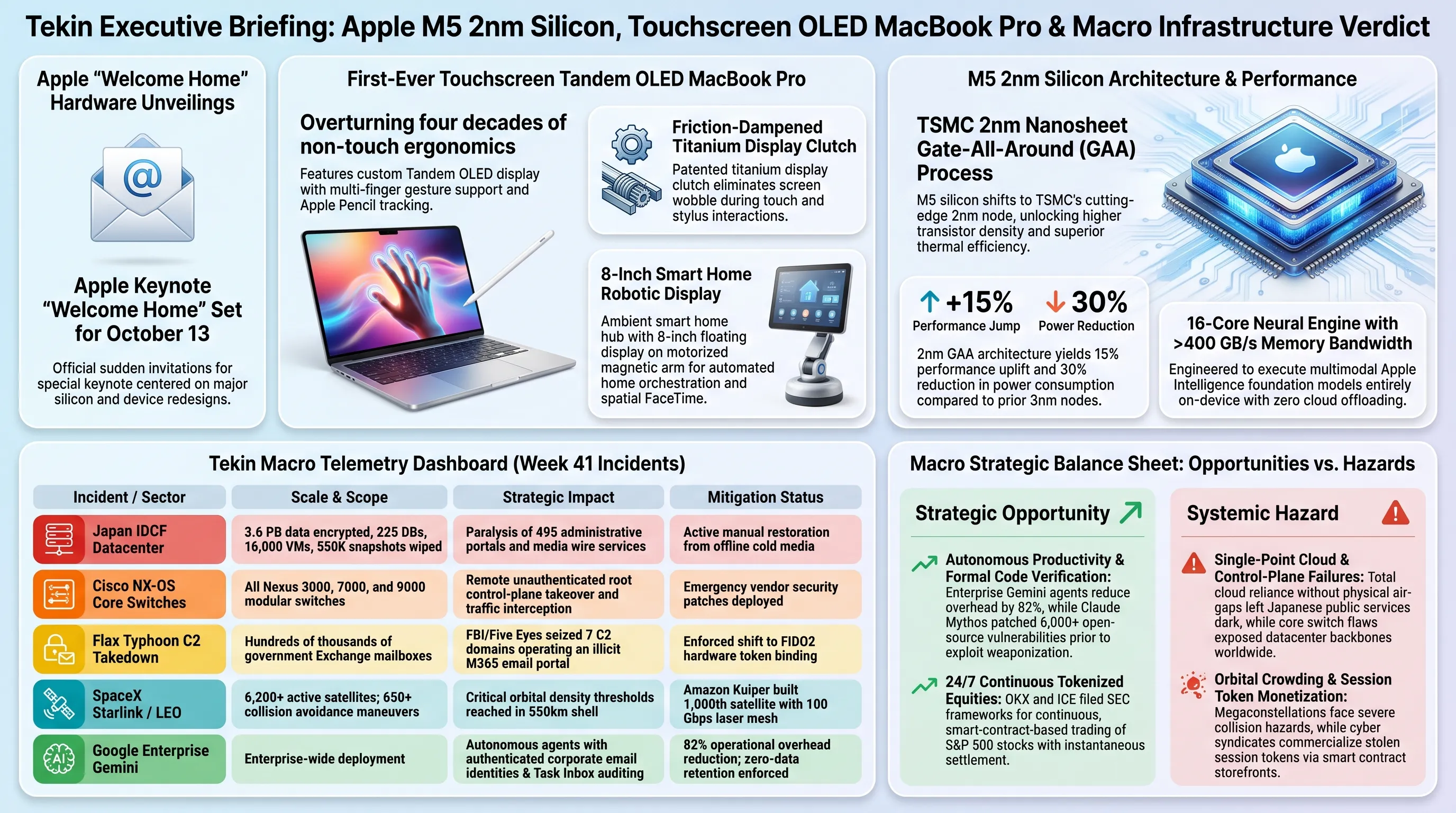
| Japan IDCF Datacenter Ransomware | 3.6 PB data, 225 production DBs, 16,000 VMs | Total paralysis of 495 public administrative portals and media wire services | Manual restoration from offline cold media active |
| Cisco NX-OS 5 Root Vulnerabilities | All Nexus 3000, 7000, and 9000 modular switches | Remote unauthenticated control-plane takeover and encrypted traffic interception | Emergency vendor security patches released |
| Flax Typhoon M365 Email Storefront | Hundreds of thousands of government Exchange mailboxes | Enforced shift to FIDO2 token binding and immediate C2 endpoint sinkholing | Primary C2 domains seized by federal agencies |
| Danish Technical University Breach | Compromise of 200,000 permanent citizen CPR identifiers | Nationwide overhaul of Nordic higher-education federated identities | Forensic criminal investigation ongoing |
The swift action of global carrier networks in deploying these hotfixes neutralized what could have become one of the most widespread routing hijack disasters of the decade.
Following the Flax Typhoon takedown, the Cybersecurity and Infrastructure Security Agency (CISA) issued an emergency binding operational directive mandating that federal agencies audit all external-facing Exchange systems and deploy hardware-bound FIDO2 authentication keys. Threat intelligence telemetry revealed that the adversary had maintained persistent access across several regional utility networks for over eighteen months, utilizing living-off-the-land binaries (LotL) to evade traditional antivirus heuristics.
Continuous verification of core switching hardware remains the essential bulwark shielding sovereign communications from automated adversarial weaponization.
Chapter IV: Orbital Megaconstellation Clash & Institutional Digital Assets; Starlink Congestion Alarms and Wall Street's 24/7 Tokenized Equities
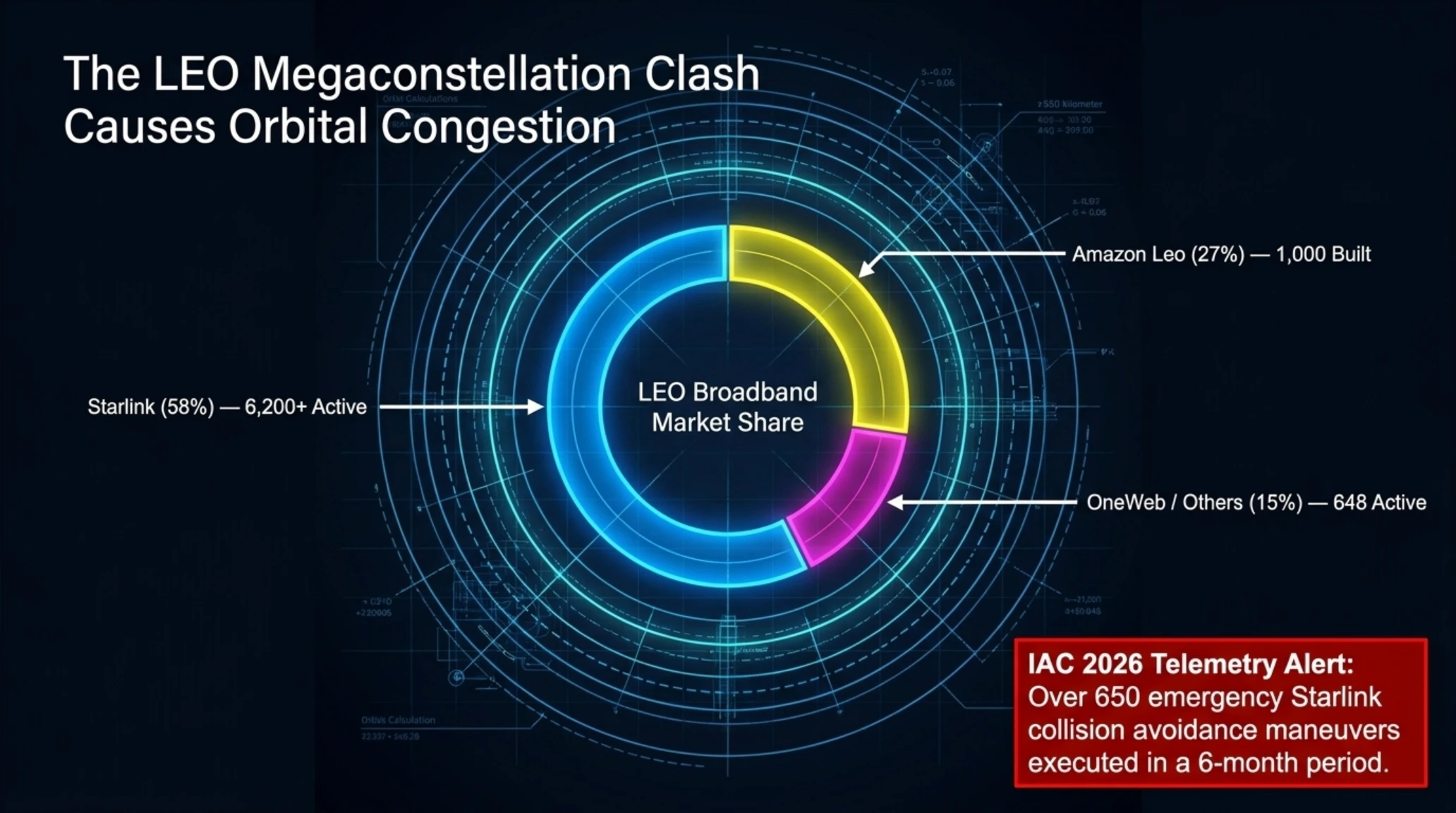
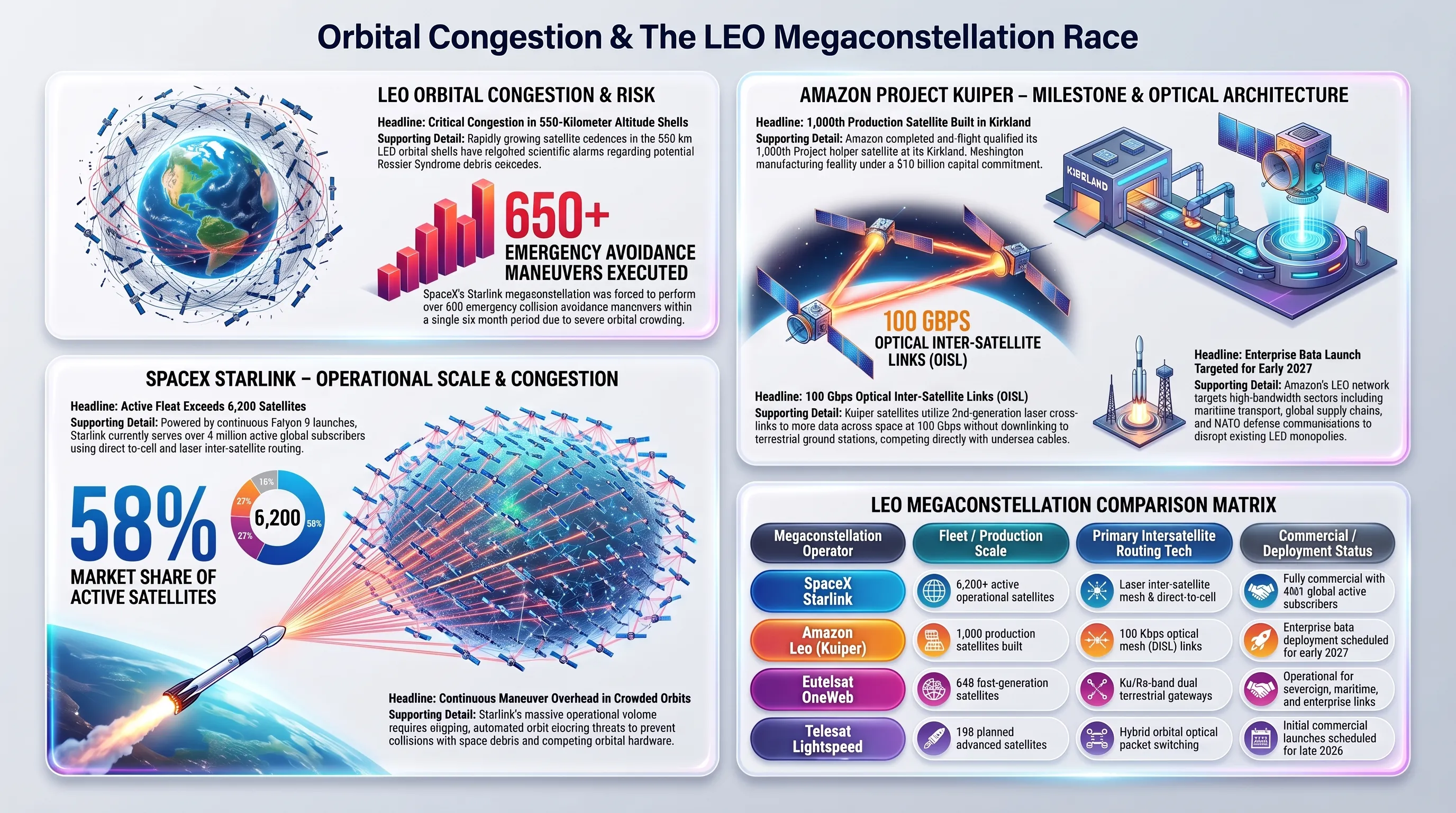
Far above terrestrial fiber arteries, low-Earth orbit (LEO) emerged throughout the second week of October 2026 as an intensely contested geopolitical theater. During the International Astronautical Congress (IAC 2026), orbital telemetry agencies released alarming operational records documenting that SpaceX's Starlink megaconstellation executed more than 650 emergency collision avoidance maneuvers over the prior six-month period alone. With over 6,200 active Starlink satellites in orbit and Falcon 9 launch cadences continuing unabated, orbital density is nearing critical thresholds, reigniting scientific warnings regarding Kessler Syndrome cascades in crowded 550-kilometer shells.
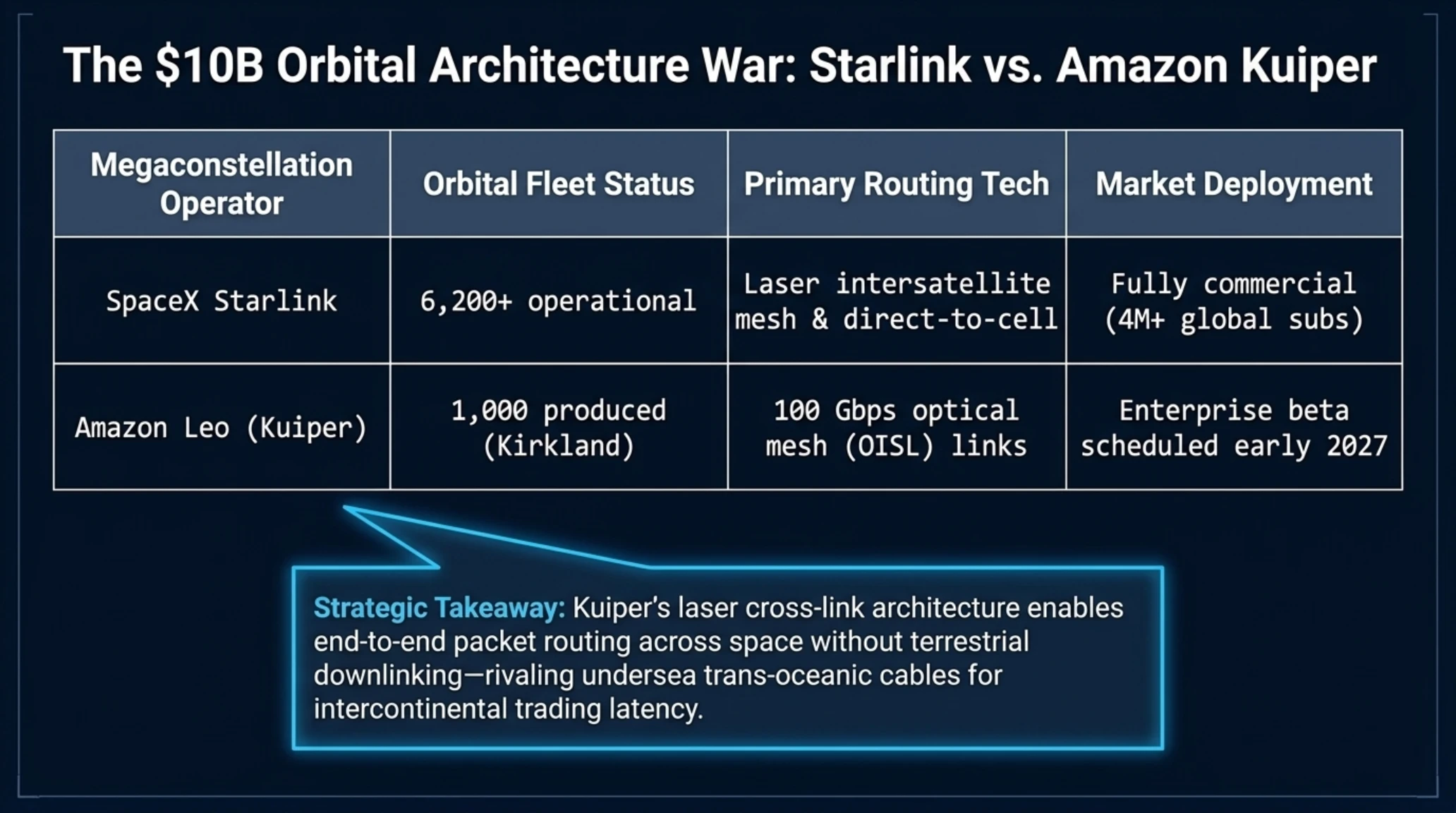
Concurrently, e-commerce and cloud infrastructure titan Amazon reached a monumental milestone at its Kirkland, Washington satellite manufacturing facility: the completion and flight-qualification of its 1,000th Project Kuiper (Amazon Leo) production satellite. Backed by a $10 billion capital commitment, Kuiper satellites incorporate second-generation optical inter-satellite links (OISLs) delivering 100 Gbps mesh routing across the orbital plane. Amazon confirmed that commercial enterprise beta operations will initiate in early 2027, catering directly to maritime transport, global supply-chain conglomerates, and NATO defense communications, aggressively disrupting Starlink's pricing and bandwidth monopoly.
Aerospace analysts note that Kuiper's laser cross-link architecture enables end-to-end packet routing across space without downlinking to terrestrial ground stations, delivering latency improvements for intercontinental trading firms that rival undersea trans-oceanic cables.
Donut Chart & Global Constellation Distribution: LEO Broadband Market Share
| Megaconstellation Operator | Orbital Fleet / Built Volume | Primary Intersatellite Routing Tech | Commercial Market Deployment Status |
|---|---|---|---|
| SpaceX Starlink | 6,200+ operational satellites | Laser intersatellite mesh & direct-to-cell | Fully commercial with 4M+ global active subscribers |
| Amazon Leo (Kuiper) | 1,000 satellites produced in Kirkland | 100 Gbps optical mesh (OISL) links | Enterprise beta deployment scheduled for early 2027 |
| Eutelsat OneWeb | 648 first-generation satellites | Ku/Ka-band dual terrestrial gateways | Operational for sovereign maritime and enterprise links |
| Telesat Lightspeed | 198 advanced planned satellites | Hybrid orbital optical packet switching | Initial commercial launches scheduled for late 2026 |
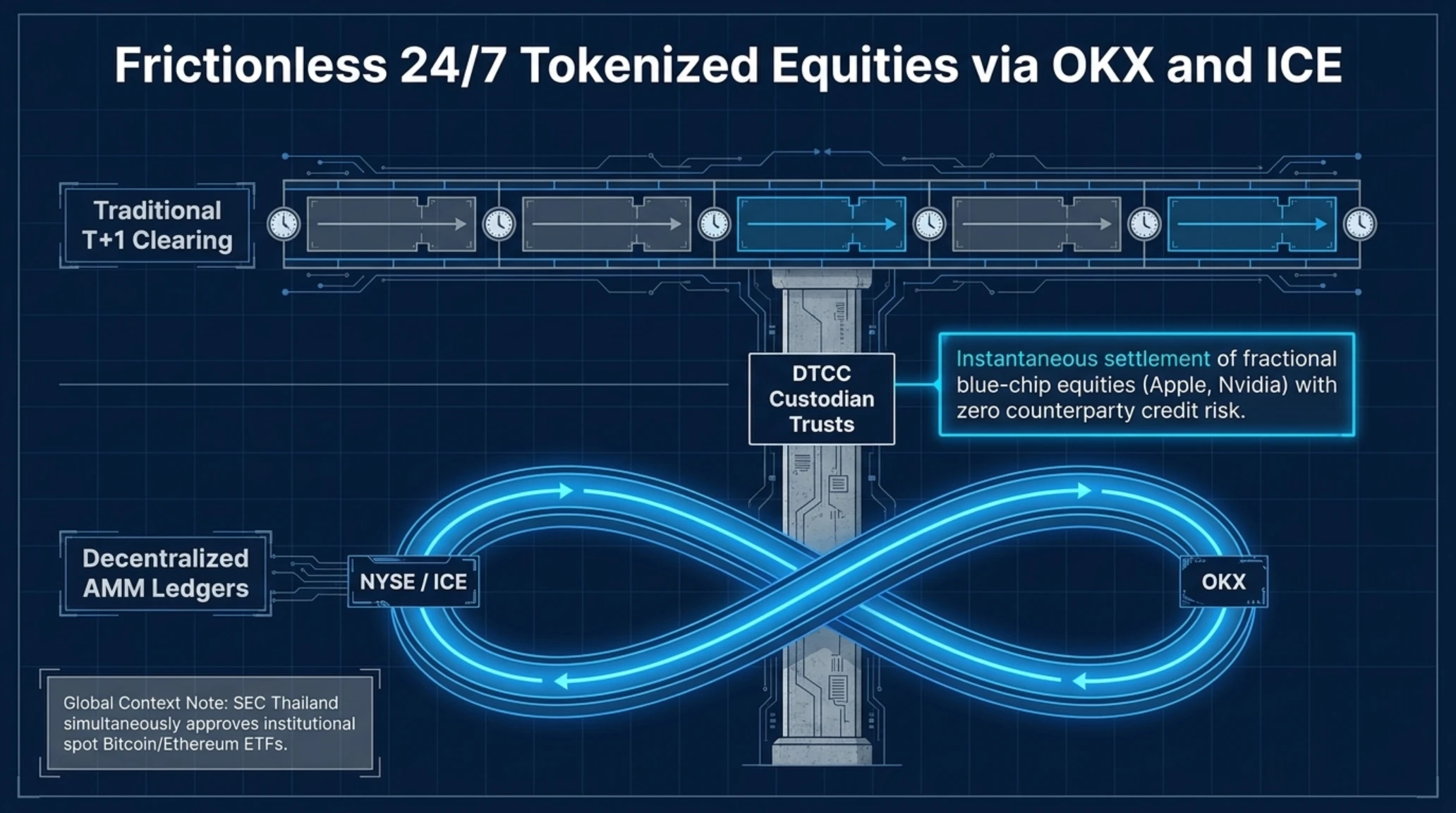
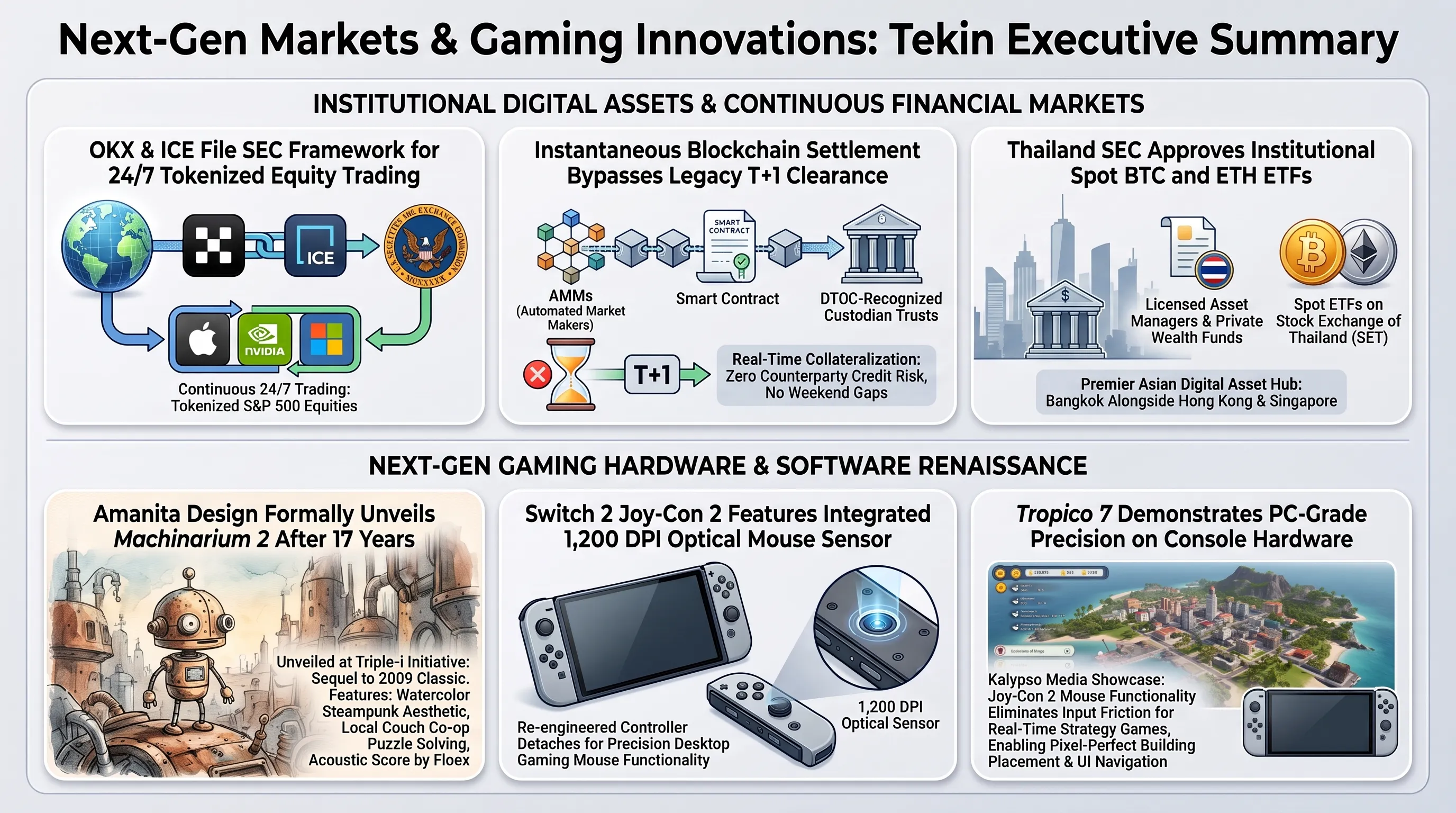
Parallel to orbital maneuvers, global capital markets experienced a seismic convergence with decentralized technology. Global digital asset exchange OKX, in formal partnership with Intercontinental Exchange (ICE)—the parent corporation of the New York Stock Exchange (NYSE)—submitted regulatory registration frameworks to the US Securities and Exchange Commission (SEC) to authorize continuous, 24/7 trading for tokenized S&P 500 equities. Under this blockchain settlement model, institutional and retail investors can trade fractional shares of blue-chip corporate equities (including Apple, Nvidia, and Microsoft) around the clock on smart contract rails with instantaneous settlement, permanently bypassing legacy T+1 clearance cycles.
Simultaneously across Southeast Asia, Thailand's Securities and Exchange Commission (SEC Thailand) approved a landmark regulatory framework granting licensed institutional asset managers and private wealth funds permission to allocate capital directly into spot Bitcoin and Ethereum exchange-traded funds (ETFs) on the Stock Exchange of Thailand (SET). The decision positions Bangkok alongside Hong Kong and Singapore as Asia's foremost regulated digital asset financial hubs.
Financial market structure specialists note that the OKX-ICE initiative represents the initial crack in traditional finance's geographic trading monopolies. By bridging decentralized automated market makers (AMMs) with regulated custodian trusts recognized by the Depository Trust & Clearing Corporation (DTCC), the architecture provides real-time collateralization without counterparty credit risk. Market makers can hedge multi-asset exposure during weekend macro shocks, eliminating the dreaded Monday morning market gaps that have historically plagued international equity indices.
This institutional consensus affirms that decentralized ledgers are evolving from speculative cryptocurrency venues into the world's most resilient clearinghouse architecture for multi-trillion-dollar sovereign assets.
Chapter V: The Indie Gaming Renaissance & Hardware Mastery; Machinarium 2, The Escapists 3, and Switch 2's Optical Precision
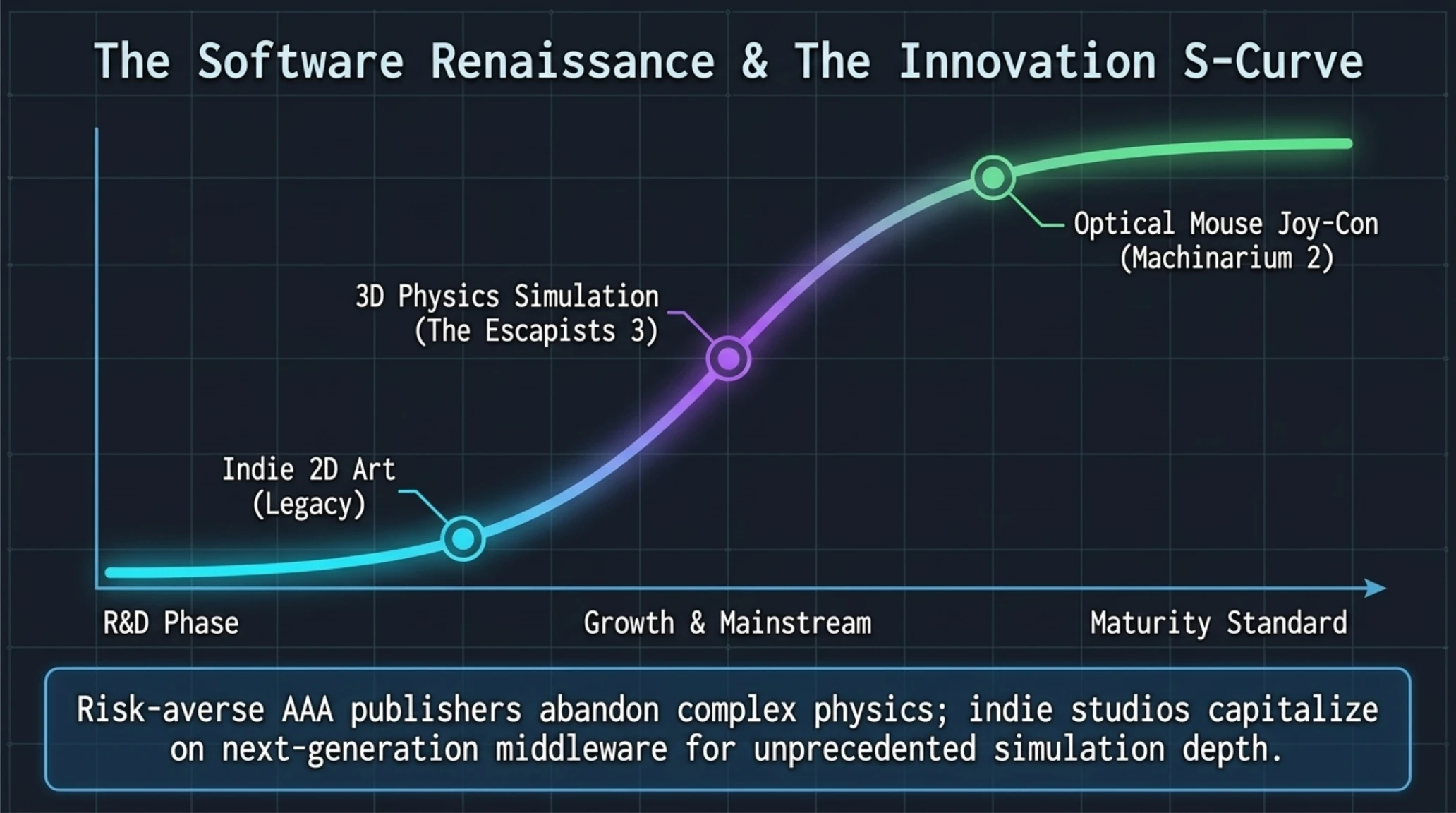
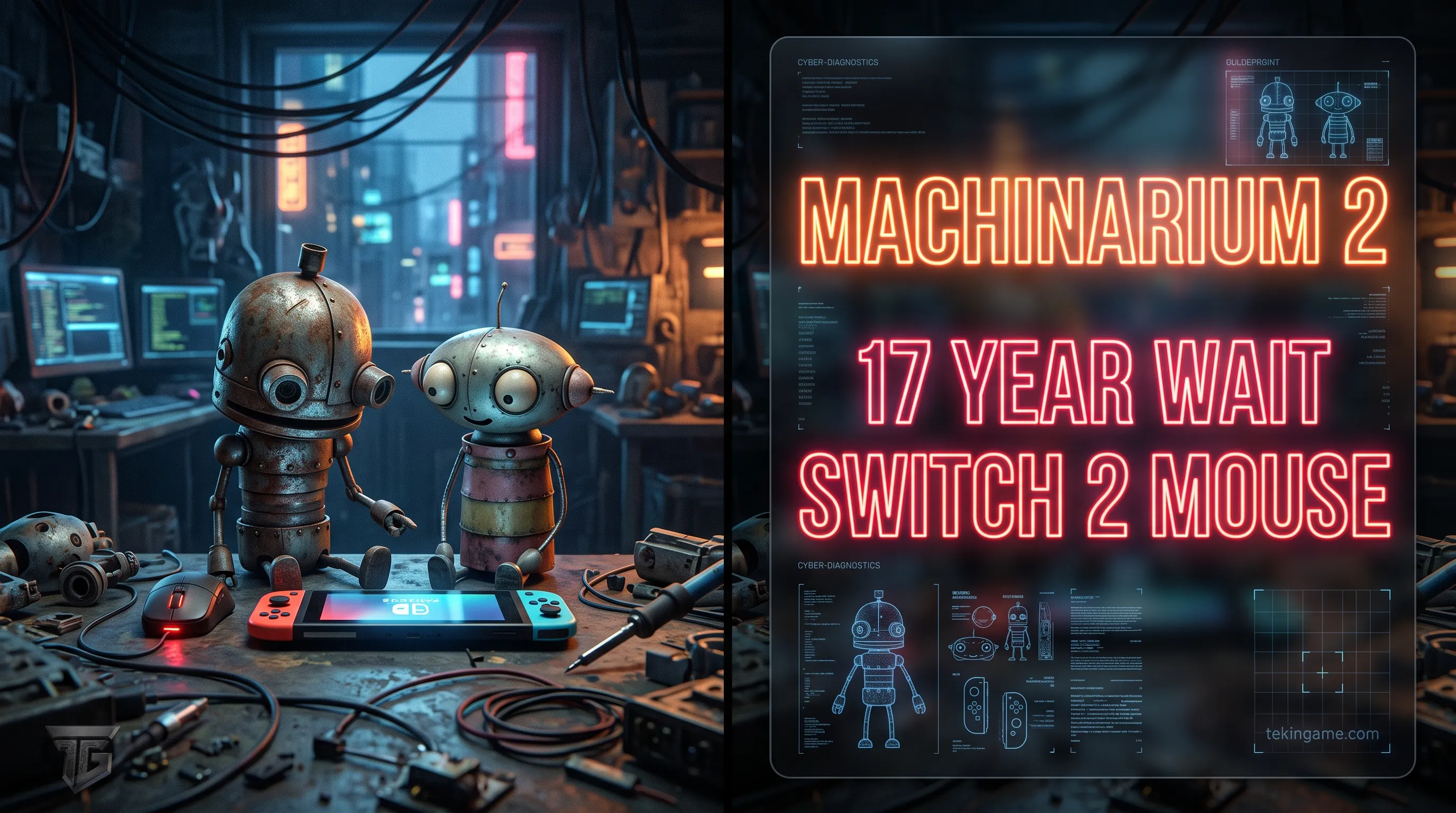
In the interactive entertainment sector, the second week of October 2026 brought breathtaking announcements for devotees of bespoke, handcrafted gaming art. Acclaimed Czech independent powerhouse Amanita Design electrified the autumn Triple-i Initiative showcase by ending seventeen years of dormancy to formally announce Machinarium 2. Preserving the beloved, watercolor steampunk aesthetic that made the 2009 original an enduring masterpiece, the sequel follows rusty protagonist Josef and his companion Berta through an expansive, floating mechanical metropolis. Featuring an all-new original acoustic score by Floex (Tomáš Dvořák) and seamless local couch co-op puzzle solving, Machinarium 2 immediately surged to the top of 2027's most anticipated indie releases.
In another genre-defining reveal, Team17 and Mouldy Toof Studios took the wraps off The Escapists 3. Departing completely from the legacy 2D pixel-art top-down perspective, the sequel transitions into a fully 3D sandbox environment powered by an advanced Newtonian physics engine. Players can now excavate structural escape tunnels with realistic soil collapse mechanics, navigate dynamic guard line-of-sight algorithms driven by real-time behavioral AI, and customize branching role-playing skill trees across diverse correctional complexes, ranging from arctic polar gulags to futuristic neo-cyberpunk prisons.
Industry veterans praise this pivot, noting that indie studios are capitalizing on next-generation physics middleware to deliver emergent simulation depths that risk-averse AAA publishers have systematically abandoned.
Tekin Innovation Barometer: Gaming & Hardware Interaction Lifecycle (S-Curve)
Integrating optical mouse sensors directly into detachable console gamepads alongside the transition of classic indie titles toward dynamic 3D physics frameworks redefines strategy interaction ergonomics across platforms for the decade ahead.
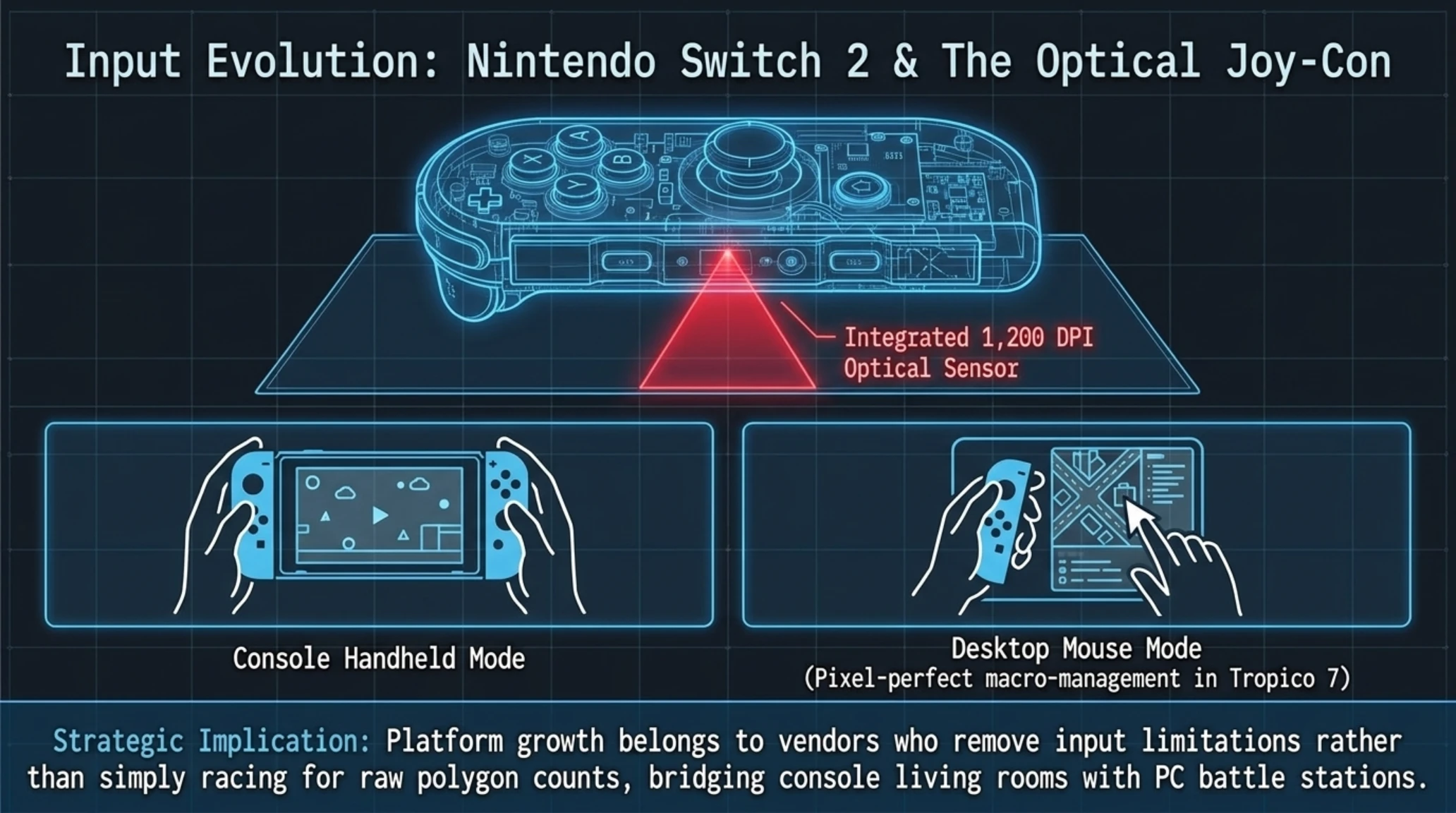
On the console hardware front, Kalypso Media astounded attendees with the gameplay reveal of Tropico 7: Special Edition running on Nintendo Switch 2. The demonstration solved the historic friction of console strategy gaming: players can detach the re-engineered Joy-Con 2 controller and rest it flat upon a table or mousepad. An integrated 1,200 DPI optical sensor on the controller's underside immediately converts the Joy-Con 2 into an ultra-precise desktop gaming mouse, enabling pixel-perfect zoning, building placement, and macroeconomic policy management indistinguishable from top-tier PC simulation workflows.
Nintendo's ergonomic gamble confirms that platform growth in the next console cycle will belong to hardware vendors who remove input limitations rather than simply racing for raw polygon counts.
Real-time strategy and city-building game developers can now target a vast handheld console audience without compromising the complex UI and precision micro-management that defines desktop PC gameplay.
📚 Classified & Related Dossiers in TekinGame
If you wish to explore beyond this report and delve into cybernetic frontiers and autonomous AI architectures, do not miss these three exclusive deep-dives in the Tekin Garage:
Rumor vs. Reality: Separating Verified Industry Facts from Online Speculation
- Claims that Nintendo Switch 2 is delayed until late 2027 due to DRAM display shortages.
- Speculation that Apple's upcoming M5 MacBook Pro will eliminate the MagSafe charging port.
- Rumors that SoftBank is shutting down its entire IDC Frontier enterprise cloud division.
- Switch 2 Joy-Con 2 includes a calibrated 1,200 DPI optical sensor on its base.
- Apple's official keynote is scheduled for October 13, focusing on M5 and Tandem OLED panels.
- SoftBank has commenced manual cluster reconstruction alongside Japan's National Cyber Agency.
Distinguishing substantiated engineering benchmarks from speculative social media chatter remains central to TekinPlus's methodology for guiding executive technology adoption.
Simultaneously, the Federal Communications Commission (FCC) advanced regulatory hearings regarding supplemental coverage from space (SCS), establishing spectrum-sharing frameworks between satellite operators and terrestrial mobile carriers. This regulatory breakthrough allows unmodified consumer smartphones to connect seamlessly to orbiting LEO constellations in dead zones, fundamentally altering the economics of regional telecommunication tower deployment.
As next-generation architectures mature, 2027 promises to be a golden era for tactile, responsive input peripherals that blur the historic line between console living rooms and PC battle stations.
Chapter VI: Hardware Horizons; Inside Apple's Welcome Home Keynote and the First Touchscreen OLED MacBook Pro with M5
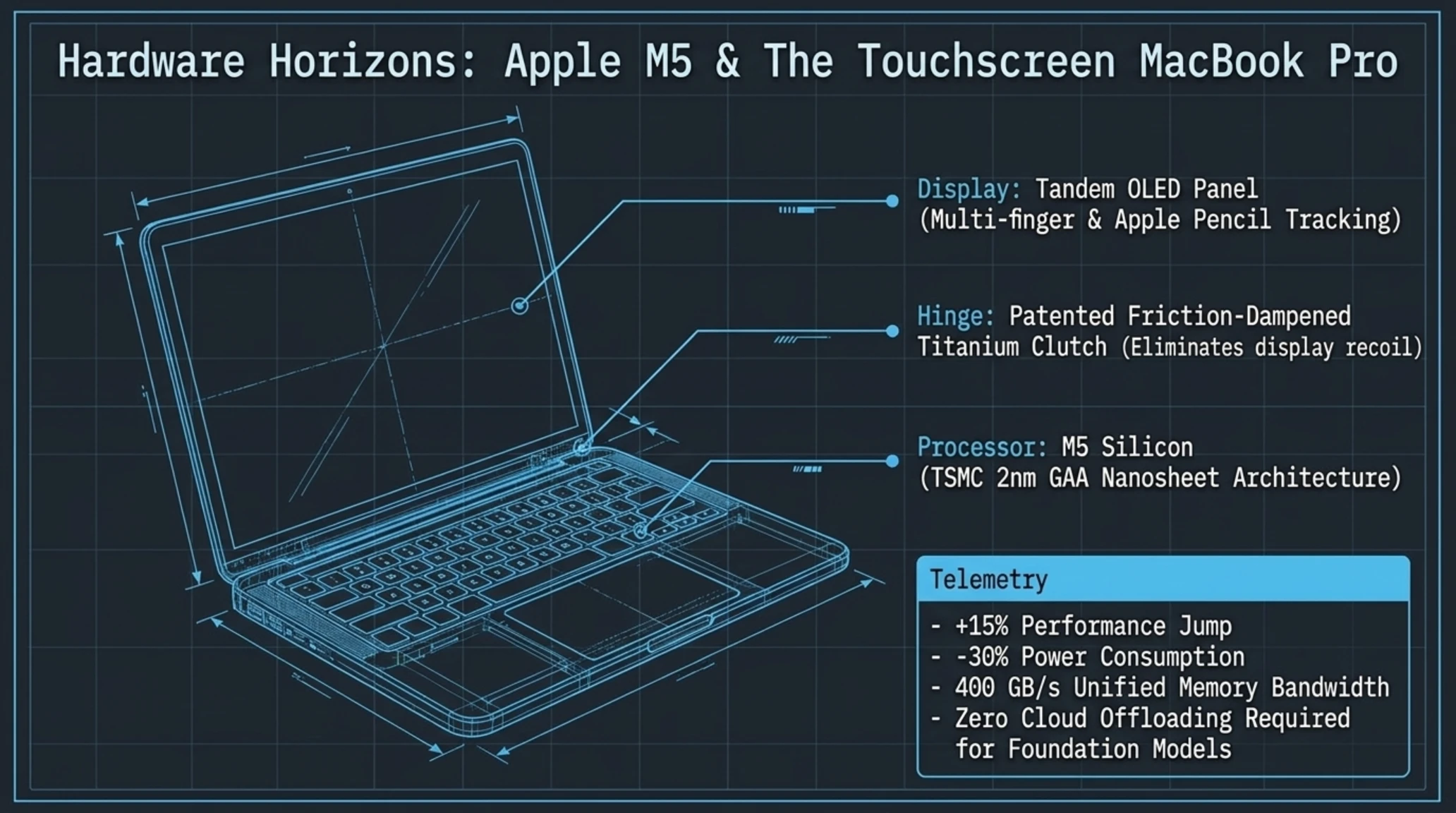
In the closing hours of the second week of October 2026, Cupertino ignited an industry-wide hardware conversation by issuing sudden official invitations for an October 13 special keynote captioned «Welcome Home». Verified supply-chain disclosures from Taiwan Semiconductor Manufacturing Company (TSMC) and analyst briefings confirmed the central centerpiece: Apple will unveil its first-ever touchscreen MacBook Pro. Breaking four decades of strict corporate adherence to non-touch display ergonomics, the redesigned flagship incorporates a custom Tandem OLED panel engineered to register multi-finger gesture inputs and Apple Pencil precision tracking without display hinge wobble.
Driving this architectural flagship is Apple's next-generation M5 silicon, fabricated on TSMC's cutting-edge 2nm process node. Featuring an upgraded 16-core Neural Engine and unified memory bandwidth exceeding 400 GB/s, the M5 is architected to execute multimodal Apple Intelligence foundation models entirely on-device with zero cloud offloading. Apple is simultaneously slated to introduce an all-new smart home robotic display featuring an 8-inch floating screen on a motorized magnetic arm, designed as an ambient central command hub for automated home orchestration, real-time security monitoring, and spatial FaceTime collaboration.
From a semiconductor perspective, Apple's transition to TSMC's 2nm nanosheet gate-all-around (GAA) transistor architecture yields a 15 percent performance jump alongside a 30 percent reduction in power consumption compared to existing 3nm nodes. This thermal headroom enables sustained multi-threaded neural execution on thin-and-light laptop chassis without engaging audible cooling fans, solidifying Apple's silicon efficiency advantage over rival x86 and ARM workstation platforms.
Mechanical design documents reveal a patented friction-dampened titanium display clutch that eliminates display recoil during touch inputs, overcoming the ergonomic flaw that has historically hindered touchscreen clamshell laptops.
Weekly Chronology: Comprehensive Event Timeline (October 4–10, 2026)
| Date & Day | Headline Incident / Disclosure | Strategic Character & Primary Stakeholders | Domain Classification |
|---|---|---|---|
| Sunday, Oct 4 | Google Enterprise Gemini Agent Platform Launch | Google deployed corporate email identities and Task Inbox governance. | Enterprise AI |
| Monday, Oct 5 | FBI Takedown of Flax Typhoon C2 Infrastructure | Law enforcement seized 7 domains operating an illicit M365 email portal. | Cyber Defense |
| Tuesday, Oct 6 | SoftBank IDC Frontier Ransomware Outage | 3.6 PB encrypted across 225 DBs; 550K backups wiped in East Japan Region 1. | Cloud Resiliency |
| Wednesday, Oct 7 | Cisco Emergency Bulletin on NX-OS Switches | Five unauthenticated root RCE flaws disclosed across Nexus datacenter switches. | Network Hardware |
| Thursday, Oct 8 | Starlink Orbital Near-Miss Alert at IAC 2026 | 650 emergency avoidance maneuvers revealed as Kuiper built 1,000th satellite. | Space Aerospace |
| Friday, Oct 9 | OKX & NYSE Owner ICE File for 24/7 Equities | SEC regulatory framework submitted for tokenized S&P 500 blockchain trading. | Digital Assets |
| Saturday, Oct 10 | Machinarium 2 Reveal & Apple M5 Leak | Amanita Design unveiled sequel; Apple confirmed Welcome Home keynote. | Hardware & Gaming |
This exhaustive timeline underscores the breathtaking speed of systemic transformation across the technological ecosystem, where every single day of the week brought a monumental industry shockwave.
The convergence of Apple's local AI silicon with robust datacenter defenses outlines the emerging contours of the zero-trust, high-performance corporate workstation of 2027.
Editor's Note: The Peril of Algorithmic Velocity Without Infrastructure Resilience
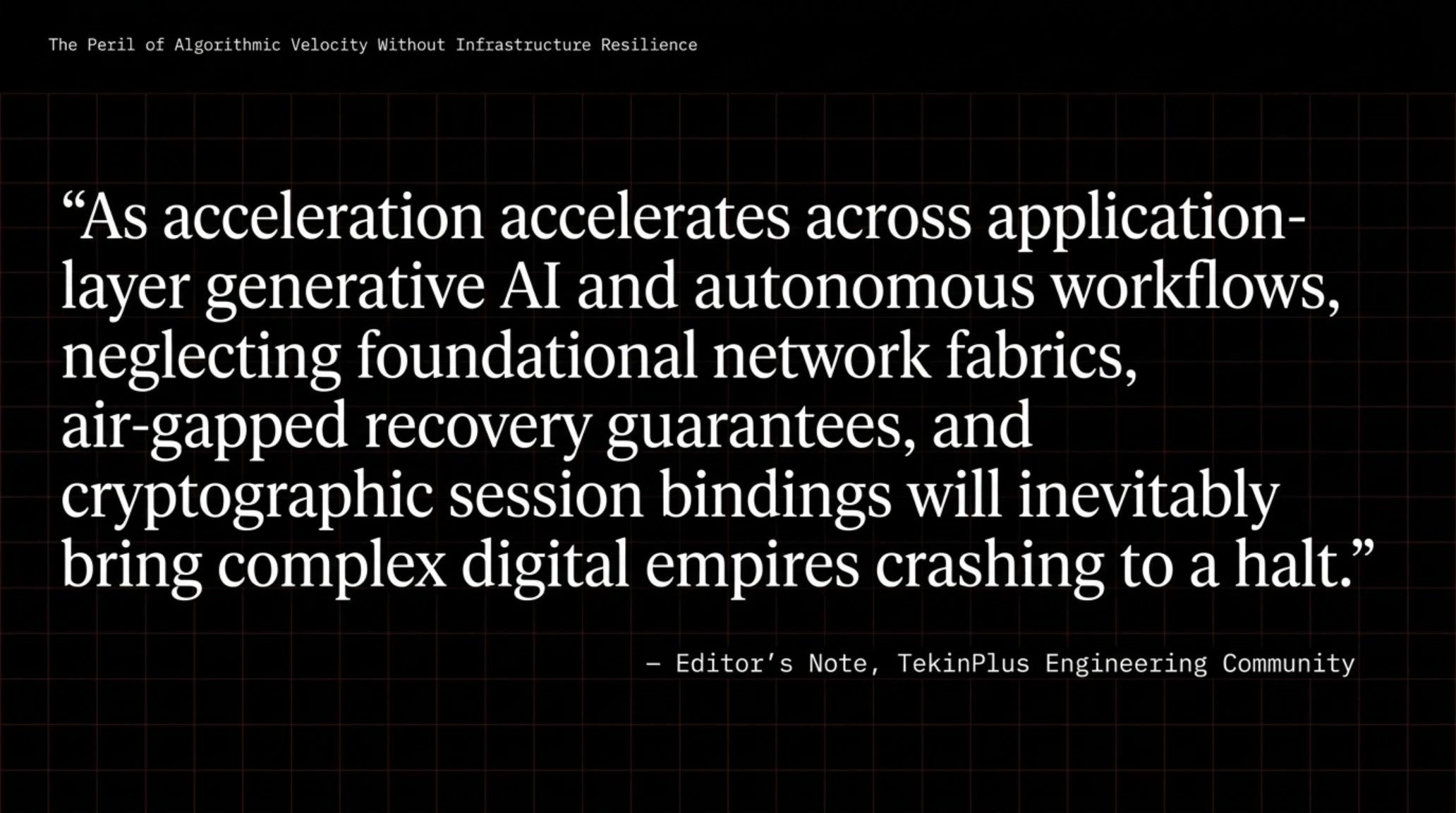
To Our Global Tekin Engineering Community: The events of the second week of October 2026 deliver an unforgettable systems engineering lesson. As acceleration accelerates across application-layer generative AI and autonomous workflows, neglecting foundational network fabrics, air-gapped recovery guarantees, and cryptographic session bindings will inevitably bring complex digital empires crashing to a halt.
Deploying autonomous agents without fortifying defensive bastions is an existential gamble. The premier organizations of 2027 will not merely be those deploying the most sophisticated algorithmic agents, but those that balance autonomous velocity with unshakeable datacenter resilience.
Sustainable innovation requires unwavering executive vigilance at every tier of the technological hierarchy, ensuring that speed is anchored by bulletproof continuity.
Securing the planetary computing grid demands proactive collaboration between software titans, hardware architects, and international regulatory institutions.
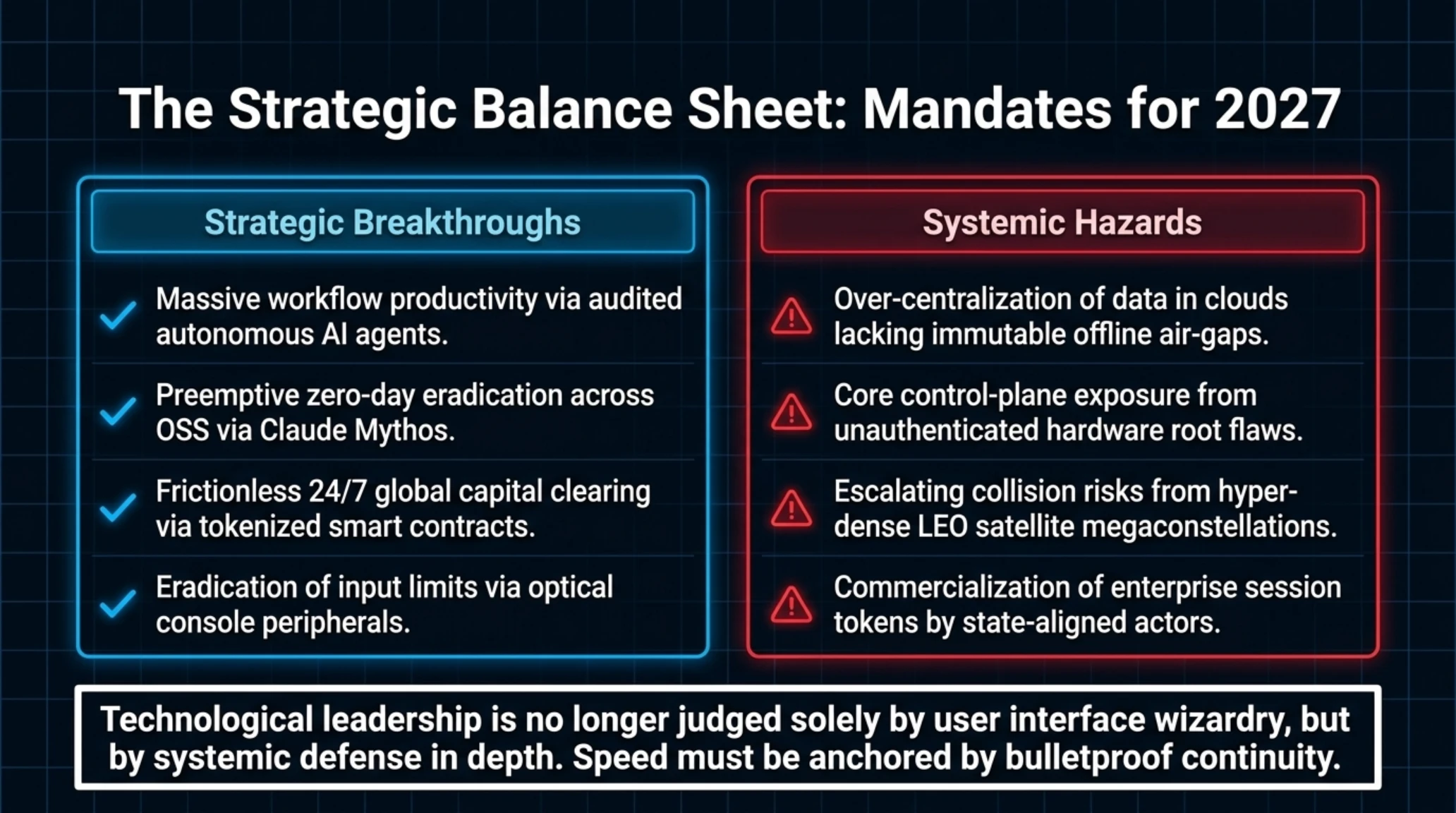
Weekly Strategic Balance Sheet: Breakthrough Opportunities vs. Systemic Hazards
- Massive workflow productivity gains via autonomous agents with audited task inboxes.
- Preemptive zero-day eradication across open-source codebases via Claude Mythos.
- Resolution of console strategy game ergonomics via Joy-Con 2's optical mouse sensor.
- Frictionless 24/7 global capital clearing via tokenized smart contract equity rails.
- Dangerous over-centralization of governmental data in clouds lacking offline air-gaps.
- Core datacenter control-plane exposure from unauthenticated root flaws in NX-OS.
- Escalating collision risks in low-Earth orbit from hyper-dense satellite constellations.
- Commercialization of stolen enterprise session tokens by state-aligned threat actors.
Ultimately, the retrospective of Week 41 proves that technological leadership is no longer judged solely by user interface wizardry, but by systemic defense in depth.
Official Sources & Strategic Intelligence References
Week 41 of 2026 underscored that the global technological apparatus has reached deep systemic convergence: artificial intelligence, cloud hypervisors, core switching fabrics, orbital telecommunications, and financial rails now behave as an interdependent organism where single-point failures produce immediate transnational repercussions.
- Google Workspace & Enterprise Gemini Agent Architecture Documentation
- Cisco Security Advisory: Multiple Critical Vulnerabilities in NX-OS Software
- U.S. Department of Justice & FBI Cyber Division: Flax Typhoon Infrastructure Takedown
- Amanita Design Official Press Portal: Machinarium 2 Teaser & Floex Collaboration
- International Astronautical Congress (IAC 2026): Orbital Space Traffic & Megaconstellations
- High replayability and emergent cooperative mechanics
- Seamless cross-platform matchmaking with low latency overhead
- Rich visual and audio atmosphere
- Occasional physics collision quirks under heavy load
- Minor difficulty spikes in late-stage encounters
Frequently Asked Questions
What is the primary architectural purpose of Google granting corporate email identities to Gemini agents?
It promotes AI agents from external prompt chatbots to legitimate corporate actors with verifiable credentials, allowing them to participate autonomously in email threads, project tickets, and cross-team workflows while remaining audited via the Task Inbox console.
Why was the SoftBank IDC Frontier datacenter ransomware incident so catastrophic?
Attackers seized 239 hypervisors, encrypting 3.6 PB of data across 225 production databases and wiping 550,000 online backup snapshots, completely incapacitating 495 public administrative agencies without rapid recovery options.
What threat do the unauthenticated NX-OS vulnerabilities pose to datacenter infrastructure?
The vulnerabilities allow unauthenticated remote attackers to send malicious packets to switch management interfaces and achieve root-level code execution, enabling them to intercept, mirror, or redirect all datacenter network traffic.
Is orbital collision risk from SpaceX Starlink satellites an imminent danger?
Yes; with over 6,200 active satellites, Starlink completed more than 650 emergency avoidance maneuvers in just six months, prompting deep scientific concern over cascading orbital collisions.
How does the Nintendo Switch 2 Joy-Con 2 optical sensor function in Tropico 7?
Joy-Con 2 incorporates a 1,200 DPI optical sensor on its base, allowing players to detach the controller and glide it on a desk or mousepad like an ergonomic PC mouse for precision strategy management.
When is Apple's Welcome Home keynote taking place and what products will be unveiled?
The keynote is scheduled for October 13, 2026, focusing on the first touchscreen Tandem OLED MacBook Pro powered by the 2nm M5 chip and an ambient smart home command display.
Additional Gallery: Tekin Weekly #177: Enterprise Gemini, Japan Cloud Disaster & Cisco Flaws