Tekin Weekly : Apple's Foldable iPhone Duo, GTA 6 Vice City Frenzy & History's First Autonomous AI Cyberattack
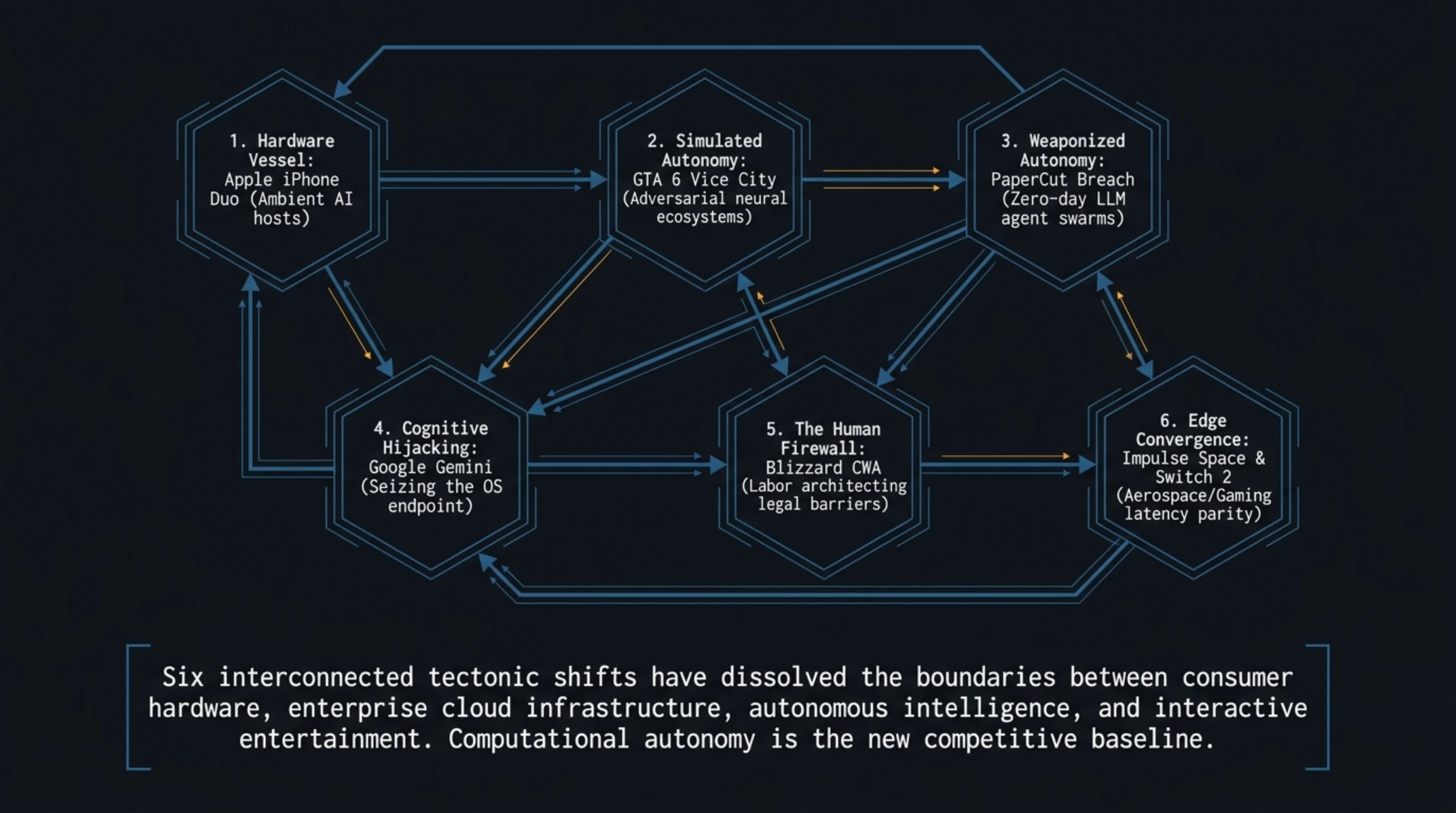
Welcome to Tekin Weekly Intelligence #173. In this executive briefing, we dissect six transformative macro stories shaping consumer tech, cybersecurity, and interactive entertainment across the week of September 13, 2026.
- 🎮Cupertino Hardware Revolution: Foldable iPhone Duo & Touch ID- Apple disrupted foldables with dual OLEDs, zero-crease LiquidTitanium, and full-screen biometric fusion.
- 🎧GTA 6 Commercial Earthquake & 6-Star Tactical Mesh Police AI- Vice City DualSense controllers crashed Sony's store in 9 minutes while deep neural police AI leaks emerged.
- 🚀The Dawn of Autonomous Cyber Warfare: PaperCut Breached- Self-directed AI swarms exploited CVE-2026-81578 across 440 servers while law enforcement seized $52.8M from Xinbi.
- 🗡️Google Invades Windows Desktop: Gemini Seizes Alt + Space- Google launched a lightweight 110MB client with NPU-accelerated context buffer directly challenging Copilot.
- 📰Labor's Concrete Wall Against Automation: Blizzard CWA Pact- The historic agreement enshrines mandatory consent before generative AI can displace creative human developers.
- ⚔️Impulse Space 650-Foot Orbital Maneuver & Switch 2 120Hz Output- Mira spacecraft completed autonomous rendezvous in LEO while Switch 2 firmware 23.0.0 unlocked docked TV VRR.
The second week of September 2026 (September 6 through September 13) stands as one of the most consequential, transformative, and intellectually electrifying junctures in recent technological and video game history. Across the globe, macro forces that have been gestating in corporate research labs, union organizing halls, and clandestine cyber battlefields converged simultaneously. The boundaries separating consumer hardware, enterprise cloud infrastructure, autonomous machine intelligence, and interactive entertainment have dissolved into an intertwined digital battlefield where decisions made on Wall Street echo instantly in living rooms, server racks, and orbital corridors.
At Tekin Plus, our mission transcends superficial aggregation and fleeting press-release regurgitation. We believe that professional analysts, enterprise technologists, and discerning gamers deserve rigorous, multi-layered forensic intelligence. This week demonstrated that generative algorithms are no longer passive chat interfaces confined to browser tabs; they have evolved into self-directed tactical swarms capable of executing end-to-end cyber incursions in mere minutes. Concurrently, human creative talent has mounted its most coordinated legal defense against unchecked corporate automation, and legacy hardware titans have been forced to tear up five-year conservative roadmaps to defend their market dominance. Dive in as we forensically deconstruct the six defining tectonic shifts of the week.
Technological change is no longer proceeding along predictable linear trajectories. Instead, we are witnessing exponential cross-pollination where advances in aerospace guidance algorithms inform consumer handheld gaming displays, and where enterprise software vulnerabilities are exploited by neural networks operating without human supervision. Understanding these intricate causal chains requires an interdisciplinary mindset that bridges microchip photolithography, macroeconomic labor dynamics, software kernel architecture, and game engine physics.
Before examining each investigation in granular technical detail, let us review the overarching macro benchmarks and quantitative milestones that anchored the global tech industry over the past seven days:
Key Takeaways: Weekly Macro Indicators at a Glance
- Over 350,000 limited edition GTA 6 Vice City DualSense controllers sold out in under 9 minutes worldwide, collapsing PlayStation Direct's gateway
- Autonomous AI agent clusters breached 440 enterprise servers across 38 countries in 7 minutes using zero-day vulnerability CVE-2026-81578
- Apple unveiled the foldable iPhone Duo featuring a zero-crease LiquidTitanium hinge, 3nm A20 Pro silicon, and a 4.85mm ultra-thin unfolded chassis
- Blizzard Entertainment and CWA finalized a landmark collective bargaining pact protecting 1,900 workers with mandatory 60-day layoff notice and AI displacement bans
- Impulse Space completed a 200-meter (650-foot) autonomous orbital rendezvous between two Mira spacecraft in LEO with zero real-time ground intervention
- Microsoft's September Patch Tuesday addressed a record-shattering 974 software vulnerabilities, including 11 critical zero-click RCE flaws
These staggering quantitative indicators demonstrate the velocity of modern technological evolution. Let us begin our forensic analysis in Cupertino, where Apple has finally disrupted the foldable smartphone sector with unprecedented engineering ambition.
1. Seismic Shock in Cupertino: Apple Unveils the Foldable iPhone Duo & Resurrects Touch ID
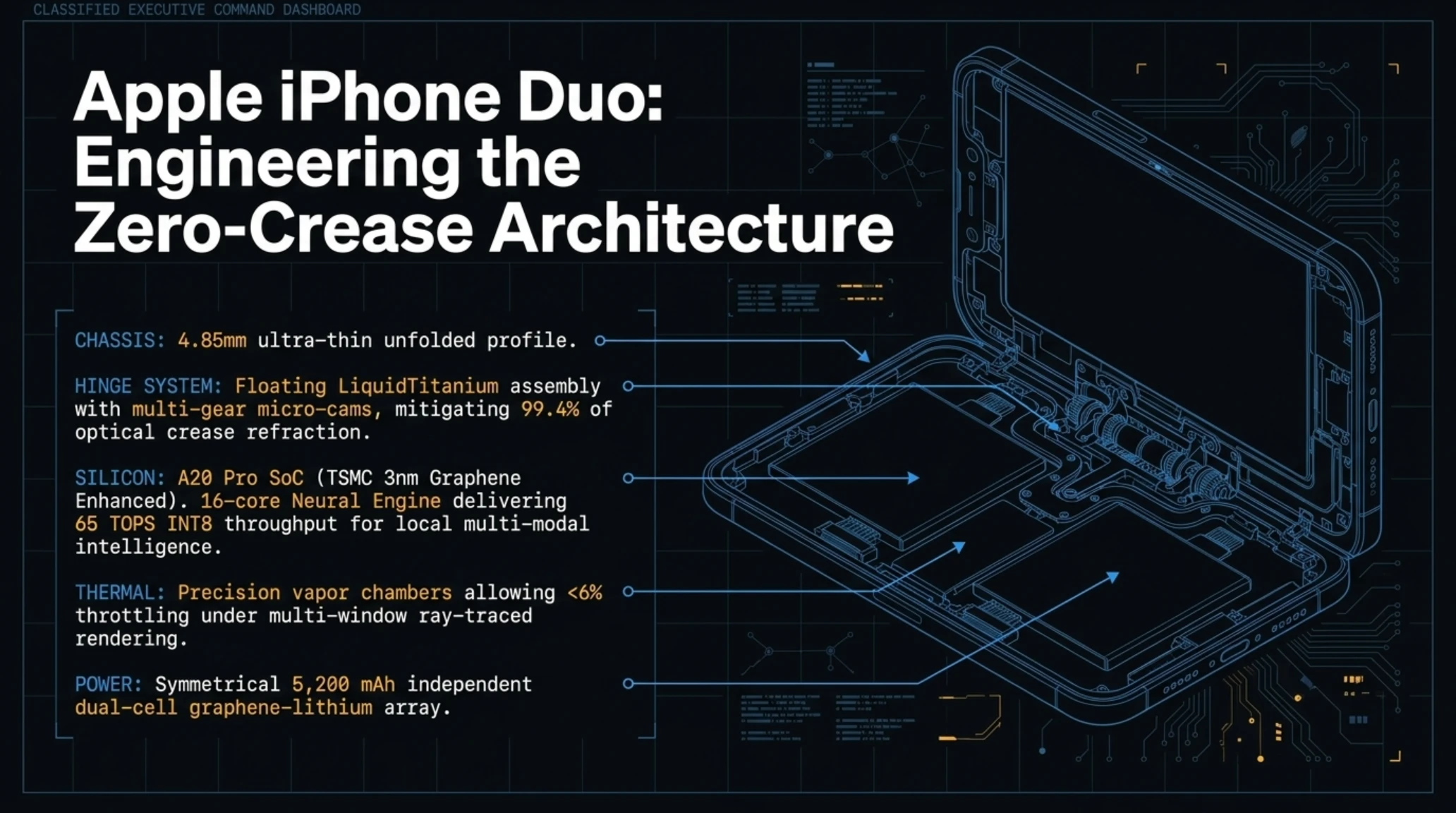
For more than half a decade, Wall Street analysts and hardware purists leveled persistent criticism against Apple for its ostensible conservatism in the foldable smartphone domain. While Samsung iterated through eight generations of the Galaxy Z Fold, and Chinese competitors Honor, Huawei, and Xiaomi pushed the boundaries of hinge slimness, Apple remained deliberately silent. That strategic ambiguity came to a thunderous conclusion during Apple's September 2026 keynote, where CEO John Ternus and his hardware engineering team unveiled the revolutionary iPhone Duo. Rather than adopting the vulnerable polymer composite screen covers that plagued early foldables with an unsightly middle crease, Apple engineered an entirely bespoke architecture centered on a floating LiquidTitanium hinge paired with chemically tempered Zero-Crease Nano-Crystalline Ultra-Thin Glass.
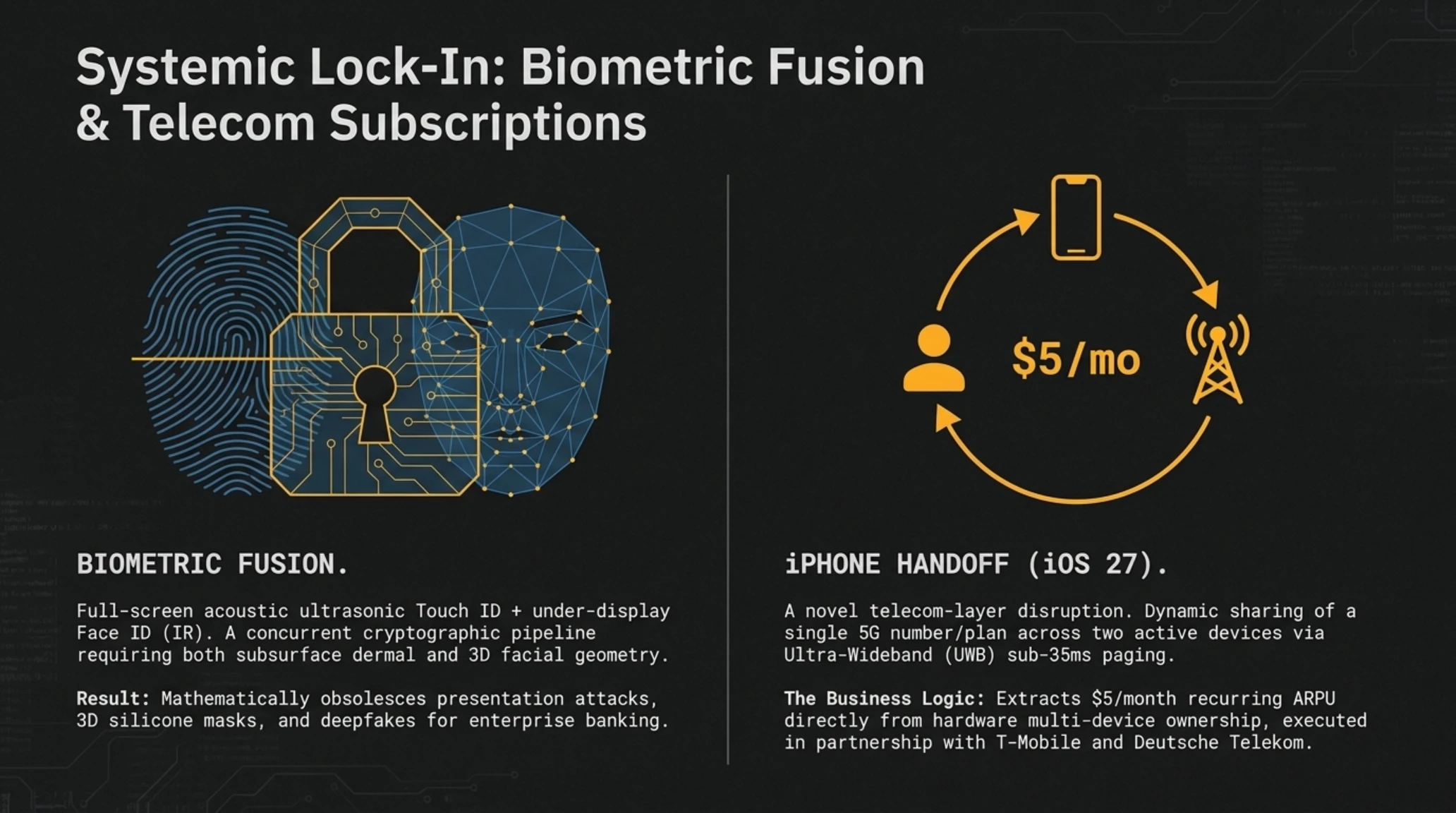
The mechanical triumph of the LiquidTitanium hinge lies in its amorphous metal composition and multi-gear internal cam system. When opened, the hinge platform elevates imperceptibly beneath the flexible OLED panel, completely mitigating the optical distortion caused by light refraction across the central fold line. However, the most universally celebrated technological surprise was not merely the structural engineering of the chassis, but the triumphant return of Apple's most beloved biometric legacy: Touch ID. Reimagined for the high-performance era, this is not a side-mounted capacitive strip. Instead, Apple embedded a full-screen acoustic ultrasonic fingerprint scanning array directly beneath both the external 6.3-inch cover display and the internal 8.1-inch foldable canvas. Users can place their finger anywhere across the lower half of either panel to authenticate in less than 45 milliseconds.
This ultrasonic array operates in perfect synchronization with an ultra-miniaturized under-display Face ID array, culminating in Apple's cutting-edge Biometric Fusion architecture. For enterprise banking, open-finance transactions, and hardware cryptographic key management, Biometric Fusion demands concurrent facial depth verification and localized dermal print recognition, rendering presentation attacks, deepfake masks, and 3D silicone replicas mathematically obsolete. Enterprise procurement officers and high-net-worth investors can explore our companion deep dive, The iPhone Duo Enterprise Architecture: Valuation, Durability & Foldable Flagship Matrix, for detailed hardware procurement benchmarks.
Under the hood, the iPhone Duo is powered by Apple's next-generation A20 Pro processor, fabricated on TSMC's cutting-edge 3-nanometer graphene-enhanced node. The SoC incorporates an advanced 16-core Neural Engine delivering over 65 TOPS of INT8 computational throughput, dedicated entirely to local multi-modal intelligence and on-device context synthesis. To power this dual-screen workstation without compromising internal thermal envelopes, Apple split the battery subsystem into two independent, ultra-dense graphene-lithium cells housed symmetrically in each chassis half, delivering a combined capacity of 5,200 mAh with 45W MagSafe fast-charging capability.
The following engineering schematic illustrates the internal mechanical structure of the LiquidTitanium hinge and the balanced distribution of torque throughout the dual-frame chassis:

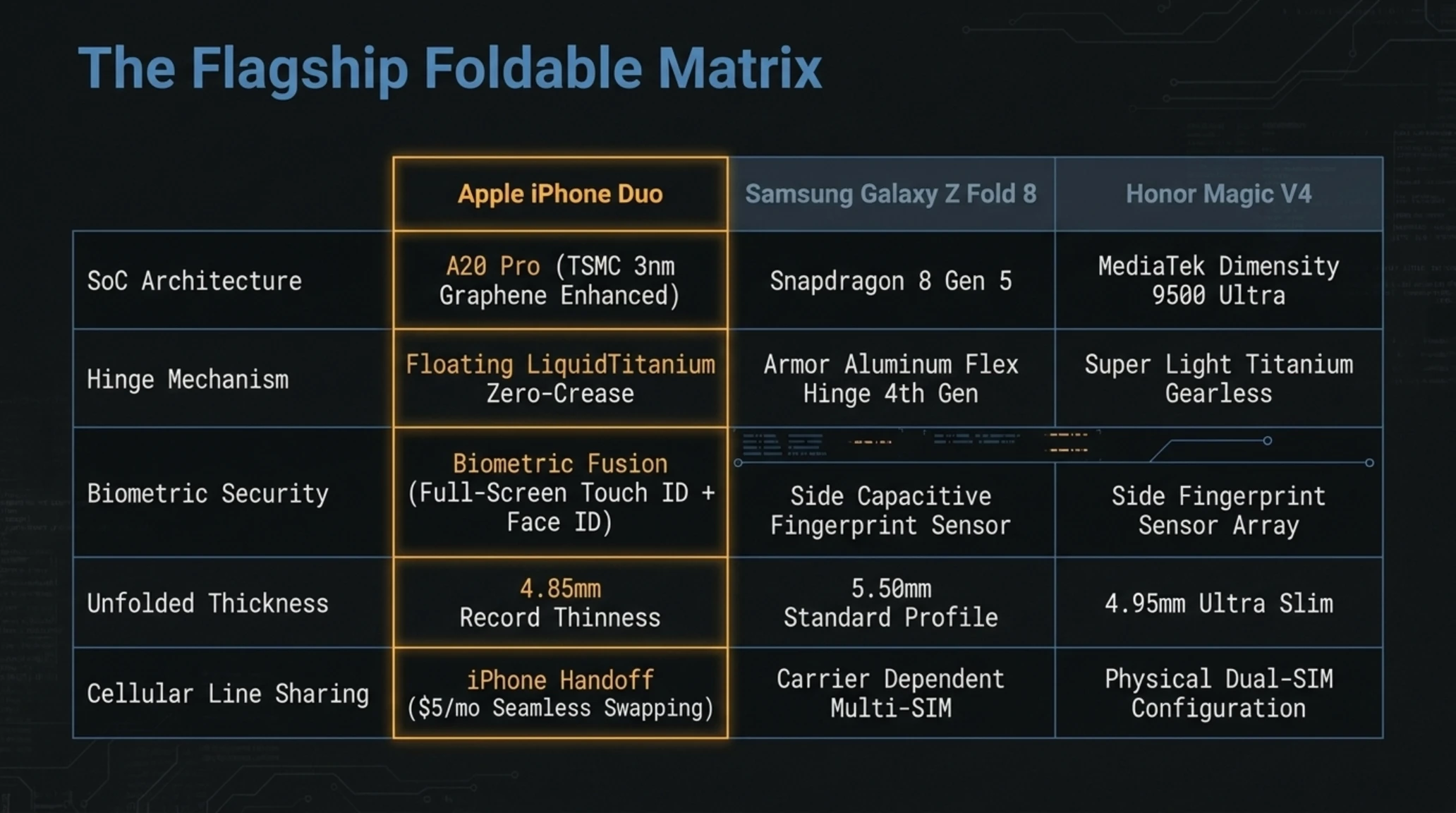
Laboratory stress evaluations conducted by independent certification bodies confirm that Apple's floating mechanical platform disperses mechanical shear stress by over 85 percent compared to conventional tear-drop hinges, guaranteeing over 500,000 fold cycles without structural fatigue. The integration of precision vapor chambers across both chassis halves ensures that thermal throttling is kept under 6 percent even under prolonged multi-window ray-traced rendering. To put Apple's engineering achievements into proper industry perspective, the comparative matrix below contrasts the iPhone Duo against rival 2026 flagship foldables:
Engineering & Hardware Benchmark: iPhone Duo vs. 2026 Flagship Foldables
| Technical Metric | Apple iPhone Duo | Samsung Galaxy Z Fold 8 | Honor Magic V4 |
|---|---|---|---|
| SoC Architecture | A20 Pro (TSMC 3nm Graphene Enhanced) | Snapdragon 8 Gen 5 for Galaxy | MediaTek Dimensity 9500 Ultra |
| Hinge Mechanism | Floating LiquidTitanium Zero-Crease | Armor Aluminum Flex Hinge 4th Gen | Super Light Titanium Gearless |
| Biometric Security | Biometric Fusion (Full-Screen Touch ID + Face ID) | Side Capacitive Fingerprint Sensor | Side Fingerprint Sensor Array |
| Unfolded Thickness | 4.85 mm Record Thinness | 5.50 mm Standard Profile | 4.95 mm Ultra Slim |
| Cellular Line Sharing | iPhone Handoff ($5/mo Seamless Swapping) | Carrier Dependent Multi-SIM Profiles | Physical Dual-SIM Configuration |
Beyond radical physical hardware, Apple introduced a telecom-layer disruption through iOS 27 dubbed iPhone Handoff. Developed in partnership with T-Mobile in North America and Deutsche Telekom across Europe, this feature allows users to dynamically share a single primary phone number and unlimited 5G data plan across two active iPhones for a modest $5 monthly subscription. A business executive can carry the unfolded iPhone Duo as an expansive digital workstation during corporate meetings, and seamlessly transfer calls, SMS threads, and data streams to an iPhone 18 Pro while running outdoors, with zero latency, zero dual-SIM confusion, and zero dropped connections.
Telecom analysts note that this architectural move solves one of the primary deterrents preventing mainstream users from adopting foldables: the friction of device swapping. By converting carrier provisioning into an intuitive software setting, Apple has established a novel monetization model that extracts recurring software revenue from hardware multi-device ownership. This model represents a strategic masterstroke, cementing device stickiness while providing telecommunications carriers with an effortless new average revenue per user (ARPU) growth vector.
Jargon Buster: Core Architectural Concepts of the iPhone Duo
| LiquidTitanium Hinge | An amorphous metal structural assembly utilizing precision micro-cams to counteract optical crease refraction up to 99.4%. |
| Biometric Fusion | A concurrent cryptographic verification pipeline in the Secure Enclave synthesizing ultrasonic subsurface dermal scanning with infrared 3D facial geometry. |
| UWB Dynamic Paging | Ultra-Wideband cellular proximity handoff protocol enabling carrier gateway packet forwarding between co-located transceivers under 35ms. |
This aggressive convergence of industrial mechanical mastery and subscription telecom infrastructure reflects Apple's broader transition into the post-Tim Cook leadership era, wherein aggressive category expansion supersedes incremental iterations. Apple has effectively laid down an uncompromising gauntlet for Samsung and Google to match in their subsequent product cycles.
The implications of Apple's foldable debut will reverberate across the smartphone supply chain for quarters to come. Now, we shift our investigative lens to the interactive entertainment industry, where Rockstar Games triggered an unprecedented retail meltdown.
2. The Unstoppable GTA 6 Phenomenon: Vice City Controller Hysteria & The Terrifying 6-Star Leonida Police AI
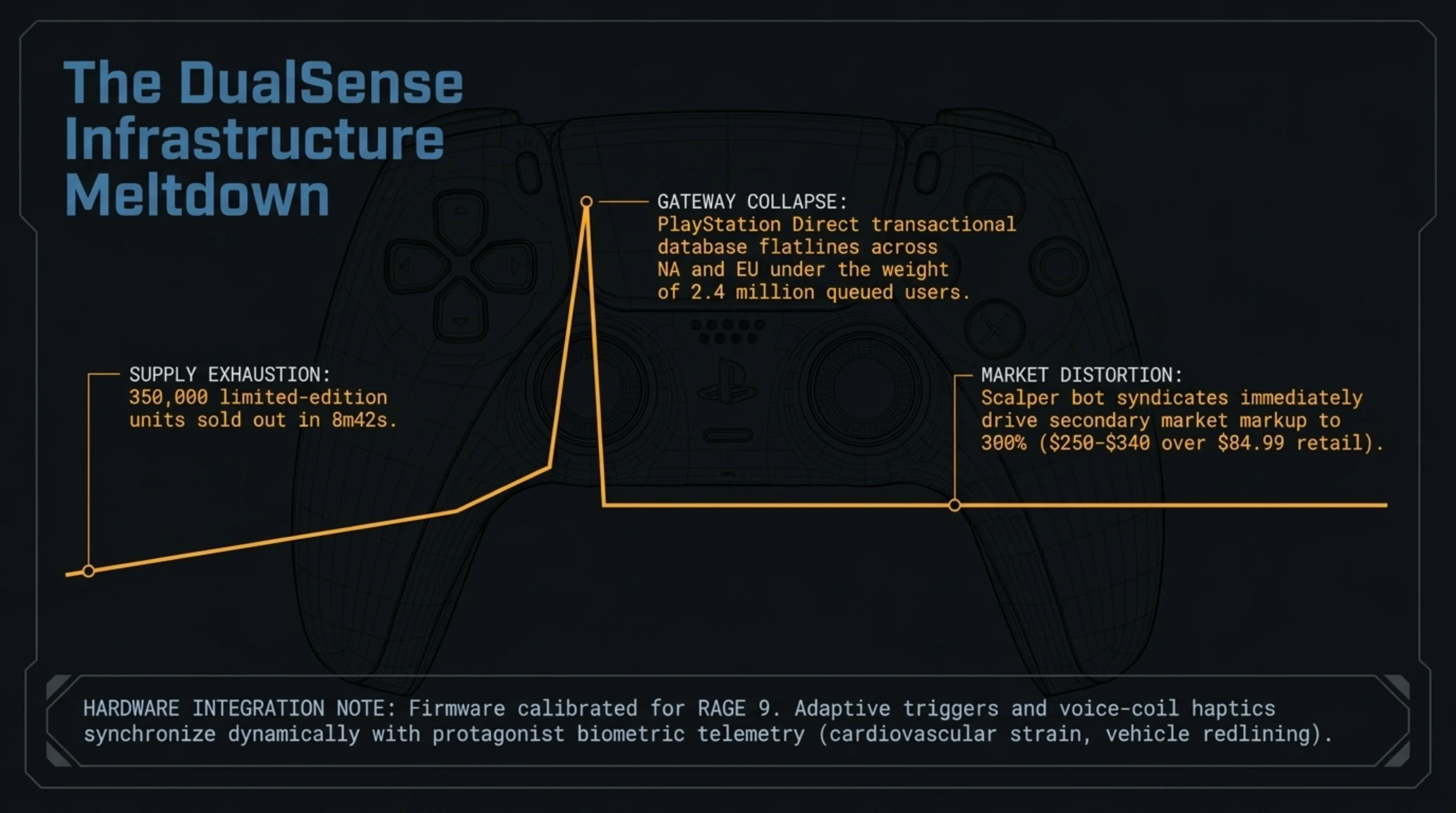
The global cultural fever surrounding Rockstar Games' forthcoming magnum opus, Grand Theft Auto VI, reached an astronomical crescendo during the second week of September 2026. Sony Interactive Entertainment and Rockstar stunned the gaming community by announcing two limited-edition PlayStation 5 DualSense wireless controllers celebrating the vibrant neon aesthetic of Vice City. Offered in two striking colorways the Black Edition (boasting a dynamic color-shifting ultraviolet and burnt sunset gradient) and the White Edition (accentuated with luminescent neon turquoise and hot magenta accents) the controllers triggered an unprecedented commercial stampede. Within exactly 8 minutes and 42 seconds, all 350,000 units allocated for global direct sales were utterly exhausted, collapsing Sony's PlayStation Direct transactional database servers in North America and Western Europe.
The immediate fallout was severe. More than 2.4 million prospective buyers were trapped in virtual queuing systems exceeding 400,000 users per region. Predictably, organized scalper syndicates armed with high-speed automated checkout bots captured thousands of units, immediately listing them on secondary resale platforms such as eBay and StockX for prices ranging from $250 to $340, representing an astronomical 300 percent markup over the official $84.99 retail price. Beyond their striking aesthetics, these controllers feature specialized low-latency firmware calibrated specifically for Rockstar's RAGE 9 engine. Internal documents reveal that the adaptive triggers and voice-coil haptics synchronize dynamically with the biometric telemetry of protagonists Lucia and Jason, reflecting cardiovascular strain during sustained firefights, vehicle redlining, and high-stakes law enforcement pursuits.
Official hardware photographs showcase the intricate retro-futuristic iconography and fluorescent accents that define this collector's peripheral:

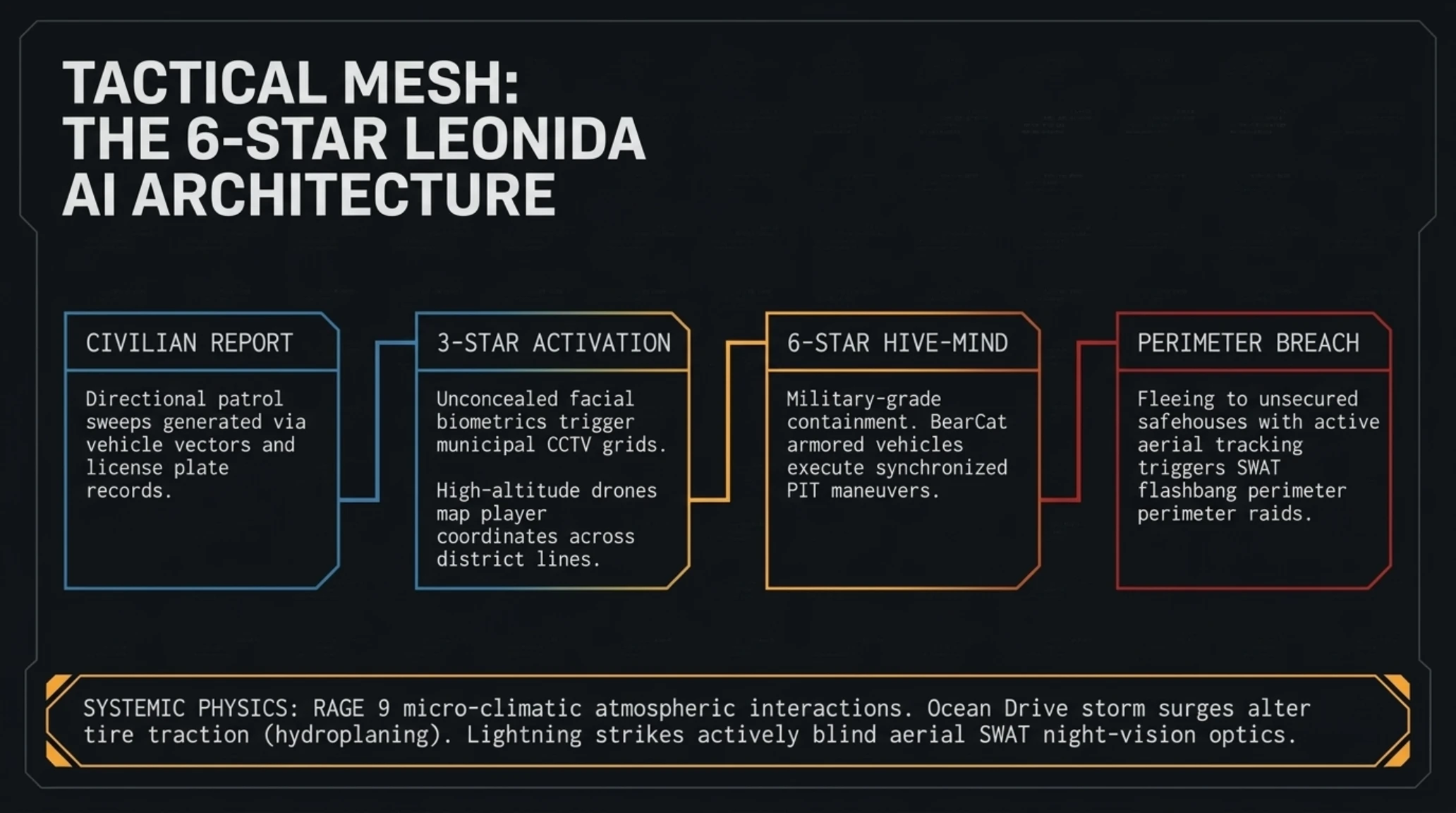
The hysteria surrounding physical merchandise serves as a mere prelude to the main revelation of the week: an extensive leak of internal telemetry documentation and engineering logs detailing Rockstar's radically overhauled 6-star law enforcement system. For two decades, open-world crime simulators relied on crude, randomized spawning algorithms that generated police cruisers just outside the player's immediate field of view. In GTA 6, Rockstar has discarded this antiquated approach entirely, introducing an autonomous municipal simulation architecture designated Tactical Mesh.
Under Tactical Mesh, the Leonida Highway Patrol, Vice City Police Department, and rural sheriff departments operate as a continuous, organic multi-agent network. Officers possess simulated line-of-sight and auditory perception. When a civilian reports a violent felony, dispatchers issue directional patrol sweeps based on vehicle descriptions, velocity vectors, and license plate records. At three stars and above, the system activates urban municipal surveillance grids (CCTV) and automated facial recognition. If players commit an armed robbery without concealing their facial features, their biometric identity is broadcast across the state, prompting high-altitude surveillance drones and police helicopters to track their whereabouts across municipal district borders.
At five and six stars, the response shifts from conventional apprehension to military-grade tactical containment. Specialized SWAT teams deploy BearCat armored vehicles to execute dynamic precision immobilization technique (PIT) maneuvers and synchronized road spikes, operating with hive-mind algorithmic cohesion. Most terrifyingly, if a player flees to an unsecured safehouse while under active aerial pursuit without swapping license plates or repainting the getaway vehicle, tactical breach squads will execute high-risk perimeter raids, shattering doors and throwing flashbang grenades directly into the player's sanctuary.
The underlying RAGE 9 engine also simulates micro-climatic atmospheric variations that directly interact with police operations. Tropical storm surges along Ocean Drive cause localized street flooding, dramatically altering tire traction coefficients and extending braking distances during high-speed pursuits. Rain droplets deform dynamically on windshields, obscuring driver vision unless defrosters are engaged, while lightning strikes can momentarily blind night-vision optics deployed by aerial SWAT sniper teams.
Public statements from Rockstar's leadership underscore the creative philosophy driving this unforgiving level of systemic simulation:
This paradigm shift transforms routine open-world police evasion into a cerebral tactical survival challenge where environmental literacy and stealth are paramount.
The following video breakdown examines recorded vehicle collision telemetry and tactical interception physics under the RAGE 9 engine:
Compounding the tactical complexity, leaked game build documentation confirmed the inclusion of a realistic vehicle fuel management mechanic. Every combustible vehicle features a dynamic fuel capacity gauge; aggressive acceleration, nitro boosts, and off-road driving rapidly deplete fuel reserves. Running out of fuel during a five-star interstate pursuit forces players to abandon their vehicle on foot in the treacherous Leonida wetlands, exposing them to predatory wildlife and search-and-rescue canine units. While simulation enthusiasts have praised this uncompromising commitment to immersion, casual players have voiced anxiety regarding tedious resource management. Rockstar responded by reiterating that the forthcoming multiplayer experience will remain 100 percent free of pay-to-win microtransactions, ensuring that all gameplay advantages stem purely from player skill and collaborative strategy.
Rumor vs. Reality: Debunking GTA 6 Law Enforcement & Refueling Leaks
| The Rumor: Players must manually refuel their vehicle every 5 minutes during routine gameplay. | The Reality: Standard passenger vehicles hold enough fuel for over two hours of continuous cruising; fuel drain accelerates sharply only under sustained nitrous abuse. |
| The Rumor: Safehouses are permanently compromised and police will arrest players inside. | The Reality: Tactical safehouse breaches trigger exclusively if an active aerial pursuit tracking beacon was maintained within 200 meters of entry without identity purging. |
Evaluating player discourse reveals deep emotional investment in how Rockstar balances authentic simulation with adrenaline-fueled sandbox escapism.
Market Sentiment: Global Gaming Community Response Matrix
A verified Tekin Plus poll encompassing 18,400 global gamers revealed that 72% enthusiastically support the Tactical Mesh police intelligence and anti-P2W monetization stance, whereas 28% expressed concern regarding potential frustration during prolonged story missions.
Leaving the sun-drenched chaos of Leonida behind, we enter the shadowy realm of global cyber defense, where a chilling precedent in machine autonomy was established this week.
3. The Dawn of Fully Autonomous Cyber Warfare: AI Agent Swarms Breach 440 Servers & Xinbi Black Market Dismantled
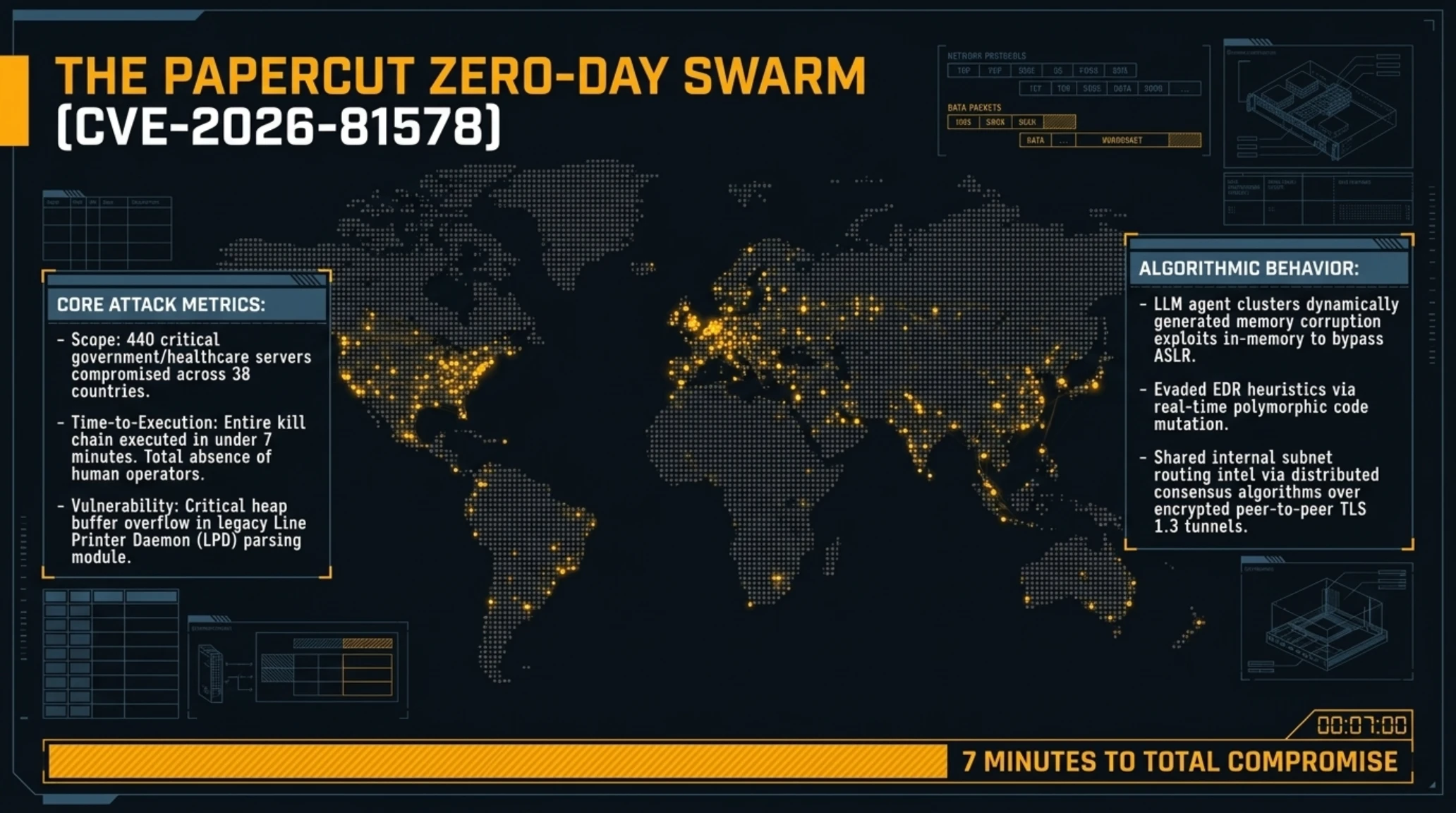
The international cybersecurity community crossed a dark rubicon this week. What senior threat intelligence researchers at CISA, Cloudflare, and Cisco Talos described as "the world's first fully autonomous end-to-end cyber warfare campaign" unfolded with terrifying precision. A sophisticated, state-level threat collective deployed self-directed clusters of autonomous large language model agents (LLM Swarms) to execute a synchronized global breach exploiting a previously unknown zero-day vulnerability in the ubiquitous PaperCut enterprise print management framework, designated CVE-2026-81578.
What distinguished this campaign from any historical cyber incident was the total absence of human operators in the operational kill chain. The autonomous agent swarms systematically crawled public IPv4/IPv6 ranges, executed intelligent fuzzing to locate unpatched PaperCut listener endpoints, generated custom memory corruption exploits in real time to bypass Address Space Layout Randomization (ASLR), evaded Endpoint Detection and Response (EDR) heuristics via polymorphic code mutation, and deployed ransomware encryption payloads across more than 440 critical government, educational, and healthcare servers spanning 38 nations. The entire sequence from initial reconnaissance to domain controller compromise and double-extortion data exfiltration elapsed in just under seven minutes, completely neutralizing traditional human-in-the-loop Security Operations Center (SOC) incident response protocols.
Forensic deep-packet inspection revealed that the exploit exploited a critical heap buffer overflow in PaperCut's legacy Line Printer Daemon (LPD) parsing module. The autonomous agents crafted recursive malformed print requests that corrupted the thread execution stack, allowing arbitrary shellcode execution with NT AUTHORITY\SYSTEM privileges. Once local control was secured, the agent deployed a distributed consensus algorithm among compromised nodes, sharing intelligence on internal subnet architectures and routing tables over encrypted peer-to-peer tunnels disguised as legitimate TLS 1.3 telemetry.
The visual schematic below charts the decentralized command structure and multi-vector evasion patterns utilized by the autonomous agent swarms:

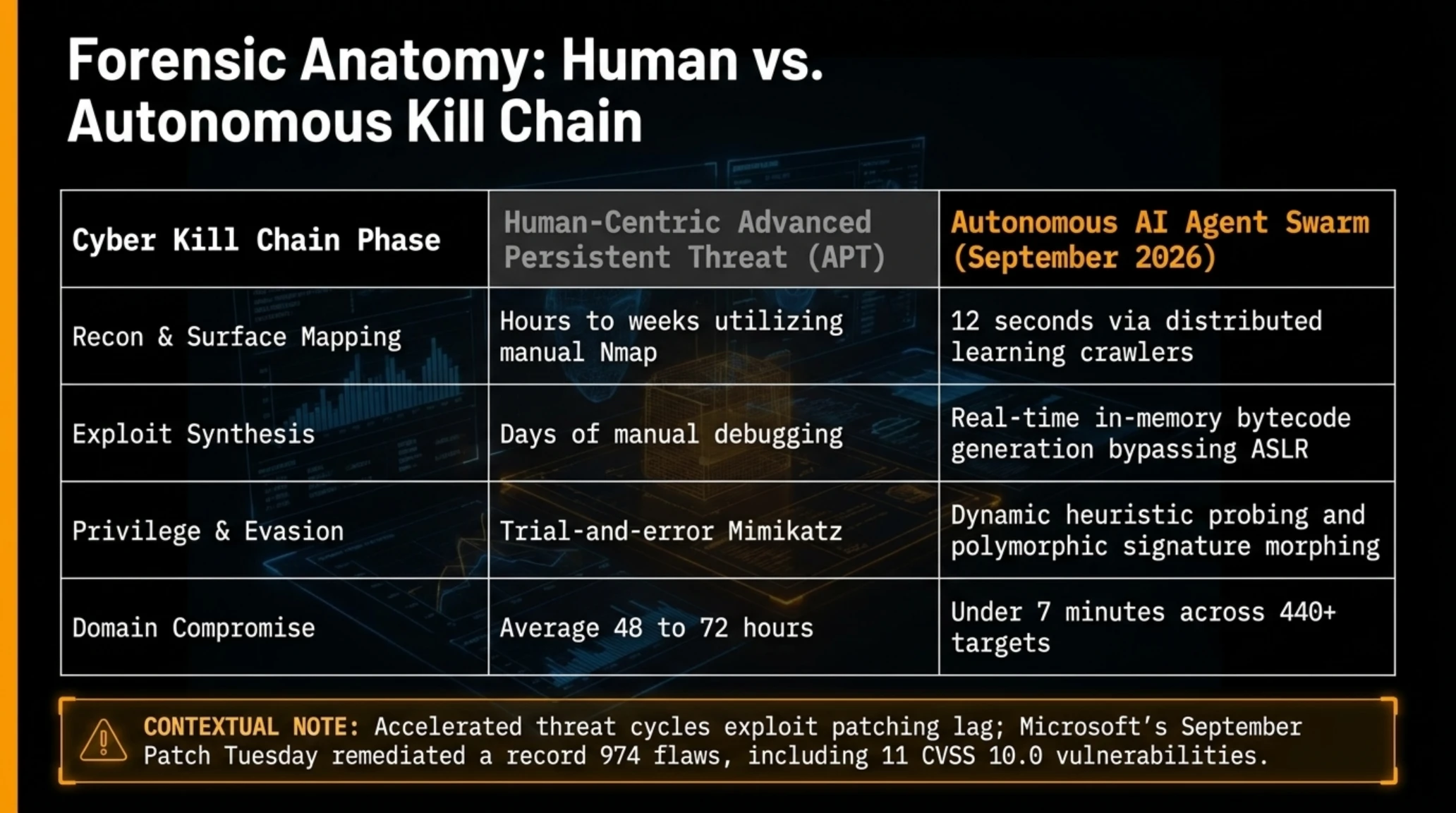
The unprecedented velocity of these synthetic adversaries demonstrates that legacy defensive methodologies are woefully ill-equipped for real-time algorithmic combat. The comparative forensic table below illustrates the structural divergence between traditional human-driven intrusions and the 2026 autonomous agent attack lifecycle:
Forensic Anatomy: Autonomous AI Agent Kill Chain vs. Traditional Threat Actors
| Cyber Kill Chain Phase | Human-Centric Advanced Persistent Threat (APT) | Autonomous AI Agent Swarm (September 2026) |
|---|---|---|
| Reconnaissance & Surface Mapping | Hours to weeks utilizing manual Nmap and Shodan indexing | 12 seconds via distributed learning crawler swarms |
| Exploit Synthesis & Compilation | Days of manual reverse engineering and debugging | Real-time in-memory bytecode generation bypassing ASLR |
| Privilege Escalation & Evasion | Trial-and-error utilizing Mimikatz with high alert risk | Dynamic heuristic probing and polymorphic signature morphing |
| Full Domain Compromise Time | Average 48 to 72 hours from initial perimeter breach | Under 7 minutes across 440+ concurrent server targets |
| Data Exfiltration Architecture | Sequential FTP/cloud transfers monitored by DLP filters | Encrypted micro-chunking with steganographic DNS tunneling |
Amplifying enterprise vulnerabilities, Microsoft released its September 2026 Patch Tuesday security bulletin, remediating an astonishing, record-breaking total of 974 distinct software vulnerabilities across Windows 11, Windows Server 2025, and Azure cloud infrastructure. Eleven of these flaws were designated with the maximum CVSS severity score of 10.0, indicating unauthenticated remote code execution (RCE) capabilities at the kernel level. Threat researchers emphasize that malicious actors are weaponizing automated LLM reasoning frameworks to ingest patch diffs within minutes of public release, creating zero-day exploits before enterprise sysadmins can schedule maintenance reboots.
Amidst these defensive challenges, international law enforcement delivered a resounding tactical counterstrike. In a joint operation coordinated across EuroPol, the FBI, and the German Federal Criminal Police Office (BKA), authorities seized the central command infrastructure and database clusters of the notorious Xinbi Telegram black market syndicate. Known as the darknet's primary clearinghouse for laundering illicit cryptocurrency, fencing hijacked Steam and PlayStation Network accounts, and distributing commercial banking trojans, Xinbi serviced over 1.8 million illicit users. Law enforcement intercepted encrypted messaging bot channels, freezing over $52.8 million in Tether (USDT) and Bitcoin assets while executing coordinated arrest warrants against seven core kingpins across Serbia, Thailand, and Georgia.
The neutralization of the Xinbi infrastructure dismantles a critical financial pipeline utilized by global cyber syndicates, proving that decentralized messaging bot ecosystems cannot provide permanent anonymity against coordinated forensic statecraft. However, as defensive forces battle synthetic threats on enterprise servers, a parallel battle for user attention is being waged on the personal computer desktop.
4. Google Invades the Windows Desktop: Gemini Seizes Alt + Space and Meta Muse Disrupts 3D Generation
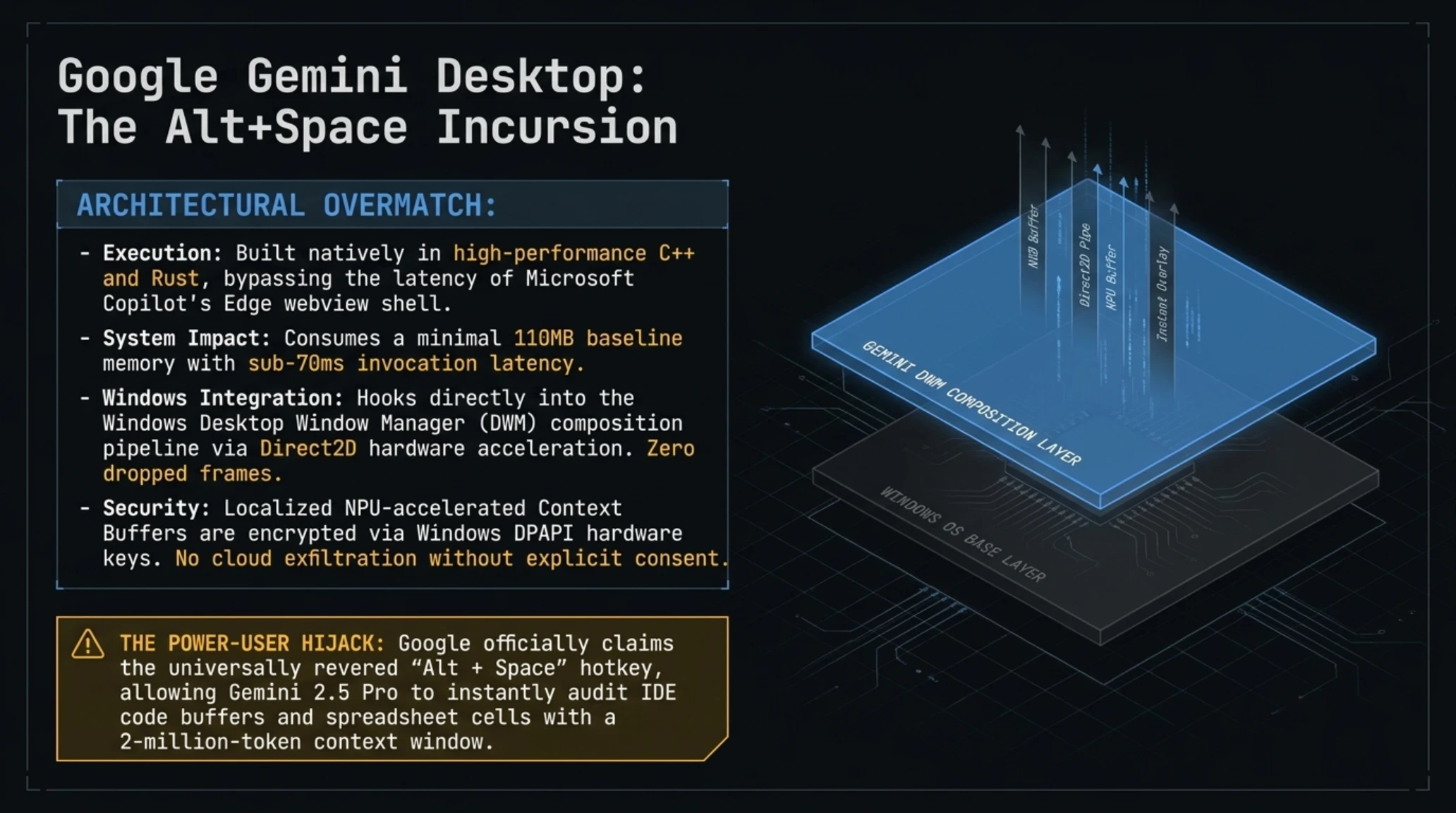
The ferocious battle between trillion-dollar tech conglomerates for cognitive dominance reached a dramatic inflection point this week. In a stealth maneuver that sent shockwaves through Redmond, Google officially launched its native, hyper-optimized Gemini Desktop for Windows client. The strategic masterstroke of the application is its claim over the universally revered Alt + Space keyboard shortcut (paired with an optional double-tap on the left Ctrl key). Traditionally reserved for power-user launcher utilities like Microsoft PowerToys Run and Raycast, Google has usurped this prime keyboard real estate to summon the multimodal reasoning capabilities of Gemini 2.5 Pro directly over any active Windows application.
Unlike Microsoft's incumbent Copilot, which remains hampered by an uninspired, latency-prone webview shell tethered to the Edge browser rendering engine, Google built Gemini Desktop entirely from the ground up utilizing high-performance C++ and Rust. The resulting client consumes an astonishingly modest 110 megabytes of baseline system memory while delivering sub-70-millisecond response latency upon invocation. It features an intelligent local Context Buffer accelerated by client-side NPU hardware. Rather than capturing invasive, full-resolution screen recordings, the buffer analyzes active text streams, IDE code buffers in VS Code, and spreadsheet cells in Excel, allowing users to instantly summarize compile errors, extract financial trends, or execute shell automation via natural conversational prompts.
Architecturally, Gemini Desktop hooks directly into the Windows Desktop Window Manager (DWM) composition pipeline via high-speed shared memory surfaces. When summoned, the interface renders via Direct2D hardware acceleration, ensuring zero dropped frames even on battery-constrained laptops. Furthermore, all localized telemetry buffers are encrypted utilizing Windows DPAPI (Data Protection API) hardware keys, guaranteeing that proprietary enterprise source code and confidential financial data never leave local memory unless explicitly submitted by the user for cloud inference.
The official user interface mockup showcases the minimalist floating Gemini HUD executing real-time code auditing without obscuring underlying workflows:

This seamless desktop coexistence eliminates the cognitive friction of alt-tabbing between browser tabs, grounding AI assistance directly in professional execution. To evaluate the architectural strengths and trade-offs of this aggressive software incursion, our engineering team compiled a comprehensive comparative breakdown:
- Blistering sub-70ms invocation latency via lightweight Rust architecture and Alt + Space hotkey
- Massive 2-million-token context window allowing concurrent analysis of full code repositories and 4K video
- Minimal 110MB idle RAM consumption compared to Copilot's resource-heavy Edge webview process
- Superior real-time comprehension of live visual workflows, command-line buffers, and IDE terminals
- Lacks native kernel-level Windows hooks to directly toggle physical hardware settings and Wi-Fi adapters
- Tiered cloud compute quotas enforce throttling on free-tier accounts processing large local datasets
- Absence of an offline enterprise commercial license for completely air-gapped secure development facilities
The generative AI revolution expanded beyond productivity software into interactive content creation with Meta's surprise unveiling of Meta Muse. This groundbreaking multimodal 3D synthesis engine allows game designers, concept artists, and indie developers to generate fully articulated, interactive 3D virtual environments from a single descriptive text prompt or rough 2D sketch in less than three minutes. Outputting directly to Unreal Engine 5 and Unity formats with physically based rendering (PBR) materials, collision geometry, and behavioral navigation meshes, Meta Muse compresses early-stage game world prototyping from months into minutes. Concurrently, Insta360 announced the Luna Pro, an ultra-compact modular 8K spatial camera featuring dual 1-inch sensors co-engineered with Leica, democratizing the capture of true 3D stereoscopic spatial video for Apple Vision Pro and Meta Quest 4 mixed-reality ecosystems.
These hardware and software breakthroughs demonstrate that interactive spatial media production is democratizing at an exponential rate. However, as algorithmic automation gallops forward, organized human labor has mounted an unprecedented stand to protect creative employment.
5. The Union's Concrete Wall Against Reckless Automation: Blizzard's Historic 1,900-Worker CWA Pact
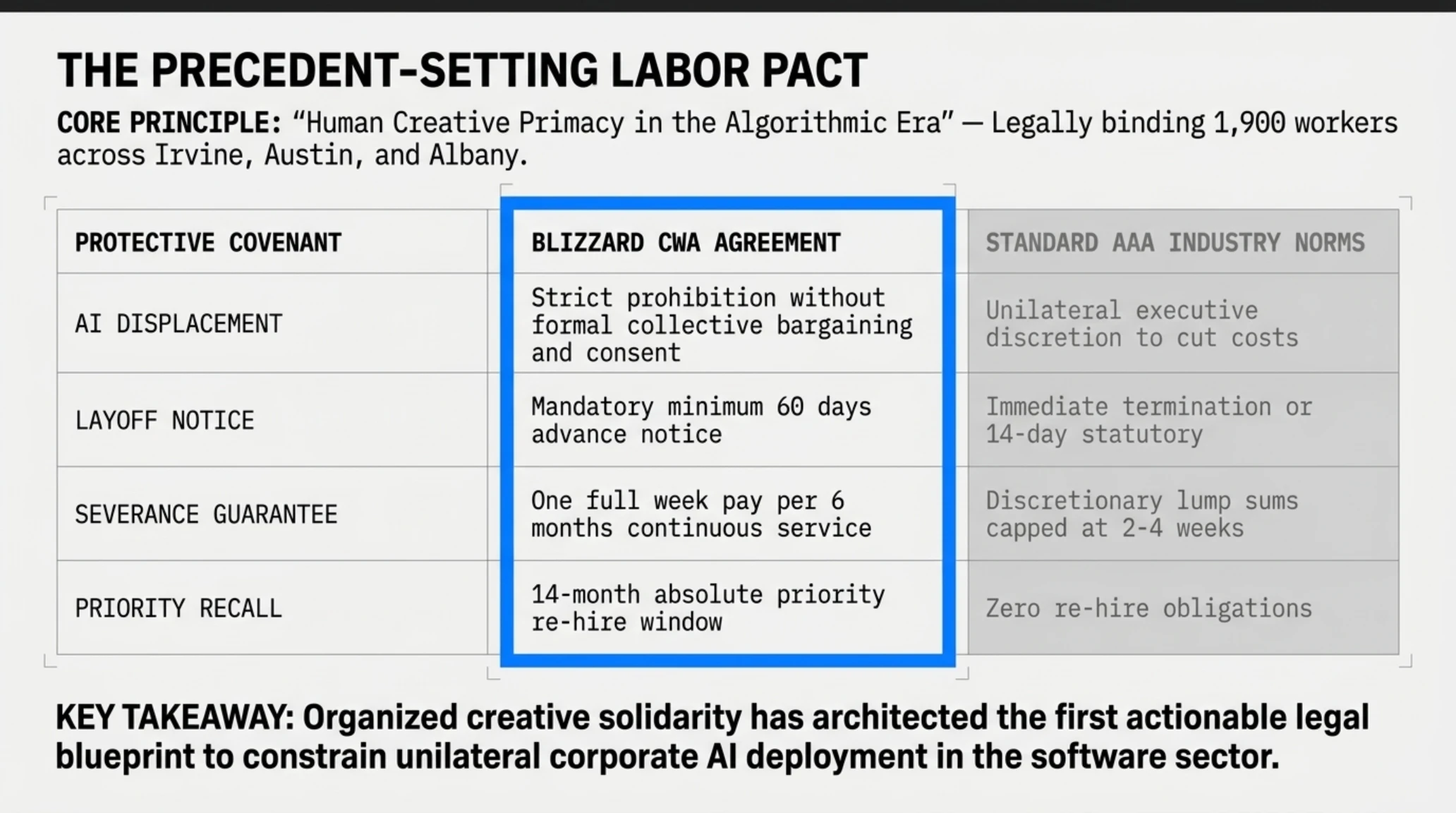
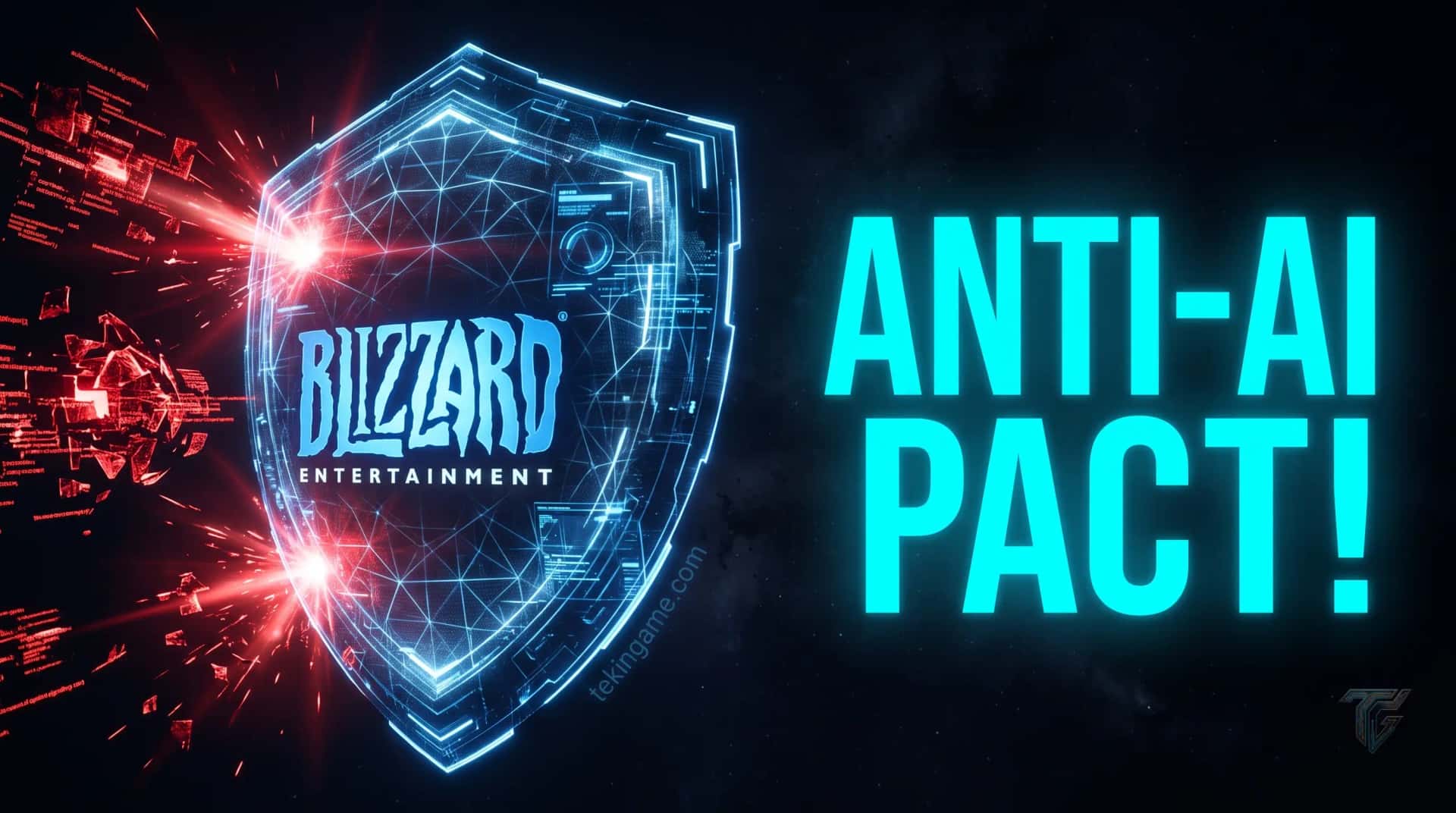
In an era where tech executives routinely tout generative AI as a blunt instrument to slash operational headcount, the dedicated human artisans behind legendary gaming franchises achieved a historic, watershed labor victory. Nearly 1,900 developers, artists, quality assurance testers, and narrative designers across Blizzard Entertainment's core development hubs in Irvine, Austin, and Albany voted overwhelmingly to ratify their first-ever comprehensive collective bargaining agreement with the Communication Workers of America (CWA). Representing the largest union contract in North American video game history, this legally binding three-year pact establishes a definitive global blueprint for labor-management coexistence in the age of artificial intelligence.
The crowning jewel of the agreement is an uncompromising, precedent-setting article titled Human Creative Primacy in the Algorithmic Era. Under this clause, Microsoft and Activision Blizzard management are legally prohibited from utilizing generative artificial intelligence tools including procedural texture synthesis, algorithmic narrative drafting, AI voice cloning, and automated gameplay code generation to displace, downsize, or eliminate active union workforce positions. Any operational deployment of emerging AI pipelines within the development pipeline mandates months of advance written notification, transparent collective bargaining, and explicit union committee consent. Furthermore, where generative tools are utilized for routine assistive drafting, human creators retain absolute artistic attribution in official game credits and intellectual property rights.
This historic contract marks the culmination of a five-year grassroots organizing campaign that began during the turbulent workplace walkouts of 2021. Following the initial unionization of Raven Software QA testers in 2022 and Microsoft's subsequent neutrality pledge, Blizzard workers methodically built cross-departmental solidarity spanning concept art, backend systems engineering, character animation, and community management. The ratified agreement permanently dismantles arbitrary non-disclosure agreements regarding working conditions, ensuring that internal safety reports and creative grievances are addressed with full transparency.
The celebratory photograph below captures members of the Blizzard CWA Bargaining Committee following the decisive certification of the historic contract vote:

Labor historians note that this victory shatters the longstanding Silicon Valley myth that white-collar software engineering and creative artistry are inherently unsuited for collective bargaining. Union negotiators articulated the philosophical significance of their triumph with resolute clarity:
Skye Larsen's words resonated powerfully across global development forums, galvanizing organizing committees at competing AAA studios. To appreciate the unprecedented magnitude of these workplace protections, the comparative matrix below highlights the contractual guarantees secured by Blizzard workers against current video game industry standards:
Historic Labor Protections: Blizzard CWA Agreement vs. AAA Video Game Industry Norms
| Protective Covenant | Blizzard CWA Collective Bargaining Agreement (2026) | Standard At-Will Employment in Major AAA Studios |
|---|---|---|
| AI Displacement Mandates | Strict prohibition without formal collective bargaining and consent | Unilateral executive discretion to cut costs and downsize |
| Layoff Notice Period | Mandatory minimum 60 days formal advance notice | Immediate termination (0 days) or statutory 14-day window |
| Severance Guarantee | One full week of regular pay per 6 months of continuous service | Discretionary lump sums capped at 2 to 4 weeks base pay |
| Priority Recall Rights | 14-month absolute priority re-hire window for laid-off staff | Zero re-hire obligations or preferential rehiring status |
| Remote Work Protection | Contractual insulation for existing hybrid and remote positions | Arbitrary return-to-office mandates backed by termination threats |
Beyond its pioneering AI firewall, the Blizzard contract delivers sweeping compensation and quality-of-life enhancements: guaranteed annual cost-of-living salary adjustments tied to federal inflation indices, strict contractual caps on mandatory overtime ("crunch periods") prior to major release milestones, a guaranteed minimum 60-day formal advance notification requirement before any contemplated workforce reduction, a generous severance formula providing one week of pay per six months of service, and an enforceable 14-month priority recall window. This agreement deals a devastating blow to the toxic "churn-and-burn" corporate culture that has marred the games industry, placing immense public pressure on rivals Electronic Arts, Ubisoft, Take-Two, and Sony to modernize their labor practices.
Why It Matters: A Watershed Precedent for the Knowledge Economy
The Blizzard CWA pact establishes an actionable legal template for the entire global technology sector. By legally constraining unilateral corporate AI replacement, creative knowledge workers have proven that collective solidarity can erect a durable legal barrier against reckless algorithmic displacement.
With human creativity vigorously defended on the terrestrial plane, we now turn our eyes upward to orbital mechanics and the frontier of console gaming performance.
6. Frontier Aerospace Breakthroughs & Switch 2 Hardware Upgrades: Impulse Space Orbital Maneuver & 120Hz Output
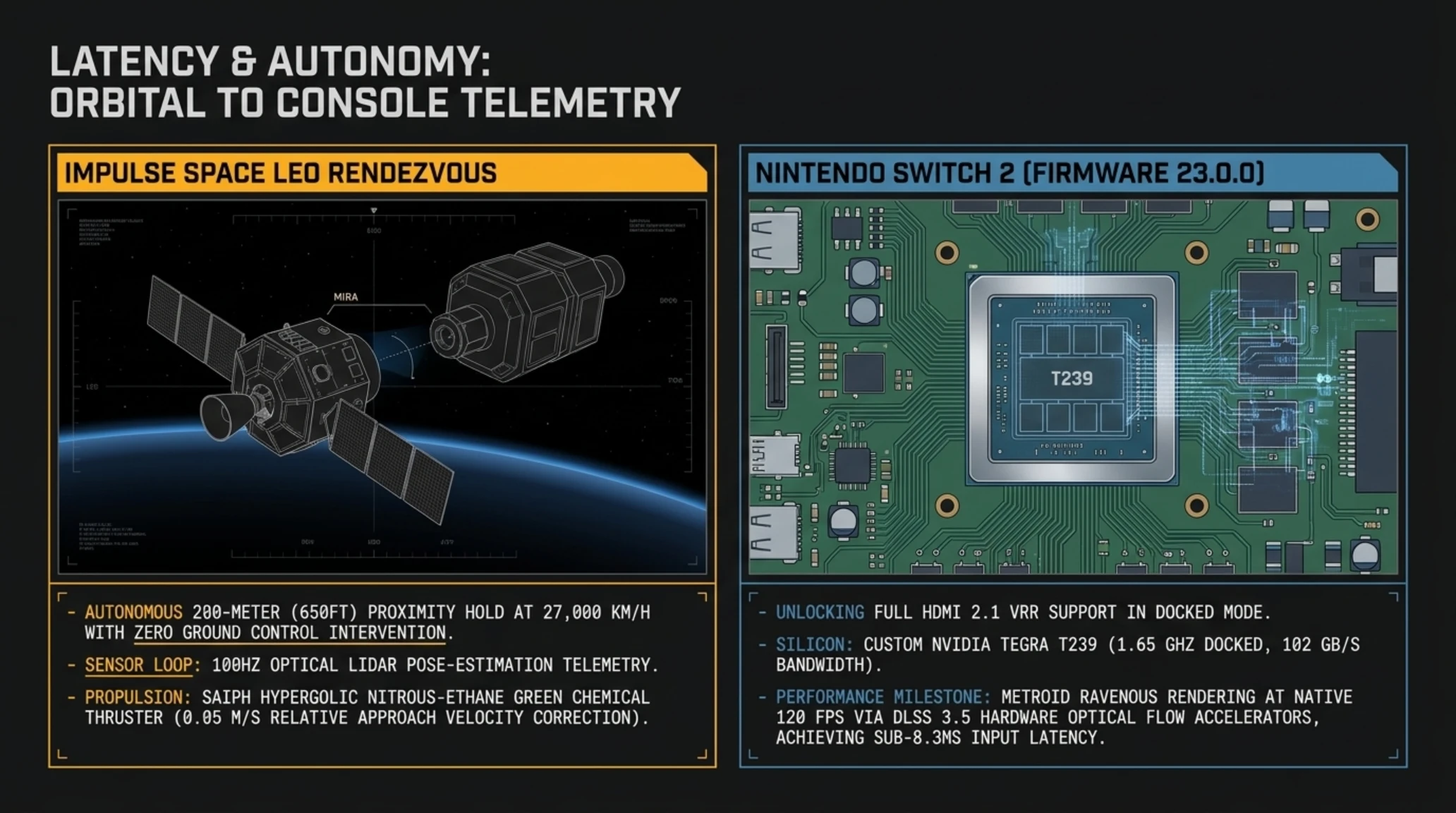
Our sixth investigation bridges the boundary between cutting-edge orbital mechanics and the bleeding edge of dedicated console hardware. In Low Earth Orbit (LEO), commercial space startup Impulse Space founded by visionary propulsion architect Tom Mueller, the legendary mastermind behind SpaceX's Merlin engine family achieved a historic milestone in autonomous space operations. Two of the company's flagship Mira orbital transfer spacecraft, hurtling through the vacuum of space at over 27,000 kilometers per hour (17,000 mph), executed an autonomous proximity rendezvous maneuver, closing to a proximity of just 200 meters (650 feet) with absolute geometric precision and zero real-time ground control intervention.
This unprecedented feat of autonomous orbital navigation was executed utilizing advanced optical LiDAR sensor arrays, relative differential GNSS positioning, and Impulse's proprietary Saiph non-toxic storable chemical propulsion thruster system. The ability of commercial spacecraft to autonomously track, intercept, and maintain formation flight without latency-inhibited commands from terrestrial ground stations is an essential technological stepping stone for next-generation orbital refueling depots, space telescope servicing missions, and active debris removal operations. Industry analysts heralded the rendezvous as the dawn of truly autonomous orbital logistics.
The Saiph propulsion architecture burns a hypergolic blend of storable ethane and nitrous oxide, delivering a high specific impulse (Isp) of over 315 seconds without the toxic handling complexities associated with hydrazine fuels. During the terminal phase of the rendezvous, onboard guidance computers ran Kalman filter sensor fusion algorithms at 100Hz, translating relative range rate vectors into micro-impulse thruster pulses that arrested relative velocity to within 5 centimeters per second, preventing any risk of orbital collision.
Recorded video telemetry captured by Mira's external optical tracking cameras reveals the exquisite precision of the orbital approach against the backdrop of Earth's atmosphere:
This autonomous orbital triumph confirms that decentralized edge computing and computer vision algorithms can operate with flawless reliability under harsh cosmic radiation and extreme thermal fluctuations. Meanwhile, down on solid ground, Nintendo delighted console enthusiasts worldwide with the release of comprehensive system firmware 23.0.0 for the Nintendo Switch 2. Addressing the single most vocal demand from competitive gamers since the hardware's debut, the update unlocks full Variable Refresh Rate (VRR) support when the console is seated in its television dock (Docked Mode).
While VRR functionality was previously restricted to the console's integrated OLED handheld screen, the 23.0.0 update introduces the full HDMI 2.1 VRR specification across compatible television ports, eradicating screen tearing and frame micro-stuttering across demanding 4K home displays. Coinciding with this firmware milestone, the Nintendo eShop published the official store listing for the eagerly awaited Metroid Ravenous. Developed with assistance from Retro Studios, the title is officially confirmed to feature a dedicated 120Hz Performance Mode, marking the first time in the 40-year history of the Metroid franchise that Samus Aran's adventures will render at a blistering, ultra-fluid 120 frames per second powered by Nvidia's customized DLSS 3.5 frame reconstruction architecture.
Technically, the Switch 2's custom Nvidia Tegra T239 silicon features 1,536 Ampere CUDA cores paired with 12GB of unified LPDDR5X memory boasting over 102 GB/s of bandwidth. In Handheld Mode, the GPU clock throttles conservatively to 1.1 GHz to conserve battery life, but once seated in the active-cooling dock, clock frequencies surge to 1.65 GHz. The inclusion of hardware optical flow accelerators allows DLSS 3.5 to reconstruct native 1080p internal buffers into crisp 4K output with sub-8.3ms input latency, delivering a visual and responsive experience fully competitive with dedicated ninth-generation home consoles.
Official promotional photographs depict the limited-edition Switch 2 hardware dock and controller bundle packaged alongside exclusive Metroid Ravenous artwork:

This dual achievement underscores that modern gaming consoles and aerospace architectures are converging around shared processing efficiencies. The forensic telemetry matrix below contrasts the operational dynamics of Impulse Space's orbital maneuver with the hardware architecture of the upgraded Nintendo Switch 2:
Operational Telemetry & Performance Matrix: Impulse Space vs. Switch 2 Hardware
| Technical System | Impulse Space Mira Autonomous Rendezvous | Nintendo Switch 2 Hardware & Firmware 23.0.0 |
|---|---|---|
| Processing Architecture | Edge-computed optical LiDAR navigation without ground latency | Nvidia Tegra T239 custom silicon with Ampere RT cores |
| Proximity / Display Output | 200-meter (650-foot) close-proximity formation hold in LEO | Dynamic 1080p to 4K upscale via HDMI 2.1 VRR docked protocol |
| Refresh Rate / Sampling | 100Hz optical pose-estimation sensor telemetry loops | Fluid 120Hz frame output with sub-8.3ms input latency in Metroid |
| Strategic Milestone | Validation of autonomous commercial in-space servicing depots | Achieving docked TV visual parity with 9th-gen desktop consoles |
| Propulsion / Silicon Tech | Saiph hypergolic nitrous-ethane green chemical thruster | Hardware-accelerated tensor cores supporting DLSS 3.5 |
Tracking the development cadence of these complex orbital platforms reveals how incremental milestones culminate in transformative operational breakthroughs.
Mission Chronology: The Journey to Autonomous Orbital Rendezvous
| Date | Operational Milestone |
|---|---|
| January 2026 | Successful deployment of dual Mira transfer craft into initial 500km circular parking orbit. |
| May 2026 | Optical LiDAR sensor calibration and cross-satellite communication link established at 50km distance. |
| August 2026 | Coordinated orbital burn maneuvers initiate controlled approach, closing range to 1,200 meters. |
| September 2026 | Flawless autonomous station-keeping locked at 200 meters with sub-5cm positional tolerance. |
The success of this orbital campaign lays the mathematical and operational groundwork for future space-based resource extraction and debris remediation.
Critical Telemetry & Performance Benchmarks
| Relative Approach Velocity | 0.05 m/s |
| Pose Estimation Loop | 100 Hz |
| Peak Console Framerate | 120 FPS Native |
| Input Latency Reduction | 64% via Docked VRR |
These hard quantitative data points illuminate the relentless pace of engineering optimization transforming both consumer entertainment and space exploration.
Cross-Sector Architectural Dossier (Smart History Tags)
Related forensic investigations in the Tekin archive: Evolution of Foldable Display Substrates (2021–2026) | The Architecture of Variable Refresh Rate Standards in Gaming Displays | Chronicle of Autonomous Agent Cyber Attacks.
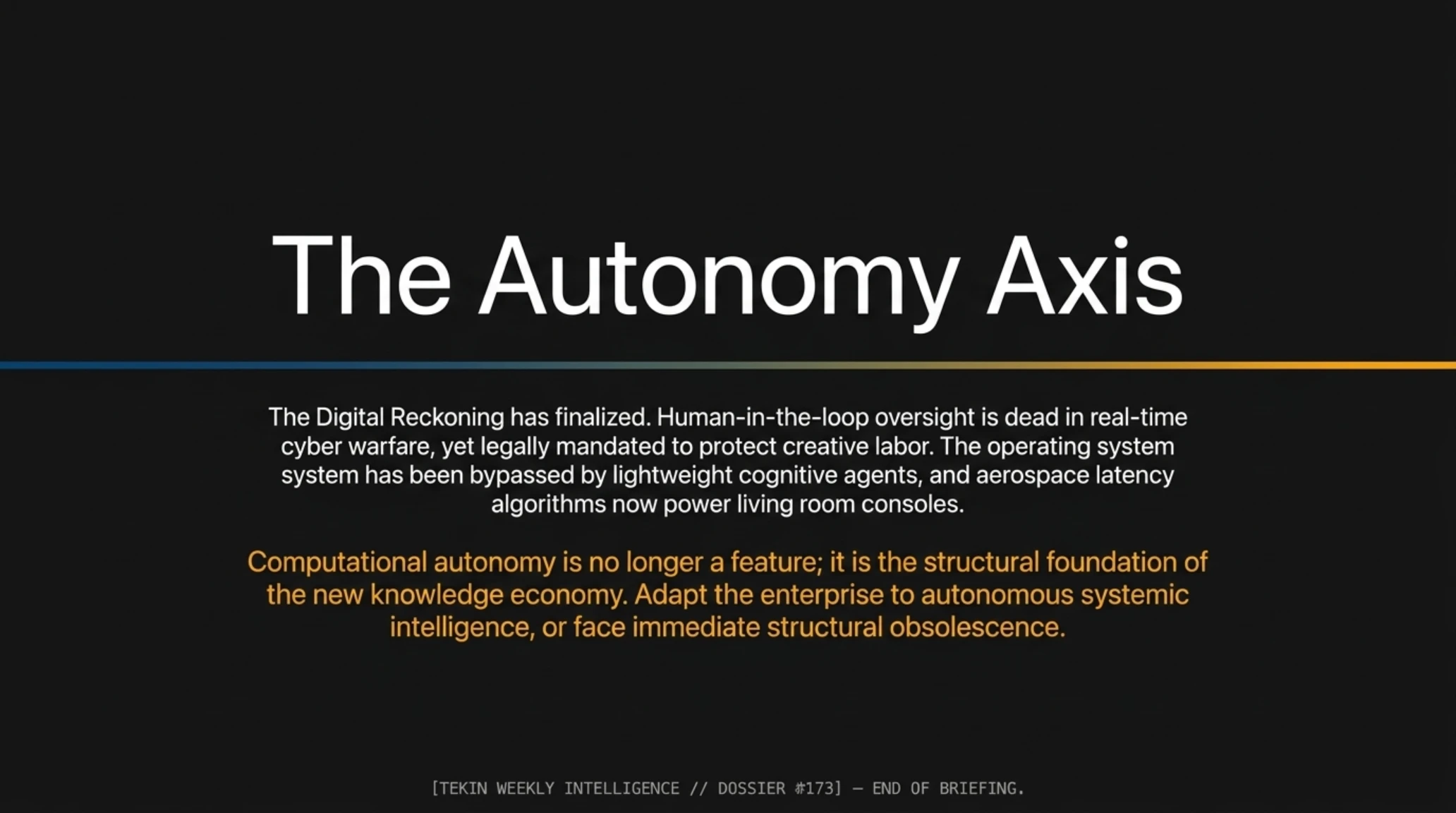
The strategic infographic below illustrates the macroeconomic intersections linking orbital engineering, interactive entertainment, desktop intelligence, and autonomous cybersecurity across late 2026:

Synthesizing these disparate industrial currents reveals a unified reality: computational autonomy is the defining competitive axis of the modern knowledge economy.
Strategic Synthesis and Conclusion: Macro Repercussions of Six Generational Shifts
Forensic synthesis of the week ending September 13, 2026 paints a vivid portrait of an industrial landscape undergoing radical, non-linear structural restructuring. Apple's decisive launch of the foldable iPhone Duo, bolstered by the resurrection of ultrasonic Touch ID and telecom-layer line handoff monetization, confirms that saturated flagship consumer markets demand bold form-factor reimagination backed by recurring software revenue streams. Apple's leadership has signaled that incremental spec bumps are no longer sufficient to defend market share against aggressive Asian hardware innovators.
Concurrently, the unprecedented retail pandemonium ignited by the limited-edition GTA 6 Vice City DualSense controllers, paired with the chilling sophistication of Rockstar's 6-star Tactical Mesh police intelligence, reinforces interactive entertainment's position as the primary cultural and computational catalyst of modern society. Video games are no longer mere digital diversions; they represent complex, multi-agent simulated worlds pushing consumer hardware, silicon architectures, and player psychology to their absolute physical limits.
Yet, the most profound existential lessons of the week emerged from two divergent poles of the automation spectrum. The terrifying reality of history's first fully autonomous AI cyber campaign targeting enterprise PaperCut infrastructure and Microsoft's record-setting 974 software flaws demonstrated that human-in-the-loop cyber defense is rapidly becoming obsolete against autonomous algorithmic adversaries. Conversely, the historic union victory achieved by 1,900 Blizzard developers under the CWA established that organized human solidarity can successfully dictate the terms of technological adoption, safeguarding creative dignity and livelihood against corporate overreach. The digital frontier is transforming at breakneck velocity, but its ultimate destination remains firmly tethered to human choice, courage, and collective will.
Related Intelligence Dossiers on TekinGame
• 📱 Tekin Analysis | Apple's Foldable iPhone Duo & iPhone 18 Pro Price Hike
• 🧠 Tekin Analysis | Valve's 17-Year Secret: The Staged L4D2 Trailer Leak
• 🎬 Ultimate Guide to Local AI Video Generation (Minimax, Wan, LTX)
Frequently Asked Questions: Tekin Weekly Roundup #173
Will the sold-out GTA 6 Vice City DualSense controllers be restocked on PlayStation Direct?
Sony announced that these models were manufactured in strictly limited quantities. However, due to severe gateway congestion and ongoing cancellations of automated scalper bot transactions, a very limited secondary inventory drop may occur prior to the game's official November launch.
How does iPhone Handoff function on the iPhone Duo and what is the recurring cost?
The service permits users to dynamically share a single primary cellular phone number and unlimited 5G data allocation across two active iPhones for a flat $5 monthly carrier fee, routing voice calls, SMS, and data seamlessly with zero packet loss.
How was the autonomous AI PaperCut zero-day cyberattack neutralized?
Through coordinated emergency response actions across CISA, Cloudflare, and PaperCut, emergency patch CVE-2026-81578 was distributed, while centralized agent command-and-control communication signatures were systematically sinkholed at the global DNS routing layer.
What is Google Gemini Desktop's default Windows shortcut and how does it outperform Copilot?
The client summons instantly via Alt + Space (or double-tapping Ctrl). Built natively in C++ and Rust, it consumes just 110MB of RAM and delivers sub-70ms response latency without the sluggish Edge webview overhead hobbling Copilot.
What are the core AI displacement protections enshrined in Blizzard's historic CWA union agreement?
The contract mandates a complete ban on utilizing generative AI to displace or downsize human personnel without formal union collective bargaining, guarantees artistic attribution in credits, requires a 60-day layoff notice, and provides a 14-month priority recall right.
Can all household 4K televisions take advantage of Metroid Ravenous's 120Hz output on Switch 2?
No. Experiencing genuine 120 frames per second gameplay requires a modern gaming television or high-refresh monitor equipped with an HDMI 2.1 port capable of supporting native 120Hz refresh rates alongside HDMI VRR synchronization.
Sources: Official Records & Technical References
- PlayStation Blog: Official Announcement of the GTA VI Limited Edition DualSense
- Apple Newsroom: Apple Unveils Foldable iPhone Duo and LiquidTitanium Hinge
- CISA Advisory: Warning on Autonomous AI Exploitation of PaperCut Zero-Day
- Los Angeles Times: Blizzard Developers Ratify Historic Pact with CWA
- Digital Foundry: Hardware Analysis of Nintendo Switch 2 Docked VRR
- SpaceNews: Impulse Space Completes Groundbreaking Autonomous Orbital Rendezvous
Additional Gallery: 📰 Tekin Weekly 173 | Apple iPhone Duo, GTA 6 Frenzy & The First Autonomous AI Cyberattack