The Vibe Coding Revolution: How Andrej Karpathy Changed Programming Forever
Comprehensive Guide to History, Tools, and Future of AI-Powered Programming in 2026
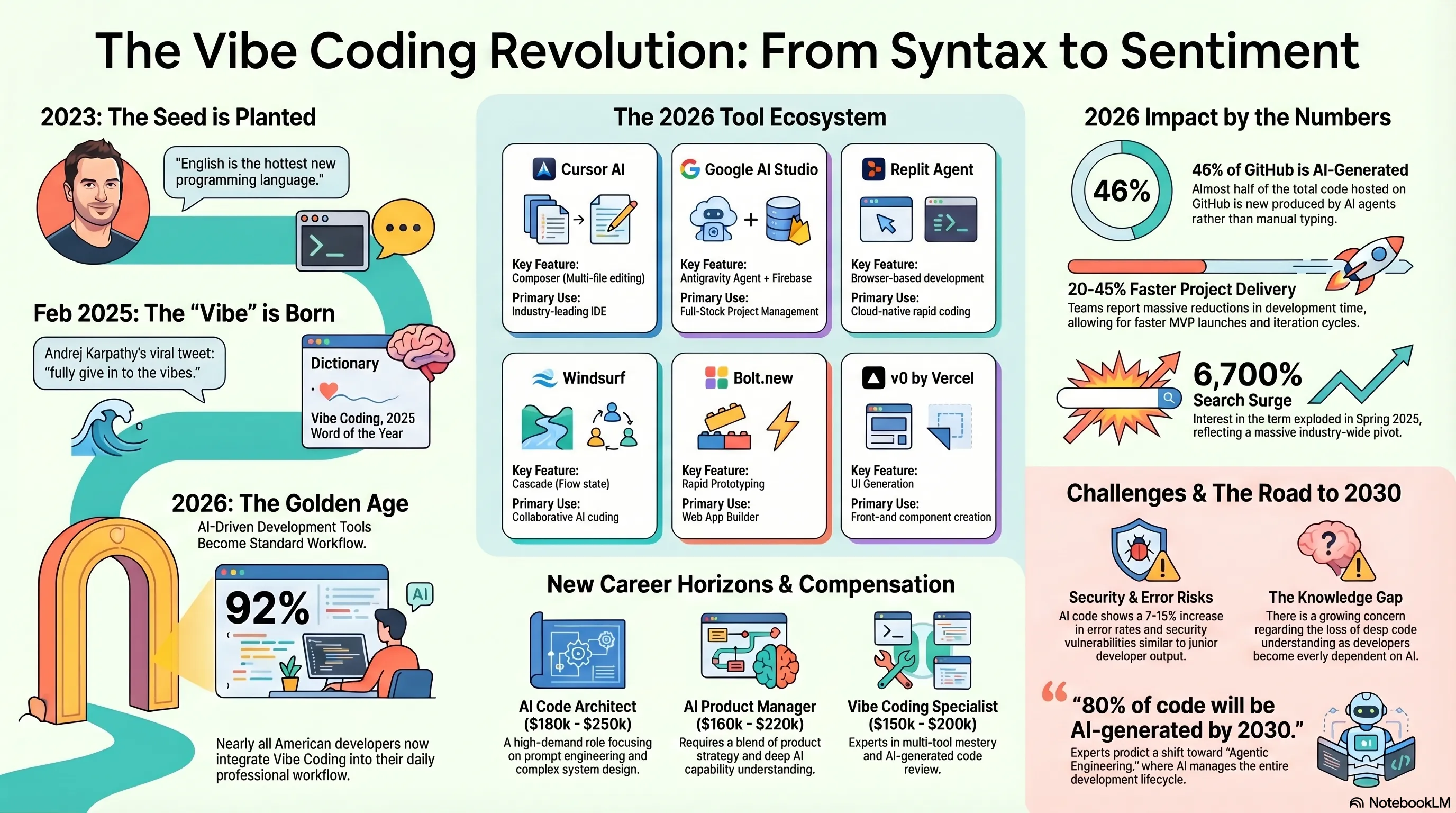
In February 2025, a six-word tweet changed the programming world forever. Andrej Karpathy, OpenAI co-founder and former Tesla AI director, sparked a revolution with "fully give in to the vibes" that today sees 92% of US developers using daily and Collins Dictionary naming it Word of the Year 2025.
Introduction: The New Era of Programming
Vibe Coding represents a revolutionary approach to software development where developers describe what they want in natural language instead of writing code line by line, and AI generates functional code. This approach has not only increased development speed by up to 10x but has lowered the barriers to entry for millions of people into the programming world.
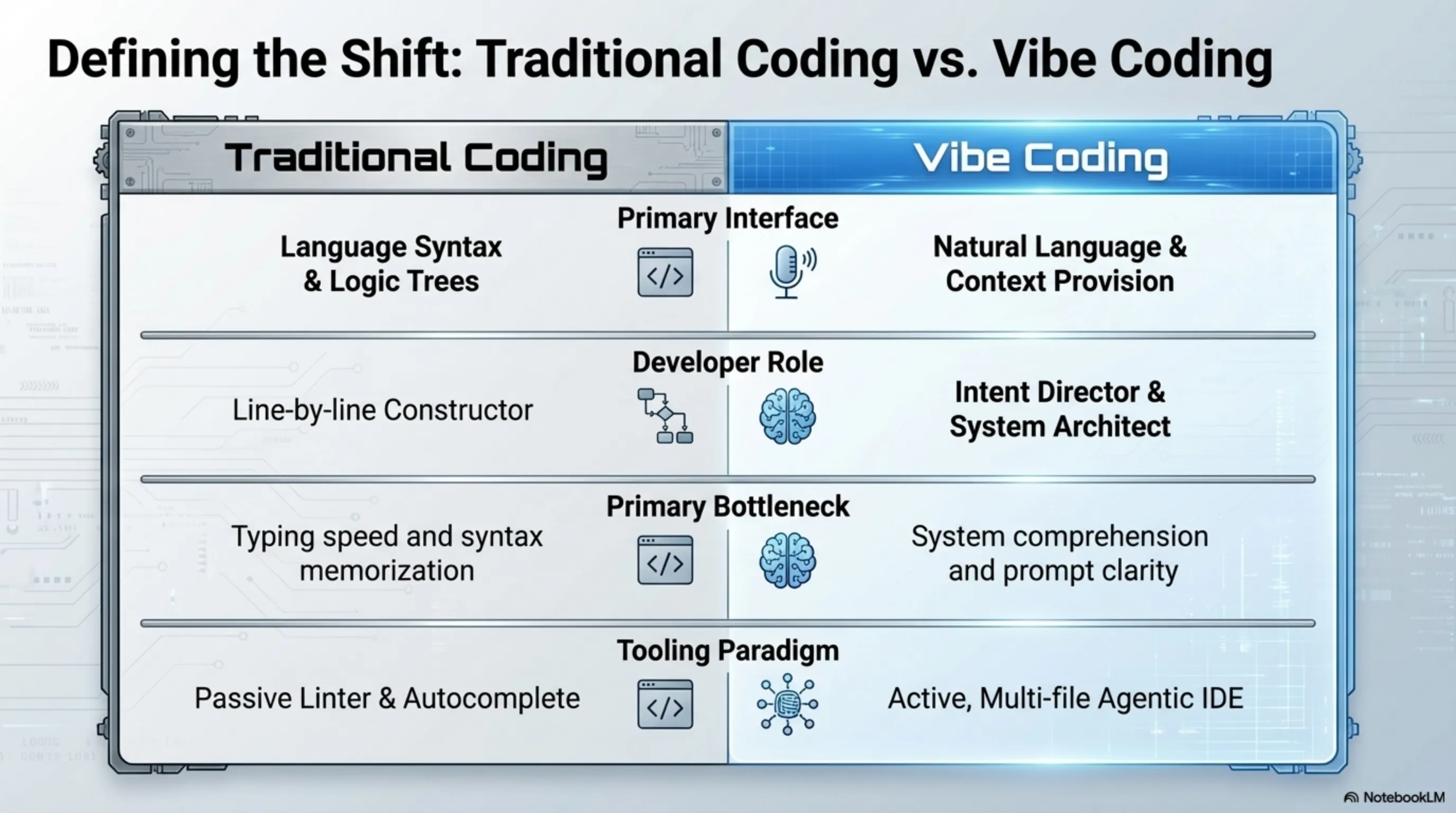
Unlike traditional assistive tools like GitHub Copilot that work alongside developers, Vibe Coding represents a complete paradigm shift. In this method, the developer's role transforms from "coder" to "architect and director." They no longer need to memorize programming language syntax but focus on design, logic, and user experience.
"There's a new kind of coding I call 'vibe coding,' where you fully give in to the vibes, embrace exponentials, and forget that the code even exists." — Andrej Karpathy, February 2025
🎯 Key Vibe Coding Statistics 2026
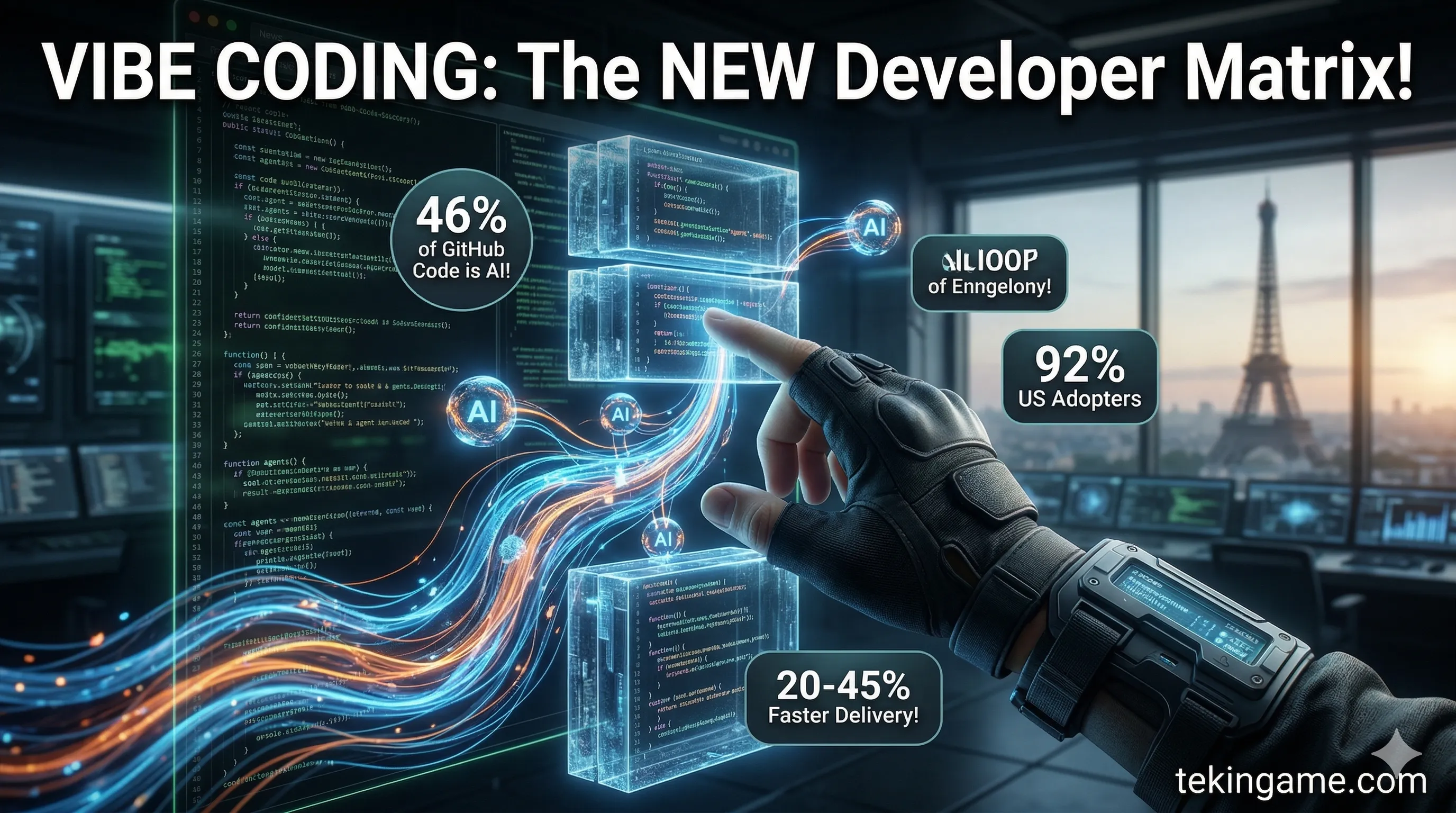
📊 92% of US developers use it daily
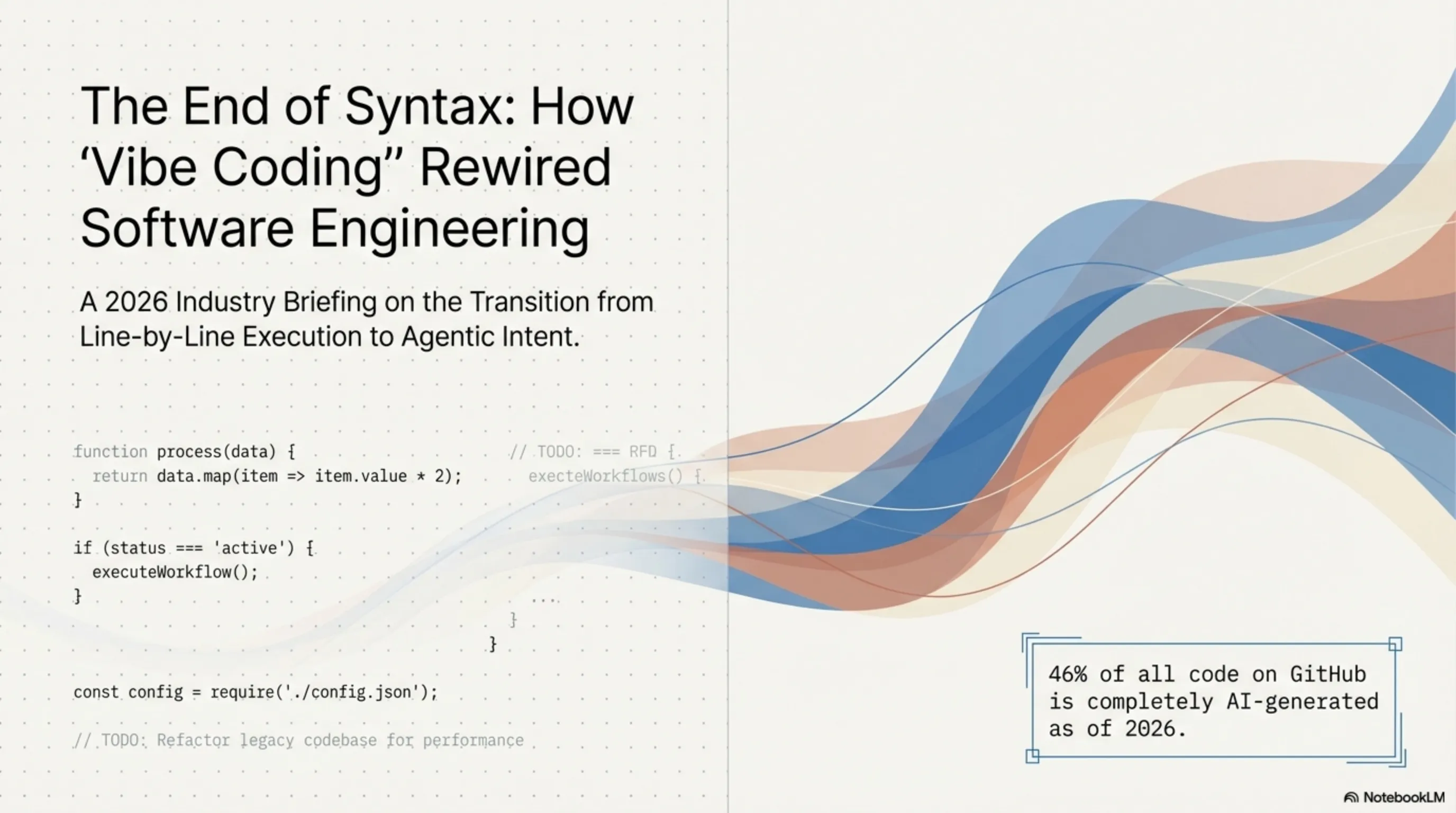
🚀 46% of all GitHub code is AI-generated
⚡ 6,700% search increase in Spring 2025
💰 20-45% reduction in project development time
🏆 Word of the Year 2025 Collins Dictionary
History and Evolution: From Idea to Revolution
The Vibe Coding story began in 2023 when Andrej Karpathy declared in one of his talks that "English is the hottest programming language." What seemed like a joke at the time has become an undeniable reality today.
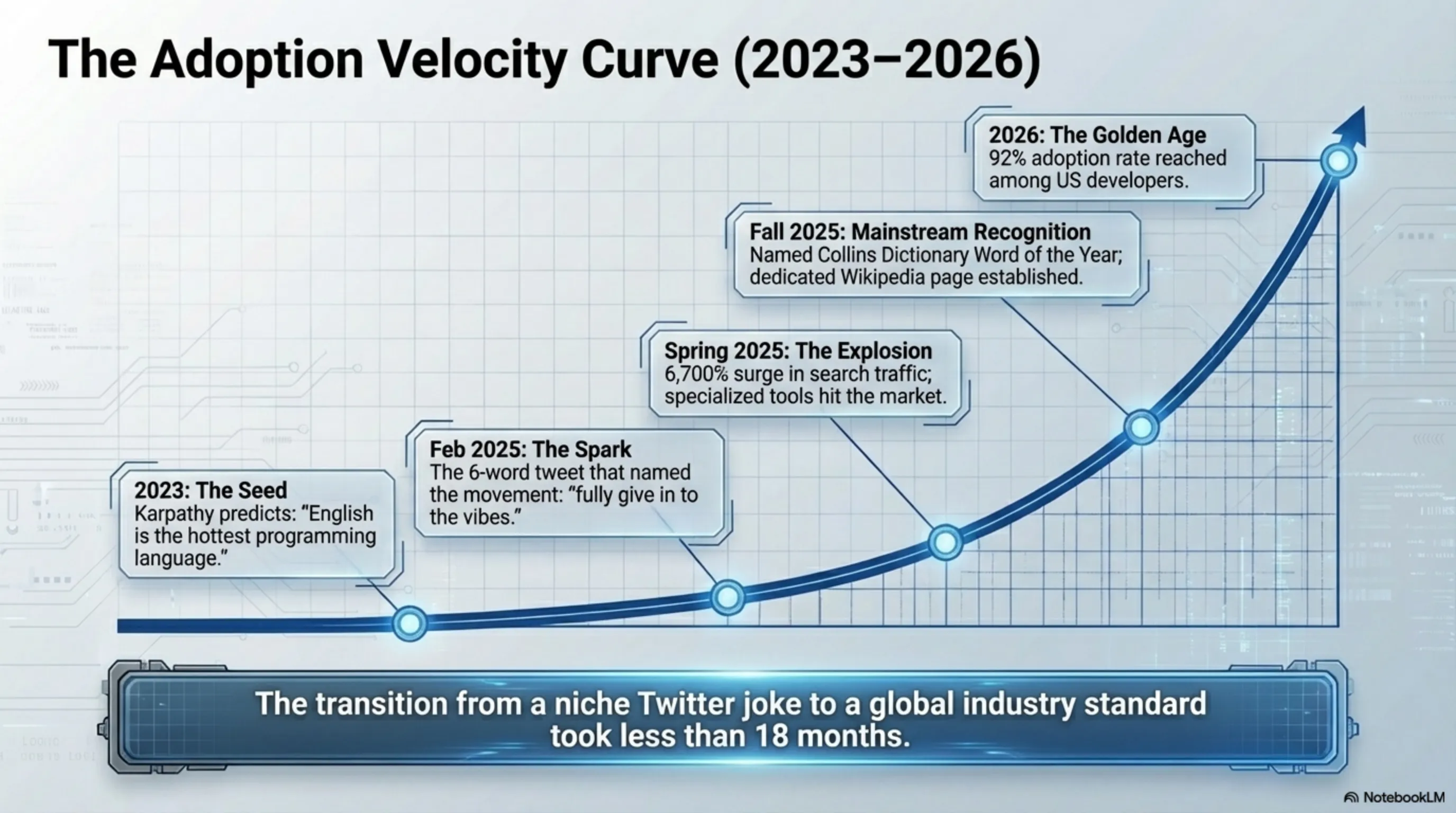
📅 Vibe Coding Evolution Timeline
2023: The Seed
Karpathy: "English is the hottest programming language"
February 2025: Term Birth
Historic tweet: "fully give in to the vibes"
Spring 2025: Popularity Explosion
6,700% search increase, specialized tools emerge
Fall 2025: Official Recognition
Collins Dictionary: Word of the Year, Wikipedia page
2026: Golden Age
92% adoption, advanced tools, job transformation
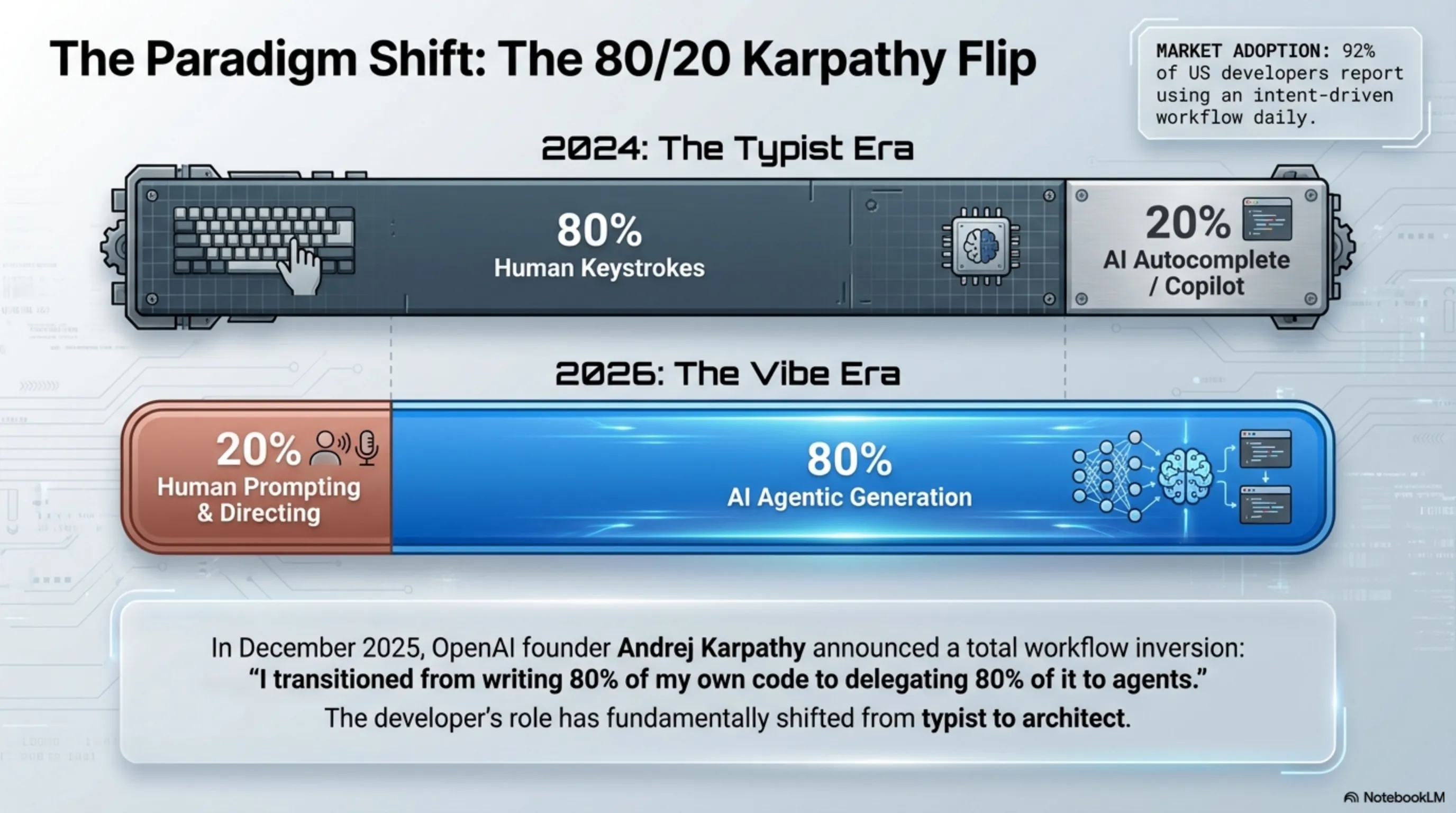
The real turning point came in December 2025 when Karpathy himself announced that his coding ratio had shifted from 80-20 (himself vs AI) to 20-80. He said: "In December something really flipped... I went from writing 80% of my code myself versus delegating to agents to like 20-80."
Key Tools: The Vibe Coding Ecosystem
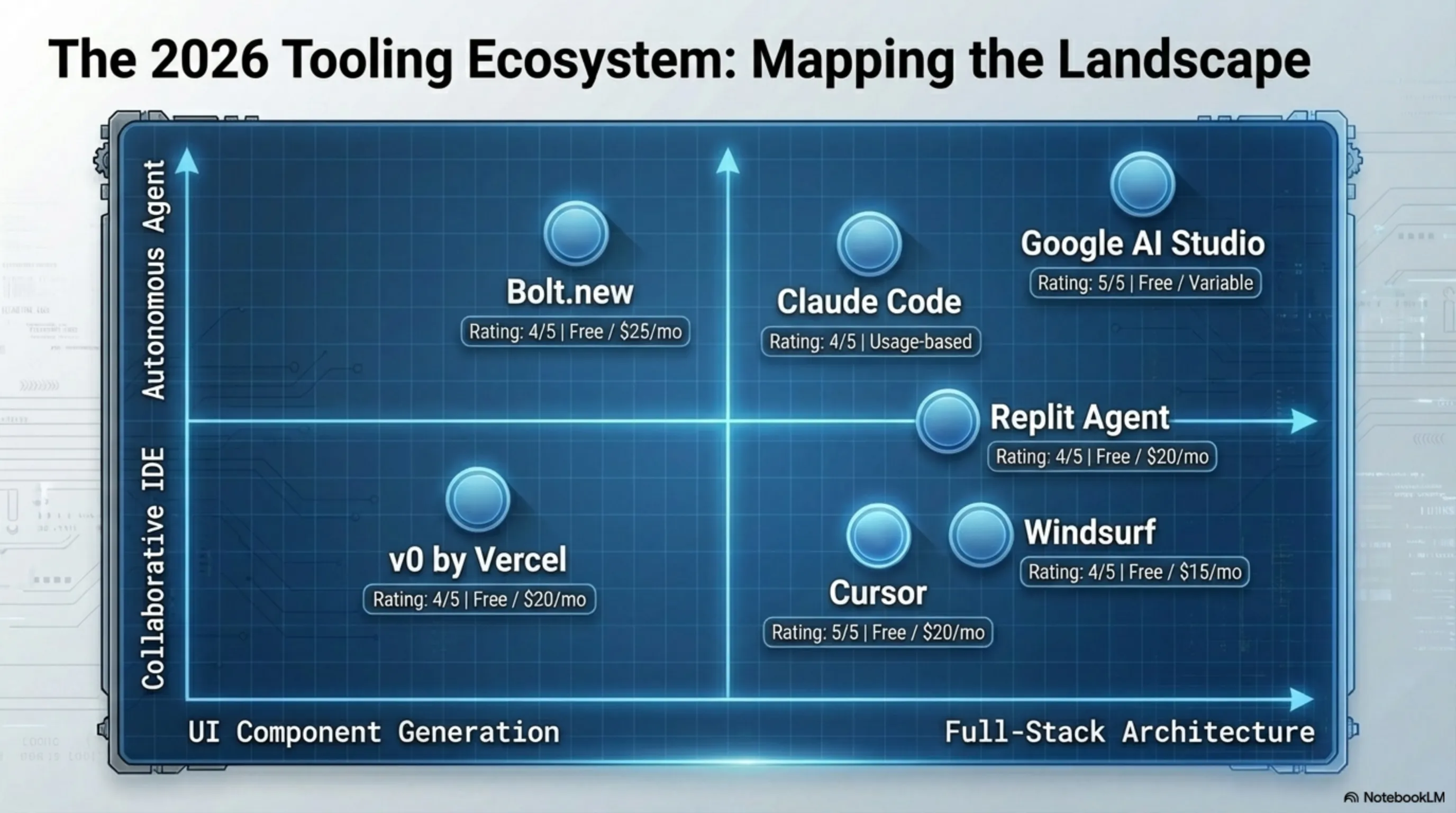
The Vibe Coding ecosystem in 2026 includes a wide range of tools, each designed for specific needs. From intelligent IDEs to full-stack development platforms, these tools have completely transformed the programming experience.
Cursor: The Market King
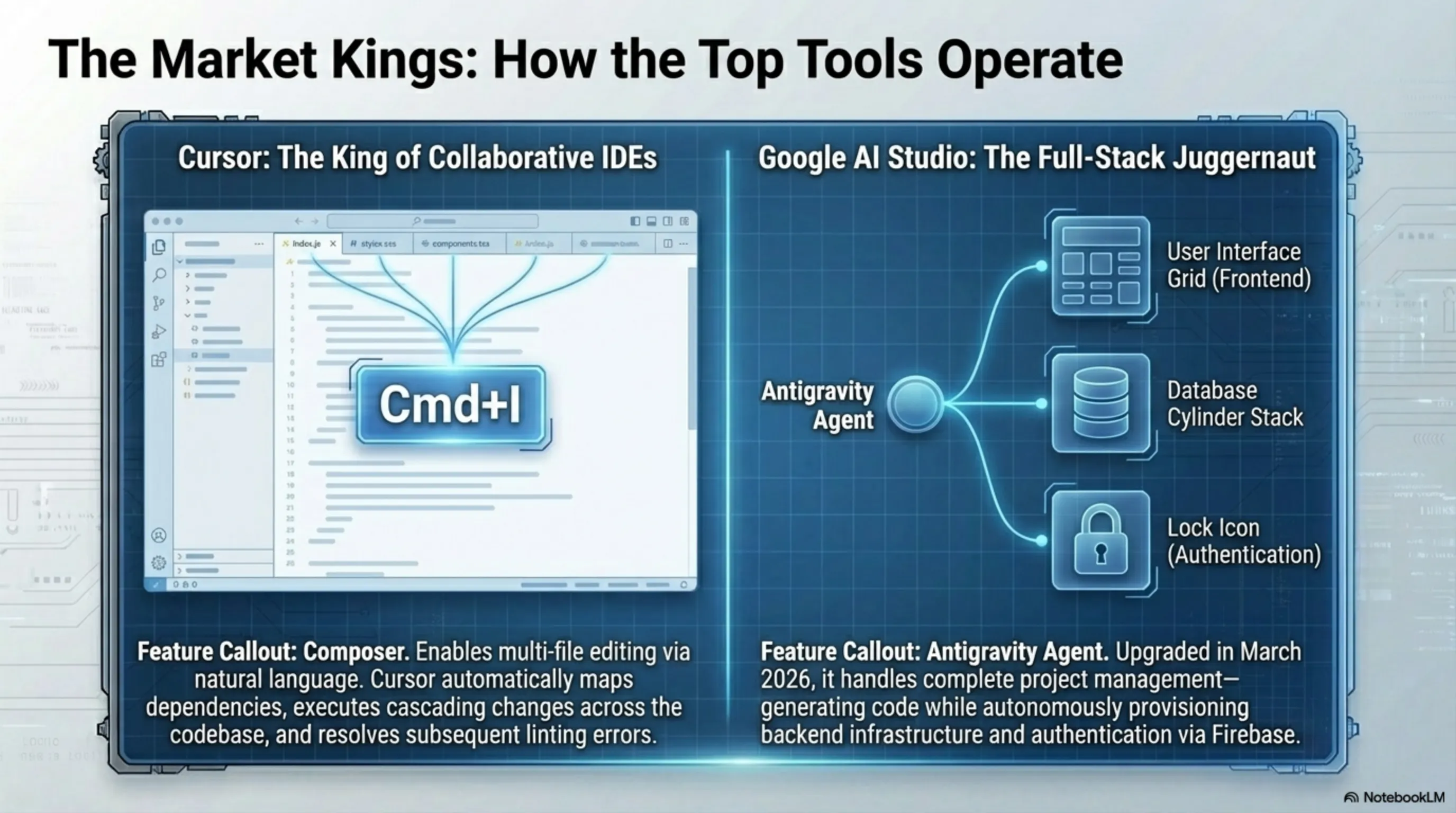
Built on VS Code, Cursor is currently considered the most popular Vibe Coding tool. Its key feature, Composer, enables multi-file editing with a simple command. Just hit Cmd+I and describe complex changes involving multiple files; Cursor identifies dependencies, applies changes, and even fixes lint errors it creates.
Google AI Studio: The New Giant
With the March 2026 update, Google transformed AI Studio into a full-stack platform. The Antigravity Agent can manage entire projects and automatically set up Firebase for database and authentication. This tool not only generates code but also manages the entire backend infrastructure.
Performance Analysis: Real Statistics and Numbers
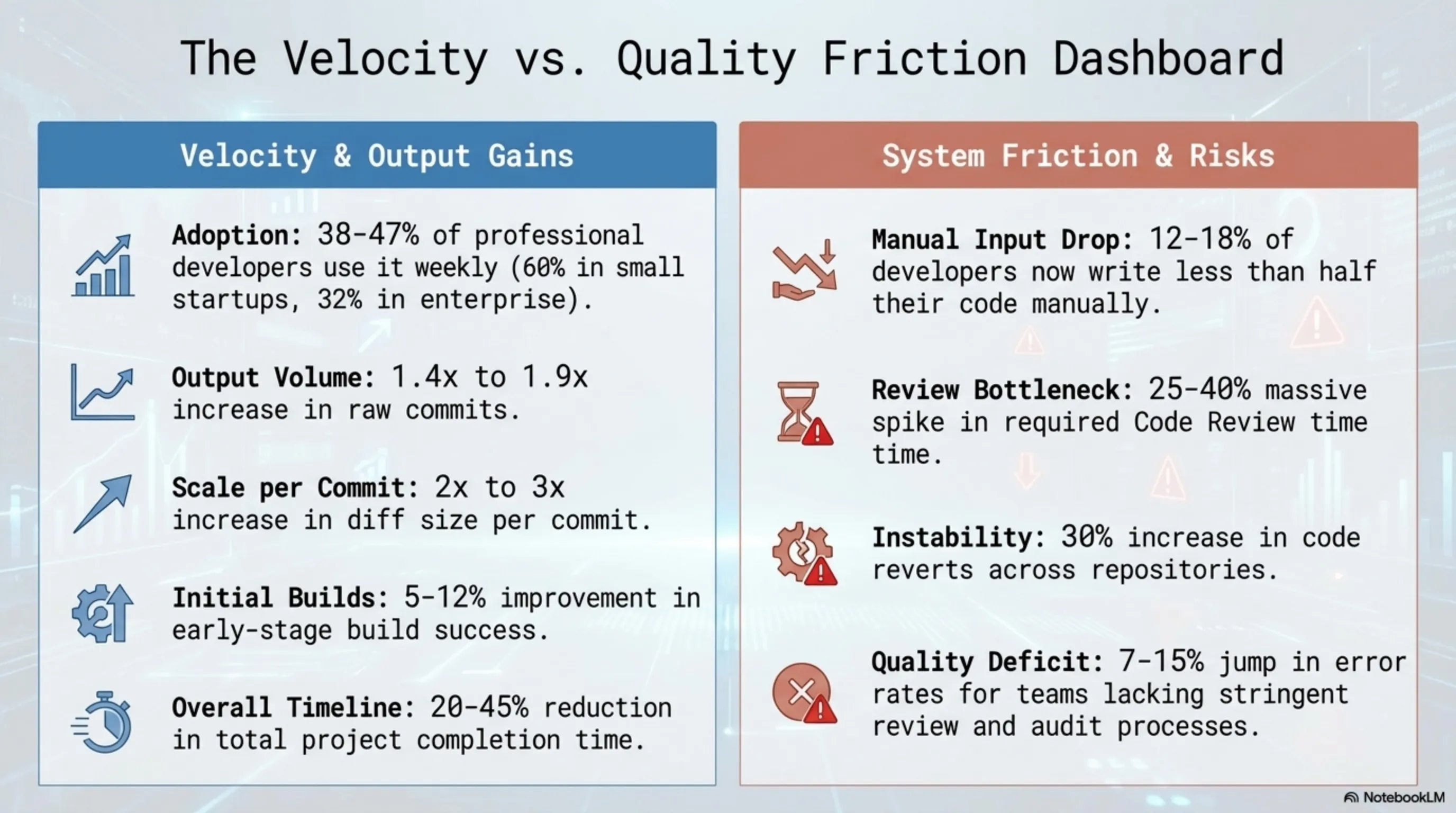
One of the most important questions about Vibe Coding is whether it's truly effective or just temporary hype. Independent data from vendor-agnostic sources presents a complex picture showing both advantages and challenges of this approach.
📊 Adoption and Usage Statistics
👥 38-47% of professional developers use weekly
🤖 12-18% write less than half their code manually
🚀 60% startups under 20 people vs 32% large companies
⚡ 20-45% reduction in project completion time
⚡ Productivity and Speed
📈 1.4x to 1.9x increase in commit frequency
📏 2x to 3x increase in diff size per commit
✅ 5-12% improvement in early-stage build success rate
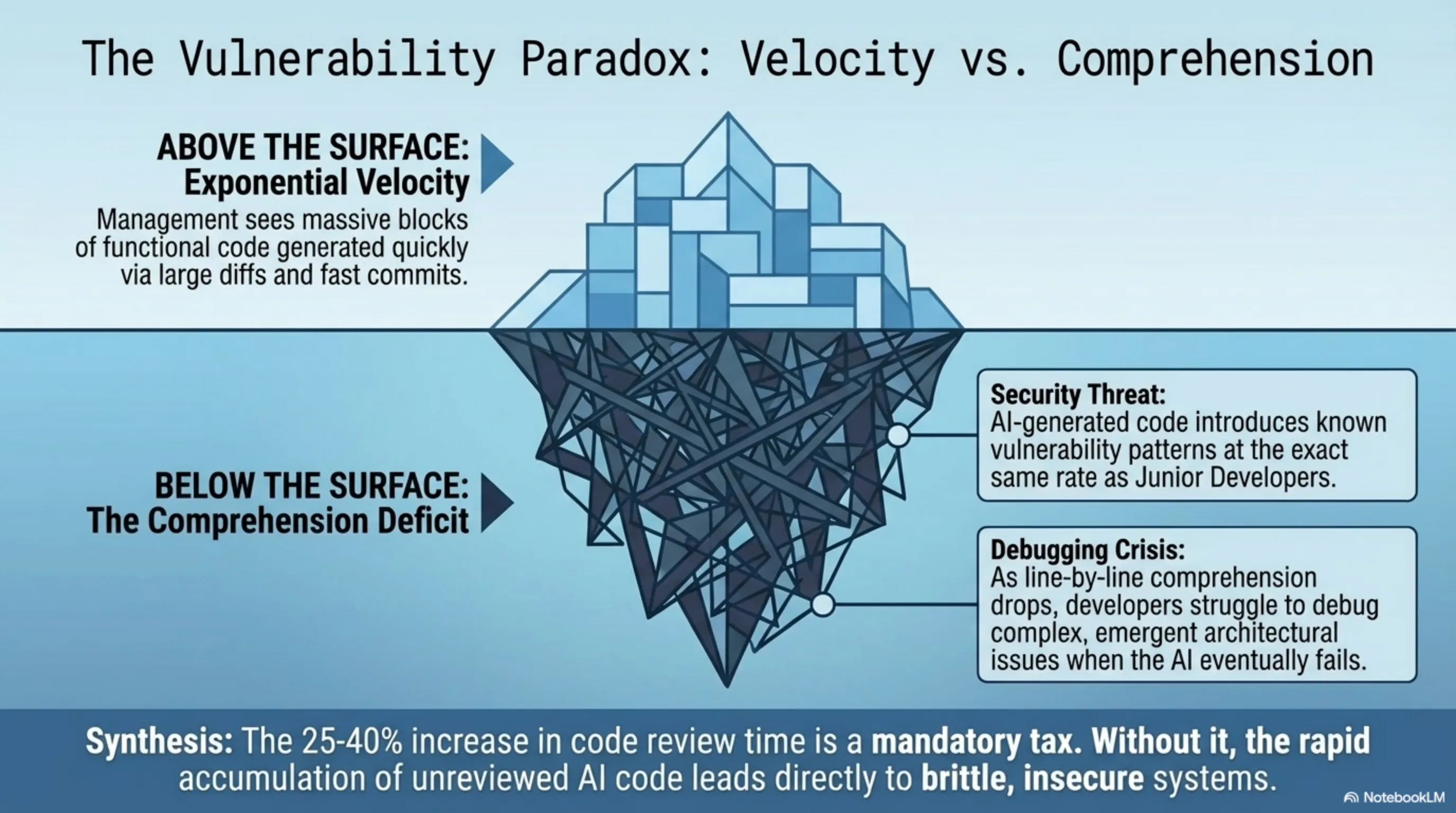
🎯 25-40% increase in code review time
⚠️ Challenges and Limitations
🐛 7-15% increase in error rate for teams with low review
🔄 30% increase in revert frequency
🔒 Similar to junior security vulnerability rate
📚 Reduced understanding of code by developers
Case Studies: Real Success Stories
📚 Classified & Related Dossiers in TekinGame
If you wish to explore beyond this report and delve into cybernetic frontiers and autonomous AI architectures, do not miss these three exclusive deep-dives in the Tekin Garage:
To better understand Vibe Coding's impact, let's examine several real case studies showing how this technology performs in the real world.
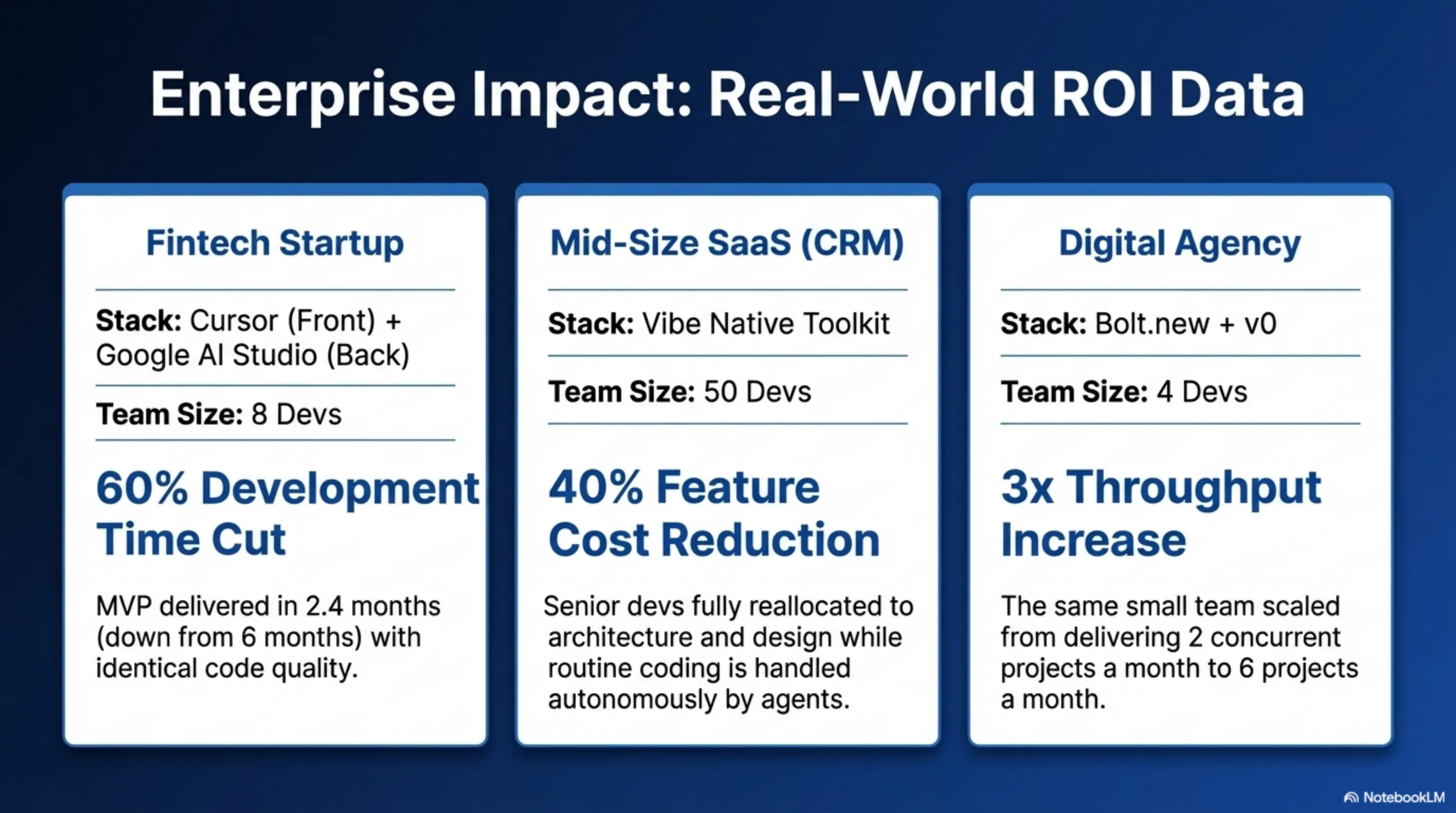
Case 1: FinTech Startup - 60% Development Time Reduction
A fintech startup with 8 developers managed to reduce their MVP development time from 6 months to 2.4 months. They used Cursor for frontend and Google AI Studio for backend. Interestingly, the final code quality was similar to traditional projects, but the speed of idea generation and implementation increased dramatically.
Case 2: Mid-size SaaS Company - 40% Development Cost Reduction
A company with 50 developers offering CRM products managed to reduce new feature development costs by 40% with Vibe Coding introduction. They reported that senior developers now focus more on architecture and design, while routine coding is delegated to AI.
Case 3: Digital Agency - 3x Increase in Concurrent Projects
An agency building websites and mobile apps managed to triple their concurrent projects using Bolt.new and v0. Their technical manager said: "Previously, a 4-person team delivered 2 projects per month, now the same team delivers 6 projects monthly."
Industry Impact and Job Transformation
Vibe Coding has not only changed how developers work but has transformed the entire software industry structure. These changes are visible at multiple levels:
Job Role Evolution
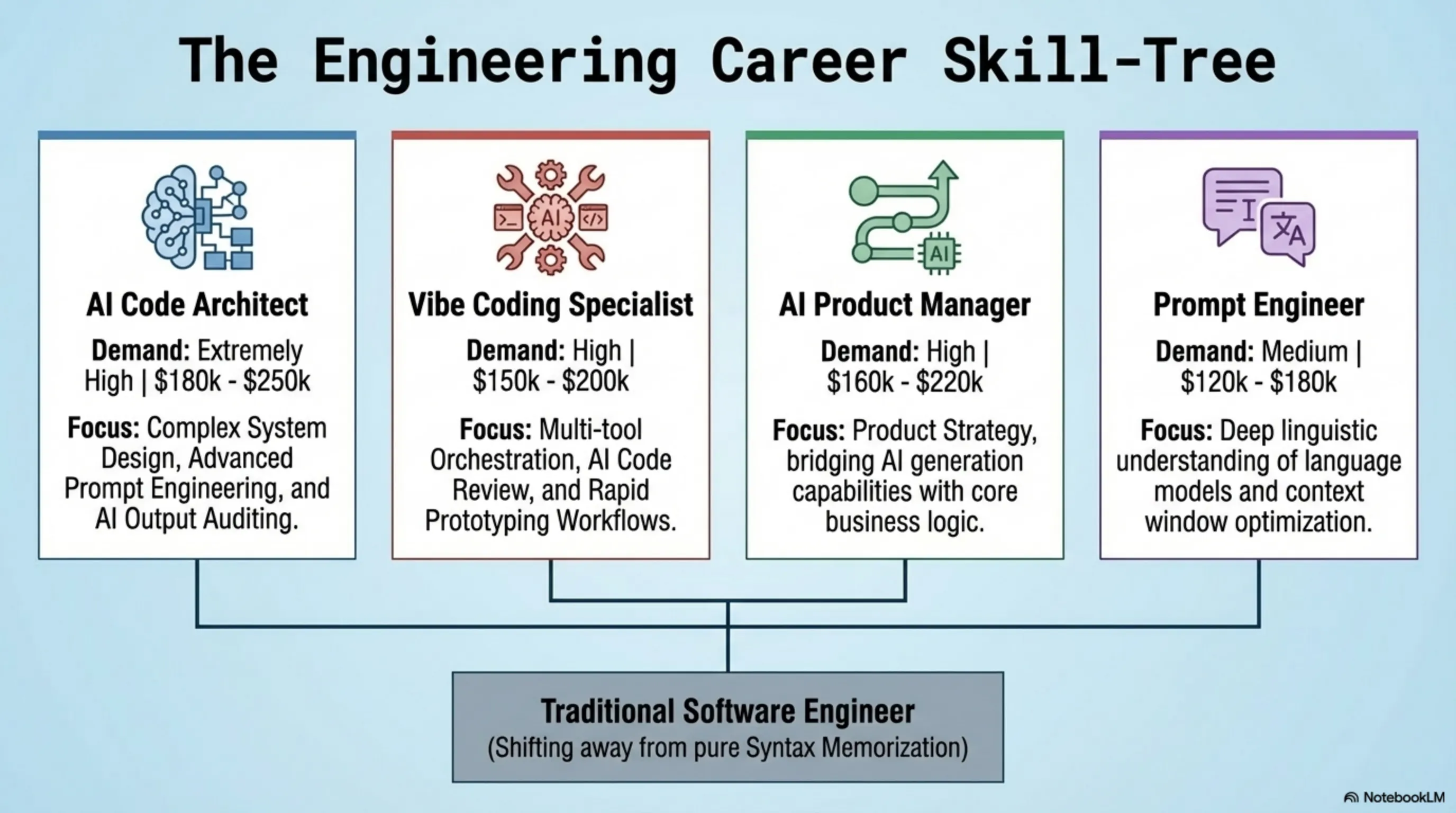
Developer roles have evolved from "coder" to "software architect" and "AI manager." New required skills include:
- Prompt Engineering: Writing effective AI instructions
- AI Code Review: Reviewing and improving AI-generated code
- Architecture Design: Designing complex systems
- Product Thinking: Focus on user experience and business logic
Emergence of New Jobs
Challenges and Concerns
Despite countless advantages, Vibe Coding faces serious challenges that must be addressed:
Security Issues
One of the biggest concerns is the security of AI-generated code. Studies show that AI code contains known vulnerability patterns at a rate similar to code written by junior developers. This raises the need for stronger security review processes.
Reduced Deep Code Understanding
Another concern is that developers might lose their deep understanding of code. When AI generates most of the code, developers might not be able to debug complex issues or optimize performance.
AI Dependency
There's a risk of over-dependence on AI tools. If these tools become unavailable or perform poorly, developers might not be able to continue working.
The Future of Vibe Coding: 2027-2030 Predictions
Based on current trends and expert opinions, the future of Vibe Coding looks very bright. It's predicted that by 2030, this approach will become the industry standard.
Evolution Toward "Agentic Engineering"
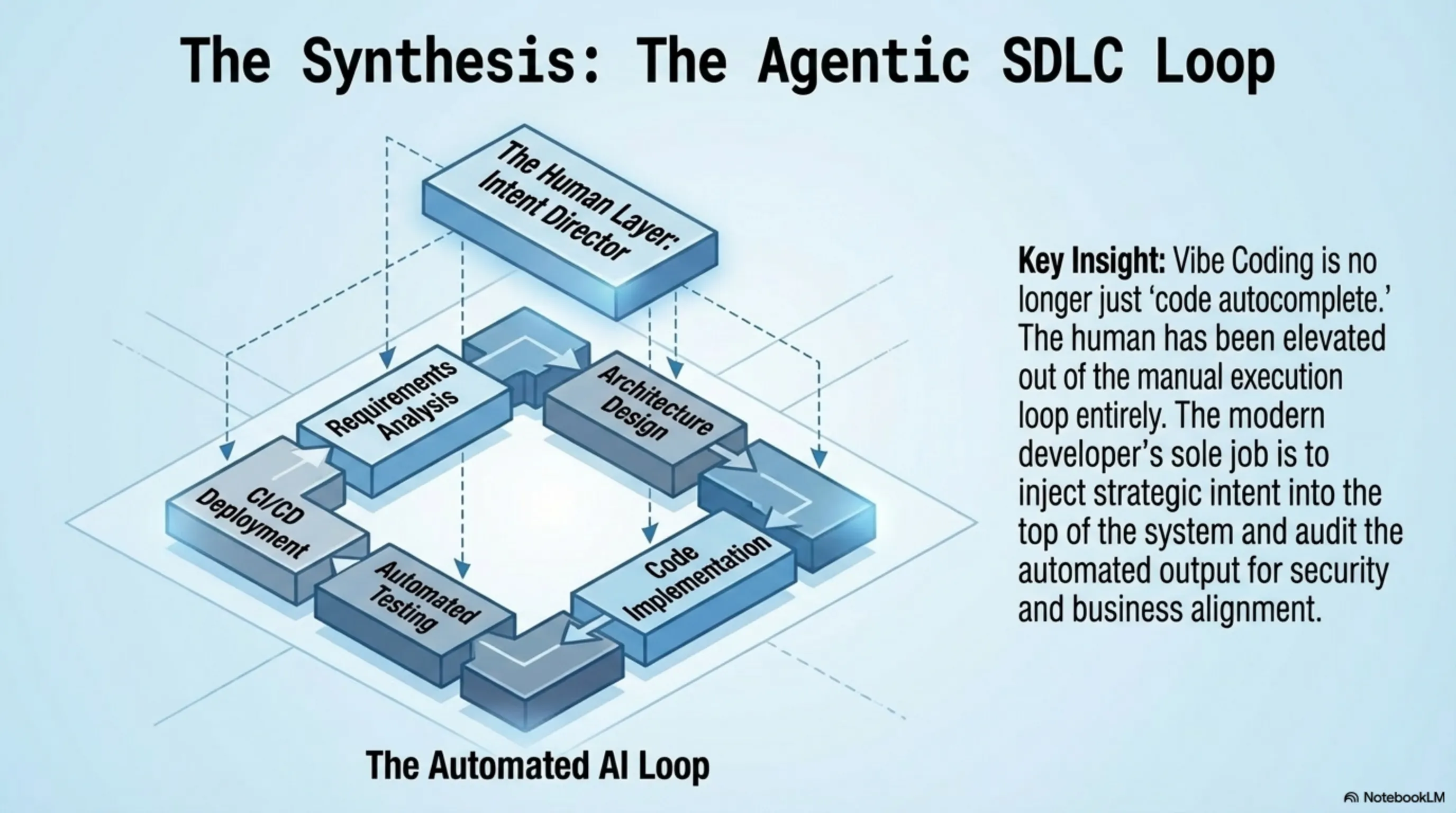
Karpathy himself has predicted that Vibe Coding will evolve into "Agentic Engineering," where AI agents not only generate code but manage the entire software development lifecycle. This includes requirements analysis, architecture design, implementation, testing, and even deployment.
DevOps Integration
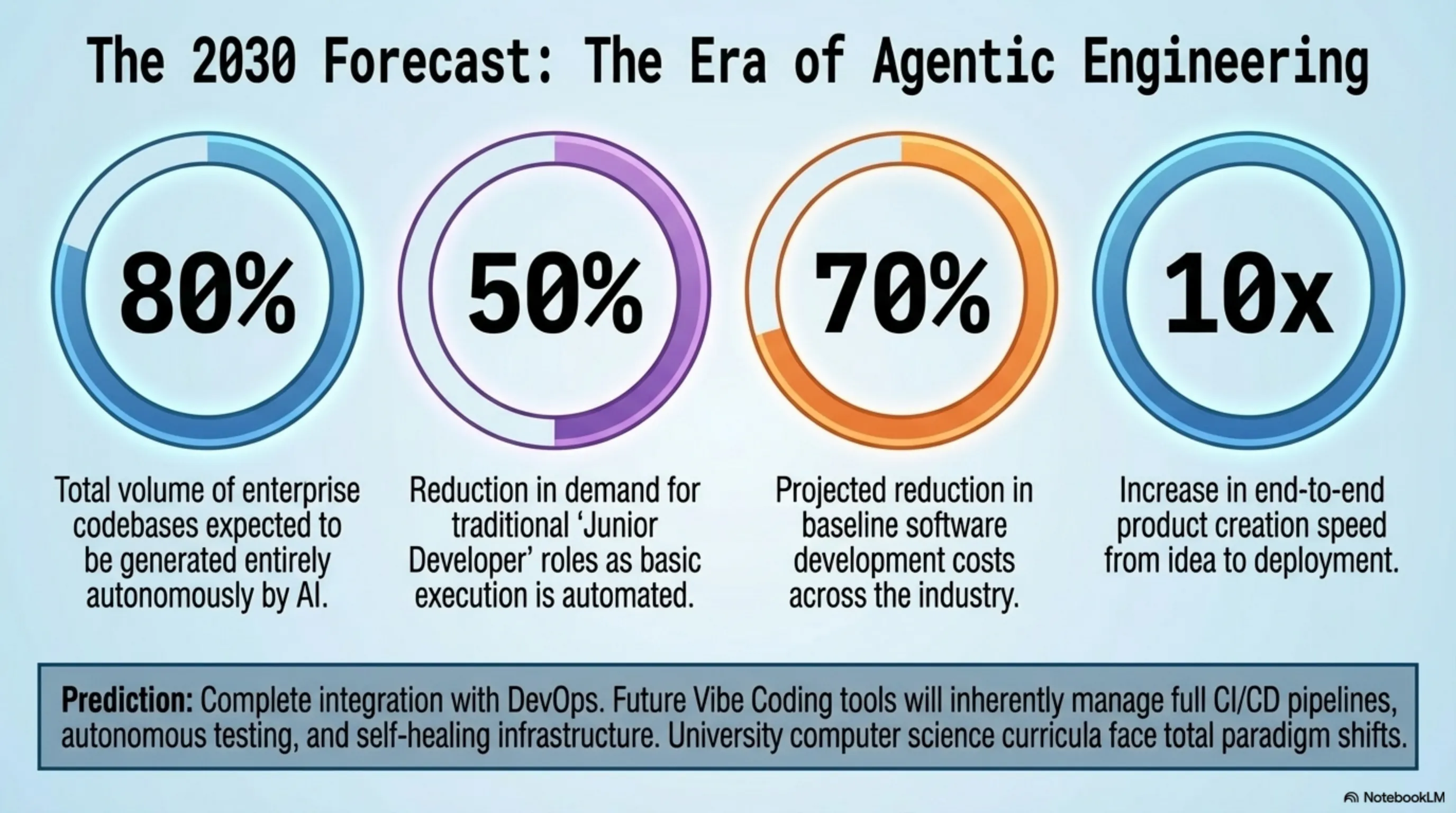
Vibe Coding tools are expected to fully integrate with CI/CD pipelines. This means AI will not only write code but also test it, deploy it, and even handle monitoring and maintenance.
🔮 Key 2030 Predictions
🤖 80% of code will be AI-generated
👥 50% reduction in junior developer demand
💰 70% reduction in software development costs
🚀 10x increase in product development speed
🎓 Complete transformation of university curricula
Getting Started Guide for North American Developers
For North American developers wanting to enter the Vibe Coding world, the following recommendations will be helpful:
Step 1: Choose the Right Tool
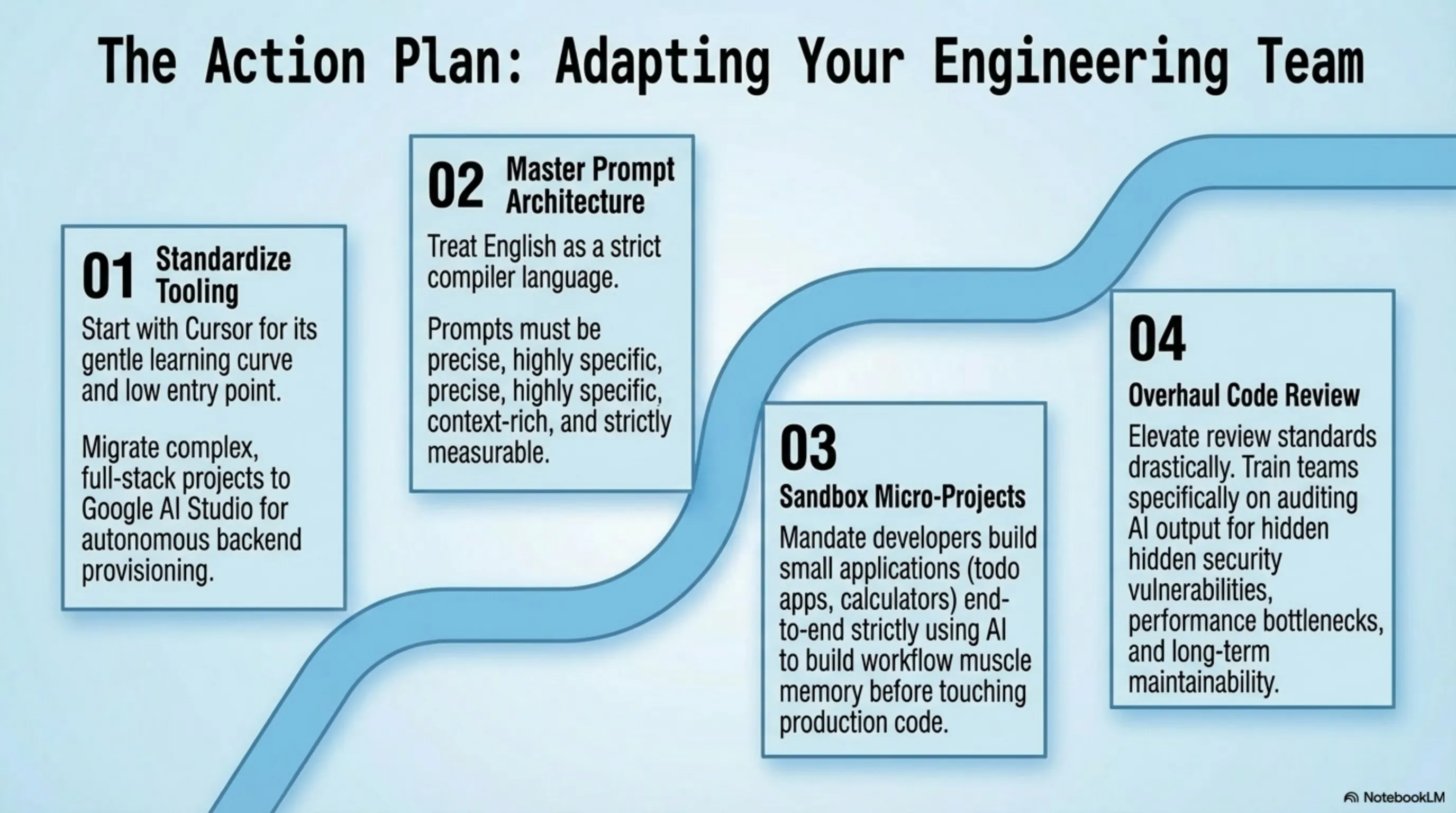
For beginners, Cursor is the best choice because it's free and has an easy learning curve. After mastering it, you can move to more advanced tools like Google AI Studio.
Step 2: Learn Prompt Engineering
The skill of writing effective prompts is crucial. Start with simple prompts and gradually make them more complex. The key is to be clear, specific, and measurable.
Step 3: Practice with Small Projects
Start with small projects like a todo app or calculator. The goal is to become familiar with the AI workflow, not to build complex projects.
Step 4: Learn Code Review
One of the most important skills in the Vibe Coding era is the ability to review and improve AI-generated code. Learn how to examine code for security, performance, and maintainability.
Conclusion: A Future That Started Today
Vibe Coding isn't just a temporary trend; it's a paradigm shift that has changed programming forever. What Andrej Karpathy started with a simple tweet in February 2025 has become a revolution that millions of developers worldwide benefit from today.
For North American developers, this is a golden opportunity to compete in the global market by learning these new technologies. Companies that adopt this technology early will have a significant competitive advantage.
The future of programming belongs to those who can collaborate with artificial intelligence, not compete with it. Vibe Coding is a path to transform from a coder to a software architect, from an executor to a creator.
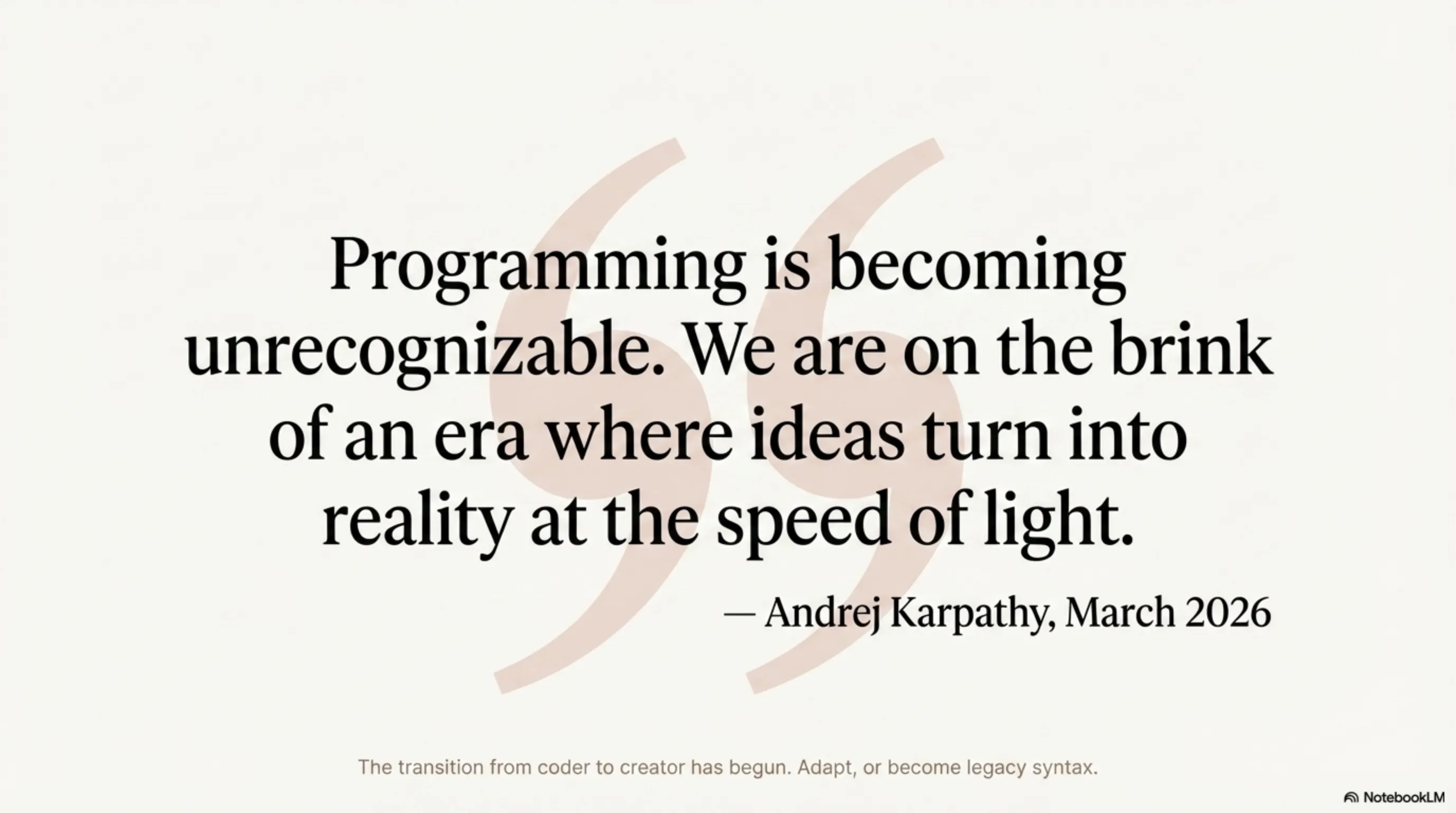
"Programming is becoming unrecognizable. We're on the cusp of an era where ideas become reality at the speed of light." — Andrej Karpathy, March 2026
🚀 Key Summary
- Vibe Coding evolved from a tweet to a global revolution
- 92% of US developers use it daily
- Development speed increased by 20-45%
- New high-paying jobs have been created
- Security and code quality challenges exist
- The future belongs to human-AI collaboration
Sources: Andrej Karpathy Twitter/X, Stack Overflow Survey 2025-2026, GitHub Statistics, Collins Dictionary, MIT Technology Review, Independent Developer Surveys, Academic Studies, Security Audits
Vibe Coding Revolution 2026 — Research and Analysis: Tekin Editorial Team
🌐 Stay Connected With Us 🎮✨
For the latest tech, gaming, and gadget news, follow us on our official social media channels:
Additional Gallery: The Vibe Coding Revolution: How Andrej Karpathy Changed Programming Forever