TEKIN ANALYSIS // EXECUTIVE BRIEF
The Dissolution of Fantasy: How Call of Duty Became Military Reality
For more than twenty years, the user interfaces rendered across personal computer monitors and living-room television displays in franchise phenomenons like Call of Duty: Modern Warfare, Battlefield, Halo, and Ghost Recon represented the supreme zenith of interactive speculative fiction. Gamers navigated virtual combat zones assisted by an omniscient digital Heads-Up Display (HUD): an illuminated mini-map in the peripheral corner plotting squadmates and hostile gunshots; a dynamic reticle projecting point-of-impact without requiring an eye pressed against physical iron sights; a thermal vision toggle slicing through impenetrable smoke; and numeric telemetry tracking remaining ammunition magazines and compass bearings. Millions of civilian players lived inside these cybernetic interfaces, oblivious to the fact that senior military strategists at the Pentagon were studying their monitors not as toys, but as an ergonomic blueprint for the future of ground combat.
Today, in the mid-2020s, that boundary has dissolved entirely. Through a colossal, multi-year procurement framework with a ceiling value exceeding $22 billion, the United States Army has partnered with technology titan Microsoft to construct the Integrated Visual Augmentation System (IVAS). By stripping down the commercial architecture of the HoloLens 2 augmented reality headset, encasing it within ballistic-rated, waterproof, and shock-resistant military enclosures, and fusing it with thermal infrared sensors, the military has successfully turned the biological human eye into an active, high-resolution combat monitor.
This unprecedented convergence represents the ultimate maturation of the military-entertainment complex. Department of Defense human-factors researchers recognized a seismic generational shift: the modern cohort of infantry recruits—men and women born in the late 1990s and early 2000s—spent their developmental years manipulating analog controller sticks and processing dense spatial graphical data on high-refresh displays. Their neural pathways are naturally conditioned to digest combat telemetry through stylized visual overlays rather than analog paper topographic maps or crackling voice-only radio transmissions. By porting familiar video game UI paradigms directly onto tactical combat visors, the armed forces slashed tactical training curves from several months to a matter of mere hours.
Tekin Strategic Command // 6 Architectural Breakthroughs Defining IVAS 1.2
Why Does the IVAS Program Represent a Historical Military Milestone?
The IVAS initiative represents the definitive technological effort to eradicate the historic 'fog of war,' transforming dismounted infantry squads into hyper-synchronized tactical computing networks with total sensory dominance.
The Physiological Crisis: Overcoming Nausea and Engineering IVAS 1.2
Despite the breathless corporate fanfare that accompanied the 2018 contract signing between the Pentagon and Redmond, the actual transition of augmented reality optics from sterile Silicon Valley laboratories into grueling muddy infantry maneuvers was plagued by severe physiological friction. In 2021 and 2022, when early prototype batches designated IVAS 1.0 were deployed for rigorous live-fire field trials with elite airborne units at Fort Bragg and Fort Campbell, classified Department of Defense operational testing evaluations delivered a blistering verdict: over 80 percent of participating soldiers experienced debilitating nausea, eye-watering motion sickness, chronic headaches, and cervical neck strain within less than three hours of operational wear.
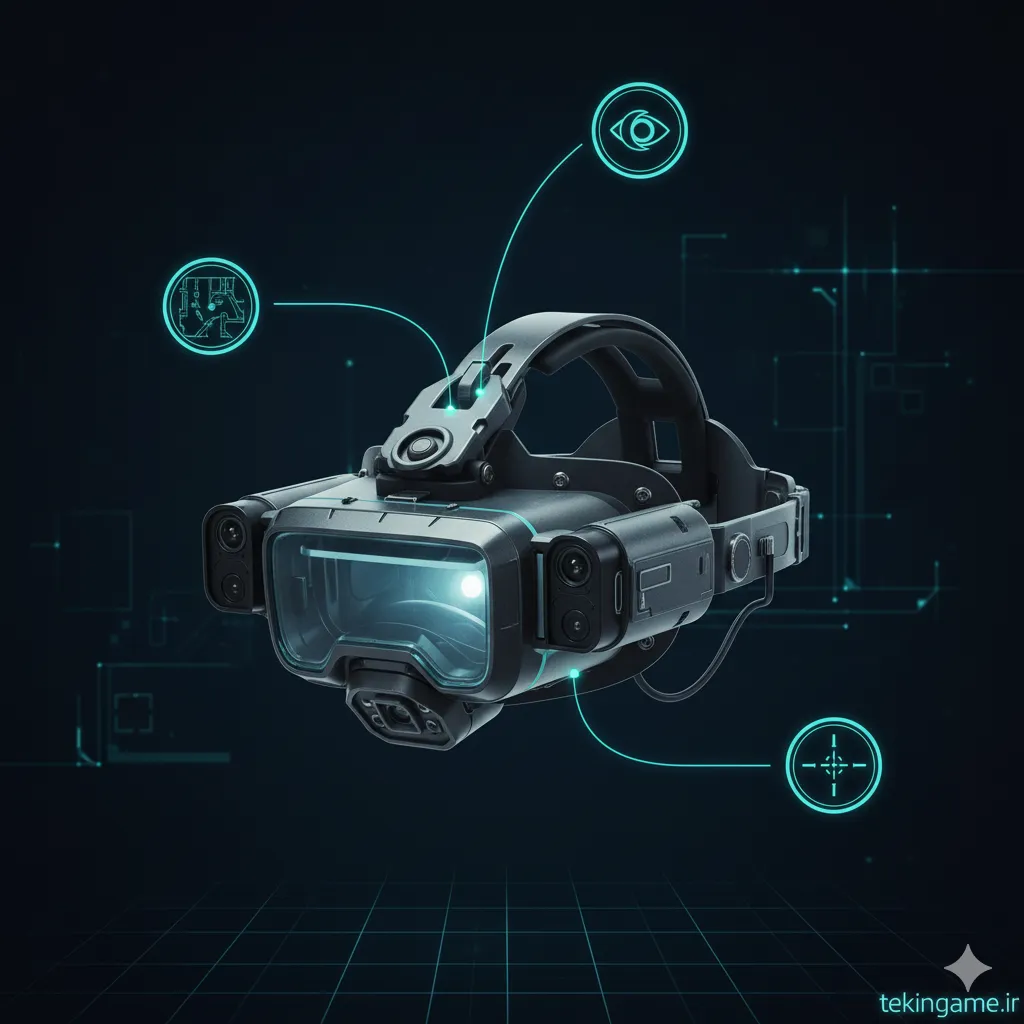
The root causes of this mechanical failure lay in the fundamental physics of optical display engineering: 1. An Overextended 70-Degree Field of View: Attempting to grant soldiers maximum peripheral immersion introduced severe chromatic aberration and optical distortion at the lens perimeters. As soldiers sprinted across broken terrain, the disconnect between inner-ear vestibular balance and visual display latency triggered profound motion sickness. 2. A Forward-Heavy Center of Gravity: Concentrating heavy optical glass, thermal sensor housings, and compute hardware directly onto the forehead shifted the helmet's center of mass forward, subjecting soldiers' neck vertebrae to agonizing physical fatigue during high-speed tactical maneuvers. 3. Fatal Nighttime Display Illumination: Light emitted from the internal holographic micro-displays leaked outward, illuminating the soldier's face like a neon billboard in pitch-black darkness—transforming friendly infantrymen into glaring targets for enemy snipers operating night-vision optics. 4. A Rigid, Non-Articulated Form Factor: The visor was permanently fixed in place; if the software suffered a frame-rate hitch, battery depletion, or graphical glitch mid-assault, the soldier was effectively blinded in the heat of a live firefight.
Confronted with congressional threats to terminate the multi-billion-dollar program, Microsoft mobilized elite engineering teams to perform radical surgery on the hardware, giving birth to IVAS 1.2. The redesign narrowed the optical field of view to a stable, razor-sharp 60 degrees, moved counterweights to the helmet rear to restore natural physical balance, added ambient light-leakage gaskets, and critically introduced an articulated flip-up visor hinge. This mechanical innovation allows an infantryman to physically flip the display upward in a fraction of a second with a single finger swipe, instantly returning to unhindered naked-eye vision. Operational testing in 2024 and 2025 demonstrated that soldier acceptance ratings skyrocketed from an abysmal 20 percent to well over 85 percent.
Separating Myth from Reality Inside the Pentagon's AR Programs
Tactical Edge Lexicon // Essential Vocabulary of 21st-Century Warfare
Chronological Odyssey of IVAS: From Silicon Valley Concept to Armored Reality
Shooting Around Corners: The Magic of Weapon Sight Pairing (FWS-I)
One of the most lethal tactical dilemmas confronting infantrymen during close-quarters urban combat (CQB) is the unavoidable requirement of exposing their head, neck, and upper torso when leaning around a concrete wall or doorframe to visually acquire a target. In modern asymmetric warfare dominated by entrenched snipers and machine-gun nests, that fleeting half-second of physical exposure is frequently catastrophic. The IVAS ecosystem completely neutralizes this historic vulnerability through an astonishing capability known as Family of Weapon Sights - Individual (FWS-I).
Operating like a technological dream out of a futuristic cyberpunk simulator, a miniaturized thermal weapon optic mounted directly onto the Picatinny rail of a soldier's M4A1 rifle or next-generation XM7 rifle wirelessly transmits its live optical feed to the soldier's IVAS headset via an encrypted, ultra-low-latency radio link. Within the soldier's field of view, an illuminated floating holographic reticle (crosshair) appears, calibrated with sub-millimeter precision to the true ballistic trajectory of the rifle barrel.
The tactical reality unlocked by this pairing is staggering: an infantryman can remain safely tucked behind solid sandbags or reinforced concrete, thrust merely their hands and the rifle barrel around the corner, observe the concealed target through thermal imaging projected onto their visor, and deliver precision suppressive or lethal fire without exposing a single millimeter of their biological flesh to enemy retaliation. Field testing reveals that FWS-I weapon integration slashes room-clearing casualty rates by up to 70 percent, forever altering the calculus of urban warfare.
Comparative Architectural Evolution Across Generations of Infantry Vision
Operational Allocation of IVAS Compute Capabilities in Modern Firefights
Omniscient Spatial Command: Holographic 3D Maps and Black Hornet Nano-Drones
The supreme terror of any platoon leader commanding a mechanized infantry assault is the loss of spatial cohesion amid smoke, concrete rubble, and deafening artillery barrages—a chaotic fog of war that historically bred tragic friendly-fire casualties (fratricide). IVAS conquers this confusion by implementing a persistent, dynamic Blue Force Tracking (BFT) architecture that functions identically to tactical mini-maps in high-end video games.
As soldiers sweep through multi-story concrete structures, holographic blue icons track the exact real-time three-dimensional coordinates, vital signs, magazine counts, and movement vectors of every squadmate through walls and floors. If a scout identifies an enemy sniper nest or concealed improvised explosive device (IED), pressing a tactical button on the rifle's foregrip immediately places an amber or red 'Ping' marker in shared holographic space. Every member of the platoon instantly perceives the threat marker floating in physical space, accompanied by calculated distance telemetry.
Furthermore, IVAS integrates seamlessly with autonomous aerial reconnaissance assets, most notably the pocket-sized FLIR Black Hornet Nano micro-UAV. These silent, hand-launched micro-helicopters ascend fifty meters above building rooftops, routing live, thermal, top-down infrared video feeds directly into a secondary Picture-in-Picture (PiP) window nested within the corner of the soldier's visual periphery. Before kicking in a fortified door, an assault team observes the exact count, weapon loadouts, and room positions of every hostile occupant, eliminating ambush opportunities entirely.
📚 Classified & Related Dossiers in TekinGame
If you wish to explore beyond this report and delve into cybernetic frontiers and autonomous AI architectures, do not miss these three exclusive deep-dives in the Tekin Garage:
Infantry Operator Confidence & Tactical Evaluation Index for IVAS 1.2
IVAS 1.2 Multidimensional Combat Readiness Evaluation Matrix
Diagnostics Console // IVAS Military Operating System & Mesh Encryption Telemetry
Cognitive Tunneling & The Electronic Warfare Threat: The Cybernetic Achilles' Heel
Notwithstanding this glittering array of technological wizardry, elite tactical commanders and military neuropsychologists maintain intense vigilance regarding the grave vulnerabilities inherent in augmented reality warfare. The most insidious psychological danger is the phenomenon known as Cognitive Tunneling. When human brains are bombarded by an intoxicating kaleidoscope of compass headings, digital waypoint arrows, 3D building outlines, and telemetry warnings, visual processing capacity becomes monopolized by the display. A soldier fixated on tracking digital icons risks missing acoustic auditory cues—such as the quiet scrape of a combat knife or the faint rustle of clothing in the immediate un-augmented periphery.
Equally existential is the vulnerability of the IVAS tactical mesh to aggressive Electronic Warfare (EW) deployed by near-peer state adversaries possessing sophisticated jamming divisions, such as the Russian Federation or China. The IVAS ecosystem relies upon precision GPS timing, local high-bandwidth tactical radio mesh networks, and edge cloud processing. If an adversary deploys high-power radio frequency jamming complexes or detonates electromagnetic pulse (EMP) devices over an operational theater, the high-tech holographic network collapses instantaneously into static.
Under those conditions, soldiers conditioned exclusively to rely upon glowing digital arrows would find themselves paralyzed by sudden sensory deprivation, weighed down by inert glass hardware on their helmets. Consequently, modernized United States Army combat doctrine mandates that infantry battalions spend at least 50 percent of their operational field exercises navigating with traditional analog paper maps, lensatic compasses, and un-augmented iron sights—guaranteeing that biological lethality is never entirely surrendered to the fragile circuitry of Silicon Valley.

The Battle of Cloud and Steel: Tactical Edge Computing with Azure
Beneath the carbon-fiber shell of IVAS lies a sophisticated integration with Microsoft's Azure Tactical Edge cloud infrastructure. A modern platoon is no longer an isolated cluster of riflemen; it is a mobile distributed data center. Compute pods carried inside armored fighting vehicles (such as the Stryker or Bradley) process high-bandwidth machine learning models mere kilometers behind the forward line of own troops (FLOT).
This edge compute architecture executes complex neural net tasks locally without transmitting sensitive biometric data back to continental server farms. Acoustic weapon sensors instantly triangulate sniper muzzle blasts, projecting an intercept vector onto the visor within 80 milliseconds. Real-time language translation models analyze intercepted enemy radio transmissions, displaying translated English text directly beneath the squad leader's vision. By decentralizing computation, the military ensures that even if satellite links to Washington or NATO headquarters are severed, the local squad retains its augmented reality supercomputing suite intact.
Biometric Telemetry & Squad Health Monitoring Under Fire
In addition to spatial targeting and drone video integration, IVAS incorporates comprehensive physiological sensing arrays embedded directly within the helmet brow pad and chest harness. In high-intensity combat operations, human adrenaline surges can mask catastrophic blood loss or acute heat exhaustion until an operative collapses unconscious. IVAS continuously tracks galvanic skin response, pulse rate, core body temperature, and respiration patterns in real time.
For platoon medics and squad leaders, this biometric stream is translated into clean, color-coded health meters floating adjacent to squad members' tactical callsigns—strikingly reminiscent of party health bars in role-playing games or cooperative tactical shooters. A squad leader can instantly identify which soldier is experiencing extreme cognitive panic, who is suffering heat prostration while clearing desert compounds, or whose pulse is precipitously crashing from internal hemorrhage. This autonomous triage telemetry enables medical evacuation assets (MEDEVAC) to be dispatched with precise, life-saving clinical pre-flight diagnostics before the casualty even reaches the extraction zone.
Strategic Risk Matrix & Electronic Hardening Architecture for Next-Gen Infantry
Strategic Synthesis & Official Intelligence References
The United States Army's IVAS program represents the irrevocable dissolution of the boundary separating first-person tactical video games from the brutal kinetic reality of ground warfare. By transforming consumer HoloLens technology into an armored tactical supercomputer, the Pentagon has turned individual infantrymen into hyper-connected digital nodes on an omniscient battlefield network. While electronic warfare vulnerabilities and cognitive tunneling remain valid perils, an infantryman who can scan through solid walls, track teammates through urban concrete, and engage hostiles without exposing their head commands an unassailable tactical advantage in 21st-century warfare.
- • United States Army PEO Soldier Official IVAS Program Development Documentation
- • Department of Defense Operational Test & Evaluation (DOT&E) Annual Report on IVAS 1.2
- • Microsoft Defence & National Security Whitepapers on HoloLens Military Customization
- • Defense Advanced Research Projects Agency (DARPA) Infantry Augmented Reality Research Papers
- • IEEE Transactions on Visualization & Computer Graphics: Studies on Military HUD Cognitive Load
- Revolutionary leap in squad situational awareness that virtually eradicates fratricide via real-time Blue Force Tracking.
- Unprecedented blind-cover firing capability (FWS-I) dramatically reducing infantry casualties in brutal room-clearing urban combat.
- Seamless integration of aerial nano-UAV thermal video feeds directly inside the soldier's visual periphery.
- Elimination of cumbersome analog night-vision goggles through digital low-light and infrared thermal sensor fusion.
- Severe vulnerability to sophisticated electronic warfare jamming, spoofing, and electromagnetic pulse (EMP) disruptions.
- Additional physical weight burden and thermal battery management requirements across multi-day austere mountain patrols.
- Psychological risk of cognitive tunneling, blinding soldiers to immediate physical acoustic cues in close-quarters skirmishes.
Frequently Asked Questions Regarding US Army IVAS Technology and Future Warfare
Was the IVAS HUD interface directly inspired by video games like Call of Duty?
Yes. Program managers at PEO Soldier and Microsoft software architects have openly acknowledged that IVAS's HUD layout, weapon reticle pairing, and compass beacons intentionally mirror the ergonomic conventions of mainstream tactical first-person shooters, drastically shortening the training curve for modern digital-native recruits.
What engineering fixes transformed the flawed IVAS 1.0 into the combat-ready IVAS 1.2?
IVAS 1.0 suffered from a disorienting 70-degree field of view that induced nausea, combined with a forward-heavy balance and a non-movable visor. IVAS 1.2 rectified these defects by narrowing the optic to a crisp, stable 60 degrees, shifting counterweights to the helmet rear, and implementing an articulated flip-up visor allowing soldiers to instantly return to natural vision.
How does Family of Weapon Sights - Individual (FWS-I) corner-shooting operate?
A thermal weapon sight mounted onto the soldier's rifle wirelessly transmits its crosshair alignment directly to the IVAS visor with near-zero latency. The soldier can thrust the rifle around a corner or over a barrier, visually acquire the target on their visor, and fire with precision while keeping their head and body completely shielded from incoming rounds.
Has the IVAS system undergone operational deployment in active combat zones?
The system has undergone exhaustive battalion-level live-fire testing with elite airborne and infantry formations. Official widespread operational field deployment across active Brigade Combat Teams is scheduled throughout 2025 and 2026 under the Army Futures Command modernization blueprint.
