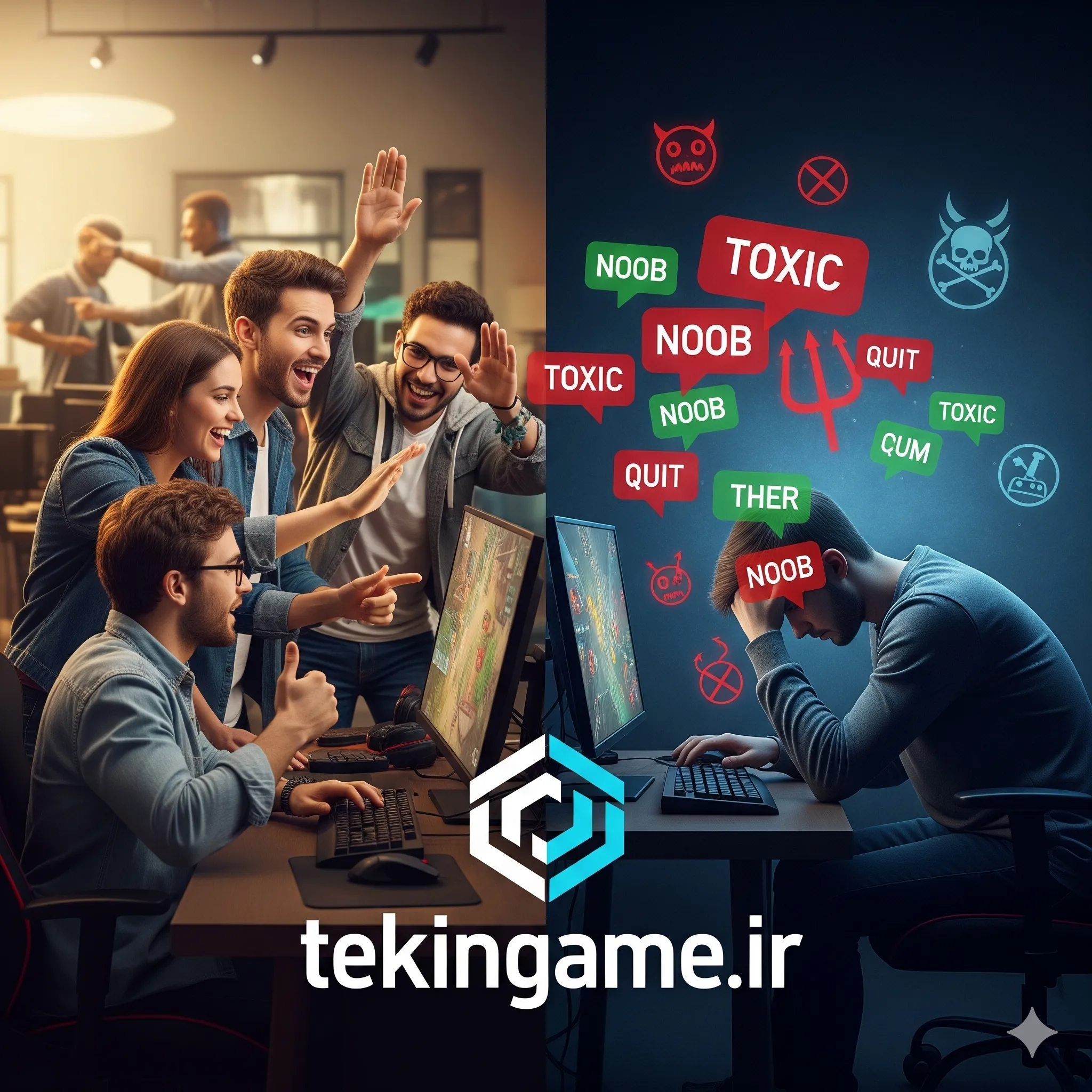
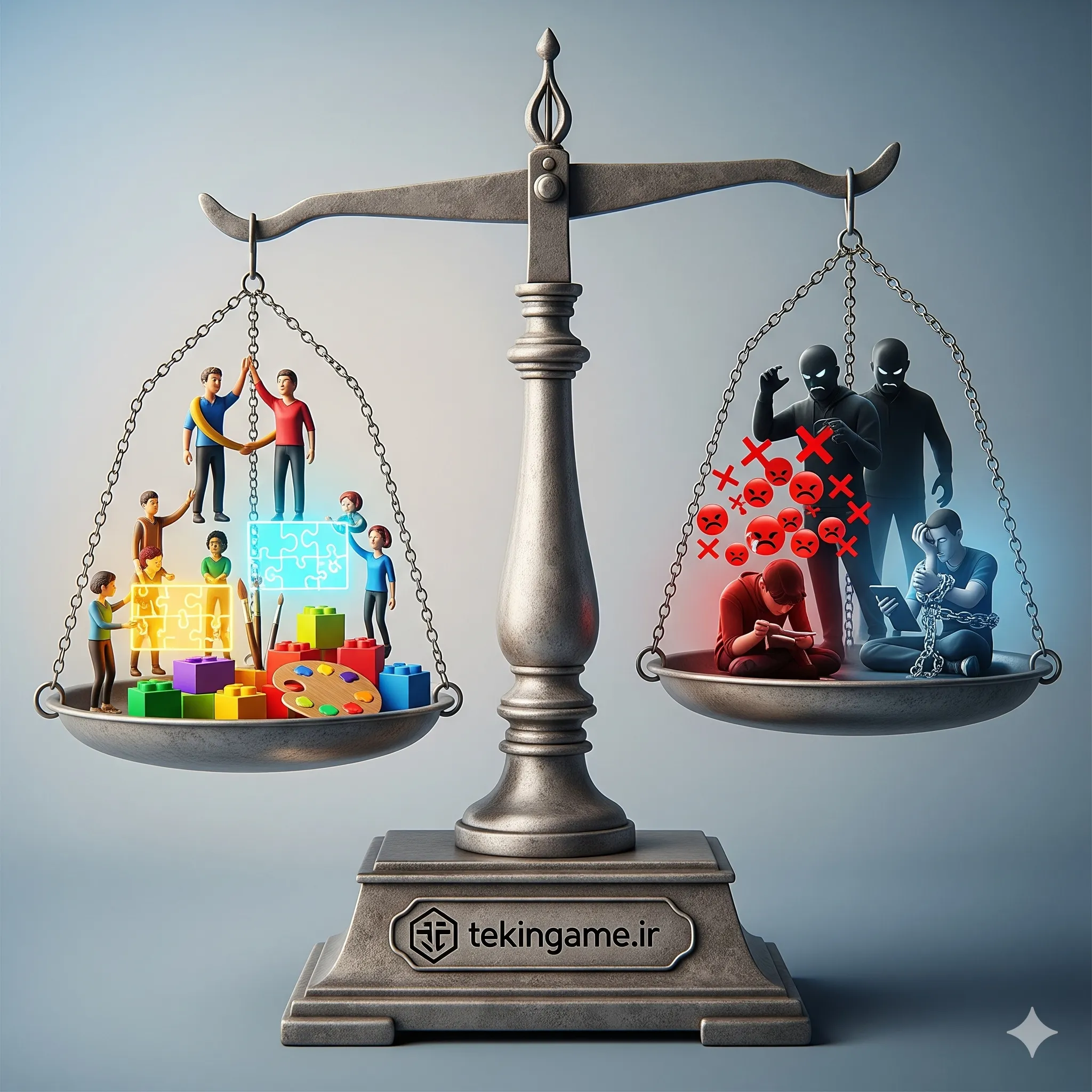
The global video game medium has transcended the boundaries of interactive entertainment to establish itself as the single most consequential, sprawling social nexus in modern human civilization. Over three billion individuals across every continent actively construct friendships, express emotional identities, and hone complex collaborative skills within digital spaces. Yet, like any vast human collective, the global gaming community is defined by a profound moral dichotomy: on one side shines extraordinary humanitarian mobilization, deep philanthropic generosity, and unprecedented cross-cultural empathy; while on the dark underside lurks insidious toxicity, misogynistic gatekeeping, cyberbullying, and predatory behavioral conditioning. In this exhaustive sociological and psychological analysis conducted at the
TekinGame Technical Media Laboratory, we dissect the two faces of the global gaming subculture, exploring its highest virtues and darkest systemic afflictions.
To understand modern interactive civilization, one must examine how digital spaces reconfigure human interaction. Virtual worlds are not passive digital playgrounds; they are dynamic, decentralized arenas where cultural norms, ethical contracts, and power dynamics are constantly negotiated and redefined. When players step into persistent multiplayer lobbies, they bring with them their conscious hopes, unexamined biases, and subconscious anxieties. The resultant community fabric is therefore a high-contrast tapestry: capable of breathtaking acts of collective selflessness that astonish traditional civic institutions, yet equally susceptible to swift spirals of collective cruelty that inflict genuine psychological harm on vulnerable participants.
⚡Sociological Metrics of the Global Interactive Gaming Community
TEKIN HUD◈ Global Active Player Base
Exceeding 3.2 billion participants across PC, console, and mobile platforms worldwide
◈ Annual Charitable Philanthropy
Over $50M+ raised annually through events like Games Done Quick, Extra Life, and creator relays
◈ Observed Toxicity Exposure
Approximately 68% of multiplayer gamers report experiencing harassment in voice/text lobbies
◈ Digital Empathy Index
Over 74% of long-term guild members affirm forming genuine, lasting offline friendships
TekinGame Editorial identifies the gaming community as the premier laboratory for observing digital human socialization in the 21st century.
## Section 1: The Evolution of Gaming Subculture: From Solitary Rooms to Global Guilds
Throughout the 1980s and 1990s, mass media weaponized a dismissive cultural stereotype: the gamer as a maladjusted, solitary adolescent sequestered in a dimly lit basement. However, the architectural advent of high-speed broadband and persistent online virtual worlds—crystallized by titles like World of Warcraft, Counter-Strike, and Halo 2—annihilated that obsolete trope. Gaming transformed into an intrinsically cooperative, deeply social endeavor. Virtual guilds, competitive clans, and Discord servers became modern public squares where individuals found community, common purpose, and lifelong camaraderie.
Contemporary gaming communities function with the organizational sophistication of civic institutions. Within massive multiplayer online role-playing games and tactical hero shooters, raid leaders coordinate dozens of participants across different time zones, balancing tactical roles, arbitrating disputes, and instilling strategic discipline. For millions who face geographical isolation, neurodivergence, or physical mobility limitations, these virtual spaces offer unconstrained mobility and an egalitarian meritocracy where one is judged by skill, dedication, and teamwork rather than superficial socioeconomic markers.
This structural evolution has profoundly decentralized traditional hierarchies of social authority. In a high-stakes raid or a tense Counter-Strike defensive hold, a sixteen-year-old student, a forty-year-old software architect, and a retired veteran communicate on terms of absolute functional parity. Titles, credentials, and social prestige dissolve in favor of communicative clarity, tactical positioning, and emotional composure under pressure. The guild acts as an incubator for modern distributed leadership, teaching participants how to synthesize disparate viewpoints, manage collective fatigue, and celebrate shared victories across cultural divides that would otherwise prevent meaningful dialogue.
Furthermore, the technological infrastructure supporting these communities has matured into sophisticated social ecosystems. Discord servers are no longer simple voice channels; they are structured digital commonwealths with codified constitutions, tiered governance bots, specialized interest subgroups, and collaborative wiki repositories. Within these digital enclaves, members cultivate communal lore, design shared graphic assets, organize peer tutoring sessions, and establish robust peer support networks that operate around the clock across all twenty-four time zones.
"
Video games are the only medium where the audience possesses active co-authorship over social meaning. When millions congregate in digital arenas, they do not merely play; they build shared democratic history.
Tekin Plus Department of Behavioral Sociology & Transmedia Studies
## Section 2: The Radiant Face: Radical Philanthropy, Empathy, and Mental Resilience
The philanthropic power of the gaming community is without parallel in modern popular culture. Marathons like Games Done Quick (GDQ) transform the esoteric discipline of speedrunning into millions of dollars in direct medical aid for Doctors Without Borders and the Prevent Cancer Foundation. Streamers routinely orchestrate twenty-four-hour broadcast relays, rallying micro-donations from hundreds of thousands of viewers to provide disaster relief, build clean water wells, or support children's hospitals through Extra Life.
Beyond monetary charity, online gaming has emerged as a formidable psychological bulwark against alienation and despair. During periods of global crisis, such as the pandemic lockdowns, multiplayer lobbies functioned as vital life-support systems for human connection. For marginalized individuals navigating chronic illness, anxiety, or grief, finding a guild that listens, encourages, and stands vigil during dark hours provides profound, clinically recognized emotional grounding.
The empathy generated within multiplayer gaming networks frequently translates into extraordinary real-world solidarity. Community members routinely rally to cover astronomical medical bills for stricken clanmates, organize international search efforts for missing members, and construct elaborate in-game memorial vigils when beloved comrades pass away. In games like EVE Online and Final Fantasy XIV, entire star fleets and city squares fall silent, illuminating the virtual cosmos with ceremonial beacon lights in solemn tribute to fallen players. These poignant rituals illustrate that digital bonds possess every ounce of the emotional weight, sacredness, and authenticity found in physical relationships.
⭐Four Pillar Virtues of the Global Gaming Collective
TEKIN HUD◈ Instantaneous Philanthropic Mobilization
Rallying multi-million-dollar relief funds within hours for catastrophic humanitarian crises
◈ Digital Empathy & Loneliness Mitigation
Providing safe, supportive social sanctuaries for individuals isolated in the physical world
◈ Cognitive & Collaborative Mastery
Instilling high-pressure problem solving, split-second communication, and tactical leadership
◈ Universal Cross-Cultural Dialogue
Dissolving geopolitical prejudices as diverse players cooperate toward shared mechanical goals
The philanthropic and social achievements of gamers demonstrate the boundless potential of interactive networks when anchored in empathy.
## Section 3: The Dark Face: Toxicity, Anonymity, and the Online Disinhibition Effect
Tragically, the very architecture that enables radical community cohesion also nurtures severe systemic pathologies. The psychological phenomenon known as the Online Disinhibition Effect—amplified by persistent anonymity and lack of physical proximity—frequently strips away social inhibitions. In hyper-competitive lobbies like Call of Duty, League of Legends, and Rainbow Six Siege, routine gameplay friction often devolves into venomous slurs, death threats, and unbridled misogyny.
This toxicity inflicts severe real-world trauma. Malicious behaviors such as swatting—falsely reporting a critical hostage crisis to emergency services to dispatch militarized police units to a streamer's physical residence—have resulted in tragic, fatal outcomes. Doxxing, targeted mass-harassment campaigns, and aggressive gatekeeping have driven countless talented creators, particularly women and minority players, out of competitive spheres entirely.
Sociological research indicates that toxic conduct is heavily contagious within digital arenas. When a competitive lobby tolerates unpunished verbal cruelty, bystanders subconsciously normalize aggression as an acceptable coping mechanism for competitive frustration. Novice players entering these hostile environments either adopt defensive aggression themselves or withdraw entirely into silence. This vicious cycle erodes community trust, converts communal recreation into an anxiety-inducing gauntlet, and drives away diverse participants who refuse to subject their psychological wellbeing to abusive tirades.
🎧
شورای نظارت فنی و محتوایی تکین گیم // TekinGame Sovereign Council
نکته تحریریه تکین پلاس // Tekin Plus Editorial Note
Psychological Diagnostic Note: Toxicity in multiplayer gaming is fundamentally rooted in emotional dysregulation, externalization of failure, and the weaponization of perceived elite status. TekinGame Research mandates that storefronts and studios treat behavioral hygiene with the same architectural seriousness as cybersecurity.
## Section 4: Elitism, Gatekeeping, and the Myth of the 'True Gamer'
A chronic malaise poisoning gaming discourse is the insidious practice of gatekeeping. Vocal reactionary factions continuously construct arbitrary litmus tests designed to exclude casual players, mobile enthusiasts, and newcomers. The toxic insistence that one must endure punishing Soulslike titles without accessibility assists or achieve top-tier competitive rankings to have valid opinions creates an unwelcoming, hostile environment.
This ideological gatekeeping stifles artistic innovation and commercial expansion. Games like Animal Crossing, Minecraft, and Stardew Valley demonstrated that non-violent, restorative, and collaborative experiences possess astronomical cultural resonance. Broadening access through customizable difficulty modes and sophisticated physical accessibility settings does not dilute the artistic integrity of gaming; it enriches the tapestry of who gets to participate.
Gatekeeping fundamentally stems from a fragile sense of identity. For players who have tethered their self-worth exclusively to mechanical proficiency or encyclopedic trivia knowledge of esoteric lore, the arrival of diverse demographics feels like an existential threat to their perceived cultural sanctuary. Rather than celebrating gaming's triumphant transition into the universal mainstream, gatekeepers construct defensive cultural moats. Eradicating this elitist mindset requires celebrating diverse modes of engagement: acknowledging that cozy farming simulators, high-speed mobile battle royales, and cerebral narrative adventures are every bit as authentic as frame-perfect esports brawlers.
⚠️Pathologies of Exclusionary Gatekeeping in Gaming
TEKIN HUD◈ Derision of Accessible Design
Hostility toward difficulty sliders and assistive technologies for disabled gamers
◈ Persistent Misogyny in Voice Lobbies
Silencing female players through harassment, driving them to mute microphones
◈ Adolescent Platform Tribalism
Vicious, irrational console-war vitriol between PlayStation, Xbox, Nintendo, and PC factions
◈ Elitist Contempt for Casual Titles
Dismissing puzzle, simulation, and narrative games as 'not real games'
Gatekeeping is the weapon of the insecure; true cultural maturity welcomes new voices with generous hospitality.
## Section 5: Behavioral Addiction, Dark Patterns, and the Economy of Engagement
The dark face of gaming is not merely generated by toxic players; it is actively engineered by corporate monetization architecture. Modern live-service games frequently deploy predatory psychological hooks borrowed from casino gaming: loot boxes, deceptive battle-pass deadlines, and aggressive fear-of-missing-out (FOMO) mechanics designed to hijack dopamine pathways.
When vulnerable individuals succumb to compulsive engagement, the consequences are devastating: sleep deprivation, career stagnation, strained family bonds, and catastrophic financial debt. Fostering a healthy gaming culture requires acknowledging when gameplay ceases to be an enriching leisure pursuit and mutates into an exploitative trap designed by boardroom behavioral scientists.
The algorithmic monetization of social validation represents the most insidious frontier of this extraction economy. By deliberately linking cosmetic status symbols with high-visibility multiplayer social hubs, developers induce social anxiety and peer pressure, particularly among younger players. Teammates without premium skins are subjected to playground ridicule, transforming cosmetic customization from an avenue of creative self-expression into a coercive tool of socioeconomic stratification. Confronting these dark patterns requires robust legislative oversight, transparent algorithmic disclosures, and an ethical awakening among game designers.
"
When an interactive experience stops celebrating your agency and begins extracting your time and money through algorithmic compulsion, it ceases to be art and becomes digital extraction.
Dr. Helena Vance - Institute for Digital Media Ethics & Human Wellness
## Section 6: Technological Antidotes: Neural AI Moderation and Proactive Governance
Mitigating online toxicity requires moving beyond passive, sluggish player-reporting systems. Contemporary developers are deploying advanced neural language models—such as Riot Games' algorithmic moderation suites and Modulate's ToxMod voice telemetry—that detect contextual harassment, hate speech, and griefing in real time. Rather than relying on simple keyword filters that players easily bypass with phonetic misspellings, these neural systems analyze acoustic inflection, conversational escalation, and behavioral intent.
Equally vital is the institutional adoption of positive reinforcement frameworks. Rewarding commendable, supportive players with exclusive cosmetic heraldry, elevated matchmaking priority, and verified honor badges creates tangible social and economic incentives for sportsmanship. When good behavior is visibly celebrated and toxic infractions carry swift, hardware-level penalties, the social equilibrium shifts decisively toward harmony.
Furthermore, structural matchmaking innovations must segment communities along behavioral axes rather than purely mechanical skill tiers. Players with verified histories of sportsmanship, tactical patience, and constructive communication should be dynamically paired together, creating self-reinforcing sanctuaries of positive gameplay. Conversely, persistent griefers and toxic repeat offenders should be sequestered into dedicated penalty queues—a digital purgatory where they either reform their conduct or endure each other's vitriol in isolation. Architectural design choices, more than punitive lecturing, dictate the ultimate moral temperature of virtual spaces.
9.5
Comprehensive Balance Sheet: Global Gaming Community DynamicsPROS
- Extraordinary multi-million-dollar philanthropic fundraising capabilities across global relief campaigns
- Universal cross-border friendships that transcend geographic, linguistic, and socioeconomic barriers
- Accelerated cognitive agility, strategic thinking, and collaborative high-pressure team communication
- Empowering digital safe spaces for neurodivergent and socially anxious individuals to find authentic belonging
CONS
- Persistent acoustic and textual harassment in unmoderated competitive matchmaking and public Discord channels
- Susceptibility to predatory corporate engagement loops, behavioral addiction, and exploitative dark patterns
## Section 7: Esports as an Engine of Professional Discipline and Chivalry
The stratospheric ascent of competitive esports has served as a powerful stabilizing force for gaming culture. Professional athletes in League of Legends, Counter-Strike, and Dota 2 operate under rigorous physical training regimens, nutritional oversight, and sports psychology counseling. Watching global champions gracefully shake hands after devastating world-championship defeats imparts crucial lessons in humility, respect, and grace under pressure to tens of millions of aspiring spectators worldwide.
Esports organizations have increasingly professionalized their institutional codes of conduct. Contracts for premier athletes now mandate community engagement standards, fine players for derogatory language in ranked solo queues, and actively promote mental health awareness. When juvenile trash-talk is replaced with mutual tactical respect on international arena stages, it sends an unambiguous message across the ecosystem: genuine mastery requires emotional self-possession.
Moreover, the rigorous coaching structures embedded within top-tier esports teams emphasize resilience and post-match debriefing over emotional finger-pointing. Athletes analyze mechanical errors through objective video playback, dissecting tactical failures with clinical detachment. This disciplined methodology offers an invaluable blueprint for the broader player base: demonstrating that progress is achieved through analytical introspection and calm team retrospectives rather than reactive blaming and verbal abuse in match chat.
🎧
شورای نظارت فنی و محتوایی تکین گیم // TekinGame Sovereign Council
نکته تحریریه تکین پلاس // Tekin Plus Editorial Note
Competitive Philosophy Note: True sportsmanship is not the absence of competitive passion; it is the absolute mastery of oneself amidst the fury of defeat. The esports arena elevates gaming from chaotic digital brawling into a disciplined cathedral of human excellence.
📚 Classified & Related Dossiers in TekinGame
If you wish to explore beyond this report and delve into cybernetic frontiers and autonomous AI architectures, do not miss these three exclusive deep-dives in the Tekin Garage:
## Section 8: Streaming Culture and the Complexities of Parasocial Dynamics
The meteoric rise of live broadcasting platforms like Twitch and YouTube Gaming has fundamentally altered community mechanics. Streamers are no longer distant celebrities; they broadcast directly into players' private spaces for eight hours a day, fostering powerful parasocial bonds. While these broadcasts offer immense comfort to lonely viewers, they can also cultivate unhealthy emotional dependence, financial over-tipping, and dangerous boundary erosion if viewers mistake transactional entertainment for authentic personal friendship.
Streamers function as informal community curators whose behavioral choices dictate the tone of their entire audience. Broadcasters who indulge in toxic outbursts, blame teammates, or mock spectators cultivate vicious chat cultures that bleed into the wider gaming ecosystem. In contrast, creators who actively enforce chat civility, shut down harassment raids, and openly discuss mental wellness cultivate safe, empathetic communities that uplift their audiences.
The economic dynamics of live streaming also exert profound psychological pressure on the creators themselves. The unrelenting imperative to remain online, fear of algorithm penalization during rest breaks, and constant exposure to public scrutiny induce widespread burnout and anxiety among broadcast talent. A sustainable streaming ecosystem demands that audiences practice emotional maturity: appreciating creators as hardworking performers rather than surrogate family members, and respecting healthy boundaries between public spectacle and private life.
"
In the esports arena, you learn that victory without humility is hollow, and defeat without reflection is wasted. Professional gaming holds a mirror up to the finest virtues of collective discipline.
Johan 'N0tail' Sundstein - Two-Time The International World Champion
🛡️Tekin Plus Five-Point Charter for a Healthy Digital Community
TEKIN HUD◈ Zero Tolerance for Dehumanization
Unflinching community ostracization of hate speech, doxxing, and physical intimidation across all channels
◈ Empowering Female & Minority Gamers
Establishing proactive mentorship networks and equitable competitive esports leagues worldwide
◈ Transparent Digital Literacy
Educating players to recognize corporate dopamine traps and maintain healthy sleep and mental hygiene
◈ Celebrating Sportsmanship Over Egos
Promoting content creators who model constructive feedback, emotional maturity, and chivalry
◈ Institutional Moderation Investment
Holding multibillion-dollar publishers accountable for robust acoustic AI moderation and user safety
A healthy digital community is not an accidental miracle; it is an architectural structure built brick by brick through daily ethical choices.
## Section 9: The Metaverse Horizon: Empathy Across Virtual Reality
As the medium advances toward immersive virtual and augmented reality environments, social interactions will become radically more intimate. In VR, personal spatial boundaries, eye contact, and physical body language are rendered in real time. This spatial immersion possesses transformative potential: virtual reality empathy simulations can help players truly step into the shoes of others, breaking down racial, geographic, and generational divides through shared physical presence.
Conversely, spatial harassment in VR feels terrifyingly visceral. Invasive gestures, unwanted virtual touching, and non-consensual proximity can trigger genuine trauma responses identical to physical-world assault. Consequently, the ethical governance of spatial virtual worlds cannot simply mimic the loose text filters of 2000s forums; it requires deep, hardware-level architecture that preserves personal sovereignty and psychological safety from the very first frame.
Spatial design architectures must integrate unbreakable personal comfort spheres that automatically dissolve or render invisible any intrusive actor who breaches user-defined physical boundaries. Furthermore, decentralized cryptographic identity proofs and hardware-tethered reputation signatures will become indispensable to prevent malicious predators from cycling through disposable burner avatars. The metaverse will either become the ultimate empathy machine or an intimate dystopia of unregulated harassment; the outcome depends on the ethical foundations we engineer today.
⚡Safeguarding Protocols for Next-Gen Spatial Virtual Communities
TEKIN HUD◈ Personal Bubble Enforcements
Unbreakable volumetric personal space boundaries that instantly render aggressive avatars transparent
◈ Instantaneous Gesture Muting
One-gesture environmental silencing to instantly neutralize acoustic and visual harassment
◈ Hardware-Linked Trust Signatures
Preventing banned toxic actors from evading penalties via disposable burner accounts
◈ Transparent AI Mediation Agents
Autonomous neutral facilitators that de-escalate verbal conflicts before they turn toxic
Spatial immersive technology demands a renaissance in digital ethics to ensure virtual worlds remain sanctuaries of human joy.
## Section 10: The Role of Independent Journalism and Specialized Media
Specialized gaming publications hold a sacred civic responsibility. Media outlets must refuse to be compliant marketing conduits for corporate public relations or clickbait purveyors of manufactured outrage. At TekinGame, we view our mission as an intellectual sentinel: celebrating artistic courage, exposing exploitative industry practices, and fearlessly defending the human dignity of players worldwide.
Ethical journalism must actively bridge the divide between gaming subcultures and mainstream society. When mainstream tabloids sensationalize isolated incidents of juvenile delinquency to scapegoat the entire gaming community, responsible media must counter with empirical sociological data, highlighting the medium's immense educational, cognitive, and therapeutic contributions. At the same time, journalists must never shy away from exposing toxic publisher workplace cultures or corporate greed.
By providing rigorous investigative reporting, nuanced cultural critiques, and principled ethical leadership, independent publications empower players to demand higher standards from both themselves and the corporations that profit from their passion. A mature medium requires a fearless, sophisticated critical press that champions human dignity above corporate access and transient viral clicks.
🎧
شورای نظارت فنی و محتوایی تکین گیم // TekinGame Sovereign Council
نکته تحریریه تکین پلاس // Tekin Plus Editorial Note
Journalistic Integrity Mandate: A gaming publication must serve as the intellectual conscience of the culture—shining a forensic spotlight on corporate malfeasance while tirelessly championing the creative pioneers who make this medium magnificent.
## Section 11: The Global Sovereign Verdict: The Choice That Defines Us
The global gaming community is a living, breathing reflection of humanity itself. It possesses the capacity to summon miracles of compassion that span oceans, and the capacity to inflict bitter, senseless cruelty across anonymous fiber-optic cables. The outcome of this perpetual struggle is not preordained by technology; it is determined by the individual choices made by every player who plugs in a headset, every developer who scripts an algorithm, and every spectator who types a message in a chat room.
By choosing empathy over derision, patience over wrath, and generosity over exclusionary pride, we can transform interactive entertainment into the most luminous, welcoming, and empowering cultural movement in human history. Every match is an opportunity to practice emotional maturity, every lobby is a chance to welcome a newcomer, and every victory is an occasion to practice grace.
As interactive technology evolves toward artificial intelligence, photo-realistic simulation, and neural interfaces, the stakes of our collective digital behavior will only multiply. The digital footprint we forge today will define the moral baseline of future generations who will live, work, and love across virtual ecosystems. Pick up your controllers with pride, hold the line of sportsmanship, and remember: the real game is making each other better human beings.
🛡️TekinGame Sovereign Research Agenda on Interactive Communities
TEKIN HUD◈ Empirical Studies on Acoustic Toxicity
Benchmarking the efficacy of neural speech filters across diverse international dialects
◈ Long-Term Cognitive Health in Esports
Investigating cognitive longevity and physical ergonomics in professional gaming
◈ The Economics of Parasocial Streaming
Analyzing psychological expenditure patterns among digital broadcast audiences
◈ Next-Gen Community Governance Architectures
Designing decentralized reputation frameworks for persistent virtual worlds
TekinGame is dedicated to pioneering rigorous, evidence-based scholarship on the social architecture of digital gaming.
9.5
Comprehensive Prognosis: The Trajectory of Global Gaming CulturePROS
- Steadily rising mainstream cultural literacy and celebration of gaming as high art across universities and civic institutions
- Rapid deployment of sophisticated real-time neural moderation protecting vulnerable players from acoustic harassment
- Ever-expanding philanthropic and civic mobilization powered by global gaming collectives and creator marathons
CONS
- Persistent risk of predatory monetization dark patterns eroding trust in live-service titles and exploiting children
- Continued friction between unmoderated free-speech absolutism and vulnerable player safety in decentralized online hubs
Why does extreme toxicity remain so persistent in competitive multiplayer games?
The potent combination of perceived anonymity, high-stakes adrenaline, lack of immediate real-world consequences, and emotional displacement creates a fertile breeding ground for reactive verbal aggression.
What concrete steps can an individual player take to protect their mental well-being?
Proactively utilize platform mute tools, disable open voice chat when playing solo, report chronic offenders, and cultivate closed, curated Discord servers with trustworthy friends.
Are cooperative games demonstrably better for mental wellness than competitive shooters?
Clinical data confirms that cooperative titles focused on shared objectives and restorative pacing foster significantly higher levels of subjective well-being and lower cortisol levels.
💎Tekin Plus Community Wellness & Playtime Guidelines
TEKIN HUD◈ The 60-Minute Eye and Posture Reset
Stand, hydrate, and stretch thoracic and cervical muscles every sixty minutes during sessions
◈ Curating Your Information Diet
Unfollow toxic outrage-farming content creators who monetize community conflict and drama
◈ The Sunset Digital Boundary
Cease high-intensity competitive gaming at least one hour before bed to protect restorative sleep quality
◈ Mindful Spending Safeguards
Disable one-click credit card purchasing to curb impulsive microtransaction expenditures
True gaming mastery begins with disciplined self-care and intentional boundaries.
How can clan and guild leaders establish a thriving, non-toxic competitive environment?
Publish explicit, non-negotiable community rules, swiftly remove toxic high-performing players regardless of skill, and publicly celebrate supportive, constructive teammates.
What responsibility do major platform holders bear for harassment on their networks?
Platform holders hold a profound legal and ethical duty to invest a meaningful percentage of storefront revenues into automated neural safety moderation, identity verification, and anti-swatting protocols.