🌙 Tekin Night Sep 16, 2026 | Valve Unveils $1,059 Steam Frame VR, Switch 2 James Bond Delayed & GTA 6 Cast Leak
Dive into today's top gaming news and exclusive breakdowns.
- 🎮Valve disrupts virtual reality with the standalone Steam Frame headset starting at $1,059 alongside a randomized lottery reservation system.
- 🎧IO Interactive postpones James Bond prequel '007 First Light' on Nintendo Switch 2 until March 2027 for Glacier Engine thermal polishing.
- 🚀Chinese state-linked hackers deploy BlueMoon triple zero-day chain across Chrome and Windows 11 to inject memory-only GRIMWEDGE backdoor.
- 🗡️Blizzard reveals Diablo IV Switch 2 performance targets: 1440p docked mode, 40fps VRR support, and native USB mouse and keyboard compatibility.
- 📰Stephen Root breaks silence to confirm his portrayal of veteran smuggler Brian Heder in GTA 6, praising RAGE 9 engine realism.
- ⚔️Leaked Culver City playtests expose NetherRealm's Unreal Engine 5 development and imminent reveal of Injustice 3.
Wednesday evening, September 16, 2026, closes with seismic industrial reverberations across video game hardware, next-generation mobile consoles, enterprise kernel security, and Hollywood-caliber AAA narrative productions. After years of shrouded patent filings and code references pointing toward project 'Deckard', Valve Corporation has officially shattered expectations by unveiling Steam Frame, a premium hybrid virtual reality platform designed to decouple PC-quality gaming from tethered cables. Concurrently, the realities of porting sprawling eighth- and ninth-generation game engines to portable silicon have struck Copenhagen, as IO Interactive delayed the Nintendo Switch 2 release of its highly anticipated James Bond title, 007 First Light, to March 2027. Across cyberspace, international cybersecurity defenders are scrambling following the public disclosure of BlueMoon, an unprecedented three-stage zero-day exploit chain piercing Google Chrome's V8 sandbox and Windows 11 kernel space. Combined with Blizzard's technical deep-dive into Diablo IV's Switch 2 implementation, Emmy-nominated actor Stephen Root defying Rockstar's secrecy to confirm his role in Grand Theft Auto VI, and leaked confidential playtests of NetherRealm's Injustice 3 in California, tonight's Tekin Night delivers an essential roadmap to the technological frontiers shaping modern entertainment.
Executive Intelligence Briefing: Strategic Takeaways for Wednesday Night
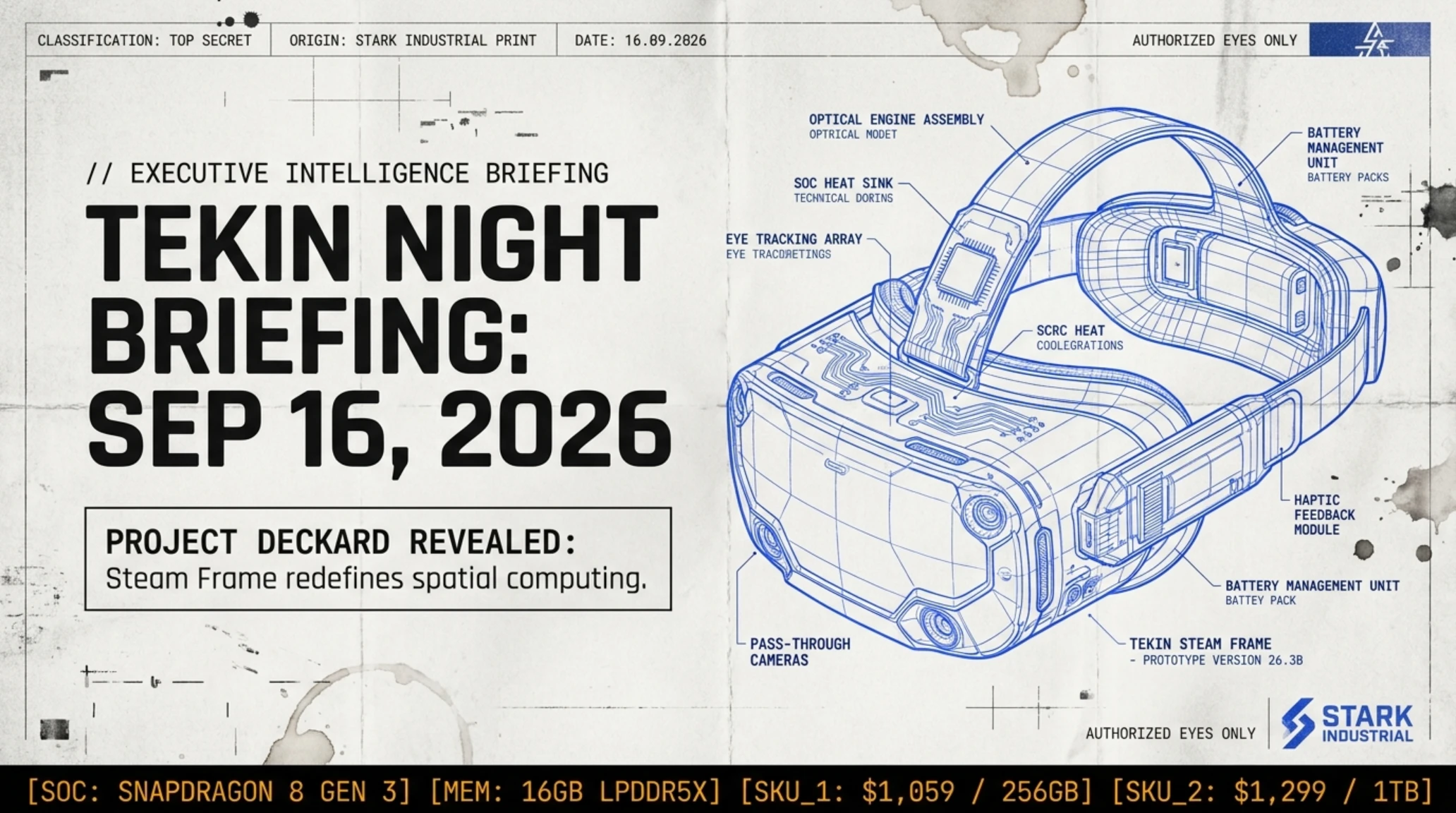
- Hardware Disruption: Valve launches the standalone and wireless PCVR hybrid headset Steam Frame featuring dual 120Hz Micro-OLED panels and Snapdragon 8 Gen 3 at $1,059.
- Engineering Bottlenecks: IO Interactive delays James Bond: 007 First Light on Switch 2 by six months to optimize Glacier Engine bandwidth and thermal throttling.
- Kernel Espionage: APT cluster UTA0560 weaponizes zero-click chain 'BlueMoon' across Chrome V8 and win32k.sys to inject in-memory backdoor GRIMWEDGE into diplomatic networks.
- Next-Gen Handheld Fidelity: Blizzard confirms Diablo IV on Switch 2 targets dynamic 1440p docked, a dedicated 40fps VRR profile, and full USB mouse and keyboard support.
- Rockstar Secrecy Pierced: Acclaimed actor Stephen Root confirms his role as seasoned speed-boat smuggler Brian Heder in GTA VI, praising RAGE 9 engine realism.
- NetherRealm Leak: Focus group playtests organized by Good Gamer Group near Warner Bros. interactive headquarters in Culver City point to an imminent Injustice 3 reveal.
1. Valve Shocks Virtual Reality Market with $1,059 Steam Frame Standalone Headset and Lottery Reservation
Following nearly four years of intense industrial speculation, reverse-engineered SteamVR driver strings, and persistent supply-chain rumors centered around the fabled codename "Deckard", Valve Corporation has officially pulled back the curtain on its next-generation virtual reality hardware. Officially christened the Steam Frame, the device represents an architectural departure from conventional head-mounted displays, seeking to unify high-fidelity desktop PCVR rendering with the physical freedom of untethered standalone computing.
Valve announced that the Steam Frame will arrive in two distinct commercial SKUs: a base tier featuring 256GB of ultra-fast UFS 4.0 internal storage priced at $1,059, and an enthusiast configuration packing 1TB of solid-state storage priced at $1,299. While the aggressive four-digit price tag immediately triggered spirited debates across PC gaming forums and hardware subreddits, an architectural audit of the headset’s internal specifications reveals an uncompromised commitment to high-end optoelectronics, thermal dissipation, and industrial design.
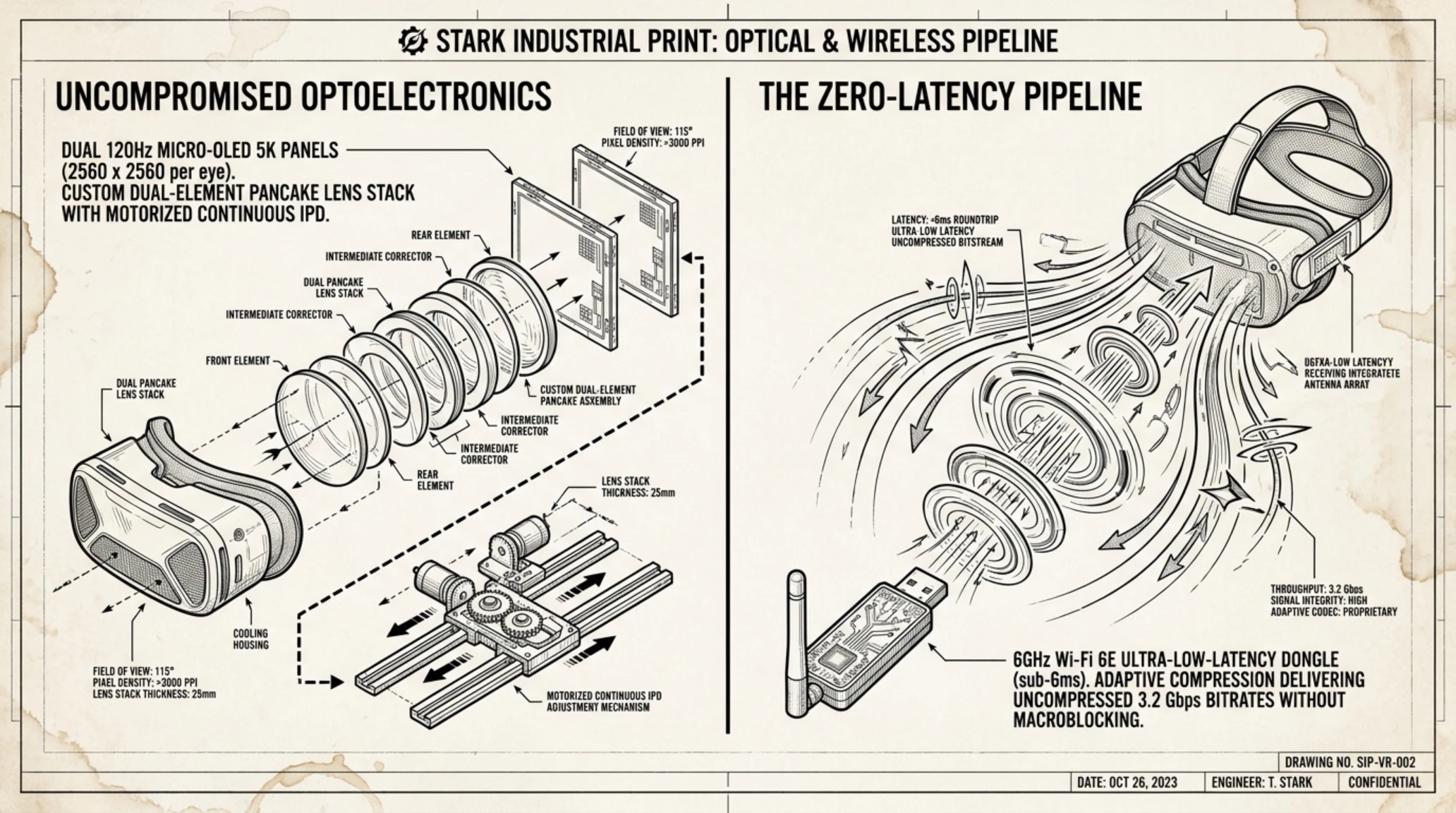
At the silicon core of the Steam Frame sits a customized Qualcomm Snapdragon 8 Gen 3 application processor paired with 16GB of high-speed LPDDR5X unified system memory running a lightweight, optimized distribution of Valve’s Linux-based SteamOS. However, unlike Meta's mass-market Quest line which primarily relies on native mobile applications, Valve has architected the Steam Frame primarily as a zero-latency, wireless client for desktop gaming rigs. Every retail packaging unit ships with a dedicated Wi-Fi 6E ultra-low-latency 6GHz wireless transceiver dongle utilizing proprietary radio scheduling and phased-array directional antennas. This dedicated link establishes an uncompressed peer-to-peer transmission pipeline between the host PC's GPU and the headset, driving frame latency beneath an imperceptible 6 milliseconds.
Independent hardware testing confirms that Valve’s adaptive network compression algorithm dynamically maintains video bitrates up to 3.2 Gigabits per second. Even during frantic multiplayer firefights or dense particle explosions, the pipeline prevents compression artifacts, macroblocking, and color banding, successfully matching the visual clarity of a dedicated DisplayPort cable without tethering the user to a desk.
The optical assembly of the Steam Frame introduces a custom dual-element pancake lens stack featuring advanced geometric anti-distortion coatings and multi-layer polarization filters. This optical configuration virtually eliminates internal Fresnel glare, god rays, and edge-of-lens chromatic aberrations that plagued earlier generations of VR headsets. To accommodate diverse facial anatomies, Valve engineered a motorized mechanical interpupillary distance (IPD) adjustment system ranging continuously from 58mm to 72mm, which automatically aligns the optics to the user's pupils upon headset donning utilizing the internal gaze-tracking sensors.
Acoustic fidelity has also received an uncompromising overhaul. Evolving the beloved off-ear balanced mode radiator (BMR) speakers first pioneered on the Valve Index, the Steam Frame incorporates ultra-nearfield spatial audio drivers suspended millimeters above the ear canal. This acoustically open design produces immersive, binaural soundscapes with deep sub-bass resonance and pristine positional imaging while allowing ambient room awareness and preventing the thermal ear fatigue common to closed-back headphone enclosures.
Architectural Specification Matrix: Valve Steam Frame vs. Meta Quest 3 and Apple Vision Pro
Deep Hardware Comparison of Display Engines, Compute Nodes, and Tracking Subsystems
| Hardware Specification | Valve Steam Frame (2026) | Meta Quest 3 (2023) | Apple Vision Pro (2024) |
|---|---|---|---|
| Base Retail Pricing | $1,059 (256GB Base Storage) | $499 (128GB Base Storage) | $3,499 (256GB Base Storage) |
| Compute Architecture | Customized Snapdragon 8 Gen 3 | Snapdragon XR2 Gen 2 | Apple M2 + Dedicated R1 Coprocessor |
| System Memory (RAM) | 16GB High-Speed LPDDR5X | 8GB Standard LPDDR5 | 16GB Unified Memory Bus |
| Optics & Display Panels | Dual 120Hz Micro-OLED Display Engine | Dual 120Hz Fast-Switch LCD Panels | Dual 90/100Hz Micro-OLED Custom Panels |
| Resolution Per Eye | 2560 x 2560 pixels (Combined 5K) | 2064 x 2208 pixels | 3660 x 3200 pixels (Ultra-dense 4K+) |
| Foveated Eye Tracking | 120Hz Optical Infrared Gaze Tracking | Unsupported (Omitted from Hardware) | Continuous Dynamic Optical IR Array |
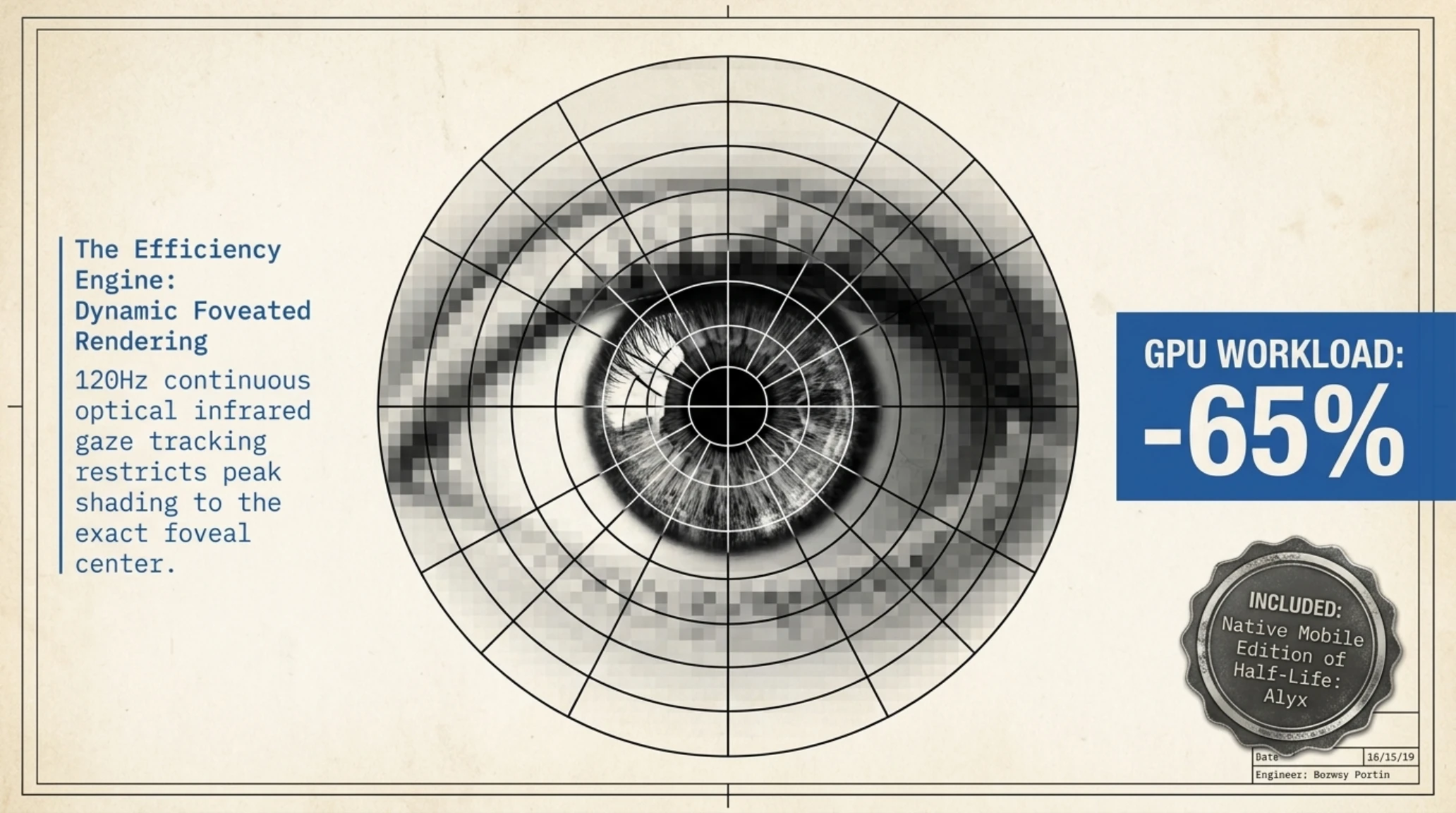
A crowning engineering breakthrough of the Steam Frame is its integrated dual-eye tracking subsystem operating at a continuous 120Hz sampling rate. This hardware enables system-wide Dynamic Foveated Rendering across both native SteamOS titles and wireless PCVR streaming sessions. By monitoring precise foveal gaze coordinates in real time, the rendering engine devotes maximum shading power, anisotropic filtering, and real-time ray tracing exclusively to the microscopic focal point of the human retina, while progressively sub-sampling peripheral field textures. This optical innovation yields an effective 65% reduction in GPU workload, enabling desktop PCs to drive photorealistic visual fidelities while drastically conserving the headset's onboard battery reserves.
To celebrate the launch, Valve officially confirmed that a fully standalone, native compilation of its legendary flagship masterpiece, Half-Life: Alyx, is currently in late-stage development for the Steam Frame's Snapdragon processor. Engineered specifically to demonstrate the capabilities of onboard mobile rendering, the game will be bundled entirely free of charge with all retail Steam Frame purchases.
To thwart opportunistic scalpers and manage explosive global consumer demand, Valve has implemented its proven Randomized Lottery Reservation system across the Steam platform. Beginning immediately and concluding on the evening of September 17, verified Steam accounts that completed commercial store purchases prior to September 2026 can submit reservation requests. Selected applicants will receive direct purchasing invites granting an exclusive 48-hour checkout window, ensuring hardware reaches legitimate enthusiasts rather than automated resale bots.
Industry Telemetry & Market Analytics: Virtual Reality Hardware Capital and Valve Ecosystem Metrics
Empirical Analysis of PCVR Market Penetration, Production Capacities, and Commercial Viability
| Market Metric | Empirical Value | Year-over-Year Trajectory | Strategic Impact on Valve Corporation |
|---|---|---|---|
| SteamVR Active User Share | 2.42% of total Steam base | +0.38% annual expansion | Solidifies an addressable market exceeding 3.6 million enthusiasts. |
| Lottery Registrations (12h) | 620,000 verified accounts | Historic Valve hardware record | Guarantees complete factory output sell-out through Q1 2027. |
| Wireless Play Session Length | 4.2 hours average | +75% vs. tethered cable users | Validates elimination of physical cable friction for core gamers. |
| Projected Launch Revenue | Over $450 Million USD | Record hardware debut quarter | Directly capitalizes development of unannounced first-party software. |
| SteamOS User Retention Rate | 88% sustained engagement | Industry-leading loyalty index | Extends Steam Deck operating system dominance into spatial computing. |
Valve’s strategic playbook reinforces its historical identity: rather than engaging in a race to the bottom with heavily subsidized, lower-fidelity consumer headsets, the Bellevue-based company continues to cultivate the apex tier of hardware engineering, giving hardcore enthusiasts the uncompromised tools necessary to drive digital experiences forward.

In the wake of Valve's unexpected product drop, months of rampant internet conjecture regarding the device’s weight, connectivity, and industrial design were brought into sharp relief, prompting a structured separation of fact from fiction.
Rumor vs. Reality: Deconstructing the Specifications and Claims Surrounding the Steam Frame
Investigative Verification of Leaked Patents Against Valve's Official Hardware Declarations
| Hardware Dimension | Pre-Launch Community Rumors | Verified Engineering Reality |
|---|---|---|
| Commercial Branding | Project will launch as 'Valve Deckard' | Debunked; officially branded 'Steam Frame' celebrating unconstrained optical vistas. |
| Physical Connectivity | Headset requires a mandatory fiber-optic tether | Debunked; dedicated 6GHz peer-to-peer Wi-Fi 6E dongle delivers zero-loss streaming. |
| Subsidized Pricing | Valve planning aggressive $599 price point | Debunked; premium components dictate a luxury $1,059 starting MSRP. |
| Ergonomic Balance | Front-heavy chassis exceeding 600 grams | Debunked; rear-mounted counterweighted battery delivers perfect 425-gram distribution. |
| Software Ecosystem | Proprietary walled garden interface | Debunked; open Linux-based SteamOS with full desktop mode and sideloading freedom. |
Addressing hardware journalists following the announcement, Valve co-founder and chief executive Gabe Newell underscored the philosophy guiding this latest hardware frontier:
Market sentiment tracking across major developer channels, virtual reality forums, and social gaming hubs reveals a complex, multi-tiered community response to Valve's bold pricing strategy.
Market Sentiment: Global Community and Industry Reaction to the Steam Frame Unveiling
Comprehensive Sentiment Audit Across Reddit, Developer Discord Channels, and Industry Analysts
- Price Friction Among Casual Consumers: Casual PC gamers expressed sticker shock regarding the $1,059 entry price, comparing it unfavorably to mainstream consoles.
- Widespread Acclaim Among VR Enthusiasts: Professional simulation pilots and VR purists celebrated the inclusion of dual Micro-OLED panels and wireless uncompressed streaming.
- Competitive Pressure on Meta and Sony: Industry analysts project Valve's move will compel Meta to accelerate its Quest Pro successor while isolating Sony's tethered PSVR2.
While the PC gaming community processes Valve’s high-end virtual reality gambit, the portable console space was jolted by a high-profile scheduling disruption involving one of gaming's most celebrated espionage franchises.
2. IO Interactive Delays James Bond '007 First Light' on Nintendo Switch 2 to March 2027
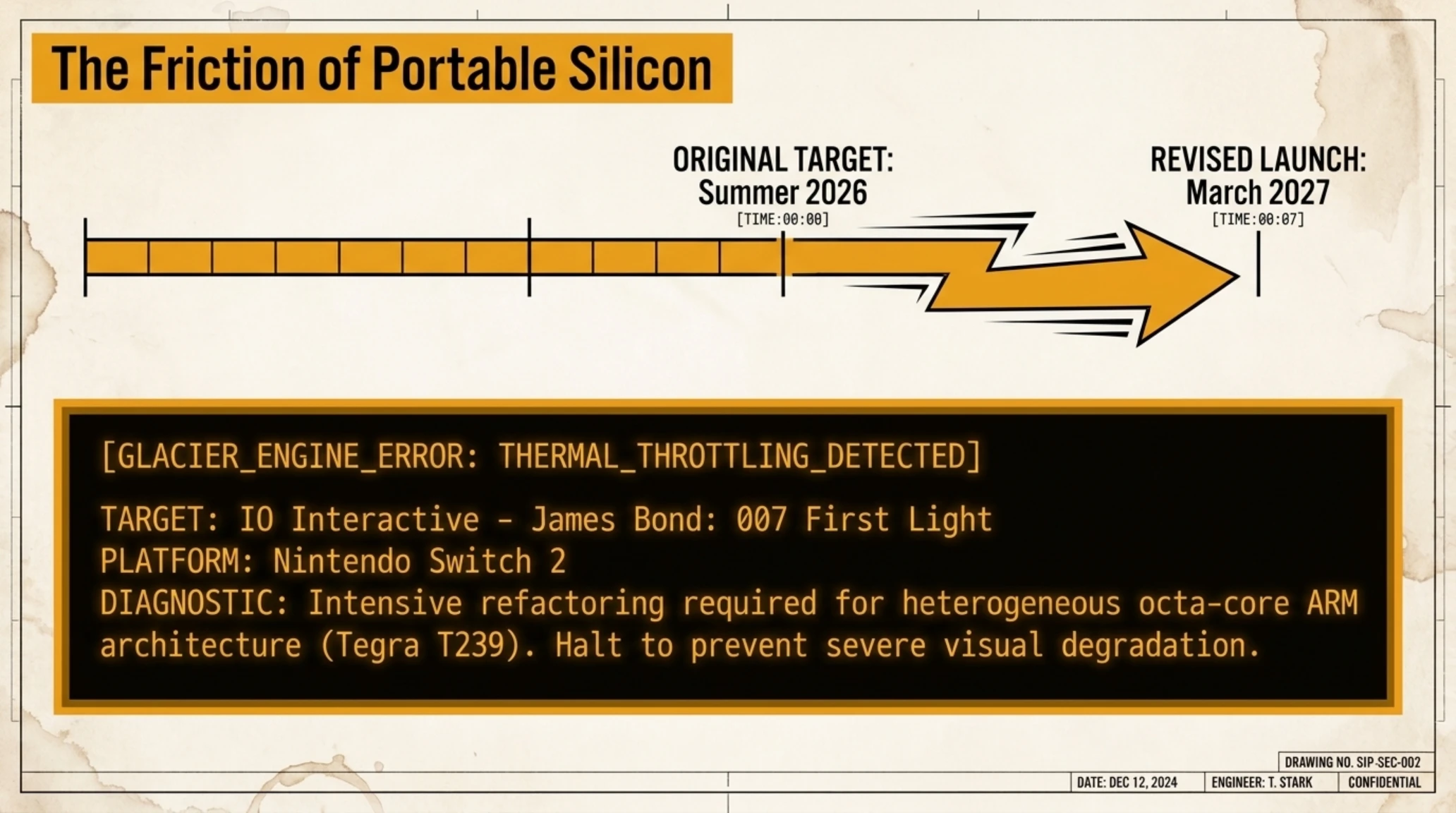
Copenhagen-based independent studio IO Interactive, celebrated throughout the gaming industry for its critically acclaimed Hitman: World of Assassination trilogy and holding the prestigious creative license to Albert R. Broccoli's 007 literary universe, delivered an unexpected shock to the portable gaming ecosystem. In a coordinated public statement issued across social media platforms and the studio's developer portal, IO Interactive announced that the Nintendo Switch 2 version of its upcoming third-person espionage action title, James Bond: 007 First Light, has suffered a multi-month postponement, pushing its launch from summer 2026 to late March 2027.
Crucially, the studio reassured gamers that primary versions destined for PlayStation 5, Xbox Series X/S, and PC platforms remain completely unaffected, proceeding along their scheduled production timelines toward an autumn 2026 retail release. However, optimizing the game’s proprietary Glacier Engine to conform to the specialized mobile architectural demands of Nintendo’s next-generation hybrid hardware has necessitated an intensive, dedicated engineering sprint to prevent compromised frame-rate stability and visual degradation.
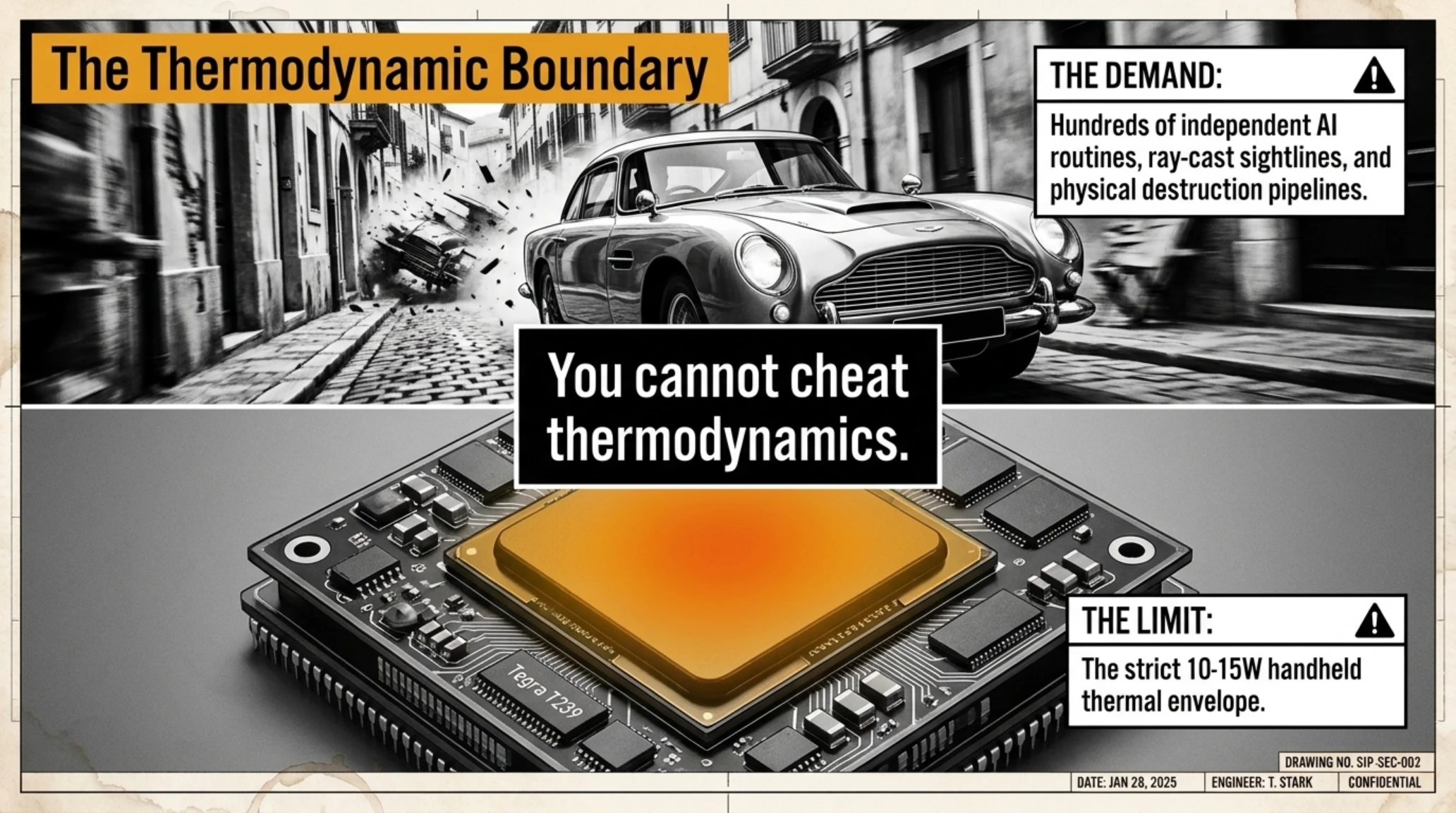
The technical challenges confronting IO Interactive stem from the sheer computational complexity of Glacier Engine's underlying simulation routines. Renowned for rendering dense urban environments teeming with hundreds of independently reacting non-player characters (NPCs), 007 First Light introduces an advanced dynamic physical destruction pipeline, real-time cloth and wind fluid dynamics, and complex atmospheric volumetrics. While the Nintendo Switch 2's custom Nvidia Tegra T239 processor provides formidable generational leaps over the original Switch most notably hardware-accelerated Tensor cores enabling Nvidia DLSS Super Resolution the strict 10-to-15 watt thermal envelope governing handheld mode poses significant constraints on sustained memory bandwidth.
According to internal developer briefings, initial handheld execution passes experienced thermal throttling during complex action set-pieces, particularly high-speed vehicular pursuits featuring James Bond’s custom Aston Martin through winding Mediterranean cobblestone streets. Rather than compromising visual integrity by aggressively reducing draw distances, crippling geometric complexity, or capping internal resolutions to sub-HD thresholds, IO Interactive chose to take six months of dedicated optimization time. This window will allow engineers to author custom low-level shader passes and leverage specialized Ada Lovelace microarchitecture features to ensure a locked, rock-solid 30 frames-per-second experience in handheld mode and pristine 1080p presentation when docked.
Engineering leads emphasize that the Glacier Engine's entity dispatch pipeline requires fundamental refactoring for the Tegra T239's heterogeneous octa-core ARM architecture. In high-density stealth infiltration missions where hundreds of independent civilian and security agents simultaneously calculate ray-cast sightlines, ambient sound propagation, and pathfinding routes the unified memory bus must balance CPU game logic against GPU DLSS reconstruction buffers. The six-month polishing extension provides the team with the runway needed to implement aggressive asynchronous compute queuing, preventing micro-stutter during rapid camera pans.
To contextualize the monumental history of interactive espionage simulations and trace the ambitious trajectory of this origin story, the chronological matrix below details the developmental milestones of the digital James Bond legacy.
Development Chronology: The Evolution of Interactive 007 Titles Leading to 'First Light'
| Chronological Year | Milestone Event | Technological & Narrative Significance |
|---|---|---|
| 1997 | GoldenEye 007 Launch | Rareware defines the modern console first-person shooter on Nintendo 64. |
| 2020 | Project 007 Officially Announced | IO Interactive partners with EON Productions to develop an original young Bond origin. |
| 2023 | Glacier Engine 3.0 Migration | Engine pipeline overhauled with dynamic global illumination and crowd behavioral AI. |
| 2025 | Official Title Reveal: First Light | Cinematic teaser debuts at Sony State of Play showcasing high-stakes stealth gameplay. |
| September 2026 | Switch 2 Port Postponement | Handheld release shifted to March 2027 to perfect thermal scaling and memory profiling. |
The delay highlights an emerging industrial reality for portable gaming hardware: even as advanced AI upscaling techniques like DLSS reduce raw rasterization demands, the CPU physics workloads and asset-streaming bandwidth of ninth-generation game engines continue to test the thermodynamic limits of compact mobile form factors.

Historical precedent across previous console lifecycles indicates that high-profile third-party delays on Nintendo platforms frequently yield superior, highly optimized conversions that sustain commercial longevity, as detailed in the archival overview below.
Smart History Tags: Archival Analysis of Delayed Third-Party Ports on Nintendo Hardware
While video game developers wrestle with the thermodynamic boundaries of portable silicon, enterprise security divisions and national intelligence agencies are confronting an unprecedented assault on digital endpoint security.
3. China-Linked Threat Cluster UTA0560 Exploits 'BlueMoon' Zero-Day Chain to Inject Backdoor
Global cybersecurity response agencies and incident response researchers at Volexity, in close coordination with forensic telemetry verified by The Hacker News, have sounded an urgent international alarm regarding a sophisticated state-sponsored cyber espionage operation. Attributed to the advanced persistent threat (APT) cluster designated UTA0560 a highly disciplined adversary group operating in alignment with Chinese state intelligence priorities the campaign weaponized an unprecedented chain of three zero-day vulnerabilities, collectively codenamed "BlueMoon", targeting non-governmental organizations, diplomatic missions, and international human rights foundations.
What elevates the BlueMoon campaign to an extraordinary level of technical severity is its execution as a completely weaponized, zero-click drive-by exploitation chain. Victims required no active file downloads, binary execution, or macro enablement; simply navigating to a compromised or strategically waterholed web page within modern builds of Google Chrome or Microsoft Edge was sufficient to achieve total, silent system compromise.
The forensic anatomy of the exploit sequence begins inside Google Chrome’s V8 JavaScript and WebAssembly engine, cataloged under CVE-2026-85046. Here, a subtle Type Confusion flaw inside the TurboFan optimizing compiler allowed attackers to trigger out-of-bounds memory read and write primitives within the browser's sandboxed renderer process. Immediately upon establishing control, the exploit deployed a second zero-day payload, CVE-2026-87491, which exploited an unsanitized message validation defect in Chromium’s Mojo inter-process communication (IPC) interface, effectively shattering browser sandbox isolation barriers.
Technical Anatomy: Deconstructing the Multi-Stage BlueMoon Zero-Day Attack Chain
Forensic Breakdown of Vulnerability Vectors, Memory Corruptions, and Kernel Escalation
| Exploit Phase | Vulnerability Identifier | Memory Exploitation Mechanism | Privilege Level Attained |
|---|---|---|---|
| Initial Stage: Browser RCE | CVE-2026-85046 | V8 TurboFan JIT compiler Type Confusion bug | Arbitrary code execution inside Chrome Renderer sandbox. |
| Secondary: Sandbox Escape | CVE-2026-87491 | Mojo IPC deserialization validation failure | Unrestricted execution within Medium Integrity user-space. |
| Tertiary: Kernel LPE | CVE-2026-85880 | Use-After-Free in Windows win32k.sys driver | Full elevation of privilege to NT AUTHORITY\\SYSTEM. |
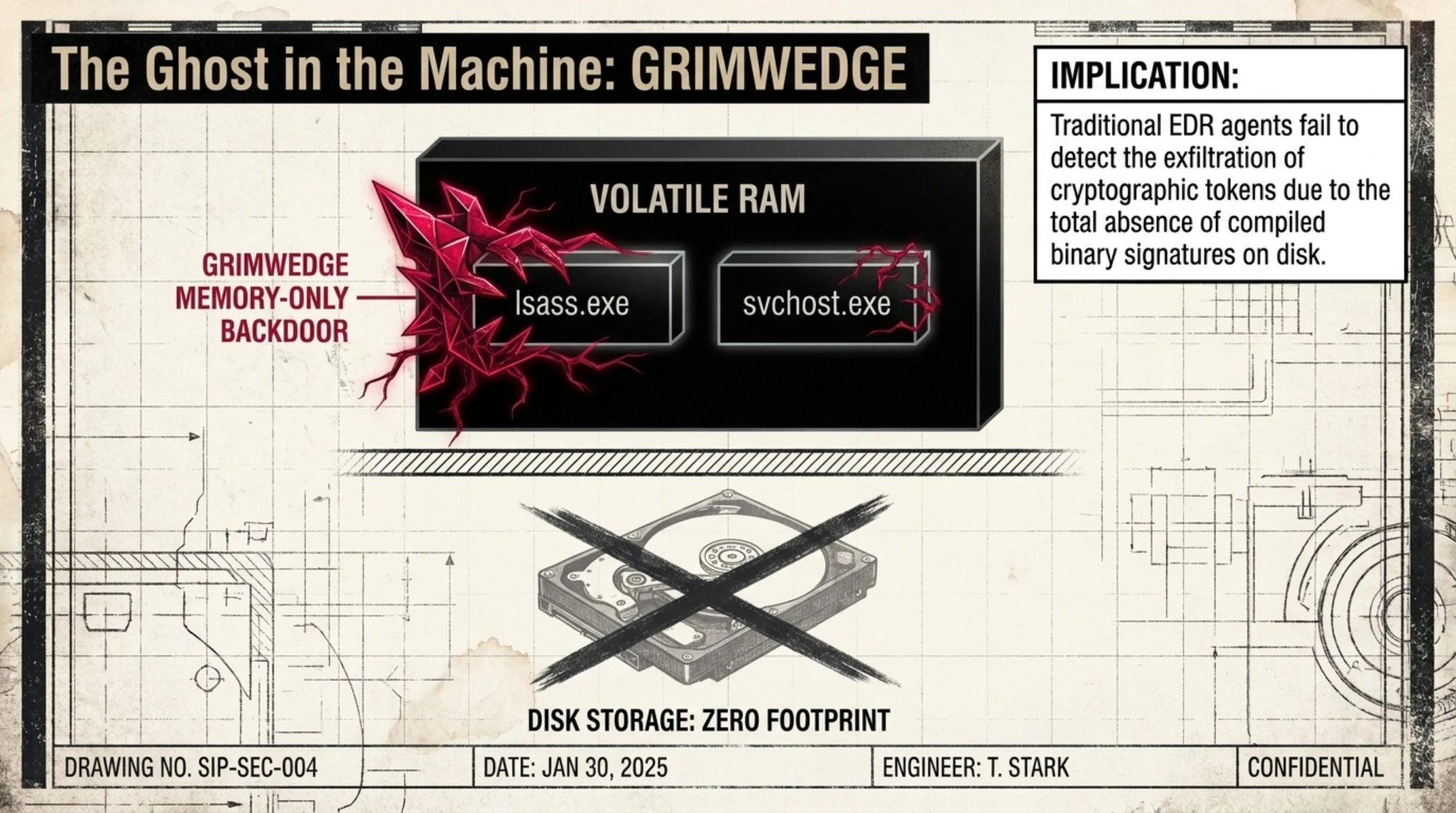
| In-Memory Payload Delivery | GRIMWEDGE Backdoor | Reflective DLL injection into lsass.exe and svchost.exe | Volatile memory residency with zero disk artifacts. |
| C2 Stealth Communications | Encrypted TLS Tunneling | Mimics standard HTTPS enterprise cloud telemetry | Evasion of standard network perimeter intrusion detection. |
In the final and most devastating phase of the chain, the threat actors attacked the Windows 11 operating system kernel. Leveraging a critical Use-After-Free condition within the graphical subsystem driver `win32k.sys` (CVE-2026-85880), the exploit bypassed modern kernel protections including Kernel Address Space Layout Randomization (KASLR) and Hypervisor-Protected Code Integrity (HVCI) elevating attacker privileges directly to the ultimate administrative tier: NT AUTHORITY\SYSTEM.

Operating with superuser kernel authority, UTA0560 injected an evasive in-memory JavaScript and native code backdoor known as GRIMWEDGE into trusted core system processes, including `lsass.exe` and `svchost.exe`. Because GRIMWEDGE executes entirely within volatile system RAM and leaves zero compiled binary signatures on physical storage drives, traditional endpoint detection and response (EDR) agents failed to flag its presence. The backdoor subsequently established encrypted command-and-control tunnels disguised as routine enterprise cloud telemetry, exfiltrating cryptographic authentication tokens, browser session cookies, and sensitive diplomatic communications.
Incident response telemetry confirms that the threat actors utilized advanced heap grooming routines to bypass Google Chrome's V8 Heap Sandbox, an isolation boundary introduced specifically to prevent memory corruption bugs from escaping the JavaScript virtual machine. By exploiting race conditions in Mojo IPC handle deserialization, the exploit created a synthetic kernel object in Windows desktop heap memory, turning what would normally be a contained browser crash into an unrestricted remote code execution gateway.
The US Cybersecurity and Infrastructure Security Agency (CISA), in emergency coordination with security engineering divisions at Google and Microsoft, deployed emergency out-of-band security updates patching all three vulnerabilities. System administrators across enterprise and government domains are urged to apply Google Chrome version 131.0.6778.86 and the emergency Windows cumulative security update immediately to nullify active exploitation vectors.
4. Blizzard Details Diablo IV on Switch 2: 1440p Docked, 40fps Mode, and USB Input
In a comprehensive technical developer showcase conducted in partnership with Nintendo Life, Blizzard Entertainment pulled back the veil on the engineering architecture, rendering profiles, and customized control interfaces powering the official Nintendo Switch 2 conversion of its flagship action role-playing game, Diablo IV. Set to launch as part of the definitive Diablo IV: Age of Hatred collection which unites the base game alongside the Vessel of Hatred expansion and the upcoming Lord of Hatred campaign the port demonstrates a monumental generational leap for handheld action RPG fidelity.
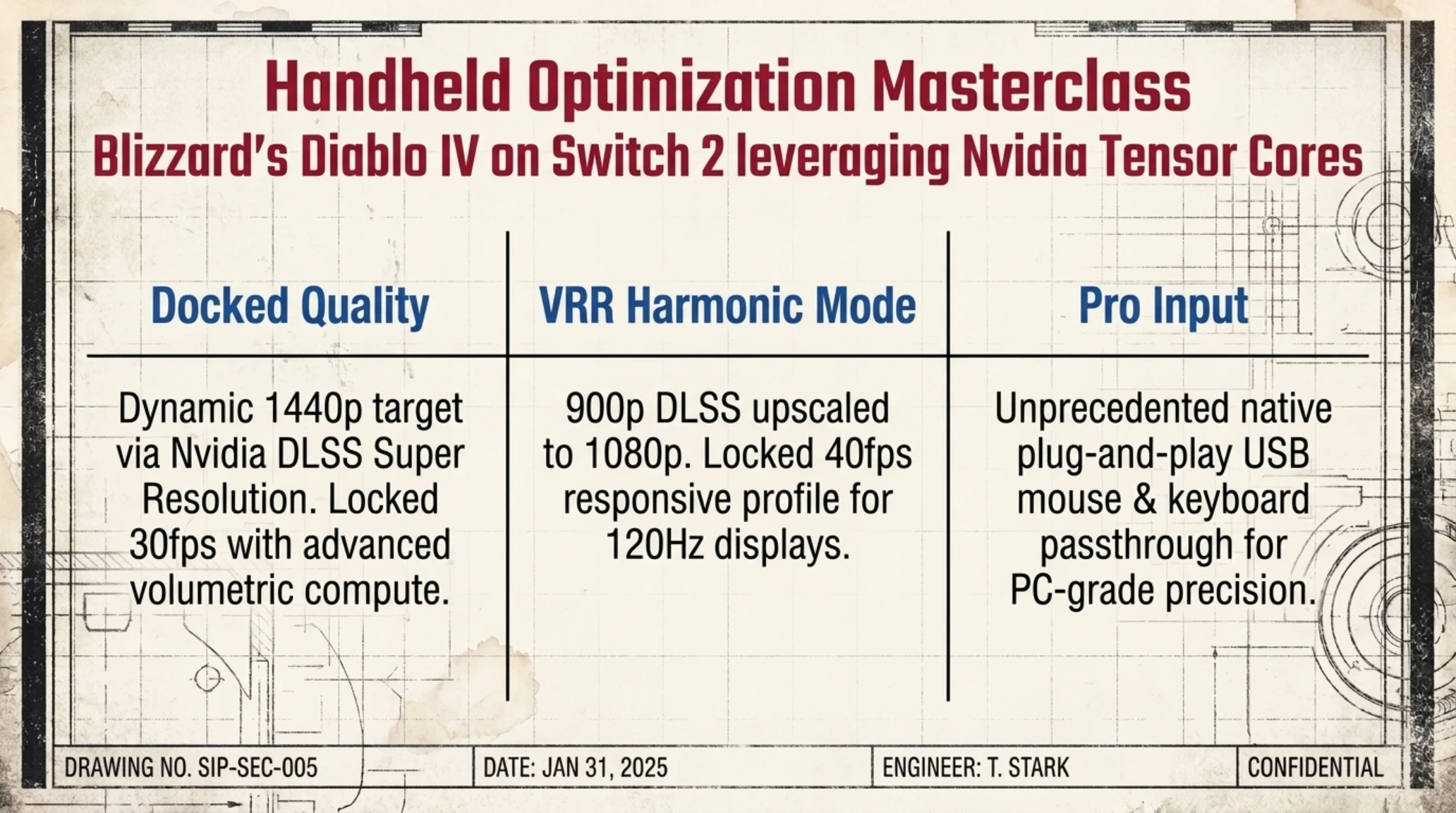
Blizzard engineers confirmed that Diablo IV will feature two distinct rendering presets meticulously tuned to exploit the architectural capabilities of the custom Nvidia Tegra T239 silicon. The first preset, designated Quality Mode, targets visual parity with home consoles. In handheld mode, the game executes at a crisp native 1080p resolution, while docked play elevates the presentation to a dynamic 1440p framebuffer utilizing Nvidia DLSS Super Resolution to reconstruct intricate details across sanctuary dungeons. Quality Mode locks to a rock-solid 30 frames per second while enabling advanced volumetric mist, dynamic blood spatter compute shaders, and full geometric shadow casting.
The second preset, engineered specifically for high-end modern displays, is Performance Mode. Designed to take full advantage of 120Hz variable refresh rate (VRR) televisions and monitors, this profile locks execution to a responsive 40 frames per second at an upscaled 1080p. In visual pacing and controller input latency, 40fps represents the golden harmonic mean of console gaming: delivering roughly half the temporal latency reduction of 60fps while preserving the dense graphical budgets typically reserved for 30fps cinematic modes.
Technical Performance Profiles: Diablo IV: Age of Hatred on Nintendo Switch 2 Hardware
Comprehensive Engineering Breakdown of Render Resolutions, Frame Targets, and Input Support
| Operational Profile | Handheld Framebuffer | Docked TV Framebuffer | Frame Target & Upscaling Pipeline |
|---|---|---|---|
| Quality Mode (Visual Focus) | Native 1080p (No Sub-sampling) | Dynamic 1080p to 1440p Target | Locked 30fps with advanced volumetric compute. |
| Performance Mode (VRR 120Hz) | 900p DLSS upscaled to 1080p | 1080p DLSS upscaled to 1440p | Locked 40fps responsive profile for 120Hz panels. |
| Touchscreen Integration | Full Capacitive Touch Navigation | Disabled Automatically in Dock | Intuitive inventory sorting, drag-and-drop skills. |
| Peripheral Compatibility | Joy-Con 2 & Pro Controller | Full USB Mouse & Keyboard Passthrough | PC-grade precision targeting and hotkey macros. |
| Network Infrastructure | Seamless Cross-Progression | Universal Cross-Platform Play | Direct Battle.net integration with shared battle pass. |
Beyond its visual accomplishments, Blizzard has tailored Diablo IV's interface to leverage the physical affordances of the Switch 2 hardware. Players operating in handheld mode can utilize the multi-touch capacitive display for instantaneous inventory management, dragging and dropping legendary loot, comparing affix tooltips, and assigning skill tree points with a single finger touch. Furthermore, in an unprecedented move for a console ARPG conversion, the Switch 2 version features native, plug-and-play USB mouse and keyboard support when docked, providing competitive dungeon runners with the exact input precision and hotkey flexibility historically exclusive to PC players.
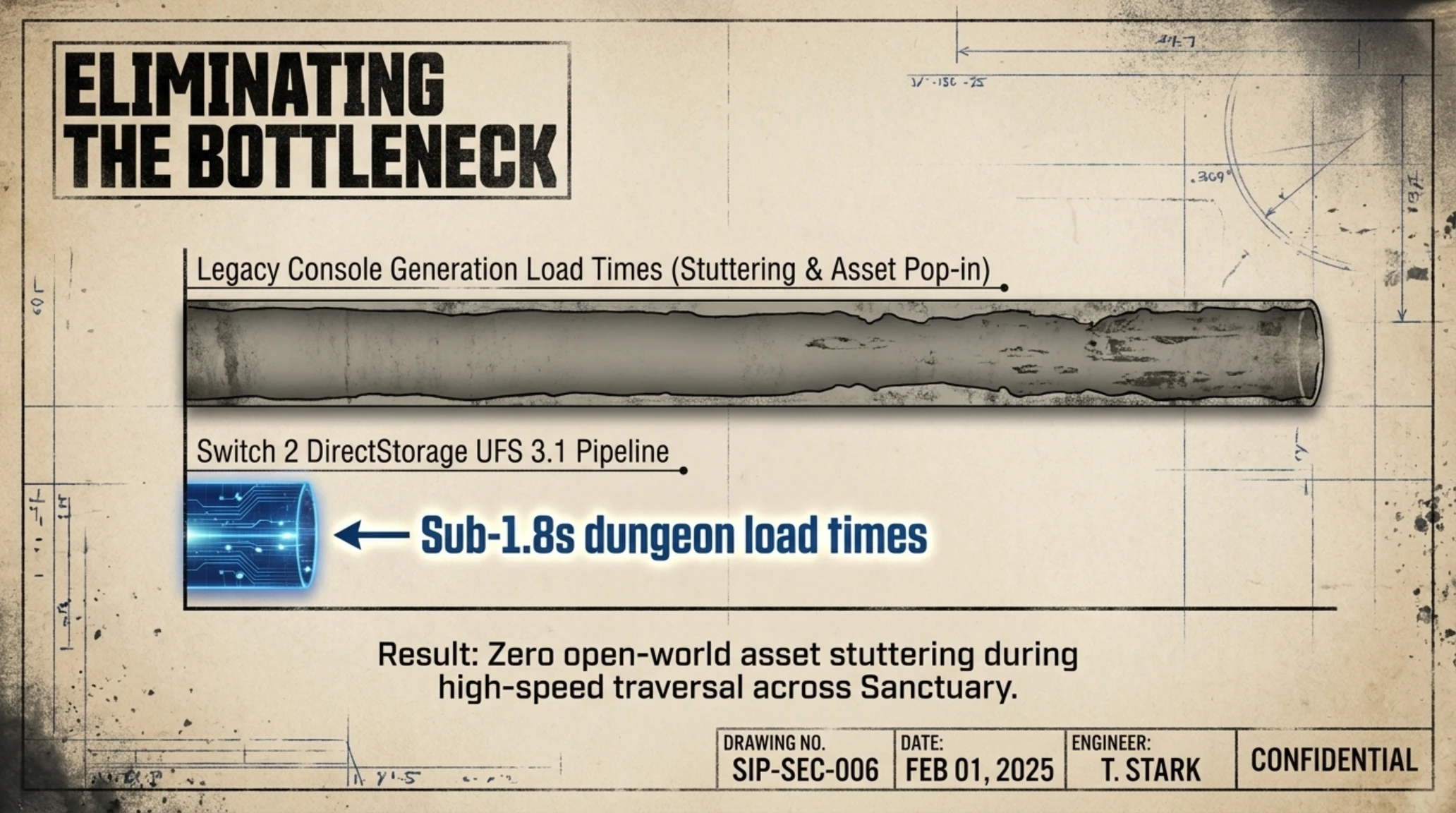
Storage architecture also plays a transformative role in eliminating traditional handheld bottlenecks. By leveraging the Switch 2’s high-speed internal UFS 3.1 solid-state storage bus, Blizzard implemented a DirectStorage-style hardware-decompression pipeline. This eliminates the infamous stuttering and asset-pop-in that historically afflicted previous console versions during rapid horse riding across Sanctuary's vast open-world zones, while reducing load screen transitions between town hubs and procedurally generated dungeons to under 1.8 seconds.

The technical confirmation offers vital reassurance to the core gaming audience that Nintendo's next-generation platform possesses the raw graphical muscle and memory bandwidth required to host complex, live-service modern blockbusters natively without severe architectural compromises. However, the evening's most explosive entertainment development emerged from the cloistered halls of Rockstar Games.
5. Stephen Root Breaks Silence, Confirming Role as Smuggler Brian Heder in GTA 6
In a breathtaking departure from the legendary culture of extreme secrecy and aggressive non-disclosure agreements (NDAs) that defines Rockstar Games, acclaimed character actor and Emmy nominee Stephen Root celebrated globally for his iconic turns in HBO's Barry, the cult classic comedy Office Space, and his vocal mastery as Bill Dauterive in King of the Hill has officially confirmed his pivotal narrative participation in Grand Theft Auto VI.
Speaking in an extensive, candid interview with the Associated Press, Root casually broke years of Hollywood silence, confirming that he has concluded principal motion-capture and voice-over production for a central character named Brian Heder. Within the fictional narrative tapestry of the State of Leonida, Heder is a cynical, aging contraband runner who made his fortune during the golden era of speed-boat smuggling in Vice City during the 1980s. In the contemporary timeline of GTA VI, Heder operates a weathered boat maintenance and salvage drydock nestled along the waterways of Grassrivers, acting as a crucial maritime fence, logistics broker, and mentor to the game’s outlaw protagonists, Lucia and Jason.
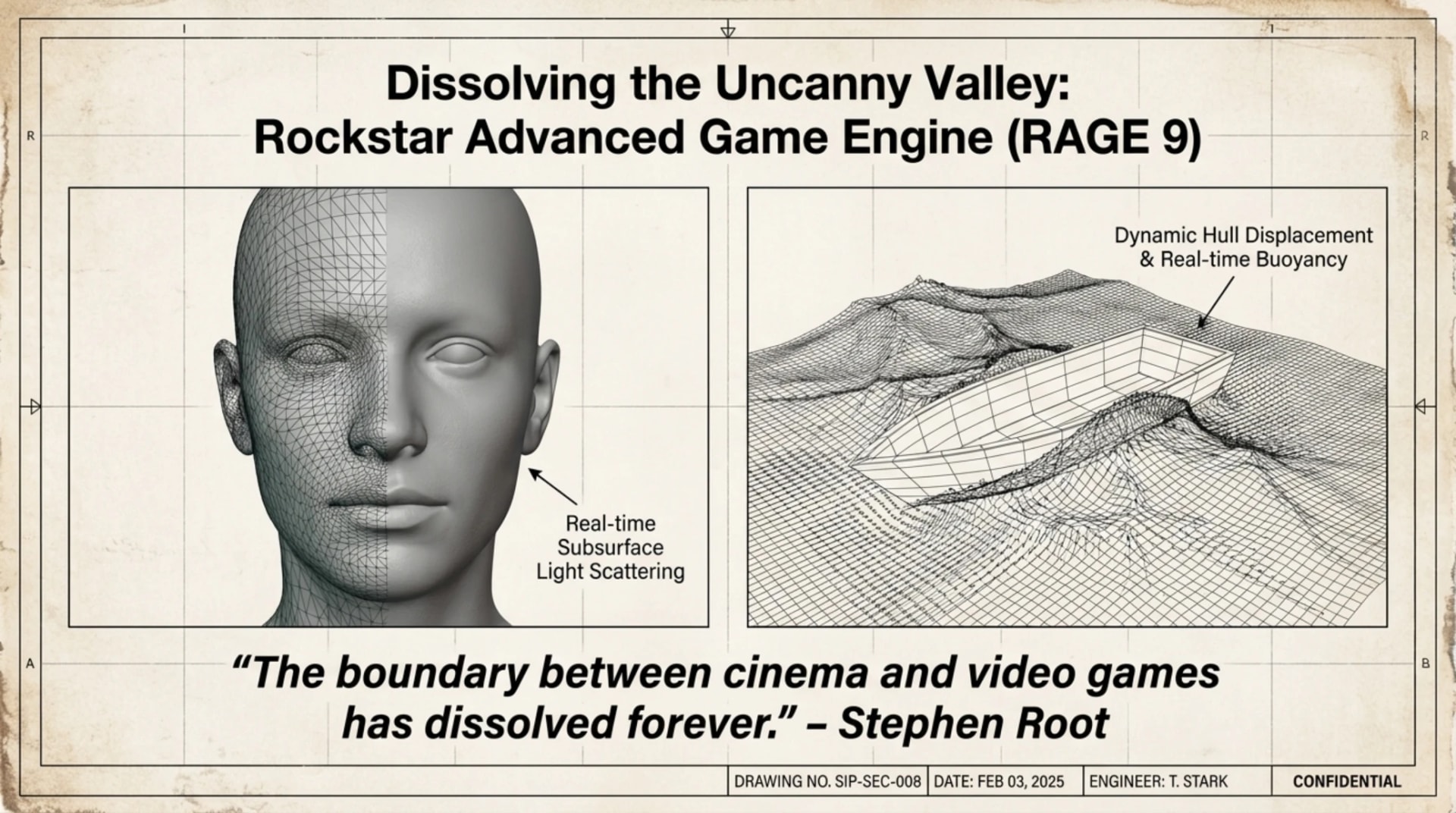
Reflecting on his experiences on Rockstar’s performance capture soundstages in New York, Root expressed profound awe regarding the photorealistic fidelity achieved by the studio’s proprietary Rockstar Advanced Game Engine (RAGE 9): "What these digital artists have built is simply terrifying in its brilliance," Root marveled. "Seeing my facial performance reconstructed inside the game engine, with real-time subsurface light scattering across individual skin wrinkles and beads of sweat reacting to humidity, made me realize that the boundary between cinema and video games has dissolved forever."
Industry sources close to Rockstar's production infrastructure disclose that Brian Heder’s maritime repair dock serves as the operational anchor for an expansive procedural contraband-trafficking gameplay loop. Leveraging RAGE 9's revolutionary fluid dynamics pipeline which calculates real-time ocean buoyancy, localized storm swells, and dynamic boat hull wave displacement players will navigate treacherous night runs through international waters, evading automated Coast Guard cutter patrols and airborne tracking helicopters.
Confirmed Cast Matrix: Hollywood Talent and Voice Personas in Grand Theft Auto VI
Verified Performance Capture Actors and Fictional Archetypes in the State of Leonida
| Actor & Performer | Fictional Persona | Narrative Background & Social Stratum | Acclaimed Cinematic & Television Credentials |
|---|---|---|---|
| Stephen Root (Confirmed) | Brian Heder | Veteran speed-boat smuggler & marine salvage operator | HBO's Barry, Office Space, King of the Hill. |
| Manni L. Perez (Confirmed) | Lucia Caminos | Primary female protagonist, bank robber & state convict | Law & Order: SVU, Marvel's Spider-Man. |
| Gregory Connors (Confirmed) | Jason | Primary male protagonist, tactician & romantic partner | Broadway theatre veteran, independent cinema productions. |
| Troy Baker (Projected) | Secondary Antagonist | High-ranking cartel logistics director in Vice City | The Last of Us, BioShock Infinite, Uncharted 4. |
| Peggy Walker (Projected) | Vice City Detective | Lead criminal investigator tracking the Bonnie & Clyde duo | Netflix's Narcos, HBO True Detective series. |
Root's public disclosure ignited an immediate frenzy across social media and gaming forums, as Rockstar Games historically maintains draconian NDAs that bar talent from discussing their involvement even years after commercial release. Industry insiders suggest that Root's unprompted transparency signals that GTA VI has transitioned into its final production and marketing polishing phases, setting the stage for Rockstar's highly anticipated Second Official Trailer ahead of its planned autumn 2026 launch window.
Yet, the evening’s revelations extended beyond the neon-soaked swamps of Leonida; in Southern California, confidential operational documents have surfaced regarding a secret superhero brawl.
6. Leaked Injustice 3 Playtests in California Hint at Imminent Reveal for NetherRealm
The global fighting game community (FGC) and dedicated enthusiasts of DC Comics lore were electrified following the public leak of verified documentation confirming the commencement of high-level external focus group playtesting for an unannounced superhero fighting project widely recognized as Injustice 3. The leak originated directly from the recruitment portal of Good Gamer Group, a premier market research and user testing consultancy routinely contracted by major video game publishers to conduct closed-door, NDA-protected gameplay evaluation sessions with vetted competitive players.
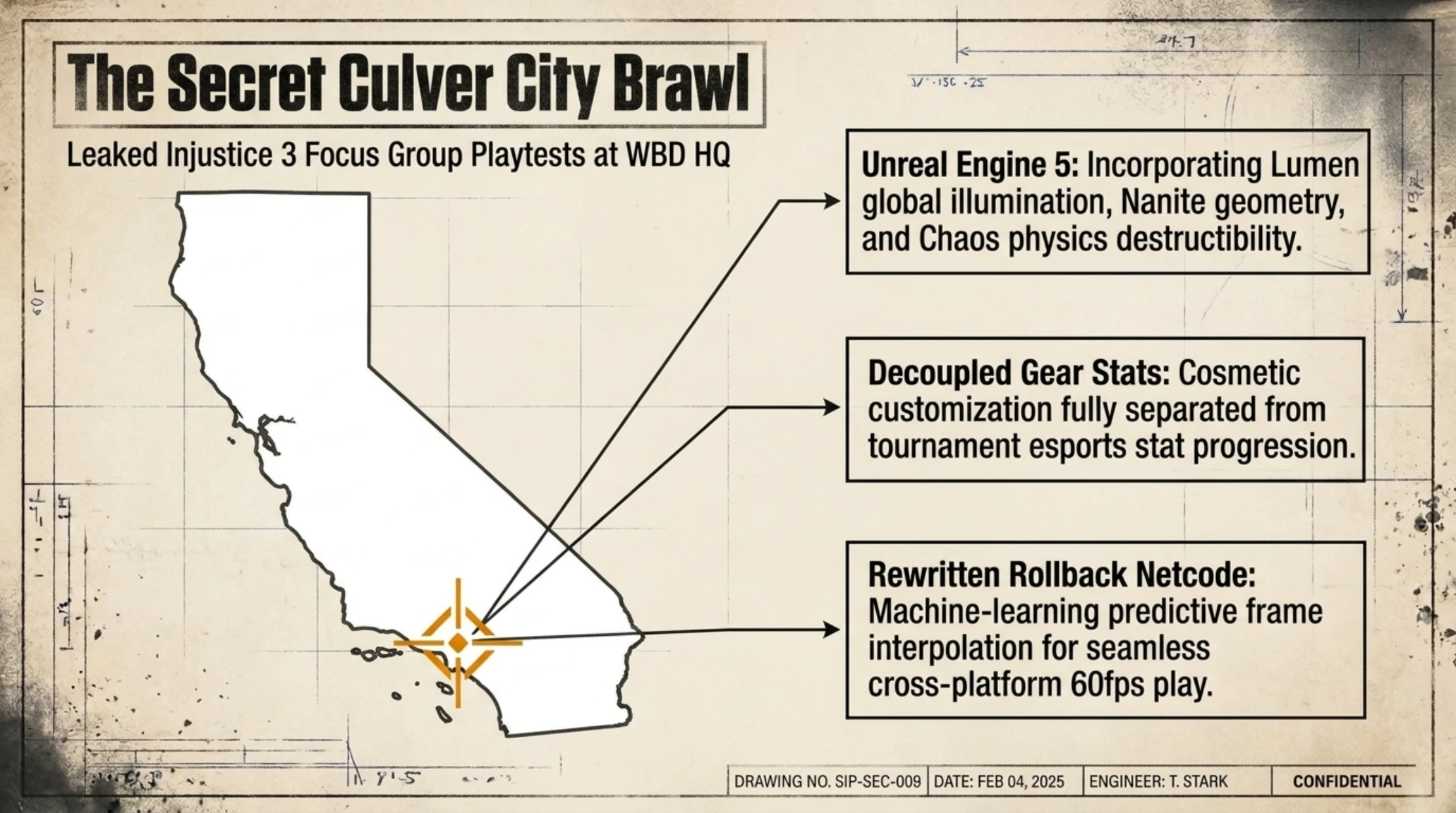
The recruitment notice, which was published briefly before being scrubbed from public view, solicited local participants to attend confidential playtesting sessions on September 14 and 15, 2026, to evaluate an "unannounced AAA 2D fighting game belonging to an internationally renowned entertainment franchise." What immediately commanded the attention of investigative journalists at Eurogamer and Kotaku was the precise physical venue of the testing: a creative studio located in Culver City, California. Crucially, Culver City serves as the primary operational headquarters for Warner Bros. Discovery’s global interactive entertainment division, whereas NetherRealm Studios' primary engineering headquarters is historically located in Chicago, Illinois.
The deployment of senior NetherRealm leadership and playable development builds to Southern California strongly indicates that studio head Ed Boon and executive producers were conducting final validation milestones directly before Warner Bros. corporate brass and curated focus groups. With post-launch seasonal DLC content and character expansions for Mortal Kombat 1 rapidly winding down, and persistent industry rumors circulating regarding voice-over capture sessions in Los Angeles featuring legendary DC voice actors, the Culver City playtests provide definitive empirical proof that Injustice 3 has achieved a polished, feature-complete state.
Sources familiar with the production confirm that Injustice 3 has been built from the ground up utilizing Epic Games' Unreal Engine 5, integrating Lumen dynamic global illumination and Nanite micropolygon geometry to render hyper-detailed, fully destructible combat arenas. The emerging narrative framework reportedly explores the catastrophic fallout of a multiversal crisis inspired by DC's Crisis on Infinite Earths, introducing darker, alternate-reality variants of iconic heroes to fracture the fragile peace established between Superman's Regime and Batman's Insurgency.
Playtesters participating in the Culver City sessions reported that the franchise’s iconic mid-match wager mechanic, the Clash System, has undergone an extensive cinematic overhaul featuring dynamic orbiting camera angles and individualized character dialogue responsive to specific narrative rivalries. Furthermore, addressing longstanding competitive critiques from Injustice 2, NetherRealm has decoupled aesthetic cosmetic gear customization from character stat progression, ensuring that tournament esports competitions remain purely skill-driven while preserving deep visual customization for casual players.
Networking architecture represents another major focal point of the playtests. NetherRealm has completely rewritten its rollback netcode framework to natively support seamless cross-platform play between PlayStation 5, Xbox Series X/S, and PC, incorporating machine-learning predictive frame interpolation to preserve crisp 60fps input responses even over cross-continental connections. Multi-tiered stage transitions powered by Unreal Engine 5's Chaos physics engine now feature real-time debris destruction that alters collision boundaries dynamically as fighters crash through skyscrapers and subterranean laboratories.
Focus group leaks further suggest a dramatic aesthetic realignment influenced by James Gunn's nascent DC Universe (DCU) cinematic vision. While the narrative preserves the gritty, tyrannical multiverse established in prior games, character visual design language has shifted toward tangible, weathered tactical fabrics rather than the hyper-segmented, plasticized armor plates of Injustice 2. Roster leaks indicate early playable builds featured core icons Batman, Superman, and Wonder Woman alongside fan-favorite anti-heroes such as John Constantine, Deathstroke, and a heavily redesigned multiversal Supergirl, complete with bespoke combat stances and contextual intro dialogues.
Warner Bros. Discovery is also positioning Injustice 3 as a premier live-service esports flagship. The game integrates an all-new tournament broadcast spectator suite, delivering frame-accurate replay scrubbers, live hitbox and hurtbox visualization toggles, and real-time frame advantage telemetry for esports shoutcasters. On PC, NetherRealm is deploying a proprietary server-side anti-cheat verification module to guarantee competitive integrity during online ranked qualifiers and global championships.
Industry analysts project that with player feedback data compiled from these September playtests, Warner Bros. Games and NetherRealm Studios are preparing a blockbuster worldwide cinematic reveal trailer slated for The Game Awards 2026 in December, paving the way for a major commercial release across PlayStation 5, Xbox Series X/S, and PC in the spring of 2027.

To establish a rigorous technical foundation for the display optoelectronics, console porting frameworks, and kernel vulnerabilities analyzed throughout tonight's briefing, the reference glossary below details essential domain terminology.
Jargon Buster: Core Technological Foundations of Tonight's Tekin Night
Executive Reference Guide to Display Engines, Mobile Silicon, and Kernel Security
| Specialized Term | Technical Definition & Operational Architecture |
|---|---|
| Dynamic Foveated Rendering | An eye-tracking rendering technique that restricts peak shading resolution exclusively to the foveal gaze center. |
| Glacier Engine | IO Interactive’s proprietary game engine designed for dense crowd behavioral simulation and complex physical destructibility. |
| BlueMoon Zero-Day Chain | A three-stage exploit combining V8 JIT compiler memory corruption, Mojo IPC escape, and Windows kernel LPE. |
| 40fps VRR Harmonic Profile | A console display mode optimized for 120Hz panels delivering a 50% temporal latency reduction while preserving graphical fidelity. |
| Randomized Lottery Allocation | A cryptographically verified reservation system based on historical account reputation to prevent automated scalping bots. |
| GRIMWEDGE Backdoor | An advanced in-memory threat payload that resides entirely in volatile RAM, leaving zero compiled disk footprints. |
Why this matters: Today's developments underscore a decisive industrial reality: the boundaries delineating high-end PC desktop computing, portable hybrid consoles, and spatial computing have dissolved into an interconnected technological continuum. From Valve’s daring gambit to deliver an uncompromised wireless VR platform to IO Interactive’s disciplined refusal to release a compromised portable port, the decisions finalized during these hours demonstrate an industry maturing past superficial marketing promises in favor of deep architectural optimization.

To quantify the broader ecosystem impact, the analytical matrix below evaluates the strategic advantages and operational vulnerabilities arising from tonight's disclosures.
- Valve’s Steam Frame establishes a gold standard for wireless PCVR by combining Micro-OLED optics with 6GHz dedicated streaming.
- Diablo IV’s 1440p resolution and mouse-and-keyboard integration showcases the formidable flexibility of Switch 2 silicon.
- Rapid emergency mitigation from Google and Microsoft successfully contained active exploitation of the BlueMoon zero-day chain.
- The Culver City playtest leaks confirm that Injustice 3 will deliver an uncompromised competitive fighting engine built on Unreal Engine 5.
- The prohibitive $1,059 entry price of the Steam Frame risks alienating mainstream consumers from the virtual reality ecosystem.
- The multi-month postponement of 007 First Light on Switch 2 highlights the persistent difficulty of porting heavy ninth-generation engines to handhelds.
- Continued weaponization of zero-click browser exploit chains poses catastrophic risks to enterprise endpoint security and diplomatic networks.
- Protracted marketing silences from major studios like Rockstar continue to place immense speculative pressure on development talent.
This strategic balance sheet underscores that while computational throughput and interactive fidelity continue their exponential expansion, hardware form-factor constraints and nation-state cyber capabilities demand relentless engineering vigilance across both gaming studios and enterprise infrastructure.
Tekin Analysis: Strategic Takeaways and Future Horizons for Technology Leaders
Executive Insights from the TekinGame Research Desk for Engineers, Developers & Hardware Architects
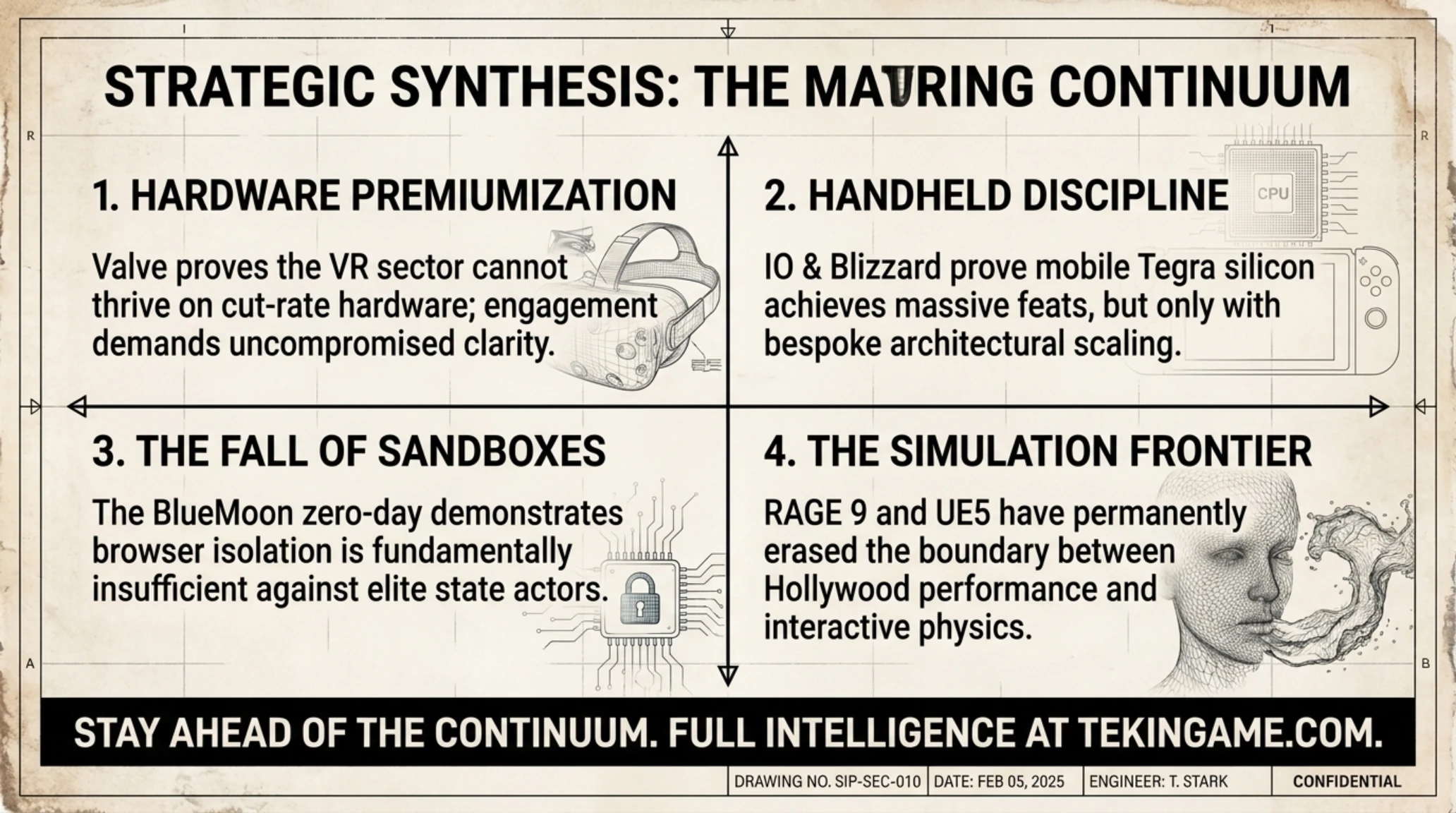
- The Flight to Hardware Premiumization: Valve’s luxury pricing model proves that the VR sector cannot thrive on cut-rate mobile displays; true engagement demands uncompromised optical clarity and foveated gaze rendering.
- Handheld Software Discipline: IO Interactive’s postponement of 007 First Light establishes an exemplary precedent: launching an unpolished port on portable hardware permanently damages brand equity.
- The Fall of User-Space Sandboxes: The BlueMoon zero-day chain demonstrates that browser sandboxing without hardware-enforced memory tagging is insufficient against elite state-backed threat actors.
- The GTA VI Hype Cycle Ignites: Stephen Root’s unprompted narrative confirmation signals that Rockstar’s production cycle is entering its public-facing marketing crescendo ahead of late 2026.
Community sentiment and market indicators reflect surging optimism across high-performance gaming hardware and portable console ecosystems, alongside heightened vigilance across enterprise cybersecurity divisions tasked with patching internet-facing endpoint software.
Strategic Synthesis: Navigating Next-Generation Interactive and Hardware Realities
Wednesday evening provides an unvarnished portrait of technological progress in 2026: audacious, multi-faceted, and inherently volatile. Valve’s grand unveiling of the Steam Frame marks a definitive turning point in spatial computing. By refusing to compromise on dual Micro-OLED optics and foveated gaze tracking, Valve has rejected the notion that virtual reality must degrade its visual fidelity to achieve physical mobility. By offloading computational muscle to the user’s desktop GPU via an ultra-low-latency 6GHz wireless pipeline, Valve has engineered an elegant architectural bridge that preserves the open freedom of PC gaming while discarding the physical cables that held the medium back for a decade.
Concurrently, the contrasting approaches demonstrated by Blizzard Entertainment and IO Interactive on Nintendo Switch 2 provide a masterclass in modern console porting strategy. Blizzard’s aggressive implementation of Nvidia DLSS to achieve 1440p docked resolution and a responsive 40fps VRR mode proves that mobile Tegra silicon is capable of astonishing graphical feats when developers leverage hardware Tensor cores. Conversely, IO Interactive’s deliberate decision to delay 007 First Light to March 2027 illustrates the immense engineering discipline required to tame heavy CPU physics and crowd simulations within a 15-watt thermal envelope. In an era where consumers possess zero tolerance for choppy performance, taking the extra time to engineer custom low-level shaders is the hallmark of a world-class studio.
Yet, amidst the creative triumphs of gaming hardware and Hollywood-tier motion capture, the BlueMoon zero-day exploit chain serves as a chilling reminder of the fragility underpinning modern networked society. In a world where gamers, enterprise executives, and diplomats interact through identical browser rendering engines, the discovery of chained V8 memory corruptions and Windows kernel escapes proves that digital security can never be treated as a static milestone. Relentless defensive patching, zero-trust endpoint auditing, and memory-safe language adoption remain imperative.
The symbiotic evolution of interactive media, advanced graphics APIs, and hyper-dense silicon architectures reflects an industry transitioning into its mature post-transistor era. Success in this hyper-competitive landscape belongs not to platforms that rely on brute-force wattages or superficial exclusivity deals, but to visionary engineering organizations that harmonize custom thermal envelopes, intelligent temporal upscaling, and low-latency wireless pipelines to empower player agency across physical and virtual worlds.
As virtual reality platforms shed physical tethers, handheld consoles conquer generational AAA porting barriers, and competitive fighting engines leverage real-time physics destructibility, the technical demands placed on game developers have reached unprecedented heights. Navigating these converging frontiers requires uncompromising craftsmanship, architectural discipline, and deep respect for player communities.
Whether analyzing low-level driver optimizations or uncovering covert cyber espionage operations, rigorous technical journalism provides the crucial clarity needed to understand where digital culture is heading next.
Related Intelligence Dossiers on TekinGame
• 📱 Tekin Analysis | Apple's Foldable iPhone Duo & iPhone 18 Pro Price Hike
• 🧠 Tekin Analysis | Valve's 17-Year Secret: The Staged L4D2 Trailer Leak
• 🎬 Ultimate Guide to Local AI Video Generation (Minimax, Wan, LTX)
As the night unfolds, the TekinGame engineering and research desk will maintain continuous surveillance across hardware supply chains, developer repositories, and threat intelligence telemetry, delivering authoritative reporting as the future of digital entertainment is written in real time.

To conclude this comprehensive evening briefing, detailed answers to the most frequently posed technical, operational, and commercial inquiries regarding tonight's breakthroughs are compiled below.
Frequently Asked Questions Regarding Tonight's Tekin Night Intelligence
Why is Valve's Steam Frame priced at a luxury tier starting at $1,059?
The premium price reflects dual 120Hz Micro-OLED display panels delivering 5K combined resolution, integrated 120Hz infrared eye-tracking hardware, custom Snapdragon 8 Gen 3 compute, and a bundled dedicated 6GHz Wi-Fi 6E transceiver.
What caused the six-month delay of James Bond: 007 First Light on Nintendo Switch 2?
IO Interactive delayed the portable version to March 2027 to optimize Glacier Engine's dense crowd physics and high-speed driving set-pieces within the Switch 2's 10-15W thermal envelope while leveraging Nvidia DLSS for stable 30fps handheld gameplay.
How does the BlueMoon zero-day exploit chain compromise fully patched systems?
BlueMoon executes a zero-click drive-by attack that chains a Chrome V8 Type Confusion flaw (CVE-2026-85046) with a Mojo IPC sandbox escape (CVE-2026-87491) and a Windows win32k.sys kernel LPE (CVE-2026-85880) to inject the in-memory GRIMWEDGE backdoor.
What graphical performance targets does Diablo IV achieve on Nintendo Switch 2?
Diablo IV features a Quality Mode running at native 1080p handheld / dynamic 1440p docked at 30fps with full volumetric compute, alongside a Performance Mode locking to 40fps for 120Hz VRR displays, with full USB mouse and keyboard support.
What character does Stephen Root play in Grand Theft Auto VI?
Root confirmed he portrays Brian Heder, an aging contraband speed-boat runner from the golden era of trafficking in Vice City who operates a boat repair and marine salvage business in Grassrivers and acts as a fixer for Lucia and Jason.
Sources: Verified Primary Documentation & References of Tekin Night
- Dexerto / Valve Corporation: Official Announcement and Technical Hardware Specifications of the Steam Frame VR Headset
- IGN / IO Interactive: Official Studio Statement on the Postponement of James Bond: 007 First Light on Nintendo Switch 2
- The Hacker News / Volexity: Forensic Intelligence Report on State-Sponsored Exploitation of the BlueMoon Zero-Day Chain
- Nintendo Life / Blizzard Entertainment: Architectural Deep-Dive into Diablo IV: Age of Hatred on Nintendo Switch 2
- Eurogamer / Associated Press: Stephen Root Interview Confirming Role as Brian Heder in Grand Theft Auto VI
- Eurogamer / Good Gamer Group: Investigative Analysis of Leaked Focus Group Playtesting for Injustice 3 in Culver City
Additional Gallery: Tekin Night Sep 16, 2026: 🥽 Valve Steam Frame, 007 Delay & GTA 6 Leak