Tekin Analysis | Nightly Briefing October 28, 2026: PS5 Hypervisor Exploit Foils GTA 6 Piracy, Leaked Transformers Trailer, and Sucker Punch Layoffs
On Wednesday evening, October 28, 2026, the global interactive entertainment industry stands at the nexus of unprecedented cybersecurity challenges, corporate portfolio contractions, and radical strategic pivots. The traditional boundaries that separated hardware engineering, game development pipelines, and Hollywood production houses have dissolved into a hyper-connected economic landscape where vulnerability research and transmedia exploitation dictate market capitalization.
For decades, console manufacturers relied on bespoke silicon security and proprietary operating system architectures to safeguard multi-hundred-million-dollar intellectual properties from unauthorized distribution. However, the commercial proliferation of autonomous AI reasoning systems has democratized vulnerability discovery, allowing independent security researchers to decompile complex kernel binaries, trace nested page tables, and isolate race conditions at computational speeds that rival nation-state intelligence laboratories.
Concurrently, the broader video game publishing ecosystem is undergoing a severe post-pandemic reality check. The unsustainable expansion of speculative live-service investments has triggered studio closures, workforce liquidations, and the quiet cancellation of nearly completed multi-million-dollar productions. In this comprehensive nightly analysis, Tekin Plus dissects the structural undercurrents shaping the global gaming landscape heading into 2027.
Platform holders are navigating a fundamental realignment where hardware margins, software retention curves, and transmedia brand extensions must operate in flawless synchrony. The modern blockbuster game is no longer merely a retail package sold on store shelves; it is a multi-layered intellectual asset whose valuation hinges directly upon the cryptographic integrity of the underlying silicon platform and the operational discipline of its development teams.
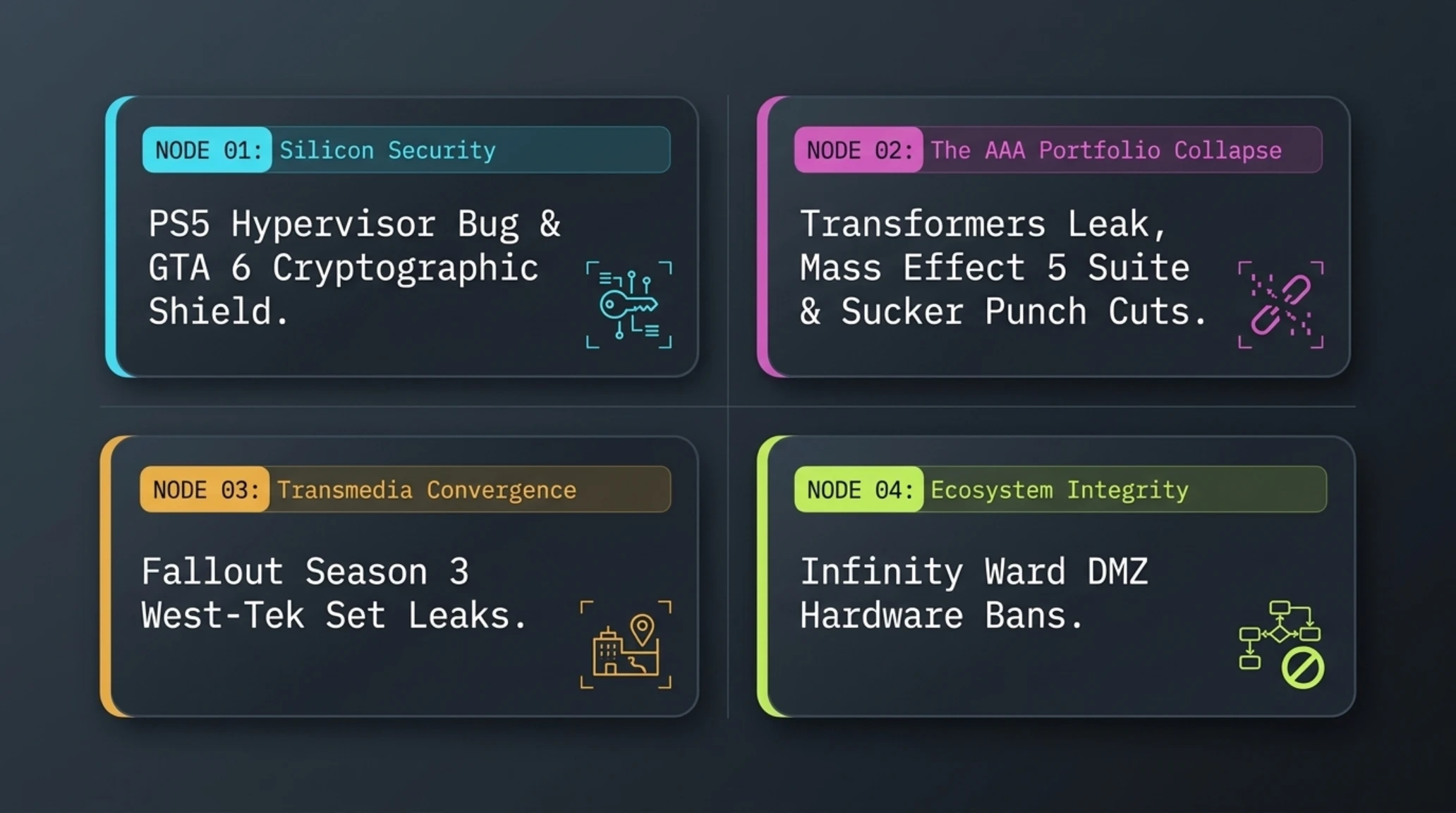
Strategic Intelligence Assessment and Core Analytical Vectors
Hacker Uses AI to Find PS5 Hypervisor Bug and Claims $50K Sony Bounty, Foiling Day-One GTA 6 Piracy
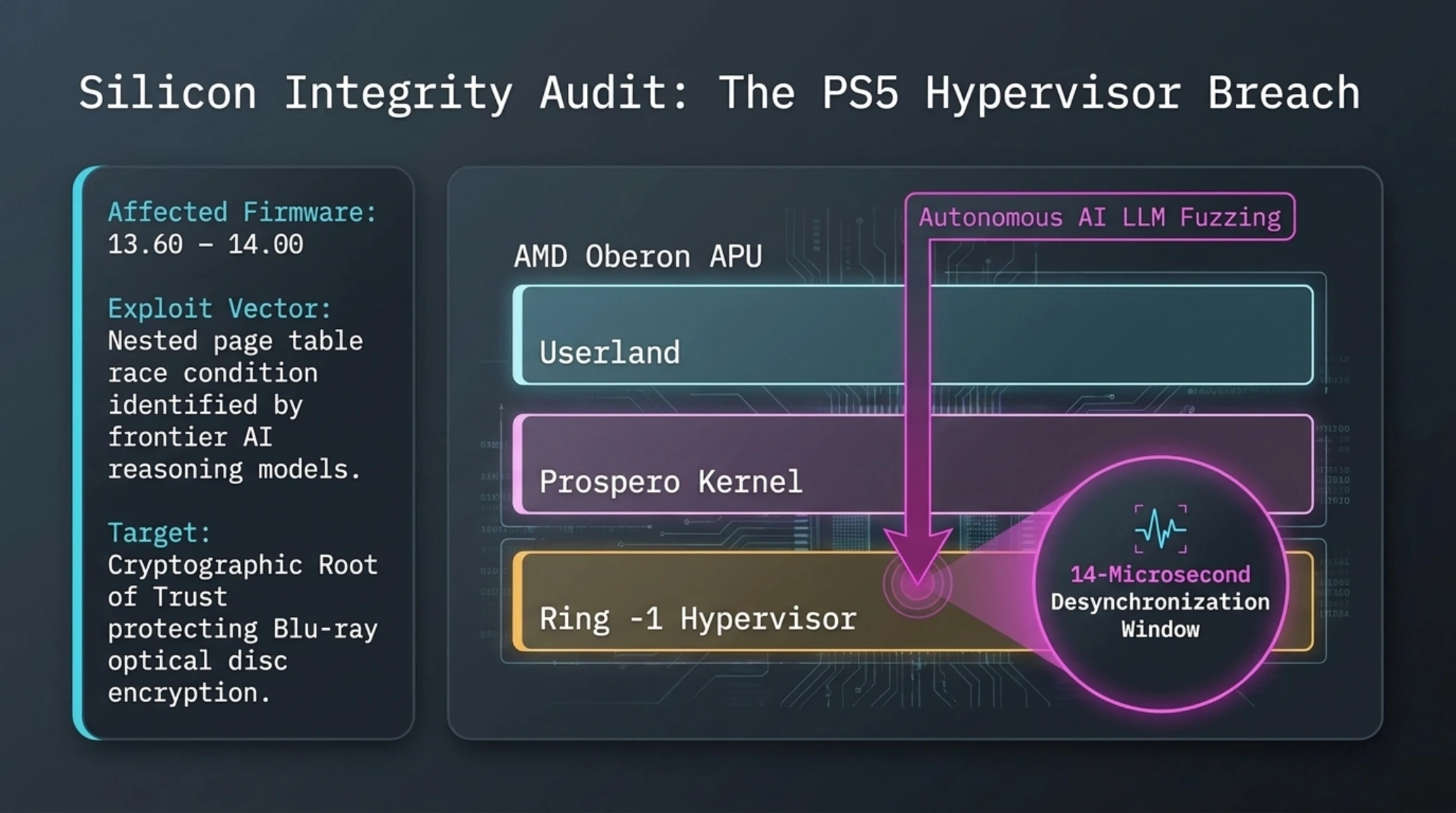
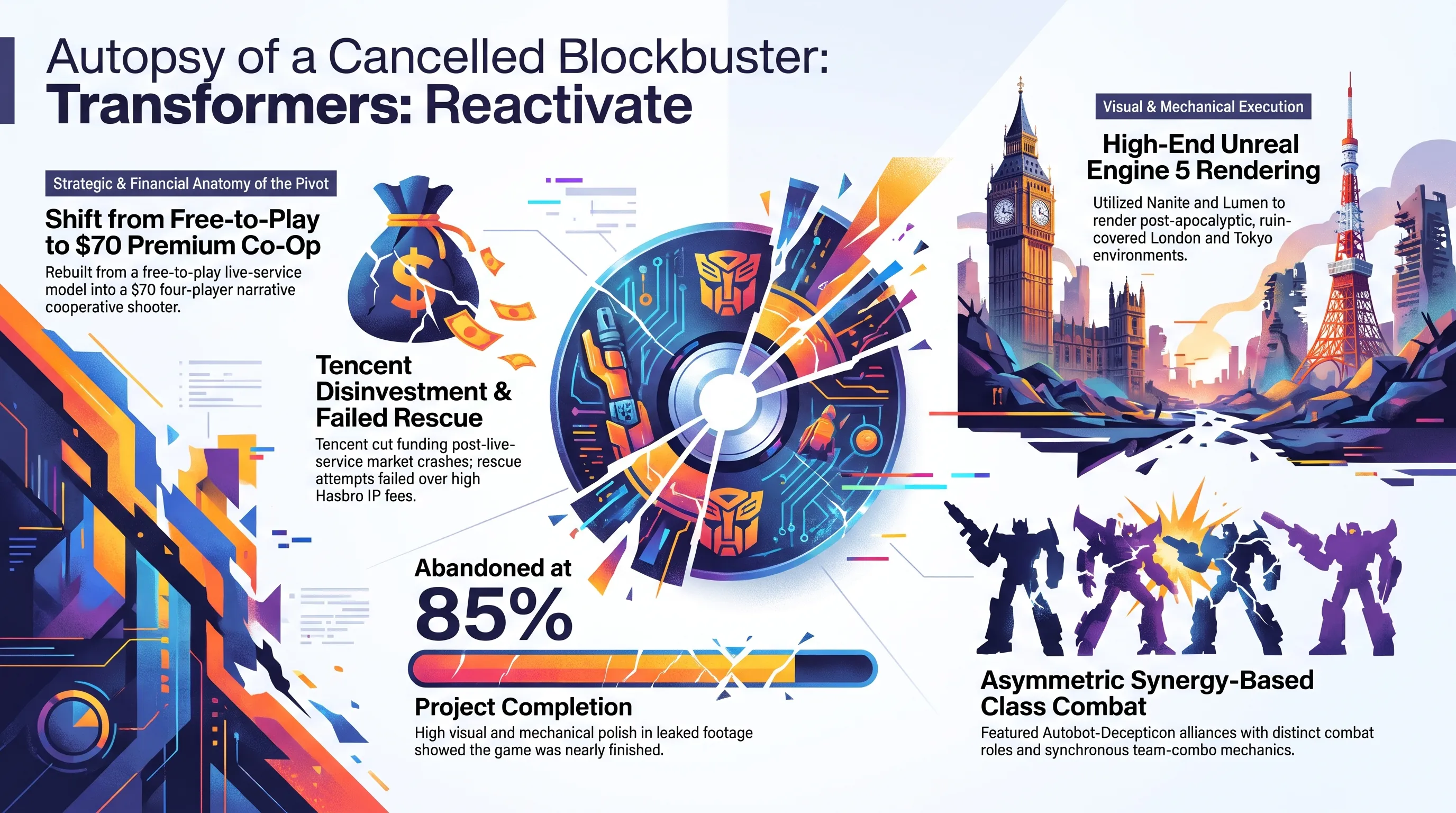
In a development that has sent shockwaves across both the hardware security circuit and the global video game publishing industry, independent security researcher Jordy publicly disclosed the containment of a critical vulnerability within the PlayStation 5 hypervisor architecture. Operating on firmware versions ranging from 13.60 through 14.00, the flaw represented the most severe breach of Sony Interactive Entertainment hardware isolation mechanisms since the commercial launch of the console in November 2020.
The hypervisor on the PlayStation 5 operates at the highest execution privilege level (Ring -1), positioned beneath the customized FreeBSD-derived operating system kernel (Prospero). It controls hardware memory virtualization, supervises Direct Memory Access (DMA) transactions across the AMD Oberon custom APU, and enforces strict cryptographic isolation around the AMD Platform Security Processor (PSP). Gaining arbitrary read and write capabilities within hypervisor memory effectively grants complete administrative control over the machine, dismantling the entire chain of trust that protects Blu-ray optical disc encryption and digital entitlement tickets.
Why It Matters | Hardware Hypervisor Security Metrics and Bounty Valuation
Autonomous LLM reasoning frameworks analyzed disassembled kernel binaries to expose a nested page table race condition, allowing Sony to patch the flaw before commercial exploitation materialized.
What sets this discovery apart from historical console hacking milestones is the methodology utilized. Rather than spending months manually stepping through assembly instructions in interactive disassemblers, Jordy deployed custom reasoning agent frameworks powered by advanced frontier LLMs. By providing the model with decompiled kernel interface headers and feeding differential fuzzing inputs across Bluetooth and network stack drivers, the automated system identified a subtle race condition in the hypervisor nested page table invalidation routines.
When triggered under precise timing constraints, the vulnerability allowed an unprivileged userland process to escape its software sandbox, compromise the kernel, and write directly into hypervisor-protected physical memory address spaces. Recognizing the immense economic and legal stakes involved, Jordy bypassed the underground homebrew scene and submitted a comprehensive, weaponized proof-of-concept directly to Sony Interactive Entertainment via their official HackerOne vulnerability disclosure program.
The technical anatomy of the exploit is deeply rooted in the memory management architecture of the AMD Zen 2 microarchitecture utilized inside the PS5 Oberon system-on-chip. In standard virtualized environments, Second-Level Address Translation (SLAT) governs the mapping between guest physical addresses and host physical addresses. Jordy discovered that by inducing a high-frequency interrupt flood across the wireless controller peripheral bus while simultaneously initiating an asynchronous direct memory access transfer, the hypervisor translation lookaside buffer (TLB) flush routine could be desynchronized for approximately 14 microseconds.
During this precise microarchitectural window, the memory controller failed to enforce read-only attribute masks, enabling arbitrary shellcode to overwrite the hypervisor dispatch table. Once execution hijacked the dispatch table, all hardware security boundaries collapsed. The AMD Platform Security Processor, responsible for managing the root-of-trust master keys and decrypting game packages (PKG files) stored on SSD media, became fully accessible to external software probing.
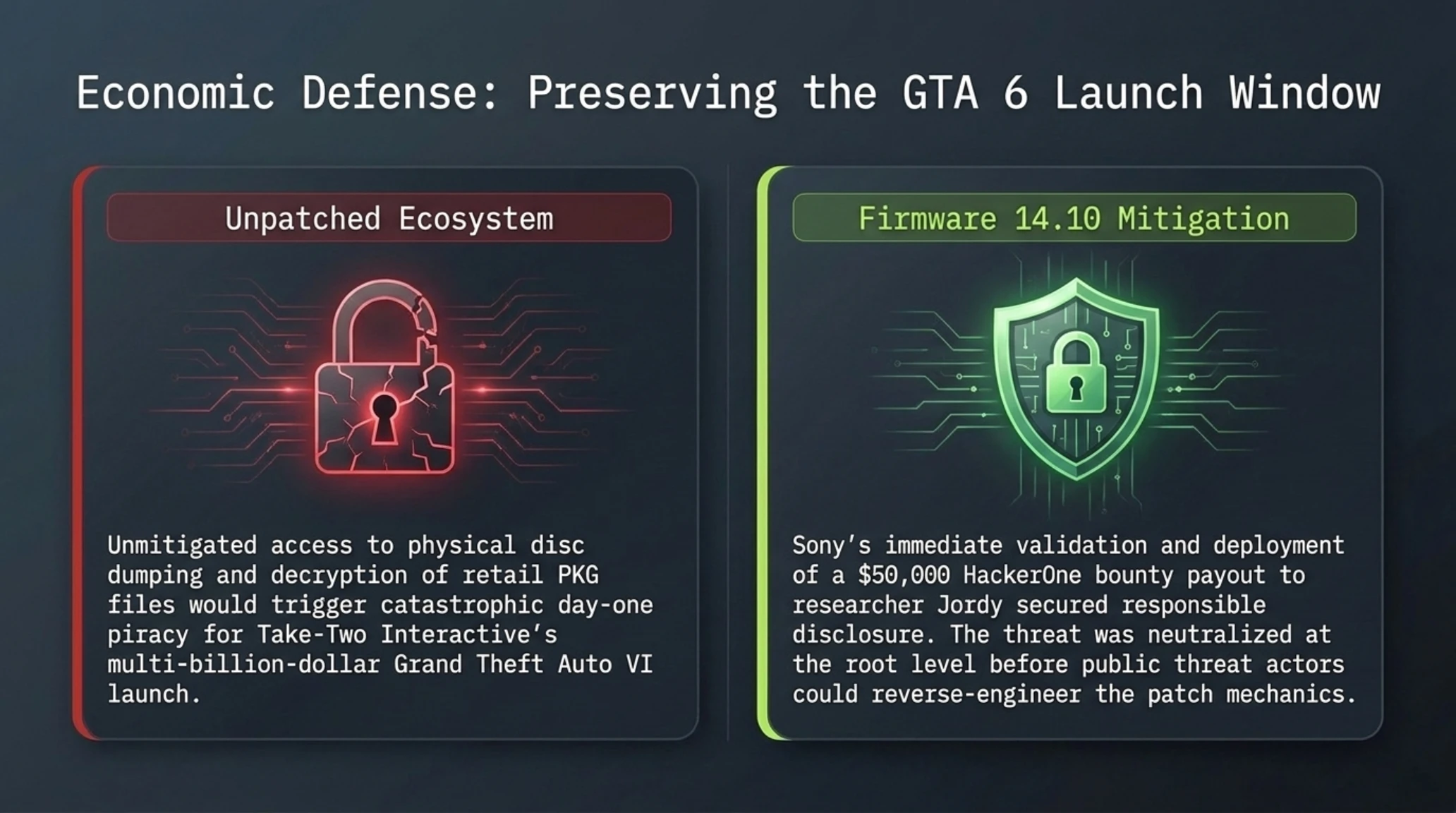
Sony engineering teams in Tokyo validated the exploit chain within 48 hours of submission, classified it as an urgent critical threat, and paid out the maximum bounty ceiling of $50,000. Within days, Sony engineered a hypervisor microcode mitigation and rolled it out quietly in the 14.10 system software update, permanently burning the exploit vector before public threat actors could reverse engineer the underlying patch mechanics.
The strategic ramifications of Jordy decision cannot be overstated, particularly concerning Rockstar Games and Take-Two Interactive upcoming release of Grand Theft Auto VI. As the most anticipated interactive entertainment launch in human history, GTA 6 represents a multi-billion-dollar enterprise that relies on pristine console platform integrity during its initial retail exclusivity window. Had this hypervisor flaw remained unpatched in the wild, homebrew groups would have possessed the cryptographic keys required to dump retail Blu-ray disc packages on launch day, decrypt proprietary asset archives, and facilitate widespread software piracy.
Historically, console platform holders have faced disastrous financial consequences when optical disc security structures collapsed early in a hardware lifecycle. When the PlayStation 3 root keys were compromised in late 2010, pirated disc images flooded peer-to-peer networks within hours of retail street dates, inflicting massive losses on third-party software publishers. By contrast, the containment of the 14.00 hypervisor flaw ensures that Grand Theft Auto VI will launch into a sealed, secure hardware ecosystem, preserving the commercial return on Take-Two staggering production investment.
The closing of this attack vector has triggered intense friction within the underground console hacking community. Certain factions had anticipated that a public hypervisor jailbreak would establish a golden age of unconstrained homebrew software and emulation on current-generation hardware. Instead, the incident demonstrated how corporate bug bounty incentives, paired with institutional legal apparatuses, have successfully converted elite independent talent into white-hat defenders of intellectual property.
Secondary market pricing for second-hand PlayStation 5 consoles running older firmware versions plummeted dramatically in the hours following the disclosure. Unopened hardware units on eBay and specialized forums, which previously commanded prices exceeding $1,500 due to speculation that firmwares 13.60 to 14.00 would yield a public jailbreak, experienced an immediate 60% valuation correction as prospective buyers realized the exploit had been neutralized at the root level.
The incident also underscores the shifting economics of vulnerability monetization. Historically, exploit brokers in the grey market could command six-figure valuations for untethered hypervisor exploits capable of persistent arbitrary code execution. However, the legal liabilities associated with digital copyright infringement, combined with Sony proactive relationships with white-hat researchers through HackerOne, have fundamentally altered the risk-reward calculus. For independent researchers, a verified $50,000 bounty payout and public recognition carry vastly greater institutional utility than dealing with illicit brokers or anonymous scene groups.
From an architectural standpoint, the episode provides irrefutable evidence that hardware security can no longer rely on obscurity or the presumed friction of manual reverse engineering. As AI auditing tools continue to mature, platform holders must integrate automated adversarial models into their pre-silicon design validation pipelines to anticipate hypervisor vulnerabilities before silicon is committed to foundry fabrication lines.
Furthermore, Sony implementation of cryptographic hardware attestation mechanisms across the PlayStation Network infrastructure ensures that even if anomalous memory states are induced locally, the console cannot establish authenticated connections to multiplayer lobbies without passing remote runtime integrity checks. This multi-layered defense-in-depth doctrine represents the contemporary gold standard for safeguarding interactive digital ecosystems.
In the subsequent section of this briefing, we transition from silicon security defenses to the creative wreckage of corporate disinvestments, analyzing newly leaked final production footage from the canceled Transformers: Reactivate project.
Unseen Final Trailer for Canceled Game "Transformers: Reactivate" Leaks Online
The sudden online emergence of the confidential final reveal trailer and gameplay sizzle reel for the canceled action title Transformers: Reactivate has cast a harsh spotlight on the systemic volatility currently paralyzing western game development studios. Originally unveiled at The Game Awards in December 2022 by storied British developer Splash Damage (widely celebrated for Wolfenstein: Enemy Territory, Brink, and Gears Tactics), the project suffered through protracted development delays before disappearing into corporate purgatory.
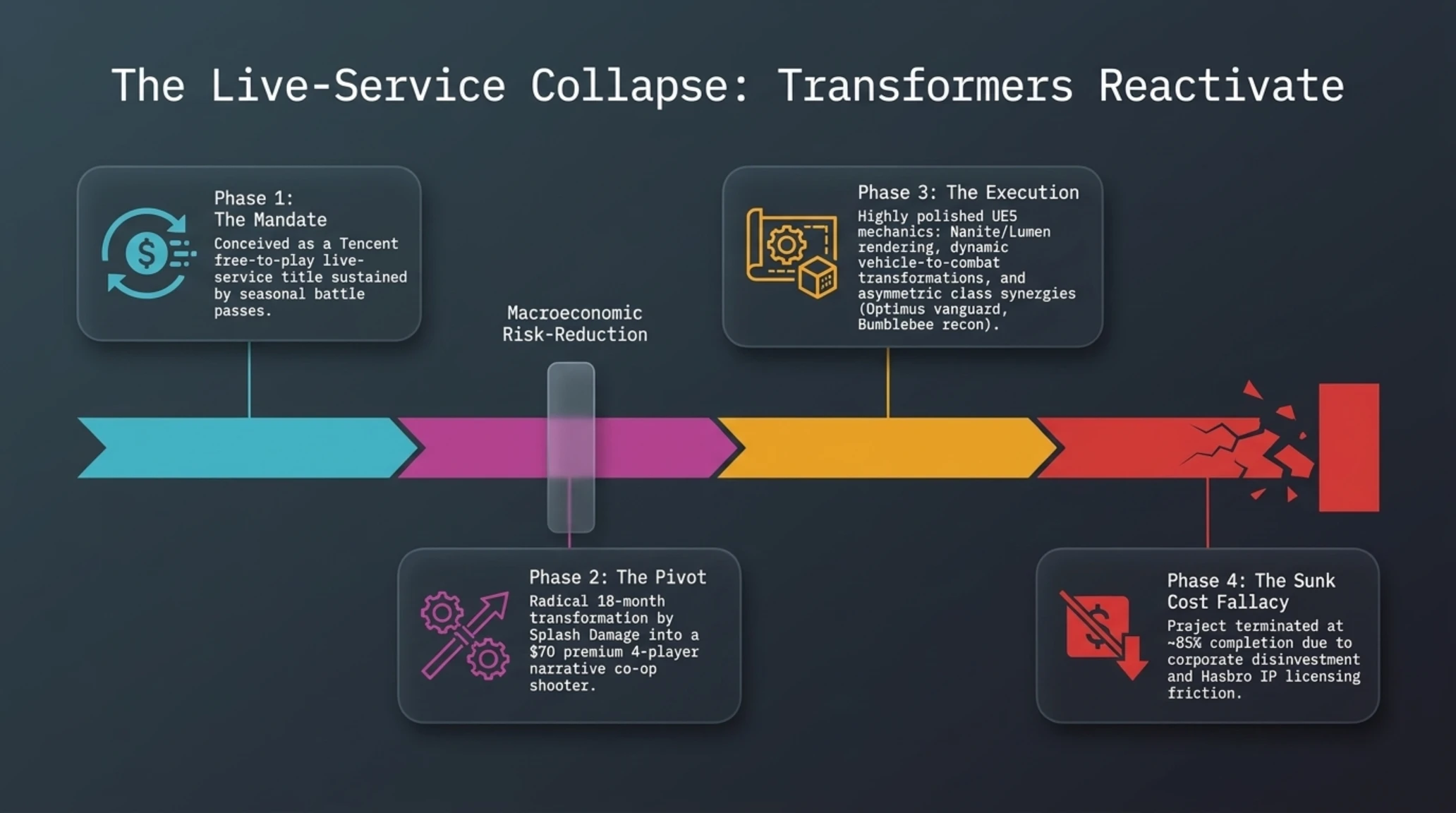
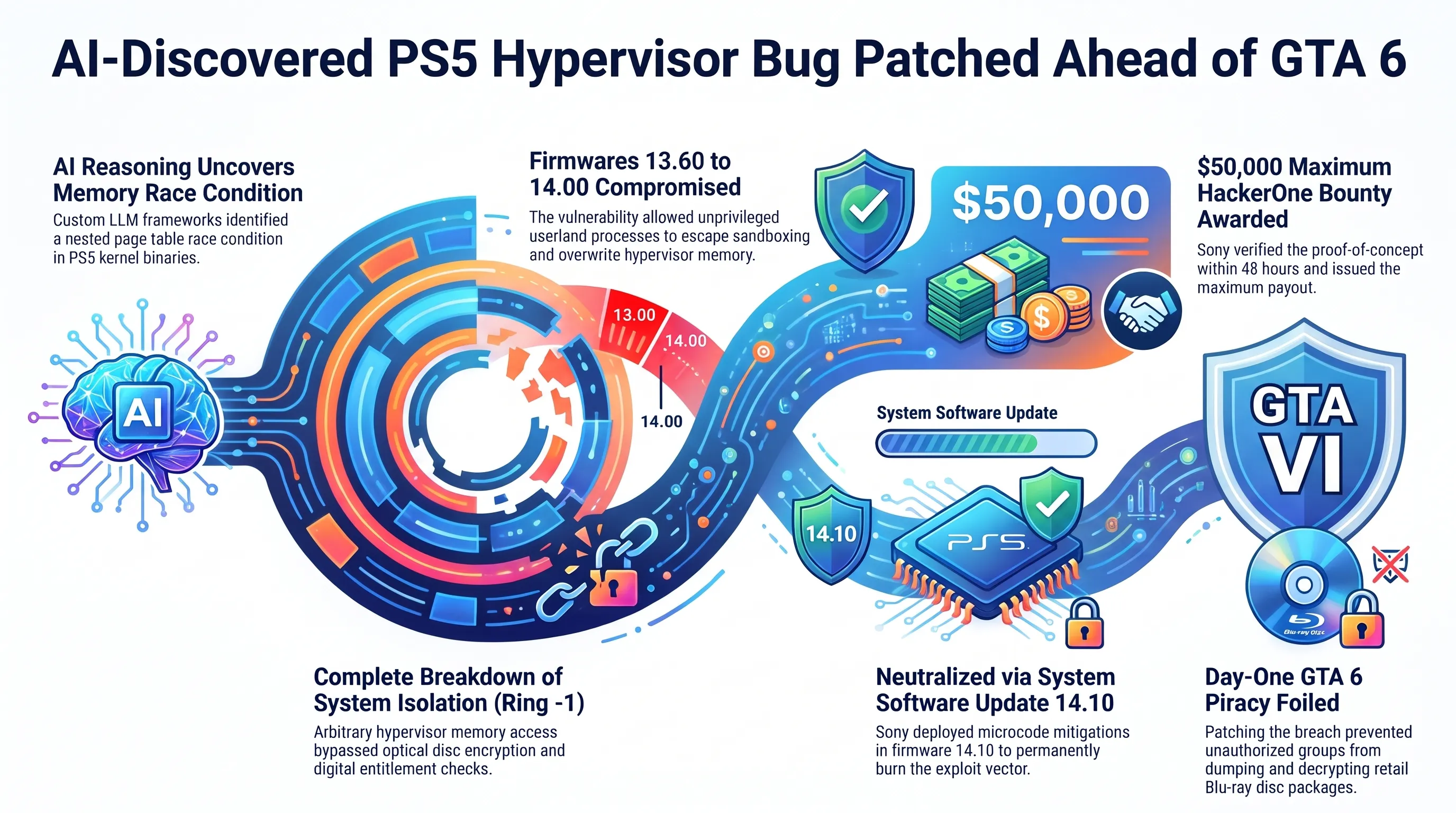
The leaked four-minute promotional trailer, produced as an internal pitch to court prospective publishing partners, reveals an astonishing late-stage design pivot. While initially conceptualized under corporate parent Tencent as a free-to-play live-service title sustained by seasonal battle passes and cosmetics, Splash Damage leadership executed a radical transformation in the final eighteen months of production. The game was rebuilt from the ground up as a premium, narrative-driven $70 four-player cooperative shooter, specifically structured around the desperate alliance between Autobots and Decepticons facing an extraterrestrial biomechanical hive-mind known as the Legion.
Jargon Buster | Tekin Technical Terminology and Structural Definitions
The structural demise of Transformers: Reactivate traces directly to shifting global macroeconomic currents within Tencent Games. Following a succession of catastrophic commercial failures among competing live-service releases across the industry including Suicide Squad: Kill the Justice League and Concord Tencent executive leadership implemented an aggressive risk-reduction strategy. Funding lines allocated to high-overhead European subsidiaries were systematically curtailed, leaving Splash Damage in the untenable position of financing advanced Unreal Engine 5 production without primary publisher backing.
Visual assets revealed in the leak showcase remarkable technical execution. Utilizing Nanite geometry virtualization and Lumen dynamic global illumination, the trailer depicts post-apocalyptic London and Tokyo reduced to smoking metallic ruins. The gameplay mechanics featured fluid, instantaneous transformations between vehicular traversal and combat forms, allowing players to execute high-speed ramming maneuvers before seamlessly transitioning into heavy melee combos and ranged energy ordnance volleys.
In terms of narrative world-building, Reactivate broke away from conventional franchise tropes. Set on an Earth conquered by the Legion an ancient techno-organic swarm that corrupts Cybertronian sparks and transforms fallen machines into grotesque parasitic abominations the plot forced Optimus Prime and Megatron into an uneasy pact ratified in the subterranean bunkers of Whitehall. The visual contrast between Optimus weathered, battle-scarred red-and-blue chassis and Megatron rusted, fusion-scarred frame created an evocative, mature aesthetic reminiscent of the darkest graphic novels in franchise history.
The leaked material demonstrated distinct asymmetric class archetypes: Optimus Prime operated as an impenetrable frontline vanguard, Megatron anchored defensive positions with sweeping fusion-cannon artillery bombardments, Bumblebee functioned as an agile reconnaissance operative with cloaking capabilities, and Ironhide absorbed punishing kinetic impacts while deploying area-of-effect seismic shockwaves. The level of mechanical and visual polish led industry analysts to estimate that the project had reached approximately 85% completion prior to cancellation.
Combat pacing in Reactivate was engineered around synchronous team synergies. Players could coordinate tactical stagger chains: Bumblebee would deploy an electromagnetic disruption charge to strip Legion shields, allowing Megatron to unleash a charged particle beam that knocked heavy units off their feet, whereupon Optimus Prime would transform into truck mode, ram the staggered colossus across the arena, and transform mid-air to deliver a crushing energon axe blow.
Efforts by Splash Damage leadership to secure rescue distribution agreements with publishers such as Sony Interactive Entertainment, Electronic Arts, or Embracer Group ultimately collapsed under the weight of IP licensing fees owed to Hasbro. In an era where capital costs remain elevated, prospective partners proved unwilling to absorb multi-million-dollar marketing commitments on a licensed property, sealing the game fate as another casualty of corporate portfolio consolidation.
While Splash Damage has since redeployed its technical personnel into contract co-development agreements across other major industry franchises, the leak has reignited fervent community admiration for what could have stood as the definitive Transformers gaming experience since High Moon Studios celebrated Fall of Cybertron era.
Grammy-Nominated Composer Austin Wintory Releases 20-Minute Unreleased Mass Effect 5 Concept Score
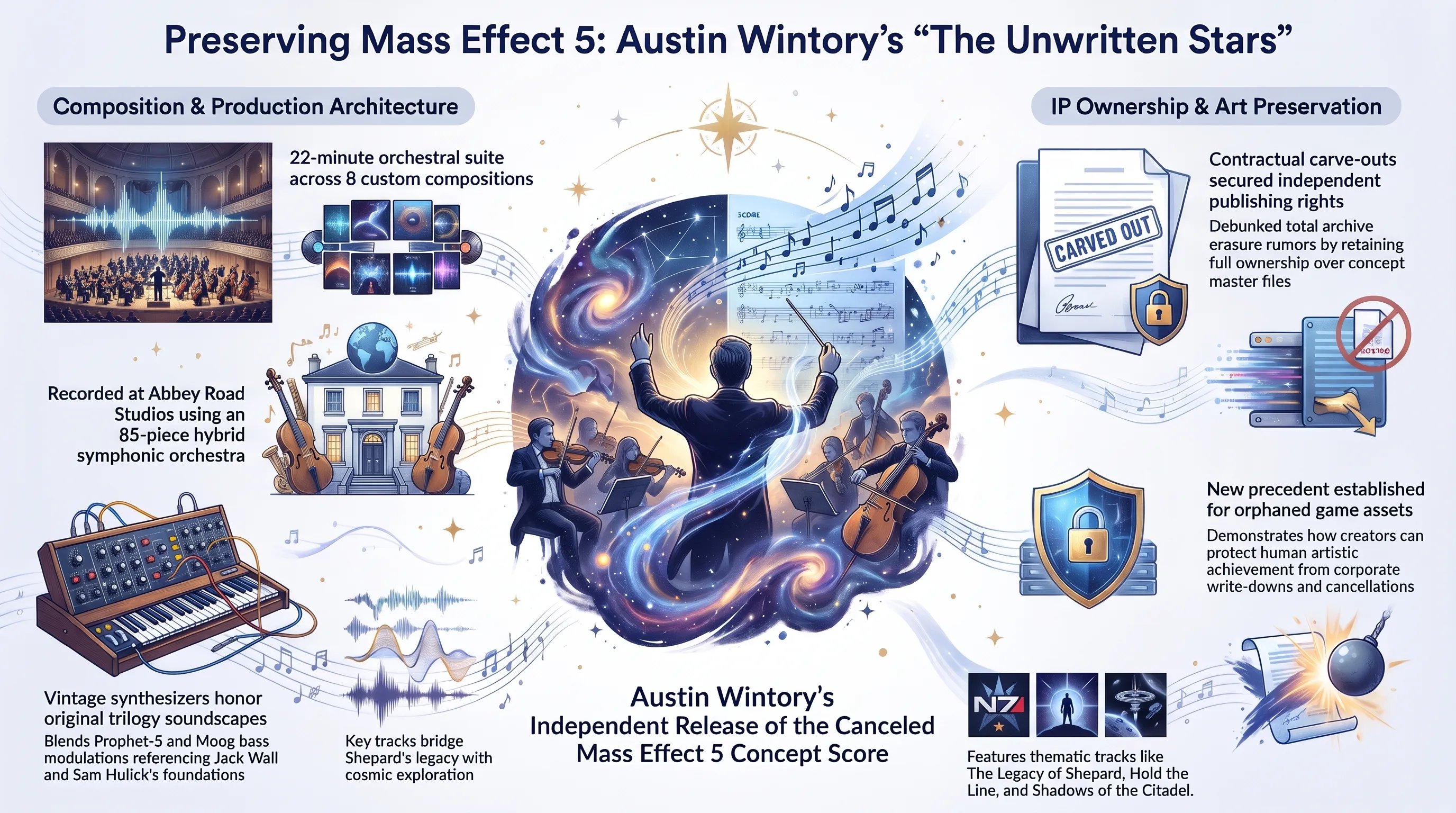
Following the traumatic dissolution of legendary Canadian development studio BioWare by Electronic Arts earlier this year, Grammy-nominated and BAFTA-winning composer Austin Wintory took the unprecedented step of releasing his unreleased 22-minute orchestral concept suite, titled The Unwritten Stars, composed specifically for the canceled next chapter of the Mass Effect saga.
Comprising eight fully orchestrated and synthesized compositions, the suite offers a haunting glimpse into the artistic trajectory BioWare creative leadership envisioned for the franchise prior to corporate restructuring. Tracks such as The Legacy of Shepard, Hold the Line, Shadows of the Citadel, and Rebirth Across Andromeda blend bespoke vintage analog synthesizers explicitly referencing the legendary sonic foundations established by Jack Wall and Sam Hulick on Mass Effect 1 and 2 with a massive 85-piece hybrid symphonic orchestra recorded at London iconic Abbey Road Studios.
Rumor vs. Reality | Technical Engineering Verification
Unsubstantiated online claims alleged that Electronic Arts systematically destroyed all audio master files and production assets during the BioWare closure.
Austin Wintory secured contractual carve-outs during pre-production, preserving full publishing ownership over his original concept compositions.
📚 Classified & Related Dossiers in TekinGame
If you wish to explore beyond this report and delve into cybernetic frontiers and autonomous AI architectures, do not miss these three exclusive deep-dives in the Tekin Garage:
Wintory, renowned throughout the medium for his groundbreaking scores on Journey, The Banner Saga, Assassin's Creed Syndicate, and Stray Gods, revealed that writing for Mass Effect represented the culmination of a lifelong creative ambition. Working in confidential collaboration with BioWare veteran audio directors, Wintory sought to musically bridge the existential devastation of the Reaper War with a new era of exploratory interstellar anxiety.
The compositional architecture of The Legacy of Shepard opens with a fragile, microtonal solo cello motif that gradually intertwines with pulsing Prophet-5 synthesizer arpeggios, before erupting into a towering brass crescendo backed by a full adult choir singing in synthesized harmonic intervals. The piece conveys deep grief alongside unyielding cosmic perseverance, mirroring the narrative burdens that made Commander Shepard an indelible icon of modern interactive storytelling.
In Hold the Line, Wintory crafts an intense kinetic rhythm using analog Moog bass modulations synchronized with heavy orchestral percussion. The composition pays explicit homage to Captain Kirrahe legendary speech in the original Mass Effect, evoking the desperate determination of organic species clinging to survival against unfathomable cosmic odds. The contrast between warm, human acoustic instruments and cold, mathematically calculated synthesizer frequencies establishes a profound thematic duality.
The global reception to Wintory release has sparked an emotional reckoning across the gaming community. Coming on the heels of BioWare closure after three decades of defining the western role-playing game genre with Baldur Gate, Star Wars: Knights of the Old Republic, and Dragon Age, the score functions as both an intellectual archive and an elegiac tribute to the creative teams whose work shaped millions of players worldviews.
Furthermore, Wintory decision sets an invaluable precedent for the preservation of interactive media art. In an industry increasingly characterized by corporate mergers, write-downs, and unceremonious cancellations, the independent public release of uncommissioned or orphaned musical scores ensures that human artistic achievement cannot be retroactively extinguished by executive committee decree.
The Unwritten Stars stands as a monument to what could have been: an emotionally resonant, sonically daring continuation of one of gaming greatest universes. Even as the corporate entity that gave birth to the franchise ceases to exist, the melodies composed in its honor will endure across the digital cosmos.
Sucker Punch Productions Lays Off 24 Employees Despite Ghost of Yōtei Critical and Commercial Success
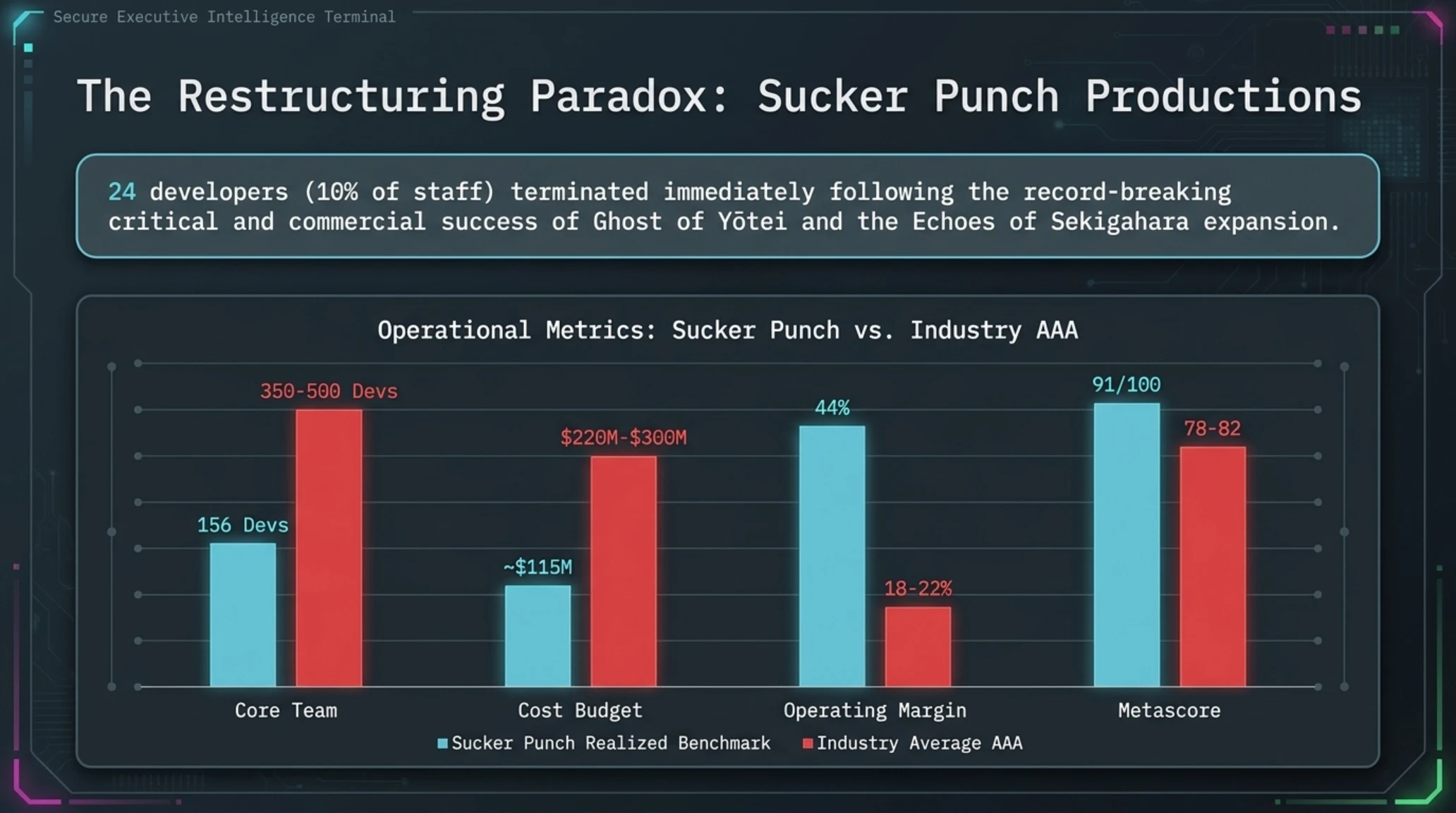
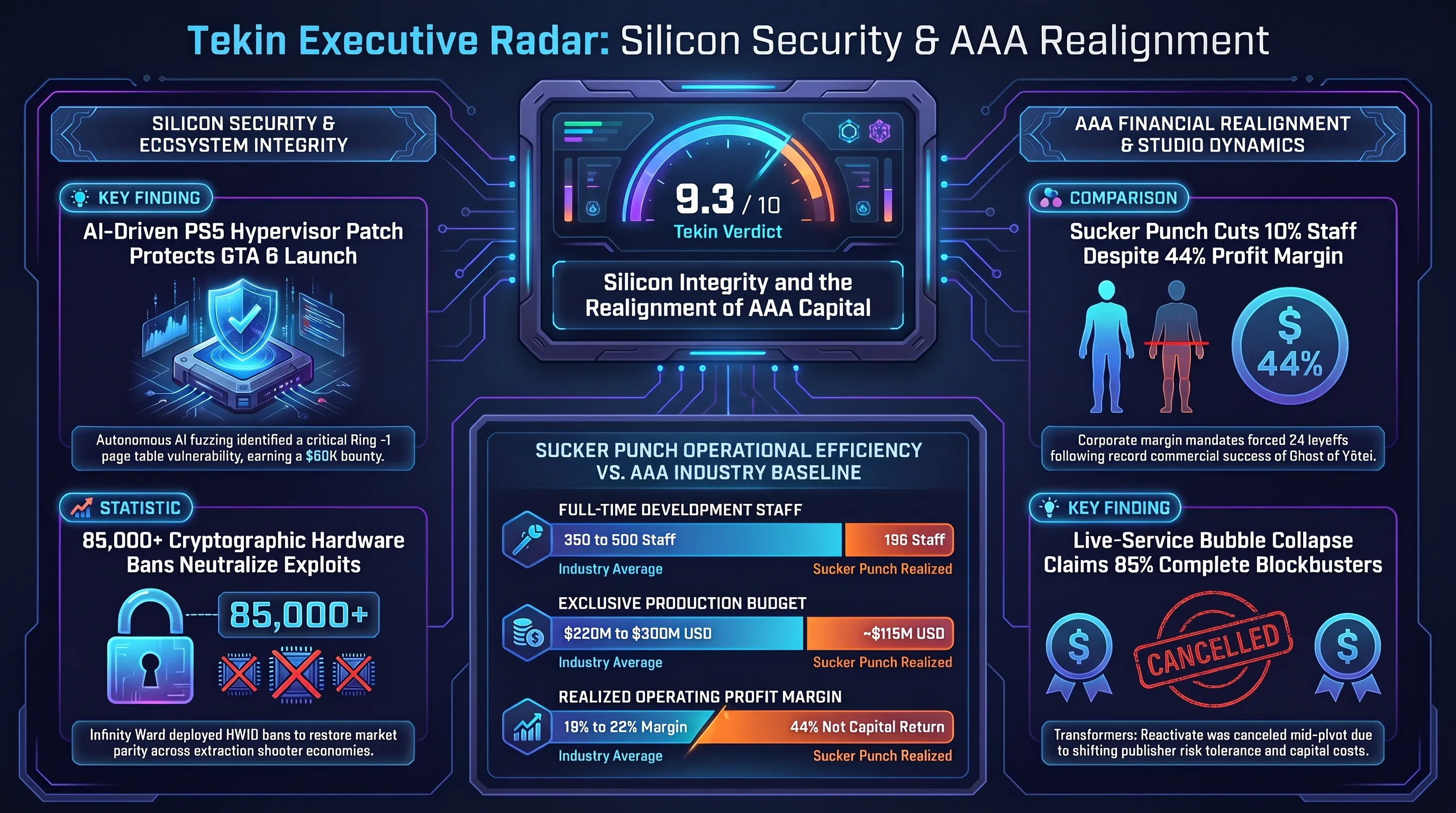
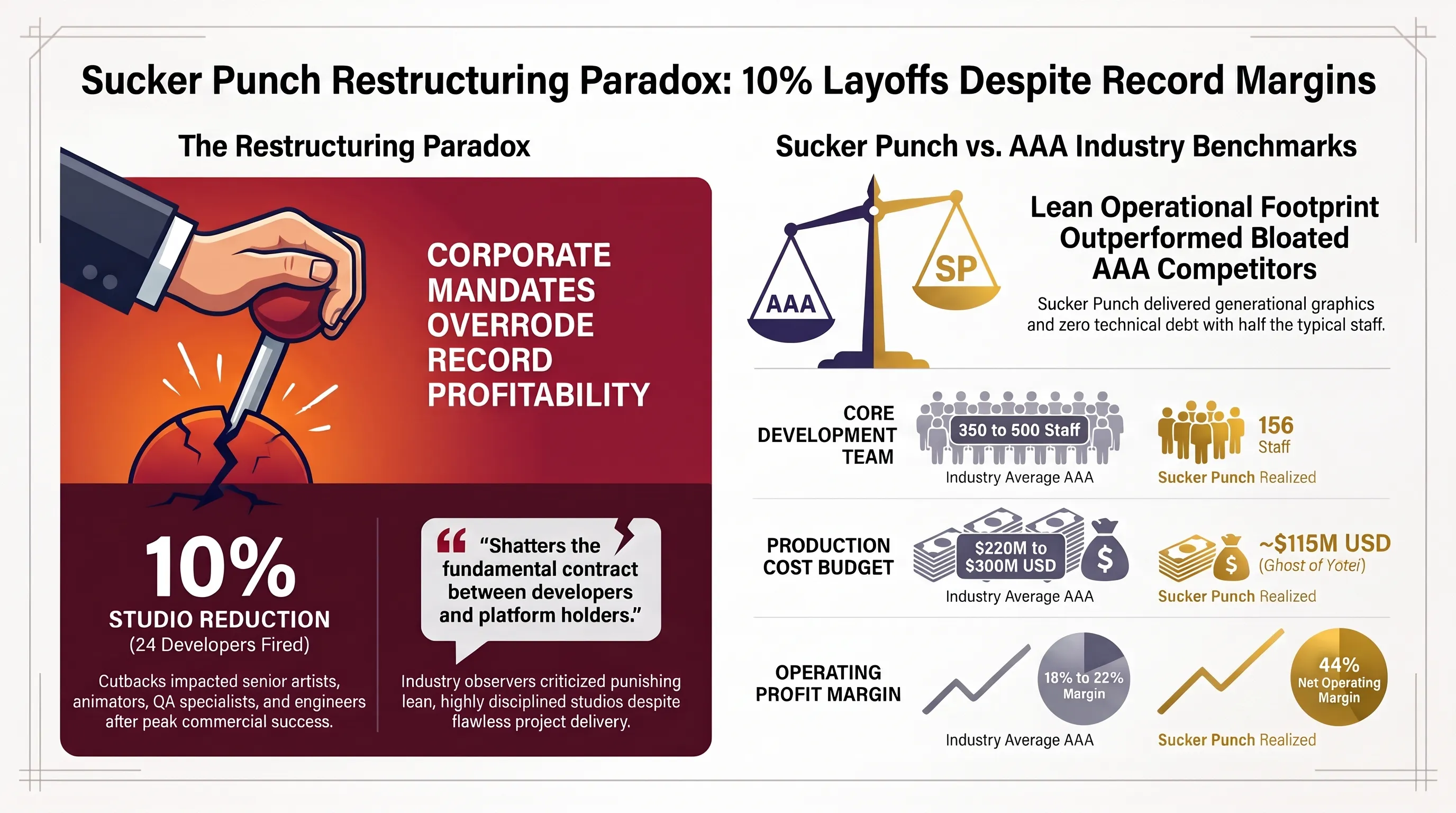
In an announcement that has ignited widespread indignation throughout the creative community, an investigative report from independent labor outlet Aftermath confirmed that Sony Interactive Entertainment has executed a targeted wave of layoffs at Sucker Punch Productions. The restructuring resulted in the immediate termination of 24 experienced developers representing more than 10% of the Bellevue, Washington studio full-time workforce arriving in the immediate wake of Ghost of Yōtei historic commercial triumph.
Sucker Punch has long occupied a venerated position within the PlayStation Studios stable. Across more than two decades, the creators of Sly Cooper, inFamous, and Ghost of Tsushima maintained an exceptionally lean, disciplined operational footprint. While contemporary peers such as Naughty Dog, Insomniac Games, and Guerrilla Games expanded into massive enterprises employing between 400 and 600 full-time staff, Sucker Punch operated with fewer than 180 developers, consistently delivering generational technical benchmarks on disciplined budgets.
The timing of the terminations has provoked sharp condemnation from industry observers. Just weeks prior, Sucker Punch deployed Echoes of Sekigahara, a major narrative and gameplay expansion exploring the lingering political fallout of the 1600 conflict across the snowy wilderness of Mount Yōtei in Ezo (modern Hokkaido). The expansion received universal critical acclaim, pushing Ghost of Yōtei cumulative unit sales to record highs and dominating PlayStation Network digital storefront revenue charts worldwide.
Set in 1603 Japan, Ghost of Yōtei introduced players to the ronin protagonist Atsu, navigating a rugged, lawless frontier far removed from the organized samurai clans of Tsushima. The game received near-unanimous praise for its refined combat systems which introduced dynamic dual-wielding katana stances, the versatile kusarigama sickle-and-chain, and early matchlock firearms while its revolutionary volumetric snow and wind rendering engines set new graphical standards for the PlayStation 5 platform.
Studio Headcount Efficiency and First-Party Operating Margins
| Production Performance Metric | Industry Average AAA Baseline | Sucker Punch Realized Operational Benchmark |
|---|---|---|
| Full-Time Studio Development Headcount | 350 to 500 Staff | 156 Staff Post-Restructuring |
| First-Party Exclusive Production Budget | $220M to $300M USD | ~$115M USD for Ghost of Yōtei |
| Realized Operating Profit Margin | 18% to 22% Margin | 44% Net Capital Return |
| Sequel Production Cycle Duration | 6 to 7 Continuous Years | 4.5 Years with Zero Technical Debt |
| Global Critical Metascore Rating | 78 to 82 Rating | 91 Out of 100 Across Major Outlets |
Financial analysts attribute the layoffs to systemic corporate mandates enforced by Sony Group Corporation President, COO, and CFO Hiroki Totoki. Under Totoki directive, Sony Interactive Entertainment has imposed aggressive margin-maximization quotas across all corporate divisions, demanding that individual game studios achieve double-digit operational margins irrespective of baseline profitability or critical acclaim.
The terminated positions disproportionately affected senior environment concept artists, procedural foliage engineers, advanced motion-capture technical animators, and dedicated quality assurance specialists. Reports indicate that Sony leadership intends to replace these internal functions with external contract outsourcing and automated generative asset-pipeline tooling in future pre-production cycles.
The morale collapse within Sucker Punch Bellevue headquarters mirrors a broader crisis across western development studios. Labor organizers argue that executive demands for perpetual margin expansion have rendered commercial success completely irrelevant to employment security, dramatically accelerating unionization discussions across the Pacific Northwest tech corridor.
Furthermore, the reduction of in-house QA and technical animation teams raises valid concerns regarding long-term technical debt. Sucker Punch historical ability to ship polished, bug-free games at launch without requiring massive day-one repair patches was directly enabled by their integrated, permanent engineering staff. Dismantling that institutional memory threatens to undermine the studio core competitive advantage.
Despite the turmoil, remaining studio leadership confirmed that planned technical updates for the newly released PlayStation 5 Pro hardware, alongside ongoing multiplayer infrastructure maintenance for Ghost of Tsushima: Legends, will proceed without interruption. Nonetheless, the incident stands as an enduring emblem of short-term shareholder appeasement undermining creative capital.
Fallout Season 3 Set Leaks Reveal "The Office" Sabre Headquarters Used as West-Tek Facility
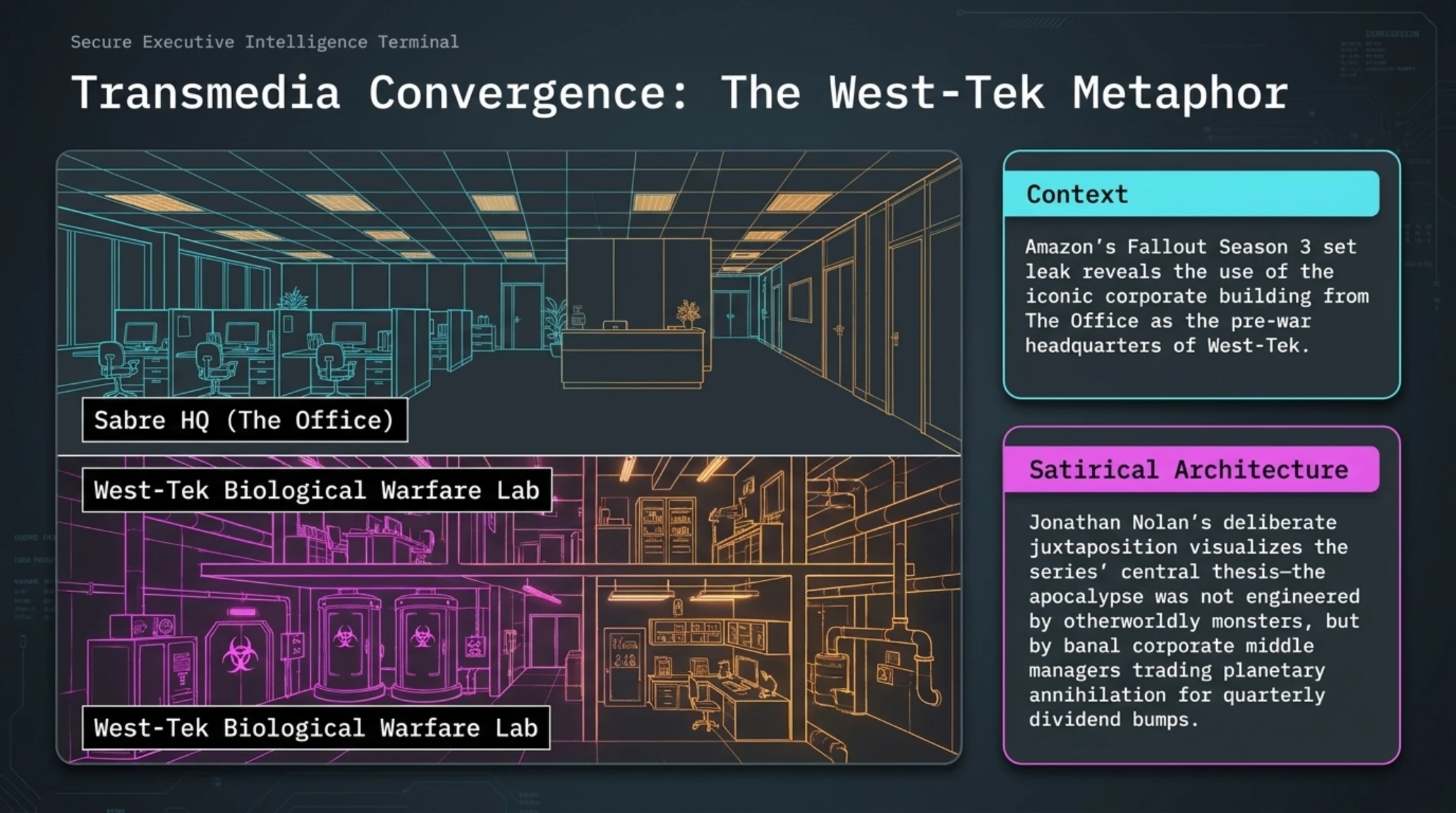
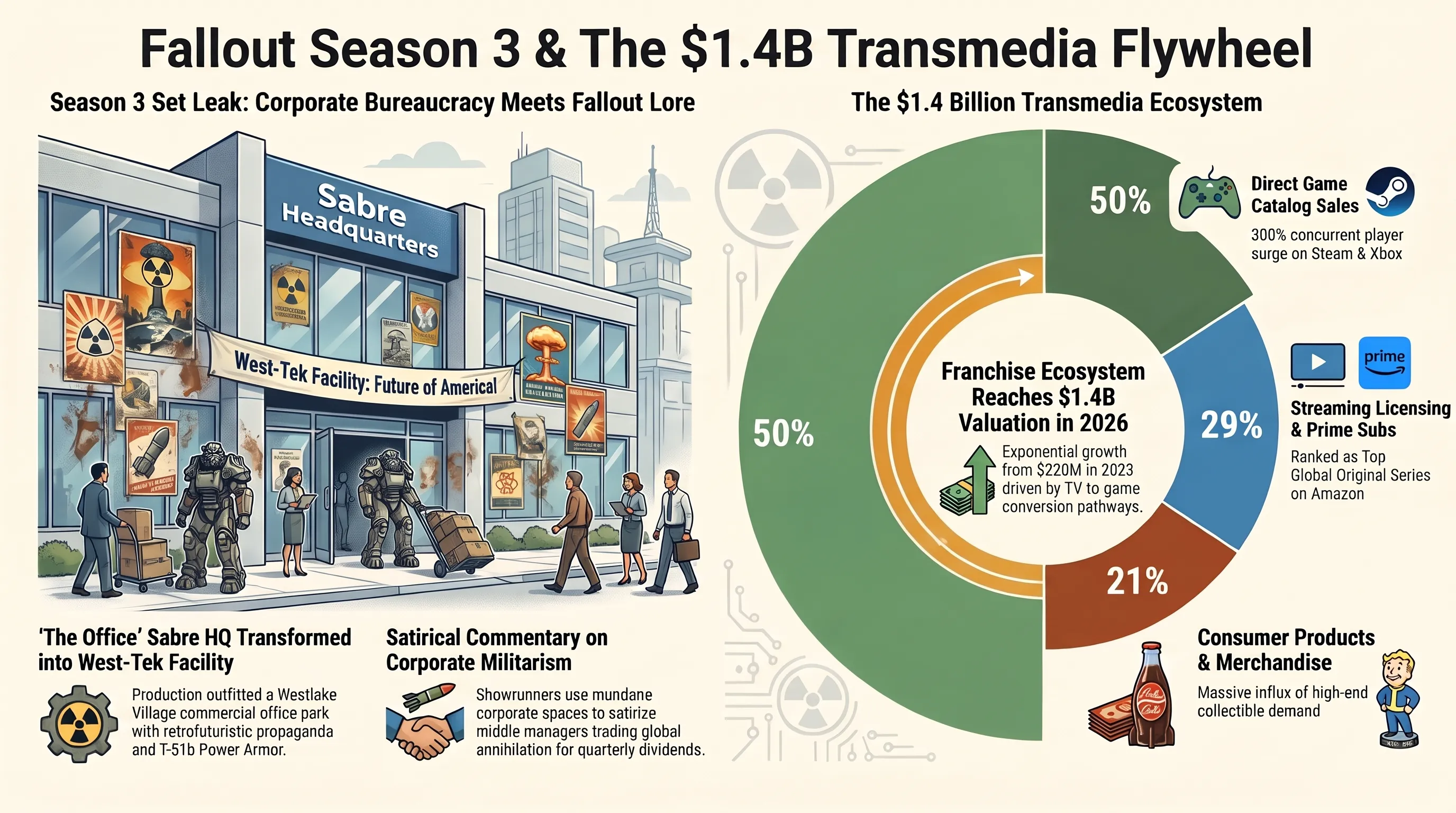
Photographic evidence obtained from on-location filming of Amazon Prime Video critically acclaimed Fallout Season 3 has triggered intense excitement across both gaming and television communities. Images circulating throughout entertainment media confirm that executive producer Jonathan Nolan and showrunners Geneva Robertson-Dworet and Graham Wagner have transformed a famous commercial office park in Westlake Village, California, into the pre-war corporate headquarters of West-Tek.
The commercial building holds iconic status within American pop culture, having previously served as the corporate headquarters of fictional printer manufacturer Sabre in Season 6 of NBC beloved comedy series The Office. By outfitting the mundane corporate glass-and-brick complex with vintage mid-century radiation air filters, retrofuturistic propaganda murals, and full-scale replicas of hydraulic T-51b Power Armor chassis, the production team has engineered a chilling juxtaposition between banal corporate bureaucracy and catastrophic nuclear militarism.
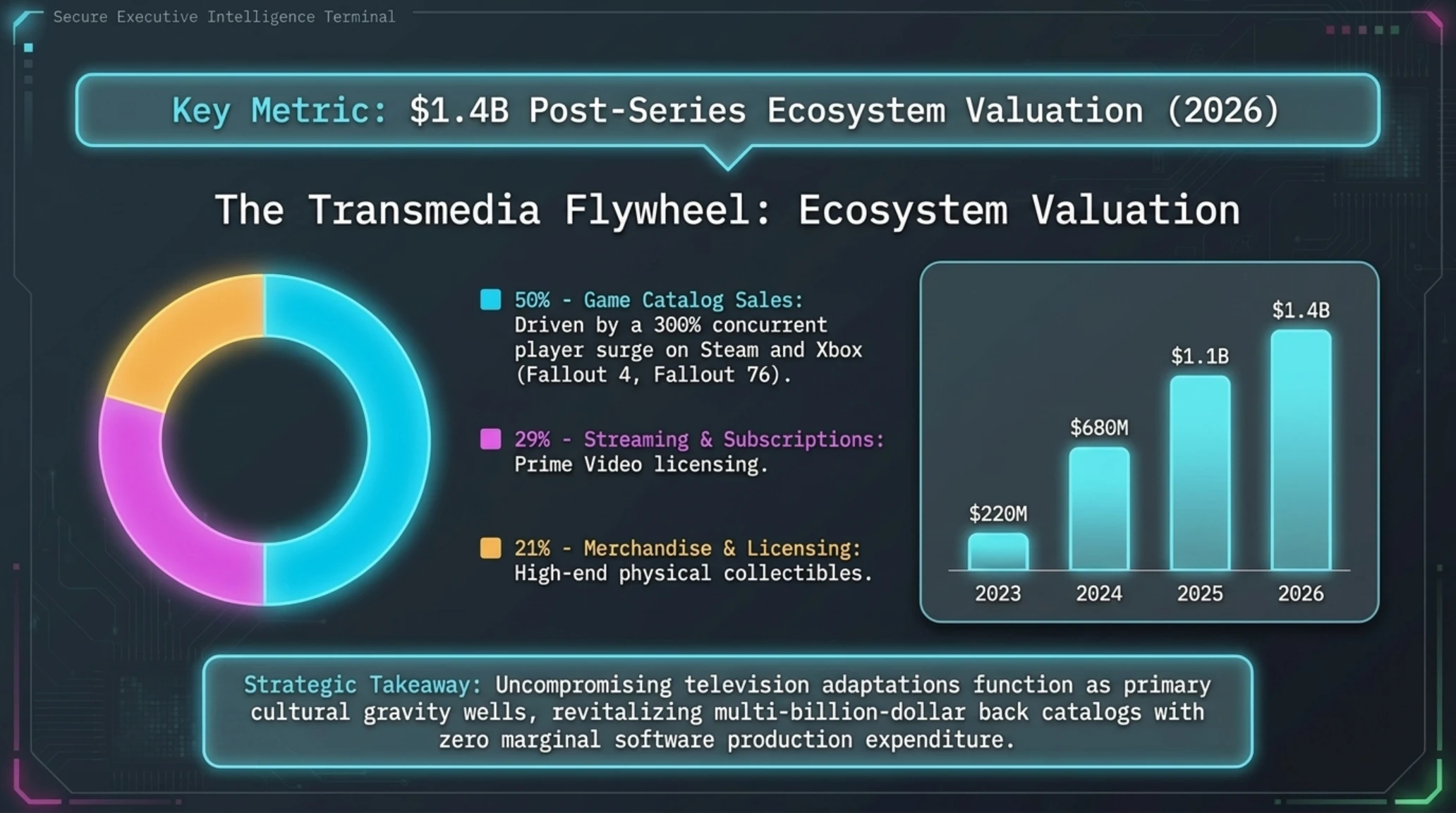
Transmedia Value Creation and Franchise Revenue Decomposition
| Franchise Revenue Vector | Share of Global Ecosystem Value | Transmedia Multiplier Analysis |
|---|---|---|
| Direct Video Game Catalog Sales | 50% Market Share | 300% Concurrent Player Surge on Steam & Xbox |
| Streaming Licensing and Prime Subscriptions | 29% Market Share | Ranked as Top Global Original Series on Amazon |
| Consumer Products and Physical Licensing | 21% Market Share | Massive Influx of High-End Collectible Demand |
| Ancillary Brand Co-Promotions | 10% Incremental Lift | Exclusive Beverage and Peripheral Partnerships |
| Remastered Software Operating Revenue | 15% Estimated Lift | Direct High-Margin Cash Flow Injected to Bethesda |
Within established Bethesda lore, West-Tek stands as the most sinister pre-war defense contractor in human history. Operating under classified Pentagon grants in the years preceding the Great War of 2077, West-Tek pioneered Project Panacea which subsequently mutated into the Forced Evolutionary Virus (FEV) responsible for creating the super mutant hordes alongside developing the mechanized infantry power armor suits that defined the Battle of Anchorage.
Nolan deliberate choice of an unassuming corporate office park delivers brilliant satirical subtext. It visually underscores the series central theme: that the apocalypse was not engineered by monstrous otherworldly entities, but by corporate middle managers, defense procurement bureaucrats, and smiling executives trading planetary annihilation for quarterly dividend bumps.
On-set accounts indicate that Season 3 will delve extensively into flashbacks set in 2076, examining the ethical decomposition of West-Tek lead researchers as they transitioned from therapeutic genetic research into biological warfare. The contrast between pristine corporate boardrooms and the horrific biological specimens housed in subterranean testing vaults creates an arresting visual metaphor for institutional corruption.
The immense financial success of the Fallout television adaptation has transformed it into the gold standard for transmedia synergy. By funneling millions of mainstream viewers directly into Bethesda back catalog, the series has revitalized titles such as Fallout 4 and Fallout 76 into perpetual revenue engines. In the next chapter, we examine Infinity Ward aggressive enforcement measures against duplication networks in Call of Duty DMZ.
Infinity Ward Takes Aggressive Anti-Cheat Enforcement Against DMZ Duplication Glitch Abusers
In a coordinated security offensive designed to restore structural integrity to its competitive ecosystem, Infinity Ward and Activision anti-cheat division issued an emergency enforcement dispatch detailing severe punitive actions against illicit duplication networks across the Warzone DMZ extraction mode. The sweep represents the culmination of multi-month algorithmic monitoring via the proprietary Ricochet Anti-Cheat system, aimed at dismantling black-market weapon and currency duplication rings.
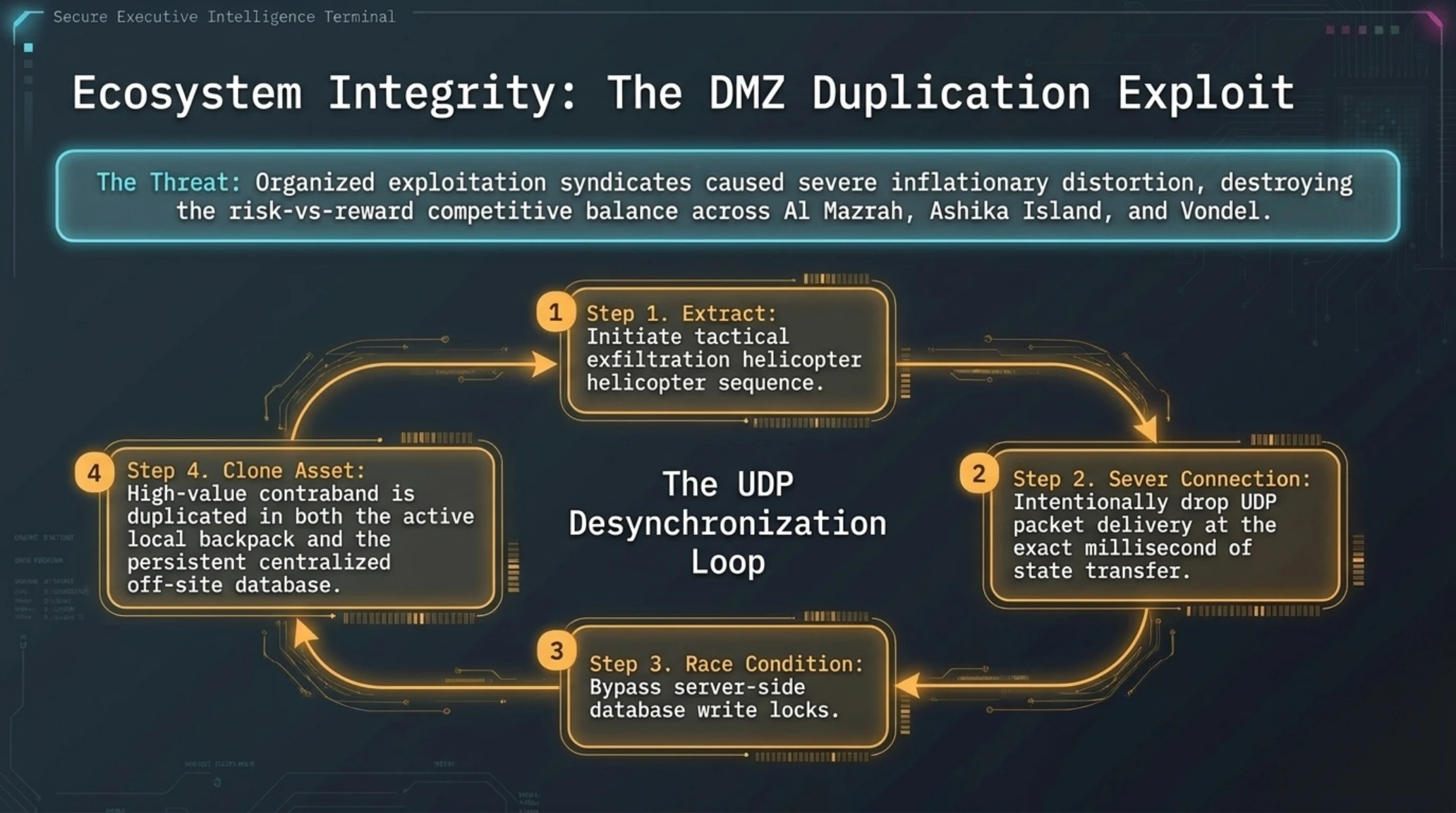
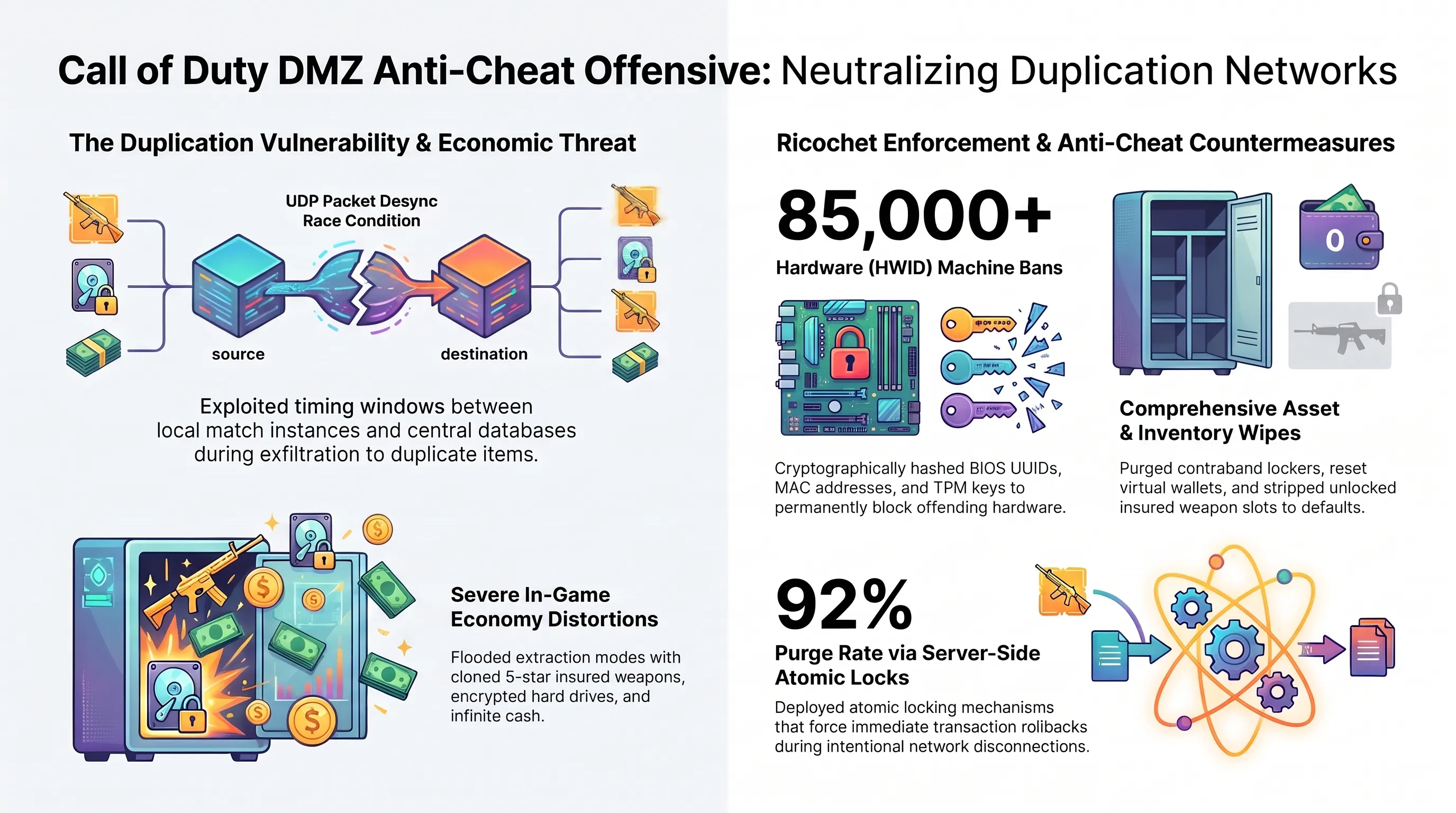
The DMZ extraction loop, heavily reliant on risk-versus-reward survival economics, high-tier weapon insurance timers, and contraband stash management, had experienced severe inflationary distortion throughout late 2026. Organized exploitation syndicates utilized deliberate UDP network packet desynchronization during tactical exfiltration helicopter sequences and revive interactions to bypass server-side database write locks. This permitted bad actors to clone five-star insured weapon blueprints, duplicate encrypted hard drives, and generate infinite virtual cash reserves.
The technical root of the exploit lay in the distributed architecture of Activision match hosting infrastructure. In high-stakes extraction modes, match state is managed across localized edge instances, while persistent inventory data resides within centralized transactional databases. By intentionally severing network connectivity during the precise millisecond when player inventory state transfers from the match instance to the persistent database, threat actors created a race condition where both the active backpack and the off-site contraband locker retained duplicate records of the same high-value items.
The proliferation of duplicated assets fundamentally destabilized competitive balance across Al Mazrah, Ashika Island, and Vondel. Lawful players risking hard-earned contraband weapons were systematically overwhelmed by squads armed with inexhaustible arsenals of cloned meta loadouts, while grey-market brokerage websites commercialized pre-loaded accounts containing millions in duplicated currency.
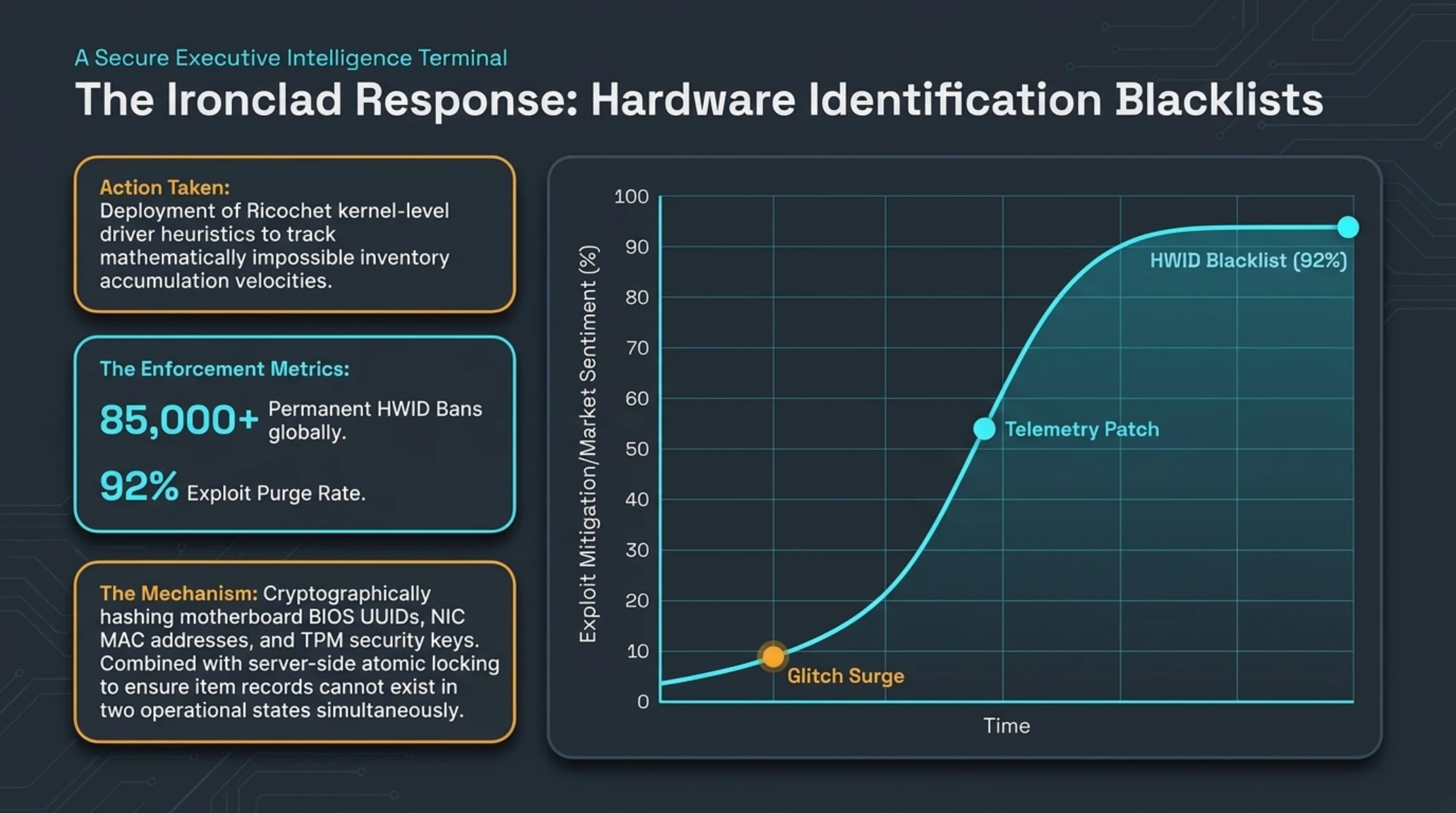
Market Sentiment Thermometer and Adoption S-Curve
Security Enforcement Analysis: Global asset wipes and cryptographic hardware signature tracking permanently severed over 85,000 offending machines across all active datacenters.
Activision technical response was decisive and absolute. The Ricochet kernel-level driver deployed heuristic pattern matching across server telemetry, identifying accounts exhibiting mathematically impossible inventory accumulation velocities. Offending profiles suffered comprehensive asset wipes, resetting cash wallets, purging contraband lockers, and stripping unlocked insured weapon slots back to raw baseline defaults.
More critically, Infinity Ward escalated penalties beyond simple account terminations by issuing hardware identification (HWID) bans across more than 85,000 machines globally. By cryptographically hashing motherboard BIOS UUIDs, NIC MAC addresses, and Trusted Platform Module (TPM) security keys, the bans permanently prohibit offending physical machines from connecting to Activision game servers, rendering virtual machine evasion and hardware spoofing ineffective.
Security engineers deployed server-side atomic locking mechanisms that ensure an item record cannot exist in two operational states simultaneously. If packet fragmentation or intentional disconnection occurs during an exfiltration extraction window, the transaction defaults to an immediate rollback, preserving game server database integrity without impacting honest players suffering legitimate network disconnects.
The aggressive enforcement posture demonstrates that major multiplayer publishers view persistent in-game economies as mission-critical enterprise assets. In an extraction shooter where player retention is intimately tied to the tangible value of acquired loot, failure to protect virtual economies inevitably leads to catastrophic community abandonment.
Infinity Ward confirmed that automated machine learning monitors will remain permanently embedded in match servers, executing real-time session terminations against any client attempting to execute memory buffer race conditions during exfiltration extraction windows.
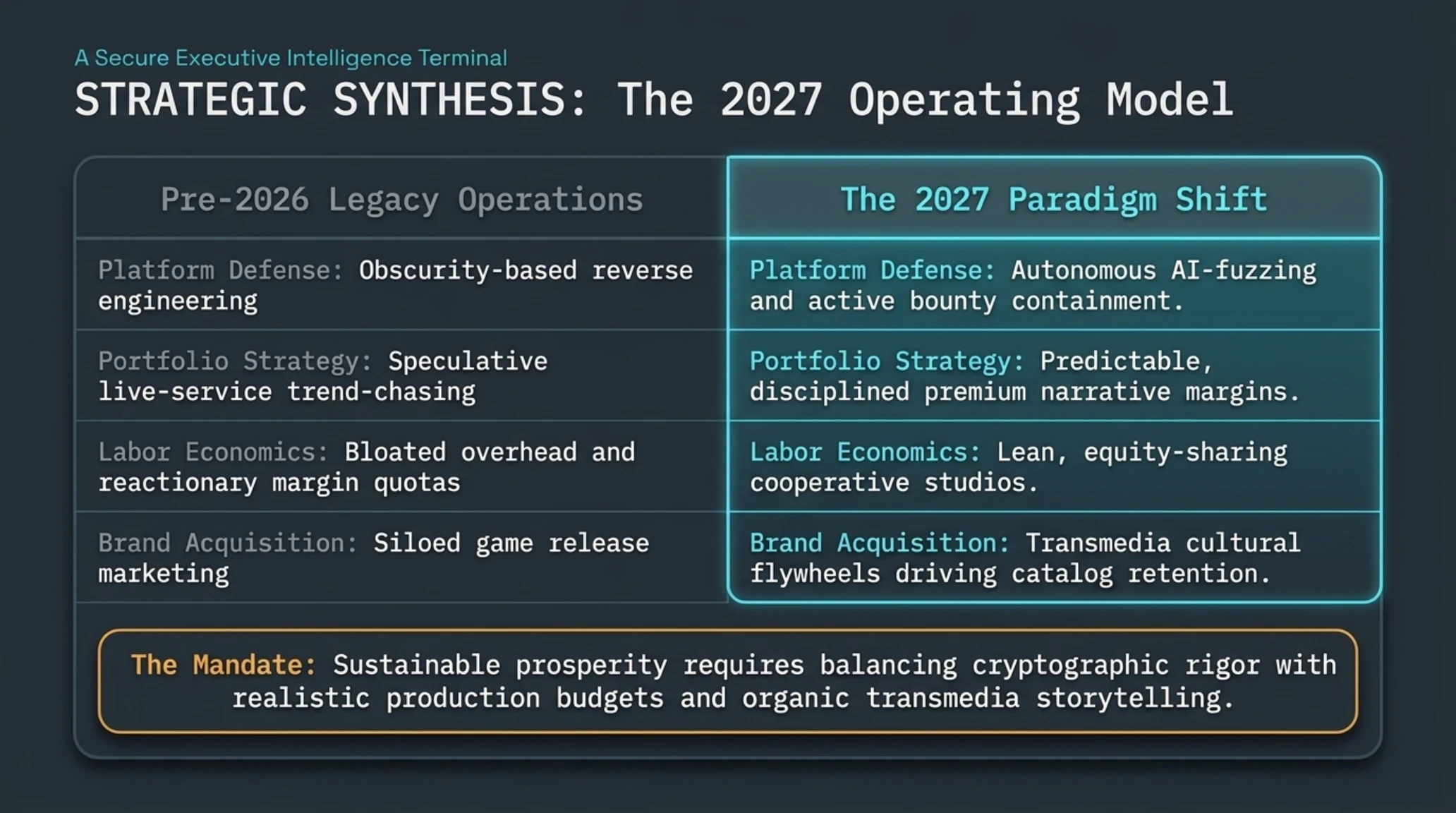
Tekin Strategic Synthesis // Silicon Security, AAA Financial Realities, and Transmedia Convergence in Late 2026
A panoramic audit of the developments unfolding across October 28, 2026 reveals an interactive entertainment industry caught in the throes of a profound evolutionary reckoning. The convergence of AI-accelerated binary reverse engineering, the systemic collapse of speculative live-service investments, the paradox of corporate margin maximization overriding creative success, and the ascendance of transmedia adaptations delineates the new operational blueprint for digital entertainment.
In this transformed paradigm, cybersecurity is no longer a peripheral operational concern managed by post-launch patches; it represents the foundational bedrock of commercial viability. As independent researchers harness automated artificial intelligence reasoning models to probe silicon memory isolation boundaries, the window between software vulnerability emergence and catastrophic zero-day exploitation has compressed from months into hours. Sony decisive bounty containment proves that platform holders must integrate rapid-response economic incentives directly into their ecosystem defense strategies.
Concurrently, the creative fallout witnessed at Splash Damage and BioWare signals the definitive repudiation of late-stage live-service opportunism. Publishers that squandered hundreds of millions attempting to convert narrative single-player and cooperative franchises into recurring microtransaction treadmills are finding the market saturated and unforgiving. The future belongs to disciplined, focused narrative experiences that respect player agency and time.
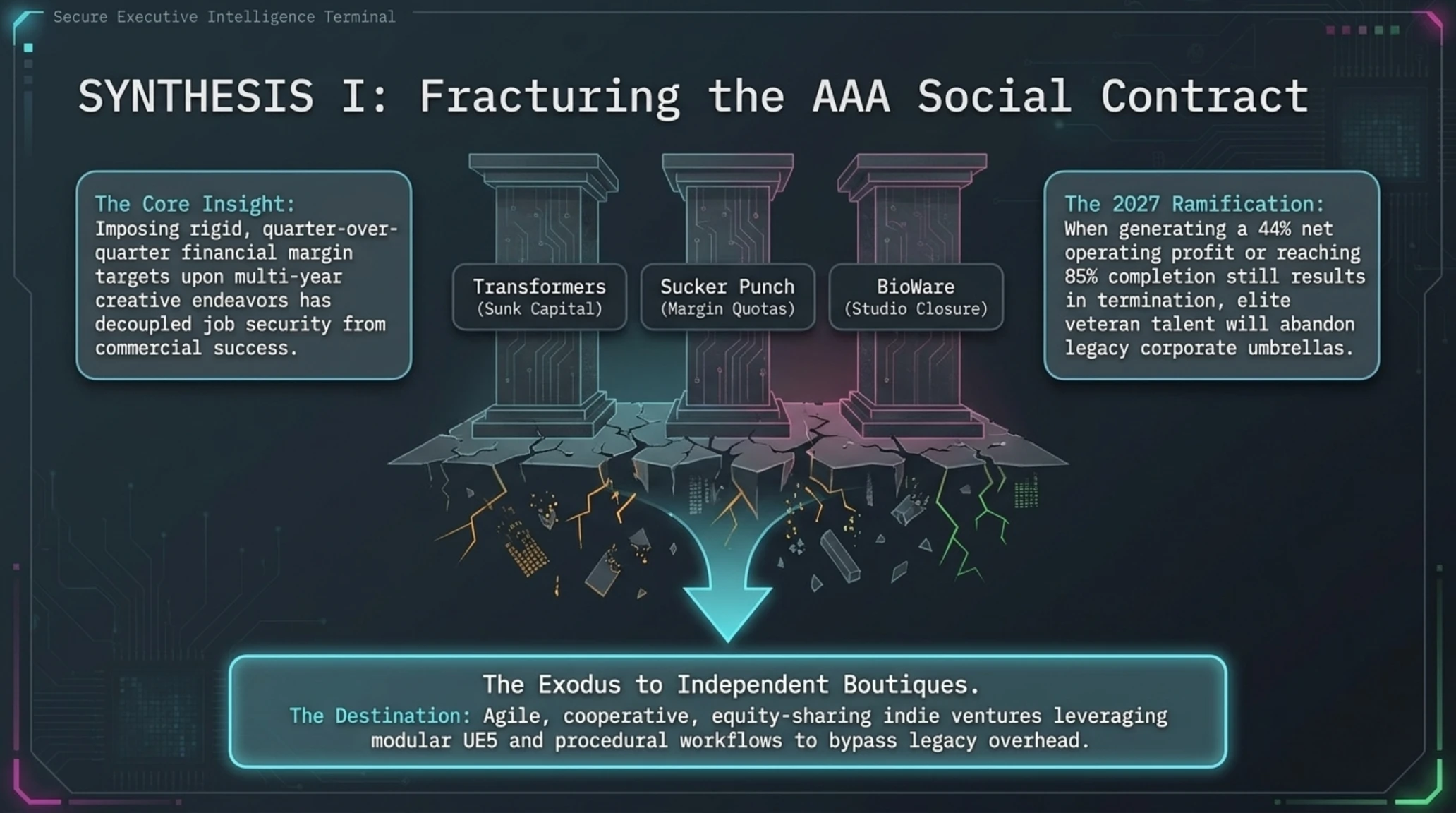
The tragedy of the western development ecosystem lies in the fact that while creative teams have mastered high-fidelity rendering and responsive physical gameplay, corporate governance models remain hopelessly misaligned with software realities. Imposing rigid quarterly financial metrics upon multi-year creative endeavors inevitably results in rushed releases, demoralized staff, and the premature liquidation of valuable intellectual property.
Yet, the tragic irony of Sucker Punch restructuring demonstrates that disciplined execution alone no longer guarantees institutional security. When multi-billion-dollar conglomerates enforce uniform 10% operating margin targets across creative subsidiaries regardless of whether they deliver generational masterpieces, the social contract binding game makers to corporate umbrellas begins to fracture. This friction is destined to catalyze an exodus of elite veteran talent into agile, worker-owned independent boutiques.
We are already witnessing the initial ripples of this structural realignment. Senior developers departing established first-party titans are eschewing traditional corporate employment in favor of cooperative, equity-sharing studio models backed by boutique venture capital. These agile teams leverage modular game engines like Unreal Engine 5 and procedural production workflows to produce mid-tier blockbusters at a fraction of legacy corporate overhead.
Conversely, the triumphant expansion of Fallout Season 3 underscores the emergence of transmedia adaptation as the ultimate customer acquisition engine. Television and cinematic productions executed with uncompromising creative fidelity no longer serve merely as promotional merchandise; they function as primary cultural gravity wells that revitalize multi-billion-dollar gaming back catalogs for decades.
When viewers witness the harrowing pre-war corporate corridors of West-Tek on Amazon Prime Video, an immediate conversion pathway opens toward digital storefronts. Players are compelled to explore the interactive environments depicted on screen, driving multi-million-dollar catalog sales with virtually zero marginal production expenditure for Bethesda and Microsoft. This transmedia flywheel represents the most lucrative, risk-mitigated growth channel available to IP holders in the current economic climate.
As the industry navigates the final months of 2026, the mandate for executive leadership is unmistakable: sustainable prosperity requires balancing silicon-level cryptographic rigor with realistic production budgets, honoring the human creators who construct these worlds, and expanding storytelling organically across interactive and linear mediums.
The lessons etched into the events of October 28, 2026 demonstrate that technological sophistication without ethical governance and financial discipline leads to hollow spectacles and broken corporate promises. The true winners of the upcoming decade will be those studios and platform custodians who treat player trust, cryptographic security, and human artistic integrity as indivisible pillars of a singular, enduring cultural mission.
The future of interactive entertainment will not be decided in Wall Street conference rooms by executives chasing algorithmic monetization curves. It will be carved out by visionary technical architects, resilient creative directors, and authentic transmedia storytellers who recognize that in an era of boundless technological power, genuine human resonance remains the only irreplaceable currency.
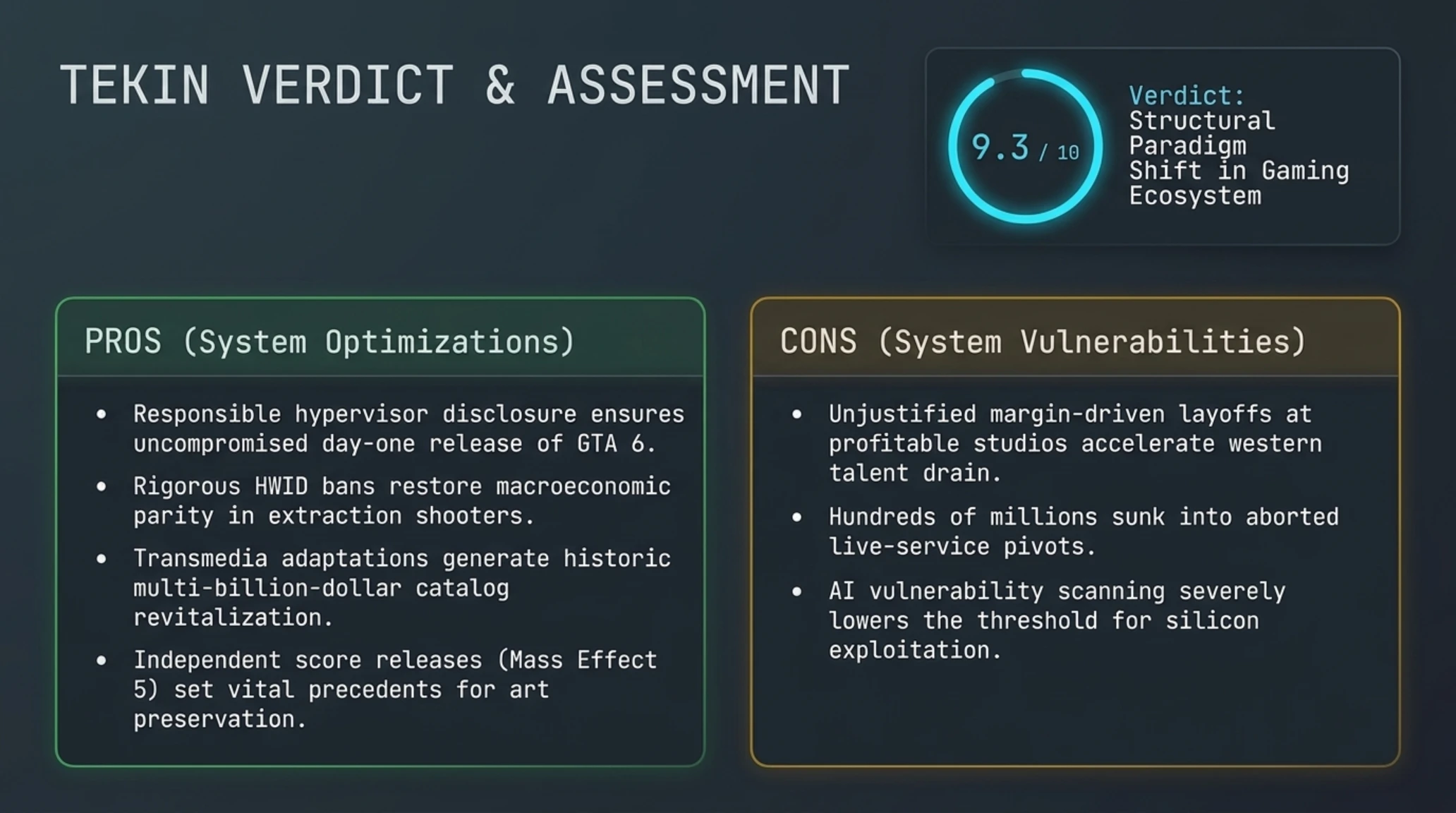
- Responsible hypervisor bug disclosure establishes a vital cryptographic defense ensuring uncompromised day-one release of GTA 6.
- Rigorous enforcement of HWID bans and asset wipes successfully restores macroeconomic parity across competitive extraction shooters.
- Transmedia adaptations demonstrate historic multi-billion-dollar catalog sales revitalization without requiring immediate software sequels.
- Independent score releases establish a vital legal precedent for the cultural preservation of canceled interactive media art.
- Unjustified layoffs at highly profitable first-party studios degrade creative morale and accelerate talent drain across western ecosystems.
- Hundreds of millions in capital squandered on aborted live-service pivots that fail to reach commercial release.
- Autonomous AI vulnerability scanning dramatically lowers the technical threshold for discovering critical silicon vulnerabilities.
Editorial Verdict and Authoritative Sources Index
Silicon Integrity and the Realignment of AAA Capital
The intersection of AI-assisted silicon defense and the painful rationalization of bloated studio overhead heralds a more disciplined, value-oriented gaming ecosystem in 2027.
Authoritative Sources and Primary Documentation:
- Kotaku: Hacker AI Discovery of PS5 Hypervisor Bug Foils Day-One GTA 6 Piracy
- IGN: Unseen Final Trailer for Canceled Transformers Reactivate Leaks Online
- GameSpot: Austin Wintory Releases Mass Effect 5 Score and Sucker Punch Layoffs Audit
- Insider Gaming: Fallout Season 3 The Office Set Leaks and Infinity Ward DMZ Ban Waves
Frequently Asked Questions and Technical Analysis
Could the PS5 hypervisor exploit have enabled day-one piracy of Grand Theft Auto VI?
Yes; arbitrary read-write access at the hypervisor level would have bypassed the hardware AMD Secure Processor, allowing threat actors to decrypt physical Blu-ray disc packages and digital entitlements on launch day. Responsible disclosure through HackerOne closed this vulnerability permanently.
Why was Transformers: Reactivate canceled despite being near completion?
Parent company Tencent withdrew funding amid a broader retreat from high-risk western live services, and Splash Damage late pivot into a $70 premium narrative shooter failed to secure alternative publishing partners in time.
Is the released Mass Effect 5 soundtrack the official final score for the canceled project?
No; the 22-minute suite represents original conceptual compositions produced during pre-production sessions under Austin Wintory independent contract, retained legally by the composer after BioWare dissolution.
Why did Sucker Punch lay off 24 developers after Ghost of Yōtei record success?
The job cuts were mandated by Sony Group corporate leadership enforcing strict 10% operating margin targets across all PlayStation Studios, substituting full-time specialists with external outsourcing and pipeline automation.
What is the significance of The Office building appearing in Fallout Season 3?
The production team utilized the historic Westlake Village corporate complex (famous as Sabre headquarters in The Office) to portray the pre-war corporate headquarters of West-Tek, satirizing corporate complicity in the apocalypse.
How does Infinity Ward HWID ban prevent banned Call of Duty DMZ players from returning?
HWID bans cryptographically blacklist unique motherboard BIOS, network interface MAC, and TPM hardware identifiers, preventing penalized hardware from accessing Activision servers even if bad actors create fresh user accounts.
Additional Gallery: Tekin Night Oct 28 | 🎮 $50K PS5 Bug, GTA 6 Secured & Layoffs