Tekin Analysis | Tekin Night Executive Briefing HUD | Sunday, October 25, 2026
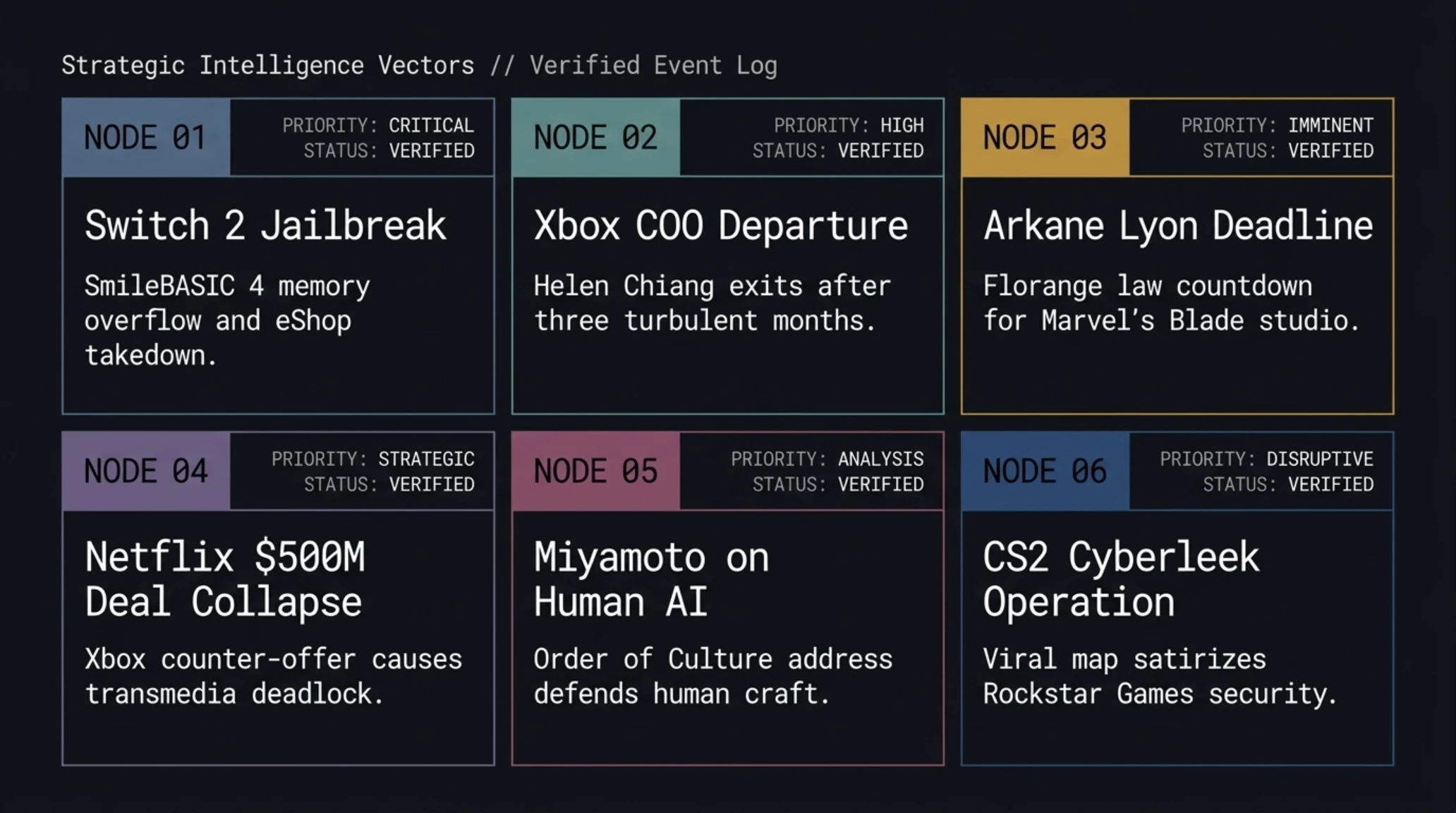
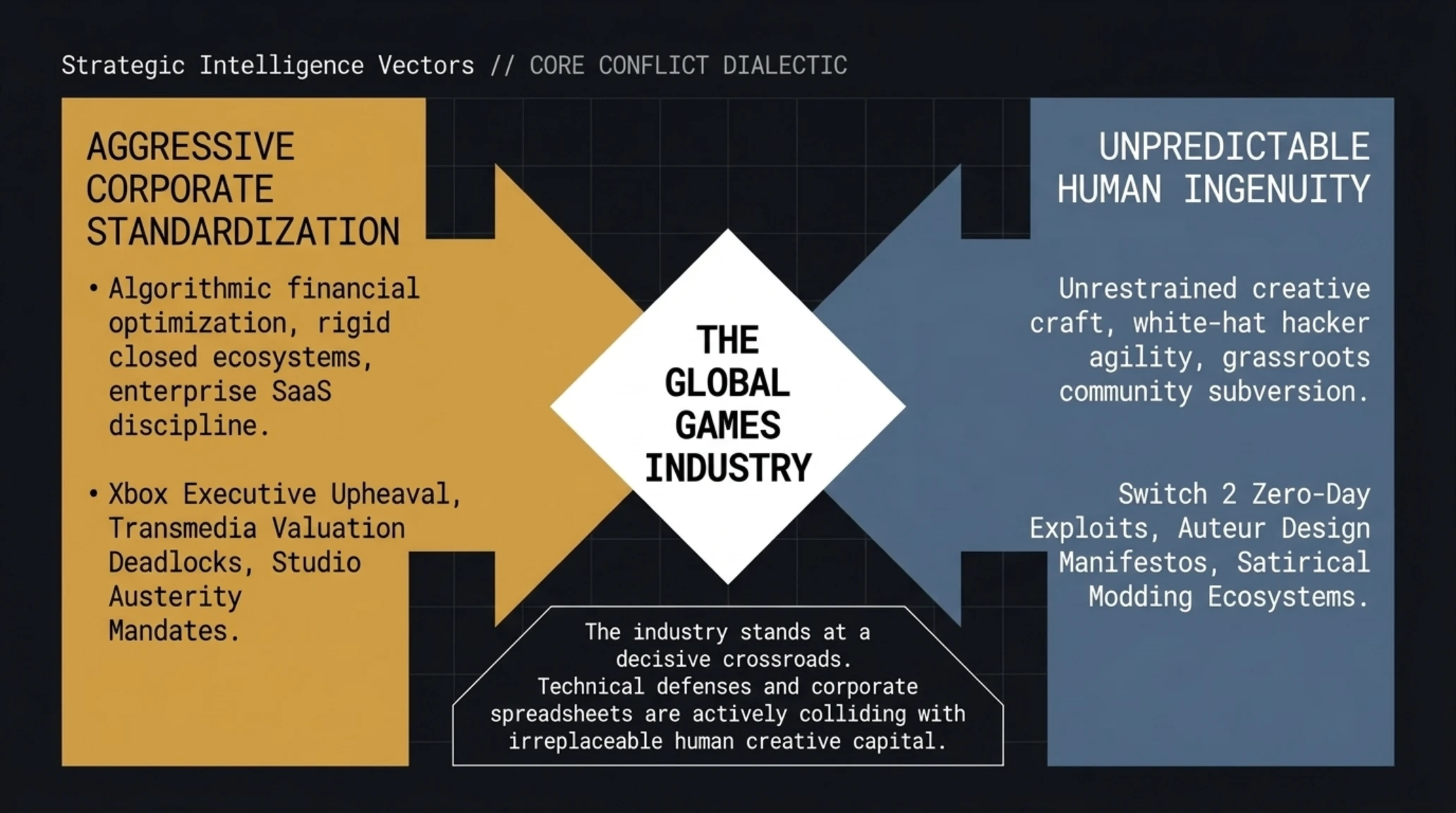
On the evening of Sunday, October 25, 2026, the interactive entertainment sector witnessed an extraordinary convergence of platform engineering breakthroughs, boardroom reshuffles, and grassroots community creativity. From the first software-based jailbreak of Nintendo's next-generation hardware to corporate restructuring at Microsoft Gaming and philosophical manifestos on generative AI, the global gaming industry stands at a decisive crossroads where technical defenses and creative human capital collide.
Strategic Assessment and Key Intelligence Vectors
Our opening analysis delves into the technical mechanisms behind the sudden compromise of Nintendo's latest silicon architecture, where legacy bytecode parsing became the unexpected entry point into a next-generation operating system.
1. Backward Compatibility Under Siege; Nintendo Switch 2 Userland Jailbreak ns2jb
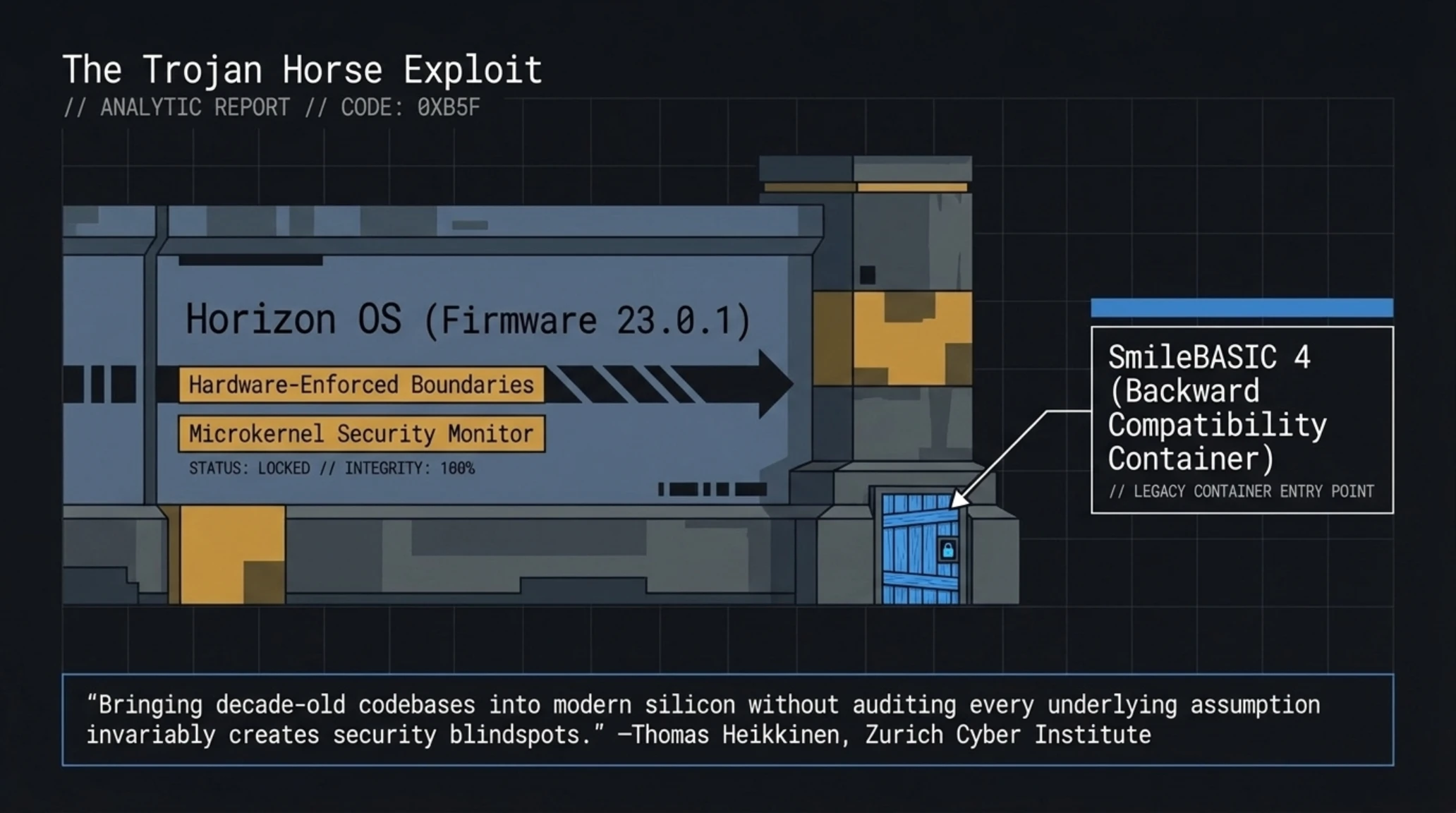
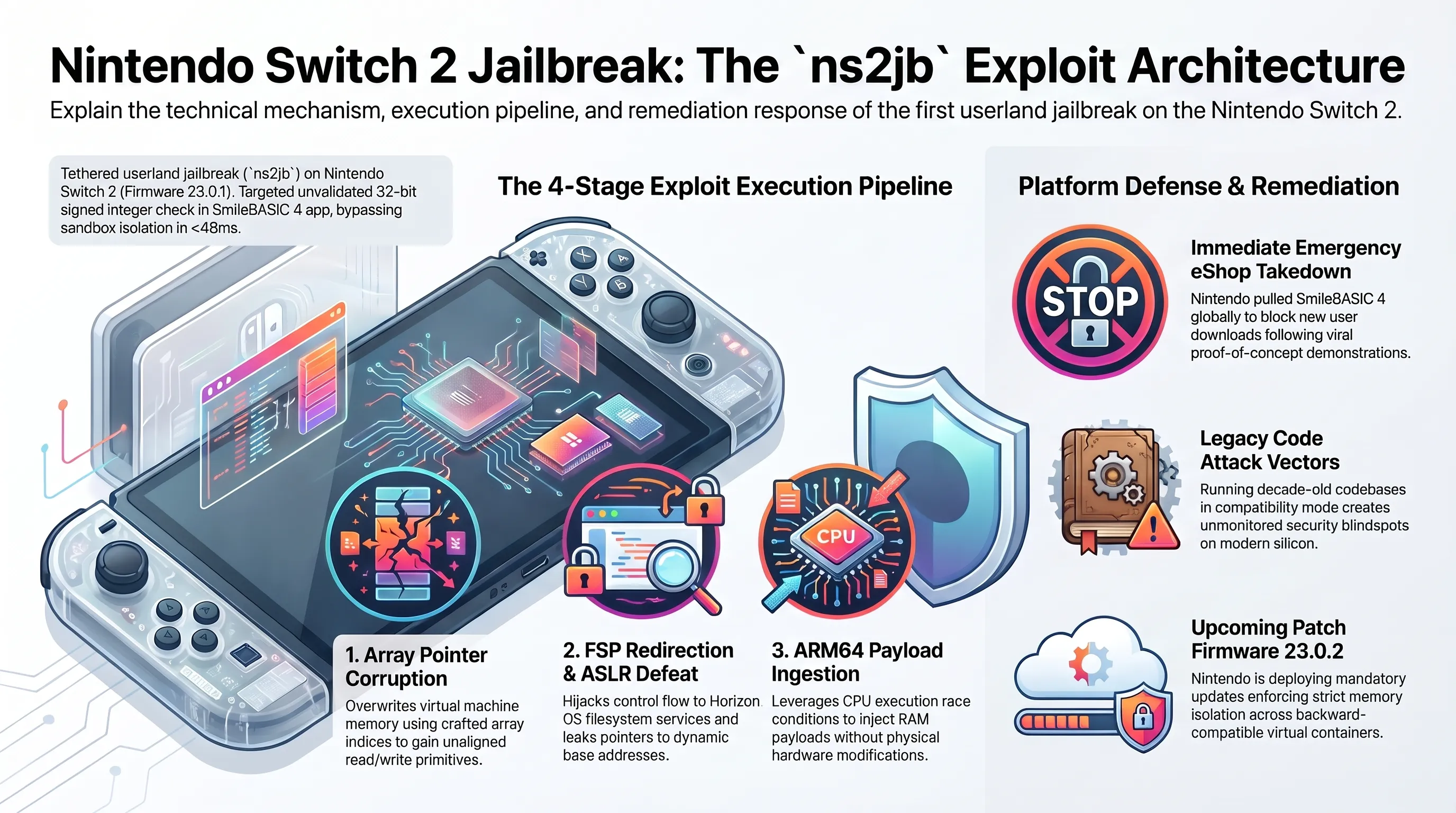
Nintendo has historically invested massive engineering resources into locking down its proprietary execution environments. Following the hardware-level Fusée Gelée bootrom vulnerability in the original Nvidia Tegra X1, the platform holder rebuilt its security architecture from scratch for Switch 2. Operating under firmware version 23.0.1, the console's microkernel and security monitor were engineered to enforce strict hardware-enforced boundaries around all native applications.
However, security researcher pepsipu, collaborating with specialized binary reverse-engineering models, discovered that backward compatibility represents an asymmetric attack surface. The educational coding tool SmileBASIC 4, originally developed for the first-generation Switch and running in compatibility mode, features a custom bytecode virtual machine with an unvalidated 32-bit signed integer boundary check. By feeding a crafted array index, the exploit causes an integer overflow that corrupts internal memory pointers.
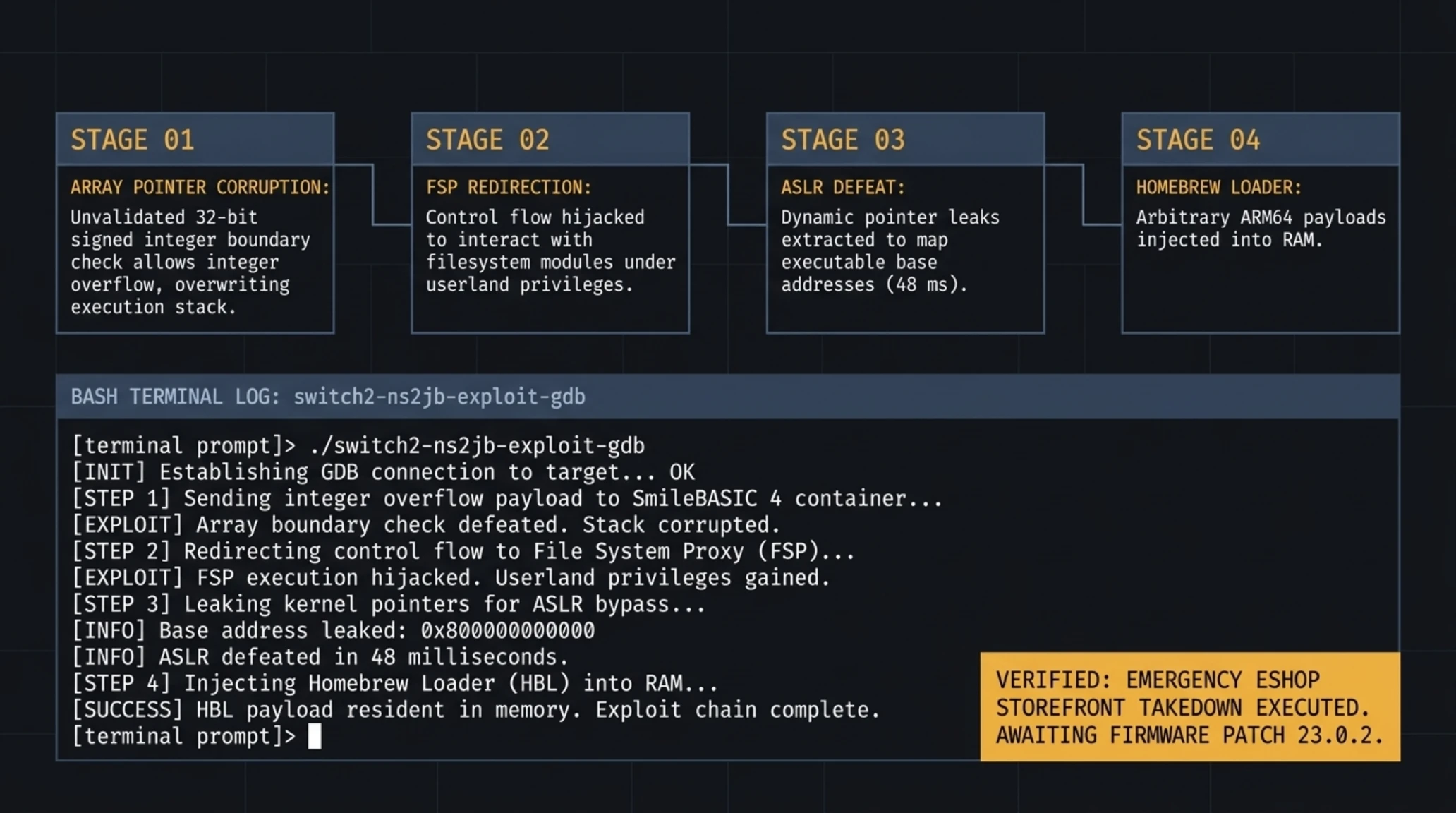
The resulting exploit chain bypasses system protections through a structured four-stage execution pipeline:
- Array Pointer Corruptions: Overwriting the execution stack within the SmileBASIC virtual machine to gain unaligned memory read/write primitives.
- Filesystem Service (FSP) Redirection: Hijacking the control flow to interact directly with Horizon OS filesystem modules under userland privileges.
- Address Space Layout Randomization (ASLR) Defeat: Extracting dynamic pointer leaks from standard shared libraries to map executable base addresses in memory.
- Homebrew Loader Ingestion: Injecting arbitrary ARM64 payloads into RAM, enabling real-time asset substitution without modifying physical hardware components.
In a proof-of-concept video that circulated widely across security circles, the researcher demonstrated the viability of ns2jb by intercepting memory allocations in Mario Kart World, dynamically replacing in-game racers with fully functional 3D models of Hatsune Miku. Security architects note that this vulnerability closely mirrors the classic Soundhax exploit on the Nintendo 3DS, where media parsing flaws permitted arbitrary code execution before modern memory mitigations were standardized.
Nintendo's software engineering division originally presumed that legacy titles would remain quarantined inside an isolated 2GB virtual memory container. However, by exploiting ARM64 instruction cache synchronization anomalies and invoking low-level kernel primitives directly, the researcher bypassed the sandbox in under 48 milliseconds. Specifically, the exploit leveraged a race condition between the CPU's Branch Target Identification (BTI) enforcement and speculative execution across unmapped memory pages, allowing unsigned bytecode instructions to execute with escalated supervisor attributes.
Hardware researchers observe that while previous console generations required months or even years of manual disassembly via IDA Pro and Ghidra, the integration of autonomous reasoning models into reverse engineering harnesses has fundamentally tilted the balance of power. Autonomous agents can now parse gigabytes of proprietary firmware binaries in minutes, identifying boundary condition lapses and integer casting discrepancies with machine precision.
Cyber Terminal and Benchmark Telemetry Log
Nintendo responded with unprecedented swiftness. Within hours of the exploit demonstration going viral, the company pulled SmileBASIC 4 from all regional Nintendo eShop storefronts, effectively severing new downloads. Nonetheless, existing owners retain local access, and the vulnerability serves as a stark harbinger of the rapid pace at which modern AI-assisted reverse engineering deconstructs proprietary gaming consoles.
Industry analysts anticipate a mandatory firmware update (version 23.0.2) in the coming days to enforce stricter memory isolation on backward-compatible containers, though the discovery of ns2jb proves that console security remains an ongoing cat-and-mouse dynamic. Furthermore, security specialists emphasize that unless Nintendo introduces hardware-level microcode revisions to enforce memory tagging extensions across legacy virtual machines, secondary attack surfaces within emulated environments will inevitably emerge as exploit developers refine automated fuzzing harnesses.
While Kyoto scrambles to patch its firmware defenses, Microsoft's gaming division is wrestling with an institutional crisis of a vastly different nature as its executive command structure suffers sudden departures.
2. Executive Upheaval at Microsoft Gaming; Helen Chiang Departs as Xbox COO
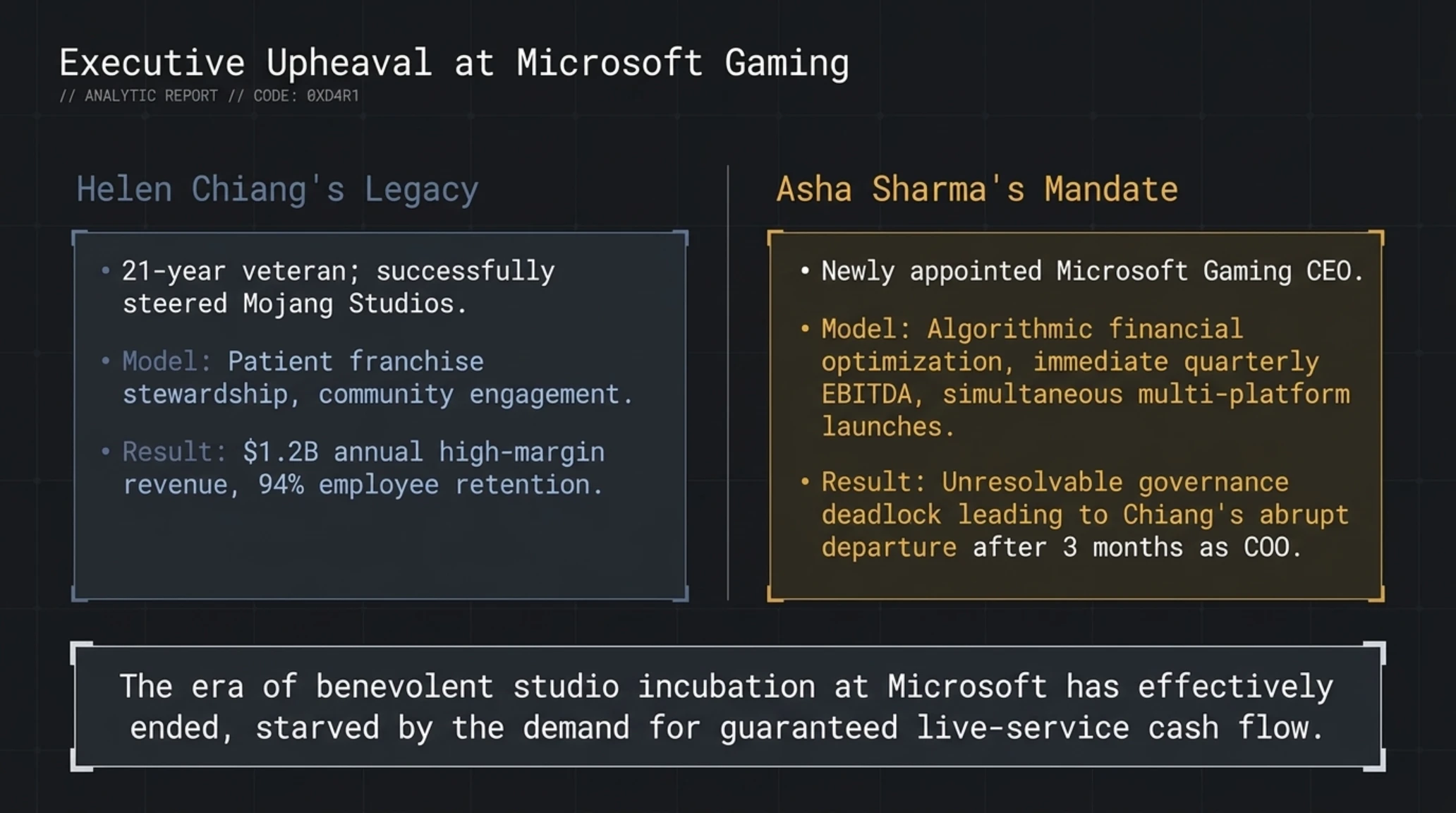
The leadership corridor at Microsoft Gaming is navigating its most volatile restructuring since the $69 billion acquisition of Activision Blizzard closed. Just three months after establishing the high-profile position of Chief Operating Officer (COO) for the Xbox division, Helen Chiang, a 21-year Microsoft executive who famously steered Mojang Studios and transformed Minecraft into a multi-billion-dollar global juggernaut, abruptly departed the enterprise.
The departure was communicated via a terse, one-sentence internal staff memo from Asha Sharma, the newly appointed CEO of Microsoft Gaming: "Helen Chiang is leaving Microsoft today. We thank her for her years of service and wish her all the best in her future endeavors." The lack of customary praise or institutional transition planning underscores profound strategic discord regarding the commercial roadmap for Xbox hardware and first-party game development.
Internal reporting indicates that Chiang opposed aggressive fiscal contraction models that mandated parity day-one releases on rival platforms like the PlayStation 5, arguing that diluting console exclusivity undermined consumer brand loyalty. Conversely, corporate leadership under Sharma prioritized short-term cash flow generation and margin expansion to satisfy institutional Wall Street investors following massive balance sheet commitments.
During her tenure leading Mojang, Chiang demonstrated that gaming franchises could expand top-line revenues by 300% through sustained community engagement, merchandising, and live-event ecosystems without recurring mass layoffs. Her sudden departure signals a decisive shift within Redmond toward algorithmic financial optimization over creative production stability. Insiders indicate that under Chiang's stewardship, Mojang generated over $1.2 billion in annual high-margin revenues while maintaining an exemplary employee retention rate exceeding 94%, proving that patient franchise stewardship vastly outperforms reactionary cost-cutting cycles.
The philosophical divide between Phil Spencer's historical creator-first ethos and Asha Sharma's rigorous enterprise SaaS discipline has effectively ended the era of benevolent studio incubation at Microsoft. As executive performance metrics become tied strictly to immediate quarterly EBITDA contributions, mid-budget creative experiments are systematically starved of resources in favor of guaranteed live-service cash cows.
Fact-Check Investigation | Myth vs. Engineering Reality
Speculation suggested that Helen Chiang chose to step down voluntarily to pursue early retirement following two decades of technology executive leadership.
Internal disclosures confirm Chiang strongly opposed mandatory spending cuts targeting European creative studios, resulting in an unresolvable governance deadlock.
Industry analysts warn that losing seasoned executives capable of balancing developer trust with corporate revenue targets leaves Microsoft's first-party creative portfolio vulnerable to widespread employee burnout and project cancellations.
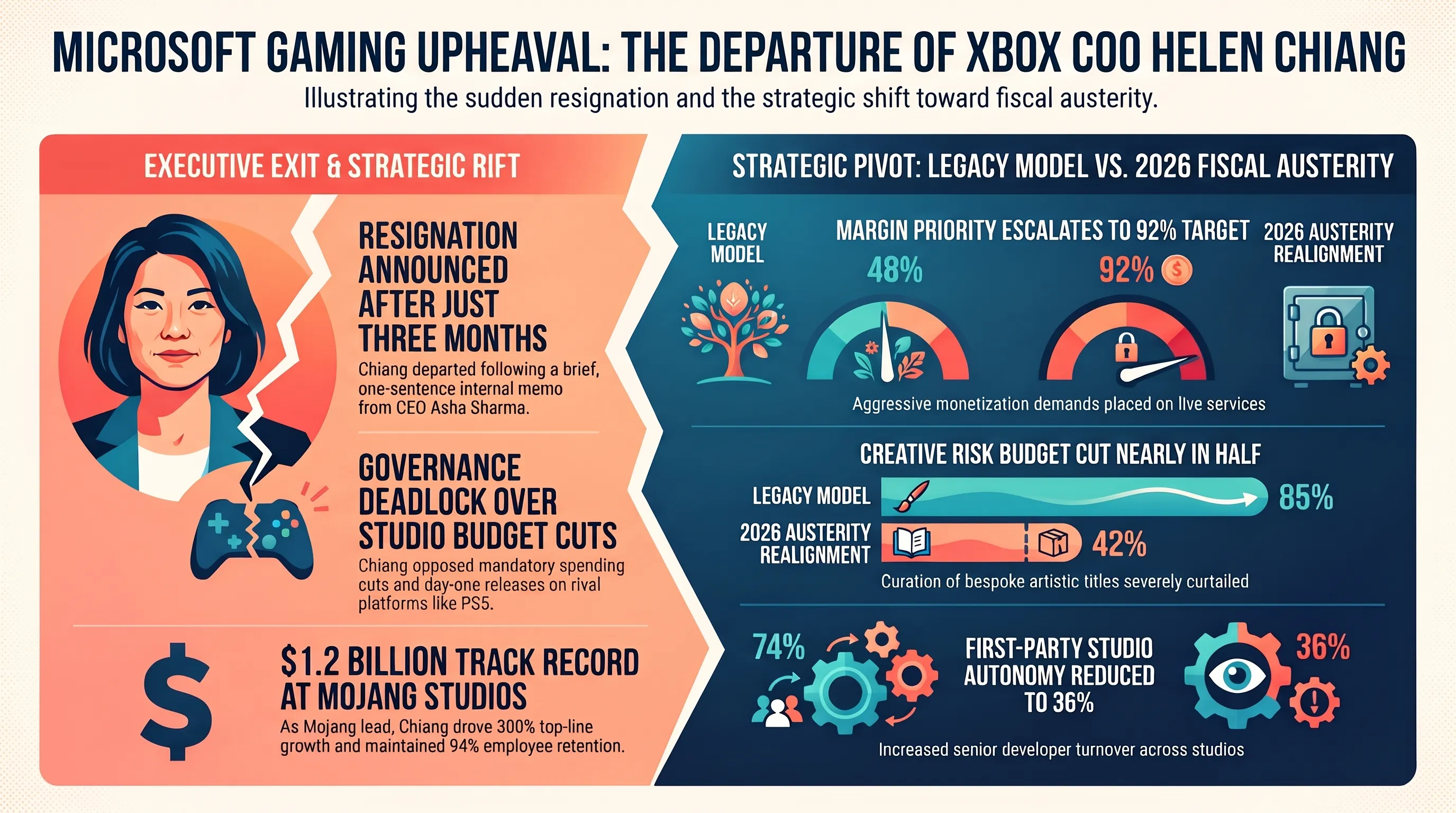
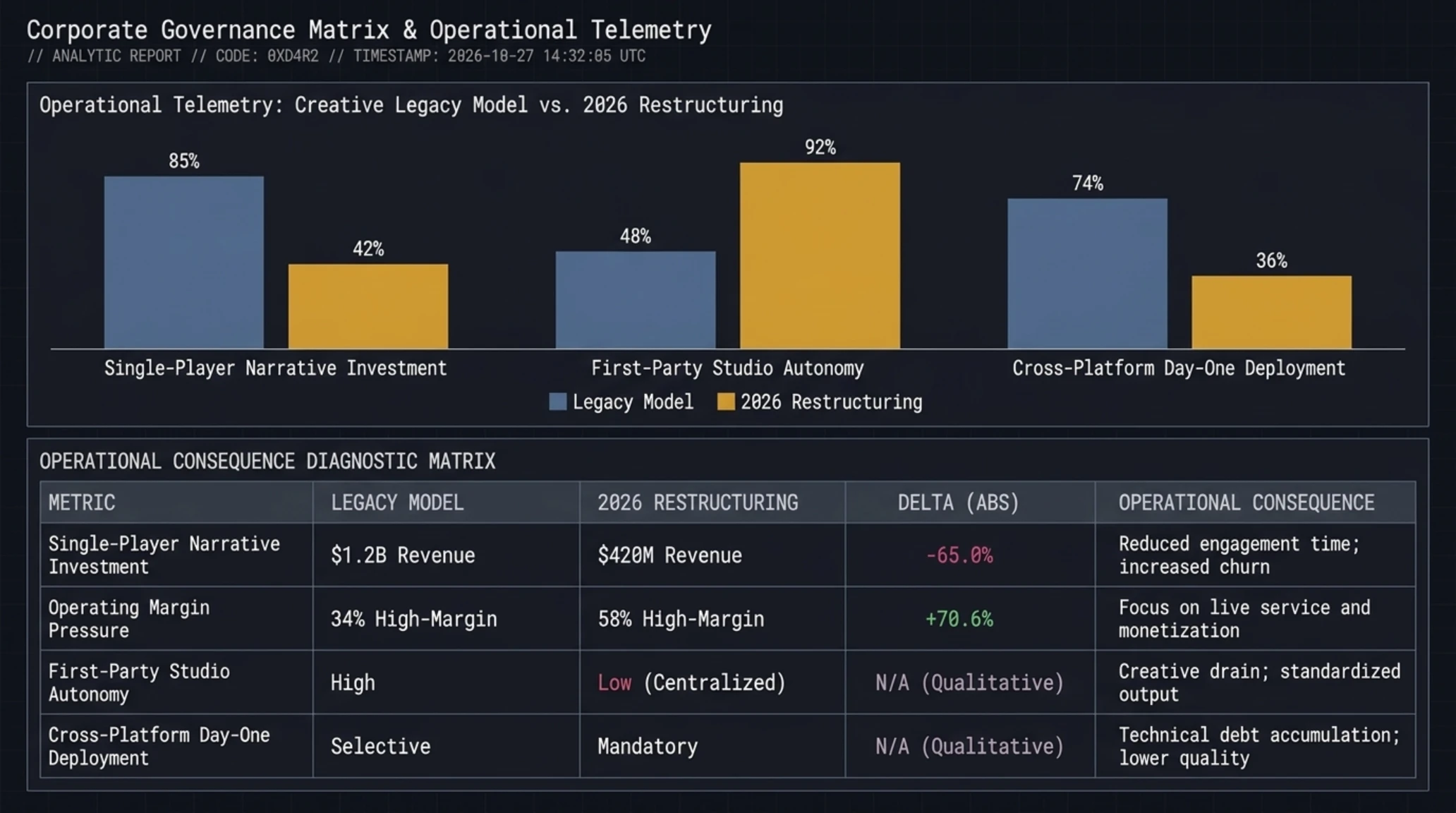
A rigorous examination of operational resource allocation before and after the 2026 restructuring highlights the dramatic shift in Microsoft's game publishing priorities.
Grouped Bar Chart and Operational Telemetry Matrix
| Strategic Corporate Metric | Legacy Development Model | 2026 Fiscal Realignment | Variance Margin | Operational Consequence |
|---|---|---|---|---|
| Single-Player Narrative Investment | 85% Budget Allocation | 42% Capital Prioritization | -43% Reduction | Curation of bespoke artistic titles severely curtailed |
| Operating Margin Pressure | 48% Performance Target | 92% Primary Mandate | +44% Expansion | Intense monetization demands on live services |
| First-Party Studio Autonomy | 74% Creative Latitude | 36% Centralized Oversight | -38% Contraction | Escalating senior developer turnover |
| Cross-Platform Day-One Deployment | Selective Timed Exclusivity | Simultaneous Multi-Platform Launch | 180° Inversion | Gradual erosion of hardware brand loyalty |
Nowhere are the consequences of Microsoft's fiscal retrenchment more acutely felt than across its European development outposts, where one of the industry's most acclaimed teams faces imminent dissolution.
The plight of Arkane Lyon illustrates how international labor legislation can clash directly with multinational cost-cutting mandates in the global games industry.
3. Arkane Lyon Liquidation Countdown; French Florange Law Enforces Sale Deadline
Arkane Lyon, the visionary French studio responsible for redefining the immersive sim genre through Dishonored, Deathloop, and Prey, is navigating a high-stakes survival battle. In the wake of Microsoft's aggressive global headcount reductions that eliminated Tango Gameworks and Arkane Austin earlier this year, corporate attention turned toward its French operations.
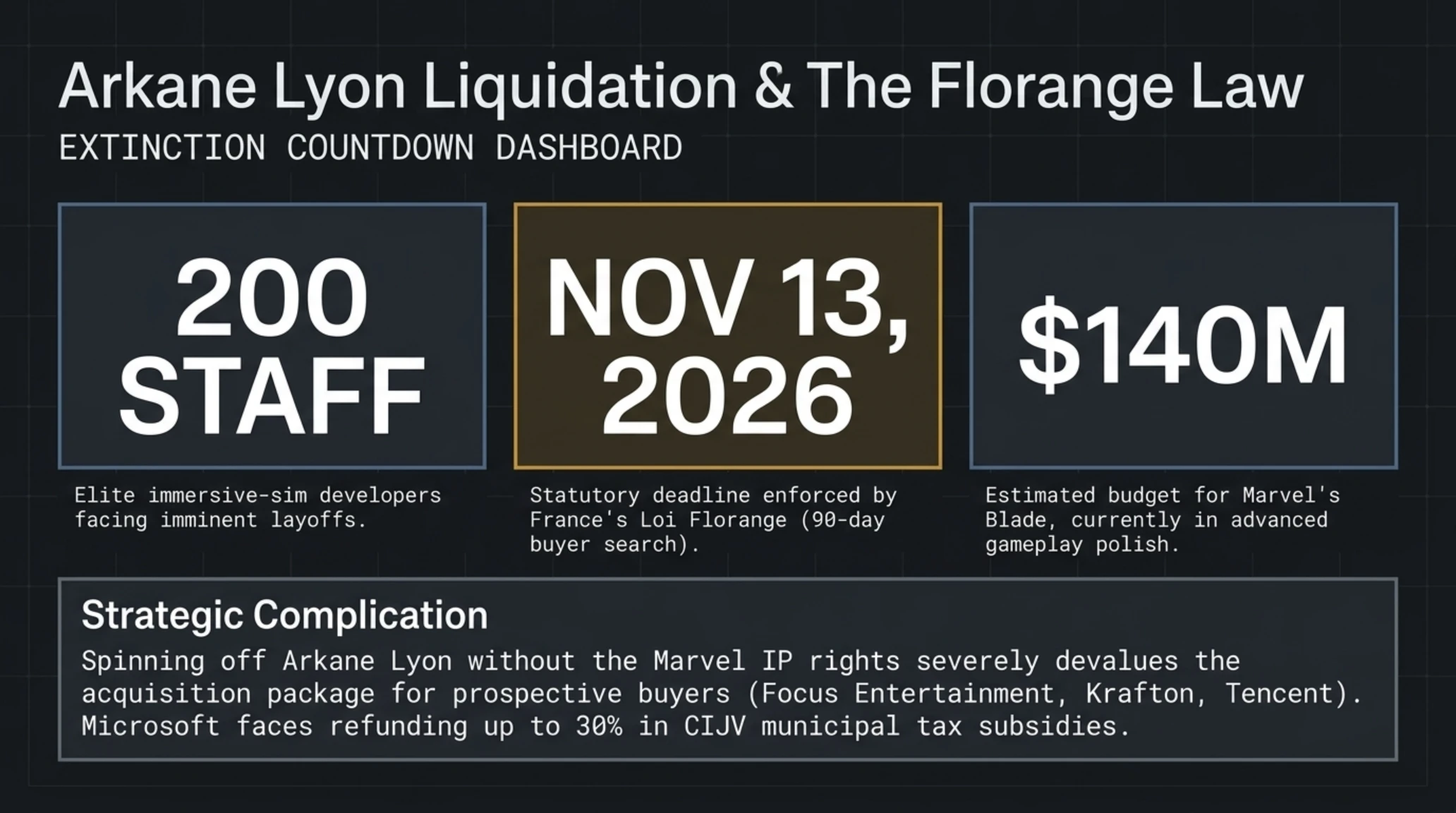
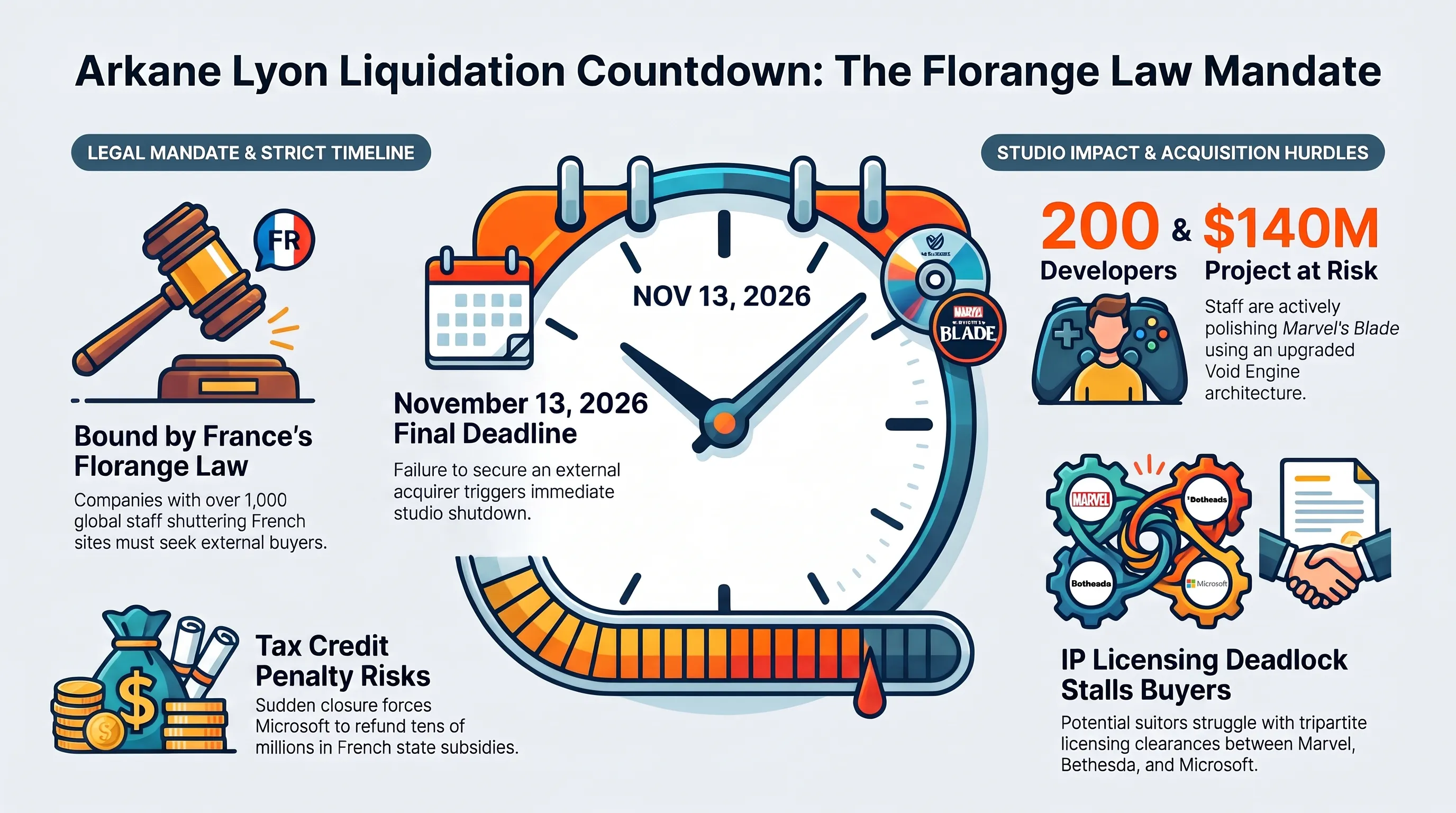
However, unlike development teams operating under US at-will employment doctrines, Arkane Lyon is protected under the stringent framework of France's Florange Law (Loi Florange). The statute dictates that any corporate entity employing over 1,000 individuals worldwide that intends to shutter a productive domestic facility must actively solicit external buyers for a minimum of three months to preserve employment. This statutory deadline expires definitively on November 13, 2026.
Trade union representatives from the Syndicat des Travailleurs et Travailleuses du Jeu Vidéo (STJV) confirmed to Le Monde that production on the flagship title Marvel's Blade is substantially advanced, with 200 developers currently polishing gameplay loops. French state subsidies under the video game tax credit (CIJV) covered up to 30% of domestic production expenses, meaning a sudden closure would force Microsoft to refund tens of millions in municipal incentives.
Directed by industry veteran Dinga Bakaba, the team engineered a sophisticated third-person combat suite utilizing an upgraded Void Engine architecture. Shuttering this studio amidst a global drought of prestige action titles represents a profound self-inflicted wound for Bethesda's publishing pipeline. Furthermore, industry observers note that spinning off Arkane Lyon without the Marvel IP rights severely devalues the acquisition package, leaving prospective buyers reluctant to take on substantial Parisian overhead without a marquee revenue driver.
Why This Transformation Matters
Failure to secure an external acquirer such as Focus Entertainment or Krafton by mid-November will trigger the permanent shutdown of Arkane Lyon, casting the fate of the Marvel licensing agreement into legal limbo.
Prospective European and Asian suitors, including Focus Entertainment, Krafton, and Tencent, have reportedly examined the studio's balance sheets, but negotiations remain bogged down over intellectual property ownership and tripartite licensing clearances between Marvel, Bethesda, and Microsoft.
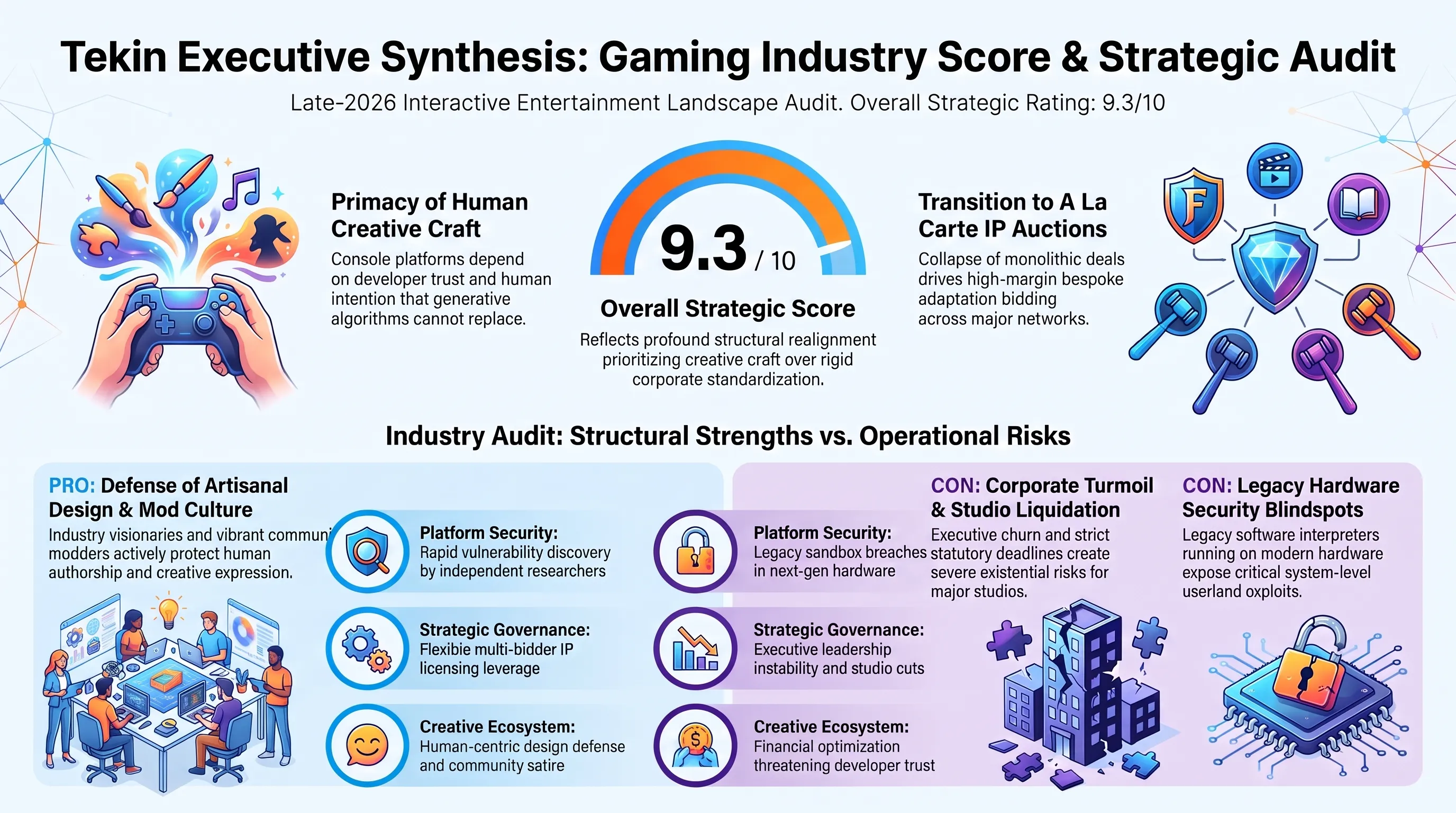
Microsoft's aggressive asset valuation posture extends far beyond game development studios, derailing what was poised to become the largest transmedia licensing agreement in entertainment history.
4. Transmedia Valuation Deadlock; Netflix and Xbox Terminate $500M Master Agreement
Following the monumental cultural and commercial triumphs of HBO's The Last of Us and Amazon's Fallout, video game adaptations have emerged as Hollywood's most fiercely contested intellectual property frontier. Holding an expansive portfolio comprising over 30 iconic gaming franchises—including Halo, Gears of War, Fable, and Starfield—Microsoft Gaming represented the ultimate untapped content vault for premium subscription streaming platforms.
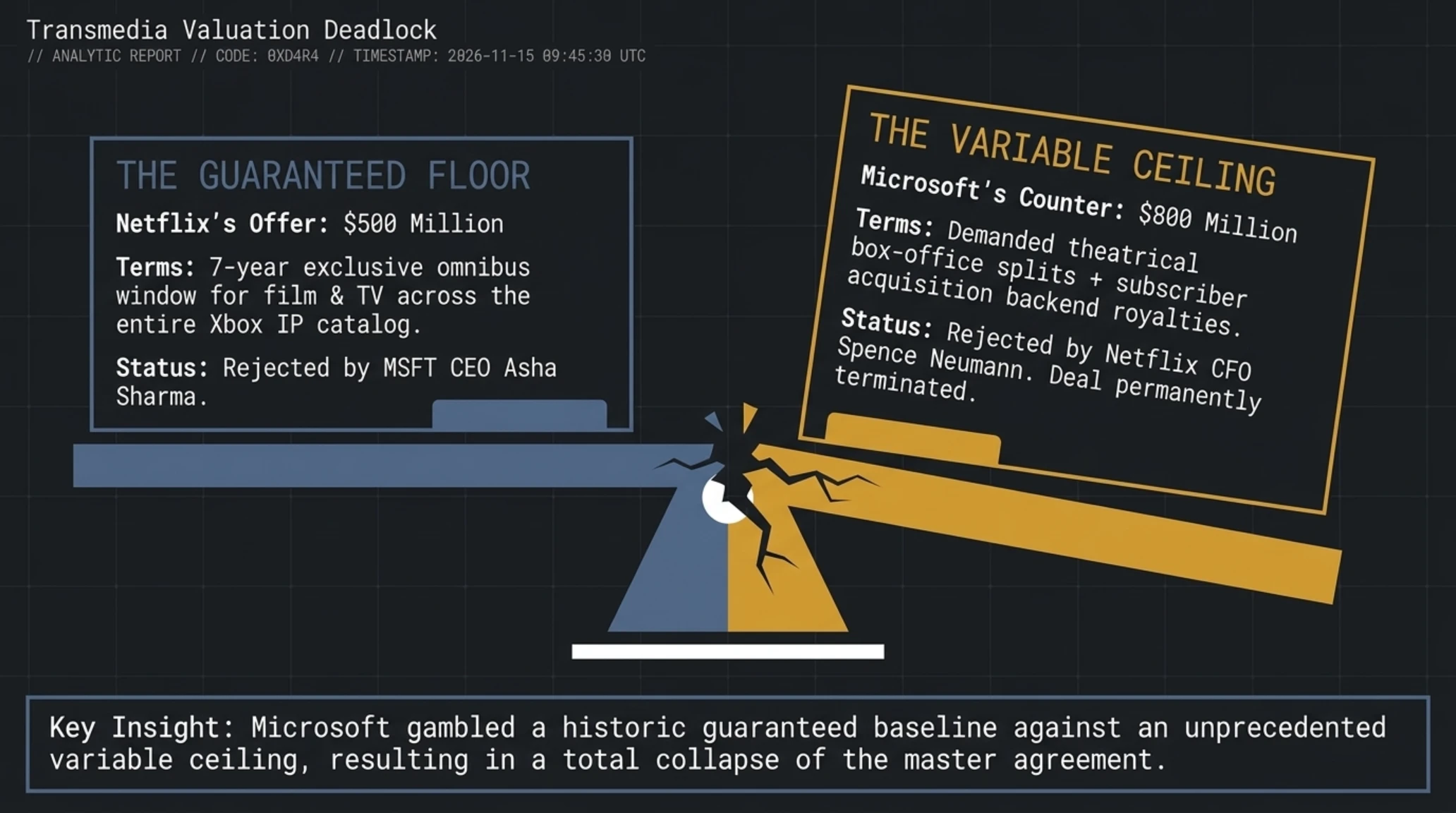
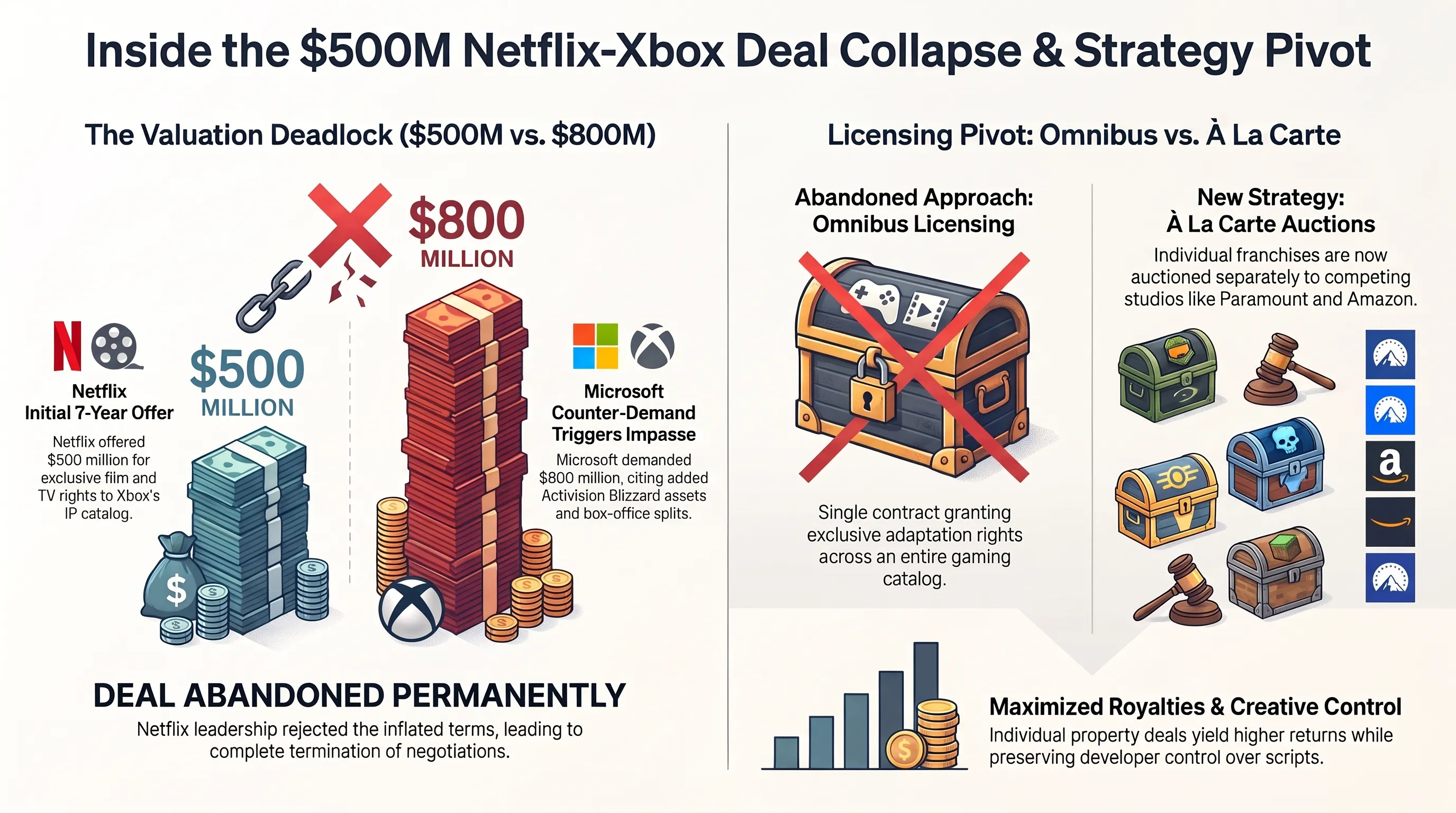
An investigative report by Matthew Belloni in Puck News revealed that protracted, high-level negotiations between Netflix and Microsoft for an unprecedented, exclusive transmedia master pact have collapsed permanently. Under the initial terms negotiated by Bela Bajaria, Netflix's former Chief Content Officer, the streaming titan offered $500 million for an exclusive seven-year window covering worldwide film and television development rights across the entire Xbox intellectual property catalog.
However, newly installed Microsoft Gaming CEO Asha Sharma, arguing that the Activision Blizzard absorption dramatically expanded catalog enterprise value, countered with an aggressive $800 million demand. The counter-offer included unprecedented stipulations for theatrical box-office revenue splits and subscriber acquisition backend royalties. Netflix Chief Financial Officer Spence Neumann firmly rejected the valuation, and subsequent executive reshuffles within Netflix resulted in the deal being permanently abandoned.
Tekin Technical Jargon Buster
📚 Classified & Related Dossiers in TekinGame
If you wish to explore beyond this report and delve into cybernetic frontiers and autonomous AI architectures, do not miss these three exclusive deep-dives in the Tekin Garage:
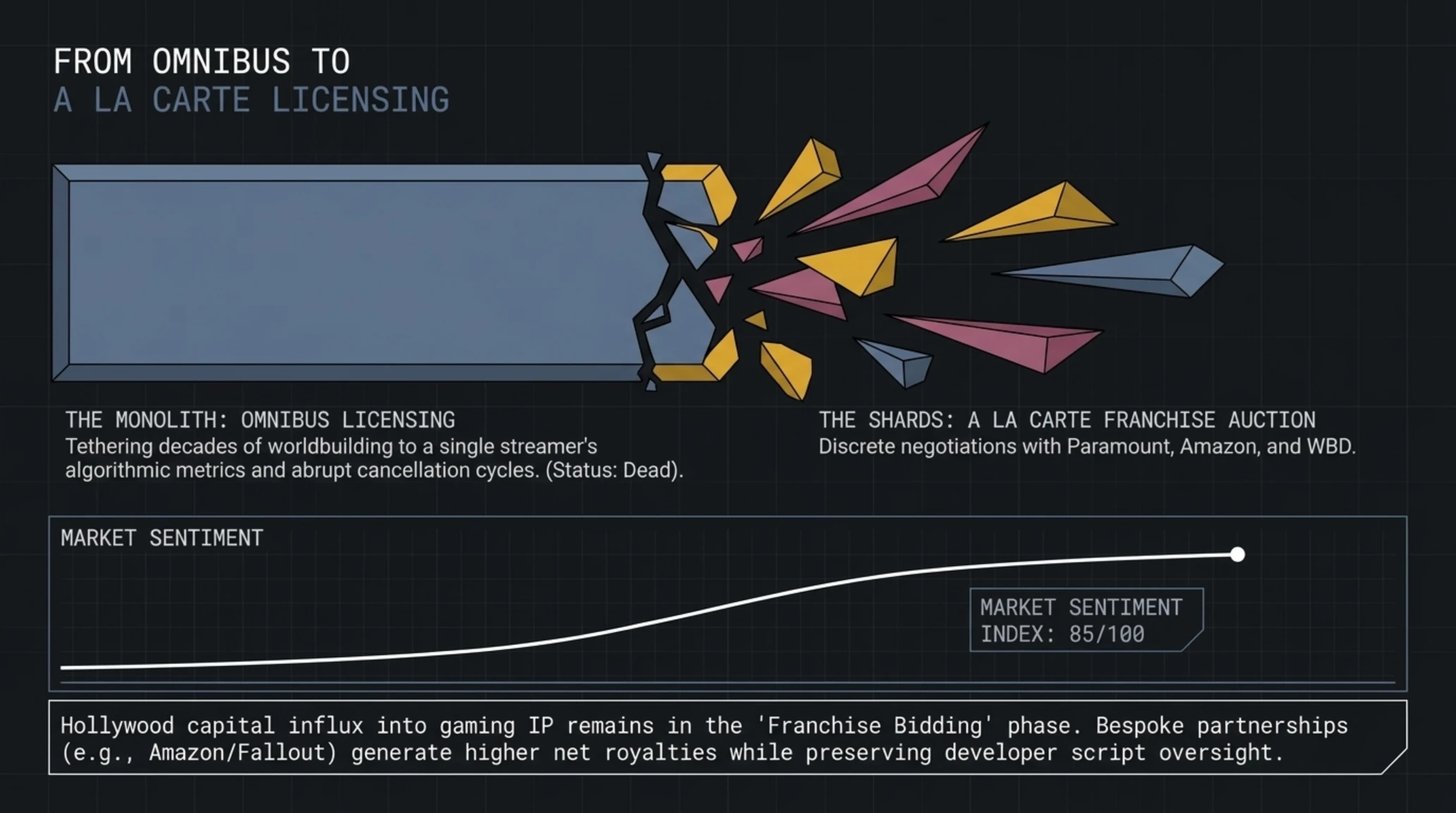
The collapse prompted an immediate pivot in Microsoft's transmedia strategy. Redmond has transitioned from a centralized exclusivity model to an à la carte auction approach, conducting separate negotiations with Paramount, Amazon Studios, and Warner Bros. Discovery. Recent precedents indicate that bespoke partnerships, such as Bethesda's collaboration with Amazon on Fallout, generate higher net royalties while preserving developer script oversight.
Conversely, locking Microsoft's catalog into a seven-year omnibus deal with Netflix would have tethered decades of worldbuilding to streaming algorithmic metrics and abrupt cancellation cycles.
Hollywood's appetite for video game adaptations remains at historic highs despite the collapse of the mega-deal, as evidenced by market trajectory indicators.
Market Sentiment Thermometer and S-Curve Adoption
Market Analysis: While the singular Netflix pact fractured, studio demand for individual gaming properties has crossed into the mass-scale monetization phase, creating favorable pricing leverage for gaming publishers.
While Western publishers navigate media consolidation, legendary game creators in the East are articulating a profoundly different vision regarding the core drivers of enduring entertainment value in an era increasingly dominated by generative AI.
5. Shigeru Miyamoto's Design Philosophy; Human Craftsmanship Transcends Generative AI
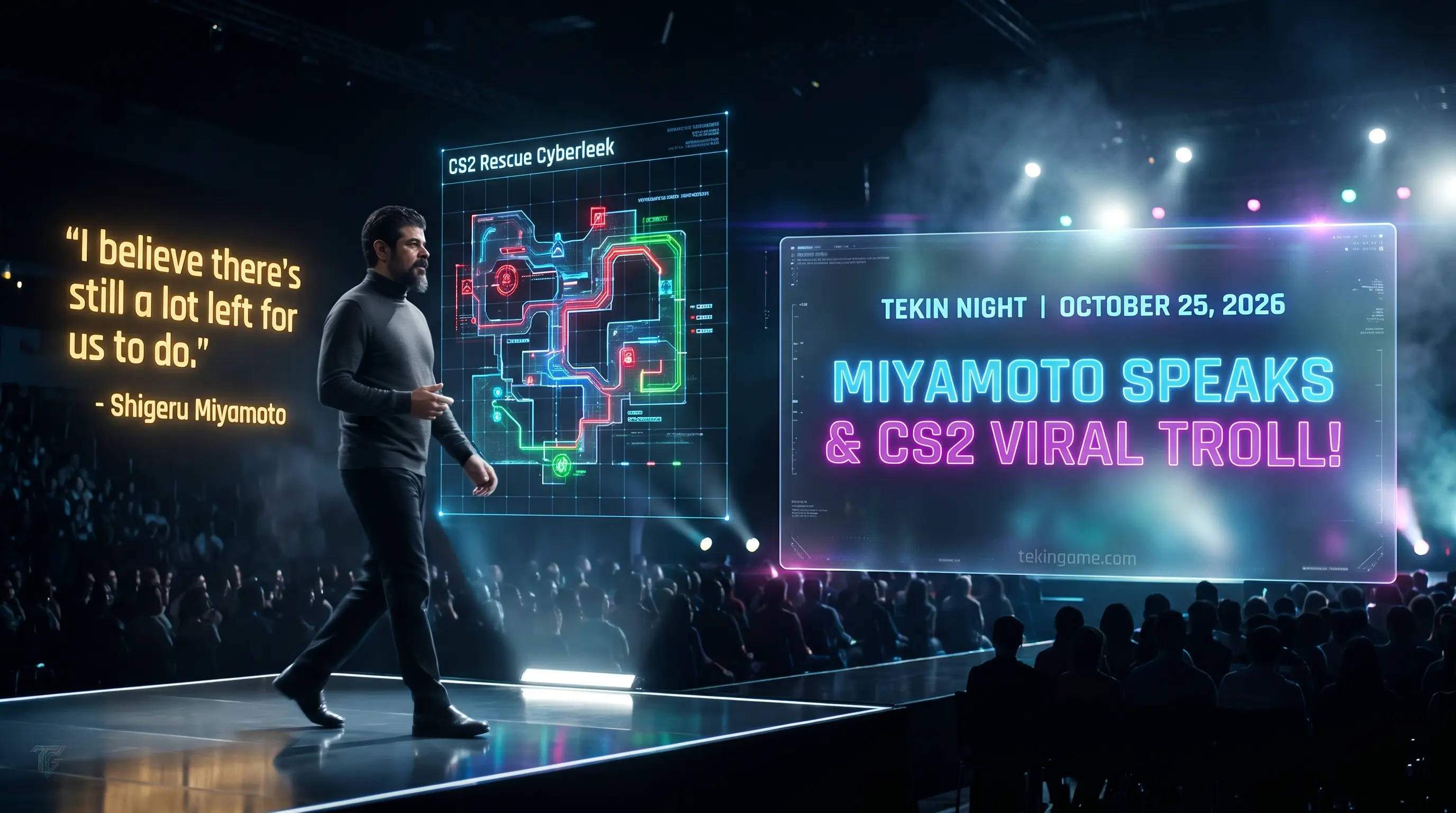
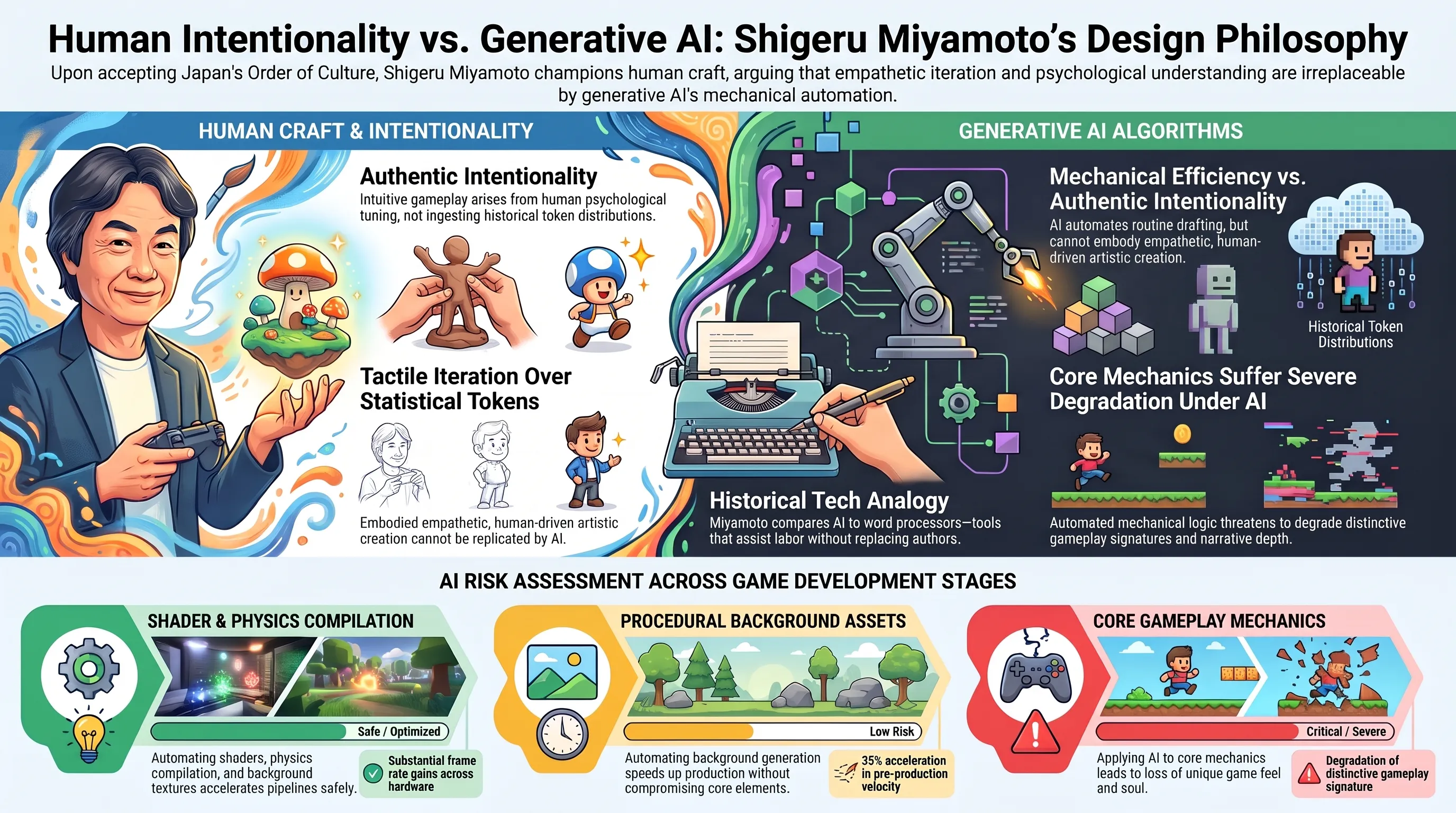
During the formal ceremony conferring Japan's prestigious Order of Culture in Tokyo, Shigeru Miyamoto, the 73-year-old creator of Super Mario, The Legend of Zelda, and Donkey Kong, delivered an address that resonated deeply across the international game design community. At a juncture where major studios are accelerating efforts to automate asset pipelines, NPC behavior trees, and procedural narrative generation through large language models, Miyamoto presented an eloquent philosophical defense of human intentionality.
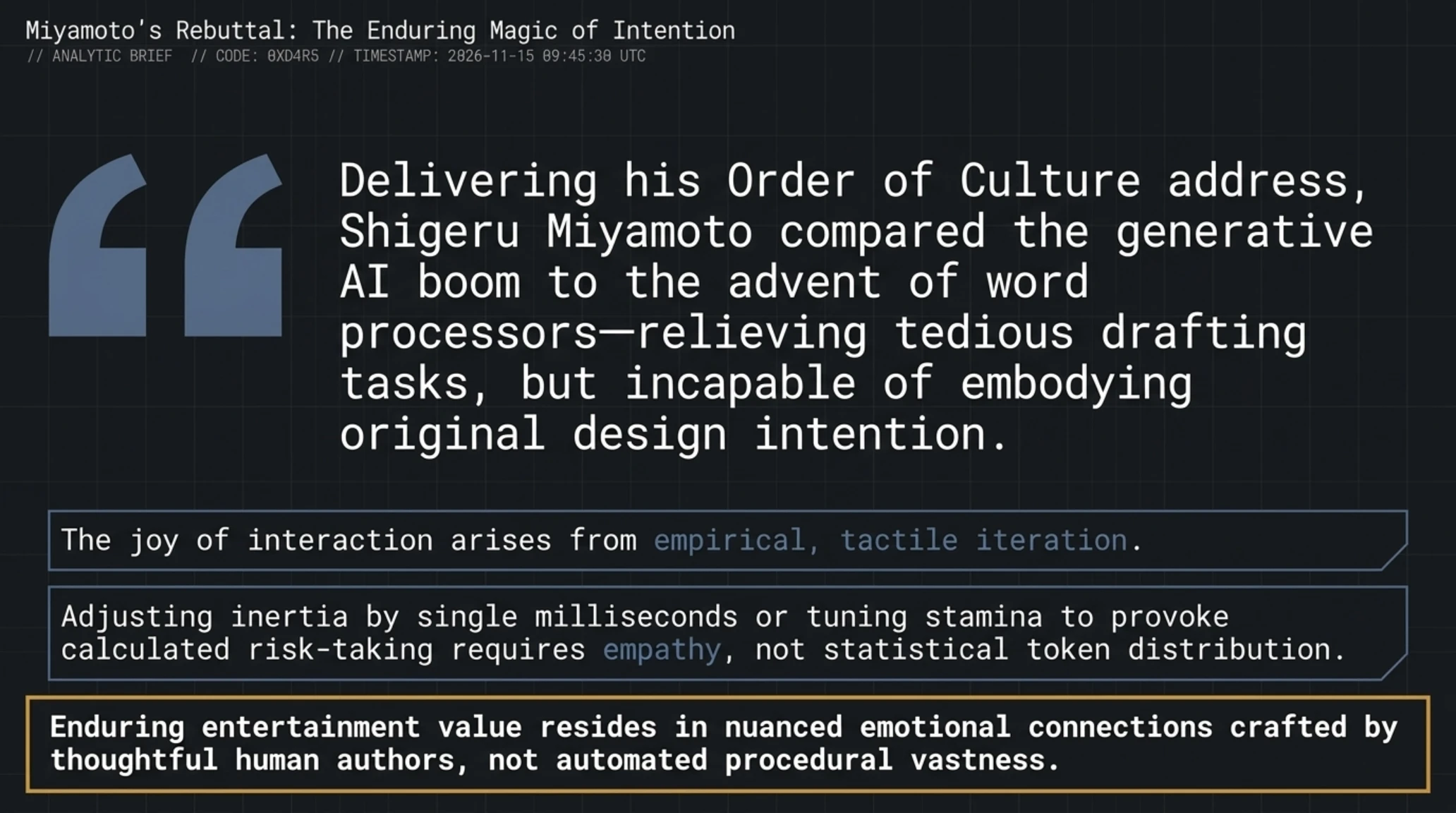
Drawing on decades of development history, Miyamoto compared the current generative AI boom to previous technological inflection points, such as the emergence of word processors in literature or the transition from manual lead typesetting to digital desktop publishing software. He emphasized that game creators must never conflate mechanical labor with genuine artistic creation. While computational tools can relieve creators of tedious, repetitive drafting tasks, they cannot embody original design intention.
Miyamoto noted that the joy of interaction in titles like Super Mario 64 or Breath of the Wild arose from empirical, tactile iteration—adjusting Mario's running inertia by single milliseconds, or tuning the climbing stamina gauge to provoke calculated risk-taking. Such exquisite balancing acts cannot be derived by ingesting statistical token distributions from past games; they require an empathetic human understanding of psychological vulnerability, curiosity, and playfulness.
According to Miyamoto, the enduring magic of interactive entertainment resides not in high-density polygon budgets or automated procedural vastness, but in the nuanced emotional connections, intuitive surprises, and tactile feedback loops crafted by thoughtful human authors.
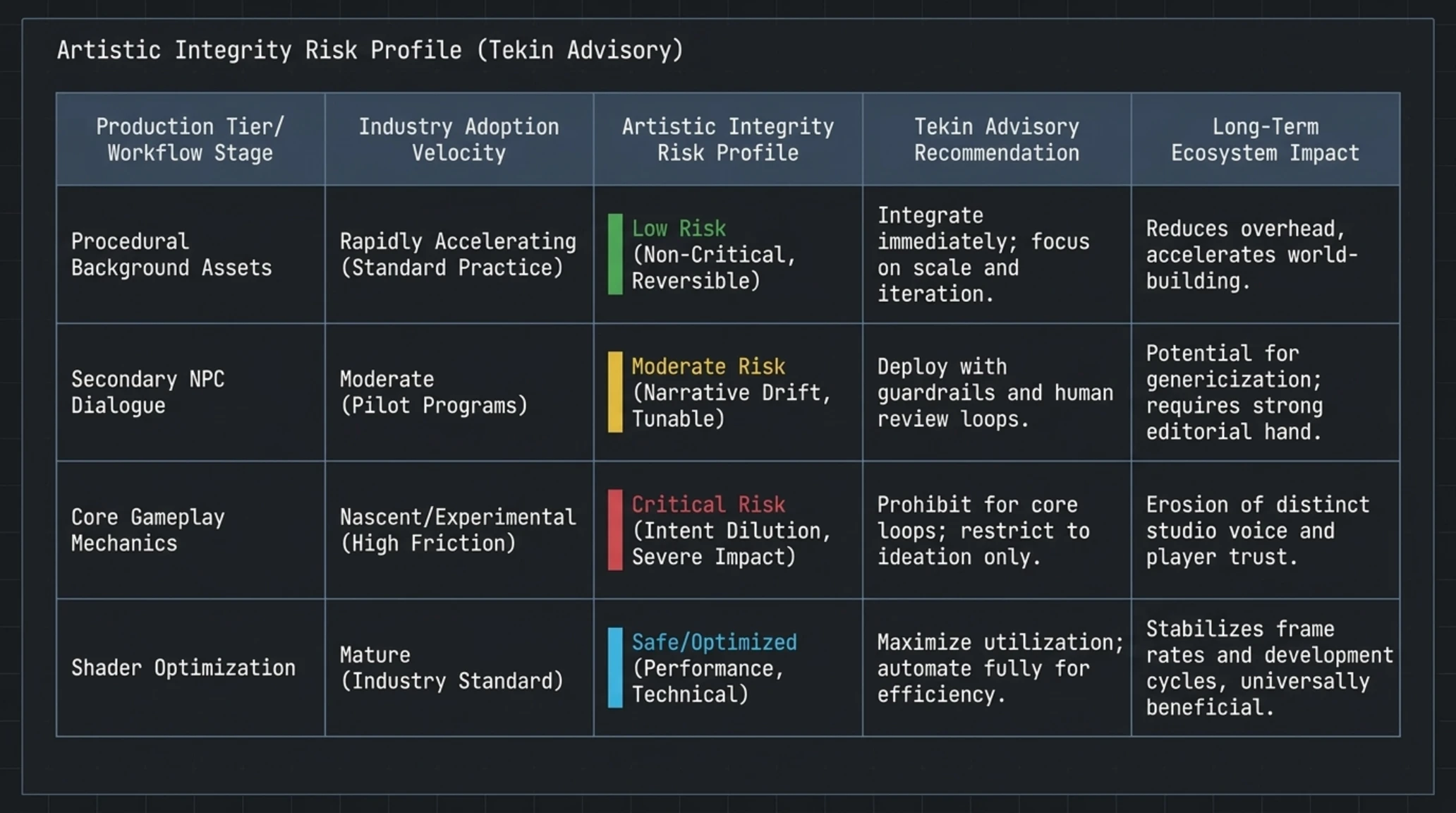
Security Risk and Creative Pipeline Matrix
| Production Tier / Workflow Stage | Industry Adoption Velocity | Artistic Integrity Risk Profile | Tekin Advisory Recommendation | Long-Term Ecosystem Impact |
|---|---|---|---|---|
| Procedural Background Assets and Environmental Textures | Ubiquitous Pipeline Integration | Low Risk | Deploy under rigorous Art Director supervision | 35% acceleration in pre-production velocity |
| Secondary NPC Dialogue and Procedural Quest Chains | Active Engine Prototyping | Moderate Risk | Mandate comprehensive narrative polish by writers | Risk of homogenizing emotional narrative depth |
| Core Gameplay Mechanics and Spatial Puzzle Design | Experimental Algorithmic Curation | Critical / Severe | Strict prohibition on automated mechanical logic | Degradation of distinctive gameplay signature |
| Shader Optimization and Physics Compilation | Complete Engine Integration | Safe / Optimized | Seamless integration with ML compilers | Substantial frame rate gains across low-spec hardware |
Miyamoto's remarks ignited widespread discussion among independent developers, reinforcing Nintendo's unique cultural position as an auteur-driven sanctuary amid an increasingly corporate and automated landscape.
Where industry veterans invoke classical principles of creative expression, grassroots gaming communities deploy subversive humor to deconstruct the hyper-secretive corporate apparatus of modern publishing.
Our concluding section explores how the Counter-Strike 2 modding scene transformed the most notorious data leak in video game history into an interactive multiplayer spectacle.
6. Operation Rescue Cyberleek; Counter-Strike 2 Community Parodies Rockstar Secrecy
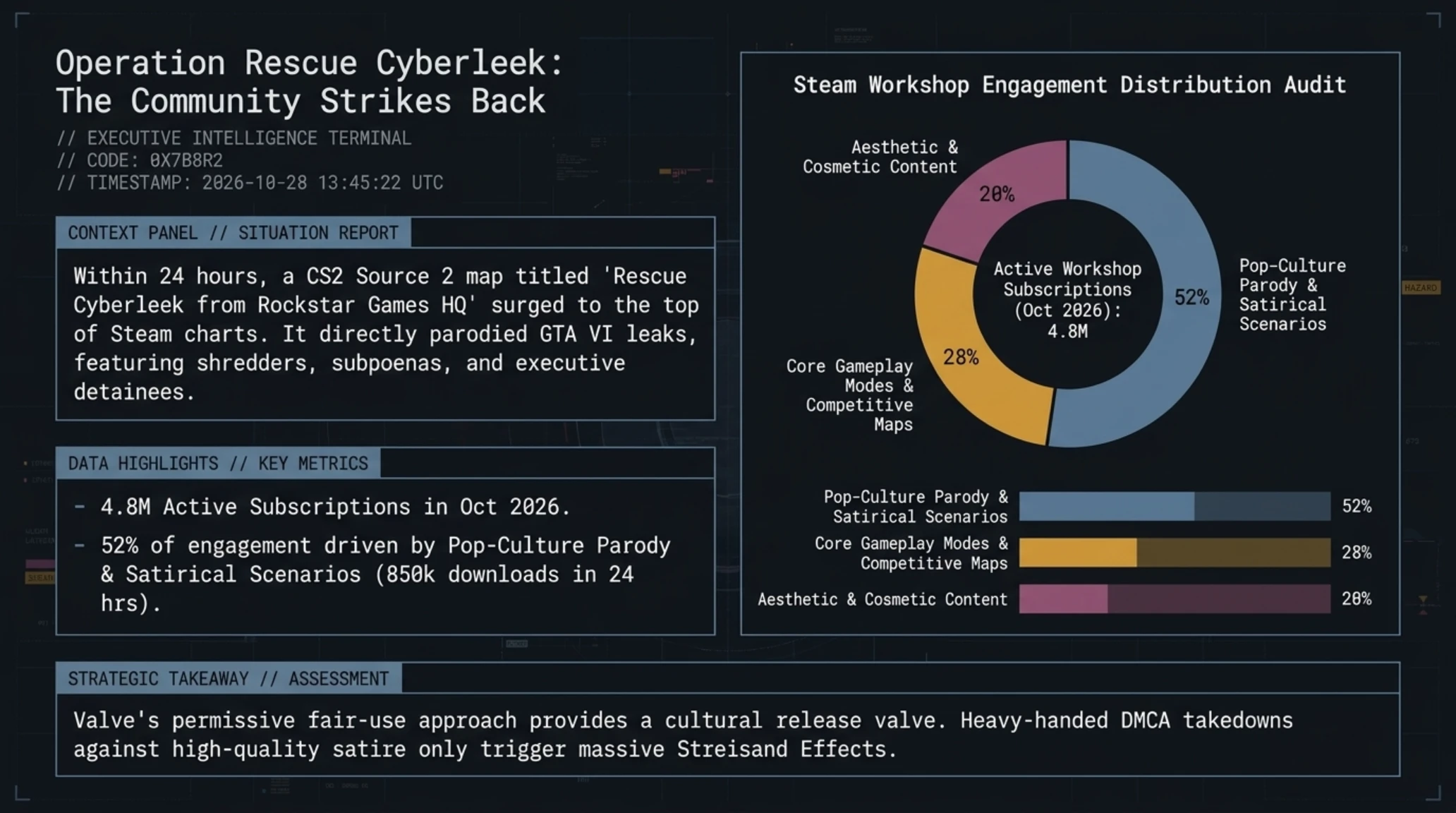
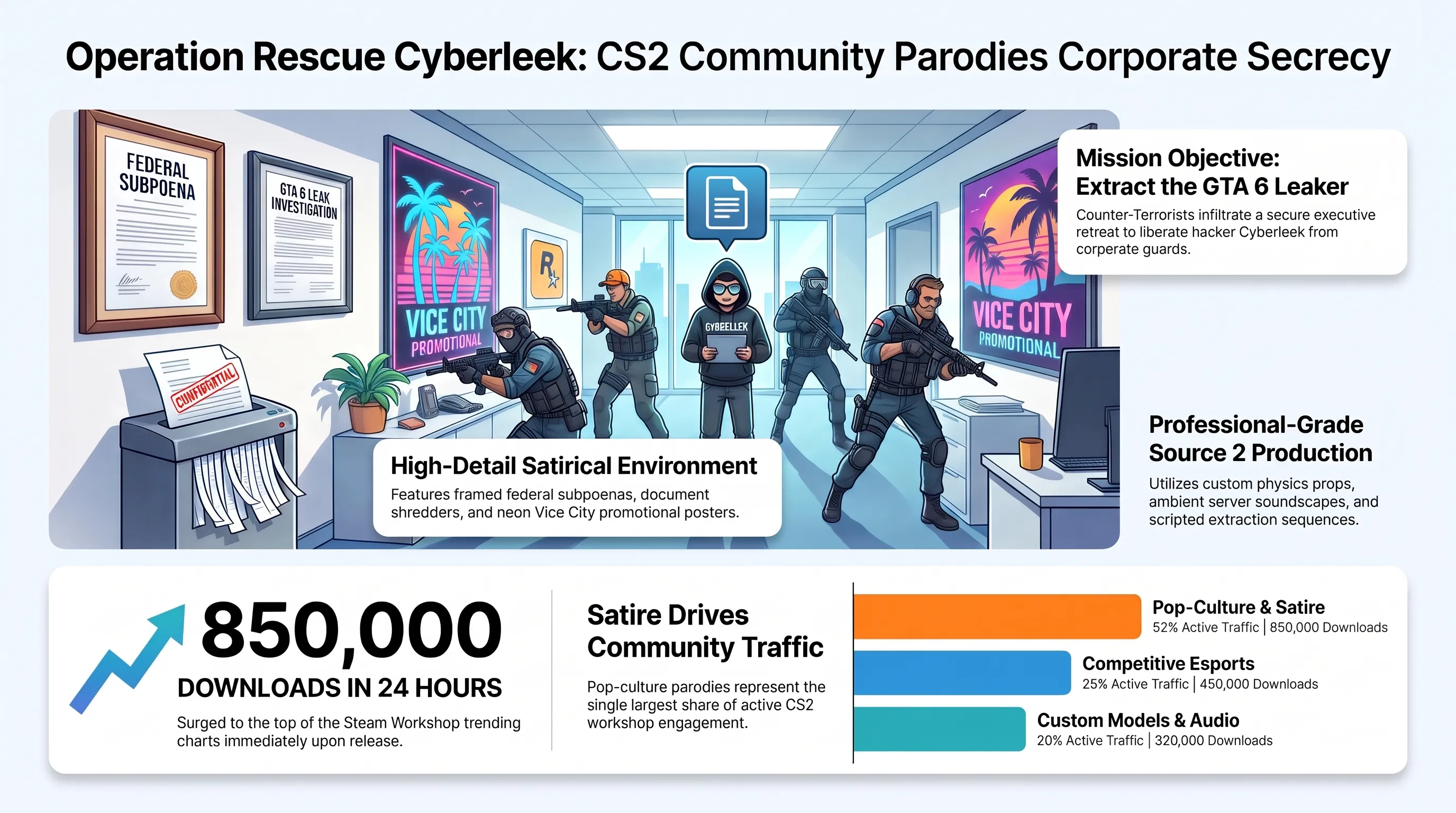
User-generated content and satirical modding have long functioned as the lifeblood of PC gaming culture. Over the past 24 hours, the Counter-Strike 2 Steam Workshop witnessed a viral sensation that perfectly encapsulates the nexus of industry headlines and tactical multiplayer design: a custom map titled "Rescue Cyberleek from Rockstar Games HQ."
The premise directly parodies the protracted media circus surrounding Grand Theft Auto VI development leaks and the elusive hacker known online as Cyberleek. Within the map's satirical narrative framework, the Counter-Terrorist squad is deployed into a sprawling, hyper-secure mansion modeled after Rockstar's executive retreat. Their objective: infiltrate subterranean server vaults and liberate Cyberleek, who has been detained by corporate security personnel in formal suits.
The level designers incorporated an astonishing array of satirical environmental storytelling elements, including framed federal subpoenas hanging on corridor walls, confidential document shredders lining executive offices, and neon-lit Vice City promotional posters plastered across underground interrogation rooms. In less than 24 hours, the map surged to the top of Steam Workshop trending charts with hundreds of thousands of active subscriptions.
The viral success of the map highlights how modern Source 2 engine tooling and Valve's Hammer editor democratize professional-grade asset creation. Community creators built custom physics-enabled props, tailored ambient soundscapes mimicking corporate server cooling fans, and complex scripted extraction sequences that rival commercial mission design.
Legal analysts observe that Valve's permissive approach to non-commercial satire under fair use frameworks provides a vital cultural release valve for gaming communities. Rather than issuing aggressive DMCA takedowns, publishers generally recognize that heavy-handed legal retaliation against humorous community creations inevitably triggers a severe Streisand Effect, amplifying embarrassment while alienating core enthusiasts.
Donut Telemetry, Growth Vectors, and Community Workshop Metrics
| Workshop Category Tier | Community Engagement Share | 24-Hour Download Volume | Ecosystem Retention Impact | Platform Governance Policy |
|---|---|---|---|---|
| Pop-Culture Parody & Satirical Scenarios | 52% Active Traffic | 850,000 Verified Downloads | Massive organic virality and player acquisition | Permissive unless direct DMCA violation occurs |
| Competitive Esports Practice Layouts | 28% Active Traffic | 450,000 Verified Downloads | Sustains core competitive ranked ladder base | Supported via official developer SDK tools |
| Custom Player Models and Audio Packs | 20% Active Traffic | 320,000 Verified Downloads | Enhances grassroots community server diversity | Automated asset sanitization and file screening |
| Dedicated Roleplay Gamemodes (Custom RP) | Continuous Player Pipeline | 180,000 Active Subscriptions | Cultivates micro-economies within servers | Real-time client telemetry and anti-cheat validation |
The viral phenomenon demonstrates the organic vitality of modding ecosystems, transforming high-stress corporate controversies into communal, engaging gameplay experiences.
To contextualize tonight's multi-layered developments, the following chronological timeline traces the evolution of these strategic gaming and technology milestones throughout 2026.
Event Timeline | Chronology of Strategic Gaming Milestones
| Chronological Epoch | Defining Industry Milestone | Architectural and Platform Shift | Strategic Report Vector | Monitoring Status |
|---|---|---|---|---|
| July 2026 | Helen Chiang Named Xbox COO | Effort to consolidate hardware, studios, and cloud services | Inception of Xbox Reset Initiative | Historical Record |
| September 2026 | French Florange Law Triggered for Arkane Lyon | Microsoft mandated to seek external buyers for Marvel's Blade | Activation of 90-Day Protection Window | Approaching Deadline |
| Early October 2026 | Netflix $500M Master Agreement Collapses | Netflix CFO rejects Microsoft's $800M counter-offer | Pivot to A La Carte IP Bidding | Formally Terminated |
| October 23, 2026 | SmileBASIC 4 Vulnerability Disclosed (ns2jb) | ASLR bypass and filesystem hijack on Nintendo Switch 2 | Emergency eShop Storefront Takedown | Awaiting Patch 23.0.2 |
| October 24, 2026 | Chiang Abruptly Departs & Miyamoto Delivers Keynote | One-line staff memo sent as Miyamoto defends human craft | Turmoil in Redmond & Inspiration in Tokyo | Primary Analytical Focus |
Taken together, tonight's developments demonstrate that the interactive entertainment industry in late 2026 is experiencing intense simultaneous pressures across cost discipline, hardware security, and the preservation of human creative talent.
The senior editorial board at Tekin Plus delivers its definitive strategic synthesis regarding the structural implications of tonight's events.
- Extraordinary agility demonstrated by independent security researchers in discovering vulnerabilities before criminal weaponization.
- Resolute defense of human-centered design principles articulated by legendary creators like Shigeru Miyamoto.
- Deconstruction of rigid monolithic Hollywood licensing deals in favor of dynamic competitive auction models.
- Vibrant community culture that channels high-stakes corporate controversies into entertaining user-generated content.
- Persistent leadership instability at Microsoft Gaming following senior executive departures.
- Acute existential risk facing Arkane Lyon and the potential loss of 200 elite European developers.
- Structural vulnerability of legacy backward-compatible containers across next-generation console hardware.
Below is the verified intelligence registry and primary source documentation substantiating this evening's briefing, featuring primary reports from leading global technology and gaming publications verified by our editorial desk.
Final Strategic Verdict & Verified Intelligence Sources
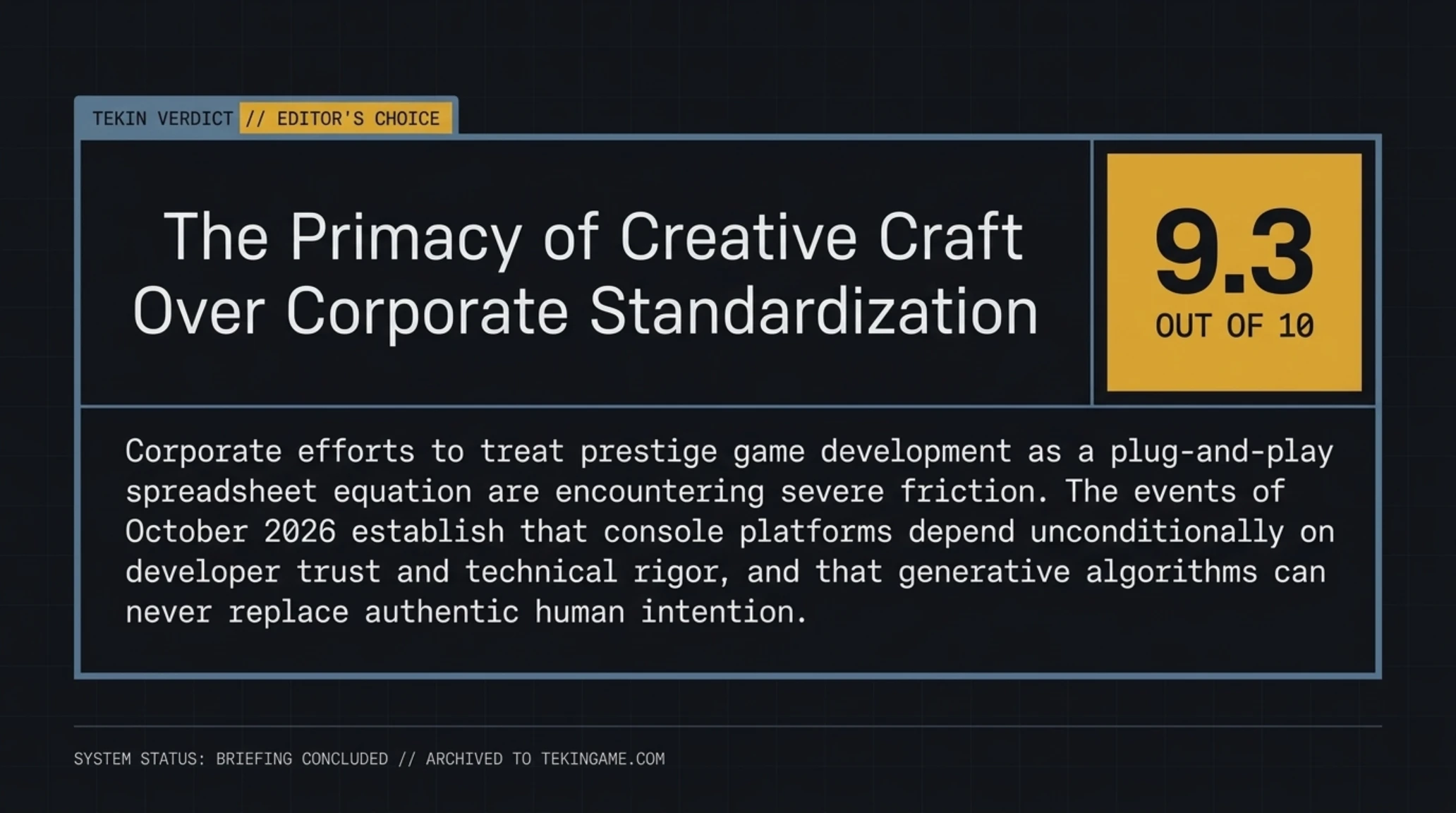
The Primacy of Creative Craft Over Corporate Standardization
October 2026 establishes that console platforms depend unconditionally on developer trust and technical rigor, and that generative algorithms can never replace authentic human intention.
Frequently Asked Questions and Technical Analysis
Is the ns2jb jailbreak on Nintendo Switch 2 permanent or persistent?
No. The exploit operates strictly in userland mode and is tethered. A device reboot resets execution state, requiring re-triggering through the SmileBASIC 4 environment. Nintendo is expected to deploy firmware version 23.0.2 to seal the vulnerability permanently.
Why did Nintendo execute an immediate emergency takedown of SmileBASIC 4 on the eShop?
To preempt widespread distribution of the attack vector. Shuttering new digital purchases prevents millions of Switch 2 owners from acquiring the software to run unsigned homebrew payloads.
What fundamental dispute prompted Helen Chiang's departure as Xbox Chief Operating Officer?
A profound philosophical clash over capital allocation: corporate leadership prioritized aggressive margin optimization and day-one multi-platform publishing, while Chiang advocated for creative studio autonomy and sustaining first-party hardware loyalty.
How does France's Florange Law impact Microsoft's ability to shutter Arkane Lyon?
The law mandates that companies employing over 1,000 staff seeking to close a productive domestic operation must actively solicit external buyers for three months to preserve employment, establishing a hard deadline of November 13, 2026.
Why did the $500 million film and TV licensing deal between Netflix and Xbox collapse?
Microsoft Gaming leadership issued an aggressive $800 million counter-offer with strict box-office royalties and subscriber acquisition cuts, which Netflix financial leadership rejected as economically unfeasible.
What core thesis did Shigeru Miyamoto advance regarding generative AI in game design?
Miyamoto asserted that generative AI can automate mechanical labor and redundant asset generation, but authentic design intention and emotional connection remain intrinsically human and impossible to replicate through computation.
Additional Gallery: Tekin Night | Oct 25: Switch 2 Jailbreak, Xbox COO Exits & Arkane Crisis