Tekin Analysis | Global Gaming Economics and Interactive Entertainment Radar
The closing hours of Monday, October 19, 2026, mark a historic turning point across the interactive entertainment ecosystem, gaming venture capital markets, and hardware manufacturing corridors. Studio executives, independent game creators, and platform holders are confronting an unprecedented confluence of algorithmic disruption, catastrophic mid-tier studio bankruptcies, and tectonic shifts in cloud streaming economics.
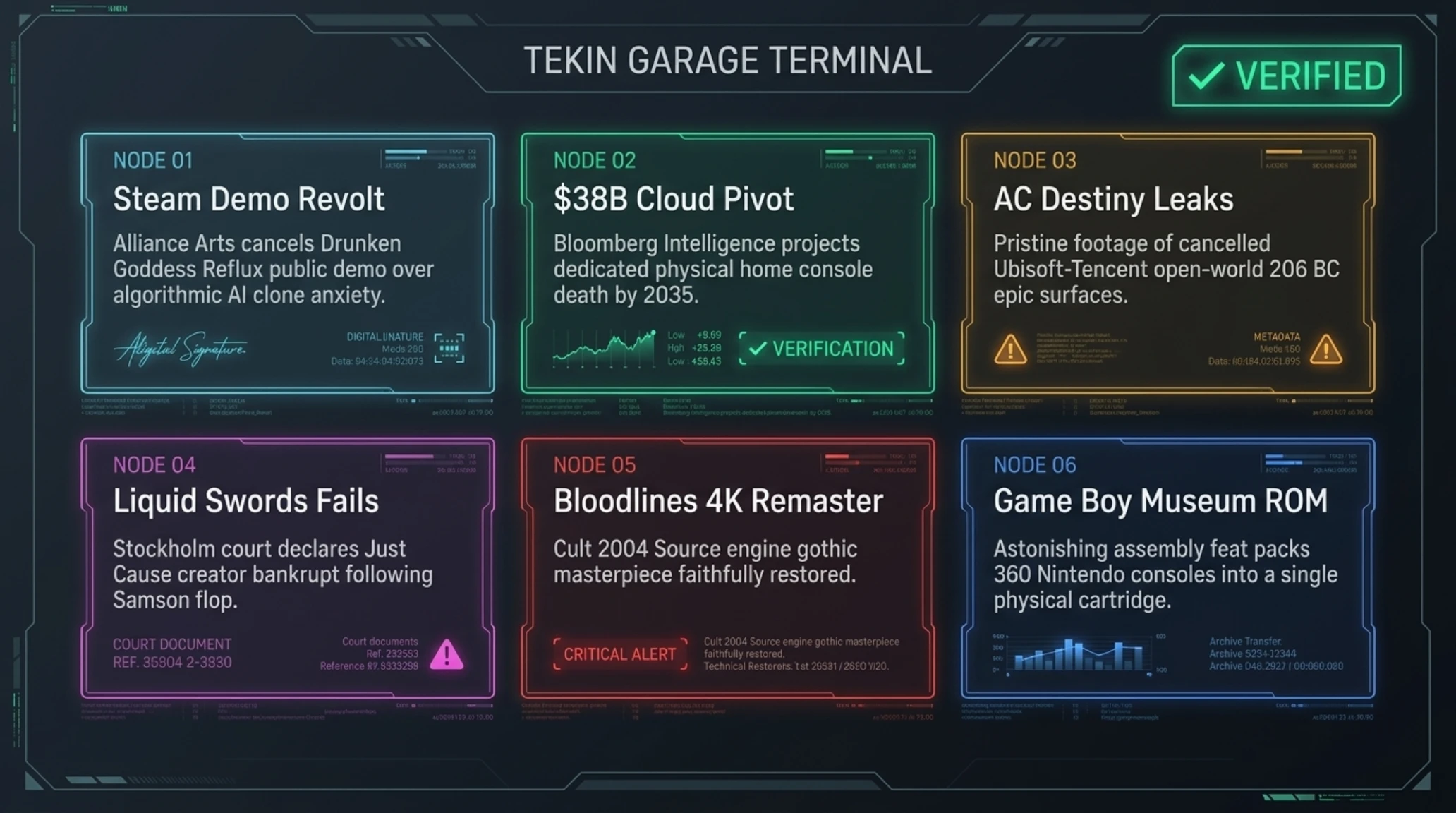
In this evening intelligence dossier, the Tekin Strategic Research Desk conducts an exhaustive forensic audit across six critical developments shaping global interactive entertainment. We examine the defensive revolt of independent developers pulling public Steam demos to prevent generative AI clones, Bloomberg Intelligence landmark forecast predicting the total obsolescence of dedicated home consoles by 2035, pristine leaked gameplay footage exposing Ubisoft cancelled AAA epic set in ancient China, the judicial bankruptcy liquidation of Avalanche co-founder studio Liquid Swords in Stockholm, insiders confirming a faithful 4K remaster of the 2004 gothic masterpiece Vampire: The Masquerade – Bloodlines, and an astonishing retro engineering triumph fitting an entire 360-piece Nintendo hardware museum onto a single physical Game Boy cartridge.
Strategic Assessment and Key Intelligence Vectors
The Generative AI IP Crisis: Indie Developers Cancel Steam Demos Over Algorithmic Clone Anxiety
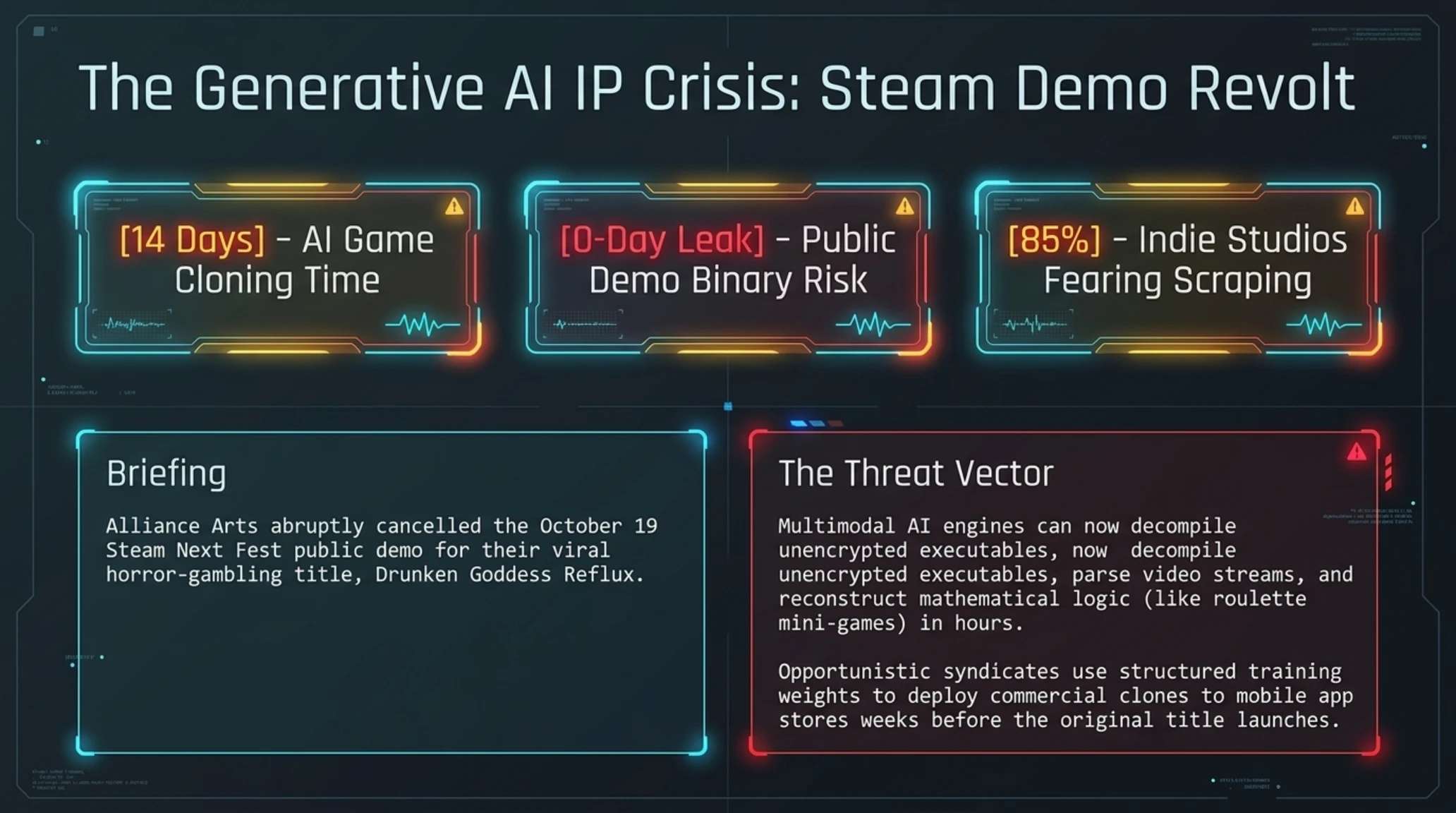
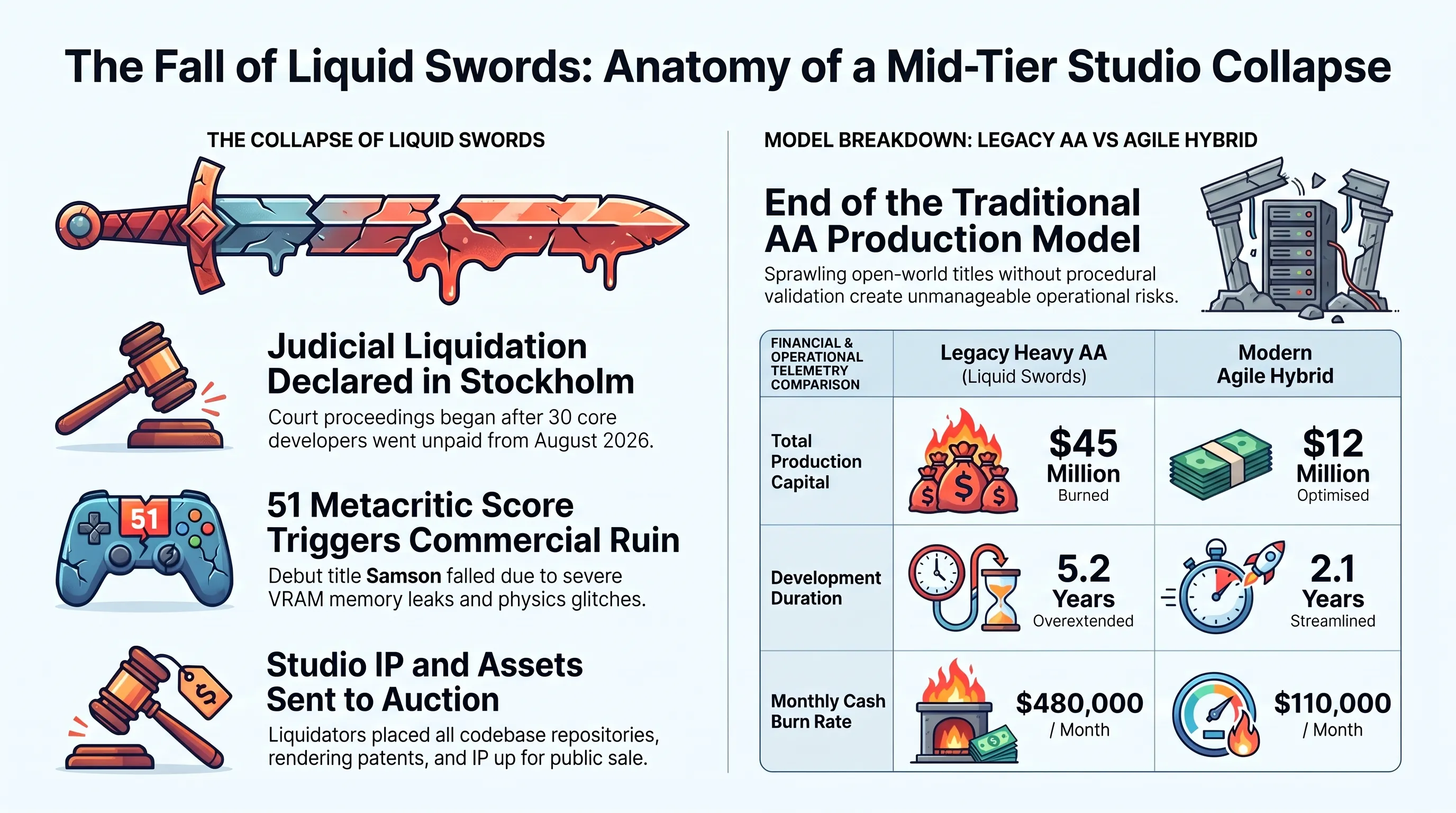
The global independent game development community was sent reeling this morning during the opening hours of Steam Next Fest. In a dramatic joint press statement that sent ripples across Reddit, Discord, and publisher boardrooms, studios Alliance Arts and WHO YOU confirmed the indefinite cancellation of the highly anticipated public demo for their viral psychological horror-gambling title, Drunken Goddess Reflux, which was slated to unlock for millions of PC players on October 19.
The decision was not spurred by software crashes, critical performance bottlenecks, or rating classification disputes. Instead, the creators candidly stated that in 2026, releasing an unencrypted public demo binary has become an existential hazard. With multimodal generative AI pipelines and automated code decompilation harnesses capable of extracting state-machine logic, animation cycles, and core loops within hours, bad actors can deploy commercial clones on mobile app stores and web portals weeks before the original title reaches its December launch window.
Drunken Goddess Reflux a tense hybrid of Russian roulette drinking mechanics, anime-styled baccarat gambling, and psychological body horror had generated massive organic engagement across streaming channels. Rather than exposing their compiled executable to automated scraping swarms, the developers opted to retreat into closed, invitation-only playtests within a gated Discord server under strict non-disclosure agreements. This extraordinary move highlights how generative AI has upended traditional festival marketing for independent studios worldwide.
Why This Architectural Shift Disrupts Enterprise Security
The bold withdrawal by Alliance Arts strikes at the foundational model of Steam Next Fest, threatening to dismantle free public demos as indie studios construct protective barriers against rapid algorithmic cloning.
Gaming business analysts warn that this incident is the harbinger of a broader industry fracture. For over a decade, Steam Next Fest served as the undisputed golden ticket for bootstrapped developers, allowing them to turn a 30-minute slice of gameplay into hundreds of thousands of wishlist additions. However, the advent of multimodal AI engines that can parse gameplay video streams, reverse-engineer game logic, and generate cloned Unity or Godot codebases has rendered open demos a massive commercial liability.
Unlike massive AAA publishers backed by nine-figure marketing budgets, independent studios rely entirely on mechanic novelty to capture audience attention. When that intellectual novelty can be scraped and redeployed by opportunistic copycat operations in under two weeks, creators are forced to choose between promotional visibility and commercial survival. This parallel closely mirrors broader authenticity crises in synthetic software engineering; our technical breakdown on cryptographic watermarking and digital provenance under generative AI pressure details the acute vulnerability of unprotected creative assets.
Legal scholars emphasize that intellectual property law in Western jurisdictions provides virtually no enforceable copyright protection for abstract gameplay mechanics. While raw source code and proprietary audio are shielded, the mathematical logic of a Russian roulette mechanic or timing-based drinking mini-game remains uncopyrightable. Opportunistic developers exploit this loophole by skinning identical mechanics with newly generated assets, completely circumventing traditional DMCA take-down notices.
Forward-thinking independent engineering teams are responding by architecting client-server state verification even for single-player narrative titles. By offloading critical game-loop decision trees to secure cloud servers and streaming only rendered outcomes down to client binaries, developers can safeguard their algorithmic secrets from invasive reverse-engineering decompilers.
Furthermore, reverse engineering telemetry shows that threat syndicates now deploy automated static analysis daemons across digital release pipelines. When a public demo package is uploaded to content delivery networks, automated headless decompilers extract intermediate language representations, parse resource packages, and reconstruct abstract syntax trees in minutes. This automated pipeline transforms human creative innovation into structured training weights for synthetic asset pipelines, fundamentally collapsing the traditional economic moat of independent game production.
Consequently, venture capital allocators evaluating early-stage interactive studios are now mandating comprehensive anti-scraping audits alongside code hygiene reviews. Investment committees increasingly view naked client-side game logic as an unhedged operational risk, driving emerging development teams to prioritize proprietary backend obfuscation and server-side state synchronization as foundational architectural prerequisites.
Platform operators like Valve are facing urgent demands from independent guilds to deploy proprietary binary anti-tamper enclaves and establish rapid DMCA fast-track channels to prevent algorithmic copycat titles from overtaking legitimate indie releases on digital storefronts.
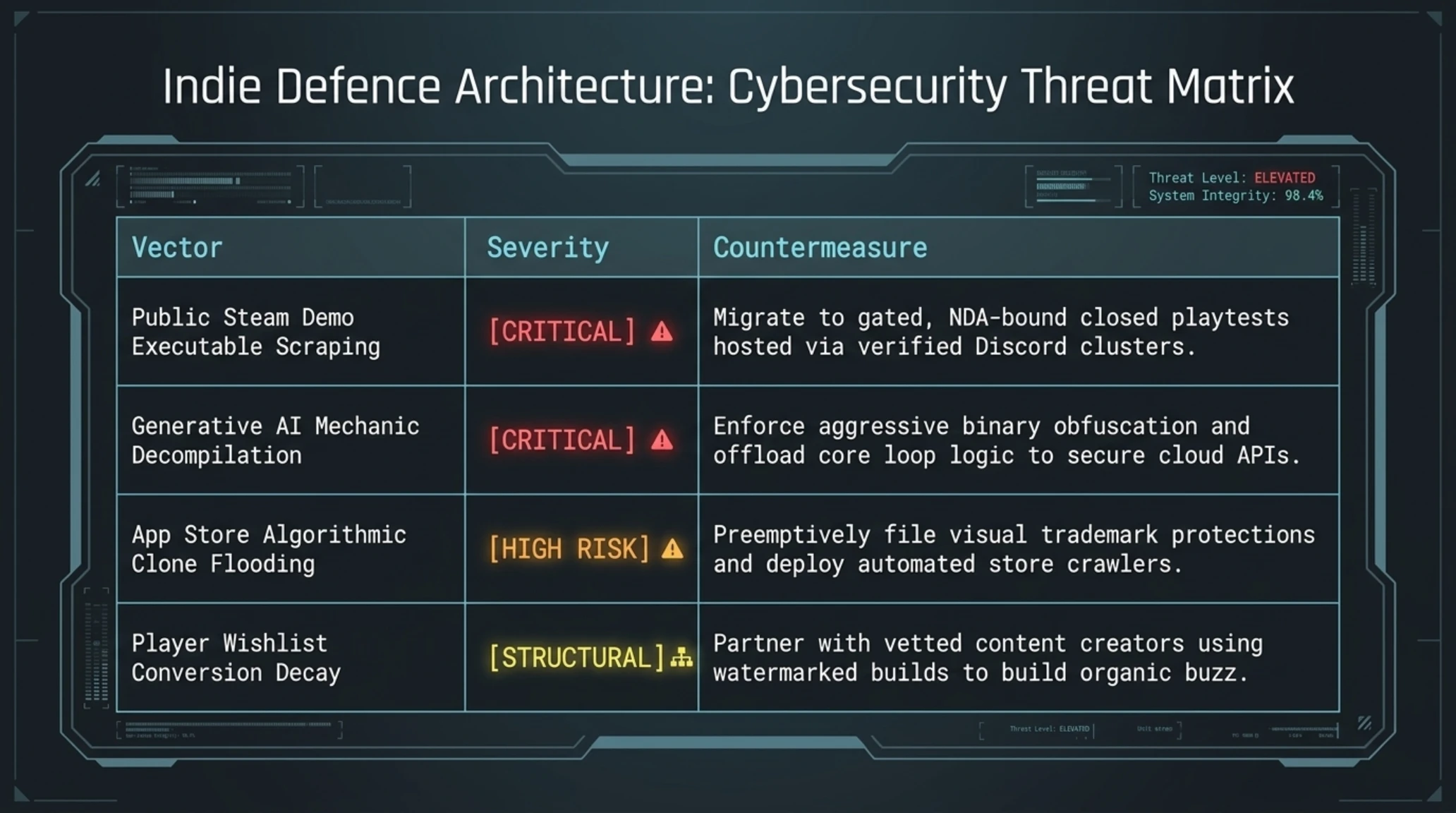
Cybersecurity Threat Matrix and Defense Architecture
| Vulnerability Vector / IP Exposure | Risk Severity | Operational Hardening & Defensive Countermeasure |
|---|---|---|
| Public Steam Demo Executable Scraping | CRITICAL | Migrate to gated, NDA-bound closed playtests hosted via verified Discord clusters. |
| Generative AI Mechanic Decompilation | CRITICAL | Enforce aggressive binary obfuscation and offload core loop logic to cloud APIs. |
| App Store Algorithmic Clone Flooding | HIGH RISK | Preemptively file visual trademark protections and deploy automated store crawlers. |
| Player Wishlist Conversion Decay | STRUCTURAL | Partner with vetted content creators using watermarked builds to build organic buzz. |
Bloomberg Intelligence Forecast: $38 Billion Cloud Gaming Surge Points to Dedicated Console Obsolescence by 2035
Senior institutional analysts at Bloomberg Intelligence, spearheading a comprehensive macro report led by equity analyst Nathan Naidu, have delivered a seismic assessment that directly challenges the survival thesis of traditional hardware titans Sony, Microsoft, and Nintendo. The landmark study projects that global cloud gaming revenues will surge from approximately $5 billion today to an astonishing $38 billion by 2035, driven by unprecedented structural synergies with enterprise artificial intelligence infrastructure.
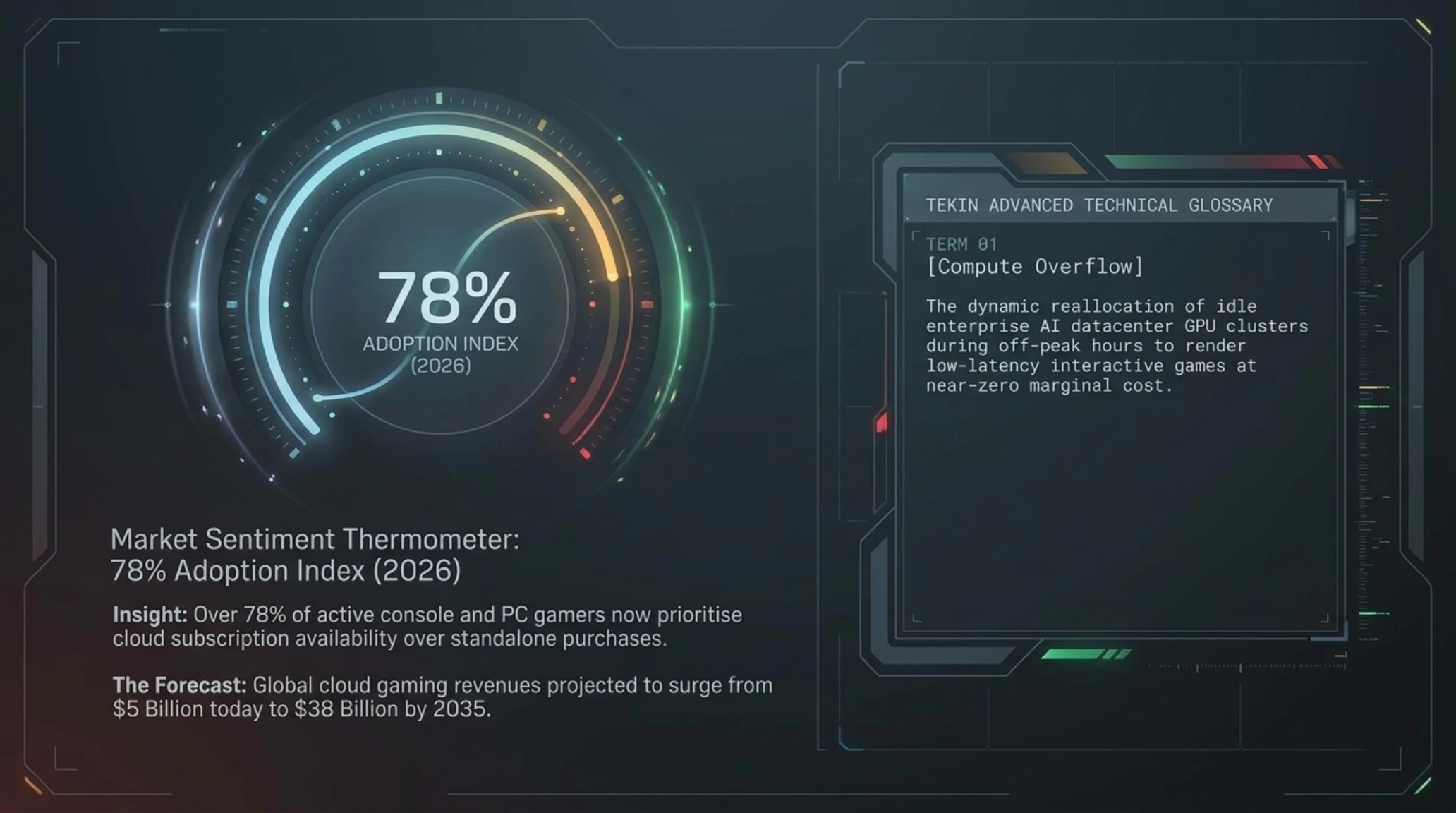
The primary catalyst behind this radical paradigm shift is an impending compute overflow within hyperscale data centers. As technology conglomerates construct multi-billion dollar clusters to train frontier AI models, non-peak computing windows will create vast surpluses of enterprise GPU capacity. Cloud platform operators are actively preparing to repurpose these idle silicon resources into real-time gaming server instances at near-zero marginal cost, entirely destroying the economic justification for consumers to purchase dedicated $700 home hardware boxes.
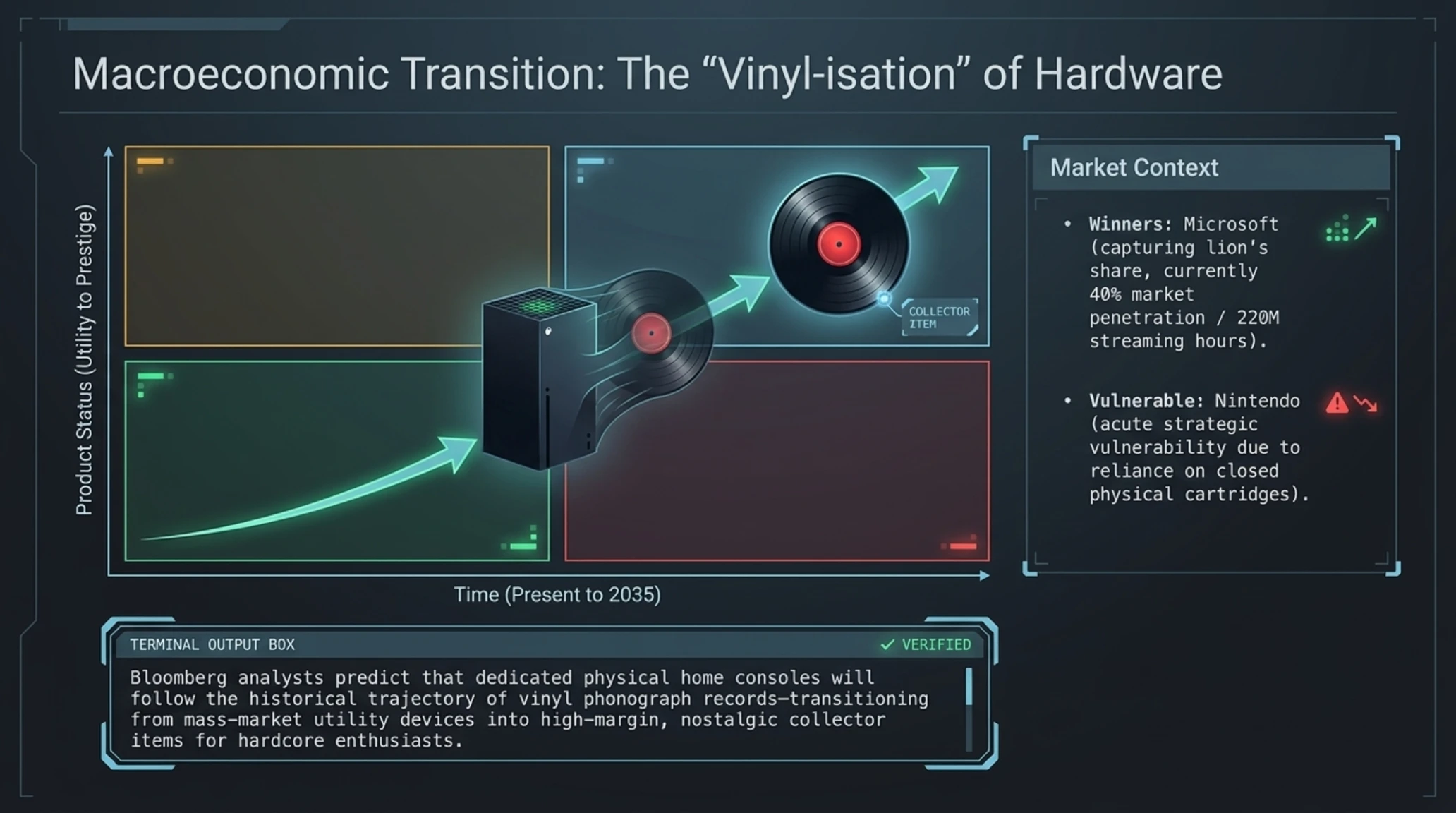
Bloomberg analysts predict that dedicated physical home consoles will follow the historical trajectory of vinyl phonograph records transitioning from mass-market utility devices into high-margin, nostalgic collector items for hardcore enthusiasts. In this restructured competitive matrix, Microsoft is strategically poised to capture the lion share, currently commanding 40 percent market penetration and logging over 220 million quarterly streaming hours across Xbox Cloud Gaming, followed closely by Nvidia GeForce NOW. Conversely, Nintendo faces acute strategic vulnerability due to its stubborn historical reliance on closed physical cartridge distribution.
Tekin Advanced Technical Glossary | Cloud Architecture Terminology
Hardware industry watchers emphasize that escalating foundry costs across cutting-edge 3nm and 2nm semiconductor nodes have systematically squeezed platform holder margins, forcing aggressive consumer price hikes. When edge data centers equipped with fiber interconnects can stream uncompressed 4K resolution at 120 frames per second directly to connected smart displays, the friction of maintaining proprietary hardware becomes commercially untenable. For an in-depth investigation into consumer resistance against escalating hardware price tags, explore our analysis on PlayStation 5 Pro pricing crisis and the consumer hardware value gap.

The aggressive race between hyperscalers to deploy edge rendering nodes confirms that the defining battleground of the next decade will not center on console unit sales, but on proprietary low-latency video streaming codecs, real-time predictive frame generation, edge-caching architectures, and global optical interconnect distribution networks.
Unveiling Assassin’s Creed Destiny: Pristine Leaked Footage Exposes Cancelled Ubisoft-Tencent Epic
While industry strategists grappled with the cloud transition, an unexpected intelligence breach ignited global gaming forums as pristine gameplay archives and internal technical documentation surfaced from a cancelled, unannounced project code-named Assassin’s Creed Destiny.
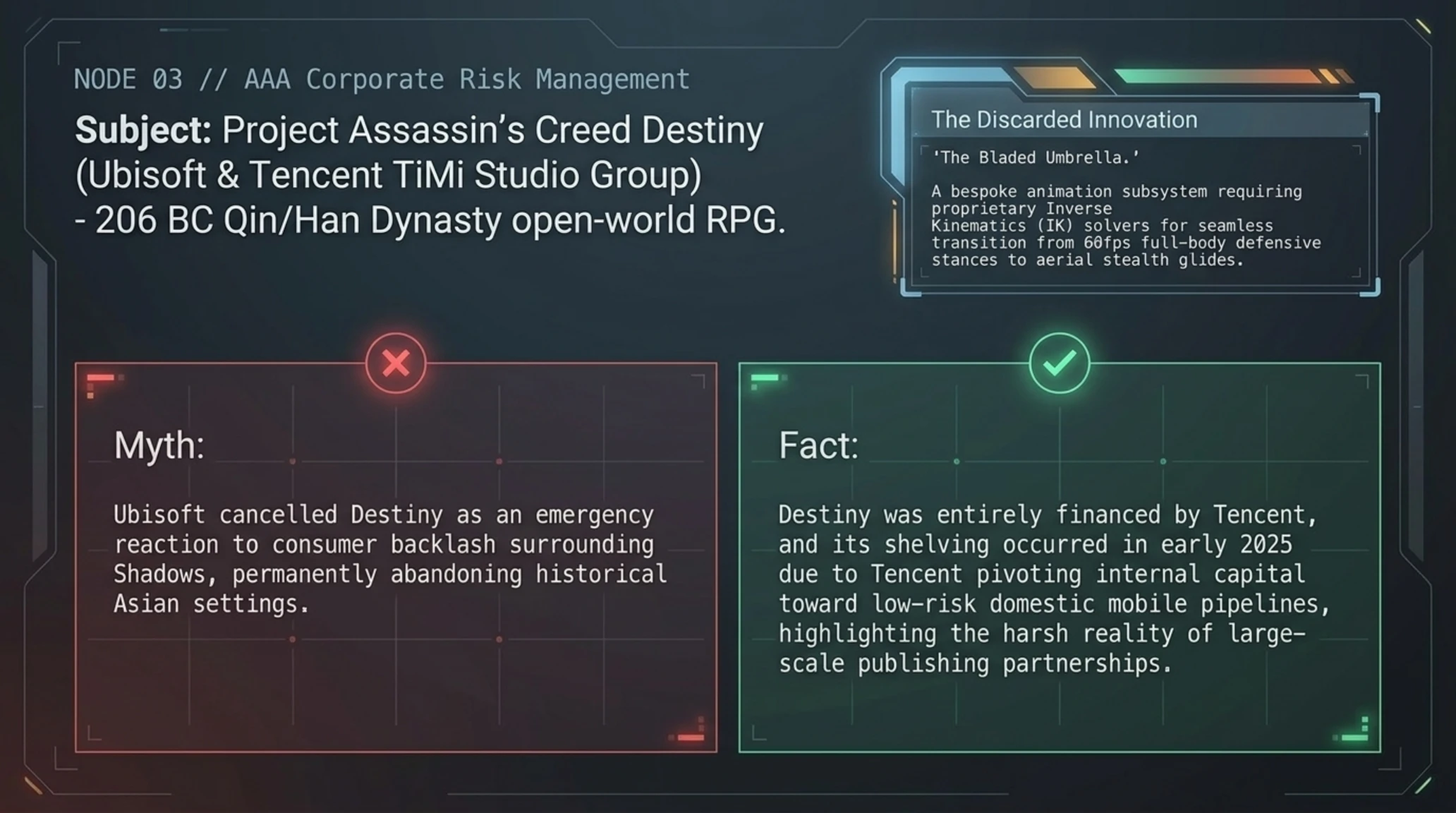
The high-budget endeavor was an ambitious strategic collaboration between Ubisoft Montreal and Tencent flagship TiMi Studio Group the engineering force behind blockbuster mobile titles. Crucially, unlike the mobile-exclusive Assassin’s Creed Jade, Destiny was architected as a full-scale open-world action RPG developed specifically for PC, PlayStation 5, and Xbox Series X. The narrative was set during the pivotal historical collapse of the Qin Dynasty and the dramatic rise of the Han Dynasty in 206 BC.
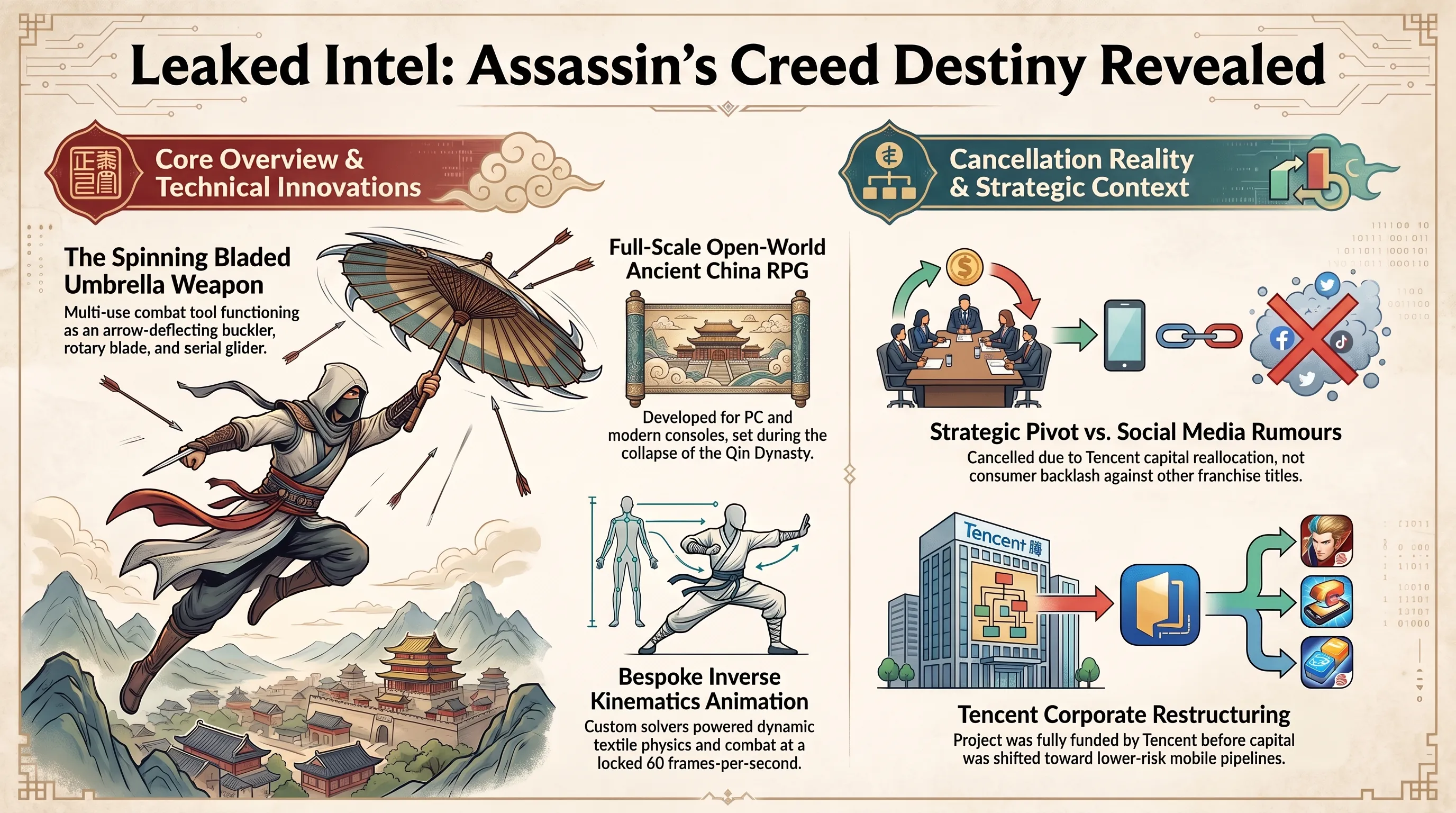
The leaked vertical-slice gameplay depicts an athletic female assassin navigating the burning palaces of Xianyang during the historic siege commanded by warlord Xiang Yu. The gameplay loop was defined by an extraordinary combat innovation: a spinning bladed umbrella weapon. This mechanically intricate tool functioned dynamically as a bulletproof and arrow-deflecting buckler, opened into a rotary blade capable of dismembering advancing infantry, and deployed as a glider for stealth aerial assassinations. Despite its stunning visual fidelity and combat depth, internal restructuring within Tencent in early 2025 ultimately resulted in the project cancellation.
Technical telemetry extracted from the leaked project build indicates that TiMi engineers had developed a bespoke animation blending subsystem tailored for dynamic textile physics and multi-stage weapon collisions. The bladed umbrella mechanics required proprietary Inverse Kinematics (IK) solvers capable of transitioning seamlessly from full-body defensive stances to high-velocity acrobatic takedowns, maintaining rigid 60-frames-per-second performance across dense ancient Chinese urban environments.
Industry observers note that the shelving of Destiny highlights the harsh reality of corporate risk mitigation in large-scale publishing partnerships. When multi-hundred-million-dollar development budgets collide with shifting corporate priorities, groundbreaking mechanical inventions are often consigned to private development vaults, depriving players of bold systemic evolution.
Engineering Verification | Myth vs. Fact
Ubisoft cancelled Destiny as an emergency reaction to consumer backlash surrounding Shadows, permanently abandoning historical Asian settings.
Destiny was entirely financed by Tencent, and its shelving occurred months before Shadows debuted due to Tencent pivoting internal capital toward low-risk domestic mobile pipelines.
The leak has reignited intense debates surrounding creative risk aversion in corporate game development. Game mechanics as inventive as the bladed umbrella offer genuine structural disruption, yet corporate risk management frameworks frequently discard high-potential prototypes before public audiences can experience them.
Chronology of Strategic Infrastructure Milestones
| Timeline / Era | Critical Technical & Gaming Event | Architectural & Industry Impact |
|---|---|---|
| November 2004 | Vampire: Bloodlines Debuts | Troika Games establishes Source Engine as the benchmark for branching gothic RPGs. |
| Early 2025 | Ubisoft-Tencent Destiny Shelved | Tencent abruptly retreats from high-budget console partnerships amid market shifts. |
| October 2026 | Liquid Swords Bankruptcy & Demo Pull | Traditional AA business models collapse as generative AI scraping spreads panic. |
| Projected 2035 | $38B Cloud Streaming Hegemony | Dedicated hardware consoles enter collector status as AI datacenters capture gaming. |
The Fall of Liquid Swords: Stockholm Court Declares Bankruptcy as Open-World Ambitions Collapse
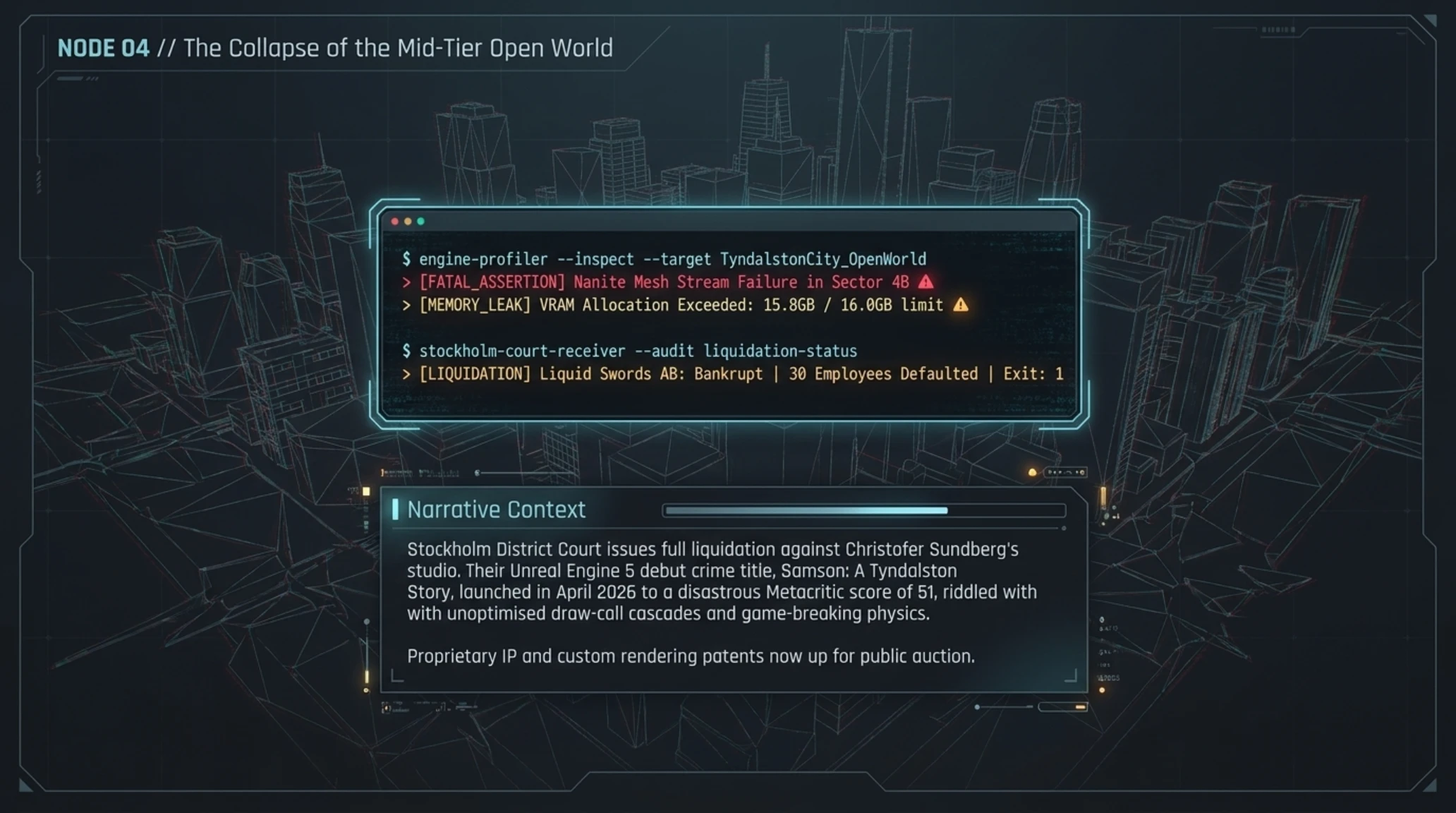
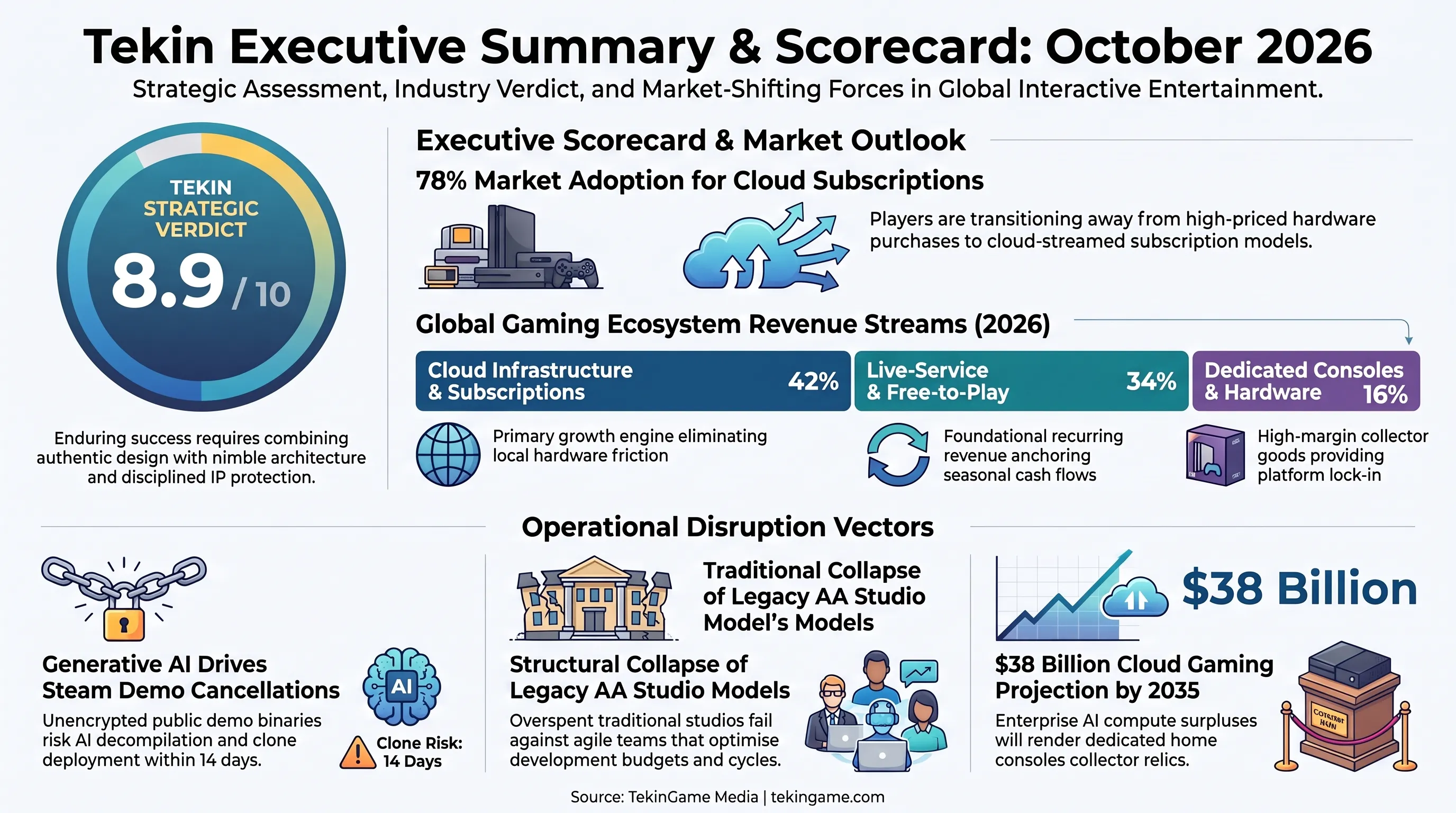
In one of the most sobering corporate collapses of the 2026 calendar year, the Stockholm District Court has officially issued a full bankruptcy declaration and liquidation order against renowned Swedish game studio Liquid Swords. The studio was founded by industry luminary Christofer Sundberg the veteran co-founder of Avalanche Studios and the visionary creator behind the globally acclaimed Just Cause and Mad Max franchises intended to spearhead a new European golden age of independent mid-tier open-world game craft.
The judicial bankruptcy proceedings were formally initiated after 30 core engineers and senior game designers submitted a joint petition to Swedish courts, having gone without salaries or contract benefits since August 2026. At the core of the financial ruin was the devastating commercial and critical failure of the studio debut title, Samson: A Tyndalston Story. Built on Unreal Engine 5 with aspirations of competing against Grand Theft Auto, the gritty crime title launched in April 2026 to a disastrous Metacritic score of 51, plagued by severe memory leaks, unoptimized draw-call cascades, and game-breaking physics glitches.
Under Swedish insolvency statutes, unpaid worker compensation has been transferred to the government wage guarantee fund, while the court-appointed liquidator has confirmed that all proprietary codebase repositories, custom rendering patents, and intellectual property rights associated with Samson have been placed up for public auction. For an extensive parallel analysis on the broader economic pressures destabilizing Western production pipelines, our review of Bethesda studio layoffs and cancelled internal Xbox development pipelines offers crucial macro context.
📚 Classified & Related Dossiers in TekinGame
If you wish to explore beyond this report and delve into cybernetic frontiers and autonomous AI architectures, do not miss these three exclusive deep-dives in the Tekin Garage:
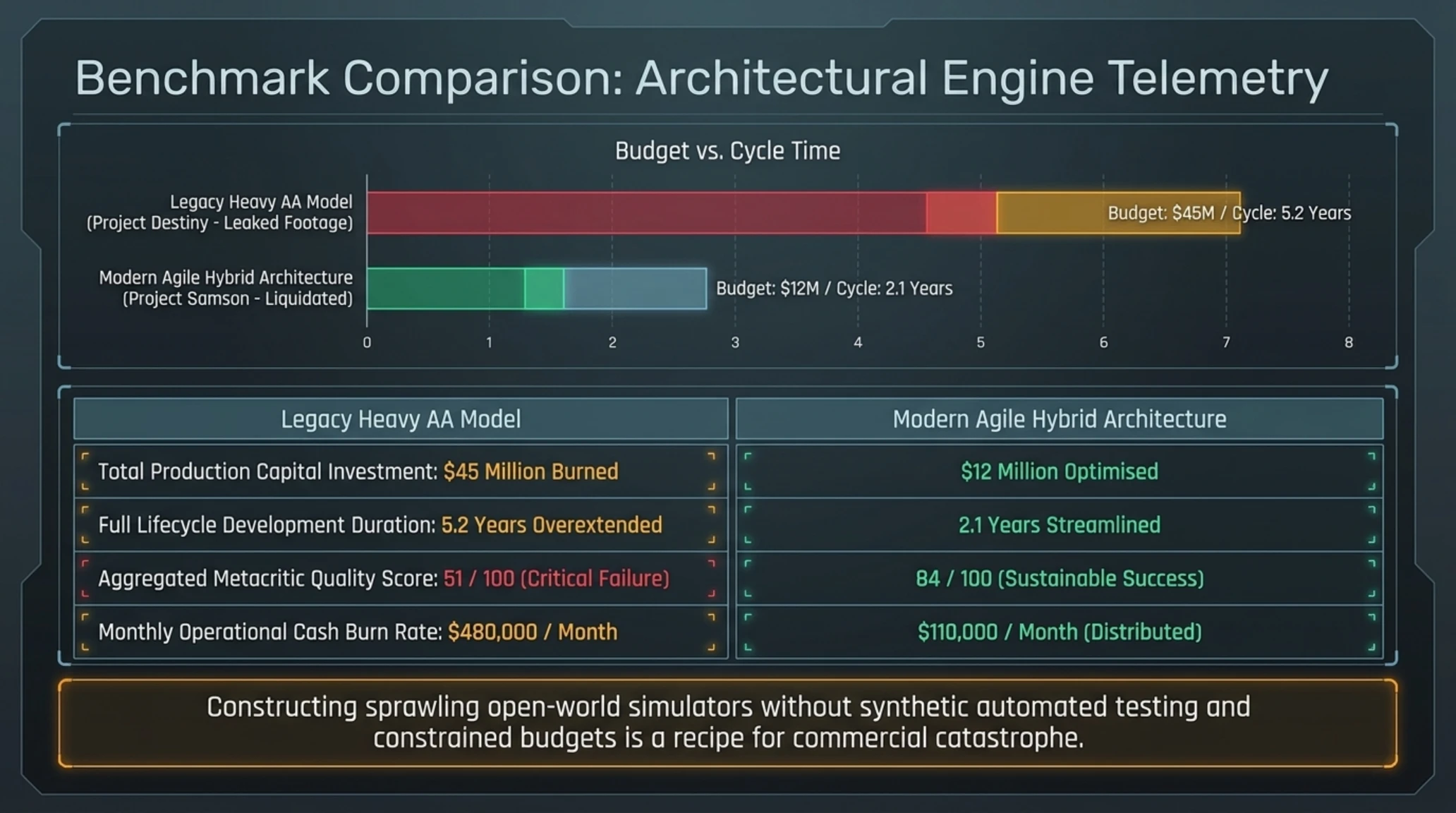
Benchmark Comparison: Architectural Engine Telemetry
| Production & Financial Metric | Legacy Heavy AA Model (Liquid Swords) | Modern Agile Hybrid Architecture |
|---|---|---|
| Total Production Capital Investment | $45 Million Burned | $12 Million Optimized |
| Full Lifecycle Development Duration | 5.2 Years Overextended | 2.1 Years Streamlined |
| Aggregated Metacritic Quality Score | 51 / 100 (Critical Failure) | 84 / 100 (Sustainable Success) |
| Monthly Operational Cash Burn Rate | $480,000 / Month | $110,000 / Month (Distributed) |
Venture analysts argue that the fall of Liquid Swords marks the decisive end of traditional mid-tier AA game production models. Constructing sprawling open-world crime simulators without robust procedural world-building tooling, synthetic automated testing harnesses, and tightly constrained budgets is a recipe for commercial catastrophe that will consume even the most celebrated veteran leadership.
The downfall highlights an urgent requirement for independent studios to implement rigid procedural validation frameworks before committing dozens of developers to years of unchecked full-scale production.
Cybernetic Terminal and Benchmark Telemetry Log
Player sentiment and market adoption curves underscore a dramatic velocity pivot away from high-priced, bug-ridden physical releases toward frictionless cloud-streamed game subscriptions.
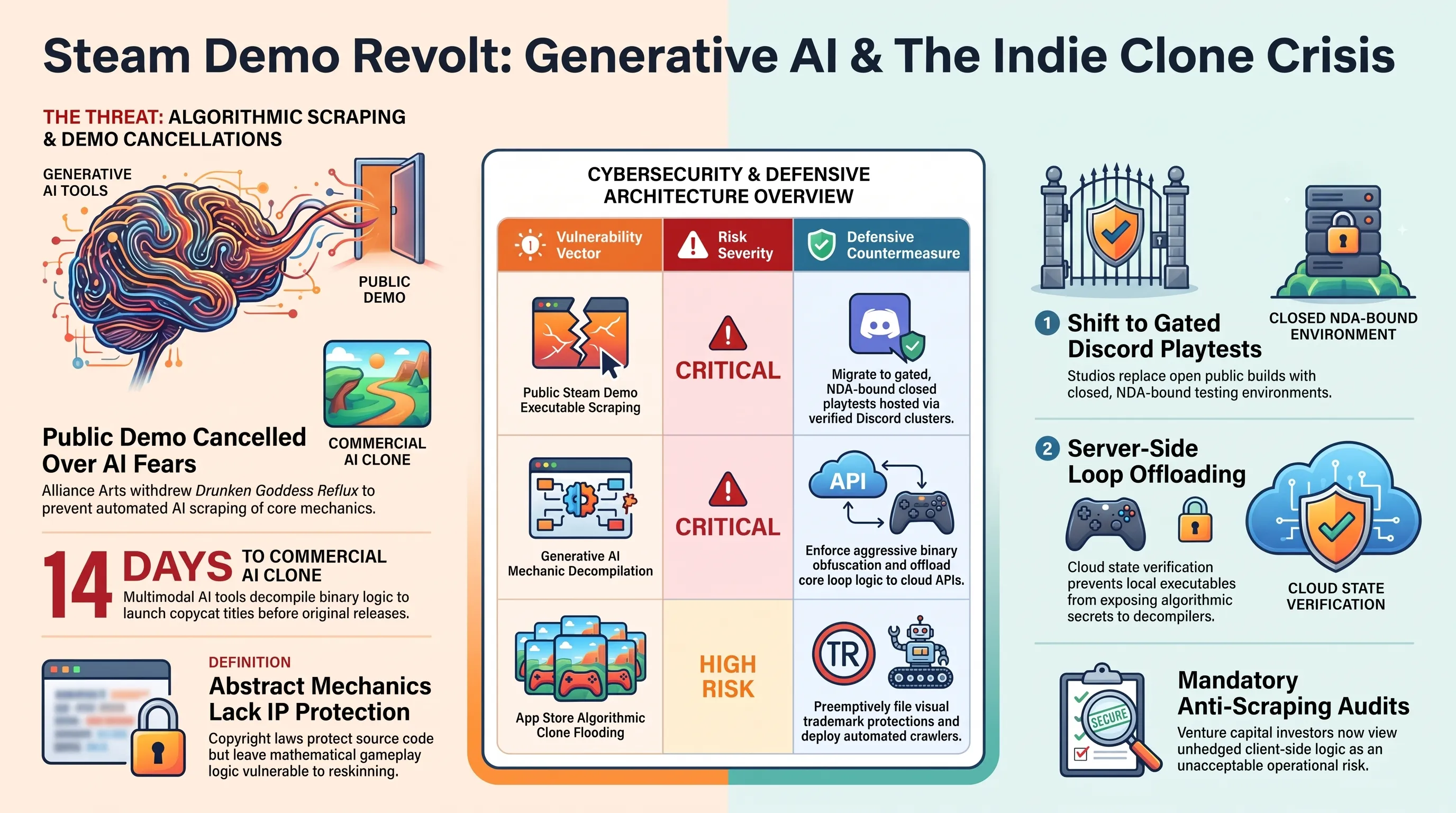
Comprehensive telemetry surveys indicate that contemporary gamers are increasingly refusing to absorb technical debt from unvetted titles, shifting their active playtime into robust ecosystem networks and low-latency cloud subscriptions.
Market Sentiment Thermometer | Circular Gauge & S-Curve Adoption
Consumer Behavior Analysis: Over 78% of active console and PC gamers now prioritize cloud subscription availability over standalone purchases, cementing the secular migration toward hardware-agnostic entertainment.
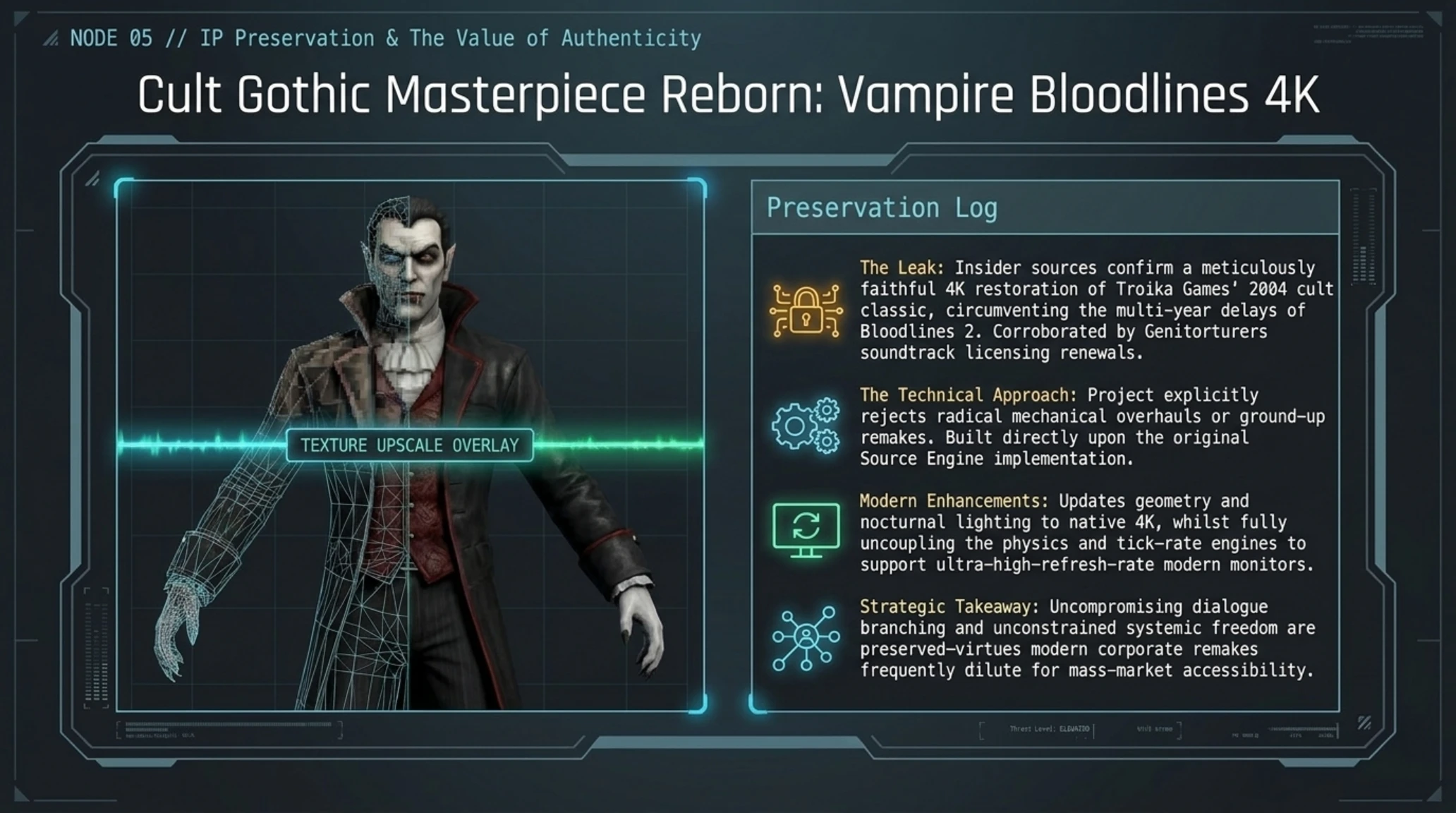
Cult Gothic Masterpiece Reborn: Insiders Confirm Faithful 4K Remaster of Vampire: Bloodlines
Amid widespread player fatigue and persistent multi-year delays surrounding Vampire: The Masquerade – Bloodlines 2, investigative reports from Eurogamer and confirmed independent industry leaks have delivered a monumental revelation to dedicated gothic role-playing communities. Sourced from a vetted insider with an unblemished track record having previously disclosed the Japan setting for upcoming flagship racing titles an official, high-fidelity remaster of the legendary 2004 cult classic is quietly approaching completion.
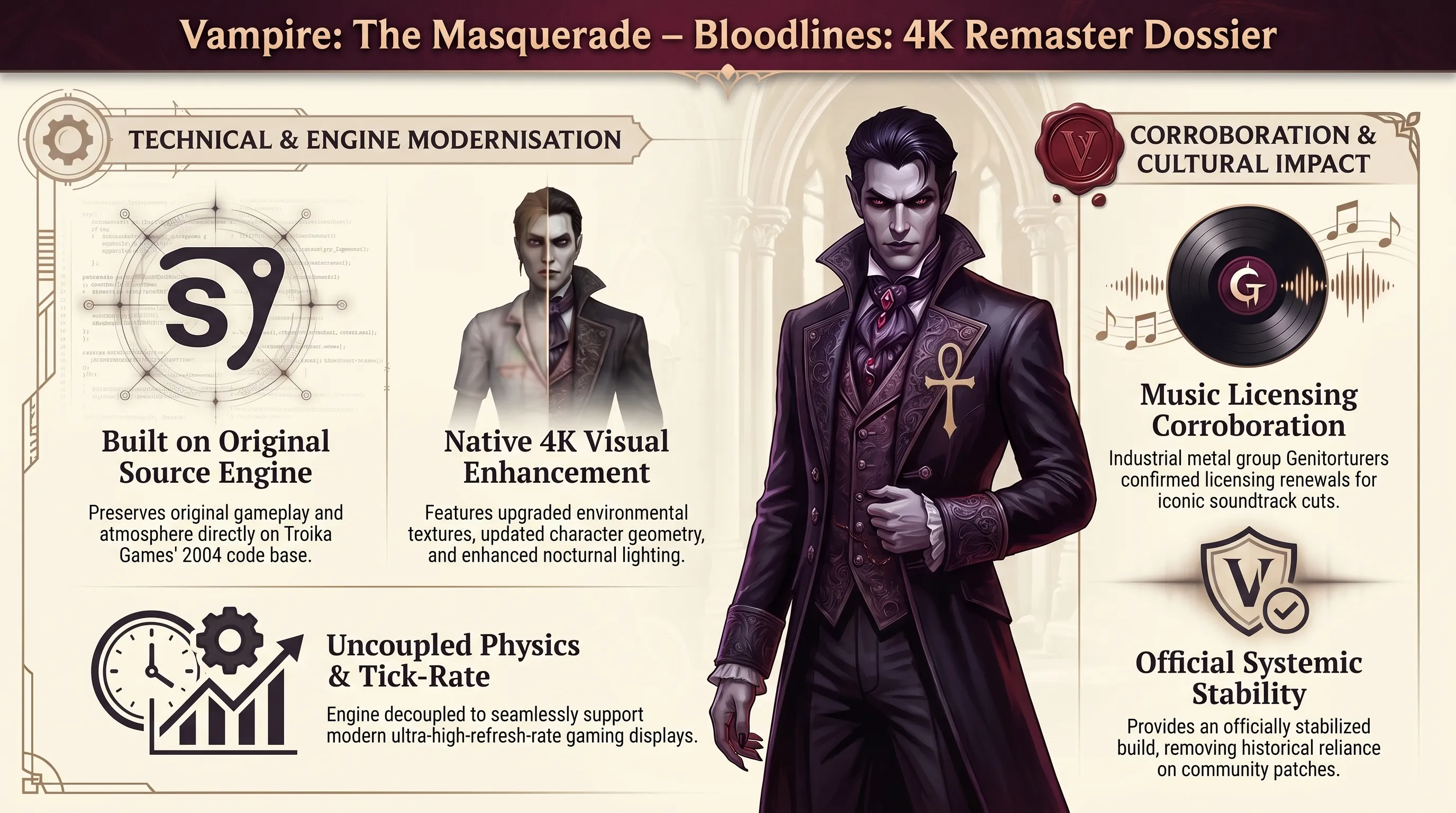
Crucially for purists, the project rejects the trend of radical mechanical overhauls. Rather than a fraught, ground-up remake that risks diluting the original atmosphere, the release is a meticulously faithful remastering built directly upon the foundation of Troika Games original Source Engine implementation. The enhancement suite updates environmental textures, character geometry, and moody nocturnal lighting to native 4K resolution while fully uncoupling the physics and tick-rate engines to support ultra-high-refresh-rate modern gaming monitors.
Corroboration reached fever pitch after members of renowned industrial metal group Genitorturers creators of the iconic club track Lecher Bitch featured prominently in the Santa Monica soundtrack referenced recent licensing renewals during their autumn tour. Given that the 2004 release was historically plagued by publisher-mandated rushes that forced generations of players to rely on volunteer community patches, an officially stabilized, modern commercial release represents the ultimate vindication for Troika Games enduring artistic legacy.
Veteran narrative designers emphasize that early-2000s RPGs achieved their legendary status through uncompromising dialogue branching and unconstrained systemic freedom virtues that modern corporate remakes frequently compromise in pursuit of mass-market accessibility.
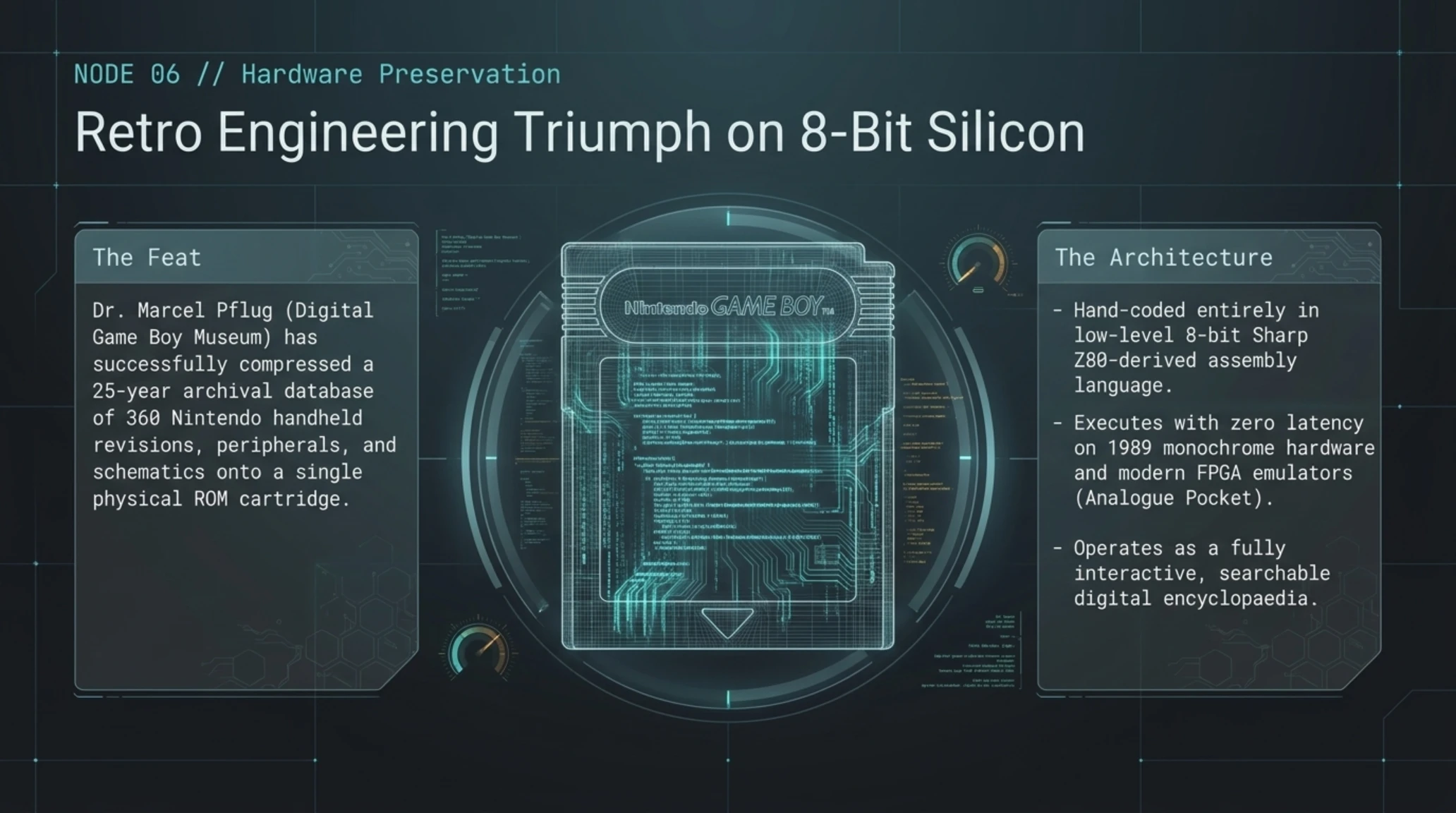
Retro Engineering Triumph: 360-Piece Nintendo Museum Compressed onto a Single Physical Game Boy Cartridge
In a mesmerizing showcase of engineering prowess demonstrating that disciplined programming craft can transcend silicon limitations, Dr. Marcel Pflug, a distinguished retro hardware researcher and curator of the Digital Game Boy Museum, has achieved a world-first technical breakthrough. In an extraordinary engineering feat, Dr. Pflug successfully compressed a comprehensive 25-year archival database encompassing over 360 Nintendo handheld revisions, limited regional hardware editions, obscure peripherals, and technical schematics onto a single physical Game Boy ROM cartridge.
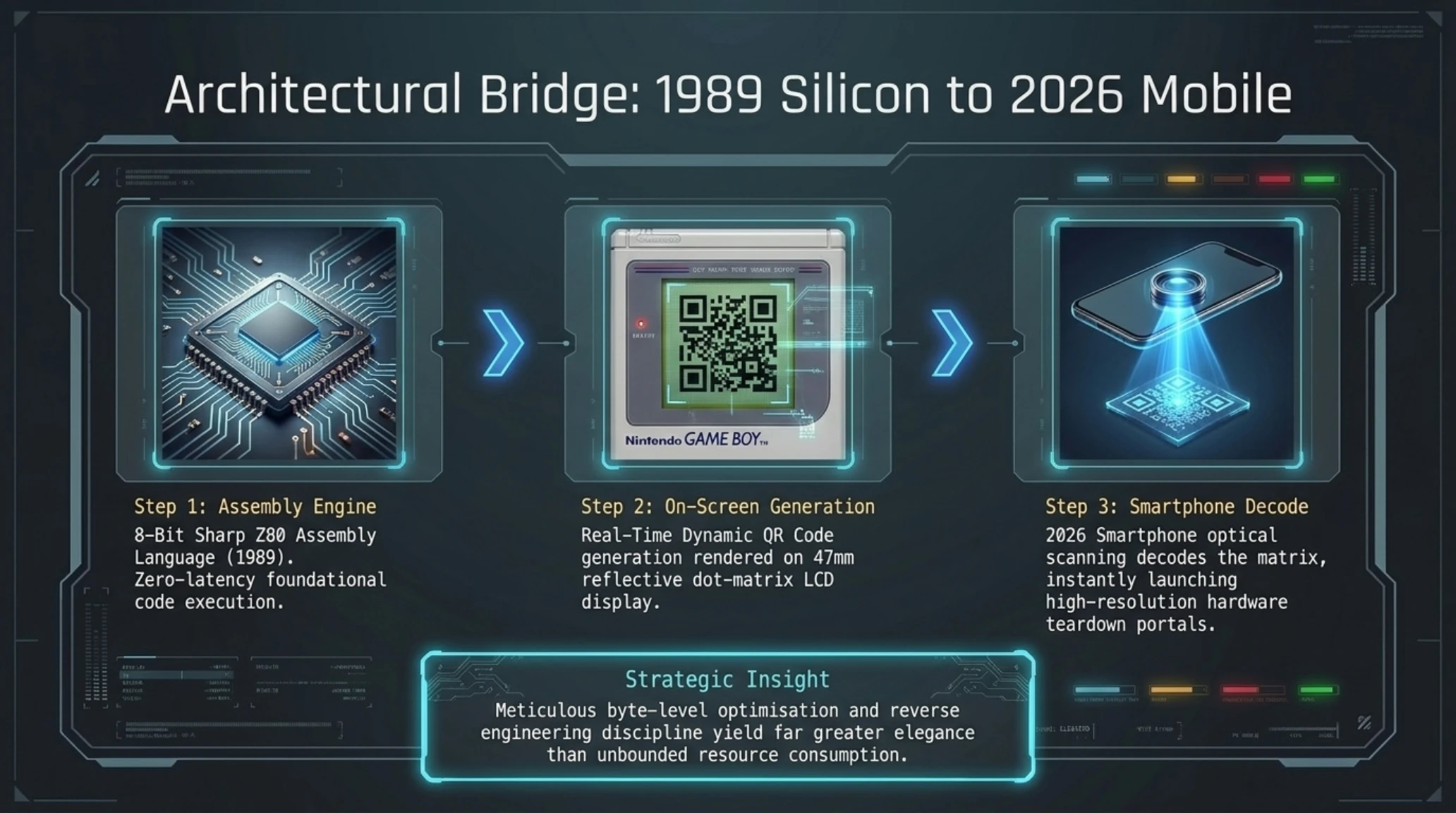
Hand-coded entirely in low-level 8-bit Sharp Z80-derived assembly language, the cartridge boots instantaneously and executes with zero latency on original 1989 monochrome hardware, the Game Boy Color, and contemporary hardware-emulated FPGA systems such as the Analogue Pocket. The software contains no traditional playable games; instead, it operates as a fully interactive, searchable digital encyclopedia documenting a quarter-century of handheld computing heritage.
The crown jewel of Dr. Pflug achievement lies in an ingenious architectural bridge connecting 1980s 8-bit silicon with 2026 mobile smartphones. The cartridge monochrome rendering engine dynamically generates high-contrast QR codes directly on the Game Boy 47mm reflective dot-matrix LCD screen in real time. When a user points a modern smartphone camera at the vintage console display, the scanner instantly decodes the matrix, launching the museum deep-dive portal with high-resolution teardown photographs and historical engineering notes for that exact console revision.
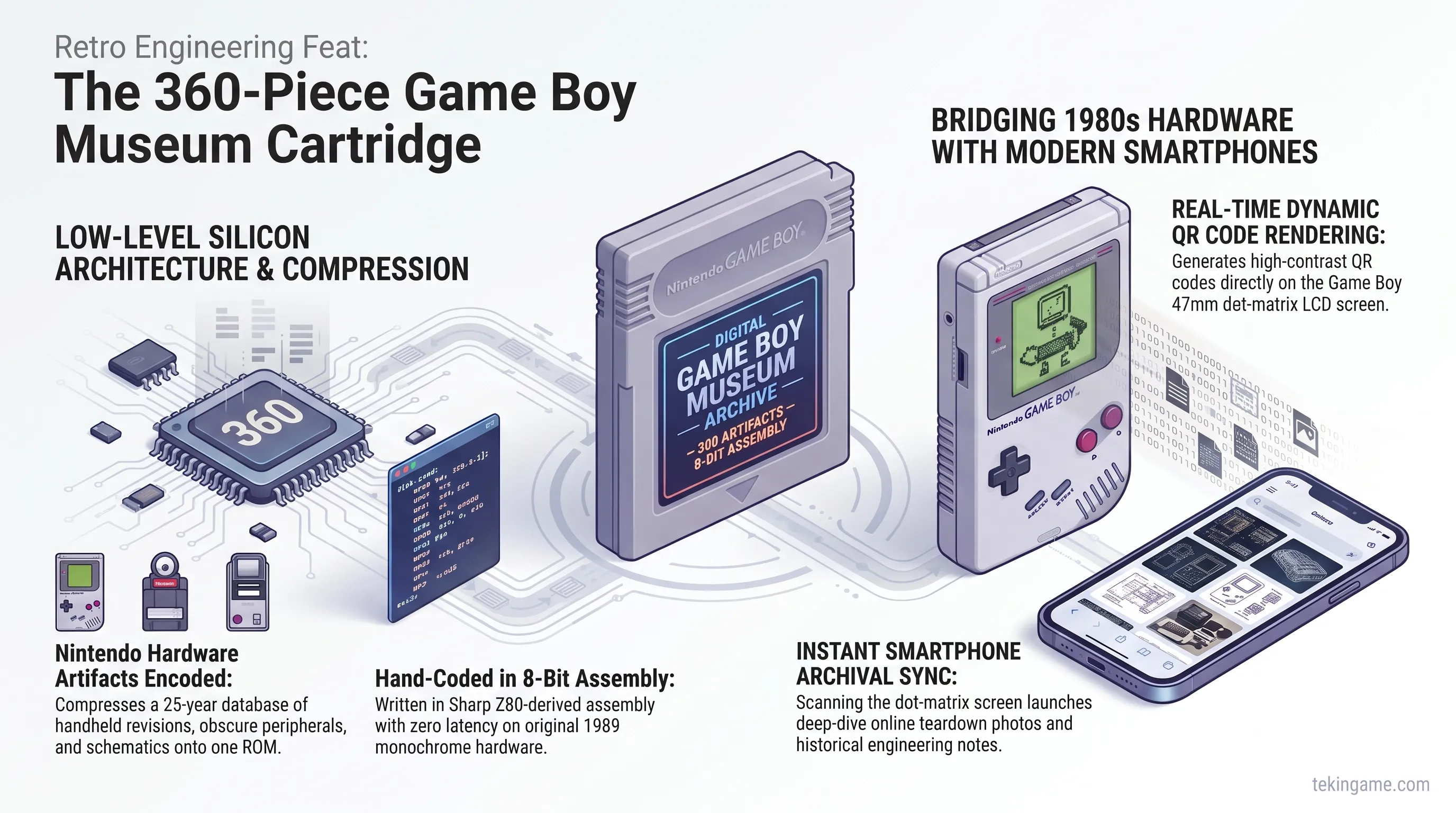
This remarkable technical bridge proves that foundational assembly optimization and reverse engineering discipline can shatter arbitrary generational divides, extracting unprecedented utility from 40-year-old microchips to interact seamlessly with modern connected devices.
The fusion of computing history and contemporary mobile interactivity offers profound lessons for modern software engineers, demonstrating that meticulous byte-level optimization often yields far greater elegance than unbounded resource consumption.
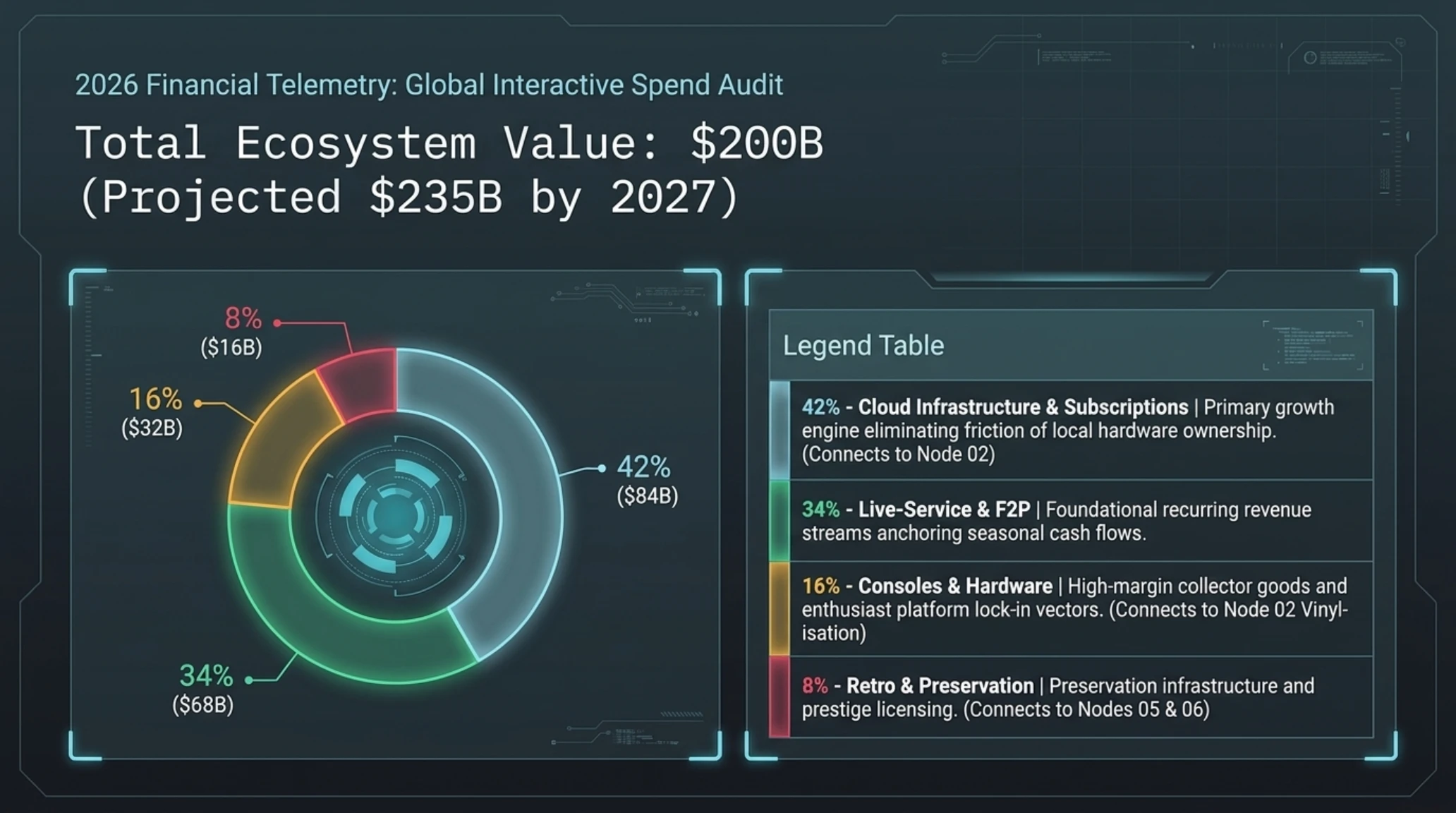
The convergence of shifting capital rotations across global entertainment demonstrates a massive reallocation of investment toward cloud platforms, live-service engagement loops, and high-value cultural preservation.
Financial Telemetry Dashboard, Growth Charts, and Ecosystem Distribution
| Sector / Revenue Stream | Market Liquidity Share | Strategic Function in Entertainment Matrix |
|---|---|---|
| Cloud Infrastructure & Subscriptions | 42 Percent | Primary growth engine eliminating friction of local hardware ownership |
| Live-Service Games & Digital Microtransactions | 34 Percent | Foundational recurring revenue streams anchoring seasonal cash flows |
| Dedicated Physical Consoles & Peripherals | 16 Percent | High-margin collector goods and enthusiast platform lock-in vectors |
| Retro Hardware & Historical Game Archives | 8 Percent | Preservation infrastructure, community preservation, and prestige licensing |
- Dramatically reduced barrier to entry as hyperscale cloud streaming decouples AAA gaming from expensive local silicon.
- Independent creators pioneering innovative cryptographic and architectural safeguards to protect gameplay integrity.
- Flourishing retro preservation initiatives bridging 40-year-old assembly silicon with modern mobile hardware.
- Widespread consumer access to high-fidelity virtual worlds without recurring generational hardware purchase cycles.
- High risk of digital storefront saturation by low-grade, synthetic generative AI clones.
- Acute financial instability across traditional mid-tier AA studios unable to absorb single-title commercial failures.
- Total reliance on uninterrupted broadband connectivity and the erosion of permanent individual digital ownership.
Editorial Board Verdict and Verified Global Sources
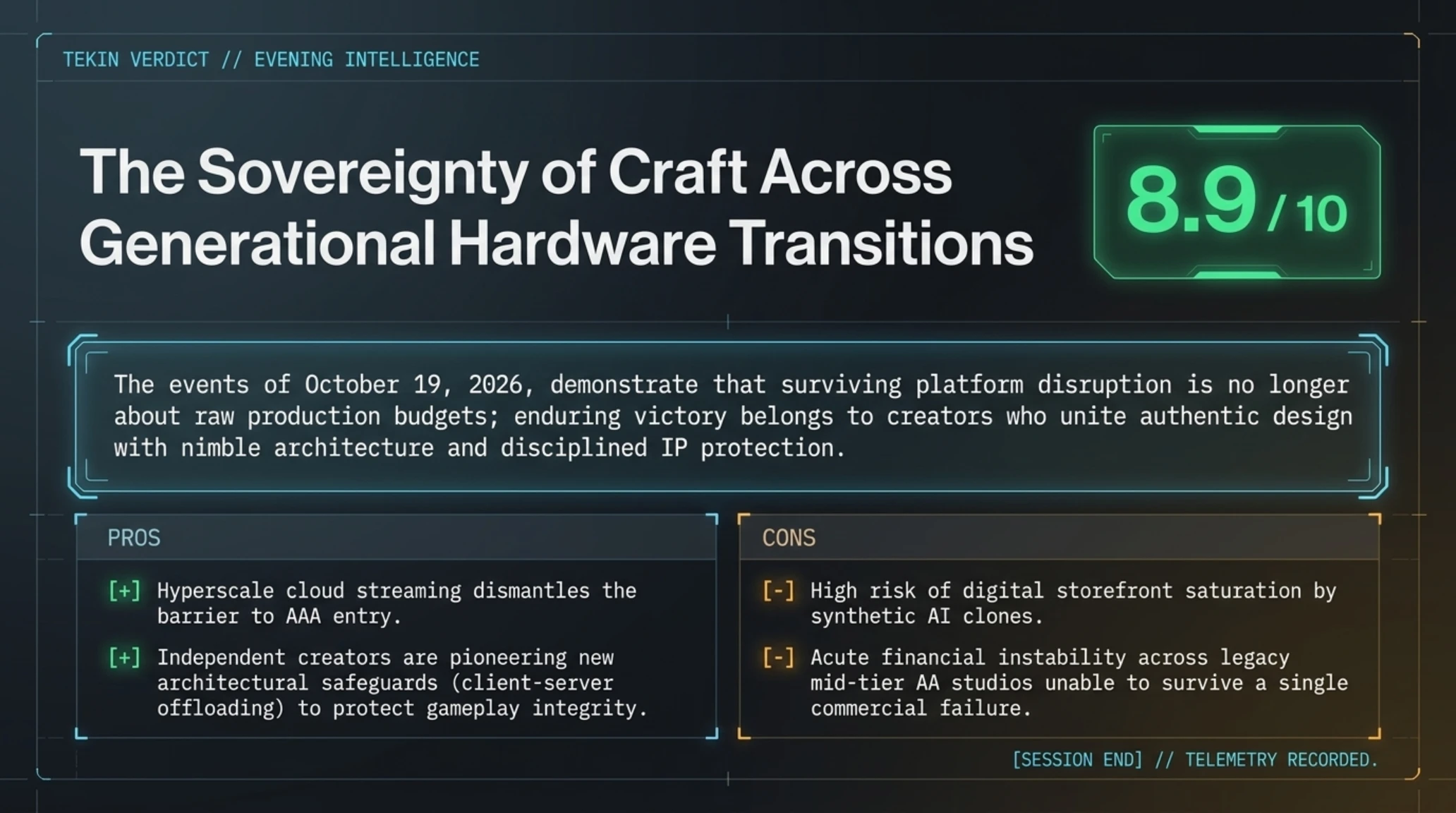
The Sovereignty of Craft Across Generational Hardware Transitions
The events of October 19, 2026 demonstrate that surviving platform disruption is no longer about raw production budgets; enduring victory belongs to creators who unite authentic design with nimble architecture and disciplined IP protection.
- IGN News (IGN): Drunken Goddess Reflux Steam Demo Cancellation Report
- Bloomberg Intelligence (Bloomberg): Cloud Gaming $38 Billion Market Forecast 2035
- Eurogamer (Eurogamer): Cancelled Assassin Creed Destiny Footage Leak
- Kotaku & Stockholm Court (Kotaku): Liquid Swords Bankruptcy and Samson Commercial Flop
- PC Gamer (PC Gamer): Vampire: The Masquerade Bloodlines 2004 Remaster Details
- Time Extension (Time Extension): Game Boy Museum Entire 360 Hardware Exhibit on Single Cartridge
Frequently Asked Questions & Strategic Engineering Audits
Why did Alliance Arts abruptly cancel the public Steam demo for Drunken Goddess Reflux?
The developers were terrified that automated generative AI scrapers and decompilers would reverse-engineer their core Russian roulette mechanics during Steam Next Fest, flooding storefronts with commercial clones before the official December launch.
Does Bloomberg Intelligence forecast mean home consoles will disappear immediately?
No; Bloomberg models a 10-year secular transition toward 2035 where dedicated physical consoles transition into luxury collector items similar to vinyl records as hyperscale AI datacenters capture the mainstream cloud gaming market.
Why did Ubisoft and Tencent cancel the open-world Assassin Creed Destiny project?
The ambitious console action RPG was shelved in early 2025 due to Tencent shifting strategic investment priorities away from high-budget Western partnerships toward lower-risk domestic mobile pipelines.
What is the legal recourse for Liquid Swords unpaid employees in Sweden?
Unpaid staff compensation is guaranteed and disbursed through the Swedish state wage guarantee fund, while the Stockholm bankruptcy trustee auctions off Samson source code and studio IP.
How does the reported Vampire: Bloodlines remaster differ from Bloodlines 2?
This project is a faithful 4K restoration of Troika Games beloved 2004 Source Engine classic with community bug fixes, developed independently from the protracted and delayed Bloodlines 2 project.
How does Dr. Pflug Game Boy museum cartridge interact with modern smartphones?
The cartridge dynamically generates high-contrast QR codes directly on the Game Boy monochrome LCD screen in real time, which can be scanned by any smartphone camera to open detailed museum exhibits.
Additional Gallery: Tekin Night Oct 19 | 🎮 Steam AI Clones, $38B Cloud & AC Leak