Tekin Night: Sept 7
- 🎮MikroTik Crisis- Unauthenticated CVSS 9.8 root compromise via SSH state desynchronization
- 🎧Magento Zero-Day- StyleSmuggler exploit stealing payment data via CSS and GraphQL
- 🚀JetBrains Breach- Cadence orchestration infiltration harvesting AWS IAM credentials
- 🗡️VMware Escape- Emergency patch for xHCI USB 3.0 hypervisor sandbox escape
- 📰ClickFix Malware- Decentralized payload delivery hosted on BNB Chain smart contracts
- ⚔️REVSTEALER Dissected- 4-module BYOVD stealer blinding Windows Defender at ring-0
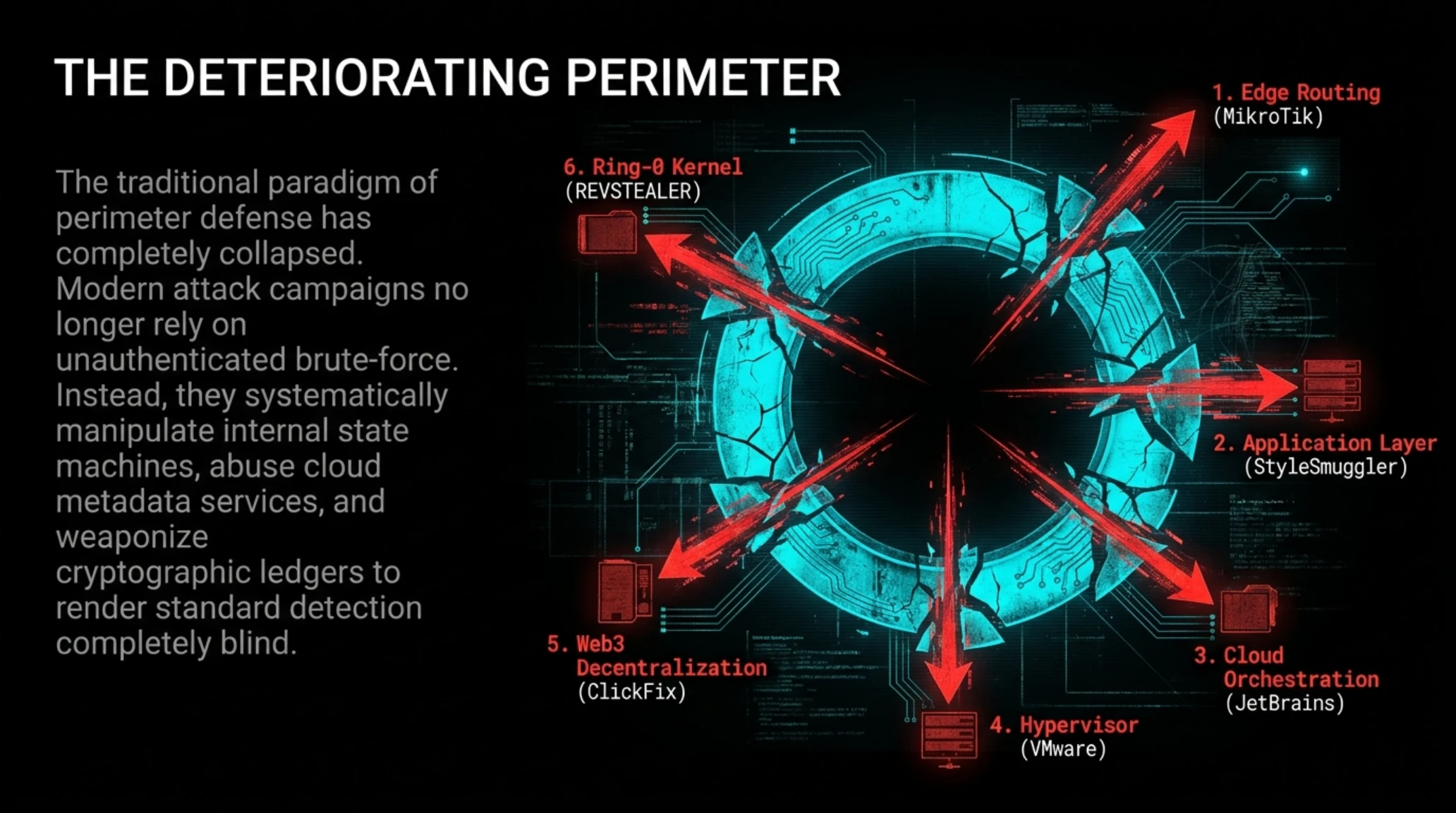
As nocturnal operations begin across global Security Operations Centers (SOCs) and computer incident response teams (CIRTs), threat actors are systematically exploiting architectural blind spots spanning edge routing hardware, enterprise orchestration pipelines, and decentralized Web3 primitives. The traditional paradigm of perimeter defense has completely deteriorated; modern attack campaigns no longer rely on unauthenticated perimeter brute-force alone, but instead manipulate internal state machines, abuse cloud metadata services, and weaponize cryptographic ledgers to render traditional endpoint detection and response (EDR) agents completely blind.
Tonight's edition of Tekin Night provides an exhaustive technical post-mortem of six major cybersecurity developments disclosed over the past twenty-four hours. From kernel-level memory corruptions within virtualization hypervisors to stealthy cascading supply-chain compromises in e-commerce pipelines, these disclosures demonstrate an unmistakable shift toward evasive, living-off-the-land, and living-off-the-cloud tactics that challenge the foundational assumptions of modern enterprise security architecture.
Executive Key Highlights
- Shadowserver and CERT alert on unauthenticated SSH session desynchronization in MikroTik RouterOS v7 (CVE-2026-67276).
- Sansec uncovers StyleSmuggler zero-day exfiltrating e-commerce payment cards via pure CSS selectors and font prefetching.
- JetBrains Cadence infrastructure intrusion exposes legacy AWS IMDSv1 credentials, resulting in unauthorized ECS Monero mining.
- Broadcom releases critical emergency updates for VMware Workstation and Fusion xHCI USB 3.0 VM sandbox escape (CVE-2026-59346).
- ClickFix cybercrime campaign weaponizes immutable BNB Smart Chain contracts to host fileless PowerShell payloads.
- Elastic Security Labs dissects REVSTEALER's 4-module BYOVD framework unhooking Windows Defender and EDR minifilters in ring-0.
Critical MikroTik RouterOS Vulnerability (CVE-2026-67276): Remote SSH Session Desynchronization Grants Root Execution
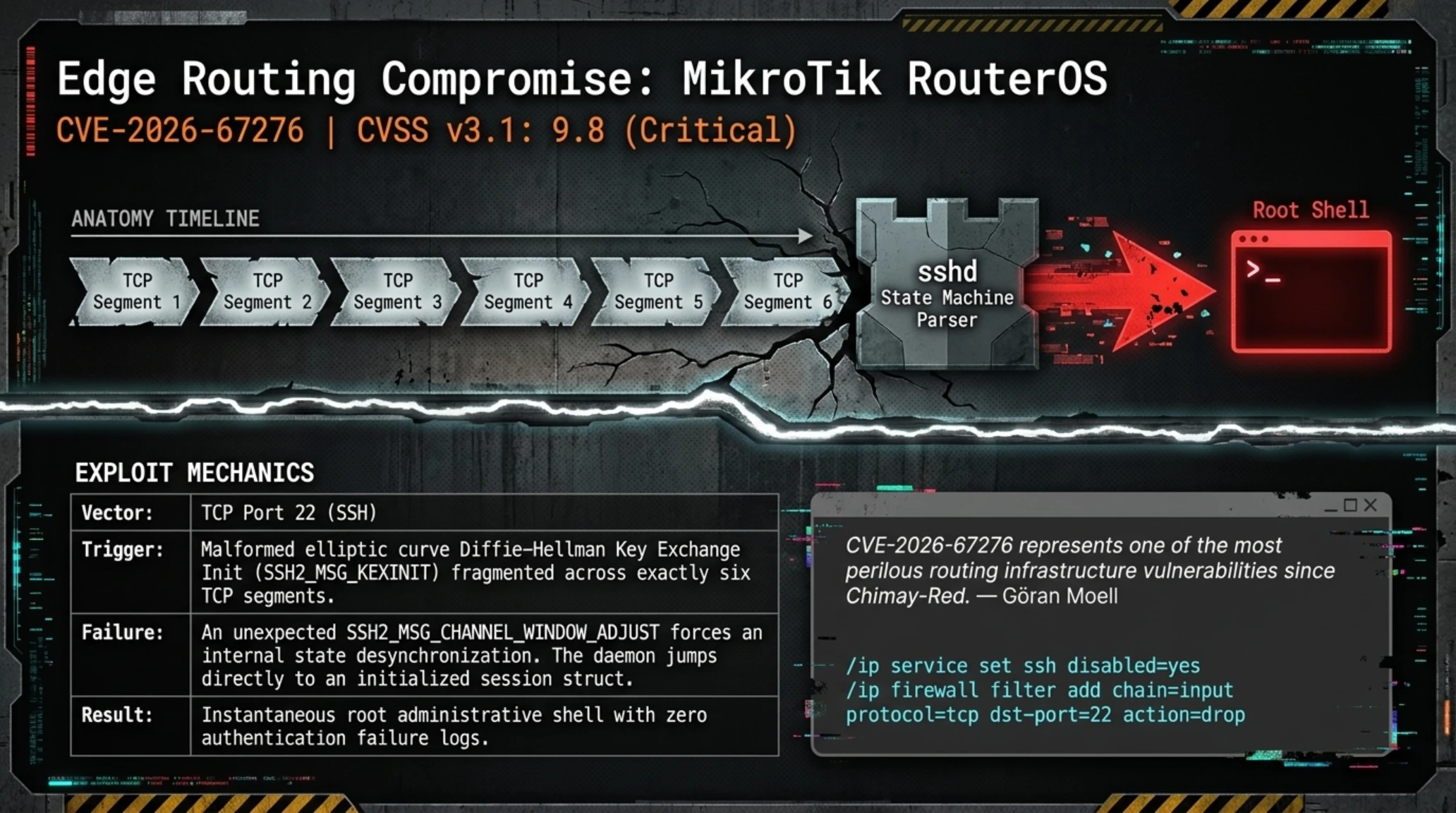
Network infrastructure engineers and perimeter defense teams are facing a severe crisis following the coordinated disclosure of CVE-2026-67276, a critical remote code execution flaw in MikroTik RouterOS v7.x sporting a maximum CVSS v3.1 base score of 9.8. Discovered by researchers at Shadowserver Foundation and confirmed by MikroTik's hardware security unit, the vulnerability allows an unauthenticated remote adversary with network access to the router's listening management interface (TCP port 22) to bypass cryptographic handshakes and establish an interactive root administrative shell within seconds.
The root cause resides in the RouterOS proprietary cryptographic state-machine implementation within the sshd daemon binary. When handling pre-authentication Key Exchange Init (SSH2_MSG_KEXINIT) packets, an edge-case logic error occurs during the negotiation of elliptic curve Diffie-Hellman algorithms (specifically Curve25519 and ECDH-NISTP256) combined with fragmented transport packets. By transmitting a carefully orchestrated sequence of malformed key exchange fragments followed immediately by an unexpected window resize message (SSH2_MSG_CHANNEL_WINDOW_ADJUST), an attacker can trigger an internal state desynchronization.
Under these specific conditions, the daemon's control flow prematurely branches into an initialized authenticated session struct, bypassing password, public-key, and multi-factor verification routines entirely. The resulting session context inherits full superadmin privileges, dropping the remote connection directly into the underlying Linux-based RouterOS shell. Because this interaction takes place within the initial TCP socket establishment phase, it leaves no conventional authentication failure entries in the router's volatile syslog buffers, frustrating triage efforts during post-incident investigation.
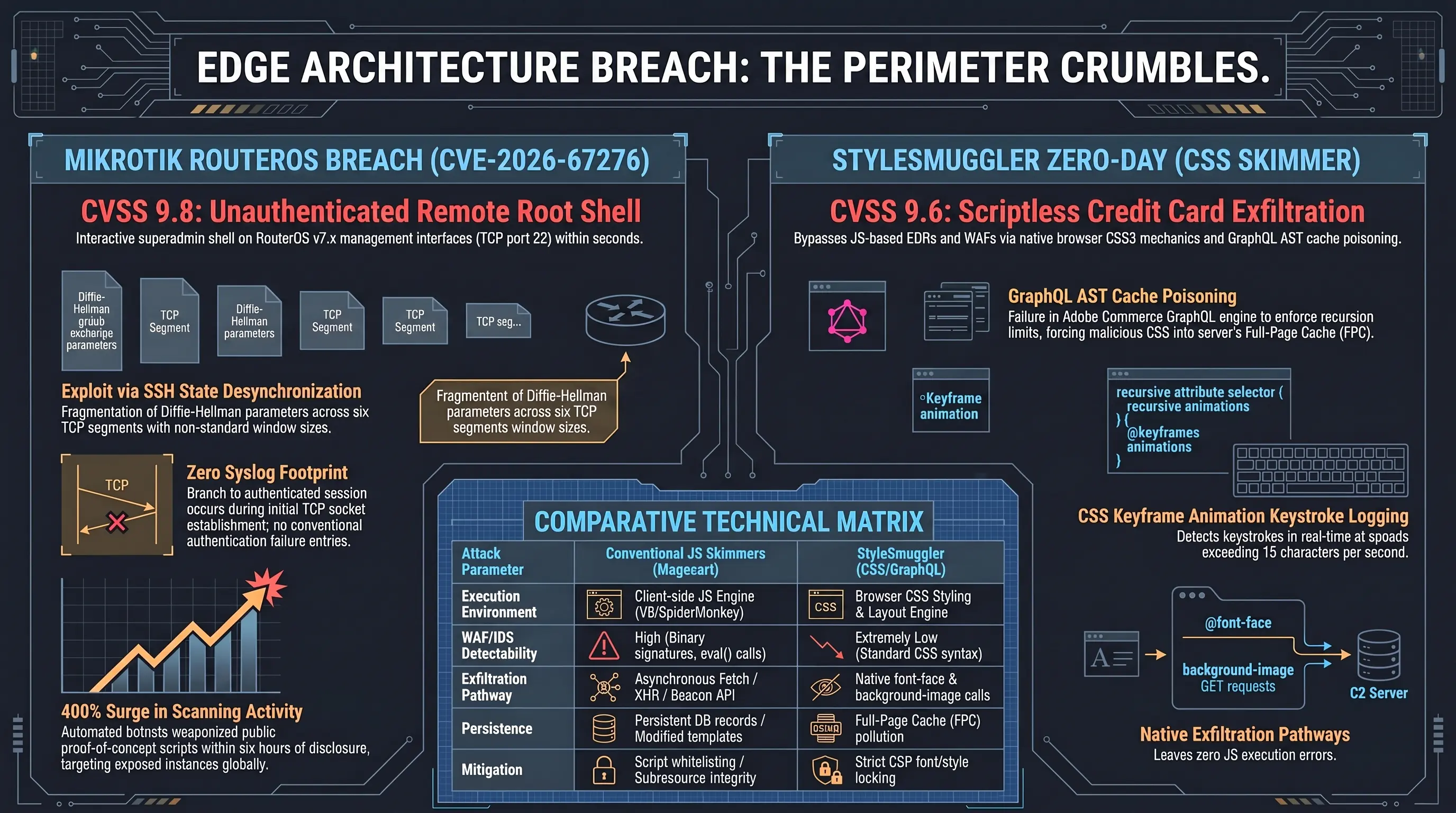
Deep packet inspection (DPI) conducted by security engineers reveals that threat actors achieve exploitation by fragmenting the Diffie-Hellman group exchange parameters across precisely six TCP segments with non-standard window sizes. When the RouterOS SSH daemon reassembles these fragmented segments, a memory boundary validation check fails to verify the complete arrival of the client public key payload. The parser assumes the missing buffer bytes represent a previously validated session token, executing an erroneous jump instruction directly to the interactive shell handler routine.
Telemetry collected by global threat intelligence sensors indicates that automated botnets have already weaponized public proof-of-concept scripts. Scanning activity targeting exposed RouterOS instances surged by over 400% within six hours of advisory publication. Once an adversary achieves root execution, observed post-exploitation behaviors include the deployment of persistent micro-proxies, dynamic modification of Border Gateway Protocol (BGP) routing tables, DNS cache poisoning targeting enterprise banking portals, and the silent installation of SOCKS5 pivoting tunnels utilized to anonymize secondary cyber espionage campaigns.
Technical Vulnerability Profile: MikroTik RouterOS CVE-2026-67276
| Parameter | Specification & Operational Impact |
|---|---|
| CVE Identifier & Severity | CVE-2026-67276 | CVSS v3.1: 9.8 (Critical / Remote Unauthenticated) |
| Vulnerable Subsystem | RouterOS SSH Daemon (sshd) elliptic curve state-machine parser |
| Affected Firmware Versions | RouterOS v7.0 through v7.15.2 (All architectures: ARM, MIPS, x86, Tile) |
| Patched Release | RouterOS v7.15.3 Stable and Long-Term v7.16.1 |
| Attack Prerequisites | Reachable TCP port 22 on WAN or LAN interfaces; zero credentials required |
| Immediate Workaround | Disable SSH service via IP Service List, or restrict access strictly to trusted management subnets via raw firewall drop rules |
| Command-Line Hardening | /ip service set ssh disabled=yes ; /ip firewall filter add chain=input protocol=tcp dst-port=22 action=drop |
MikroTik has issued emergency firmware updates in RouterOS v7.15.3 and v7.16.1 Long-Term, urging all system administrators to apply the patches immediately. Organizations unable to execute an instantaneous firmware reboot must urgently restrict management interface accessibility by implementing stateless firewall filtering rules at upstream border firewalls, disabling the default SSH service in favor of encrypted WireGuard tunnels, and auditing all active user sessions for rogue administrative accounts created during recent maintenance windows.
StyleSmuggler Zero-Day Exploit in Magento and Adobe Commerce: Unauthenticated Credit Card Exfiltration via Pure CSS and GraphQL
In a startling technical disclosure, security researchers at e-commerce threat intelligence firm Sansec uncovered an unpatched zero-day vulnerability dubbed StyleSmuggler affecting Magento 2 and Adobe Commerce platforms. Carrying a critical CVSS v3.1 severity score of 9.6, this vulnerability allows unauthenticated remote attackers to execute arbitrary style injection attacks that bypass virtually all modern Web Application Firewalls (WAFs), client-side Content Security Policies (CSP), and runtime payment skimmer detectors.
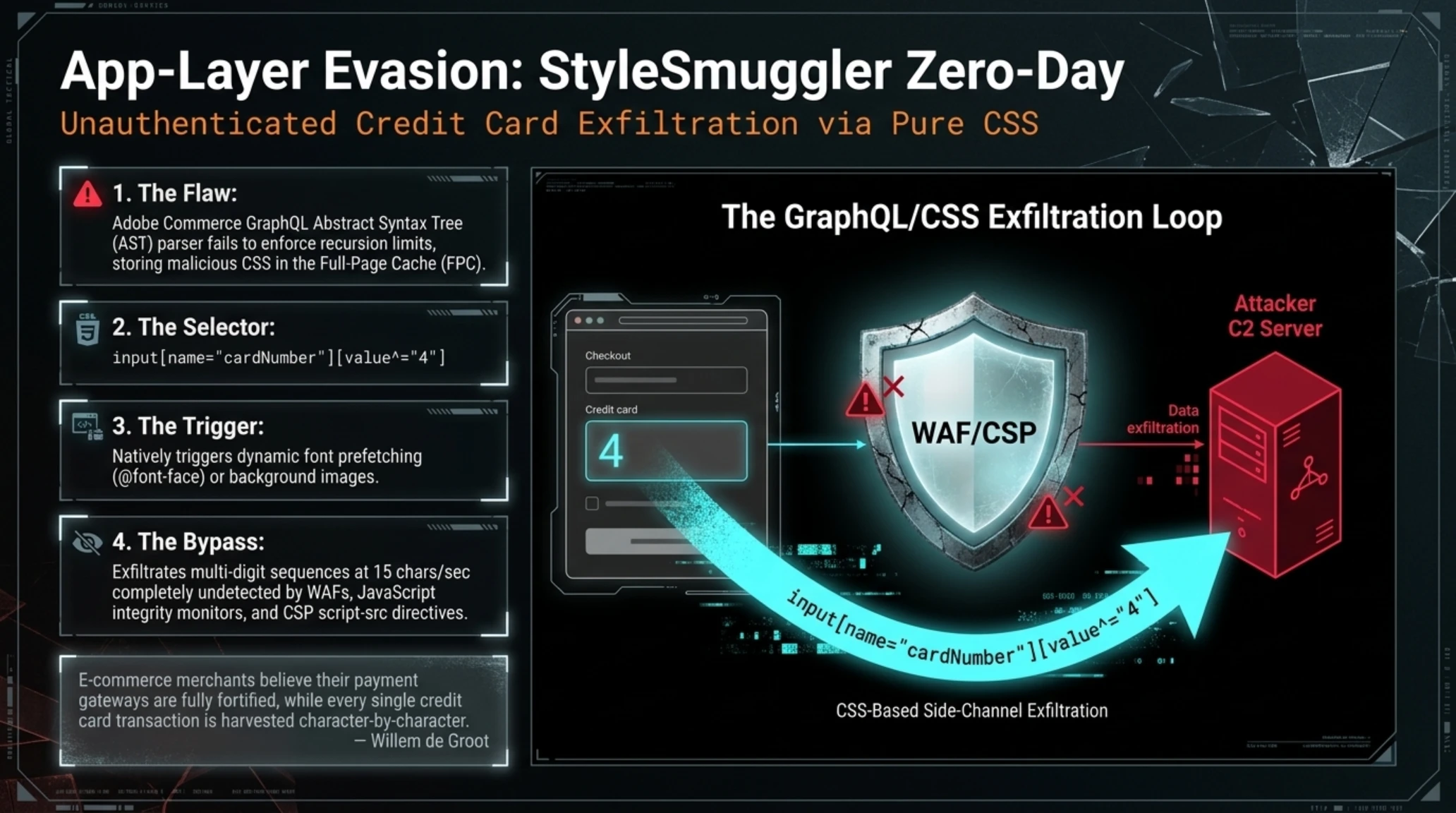
The architectural flaw exists within the Adobe Commerce GraphQL query resolution engine. When resolving nested query schemas with complex field aliases, the Abstract Syntax Tree (AST) parser fails to enforce strict recursion limits and omits sanitization of static response headers. Attackers construct a specialized GraphQL payload containing heavily nested aliases that forces the server's Full-Page Cache (FPC) to store manipulated response fragments containing malicious Cascading Style Sheets (CSS) declarations directly within the platform's public static asset cache.
Because Magento's built-in cache tag invalidation logic does not recognize injected CSS fragments as distinct dynamic objects, the poisoned cache entries persist across store visits and affect all subsequent shoppers. Unlike traditional Magecart attacks that inject obfuscated JavaScript into checkout forms, StyleSmuggler operates entirely through standard CSS3 mechanics without executing a single line of client-side script. The injected CSS utilizes recursive attribute selectors targeting sensitive document inputs, such as input[name="cardNumber"][value^="4"], to detect user keystrokes in real time.
Whenever a customer types a character into the credit card number, expiration date, or CVV input field, the matching selector automatically triggers an outbound HTTP request—either through dynamic font prefetching (@font-face { src: url(...) }) or background image requests (background-image: url(...))—transmitting the captured digit to an external Command and Control (C2) server. Furthermore, by orchestrating sequential CSS @keyframes animations, the payload can cycle through input states and exfiltrate multi-digit sequences at speeds exceeding 15 characters per second without causing input lag or interface stuttering on the victim's device.
Because the data exfiltration occurs natively inside the browser's CSS styling pipeline, browser developer consoles display zero JavaScript execution errors or script-loading warnings. Furthermore, standard Content Security Policies that restrict script-src directives are bypassed entirely unless administrators have explicitly hardened and locked down their font-src and style-src headers to strictly whitelisted internal domains.
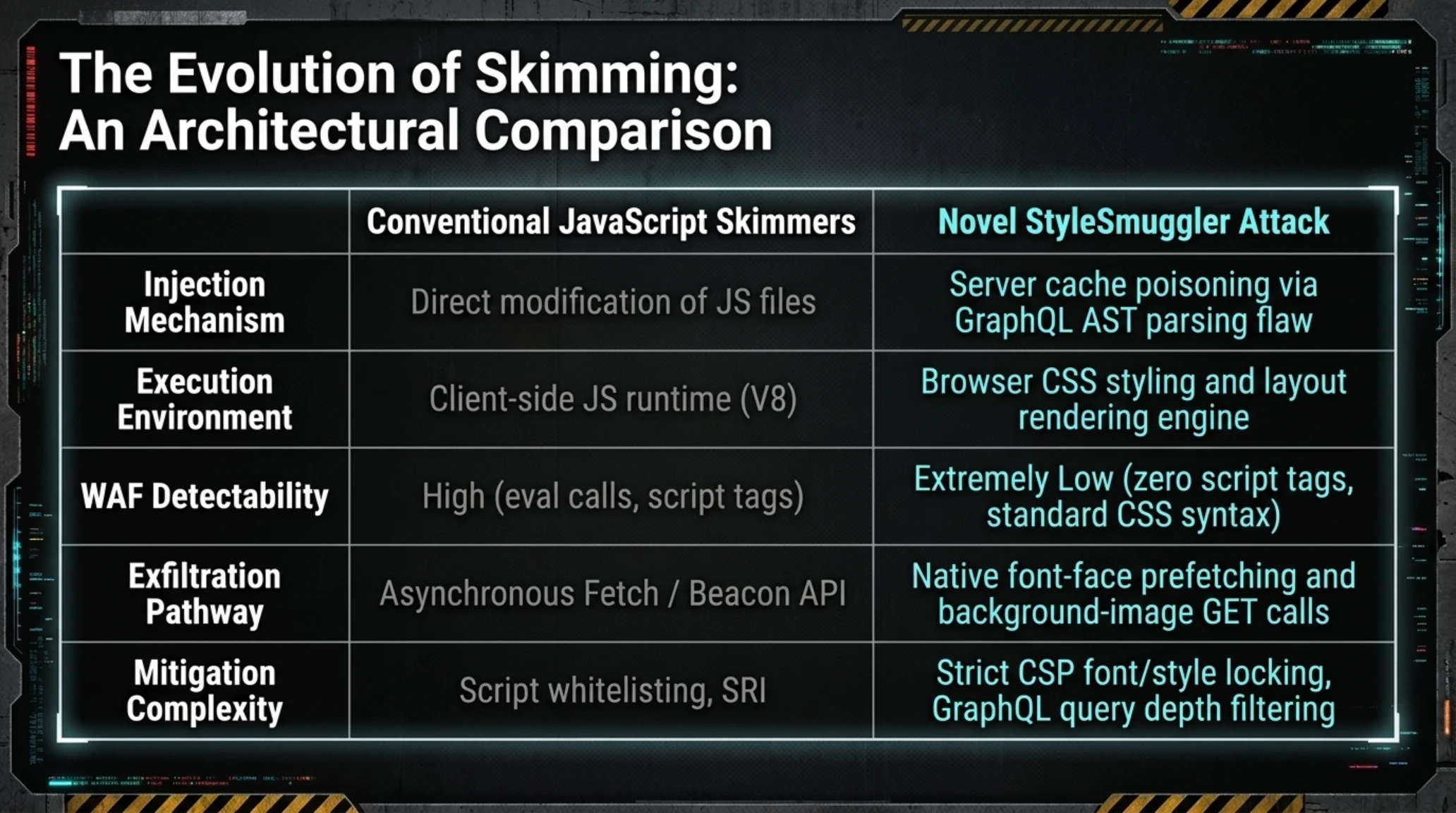
Comparative Threat Matrix: JavaScript Magecart Skimmers vs. StyleSmuggler
| Attack Parameter | Conventional JavaScript Skimmers (Magecart) | Novel StyleSmuggler Attack (CSS & GraphQL) |
|---|---|---|
| Injection Mechanism | Direct modification of JS files or database storage | Server cache poisoning via GraphQL AST parsing flaw |
| Execution Environment | Client-side JavaScript runtime engine (V8 / SpiderMonkey) | Browser CSS styling and layout rendering engine |
| WAF & IDS Detectability | High; recognizable binary signatures, eval() calls, and script tags | Extremely Low; zero script tags, standard CSS syntax |
| Authentication Level Required | Admin panel compromise or database write access | Completely unauthenticated remote network access |
| Exfiltration Pathway | Asynchronous Fetch / XMLHttpRequest or Beacon API | Native font-face prefetching and background-image GET calls |
| Mitigation Complexity | Script whitelisting, subresource integrity (SRI) | Strict CSP font/style locking, GraphQL query depth filtering |
| Persistence Mechanism | Persistent database records or modified template files | Full-Page Cache (FPC) pollution across reverse-proxy layers |
As Adobe works on an emergency out-of-band security patch, Sansec strongly advises all e-commerce merchants and enterprise DevOps teams to implement immediate defensive mitigations. These measures include deploying reverse-proxy inspection rules on Nginx and Cloudflare WAF to drop deeply nested GraphQL alias queries, sanitizing static cache directories, and enforcing strict Content-Security-Policy rules that prohibit external connections within style-src, font-src, and img-src directives across all payment and checkout pathways.
JetBrains Cadence Infrastructure Breach: TeamCity Authentication Bypass Leads to AWS IAM Credential Harvest
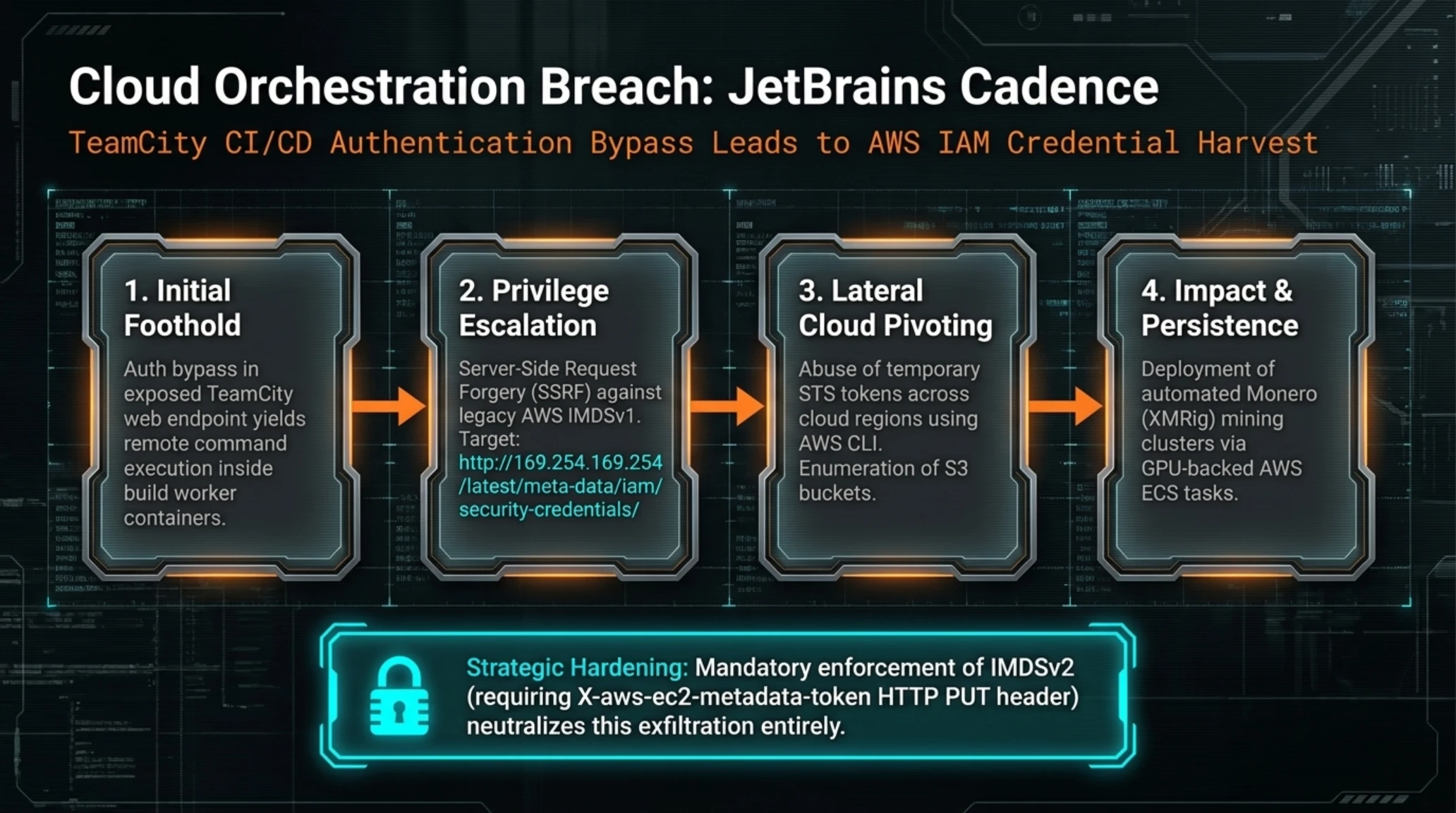
In another critical incident shaking the DevOps and enterprise software engineering sectors, JetBrains issued an emergency security notification detailing a sophisticated multi-stage intrusion targeting its cloud workflow orchestration platform, Cadence. The breach was initiated by cyber adversaries exploiting a critical authentication bypass flaw in internally hosted instances of the TeamCity continuous integration and continuous deployment (CI/CD) server.
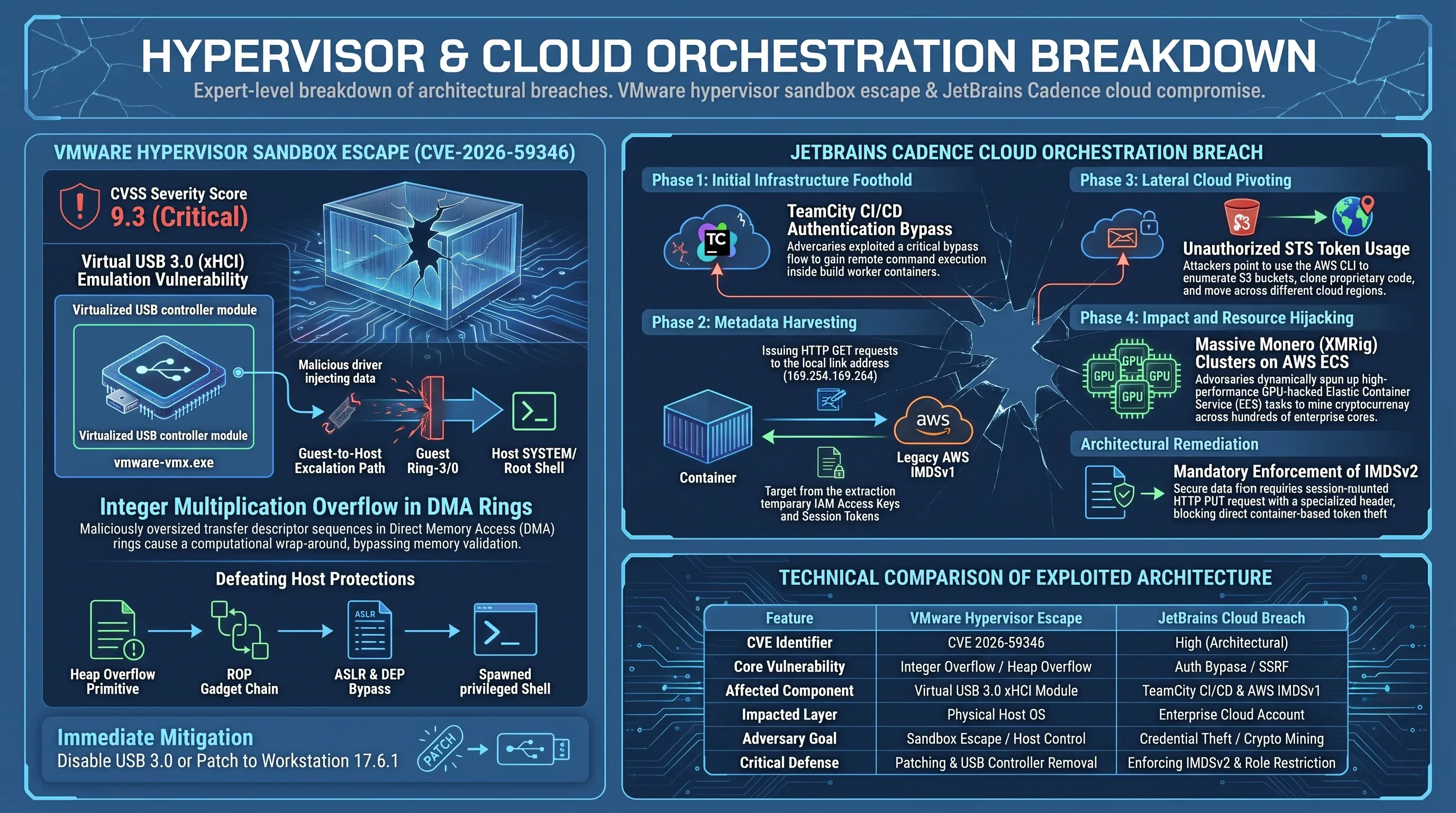
Upon establishing initial access within the build infrastructure containers, the threat actors executed local reconnaissance scripts to identify network interfaces and routing tables. The adversaries quickly discovered that the underlying Amazon EC2 compute instances were configured with legacy AWS Instance Metadata Service Version 1 (IMDSv1) enabled. Because IMDSv1 does not require session-oriented authentication tokens, the attackers were able to issue a simple HTTP GET request to the local link address http://169.254.169.254/latest/meta-data/iam/security-credentials/ directly from within the container environment.
This request immediately exposed the temporary Access Key ID, Secret Access Key, and Session Token associated with the instance's high-privilege IAM Role. Equipped with valid AWS administrative credentials, the threat actors pivoted across the cloud account, enumerated private Amazon S3 storage buckets, cloned internal proprietary code repositories, and dynamically spun up high-performance GPU-backed Elastic Container Service (ECS) tasks to execute Monero (XMRig) cryptocurrency mining routines across hundreds of enterprise compute cores.
Incident Kill-Chain Anatomy: JetBrains Cadence Cloud Breach
| Kill-Chain Phase | Adversary Technique & Vector | Impact & Engineering Remediation |
|---|---|---|
| Initial Foothold | Authentication bypass in exposed TeamCity CI/CD web endpoint | Remote command execution inside build worker containers |
| Privilege Escalation | Server-Side Request Forgery against legacy AWS IMDSv1 | Harvesting of temporary IAM role credentials from metadata |
| Lateral Cloud Pivoting | Use of AWS CLI with stolen STS tokens across cloud regions | Reconnaissance of S3 buckets and unauthorized resource creation |
| Impact & Persistence | Deployment of automated Monero mining clusters via AWS ECS | Resource exhaustion, cloud bill inflation, intellectual property exposure |
| Containment & Hardening | Mandatory enforcement of IMDSv2 and IAM session revocation | Global token rotation, IAM role restriction, CI/CD network segmentation |
| Detection Signatures | AWS CloudTrail PutObject anomalies & GuardDuty CryptoMiner | Real-time automated alerting on EC2 instance credential usage outside VPC |
JetBrains security incident responders detected the unauthorized compute spikes via AWS GuardDuty anomaly alerts within hours of deployment. The incident response team took immediate decisive actions: all compromised container instances were isolated, existing IAM sessions were revoked enterprise-wide, and an automated policy was deployed to enforce IMDSv2 across all AWS infrastructure. IMDSv2 neutralizes SSRF-based metadata harvesting by requiring a session token obtained via an explicit HTTP PUT request with a specialized header (X-aws-ec2-metadata-token), rendering direct container-based token exfiltration inoperable.
VMware Workstation and Fusion Hypervisor Sandbox Escape: Broadcom Rushes Emergency Patch for Critical CVE-2026-59346
Virtualization security boundaries suffered a severe breakdown today as Broadcom issued an emergency out-of-band security advisory for VMware Workstation Pro and VMware Fusion. Tracking under CVE-2026-59346 with a critical CVSS v3.1 score of 9.3, the vulnerability enables an attacker with standard local administrative or privileged user rights inside a guest virtual machine (Guest OS) to completely shatter sandbox isolation and execute arbitrary code on the physical host machine (Host OS) with elevated root or SYSTEM privileges.
Deep-dive reverse engineering of the hypervisor binaries conducted by offensive security researchers reveals that the flaw resides within the virtualized Extensible Host Controller Interface (xHCI), which handles USB 3.0 device emulation. Communication between the guest operating system and the hypervisor relies on Direct Memory Access (DMA) rings composed of Transfer Request Blocks (TRBs). When a malicious driver inside the guest constructs an invalid or intentionally oversized transfer descriptor sequence, the hypervisor's memory validation routine suffers from an integer multiplication overflow.
This computational wrap-around leads directly to a heap buffer overflow in the context of the host's vmware-vmx.exe process. By carefully grooming the heap layout within the hypervisor process, an attacker can corrupt adjacent function pointers and virtual method tables (vftables). Exploitation frameworks observed in the wild chain this primitive with an information disclosure leak to defeat host-level Address Space Layout Randomization (ASLR) and Data Execution Prevention (DEP), subsequently executing Return-Oriented Programming (ROP) gadget chains that spawn a privileged command shell directly on the underlying host operating system.
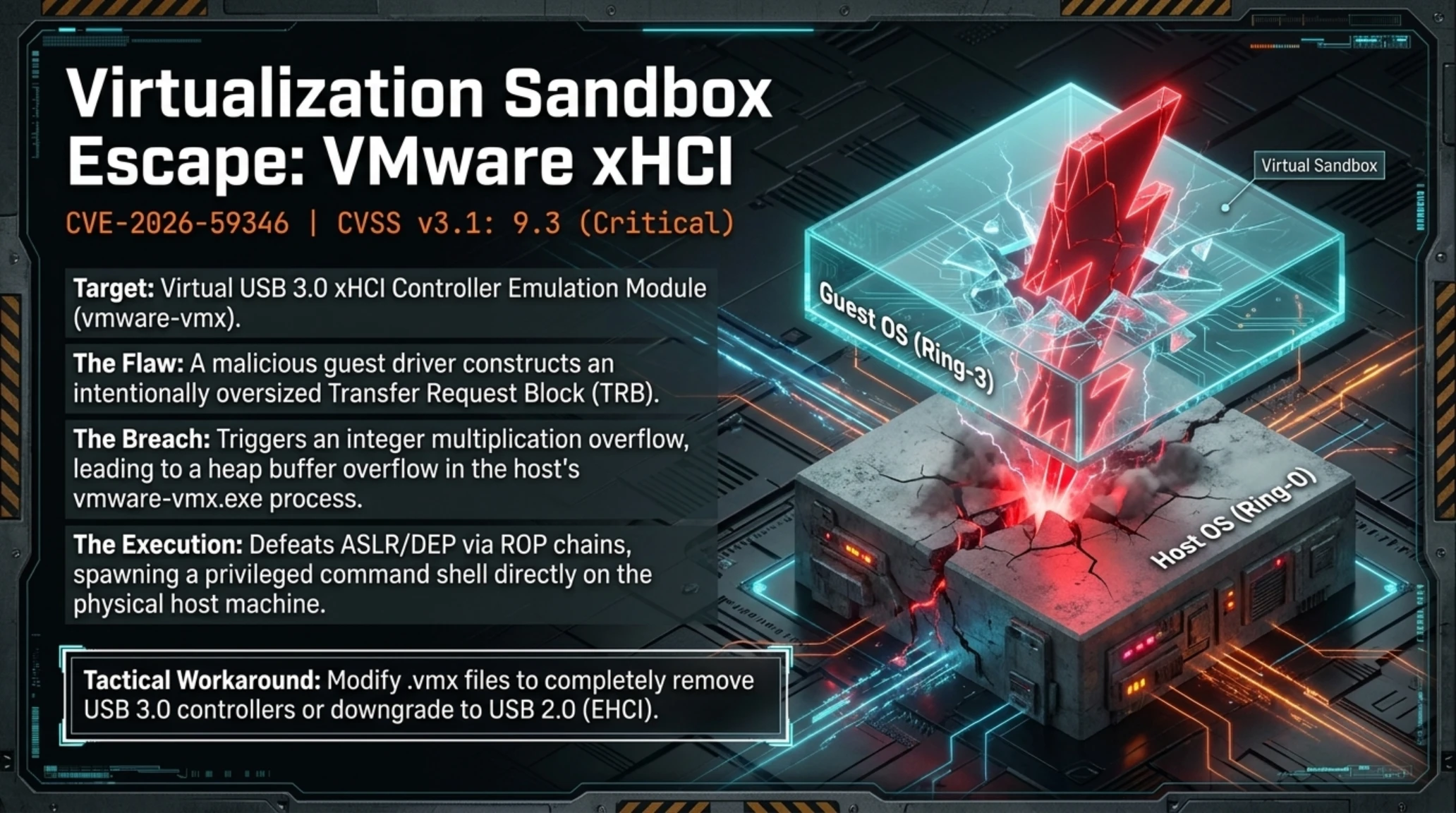
Technical Vulnerability Specifications: VMware xHCI Escape (CVE-2026-59346)
| Architecture Dimension | Vulnerability Attribute & Technical Specification |
|---|---|
| Vulnerability Classification | CWE-190 (Integer Overflow) leading to CWE-122 (Heap-based Buffer Overflow) |
| Affected Component | Virtual USB 3.0 xHCI Controller Emulation Module (vmware-vmx) |
| Affected Software Suites | VMware Workstation Pro 17.x & VMware Fusion 13.x (Windows, macOS, Linux) |
| Patched Versions | Workstation Pro 17.6.1 and VMware Fusion 13.6.1 |
| Execution Context | Escalates from Guest ring-3/ring-0 to Host ring-3 (SYSTEM/Root privileges) |
| Primary Attack Preconditions | Guest OS execution rights; USB 3.0 virtual controller enabled in VMX config |
| Tactical Workaround | Remove USB controller from VM configuration or downgrade to USB 2.0 (EHCI) |
📚 Classified & Related Dossiers in TekinGame
If you wish to explore beyond this report and delve into cybernetic frontiers and autonomous AI architectures, do not miss these three exclusive deep-dives in the Tekin Garage:
The operational ramifications of CVE-2026-59346 are catastrophic for security operation centers, malware analysis sandboxes, and enterprise testing environments. Malware researchers routinely execute untrusted, weaponized binaries inside virtual machines under the assumption of complete guest-to-host isolation. An automated malware sample armed with this exploit could quietly break out of the sandbox, compromise the analyst's physical host workstation, harvest internal VPN keys, and establish an untracked foothold inside corporate engineering segments. Broadcom urges all administrators to upgrade to Workstation 17.6.1 and Fusion 13.6.1 immediately, or modify virtual machine .vmx files to completely remove USB 3.0 controllers until updates are completed.
ClickFix Malware Campaign Exploits BNB Smart Chain: Decentralized Smart Contracts Weaponized as Immutable PowerShell Payload Vaults
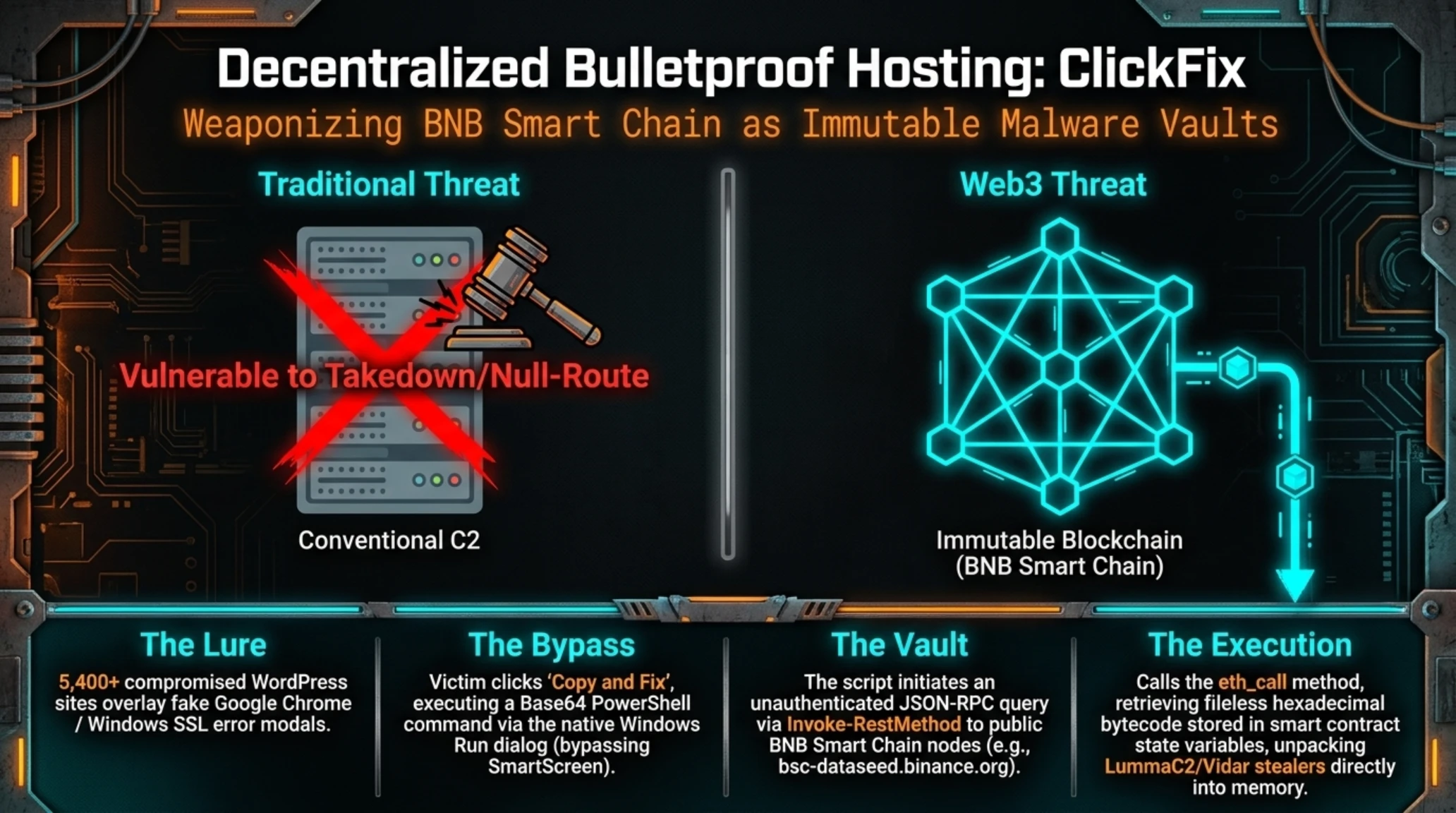
Cybersecurity researchers at Sekoia and BleepingComputer have sounded the alarm over a revolutionary evolution in social engineering infrastructure: the weaponization of Web3 decentralized blockchains to host indestructible malware distribution pipelines. Dubbed the ClickFix campaign, this operation has compromised over 5,400 legitimate WordPress websites globally, transforming them into decoys that distribute persistent infostealers via the Binance Smart Chain (BNB Chain).
The infection chain begins when an unsuspecting user browses to a compromised WordPress site whose content management system was breached via vulnerable plugins or stolen administrative credentials. The injected malicious JavaScript intercepts the page load and overlays an authentic-looking modal dialog mimicking a native Google Chrome error, Microsoft Windows SSL handshake failure, or Discord voice engine update. The dialogue falsely informs the user that a required rendering font is missing or an audio codec error occurred, displaying a prominent "Copy and Fix" or "Verify You Are Human" button.
When the user clicks the prompt, the script silently copies a Base64-obfuscated PowerShell command to the system clipboard while simultaneously displaying an animated visual guide prompting the victim to press Win + R, paste the clipboard contents into the Windows Run box, and hit Enter. This clever living-off-the-land social engineering tactic bypasses traditional browser download warnings, Antivirus URL reputation filters, and SmartScreen protections because the user manually executes the command in the native Windows shell.
Once executed, the PowerShell script avoids downloading payloads from conventional web servers or cloud storage buckets. Instead, it initiates an unauthenticated JSON-RPC query using Invoke-RestMethod to public, legitimate BNB Smart Chain RPC endpoints, such as https://bsc-dataseed.binance.org. The script calls the eth_call method of a pre-deployed smart contract, retrieving raw hexadecimal bytecode stored directly within contract state variables on the immutable blockchain ledger. This bytecode is dynamically decoded in system memory (a purely fileless operation) and unpacked into dangerous infostealer payloads, including LummaC2, Vidar, and RedLine Stealer.
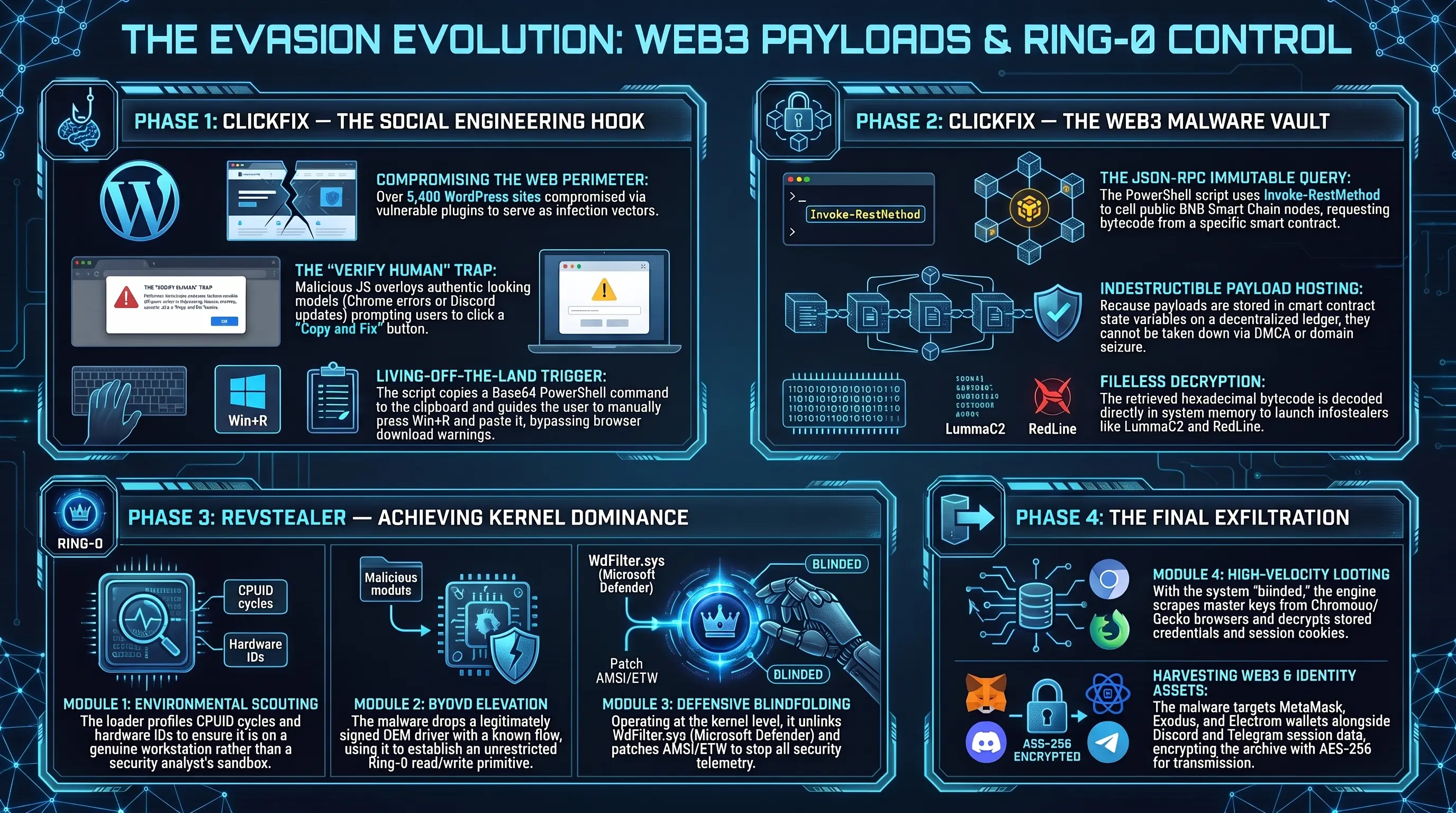
Tekin Analysis | Decentralized Web3 as an Undefeatable Malware Bulletproof Host
Network security engineers are advised to implement strict egress filtering policies that flag unexpected outbound JSON-RPC calls originating from PowerShell (powershell.exe) or command prompt processes to public Web3 nodes. Enterprise endpoint monitoring tools must also inspect command-line executions for common ClickFix patterns, such as powershell.exe -w hidden -c [System.Text.Encoding]::UTF8.GetString([System.Convert]::FromBase64String(...)), and deploy user training modules that emphasize never pasting unfamiliar clipboard commands into the Windows Run dialogue.
Elastic Security Labs Dissects REVSTEALER: A 4-Module Architecture Weaponizing BYOVD to Blind Windows Defender
A comprehensive research report published today by Elastic Security Labs has pulled back the curtain on REVSTEALER, an advanced and stealthy information-stealing framework that represents the new frontier of endpoint evasion. Combining modular architecture with aggressive ring-0 manipulation, REVSTEALER systematically dismantles endpoint defenses through the weaponization of the Bring Your Own Vulnerable Driver (BYOVD) technique, effectively neutralizing Microsoft Defender Antivirus and commercial EDR solutions prior to executing credential harvesting routines.
Elastic's reverse-engineering analysis dissects the threat into four distinct, tightly coordinated modules that execute in strict chronological sequence:
Module 1: Environmental Reconnaissance and Sandbox Evasion. The primary loader initiates high-precision anti-analysis routines. It inspects CPUID instruction cycles, query performance counters, hardware device IDs, and screen resolution metrics to verify it is running on a genuine physical workstation rather than an automated sandbox or security analyst virtual machine. It cross-checks loaded dynamic link libraries (DLLs) for known debugging hooks before proceeding.
Module 2: BYOVD Kernel Elevation. Once the target environment is validated as a legitimate corporate endpoint, REVSTEALER drops a cryptographically signed, legitimately certified OEM driver containing a known arbitrary kernel read/write vulnerability (such as a compromised graphics or hardware diagnostic utility driver). By communicating with this driver via DeviceIoControl, the malware bypasses Windows Driver Signature Enforcement (DSE) without generating alerts, establishing an unrestricted read/write primitive within kernel space (ring-0).
Module 3: Defensive Blindfolding and EDR Mini-Filter Neutralization. Operating with unrestricted kernel access, REVSTEALER traverses the kernel's internal linked lists to locate registered filter drivers. It locates the callback routines of WdFilter.sys (Microsoft Defender's core filesystem mini-filter) and commercial EDR agents, overwriting critical memory locations with NOP instructions or zeroing out telemetry notification hooks. Simultaneously, it modifies service controller memory to terminate Windows Defender processes, disable Windows Update services, and patch both the Antimalware Scan Interface (AMSI) and Event Tracing for Windows (ETW) routines inside user-mode processes.
Module 4: High-Velocity Credential Exfiltration. With the host endpoint operating completely blind and incapable of generating telemetry, REVSTEALER launches its exfiltration engine. It extracts master cryptographic keys from Chromium and Gecko-based browsers, decrypting stored passwords, session cookies, and autofill records. It subsequently sweeps the filesystem for cryptocurrency wallet extensions, desktop wallet datastores (including MetaMask, Exodus, and Electrum), Discord authorization tokens, and Telegram session data, encrypting the gathered archive with AES-256 before transmitting it over secure HTTPS to attacker-controlled C2 relays.
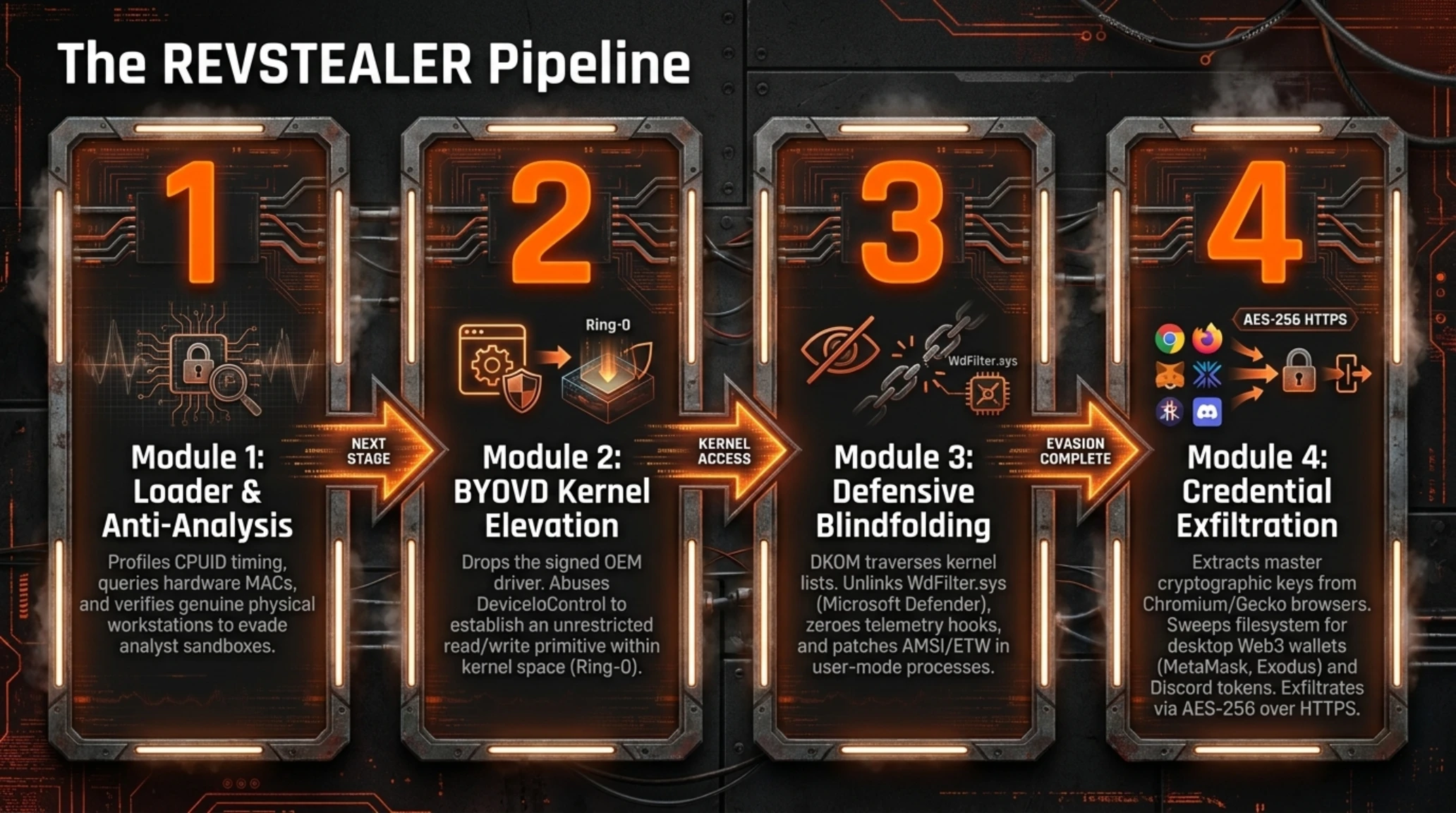
REVSTEALER 4-Module Architectural Execution Pipeline
| Module Phase | Primary Execution Vector | Technical Exploitation Details |
|---|---|---|
| Module 1: Loader & Anti-Analysis | User-mode PE execution & environment profiling | CPUID timing checks, sandbox evasion, MAC address filtering |
| Module 2: BYOVD Kernel Elevation | Dropping legitimate signed vulnerable OEM driver | Abuse of DeviceIoControl to achieve arbitrary ring-0 read/write |
| Module 3: Defensive Blindfolding | Direct Kernel Object Modification (DKOM) | Unlinking WdFilter.sys, patching AMSI/ETW, disabling WinDefend |
| Module 4: Credential Exfiltration | Memory scraping and SQLite database decryption | Harvesting master keys, browser cookies, Web3 wallets, SSH credentials |
Nocturnal Threat Landscape Synthesis and Strategic Defensive Blueprint
The six critical incidents analyzed in tonight's intelligence dispatch reflect a cohesive, interconnected macro-trend: modern cyber attackers are systematically bypassing traditional perimeter and endpoint controls by targeting the seams of distributed computing architectures. Whether through SSH state desynchronization in edge routing hardware (MikroTik), CSS-based data harvesting in e-commerce pipelines (StyleSmuggler), cloud metadata harvesting through legacy protocols (JetBrains Cadence), hypervisor memory overflows (VMware), immutable Web3 smart contract payloads (ClickFix), or ring-0 BYOVD weaponization (REVSTEALER), adversaries are capitalizing on architectural assumptions rather than isolated software bugs.
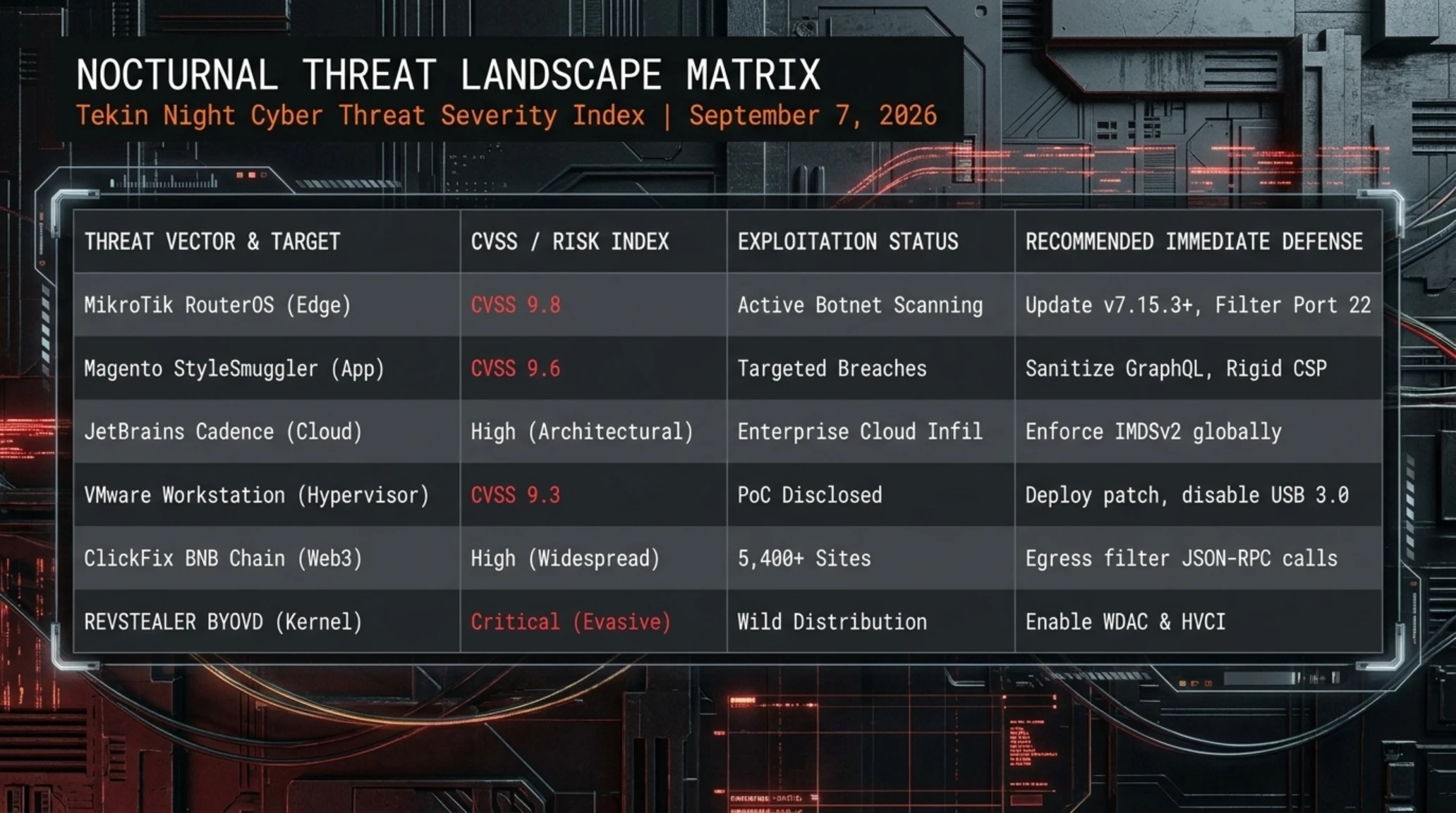
Tekin Night Cyber Threat Severity Index | September 7, 2026
| Threat Vector & Target | CVSS / Risk Index | Exploitation Status | Recommended Immediate Defense |
|---|---|---|---|
| MikroTik RouterOS (CVE-2026-67276) | CVSS 9.8 (Critical) | Active Botnet Scanning & Exploitation | Update RouterOS to v7.15.3+, filter TCP port 22 at perimeter |
| Magento StyleSmuggler GraphQL Zero-Day | CVSS 9.6 (Critical) | Targeted E-Commerce Breaches | Sanitize GraphQL query depth, enforce rigid CSP font/style headers |
| JetBrains Cadence CI/CD & AWS IMDSv1 | High (Architectural) | Targeted Enterprise Cloud Infiltration | Enforce IMDSv2 globally, revoke orphaned IAM role sessions |
| VMware Workstation xHCI (CVE-2026-59346) | CVSS 9.3 (Critical) | Proof-of-Concept Publicly Disclosed | Deploy Broadcom patch, disable virtual USB 3.0 controller |
| ClickFix BNB Smart Chain Infostealer | High (Widespread) | Over 5,400 Websites Compromised | Egress filtering on JSON-RPC calls, block base64 PowerShell run |
| REVSTEALER BYOVD Kernel Stealer | Critical (Evasive) | Wild Distribution via Maldocs & Warez | Enable Windows Defender Application Control (WDAC) & HVCI |
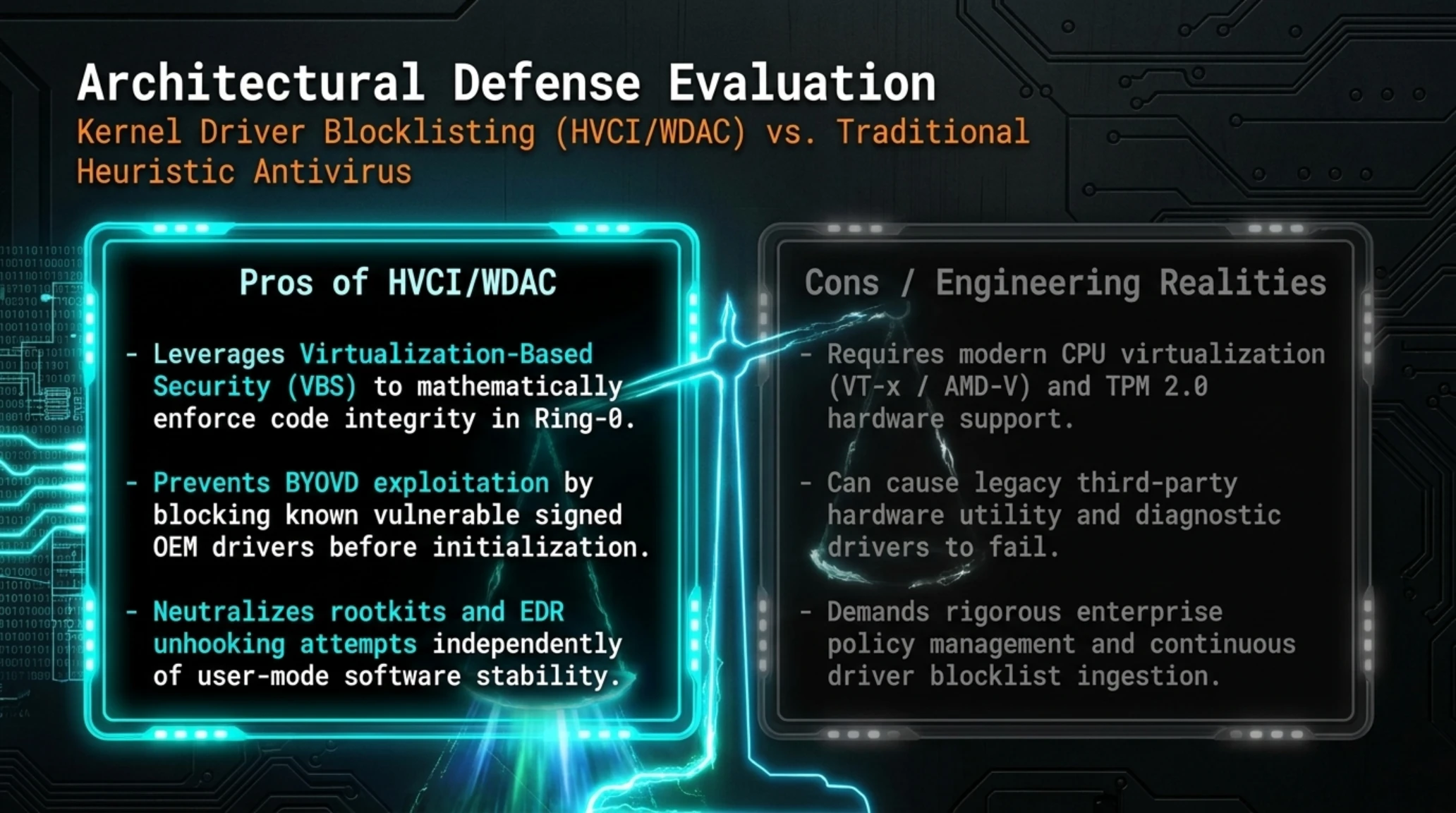
To defend against this multi-dimensional threat landscape, security leaders must move beyond reactive signature updates and implement comprehensive, architectural defense-in-depth frameworks. In the context of kernel-level threats like REVSTEALER, the implementation of Hypervisor-Protected Code Integrity (HVCI) and Windows Defender Application Control (WDAC) driver blocklists is no longer optional—it is a foundational operational imperative.
- HVCI leverages virtualization-based security (VBS) to mathematically enforce code integrity in ring-0.
- Prevents BYOVD exploitation by blocking known vulnerable signed OEM drivers before initialization.
- Neutralizes rootkits and EDR unhooking attempts independently of user-mode software stability.
- Eliminates entire classes of memory corruption exploits targeting kernel callback structures.
- Requires modern CPU virtualization features (VT-x / AMD-V) and TPM 2.0 hardware support.
- Can cause legacy third-party hardware utility and diagnostic drivers to fail execution.
- Demands rigorous enterprise policy management, testing, and continuous driver blocklist ingestion.
- Does not mitigate application-layer logic flaws such as GraphQL style injection or cloud SSRF.
Chronological Evolution of Kernel Evasion and EDR Warfare (2018–2026)
| Year | Milestone / Event | Technical Evolution & EDR Impact |
|---|---|---|
| 2018 | Emergence of User-Mode Unhooking | Malware developers begin bypassing endpoint antivirus by reading clean ntdll.dll bytes from disk and restoring original syscall stubs, bypassing user-mode inline API hooks. |
| 2020 | The Rise of BYOVD in Commodity Ransomware | RobbinHood and BlackCat ransomware syndicates weaponize vulnerable signed third-party drivers (such as gdrv.sys and mhyprot.sys) to terminate antivirus processes from kernel mode. |
| 2022 | Direct Kernel Object Manipulation (DKOM) Industrialization | Threat actors operationalize DKOM to unlink security processes from EPROCESS structures and zero out security notification callbacks in WdFilter.sys. |
| 2024 | Hardware-Enforced Driver Blocklists & HVCI Adoption | Microsoft activates mandatory driver blocklists in Windows 11 22H2+, pushing threat actors to discover zero-day vulnerabilities in obscure industrial and gaming OEM drivers. |
| 2026 | REVSTEALER & Web3 Decentralized Living-off-the-Land | Modern threats combine automated BYOVD blindfolding with immutable blockchain-hosted payloads, eliminating centralized C2 footprints and defeating next-gen EDR. |
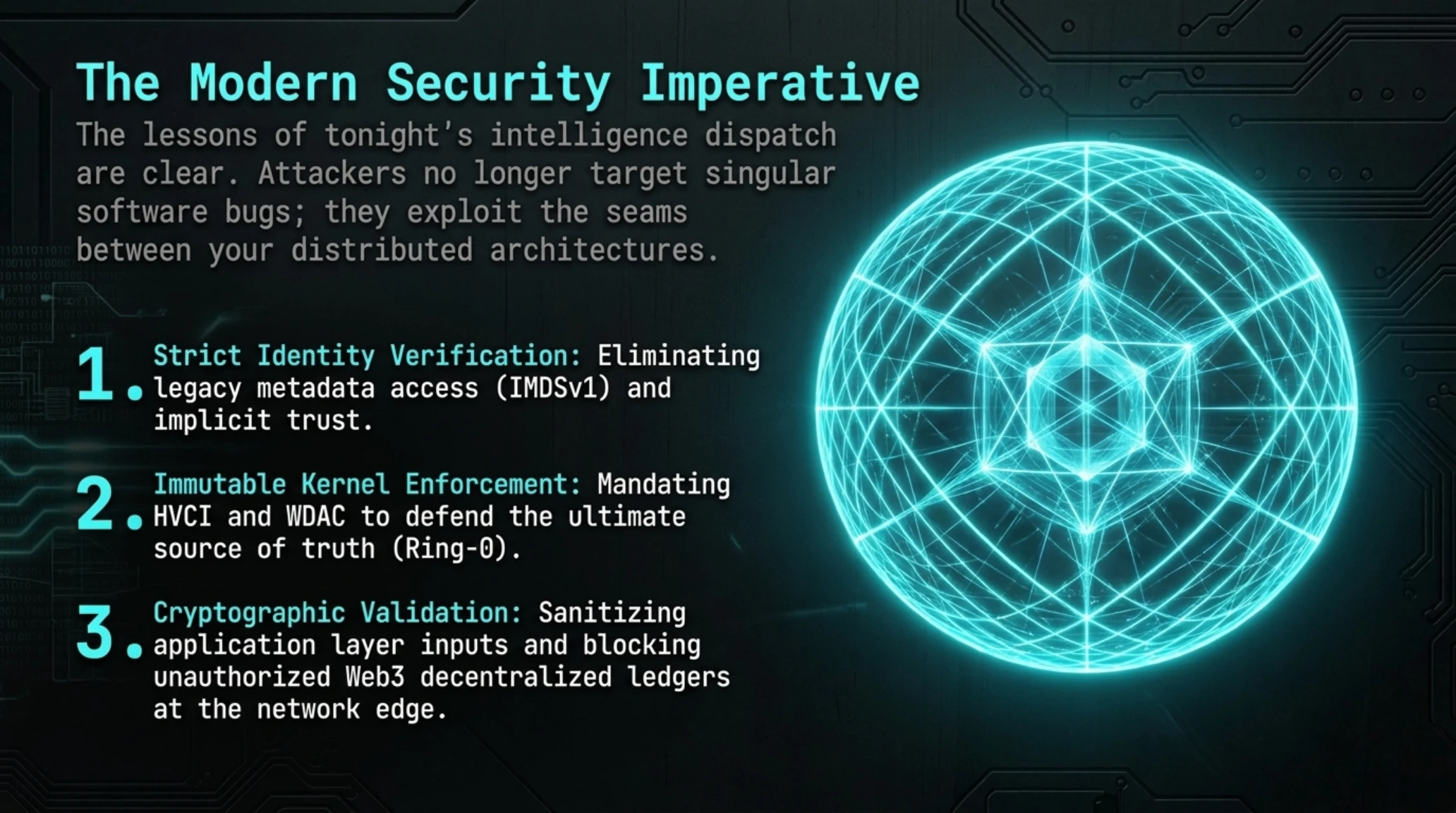
As the nocturnal landscape continues to evolve, the lessons of tonight's disclosures are clear: the modern security perimeter is defined not by firewalls, but by strict identity verification, immutable kernel enforcement, and cryptographic validation. As organizations fortify their digital perimeters for the week ahead, resilience will belong to those who systematically eliminate blind spots across edge devices, hypervisors, and cloud orchestration pipelines.
Related Tech Intelligence on Tekin Game
• 🌙 Tekin Night | Call of Duty, Nintendo & Vision Pro Digest
• 🎭 Tekin Analysis | Apple AI Teardown & July 2026 Digest
• 🌙 Tekin Night | NVIDIA $500B Deal & iPhone 18 Leak
Executive Technical Q&A: Tekin Night September 7, 2026
Why does the StyleSmuggler attack evade standard WAF rules?
StyleSmuggler injects syntactically valid CSS via an unauthenticated GraphQL flaw. Because it relies on CSS attribute selectors rather than executable JavaScript, WAFs scanning for script signatures fail to detect it.
How does VMware CVE-2026-59346 allow hypervisor escape?
An integer overflow in the virtual USB 3.0 (xHCI) controller emulation triggers a heap buffer overflow in the host's process, allowing attackers to overwrite function pointers and execute code with host-level root privileges.
Why is ClickFix malware resilient to infrastructure takedowns?
It stores payloads inside immutable smart contract variables on the BNB Smart Chain. Without centralized servers or domains, traditional legal takedowns and IP blacklisting are completely ineffective.
What is the primary mitigation against REVSTEALER's BYOVD technique?
Enforcing Hypervisor-Protected Code Integrity (HVCI) and enabling the Microsoft Driver Blocklist via WDAC prevents the kernel from loading signed drivers known to contain vulnerabilities.
How did the JetBrains breach escalate to AWS cloud infrastructure?
Attackers bypassed TeamCity authentication, then accessed the legacy AWS IMDSv1 service from within the worker container to harvest temporary IAM role credentials, enabling lateral movement across S3 and ECS.
Official Intelligence Sources & Verified Repositories
- Shadowserver: MikroTik RouterOS CVE-2026-67276 Analysis
- Sansec: StyleSmuggler Magento GraphQL Zero-Day
- JetBrains: Cadence Incident Response & Remediation
- Broadcom: VMware xHCI Sandbox Escape VMSA-2026-0019
- BleepingComputer: ClickFix Campaigns on BNB Smart Chain
- Elastic Security: REVSTEALER BYOVD Framework
Additional Gallery: 🌙 Tekin Night Sept 7, 2026 | MikroTik Root Flaw, Magento 0-Day & VMware Escape