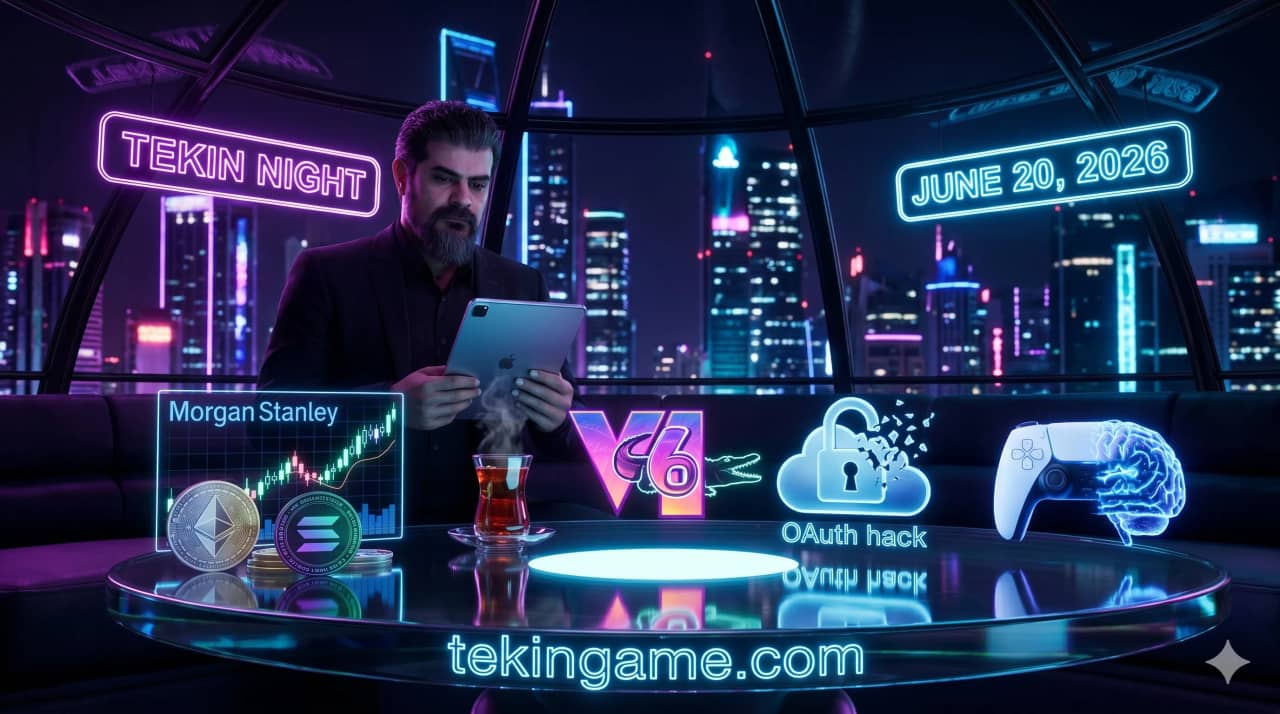
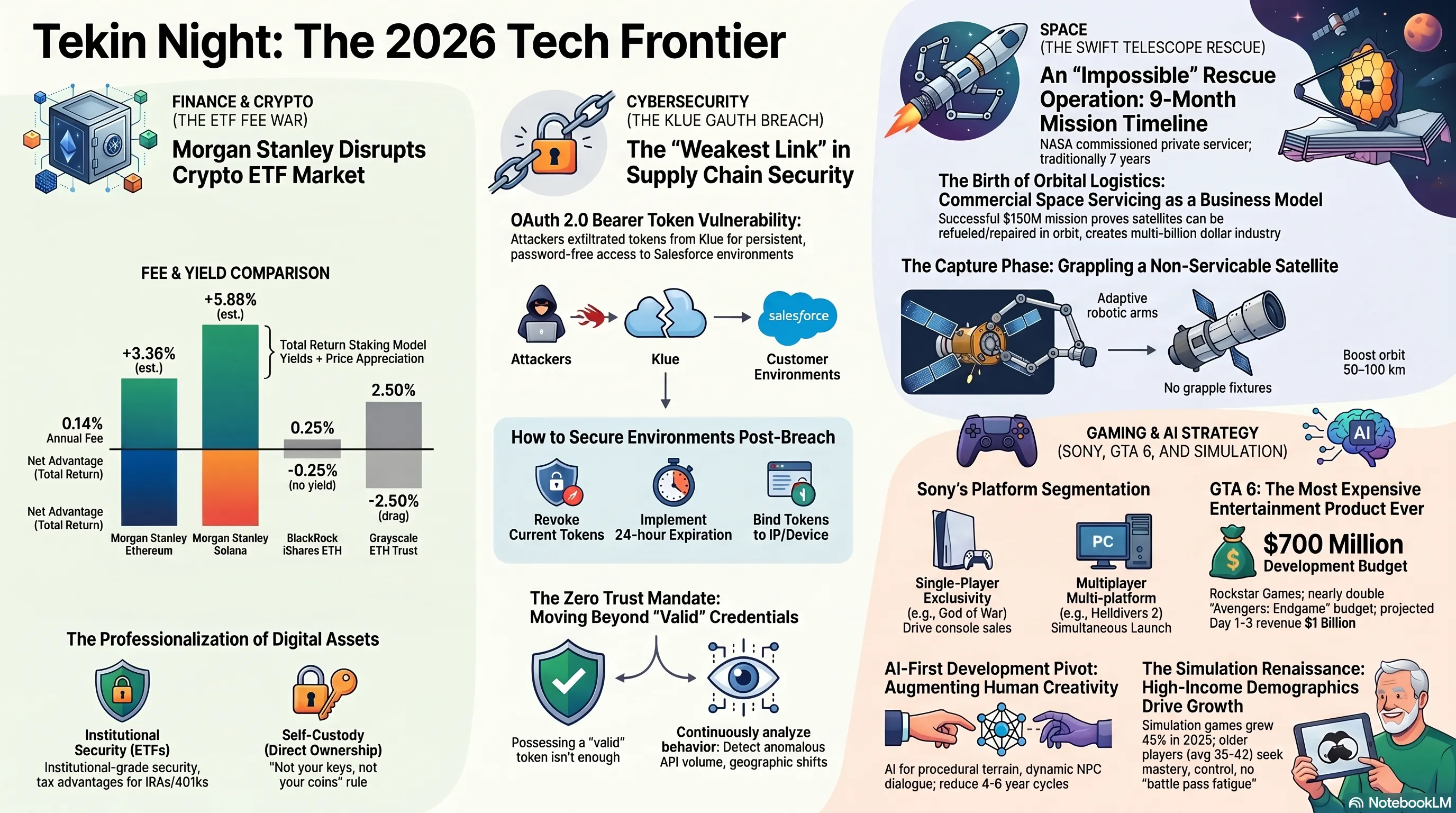
🌙 Tekin Night June 20, 2026 — Tech Energy After Dark
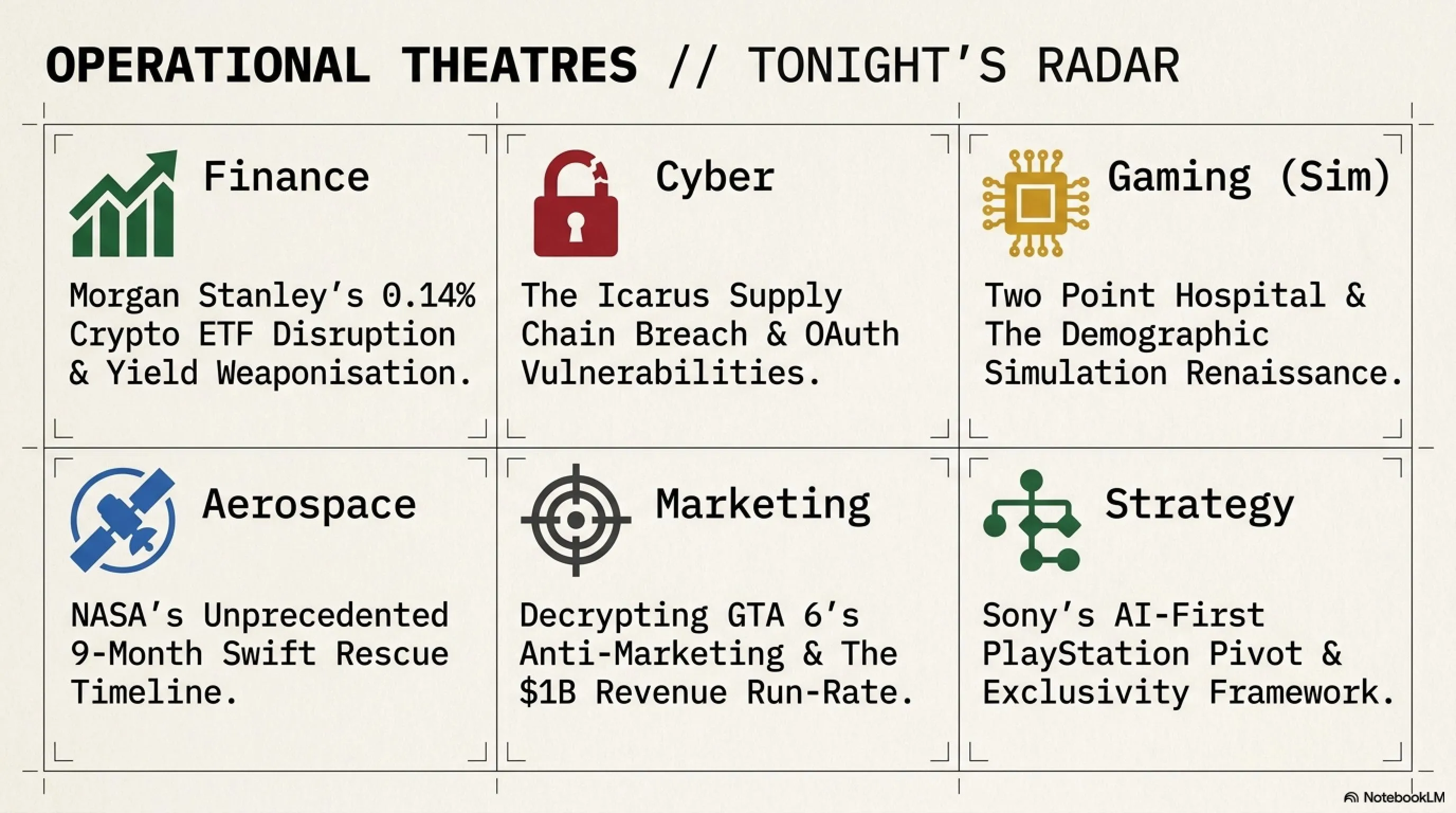
Good evening tech enthusiasts! If you think nights are for sleeping, think again. Tonight we're charging your evening with 6 explosive stories spanning crypto finance, cybersecurity, gaming, and space exploration. From Morgan Stanley's groundbreaking 0.14% fee Ethereum and Solana ETFs with staking capabilities, to the Icarus hacking group's OAuth breach targeting Klue and Salesforce environments, from Two Point Hospital's complete collection for next-gen consoles to NASA's audacious 9-month mission to rescue the falling Swift space telescope, plus GTA 6 cover art theories and Sony's clarified AI-first PlayStation strategy.
✨ Tonight's Headlines:
💰 Morgan Stanley launches Ethereum & Solana ETFs with industry-low 0.14% fees
🔐 Icarus hacker group claims responsibility for Klue OAuth breach
🎮 Two Point Hospital Full Health Collection coming to PS5, Xbox Series & Switch 2
🛰️ NASA commissions emergency Swift telescope rescue mission
🎯 GTA 6 fans decode potential story spoiler in official cover art
🎮 Sony clarifies PC strategy and doubles down on AI for PlayStation
🍿 Grab your late-night coffee, dim the lights, and let's dive deep into tonight's tech landscape!
Morgan Stanley Disrupts Crypto ETF Market with Revolutionary 0.14% Fee Structure and Institutional Staking
In a move that could fundamentally reshape the crypto ETF landscape, Morgan Stanley has filed amended prospectuses for both Ethereum and Solana exchange-traded funds, setting management fees at an industry-disrupting 0.14% annually. This isn't just competitive pricing—it's a strategic declaration that traditional Wall Street giants are serious about democratizing crypto access while maintaining institutional-grade security and compliance standards.
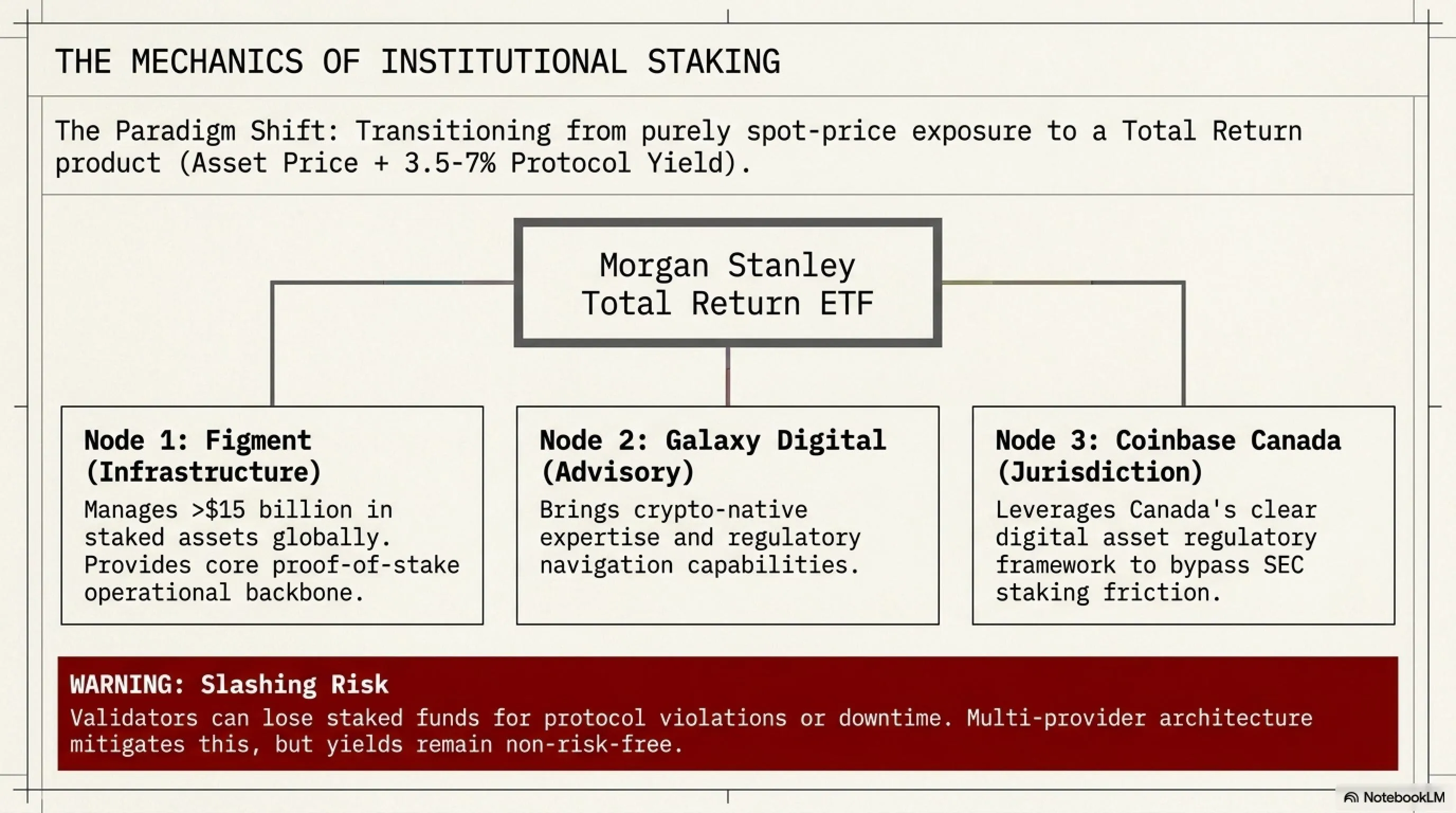
The significance extends far beyond the headline fee. Morgan Stanley's filing reveals a sophisticated staking strategy that leverages partnerships with Figment, Galaxy Digital, and Coinbase Canada to generate yield on ETF holdings. This marks a paradigm shift: investors gain exposure to both price appreciation and protocol-level staking rewards, effectively creating a "total return" crypto product that traditional spot ETFs cannot match.
From a technical perspective, the choice of staking partners is strategic. Figment operates one of the largest institutional staking infrastructures globally, managing over $15 billion in staked assets across multiple proof-of-stake networks. Galaxy Digital brings deep crypto-native expertise and regulatory navigation capabilities. Coinbase Canada's involvement is particularly noteworthy—Canada's relatively clear regulatory framework for digital assets provides a jurisdictional advantage that helps Morgan Stanley navigate the SEC's evolving stance on staking yields.
Competitive Analysis: The ETF Fee War Heats Up
At 0.14%, Morgan Stanley undercuts most competitors by 40-80%. Grayscale's Ethereum Trust still charges 2.5%—nearly 18x higher. Even BlackRock's iShares Ethereum ETF at 0.25% is 79% more expensive. This aggressive pricing suggests Morgan Stanley is playing the long game: capture market share now, monetize through scale and ancillary services later.
The staking component adds another dimension. Ethereum's current staking yield hovers around 3.5-4.5% APR, while Solana offers 5-7%. Even after operational costs, ETF holders could see net yields of 2.5-5% on top of price performance—a compelling value proposition for institutions seeking total return exposure.
The broader implications are profound. Morgan Stanley's entry with aggressive pricing and yield-enhanced products signals that crypto is no longer a fringe asset class. When a 90-year-old financial institution with $1.5 trillion in client assets commits to building sophisticated crypto infrastructure, it validates the thesis that digital assets are becoming permanent fixtures in diversified portfolios.
From a risk management perspective, the staking component introduces complexity. Unlike simple spot holdings, staked assets face "slashing risk"—validators can lose a portion of staked funds if they violate network rules or experience prolonged downtime. Morgan Stanley's multi-provider approach (Figment, Galaxy, Coinbase) mitigates this through diversification, but investors should understand that staking yields aren't risk-free.
Tekin Analysis: The Institutional Crypto Endgame
This isn't just about ETFs—it's about Wall Street's recognition that crypto infrastructure is maturing to institutional standards. Five years ago, the idea of Morgan Stanley staking Ethereum through regulated custodians would have been laughable. Today, it's a competitive necessity.
The fee compression mirrors what happened in equity ETFs. In 2000, the average equity ETF charged 0.75%. Today, many charge zero. We predict crypto ETF fees will bottom out around 0.05-0.08% by 2028 as providers compete on service, not price. The real monetization will come from securities lending, options overlays, and structured products built on top of core holdings.
Watch for the next wave: Cardano, Polkadot, and Avalanche ETFs with similar staking capabilities. The SEC's approval of these products will effectively declare proof-of-stake networks as non-securities, opening floodgates for institutional adoption. We estimate $50-100 billion in institutional capital will flow into staked crypto ETFs by end of 2027.
For retail investors, the calculus is straightforward: if you lack the technical expertise or desire to self-custody and stake crypto directly, these ETFs offer a compelling alternative. The 0.14% fee is negligible compared to the operational complexity, security risks, and opportunity cost of managing staking infrastructure yourself. Plus, holding ETFs in tax-advantaged accounts (IRAs, 401ks) provides benefits that direct crypto holdings cannot.
The competitive response will be swift. Expect Fidelity, Vanguard, and Charles Schwab to announce fee cuts within weeks. BlackRock, with its massive distribution network, may counter by adding staking to its existing products. Grayscale faces an existential crisis—its 2.5% fee is now indefensible, and we anticipate sharp outflows unless it converts to a true ETF structure with competitive pricing.
Klue OAuth Breach: Anatomy of a Supply Chain Attack in the Cloud Era
The Klue security incident represents a sobering reminder that in the interconnected cloud ecosystem, your security is only as strong as your weakest third-party integration. Klue, a competitive intelligence platform used by sales and marketing teams, confirmed that attackers successfully exfiltrated OAuth tokens that granted access to customers' Salesforce environments—one of the most sensitive data repositories in modern enterprises.
The Icarus hacking group, a newly emerged ransomware-as-a-service operator, claimed responsibility and threatened to publish stolen data unless ransom demands are met. This follows the increasingly common "double extortion" playbook: encrypt systems to disrupt operations, but also steal data to maintain leverage even if backups can restore functionality.
To understand the technical severity, we need to unpack OAuth. OAuth 2.0 is the de facto standard for delegated authorization—allowing applications to access resources on behalf of users without exposing passwords. When you click "Sign in with Google" or "Connect to Salesforce," you're using OAuth. The protocol issues time-limited "tokens" that act as keys to specific resources.
The vulnerability in Klue's implementation appears to have been insufficient token lifecycle management. OAuth tokens should be short-lived (minutes to hours) and regularly rotated. If Klue stored long-lived tokens or failed to implement proper rotation, attackers who breached Klue's database could harvest valid tokens providing persistent access to customer Salesforce instances—even after the initial breach was discovered.
Immediate Actions for Affected Organizations
If your organization uses Klue or similar third-party integrations with Salesforce, CRM, or other sensitive systems, immediate action is required:
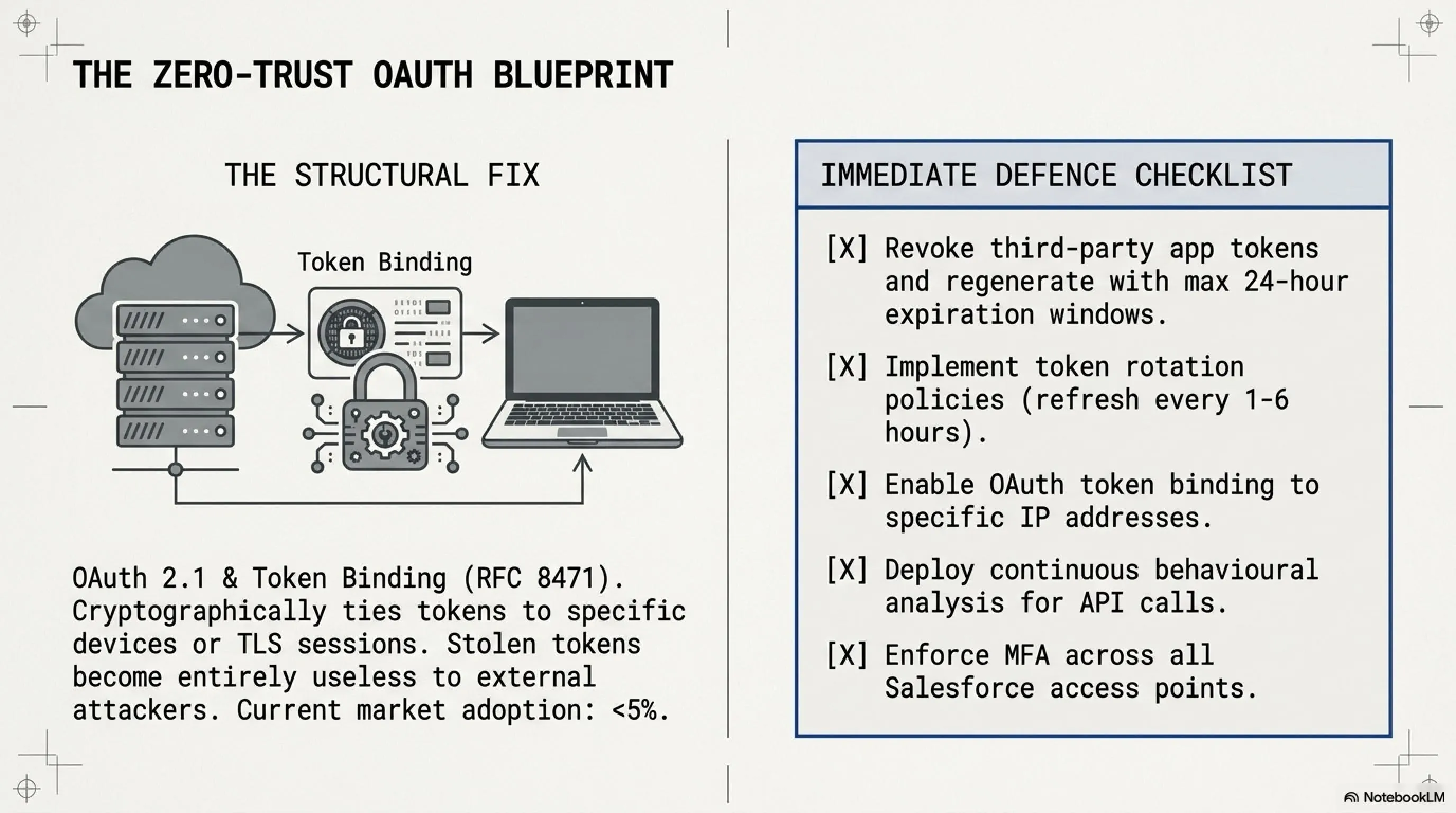
- Revoke all OAuth tokens for third-party applications immediately and regenerate new tokens with shorter expiration windows (max 24 hours)
- Enable OAuth token binding to specific IP addresses or device fingerprints to prevent token replay attacks
- Implement token rotation policies that automatically refresh tokens every 1-6 hours depending on sensitivity
- Audit OAuth scopes and apply principle of least privilege—most apps request excessive permissions they don't actually need
- Deploy OAuth security monitoring to detect anomalous token usage patterns (geographic anomalies, unusual API call volumes, off-hours access)
- Review Salesforce audit logs for the past 90 days to identify any unauthorized data access or extraction
- Implement MFA for all Salesforce access including API/OAuth flows where technically feasible
The Icarus group represents an evolution in ransomware operations. Unlike older groups that focused purely on encryption, Icarus appears to be data-theft-first. Their mythology-inspired branding (Icarus flew too close to the sun and fell) suggests they view themselves as punishing organizations that place excessive trust in cloud platforms without proper security controls.
From a defensive architecture perspective, this incident validates the Zero Trust model. Traditional security assumed that if a request came from a valid OAuth token, it was trustworthy. Zero Trust says: verify every request, every time, regardless of authentication status. This means implementing continuous behavioral analysis to detect when valid credentials are being used in invalid ways.
Salesforce has implemented several advanced security features that could have mitigated this attack if enabled: Transaction Security Policies that can block API calls based on real-time risk scoring, Event Monitoring to detect unusual data access patterns, and Shield Platform Encryption to protect data even if exfiltrated. However, many organizations don't enable these premium features due to cost or complexity.
Tekin Analysis: The OAuth Security Crisis
OAuth was designed for convenience, not security. The protocol assumes that applications properly implement token lifecycle management, but this incident—along with dozens of similar breaches in recent years—proves that assumption is dangerously optimistic. The fundamental problem: OAuth tokens are bearer tokens, meaning anyone who possesses the token can use it, no questions asked.
The solution isn't abandoning OAuth—it's adopting OAuth 2.1 and Token Binding (RFC 8471) which cryptographically tie tokens to specific devices or TLS sessions. Even if stolen, bound tokens are unusable by attackers. Okta, Auth0, and Azure AD support token binding, but adoption remains under 5% because most applications haven't implemented the client-side requirements.
We predict regulatory intervention within 18 months. After several high-profile OAuth breaches, expect GDPR, CCPA, and industry regulators to mandate token binding and maximum token lifespans. Organizations that proactively implement these controls now will avoid scrambling when compliance deadlines hit.
Two Point Hospital: Full Health Collection — Simulation Gaming's Renaissance on Next-Gen Hardware
SEGA and Two Point Studios have announced that Two Point Hospital: Full Health Collection will launch on PlayStation 5, Xbox Series X/S, and—notably—Nintendo Switch 2. This complete edition includes the base game plus all DLC packs, optimized for next-generation console hardware with enhanced graphics, 4K support, and performance improvements that leverage the processing power of modern gaming systems.
Two Point Hospital, which launched in 2018, is a spiritual successor to the beloved Theme Hospital (1997). The game tasks players with building and managing hospitals, treating absurd ailments (like "Lightheadedness" where patients have lightbulbs for heads), and navigating the complex economics of healthcare. Its blend of humor, strategic depth, and creative freedom made it a breakout success, selling over 3 million copies and spawning a franchise including Two Point Campus (2022) and the upcoming Two Point Museum (2026).
The inclusion of "Nintendo Switch 2" in the platform list is the most intriguing element. Nintendo hasn't officially announced Switch 2, but the gaming industry consensus is that a successor console will launch in late 2026 or early 2027. Specifications leaked from development partners suggest Switch 2 will feature an Nvidia Tegra T239 chip with DLSS support, 12GB RAM, and performance roughly equivalent to PlayStation 4 Pro—a massive leap from the original Switch's 2017-era mobile hardware.
The simulation gaming genre has experienced a remarkable resurgence. After years of dormancy following the decline of SimCity and the Sims franchise's stagnation, titles like Cities: Skylines, Planet Coaster, and the Two Point series have proven there's massive demand for deep, creative gameplay that rewards planning and problem-solving over reflexes and competition.
According to Steam analytics, simulation games grew 45% year-over-year in 2025, with cumulative player hours exceeding action and shooter genres. The demographic data is revealing: simulation game players skew older (average age 35-42) and have higher household incomes, making them attractive to publishers from a monetization perspective.
Why Simulation Games Are Thriving in 2026
The simulation renaissance reflects broader cultural trends. In an era of hyper-competitive online gaming, toxic communities, and battle pass fatigue, simulation games offer something radical: single-player experiences where you progress at your own pace, with no pressure to min-max or keep up with meta shifts.
Psychologically, simulation games satisfy the human desire for mastery and control. Building a functioning city or hospital triggers the same reward pathways as completing real-world projects, but without real-world stakes. In uncertain times, the appeal of creating orderly, functional systems in virtual worlds becomes even stronger. Two Point Hospital's humor adds crucial levity—you're managing serious healthcare systems, but treating patients with "Mock Star" syndrome (believing they're celebrities) keeps the tone light and stress-free.
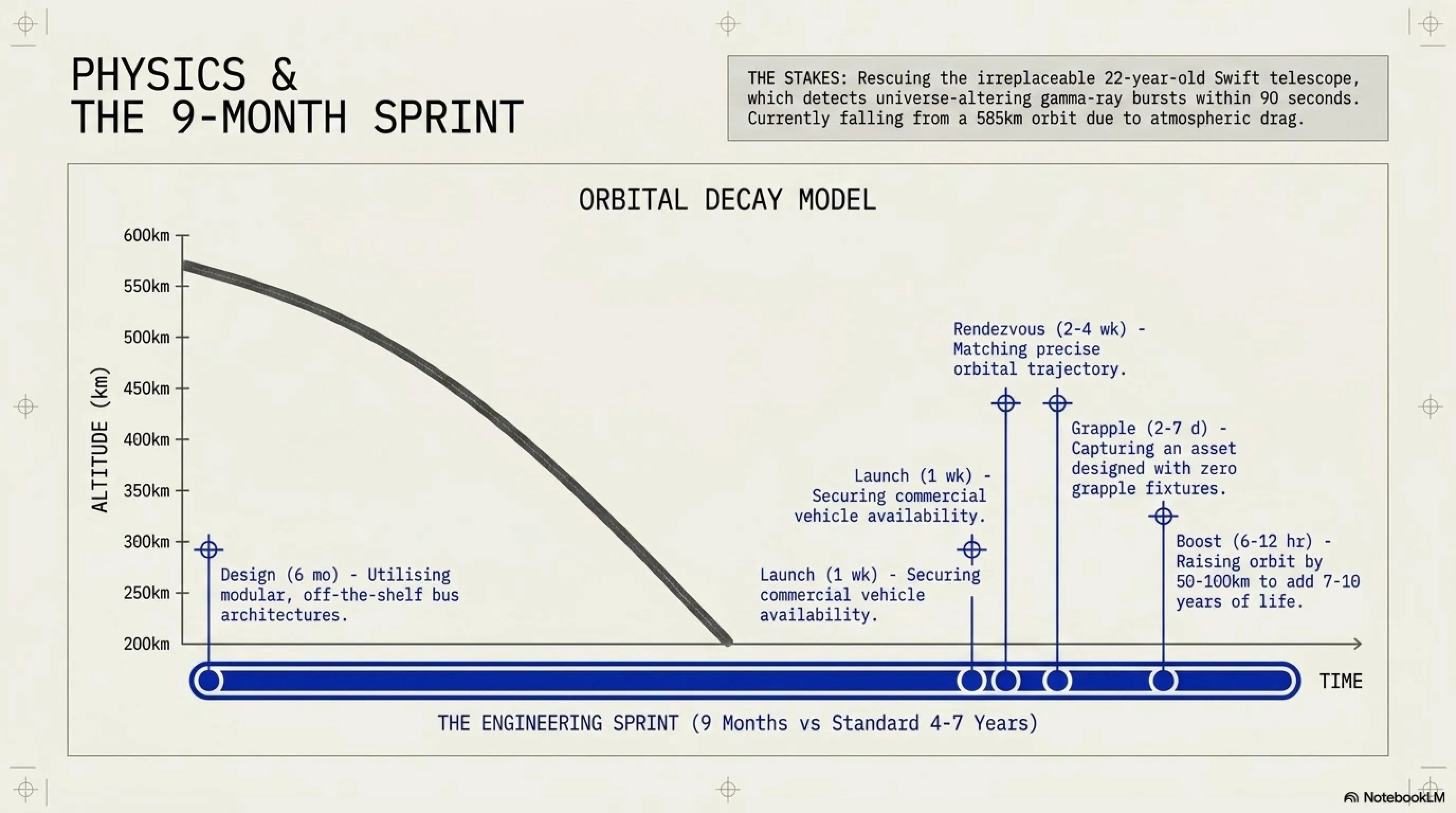
NASA's Audacious 9-Month Mission: Rescuing the Swift Space Telescope From Orbital Decay
In what NASA officials are calling "one of the most ambitious rescue operations in spaceflight history," the agency has commissioned a private aerospace company to design, build, and launch a servicing spacecraft in just nine months to save the Swift space telescope, which is rapidly falling from orbit due to atmospheric drag. The mission timeline is so aggressive that multiple NASA veterans initially declared it "impossible"—yet the contract has been signed and the clock is ticking.
Swift, launched in November 2004, was designed to detect and study gamma-ray bursts (GRBs)—the most powerful explosions in the universe, typically caused by the collapse of massive stars into black holes or the collision of neutron stars. Over its 22-year operational life, Swift has observed over 1,600 GRBs and made fundamental contributions to our understanding of stellar death, black hole formation, and the early universe.
The problem is orbital mechanics. Swift orbits at approximately 585 km altitude, where Earth's upper atmosphere—though incredibly thin—still exerts drag. Over decades, this drag has gradually lowered Swift's orbit. Without periodic boosts (which Swift's design never included), the telescope will re-enter Earth's atmosphere by late 2027, burning up and ending one of astronomy's most productive missions.
Engineering Challenges: Why This Mission Is Extraordinary
Building a spacecraft in nine months violates every principle of traditional aerospace development. For context, NASA's OSIRIS-REx asteroid sample return mission took seven years from contract award to launch. SpaceX's Crew Dragon required four years. Even small Earth observation satellites typically need 18-24 months from design to orbit.
The contractor (widely speculated to be either Northrop Grumman or Maxar Technologies, both with orbital servicing experience) will need to use modular, off-the-shelf components wherever possible. Think of it like building a car from existing parts rather than designing from scratch. The spacecraft will likely be based on proven bus architectures with heritage thrusters, power systems, and avionics—but adapted for the specific challenge of grappling and boosting Swift.
The capture phase is particularly daunting. Unlike the Hubble Space Telescope, which was designed with servicing in mind and has grapple fixtures, Swift has no such provisions. The servicing spacecraft will need to use either a robotic arm with adaptive grasping capability (similar to what Northrop's MEV missions demonstrated) or possibly a specialized berthing mechanism that can attach to Swift's existing structure without causing damage.
This mission represents a fundamental shift in how NASA operates. Historically, NASA designed, built, and operated its own missions with contractors serving as vendors. But after the success of Commercial Crew (SpaceX/Boeing) and Commercial Resupply Services, NASA increasingly acts as a customer, defining requirements and letting private companies innovate on implementation. This procurement model accelerates timelines and reduces costs—NASA's fixed-price contract for this mission is reportedly under $150 million, a fraction of what a traditional government-led program would cost.
Tekin Analysis: The Commercial Space Servicing Revolution
If this mission succeeds, it validates a entirely new business model: orbital logistics and servicing. Currently, when a satellite's fuel runs out or a component fails, it becomes space junk. But companies like Northrop Grumman, Astroscale, and ClearSpace are developing capabilities to refuel, repair, reposition, and even deorbit satellites—creating a multi-billion dollar industry.
The economics are compelling. A typical commercial communications satellite costs $250-400 million to build and launch. If it can be serviced for $50 million to extend its life by 5 years, the return on investment is obvious. Insurance companies are already pricing in servicing options. By 2030, we predict 20-30% of commercial satellites will be designed with standardized servicing interfaces.
Beyond satellites, this technology enables ambitious projects like asteroid mining and deep space exploration. If we can repair and refuel spacecraft in orbit, we don't need to launch everything in a single perfect package. We can build incrementally, upgrade on-orbit, and adapt missions as new opportunities arise. The Swift rescue, if successful, will be remembered as the moment space servicing transitioned from concept to operational reality.
The scientific community is watching anxiously. Swift has unique capabilities that haven't been replicated by newer missions. Its rapid-response slewing (the ability to repoint within 90 seconds of detecting a GRB) and multi-wavelength instruments (X-ray, UV, optical) make it irreplaceable for certain observations. Losing Swift would leave a gap in our ability to study transient high-energy phenomena—a gap that won't be filled until the proposed Advanced X-ray Imaging Satellite launches in 2029 at the earliest.
GTA 6 Cover Art Decoded: Fan Theories, Rockstar's Marketing Genius, and What It Means for the Story
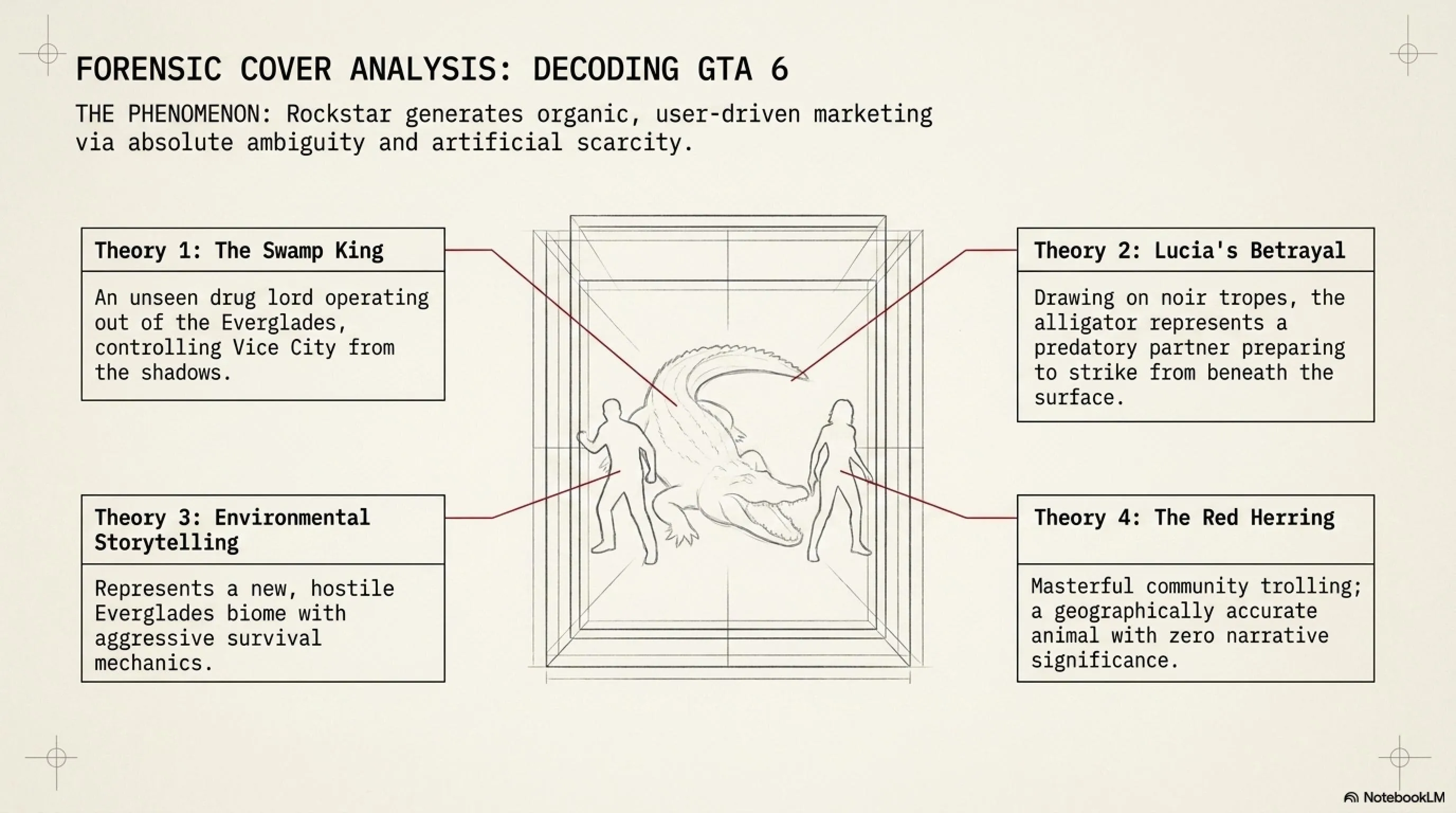
Rockstar Games has elevated video game marketing to an art form, and the recently released GTA 6 cover art is a masterclass in generating organic hype through ambiguity. The image depicts protagonists Jason and Lucia in a swampy environment with an alligator prominently featured—immediately sparking intense fan speculation about hidden narrative clues, symbolic meanings, and potential story spoilers.
The alligator has become the focal point of community analysis. In the GTA universe, Vice City (the game's Miami-inspired setting) is adjacent to the Everglades, a vast wetland ecosystem known for its alligator population. But fans theorize the symbolism goes deeper than environmental accuracy. Some point to alligators as symbols of hidden danger, patient predators that lurk beneath the surface—potentially foreshadowing betrayal or a hidden antagonist.
Rockstar has precedent for embedding narrative hints in cover art. GTA V's cover featured the three protagonists with a dollar bill motif, directly reflecting the game's heist-focused narrative. Red Dead Redemption 2's cover showed Arthur Morgan against a crimson sunset, symbolizing the "end of the outlaw era" theme that defined the story. If Rockstar maintains this tradition, the GTA 6 cover is indeed telling us something significant.
One prevailing theory suggests the alligator represents Lucia's darker nature or a betrayal arc. The game's trailers have positioned Lucia as a Bonnie-and-Clyde-style partner to Jason, but what if the relationship isn't as straightforward? Some fans note visual parallels to the film "Scarface," where Tony Montana's downfall comes from misplaced trust and paranoia. If GTA 6 explores similar themes of loyalty and betrayal in the criminal underworld, the alligator could symbolize the hidden danger in trusting even your closest partners.
Leading Fan Theories: Decoding the Alligator
- Theory 1 - The Swamp King: The alligator represents an unseen drug lord operating from the Everglades, controlling Vice City's underworld from the shadows. Jason and Lucia's story arc involves navigating his territory and ultimately confronting him.
- Theory 2 - Lucia's Betrayal: Drawing from noir and crime film traditions, Lucia will betray Jason in the third act, with the alligator symbolizing her predatory nature—presenting as partner while preparing to strike.
- Theory 3 - Environmental Storytelling: The Everglades setting will be a major gameplay area with survival mechanics, wildlife threats, and hidden locations. The alligator simply represents this new biome.
- Theory 4 - Mission Symbolism: A key story mission involves escaping through the Everglades while being hunted, with alligators as environmental hazards—combining Rockstar's cinematic storytelling with interactive challenges.
- Theory 5 - Red Herring: Rockstar is trolling fans who over-analyze everything, and the alligator is simply thematically appropriate for a Florida setting with no deeper meaning.
From a marketing perspective, Rockstar's restraint is remarkable. In an industry where publishers release weekly dev blogs, gameplay deep dives, and endless promotional content, Rockstar has shown just two trailers and one piece of cover art. This scarcity creates hunger. Every morsel of information becomes an event, analyzed frame-by-frame by millions of fans.
Industry analysts predict GTA 6 will generate $1 billion in revenue within its first three days, shattering the current record held by GTA V ($817 million in three days). The game's development budget is estimated at $500-700 million, making it the most expensive entertainment product ever created—exceeding even major Hollywood blockbusters like Avatar 2 ($460 million) or Avengers: Endgame ($356 million).
Tekin Analysis: Rockstar's Anti-Marketing Marketing Strategy
Rockstar has perfected what we call "strategic silence"—understanding that in the attention economy, withholding information can be more powerful than providing it. While other studios fight for mindshare with constant updates, Rockstar creates artificial scarcity. Fans don't just consume Rockstar's marketing; they become amateur detectives, content creators, and brand ambassadors.
This approach only works with established trust. Rockstar has never released a critically-panned game. Their track record—GTA V (97 Metacritic), Red Dead Redemption 2 (97), GTA IV (98)—gives them permission to stay silent because fans know the payoff will justify the wait. Contrast this with studios that overpromise and underdeliver, burning trust with each disappointing launch.
The economic model is fascinating. GTA V generated over $8 billion in total revenue, primarily from GTA Online microtransactions. GTA 6 isn't just a game launch; it's the foundation for a decade-long service that could generate $15-20 billion. When viewed through this lens, spending $700 million on development and letting fans market the game for free makes perfect business sense.
Sony's Strategic Pivot: AI-First Gaming While Maintaining Single-Player Exclusivity
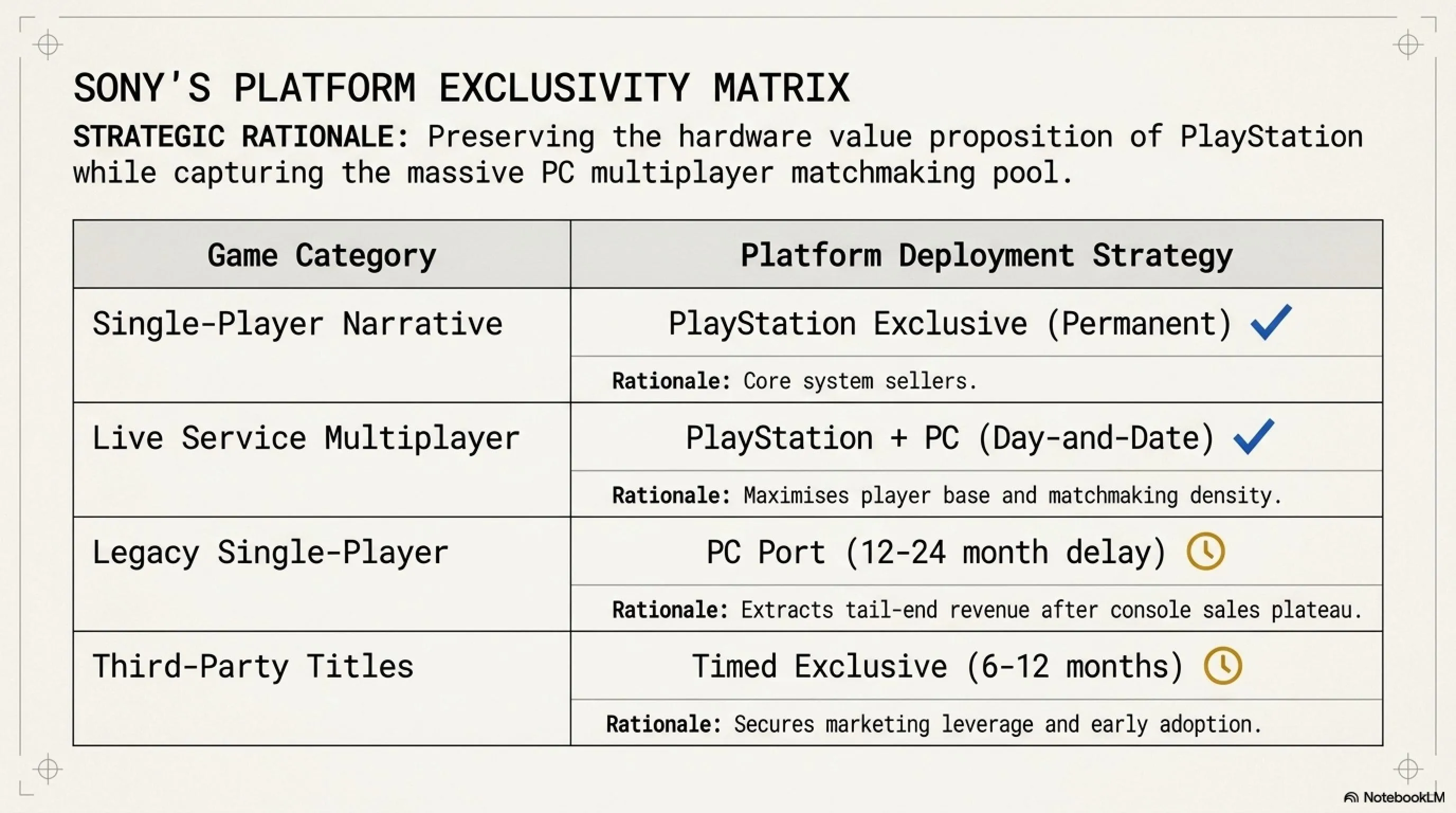
Sony's annual PlayStation business report reveals a carefully calibrated strategy that aims to have it both ways: preserve the console exclusivity of single-player narrative games while opening multiplayer and live-service titles to PC, all underpinned by massive investments in AI-powered development tools. This isn't just a business strategy update—it's Sony's vision for how game development will fundamentally change over the next decade.
The PC strategy clarification is significant. For years, Sony sent mixed signals about PC support, porting God of War, Spider-Man, and Horizon Zero Dawn to PC 12-24 months after PlayStation releases. This created confusion: were PlayStation exclusives truly exclusive, or just timed? The new policy provides clarity: story-driven, single-player games remain PlayStation-only to drive console sales, while multiplayer games launch simultaneously on PlayStation and PC to maximize player populations and monetization opportunities.
This segmentation makes strategic sense. Single-player games are system sellers—people buy PlayStation consoles specifically to play The Last of Us, God of War, or Spider-Man. But multiplayer games need large, active player bases to thrive. Splitting multiplayer communities across platforms weakens the experience. By going day-and-date on PC for multiplayer titles, Sony maximizes player counts while using single-player exclusives to maintain the value proposition of owning a PlayStation.
The AI focus is where Sony's report gets truly interesting. The company disclosed significant R&D investments in generative AI tools for game development, specifically targeting procedural environment generation, dynamic NPC dialogue, and adaptive difficulty systems. These aren't pie-in-the-sky concepts—Sony's internal studios are already testing AI-assisted workflows that could dramatically reduce development time and costs.
Consider the economics: AAA game development now costs $100-300 million and takes 4-6 years. A significant portion of that cost is creating assets—3D models, textures, animations, voice lines. If AI can generate high-quality environmental assets procedurally or create believable NPC dialogue dynamically, development teams can focus creative effort on core gameplay and narrative while AI handles the "fill" content.
However, this raises legitimate concerns about artistic integrity and employment. If AI generates 60% of a game's environmental assets, is that still an "artisan-crafted" experience? And what happens to the thousands of 3D artists, texture artists, and junior developers whose jobs involve creating those assets? Sony's report acknowledges these concerns but frames AI as "augmentation, not replacement"—a position that's easy to state but harder to guarantee as the technology evolves.
AI Opportunities in Gaming
- Procedural generation of terrain, buildings, and natural environments
- Dynamic NPC behavior and conversation that responds naturally to player actions
- Adaptive difficulty that learns individual player skill curves
- Automated QA testing to identify bugs and balance issues faster
- Voice synthesis for localization in dozens of languages
- Real-time graphics upscaling (DLSS-style) for performance optimization
Risks and Ethical Concerns
- Loss of artistic vision and "hand-crafted" quality that defines great games
- Displacement of entry-level and mid-level creative positions
- Homogenization of game aesthetics if everyone uses similar AI tools
- Copyright and attribution issues when AI trains on existing art
- Player distrust of AI-generated content as "soulless" or "cheap"
- Unpredictable AI behavior creating inappropriate or offensive content
Sony's positioning suggests they view AI as inevitable and are racing to develop proprietary tools before third-party vendors become gatekeepers. If Epic (Unreal Engine), Unity, or middleware providers control the best AI game development tools, Sony loses strategic autonomy. By building in-house AI systems, Sony ensures its studios maintain competitive advantages in efficiency and capability.
The market response has been mixed. Gamers generally support the clarified PC strategy—understanding that true PlayStation exclusives will remain exclusive while multiplayer games benefit from cross-platform play. But AI skepticism runs deep in the gaming community, which values craftsmanship and views AI-generated content with suspicion. Sony will need to carefully manage messaging, emphasizing that AI assists human creativity rather than replacing it.
Tekin Analysis: PlayStation's AI Gambit
Sony is betting that AI adoption is a "when" not "if" question, and early movers will capture sustained competitive advantages. If Sony's studios can develop AAA games in 3 years instead of 5, or with $150 million budgets instead of $250 million, that efficiency compounds over time into market dominance.
The risk is execution. AI tools are only as good as their training data and integration into creative workflows. If Sony's AI generates bland, generic environments or awkward NPC dialogue, it won't matter how efficient the process is—players will reject the games. The sweet spot is using AI for tedious, repetitive work (filling large open worlds with trees and rocks) while preserving human creativity for signature moments and core gameplay.
We predict a bifurcation: AI-assisted "content factories" that produce good-enough open-world filler games, versus artisan studios that reject AI and market themselves on "100% human-crafted" credentials. Both models will coexist, serving different player preferences and price points. Sony's challenge is maintaining the prestige PlayStation brand while adopting industrial-scale AI production methods.
Conclusion: Technology Never Sleeps
Tonight's six stories reveal an industry in perpetual motion. Morgan Stanley's aggressive crypto ETF pricing signals Wall Street's full embrace of digital assets as permanent portfolio components. The Klue OAuth breach reminds us that cloud security is a shared responsibility, and convenience without proper controls creates catastrophic vulnerabilities.
In gaming, Two Point Hospital's next-gen release demonstrates that simulation games aren't just surviving—they're thriving as antidotes to competitive multiplayer fatigue. NASA's Swift rescue mission proves that space servicing isn't science fiction but emerging business reality. GTA 6's marketing strategy shows that in the attention economy, scarcity and mystery can be more valuable than saturation. And Sony's AI pivot represents a fundamental bet on how games will be made in the coming decade.
The common thread? Disruption and adaptation. Whether it's traditional finance adopting crypto, hackers exploiting OAuth, indie simulation games competing with AAA shooters, private companies rescuing government telescopes, developers using AI tools, or platform holders redefining exclusivity—the only constant is change. Those who adapt fastest won't just survive; they'll define the next era of technology.
Are crypto ETFs safer than holding cryptocurrencies directly?
Crypto ETFs managed by regulated financial institutions like Morgan Stanley, BlackRock, and Fidelity offer custodial security advantages—your holdings are protected by institutional-grade security and insurance rather than your personal wallet security practices. However, you still face the volatility risk of the underlying assets. Additionally, ETF holdings in tax-advantaged accounts (IRAs, 401ks) provide tax benefits that direct crypto holdings cannot. The tradeoff is you don't actually own the crypto keys (not your keys, not your coins), so you can't transfer or spend the underlying assets directly.
How can I protect against OAuth token theft?
Implement defense in depth: Enable multi-factor authentication on all accounts; regularly audit third-party app permissions and revoke unnecessary access; use token rotation with short expiration windows (1-24 hours maximum); enable security monitoring to detect anomalous API access patterns; implement IP allowlisting where possible; and consider OAuth 2.1 with token binding which cryptographically ties tokens to specific devices. Organizations should adopt Zero Trust architectures that continuously verify every access request regardless of authentication status.
Will GTA 6 release on PC at launch?
Based on Rockstar's historical release patterns, GTA 6 will almost certainly launch exclusively on PlayStation 5 and Xbox Series X/S first, with the PC version following 12-18 months later. This staggered approach allows Rockstar to maximize initial console sales (where they receive higher margins due to digital storefront splits) and then capture a second wave of sales from the PC gaming audience. GTA V followed this pattern (console in 2013, PC in 2015), as did Red Dead Redemption 2 (console 2018, PC 2019). Patient PC gamers should expect to wait until late 2027 or early 2028.
Why is the Swift telescope so important?
Swift's rapid-response capability and multi-wavelength instruments (gamma-ray, X-ray, UV, optical) make it uniquely suited for studying transient cosmic phenomena like gamma-ray bursts, supernovae, and tidal disruption events where black holes tear apart stars. These events happen quickly and unpredictably, requiring a telescope that can slew to new targets within 90 seconds and observe across multiple wavelengths simultaneously. No currently operational mission fully replicates Swift's capabilities, and its loss would create a significant gap in time-domain astronomy until next-generation missions launch in the late 2020s.
Will AI replace game developers?
AI will transform game development roles rather than eliminate them entirely. Routine, repetitive tasks—generating environmental variations, creating basic animations, producing placeholder audio—are increasingly automated. However, core creative functions like game design, narrative writing, original character art, and system engineering still require human creativity, taste, and judgment that current AI cannot replicate. The industry will likely see a shift where teams become smaller but more specialized, with AI handling "grunt work" while humans focus on creative direction and polish. Entry-level positions may shrink, but demand for senior creative talent will remain strong or even increase as AI enables more ambitious projects.
Sources & References
Bitcoin.com - Morgan Stanley ETF filing details | CoinDesk - Staking strategy analysis | Bleeping Computer - Klue breach investigation and Icarus attribution | Gematsu - Two Point Hospital announcement and platform details | Space.com - Swift rescue mission coverage | Dexerto & GameSpot - GTA 6 cover art analysis and fan theories | Eurogamer - Sony annual report and PlayStation strategy | TechCrunch - AI development tools industry analysis
Research & Analysis: Tekin Editorial Team | Tekin Night June 20, 2026
🌐 Stay Connected With Us
For the latest tech, gaming, and gadget news, follow us on social media:
📸 Instagram 🆔 Telegram Arabia 🆔 Telegram Global 🆔 Telegram Iran 💬 Direct Contact 📧 majid@tekingame.com