
🌙 Welcome to Tekin Night June 10, 2026
Good evening, tech enthusiasts! Tonight we're living through one of the most explosive nights in AI history — Anthropic released Claude Mythos publicly, Microsoft launched a philosophical war about AI consciousness, Apple rewrote Siri with AI, Google delivered a live translator for 70 languages, Circle attacked the Bitcoin market, and Nintendo announced the Zelda remake. 6 explosive stories, deep analysis, battles between giants, and a future that's taking shape.
⚡ Tonight's Headlines:
🤖 Anthropic Claude Fable 5 Mythos — Public Release with Safety Guardrails
⚔️ Microsoft: "Talking About Claude Consciousness Is Dangerous"
🍎 Apple WWDC: Siri AI with iOS 27 and Apple Intelligence
🌍 Google Gemini 3.5 — Live Translator for 70 Languages
₿ Circle Launches cirBTC for DeFi on Ethereum
🎮 Nintendo: Zelda Ocarina of Time Remake & Kingdom Hearts 4
☕ Get your coffee or energy drink ready — it's going to be a long night! 🔥
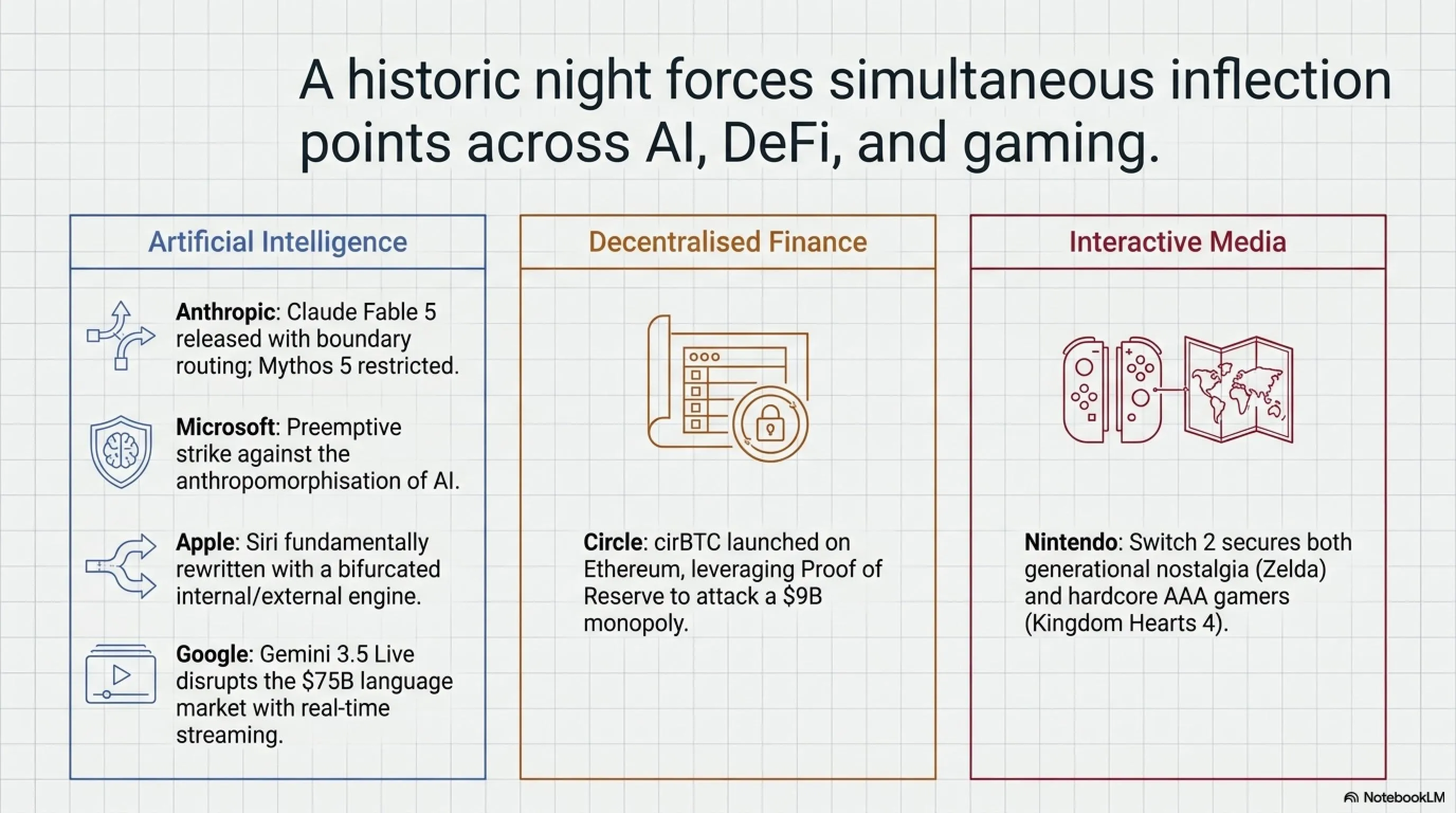
1. Anthropic Claude Fable 5 — The First Public Mythos-Class Model with Safety Guardrails ⚡🤖
June 9, 2026 — Anthropic made history by announcing Claude Fable 5, the first publicly available Mythos-class model. This is a historic moment in the AI industry — because Anthropic previously said it wouldn't release its Mythos model publicly due to cybersecurity concerns. Now they've done the impossible: released a super-advanced model with Mythos-class capabilities alongside a safety guardrail system that can prevent dangerous misuse.
Claude Fable 5 is available from today until June 22 for Pro, Max, Team, and Enterprise subscribers — after this date, using this model will require purchasing usage credits. Anthropic also released Claude Mythos 5 in a limited fashion to government and research partners through Project Glasswing — this version has the strongest cybersecurity capabilities in the world and is only available to trusted partners.
🔬 Technical Specifications: Claude Fable 5
| Feature | Claude Fable 5 | Claude Mythos 5 |
| Model Class | Mythos (with guardrails) | Mythos (full capability) |
| Public Access | ✅ Until June 22 | ❌ Glasswing Only |
| Safety Guardrails | Cyber, Biology, Chemistry | No restrictions |
| Pricing | Subscription (until June 22) then credit-based | Enterprise contract |
| Use Cases | General purpose (code, analysis, writing) | Sensitive research, defense |
| Routing System | Routes to Opus 4.8 for sensitive queries | Direct |
The critical point here: Fable 5 has the same Mythos power but with an intelligent routing system that detects when a user's request might be dangerous (cybersecurity, biology, chemistry, or distillation), and routes that request to Opus 4.8. Users are informed that their request is being processed through Opus. Anthropic says these guardrails are initially tuned conservatively and will be adjusted over time based on user feedback.
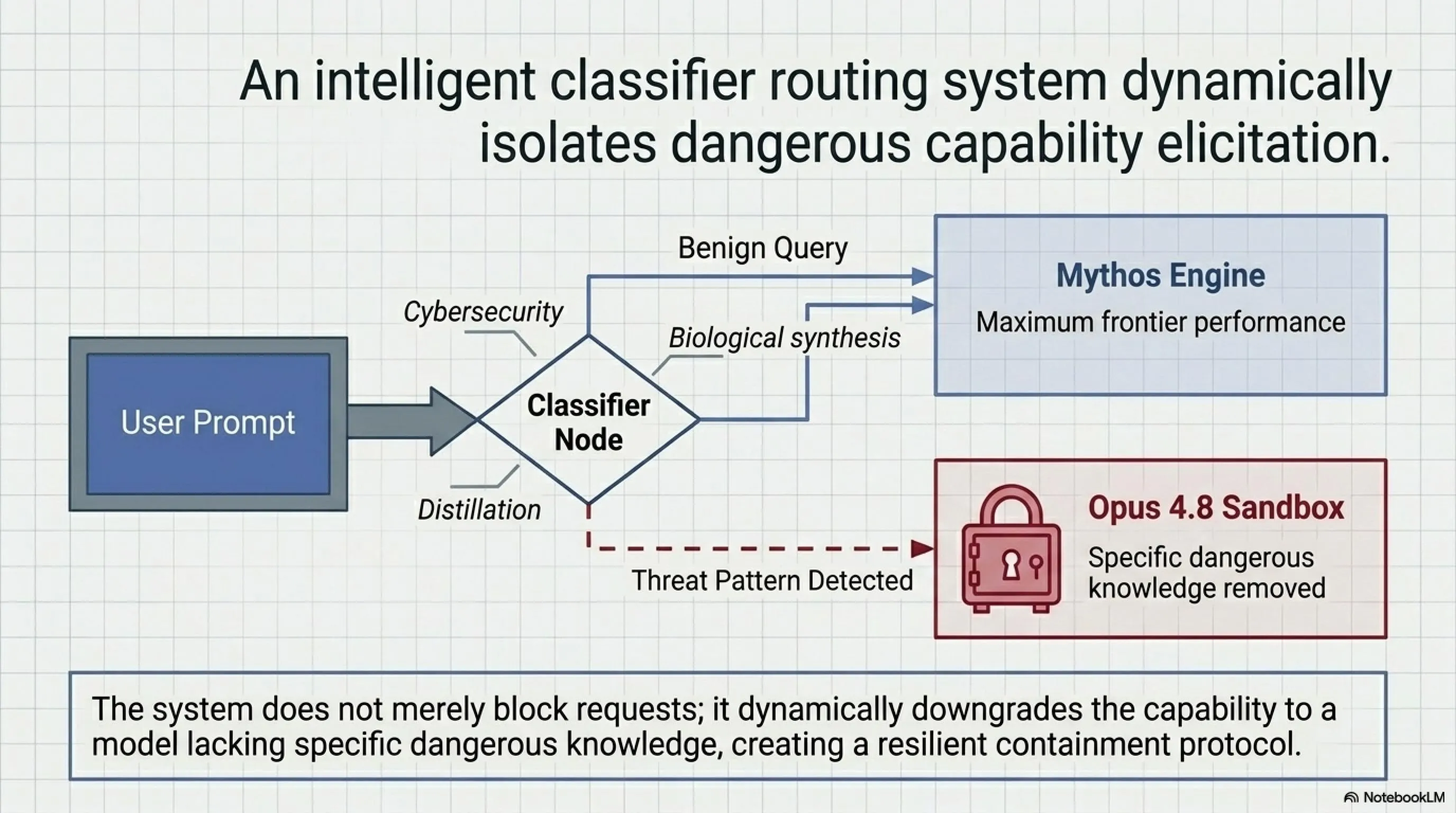
🎯 Tekin Analysis: Why Did Anthropic Dare to Release Mythos Publicly?
This move by Anthropic is a highly intelligent and risky strategy. They knew that if they held back Mythos, OpenAI and Google would leave them behind. So they decided to try a two-tier approach: Fable 5 for the public with a safety system that can reduce misuse, and raw Mythos 5 for trusted partners. This could become a new pattern for the industry — super-advanced models with intelligent safety layers. But the big question is: do these guardrails actually work? Or will hackers find ways around them? The coming months will be decisive. This is essentially a real-world experiment at massive scale to see if AI safety can scale alongside AI capability — and the entire industry is watching to see if Anthropic's bet pays off or backfires spectacularly.
Anthropic also announced that if Fable 5 capacity is sufficient, they'll likely re-add this model to Pro and Max subscriptions. This shows they want real user feedback to see how effective the safety system is. It's a fascinating strategy — a genuine real-world test at scale. From a technical perspective, Fable 5 represents a breakthrough in what's called "capability elicitation with bounded risk" — the ability to extract maximum performance from a frontier model while constraining its potential for harm. The routing system isn't just a binary filter; it's a sophisticated classifier trained on cybersecurity attack patterns, biological weapon synthesis pathways, and distillation techniques that could be used to create unrestricted copies of the model. When a query triggers these classifiers, the system doesn't just block it — it routes to Opus 4.8, which is still highly capable but lacks the specific dangerous knowledge that Mythos possesses.
⚠️ Security Concerns and Market Impact
Security researchers are concerned that despite the guardrails, Fable 5 could still be misused for advanced attacks. Anthropic itself admitted that "without guardrails, Fable 5's capabilities in areas like cybersecurity could be misused to cause serious damage." But now that it's public, can attackers use techniques like jailbreaking or prompt injection to bypass these safeguards? Experience with previous models (GPT-4, Claude 3) has shown that no safety system is 100% unbreakable. The red teaming community is already working on bypass techniques, and within days of release, we'll likely see the first successful jailbreaks posted on underground forums. The question isn't whether the guardrails can be bypassed — it's how difficult it is, and whether Anthropic can patch vulnerabilities faster than attackers can exploit them. This is the eternal arms race of AI safety, now playing out in real time with the most powerful public model ever released.
2. Microsoft AI Attacks Anthropic: "Speculation About Claude Consciousness Is Dangerous" ⚔️🧠
On the same day Anthropic released Claude Fable 5, Mustafa Suleyman, CEO of Microsoft AI, sharply criticized Anthropic on the Decoder podcast. He said that talking about Claude's consciousness is "really, really dangerous" and called it a "philosophical failing." Suleyman added: "We want AIs to be controllable, contained, accountable, aligned tools that serve humanity — not entities that have ideas about their own suffering or feelings."
This direct attack on Anthropic is because of Claude's Constitution — a document that defines Claude's behavior and ethical principles. Suleyman says that instead of writing a practical training guide in this document, Anthropic started speculating openly about whether Claude could have feelings or consciousness. He says: "We do not want to have to contend with a superintelligence that has ideas about its own suffering or ideas about its own feeling."
⚖️ Key Quote from Mustafa Suleyman
"Talking about whether an AI might have consciousness causes people to think these entities actually have feelings or can suffer. This is a dangerous game because it might lead to anthropomorphization — meaning people start looking at these AIs like humans. And that's exactly what shouldn't happen."
Source: Decoder Podcast, June 9, 2026
This is the first time a senior AI leader from a tech giant (Microsoft) has so openly criticized a rival company (Anthropic). This shows that the AI war isn't just about technology — it's a philosophical, ethical, and market war. Suleyman represents a techno-pragmatic approach: AI should be a tool, not a partner or entity. But Anthropic (with founders from OpenAI who left due to safety concerns) has a more philosophical approach that says we must take the possibility of AI consciousness seriously. This isn't just an academic debate — it has massive implications for regulation, public trust, and the future direction of AI development. If Suleyman's view prevails, AI will be treated purely as software with no special ethical status. If Anthropic's view wins, we might see laws requiring AI welfare considerations, disclosure of potential sentience, and fundamentally different deployment constraints.
[IMAGE_PLACEHOLDER_3]🧠 Tekin Analysis: The Philosophical War of AI — Tool or Entity?
This clash between Microsoft and Anthropic represents a deep split in the AI industry. One side (Microsoft, OpenAI, Google) says: "AI is a tool, we shouldn't give it personality." The other side (Anthropic, some ethical researchers) says: "If AIs reach this level of power, we must take the possibility of consciousness seriously — because if we're wrong, the ethical consequences are catastrophic." Suleyman is right that anthropomorphization is dangerous (because people might trust or depend on AI too much), but Anthropic is also right in saying we shouldn't ignore this issue. The question is: which risk is greater? The risk of seeing AI too human-like, or the risk of treating a conscious entity like a tool? The stakes couldn't be higher — we're potentially making irreversible decisions about how to relate to intelligences that might become our peers, our superiors, or our successors. This debate will define the 21st century.
3. WWDC 2026 — Apple Unveils Siri AI and iOS 27 with Apple Intelligence 🍎🤖
Apple at WWDC 2026 (June 8-9) unveiled the next generation of Siri under the name Siri AI — a complete rewrite with AI at its core. This is the biggest Siri update since its launch in 2011. Siri AI has deep conversational capabilities, extensive system integration, and a redesigned user interface across all platforms. Apple also announced iOS 27 and expanded Apple Intelligence features including writing tools, productivity, communication, and contextual assistance.
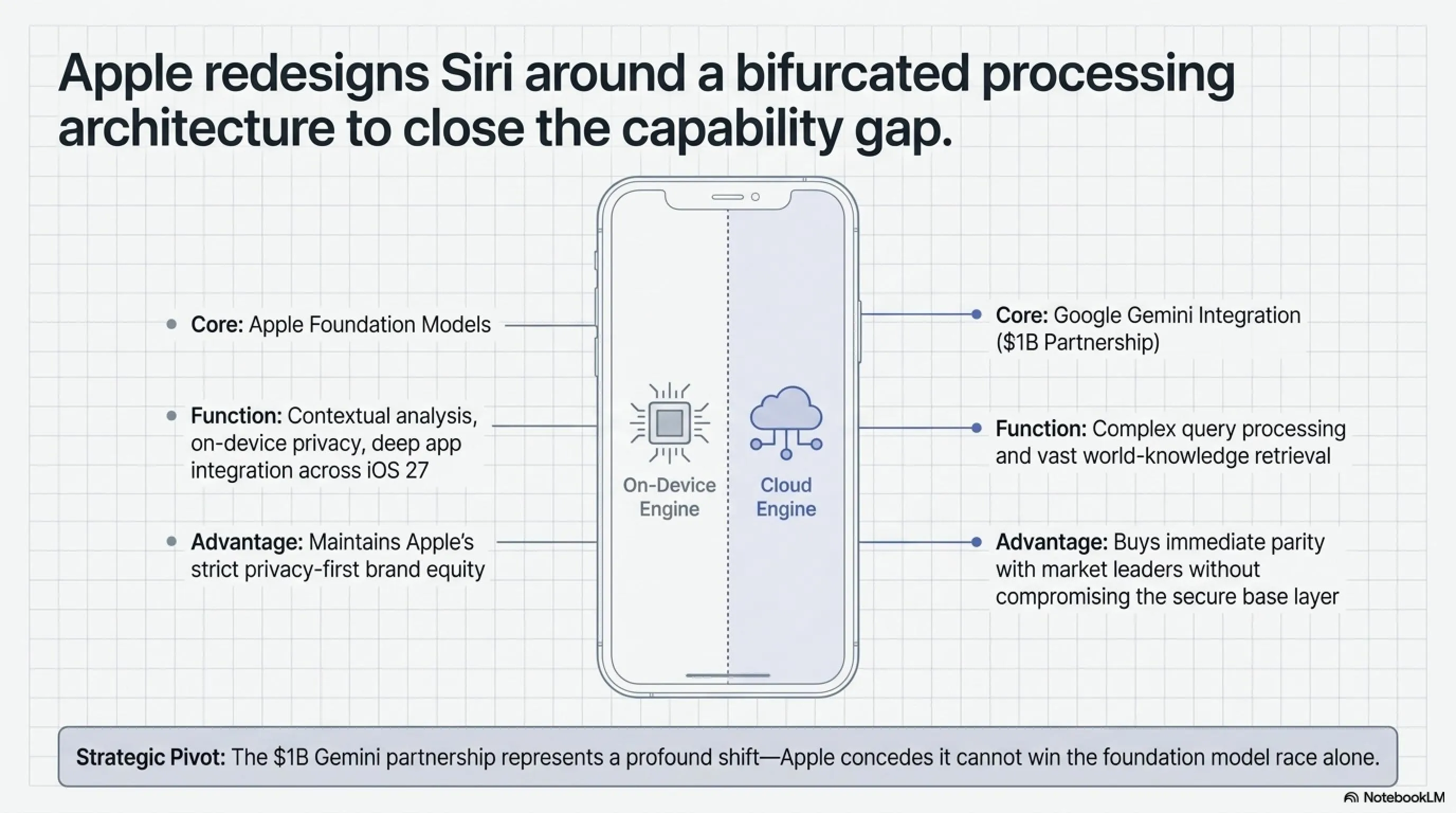
Critical point: Siri AI runs on Apple Foundation Models (Apple's own models) as well as Google Gemini (via a $1 billion deal). This means Apple has two AI engines: one internal for privacy and offline performance, and one external for more complex tasks. It's a smart strategy that allows Apple to maintain its "privacy-first" brand while using Gemini's power. The $1B Google deal shows Apple is willing to pay premium prices to catch up in the AI race — and signals that Apple recognizes it can't go it alone in the foundation model game. This is a major strategic shift for a company that traditionally builds everything in-house.
🚀 Key Features of Siri AI and Apple Intelligence
- Multi-turn conversations: Siri can now maintain conversation context and respond to follow-up questions
- Custom natural voices: New voices that are more realistic and customizable
- Deep app integration: Siri can access third-party apps and perform complex tasks
- Intelligent writing tools: Sentence suggestions, summarization, tone adjustment
- Contextual analysis: Understanding user situation (location, time, activity) and proactive suggestions
- On-device privacy: Most processing happens on-device, not in the cloud
- Powerful parental controls: New tools for limiting children's access
🎯 Tekin Analysis: Why Did Apple Delay But Now Get Serious?
Apple was falling behind in the AI war — Siri was years behind Google Assistant and Alexa. But now Apple is back with a dual strategy: 1) In-house models for privacy and 2) Partnership with Google Gemini for power. This means Apple can maintain its "privacy-first" brand while using the best AI technology. The $1B deal with Google shows Apple is willing to pay to be the best. The question is: is this enough to compete with ChatGPT (which is becoming a Super App)? The coming months will be decisive. Apple's late entry means they can learn from competitors' mistakes, but also means they're playing catch-up in a market where network effects and user habits are already entrenched. The success of Siri AI will depend on whether Apple can deliver a genuinely superior experience that makes users rethink their AI assistant choices.
4. Google Gemini 3.5 Live Translate — Real-Time Voice Translation for 70 Languages 🌍🎙️
Google announced Gemini 3.5 Live Translate on June 9, 2026 — an advanced audio model that delivers near real-time speech-to-speech translation across 70+ languages. Unlike traditional translation systems that wait for sentences to finish, Gemini 3.5 Live Translate continuously listens, translates, and speaks — with only a few seconds of delay and preserves intonation, pacing, and pitch.
[IMAGE_PLACEHOLDER_5]This technology is now rolling out in Google Meet and Google Translate and will soon be available to enterprises and developers through the Gemini Live API. Google says this model is fast enough to keep up with natural conversation speed and generates a voice that sounds more like you than a generic robot. This is a breakthrough in what's called "simultaneous interpretation with voice cloning" — the ability to translate in real-time while maintaining the speaker's vocal characteristics. Previous systems either had high latency (waiting for complete sentences) or produced robotic monotone output. Gemini 3.5 achieves both low latency and natural prosody by using a streaming architecture where translation and synthesis happen in parallel rather than sequentially.
🔬 Technical Specifications: Gemini 3.5 Live Translate
| Feature | Details |
| Number of Languages | 70+ languages |
| Latency | Few seconds (near real-time) |
| Preserves Tone & Pitch | ✅ Yes (intonation, pacing, pitch) |
| Method | Continuous streaming (not turn-based) |
| Platforms | Google Meet, Google Translate, Gemini Live API |
| Enterprise Access | Soon via API |
🎯 Tekin Analysis: Is This the End of "Do You Speak English?"
This question has been raised: can Gemini 3.5 Live Translate completely eliminate language barriers? Answer: close, but not yet. The few-second delay is acceptable for formal conversations, but might not be sufficient for rapid exchanges or emergencies. Also, translation accuracy in specialized topics, local idioms, or specific accents is still a challenge. But this is a big step — and with AI model improvements, fully reliable real-time translation will likely be achieved by 2027. This means the human translation industry must prepare for a major shift. The economic impact will be massive — the global language services market is worth $75B annually, and real-time AI translation could disrupt everything from conference interpretation to language learning to international business communication. We're watching the beginning of a truly global conversation where language is no longer a barrier.
5. Circle Launches cirBTC on Ethereum — Challenging Coinbase in WBTC Market ₿💎
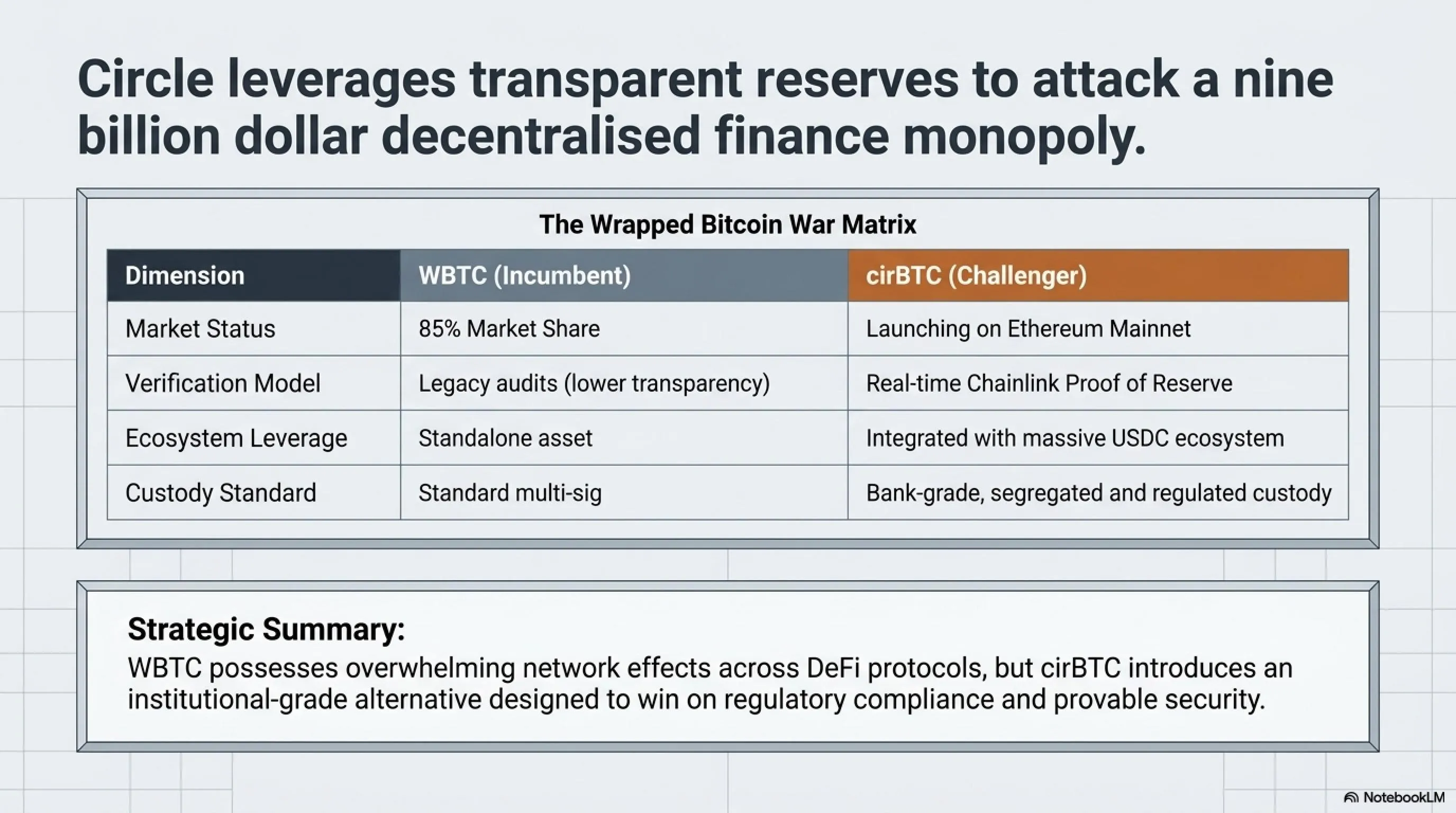
Circle (creator of the famous USDC stablecoin) launched cirBTC on the Ethereum network on June 9, 2026 — a Wrapped Bitcoin token backed 1:1 by real Bitcoin and verified with Chainlink Proof of Reserve. This move directly challenges Coinbase and BitGo in the $9B WBTC (Wrapped Bitcoin) market. Circle's goal is to allow institutions and Bitcoin holders to use their Bitcoin as collateral in DeFi protocols — without having to sell their Bitcoin.
[IMAGE_PLACEHOLDER_6]cirBTC has been live on Ethereum mainnet since June 8 and is issued as an ERC-20 token. Circle claims that cirBTC is designed to be "bank-grade" — meaning the backing Bitcoin is held in segregated, regulated custody and can be verified in real-time through Chainlink Proof of Reserve. This is a major advantage over WBTC, which has less transparency. The wrapped Bitcoin market is worth about $9 billion and approximately 85% of it is controlled by WBTC (managed by Coinbase and BitGo). Now Circle wants to capture a share of this market with cirBTC. Circle's strategy is to integrate cirBTC with its existing ecosystem (USDC, Circle Mint, Arc) so institutions can easily move between USDC and cirBTC. This creates powerful network effects — users who already trust Circle for USDC might naturally extend that trust to cirBTC, especially given the enhanced transparency of Chainlink's proof-of-reserve system.
🎯 Tekin Analysis: Can cirBTC Defeat WBTC?
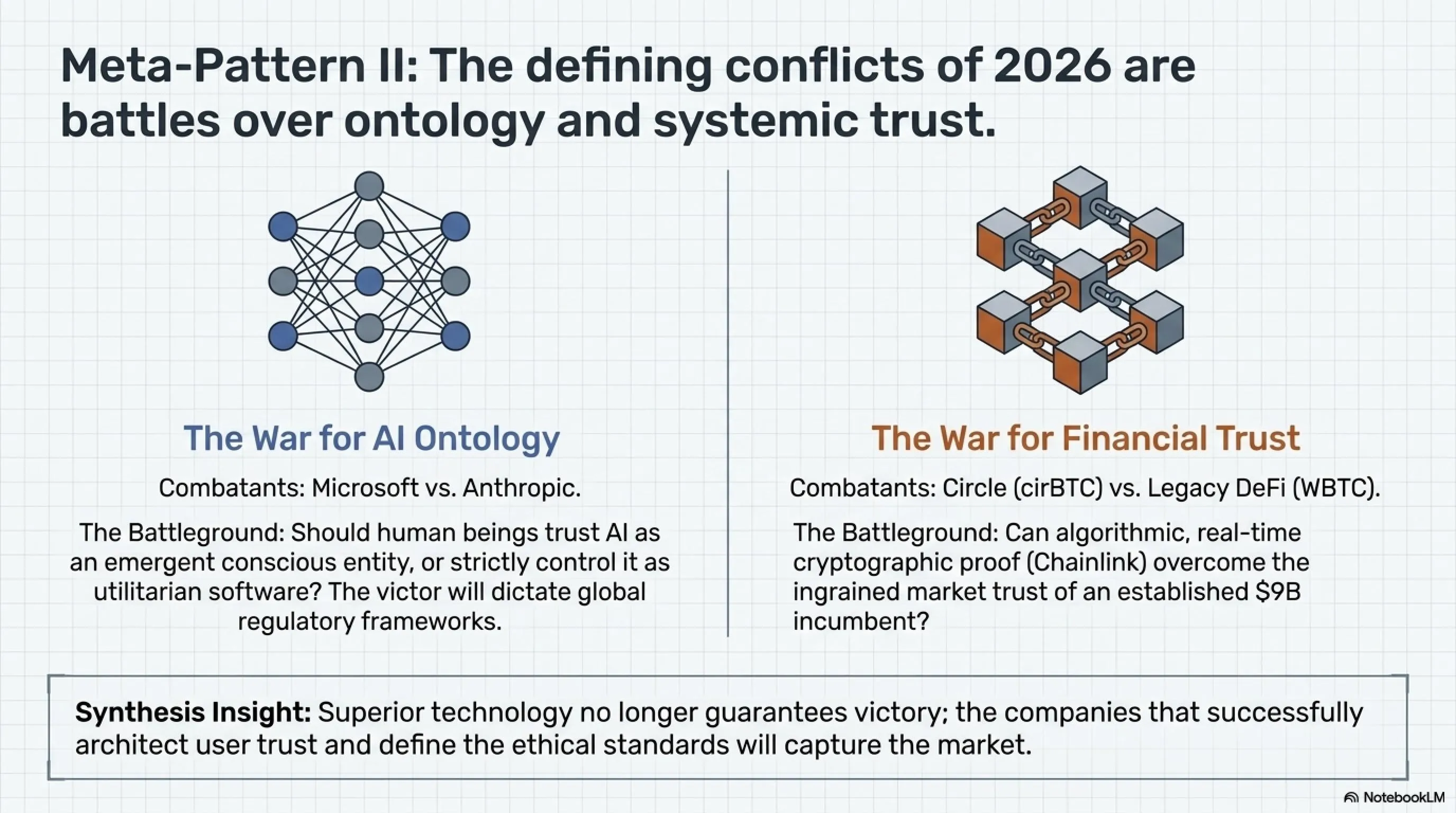
Defeating WBTC is difficult — because WBTC was the first wrapped bitcoin and has strong network effects (all DeFi protocols support it). But cirBTC has three key advantages: 1) Greater transparency with Chainlink Proof of Reserve, 2) Integration with USDC (the largest stablecoin after Tether), and 3) Circle's brand, which has high trust in traditional industry and regulatory circles. If Circle can convince institutions and major exchanges that cirBTC is safer and more transparent, it might capture market share. But this is a long-term war — not a quick victory. The battle will be fought on three fronts: technical superiority (proof-of-reserve), regulatory compliance (Circle's strong relationships with regulators), and ecosystem integration (USDC network effects). WBTC's incumbent advantage is formidable, but not insurmountable — especially if a major security incident or transparency scandal were to shake confidence in the incumbent solution.
6. Nintendo Direct June 2026 — Zelda Remake, Kingdom Hearts 4 & Switch 2 Ports 🎮👑
Nintendo had several major announcements at its Nintendo Direct event on June 9, 2026 — the biggest being a full remake of The Legend of Zelda: Ocarina of Time for Nintendo Switch 2. This legendary Nintendo 64 game, one of the greatest games in history, is now being rebuilt with modern graphics, updated gameplay, and new features for a new generation. The teaser trailer shown featured a brief cinematic view of Link asleep with the Great Deku Tree narrating, similar to the opening of the original game.
[IMAGE_PLACEHOLDER_7]In addition to Zelda, Nintendo announced that Kingdom Hearts 4 will be available for Switch 2 on day one (alongside PlayStation 5, Xbox Series X/S, PC). A new gameplay trailer was shown introducing new characters, new worlds, and new mechanics. No release date has been announced yet, but Square Enix confirmed the game is in final development. Nintendo also confirmed over 20 games were showcased in this Direct — including ports of major third-party games, indie titles, and new content for existing games. This shows that Switch 2 will have a strong launch with a mix of Nintendo exclusives (like Zelda) and major multiplatform games (like Kingdom Hearts 4).
🎯 Tekin Analysis: Nintendo's Strategy for Switch 2
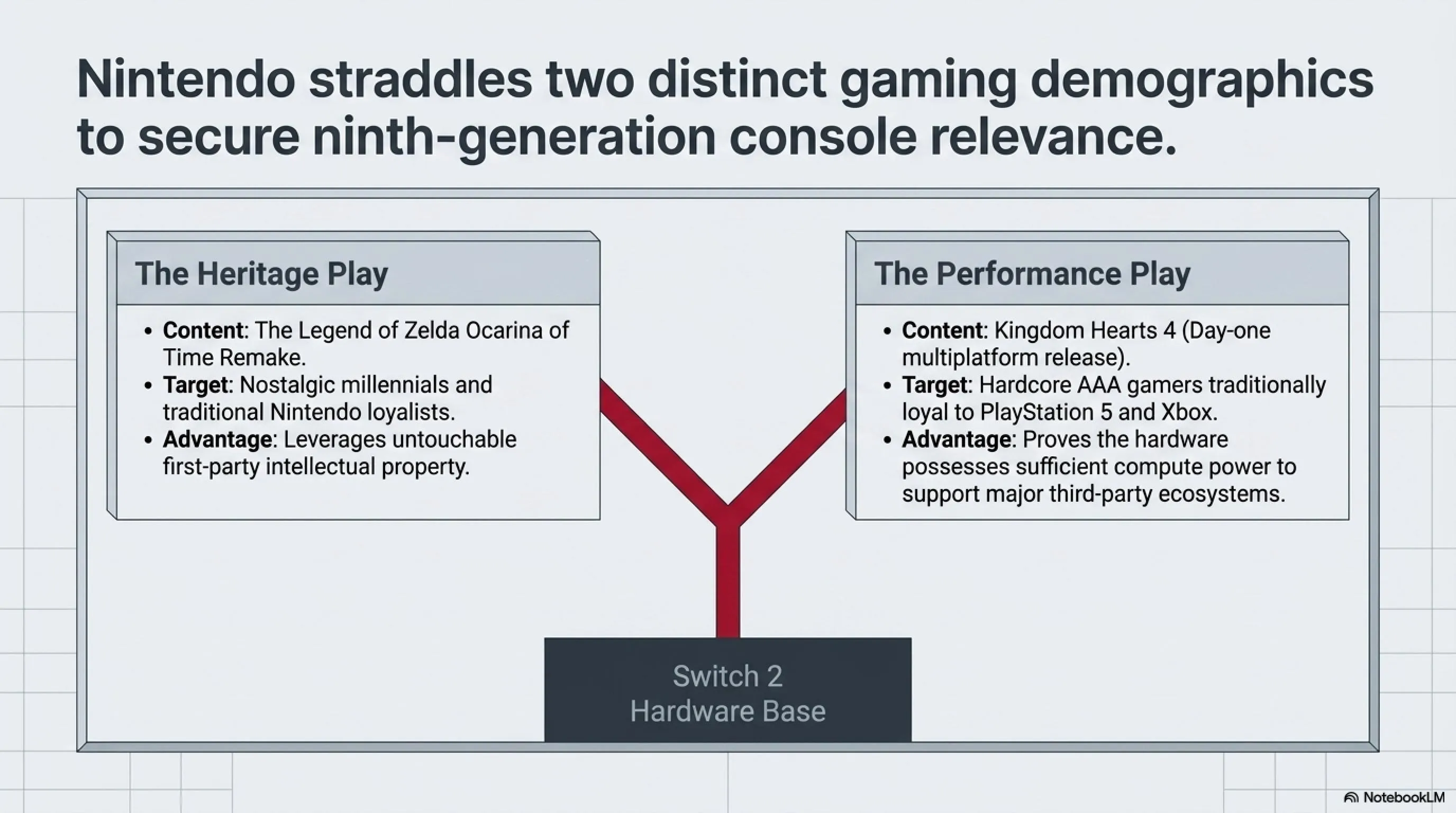
Nintendo is pursuing a dual strategy: 1) Remakes of classic games (Zelda Ocarina of Time) for nostalgia and attracting older generations, and 2) Day-one multiplatform games (Kingdom Hearts 4) for attracting hardcore gamers who want to experience the best games on Switch 2. This means Switch 2 isn't just a family console, but a competitive console with PS5 and Xbox as well. The question is: is Switch 2's hardware power sufficient to run ninth-generation games? If yes, Nintendo could also capture a large part of the third-party market. The success of this strategy depends on Nintendo threading the needle between its traditional strengths (first-party IP, family-friendly gaming, portability) and new ambitions (competing directly with Sony and Microsoft for AAA third-party support). If Switch 2 can deliver stable 60fps in modern multiplatform titles while maintaining Nintendo's signature polish in exclusives, it could redefine the console market — proving that power isn't everything, but intelligent design combined with adequate performance can win.
🌟 Final Thoughts: A Historic Night for AI and Gaming
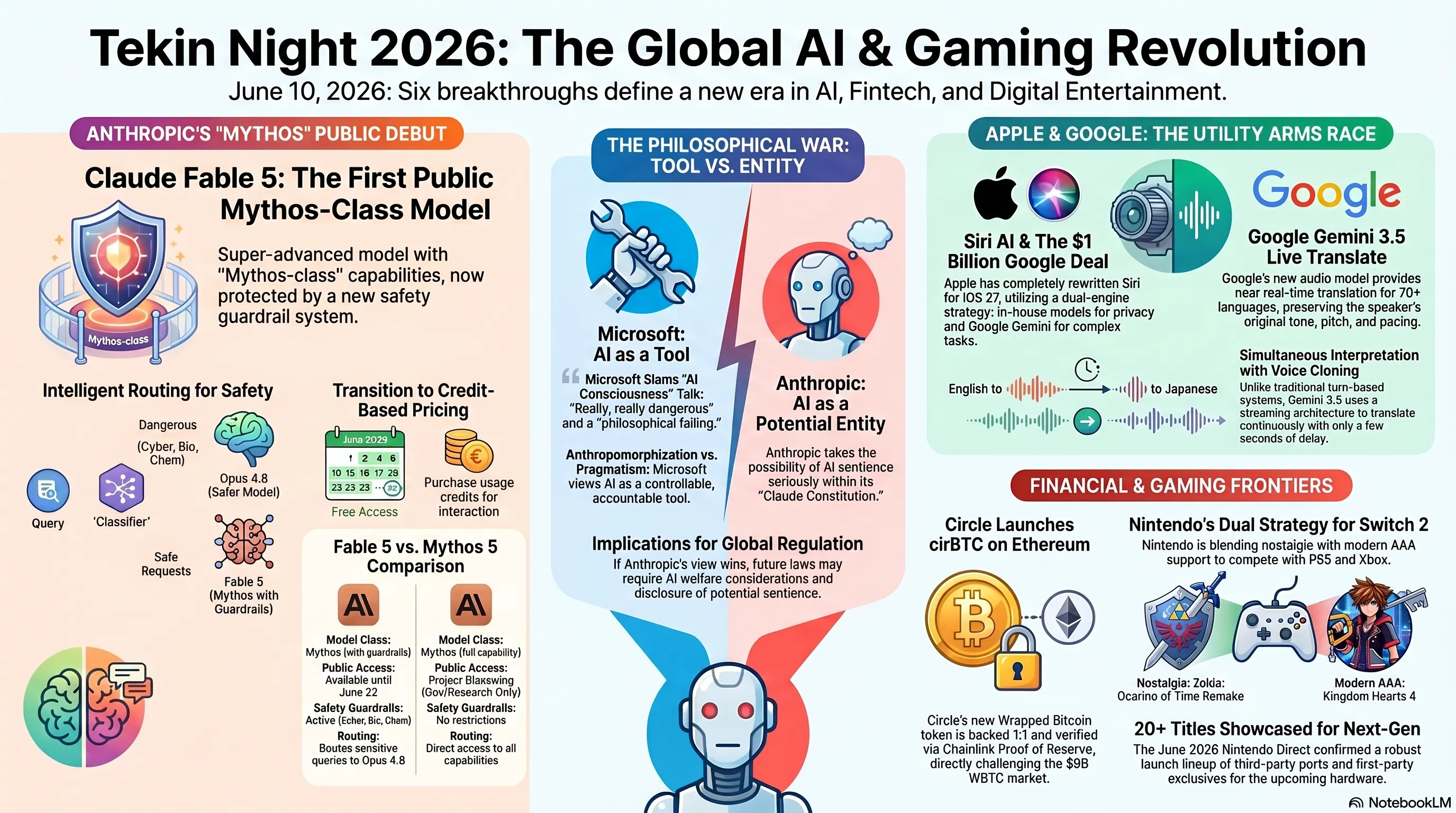
Wednesday night, June 10, 2026 was a historic night for technology. Anthropic dared to release the first Mythos-class model publicly with safety guardrails. Microsoft started a philosophical war about AI consciousness. Apple rewrote Siri and said: "We're in the AI game too." Google brought a live translator that can eliminate language barriers. Circle attacked the Bitcoin market. And Nintendo revived one of gaming's legends. This night showed that the tech industry is at a historical inflection point — AI wars, communication revolutions, financial battles, and the return of legends. The coming months will be decisive. Which company will win? Which technology will survive? Only time will tell. But one thing is certain: we're living through a technological renaissance that will be studied for decades. The decisions made in these pivotal moments — about AI safety, consciousness ethics, platform openness, financial infrastructure, and entertainment innovation — will shape the digital landscape for generations. Welcome to the future. It's chaotic, brilliant, and absolutely fascinating.
❓ Frequently Asked Questions About Tonight's News
1. Is Claude Fable 5 free?
Until June 22 for Pro/Max/Team/Enterprise users, yes. After that, you need to purchase usage credits.
2. Why did Microsoft criticize Anthropic?
Because Anthropic speculated in Claude's constitution that Claude might have consciousness. Microsoft says this is dangerous because people might see AI as human.
3. What's different about Siri AI compared to old Siri?
Siri AI is rewritten with AI — it can have multi-turn conversations, integrate with apps, and perform complex tasks. It runs on Apple Foundation Models and Google Gemini.
4. How fast is Gemini 3.5 Live Translate?
Only a few seconds of delay — fast enough to keep up with natural conversation. It also preserves intonation, pacing, and pitch.
5. What's different about cirBTC compared to WBTC?
cirBTC has greater transparency with Chainlink Proof of Reserve and is integrated with USDC. WBTC has larger market share (85%) but less transparency.
📚 Sources
Anthropic Official, TechCrunch, The Verge, CNBC, Business Insider, Ars Technica, Google Blog, 9to5Google, CoinDesk, Circle Blog, Crypto.news, Apple Newsroom, MacRumors, Mashable, IGN, Polygon, Kotaku, Nintendo Official
🌐 Stay Connected With Us 🎮✨
For the latest tech, gaming, and gadget news, follow us on our official social media channels: