Tekin Night | Friday, October 2, 2026
Good evening and welcome to your definitive global gaming briefing, dissecting seismic console economics, high-stakes executive declarations, and high-profile studio restructuring across the interactive entertainment landscape.
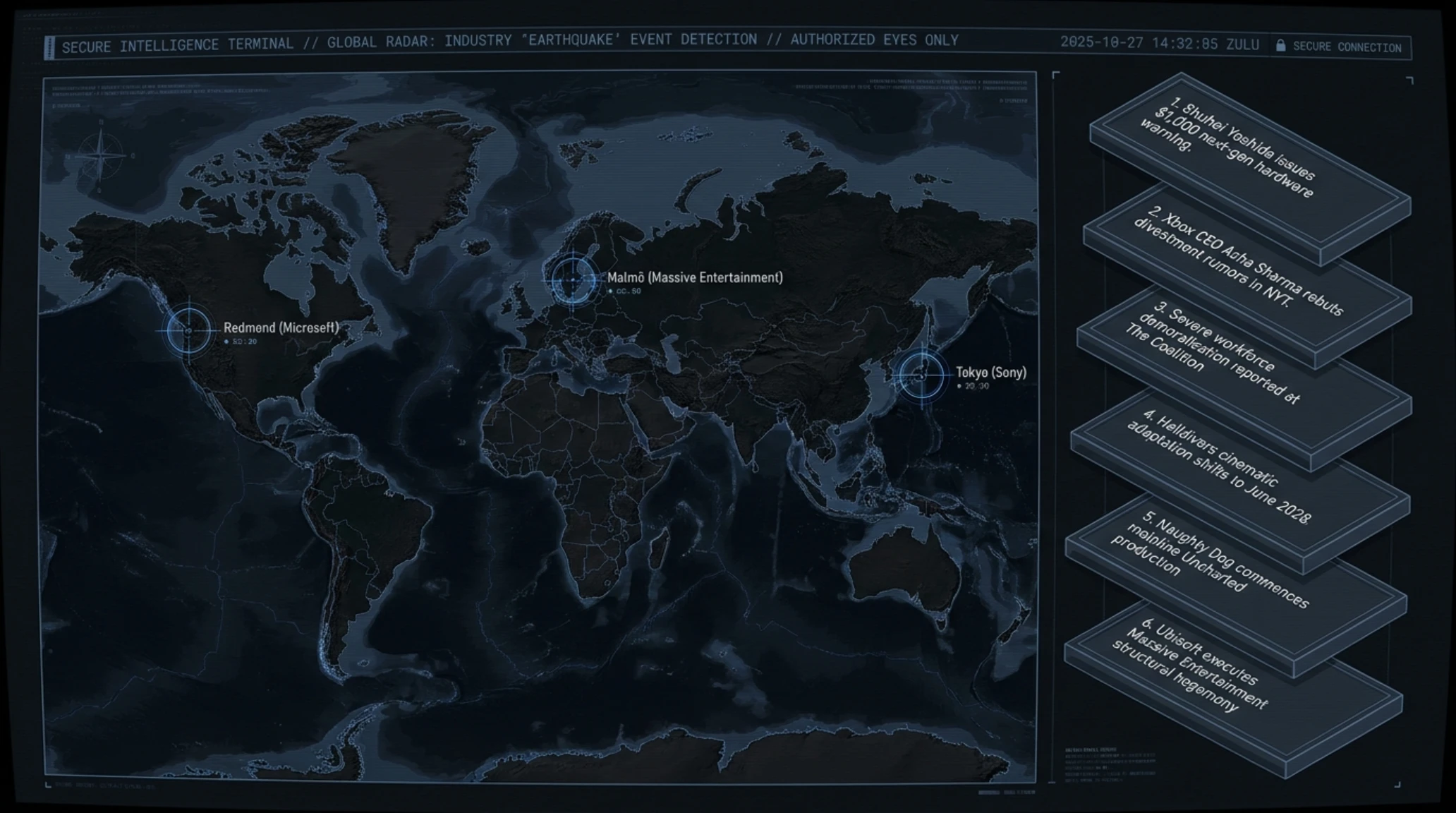
- 🎮Shuhei Yoshida's Hardware Warning- PS5 and Switch 2 lifecycles must be maximized as $1,000 consoles necessitate subscription models.
- 🎧Asha Sharma's Landmark Rebuttal- New Xbox CEO affirms in The New York Times that Xbox is not for sale despite margin pressures.
- 🚀Devastating Tension at The Coalition- Gears of War: E-Day team fears post-launch layoffs ahead of conditional late-October bonuses.
- 🗡️Helldivers Movie Delayed- Cinematic release pushed to June 2028 with Alan Ritchson replacing Jason Momoa.
- 📰Uncharted Returns at Naughty Dog- MP1st reveals brand-new mainline entry directed by Shaun Escayg with Nathan Drake returning.
- ⚔️Ubisoft's Structural Revolution- Massive Entertainment seizes command of Splinter Cell, Ghost Recon, and The Division.
As the sun sets on Friday, October 2, 2026, the global interactive entertainment industry stands at a profoundly consequential crossroads. Over the past twelve hours, executive revelations, unvarnished industry interviews, and high-impact investigative reporting have dismantled conventional assumptions regarding console hardware lifecycles, corporate ownership, and creative labor security. The era of predictable five-year hardware refreshes and subsidized retail boxes is formally colliding with the brutal economic realities of advanced semiconductor fabrication and corporate margin demands.
In this comprehensive evening dossier, TekinGame delivers exhaustive forensic analysis of the six pivotal developments reshaping corporate boardrooms and development floors from Tokyo to Redmond. Grounded in primary statements, financial telemetry, and corroborated studio reporting, this dispatch evaluates the structural shifts dictating where billions of dollars in interactive entertainment capital will flow throughout the remainder of this decade.
Executive Strategic Takeaways
- Former PlayStation chief Shuhei Yoshida warned that Sony and Nintendo must deliberately extend the commercial lifecycles of PlayStation 5 and Switch 2 as long as possible, predicting that next-generation consoles will exceed $1,000 retail price tags and force platform holders into $50/month hardware subscription models.
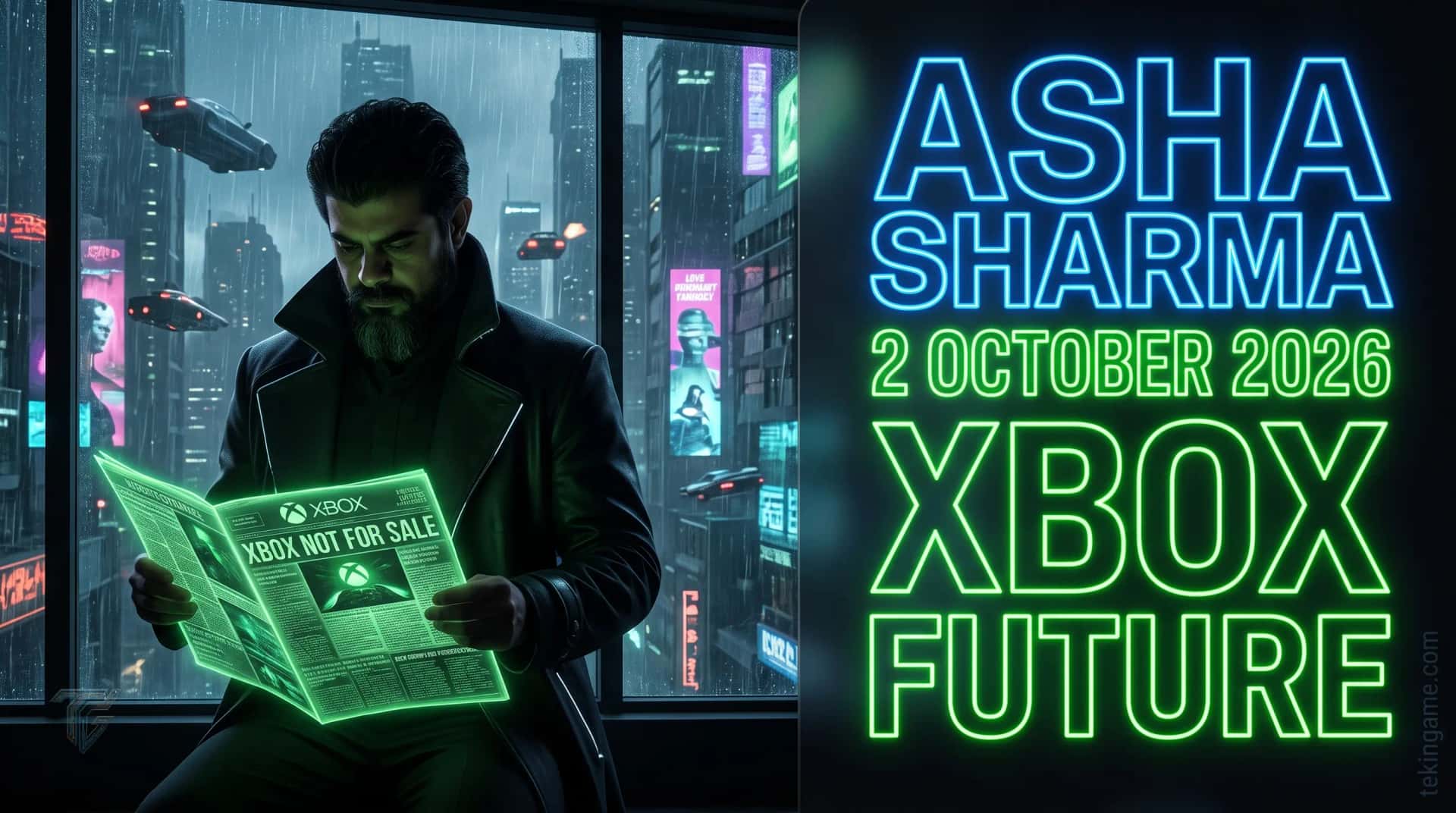
- New Xbox CEO Asha Sharma delivered a definitive public rebuke in The New York Times against persistent Wall Street divestment rumors, stating unconditionally that 'Xbox is not for sale' while outlining a multiplatform and cloud-centric profitability roadmap.
- Staff at The Coalition behind the October 6 launch of Gears of War: E-Day are enduring acute organizational anxiety following the quiet termination of Narrative Director Juan Vaca, fearing a second wave of Microsoft layoffs before end-of-October bonuses vest.
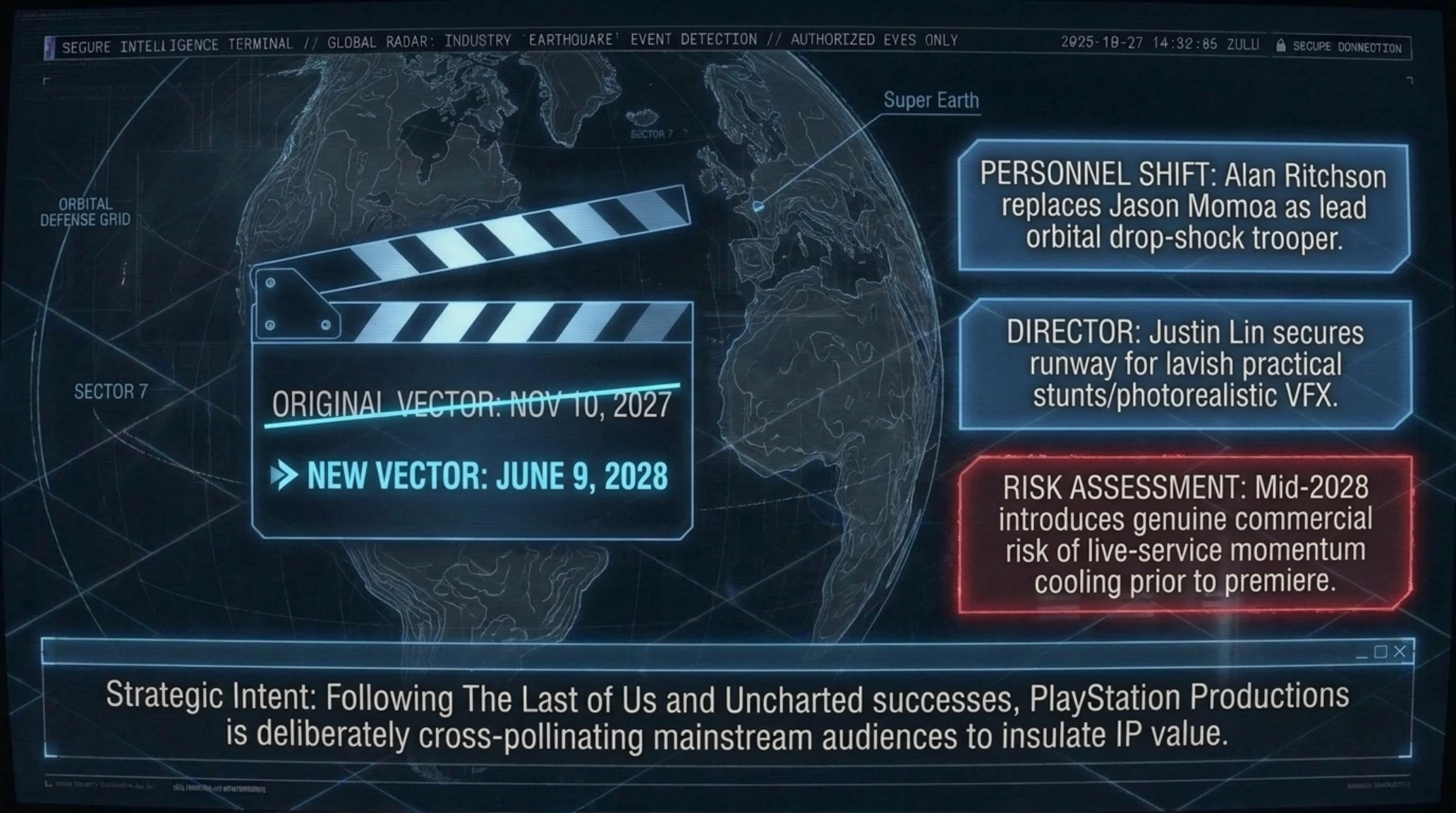
- Sony Pictures and PlayStation Productions shifted the cinematic release of Helldivers from November 2027 to June 9, 2028, securing a prime summer blockbuster corridor with Alan Ritchson replacing Jason Momoa as lead commando under Justin Lin's direction.
- An exclusive investigative report from MP1st confirmed that Naughty Dog has commenced active production on a brand-new, mainline Uncharted installment directed by Shaun Escayg, featuring the canonical return of Nathan Drake.
- Ubisoft executed a sweeping structural reorganization, dissolving Creative House 2 and elevating Swedish developer Massive Entertainment to command the Splinter Cell Remake, Ghost Recon, The Division 3, and a new original War MOBA IP titled March of Giants.

The Silicon Cost Trap: Shuhei Yoshida Warns Against Rushing Next-Gen as $1,000 Hardware Subscriptions Loom Over the Industry
In an unusually candid and illuminating intervention into the platform architecture debate, Shuhei Yoshida, former President of Sony Interactive Entertainment Worldwide Studios and legendary pioneer of the modern PlayStation brand, delivered a stark warning on The Verge's flagship podcast, The Vergecast. Yoshida argued that platform custodians Sony and Nintendo must deploy every available engineering and operational resource to prolong the commercial lifespan of their current hardware—the PlayStation 5 and Nintendo Switch 2—far beyond traditional historical limits.
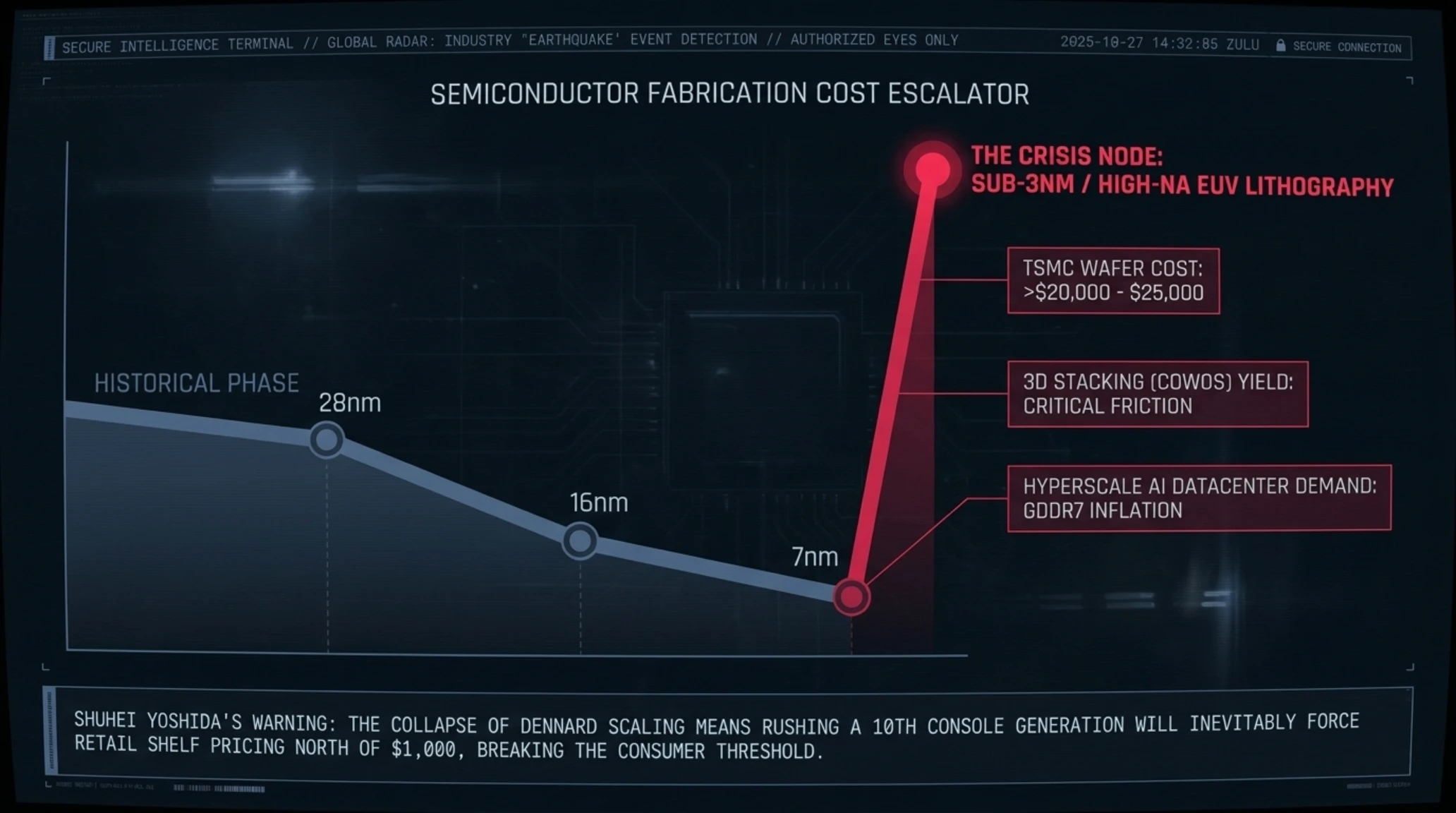
The philosophical foundation of Yoshida's thesis rests upon the immutable collapse of Dennard scaling and the extreme cost escalation governing advanced silicon fabrication. For decades, the console business model relied on a reliable economic rhythm: platform holders manufactured complex custom application-specific integrated circuits (ASICs) at an initial loss or narrow margin, confident that optical shrink iterations across subsequent wafer cycles (from 28nm to 16nm to 7nm) would rapidly depress bill-of-materials (BOM) costs while improving energy efficiency. That economic escalator has ceased to function.
With leading-edge foundries like TSMC commanding in excess of $20,000 to $25,000 per wafer for sub-3nm nodes utilizing high-numerical-aperture extreme ultraviolet (High-NA EUV) lithography, producing a genuine architectural leap over current Zen 2 and RDNA 2/3 silicon would demand an ASIC die size and thermal envelope that completely defies traditional consumer electronics pricing. Compounding this challenge, the explosive procurement demands of hyperscale artificial intelligence datacenters have triggered severe cost inflation across high-bandwidth GDDR7 memory modules and custom solid-state storage controllers.
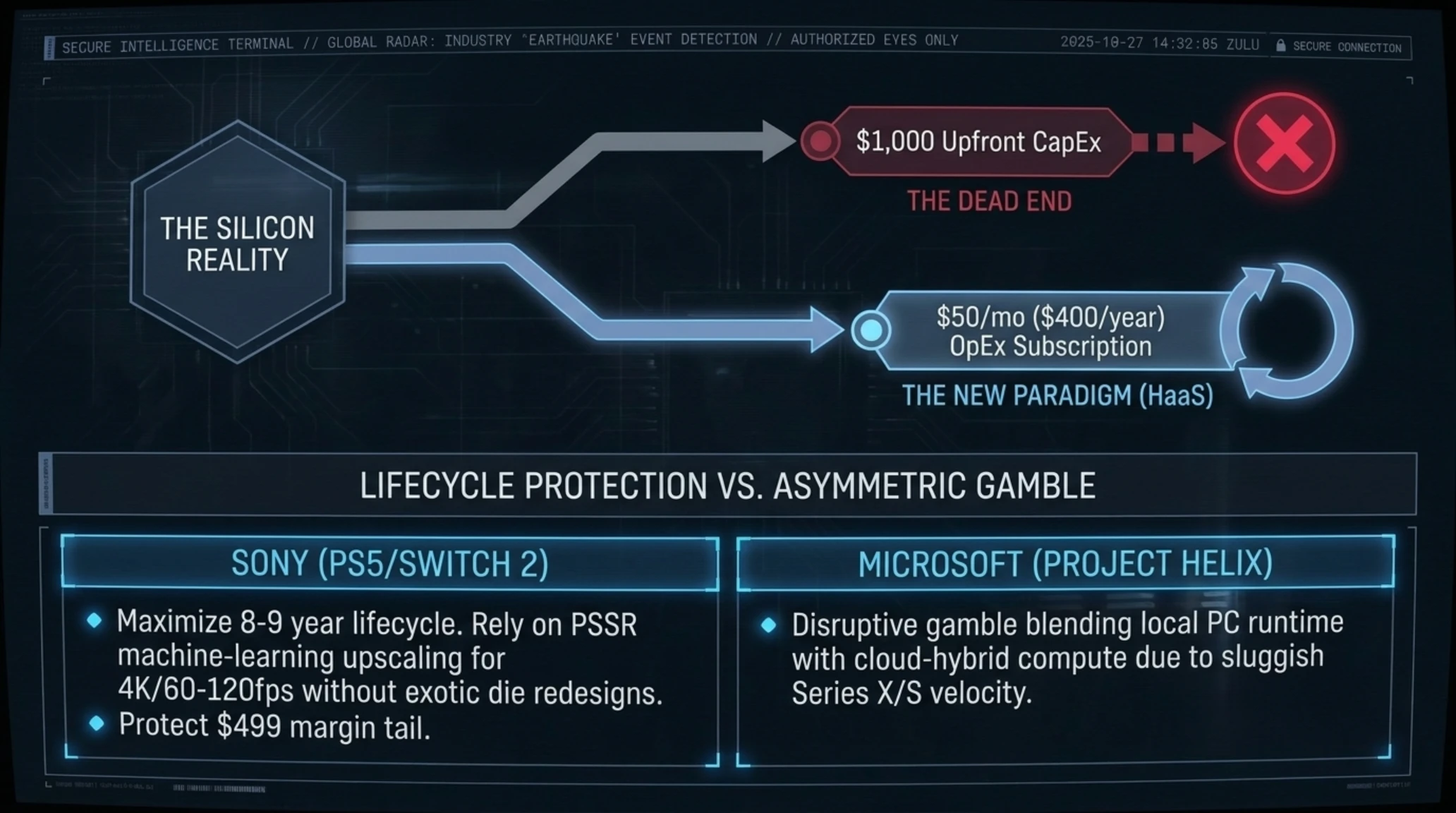
Yoshida's observations illuminate a critical divergence in competitive positioning. He noted that Microsoft's perceived urgency to advance its next-generation hardware project, codenamed Project Helix, represents an asymmetric gamble driven by commercial necessity rather than consumer demand. Facing sluggish Xbox Series X and Series S unit velocity relative to historical benchmarks, Redmond requires a disruptive hardware paradigm shift—potentially blending local PC runtime compatibility with cloud-hybrid compute—to reset market dynamics. Conversely, with PlayStation 5 surpassing 65 million installed units and sustaining robust software attach rates, Sony possesses immense financial incentives to maximize the margin tail of its existing platform ecosystem.
Jargon Buster | Silicon Cost Inflation & Hardware-as-a-Service (HaaS)
The strategic deployment of the mid-generation PlayStation 5 Pro further corroborates Yoshida's analysis. By integrating the proprietary PlayStation Spectral Super Resolution (PSSR) machine-learning upscaler, Sony demonstrated that algorithmic image reconstruction can deliver perceived 4K visual clarity and sustained 60-to-120 frame-per-second performance without requiring an exotic, power-hungry redesign of the core central processor. For platform holders, extending this architectural paradigm through software optimizations offers a far more lucrative pathway than prematurely burdening consumers with prohibitive hardware costs, especially in an era of heightened global macroeconomic scrutiny.
Strategic Hardware Lifecycle Comparison: Current Consoles vs. Speculative Next-Gen
| Architectural Metric | PlayStation 5 (Gen 9 Baseline) | Nintendo Switch 2 (Emerging Cycle) | Speculative Gen 10 Hardware (2028+) |
|---|---|---|---|
| Targeted Commercial Lifespan | 8 to 9 Full Years (Active through 2028+) | 7 to 8 Years of Sustained Lifecycle | Contingent on Subscription Adoption |
| Introductory Retail Shelf Pricing | $499 USD (Competitive Parity) | $399 to $449 USD (Projected Range) | $899 to $1,050 USD (Severe Margin Risk) |
| Primary Distribution Framework | Direct Retail & Digital Software Pull | Hybrid Physical Cartridge & eShop | Hardware-as-a-Service Monthly Bundles |
| Visual Advancement Driver | Hardware Micro-Refinements & PSSR | Nvidia Custom Silicon & DLSS 3.5 | Neural Rendering & Distributed Cloud Logic |
| Platform Custodian Strategic Goal | Maximize Cumulative Software ROI | Protect Unique Handheld Hardware Moat | Avoid Extreme Foundry Fabrication Deficits |

From a pure semiconductor engineering standpoint, transitioning to TSMC's 2nm Gate-All-Around (GAA) nanosheet architecture introduces punishing physical design trade-offs for living-room consumer hardware. While GAA nanosheets mitigate quantum tunneling and reduce static current leakage at sub-micron scales, packaging multi-chiplet dies alongside unified LPDDR5X or GDDR7 memory interfaces requires complex 3D stacking techniques, such as TSMC's Chip-on-Wafer-on-Substrate (CoWoS) packaging. These packaging methodologies carry low initial yield rates and generate intense thermal flux densities, necessitating bulky vapor-chamber cooling apparatuses and high-wattage power supplies that fundamentally clash with the aesthetic and acoustic expectations of living-room console form factors.
As development budgets for blockbuster single-player games routinely surpass $250 million, platform stability represents an existential requirement for third-party publishers as well. Engineering a game for a stable, mature hardware baseline installed in tens of millions of living rooms allows development studios to recoup astronomical overhead without the catastrophic friction of fracturing their audience across fragmented hardware tiers.
"Xbox Is Not for Sale": New Xbox CEO Asha Sharma Dismantles Divestment Rumors in Landmark New York Times Interview
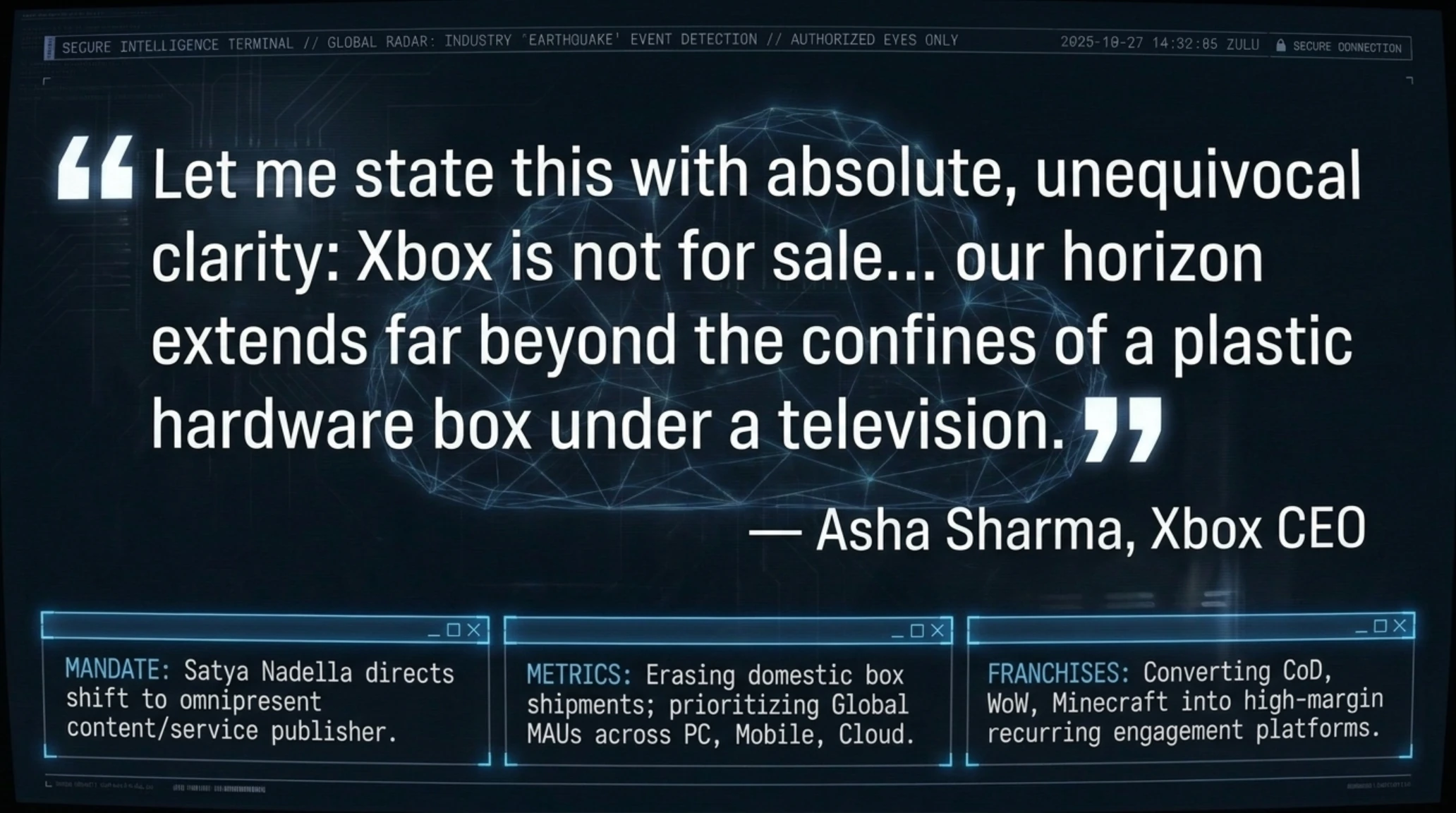
Following months of intense Wall Street skepticism, institutional analyst downgrades, and escalating rumors of corporate spin-offs, new Xbox CEO Asha Sharma delivered an uncompromising, definitive rebuttal during an extensive, exclusive interview with The New York Times. Sharma's public declaration establishes the formal strategic boundary line for Microsoft's multi-billion-dollar interactive entertainment division, extinguishing persistent speculation regarding an impending divestment of the storied gaming brand.
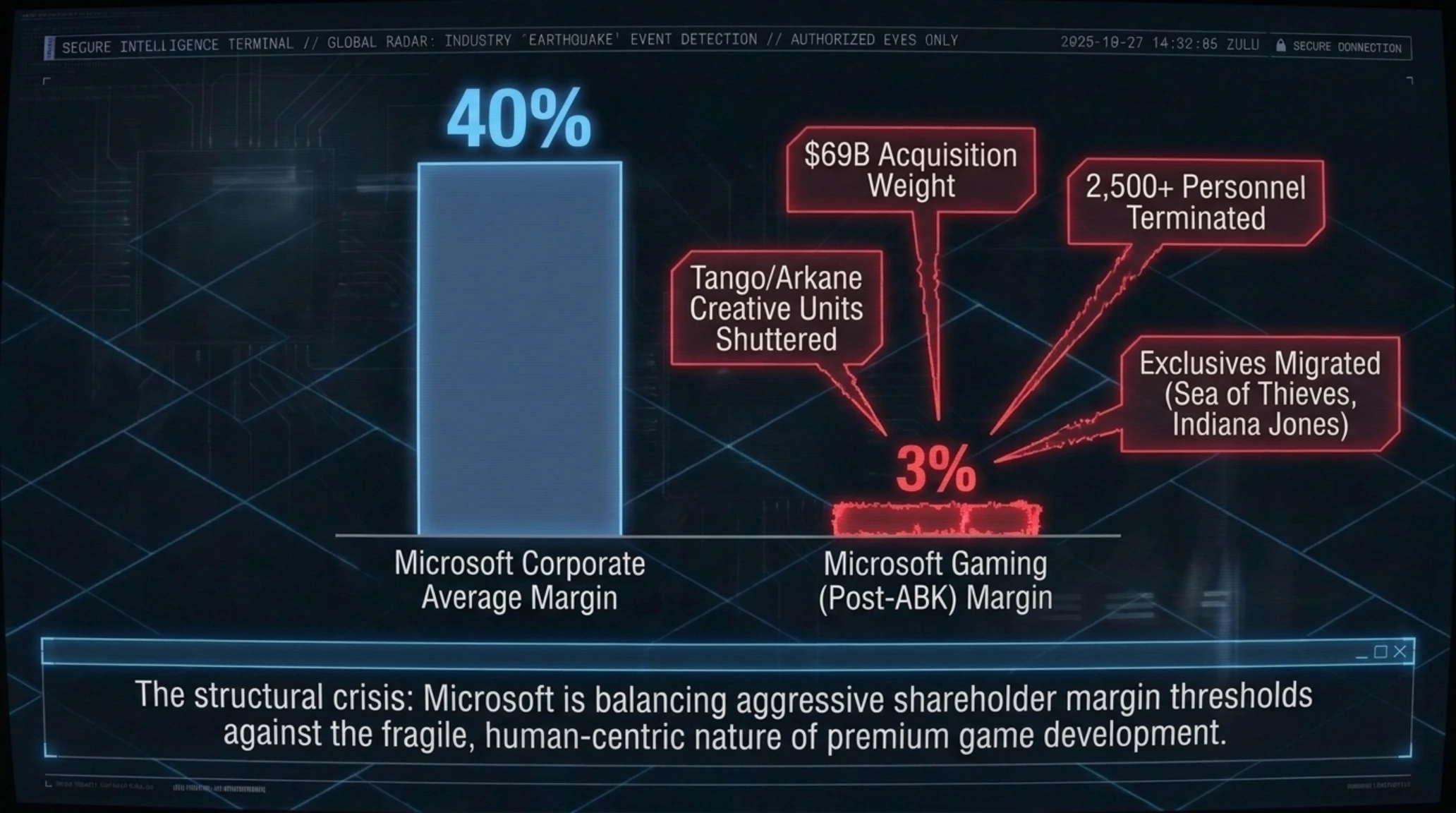
The genesis of the corporate agitation originated in a series of leaked financial assessments published across financial publications, most notably by The Information. These investigative reports alleged that following the integration of the mammoth $69 billion Activision Blizzard King acquisition, Microsoft Gaming's operating margins contracted to an anemic 3 percent—a figure vastly subordinate to the software giant's corporate average of over 40 percent. Compounded by painful workforce reductions exceeding 2,500 personnel earlier in the year, the shuttering of critically acclaimed creative units like Tango Gameworks and Arkane Austin, and the unprecedented migration of historical console exclusives like Sea of Thieves, Hi-Fi Rush, and Indiana Jones and the Great Circle to rival platforms, financial commentators had theorized that Microsoft might seek to excise or spin off its capital-intensive gaming operations.
Sharma detailed that under the executive mandate of Microsoft CEO Satya Nadella, Xbox has transitioned from a defensive platform silo into an agile, omnipresent content and service publisher. Rather than measuring corporate vitality strictly through domestic console box shipments, Microsoft now evaluates performance through global monthly active users across the combined Windows PC, Xbox console, mobile, and cloud gaming spheres. The overarching objective is converting iconic mega-franchises—including Call of Duty, World of Warcraft, Minecraft, and The Elder Scrolls—into high-margin, recurring engagement platforms reaching hundreds of millions of simultaneous participants.
Rumor vs. Reality: Is Microsoft Divesting or Spinning Off the Xbox Brand?
However, this macro-level corporate pivoting has imposed devastating collateral trauma on frontline creative workers. As previously documented in TekinGame's reporting on how studio reductions gutted id Software and alienated creative talent, balancing aggressive shareholder margin thresholds against the fragile, human-centric nature of premier game development remains an unresolved structural crisis for Redmond's leadership.
Atmosphere of Dread at The Coalition: Gears of War: E-Day Team Endures Intense Fear of Post-Launch Layoffs Ahead of Conditional October Bonuses
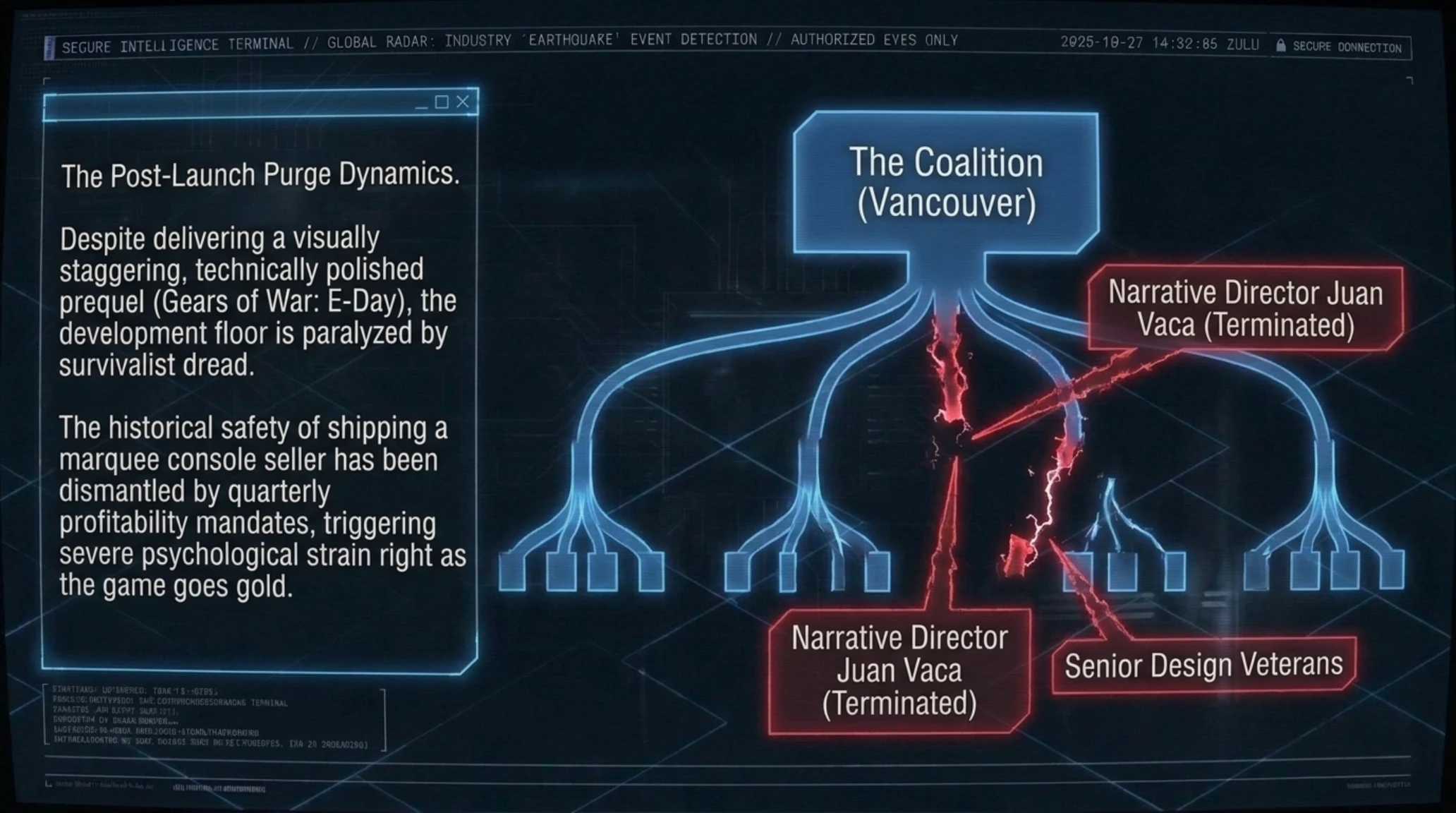
While millions of fans worldwide eagerly anticipate the high-profile global launch of Gears of War: E-Day on October 6, 2026, an exhaustive investigative exposé published by Eurogamer has revealed severe demoralization, psychological strain, and acute job insecurity permeating Vancouver-based developer The Coalition. Despite delivering what internal testers describe as a visually staggering, technically polished prequel, the developers responsible for crafting the blockbuster are gripped by fear of imminent redundancy.
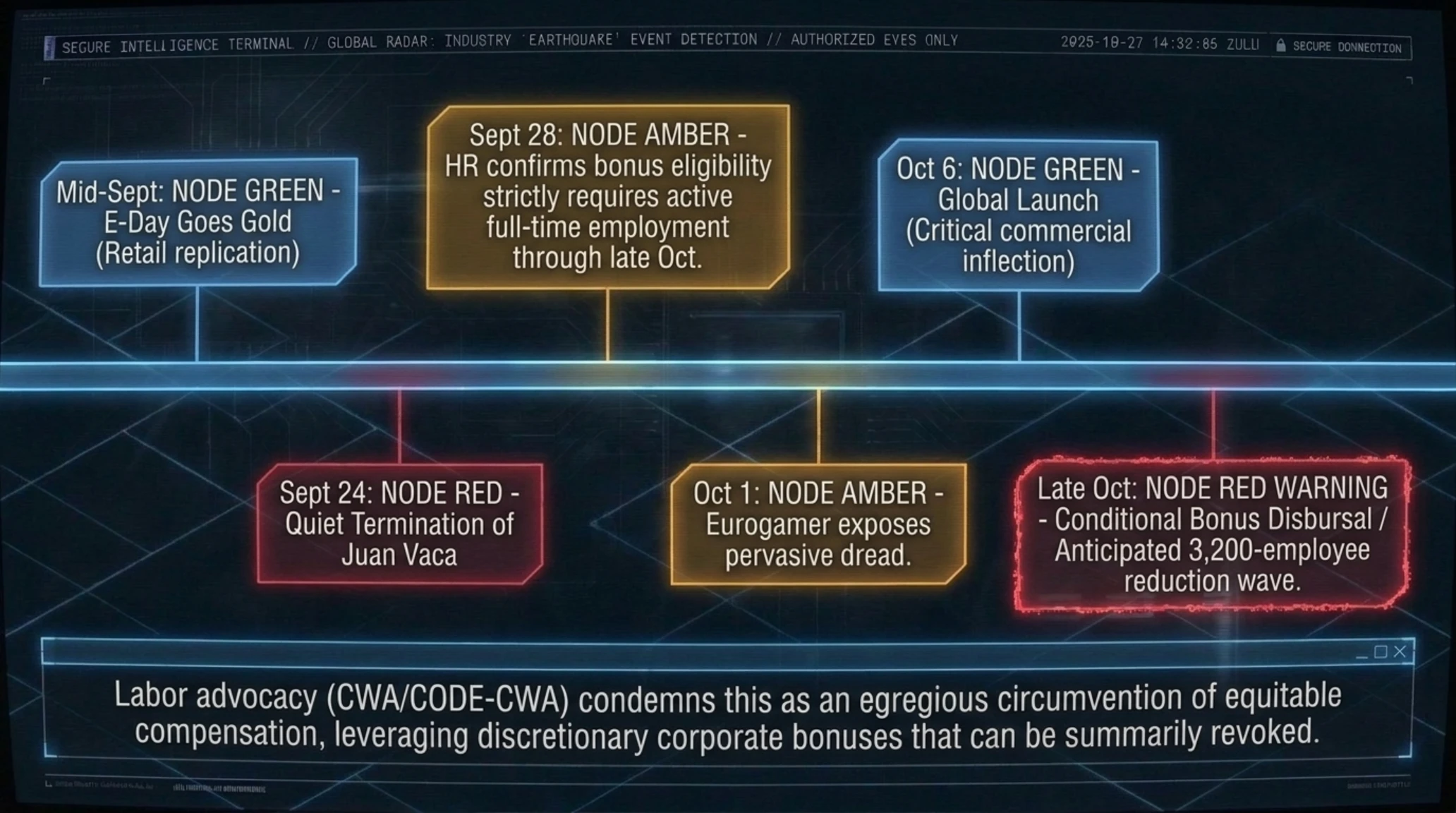
The internal crisis erupted into full view following the sudden, unannounced dismissal of Juan Vaca, the studio's respected Narrative Director. Vaca's quiet departure occurred merely days after the studio celebrated the monumental milestone of the game going gold—the formal certification of release code sent to manufacturing and platform certification. His termination was rapidly accompanied by the unheralded exit of several other senior design veterans, triggering pervasive paranoia among the studio's remaining core development workforce.
Multiple internal sources, speaking under strict conditions of confidentiality, revealed that rank-and-file developers deeply fear they will be swept up in a second wave of Microsoft's broader 3,200-employee reduction plan directly following the game's launch. The source of acute bitterness centers around the institutional structure of end-of-year performance bonuses. Management recently reiterated that operational bonuses tied to the commercial delivery of E-Day are scheduled for disbursement at the end of October, carrying an explicit operational caveat: recipients must remain actively employed in a full-time capacity on the precise date of payroll execution. Staff widely suspect that corporate bean-counters intend to execute aggressive post-launch terminations prior to the payout deadline, effectively stripping developers of their earned financial rewards after years of grueling crunch.
Chronological Incident Timeline: Operational Friction at The Coalition
📚 Classified & Related Dossiers in TekinGame
If you wish to explore beyond this report and delve into cybernetic frontiers and autonomous AI architectures, do not miss these three exclusive deep-dives in the Tekin Garage:

This dynamic underscores an alarming trend across the AAA development sector: the post-launch purge. Historically, shipping a marquee console seller guaranteed creative stability and well-deserved financial rewards for development teams. In the modern corporate landscape governed by quarterly profitability targets, shipping a monumental release is increasingly met with workforce shedding, transforming moments of creative triumph into episodes of survivalist dread.
Labor advocacy organizations, including the Communications Workers of America (CWA) and CODE-CWA, have sharply criticized Microsoft's bonus structure as an egregious circumvention of equitable compensation standards. With modern subscription gaming services like Game Pass shifting financial metrics away from direct unit sales toward lifetime subscriber retention and daily active usage, frontline developers find their traditional royalty frameworks dismantled in favor of discretionary corporate bonuses that can be summarily revoked through calculated restructuring maneuvers.
Hollywood Strategy Shift: Sony Pushes Helldivers Movie to June 2028 as Alan Ritchson Steps in for Jason Momoa
In a major realignment of its theatrical release slate, Sony Pictures and PlayStation Productions formally updated their long-range blockbuster calendar, rescheduling the highly anticipated live-action cinematic adaptation of Helldivers from November 10, 2027, to a premier summer blockbuster corridor on June 9, 2028.
This calculated seven-month deferral repositions the satirical, hyper-violent military science-fiction film into the most lucrative, competitive box-office window of the theatrical year. Industry analysts view the move as a dual-edged sword: on one hand, granting director Justin Lin (veteran of multiple multi-billion-dollar Fast & Furious installments) substantial additional pre-visualization and principal photography runway allows for lavish practical stunts and photorealistic visual effects. On the other hand, deferring the film to mid-2028 introduces genuine commercial risk that the fervent pop-cultural momentum currently surrounding Helldivers 2 may cool prior to premiere night.
To spearhead the cinematic charge, Sony finalized a marquee casting agreement with Hollywood action star Alan Ritchson, best known for his commanding, physical portrayal of Jack Reacher in Amazon Prime Video's globally dominant Reacher series. Ritchson officially boards the project as the central squad leader of Super Earth's elite orbital drop-shock troopers, replacing Jason Momoa, who reluctantly vacated the production earlier this year due to intractable scheduling conflicts with competing superhero franchise commitments. Lin reaffirmed his commitment to capturing the signature blend of harrowing alien swarms, dark geopolitical satire, and accidental friendly-fire chaos that defined Arrowhead Game Studios' runaway live-service phenomenon.
The aggressive expansion of PlayStation Productions into mainstream cinematic universes represents an indispensable pillar of Sony's corporate strategy. Following the commercial triumph of the Uncharted feature film (surpassing $400 million globally) and the multi-Emmy-winning cultural juggernaut of HBO's The Last of Us, Sony is deliberately leveraging prestige cinematic adaptations to cross-pollinate mainstream audiences directly back into its gaming ecosystem, insulating its intellectual properties against conventional gaming software obsolescence.

Exclusive Scoop from MP1st: Brand-New Mainline Uncharted in Active Production at Naughty Dog Directed by Shaun Escayg with Nathan Drake Returning
In a massive investigative scoop that has sent shockwaves through the global gaming community, investigative outlet MP1st revealed that Sony's flagship studio, Naughty Dog, is in active development on a brand-new, full-scale installment in the legendary Uncharted franchise. Crucially corroborated by subsequent reporting across Eurogamer and VGC, the project is neither a remastered compilation nor a remade re-release of prior entries, but an entirely fresh, mainline narrative adventure built natively for modern hardware.
According to confidential development disclosures, creative stewardship of the project has been entrusted to Shaun Escayg. As the acclaimed creative director and co-writer behind 2017's critically celebrated Uncharted: The Lost Legacy, Escayg's return to helm the franchise represents a triumphant homecoming. Escayg proved his masterful ability to balance breathtaking cinematic spectacle with poignant, character-driven storytelling, making him the definitive auteur to shepherd the multi-platinum franchise into its next narrative chapter.
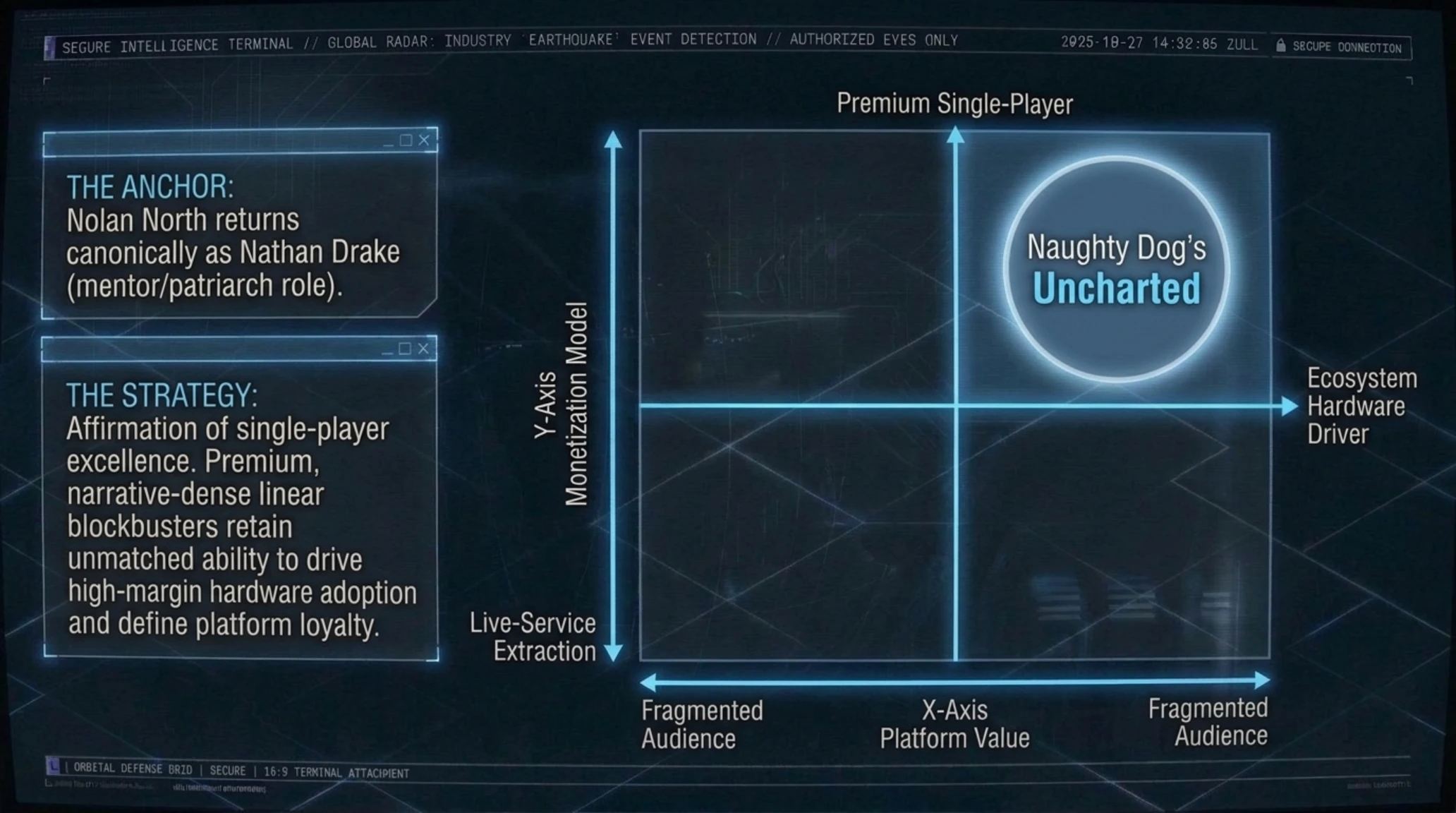
The most exhilarating revelation within the MP1st dossier is the confirmed return of iconic treasure hunter Nathan Drake in a meaningful narrative capacity. While sources indicate Drake may not serve as the exclusive playable protagonist across the entire campaign—potentially functioning as a mentor, guiding patriarch, or seasoned tactical advisor alongside a newly minted generation of adventurers—Nolan North is reportedly reprising his legendary role, preserving the authentic emotional DNA that established the franchise as PlayStation's quintessential cinematic jewel.
Why It Matters: The Strategic Resurgence of Single-Player Prestige Storytelling
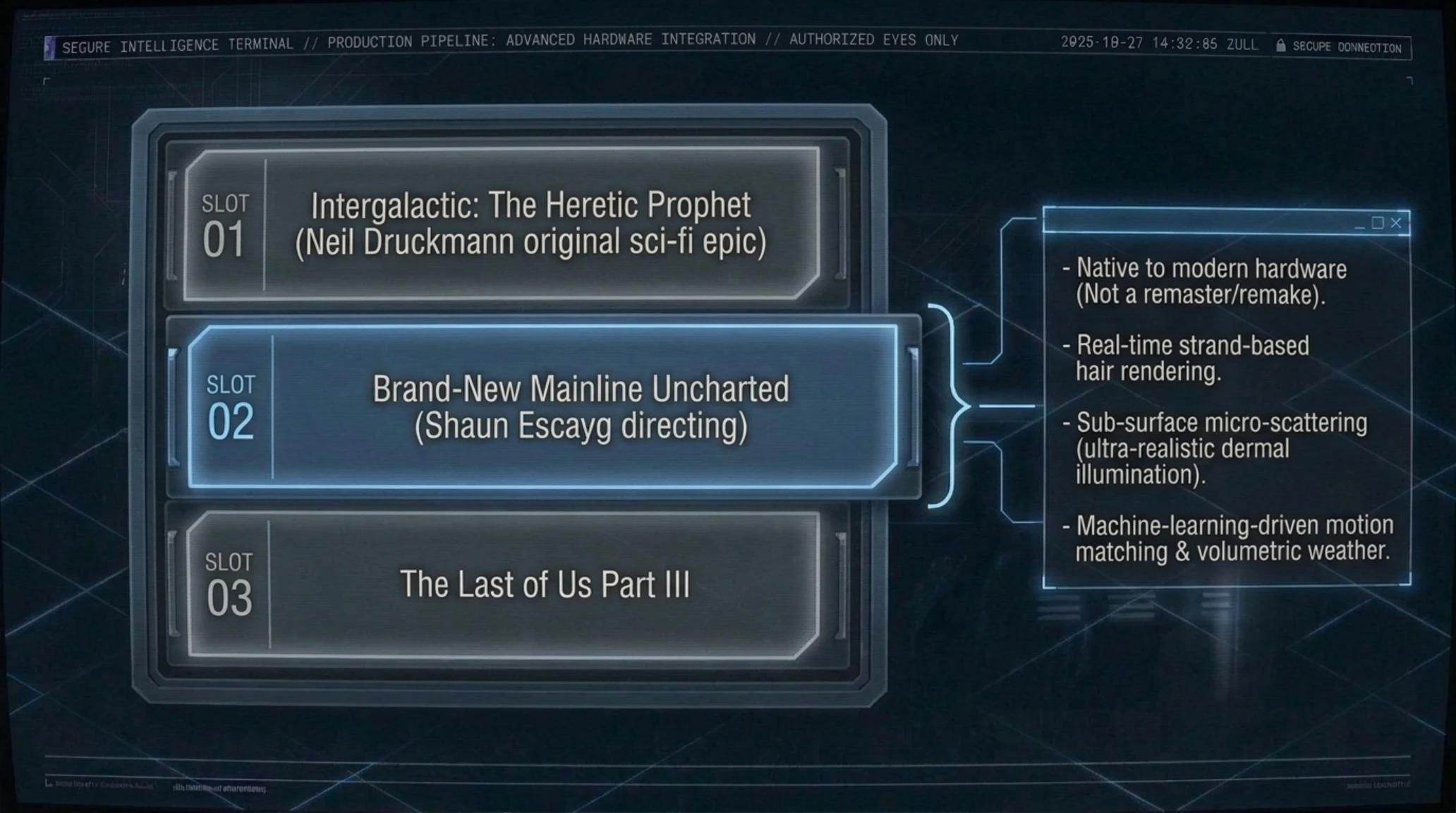
From an internal production timeline standpoint, the report reveals that formal public unveiling of the new Uncharted is scheduled to occur following the commercial rollout of Neil Druckmann's unannounced original sci-fi epic, codenamed Intergalactic: The Heretic Prophet. In Naughty Dog's release pipeline, this new adventure is slated to arrive on store shelves ahead of The Last of Us Part III. This balanced cadence mirrors the extraordinary commercial longevity witnessed across Sony's catalog, as examined in TekinGame's analytical audit of how classic prestige software captures record revenues across PlayStation platforms.
Technologically, the project will serve as the premier showcase for Naughty Dog's upgraded proprietary engine pipeline. Leveraging real-time strand-based hair rendering, sub-surface micro-scattering for ultra-realistic dermal illumination, and machine-learning-driven motion matching for fluid, contextual traversal, the game aims to eliminate the traditional boundary between pre-rendered cinematics and active gameplay. By integrating full dual-sense haptic feedback and dynamic volumetric weather simulation, Escayg's team is engineering an immersive environmental sandbox that showcases the ultimate potential of modern PlayStation hardware.

Ubisoft's Structural Revolution: Massive Entertainment Seizes Command of Splinter Cell, Ghost Recon, and The Division
In the final tectonic development of this evening's briefing, French publisher Ubisoft unveiled an extensive corporate restructuring aimed at salvaging its flagship tactical franchises and restoring operational discipline. The publisher formally dissolved its internal organizational structure known as Creative House 2, transferring supreme managerial and creative oversight to its premier Swedish subsidiary, Massive Entertainment.
The consolidation establishes the Malmö-based creators of Tom Clancy's The Division and Star Wars Outlaws as the undisputed apex authority over Ubisoft's storied Tom Clancy tactical portfolio. Under this unified governance model, satellite teams handling the highly anticipated Splinter Cell Remake at Ubisoft Toronto, upcoming next-generation Ghost Recon installments across Paris and Montreal, and early pre-production on The Division 3 will operate under the centralized technical methodology of Massive's proprietary Snowdrop engine and the direct executive oversight of studio head Christophe Hartmann.
Beyond orchestrating this military triumvirate, Ubisoft confirmed that Massive Entertainment has assumed full responsibility for developing a massive, original competitive intellectual property titled March of Giants. Designed as a high-stakes, free-to-play War MOBA (Multiplayer Online Battle Arena) engineered for high-performance PC and cross-platform ecosystems, the project represents Ubisoft's most aggressive bid to capture market share within the lucrative competitive multiplayer arena through centralized Scandinavian production standards.
Ubisoft Strategic Studio Realignment: Tom Clancy Tactical Franchises Under Massive Entertainment
| Strategic Franchise / Project | Lead Production Studio | Technical Command & Governance | Engine Pipeline & Development Phase |
|---|---|---|---|
| Splinter Cell Remake | Ubisoft Toronto | Massive Entertainment (Sweden) | Snowdrop Engine / Active Full Production |
| Ghost Recon (Next-Gen) | Ubisoft Paris & Montreal | Massive Entertainment (Sweden) | Custom Tactical Engine / Tactical Reboot |
| The Division 3 | Massive Entertainment Malmö | Julian Gerighty Senior Leadership | Snowdrop Advanced / Pre-Production Phase |
| March of Giants (New IP) | Massive Core Competitive Unit | Direct Direction by Christophe Hartmann | Free-to-Play War MOBA / 2027 Reveal Target |
This radical centralizing initiative signals an overdue strategic reckoning within Ubisoft's executive suites. After enduring years of fragmented production, disappointing battle royale experiments, and sustained equity valuation volatility, the publisher has conceded that sustainable creative turnaround requires entrusting its most valuable brands to its most technologically proficient, commercially proven studio.
- Extending PS5 and Switch 2 lifecycles spares consumers from prohibitive $1,000 next-gen hardware inflation.
- Naughty Dog's return to Uncharted re-energizes the premier single-player narrative cinematic genre.
- Centralizing Tom Clancy tactical properties under Massive Entertainment restores rigorous quality control.
- Acute job insecurity and bonus disputes at The Coalition expose systemic vulnerabilities in publisher labor practices.
- Pushing the Helldivers theatrical release to 2028 risks alienating the core audience if live-service interest wanes.
- Potential consumer friction surrounding hardware-as-a-service subscription pricing models could erode physical ownership.

Strategic Evening Synthesis & Industry Trajectory (Conclusion)

Frequently Asked Questions: Global Gaming & Hardware Intelligence
Why does Shuhei Yoshida believe tenth-generation consoles could cost upwards of $1,000?
Due to the economic slowdown of Moore's Law and skyrocketing costs for advanced sub-3nm semiconductor fabrication nodes at TSMC, producing a meaningful generational leap over PS5 requires vastly more expensive silicon, custom cooling, and high-speed GDDR7 memory. These cost realities would push retail shelf pricing past $1,000, forcing platform holders to offer hardware through $50/month subscription models.
Is Microsoft planning to sell or spin off the Xbox brand?
No. In a landmark interview with The New York Times, new Xbox CEO Asha Sharma categorically stated that 'Xbox is not for sale.' She outlined Microsoft's long-term commitment to multiplatform publishing, cloud gaming ubiquity, and sustainable profitability across PC, console, and mobile ecosystems.
What is causing workforce panic at The Coalition ahead of the Gears of War: E-Day launch?
Following the sudden termination of Narrative Director Juan Vaca shortly after the game went gold, staff fear an impending wave of post-launch layoffs before end-of-October performance bonuses disburse. Company policy mandates active full-time employment on the payout date, sparking widespread concerns of cost-cutting terminations.
Why was the Helldivers movie delayed to 2028, and who is replacing Jason Momoa?
Sony Pictures deferred the film's release to June 9, 2028, to capitalize on the lucrative summer blockbuster theatrical window and allow director Justin Lin additional time for complex visual effects. Alan Ritchson (star of Reacher) officially joined the cast as the lead Super Earth commando, replacing Jason Momoa due to scheduling conflicts.
Is the new Uncharted game at Naughty Dog a remake, and will Nathan Drake return?
According to an exclusive report from MP1st, the project is a completely new, mainline installment directed by Shaun Escayg (director of The Lost Legacy). Nathan Drake will feature meaningfully in the narrative, though he may serve in a mentor or advisory role alongside a new generation of explorers.
Which Tom Clancy franchises are now overseen by Massive Entertainment?
Ubisoft has centralized creative and technical oversight of the Splinter Cell Remake, the upcoming next-generation Ghost Recon game, and The Division 3 under Massive Entertainment, while the Swedish studio also leads development on a brand-new free-to-play War MOBA titled March of Giants.
Authoritative Sources and Primary Documentation (Sources Box)
- The Verge: Shuhei Yoshida on The Vergecast: Console Generation Economics and Lifecycles
- The New York Times: Exclusive Interview: Xbox CEO Asha Sharma Confirms Xbox Is Not for Sale
- Eurogamer: Investigative Report: The Coalition Developers Fear Post-Launch Layoffs
- GameSpot: Sony Moves Helldivers Movie to June 2028 with Alan Ritchson Attached
- MP1st: Exclusive: Brand-New Uncharted in Development at Naughty Dog Directed by Shaun Escayg
- GamesIndustry.biz: Ubisoft Restructures Creative Divisions Under Massive Entertainment Leadership
Additional Gallery: Tekin Night | Friday, October 2, 2026: $1,000 Console Subscriptions, Xbox Not for Sale & New Uncharted