Tekin Night // Strategic Executive Intelligence (October 21, 2026)
Strategic Intelligence // Core Key Takeaways
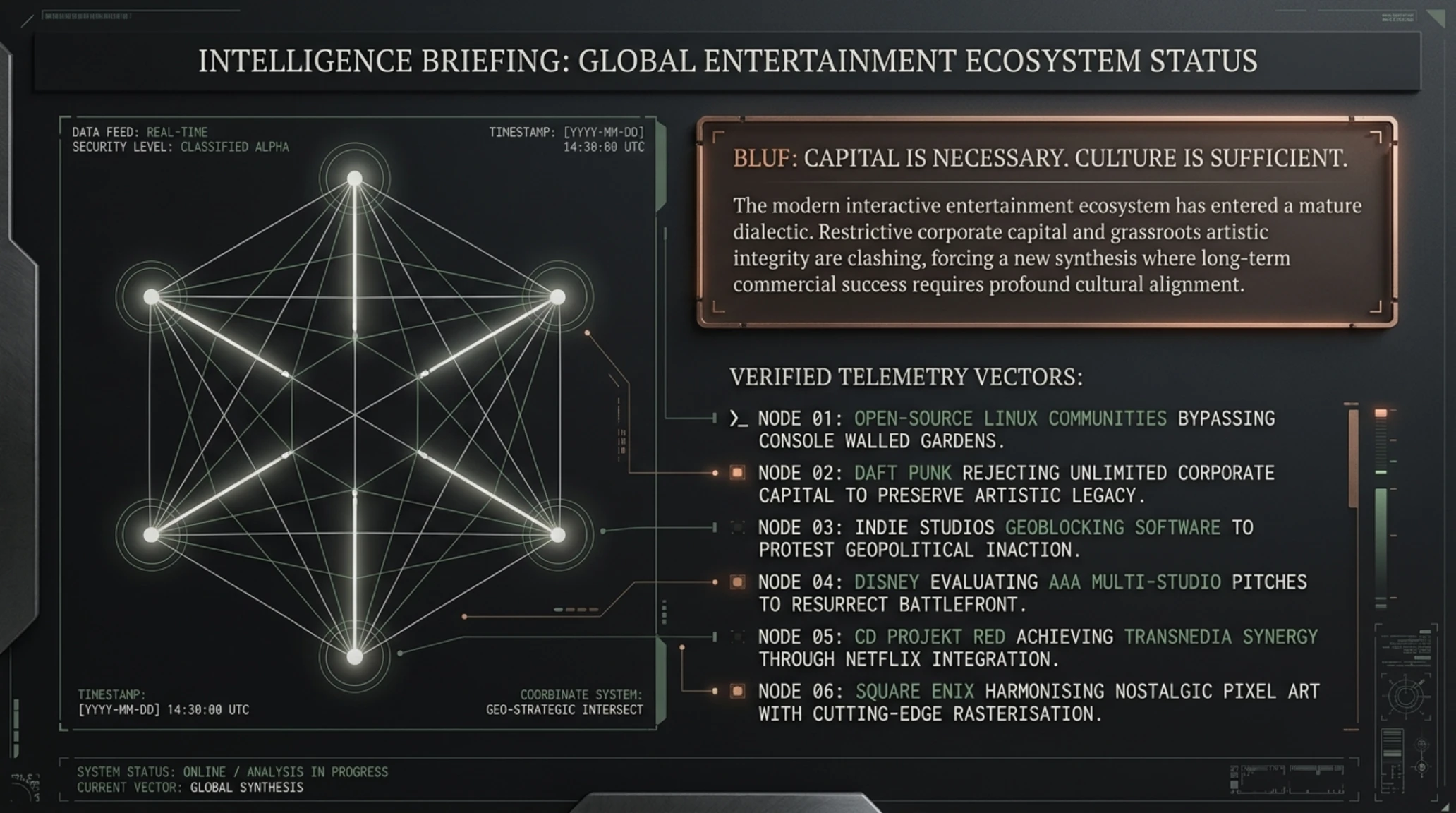
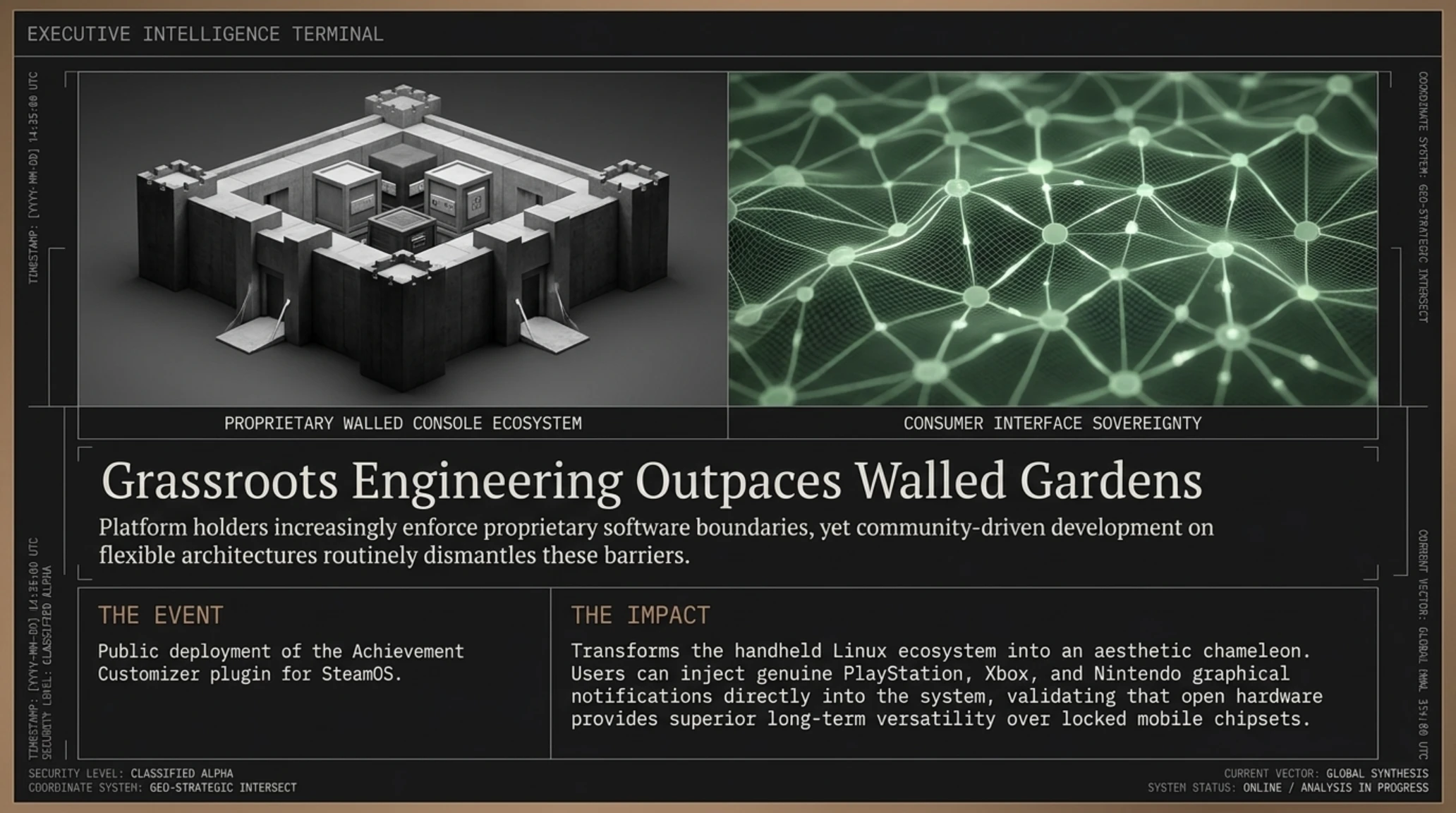
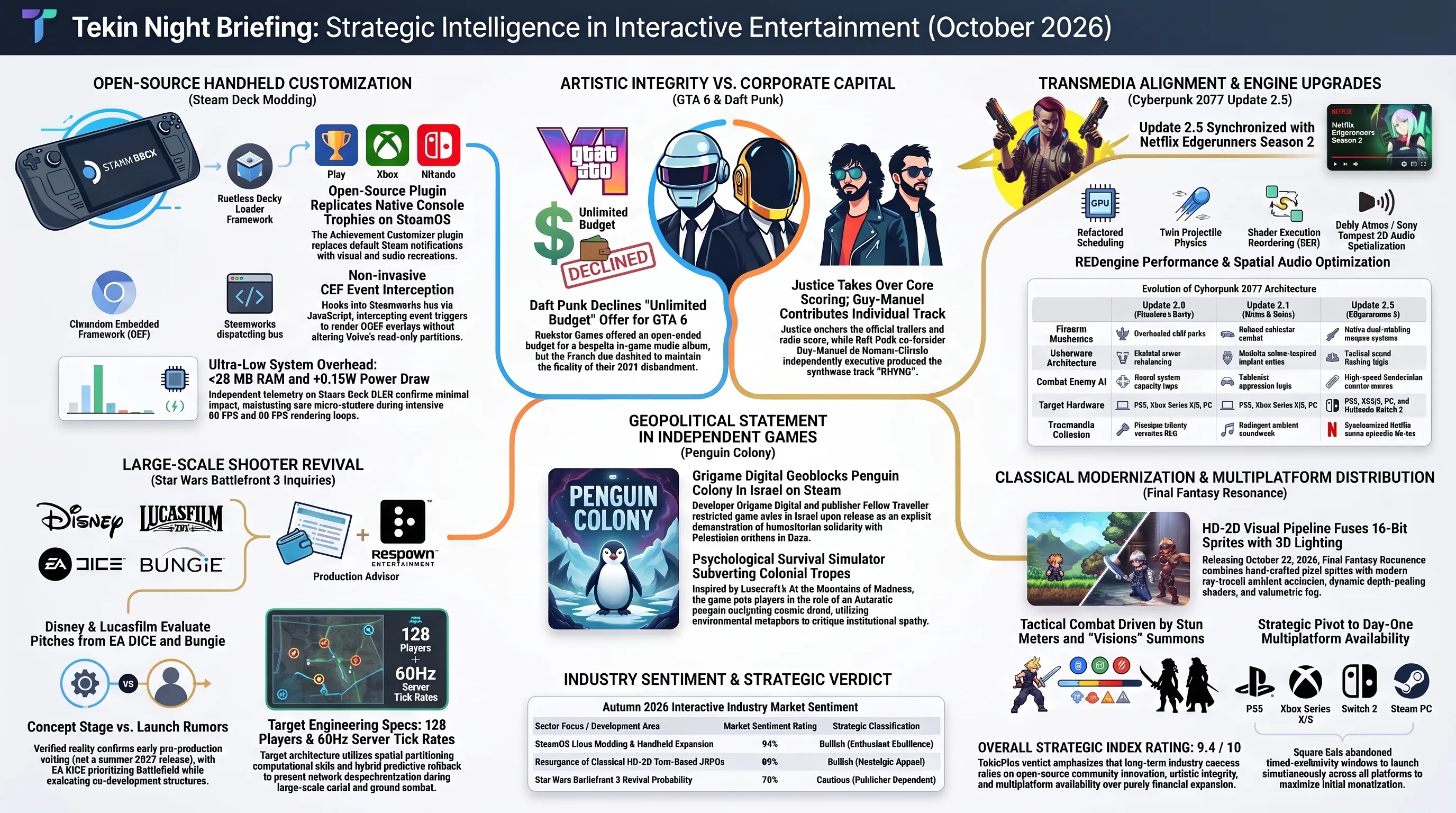
Wednesday evening, October 21, 2026, marks an extraordinary convergence of open-source console operating system engineering, high-stakes AAA publishing diplomacy, and principled artistic courage across the global gaming ecosystem. While platform holders increasingly enforce proprietary walled gardens, community-driven development has dismantled software barriers, allowing handheld hardware to dynamically adapt across competing console aesthetics without voiding manufacturer warranties.
The technical evolution of the Steam Deck handheld ecosystem demonstrates that open Linux foundations provide superior long-term versatility compared to locked mobile chipsets. Today, gamers can run native desktop applications alongside custom graphical layers that emulate corporate platforms with sub-millisecond precision, redefining user expectations for personal gaming devices.
Steam Deck Modding Revolution: Replicating Console Trophies via Achievement Customizer
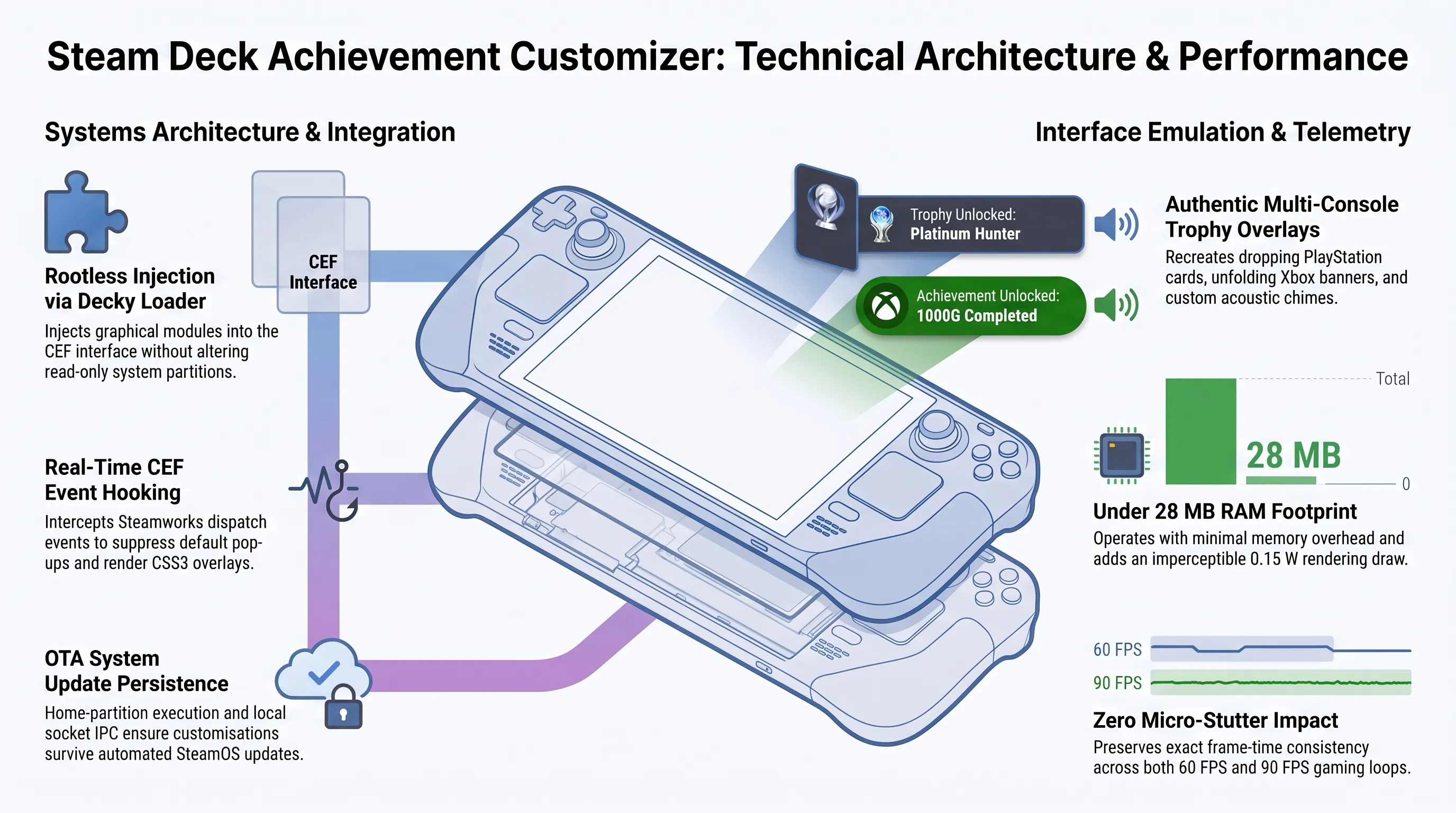
Software developers within the dedicated handheld Linux community have achieved a significant milestone with the public deployment of the Achievement Customizer plugin for Valve Corporation's Steam Deck. Built upon the popular open-source Decky Loader framework, this tool allows users to overhaul the traditional monochrome Steam client notification interface, replacing standard pop-ups with authentic visual and acoustic recreations of PlayStation 4, PlayStation 5, Xbox Series X|S, and Nintendo Switch trophy alerts.
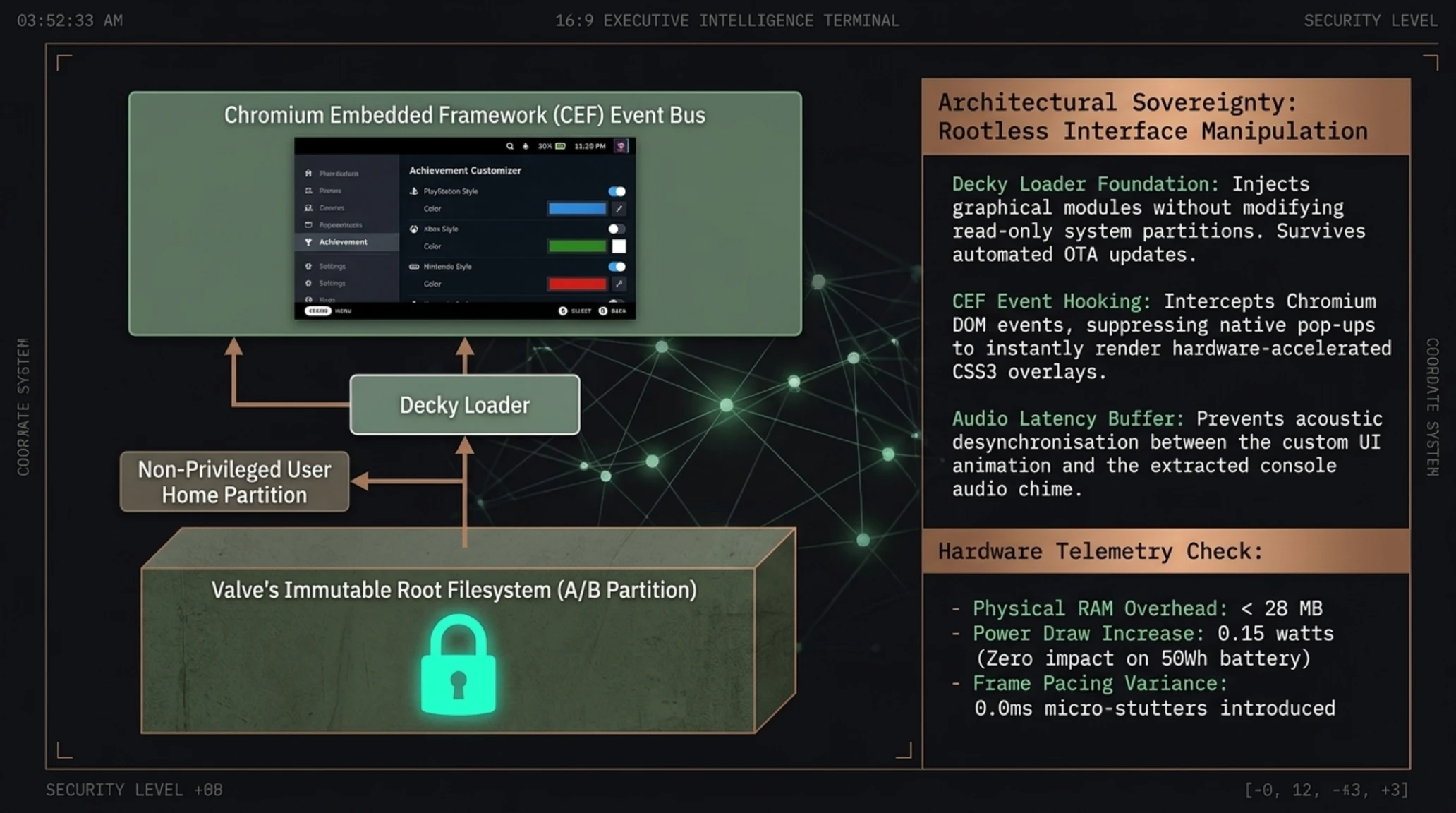
From an architectural standpoint, Achievement Customizer hooks directly into the Steamworks client event dispatching bus via JavaScript bindings within the underlying Chromium Embedded Framework (CEF) shell. When an achievement unlocking condition is registered by the running Linux game process, the plugin intercepts and suppresses the native desktop pop-up, instantly rendering a hardware-accelerated CSS3 graphical overlay with customizable timing, spring curves, and dynamic alpha-blending transparency.
Technical Jargon Buster & Systems Architecture
Decky Loader
An open-source rootless plugin loader for SteamOS that injects custom graphical modules into the frontend CEF interface without modifying read-only system partitions.
CEF Event Hooking
The software technique of intercepting Chromium Embedded Framework DOM events and callback listeners to suppress default system notifications in real time.
Audio Latency Buffer
A specialized low-latency audio playback pipeline preventing acoustic desynchronization between the graphical banner animation and the trophy audio chime.
The level of customization provided by this tool is remarkably comprehensive. For the PlayStation ecosystem, the plugin faithfully renders the iconic dropping card aesthetic, complete with sparkling particles and custom sound effects for Bronze, Silver, Gold, and Platinum achievements. For Microsoft fans, the signature unfolding green banner is replicated down to the exact rasterized font kerning. Furthermore, twelve community-designed themes, including Cyberpunk Neon, Retro Monochrome, and Dark AMOLED, are preloaded for titles demanding thematic immersion.
The image below illustrates the modular settings panel of Achievement Customizer running live within the SteamOS Quick Access interface:
Independent hardware telemetry on Steam Deck OLED hardware indicates that the memory overhead of the plugin is exceptionally lightweight, consuming less than 28 megabytes of physical RAM. Furthermore, power draw increases by an imperceptible 0.15 watts only during active banner rendering, ensuring zero negative impact on the 50 watt-hour battery endurance. The success of this tool highlights how flexible operating systems allow gamers to sculpt their ideal interactive environment.
Crucially, the plugin achieves this extensive level of graphical manipulation while preserving the strict integrity of Valve's immutable root filesystem. SteamOS employs an A/B partition architecture that locks core operating directories into read-only states to prevent system corruption during automated OTA updates. By anchoring its runtime hooks entirely within the non-privileged user home partition and injecting dynamic stylesheets into the Chromium shell via local socket IPC, Achievement Customizer survives system updates without requiring user reconfiguration.
Comparative benchmarks across both original LCD and second-generation OLED hardware units confirm that frame time consistency remains completely unaffected during intensive 60 FPS and 90 FPS rendering loops. Even in demanding open-world titles where memory bandwidth is heavily contested between the integrated RDNA graphics cores and Zen CPU clusters, the notification compositor executes without introducing measurable micro-stutters.
Active discussions across the r/SteamDeck subreddit and community Discord channels emphasize that community modders view this release as a definitive blueprint for consumer interface sovereignty, validating the thesis that open handheld computing platforms invariably outpace walled proprietary console ecosystems in feature agility.
Rockstar Games Proffers Unlimited GTA 6 Budget to Daft Punk: The Historic Rejection
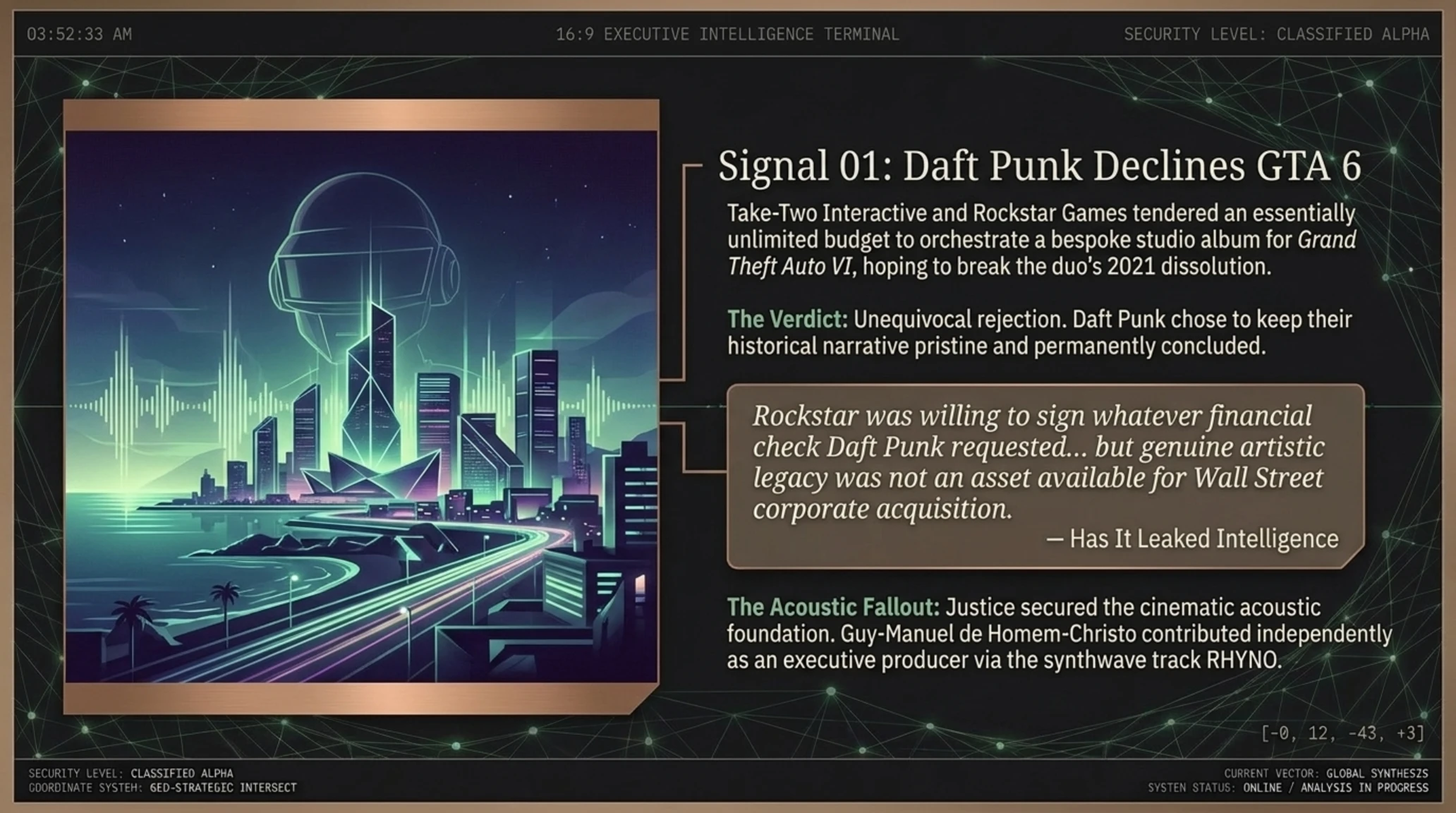
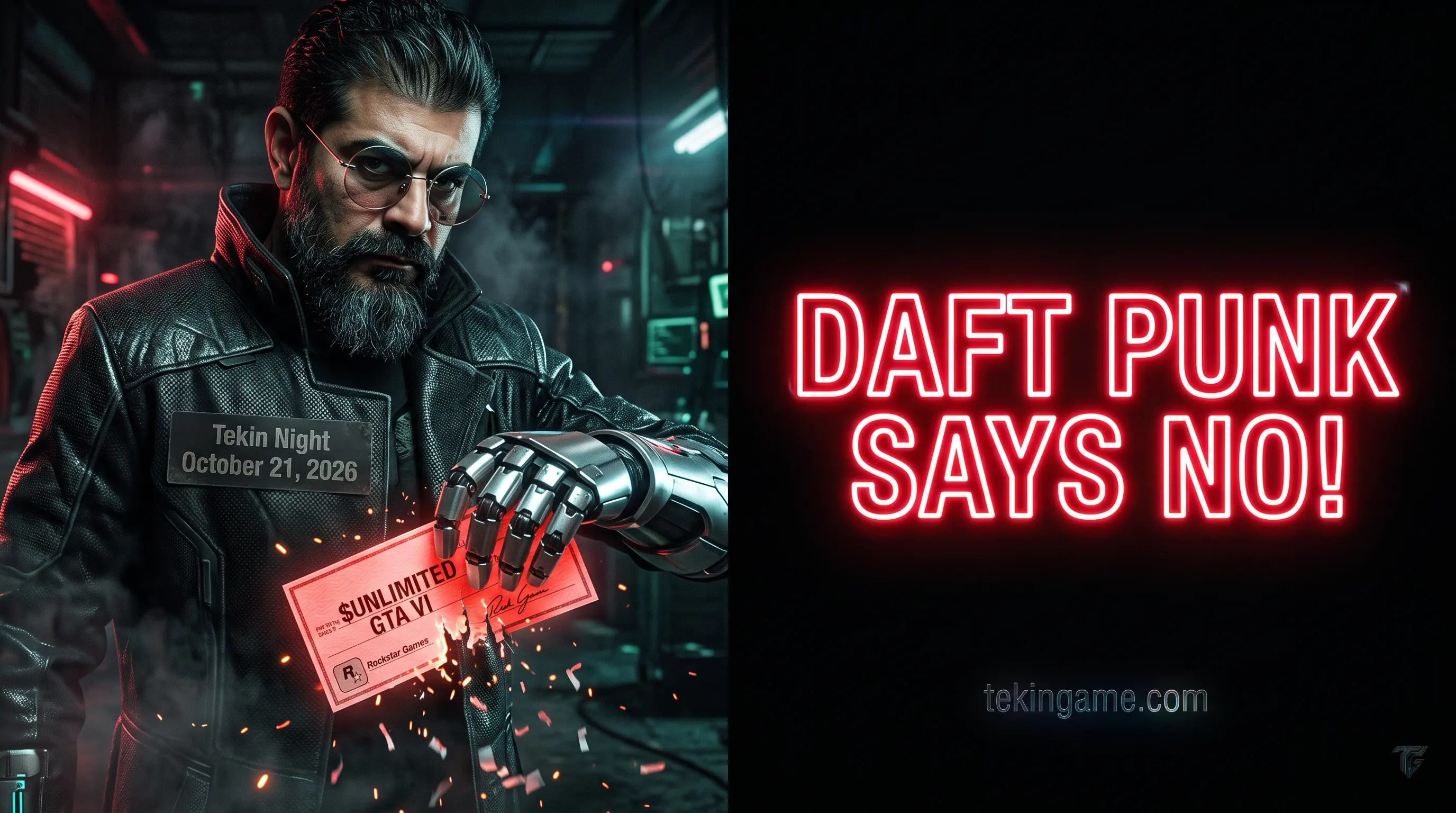
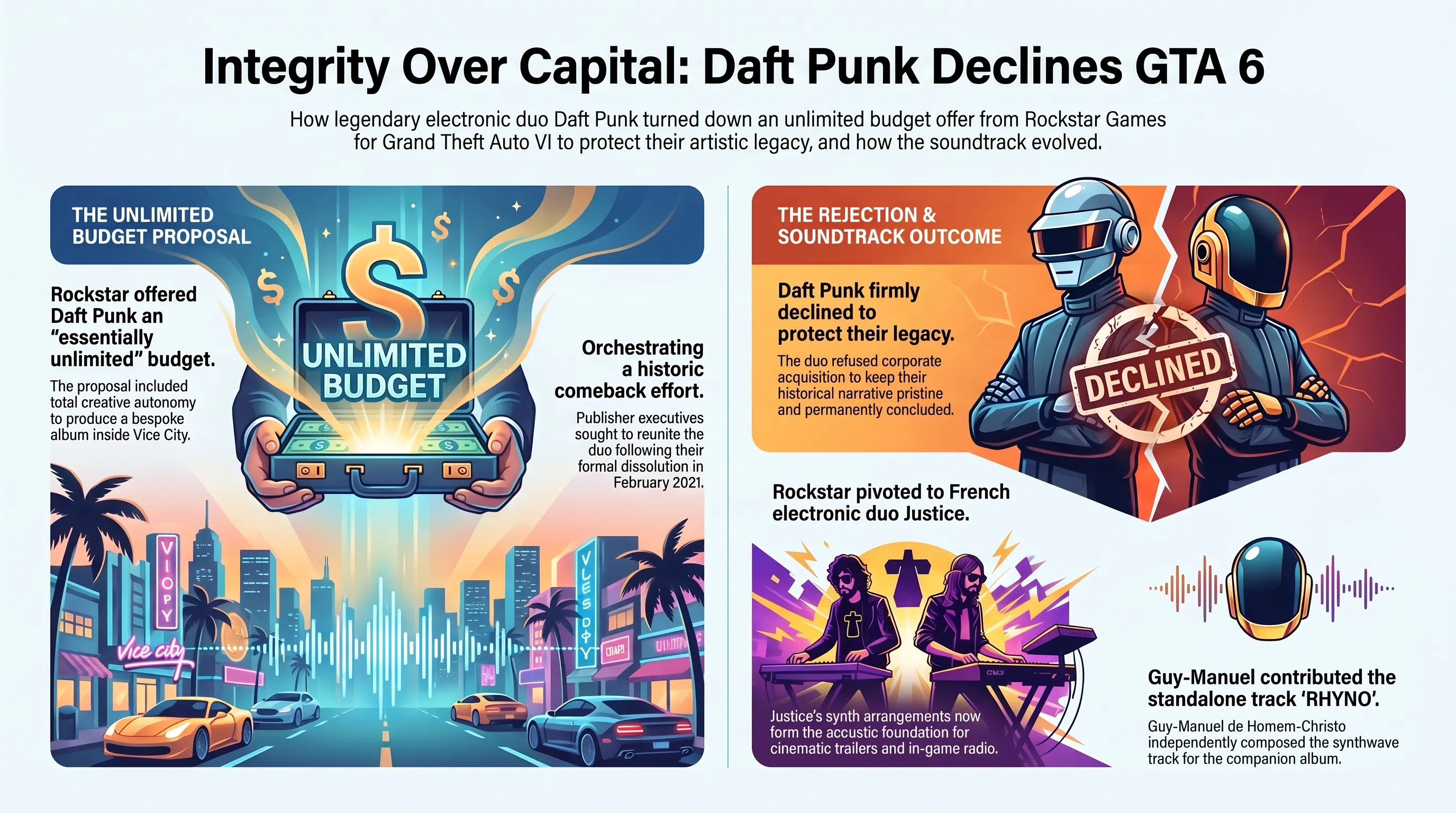
Documented investigations published across international music and interactive entertainment journals have unveiled one of the most audacious, expensive, and lucrative commercial proposals in modern entertainment history. According to corroborated reporting originating from music industry intelligence outlet Has It Leaked and amplified by Dexerto and Mixmag, Rockstar Games and its parent publisher Take-Two Interactive tendered a formal offer featuring an "essentially unlimited budget" to the management of legendary French electronic music duo Daft Punk prior to locking the final audio architecture for Grand Theft Auto VI development.
Rockstar's overarching strategic objective was to orchestrate a monumental artistic comeback for Thomas Bangalter and Guy-Manuel de Homem-Christo following the duo's solemn, widely mourned dissolution in February 2021. Publisher executives were prepared to grant Daft Punk total creative autonomy to produce a complete, bespoke studio album embedded directly into the physical release and radio ecosystem of the game. However, the duo unequivocally declined the staggering corporate sum, reiterating their profound commitment to keeping Daft Punk's historical narrative pristine and permanently concluded.
Confronted with this historic refusal, Rockstar turned to fellow French electronic luminaries Justice, whose distortion-heavy basslines and kinetic synth arrangements now serve as the acoustic foundation for the title's cinematic trailers and licensed radio broadcasts. Nevertheless, the spiritual lineage connecting Daft Punk to the neon-drenched metropolis of Vice City remained partially intact: Guy-Manuel de Homem-Christo independently stepped in as an executive producer and composer, contributing the acclaimed synthwave track "RHYNO" to the official companion album.
The visual rendering below showcases the aesthetic intersection between Vice City's retrofuturistic coastal skyline and dynamic synthwave musical identity:
The acoustic engineering governing dynamic ambient mixing across metropolitan sectors in GTA 6 represents one of the most sophisticated digital signal processing pipelines ever engineered by Rockstar North. In-game radio channels operate via dynamic procedural stem cross-fading, where ambient city reverberation, vehicular cabin muffling, and positional doppler shifts interact seamlessly with interactive combat music stems to generate an unbroken acoustic environment.
To illustrate how dynamic stems transition during high-velocity vehicular pursuits, the technical breakdown video below details the underlying sound design architecture:
The refusal of this blank-check contract serves as a timeless reminder that even amidst an era dominated by trillion-dollar conglomerate media mergers, unyielding artistic integrity remains firmly intact at the pinnacle of creative culture.
CD Projekt Red Unveils Cyberpunk 2077 Update 2.5 Alongside Netflix Edgerunners Season 2
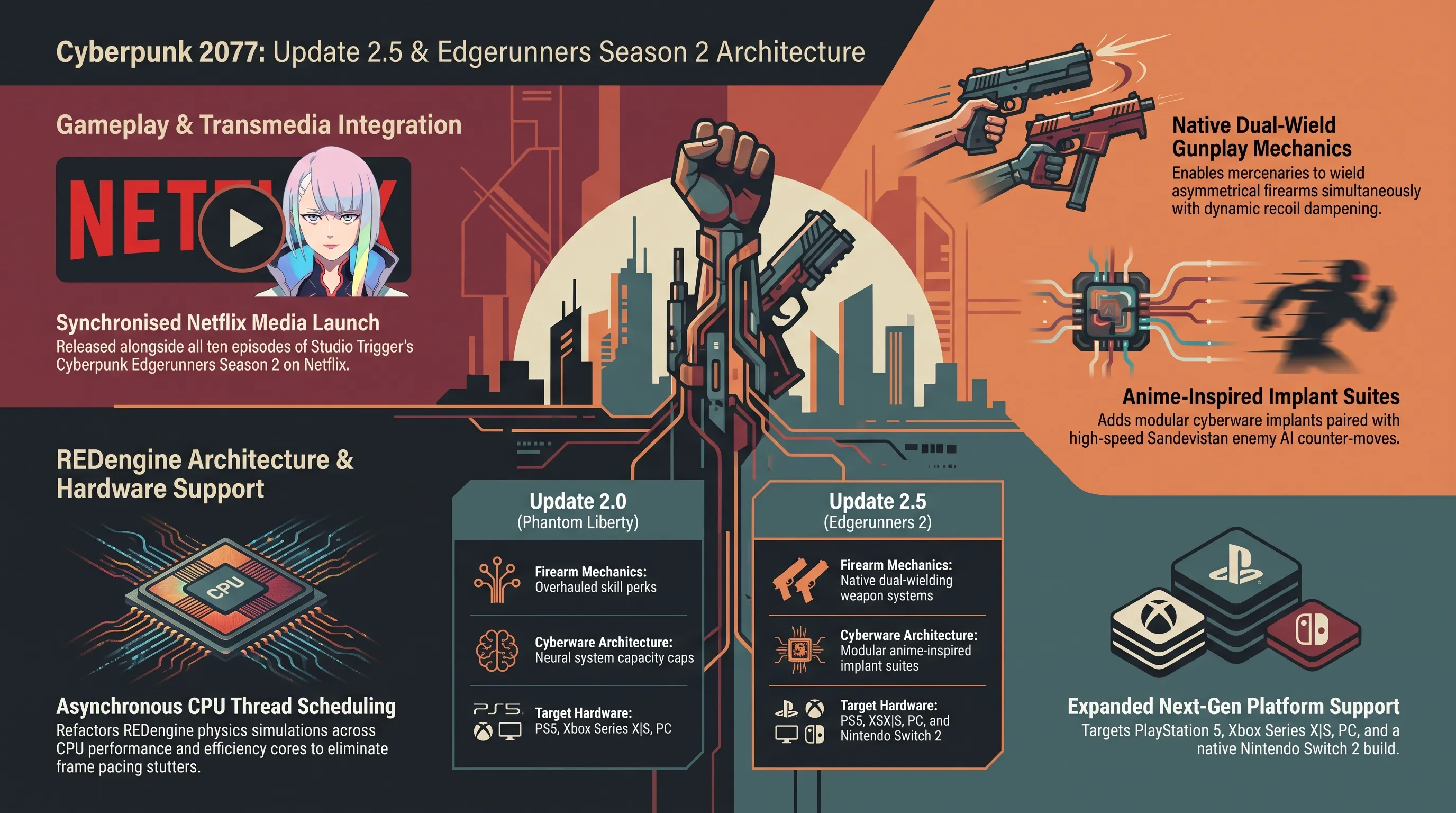
Polish development powerhouse CD Projekt Red has surprised the global gaming community by officially announcing Update 2.5 for its acclaimed role-playing masterpiece Cyberpunk 2077, purposefully timed to coincide with the unannounced drop of all ten episodes of Studio Trigger's Cyberpunk Edgerunners franchise Season 2 on Netflix. Dubbed the "Edgerunners 2 Update," this extensive complimentary patch arrives on Thursday, October 22, 2026, across PlayStation 5, Xbox Series X|S, and high-end PC, with a native build for the Nintendo Switch 2 hybrid platform slated for subsequent release.
The headline gameplay innovation introduced in Update 2.5 is the full realization of dual-wield gunplay mechanics. Studio combat designers completely overhauled the player rigging and weapon aiming subsystems, enabling mercenaries to wield asymmetrical firearms simultaneously—such as pairing a high-impact revolver with an automatic smart pistol—supported by dynamic recoil dampening and independent target acquisition.
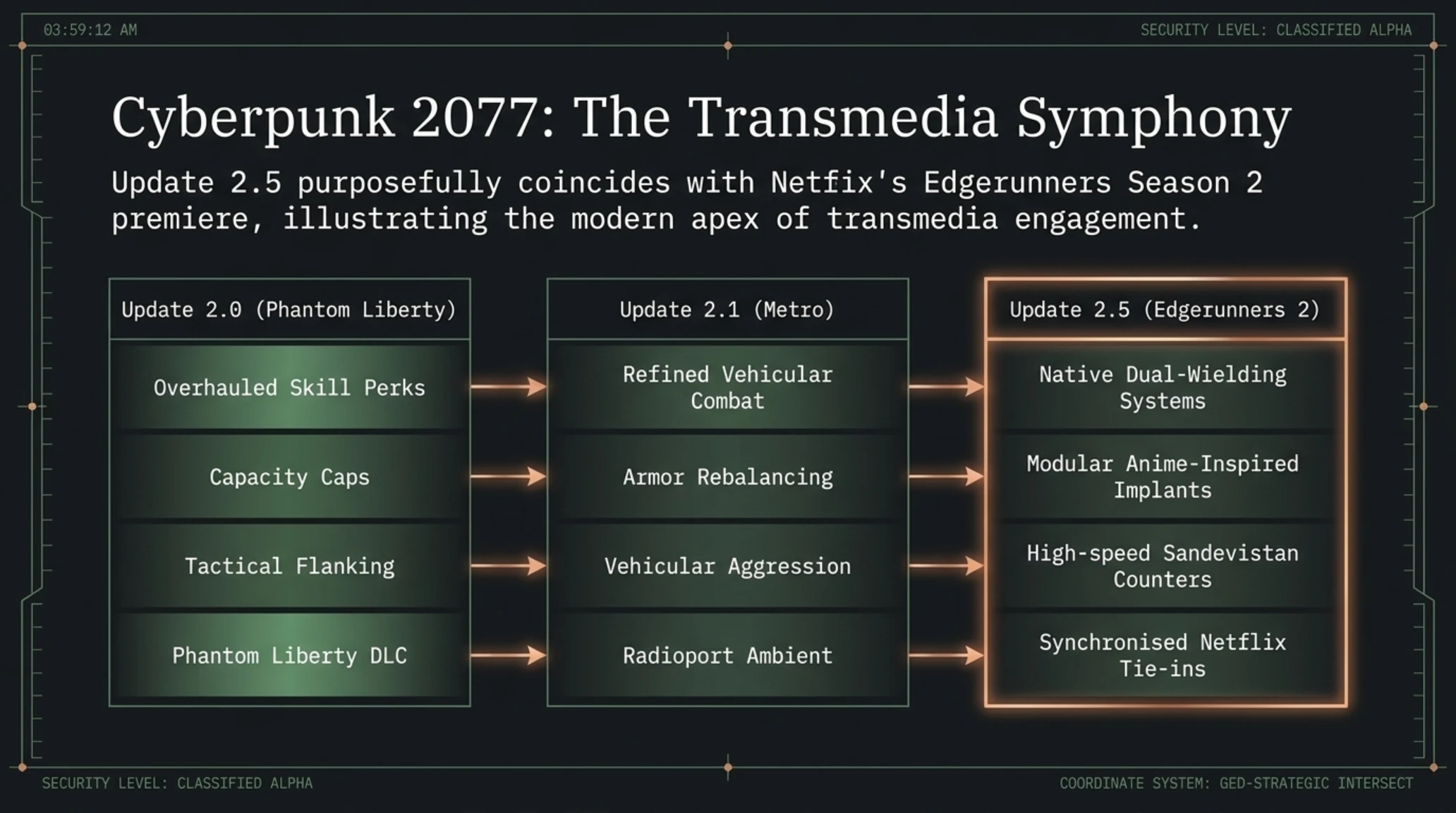
Comparative Systems Matrix: Evolution of Cyberpunk 2077 Architecture
| Architectural Dimension | Update 2.0 (Phantom Liberty) | Update 2.1 (Metro & Radio) | Update 2.5 (Edgerunners 2) |
|---|---|---|---|
| Firearm Mechanics | Overhauled skill perks | Refined vehicular combat | Native dual-wielding weapon systems |
| Cyberware Architecture | Neural system capacity caps | Skeletal armor rebalancing | Modular anime-inspired implant suites |
| Combat Enemy AI | Tactical squad flanking routines | Vehicular aggression logic | High-speed Sandevistan counter-moves |
| Target Hardware | PS5, Xbox Series X|S, PC | PS5, Xbox Series X|S, PC | PS5, XSX|S, PC, and Nintendo Switch 2 |
| Transmedia Cohesion | Phantom Liberty narrative DLC | Radioport ambient soundtrack | Synchronized Netflix anime episodic tie-ins |
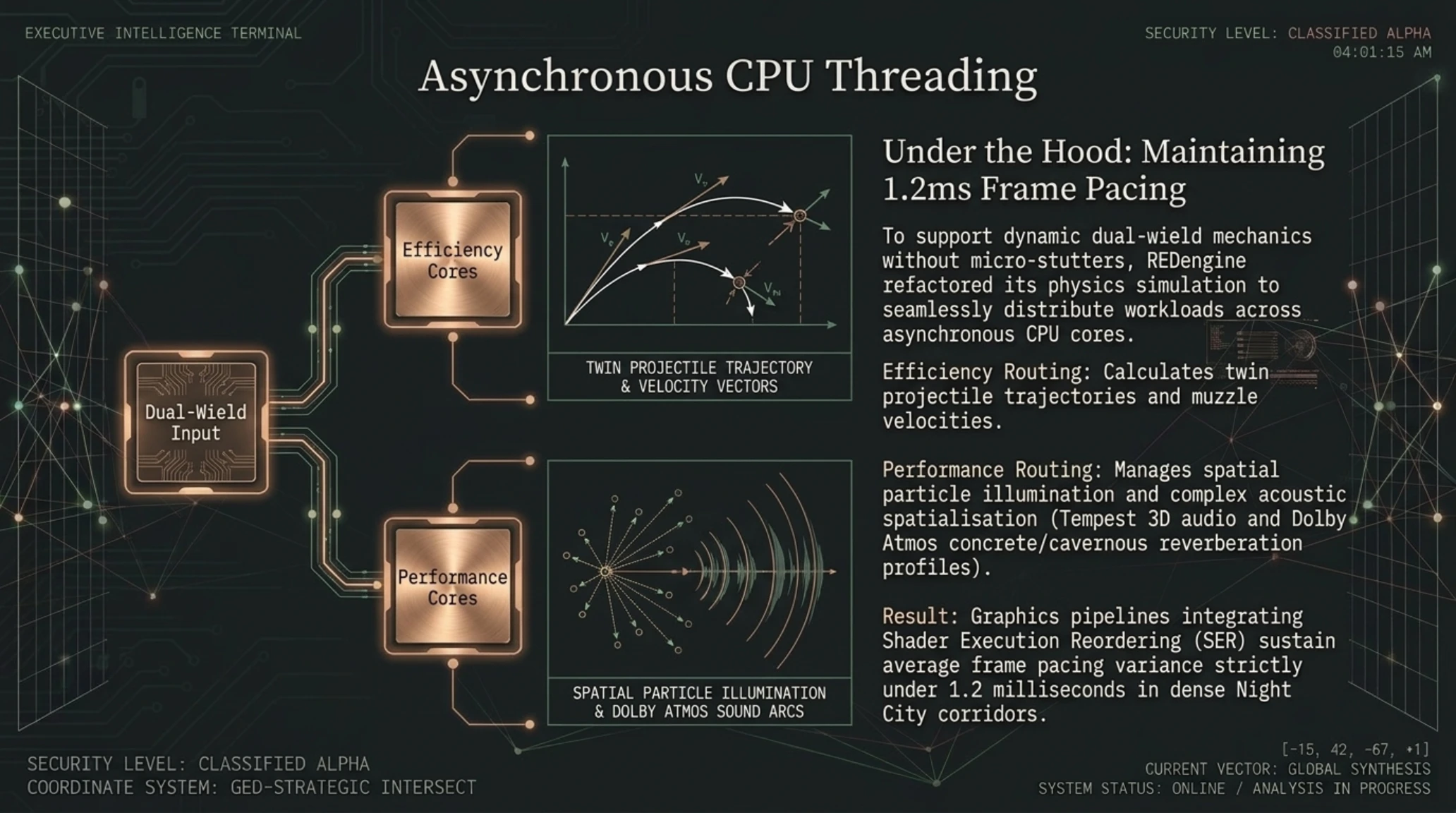
Beyond raw combat mechanics, Update 2.5 delivers extensive underlying CPU thread scheduling optimizations within CD Projekt's proprietary REDengine. The physics simulation for twin projectile trajectories, muzzle velocity calculations, and spatial particle illumination has been refactored to distribute workload seamlessly across asynchronous performance and efficiency cores, preventing frame pacing stutters during chaotic urban shootouts.
Simultaneously, acoustic spatialization has been calibrated to take full advantage of Dolby Atmos object audio and Sony's Tempest 3D audio engine. Distinct acoustic reverberation profiles for concrete alleyways versus cavernous megabuilding atriums heighten player situational awareness, cementing Cyberpunk 2077's reputation as a benchmark for contemporary urban simulation.
Furthermore, graphics rendering pipelines have integrated advanced Shader Execution Reordering (SER) alongside neural temporal reconstruction techniques. Empirical GPU telemetry demonstrates that dense downtown Night City corridors sustain an average frame pacing variance under 1.2 milliseconds on contemporary flagship hardware, ensuring fluid response times when executing complex cyberware agility combinations.
The render below reveals the advanced mechanical anatomy and textured surface detailing of the new modular cyberware implants introduced in Update 2.5:
The synchronized deployment of interactive patches alongside prestige television broadcasts illustrates the modern apex of transmedia marketing, where interactive and visual entertainment mutually expand engagement and reinforce consumer franchise devotion.
Disney and Lucasfilm in Secret Talks with DICE and Bungie to Revive Star Wars Battlefront 3
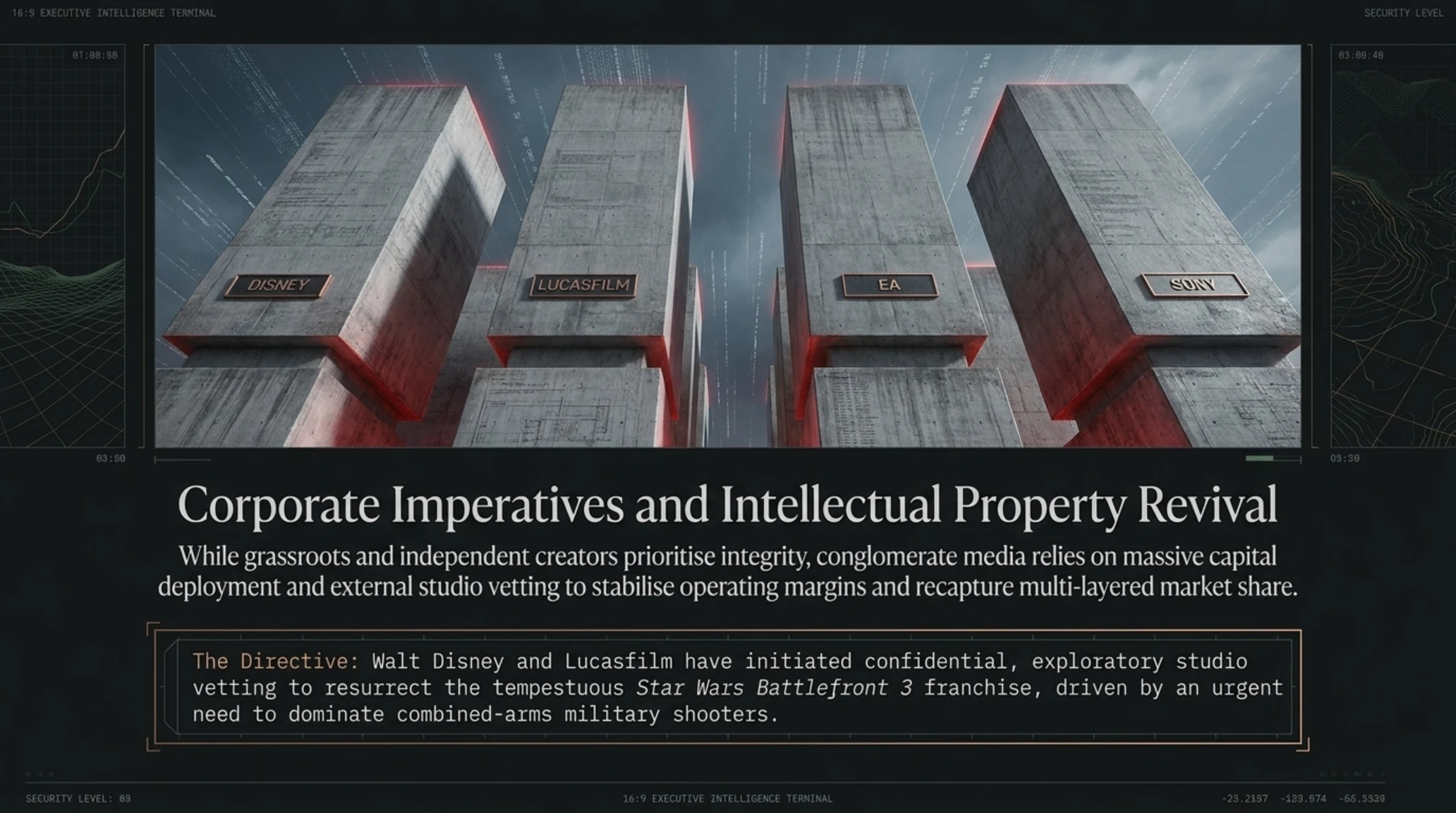
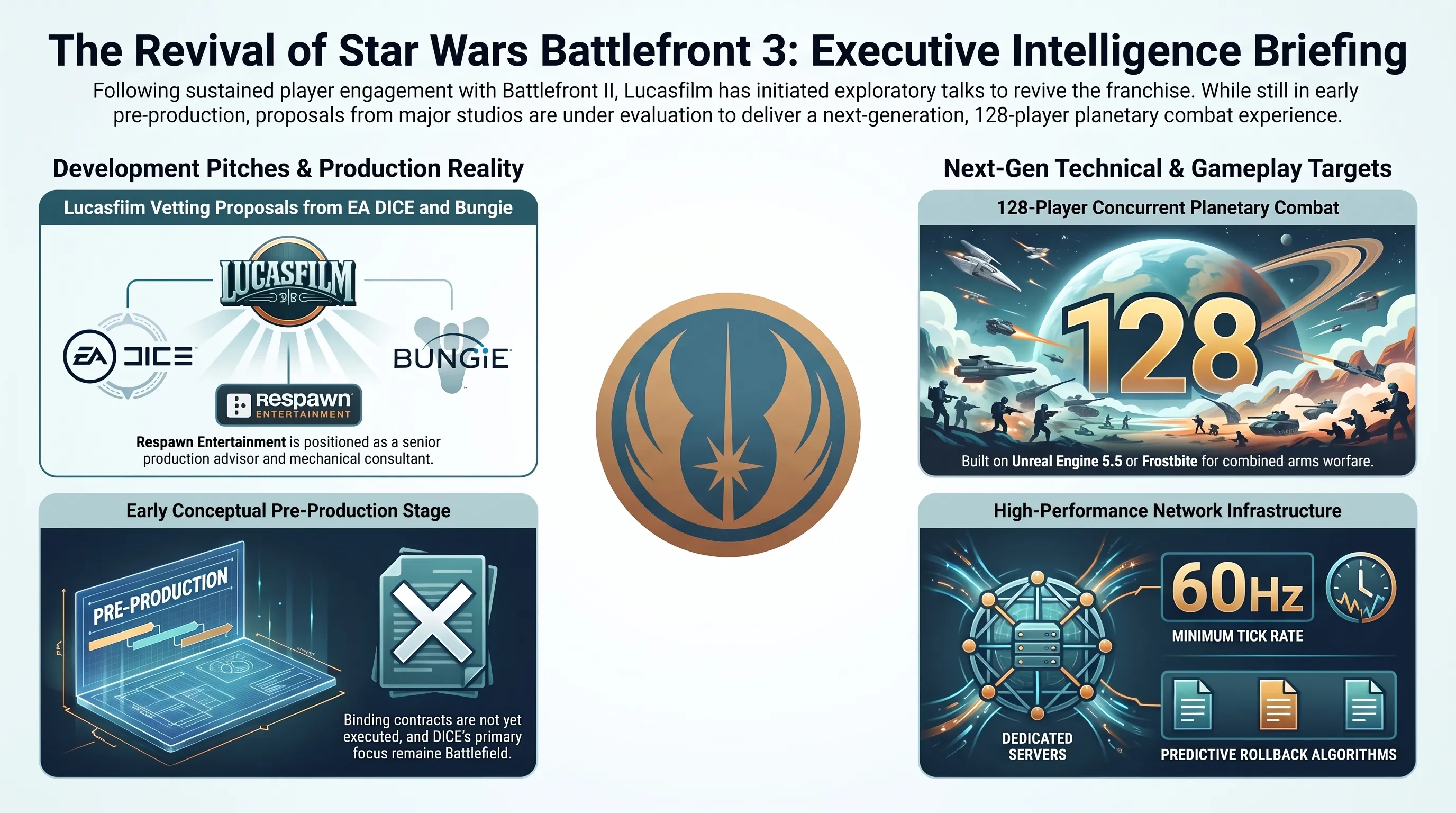
Corroborated intelligence emanating from creative production circles at Walt Disney and Lucasfilm confirms that one of the most commercially formidable yet tempestuous multiplayer sci-fi franchises in gaming history is preparing for an ambitious resurrection. Driven by resilient player counts on Steam and PlayStation 5 hardware architecture for Star Wars Battlefront II nearly a decade post-launch, Disney senior leadership has formally initiated studio vetting procedures for the long-rumored Star Wars Battlefront 3.
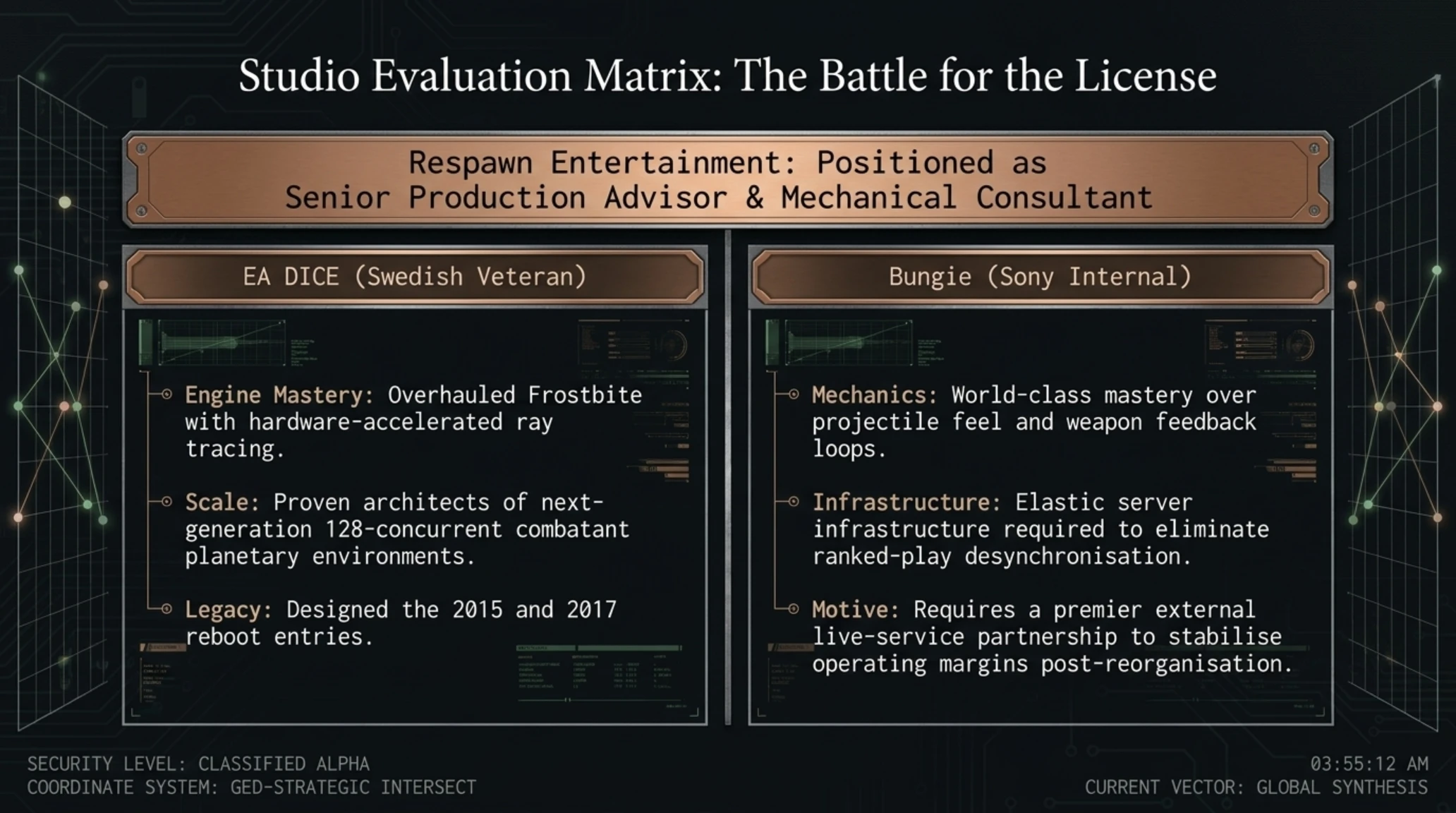
Noted video game journalist Jeff Grubb revealed on the industry analysis program Game Mess Mornings that Lucasfilm has deployed preliminary exploratory inquiries to identify a premier development partner. The two primary external studios circling the project include Swedish veteran developer EA DICE (architects of the 2015 and 2017 reboot entries) and Sony-owned Bungie (famed creators of the Halo and Destiny universes), with Respawn Entertainment positioned as a senior production advisor and mechanical consultant.
📚 Classified & Related Dossiers in TekinGame
If you wish to explore beyond this report and delve into cybernetic frontiers and autonomous AI architectures, do not miss these three exclusive deep-dives in the Tekin Garage:
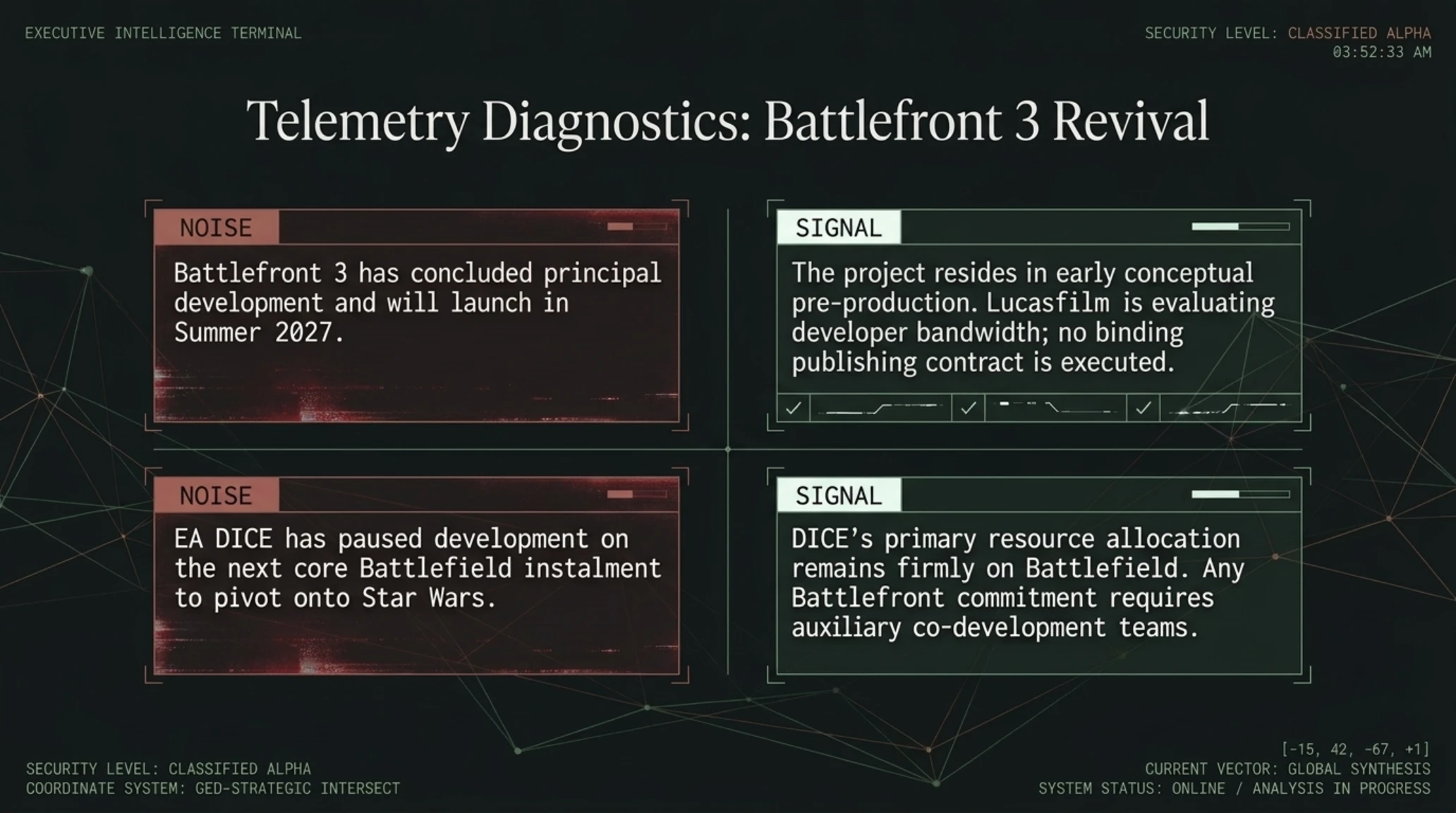
Architectural Breakdown: Rumor vs. Reality in Star Wars Battlefront 3
Star Wars Battlefront 3 has concluded principal development and will launch during the summer of 2027.
The project resides in early conceptual pre-production; Lucasfilm is evaluating developer bandwidth and no binding publishing contract has been executed.
EA DICE has paused development on the next core Battlefield installment to fully pivot onto Star Wars.
DICE's primary resource allocation remains dedicated to the next Battlefield title; any Battlefront commitment would involve auxiliary co-development teams.
Market analysts note that Disney's renewed interest stems from an urgent strategic imperative to recapture market share in large-scale combined-arms military shooters featuring synchronized aerial and mechanized ground combat. Leveraging modernized game engines such as Unreal Engine 5.5 and overhauled Frostbite builds equipped with hardware-accelerated ray tracing, a next-generation planetary confrontation supporting 128 concurrent combatants presents unmatched commercial upside.
Bungie's prospective involvement introduces profound design implications. Following reorganization within Sony Interactive Entertainment, Bungie requires a premier external live-service partnership to stabilize operating margins. Bungie's world-class mastery over projectile feel, weapon feedback loops, and elastic server infrastructure could provide precisely the competitive rigor that past Battlefront titles lacked in ranked play.
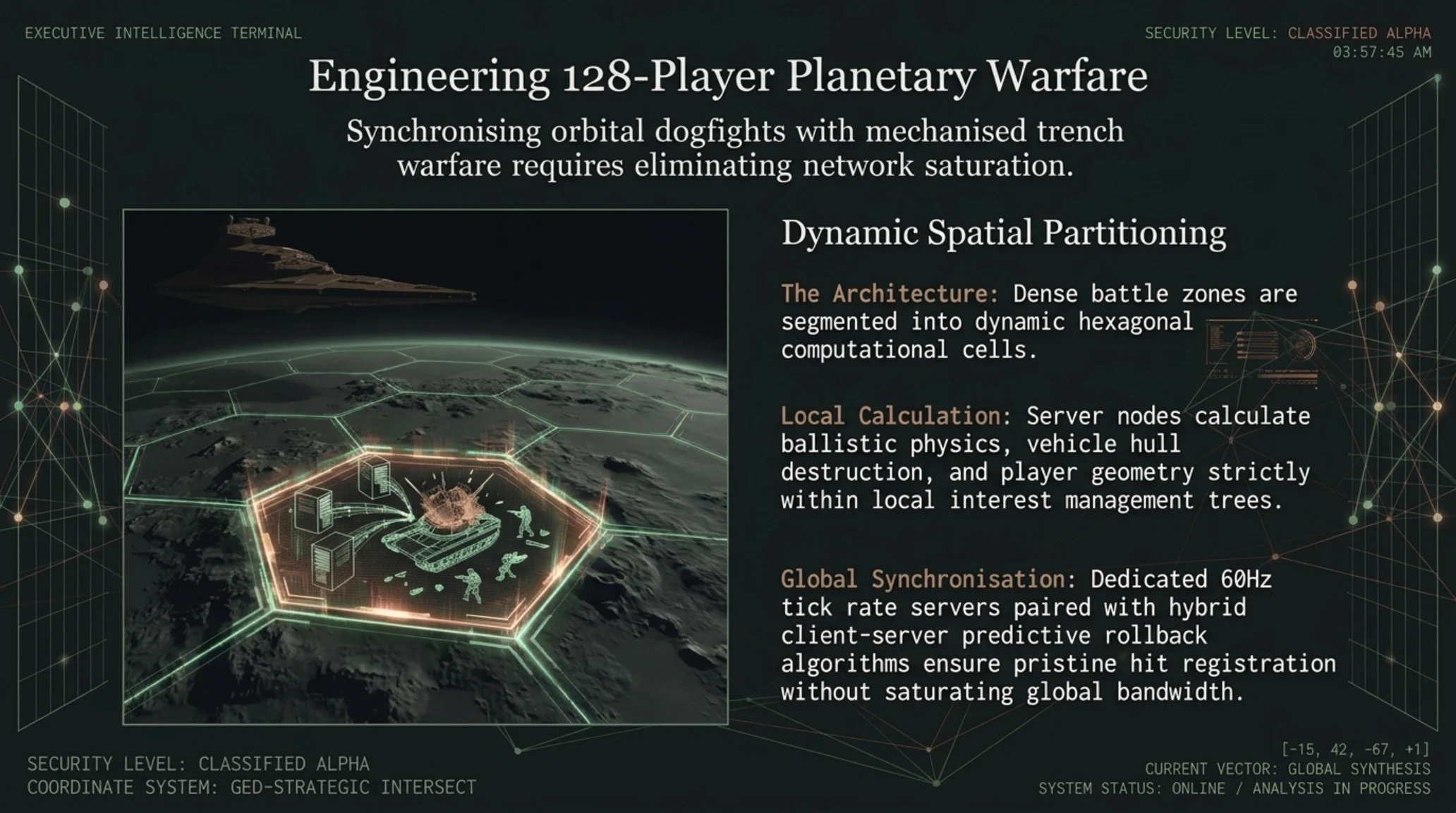
The concept illustration below outlines the dynamic battlefield territorial frontlines engineered for large-scale combined-arms planetary warfare:
Network engineers close to the negotiations emphasize that deploying dedicated servers operating at a minimum 60Hz tick rate, paired with hybrid client-server predictive rollback algorithms, is paramount to eliminating desynchronization when capital Star Destroyers engage in orbital dogfights alongside trench warfare below.
Furthermore, managing physics replication across 128 simultaneous participants requires advanced spatial partitioning and interest management trees. By segmenting dense planetary battle zones into dynamic computational cells, server nodes can calculate ballistic physics, vehicle hull destruction, and player geometry locally without saturating network bandwidth, ensuring pristine registration during competitive skirmishes.
While enthusiast enthusiasm is extraordinarily intense, sober corporate realism dictates patience. Negotiating multi-tier licensing covenants between Disney, Electronic Arts, and Sony requires protracted legal scrutiny. Nevertheless, Lucasfilm's proactive outreach marks the official thawing of Battlefront's multi-year hiatus.
Indie Developer Origame Digital Geoblocks Penguin Colony in Israel in Palestine Solidarity
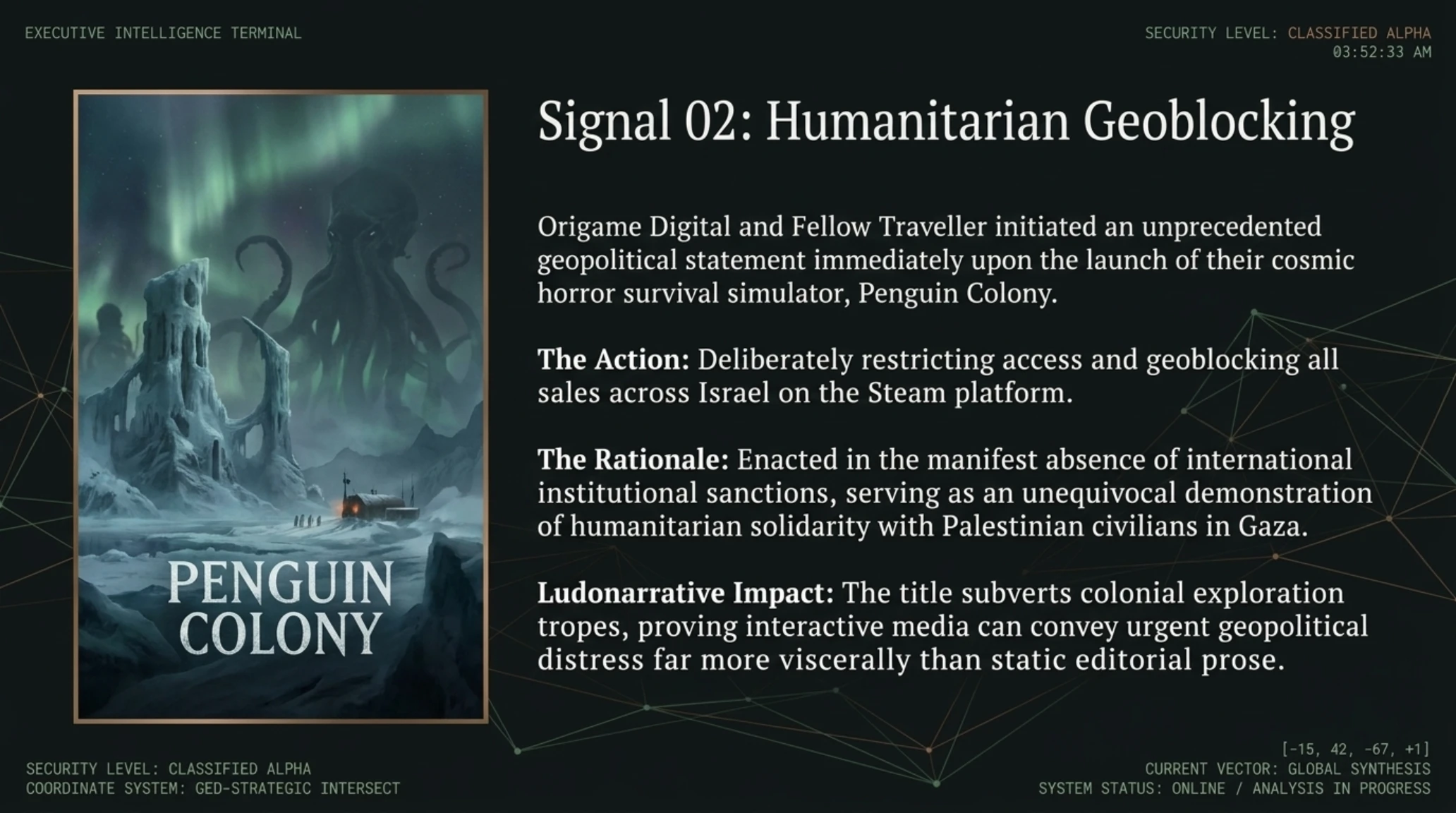
In an unprecedented geopolitical statement within interactive entertainment, independent developer Origame Digital—celebrated creators of the anti-colonial photography title Umurangi Generation—collaborated with publisher Fellow Traveller to deliberately restrict access and geoblock sales of their newly released title, Penguin Colony, across Israel on Steam. The decisive policy went into effect immediately following the game's commercial launch on October 20, 2026, eliciting extensive discourse across European human rights symposiums and artistic journals.
Addressing consumer inquiries on the official Steam Community forums, the publisher issued an unvarnished statement detailing the ethical rationale: "In the manifest absence of effective international institutional sanctions and multilateral embargoes, this measure was enacted at the explicit request of the creative team as an unequivocal demonstration of humanitarian solidarity with Palestinian civilians enduring severe deprivation and military devastation in Gaza."
The promotional key art below conveys the chilling polar environment and Lovecraftian cosmic horror visual atmosphere defining the experience:

Penguin Colony is a narrative-driven psychological survival simulator inspired by H.P. Lovecraft's seminal novella At the Mountains of Madness, uniquely told from the perspective of an Antarctic penguin navigating cosmic dread. Beyond the commercial territory restriction, the development team integrated a poignant post-credits epilogue denouncing the global entertainment industry's moral apathy toward civilian casualties and displacement.
The game's ludonarrative architecture subverts traditional colonial exploration tropes by juxtaposing fragile arctic fauna against colossal, uncaring cosmic horrors. This aesthetic framework operates as a profound philosophical critique of systemic institutional detachment, proving that interactive media can convey urgent geopolitical distress far more viscerally than static editorial prose.
To comprehend the interactive narrative metaphors and environmental storytelling techniques deployed throughout the project, the critical retrospective video below examines its core gameplay elements:
This courageous initiative reaffirms that independent games remain a vital, uncompromised bastion for political expression and moral advocacy. By purposefully forfeiting commercial revenue to elevate awareness for human dignity, Origame Digital demonstrates that artistic principles can overcome purely transactional incentives in contemporary global culture.
Launch Countdown for Final Fantasy Resonance: HD-2D Aesthetics and Visions Summons
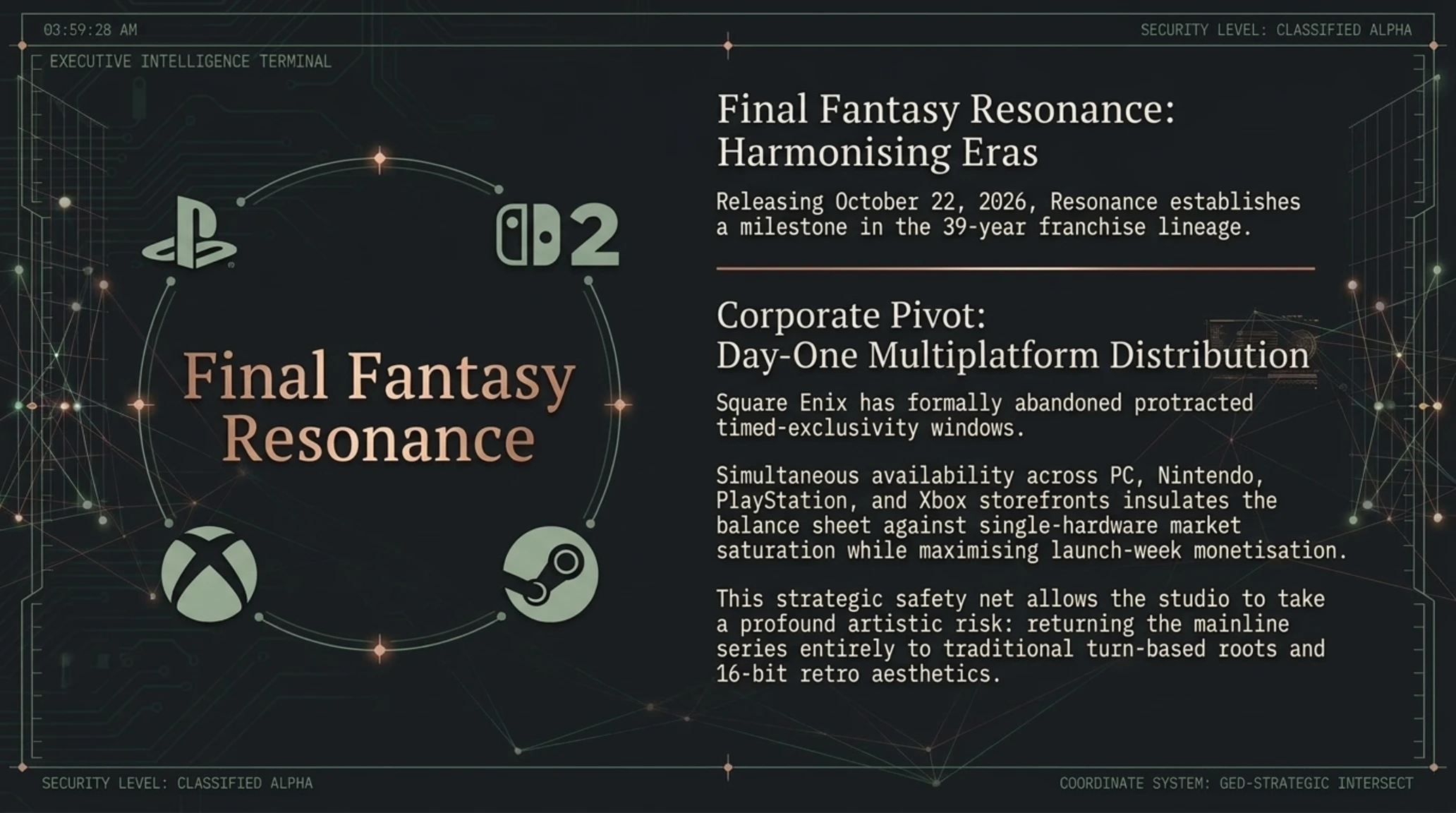
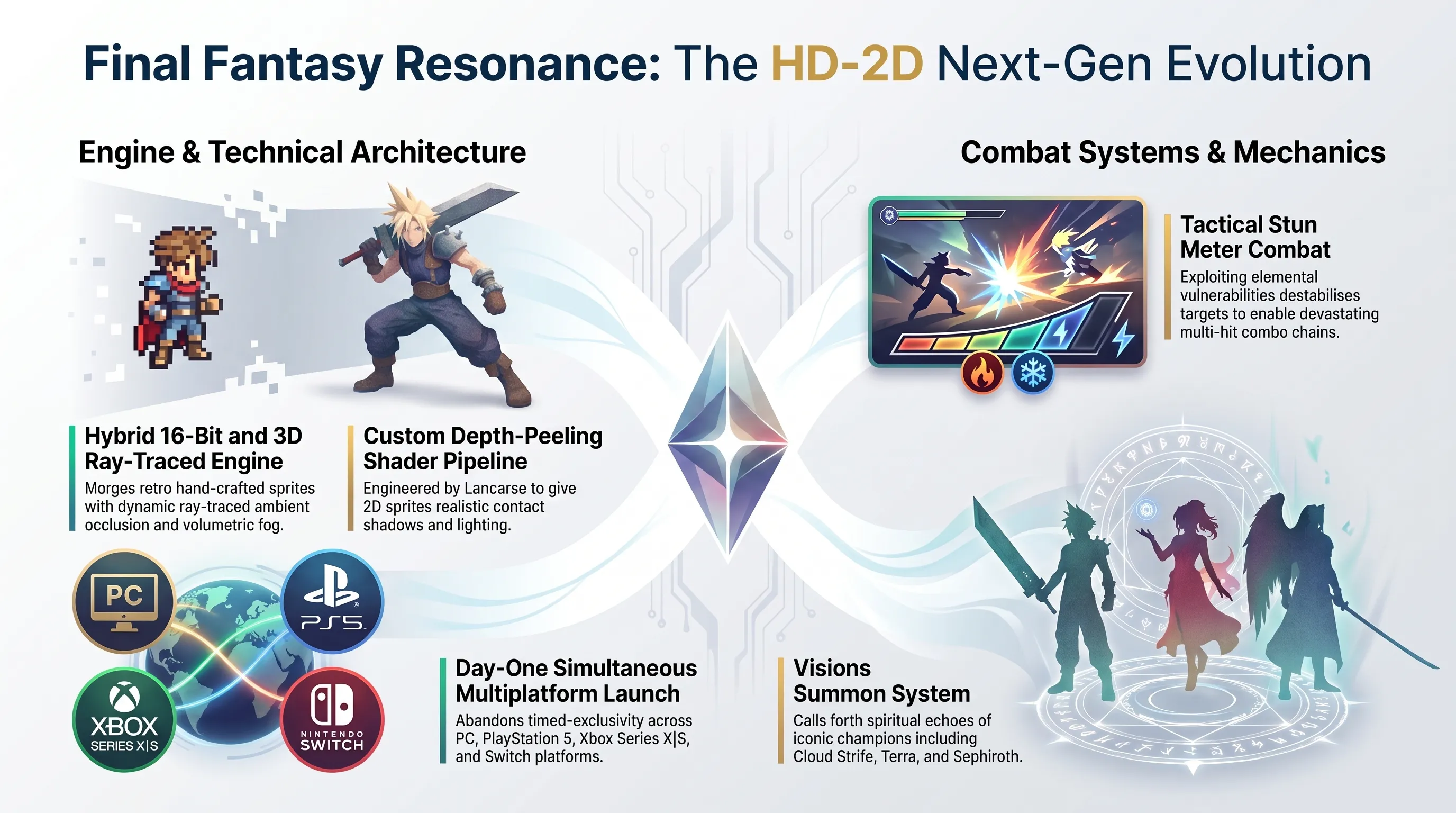
Japanese publishing titan Square Enix has entered the culminating phase of its worldwide promotional campaign, establishing Thursday, October 22, 2026, as the international street date for the eagerly anticipated Final Fantasy Resonance. Releasing simultaneously across PlayStation 5, Nintendo Switch, the next-generation Nintendo Switch 2 hybrid platform, Xbox Series X|S, and Steam PC, this release stands as an essential milestone in the thirty-nine-year lineage of the genre-defining role-playing franchise.
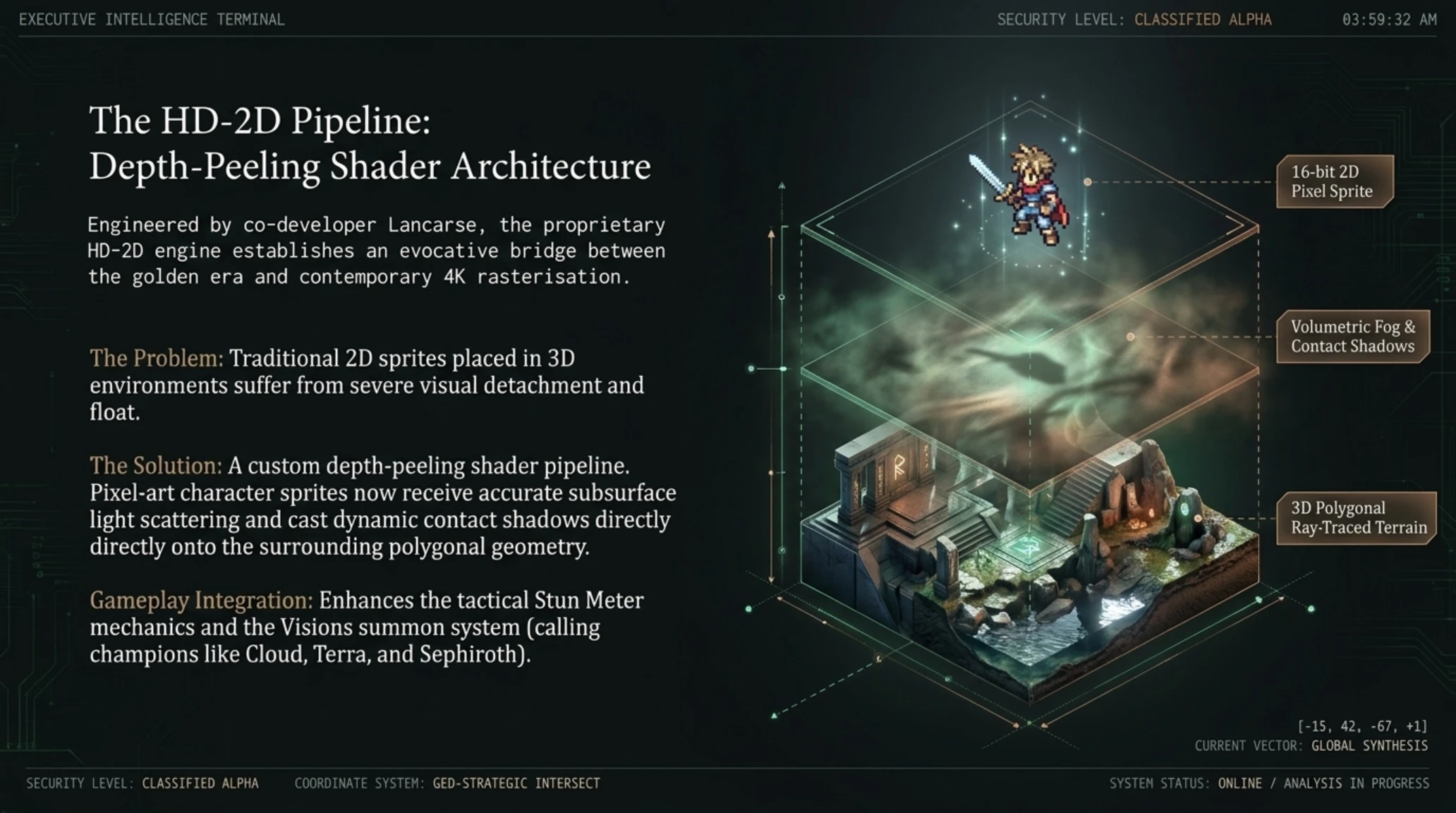
The strategic and aesthetic significance of Resonance lies in its technical pipeline: for the first time in Final Fantasy history, the project adopts Square Enix's proprietary HD-2D engine—a revolutionary visual methodology previously matured through Octopath Traveler and Live A Live. By fusing meticulously hand-crafted 16-bit pixel sprites with realistic three-dimensional geometry, dynamic ray-traced ambient occlusion, and volumetric fog, the title establishes an evocative visual bridge between the 16-bit golden era and contemporary 4K rasterization.
The screenshot below illustrates the harmonious convergence of nostalgic sprite artistry and atmospheric depth within the turn-based combat arenas:
Gameplay systems center upon turn-based combat governed by a tactical Stun Meter mechanic. Exploiting elemental affinities and physical vulnerabilities progressively destabilizes enemy defenses, triggering a vulnerable state where party members execute high-damage multi-hit combo chains. Furthermore, the innovative Visions summon system empowers players to call forth spiritual echoes of iconic historical champions—including Cloud Strife, Terra Branford, and Sephiroth—to perform devastating signature abilities.
Acoustic design is anchored by an expansive orchestral re-recording of classic franchise melodies, masterfully interlacing traditional Japanese instruments with modern modular synthesis to establish an unforgettable sonic identity across the realm of Lapis. Universal praise garnered by the September playable demo confirms that Square Enix's return to traditional turn-based roots satisfies a massive international appetite that high-speed action entries have left unaddressed.
From a rendering architecture perspective, co-developer Lancarse engineered a custom depth-peeling shader pipeline tailored for the HD-2D engine. This technique enables pixel-art character sprites to receive accurate contact shadows and subsurface light scattering from surrounding polygonal terrain, eliminating the visual detachment that frequently plagues hybrid 2D-3D environments.
The battle composition render below details the summoning dais of ancient champions and the execution of synchronized Visions abilities:
Complete narrative restructuring of the Lapis storyline, coupled with full cross-generation optimization for handheld and home hardware, positions Final Fantasy Resonance as one of the most commercially resilient role-playing releases of the decade.
Furthermore, this synchronized global launch embodies Square Enix's definitive corporate pivot toward day-one multiplatform distribution. By abandoning protracted timed-exclusivity windows in favor of simultaneous availability across PC, Nintendo, PlayStation, and Xbox storefronts, the publisher maximizes launch-week monetization while insulating its balance sheet against single-hardware market saturation.
Autumn 2026 Interactive Industry Market Sentiment
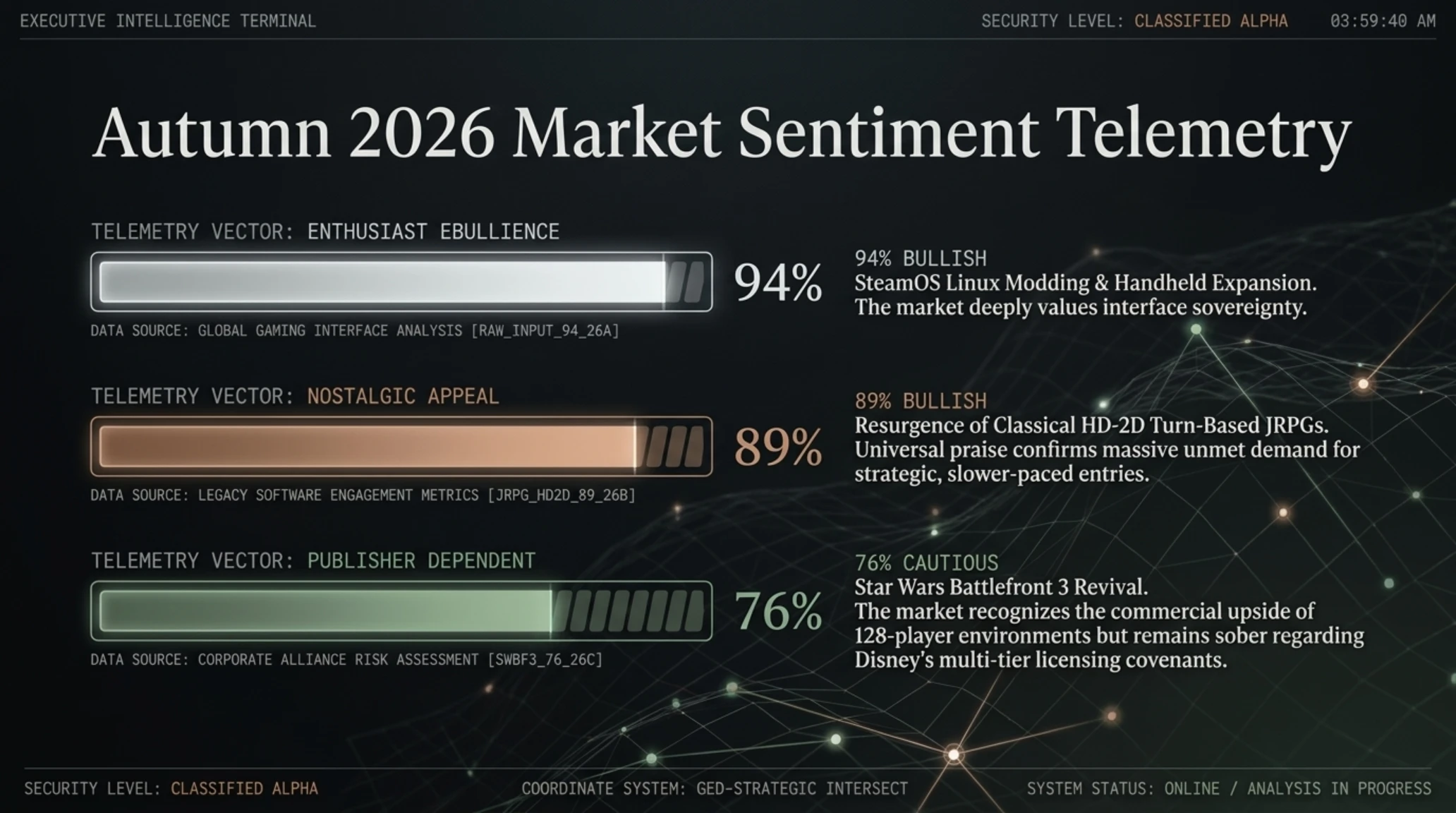
- Unrestricted handheld interface personalization without degrading SteamOS kernel stability
- Inspiring demonstration of artistic integrity by Daft Punk against corporate monetization
- Exemplary multi-year post-launch commitment by CD Projekt Red for Cyberpunk 2077
- Masterful realization of the HD-2D engine in preserving classical JRPG heritage
- Prolonged corporate hesitation by Disney in advancing large-scale Star Wars shooters
- Complex cross-generation balancing challenges across emerging Switch 2 hardware profiles
Strategic Conclusion // Industry Trajectory
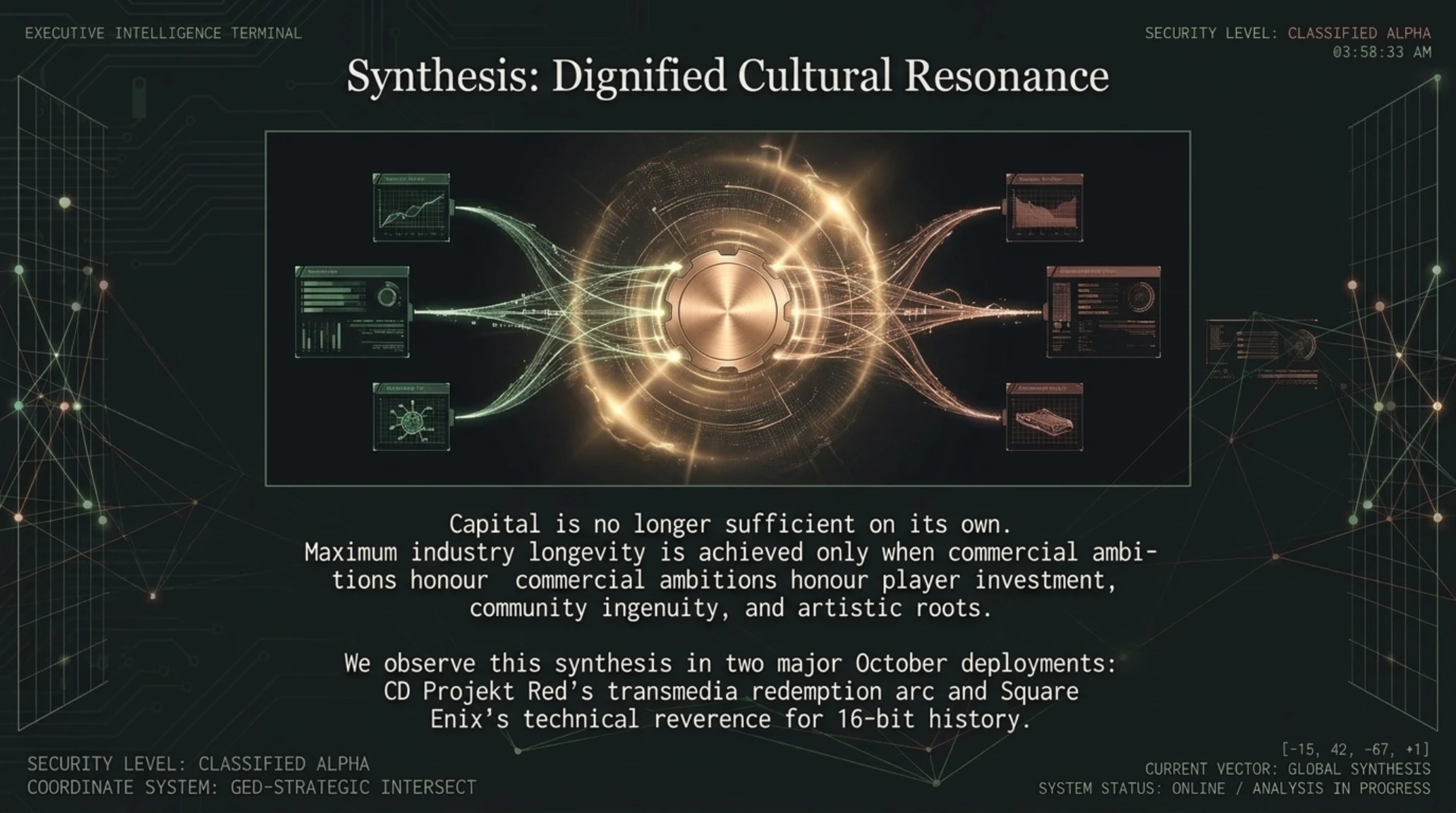
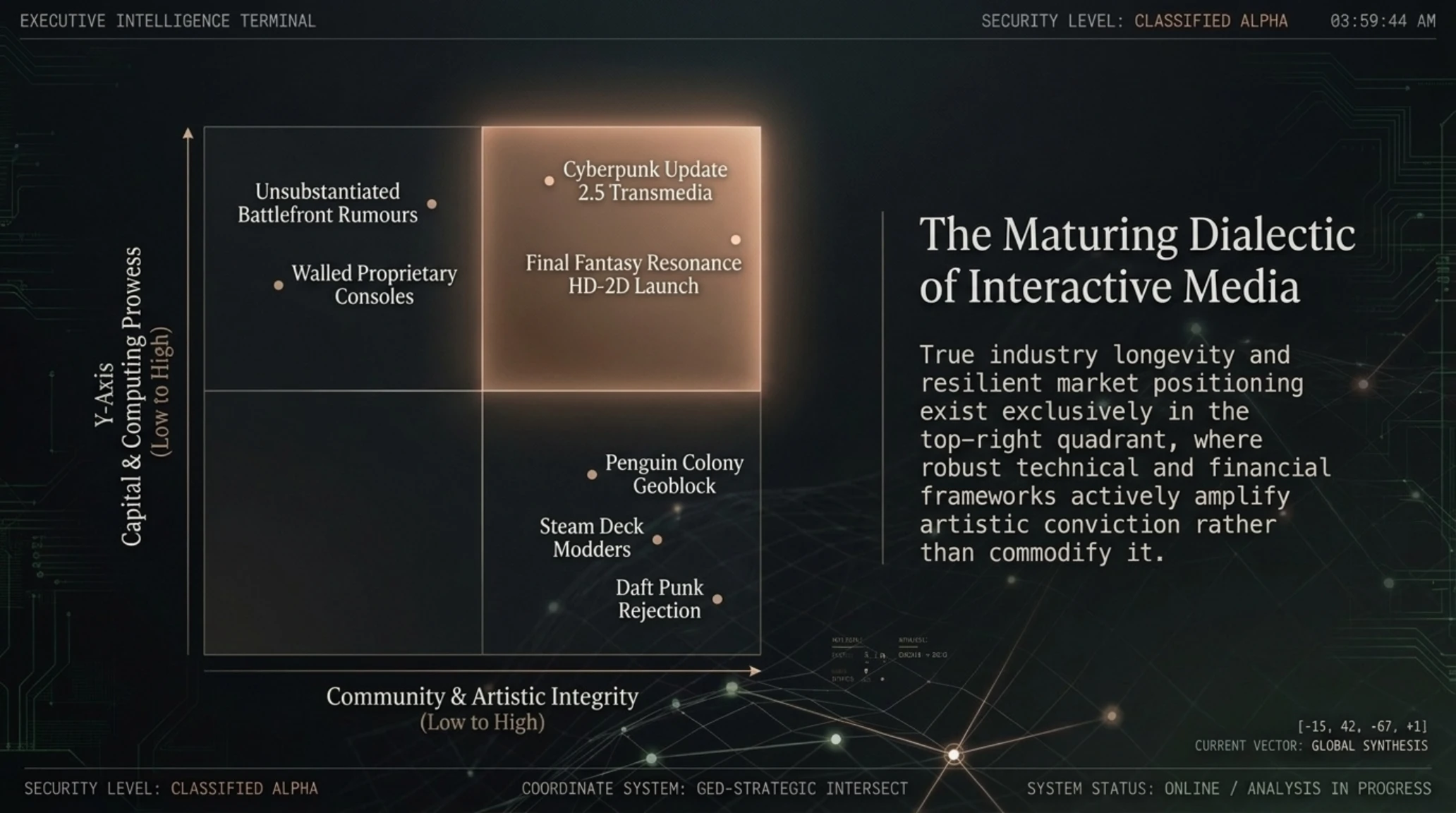
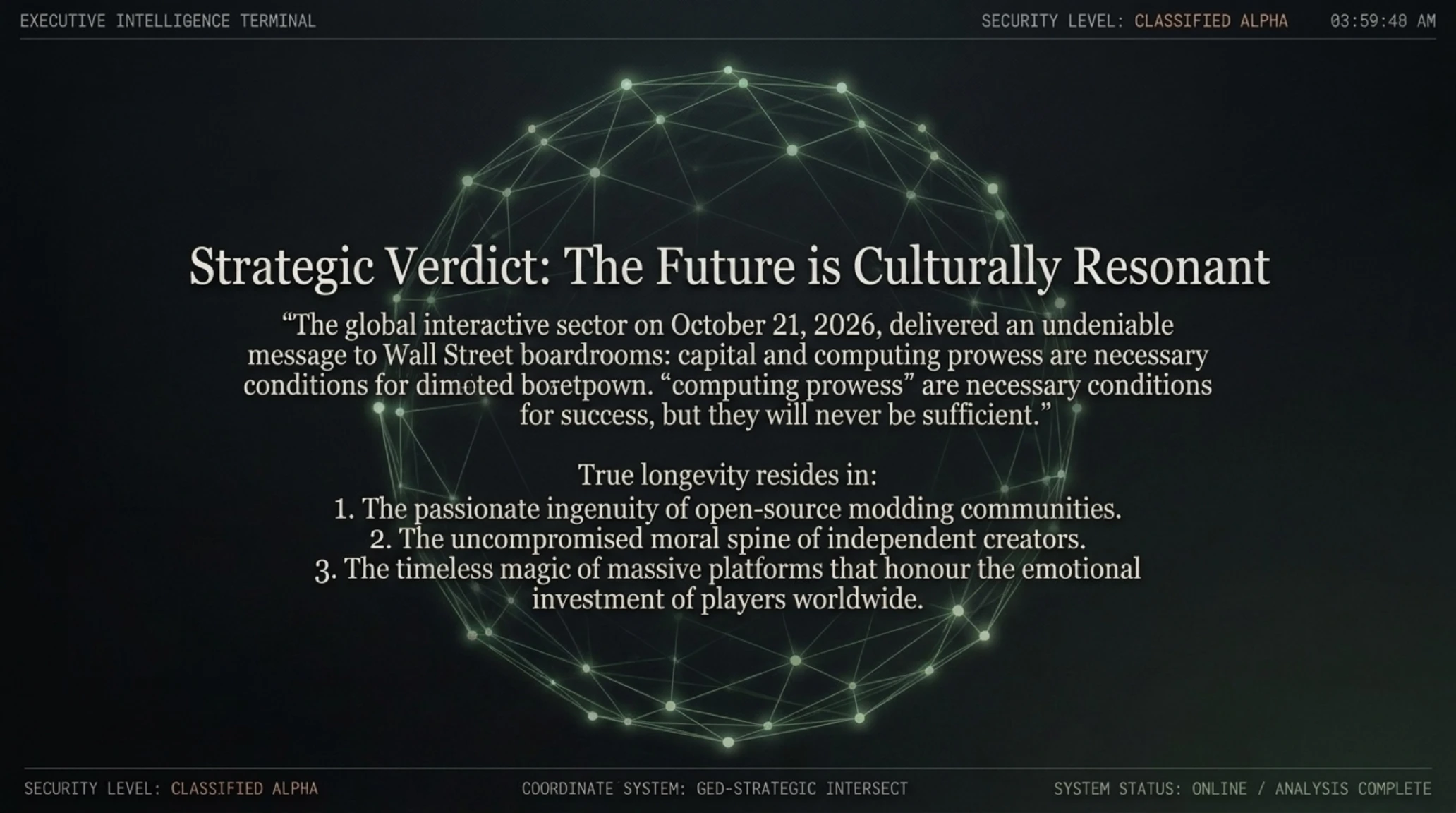
The global interactive sector on October 21, 2026, delivered an undeniable message to Wall Street boardrooms: capital and computing prowess are necessary conditions for success, but they will never be sufficient. True longevity resides in the passionate ingenuity of modding communities, the uncompromised moral spine of independent creators, and the timeless magic of games that honor the emotional investment of players worldwide.
Frequently Asked Questions // October 21, 2026 Briefing
Does utilizing Achievement Customizer on Steam Deck risk a Steam account ban?
No. The plugin operates entirely as a local frontend presentation layer within the CEF browser shell and does not tamper with game binaries or online memory states.
Why did Daft Punk decline the unlimited scoring budget for Grand Theft Auto VI?
Thomas Bangalter and Guy-Manuel de Homem-Christo formally retired the project in February 2021 and chose to safeguard the artistic sanctity and finality of their catalog rather than accept corporate commercialization.
What are the primary additions introduced in Cyberpunk 2077 Update 2.5?
The complimentary update introduces comprehensive dual-wield gunplay mechanics, modular cyberware items inspired by Edgerunners Season 2, and CPU multithreading optimizations across modern platforms.
Is Final Fantasy Resonance a direct remake of an older mainline title?
No. While it reimagines the narrative arc of the continent of Lapis from Brave Exvius, it is a standalone HD-2D production built around new turn-based tactical Stun mechanics and Visions summons.
Verified Intelligence Sources & Technical Literature
- PC Gamer: Official reporting on the Achievement Customizer open-source plugin deployment for Steam Deck, published October 20, 2026.
- Dexerto & Mixmag: Investigative dossier covering Rockstar Games' unlimited budget proposal to Daft Punk and official artist statements, October 20, 2026.
- IGN & Push Square: Comprehensive coverage of CD Projekt Red's Cyberpunk 2077 Update 2.5 and REDstreams patch notes, October 21, 2026.
- Eurogamer & Rock Paper Shotgun: Dispatch detailing Origame Digital and Fellow Traveller geoblocking Penguin Colony in Israel, October 21, 2026.
- Square Enix Corporate Press Center: Technical specification sheets, launch schedule, and combat architecture for Final Fantasy Resonance, October 20, 2026.
Additional Gallery: Tekin Night | Oct 21, 2026 Steam Deck Trophies, Daft Punk Rejects GTA 6, Cyberpunk 2.5 & Battlefront 3