Tekin Night: Aug 30
- 🎮Cosmos EVM Zero-Day Exploit- Balance-handling flaw drains liquidity pools across six blockchains
- 🎧Quantum-Resilient Bitcoin- Starkware's QSB method shields assets without requiring a soft fork
- 🚀19 Malicious Browser Extensions- Socket Security uncovers campaign stealing crypto wallet seed phrases
- 🗡️McKesson Healthcare Data Breach- ShinyHunters compromises medical distributor claiming 284M records
- 📰Total War & Rayman Triumphs- Warhammer 40K dazzles while Rayman wins Best Switch 2 Game
- ⚔️Nvidia's $96.2B Revenue Record- Record Q2 results drive data center surge and Vera Rubin roadmap
Good evening and welcome to Tekin Night for Sunday, August 30, 2026! As global financial and digital hubs conclude the weekend, this evening's dossier deconstructs critical zero-day vulnerabilities across multi-chain ecosystems, post-quantum cryptographic milestones, massive medical data breaches, next-generation gaming showcases, and historic semiconductor financial supercycles.
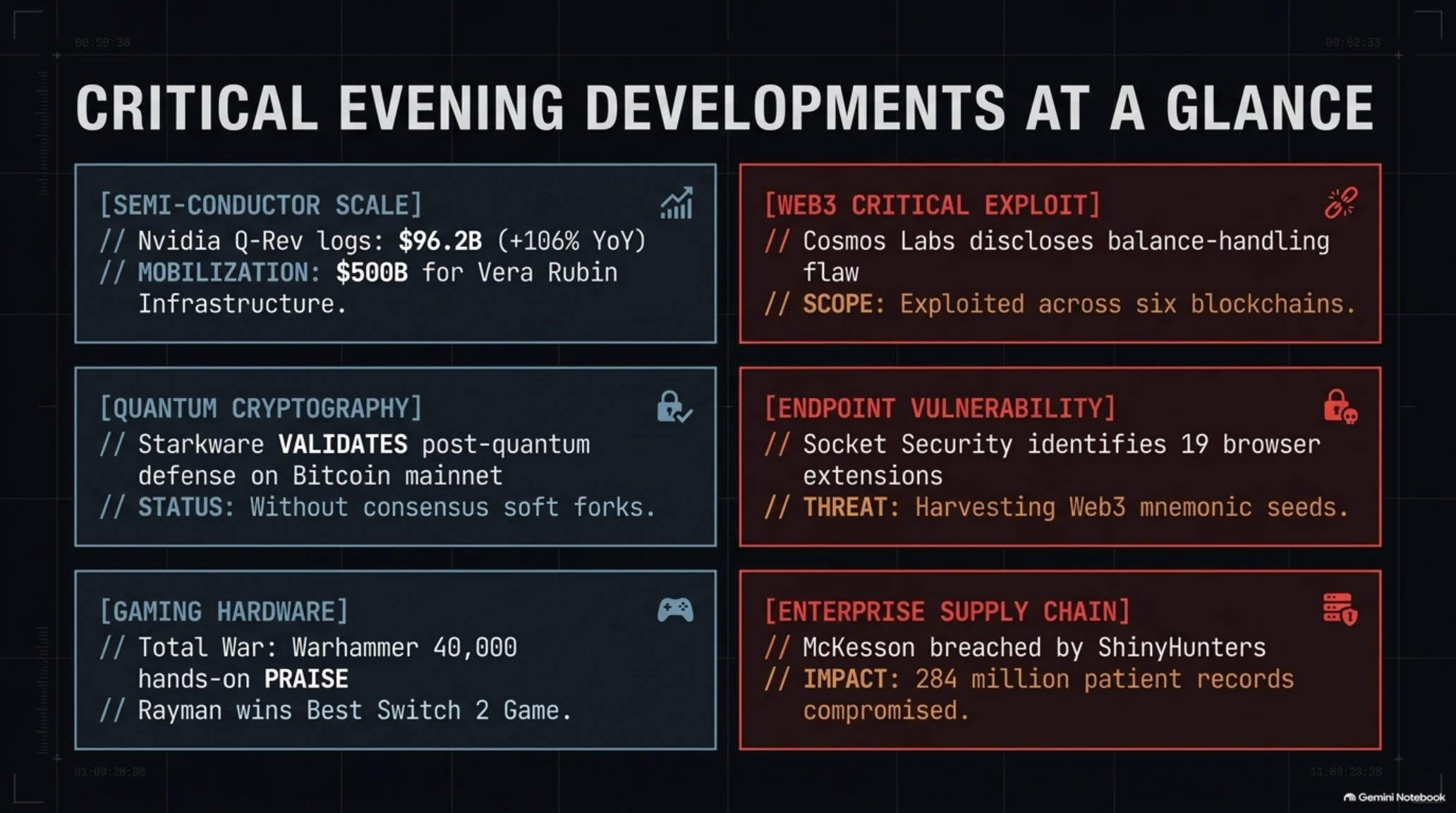
AT A GLANCE | KEY EVENING DEVELOPMENTS
- Cosmos Labs discloses critical balance-handling flaw exploited across six blockchains between August 20 and 25
- Starkware validates post-quantum defense on Bitcoin mainnet using STARK zero-knowledge proofs without consensus soft forks
- Socket Security identifies 19 Chrome and Edge browser extensions harvesting Web3 mnemonic seeds and private keys
- Healthcare distribution giant McKesson investigates massive unauthorized breach as ShinyHunters claims 284M records
- Hands-on impressions for Total War: Warhammer 40,000 praise squad combat while Rayman wins Best Switch 2 Game
- Nvidia logs $96.2 billion quarterly revenue (+106% YoY), mobilizing $500 billion for next-gen Vera Rubin infrastructure
1. Web3 Vulnerability Crisis: Cosmos EVM Zero-Day Exploited Across Six Blockchains
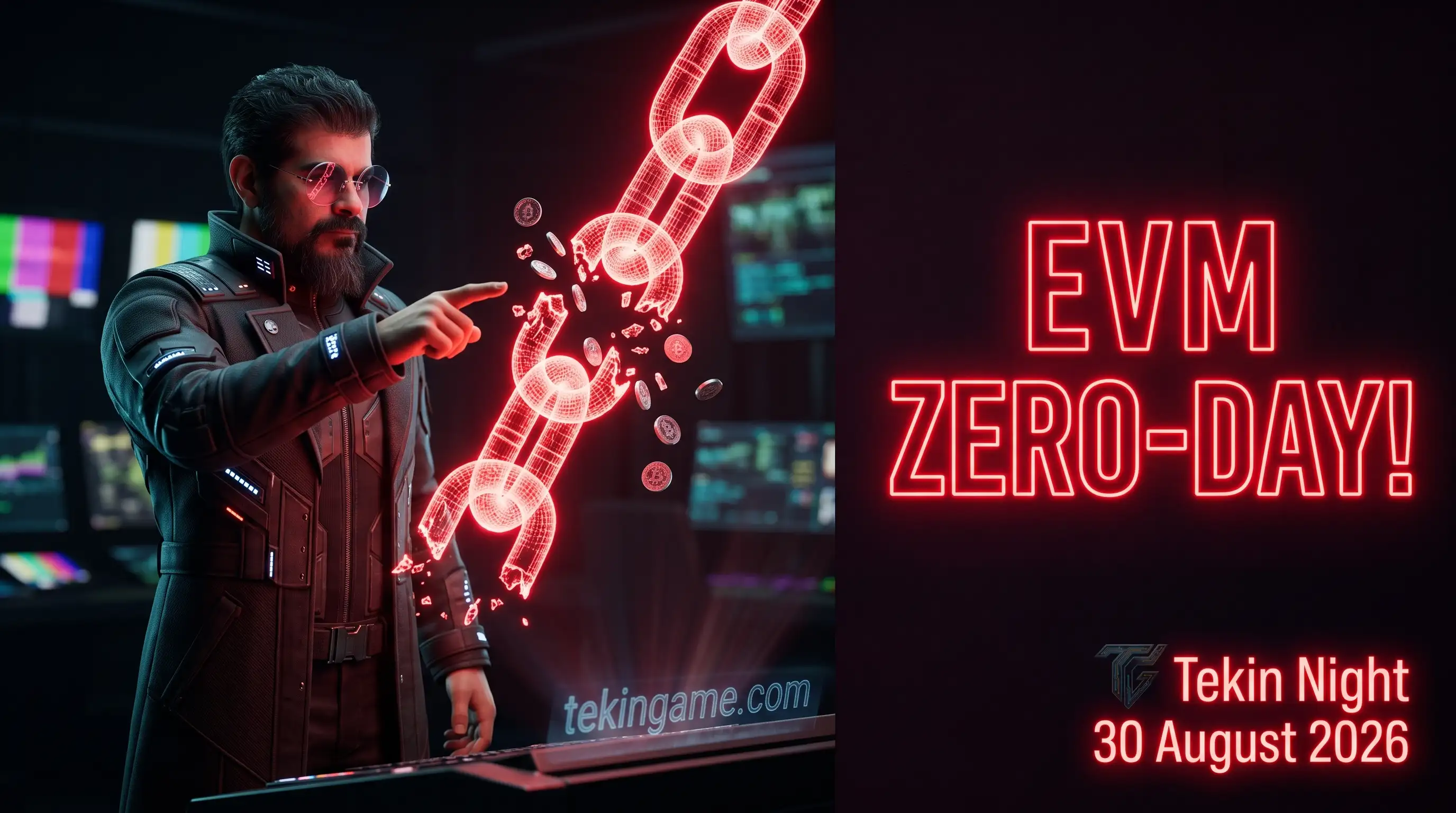
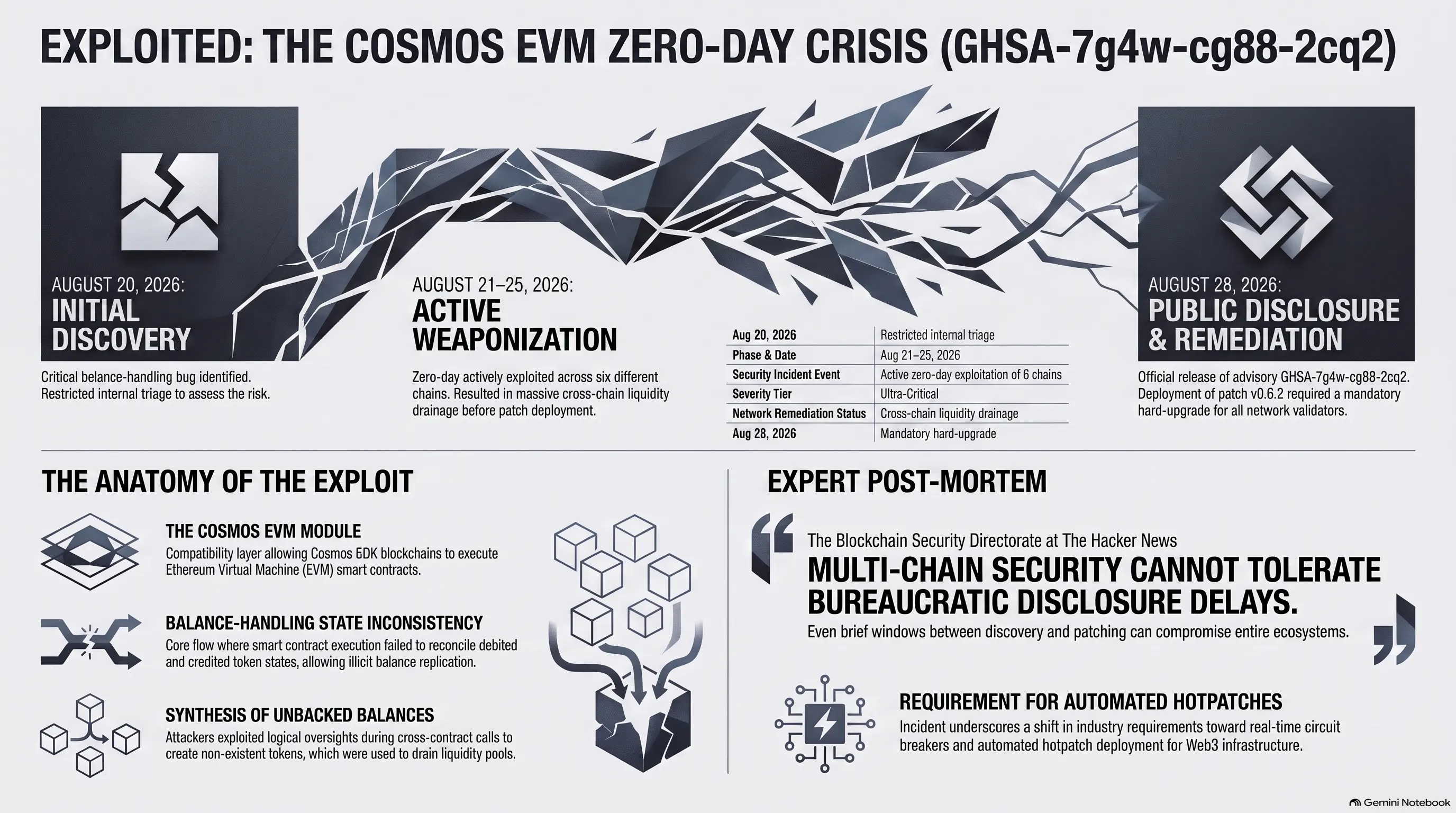
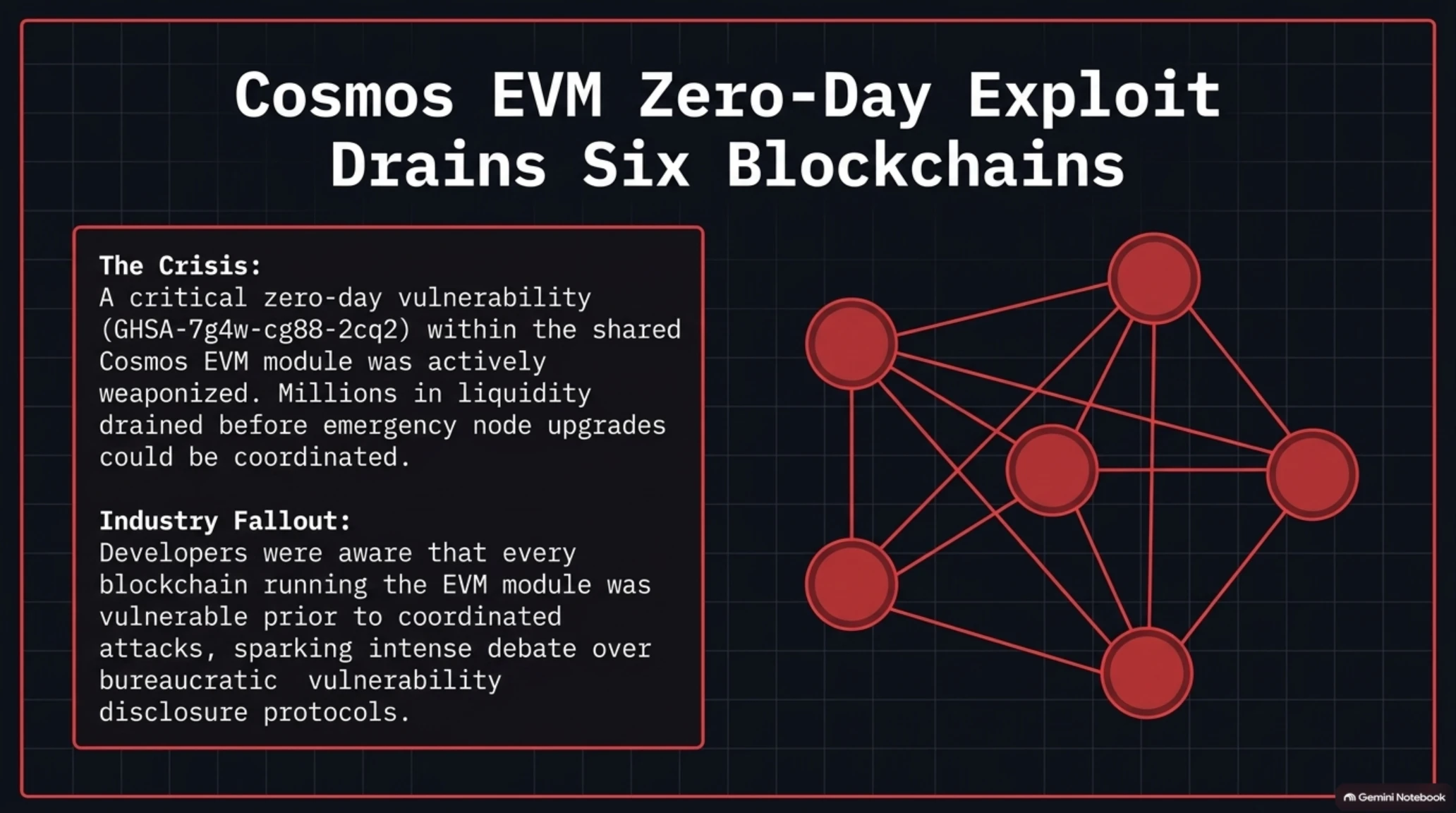
The decentralized finance and interoperability sector was rocked this weekend following disclosures that a critical zero-day vulnerability within the shared Cosmos EVM module (tracked under advisory GHSA-7g4w-cg88-2cq2) was actively weaponized between August 20 and August 25, 2026, draining millions in liquidity from six independent blockchain networks. According to investigative reports from The Hacker News, developers at Cosmos Labs were aware that every blockchain running the EVM module was vulnerable prior to the coordinated attacks, sparking intense industry debate over vulnerability disclosure protocols.
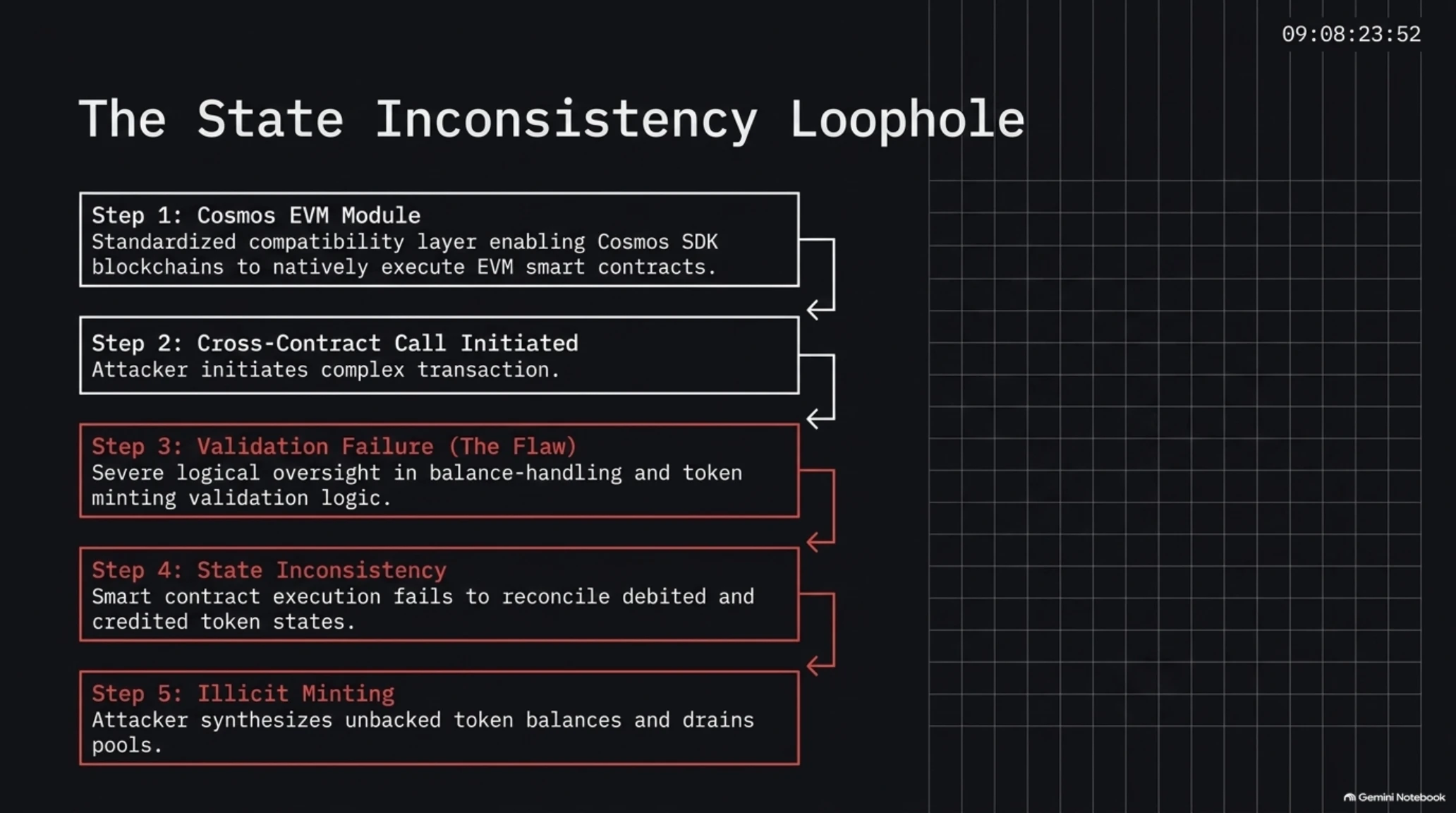
Impacting versions prior to 0.6.2, the flaw stemmed from a severe logical oversight in balance-handling and token minting validation logic during cross-contract calls. Attackers exploited this state inconsistency to synthesize unbacked token balances and drain decentralized liquidity pools before emergency node upgrades could be coordinated. The incident underscores the paramount necessity for real-time circuit breakers and automated hotpatch deployment across interconnected multi-chain ecosystems.
Technical Jargon Buster
• Cosmos EVM Module: A standardized compatibility layer enabling Cosmos SDK-based application-specific blockchains to natively execute Ethereum Virtual Machine (EVM) smart contracts.
• Balance-Handling State Inconsistency: A critical computational flaw where smart contract execution fails to reconcile debited and credited token states, permitting illicit balance replication.
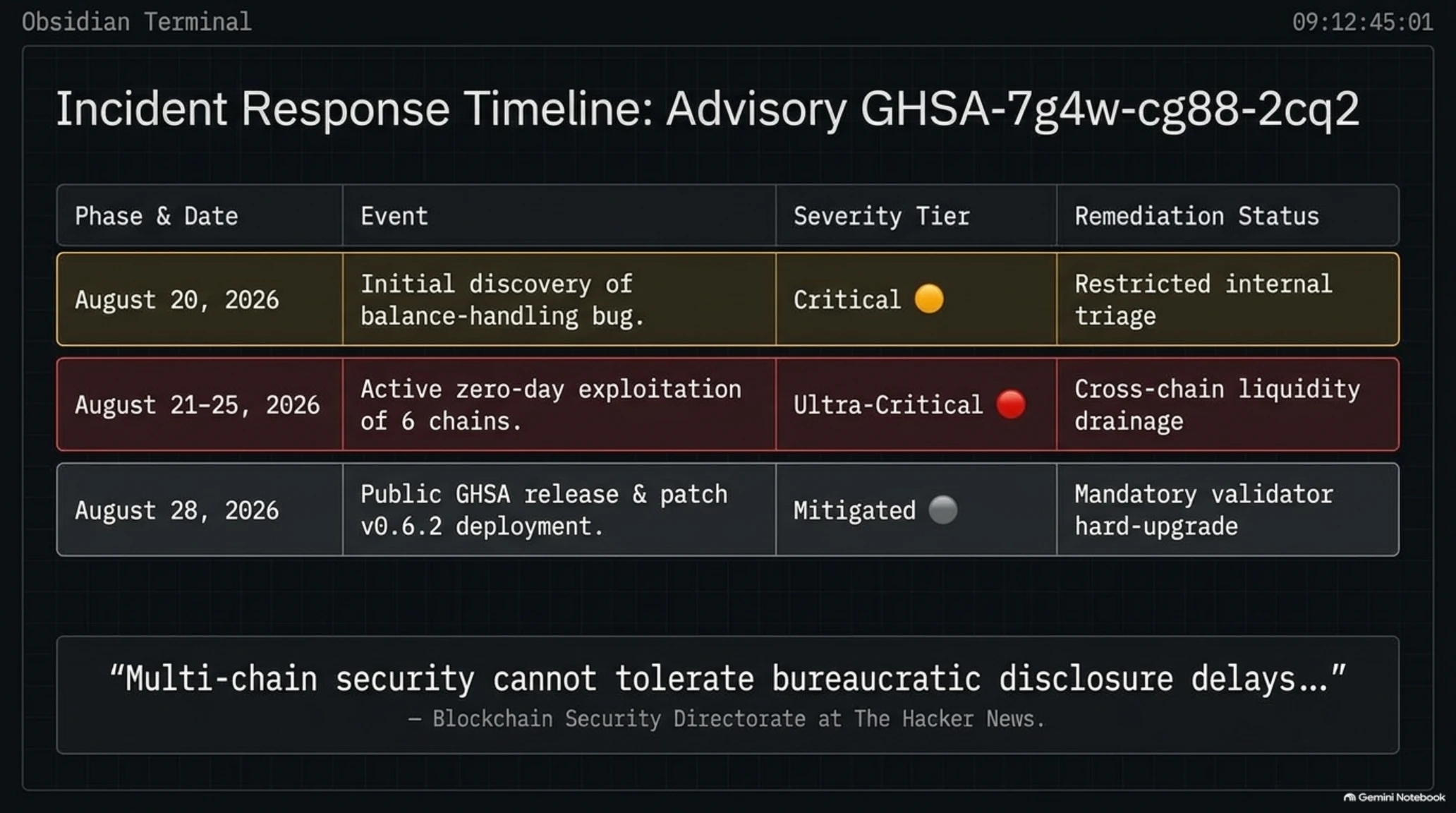
Incident Response & Exploit Timeline of Cosmos EVM Flaw
| Phase & Date | Security Incident Event | Severity Tier | Network Remediation Status |
|---|---|---|---|
| August 20, 2026 | Initial discovery of balance-handling bug | Critical | Restricted internal triage |
| August 21–25, 2026 | Active zero-day exploitation of 6 chains | Ultra-Critical | Cross-chain liquidity drainage |
| August 28, 2026 | Public GHSA release & patch v0.6.2 deployment | Mitigated | Mandatory validator hard-upgrade |
2. Quantum Cryptographic Milestone: Starkware Mines First Quantum-Resilient BTC Transaction
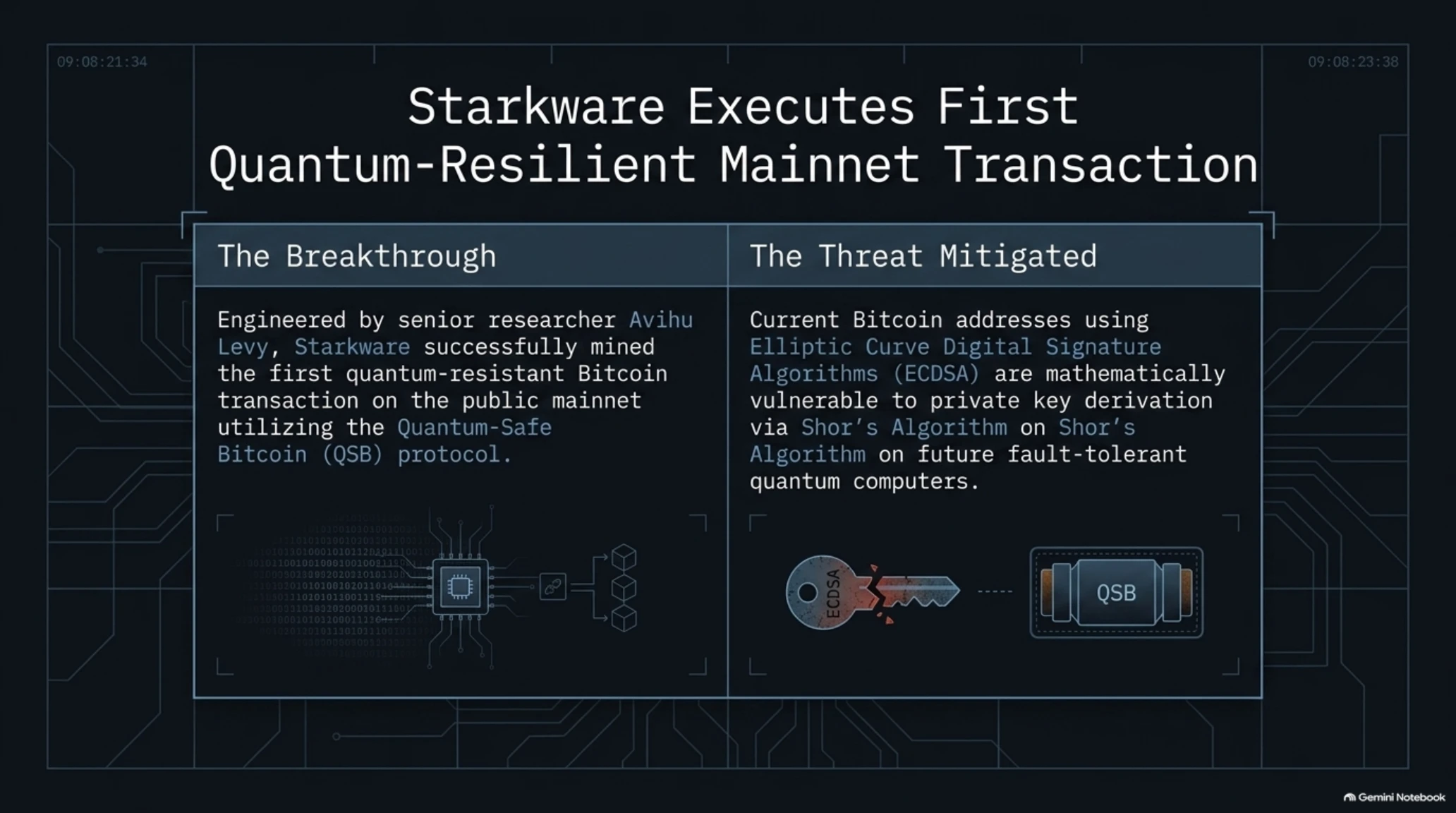
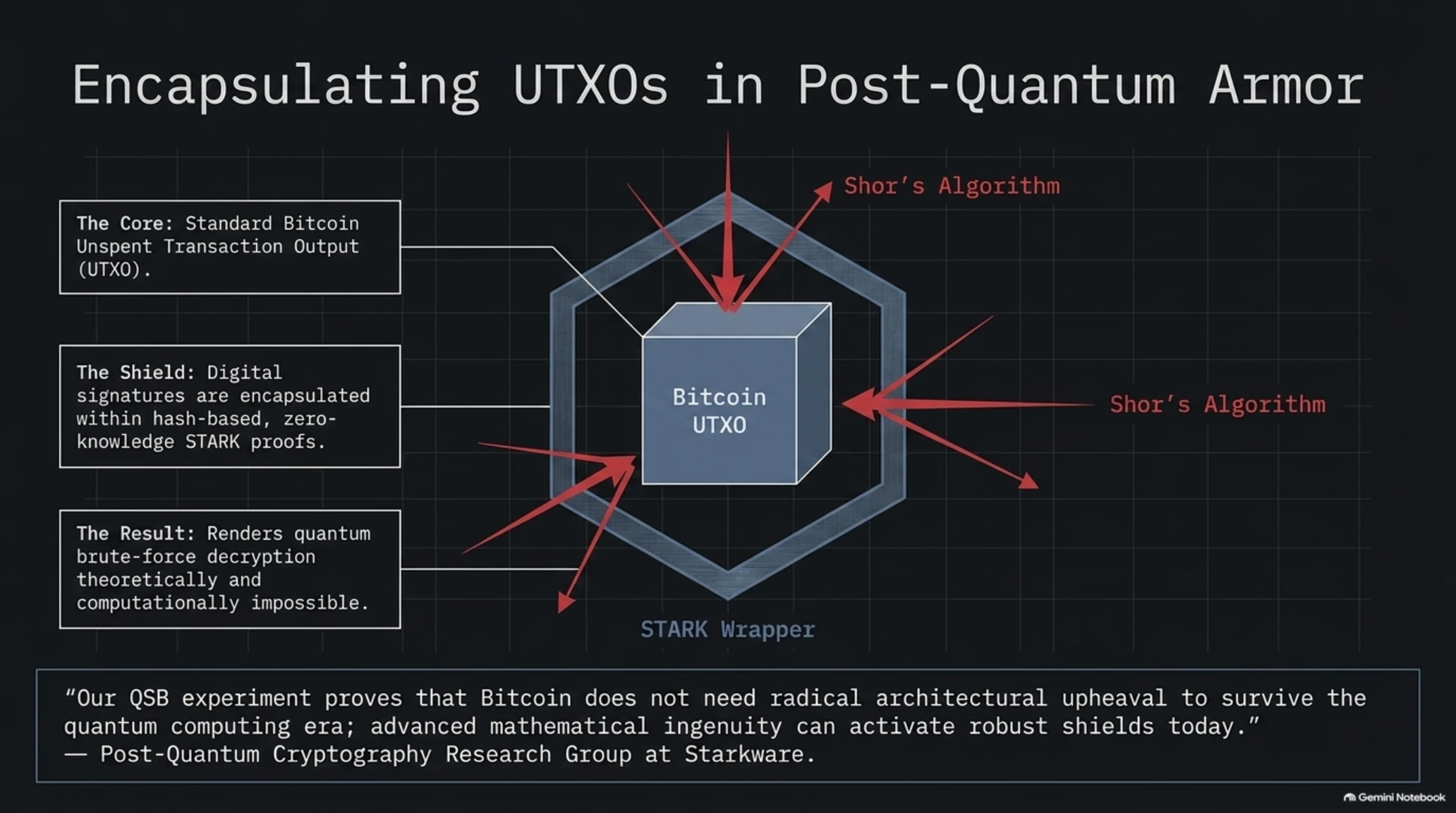
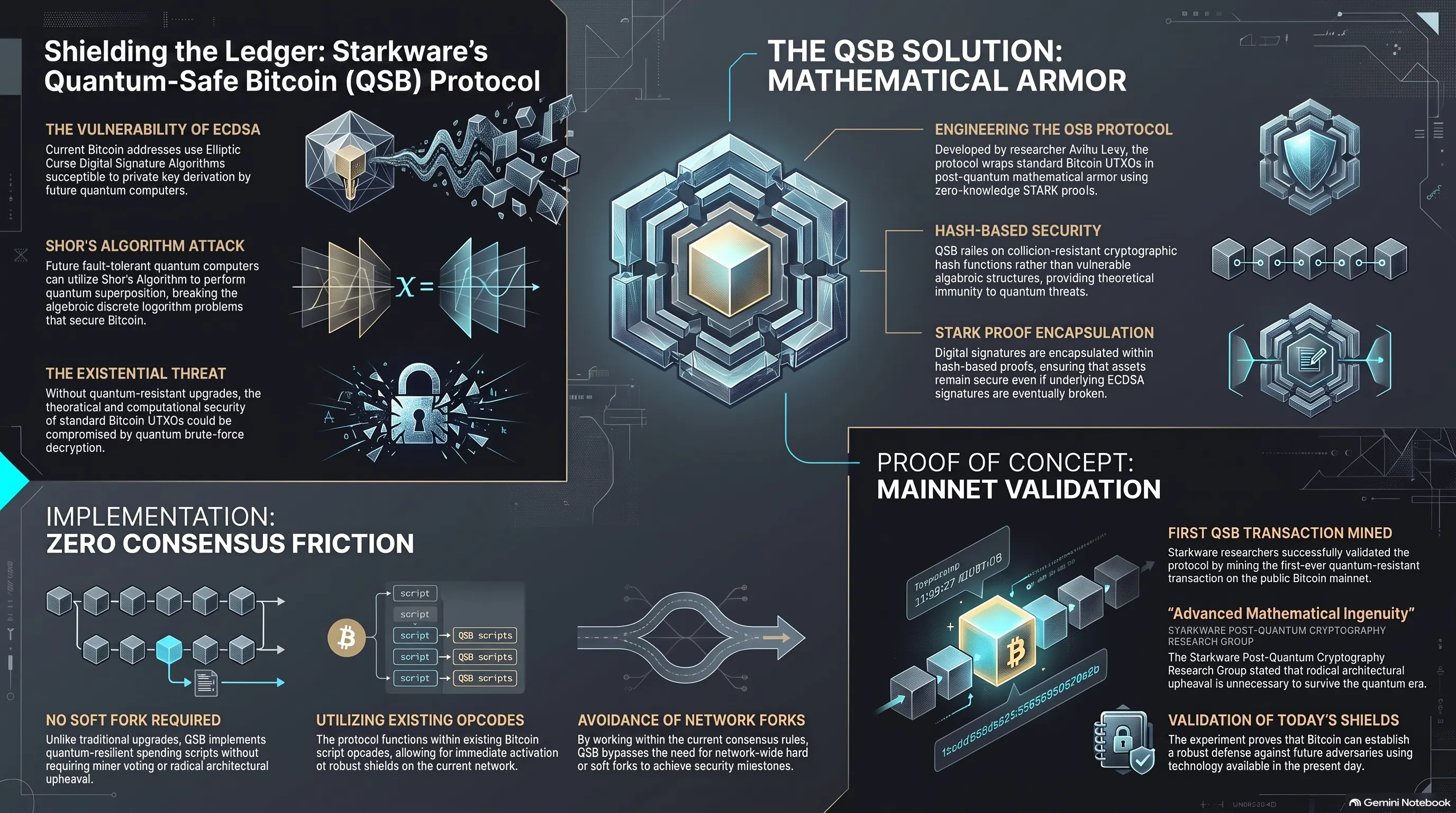
In a landmark cryptographic achievement for decentralized networks, researchers at Starkware have successfully mined the first quantum-resistant Bitcoin transaction on the public mainnet utilizing the innovative Quantum-Safe Bitcoin (QSB) protocol. Engineered by senior researcher Avihu Levy, the breakthrough demonstrates that Bitcoin can establish robust defense against future quantum computing adversaries without requiring a controversial soft fork, hard fork, or modifications to base consensus rules.
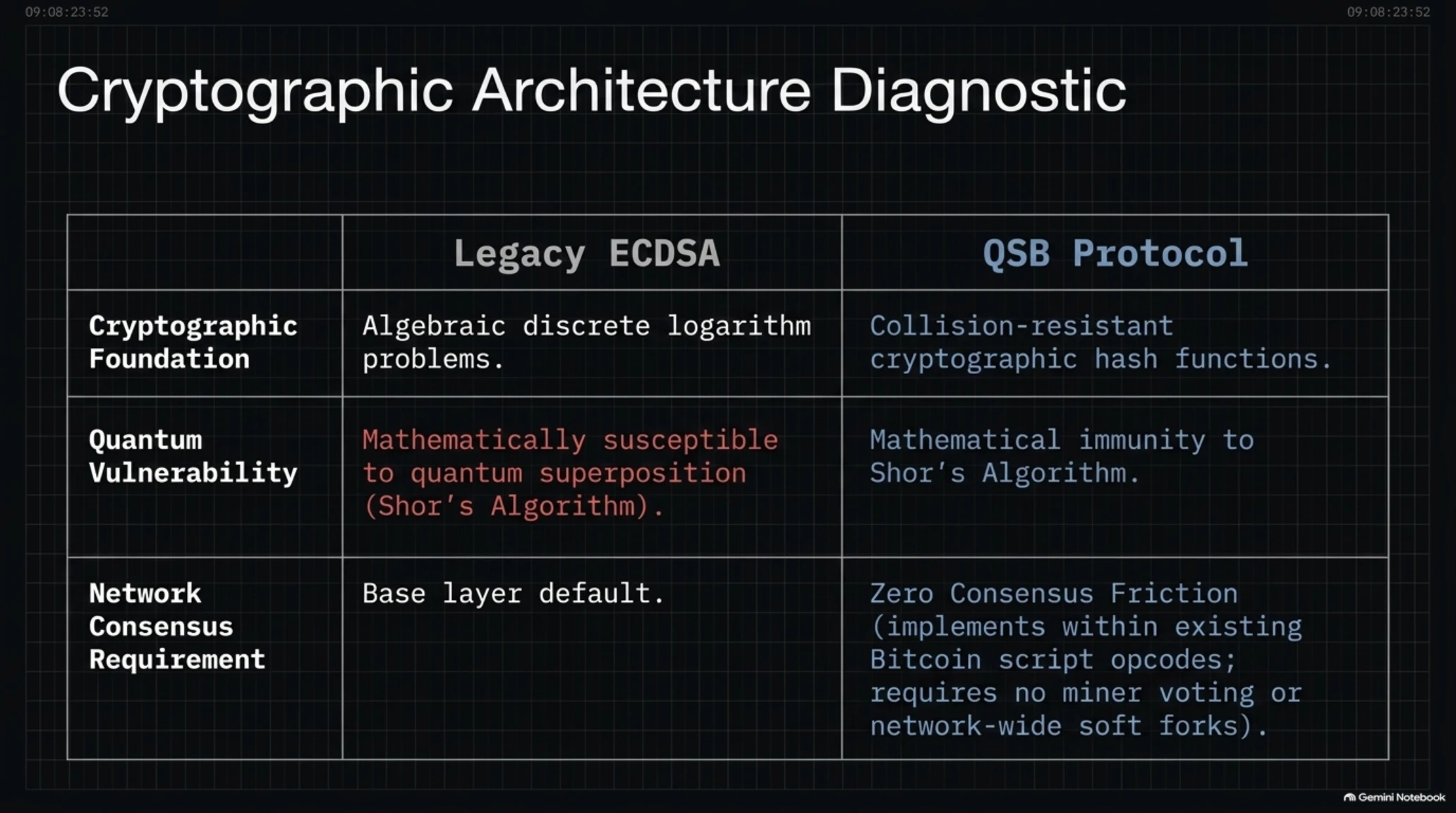
Current Bitcoin addresses utilizing Elliptic Curve Digital Signature Algorithms (ECDSA) are mathematically vulnerable to private key derivation via Shor's Algorithm running on future fault-tolerant quantum computers. The QSB method addresses this existential threat by encapsulating digital signatures within hash-based, zero-knowledge STARK proofs. This wraps standard Bitcoin UTXOs in post-quantum mathematical armor, rendering quantum brute-force decryption theoretically and computationally impossible.
How Starkware QSB Shields Bitcoin from Quantum Supercomputers
• Zero Consensus Friction: Implements quantum-resilient spending scripts within existing Bitcoin script opcodes without requiring miner voting or network-wide soft forks.
• Mathematical Immunity to Shor's Algorithm: Relies on collision-resistant cryptographic hash functions rather than algebraic discrete logarithm problems susceptible to quantum superposition.
3. Browser Extension Threat: Socket Security Exposes 19 Wallet-Draining Extensions
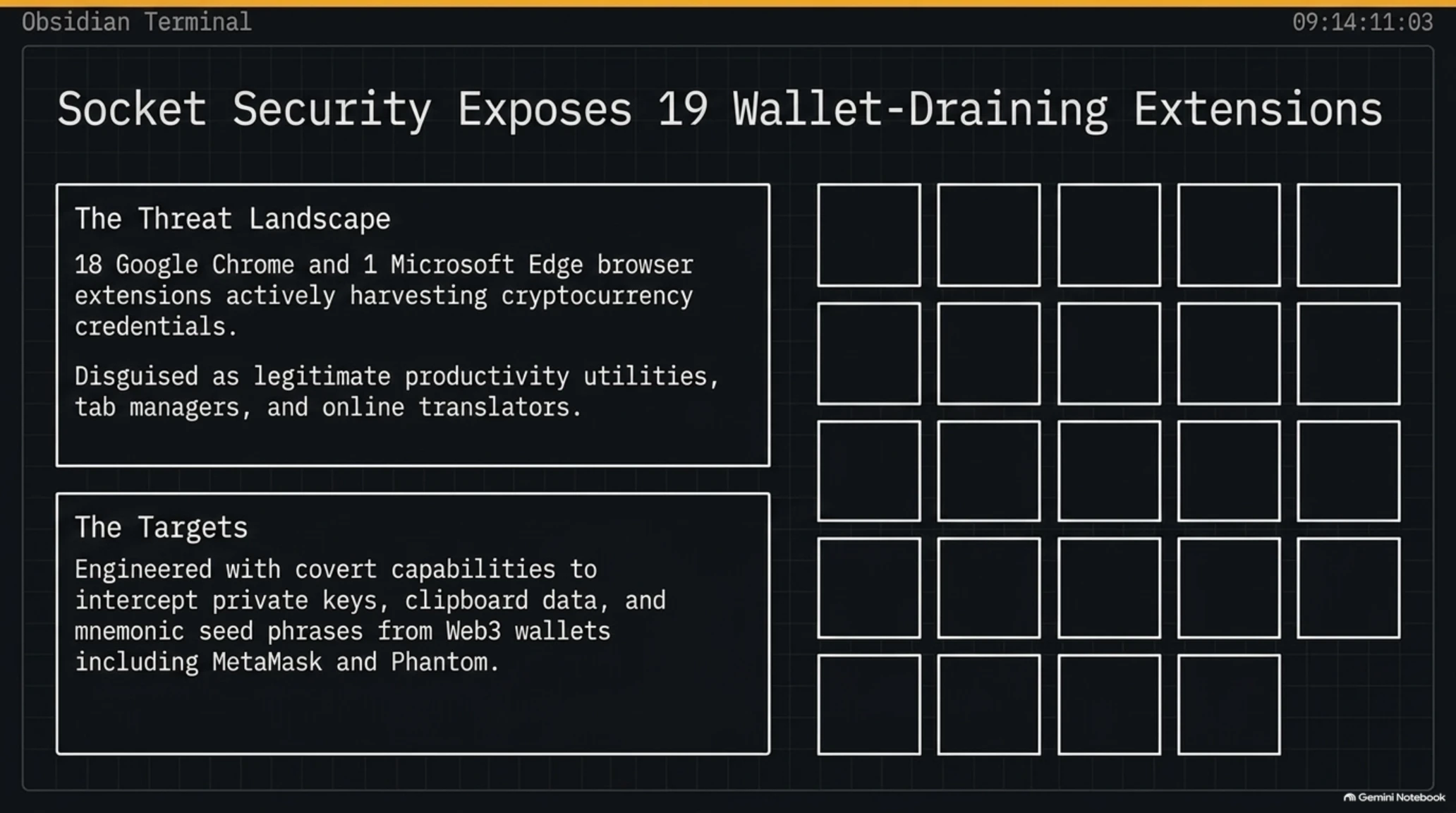
Cybersecurity researchers at Socket Security have unmasked a sophisticated, coordinated malicious campaign encompassing 18 Google Chrome and 1 Microsoft Edge browser extensions actively harvesting cryptocurrency credentials. Disguised as legitimate productivity utilities, tab managers, and online translators, the extensions were engineered with covert capabilities to intercept private keys, clipboard data, and mnemonic seed phrases from Web3 wallets including MetaMask and Phantom.
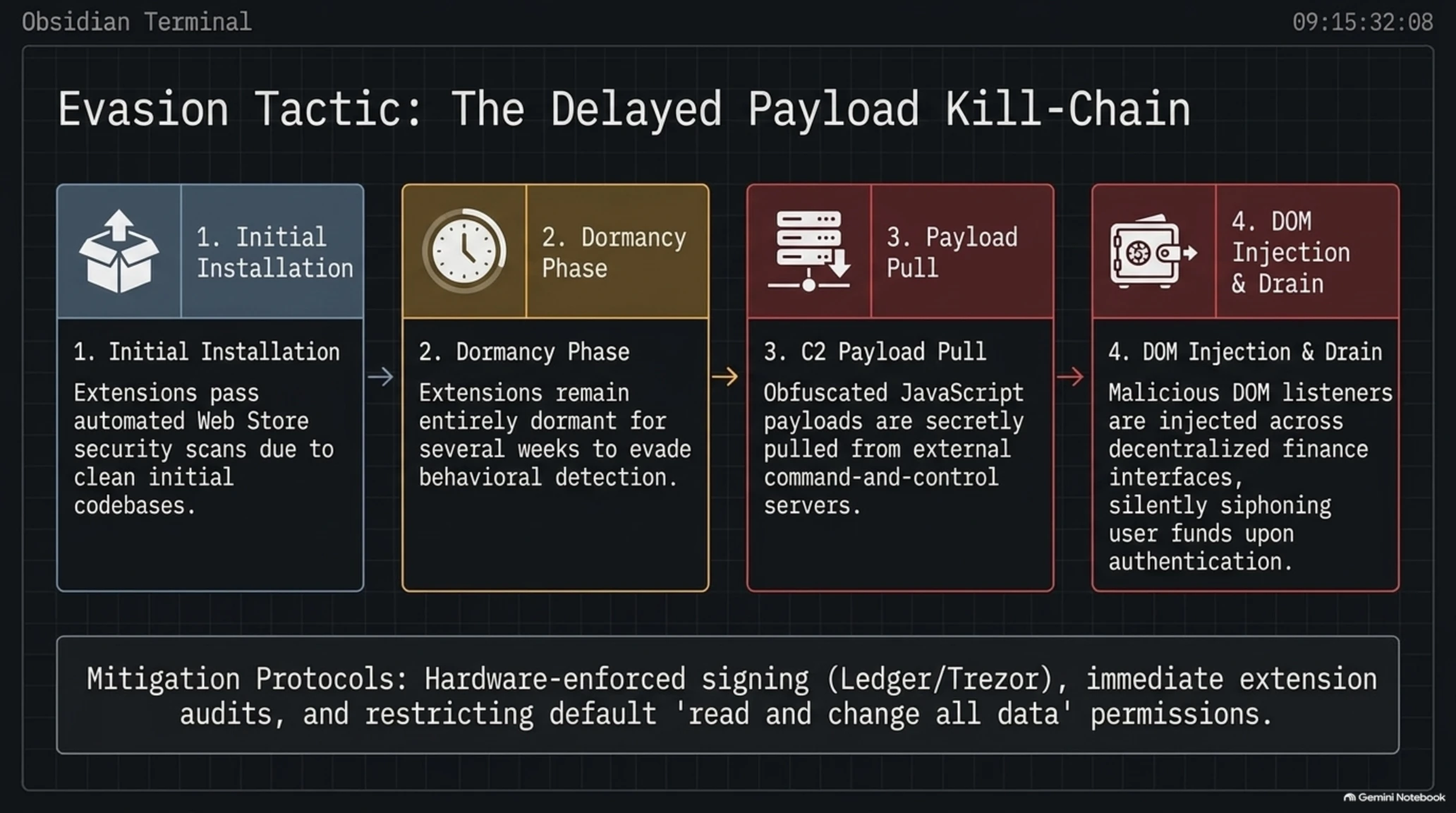
According to lead researcher Karlo Zanki, the threat actors successfully evaded automated Web Store security scans through delayed payload execution. After remaining dormant for several weeks following initial installation, the extensions pulled obfuscated JavaScript payloads from external command-and-control servers. These scripts injected malicious DOM listeners across decentralized finance interfaces, silently siphoning user funds to attacker-controlled addresses upon wallet authentication.
Urgent Cybersecurity Recommendations Against Malicious Extensions
• Immediate Extension Audit: Remove all unverified third-party productivity tools, screenshot utilities, and unofficial translation add-ons from Chrome and Edge.
• Hardware-Enforced Signing: Route all cryptocurrency transactions through dedicated hardware security devices (e.g., Ledger, Trezor) with on-screen visual confirmation.
• Restrict Extension Permissions: Limit browser add-on access to specific whitelisted URLs rather than permitting default 'read and change all data on all websites' privileges.
📚 Classified & Related Dossiers in TekinGame
If you wish to explore beyond this report and delve into cybernetic frontiers and autonomous AI architectures, do not miss these three exclusive deep-dives in the Tekin Garage:
4. Healthcare Data Breach: McKesson Compromise Fuels 284M Record Extortion Threat
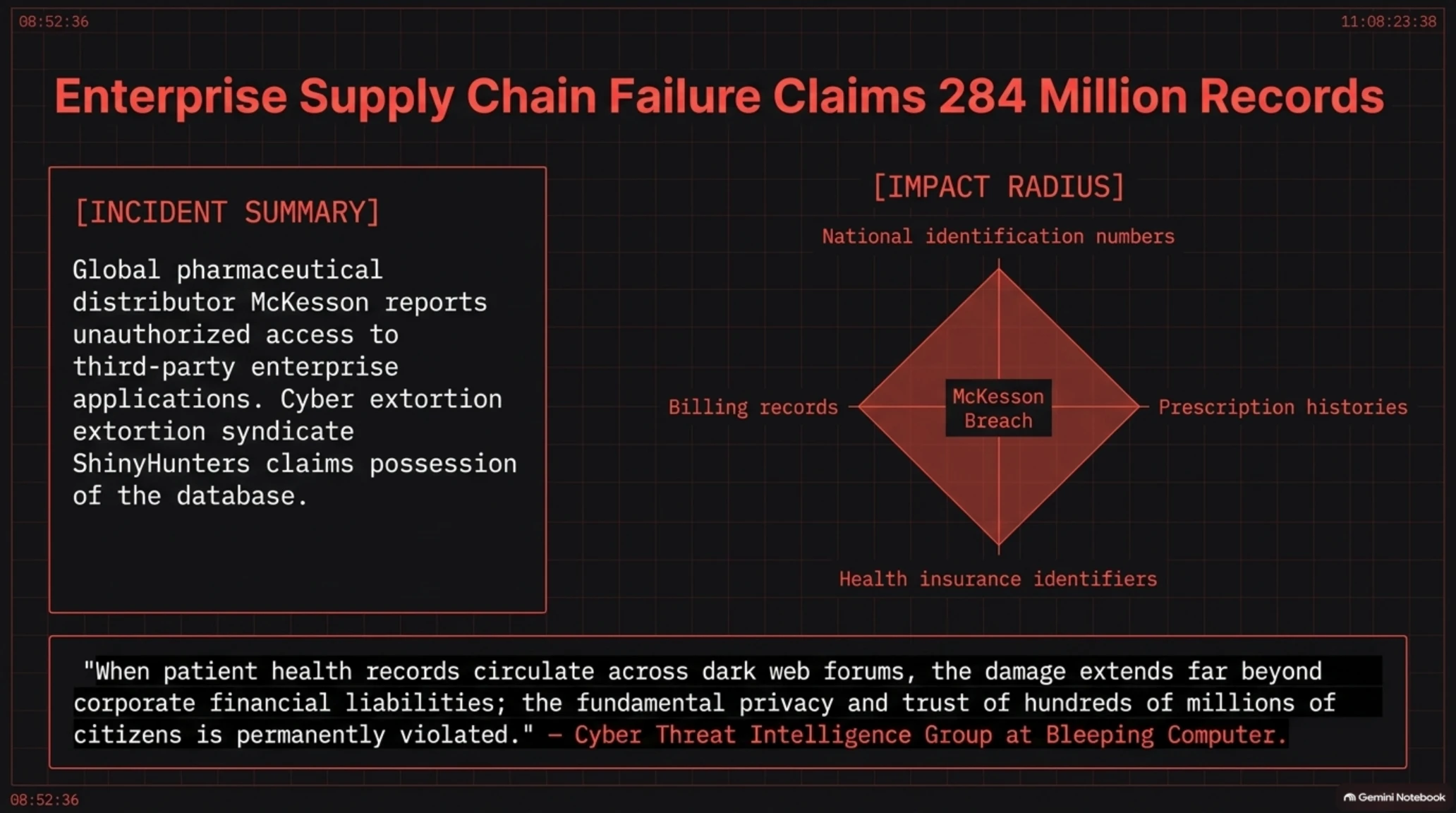
Global pharmaceutical distribution and healthcare technology giant McKesson has formally disclosed a major cybersecurity incident involving unauthorized access to third-party enterprise applications and significant data theft. Within hours of the corporate disclosure, the notorious cyber extortion syndicate ShinyHunters asserted responsibility, claiming possession of an unprecedented database containing 284 million confidential patient records, spanning national identification numbers, prescription histories, health insurance identifiers, and billing records.
Representing one of the largest single healthcare data breaches in modern history, the incident highlights severe vulnerabilities in enterprise third-party software supply chains. Security analysts at Bleeping Computer warn that compromised healthcare records present immense risks of highly targeted medical identity theft, fraudulent prescription fulfillment, and sophisticated spear-phishing campaigns targeting vulnerable patients.
5. Gamescom Strategic Accolades: Total War: Warhammer 40,000 & Rayman Triumphs
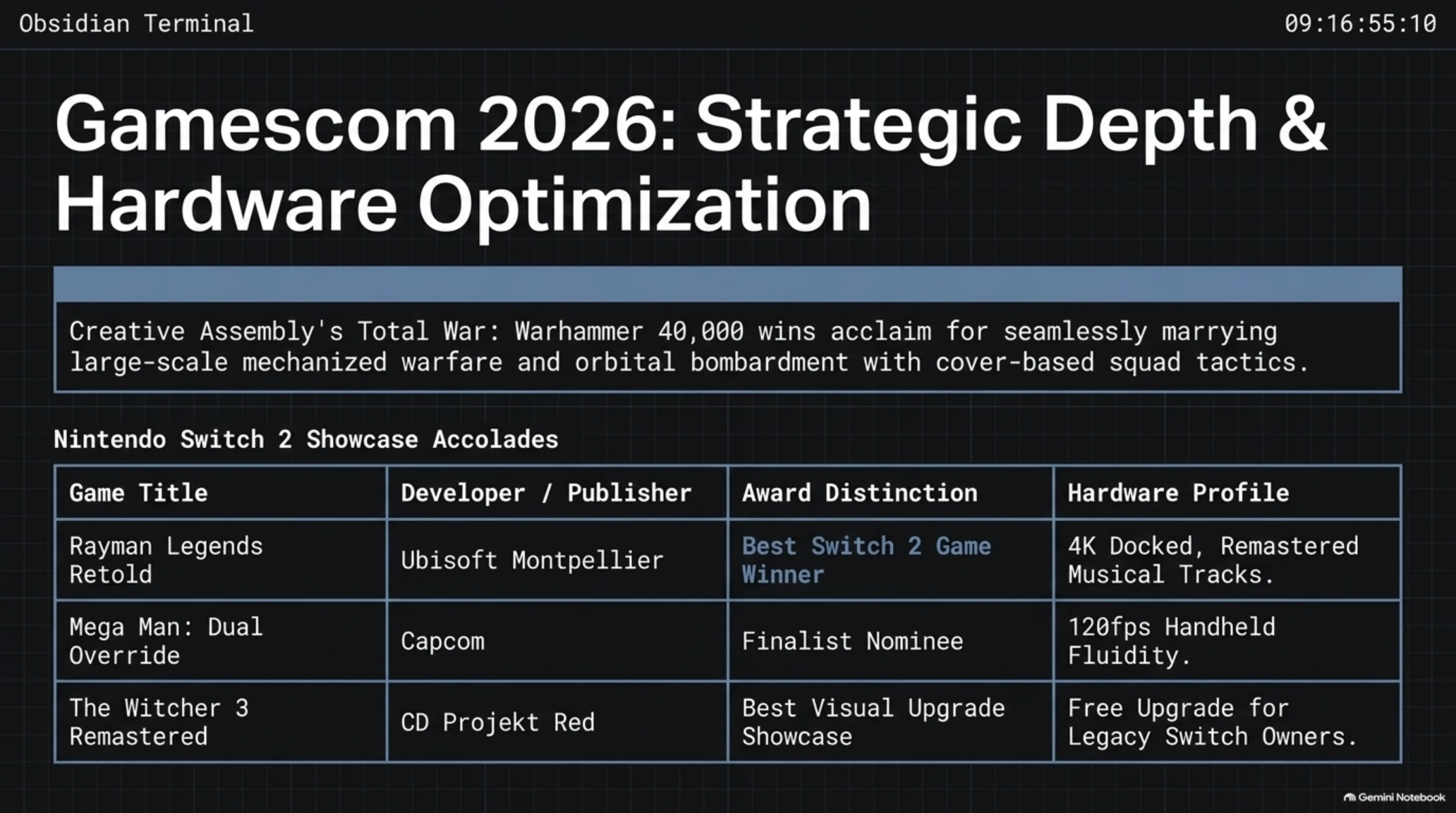
The international gaming stage at Gamescom 2026 in Cologne delivered memorable milestones for tactical strategy and platforming enthusiasts alike. Studio Creative Assembly granted select journalists, including Eurogamer, exclusive hands-on access to an early build of Total War: Warhammer 40,000. Initial critical appraisals praise the studio for seamlessly marrying large-scale mechanized warfare, orbital orbital bombardment, and cover-based squad tactics within the grimdark universe while retaining the hallmark strategic depth of the Total War franchise.
Concurrently during the official Gamescom 2026 Awards ceremony, Ubisoft Montpellier's highly anticipated Rayman Legends Retold captured the coveted award for Best Nintendo Switch 2 Game. Outfitted with remastered 4K visuals in docked mode, re-engineered musical levels, and fluid high-frame-rate animations, the platformer emerged victorious against formidable nominees including Mega Man: Dual Override and Nintendo Switch Sports Resort.
Gamescom 2026 Nintendo Switch 2 Showcase Accolades
| Game Title | Developer / Publisher | Award Distinction | Switch 2 Hardware Profile |
|---|---|---|---|
| Rayman Legends Retold | Ubisoft Montpellier | Best Switch 2 Game Winner | 4K Docked, Remastered Musical Tracks |
| Mega Man: Dual Override | Capcom | Finalist Nominee | 120fps Handheld Fluidity |
| The Witcher 3 Remastered | CD Projekt Red | Best Visual Upgrade Showcase | Free Upgrade for Legacy Switch Owners |
6. Semiconductor Supercycle: Nvidia Logs Historic $96.2B Revenue, Prepares Vera Rubin
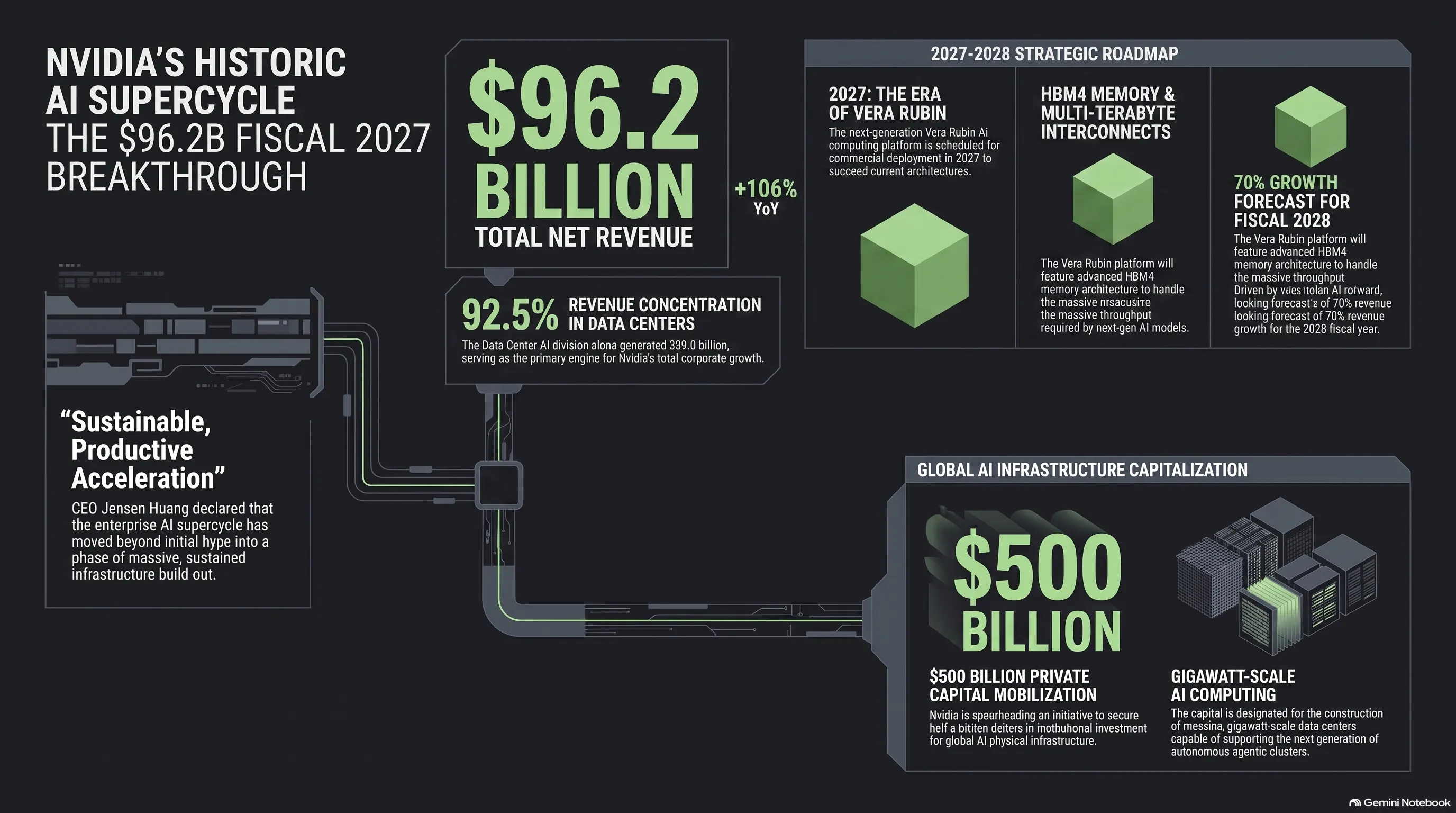
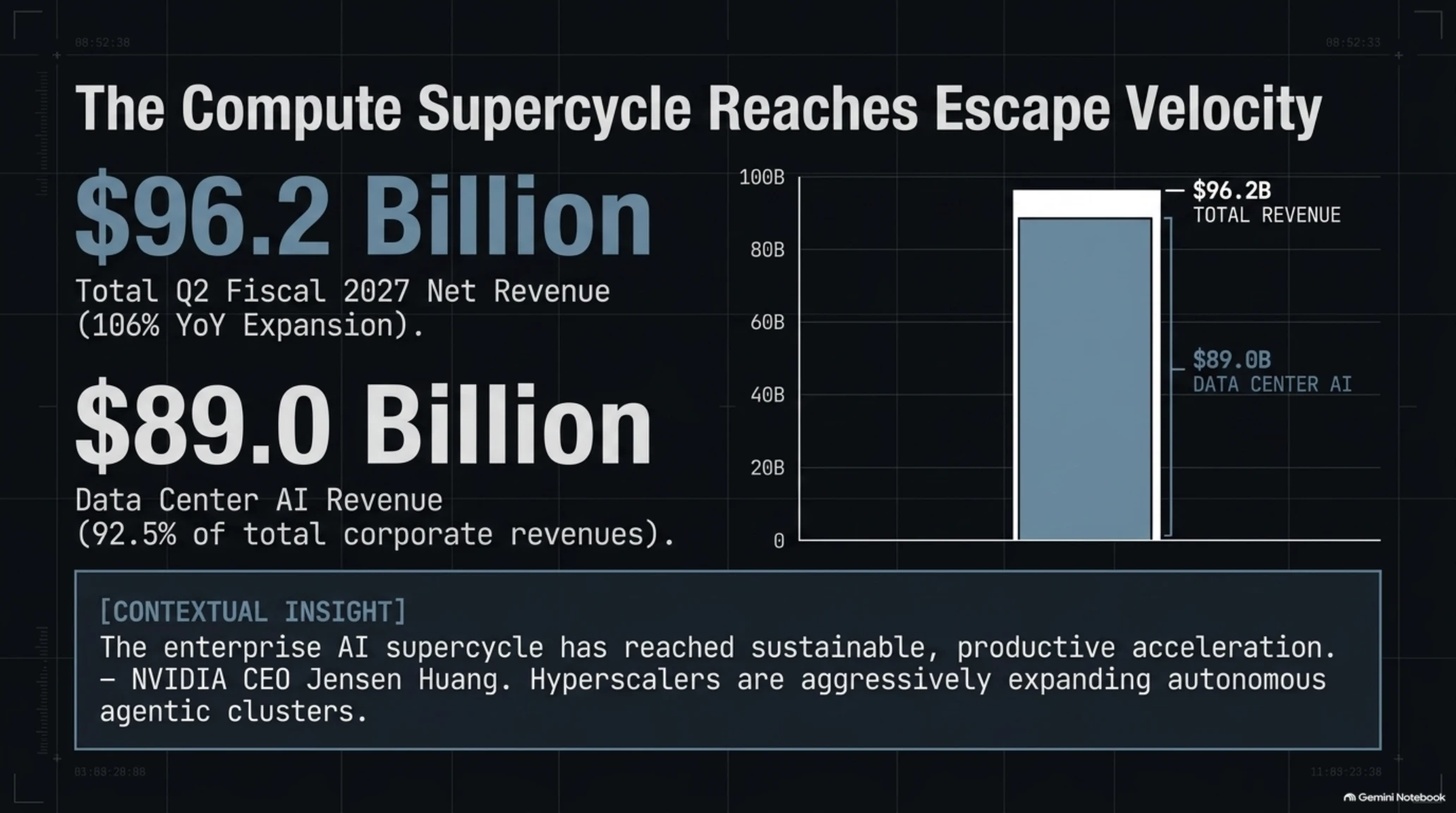
Semiconductor titan NVIDIA has shattered all global silicon revenue records in its Q2 fiscal 2027 financial disclosures, reporting unprecedented net revenue of $96.2 billion, representing an astronomical 106% year-over-year expansion. The performance was anchored by the company's Data Center and generative AI compute division, which alone generated $89 billion in top-line revenue as hyperscalers aggressively expand autonomous agentic clusters.
During the corporate investor briefing, NVIDIA CEO Jensen Huang declared that the enterprise AI supercycle has reached sustainable, productive acceleration. Looking ahead, NVIDIA officially forecast 70% revenue growth for fiscal 2028, driven by the commercial volume rollout of its next-generation Vera Rubin AI computing platform. Furthermore, the company announced an initiative mobilizing over $500 billion in private institutional capital to construct gigawatt-scale AI computing infrastructure worldwide.
Key Telemetry from NVIDIA's Record-Breaking Financial Disclosures
• Total Q2 Net Revenue: $96.2 Billion (Surpassing consensus estimates by 106% YoY).
• Data Center AI Revenue: $89.0 Billion (Comprising 92.5% of total corporate revenues).
• Next-Gen Vera Rubin Platform: Commercial deployment scheduled for 2027 featuring HBM4 memory architecture and multi-terabyte interconnects.
TekInGame Evening Synthesis: Post-Quantum Resilience & The Compute Supercycle
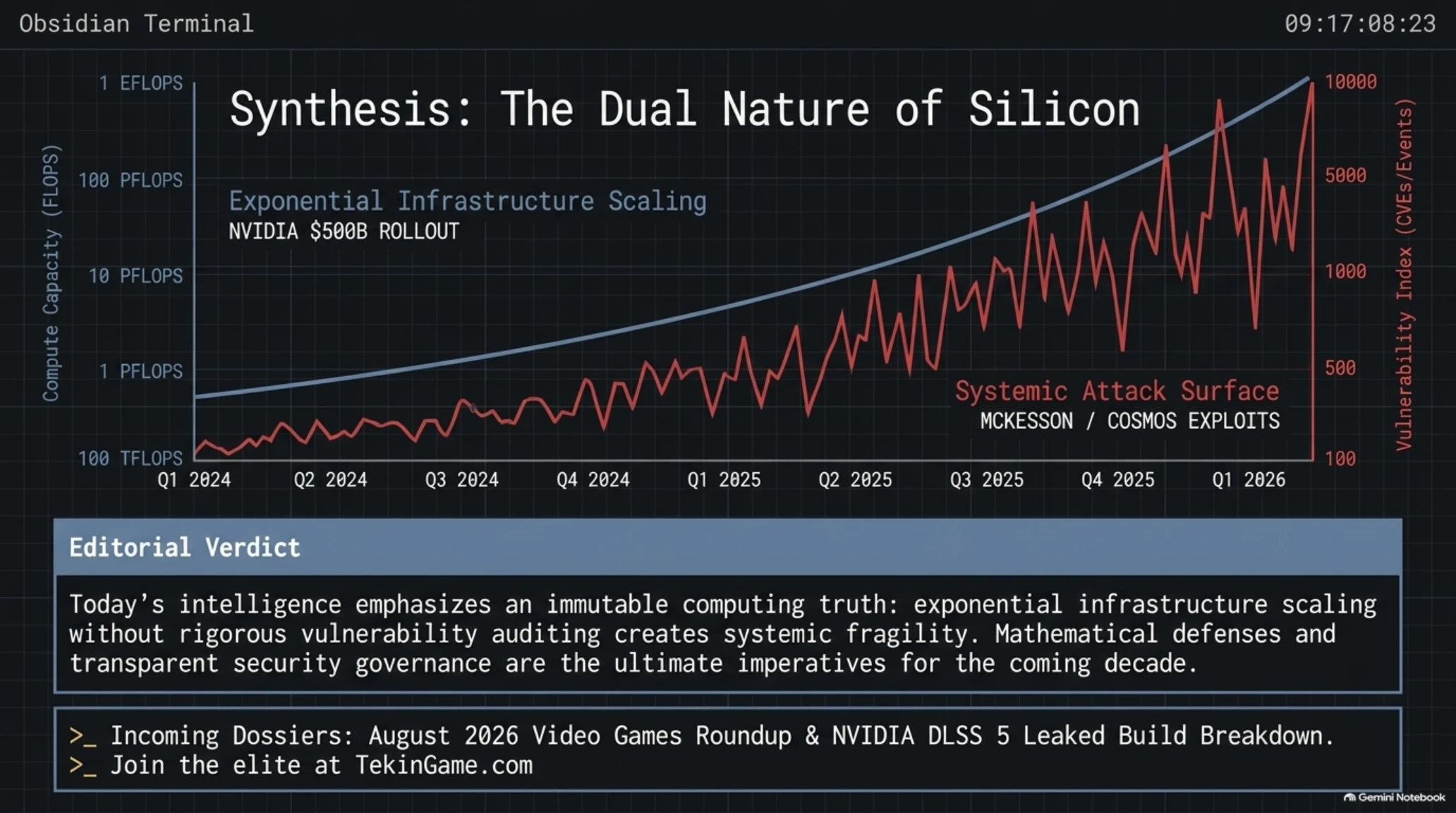
The intelligence landscape of Sunday evening, August 30, 2026, encapsulates the dual nature of our rapidly advancing digital civilization. While Starkware demonstrates that post-quantum mathematics can safeguard foundational decentralized assets and Creative Assembly pushes strategic gaming boundaries at Gamescom, the Cosmos EVM exploit and McKesson breach serve as stark reminders that cybersecurity hygiene must match the velocity of silicon scaling. Join us tomorrow for two exclusive dossiers: our August 2026 Definitive Video Games Roundup and our comprehensive technical investigation into the leaked NVIDIA DLSS 5 neural filter build.
- Starkware successfully mines first quantum-resistant Bitcoin transaction without network forks
- NVIDIA posts historic $96.2B quarterly revenue and details next-gen Vera Rubin roadmap
- Total War: Warhammer 40,000 and Rayman Legends Retold shine brightly at Gamescom 2026
- Critical balance-handling exploit in Cosmos EVM drains funds across six multi-chain networks
- Extortion syndicate ShinyHunters compromises 284 million confidential patient records at McKesson
- Active browser extension campaign compromises Web3 wallets across Chrome and Edge
Essential Related Reading & Cyber Intelligence Archives
• ☀️ Tekin Morning August 22, 2026 | Leaked $899 Xbox Series X25 & Phantom Blade Zero Surge
• 🛡 Tekin Analysis | ThreatsDay Crisis: AI Exploits Target Siemens S7 & Sandbox Escapes
• 🤖 Tekin Versus | TrueForge Revolution: Open-Source AI Agents vs. Claude
Frequently Asked Questions | Evening Briefing
How was the Cosmos EVM module vulnerability exploited?
Attackers leveraged a balance-handling logic flaw in versions prior to 0.6.2 to generate artificial token balances and drain liquidity pools across six chains.
What makes Starkware's Quantum-Safe Bitcoin (QSB) experiment unique?
It successfully wrapped Bitcoin transactions in STARK zero-knowledge proofs on the public mainnet without requiring a network soft fork or consensus rule changes.
How did the 19 malicious browser extensions evade Web Store detection?
By using delayed payload execution, remaining benign during automated store reviews and pulling malicious token-draining scripts weeks after installation.
What data was compromised in the McKesson healthcare incident?
The ShinyHunters syndicate claims access to 284 million records containing national IDs, prescription records, insurance data, and patient billing information.
What drove NVIDIA's record $96.2 billion quarterly revenue?
Massive enterprise demand for generative AI and agentic infrastructure, with the Data Center division contributing $89 billion alone.
Official Technical References & Primary Sources
Additional Gallery: 🌙 Tekin Night August 30, 2026 | Cosmos EVM Zero-Day & Starkware Quantum Bitcoin