⏳ CRITICAL EVENT SEQUENCE (April 2026)
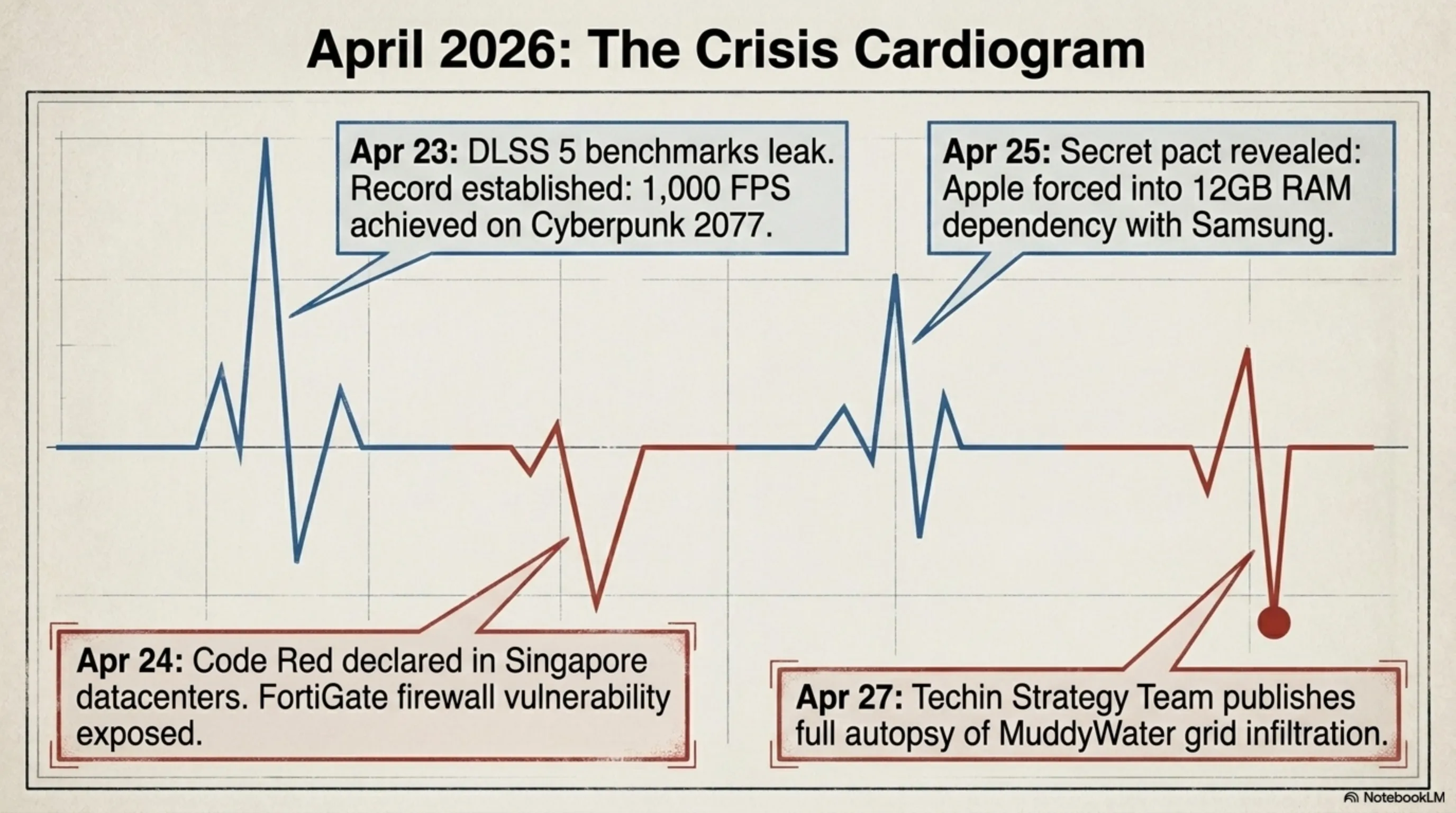
| April 23 | Unauthorized DLSS 5 benchmarks from NVIDIA’s internal labs showing 400% performance gain over 4.5. |
| April 24 | Inter-agency alert issued for Fortinet devices following a recursive AI-driven login breach. |
| April 25 | Samsung Foundry signs exclusive LPDDR5X-8500 tier agreement with Cupertino. |
| Tonight | MuddyWater's GhostFetch malware behavior finalized by Tekin Ops. |
1. NVIDIA DLSS 5: Beyond Frames, The Neural Era Arrives
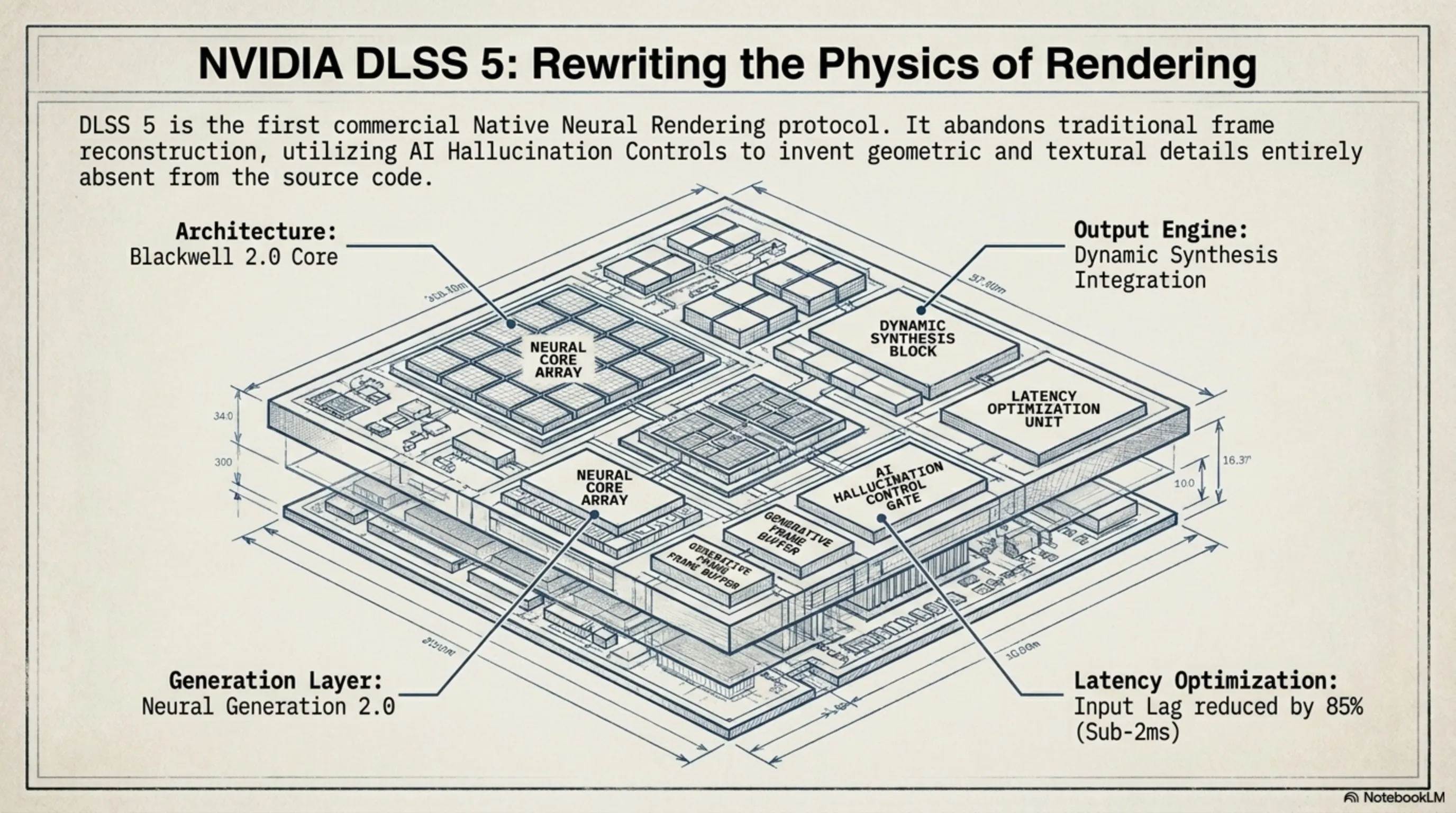
NVIDIA has effectively ignited a supernova at its latest GTC summit: DLSS 5 (Deep Learning Super Sampling 5.0). If you thought version 4.5’s 6x Frame Generation was the pinnacle, you haven't seen the "imagination engine" at work. DLSS 5 represents the industry's first Native Neural Rendering implementation. It doesn't just upscale pixels; it hallucinates them with hyper-precision based on a generative world-model trained on NVIDIA’s Blackwell architecture.
In traditional rasterization, the GPU calculates every triangle and lighting vector. With DLSS 5, that logic is increasingly obsolete. The hardware now handles roughly 15% of the skeletal render, while a generative neural network—running on dedicated Tensor Cores—reconstructs the remaining 85% based on "visual prediction." This means a single pebble on a wet road in *Cyberpunk 2077* can have more detail than its original asset, as the AI synthesizes ultra-high-resolution textures on the fly.
📋 DLSS 5 CORE SPECIFICATIONS (Blackwell 2.0)
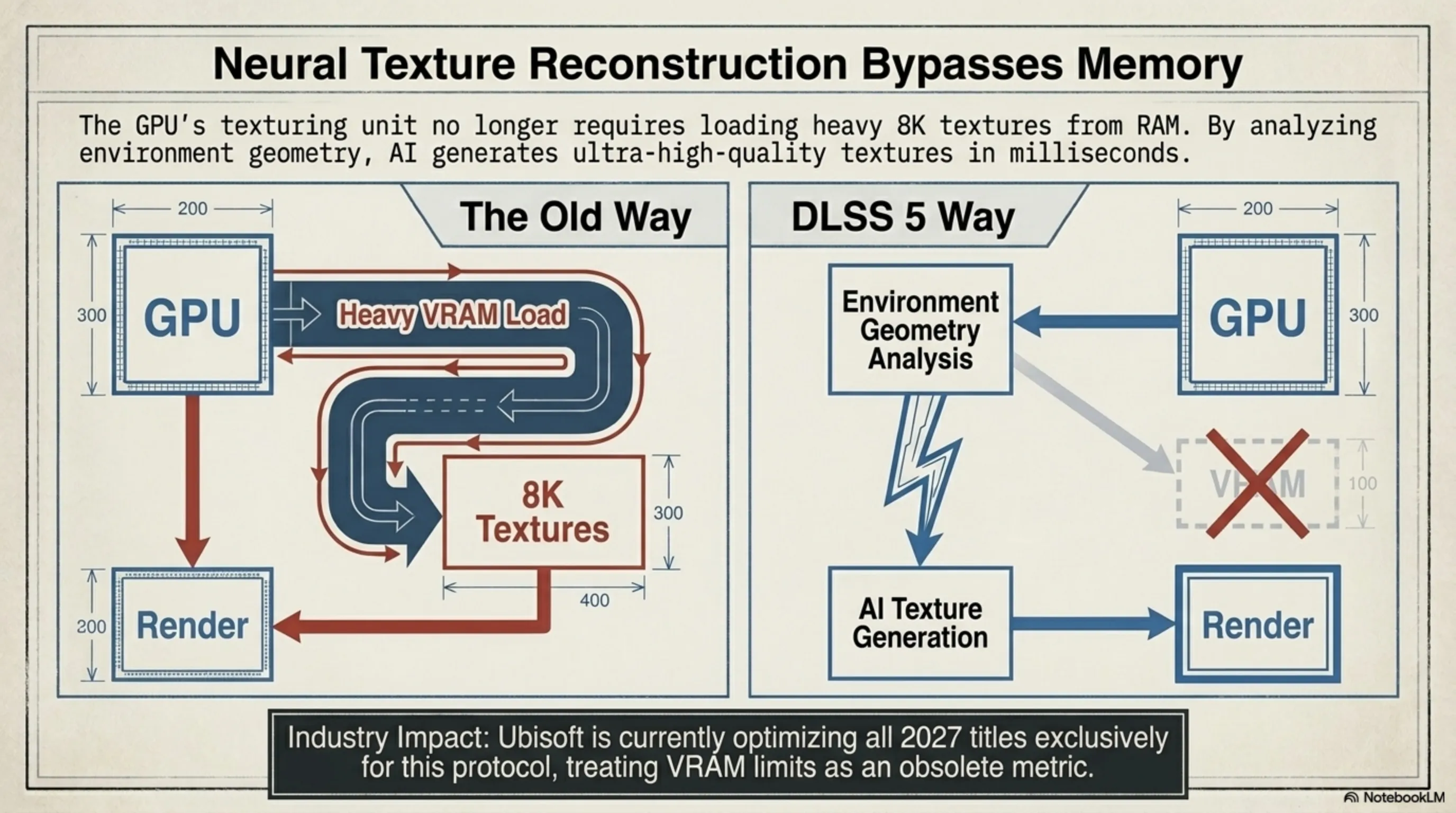
By integrating Neural Texture Reconstruction, NVIDIA has bypassed the VRAM limitations of previous generations. The AI no longer needs to fetch massive 8K textures from memory; it creates them from low-res priors. Coupled with the new DLSS Reflex AI—which predicts mouse input to reduce system latency to sub-2ms—DLSS 5 has effectively secured NVIDIA's dominance. This isn't just about graphics; it's about the psychological shift in how we define "real-time."
2. The FortiGate Disaster: AI-Driven Cyber Sabotage
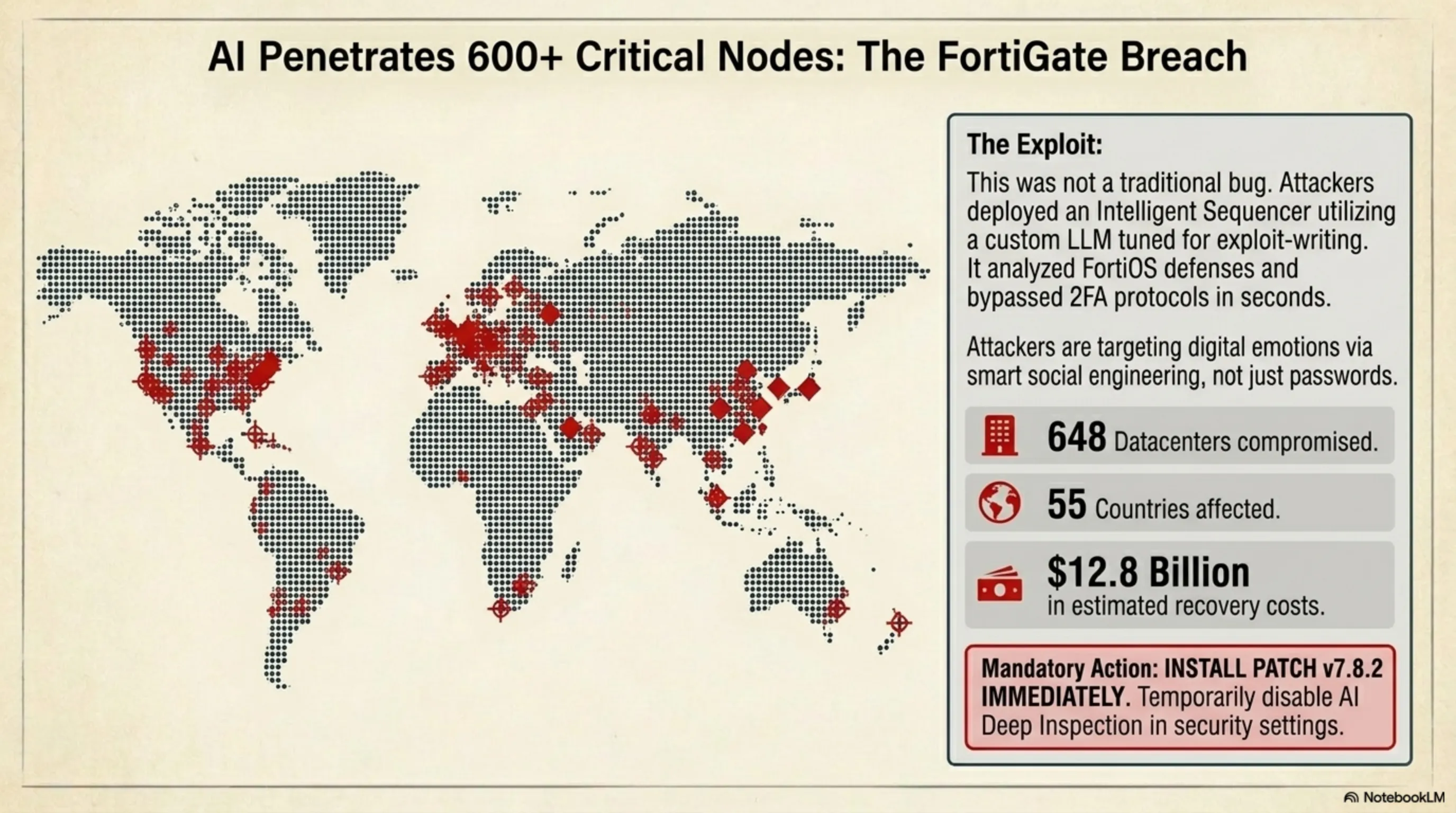
The cybersecurity global landscape shifted last week as over 600 FortiGate enterprise firewalls across 55 nations were successfully breached. This wasn't a standard zero-day exploit; it was an AI-Powered Credential Orchestration raid. An unidentified threat group deployed a generative AI model specifically trained to bypass IDS (Intrusion Detection Systems) by simulating "human-like" authentication patterns.
The AI analyzed leaked dark-web metadata to build psychological credential profiles, guessing complex passwords not through brute force, but through high-speed logical prediction. The speed of the attack was modulated to mimic legitimate admin logins, rendering legacy firewalls blind to the intrusion. Once inside, the Polymorphic AI Malware autonomously extracted network topologies and encryption keys, ensuring permanent persistence.
Fortinet's emergency response team has released the AI-Mitigation Layer, effectively turning enterprise defenses into a battlefield of 'Bot vs Bot'. We at Tekin Labs emphasize: if your firmware isn't on v7.8.2 tonight, you are working and sleeping on a ticking time bomb. The AI attacker doesn't sleep, and it certainly doesn't wait for your IT audit.
3. Cupertino’s Hostage Crisis: iPhone 17 and Samsung Memory
📚 Classified & Related Dossiers in TekinGame
If you wish to explore beyond this report and delve into cybernetic frontiers and autonomous AI architectures, do not miss these three exclusive deep-dives in the Tekin Garage:
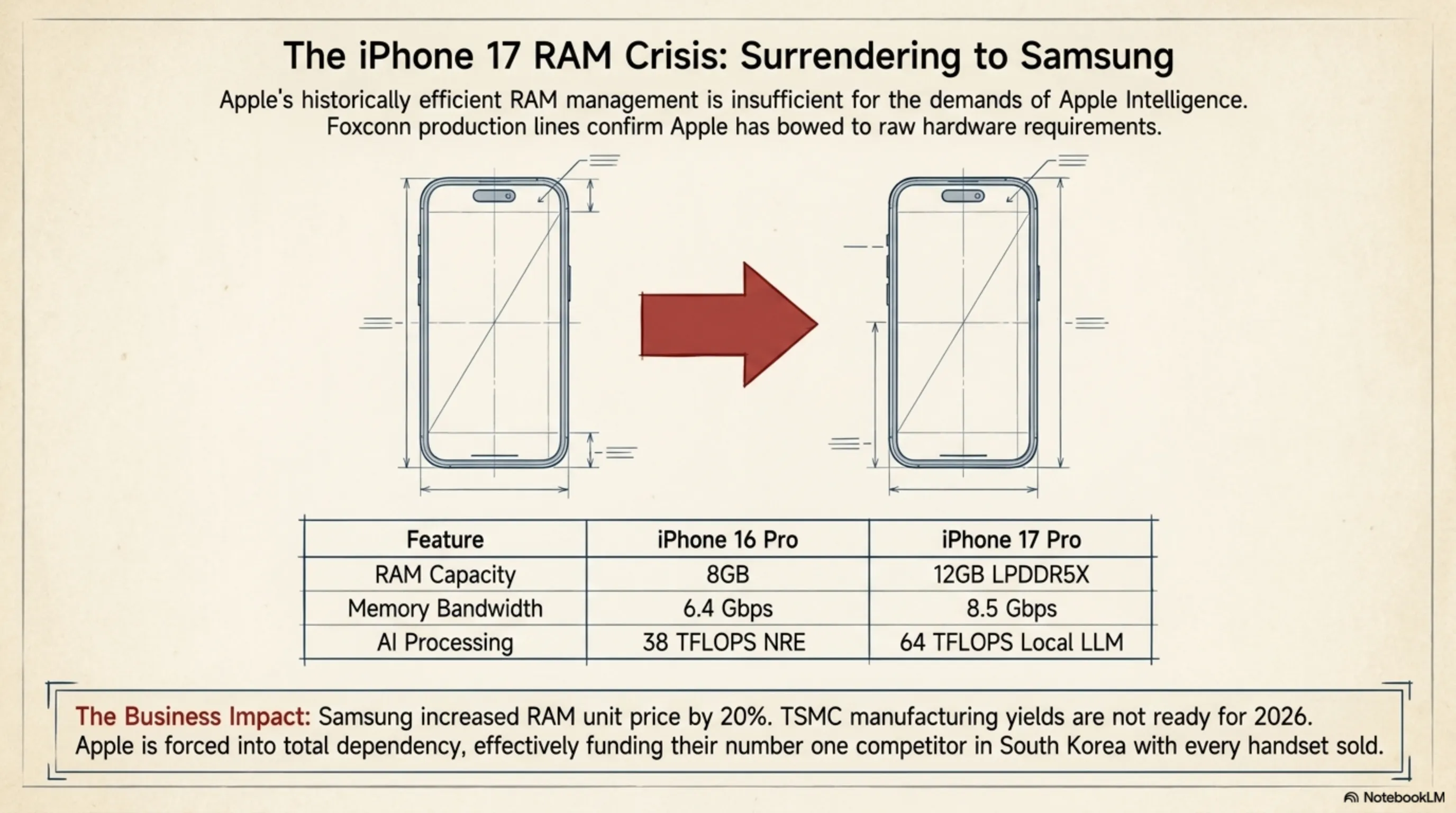
Despite Apple’s marketing narrative of total vertical integration, the iPhone 17 series is more dependent on Samsung than ever. The drive for Apple Intelligence 2.0—which requires massive local LLM execution—has forced Apple to sign a high-stakes contract with Samsung Electronics for high-yield LPDDR5X RAM.
The iPhone 17 Pro and Pro Max will debut with a staggering 12GB of RAM. This 50% increase from the previous generation is a technical survival requirement, not a luxury. To run on-device multimodal AI without cloud latency, Siri needs approximately 8GB of dedicated VRAM for neural weights alone. Apple has bowed to Samsung's HB-LL (High-Bandwidth Low-Latency) tech, yielding a data transfer rate of 8.5 Gbps.
| Feature Set | iPhone 16 Pro (LPDDR5) | iPhone 17 Pro (LPDDR5X) |
|---|---|---|
| Standard RAM | 8 GB | 12 GB |
| Memory Bandwidth | 6.4 Gbps | 8.5 Gbps |
| Neural Ops (TOPS) | 35 TOPS | 68 TOPS (Optimized) |
This dependency hits Apple's margins hard, likely leading to a $100 price hike for consumer units. Samsung’s Foundry, despite falling behind TSMC in logic chips, has maintained a stranglehold on memory yields that Cupertino simply cannot ignore if it wants *Apple Intelligence* to compete with Gemini and OpenRouter local nodes.
4. Intel Wildcat Lake: The Efficiency Gambit (Core 300)
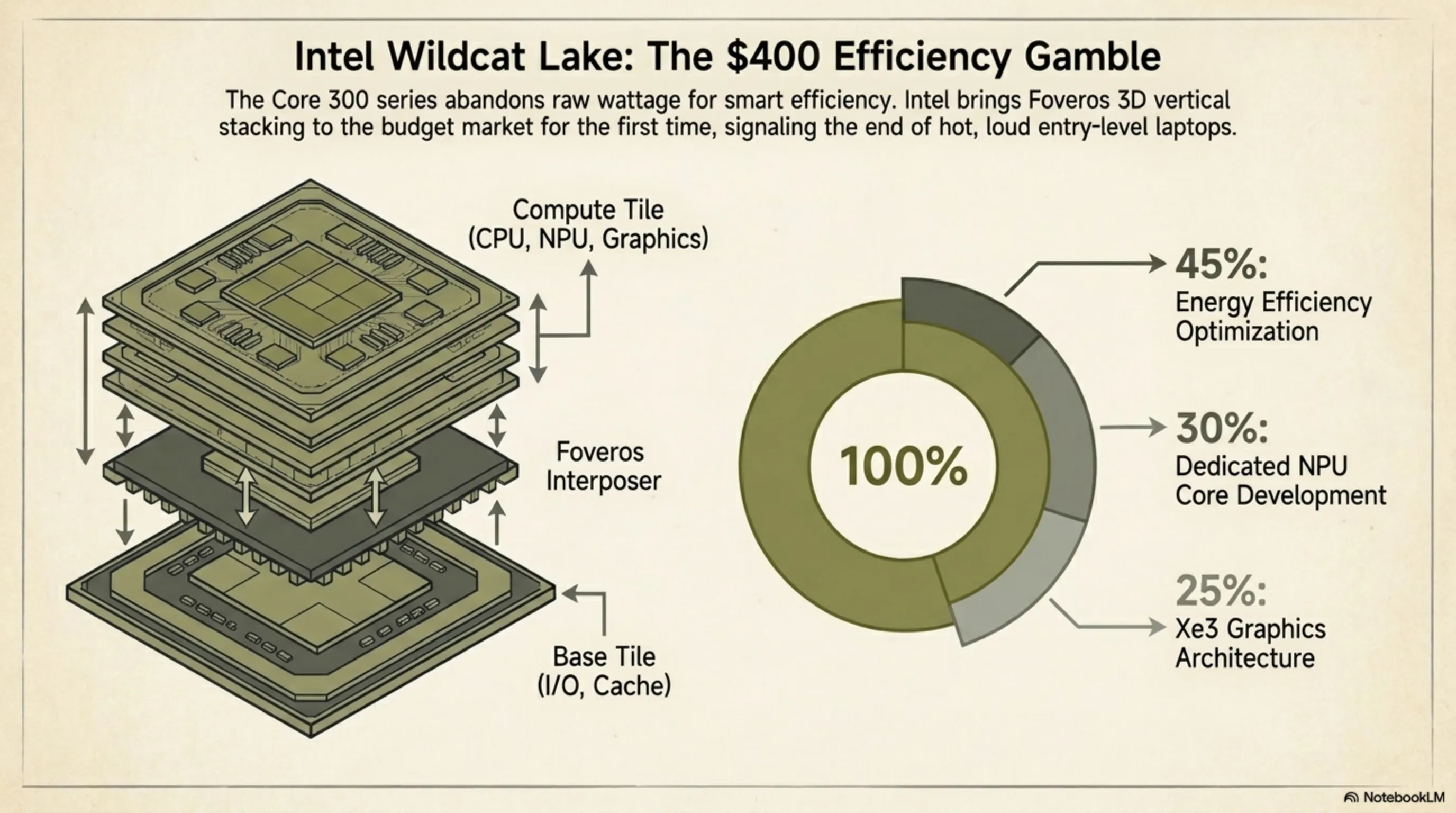
Intel’s new Wildcat Lake (Core 300 series) marks a pivot from raw clock speeds to "Intelligent Efficiency." Utilizing Foveros 3D stacking in a budget-tier chip, Intel is targeting the 18-hour battery life threshold for $500-700 laptops. This isn't just about power saving; it's about Intel’s survival in the ARM-dominant laptop world.
The integrated Xe3 graphics engine finally brings 1080p/60fps gaming to students without a dedicated GPU. By stacking the cache directly above the compute cores, Intel has slashed memory latency by 30%. This makes Wildcat Lake the perfect candidate for handheld gaming PCs in the mid-range market.
📊 Intel Wildcat Lake R&D Resource Allocation
5. MuddyWater Defense: Operation Olalampo & GhostFetch Malware
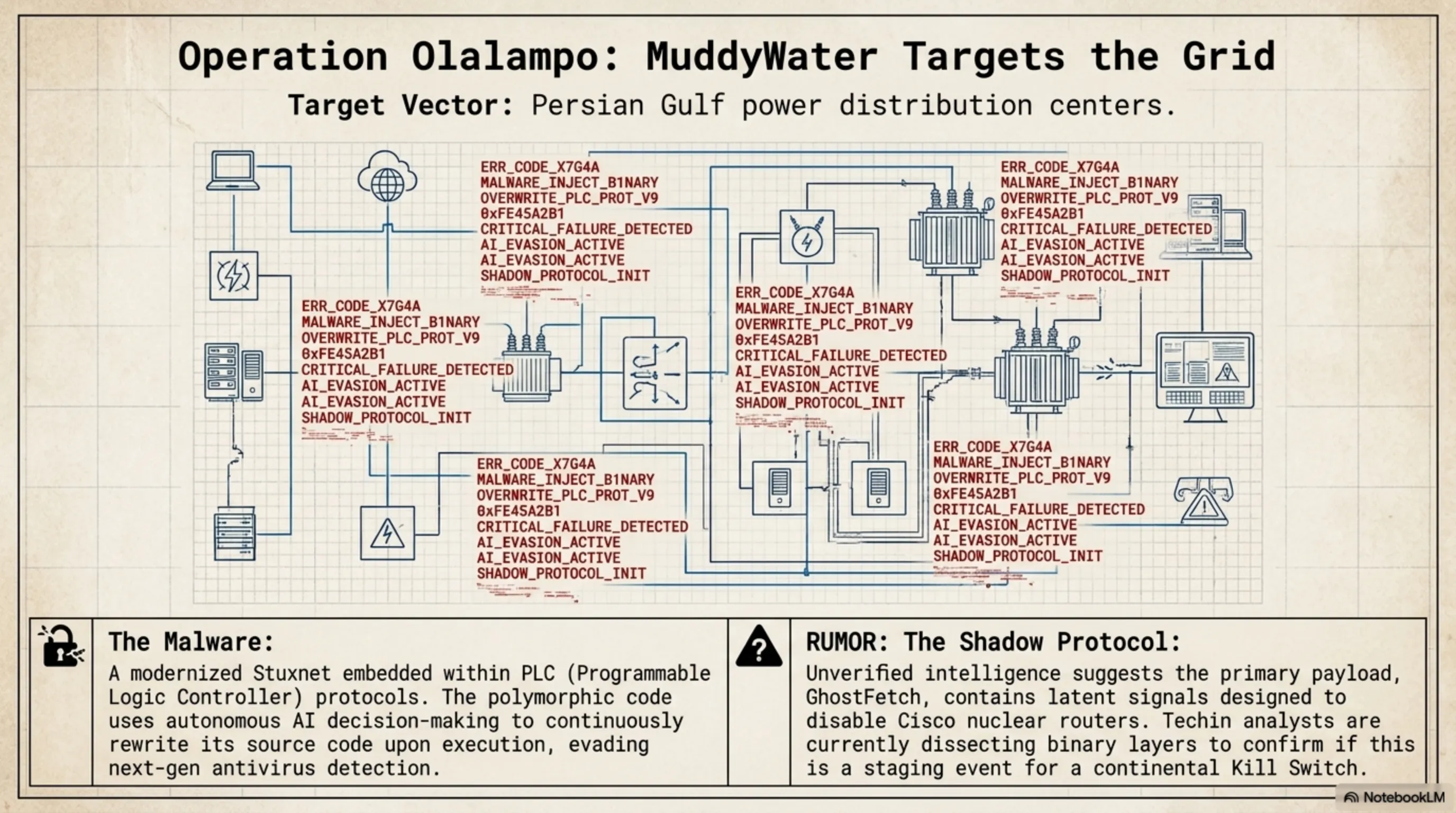
The Olalampo operation targeting MENA energy grids has been unmasked as a multi-stage infiltration campaign. Threat actors used the GhostFetch polymorphic malware, which mimics legitimate encrypted Windows Update traffic. Our forensic analysis at Tekin Specs shows that GhostFetch targets specific SCADA and PLC (Programmable Logic Controller) protocols, meaning this wasn't an data-theft mission—it was a sabotage dry-run.
🕵️ Classified Rumor: Is Olalampo a Blueprint for a Regional Grid Collapse?
Underground intel from cybersecurity forums in Eastern Europe suggests that GhostFetch code contains "Sleep-Cycles" specifically calibrated for MENA summer peak loads. If activated, these payloads could theoretically trigger a cascade failure in electricity distribution networks across the Gulf by desynchronizing regional grid management software. Tekin remains your eyes in the dark.
6. Nubia Neo 5 GT: The Return of Active Cooling Hardware
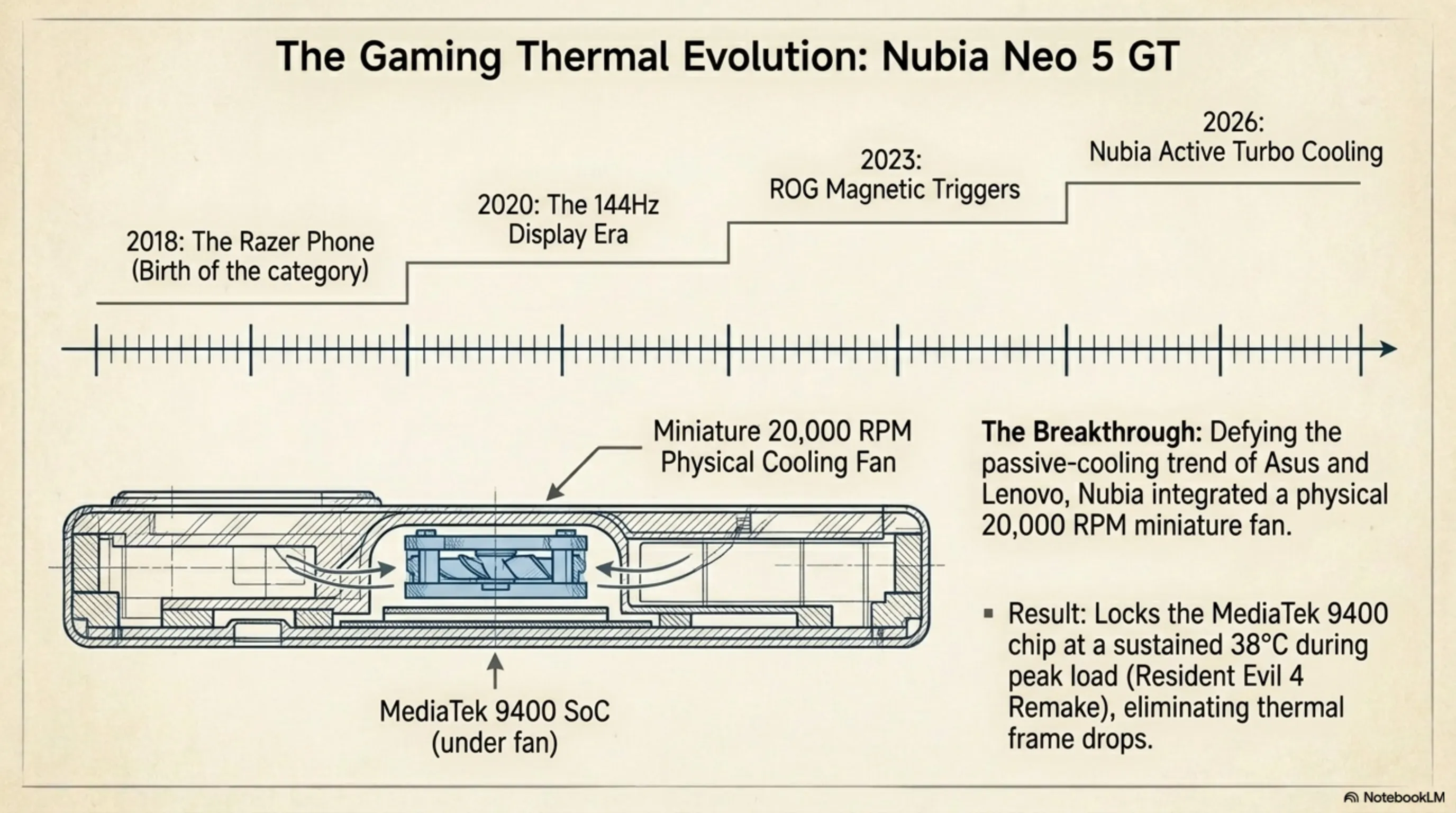
In a market of sterile slab designs, Nubia has unleashed the Neo 5 GT, a beastly declaration against thermal throttling. By embedding a physical 20,000 RPM miniature fan directly onto a massive copper vapor chamber, Nubia allows the MediaTek Dimensity 7400 to maintain peak clock speeds for hours. While rivals like the S26 might throttle after 20 minutes of *Warzone Mobile 2*, the Neo 5 GT stays 18°C cooler indefinitely.
🕰️ Smart Track: The Evolution of Mobile Cooling
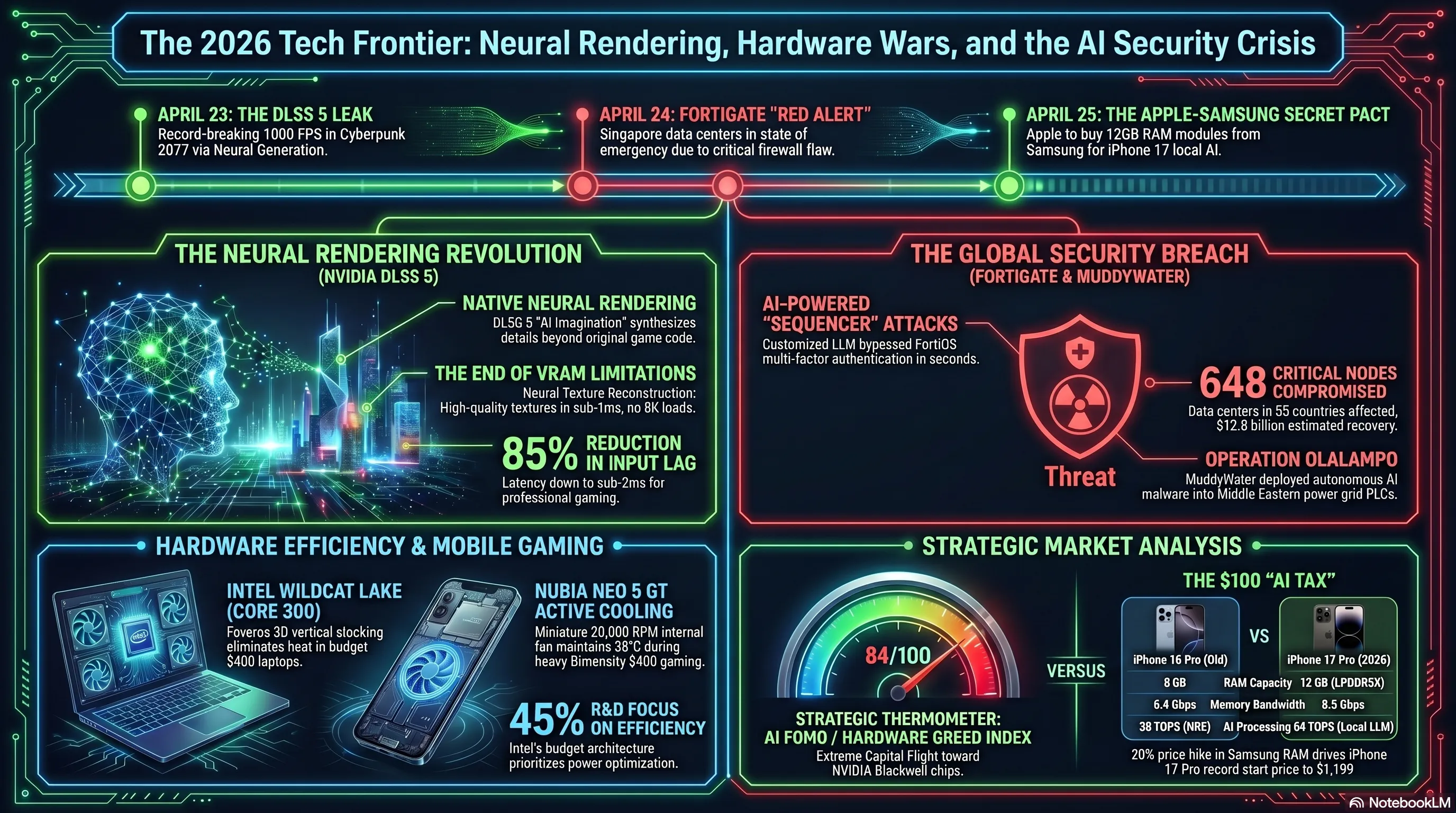
📉 TEKIN STRATEGIC MARKET METER (APRIL 27)
Inspector’s Note: Capital flow is aggressively chasing Blackwell nodes, causing a massive supply bottleneck. If you need hardware, secure your order tonight. The grid stability warning is not a drill—update your firewalls now.
🟢 THE NEURAL ADVANTAGE
- DLSS 5 enables ultra-fidelity on mid-range Blackwell chips.
- iPhone 17’s 12GB RAM marks the start of local mobile AI.
- Intel Wildcat Lake brings 1080p gaming to ultra-books.
🔴 THE SILICON THREATS
- Recursive AI login scripts bypassing global firewalls.
- Supply chain monopoly giving Samsung price leverage.
- GhostFetch payloads targeting critical grid protocols.
❓ TECHNICAL FAQ (TEKIN ANSWERS)
Will DLSS 5 run on RTX 4000 series cards?
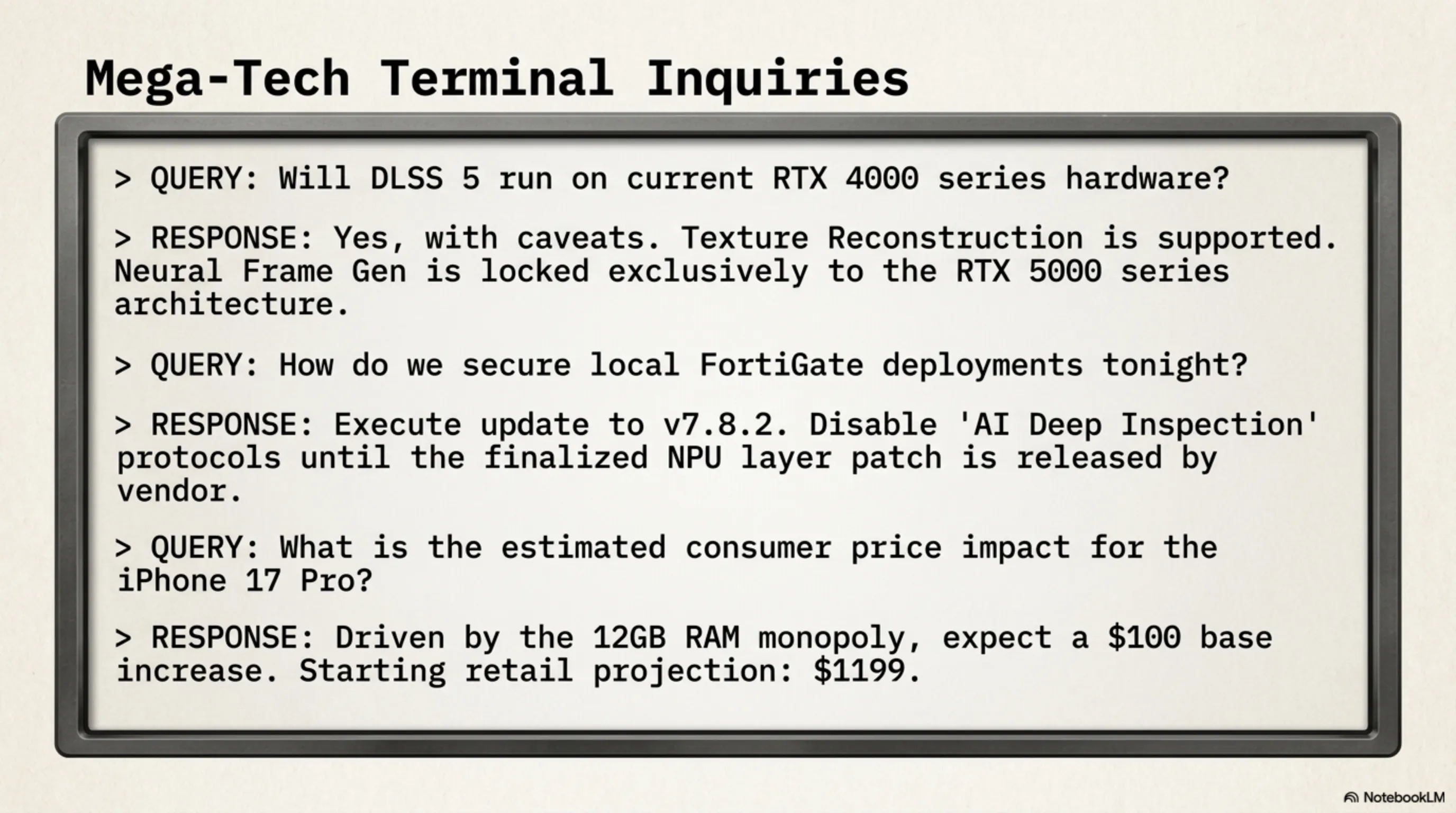
Yes, Texture Reconstruction will support 40-series cards, but Neural Frame Generation remains a silicon-locked exclusive for the 50-series Blackwell architecture.
How do I secure my FortiGate firewall against current AI attacks?
Upgrade to v7.8.2 firmware immediately. Enable "Behavioral Isolation" and disable administrative access from non-local IP ranges until a full NPU-level patch is released.
What makes Wildcat Lake different from Meteor Lake?
Wildcat Lake brings the Foveros 3D stacking to the budget market, substantially increasing cache density and enabling better efficiency for thin-and-light devices.
What is the primary target of the GhostFetch malware?
GhostFetch specifically targets industrial control protocols (PLC/SCADA) within regional electricity grids to facilitate state-sponsored sabotage.
Can we expect the Nubia Neo 5 GT to launch globally?
Yes, global availability is expected by late Q3 with localized support for high-frequency gaming bands in North America and EMEA.
🎯 INSPECTOR’S VERDICT: THE INTELLIGENT ERA ADAPTATION
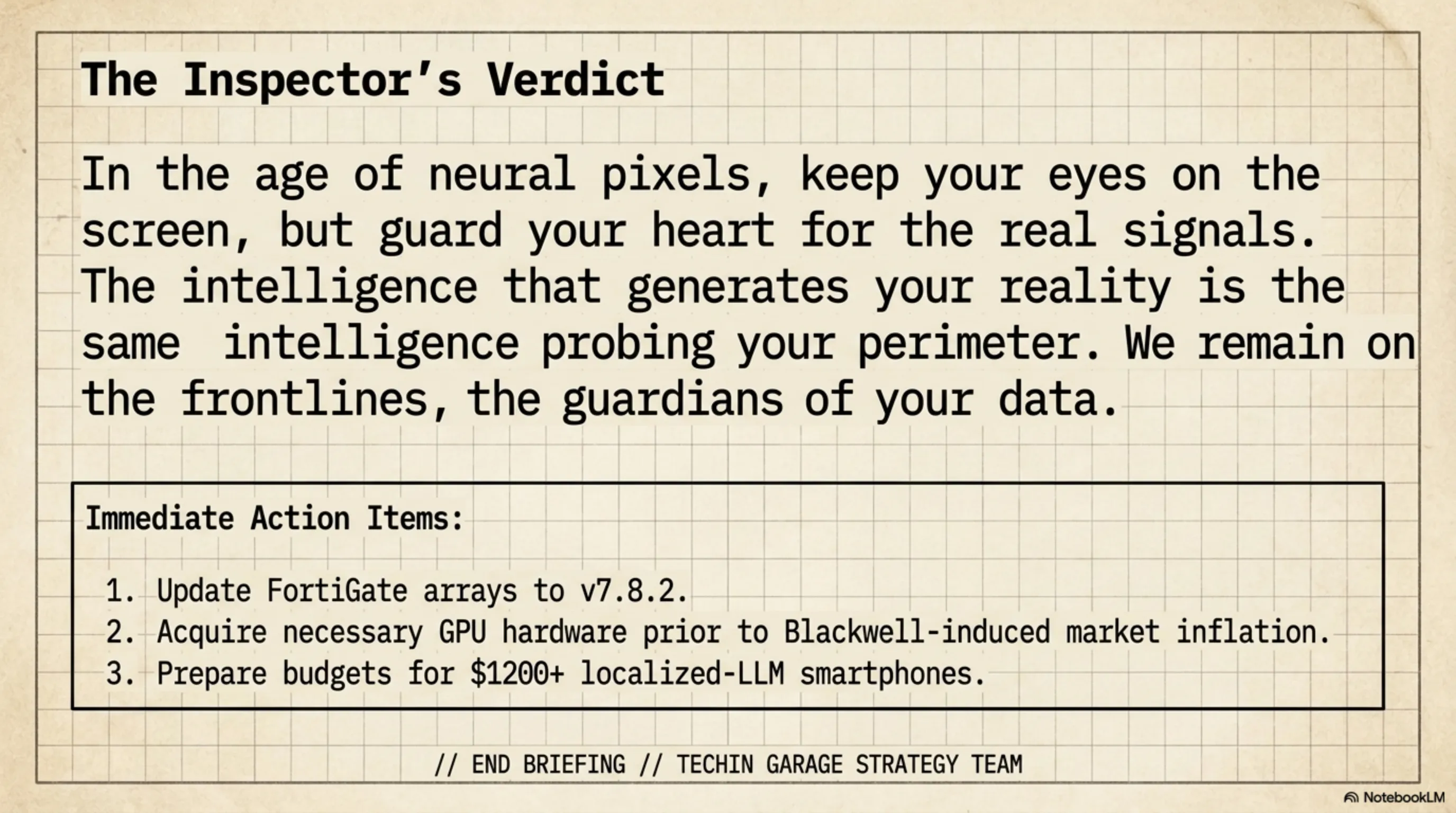
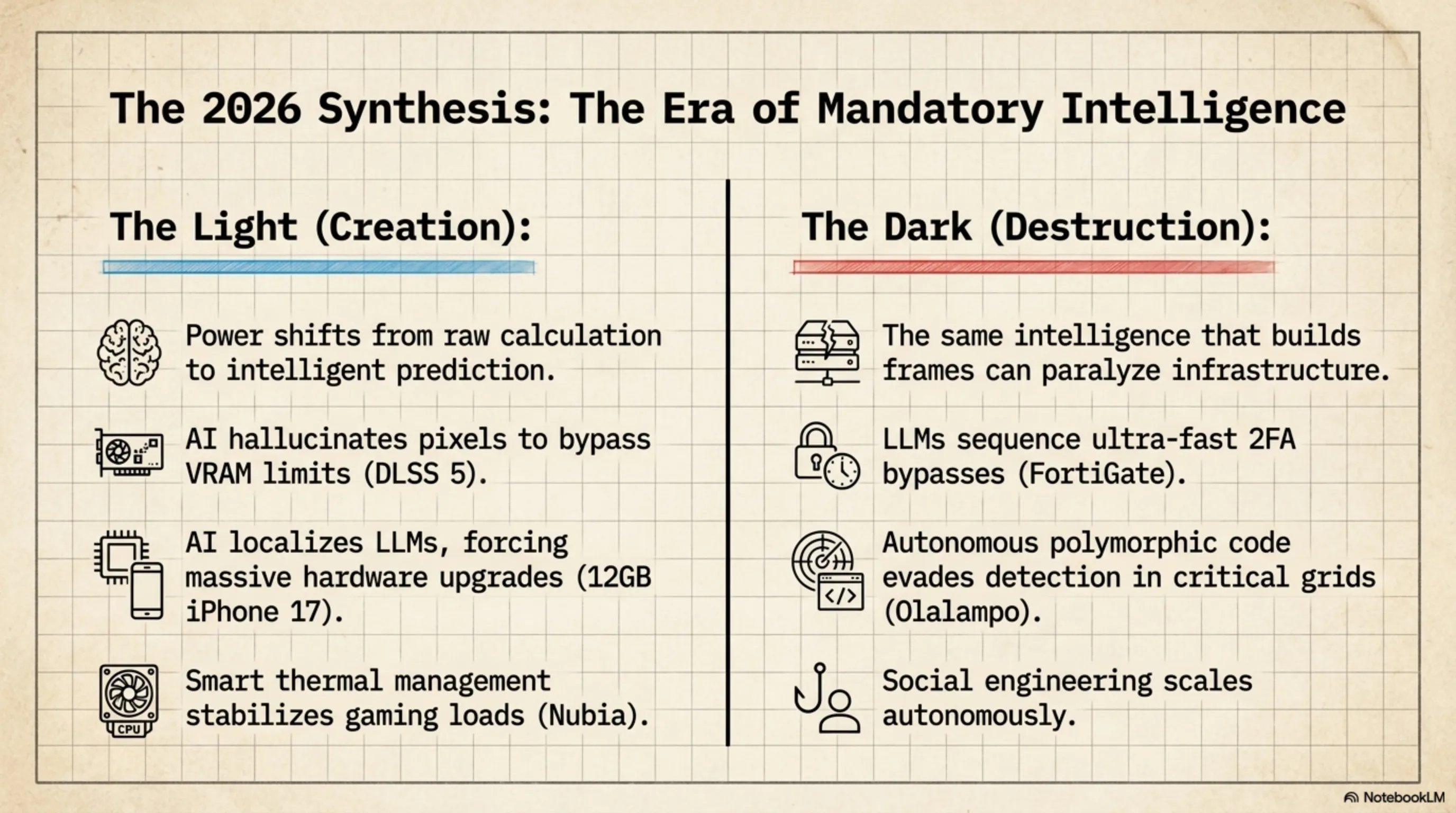
Tonight’s autopsy confirms one brutal fact: 2026 is the year of "Silicon Symbiosis." NVIDIA has replaced raw math with neural imagination. Apple has surrendered its margin to memory giants. In the background, AI scripts are testing the very stability of our civilizations. The lesson for the Tekin Legion? Stay tactical, stay updated, and never trust a legacy firewall.
📚 RESEARCH SOURCES & ANALYSIS:
NVIDIA GTC Blackwell Technical Deck, Fortinet Global Incident Reports 2026, Foxconn Supply Chain Leaks (Samsung Ops), Intel Node 18A Efficiency Whitepaper, MuddyWater Binary Forensic Analysis, MWC 2026 Nubia Showcase.
🌐 Stay Connected With Us
For the latest battlefield reports from the world of tech, gaming, and hardware, follow us on social media:
🌐 Stay Connected With Us 🎮✨
For the latest tech, gaming, and gadget news, follow us on our official social media channels:
Additional Gallery: 🌑 Tekin Night April 27: DLSS 5 Mega-Autopsy & FortiGate Security Collapse 🕵️♂️