Good Evening Global Gaming Community; Welcome to Tekin Night for Monday, September 14, 2026
Tonight, we deliver an exhaustive special report on BlizzCon 2026 and international gaming hardware, analyzing monumental announcements from StarCraft 2030 to Diablo 5 and the Switch 2 Zelda scalper crisis.
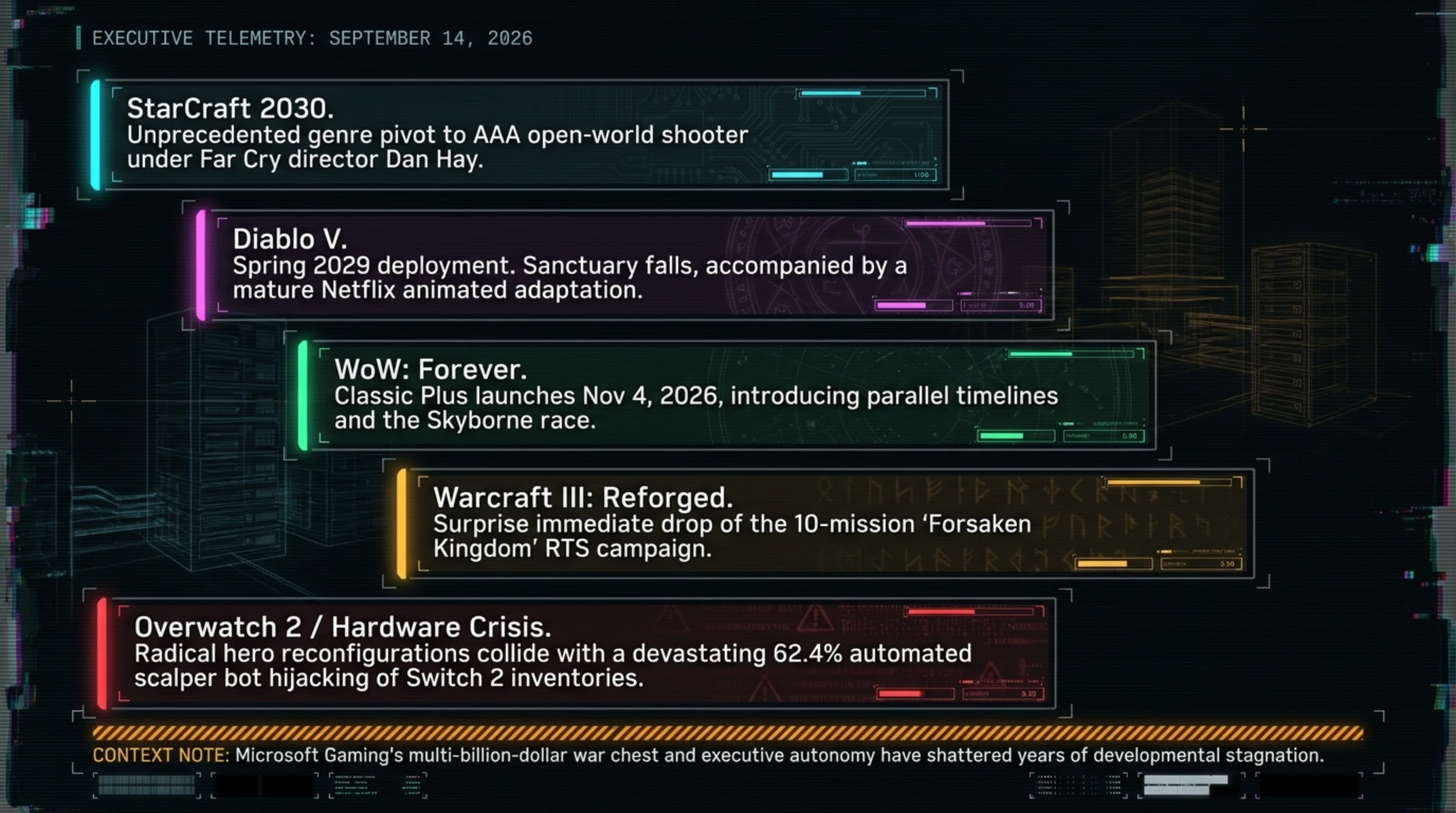
- 🎮StarCraft AAA Shooter Revival- Officially greenlit for 2030 as an open-world shooter under Far Cry director Dan Hay.
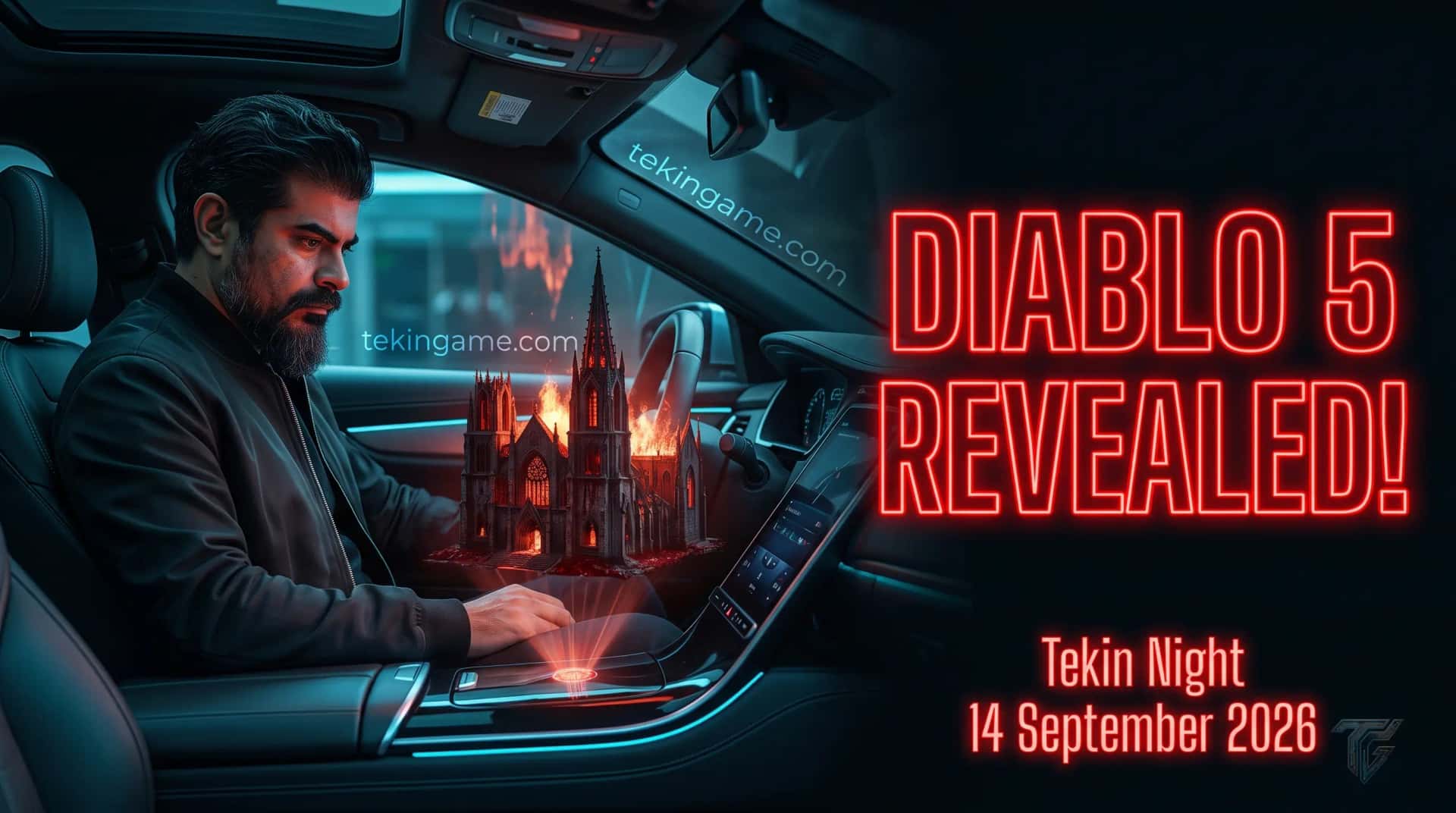
- 🎧Diablo 5 & Netflix Series- Scheduled for Spring 2029 release alongside a high-budget mature animated series.
- 🚀WoW: Forever Classic Plus- Parallel vanilla timeline launching November 4 featuring the brand-new Skyborne race.
- 🗡️Warcraft 3 New Campaign- Surprise immediate release of the 'Forsaken Kingdom' campaign after 22 years.
- 📰Overwatch 2 Meta Shift- Introduction of hero Doctrine and controversial support rework for Sombra.
- ⚔️Switch 2 Scalper Crisis- Automated bots deplete Zelda 40th Anniversary pre-orders, driving eBay resales past £700.
The evening of Monday, September 14, 2026 will stand as a watershed milestone in interactive entertainment history, marking the definitive renaissance of Blizzard Entertainment under the corporate stewardship of Microsoft Gaming. The opening gala of BlizzCon 2026 at the Anaheim Convention Center in Southern California reverberated across global livestream feeds, shattering years of corporate stagnation, restructuring fatigue, and developmental silence. Armed with an unprecedented multi-billion-dollar war chest and executive autonomy granted by Microsoft leadership, Blizzard unveiled a sweeping five-year strategic roadmap that redefines its foundational intellectual properties for a new generation of high-fidelity platforms.
The undisputed centerpiece of tonight's showcase was the long-rumored, historic resurrection of the StarCraft franchise. After fifteen years of hibernation following the culmination of StarCraft II, Blizzard stunned the gaming world by announcing that the universe of Jim Raynor and Sarah Kerrigan is returning not as an isometric real-time strategy title, but as a colossal, big-budget AAA open-world tactical shooter slated for simultaneous launch across PC and next-generation consoles in 2030. Concurrently, Blizzard established the creative continuity of the action-RPG genre by formally announcing Diablo V for a Spring 2029 release, accompanied by a lavish, adult-oriented animated adaptation produced in partnership with streaming titan Netflix.
Yet the evening delivered far more than speculative long-term promises. Veteran players of the Warcraft universe were treated to immediate, historic triumphs: the surprise, unannounced deployment of the first official Warcraft III real-time strategy campaign in twenty-two years—titled 'Forsaken Kingdom'—alongside the formal unveiling of World of Warcraft: Forever, the long-mythologized 'Classic Plus' initiative scheduled for full commercial deployment on November 4, 2026. However, outside the celebratory halls of BlizzCon, international retail markets experienced fierce consumer turmoil as automated scalping syndicates instantaneously stripped retail inventories of the ultra-limited Nintendo Switch 2 Zelda 40th Anniversary edition, reselling pre-orders on secondary marketplaces at exorbitant premiums exceeding £700.
Core Strategic Takeaways and Key Headlines from Tonight's Special Edition
- Galactic Warfare Reimagined: StarCraft formally resurrected as a AAA open-world shooter launching in 2030 under veteran Far Cry director Dan Hay.
- Sanctuary Falls to Darkness: Blizzard announces Diablo 5 for Spring 2029 alongside a high-budget Netflix animated series adaptation.
- The Dawn of Classic Plus: World of Warcraft: Forever confirmed for release on November 4, 2026, introducing the new playable Skyborne race.
- Two Decades in the Making: Surprise same-day launch of 'Forsaken Kingdom', the first official Warcraft 3 campaign since The Frozen Throne in 2003.
- Radical Meta Reconstruction: Overwatch 2 unveils techno-vampire hero Doctrine and completes a controversial total rework shifting Sombra to Support.
- Secondary Market Plunder: Automated scalper bots deplete pre-orders for the Zelda 40th Anniversary Switch 2, driving eBay resales past £700.
The investigative team at Tekin Game has cross-referenced courtroom transcripts, developer disclosures, live stage demonstrations, and supply-chain telemetry to unpack every dimension of this remarkable night.

Our comprehensive technical briefing begins with the monumental strategic pivot that has upended two decades of real-time strategy orthodoxy: the rebirth of StarCraft.
1. The Rebirth of Galactic Warfare: StarCraft Officially Revived as a AAA Open-World Shooter Launching in 2030
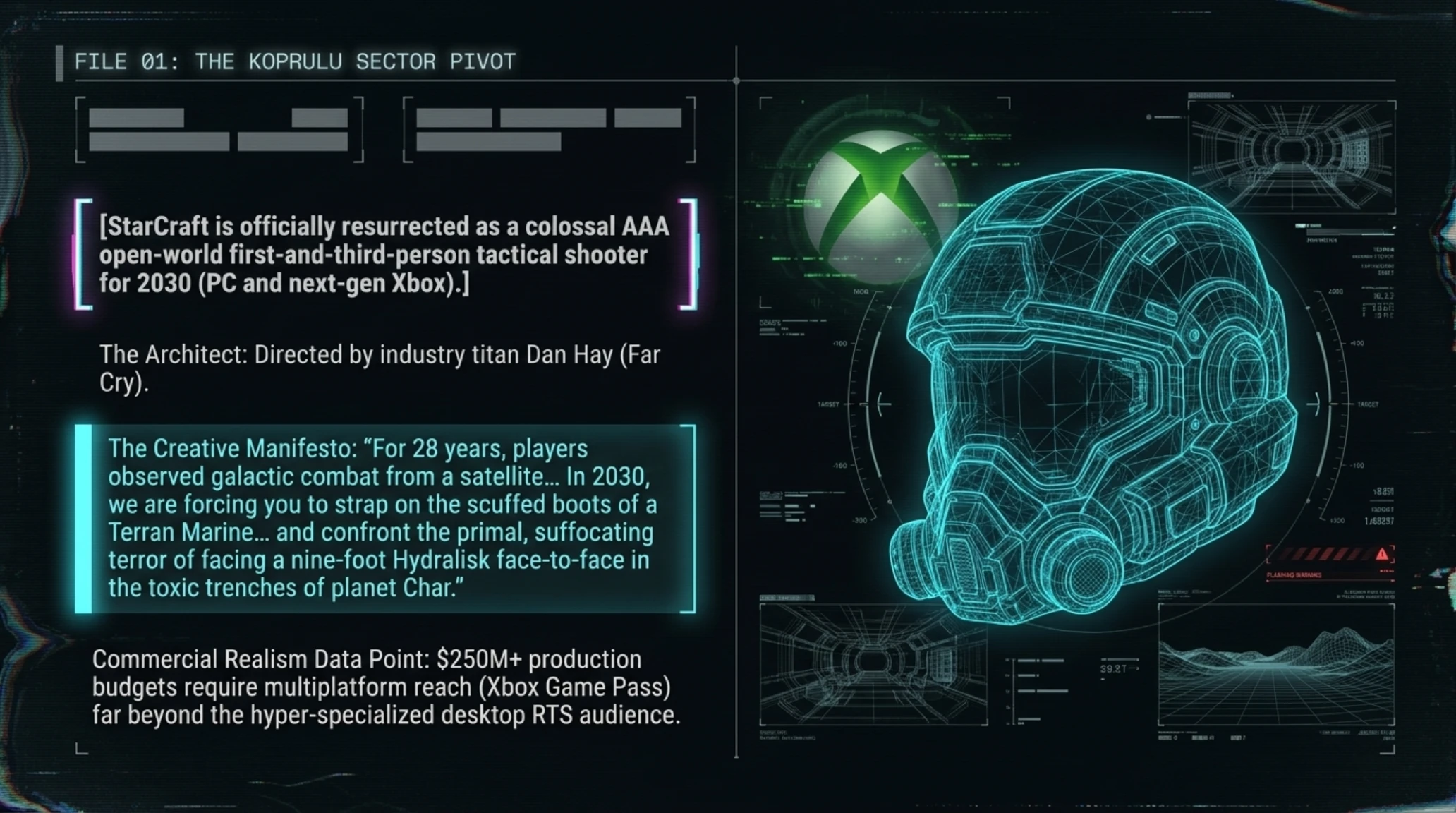
Fifteen agonizing years after the launch of StarCraft II: Wings of Liberty, the agonizing developmental drought surrounding the Koprulu Sector was definitively shattered tonight. As Blizzard Entertainment President Johanna Faries stepped onto the Anaheim stage, the monolithic LED display wall faded into pitch darkness before detonating with the terrifying, guttural shriek of a Zerg swarm incursion and the heavy mechanical clanking of Terran siege machinery. Blizzard officially confirmed that an unannounced, ultra-high-budget flagship installment in the StarCraft franchise is deep in active development, targeting a premier worldwide release in 2030 across PC and next-generation Xbox hardware.
The monumental reveal, however, was accompanied by a seismic design transformation: the project completely departs from traditional isometric real-time strategy mechanics to establish a ground-breaking AAA open-world first-and-third-person tactical shooter. Directing this monumental enterprise is industry titan Dan Hay, who previously spent over a decade orchestrating Ubisoft’s flagship Far Cry series through its most commercially lucrative era. Addressing a roaring stadium audience, Hay delivered an unvarnished creative manifesto: «For twenty-eight years, players observed galactic combat from the detached, mathematical perspective of a satellite commander in high orbit. In 2030, we are forcing you to strap on the scuffed boots of a Terran Marine, drop through a fiery orbital descent, and confront the primal, suffocating terror of facing a nine-foot Hydralisk face-to-face in the toxic trenches of planet Char.»
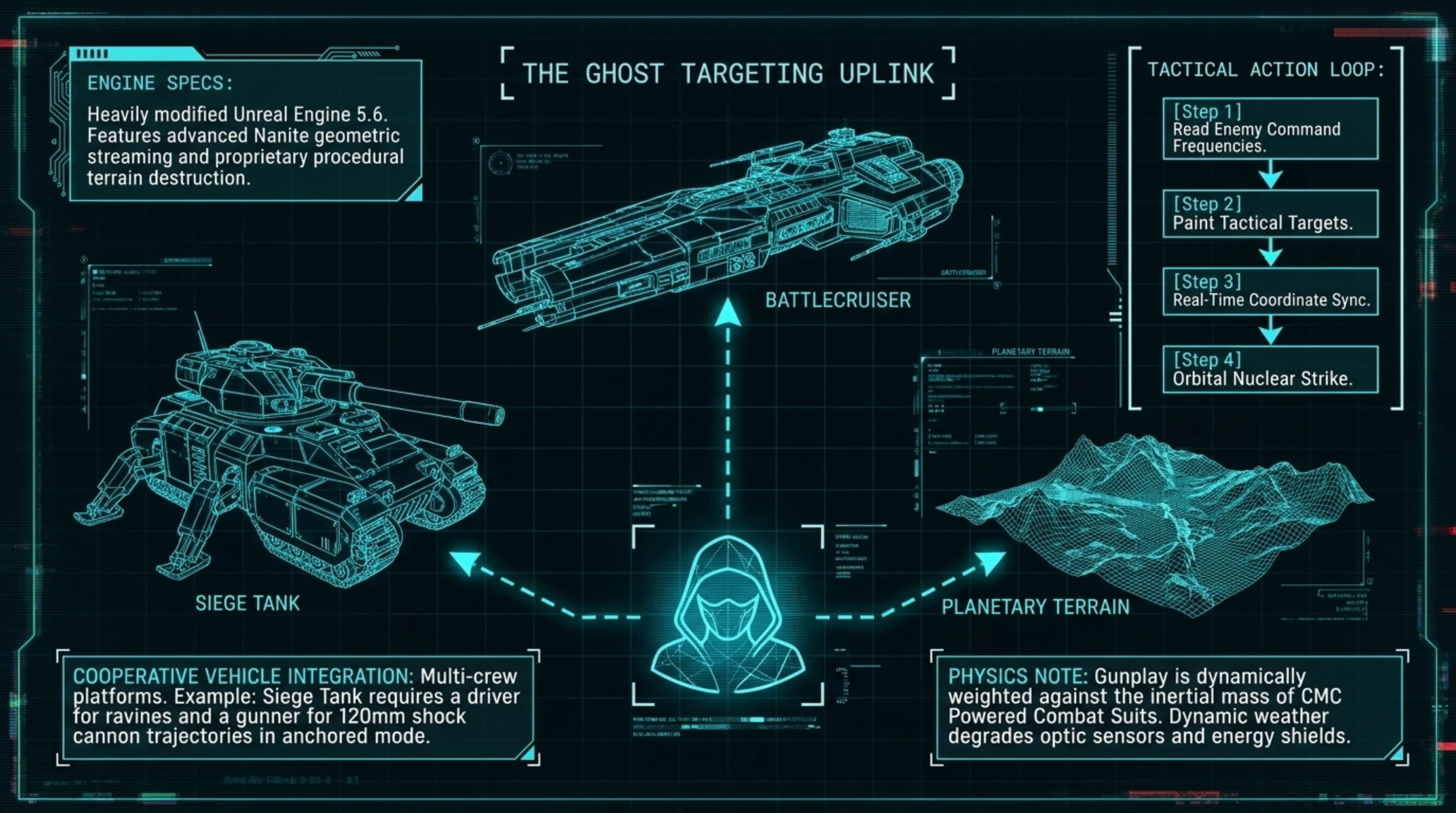
Deep architectural reporting reveals that the untitled StarCraft project is engineered upon a heavily modified proprietary fork of Epic Games’ Unreal Engine 5.6. The game encompasses vast, seamless planetary open worlds spanning the ash-covered volcanoes of Char, the floating orbital platforms of Korhal, and the crystalline jungle ruins of Aiur. Utilizing advanced Nanite geometric streaming and proprietary procedural terrain destruction systems, artillery barrages from orbiting battlecruisers physically alter the topography of the battlefield in real time. Players can explore the cosmos as customized Terran operatives or cybernetically augmented mercenaries, constructing forward operating bases, forging tactical alliances, and piloting iconic lore vehicles within deep immersive sim gameplay loops.
To ensure gunplay tactile fidelity matches elite competitive standards, Blizzard’s Irvine design teams collaborated closely with Microsoft’s veteran first-person shooter studios. Handling mechanics for iconic weaponry—including the high-velocity C-10 Canister Rifle and shoulder-mounted concussion grenade launchers—are dynamically weighted against the inertial mass of CMC Powered Combat Suits. Furthermore, covert operatives can disembark from heavy armor to execute stealth infiltration missions as psionic Ghost agents, reading enemy command frequencies, painting tactical targets, and calling down devastating orbital nuclear strikes via seamless real-time coordinate synchronization.
Planetary physics and atmospheric weather simulations introduce intense dynamic volatility to every mission. On the volcanic surface of Char, sudden magma surges and blinding sulfur ash storms severely degrade optic sensors, forcing players to rely on short-range thermal radars while Zerg burrowers execute subterranean flanking maneuvers. Conversely, on the shattered Protoss homeworld of Aiur, psychic storms induce severe optical distortion and electromagnetic interference, disabling energy shields and destabilizing jump-jet thrusters. To counter these threats, players deploy deployable defensive perimeters, automated point-defense turrets, and mobile radar dishes that anchor forward operating bases across contested territories.
Cooperative vehicle mechanics represent another major engineering pillar. Players can seamlessly pilot multi-crew combat platforms, including the iconic Siege Tank, where one operative navigates treacherous ravines while a secondary gunner calibrates 120mm shock cannon trajectories in anchored siege mode. Aerial dropships like the Medivac transport entire fireteams directly into hot combat zones, deploying mechanized Goliath walkers and Vulture hoverbikes equipped with proximity-sensing spider mines. This multi-tiered vehicular integration transforms skirmishes into sprawling combined-arms warfare reminiscent of classic military simulations.
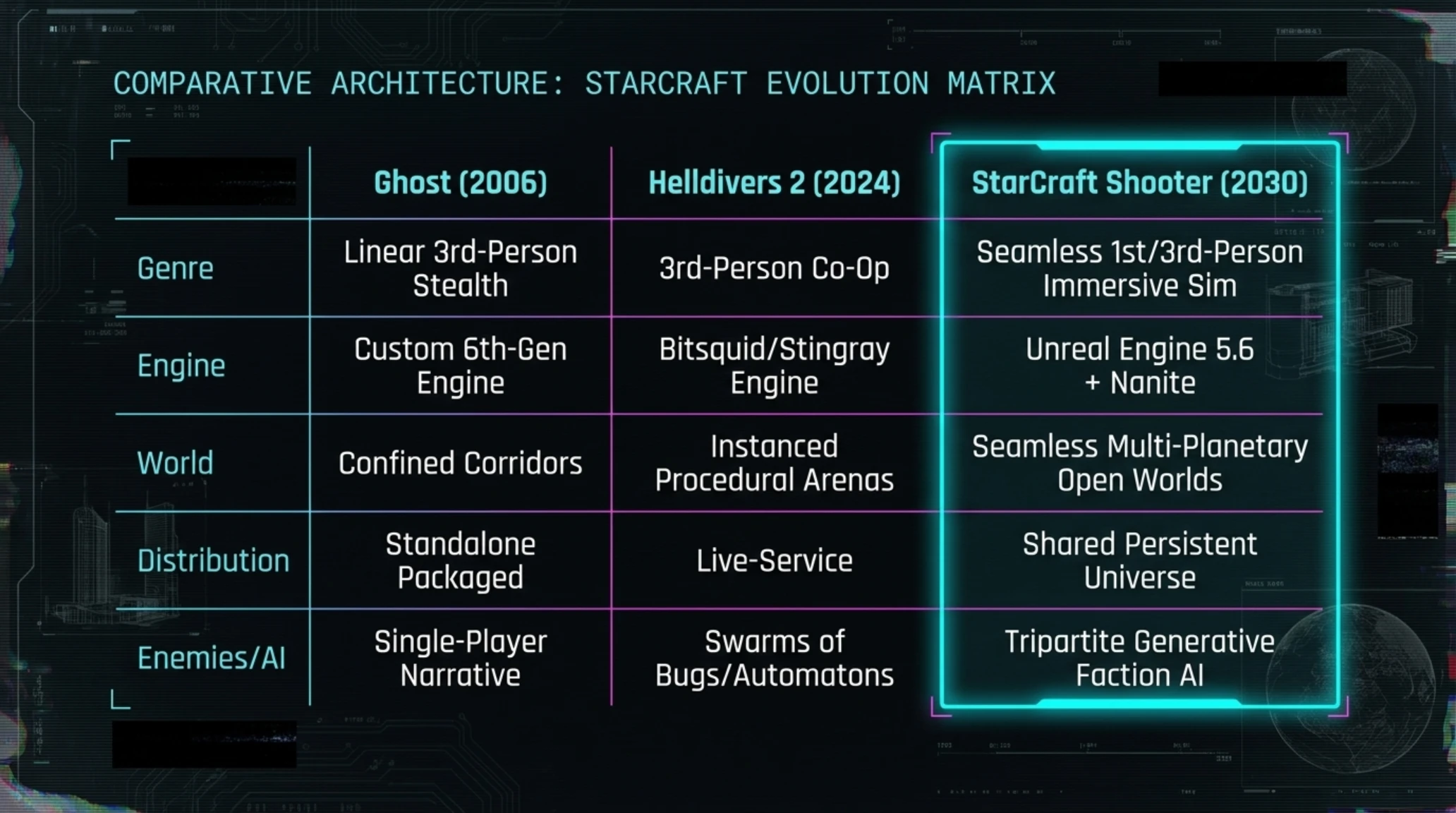
Comparative Matrix: Architectural Evolution of the StarCraft Shooter Against Landmark Peers
| Comparative Benchmark | StarCraft: Ghost (Canceled 2006) | Helldivers 2 (Sony 2024) | StarCraft AAA Shooter (Blizzard 2030) |
|---|---|---|---|
| Genre & Camera Perspective | Linear Third-Person Stealth Action | Third-Person Co-Op Extraction Shooter | Seamless First/Third-Person Open-World Immersive Sim |
| Core Graphical Engine | Custom 6th-Gen Console Proprietary Engine | Discontinued Bitsquid/Autodesk Stingray | Heavily Modified Unreal Engine 5.6 with Nanite Destruction |
| World Topology & Traversal | Confined, Highly Scripted Corridors | Instanced Procedural Circular Arenas | Seamless Multi-Planetary Open Worlds with Atmospheric Flight |
| Commercial Distribution Model | Standalone Packaged Console Release | Live-Service Model with Seasonal Warbonds | Full Narrative Campaign Paired with Shared Persistent Universe |
| Faction Interactivity & AI | Single-Player Narrative Centered on Nova | Swarms of Bugs and Automatons | Tripartite Dynamic War Matrix Driven by Generative Faction AI |
From an economic and industrial perspective, pivoting StarCraft away from traditional RTS into high-fidelity shooter territory is a pragmatic commercial imperative. While real-time strategy remains a cherished legacy cornerstone, its commercial ceiling has contracted significantly, catering primarily to a hyper-specialized desktop audience. Transforming StarCraft into an epic space exploration shooter unlocks an addressable market encompassing hundreds of millions of console gamers and Xbox Game Pass subscribers. For extensive contextual analysis on classical gaming revivals, explore our deep-dive analysis in Tekin Weekly Roundup Issue #173.
Dan Hay’s creative vision seeks to synthesize the atmospheric environmental storytelling of classic immersive sims with the relentless visceral ferocity of military science-fiction, forging an experience that bridges nostalgic reverence with forward-looking engineering.
To ensure long-term engagement across persistent galactic sectors, the development team has implemented a generative contract system driven by factional supply chains. As rival Terran syndicates compete against rogue Protoss zealots for mineral-rich asteroids, players intercept dynamic mercenary bounties that physically impact regional sector control. Rescuing an isolated Dominion research convoy from an encroaching Zerg subterranean hive yields proprietary weapon schematics, whereas sabotaging Protoss pylon networks can trigger sector-wide cloaking blackouts, exposing hidden insurgent outposts. This living, reactive geopolitical framework ensures that no two galactic patrols unfold identically.
Why It Matters: Breaking StarCraft Free from Real-Time Strategy Isolation
- Massive Audience Expansion: Transitioning to consoles and modern shooter frameworks positions StarCraft to rival Destiny and Helldivers.
- Healing a Twenty-Year Wound: Fulfills the shattered creative promise of StarCraft: Ghost two decades after its traumatic corporate cancellation.
- Anchor Asset for Xbox Ecosystem: Day-one deployment on PC and Game Pass in 2030 secures long-term institutional subscriber retention.
- Commercial Realism in Modern Game Dev: Acknowledges that $250M+ production budgets require massive multiplatform reach beyond niche PC genres.
This audacious genre pivot proves that Microsoft Gaming is fully prepared to dismantle legacy dogmas in order to ensure Blizzard's foundational mythologies remain dominant cultural forces throughout the 2030s.

From the plasma-scorched battlefields of the Koprulu Sector, we plunge directly into the subterranean inferno and gothic catacombs of the dark fantasy masterpiece, Diablo.
2. The Total Collapse of Sanctuary: Blizzard Unveils Diablo 5 for Spring 2029 Alongside High-Budget Netflix Series
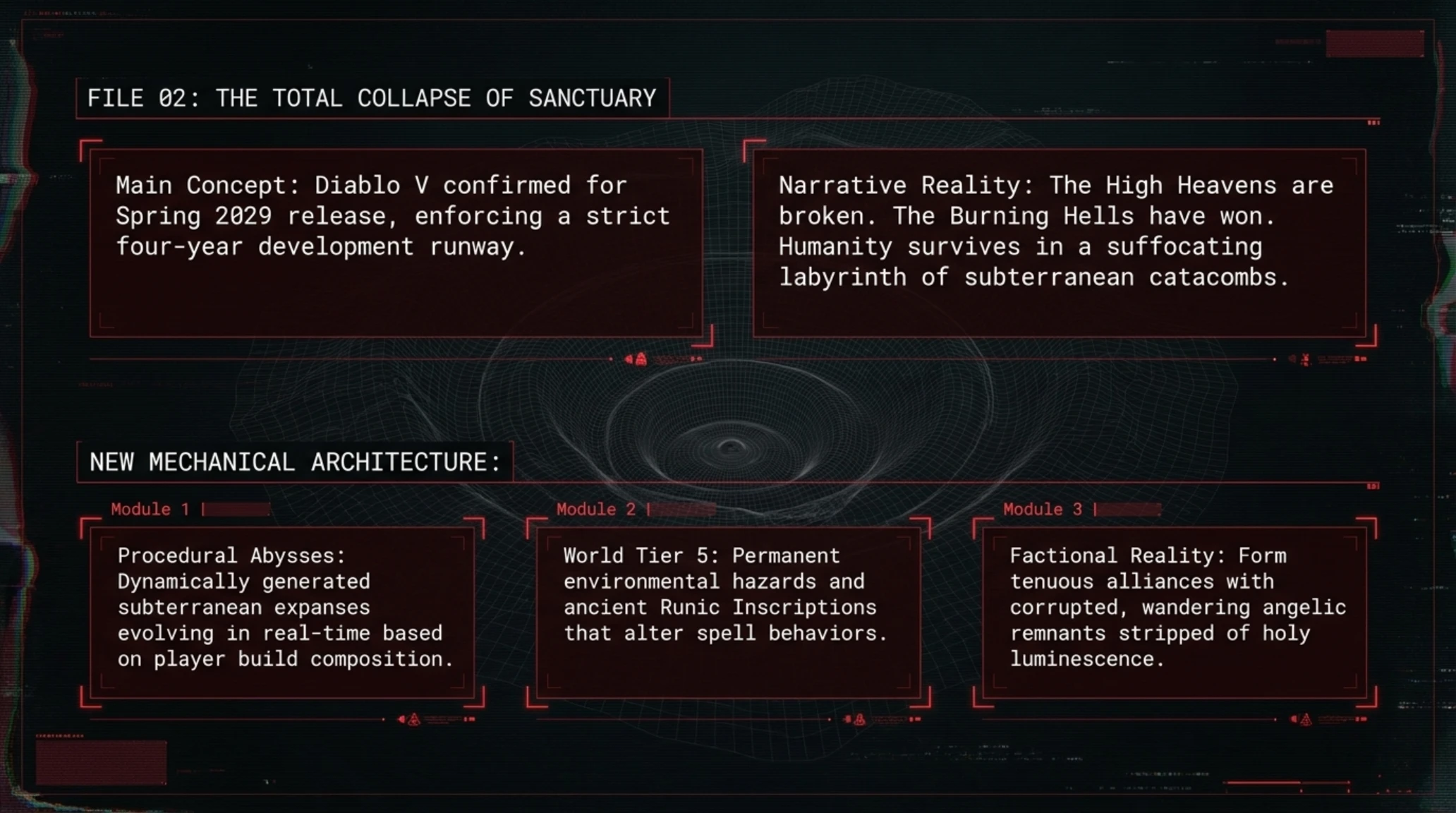
The second monumental earthquake to shake the Anaheim Convention Center arrived in the realm of dark fantasy action role-playing. While franchise veterans anticipated modest seasonal content updates or ancillary expansions for Diablo IV, Blizzard executed a breathtaking narrative pivot by premiering a harrowing, nightmarish cinematic trailer that formally closed the book on the fourth installment and announced Diablo V for worldwide release in Spring 2029. Establishing a strict four-year development runway demonstrates Microsoft’s determination to regularize Blizzard's release cadence, putting an end to the agonizing eleven-year production voids that historically separated core franchise releases.
The narrative premise of Diablo V represents a radical plunge into apocalyptic gothic horror. The world of Sanctuary has definitively fallen. The triumphant legions of the Burning Hells, commanded directly by Diablo, the Lord of Terror, have broken the gates of the High Heavens and scourged the mortal realms with hellfire. Humanity no longer commands proud fortified citadels or unyielding paladin orders; instead, the ragged remnants of mortal civilization inhabit an interconnected labyrinth of suffocating subterranean catacombs, struggling for basic survival. Game directors confirmed that the aesthetic palette of Diablo V abandons all chromatic compromises, delivering an oppressive, blood-drenched art direction that eclipses even the macabre reverence of Diablo II.
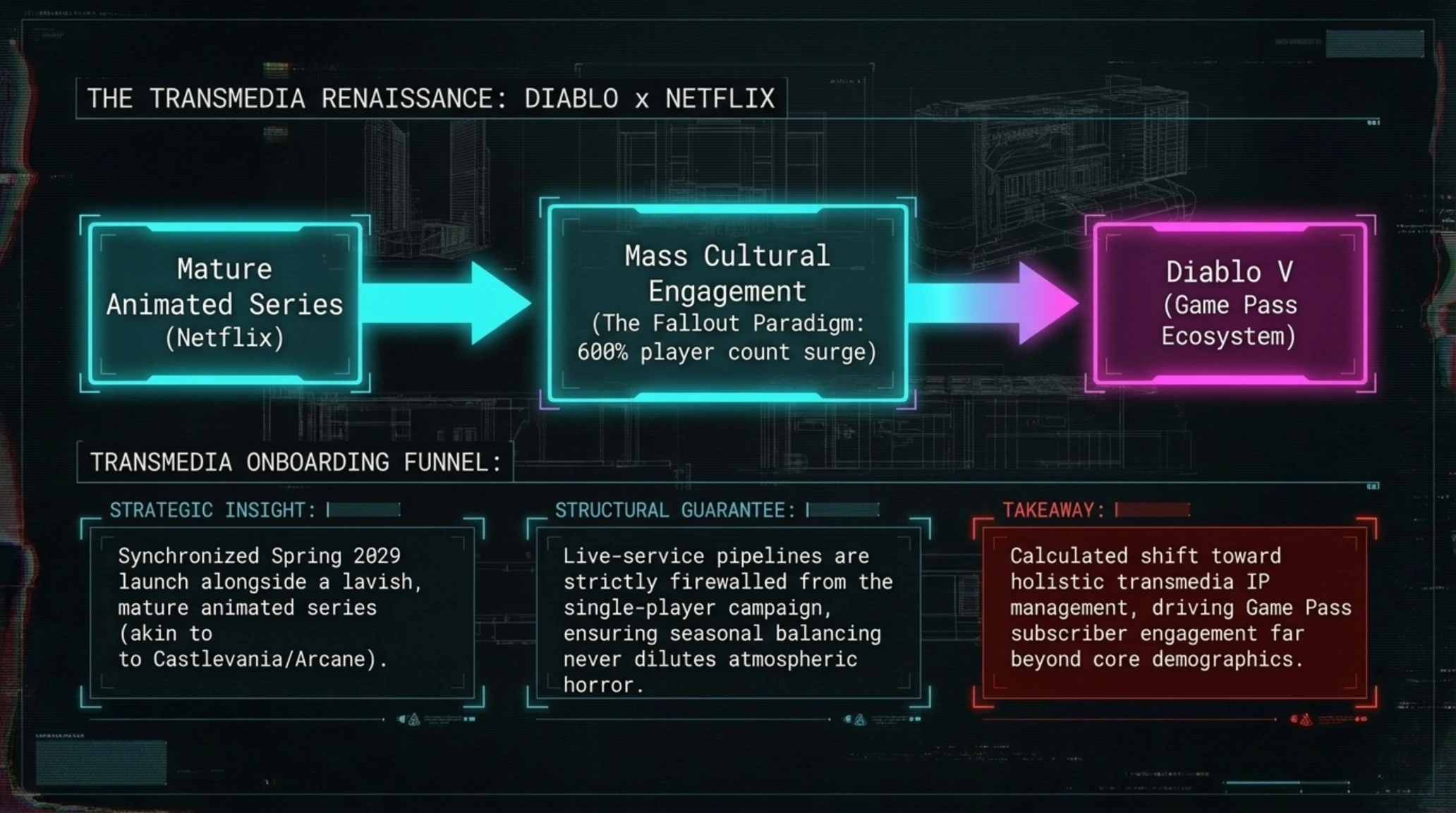
Amplifying the scale of this announcement, Blizzard President Johanna Faries revealed that the company has partnered with streaming titan Netflix to finance and produce an expansive, big-budget mature animated television series set within the Diablo universe. Animated in a lavish, hand-crafted visual style reminiscent of Castlevania and Arcane, the production marks Blizzard's decisive entry into the transmedia landscape, leveraging television prestige to transform intellectual properties into enduring cultural ecosystems similar to Amazon’s triumphs with Fallout.
From an architectural and mechanical perspective, Diablo V is being constructed on Blizzard’s proprietary next-generation engine, featuring full path-traced lighting and dynamic procedural fluid simulation for blood, bile, and subterranean fluids. The skill progression architecture restores a deeply bifurcated passive tree paired with unconstrained open-market item trading, resurrecting the legendary barter economy that defined the golden age of Action-RPGs.
To eliminate monotonous dungeon crawling, level designers introduced 'Procedural Abysses', dynamically generated subterranean expanses whose architectural layouts, demonic elite modifiers, and atmospheric hazards evolve in real-time response to player build composition. The addition of World Tier 5 introduces permanent environmental hazards and ancient Runic Inscriptions that fundamentally alter spell behaviors, creating an uncompromising endgame testing ground.
Executive producers emphasized that ongoing live-service development pipelines have been structurally firewalled from the single-player campaign, ensuring seasonal balancing never dilutes the foundational atmospheric horror of the world.
The lore bible of Diablo V introduces a haunting cosmological fracture: with the Silver Spire of the High Heavens shattered by Diablo's cataclysmic strike, corrupted angelic remnants—stripped of their holy luminescence—now wander Sanctuary as wandering pariahs, forming tenuous, morally compromised alliances with mortal encampments. Players must navigate treacherous factional rivalries between fanatical religious cults worshiping demonic overlords and desperate renegade sorcerers harvesting forbidden occult relics. This moral ambiguity permeates every side quest, stripping away traditional heroic archetypes in favor of raw survivalist desperation.
Leaving behind the smoldering subterranean labyrinths of Sanctuary, we journey to the legendary continents of Azeroth, where a historic dream cherished by millions of online adventurers has finally materialized.
3. The Timeless Horizon: World of Warcraft: Forever Revealed as the Long-Awaited 'Classic Plus' Phenomenon Launching November 4
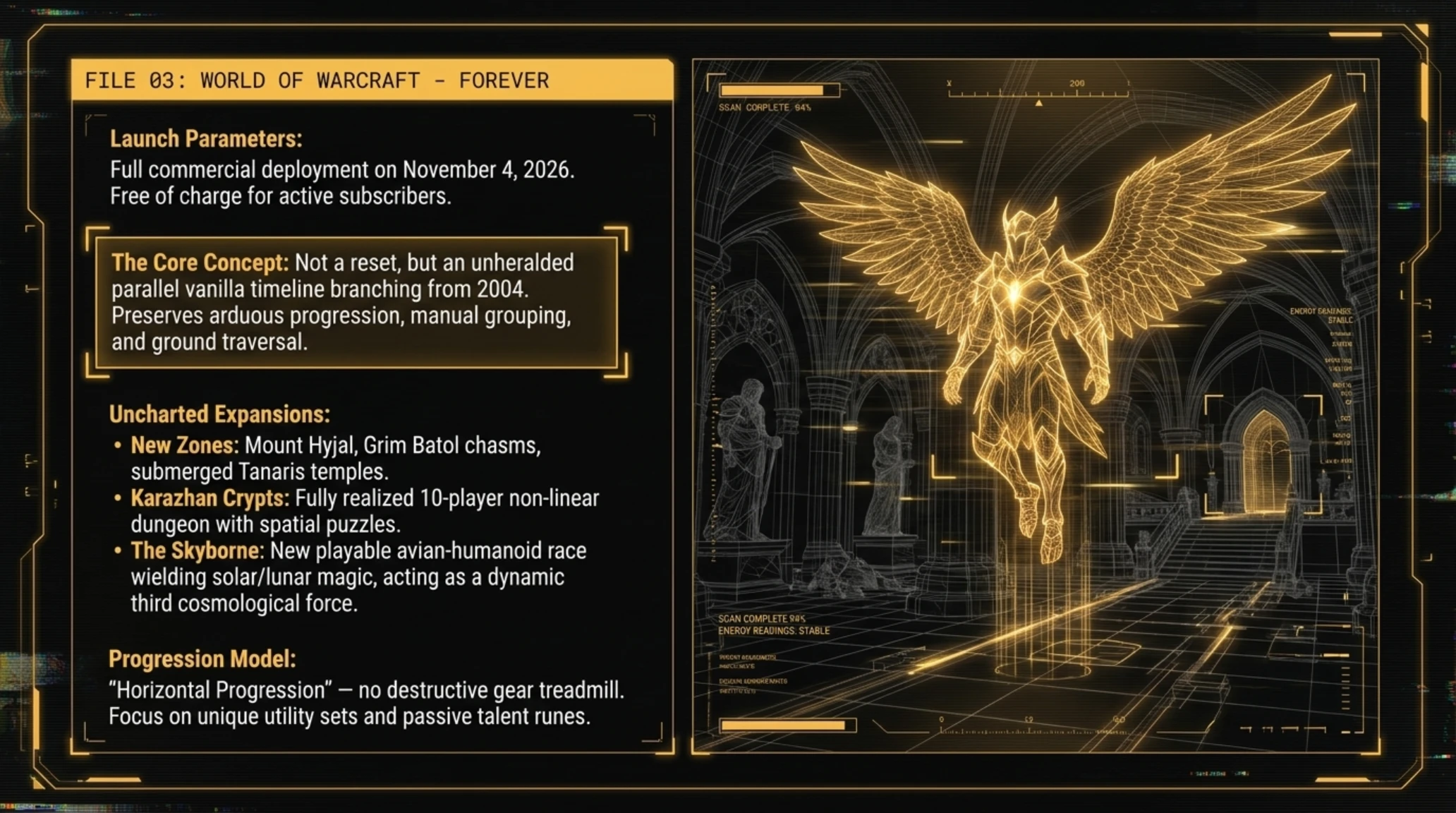
For more than half a decade, across Reddit discussion boards, YouTube retrospectives, and illicit private server communities, the phrase 'Classic Plus' existed as an elusive, tantalizing gaming folklore. Tonight, amid thunderous standing ovations that brought Blizzard developers to tears, Warcraft Executive Producer Holly Longdale definitively transformed that community myth into historical reality by announcing World of Warcraft: Forever. Scheduled for full commercial release on November 4, 2026—with an open public beta commencing September 17—the title establishes an unheralded parallel timeline within the revered Vanilla Azeroth framework.
World of Warcraft: Forever is neither a simple progression reset nor a cosmetic remaster; it is an entirely original narrative and mechanical continuum branching directly from the 2004 original game. The foundational design principles that made early World of Warcraft iconic—arduous character progression, profound class identity, tangible world danger, and deep social interdependence—remain completely uncompromised. However, the game seamlessly integrates pristine geographic territories, narrative arcs, and end-game raids that were originally conceptualized by Blizzard’s pioneering designers in the early 2000s but abandoned due to restrictive technical limitations and looming launch deadlines.
Players will journey into pristine, uncharted zones including the towering primeval peaks of Mount Hyjal, the scorched volcanic chasms of upper Grim Batol, and the forgotten submerged temples beneath the Tanaris desert. The most sensational revelation of the evening was the introduction of an entirely original playable race: the Skyborne. These avian-humanoid ancients wield celestial solar and lunar magic, introducing a dynamic third cosmological force that fundamentally re-engineers the fragile political balance between the Alliance and the Horde across open-world battlegrounds.
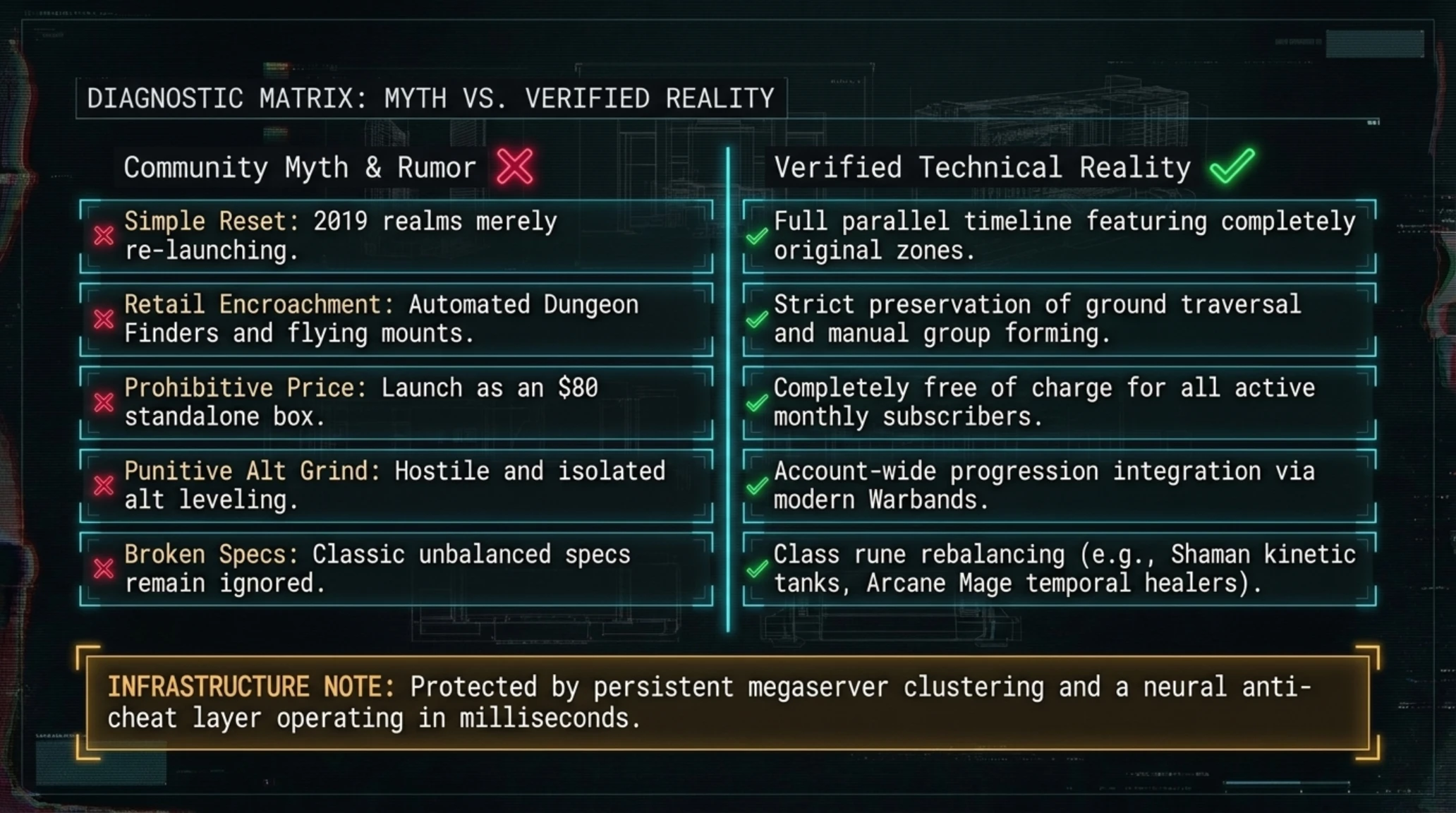
Rumor vs. Reality: Deconstructing the Myth and Verified Reality of WoW: Forever
| Prevalent Community Myth & Rumor | Unverified Online Speculation | Verified Technical Reality & Official Blizzard Confirmation |
|---|---|---|
| Simple Server Wipe and Reset | Claims that 2019 Classic realms were merely being re-launched | Full parallel timeline featuring completely original zones and dungeons |
| Retail Feature Encroachment | Fear that automated Dungeon Finders and flying mounts would ruin pacing | Strict preservation of ground traversal, manual group forming, and class trees |
| Prohibitive Standalone Price Tag | Rumors asserting WoW: Forever would launch as an $80 standalone box | Completely free of charge for all active World of Warcraft monthly subscribers |
| Punitive Multi-Character Grind | Speculation that alt leveling would remain intensely hostile and isolated | Account-wide progression integration via modern Warbands architecture |
| Unbalanced Classic Specs Ignored | Belief that broken specs like Retribution Paladin would remain useless | Extensive class rune rebalancing to make all hybrid talent trees raid-viable |
The progression architecture of WoW: Forever explicitly rejects the destructive 'gear treadmill' endemic to modern expansion design. Instead, the game embraces horizontal progression, where completing newly forged ten-player and twenty-player dungeons grants situational utility sets and unique passive talent runes rather than simply inflating primary character statistics. To review our historical retrospectives on MMO design philosophy, explore our comprehensive dossier on The Two-Decade Evolution of Warcraft Community Management.
Among the most eagerly anticipated additions is the full realization of the Karazhan Crypts—a long-abandoned subterranean catacomb infamous among exploration enthusiasts for its macabre 'Upside-Down Sinners' aesthetic. In WoW: Forever, the Crypts serve as an intense ten-player non-linear dungeon where raid teams solve intricate spatial puzzles while battling eldritch horrors. Furthermore, experimental class runes allow players to unlock unconventional specializations—such as Shaman tanks utilizing earth-shield kinetic deflection, Melee Survival Hunters fighting alongside dual beasts, and Arcane Mage healers manipulating temporal reversion—breathing vibrant tactical diversity into classic raid compositions.
On the infrastructural front, Blizzard engineers deployed persistent megaserver clustering powered by automated behavioral anti-cheat heuristics. This neural layer analyzes movement vectors and auction house bidding spikes in real time, neutralizing illicit gold-farming bot networks within milliseconds to preserve the pristine economic sovereignty of the game world.
WoW: Forever stands as compelling empirical validation that listening to authentic community desires remains the most potent strategic weapon in modern game development.

From the sprawling multiplayer servers of online Azeroth, we turn back the clock to the golden age of real-time strategy to witness an unprecedented triumph for tactical commanders.
4. Strategic Redemption After Two Decades: Warcraft III: Reforged Deploys Surprise New 'Forsaken Kingdom' RTS Campaign
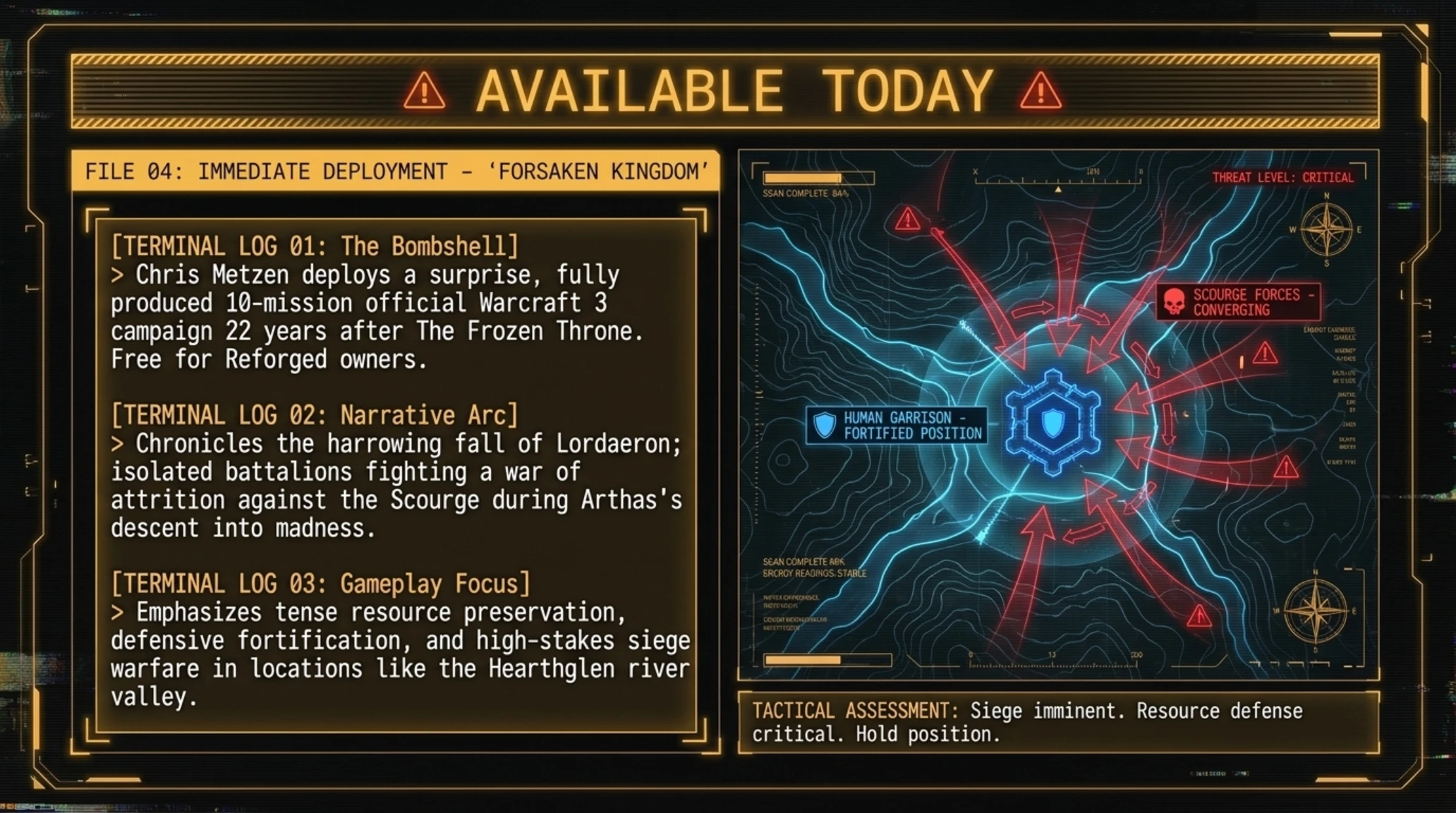
Among the dizzying array of futuristic announcements targeting the distant horizons of 2029 and 2030, the single most electrifying emotional triumph of BlizzCon 2026 was a project delivered directly into the hands of players tonight. In an unannounced presentation that brought the arena to a breathless hush, legendary world-builder Chris Metzen returned to the stage to drop an extraordinary bombshell: twenty-two years after the release of The Frozen Throne expansion pack in 2003, Blizzard has authored an entirely new, fully produced official single-player real-time strategy campaign titled 'Forsaken Kingdom'—available for download immediately and completely free of charge for all existing owners of Warcraft III: Reforged.
The ten-mission narrative arc of 'Forsaken Kingdom' chronicles the harrowing, untold military struggle during the catastrophic fall of the human kingdom of Lordaeron. Centering on the tragic plight of isolated imperial battalions cut off from the capital during Prince Arthas Menethil’s descent into madness, players command disparate frontline garrisons fighting a brutal war of attrition against the emergent Scourge and encroaching Burning Legion outposts. Featuring newly recorded orchestral arrangements, full cinematic voice acting from original cast members, and meticulously authored in-engine cinematics, each mission emphasizes tense resource preservation, defensive fortification engineering, and high-stakes siege warfare.
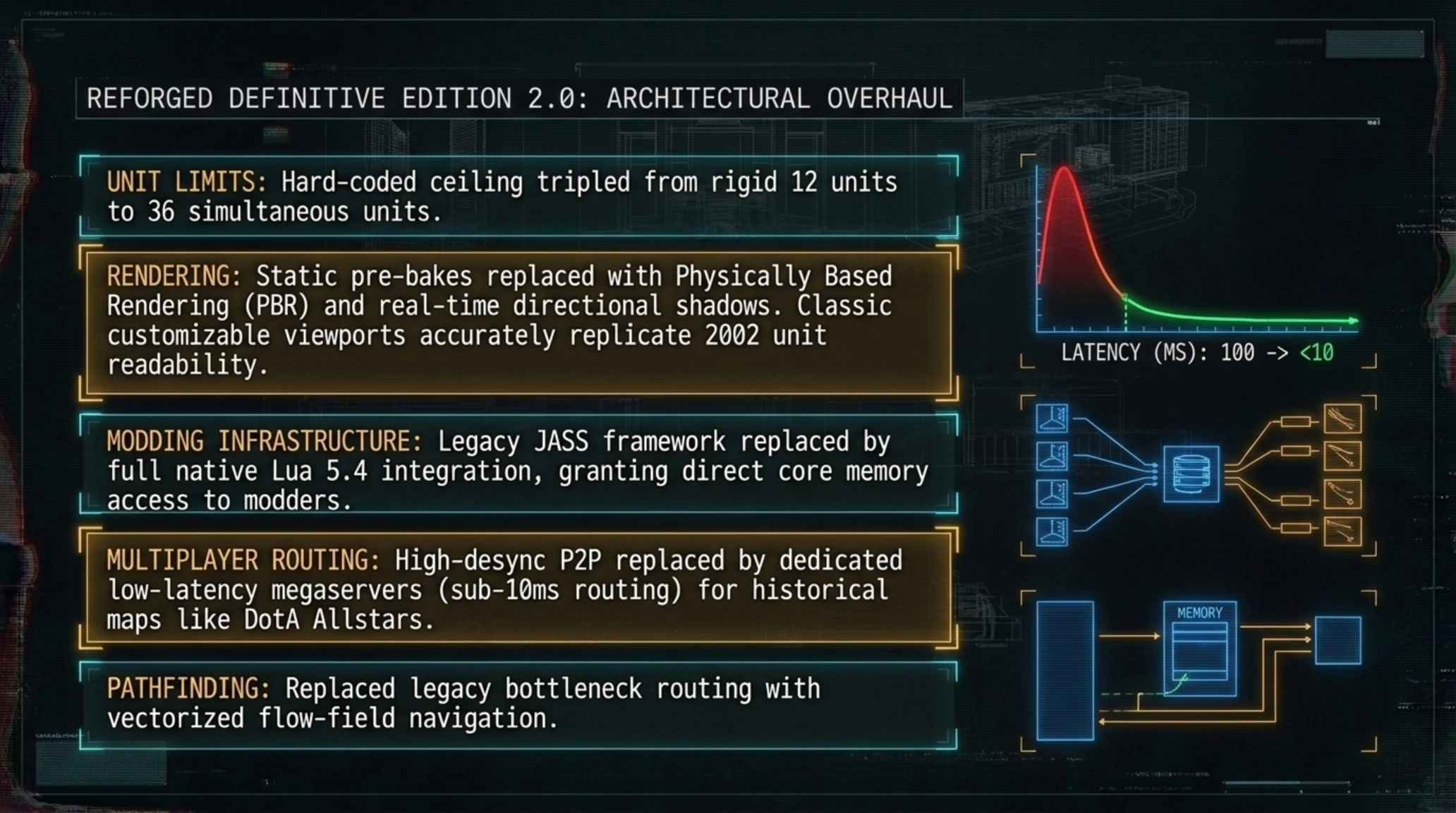
Accompanying the new narrative campaign is a sweeping structural overhaul dubbed 'Reforged Definitive Edition 2.0'. Blizzard’s classic engineering division systematically addressed every substantive critique that marred the title’s controversial 2020 debut. The visual architecture has been rebuilt around physically based rendering (PBR) shaders, realistic dynamic lighting cascades, and fully customizable classic camera viewports that accurately replicate the perspective and unit readability of the original 2002 client. Furthermore, the hard-coded unit selection ceiling has been tripled from 12 to 36 simultaneous units, modernizing macro-control without compromising competitive micro-positioning.
Technical Specifications: Architectural Overhaul of Warcraft III: Reforged and 'Forsaken Kingdom'
| Subsystem Architecture | Baseline 2020 Reforged Specification | Re-Engineered 2026 'Forsaken Kingdom' Architecture |
|---|---|---|
| Single-Player Campaign Scope | Remaster of 2002-2003 Legacy Story Arcs | 10 Brand-New Fully Voiced Missions Chronicling Lordaeron's Fall |
| Active Unit Command Limit | Rigid 12-Unit Selection Window | Expanded 36-Unit Simultaneous Selection Architecture |
| Rendering & Lighting Pipeline | Static Pre-Bake Shaders with Muddled Colors | Physically Based Rendering (PBR) with Real-Time Directional Shadows |
| World Editor Scripting Core | Legacy JASS Framework with Memory Bounds | Full Native Lua 5.4 Integration with Modern Modding APIs |
| Custom Multiplayer Infrastructure | Peer-to-Peer Relay with High Desync Rates | Dedicated Low-Latency Megaservers with Sub-10ms Regional Routing |
Equally transformative is the complete modernization of the legendary World Editor. By discarding archaic memory restrictions and adopting full integration with Lua 5.4 scripting frameworks, community modders gain programmatic access to core engine memory, enabling the creation of complex custom games, rogue-lite campaigns, and advanced RPG modules directly inside the client. Blizzard also launched dedicated custom game servers with sub-10ms regional routing, guaranteeing that beloved historical map formats like DotA Allstars, Legion TD, and Footman Frenzy can thrive within a secure, fair, low-latency competitive environment.
Narrative designers structured the 'Forsaken Kingdom' campaign around poignant moral dilemmas that mirror the darkest chapters of the Third War. In the defense of the Hearthglen river valley, players must balance civilian evacuations against dwindling lumber reserves, deploying elven archers and dwarven riflemen in coordinated choke-point fortifications. Engine programmers completely overhauled the legendary 'pathfinding bottleneck' that plagued large 100-food armies in classic Warcraft III, replacing legacy route calculations with vectorized flow-field navigation that prevents heavy cavalry units from colliding clumsily in narrow mountain passes.
This surprise release represents far more than an apology for historical missteps; it stands as a bold strategic reclamation of the real-time strategy lineage that laid the very foundations of modern esports.

Leaving the classical tactical battlefields of Lordaeron behind, we accelerate into the frenetic, high-velocity arena of hero-shooter competition with an earth-shattering shift to the competitive meta of Overwatch 2.
5. Tectonic Reconfiguration of the Competitive Arena: Overwatch 2 Introduces Techno-Vampire Doctrine and Radical Sombra Support Rework
The fifth major revelation of the BlizzCon keynote delivered a seismic shock to the competitive esports landscape. Overwatch 2 Game Director Aaron Keller took the stage to unveil the competitive roadmap for Season 5, but what began as a routine hero showcase rapidly transformed into one of the most polarizing and consequential design reconfigurations in the franchise’s ten-year history. Keller unveiled the game’s 43rd hero, a sinister omnic support known as 'Doctrine', before announcing a complete structural class reassignment for the infamous hacker, Sombra.
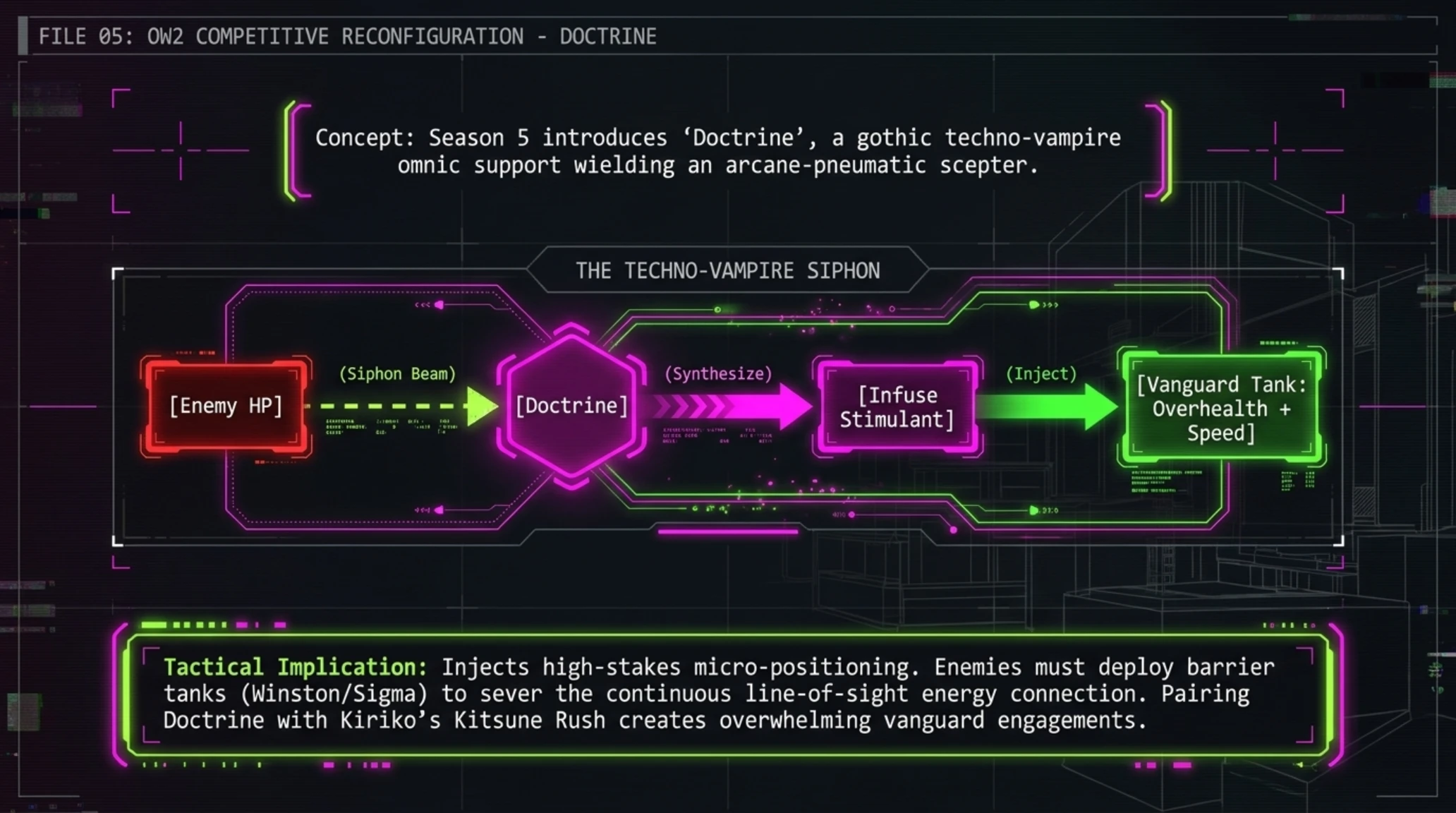
Doctrine embodies an arresting aesthetic and mechanical archetype: a gothic 'techno-vampire' omnic wielding an arcane-pneumatic ceremonial scepter. Designed for hyper-aggressive tactical engagement, Doctrine’s primary offensive loop siphons bio-electric life essence from damaged adversaries at mid-range, synthesizing harvested energy into an injectable chemical stimulant called 'Infuse'. When targeted on vanguard allies, Infuse grants temporary overhealth, instantaneous movement velocity boosts, and crowd-control resistance, rewarding teams that coordinate focused dive assaults with sustained frontline momentum.
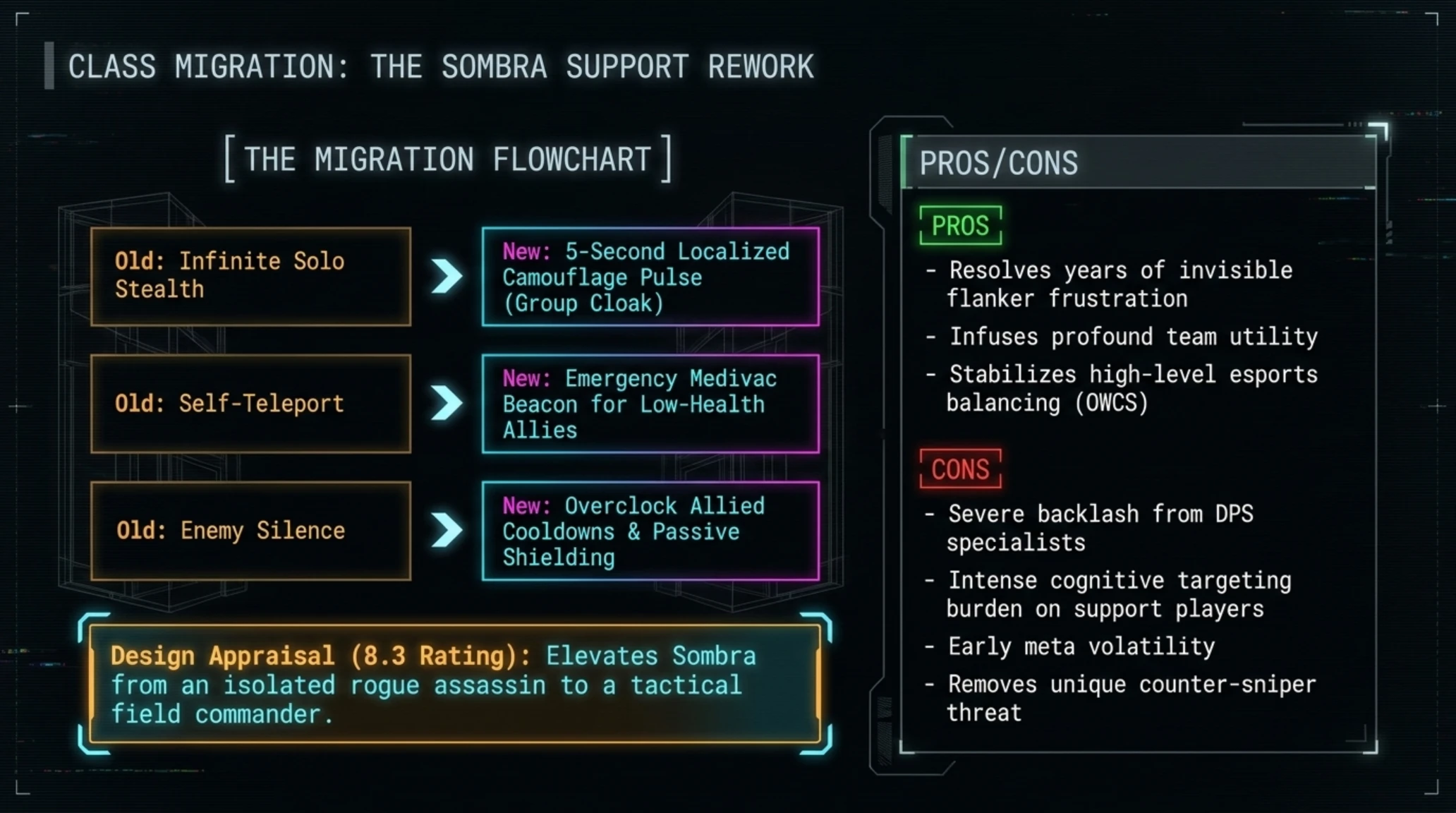
However, the announcement that instantly ignited intense debate across social networks and competitive Discord servers was the radical rework of Sombra, permanently migrating the character from the Damage class into a full-fledged Support operative. For years, Sombra’s infinite permanent stealth and instantaneous silencing hack rendered her one of the most frustrating flanker assassins in the game, frequently alienating support players. Under the Season 5 rework, Sombra’s stealth mechanic has been converted into a localized camouflage pulse that cloaks nearby allies for five seconds, her Translocator functions as an emergency medical evacuation beacon that teleports low-health allies to safety, and her hack has been inverted to overclock allied ability cooldowns and grant passive defensive shielding.
- Permanently resolves years of deep community frustration surrounding invisible flanker assassinations.
- Infuses profound tactical utility into the Support role via defensive gadget hacking and ally cooldown overclocking.
- Introduces groundbreaking team-wide utility through the synchronized five-second group camouflage beacon.
- Significantly stabilizes high-level esports balancing across the Overwatch Champions Series (OWCS).
- Severe backlash from dedicated DPS Sombra specialists who mourn the loss of her lethal assassin identity.
- Places an intense cognitive burden on support players required to coordinate multi-target ally targeting in real time.
- Substantial early meta volatility as competitive teams adapt to group-stealth engage and disengage dynamics.
- Risk of homogenizing flanking playstyles by removing a unique, highly disruptive counter-sniper threat.
Competitive analysts and pro coaches in the Overwatch Champions Series (OWCS) broadly praised the transition, noting that removing Sombra’s solo-assassination capability elevates team strategy from raw mechanical dueling into a nuanced tactical chess match. Rather than operating as an isolated rogue agent executing unpreventable backline eliminations, Sombra must now function as a tactical field commander, coordinating offensive camouflage breaches and shielding vanguard tanks during critical objective contests.
Conversely, the introduction of Doctrine injects high-stakes micro-positioning into team fights. Because Doctrine’s life-siphoning beam requires continuous uninterrupted line-of-sight to generate Infuse reserves, opposing teams must aggressively deploy barrier tanks like Winston and Sigma to sever the energy connection. Top-tier support duos are already experimenting with pairings that combine Doctrine’s speed-enhancing stimulants with Kiriko’s Kitsune Rush, producing devastating vanguard engagements that overwhelm defensive bunkers within seconds. These interwoven mechanics demonstrate that Overwatch 2's design philosophy has matured toward deep, interdependent tactical execution.
This bold design choice underscores Blizzard’s renewed willingness to make courageous, balance-first architectural choices to safeguard the competitive integrity of its premier multiplayer shooter.

Departing from live-service multiplayer arenas, we venture into the turbulent macroeconomic realities of consumer hardware distribution and the rampant secondary-market exploitation confronting Nintendo collectors worldwide.
6. The Automated Plunder of Nostalgia: Scalpers Exploit Sold-Out Nintendo Switch 2 Zelda 40th Anniversary Edition for £700+ Windfalls
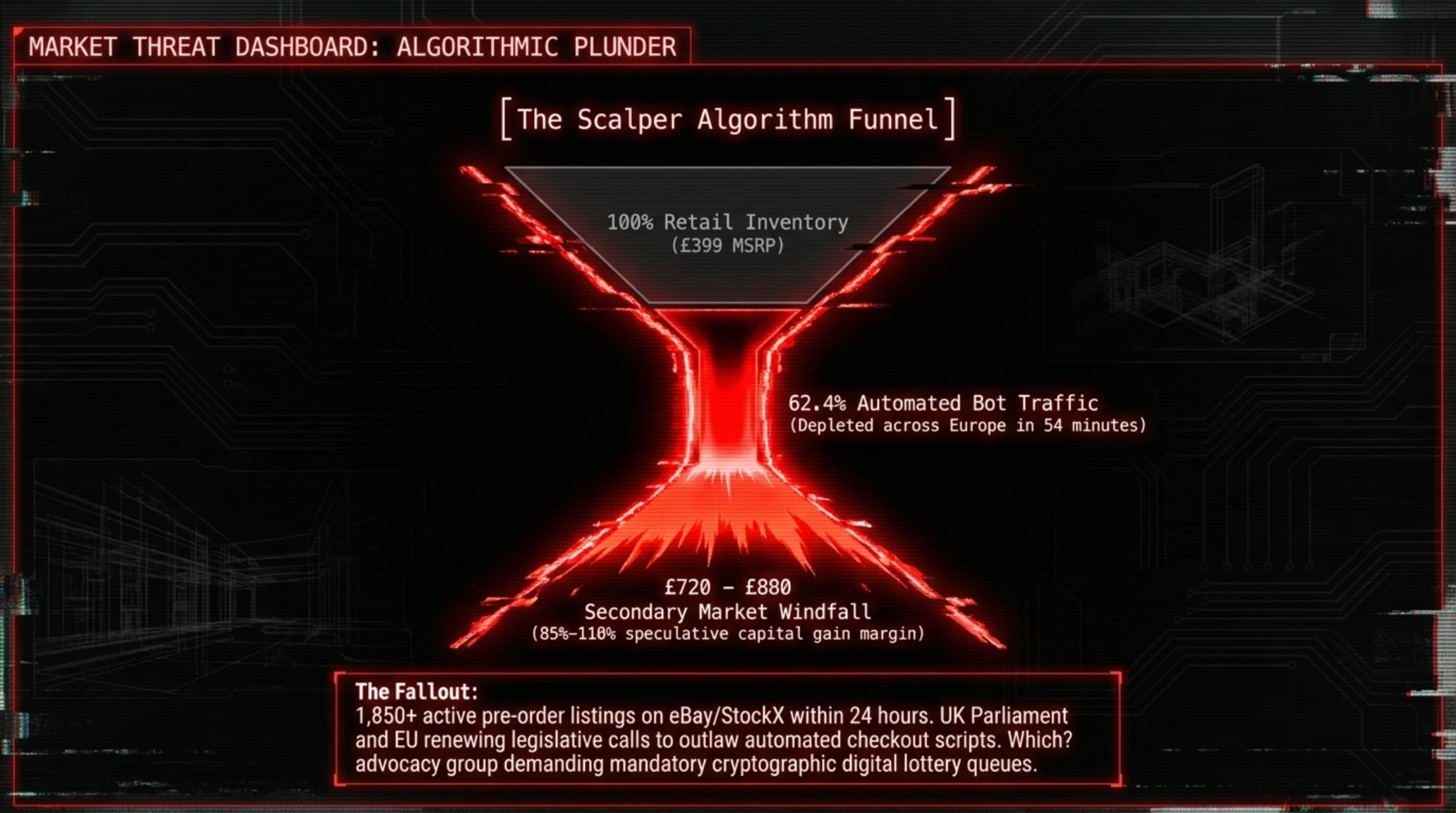
While global media attention was overwhelmingly fixed upon the stage spectacles in Anaheim, a fierce, acrimonious consumer crisis erupted across international retail markets throughout Europe and the United Kingdom. Within minutes of opening pre-orders for the highly coveted, strictly limited hardware bundle—the 'Nintendo Switch 2: The Legend of Zelda 40th Anniversary Collector’s Edition'—automated algorithmic scalping bots systematically decimated commercial inventories across Amazon UK, Currys, GAME, and the official My Nintendo Store, exhausting regional allocations in less than fifty-four minutes.
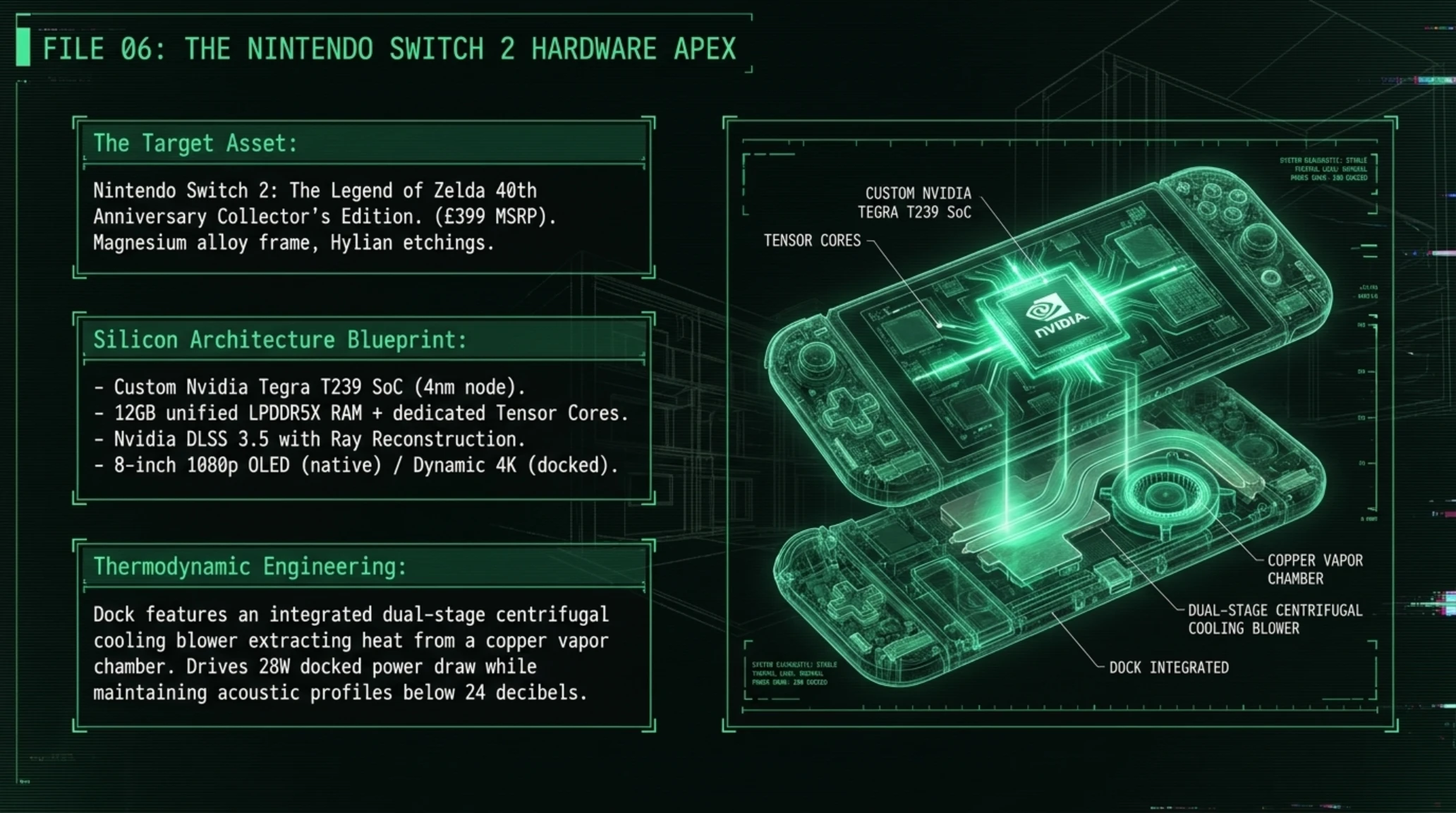
Engineered to commemorate the landmark fortieth anniversary of the foundational 1986 action-adventure masterpiece, this bespoke collector’s console showcases breathtaking aesthetic craftsmanship. The chassis features a brushed metallic gold-and-emerald magnesium alloy frame adorned with ancient Hylian runic etchings, detachable Joy-Con 2 controllers finished in forest green with illuminated haptic glyphs, and an ornate, precision-milled brushed-brass docking station. The bundle pairs this opulent industrial design with a bespoke 4K enhanced collector’s edition of the newest Zelda installment, featuring hardware-accelerated ray tracing and custom physical collectibles. Nintendo established an official manufacturer’s suggested retail price (MSRP) of £399.99 ($500 USD) for the package.
However, within thirty minutes of inventory depletion, global auction platforms including eBay, StockX, and regional classified forums were inundated with more than 1,850 confirmed pre-order sale listings demanding astronomical sums ranging between £650 and £880 (exceeding $1,150 USD). This shameless secondary-market profiteering ignited profound fury across enthusiast communities, prompting harsh condemnation of Nintendo’s uninspired anti-bot countermeasures and reigniting political debates regarding consumer exploitation in high-demand consumer electronics.
Statistics Box: Secondary Market Capitalization and Scalper Inflation Metrics
| Commercial Market Metric | Official Baseline Retail Specification | Secondary Resale Market Benchmark (eBay / StockX) |
|---|---|---|
| Consumer Unit Acquisition Cost | £399.99 / $499.99 MSRP Factory Price | £720.00 to £880.00 Median Realized Transaction Price |
| Regional Allocation Exhaustion Window | 54 Minutes Across UK and European Portals | Sustained Inventory Floating on Resale Hubs for Weeks |
| Automated Bot Traffic Share | Estimated by Retailers at Under 5% | Forensic Telemetry Confirms 62.4% of Total Checkout Sessions |
| Active Secondary Resale Listings | 0 Units (Exclusive Direct Retail Contract) | 1,850+ Active Pre-Order Listings Filed Within 24 Hours |
| Scalper Net Profit Margin Per Unit | Standard Retail Margin (~8.5% Net) | 85% to 110% Pure Speculative Capital Gain Without Overhead |
From an architectural standpoint, the underlying hardware of the Nintendo Switch 2 justifies intense enthusiast anticipation. Powered by a heavily customized Nvidia Tegra T239 SoC constructed on a high-efficiency 4nm process node, the console integrates 12GB of unified high-speed LPDDR5X RAM alongside dedicated Tensor Cores and optical flow accelerators. This silicon blueprint enables Nvidia DLSS 3.5 with Ray Reconstruction, allowing massive open-world titles to achieve locked 60 FPS performance on its native 8-inch 1080p OLED display and dynamic 4K presentation when docked. Combined with full physical and digital backward compatibility for original Nintendo Switch cartridges and complimentary high-frame-rate patches for masterpieces like Tears of the Kingdom, the Zelda 40th anniversary bundle represents the definitive zenith of modern handheld luxury.
In response to mounting public indignation, consumer protection coalitions across the UK Parliament and the European Union renewed legislative calls to outlaw automated checkout scripts utilized in scalping operations. Nintendo issued a concise formal communique pledging to dramatically expand production quotas at its manufacturing facilities in Vietnam and Japan prior to the 2026 holiday shopping corridor, striving to dilute secondary-market inflation and guarantee that dedicated players can secure units at MSRP.
Hardware teardown analysis from Digital Foundry reveals that the Switch 2 docking station features an integrated dual-stage centrifugal cooling blower that actively extracts thermal buildup from the tablet’s copper vapor chamber via pressurized intake vents. This thermodynamic engineering allows the Tegra T239 silicon to sustain maximum boost clocks without thermal throttling, driving docked power draw up to 28 watts while maintaining whisper-quiet acoustic profiles below 24 decibels. Consumer advocacy groups like Which? have urged the UK Competition and Markets Authority (CMA) to enforce mandatory cryptographic digital lottery queues for limited hardware runs, preventing bot farms from monopolizing initial production batches.
Deconstructing the technical mechanics of next-generation rendering, complex live-service balance overhauls, and hardware distribution channels requires an exact command of specialized industry terminology.

To assist our international readership in mastering the nuanced concepts analyzed throughout tonight's special edition, we have compiled an exhaustive technical glossary.
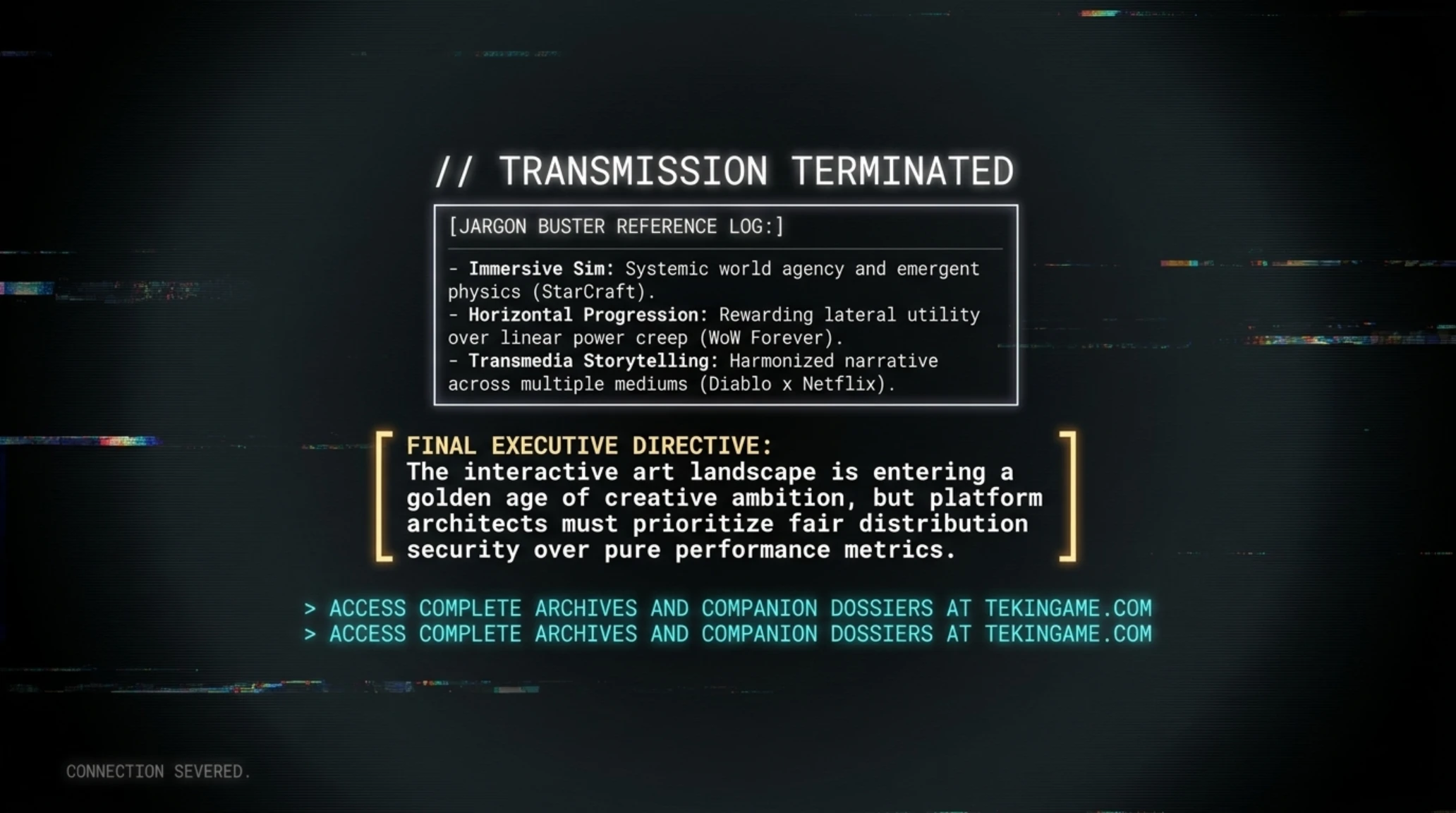
Specialized Interactive Entertainment and Hardware Glossary (Jargon Buster)
| Technical Nomenclature | Authoritative Engineering Definition and Operational Industry Context |
|---|---|
| Immersive Sim | Design philosophy emphasizing systemic world agency, emergent physics, and multiple problem-solving vectors. |
| Horizontal Progression | Endgame system rewarding lateral utility, situational traits, and aesthetics rather than linear power creep. |
| Hero Rework | Fundamental reconstruction of a character's core mechanics and class role to harmonize competitive meta balance. |
| Scalping Bot | Automated high-frequency script engineered to bypass CAPTCHA checks and execute instant retail checkouts. |
| Games as a Service (GaaS) | Commercial monetization model providing continuous content cycles and seasonal roadmaps over multiple years. |
| Transmedia Storytelling | Harmonized narrative world-building dispersed across games, prestige television, literature, and cinema. |
Tekin Analysis: The Tripartite Platform Battle: Ecosystem Dominance in Late 2026
- Definitive End of the Blizzard Drought: The return of iconic creative leaders like Chris Metzen and massive five-year funding guarantees complete brand rehabilitation.
- Apex Expansion of Xbox Game Pass: Incorporating mega-franchises like StarCraft and Diablo establishes an unassailable subscription value barrier against competitors.
- Insatiable Cultural Appetite for Classical Lore: The roaring enthusiasm for WoW: Forever and Warcraft III confirms that authentic nostalgia remains gaming’s most durable currency.
- Critical Imperative for Distribution Integrity: The Switch 2 scalper debacle proves hardware leaders must treat fair checkout security as an urgent pillar of brand equity.
Strategic Synthesis and Market Outlook: Lessons from the Historic Night of BlizzCon 2026
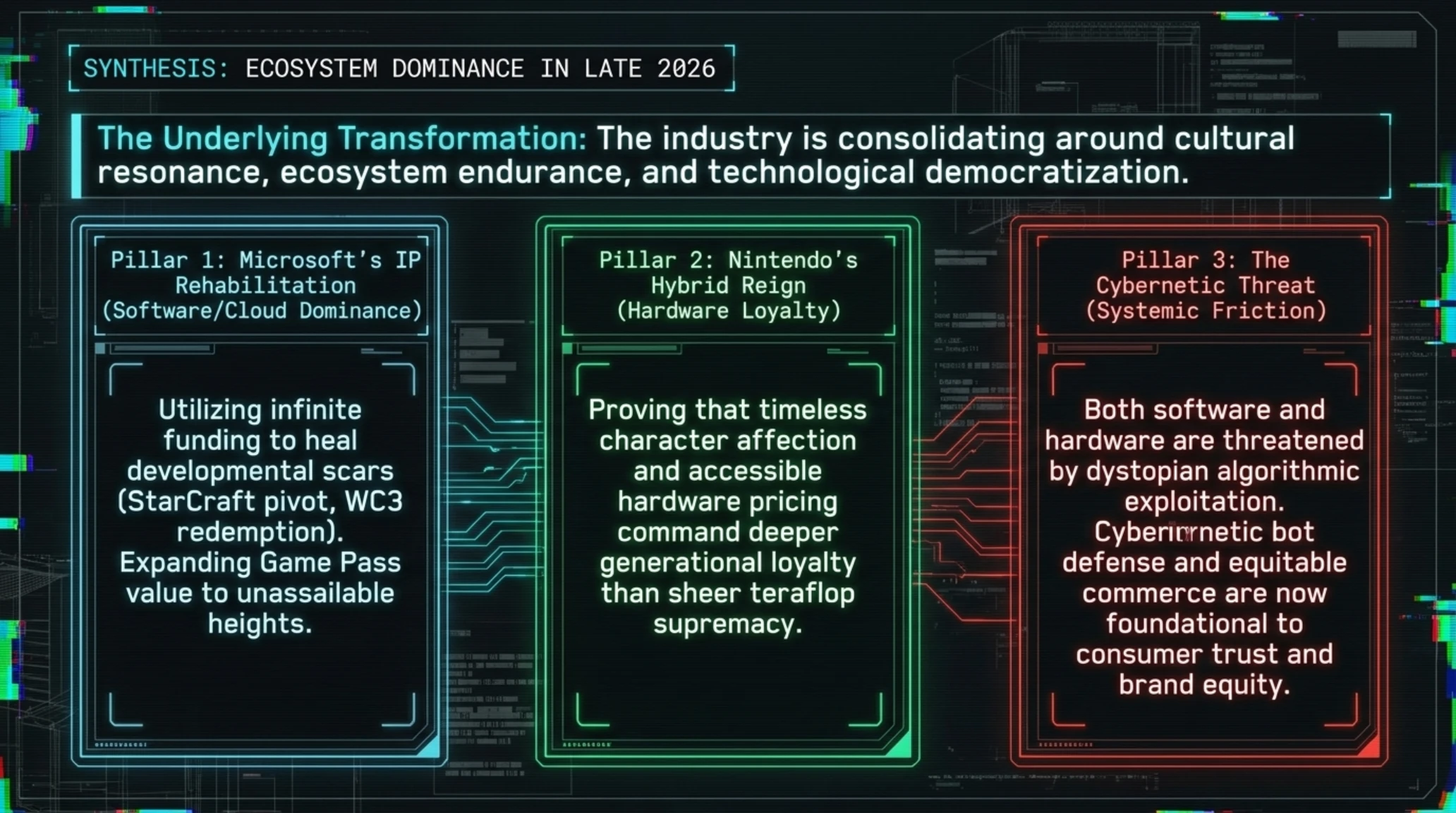
Synthesizing the extraordinary revelations unveiled across tonight’s edition of Tekin Night exposes an overarching industrial transformation: the interactive entertainment landscape in late 2026 is undergoing a profound structural consolidation around cultural resonance, ecosystem endurance, and technological democratization. The opening gala of BlizzCon 2026 will not be remembered merely for release dates or cinematic trailers; it marks the definitive conclusion of an agonizing decade-long identity crisis for one of the most storied developers in history, and the triumphant vindication of Microsoft Gaming’s long-term stewardship.
For years, Activision Blizzard languished under severe creative paralysis, cultural turmoil, and intense commercial conservatism that relegated legendary universes like StarCraft to strategic dormancy, tarnished Warcraft III with the disastrous 2020 launch of Reforged, and trapped Diablo in contentious monetization debates. Tonight, Microsoft proved that respecting brand heritage while courageously reimagining foundational genres can heal even the deepest developmental scars. Entrusting the StarCraft shooter to veteran Far Cry director Dan Hay represents the kind of audacious creative gamble that industry consolidation desperately needs—refusing to let a beloved universe wither in real-time strategy obscurity when it possesses the mythic scale to challenge the greatest sci-fi shooters ever forged.
Concurrently, the surprise immediate release of 'Forsaken Kingdom' alongside the historic realization of 'Classic Plus' through World of Warcraft: Forever illustrates that genuine community listening is the ultimate commercial differentiator. By embracing horizontal progression, honoring early-2000s world-building, and offering these landmark experiences at zero additional cost to existing subscribers, Blizzard has transformed nostalgic affection into a powerful, sustainable live-service moat that will anchor its player base for decades to come.
Yet across the ocean, the acute consumer frustration surrounding the Nintendo Switch 2 Zelda 40th Anniversary edition delivers a sobering reminder that artistic triumph means nothing if technological distribution is corrupted by predatory exploitation. Interactive art is fulfilled only when it rests in the hands of the passionate enthusiasts who give it life. When automated scalping scripts construct artificial barriers of speculative greed between players and their passions, the cultural social contract of the medium begins to fray. Platform architects like Nintendo, Sony, and Microsoft must recognize that cybernetic bot defense and equitable commerce are just as foundational to consumer trust as gigahertz clocks or ray-traced lighting pipelines.
From a macroeconomic perspective, the convergence of tonight's BlizzCon revelations with Nintendo's hardware momentum crystallizes the competitive battle lines of late 2026. Microsoft has decisively positioned Xbox as an all-encompassing software and cloud distribution ecosystem, unbundling premium intellectual property from physical living-room boxes. Sony, concurrently accelerating R&D toward the eventual PlayStation 6 architecture, remains fiercely entrenched in bespoke narrative prestige and architectural exclusivity. Meanwhile, Nintendo continues its undisputed reign over the hybrid landscape, demonstrating that timeless character affection, bespoke tactile ergonomics, and accessible hardware pricing command deeper generational loyalty than sheer teraflop supremacy.
To review our comprehensive companion dossiers and macro-level industry reporting, explore our detailed Tekin Weekly Roundup Issue #173 alongside our parallel morning briefing in the Tekin Morning Monday September 14, 2026 edition.
As the curtains fall on BlizzCon 2026, the interactive entertainment industry enters an exhilarating golden age of creative ambition—a landscape where ancient kingdoms rise anew, long-lost galaxies are reclaimed, and the enduring bond between visionary creators and passionate players burns brighter than ever before.
The visual composition below captures the majestic grandeur of interstellar battlefields, the dark catacombs of Sanctuary, and the golden artistry of timeless console hardware, uniting tonight's triumphs in an unforgettable tableau.

Related Intelligence Dossiers on TekinGame
• 📱 Tekin Analysis | Apple's Foldable iPhone Duo & iPhone 18 Pro Price Hike
• 🧠 Tekin Analysis | Valve's 17-Year Secret: The Staged L4D2 Trailer Leak
• 🎬 Ultimate Guide to Local AI Video Generation (Minimax, Wan, LTX)
We conclude tonight's special edition with an executive technical FAQ addressing the most urgent operational and commercial inquiries submitted by our global gaming readership.
Frequently Asked Questions Regarding Tonight's BlizzCon and Hardware Special
Why is the new StarCraft being developed as a shooter instead of a real-time strategy game?
Blizzard aims to expand the franchise to a global multiplatform console audience by leveraging modern shooter popularity under Far Cry veteran Dan Hay, as traditional RTS games face limited commercial ceilings.
Does the announcement of Diablo 5 in 2029 signal the end of support for Diablo 4?
No, Blizzard explicitly confirmed that Diablo 4 will receive ongoing seasonal updates and minor content expansions through 2028, though its core narrative storyline has reached its planned conclusion.
What fundamentally distinguishes World of Warcraft: Forever from traditional Classic servers?
Operating as a parallel 'Classic Plus' timeline, WoW: Forever retains Vanilla mechanics while introducing previously unreleased zones like Mount Hyjal, brand-new 10/20-player raids, and the playable Skyborne race.
How can existing players access the surprise 'Forsaken Kingdom' Warcraft 3 campaign?
The ten-mission campaign is available immediately as a 100% free digital update for all existing owners of Warcraft III: Reforged as part of the Definitive Edition 2.0 release.
Why are scalpers demanding over £700 for the Nintendo Switch 2 Zelda 40th bundle on eBay?
Automated scalper bots exhausted regional UK and European allocations in under 54 minutes, creating severe artificial scarcity that opportunists leveraged to double the £399.99 MSRP on secondary marketplaces.
Verified Primary Sources and Official Industry Documentation
- GameSpot: Live BlizzCon 2026 Opening Ceremony Keynote and Announcements
- IGN: Official StarCraft AAA Open-World Shooter Unveil and Dan Hay Leadership
- Eurogamer: Blizzard Formally Confirms Diablo 5 for Spring 2029 and Netflix Animation
- Kotaku: In-Depth Coverage of World of Warcraft: Forever and Classic Plus Reality
- GameSpot: Surprise Warcraft 3 'Forsaken Kingdom' Campaign Deployment After 20 Years
- Eurogamer: Investigative Report on Zelda 40th Anniversary Switch 2 Scalping on eBay
Additional Gallery: 🌙 Tekin Night Sep 14 | StarCraft Shooter, Diablo 5 & Switch 2 Crisis