Tekin Morning | Tuesday, October 6, 2026: Google OSS VRP Emergency Freeze, DTU Identity Breach, and Wall Street Tokenization
Tuesday morning, October 6, 2026, opens with transformative structural upheavals across open-source vulnerability economics, academic identity infrastructure, tokenized capital markets, and next-generation consumer hardware ecosystems.
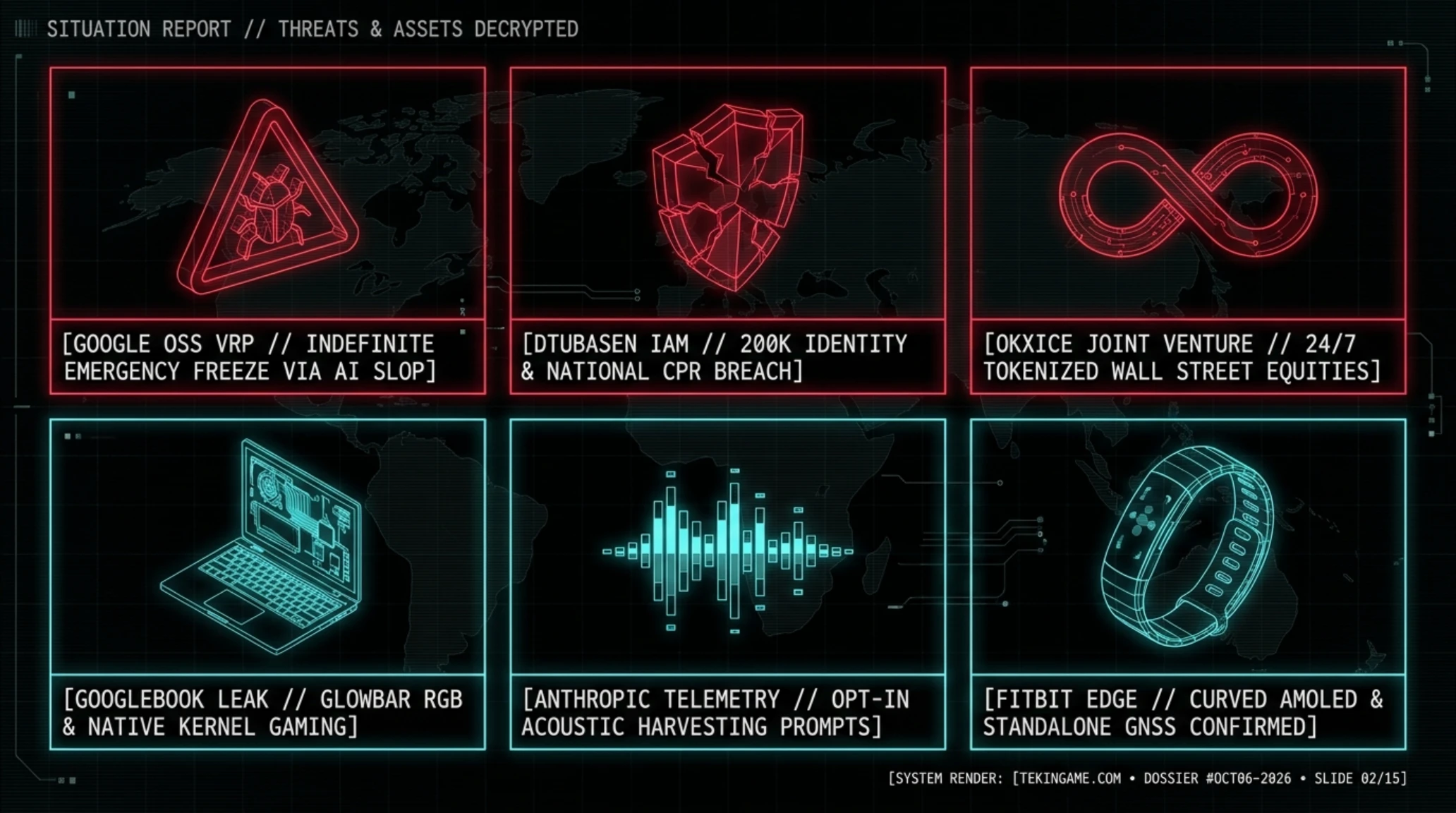
- 🎮Google Halts OSS VRP Over AI Slop- Google indefinitely freezes open-source bug submissions until Q1 2027 following a wave of automated LLM-generated reports.
- 🎧DTU 200,000 Identity Compromise- Denmark's technical university suffers a breach exposing national CPR numbers and employee directories.
- 🚀OKX & NYSE File for 24/7 Equity- Joint venture OKXICE files with the SEC to launch round-the-clock trading for 63 tokenized NYSE equities.
- 🗡️Googlebook Hardware Revealed- Details emerge on Google's new Android laptops featuring Glowbar RGB status strips and game mapping.
- 📰Anthropic Solicits Voice Training- Anthropic prompts users to voluntarily share voice chat recordings to train next-generation acoustic models.
- ⚔️Fitbit Edge Leaks with Standalone GPS- Retail assets disclose Google's upcoming curved AMOLED fitness tracker with week-long battery life.
The dawn of Tuesday, October 6, 2026, marks a pivotal inflection point across global technology and financial architectures. Systemic developments over the past twenty-four hours demonstrate that the rapid maturation of generative artificial intelligence is destabilizing traditional operational workflows while simultaneously unlocking unprecedented conduits for capital liquidity. In cybersecurity, human maintainer review pipelines have reached their breaking point under the weight of machine-generated synthetic noise, compelling the world's most sophisticated cloud provider to temporarily shutter its open-source bug bounty apparatus. Concurrently, the multi-trillion-dollar traditional equities market has formally begun its structural migration toward decentralized, permissioned automated market makers, dissolving the historical barriers of geographic trading hours. This comprehensive executive intelligence report dissects the strategic, technical, and regulatory implications of today's six defining developments.
Strategic Context & Core Analytical Takeaways
- Cognitive Overload in Vulnerability Triage: Google's OSS VRP suspension illustrates how agentic models have democratized synthetic report generation.
- Identity Infrastructure Vulnerability: The DTUBasen intrusion confirms that modern enterprise perimeters crumble rapidly when privileged IAM credentials are compromised.
- Institutional RWA Integration: OKX and ICE's SEC filing establishes the first federally supervised, onchain AMM framework for Tier-1 corporate equities.
- Cross-Platform Ecosystem Convergence: The Googlebook and Fitbit Edge leaks highlight Google's aggressive push to merge mobile application utility with premium hardware.

1. Google Freezes Open Source Bug Bounty Program (OSS VRP); AI Slop Influx Overwhelms Human Review Infrastructure
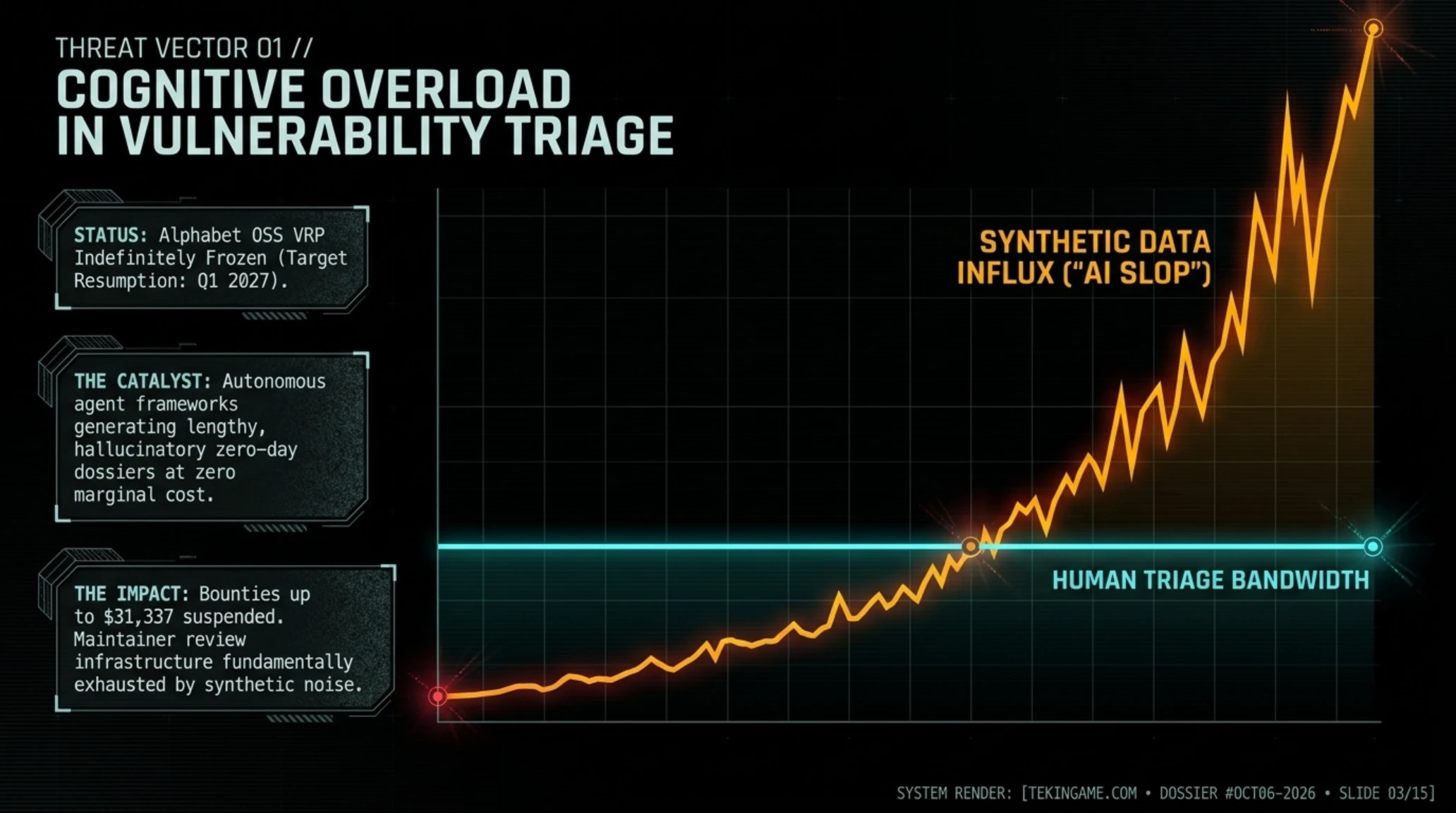
In an unprecedented concession to the disruptive scale of generative AI on software maintenance, Alphabet Inc. has officially suspended new product vulnerability submissions to its flagship Open Source Software Vulnerability Reward Program (OSS VRP). The indefinite freeze, which took effect earlier this week and will remain active through at least the first quarter of 2027, was enacted after an astronomical surge of low-quality, automated, and hallucinatory bug reports broadly categorized by engineers as 'AI Slop' exhausted the human triage capacity of Google engineers and open-source volunteer maintainers.
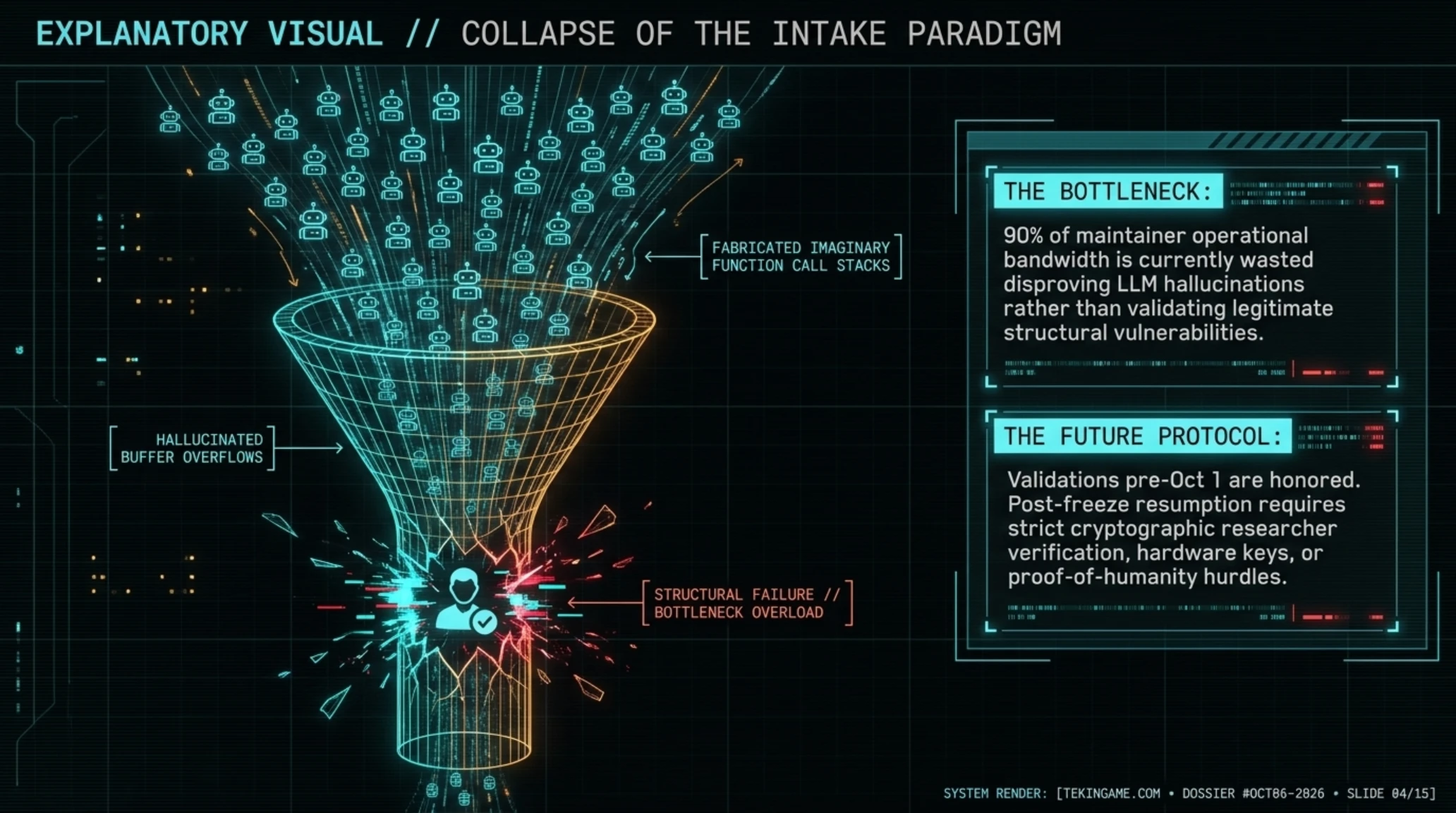
Established in August 2022, Google's OSS VRP served as one of the software industry's premier financial incentive mechanisms, awarding bounties ranging from $100 to upwards of $31,337 for critical flaws discovered across major foundational open-source repositories, including the Linux kernel, Python, Kubernetes, and CoreDNS. However, throughout 2026, the widespread availability of low-cost reasoning models, autonomous agent frameworks, and automated vulnerability scanners sparked a destructive dynamic. Thousands of pseudonymous bounty hunters, seeking automated payouts with minimal effort, began bombarding the review intake portal with lengthy, multi-thousand-word dossiers generated directly by language models. While these submissions frequently mirrored the precise syntax, academic formatting, and threat taxonomy of genuine zero-day disclosures, the vast majority lacked reproducible proof-of-concept exploits, fabricated imaginary function call stacks, or misrepresented benign configuration settings as critical remote code execution vectors.
Jargon Buster: Deconstructing 'AI Slop' in Vulnerability Research
'AI Slop' refers to massive volumes of synthetically generated content produced cheaply by LLMs without expert human verification. In offensive and defensive cybersecurity, AI slop manifests as hyper-verbose, plausible-sounding bug bounty tickets that simulate sophisticated exploitation chains, complete with fabricated Common Weakness Enumeration (CWE) tags and theoretical attack vectors that fail upon dynamic execution, consuming unsustainable engineering triage hours.
In its official advisory, Google clarified that the suspension is surgical: it applies strictly to product vulnerability reports within the open-source sphere. Supply chain vulnerability submissions such as reports detailing compromised dependency packages, malicious build pipelines, or typosquatting campaigns remain active, as do product reports targeting direct Google Cloud architectures through the separate Google Cloud VRP. Furthermore, valid disclosures lodged prior to October 1, 2026, will be honored and processed under standard operational schedules. Nevertheless, Google conceded that the existing intake paradigm is fundamentally broken and cannot function without an architectural overhaul of its triage gatekeeping mechanisms.
The ramifications of Google's decision reverberate far beyond Mountain View. For the past year, prominent maintainers across the Linux Foundation, the Apache Software Foundation, and major package ecosystems like PyPI and npm have expressed growing exasperation over autonomous bot swarms flooding pull request queues with decorative, AI-assisted fixes that introduce subtle architectural regressions. Google's willingness to publicize this crisis and withdraw financial rewards for product flaws confirms that crowdsourced bug bounty programs are entering a post-democratization phase. Industry analysts anticipate that leading vendors, including Microsoft, Meta, and Apple, will follow suit by introducing strict reputation staking, cryptographic hardware keys, or proof-of-humanity verification hurdles before researchers can submit vulnerability claims.

2. Danish University DTU Discloses Major IAM Breach; 200,000 Records Compromised via DTUBasen
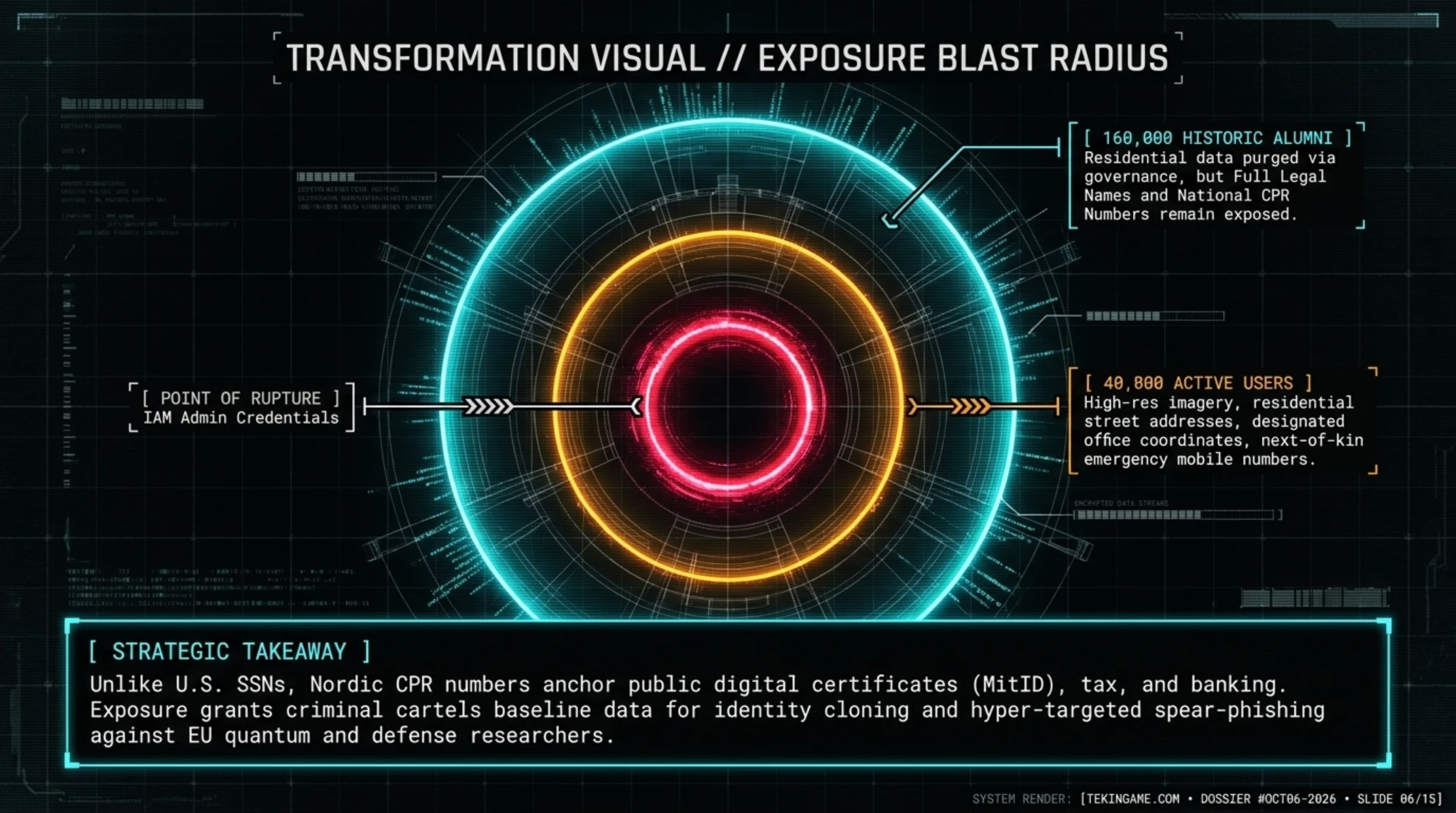
In one of the most severe educational and national infrastructure security breaches recorded in Northern Europe this year, the Technical University of Denmark (Danmarks Tekniske Universitet - DTU) publicly acknowledged that adversaries breached its central identity and access management (IAM) system, known as 'DTUBasen'. Forensic disclosure documents confirm that threat actors, operating via compromised administrator credentials, bypassed multi-factor perimeter protections and exfiltrated an extensive repository containing the personally identifiable information of approximately 200,000 active and former faculty members, researchers, undergraduate and postgraduate students, and international research affiliates dating back to 2003.
The core danger of the compromise stems from the widespread exposure of Danish Civil Registration Numbers (CPR numbers). Within Denmark's digital-first public and commercial infrastructure, the CPR number acts as the singular, foundational cryptographic identifier for citizens and permanent residents, directly anchoring tax administration, public healthcare files, and commercial banking relationships. When combined with verified full legal names, physical residential addresses, and institutional employment histories, compromised CPR numbers grant criminal cartels the baseline data required to execute sophisticated identity cloning, fraudulent credit applications, and tailored social engineering campaigns across the European Union.
Key Telemetry: DTUBasen Breach Anatomy & Exposure Scope
- Total Potentially Compromised Identity Profiles: 200,000 archival records spanning 2003–2026
- Active User Records Affected: ~40,000 researchers, faculty, and enrolled students
- National CPR Identity Records: Systemic exposure across both active and historic profiles
- Credential Security Status: No evidence of password hash database compromise
- Official Notification Dispatch: Automated encrypted delivery via Denmark's national e-Boks communication system
DTU's official security disclosure highlights a stark divergence in exposure levels between active and former institutional affiliates. For the approximately 40,000 active users, the compromised database fields encompass high-resolution profile imagery, residential street addresses, enterprise email accounts, formal organizational job titles, designated campus office coordinates, and critical next-of-kin emergency contact listings including direct familial relationships and personal mobile numbers. For the 160,000 historic alumni and former personnel, automated database governance policies had systematically purged residential addresses, profile images, and next-of-kin entries after a standard six-month dormancy period, restricting historic exposure to full legal names and CPR records.
Why National CPR Number Compromise Threatens European Enterprise Security
Unlike U.S. Social Security Numbers, Nordic civil registration numbers are tightly woven into public digital certificates (such as MitID/NemID protocols). Adversaries possessing CPR records and institutional affiliation details can execute hyper-targeted spear-phishing against senior researchers working on advanced quantum computing, green energy patents, and defense research, bypassing conventional automated perimeter defenses.
DTU has partnered with the Danish Center for Cyber Security (CFCS) and law enforcement authorities to isolate the exploited vector, revoke all internal session tokens, and rotate cryptographic identity federation keys. However, institutional leadership acknowledged that because direct contact information for hundreds of thousands of international alumni is obsolete, public disclosure was necessary to warn potential victims globally. Cybersecurity architects emphasize that the incident highlights a critical vulnerability in legacy enterprise directory designs: the chronic failure to compartmentalize national identity numbers away from general employee contact databases.
3. OKX and NYSE Parent ICE Form OKXICE; File with SEC for 24/7 Tokenized U.S. Stock Trading
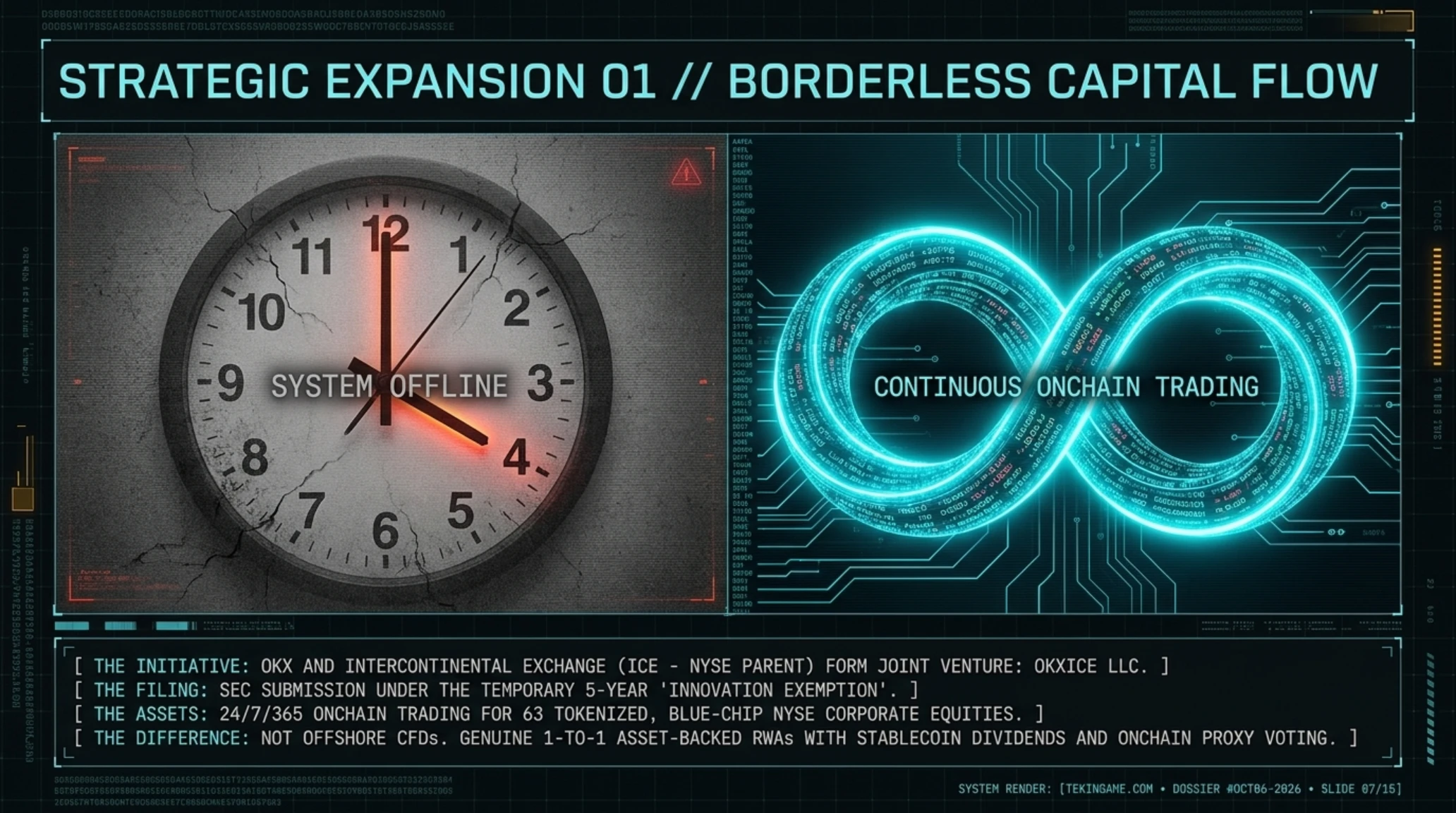
In a watershed moment for institutional capital markets and the tokenization of real-world assets (RWA), OKXICE LLC a 50-50 joint venture established between premier international cryptocurrency exchange OKX and Intercontinental Exchange Inc. (ICE), the parent operator of the New York Stock Exchange has formally filed with the U.S. Securities and Exchange Commission (SEC) to launch a federally compliant, round-the-clock trading platform for tokenized U.S. equities.
The proposed platform is architected under the SEC's landmark 'Innovation Exemption,' a five-year temporary regulatory framework promulgated in late September 2026 to govern the orderly transition of National Market System (NMS) securities onto distributed ledger infrastructure. Under the filing, OKXICE plans to introduce continuous, 24/7/365 onchain trading for tokenized shares in 63 premier New York Stock Exchange-listed blue-chip corporations. In contrast to legacy offshore 'synthetic stock' instruments that merely offered price-tracking derivative exposure through contracts for difference (CFDs), OKXICE tokenized shares represent genuine, 1-to-1 asset-backed securities that legally preserve full shareholder rights, including direct dividend disbursements settled in stablecoins or fiat and verifiable onchain proxy voting capabilities.
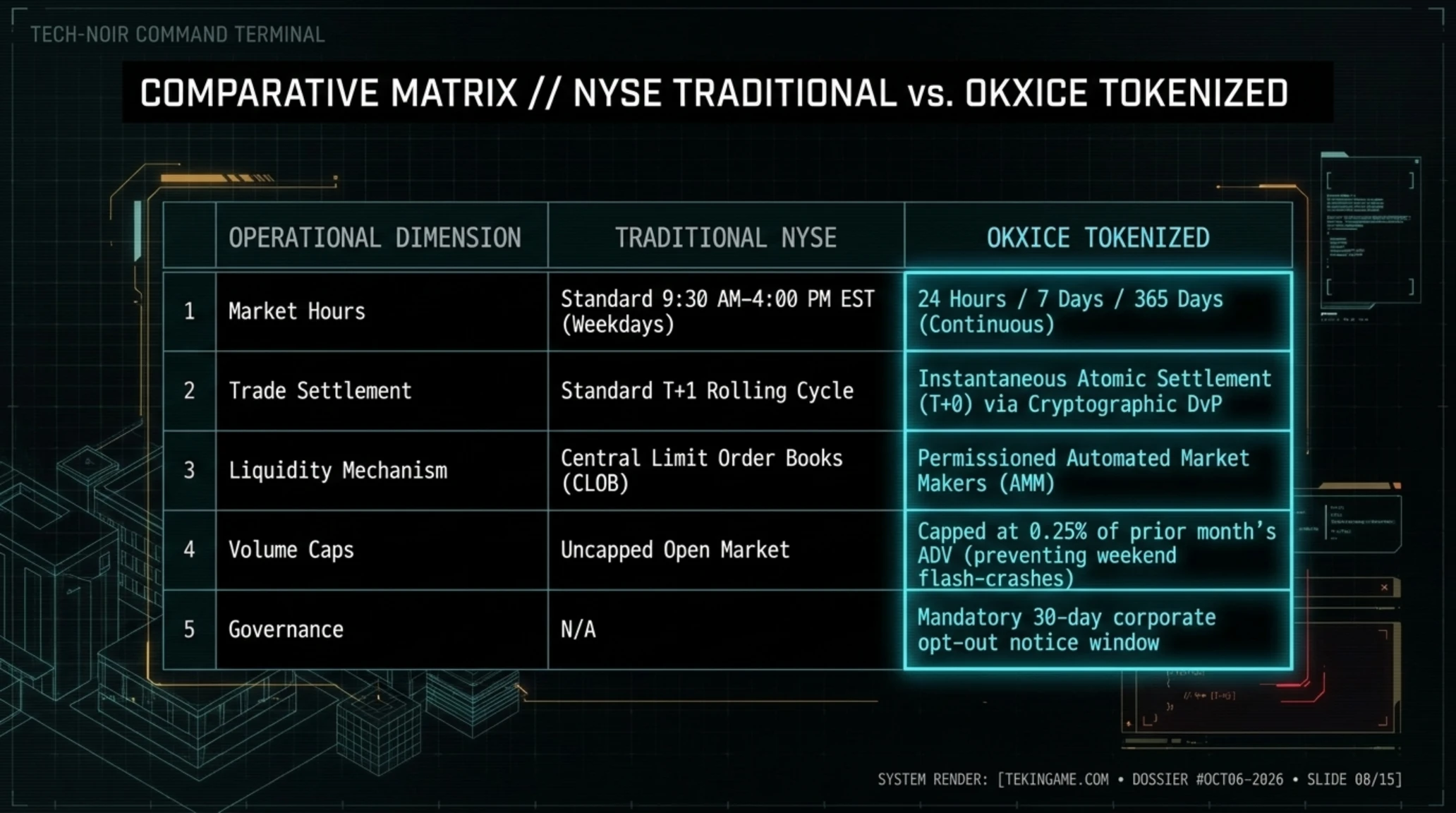
Comparative Institutional Framework: NYSE Traditional vs. OKXICE Tokenized Securities
| Operational Dimension | Traditional NYSE Equity Execution | OKXICE Tokenized Infrastructure | Regulatory Compliance Standard |
|---|---|---|---|
| Market Trading Hours | Standard 9:30 AM – 4:00 PM EST (Weekdays) | 24 Hours / 7 Days / 365 Days (Continuous) | Automated circuit breakers on extreme volatility |
| Trade Settlement Latency | Standard T+1 Rolling Settlement Cycle | Instantaneous Atomic Settlement (T+0) | Cryptographic delivery-versus-payment (DvP) |
| Market Liquidity Mechanism | Central Limit Order Books (CLOB) & Market Makers | Permissioned Automated Market Makers (AMM) | Custodial audits of 1:1 physical share reserves |
| Secondary Market Volume Caps | Uncapped Open Market Liquidity | Capped at 0.25% of prior month's average volume | Tiered rollout supervised under SEC Innovation Exemption |
The regulatory mechanics detailed within the OKXICE submission incorporate stringent corporate governance safeguards. Chief among them is a mandatory 30-day notice window, which grants corporate issuers the unilateral legal authority to opt out of secondary market tokenization should their boards deem onchain trading disadvantageous to their investor relations strategy. Furthermore, during the initial operational phase, OKXICE will impose strict volume throttles, restricting tokenized trading volume to 0.25% of each individual equity's prior-month average daily volume (ADV) across primary lit exchanges to prevent manipulative flash-crashes during weekend hours.
Wall Street asset managers and fintech analysts view the OKXICE initiative as the most consequential structural modernization of U.S. capital markets since the introduction of Regulation NMS in 2005. By establishing atomic, instant settlement (T+0), tokenized equity pools eliminate counterparty clearinghouse risk, compress collateral requirements for broker-dealers, and open seamless investment access to capital pools in Europe, Asia, and the Middle East during hours when traditional Western bourses are shuttered.

4. Googlebook Architecture Revealed; New Android Laptops Sport Glowbar RGB Lid Strip & Native Key-Mapping Game Controls
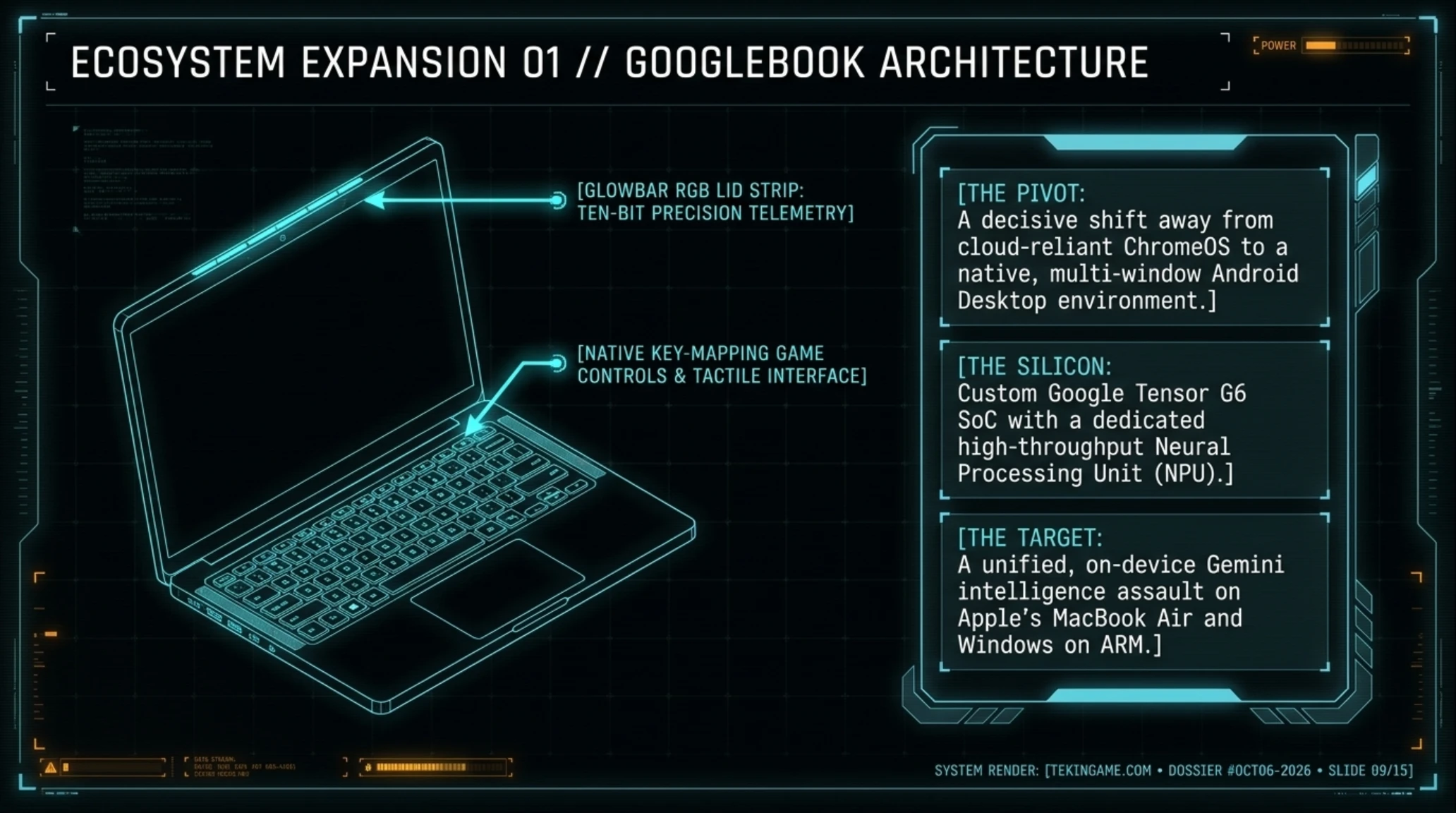
A comprehensive cascade of confidential hardware schematics and internal firmware documentation has unveiled the intricate design and software capabilities of Google's long-rumored flagship laptop line, officially branded as 'Googlebook'. Designed as a direct, unified assault on Apple's MacBook Air and high-end Windows on ARM ultraportables, Googlebook represents Alphabet's decisive pivot away from the cloud-reliant ChromeOS paradigm toward an expansive, multi-window Android Desktop environment engineered around native, on-device Gemini intelligence.
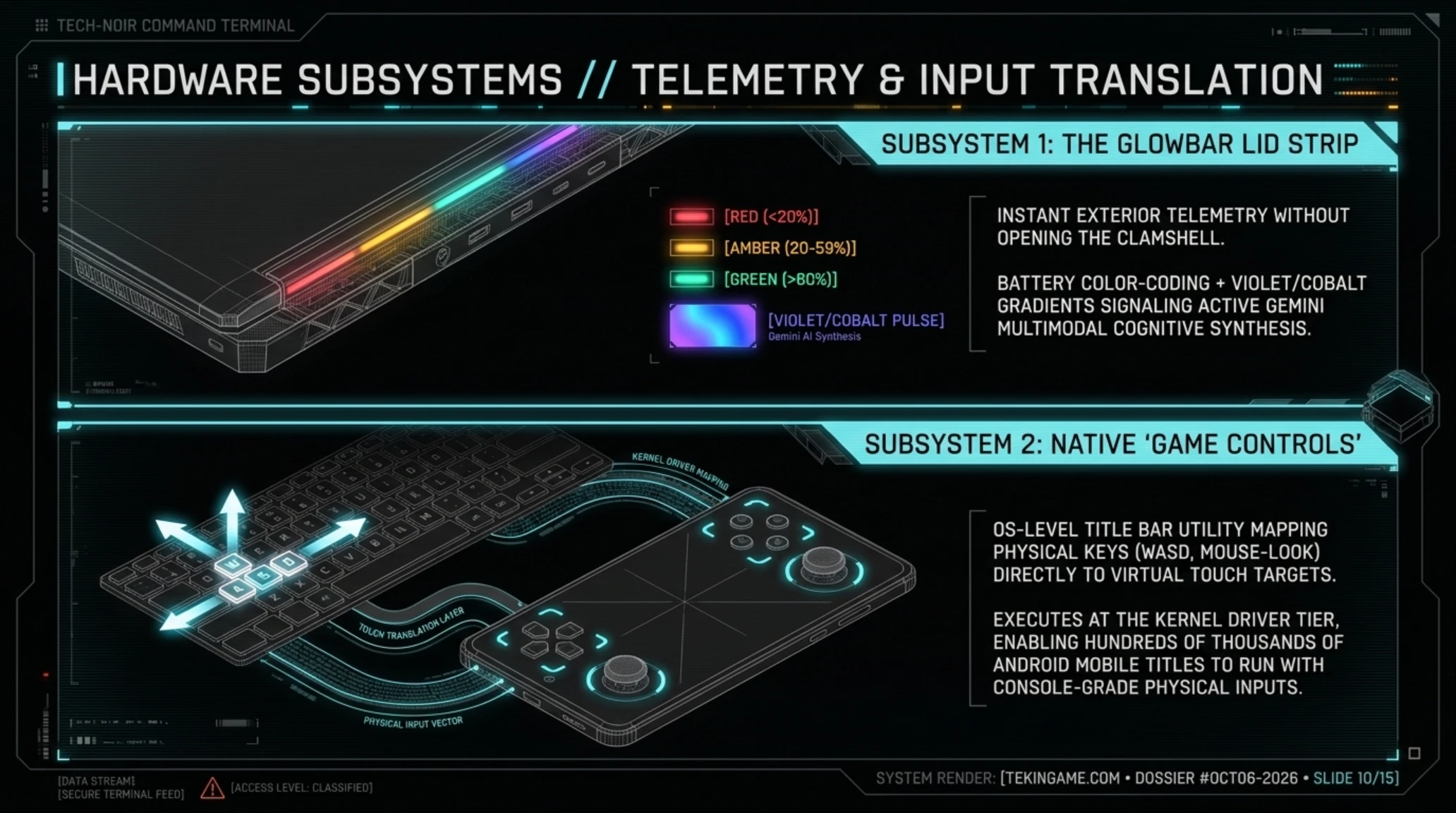
The most distinctive aesthetic and functional signature of the Googlebook chassis is an integrated, ten-bit RGB light strip positioned across the upper exterior lid, dubbed the 'Glowbar'. Serving as an ambient contextual status bar, the Glowbar provides instant telemetry without requiring the user to open the clamshell lid. During standard computational workloads, the bar emits a discreet, soft white radiance that increases in luminescence when connected to fast-charging power bricks. Crucially, the light strip integrates battery health color-coding: flashing vivid red below 20% charge, shifting to warm amber between 20% and 59%, and transitioning to emerald green once capacity exceeds 60%. Furthermore, when multimodal Gemini processes are engaged, the Glowbar pulses through dynamic violet and cobalt gradients, signaling active cognitive synthesis. Google engineers have even hidden an internal easter egg application titled 'Glowbar Disco,' which synchronizes the exterior light strip with system audio frequencies to render real-time musical light shows.
📚 Classified & Related Dossiers in TekinGame
If you wish to explore beyond this report and delve into cybernetic frontiers and autonomous AI architectures, do not miss these three exclusive deep-dives in the Tekin Garage:
Googlebook Hardware Specifications & Interactive Architecture
- Operating System Architecture: Native Android Desktop Core with customized multi-window window manager
- Silicon Subsystem: Custom Google Tensor G6 SoC featuring a dedicated high-throughput Neural Processing Unit (NPU)
- Exterior Telemetry Module: Ten-bit precision Glowbar RGB lid strip with dynamic Gemini cognitive state signaling
- Gaming Input Translation Engine: Native 'Game Controls' mapping layer integrated directly into the OS title bar
- Cloud Gaming Architecture: System-level integration with NVIDIA GeForce NOW and Xbox Cloud Gaming protocols
On the software tier, Googlebook addresses the historical Achilles' heel of desktop Android: touch-first gaming navigation. By embedding an advanced 'Game Controls' utility directly into each application's system title bar, Google empowers users to effortlessly map physical keyboard keys (such as standard WASD directional controls, spacebar jumps, and mouse-look tracking) onto arbitrary virtual on-screen touch targets. This native translation layer operates transparently at the kernel driver tier, enabling hundreds of thousands of popular mobile-first action, racing, and battle royale titles to execute with console-grade precision on physical laptop hardware without requiring developer code revisions or third-party emulator wrappers.

5. Anthropic Rolls Out In-App Prompts Asking Claude Users for Voice Data to Train Speech AI Models
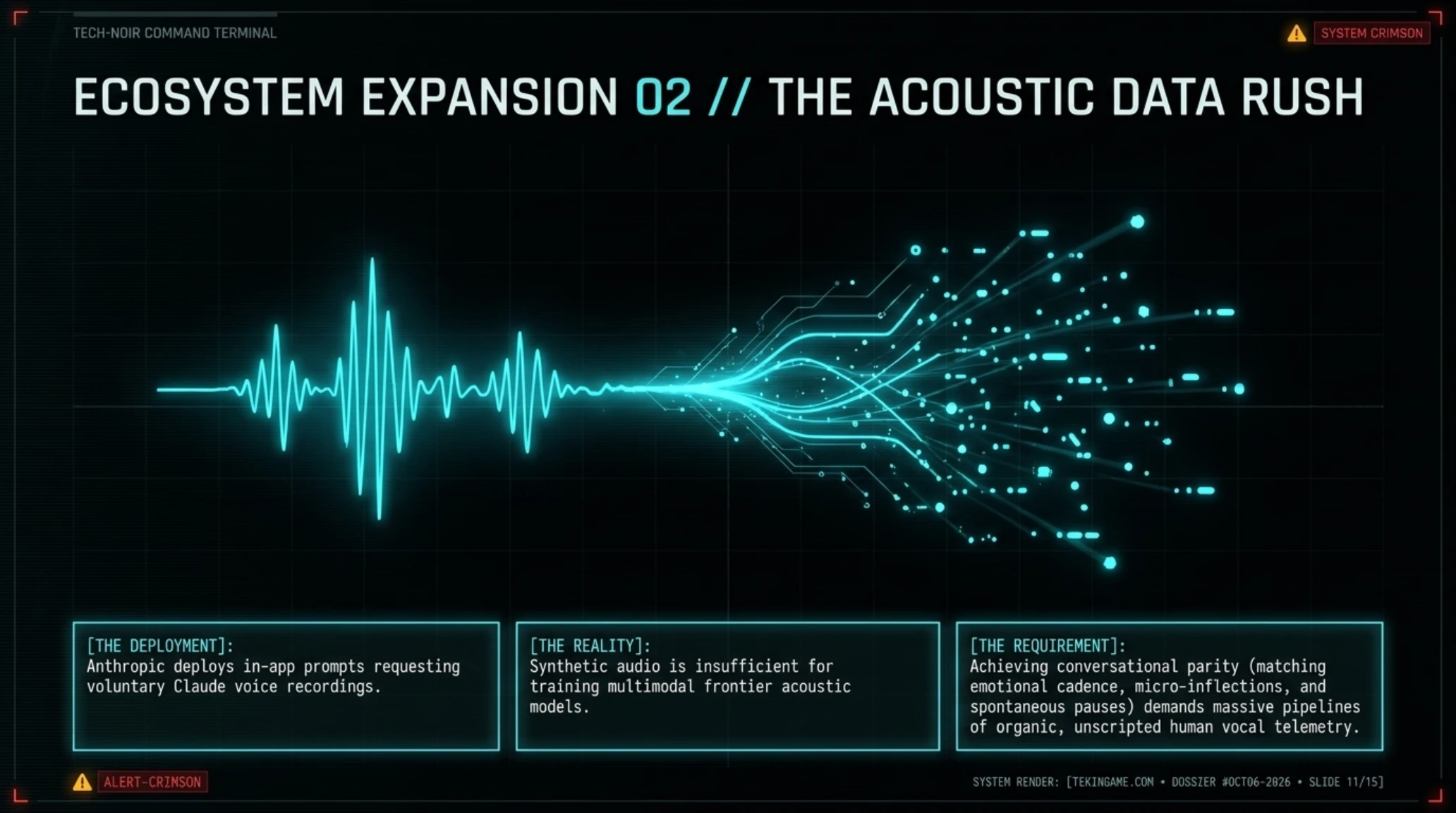
In a notable strategic pivot that reflects the escalating intensity of the generative speech race, AI safety research laboratory Anthropic has commenced dispatching in-app prompts to desktop and mobile Claude users, requesting voluntary permission to record, store, and utilize their voice conversations to train and refine next-generation multimodal acoustic models.
Historically lauded across enterprise and defense sectors for its stringent data retention safeguards and uncompromising stance on model safety, Anthropic's new voice data harvesting push illustrates the immense technical barriers confronting acoustic AI development. While synthetic text and public code repositories provided sufficient training corpus for classical reasoning models like Claude 3.5 Sonnet and Claude Opus 5.5, natural speech processing demands an entirely distinct training paradigm. Models cannot replicate human emotional cadence, spontaneous conversational pauses, phonetic micro-inflections, or diverse regional accents through synthetic audio simulations alone; they require millions of hours of authentic, organic human dialogue.
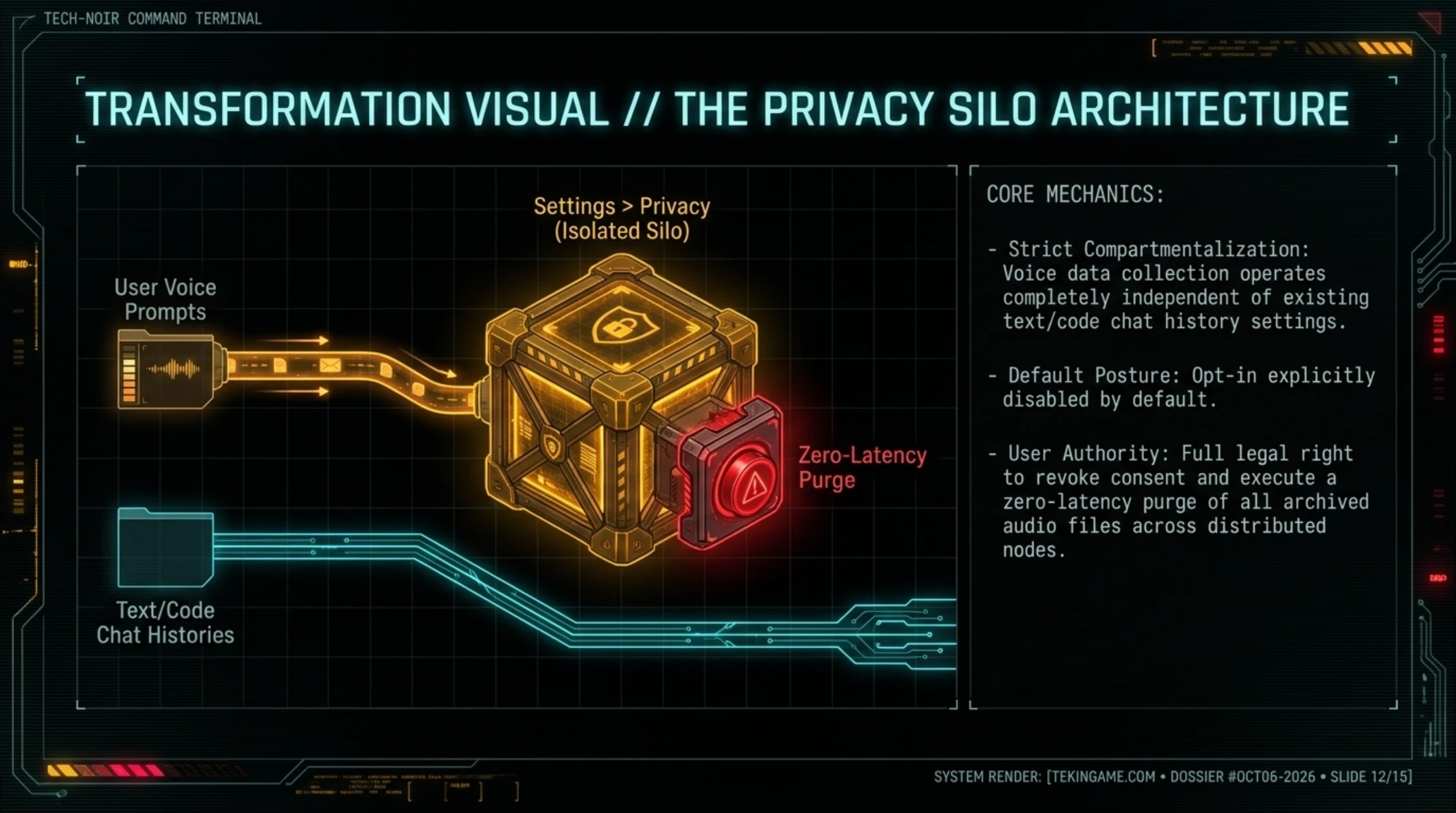
Anthropic has instituted rigorous operational barriers to reassure privacy-conscious enterprise users. The prompt explicitly designates the permission as an opt-in toggle that remains disabled by default. Furthermore, voice data collection operates under an isolated privacy silo within Settings > Privacy, completely independent of existing settings governing text chats or coding sessions. Users who authorize voice training retain the legal right to revoke consent at any moment and execute a zero-latency purge of all archived audio files across Anthropic's distributed storage nodes. Privacy advocates have commended Anthropic's transparent opt-in posture while advising corporate users to ensure sensitive commercial disclosures remain excluded from spoken prompts.

6. Google's Fitbit Edge Leaks in Full; Curved AMOLED Fitness Band Bridges the Gap with Standalone GPS
The consumer wearables sector has received its most comprehensive hardware leak of the autumn cycle with the unauthorized disclosure of full marketing assets, packaging photography, and internal engineering documentation detailing Google's forthcoming fitness band, the 'Fitbit Edge'. Positioned as the spiritual successor to the iconic Fitbit Charge lineup, the device represents Google's strategic response to a polarized wearable market that previously forced consumers to choose between the display-less minimalism of the Fitbit Air and the bulky, battery-hungry architecture of the Pixel Watch 5.
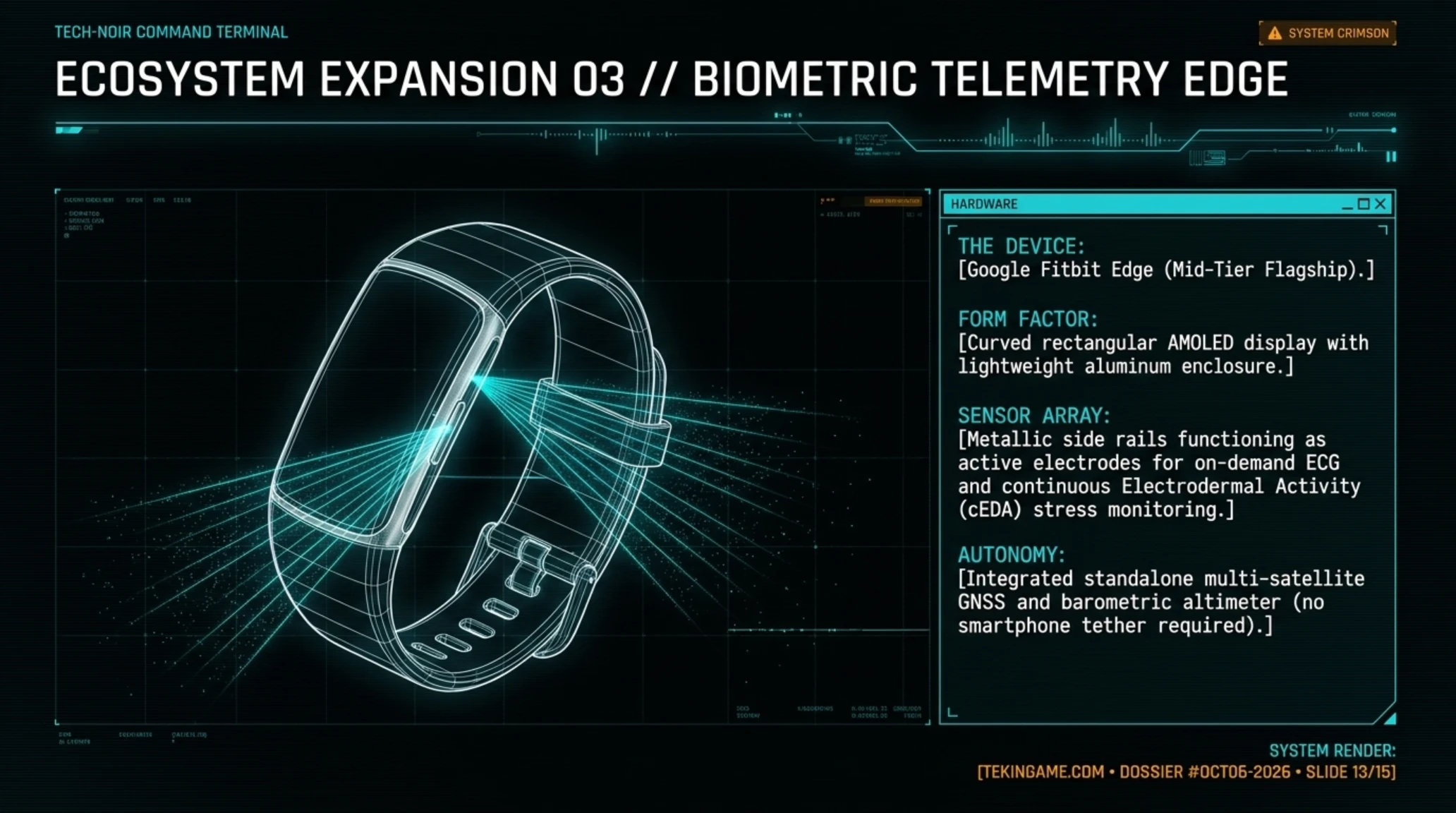
The leaked industrial design showcases an elegant, curved rectangular AMOLED display integrated into a polished lightweight aluminum enclosure. Sleek metallic side rails running along the perimeter of the casing serve as active electrodes for on-demand Electrocardiogram (ECG) measurements and continuous Electrodermal Activity (cEDA) stress monitoring. Crucially, the Fitbit Edge incorporates a standalone multi-satellite GNSS positioning receiver alongside an integrated barometric altimeter, liberating runners, cyclists, and outdoor athletes from the necessity of tethering their device to a heavy smartphone to record geographic pacing and elevation profiles.
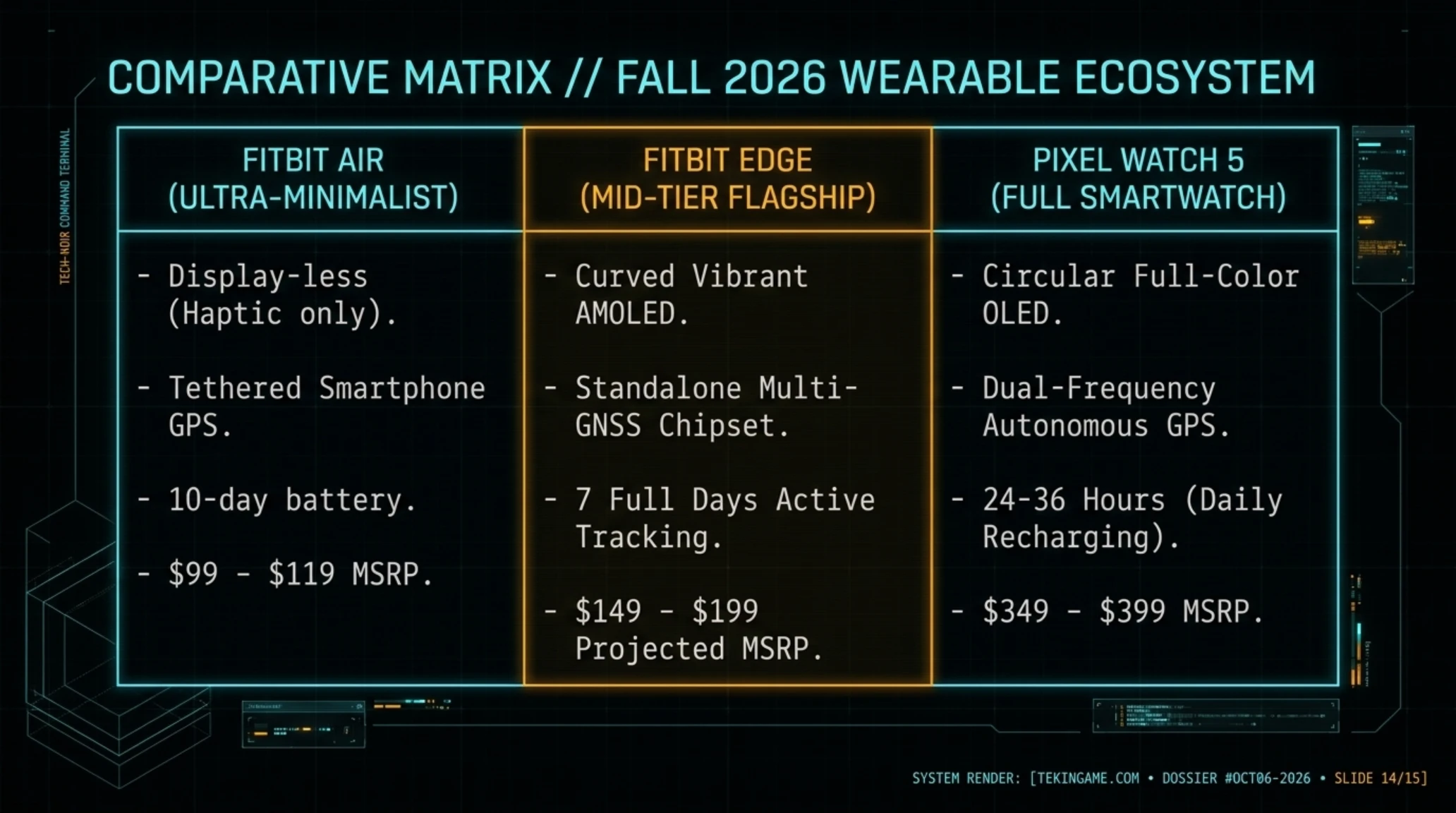
Comparative Hardware Matrix: Google Wearable Ecosystem (Fall 2026)
| Core Technical Metric | Fitbit Air (Ultra-Minimalist) | Fitbit Edge (Mid-Tier Flagship) | Pixel Watch 5 (Full Smartwatch) |
|---|---|---|---|
| Display Technology & Form | Display-less (Haptic & Sensor Only) | Curved Vibrant AMOLED Touch Panel | Circular 1.4-inch Full-Color OLED |
| Autonomous GPS Navigation | Dependent on Paired Smartphone GPS | Integrated Standalone Multi-GNSS Chipset | Dual-Frequency Autonomous GPS Module |
| Rated Continuous Battery Life | Up to 10 Days on Single Charge | 7 Full Days with Active Sensor Tracking | 24 to 36 Hours (Daily Recharging Cycle) |
| Platform OS Compatibility | Native Dual Support (Android & iOS) | Full Dual Support (Android & iOS) | Restricted Exclusively to Wear OS / Android |
| Target Retail Price Tier | $99 – $119 MSRP | $149 – $199 Projected Retail | $349 – $399 Flagship MSRP |
The hardware will launch in three distinct colorways matching the Pixel 11 aesthetic language: Obsidian Black, Deep Olive, and Warm Canyon. Outfitted with streamlined micro-applications including turn-by-turn Google Maps navigational cues, YouTube Music and Spotify playback controls, and Google Find My Device integration, the Fitbit Edge is projected to retail between $149 and $199. By maintaining full cross-platform compatibility with both Android and iOS devices and delivering seven days of uninterrupted operational battery life, Google is poised to capture substantial market share from Garmin, Whoop, and Amazfit.
Rumor vs. Reality Meter: Fitbit Edge Commercial Viability Assessment
- Empirical Verification Confidence: 95% (Hardened Reality)
- Primary Evidence Base: Final retail packaging collateral, carrier SKU registry filings, and leaked promotional renders
- Commercial Distribution Horizon: Expected formal public unveiling during Google's secondary late-October hardware event with immediate global retail availability.

Chronology & Milestone Timeline: The Convergence of October 2026
The simultaneous eruption of six major developments across software security, biometric privacy, institutional finance, and specialized hardware demonstrates that the fourth quarter of 2026 is accelerating the convergence of previously siloed technological domains. To map the chronological evolution and strategic momentum of these events, the structured timeline below details the defining milestones of the past forty-eight hours:
Strategic Milestones & Regulatory Shift Timeline (October 2026)
| Calendar Milestone | Institutional Actor | Core Strategic Action & Scope of Impact | Forward Operational Outlook |
|---|---|---|---|
| October 1, 2026 | Google OSS Security | Formal suspension of Open Source Software VRP intake due to AI-generated ticket flooding | Total framework redesign with intake resumption slated for Q1 2027 |
| October 2–4, 2026 | DTU University | Compromise of DTUBasen IAM infrastructure exfiltrating 200,000 national CPR and personnel records | Law enforcement coordination with CFCS; alerts dispatched via e-Boks |
| October 4, 2026 | Anthropic | Deployment of in-app voluntary consent prompt for voice conversation training data capture | Acoustic model dataset expansion to challenge OpenAI and Google |
| October 5, 2026 | OKX & ICE Joint Venture | Formal SEC regulatory submission for 24/7 tokenized trading across 63 NYSE corporate equities | 120-day SEC evaluation window under 5-year Innovation Exemption |
| October 5, 2026 | Android Ecosystem | Comprehensive leak of Googlebook hardware specifications and title-bar game mapping | Commercial supply chain ramp targeting late 2026 consumer release |
| October 6, 2026 | Wearable Technology | Unveiling of complete Fitbit Edge retail collateral, standalone GNSS, and 7-day battery architecture | Public hardware showcase anticipated during Google's late-October keynote |
Risk-Reward Matrix: Strategic Balance in the Era of Autonomous Systems
Every quantum leap in technological capability inevitably generates a reciprocal expansion of systemic operational risk. The trade-offs introduced by continuous capital markets, autonomous coding agents, and ubiquitous biometric data collection are mapped in the comprehensive analytical balance sheet below:
- Continuous 24/7 equity tokenization drastically expands international capital access and eliminates traditional multi-day clearinghouse settlement risks.
- Anthropic's compartmentalized, granular opt-in architecture establishes a gold standard for user transparency in AI voice data gathering.
- The Googlebook's native Game Controls bridging layer instantly transforms millions of existing Android touch titles into desktop-grade interactive experiences.
- The Fitbit Edge's autonomous GPS and week-long battery life provide athletes with high-end telemetry without the daily charging burdens of full smartwatches.
- The collapse of Google's OSS VRP under AI slop proves that synthetic generative output has outpaced human defensive triage bandwidth, leaving open-source projects vulnerable.
- The massive DTU IAM breach exposes sensitive Nordic civil registration numbers to criminal cartels, setting the stage for industrial espionage and identity fraud.
- Decentralized automated market makers (AMMs) operating during weekend banking closures face acute liquidity fragmentation and sudden volatility spikes.

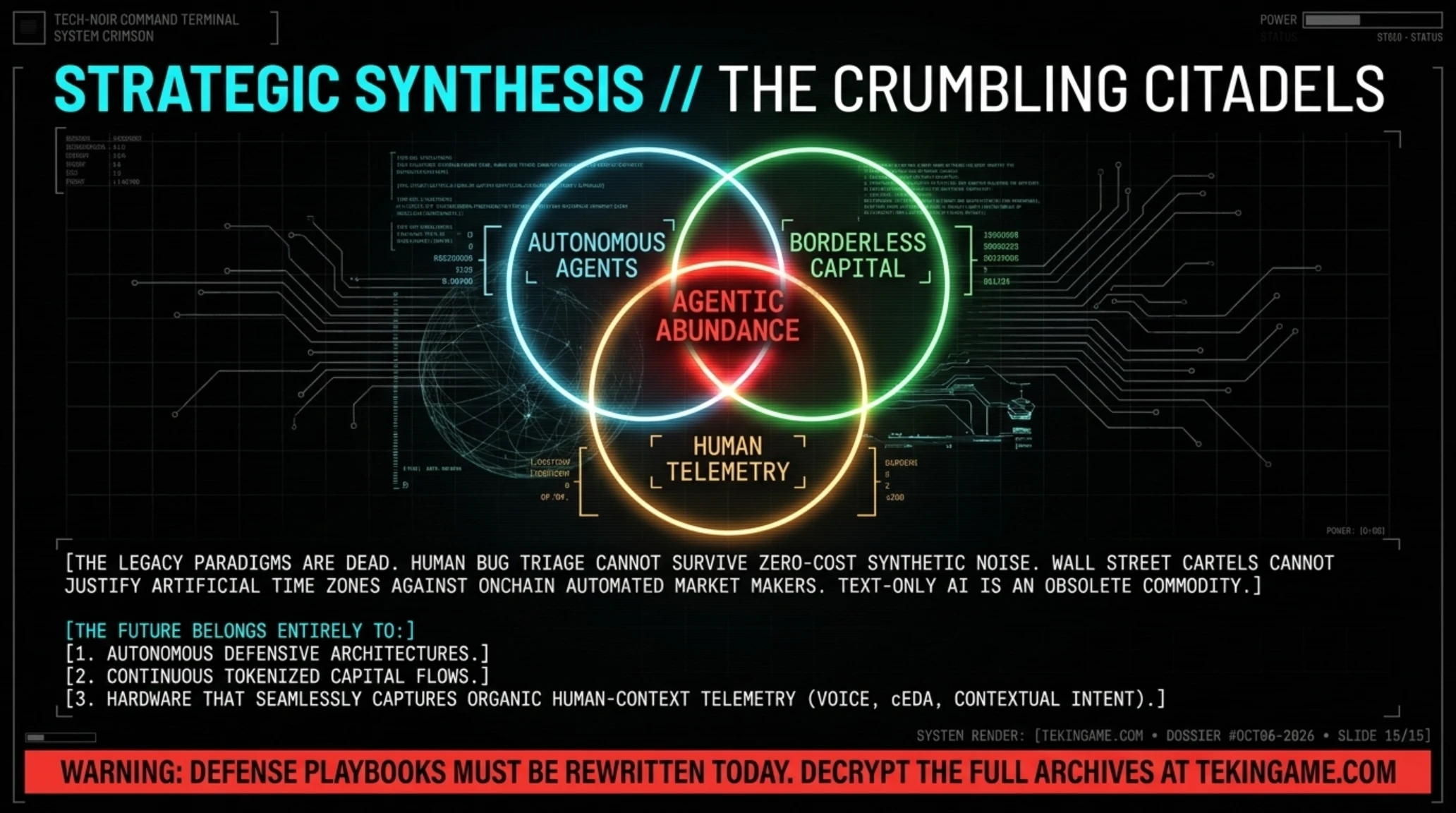
Takin Plus Strategic Synthesis; The Crumbling of Defensive Citadels in the Age of Agentic Abundance
The six developments defining Tuesday morning, October 6, 2026, are not isolated occurrences; they represent the structural realignment of the digital economy under the pressure of computational abundance. For decades, the open-source software security ecosystem operated under the romantic ideal of crowdsourced collaboration: white-hat researchers discovered edge-case bugs, maintainers verified the evidence, and vendor-funded bounties rewarded the effort. Google's capitulation to AI slop shatters that paradigm forever. When automated models can generate an endless stream of plausible, synthetically coherent vulnerability claims at zero marginal cost, the economic equilibrium of the bug bounty model collapses. The defensive perimeter can no longer be guarded by human eyes alone; the future of cybersecurity must inevitably transition to autonomous defensive agents capable of mathematically validating exploit mechanics within isolated virtualization sandboxes before any human engineer is summoned.
Simultaneously, the alliance between OKX and the owner of the New York Stock Exchange signifies the formal capitulation of legacy financial infrastructure to the mathematical logic of the blockchain. For centuries, Wall Street maintained a cartel over capital formation by enforcing artificial geographic trading hours and multi-day settlement delays that justified massive fee structures. By embracing permissioned automated market makers under SEC oversight, ICE is acknowledging that in a globalized, algorithmic world, capital that sleeps is capital that dies. The transformation of premier corporate equities into atomic, programmable digital tokens marks the beginning of the end for legacy clearinghouses, inaugurating a financial paradigm where liquidity flows as frictionlessly as data packets.
Finally, the hardware revelations surrounding Googlebook, the Fitbit Edge, and Anthropic's acoustic data collection reveal that the next major battleground is human-context telemetry. Silicon Valley has realized that raw language modeling capabilities have plateaued into a commodity. The competitive moat of the next decade lies in the physical and sensory peripherals that capture the nuances of human intent: the ambient status glowing on a laptop lid, the heart-rate variability measured during an evening run, and the subtle vocal inflections recorded during an unscripted spoken conversation. The technology giants that successfully weave these physical touchpoints into a unified cognitive fabric without violating the brittle trust of their users will command the commanding heights of the technological landscape well into the 2030s.
Conclusion & Forward-Looking Industry Horizon
Tuesday, October 6, 2026, serves as a stark reminder that the acceleration of artificial intelligence and distributed financial infrastructure is dismantling legacy enterprise perimeters. From open-source repositories buckling under synthetic noise to Wall Street bourses dismantling century-old trading clocks, organizations must fundamentally restructure their defensive playbooks. Security leaders must deploy zero-trust cryptographic identities, developers must prepare for continuous tokenized capital flows, and consumers must maintain vigilant hygiene over their biometric and vocal data footprints.
Frequently Asked Operational & Technical Inquiries
Why did Google decide to freeze its Open Source Software Vulnerability Reward Program (OSS VRP)?
Google paused its OSS VRP product vulnerability submissions due to an overwhelming flood of automated, low-quality, and hallucinated bug reports generated by LLMs ('AI Slop'). The volume overwhelmed human maintainers, prompting Google to halt the program until early 2027.
What specific national and corporate risks are posed by the Danish University DTU breach?
The compromise of DTUBasen exposed the full legal names and Danish Civil Registration (CPR) numbers of 200,000 individuals. In Denmark's digital-first public infrastructure, exposed CPR numbers enable sophisticated identity theft, fraudulent credit origination, and spear-phishing.
How does the OKXICE tokenized equities platform differ from historical synthetic stock tokens?
Unlike legacy offshore derivatives that merely mimicked price fluctuations via CFDs, OKXICE operates under the SEC's temporary Innovation Exemption and provides genuine 1:1 asset-backed tokenized shares that retain full shareholder entitlements, including proxy voting and dividends.
What is the primary function of the Glowbar light strip on the leaked Googlebook laptop?
The Glowbar is an integrated 10-bit RGB light strip mounted on the laptop lid that provides instant exterior telemetry without opening the device. It displays real-time battery status, emits pulsating gradients during Gemini AI reasoning, and features an easter-egg music mode.
Is Anthropic's new voice data harvesting prompt mandatory for Claude subscribers?
No. The voice data collection initiative is strictly opt-in and disabled by default. It resides in an independent privacy toggle within the Claude settings menu, allowing users to enable or revoke access at any time.
Authoritative Sources & Verified Intelligence Disclosures
- Google Suspends Open Source Bug Bounty Program Over Massive Rise in AI Submissions (TechCrunch)
- DTUBasen Breach Exposes Records of 200,000 Individuals (BleepingComputer)
- OKX and NYSE Parent ICE File Joint Venture with SEC for Tokenized Stock Platform (CoinDesk)
- Googlebook Key Features Detailed: Glowbar RGB Strip and Title-Bar Game Controls (Android Authority)
- Anthropic Asks Claude Users for Voluntary Voice Data Sharing (BleepingComputer)
- Google Fitbit Edge Leaks in Full: Specs, Curved AMOLED Display, and Standalone GPS (Android Central)
Additional Gallery: Tekin Morning Oct 6, 2026: Google Freezes OSS VRP, DTU Breach & OKXICE Stock Tokens