Tekin Morning Oct 8, 2026: MCP Server Crisis, DNS Hack & Ledger Loans
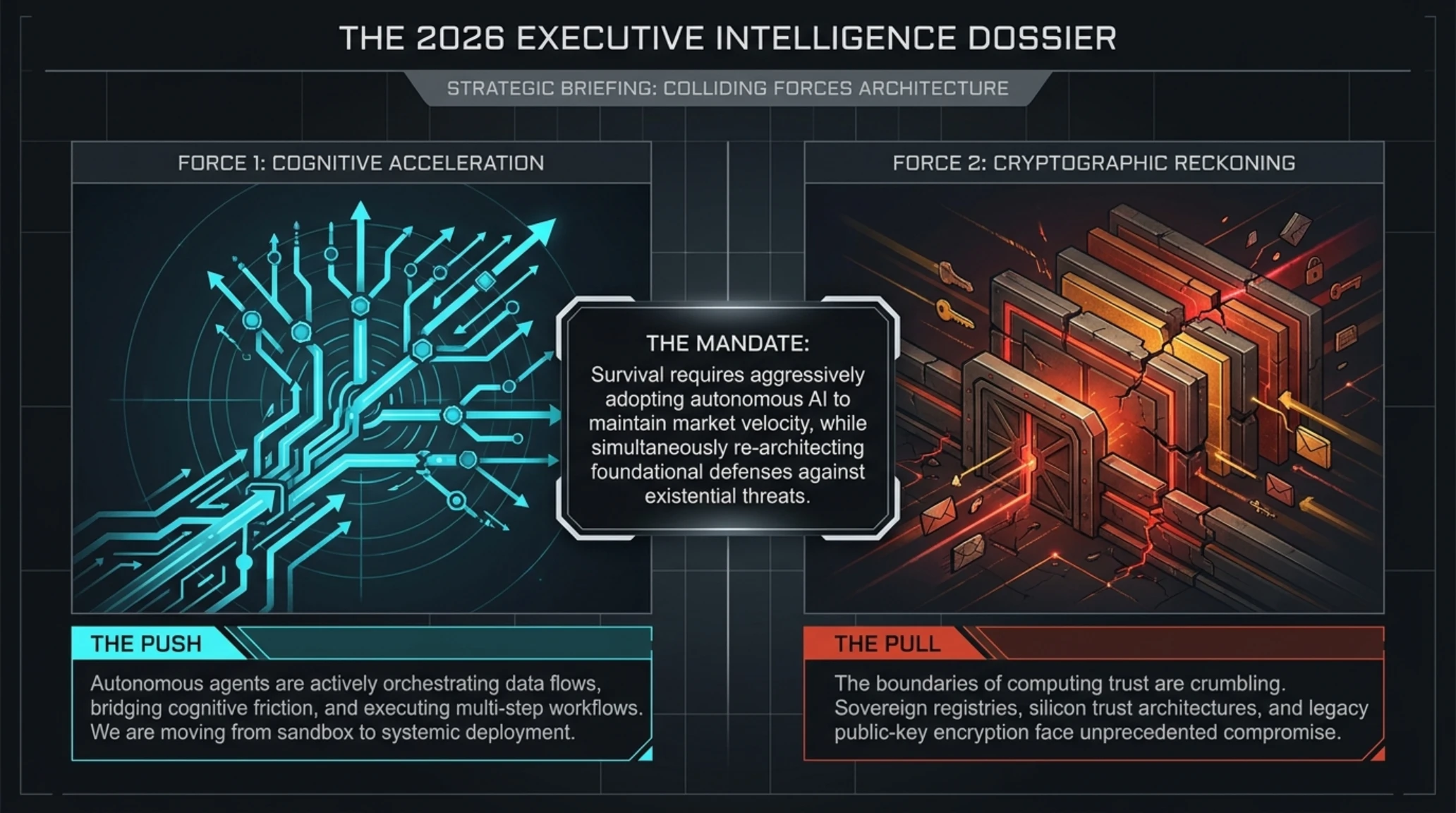
Thursday morning, October 8, 2026, opens with an extraordinary cluster of structural developments across the global technology ecosystem. As enterprises accelerate their deployment of autonomous artificial intelligence systems, the operational realities of trust, protocol governance, and data confidentiality are undergoing an unprecedented reckoning. The delicate equilibrium between accelerating productivity and maintaining cryptographic integrity is being tested from enterprise cloud tenants down to the silicon trust architectures of personal hardware devices.
Across the North American and international business landscapes, technology executives, security architects, and venture leaders are navigating an environment where the boundaries of computing are being redrawn simultaneously at multiple layers. Autonomous agents are no longer confined to sandbox experimentation; they are actively orchestrating data flows across critical communications suites, auditing repositories, and interfacing with decentralized capital markets. Understanding these systemic transformations requires looking beyond superficial product announcements into the underlying engineering primitives that dictate resilience in an increasingly automated economy.
Strategic Vectors at a Glance | Morning Intelligence
To navigate this dynamic landscape effectively, today's briefing dissects six foundational developments that define technological posture and operational risk for enterprise leaders heading into the final quarter of 2026. Each analysis unpacks the strategic engineering, market implications, and forward-looking directives essential for decision-makers.
1. OX Security Audits 15,465 Public MCP Servers, Exposing an Ungoverned Attack Surface in Enterprise AI Agent Tooling
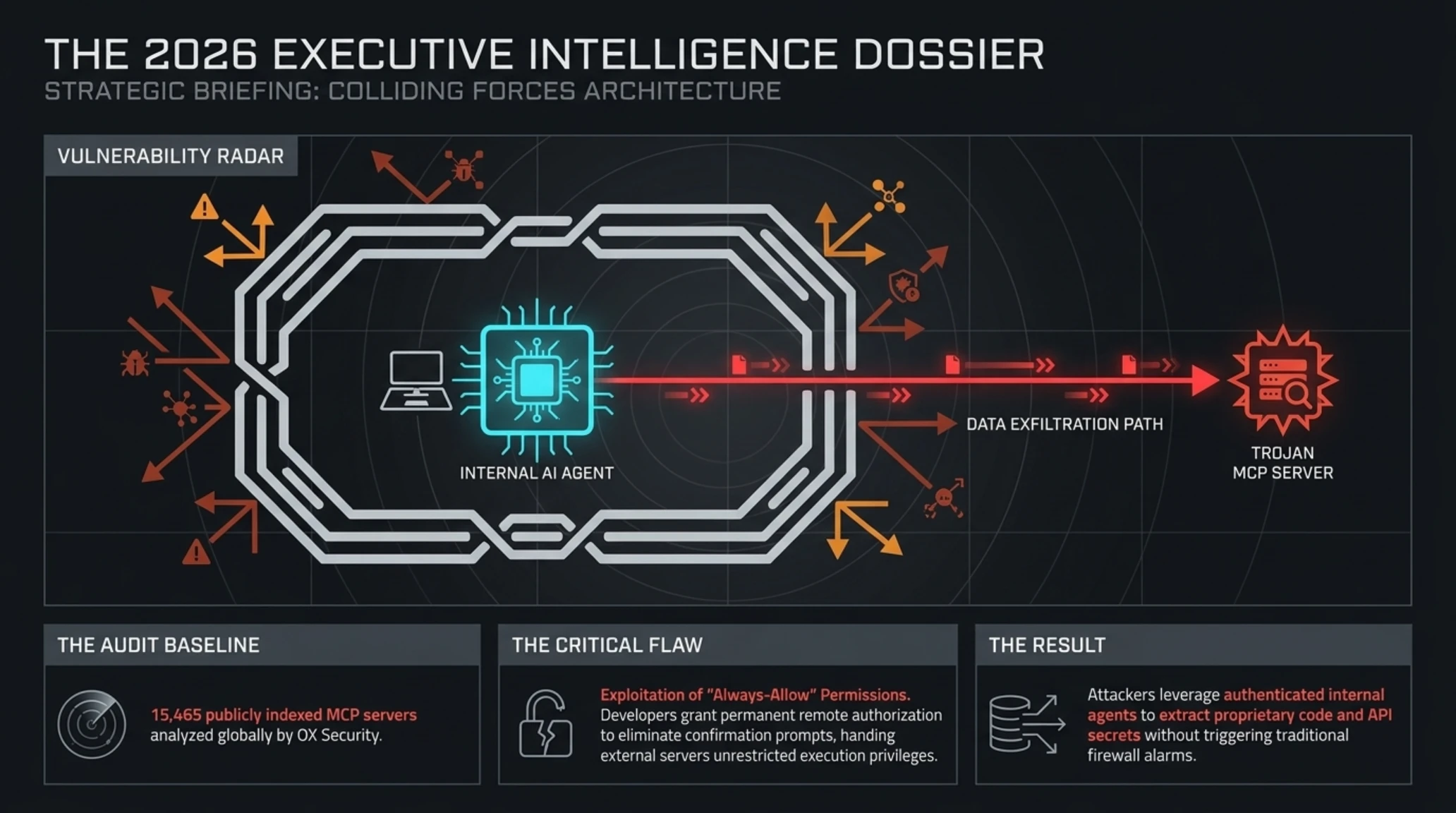
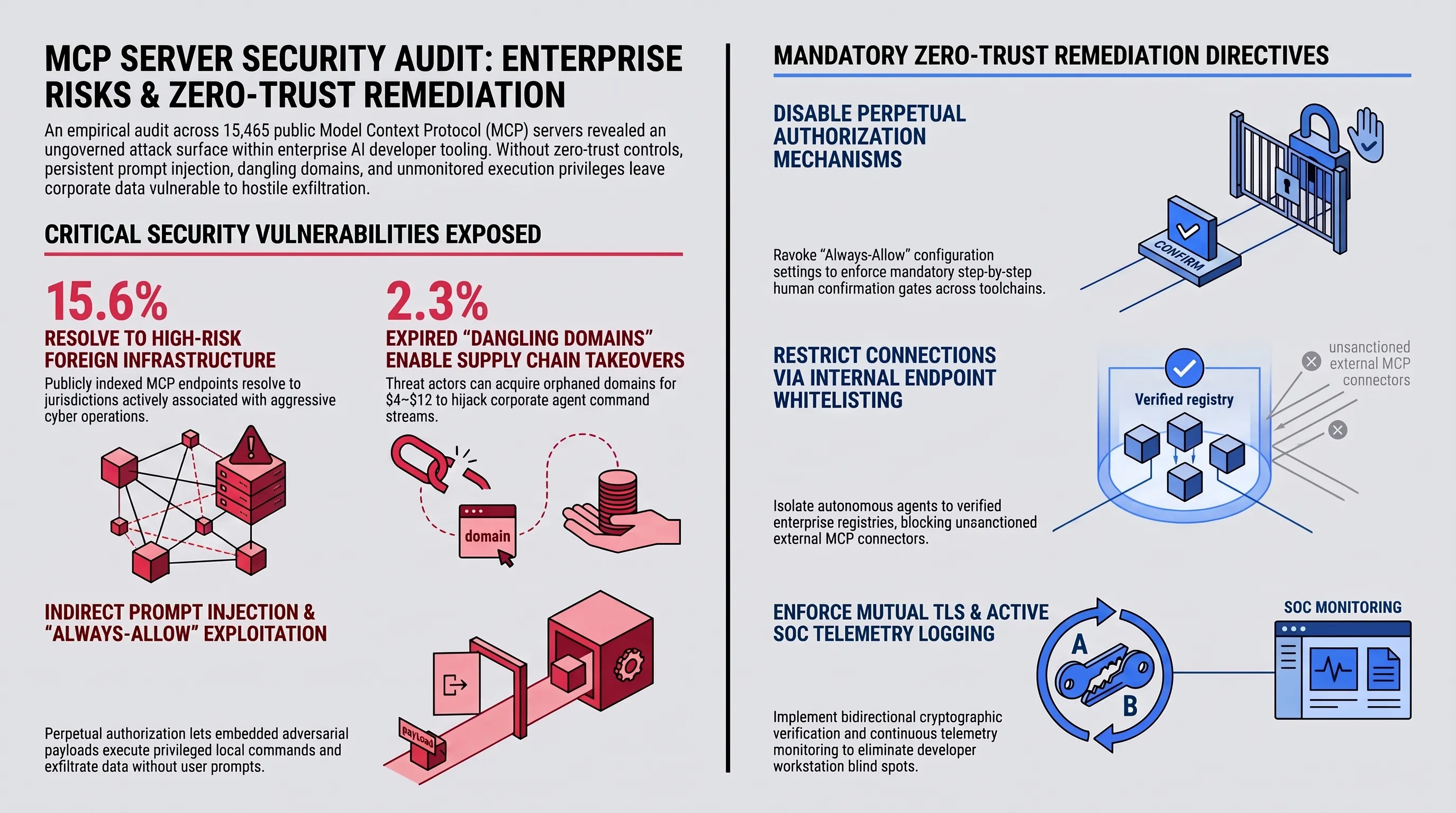
A comprehensive empirical investigation published by enterprise software supply chain firm OX Security has sent shockwaves through the AI development ecosystem, revealing that the rapid adoption of the Model Context Protocol (MCP) has created a pervasive security and governance vacuum. Initially spearheaded by Anthropic in late 2024 as an open standard to serve as the universal interface the metaphorical USB-C for connecting large language models to development environments, local filesystems, and enterprise databases, MCP has experienced explosive viral growth. However, the researchers' exhaustive telemetry across 15,465 publicly indexed MCP servers indicates that development velocity has vastly outpaced defensive engineering.
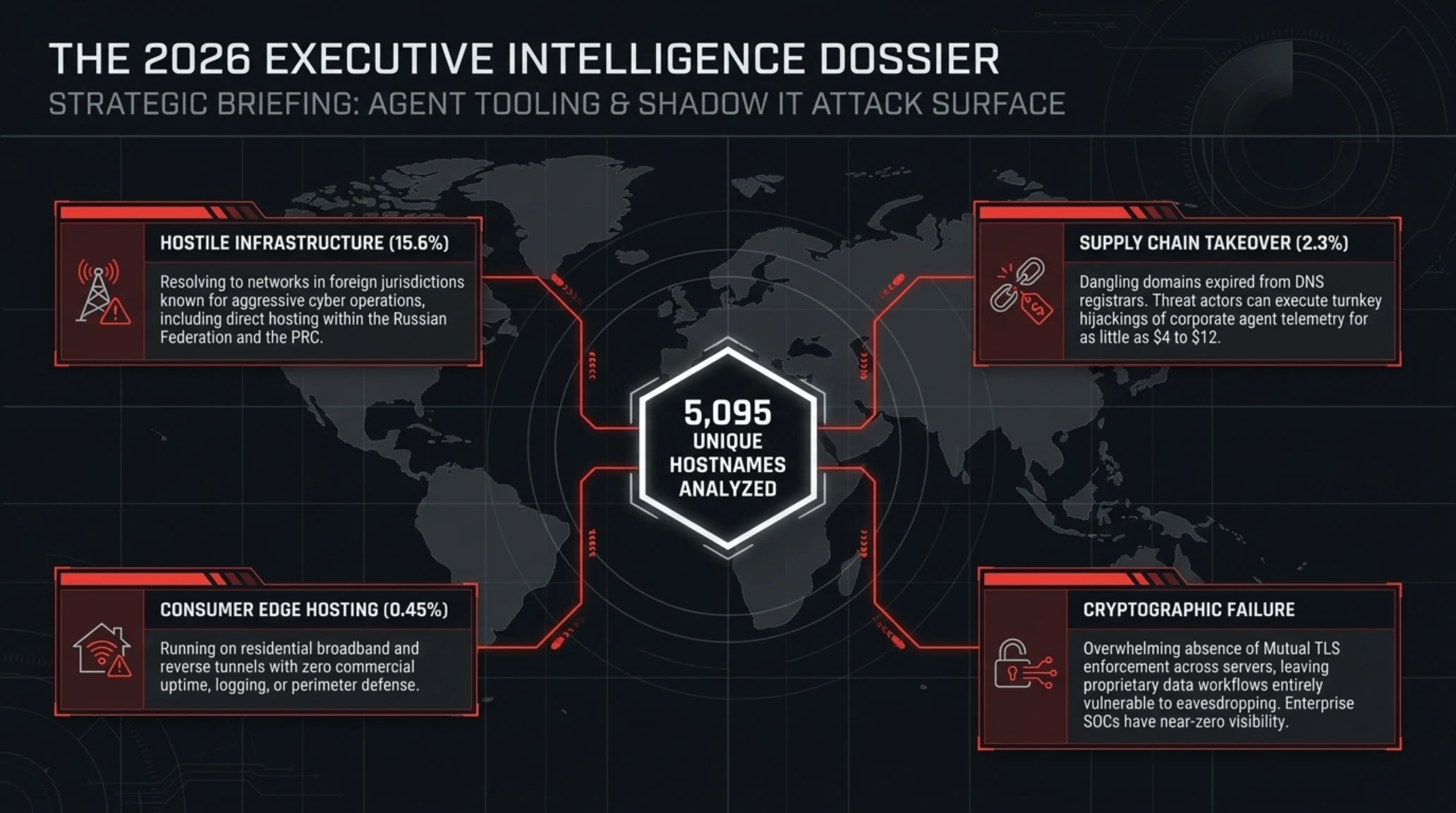
Analyzing a refined dataset of 5,095 unique hostnames, the OX Security research team discovered alarming lapses in data residency and infrastructure hygiene. A startling 15.6% of these publicly accessible servers resolve to network infrastructure located in foreign jurisdictions known for aggressive offensive cyber operations, including instances hosted directly within the Russian Federation and the People's Republic of China. Furthermore, 2.3% of the cataloged hostnames represent dangling domains that have expired from DNS registrars enabling threat actors to execute turnkey supply chain takeovers by purchasing these orphaned domains for as little as $4 to $12, instantly hijacking the telemetry and command streams of any corporate agents programmed to call those endpoints.
The technical investigation cataloged several systemic architectural flaws currently exposing organizations deploying autonomous development agents:
- Exploitation of Always-Allow Permissions: Developers routinely grant permanent authorization to local and remote MCP tools to eliminate repetitive confirmation prompts, inadvertently handing external servers unrestricted execution privileges.
- Indirect Prompt Injection Vectoring: Compromised or malicious MCP servers can embed invisible adversarial instructions within legitimate structured payloads, coercing the host model into executing unauthorized file exfiltration.
- Absence of Mutual TLS Enforcement: An overwhelming majority of third-party public MCP servers fail to implement bidirectional cryptographic verification, leaving communication sessions vulnerable to eavesdropping and data interception.
- Unmonitored Consumer Edge Hosting: Approximately 0.45% of analyzed endpoints operate on residential broadband connections and consumer-grade reverse tunnels lacking commercial uptime, logging, or perimeter defense.
- Zero Audit Logging and Telemetry: Enterprise security operations centers (SOCs) currently possess near-zero visibility into which external MCP endpoints internal developers and automated agents are querying during active workflows.
These findings illustrate that while organizations have spent decades fortifying cloud perimeters and identity architectures, the ad-hoc introduction of external model connectors has introduced a blind spot directly within developer workstations.
Security analysts emphasize that treating external AI tool connectors as trusted internal components creates an unprecedented vector for corporate espionage and intellectual property theft.
Jargon Buster | Model Context Protocol & Always-Allow Vulnerability
Chief Information Security Officers (CISOs) across Fortune 500 enterprises are facing a challenging operational mandate. As frontier reasoning models become central to software development lifecycles, autonomous agents act with the authority of authenticated developers. If an agent connects to an untrusted MCP server, external attackers no longer need to penetrate enterprise firewalls; they can leverage the agent itself as an authenticated insider to retrieve proprietary code, API secrets, and sensitive customer records. OX Security strongly urges enterprises to immediately institute strict vendor-risk management protocols for all MCP integrations, enforce strict whitelisting of internal endpoints, and disable perpetual authorization mechanisms across developer toolchains.
This landmark audit reinforces that scalable AI automation cannot exist in isolation from rigorous zero-trust access principles, marking a pivotal inflection point for artificial intelligence governance as organizations transition toward enterprise-wide agent deployments.
Why This Matters to Enterprise Leadership
Industry consortiums and cloud providers are now preparing standardized enterprise registries to sanitize and certify model tool endpoints before widespread commercial adoption.
2. Anthropic Deploys "Claude for Google Workspace" in Public Beta, Embedding Native Intelligence into Docs, Sheets, and Slides
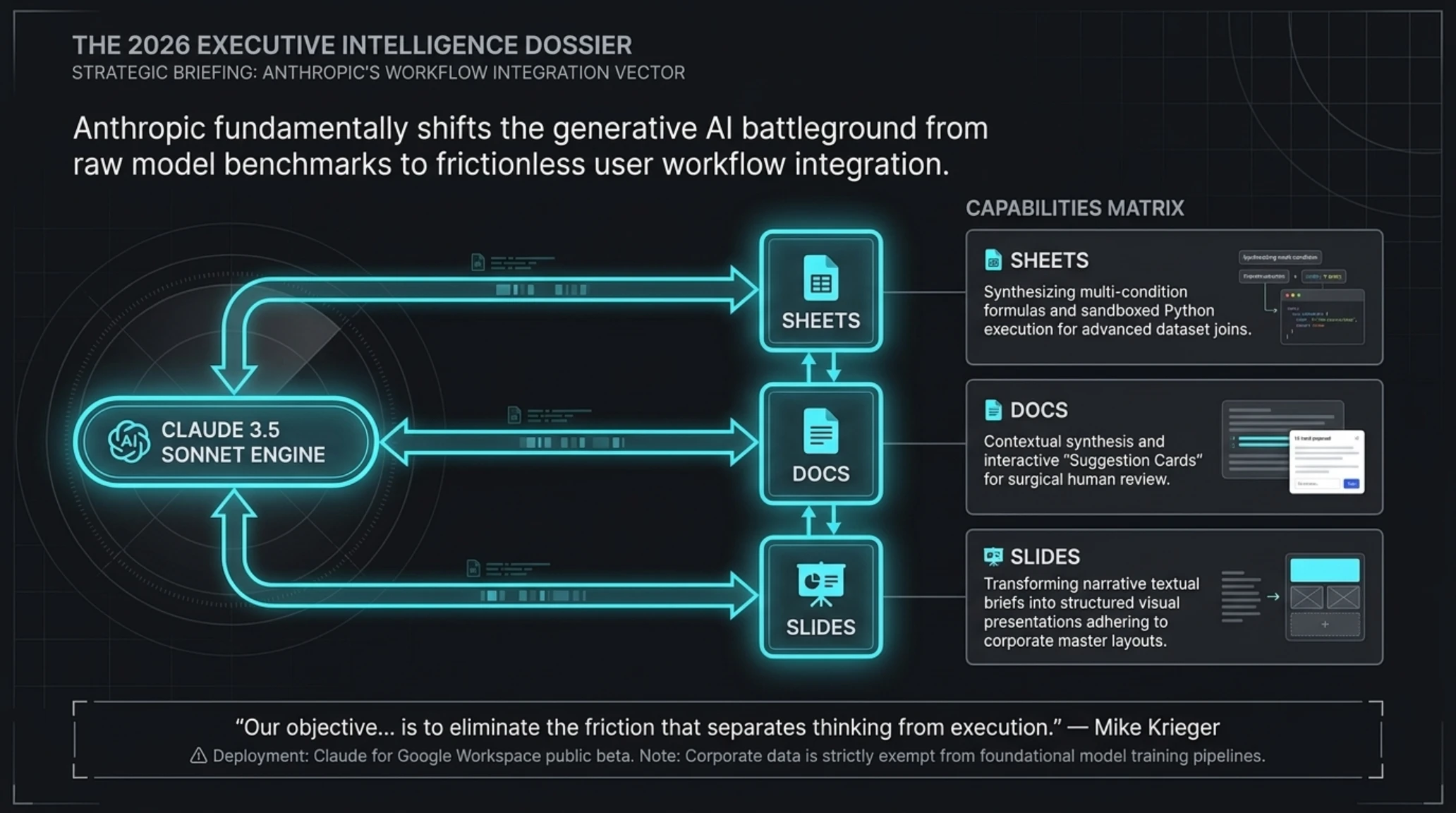
In a major offensive to capture enterprise productivity workflows, frontier AI laboratory Anthropic has officially initiated the public beta rollout of Claude for Google Workspace. Accessible across all paid commercial subscription tiers including Pro, Team, and Enterprise this native integration eliminates the legacy operational friction of copying and pasting sensitive corporate data across disparate browser tabs, embedding Claude directly as an intelligent, context-aware sidebar within Google Docs, Google Sheets, and Google Slides.
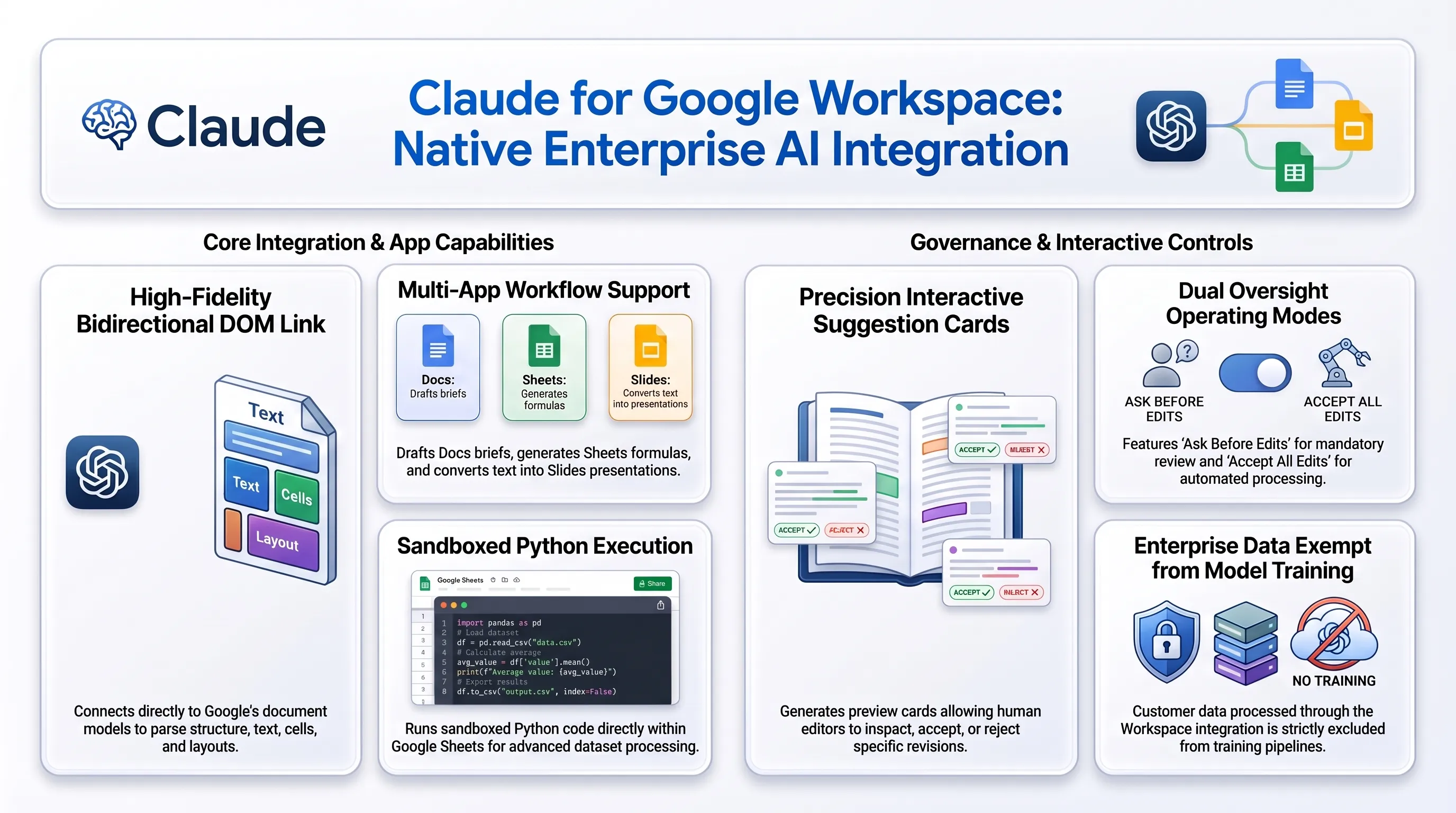
Unlike third-party extension wrappers that merely relay screen captures or raw text buffers, the official add-on establishes a high-fidelity bidirectional link with Google's document object models. When opened, Claude automatically digests the active document's structural hierarchy, semantic content, selected tabular cells, and layout constraints. Within Google Docs, the assistant can draft multi-chapter project briefs, execute tone adjustments across corporate communications, and propose structural revisions via interactive Suggestion Cards that allow human editors to inspect, accept, or reject individual recommendations with surgical precision.
The workspace integration introduces comprehensive cross-application capabilities tailored specifically to business teams:
- Advanced Analytical Operations in Google Sheets: Synthesizing complex multi-condition spreadsheet formulas, diagnosing broken reference errors, generating dynamic pivot tables, and utilizing sandboxed Python execution for advanced dataset joins.
- Contextual Document Synthesis in Google Docs: Restructuring lengthy technical whitepapers, reformatting executive summaries, and standardizing corporate documentation to adhere to internal style guides.
- Slide Deck Architecture in Google Slides: Transforming narrative textual briefs into structured, multi-slide visual presentations utilizing corporate color themes, typography rules, and master layouts.
- Granular Human Oversight Controls: Providing users with the ability to toggle between 'Ask Before Edits' (mandatory preview cards for every proposed revision) and 'Accept All Edits' for rapid automated document processing.
- Cross-Platform Chat Connector: Allowing users to reference live Google Drive files directly from the web chat interface of Claude.ai to initiate synchronous document transformations.
This deep workflow convergence demonstrates that the competitive frontier in generative AI has pivoted decisively from raw model benchmark scores to frictionless user workflow integration.
Enterprise productivity strategists note that minimizing context switching delivers quantifiable efficiency gains, fundamentally altering how cross-functional corporate teams compile strategic deliverables.
Anthropic's architectural design heavily emphasizes enterprise data segregation and commercial compliance. Customer data processed through the Google Workspace add-on is strictly exempt from foundational model training pipelines, and IT administrators retain centralized tenant-level control over which operational divisions can deploy the integration. By pairing advanced Claude 3.5 Sonnet reasoning capabilities with native Google Workspace accessibility, Anthropic has mounted a formidable challenge against competing corporate copilots, redefining collaborative software efficiency for the 2026 enterprise landscape.
3. Transitioning Gmail into the Agentic Era: APK Teardown Reveals Autonomous Gemini Tasks with Human Safeguards
A technical dissection of the latest official Android application package for Gmail (version 2026.09.28), conducted by investigative mobile engineering analysts at Android Authority, has uncovered definitive evidence of Google's next major computing paradigm: Agentic Tasks with Gemini. Rather than treating artificial intelligence as a passive predictive text assistant, Google is fundamentally re-architecting the inbox into an autonomous operational dashboard capable of parsing, orchestrating, and executing multi-step administrative workflows across corporate and personal communications.
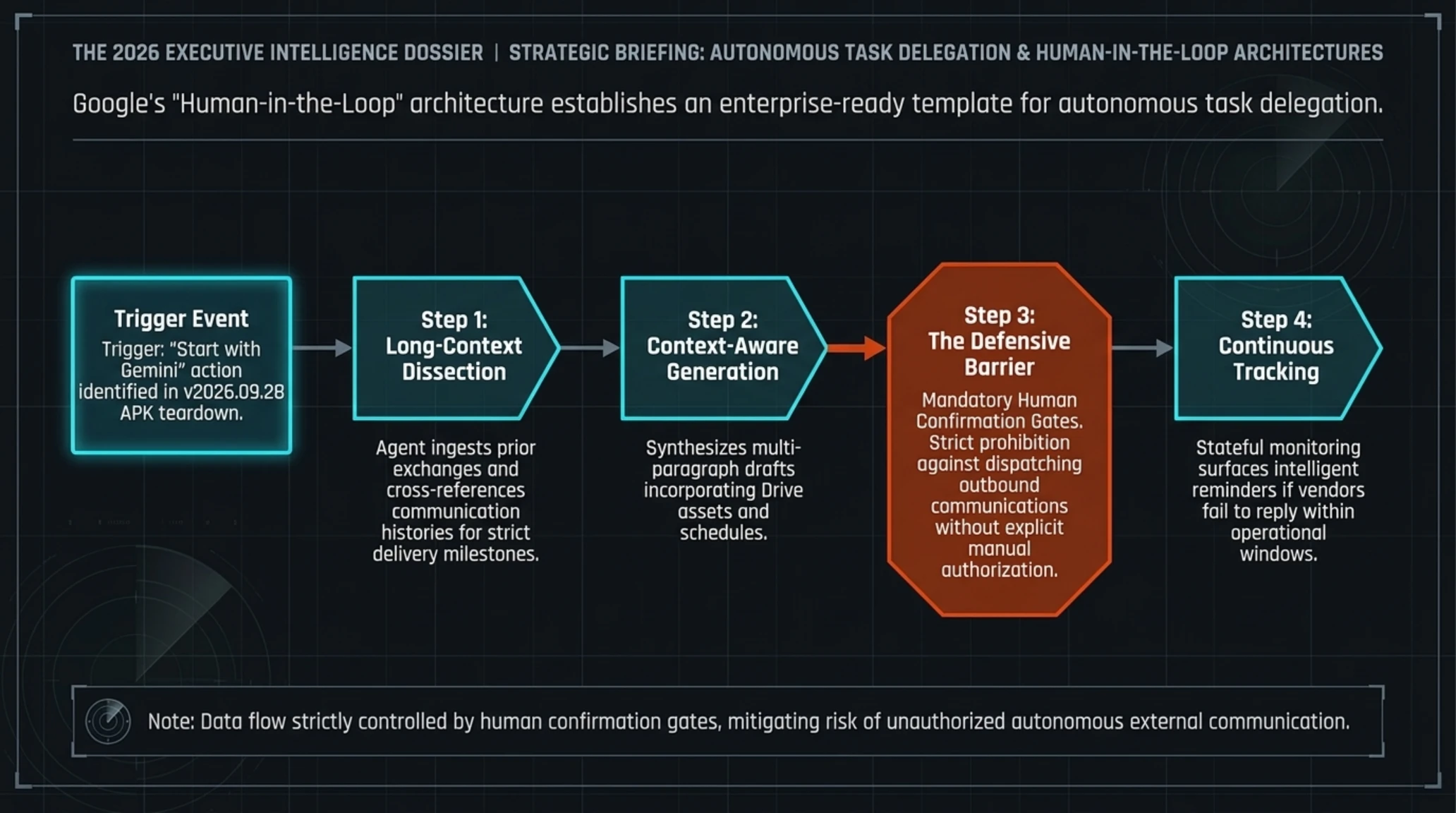
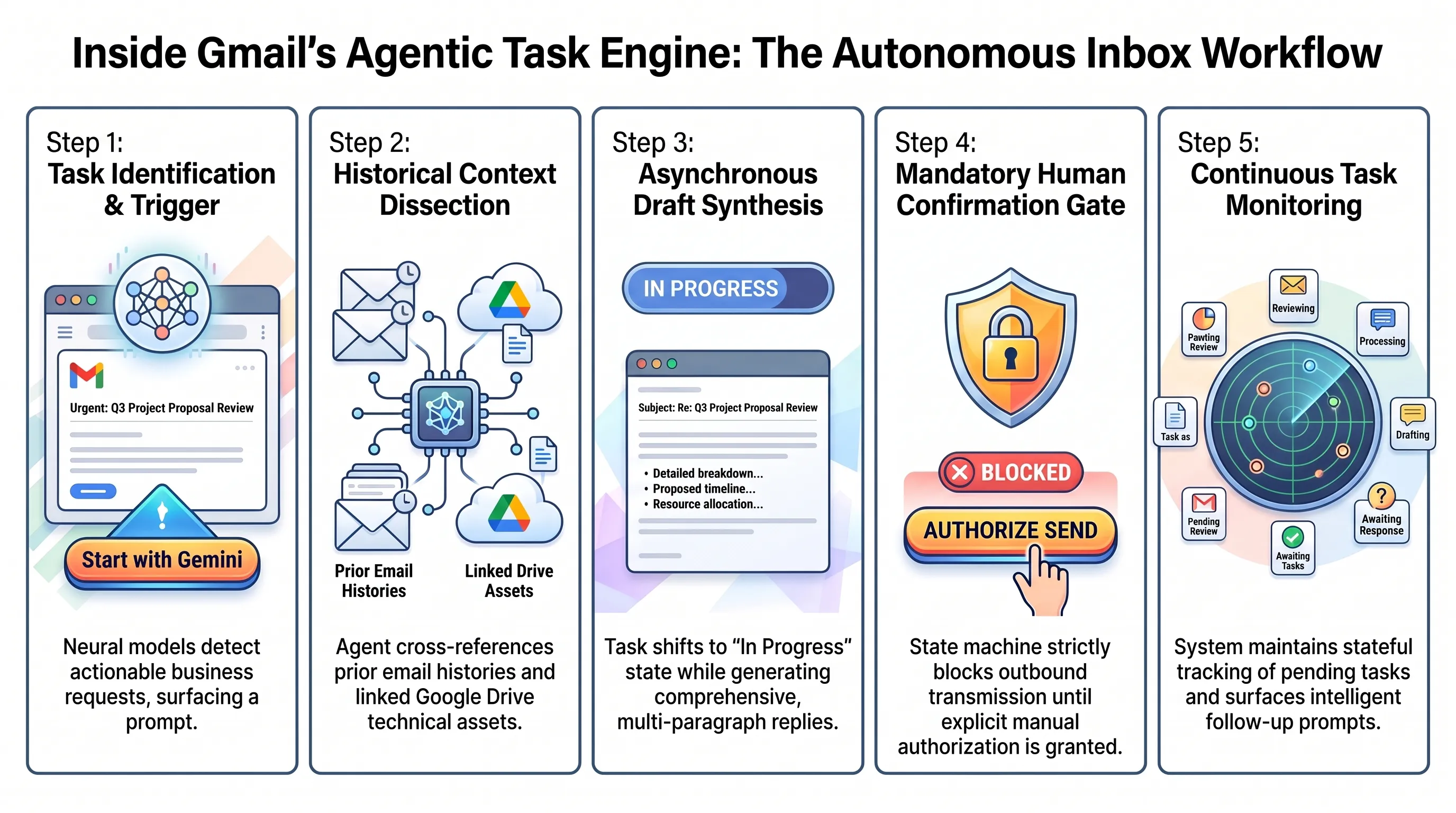
Historically, generative capabilities within email clients have been constrained to reactive summarization or automated short responses through features like Smart Reply and Help Me Write. The newly discovered agentic architecture marks a profound evolutionary leap. When the underlying neural models in Gmail's AI Inbox identify an actionable business task within incoming correspondence such as an urgent procurement invoice query, an executive scheduling request, or an engineering bug validation follow-up an intuitive, contextual action prompt labeled "Start with Gemini" surfaces directly above the message thread. Selecting this trigger immediately transitions the task into an asynchronous "In Progress" execution state.
The reverse-engineered code manifests several sophisticated operational phases designed to balance computational autonomy with rigorous corporate safety standards:
- Long-Context Historical Dissection: The agent ingests prior email exchanges, cross-referencing customer threads and related communication histories to accurately contextualize business deliverables and strict delivery milestones.
- Context-Aware Response Generation (Draft Reply): Gemini automatically synthesizes comprehensive, multi-paragraph draft responses incorporating relevant technical documentation, spreadsheet links, and calendaring schedules drawn from connected Google Drive assets.
- Mandatory Human Confirmation Gates: The underlying state machine enforces an uncompromised defensive barrier where the agent is strictly prohibited from dispatching outbound communications or marking tasks as resolved without explicit manual authorization.
- Continuous Multi-Channel Task Tracking: The system maintains stateful monitoring of pending communications, surfacing intelligent reminder prompts if an external vendor or partner fails to reply within agreed operational windows.
- Dynamic Priority Routing: Incoming correspondence is algorithmically segmented to separate critical operational obligations from passive administrative newsletters and automated system notifications.
This systematic design framework confirms that enterprise users demand AI systems capable of absorbing the heavy cognitive burden of administrative coordination rather than merely polishing prose.
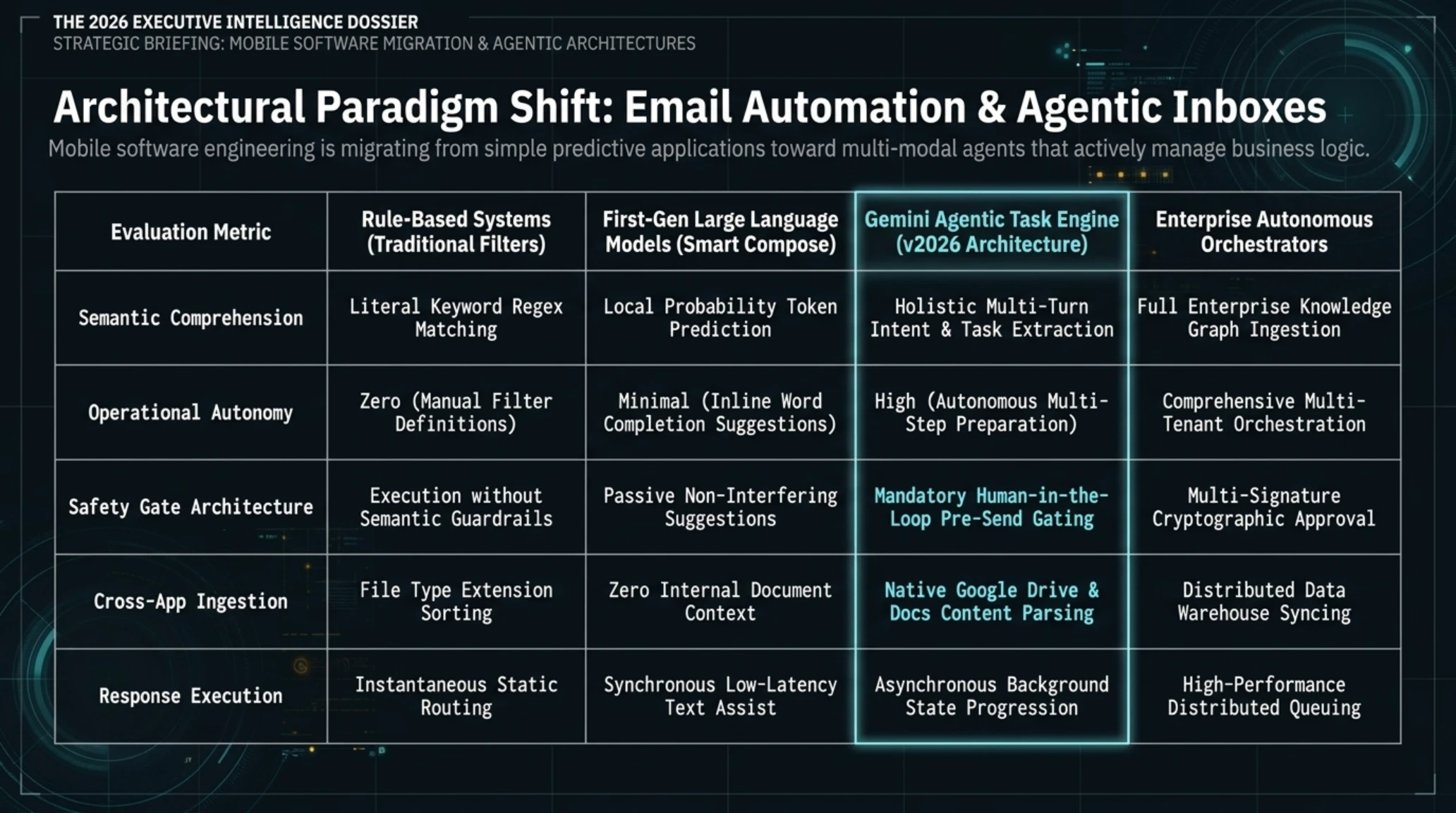
The comparative matrix below delineates the structural evolution of digital communications management leading up to modern agentic inbox architectures.
Architectural Paradigm Shift: Email Automation & Agentic Inboxes
| Evaluation Metric | Rule-Based Systems (Traditional Filters) | First-Gen Large Language Models (Smart Compose) | Gemini Agentic Task Engine (v2026 Architecture) | Enterprise Autonomous Orchestrators |
|---|---|---|---|---|
| Semantic Comprehension | Literal Keyword Regex Matching | Local Probability Token Prediction | Holistic Multi-Turn Intent & Task Extraction | Full Enterprise Knowledge Graph Ingestion |
| Operational Autonomy | Zero (Manual Filter Definitions) | Minimal (Inline Word Completion Suggestions) | High (Autonomous Multi-Step Preparation) | Comprehensive Multi-Tenant Orchestration |
| Safety Gate Architecture | Execution without Semantic Guardrails | Passive Non-Interfering Suggestions | Mandatory Human-in-the-Loop Pre-Send Gating | Multi-Signature Cryptographic Approval |
| Cross-App Ingestion | File Type Extension Sorting | Zero Internal Document Context | Native Google Drive & Docs Content Parsing | Distributed Data Warehouse Syncing |
| Response Execution | Instantaneous Static Routing | Synchronous Low-Latency Text Assist | Asynchronous Background State Progression | High-Performance Distributed Queuing |
This technical evolution demonstrates that the primary focus of mobile software engineering in late 2026 is migrating from simple handheld applications toward autonomous multi-modal agents that actively manage business logic.
Crucially, the decision by Google's engineering leadership to enforce a strict "Human-in-the-Loop" architecture mitigates the acute legal and operational liabilities associated with autonomous hallucinations. By ensuring that human judgment remains the final arbiter before emails are transmitted across corporate networks, Google provides an enterprise-ready template for artificial intelligence deployment. The feature is scheduled for phased rollout across Google Pixel flagships before extending to the wider Android enterprise user base later this quarter.
4. Foundational Internet Trust Compromised: Attackers Breach ccTLD Registries to Forge TLS Certificates for Google and Global Tech Services
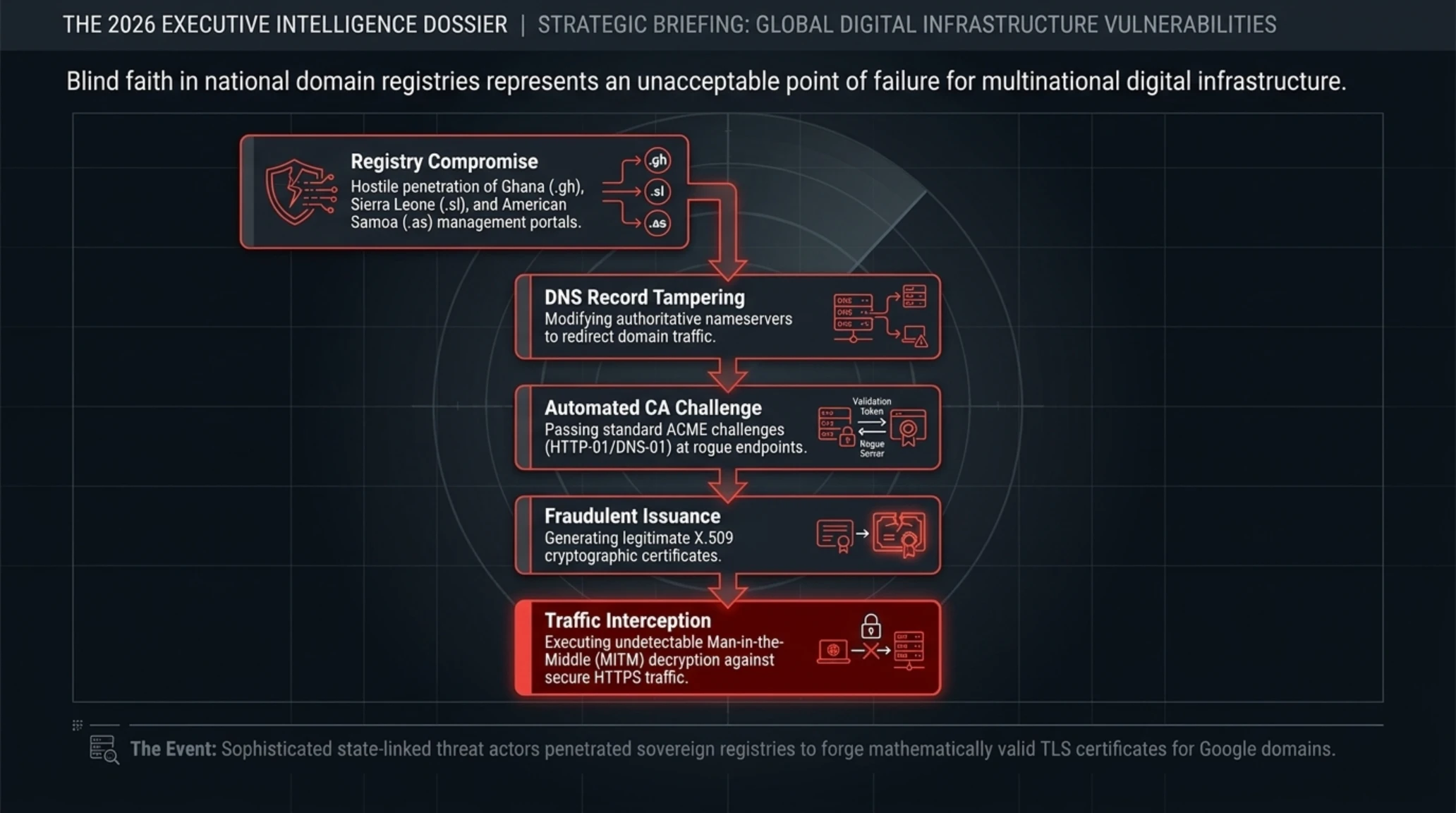
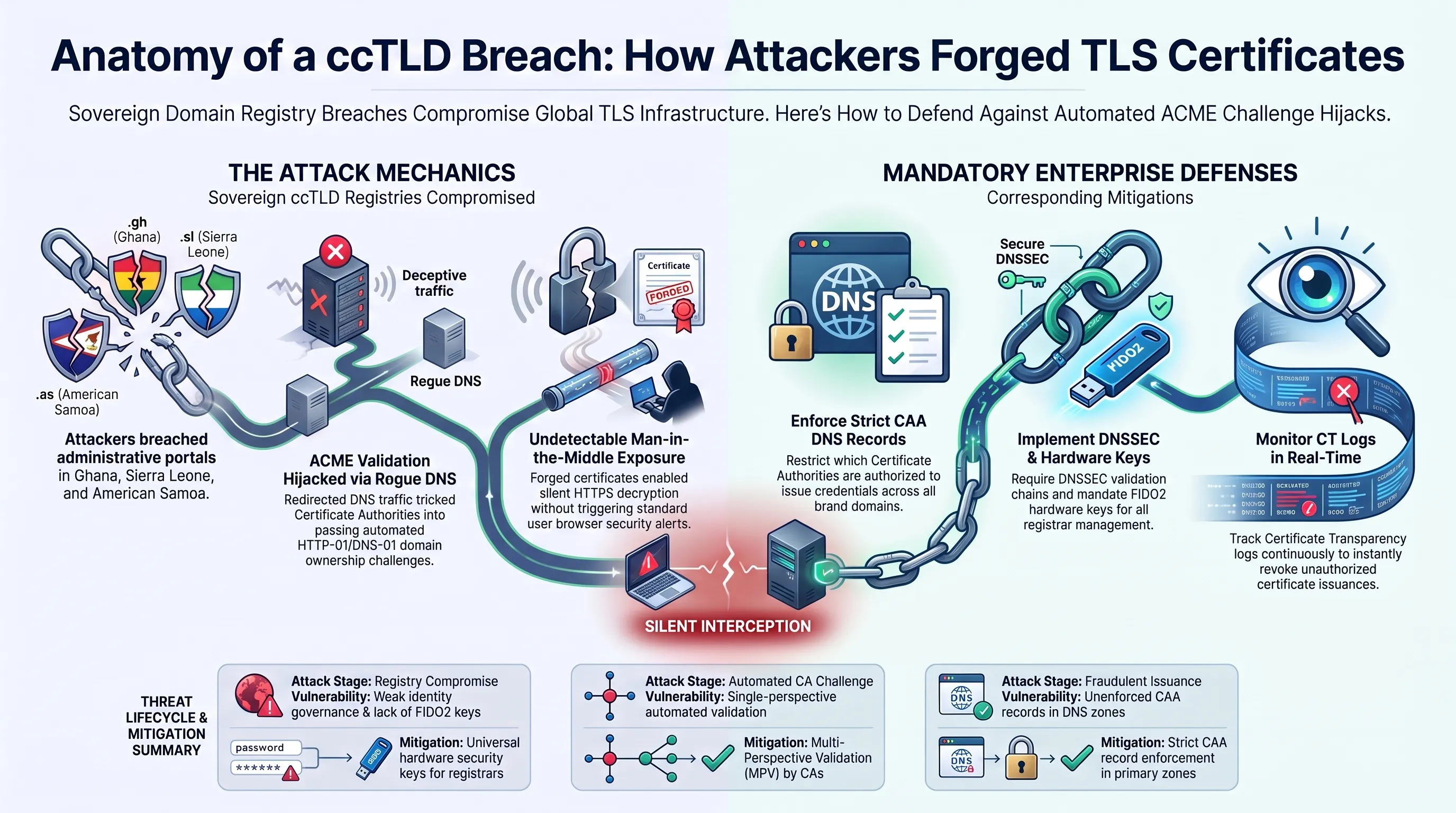
In a deeply concerning investigative exposé published by Ars Technica, security researchers have documented an unprecedented cyber intrusion targeting the sovereign Domain Name System (DNS) registries of three country-code top-level domains (ccTLDs): Ghana (.gh), Sierra Leone (.sl), and American Samoa (.as). By successfully penetrating the administrative infrastructure of these national registries, highly sophisticated state-linked threat actors manipulated authoritative DNS records to fraudulently procure mathematically valid Transport Layer Security (TLS) certificates for Google domains and several other major global technology corporations.
The mechanics of this intrusion struck at the very core of internet security and public-key infrastructure. By gaining unauthorized control over authoritative DNS nameservers for entire sovereign country codes, the attackers redirected domain traffic to rogue endpoints during automated domain validation procedures. When issuing automated requests to commercial Certificate Authorities (CAs), the attackers passed standard ACME challenges (such as HTTP-01 and DNS-01 verification), convincing the issuing authorities that they held legitimate ownership over targeted high-profile corporate domains. This enabled the attackers to generate cryptographically authentic certificates capable of executing undetectable Man-in-the-Middle (MITM) interception against secure HTTPS traffic.
Security engineers and digital forensics investigators identified several critical attack parameters during the ongoing incident response:
- Cryptographic Impersonation Vectors: Attackers possessed the technical capability to decrypt, eavesdrop upon, and manipulate encrypted web traffic routed through the affected sovereign domains without triggering browser security alerts.
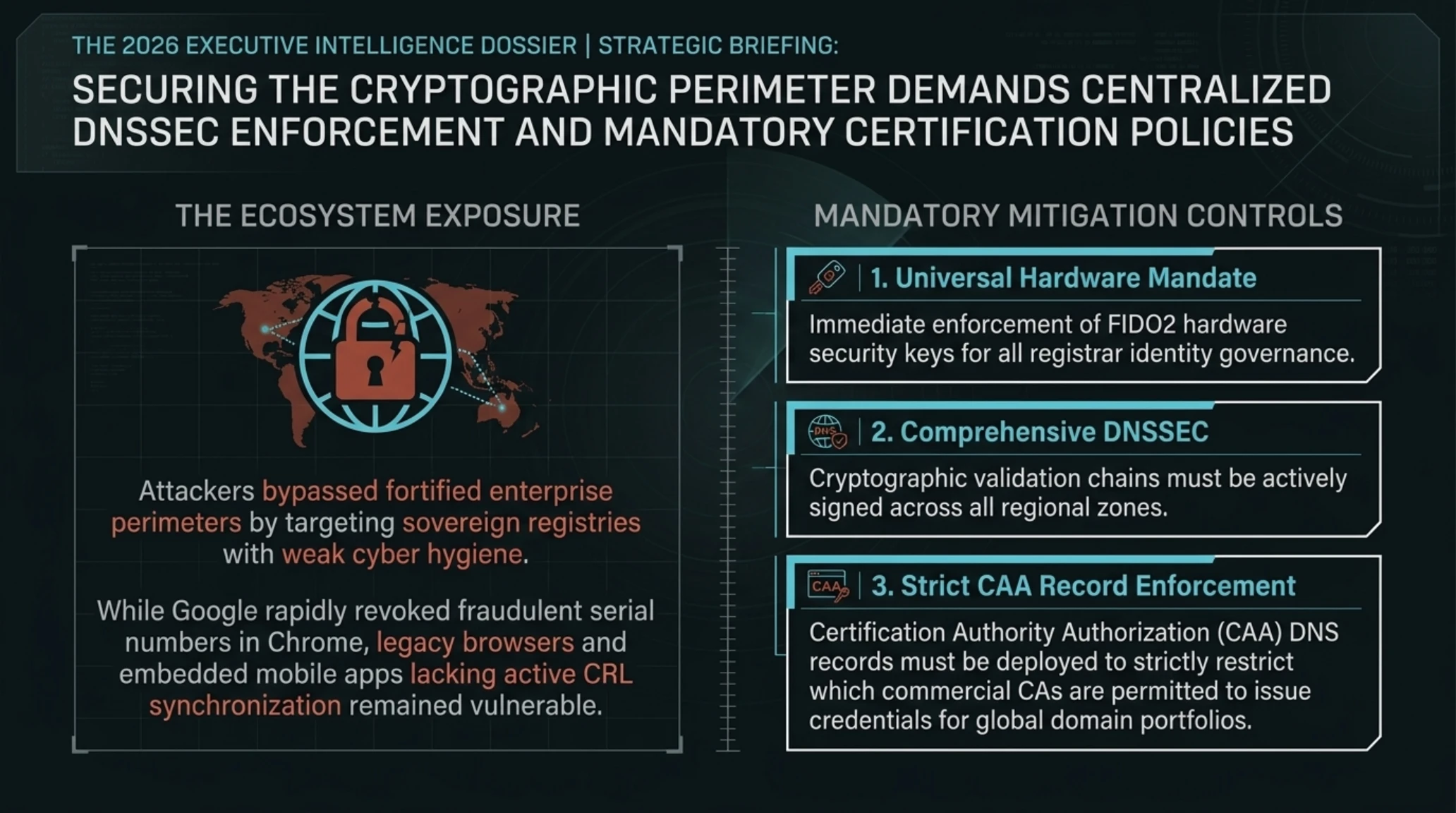
- Exploitation of Vulnerable National Registries: Threat actors strategically bypassed fortified enterprise perimeters by targeting sovereign registries with less mature cyber hygiene and weak administrative multi-factor authentication.
- Google's Rapid Chrome Defense: In response to confirmed certificate misissuance, Google rapidly updated its global Chrome certificate revoking infrastructure to blacklist fraudulent serial numbers.
- Broad Ecosystem Exposure: While Google secured Chrome users, legacy browsers and embedded mobile applications lacking active Certificate Revocation List (CRL) synchronization remained vulnerable to localized redirection.
- Mandatory CAA Record Adoption: The incident emphasizes the urgent necessity for enterprise domain managers to deploy strict Certification Authority Authorization (CAA) DNS records to restrict which CAs are permitted to issue credentials.
This systemic event demonstrates that an organization's cryptographic perimeter is only as secure as the weakest national registry anchoring its localized domain portfolio.
The structured technical breakdown below outlines the progression of this ccTLD hijack alongside corresponding institutional hardening controls.
Technical Threat Profile: The ccTLD Cryptographic Impersonation Attack
| Attack Lifecycle Stage | Operational Methodology | Underlying Vulnerability | Mandatory Mitigation Control |
|---|---|---|---|
| Registry Compromise | Hostile Penetration of ccTLD Management Portals | Weak Identity Governance & Lack of FIDO2 Keys | Universal Mandate for Hardware Security Keys for Registrars |
| DNS Record Tampering | Modifying Authoritative Nameservers at ccTLD Root | Absence of DNSSEC Cryptographic Validation Chains | Comprehensive DNSSEC Signing across Regional Zones |
| Automated CA Challenge | Intercepting Validation Challenges (HTTP-01/DNS-01) | Single-Perspective Automated Challenge Verification | Multi-Perspective Validation (MPV) by Certificate Authorities |
| Fraudulent Issuance | Generating Legitimate X.509 Cryptographic Certificates | Unenforced CAA (Certification Authority Authorization) | Strict CAA Record Enforcement in Primary DNS Zones |
| Traffic Interception | Executing Transparent Man-in-the-Middle Inspection | Client Reliance on Cached Root Authority Lists | Real-Time Certificate Transparency (CT) Log Monitoring |
Network security strategists globally describe this attack as an urgent wake-up call for internet governing bodies, emphasizing that blind faith in national domain registries represents an unacceptable point of failure for multinational digital infrastructure.
Market Sentiment & Institutional Cloud Infrastructure Trust
📚 Classified & Related Dossiers in TekinGame
If you wish to explore beyond this report and delve into cybernetic frontiers and autonomous AI architectures, do not miss these three exclusive deep-dives in the Tekin Garage:
Enterprise infrastructure teams are being instructed to audit their global domain portfolios immediately, ensuring that strict Certification Authority Authorization (CAA) policies are active across every registered brand extension.
5. Institutional DeFi Meets Cold Storage: Ledger Unveils Self-Custodial Bitcoin Loans Powered by Morpho
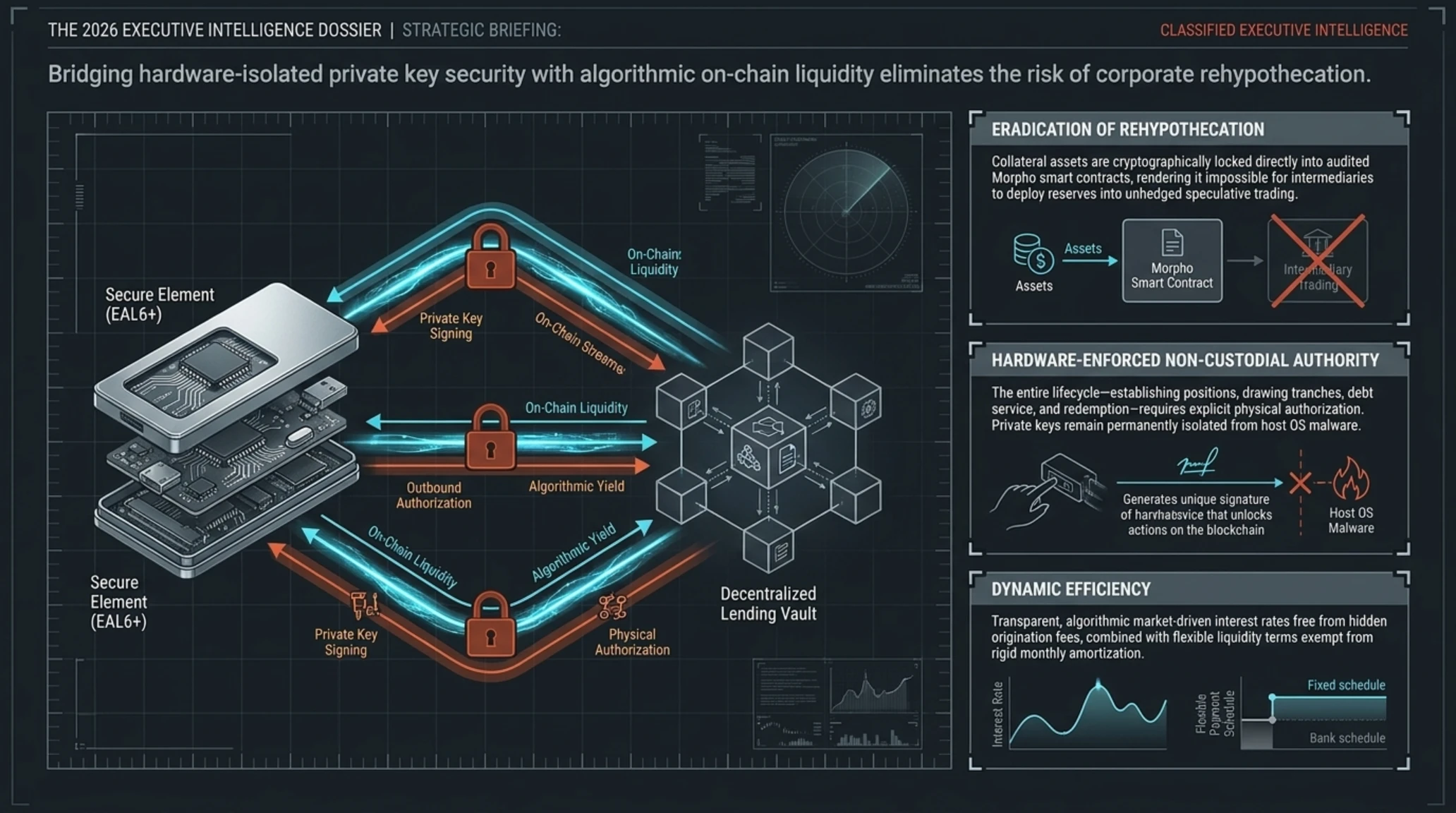
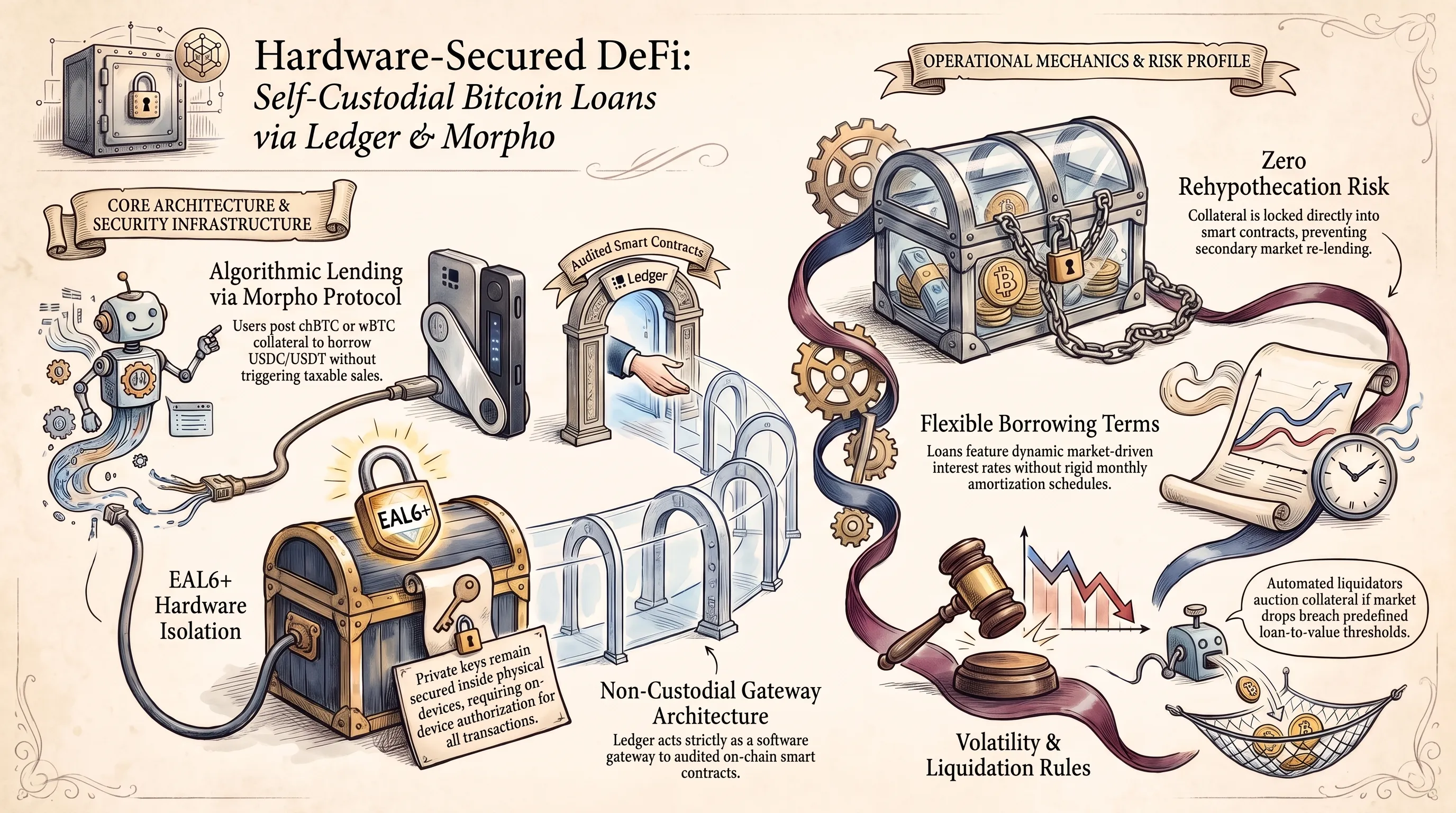
In a major milestone for decentralized financial engineering, French hardware security giant Ledger, the preeminent manufacturer of physical cryptocurrency cold-storage devices globally, has officially launched its native Bitcoin-backed lending infrastructure directly within the Ledger Wallet interface. Unveiled during keynote proceedings at the TOKEN2049 international summit in Singapore and rolling out broadly on October 7 and 8, 2026, the service bridges hardware-isolated private key security with algorithmic on-chain liquidity via the decentralized lending protocol Morpho and integration infrastructure developed by Yield.xyz.
The service addresses a primary institutional and high-net-worth investor demand: extracting liquidity from sovereign Bitcoin reserves without triggering taxable capital gains events or relinquishing ownership to centralized lending intermediaries. Eligible users can post wrapped Bitcoin assets specifically Coinbase Wrapped Bitcoin (cbBTC) or standard Wrapped Bitcoin (wBTC) as collateral to instantaneously draw fiat-pegged stablecoin loans in USDC or USDT. Crucially, the entire transaction lifecycle from establishing collateral positions and drawing stablecoin tranches to debt service and collateral redemption requires explicit physical authorization and cryptographic signature verification on the secure element of the user's Ledger hardware device.
Key structural architectural differentiators separating this implementation from legacy centralized lending failures include:
- Elimination of Rehypothecation Risk: Collateral assets are cryptographically locked directly into audited Morpho smart contracts, preventing corporate intermediaries from deploying user reserves into unhedged speculative trading.
- Hardware-Enforced Non-Custodial Authority: Private keys remain permanently isolated within the device's certified Secure Element (EAL6+), rendering assets immune to remote host operating system malware and infostealer compromise.
- Flexible Liquidity Terms: Borrowers are exempt from rigid monthly amortization schedules, retaining the autonomy to maintain debt positions indefinitely provided loan-to-value (LTV) ratios stay within pre-set liquidation boundaries.
- Dynamic Market-Driven Interest Rates: Borrowing costs are determined algorithmically through real-time supply and demand dynamics across decentralized lending vaults, ensuring transparent pricing free from hidden origination fees.
- Jurisdiction-Specific Progressive Rollout: Phased international availability aligned with regional regulatory frameworks, ensuring continuous compliance across institutional capital markets.
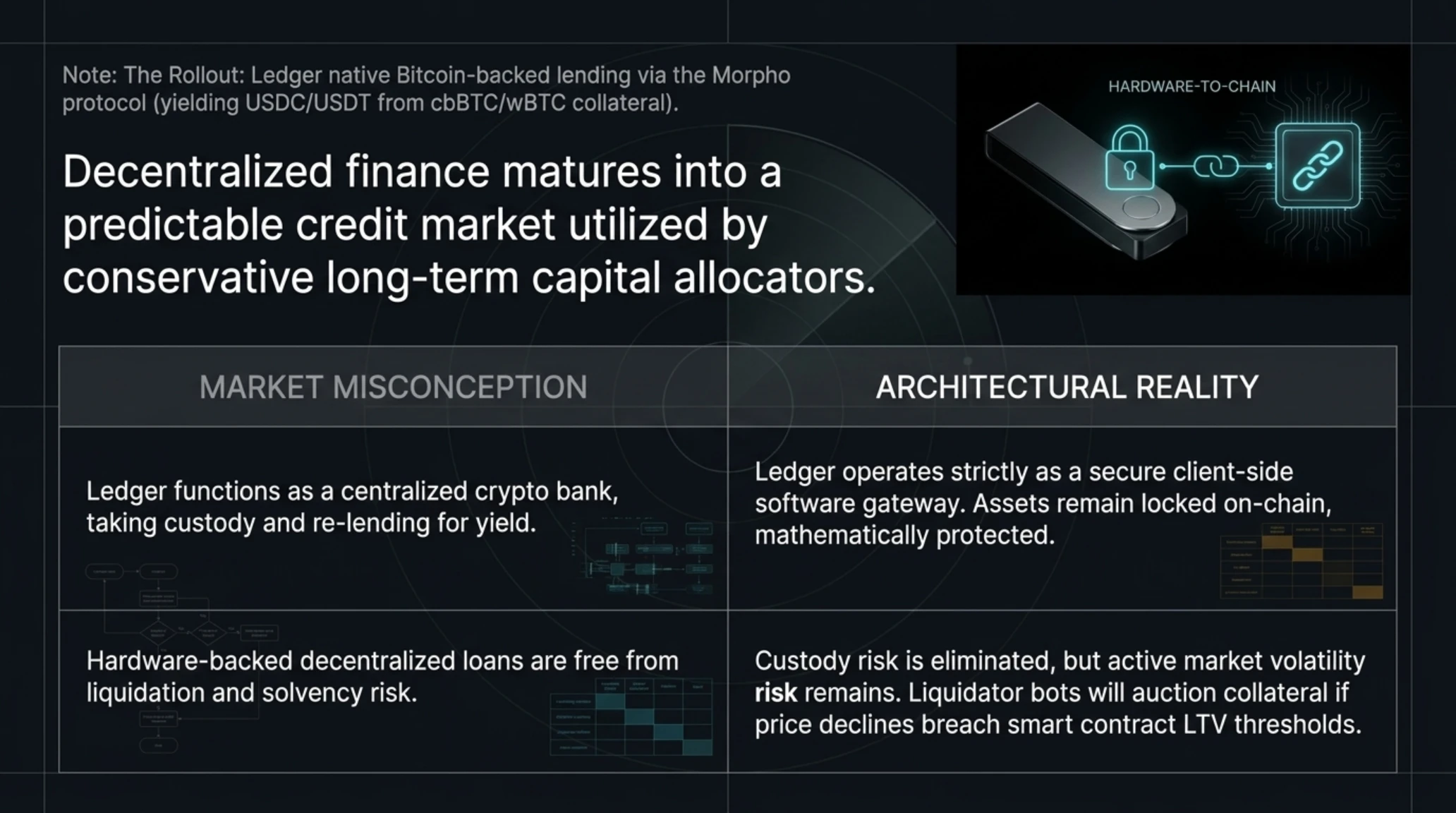
This development signifies that decentralized finance is rapidly maturing into a secure, predictable credit market utilized by conservative long-term capital allocators.
To provide clarity for institutional treasuries evaluating this decentralized credit facility, the analytical comparison below deconstructs pervasive market misconceptions.
Rumor vs. Reality | Self-Custodial Bitcoin Lending Architecture
Reality: Ledger operates strictly as a secure client-side software gateway to Morpho smart contracts. Collateral assets remain locked on-chain and are mathematically protected from rehypothecation.
Rumor: Hardware-backed decentralized loans are entirely free from liquidation and solvency risk.
Reality: While custody risk is eliminated, market volatility risk remains active. If the collateral asset price declines sharply and breaches the contract liquidation threshold, automated liquidator bots will auction collateral to stabilize the pool.
Digital asset market analysts view this non-custodial lending integration as a decisive blueprint for institutional crypto adoption, predicting that competing hardware wallet providers will soon be forced to deliver equivalent on-chain credit integrations.
6. Europol Issues Strategic Advisory on Quantum Computing: Crypto Wallets Face Critical Exposure Under Q-Day Scenarios
The European Union's law enforcement agency, Europol, has issued an unprecedented strategic warning through its European Cybercrime Centre (EC3), publishing two extensive technical advisories on October 7, 2026, detailing the catastrophic systemic risks that advances in quantum computing pose to global digital asset networks. According to the agency's cryptographic analysis, existing cryptocurrency architectures and decentralized protocols represent an acute operational exposure point as quantum processors advance toward cryptanalytic utility.
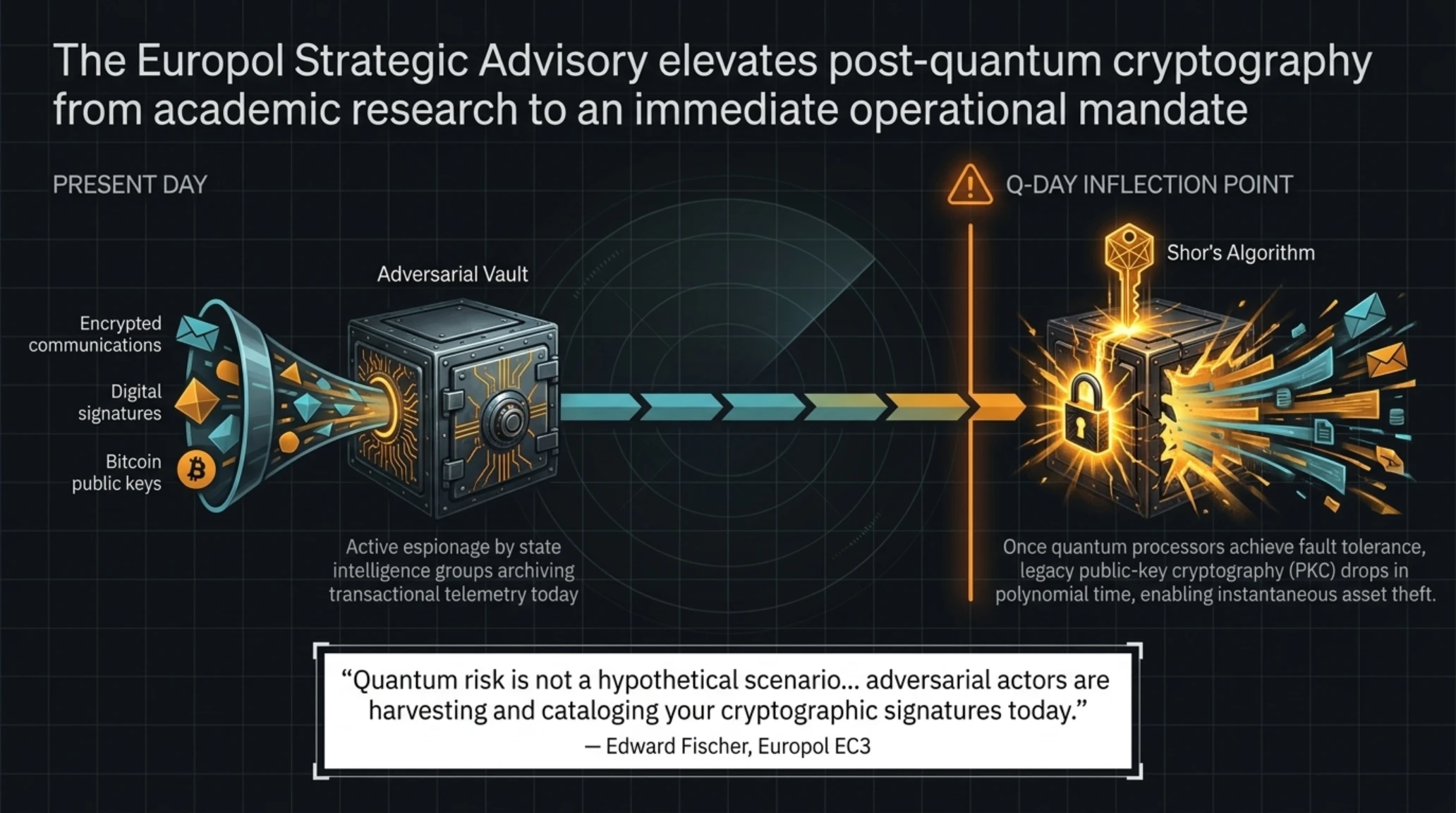
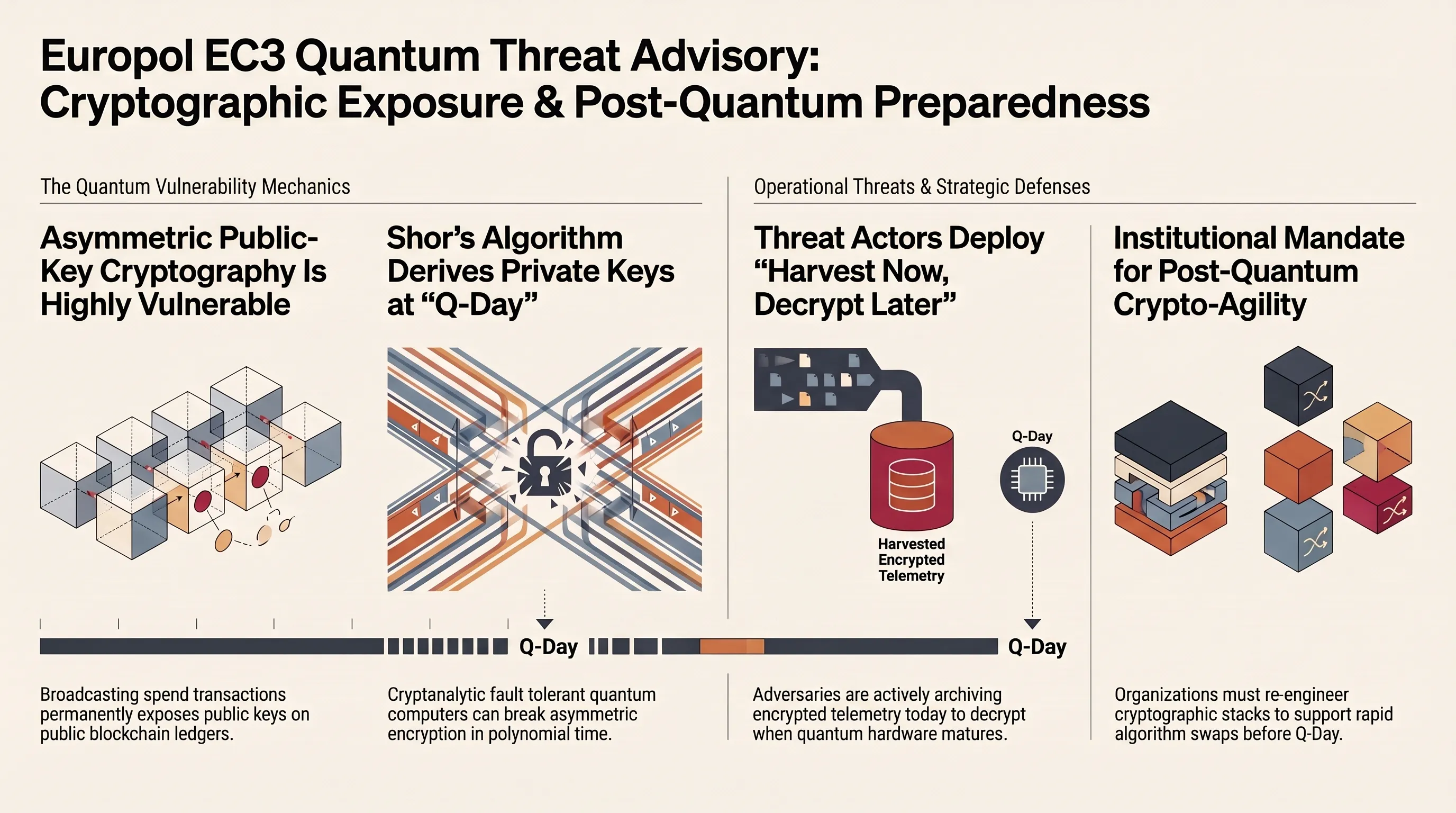
Europol clarifies that while symmetric encryption ciphers and hashing algorithms (such as the SHA-256 standard safeguarding Bitcoin block verification) possess robust mathematical resistance against quantum speedups, the vulnerability lies directly within legacy public-key cryptography (PKC). Blockchains rely universally on asymmetric elliptic-curve digital signature algorithms (such as ECDSA and Schnorr) to authorize asset transfers. Whenever an address executes an outbound transaction, its corresponding public key is permanently exposed to the public blockchain ledger. Once a quantum processor achieves cryptanalytic fault tolerance an inflection point widely designated as "Q-Day" threat actors employing Shor's Algorithm will be capable of deriving private keys directly from exposed public keys in polynomial time, enabling instantaneous, unpreventable asset theft.
The urgent advisory details several immediate operational risks commanding international regulatory attention:
- Active 'Harvest Now, Decrypt Later' Espionage: Sophisticated state intelligence organizations and advanced threat groups are actively ingesting and archiving encrypted communications and on-chain transactional telemetry today, anticipating future decryption when quantum hardware matures.
- Acute Exposure of Active Bitcoin Addresses: Every blockchain address that has broadcasted a spend transaction has permanently revealed its public key, placing hundreds of billions of dollars in active digital reserves directly in the primary crosshairs of future quantum attacks.
- Prolonged Migration Timelines: Executing network-wide hard forks to deploy post-quantum signature schemes across distributed consensus networks represents a monumental engineering challenge requiring years of coordinated developer consensus.
- Mandatory Adoption of Crypto-Agility: Financial institutions, digital asset custodians, and protocol foundations must immediately re-engineer their cryptographic stacks to facilitate rapid algorithm swaps without catastrophic network fragmentation.
- Collateral Vulnerability Across Legacy Web Encryption: The identical cryptographic exposure threatening crypto wallets simultaneously endangers foundational internet protocols including TLS, SSH, and secure enterprise communications.
This authoritative analysis demonstrates that transitioning to quantum-resistant encryption can no longer be deferred as a theoretical future challenge, demanding immediate engineering mobilization across international tech ecosystems.
Cryptographic standards bodies, led by NIST and international consortia, have finalized candidate post-quantum algorithms, but deploying these complex lattice-based signatures onto gas-constrained blockchain runtimes remains an intense technical challenge.
The quote below from Europol's cryptographic operations leadership encapsulates the urgency facing digital asset infrastructure architects.
Europol concludes its directive by urging international regulators, central banks, and digital asset custodian consortiums to accelerate practical implementation of post-quantum standards, ensuring institutional financial rails remain resilient against emerging quantum capabilities.
Strategic Synthesis & Technology Roadmap for Autumn 2026
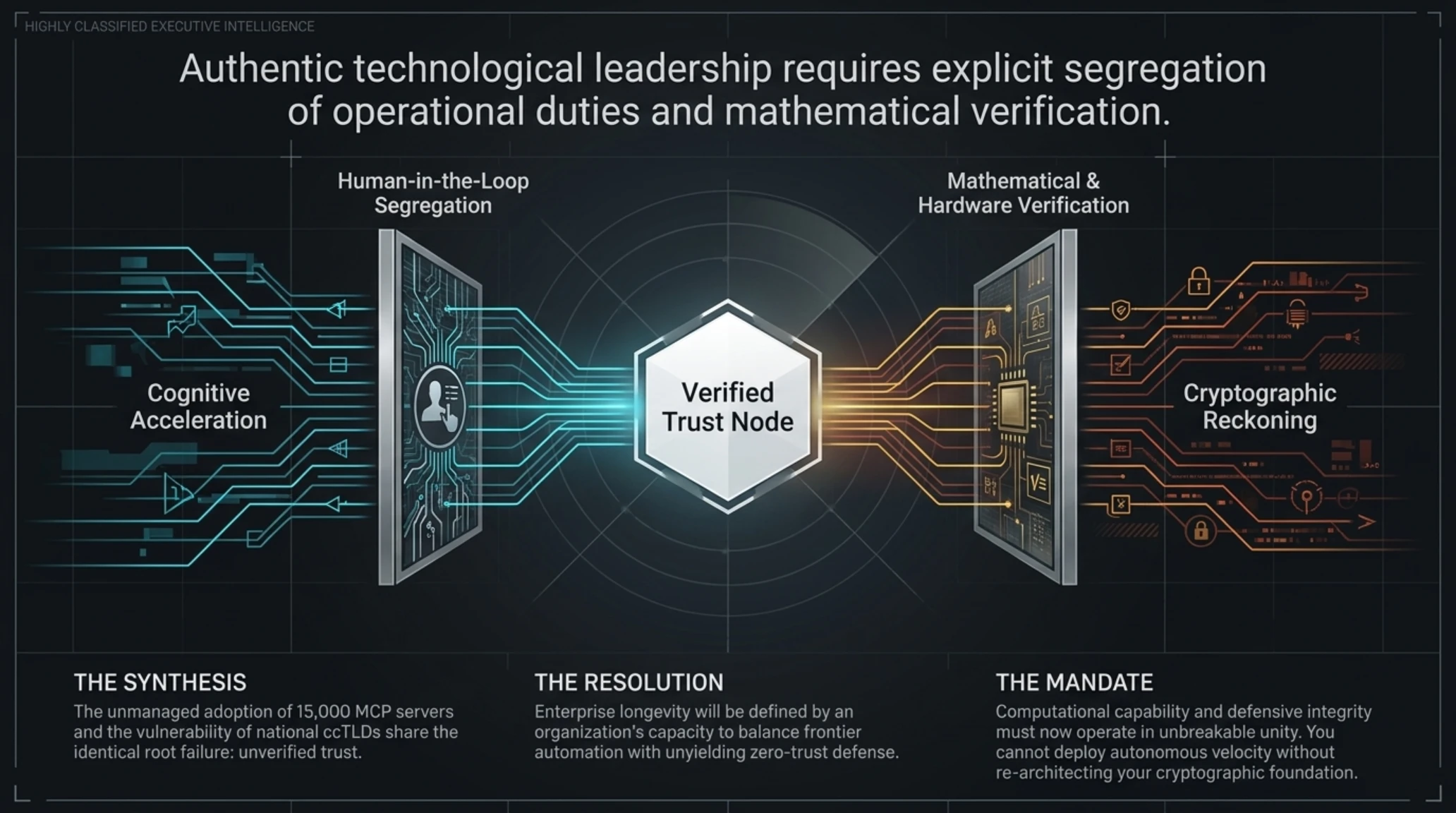
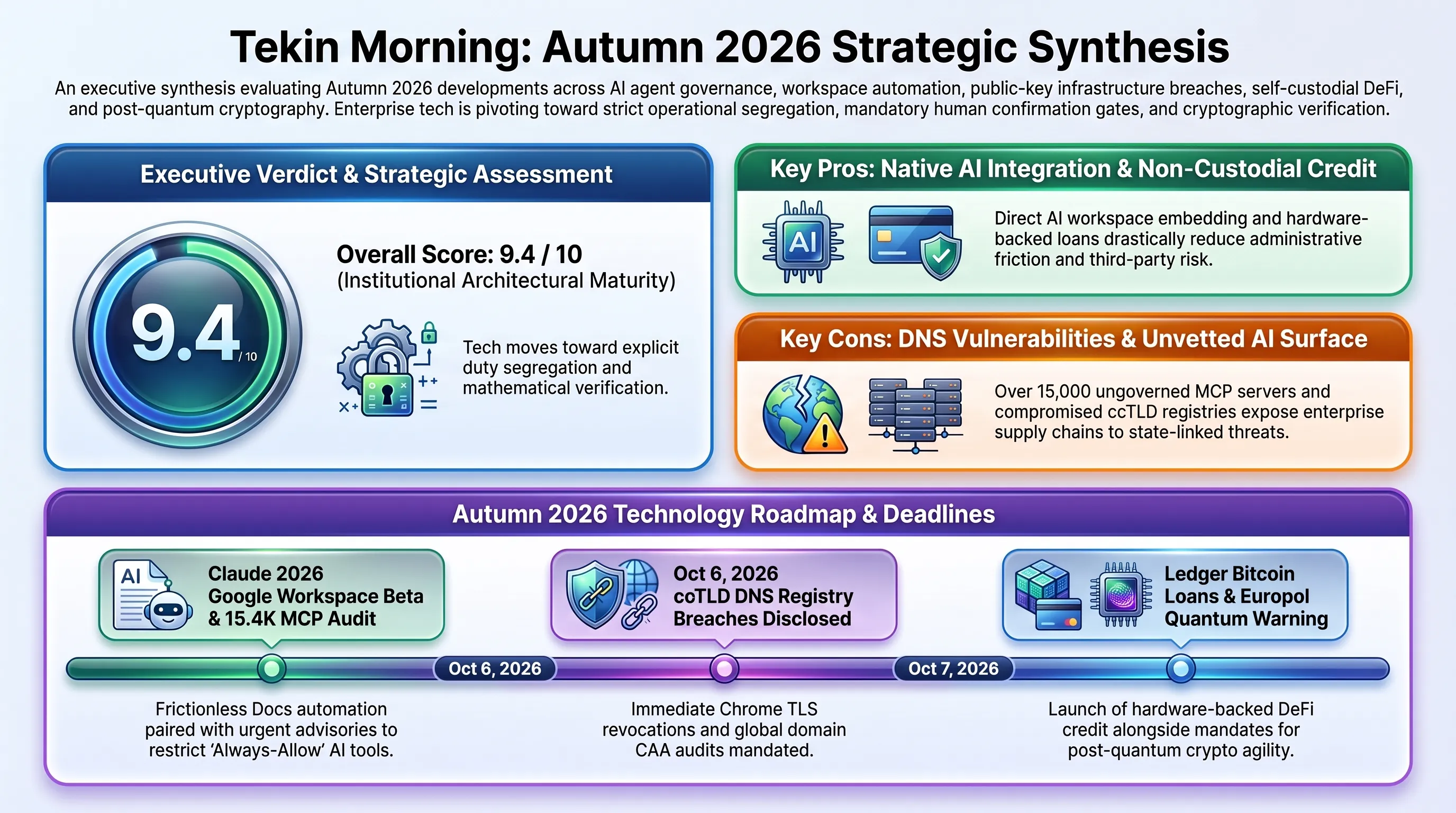
The simultaneous transformations unfolding across AI agent ecosystems, workspace productivity suites, sovereign DNS registries, and decentralized financial rails confirm that the global digital economy is establishing a new foundation for institutional resilience. The empirical revelations concerning 15,000 unmanaged Model Context Protocol servers and the manipulation of national ccTLD registries to forge Google TLS credentials illustrate a singular technological reality: enterprise velocity must not outrun foundational security hygiene. The convenience of connecting automated agents to developer environments and cloud repositories becomes an existential liability if disconnected from robust identity and access management controls.
Conversely, Anthropic's native integration of Claude into Google Workspace and Google's emerging deployment of human-supervised agentic tasks in Gmail delineate the viable path forward for artificial intelligence integration. By embedding cognitive intelligence directly into the operational software environments where work naturally occurs while reinforcing mandatory human confirmation gates before execution technology platforms are delivering transformative efficiency dividends without sacrificing corporate compliance. Parallel to these productivity advances, Ledger's realization of non-custodial Bitcoin lending and Europol's urgent quantum advisory underscore the dual horizons of digital finance: maximizing capital utility in the present while aggressively re-engineering cryptographic defenses against future computational revolutions.
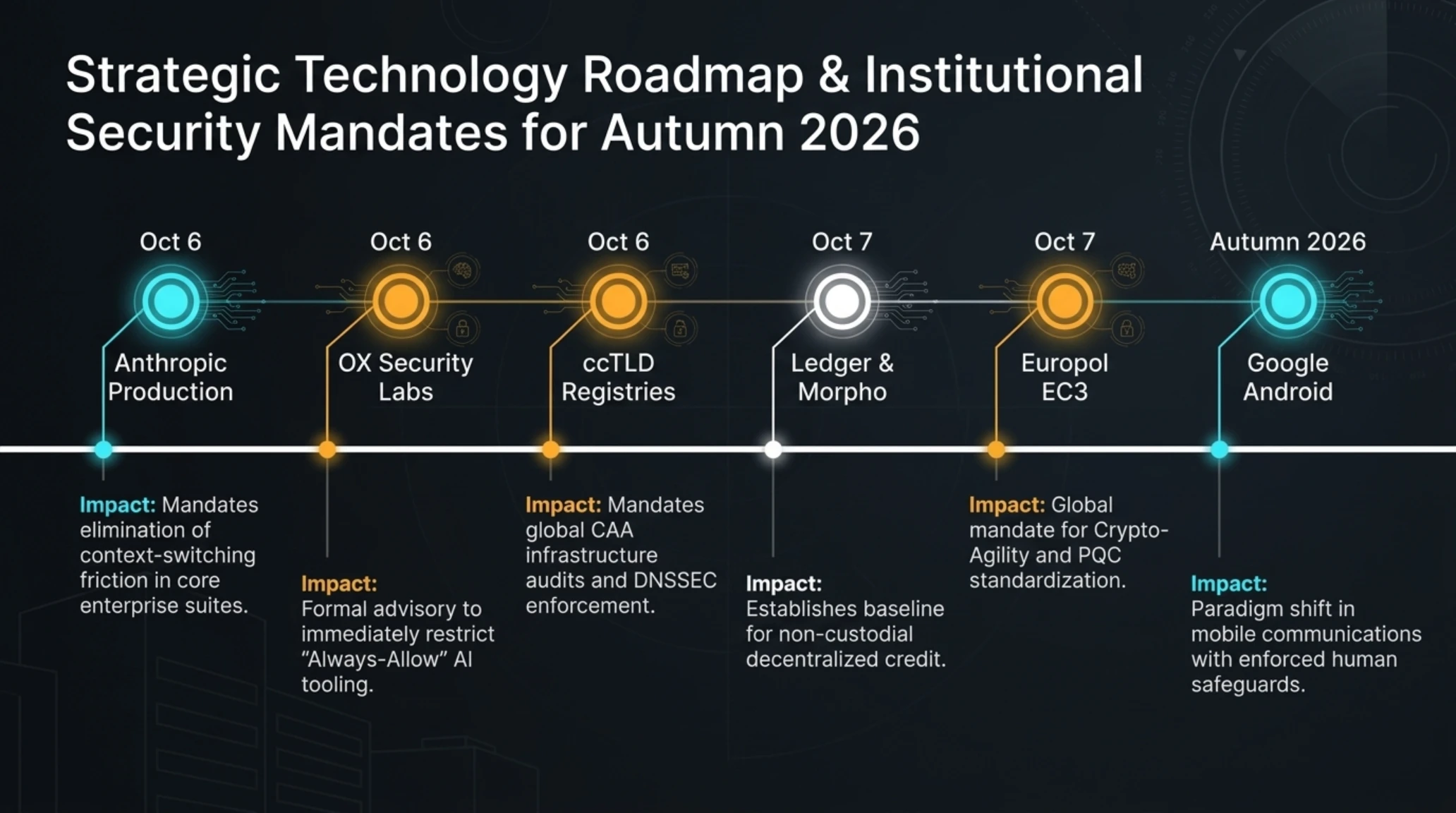
Milestone Timeline & Security Deadlines for Autumn 2026
| Calendar Milestone | Technology Domain | Operational Event | Ecosystem Industry Impact |
|---|---|---|---|
| October 6, 2026 | Anthropic Production | Public Beta Launch of Claude for Google Workspace | Elimination of Context-Switching Friction in Docs and Sheets |
| October 6, 2026 | OX Security Labs | Publication of Audit on 15,465 Public MCP Servers | Formal Enterprise Advisory to Restrict Always-Allow Tooling |
| October 6, 2026 | ccTLD Registries | Fraudulent Google TLS Certificate Forgeries Disclosed | Immediate Revocation in Chrome and Global CAA Audits Mandated |
| October 7, 2026 | Ledger & Morpho | Global Launch of Hardware-Backed Bitcoin Loans | Establishment of Non-Custodial Institutional Decentralized Credit |
| October 7, 2026 | Europol EC3 | Release of Quantum Computing Threat Advisory | Global Mandate for Digital Asset Crypto-Agility and PQC Standards |
| Autumn 2026 | Google Android | Phased Deployment of Gmail Agentic Tasks | Paradigm Shift in Mobile Communications Management |
- Native integration of frontier AI models into corporate suites drastically lowers administrative friction while maintaining strict enterprise data privacy
- Implementation of mandatory human confirmation safeguards across mobile agentic workflows prevents catastrophic autonomous execution errors
- Decentralized self-custodial lending architectures enable capital efficiency without forcing asset holders to assume third-party counterparty risk
- Comprehensive empirical security audits of emerging protocols like MCP allow defenders to remediate supply chain exposures prior to widespread exploitation
- Persistent vulnerabilities within sovereign country-code domain registries expose foundational internet trust to sophisticated state-sponsored threat actors
- Widespread proliferation of unvetted external AI tool connectors introduces unmonitored shadow IT attack surfaces across developer environments
- Severe technical, computational, and consensus hurdles delay the rapid deployment of post-quantum cryptographic schemes across public distributed ledgers
Synthesizing these strategic benchmarks demonstrates that enterprise technology in late 2026 is pivoting decisively toward explicit segregation of operational duties and mathematical verification. Organizations that successfully harmonize rapid cognitive adoption with rigorous risk mitigation frameworks will secure an enduring competitive moat across institutional capital and talent markets.
Chief Information Officers, technology founders, and corporate board directors face a definitive strategic mandate: embracing autonomous cognitive automation while fortifying sovereign digital perimeters, establishing an architectural foundation capable of thriving through the next decade of technological disruption.
Strategic Synthesis & Forward Horizon
Authoritative Intelligence Sources
- Empirical MCP Server Audit Report: The Hacker News and OX Security Research Portal
- Official Google Workspace Add-on Release: 9to5Google and Anthropic Newsroom
- Reverse Engineering of Gmail Agentic Capabilities: Android Authority and 9to5Google Mobile Intelligence
- Investigative Report on ccTLD TLS Forgeries: Ars Technica Security and The Record Media
- Non-Custodial Bitcoin Lending Launch: Decrypt Media and Ledger Official
- Strategic Quantum Computing Threat Advisory: Cointelegraph Intelligence and CoinDesk Policy
Frequently Asked Technical Inquiries
What is the Model Context Protocol (MCP) and why are public servers vulnerable?
The Model Context Protocol is an open standard that allows large language models to interact directly with local filesystems, APIs, and databases. The security risk stems from developers granting 'Always-Allow' execution permissions and querying unvetted public servers, enabling malicious endpoints to execute indirect prompt injections and unauthorized data exfiltration without user alerts.
Who can access Claude for Google Workspace and how is it deployed?
The integration is available in public beta for all paid Claude subscription tiers (Pro, Team, and Enterprise). Users and enterprise workspace administrators install the add-on via the Google Workspace Marketplace, enabling the persistent intelligent sidebar across Google Docs, Sheets, and Slides.
How do human safeguards function in Gmail's emerging Agentic Tasks?
While Gemini autonomously digests incoming correspondence, parses action items, and generates contextual response drafts utilizing linked Google Drive assets, the underlying state machine strictly prohibits outbound transmission until the human user explicitly reviews and manually approves the communication.
How did threat actors forge mathematically valid TLS certificates for Google domains?
Attackers compromised the administrative infrastructure of three sovereign country-code top-level domain (ccTLD) registries (.gh, .sl, and .as), altering authoritative DNS records. This allowed them to pass automated ACME domain ownership challenges issued by Certificate Authorities, resulting in the generation of authentic TLS certificates.
How does Ledger's Bitcoin-backed lending feature maintain non-custodial ownership?
Users lock wrapped Bitcoin collateral (cbBTC or wBTC) directly into audited smart contracts on the Morpho decentralized lending protocol. Ledger never takes possession of user funds, and every loan interaction including origination and repayment requires physical cryptographic confirmation on the hardware device's Secure Element.
Why does quantum computing pose an acute threat to cryptocurrency wallets and what is the solution?
Whenever a wallet initiates an outbound transfer, its public key is broadcast to the public blockchain. Future quantum processors running Shor's Algorithm will be capable of calculating private keys from exposed public keys in polynomial time. The essential mitigation is transitioning distributed ledger protocols to Post-Quantum Cryptography (PQC) utilizing lattice-based signature algorithms.
Additional Gallery: Tekin Morning Oct 8, 2026: MCP Server Crisis, DNS Hack & Ledger Loans