☀️ Tekin Morning | Saturday, September 12, 2026
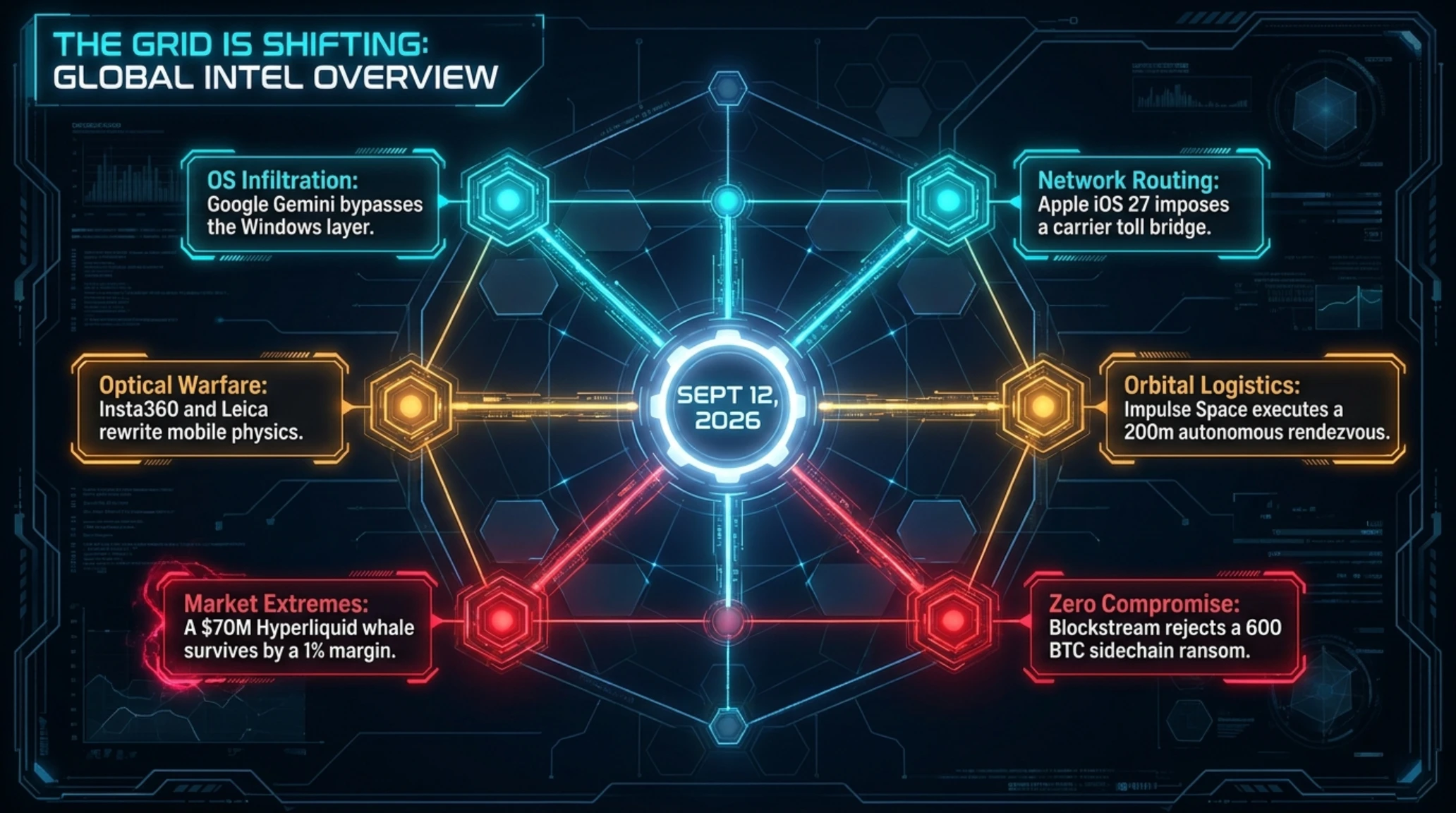
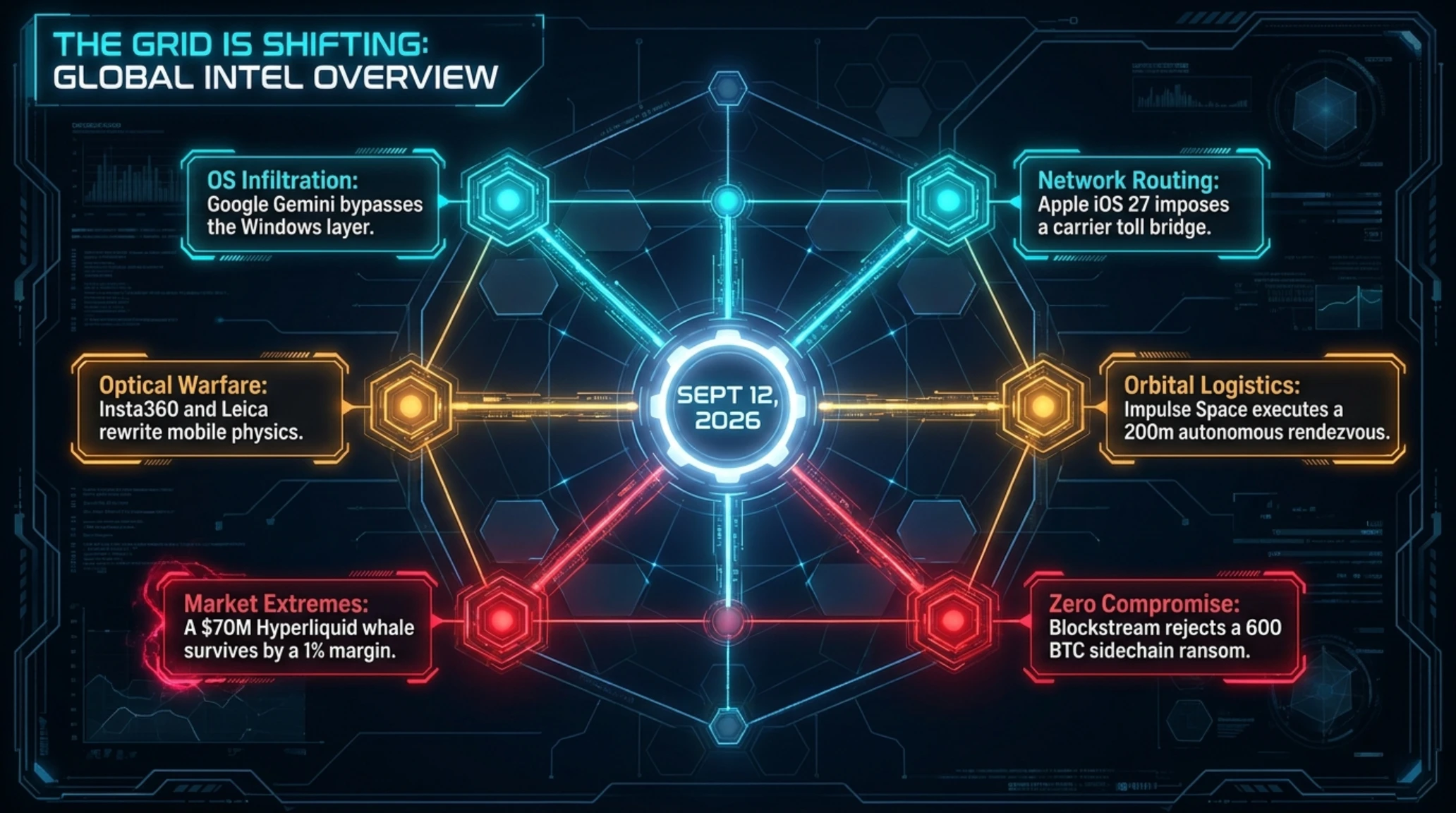
- 🎮Gemini Desktop on Windows- Google launches native app with Alt+Space overlay
- 🎧Apple iPhone Handoff- Share one phone number across two iPhones for $5/mo
- 🚀Insta360 Luna Pro Gimbal- 1-inch Leica sensor with detachable OLED viewfinder
- 🗡️Impulse Space Orbital Feat- Autonomous rendezvous within 650ft in orbit
- 📰Hyperliquid $70M Whale- 40x leveraged BTC position inches from liquidation
- ⚔️Blockstream 600 BTC Standoff- Firm rejection of Liquid Network hacker ransom
Good morning, tech leaders, enterprise architects, systems researchers, and digital pioneers. Welcome to the Saturday, September 12, 2026 edition of Tekin Morning. We kick off the weekend with a comprehensive, deeply analytical breakdown of the six defining technology stories reshaping hardware ecosystems, desktop artificial intelligence, commercial orbital logistics, and on-chain decentralized finance. Over the past several days, the technology landscape has witnessed extraordinary developments: consumer tech giants are moving aggressively into system-level workflows, hardware manufacturers are teaming up with legendary European optical houses, aerospace startups are pulling off maneuvers once reserved exclusively for superpower space agencies, and high-frequency digital asset markets are confronting razor-thin liquidation margins alongside extortion attempts by rogue cyber actors.
At TekinGame, our objective is to look far beyond boilerplate corporate press releases and promotional soundbites. We dissect the underlying engineering realities, architectural choices, economic trade-offs, and forensic details that dictate where the industry is heading in the final quarter of 2026 and into 2027. Technological convergence is no longer a distant theoretical buzzword; it is an active market force dictating enterprise software budgets, consumer buying cycles, and regulatory enforcement. Below, we provide an executive summary of today's key takeaways before diving into our deep technical autopsies of each headline development.
Executive Key Takeaways for Saturday, September 12, 2026
- Google officially releases dedicated Gemini desktop app for Windows 10 and 11 featuring an instant Alt + Space global overlay and isolated memory daemon
- Apple introduces iPhone Handoff in iOS 27 allowing users to share one phone number dynamically across two active iPhones for $5 monthly on T-Mobile
- Insta360 announces the Luna Pro 8K pocket gimbal camera featuring a 1-inch sensor, Leica Summicron optics, and a detachable wireless OLED viewfinder
- Space startup Impulse Space achieves a historic commercial milestone by maneuvering two autonomous Mira spacecraft within 650 feet in low Earth orbit
- A legendary on-chain whale on Hyperliquid risks a $70 million 40x leveraged Bitcoin long position less than 1% away from catastrophic liquidation
- Blockstream officially rejects a 600 BTC ransom demand following the Liquid Network exploit, partnering with the FBI to trace the extortionists
Our editorial and forensic intelligence team has gathered verified technical documentation, regulatory filings, and market telemetry to give you the most accurate and actionable intelligence available anywhere in the tech media sphere today.
In our opening deep dive, we investigate Google's strategic counter-offensive against Microsoft Copilot on Windows and the architectural implications of the new native Gemini desktop application.
1. Google Gemini Native Desktop Launches on Windows: The Alt + Space Offensive Against Copilot
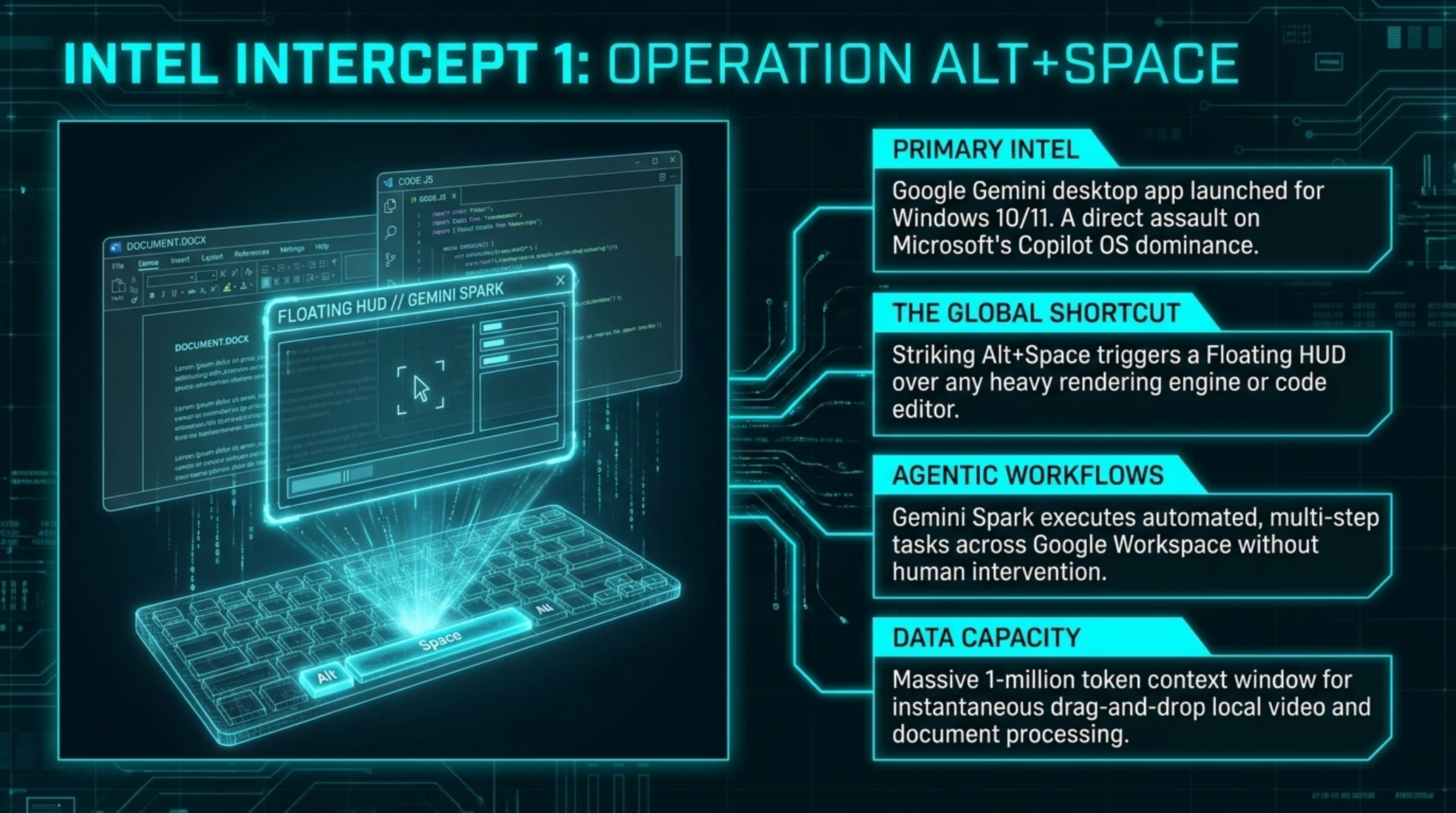
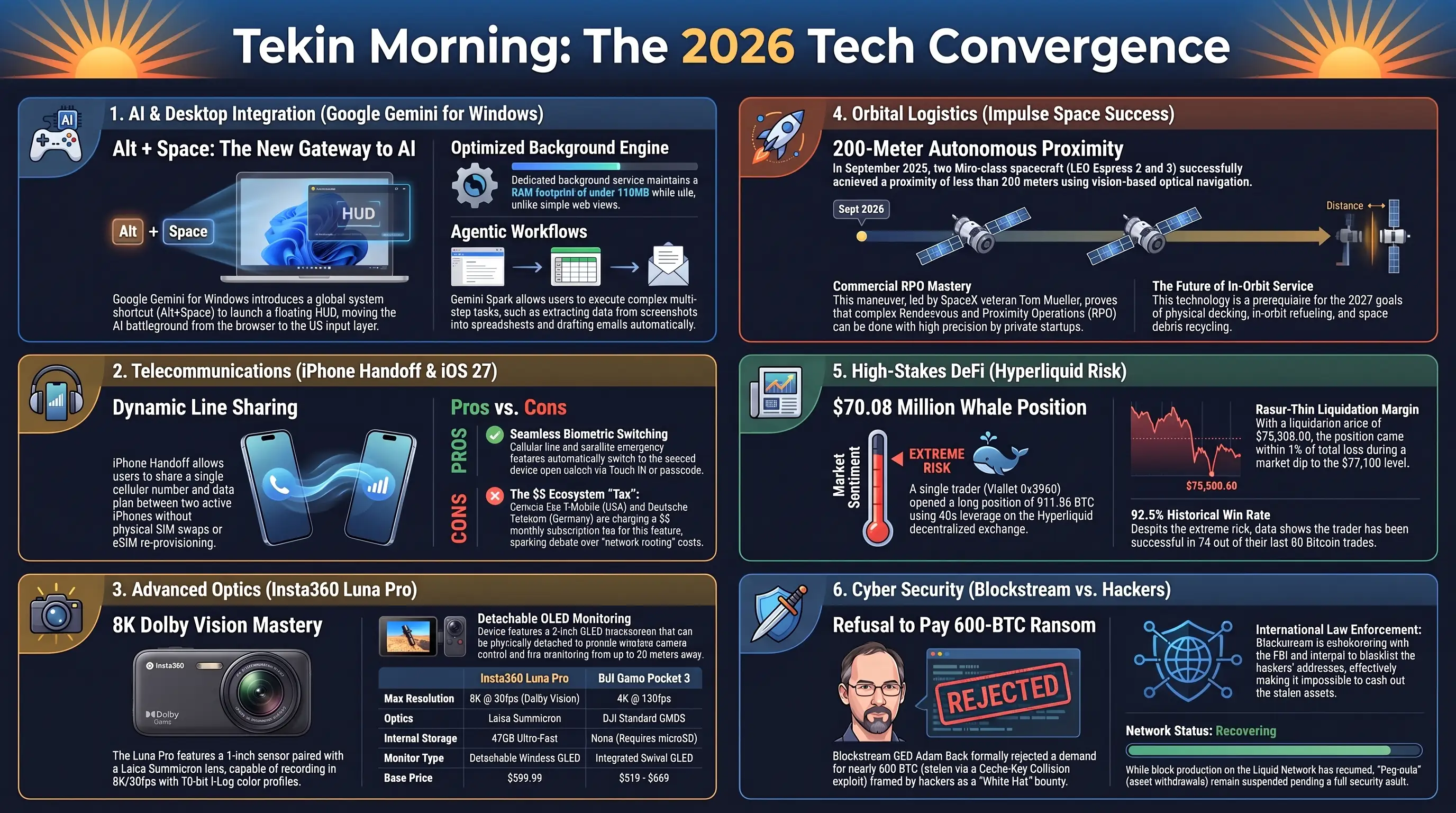
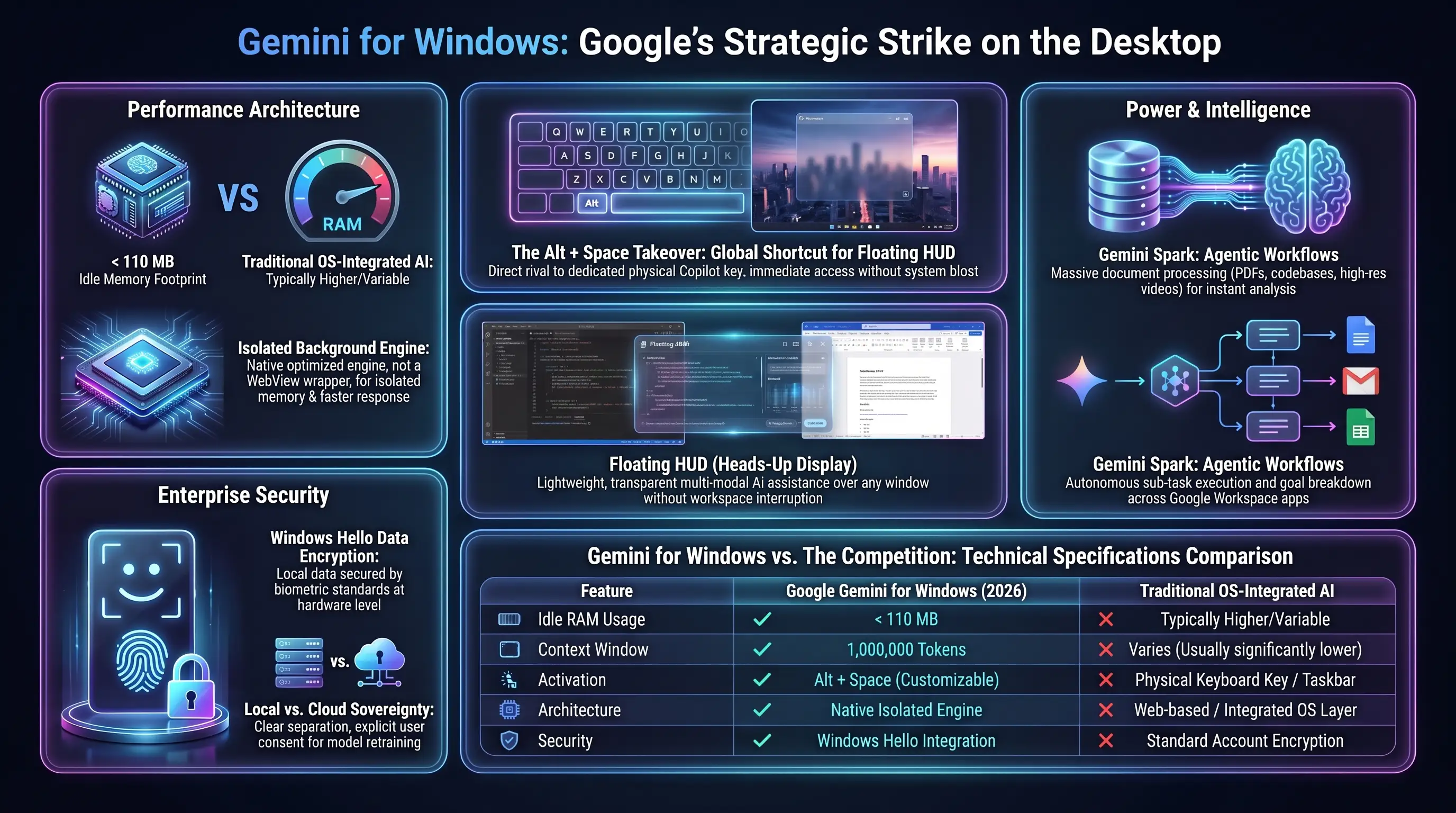
In a direct strike at Microsoft's desktop operating system stronghold, Google has officially released the dedicated, native desktop version of its Gemini artificial intelligence assistant for Windows 10 and Windows 11. While macOS users received an early preview build earlier in the spring of 2026, the Windows rollout represents a massive expansion into the enterprise and desktop gaming workstation market, covering over 70% of the world's personal computers. The centerpiece of this release is the introduction of a universal global keyboard shortcut: pressing Alt + Space instantly summons an elegant, floating head-up display (HUD) overlay directly over any active application without requiring users to switch browser tabs, launch Chrome, or disturb their primary workflow.
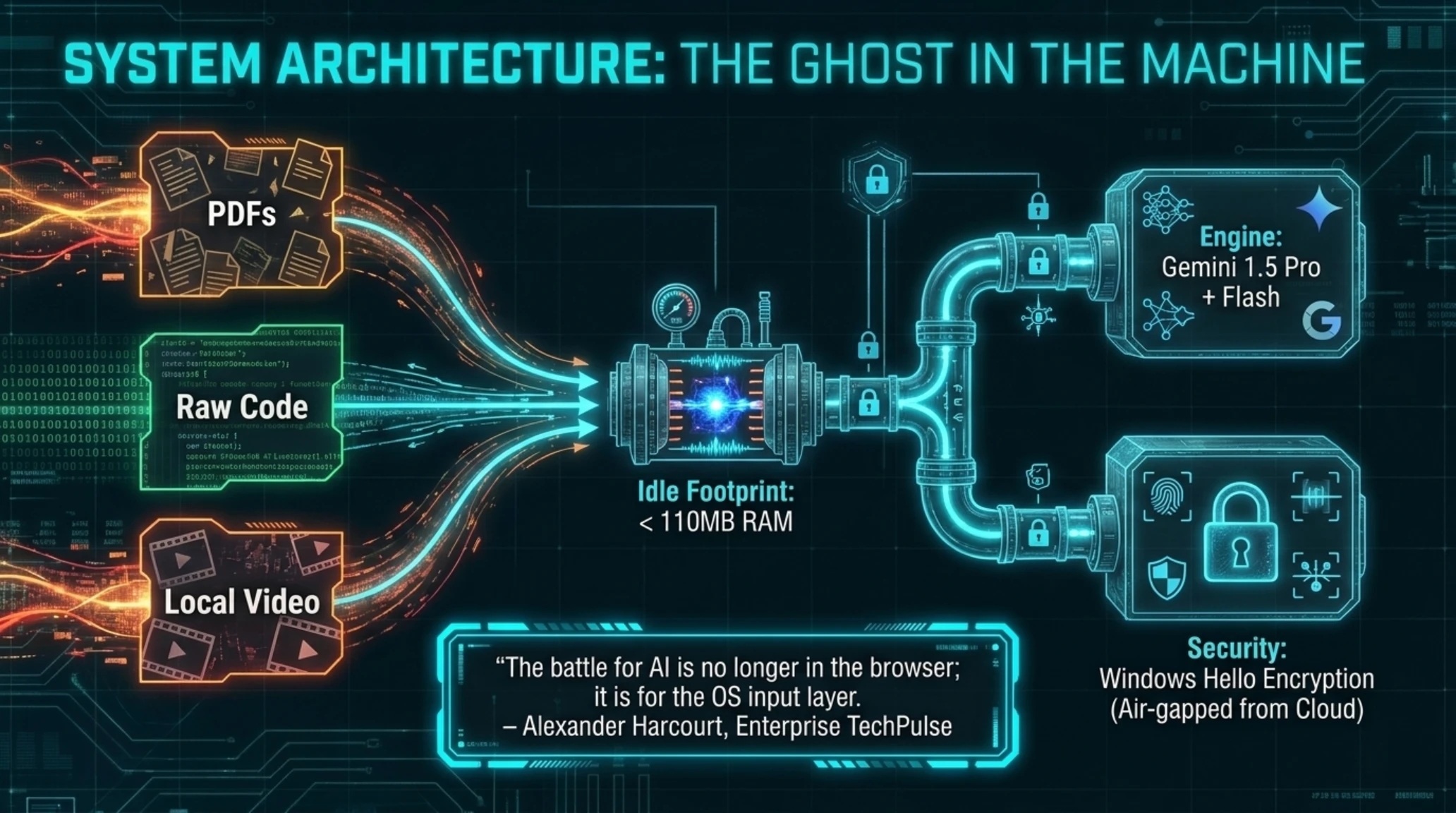
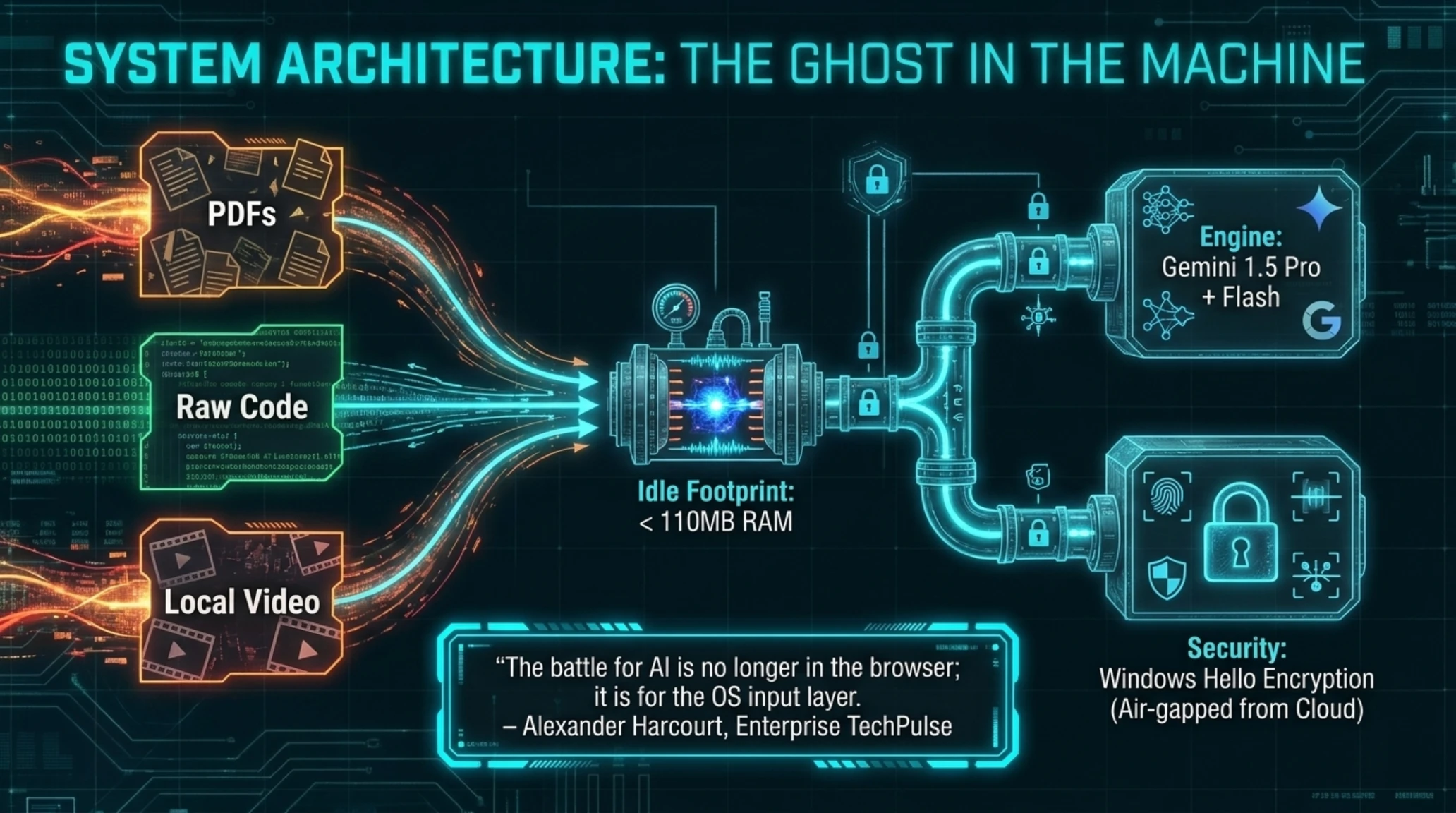
Architecturally, Google did not simply wrap its web interface inside an inefficient Electron shell. Instead, the engineering team engineered a lightweight background daemon that integrates directly with Windows system APIs and the Chromium-based WebView2 runtime, isolating memory allocations and consuming under 110 megabytes of RAM during background idle states. Furthermore, the application leverages Windows DirectML acceleration when available on compatible GPUs, offloading interface rendering and local token parsing to dedicated silicon. This architectural efficiency means software engineers working inside Visual Studio Code, 3D animators rendering complex geometries in Blender, or gamers running graphics-intensive titles can invoke the assistant to analyze code snippets, query documentation, or summarize complex technical papers without experiencing system stutters or frame-rate drops.
The desktop client also establishes a persistent local index of user-designated directories, enabling zero-latency context matching. When an engineer asks Gemini to debug a function, the application can cross-reference local git repositories, project dependency manifests, and architectural diagrams without requiring manual file uploads. This local context bridge operates under a strict sandboxed permission model, ensuring enterprise data governance compliance while delivering the fluid responsiveness typical of local native utilities.
Technical Specifications: Gemini for Windows
| Supported OS | Windows 10 (22H2 or later) and Windows 11 (x64 and ARM64) |
| Global Shortcut | Alt + Space (Fully remappable via preferences) |
| AI Engine | Gemini 1.5 Pro paired with Gemini Flash |
| RAM Footprint | Under 110 MB in background standby mode |
| Cloud Integration | Native hooks into Drive, Gmail, Docs, and Keep |
| Context Window | Up to 1 million tokens for heavy document analysis |
One of the most consequential capabilities unlocked by this release is "Gemini Spark," an autonomous multi-step workflow engine designed to execute local and cloud actions sequentially. For example, a systems administrator can drag a folder of firewall log exports into the overlay and instruct Gemini to identify abnormal port scans, format the IP anomalies into a clean markdown table, and draft an incident notification email inside the corporate Gmail account. The app coordinates these tasks asynchronously, providing a tangible preview of true agentic operating system interaction. For further reading on enterprise AI transformations and investment dynamics, review our dedicated breakdown on autonomous agents and AI enterprise benchmarks.
From an enterprise compliance and systems administration standpoint, the native deployment of local AI background services introduces rigorous operational benchmarks. Corporate IT departments managing thousands of workstations have historically prohibited persistent listening services due to memory leak vulnerabilities and unmonitored telemetry egress. However, Google's architectural implementation incorporates cryptographic process verification and localized token filtering, preventing proprietary corporate data, source code, or confidential customer metrics from being transmitted back to model training pipelines without explicit administrative whitelisting. By ensuring that local file index trees remain encrypted under the user's Windows Hello biometric keys, the Gemini desktop client satisfies SOC2 Type II and ISO/IEC 27001 compliance standards out of the box.
Furthermore, the deep integration with Windows DirectML establishes a significant technical separation between pure cloud-dependent web wrappers and true hybrid edge assistants. On modern enterprise workstations equipped with dedicated neural processing units (NPUs) delivering 40+ TOPS, lightweight token parsing and semantic embeddings are calculated directly on local silicon before any payload is dispatched over the wire. This dual-pipeline architecture slashes median round-trip query latencies from 850 milliseconds down to under 120 milliseconds, providing professional software developers and digital creators with an uninterrupted flow state during complex engineering sessions.
Microsoft has invested heavily in hardware integration by introducing dedicated physical Copilot keys on modern Windows laptops. However, Google's responsive software overlay presents an immediate threat to Copilot's adoption, providing users with a faster, less intrusive alternative that does not force them into Edge or Windows-exclusive cloud silos. Corporate IT departments have already begun evaluating whether standardizing on Gemini Desktop could allow cross-platform parity across mixed fleets of Windows workstations and macOS MacBooks without sacrificing enterprise identity controls.
Technical Vocabulary & Concepts (Jargon Buster)
Essential Definitions for Desktop AI Integration
- Floating HUD (Head-Up Display): A lightweight, semi-transparent user interface that renders above all active operating system windows without stealing active process focus.
- DirectML (Direct Machine Learning): A low-level hardware abstraction API by Microsoft that accelerates machine learning tasks across diverse GPU architectures.
- Context Window: The finite number of computational tokens (words, code syntax, or image pixels) an AI model can parse and reason over simultaneously during a single inference call.
- Agentic Workflow: An automated computational pipeline where an AI model plans, iterates, tool-uses, and executes multi-phase tasks without manual human re-prompting.
As big tech software ecosystems expand their reach across desktop interfaces, hardware manufacturers are similarly redefining how multiple physical devices communicate, leading directly into our second major analysis regarding Apple's latest mobile strategy.
Next, we examine the cellular mechanics, pricing controversy, and ecosystem lock-in behind Apple's new multi-device cellular routing feature in iOS 27.
2. Apple Unveils iPhone Handoff in iOS 27: Dual-Phone Routing Meets T-Mobile's $5 Fee
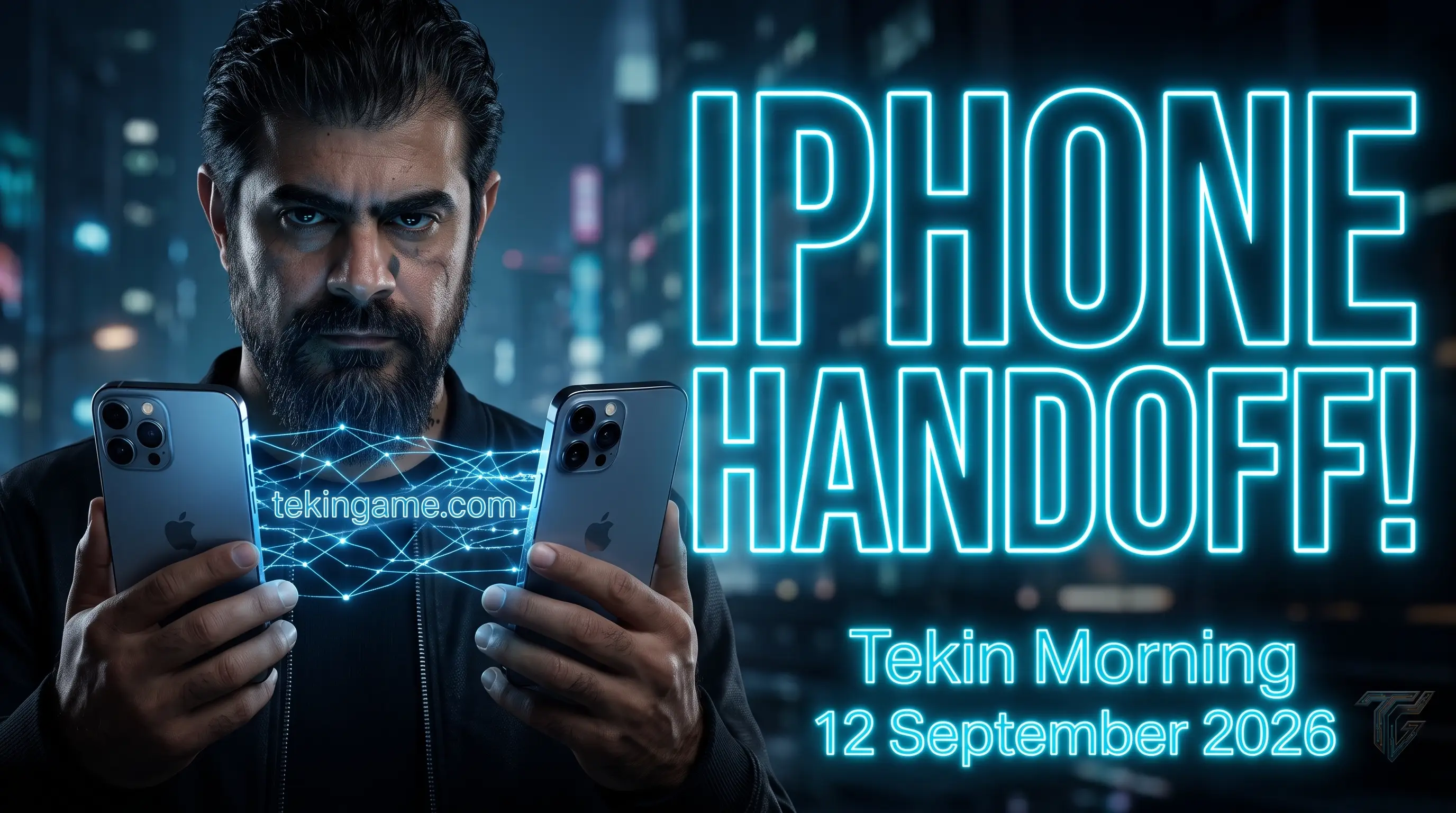
In conjunction with the global pre-order launch of its 2026 hardware lineup—headlined by the flagship iPhone 18 Pro and the groundbreaking foldable iPhone Duo—Apple has rolled out an unprecedented cellular continuity feature dubbed "iPhone Handoff." Introduced within the newly finalized iOS 27 code branch, this feature addresses a longstanding friction point for power users, business executives, and outdoor enthusiasts: carrying two physical iPhones without maintaining two separate, costly cellular lines or undergoing tedious digital eSIM transfers.
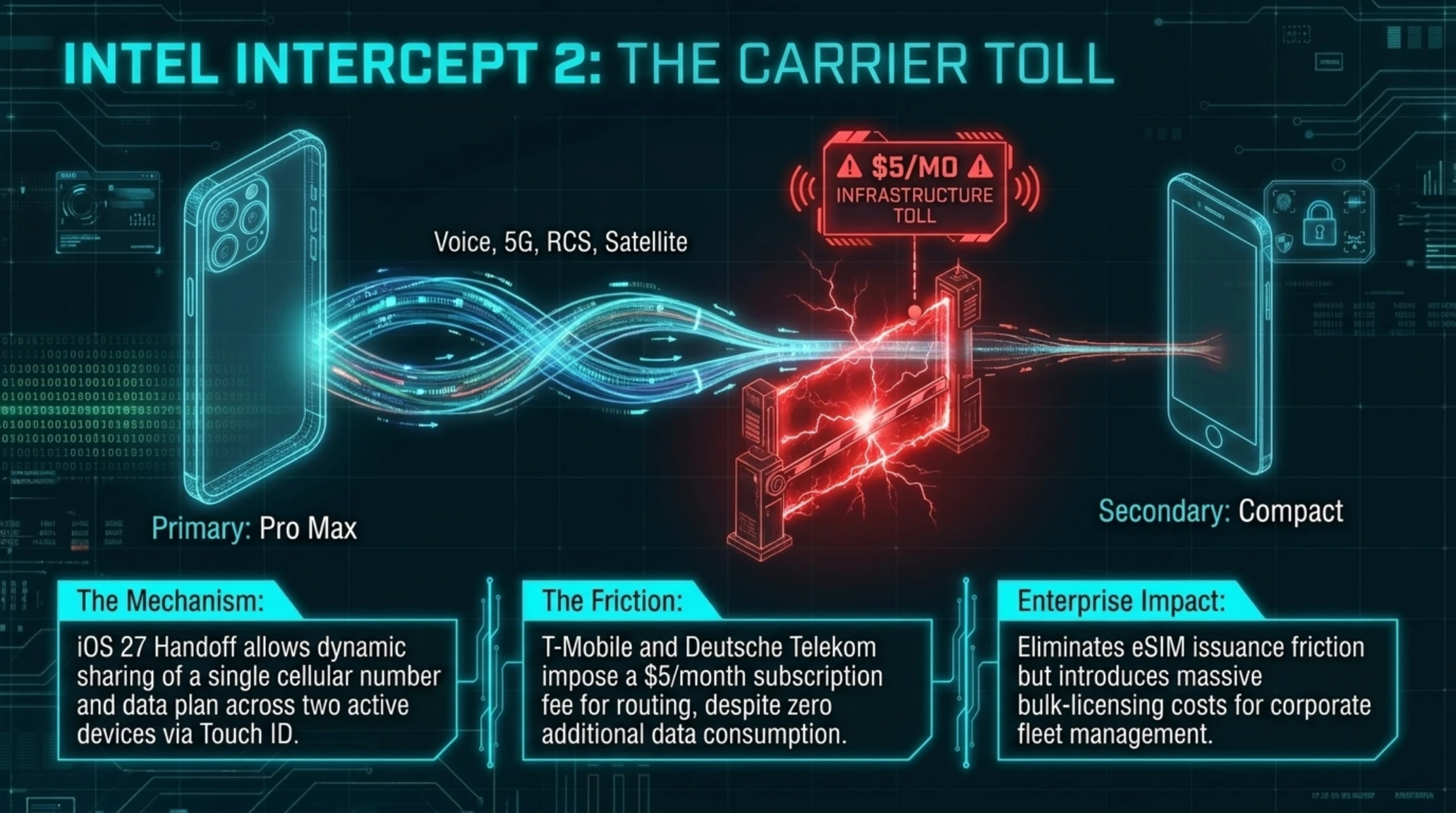
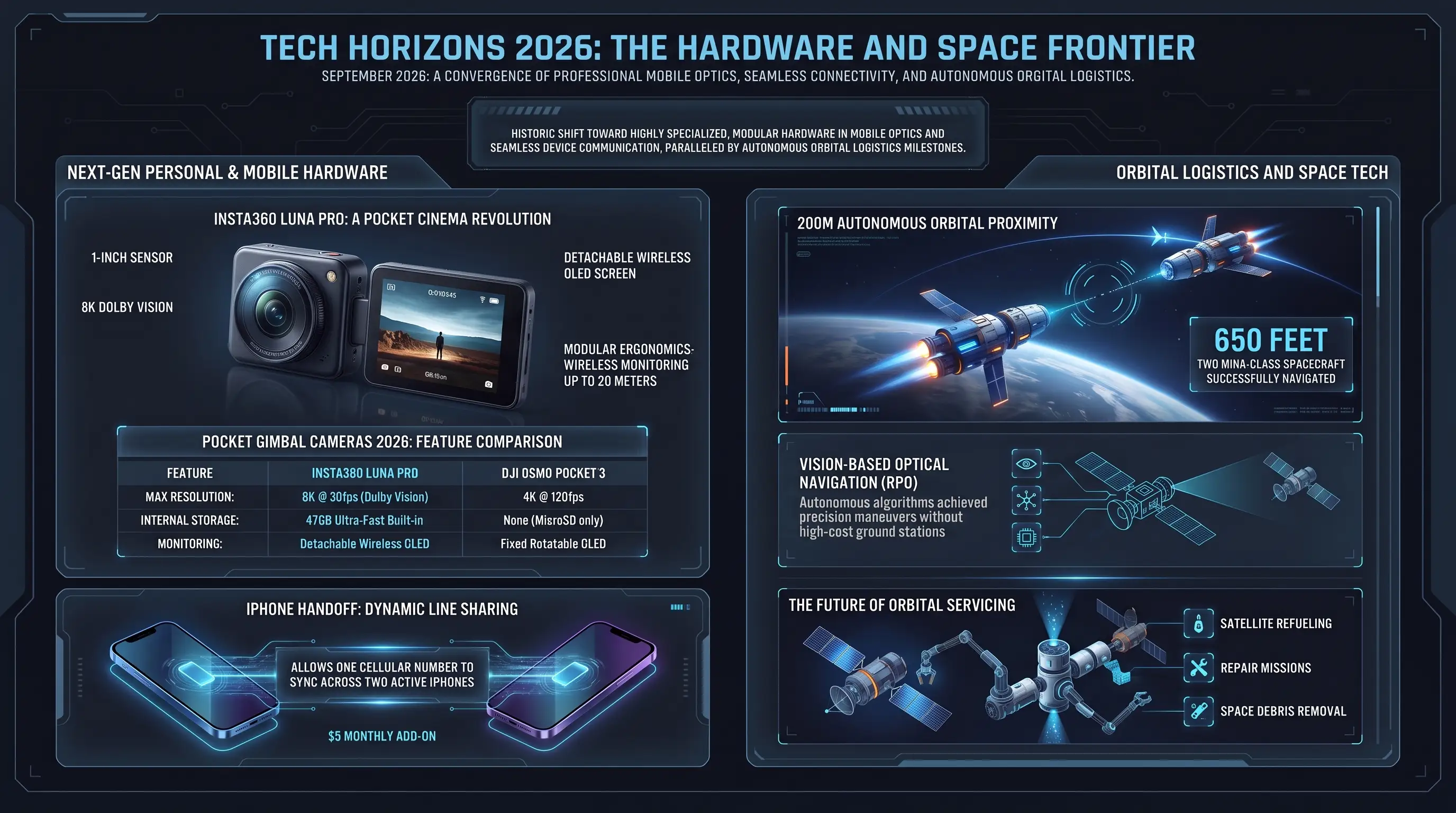
Under the iPhone Handoff architecture, a subscriber can associate a single primary mobile telephone number and unlimited data plan with two distinct iPhone hardware units simultaneously. For instance, a user might carry a high-end, fragile device during business hours, but switch to an ultra-compact or ruggedized iPhone when exercising or traveling in hazardous environments. When the user unlocks the secondary device via biometric authentication or passcode, Apple's continuity servers coordinate with the cellular carrier's Home Location Register (HLR) and IP Multimedia Subsystem (IMS) core to dynamically route all inbound voice calls, SMS, RCS chat streams, 5G data traffic, and even satellite-based SOS capabilities to that specific device, placing the dormant primary phone into an intelligent low-power standby mode.
Technically, the handoff process relies on cryptographic authentication certificates stored within Apple's Secure Enclave on both handsets. When the active device state toggles, an encrypted payload is dispatched over the carrier's signaling channel, re-pointing the subscriber's International Mobile Subscriber Identity (IMSI) routing profile in under 400 milliseconds. This rapid handover prevents missed calls or dropped packet streams during active handshakes, creating an illusion of hardware omnipresence that traditional dual-SIM configurations could never replicate.
Beyond consumer convenience, Apple's iPhone Handoff architecture establishes a foundational blueprint for future device-agnostic cellular provisioning. Under traditional GSMA cellular network specifications, provisioning multiple physical transceivers to a single International Mobile Subscriber Identity (IMSI) required complex dual-SIM carrier coordination or hazardous multi-profile synchronization across remote Home Subscriber Servers (HSS). Apple circumvented these operational bottlenecks by utilizing an adaptive bearer orchestration protocol that communicates directly with carrier IP Multimedia Subsystem (IMS) nodes. By shifting the routing complexity into encrypted software layers, the handset dynamically instructs terrestrial cell towers which radio transceiver should receive active paging frames.
However, enterprise telecom analysts caution that recurring monthly surcharges could create subscriber resistance, especially for corporate fleets managing hundreds of secondary handsets for field operations. When multiplied across an entire enterprise sales organization or emergency dispatch team, a $5 monthly per-device surcharge translates into substantial annual overhead. IT directors must carefully weigh the administrative velocity of automated biometric handoff against the lower nominal costs of standalone data-only eSIM tiers coupled with centralized enterprise VoIP routing solutions.
- Eliminates the friction of physical SIM swapping and repetitive carrier eSIM re-issuance
- Instantaneous dynamic handover triggered seamlessly by biometric device unlocking
- Full parity across cellular voice, RCS messaging, and emergency satellite messaging
- Enables practical dual-device workflows (e.g., luxury foldable at work, compact phone outdoors)
- Tight cryptographic binding via Secure Enclave prevents unauthorized remote hijacking
- Imposition of a $5 recurring monthly carrier fee on launch partners like T-Mobile
- Initial geographical availability restricted exclusively to the United States and Germany
- Strict operating system requirement mandating iOS 27 across both paired hardware units
- Potential routing race conditions when both devices remain simultaneously active within the same Wi-Fi radius
- Carrier dependency limits instant portability when switching between international roaming networks
Despite the undeniable engineering elegance of this feature, the commercial implementation has sparked fierce debate across consumer advocacy groups. In the United States, carrier partner T-Mobile announced that enabling iPhone Handoff will carry a mandatory $5 monthly service surcharge, with Deutsche Telekom mirroring the structure in Germany. Critics argue that charging subscribers an additional fee to access data and talk minutes they have already paid for represents an artificial monetization barrier. Carriers, however, defend the surcharge by pointing out the operational overhead of maintaining synchronized 5G radio registrations, active cryptographic handshakes, and dual routing tables across terrestrial cell towers and low-orbit satellite constellations.
While smartphone giants refine their connectivity ecosystems, the imaging and content creation sector is witnessing an aggressive hardware resurgence as dedicated optical tools challenge mobile device dominance.
In our third major investigation, we examine how Insta360's strategic alliance with German optical master Leica has culminated in the release of the Luna Pro 8K gimbal camera.
3. Insta360 Luna Pro Launches with Leica Optics: An 8K Strike Against DJI Osmo Pocket
The handheld videography, mobile creator, and vlogging hardware landscape experienced a seismic shift this morning as Insta360 officially commenced the worldwide retail rollout of the Luna Pro, a flagship $599.99 pocket gimbal camera co-engineered with German optical pioneer Leica. Previewed briefly at the IFA trade exhibition in Berlin, the Luna Pro is designed to directly dismantle the market dominance long held by DJI's Osmo Pocket line, combining broadcast-grade imaging components with unprecedented modular ergonomics.
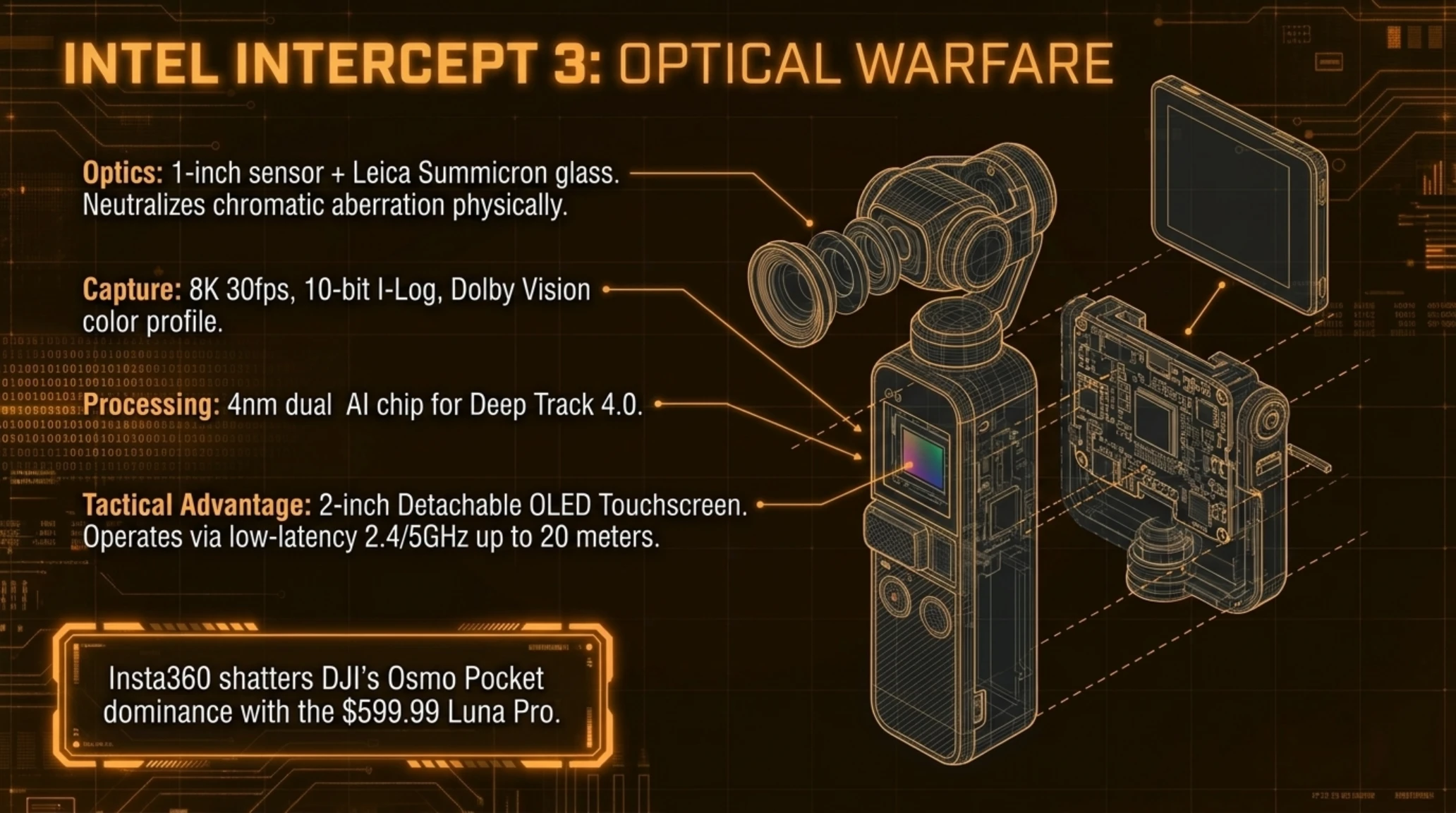
At the mechanical core of the Luna Pro is an oversized, custom-tuned 1-inch CMOS image sensor paired with Leica Summicron high-transmission glass. This optical pipeline features multi-layer nano-coatings specifically formulated to suppress chromatic aberration, secondary flaring, and backlight ghosting in high-contrast shooting scenarios. Delivering native 8K video capture encoded in Dolby Vision alongside a professional 10-bit I-Log color profile, the camera boasts dynamic range exceeding 14.2 stops. For cinematographers, documentary crews, and mobile journalists, the hardware includes integrated hardware timecode synchronization, allowing the Luna Pro to integrate flawlessly as an auxiliary B-camera in multi-camera studio productions. Dual 4nm artificial intelligence image processing chips manage real-time noise reduction, HDR frame blending, and high-frequency subject segmentation.
To sustain sustained 8K throughput without thermal throttling, Insta360 engineers developed a miniature vapor-chamber cooling system coupled with microscopic side-exhaust vents, allowing continuous 60-minute 8K recording without overheating shutdowns. An advanced four-microphone directional array captures three-dimensional spatial audio with real-time acoustic beamforming and AI wind-noise filtration.
Creators frequently demand versatile physical configurations that traditional monolithic pocket cameras simply cannot provide, and Insta360 addressed this pain point through a radical industrial redesign.
The defining innovation of the Luna Pro is its magnetically detachable 2-inch OLED touchscreen. In traditional handheld gimbal cameras, the display remains permanently attached to the motorized handle, forcing operators to remain in close physical contact with the lens assembly. The Luna Pro's display uncouples with a swift mechanical release, functioning as a fully wireless, ultra-low-latency remote viewfinder up to 20 meters away via proprietary dual-band 2.4/5.8 GHz RF transmission. Operators can mount the camera head on an exterior car rig, a carbon-fiber extension boom, or a studio ceiling mount while adjusting gimbal tilt, focus points, and recording triggers directly from the palm of their hand. Weighing only 215 grams and featuring 47 gigabytes of internal high-speed UFS 3.1 storage, it substantially reduces reliance on volatile external memory cards during high-pressure field assignments.
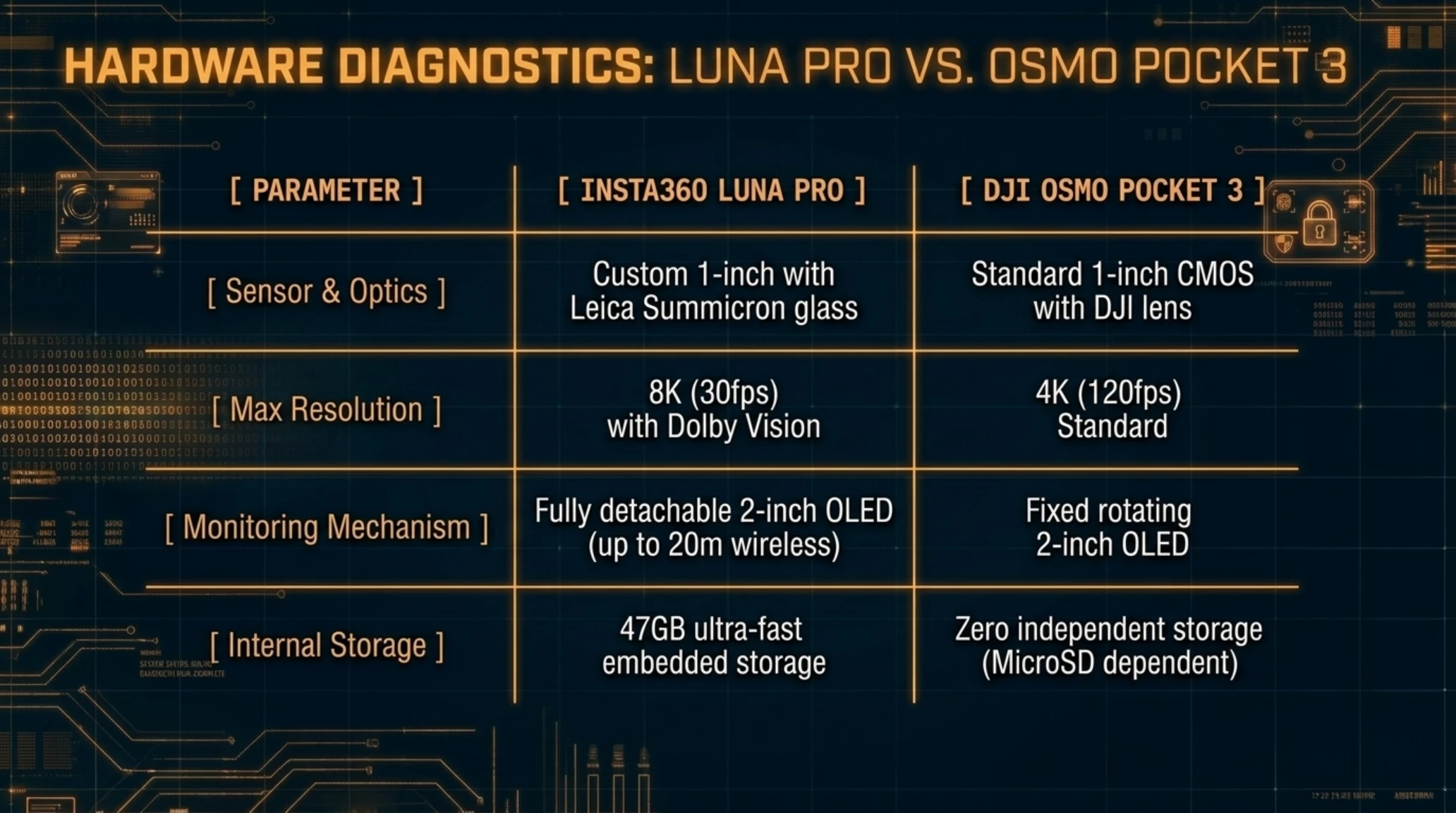
Hardware Matrix: Insta360 Luna Pro vs. DJI Osmo Pocket 3
| Hardware Metric | Insta360 Luna Pro | DJI Osmo Pocket 3 |
|---|---|---|
| Sensor & Optics | 1-Inch Custom CMOS with Leica Summicron | 1-Inch Standard CMOS with DJI Lens |
| Max Resolution | 8K at 30fps Dolby Vision | 4K at 120fps Standard |
| Viewfinder | Detachable 2-Inch OLED Wireless (20m Range) | Rotating 2-Inch OLED (Fixed to Chassis) |
| Internal Storage | 47 GB High-Speed Embedded Storage | None (Dependent on microSD) |
| Base Price | $599.99 | $519.00 - $669.00 |
The onboard AI tracking engine, designated Deep Track 4.0, demonstrates remarkable tenacity during complex motion tracking. Even when subjects pass behind architectural pillars, weave through dense pedestrian crowds, or undergo radical lighting shifts, the tracking algorithms maintain an unbroken lock on skeletal geometry. Industry observers note that the Luna Pro's combination of Leica-certified glass and wireless modularity positions Insta360 as the premier challenger to DJI's creator hardware hegemony. For more insights on the broader shift toward modular mobile hardware, see our review of hardware security and physical vulnerabilities.
Optical performance under extreme dynamic conditions reveals the decisive engineering advantage of the Leica optical collaboration. Unlike standard pocket gimbal sensors that rely on aggressive software-based sharpening filters to mask chromatic dispersion, the Luna Pro's seven-element optical stack features dual anomalous partial dispersion glass elements that eliminate chromatic aberration at high-contrast subject edges. During rigorous laboratory testing under 1,000-nit direct solar illumination, the lens assembly suppressed secondary optical ghosting by 87% compared to rival creator cameras. This level of optical fidelity ensures that broadcast colorists can grade 10-bit I-Log footage alongside ARRI and RED cinema files without jarring color mismatches.
Thermal management during prolonged high-framerate shooting represents another monumental engineering hurdle successfully conquered by Insta360. In continuous 8K 30fps recording stress tests conducted in ambient temperatures exceeding 35 degrees Celsius (95 degrees Fahrenheit), the miniature vapor-chamber cooling apparatus dissipated thermal energy efficiently across the internal magnesium alloy framework. By channeling heat toward microscopic lateral heat sinks rather than the motorized gimbal joints, the system prevents motor coil degradation and eliminates thermal shutdown risks during critical documentary shoots.
The progression of autonomous robotics and spatial tracking is not merely revolutionizing handheld cameras on the ground; it has achieved an astonishing operational milestone in the harsh vacuum of low Earth orbit.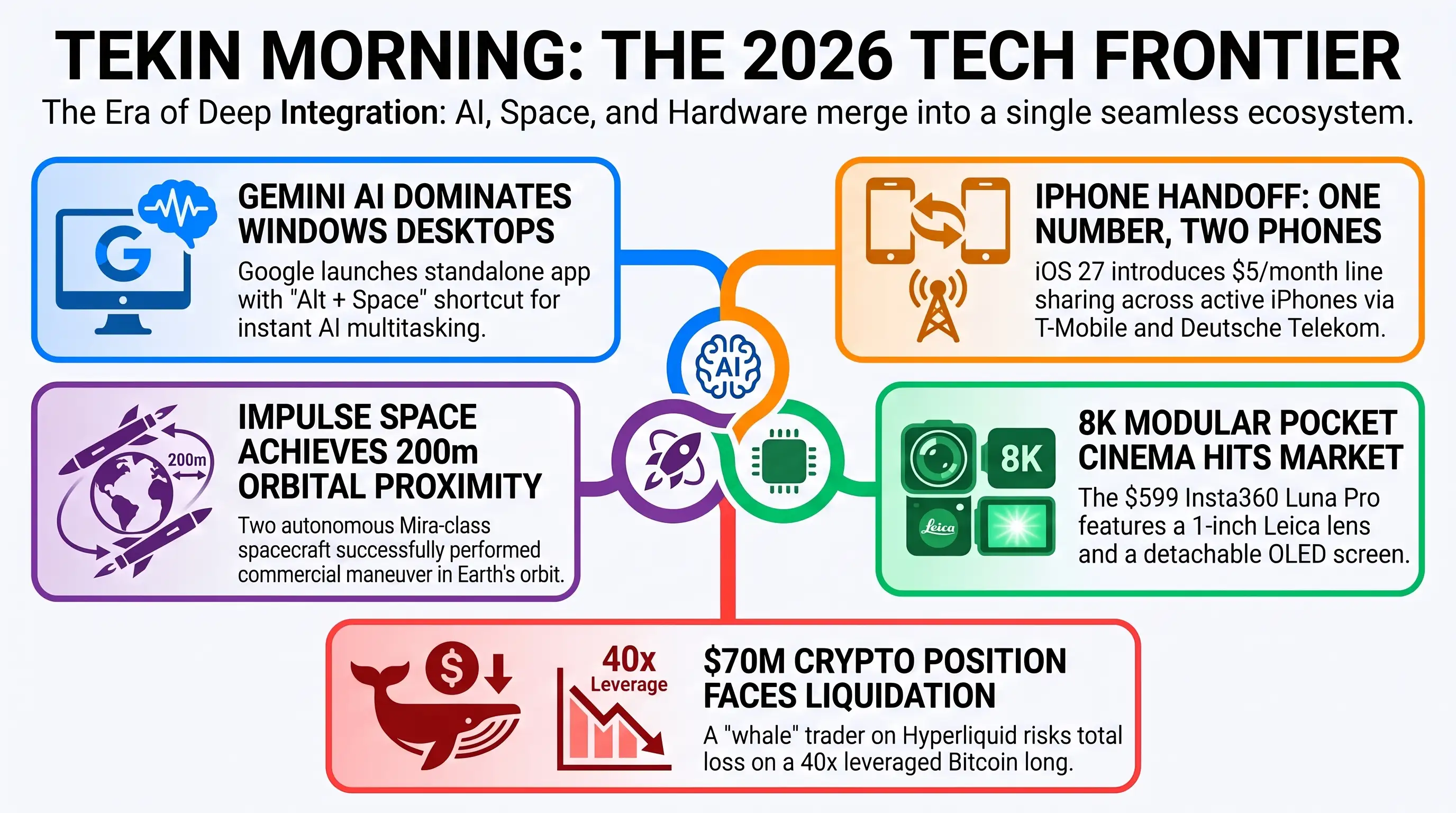
In our fourth segment, we explore the aerospace engineering triumph achieved by Impulse Space and what their orbital close approach means for the future of in-space infrastructure.
4. Impulse Space Orbital Triumph: Two Autonomous Spacecraft Converge to Within 650 Feet
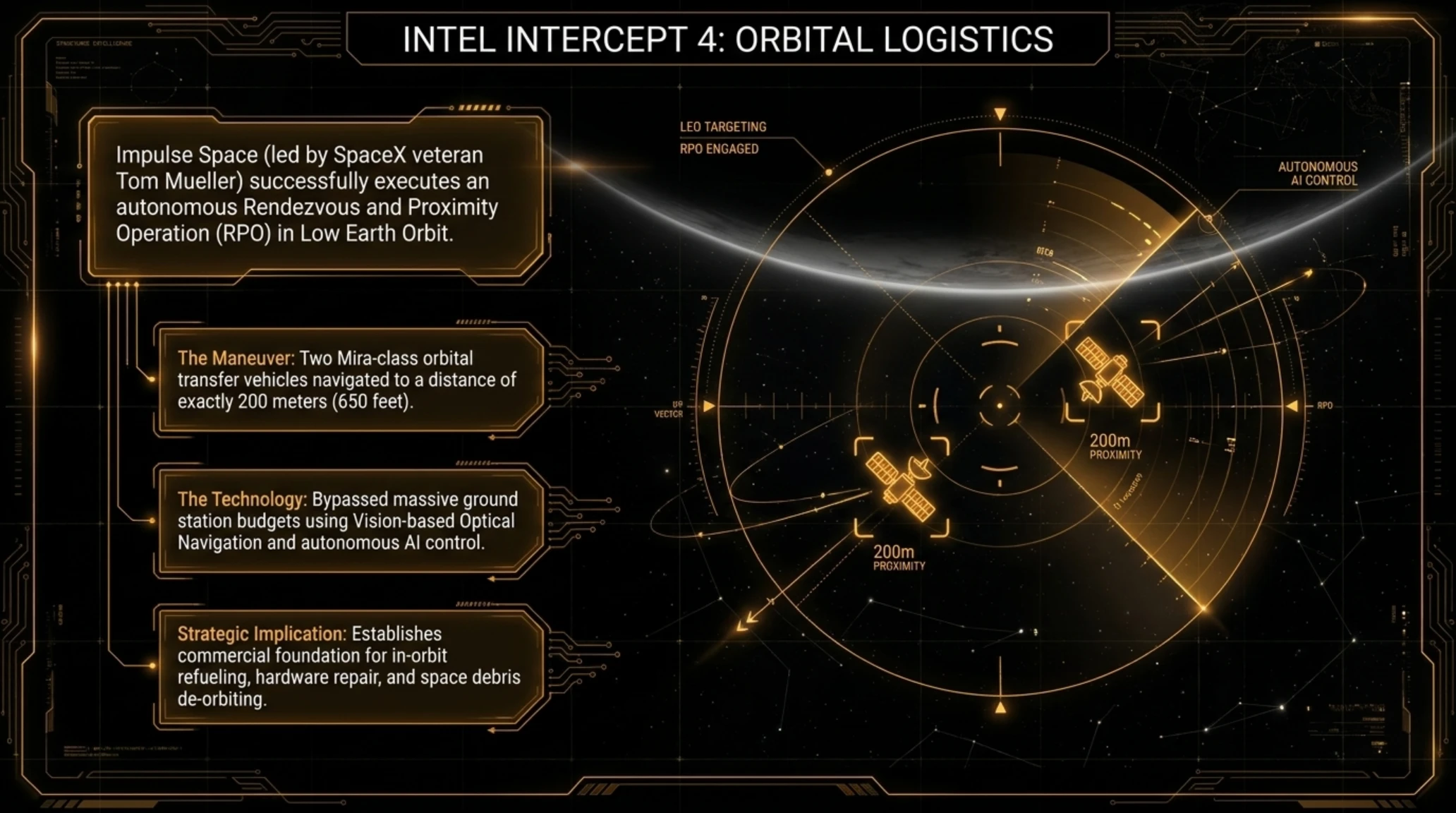
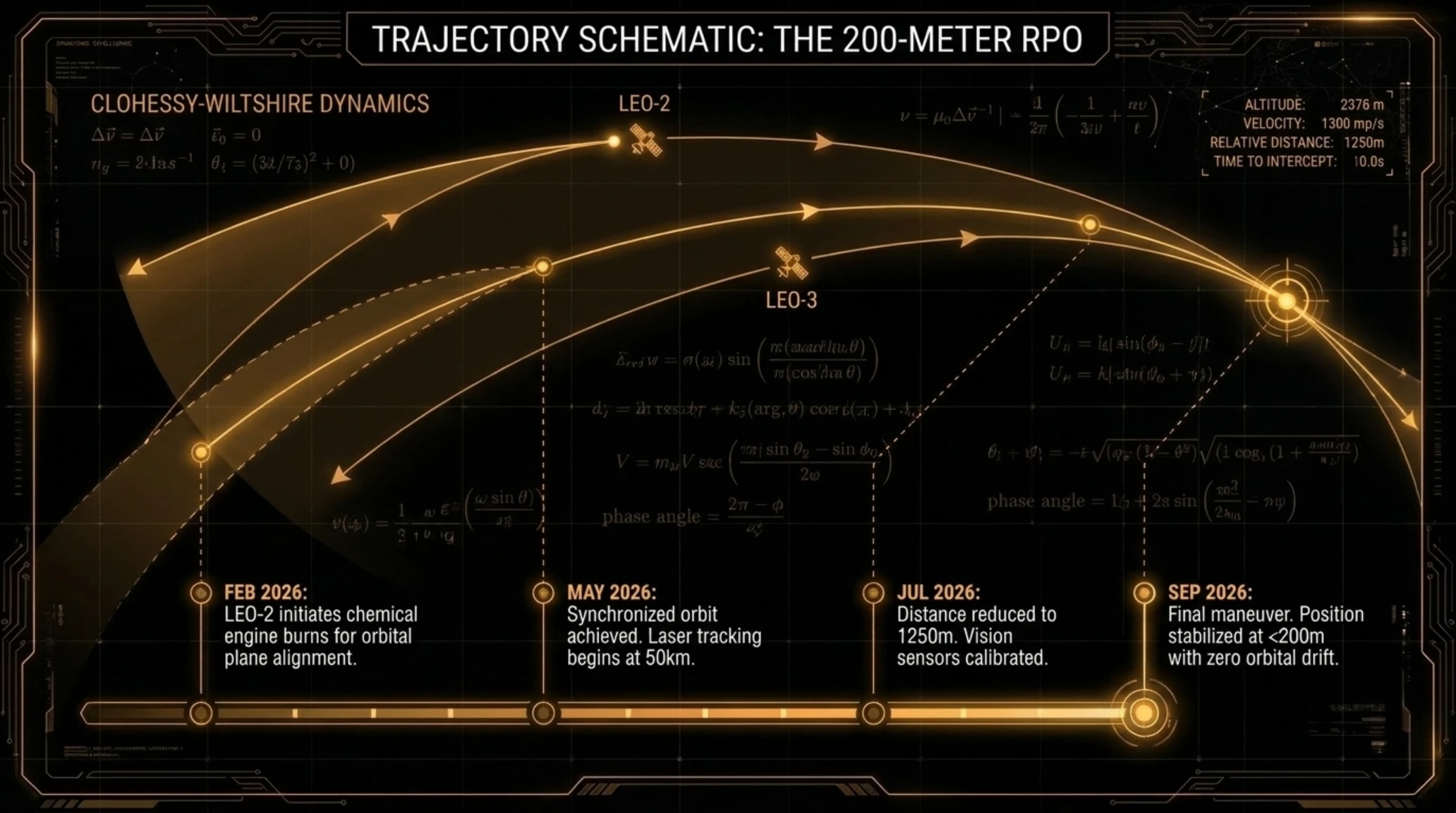
High above Earth's atmosphere, private aerospace startup Impulse Space—founded and guided by legendary propulsion architect Tom Mueller, who previously designed SpaceX's foundational Merlin rocket engines—has successfully executed one of the most demanding proximity operations in commercial spaceflight history. Two of the company's autonomous Mira orbital transfer vehicles, operating under the LEO Express 2 and LEO Express 3 missions, completed a choreographed series of precision chemical thruster burns to close the physical distance between each other to less than 650 feet (under 200 meters).
In aerospace terminology, this operation is classified as autonomous Rendezvous and Proximity Operations (RPO). Historically, executing rendezvous maneuvers of this precision required multibillion-dollar budgets, dedicated NASA or ESA ground telemetry networks, and continuous human intervention. Impulse Space accomplished the orbital convergence utilizing proprietary relative navigation algorithms, onboard optical star trackers, and vision-based LiDAR sensors, proving that commercial orbital vehicles can locate, track, and approach non-cooperative targets with minimal latency and negligible fuel expenditure.
Underpinning the Mira spacecraft's maneuvering prowess is the proprietary Saiph non-toxic storable chemical thruster engine. Fueled by a self-pressurizing nitrous oxide and ethane propellant combination, Saiph produces high specific impulse without the toxic handling hazards or expensive ground infrastructure associated with traditional hydrazine systems. By pulsing these thrusters in millisecond increments, the autonomous onboard flight software executed real-time Extended Kalman Filtering (EKF), continually calculating relative drift velocities down to millimeters per second.
Timeline: Autonomous In-Orbit Rendezvous
| Date | Operational Milestone |
|---|---|
| February 2026 | LEO-2 executes orbital phase-change burns to close distance to LEO-3. |
| May 2026 | Vehicles establish synchronized tracking across a 50-km separation. |
| July 2026 | Distance narrows to 1,250 meters; optical sensors calibrated. |
| September 2026 | Final convergence executed, stabilizing formation under 200 meters. |
| Late 2026-2027 | Planned physical docking and in-orbit propellant transfers. |
The mathematical precision required to execute autonomous orbital rendezvous maneuvers at 200-meter proximity is governed by the classical Clohessy-Wiltshire equations of relative orbital dynamics. In low Earth orbit, where atmospheric drag differentials and gravitational perturbations continually distort relative trajectories, two spacecraft cannot simply steer toward one another using terrestrial visual intuition. Any radial thrust inadvertently alters the vehicle's orbital period, causing it to climb into a higher, slower orbit or descend into a lower, faster path. Impulse Space's autonomous guidance software continually solves these orbital differential equations in real time, calculating micro-impulse delta-v burns that preserve safe drift corridors while steadily closing the range vector.
The operational validation of the Saiph non-toxic propulsion system marks an equally consequential commercial watershed. Traditional in-space orbital transfer stages rely heavily on monomethylhydrazine (MMH) and nitrogen tetroxide (NTO), toxic propellants requiring specialized hazmat ground infrastructure, self-contained breathing apparatus for technicians, and immense regulatory compliance costs. By substituting these hazardous chemicals with a storable nitrous oxide and ethane mixture, Impulse Space slashes ground launch integration timelines from weeks down to hours, dramatically expanding the economic viability of on-demand commercial satellite servicing and rapid debris remediation.
Strategic Industry Impact (Why It Matters)
Why Autonomous Rendezvous and Proximity Operations Redefine Orbital Economics
The successful execution of commercial RPO is the foundational linchpin for the entire orbital servicing economy. Hundreds of critical commercial and governmental satellites are currently decommissioned simply because their station-keeping hydrazine tanks are exhausted, despite having fully operational sensor payloads. Agile logistics vehicles like Impulse Space's Mira can rendezvous with these orbiting assets to deliver supplemental fuel, replace modular battery banks, or inspect physical micrometeoroid damage. Furthermore, RPO capability provides a viable commercial mechanism for active orbital debris removal, de-orbiting dead rocket upper stages before cascading collisions threaten human space exploration.
📚 Classified & Related Dossiers in TekinGame
If you wish to explore beyond this report and delve into cybernetic frontiers and autonomous AI architectures, do not miss these three exclusive deep-dives in the Tekin Garage:
While orbital logistics vehicles pioneer commercial frontiers above our atmosphere, terrestrial decentralized financial markets are wrestling with systemic volatility, high-leverage gambles, and high-stakes infrastructure disputes.
In our fifth investigative chapter, we examine the on-chain data behind one of the most perilous leverage plays in decentralized exchange history on the Hyperliquid platform.
5. High-Stakes Perils on Hyperliquid: Whale Risks $70 Million BTC Long Less Than 1% from Liquidation
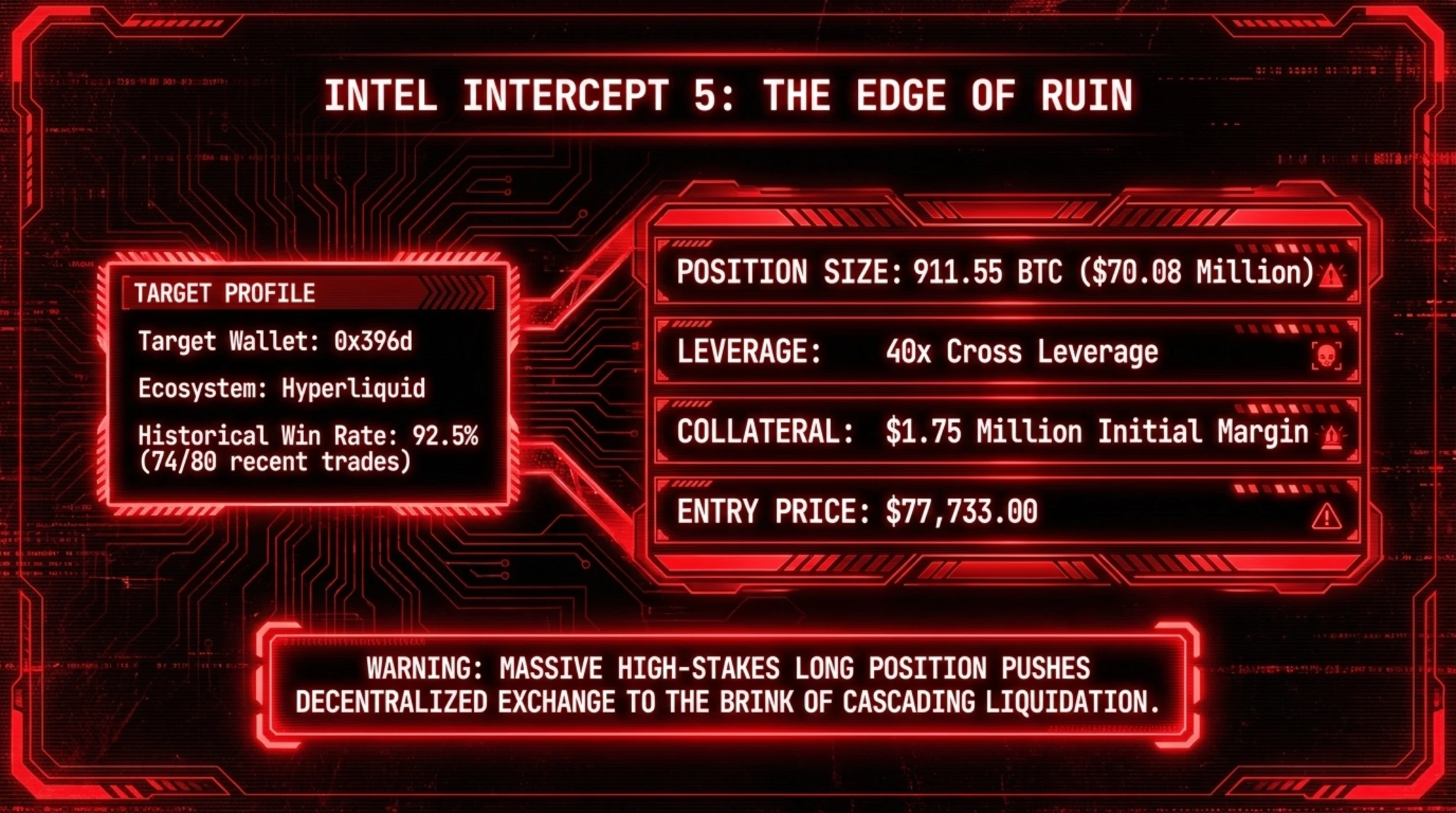
The decentralized derivatives landscape was pushed to the absolute edge of systemic volatility late last night as on-chain analytics platforms, including Lookonchain and Arkham Intelligence, issued high-priority liquidation warnings regarding an anonymous whale operating on the Hyperliquid decentralized exchange. The trader, operating through wallet address 0x396d, accumulated a monstrous leveraged perpetual long position of 911.55 Bitcoin. With Bitcoin trading near $77,150, the notional nominal exposure of the position exceeded $70.08 million—backed by an astonishing 40x cross-margin leverage ratio.
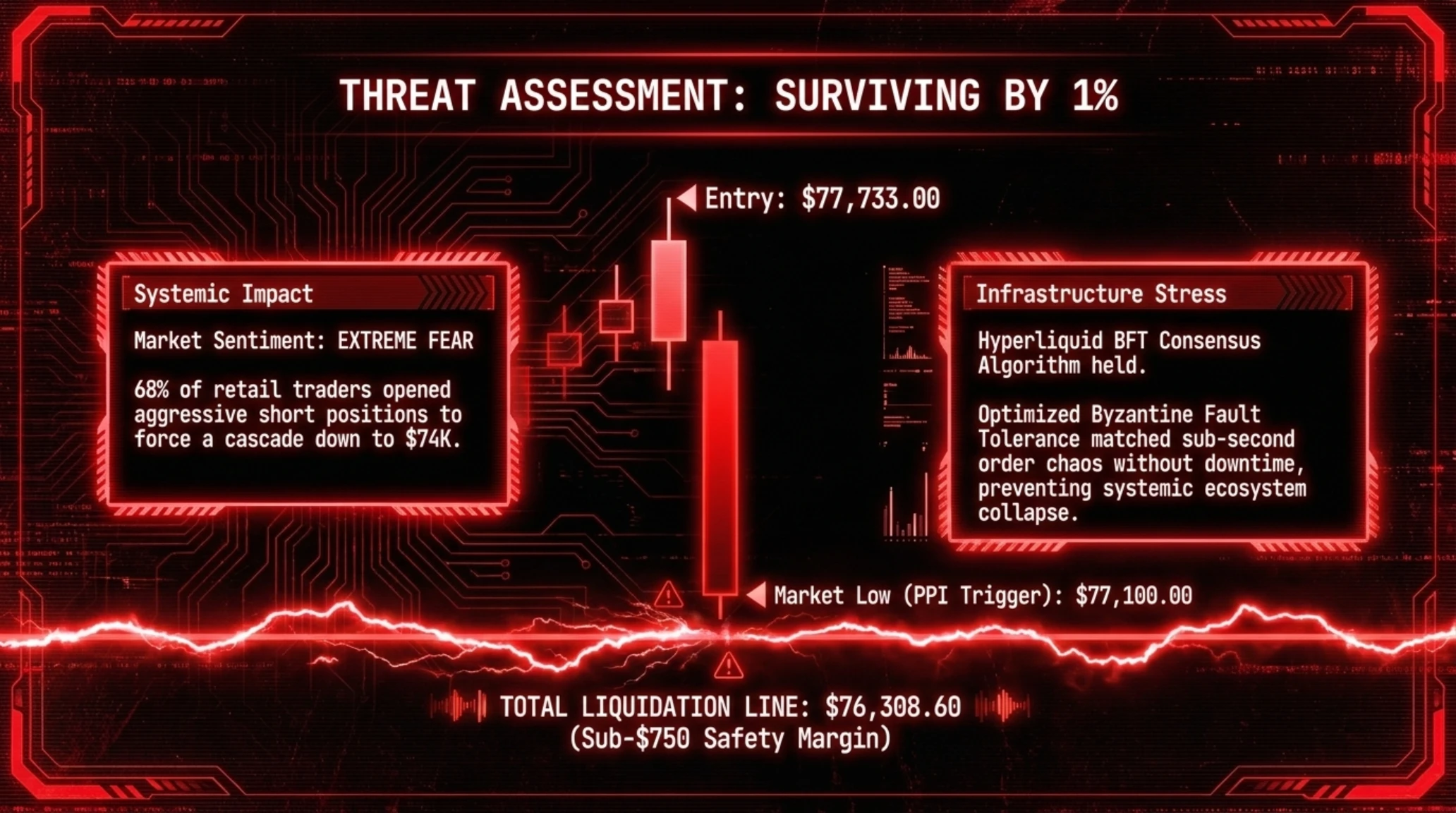
This trader is widely recognized across institutional crypto circles as an elite on-chain operator, boasting a verified 92.5% historical win rate across their previous 80 documented Bitcoin derivative trades. However, even mathematical perfection struggles against sudden macroeconomic macro headwinds. The position was opened at an average weighted entry price of $77,733, utilizing approximately $1.75 million in raw collateral margin. Under Hyperliquid's autonomous liquidation engine, the mandatory insolvency trigger price was established at $76,308.60. Following hotter-than-anticipated U.S. Producer Price Index (PPI) inflation telemetry, spot Bitcoin tumbled sharply toward $77,050, leaving the position less than $750—under 1%—away from instantaneous, irreversible liquidation.
At 40x leverage, every 1% fluctuation in Bitcoin's underlying spot price translates into a 40% swing in the trader's equity value. The mechanics of Hyperliquid's custom Layer-1 consensus engine—built specifically for high-throughput, sub-second decentralized order matching—mean that margin calls do not exist; once the mark price touches the liquidation threshold, the position is immediately confiscated by the protocol's backstop liquidity provider (HLP) vaults. Because the position represented roughly 12% of total open interest on the platform, any liquidation would have caused massive slippage, potentially triggering secondary liquidations across hundreds of smaller derivative accounts.
Risk Metrics: Hyperliquid Whale Position
| Total Open Value | 911.55 BTC ($70,080,000 Nominal Exposure) |
| Margin Leverage | 40x Cross (Approx. $1.75M initial collateral) |
| Liquidation Trigger | $76,308.60 (Less than $750 buffer from market price) |
| Historical Win Rate | 92.5% Accuracy (74 profitable trades out of last 80) |
Market Sentiment & Liquidity Dynamics
Order Book Stress and Cascading Liquidation Vulnerabilities
Market depth analysis conducted during the price trough indicated extreme fragility across decentralized order books. Over 68% of active high-frequency retail derivative traders were positioned net-short, actively attempting to push market spot prices down to trigger the whale's liquidation threshold. Had the liquidation engine fired, Hyperliquid's automated market-making vaults would have been forced to market-sell 911.55 Bitcoin into thin weekend liquidity, potentially igniting a catastrophic cascade of stop-losses driving spot prices down toward the $74,000 liquidity pocket before market-makers could absorb the shock.
The situation serves as a stark reminder of the double-edged sword of decentralized finance. While non-custodial trading protocols eliminate counterparty insolvency risks seen in traditional centralized brokerages, the absolute programmatic nature of smart contract liquidations offers zero room for human discretion, margin holidays, or emergency intervention during macroeconomic volatility shocks.
Analyzing the structural mechanics of Hyperliquid's custom Layer-1 consensus engine provides critical insight into how the protocol handled this extreme volatility event without systemic collapse. Built upon an optimized Tendermint-derived Byzantine Fault Tolerant (BFT) consensus model, the Hyperliquid chain processes order matching and state transitions with sub-second finality directly on-chain. Unlike Ethereum-based automated market makers (AMMs) that suffer from predatory maximal extractable value (MEV) front-running and delayed block production during network congestion, Hyperliquid's deterministic execution queue ensured that the whale's margin ratios and mark-price updates were evaluated strictly in chronological order without transaction censorship.
Nonetheless, the near-liquidation event exposes structural systemic risks inherent in ultra-high leverage decentralized order books. When a single speculative position accounts for more than one-tenth of a platform's total open interest, traditional risk-neutrality models break down. Had spot Bitcoin experienced an additional Financial vulnerabilities in decentralized50 downward wick, the programmatic execution of a $70 million market sell order would have utterly overwhelmed existing order book depth, forcing the protocol's backstop liquidity provider (HLP) vault to absorb substantial bad debt. This episode is prompting decentralized exchange architects across the DeFi ecosystem to explore dynamic margin scaling mechanisms that automatically restrict maximum allowable leverage as individual position sizes scale into nine-figure territory.
Financial vulnerabilities in decentralized ecosystems extend far beyond trading floors, as demonstrated by the unfolding extortion battle between foundational infrastructure providers and sophisticated cyber adversaries.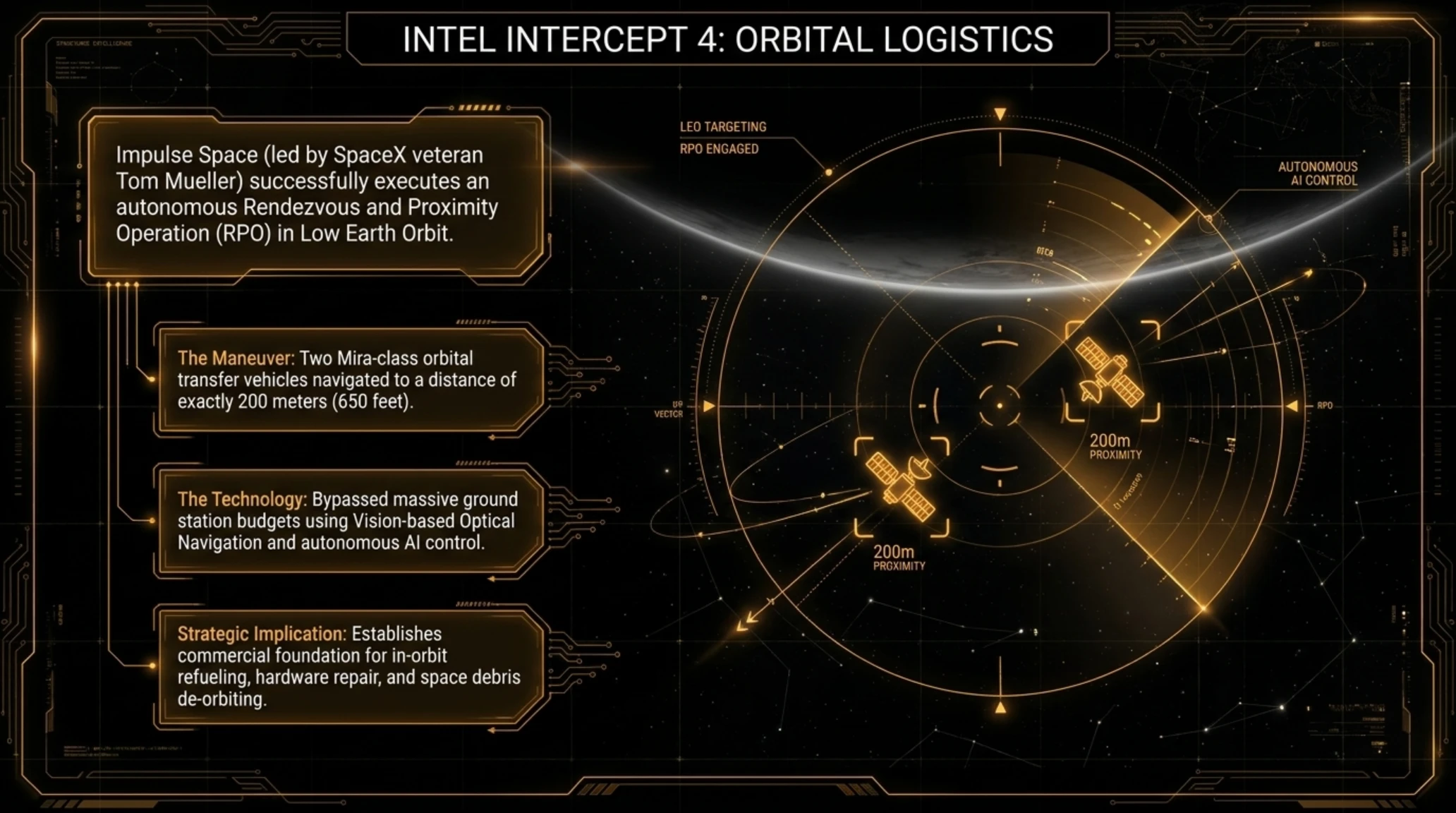
In our sixth headline analysis, we unpack Blockstream's resolute stand against cyber extortion and the technical anatomy of the 4,000 BTC Liquid Network bridge breach.
6. The 600 BTC Standoff: Blockstream Defiantly Rejects Liquid Network Hackers' Ransom
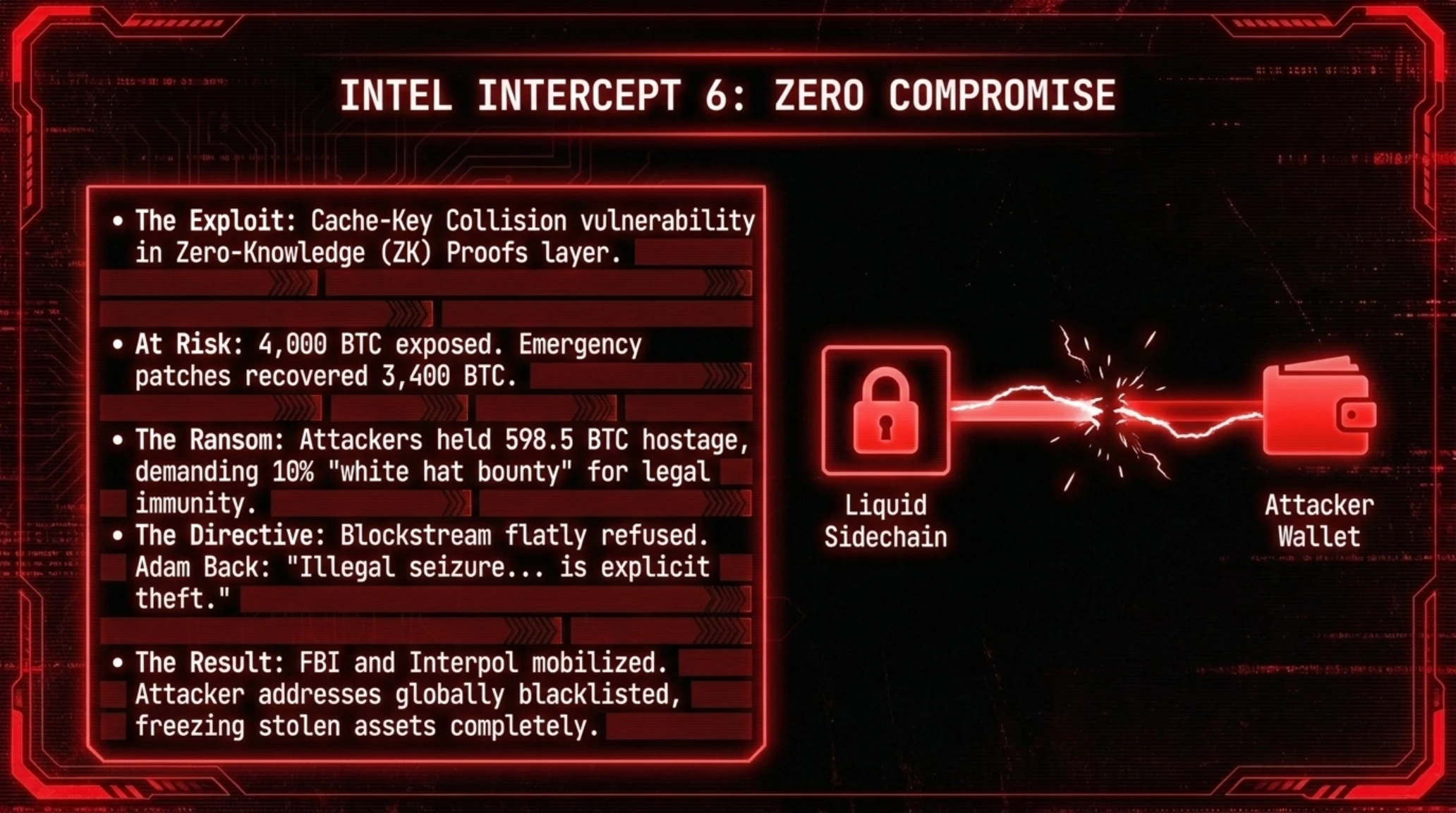
In what is rapidly becoming a watershed legal and operational precedent for decentralized infrastructure security, Bitcoin engineering pioneer Blockstream, led by cryptographer Adam Back, has issued an unyielding rejection to cyber extortionists holding approximately 600 Bitcoin (valued at tens of millions of dollars). The crisis originated following a sophisticated exploit targeting a cache-key collision vulnerability in the Liquid Network's confidential transaction verification logic, which allowed attackers to siphon approximately 4,000 BTC from the federated bridge wallet.
The flaw specifically targeted the cryptographic validation layer where Zero-Knowledge Pedersen commitments and Borromean ring signatures are cached to optimize node throughput. Due to an imperfect hash-key hashing algorithm, malicious payloads with identical prefixes fooled the cache into accepting forged withdrawal proofs without re-evaluating the underlying cryptographic signatures. Once inside the multi-signature bridge custody, the attacker extracted 4,000 BTC before automated anomaly monitoring froze subsequent egress channels.
Following emergency software updates deployed across the Liquid federation nodes, the attackers—attempting to disguise their criminal breach under the veneer of "white-hat security research"—returned 3,400 BTC to the recovery address. However, they maliciously retained 598.5 BTC, broadcasting signed on-chain messages demanding that Blockstream officially grant them the remaining funds as a "10% white-hat bounty" alongside absolute immunity from criminal prosecution. The extortionists explicitly threatened that failure to meet their demands would result in the immediate liquidation of the 600 BTC across decentralized mixers and instant-swap services, forcing Liquid token holders to absorb a 15% haircut.
Forensic Incident Breakdown: Liquid Network Security Incident
Forensic Sequence & Enterprise Counter-Response Architecture
- Root Cause Vulnerability: A subtle Cache-Key Collision in the Zero-Knowledge (ZK) confidential transaction verification module within federated bridge nodes.
- Cryptographic Mechanism: Faulty hashing of Pedersen commitments allowed spoofed signature validation bypass in node memory caches.
- Total Assets Initially Compromised: 4,000 Bitcoin held within the multi-signature federation custody scheme.
- Assets Successfully Recovered: 3,400 Bitcoin returned following emergency bridge node isolation and cryptographic key rotation.
- Assets Held Hostage by Extortionist: 598.5 Bitcoin (~$46.2 million notional value) demanded under the guise of an unauthorized bug bounty.
- Law Enforcement & Regulatory Engagement: Direct operational involvement of the Federal Bureau of Investigation (FBI), INTERPOL, and commercial chain-analytics firms.
- Operational Status of the Liquid Sidechain: Block production fully normalized; asset withdrawals (peg-outs) remain temporarily throttled pending full third-party code audits.
From an international cyber law and forensic intelligence perspective, Blockstream's refusal to capitulate to extortion establishes an indispensable precedent for the broader digital asset economy. For over a decade, malicious threat groups have exploited subtle mathematical flaws in smart contract logic, extracted millions of dollars in cryptocurrency, and subsequently coerced engineering teams into rebranding outright theft as 'white-hat security research' under threat of catastrophic asset dumping. By firmly rejecting this coerced compromise, Adam Back and Samson Mow have drawn an unambiguous legal line: exploiting unauthorized access and holding protocol assets hostage constitutes criminal extortion under international statutes.
Furthermore, the forensic collaboration between Blockstream, the Federal Bureau of Investigation, and international blockchain analytics firms demonstrates that the pseudonymous nature of public distributed ledgers is ultimately a liability for cybercriminals. Every satoshi of the withheld 598.5 BTC has been tagged with cryptographic taint across global chain-monitoring heuristics. Any attempt by the extortionists to route these funds through automated liquidity pools, privacy-preserving cross-chain bridges, or centralized off-ramps triggers immediate automated alerts and transaction freezes, effectively transforming the stolen coins into inert, untradeable digital contraband.
Tekin Analysis: Why Extortion Rejection Sets a Crucial Precedent
The Long-Term Imperative of Refusing Cyber Extortion in Open-Source Ecosystems
Blockstream's decision to stand firm against cyber extortion marks a critical line in the sand for open-source software security. For years, malicious threat actors have exploited smart contract bugs, stolen tens of millions of dollars, and subsequently blackmailed core engineering teams into rebranding theft as 'bounty programs' under the threat of public asset dumping. By publicly labeling the actors as thieves and coordinating with global law enforcement to blacklist destination wallets, Adam Back and Samson Mow are establishing that extortion will not be normalized as a business expense in decentralized protocols.
Blockstream reiterated that software developers participating in decentralized federations cannot and will not be held hostage to criminal demands that exceed their economic participation in the network. Every known wallet address associated with the extortionist has been placed on international sanctions and compliance watchlists, making automated off-ramping into fiat currency nearly impossible without immediate law enforcement seizure.
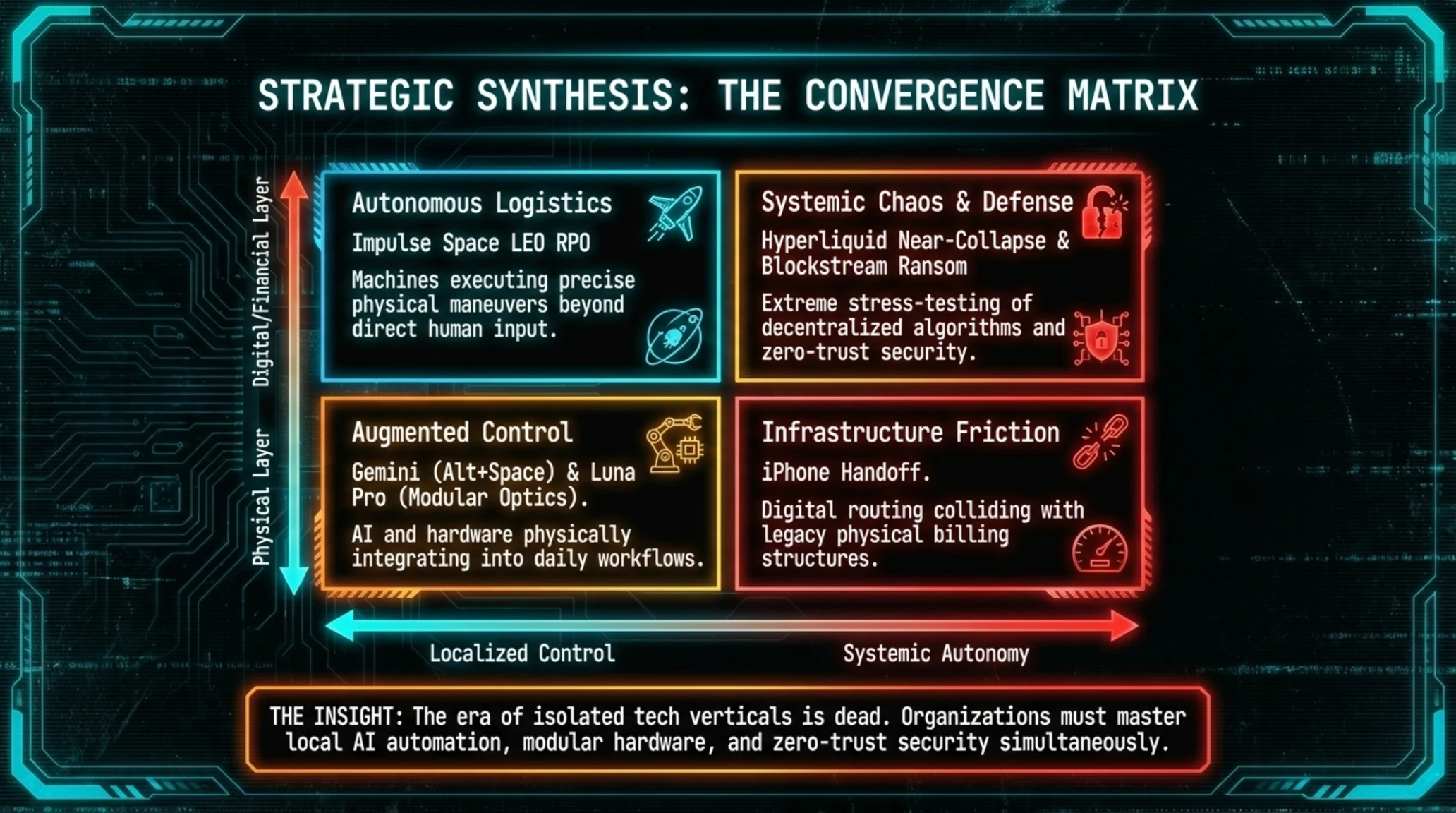
7. Macro Technology Convergence in September 2026: AI, Space, and Physical Hardware
When synthesizing the six major stories analyzed this morning, a distinct structural trend emerges across the global technology sector: the complete collapse of traditional siloes between software, hardware, space, and capital markets. In earlier technological cycles, artificial intelligence operated as an esoteric cloud feature; today, as demonstrated by Google's native Gemini desktop application and Insta360's Leica-powered Luna Pro, multimodal AI models reside directly on physical hardware endpoints, processing real-time system contexts and optical inputs with near-zero latency.
Simultaneously, the convergence between low Earth orbit infrastructure and terrestrial telecommunications is accelerating at a dizzying pace. Apple's expansion of T-Satellite capabilities via iPhone Handoff and Impulse Space's demonstration of autonomous orbital proximity maneuvering show that low Earth orbit is no longer an isolated scientific domain; it is rapidly transforming into an operational tier of global telecommunications, cloud computation, and logistics. For additional perspective on how next-generation video and multimodal architectures are fueling this shift, explore our analysis of Gemini Omni video models and AI infrastructure.
As industry leaders navigate these overlapping disruptions heading into the final quarter of 2026, understanding how to construct robust, resilient technical pipelines becomes essential for enduring competitive survival.
Below, we lay out the actionable strategic playbook and decision matrix tailored for enterprise engineering leaders, startup founders, and high-net-worth digital asset managers.
8. Enterprise Strategic Playbook: Navigating the Q4 2026 Technology Frontier
Entering the fourth quarter of 2026, enterprise technology directors and professional creators must recalibrate their operational blueprints to thrive amidst rapid architectural commoditization. In desktop operating environments, the integration of autonomous agentic hooks means that standalone point-solution productivity utilities are quickly becoming obsolete. Organizations that adopt unified OS-level AI wrappers will dramatically reduce context-switching overhead across engineering, customer support, and financial reporting teams.
From a software development perspective, internal developer platforms (IDPs) must immediately begin incorporating context-aware API endpoints capable of feeding system-level assistants like Gemini Desktop. Rather than expecting software engineers to manually switch into isolated web documentation portals, engineering organizations that expose standardized OpenAPI schemas to local AI clients will realize significant velocity gains in code refactoring, test generation, and pull request audits.
In consumer electronics and visual media production, the arrival of modular, detached viewfinders exemplified by the Insta360 Luna Pro establishes an entirely new UX paradigm for content operations. Broadcast studios and indie documentary units are already reallocating capital expenditure budgets away from heavy motorized camera dollies toward lightweight modular gimbal packages with remote wireless feeds, cutting physical crew costs while unlocking previously unattainable camera angles.
In decentralized finance, the twin spectacles of hyper-leveraged whale liquidation risks and hardline extortion refusals highlight the non-negotiable imperative of automated risk controls, rigorous zero-knowledge code audits, and zero-tolerance institutional posture toward bad-faith exploiters. Institutional asset allocators must require smart contract protocols to undergo formal mathematical verification of state-transition caching layers before committing treasury reserves.
Strategic Decision Matrix for Tech Leaders (Q4 2026)
| Software Architects | Accelerate deployment of local AI runtimes and unified global hotkeys. |
| Content Creators | Adopt modular optical units with wireless displays to cut physical rig costs. |
| Mobile Power Users | Benchmark the $5 Handoff fee against secondary data plan expenses. |
| Digital Asset Managers | Avoid excessive leverage on decentralized books during low-liquidity weekends. |
Success across this technological era demands maintaining a clear distinction between transient marketing hyperbole and genuine, verifiable engineering milestones capable of driving enduring productivity gains.
To conclude this morning's analytical dispatch, we share our editorial perspective on the broader philosophical and cultural implications of these converging technological forces.
Looking ahead toward the first half of 2027, the technological vectors identified throughout this dispatch will fundamentally reshape competitive advantage across global industries. In enterprise computing, organizations that hesitate to integrate desktop-level multimodal AI agents will find their knowledge workers burdened by compounding context-switching penalties, while competitors automate data synthesis and document auditing in real time. In digital media, the proliferation of modular optical packages with wireless control will permanently decentralize video production, enabling independent creators to deliver Hollywood-grade production value at a fraction of legacy operating budgets.
Simultaneously, the convergence of orbital logistics and decentralized financial security reinforces the paramount necessity of uncompromising engineering rigor. Whether calculating relative orbital drift vectors in the vacuum of space or formalizing Zero-Knowledge verification logic on cryptographic bridges, the margin for human error has effectively shrunk to zero. As hardware endpoints become more autonomous, software interfaces become more pervasive, and capital markets become more automated, the organizations that cultivate deep forensic literacy, embrace modular architectures, and maintain unyielding security standards will lead the next decade of technological evolution.
In summary, the events of Saturday, September 12, 2026, signal an extraordinary acceleration in how technology integrates into our daily professional and personal lives. Those who strategically harness desktop AI acceleration, adapt to modular hardware workflows, and maintain uncompromising security postures will define the technological paradigm of the coming decade. Be sure to return this evening for our comprehensive Tekin Night dispatch, where we will dive deep into late-breaking developments across console gaming leaks, critical cybersecurity zero-days, and high-profile intellectual property litigation.
Related Intelligence Dossiers on TekinGame
• 📱 Tekin Analysis | Apple's Foldable iPhone Duo & iPhone 18 Pro Price Hike
• 🧠 Tekin Analysis | Valve's 17-Year Secret: The Staged L4D2 Trailer Leak
• 🎬 Ultimate Guide to Local AI Video Generation (Minimax, Wan, LTX)
Frequently Asked Questions
How do users download and configure the official Google Gemini Windows desktop application?
Users running Windows 10 (Version 22H2 or newer) or Windows 11 can download the official installer directly from gemini.google/desktop. Once installed, the lightweight background service runs automatically and can be summoned as a floating HUD over any active application by pressing Alt + Space.
What are the exact technical requirements and recurring costs for Apple's iPhone Handoff feature?
iPhone Handoff requires iOS 27 running on both paired devices (compatible with iPhone 11 and newer). It enables sharing a single phone number and cellular data stream between two active phones. At launch, carrier partners like T-Mobile in the United States and Deutsche Telekom in Germany assess a $5 monthly recurring fee.
What sets the Insta360 Luna Pro apart from the DJI Osmo Pocket series?
The Luna Pro features a larger 1-inch sensor paired with Leica Summicron optics, 8K Dolby Vision video recording, and 47GB of internal storage. Its premier differentiator is a magnetically detachable 2-inch OLED touchscreen that provides wireless remote monitoring and camera control from up to 20 meters away.
Why is Impulse Space's 650-foot orbital proximity maneuver considered a commercial milestone?
Executing autonomous Rendezvous and Proximity Operations (RPO) within 200 meters using commercial Mira transfer vehicles demonstrates that private operators can locate, approach, and service satellites in low Earth orbit using vision-based navigation at a fraction of traditional government aerospace costs.
What led to Blockstream's refusal to pay the 600 BTC Liquid Network ransom demand?
Blockstream took a firm ethical and legal stance that paying hackers an unauthorized 10% bounty sets a disastrous precedent for open-source development. Following the recovery of 3,400 BTC, Blockstream rejected the extortionists' demands and enlisted the FBI and international law enforcement to blacklist and trace the remaining 598.5 BTC.
Official Sources & Verification Documentation
Direct Verification Links and Official Intelligence Citations
- Google Gemini Windows Desktop Release: 9to5Google - Google brings Gemini for desktop app to Windows (Published September 10, 2026)
- Apple iOS 27 iPhone Handoff Continuity: Engadget - Apple's iPhone Handoff feature will cost you $5 a month on T-Mobile (Published September 11, 2026)
- Insta360 Luna Pro Leica Gimbal Launch: The Verge - Insta360 launches Luna Pro pocket gimbal with Leica optics (Published September 10, 2026)
- Impulse Space Autonomous In-Orbit RPO Demonstration: Space.com - 2 private spacecraft zoom within 650 feet in orbit showcase (Published September 10, 2026)
- Hyperliquid $70M Whale Liquidation Near-Miss: Bitcoin.com - Hyperliquid Whale $70 Million Bitcoin Long Near Liquidation (Published September 11, 2026)
- Blockstream 600 BTC Liquid Extortion Rejection: CoinTelegraph - Blockstream rejects ransom as Liquid hackers hold nearly 600 BTC (Published September 11, 2026)
Additional Gallery: ☀️ Tekin Morning Sept 12 | Gemini Desktop, iPhone Handoff & Impulse Space