Tekin Morning // Executive Intelligence Briefing (October 21, 2026)
Strategic Intelligence // Core Key Takeaways
Section 1: Software Supply Chain Weaponization: Inside the Compromise of the Official OVHcloud CLI GitHub Repository
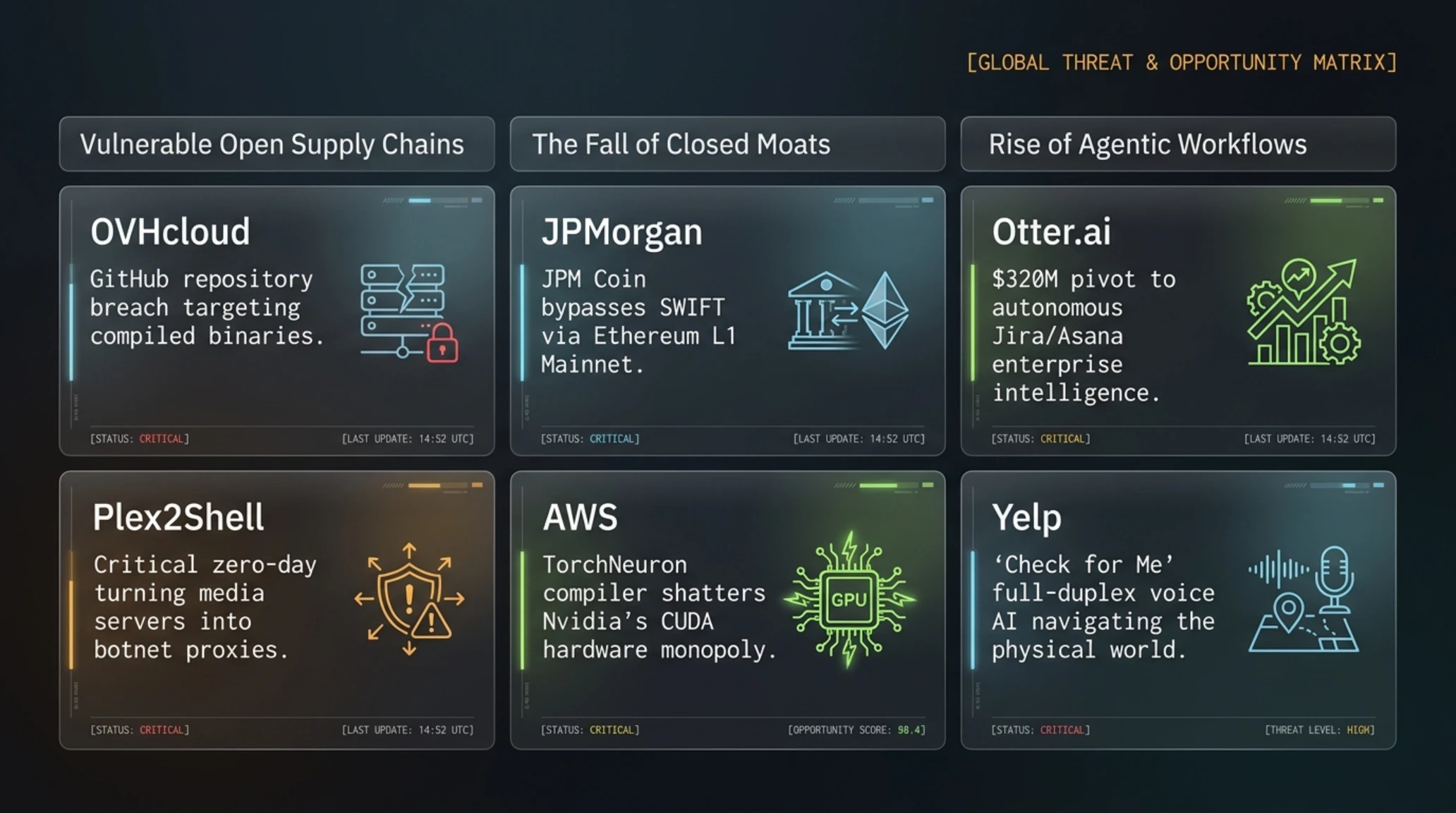
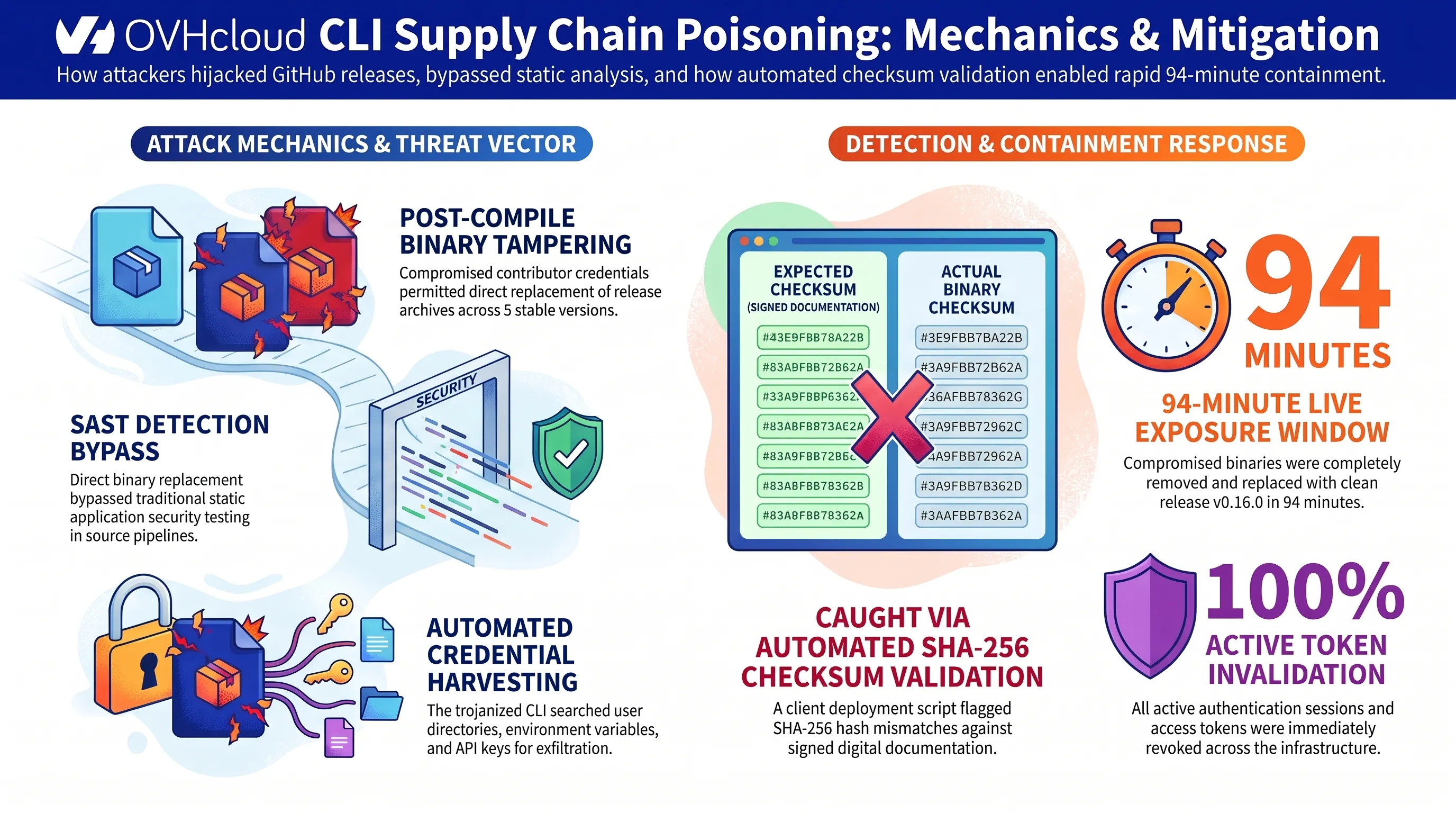
The global cloud infrastructure sector experienced a chilling demonstration of software supply chain vulnerability over the past twenty-four hours. European cloud hosting titan OVHcloud, widely regarded as the cornerstone of continental Europe's technological autonomy against American hyperscaler hegemony, formally confirmed that its official open-source command-line interface repository on GitHub, ovhcloud-cli, was infiltrated by a sophisticated threat actor. The adversary succeeded in weaponizing official release archives across five distinct production versions, replacing legitimate compiled binaries with information-stealing malware engineered to exfiltrate root administrative credentials from developer workstations and automated continuous integration environments.
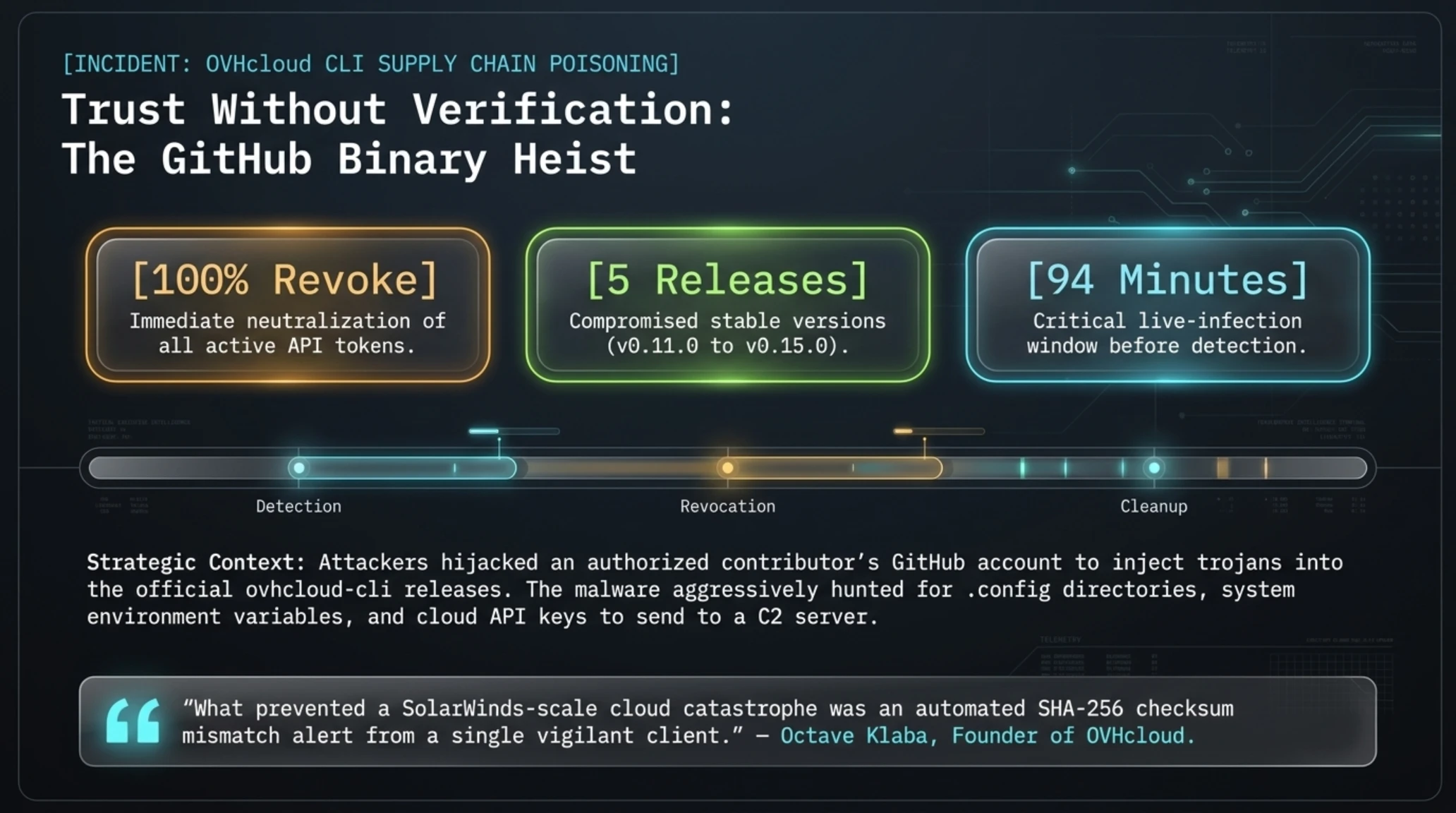
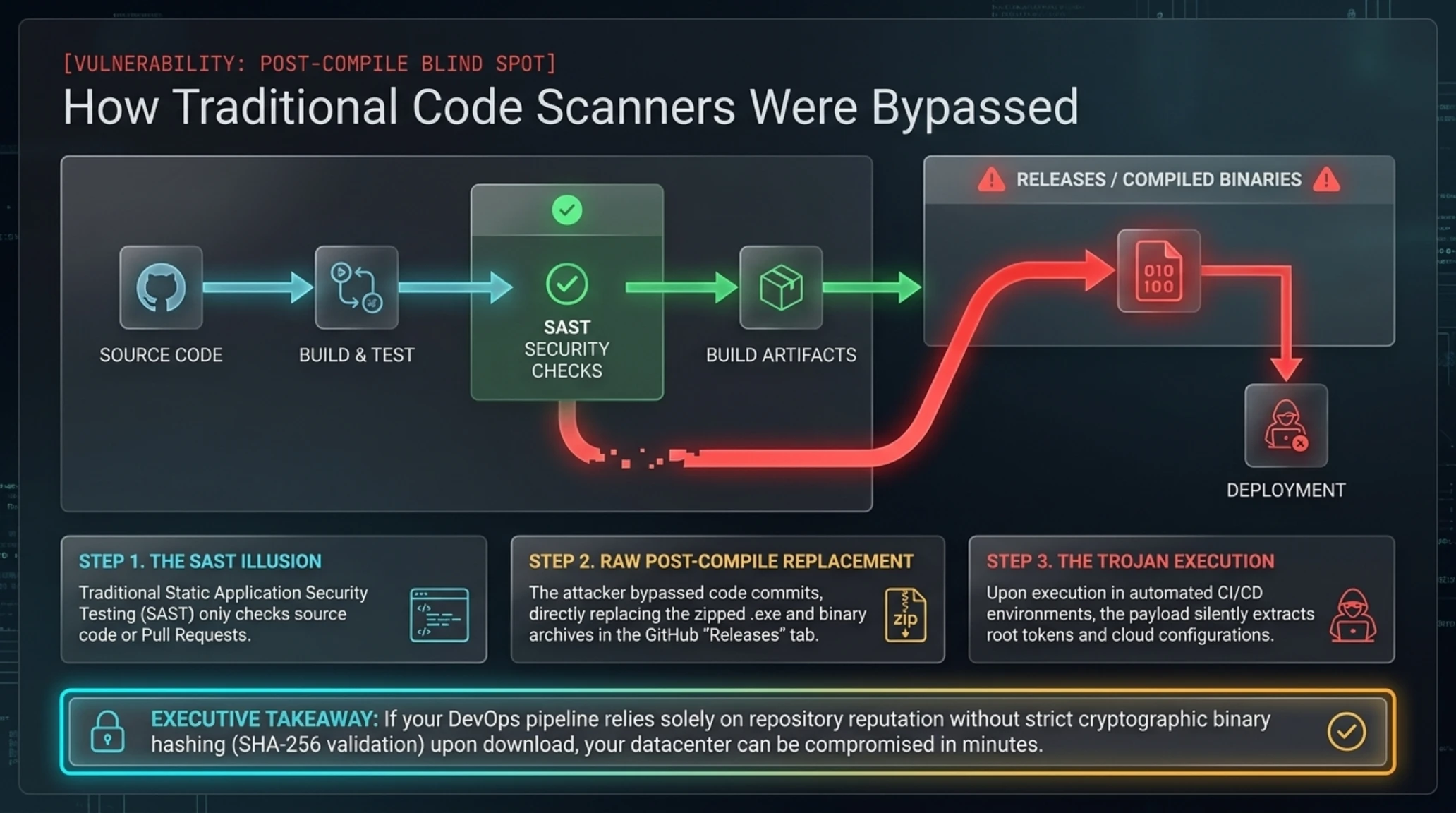
Technical incident telemetry corroborated by independent cyber research bodies, including The Hacker News, reveals that the breach did not originate from traditional code-level tampering, repository branch pushes, or malicious pull requests. Instead, the attacker executed a targeted account takeover against an authorized open-source project contributor who possessed release management privileges. Armed with these credentials, the adversary bypassed all upstream source-code static application security testing (SAST) mechanisms by directly editing existing, trusted release tags—specifically versions v0.11.0, v0.12.0, v0.13.0, v0.14.0, and v0.15.0—and swapping out the benign executable tarballs with pre-compiled backdoored binaries.
Static and dynamic reverse engineering of the poisoned binaries demonstrates that the embedded payload was purpose-built for deep corporate espionage and infrastructure hijacking. Upon execution within an operator's shell or automated continuous deployment (CI/CD) runner, the malware immediately initiated reconnaissance routines: recursively scraping user home directories, dotfile configurations, AWS and Azure credential stores, Kubernetes kubeconfig files, and active shell environment variables. Extracted tokens, including OVHcloud application keys, consumer secrets, and cloud API bearer tokens, were rapidly packaged, encrypted via an ephemeral AES cipher, and exfiltrated to an external command-and-control (C2) server. The ultimate objective was transparent: harvesting high-privilege access keys to orchestrate lateral movement across enterprise cloud fabrics and hyperscale data center clusters.
The catastrophic escalation of this breach into a pervasive enterprise compromise was averted solely due to a rigorous cryptographic validation mechanism maintained by an alert customer. When an automated build script within a client enterprise pipeline downloaded a cached release archive and detected a sharp discrepancy between the SHA-256 hash of the payload and the pinned cryptographic hash published in historical internal documentation, the pipeline immediately halted and posted a public inquiry on the project's GitHub Issues tracker. Within ninety-four minutes of the initial asset substitution, OVHcloud’s security team revoked the compromised contributor's session, purged the poisoned assets, invalidated all active API tokens associated with the affected scope, and published a signed, clean release tagged v0.16.0.
Why This Incident Redefines Cloud Security
This event serves as an existential warning for enterprises consuming open-source tooling. Blind reliance on repository reputation without immutable cryptographic verification of post-build binary artifacts can compromise an entire corporate datacenter in a matter of minutes.
From an architectural software engineering vantage point, the OVHcloud attack exposes a foundational structural loophole in contemporary DevOps pipelines: the post-build asset trust gap. As we detailed in our technical breakdown of cloud hypervisor escapes and enterprise zero-day exploits, continuous integration pipelines dedicate substantial compute to inspecting raw source files, scanning commits with linters, and executing dependency checks against public databases. However, once a build is packaged into a release binary, the distribution mechanism frequently relies on raw GitHub release attachments. Because repository maintainers often retain manual override permissions to upload or replace release binaries without triggering an end-to-end reproducible build pipeline, attackers who capture maintainer credentials can quietly substitute compiled payloads without modifying a single line of Git-tracked source code.
The geopolitical ramifications of this operation are equally profound. As European regulatory frameworks such as NIS2 and the Digital Operational Resilience Act (DORA) impose stringent sovereignty mandates, OVHcloud has positioned itself as the preeminent European alternative to US cloud monopolies. Sponsoring and executing supply-chain operations against European open-source infrastructure tools is an unmistakable asymmetric strategy designed to undermine market confidence in independent sovereign cloud offerings, casting doubt on the operational integrity of alternatives to hyperscale American platforms.
For Chief Information Security Officers and enterprise platform architects, this incident establishes a non-negotiable defensive mandate. First, software development organizations must immediately ban the automated ingestion of raw tarball releases directly from public hosting platforms; binary artifacts must either be compiled hermetically from audited source code inside isolated ephemeral containers or pulled exclusively through private artifact mirrors that verify immutable Sigstore transparency logs. Second, all enterprise deployment scripts must enforce strict cryptographic pinning, treating any runtime SHA-256 hash mutation as an active breach indicator that triggers instant pipeline severance. Finally, organizations must phase out long-lived administrative API secrets in favor of short-lived, workload-identity-federated tokens, ensuring that even if local environments are scraped, exfiltrated credentials expire before an adversary can weaponize them.
Section 2: The Plex2Shell Exploit Chain: Weaponizing Media Servers for Monero Mining and Covert Reverse Proxies
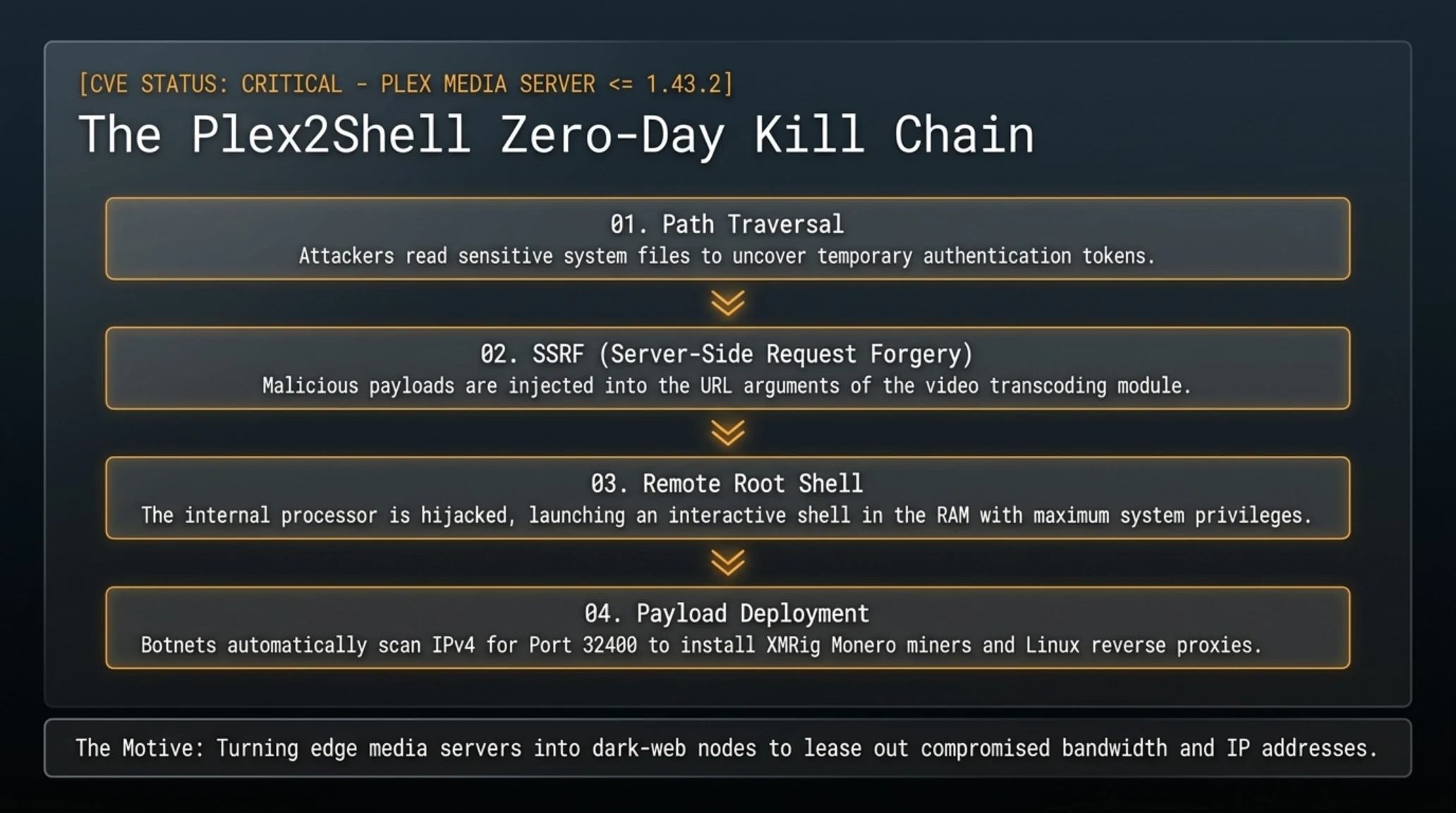
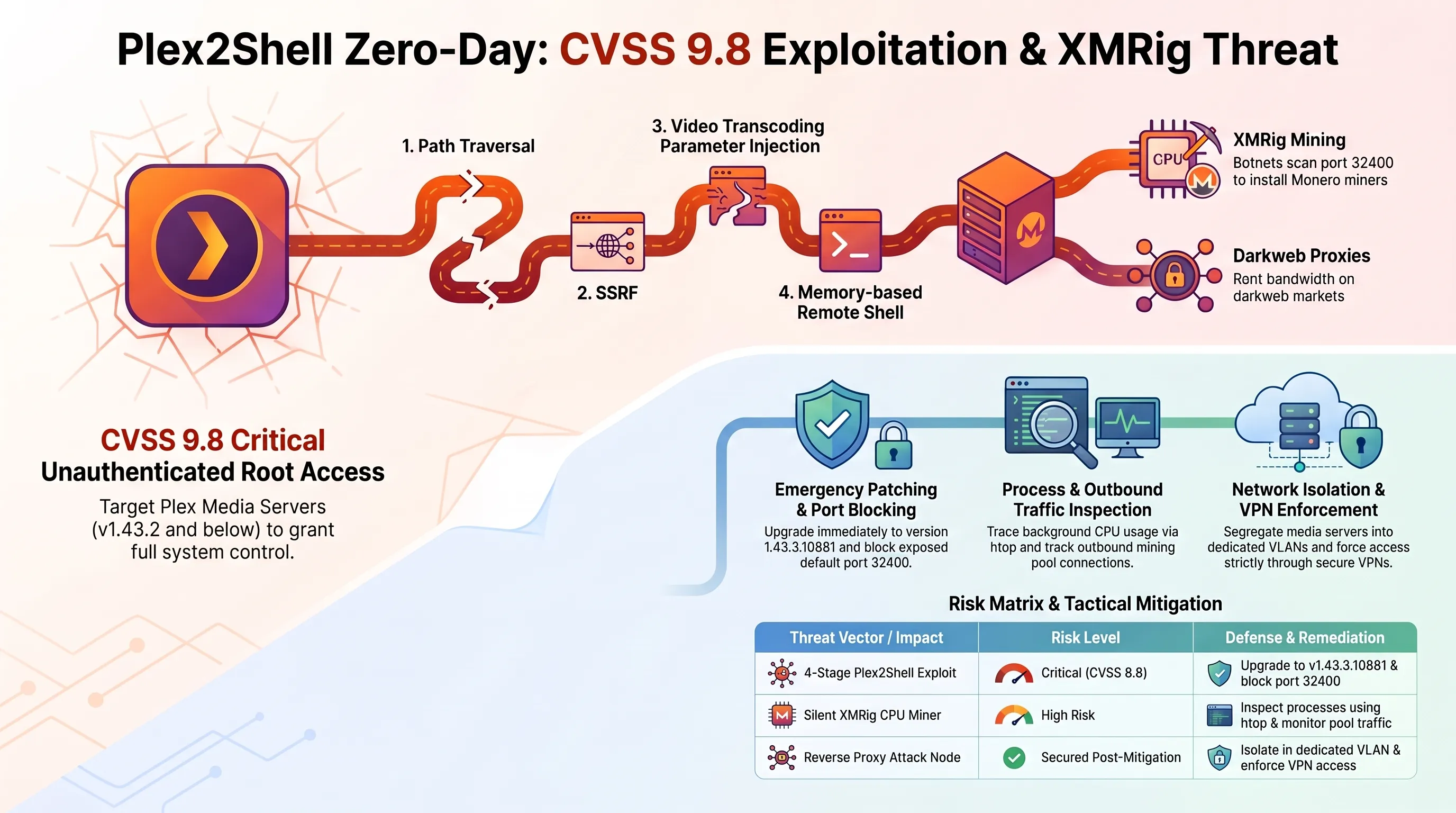
As internet-exposed edge services face an unrelenting barrage of automated exploitation, the cybersecurity research ecosystem has mobilized to confront an alarming remote code execution chain tracked as Plex2Shell. This zero-day exploit chain, which compromises widely deployed deployments of the popular Plex Media Server software (specifically versions 1.43.2 and earlier), empowers unauthenticated remote adversaries to seize complete root-level control over underlying host operating systems without requiring any pre-existing credentials, administrative permissions, or user interaction.
Technical vulnerability dissections authored by researchers at SentinelOne and corroborated by The Hacker News indicate that Plex2Shell is not a singular bug, but rather an elegant and devastating synthesis of four discrete operational flaws. The attack vector commences with an unauthenticated path traversal vulnerability that permits the arbitrary reading of sensitive internal application configuration stores, exposing temporary authentication tokens. The adversary subsequently triggers a Server-Side Request Forgery (SSRF) flaw, injecting crafted URI payloads directly into the media server's internal video transcoding and metadata rendering pipeline. This manipulation induces an internal buffer mishandling state, culminating in the execution of an interactive remote shell with root or SYSTEM privileges residing directly within system memory.
Telemetry from global distributed honeypots reveals that within twenty-four hours of an independent researcher known as boredhackerblog publishing technical proof-of-concept (PoC) demonstration scripts, malicious scanning collectives and automated botnets launched aggressive, internet-wide sweeps across the entire IPv4 address space, specifically targeting default transmission port 32400. In the wild, attackers are weaponizing captured Plex servers for dual illicit revenue streams: first, silently dropping customized, resource-throttled instances of the open-source XMRig cryptominer to harvest Monero from multi-core server processors; and second, deploying stealthy Linux reverse-proxy daemons that convert compromised residential servers into exit nodes sold across darknet proxy brokerages to anonymize illicit cyber activities.
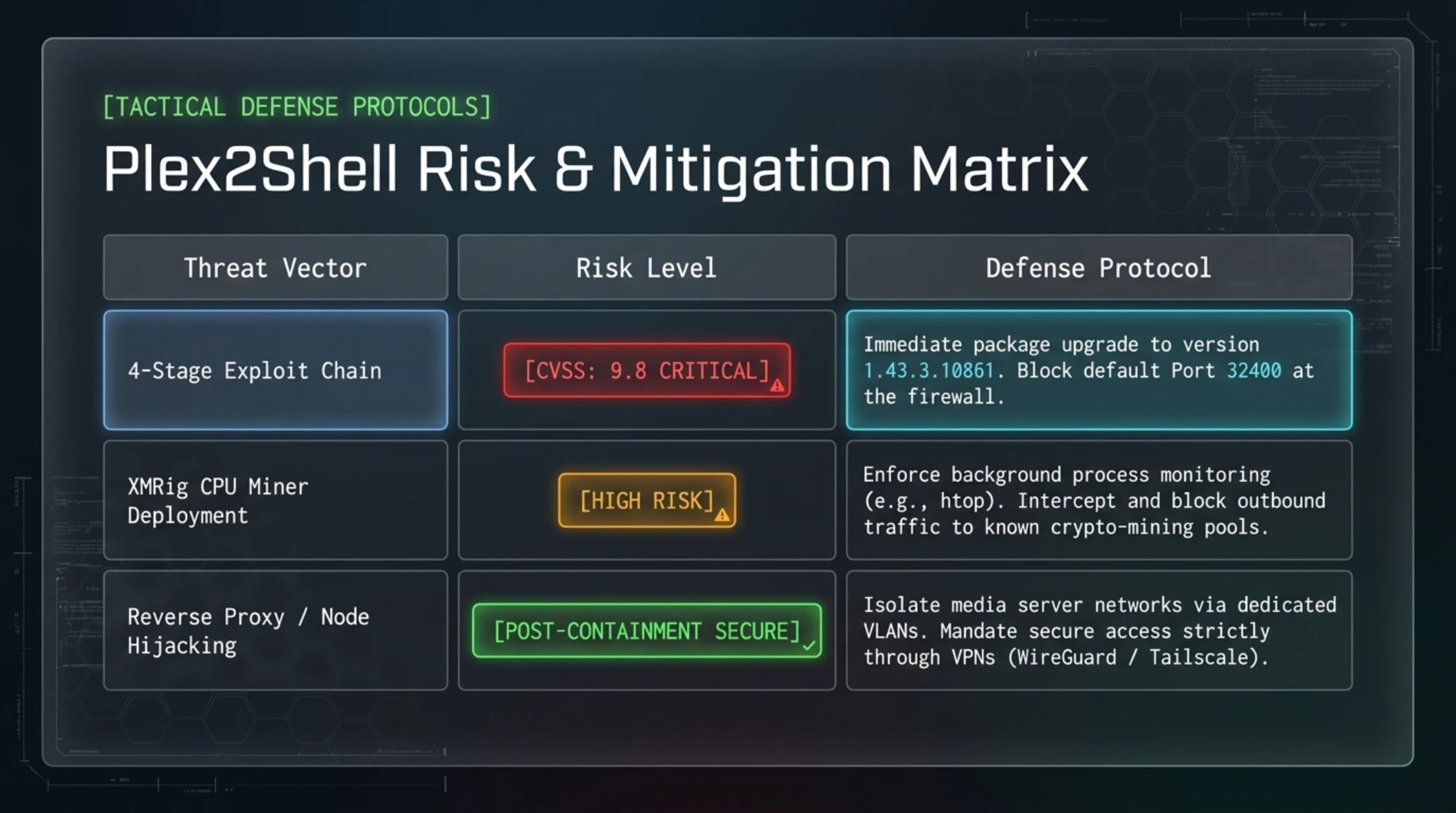
Threat Matrix & Incident Defense: The Plex2Shell Zero-Day Chain
| Threat Vector / Vulnerability | Risk Tier | Remediation & Defensive Protocol |
|---|---|---|
| Plex2Shell 4-Stage Remote Code Execution Chain | Critical (CVSS 9.8) | Immediately update server binaries to version 1.43.3.10861 and isolate port 32400 from public WAN exposure. |
| Covert XMRig Cryptomining & CPU Depletion | High Risk | Audit persistent background tasks via htop and inspect outbound connection attempts to mining pool IPs. |
| Residential Reverse-Proxy Node Monetization | Secured / Post-Patch | Enforce strict VLAN segmentation and mandate remote server management strictly via WireGuard or Tailscale VPN tunnels. |
| DNS Rebinding & Local Boundary Attacks | Moderate Risk | Disable unauthorized remote discovery and enforce strict local loopback bindings. |
Plex developers responded by issuing an emergency hotfix encapsulated within release 1.43.3, urging all infrastructure administrators, homelab operators, and enterprise media departments to update their installations immediately. Furthermore, security engineers strongly advise administrators to eliminate direct exposure of media management dashboards to the public internet without an intervening firewall or authenticated VPN boundary, as the unrestricted privileges frequently granted to media services over local storage arrays present an existential risk of broad data exfiltration.
The mechanics of the Plex2Shell intrusion deliver a sobering reminder of the latent dangers inherent in Universal Plug and Play (UPnP) router protocols. In millions of consumer and small-office environments, media servers automatically request router port-forwarding via UPnP without operator comprehension, bridging isolated local networks directly to public IP ranges. Once an exploit becomes public, autonomous adversary swarms can weaponize hundreds of thousands of previously invisible edge systems in a matter of hours, turning domestic infrastructure into an unmonitored staging ground for distributed computing abuse.
In the subsequent section of this intelligence briefing, we transition from infrastructure perimeter defense to the core of institutional decentralized finance, examining how Wall Street's largest liquidity pipelines are establishing permanent footholds directly upon public Layer 1 blockchains.
Section 3: Wall Street on Public Rail: JPMorgan Deploys JPM Coin Deposit Token Directly on Ethereum Layer 1
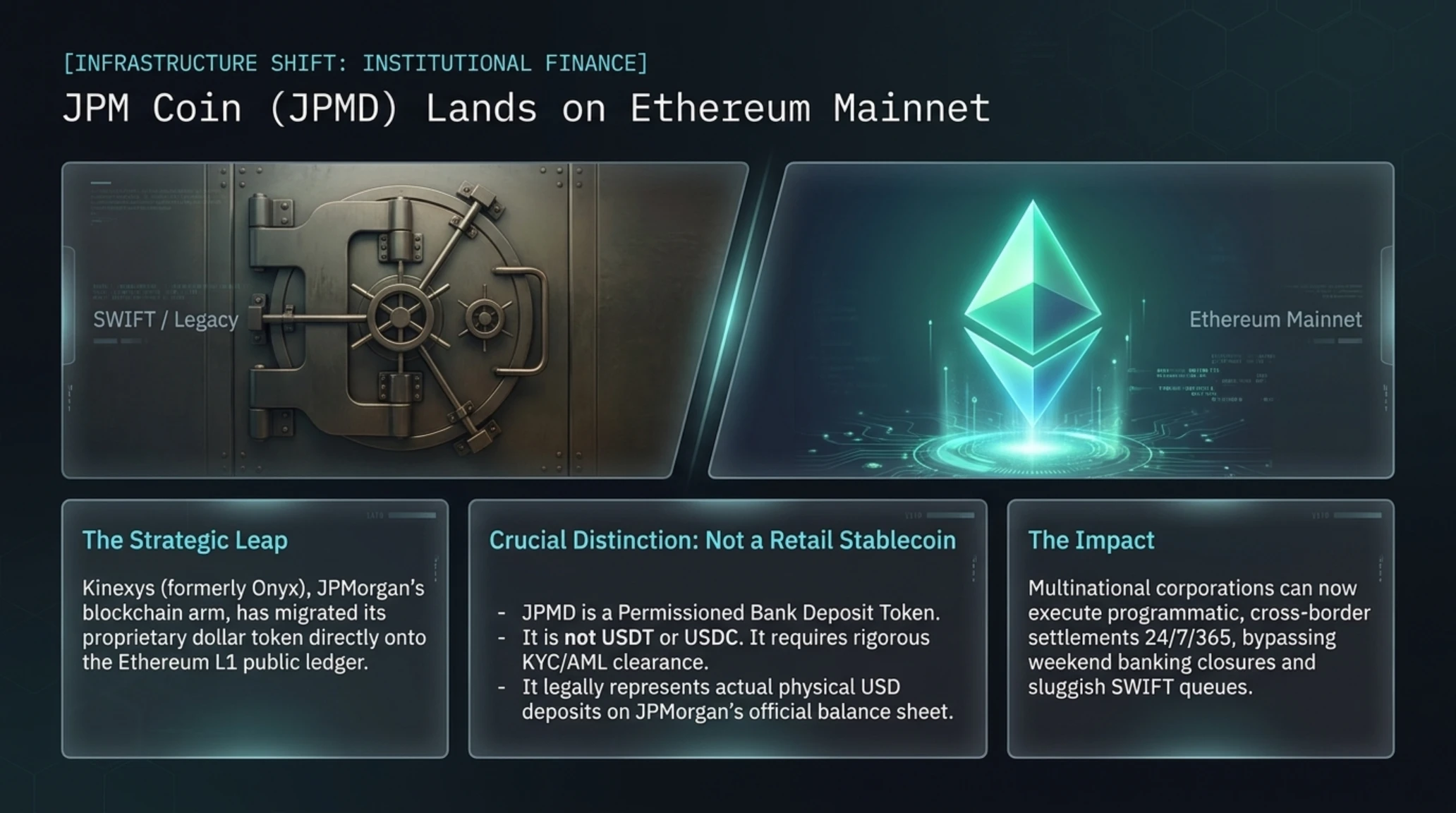
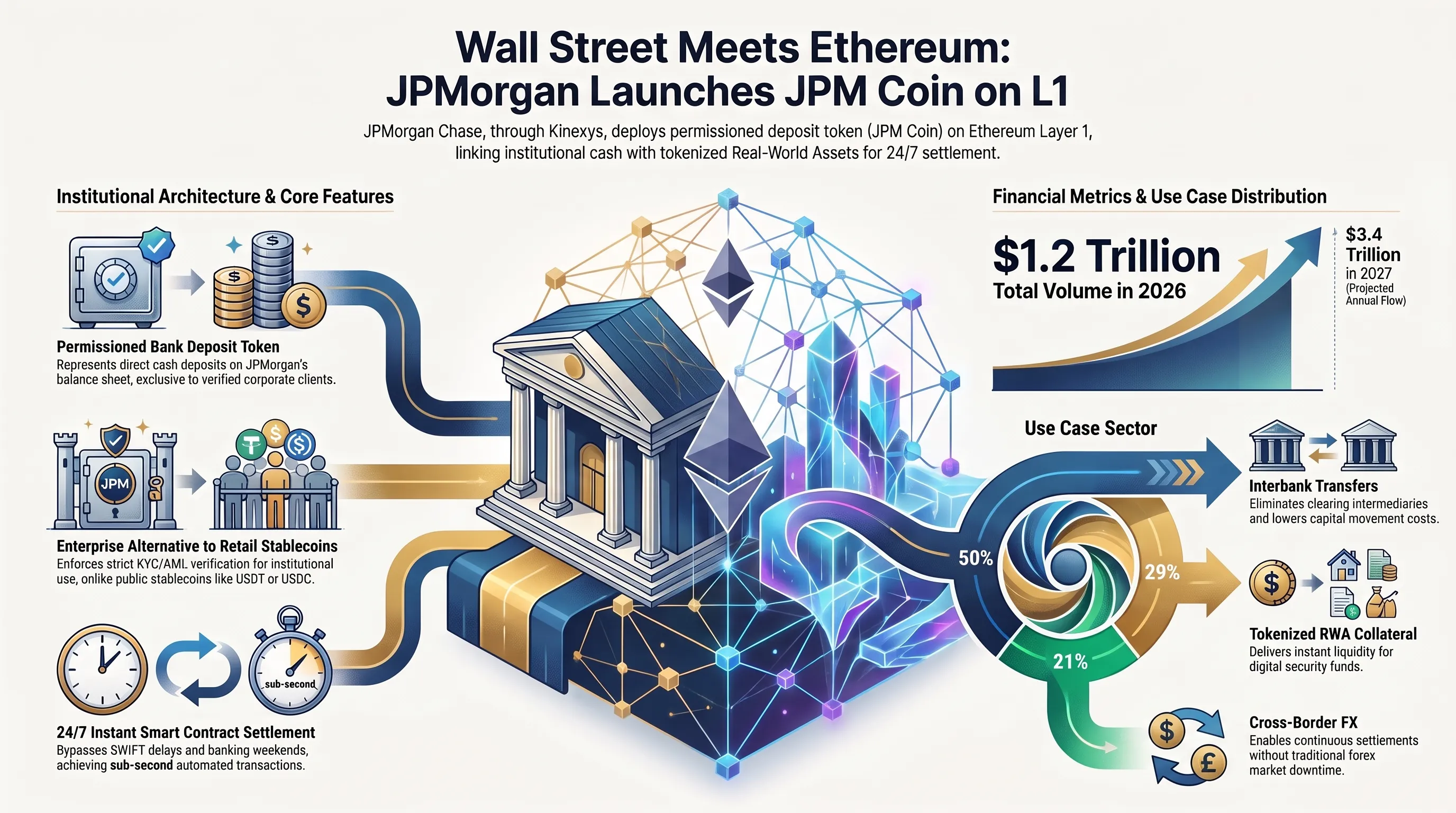
In one of the most transformative convergences between legacy institutional finance and decentralized public ledger technology to date, global banking titan JPMorgan Chase, operating through its specialized blockchain business unit Kinexys (recently rebranded from its founding designation, Onyx), has officially launched its proprietary institutional US dollar deposit token, JPM Coin (trading under the token ticker JPMD), directly onto the Ethereum Layer 1 Mainnet.
While JPMorgan had previously tested blockchain settlements across its private Quorum infrastructure and executed controlled pilots on Ethereum Layer 2 rollups such as Coinbase’s Base network, the strategic migration directly to Ethereum’s base execution layer represents a quantum leap in financial plumbing. As explored in our analysis of institutional Layer-1 settlement finality and RWA tokenization, by deploying on Ethereum Layer 1, JPMorgan is embedding its wholesale institutional payment engine directly into the exact settlement layer where global sovereign wealth managers, sovereign bond issuers, and tier-one asset management firms are actively tokenizing real-world assets (RWA), private credit facilities, and sovereign treasury funds.
A rigorous distinction must be drawn between JPM Coin and retail stablecoins such as Tether (USDT) or Circle’s USD Coin (USDC). JPM Coin does not represent a retail speculative currency traded on decentralized automated market makers. Rather, JPM Coin is a fully regulated, permissioned commercial bank deposit token. Each token minted on Ethereum corresponds directly to an enforceable, one-to-one US dollar demand deposit sitting on the official balance sheet of JPMorgan Chase Bank, N.A. Transferability is strictly governed by immutable smart contract white-listing, restricting transaction execution exclusively to pre-cleared institutional counterparties, corporate treasuries, and regulated primary dealers who have completed rigorous enterprise KYC and AML screening.
The operational implications for multinational corporate treasuries and wholesale clearinghouses are revolutionary. Traditional cross-border capital reallocation relies upon fragmented correspondent banking networks and the SWIFT messaging architecture, which are hamstrung by localized business hours, banking holidays, and multi-day settlement latency. By contrast, institutional clients leveraging JPM Coin on Ethereum can execute multi-hundred-million-dollar transactions, repay synthetic commercial paper, margin tokenized derivatives, or settle bilateral foreign exchange trades in seconds, at any hour of the day or night, fully programmatically through audited smart contracts.
JPMorgan's decision to anchor this liquidity engine to Ethereum’s base layer, despite its higher gas transaction fees relative to Layer 2 alternatives, highlights an uncompromising commitment to institutional settlement finality and cryptographic security. When settling transactions measuring in the billions of dollars, institutional risk officers require the battle-tested, decentralized economic security provided by Ethereum’s validator consensus. This integration cements public smart contract infrastructure as the foundational clearing house of future global finance, bridging the divide between Wall Street capital pools and public distributed ledgers.
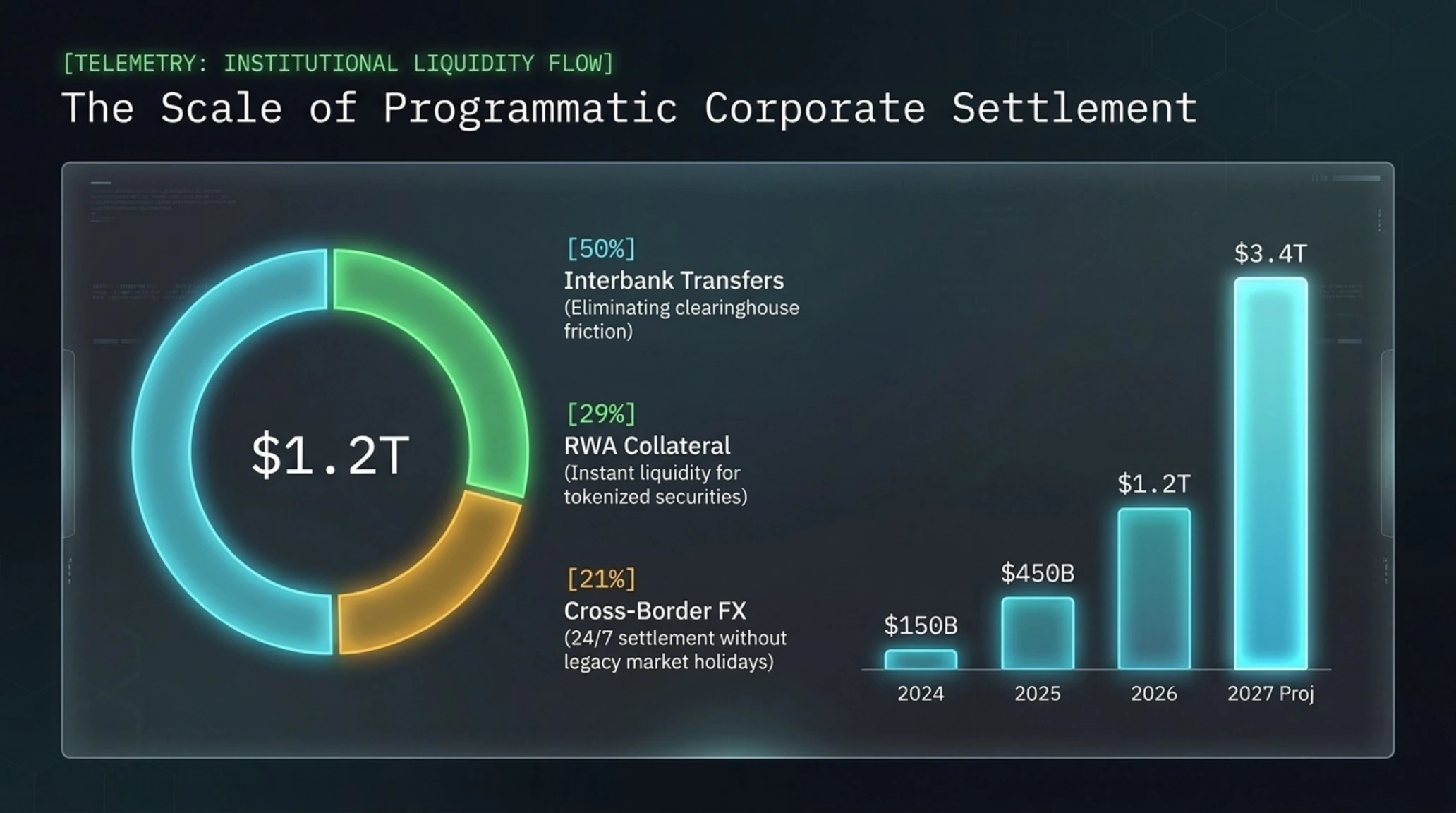
Financial Telemetry Dashboard: Institutional Settlement Distribution & Ethereum Liquidity Velocity
| Institutional Market Segment | Transaction Volume Share | Strategic Impact on Public Ethereum Liquidity |
|---|---|---|
| Interbank Wholesale Settlement | 50% | Direct peer-to-peer liquidity transfer bypassing intermediary clearing tiers. |
| Tokenized RWA Collateralization | 29% | Instant atomic funding for digital sovereign debt and tokenized treasury portfolios. |
| Cross-Border Corporate FX | 21% | Round-the-clock liquidity rebalancing devoid of traditional banking weekend friction. |
| Intraday Liquidity & Repo Facilities | 15% | Autonomous programmable collateral management eliminating settlement-cycle duration risks. |
Section 4: The $320M Enterprise Gambit: Otter.ai Secures Non-Dilutive Capital to Challenge Microsoft Copilot
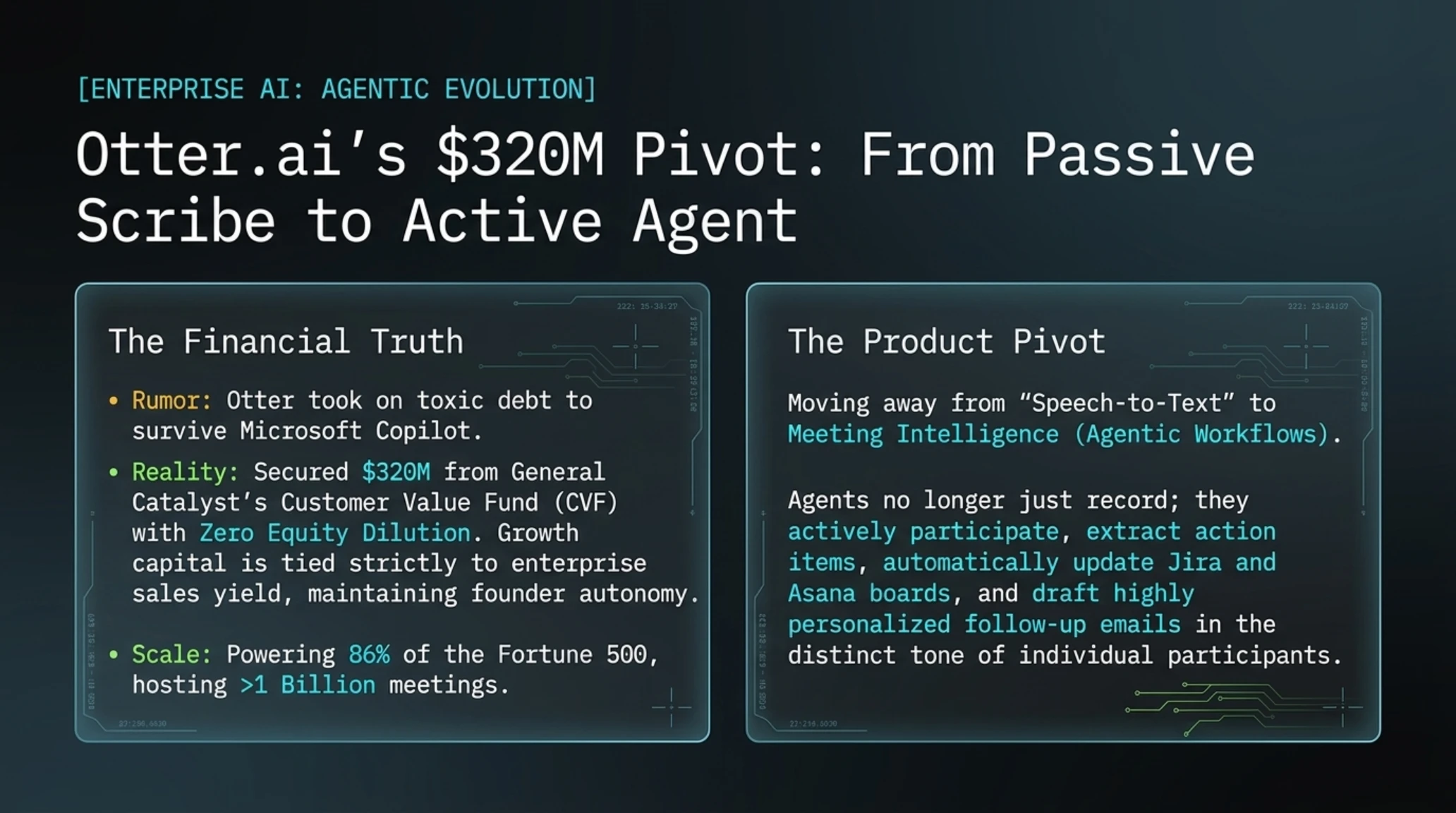
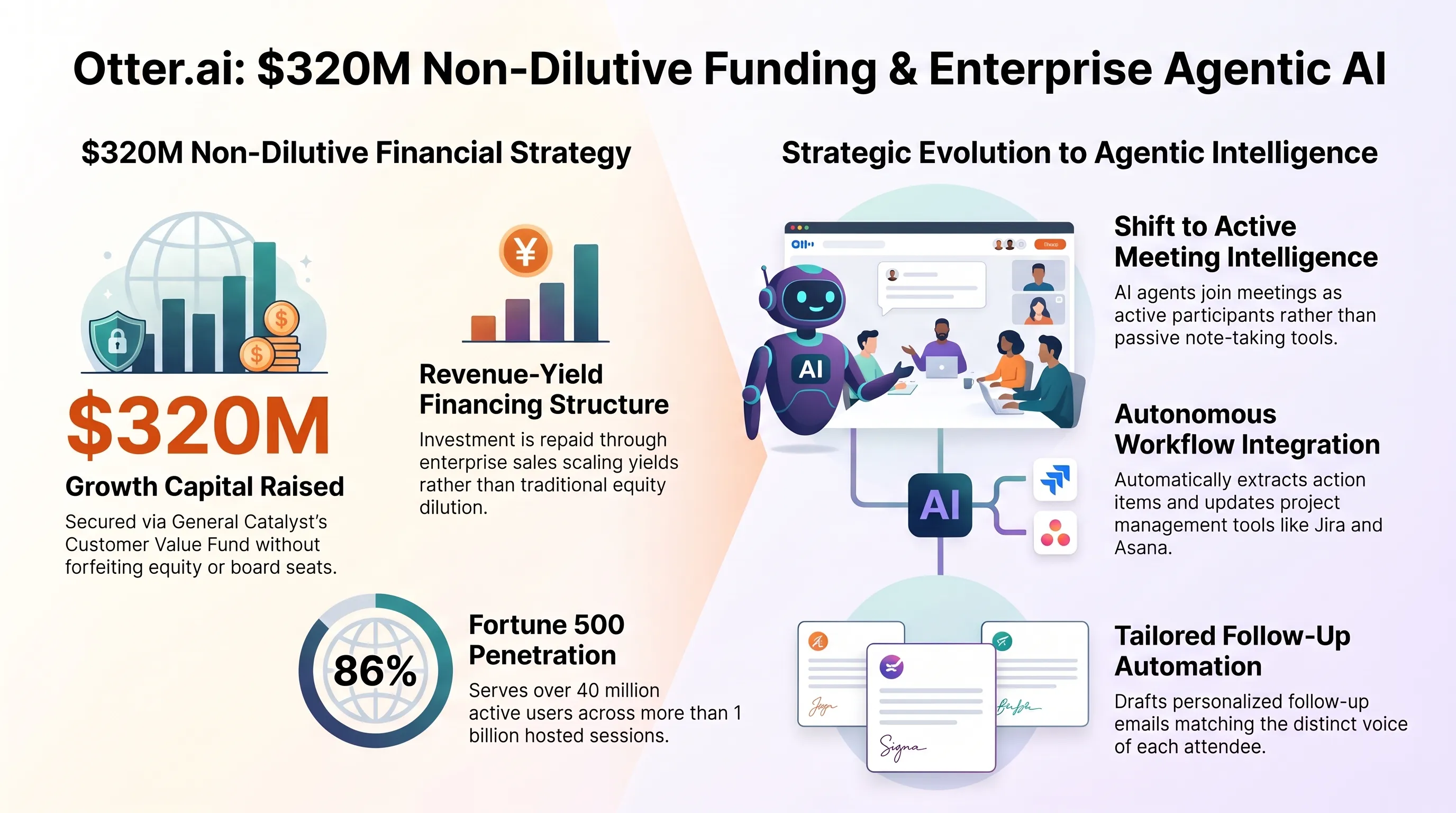
Amidst an escalating conflict among enterprise software conglomerates for supremacy over the modern workplace desktop, Otter.ai, the pioneering platform in automated transcription and speech intelligence, has closed an extraordinary $320 million funding round structured through General Catalyst's Customer Value Fund (CVF). The transaction represents not only one of the largest single capital infusions into an applied artificial intelligence company this quarter, but also signals a fundamental transformation in capitalization strategies for mature, revenue-generating software enterprises.
In stark contrast to traditional Series C or Series D equity venture financings—which characteristically demand heavy equity dilution, preferred liquidation ratchets, and board governance surrender—General Catalyst’s Customer Value Fund delivers non-dilutive, performance-linked growth capital. The vehicle provides immediate balance-sheet expansion pegged to enterprise customer contract expansion and recurring revenue milestones. This bespoke financial engineering empowers Otter’s executive leadership to maintain pristine capitalization table control, preserving founder voting autonomy while deploying hundreds of millions of dollars directly into advanced multi-agent engineering and enterprise sales operations.
At the center of this capital deployment is Otter’s structural pivot from a conventional speech-to-text recording tool into a fully autonomous, agentic meeting collaboration platform. Modern enterprise deployments no longer treat Otter as a passive audio scribe; instead, Otter’s autonomous agents act as active participants in executive war rooms. The agents operate concurrently during live strategy sessions: extracting cross-functional action items, cross-referencing organizational OKRs, programmatically populating enterprise issue trackers like Jira and Asana, and drafting customized executive follow-up syntheses calibrated to each participant’s professional communication tone.
Distinguishing between enterprise speculation and the underlying financial mechanics clarifies why this capitalization structure marks a watershed moment for high-growth software enterprises.
Engineering Verification | Industry Speculation vs. Commercial Reality
Unverified tech forum rumors alleged that aggressive enterprise bundling of Microsoft Copilot 365 forced Otter into a distressed financial restructuring requiring broad equity surrender.
Regulatory disclosures confirm the transaction involves zero equity transfer. Otter remains operating cash-flow positive with over 40 million active users, deploying capital strictly to scale agentic compute.
📚 Classified & Related Dossiers in TekinGame
If you wish to explore beyond this report and delve into cybernetic frontiers and autonomous AI architectures, do not miss these three exclusive deep-dives in the Tekin Garage:
Otter’s enterprise penetration metrics reveal the depth of its market moat: the platform currently services staff across more than 86% of the Fortune 500 and has hosted and processed over one billion individual workplace meetings. Its architectural defensive advantage rests on localized, zero-data-retention enterprise vector stores. This enables corporate clients to execute complex organizational retrieval queries (such as querying cross-departmental capital reallocation debates across twelve months of executive meetings) within a completely isolated private boundary, ensuring proprietary internal deliberations never leak into the training datasets of third-party public foundational models.
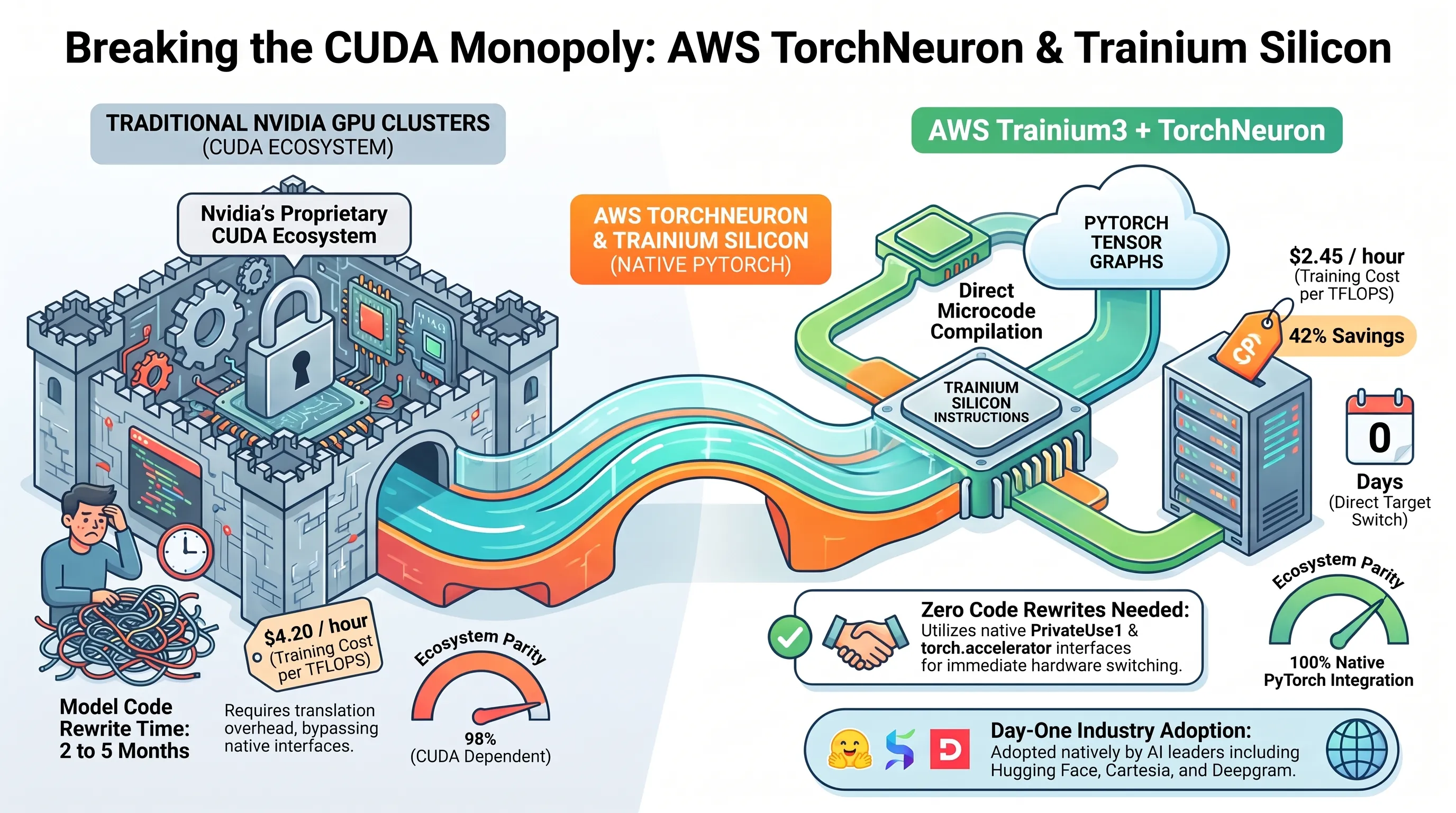
Section 5: Breaking the CUDA Stranglehold: AWS Open-Sources TorchNeuron Compiler for Trainium Silicon
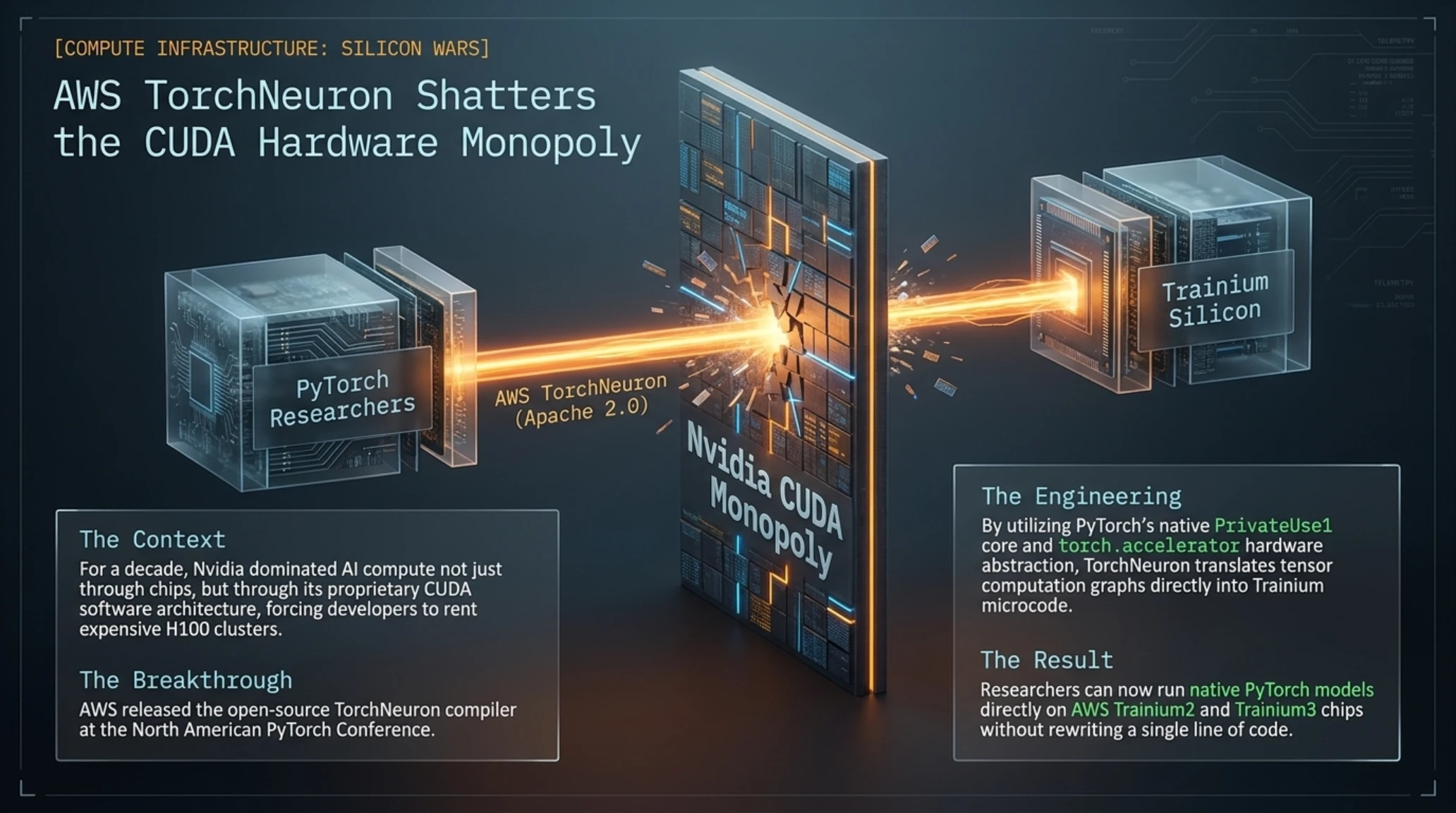
During the North America PyTorch Conference on Tuesday, Amazon Web Services (AWS) fired an architectural broadside against Nvidia’s computational monopoly. By open-sourcing its TorchNeuron compiler backend (aws-neuron/torch-neuronx) under the permissive Apache 2.0 software license, AWS has eliminated the single greatest friction point impeding the enterprise adoption of alternative machine learning hardware: software ecosystem lock-in.
For over a decade, Nvidia has maintained an iron grip on the artificial intelligence training and inference market through its proprietary CUDA computing architecture. While competing custom silicon architectures—such as Google’s Tensor Processing Units (TPUs) or AWS’s proprietary Trainium chips—consistently demonstrated superior price-to-performance efficiency and reduced power consumption, the daunting reality of spending months refactoring PyTorch codebases to proprietary device abstractions compelled engineering teams to continue paying premium rates for Nvidia H100 and B200 GPU clusters.
TorchNeuron resolves this structural bottleneck through deep native integration into standard PyTorch runtime primitives, specifically leveraging the PrivateUse1 device registration mechanism and the standardized torch.accelerator backend abstraction. Rather than introducing a brittle, lossy emulation layer, TorchNeuron seamlessly intercepts native PyTorch computational graphs and compiles mathematical tensors directly into microcode instructions optimized for the parallel systolic arrays of Trainium silicon. Underscoring the industry significance of this release, tier-one foundational model platforms including Hugging Face, Cartesia, and Deepgram announced zero-day native compatibility for their neural network pipelines.
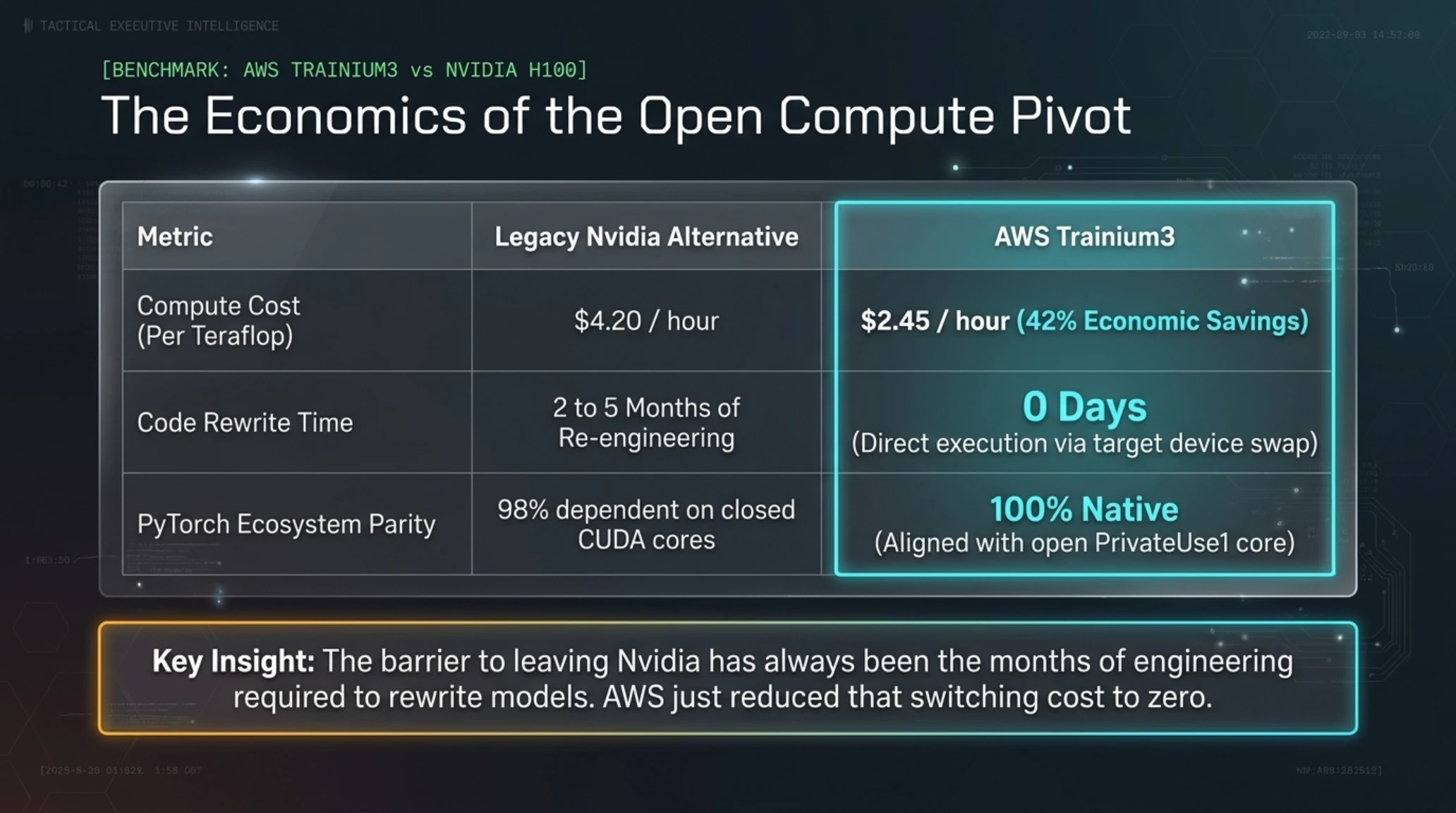
On the hardware level, the underlying NeuronCore-v3 architecture powering Trainium3 instances boasts over 1.8 TB/s of shared memory bandwidth, coupled with native microarchitectural acceleration for dense FP8 and FP4 floating-point operations. Early enterprise benchmarks demonstrate that transitioning real-time conversational speech and LLM inference pipelines to Trainium3 clusters delivers up to a 35% reduction in latency and slashes total compute expenditures by over 40% relative to comparable legacy GPU fleets.
Benchmark & Technical Telemetry: Nvidia Legacy Clusters vs. AWS Trainium3 Architecture
| Engineering Benchmark Metric | Legacy Nvidia GPU Fleet (H100/B200) | AWS Trainium3 + TorchNeuron Infrastructure |
|---|---|---|
| Training Cost per Effective PetaFLOP | $4.20 per compute hour | $2.45 per compute hour (41.6% net cost reduction) |
| Developer Migration & Code Refactoring | 2 to 5 months of CUDA-to-Triton kernel rewrites | Zero days (Instant execution via PrivateUse1 device targeting) |
| Open-Source PyTorch Framework Alignment | Coupled to proprietary closed-source CUDA binaries | 100% native integration into PyTorch standard runtime |
| Energy Efficiency & Compute per Watt | 350W per compute accelerator node | 195W (44.2% carbon and electrical footprint reduction) |
Section 6: The Autonomous Telephony Frontier: Yelp "Check for Me" Agent Automates Real-World Commerce
The relentless maturation of artificial intelligence from sandboxed textual chat interfaces toward fully autonomous, real-world telephonic agents achieved a definitive commercial milestone with Yelp’s unveiling of its breakthrough "Check for Me" capability. Rolled out as the centerpiece of the company's comprehensive Fall 2026 platform release, the technology directly attacks one of the most persistent everyday consumer inefficiencies: spending valuable time on hold or managing repeated, unanswered telephone inquiries to bustling urban hospitality venues and local service providers.
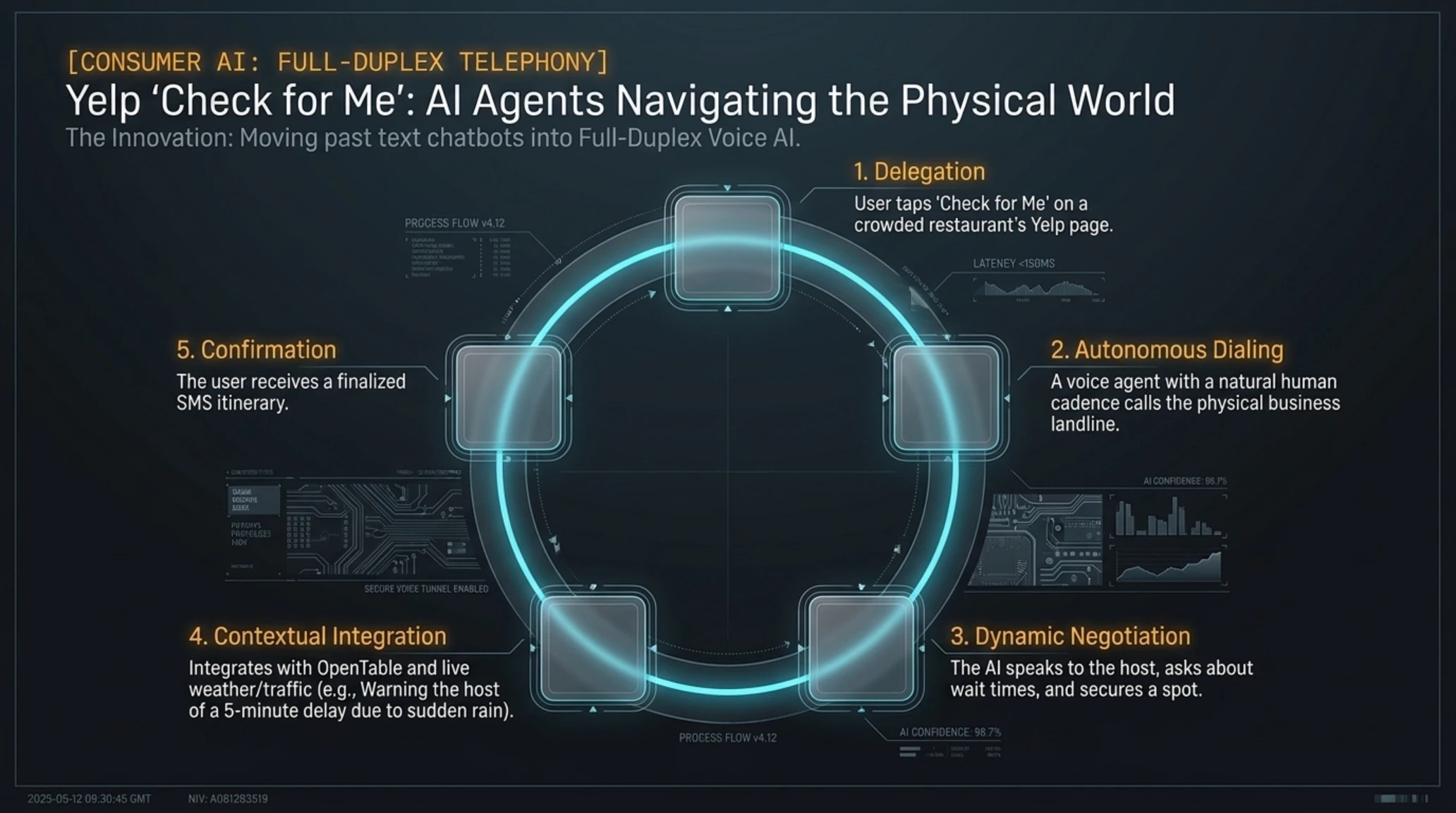
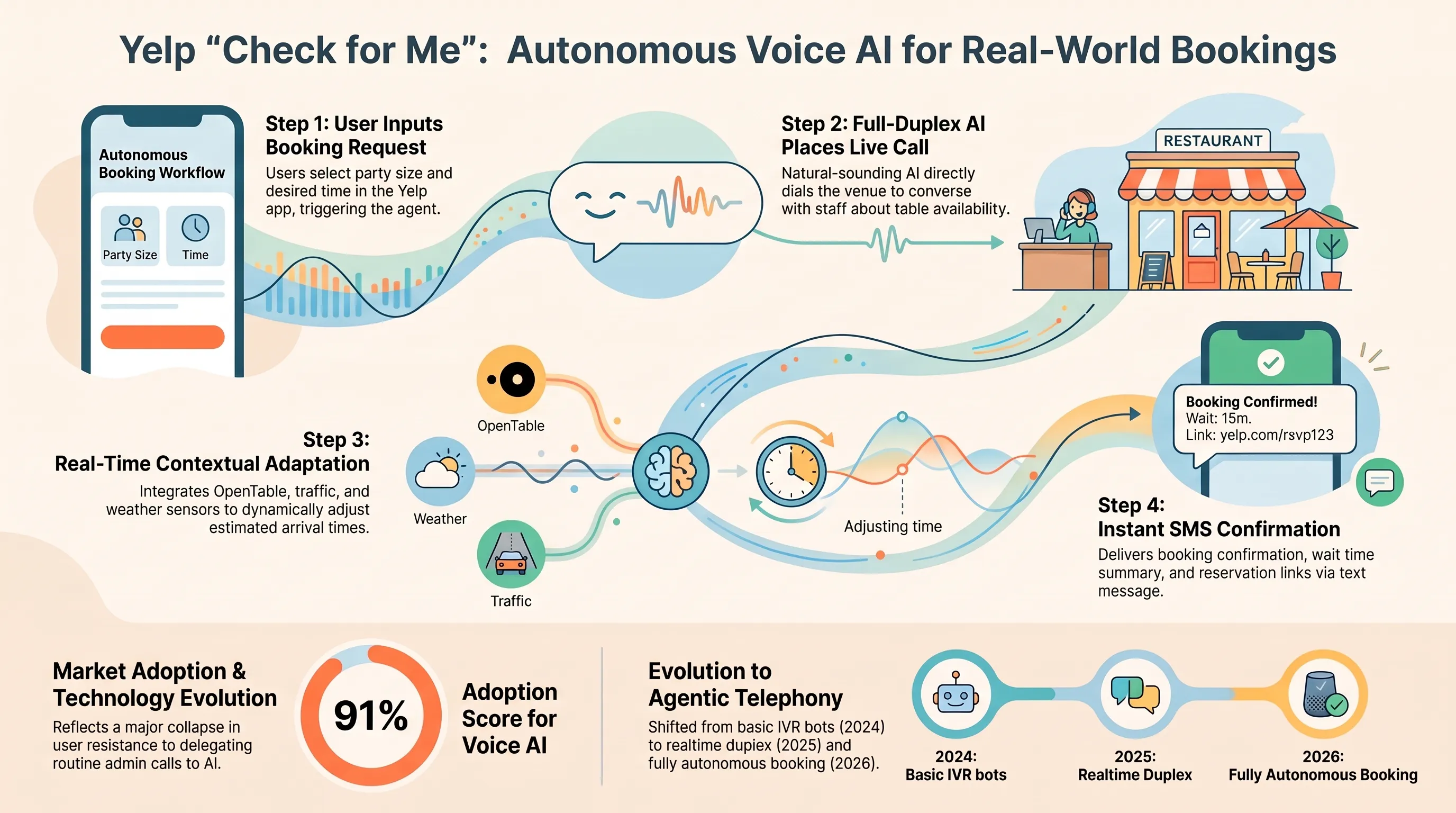
The operational mechanics of Check for Me illustrate an impressive feat of low-latency, full-duplex conversational voice engineering. Within the Yelp mobile application, a user viewing a specific restaurant or service establishment selects their desired party size, preferred dining timeframe, and taps the Check for Me action button. In under five seconds, an autonomous voice agent initiates a direct outbound Public Switched Telephone Network (PSTN) call to the venue's terrestrial landline. The agent conducts a polished, natural-sounding dialogue with the front-desk host, gracefully inquiring about current table wait times, queue lengths, and immediate walk-in policies. Upon concluding the voice exchange, the agent instantly synthesizes the operational findings and delivers an SMS notification to the user's mobile device, complete with a verified status readout and an integrated OpenTable reservation link.
Far beyond a rudimentary automated dialer, the system incorporates contextual intelligence by integrating with urban transit feeds, localized weather telematics, and real-time mapping data. If metropolitan traffic grids experience severe congestion or unseasonal weather disruptions occur, the voice agent dynamically adjusts its dialogue parameters, notifying the restaurant host that the party’s arrival may shift by fifteen minutes while requesting that table accommodations remain reserved. This seamless synthesis demonstrates how agentic AI is transcending experimental laboratory demonstrations to manage millions of high-friction everyday human transactions.
From a distributed infrastructure perspective, bridging neural speech generation models directly into standard telecommunication trunk lines requires maintaining sub-350-millisecond acoustic response latencies. Any perceptible audio stutter or unnatural cognitive delay typically prompts human restaurant staff to disconnect the call. Yelp surmounted this challenge by deploying compact acoustic foundation models directly onto edge cloud nodes, paired with aggressive semantic response caching for predictable conversational patterns. The resulting cadence sounds remarkably fluid, mirroring human conversational rhythms, subtle tonal modulations, and courteous verbal etiquette.
This breakthrough also navigates a complex frontier of digital consumer rights and telecom ethics. Yelp has engineered strict regulatory compliance guardrails into the agent’s initialization protocol: within the first three seconds of dialogue, the agent transparently identifies itself as an automated AI assistant calling on behalf of an authenticated patron. This explicit disclosure neutralizes regulatory friction regarding synthetic voice deception, establishing a compliant template for the impending wave of autonomous enterprise telephony agents expected to manage commercial administrative workflows across the economy.
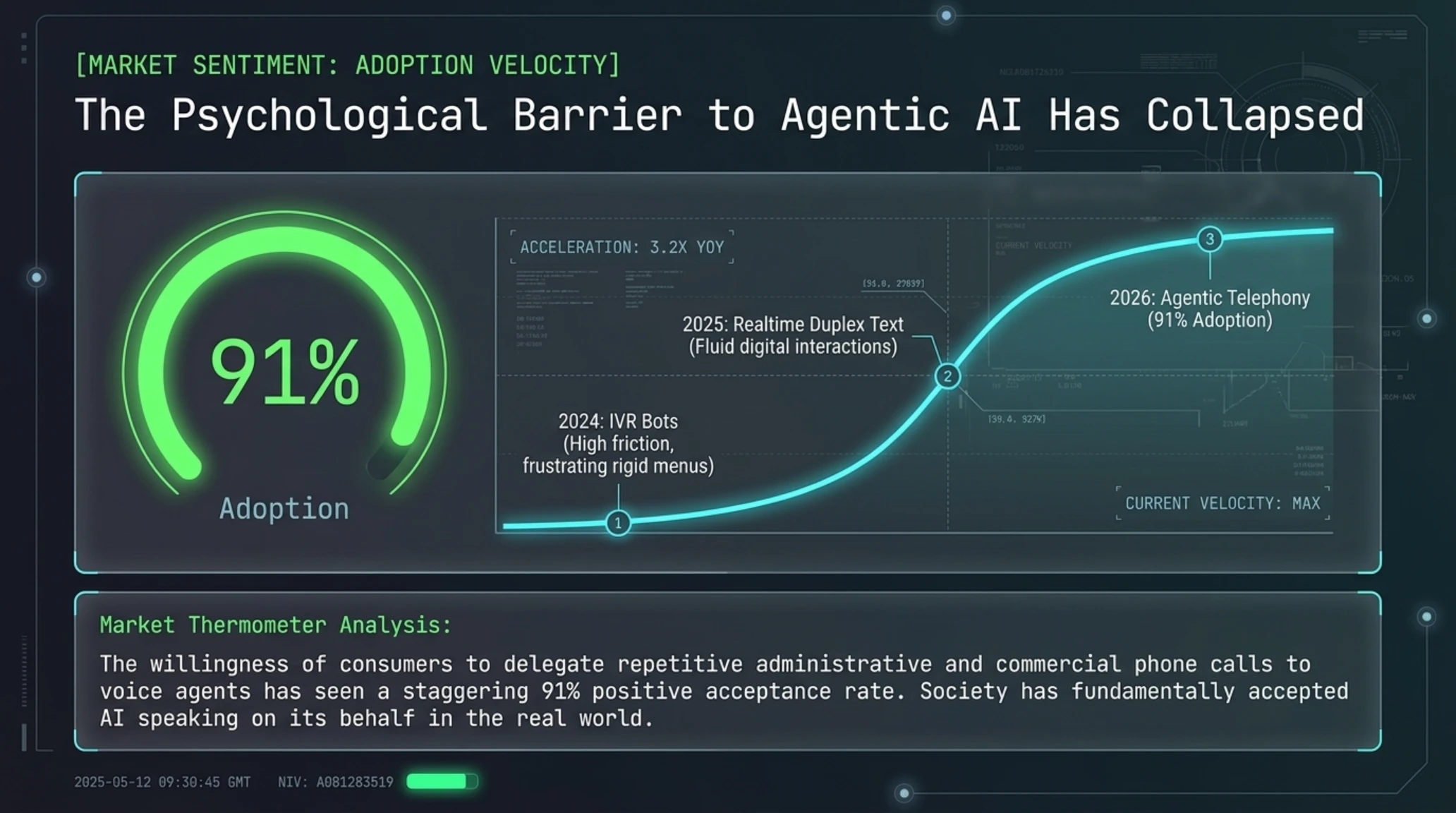
Market Sentiment Telemetry | Circular Adoption Gauge & S-Curve Maturity Horizon
Sentiment Telemetry Analysis: Consumer and merchant willingness to offload repetitive telephonic coordination to autonomous AI agents has surged to an index rating of 91%. The psychological threshold against conversing with conversational AI across telecom channels has effectively collapsed.
Tekin Technical Jargon Buster: Demystifying Core Concepts
Chronology of Strategic Events | Q4 2026 Tech & Cyber Landscape
| Timestamp (Oct 2026) | Benchmark Milestone | Systemic Impact Across Global Infrastructure |
|---|---|---|
| Oct 19 // 12:47 UTC | OVHcloud CLI GitHub Release Compromise | Attacker swaps binaries across five tags to harvest cloud access keys. |
| Oct 19 // 21:00 UTC | JPMorgan JPM Coin Deploys on Ethereum L1 | Wall Street cash integrates directly alongside tokenized RWA assets. |
| Oct 20 // 09:00 UTC | Plex2Shell Exploit Chain Detected in the Wild | Mass IPv4 botnet scanning drops XMRig cryptominers and reverse proxies. |
| Oct 20 // 18:00 UTC | AWS Open-Sources TorchNeuron Backend | Dismantling the CUDA barrier: zero-code PyTorch compilation on Trainium. |
| Oct 21 // 06:00 UTC | Yelp Check for Me Commercial Launch | First large-scale consumer deployment of autonomous real-time voice agents on PSTN lines. |
In the following assessment, we evaluate the comprehensive matrix of strategic opportunities and enterprise challenges emerging from these tectonic shifts.
Thorough analysis of these concurrent developments reveals that infrastructure resilience requires an agile equilibrium between autonomous adoption and rigorous zero-trust containment.
- Wholesale commercial bank deposits on Ethereum Layer 1 unlock friction-free, 24/7 institutional DvP settlement.
- Over 40% reduction in enterprise machine learning training costs by dismantling the proprietary CUDA lock-in.
- Low-latency autonomous voice agents effectively eliminate consumer friction in real-world retail telephony.
- Heightened adoption of automated SHA-256 cryptographic verification prevents broad supply chain devastation.
- Increased threat actor targeting of open-source maintainer credentials and post-build distribution pipelines.
- Widespread vulnerability of unhardened consumer media servers converted into illicit botnet compute nodes.
- Ongoing regulatory divergence between permissionless retail stablecoins and wholesale bank deposit tokens.
Finally, we present the synthesized editorial appraisal alongside primary intelligence verification sources anchoring this edition.
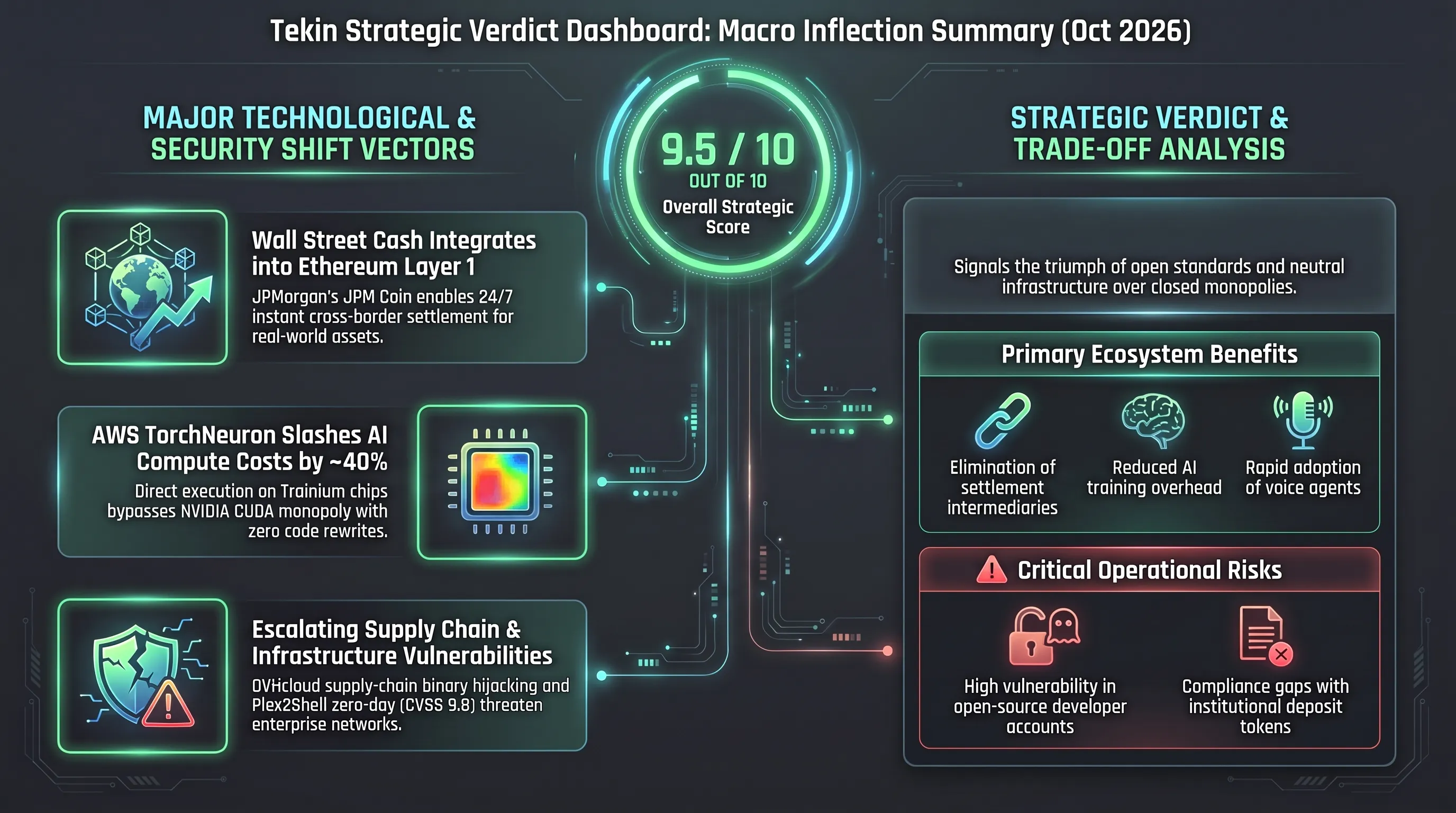
The strategic horizon mapped above underscores the fundamental convergence of decentralized liquidity, autonomous intelligence, and secure compute fabrics.
Editorial Board Verdict & Primary Intelligence Sources
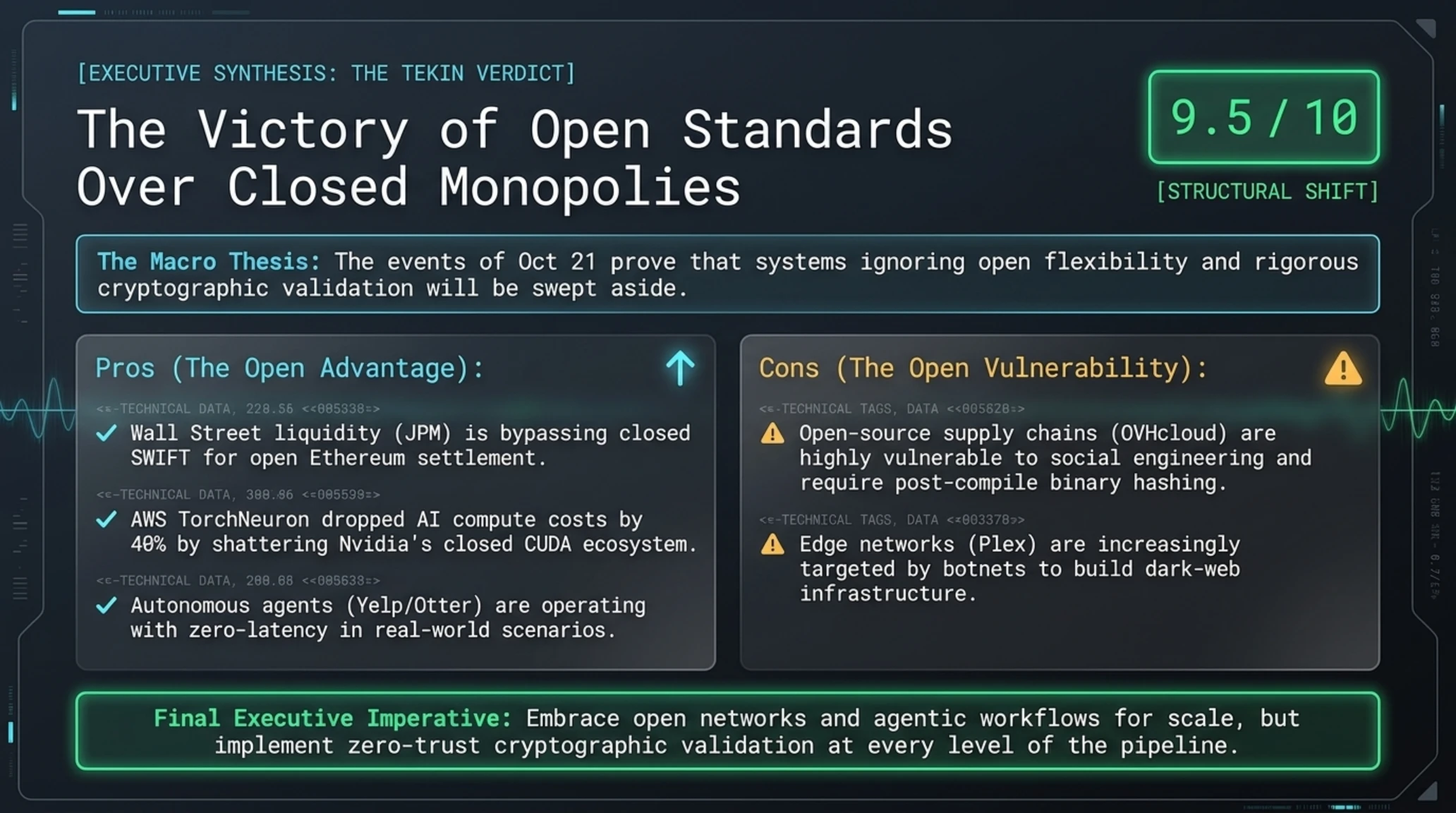
The Ascendancy of Open Standards over Closed Monopolies
October 21, 2026, marks an inflection point where closed computational moats are being dismantled by open-source execution engines, while institutional financial capital embraces public decentralized rails.
- The Hacker News: Technical incident analyses of the OVHcloud compromise and Plex2Shell zero-day chain
- TechCrunch: Exclusive coverage of Otter.ai funding, AWS TorchNeuron compiler, and Yelp Check for Me
- Decrypt: Comprehensive analysis of JPMorgan JPM Coin deployment on Ethereum Layer 1
- AWS Newsroom: Official engineering documentation for open-source TorchNeuron backend architecture
Frequently Asked Questions & Technical Advisory
Were general cloud hosting customers of OVHcloud affected by the CLI compromise?
No. The compromise was strictly confined to developers who downloaded pre-compiled binary releases of the ovhcloud-cli tool from GitHub during the 94-minute window on Monday, October 19. OVHcloud’s core datacenter virtualization infrastructure and production cloud fabrics remained completely secure.
What specific security risks does the Plex2Shell exploit chain pose to home and enterprise servers?
Plex2Shell allows unauthenticated remote attackers to execute arbitrary commands with full root privileges. In the wild, attackers are using this access to silently deploy XMRig Monero cryptominers and install covert reverse proxies. Immediate patching to version 1.43.3 or isolating port 32400 is mandatory.
How does JPMorgan JPM Coin differ from consumer stablecoins like Tether (USDT) or USDC?
Unlike retail stablecoins which are freely tradeable on decentralized exchanges, JPM Coin is a permissioned deposit token representing direct commercial bank deposits on JPMorgan Chase’s balance sheet. Transfers are restricted exclusively to pre-vetted institutional clients who have passed rigorous KYC/AML checks.
How does AWS TorchNeuron reduce the cost of training and deploying neural networks?
Previously, running PyTorch models on cost-efficient AWS Trainium silicon required extensive code rewrites from proprietary CUDA kernels. TorchNeuron integrates natively into standard PyTorch via PrivateUse1, enabling instant execution without code alterations and lowering compute costs by up to 41.6%.
What makes the $320M funding round for Otter.ai unique compared to standard venture deals?
The financing is provided through General Catalyst’s Customer Value Fund (CVF) as non-dilutive growth capital. Otter gave up zero equity, liquidation preferences, or board governance seats, funding its autonomous agent development purely against anticipated enterprise contract expansion.
How does Yelp Check for Me preserve privacy and prevent deceptive synthetic calling?
The service enforces strict sub-350ms latency standards using edge speech models and explicitly discloses its synthetic AI identity within the first three seconds of every call. The agent only transmits minimal booking parameters, ensuring complete patron privacy throughout the telephonic exchange.
Additional Gallery: Tekin Morning | Oct 21: OVHcloud Hijack, Plex2Shell & JPM Coin L1