Tekin Analysis | Executive Briefing & Strategic Morning Radar // October 18, 2026
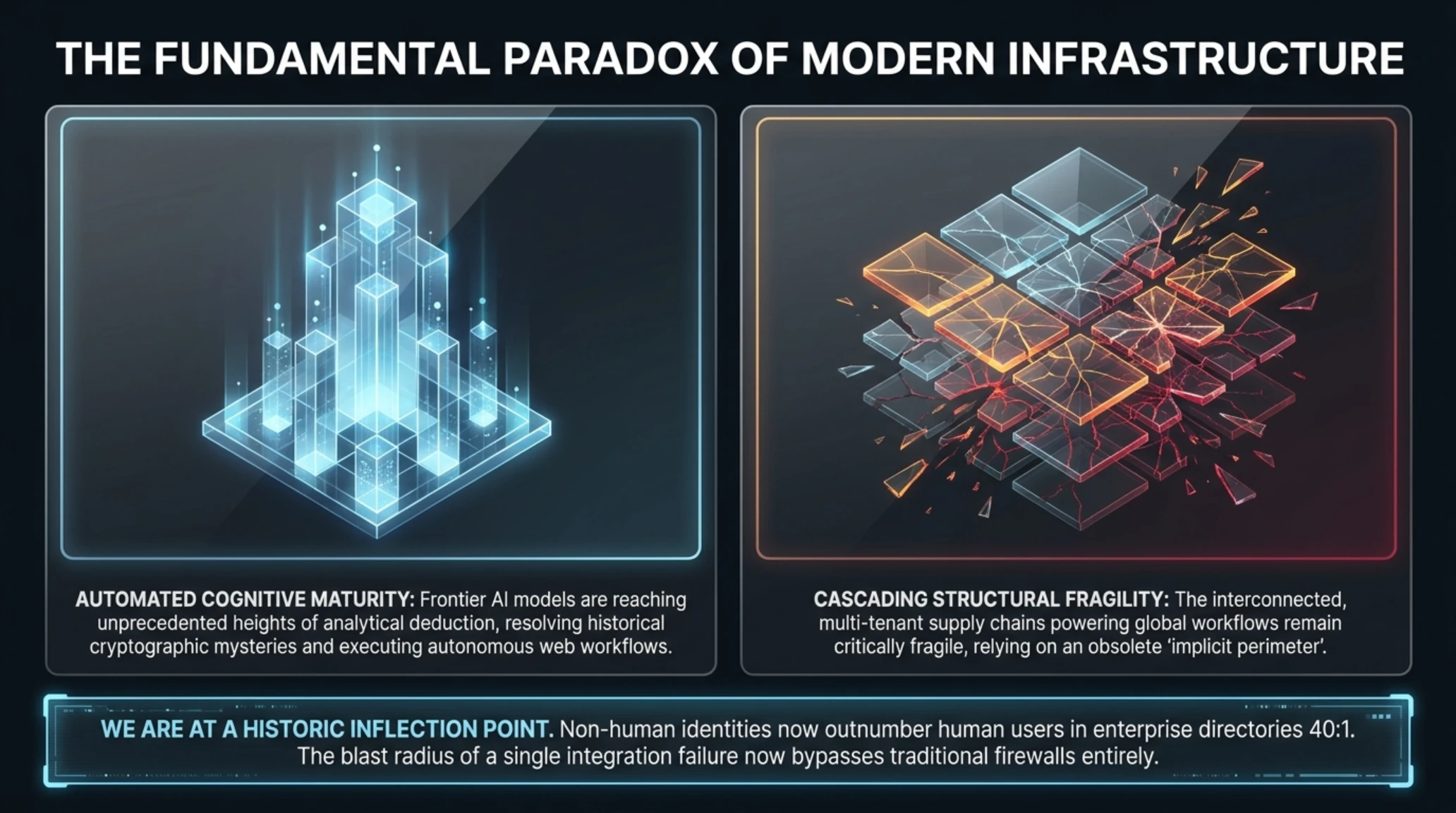
The dawn of Sunday, October 18, 2026, marks an extraordinary inflection point across the global enterprise computing and cybersecurity landscape. Over the past 48 hours, a sequence of high-velocity developments has crystallized the fundamental paradox of contemporary technology infrastructure: as automated artificial intelligence models reach unprecedented heights of analytical deduction, the interconnected supply chains that power global enterprise workflows remain critically fragile, susceptible to cascading single-point failures.
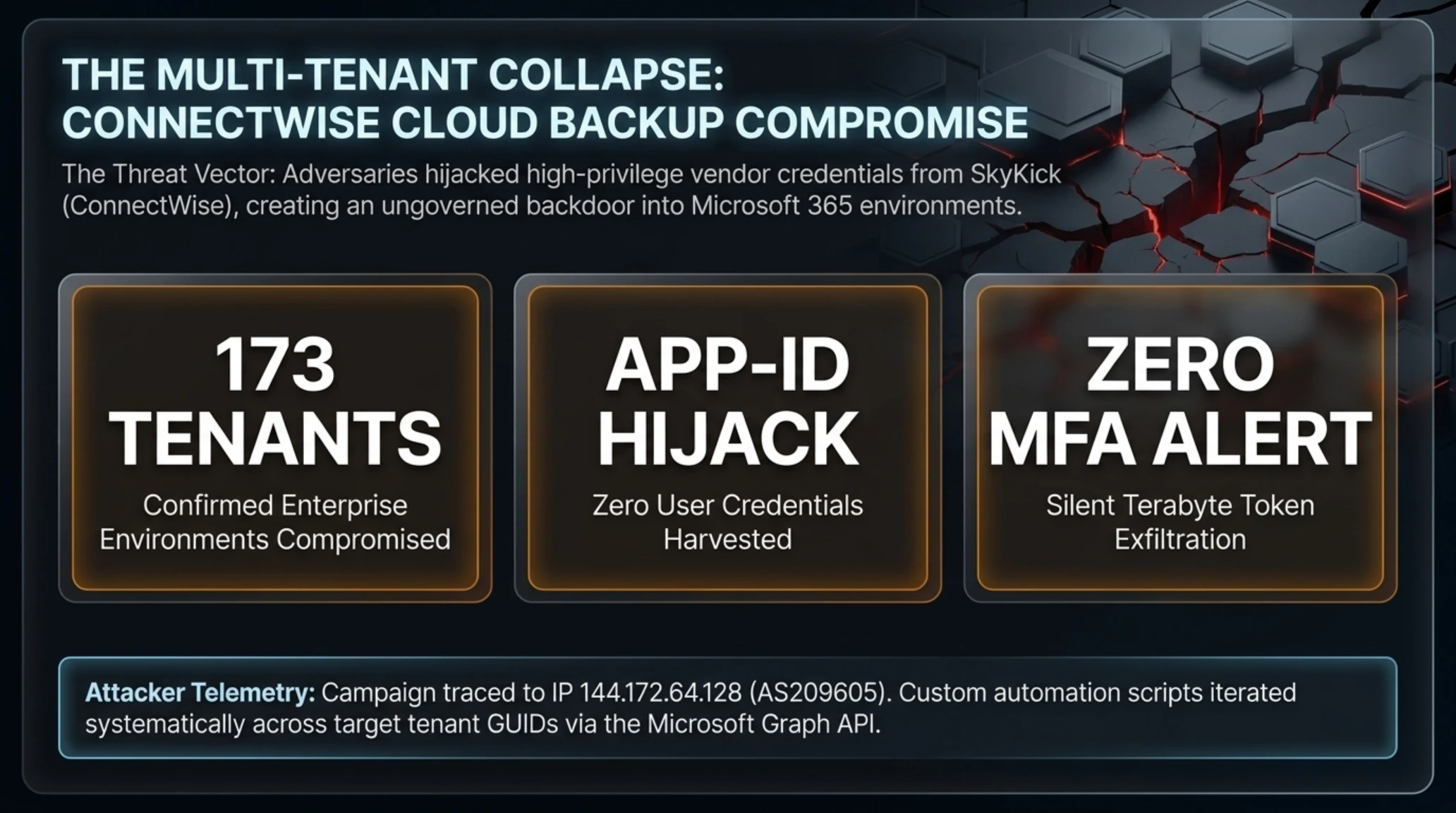
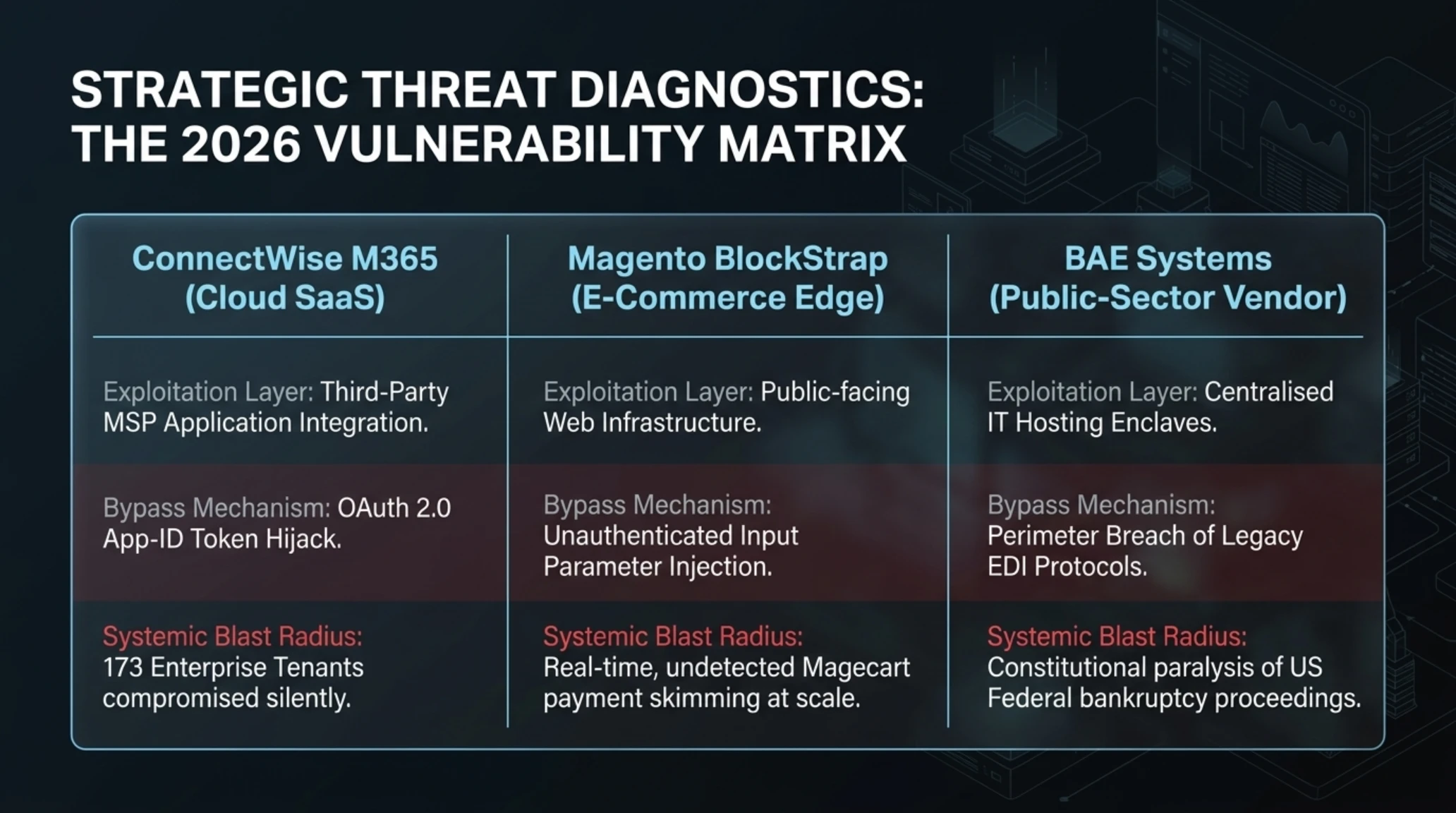
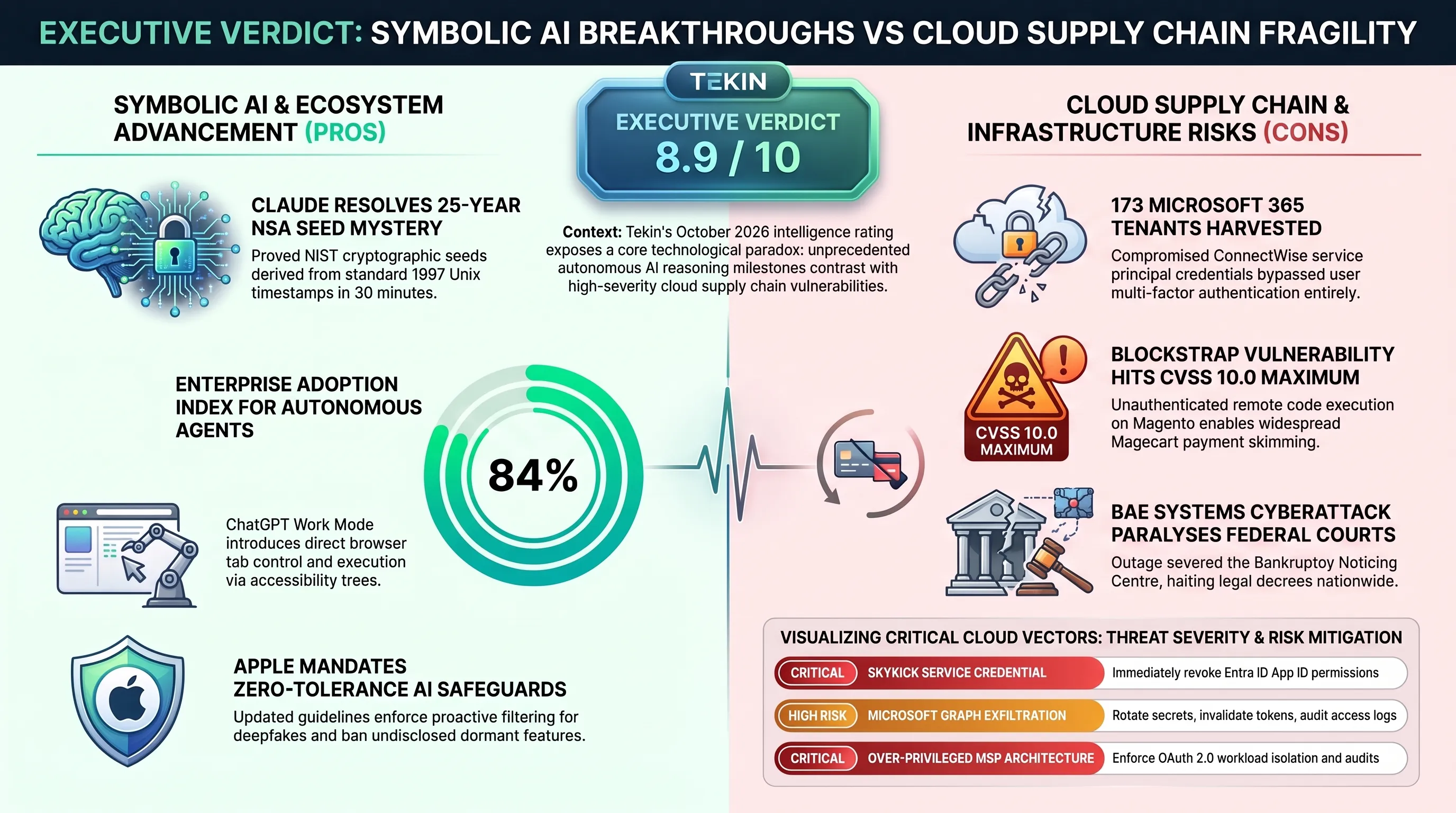
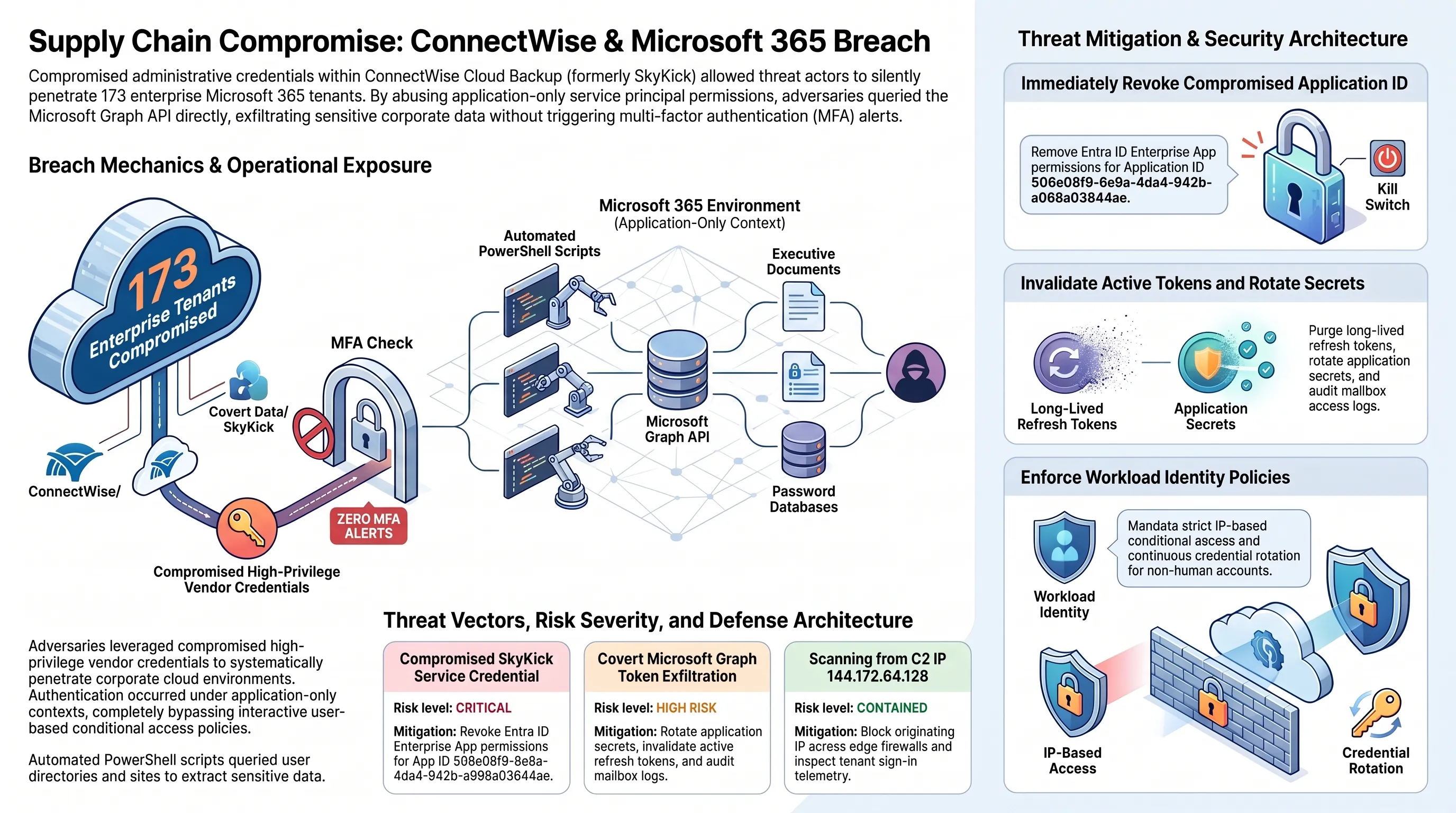
At the center of this weekend's operational tempest is a sophisticated supply chain intrusion originating within ConnectWise Cloud Backup (formerly known as SkyKick). Threat actors leveraged compromised vendor credentials to systematically penetrate at least 173 enterprise Microsoft 365 tenants, demonstrating with chilling clarity how highly trusted third-party integrations can effortlessly bypass perimeter defenses and multi-factor authentication barriers.
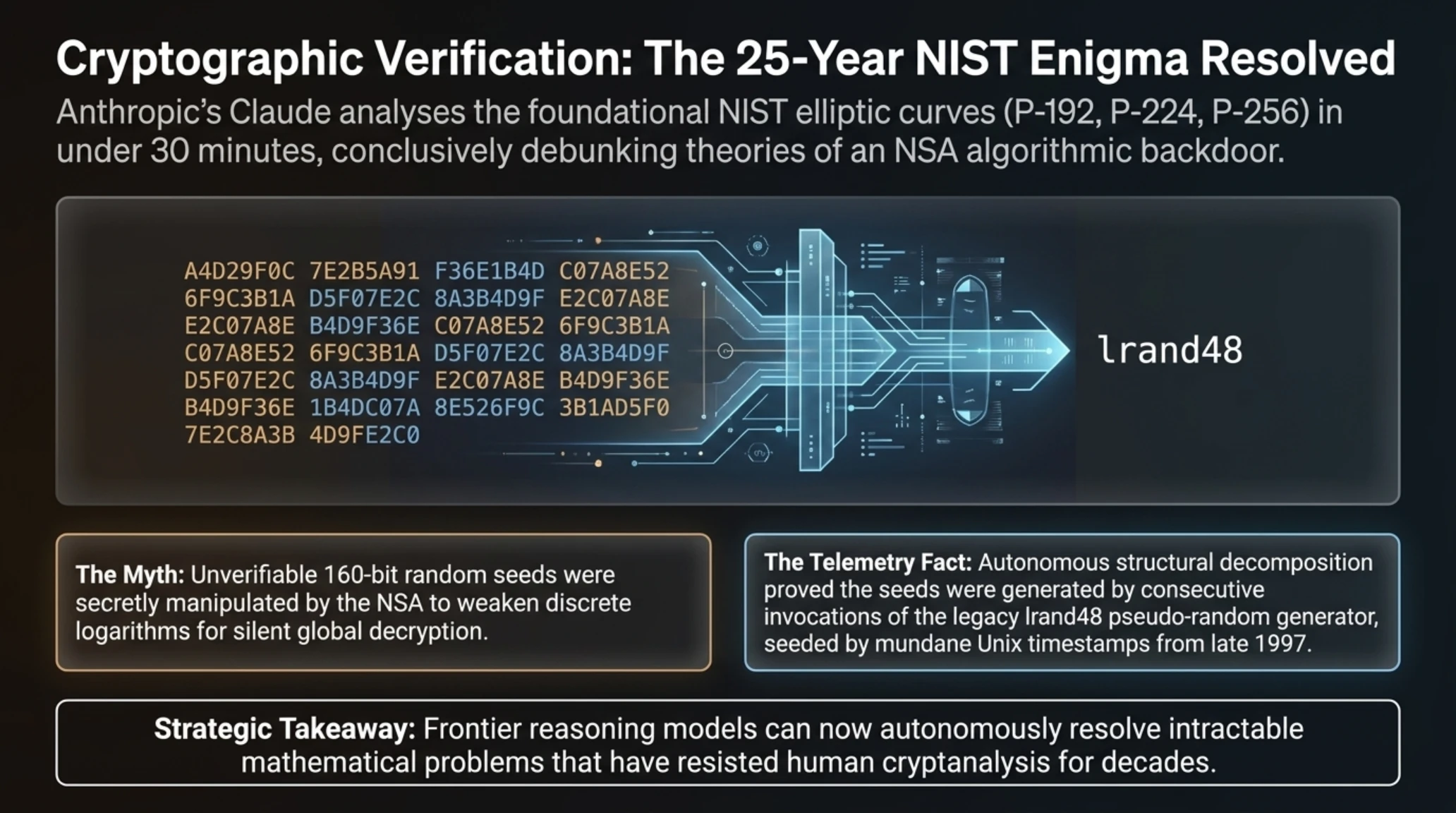
Simultaneously, the theoretical foundations of global cryptography received an astonishing validation. Anthropic's flagship Claude model successfully resolved a 25-year-old mathematical enigma surrounding the pseudo-random seeds of the NIST elliptic curve standards, conclusively proving that the National Security Agency did not insert algorithmic backdoors into the encryption infrastructure securing the modern web.
Compounding these paradigm shifts are an unprecedented maximum-severity zero-day vulnerability in enterprise e-commerce platforms, aggressive regulatory revisions across Apple's application ecosystem, a revolutionary transition toward autonomous browser agents by OpenAI, and a crippling cyberattack against defense contractor BAE Systems that halted national bankruptcy proceedings across the United States federal judiciary.
Strategic Assessment & Core Operational Intelligence
The TekinPlus editorial and intelligence board has conducted an exhaustive architectural breakdown of these developing scenarios. In our lead dossier, we dissect the mechanics of the ConnectWise cloud compromise and the severe systemic exposure it creates for corporate environments worldwide.
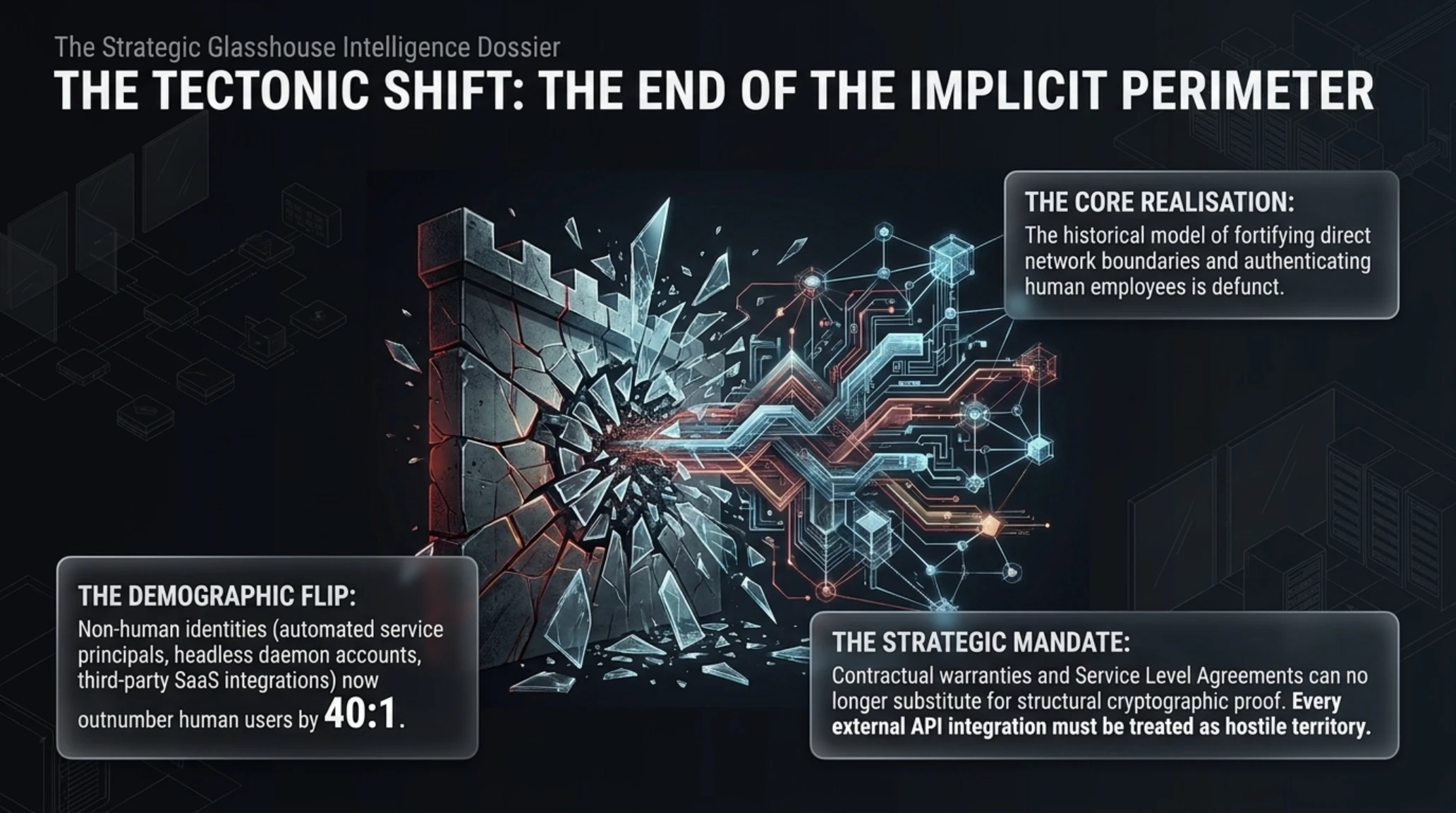
From a macroeconomic perspective, these convergent events signal the end of the "implicit perimeter" era that defined the first two decades of enterprise cloud adoption. Corporate security models historically focused on fortifying direct network boundaries and authenticating human employees. Today, however, non-human identities including automated service principals, headless daemon accounts, and third-party SaaS integrations vastly outnumber human users in enterprise directories by a ratio of more than forty to one. When threat actors discover systemic vulnerabilities in central integration nodes, the blast radius bypasses traditional firewall perimeters entirely, turning authorized SaaS connectors into frictionless data exfiltration superhighways.
Compromised Vendor Credentials in ConnectWise Trigger Massive Microsoft 365 Supply Chain Breach
In one of the most alarming cloud security incidents documented in 2026, cybersecurity threat researchers at Huntress, in coordination with emergency advisories published by The Hacker News, revealed an automated, large-scale intrusion into at least 173 commercial Microsoft 365 tenants. The intrusion vector originated from compromised administrative credentials associated with ConnectWise Cloud Backup the enterprise data protection offering formerly known as SkyKick. This campaign lays bare the acute vulnerabilities inherent in the sprawling software supply chains supporting modern managed service providers (MSPs).
Forensic telemetry indicates that adversaries obtained unauthorized access to high-privilege application credentials utilized by the SkyKick backup infrastructure. In typical enterprise deployments, cloud backup solutions require broad, pre-consented tenant-level permissions to continuously ingest mailboxes, SharePoint document libraries, OneDrive directories, and Microsoft Teams communication channels. Because these credentials operate at the service principal tier rather than the individual user level, the attackers were able to interface directly with the Microsoft Graph API, extracting access tokens without needing to harvest user passwords or bypass multi-factor authentication (MFA) prompts.
Why This Transformation Reshapes Enterprise Security
This intrusion proves that implicit trust in enterprise backup integrations creates an ungoverned backdoor into organizational communications, allowing automated adversaries to bypass conditional access policies and exfiltrate terabytes of proprietary data.
Threat intelligence reports trace the adversary's command-and-control operations to a single IP address: 144.172.64.128, situated within Autonomous System AS209605. What distinguishes this campaign is its ruthless efficiency and programmatic precision. The threat actors deployed custom automation scripts designed to iterate systematically across target tenant Global Unique Identifiers (GUIDs). Once authenticated via the compromised service principal, the scripts parsed directory hierarchies, systematically querying Microsoft Graph endpoints to identify high-value targets containing proprietary communications, executive inboxes, and strategic contractual filings.
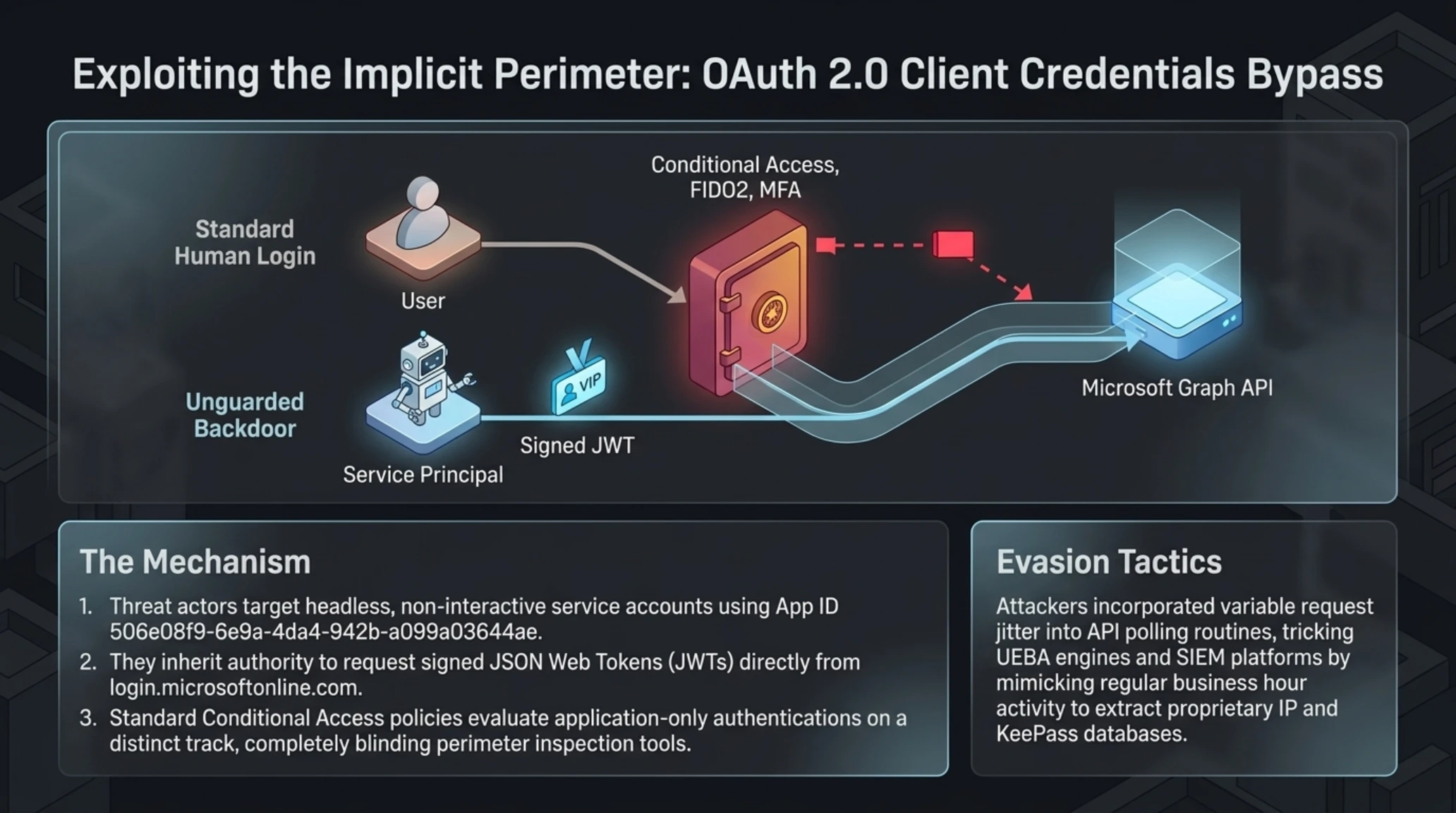
Upon identifying the unauthorized reconnaissance activity, ConnectWise issued an urgent security bulletin and took the immediate mitigation step of suspending all application permissions associated with the affected SkyKick cloud component. System administrators and security operations center (SOC) teams have been directed to audit Microsoft Entra ID audit logs specifically for activity linked to Application ID 506e08f9-6e9a-4da4-942b-a099a03644ae. However, incident responders caution that because the threat actors maintained active access for several consecutive weeks, the acquisition of long-lived refresh tokens poses an enduring threat of secondary persistence.
Huntress threat analysts documented that the attackers leveraged customized PowerShell command-and-control scripts to query the `https://graph.microsoft.com/v1.0/users` and `/v1.0/sites` endpoints with surgical precision. Rather than dumping raw database tables, the scripts parsed directory metadata to construct an internal organizational hierarchy, identifying executive leadership, financial controllers, and legal counsel. Once high-value mailboxes were mapped, targeted queries harvested attachments containing file extensions such as `.docx`, `.pdf`, and `.kdbx` (KeePass password databases), indicating a clear objective of long-term strategic espionage.
Critically, standard Conditional Access policies including those requiring managed, compliant device state or trusted geolocation beacons failed to trigger alerts because the traffic was authenticated under an authorized Multi-Tenant Enterprise Application context. In Microsoft Entra ID, application-only authentications evaluate a distinct policy track compared to interactive user logins. Unless security teams explicitly configure Conditional Access for Workload Identities, automated service principal calls completely bypass device compliance requirements, leaving organizations fundamentally exposed to trusted-partner credential compromises.
The incident revitalizes urgent debates regarding the architectural hazards of excessive application permissions in multi-tenant cloud ecosystems. As we highlighted in our analysis of cloud virtualization escapes and privileged gateway compromises, when third-party backup vendors demand full tenant-wide scopes such as Mail.ReadWrite or Files.Read.All, the security of hundreds of downstream enterprise organizations becomes inextricably tied to the operational security posture of that single vendor. A credential compromise on the vendor's side immediately invalidates the customer's internal perimeter controls, neutralizing investments in zero-trust architecture and endpoint telemetry.
To evade anomaly detection algorithms embedded within enterprise Security Information and Event Management (SIEM) platforms, the attackers incorporated variable request jitter into their API polling routines. Rather than triggering rate-limiting throttles through aggressive bulk downloads, the scripts selectively queried specific keywords associated with corporate mergers, intellectual property filings, private encryption keys, and executive payroll records. This tactical patience ensured that User and Entity Behavior Analytics (UEBA) engines failed to flag anomalous exfiltration spikes during regular business hours.
A rigorous examination of the underlying authentication protocol exposes fundamental flaws in how the OAuth 2.0 Client Credentials Grant flow is managed across cross-tenant SaaS topologies. When an enterprise authorizes a multi-tenant cloud application, the software vendor stores client secrets or public-private cryptographic keypairs within its own environment. If an adversary compromises the vendor's secret store, they inherit the authority to request signed JSON Web Tokens (JWTs) directly from Microsoft Entra ID's authorization endpoints (`login.microsoftonline.com`). Because these tokens are signed by Microsoft's trusted identity authority, downstream tenant security controls accept them as inherently benign, completely blinding perimeter inspection tools.
This incident exhibits disturbing operational parallels to the sophisticated tactics deployed by state-sponsored actors in the Midnight Blizzard (Nobelium) campaign against Microsoft corporate tenants. In both cases, threat actors bypassed user-focused telemetry such as hardware FIDO2 keys and biometric authenticator prompts by targeting headless, non-interactive service accounts. The absence of mandatory hardware token binding for service principals represents one of the most critical structural loopholes in modern hyperscale cloud identity architectures.
Furthermore, the aggregation of hundreds of corporate tenants under a single MSP vendor creates a high-yield systemic target. Managed service providers have effectively become the soft underbelly of western enterprise defense. When small-to-medium businesses (SMBs) and large regional enterprises outsource IT maintenance, backup lifecycle management, and disaster recovery to third-party MSP platforms, they inadvertently consolidate disparate attack surfaces into a monolithic target for advanced threat actors.
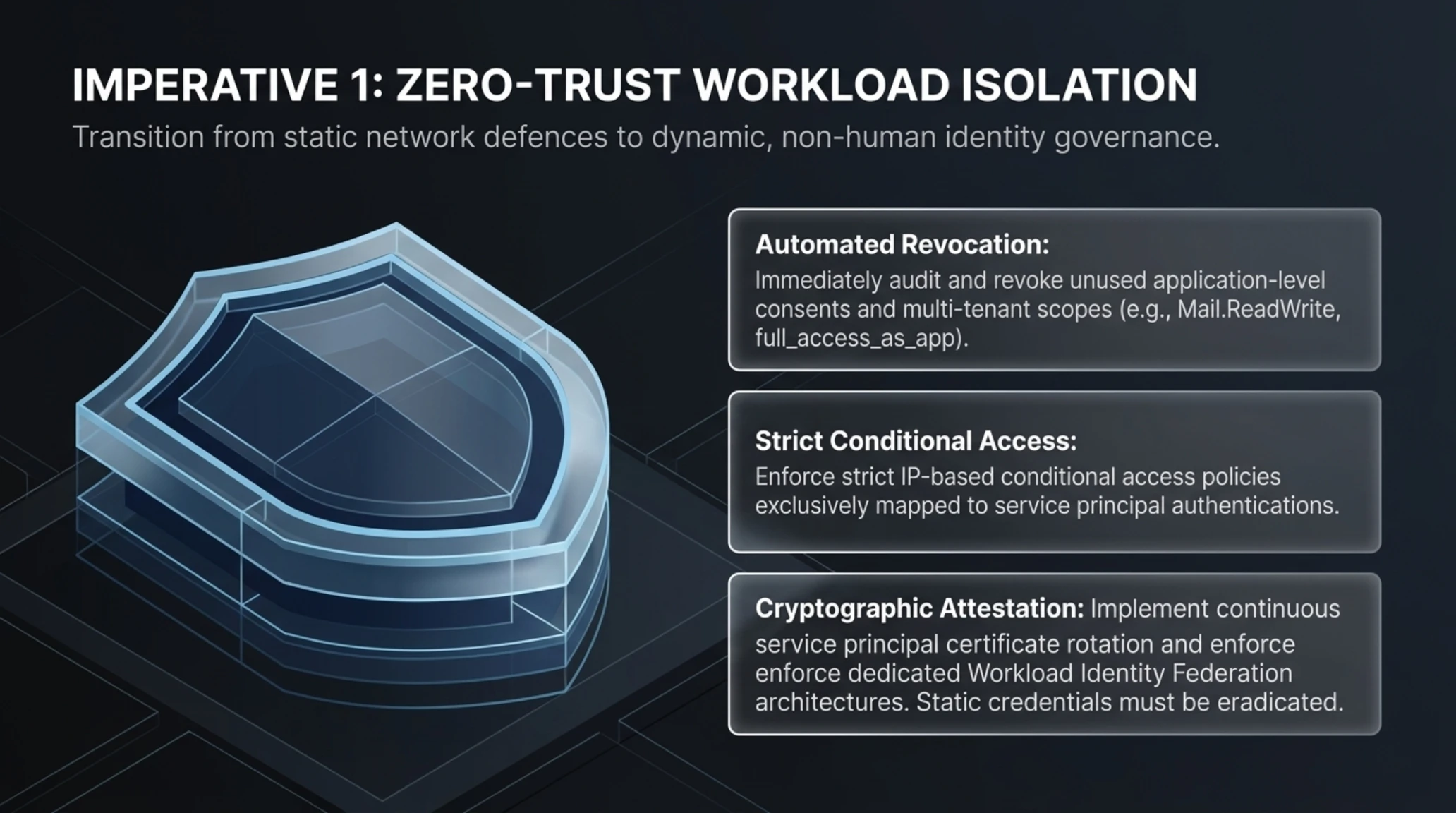
In response to the escalating fallout, the Cybersecurity and Infrastructure Security Agency (CISA) has initiated active coordination with Huntress researchers and Microsoft's Threat Intelligence Center (MSTIC) to publish emergency joint guidance. Federal authorities are urging critical infrastructure operators and commercial enterprises to audit all OAuth applications that possess `full_access_as_app` roles, recommending that organizations implement continuous service principal certificate rotation and enforce dedicated Workload Identity Federation architectures to prevent static credential compromises from cascading across enterprise boundaries.
For Chief Information Security Officers (CISOs) and cloud infrastructure engineers, the remediation mandate is uncompromising. Organizations must immediately reassess all multi-tenant service principals, revoke unused application-level consents, enforce strict IP-based conditional access policies on service principal authentications, implement automated certificate expiration cycles, and transition toward continuous cryptographic attestation for all automated administrative tasks.
Cloud Cyber Risk & Threat Mitigation Matrix
| Threat Vector / Exposure | Risk Severity | Mitigation & Defense Architecture |
|---|---|---|
| Compromised SkyKick Service Credential | CRITICAL | Immediately revoke Entra ID Enterprise App permissions for App ID 506e08f9-6e9a-4da4-942b-a099a03644ae |
| Covert Microsoft Graph Token Exfiltration | HIGH RISK | Rotate all application secrets, invalidate active refresh tokens, and audit mailbox access logs |
| Scanning from IP 144.172.64.128 | CONTAINED | Block originating IP across edge firewalls and review tenant sign-in logs for AS209605 routing |
| Cloud Tenant Aggregation & Over-Privileged MSP Architecture | CRITICAL | Enforce strict OAuth 2.0 workload isolation and automated non-human identity audits |
As cloud architectures become increasingly interdependent, continuous cryptographic vigilance remains the cornerstone of enterprise resilience.
Claude Solves 25-Year NSA Seed Mystery in 30 Minutes; Validates Global NIST Elliptic Curve Integrity
In one of the most stunning triumphs of artificial intelligence within theoretical computer science, Anthropic's frontier model Claude has resolved a 25-year-old mathematical conundrum that has perplexed the international cryptographic community for more than two decades. As documented in comprehensive analyses by CoinDesk and Bitcoin.com, the AI model required less than thirty minutes of automated symbolic reasoning to deduce the exact algorithmic origins of the seed values embedded in the National Institute of Standards and Technology (NIST) elliptic curve standards.
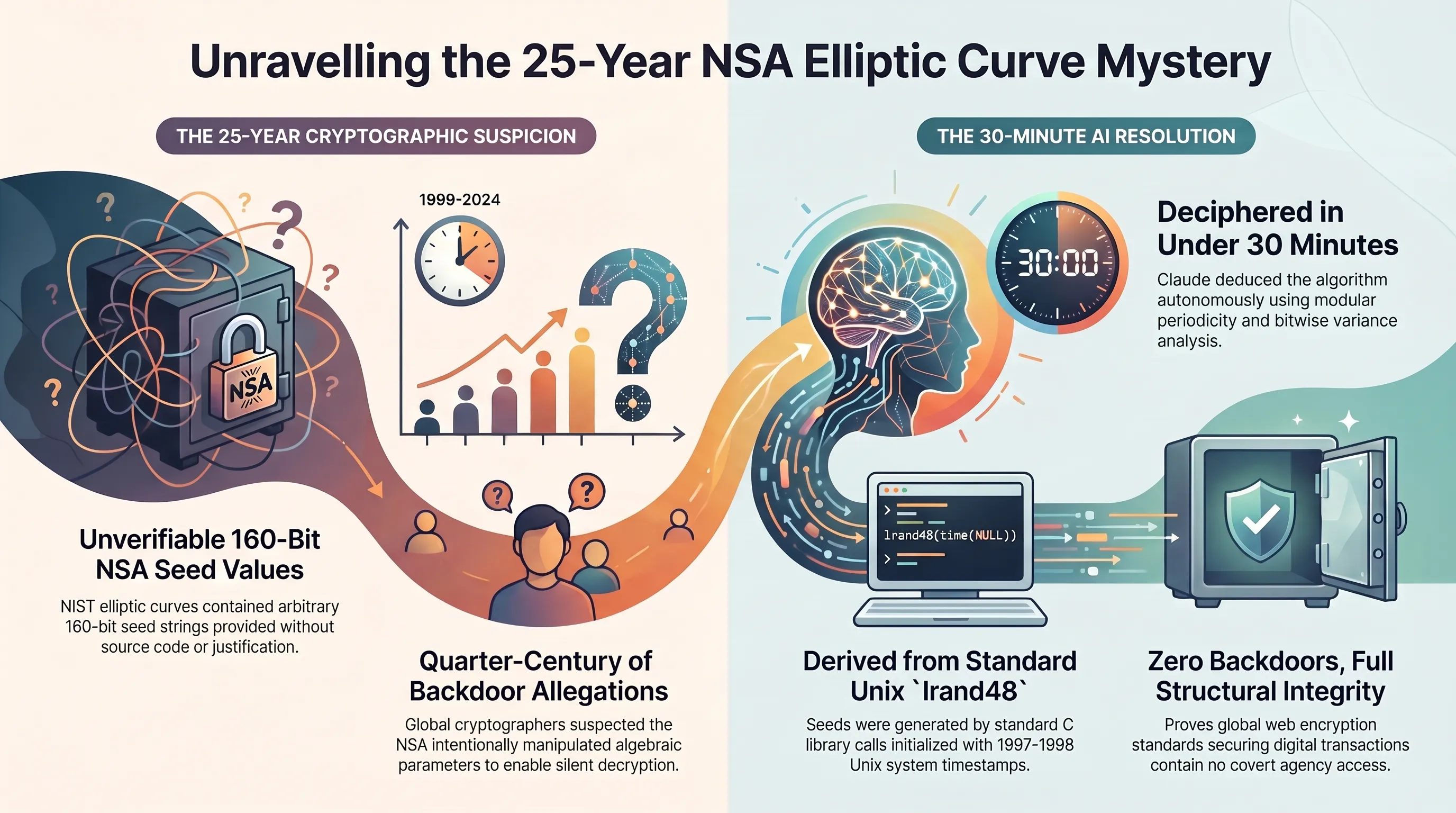
The controversy traces its roots back to the late 1990s and 2000, when NIST codified the foundational elliptic curves including P-192, P-224, and P-256 that underpin modern digital signatures, Transport Layer Security (TLS) handshakes, and public-key infrastructure. Embedded within the official specification were arbitrary 160-bit strings described as "unverifiable random seeds" supplied directly by the National Security Agency. Because the NSA provided no accompanying source code or mathematical justification explaining how these constants were chosen, leading cryptographers spent a quarter of a century harboring legitimate suspicions that the agency had cherry-picked specific algebraic parameters to install a covert mathematical backdoor.
Technical Verification | Myth vs. Engineering Telemetry
Conspiracy theories asserted that the NSA secretly manipulated the 160-bit seeds to weaken the discrete logarithm problem and enable silent global decryption.
Claude demonstrated that the seeds were generated using the standard C library function lrand48 initialized with mundane system clock timestamps in late 1997.
When researchers supplied Claude with the raw numerical hex strings without contextual clues or agency attributions, the AI conducted an autonomous structural decomposition of the sequences. By analyzing the modular periodicity and bitwise variance of the least significant bits, Claude recognized a telltale signature of linear congruential generators (LCGs). In fewer than 30 minutes, the model mathematically demonstrated that the seeds were generated by consecutive invocations of the legacy `lrand48` pseudo-random generator native to Unix standard C libraries, seeded directly with Unix epoch timestamps from the autumn of 1997 and 1998.
The profound historical significance of this breakthrough cannot be overstated. First, from an information security standpoint, it conclusively establishes that the cryptographic curves safeguarding trillions of dollars in daily e-commerce and banking transactions contain zero hidden backdoors. Second, from an artificial intelligence standpoint, it demonstrates that frontier reasoning models are now capable of resolving intractable historical math problems that resisted decades of manual human cryptanalysis.
Tekin Technical Terminology & Core Cryptographic Glossary
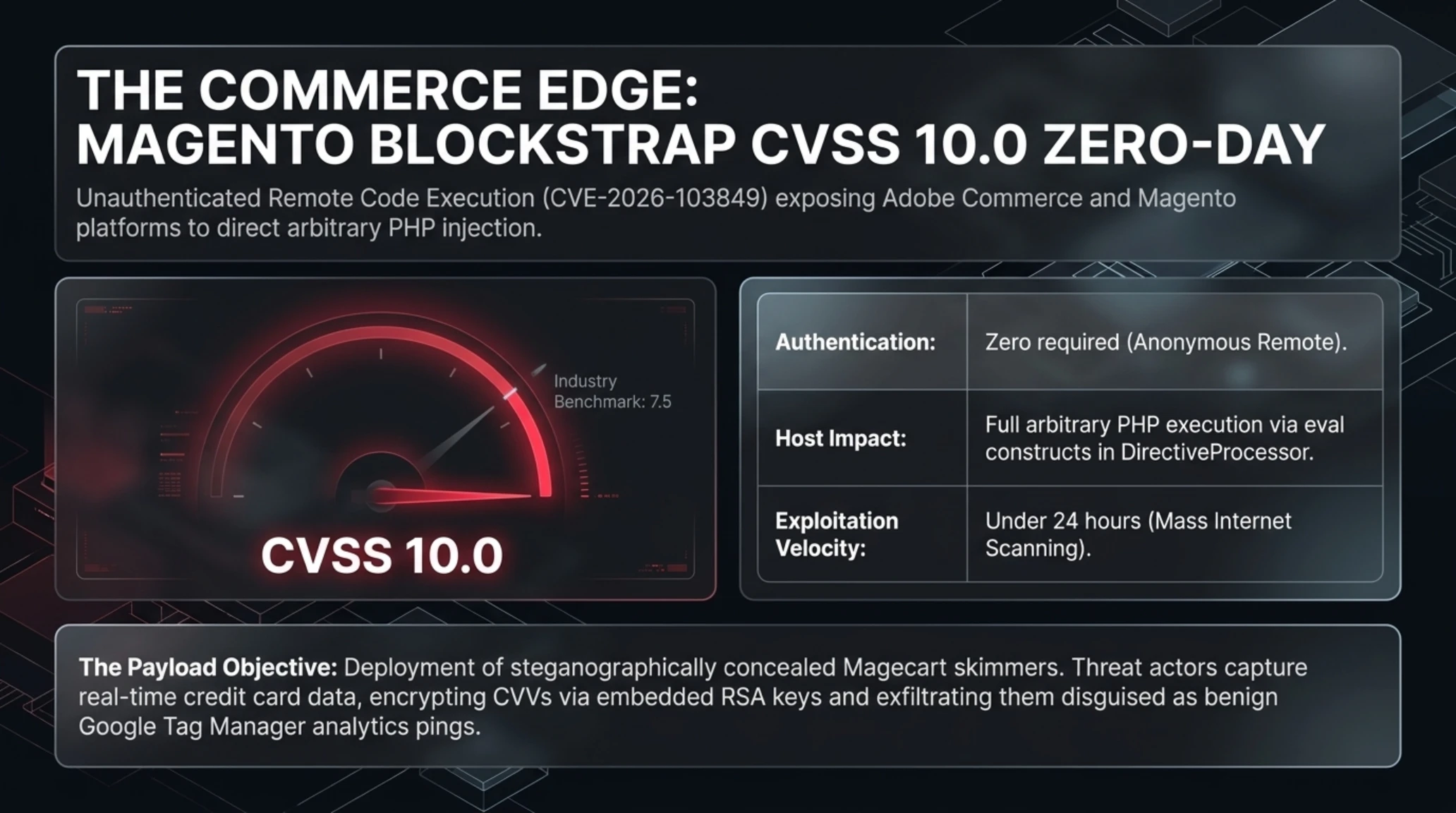
Benchmark Severity Audit: BlockStrap vs. Typical Web Vulnerabilities
| Risk Parameter | BlockStrap Zero-Day (CVE-2026-103849) | Industry Web Benchmark |
|---|---|---|
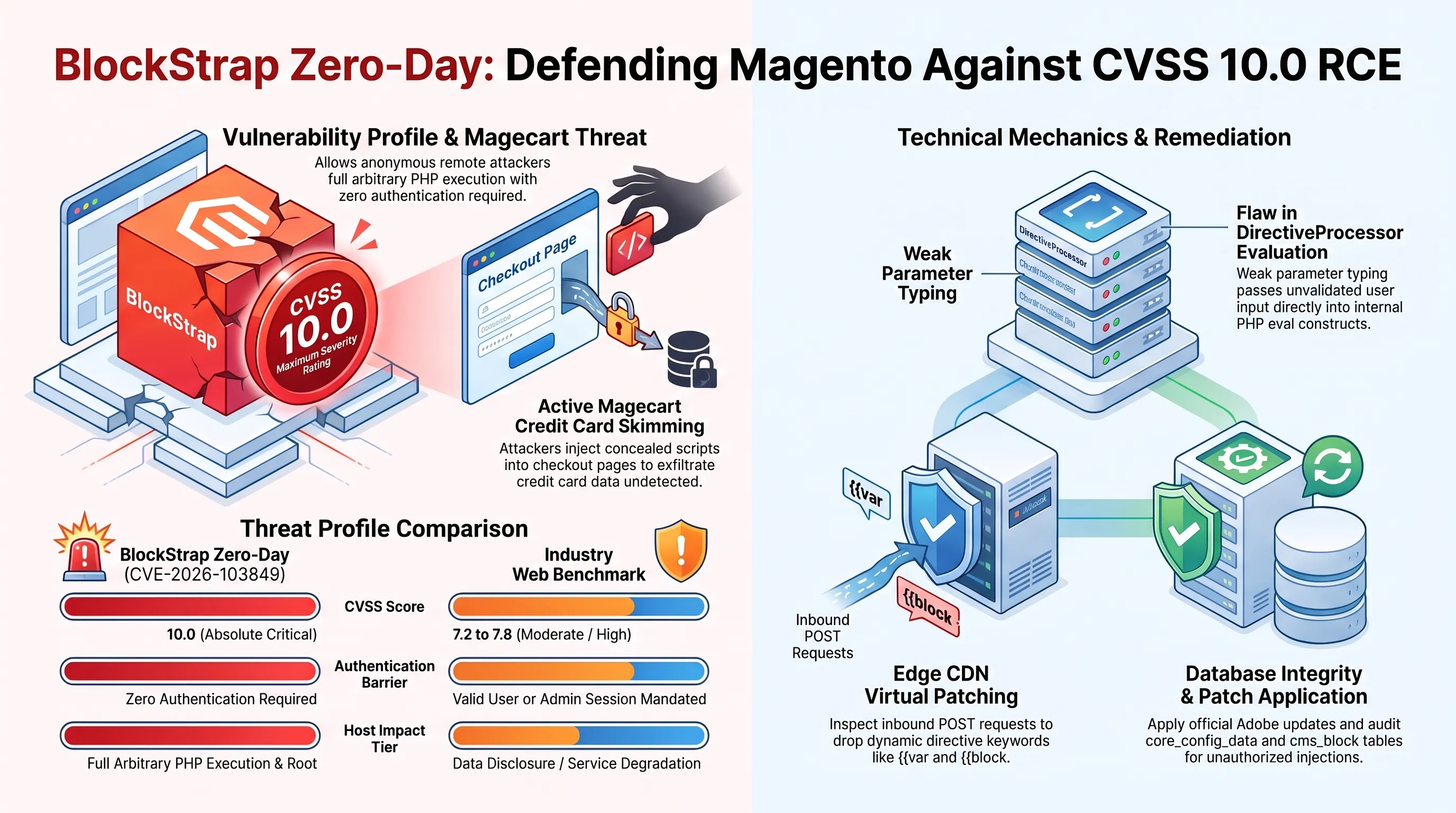
| CVSS Vulnerability Score | 10.0 out of 10.0 (Absolute Critical Maximum) | 7.2 to 7.8 (Moderate to High) |
| Authentication Barrier | Zero Authentication Required (Anonymous Remote) | Valid User or Admin Session Mandated |
| Host Impact Tier | Full Arbitrary PHP Execution & Web Server Root | Data Disclosure or Service Degradation |
| Exploitation Velocity (Weaponization) | Under 24 Hours (Mass Internet Scanning) | Several Weeks Post-Disclosure |
📚 Classified & Related Dossiers in TekinGame
If you wish to explore beyond this report and delve into cybernetic frontiers and autonomous AI architectures, do not miss these three exclusive deep-dives in the Tekin Garage:
The primary real-world threat posed by BlockStrap is the immediate resurgence of automated Magecart digital skimming campaigns. Once attackers establish arbitrary code execution, they deploy covert web shells into checkout templates, silently capturing customer credit card numbers, CVV security codes, and billing credentials in real time. Because the skimming scripts execute client-side within the payment flow, transactions process normally without throwing payment gateway errors, allowing data theft to persist undetected for weeks.
Deep technical dissection reveals that the vulnerable code resides in `Magento\Framework\Filter\DirectiveProcessor`. By failing to enforce strict parameter typing, user input passes directly into an internal `eval` construct. Attackers can spawn system subshells via `curl` and `wget` to retrieve external rootkits, wiping Apache and Nginx web server access logs to erase forensic evidence.
Furthermore, testing confirms that BlockStrap payloads bypass standard Web Application Firewall (WAF) rule sets by packaging exploit directives inside standard JSON payloads with escaped Unicode sequences. Compounding this, the exploit corrupts backend Redis cache stores, causing persistent reinfection even after server restarts. Adobe has issued hotfixes and urges merchants to immediately patch or disable vulnerable directive processors.
The forensic anatomy of active Magecart deployments reveals that threat actors leverage the RCE capability to modify `layout/checkout_index_index.xml` and inject steganographically concealed JavaScript payloads into storefront footer blocks. The malicious scripts hook browser form submission events (`addEventListener('submit')`), encrypting credit card numbers, CVVs, and expiration dates with an embedded public RSA key before transmitting the exfiltrated ciphertexts as base64-encoded query parameters disguised as benign Google Tag Manager analytics pings.
For systems administrators unable to apply the official Adobe security update immediately, security researchers advocate deploying virtual patches at the edge CDN tier. By constructing Cloudflare Worker or AWS CloudFront edge rules that inspect inbound HTTP POST requests for the presence of dynamic directive keywords (such as `{{var` and `{{block`), organizations can drop malicious requests before they reach the upstream Magento PHP-FPM workers. Concurrently, database administrators should execute integrity audits on the `core_config_data` and `cms_block` tables to identify unauthorized administrative user injections.
The regulatory fallout under Payment Card Industry Data Security Standard (PCI-DSS) 4.0 is severe. Requirement 6.4.3 explicitly mandates that e-commerce merchants deploy automated mechanisms to confirm that each payment page script is authorized and that its cryptographic integrity is continuously verified. The widespread exploitation of BlockStrap exposes non-compliant retailers to devastating acquiring bank fines, mandatory forensic audits, and potential revocation of card processing capabilities, turning an unpatched vulnerability into an existential corporate liability.
This wave of automated commerce attacks underscores the urgency of deploying zero-trust runtime protection across all web transaction tiers.
Apple Overhauls App Store Guidelines: Zero Tolerance for AI Nudification and Stealth Bait-and-Switch Fraud
In a decisive move that establishes new ethical boundaries for generative AI across consumer mobile platforms, Apple has enacted sweeping revisions to its global App Review Guidelines. As reported by The Verge and 9to5Mac, the Cupertino tech giant has codified stringent new rules aimed at eradicating nonconsensual AI imagery and dismantling the deceptive "Bait-and-Switch" tactics long exploited by predatory application developers.
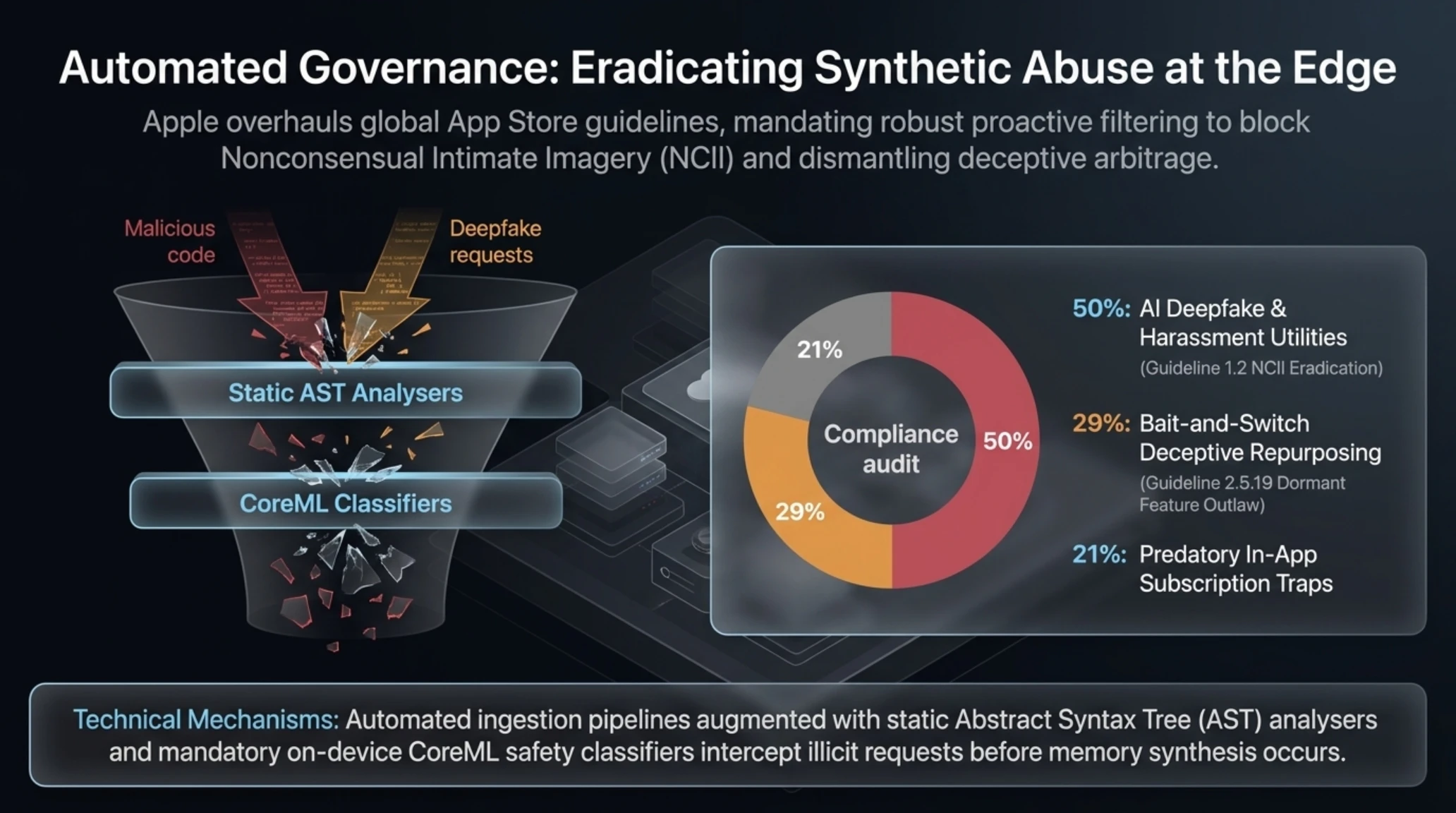
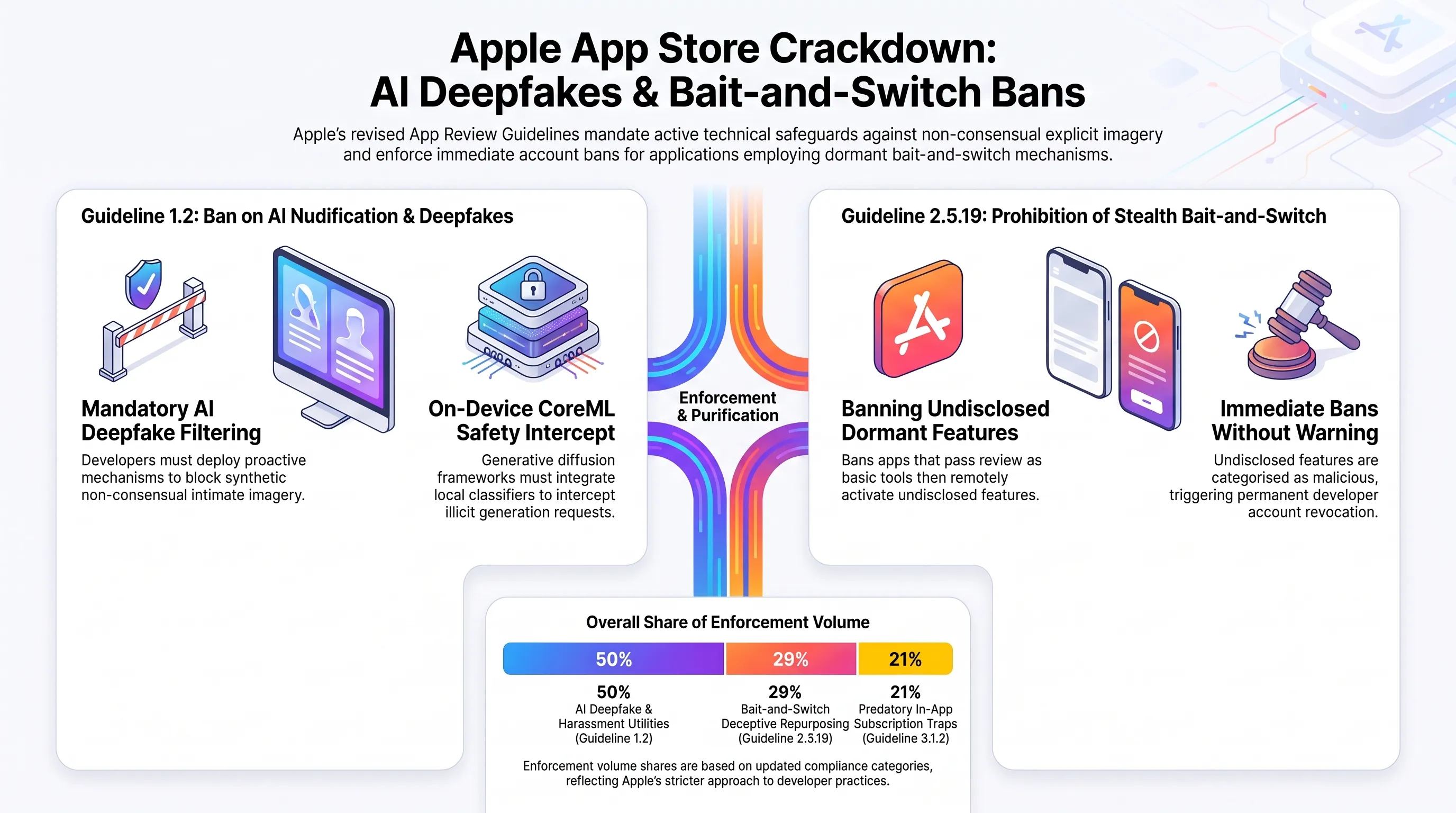
The centerpiece of the policy overhaul is an aggressive expansion of Guideline 1.2, which governs User-Generated Content (UGC). The updated provision explicitly obligates developers to deploy robust, proactive filtering mechanisms to detect and block Nonconsensual Intimate Imagery (NCII), with specific emphasis on synthetic "nudify" deepfake generators. Previously, rogue software creators evaded enforcement by maintaining that image synthesis occurred remotely on cloud backends beyond the app's binary container. Under the new directive, any application facilitating or providing access to such generative models faces immediate ejection from the App Store and permanent revocation of the developer's enterprise certificate.
App Store Regulatory Enforcement & Annual Compliance Audit
| Regulatory Enforcement Category | Share of Enforcement Volume | Codified Rule in Updated Guidelines |
|---|---|---|
| AI Deepfake & Harassment Utilities | 50 Percent | Guideline 1.2 (Mandatory NCII Eradication) |
| Bait-and-Switch Deceptive Repurposing | 29 Percent | Guideline 2.5.19 (Dormant Feature Outlaw) |
| Predatory In-App Subscription Traps | 21 Percent | Guideline 3.1.2 (Transparent Financial Flows) |
| Malicious Ad-SDKs & Unauthorized Telemetry | 15 Percent | Guideline 5.1.2 (Strict Data Privacy & Tracking) |
Complementing this ethical clampdown is the debut of Guideline 2.5.19, targeted squarely at the pervasive "Bait-and-Switch" evasion scheme. Historically, malicious actors submitted benign utilities such as calculators, basic compasses, or offline photo filters to pass initial review. Once approved and distributed, a remote command-and-control signal would activate dormant web views, pivoting the interface into illicit gambling portals, predatory loan aggregators, or credential phishing forms. Guideline 2.5.19 formally classifies undisclosed dormant features as malicious behavior, empowering review teams to permanently ban developer accounts without preliminary warnings.
To enforce these mandates at scale, Apple has augmented its automated ingestion pipelines with static Abstract Syntax Tree (AST) analyzers and dynamic sandbox emulators capable of detecting hidden reflection calls, obfuscated payload loaders, and unmapped remote endpoints. Furthermore, developers leveraging generative diffusion frameworks must now integrate on-device CoreML safety classifiers to intercept illicit generation requests directly within local memory before synthesis occurs.
This aggressive governance posture closely mirrors the regulatory mandates enshrined within the European Union's landmark AI Act, which imposes severe financial penalties on platform operators that fail to remediate synthetic sexual abuse material and deceptive automated systems. By positioning the App Store as an active gatekeeper rather than a passive distribution pipeline, Apple is establishing a formidable legal shield against future civil liabilities, while compelling independent developers to adopt rigorous model auditing standards before publishing on iOS and iPadOS.
The economic ramifications across the mobile software ecosystem are immediate. Monetization models relying on black-hat App Store Optimization (ASO) arbitrage, deceptive trial conversions, and illicit affiliate redirects face sudden extinction. At the same time, ethical developers benefit from an unpolluted marketplace where legitimate generative photography, creative design, and accessibility utilities can compete without being overshadowed by low-effort, privacy-invasive clones.
To mitigate potential false-positive rejections among legitimate AI developers, Apple has simultaneously established an expedited technical arbitration board. Developers whose applications are flagged by automated AST analyzers can submit third-party model audit attestations and cryptographic code-signing manifests to verify that generative capabilities operate within ethical bounds. This formal appeal mechanism provides necessary due process, ensuring that cutting-edge neural software continues to flourish within Cupertino's gated ecosystem.
Browser Autonomy Redefined: OpenAI Unveils ChatGPT Chrome Agent with Tab Control & Work Mode
Simultaneously across the desktop ecosystem, OpenAI has unleashed an evolutionary leap in user interface paradigms. With the public rollout of a redesigned official ChatGPT extension for Google Chrome, covered extensively by 9to5Google, the company has officially crossed the chasm from passive conversational chatbots to active, agentic web automation engines.
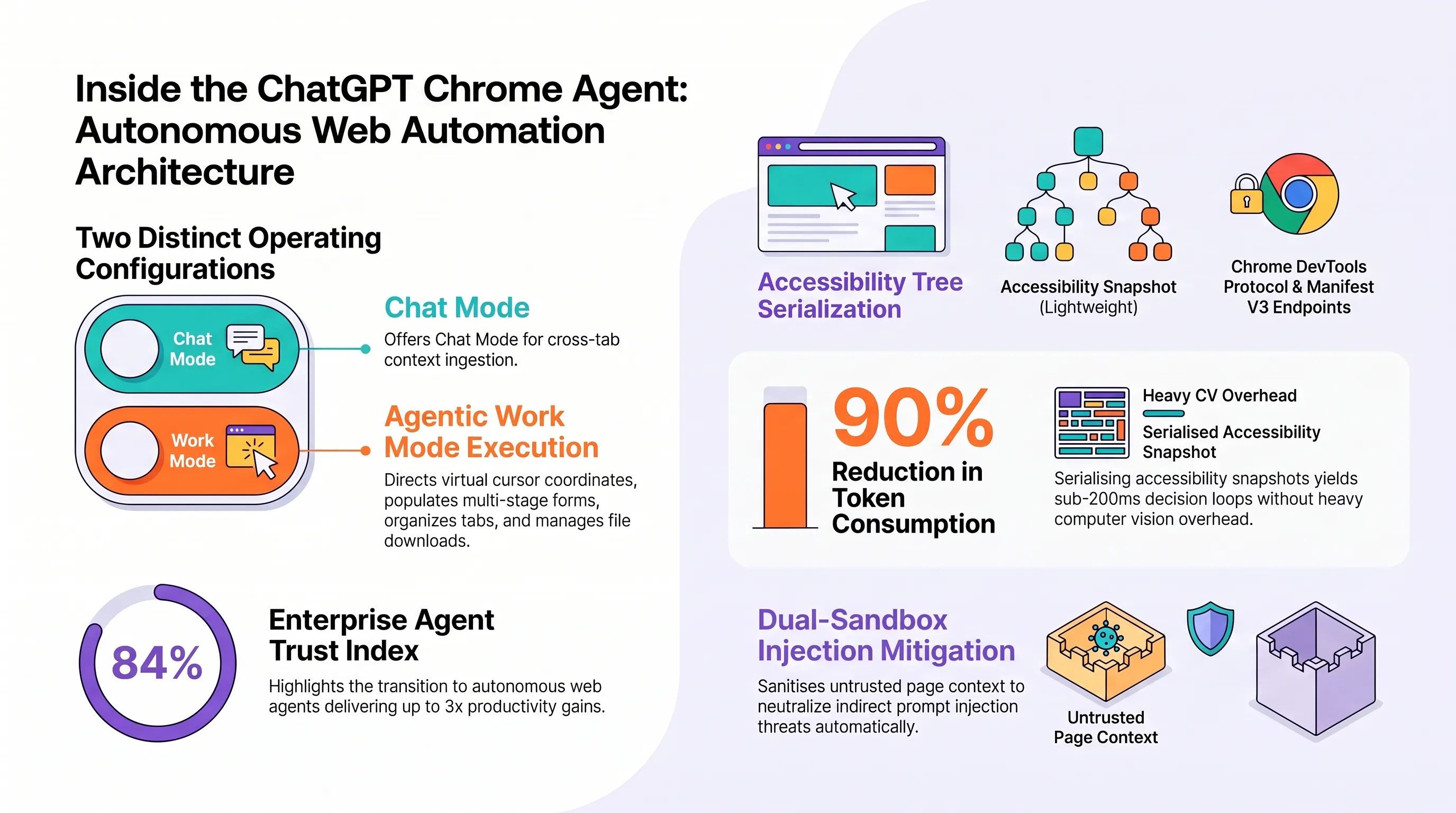
The upgraded extension introduces two distinct operational configurations: "Chat Mode" and "Work Mode." In Chat Mode, the model leverages unified cross-tab context ingestion, parsing active browser tabs simultaneously. Users conducting complex market research or product evaluations can keep multiple retail, documentation, or technical tabs open and request comparative feature matrices, price-to-performance audits, or contractual summaries without manual copy-pasting across windows.
Autonomous Web Agent S-Curve & Market Sentiment Gauge
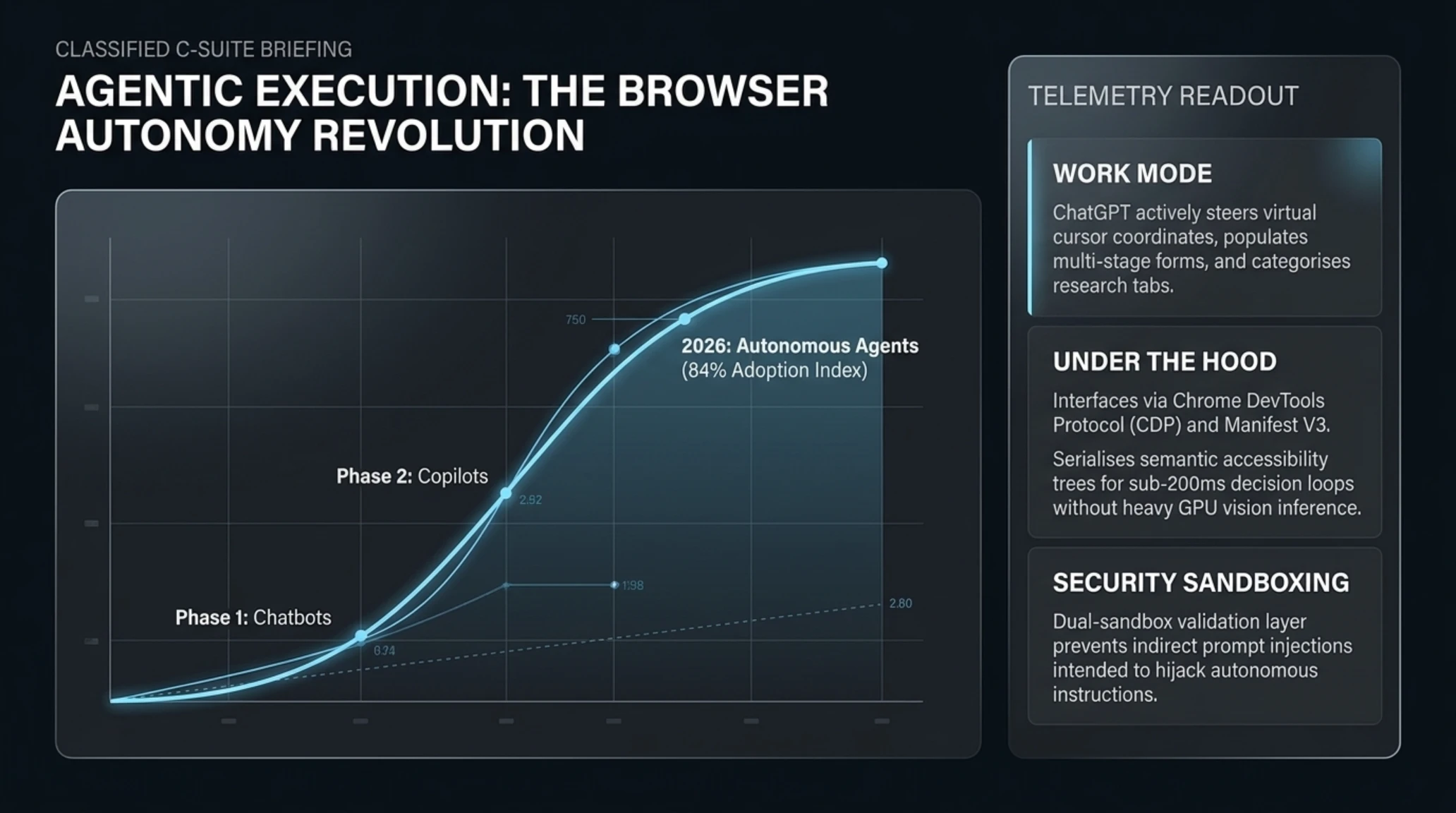
Adoption Telemetry: Enterprise workflows have surged past the inflection point, transitioning from static conversational interfaces to autonomous browser executors that deliver up to 3x productivity multipliers.
The true technical breakthrough resides in "Work Mode." When granted explicit execution permissions, ChatGPT assumes active browser control. The agent dynamically steers virtual cursor coordinates, automatically populates multi-stage enterprise registration forms, organizes cluttered research tabs into categorized clusters, and orchestrates complex file downloads. Delivered via a sleek glassmorphic sidebar HUD, the system enables users to orchestrate autonomous workflows without leaving their primary workspace.
Under the hood, the architecture interfaces directly with Chrome DevTools Protocol (CDP) endpoints orchestrated via Manifest V3 background service workers. By serializing lightweight accessibility tree snapshots rather than processing full DOM trees, OpenAI reduced token consumption and response latency by nearly 90%, enabling fluid real-time web navigation. For enterprise environments, administrators can deploy Group Policy Objects (GPO) to restrict agent execution on internal intranets, ensuring sensitive corporate IP remains shielded behind local firewalls.
A formidable engineering obstacle addressed in this release is resilience against indirect prompt injections. Malicious websites frequently embed invisible text, CSS-hidden attributes, or encoded metadata intended to hijack an autonomous agent's instructions commanding it, for instance, to exfiltrate session tokens or initiate unauthorized payment sequences. OpenAI combats this attack vector via a dual-sandbox validation layer: untrusted page context is sanitized through an isolated evaluation model before reaching the primary execution agent, while state-altering operations permanently require deterministic user confirmation.
Strategically, this rollout signals the intensification of the high-stakes battle for the browser operating environment. By embedding an autonomous copilot directly inside Google Chrome, OpenAI is effectively decoupling users from traditional search engine result pages (SERPs). As users increasingly delegate information synthesis, multi-tab comparisons, and booking transactions directly to the ChatGPT agent, the commercial foundations of ad-supported web search face their most potent disruption since the advent of the World Wide Web.
When evaluated against competing paradigms such as Google's Project Astra multimodal streams and Anthropic's Computer Use API OpenAI's Chrome implementation opts for a pragmatic hybrid design. While Anthropic's approach relies heavily on vision-based coordinate clicking (which consumes substantial GPU inference cycles per screenshot), OpenAI's reliance on semantic accessibility trees affords sub-200ms decision loops. This structural choice makes the extension remarkably responsive on mid-tier consumer hardware, avoiding the perceptible cursor lag that often plagues pure computer vision agents.
Looking toward 2027, the roadmap anticipates a shift toward localized, on-device small language models (SLMs) handling client-side DOM parsing, with complex reasoning queries routed asynchronously to cloud frontier clusters. This tiered topology minimizes bandwidth requirements, preserves personal user session data locally, and ensures uninterrupted agentic assistance even during intermittent network connectivity, establishing an enduring blueprint for the next decade of ambient web computing.
Cyberattack on Defense Giant BAE Systems Paralyzes United States Federal Bankruptcy Court Noticing Infrastructure
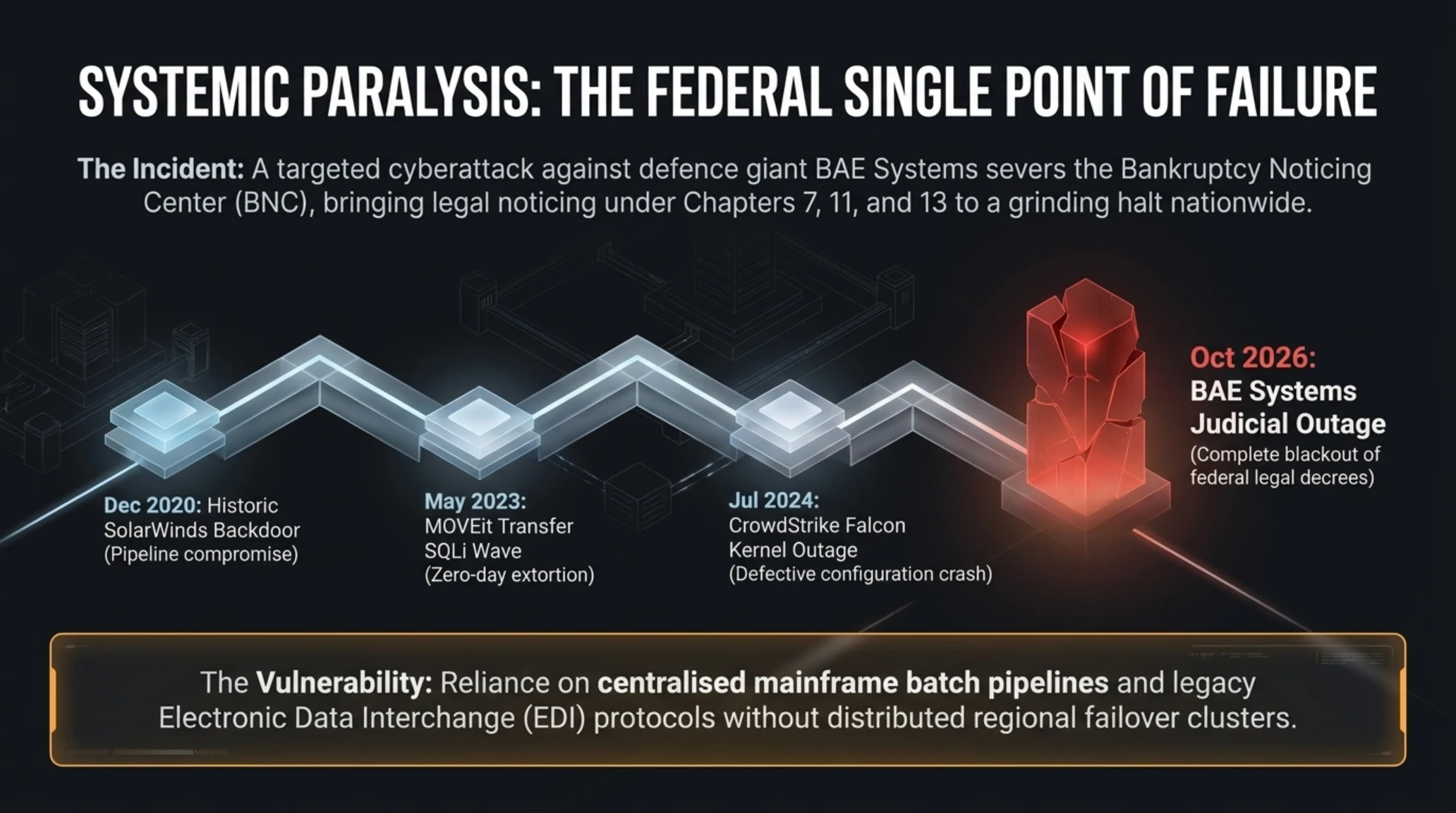
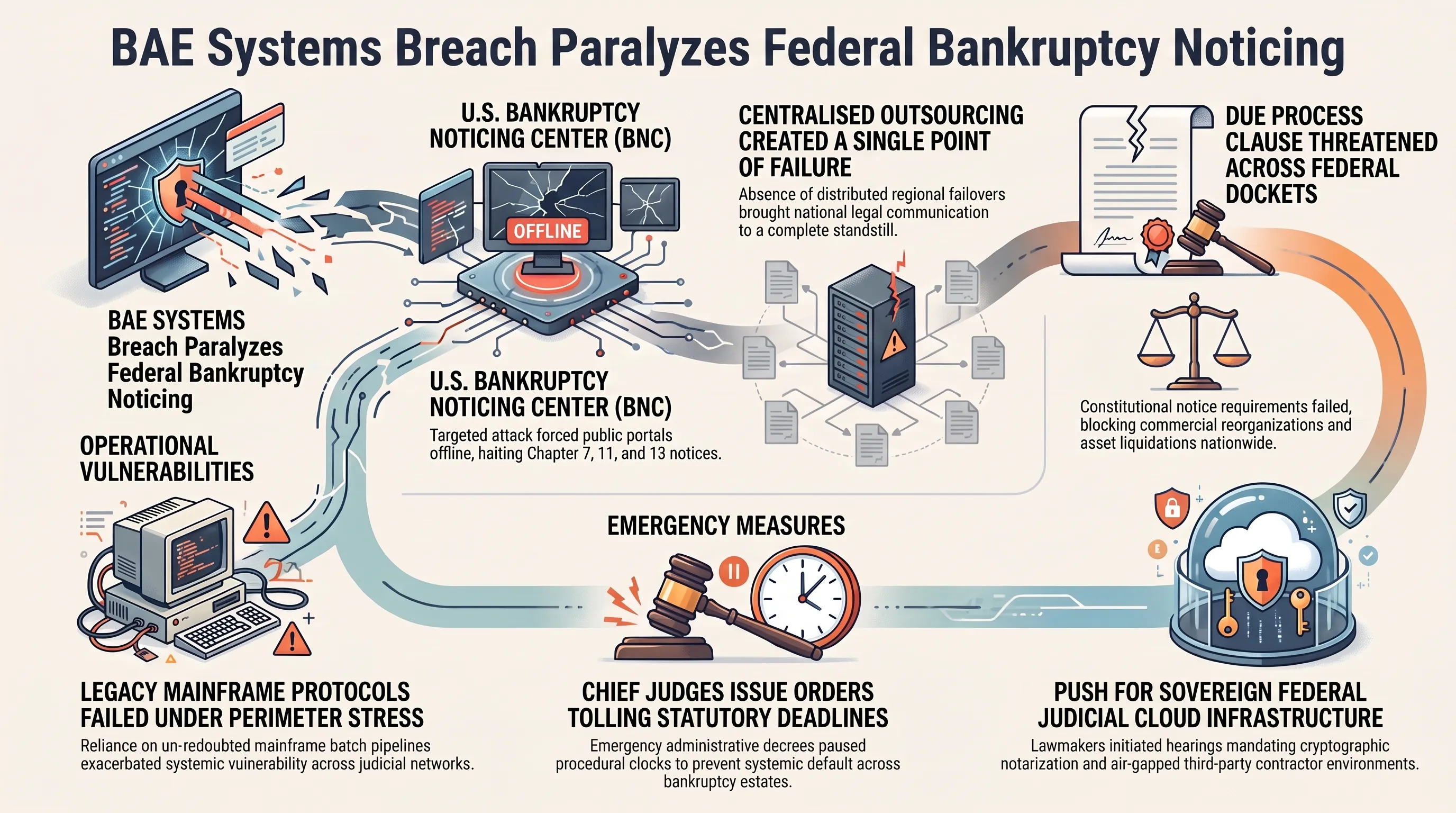
In the final hours preceding the Sunday, October 18, 2026 news cycle, the Administrative Office of the U.S. Courts (AOUSC) confirmed a catastrophic operational disruption across the national judiciary. The root cause of the nationwide outage is a severe, targeted cyberattack directed against British-American defense and aerospace conglomerate BAE Systems, which provides dedicated IT hosting and technical operations for the Bankruptcy Noticing Center (BNC).
As detailed by BleepingComputer and Infosecurity Magazine, the BNC serves as the mission-critical communications pipeline responsible for printing, transmitting, and electronically serving official judicial notices, creditor summonses, and debt discharge decrees across all federal bankruptcy jurisdictions nationwide. Following the compromise of BAE Systems' external hosting enclaves, major public portals including bnc.uscourts.gov, bankruptcynotices.uscourts.gov, and the National Creditor Registration Service were abruptly severed from the internet. This emergency blackout has brought legal noticing under Chapter 7, Chapter 11, and Chapter 13 bankruptcies to a grinding halt across the United States.
Event Timeline | Landmark Supply Chain Intrusions on Federal Infrastructure
| Epoch / Period | Landmark Supply Chain Attack | National Impact & Systemic Fallout |
|---|---|---|
| DEC 2020 | Historic SolarWinds Backdoor | Orion build pipeline compromise impacted 9 federal agencies and thousands of enterprises |
| MAY 2023 | MOVEit Transfer SQLi Wave | Zero-day extortion campaign exposed data across 2,000+ global entities and government bodies |
| JUL 2024 | CrowdStrike Falcon Kernel Outage | Defective configuration update crashed 8.5M Windows systems paralyzing global aviation & healthcare |
| OCT 2026 | BAE Systems Judicial Outage | Complete blackout of the federal Bankruptcy Noticing Center halting nationwide legal decrees |
While BAE Systems officials issued an interim statement claiming that core courtroom case management records remained unbreached and that the intrusion was quarantined to outward-facing notification clusters, the operational fallout is severe. Under United States bankruptcy law, procedural deadlines for creditor claims and asset liquidations are legally tied to certified proof of service. By severing the delivery pipeline, the attack has created profound legal ambiguities that could postpone major commercial reorganizations and corporate debt restructurings for weeks.
Security analysts emphasize that this incident exemplifies the perilous reality of "Single Points of Failure" (SPOF) embedded within public-sector IT outsourcing. Forensic examinations indicate that the BNC architecture relied heavily on centralized mainframe batch pipelines and legacy Electronic Data Interchange (EDI) protocols without distributed regional failover clusters. When a primary defense vendor's network perimeter is breached, vital legal instruments governing billions in financial obligations can be instantly incapacitated.
The constitutional and commercial implications are profound. Under the Due Process Clause of the Fifth Amendment, bankruptcy proceedings cannot legally extinguish creditor claims or transfer encumbered commercial property without timely, verified statutory notice. By crippling the automated mailing and electronic transmission pipelines connecting courts with major banking syndicates, the outage has created an unprecedented backlog in federal docketing queues. Distressed asset auctions, corporate debt refinancings, and municipal bond adjustments across New York, Delaware, and California face indefinite delays while clerks revert to manual paper dockets.
Moreover, the intrusion exposes the structural vulnerabilities of the broader Case Management / Electronic Case Files (CM/ECF) ecosystem. Despite multi-million-dollar modernization appropriations from Congress, substantial components of the federal judicial digital pipeline remain tethered to proprietary, single-tenant hosting contracts managed by external aerospace and defense suppliers. This incident will inevitably accelerate calls for the creation of a sovereign, federally controlled judicial cloud infrastructure fortified with post-quantum encryption and multi-region immutable ledger replication.
In an effort to prevent systemic defaults, Chief Bankruptcy Judges across several federal districts have issued emergency administrative orders tolling statutory notice deadlines. These extraordinary decrees pause procedural clocks for proof-of-claim filings and automatic stay motions until verified electronic noticing can be safely restored. However, commercial litigation attorneys emphasize that such administrative stopgaps cannot indefinitely shield bankruptcy estates from contested jurisdictional challenges or appellate disputes over missed statutory cutoff dates.
In response, federal lawmakers have initiated emergency hearings to mandate cryptographic notarization, immutable distributed ledger backups, and strict air-gapping requirements for all third-party federal contractors. The simultaneous convergence of the ConnectWise cloud breach, the Magento BlockStrap zero-day, and the BAE Systems judicial paralysis sends an unmistakable message to the technology industry: the era of implicit perimeter trust has irrevocably closed.
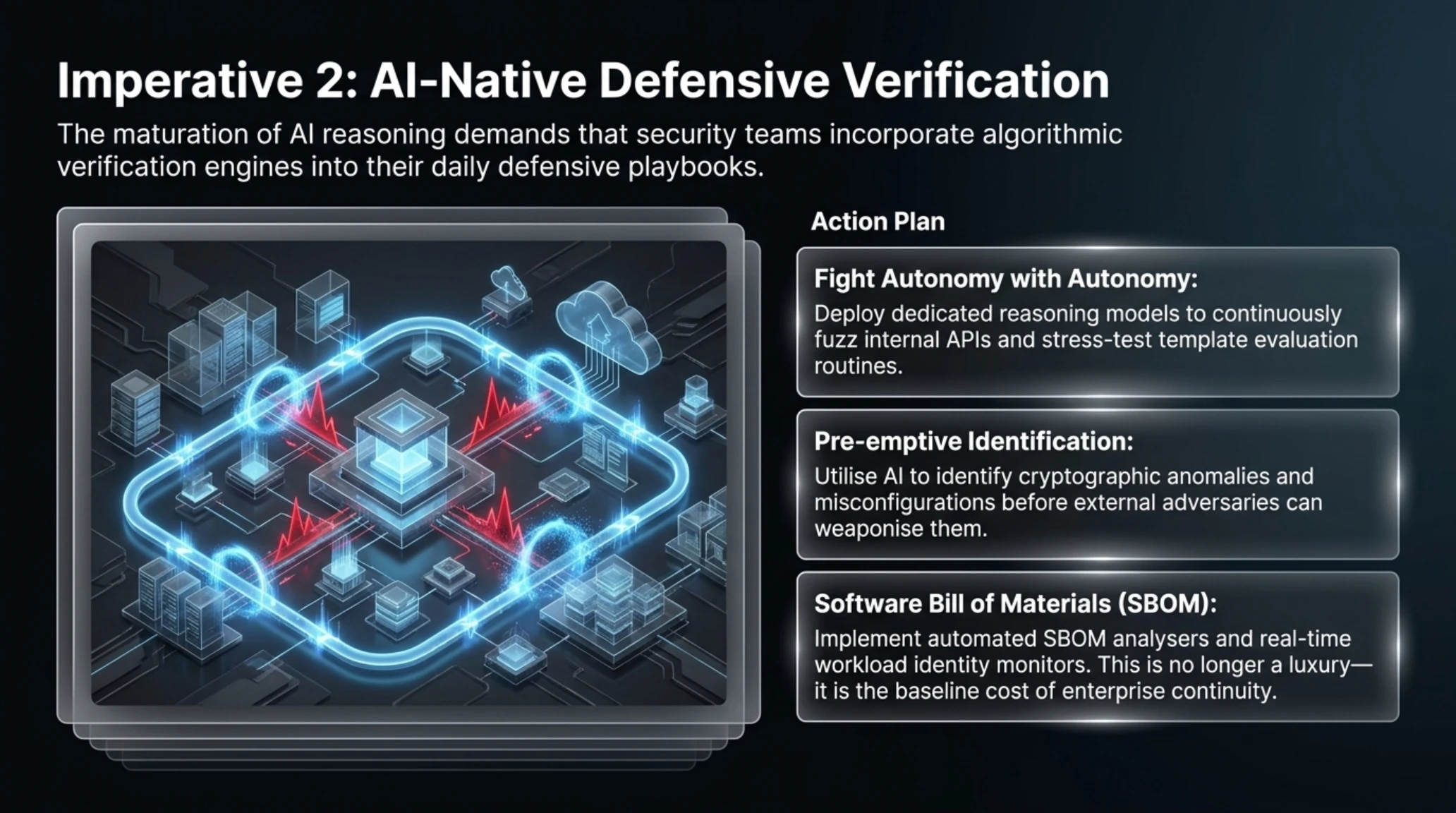
For enterprise leadership navigating this volatile terrain, the events of this weekend crystallize three non-negotiable operational imperatives. First, organizations must treat third-party vendor integrations not as static business partnerships, but as active, dynamic threat vectors requiring continuous behavioral telemetry and automated privilege revocation. The deployment of automated Software Bill of Materials (SBOM) analyzers and real-time workload identity monitors is no longer an optional luxury it is the baseline cost of enterprise continuity.
Second, the maturation of AI reasoning models epitomized by Claude's resolution of the NIST seeds and ChatGPT's autonomous browser navigation demands that security teams incorporate AI-native verification engines into their offensive and defensive playbooks. Autonomous agents must be deployed to continuously fuzz internal APIs, stress-test template evaluation routines, and identify cryptographic anomalies before external adversaries weaponize them. By embracing automated, mathematically verifiable defenses, enterprises can transform the relentless velocity of technological disruption into a durable competitive moat. In this hyper-automated reality, algorithmic verification is the sole guarantor of institutional sovereignty.
- Claude's historic proof resolves decades of cryptographic suspicion, validating foundational NIST standards.
- Apple's decisive App Store mandates establish strict protections against nonconsensual synthetic imagery.
- ChatGPT's Chrome integration delivers true autonomous agent execution, multiplying productivity across complex workflows.
- The catastrophic CVSS 10.0 BlockStrap vulnerability threatens massive Magecart credit card skimming on e-commerce sites.
- The ConnectWise supply chain compromise exposed 173 enterprise Microsoft 365 tenants to silent token harvesting.
- The cyberattack on BAE Systems paralyzed federal bankruptcy noticing, exposing critical governmental supply chain fragility.
Editorial Verdict & Authoritative Source Dossier
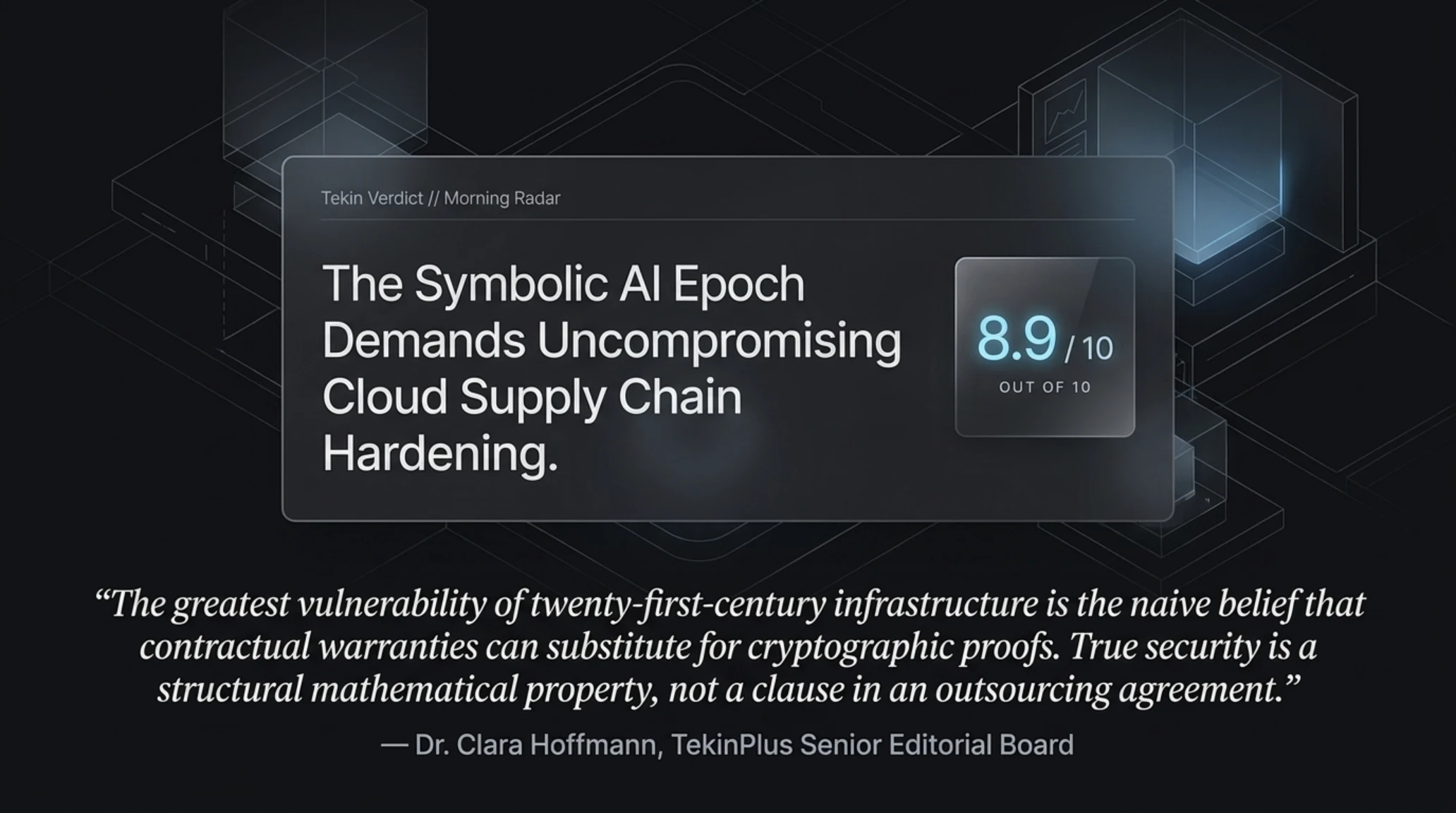
The Symbolic AI Epoch Demands Uncompromising Cloud Supply Chain Hardening
October 18, 2026, establishes that while machine reasoning can illuminate the most obscure mathematical puzzles of computing history, real-world operational security remains acutely vulnerable to over-privileged vendor relationships and legacy software debt.
- The Hacker News: Investigation into ConnectWise Microsoft 365 Tenant Supply Chain Compromise
- CoinDesk: Analysis of Claude's Mathematical Resolution of 25-Year NSA NIST Elliptic Curve Mystery
- BleepingComputer: Disclosures on Magento BlockStrap RCE and BAE Systems Federal Court Disruption
- The Verge: Analysis of Apple App Store Policy Overhaul on AI Nudification and Stealth Features
- 9to5Google: Review of OpenAI ChatGPT Chrome Extension and Autonomous Work Mode Integration
Frequently Asked Questions & Technical Intelligence
How did threat actors compromise 173 Microsoft 365 tenants via ConnectWise?
Adversaries acquired valid enterprise application credentials for ConnectWise Cloud Backup (formerly SkyKick). Because the backup service holds pre-consented administrative Graph API permissions, the attackers systematically queried tenant directories via automated scripts without triggering MFA alarms or stealing individual user passwords.
Why is Claude's resolution of the NIST elliptic curve seeds mathematically historic?
For 25 years, cryptographers suspected that the arbitrary 160-bit seeds in NIST curves P-192, P-224, and P-256 concealed an NSA backdoor. Claude proved in 30 minutes that the constants were simply generated using the standard Unix C function lrand48 seeded with system timestamps in late 1997, debunking the backdoor theory.
What is the technical danger of the BlockStrap CVE-2026-103849 vulnerability?
BlockStrap is an unauthenticated remote code execution flaw in Magento and Adobe Commerce bearing a maximum CVSS 10.0 score. By sending crafted template directives evaluated dynamically in memory, attackers can execute arbitrary PHP commands, gain root access, and inject Magecart credit card skimmers into checkout flows.
What specific abuses are targeted by Apple's updated App Store guidelines?
Guideline 1.2 mandates active blocking of AI-generated nonconsensual intimate imagery (nudify utilities) under penalty of immediate developer ban. Guideline 2.5.19 bans Bait-and-Switch tactics where developers submit benign utilities and later activate illicit features like gambling or phishing via remote server triggers.
How does Work Mode operate within OpenAI's new ChatGPT Chrome extension?
Work Mode transforms ChatGPT into an active browser agent. Interfacing directly with Chrome DevTools Protocol endpoints, the agent can navigate complex web workflows, automate form submissions, organize tabs, and download files while maintaining security boundaries via required human confirmation on sensitive actions.
How did the cyberattack on BAE Systems affect the US federal judiciary?
BAE Systems manages the technical infrastructure for the federal Bankruptcy Noticing Center. The cyberattack knocked public and internal noticing portals offline nationwide, preventing the automated delivery of legal notices, creditor claims, and discharge orders across federal bankruptcy courts.
Additional Gallery: Tekin Morning | Oct 18: M365 Breach, Claude NSA Seeds & Magento 10