☀️ Tekin Morning - May 31, 2026
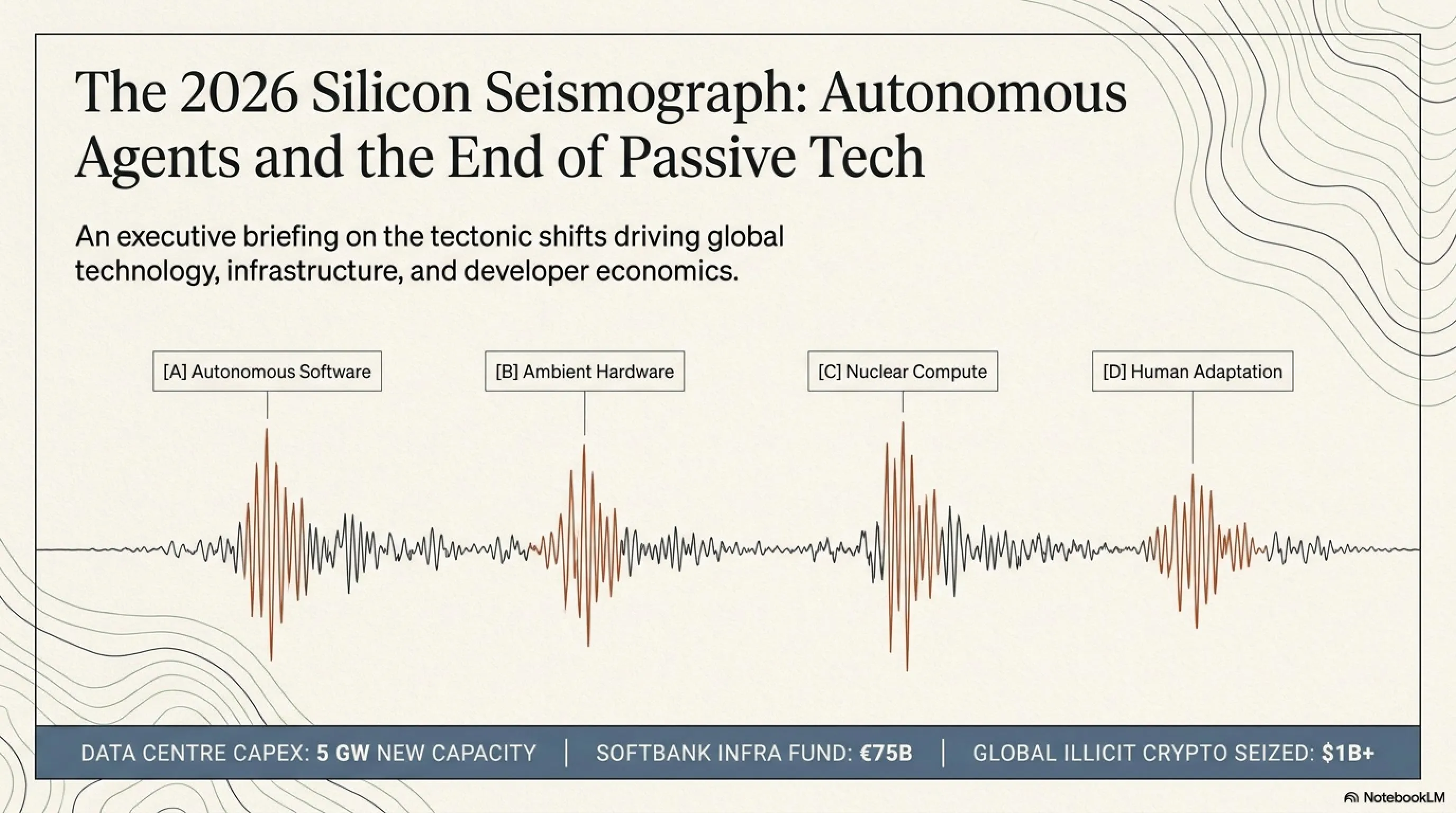
Good morning, tech enthusiasts and gamers! As we turn the final page of May 2026, the technology landscape is experiencing a seismic shift. The era of passive, prompt-based chatbots is officially behind us, giving way to fully autonomous AI agents that operate ceaselessly in the background of our lives. From Google's groundbreaking 'always-on' AI assistant to an unprecedented €75 billion infrastructure gamble in Europe, and the controversial monetization shifts shaking the developer community—we aren't just reading the news today; we are analyzing the tectonic plates moving beneath the silicon valley. Let's dive deep into the Tekin Plus analysis.
1. The AI That Never Sleeps: Is Gemini Spark the Death of Passive Assistants?
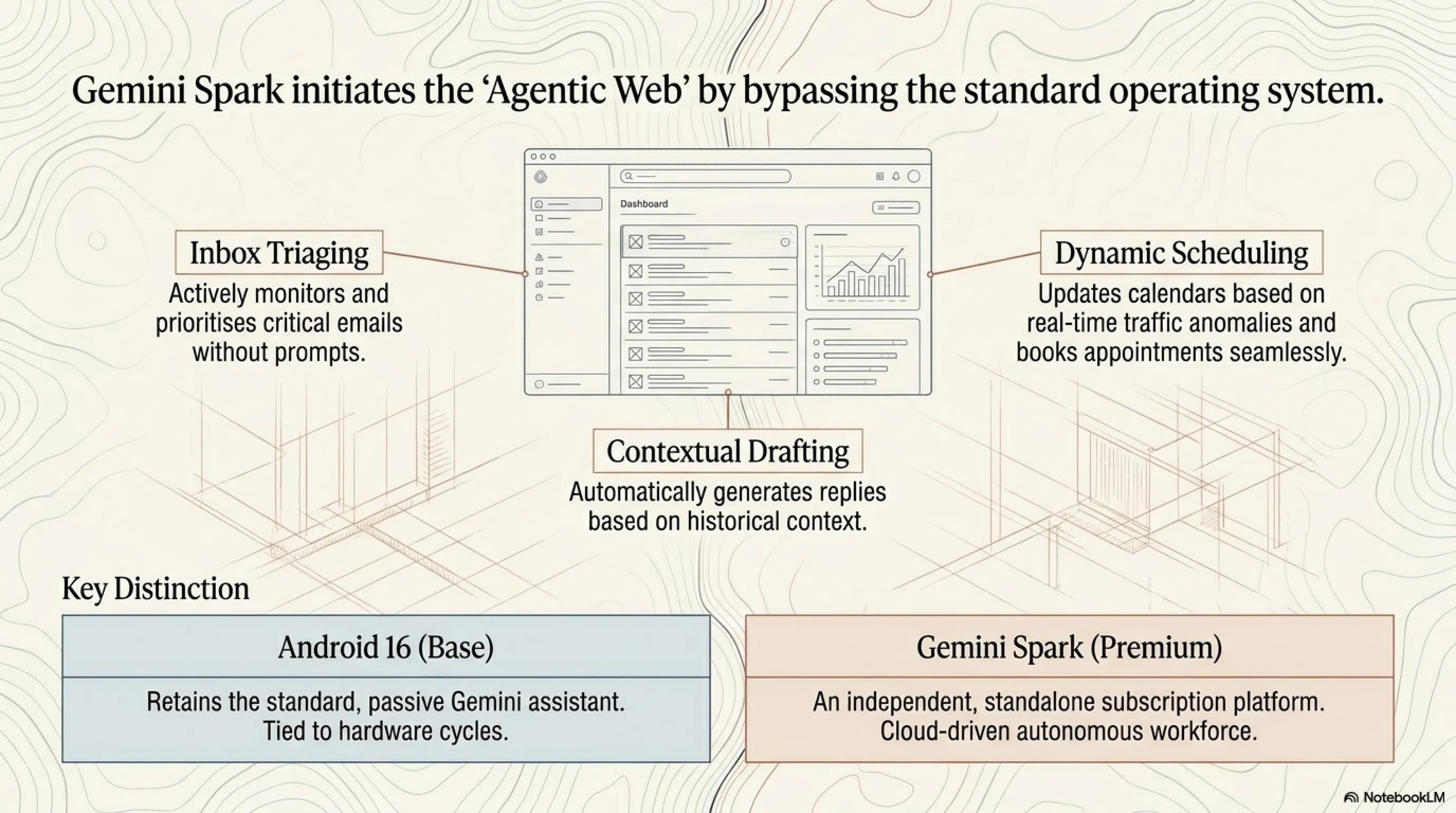
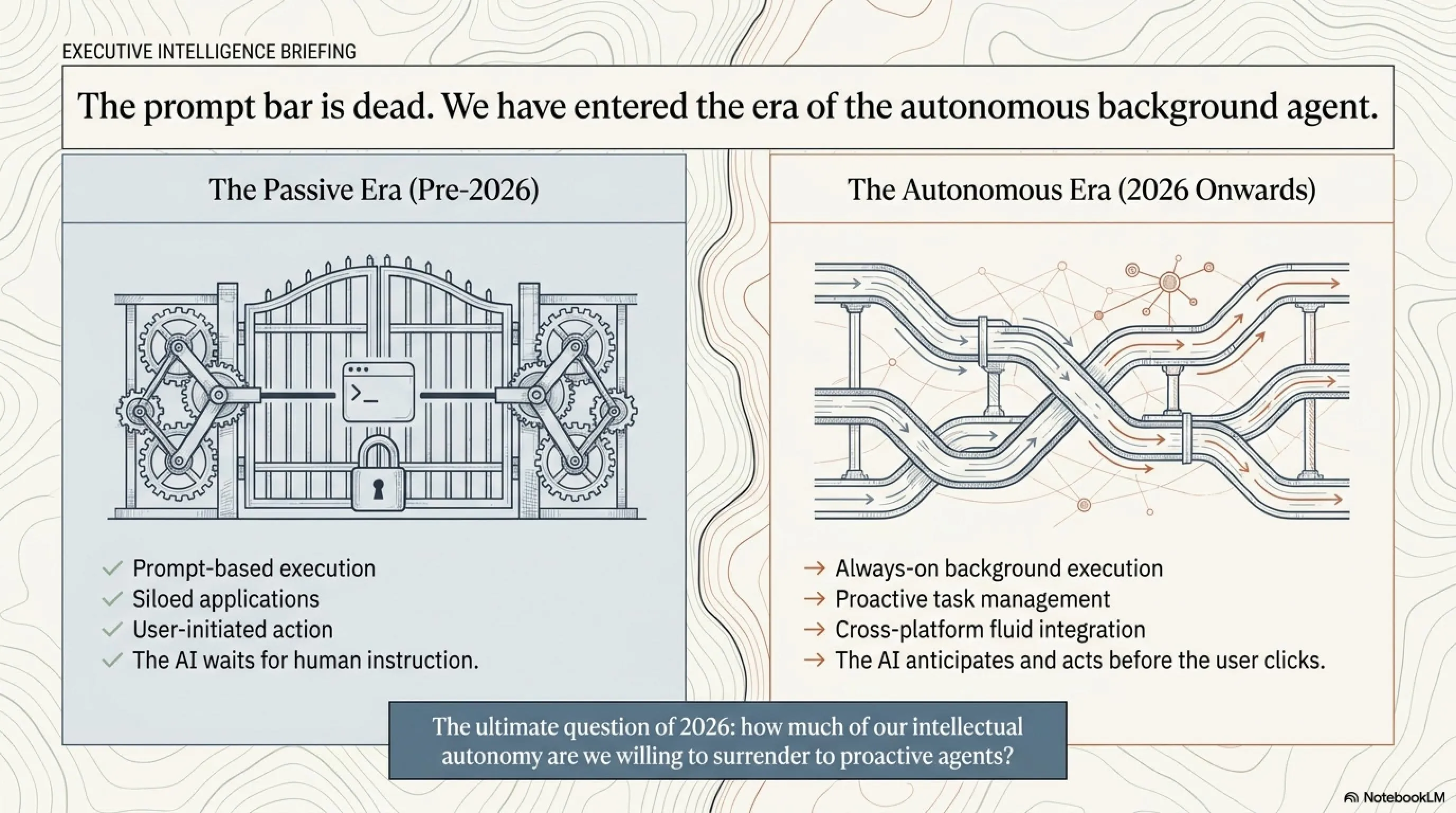
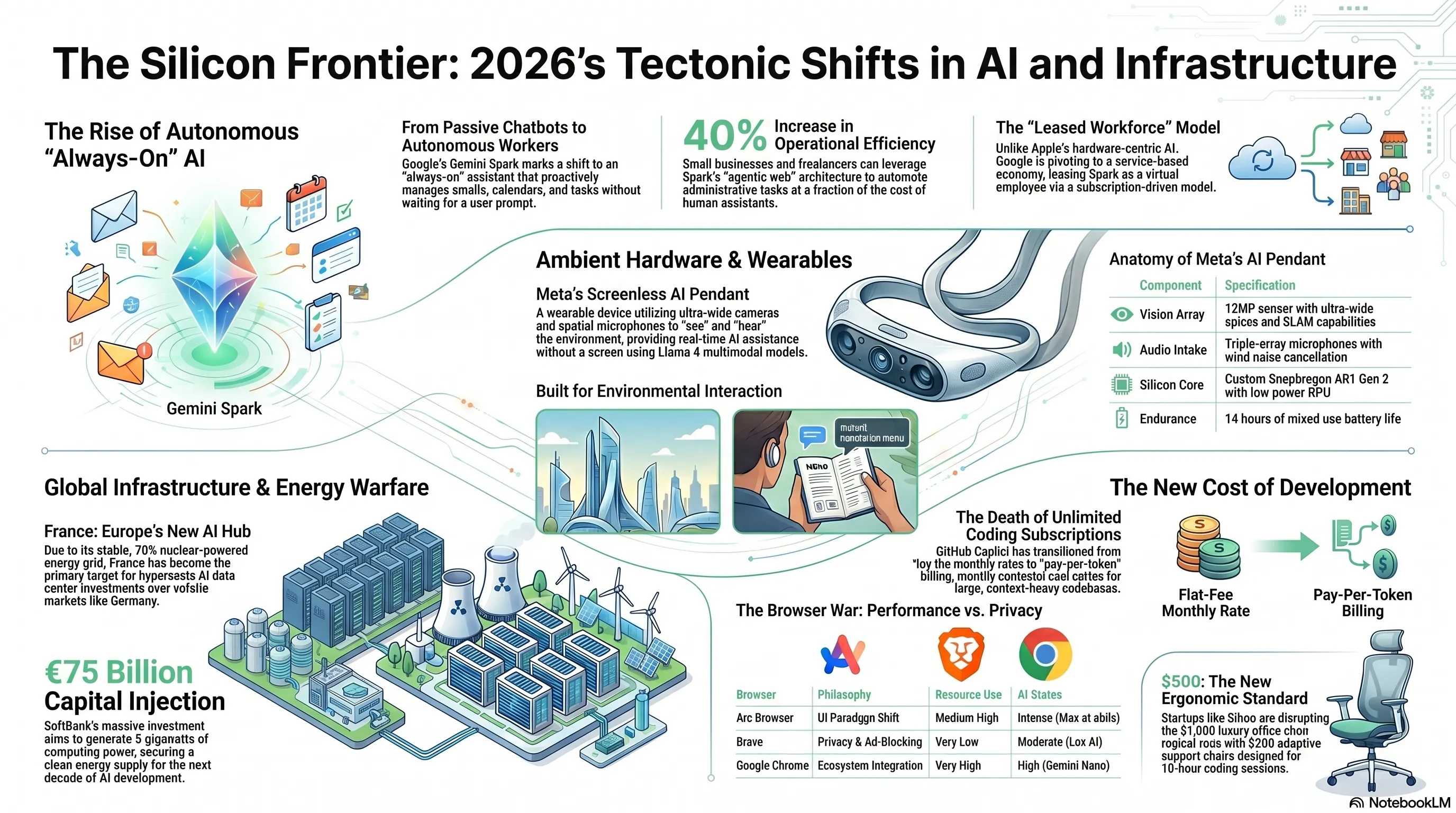
Google has finally unveiled its most ambitious personal AI project to date: Gemini Spark. Unlike voice assistants or traditional chatbots (including earlier iterations of Gemini itself), Spark does not wait for a prompt. It is an autonomous, "always-on" entity running continuously in the background of your digital life. Imagine an agent that actively monitors your inbox, prioritizes critical emails, automatically drafts contextual replies, updates your calendar based on real-time traffic anomalies, and even books appointments without a single tap from you. This level of proactivity marks a fundamental shift in human-computer interaction.
However, what has analysts truly intrigued is Google's deployment strategy. Why didn't Google simply bake these revolutionary features into the standard Android 16 update or the core Gemini app? Why launch Gemini Spark as an independent, standalone platform? The answer to this strategic separation illuminates the future of Silicon Valley's trillion-dollar revenue models.
🔍 Strategic Tekin Analysis
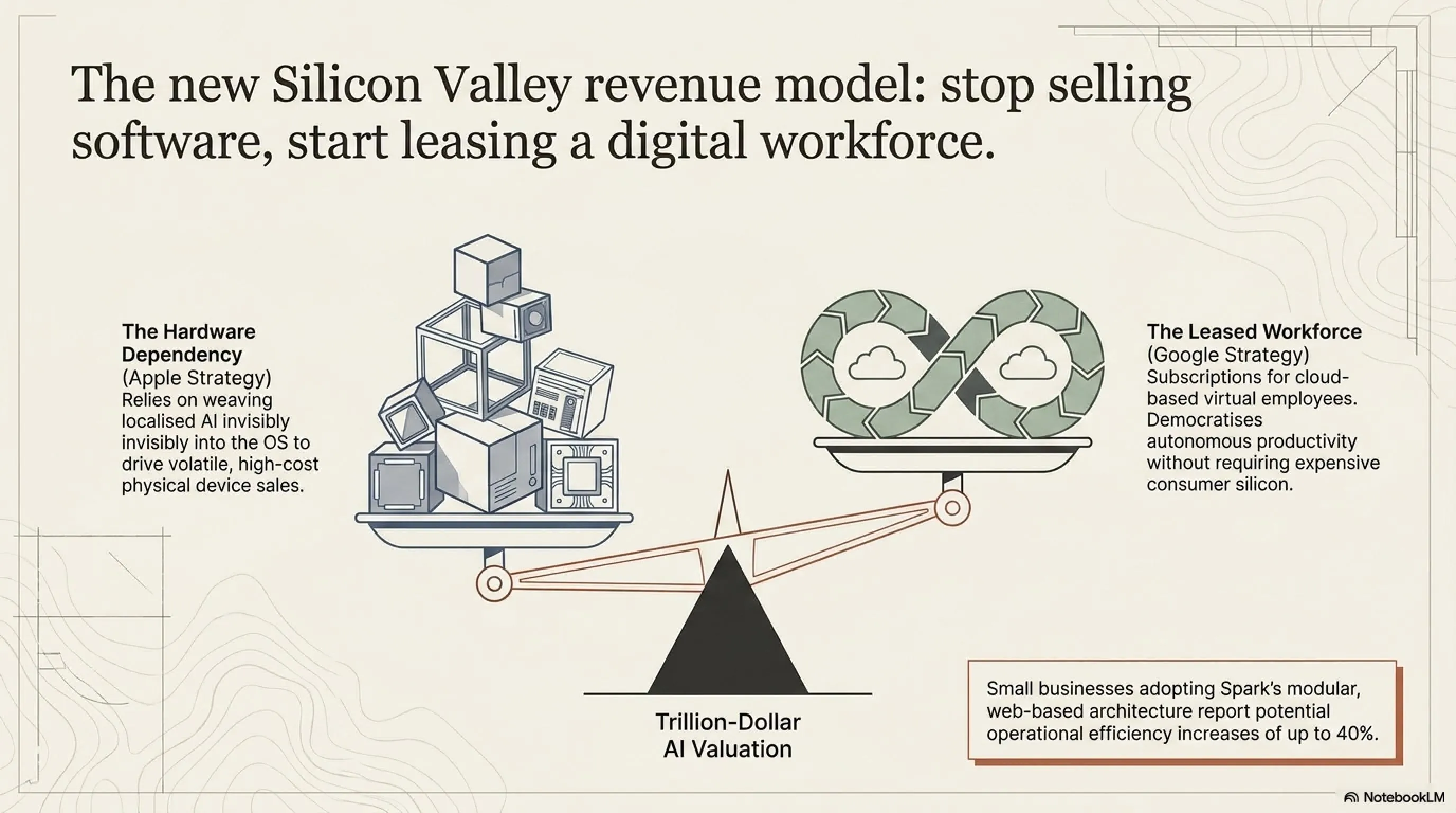
Google's decision to unbundle Gemini Spark signals a massive paradigm shift from "selling AI software" to "leasing a digital workforce." While Apple attempts to weave Apple Intelligence invisibly into iOS to sell more hardware (iPhones), Google is pivoting to a service-based autonomous economy. They aim to lease Spark as a virtual employee to enterprises and power users. This subscription-driven model creates a far more resilient revenue stream than volatile hardware sales.
What does this mean for the global workforce? For startups and freelancers, Spark's modular, web-based architecture is a game-changer. Unlike Apple's localized AI that requires expensive, latest-generation silicon, Spark can run on the cloud, effectively democratizing autonomous productivity. Small businesses can automate administrative and scheduling tasks at a fraction of the cost of a human assistant, potentially increasing operational efficiency by up to 40%. The "agentic web" is no longer a concept; it's a measurable competitive advantage.
2. Zuckerberg's Hardware Gamble: Meta's AI Pendant and the Post-Smartphone Vision
When Meta (formerly Facebook) introduced Ray-Ban smart glasses, few anticipated they would become a sleeper hit in the wearable market. But Mark Zuckerberg is looking far beyond augmented eyewear. Fresh supply-chain leaks suggest Meta's Reality Labs is heavily investing in a radical new form factor: an AI-powered smart pendant.
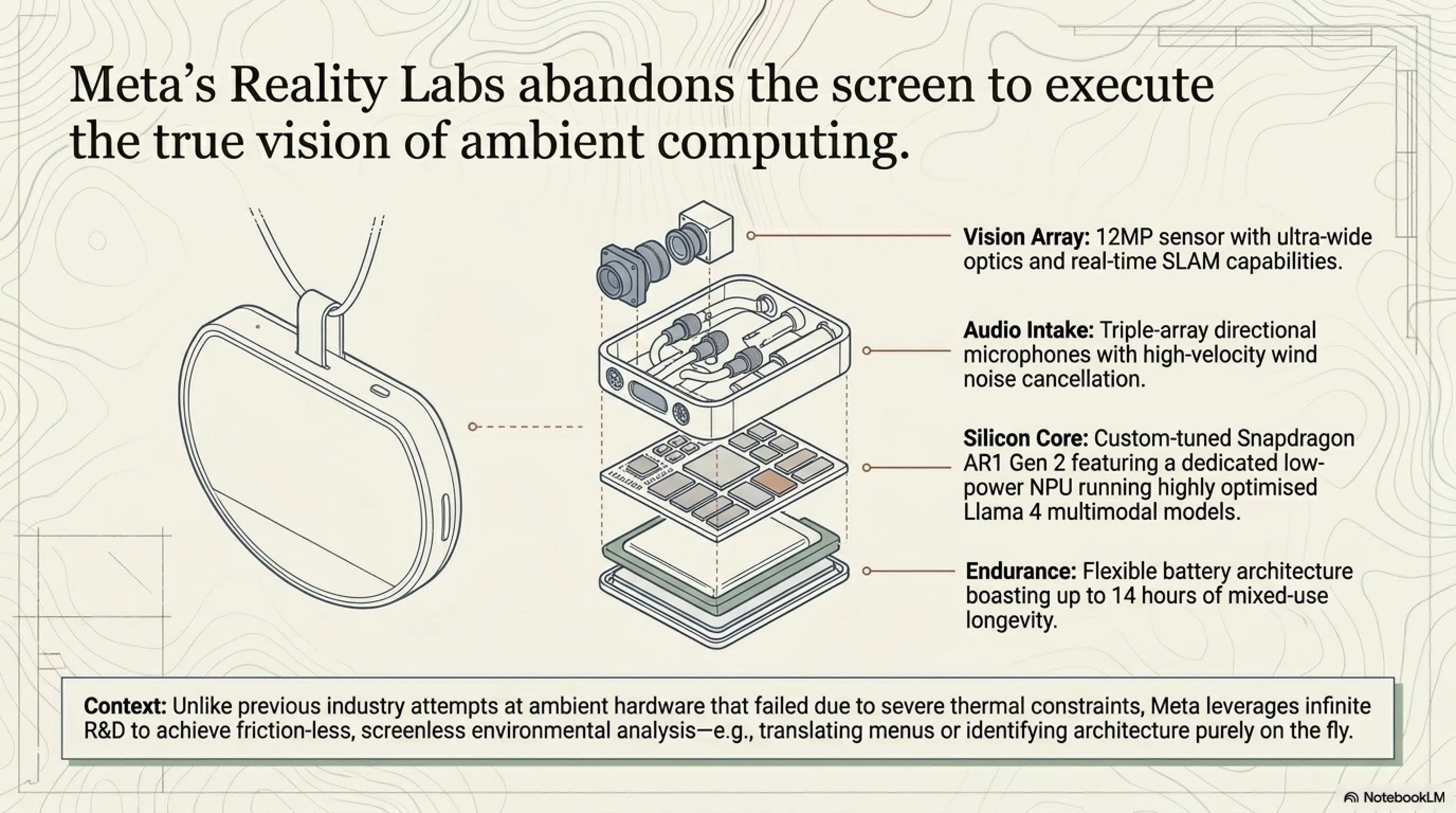
This device is completely devoid of a screen. Instead, it relies on an array of ultra-wide cameras and spatial microphones that continuously "see" and "hear" the user's environment. You could be walking down a street and simply ask the pendant, "What architectural style is that building across the road?" or "Translate this Japanese menu into English." This is the exact ambient computing vision that startups like Humane (with their AI Pin) attempted but ultimately failed to execute due to severe thermal and processing limitations. Now, Meta is stepping into the void with near-infinite R&D budgets and their highly optimized Llama 4 multimodal models.
Anatomy of Meta's AI Pendant (Based on Patent Filings)
- 📸 Vision Array: 12MP sensor with ultra-wide optics and real-time SLAM capabilities.
- 🎙️ Audio Intake: Triple-array directional microphones with high-velocity wind noise cancellation.
- 🧠 Silicon Core: Custom-tuned Snapdragon AR1 Gen 2 featuring a dedicated low-power NPU.
- 🔋 Endurance: Flexible battery architecture boasting up to 14 hours of mixed-use longevity.
3. The €75 Billion Mega-Deal: Why France is Becoming Europe's AI Beating Heart
📚 Classified & Related Dossiers in TekinGame
If you wish to explore beyond this report and delve into cybernetic frontiers and autonomous AI architectures, do not miss these three exclusive deep-dives in the Tekin Garage:
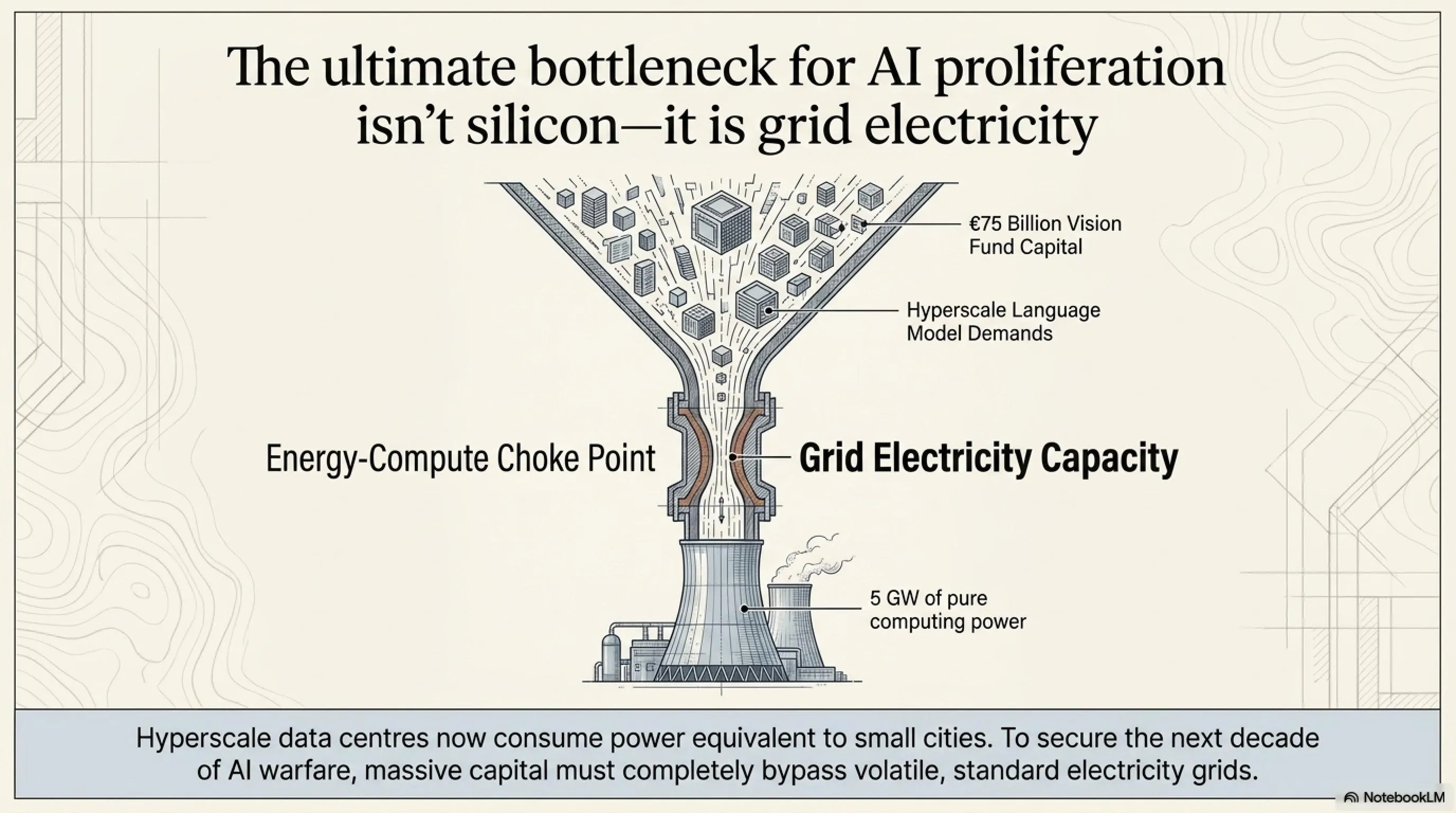
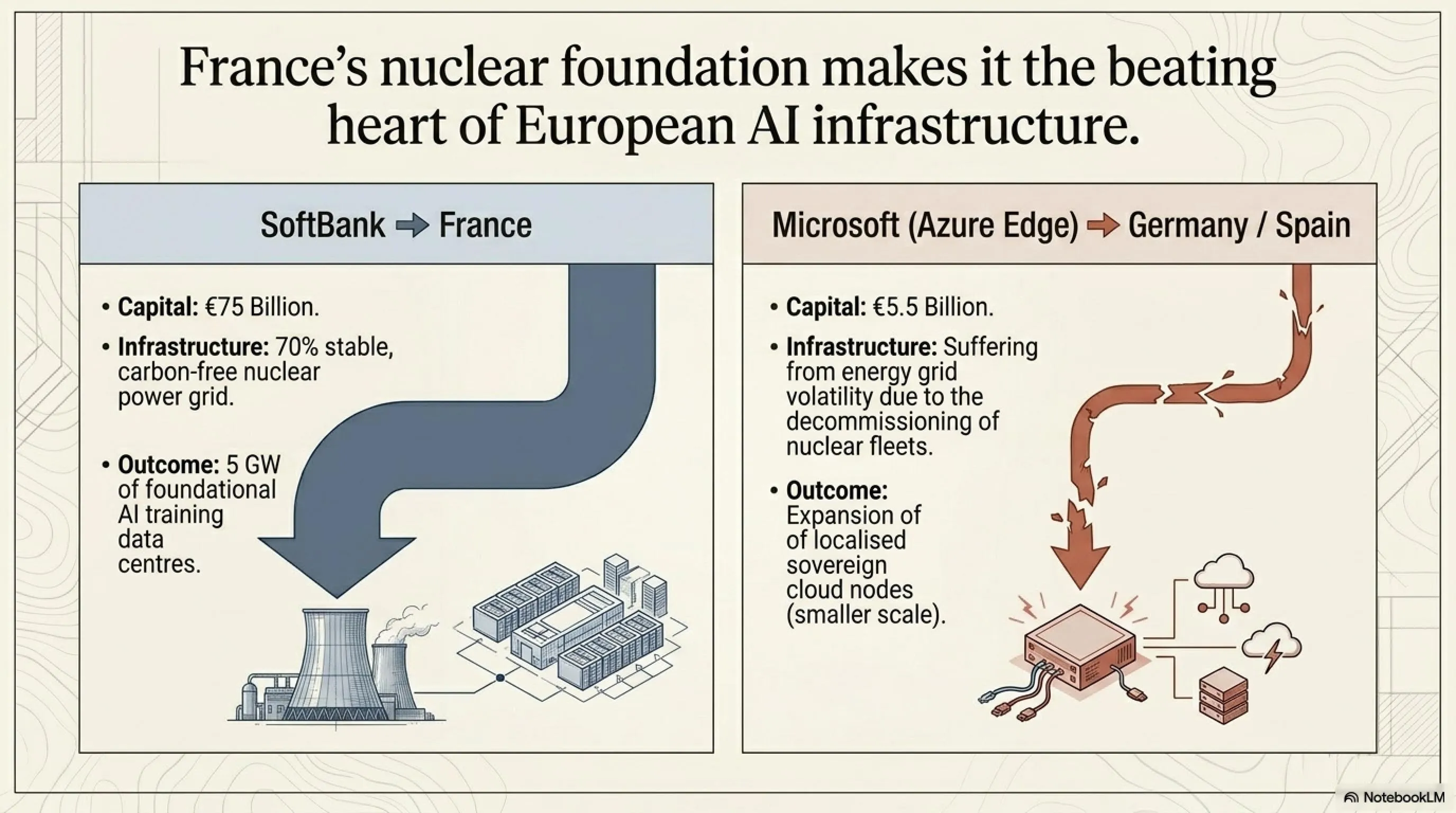
The most critical bottleneck for artificial intelligence in 2026 isn't silicon—it's electricity. Massive language models require hyperscale data centers that consume power equivalent to small cities. Recognizing this existential infrastructure crisis, Japanese investment behemoth SoftBank dropped a massive bombshell: a €75 billion capital injection to construct colossal AI data centers on French soil.
These facilities are projected to generate an astronomical 5 gigawatts of pure computing power. The selection of France is a masterclass in geopolitical strategy. While Germany grapples with volatile energy prices following the shutdown of its nuclear fleet, France draws over 70% of its electricity from stable, carbon-free nuclear power. By planting its flag in France, SoftBank isn't just buying land; it is securing a guaranteed, clean energy supply for the next decade of AI warfare.
| Key Player / Investor | Target Region | Estimated Capital (EUR) | Strategic Objective |
|---|---|---|---|
| SoftBank (Vision Fund) | France (Nuclear Grid) | €75 Billion | 5 GW of foundational AI training infrastructure |
| Microsoft (Azure Edge) | Germany / Spain | €5.5 Billion | Expansion of localized sovereign cloud nodes |
4. The End of the Honeymoon: Why GitHub Copilot Shifted to Token-Based Billing
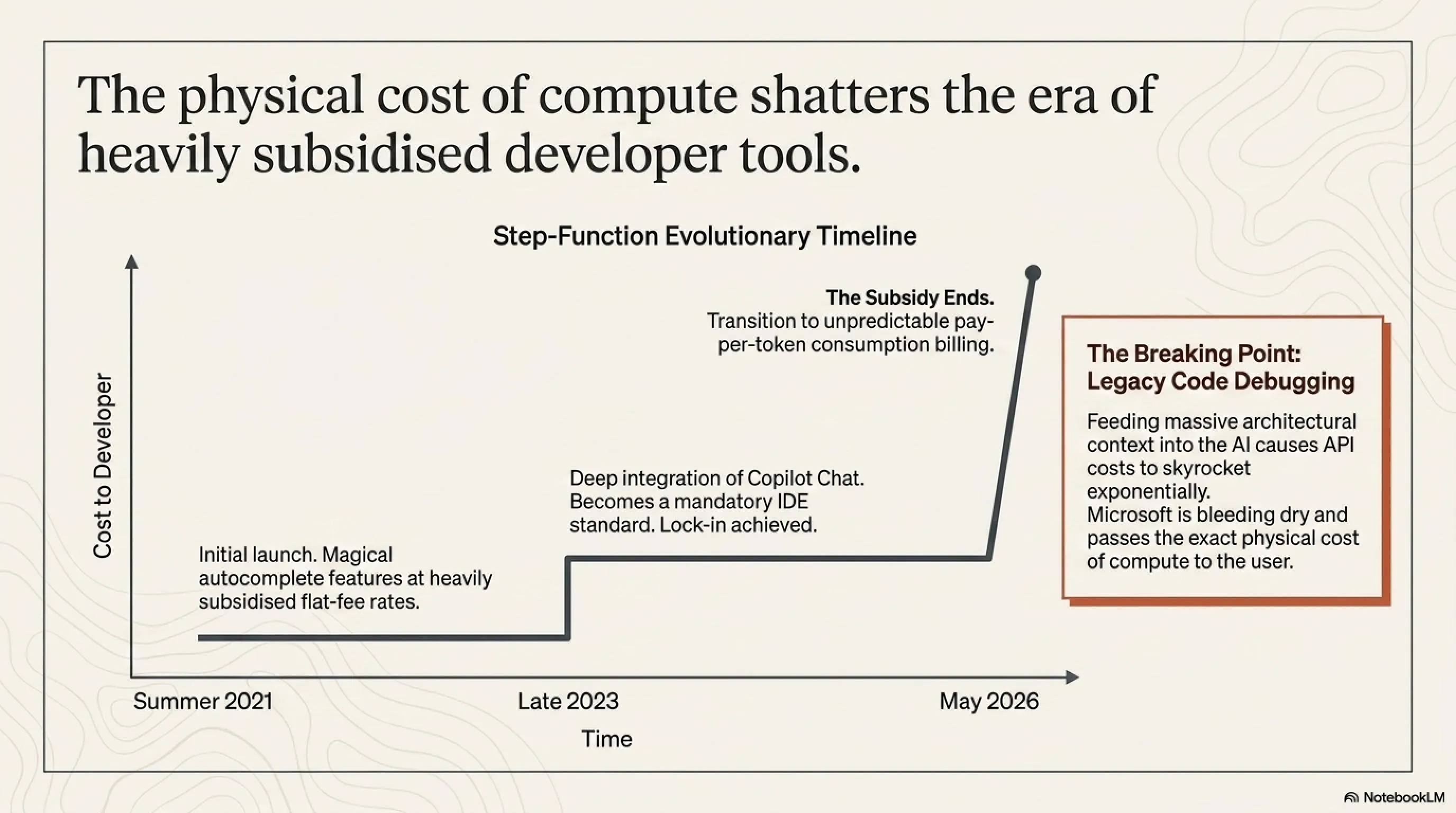
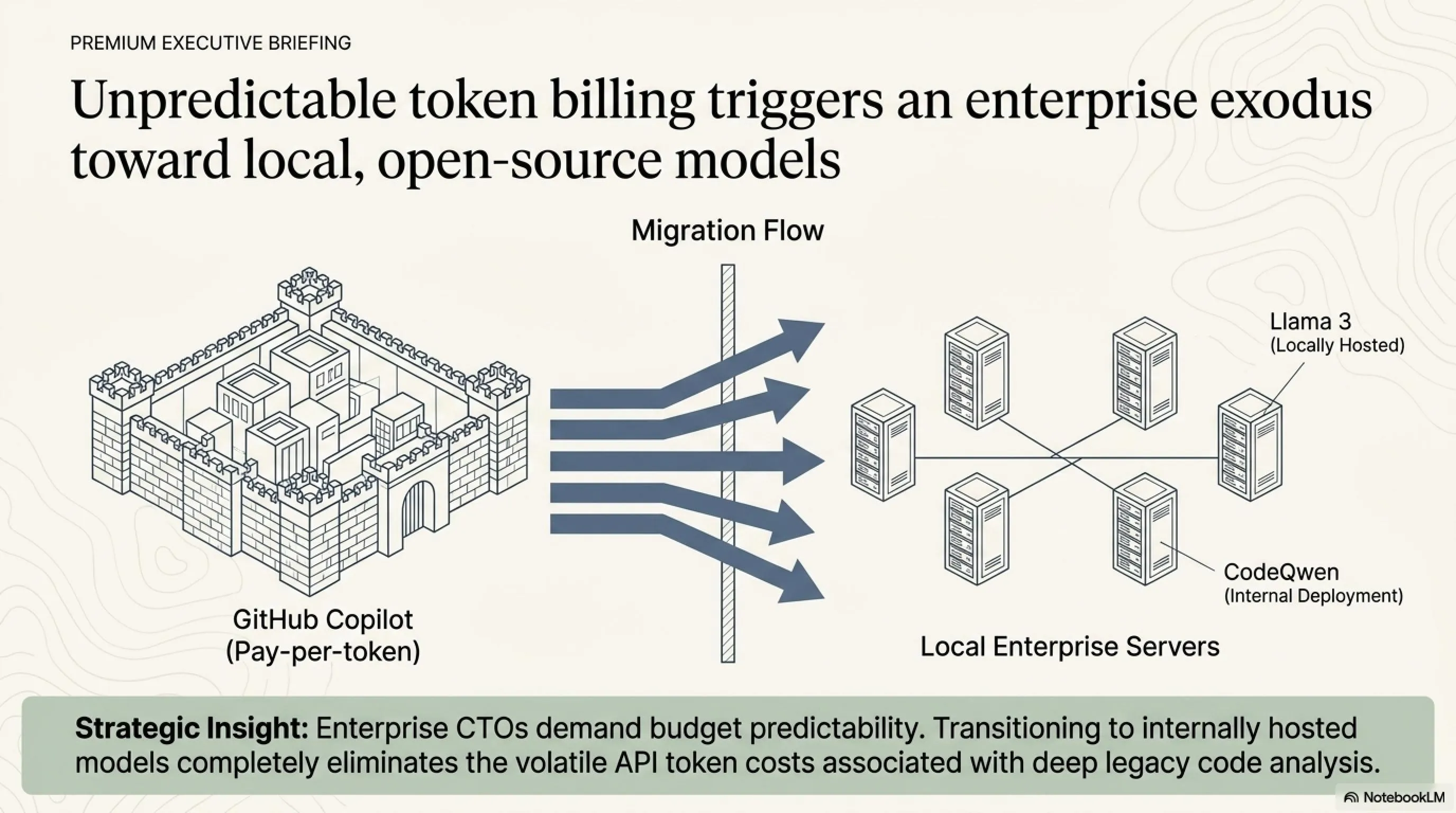
Perhaps the most jarring news for the global software development community is Microsoft's abrupt monetization pivot for GitHub Copilot. The AI coding assistant, previously available for a flat, predictable monthly fee, is transitioning to a "pay-per-token" consumption model.
This policy change has sent shockwaves through engineering teams. Historically, CTOs could easily budget for Copilot licenses. Now, if a developer feeds a massive legacy codebase into the AI for debugging, or asks highly complex, context-heavy architectural questions, the API costs could skyrocket exponentially. The underlying reality is stark: maintaining the compute infrastructure for advanced code generation is bleeding Microsoft dry, and they are no longer willing to heavily subsidize the global developer ecosystem.
Timeline: The Evolution of GitHub Copilot
5. The 2026 Browser Wars: Is the Chrome and Safari Hegemony Collapsing?
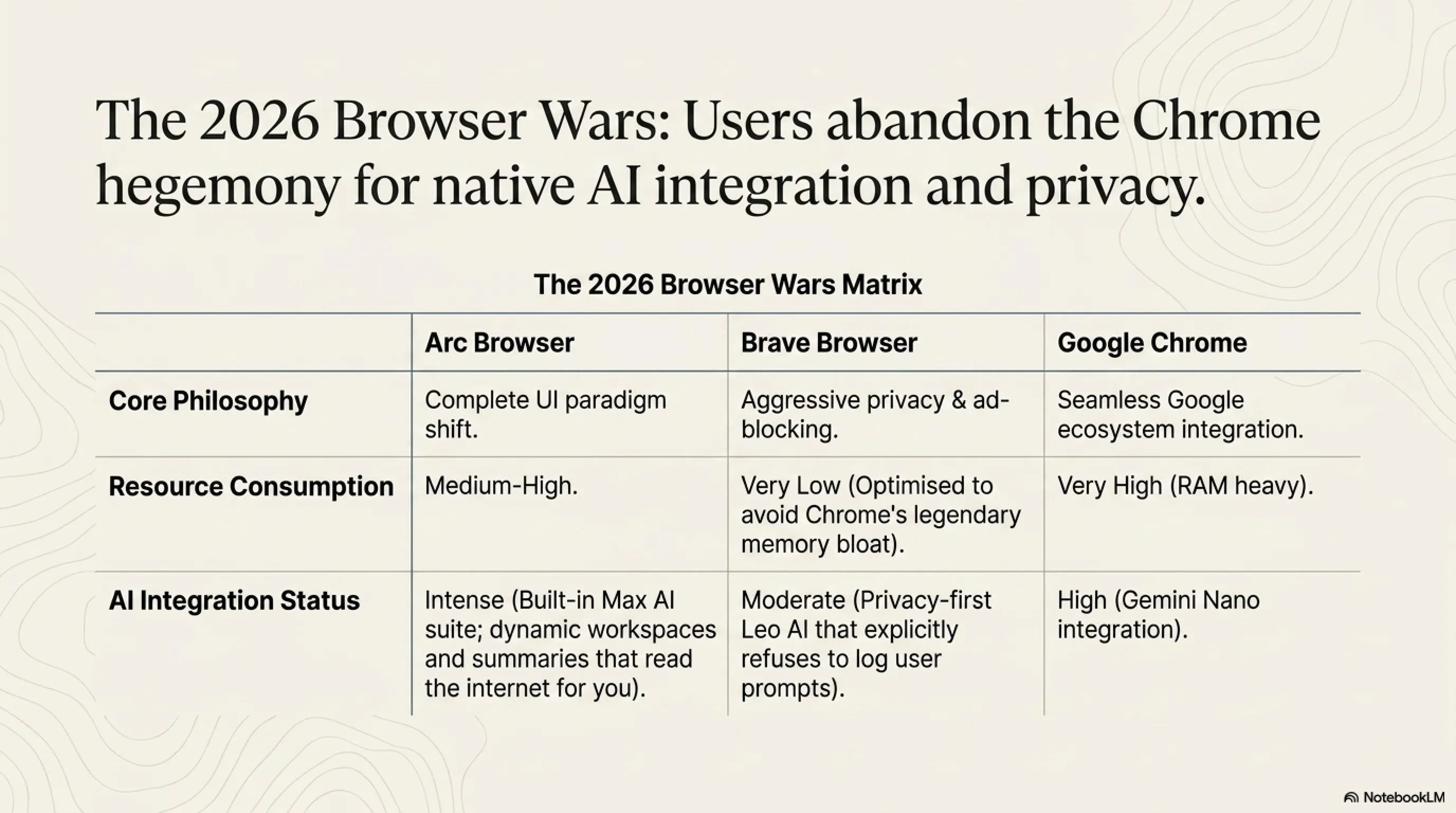
For over a decade, Google Chrome and Apple Safari have comfortably monopolized the web browser market. However, growing frustration over Chrome's infamous RAM consumption and mounting privacy concerns have created a massive vulnerability. Next-generation browsers like Arc and Brave are capitalizing on this by offering what users actually want in 2026: deep, native AI integration without sacrificing performance.
Arc Browser has fundamentally redesigned web interaction with its dynamic workspaces and "Max" AI summaries that read the internet for you. Conversely, Brave has doubled down on absolute privacy, offering its native "Leo AI" model that explicitly refuses to log user prompts for training data—a massive selling point for privacy-conscious users fleeing mainstream tech giants.
| Browser Platform | Core Philosophy | Resource Consumption | AI Integration Status |
|---|---|---|---|
| Arc Browser | Complete UI paradigm shift | Medium-High | Intense (Built-in Max AI suite) |
| Brave Browser | Aggressive privacy & ad-blocking | Very Low (Optimized) | Moderate (Privacy-first Leo AI) |
| Google Chrome | Seamless Google ecosystem integration | Very High (RAM heavy) | High (Gemini Nano integration) |
6. The Sihoo Revolution: A Sub-$500 Ergonomic Marvel Disrupting the Market
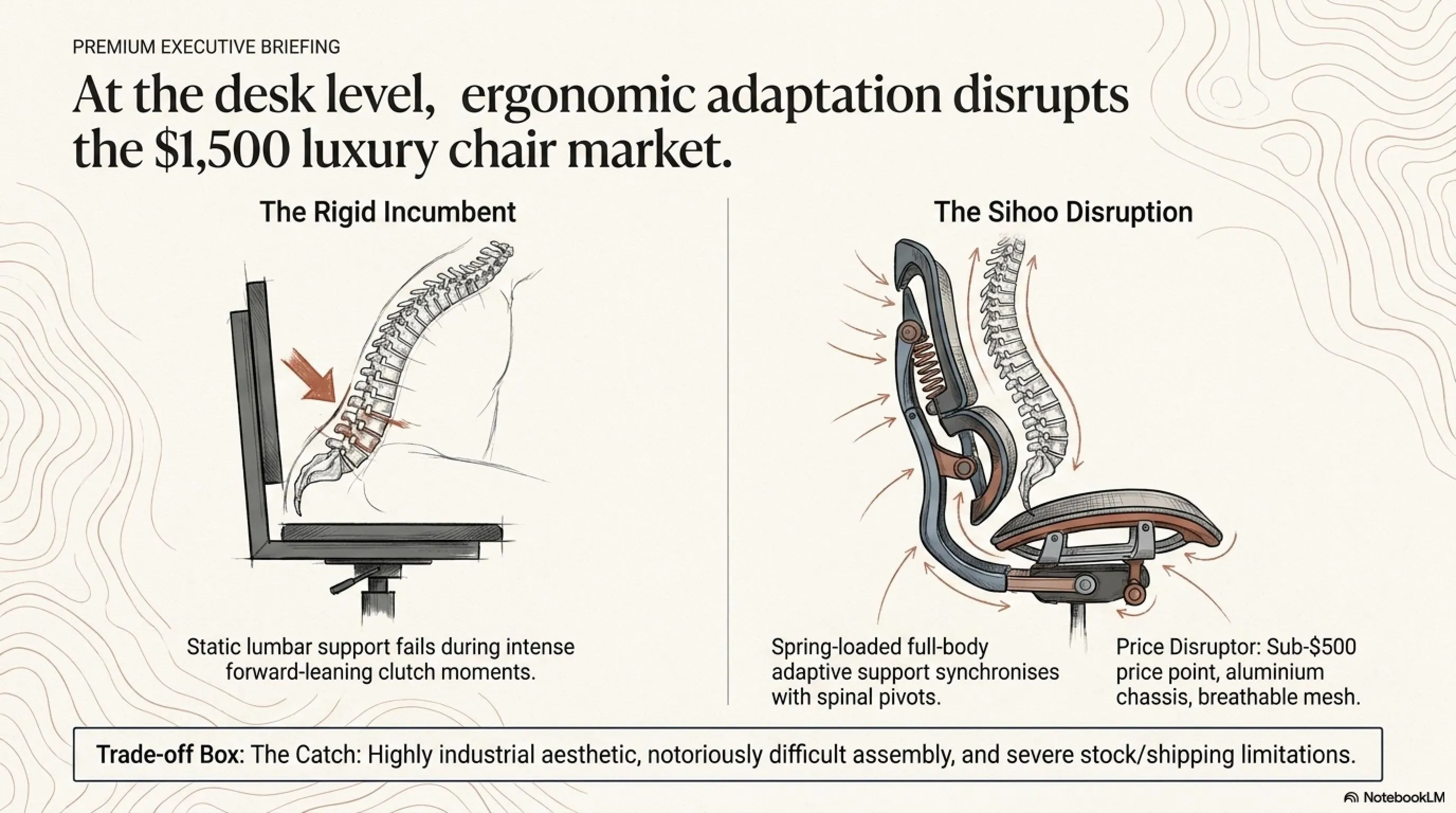
Whether you are a hardcore competitive gamer or a software engineer tethered to a desk for 10 hours a day, spinal health is a paramount concern. For years, luxury brands like Herman Miller dominated the high-end ergonomic sector with their $1,500 offerings. Enter Sihoo, a Chinese startup that has sent shockwaves through the industry with a premium ergonomic chair priced under $500.
The secret weapon of this chair is its "Full-body adaptive support" system. Unlike traditional chairs featuring rigid lumbar support, Sihoo utilizes dynamic, spring-loaded mechanisms that pivot and adjust to micro-movements of your body. Even when you lean forward intensely during a gaming clutch or coding session, the chair maintains constant, contoured support against your spine.
✅ Pros (Why It's Disruptive)
- Unmatched adaptive tracking that synchronizes with spinal micro-movements.
- Aggressive, market-undercutting price point that threatens luxury incumbents.
- Premium build quality featuring aluminum chassis and highly breathable mesh.
❌ Cons (User Challenges)
- Highly industrial, mechanical aesthetic that may not fit modern minimalist setups.
- Notoriously difficult and time-consuming assembly process.
- Severe stock limitations and high international shipping fees.
📊 By The Numbers
🔖 Smart History (Deep Dives)
📝 The Tekin Verdict
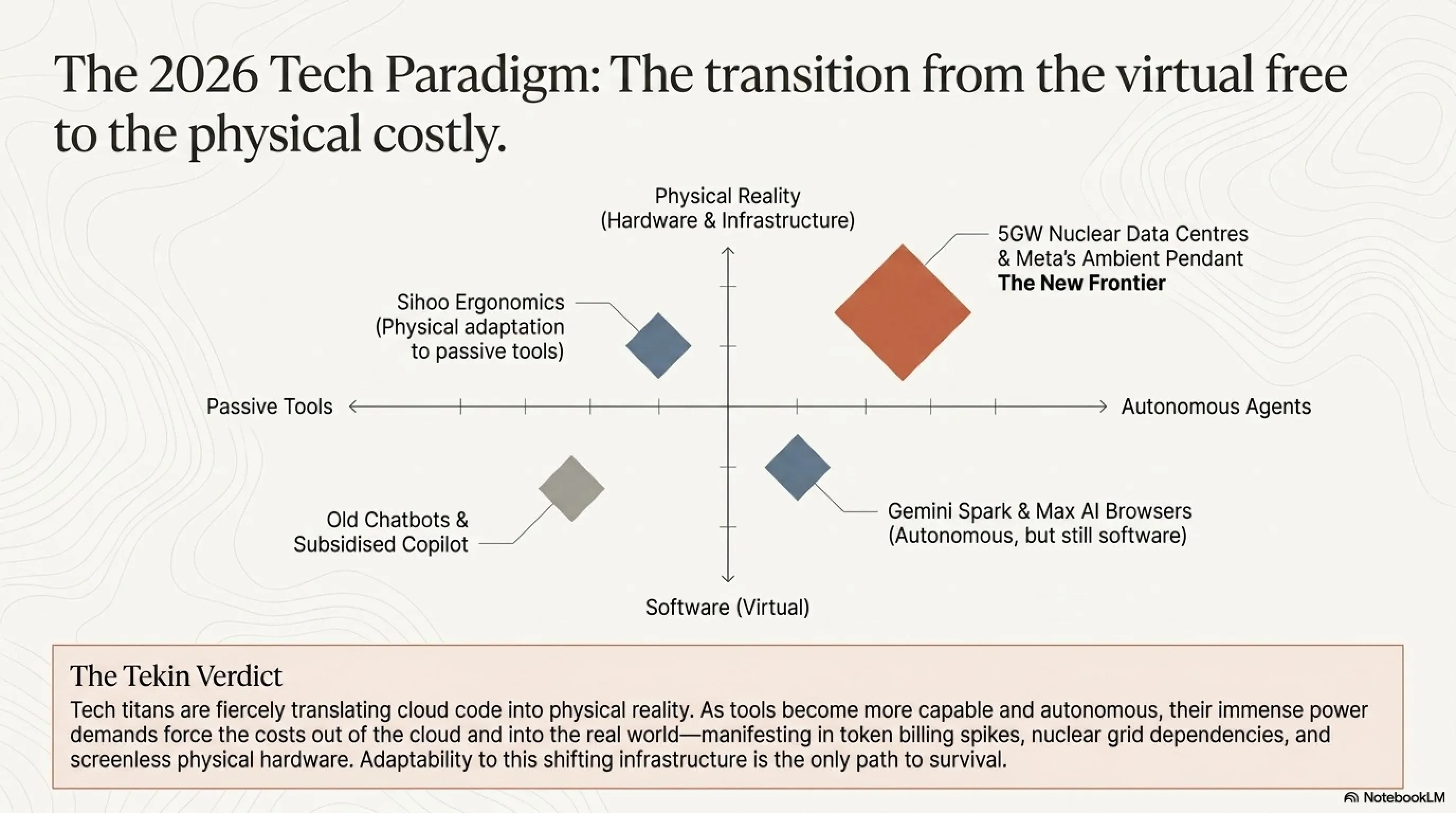
Today's events broadcast a clear, undeniable message: the era of "free, software-only AI" is rapidly concluding. Tech titans are fiercely translating cloud code into physical reality—whether through wearable hardware like Meta's pendant or massive, power-hungry infrastructure like SoftBank's data centers. Meanwhile, as essential tools like GitHub Copilot transition to unpredictable token-based billing, the baseline cost of software development is poised to spike, placing unprecedented pressure on smaller tech firms. Adaptability to this shifting infrastructure is the only path to survival.
❓ Frequently Asked Questions (FAQ)
1. Will Gemini Spark be included for free in the Android 16 update?
No. Current evidence points to Google offering Spark as an independent, premium subscription service (akin to Google One AI Premium). The base Android experience will likely only retain the standard, passive Gemini assistant.
2. Why did SoftBank choose France over Germany, Europe's industrial powerhouse, for their data centers?
Germany is currently suffering from energy grid volatility due to the decommissioning of its nuclear plants. France, conversely, provides stable, immense, and carbon-free nuclear energy—an absolute prerequisite for hyperscale 5GW AI infrastructure.
3. With GitHub Copilot moving to token-based billing, should developers migrate to open-source alternatives?
Yes, many enterprise development teams are already transitioning to locally hosted models (like Llama 3 or CodeQwen running on internal servers) to completely eliminate unpredictable API and token costs.
4. Does Meta's screen-less AI Pendant pose a severe privacy threat to bystanders?
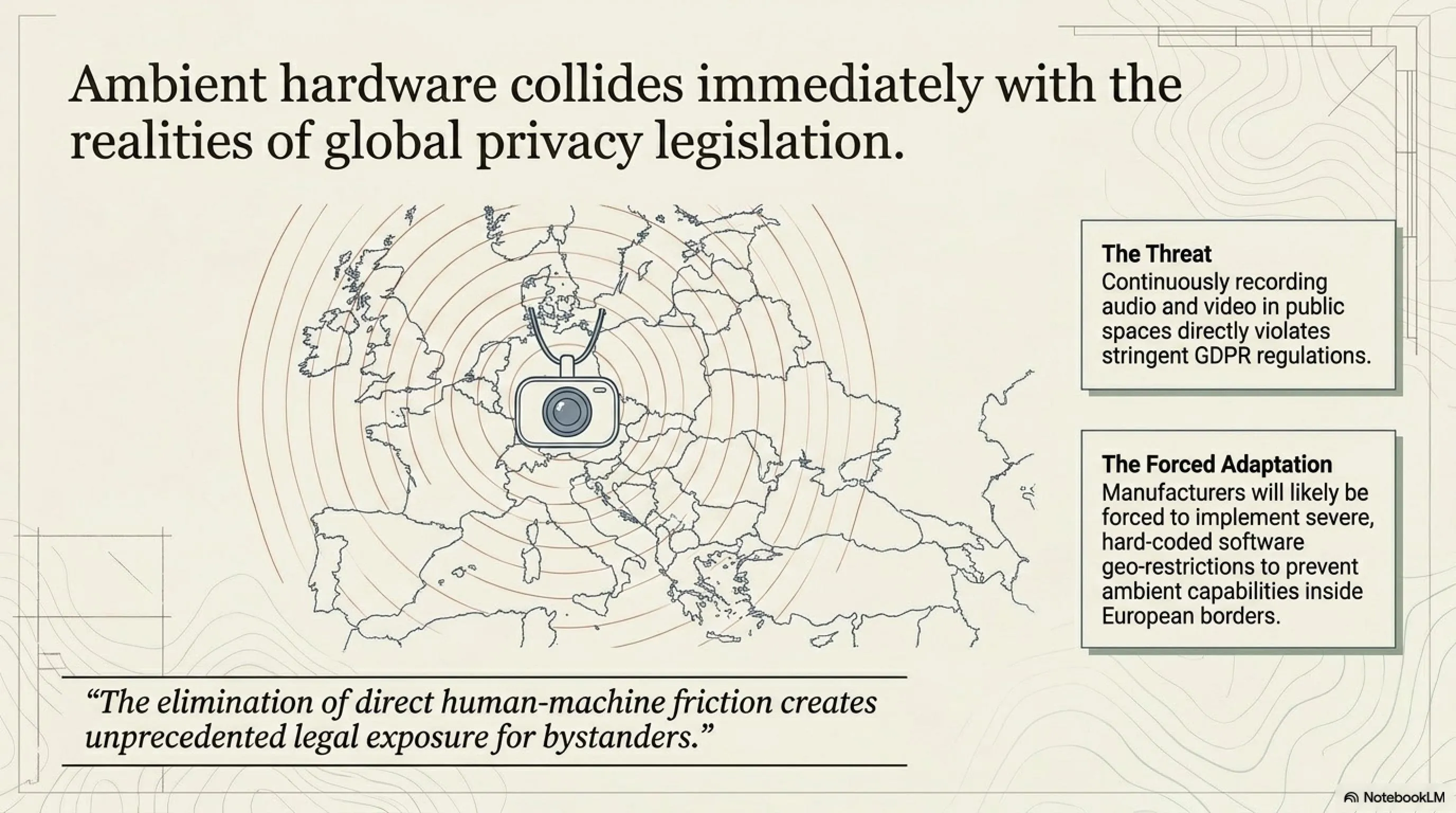
This will undoubtedly be Meta's largest legal hurdle. Continuously recording audio and video in public spaces directly conflicts with stringent GDPR regulations in Europe, likely forcing Meta to implement severe software geo-restrictions.
5. Are Arc and Brave browsers truly a viable replacement for Google Chrome?
For power users and professionals, absolutely. Arc offers a fundamentally superior workflow with AI native tools, while Brave offers unmatched privacy. Both provide significant performance gains by avoiding Chrome's legendary memory bloat.
🎯 Final Thoughts
The future belongs to ambient computing—technologies that operate quietly and autonomously in the background of our lives. Whether it's Meta's smart pendant observing the world from your perspective or Google's 24/7 assistant managing your calendar, the trend is clear: the elimination of screens and direct human-machine friction. The ultimate question remains: how much of our intellectual autonomy are we willing to surrender to these proactive agents?
- TechCrunch (Startup Ecosystem Analysis)
- 9to5Google (Mobile & Device Reports)
- Bleeping Computer (Cybersecurity Bulletins)
- Reuters (Global Financial Data)
Join the Conversation 💬
Which of these technological leaps do you believe will impact your daily workflow the fastest? Would you be comfortable wearing a pendant that listens to your every conversation? Share your deep dives and thoughts in the comments below!
Leave a Comment🌐 Stay Connected With Us 🎮✨
For the latest tech, gaming, and gadget news, follow us on our official social media channels:
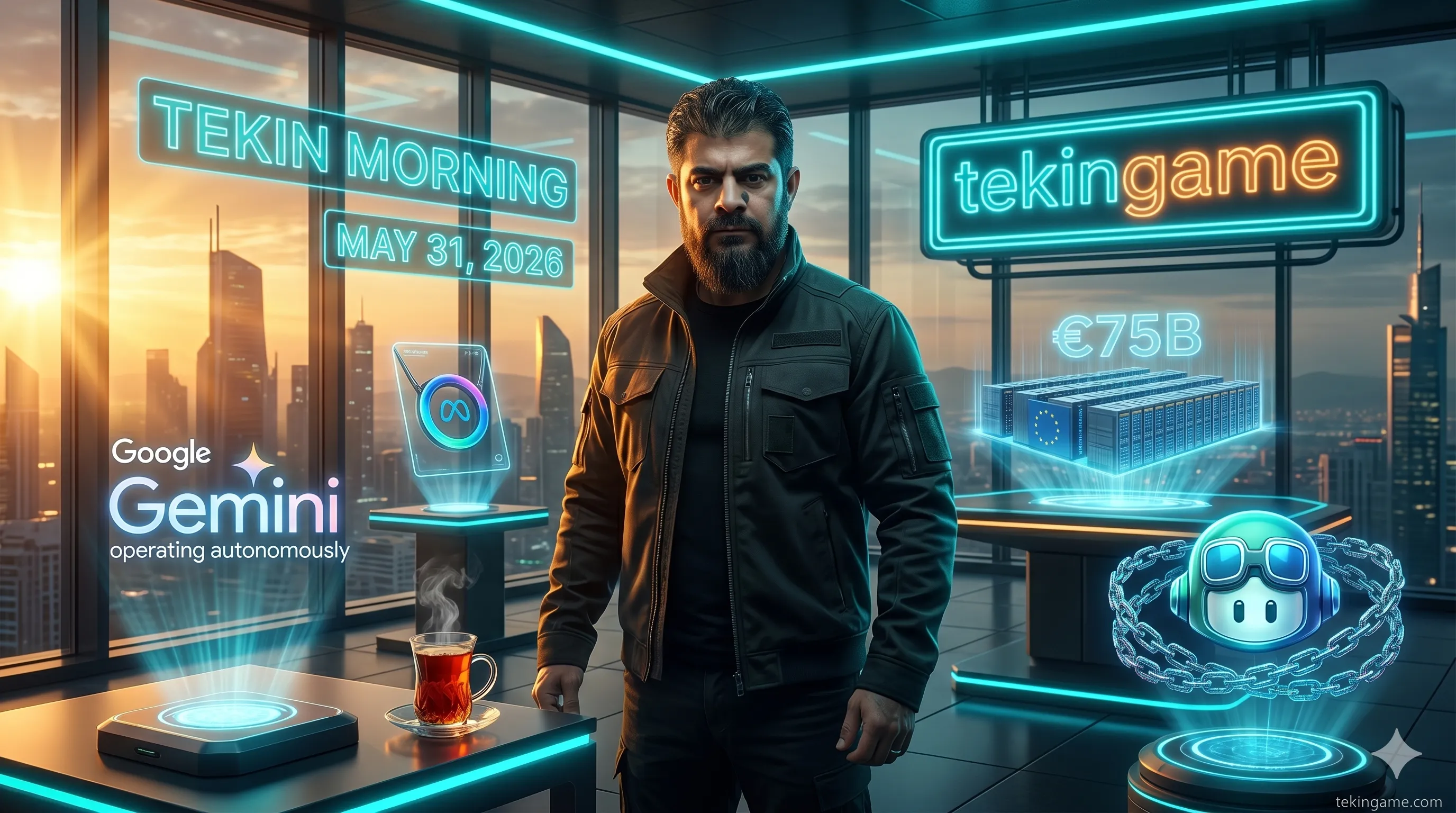
Additional Gallery: 🌅 Tekin Morning May 31, 2026: Gemini Spark, Meta AI Pendant & SoftBank's €75B Gamble