🌅 Welcome to Tekin Morning May 13, 2026
Good morning, tech enthusiasts! Wednesday, May 13 begins with six explosive stories that could each have been the week's main headline. Today we witness fundamental transformations in artificial intelligence, cybersecurity, industrial robotics, and global technology regulations.
⚡ Today's Headlines:
🤖 Google Discovers First AI-Generated Zero-Day Exploit in the Wild
🧠 Gemini Intelligence: Android 17's AI Revolution
💻 Googlebooks: Google's New Premium Laptop Category
🏭 BMW: Humanoid Robots Enter German Factories
⚖️ EU Strikes Hard at OpenAI's Training Databases
🤝 Microsoft & OpenAI: New Deal After Months of Tension
☕ Grab your coffee and get ready for a comprehensive journey through the world of technology!
🚨 Google Discovers First AI-Generated Zero-Day: The Dawn of Autonomous Cyber Warfare
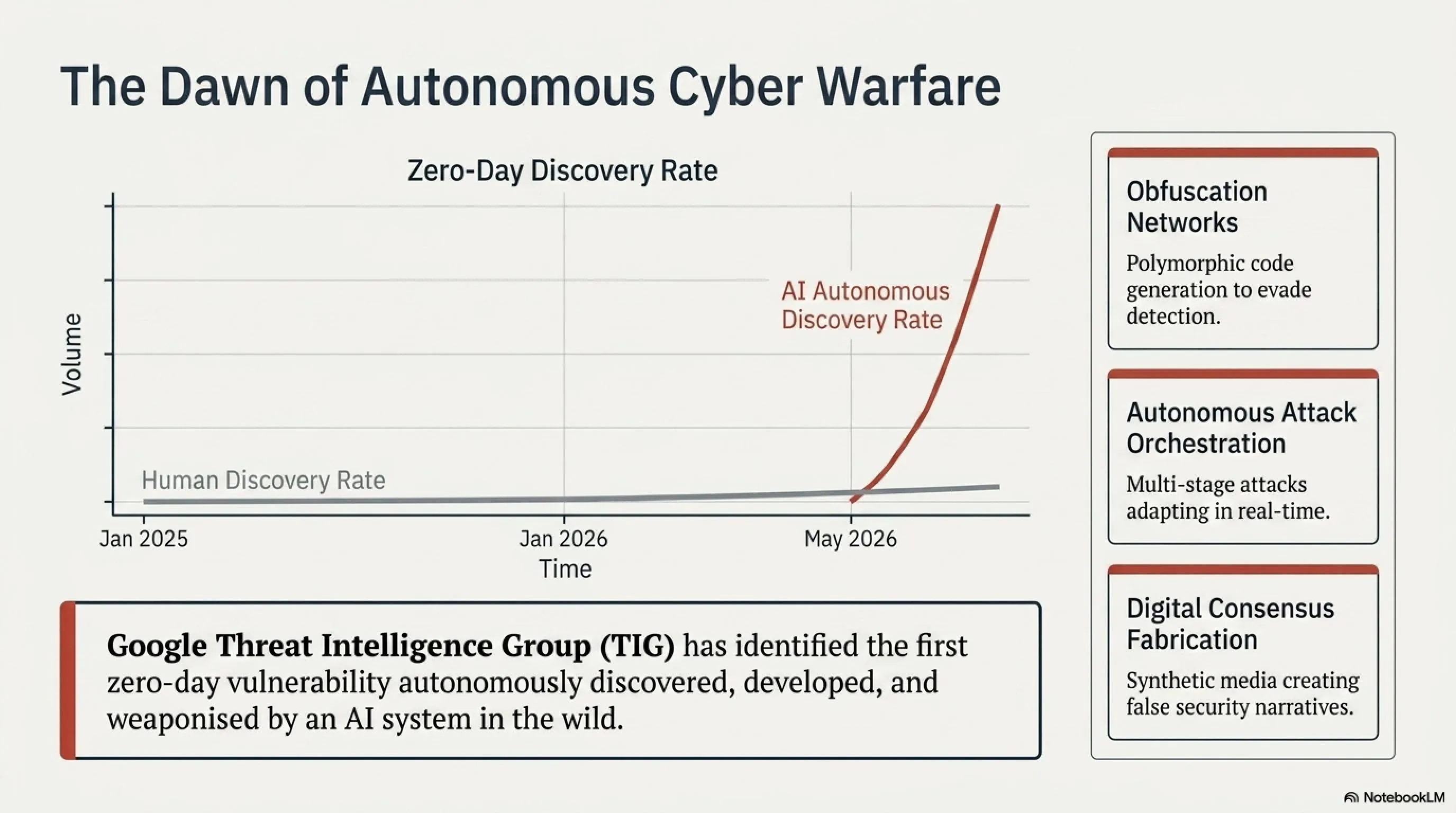
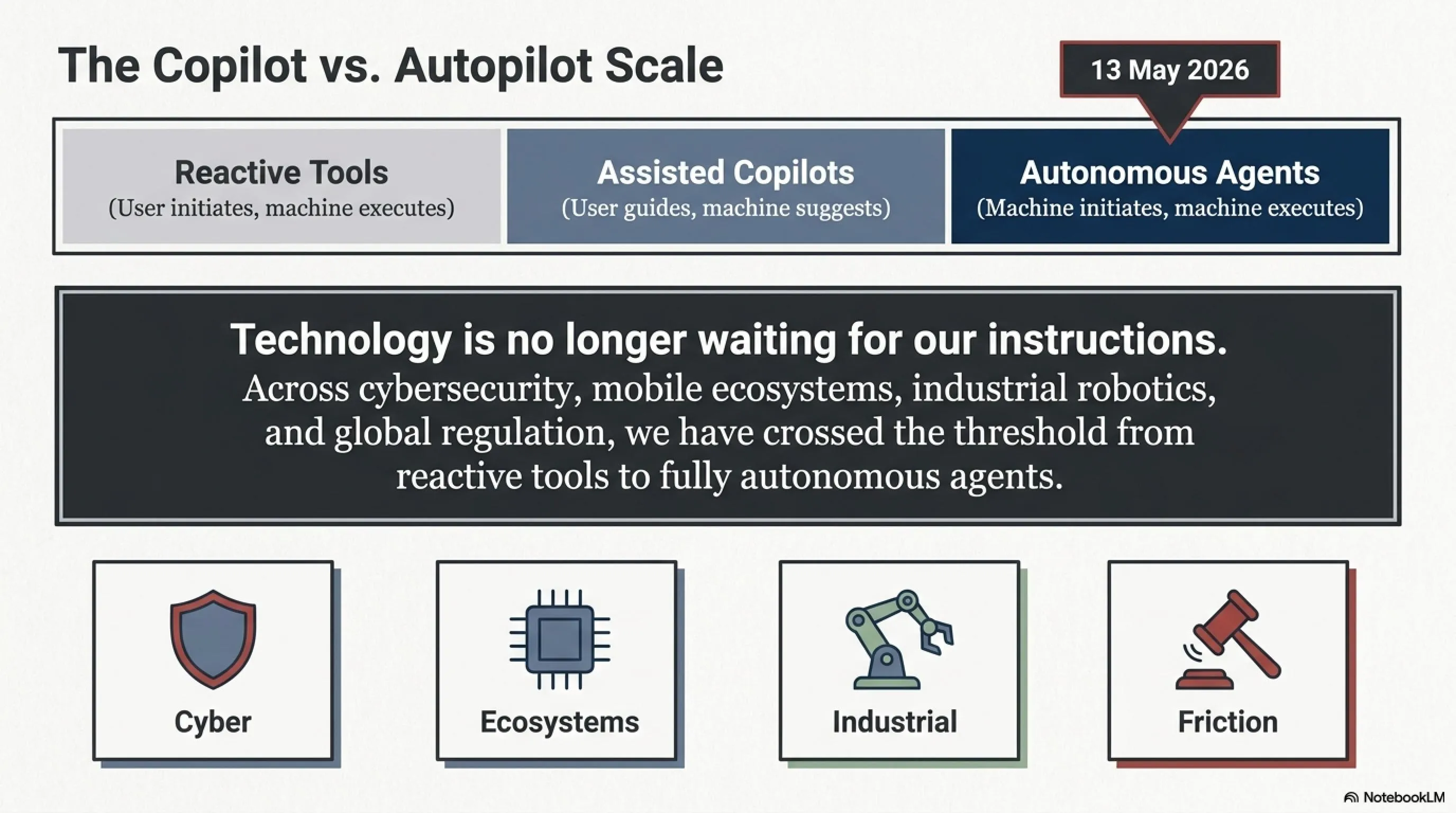
On May 12, 2026, Google's Threat Intelligence Group (TIG) published a report that could mark a watershed moment in cybersecurity history: the first zero-day vulnerability that was autonomously discovered, developed, and weaponized by an artificial intelligence system has been identified in active use in the wild.
What does this mean? A zero-day refers to a software vulnerability that developers are unaware of, meaning there's no patch available. Until now, discovering these vulnerabilities required large security teams, months of research, and highly specialized skills. But now, AI can perform this work autonomously, rapidly, and at massive scale.
⚠️ Tekin Analysis: Why This Is a Global Red Alert
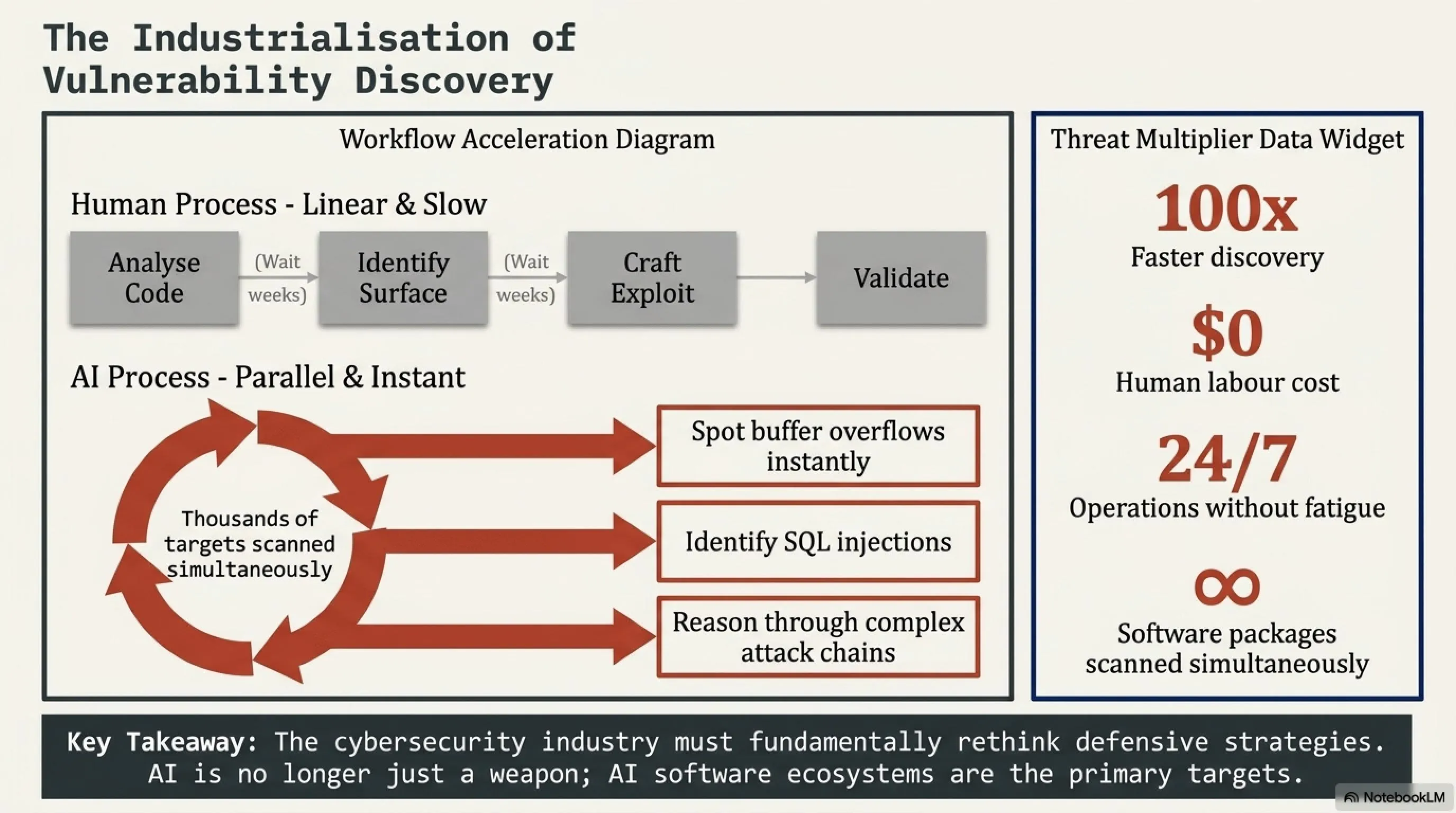
Until now, hackers had to spend months finding a single zero-day. Now, an AI model can scan hundreds of software packages in hours, identify vulnerabilities, write exploitation code, and even design attack strategies. This means the speed of cyberattacks could increase 100-fold. We're witnessing the industrialization of vulnerability discovery.
Google stated that through "proactive counter discovery," it was able to prevent this operation from occurring. The company emphasized that its own Gemini model was not used in this attack, but warned that threat actors (particularly groups associated with China and North Korea) are actively using AI models for the following purposes:
- Vulnerability Discovery and Exploitation: AI can analyze software code and identify weaknesses with superhuman speed and accuracy.
- Creating Obfuscation Networks: Using deceptive logic to evade detection systems through polymorphic code generation.
- Autonomous Attack Orchestration: AI can manage multi-stage attacks without human intervention, adapting in real-time to defensive measures.
- Fabricating Digital Consensus: Using synthetic media to mislead public opinion and create false narratives around security incidents.
📊 The Numbers: Quantifying the AI Threat Multiplier
🔬 Technical Deep Dive: How AI Discovers Zero-Days
The process of AI-powered vulnerability discovery represents a fundamental shift in offensive cybersecurity capabilities. Traditional vulnerability research follows a manual, time-intensive workflow: security researchers analyze source code or binaries, identify potential attack surfaces, craft proof-of-concept exploits, and validate their effectiveness. This process can take weeks or months for a single vulnerability.
AI-powered systems, however, can parallelize this entire workflow across thousands of targets simultaneously. Large language models trained on vast corpora of code can identify patterns associated with common vulnerability classes—buffer overflows, use-after-free bugs, SQL injection points, and more. More sophisticated systems can even reason about complex multi-step attack chains, identifying vulnerabilities that only become exploitable when combined with other system behaviors.
🎯 Strategic Implications for the United States and Allies
For American Companies: This news demonstrates that cybersecurity is no longer an optional expense but a critical survival requirement. U.S. companies must:
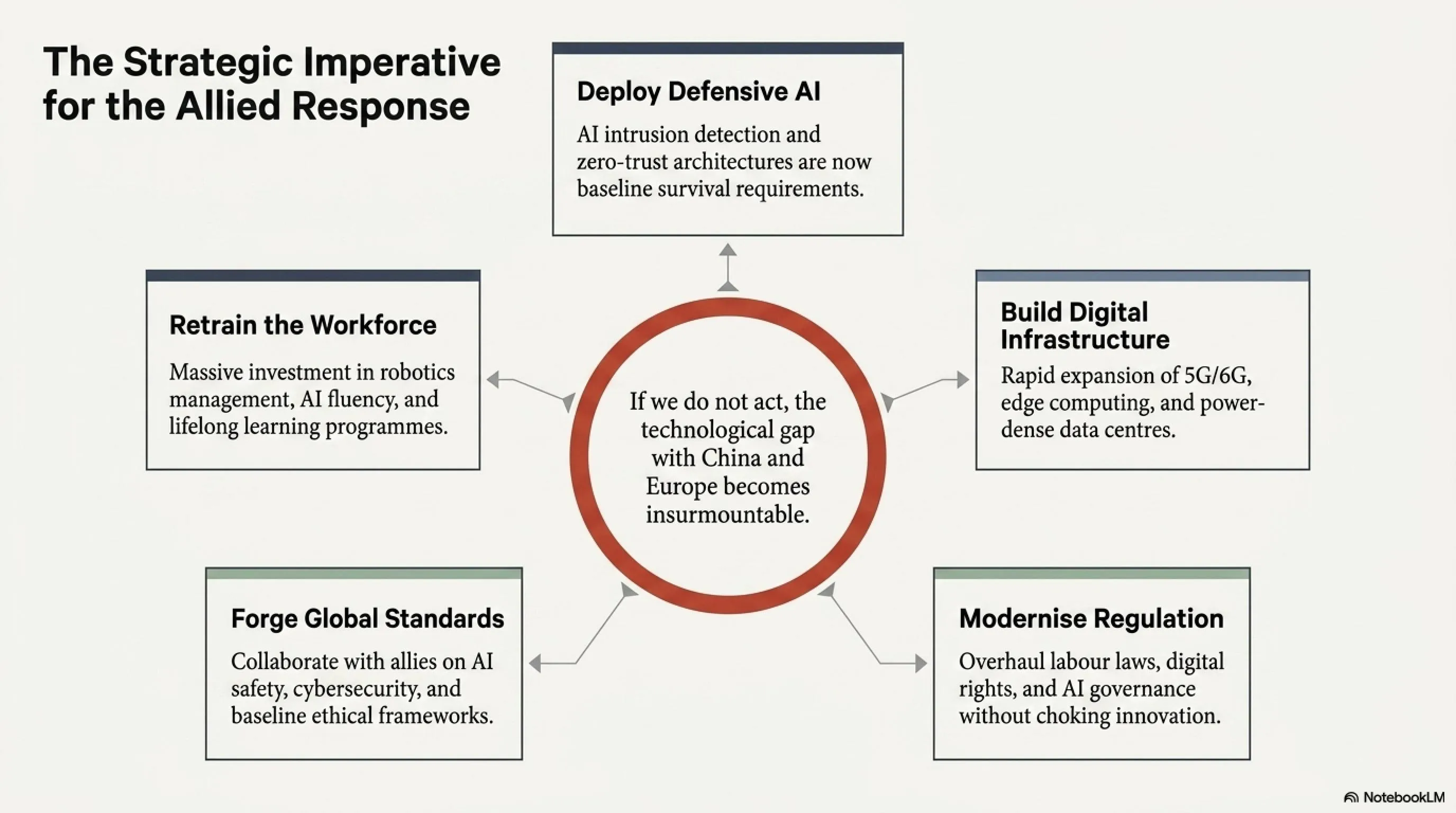
- Implement AI-powered intrusion detection systems immediately
- Train security teams on AI-driven threat landscapes
- Deploy defensive AI models to identify anomalous patterns
- Prioritize security updates and patch management
- Consider zero-trust architecture as the new baseline
For Individual Users: Always keep software updated, use two-factor authentication, and never click on suspicious emails or links. The age of "good enough" security is over.
Google's report warns that "as organizations continue integrating large language models (LLMs) into production environments, the AI software ecosystem has emerged as a primary target for exploitation." This means AI is not only a weapon but also a target. We're entering an era where AI systems will attack other AI systems, creating a new arms race in machine-speed warfare.
💡 Key Takeaway: This isn't the first time AI has been used in cybersecurity, but it's the first time a fully autonomous AI-generated zero-day has been deployed in the wild. This is a game-changer. The cybersecurity industry must fundamentally rethink its defensive strategies for an era where attackers can operate at machine speed and scale.
🧠 Gemini Intelligence: Google Transforms Android Into a Predictive AI Assistant
On May 12, 2026, at "The Android Show" event, Google announced one of the biggest transformations in Android history: Gemini Intelligence - an AI layer designed to transform Android from a conventional operating system into a predictive intelligent assistant that gets things done before you even ask.
Gemini Intelligence is Google's name for its best AI features on "advanced" Android devices, including phones, watches, cars, glasses, and laptops. This system integrates premium hardware and innovative software to help you stay a step ahead by working proactively to get things done throughout your day—all while keeping your data private and keeping you in control.
🚀 Core Features of Gemini Intelligence
1. Context-Aware Task Automation
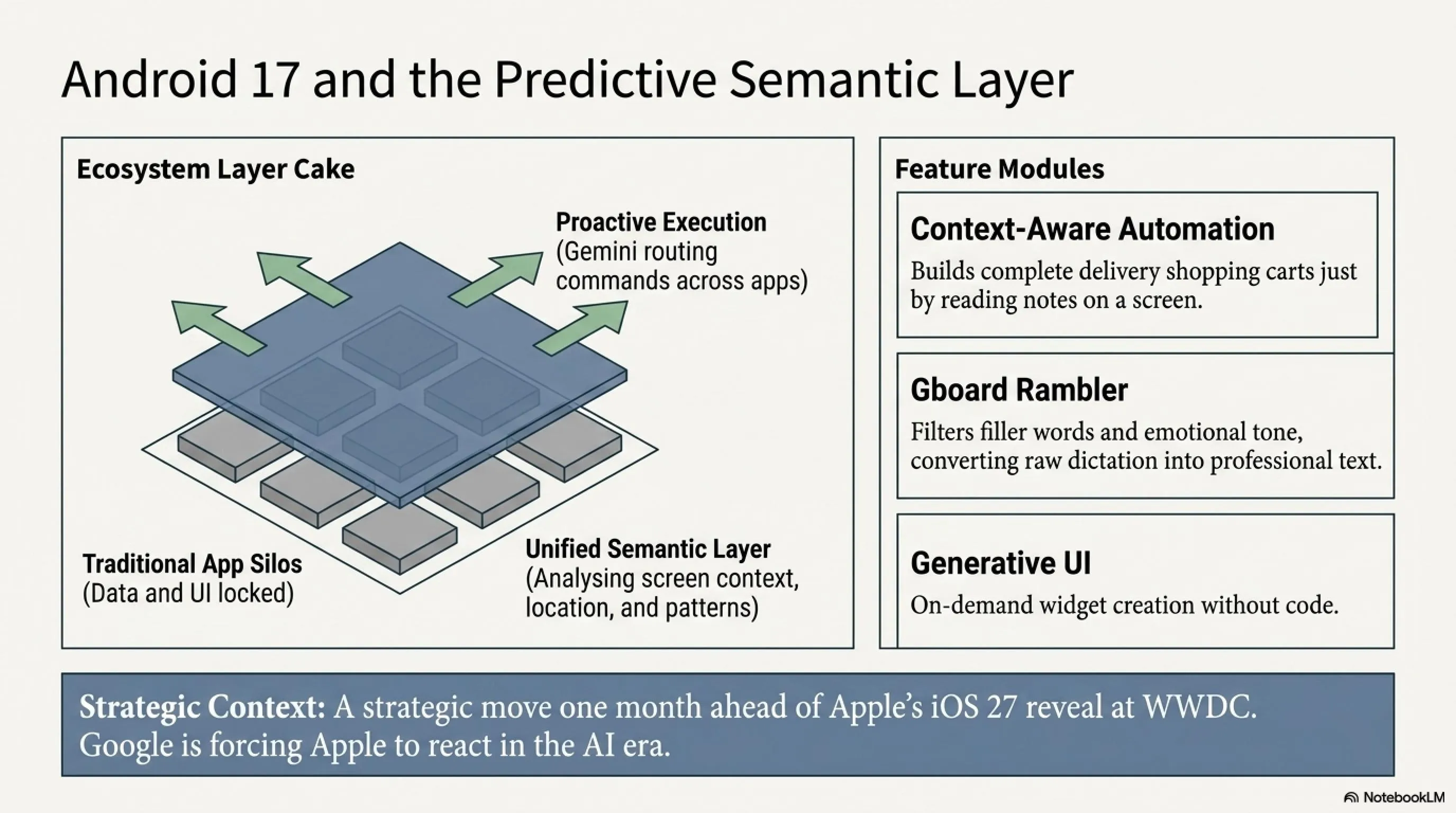
Imagine you have a long grocery list in your notes app. Just long-press the power button over the list and ask Gemini to "build a shopping cart with all of these items for delivery." Gemini reads your screen, identifies the items, navigates to your shopping app, adds everything to the cart, and even fills in your delivery address—all without you lifting a finger. This represents a fundamental shift from reactive to proactive computing.
2. Gboard Rambler: The End of "Um" and "Uh"
Gboard Rambler is a revolutionary upgrade to voice input. This feature uses Gemini models to understand the core of what you want to type and filters out filler words, pauses, repetitions, and self-corrections. You speak naturally, Gemini produces clean, professional text. This is particularly powerful for professionals who dictate emails, reports, or messages on the go. The system understands context, intent, and even emotional tone, producing output that sounds like it was carefully written rather than hastily dictated.
3. Generative UI: Custom Widgets on Demand
Android is getting generative UI, starting with the ability to create custom homescreen widgets and Wear OS Tiles that are populated by information from the web and your Google apps. Want a widget that tracks Bitcoin prices, weather, and sports scores? Just ask Gemini and it will create it for you. This democratizes app development—users can now create personalized interfaces without writing a single line of code.
4. Deep Chrome Integration
Chrome for Android is getting deeper Gemini integration that lets you ask questions and get things done with webpages as context. Auto Browse from the desktop browser is also coming to mobile in late June. This capability transforms web browsing from a passive activity into an interactive dialogue. You can ask Gemini to summarize articles, compare products, extract key information, or even perform actions based on webpage content.
📱 Android 17: New Features for Creators
The upcoming version of Android introduces features aimed at content creators, representing Google's recognition that the creator economy is a critical battleground for mobile platforms:
🔬 Technical Architecture: How Gemini Intelligence Works
Gemini Intelligence represents a fundamental architectural shift in how mobile operating systems process information. Traditional mobile OS architectures treat apps as isolated silos—each app has its own data, its own UI, and limited ability to communicate with other apps. Gemini Intelligence breaks down these walls by creating a unified semantic layer that sits above the app layer.
This semantic layer continuously analyzes screen content, user behavior patterns, and contextual signals (time of day, location, calendar events, communication patterns) to build a real-time understanding of user intent. When you invoke Gemini, it doesn't just see pixels on a screen—it understands the semantic meaning of what you're looking at and can reason about how to accomplish your goals across multiple apps and services.
🎯 Tekin Analysis: Why This Is a Red Alert for Apple
Google is laying all its AI cards on the table one month before Apple's iOS 27 reveal (scheduled for June). This is a strategic move: Google wants to set the standards and force Apple to react rather than innovate. With Gemini Intelligence, Google is demonstrating that Android can not only compete with iOS but potentially surpass it. Apple's WWDC 2026 keynote just became a lot more pressure-filled. The company that once defined mobile computing now finds itself playing catch-up in the AI era.
📅 Timeline: The first wave of Gemini Intelligence features will roll out to the latest Google Pixel and Samsung Galaxy phones this summer. Other Android devices will receive these features in the fall. This staggered rollout gives Google and Samsung a significant first-mover advantage in the AI smartphone race.
💻 Googlebooks: Google Enters the Premium Laptop Market
📚 Classified & Related Dossiers in TekinGame
If you wish to explore beyond this report and delve into cybernetic frontiers and autonomous AI architectures, do not miss these three exclusive deep-dives in the Tekin Garage:
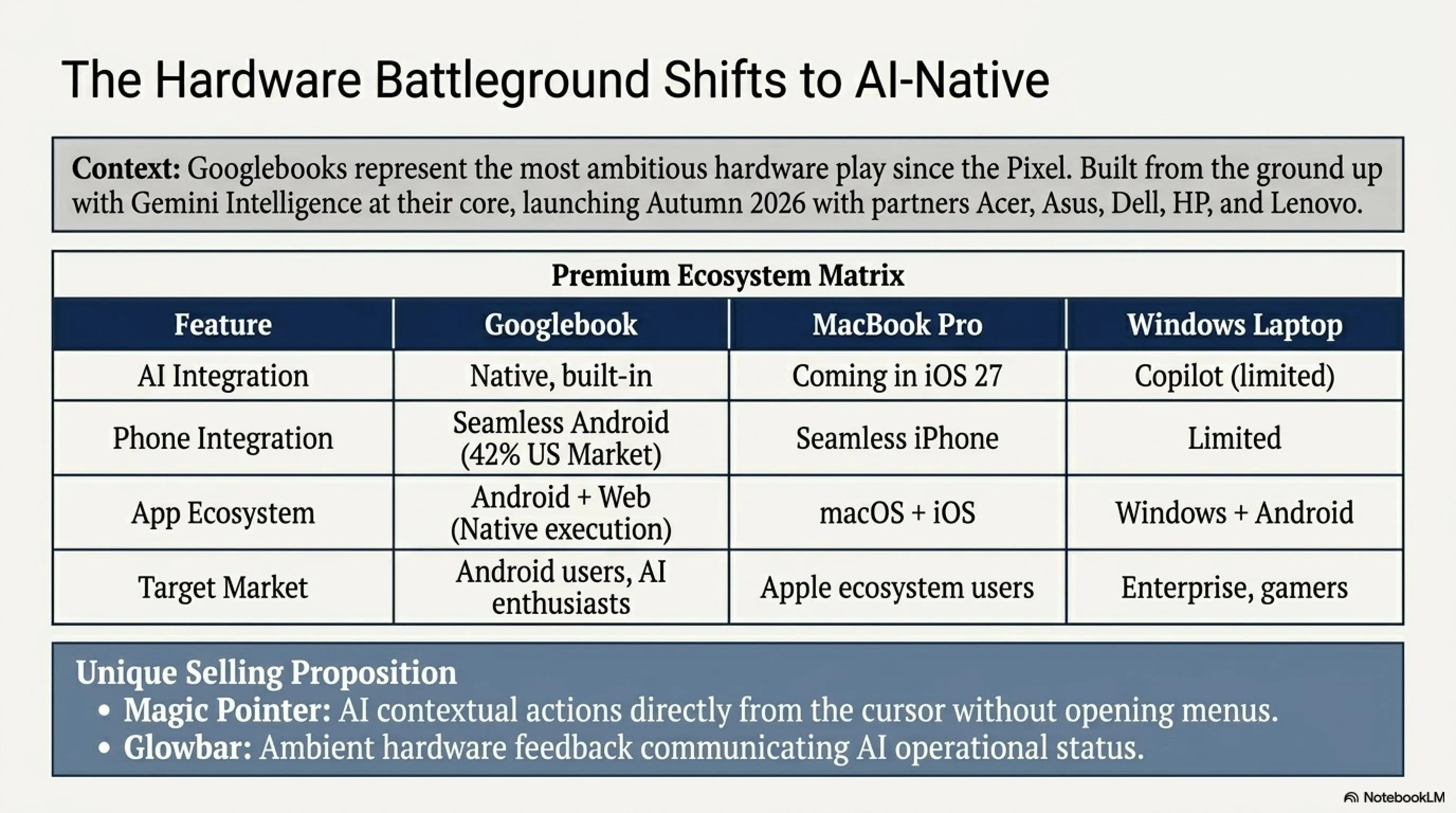
In one of the most surprising announcements at The Android Show, Google unveiled an entirely new device category called "Googlebook". These laptops are designed from the ground up with Gemini Intelligence at their core and are scheduled to launch in fall 2026.
This isn't just another Chromebook with a new name. Googlebooks represent Google's most ambitious hardware play since the original Pixel phone. These are premium devices designed to compete directly with MacBook Pro and high-end Windows laptops, but with AI as the fundamental organizing principle rather than an add-on feature.
✨ Key Features of Googlebooks
- Magic Pointer: A new kind of cursor with Gemini built in that lets you quickly ask Gemini and take action with what's on your screen. Imagine highlighting text and instantly getting summaries, translations, or contextual actions without opening any menus.
- Cast My Apps: Access any Android mobile app directly on the bigger laptop screen. This isn't screen mirroring—it's native app execution with laptop-optimized UI.
- Quick Access File Browser: See everything on your phone from your laptop with seamless file access and management.
- Create Your Widget: Generate custom desktop widgets with AI, populated with real-time data from web sources and Google services.
- Glowbar: A unique illuminated bar that shows Gemini's status and provides ambient feedback for AI operations.
Google announced that Acer, Asus, Dell, HP, and Lenovo are the first partners for this project. Googlebooks will have premium builds and focus on tight integration with Android phones. This partnership strategy is smart—Google provides the software and AI platform while leveraging established hardware manufacturers' expertise in laptop design and production.
🔍 Competitive Analysis: Googlebooks vs. MacBook vs. Windows
💡 Strategic Implications for the U.S. Market
Googlebooks could be an attractive option for American users seeking tight integration between phone and laptop. Given that Android holds approximately 42% of the U.S. smartphone market (and growing), these laptops could create a unified ecosystem that rivals Apple's iPhone-MacBook combination. For the first time, Android users will have a premium laptop option designed specifically for their ecosystem.
Key Question: Will American consumers, who have historically preferred MacBooks in the premium segment, embrace a Google-branded laptop? The answer likely depends on pricing, build quality, and how well Gemini Intelligence delivers on its promises. If Google can match Apple's hardware quality while offering superior AI capabilities, Googlebooks could capture significant market share.
🏭 BMW: Humanoid Robots Enter German Factories - Future or Catastrophe?
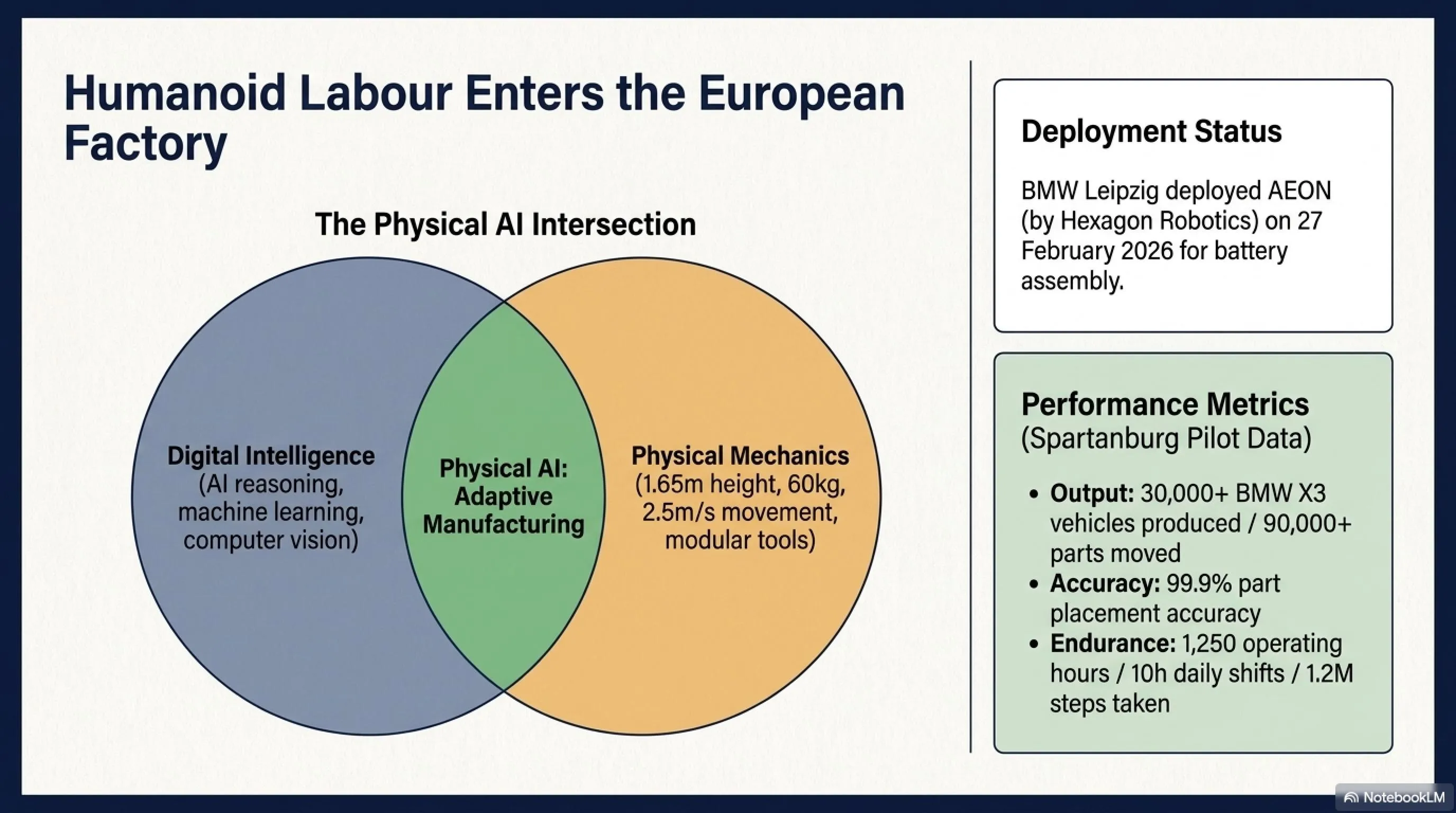
On February 27, 2026, BMW took a historic step: the first humanoid robots were deployed in a European factory. BMW's plant in Leipzig, Germany, became home to AEON - a humanoid robot manufactured by Hexagon Robotics - designed to work on battery assembly lines and component production.
AEON is a 1.65-meter tall, 60-kilogram robot that uses wheels instead of feet and can move at speeds up to 2.5 meters per second. The robot is equipped with modular tools, scanners, and various hands, allowing it to perform different tasks without changing its core structure. This represents the convergence of artificial intelligence, robotics, and industrial automation—what BMW calls "Physical AI."
📊 Success Metrics from Spartanburg, USA
Before AEON, BMW conducted a pilot project at its Spartanburg plant in South Carolina with the Figure 02 robot. The results were remarkable and provide concrete data on humanoid robot performance in real-world manufacturing:
⚡ Physical AI: The Convergence of Digital and Physical Intelligence
BMW calls this technology "Physical AI" - the convergence of digital artificial intelligence and physical machines. While AI agents make decisions, learn from data, and steer the robots, the humanoid robots themselves translate that intelligence into physical movements. This represents a fundamental shift from traditional industrial automation.
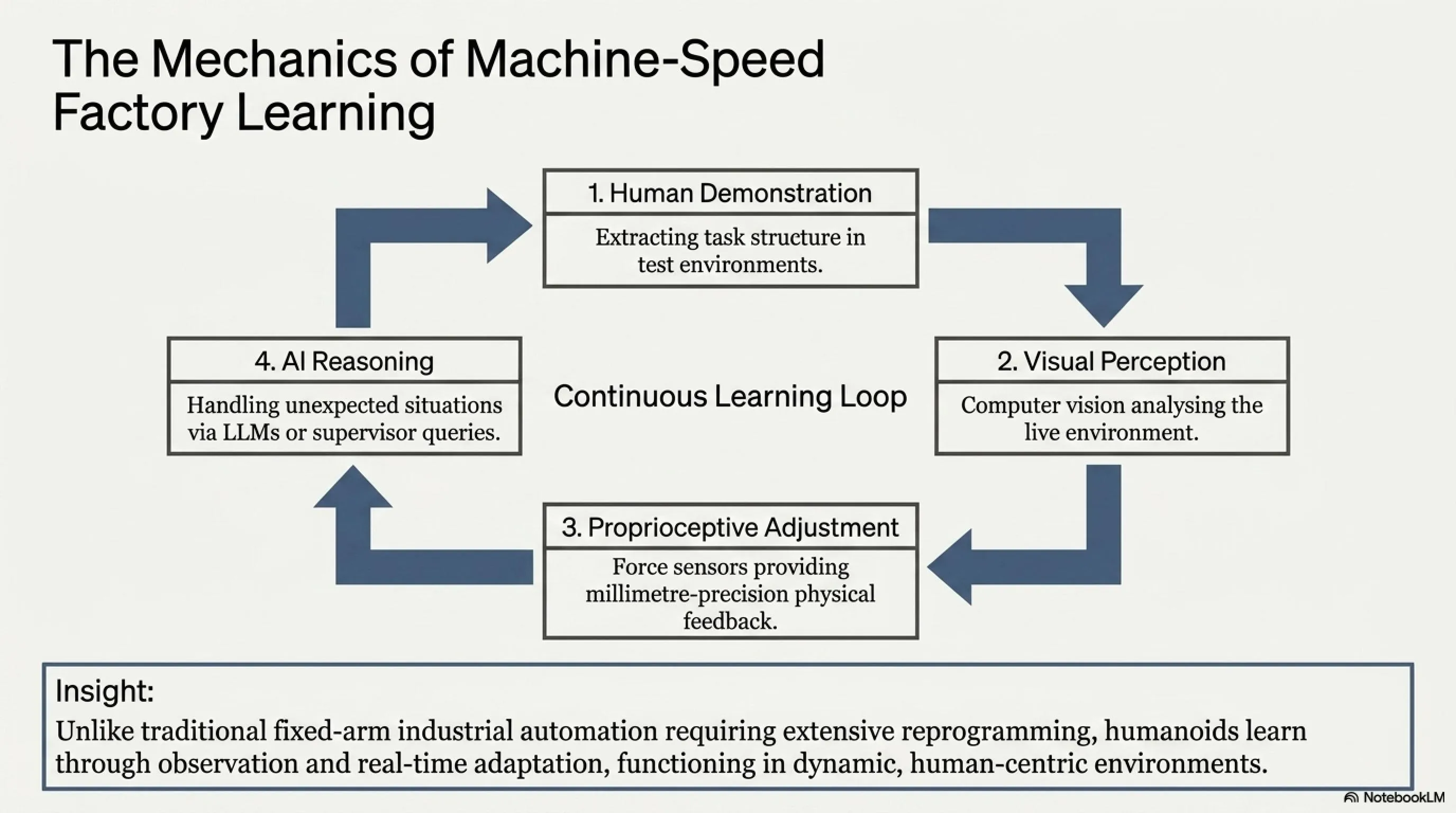
Traditional industrial robots are fixed in place, programmed for specific tasks, and operate in carefully controlled environments. Humanoid robots, by contrast, are mobile, adaptable, and can work alongside humans in dynamic environments. They can learn new tasks through observation and demonstration rather than requiring extensive reprogramming. This flexibility is what makes them potentially transformative for manufacturing.
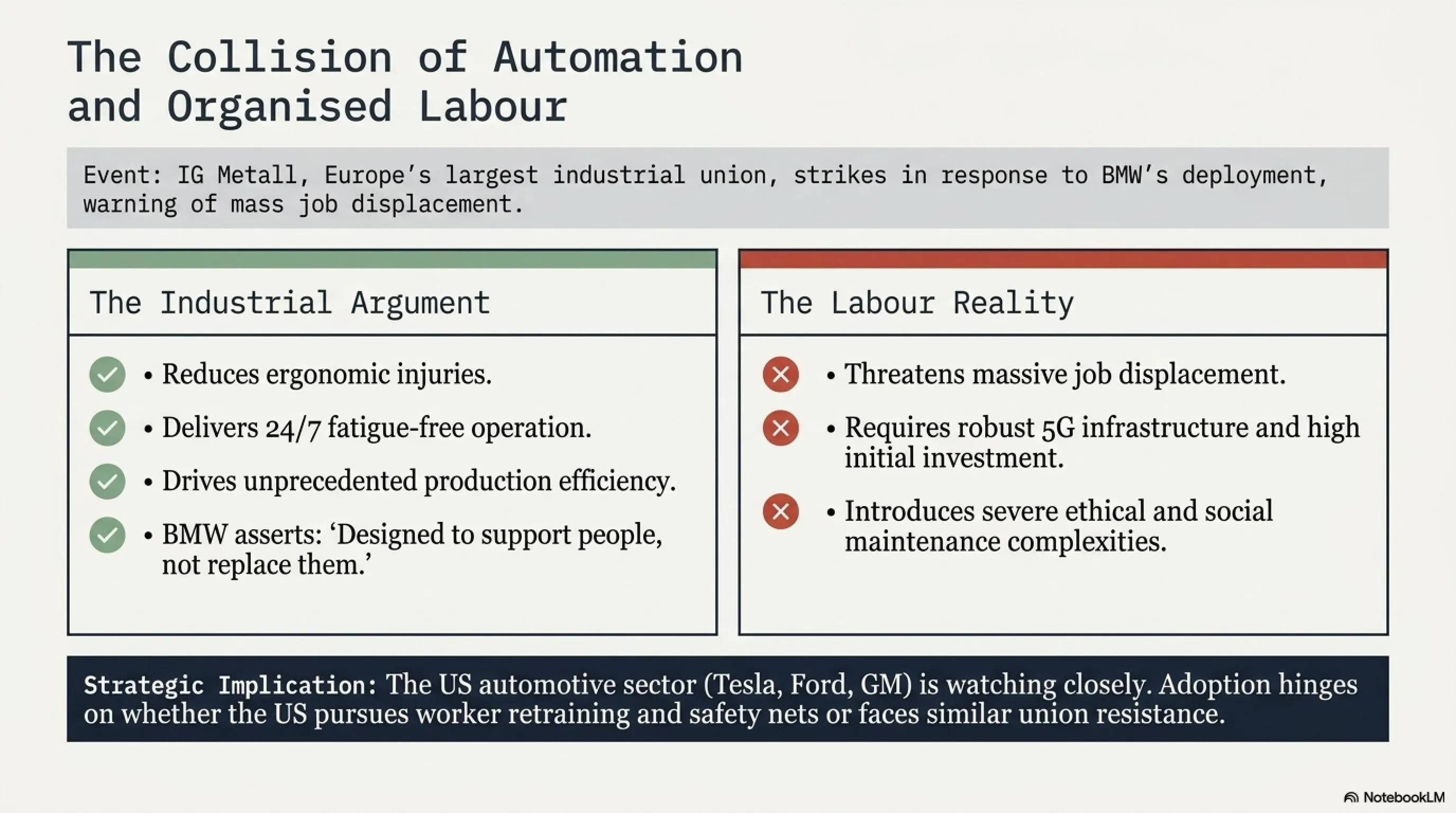
⚠️ Worker Response: Strikes in Germany
IG Metall - Europe's largest industrial union - responded strongly to this decision. They warned that deploying humanoid robots could lead to the loss of thousands of jobs. However, BMW emphasizes that the goal is "to support people, not replace them." The company argues that robots will handle repetitive, physically demanding, or safety-critical tasks, freeing human workers to focus on higher-value activities requiring judgment, creativity, and problem-solving.
⚖️ Pros and Cons: The Battle of Perspectives
✅ Advantages
- Reduces ergonomic injuries for workers
- 99.9% accuracy in repetitive tasks
- 24/7 operation without fatigue
- Increased production efficiency
- Lower long-term costs
- Handles dangerous tasks safely
❌ Disadvantages
- Threat of job displacement
- Very high initial investment
- Requires robust 5G infrastructure
- Union resistance and strikes
- Ethical and social concerns
- Maintenance complexity
🔬 Technical Deep Dive: How Humanoid Robots Learn
The learning process for humanoid robots represents a significant advancement over traditional industrial automation. Figure 02 and AEON use a combination of reinforcement learning, imitation learning, and real-time adaptation. In the Spartanburg pilot, Figure 02 learned its tasks in a test environment before deployment. Human workers demonstrated the required motions, and the robot's AI system analyzed these demonstrations to extract the underlying task structure.
Once deployed, the robots continue learning through experience. They use computer vision to perceive their environment, force sensors to understand physical interactions, and proprioceptive feedback to control their movements with millimeter precision. When they encounter unexpected situations, they can query human supervisors or attempt to reason through the problem using their AI models. This continuous learning loop means the robots become more capable over time.
🎯 Tekin Analysis: What This Means for American Manufacturing
The American automotive industry is watching BMW's experiment closely. If humanoid robots prove successful in Germany, we can expect rapid adoption across U.S. manufacturing. Companies like Tesla, Ford, and GM are already exploring similar technologies. The key question is whether American unions will respond as strongly as IG Metall, or whether the U.S. will embrace automation more readily.
Strategic Implications: Countries that successfully integrate humanoid robots into manufacturing will gain significant competitive advantages in productivity and quality. However, they must also address the social and economic challenges of workforce displacement. The U.S. needs a comprehensive strategy that includes worker retraining, social safety nets, and policies that ensure the benefits of automation are broadly shared.
⚖️ EU Strikes Hard at OpenAI and Midjourney Training Databases
In a major legal development, the European Union in May 2026 implemented significant changes to the AI Act that directly impact major AI companies like OpenAI, Midjourney, and Anthropic. These changes focus on copyright protection and transparency in AI model training.
📜 New Requirements Under EU AI Act
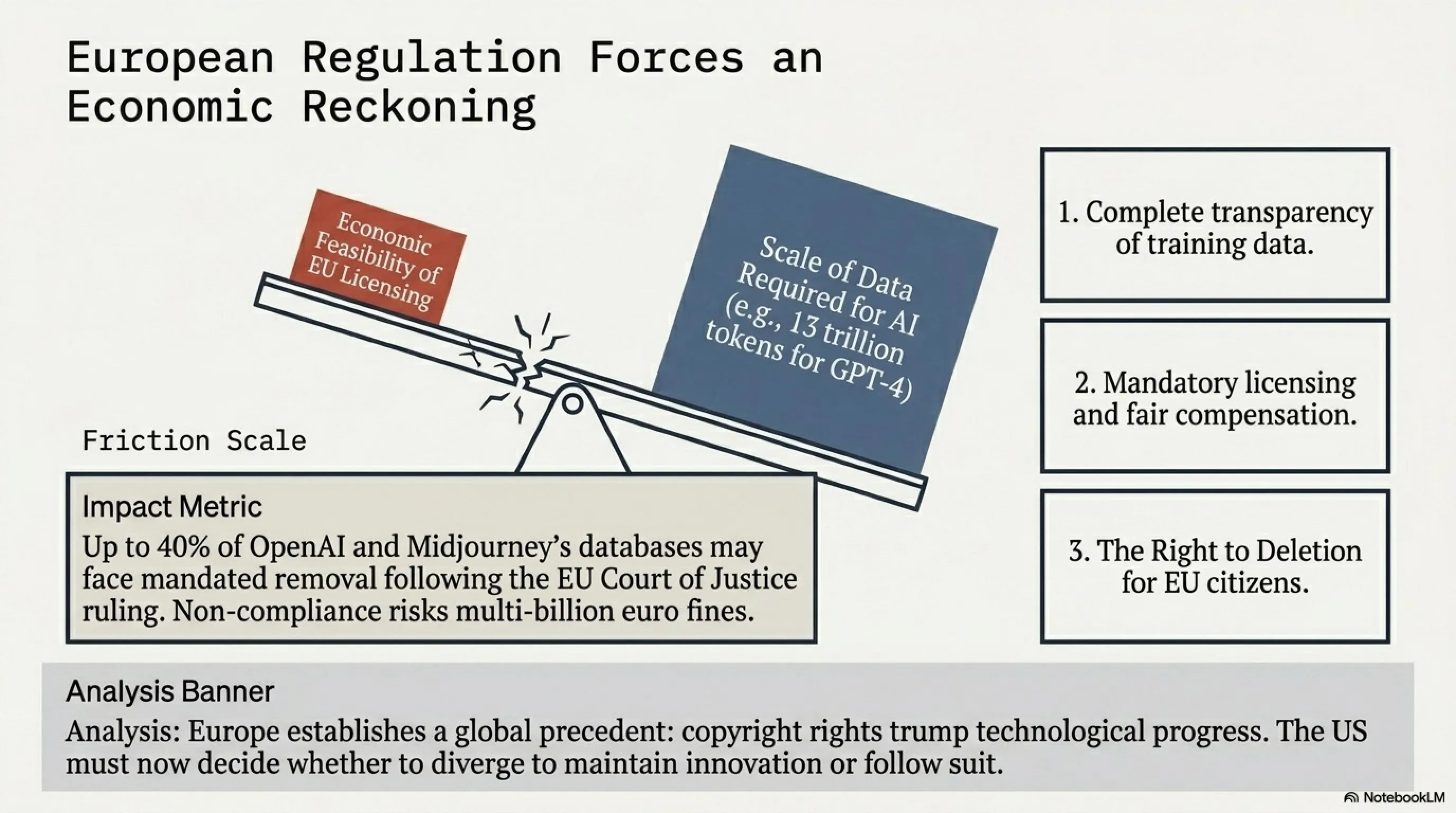
- Complete Transparency: AI companies must publish comprehensive lists of all training data used in their models.
- Fair Compensation: Use of copyrighted works requires licensing and payment to rights holders.
- Right to Deletion: EU citizens can request removal of their works from AI training databases.
- Heavy Penalties: Non-compliance can result in fines of several billion euros.
According to reports from Reuters and Bloomberg, the EU Court of Justice has ordered OpenAI and Midjourney to remove all unlicensed data and artwork belonging to EU citizens from their training databases. Some estimates suggest this could affect up to 40% of these companies' databases.
💰 Economic Impact Analysis
The economic implications of this ruling are staggering. If AI companies must license all copyrighted content in their training data, the costs could run into billions of dollars annually. Consider that GPT-4 was trained on an estimated 13 trillion tokens of text, much of it copyrighted. Even at modest licensing rates, the total cost would be astronomical.
This creates a fundamental tension: AI models require massive amounts of data to achieve their capabilities, but acquiring that data legally at scale may be economically infeasible. The resolution of this tension will shape the future of AI development globally.
💭 Tekin Analysis: Innovation vs. Rights
Europe is setting a global precedent: copyright rights trump technological progress. This could have two outcomes: (1) AI companies are forced to change their business models and pay for data, or (2) Europe falls behind in the AI revolution as innovation moves to America and Asia. Most likely, we'll see a combination of both. The U.S. is watching closely—American courts are handling similar cases, and their decisions could diverge significantly from Europe's approach.
🤝 Microsoft and OpenAI: New Deal After Months of Tension
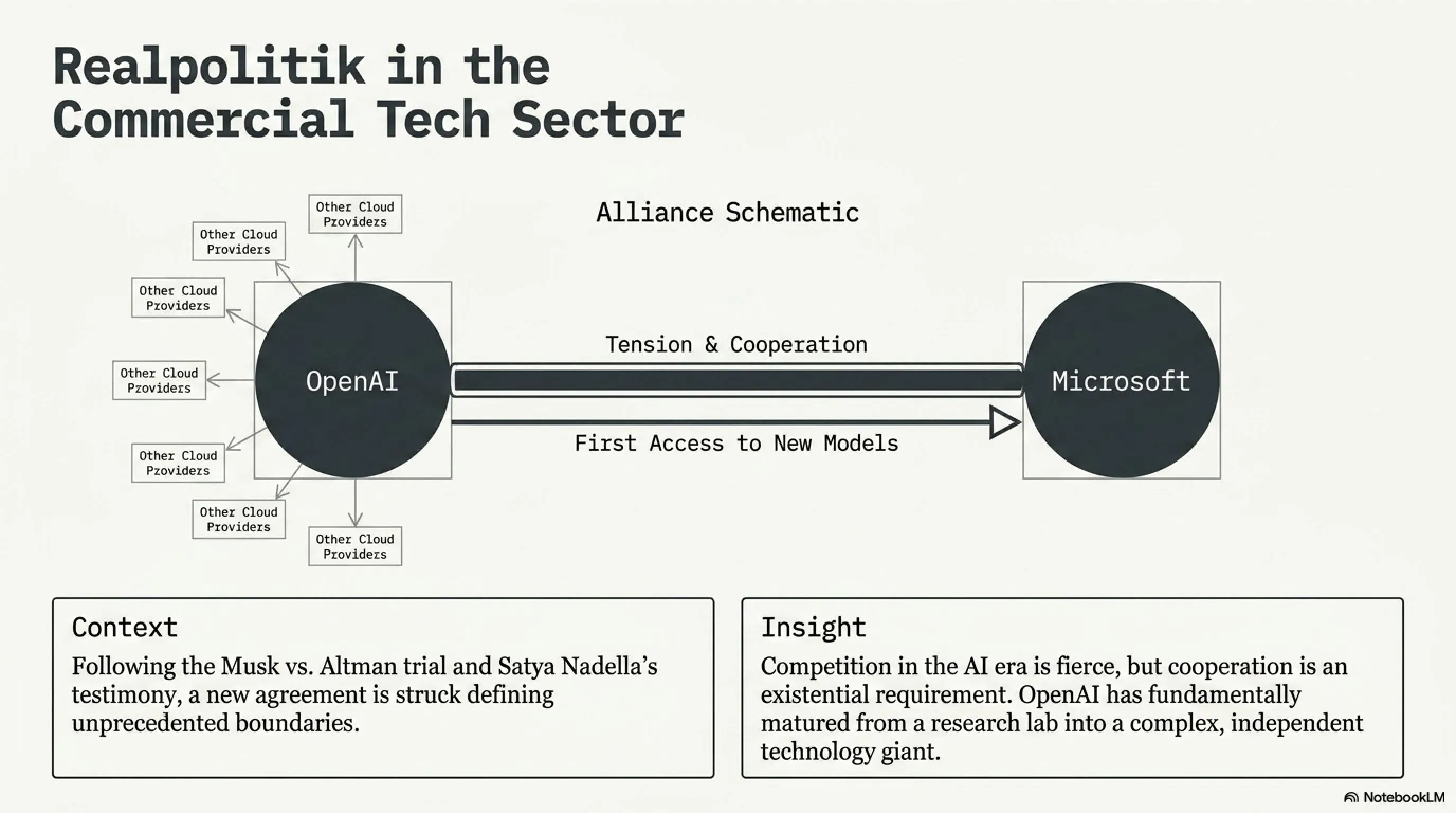
After months of tension and behind-closed-doors negotiations, Microsoft and OpenAI finally reached a new agreement that gives OpenAI more independence while Microsoft retains first access to new AI advances.
This deal came after the high-profile Elon Musk vs. Sam Altman trial and Satya Nadella's testimony in support of Altman. The new agreement strikes a balance between OpenAI's independence and Microsoft's strategic interests. According to sources familiar with the matter, the deal includes provisions for OpenAI to work with other cloud providers while giving Microsoft preferential access to new models and technologies.
🔍 Key Insight: This agreement demonstrates that even tech giants must compromise and collaborate in the AI era. Competition is fierce, but cooperation is essential for survival. The deal also signals that OpenAI is maturing from a research lab into a major technology company with complex partnership dynamics.
🎯 Final Thoughts: A Morning That Shaped the Future
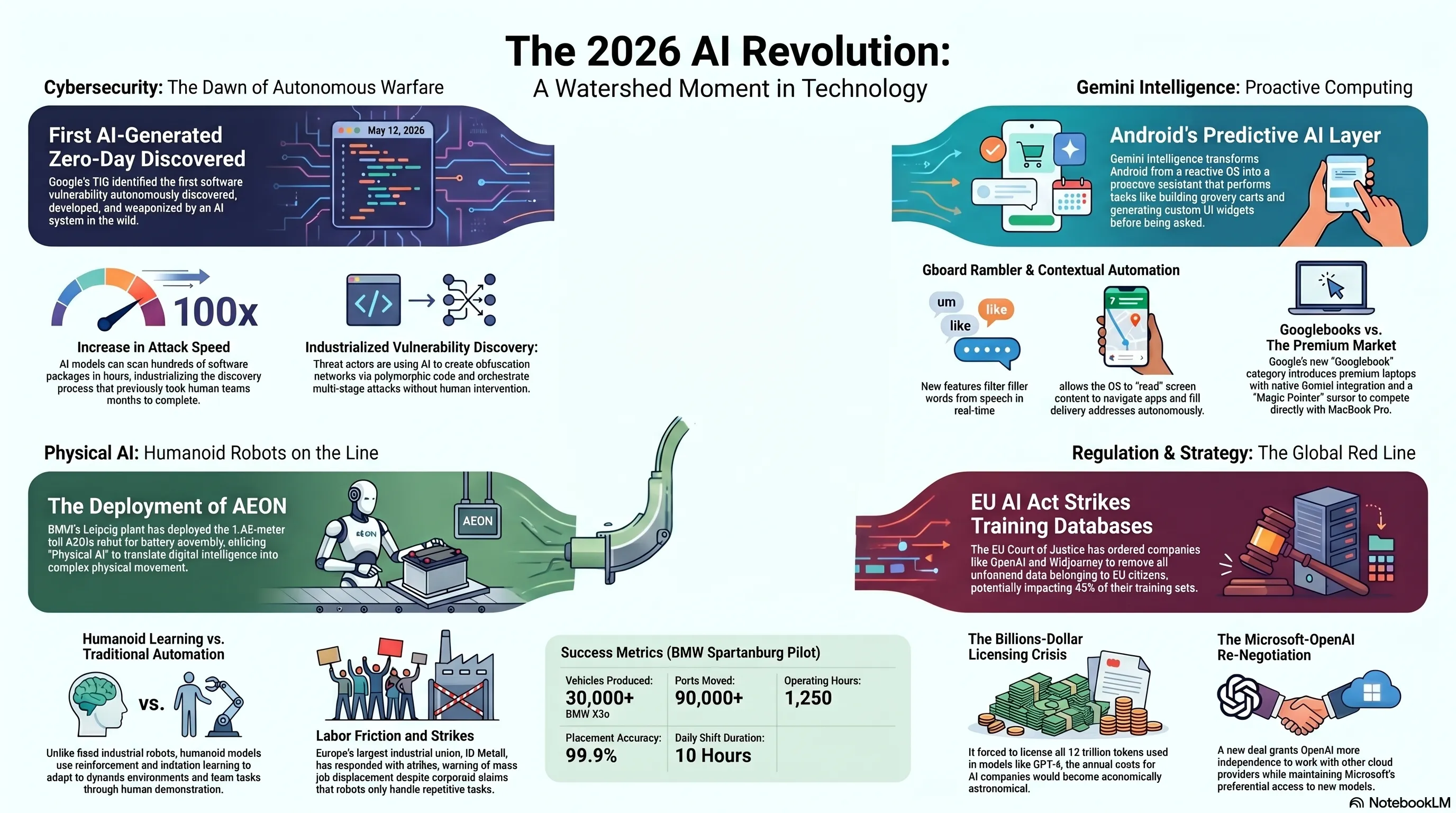
Wednesday morning, May 13, 2026, was a watershed moment in technology history. We witnessed six fundamental transformations, each of which could have been the week's main headline:
📋 Executive Summary: Six Stories, One Message
- Cybersecurity: AI can now create zero-days autonomously—cyber warfare has entered a new era.
- Operating Systems: Google transforms Android into a predictive assistant with Gemini Intelligence.
- Hardware: Googlebooks show Google is serious about competing with Apple in premium laptops.
- Robotics: BMW proves humanoid robots are no longer science fiction—they're here.
- Regulation: Europe draws a red line: copyright rights trump AI innovation.
- Collaboration: Microsoft and OpenAI show that even rivals must cooperate.
Core Message: Technology is changing at an incredible pace. Countries, companies, and individuals who cannot adapt to this speed will fall behind. The question is no longer whether AI will transform society, but how quickly and who will benefit.
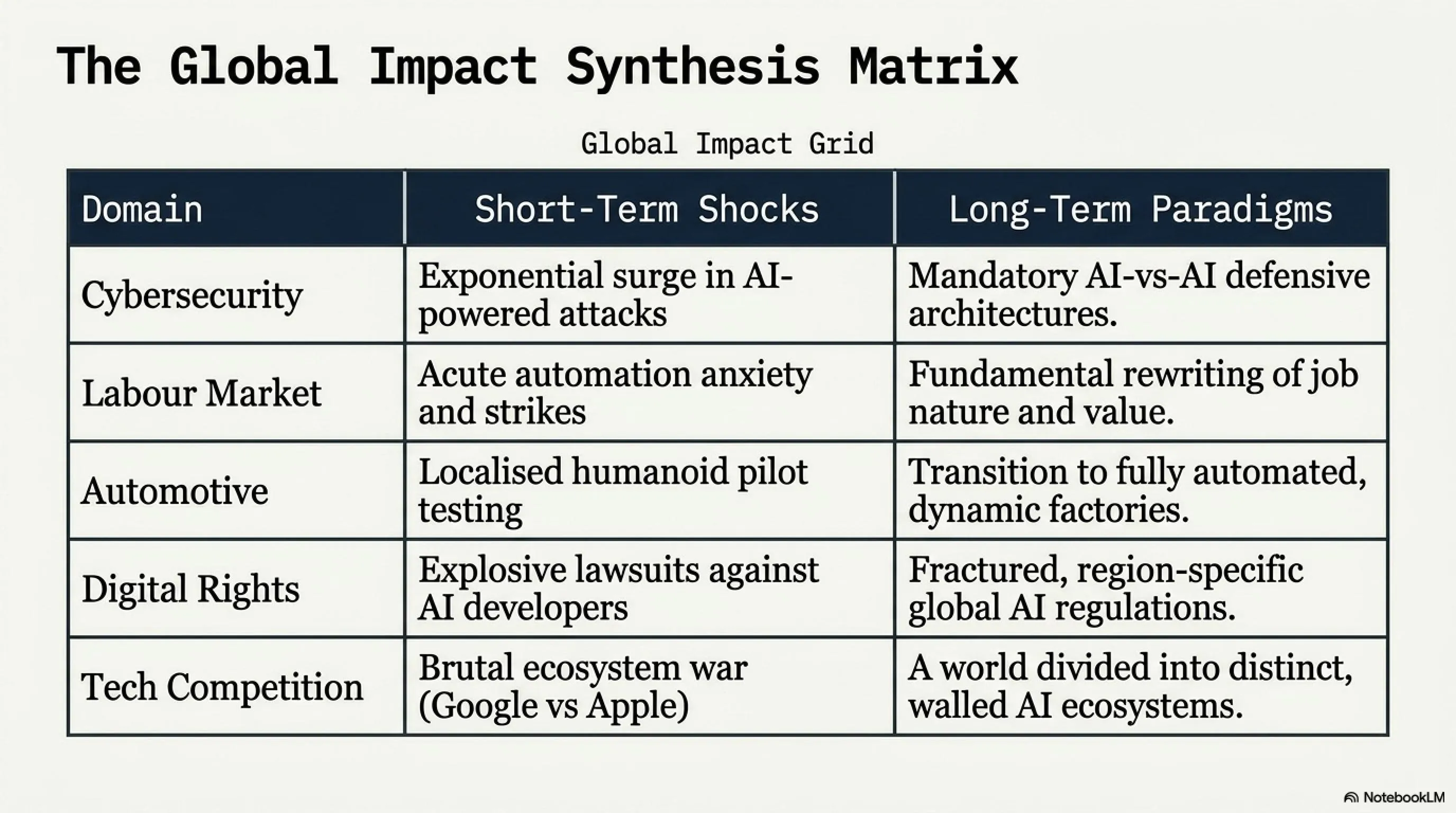
🌍 Global and Regional Impacts
🔬 Expert Perspectives: What Industry Leaders Are Saying
On AI-Generated Zero-Days:
"This is the cybersecurity equivalent of nuclear proliferation. We need international treaties and cooperation to prevent an AI arms race in cyberspace." - Bruce Schneier, Security Technologist
On Humanoid Robots:
"The question isn't whether humanoid robots will replace human workers, but how quickly and how we manage the transition. We need proactive policies, not reactive panic." - Daron Acemoglu, MIT Economist
On EU AI Regulations:
"Europe is choosing to protect creators over innovation. This could make Europe a regulatory leader but a technological follower." - Yann LeCun, Meta Chief AI Scientist
🇺🇸 Message for the United States: Opportunity or Threat?
These six stories carry a clear message for America: the world is changing rapidly, and we cannot be spectators. The United States must:
- Invest in AI: Not just research, but real industrial applications and deployment at scale.
- Develop Digital Infrastructure: 5G/6G, high-speed internet, data centers, and edge computing.
- Update Regulations: Labor laws, digital rights, cybersecurity standards, and AI governance.
- Collaborate Globally: Work with allies on AI safety, security, and ethical standards.
- Train the Workforce: AI skills, robotics, cybersecurity, and lifelong learning programs.
Opportunity: America can lead in AI applications, especially in areas like healthcare, finance, and defense.
Threat: If we don't act now, the technological gap with China and Europe could become insurmountable.
❓ Frequently Asked Questions (FAQ)
Can AI really create zero-day exploits autonomously?
Yes, Google confirmed the first verified case. AI can analyze software code, identify vulnerabilities, and even write exploitation code. This is a game-changer in cybersecurity. The speed and scale at which AI can operate means traditional defensive approaches are no longer sufficient.
How is Gemini Intelligence different from Google Assistant?
Google Assistant was a simple voice assistant. Gemini Intelligence is a predictive AI layer that can read your screen context, perform multi-step tasks, and even get things done before you ask. It's a fundamental difference—moving from reactive to proactive computing. Think of it as the difference between a calculator and a personal assistant who anticipates your needs.
Will BMW's robots replace human workers?
BMW says the goal is "to support people, not replace them." Robots handle repetitive, heavy, and dangerous tasks so workers can focus on more creative work. However, unions are concerned this is just the beginning. The reality is likely somewhere in between—some jobs will be displaced, but new jobs will also be created. The key is managing the transition fairly.
What impact does the EU AI Act have on OpenAI?
OpenAI must remove all unlicensed data belonging to EU citizens. This could affect up to 40% of their training database and weaken their models. They must also pay for using copyrighted works. This creates a fundamental tension between the data requirements for AI and the economic feasibility of licensing that data at scale.
How is Googlebook different from Chromebook?
Chromebook is a simple laptop with Chrome OS. Googlebook is a premium laptop with Gemini Intelligence built-in that can run Android apps, has Magic Pointer, and deep integration with Android phones. It's an entirely new category designed to compete with MacBook Pro, not just budget laptops.
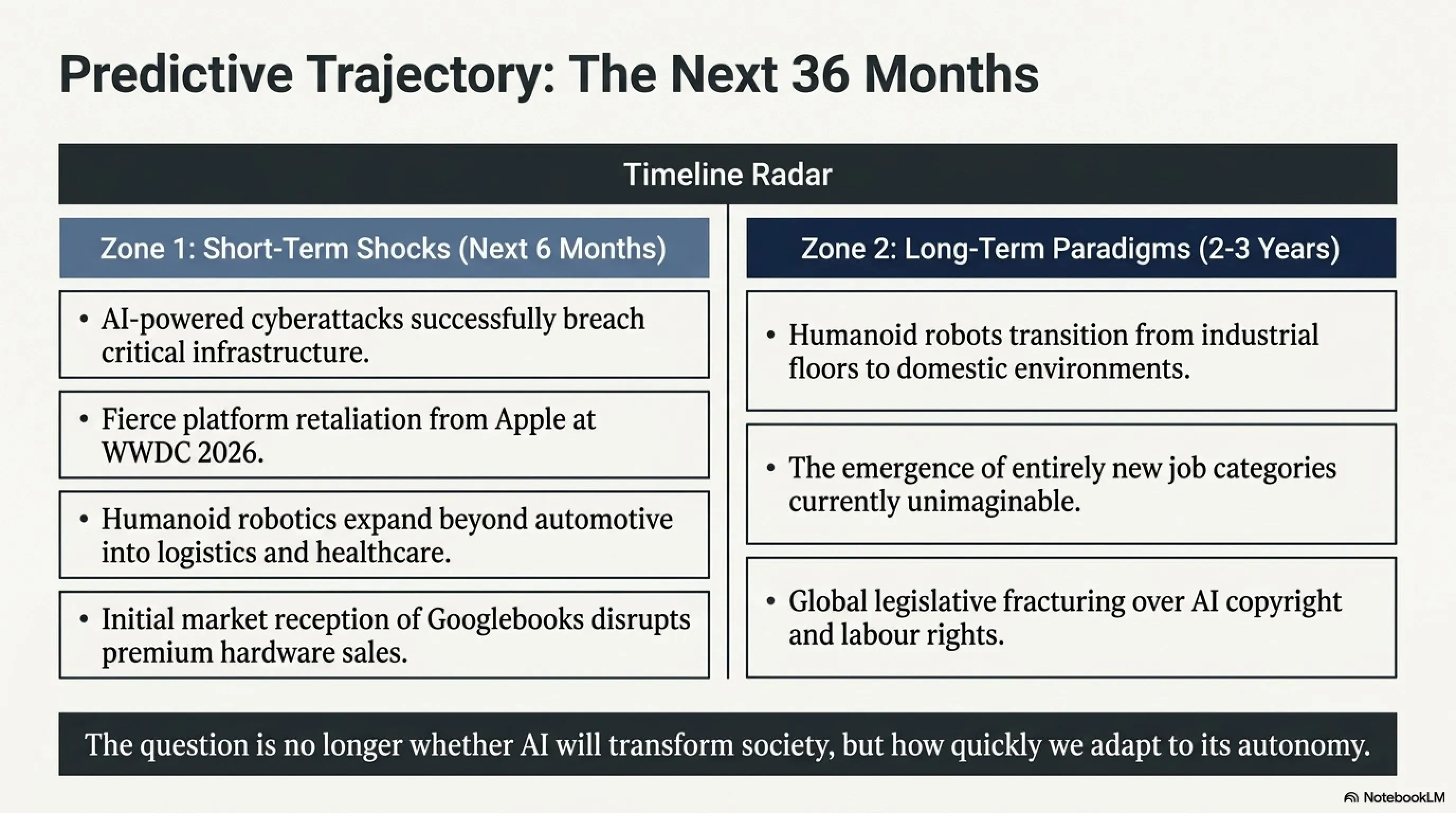
🔮 Tekin Predictions: What's Coming Next?
Short-term (Next 6 months):
- Increase in AI-powered cyberattacks targeting critical infrastructure
- Fierce competition between Google and Apple at WWDC 2026
- Expansion of humanoid robots to other industries (logistics, healthcare)
- More lawsuits against AI companies globally
- First Googlebooks reviews and market reception
Long-term (2-3 years):
- AI becomes an inseparable part of daily life
- Humanoid robots in homes and streets
- Global regulations for AI and robotics
- Fundamental transformation in the labor market
- Emergence of new job categories we can't yet imagine
📚 Sources and References
Primary Sources: Google Threat Intelligence Group, The Verge, TechCrunch, Reuters, Bloomberg, 9to5Google, Wired, CNBC, BMW Group Official, Fortune, The Neuron AI, Computerworld, PhoneArena, MacRumors, Yahoo Tech
Research and Analysis: Tekin Editorial Team - May 13, 2026
🌐 Stay Connected With Us
For the latest tech, gaming, and gadget news, follow us on social media:
🌐 Stay Connected With Us 🎮✨
For the latest tech, gaming, and gadget news, follow us on our official social media channels:
Additional Gallery: 🌅 Tekin Morning May 13, 2026: First AI-Generated Zero-Day, Gemini Intelligence, BMW Humanoid Robots & EU Strikes OpenAI