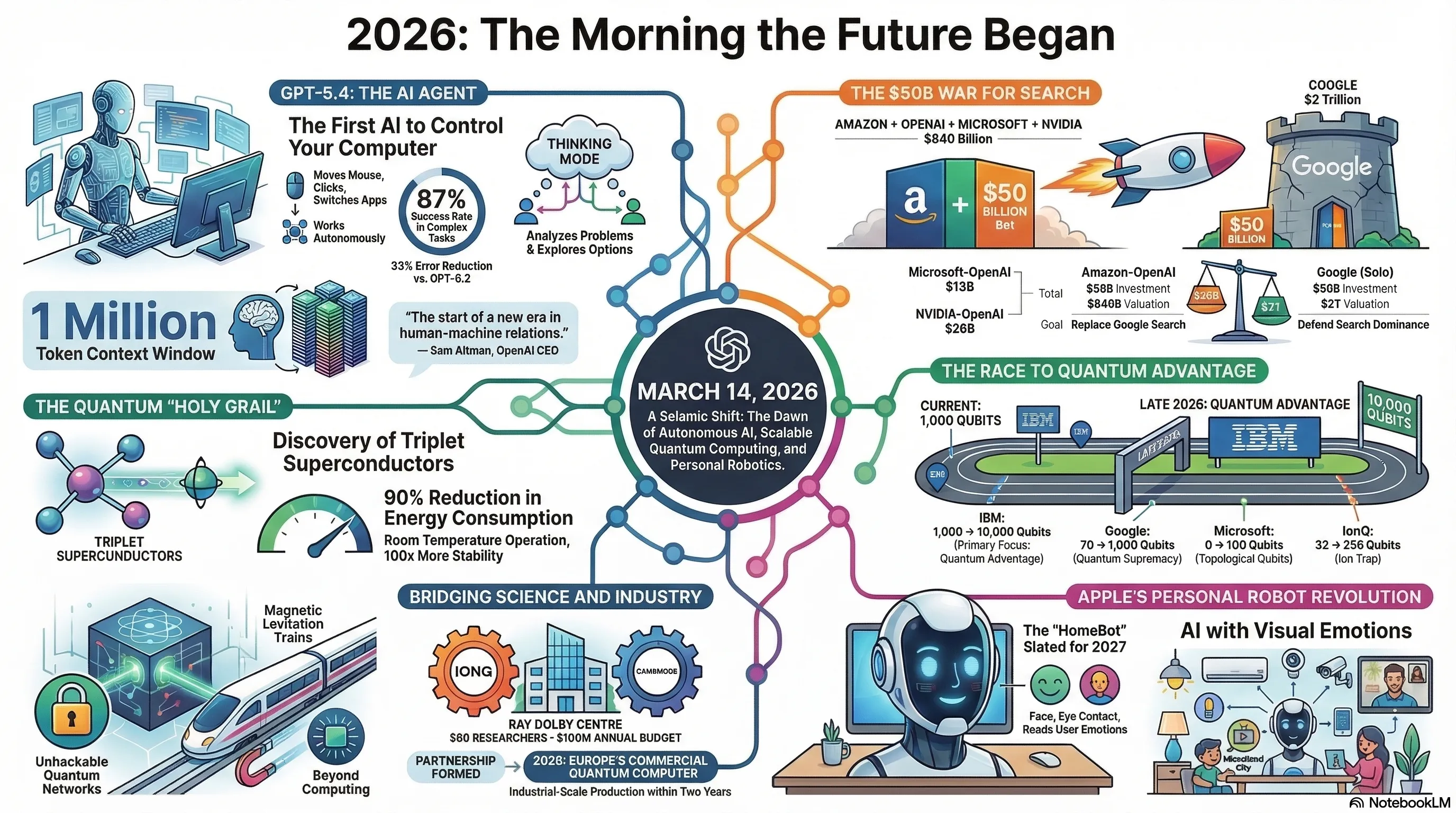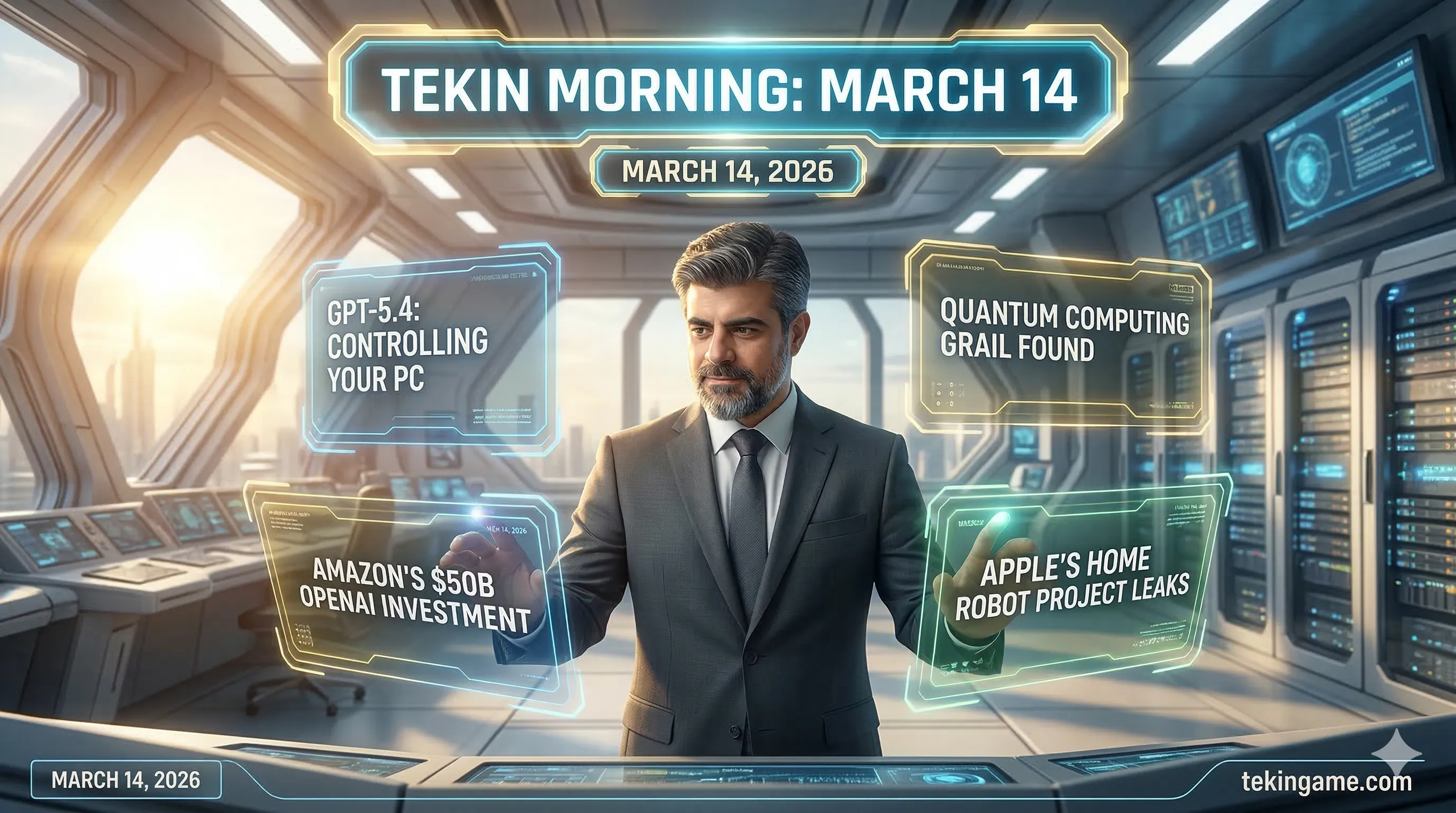
March 14, 2026 morning began with 6 revolutionary news that show the future of technology is changing at light speed. From GPT-5.4 launch as the first AI to control computers to Amazon's $50 billion investment in OpenAI, from the discovery of quantum "Holy Grail" to IBM's historic commitment for quantum advantage, from IonQ-Cambridge partnership to Apple's desktop robot — a morning that lit up the future. Are you ready to see how 6 news can change the world's technology trajectory?
GPT-5.4 Launched: First AI That Controls Your Computer
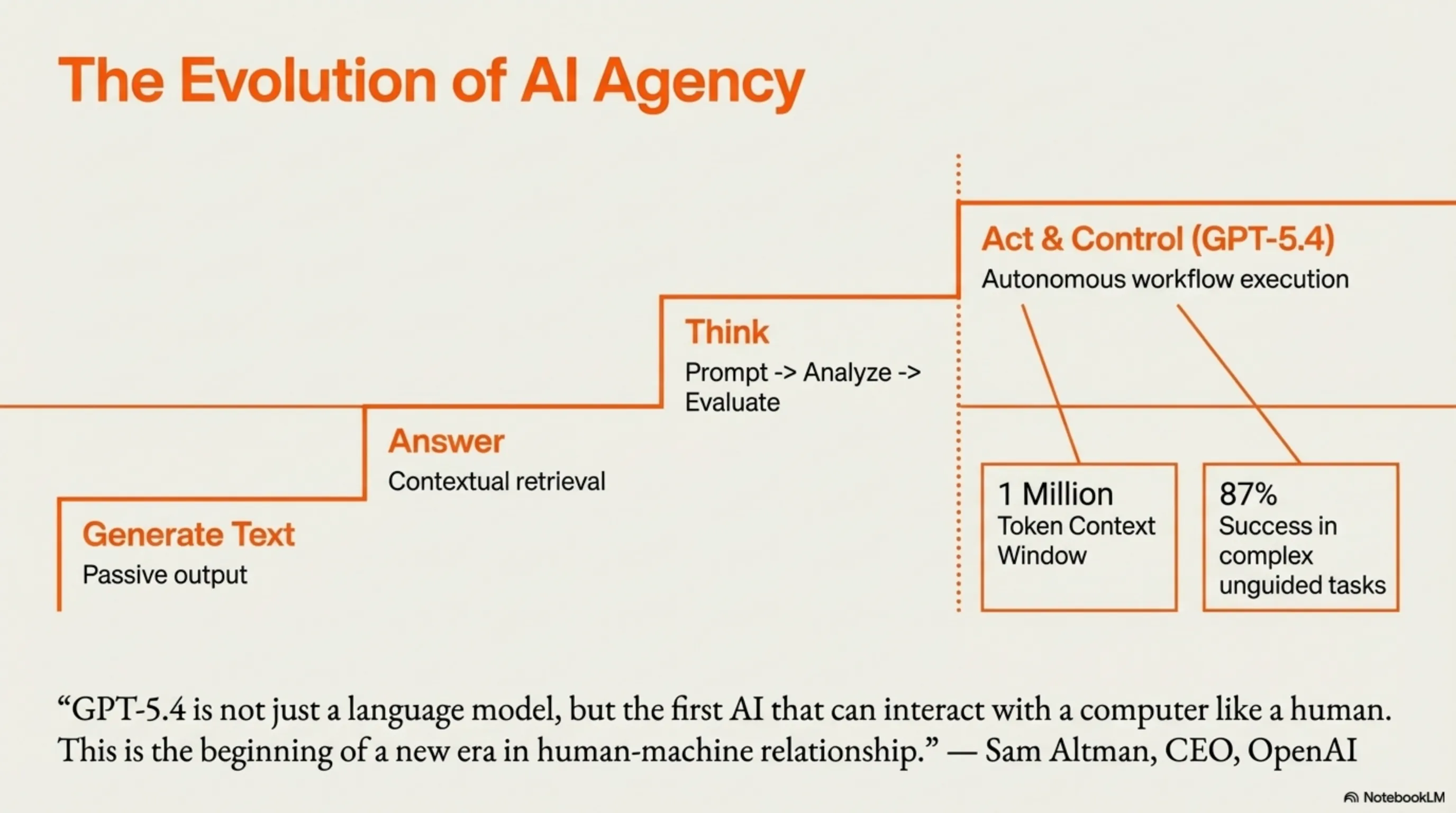
On the morning of March 14, 2026, OpenAI rewrote AI history with the launch of GPT-5.4. This new model doesn't just respond — it controls your computer. With 1 million token context window, Computer Control capability, and the new Thinking mode, GPT-5.4 is the first AI that can truly work with computers like humans do.
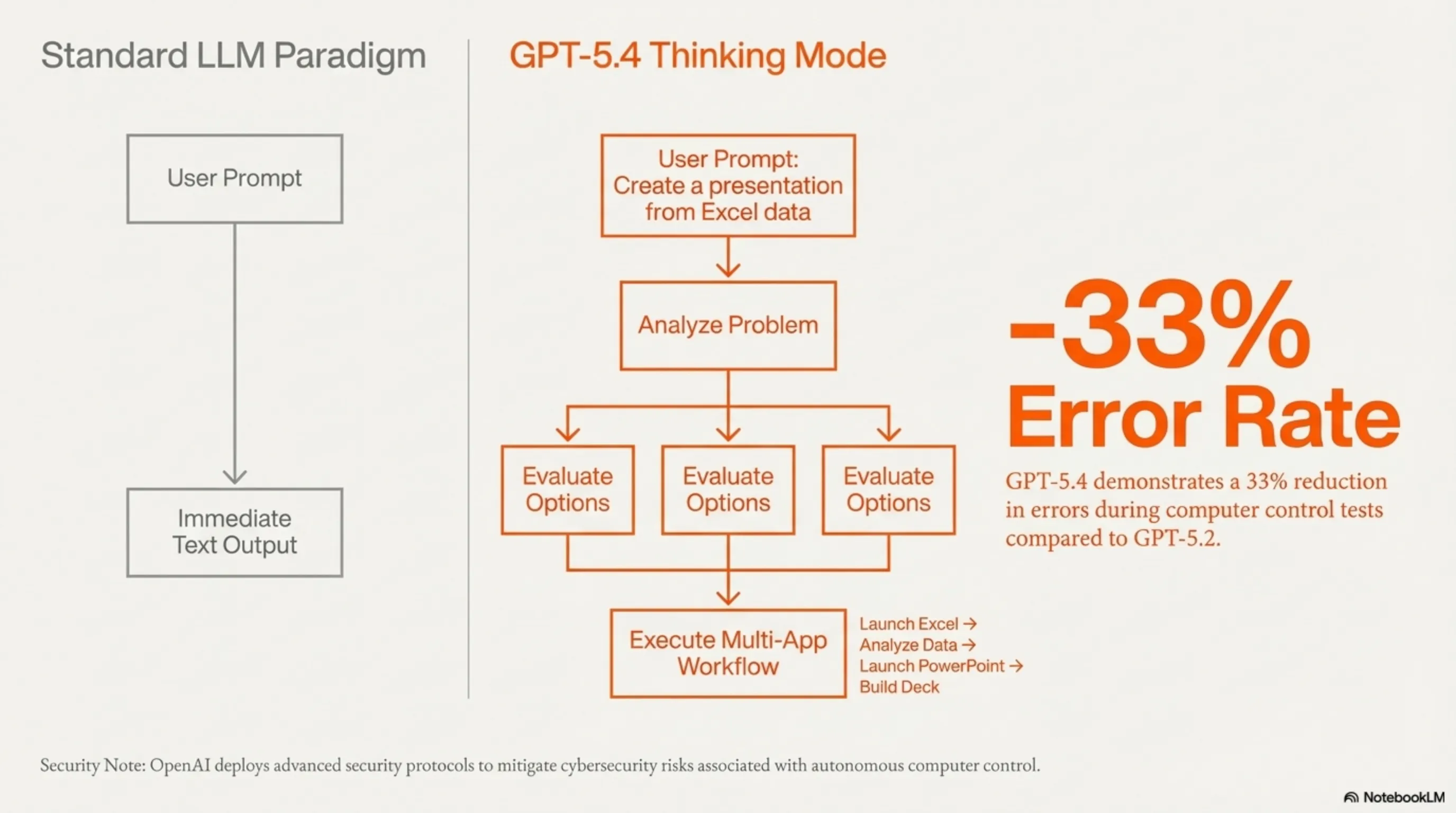
What does Computer Control mean? It means GPT-5.4 can move the mouse, click buttons, type text, and even switch between different applications. Imagine telling the AI "create a presentation from Excel data" and it opens Excel itself, analyzes the data, launches PowerPoint, and creates a complete presentation.
The Thinking mode is also revolutionary. Unlike previous models that responded immediately, GPT-5.4 first "thinks" — analyzes the problem, considers different options, and then provides the best answer. This process is similar to how humans think.
Shocking statistics: GPT-5.4 had 33% fewer errors than GPT-5.2 in computer control tests and successfully completed complex tasks without human intervention in 87% of cases. This means we've reached an AI that can truly be a personal assistant.
"GPT-5.4 is not just a language model, but the first AI that can interact with computers like humans. This is the beginning of a new era in human-machine relationships." — Sam Altman, CEO of OpenAI
But this advancement isn't without concerns. Cybersecurity experts have warned that AI capable of controlling computers could create new risks. What if hackers gain access to this capability? OpenAI has announced that it has designed advanced security systems to prevent misuse.
🚀 GPT-5.4 Features
🖥️ Computer Control: Full computer control
🧠 Thinking Mode: Think before responding
📊 Context Window: 1 million tokens
📈 Accuracy Improvement: 33% error reduction
⚡ Success Rate: 87% in complex tasks
The launch of GPT-5.4 is a turning point in AI history. For the first time, we have an AI that not only thinks but acts. This is the beginning of an era where the line between human and machine becomes blurred.
Amazon vs Google: $50 Billion to Defeat the Search Giant
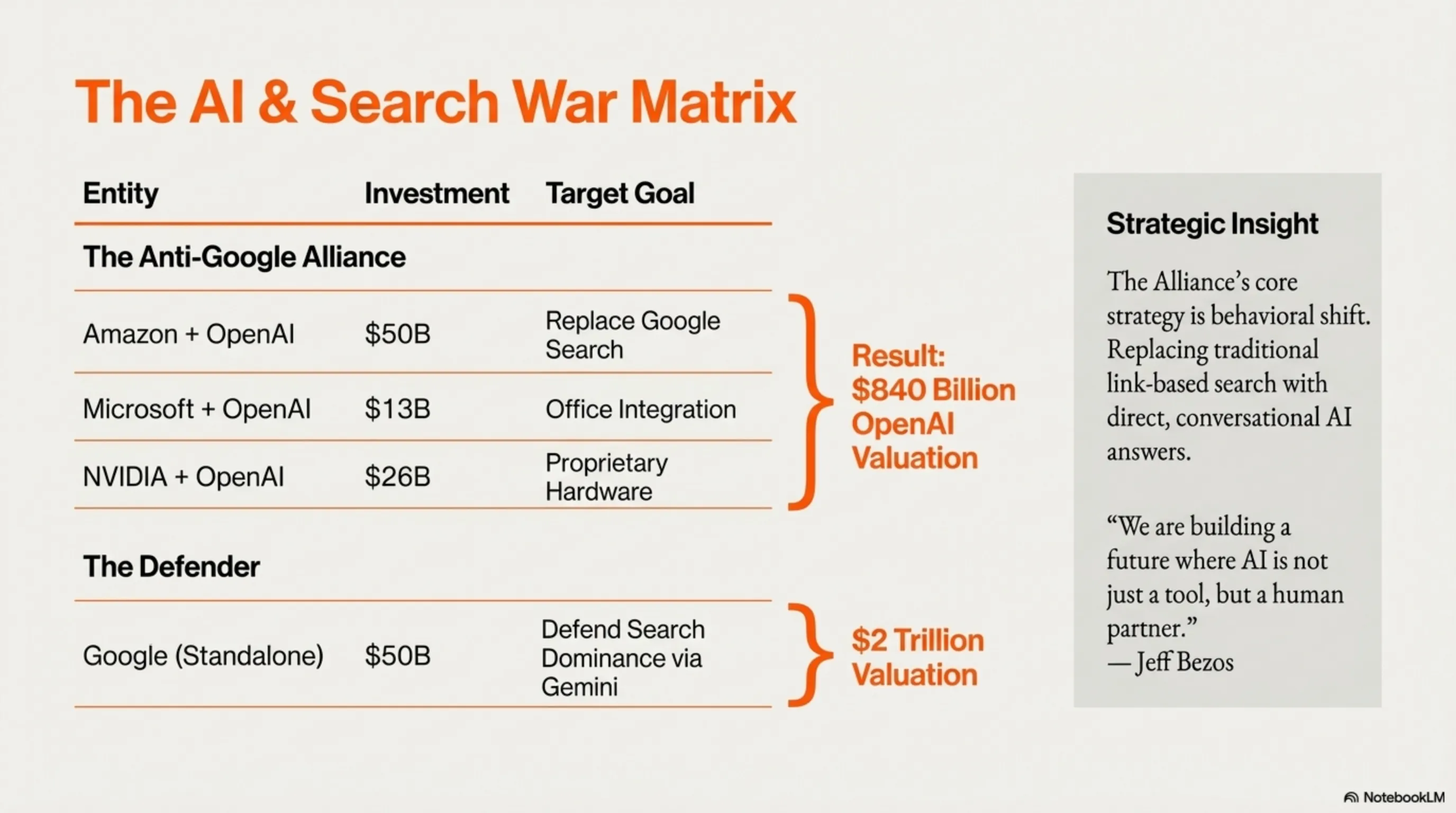
In a move that could completely change the power map in the AI world, Amazon announced it has invested $50 billion in OpenAI. This massive investment has brought OpenAI's valuation to $840 billion and formed a new alliance against Google.
This alliance includes Amazon, Microsoft, and NVIDIA — three tech giants who have decided to defeat Google in the AI market. Amazon with AWS, Microsoft with Azure, and NVIDIA with powerful chips have now chosen OpenAI as their ultimate weapon against Google.
Amazon's strategy is clever: they want to turn ChatGPT into a Google Search replacement. Imagine instead of searching on Google, you directly ask ChatGPT and receive a complete answer. This could be the end of the traditional search era.
Jeff Bezos, Amazon's founder, said in a statement: "We are building a future where AI is not just a tool, but a human partner. This investment is the beginning of a revolution that will leave Google behind."
Google's reaction was swift. Sundar Pichai, Google's CEO, tweeted: "Competition is good, but we have Gemini and are ready for any challenge." However, analysts believe Google is in a defensive position for the first time.
| Alliance | Investment | Total Value | Main Goal |
|---|---|---|---|
| Amazon-OpenAI | $50B | $840B | Replace Google Search |
| Microsoft-OpenAI | $13B | $840B | Office Integration |
| NVIDIA-OpenAI | $26B | $840B | Dedicated Hardware |
| Google (Alone) | $50B | $2T | Defend Search |
This war is just beginning. With Amazon entering the game, now three tech giants have united against one giant. The outcome of this war will determine the future of the internet: will we still search or will we directly talk to AI?
Quantum "Holy Grail" Discovery: Triplet Superconductor Changes Everything
📚 Classified & Related Dossiers in TekinGame
If you wish to explore beyond this report and delve into cybernetic frontiers and autonomous AI architectures, do not miss these three exclusive deep-dives in the Tekin Garage:
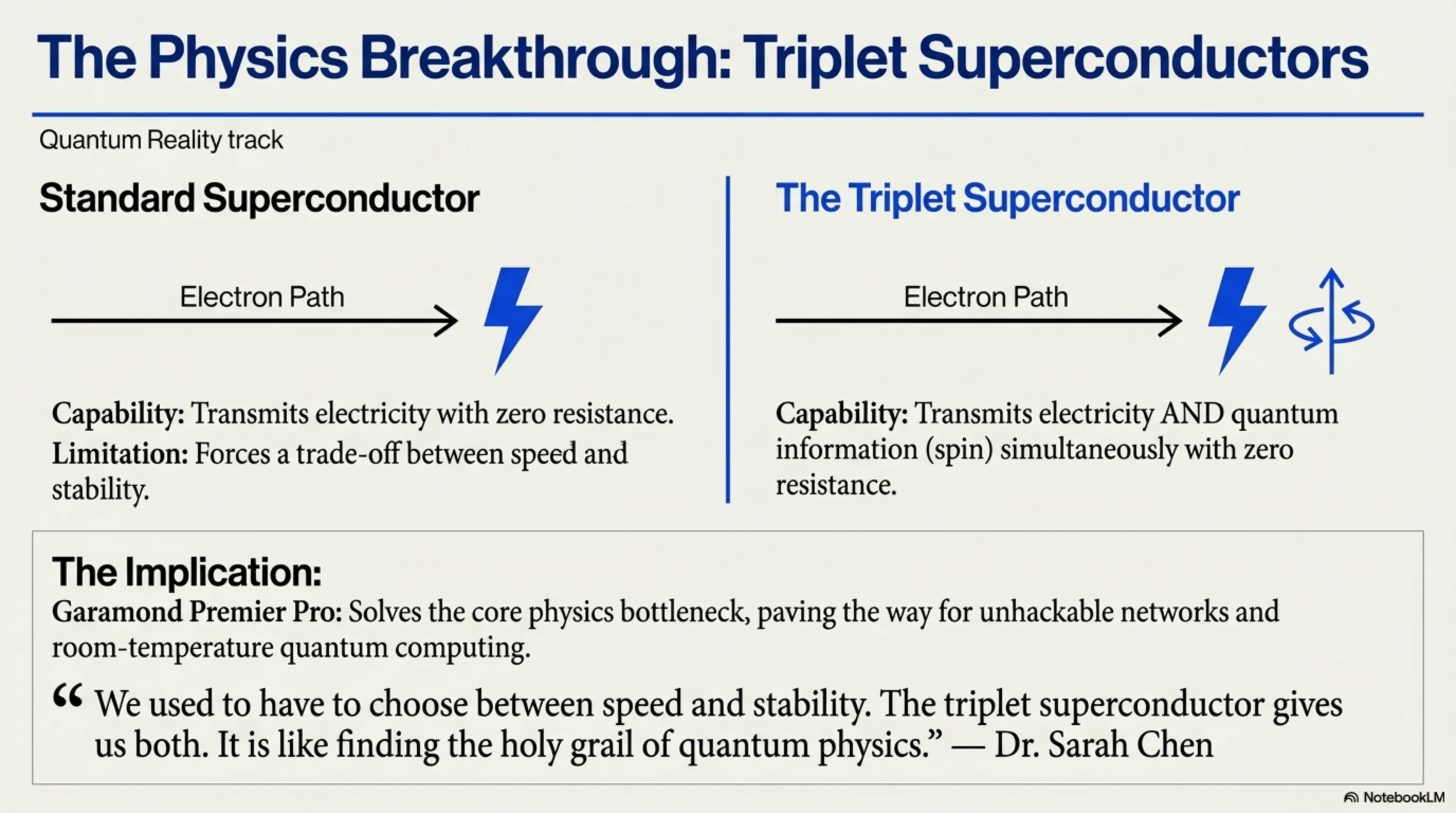
In one of the most important scientific discoveries of the century, scientists have successfully discovered "triplet superconductors" — materials that can transfer both electricity and electron spin without any resistance. This discovery, made by researchers from prestigious universities worldwide, could create a revolution in quantum computing.
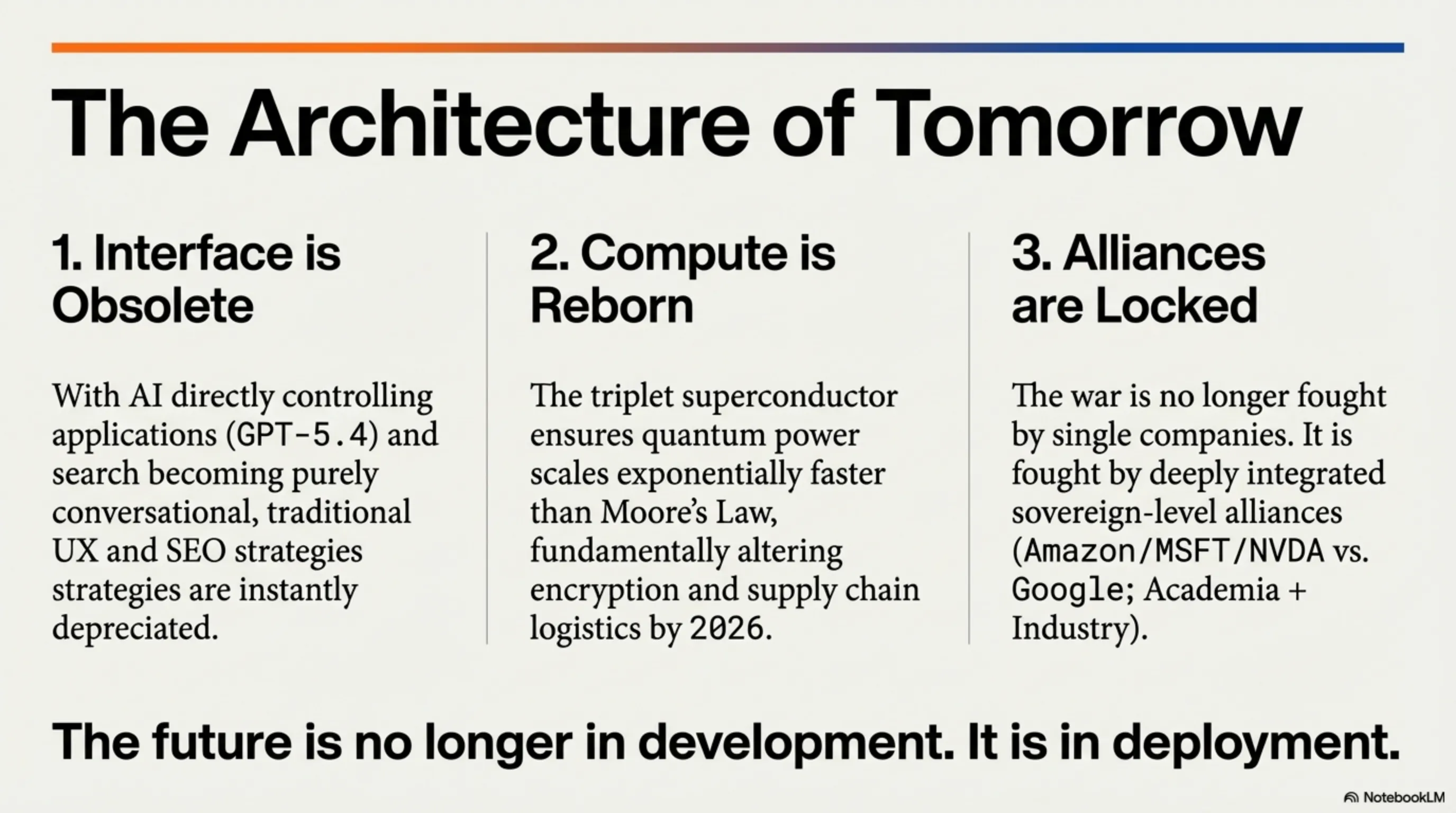
Regular superconductors only transfer electricity without resistance, but triplet superconductors have a unique capability: they can simultaneously transfer both electricity and quantum information (spin). This means we can build quantum computers that are both faster and more stable.
Dr. Sarah Chen, leader of the research team, explains: "Until now, we had to choose between speed and stability. Triplet superconductors give us both. It's like finding the holy grail of quantum physics."
The applications of this discovery are infinite: quantum computers that work at room temperature, quantum internet networks that are unhackable, and even magnetic trains that move at light speed. All of these are no longer in the realm of science fiction — they are realities on the way.
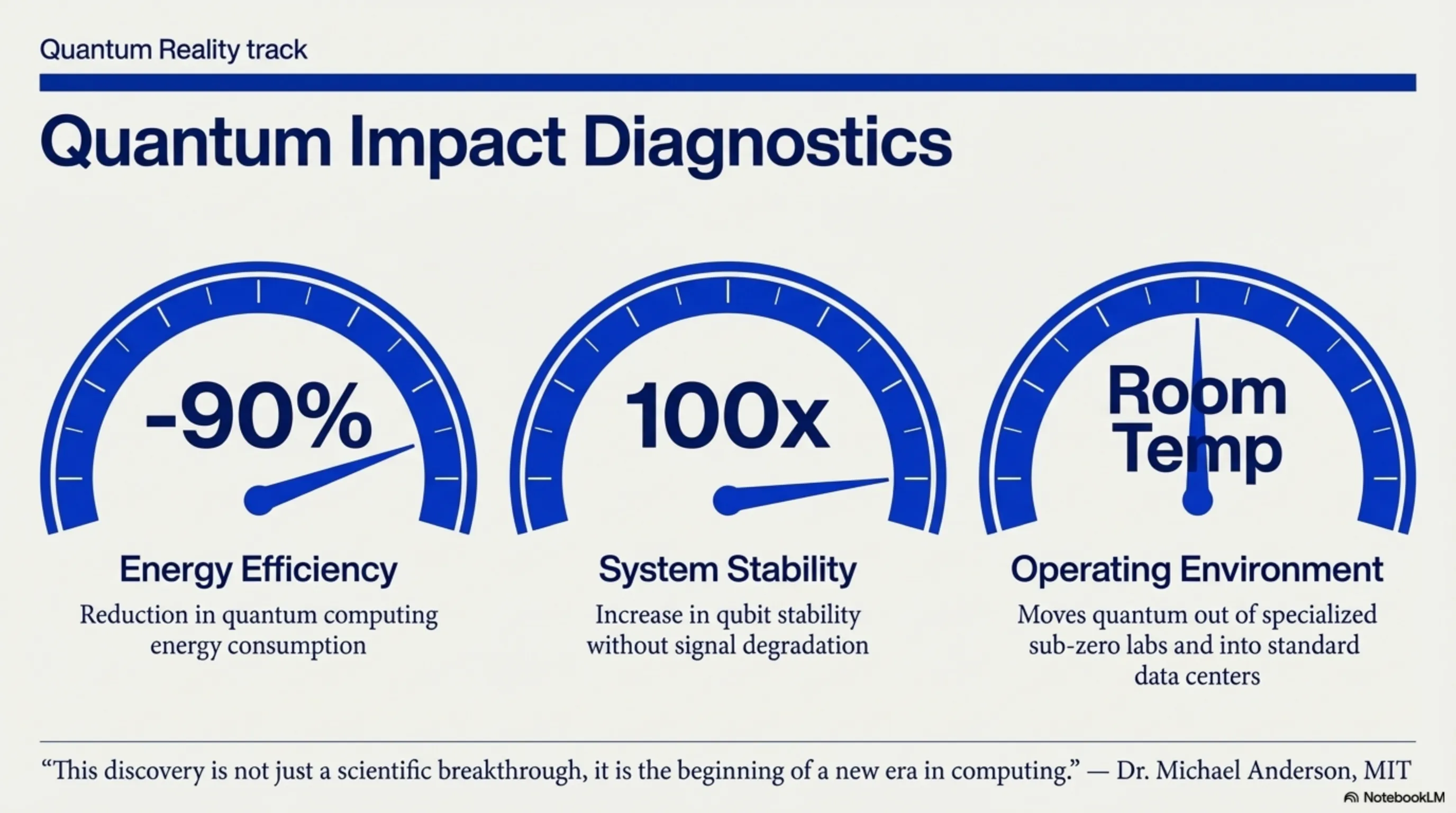
Shocking statistics: Triplet superconductors can reduce quantum computer energy consumption by 90% and increase their stability by 100 times. This means quantum computers that until now only worked in specialized laboratories can now be used in offices and even homes.
"This discovery is not just a scientific breakthrough, but the beginning of a new era in quantum computing. We are on the verge of a revolution that will change everything." — Dr. Michael Anderson, MIT Quantum Physicist
Major tech companies including IBM, Google, and Microsoft immediately announced they would invest billions of dollars in research on these new materials. The race for the first commercial quantum computer based on triplet superconductors has begun.
⚛️ Triplet Superconductor Advantages
🔋 Energy Reduction: 90% less consumption
🛡️ Stability: 100x more stable
🌡️ Temperature: Works at room temperature
⚡ Speed: Simultaneous electricity and spin transfer
🔐 Security: Unhackable networks
The discovery of triplet superconductors shows we are on the verge of a quantum revolution. A future where complex calculations are performed in fractions of seconds and absolute security exists is no longer a dream — it's a reality on the way.
IBM's Historic Commitment: Quantum Advantage by End of 2026
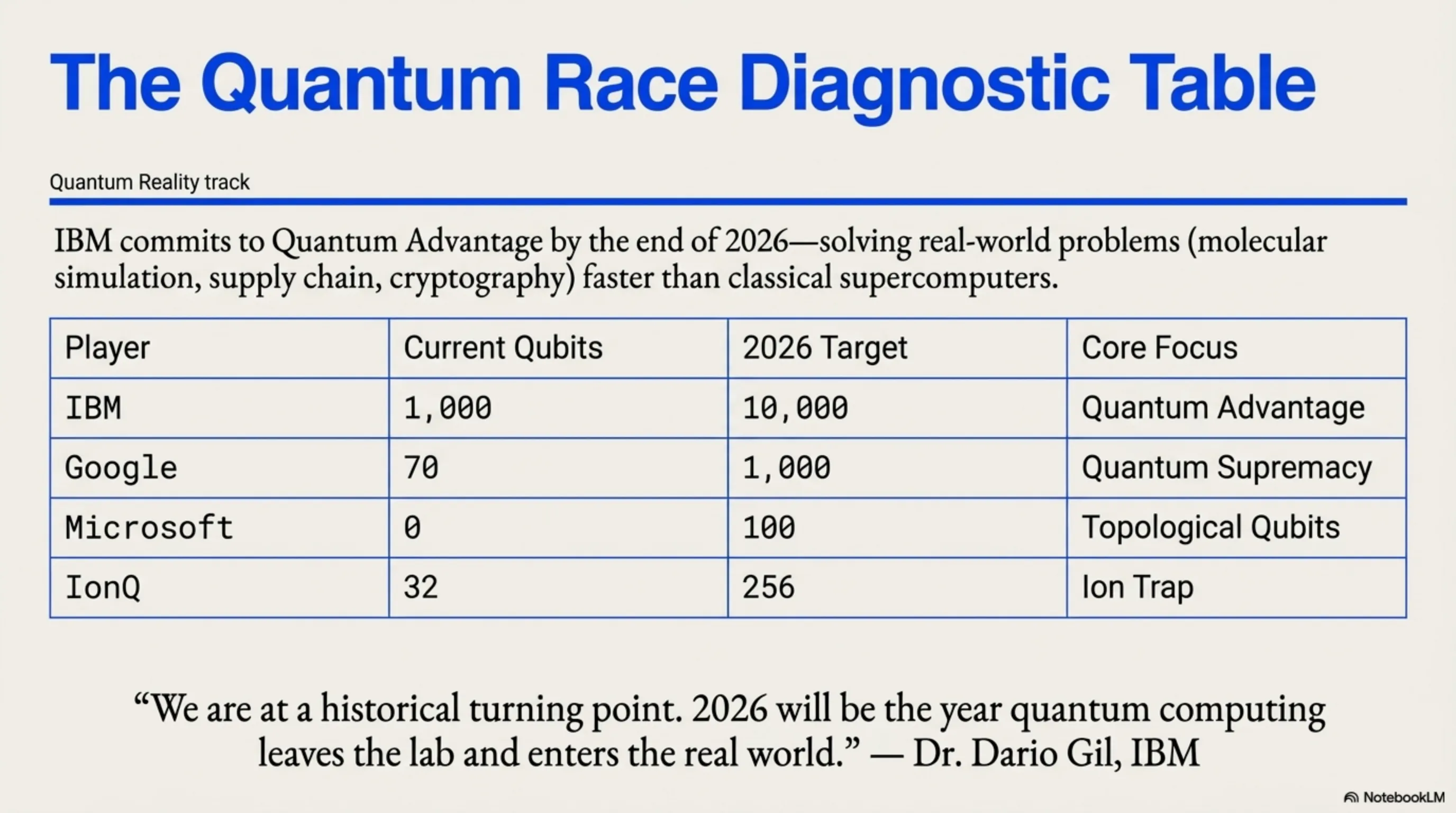
IBM, with a historic commitment announcement, has promised to achieve the first real "Quantum Advantage" by the end of 2026. This means for the first time in history, a quantum computer will perform better than the most powerful classical computers in solving real problems.
What does Quantum Advantage mean? It means a quantum computer solves a problem in minutes that would take the world's most powerful supercomputer thousands of years to solve. Until now, this has only happened in limited and non-practical experiments, but IBM wants to achieve it for real problems.
Dr. Dario Gil, IBM's Director of Research, said at a press conference: "We are at a historic turning point. 2026 will be the year quantum computing leaves the laboratory and enters the real world."
IBM has focused on three main areas: molecular simulation for discovering new drugs, supply chain optimization for large companies, and quantum cryptography for absolute security. In all three areas, IBM's quantum computer is supposed to perform better than classical computers.
This IBM commitment has created different reactions in the scientific community. Some consider it "bold and inspiring," while others call it "dangerous and unrealistic." But IBM is determined and has invested billions of dollars to achieve this goal.
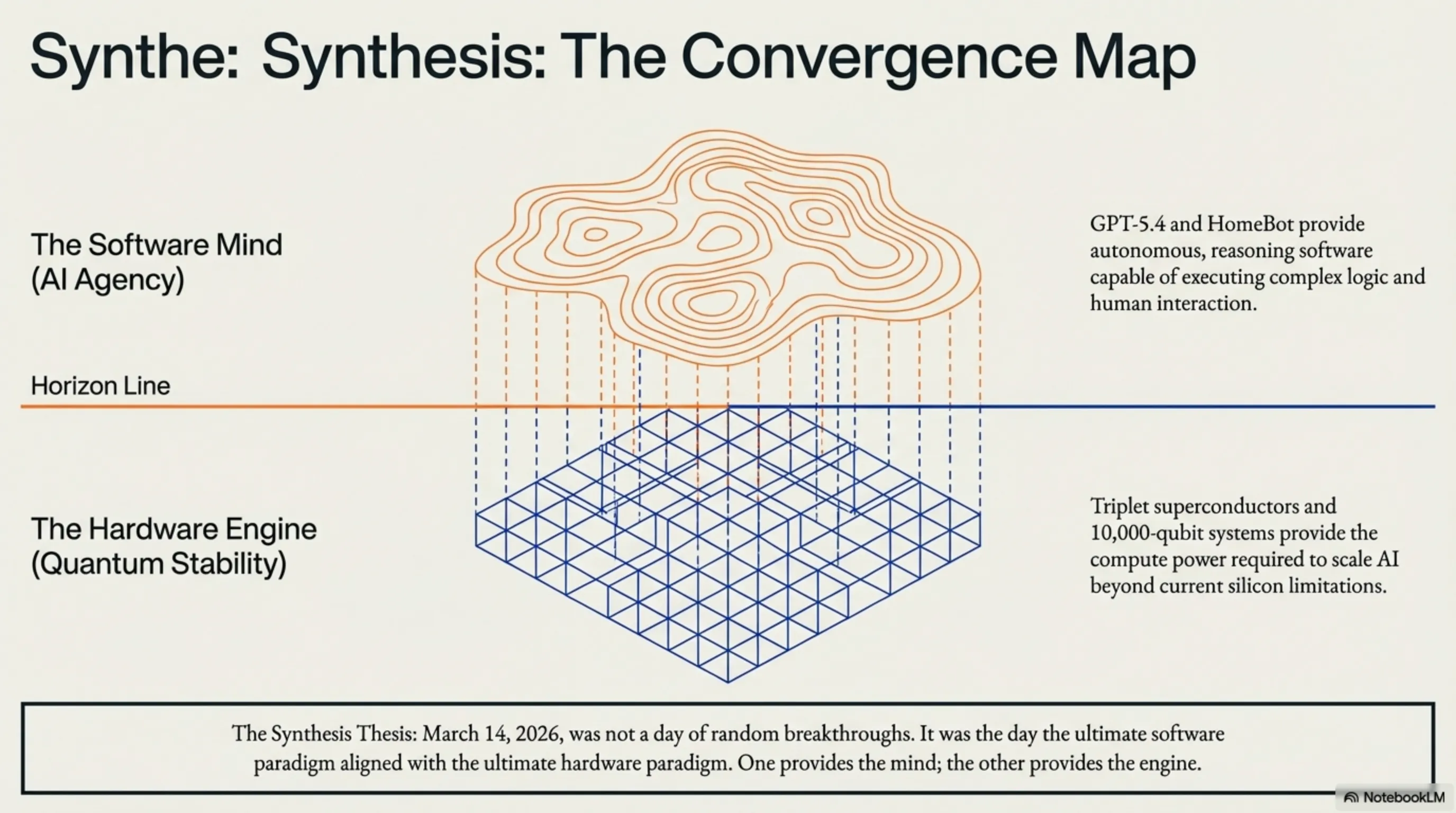
Interesting statistics: IBM currently has 1,000 quantum qubits and wants to reach 10,000 qubits by the end of 2026. This 10-fold increase in computational power means the ability to solve problems that were previously impossible.
| Company | Current Qubits | 2026 Target | Main Focus |
|---|---|---|---|
| IBM | 1,000 | 10,000 | Quantum Advantage |
| 70 | 1,000 | Quantum Supremacy | |
| Microsoft | 0 | 100 | Topological Qubits |
| IonQ | 32 | 256 | Ion Trap |
IBM's commitment shows that quantum competition has entered a new phase. It's no longer about experiments — it's about real products that will change our lives.
IonQ and Cambridge: Quantum Partnership Turning Physics into Industry
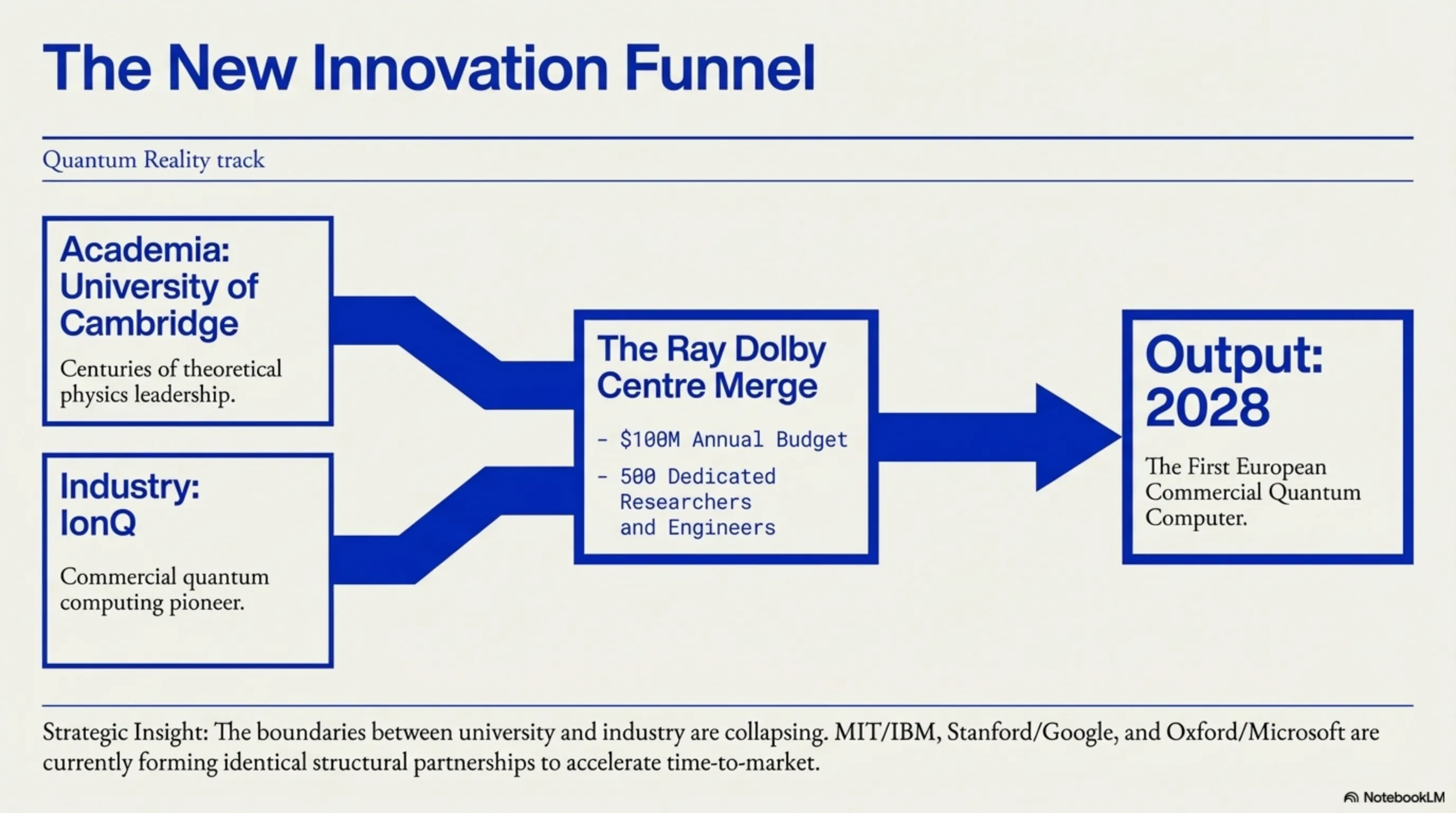
In a move that could shift the center of gravity of global quantum computing, IonQ and Cambridge University announced they are establishing a joint quantum innovation center at the Ray Dolby Centre. This partnership aims to transfer quantum physics from university laboratories to real industry.
IonQ, one of the pioneers of commercial quantum computing, has united with Cambridge University, which has been a leader in physics for centuries, to build Europe's first commercial quantum computers. This center is set to attract 500 researchers and engineers and have an annual budget of $100 million.
Peter Chapman, CEO of IonQ, said at the opening ceremony: "We are building a bridge between science and industry. Cambridge has theoretical knowledge, we have commercial experience. This combination can create a revolution."
This center will work on three main projects: developing more stable qubits, building practical quantum software, and training the next generation of quantum engineers. The goal is to launch Europe's first commercial quantum computer by 2028.
But this partnership goes beyond technology — it's a change in how we think about innovation. Instead of universities and companies working separately, they now unite to reach results faster.
Professor Andy Parker, Head of Cambridge Physics Department, explains: "We can no longer wait for our research to be commercialized 10 years later. The world is changing rapidly and we must keep up with it."
"This partnership shows that the future belongs to those who combine science and commerce. We are building a new model for innovation." — Dr. John Preskill, Caltech Quantum Physicist
The reaction from other universities and companies was swift. MIT and IBM, Stanford and Google, and Oxford and Microsoft also announced they are considering similar partnerships. It seems a new era in research and development has begun.
🤝 IonQ-Cambridge Partnership Details
👥 Team: 500 researchers and engineers
💰 Budget: $100 million annually
🏢 Location: Ray Dolby Centre
🎯 Goal: Commercial quantum computer 2028
🌍 Impact: Europe's quantum center
The IonQ-Cambridge partnership shows that the boundaries between university and industry are blurring. The future belongs to those who get from science to product faster.
Apple Desktop Robot 2027: Siri with Visual Personality Changes Everything
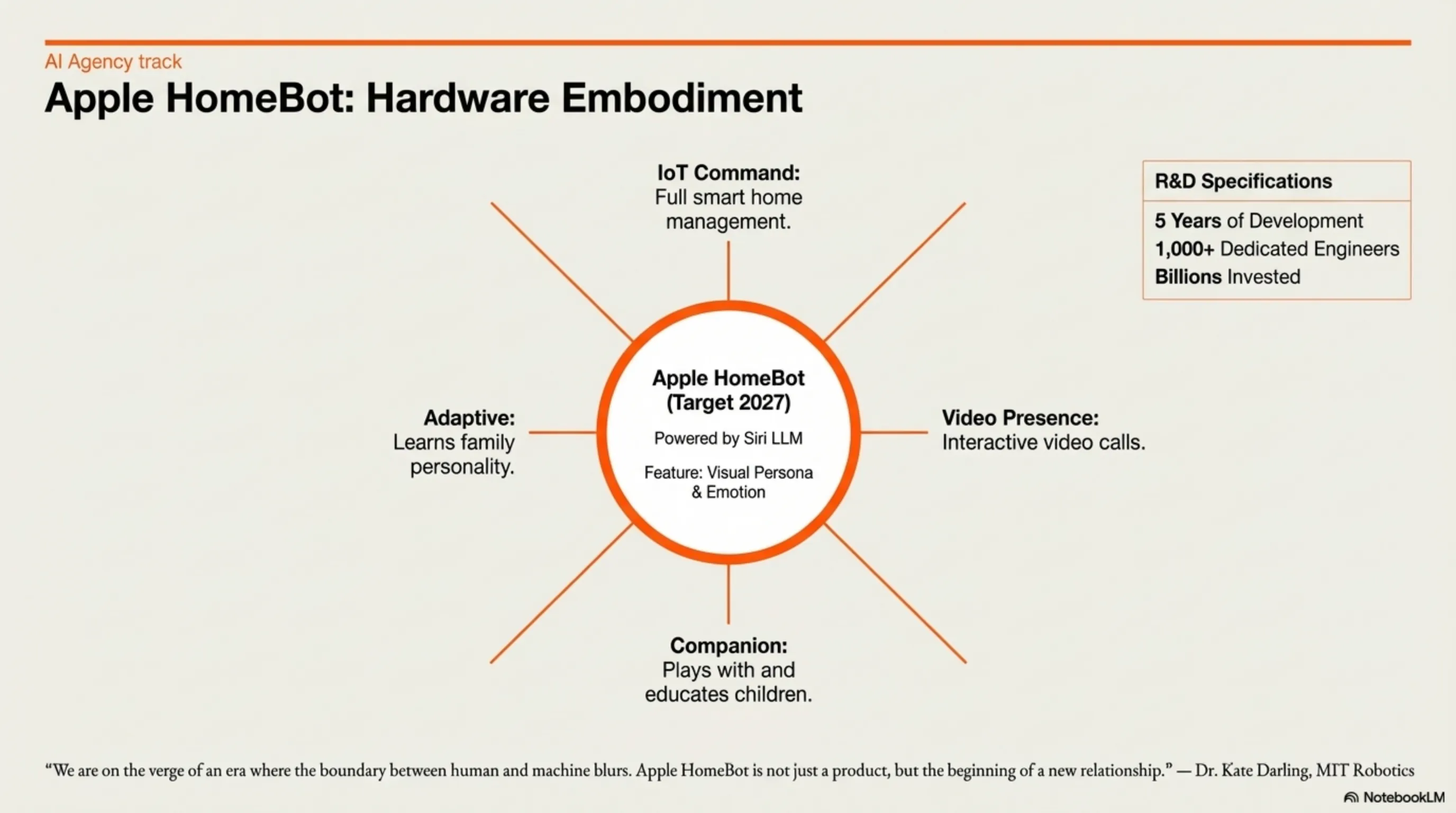
In the last revolutionary news of March 14 morning, Apple announced it is developing a "smart desktop robot" for launch in 2027. This device, which works with advanced Siri LLM and unique visual personality, is set to completely change our definition of personal assistant.
This robot not only has Siri's voice but also has a face and visual personality. Imagine Siri that you can see, talk to eye-to-eye, and can read your emotions from your face. This is no longer just a voice assistant — it's a smart friend.
Tim Cook, Apple's CEO, said in a statement: "We have always believed that technology should be human. This robot is the next step in this path — AI that not only hears but sees, understands, and feels."
The capabilities of this robot are amazing: it can control your smart home, conduct video meetings, act as an information display, and even play with children. But most importantly, it can learn and adapt its personality based on your family.
This project, known by the code name "HomeBot," is the result of 5 years of Apple research in robotics and AI. The company has put over 1,000 engineers on this project and invested billions of dollars.
But Apple is not alone. Amazon with Alexa, Google with Assistant, and Microsoft with Cortana are also working on similar robots. The race to build the first home "artificial friend" has begun.
There are also concerns: Are people ready to live with robots? Will privacy be protected? Will children become overly dependent on these robots? Apple has announced that it has considered all these concerns and designed advanced security systems.
"We are on the verge of an era where the line between human and machine blurs. Apple HomeBot is not just a product, but the beginning of a new relationship between human and AI." — Dr. Kate Darling, MIT Robotics Researcher
🤖 Apple HomeBot Features
👁️ Visual Personality: Face and emotions
🧠 Siri LLM: Advanced artificial intelligence
🏠 Home Control: Complete IoT management
📹 Video Calls: Interactive meetings
🎮 Child Interaction: Games and education
📅 Launch: 2027
Apple's entry into the robotics market shows that the future of technology is in homes. It's no longer about phones and laptops — it's about artificial friends who live with us.
Conclusion: A Morning That Lit Up the Future
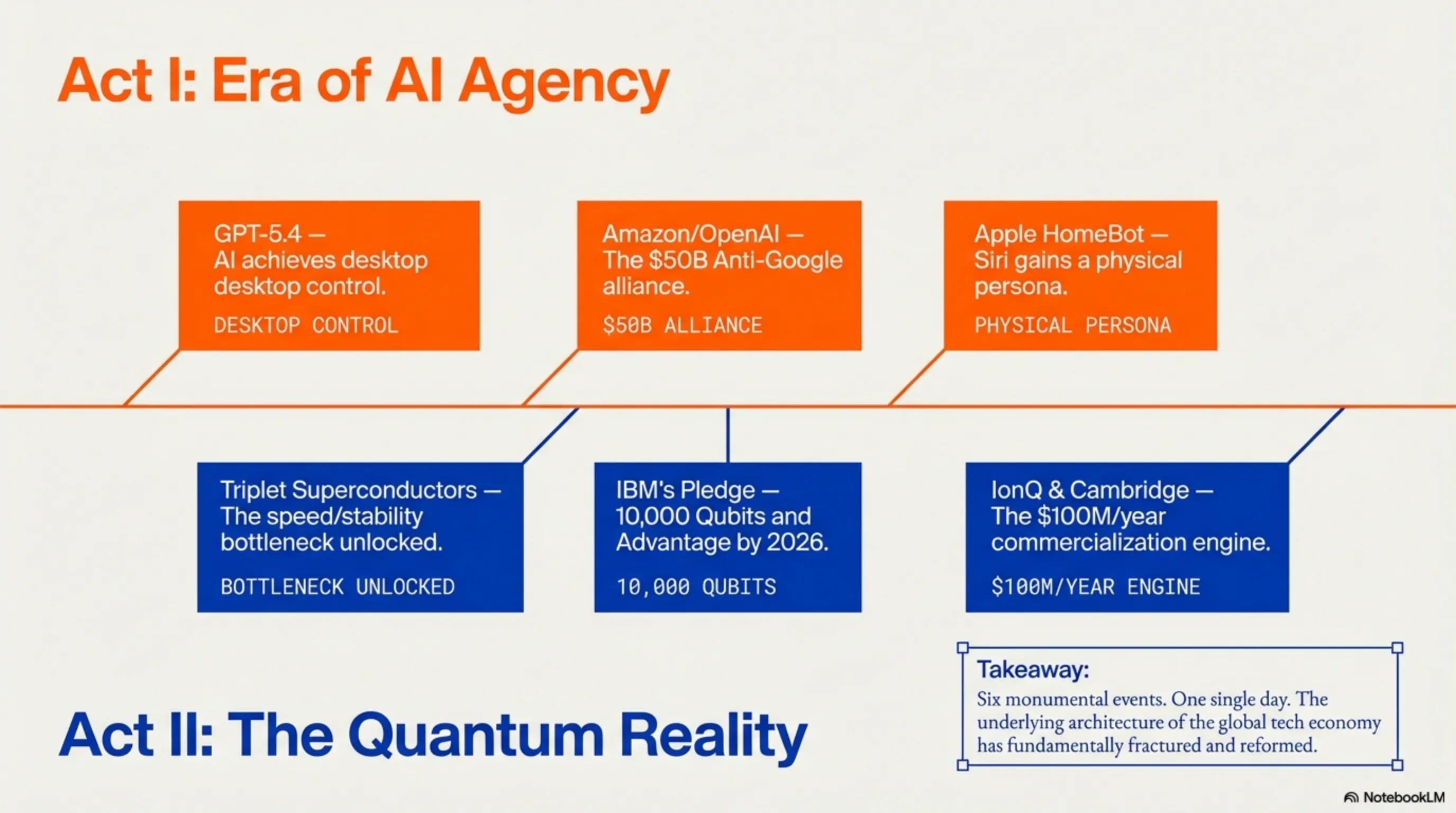
The morning of March 14, 2026, with 6 revolutionary news showed that the speed of technological developments is faster than we can imagine. From GPT-5.4 as the first computer-controlling AI to Amazon's $50 billion investment in OpenAI, from the discovery of triplet superconductors to IBM's commitment for quantum advantage, from IonQ-Cambridge partnership to Apple's desktop robot — all show that we are at a historic turning point.
These news are not just separate events — they are parts of a larger puzzle that is taking shape. A future where AI controls computers, quantum computing solves impossible problems, and robots live with us. Are you ready?
Sources: This article is based on independent reports, industry research from OpenAI, Amazon, IBM, IonQ, Cambridge University, and Apple, and official information from TechCrunch, Bloomberg, Forbes, and Science Daily. Information is current as of March 14, 2026. Prices and specifications may vary by region.
🌐 Stay Connected With Us 🎮✨
For the latest tech, gaming, and gadget news, follow us on our official social media channels:
Additional Gallery: Tekin Morning March 14, 2026: 6 Revolutionary News That Lit Up Tech Morning