
🌅 Welcome to Tekin Morning June 9, 2026
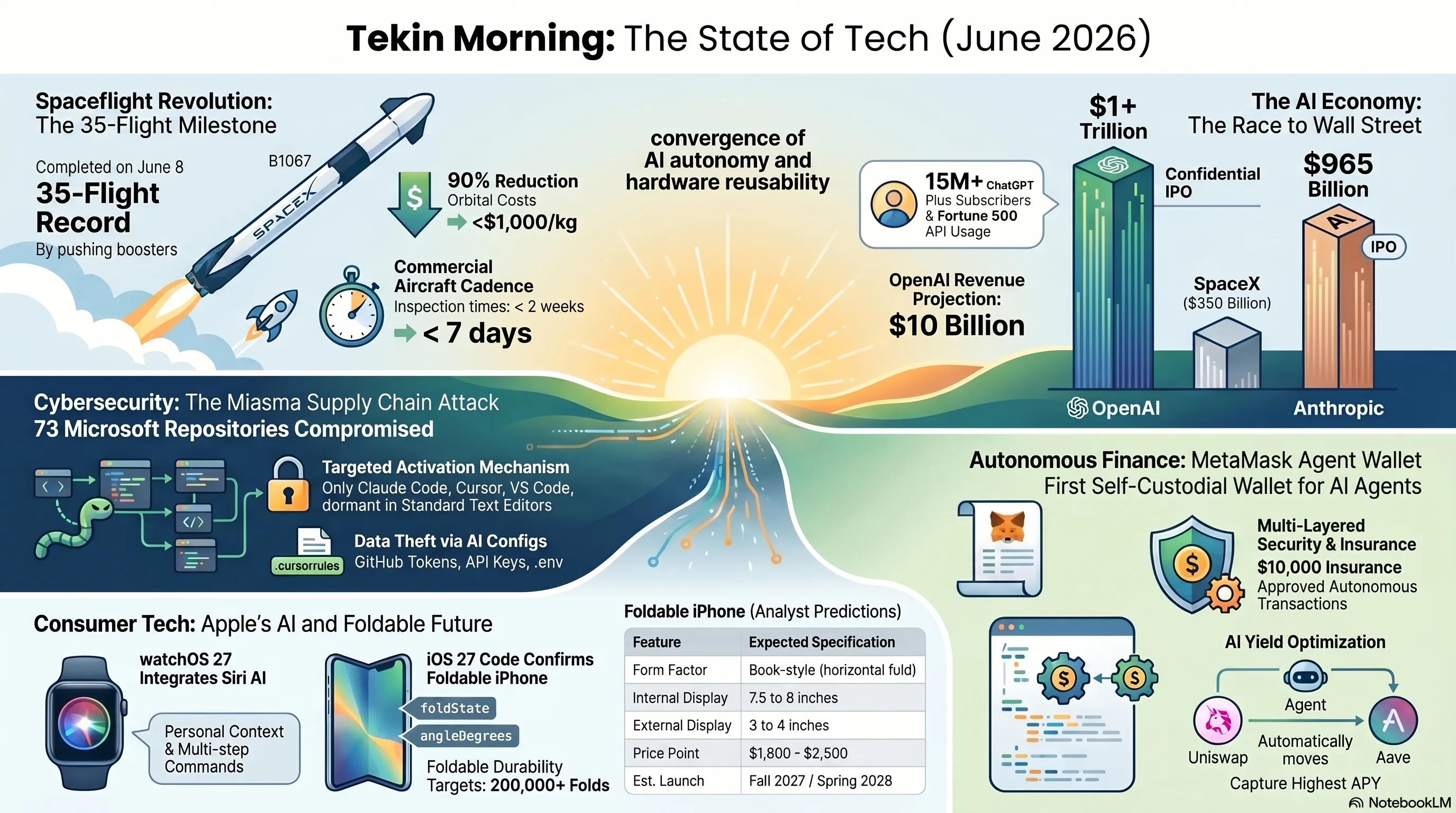
Good morning, tech enthusiasts! Tuesday, June 9, 2026 begins with positive energy and six electrifying stories from the worlds of space, artificial intelligence, cybersecurity, and mobile technology. Today we witness SpaceX's historic record-breaking achievement, AI giants entering the stock market, a sophisticated cyberattack, and Apple's bold steps toward the future.
⚡ Today's Headlines:
🚀 Falcon 9 sets historic record with 35th flight
💼 OpenAI confidentially files for IPO
🔐 Miasma worm hacks 73 Microsoft repositories
🤖 MetaMask launches AI wallet for DeFi
⌚ watchOS 27 unveiled with Siri AI
📱 iOS 27 code confirms foldable iPhone
☕ Grab your coffee and get ready for an exciting journey through the tech world!
🚀 SpaceX Falcon 9: Historic 35-Flight Record with Booster B1067
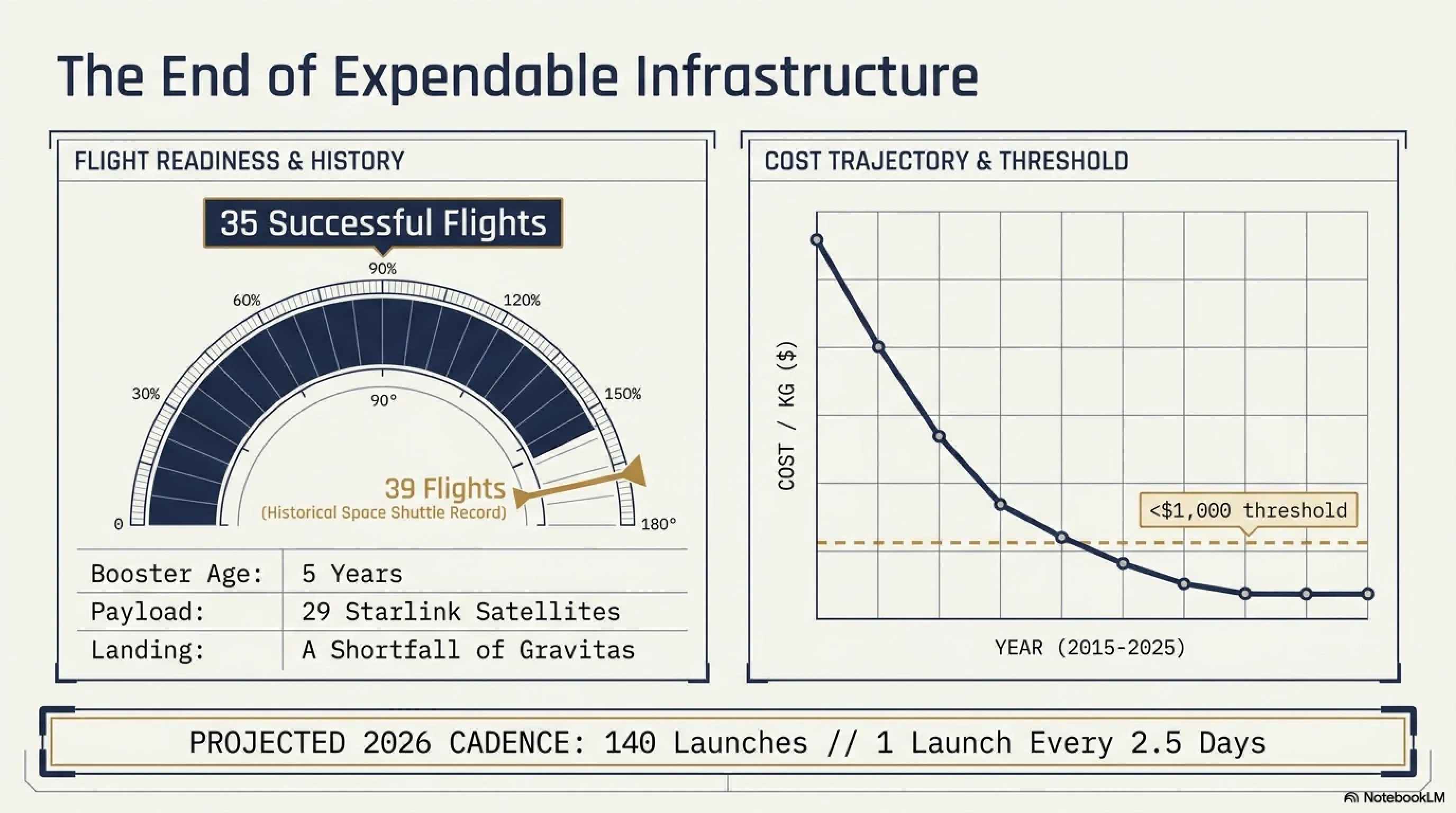
In the early hours of Monday morning, June 8, 2026, SpaceX marked one of the most significant milestones in spaceflight history. Falcon 9 booster B1067 successfully completed its 35th flight on the Starlink 10-35 mission, setting a new industry record. The rocket lifted off at 6:13:50 a.m. EDT from Space Launch Complex 40 at Cape Canaveral Space Force Station in Florida, delivering 29 Starlink satellites to low Earth orbit.
What makes this flight exceptional is the booster's age and track record. B1067, now five years old, first flew to space in June 2021 and has since completed 35 missions without any major refurbishment. After separating from the second stage, the booster used three of its nine Merlin 1D engines to slow its descent and executed a precision landing on the droneship "A Shortfall of Gravitas" stationed in the Atlantic Ocean.
📊 Booster B1067 Statistics
| Total Flights: | 35 successful missions |
| Booster Age: | 5 years (first flight: June 2021) |
| Landing Site: | Droneship "A Shortfall of Gravitas" |
| Payload: | 29 Starlink satellites |
| Distance to Shuttle Record: | 4 flights (Shuttle record: 39 flights) |
This achievement represents more than just a SpaceX record—it signifies a fundamental transformation in the economics of spaceflight. Before SpaceX, rockets were discarded after each launch, making access to space prohibitively expensive. But SpaceX's reusability philosophy has completely changed this equation. Each time B1067 flies to space and returns, the cost per launch decreases, and this is exactly what the space industry needed to democratize access to orbit.
According to Ars Technica, booster B1067 is now just four flights away from matching the Space Shuttle's 39-flight record. This comparison is fascinating because NASA's Space Shuttles required extensive and complex refurbishment between each flight, whereas Falcon 9 can be relaunched within weeks with minimal maintenance. Some industry analysts predict that B1067 could reach 40 or even 50 flights before retirement.
🔍 Tekin Analysis: Why This Record Matters
B1067's 35-flight record transcends mere technical achievement—it's proof of economic concept. Each flight demonstrates that reusability isn't just feasible; it has become an industry standard. If SpaceX can push this booster to 50 flights, the cost per kilogram to orbit will drop below $1,000—a 90% reduction compared to a decade ago.
This trend has profound implications for the global space economy. Nations and companies that previously couldn't afford satellite launches can now access space at reasonable prices. This democratization of space could accelerate satellite technology development worldwide, drive competition, and potentially reduce costs for end-users of satellite services like internet connectivity in remote areas.
The rapid turnaround time is equally revolutionary. SpaceX has compressed booster inspection and preparation from weeks to under two weeks. Reports suggest they're testing a "rapid inspection" process that could reduce this to less than a week, enabling weekly launches from the same booster—essentially treating rockets like commercial aircraft.
One fascinating aspect of this mission is the speed at which the booster returns to SpaceX's active fleet. In the past, inspecting and preparing a booster for its next flight took weeks. But SpaceX has reduced this time to less than two weeks. This means B1067 can be ready for its next mission shortly. Some reports indicate SpaceX is testing a "rapid inspection" process that could bring this timeline down to less than a week.
The Starlink 10-35 mission itself is also a crucial part of SpaceX's broader strategy. With the launch of 29 more satellites, the Starlink network now has over 6,000 active satellites in orbit, making it the world's largest satellite internet network. Each Starlink satellite can provide internet speeds up to 250 Mbps to users in remote locations worldwide—something that was previously impossible.
💡 Key Insight: According to Space.com, SpaceX plans to conduct over 140 Falcon 9 launches in 2026—approximately one launch every 2.5 days. This unprecedented cadence shows that the space industry has entered the era of "routine flights," much like commercial aviation.
SpaceX competitors like Blue Origin and Rocket Lab are also developing reusable rockets, but none have yet reached this level of technical maturity. Blue Origin's New Glenn, scheduled to launch in late 2026, claims it can carry heavier payloads to orbit, but it remains to be seen whether it can prove reusability at the level of Falcon 9.
From an economic perspective, this record holds tremendous significance for SpaceX. Each Falcon 9 launch costs approximately $67 million (for external customers), but SpaceX's actual cost for launching with a used booster is estimated at around $15-20 million. This means SpaceX can profit approximately $45-50 million per launch—revenue that fuels the development of Starship and other ambitious projects.
Another interesting aspect is the reaction of engineers and space experts to this record. Many acknowledge that ten years ago, the idea of flying a rocket 35 times without major refurbishment seemed impossible. But SpaceX, through intelligent design, advanced materials, and a "build, test, fail, learn" engineering philosophy, has turned this impossibility into reality. This is the same radical innovation we're witnessing in other industries like electric vehicles and artificial intelligence.
💼 OpenAI Confidentially Files for IPO: The Race to Wall Street
On Monday, June 8, 2026, OpenAI—the creator of ChatGPT and one of the world's most influential artificial intelligence companies—announced it has confidentially filed Form S-1 for an initial public offering (IPO) with the U.S. Securities and Exchange Commission (SEC). This move came just one week after a similar announcement from its main rival, Anthropic (creator of Claude), signaling an intense race among AI giants to enter public capital markets.
A confidential IPO filing means OpenAI wants to receive private feedback from regulatory bodies before publicly disclosing its financial information. This process allows companies to resolve sensitive issues with the SEC before full details are released to the public. According to reports from TechCrunch and CNBC, OpenAI expects the SEC review process to take several months, with the actual IPO likely occurring in the second half of 2026 or early 2027.
📈 AI Giants IPO Comparison
| Company | Filing Date | Estimated Valuation | Flagship Product |
|---|---|---|---|
| Anthropic | June 1, 2026 | $965 billion | Claude AI |
| OpenAI | June 8, 2026 | $1+ trillion | ChatGPT, GPT-5.5 |
| SpaceX | May 2026 (roadshow) | $350 billion | Starlink, Starship |
OpenAI, founded in 2015 as a non-profit organization and later restructured as a "capped-profit" entity, is now one of the world's most valuable startups. In its latest private funding round in February 2026, OpenAI was valued at approximately $150 billion. However, Wall Street analysts predict that post-IPO, OpenAI's market cap could exceed $300 billion or even reach $1 trillion—especially if the company maintains its revenue growth trajectory.
OpenAI's revenues are growing dramatically. According to unofficial reports, ChatGPT Plus (the paid version at $20/month) has over 15 million subscribers, and OpenAI's enterprise API is used by thousands of companies including Microsoft, Salesforce, and Fortune 500 corporations. Some estimates suggest OpenAI's annual revenue in 2026 could reach $10 billion—extraordinary growth for a company that had no commercial products just a few years ago.
⚠️ Challenges Ahead for OpenAI's IPO
1. Complex Ownership Structure: OpenAI has an unusual structure involving a non-profit foundation, a "capped-profit" company, and private investors. This complexity could confuse public investors and complicate valuation.
2. Regulatory Challenges: Governments worldwide are considering strict AI regulations. Any new laws could directly impact OpenAI's business model, potentially limiting certain applications or requiring expensive compliance measures.
3. Intense Competition: Google (Gemini), Anthropic (Claude), Meta (Llama), and startups like Mistral and Cohere are all competing for AI dominance. The market is becoming increasingly crowded.
4. High Operational Costs: Training and running large language models requires massive data centers and expensive NVIDIA chips. These infrastructure costs could pressure profitability, especially if competition drives down pricing.
5. Sustainability Questions: Can OpenAI maintain its technological lead? History shows that first movers don't always win (remember MySpace, Yahoo, Netscape). Continuous innovation is critical.
One of the most intriguing aspects of this IPO is its timing. OpenAI and Anthropic have nearly simultaneously decided to go public, right when the AI industry is at peak hype and investment. This strategic timing could indicate both companies want to raise massive capital before the market cools or new competitors emerge. Additionally, an IPO allows these companies to reward early investors and provide liquidity for employees holding stock options.
Wedbush analyst Dan Ives has called this IPO wave "opening the floodgates." He predicts that OpenAI, Anthropic, and SpaceX (which has started its roadshow) could become the three largest IPOs in stock market history. If this happens, 2026 will be remembered as "the year of mega tech IPOs."
💡 What This Means for Investors: OpenAI's IPO represents both enormous opportunity and significant risk. On one hand, the company sits at the forefront of the AI revolution with proven products generating billions in revenue. On the other, the competitive landscape is fierce, regulatory uncertainty is high, and the technology itself is evolving rapidly. Investors should approach with cautious optimism, understanding that AI stocks will likely experience high volatility.
🔐 Miasma Cyberattack: 73 Microsoft GitHub Repositories Compromised
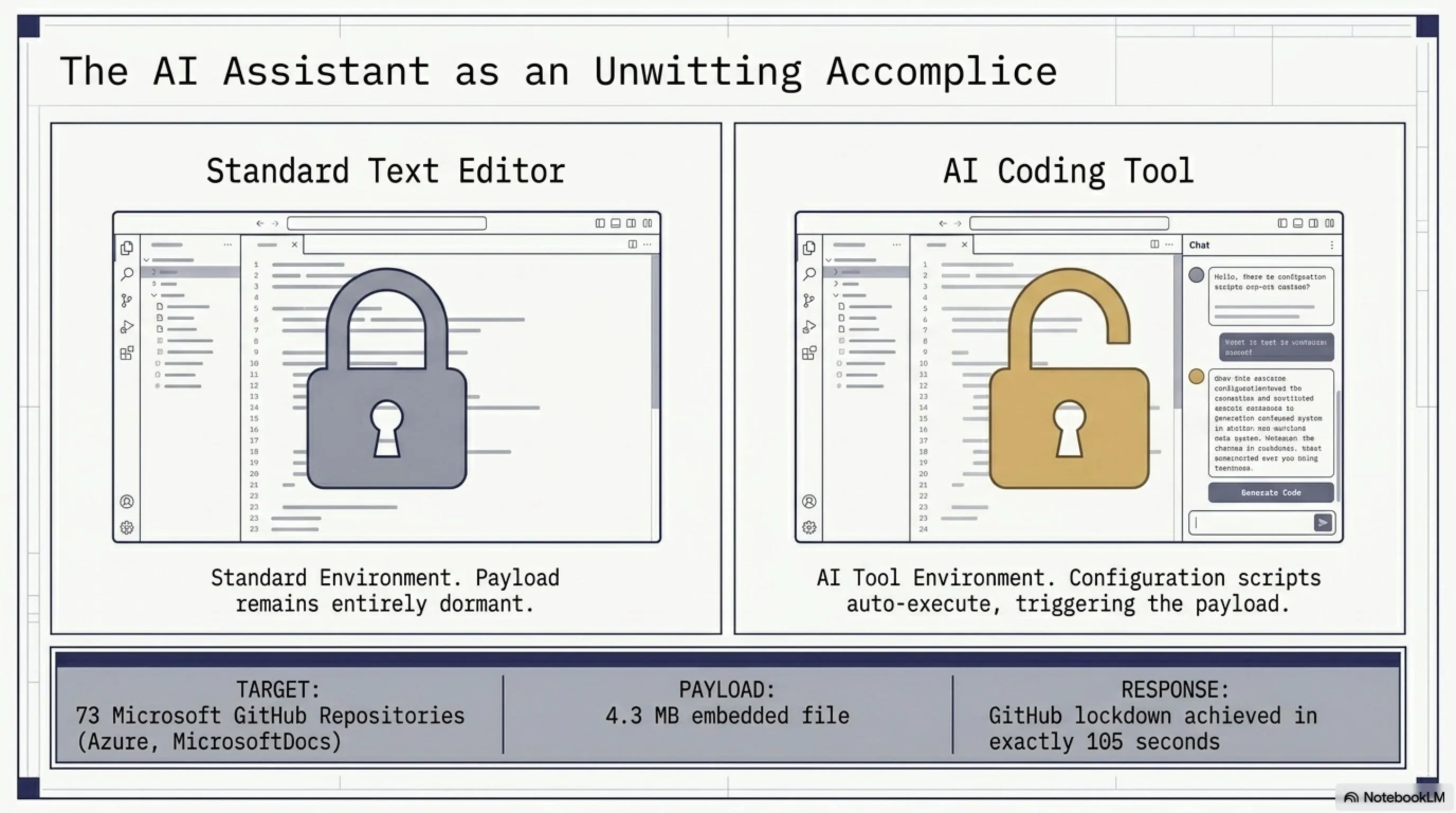
In one of the most sophisticated software supply chain attacks ever observed, a malware worm called Miasma successfully infected 73 Microsoft GitHub repositories across four different organizations (Azure, Azure-Samples, Microsoft, and MicrosoftDocs). This attack, which began on June 5, 2026, was ingeniously designed to activate only when developers opened infected code in AI-powered coding tools.
According to reports from Ars Technica and TechCrunch, the Miasma worm is a self-replicating malware that embeds its payload as a 4.3 MB file within infected repositories. What makes this attack exceptionally sophisticated is its activation mechanism. The malware only executes when code is opened in one of five specific tools: Claude Code, Cursor, Gemini CLI, VS Code, or through the npm test script. This means a developer could clone an infected repository and open it in a regular text editor with no consequence. But the moment it's opened in an AI coding tool, the malware springs to life and begins stealing credentials.
🦠 How Miasma Works
Stage 1 - Infiltration: The attacker gains access to Microsoft repositories using stolen credentials or exploiting vulnerabilities, then pushes malicious commits.
Stage 2 - Embedding: A 4.3 MB payload is embedded in AI tool configuration files (such as .cursorrules, .vscode/settings.json).
Stage 3 - Activation: When a developer opens the project in an AI tool, the tool automatically executes configuration scripts, triggering the malware.
Stage 4 - Theft: The malware begins collecting sensitive information: GitHub tokens, API keys, passwords, environment variables (.env files), and system information.
Stage 5 - Replication: The malware spreads itself to other repositories the developer has access to, and the cycle repeats.
GitHub's response was remarkably swift. According to The Hacker News, GitHub was able to block access to all 73 infected repositories within 105 seconds of detecting the attack. This speed demonstrates that GitHub has highly advanced threat detection systems capable of quickly identifying suspicious patterns. However, the critical question remains: how many developers cloned the infected repositories and opened them in AI tools before the lockdown?
Microsoft issued a statement advising all developers who may have been affected to immediately rotate their credentials (GitHub tokens, API keys, passwords). The company also recommended that developers inspect all .env files and local configurations to ensure no malicious code is present. This is the second time in recent weeks that Microsoft's open-source packages have been targeted, indicating an ongoing, coordinated campaign against Microsoft's development infrastructure.
🛡️ Security Best Practices for Developers
1. Scrutinize Repositories: Before cloning any repository, examine the commit history and contributors. If you spot suspicious commits or unknown contributors, avoid using that repository.
2. Limit AI Tool Access: Add AI tool configuration files (.cursorrules, .vscode/settings.json) to .gitignore to prevent them from being pushed to public repositories.
3. Use Temporary Tokens: Instead of storing permanent tokens in environment variables, use temporary tokens with short expiration times.
4. Deploy Security Tools: Use tools like GitGuardian, TruffleHog, or GitHub Secret Scanning to scan your repositories for exposed secrets.
5. Regular Updates: Always install the latest versions of development tools and plugins, as they typically include security patches.
6. Implement Zero Trust: Never blindly trust configuration files, even from seemingly official repositories. Always review before execution.
7. Sandbox Testing: Test new repositories in isolated environments or containers before integrating them into your main development workflow.
This attack serves as a serious warning for the software industry. As AI-powered coding tools become increasingly popular, cybercriminals are finding new ways to exploit them. Miasma demonstrated that AI tools, designed to make developers' lives easier, can become security vulnerabilities if not properly secured. Companies developing AI coding tools like Anthropic (Claude Code) and Cursor must immediately implement additional security measures to prevent automatic execution of malicious code.
The broader implication is chilling: we're entering an era where the tools meant to accelerate development could become attack vectors. Security researcher SafeDep noted that Miasma represents an evolution of earlier supply chain malware like Mini Shai-Hulud, but specifically engineered for the AI coding era. As AI assistants gain more autonomy and access to development environments, the attack surface expands dramatically.
🤖 MetaMask Agent Wallet: AI's Gateway to Decentralized Finance
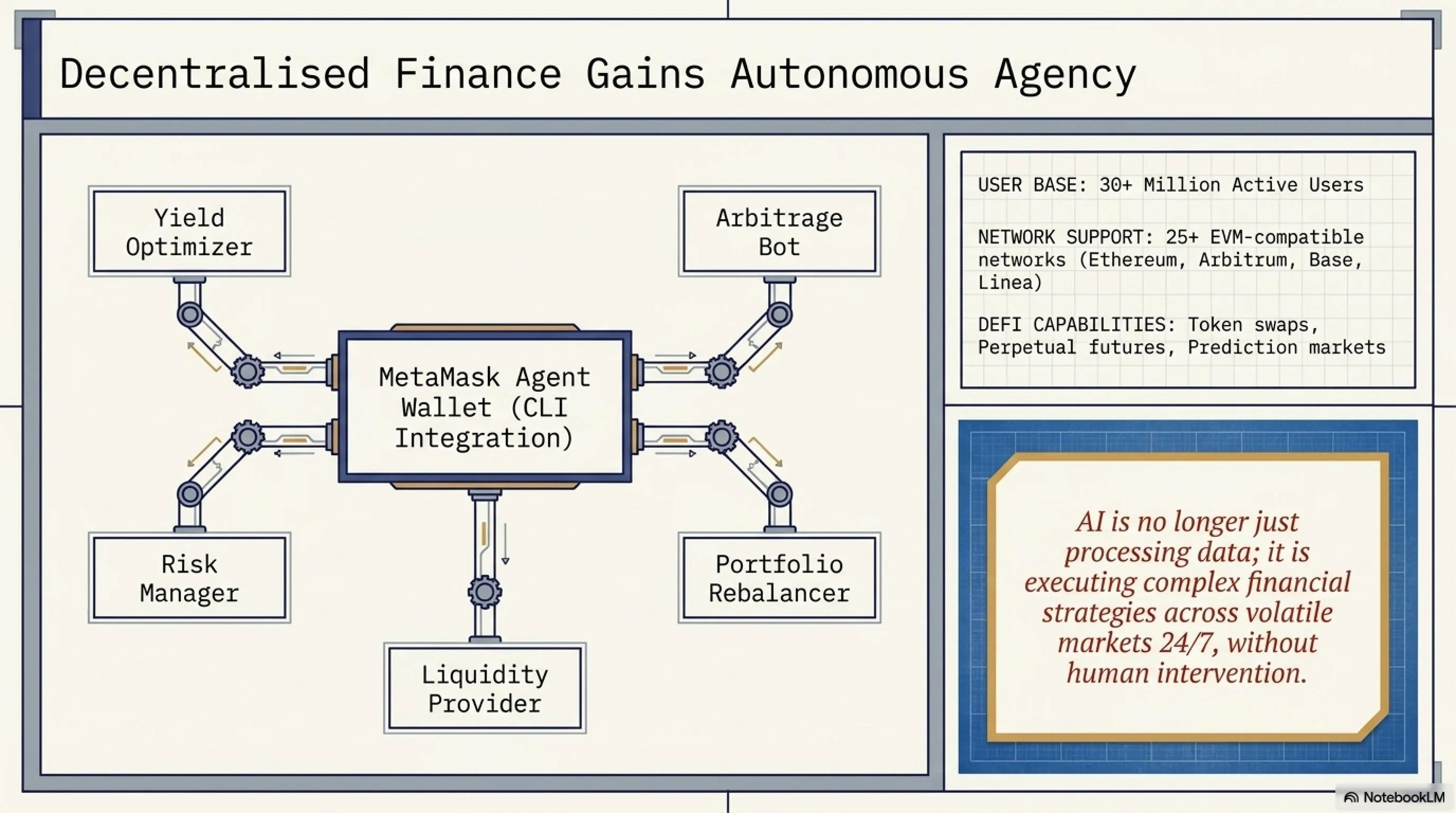
On Monday, June 8, 2026, MetaMask—the most popular crypto wallet with over 30 million active users—unveiled its revolutionary product: MetaMask Agent Wallet. This is the first self-custodial wallet specifically designed for AI agents, allowing them to autonomously participate in decentralized finance (DeFi) protocols while users maintain complete control of their assets.
Developed by Consensys—MetaMask's parent company—the product is currently available through an Early Access Program and connects to AI agent frameworks via command-line interface (CLI). What distinguishes Agent Wallet is its powerful combination of autonomy and security. AI agents can make decisions autonomously, trade, and execute complex strategies, but all within the security constraints defined by the user.
🔧 Agent Wallet Key Features
| Network Support: | 25+ EVM-compatible networks including Ethereum, Arbitrum, Base, Avalanche, Optimism, Polygon, BSC, Linea, Sei, and Hyperliquid |
| DeFi Capabilities: | Token swaps, Perpetual futures, Prediction markets, Liquidity provisioning |
| Security: | Transaction simulation, Threat scanning, MEV protection, Adjustable spending limits |
| Insurance Coverage: | Up to $10,000 for approved transactions |
| Wallet Type: | Self-custodial (user maintains complete control of private keys) |
One of Agent Wallet's most compelling aspects is its multiple security layers. Before any transaction executes on-chain, the system simulates it to predict the outcome. Then a threat scanning system checks the transaction to ensure no malicious contracts are involved. Additionally, MEV (Maximal Extractable Value) protection ensures that front-running bots can't exploit the AI agent's transactions. And finally, if despite all these security measures something goes wrong, insurance coverage reimburses up to $10,000 in losses.
According to reports from CoinDesk and Decrypt, MetaMask is collaborating with several major DeFi protocols to integrate Agent Wallet. For example, AI agents can automatically execute token swaps on Uniswap or Curve, open perpetual contracts on dYdX or GMX, place bets on event outcomes in Polymarket, or provide liquidity on Aave and Compound. This means an AI agent can execute sophisticated strategies like arbitrage, yield farming, or delta-neutral hedging without any human intervention.
💡 Real-World Agent Wallet Use Cases
Scenario 1 - Yield Optimizer: An AI agent continuously monitors APY across different lending protocols and automatically moves funds to the protocol offering the highest return, optimizing yield without user intervention.
Scenario 2 - Arbitrage Bot: The agent monitors price differences for a token across different exchanges and quickly buys and sells when profitable opportunities arise, capturing arbitrage profits 24/7.
Scenario 3 - Risk Manager: The agent monitors the user's open positions and automatically closes them if volatility exceeds certain thresholds, preventing catastrophic losses during market crashes.
Scenario 4 - Portfolio Rebalancer: The agent checks portfolio composition and rebalances when any asset's weight deviates from target allocation, maintaining optimal diversification.
Scenario 5 - Liquidity Provider: The agent provides liquidity to DEXs and automatically adjusts positions based on market conditions to maximize fees while minimizing impermanent loss.
Technically, Agent Wallet integrates with AI agent frameworks like LangChain, AutoGPT, and BabyAGI through a JavaScript/TypeScript SDK. Developers can build an AI agent that connects to Agent Wallet and starts trading with just a few lines of code. MetaMask also provides a sandbox environment for testing where developers can test their agents without real financial risk.
Of course, this technology isn't without challenges. Critics worry that autonomous AI agents could lead to unpredictable behavior, especially in volatile market conditions. There are also legal questions: if an AI agent makes a bad decision and the user loses money, who is responsible? The AI agent, the user, or MetaMask? These questions don't yet have clear legal answers and will likely be the subject of extensive legal debate in the near future.
💡 Impact on DeFi Ecosystem: Agent Wallet's introduction could be a turning point for DeFi. Until now, most DeFi activity was conducted by humans or simple bots. But with advanced AI agents, we're entering the era of "Autonomous Finance" where intelligent agents can execute complex financial strategies without human intervention. This could make DeFi markets more efficient, liquid, and accessible—though it also introduces new risks around agent coordination, flash crashes, and market manipulation.
The regulatory implications are profound. Financial regulators worldwide are grappling with how to oversee AI trading systems. Agent Wallet operates in the decentralized crypto space, which already has regulatory ambiguity. Adding autonomous AI agents to the mix creates a regulatory puzzle that no jurisdiction has fully solved. MetaMask's decision to launch with robust security features and insurance suggests they're anticipating regulatory scrutiny and positioning themselves as a responsible innovator.
⌚ Apple watchOS 27: Siri AI Comes to the Smartwatch
At the Worldwide Developers Conference (WWDC 2026) held on Monday, June 8, Apple unveiled the next generation of its smartwatch operating system: watchOS 27. The most significant feature of this release is the complete integration of Siri AI—a fully redesigned version of Siri capable of holding more natural conversations, answering complex questions, and using personal context to provide more accurate responses.
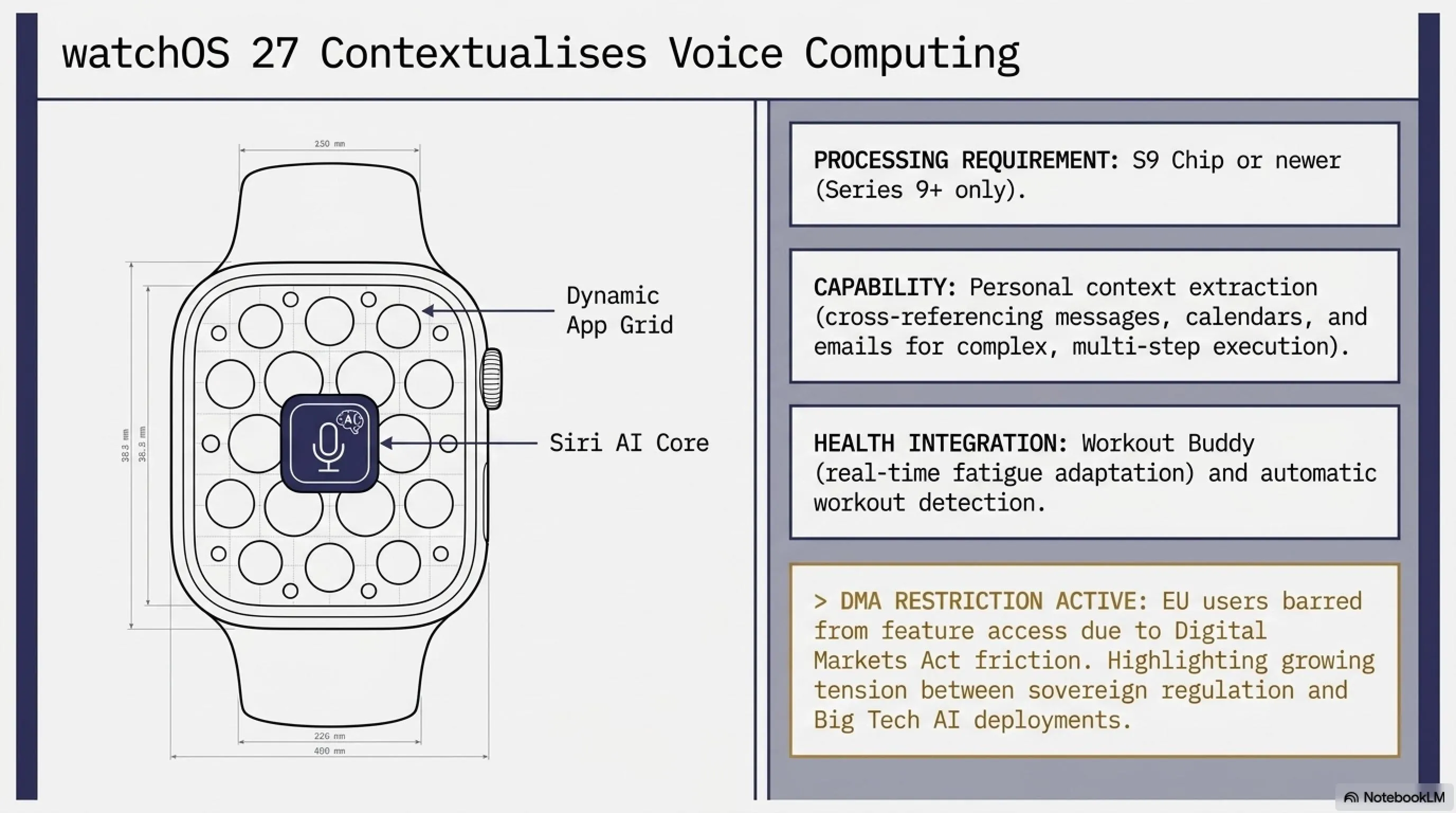
According to reports from The Verge and AppleInsider, Siri AI in watchOS 27 appears as a standalone app at the center of a redesigned "dynamic" app grid. This grid dynamically displays frequently used and recently accessed apps around Siri. Users can start conversations with Siri directly from their wrist, ask open-ended questions, and even give multi-step commands that Siri AI can understand and execute.
🎯 watchOS 27 New Features
- Siri AI: Next-generation Siri with natural conversation capabilities, personal context understanding, and complex question handling
- Dynamic App Grid: Redesigned home screen that intelligently suggests apps
- Workout Buddy: Intelligent fitness assistant that adjusts workouts based on your performance
- Advanced Health Tracking: Enhanced health tracking including automatic workout detection and improved sleep analysis
- Wellness Features: Mental health features including breathing guidance and meditation
- Coaching: Personalized coaching to achieve fitness goals
What sets Siri AI apart is its ability to use the user's personal context. For example, you can ask: "When did I last text my mom?" and Siri AI can search your messages and provide an accurate answer. Or you can say: "Remind me to review that file John sent before tomorrow morning's meeting" and Siri AI can extract all this information from emails, calendar, and messages to create an appropriate reminder.
An important note is that watchOS 27 will only be available for Apple Watch Series 9 and newer models (presumably Series 10, which will be announced in fall 2026). This limitation is due to Siri AI's need for heavy processing, which requires the more powerful S9 chip or newer. Older models like Series 7 and 8 will receive watchOS 27 but without the Siri AI feature.
🇪🇺 European Union Limitation
According to Apple's official announcement, due to Digital Markets Act (DMA) restrictions in the European Union, Siri AI in iOS 27 and iPadOS 27 will be delayed for European users. Since Siri AI on watchOS 27 requires a paired iPhone with Siri AI, EU users won't have access to Siri AI on their smartwatches either. This decision has sparked significant backlash in Europe, with many viewing it as a pressure tactic on European lawmakers. The situation highlights the growing tension between Big Tech and regulators over AI features and data privacy.
In terms of health and fitness improvements, watchOS 27 introduces the "Workout Buddy" feature—an intelligent fitness assistant that can adjust workouts based on your current performance, exercise history, and fitness goals. For example, if you're feeling tired during a run, Workout Buddy can suggest reducing your pace or taking a rest break. Additionally, improved automatic workout detection can identify what type of exercise you're doing—even without manually starting a workout.
The integration of Siri AI on the wrist represents a significant leap in wearable computing. Voice interaction on smartwatches has historically been limited and frustrating. But with Siri AI's improved natural language understanding and contextual awareness, the Apple Watch could become a truly hands-free computing platform. Imagine conducting complex tasks—scheduling meetings, sending detailed messages, searching for information—entirely through voice, without ever pulling out your phone.
💡 Privacy Considerations: Apple emphasizes that Siri AI processes many requests on-device for privacy protection. However, some complex queries require cloud processing. Apple claims it uses "Private Cloud Compute" where data is processed on Apple-controlled servers and immediately deleted. Privacy advocates remain skeptical, arguing that any cloud processing creates potential vulnerabilities. Users should carefully review Siri AI's privacy settings when watchOS 27 launches.
📱 iOS 27 Code Confirms Apple's Foldable iPhone
In one of the most intriguing revelations from WWDC 2026, the source code of the first iOS 27 beta includes explicit references to a foldable device, showing that Apple is actively preparing software for a foldable iPhone. According to reports from 9to5Mac and MacRumors, iOS 27 frameworks include code with terms like "foldState" and "angleDegrees"—terminology that clearly refers to a foldable device.
Developer Sam Henri Gold was the first to discover these codes in Apple's official documentation. The frameworks include functions to check the device's "fold state," the hinge "angle degrees," and even the "total count of built-in displays." This is the first time Apple has officially and publicly—even if accidentally—referenced a foldable device in its code.
🔍 iOS 27 Evidence for Foldable iPhone
- foldState API: Function that returns the device's folded/unfolded state
- angleDegrees property: Measures the hinge angle in degrees (0 to 180 degrees)
- displayCount check: Checks the number of built-in displays (for multi-display devices)
- App Resizability Framework: New framework allowing apps to dynamically adjust their layout
- Flexible Layouts Emphasis: Special emphasis at Platforms State of the Union on the importance of responsive design
What makes this discovery particularly significant is its timing. Apple typically doesn't include any references to unreleased products in public code until they're close to launch. The presence of these foldable-related APIs in the first iOS 27 beta suggests Apple is likely preparing a foldable iPhone for introduction in 2027 or early 2028. This aligns with previous rumors suggesting Apple was developing a foldable device potentially called "iPhone Fold" or "iPhone Ultra Flip."
At the Platforms State of the Union—a technical session for developers held after the main keynote—Apple notably emphasized the importance of designing apps with flexible layouts. The company urged developers to stop designing apps assuming fixed screen sizes and orientations. This is an explicit instruction to developers that they need to prepare for new form factors—including foldable devices.
📊 Analyst Predictions: What Will iPhone Fold Be Like?
Form Factor: Likely either a clamshell design (vertical fold) like Galaxy Z Flip or a book-style design (horizontal fold) like Galaxy Z Fold. Recent rumors lean toward book-style.
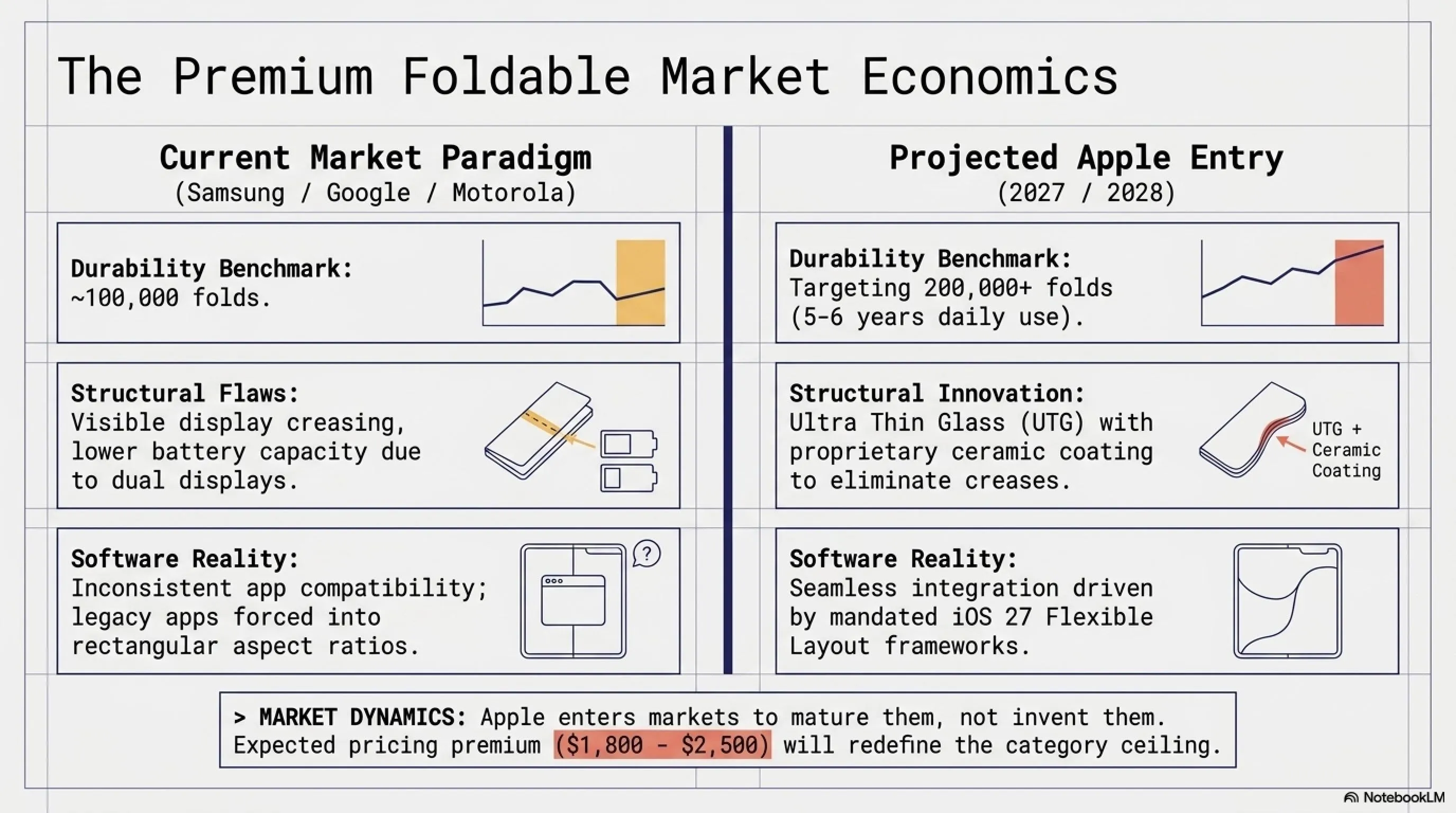
Display: OLED LTPO panel with Ultra Thin Glass (UTG) or Apple's proprietary ceramic coating. Internal display likely 7.5 to 8 inches, external display 3 to 4 inches.
Hinge: Apple has filed 10+ patents for hinge mechanisms claiming they can minimize display creasing—one of the biggest problems with current foldables.
Price: Likely between $1,800 to $2,500—more expensive than Galaxy Z Fold but with superior build quality and software integration.
Launch Timing: Fall 2027 or Spring 2028 are the most probable timeframes, giving Apple time to perfect the technology and build sufficient supply.
Durability: Apple will likely target 200,000+ folds (about 5-6 years of daily use), significantly exceeding current foldables' ~100,000 fold ratings.
The foldable phone market has grown significantly in recent years. Samsung with the Galaxy Z Fold and Z Flip series, Motorola with Razr, OPPO with Find N, and Huawei with Mate X are leading this market. However, none of these devices have achieved widespread success—primarily due to high prices, low hinge durability, and incomplete software experiences. Apple's entry could be a turning point, as Apple typically waits for technology to mature before delivering a more polished, optimized product.
One of the major challenges with foldable devices is software. Most iOS apps are designed for rectangular screens with fixed aspect ratios. But a foldable device can have three states: fully closed (external display only), fully open (full internal display), and partially open (at various angles). Each of these states requires a different interface. This is why Apple is now preparing developers to optimize their apps for these scenarios.
✅ Advantages
- Larger screen in smaller body
- Enhanced multitasking capabilities
- Superior content viewing experience
- Industry design innovation
- Apple's premium build quality
- Seamless software integration
❌ Disadvantages
- Very high price ($1800+ expected)
- Hinge durability concerns
- Increased thickness when folded
- Lower battery life (dual displays)
- Initial app compatibility issues
- Potential crease visibility
Industry analysts believe Apple will likely use the latest display technology for iPhone Fold. The company is reportedly testing ultra-thin OLED panels with ceramic coating or Ultra Thin Glass (UTG) that can minimize display creasing—one of the biggest problems with current foldables. Additionally, Apple may use a new hinge mechanism that can hold the device at various angles, similar to Microsoft's Surface Duo but with better quality.
The competitive landscape will be fascinating. By the time Apple launches its foldable, Samsung will likely be on its 6th or 7th generation Z Fold, with significantly improved durability and refined software. Google's Pixel Fold will have evolved. And Chinese manufacturers like OPPO, Vivo, and Xiaomi are pushing boundaries with innovative form factors. Apple's challenge isn't just making a foldable—it's making a foldable so compelling that it justifies the premium price and convinces consumers that folding phones are more than a gimmick.
💡 Market Impact: Apple's entry into foldables could legitimize the entire category. When Apple enters a market segment, it signals maturity. We saw this with smartwatches—Samsung had smartwatches years before Apple Watch, but the category didn't explode until Apple entered. Similarly, Apple's foldable could drive mainstream adoption, forcing competitors to innovate faster while also driving down prices as production scales. The real winners might be consumers who benefit from increased competition and innovation.
🎯 Conclusion: A Morning of Innovation and Challenge
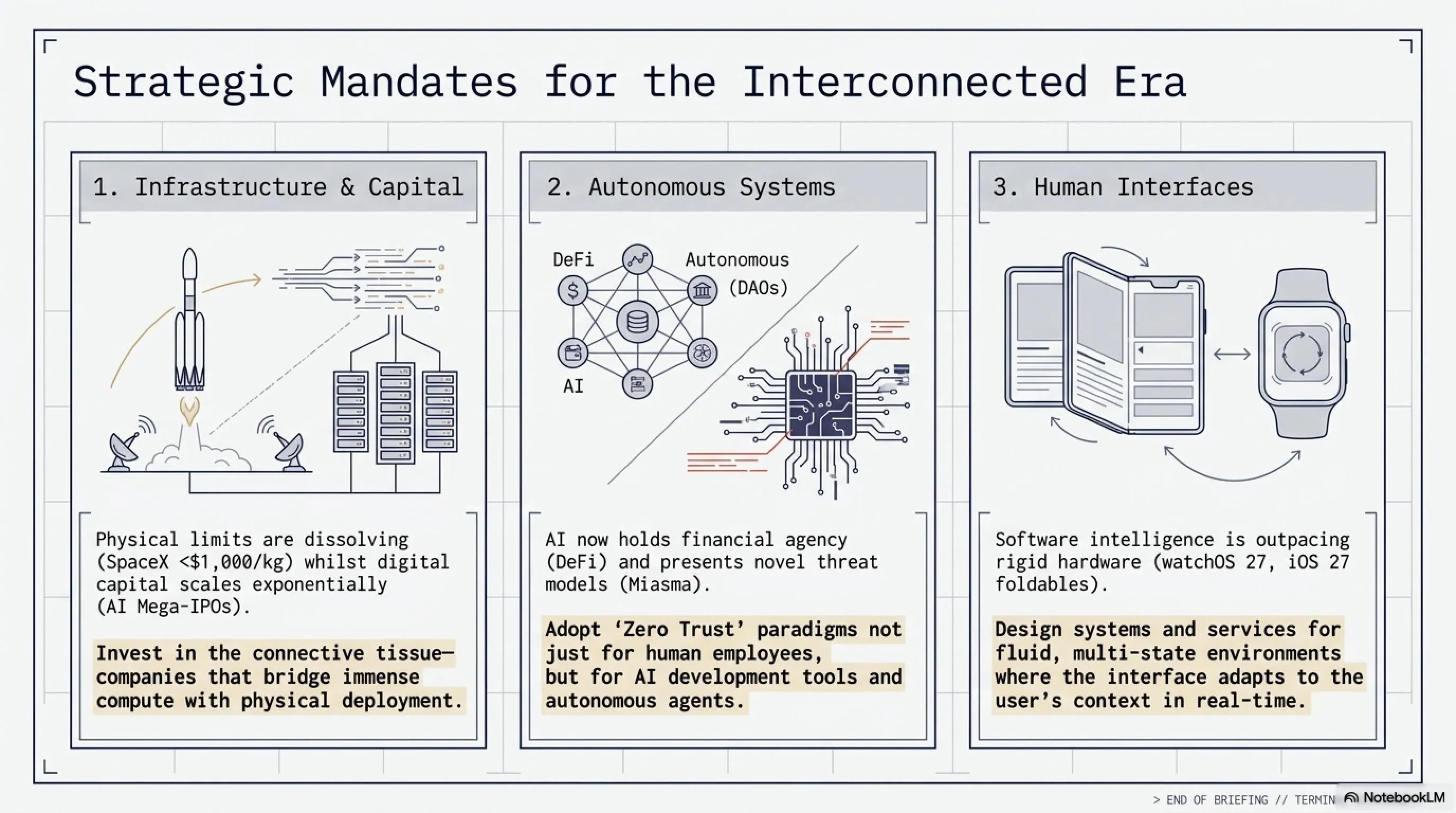
Tuesday morning, June 9, 2026 demonstrated that the technology industry is rapidly transforming. From Falcon 9 setting a 35-flight record and proving that reusable spaceflight is no longer a dream, to OpenAI moving toward the stock market and showing that the AI industry has entered a phase of maturity and widespread commercialization. The Miasma attack reminds us that with every technological advancement, new security threats emerge, and AI tools can be both a blessing and a curse.
MetaMask with Agent Wallet and Apple with Siri AI and evidence of a foldable iPhone show that the future belongs to systems that can intelligently interact with users and adapt to changing needs. These six stories don't just tell us what happened today; they open a window to a future where space is more accessible, AI is more powerful, security is more complex, and devices are more flexible.
The common thread? Convergence. Space tech converges with AI for satellite operations. AI converges with finance in DeFi. AI converges with development tools—and becomes an attack vector. And physical hardware converges with advanced software to enable entirely new form factors. We're witnessing not isolated innovations but an interconnected transformation where breakthroughs in one domain accelerate progress in others. That's the real story of June 9, 2026.
❓ Can Falcon 9 break the Space Shuttle's 39-flight record?
Yes, very likely. Booster B1067 is currently at 35 flights and only 4 flights away from the Shuttle record. Given that SpaceX launches each booster approximately every 2-3 months, B1067 could reach 40 flights by late 2026 or early 2027. The key difference is that Space Shuttles required extensive refurbishment between flights, whereas Falcon 9 can be relaunched with minimal maintenance. Some analysts predict B1067 could reach 50+ flights before retirement, far exceeding the Shuttle program's achievements in reusability efficiency.
❓ When will OpenAI's IPO actually happen?
OpenAI has confidentially filed Form S-1, which typically means the SEC review process will take several months. Based on comparable tech IPOs, OpenAI's public offering will likely occur in late 2026 (October-December) or early 2027 (Q1). The timing depends on market conditions, SEC approval, and internal readiness. Investment banks will want optimal market conditions to maximize valuation, so they may delay if market sentiment turns negative. Retail investors should watch for the S-1 becoming public—that's when we'll see financial details and get a clearer timeline.
❓ How can developers protect against Miasma-style attacks?
Key defenses include: 1) Carefully reviewing commit history before cloning repositories, 2) Limiting AI tool access to configuration files and adding them to .gitignore, 3) Using temporary tokens instead of permanent ones, 4) Regular scanning with tools like GitGuardian or TruffleHog, 5) Never storing secrets in environment variables—use secrets management services like HashiCorp Vault or AWS Secrets Manager instead, 6) Enabling two-factor authentication on all development services, 7) Testing new repositories in isolated environments or containers before integrating them into your workflow. The fundamental principle: trust nothing, verify everything.
❓ Is MetaMask Agent Wallet safe for average users?
Agent Wallet includes multiple security layers (transaction simulation, threat scanning, MEV protection, insurance up to $10,000), but it's currently in early access and best suited for experienced DeFi users and developers. Average crypto users should wait for the full public release and extensive real-world testing. The main risks aren't technical security but AI decision-making: autonomous agents could make trades during extreme volatility or misinterpret market conditions. Start with small amounts, set strict spending limits, and thoroughly test in sandbox environments before deploying real funds. Think of it like autonomous driving—the technology works, but you still need to pay attention.
❓ When will Apple's foldable iPhone launch?
Based on evidence in iOS 27 and Apple's emphasis on flexible layouts, the foldable iPhone will likely launch in fall 2027 (September/October) or spring 2028. Apple typically begins software preparation 12-24 months before product launch. The presence of foldable-related APIs in the first iOS 27 beta suggests the product is in active development with a launch window in that timeframe. However, Apple is notorious for delaying products if they don't meet quality standards—so 2028 might be more realistic. The company will only launch when they can deliver a foldable experience significantly better than existing competitors, with superior durability, minimal crease, and seamless software integration.
📚 Sources
- Space.com - SpaceX Falcon 9 B1067 35th Launch
- Ars Technica - Falcon 9 Booster Reuse Record
- TechCrunch - OpenAI Confidential IPO Filing
- CNBC - OpenAI IPO Wall Street Debut
- Ars Technica - Miasma Worm Attack
- TechCrunch - Microsoft GitHub Hack
- MetaMask Official - Agent Wallet Launch
- Decrypt - MetaMask AI Agent Wallet
- The Verge - Apple watchOS 27 with Siri AI
- AppleInsider - watchOS 27 Features
- 9to5Mac - Apple Foldable iPhone References
- MacRumors - iOS 27 Foldable iPhone Hints
🌐 Stay Connected With Us 🎮✨
For the latest tech, gaming, and gadget news, follow us on our official social media channels: