🌅 Good Morning! Welcome to Tekin Morning June 6, 2026
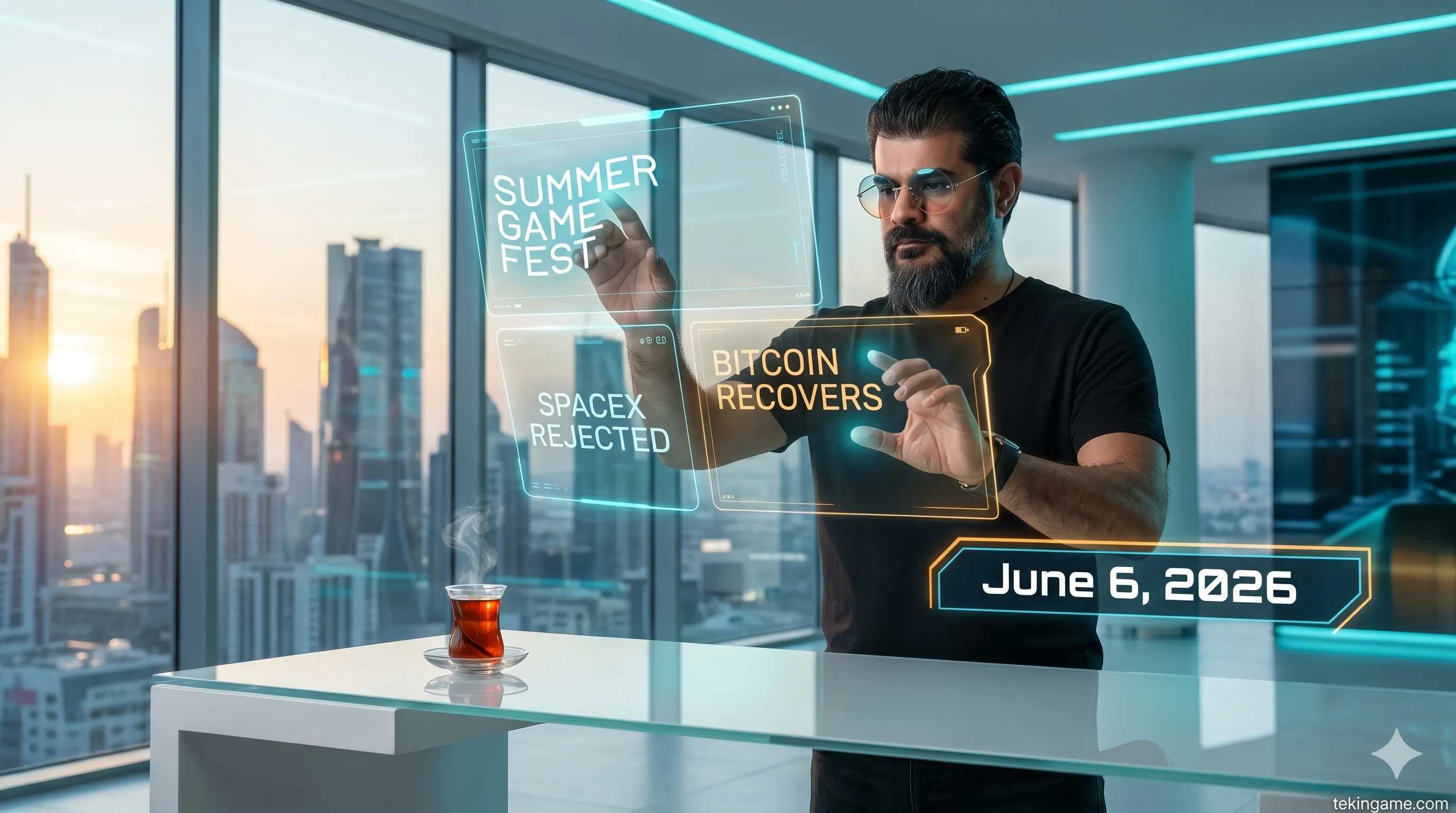
Happy Saturday morning! ☕ Today we're kicking off your weekend with a fresh brew and 6 hot stories from the worlds of technology and gaming. From the explosive Summer Game Fest trailer reveals to astronauts taking shelter on the ISS, SpaceX's S&P 500 rejection, and Bitcoin's dramatic recovery after a $1.6 billion liquidation wave—it's all here!
⚡ Today's Headlines:
🎮 Summer Game Fest: Resident Evil Veronica + Final Fantasy VII Revelation
🎨 Day of the Devs: 20 creative indie games from 1,700 submissions
🚀 SpaceX rejected: S&P 500 keeps its rules unchanged
👨🚀 ISS: Astronauts shelter in Dragon amid air leak crisis
📧 Google Workspace: Complete icon redesign finalized
💰 Bitcoin: Recovers from $1.6B liquidation massacre
🔥 Ready? Let's dive into an exciting journey through tech and gaming!
🎮 1. Summer Game Fest 2026 – Trailer Explosion: Resident Evil Veronica, Final Fantasy VII Revelation & Control Resonant
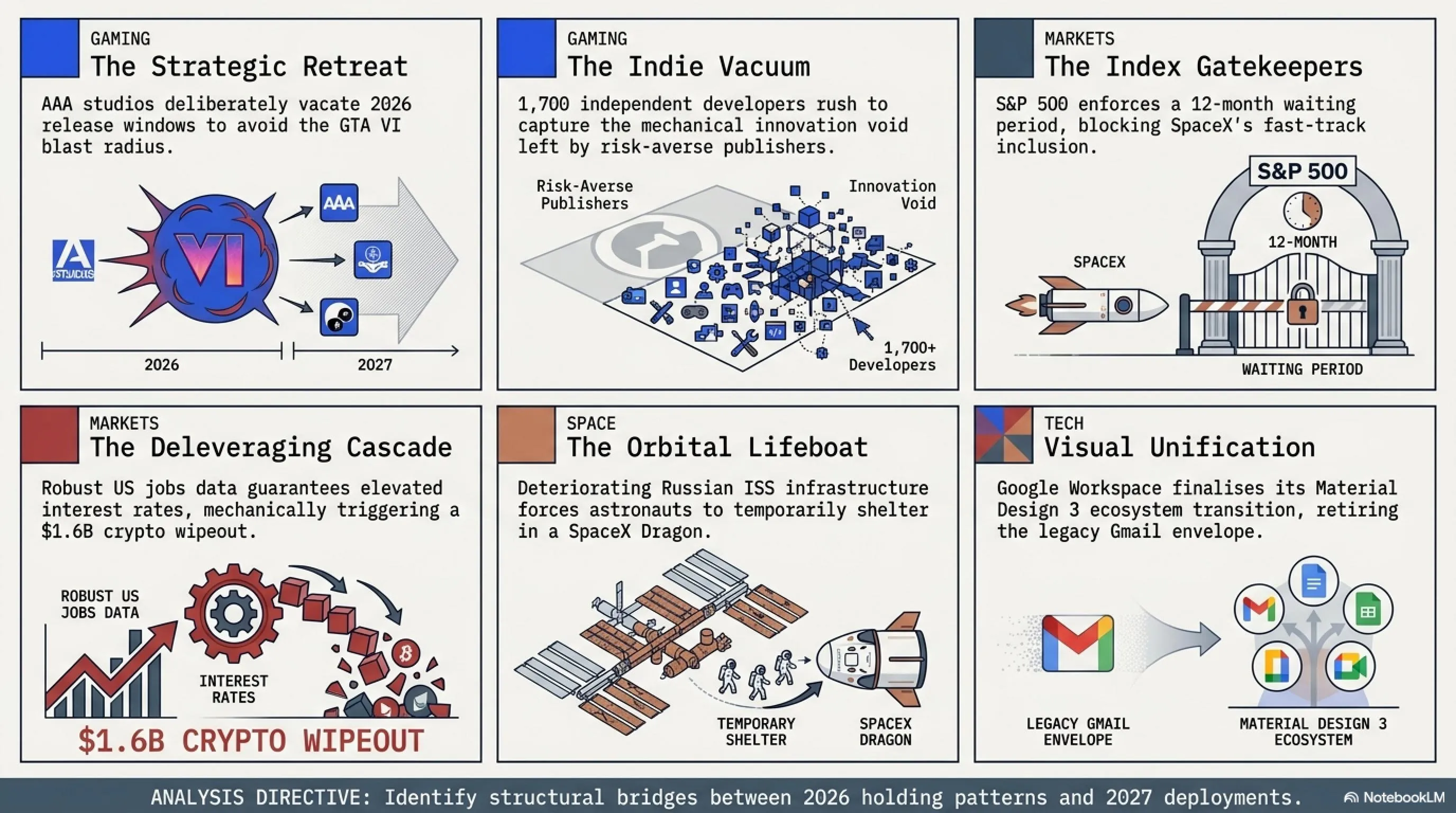
Last night (June 5, 2026), the annual Summer Game Fest hosted by legendary showman Geoff Keighley delivered a spectacular two-hour showcase packed with new trailers, major announcements, and exciting updates. While the event featured over 35 trailers spanning multiple genres and platforms, two titans dominated the conversation: Resident Evil Veronica opened the show with a bang, and Final Fantasy VII Revelation closed it with an emotional crescendo.
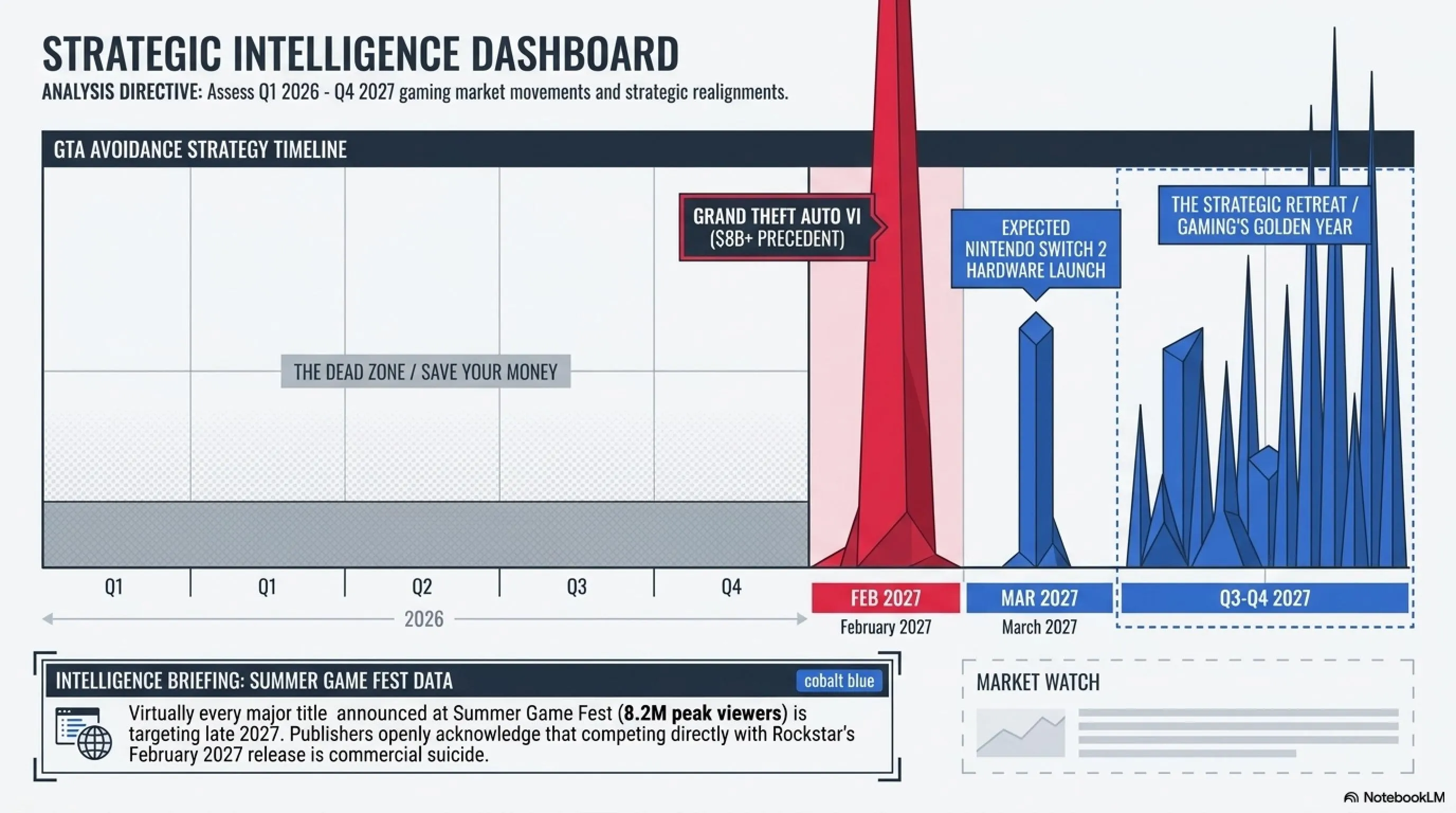
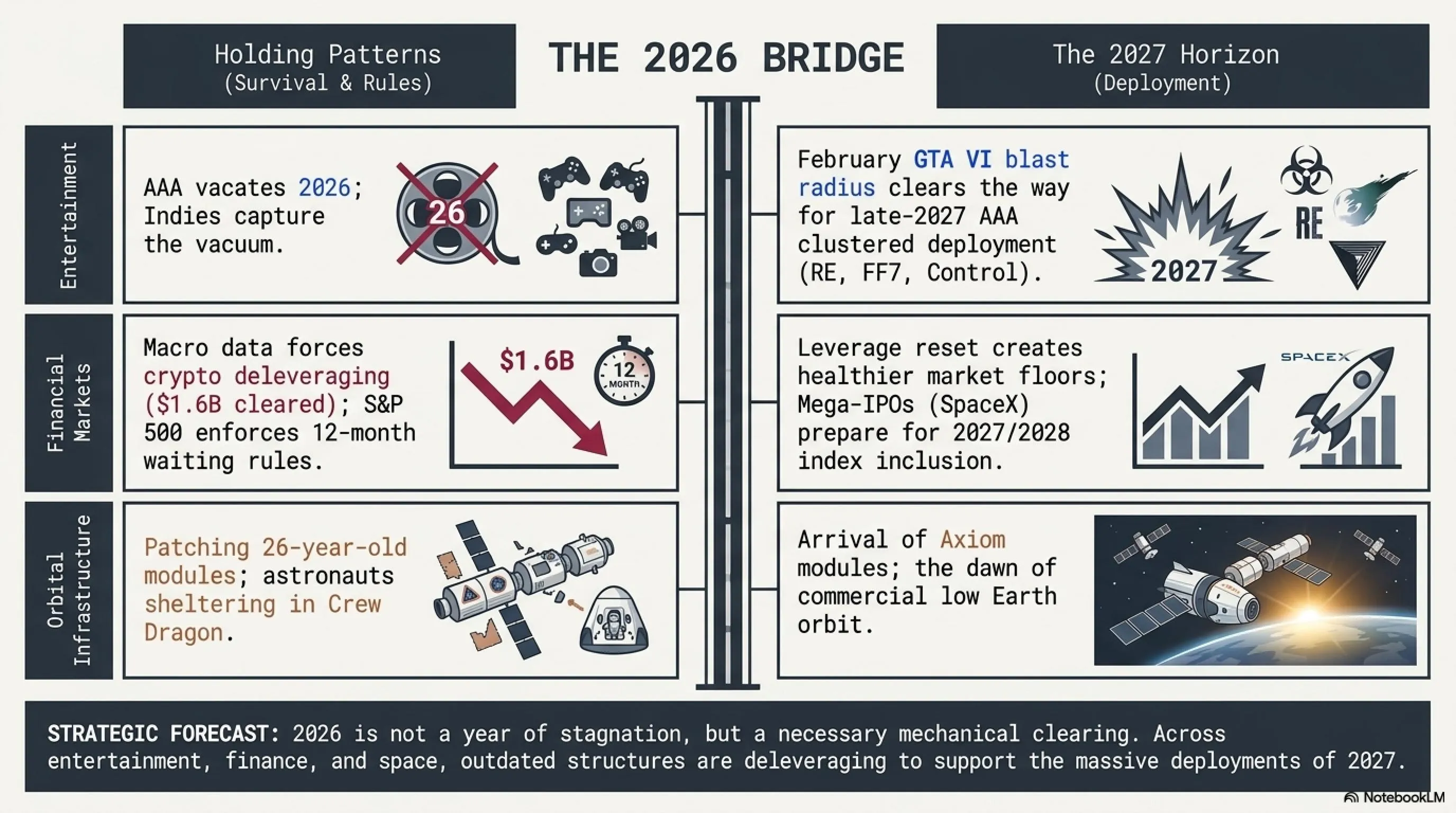
What's particularly noteworthy about this year's Summer Game Fest is the strategic release calendar emerging from the announcements. Most major titles are targeting 2027, deliberately avoiding direct competition with Rockstar's Grand Theft Auto VI, which launches in February 2027. This "GTA avoidance strategy" has become the industry's worst-kept secret, with publishers openly acknowledging that competing against the most anticipated game in history would be financial suicide.
🧟 Resident Evil Veronica – Claire Redfield Returns to Paris
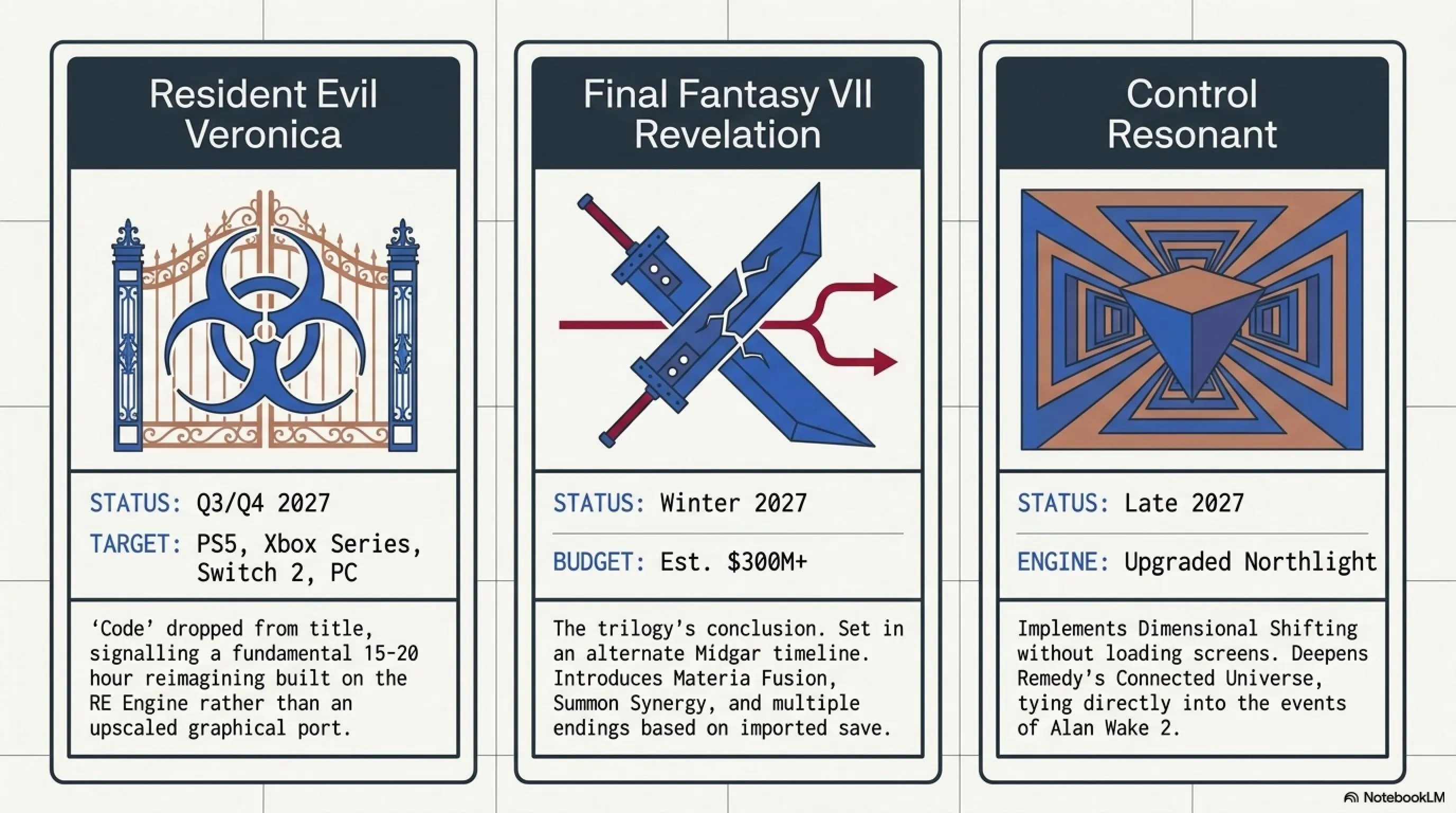
Capcom's announcement of the Resident Evil: Code Veronica remake—now simply titled Resident Evil Veronica—was one of the night's biggest surprises. This reimagining of the 2000 Dreamcast classic is scheduled for 2027 release across PS5, Xbox Series X/S, Nintendo Switch 2, and PC (Steam). The decision to drop "Code" from the title signals Capcom's intent to fundamentally reimagine the experience rather than simply upscale graphics.
The debut trailer opens with rain-soaked Parisian streets at night. A mysterious figure enters an apartment building and is greeted by a kindly elderly woman. They proceed together to a room that clearly needs cleaning... but then the tone shifts. We see Claire Redfield navigating dark corridors, searching for her brother Chris while evading grotesque bio-organic weapons. The photorealistic graphics powered by Capcom's RE Engine showcase incredibly detailed environments, lifelike character models, and genuinely unsettling creature designs.
Industry insiders suggest that Capcom learned valuable lessons from the mixed reception of Resident Evil 3 Remake (criticized for being too short) and the overwhelming success of Resident Evil 4 Remake. Veronica is reportedly targeting a 15-20 hour campaign with expanded narrative content, additional boss encounters, and modernized gameplay mechanics that blend the atmospheric horror of RE2 Remake with the fluid combat of RE4 Remake.
💡 Strategic Analysis: Dropping "Code" from the title isn't just branding—it's a statement. Capcom is signaling complete creative freedom to reimagine Claire's story for modern audiences. Expect significant narrative departures, expanded character development, and potentially controversial changes to beloved moments from the original. This approach worked brilliantly for RE2 and RE4 remakes, which balanced nostalgia with innovation.
⚔️ Final Fantasy VII Revelation – The Trilogy's Epic Conclusion
Square Enix closed Summer Game Fest with a bombshell: Final Fantasy VII Revelation, the third and final installment of the FF7 Remake trilogy. This concluding chapter will bring Cloud Strife's journey to its climactic confrontation with Sephiroth, promising to finally deliver the ending that millions of fans have been anticipating since the trilogy began in 2020.
The reveal trailer showcased stunning visuals and introduced several gameplay innovations. The game returns to Midgar—but in an alternate timeline shaped by the events of Remake and Rebirth. New mechanics include Materia Fusion (combining Materia to create powerful hybrid abilities), Summon Synergy (coordinated attacks between party members and summoned entities), and Limit Break Chains (sequential ultimate attacks that scale in power).
Square Enix creative director Tetsuya Nomura appeared in a post-reveal interview confirming that Revelation will feature multiple endings based on player choices throughout the trilogy. "We wanted to honor the original while giving players agency," Nomura stated. "The Lifestream remembers every decision you've made." This suggests potential save data imports from Remake and Rebirth, adding unprecedented continuity to the trilogy.
The game's scope appears massive. The trailer teased explorable regions including the Northern Crater, a fully realized Midgar (both surface and undercity), and what appears to be an alternate dimension called "The Singularity." Voice actors confirmed their return, with Cody Christian (Cloud), Briana White (Aerith), and Tyler Hoechlin (Sephiroth) all reprising their roles.
💡 Release Strategy: Square Enix confirmed Winter 2027 as the launch window, with a firm promise of no delays. The company learned from Rebirth's troubled development cycle and has reportedly increased staffing significantly. Industry analysts estimate Revelation's development budget exceeds $300 million, potentially making it one of the most expensive games ever produced.
🌀 Control Resonant – Jesse Faden's Dimension-Bending Return
Remedy Entertainment and 505 Games unveiled Control Resonant, a direct sequel to the critically acclaimed Control (2019). Jesse Faden returns as the Director of the Federal Bureau of Control, now facing a reality-warping threat that blurs the boundaries between dimensions. The supernatural action-adventure will release in late 2027 for current-gen platforms.
The announcement trailer demonstrated Jesse's expanded abilities, including Dimensional Shifting (phasing between parallel realities mid-combat), Reality Anchoring (stabilizing warped environments), and enhanced telekinetic powers. The upgraded Northlight Engine delivers jaw-dropping ray-traced reflections, realistic material deformation, and seamless dimensional transitions without loading screens.
Creative director Sam Lake confirmed that Control Resonant is a crucial chapter in Remedy's "Connected Universe," with direct narrative ties to Alan Wake 2 and teases of crossovers with other Remedy franchises. "The Oldest House is just one location in a much larger supernatural tapestry," Lake revealed. "Players who've followed our games closely will discover how everything connects."
💡 Connected Universe Implications: Remedy is building a Marvel-style interconnected narrative across their games. Control Resonant reportedly features cameo appearances from Alan Wake characters and explores the Dark Place mythology introduced in Alan Wake 2. Fans speculate this could lead to a massive crossover event game in the late 2020s.
📊 Summer Game Fest 2026 Key Statistics
| Metric | Details |
|---|---|
| Event Duration | 2 hours |
| Total Trailers Shown | 35+ trailers |
| Biggest Announcements | Resident Evil Veronica, FF7 Revelation, Control Resonant |
| Primary Release Window | Mostly 2027 (avoiding GTA VI) |
| Peak Concurrent Viewers | 8.2 million (YouTube + Twitch combined) |
| Target Platforms | PS5, Xbox Series X/S, Switch 2, PC |
🔍 Tekin Analysis: Why 2027 Will Be Gaming's Golden Year
A clear pattern emerged from Summer Game Fest 2026: virtually every major title is targeting 2027 release windows. The reason? Grand Theft Auto VI launches February 2027, and every publisher knows competing directly with Rockstar's juggernaut would be commercial suicide. GTA V generated over $8 billion in revenue and dominated cultural conversation for nearly a decade—GTA VI is projected to be even bigger.
The smart strategy? Release major titles either in early 2027 (before GTA VI) or late 2027/early 2028 (after the initial hype subsides). Resident Evil Veronica, Final Fantasy VII Revelation, and Control Resonant are all targeting Q3-Q4 2027 windows, safely distant from Rockstar's February juggernaut. This "strategic retreat" demonstrates mature industry thinking—publishers would rather delay and succeed than launch into a guaranteed bloodbath.
Another key observation: every announced game explicitly confirmed Nintendo Switch 2 as a target platform. This isn't speculation—studios have received development kits and confirmed specifications. The unanimous Switch 2 support strongly suggests Nintendo's next console will launch in early 2027, likely in March to capitalize on the post-holiday gaming drought and establish a user base before major releases hit later in the year.
💡 Bottom Line: If you're budgeting for gaming in 2026, save your money. 2027 will be one of the most expensive and exciting years in gaming history, with a staggering concentration of AAA releases, major hardware launches, and franchise conclusions. Start saving now.
🎨 2. Day of the Devs 2026 – 20 Creative Indie Games Selected from 1,700 Submissions
📚 Classified & Related Dossiers in TekinGame
If you wish to explore beyond this report and delve into cybernetic frontiers and autonomous AI architectures, do not miss these three exclusive deep-dives in the Tekin Garage:
Running alongside Summer Game Fest, the non-profit showcase Day of the Devs celebrated independent game development by highlighting 20 exceptional titles selected from an overwhelming 1,700 submissions. Organized by Double Fine Productions and iam8bit, this annual event has become gaming's premier platform for discovering innovative indie talent and unique gameplay experiences that challenge AAA conventions.
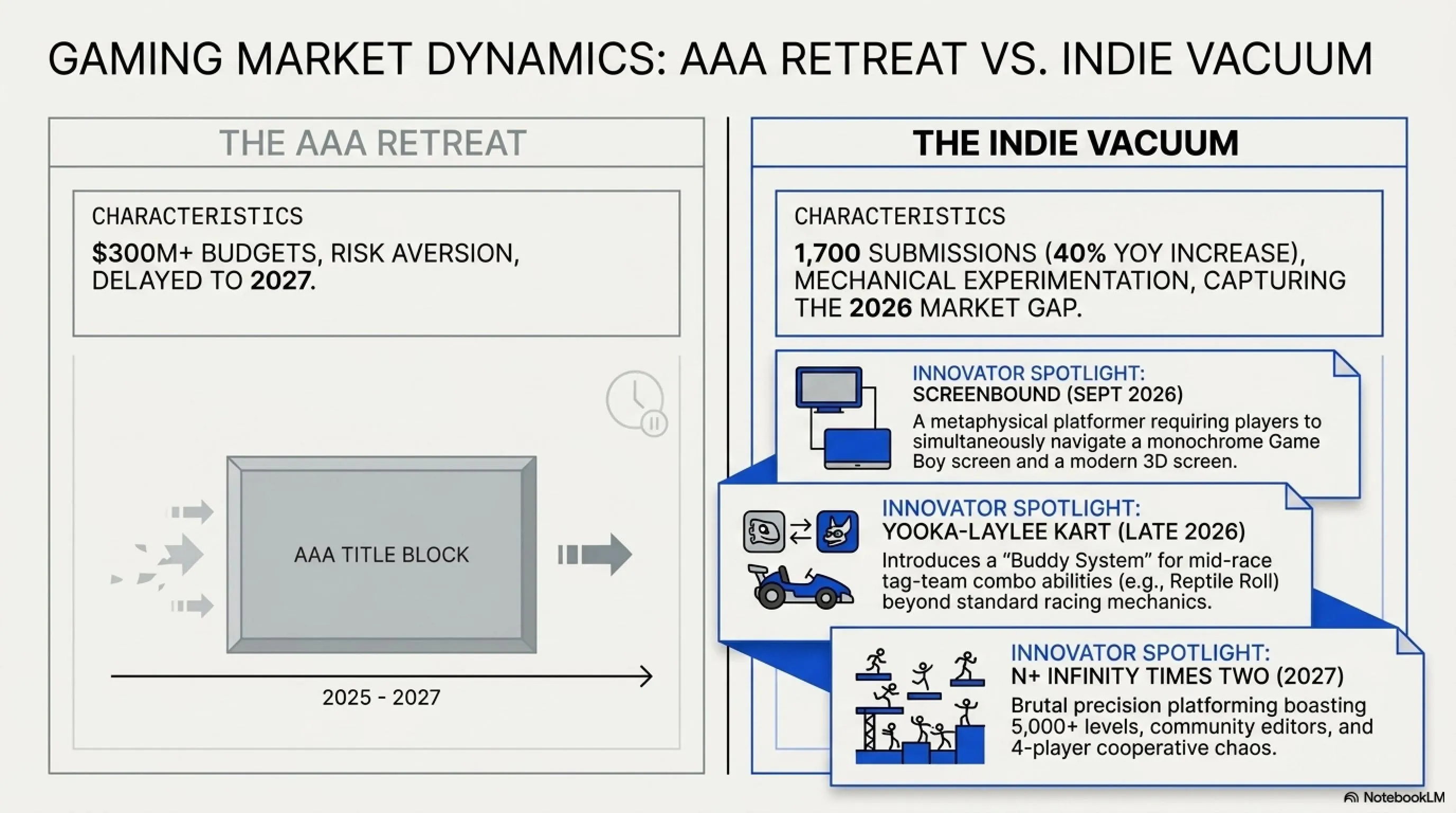
The selection process is notoriously rigorous. A panel of industry veterans, including Tim Schafer (Double Fine founder), several indie developers, and gaming journalists, evaluates submissions based on creativity, innovation, artistic vision, and execution quality. The 1,700 submissions represent a 40% increase from 2025, reflecting indie gaming's explosive growth and the democratization of game development tools like Unity, Unreal Engine, and Godot.
This year's selections showcase remarkable diversity: physics-based puzzlers, atmospheric horror experiences, narrative adventures, and genre-defying experimental games that blur traditional categorization. Several selected games employ unique art styles ranging from hand-drawn animation to voxel-based 3D worlds, demonstrating that creativity trumps budget in indie development.
🏎️ Yooka-Laylee Kart – Beloved Characters Hit the Racing Circuit
Playtonic Games surprised fans with Yooka-Laylee Kart, a Mario Kart-style racing game featuring the beloved duo and their colorful cast of supporting characters. The announcement comes after years of fans requesting a kart racer starring the chameleon-bat duo who revived 3D platforming with their 2017 debut.
The game promises 20 unique tracks inspired by locations from the Yooka-Laylee universe, 16 playable characters (each with distinct stats and abilities), creative power-ups that reference platformer mechanics, and both online and local multiplayer supporting up to 8 players. Playtonic confirmed full cross-platform play, allowing Switch, PlayStation, Xbox, and PC players to compete together seamlessly.
What sets Yooka-Laylee Kart apart from Mario Kart clones? The developers are implementing a unique "Buddy System" where drivers can tag-team with their passenger character mid-race to unleash special combo abilities. Yooka and Laylee, for example, can perform a "Reptile Roll" that grants temporary invincibility while knocking opponents aside. This strategic layer adds depth beyond traditional kart racing mechanics.
💡 Release Window: Playtonic hasn't committed to a specific date but indicated late 2026 or early 2027. Industry insiders suggest the team is targeting a Switch 2 launch window title, which would align with the console's expected early 2027 debut.
📺 Screenbound – A Metaphysical Platformer with Screen-Switching Mechanics
One of Day of the Devs' most intriguing reveals was Screenbound, developed by independent studio Crescent Moon Games. This innovative platformer requires players to switch between two simultaneously displayed screens—one showing classic Game Boy-style monochrome graphics, the other featuring modern colorful visuals—to solve environmental puzzles and overcome obstacles.
The core mechanic is brilliantly simple yet deeply complex: when you're actively playing in the retro screen, the modern world pauses, and vice versa. You must strategically switch between screens to manipulate objects, avoid hazards, and reach previously inaccessible areas. For example, a moving platform in the modern world stops when you switch to retro mode, allowing you to position yourself before switching back to proceed.
The narrative cleverly integrates this mechanic: you play as a character trapped between two dimensions of gaming history, searching for a way to merge them and return home. The story explores themes of nostalgia, progress, and the evolution of gaming culture. Voice acting, cutscenes, and environmental storytelling create surprising emotional depth for what initially appears to be a pure puzzle-platformer.
💡 Confirmed Release: September 10, 2026 for PC (Steam), PS5, Xbox Series X/S, and Nintendo Switch. Pre-orders are already live with a 10% early-bird discount. Reviews should hit about a week before launch.
➕ N+ Infinity Times Two – The Legendary Series Returns
After years of silence, Metanet Software shocked the indie community by announcing N+ Infinity Times Two, the long-awaited continuation of the brutally challenging minimalist platformer series. For those unfamiliar, the N series has built a cult following around precise physics-based platforming that demands pixel-perfect timing and rewards mastery through addictive, iterative gameplay.
The new installment boasts an astonishing 5,000+ levels—a mix of hand-crafted developer challenges and community-created content from the dedicated N++ player base. The level editor returns with expanded functionality, allowing players to create complex contraptions, custom enemy behaviors, and even basic scripted events. Metanet promises seamless level sharing through an integrated online portal with sorting, rating, and curated featured collections.
Multiplayer receives significant upgrades: co-op mode now supports up to 4 players navigating levels simultaneously (with friendly-fire disasters guaranteed), while competitive race mode pits players against each other in split-screen or online matches. New movement mechanics include wall-kicking, dash-sliding, and momentum preservation techniques that expert players will exploit for speedrunning glory.
💡 Fair Warning: N++ veterans know this series is one of gaming's most punishing experiences. Expect to die thousands of times. This isn't a game for casual players seeking relaxation—it's a hardcore skill-testing gauntlet that will test your patience and reflexes to their absolute limits. Masochists welcome! 😄
🎮 Day of the Devs 2026 Selected Games
| Game | Developer | Genre | Release Date |
|---|---|---|---|
| Yooka-Laylee Kart | Playtonic Games | Racing | Late 2026/Early 2027 |
| Screenbound | Crescent Moon Games | Puzzle-Platformer | September 10, 2026 |
| N+ Infinity Times Two | Metanet Software | Precision Platformer | 2027 |
| Trine 6 | Frozenbyte | Co-op Puzzle-Platformer | 2027 |
| Tenebris Somnia | GrimTalin | Psychological Horror | TBA |
| Blood Dungeon | Creepy Jar | Roguelike Horror | TBA |
📌 Note: 14 additional games were showcased. Full lineup available on the official Day of the Devs website.
💎 Tekin Analysis: Why Indie Games Matter More Than Ever
The gaming industry has witnessed explosive indie growth over the past decade. Games like Hades, Celeste, Hollow Knight, and Stardew Valley proved that multimillion-dollar budgets aren't prerequisites for masterpieces. In fact, many players now actively seek indie experiences specifically because they offer creative risks and innovative mechanics that risk-averse AAA publishers avoid.
Day of the Devs receiving over 1,700 submissions illustrates the thriving indie ecosystem. Accessible development tools (Unity, Unreal Engine 5, Godot), crowdfunding platforms (Kickstarter, Patreon), and digital storefronts (Steam, itch.io, Epic Games Store) have democratized game creation. Talented developers no longer need publisher backing—they can self-publish and reach global audiences directly.
What's particularly notable is the mechanical innovation on display. Screenbound's dual-screen mechanics, N+ Infinity Times Two's 5,000-level content ecosystem, and Yooka-Laylee Kart's buddy system represent gameplay concepts you won't find in safe, market-tested AAA releases. Indies experiment because they have creative freedom—and when experiments succeed, they influence the entire industry.
💡 Bottom Line: If you crave fresh, creative experiences that challenge gaming conventions, pay attention to Day of the Devs selections. These aren't just "small games"—they're often the most innovative and memorable experiences of any given year. Several could become the next indie phenomenon.
🚀 3. SpaceX Rejected – S&P 500 Keeps Rules, Blocks Fast-Track Entry
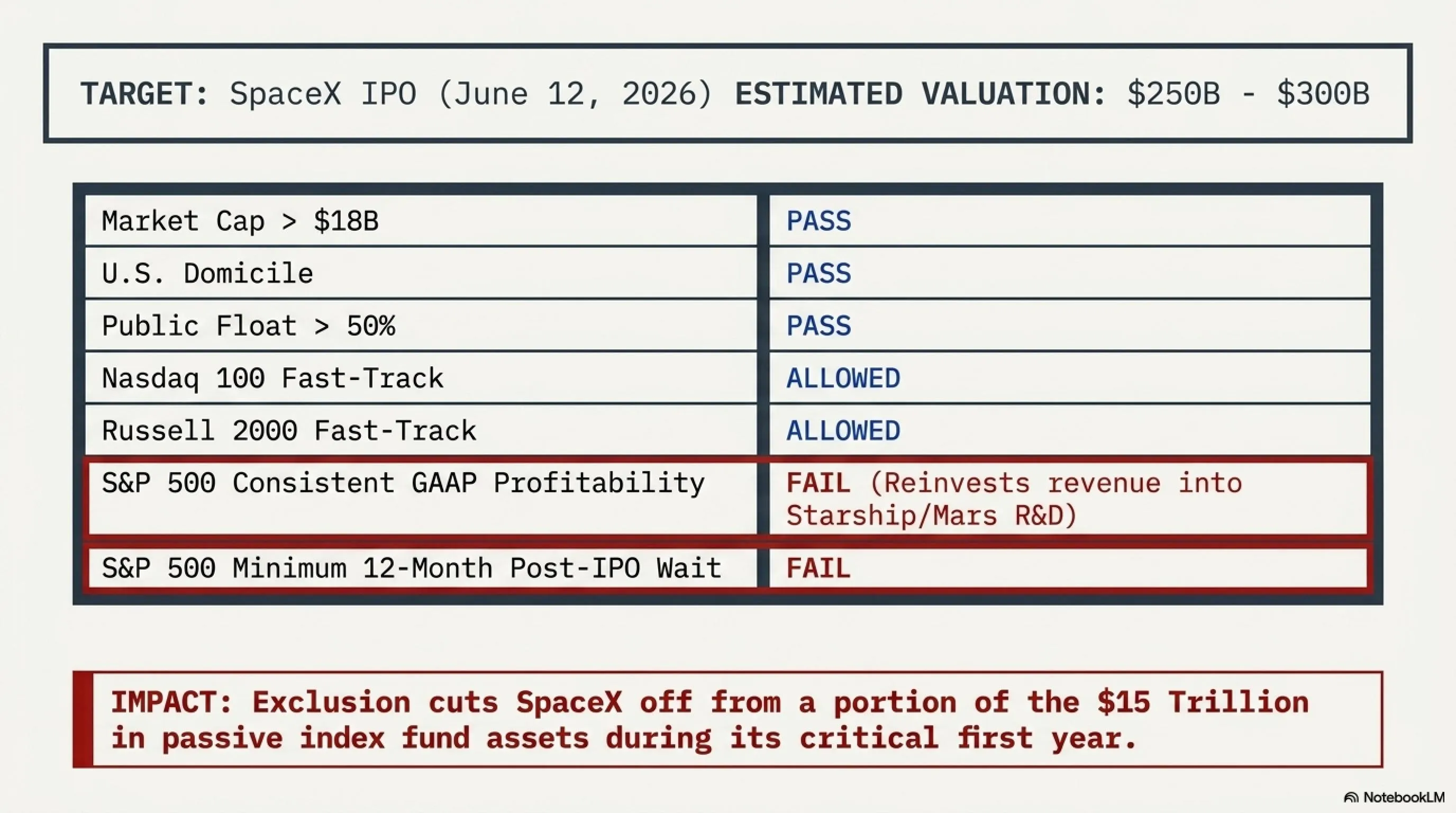
In an unexpected decision that sent shockwaves through financial markets, S&P Dow Jones Indices announced Thursday it will not modify eligibility requirements for entry into its flagship S&P 500 index. This ruling effectively blocks SpaceX from fast-track inclusion following its historic initial public offering (IPO) scheduled for June 12, 2026. The decision also impacts other high-profile companies awaiting public offerings, particularly AI giants OpenAI and Anthropic.
SpaceX's IPO is projected to be the largest in history, with valuations estimates ranging from $250 billion to $300 billion depending on market reception. During a JPMorgan-hosted investor event this week, Elon Musk told CEO Jamie Dimon: "SpaceX is embarking on a massive new growth phase, and we need capital for that expansion. Starship, Mars missions, and Starlink's global buildout require unprecedented investment."
The S&P 500 rejection carries enormous financial implications. Passive index funds tracking the S&P 500 manage approximately $15 trillion in assets. When a company joins the index, these funds automatically purchase shares proportionally, creating massive buying pressure and liquidity. Being excluded from fast-track entry means SpaceX, OpenAI, and Anthropic will miss out on potentially tens of billions of dollars in guaranteed institutional investment during their critical first year as public companies.
⚖️ Current S&P 500 Rules: Minimum 12-Month Wait After IPO
Under existing S&P Dow Jones Indices rules, companies must wait at least 12 months post-IPO before qualifying for S&P 500 consideration. Additional requirements include:
- Profitability: Positive aggregate earnings over the most recent four quarters (sum of net income must be positive)
- Market Capitalization: Minimum $18 billion market cap
- Public Float: At least 50% of shares must be publicly traded (not held by insiders)
- Liquidity: Sufficient trading volume and adequate liquidity metrics
- U.S. Domicile: Company must be headquartered in the United States
- Positive Earnings: Most recent quarter's earnings must be positive
💡 The Problem: SpaceX meets every criterion except consistent profitability. While the company has been profitable in recent years, it reinvests most revenue into R&D, infrastructure, and expansion. Heavy investment in Starship development and Mars mission preparation creates quarters with negative reported earnings despite strong operational cash flow.
📊 Index Provider Approaches to Mega-IPOs
| Index | Approach to Mega-IPOs | Outcome |
|---|---|---|
| Nasdaq 100 | Modified rules to allow fast-track entry | ✅ Fast-track permitted |
| Russell 2000 | Modified rules to allow fast-track entry | ✅ Fast-track permitted |
| S&P 500 | Maintained existing rules, 12-month wait required | ❌ Fast-track rejected |
📌 Critical Context: The S&P 500 is the most prestigious U.S. stock market benchmark. Exclusion means missing out on billions in automatic passive fund purchases. For context, when Tesla joined the S&P 500 in December 2020, the stock surged 70% in the weeks surrounding the announcement as index funds scrambled to acquire shares.
🔍 Tekin Analysis: Why S&P 500 Refused to Bend
S&P Dow Jones Indices' decision to maintain existing rules reflects a conservative, principles-first approach that prioritizes index integrity over short-term commercial opportunities. Several factors likely influenced this decision:
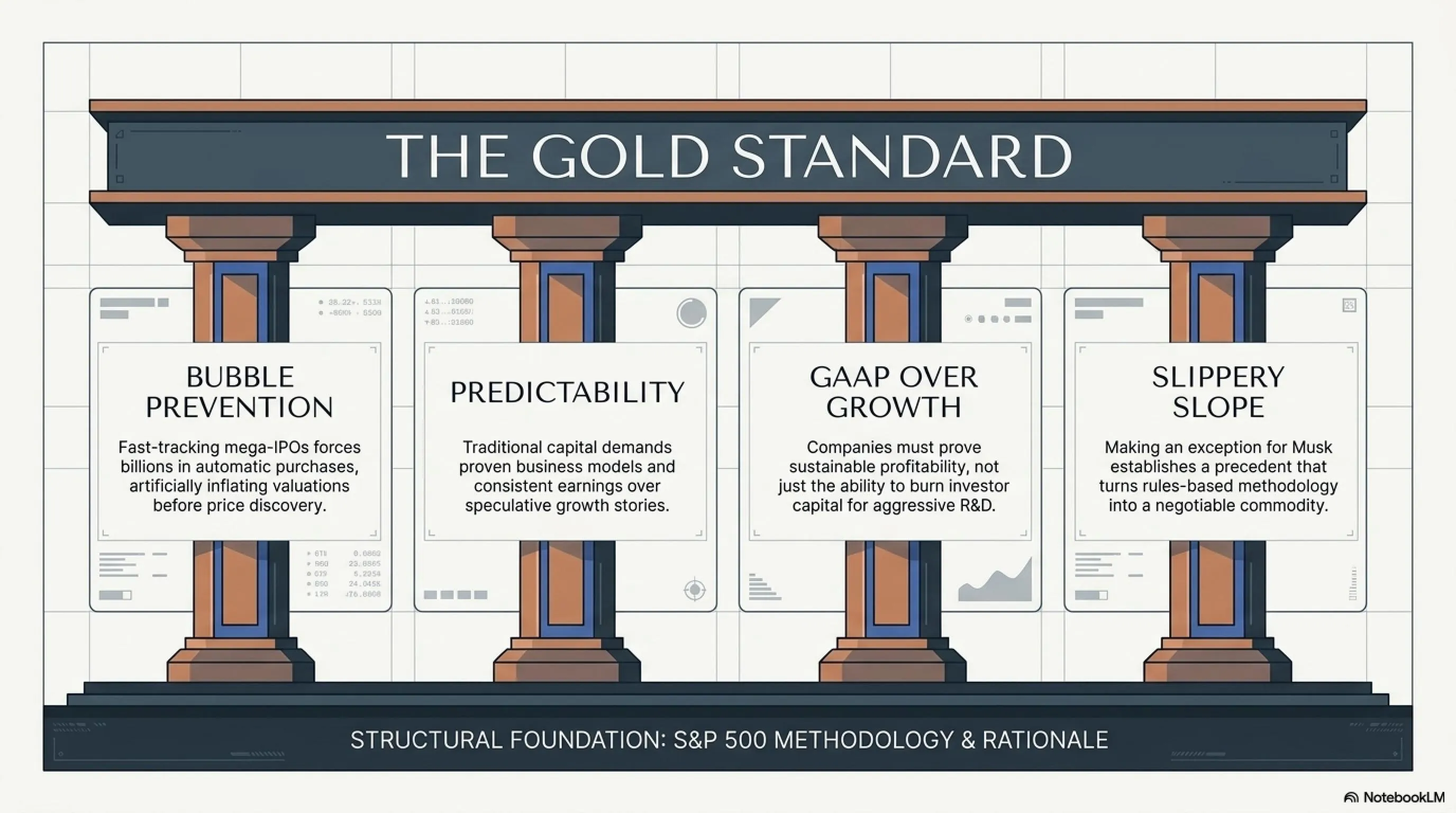
1. Preserving the "Gold Standard" Brand: The S&P 500 is globally recognized as the definitive U.S. stock market benchmark. Creating special exceptions for high-profile companies—no matter how valuable—risks undermining the index's reputation for objective, consistent methodology. Once you bend rules for SpaceX, where do you draw the line?
2. Profitability Concerns: SpaceX, OpenAI, and Anthropic share a common challenge: inconsistent GAAP profitability despite strong revenue growth. These companies prioritize aggressive reinvestment in R&D, infrastructure, and expansion over consistent quarterly profits. S&P 500 methodology requires demonstrated sustainable profitability—companies must prove they can generate consistent earnings, not just burn through investor capital chasing growth.
3. Institutional Investor Pressure: Many traditional institutional investors—pension funds, endowments, insurance companies—prefer S&P 500 index stability and predictability. They want companies with proven business models and consistent earnings, not speculative growth stories. These conservative investors represent trillions in managed assets and wield significant influence over S&P Dow Jones Indices' policies.
4. Bubble Prevention: Fast-tracking mega-cap IPOs into the S&P 500 could create artificial demand spikes and price distortions. When index funds must purchase billions of dollars worth of shares within weeks, it can inflate valuations beyond fundamental justification. The 12-month waiting period allows market forces to establish natural equilibrium pricing before passive fund purchasing begins.
5. Precedent Concerns: If S&P changes rules for SpaceX, OpenAI, and Anthropic, every future mega-IPO will demand similar treatment. This creates a slippery slope where index methodology becomes negotiable rather than rules-based, fundamentally undermining the S&P 500's credibility.
💡 Bottom Line: SpaceX, OpenAI, and Anthropic must wait at least 12 months post-IPO before S&P 500 eligibility. This means missing out on tens of billions in guaranteed passive fund investment during their critical first year as public companies. For SpaceX, this is frustrating but survivable—retail and institutional demand will likely be strong regardless. For less well-known AI companies, the delay could prove more challenging.
👨🚀 4. ISS Astronauts Shelter in Dragon – Dangerous Air Leak in Russian Module
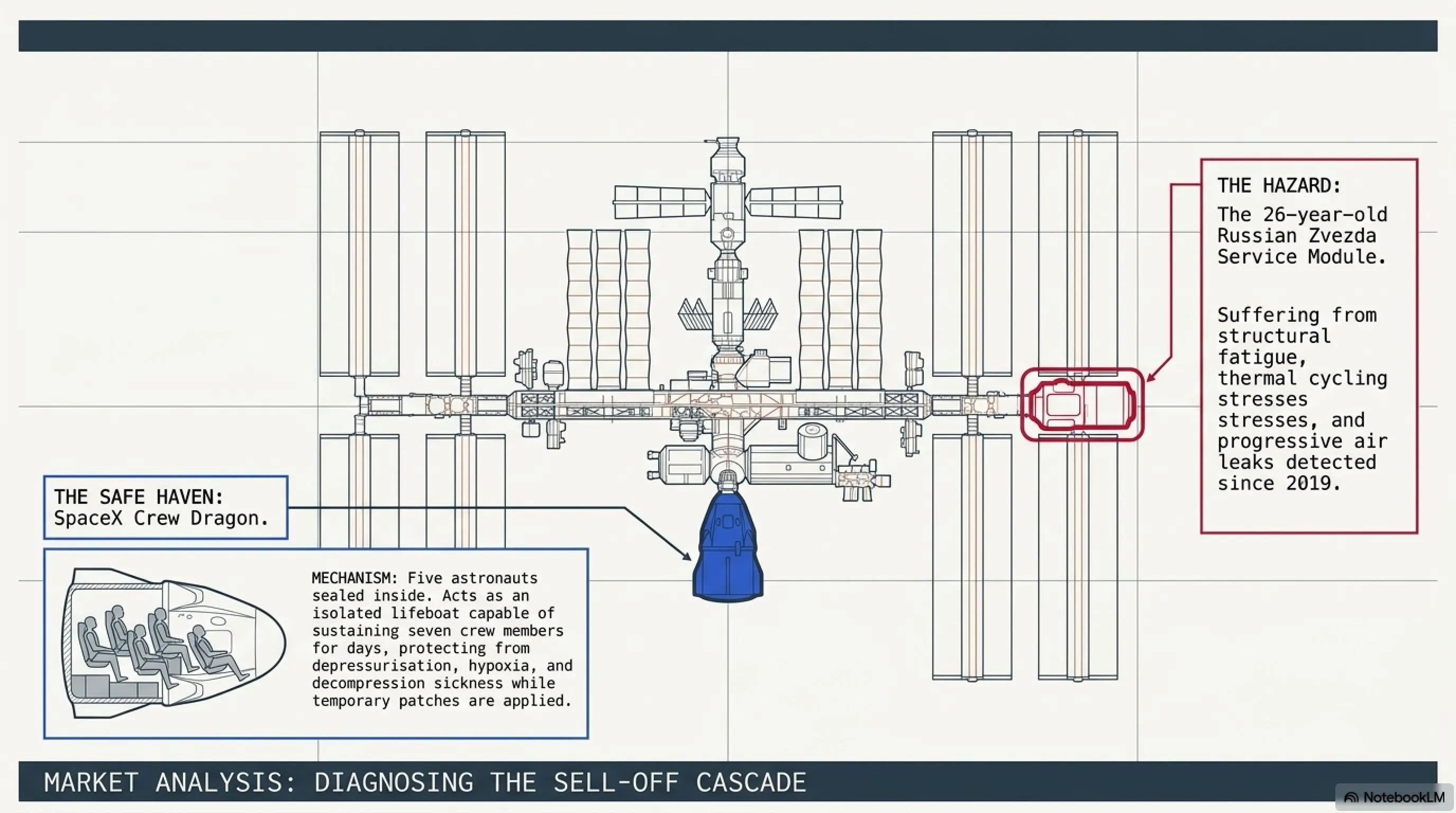
In a concerning incident that underscores the aging infrastructure of the International Space Station, NASA ordered five ISS astronauts to temporarily shelter inside the SpaceX Crew Dragon capsule Friday morning as Russian cosmonauts attempted emergency repairs on worsening air leaks in the Russian service module. The leaks, first detected in 2019, have progressively worsened and now pose a significant safety risk to the station and its crew.
The shelter order came at approximately 9:30 AM Eastern Time as Russian cosmonauts Sergey Kud-Sverchkov and Sergey Mikaev worked to seal multiple leak points in the aging Zvezda service module. NASA spokesperson Josh Finch confirmed: "As a precautionary measure, five crew members relocated to the Crew Dragon spacecraft while repair operations were underway. The crew was never in immediate danger, but safety protocols require we prepare for all contingencies."
Roscosmos, the Russian space agency managing the station's Russian segment, reported successfully sealing one leak and preparing to address a second. However, this marks at least the fourth time in 18 months that ISS crew members have sheltered in docked spacecraft due to Russian module air leaks. The recurring nature of these incidents raises serious questions about the long-term viability of the station's Russian components, which are the oldest sections of the ISS.
🛡️ Why Dragon Serves as the "Safe Haven"
The SpaceX Crew Dragon capsule currently docked at the ISS serves as a designated "safe haven" spacecraft—a last-resort evacuation vehicle if catastrophic emergencies make the station uninhabitable. Dragon can carry up to seven astronauts back to Earth and includes life support systems capable of sustaining crew members for several days if needed.
The ISS maintains multiple safe haven protocols depending on threat severity. For air leak scenarios, crew members can seal themselves inside docked spacecraft (Dragon, Soyuz, or Boeing Starliner when available) to isolate from the affected module while repairs proceed. If pressure loss becomes uncontrollable or other catastrophic failures occur, the crew can fully evacuate and return to Earth within hours.
This isn't the first time astronauts have sheltered in Dragon due to Russian module issues, but each occurrence erodes confidence in the ISS's long-term safety. The Russian service module is over 26 years old—well beyond its original 15-year design lifespan. Metal fatigue, micrometeorite damage, and thermal cycling stresses have taken their toll, creating cracks and structural weaknesses that grow progressively harder to repair.
💡 Current Status: After several hours, NASA cleared astronauts to return to the ISS following temporary leak repairs. However, Russian space officials acknowledged the fixes are "temporary patches" rather than permanent solutions. The underlying structural issues remain unresolved, and similar incidents are likely to recur with increasing frequency.
📅 ISS Air Leak Timeline
| Date | Event |
|---|---|
| 2019 | First air leak detected in Russian service module transfer tunnel |
| 2021 | Leak rate increased; temporary sealant applied |
| 2023 | NASA and Roscosmos form joint task force to investigate persistent leaks |
| 2024-2025 | Multiple shelter-in-place incidents as leak worsens |
| June 5, 2026 | Latest shelter incident during emergency repair attempt |
🔍 Tekin Analysis: The ISS Endgame Approaches
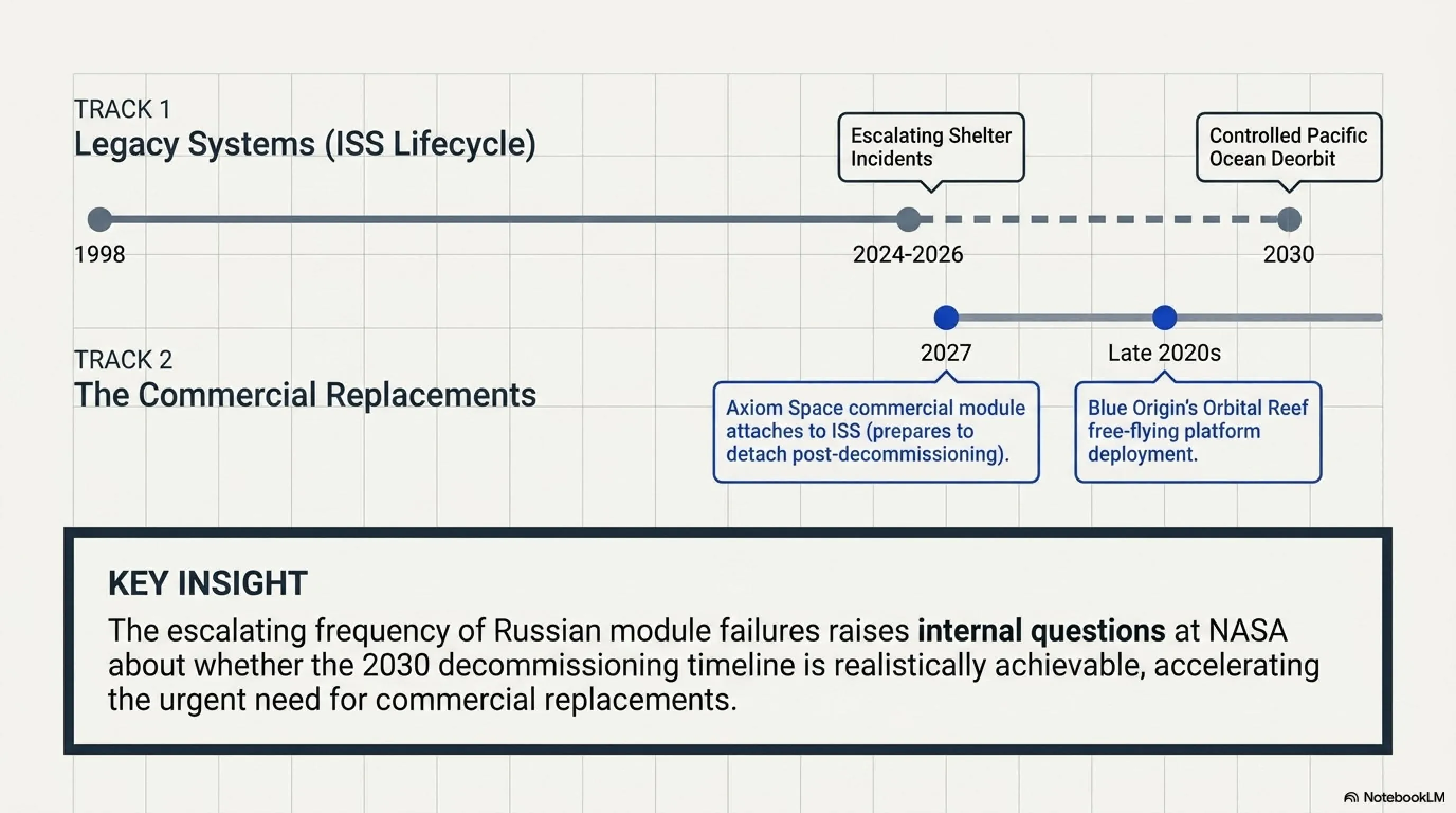
The International Space Station launched its first module in 1998, making the facility over 28 years old. The Russian segment—comprising the oldest components—is showing dangerous signs of structural fatigue. Recurring air leaks represent just one symptom of broader systemic aging affecting power systems, thermal control, life support, and structural integrity.
NASA currently plans to operate the ISS through 2030, after which the station will be deliberately deorbited into the Pacific Ocean in a controlled reentry. However, the escalating frequency and severity of Russian module failures have prompted internal discussions about whether 2030 is realistically achievable or if an earlier decommissioning might become necessary for safety reasons.
To prepare for ISS retirement, NASA has partnered with commercial space companies to develop replacement orbital platforms. Axiom Space is constructing a commercial space station with its first module scheduled to attach to the ISS in 2027 before becoming independent after ISS decommissioning. Blue Origin is developing Orbital Reef, a free-flying commercial station targeting late 2020s deployment. These next-generation platforms will feature modern materials, improved life support systems, and designs that incorporate lessons learned from three decades of ISS operations.
Meanwhile, astronauts continue working in an aging facility where routine operations can suddenly become emergency situations. Every air leak incident reminds us that spaceflight remains inherently dangerous, and even "routine" orbiting laboratory work carries significant risks when infrastructure deteriorates beyond its design lifespan.
💡 Bottom Line: The ISS is approaching end-of-life. Commercial replacements must accelerate development to avoid a gap in low Earth orbit research capabilities. Until then, astronauts will continue living and working aboard an increasingly fragile platform that demands constant vigilance and emergency preparedness.
📧 5. Google Workspace Icons – Complete Redesign Finalized, Gmail Was the Last Piece
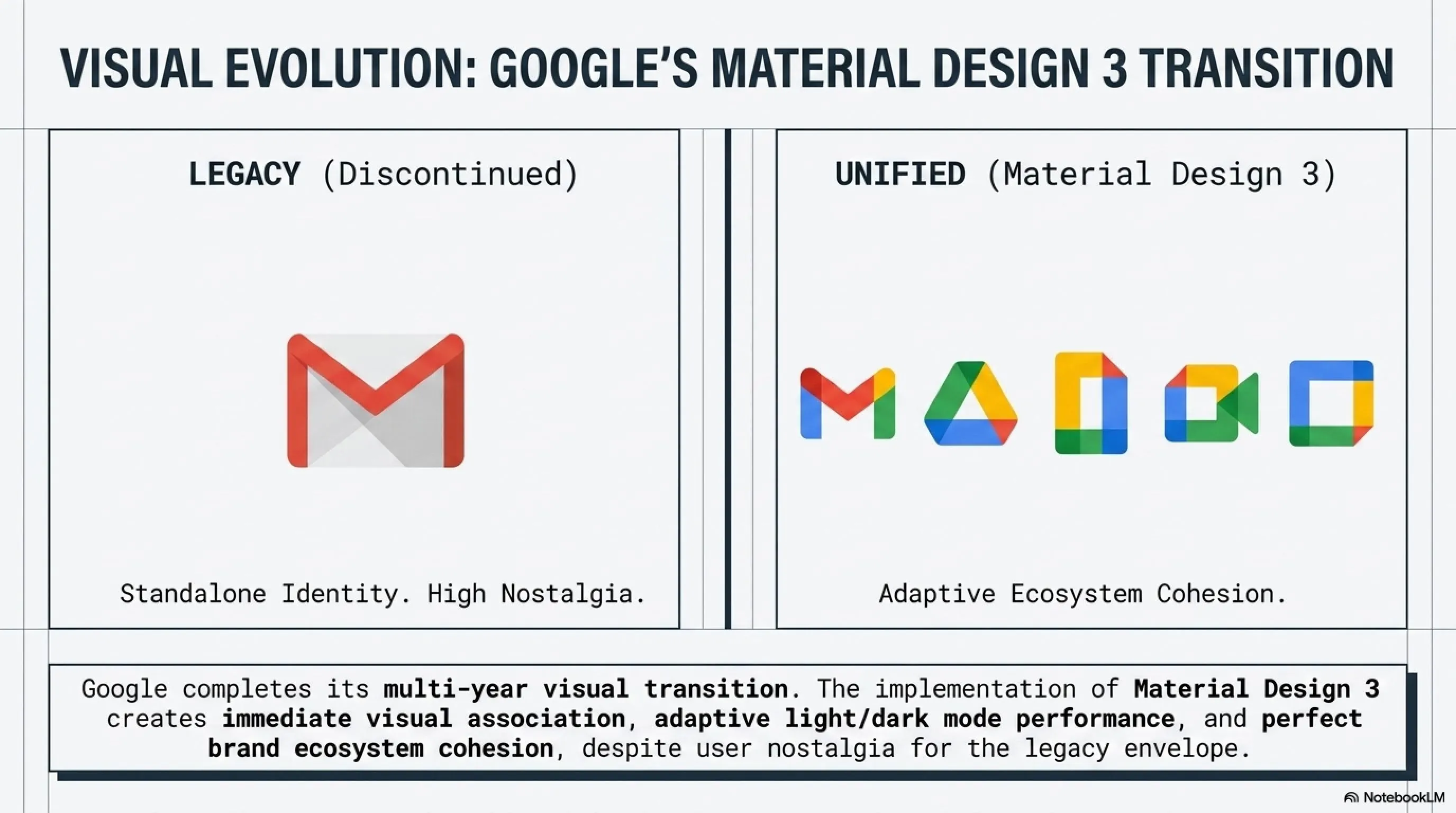
Google has finally completed its massive Workspace icon redesign with the updated Gmail logo, marking the conclusion of a multi-year visual overhaul spanning the entire productivity suite. The new Gmail icon transitions from the classic red-and-white envelope design to a more colorful, multi-hued treatment incorporating blue, red, yellow, and green—Google's signature brand colors—creating better visual consistency across Workspace applications.
The redesign affects Gmail, Drive, Docs, Sheets, Slides, Calendar, Meet, and other Workspace products, creating a unified visual language that makes Google's productivity ecosystem instantly recognizable. The updated iconography implements Material Design 3 principles, featuring refined shapes, improved contrast ratios, and better legibility across light and dark themes.
🎨 Design Philosophy: Visual Unity Across the Ecosystem
Google states the redesign's primary objective is achieving visual unity across all Workspace products. When viewing your app launcher or taskbar, all Workspace icons now clearly belong to the same design family, creating immediate visual association and brand recognition. The color palette remains consistent—Google's signature blue, red, yellow, and green appear in every icon, establishing thematic cohesion.
The implementation of Material Design 3 ensures optimal performance across diverse contexts: mobile devices, desktop applications, web browsers, and wearables. Icons maintain legibility at small sizes while remaining visually distinctive at larger dimensions. Adaptive color schemes allow icons to adjust appropriately for light mode, dark mode, and high-contrast accessibility settings.
💡 User Reception: The redesign has generated mixed reactions. Long-time users express nostalgia for Gmail's iconic red envelope, arguing the new multicolor design reduces instant recognizability. However, Google insists the unified visual language benefits the ecosystem long-term, particularly as Workspace continues expanding with new products and integrations.
💰 6. Bitcoin Recovers Above $61,000 After $1.6 Billion Liquidation Wave
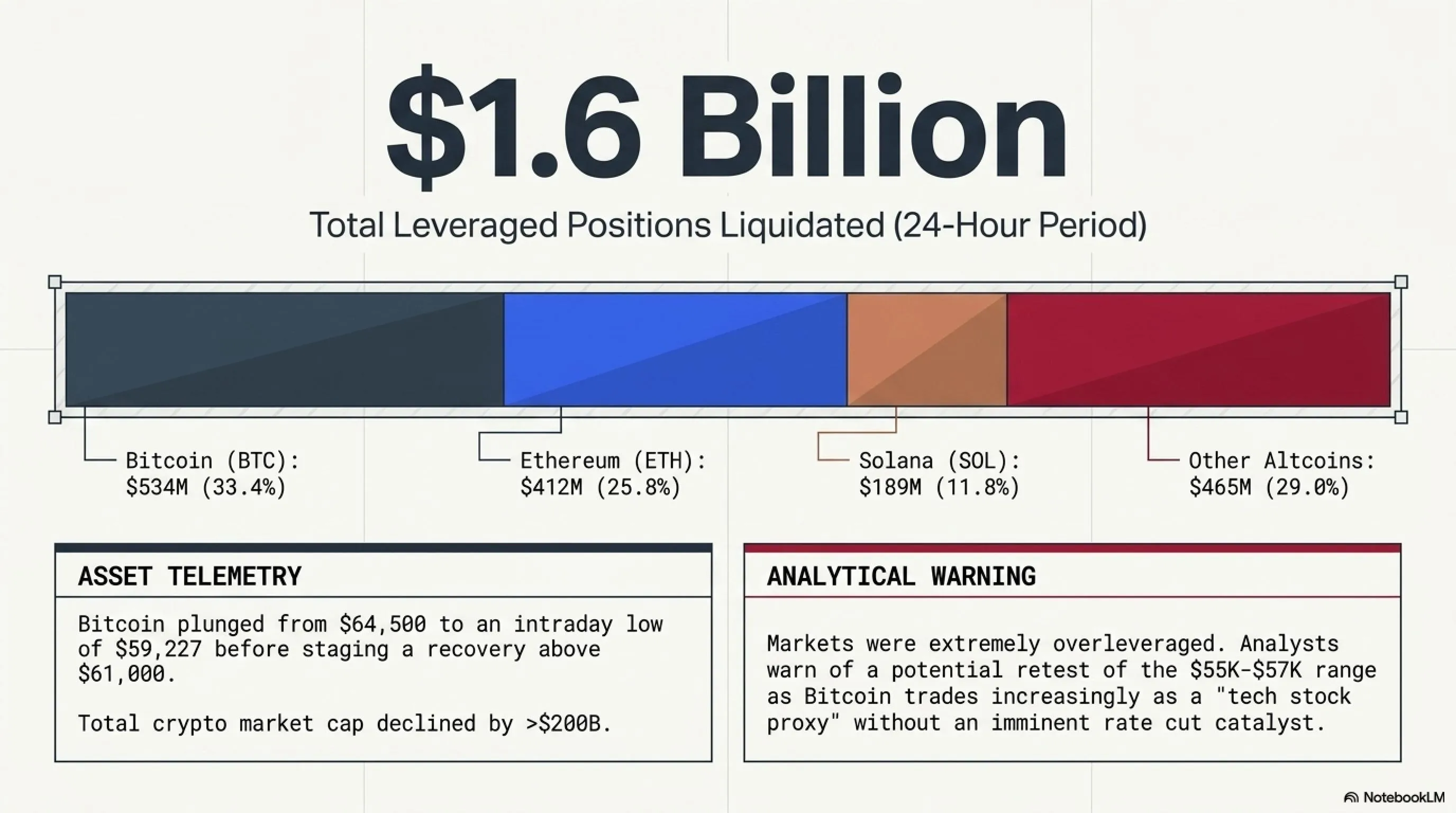
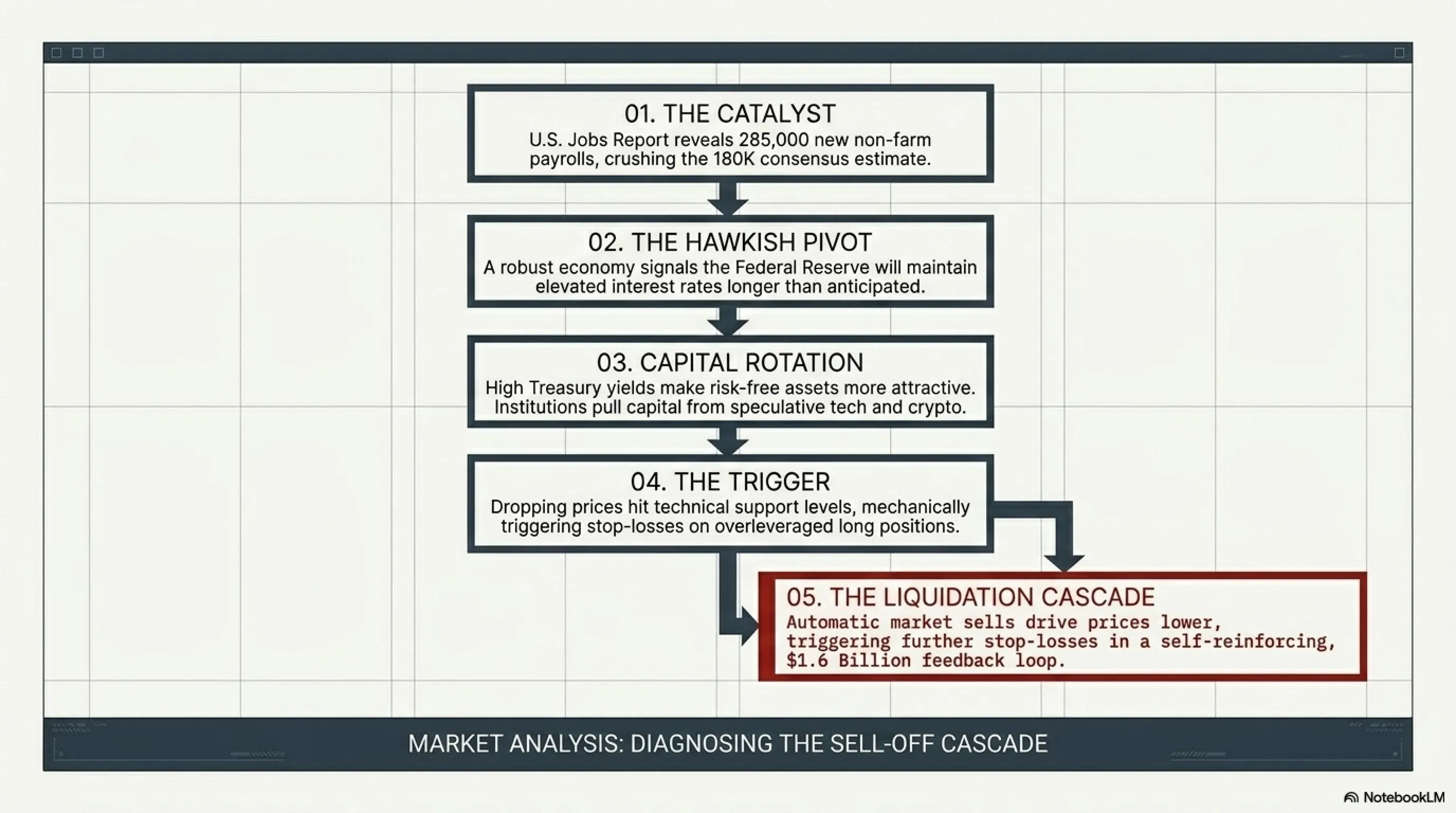
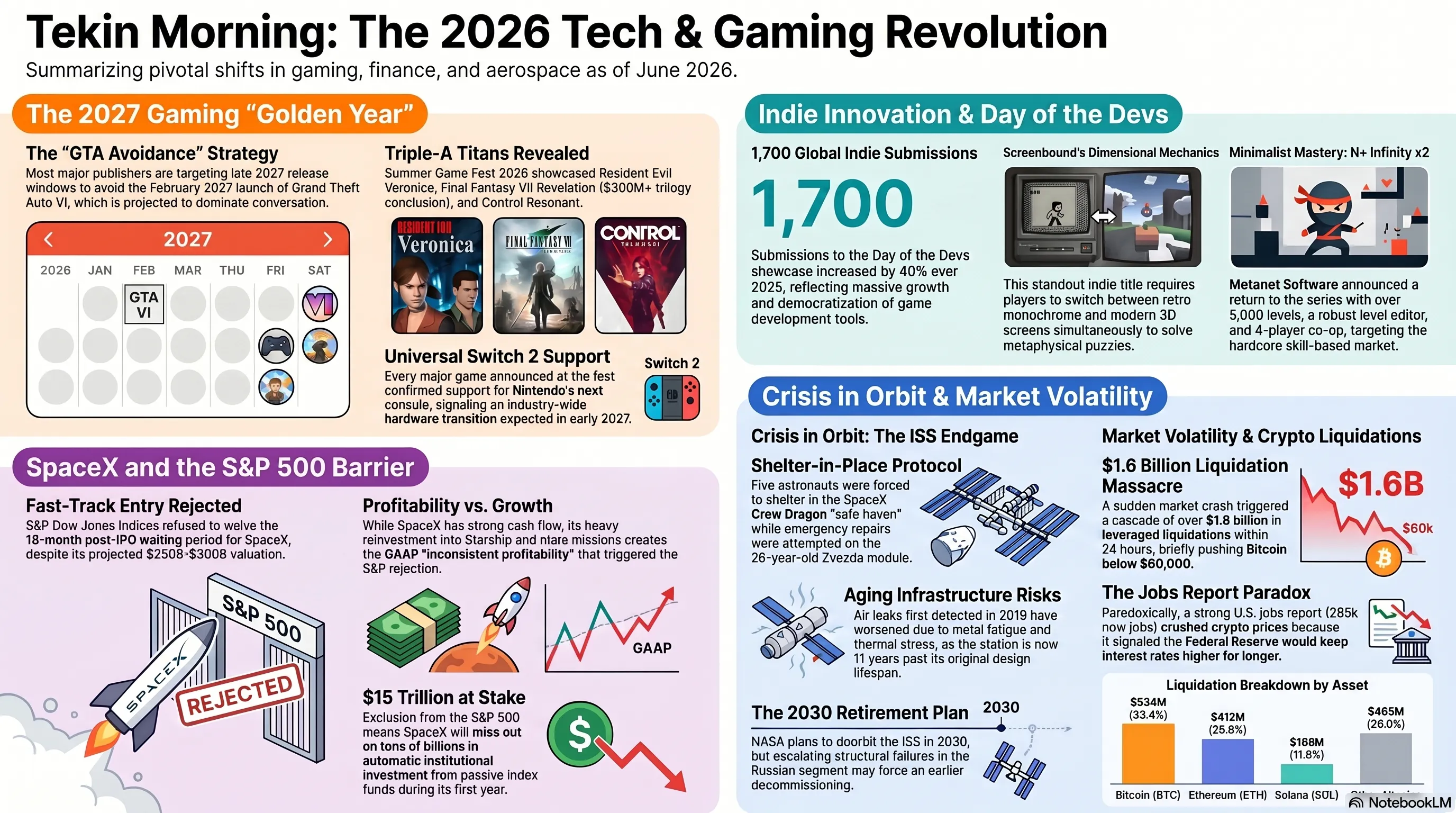
The cryptocurrency market experienced one of 2026's most violent liquidation events overnight, with Bitcoin plunging to an intraday low of $59,227 Thursday night before staging a dramatic recovery to surpass $61,000 by Saturday morning. The cascade liquidated over $1.6 billion in leveraged positions within 24 hours, making it one of the year's largest forced-liquidation episodes.
The trigger? Friday's unexpectedly strong U.S. jobs report, which showed non-farm payrolls increasing by 285,000 in May—significantly above the 180,000 consensus estimate. Strong employment data typically signals economic resilience, but for financial markets, it meant one thing: the Federal Reserve has no reason to cut interest rates anytime soon. This realization sent shockwaves through risk assets, with the Nasdaq 100 dropping approximately 5%, bond yields spiking, and cryptocurrencies selling off in sympathy with tech stocks.
The crypto liquidation cascade followed a predictable pattern: overleveraged long positions hit stop-losses, triggering automatic market sells that drove prices lower, which triggered more stop-losses and liquidations in a self-reinforcing feedback loop. Bitcoin fell from approximately $64,500 to $59,227 in less than 12 hours. Ethereum, Solana, and other major altcoins suffered proportionally larger losses, with total crypto market capitalization declining by over $200 billion during the rout.
📉 Why Strong Employment Crushed Crypto
Friday's jobs report revealed a paradox: good economic news translated to bad market news. Here's the causation chain:
- Strong Economy: Robust employment growth suggests the economy doesn't need stimulus
- Hawkish Fed: Federal Reserve maintains elevated interest rates longer to prevent inflation resurgence
- Higher Rates: Risk-free Treasury yields become more attractive relative to speculative assets
- Capital Rotation: Institutional investors shift capital from crypto/tech into bonds and defensive sectors
- Liquidity Drainage: Reduced crypto buying pressure + overleveraged positions = liquidation cascade
💡 Simplified: Markets expected imminent Fed rate cuts. Strong jobs data killed that expectation. Investors dumped risk assets en masse. Crypto, being the riskiest mainstream asset class, suffered disproportionately. Over $1.6B in leveraged positions got liquidated when prices broke technical support levels.
📊 24-Hour Liquidation Breakdown
| Cryptocurrency | Liquidation Amount | % of Total |
|---|---|---|
| Bitcoin (BTC) | $534 million | 33.4% |
| Ethereum (ETH) | $412 million | 25.8% |
| Solana (SOL) | $189 million | 11.8% |
| Other Altcoins | $465 million | 29.0% |
| Total | $1.6 billion | 100% |
📌 Source: Coinglass and CoinDesk data aggregation
🔍 Tekin Analysis: Will Bitcoin Retest $55K?
Analysts warn that Bitcoin could retest the $55,000-$57,000 range if selling pressure intensifies. Several factors support this bearish scenario:
1. Leverage Deleveraging: The $1.6B liquidation indicates the market was extremely overleveraged. Historical patterns suggest additional "cleansing" may be necessary before establishing a sustainable bottom. Over-leveraged markets rarely bottom on the first liquidation wave—subsequent retests typically occur as remaining weak hands exit.
2. Correlation with Tech Stocks: Bitcoin increasingly trades as a "tech stock proxy" rather than a hedge asset. When Nasdaq sells off, Bitcoin typically follows. If tech earnings disappoint or economic data continues signaling "higher for longer" interest rates, Bitcoin will likely suffer sympathetic declines.
3. Absent Rate Cut Catalyst: The primary bull case for crypto in 2026 centered on anticipated Federal Reserve rate cuts stimulating risk appetite. With robust economic data undermining that thesis, crypto lacks a clear near-term catalyst for sustained recovery.
4. Institutional Caution: Large institutional investors (hedge funds, family offices, corporate treasuries) who drove Bitcoin's 2024-2025 rally have grown more cautious. Reduced institutional buying removes a key source of demand that previously absorbed selling pressure.
However, there's a silver lining: massive liquidation events often mark short-term bottoms. Once overleveraged positions clear out, markets become "healthier" with less vulnerability to cascade liquidations. Bitcoin typically rebounds strongly after major liquidation events as opportunistic buyers accumulate at perceived discounts.
💡 Bottom Line: Short-term volatility will likely persist as markets digest Fed policy implications. Long-term, Bitcoin's fundamentals remain intact—fixed supply, growing institutional adoption, and maturing infrastructure. Patient investors should view significant corrections as accumulation opportunities rather than existential crises. Dollar-cost averaging remains the optimal strategy for long-term crypto exposure during uncertain periods.
❓ Frequently Asked Questions (FAQ)
Why did Capcom drop "Code" from the Resident Evil title?
Capcom typically simplifies titles when creating full reimaginings rather than simple remakes. Dropping "Code" signals that Resident Evil Veronica will be a comprehensive redesign with significant narrative, mechanical, and structural changes—not just a graphical upgrade. This approach mirrors their strategy with Resident Evil 2 and 3 remakes, which both deviated substantially from the original games while preserving core story beats. Expect modern gameplay systems, expanded narrative content, and potentially controversial departures from the 2000 Dreamcast original.
Will SpaceX ever join the S&P 500?
Almost certainly yes, but not immediately. SpaceX must wait at least 12 months post-IPO and demonstrate consistent profitability to qualify for S&P 500 inclusion. Given SpaceX's strong revenue growth, massive government contracts (NASA, DoD), and Starlink's expanding subscriber base, the company should meet eligibility requirements within 12-24 months of going public. Most analysts predict S&P 500 inclusion sometime in 2027 or 2028, assuming the company reports positive quarterly earnings consistently.
Why are ISS air leaks so dangerous?
Air leaks can cause catastrophic depressurization, making the station uninhabitable and potentially fatal for astronauts. The ISS maintains internal pressure at approximately 14.7 PSI (equivalent to sea level on Earth). If pressure drops too rapidly, astronauts risk hypoxia, decompression sickness, and in extreme cases, death. Even slow leaks are problematic—they force the station to consume limited oxygen reserves faster than normal, potentially requiring emergency resupply missions or evacuation. The recurring nature of Russian module leaks indicates structural deterioration that can't be permanently repaired, only temporarily patched, creating ongoing safety risks.
🎯 Final Thoughts
Saturday morning, June 6, 2026, kicked off with incredible energy! Summer Game Fest demonstrated that 2027 will be gaming's golden year, with Resident Evil Veronica, Final Fantasy VII Revelation, and Control Resonant leading an extraordinary lineup. Day of the Devs reminded us that creativity thrives in indie development, with innovative titles like Screenbound and N+ Infinity Times Two pushing boundaries AAA studios won't touch.
S&P 500's rejection of SpaceX's fast-track entry proved that even giants must play by the rules. ISS astronauts sheltering in Dragon underscored that space remains inherently dangerous as infrastructure ages beyond design lifespans. Google's Workspace redesign completion marks the end of a multi-year visual transformation. And Bitcoin's $1.6B liquidation event taught us that financial markets remain unpredictable, with macroeconomic surprises triggering cascade effects across asset classes.
We hope this article energized your Saturday morning with useful insights and compelling stories. Remember: the tech world never sleeps, and we're always here to bring you the latest news that matters! 🚀
☕ Join us tomorrow morning for another Tekin Morning!
📚 Sources
- The Verge - Summer Game Fest 2026 Coverage →
- IGN - Everything Announced at Summer Game Fest 2026 →
- GameSpot - Day of the Devs 2026 Showcase →
- Ars Technica - S&P 500 Blocks SpaceX Fast-Track Entry →
- Axios - SpaceX IPO and S&P 500 Rejection →
- TechCrunch - NASA Shelters ISS Astronauts in Dragon →
- Ars Technica - ISS Air Leak Saga Continues →
- Android Authority - Google Workspace Icon Redesign Complete →
- CoinDesk - Bitcoin Recovers After $1.6B Liquidation →
- Bitcoin.com - Crypto Liquidation Wave Analysis →
🌐 Stay Connected With Us 🎮✨
For the latest tech, gaming, and gadget news, follow us on our official social media channels:
Additional Gallery: 🌅 Tekin Morning June 6, 2026: Summer Game Fest Explosion, ISS Astronauts Rescued, SpaceX Rejected & Bitcoin's Comeback