☀️ Tekin Morning | Nintendo Nukes Emulators & MW4 Hits Switch 2
Tekin Morning's exclusive coverage of today's tech earthquakes. From Nintendo nuking 400+ Switch emulators to the native MW4 port, Microsoft Defender's kernel subversion, and the massive AWS key leak.
- 🎮Nintendo DMCA Eradication Blitz- 401 Switch emulator forks including Suyu and Skyline removed from GitHub in coordinated sweep
- 🎧Defender BTR.sys Ring 0 Evasion- Living-off-the-land technique repurposing Microsoft's signed boot driver to erase EDRs
- 🚀MW4 Native Switch 2 Development- Digital Legends is developing a native 60 FPS port with full cross-play and August 28 beta
- 🗡️9,300+ Active AWS Keys Leaked- 768 full root/admin enterprise AWS credentials exposed across public AI repositories
- 📰Grok Bot Launched for Mac & iOS- SpaceXAI and Cursor release native developer tool bridging multimodal AI with local IDEs
- ⚔️SynkLoader Teams Phishing Surge- Modular Python malware deploys PhishLocker fake Windows lock screens to harvest credentials
Good morning and welcome to the comprehensive editorial briefing for Sunday, August 23, 2026. As the global technology sector embarks on a pivotal new operational week, the collision between software copyright enforcement, low-level operating system security architectures, next-generation console hardware transitions, and enterprise cloud data governance has intensified across every major digital frontier.
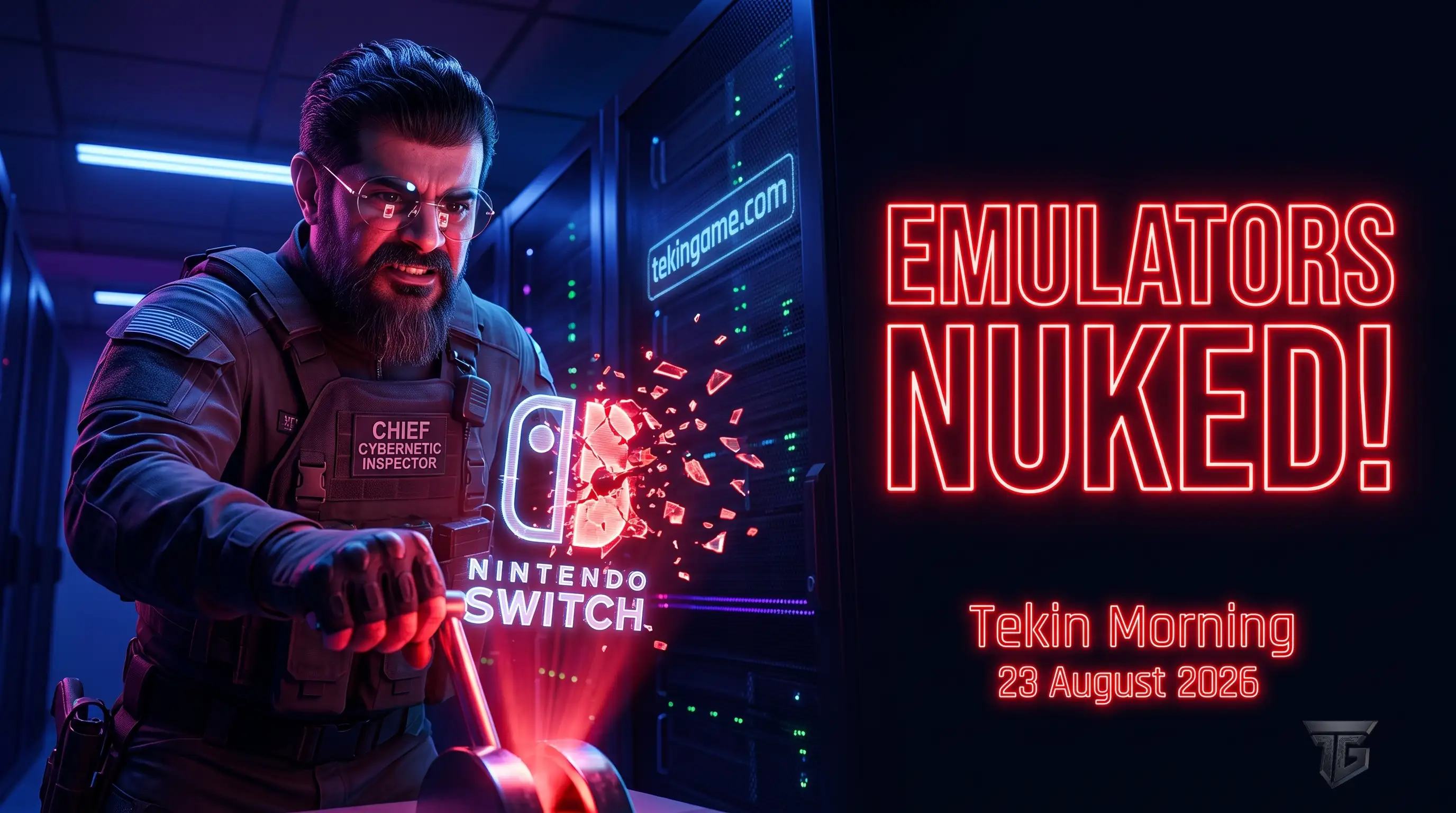
Leading global developments this morning is a devastating legal campaign orchestrated by Nintendo of America and Nintendo Co., Ltd.. Deploying a barrage of seven coordinated takedown notices under Section 1201 of the Digital Millennium Copyright Act (DMCA), Nintendo has executed a single-day enforcement sweep resulting in the immediate eradication of over 400 Switch emulator repositories and forks on GitHub. This coordinated action dismantles major networks surrounding Suyu, Skyline, and remaining forks of the defunct Yuzu project, reigniting fierce international debates regarding software preservation and the legal boundaries of hardware emulation.
Simultaneously, the enterprise cybersecurity domain is reeling from a groundbreaking disclosure published by Check Point Research. Security analysts have demonstrated an extraordinary "Living-off-the-Land" evasion methodology that requires no memory corruption exploits or unverified third-party drivers. Instead, threat actors can weaponize Microsoft's own legitimately signed, high-privilege boot-time remediation driver BTR.sys, an integral component of Microsoft Defender to execute arbitrary file deletions, manipulate registry trees, and permanently terminate Endpoint Detection and Response (EDR) agents during the earliest, unguarded phases of Windows system startup.
In the console hardware and AAA gaming sector, Activision has formally confirmed that Spanish development powerhouse Digital Legends Entertainment is spearheading the native development of Call of Duty: Modern Warfare 4 for the forthcoming Nintendo Switch 2. Engineering telemetry confirms a rock-solid 60 frames per second performance target accelerated by Nvidia DLSS AI reconstruction, paired with full cross-play compatibility across all modern platforms. Complemented by alarming disclosures from Truffle Security exposing more than 9,300 active enterprise AWS access keys on Hugging Face, the debut of Grok Bot for macOS and iOS, and the emergence of SynkLoader credential harvesting in Microsoft Teams, this morning's briefing deconstructs the definitive technological stories defining the global ecosystem.
Before proceeding into our exhaustive technical investigations, review the executive overview summarizing this morning's premier intelligence takeaways.
Strategic Executive Briefing: Sunday Morning Intelligence Synthesis
- Nintendo utilizes DMCA Section 1201 anti-circumvention provisions to compel GitHub to remove 401 Switch emulator repositories
- Check Point Research demonstrates kernel-level EDR disarmament during the Windows 'Golden Boot Window' using Microsoft's signed BTR.sys driver
- Activision and Infinity Ward confirm a native 60 FPS port of Modern Warfare 4 for Nintendo Switch 2 with open beta launching August 28
- Truffle Security audits reveal 88% of 9,300+ publicly leaked AWS enterprise credentials remain valid with 768 possessing root/admin privileges
- SpaceXAI and Cursor release native Grok Bot for macOS and iOS, directly integrating large language models with system terminals and codebases
- Modular malware SynkLoader impersonates enterprise IT support in Microsoft Teams to deploy PhishLocker fake Windows lock screens
To establish baseline architectural clarity across the engineering and statutory frameworks analyzed today, consult the technical reference matrix below.
Technical, Legal & Architectural Reference Matrix (Jargon Buster)
| Technical Term | Engineering & Statutory Definition | Operational Significance |
|---|---|---|
| DMCA Section 1201 (TPM) | Federal statutory clause prohibiting the circumvention of technological protection measures controlling access to copyrighted works | The primary legal mechanism deployed by Nintendo to outlaw Switch emulators |
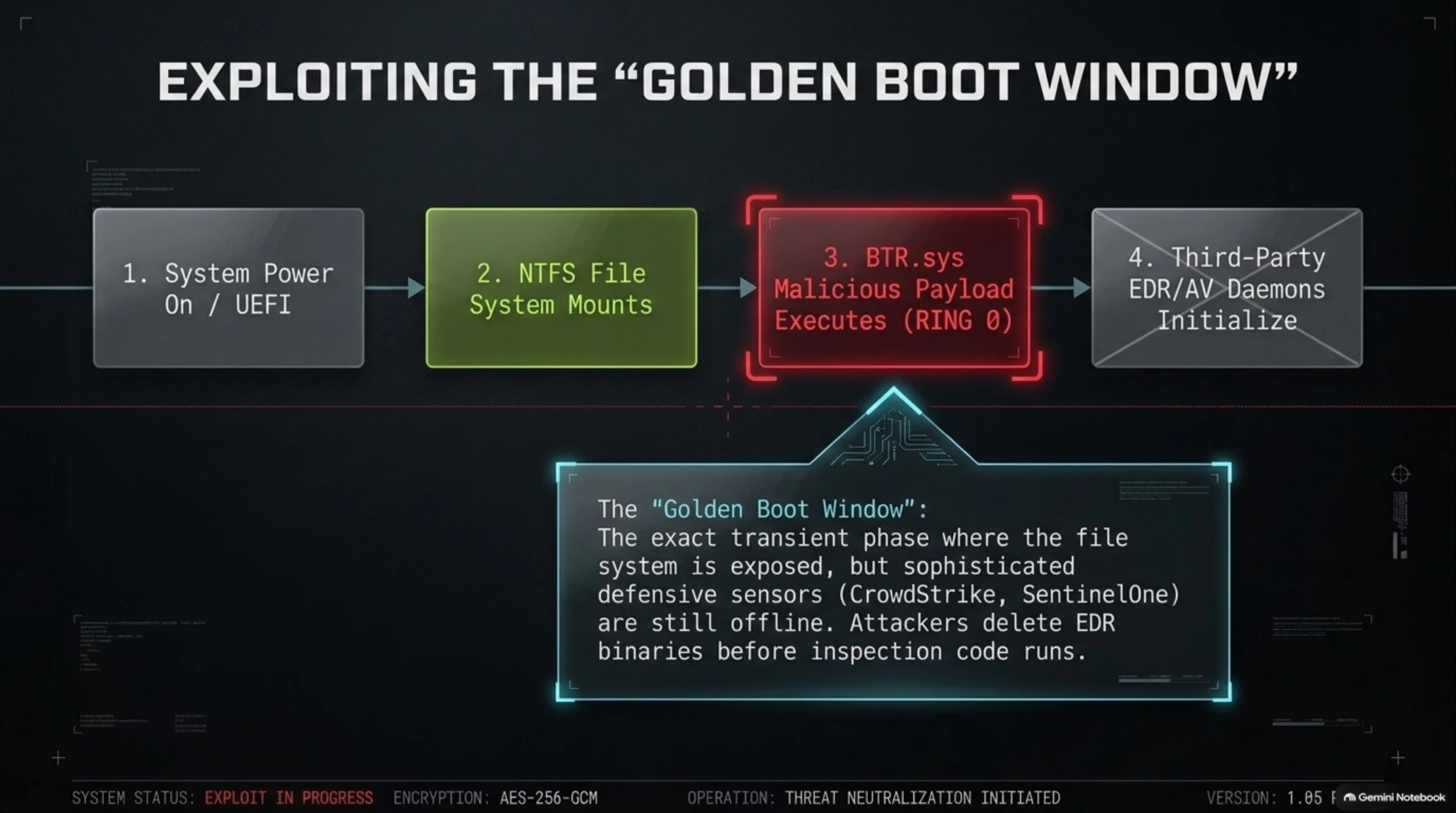
| Golden Boot Window | The transient boot phase where file systems mount but secondary security services (EDRs/AVs) have not yet initialized | The precise execution timeframe weaponized by the Microsoft Defender BTR.sys abuse technique |
| Native Hardware Compilation | Directly compiling game binaries for target SoC architectures without virtualization or cloud translation layers | The engineering approach utilized by Digital Legends for Modern Warfare 4 on Switch 2 |
| Hugging Face Secret Leakage | Accidental exposure of hardcoded cloud API keys within public machine learning notebooks and repository scripts | The primary leak vector responsible for over 8,482 active AWS corporate credentials |
We initiate this morning's deep investigative analysis with Nintendo's sweeping legal enforcement across the open-source emulation ecosystem.
1. The Emulation Reckoning; Nintendo Coordinates Massive DMCA Blitz Eradicating 401 Switch Emulator Repositories on GitHub
In what represents the most sweeping, aggressive intellectual property crackdown in the history of video game console emulation, Nintendo Co., Ltd. and Nintendo of America Inc. have executed a devastating legal assault against open-source developers. As documented in public legal filings published by TorrentFreak and confirmed by technical outlets worldwide, Nintendo submitted a coordinated cluster of seven statutory notices under the Digital Millennium Copyright Act (DMCA) to Microsoft-owned code hosting platform GitHub, demanding and securing the immediate takedown of 401 distinct Switch emulator repositories in a single operational day.
This unprecedented enforcement action marks the aggressive escalation of Nintendo's long-term legal crusade to permanently extinguish the emulation ecosystem surrounding the Nintendo Switch architecture. Following the historic March 2024 settlement with Tropic Haze the entity behind the widely utilized Yuzu emulator, which resulted in a $2.4 million judgment and total project dissolution hundreds of independent developer forks emerged globally to sustain the codebase under new branding banners. However, Nintendo's latest enforcement salvo targeted these successor entities with surgical precision.
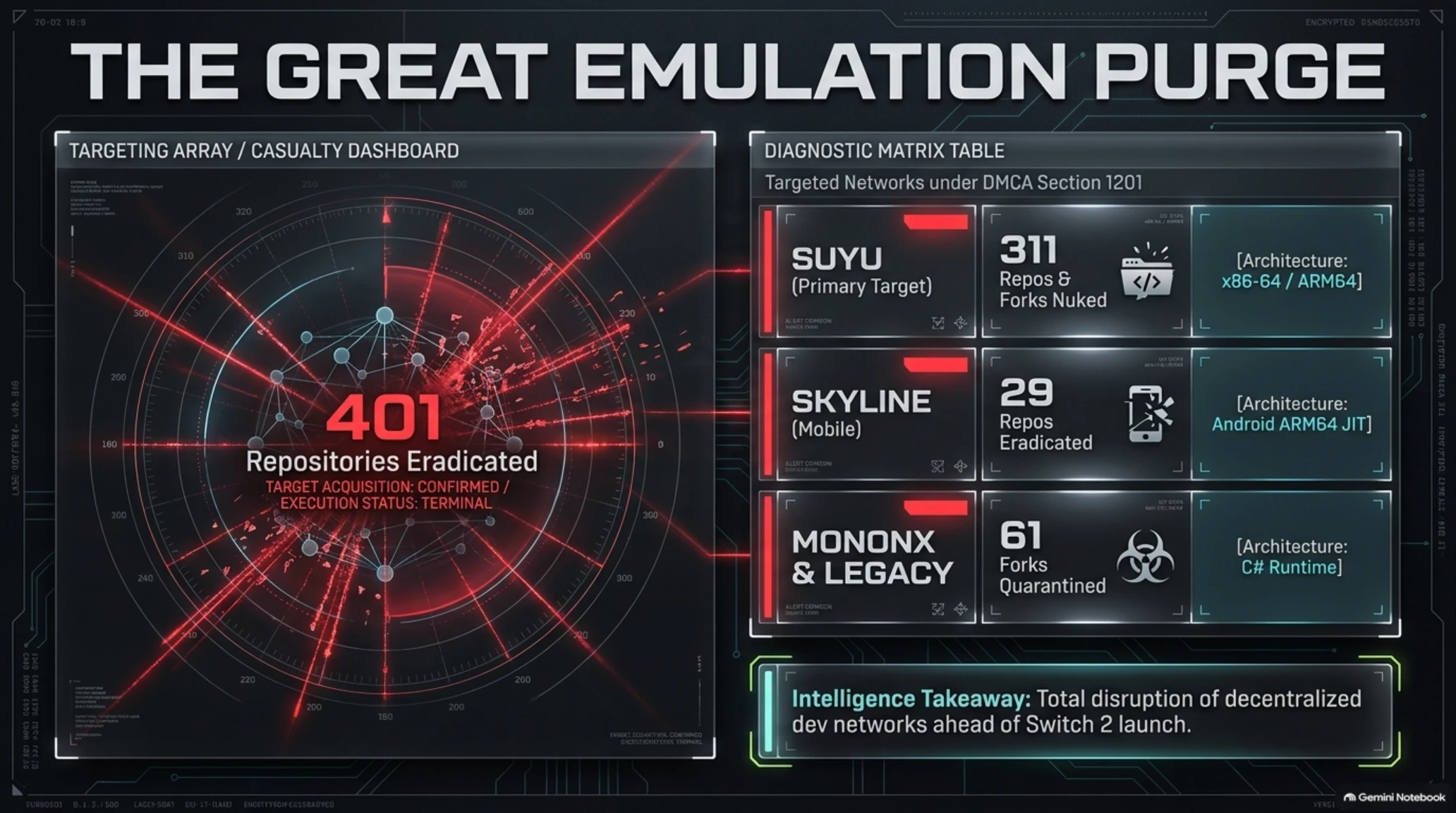
The primary casualty of this sweep was Suyu, the most prominent open-source successor to Yuzu, which suffered the loss of 311 repository forks and mirror nodes. Additionally, the enforcement action eradicated 29 repositories associated with Skyline, an ambitious ARM-native emulator designed to run Switch titles on Android mobile devices, alongside numerous forks of C#-based emulator MonoNX and various lingering Yuzu experimental branches. Users attempting to access these repository URLs on GitHub are now greeted with formal DMCA quarantine notices detailing Nintendo's statutory demands.
The legal architecture underpinning Nintendo's enforcement campaign rests upon Section 1201(a)(2) of the DMCA, known as the anti-circumvention rule. In its formal notices to GitHub, Nintendo articulated that Switch titles are shielded by proprietary cryptographic wrappers requiring specialized encryption keys colloquially designated as prod.keys and title.keys to decrypt and execute code. Nintendo argued that because these emulators cannot function without utilizing unauthorized copies of these proprietary cryptographic keys at runtime, the software platforms themselves constitute unlawful trafficking in circumvention technology specifically designed to bypass Technological Protection Measures (TPMs).
Digital preservationists, legal scholars, and open-source advocates have expressed profound alarm over the sweeping nature of these takedowns. While Nintendo asserts that emulation directly fuels commercial piracy, video game preservation organizations point out that as physical manufacturing cycles conclude and digital storefronts face eventual decommissioning, emulation represents the singular viable methodology for preserving interactive digital heritage for future academic study and historical archiving. Nevertheless, with Nintendo actively preparing the commercial rollout of the Nintendo Switch 2, the company has made it abundantly clear that it will aggressively utilize federal copyright mechanisms to eliminate third-party execution environments across the internet.
The core structural and legal dimensions defining this 401-repository purge include:
- Total disruption of decentralized developer contributor networks surrounding Suyu, Skyline, and Yuzu-derived forks
- Enforcement of strict liability interpretations regarding cryptographic key parsing routines within open-source codebases
- Rapid migration of decentralized emulation development teams toward non-US code hosting platforms including self-hosted GitLab, Gitea, and Codeberg
- Establishment of aggressive legal precedent treating emulator binary distribution as circumvention trafficking under DMCA Section 1201
- Protection of Nintendo's commercial software pricing power and ecosystem exclusivity ahead of the Nintendo Switch 2 launch
- Cumulative eradication of nearly 9,000 gaming-related repositories across GitHub over the preceding twenty-four months
- Chilling effect on independent reverse-engineering initiatives seeking to document proprietary microarchitectures
This coordinated strike demonstrates that open-source code hosting platforms will remain primary legal battlegrounds as platform holders seek total sovereignty over their software execution layers.
The conceptual rendering below visualizes the digital confrontation between proprietary cryptographic console protection architectures and open-source emulation networks:

Repository Eradication Breakdown: Nintendo GitHub DMCA Enforcement
| Targeted Emulation Platform | Repositories Nuked | Target Microarchitecture & Framework |
|---|---|---|
| Suyu (Primary Yuzu Successor) | 311 Repositories & Forks | x86-64 / ARM64 (C++ Desktop Engine) |
| Skyline Emulator Network | 29 Repositories | Android Native (ARM64 JIT Translation Engine) |
| MonoNX & Miscellaneous Forks | 61 Repositories | C# Runtime & Legacy Yuzu Branch Mirrors |
| Total Cumulative Takedowns | 401 Repositories | Single-Day Coordinated DMCA Campaign |
We transition now from digital copyright litigation to an astonishing revelation in low-level operating system security and kernel-level defense evasion.
2. Kernel Subversion in the Golden Boot Window; Check Point Exposes Weaponization of Legitimate Microsoft Defender Driver (BTR.sys)
In what represents one of the most intellectually elegant and strategically alarming cybersecurity discoveries of recent years, researchers at Check Point Research have uncovered a novel defense evasion methodology that allows threat actors to completely dismantle endpoint defenses using Microsoft's own trusted, signed binaries. Cataloged through deep low-level binary analysis, the technique requires zero software vulnerabilities, memory corruption primitives, or unverified third-party kernel drivers; instead, it repurposes the legitimate, Microsoft-signed boot-time remediation driver BTR.sys.
The driver BTR.sys (an abbreviation for Boot Time Removal Tool) is an integral component natively deployed with Microsoft Defender. Its legitimate engineering purpose is to assist the operating system in eradicating stubborn rootkits, ransomware payloads, and persistent malware during system startup, before malicious processes can load into user mode and lock their files against deletion. However, Check Point's research team successfully reverse-engineered the driver's undocumented transaction format and encryption routines, releasing a proof-of-concept utility named BTR_CLI to demonstrate how attackers can construct arbitrary, valid transaction payloads.
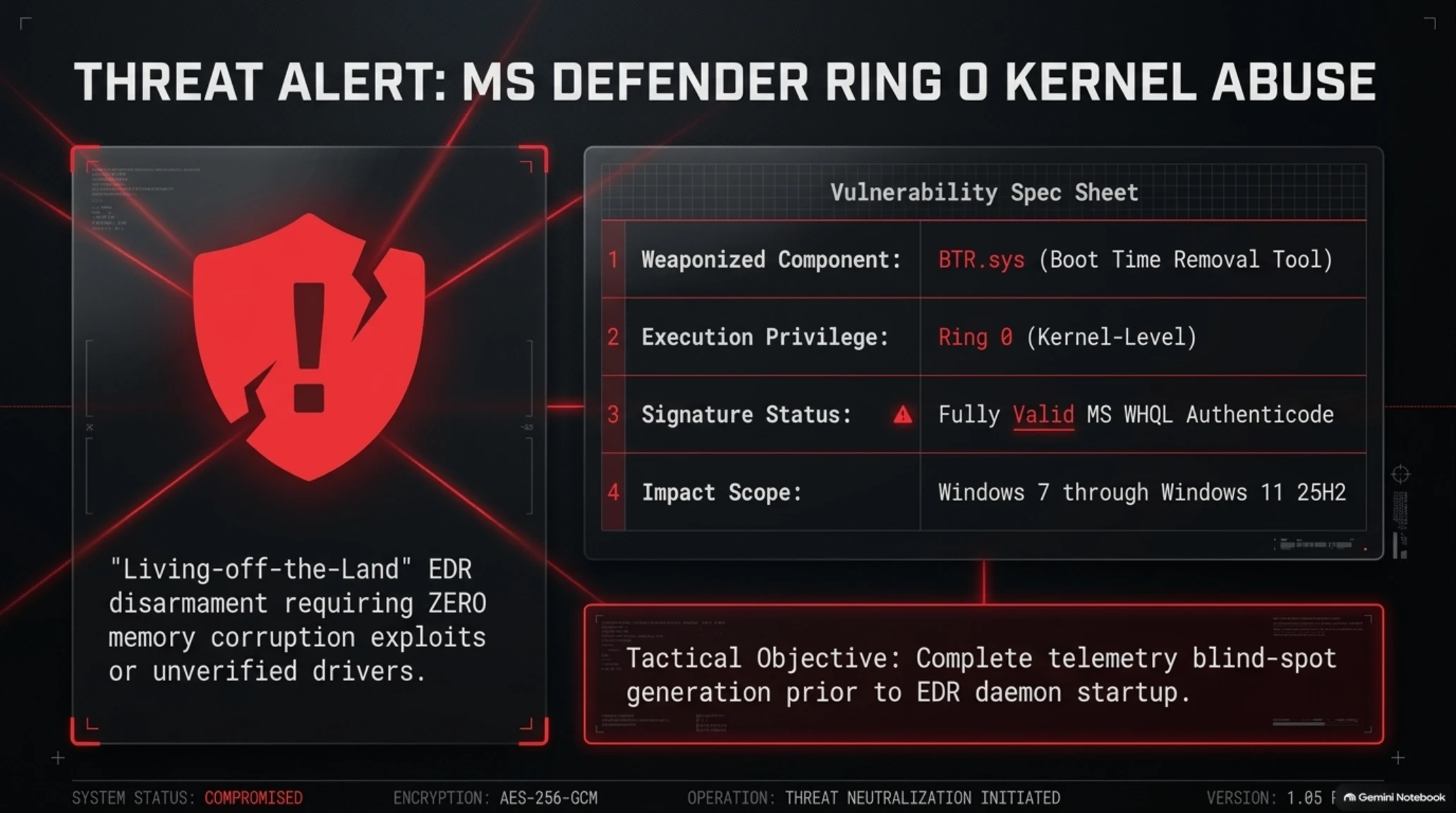
The critical vulnerability vector centers upon what security architects define as the "Golden Boot Window." During the initial phases of the Windows boot sequence, the underlying NTFS file system becomes fully mounted and accessible, and early-launch kernel drivers are initialized. Crucially, however, sophisticated third-party Endpoint Detection and Response (EDR) agents, commercial antivirus engines, and behavioral sensor drivers have not yet finished loading their user-mode monitoring daemons. By staging a crafted, encrypted BTR transaction file, an attacker possessing local administrator privileges can instruct BTR.sys to delete critical EDR binaries, sever defensive system services, or overwrite core registry security hives at Ring 0 (kernel privilege level) before defensive software can execute a single line of inspection code.
Forensic testing confirmed that this technique functions flawlessly across an extraordinary continuum of Windows releases, spanning legacy installations of Windows 7 all the way through contemporary builds of Windows 11 Version 25H2. Because BTR.sys is legitimately signed with Microsoft's official Windows Hardware Quality Labs (WHQL) cryptographic certificate, the execution bypasses all Driver Signature Enforcement (DSE) protections, hypervisor-protected code integrity (HVCI) mechanisms, and Microsoft's Vulnerable and Malicious Driver Blocklist.
In response to the disclosure, Microsoft noted that because the technique requires prior administrative privileges on the target machine, it does not currently meet the threshold for an emergency security patch or MSRC security bulletin. Nevertheless, enterprise threat hunters and Blue Team engineers emphasize that post-exploitation EDR blinding represents the premier objective for advanced persistent threat (APT) syndicates and ransomware cartels, as eliminating telemetry collection during the boot cycle grants adversaries complete, invisible lateral movement capabilities across corporate networks.
The core tactical imperatives and architectural characteristics of the BTR.sys abuse vector include:
- Pure Living-off-the-Land execution utilizing native, trusted operating system binaries to evade static and heuristic detection
- Kernel-level execution capabilities enabling arbitrary file deletion, registry manipulation, and path renaming
- Complete blind-spot generation by neutralizing tier-one EDR platforms (CrowdStrike, SentinelOne, Defender for Endpoint) prior to daemon startup
- Full cryptographic compliance with Microsoft WHQL signing requirements, bypassing all kernel driver blocklists
- Universal applicability across over fifteen years of Windows architecture spanning Windows 7 to Windows 11 25H2
- Mandatory requirement for enterprise Security Operations Centers (SOCs) to implement specialized boot-time registry and file system audit rules
- Urgent necessity for security architects to restrict local administrative access and enforce strict Privileged Access Management (PAM)
The technical video walkthrough below provides a step-by-step forensic dissection of the Golden Boot Window execution sequence and demonstrates the construction of BTR transaction payloads:
Architectural Vulnerability Teardown: Microsoft Defender BTR.sys Abuse Technique
| Engineering Metric | Technical Specification & Operational Parameter |
|---|---|
| Component Analyzed | BTR.sys (Microsoft Defender Boot Time Removal Driver) |
| Execution Privilege Level | Ring 0 (Kernel-Level Execution via Legitimate Microsoft Protocol) |
| Target Execution Phase | Golden Boot Window (Early Boot Sequence Prior to EDR/AV Initialization) |
| Cryptographic Signature | Fully Valid Microsoft Corporation WHQL Authenticode Certificate |
| Impacted Environments | Windows 7, Windows 8.1, Windows 10, Windows 11 (Through Version 25H2) |
We turn our attention now from kernel-level security engineering to a major milestone in console hardware capabilities and AAA game development.
3. Native 60 FPS AAA Gaming on Nintendo Hardware; Activision Confirms Call of Duty: Modern Warfare 4 Native Development for Switch 2 via Digital Legends
In a historic development ending more than a thirteen-year absence of mainline military shooters from Nintendo platforms, Activision (operating under Microsoft Gaming) has officially confirmed that Call of Duty: Modern Warfare 4 is currently in active, native development for the upcoming Nintendo Switch 2. The announcement delivers tangible execution on Microsoft's legally binding, ten-year international regulatory commitments to ensure feature and release parity for Call of Duty across Nintendo hardware architectures.
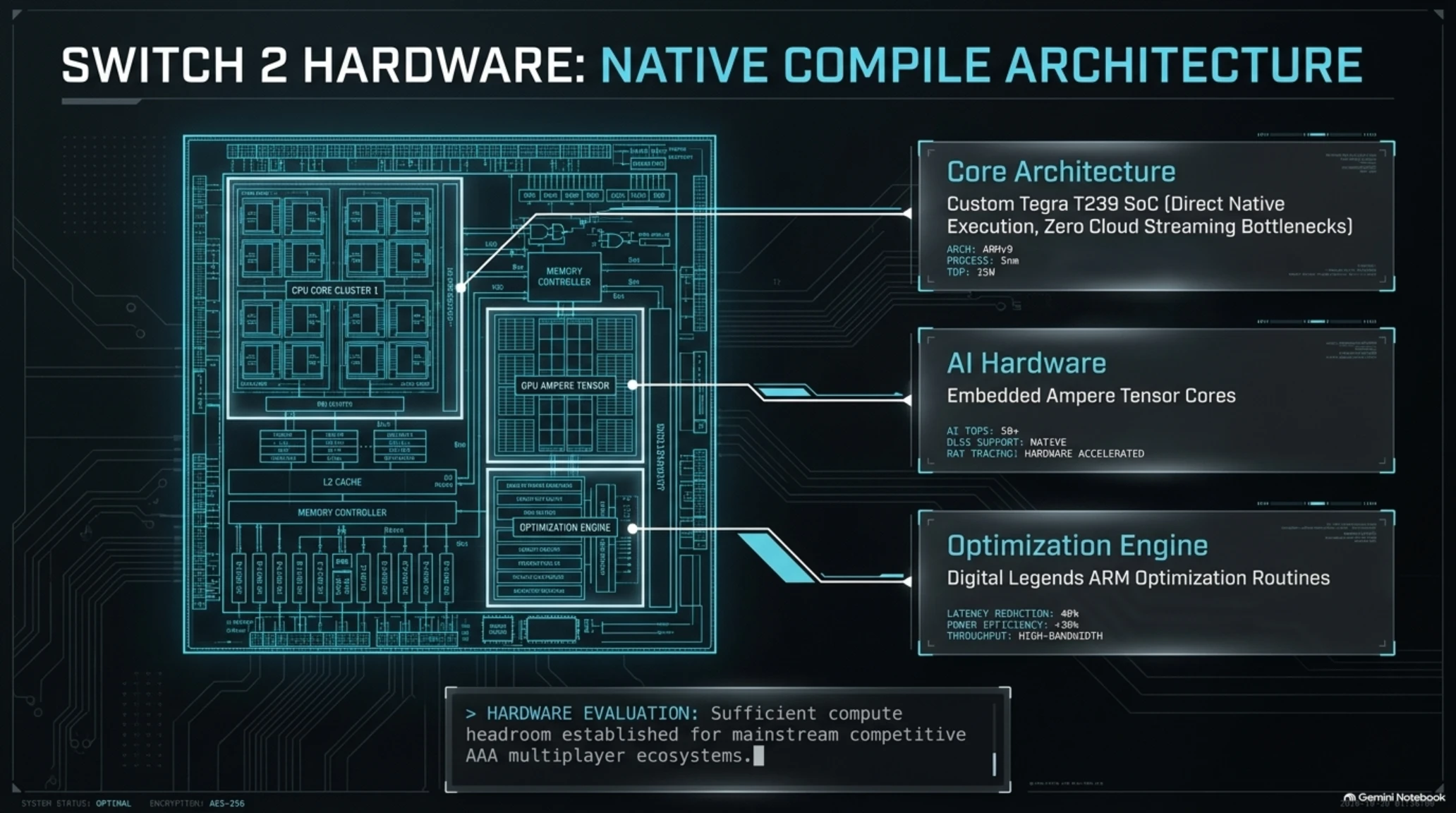
As initially detailed by Nintendo Life and technical gaming outlets, Activision has entrusted the engineering execution of the Switch 2 version to Barcelona-based development powerhouse Digital Legends Entertainment. Acquired by Activision in 2021, Digital Legends possesses deep institutional expertise in low-power mobile architectures, having previously contributed critical rendering and network pipelines to Black Ops 6, Black Ops 7, and Call of Duty: Warzone. Working in close collaboration with lead developer Infinity Ward, Digital Legends is building the Switch 2 edition as a direct, native compilation for the console's custom Nvidia silicon (Tegra T239), completely rejecting the latency-heavy cloud-streaming methodologies utilized during the previous console generation.
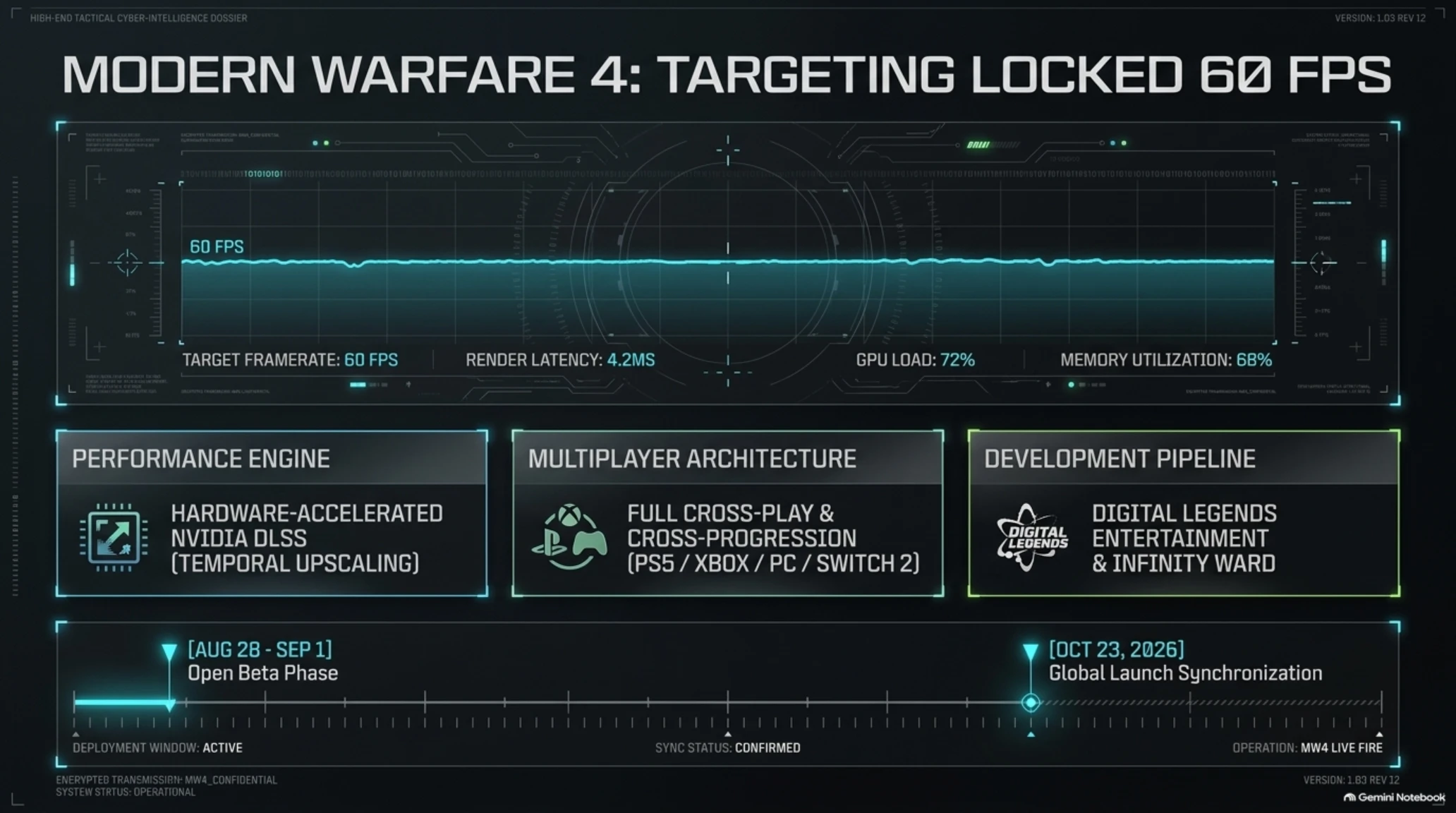
Early technical evaluations and hands-on developer demonstrations indicate that Modern Warfare 4 runs at a fluid, locked 60 frames per second (FPS) in both docked and portable configurations. The engineering breakthrough is made possible through the comprehensive integration of Nvidia Deep Learning Super Sampling (DLSS) and modern Ampere architecture tensor cores embedded within the Switch 2 SoC. This hardware acceleration allows the development team to render complex volumetric particle systems, dynamic weapon recoil physics, and destructible urban environments at native high-fidelity visual targets without compromising competitive multiplayer framerate stability.
Crucially, Activision confirmed that the Switch 2 version will feature complete Cross-Play and Cross-Progression parity. Players on Nintendo hardware will participate in shared multiplayer matchmaking pools alongside competitors on PlayStation 5, Xbox Series X|S, and PC, while weapon unlocks, battle pass tiers, and purchased cosmetic inventories will synchronize seamlessly across linked Activision accounts. Following the ongoing Early Access Beta on other platforms, Activision announced that Switch 2 players will participate in a dedicated Open Beta weekend scheduled from August 28 through September 1, 2026, leading up to the synchronized global retail release on October 23, 2026.
The technical achievements and strategic significance of this native Switch 2 port include:
- The triumphant return of the Call of Duty franchise to Nintendo platforms after more than a thirteen-year hiatus since 2013's Call of Duty: Ghosts
- Full native execution running directly on the Switch 2 Tegra T239 SoC without cloud streaming or virtualization bottlenecks
- Guaranteed 60 FPS competitive multiplayer performance powered by custom Nvidia DLSS temporal upscaling models
- Synchronized cross-platform multiplayer matchmaking and universal progression synchronization across all console and PC ecosystems
- Leveraging of Digital Legends' specialized low-overhead ARM optimization routines to maintain thermal and battery efficiency
- Inaugural Open Beta phase on Switch 2 running August 28 to September 1 ahead of the October 23 global launch
This technical milestone confirms that Nintendo's next-generation hardware platform possesses the compute headroom necessary to participate fully in mainstream competitive AAA multiplayer ecosystems.
The conceptual rendering below visualizes the native 60 FPS gameplay execution of Call of Duty: Modern Warfare 4 operating on the Nintendo Switch 2 hardware architecture in docked and handheld modes:

Engineering Specification: Call of Duty: Modern Warfare 4 Nintendo Switch 2 Port
| Technical Parameter | Official Platform Specification |
|---|---|
| Co-Development Partner | Digital Legends Entertainment (Barcelona, Spain) & Infinity Ward |
| Target Performance Target | Locked 60 FPS Multiplayer Performance via Hardware-Accelerated Nvidia DLSS |
| Network & Multiplayer Architecture | Full Cross-Play & Universal Cross-Progression (PS5 / Xbox Series X / PC / Switch 2) |
| Beta Schedule & Global Release | Open Beta: August 28 – September 1, 2026 | Global Launch: October 23, 2026 |
We transition now from console hardware breakthroughs to an extraordinary crisis unfolding across enterprise cloud infrastructure and AI code repositories.
4. The Cloud Security Timebomb; Truffle Security Exposes Over 9,300 Live Enterprise AWS Access Keys on Hugging Face and Public Code Hubs
In a deeply alarming revelation highlighting the systemic breakdown of secrets management within modern artificial intelligence and DevOps workflows, cloud security intelligence firm Truffle Security has released the findings of an exhaustive multi-year global telemetry audit. As detailed in comprehensive investigations published by BleepingComputer, more than 9,300 Amazon Web Services (AWS) enterprise access keys publicly exposed between August 2022 and August 2026 remain active, valid, and fully unrevoked across public web repositories.
The forensic dataset compiled by Truffle Security demonstrates staggering institutional inertia. Of the unique, valid AWS credential pairs identified and safely verified across public sources, an overwhelming 88 percent remained active and operational as of August 2026. The median age of these exposed enterprise credentials reached nearly five years, proving that corporate security audits and routine key rotation policies are failing at an enterprise scale.
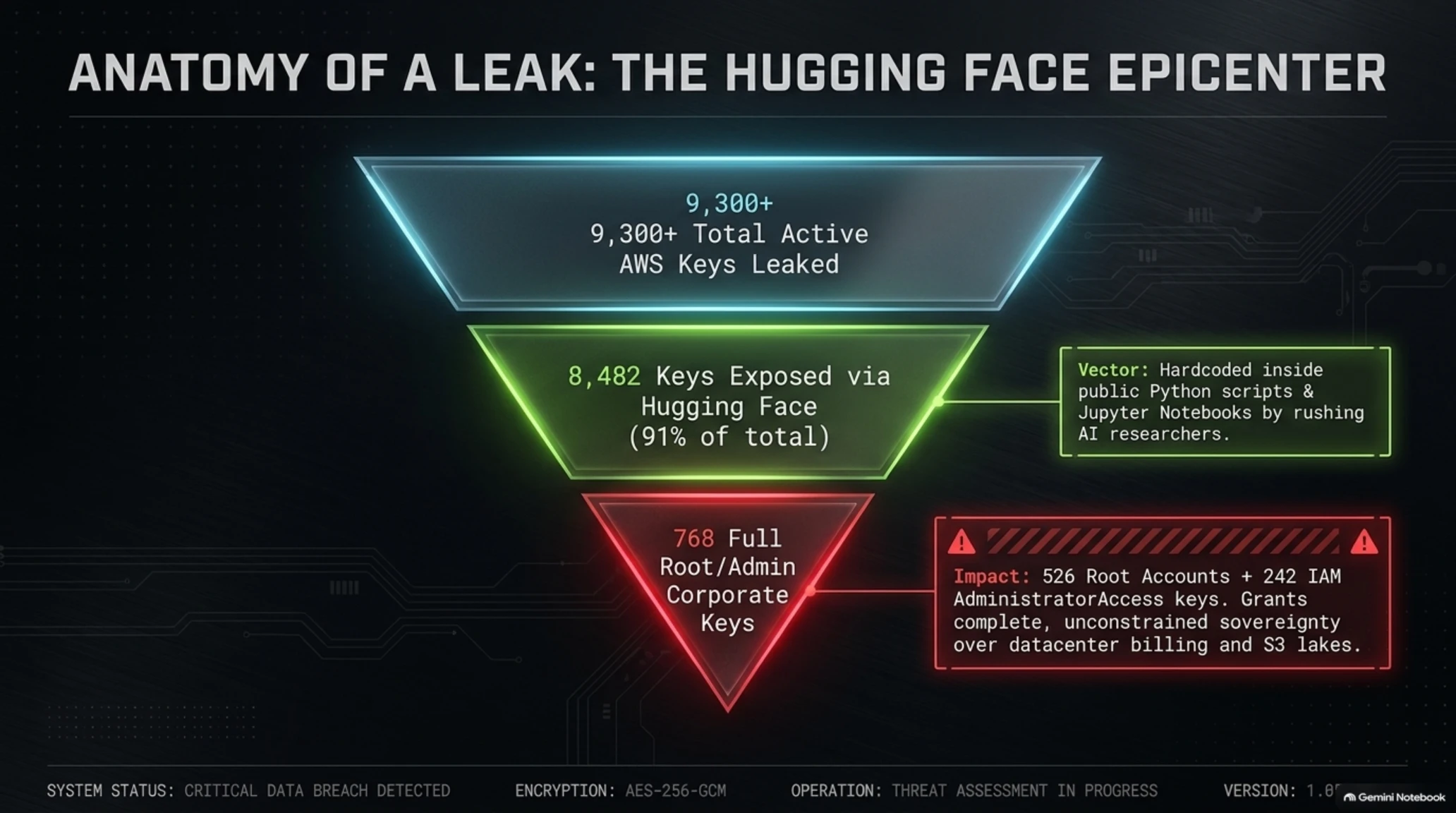
The catastrophic severity of this exposure is illustrated by the privilege levels associated with the leaked credentials. Researchers isolated 817 keys linked directly to verified corporate infrastructure domains. Within this corporate subset, 526 keys were AWS Root Account access keys the single most privileged credential in the AWS cloud ecosystem, possessing unconstrained, unrestricted control over billing, identity management, EC2 compute clusters, S3 object storage lakes, and VPC network peering without the protection of Multi-Factor Authentication. Furthermore, an additional 242 keys were assigned to IAM users configured with full AdministratorAccess policies.
In aggregate, at least 768 live corporate keys granted complete, unfettered administrative sovereignty over enterprise cloud datacenters. An adversary discovering these credentials can execute massive bulk data exfiltration, encrypt cloud storage lakes in multi-million dollar extortion schemes, deploy unauthorized cryptocurrency mining fleets resulting in astronomical cloud bills, or embed persistent, invisible IAM backdoors that survive standard perimeter cleanups.
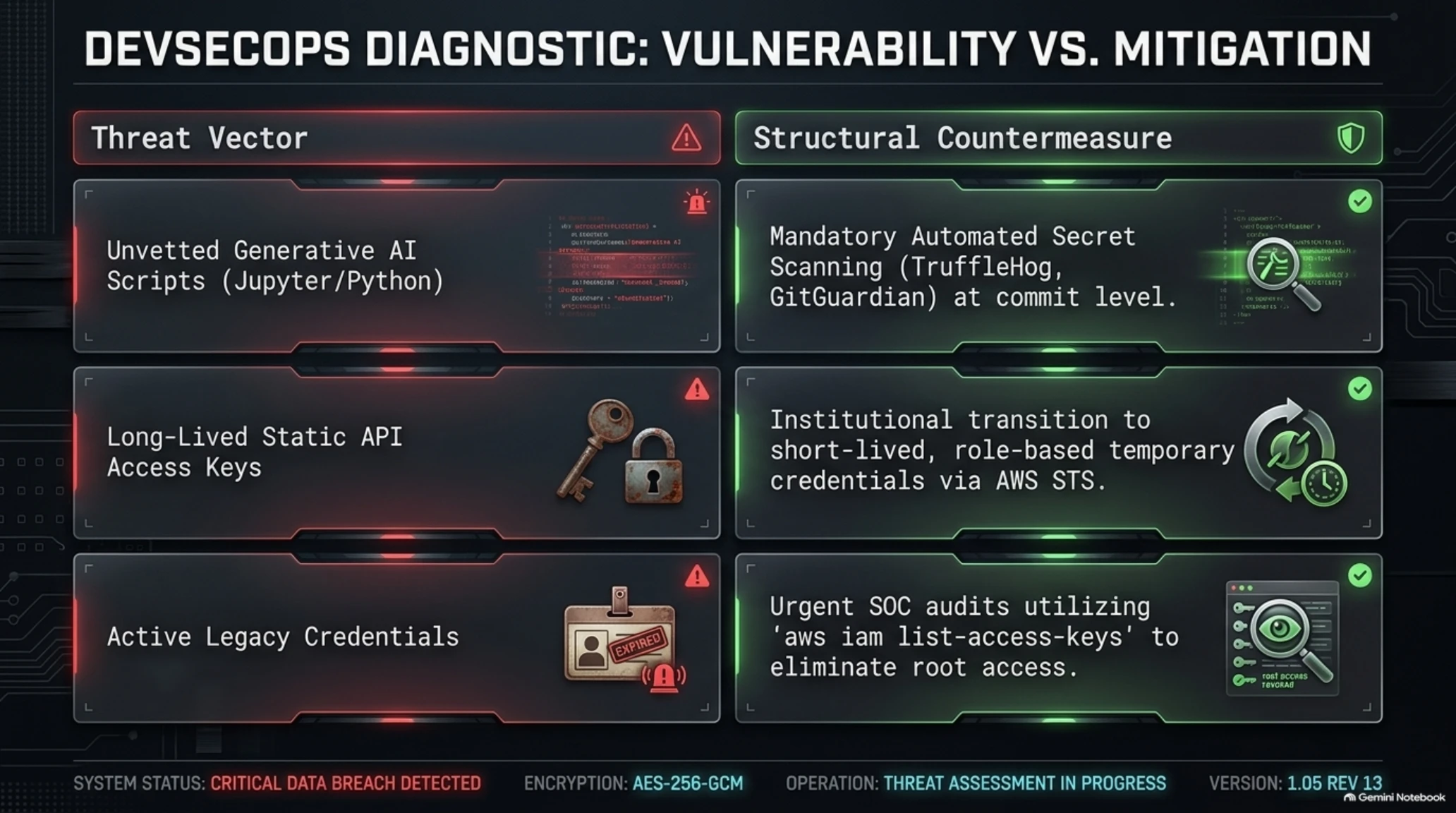
The single most shocking revelation of the report centers upon the primary platform responsible for this credential leakage. While code repositories like GitHub have historically been viewed as the main exposure source, the open-source machine learning hub Hugging Face emerged as the undisputed epicenter, accounting for 8,482 of the unique exposures. In their rush to train, fine-tune, and open-source generative AI models, data scientists and machine learning engineers routinely hardcode AWS S3 buckets and EC2 cluster access credentials directly into public Python scripts, Jupyter Notebooks, and training dataset configuration files.
Cloud security authorities emphasize that these findings represent a critical wake-up call for Chief Information Security Officers (CISOs). The rapid democratization of generative AI development has outpaced enterprise DevSecOps governance, creating massive, unmonitored blind spots where sensitive infrastructure secrets are continuously committed to public collaborative platforms.
The primary tactical takeaways and risk vectors surrounding the AWS credential exposure crisis include:
- Persistent exposure of 526 corporate root credentials granting absolute, unmonitored control over enterprise cloud workloads
- Identification of Hugging Face as the primary global source of credential leakage due to unvetted machine learning scripts
- Vulnerability of exposed environments to automated ransomware deployment, data destruction, and unauthorized cryptojacking
- Failure of conventional enterprise key rotation schedules, leaving multi-year credentials active in public repositories
- Urgent necessity for cloud engineering teams to audit active credentials using
aws iam list-access-keysand completely eliminate root access keys - Mandatory implementation of automated secret scanning platforms (TruffleHog, GitGuardian) across all internal and public developer repositories
- Institutional transition away from long-lived static API access keys toward short-lived, role-based temporary credentials issued via AWS STS
This massive exposure demonstrates that as artificial intelligence workflows expand, automated secrets detection must become an integral component of software supply chain security.
The conceptual rendering below visualizes the digital breach of enterprise AWS cloud infrastructure lakes triggered by hardcoded cryptographic keys exposed within AI model repositories:

📚 Classified & Related Dossiers in TekinGame
If you wish to explore beyond this report and delve into cybernetic frontiers and autonomous AI architectures, do not miss these three exclusive deep-dives in the Tekin Garage:
Enterprise Cloud Secrets Exposure Audit: AWS Credentials Dataset Breakdown
| Credential Exposure Metric | Audited Volume & Statistical Proportion | Enterprise Security Implication |
|---|---|---|
| Total Active Leaked Keys | 9,300+ Live AWS Keys (88% of all identified exposures) | Vulnerabilities spanning 2022 to 2026 data lakes |
| Full Root Account Keys | 526 Verified Corporate Root Credentials | Complete, unconstrained administrative control of cloud tenants |
| IAM AdministratorAccess Keys | 242 Full Administrator Privilege Credentials | Ability to create rogue users, modify VPCs, and exfiltrate S3 data |
| Hugging Face Leak Origin | 8,482 Exposures (Over 91% of total repository leaks) | Hardcoded credentials committed within Python/Jupyter scripts |
We transition now from cloud security governance to an exciting evolution in native developer tooling and multimodal AI integration.
5. Multimodal AI Meets Native Workspaces; SpaceXAI and Cursor Unveil Dedicated "Grok Bot" Client for macOS and iOS
The rapid convergence of frontier artificial intelligence models with everyday software engineering workflows has achieved a major milestone with the official launch of Grok Bot, an all-new native application released jointly by SpaceXAI and the pioneering AI code editor team at Cursor. Developed natively for both macOS and iOS, the software marks a definitive evolution from web-based browser chat interfaces toward deeply integrated, system-level developer assistants.
As documented in technical coverage by 9to5Mac, the launch of Grok Bot precedes a broader corporate consolidation between the artificial intelligence research and developer tooling entities. Designed from the ground up utilizing Apple's native Swift and SwiftUI frameworks, the macOS application operates with near-zero resource overhead, fully exploiting the unified memory architectures and Apple Neural Engine (ANE) hardware within modern M-series Apple Silicon chips.
The defining capability of Grok Bot on macOS is its deep, bidirectional integration with local developer environments. Rather than requiring users to manually copy and paste code snippets or error logs into web browsers, Grok Bot connects directly to local terminal sessions, directory trees, Git commit histories, and active Cursor editor workspaces. The assistant can autonomously parse multi-gigabyte build logs, diagnose complex compilation failures, execute automated repository-wide refactoring passes, and suggest architectural database migrations via natural language commands, requiring user confirmation only prior to executing terminal modifications.
On iPhone and iPad devices, Grok Bot introduces a powerful Multimodal Vision and Real-Time Audio Reasoning Engine. Software engineers, system administrators, and students can capture real-time camera feeds of physical whiteboard architecture diagrams, server hardware racks, or monitor error outputs, engaging in fluid, low-latency voice conversations with Grok's reasoning core to resolve distributed systems anomalies or synthesize technical documentation on the go.
Furthermore, recognizing corporate enterprise sensitivities regarding intellectual property protection, Grok Bot incorporates robust enterprise privacy controls, including localized prompt preprocessing, end-to-end cryptographic transport layers, and zero-data-retention options that guarantee proprietary commercial source code is never utilized for secondary model training.
The core architectural pillars and functional capabilities of Grok Bot include:
- High-performance native Swift client optimized specifically for Apple Silicon M-series processors and Neural Engine hardware
- Direct integration with macOS terminal environments and local Git repositories for automated debugging and code generation
- Bidirectional workspace synchronization with the Cursor intelligent code editor ecosystem
- Real-time multimodal camera scanning and ultra-low-latency voice interaction on iOS devices
- Comprehensive system-wide shortcut integration allowing instant assistant invocation across any application workspace
- Zero-data-retention enterprise privacy modes shielding proprietary commercial intellectual property from model training pools
- Advanced contextual reasoning capabilities capable of analyzing complex multi-file software dependencies simultaneously
This product release illustrates that the frontier of artificial intelligence is rapidly transitioning from generic browser-based chat portals into deeply integrated, system-native productivity copilots.
The conceptual rendering below depicts the seamless integration of the Grok Bot developer client within a multi-display macOS workstation alongside real-time mobile multimodal code scanning on iOS:

Application Architecture Matrix: Grok Bot for macOS & iOS Ecosystem
| Platform & Execution Layer | Engineering Framework & Technical Capabilities |
|---|---|
| macOS Native Desktop Client | SwiftUI / Apple Silicon Optimization / Terminal & Git Workspace Hooking |
| iOS Mobile Multimodal Client | Low-Latency Voice Streaming / Real-Time Camera Vision Diagnostics |
| IDE & Workspace Integration | Deep Bidirectional Synchronization with Cursor AI Editor Framework |
| Enterprise Privacy Protocols | Zero-Data Retention Architecture & End-to-End Cryptographic Secret Shielding |
We transition now to our final investigative pillar this morning: an insidious enterprise social engineering malware campaign spreading across Microsoft Teams.
6. Social Engineering in the Enterprise Chat Stream; Modular Malware SynkLoader Abuses Microsoft Teams and Fake Windows Lock Screens
In a sophisticated new cyber offensive specifically designed to circumvent modern email perimeter filters and exploit organizational trust within remote working environments, threat intelligence researchers at BleepingComputer, CyberInsider, and OpenText Cybersecurity have exposed the widespread deployment of a deceptive modular malware family designated SynkLoader. Distributed via highly targeted Microsoft Teams phishing campaigns, the malware leverages a convincing psychological deception vector to harvest enterprise single sign-on (SSO) credentials.
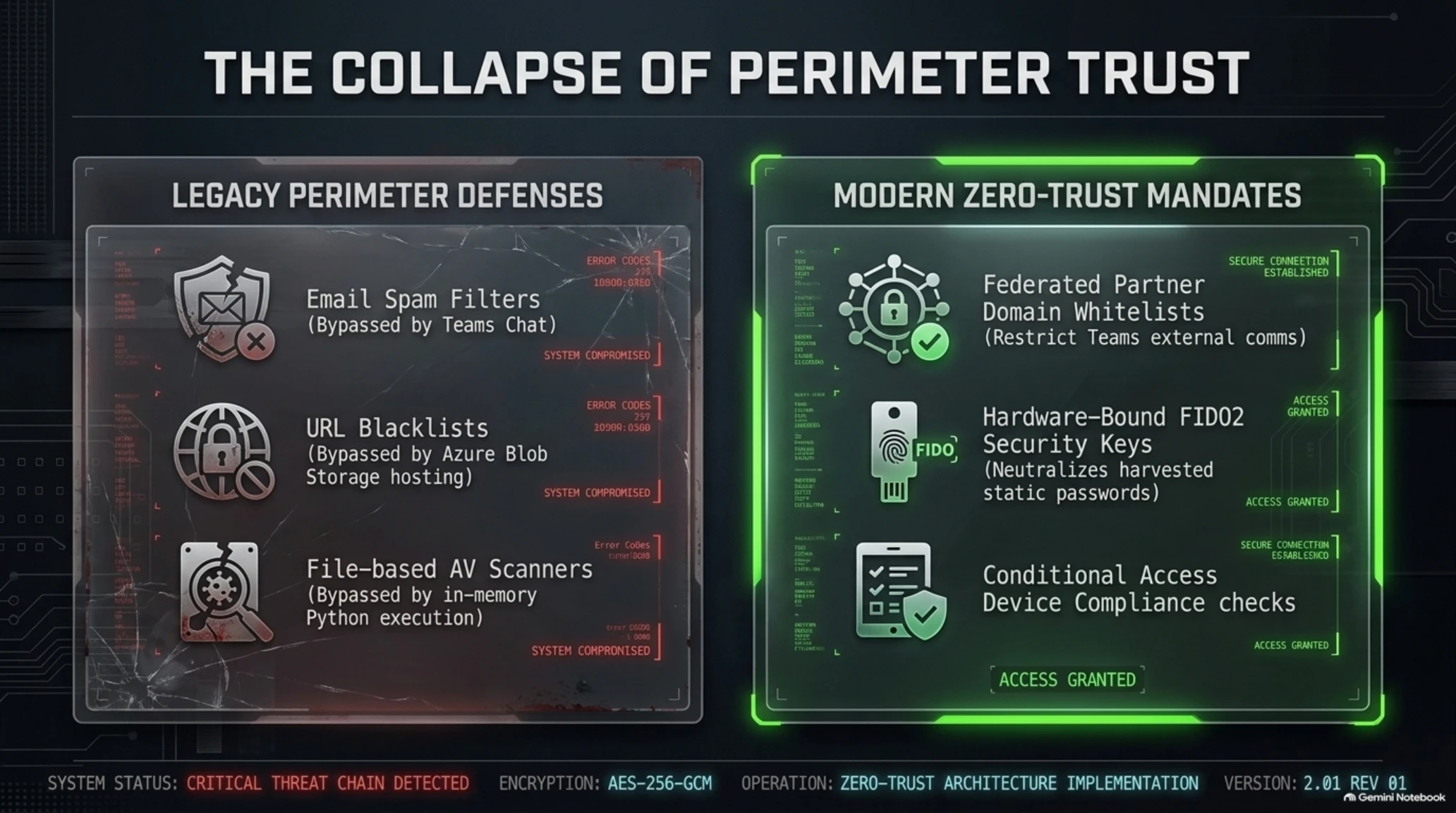
The infection lifecycle begins with advanced business identity impersonation. Threat actors construct legitimate-appearing user accounts registered under standard onmicrosoft.com tenant domains, naming profiles after internal "IT Help Desk" or "Enterprise System Administration" teams. The attackers directly initiate direct chat sessions with targeted employees inside corporate Microsoft Teams environments, fabricating urgent technical claims regarding critical workstation misconfigurations or pending compliance audits. Victims are persuaded to download and execute an installer package deceptively named "PowerShell Cleaner", which is hosted directly on legitimate Microsoft Azure Blob Storage containers to ensure download links bypass enterprise URL reputation filters.
Upon execution of the malicious .MSI package, SynkLoader extracts an embedded PowerShell script (cleaner.ps1) alongside a compressed archive containing a standalone, self-contained Python runtime environment. By loading its primary execution scripts directly into process memory, the malware evades static file-based antivirus scanners. However, the true tactical hallmark of SynkLoader resides within a specialized credential-harvesting module named PhishLocker.
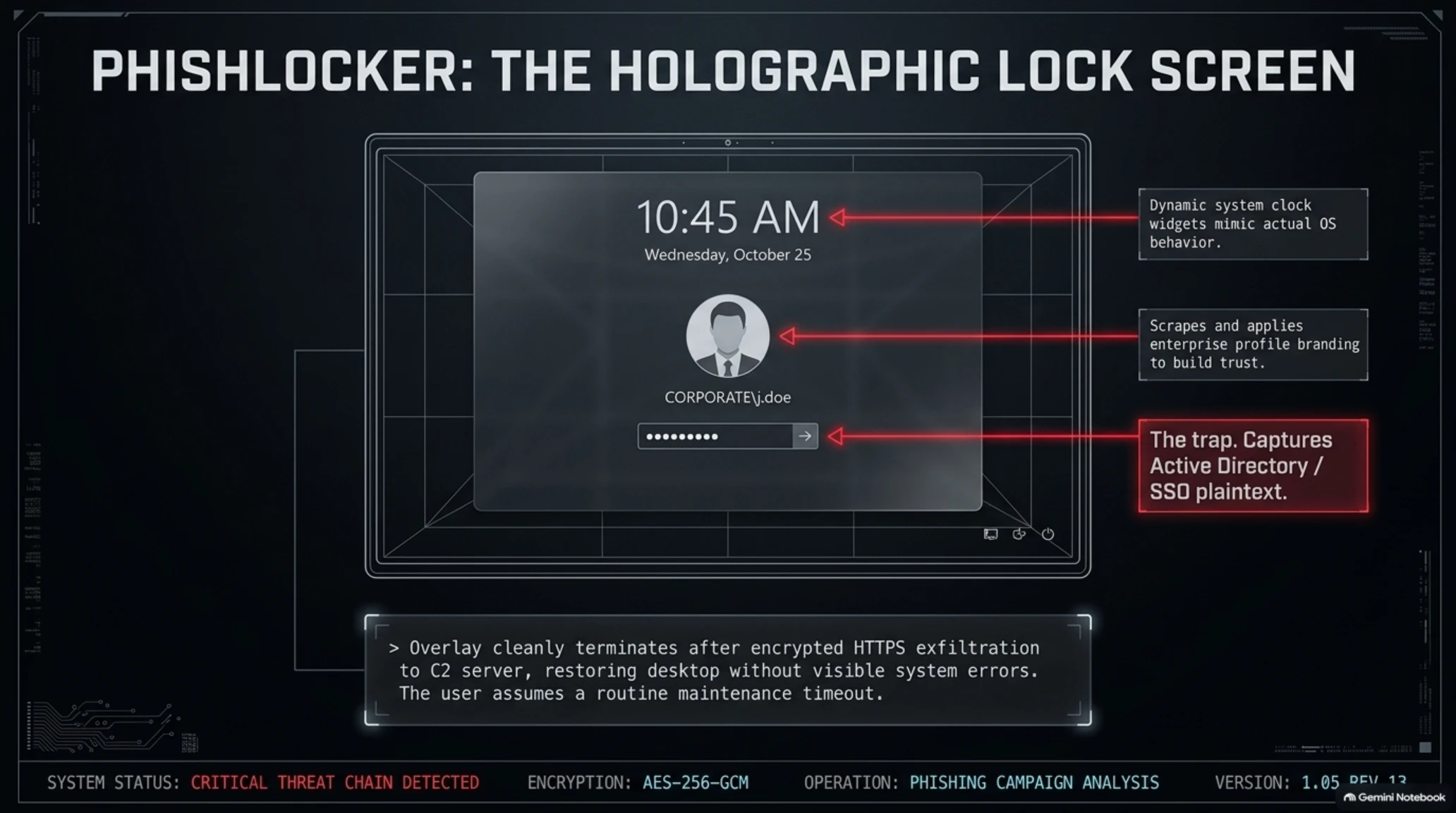
When triggered, PhishLocker generates an indistinguishable, full-screen overlay replicating the authentic Windows Lock Screen, complete with dynamic system clock widgets, enterprise profile branding, and interactive password entry fields. Believing their workstation has simply timed out or rebooted during maintenance, unsuspecting employees enter their primary Active Directory or corporate cloud identity passwords. PhishLocker immediately captures the plaintext credentials, exfiltrating them across an encrypted HTTPS channel to adversary-controlled command-and-control (C2) infrastructure before cleanly terminating the overlay to restore the actual desktop without generating visible system errors.
Beyond PhishLocker, forensic binary analysis reveals that SynkLoader is equipped with extensive secondary intrusion modules, including a comprehensive System Profiler that maps domain controllers and network interfaces, a TrafficRedirector that establishes an internal reverse proxy allowing threat actors to tunnel secondary attack tools deep inside corporate intranets, and an interactive Remote Access Trojan (RAT) shell with automated Task Scheduler persistence executing daily at user logon.
The critical defensive countermeasures required to mitigate the SynkLoader threat include:
- Restricting Microsoft Teams external communication channels to strictly authorized and federated partner domain whitelists
- Implementing device compliance requirements under Conditional Access policies before granting enterprise Teams access
- Mandating comprehensive employee security awareness training emphasizing that IT personnel will never request script execution via chat
- Establishing out-of-band verification protocols (direct internal telephony) to confirm unexpected IT helpdesk requests
- Configuring EDR telemetry to flag Python runtime environments spawning outside standard developer program directories
- Deploying hardware-bound FIDO2 security keys to neutralize the threat of harvested static passwords
- Monitoring enterprise proxy logs for suspicious outbound HTTPS beaconing to newly registered dynamic C2 domains
This escalating campaign demonstrates that internal collaboration platforms represent prime operational territory for adversaries seeking to bypass perimeter defenses through human trust exploitation.
The conceptual rendering below visualizes the execution of the Microsoft Teams phishing attack and the deployment of the deceptive PhishLocker Windows lock screen overlay across corporate workstations:

Attack Chain Analysis: SynkLoader Modular Malware & PhishLocker Workflow
| Attack Lifecycle Stage | Technical Mechanism & Exploitation Vector | Adversary Operational Objective |
|---|---|---|
| Initial Ingress | Microsoft Teams Direct Chat via onmicrosoft.com Account | Impersonation of Corporate IT Support to Establish Trust |
| Payload Delivery | MSI Installer Hosted on Microsoft Azure Blob Storage | Circumvention of Enterprise Perimeter URL & Spam Filters |
| Credential Theft (PhishLocker) | Full-Screen High-Fidelity Windows Lock Screen Simulation | Harvesting of Corporate Active Directory & SSO Credentials |
| Persistence & Lateral Movement | Scheduled Tasks & Reverse Proxy Traffic Redirection | Establishment of Unrestricted Command Shell Inside Intranet |
The technical video analysis below deconstructs the binary architecture of SynkLoader and demonstrates proactive SOC hunting methodologies for fake lock screen processes:
Sunday Morning Strategic Synthesis; The Nexus of Software Copyright, Kernel Trust and Next-Gen Hardware
As we conclude this comprehensive intelligence briefing for Sunday morning, August 23, 2026, the international technology landscape reflects a defining convergence of legal enforcement, infrastructure vulnerability, and hardware evolution. Nintendo's coordinated strike against 401 Switch emulator repositories on GitHub underscores that platform holders are aggressively deploying DMCA Section 1201 anti-circumvention frameworks to establish total control over their execution environments ahead of next-generation hardware launches.
Concurrently, the disclosure of Check Point's BTR.sys Living-off-the-Land technique demonstrates that trusted, signed operating system components remain double-edged swords capable of blinding enterprise EDRs in the earliest phases of system startup. Furthermore, Truffle Security's alarming audit revealing over 9,300 live enterprise AWS keys driven primarily by careless credential commits on Hugging Face reiterates that the rapid pace of artificial intelligence development must be matched by automated DevSecOps secrets governance.
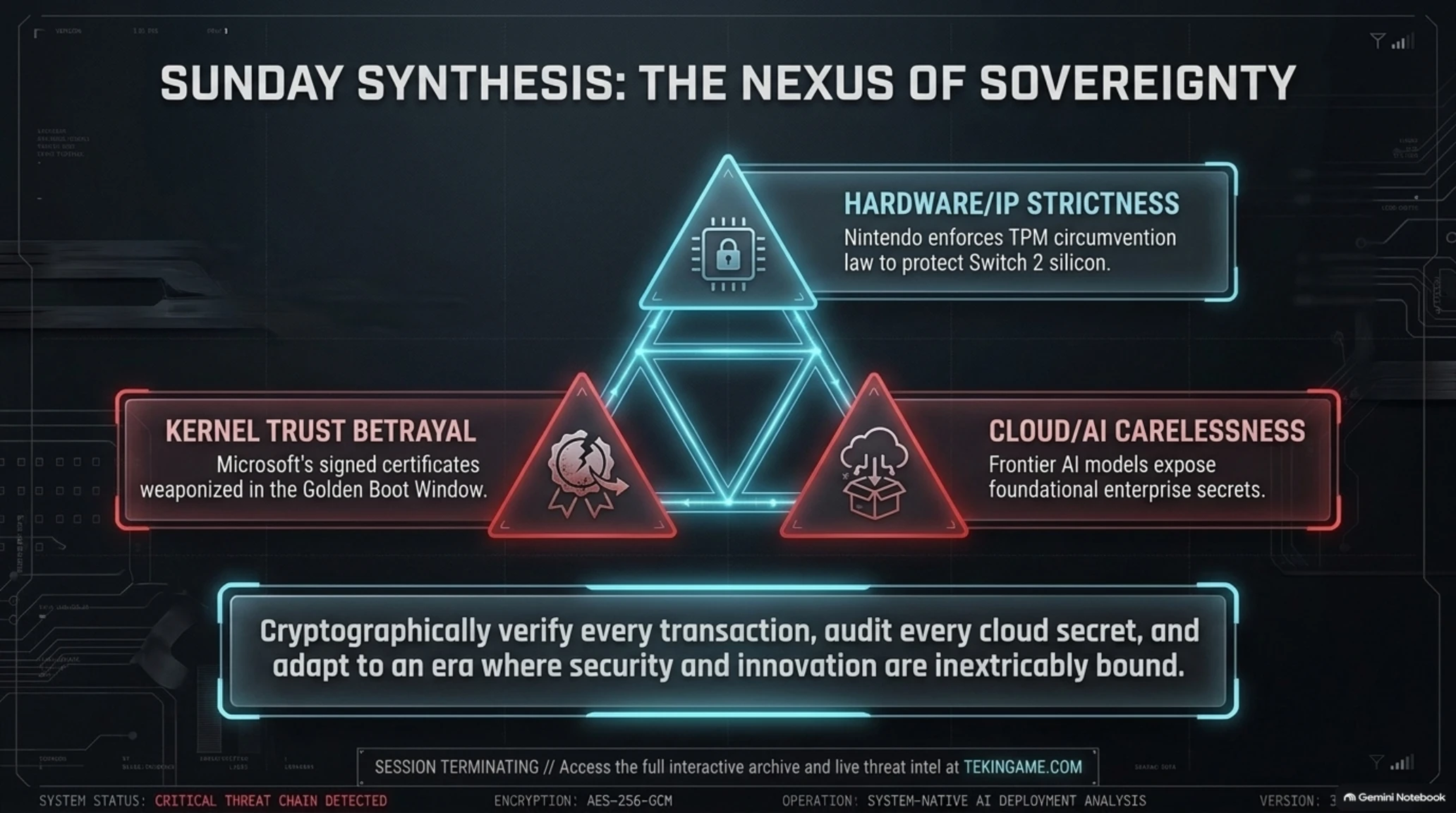
On the hardware and developer productivity fronts, Activision's confirmation of native 60 FPS Call of Duty: Modern Warfare 4 on the Nintendo Switch 2 via Digital Legends validates the processing prowess of custom Nvidia mobile silicon, while the launch of Grok Bot for macOS and iOS establishes a new paradigm for system-native AI developer integration. Finally, the emergence of SynkLoader in Microsoft Teams serves as a stark reminder that identity deception inside enterprise chat streams remains a premier operational vector. As the global tech industry navigates this high-velocity horizon, the mandate for digital resilience remains unequivocal: cryptographically verify every transaction, audit every cloud secret, and adapt to an era where security and innovation are inextricably bound.
The conceptual rendering below synthesizes the strategic convergence of cloud datacenter security, operating system kernel architectures, and next-generation interactive computing platforms:

The final conceptual visualization below depicts the fortified digital fortress of modern technology intelligence, uniting developers, security architects, and gamers at the dawn of Sunday, August 23, 2026:

- Next-gen console hardware demonstrating sufficient headroom for native 60 FPS AAA shooter execution
- System-native AI developer integration bridging local terminals with multimodal foundation models
- Clear forensic identification of trusted Windows kernel driver living-off-the-land attack vectors
- Systemic secrets management failures across open-source machine learning collaboration platforms
- Escalating sophistication in enterprise social engineering and lock-screen credential theft
Essential Related Reading & Cyber Intelligence Archives
• ☀️ Tekin Morning August 22, 2026 | Leaked $899 Xbox Series X25 & Phantom Blade Zero Surge
• 🛡️ Tekin Analysis | ThreatsDay Crisis: AI Exploits Target Siemens S7 & Sandbox Escapes
• 🤖 Tekin Versus | TrueForge Revolution: Open-Source AI Agents vs. Claude
Frequently Asked Questions & Comprehensive Technical Analysis (FAQ)
Why was Nintendo legally able to demand the mass takedown of 401 emulator repositories from GitHub?
Nintendo utilized Section 1201 of the Digital Millennium Copyright Act (DMCA), which prohibits trafficking in technology primarily designed to circumvent Technological Protection Measures (TPMs). Nintendo demonstrated that Switch game ROMs are cryptographically locked and require proprietary cryptographic keys (prod.keys) to decrypt and run at runtime. Because these emulators are specifically engineered to facilitate this decryption, GitHub was legally obligated to remove the 401 targeted repositories upon receiving formal statutory notices.
How does the Microsoft Defender BTR.sys abuse technique allow attackers to disable security software?
BTR.sys is Microsoft Defender's legitimate, signed Boot Time Removal driver designed to clean stubborn malware during startup. Researchers reverse-engineered its transaction protocol, allowing an administrator to stage crafted removal instructions. During the 'Golden Boot Window' when file systems are mounted but third-party EDR/AV security services have not yet loaded the driver executes at Ring 0 (kernel level), deleting defensive security binaries and registry keys with valid Microsoft cryptographic authorization.
What technical specifications have been confirmed for Call of Duty: Modern Warfare 4 on the Nintendo Switch 2?
Activision and co-developer Digital Legends confirmed that Modern Warfare 4 is running natively on the Switch 2's custom Nvidia silicon, targeting a stable 60 frames per second enabled by Nvidia DLSS temporal upscaling. The game features full cross-play and cross-progression alongside PS5, Xbox Series X, and PC players, with an Open Beta running from August 28 to September 1, 2026, ahead of its October 23 release.
Why did Hugging Face account for the overwhelming majority of leaked active AWS credentials?
Data scientists and machine learning engineers frequently prototype Python scripts, train pipelines, and publish Jupyter Notebooks on Hugging Face to share models and datasets. In their haste to connect remote AWS S3 training buckets and EC2 compute clusters, developers often hardcode long-lived AWS IAM access keys directly into public repositories without utilizing environment variable management tools, resulting in over 8,482 live credential leaks.
How does the PhishLocker module within the SynkLoader malware deceive enterprise employees?
After infiltrating a system via Microsoft Teams phishing disguised as an IT helpdesk tool, SynkLoader launches PhishLocker. This module renders a high-fidelity, full-screen simulation of the authentic Windows Lock Screen. When the employee attempts to unlock their workstation by entering their domain username and password, the overlay captures the credentials in plaintext, exfiltrates them to the attacker's C2 server, and quietly closes to restore the normal desktop without raising suspicion.
Verified Sources & Technical Documentation (Tekin Morning August 23, 2026)
- TorrentFreak: Nintendo DMCA Sweep Targets Emulators
- Nintendo Life: Hundreds Of Switch Emulators Taken Down
- Check Point: Weaponizing Microsoft Defender BTR.sys
- Nintendo Life: Digital Legends Developing MW4 for Switch 2
- BleepingComputer: Over 9,300 AWS Keys Exposed
- 9to5Mac: SpaceXAI & Cursor Launch Grok Bot
- BleepingComputer: SynkLoader Malware Spreads via Teams
Additional Gallery: ☀️ Tekin Morning August 23, 2026 | Nintendo Nukes Emulators & MW4 Hits Switch 2