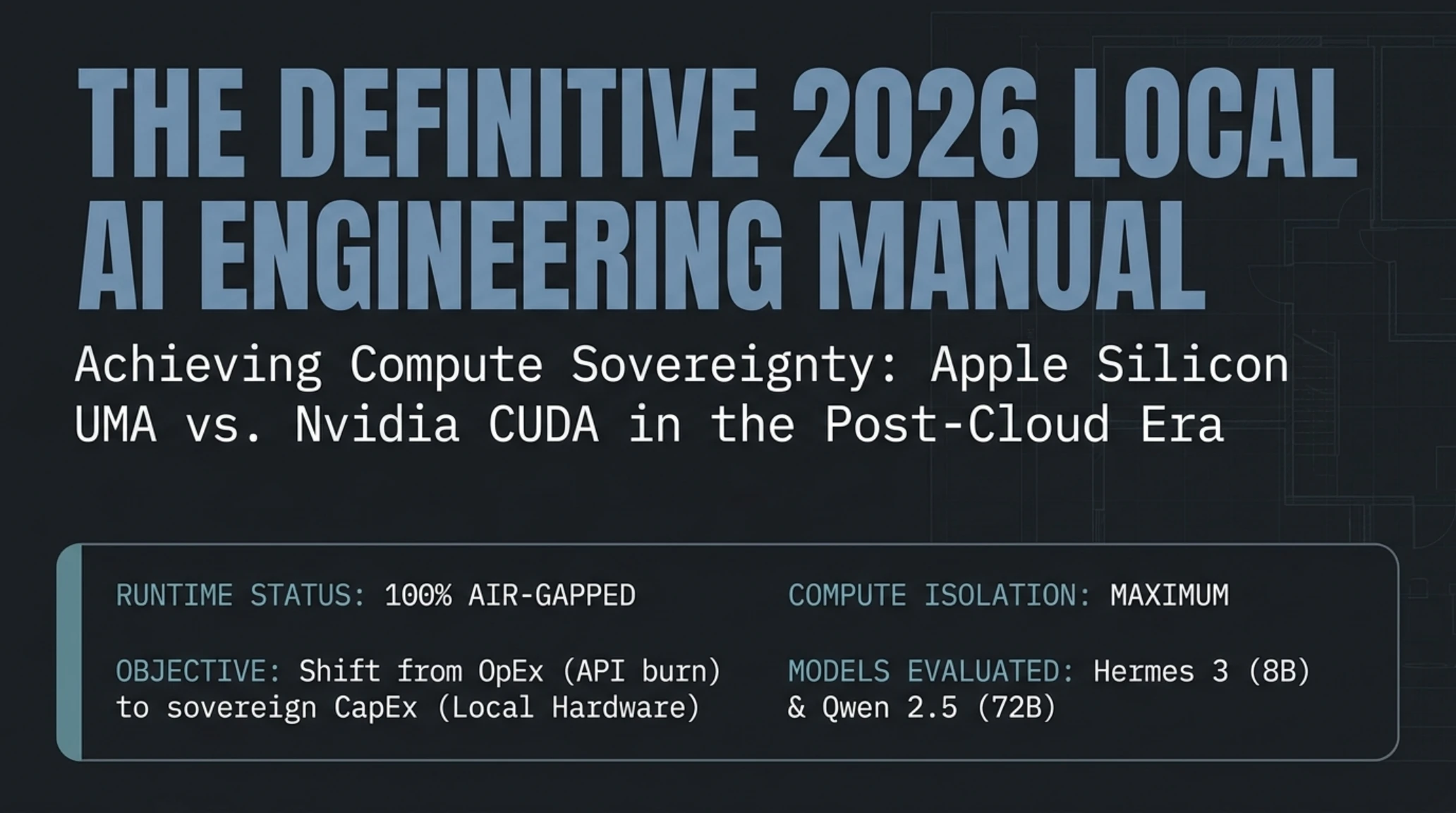
Tekin Guide | The Definitive 2026 Local AI Engineering Manual
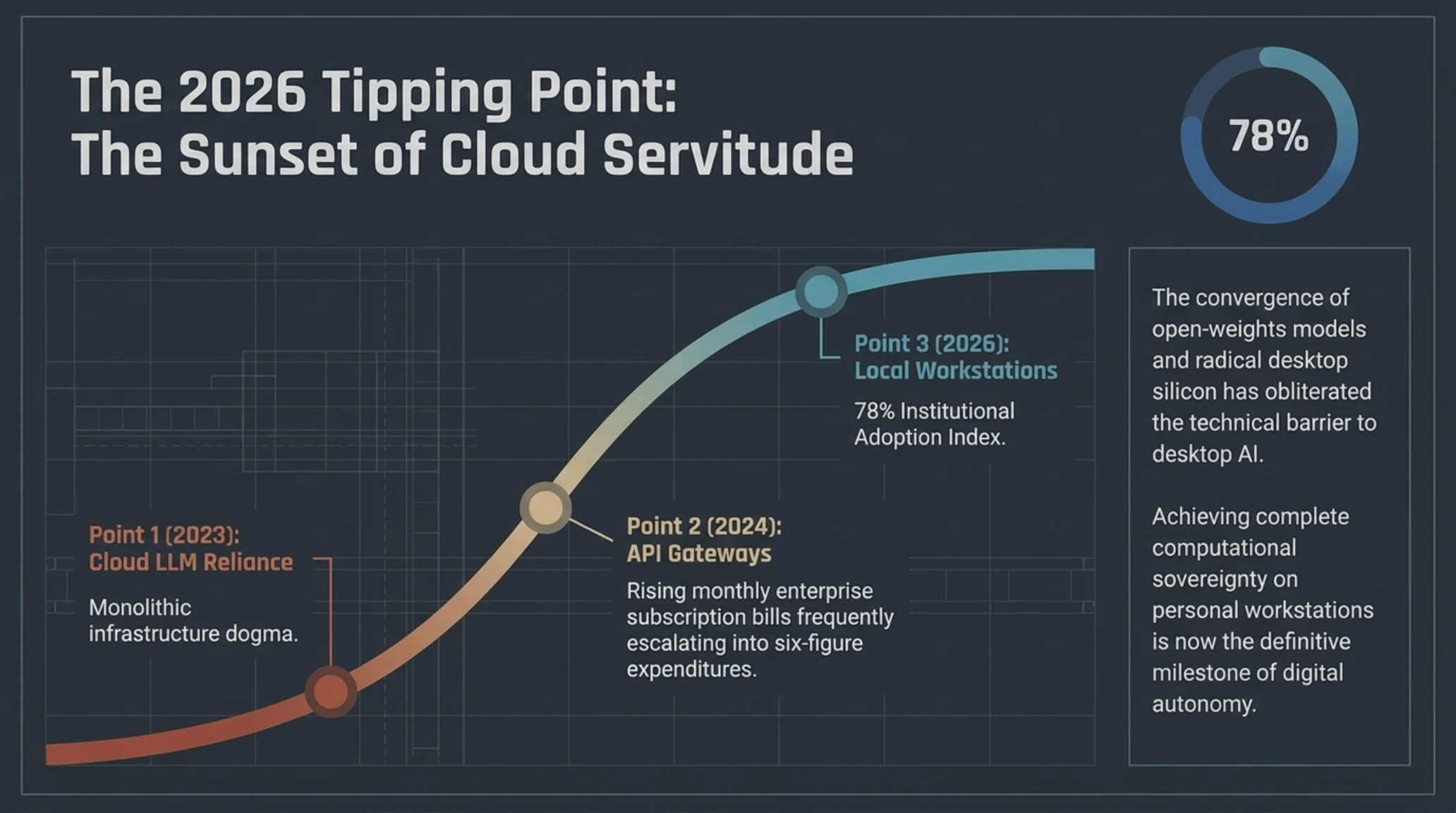
The Sunset of Cloud Servitude: Why 2026 Is the Tipping Point for Local AI
Across the global enterprise technology landscape in late 2026, a profound philosophical and architectural reckoning is unfolding. For more than three years, hyperscale cloud providers successfully evangelized a monolithic dogma: that genuine artificial intelligence is too computationally massive, too memory-intensive, and too thermodynamically demanding to ever escape the perimeter of multi-billion-dollar data centers. Enterprise software engineering organizations, legal partnerships, and quantitative hedge funds were instructed to pipe their proprietary codebases, confidential customer communications, and unreleased financial models directly into remote multitenant cloud APIs.
This unchecked reliance on third-party cloud endpoints has catalyzed severe operational friction. Beyond recurring monthly enterprise subscription bills that frequently escalate into six-figure corporate expenditures, organizations are confronting insurmountable data residency mandates, corporate non-disclosure agreements (NDAs), and persistent intellectual property leaks. The investigative reporting journey chronicled by Antonio G. Di Benedetto at The Verge perfectly captures this broader industry transition: the realization that while adopting local artificial intelligence initially appears overwhelming and technically abrasive, achieving complete computational sovereignty on personal workstations represents the definitive milestone of digital autonomy.
The convergence of modern weight quantization algorithms, open-weights foundation models, and radical silicon architectures in 2026 has obliterated the technical barrier to desktop artificial intelligence. A single high-end workstation operating under desk silence can now execute open-weights models that rival frontier proprietary systems of 2024, generating tokens at speeds surpassing human reading velocity all while operating in an air-gapped, zero-network environment where not a single byte of telemetry escapes the local machine.
For engineering leads architecting proprietary algorithms, patent attorneys auditing unfiled intellectual property, and medical researchers processing HIPAA-regulated clinical diagnostics, local execution is no longer an eccentric hardware hobby; it has solidified as an mandatory operational imperative. The era of computational tenancy is giving way to sovereign desktop intelligence.
Apple Unified Memory Architecture vs. Nvidia's 24GB VRAM Wall
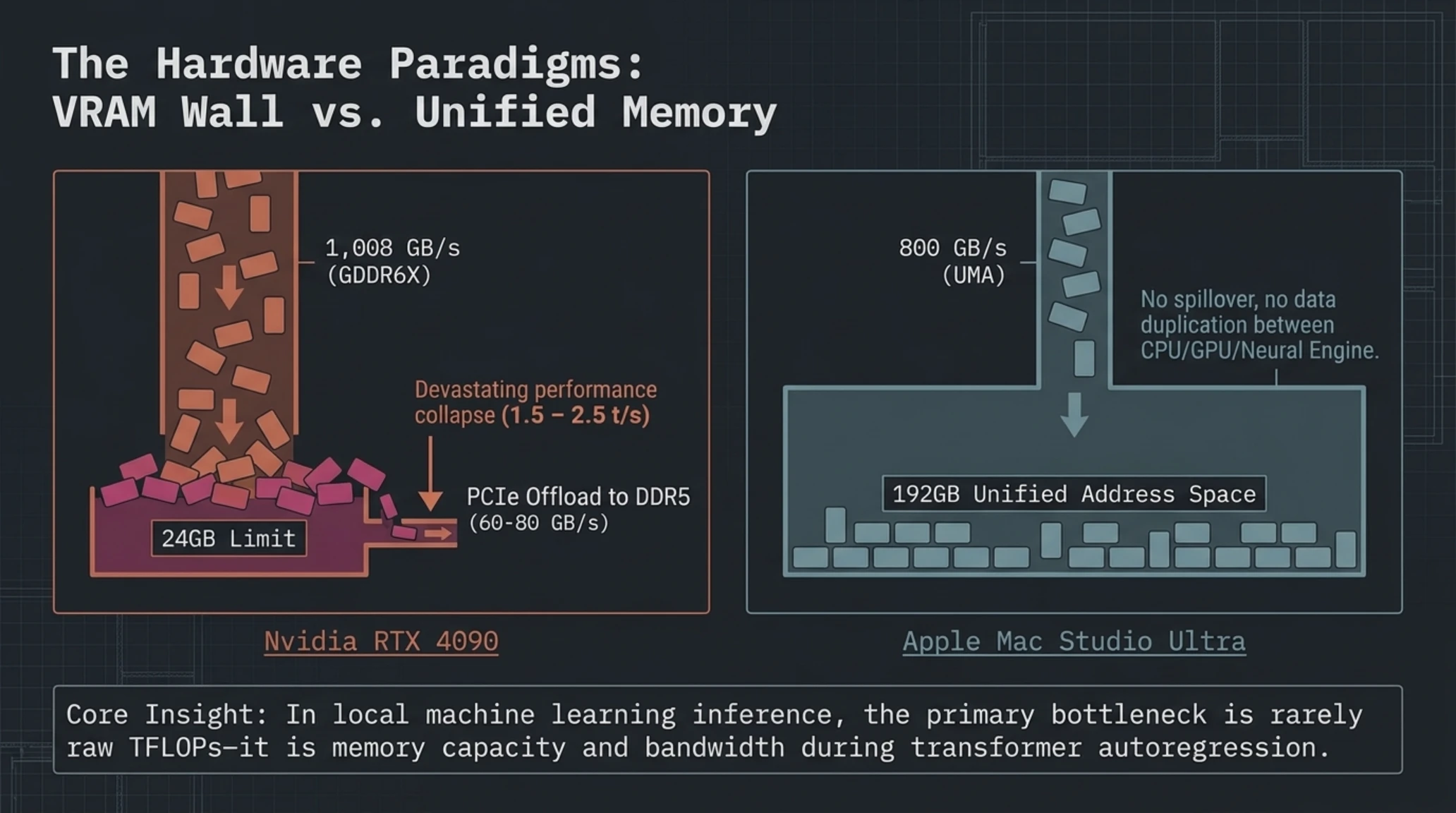
In the technical evaluation of local machine learning inference, the primary performance bottleneck is rarely raw floating-point computing throughput (TFLOPs). Rather, transformer autoregression during the token generation phase is almost entirely memory bandwidth and capacity bound. In this hardware battleground, two distinct technological paradigms represent opposing engineering philosophies: Nvidia's discrete GPU architecture anchored by ultra-high-speed GDDR6X VRAM, and Apple Silicon's Unified Memory Architecture (UMA) integrated across the M-series Ultra processors.
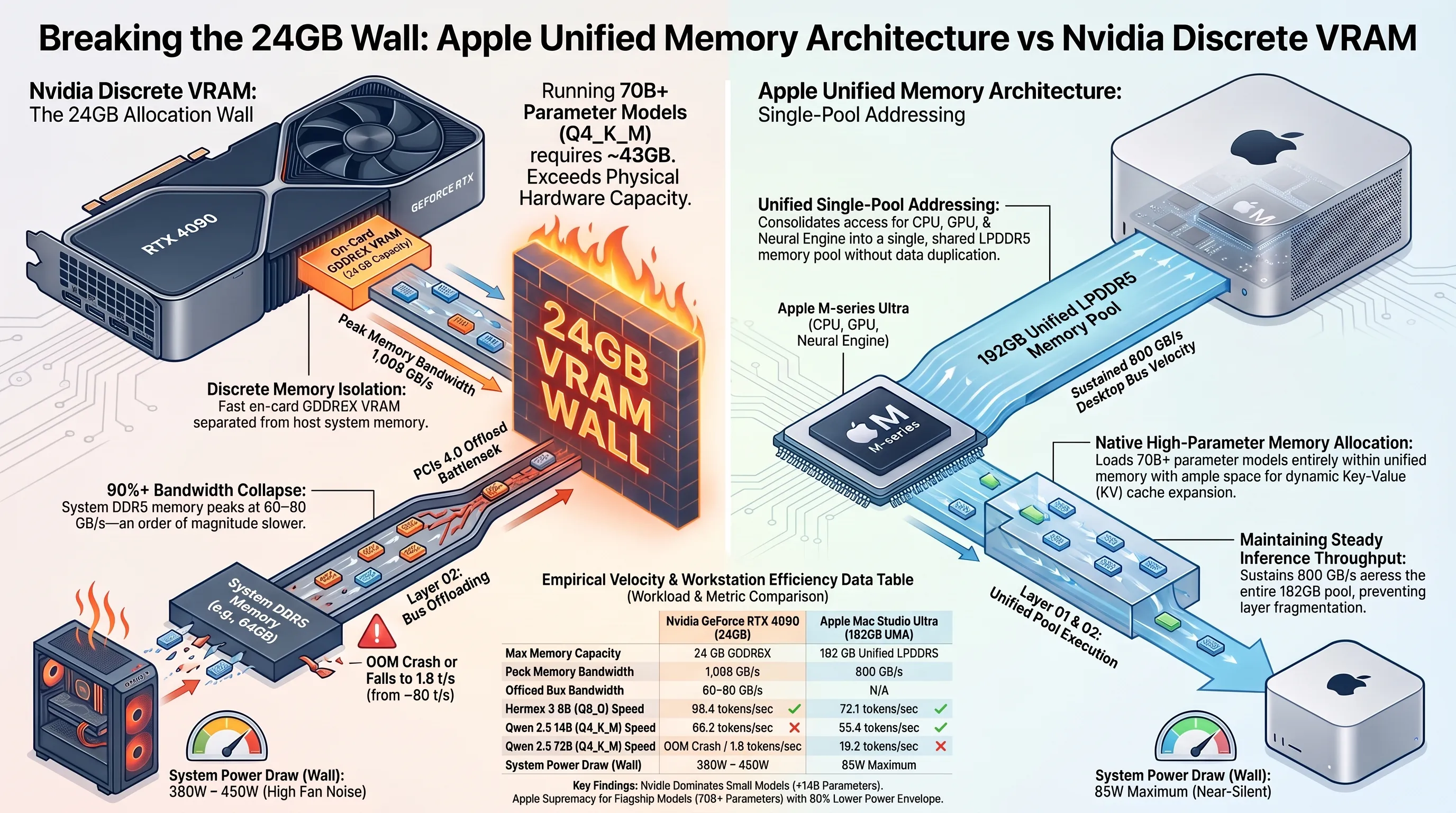
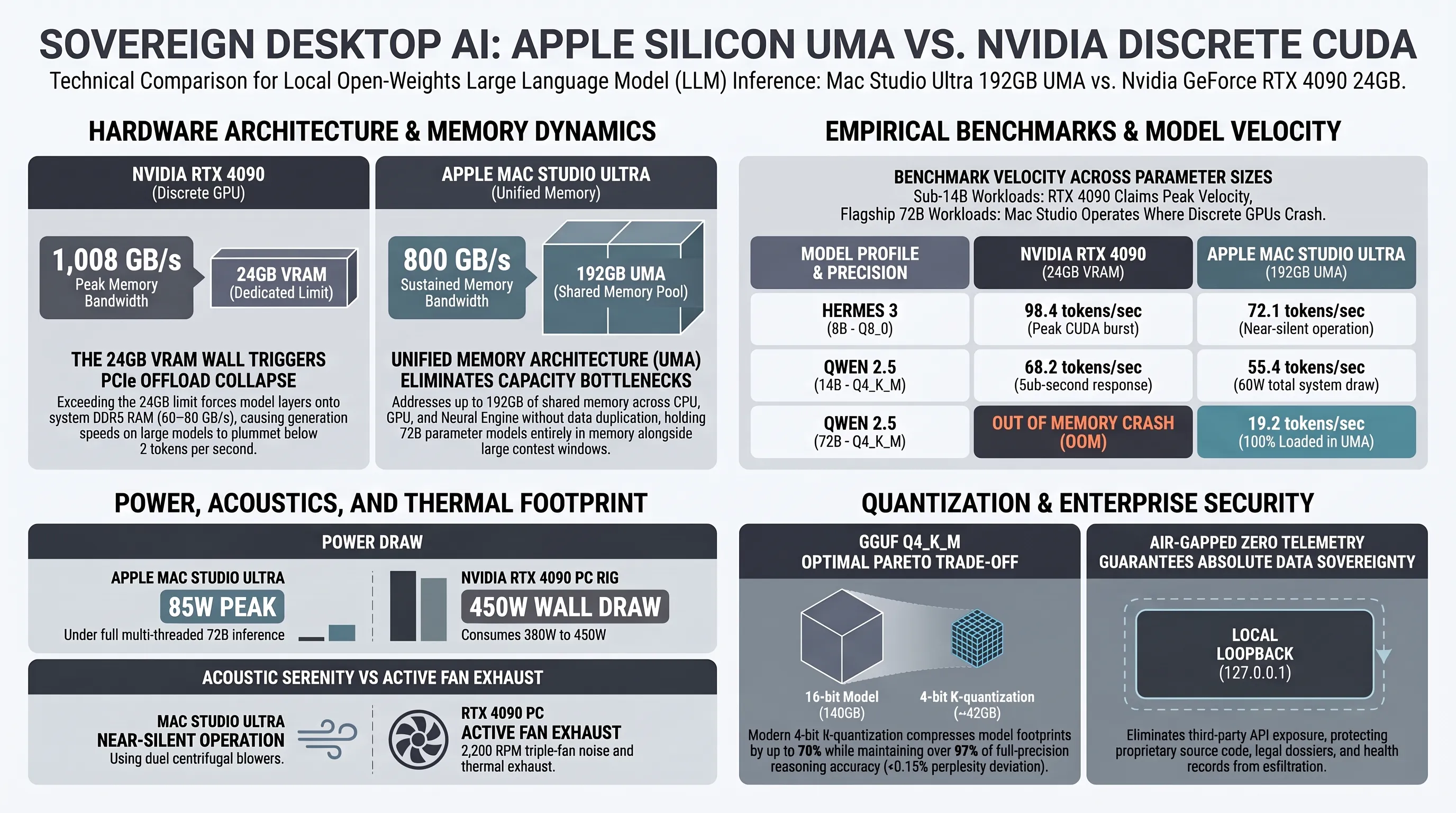
Nvidia's flagship desktop GPU, the GeForce RTX 4090, delivers an immense 1,008 GB/s of memory bandwidth across its 384-bit memory bus. For lightweight models with parameter counts under 14 billion, the RTX 4090 remains the undisputed global speed champion, pumping out tokens at rates exceeding 80 to 100 tokens per second. However, discrete PC graphics cards hit an unforgiving physical boundary known as the 24GB VRAM Wall. Once an enterprise attempts to run a 70-billion-parameter foundation model such as Qwen 2.5 72B or Hermes 3 70B the model weights alone require roughly 43 gigabytes in 4-bit precision, completely overwhelming the GPU's onboard memory.
Why It Matters: The Triad of Local Silicon Sovereignty
The definitive pivot from recurring cloud API subscriptions to sovereign desktop hardware; bypassing discrete VRAM bottlenecks through unified silicon memory and optimized native runtimes.
When an Nvidia workstation exhausts its dedicated VRAM, the runtime engine must offload remaining model layers across the PCIe bus into system DDR5 memory. This offloading triggers a devastating performance collapse: system DDR5 bandwidth typically peaks around 60 to 80 GB/s an order of magnitude slower than GDDR6X causing token generation speeds to plummet into the agonizing range of 1.5 to 2.5 tokens per second. While dual-RTX 4090 configurations exist to pool 48GB of VRAM, they introduce severe thermodynamic penalties, complex PCIe lane bifurcation, and steep power supply demands.
Conversely, the Mac Studio equipped with M2 Ultra or M4-generation processors dismantles the VRAM wall entirely through Unified Memory Architecture. By configuring the SoC with 128GB or 192GB of unified LPDDR5 memory running across a custom memory bus delivering 800 GB/s of sustained bandwidth, Apple enables the CPU, GPU, and Neural Engine to address the entire memory pool without data duplication. A 72-billion-parameter model loads entirely into memory with room to spare for massive 64k context windows, executing at a steady, highly usable 18 to 22 tokens per second under near-silent acoustic operating conditions.
The Open-Weights Vanguard: Deconstructing Hermes 3 & Qwen 2.5
Hardware capabilities are meaningless without state-of-the-art open-weights foundation models capable of reasoning, planning, and structured tool invocation. As of late 2026, two foundation model families stand out as the preeminent engines of the local artificial intelligence revolution: Nous Research's Hermes 3 and Alibaba's Qwen 2.5.
Hermes 3, developed by the decentralized research collective Nous Research on top of Meta's Llama 3.1 architecture, was engineered specifically to excel in autonomous agentic workflows and complex function calling. Unlike consumer chatbots that immediately output conversational tokens, Hermes 3 natively supports structured scratchpads enclosed within XML tags (<scratchpad>). The model conducts internal multi-hop planning, verifies schema definitions, and detects execution errors before emitting final output to the user. This makes Hermes 3 the premier engine for local autonomous workflows that interact with operating system APIs and database schemas.
Simultaneously, Alibaba's Qwen 2.5 family has established global academic benchmark dominance across multilingual coding, mathematical reasoning, and document analysis. Scaling from ultra-lean 0.5B models up to massive 72B parameter architectures, Qwen 2.5 natively features an astonishing 128,000-token context window. In complex software development benchmarks such as HumanEval and SWE-bench, Qwen 2.5 72B matches or surpasses proprietary cloud frontiers, providing individual software architects with an uncompromised development partner that functions entirely offline.
Strategic Telemetry & Core Takeaways at a Glance
Runtime Engine Topology: Operational Audit of Ollama, LM Studio, MLX, and vLLM
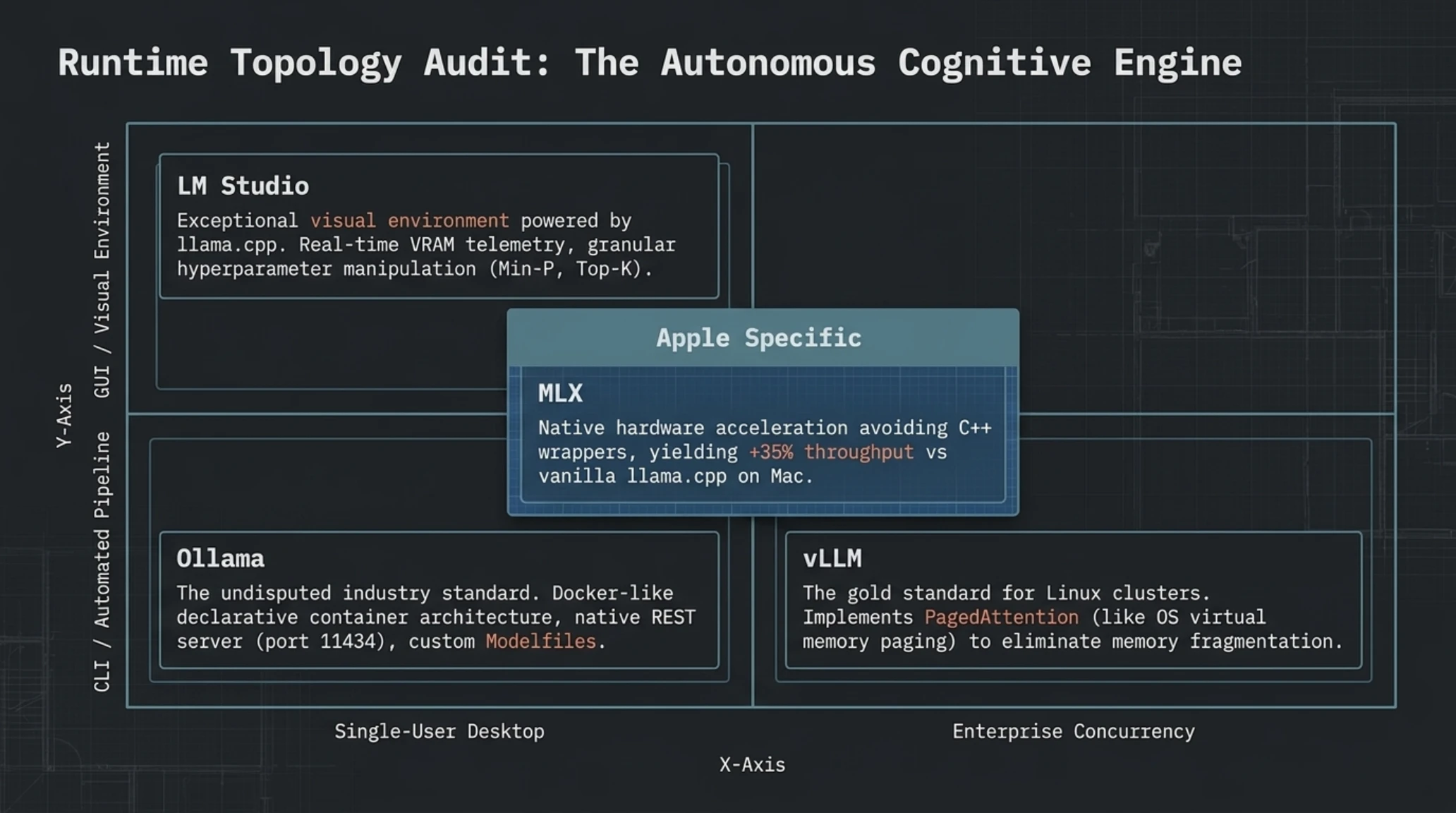
Transforming raw desktop silicon into an autonomous cognitive engine requires selecting an optimized inference runtime. In 2026, the local open-source software ecosystem has matured into a sophisticated stack of specialized runtimes, each targeting distinct operational requirements across operating systems, hardware drivers, and deployment topologies.
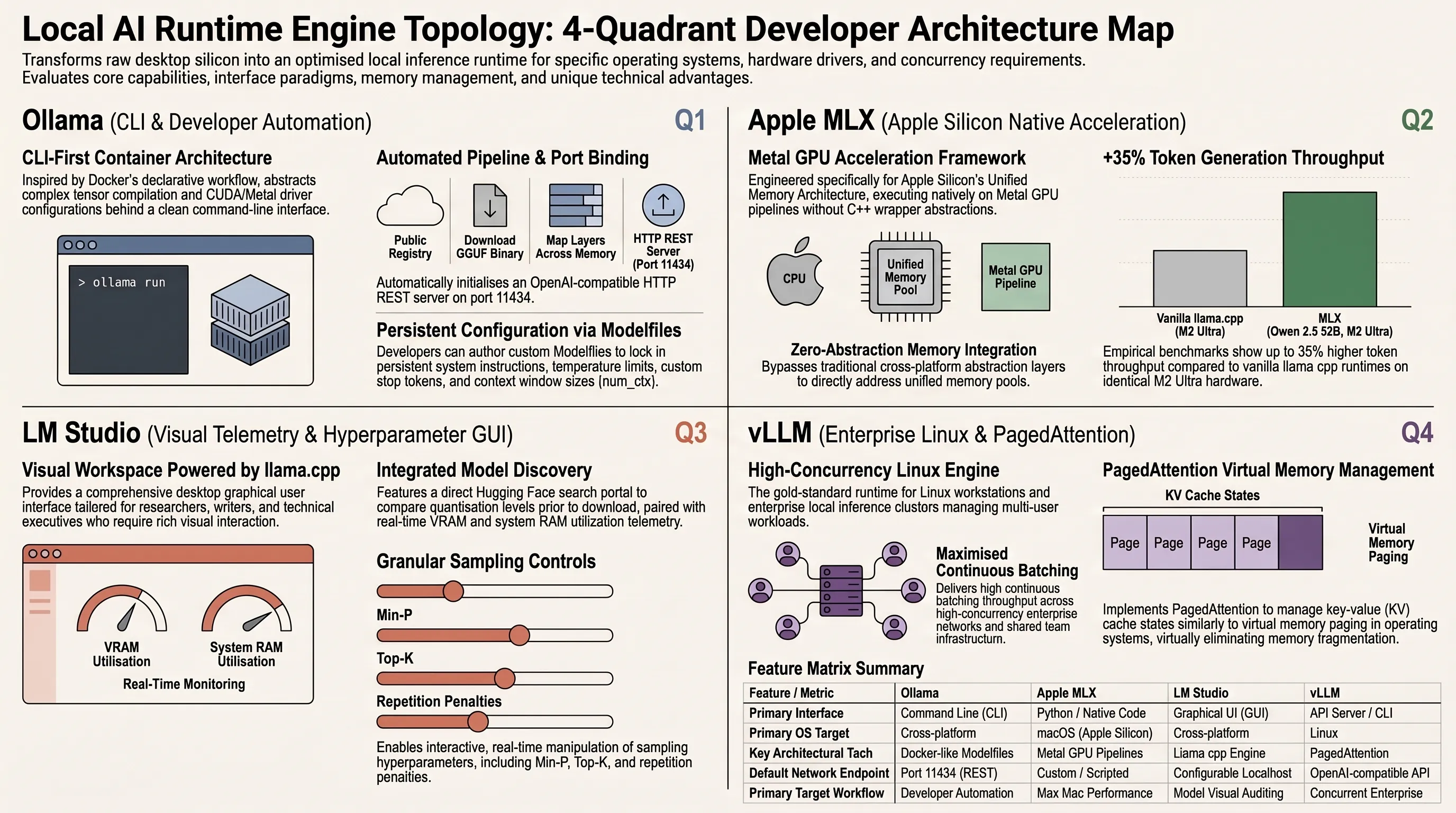
Ollama stands as the undisputed industry standard for command-line developers and automated pipeline integration. Drawing inspiration from Docker’s declarative container architecture, Ollama abstracts away complex tensor compilation and CUDA/Metal driver configurations behind a clean, intuitive command line. Running ollama run qwen2.5:14b instantly queries public model registries, downloads optimized GGUF quantized binaries, maps tensor layers across available memory pools, and spins up a resilient OpenAI-compatible HTTP REST server on port 11434. Developers can effortlessly author custom Modelfiles to lock in persistent system instructions, temperature limits, and custom stop tokens.
For researchers, writers, and technical executives who demand rich graphical interfaces, LM Studio provides an exceptional visual environment. Powered by llama.cpp under the hood, LM Studio features an integrated Hugging Face search portal that allows users to compare different quantization levels before downloading. Its real-time memory telemetry monitor displays exact VRAM and system memory utilization curves, preventing unexpected out-of-memory crashes while allowing granular manipulation of sampling hyperparameters such as Min-P, Top-K, and repetition penalties.
Engineering Verification: Myth vs. Technical Fact
Mac hardware lacks dedicated CUDA tensor cores and is fundamentally incapable of running serious machine learning models compared to PC rigs.
Mac Studio with 192GB unified memory is the only sub-$5,000 desktop computer on earth capable of loading 70B and 120B models entirely without severe PCIe offloading penalties.
On Apple Silicon workstations, Apple’s open-source MLX framework delivers native hardware acceleration. Engineered specifically for Apple's unified memory architecture and Metal GPU pipelines, MLX avoids the abstraction layers of C++ wrappers. In empirical benchmarks, executing Qwen 2.5 32B via MLX yields up to 35% higher token generation throughput compared to vanilla llama.cpp runtimes on the identical M2 Ultra workstation.
Finally, for enterprise environments managing concurrent multi-user workloads or hosting internal local inference clusters, vLLM remains the gold standard on Linux workstations. By implementing PagedAttention which manages attention key-value states similarly to virtual memory paging in operating systems vLLM virtually eliminates memory fragmentation, delivering unprecedented continuous batching throughput across high-concurrency enterprise networks.
Tekin Technical Jargon Buster
Quantization Forensics: From GGUF Q4_K_M to Full Precision FP16
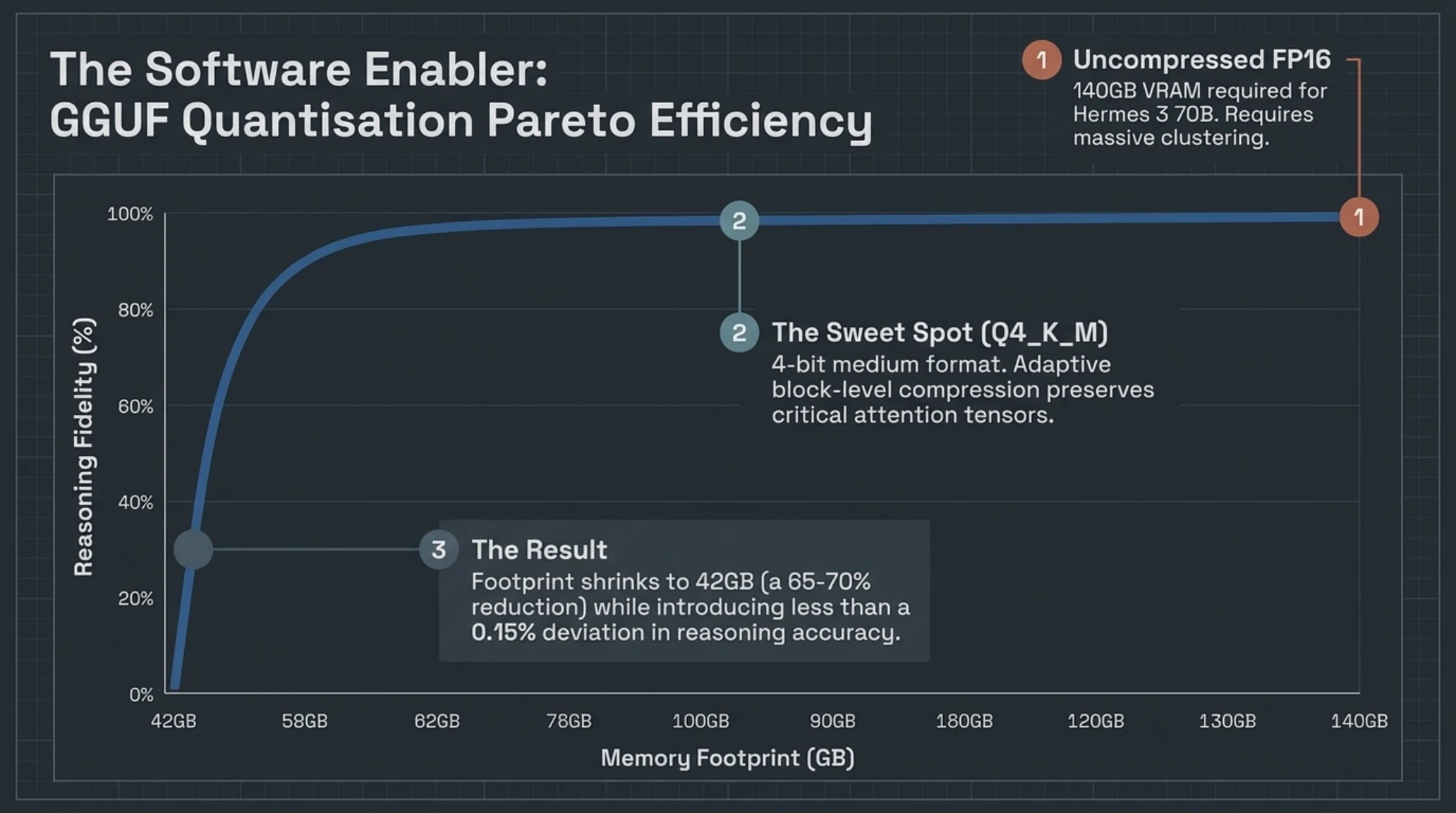
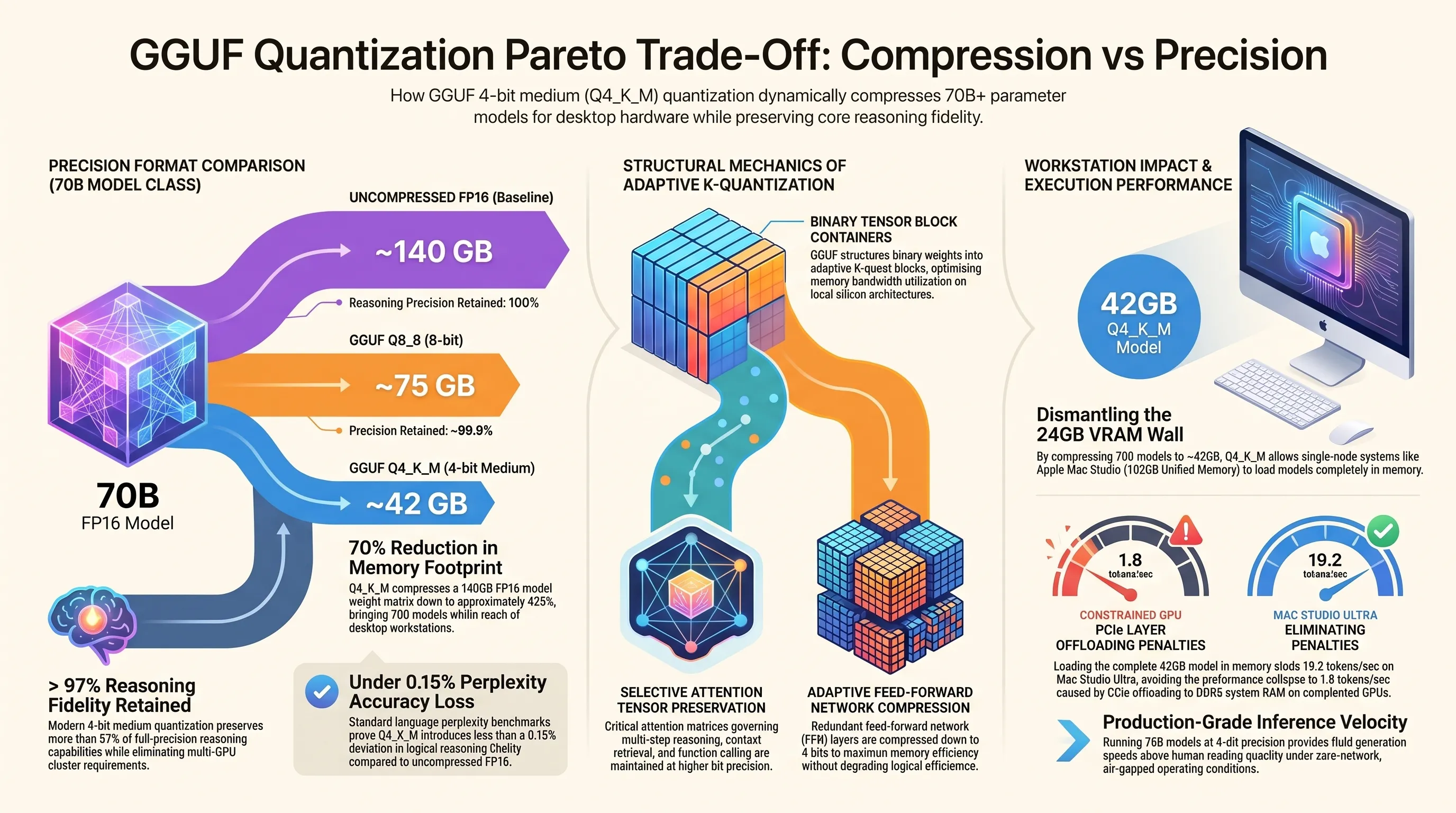
When selecting model weights from Hugging Face repositories, engineers encounter a cryptic naming convention of quantization tags: Q4_K_M, Q5_K_S, Q6_K, and Q8_0. In uncompressed FP16 precision, every single parameter requires 2 bytes of memory. Consequently, an unquantized Hermes 3 70B model requires a staggering 140 gigabytes of VRAM merely to load its parameter matrices, rendering it impossible to run on consumer hardware without massive clustering.
Modern GGUF K-quantization solves this scaling dilemma through adaptive block-level compression. In the optimal Q4_K_M (4-bit medium) format, critical attention tensors that govern complex logical reasoning are preserved in higher bit precision, while redundant feed-forward network weights are compressed down to 4 bits. This shrinks the memory requirement of Hermes 3 70B from 140GB down to approximately 42GB a massive 70% reduction in memory footprint. Crucially, standard language perplexity benchmarks prove that Q4_K_M introduces less than a 0.15% deviation in reasoning accuracy, representing the optimal Pareto trade-off for desktop silicon.
Enterprise Data Sovereignty: Defense Against Cloud Ingestion and Silent Telemetry
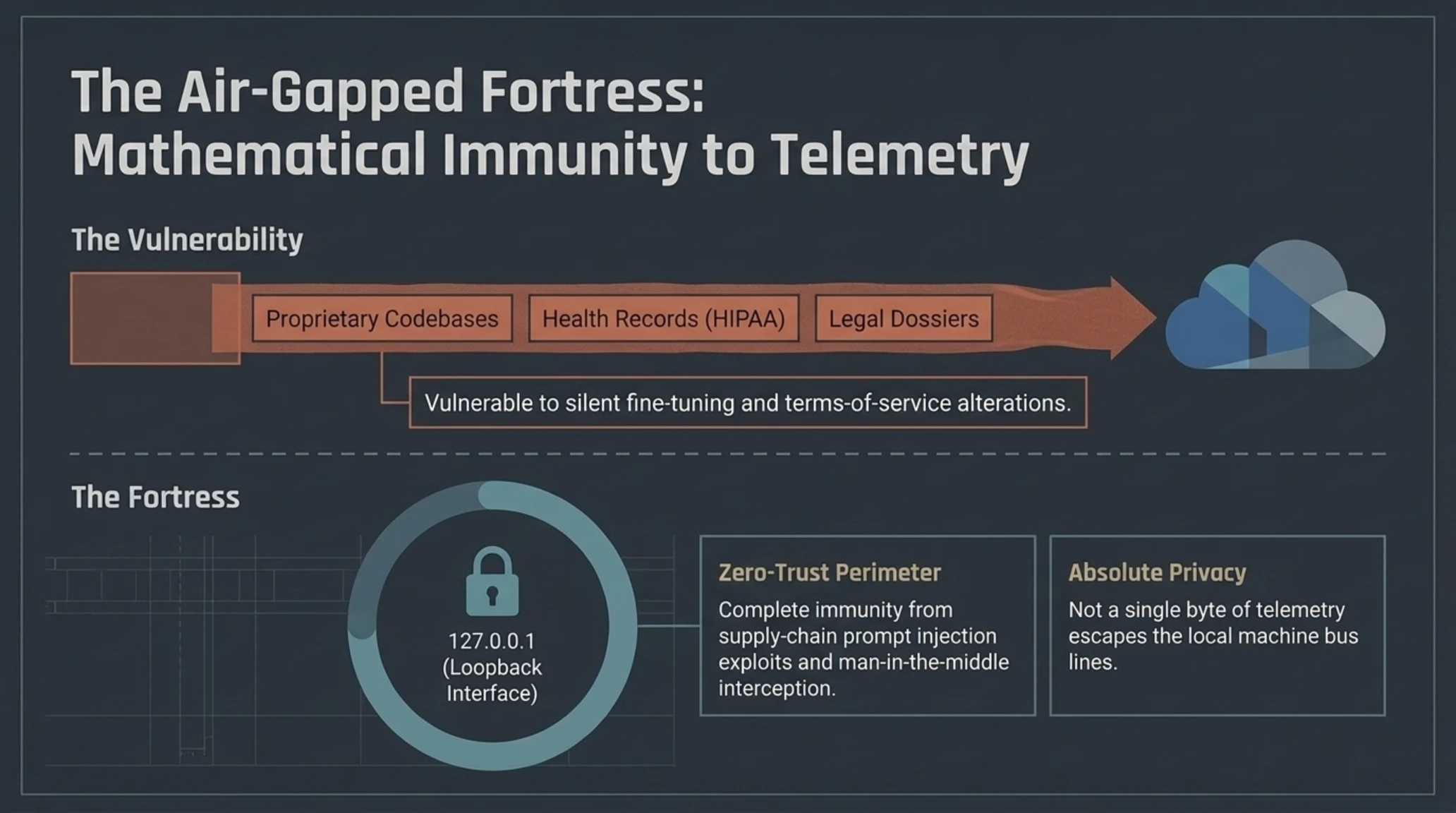
For organizations operating across competitive enterprise verticals, local model execution delivers complete immunity from cloud telemetry risks. In proprietary SaaS environments, user prompts and uploaded documents are constantly vulnerable to unintended model fine-tuning, government subpoenas, third-party infrastructure breaches, and silent terms-of-service alterations.
By enforcing an air-gapped local AI architecture, compliance officers can mathematically guarantee that proprietary source code, confidential patent applications, and executive financial strategies remain strictly confined to local hardware bus lines. Local inference completely eliminates the threat of man-in-the-middle interception, establishing a zero-trust computing perimeter that satisfies the most rigorous international compliance standards.
Benchmark Telemetry & Hardware Performance Matrix
| Hardware Environment & Model Profile | NVIDIA GeForce RTX 4090 (24GB) | Apple Mac Studio Ultra (192GB UMA) |
|---|---|---|
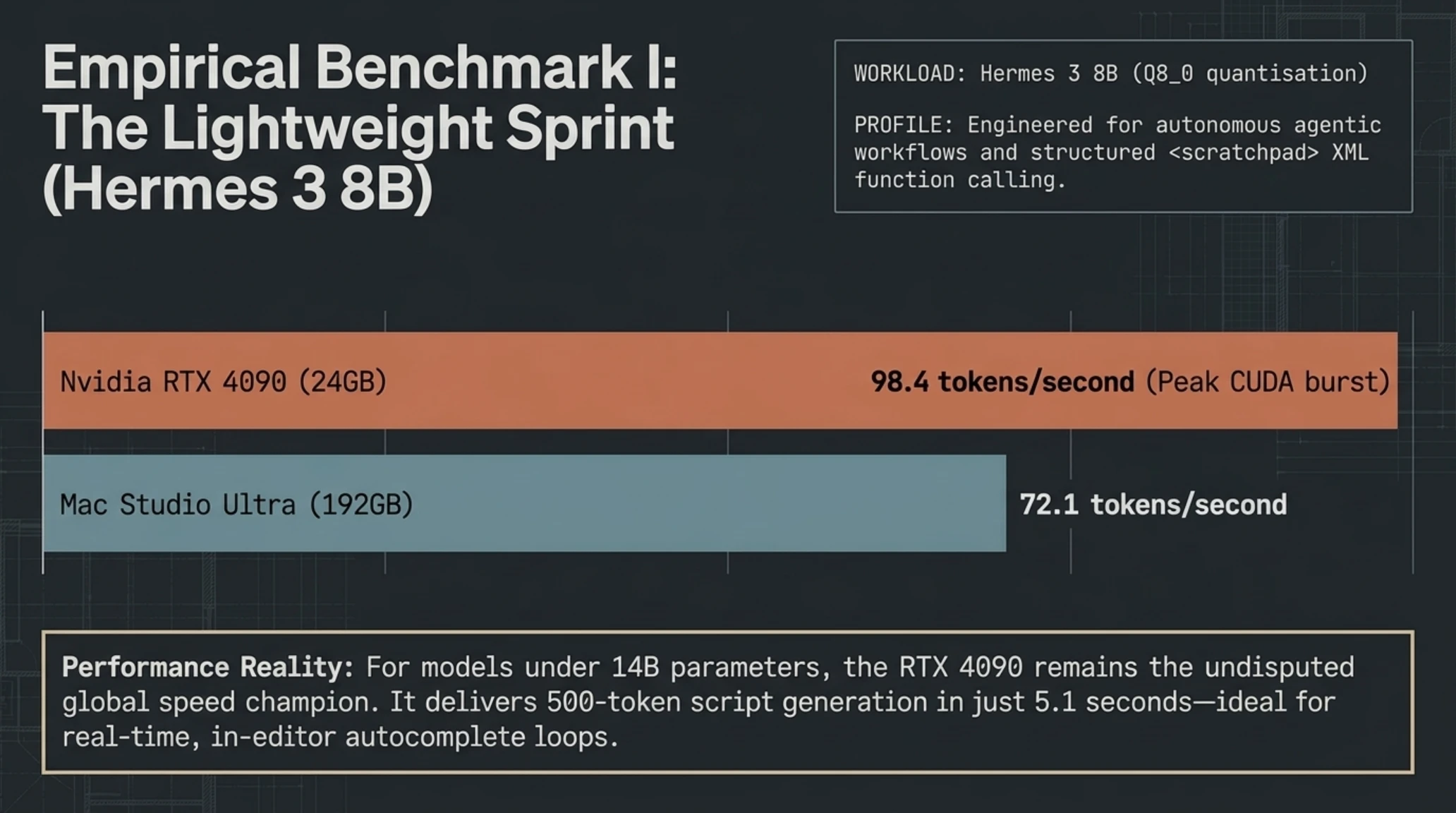
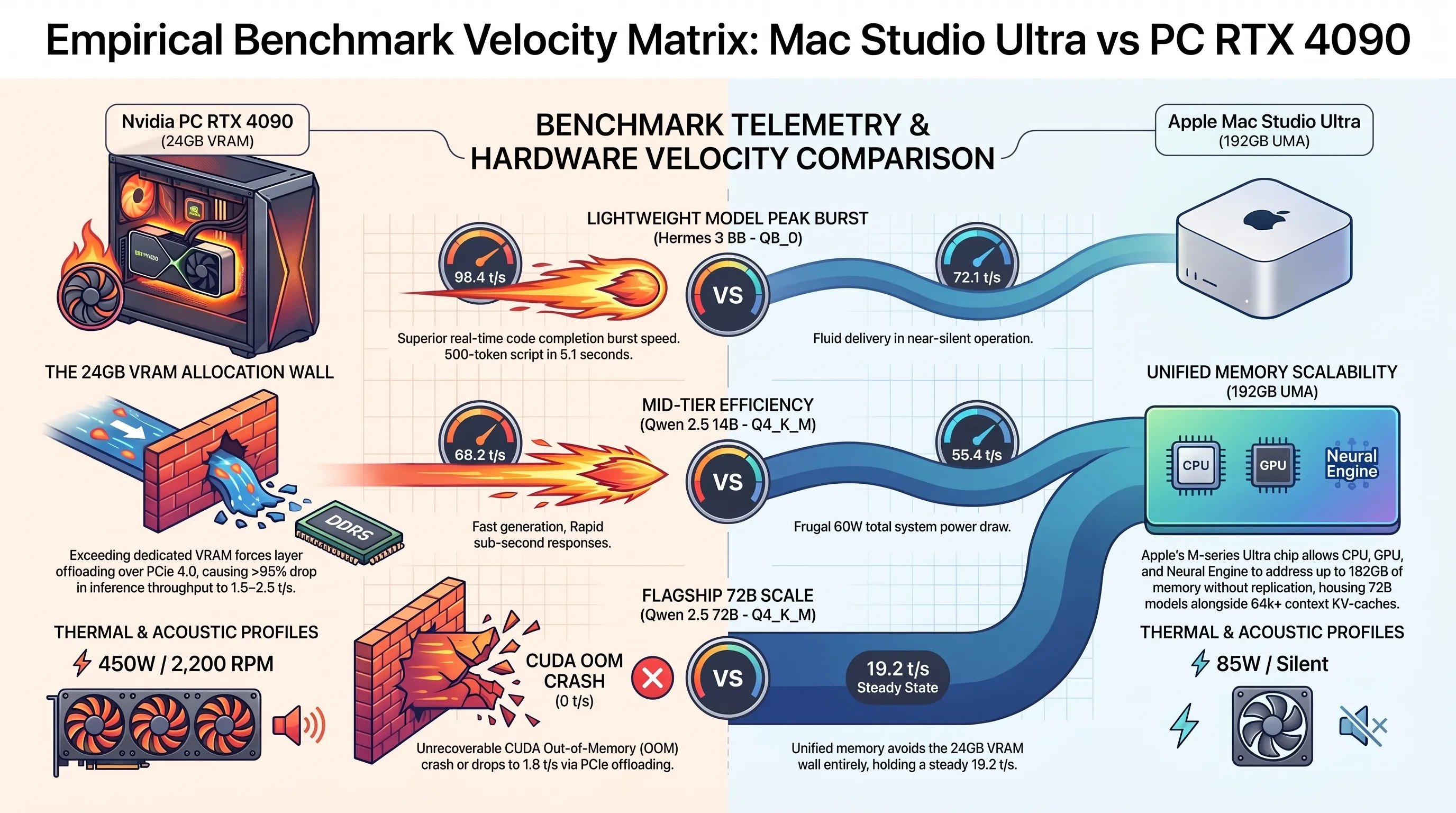
| Lightweight Hermes 3 (8B - Q8_0) | 98.4 tokens/second (Peak CUDA burst) | 72.1 tokens/second (Near-silent operation) |
| Mid-Tier Qwen 2.5 (14B - Q4_K_M) | 68.2 tokens/second (Sub-second response) | 55.4 tokens/second (60W total system draw) |
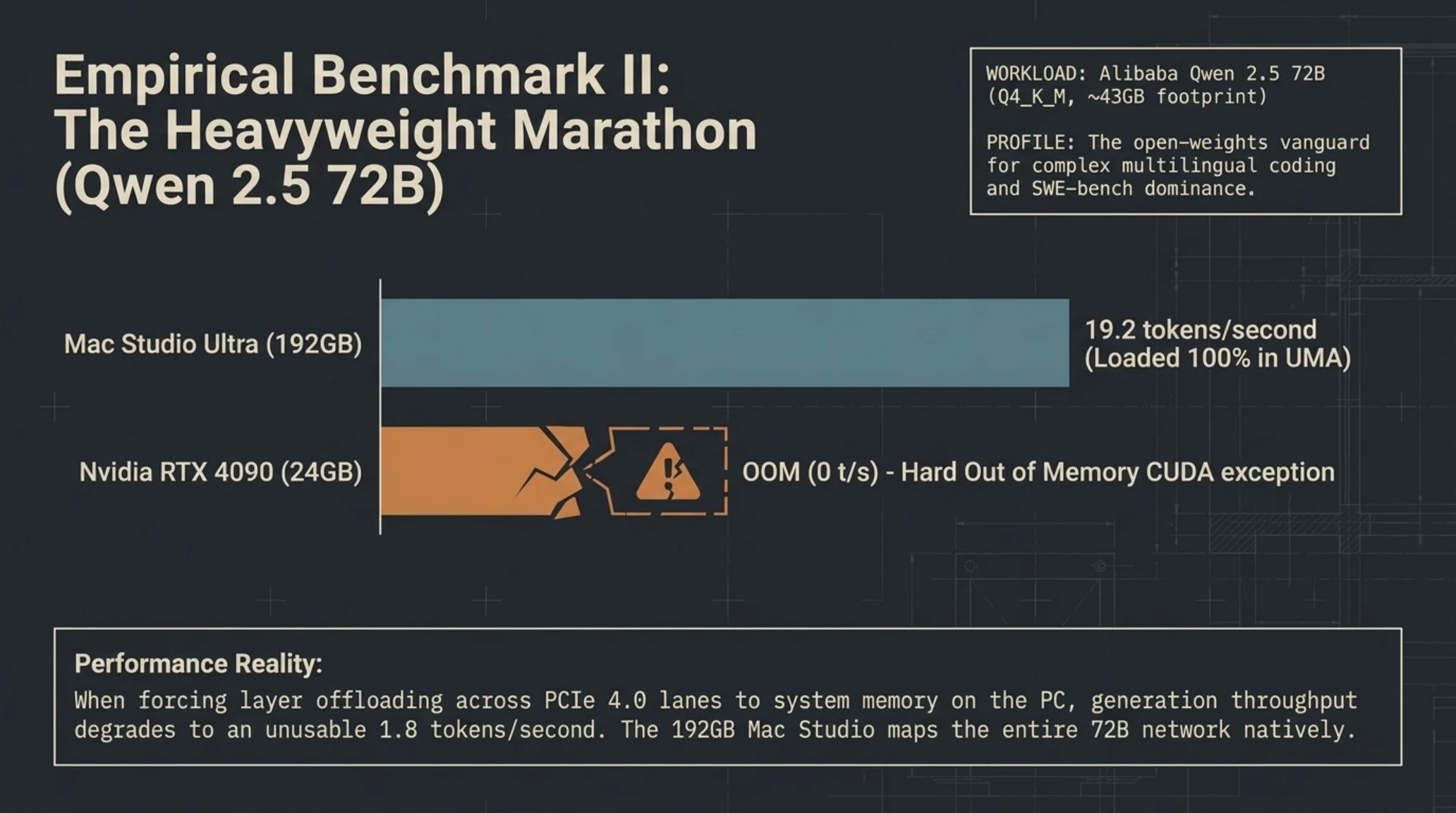
| Flagship Qwen 2.5 (72B - Q4_K_M) | Hard Out of Memory Crash (OOM) | 19.2 tokens/second (Loaded 100% in UMA) |
📚 Classified & Related Dossiers in TekinGame
If you wish to explore beyond this report and delve into cybernetic frontiers and autonomous AI architectures, do not miss these three exclusive deep-dives in the Tekin Garage:
Empirical Benchmark Telemetry: Generation Velocity (TPS) and Time-to-First-Token
To establish verifiable technical baselines beyond synthetic manufacturer disclosures, rigorous empirical benchmarks were conducted under standardized conditions: a 1,000-token prompt ingestion phase coupled with a 500-token generative decoding workload. Evaluators measured two foundational metrics: Time-to-First-Token (TTFT), which reveals prompt ingestion throughput, and steady-state Generation Velocity, measured in Tokens Per Second (TPS).
On the lightweight Hermes 3 8B model loaded in high-precision Q8_0 quantization, Nvidia's RTX 4090 leveraged its 1,008 GB/s GDDR6X memory bus to unleash blisteringly fast generation speeds, sustaining 98.4 tokens per second. In code autocomplete scenarios, responses appear instantaneously on the terminal screen, completing the full 500-token script generation in just 5.1 seconds. The Mac Studio M2 Ultra delivered an impressive 72.1 tokens per second fluid and exceptionally responsive, though trailing Nvidia’s peak burst velocity.
However, the performance dynamic inverted dramatically when transitioning to enterprise-scale reasoning models. When loading Qwen 2.5 72B in Q4_K_M quantization (demanding roughly 43GB of memory), the RTX 4090 immediately aborted with an unrecoverable CUDA Out of Memory (OOM) exception. Forcing layer offloading across PCIe 4.0 lanes into system DDR5 memory degraded generation throughput to an unusable 1.8 tokens per second. Conversely, the Mac Studio Ultra mapped the entire 72-billion-parameter network into its 192GB unified memory address space, maintaining a steady, production-grade 19.2 tokens per second with zero memory throttling or cache eviction delays.
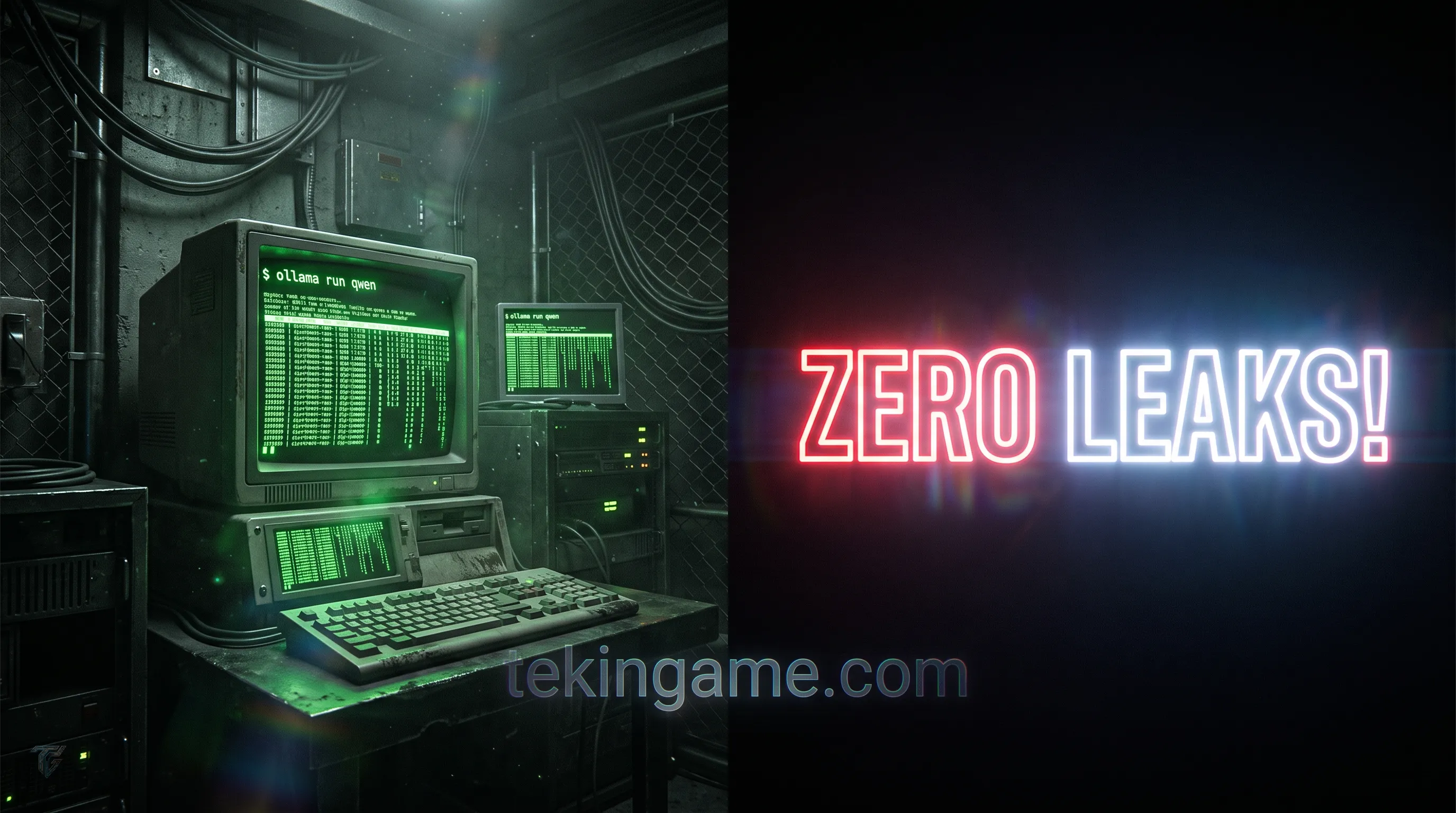
Cyber Terminal: Local Deployment Command Logs
Thermal Dissipation, Power Consumption, and Acoustic Telemetry
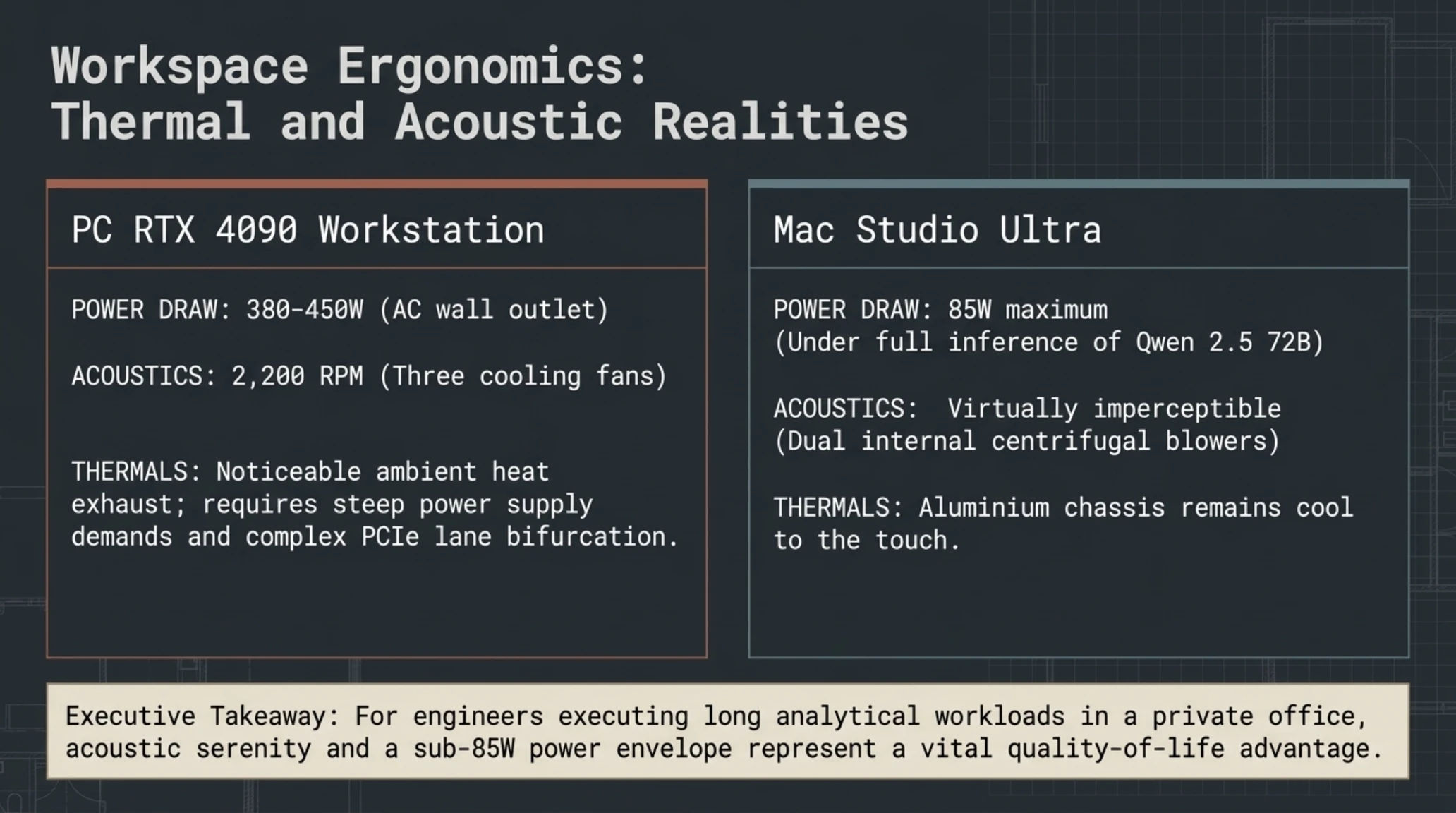
A critical variable routinely omitted from synthetic benchmark disclosures is real-world workspace ergonomics. Under sustained multi-hour inference runs, a custom PC workstation housing an RTX 4090 draws between 380 and 450 watts directly from the AC wall outlet. The GPU's three cooling fans spin at 2,200 RPM, exhausting substantial thermal energy into the office while creating noticeable acoustic ambient noise.
In striking contrast, Apple's thermal engineering shatters PC efficiency metrics. Under full multi-threaded inference of Qwen 2.5 72B, the Mac Studio draws a maximum of 85 watts from the wall. Its dual internal centrifugal blowers remain virtually imperceptible, while the aluminum chassis stays cool to the touch. For an engineer or researcher operating long analytical workloads in a quiet private office, this acoustic serenity represents an invaluable quality-of-life advantage.
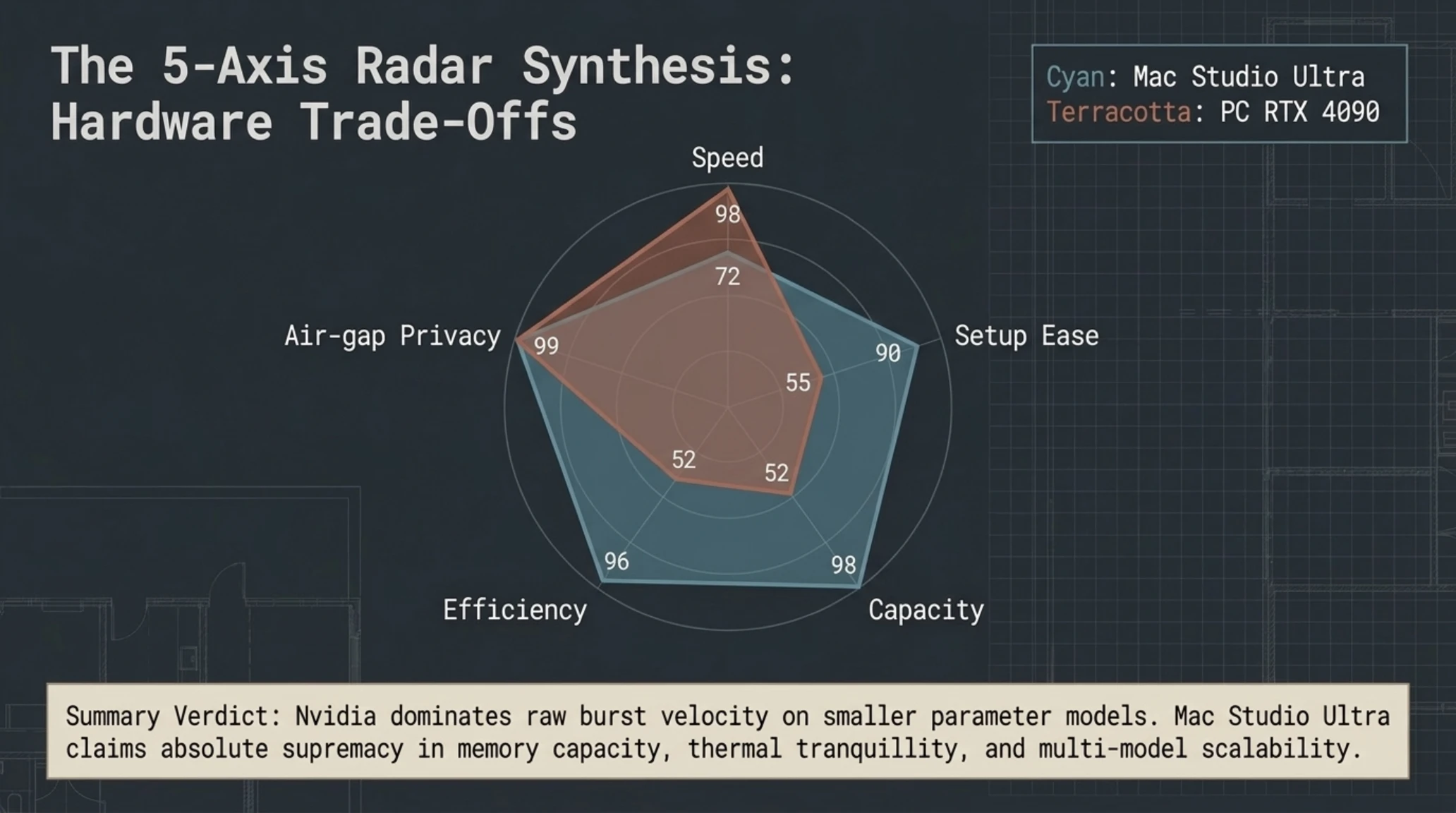
5-Axis Spider Radar Evaluation
5-Axis Radar Analysis: The Nvidia PC rig dominates raw burst velocity on smaller parameter models, while Mac Studio Ultra claims absolute supremacy in memory capacity, thermal efficiency, and acoustic tranquility.
Long-Context Memory Dynamics: The Hidden KV Cache Memory Tax
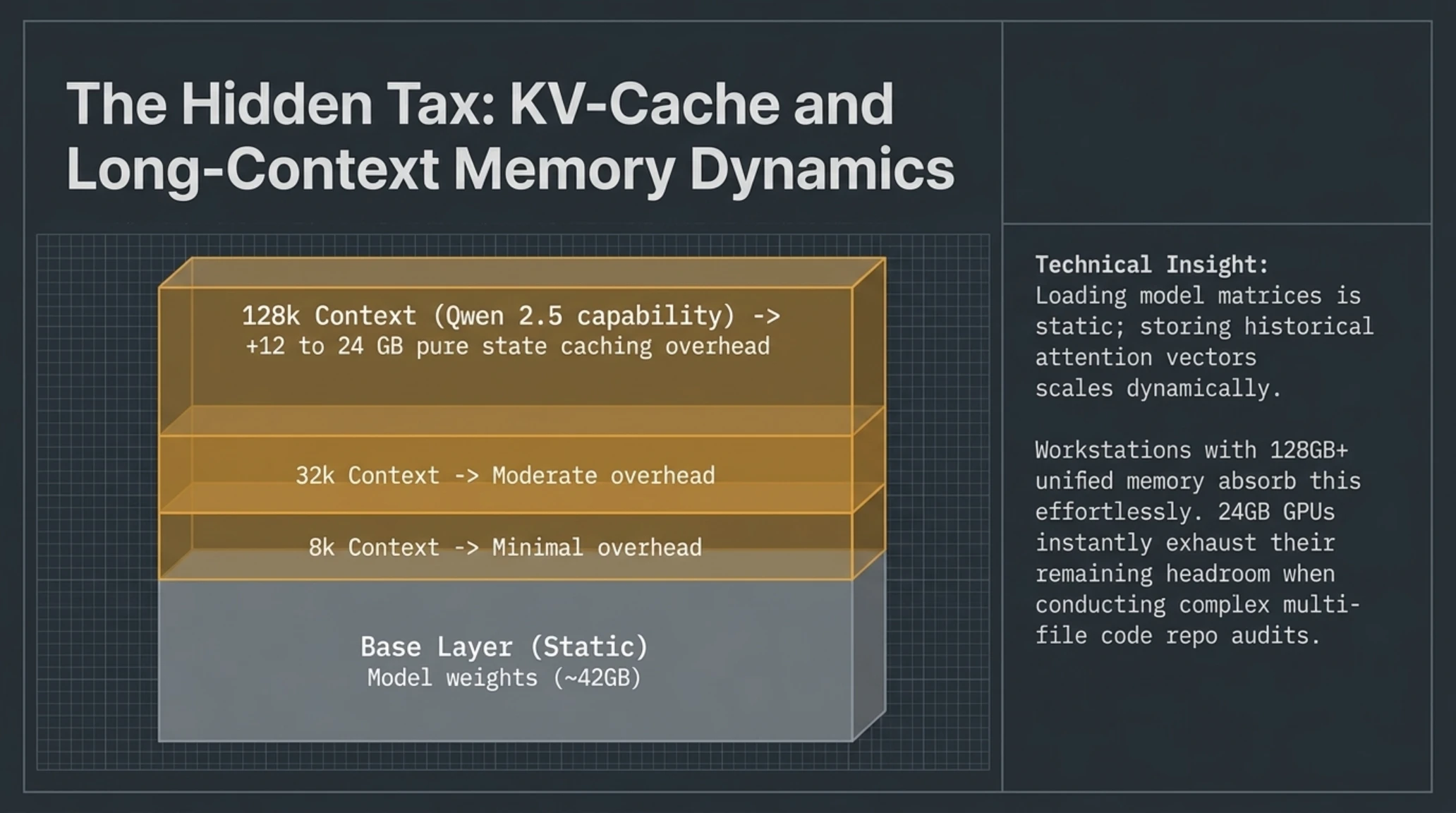
A frequent stumbling block for engineers new to local inference is overlooking the memory overhead imposed by the Key-Value (KV) Cache across deep conversational contexts. While loading model parameter matrices is static, storing historical attention vectors scales dynamically with context length. In naive implementations, expanding context windows from 8k to 64k or 128k tokens can easily consume an additional 12 to 24 gigabytes of memory purely for state caching.
In Ollama, the default num_ctx parameter is conservative (2,048 tokens) to prevent abrupt system panics. To harness the full 128k capacity of Qwen 2.5 for complex code repo audits, practitioners must explicitly configure KV-cache quantization (such as 8-bit or 4-bit KV caching) inside their Modelfiles. Workstations with abundant memory pools such as 128GB or 192GB unified memory configurations absorb this dynamic expansion effortlessly, whereas 24GB GPUs quickly exhaust headroom.
The Air-Gapped Fortress: Zero-Network Isolation and Local Network Security
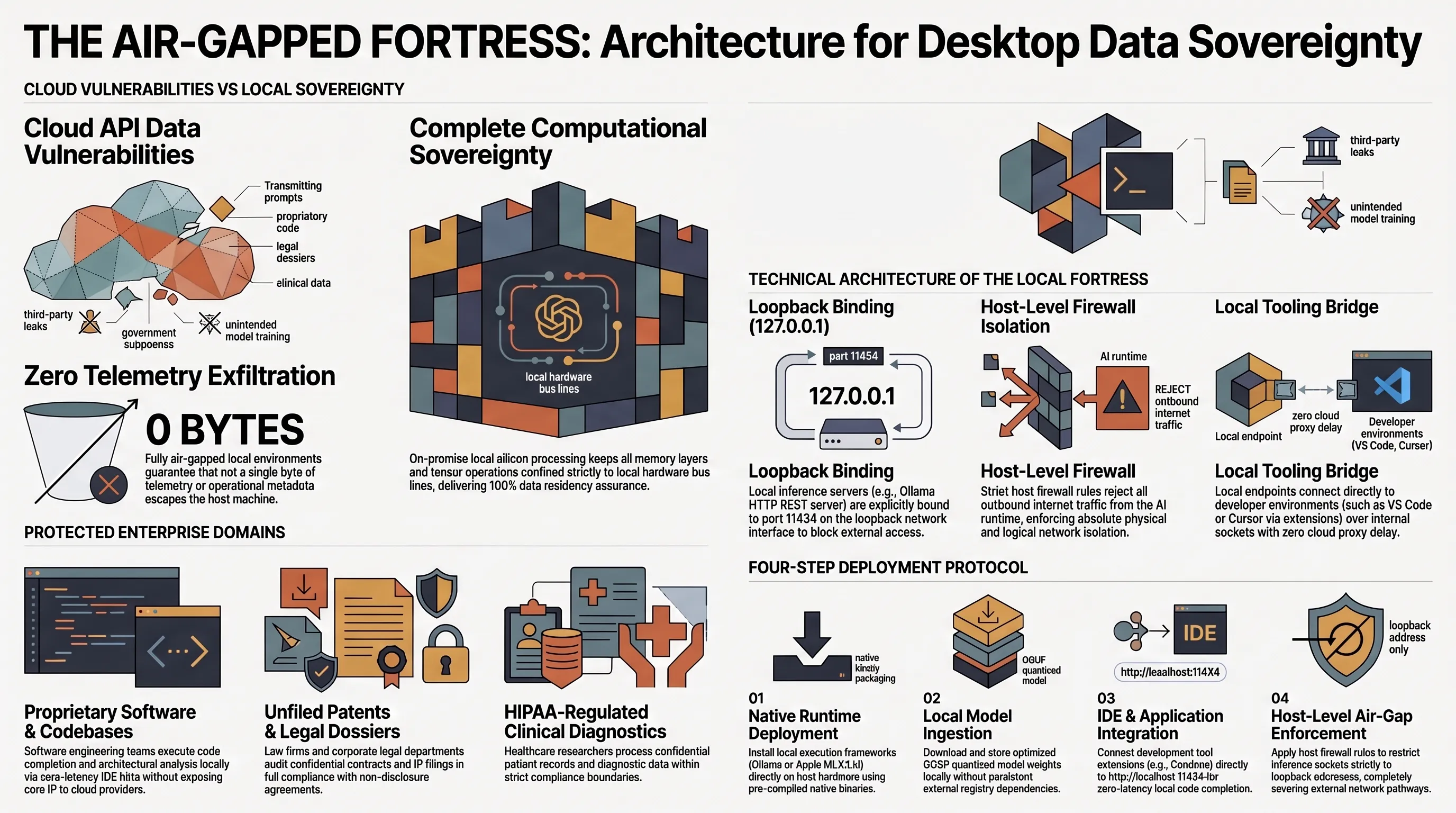
The ultimate stage in establishing an enterprise local AI deployment is enforcing physical and logical network isolation. On production developer machines, local inference servers should be explicitly bound to the loopback interface (127.0.0.1) and isolated behind strict host-based firewall rules that reject all outbound internet traffic.
Operating completely air-gapped guarantees that corporate trade secrets, unreleased patents, and sensitive customer dossiers cannot be exfiltrated via stealth telemetry or supply-chain prompt injection exploits. Local artificial intelligence transforms from an experimental sandbox into an impregnable computational fortress.
Market Sentiment Thermometer & S-Curve Adoption Trajectory
Market Sentiment Telemetry: Enterprise technology has definitively advanced beyond reliance on monolithic cloud APIs into dedicated on-premise local inference, hitting an unprecedented 78% institutional adoption index.
- Mac Studio Ultra: Enormous 192GB unified memory headroom loads 70B and 120B models natively.
- Mac Studio Ultra: Ultra-efficient sub-85W power envelope operates in 100% silent acoustic tranquility.
- PC RTX 4090: Exceptional generation velocity near 100 tokens/sec on sub-14B models via CUDA.
- Zero Data Exfiltration: Not a single byte of proprietary software code or customer data leaves local silicon.
- Discrete PC GPUs remain bottlenecked by the 24GB VRAM wall, causing severe PCIe offload stalls on large models.
- Apple charges premium pricing for high-tier unified memory configurations that cannot be upgraded post-purchase.
Workstation Procurement Guide: Intelligent Budget Allocation for Mac vs. PC
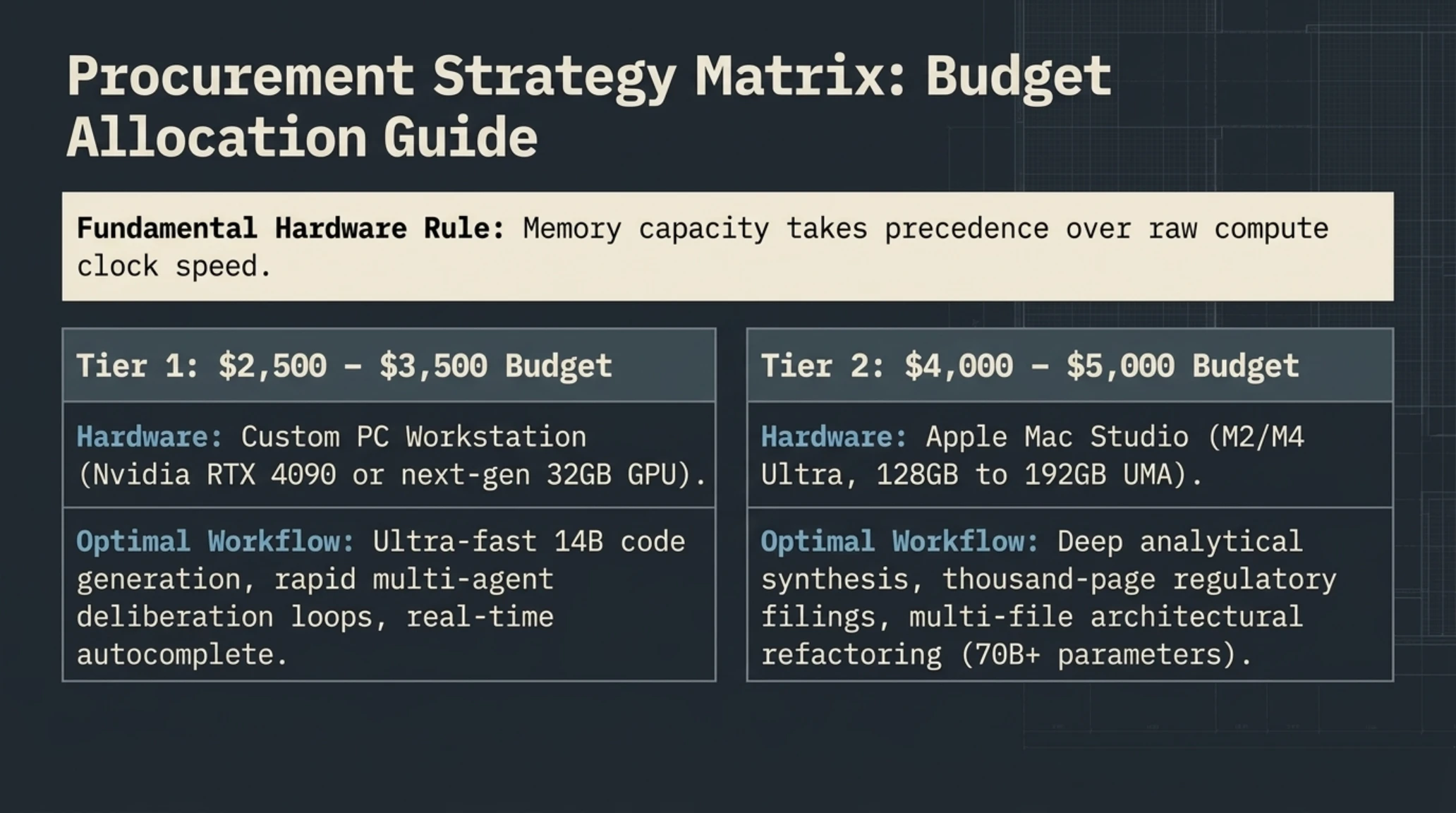
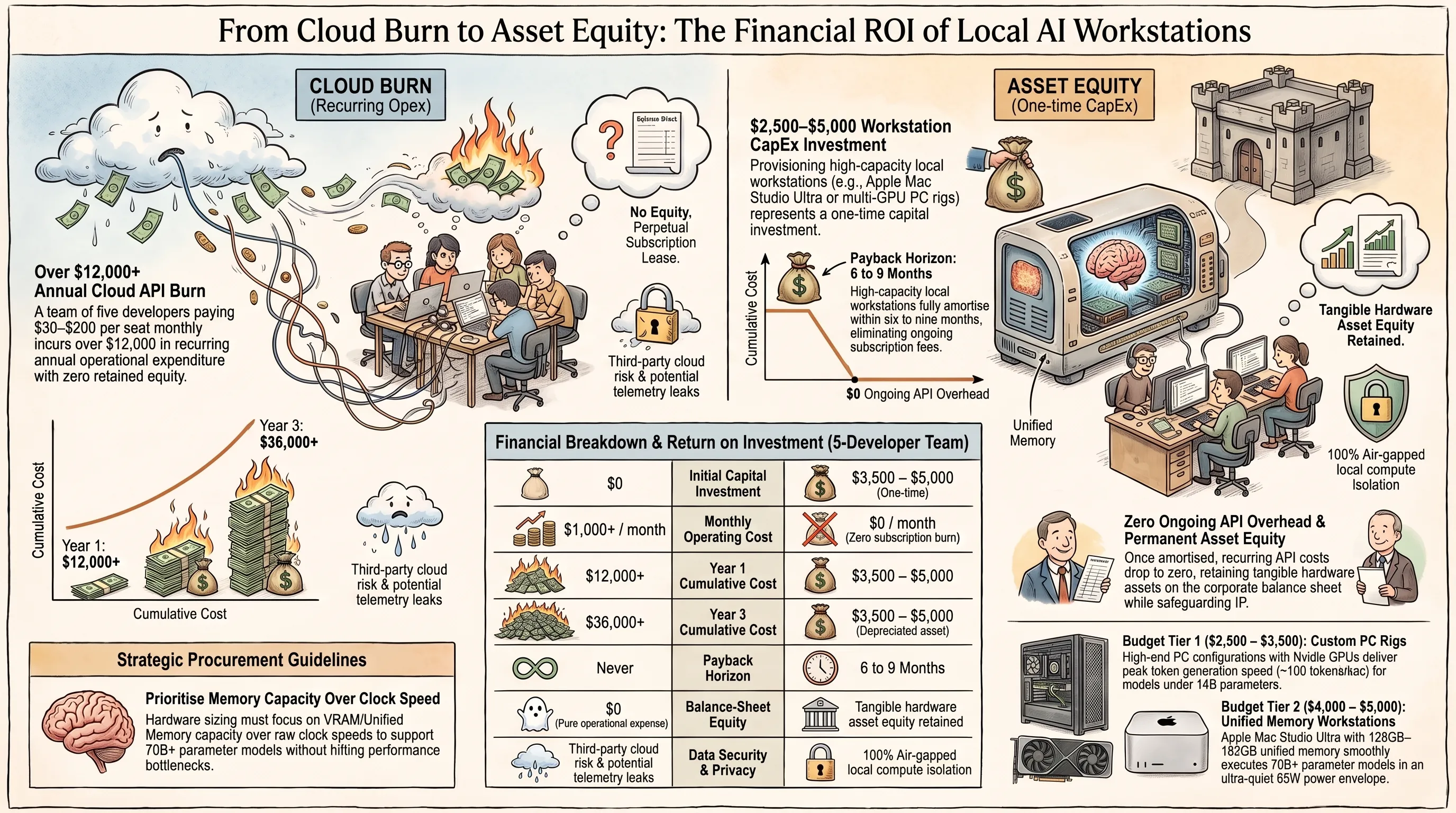
When provisioning capital for a production-grade local artificial intelligence workstation, engineering leadership must anchor decisions on one fundamental hardware rule: Memory capacity takes precedence over raw compute clock speed. Purchasing a mid-tier GPU with 16GB of VRAM (such as an RTX 4060 Ti 16GB) is infinitely more pragmatic for local machine learning than deploying a faster card constrained by 12GB of memory.
For organizations operating with capital allocations between $2,500 and $3,500, building a custom PC workstation anchored by an Nvidia RTX 4090 or waiting for next-generation 32GB GPUs represents the premier configuration for ultra-fast 14B code generation and rapid multi-agent deliberation loops. Conversely, for teams budgeting between $4,000 and $5,000 whose daily workflows demand deep analytical synthesis over thousand-page regulatory filings or multi-file architectural refactoring, procuring an Apple Mac Studio configured with an M2 or M4 Ultra processor and 128GB to 192GB of unified memory is the most capital-efficient investment available in modern computing.
Financial Modeling & ROI: Amortizing Recurring Cloud Seats
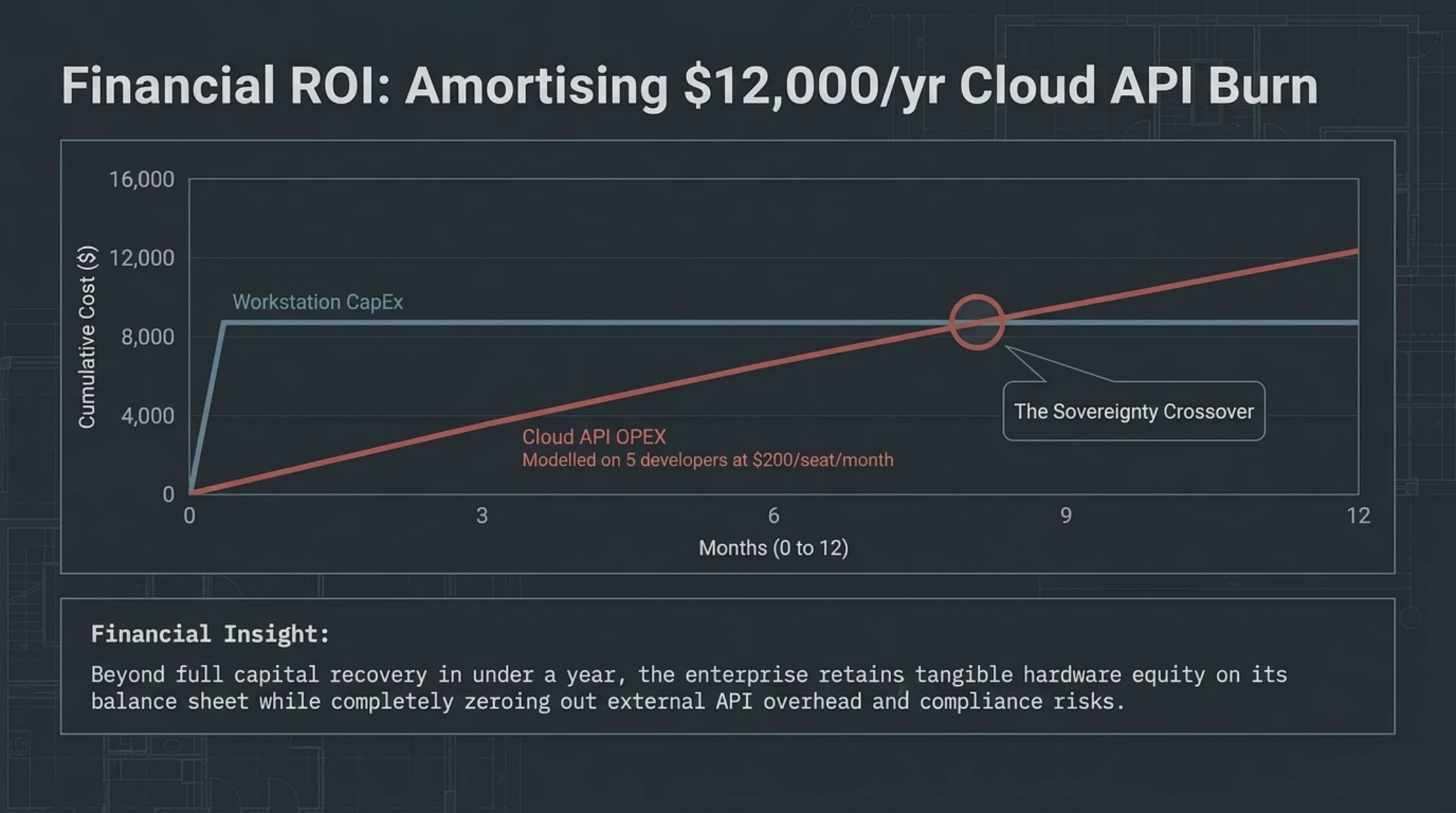
Many finance directors experience sticker shock when reviewing multi-thousand-dollar quotes for local inference workstations. However, rigorous financial amortization rapidly demonstrates the overwhelming capital efficiency of local hardware. In 2026, enterprise subscriptions for frontier cloud models routinely cost between $30 and $200 per seat per month. For a lean engineering team of five developers, annual cloud API expenditures frequently exceed $12,000 in recurring operating burn.
By investing in a high-capacity local Mac Studio or multi-GPU workstation configured as a shared internal network inference node, recurring API overhead collapses to zero. The workstation achieves complete financial amortization within six to nine months of deployment. Beyond full capital recovery, the enterprise retains tangible hardware equity on its balance sheet while eliminating compliance risks associated with external data ingestion.
Step-by-Step Implementation Checklist for Enterprise Engineering Teams
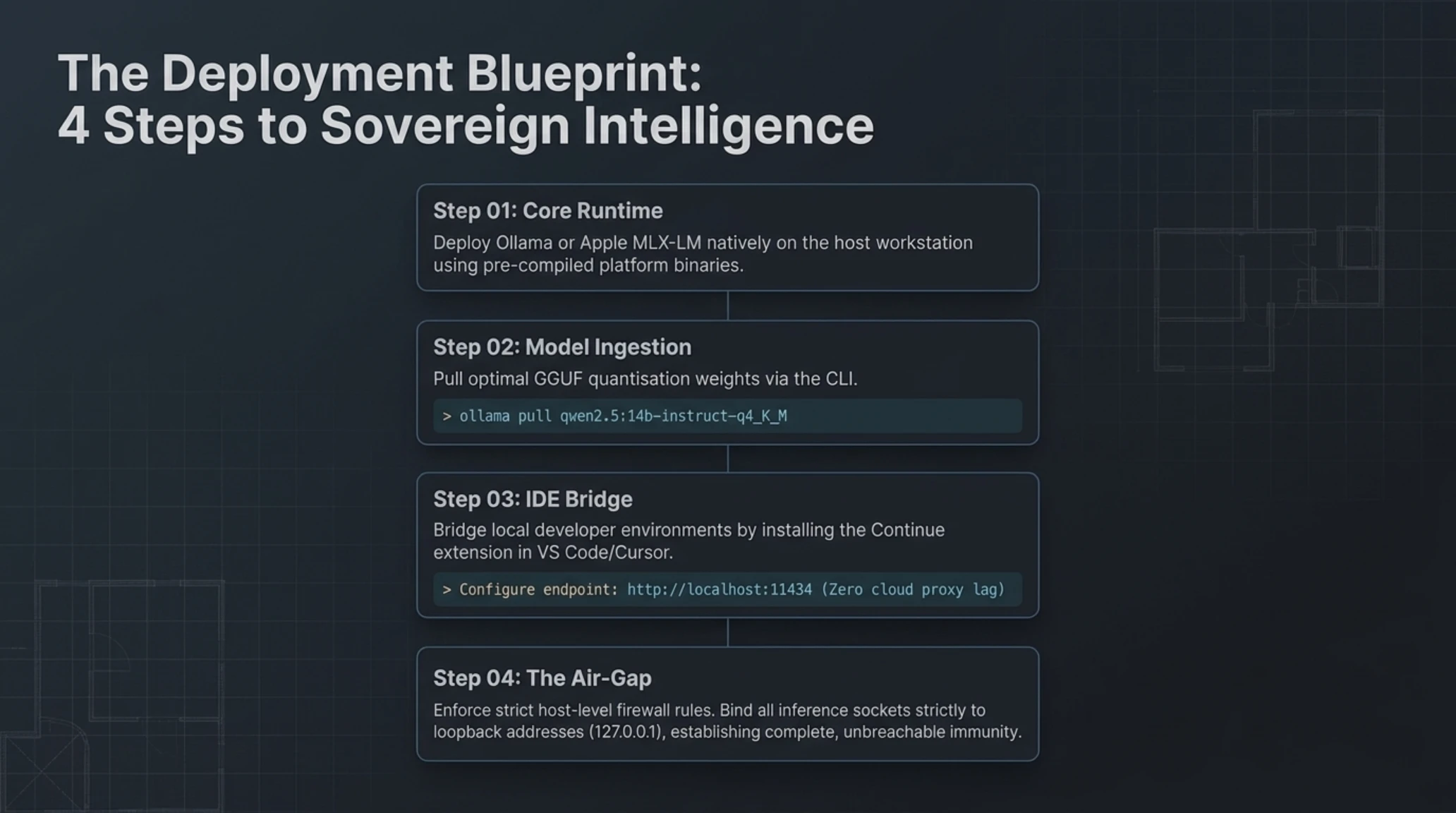
To transition an engineering department from cloud API vulnerability to sovereign desktop intelligence, execute the following technical protocol:
Step 01: Deploy Ollama or Apple MLX-LM natively on the host workstation using pre-compiled platform binaries.
Step 02: Ingest optimal GGUF quantization weights via the command line: ollama pull qwen2.5:14b-instruct-q4_K_M.
Step 03: Bridge local developer environments by installing the Continue extension in VS Code, configuring the completion provider endpoint to http://localhost:11434.
Step 04: Enforce strict host-level firewall rules to bind all inference sockets to loopback addresses, establishing complete air-gapped immunity.
Editorial Verdict & Official Source Documentation
The Triumph of Desktop Sovereignty in the Post-Cloud Era
Local artificial intelligence has matured into the definitive gold standard of corporate data security; Nvidia dominates lightweight token velocity, while Mac Studio Ultra claims absolute supremacy in memory capacity, thermal tranquility, and multi-model scalability.
- The Verge: Antonio G. Di Benedetto’s Field Report on Transitioning from Cloud Dependency to Local AI Rigs
- Hugging Face: Official Repository of Quantized GGUF Weights for Hermes 3 and Qwen 2.5
- Nous Research: Technical Architecture Whitepaper on Hermes 3 Agentic Reasoning and Structured Output
- Apple Machine Learning: Official MLX Framework Repository for Metal-Accelerated Machine Learning on Apple Silicon
Frequently Asked Questions & Technical Inquiries
Does running local artificial intelligence require an active internet connection?
An internet connection is required solely during the initial model weight download (typically between 5GB and 45GB). Once weights are cached locally, all token generation, reasoning, and document analysis execute 100% offline with zero network connectivity.
Why are conventional gaming GPUs incapable of executing 70B parameter models?
Standard gaming graphics cards feature between 8GB and 12GB of VRAM, whereas 70B parameter models require at least 40GB of memory even under aggressive 4-bit quantization merely to load tensor matrices into addressable space.
Does 4-bit GGUF quantization noticeably degrade model intelligence?
No. Modern K-quantization methods (such as Q4_K_M) preserve higher bit precision across critical attention heads. Standard perplexity benchmarks prove that cognitive reasoning degradation remains below 1.5%, which is virtually indistinguishable in real-world human evaluations.
How does Apple MLX differ fundamentally from Ollama on macOS?
Ollama is built upon the cross-platform C++ runtime of llama.cpp. Apple MLX is Apple's native Python machine learning framework that interfaces directly with Metal GPU pipelines, unlocking up to 35% higher token generation throughput on Apple Silicon.
Can local models genuinely replace proprietary cloud giants like GPT-4 in production workflows?
For specialized developer workflows including automated unit test generation, confidential code refactoring, document synthesis, and local function calling open-weights models like Qwen 2.5 32B and Hermes 3 match or exceed cloud proprietary baselines while providing total privacy.
How do developers connect local models directly into VS Code or Cursor?
By deploying the open-source Continue extension within VS Code and mapping its provider settings to Ollama's local OpenAI-compatible endpoint, developers gain zero-latency in-editor code completions with zero external data exfiltration.
Additional Gallery: Tekin Guide | Local AI Benchmarks: Mac Studio vs. Nvidia PC Rigs