$52 Million Frozen: Telegram's Black Market Takedown
- 🎮$52.8M Frozen- Secret Service froze 52 crypto wallets in a single strike
- 🎧$24B Processed- Xinbi laundered over $24 billion since 2022
- 🚀650K Users- Operated with 650,000 active users on Telegram
- 🗡️Second Largest Ever- Only HuiOne Guarantee ($27B) was larger in history
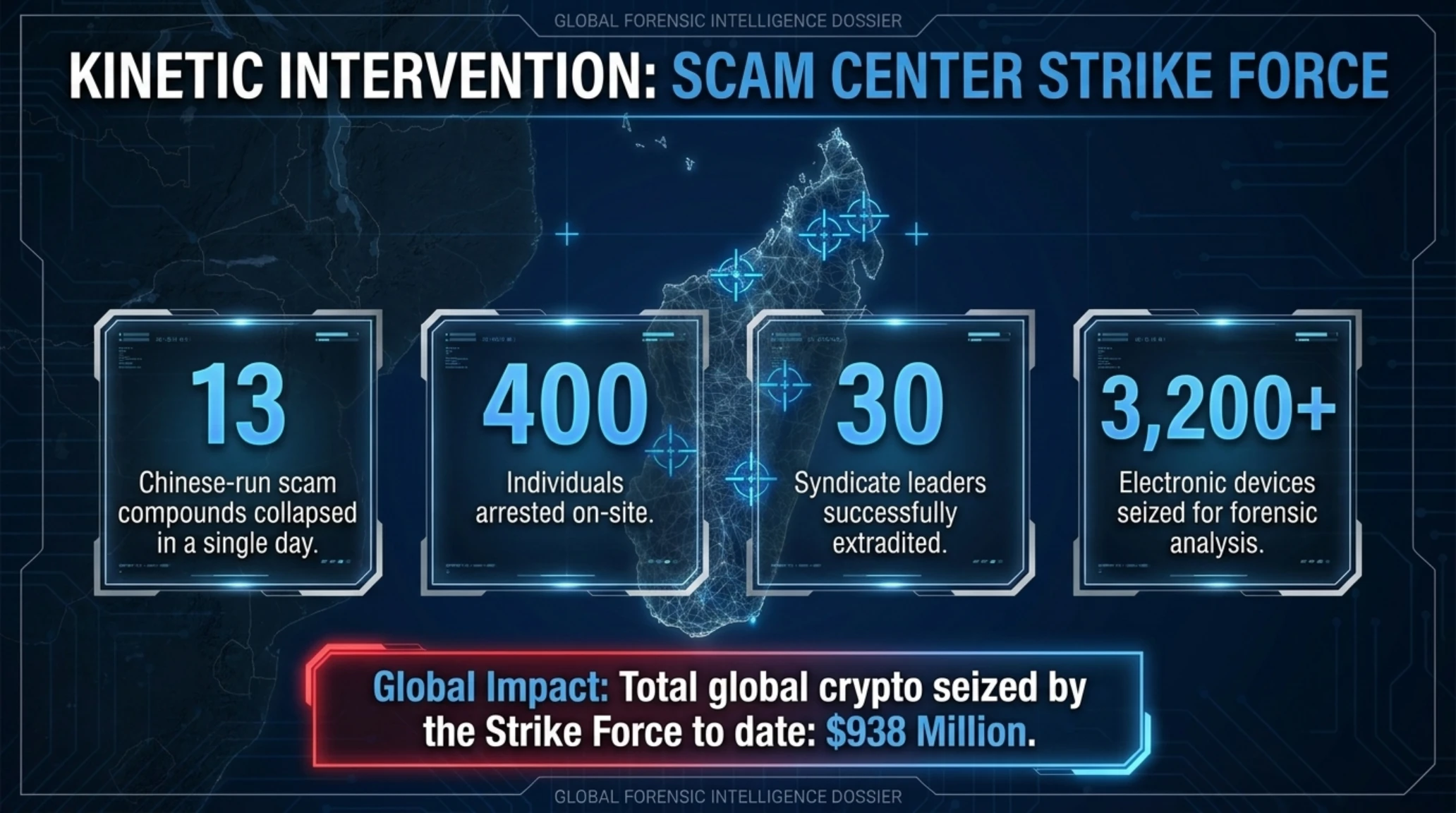
- 📰13 Compounds Raided- Task force destroyed scam centers in Madagascar
September 9, 2026: The Day the Crypto Black Market Collapsed
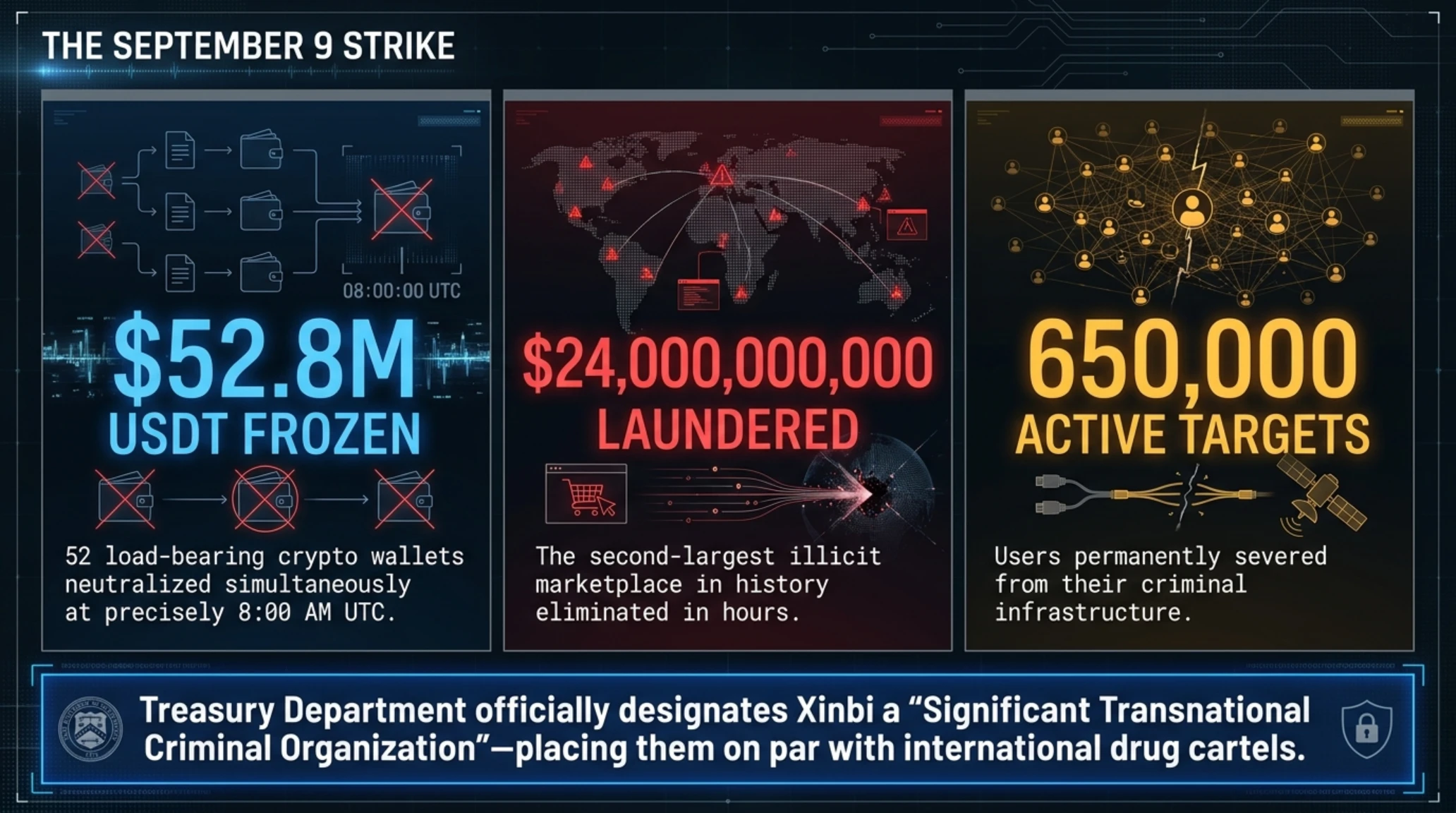
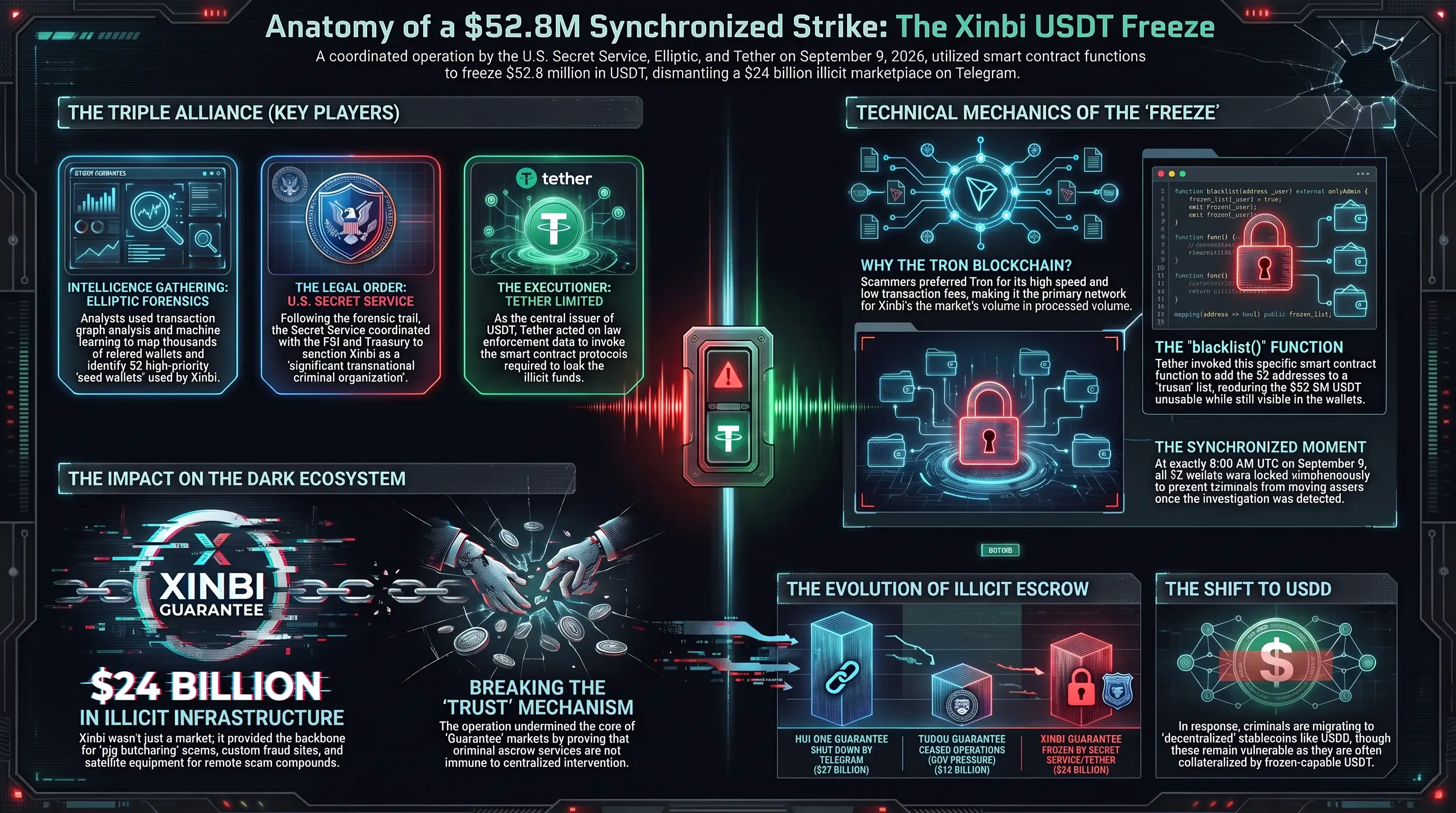
8:00 AM UTC, September 9, 2026. In that precise moment, 52 cryptocurrency wallets holding a combined $52.8 million in Tether (USDT) suddenly froze. The wallet owners couldn't transfer a single dollar. This was the opening salvo but not the last.
Simultaneously, FBI and Secret Service teams sprang into action. Telegram channels belonging to Xinbi Guarantee an illicit marketplace that had operated in darkness for years were shut down one by one. This black market, which according to blockchain analytics firm Elliptic had processed over $24 billion in transactions, vanished within hours.
At a Glance: The Scale of Xinbi's Dark Market
- Xinbi became the second-largest illicit marketplace in history following the takedowns of HuiOne and Tudou.
- Devastating 'Pig Butchering' romance scams stole billions, with funds laundered directly through Xinbi's infrastructure.
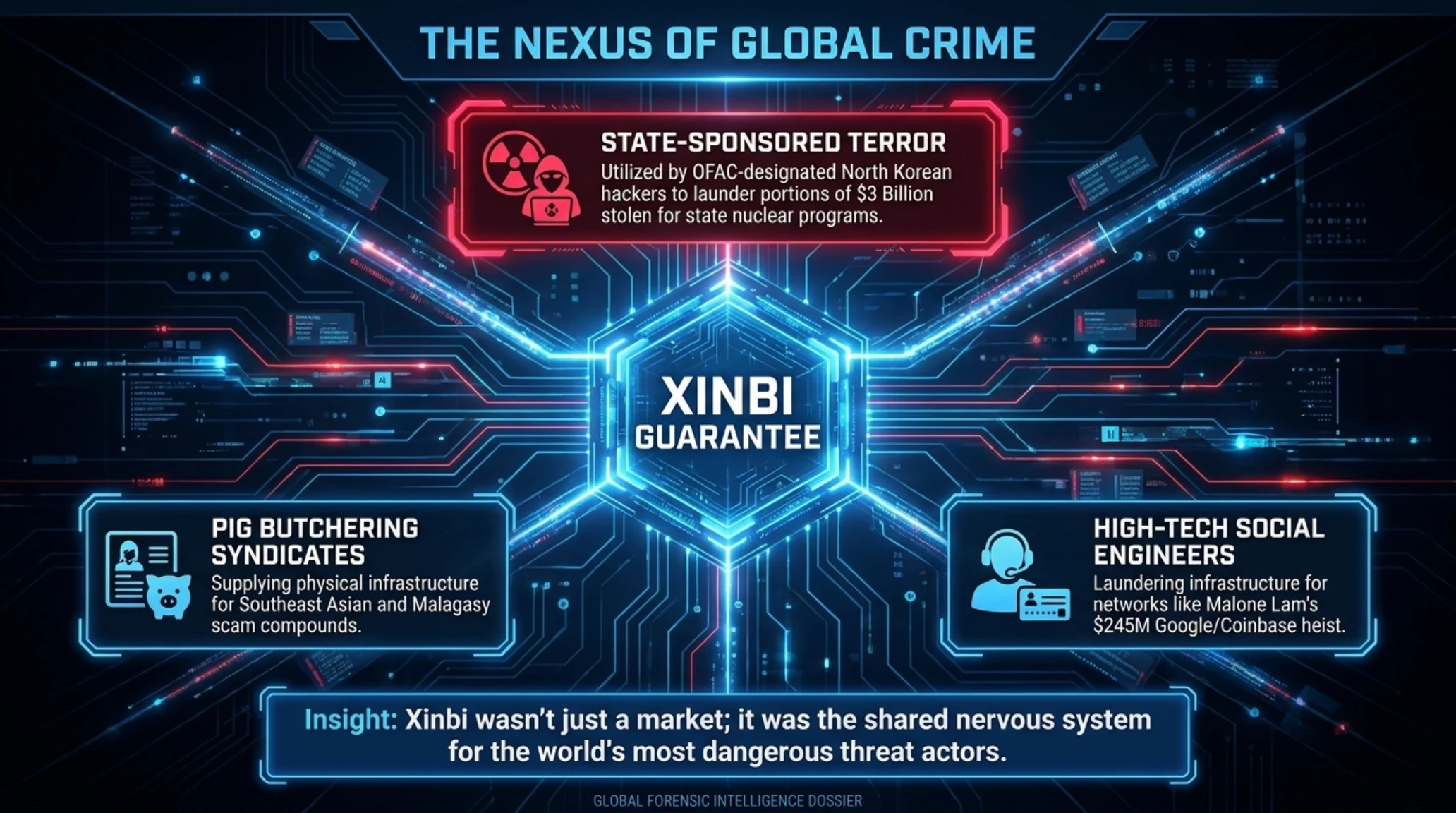
- North Korean hackers and organized crime syndicates were among the primary customers of this dark platform.
- To evade Tether freezes, cybercriminals are actively migrating to unfreezable stablecoin alternatives like USDD.
- Telegram faces intense international pressure for providing a secure haven for over $63 billion in money laundering.
But why does this matter so profoundly? Because Xinbi wasn't merely a marketplace it was complete infrastructure for cybercrime. From building custom scam websites to laundering money, recruiting trafficking victims, and even selling stolen personal data. Everything in one place, on Telegram, in Chinese, with customers worldwide.
The Treasury Department sanctioned Xinbi that same day as a "significant transnational criminal organization" the same category reserved for drug cartels. This means anyone who interacted with Xinbi can face legal prosecution.
What Was Xinbi? Meet the Second-Largest Dark Market in History
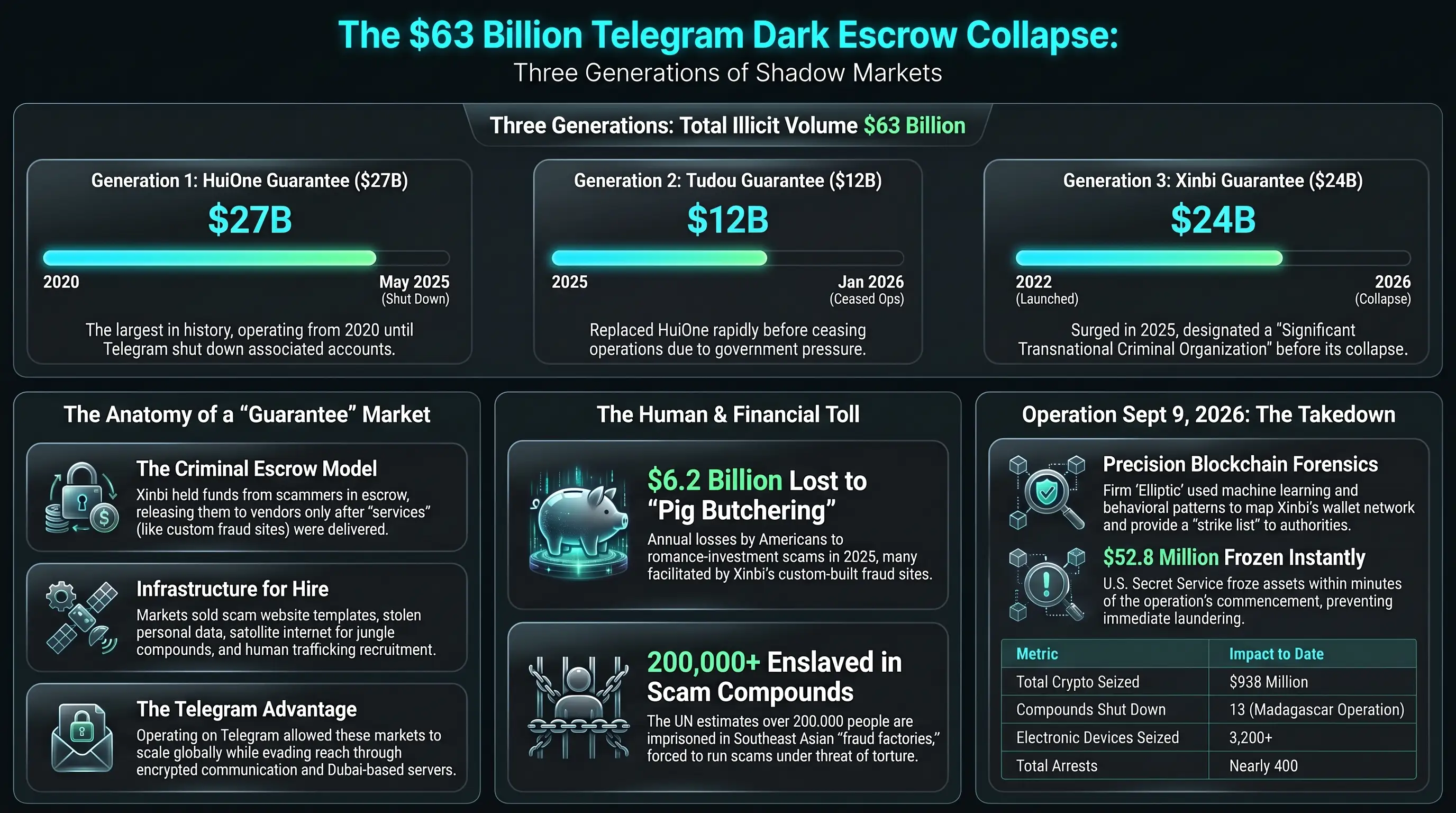
Xinbi Guarantee launched around 2022 but remained relatively obscure until 2025. The reason was simple: this marketplace rose to prominence following the closure of two other major marketplaces: HuiOne Guarantee and Tudou Guarantee.
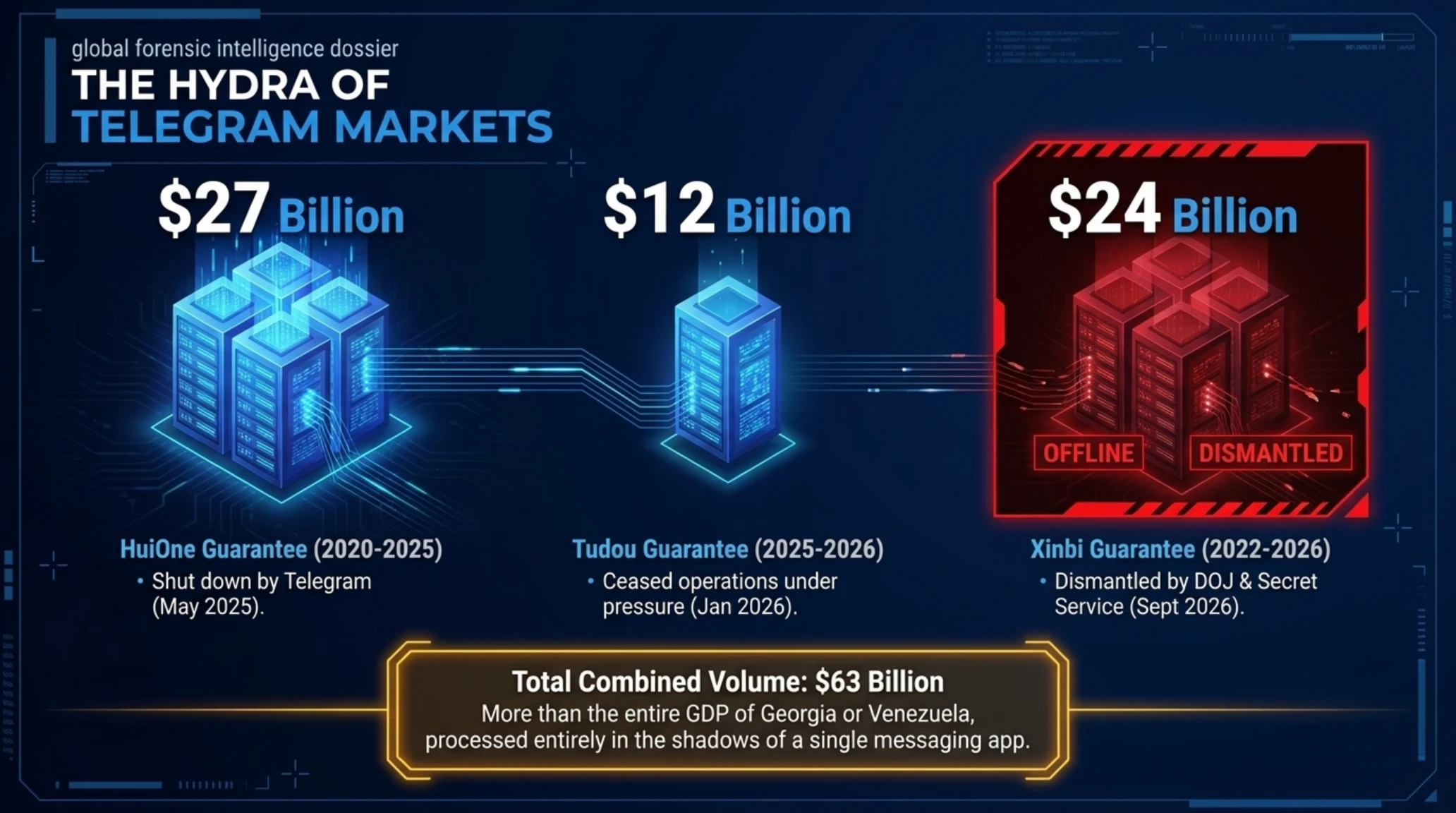
HuiOne Guarantee was the largest dark market in history processing over $27 billion in transactions. Telegram shut it down in May 2025, banning thousands of associated accounts. But the vacuum created by this closure needed filling.
Tudou Guarantee became HuiOne's replacement and grew rapidly. According to Elliptic, Tudou processed approximately $12 billion in transactions, making it the third-largest illicit marketplace ever. But Tudou also shut down in January 2026 likely due to government pressure and Telegram intervention.
This is where Xinbi entered the game. The marketplace quickly filled the void left by HuiOne and Tudou. Users who had previously relied on the two earlier marketplaces migrated to Xinbi. By September 2026, Xinbi had become the second-largest illicit marketplace in history only HuiOne surpassed it.
Three Generations of Guarantee Marketplaces
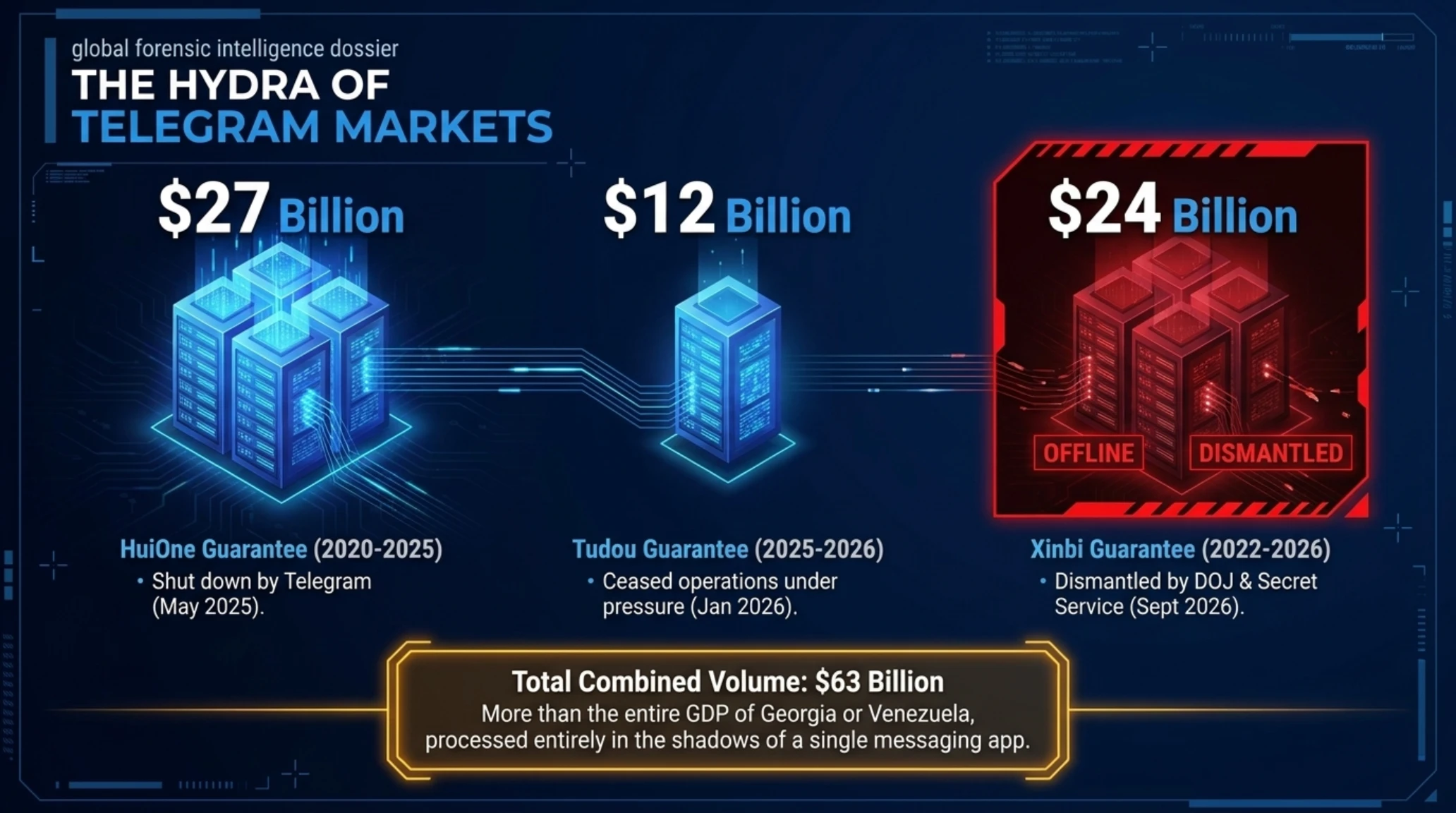
| Marketplace | Operating Years | Transaction Volume | Status |
|---|---|---|---|
| HuiOne Guarantee | 2020-2025 | $27 Billion | Shut down by Telegram in May 2025 |
| Tudou Guarantee | 2025-2026 | $12 Billion | Ceased operations in January 2026 |
| Xinbi Guarantee | 2022-2026 | $24 Billion | Shut down by Secret Service in Sept 2026 |
Combined transactions across these marketplaces: $63 billion.
How Xinbi Operated: A Window Into the Dark Underworld
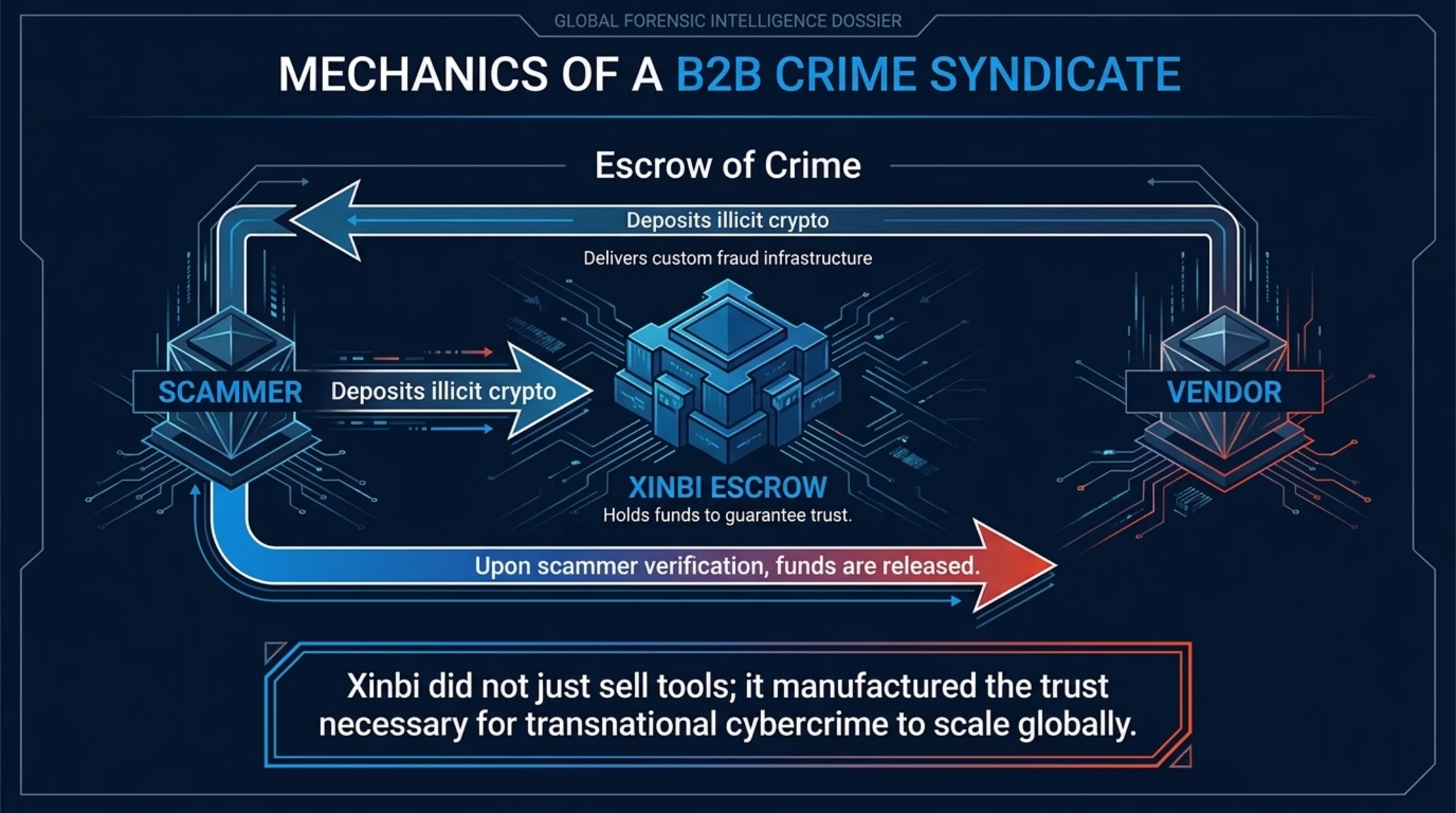
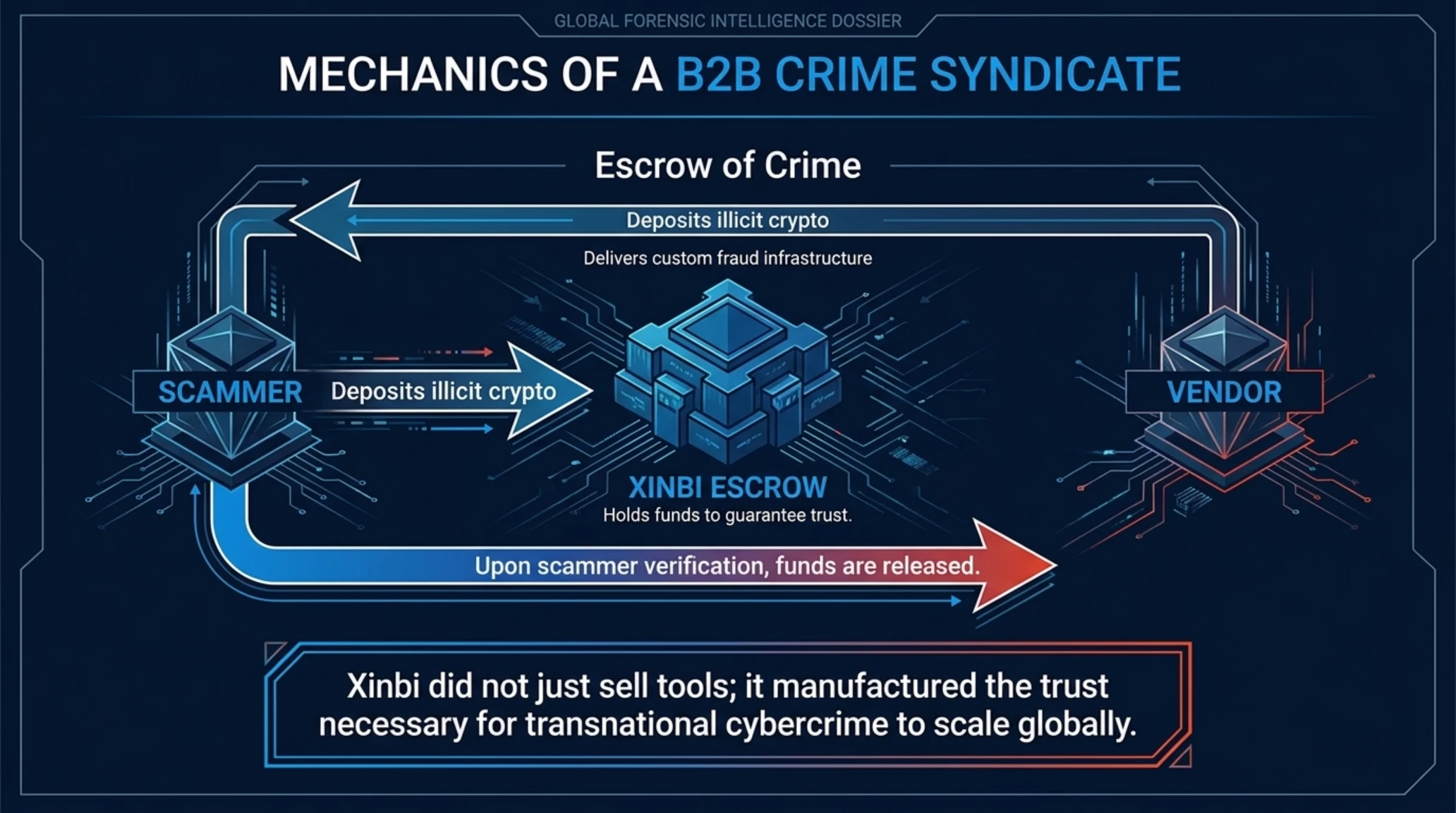
Xinbi was a "guarantee marketplace" an escrow system for criminals. Imagine a scammer wants to order a custom fraud website. They can't pay the vendor directly because the vendor might take the money and disappear. This is where Xinbi enters.
The scammer gives money to Xinbi. Xinbi holds the funds until the vendor delivers the service. When the scammer confirms the service is correct, Xinbi releases payment to the vendor. This model mirrors legitimate escrow services but for crime.
Xinbi operated on Telegram. All communications, transactions, and customer support occurred through Telegram channels. This allowed Xinbi to scale rapidly and evade government reach because Telegram is encrypted and its servers are located in countries like Dubai.
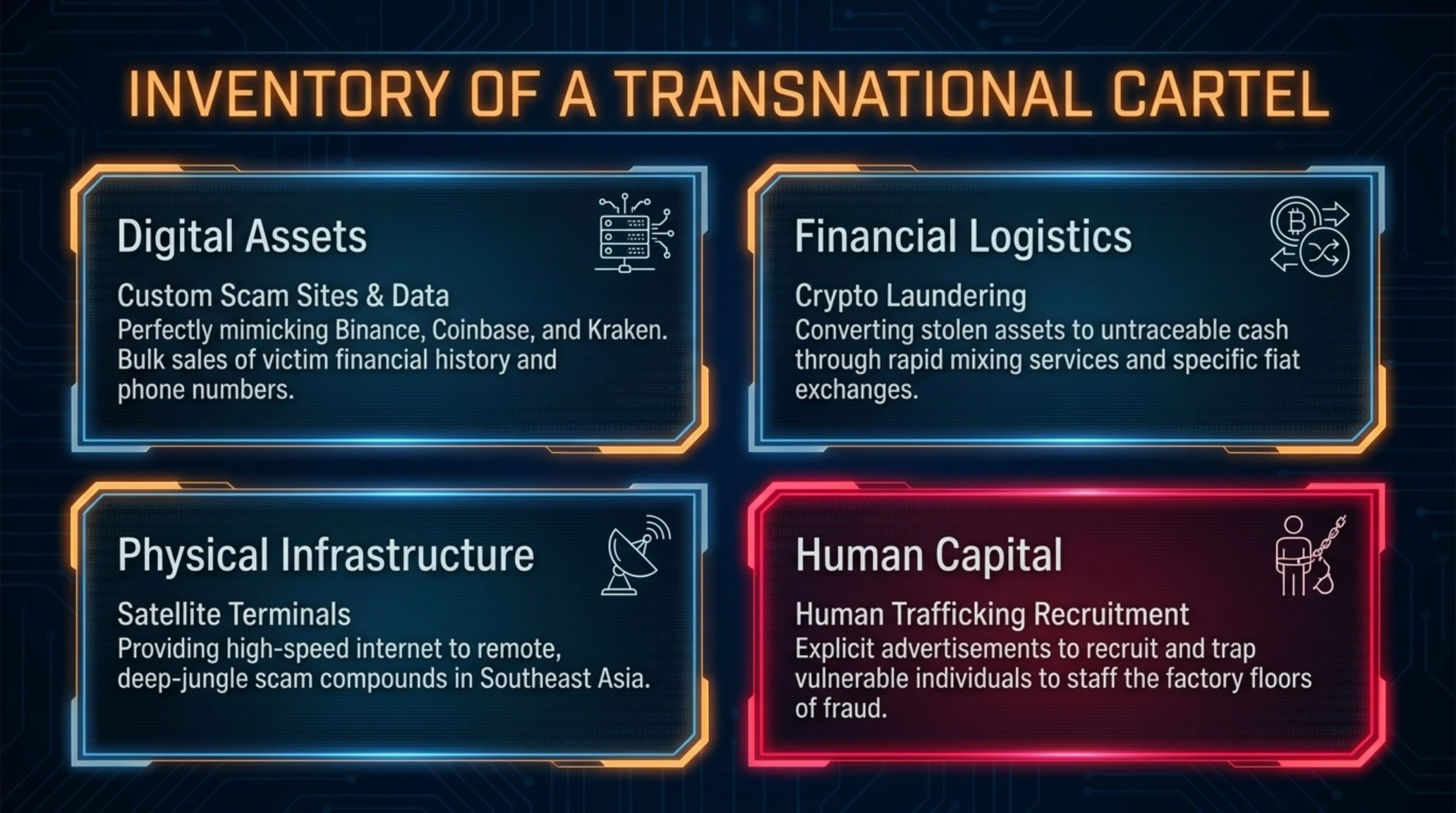
But what services were sold on Xinbi? The list is extensive: custom scam website development, cryptocurrency laundering, stolen personal data purchases (phone numbers, banking information, passports), satellite internet equipment (for scam compounds in Southeast Asian jungles), and even human trafficking recruitment services.
Services Sold on Xinbi
| Custom Scam Sites | Development mimicking legit crypto exchanges |
| Money Laundering | Converting stolen crypto to untraceable cash |
| Personal Data | Selling victim information and financial history |
| Satellite Equipment | For remote scam compounds in jungles |
| Trafficking Services | Advertisements to recruit people to compounds |
| Social Engineering | Training on how to deceive and manipulate victims |
Pig Butchering: The Romance Scam Stealing Billions
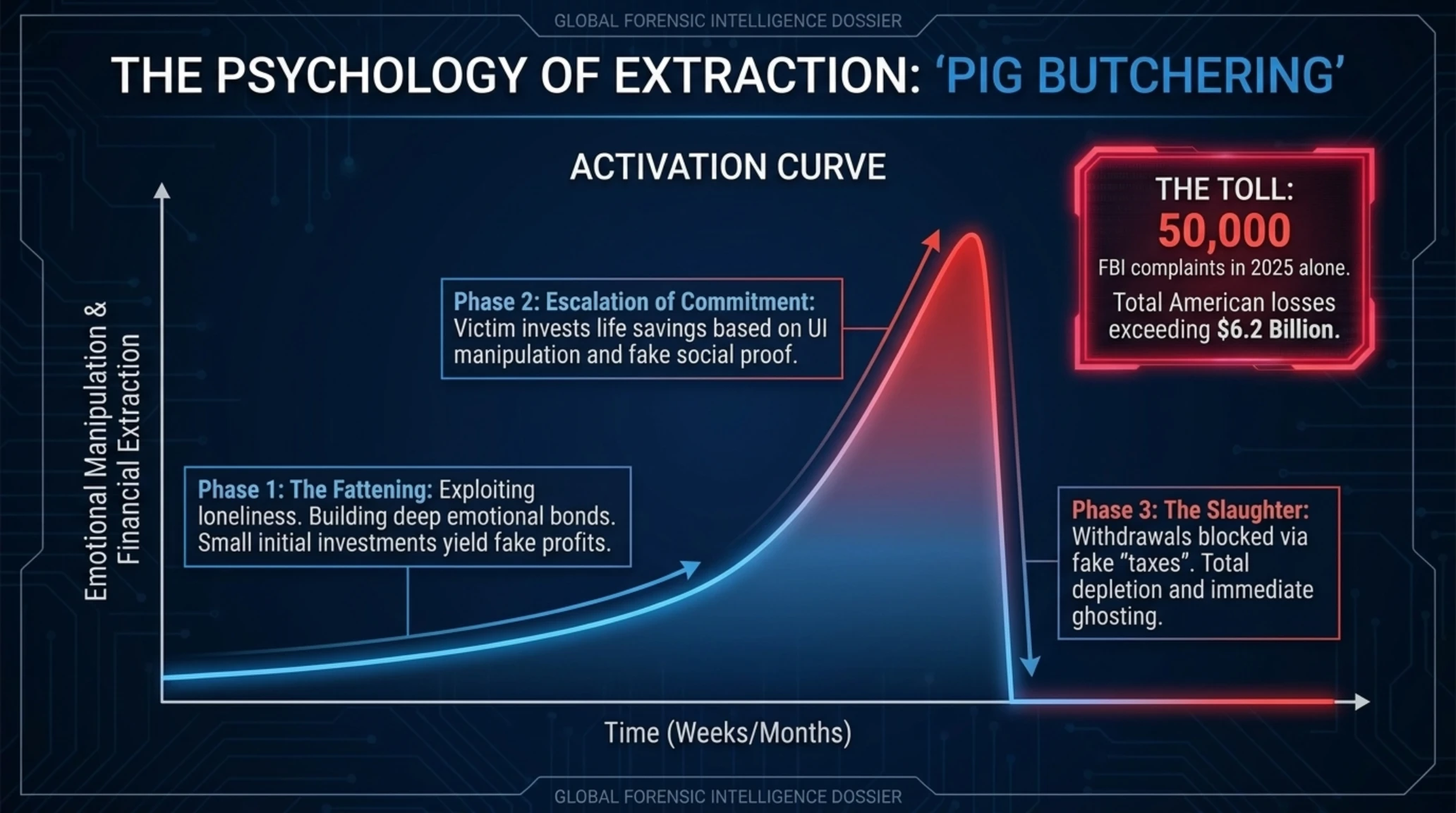
One of Xinbi's primary use cases was supporting "pig butchering scams." This type of fraud, whose Chinese term has been translated into English, represents one of the most dangerous and profitable scams in history.
The process is simple but deadly: A scammer contacts a victim through dating apps, social media, or even random messages. They spend weeks or months building an emotional or friendship bond. The victim develops trust, falls in love, or at minimum becomes a close friend of the scammer.
Then the scammer begins discussing an "incredible investment opportunity" typically cryptocurrency or forex. They show a fake website (purchased from Xinbi) displaying unbelievable profits. The victim invests a small amount and sees "profit." But when they attempt to withdraw money, the website demands: "You must first pay taxes" or "Your account is locked, deposit more to unlock."
The victim sends more money. And more. And more. Until their entire savings is depleted. At this stage, the scammer disappears or blocks the account. The victim realizes all their money is gone with no recovery path because all transactions occurred via cryptocurrency.
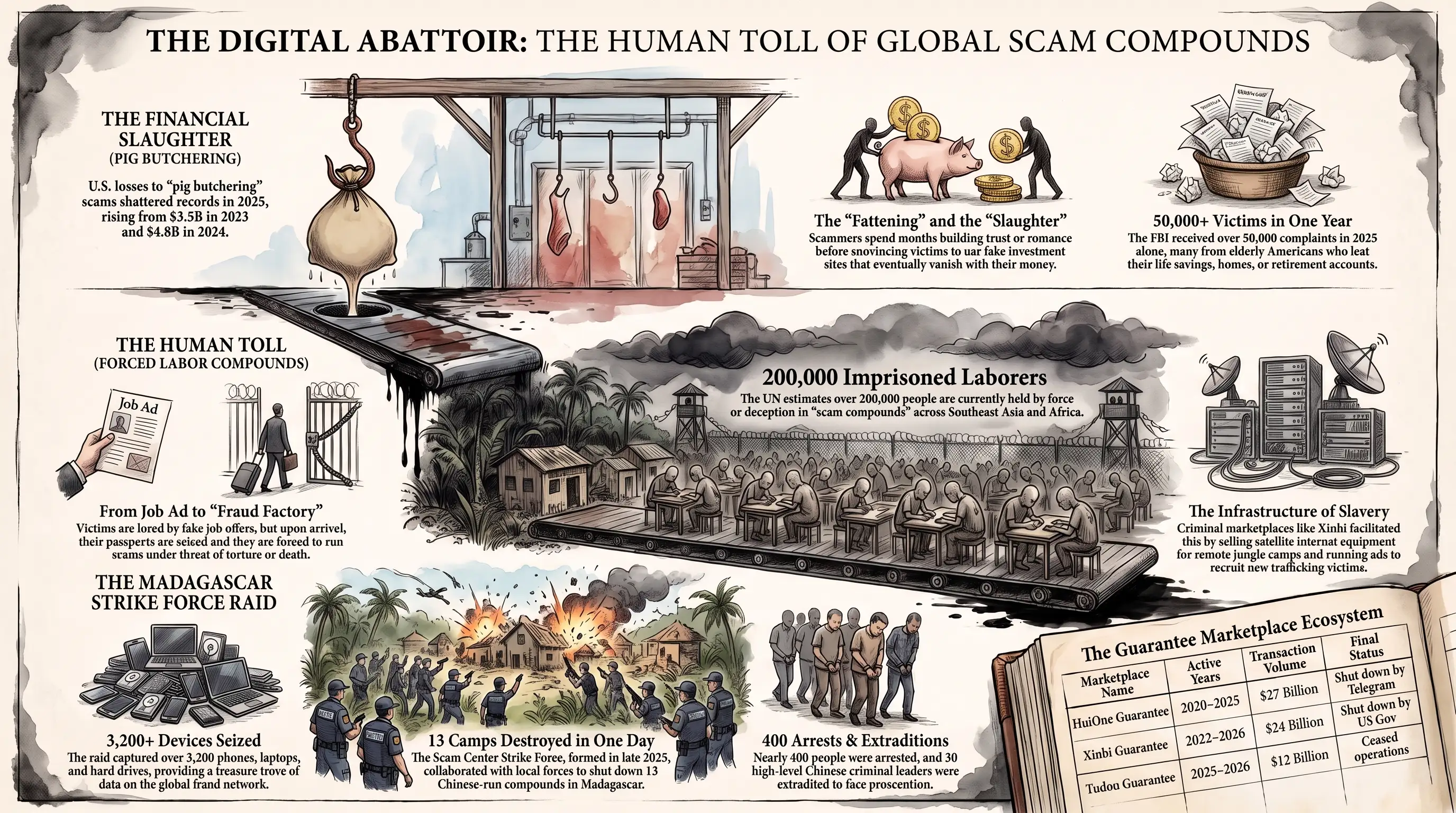
According to the FBI, Americans lost over $3.5 billion to pig butchering scams in 2023. In 2024, this figure rose to $4.8 billion. And in 2025, the record was shattered: $6.2 billion. A significant portion of these scams were executed through marketplaces like Xinbi.
📚 Classified & Related Dossiers in TekinGame
If you wish to explore beyond this report and delve into cybernetic frontiers and autonomous AI architectures, do not miss these three exclusive deep-dives in the Tekin Garage:
Scam Compounds: Fraud Factories in Southeast Asia
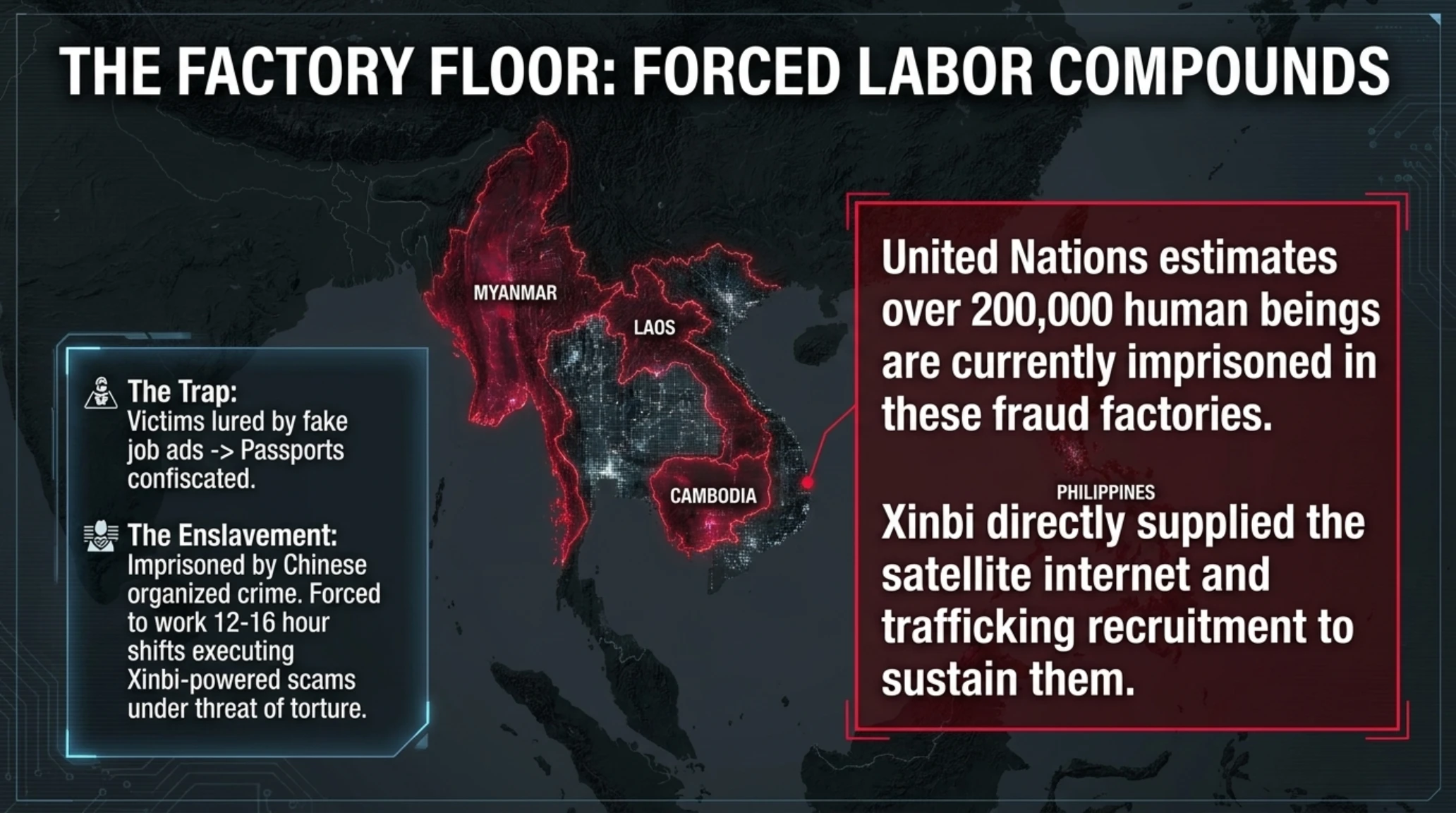
The darker aspect of this story involves "scam compounds" camps in countries like Myanmar, Cambodia, Laos, and the Philippines where people are held by force or deception and compelled to commit fraud. These compounds are operated by Chinese organized crime syndicates, and Xinbi was one of their primary suppliers.
The process is straightforward: Criminal organizations publish fake job advertisements (typically for call center or customer service work). People seeking employment usually from impoverished countries are convinced to go. But upon arrival, their passports are confiscated, they're chained, and forced to work 12-16 hours daily running scams.
If they refuse to work, they're tortured. If they attempt escape, they're often killed. The UN estimates over 200,000 people are imprisoned in these compounds and many will never be freed.
Xinbi provided services to these compounds: selling satellite internet equipment (since compounds are typically in jungles or remote areas), selling victim data, and even advertising to recruit more people. The Treasury Department announced that Xinbi had "services soliciting trafficking victims" meaning it directly participated in human trafficking.
Madagascar: The Collapse of 13 Scam Compounds in One Day
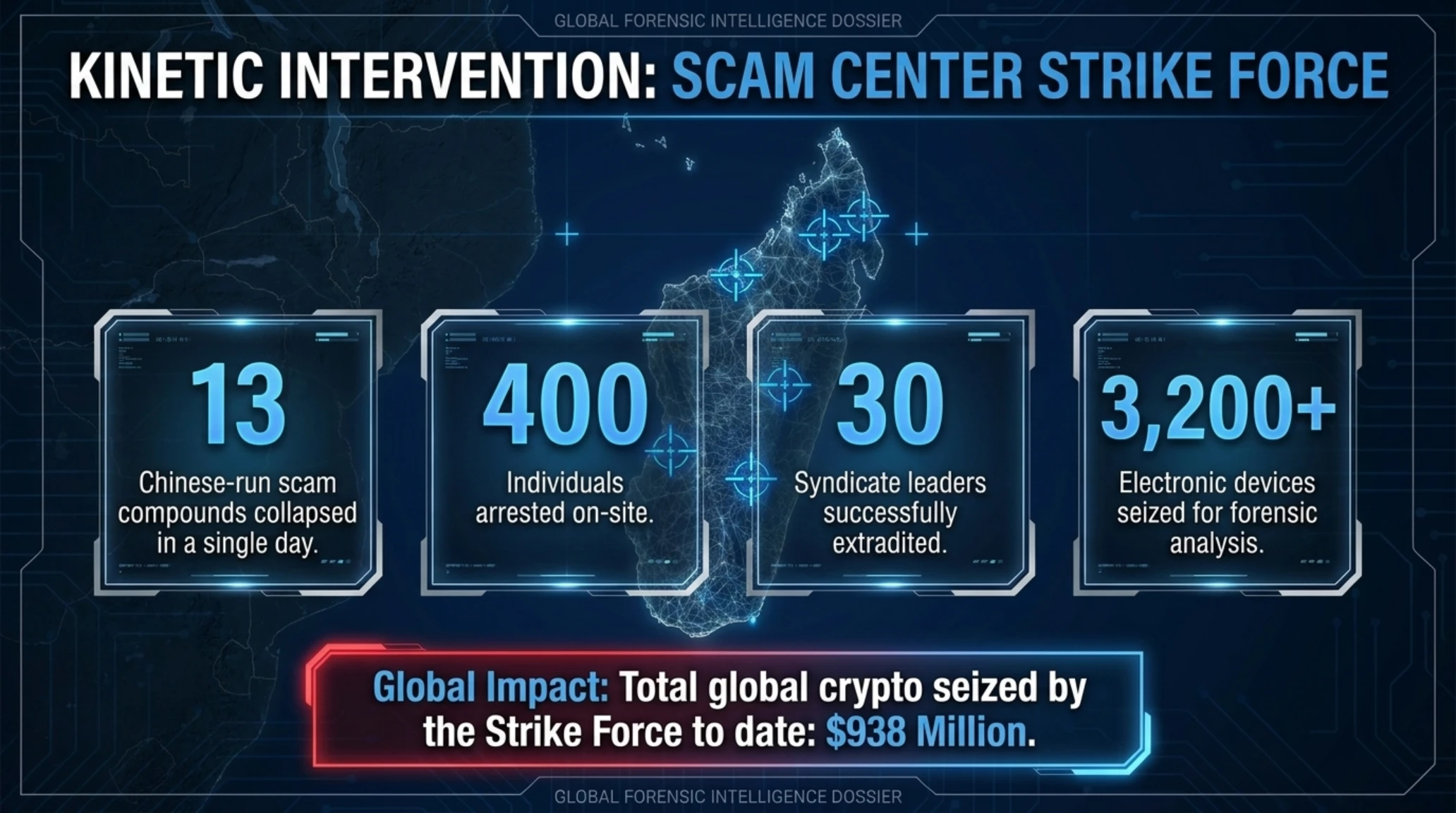
Concurrent with freezing $52.8 million in cryptocurrency, another operation was underway. The Scam Center Strike Force (a specialized team formed in November 2025) traveled to Madagascar and collaborated with local forces to shut down 13 Chinese-run scam compounds.
These compounds in Madagascar an African nation that had previously been under the radar for scam activity were operating in secrecy. Nearly 400 people were arrested, over 3,200 electronic devices (phones, laptops, hard drives) were seized, and approximately 30 Chinese leaders were extradited to China.
This marked the first time the U.S. government directly intervened and cooperated with local governments to eliminate these camps. Previously, most compounds operated without prosecution because they existed in countries with weak or corrupt governments.
Attorney General Jeanine Pirro announced that the Strike Force has now expanded its scope globally and aims to dismantle all scam compounds worldwide. To date, the Strike Force has seized approximately $938 million in cryptocurrency and Xinbi was just one target.
Scam Center Strike Force: By the Numbers
| Formation Date | November 2025 |
| Total Crypto Seized | $938 Million |
| Compounds Shut Down | 13 (in Madagascar alone) |
| Total Arrests | Nearly 400 people |
| Devices Seized | 3,200+ electronic devices |
| Leaders Extradited | 30 individuals to China |
Elliptic's Role: How a Blockchain Firm Guided the U.S. Government
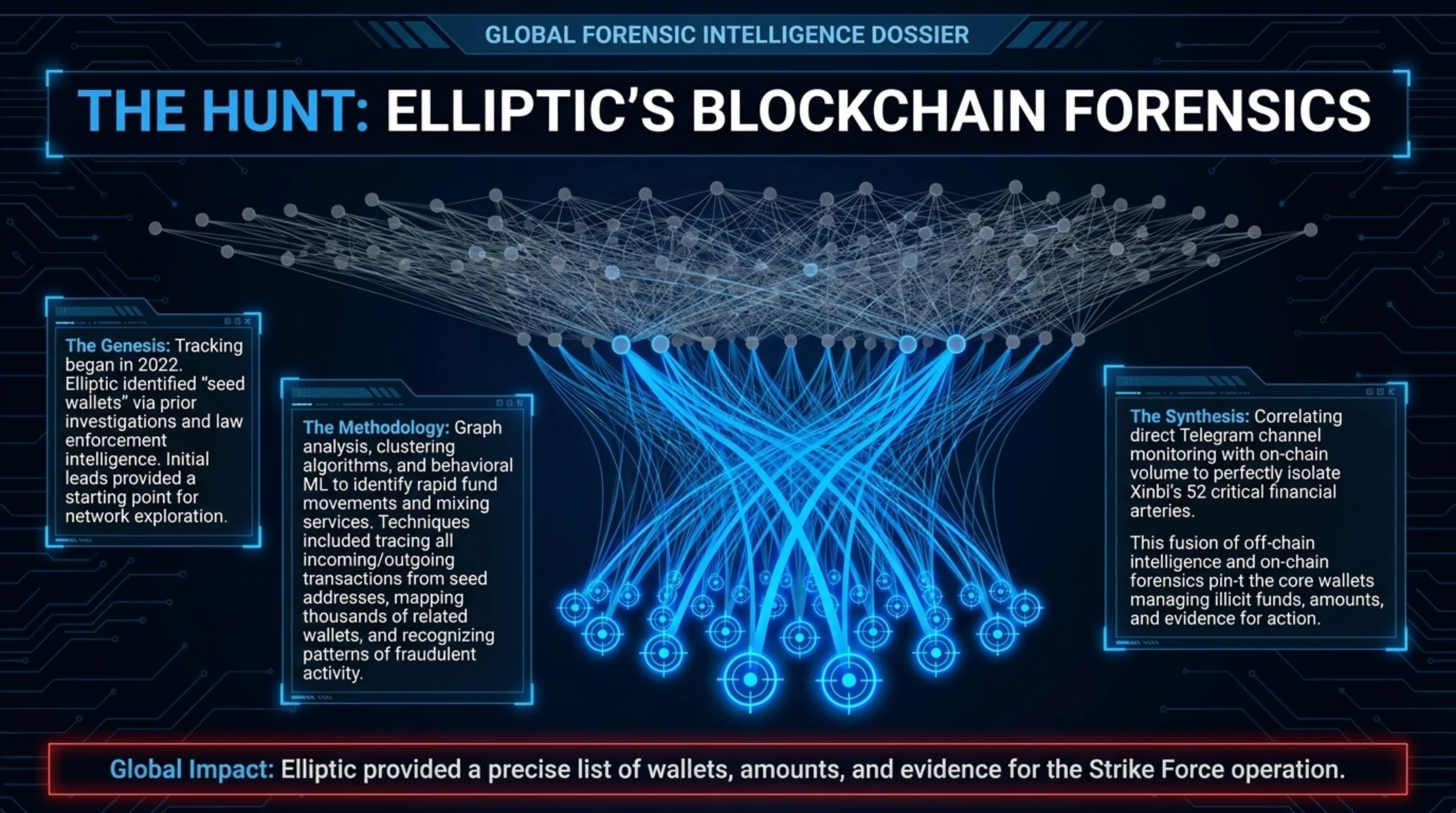
One of the unsung heroes behind this operation is Elliptic a blockchain analytics company that has spent years researching Guarantee marketplaces. Dr. Tom Robinson, Elliptic's founder and Chief Scientist, explained in an interview with The Hacker News how his team identified Xinbi's wallets.
Elliptic had been tracking Xinbi since 2022. Using advanced blockchain forensics techniques, they traced all of Xinbi's transactions and mapped the network of wallets associated with the marketplace. When the Secret Service decided to act, Elliptic provided a precise list of wallets, amounts, and evidence.
Interesting note: Elliptic exposed HuiOne Guarantee years ago as well. Their research led Telegram to finally shut down HuiOne in May 2025. They did the same for Tudou. And now Xinbi. This demonstrates that without private sector companies like Elliptic, governments cannot combat these criminals alone.
Dr. Robinson stated in the interview: "There is general concern among Guarantee marketplaces about using USDT and the risk of wallet freezes. They are seeking unfreezable alternatives like USDD." This means the war isn't over these criminals are evolving their technology to evade government reach.
USDD: Fleeing to Unfreezable Stablecoins
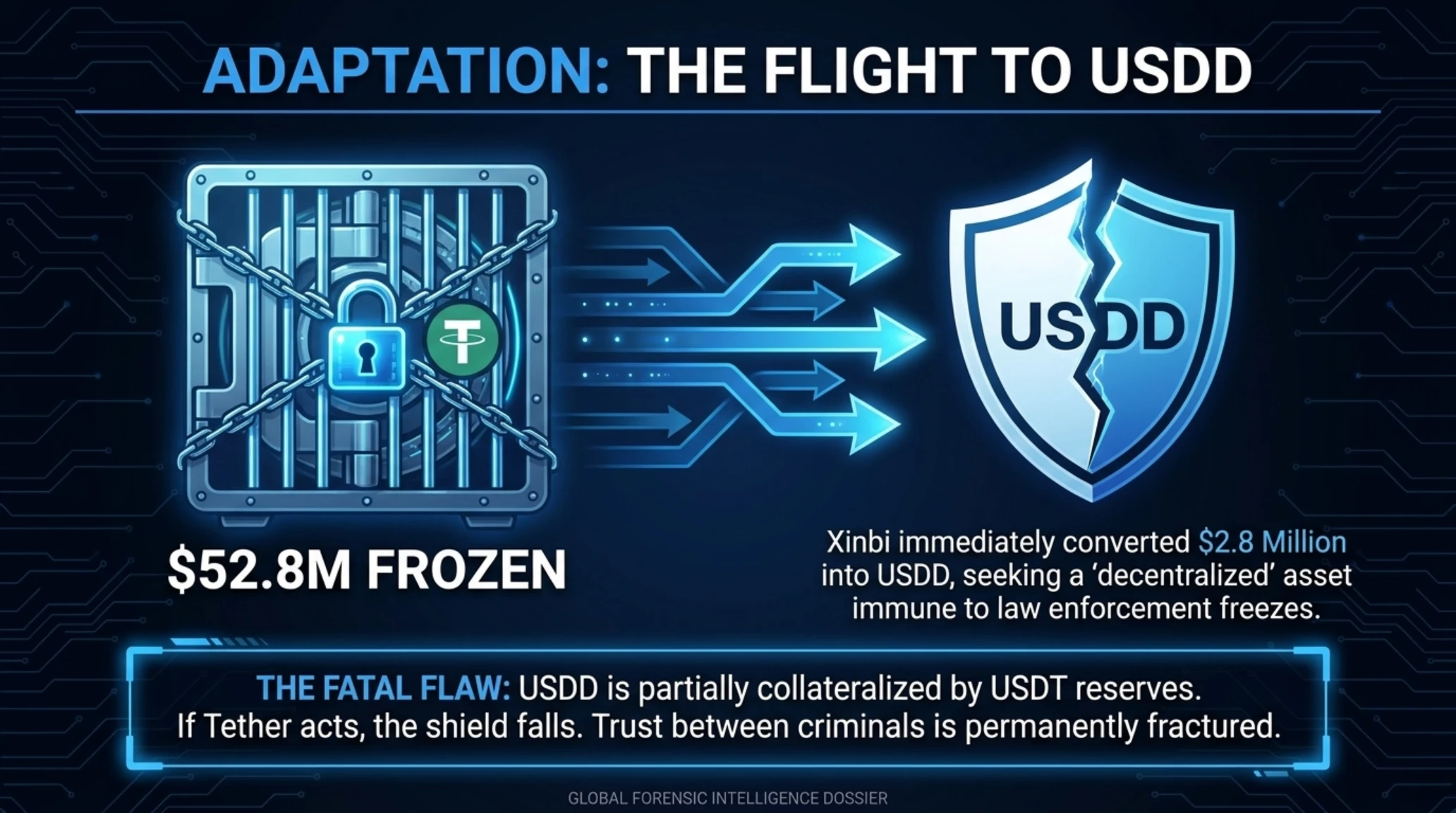
One of Xinbi's most interesting reactions post-freeze was switching to USDD. USDD is a stablecoin launched by Justin Sun (Tron founder) that claims to be "decentralized" meaning no company or central entity can freeze it.
Immediately after the freeze, Xinbi converted approximately $2.8 million of its USDT to USDD. But is this really a solution? No. Because USDD itself is partly collateralized with USDT meaning part of its reserves are USDT, which can be frozen. Therefore, if Tether decides, it can indirectly impact USDD as well.
Dr. Robinson explained: "Its claims of decentralization are contested, and it is still exposed to freezing risk." However, this shift demonstrates that criminals are seeking escape routes from control. And this is a cat-and-mouse game every time governments find a new method, criminals also evolve.
North Korea's Role: Even Hackers Were Xinbi Customers
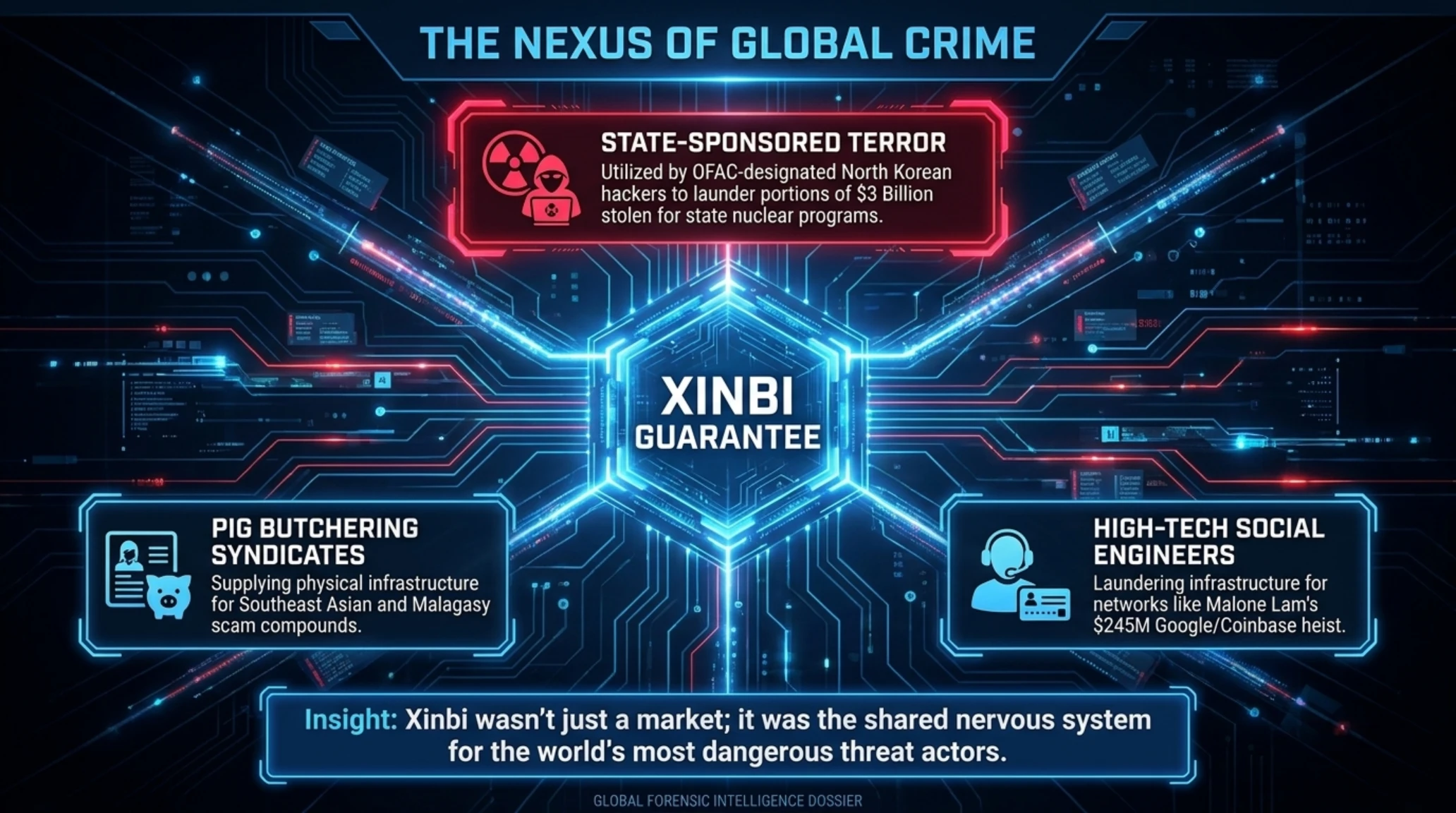
One of the most shocking revelations was the Treasury Department's announcement that "Xinbi Guarantee's platform has reportedly been used by North Korean hackers and by several OFAC-designated entities." This means even the North Korean government under the world's strictest sanctions used Xinbi for money laundering.
North Korea has spent years hacking cryptocurrency exchanges to fund its missile and nuclear programs. According to the UN, North Korea hacked over $3 billion in crypto between 2017 and 2023. But the question was: how do they convert this money to cash? Answer: through marketplaces like Xinbi.
OFAC also stated that Jin Bei Group and entities associated with Prince Group TCO (a major criminal organization in Southeast Asia) also used Xinbi. This shows that Xinbi worked not just for individual scammers, but for organized criminal syndicates and even rogue states.
Comparing Malone Lam's $245M: Two Different Worlds, One Shared Infrastructure
In the same week Xinbi was frozen, another story broke: Malone Lam, a 22-year-old Singaporean resident of Miami, pleaded guilty to stealing $245 million in cryptocurrency. These two stories may seem independent, but they're actually part of a larger ecosystem.
Lam and his team used social engineering impersonating employees of Google, Coinbase, and other major companies to gain access to victims' accounts. After theft, they bought 28 luxury cars, rented private jets, and threw lavish parties. But how did they launder the money? Likely through the same infrastructure that Xinbi provided.
Lam led an 18-person network that operated from October 2023 to May 2025. He is the eleventh person to plead guilty in this case, but his conviction represents a breakthrough for the Justice Department because he was the ringleader. Now the FBI is pursuing the remaining network members.
These two stories (Xinbi and Lam) demonstrate that crypto crime is multilayered: on one side, scam compounds and pig butchering; on the other, social engineering and direct theft. And at the center of it all, marketplaces like Xinbi provide the necessary infrastructure.
- U.S. government finally taking serious action against scam compounds
- Collaboration between Secret Service, FBI, Treasury, and private firms like Elliptic
- Xinbi sanctioned as transnational criminal organization strong signal
- $938 million crypto seized to date by Strike Force
- Xinbi will likely reappear under a new name
- Criminals migrating to USDD and other unfreezable stablecoins
- Still 200,000+ people imprisoned in scam compounds
- Until Telegram cooperates, these marketplaces will continue
The Future: Will Xinbi Return?
History shows these marketplaces never truly die they just rebrand. HuiOne closed, Tudou took its place. Tudou closed, Xinbi took its place. Now Xinbi is closed so likely a new marketplace will emerge soon.
Dr. Robinson from Elliptic said: "We might well see Xinbi emerge under a different name, that's essentially what happened with Huione Guarantee – it reemerged as Tudou Guarantee. But Tudou didn't last long and I think it will be challenging for Xinbi to survive, even under a new name."
Why? Because trust has been broken. All merchants and users of these services now know their wallets may be identified and frozen at any moment. This uncertainty undermines the core mechanism these marketplaces rely on which is trust between criminals.
Elliptic described this operation as a "severe setback" to the Guarantee marketplace ecosystem. But this isn't the end the war continues. Until Telegram fully cooperates, until Southeast Asian governments destroy scam compounds, and until unfreezable stablecoins exist, these criminals will find ways to escape.
Telegram's Role: Why Must Pavel Durov Be Held Accountable?
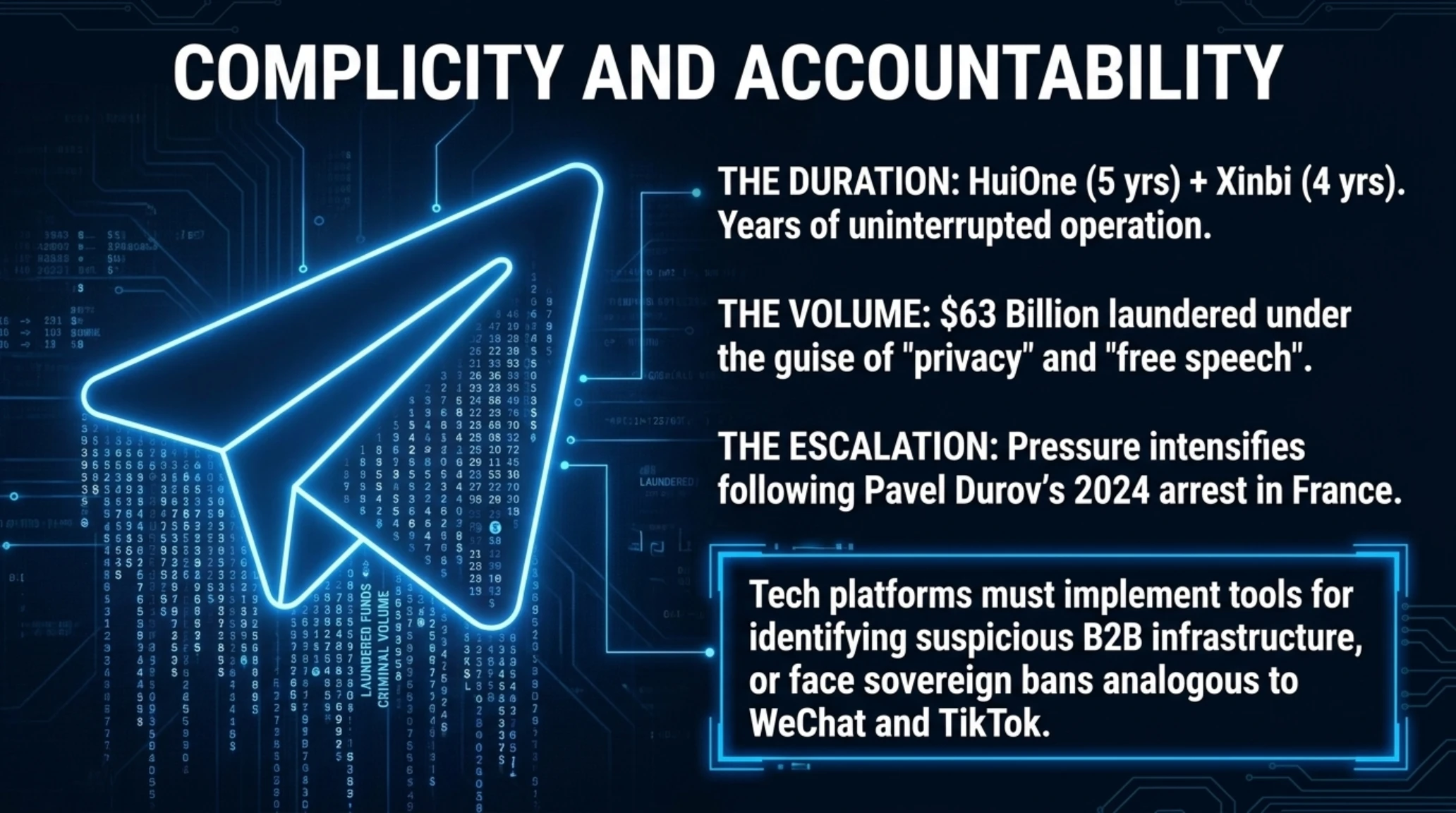
An important question remains: why did Telegram allow these marketplaces to operate for years? HuiOne was active from 2020 to 2025 that's 5 years. Xinbi from 2022 to 2026 4 years. Why didn't Telegram act sooner?
Pavel Durov, Telegram's founder, has always defended "freedom of speech" and "privacy." But does this mean Telegram should allow criminals to launder $63 billion in dirty money? Many experts believe Telegram must be held accountable.
In Europe, Durov was arrested in France in 2024 (though later released) for Telegram's failure to cooperate with police in identifying criminals. Many governments demand stricter Telegram regulation, but Durov has resisted thus far.
Now, with Xinbi's exposure and the massive criminal volume that occurred on Telegram, pressure on Durov intensifies. If he refuses to cooperate, governments may ban Telegram in their countries exactly what happened to WeChat and TikTok in some nations.
How to Protect Yourself from Pig Butchering
Given that pig butchering scams remain prevalent, it's crucial to know how to protect yourself. The FBI has provided several key tips:
First, never send money to someone you only know online even if you've been communicating for months. Scammers are extremely patient and may spend 6 months or more building trust.
Second, if someone discusses an "investment opportunity," be immediately suspicious. No legitimate investment offers 20-30% monthly returns. If it sounds too good to be true, it probably is a scam.
Third, never invest on unknown websites. If it's not a legitimate crypto exchange (like Binance, Coinbase, Kraken), it's probably fake. Even if the website looks professional scammers can build highly realistic websites.
Fourth, if a website asks you to pay "tax" or "fees" to withdraw money, this is 100% a scam. No legitimate platform requires you to pay additional money to withdraw.
Fifth, if you think you've been scammed, immediately report to the FBI (via ic3.gov). The sooner you report, the better the chance of recovery though unfortunately, recovery is often impossible.
Technical Analysis: How Can Tether Freeze USDT?
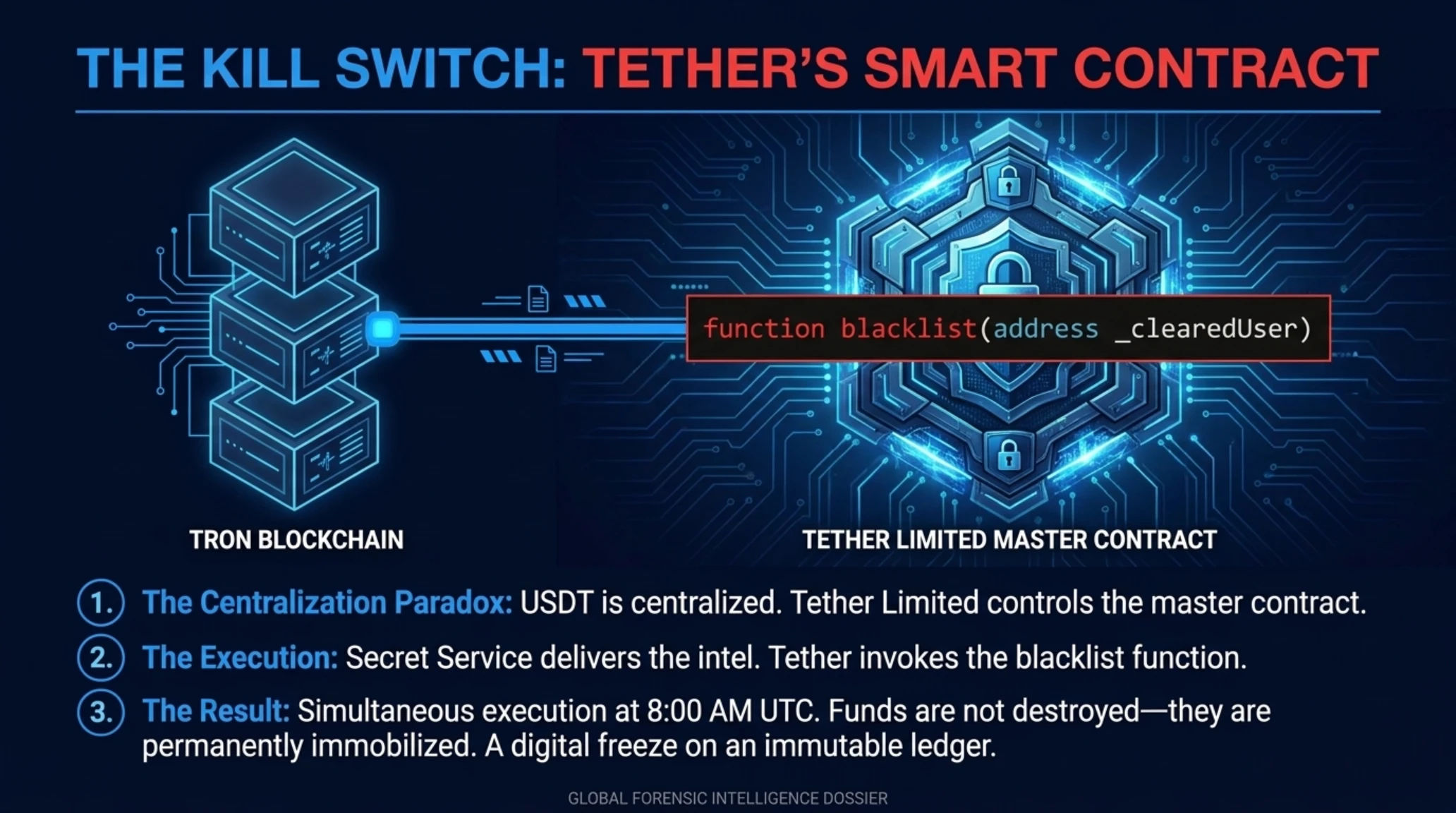
One important technical question: how could Tether freeze 52 wallets in one day? The answer lies in USDT's architecture. USDT is a "centralized stablecoin" meaning one company (Tether Limited) controls it and can block any wallet.
USDT runs on multiple blockchains: Ethereum, Tron, BSC, and others. The highest volume is on Tron which was exactly the blockchain Xinbi used. Tron blockchain is very fast and cheap, so scammers prefer it.
When the Secret Service provided the list of wallet addresses to Tether, Tether invoked a special function in the USDT smart contract: `blacklist()`. This function adds the wallet address to a blacklist, and from that moment, the wallet cannot transfer USDT. The money is still in the wallet, but unusable like a frozen bank account.
Tether's power is a double-edged sword. On one hand, it allows governments to block criminals' money. But on the other, it means USDT isn't truly decentralized one company can decide who has the right to use their own money.
This is precisely why scammers are migrating to USDD because USDD claims to be decentralized and no one can freeze it. But as mentioned, this claim is questionable since USDD itself is backed by USDT.
The Global Impact: How Xinbi Affected Different Regions
While Xinbi operated primarily from Southeast Asia with Chinese management, its impact was truly global. American victims lost billions through pig butchering scams facilitated by Xinbi's infrastructure. European investigators had been tracking Xinbi-linked transactions for years. Middle Eastern authorities discovered that some of their citizens were trapped in scam compounds.
In the United States alone, the FBI received over 50,000 complaints related to pig butchering scams in 2025, with total losses exceeding $6.2 billion. Many of these victims were elderly Americans who had lost their life savings. Some victims mortgaged their homes, borrowed from retirement accounts, or even took loans from family members all to feed money into fake investment platforms built using Xinbi services.
In Europe, Europol coordinated with national police forces across 12 countries to track Xinbi-related money laundering. They discovered that European victims had lost over €2 billion through scams connected to the marketplace. The UK's National Crime Agency called Xinbi "one of the most dangerous criminal enterprises we've ever encountered."
In Asia, the situation was even more complex. Many of the scam compound workers were themselves victims young people from Vietnam, Thailand, Cambodia, and Myanmar who had been lured with false job promises. Once trapped, they were forced to commit fraud or face torture. The human toll of Xinbi extended far beyond financial losses.
The Technology Behind the Operation: How Was Xinbi Tracked?
The technological sophistication required to track and ultimately freeze Xinbi's assets cannot be overstated. Elliptic's team used advanced blockchain forensics techniques including transaction graph analysis, clustering algorithms, and behavioral pattern recognition.
They began by identifying "seed wallets" known addresses associated with Xinbi through previous investigations or law enforcement tips. From there, they traced all incoming and outgoing transactions, building a network map of thousands of related wallets. This process took months of continuous analysis.
Machine learning algorithms helped identify patterns typical of money laundering: rapid movement of funds through multiple wallets, use of mixing services, conversion between different cryptocurrencies, and eventual conversion to fiat currency through specific exchanges.
The team also monitored Xinbi's Telegram channels directly, analyzing transaction volume, user behavior, and service offerings. They identified peak activity times, popular services, and price structures intelligence that helped law enforcement understand the full scope of the operation.
When the freeze order came, timing was crucial. All 52 wallets needed to be frozen simultaneously to prevent criminals from moving assets once they realized they were under investigation. The coordination between Elliptic, Secret Service, and Tether had to be perfect and it was.
What Happens to the Frozen Funds?
An important question remains: what happens to the $52.8 million in frozen cryptocurrency? Unlike seized physical assets that can be auctioned, frozen cryptocurrency exists in a legal gray area.
First, the funds remain frozen while legal proceedings continue. The Justice Department must prove in court that these specific wallets were used for criminal activity. This requires presenting evidence linking the wallets to Xinbi transactions, scam victims, or money laundering.
If the court rules in favor of the government, the funds can be officially seized and converted to U.S. dollars. This money typically goes into a forfeiture fund managed by the Justice Department. Part of it may be used to compensate victims if they can be identified and their losses documented.
However, recovering money for victims is extremely difficult. Most pig butchering victims sent money through multiple intermediaries, making it nearly impossible to trace specific victim funds to specific wallets. Additionally, many victims are embarrassed to come forward, fearing judgment or not wanting to admit they were deceived.
The Treasury Department has stated that any recovered funds will be used for "victim compensation where possible, and otherwise to support law enforcement operations targeting transnational criminal organizations." In practice, this means most of the money will fund future investigations rather than reaching victims.
The Psychology of Scam Victims: Why Smart People Fall for Pig Butchering
One of the most misunderstood aspects of pig butchering scams is why intelligent, educated people become victims. The reality is that these scams are psychologically sophisticated and exploit fundamental human vulnerabilities.
First, loneliness. Many victims are isolated divorced, widowed, or simply lacking strong social connections. The scammer provides what feels like genuine emotional support, spending hours in conversation, showing interest in the victim's life, and building a deep emotional bond. By the time investment is mentioned, the victim trusts the scammer completely.
Second, incremental commitment. The scam doesn't start with "invest $100,000." It begins with "invest $500 and see what happens." The victim invests small amounts, sees (fake) profits, and gradually increases their investment. This creates a psychological trap called "escalation of commitment" having already invested significantly, victims feel they must continue to recover their losses.
Third, social proof and apparent legitimacy. Scammers create elaborate fake websites that look identical to legitimate exchanges. They may show screenshots of other "users" making profits. Some even create fake customer service teams that respond promptly to questions. Every element is designed to appear legitimate.
Fourth, greed and hope. Many victims are struggling financially or nearing retirement with insufficient savings. The promise of 20-30% monthly returns seems like a way to solve their problems. Hope overwhelms skepticism.
Behavioral psychologists studying pig butchering victims have found that shame is the biggest barrier to reporting. Victims blame themselves for being "stupid" or "greedy," even though they've been manipulated by professional criminals using sophisticated psychological techniques. This shame prevents many victims from reporting to authorities, allowing scams to continue.
Comparing Xinbi to Traditional Dark Web Markets
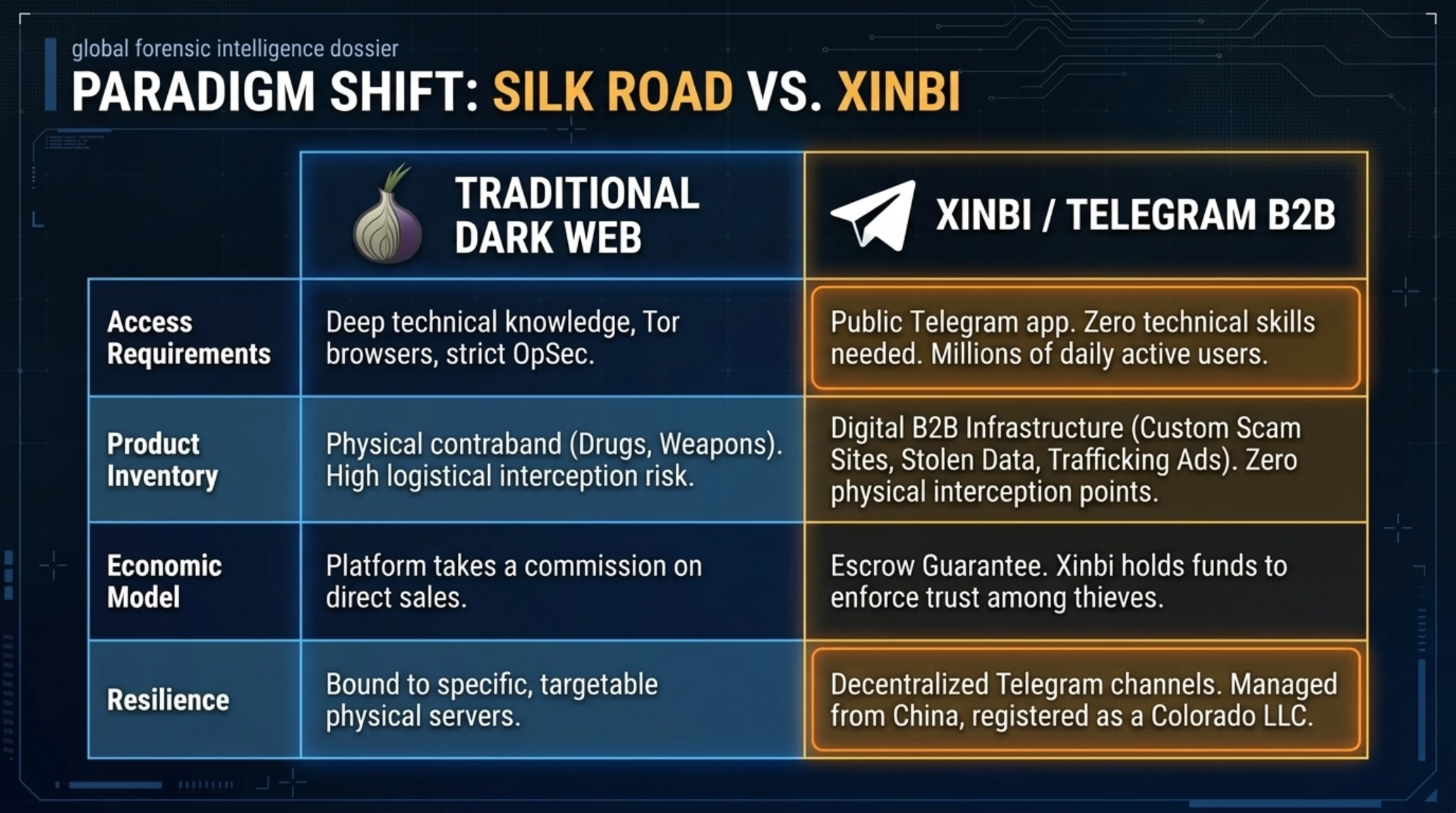
Xinbi operated fundamentally differently from traditional dark web marketplaces like the now-defunct Silk Road or AlphaBay. Those markets required technical knowledge to access users needed Tor browser, cryptocurrency wallets, and understanding of operational security.
Xinbi, by contrast, operated on Telegram an app millions use daily. No special technical knowledge was required. The marketplace had customer service representatives, simple user interfaces, and even tutorials for new users. This accessibility made Xinbi far more dangerous than traditional dark web markets.
Additionally, traditional dark web markets primarily sold physical goods (drugs, weapons, stolen data). Xinbi sold services the infrastructure needed to commit fraud. This made it harder for law enforcement to target, because no physical shipments could be intercepted.
The economic model also differed. Silk Road took a commission on each sale. Xinbi acted as escrow, holding funds until services were delivered, then releasing payment. This created stronger trust between criminals and made the marketplace more resilient.
Finally, Xinbi had protection traditional markets lacked. It operated from jurisdictions with weak law enforcement, its managers were based in China (making extradition difficult), and it could quickly move to new Telegram channels if shut down. This combination made Xinbi exceptionally difficult to eliminate which is why its shutdown represents such a significant victory.
Lessons Learned: What Must Change in the Future?
This operation teaches several important lessons. First, private-public sector collaboration is essential. Without Elliptic, the Secret Service couldn't have found the wallets. Without Tether, they couldn't have frozen them. This shows that combating crypto crime requires teamwork.
Second, Telegram must be more accountable. Allowing $63 billion in dirty money to be laundered is unacceptable. Telegram must implement better tools for identifying and reporting suspicious activity or governments must force it to do so.
Third, international crypto regulations must be harmonized. That a marketplace can be registered in Colorado (Xinbi was a Colorado LLC) but operate in Cambodia and send money to China shows current laws are insufficient. We need a global regulatory framework.
Fourth, public education is crucial. Many pig butchering victims don't even know how these scams work. Governments, tech companies, and media must do more awareness campaigns about these dangers.
Fifth, scam compounds must be physically attacked. Freezing money is important, but as long as these camps exist, criminals will find other ways. The Madagascar operation showed these camps can be destroyed this must happen worldwide.
Related Intelligence Dossiers on TekinGame
• 📱 Tekin Analysis | Apple's Foldable iPhone Duo & iPhone 18 Pro Price Hike
• 🧠 Tekin Analysis | Valve's 17-Year Secret: The Staged L4D2 Trailer Leak
• 🎬 Ultimate Guide to Local AI Video Generation (Minimax, Wan, LTX)
Frequently Asked Questions
How much money had Xinbi laundered?
According to Elliptic, Xinbi processed over $24 billion in transactions from 2022 to 2026, making it the second-largest illicit marketplace in history.
How could the Secret Service freeze the wallets?
Through collaboration with Elliptic and Tether. Tether has the capability to freeze USDT, so when Secret Service provided the wallet list, Tether blocked them.
Will Xinbi return?
Likely yes, under a new name. HuiOne became Tudou, Tudou became Xinbi. The pattern repeats.
How many people are imprisoned in scam compounds?
The UN estimates over 200,000 people are forcibly held in these camps across Southeast Asia.
How can I protect myself from pig butchering?
Never send money to someone you only know online, be suspicious of investment opportunities that sound too good, only use reputable exchanges.
Additional Gallery: 🧠 Tekin Analysis | Telegram's $24B Black Market Takedown & $52M Crypto Freeze