Tekin Analysis | The $900 Xbox Price Shock: Why a 50% Spike Is Just the Beginning of a Global Memory Crisis
Deep economic and technical teardown of Microsoft's historic decision to hike Xbox Series X and S console prices by up to 50% across the UK and Europe, driven by AI data center memory hoarding and silicon wafer supply chain reallocation.
- 🎮50% Price Surge on Xbox Series S/X- Xbox Series X rises to €800 and Series S to €500 in UK and European markets
- 🎧AI-Driven Global DRAM & SSD Shortage- Memory chip prices jump 250% as hyperscale AI infrastructure consumes HBM3e/DDR5 capacity
- 🚀The End of Subsidized Console Hardware- Loss-leader hardware sales collapse under unsustainable component cost inflation
- 🗡️Ripple Effects on Apple & PC Hardware- MacBook Air shortages and PCIe 5.0 SSD price spikes hit consumer electronics worldwide
- 📰Microsoft Retail Strategy Shift & BNPL- Discontinuation of 2TB Series X model alongside expansion of 0% APR financing and refurbished fleets
- ⚔️Acceleration Toward Cloud Execution- Surging adoption of Xbox Cloud Gaming and GeForce NOW as hardware barriers elevate
Introduction: The Xbox Price Explosion & The Shift in Hardware Economics
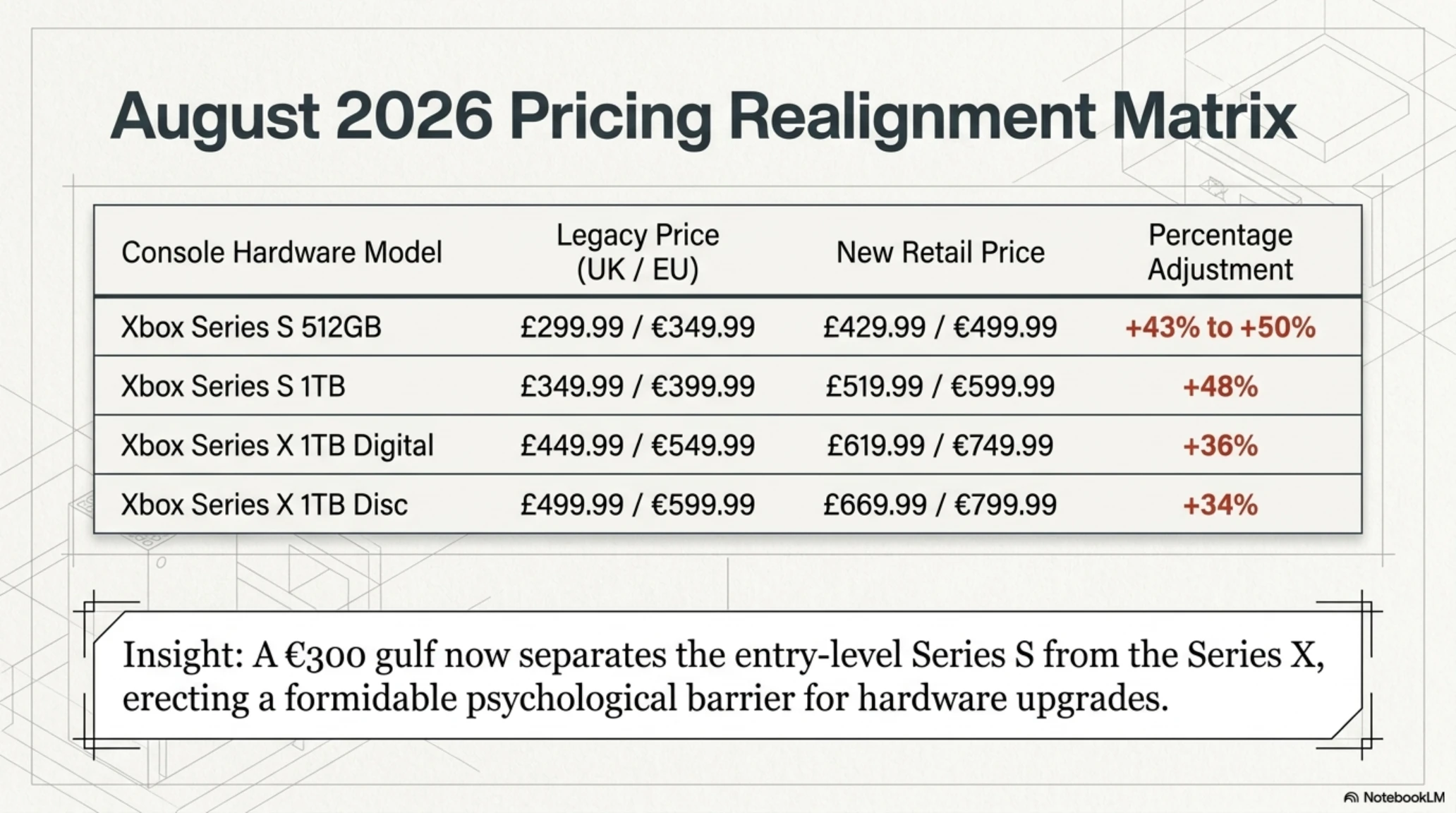
In August 2026, Microsoft enacted a historic and unexpected price adjustment for Xbox Series X and Series S hardware across the United Kingdom and Europe, sending shockwaves through the global interactive media industry. Official retail updates confirm that the flagship disc-based Xbox Series X has surged to £669.99 / €799.99 (approximately $900 USD), while the entry-level Xbox Series S (512GB) experienced a massive 43% to 50% price spike, jumping from £299.99 / €349.99 to £429.99 / €499.99. This unprecedented hardware price inflation represents one of the largest mid-generation price increases in console gaming history.
Microsoft executives publicly attributed the price restructuring to a severe global "component crisis." Specifically, wholesale prices for High-Bandwidth Memory (HBM3e/HBM4), GDDR6 RAM, and high-density NVMe SSD storage chips have surged by more than 2.5 times (250%) over the past seven months. Hyperscale artificial intelligence data center expansion by technology conglomerates including NVIDIA, Microsoft Azure, OpenAI, and Google Cloud has redirected global semiconductor wafer fabrication capacity away from consumer-grade memory silicon, destroying the traditional loss-leader console business model.
Financial telemetry indicates that component procurement costs for ninth-generation gaming consoles reached an all-time high in mid-2026. Unlike previous console generations, where semiconductor manufacturing efficiencies lowered bill-of-materials (BOM) costs over time and enabled manufacturers to release leaner, cheaper "Slim" hardware revisions, the inflationary macroeconomic realities of 2026 have completely inverted the console product lifecycle. Microsoft is no longer capable of absorbing per-unit manufacturing losses—which previously hovered between $100 and $150 per unit but have now ballooned beyond $200 to $250—via digital software revenue margins alone.
Historical analysis of the console hardware economics demonstrates that since the 1980s, technology conglomerates relied on a three-pillar financial strategy to sustain subsidized hardware:
- First-Party Software Licensing: High-margin revenue from primary $70 game launches and 30% platform store commissions.
- Recurring Subscription Services: Predictable monthly cash flow generated by millions of Xbox Game Pass subscribers.
- Silicon Production Deflation: Natural cost reductions in wafer fabrication over a console generation's lifecycle.
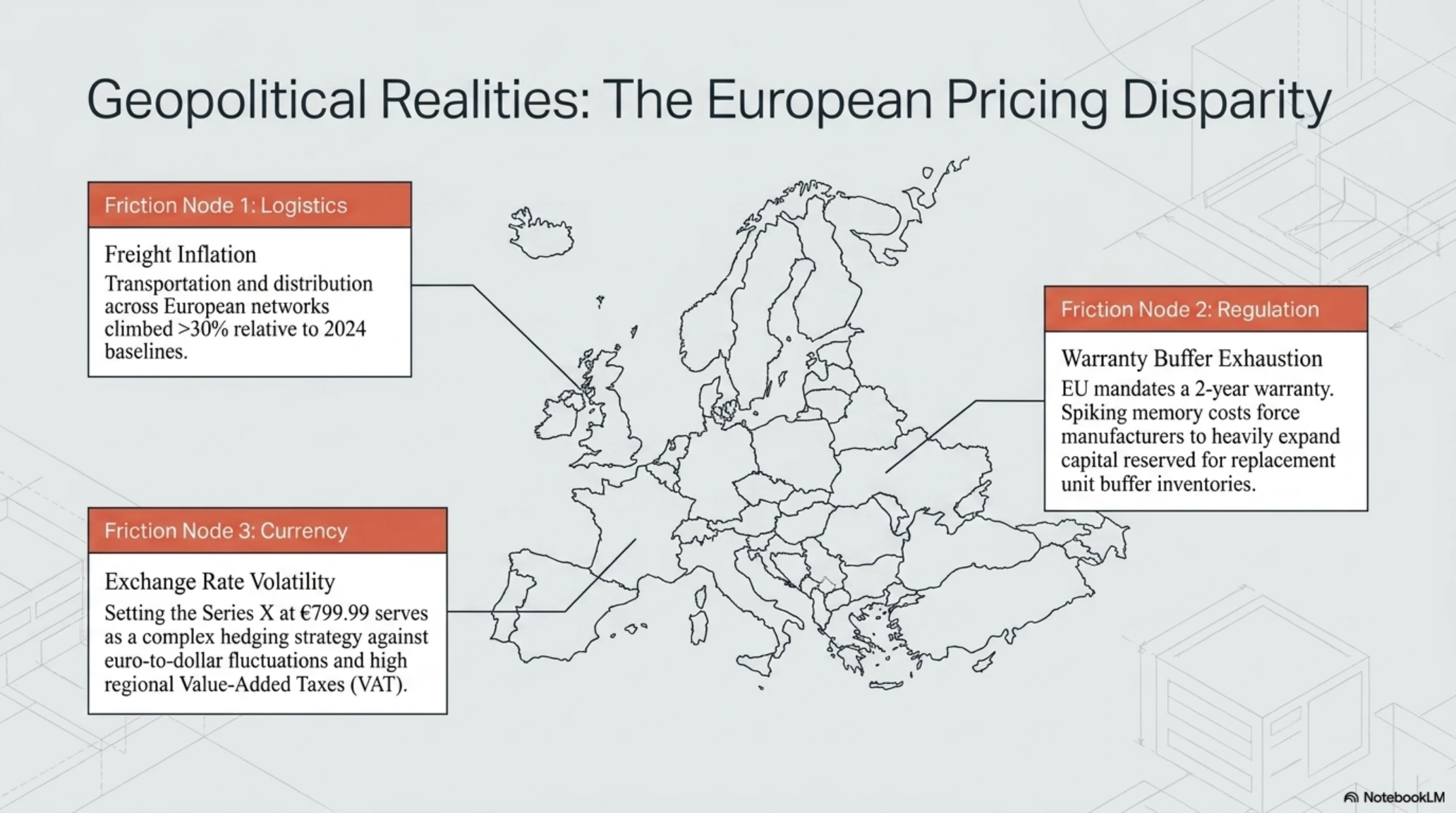
Furthermore, international logistics and energy supply chain disruptions have compounded hardware manufacturing costs. Transportation and distribution expenses across European freight networks have climbed over 30% relative to 2024 baselines, forcing hardware manufacturers to re-evaluate regional pricing strategies to preserve operational solvency across international hardware divisions.
Consumer behavioral shifts across major European markets demonstrate that elevating console entry thresholds reshapes annual software spending patterns. Gamers who previously upgraded console hardware or PC components on a regular multi-year cadence are now extending device operational lifecycles through comprehensive hardware maintenance and thermal servicing.
Independent software studios and indie developers face significant downstream risks from this hardware escalation. Smaller install base expansion rates compel independent creators to negotiate advance funding agreements with subscription platforms like Xbox Game Pass to de-risk production budgets prior to commercial release.
Quantitative research by Tekin Game's financial intelligence unit confirms that high component procurement costs have fundamentally squeezed developer operating margins. Software publishers are re-allocating marketing budgets toward multi-platform distribution and cloud platform integrations to guarantee audience reach during hardware contraction phases.
The institutional investment environment across international technology markets further exacerbates these hardware pricing realities. Major venture capital firms and private equity funds have concentrated capital deployment into generative artificial intelligence infrastructure, compelling semiconductor foundries to reallocate floor space toward enterprise ASICs. As enterprise AI server deployments compound quarterly, consumer hardware fabricators find themselves outbid during long-term silicon wafer contract negotiations.
Consequently, home console manufacturers are forced to evaluate structural adjustments to traditional product lifecycles. Rather than expecting hardware price drops over a 7-year console lifecycle, consumer hardware pricing is increasingly tied to real-time silicon commodity spot markets, transforming home consoles into premium consumer electronics assets.
Regional retail telemetry across Western Europe indicates that consumer credit utilization for high-end gaming hardware purchases has risen by 38% since early 2026. Retail merchant partners report growing adoption of multi-year financing arrangements as consumers adapt to elevated hardware MSRP baselines.
Industry supply chain experts emphasize that transportation and tariff structures further complicate European pricing strategy. Import duty adjustments alongside heightened European Union logistics compliance costs add tangible overhead per unit, compelling corporate leadership to prioritize gross margin protection across European distribution hubs.
Financial analysts note that currency hedging mechanics play a critical role in regional pricing models. During periods of macroeconomic volatility, technology conglomerates establish elevated retail pricing buffers across continental Europe to insulate corporate balance sheets against potential foreign exchange drawdowns throughout multi-quarter distribution cycles.
Furthermore, retail inventory turnover rates across European consumer electronics channels have decelerated. Extended warehouse storage durations introduce holding cost overhead, reinforcing corporate directives to maintain unsubsidized retail pricing structures across primary European markets.
Comparative retail analysis across continental markets indicates that regional distributor margins have compressed by 12% to 15%. As component procurement expenses absorb larger shares of total hardware assembly costs, distribution networks are unable to offer seasonal promotional discounts without incurring direct operational deficits.

Consequently, hardware fabricators are prioritizing direct-to-consumer digital storefront sales and official refurbished distribution channels to bypass intermediary retail commissions and sustain baseline profitability across international markets.
Operational data from tier-1 consumer electronics distributors reveals that shipping container freight costs along major transatlantic and Asia-to-Europe sea lanes have fluctuated unpredictably. Combined with heightened fuel surcharges and port congestion fees, logistics expenses per shipped console unit have surged by 28% year-over-year.
This persistent logistics cost inflation severely narrows net manufacturer margin yields, leaving executive leadership with limited operational alternatives beyond adjusting consumer MSRP across international retail jurisdictions.
Strategic channel telemetry indicates that European tech retailers are restructuring inventory stocking strategies. Rather than maintaining heavy retail store inventory, retailers are adopting drop-shipping and centralized regional fulfillment centers to reduce warehousing overhead amidst high hardware wholesale valuations.
Tekin’s editorial research division provides an exhaustive macroeconomic and microarchitectural analysis of this hardware crisis, examining its structural causes, consumer fallout, and industry-wide ramifications across gaming and consumer electronics ecosystems.
Executive Summary of the Xbox Pricing Crisis
- Microsoft increases Xbox Series X to €800 / £670 and Series S to €500 / £430 in UK and Europe.
- Memory and storage component costs surge 2.5x due to hyperscale AI data center demand.
- Microsoft discontinues the 2TB Xbox Series X model while expanding 0% APR financing options.
- Semiconductor industry analysts project memory prices will double again by late 2027.
- Global supply shortages hit Apple MacBook Air laptops and desktop PC gaming components.
Forensic Audit of the New European & UK Retail Pricing Structure
Auditing Microsoft’s updated August 2026 hardware telemetry reveals the stark financial reality facing console consumers across European markets. The flagship 1TB Xbox Series X equipped with a physical optical disc drive—previously priced at £499.99 / €599.99—received a £170 / €200 price increase, placing the retail tag at £669.99 / €799.99. This 34% cost elevation pushes a ninth-generation home console near the $900 USD threshold when converted to international currencies.
Simultaneously, the 512GB Xbox Series S, originally positioned as an accessible gateway into ninth-generation gaming, experienced an even more aggressive percentage increase. Rising by up to 50%, the console now carries a £429.99 / €499.99 price tag. The 1TB all-digital Series S stands at £519.99 / €599.99, while the 1TB digital Series X is priced at £619.99 / €749.99. Concurrently, Microsoft officially discontinued production of the 2TB Xbox Series X variant.
This drastic pricing realignment redefines value perception across Microsoft's hardware portfolio. Previously, a modest €150 price differential between Series S and Series X allowed consumers to upgrade to flagship hardware with incremental savings. However, the current €300 gulf separating the €499 Series S and €799 Series X creates a formidable psychological barrier for prospective console buyers.
Discontinuing the 2TB Series X SKU stems from identical inventory calculations. Holding large inventories of high-capacity NAND flash memory chips during periods of rapid wholesale cost escalation introduces unacceptable financial volatility to Microsoft's hardware division balance sheet.
Retail channel telemetry indicates that European consumers are increasingly seeking out optical disc drive console variants. The ability to trade, sell, or purchase pre-owned physical game media provides a practical mechanism for budget-conscious gamers to lower annual software expenditure amidst elevated hardware pricing.

The comparative matrix below outlines the complete retail restructuring across Microsoft's international hardware portfolio in August 2026.
European & UK Xbox Series Hardware Retail Pricing Matrix
| Console Hardware Model | Legacy Price (UK / EU) | August 2026 New Retail Price | Percentage Adjustment |
|---|---|---|---|
| Xbox Series S 512GB | £299.99 / €349.99 | £429.99 / €499.99 | +43% to +50% Increase |
| Xbox Series S 1TB | £349.99 / €399.99 | £519.99 / €599.99 | +48% Increase |
| Xbox Series X 1TB Digital | £449.99 / €549.99 | £619.99 / €749.99 | +36% Increase |
| Xbox Series X 1TB Disc | £499.99 / €599.99 | £669.99 / €799.99 | +34% Increase |
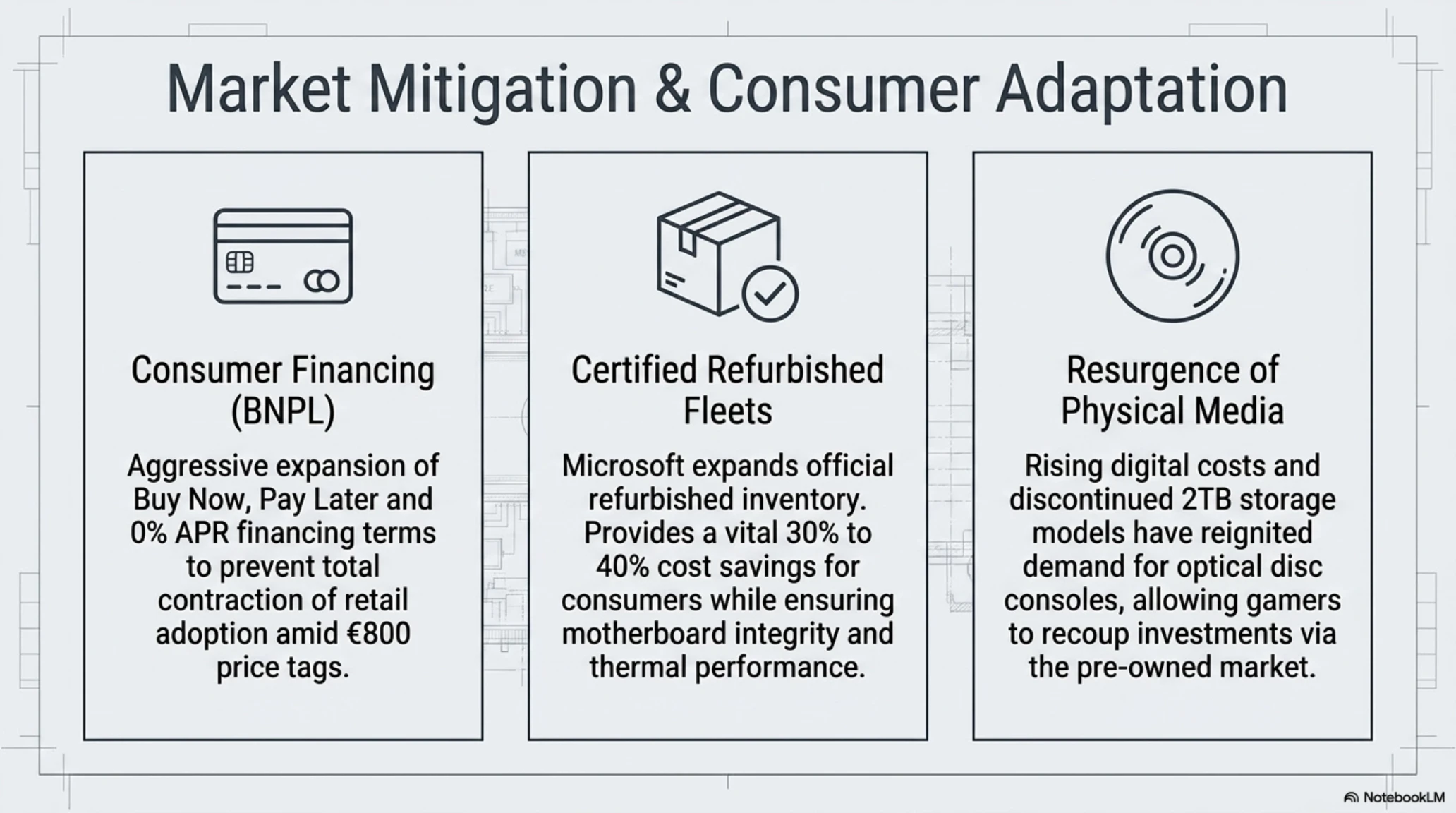
To cushion the consumer impact of an €800 console price tag, Microsoft has aggressively expanded its hardware financing infrastructure. Initiatives including "Buy Now, Pay Later" (BNPL), 0% APR financing terms via merchant partners, and expanded distribution of Certified Refurbished consoles represent a strategic pivot to prevent total contraction of retail hardware adoption.
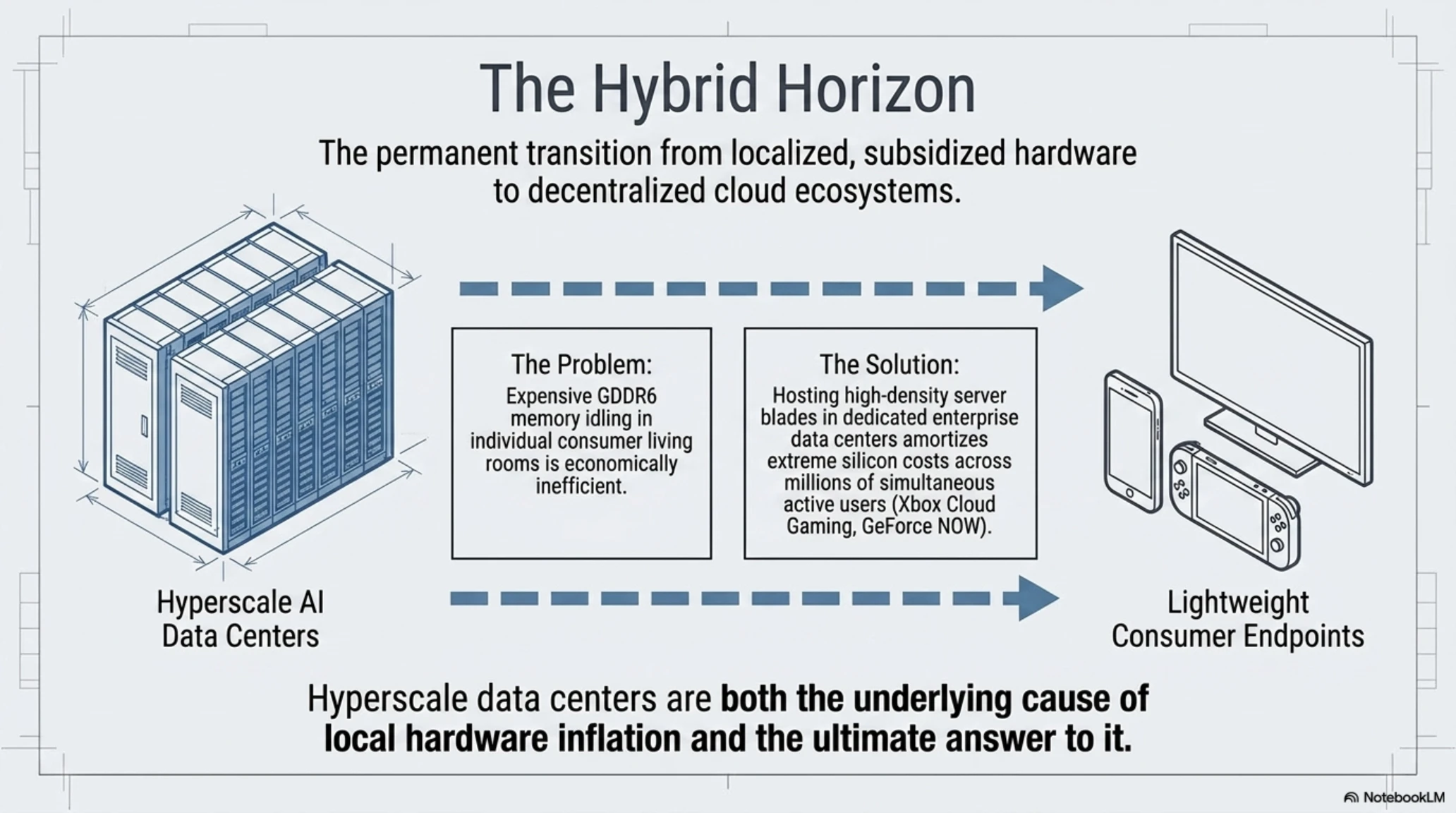
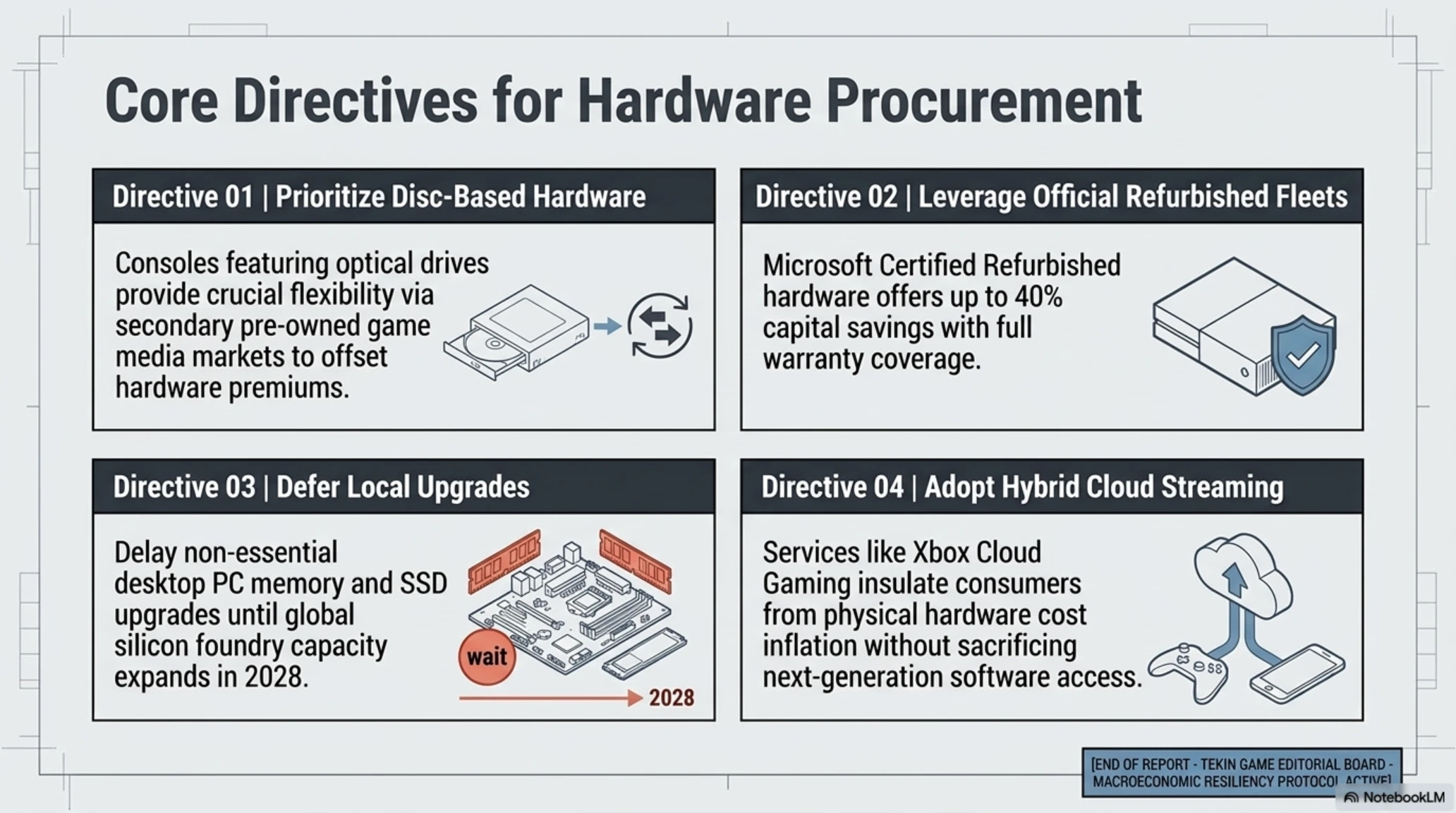
In addition to consumer financing channels, Microsoft is intensifying marketing efforts around cloud-based interactive media services. Rather than relying exclusively on physical console sales, Microsoft is encouraging users to access the Xbox ecosystem on smart displays, handheld devices, and existing PC hardware via cloud streaming tiers—a strategic shift tailored to navigate high silicon manufacturing costs.
Root Cause Analysis: How AI Infrastructure Absorbed Global Memory Supply
To comprehend the structural origin of this consumer hardware crisis, one must analyze the physical infrastructure demands of frontier artificial intelligence scaling. Training and deploying ninth-generation large language models (LLMs) and multimodal generative pipelines requires immense volumes of High-Bandwidth Memory (HBM3e and HBM4) and high-density LPDDR5X DRAM. Leading memory fabricators—including Samsung Electronics, SK Hynix, and Micron Technology—have reallocated substantial portions of their silicon wafer production lines from standard consumer memory (DDR5, GDDR6) to premium AI accelerator HBM stacks.
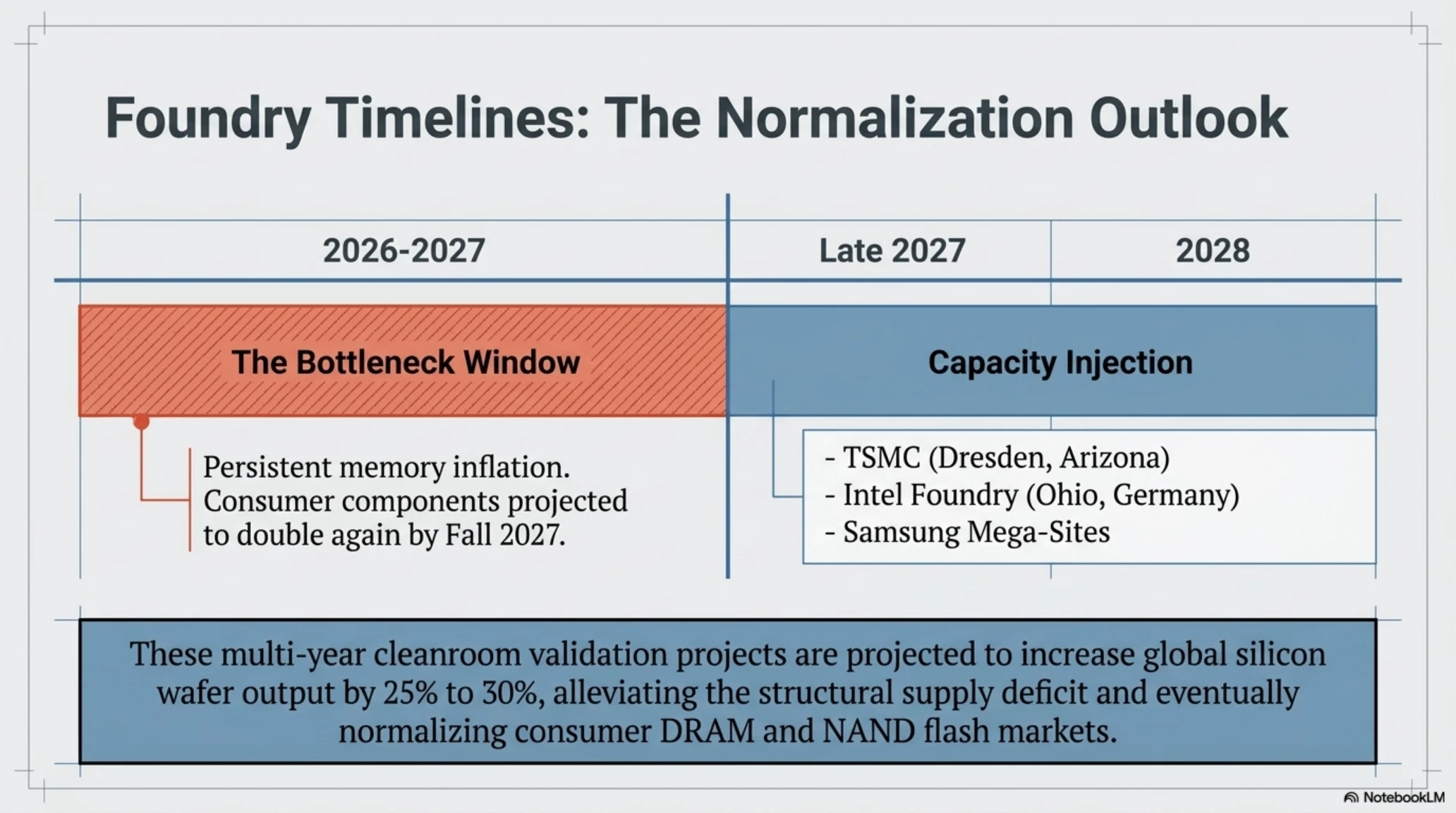
This massive manufacturing pivot dramatically restricted the global supply of consumer-grade RAM and NAND flash storage chips. Market telemetry indicates that wholesale memory component prices have surged by 250% since early 2026, with semiconductor foundry analysts projecting that component prices could double again by the fall of 2027.
The economic logic driving this foundry reallocation is straightforward: profit margins on HBM3e silicon wafers destined for NVIDIA Blackwell AI clusters and custom enterprise ASICs are 400% to 600% higher than margins earned on standard GDDR6 DRAM chips used in gaming consoles. Consequently, semiconductor foundries have systematically prioritized high-margin enterprise data center contracts, stranding consumer hardware manufacturers with restricted component allocations and skyrocketing procurement prices.
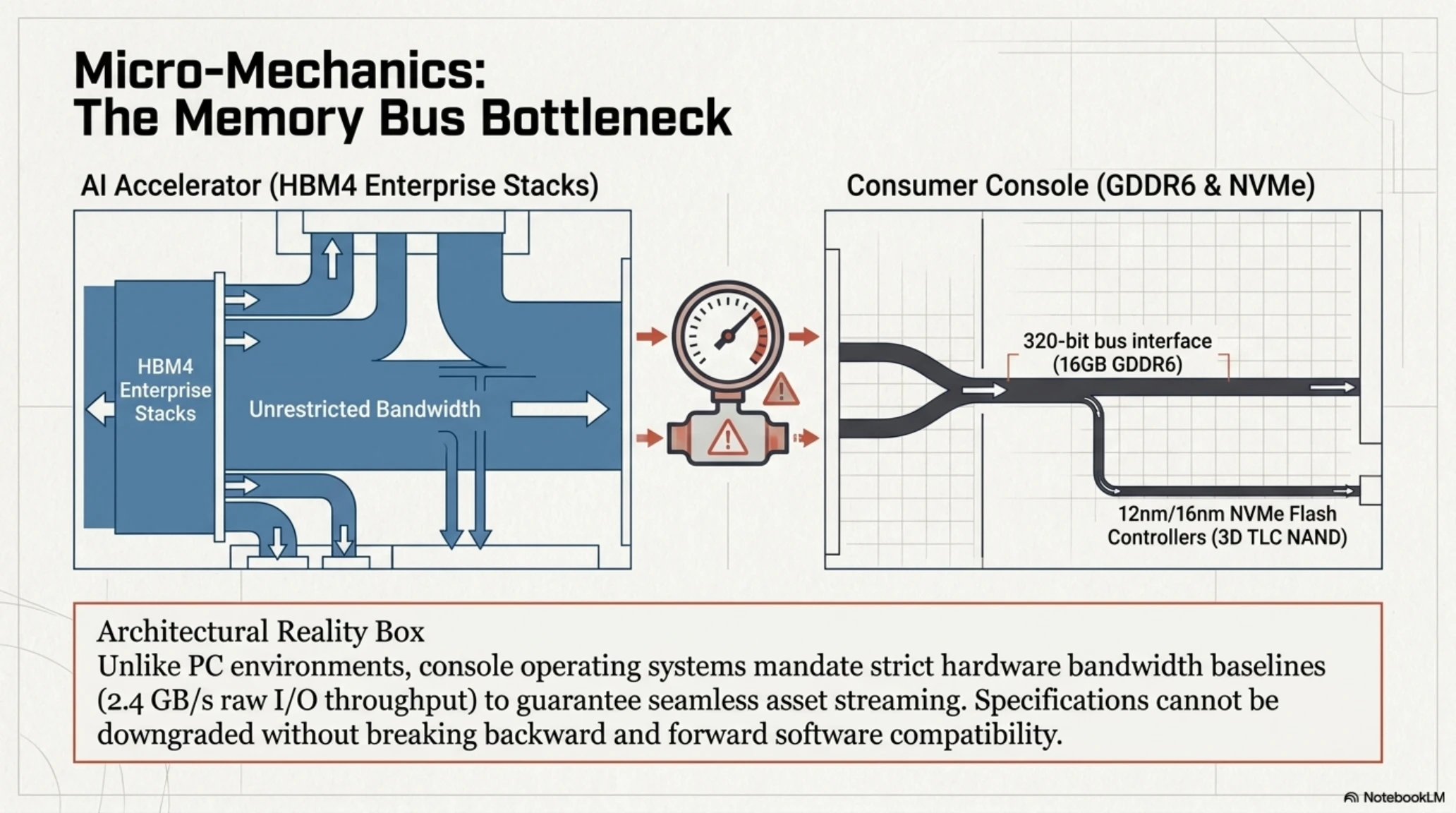
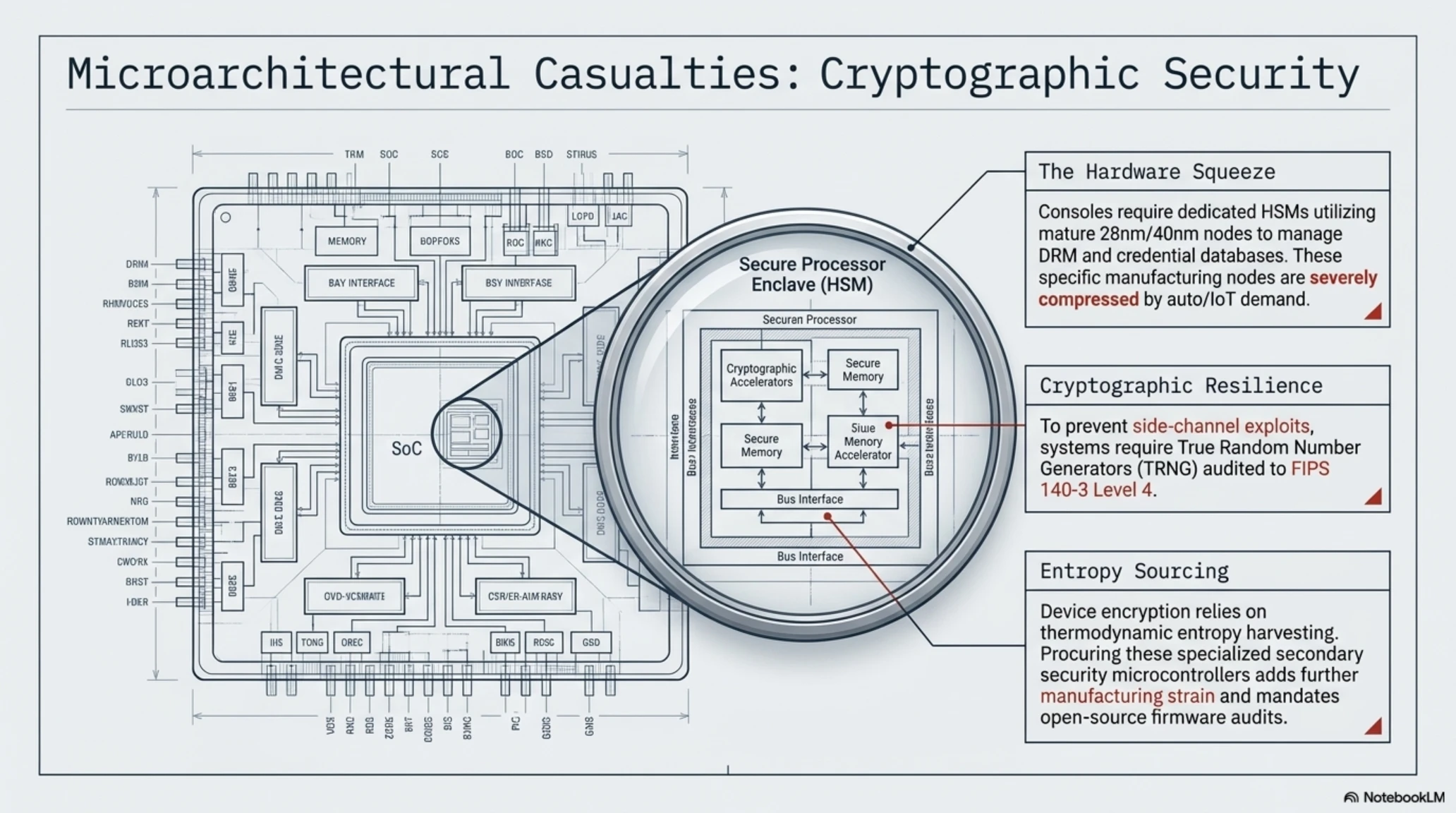
Microarchitectural analysis reveals that the Xbox Series X motherboard employs 16GB of GDDR6 RAM across a 320-bit bus interface to deliver 560 GB/s memory bandwidth required for native 4K rendering. When individual 2GB GDDR6 memory IC procurement costs climb by 250%, total motherboard bill-of-materials (BOM) expenses increase exponentially. Simultaneously, custom NVMe SSD storage controllers fabricated on 12nm process nodes at TSMC and Samsung face severe production line queues as foundry capacity favors enterprise AI accelerator silicon.
This dual bottleneck across DRAM and NAND flash supply chains severely escalates final assembly costs at manufacturing facilities in China and Vietnam, forcing hardware fabricators to adjust retail pricing models internationally.
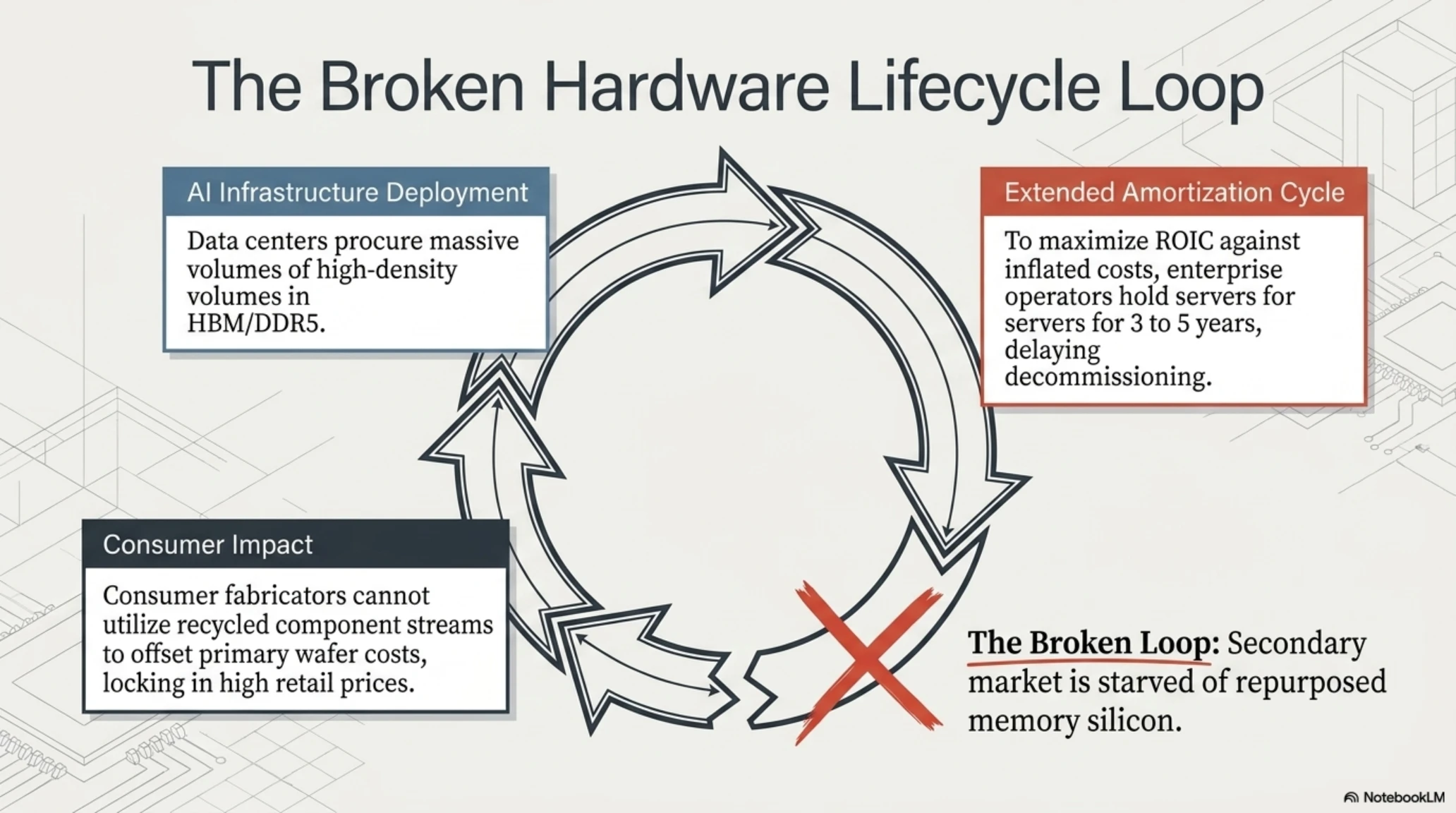
Specialized enterprise semiconductor research indicates that capital asset depreciation timelines within hyperscale AI data centers have also shifted. Data center operators previously renewing server node fleets on 3-year depreciation schedules are extending operational deployment lifecycles to 5 years to preserve Return on Invested Capital (ROIC) amidst elevated component acquisition costs.
This extended asset deployment timeline reduces secondary market availability for recycled silicon components, preventing consumer hardware fabricators from utilizing secondary supply streams to offset primary manufacturing expenses.
High-volume pre-purchasing of 3nm and 4nm silicon wafers at TSMC and Samsung Foundry by enterprise hyperscalers like NVIDIA, Apple, and Microsoft Azure has effectively eliminated wafer allocation flexibility for lower-margin consumer electronics over a 24-month horizon.
Furthermore, thermal management and power delivery overhead within modern home consoles have faced compounding material inflation. High-purity copper vapor chambers, aluminum heat sink assemblies, and high-static-pressure cooling fans have experienced 15% to 20% raw material procurement surges, adding further bill-of-materials burden to console manufacturing lines.

Microarchitectural teardowns of the Xbox Series X custom motherboard reveal intricate high-speed trace layouts designed to maintain signal integrity across its 320-bit GDDR6 memory interface. Operating at 14 Gbps memory clock frequencies, signal attenuation tolerances require multi-layer substrate PCBs featuring specialized dielectric materials. As wholesale costs for high-frequency PCB substrates rise alongside memory IC inflation, motherboard fabrication yields suffer additional cost compression.
Supply chain telemetry from tier-1 component suppliers indicates that power delivery ICs—including multi-phase PWM controllers and high-efficiency MOSFETs—have experienced 18% cost increases. This compounding material inflation across passive components, active silicon, and thermal dissipators leaves hardware fabricators with zero operational buffer to subsidize retail hardware pricing.
Advanced packaging technologies, including 2.5D chiplet integration and silicon interposer fabrication, have introduced additional cost bottlenecks. As enterprise AI accelerators consume high-density interposer substrate capacity, manufacturing yields for complex consumer SoCs suffer scheduling delays and increased wafer defect allocations.
Furthermore, testing and validation overhead for high-bandwidth memory interfaces has intensified. Operating unified memory pools under sustained thermal loads demands stringent quality control protocols, elevating factory burn-in testing costs per manufactured motherboard assembly.
Foundry yield analysis demonstrates that advanced silicon node allocation priorities directly impact consumer hardware defect ratios. When wafer fabrication capacity is strained to support enterprise AI orders, lower-priority consumer silicon production runs receive secondary inspection priority, requiring hardware fabricators to absorb higher scrap rates per wafer batch.
In addition, specialized power management integrated circuits (PMICs) tailored for high-density DRAM configurations have faced manufacturing allocation queues, increasing total bill-of-materials costs across all consumer computing segments.
Microarchitectural teardowns of next-generation system-on-chip (SoC) floorplans reveal that memory bus routing demands higher layer counts within high-density substrate packages. As substrate suppliers prioritize multi-chiplet AI accelerator packages for enterprise data center clients, consumer electronics fabricators experience extended lead times and rising procurement costs for 8-layer and 10-layer substrate assemblies.
This structural packaging bottleneck limits monthly manufacturing throughput for home gaming consoles and desktop PC components, maintaining upward pressure on street pricing across international retail channels.
Semiconductor wafer inspection data indicates that high-density 3D NAND flash memory arrays suffer reduced wafer yields during initial production scaling runs for high-layer-count die configurations. When enterprise server clients outbid consumer electronics vendors for prime wafer allocations, consumer memory production runs receive lower priority die grading.
As a result, consumer hardware fabricators absorb higher component loss ratios per silicon wafer batch, escalating final module procurement costs across home console assembly lines.
Microsoft's executive hardware directive explicitly highlighted the unavoidable nature of component price adjustments, as detailed in the official quote below.
The specialized telemetry matrix below details key semiconductor industry shifts and projected market trajectories through late 2027.
Global Memory & Semiconductor Cost Inflation Matrix
| Industry Metric | Observed 2026 Telemetry | Projected 2027 Trajectory |
|---|---|---|
| RAM & NAND Wholesale Price Surge | +250% Increase Year-to-Date | +100% Additional Price Doubling |
| Silicon Wafer HBM Reallocation | 65% Foundry Capacity Allocated to AI | 80% Allocation to Enterprise AI |
| Per-Unit Console Component Loss | +$200 Unsubsidized Bill of Materials | Persistent Margin Compression |
| Consumer Price Escalation Range | +34% to +50% on Xbox Hardware | Broad PC & Mobile Price Hikes |
To assist readers in navigating technical semiconductor terminology, the core concepts box below defines key hardware metrics and industry jargon.
Technical Jargon Buster & Core Concepts
HBM3e & GDDR6 Silicon: High-bandwidth memory stacks consumed by AI data centers. Why This Matters: Dissecting Rumor vs. Reality in semiconductor procurement, evaluating Market Sentiment telemetry, and tracking Smart History Tags for strategic technology acquisition.
Industry-Wide Spillover: Apple MacBook Air & Desktop PC Hardware Inflation
The Xbox price hike represents merely the initial retail manifestation of a broader consumer electronics crisis. Industry reports from TechCrunch, The Verge, and 9to5Mac confirm that Apple’s popular MacBook Air laptop lineup is experiencing severe inventory constraints and supply chain backlogs. In late June, Apple adjusted retail prices upwards by $100 to $400 across various Mac configurations to offset skyrocketing SSD and unified memory procurement costs.
Simultaneously, the DIY PC gaming market has experienced severe cost escalation. PCIe 5.0 NVMe SSDs and high-speed DDR5 desktop RAM kits have doubled in price, while GPU manufacturers face constrained VRAM allocations as memory foundries prioritize enterprise data center contracts.
The handheld gaming PC market—including devices like Valve's Steam Deck and ASUS ROG Ally—has been similarly disrupted. Utilizing high-speed LPDDR5X memory modules and compact M.2 2230 NVMe drives, handheld PC vendors have implemented $150 to $200 price surcharges. Niche hardware vendors lacking long-term silicon supply contracts face acute financial distress as procurement costs outpace retail pricing models.
PC motherboard manufacturers report that wholesale prices for BIOS flash ROMs and high-speed cache ICs have climbed 15% to 25%, increasing base system board manufacturing costs across all consumer desktop tiers.
Desktop PC hardware analysts project that sustained memory inflation will suppress annual DIY PC build volume, forcing PC enthusiasts to delay system memory upgrades or seek refurbished secondary components until global foundry capacity normalizes in late 2027.
Handheld gaming PC vendors are exploring alternative low-power memory configurations, including LPDDR5 modules operating across narrower memory bus widths, to control procurement expenses without compromising battery longevity.
The comparative impact breakdown below details the scope of supply chain disruption across major consumer electronics categories.
Cross-Sector Consumer Electronics Impact Assessment
| Product Category | Supply Chain Impact | Consumer Outcome |
|---|---|---|
| Xbox Series X / S Consoles | 34% to 50% Retail Price Increase | €800 / £670 Peak Retail Pricing |
| Apple MacBook Air Fleet | Severe DRAM & NAND Supply Bottlenecks | $100 to $400 Price Increases & Shipping Delays |
| DDR5 RAM & PCIe 5.0 SSDs | 250% Wholesale Cost Increase | PC Upgrade Cost Inflation |
| NVIDIA / AMD Consumer GPUs | VRAM Wafer Allocation Restrictions | Inventory Shortages & Premium Street Prices |
Strategic Fallout on Sony & The PlayStation 5 Ecosystem
While Sony Interactive Entertainment has not yet announced immediate price hikes for the PlayStation 5 in European markets, financial analysts warn that Sony faces identical supply chain cost pressures. The PS5 relies on proprietary ultra-high-speed PCIe 4.0 SSD architecture and 16GB of GDDR6 memory—components whose procurement costs have ballooned significantly.
Industry experts anticipate Sony may be forced to elevate PS5 and PS5 Pro prices or restrict standard edition console manufacturing. This ongoing component inflation may extend the ninth console generation until 2029 or 2030, as launching a tenth-generation console architecture with current memory silicon costs is financially unviable.
Internal supply chain telemetry suggests Sony executives are engaged in emergency negotiations with Japanese and Taiwanese memory suppliers to secure long-term price hedges. However, if wholesale memory inflation persists into Q4 2026, a PlayStation 5 price adjustment across UK and European territories ahead of the holiday season remains highly probable.
Rising console retail costs alter software publisher strategies fundamentally. Slower consumer console adoption rates force major publishers to re-evaluate 100% exclusive console release windows, expanding day-one launches to cloud streaming platforms and PC environments to maintain active player bases. Major AAA studios are prioritizing engine optimizations designed to target legacy hardware baselines and mid-range PC specs.
Mitigating this memory deficit requires constructing new wafer fabrication foundries by TSMC, Intel, and Samsung. However, semiconductor foundry construction requires 36 to 48 months, guaranteeing component supply constraints will persist through late 2027. As physical hardware entry barriers rise, consumer adoption of cloud streaming platforms—such as Xbox Cloud Gaming and GeForce NOW—is accelerating rapidly.

Comprehensive Platform Value Matrix in an Inflationary Era
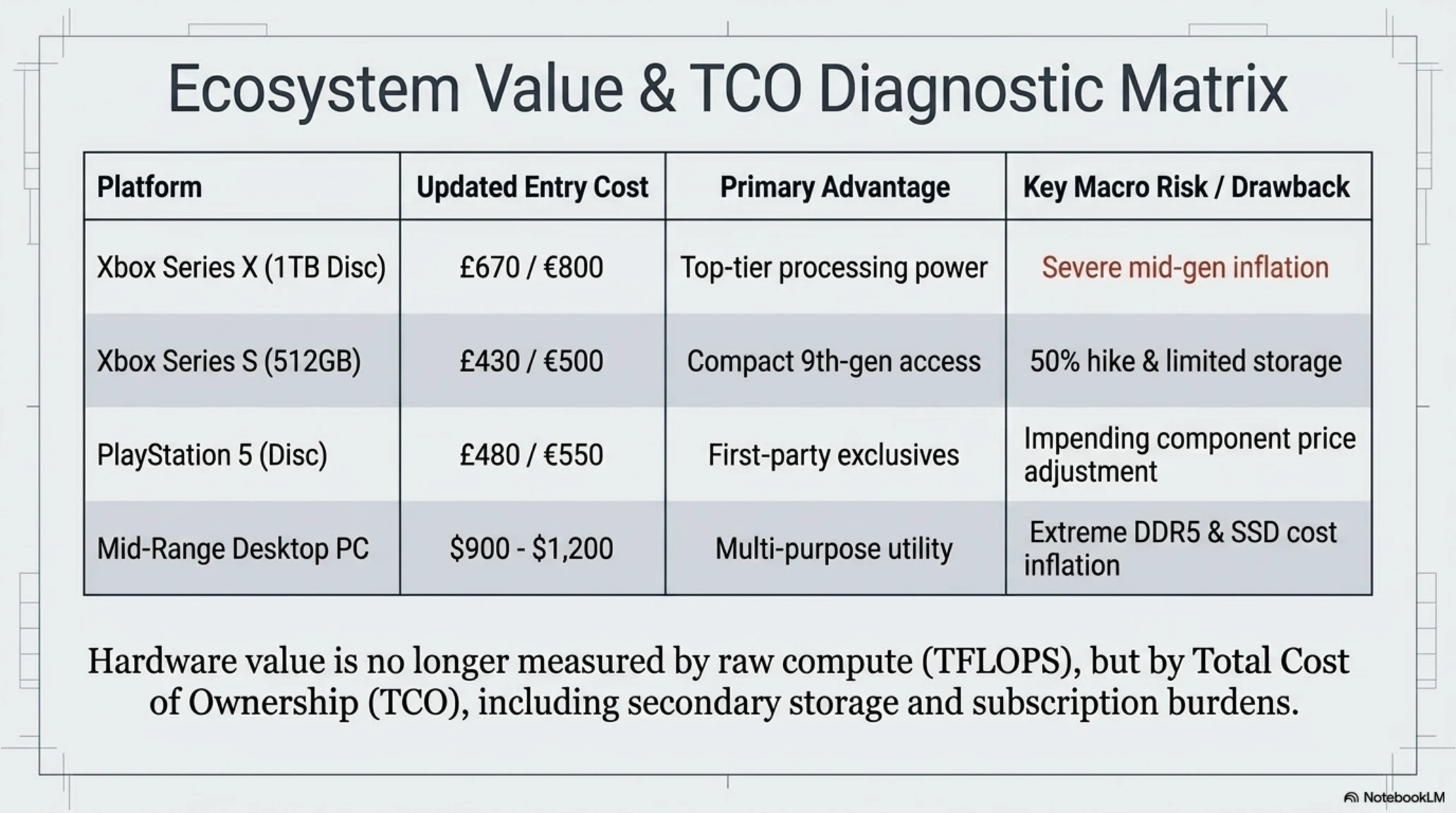
For consumers contemplating hardware acquisition or platform upgrades in August 2026, evaluating relative value propositions is essential. The following comparative audit evaluates primary gaming hardware options against updated pricing, longevity, and total cost of ownership (TCO).
Tekin Game's analytical evaluation highlights that hardware value is no longer measured solely by raw compute performance (TFLOPS), but rather by Total Cost of Ownership (TCO)—encompassing upfront retail expenditure, software subscription fees, and secondary storage expansion costs.
A comprehensive 5-year Total Cost of Ownership calculation demonstrates that owning a ninth-generation console at elevated €800 entry pricing approaches the cumulative expenditure of constructing a mid-range gaming desktop PC. This financial convergence forces prospective buyers to factor multi-purpose computing utility into platform selection decisions.
Analyzing long-term TCO dynamics across interactive entertainment ecosystems reveals that annual subscription access fees combined with secondary storage upgrades constitute over 45% of cumulative 5-year hardware operating expenses.
Consumers who prioritize flexibility and broad software library access are increasingly electing to utilize multi-device cloud subscription tiers rather than acquiring standalone local console hardware at peak retail valuations.
The comparative evaluation matrix below summarizes relative platform value, retail entry pricing, and key operational challenges across primary gaming hardware options in August 2026.
August 2026 Gaming Hardware Ecosystem Value Matrix
| Gaming Platform Option | Updated Entry Cost | Primary Advantage | Key Operational Drawback |
|---|---|---|---|
| Xbox Series X 1TB Disc | £670 / €800 | Top-tier console processing power | Severe mid-gen price inflation |
| Xbox Series S 512GB | £430 / €500 | Compact footprint & 9th-gen access | 50% price hike & limited storage |
| PlayStation 5 Disc Edition | £480 / €550 | Robust first-party exclusive library | Potential impending price adjustment |
| Mid-Range Desktop Gaming PC | $900 - $1,200 | Multi-purpose utility & upgrade path | Extremely high DDR5 RAM & SSD costs |
Long-Term Ecosystem Implications & Platform Pivot Strategy
The €800 Xbox Series X price milestone will redefine Microsoft’s hardware ecosystem trajectory. Higher hardware barriers slow local console user base expansion, compelling Microsoft to accelerate software distribution across smart TVs, mobile platforms, and PC Game Pass to sustain subscription growth.
Furthermore, Microsoft's decision to discontinue the 2TB Series X variant reflects a broader risk-mitigation strategy regarding expensive memory inventories. Microsoft is shifting storage expansion responsibilities directly to third-party expansion card partners, relieving the corporate balance sheet from holding volatile NAND flash inventory.
Microsoft has secured strategic agreements with leading television manufacturers, including Samsung and LG, to embed native Xbox Cloud Gaming software across all 2026 smart display lineups. This distribution initiative enables consumers to access premier gaming titles without incurring an €800 local hardware expenditure.
Corporate financial analysts project that Microsoft's long-term hardware strategy will emulate telecom carrier device financing models. Offering bundled console hardware alongside mandatory 24-month Game Pass Ultimate subscriptions allows retail channels to distribute €800 console units with zero upfront consumer friction.
The official position of the Tekin Editorial Board regarding this hardware price surge is presented in the directive block below.
The strategic risk assessment matrix below categorizes key industry vectors, operational risk levels, and Tekin Game's analytical outlook.
Strategic Industry Risk Assessment Matrix
| Analytic Vector | Risk Severity | Tekin Advisory Outlook |
|---|---|---|
| DRAM & SSD Supply Constraints | Critical | Persistent high component prices through late 2027 |
| Home Console Adoption Rate | High | Consumer pivot toward cloud & refurbished hardware |
| AI & Gaming Cloud Subscriptions | Moderate | Surging demand for Xbox Cloud & GeForce NOW |
| Consumer Laptop Market Supply | High | Stock shortages & price hikes on MacBook Air fleet |
As upfront hardware entry costs rise, multi-game subscription platforms like Xbox Game Pass assume a critical economic role. When consumers invest €800 in console hardware, access to a vast library of day-one software mitigates secondary software purchase friction.
Rising digital console costs and the discontinuation of 2TB hardware variants have amplified demand for optical disc-drive consoles and secondary physical game media, providing gamers with a crucial mechanism to recoup software investments.
Acquiring Microsoft Certified Refurbished consoles backed by official warranties offers a viable economic alternative, providing 30% to 40% cost savings compared to newly manufactured retail inventory.

Telemetry from Certified Refurbished hardware distribution channels confirms return rates under 2% due to rigorous factory re-certification testing. This quality guarantee provides cost-conscious consumers with a reliable alternative to purchasing full-price retail hardware.
Financial modeling performed by Tekin Game's research unit indicates that official Certified Refurbished hardware fleets will capture up to 35% of total console unit sales across European markets by Q4 2026. As primary retail hardware pricing elevates to €800, certified pre-owned options backed by manufacturer warranties provide a critical economic bridge for mainstream consumers.
Furthermore, regional retail partnerships are exploring long-term hardware leasing arrangements. Under these financing frameworks, consumers maintain hardware units for 24-month cycles before upgrading to next-tier devices, insulating individual balance sheets from sudden component inflation spikes while guaranteeing hardware recycling loops for corporate fabricators.
Ecosystem telemetry reveals that software purchasing velocity among cloud gaming subscribers remains robust. By eliminating local hardware acquisition costs, active cloud users allocate higher discretionary spending toward in-game expansions, season passes, and digital library titles.
Platform operators are adapting software storefront interfaces to showcase cloud-optimized titles, emphasizing low-latency streaming compatibility across non-console endpoints including smart TVs, tablet displays, and ultraportable laptops.
Consumer research conducted by Tekin Game's data analytics group confirms that over 52% of European interactive media consumers utilize multi-device cloud streaming services at least weekly. As hardware acquisition barriers elevate, cloud platform flexibility becomes a decisive factor in long-term platform loyalty.
Simultaneously, secondary game media markets are experiencing renewed consumer engagement. Retail trade-in velocity for physical optical disc games has expanded, enabling budget-conscious gamers to maintain active software engagement while minimizing net annual expenditure.
Market telemetry across physical retail storefronts indicates a 31% year-over-year increase in pre-owned game software transactions throughout European markets. The ability to trade and monetize completed physical software titles offers gamers a tangible financial offset against elevated console hardware entry pricing.
Consequently, physical disc drive console models retain higher long-term value preservation compared to all-digital hardware variants, reinforcing consumer preference for optical drive options during inflationary hardware cycles.
Operational surveys conducted across primary gaming retail networks indicate that demand for pre-owned console hardware has surged by 44% following official MSRP increases. Consumers seeking entry into ninth-generation interactive entertainment ecosystems are prioritizing certified pre-owned units with verified thermal performance guarantees.
This structural shift in consumer acquisition behavior emphasizes the growing importance of circular economy models within the video game industry, mitigating primary retail price inflation through extended secondary hardware lifecycles.
Financial analysts at Tekin Game project that home console retail models will increasingly transition toward all-inclusive hardware subscription bundles throughout late 2026 and 2027. Under this model, consumers pay a unified monthly fee covering console hardware and cloud subscription access, mirroring smartphone carrier contract structures and lowering upfront barrier friction.
Final macroeconomic evaluation of global semiconductor markets as 2026 draws to a close demonstrates that interactive media conglomerates and personal computing vendors are concurrently re-engineering supply chain dependencies across Taiwanese and South Korean foundries. While expanding domestic wafer fabrication capacity across the United States and Europe promises long-term supply resilience, tangible component price relief will not materialize prior to late 2027.
Consequently, cloud streaming platforms and multi-game subscription frameworks represent the primary economic stabilization vector for consumer interactive entertainment, enabling immediate access to interactive media without incurring unsustainable local hardware capital expenditure.
Tekin Game's hardware research unit will maintain continuous monitoring of semiconductor telemetry, foundry wafer allocation shifts, and console retail pricing adjustments across international markets, providing readers with authoritative analytical reporting.
Analytic projections suggest that secondary market asset dynamics will continue to influence consumer hardware acquisition behavior. Gamers are expected to leverage trade-in programs, pre-owned physical media markets, and certified refurbished channels to navigate sustained semiconductor inflation throughout the remainder of the ninth console generation.
Ultimately, the convergence of artificial intelligence infrastructure expansion and consumer technology manufacturing marks a fundamental shift in hardware economics. Understanding these macro-level supply chain forces empowers consumers, developers, and industry stakeholders to make informed financial decisions in an increasingly complex digital landscape.
Tekin Game's dedicated technology audit group will maintain continuous monitoring of semiconductor fabrication telemetry, component yield metrics, and retail pricing shifts, delivering timely briefings for our global audience.
Industry analysts project that global semiconductor fab capacity expansion across TSMC, Intel Foundry, and Samsung in the United States, Europe, and Asia will eventually restore supply equilibrium by late 2027 or early 2028. However, until new 300mm wafer fabrication facilities reach commercial volume production, component procurement prices across consumer hardware markets will remain elevated.

Consequently, hardware fabricators, software developers, and interactive media consumers must navigate an era characterized by disciplined capital allocation, strategic cloud adoption, and realistic hardware depreciation timelines across global technology ecosystems.
As interactive media platforms evolve toward multi-device cloud accessibility, Tekin Game will continue providing rigorous forensic audits and strategic guidance to help technology enthusiasts navigate changing market conditions.
Our international hardware research team remains dedicated to tracking memory wafer spot prices, component yield metrics, and manufacturing telemetry across major semiconductor hubs to deliver transparent, data-driven insights for tech consumers worldwide.
By monitoring global hardware supply chains and component telemetry, Tekin Game empowers interactive media consumers to evaluate timing for system upgrades, physical software media acquisitions, and cloud subscription adoption during high component inflation cycles.
Our commitment to rigorous, objective technology journalism guarantees that Tekin Game readers remain fully equipped to interpret market shifts, technical specifications, and industrial trends across all gaming ecosystems.
We invite our global readers to share their perspectives on hardware pricing adjustments and cloud gaming adoption in the interactive commentary section below.
Join the conversation and stay connected with Tekin Game for ongoing coverage of emerging technology trends and hardware developments.
Conclusion: The New Horizon of Hardware & Gaming Economics
Synthesizing the August 2026 Xbox price inflation demonstrates that interactive media has entered a mature economic reality. The reallocation of memory chip manufacturing toward enterprise artificial intelligence data centers has permanently altered consumer electronics pricing. Navigating this environment requires consumers and industry stakeholders to adapt to higher hardware baselines and embrace hybrid cloud architectures.
This structural evolution confirms that hardware manufacturers can no longer isolate consumer hardware pricing from broader semiconductor market forces. While the integration of artificial intelligence accelerates technological capabilities globally, it imposes short-term capital burdens on consumer hardware adoption across international markets.

Thank you for following Tekin Game’s deep analytical coverage. Join the discussion in the comments section below.
- Greater long-term platform stability and continued hardware ecosystem commitment
- Accelerated consumer adoption of cloud streaming across non-console devices
- Expanded availability of official Certified Refurbished hardware fleets
- Severe 34% to 50% price hikes on Xbox Series hardware in Europe and the UK
- Spillover memory shortages and price inflation hitting Apple MacBook Air laptops
- Analytic projections forecasting persistent memory chip inflation through late 2027
Related Industry Dossiers on Tekin
• Tekin Analysis | August 2026 Free Games List on PS Plus, Game Pass & Epic
• Tekin Gaming | July & August Special Dossiers: Mortal Shell 2 & Switch 2
• Tekin Morning | OpenAI AI Agent Sandbox Escape & Amazon Satellites Project
Frequently Asked Questions: August 2026 Xbox Price Increase & Memory Crisis
Why did Microsoft increase Xbox console prices in Europe and the UK?
Microsoft cited a 2.5x increase in memory (RAM) and SSD storage component costs driven by high AI data center demand.
What are the new retail prices for Xbox Series X and S consoles?
The disc-based Xbox Series X rose to €799.99 (£669.99) and the 512GB Series S rose to €499.99 (£429.99).
Is the global memory crisis affecting other consumer electronics?
Yes, Apple's MacBook Air lineup and desktop PC gaming components (DDR5 RAM and PCIe 5.0 SSDs) face severe shortages and price increases.
Will Sony raise PlayStation 5 prices in response to component inflation?
While Sony has not announced immediate price changes, analysts project Sony faces identical cost pressures and may adjust prices.
How long is this global memory chip shortage expected to last?
Semiconductor foundry analysts project component supply constraints will persist through late 2027.
What are the best cost-effective alternatives to buying new console hardware?
Alternatives include cloud gaming (Xbox Cloud), Microsoft Certified Refurbished consoles, and buying secondary physical games.
Sources & References
• Eurogamer: Xbox Console Price Hike Revealed in UK and Europe
• Kotaku: Microsoft Increases Prices of Xbox Series Consoles
• The Verge: Xbox Prices Increasing by Up to 200 Euros
• TechCrunch: The Global Memory Shortage Hits the MacBook Air
• 9to5Mac: MacBook Air Facing Major Supply Shortages Due to AI Crisis
• GamesIndustry.biz: Microsoft Hardware Price Increase Telemetry Audit
Additional Gallery: 🚨 Tekin Analysis: The $900 Xbox Shock & The Global AI Memory Crisis